




The class 10 economics handwritten notes chapter 2 Sectors of the Indian Economy turn the whole chapter into clean, scanned notebook pages for fast last-minute revision.
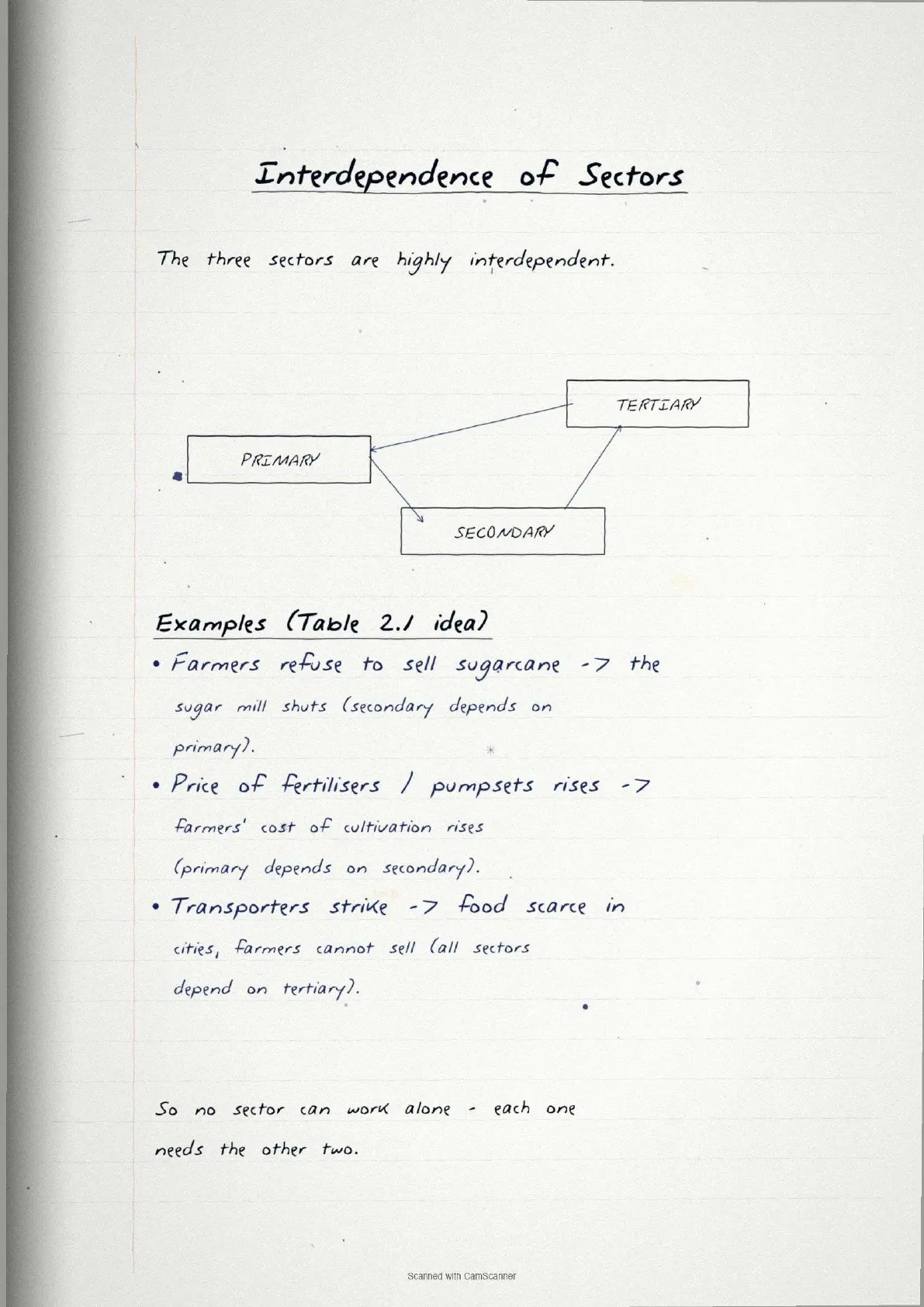
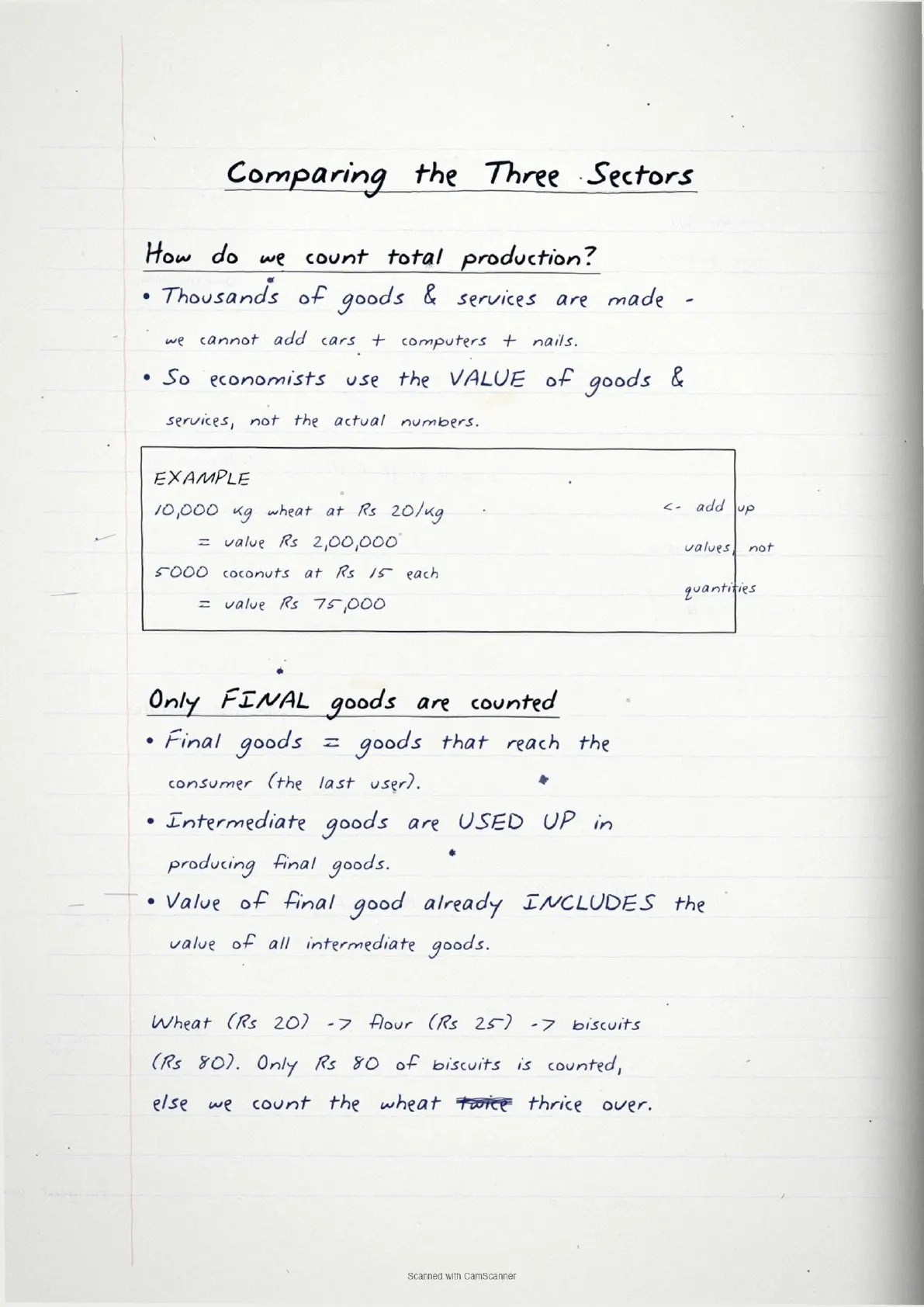
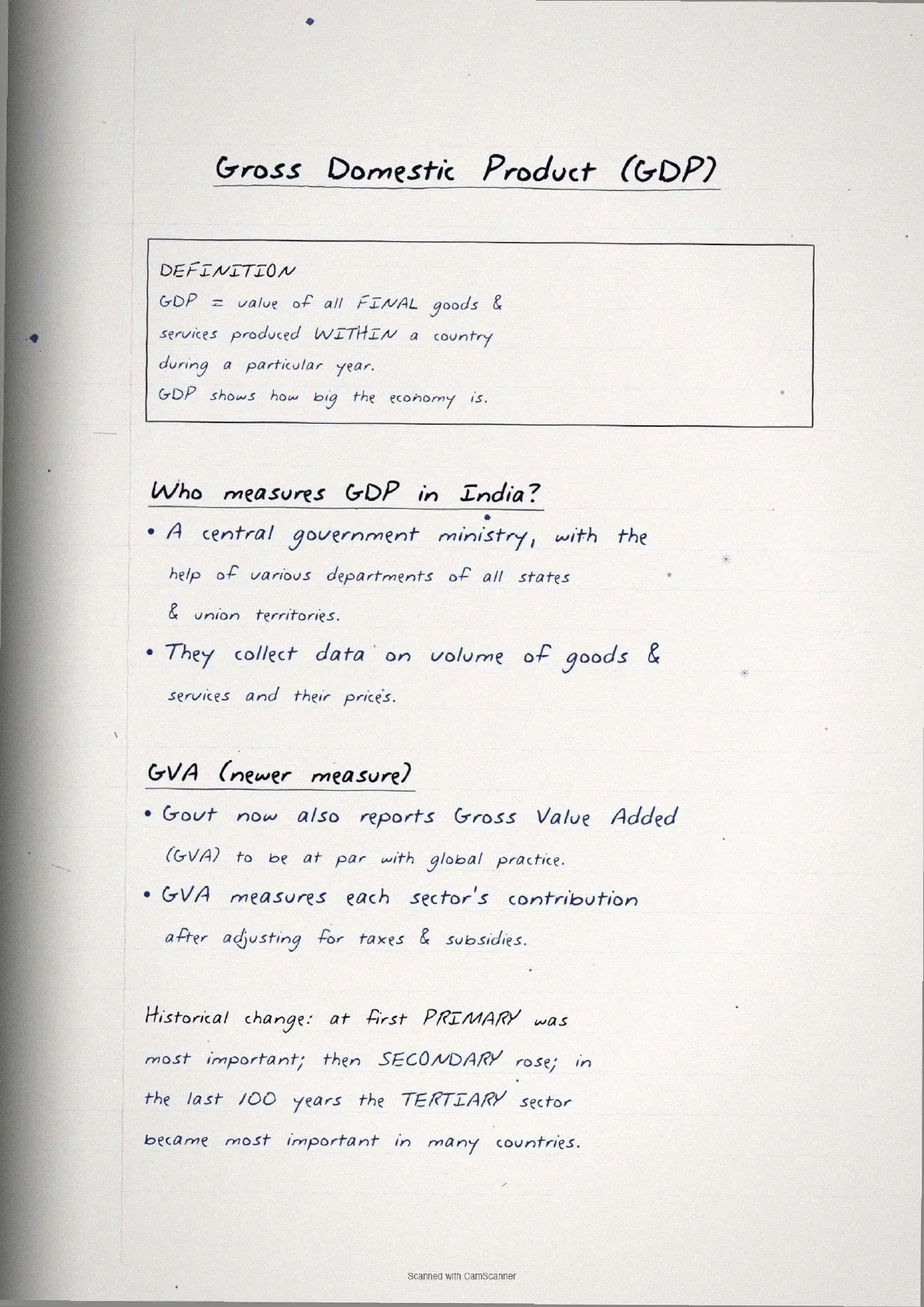
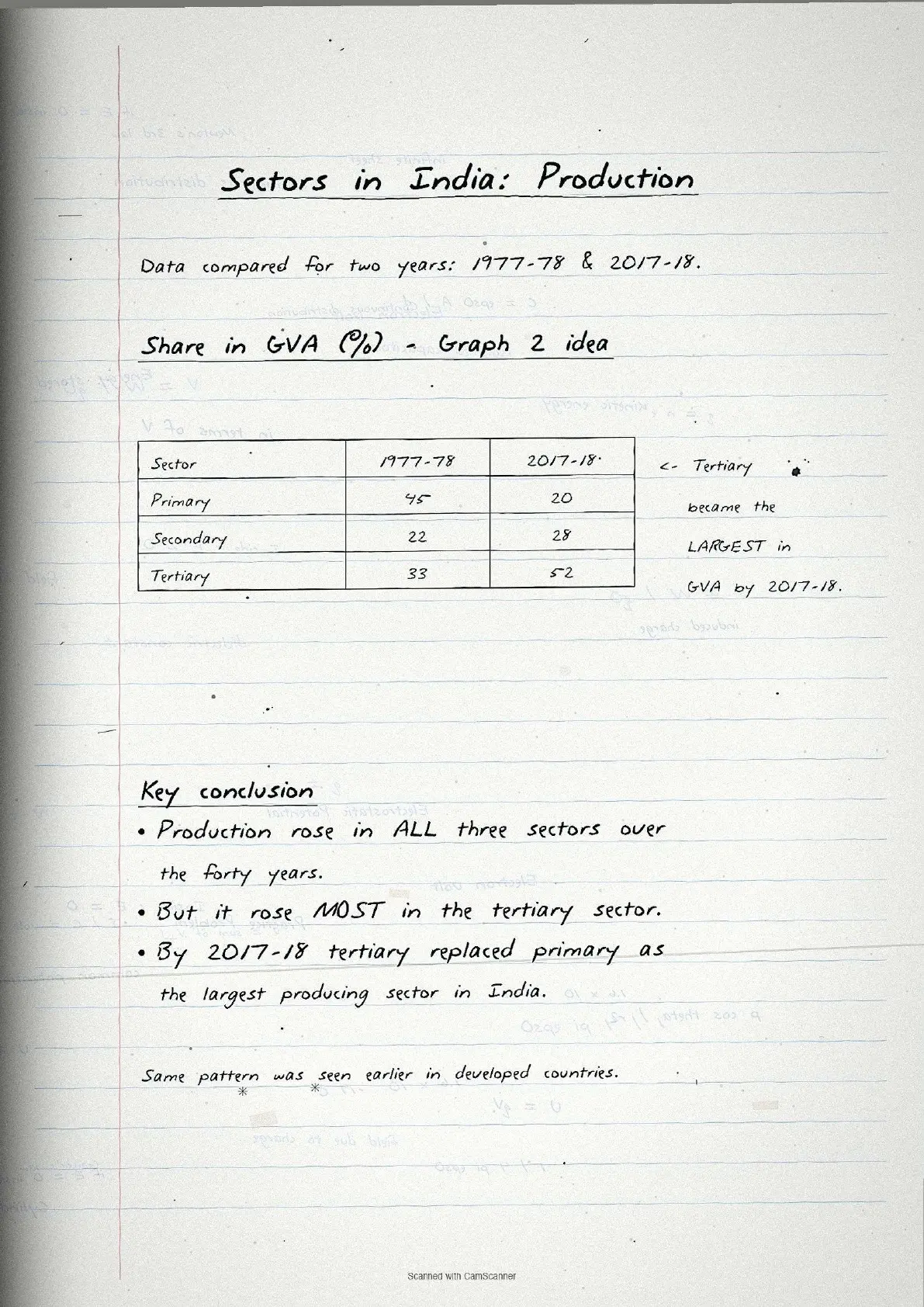
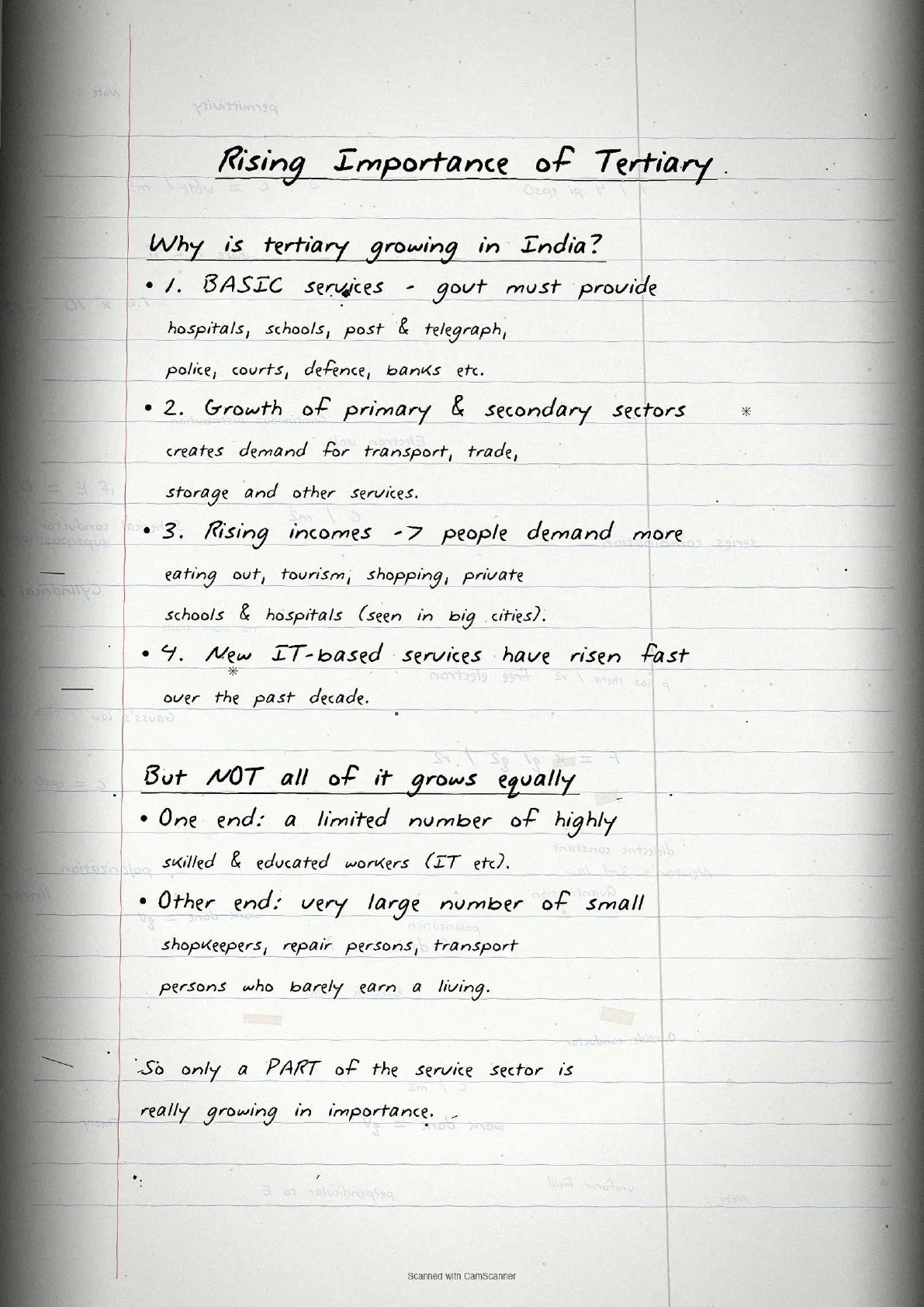
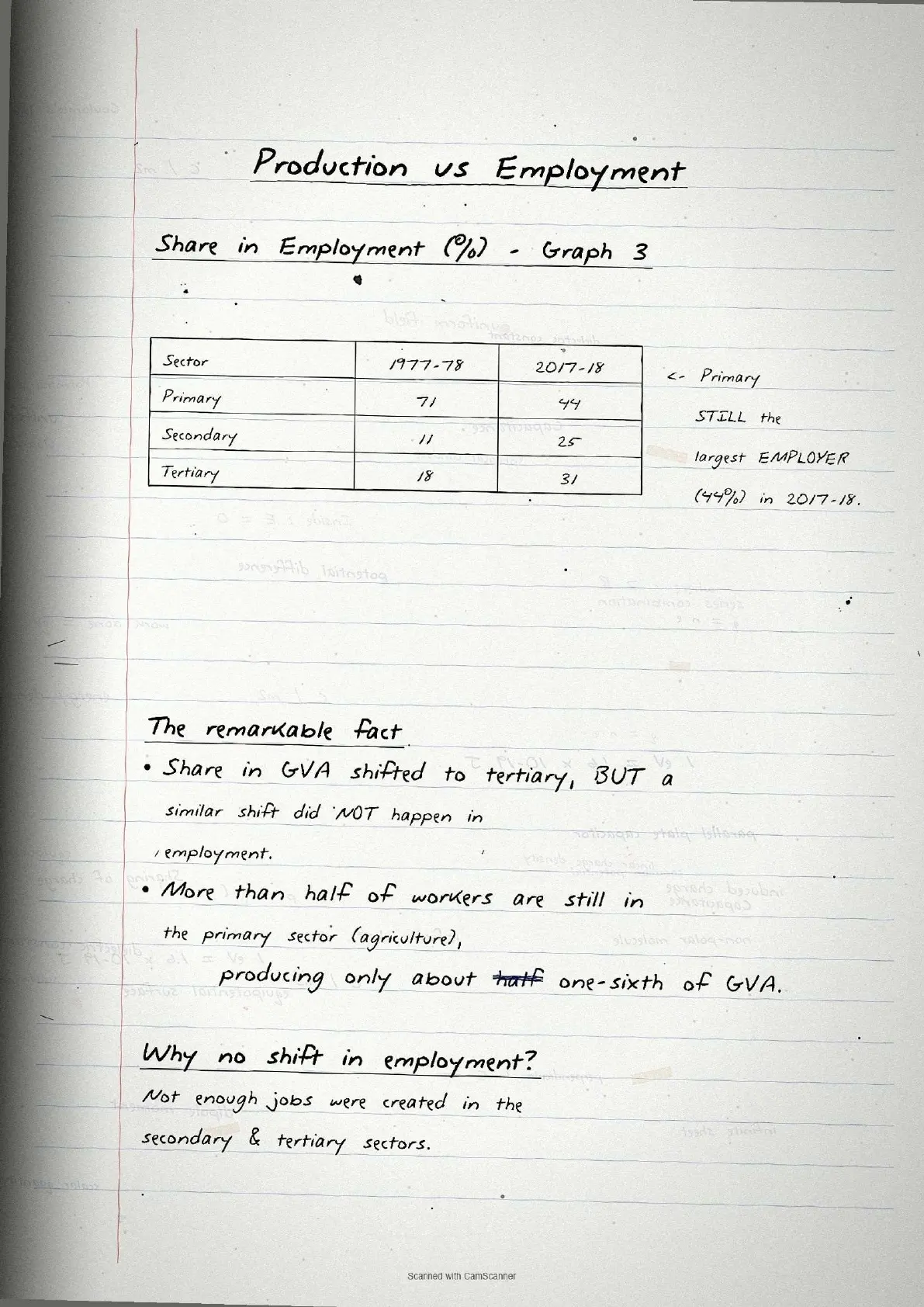
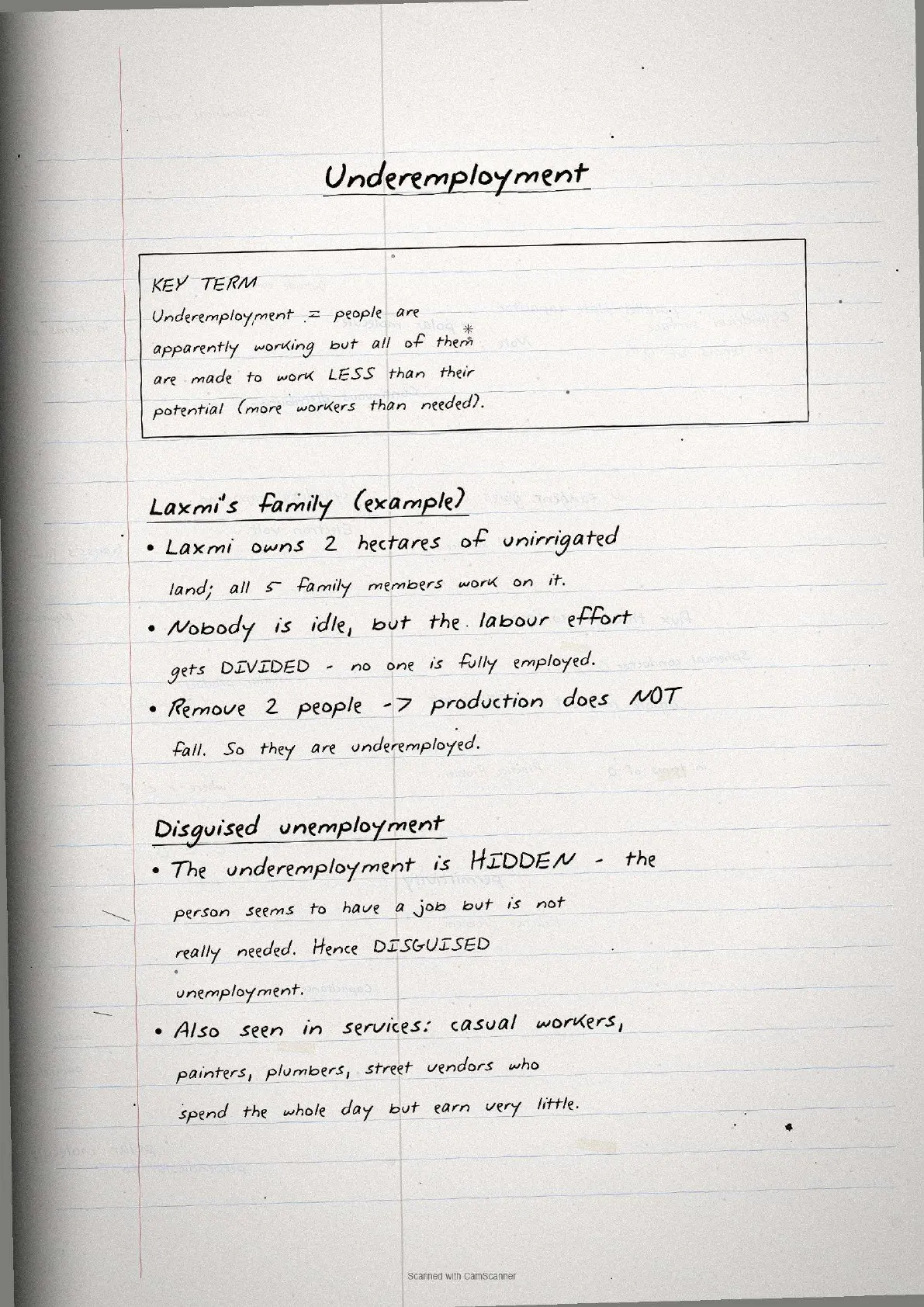
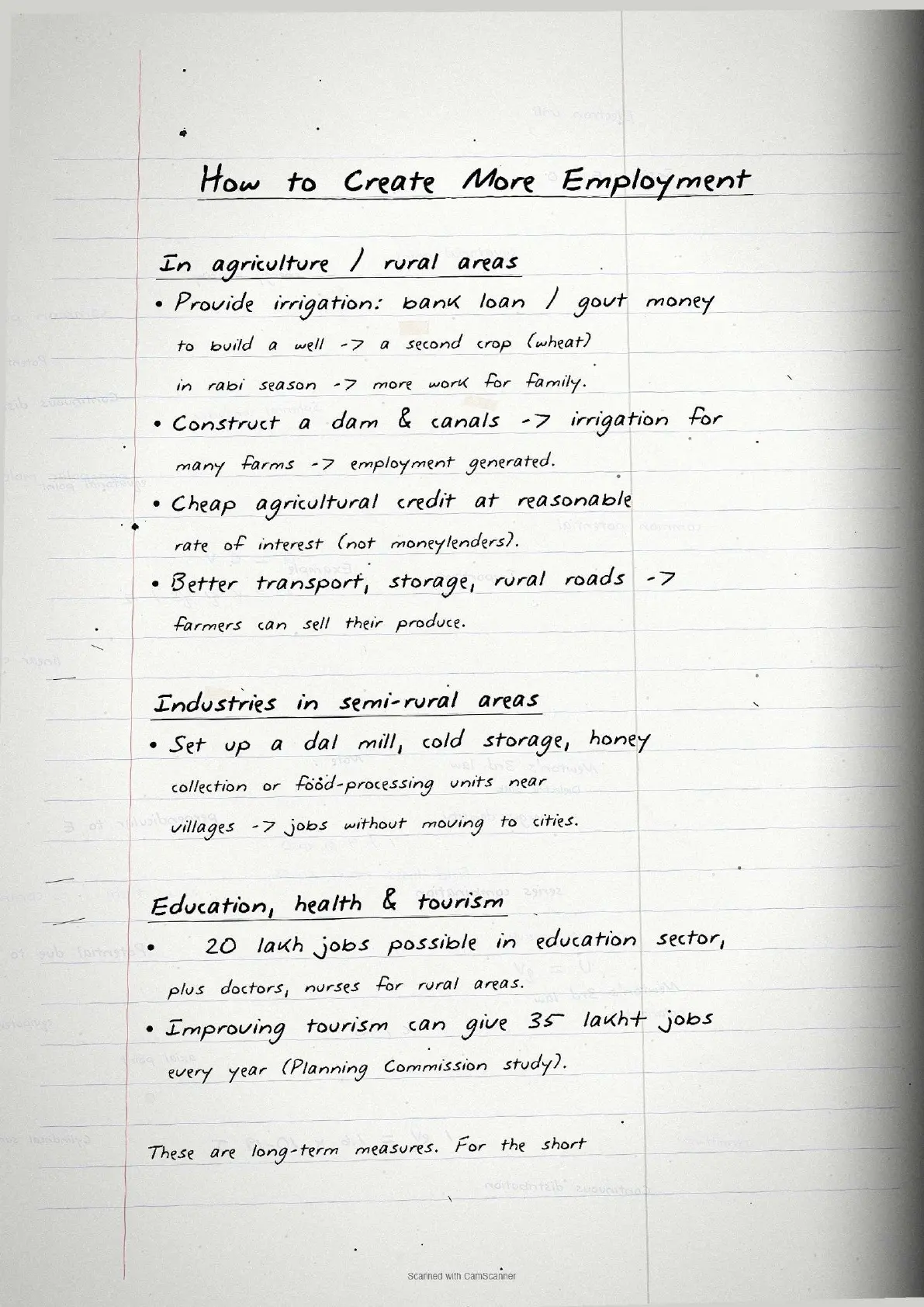
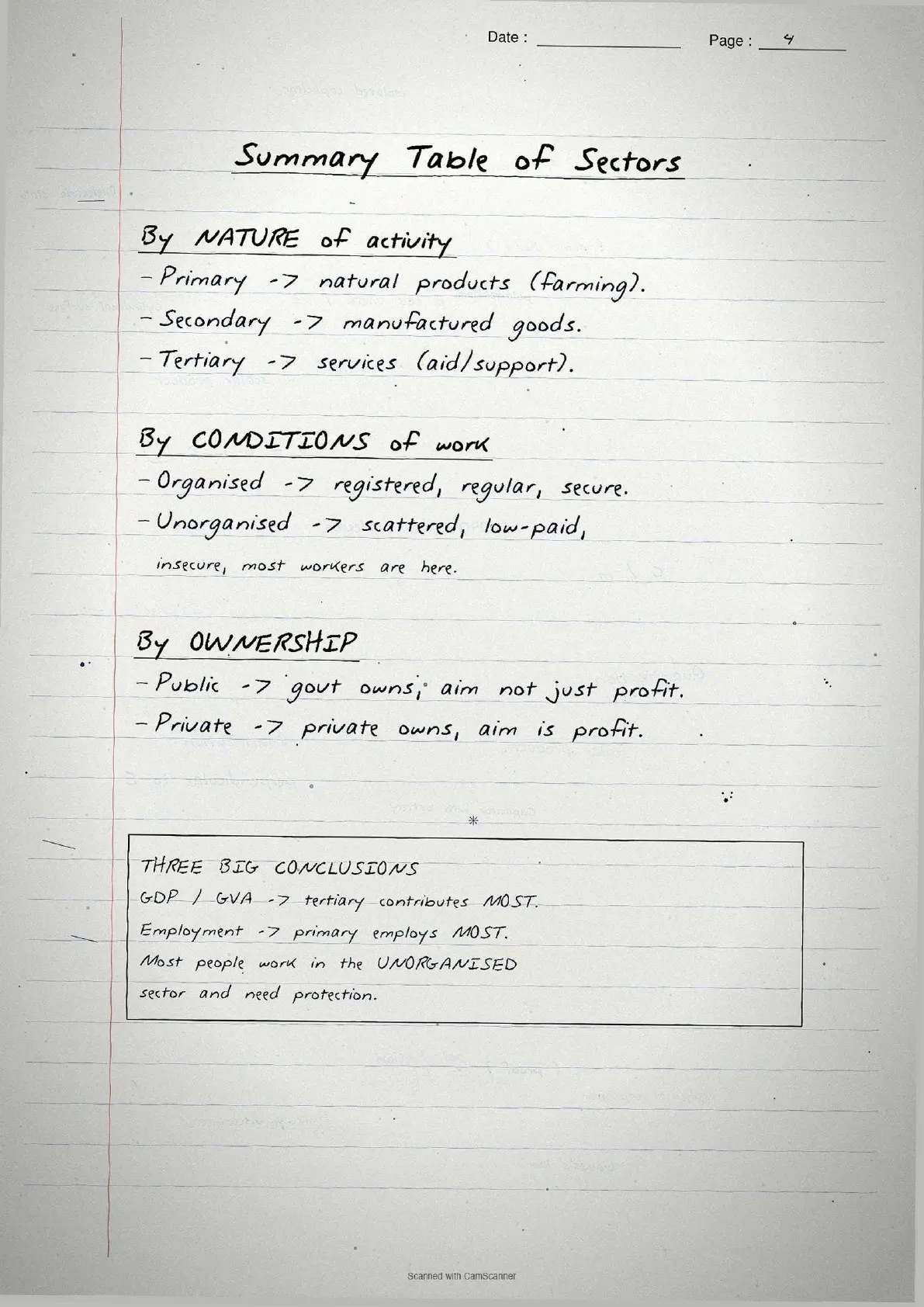
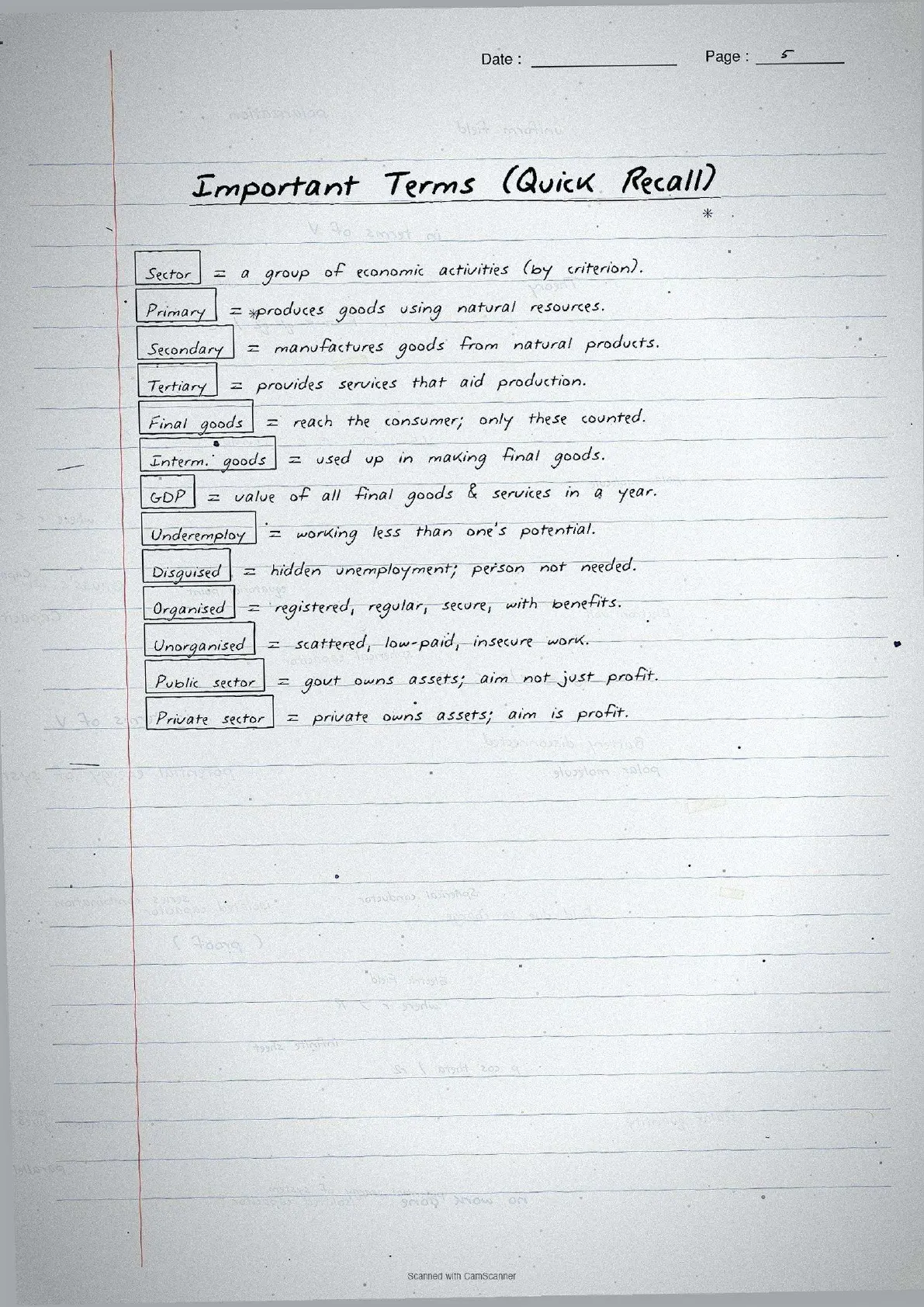
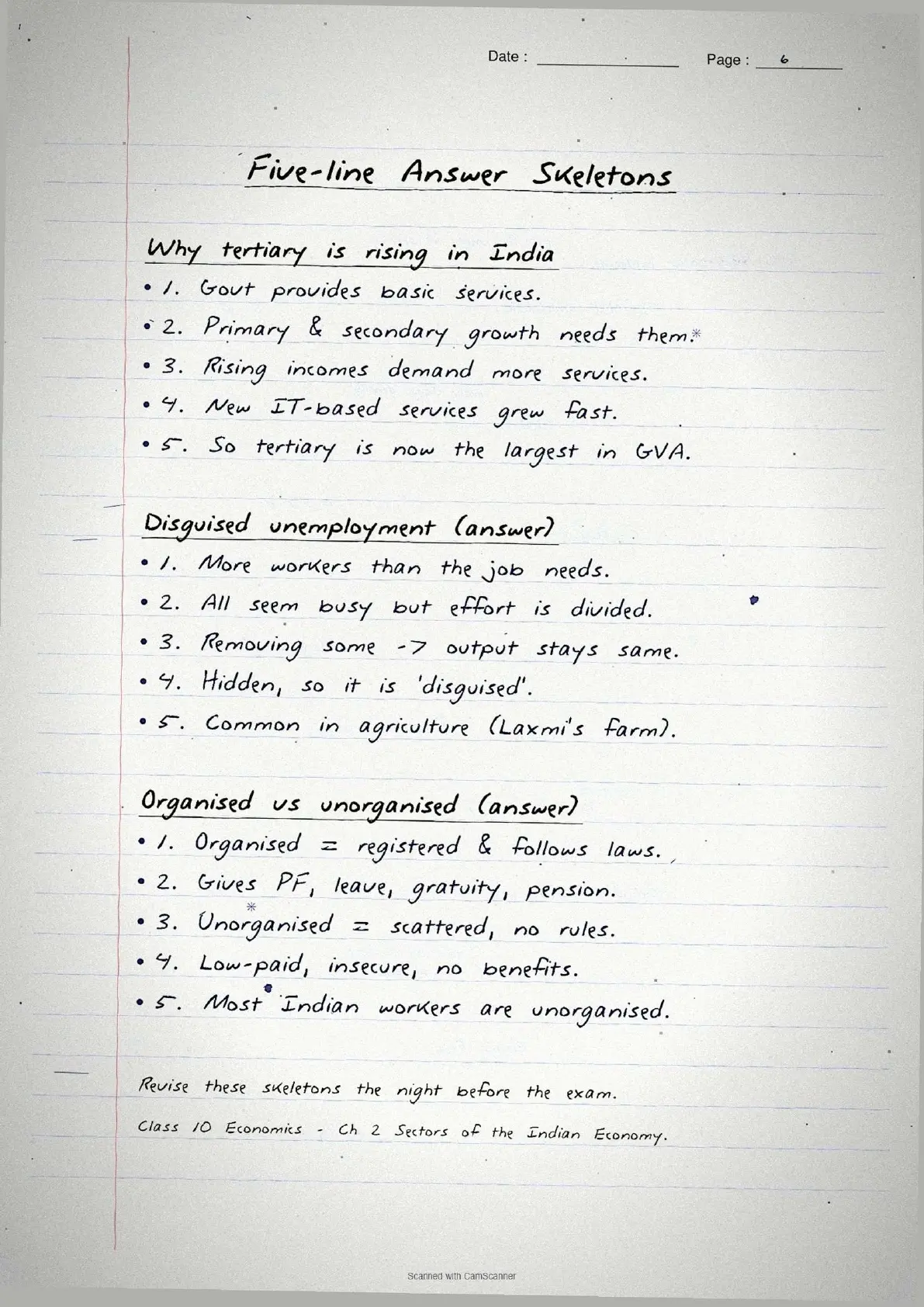
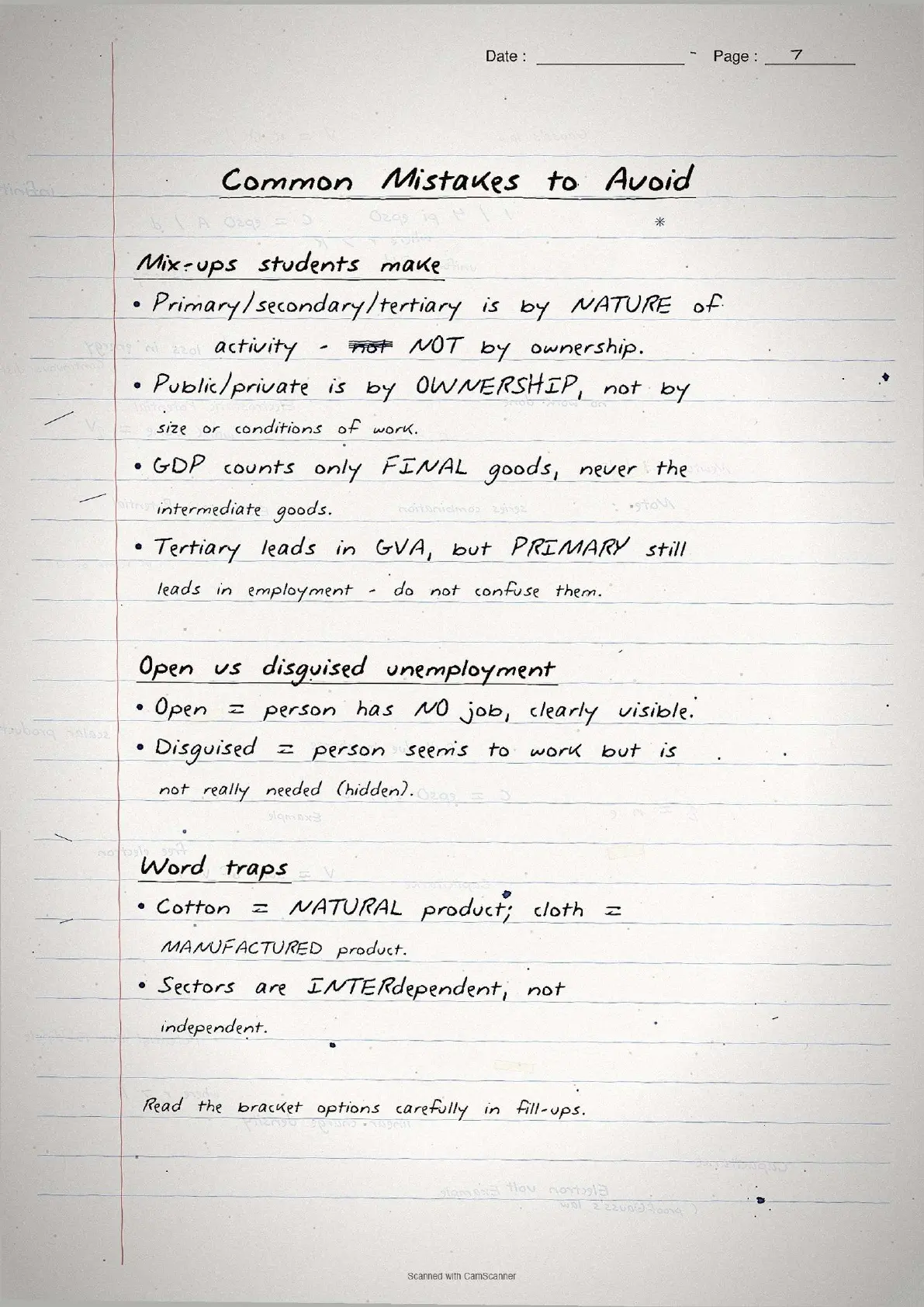
They follow the 2026-27 CBSE syllabus and Chapter 2 of Understanding Economic Development. Students get the three sectors, the GDP idea, organised versus unorganised work and the MGNREGA point in a pen-on-paper format that is easy to skim before a test.
- Handwritten, scanned-style pages with boxed key terms and a colour-coded sector chart.
- This Class 10 Economics chapter usually carries 5 to 6 marks in the board paper.
- Pairs with the NCERT Solutions, Notes and Book PDF linked lower on this page.
These Sectors of the Indian Economy handwritten notes are prepared from the official NCERT Understanding Economic Development textbook and checked against the last five years of CBSE board papers.
What These Handwritten Notes Include
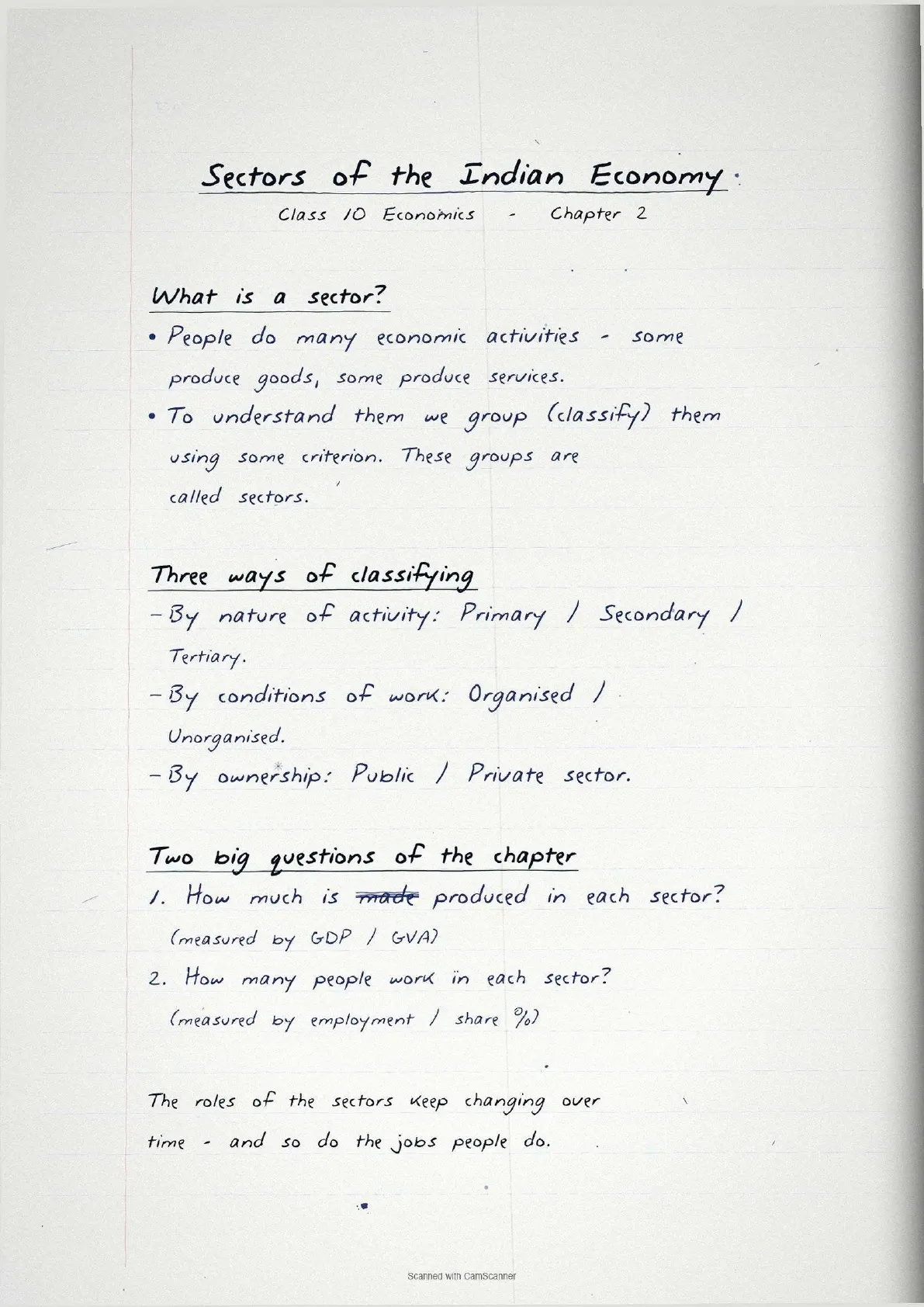
Sectors of the Indian Economy is the second chapter of Understanding Economic Development. It studies how every job in the country fits into the primary, secondary or tertiary sector, and how we measure their size using GDP. These class 10 economics handwritten notes chapter 2 Sectors of the Indian Economy condense the chapter into pages a student can read in one sitting.
Every page is built around the three ways the chapter classifies economic activity:
- By nature of work covers the primary, secondary and tertiary sectors.
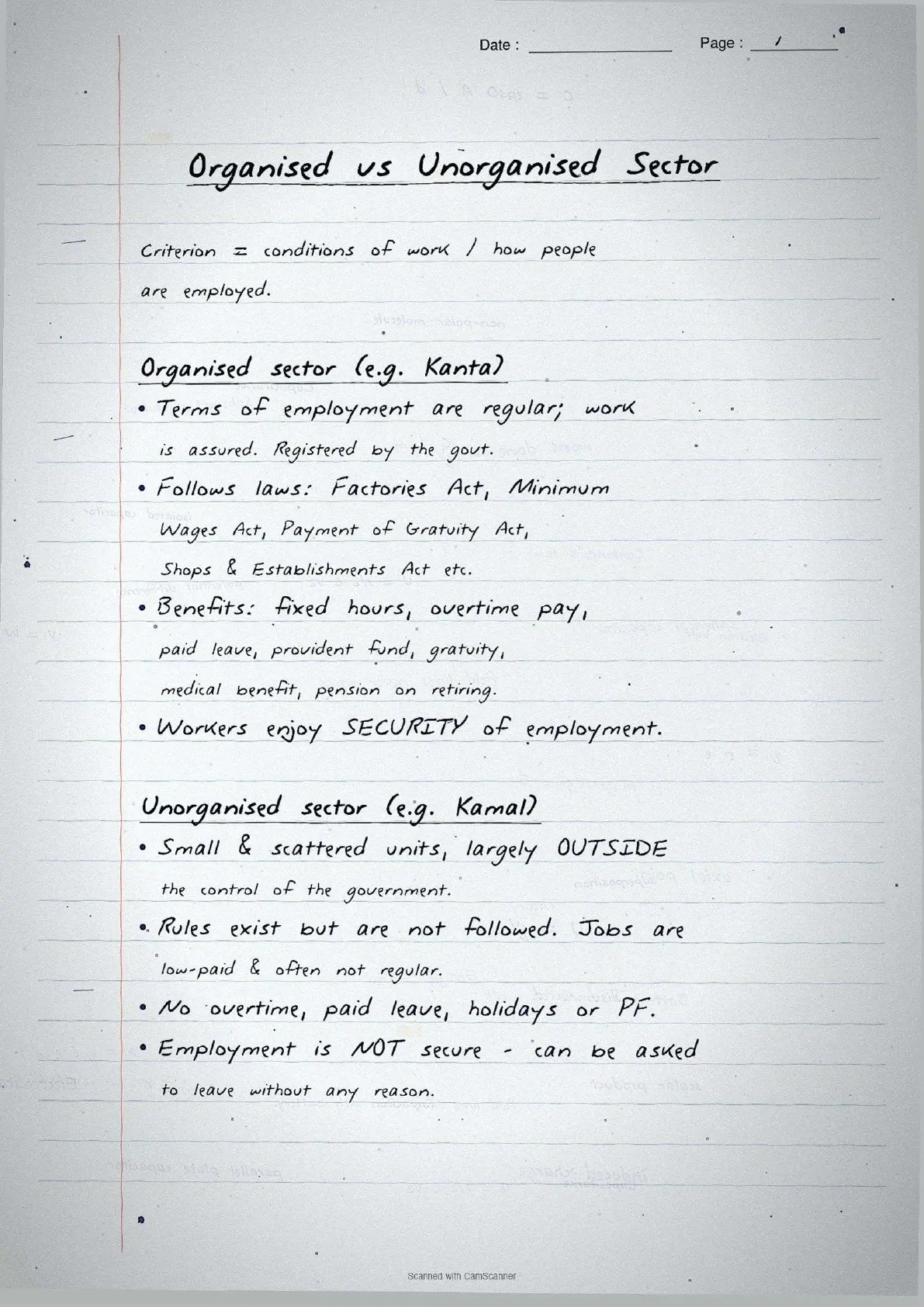
- By work conditions covers the organised and unorganised sectors.
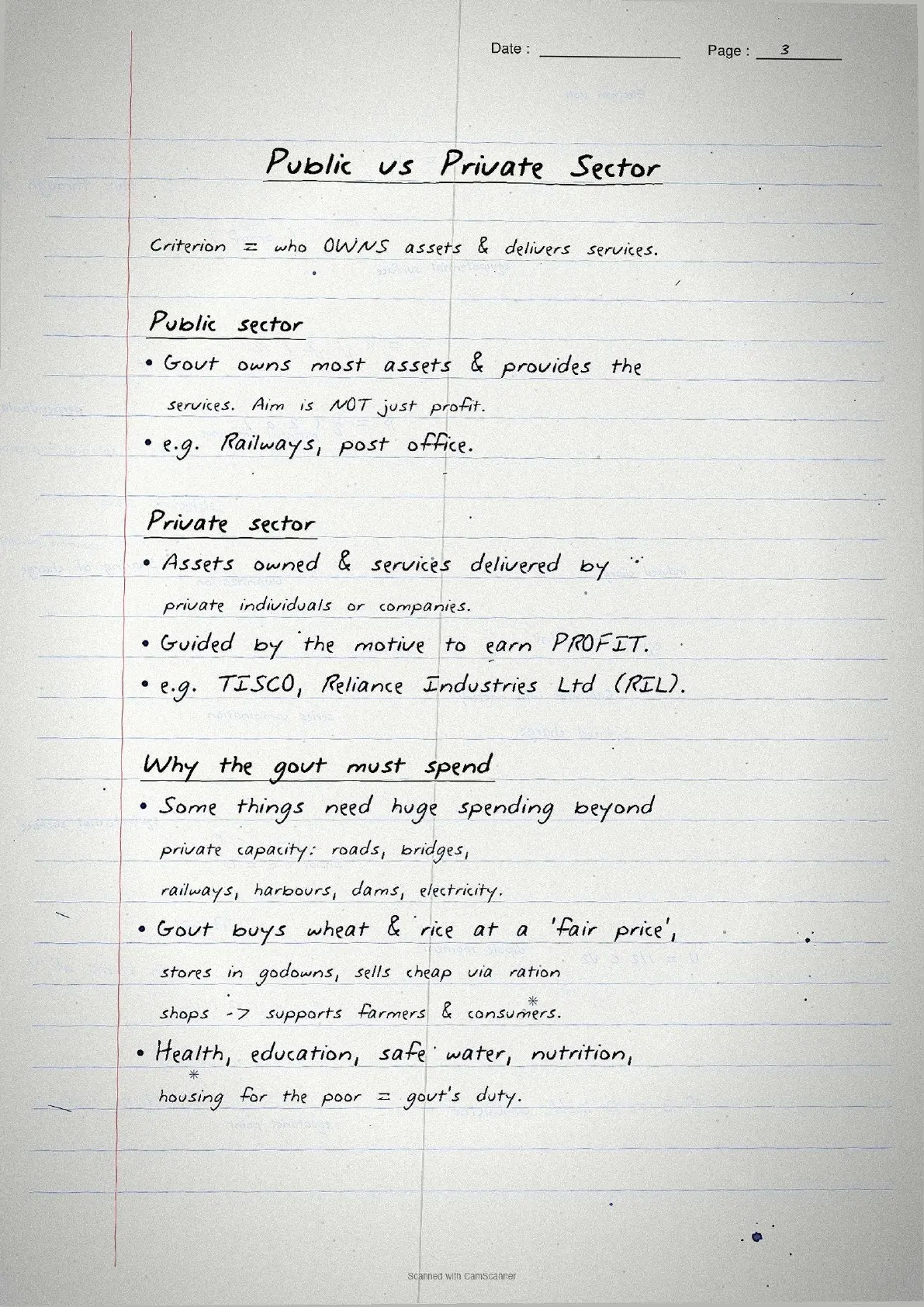
- By ownership covers the public and private sectors.
Because the notes are handwritten, key terms sit in boxes and important figures are underlined, so the eye jumps straight to them. Sort each example under nature of work, work conditions or ownership, and the whole chapter falls into place. The notes follow the 2026-27 CBSE syllabus.
Sectors of the Indian Economy Class 10 Video Lesson
Source: Magnet Brains on YouTube
Primary, Secondary and Tertiary Sector Pages
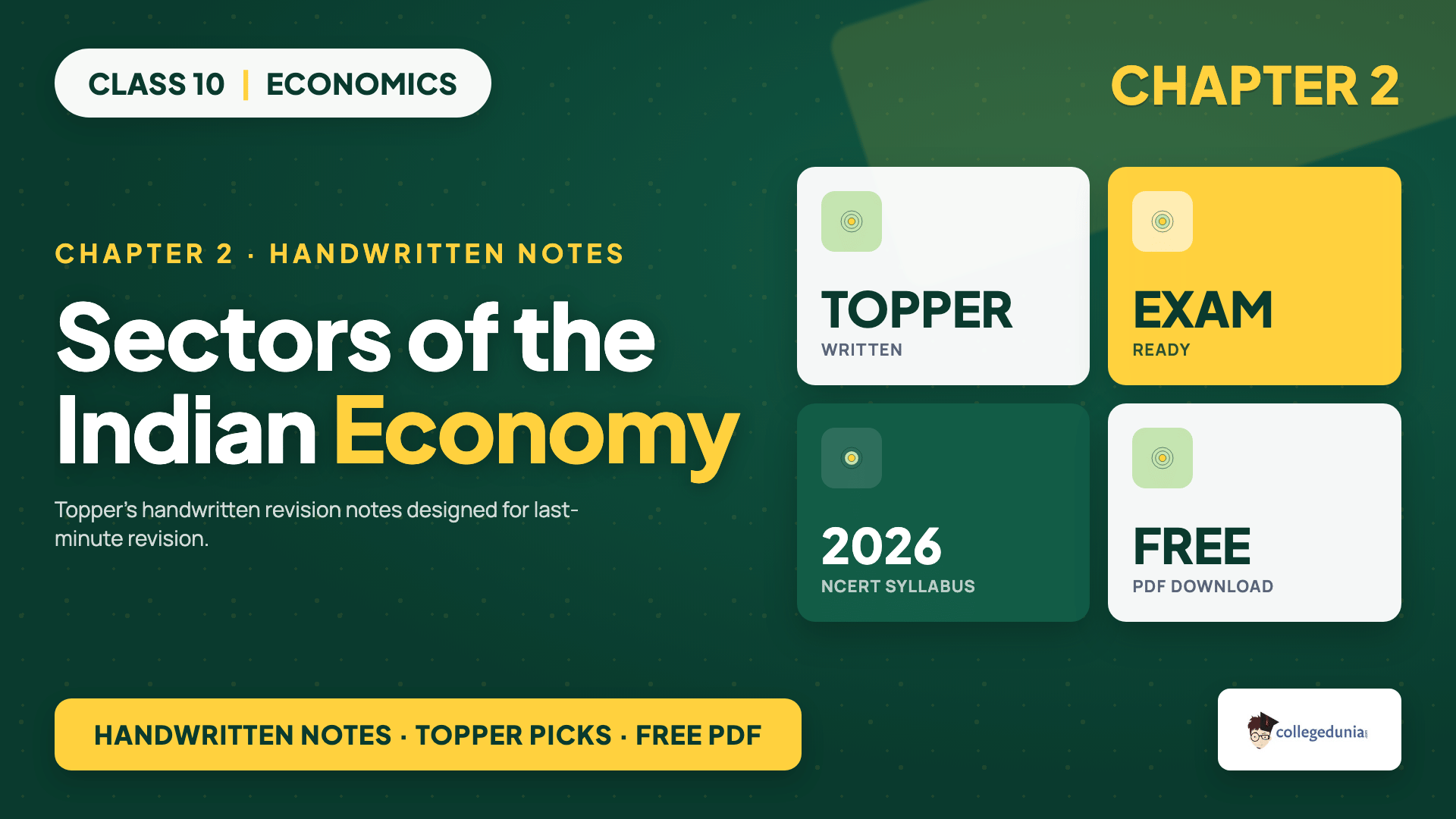
These pages keep the three sectors side by side, because the most common question asks you to sort an activity into the right one. The notes give one boxed example per sector and underline the keyword, so the answer is easy to recall.
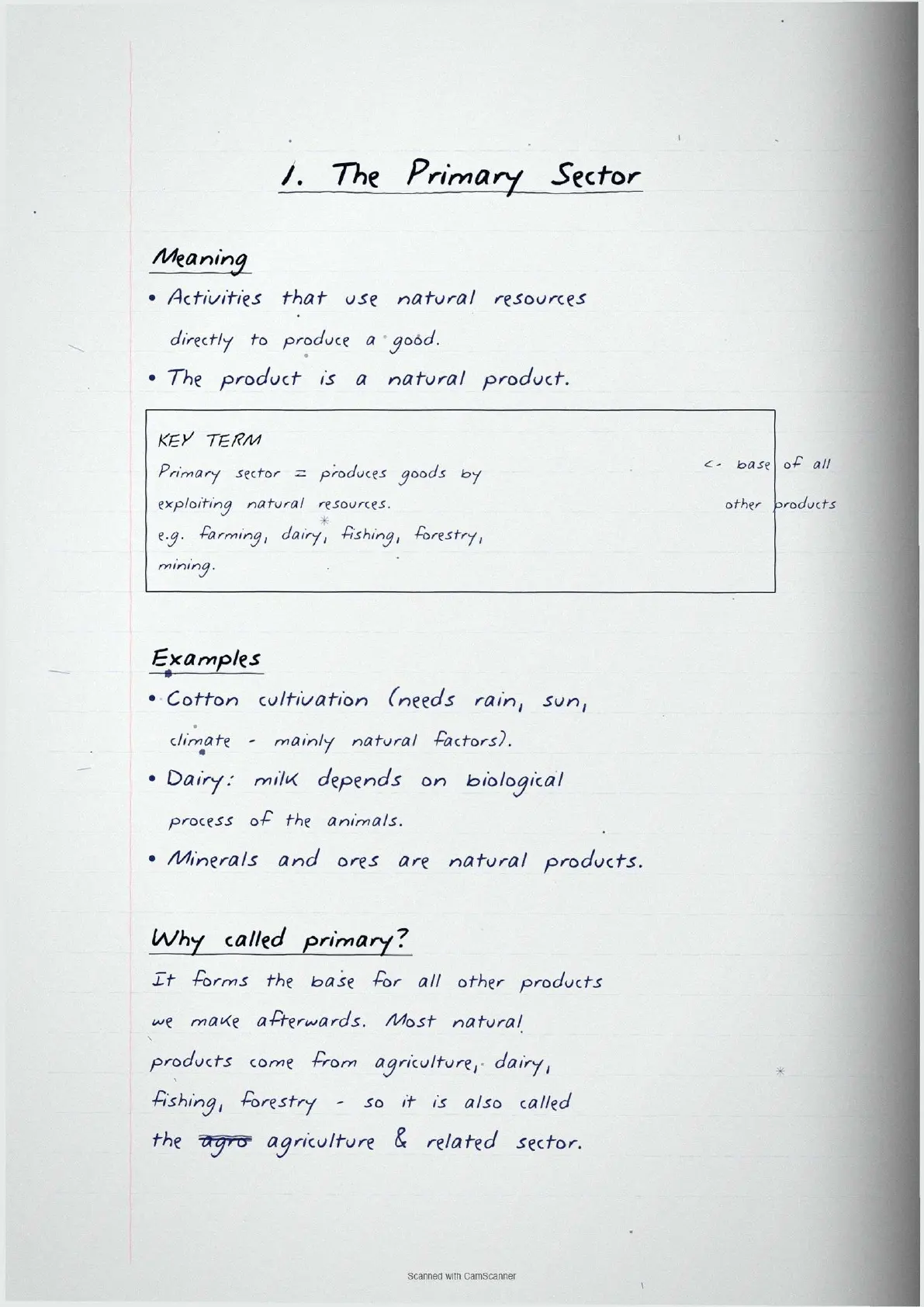
- Primary sector: work that uses natural resources directly, like farming, fishing and mining.
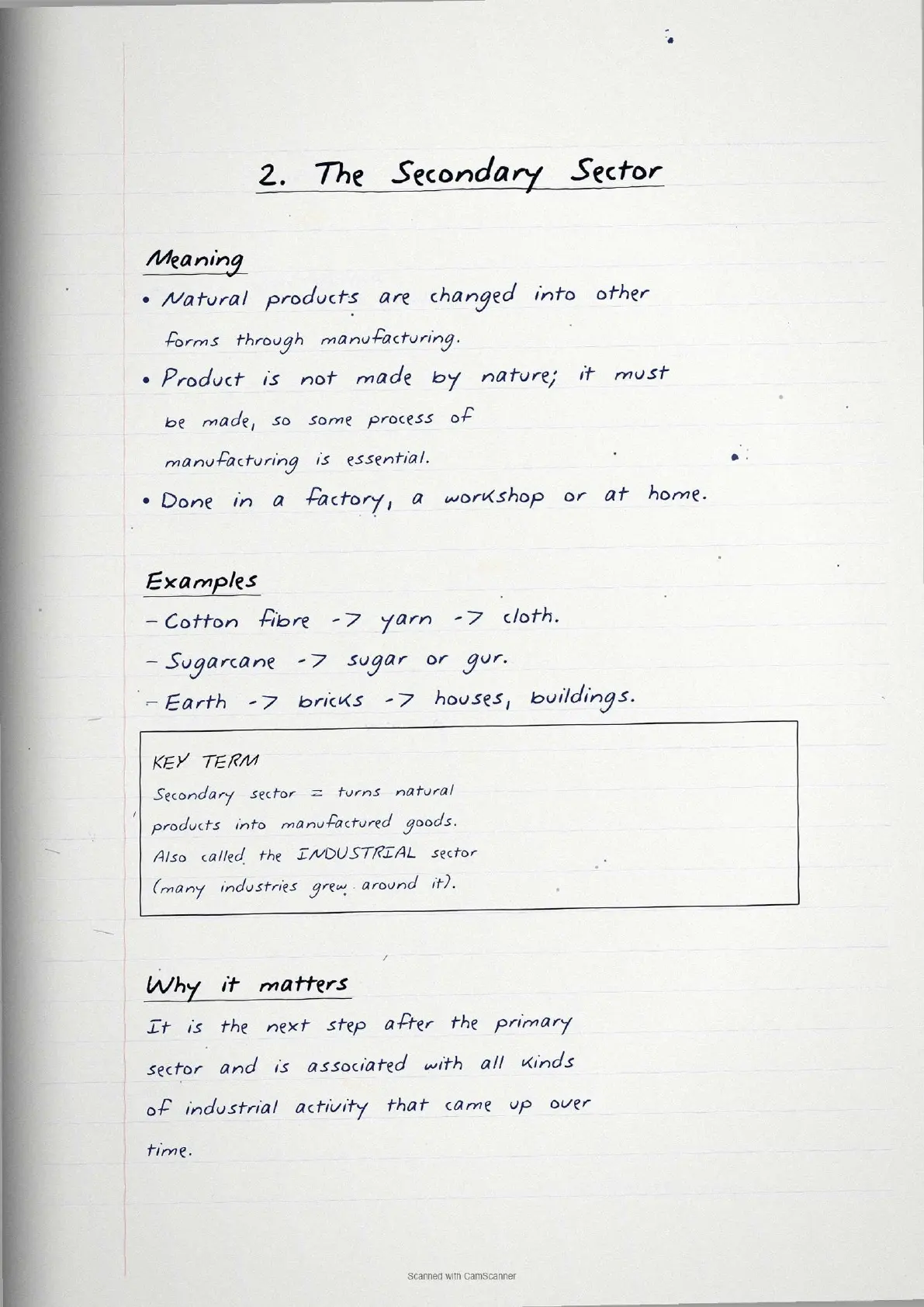
- Secondary sector: work that turns raw goods into finished goods, like making sugar from cane.
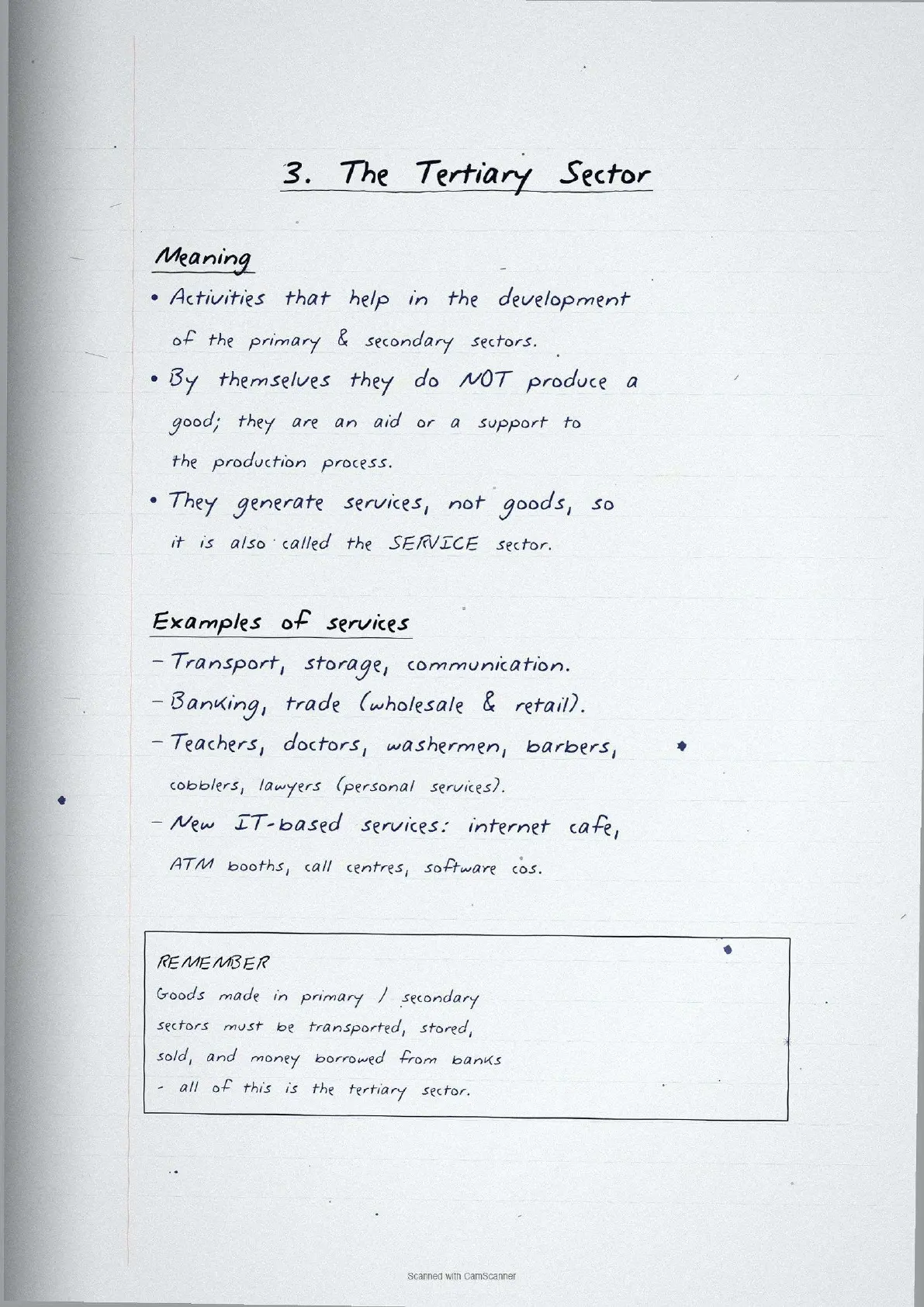
- Tertiary sector: work that supports the other two by giving services, like transport, banking and teaching.
The pages box the sharpest point in red ink: the tertiary sector is also called the service sector because it produces a service, not a good. This sort-the-activity skill turns an average answer into a full-marks one.
| Sector | What it does |
|---|---|
| Primary | Uses nature directly: agriculture, dairy, forestry, fishing, mining. |
| Secondary | Makes goods from raw materials: factories, construction, manufacturing. |
| Tertiary | Gives services that help the other two: transport, trade, banking, IT. |
GDP and Changing Sectors Pages
These pages explain how we measure each sector and how India has changed over time. The notes keep the definition of GDP in a box and add a simple bar idea so students can describe the shift in one line. Learn the definition and the trend, and the data question is easy.
- GDP is the value of all final goods and services produced within a country in one year.
- We count only final goods, not intermediate ones, so we do not add the same value twice.
- Over time India moved from a primary-led economy to a tertiary-led one in terms of GDP share.
- But most people still work in the primary sector, so jobs and output do not match.
The margin note underlines the line the exam loves: the tertiary sector now gives the largest share of GDP, yet farming still employs the most people. A hand-drawn arrow ties this mismatch to underemployment, where people look busy but add little extra output.
Organised, Unorganised and Ownership Pages
These pages keep the two remaining classifications next to each other, because the board often asks for the difference. The notes give one boxed contrast for each pair so students can copy it straight onto the answer sheet.
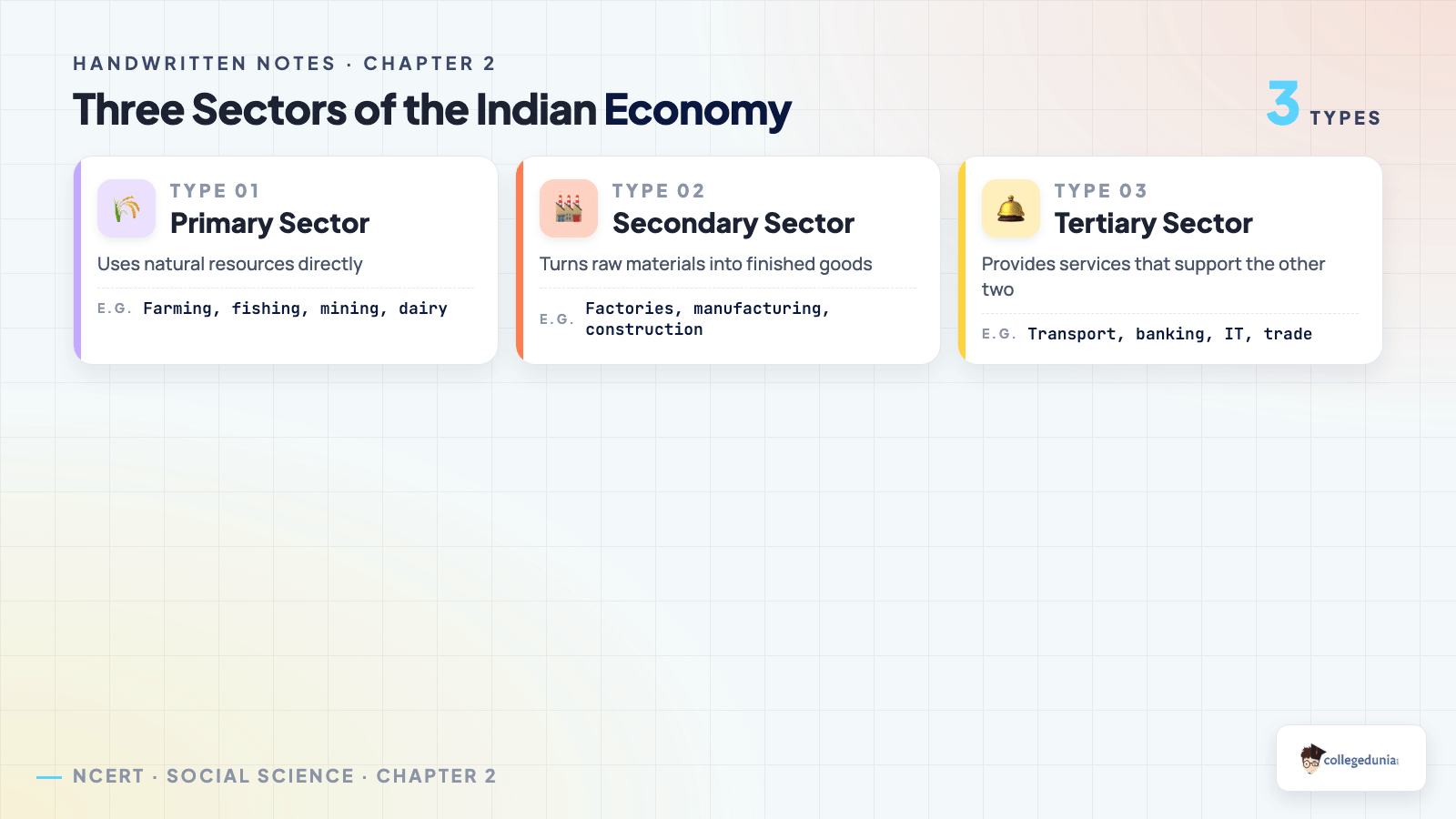
- Organised sector: fixed hours, regular salary, paid leave and job security, with rules followed.
- Unorganised sector: low pay, no security and no benefits, with rules often not followed.
- Public sector: the government owns most assets and provides services like the railways.
- Private sector: individuals or companies own assets and aim to earn a profit.
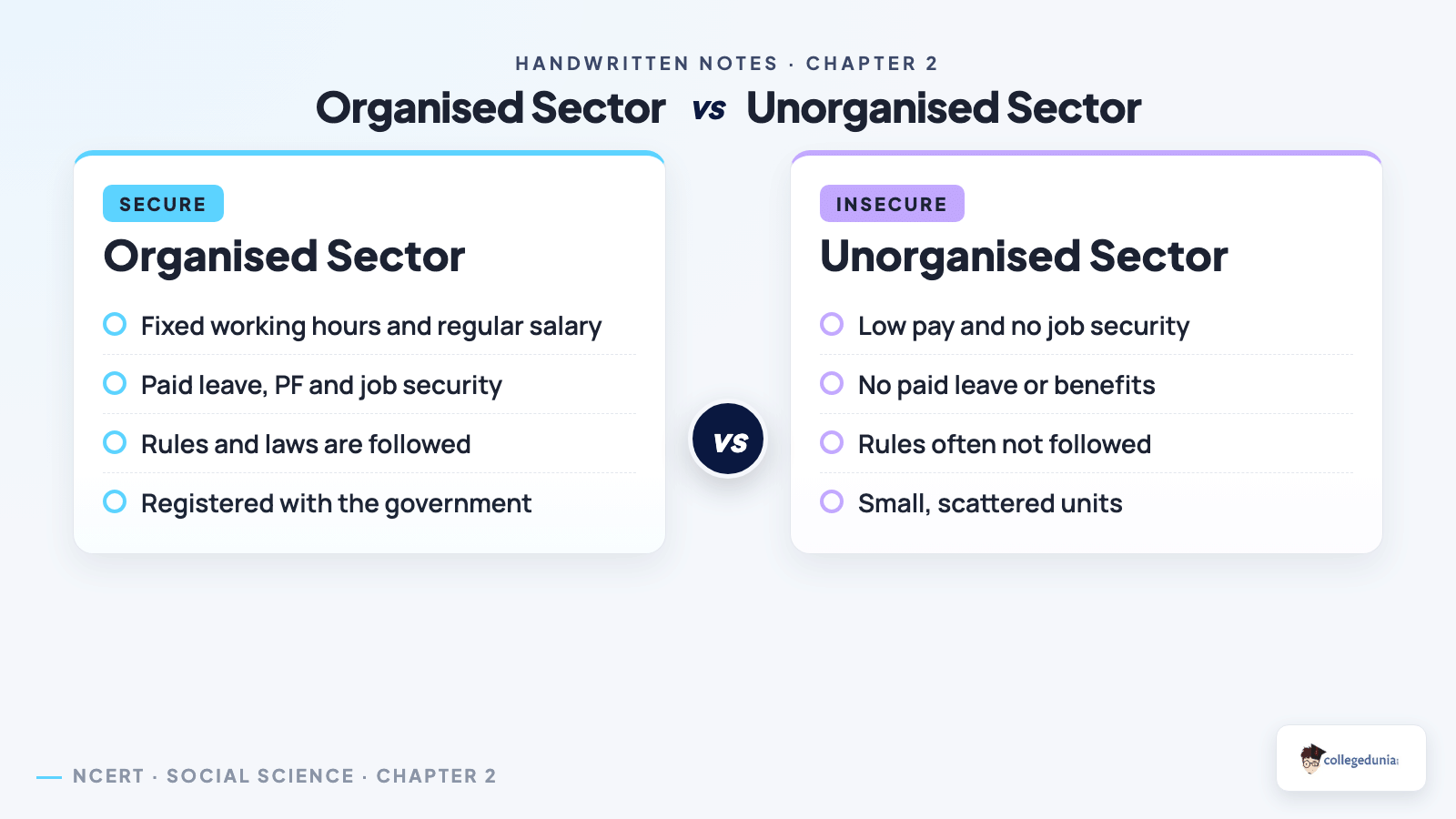
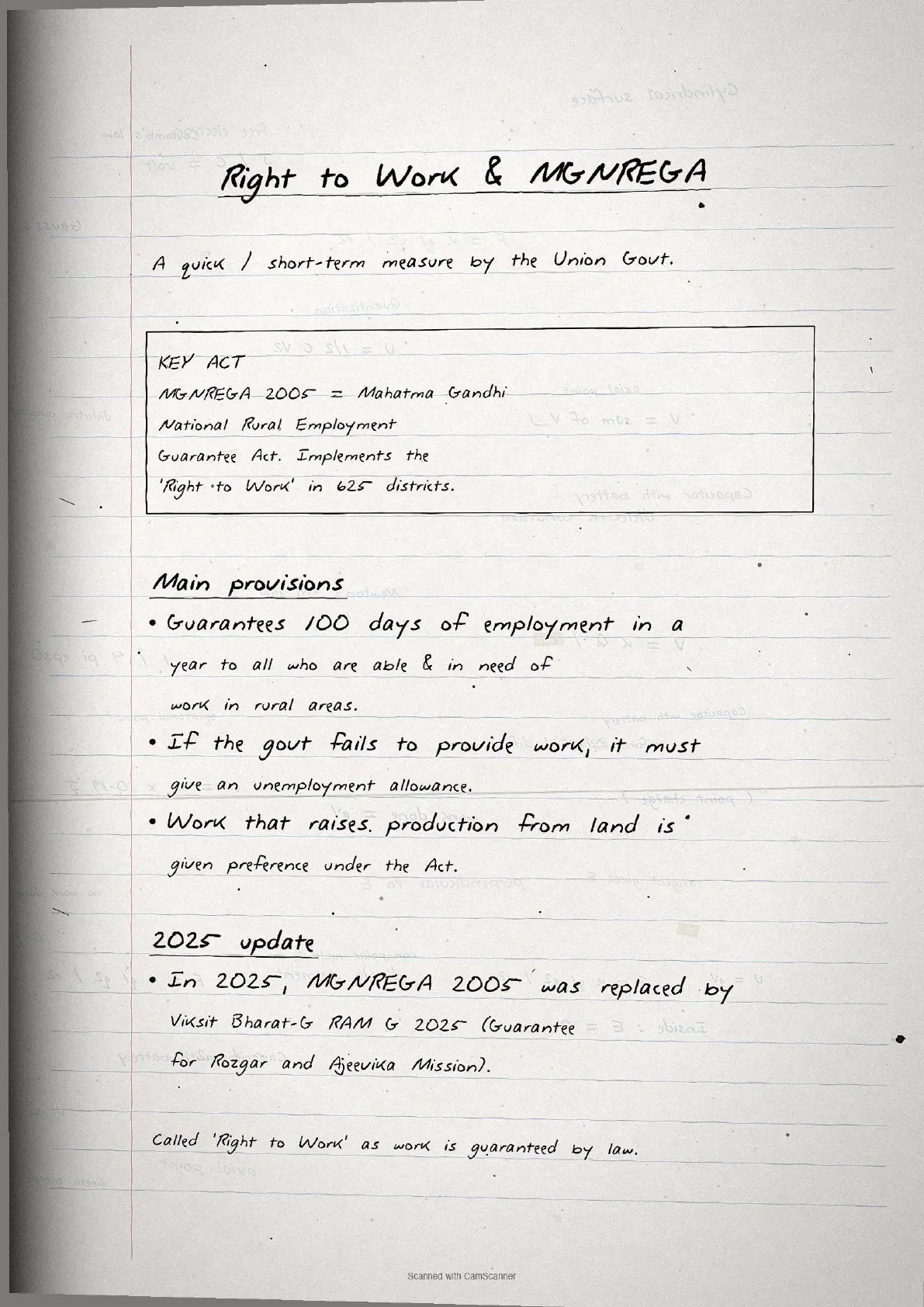
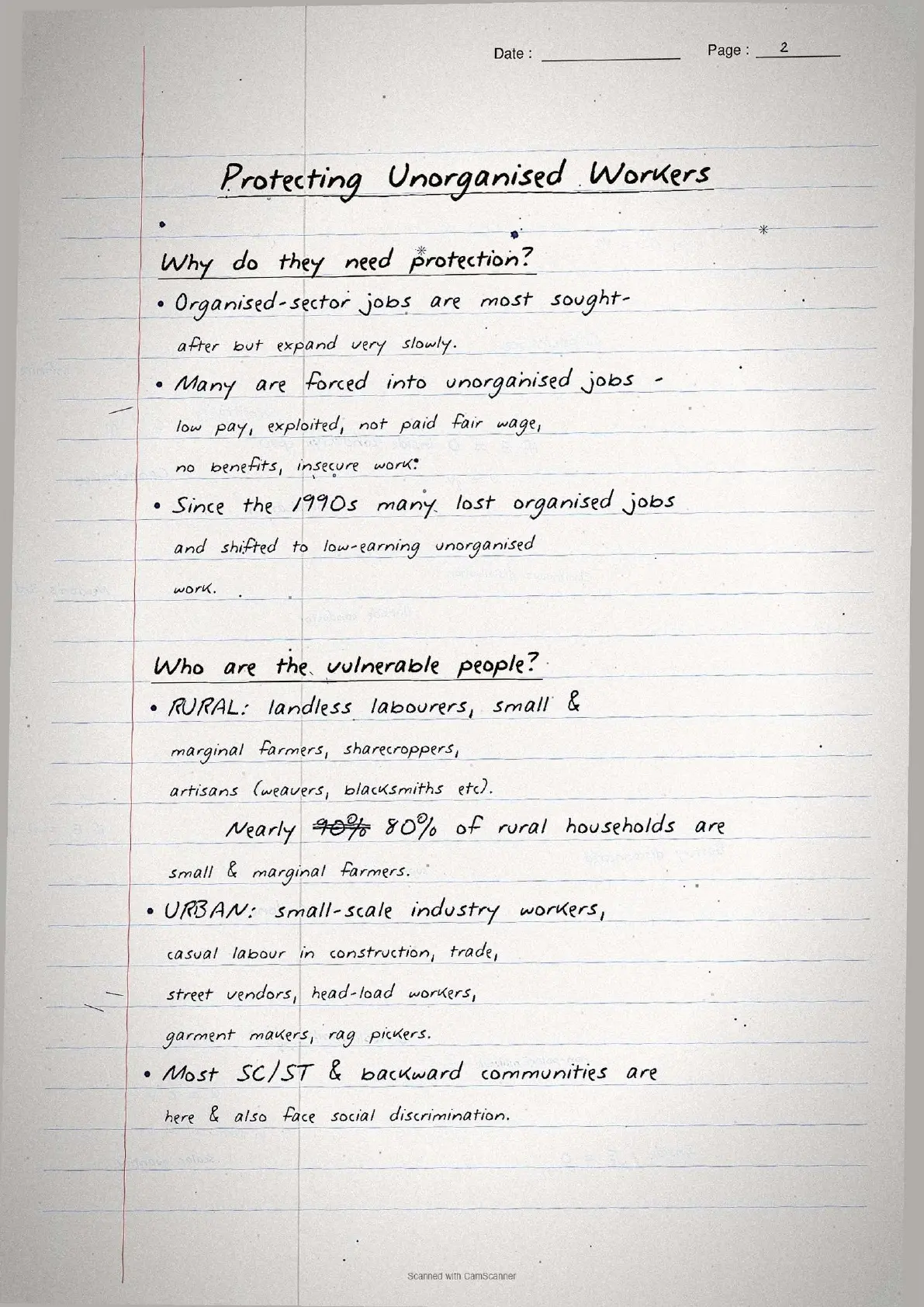
The pages box the most-tested protection point in the margin: MGNREGA 2005 promises 100 days of guaranteed wage work a year to rural households that need it. A linking arrow ties this scheme to the wider need to protect unorganised workers, who form the larger part of the workforce. This protection angle is the point examiners reward in the long-answer question.
How to Use These Handwritten Notes
Handwritten notes work best as a final layer of revision, not as your first read. The plan below helps students get the most out of the class 10 economics handwritten notes chapter 2 Sectors of the Indian Economy before the board exam. Follow it once a week in the run-up to the test.
- First pass: read the notes once, following the nature, conditions and ownership order.
- Active recall: cover the boxed examples and try to sort each activity from memory.
- Data practice: redraw the GDP-share idea and explain the primary-to-tertiary shift without looking.
- Self-test: attempt a short class 10 economics chapter 2 mcq drill to check the small facts.
Because the pages are scanned, students can save them on a phone and revise offline on the way to the exam centre. Pair these pages with the full solutions to check your written answers against the model points.
Common Mistakes These Notes Help You Avoid
A few errors cost marks in this chapter every year. Most come from mixing up the sectors or confusing GDP share with employment share. The notes flag each soft point in the margin so students phrase it safely on the answer sheet.
- Calling a factory part of the primary sector - making goods is the secondary sector.
- Confusing GDP share with employment share - the tertiary sector leads GDP, but the primary sector employs the most people.
- Forgetting that GDP counts only final goods and services, not intermediate ones.
- Mixing organised with public - organised is about work conditions, public is about ownership.
- Writing that MGNREGA gives jobs to everyone - it promises 100 days of work to rural households that need it.
Students who fix these five points usually move from average to high marks. The exam rewards a clear contrast, so always state the basis of the classification before you sort an activity.
Student Feedback
In a Collegedunia poll of 6,420 Class 10 Social Science students before the 2026 boards, 76% of students said scanned-style handwritten notes felt faster to revise from than printed text for this chapter. Most students used the boxed three-sector chart to recall the sort-the-activity answer in the exam.
Source: 2026-27 Class 10 Social Science student poll, 6,420 students from CBSE schools across 11 states.
Other Resources for Sectors of the Indian Economy Class 10
These handwritten notes are a revision layer. Pair them with the other Class 10 Economics resources for this chapter, all linked below. Read the notes, test yourself with the solutions, then open the book PDF for the original text and figures.
| Resource | Best used for |
|---|---|
| Sectors of the Indian Economy NCERT Solutions | Step-by-step answers to all the back-exercise questions |
| Sectors of the Indian Economy Class 10 Notes | Quick chapter summary with all sectors, GDP and key terms in one place |
| Sectors of the Indian Economy NCERT Book PDF | Reading the original NCERT chapter text, data tables and figures |
Tip: use the handwritten sector chart to memorise which activity sits where, then write the full answer in your own words. Drawing the three-sector chart once from memory fixes the sorting question for good.
All Class 10 Economics Handwritten Notes by Chapter
The table links the handwritten notes for every chapter in Class 10 Economics, so students can move across the course in one click. Sectors of the Indian Economy is highlighted.
| Chapter | Handwritten Notes |
|---|---|
| Understanding Economic Development | |
| Chapter 1 | Development |
| Chapter 2 | Sectors of the Indian Economy |
| Chapter 3 | Money and Credit |
| Chapter 4 | Globalisation and the Indian Economy |
| Chapter 5 | Consumer Rights |
Sectors of the Indian Economy Class 10 Handwritten Notes Common Questions
Ques. Where can I download the class 10 economics handwritten notes chapter 2 Sectors of the Indian Economy PDF?
Ans. You can download the Sectors of the Indian Economy handwritten notes PDF directly from this page. It is free, follows the 2026-27 NCERT, and gives the chapter as clean scanned notebook pages with boxed terms and a colour-coded sector chart.
Ques. Are handwritten notes good enough for the class 10 economics board exam?
Ans. Yes, for revision. Handwritten notes are best used as a final layer after you have read the chapter and practised the solutions. They make the three sectors, the GDP idea and the organised versus unorganised contrast quick to recall in the exam.
Ques. What are the three sectors of the Indian economy in this chapter?
Ans. The three sectors are primary, secondary and tertiary. The primary sector uses nature directly like farming, the secondary sector makes goods like factories, and the tertiary sector gives services like transport and banking.
Ques. What is the difference between GDP share and employment share in this chapter?
Ans. GDP share is how much of the country's output a sector produces, while employment share is how many people work in it. In India the tertiary sector leads GDP, but the primary sector still employs the most people. The notes box both terms separately so students never confuse them.
Ques. How should I use these notes for quick revision?
Ans. Read the pages once in the nature, conditions and ownership order, cover the boxed examples and sort each activity from memory, redraw the GDP-share idea, then attempt a short class 10 economics chapter 2 mcq drill to test the small facts.



Comments