



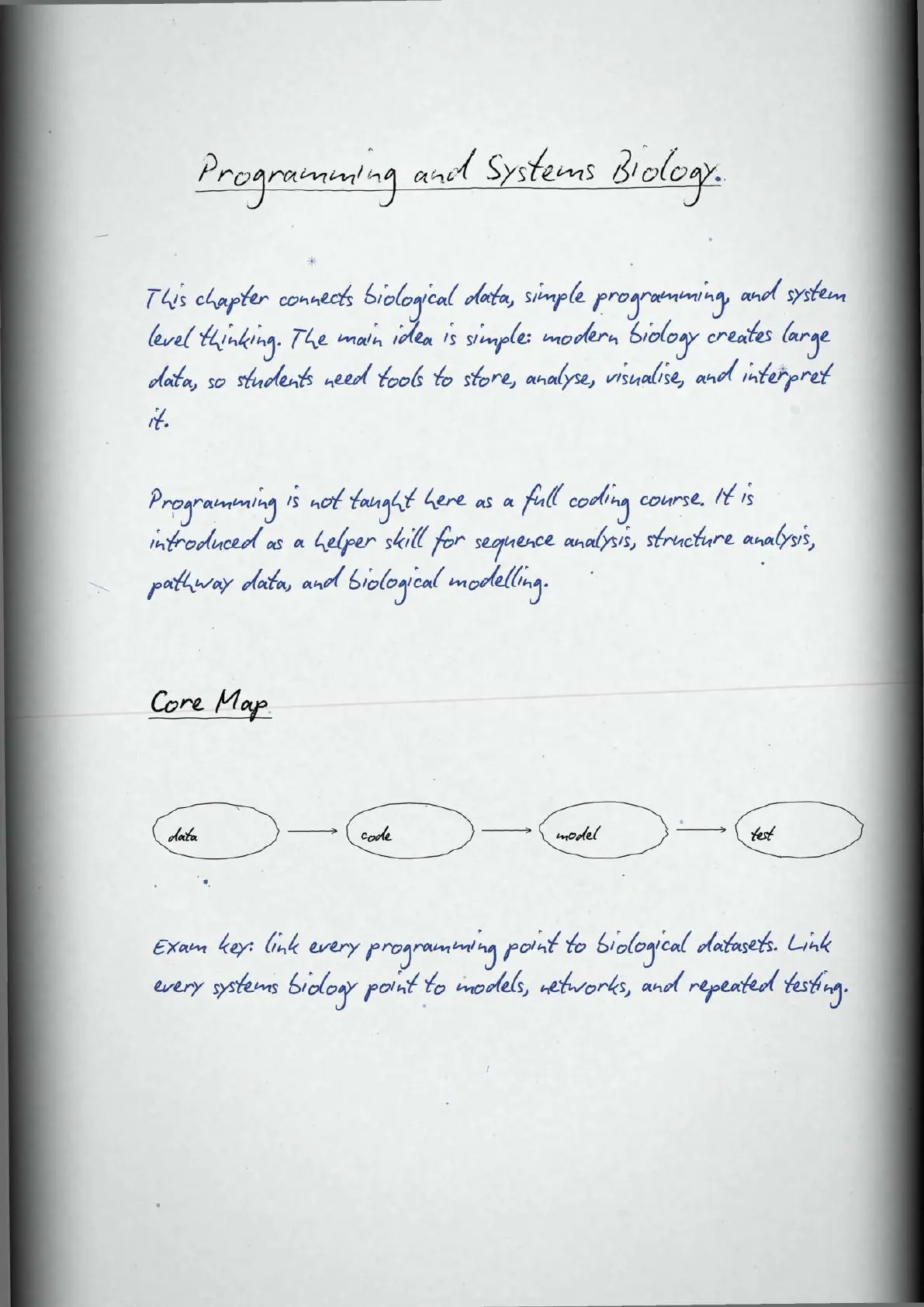
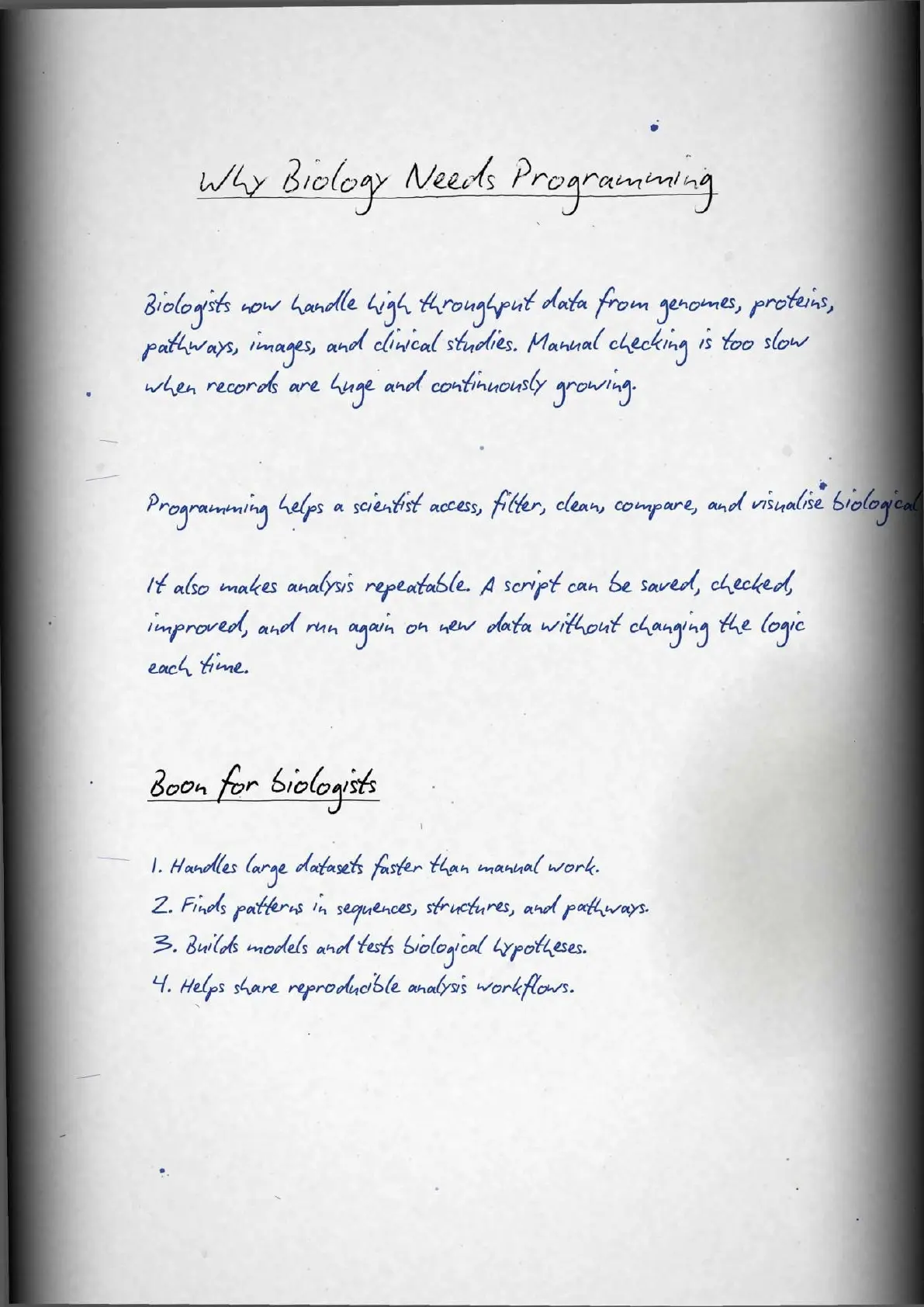
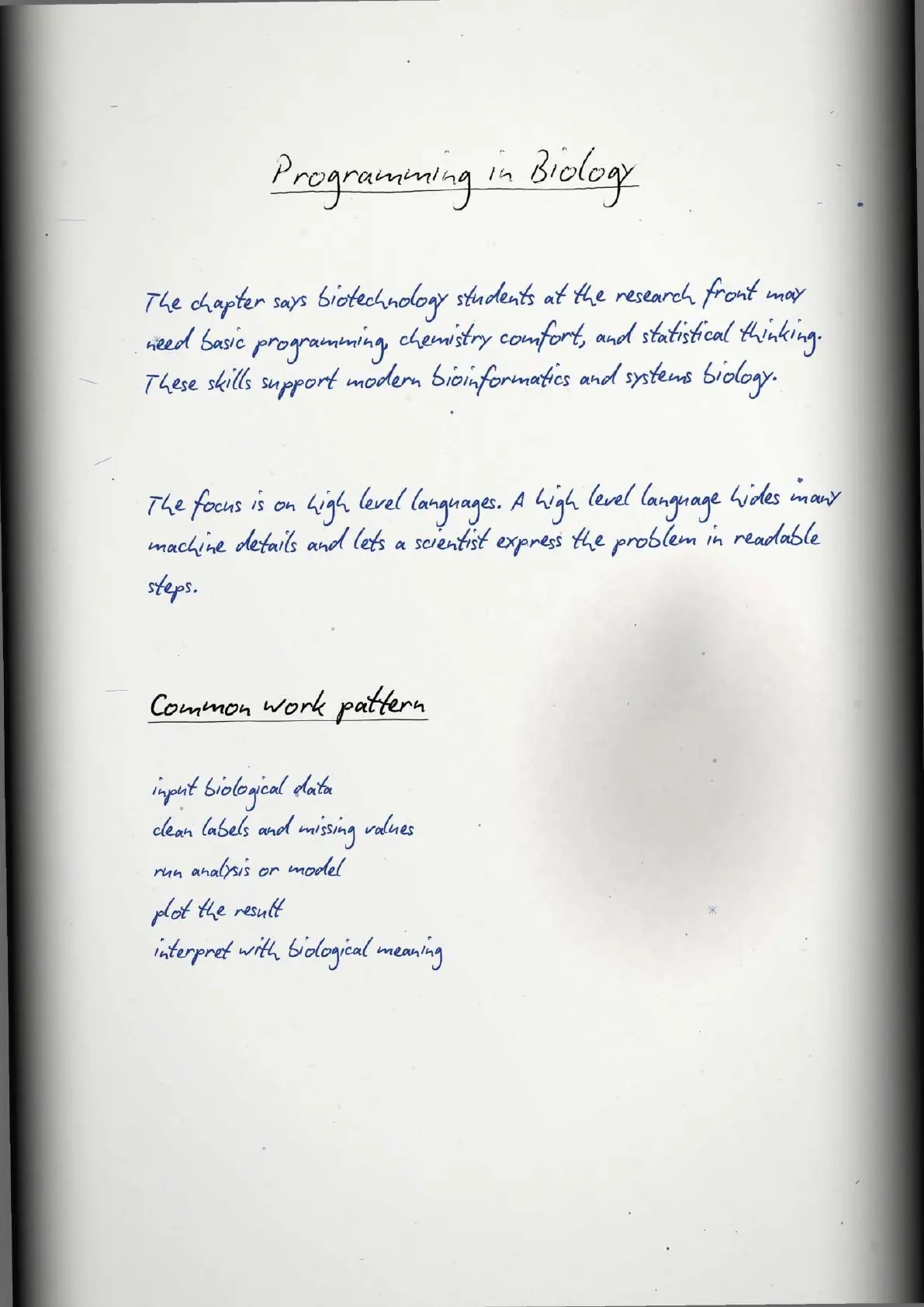
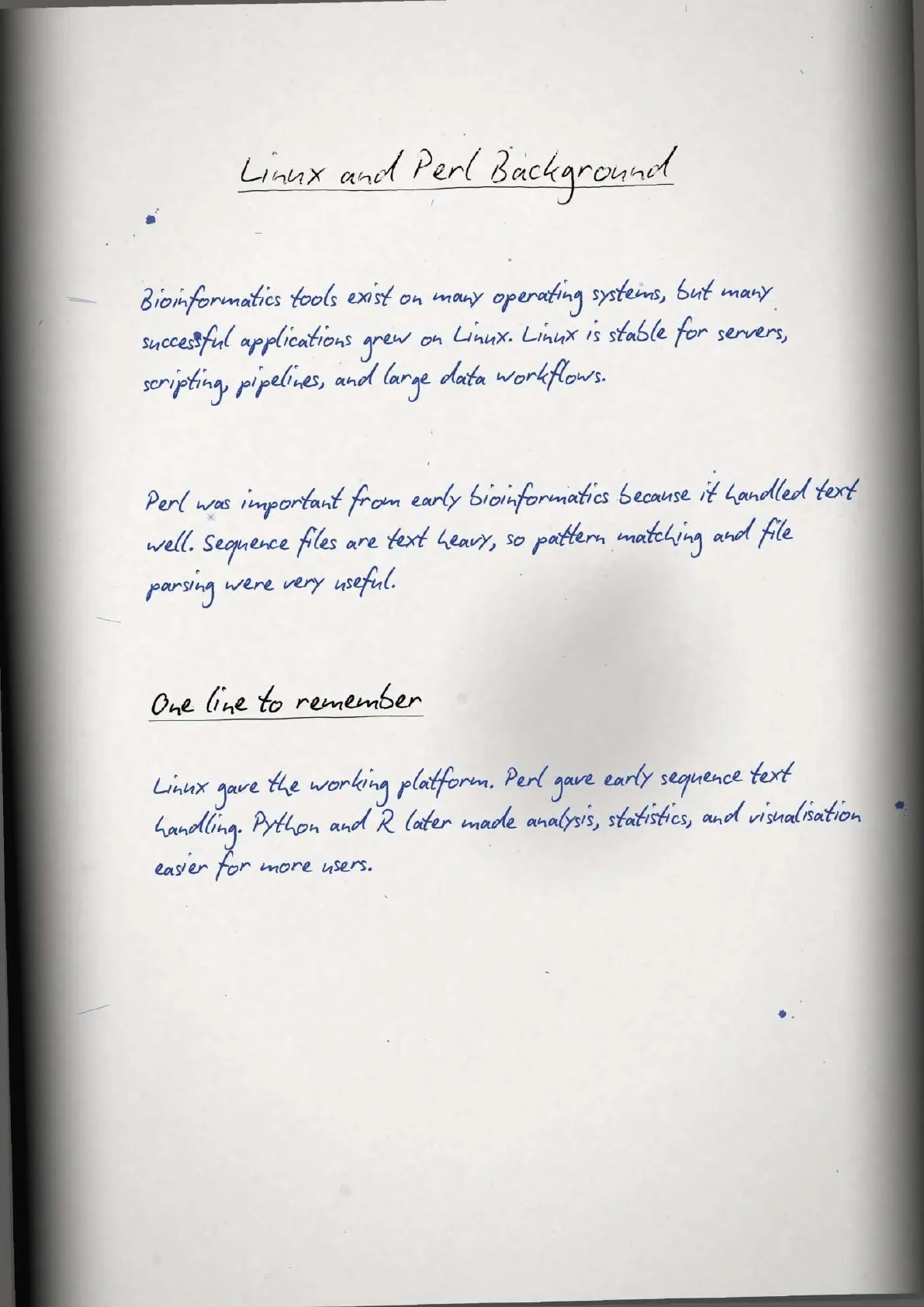
The handwritten notes on Class 11 Biotechnology Chapter 11 Programming and Systems Biology have been prepared for quick revision from the 2026-27 NCERT textbook. The PDF covers programming in biology, Python, R, systems biology models, data management, ontologies, workflows and model-analysis methods.
- Covers Programming in Biology and Systems Biology in NCERT order.
- Includes workflow diagrams, tool categories, exercise hooks and quick recall points.
- Useful for school tests, NCERT exercise revision and last-week concept recall.

Student Feedback: In a Collegedunia survey of 12,780 students before the 2026 boards, 76% said the systems biology workflow became easier after revising it as a step cycle.
|
Table of Contents |
Programming and Systems Biology PDF Highlights
Programming and Systems Biology connects large biological datasets with programming tools, databases, networks and computational models. The handwritten PDF keeps the chapter exam-ready while covering the NCERT terms students need for direct questions.
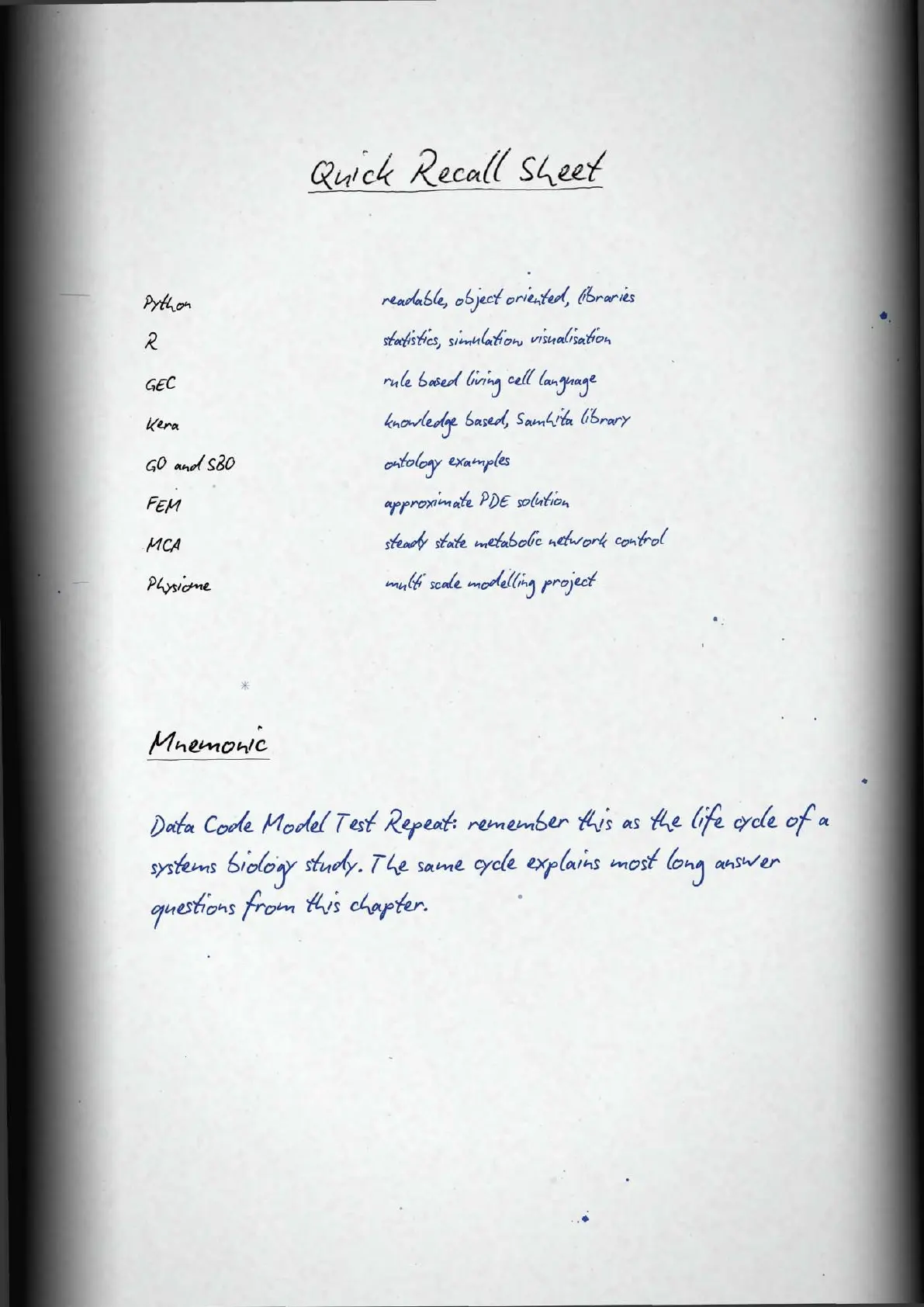
Important: revise the examples with their use. Python, R, GEC, Kera, GO, SBO, FEM and MCA often appear as short-answer terms.
| Revision area | What the PDF covers |
|---|---|
| Programming in biology | Linux, Perl, Python, R, GEC, Kera and why programming helps biologists. |
| Systems biology | System models, networks, model updates, historical milestones and Physiome. |
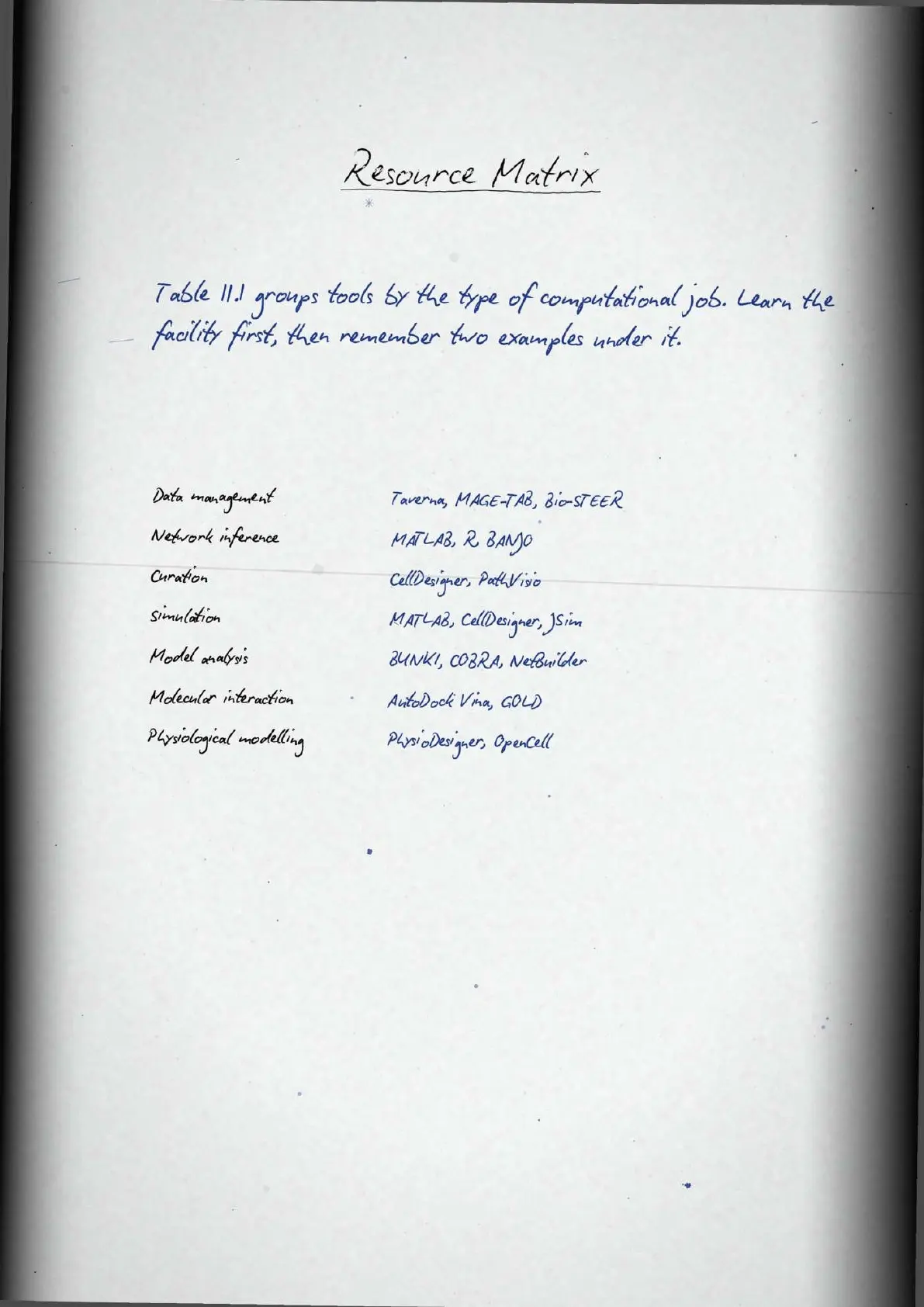
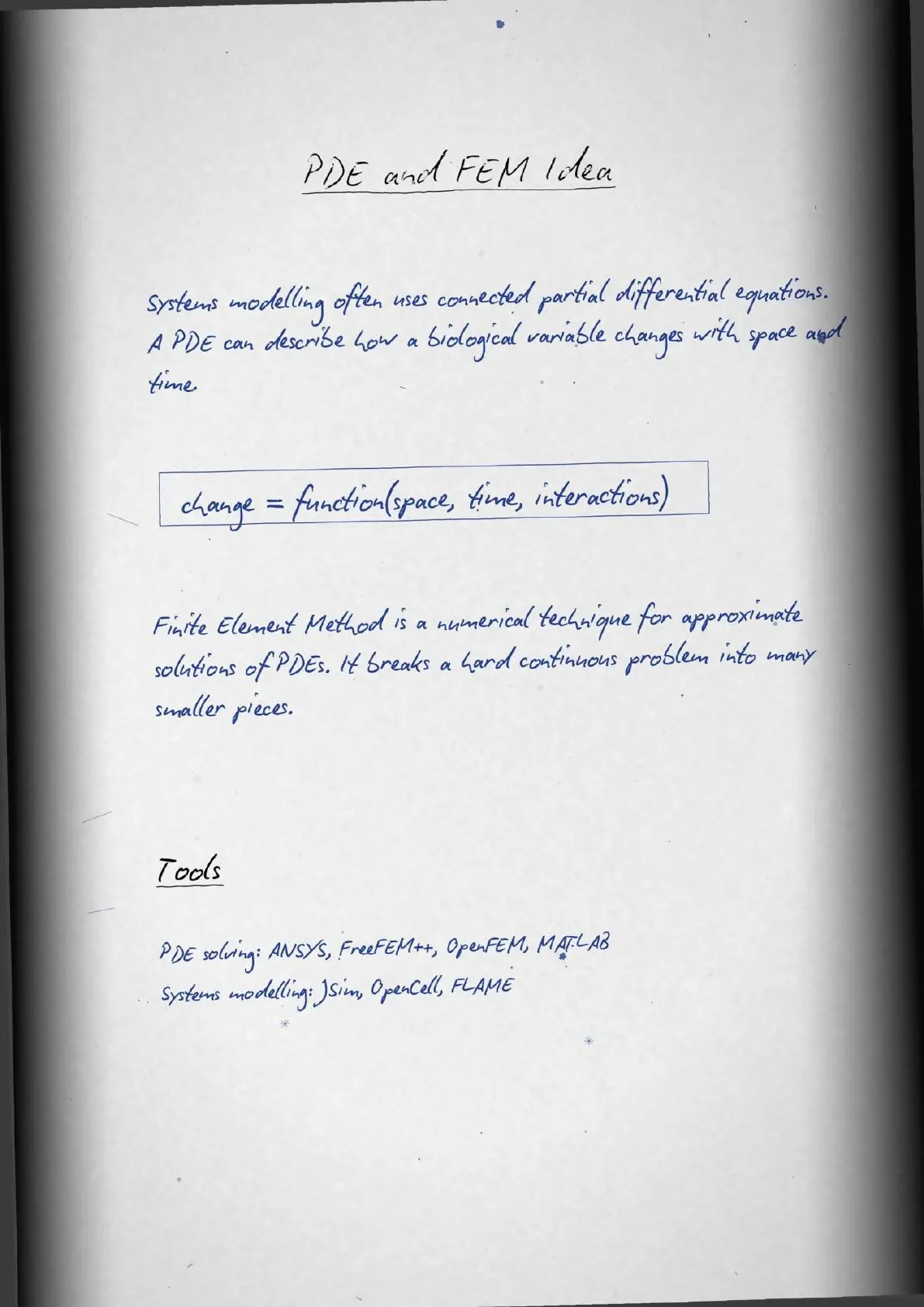
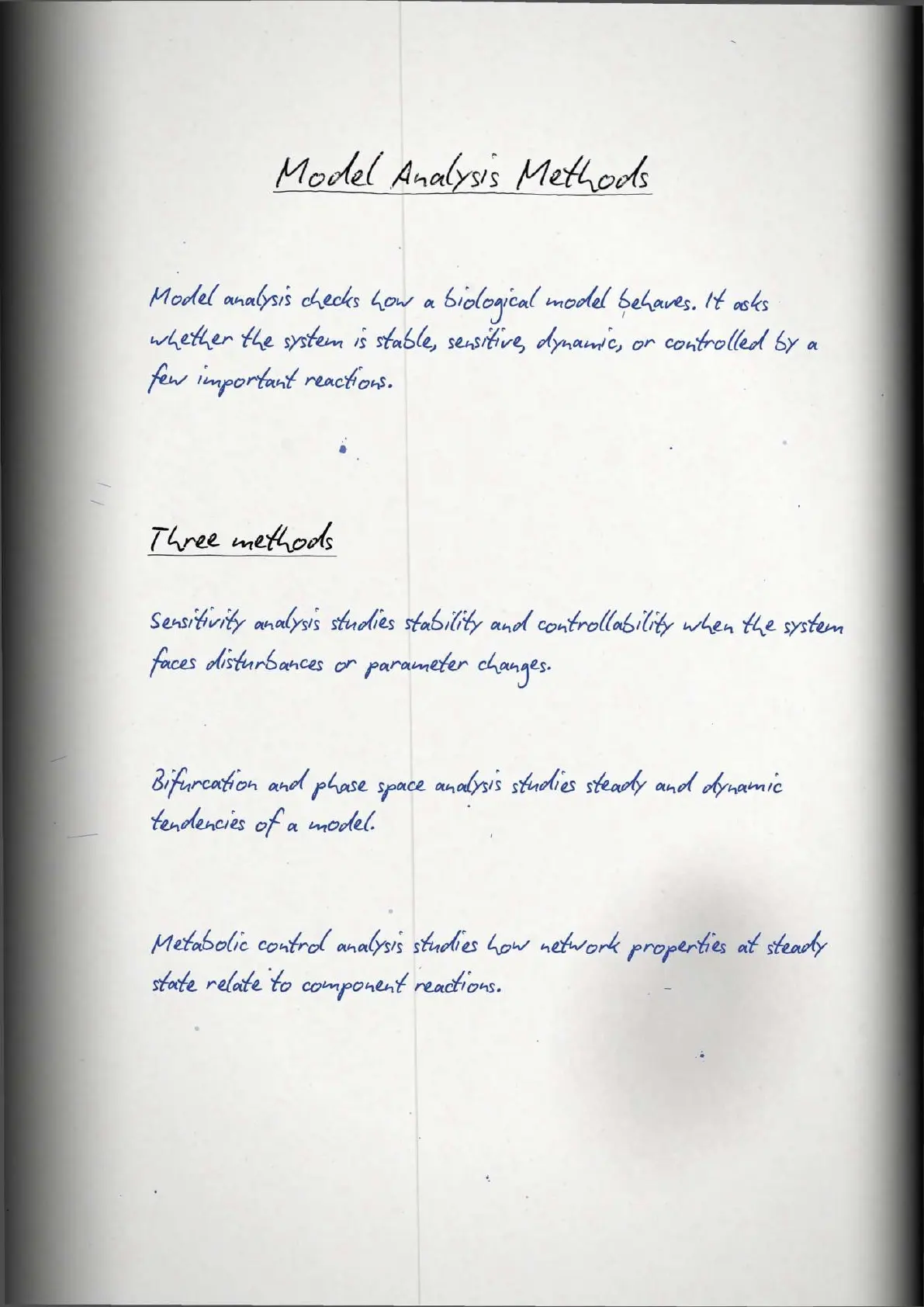
| Data and model analysis | Minimum information, XML formats, ontologies, workflow tools, PDE, FEM, sensitivity and MCA. |
Systems Biology Workflow for Class 11 Biotechnology
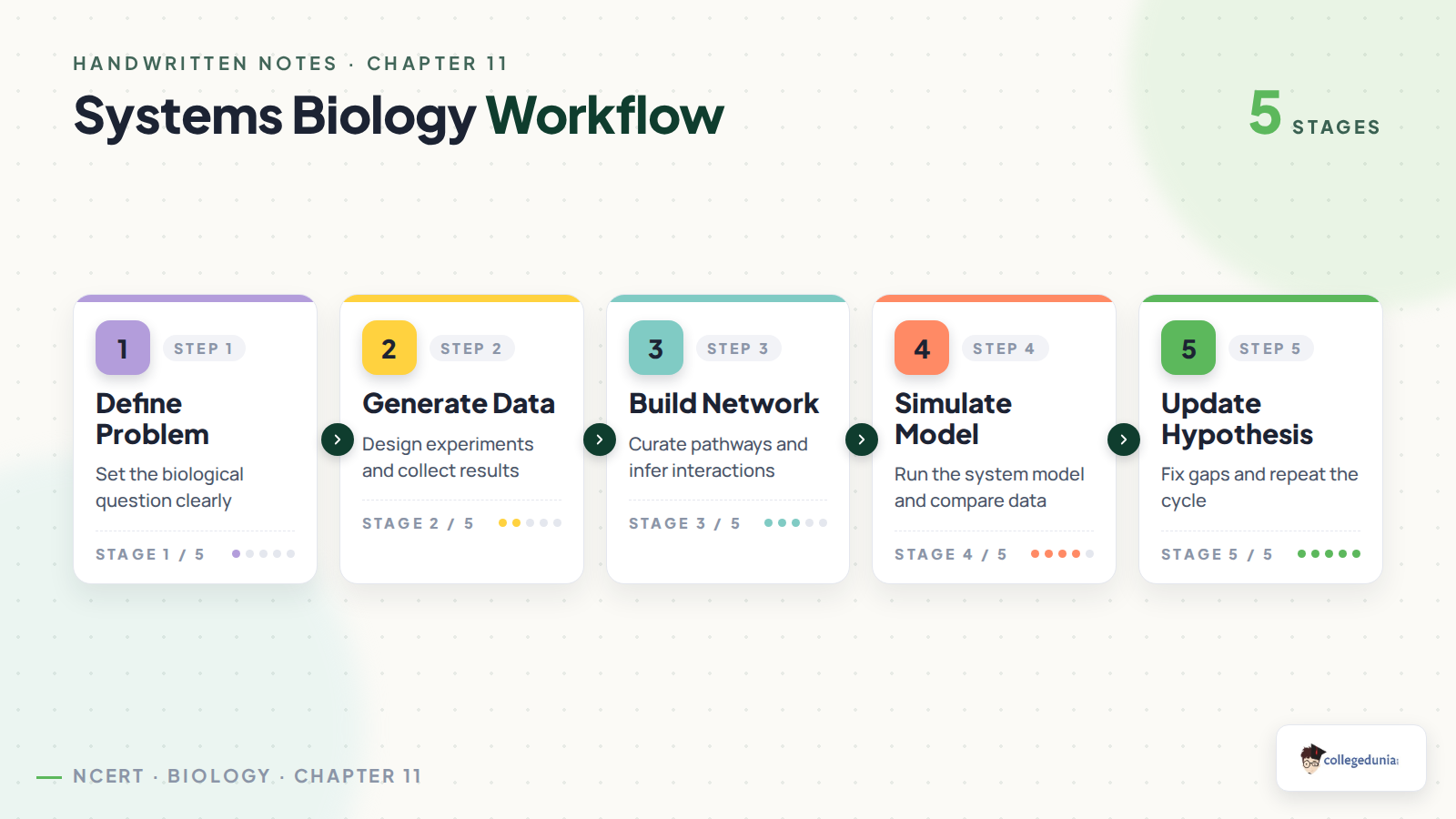
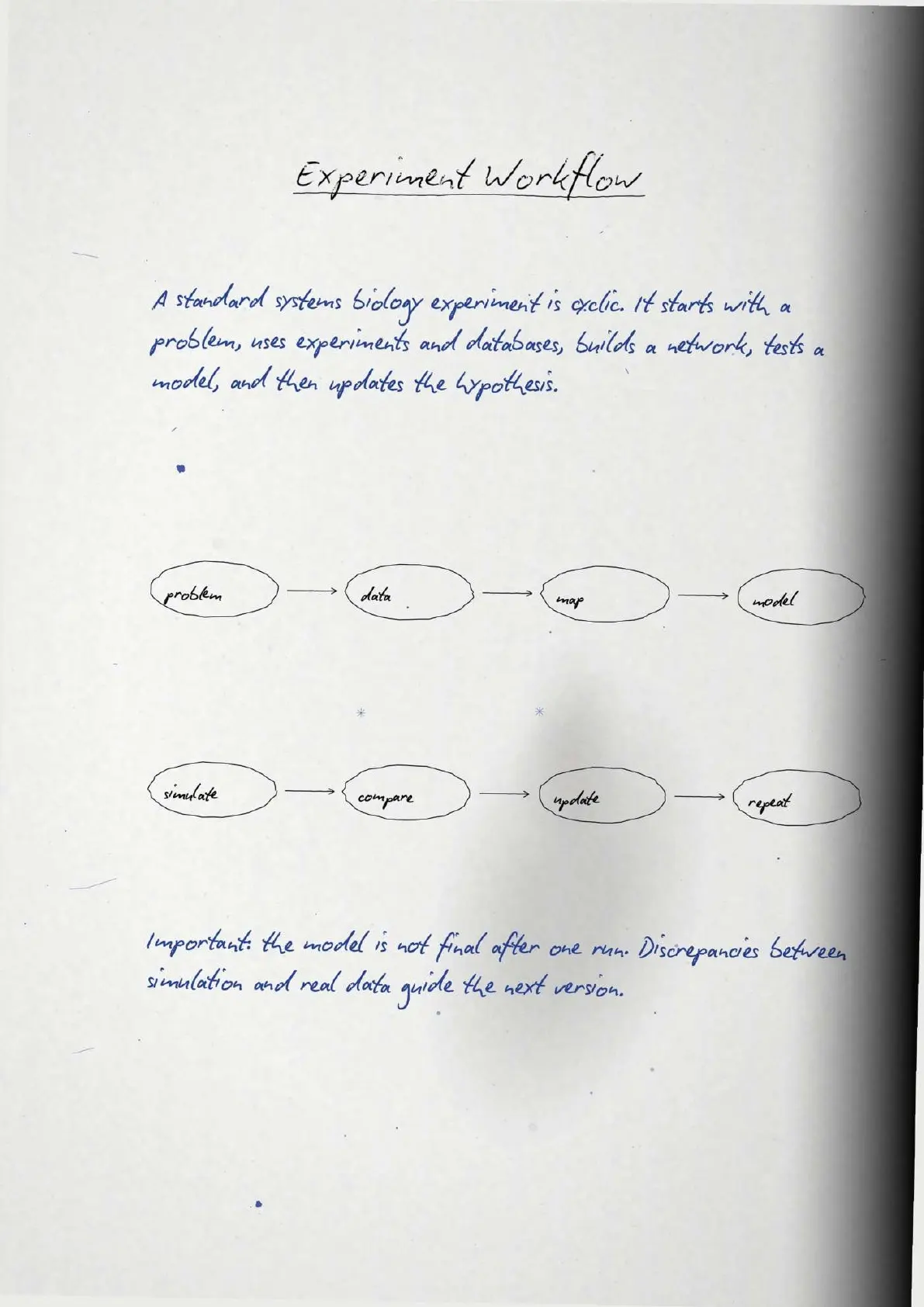
The systems biology workflow is cyclic. Students should remember it as problem, data, map, model, compare and update. Each round improves the hypothesis by checking simulated results against experimental data.
- Define the problem before collecting data.
- Curate literature, pathways and database evidence.
- Build the network interface and run the model.
- Use discrepancies to update the hypothesis.
Programming in Biology Video Revision
Source: Magnet Brains on YouTube
Python, R and Biological Data Analysis
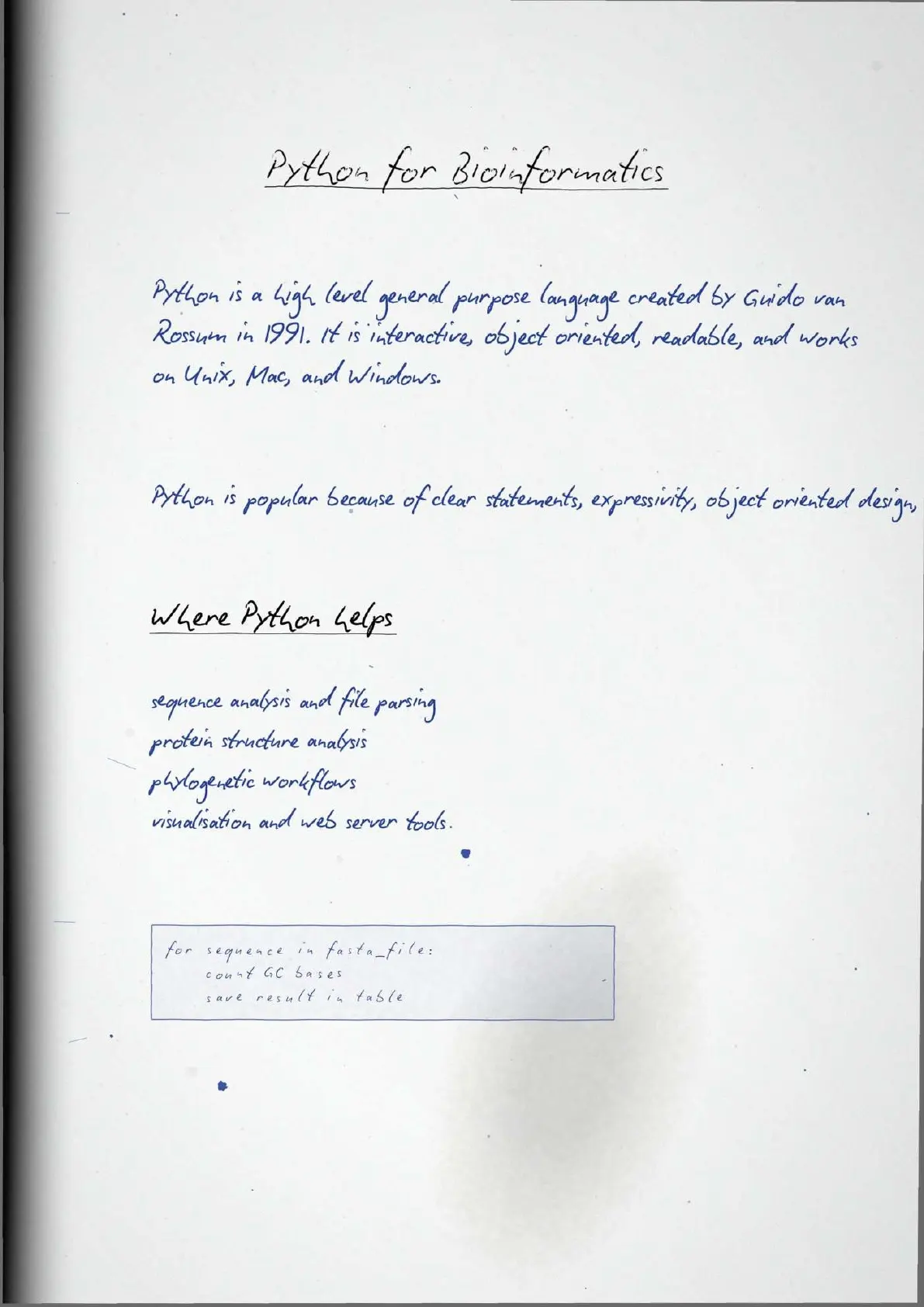
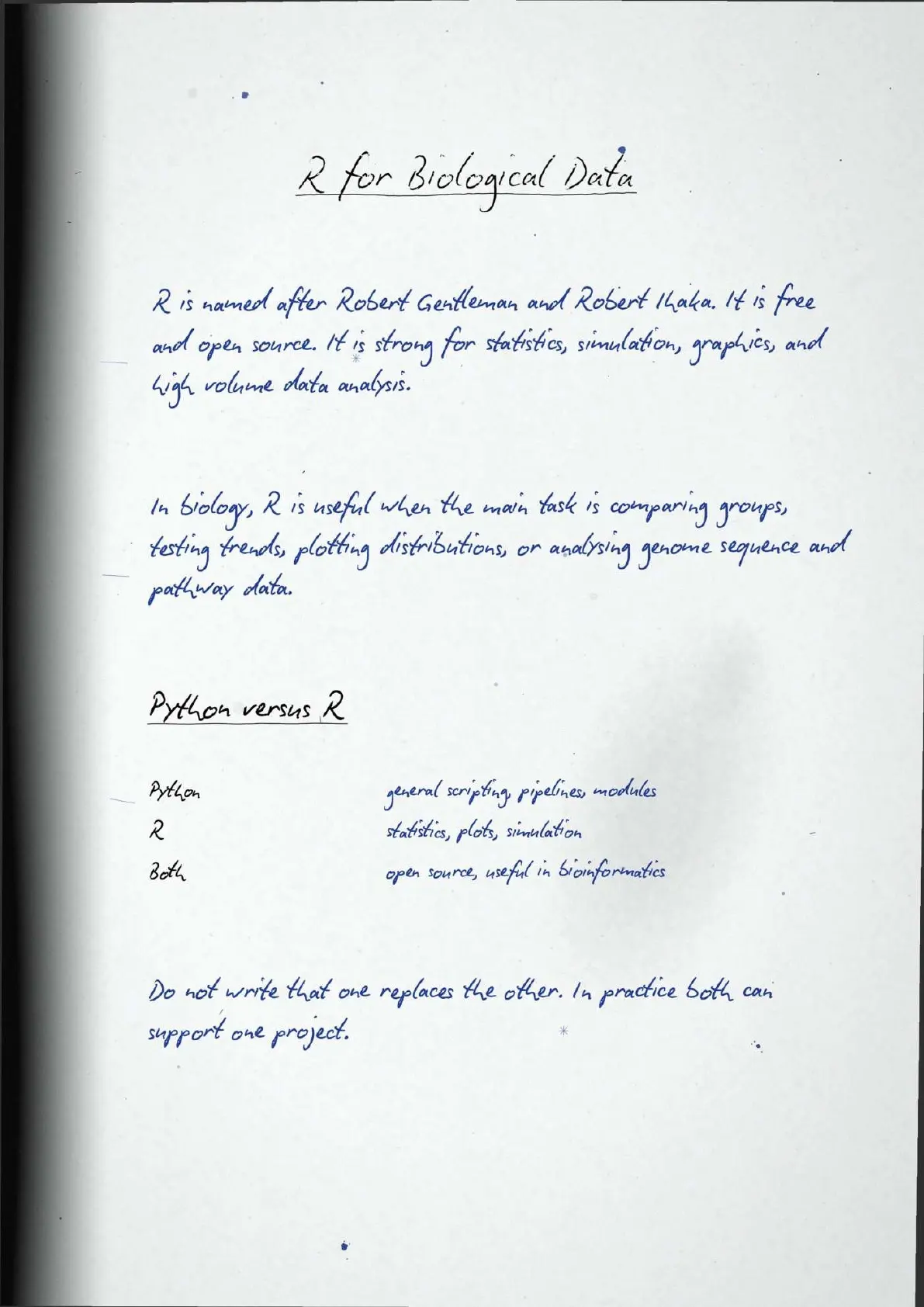
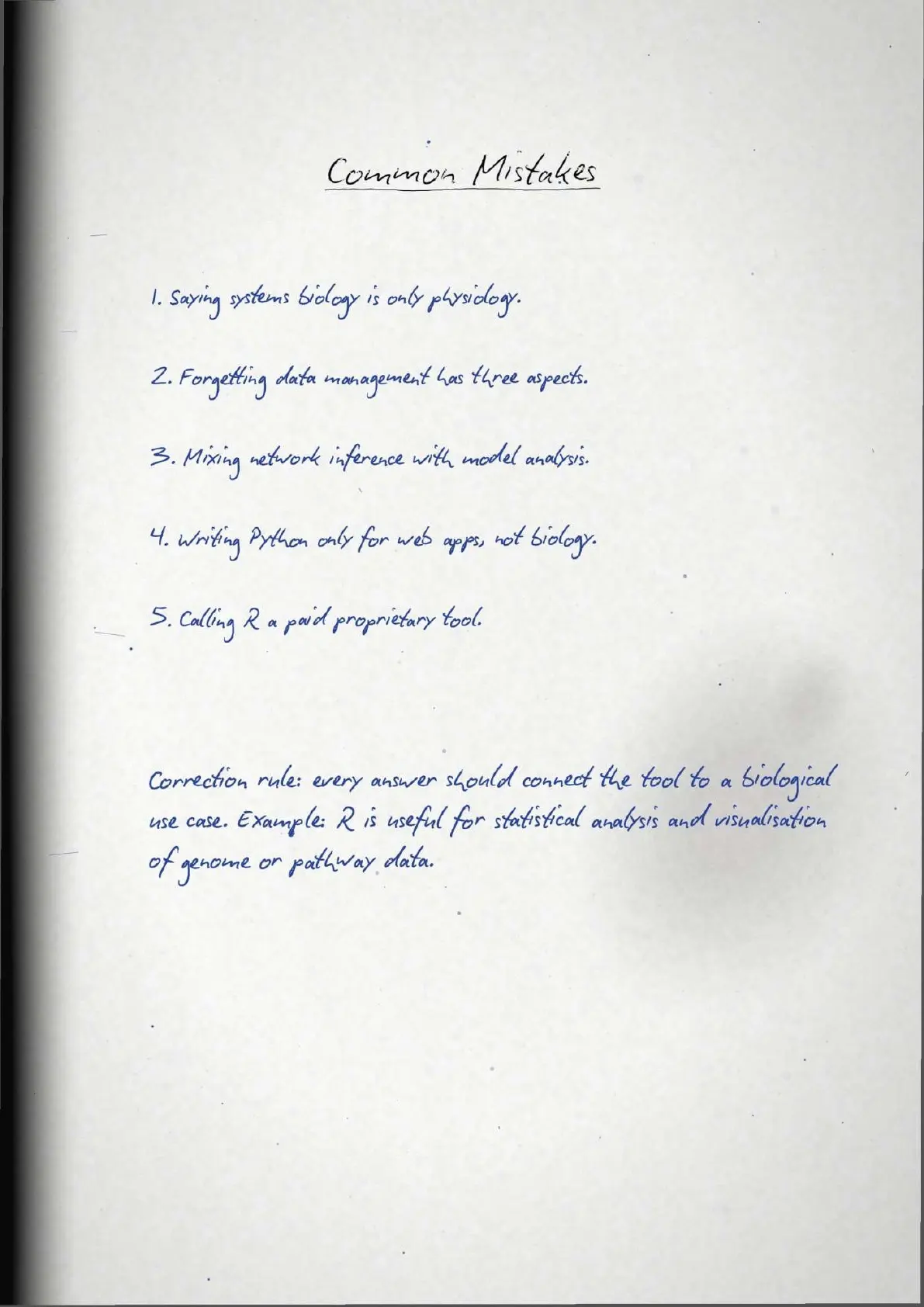
Programming helps biologists handle high-throughput data. Python is useful for readable scripts, modules, sequence analysis and visualisation. R is useful for statistics, simulation and graph-based study of genome or pathway data.
- Python: clear syntax, object-oriented design and third-party toolkits.
- R: rapid statistical analysis, simulation and data visualisation.
- Perl: early sequence text handling in bioinformatics.
Systems Biology Models and Network Thinking
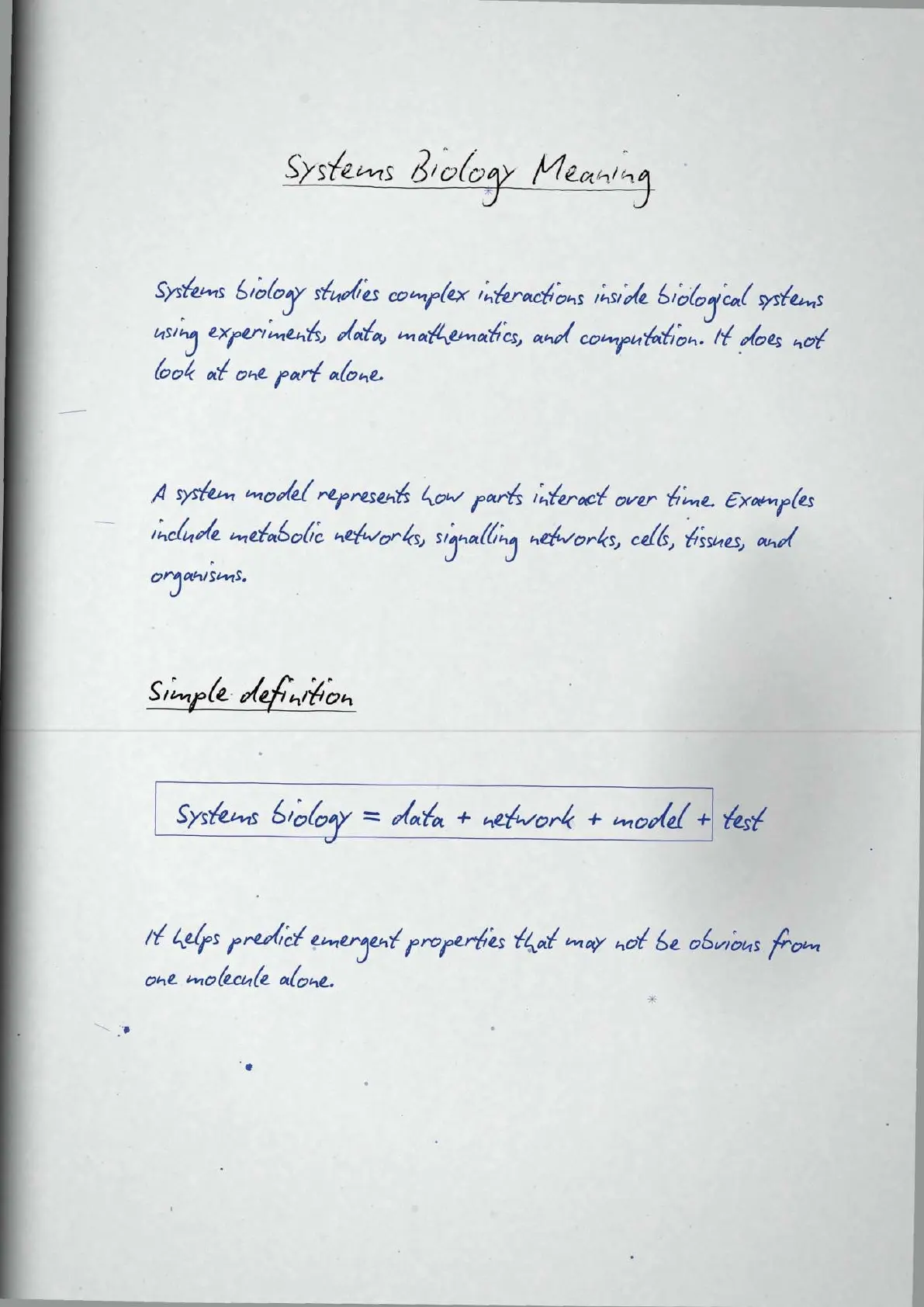
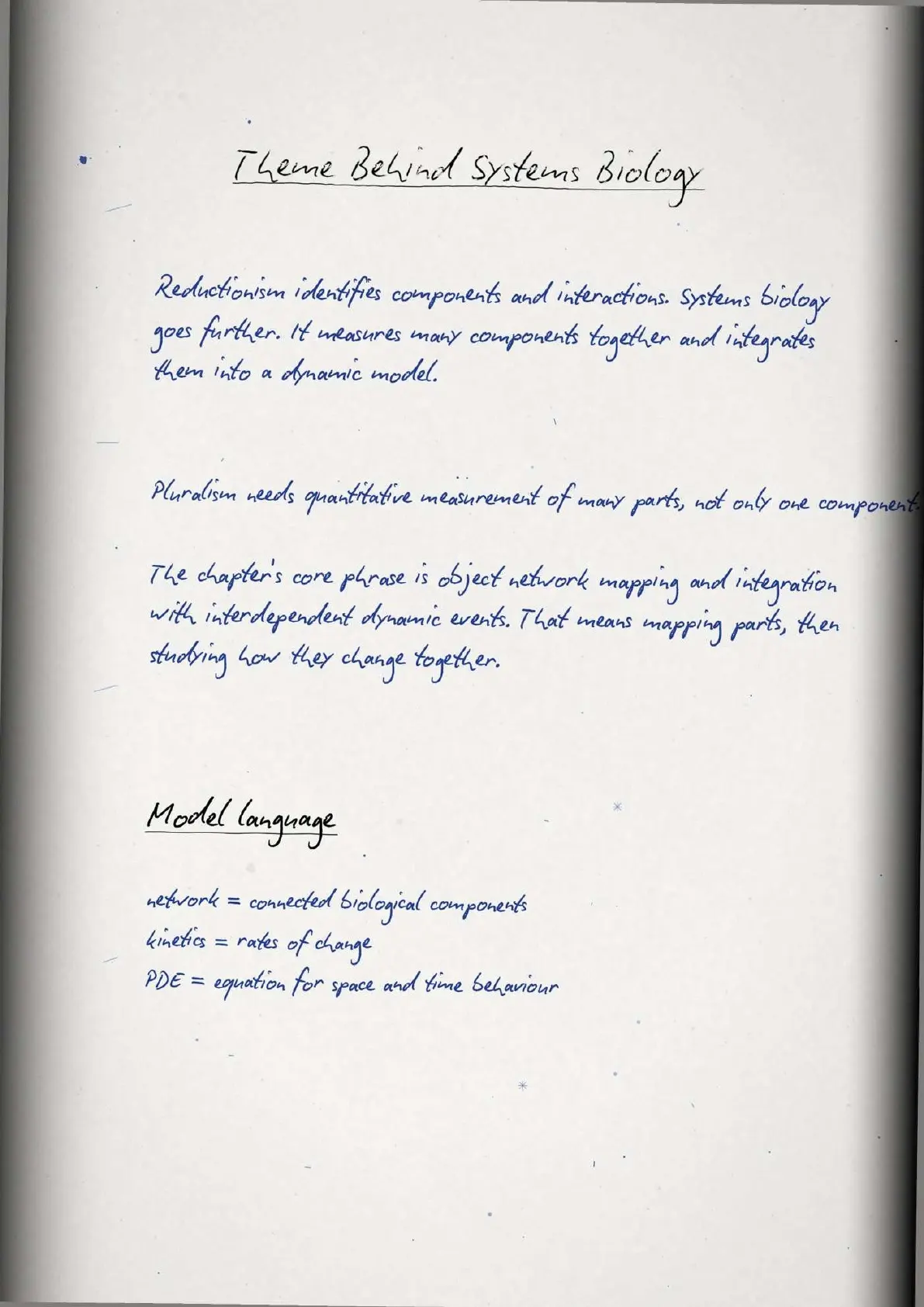
Systems biology studies interactions, not isolated parts only. A system model represents how biological components behave together over time, especially in metabolic and signalling networks.
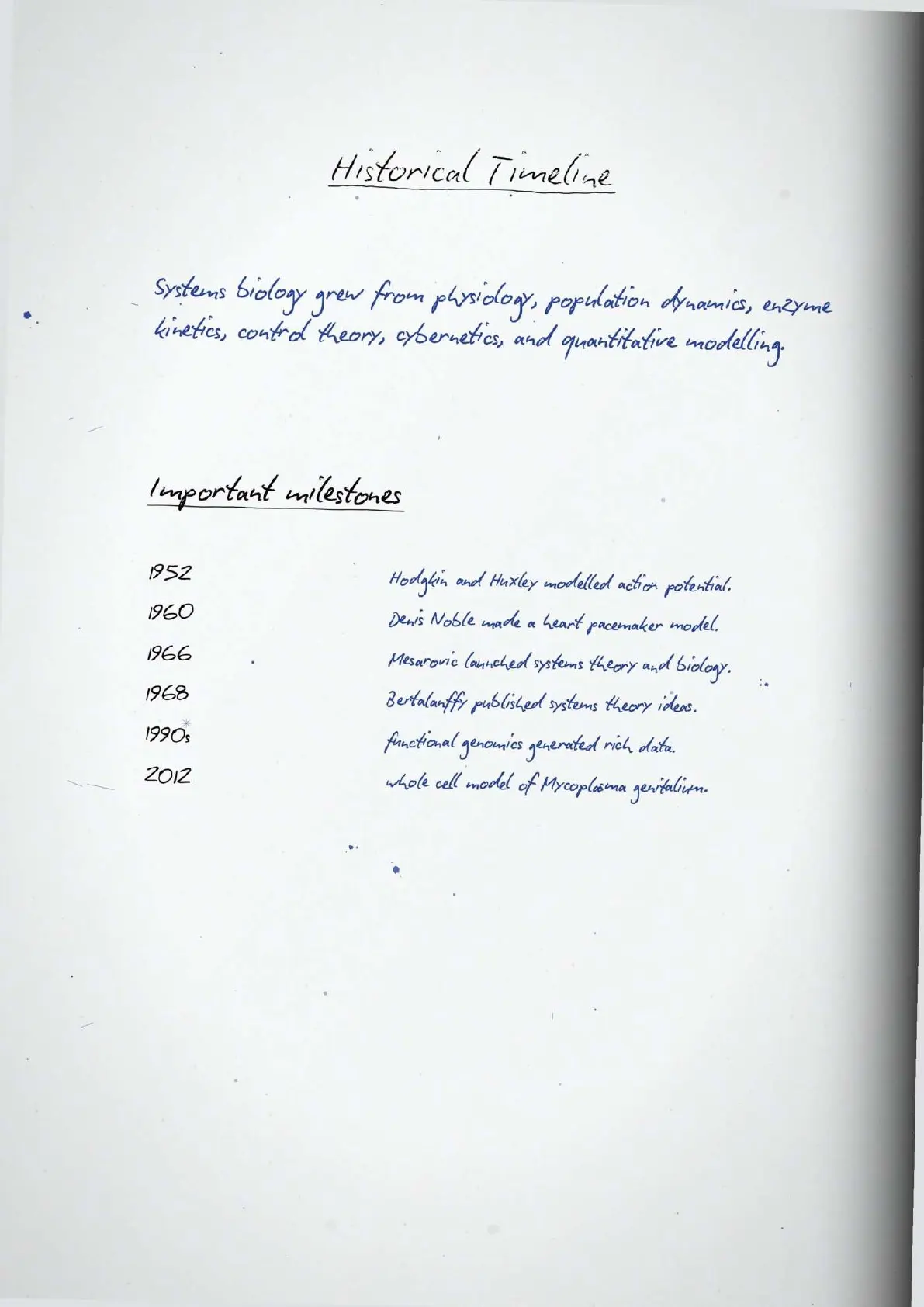
The NCERT chapter links this idea to physiology, modelling, cybernetics, functional genomics and whole-cell models. It also introduces the Physiome project as a multi-scale modelling effort.
Data Management, Ontologies and Workflow Tools
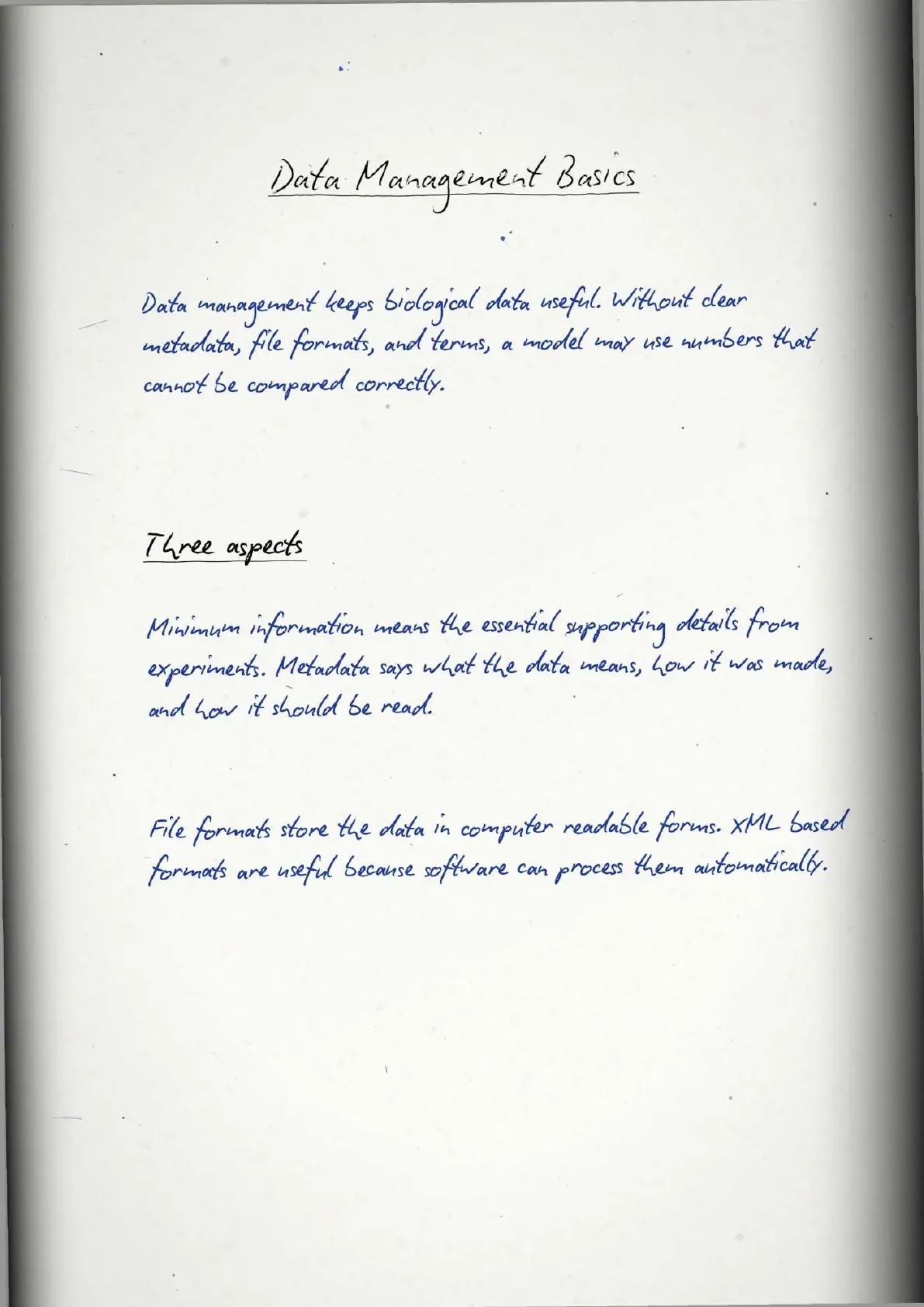
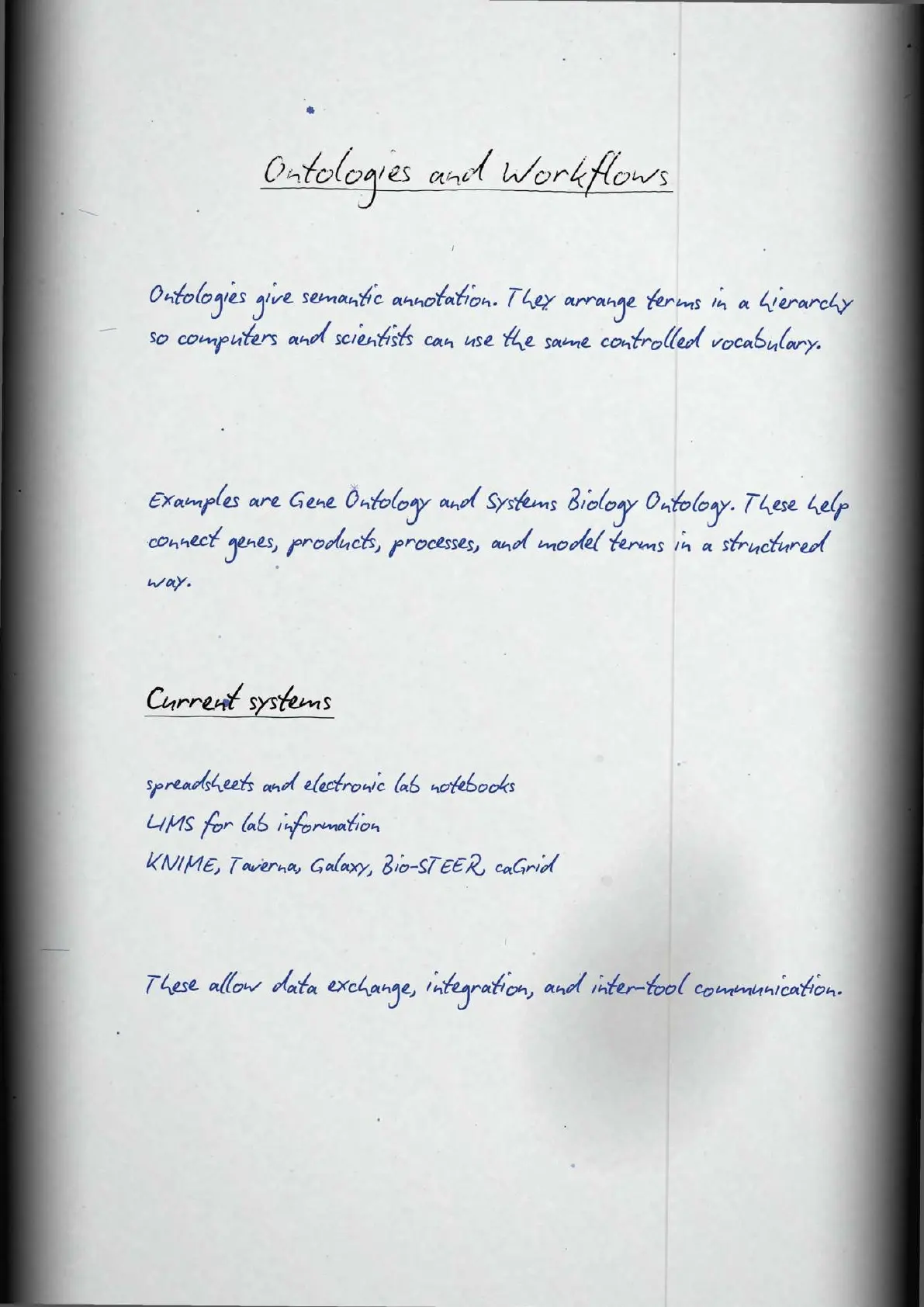
Systems biology depends on clean data management. Students should remember the three data aspects from NCERT: minimum information, file formats and ontologies.
| Aspect | Meaning | Example |
|---|---|---|
| Minimum information | Essential details that explain how data was produced. | Metadata for experiments |
| File formats | Computer-readable data forms, often XML based. | Structured biological files |
| Ontologies | Hierarchical terms for semantic annotation. | GO and SBO |
Programming vs Systems Biology Quick Comparison
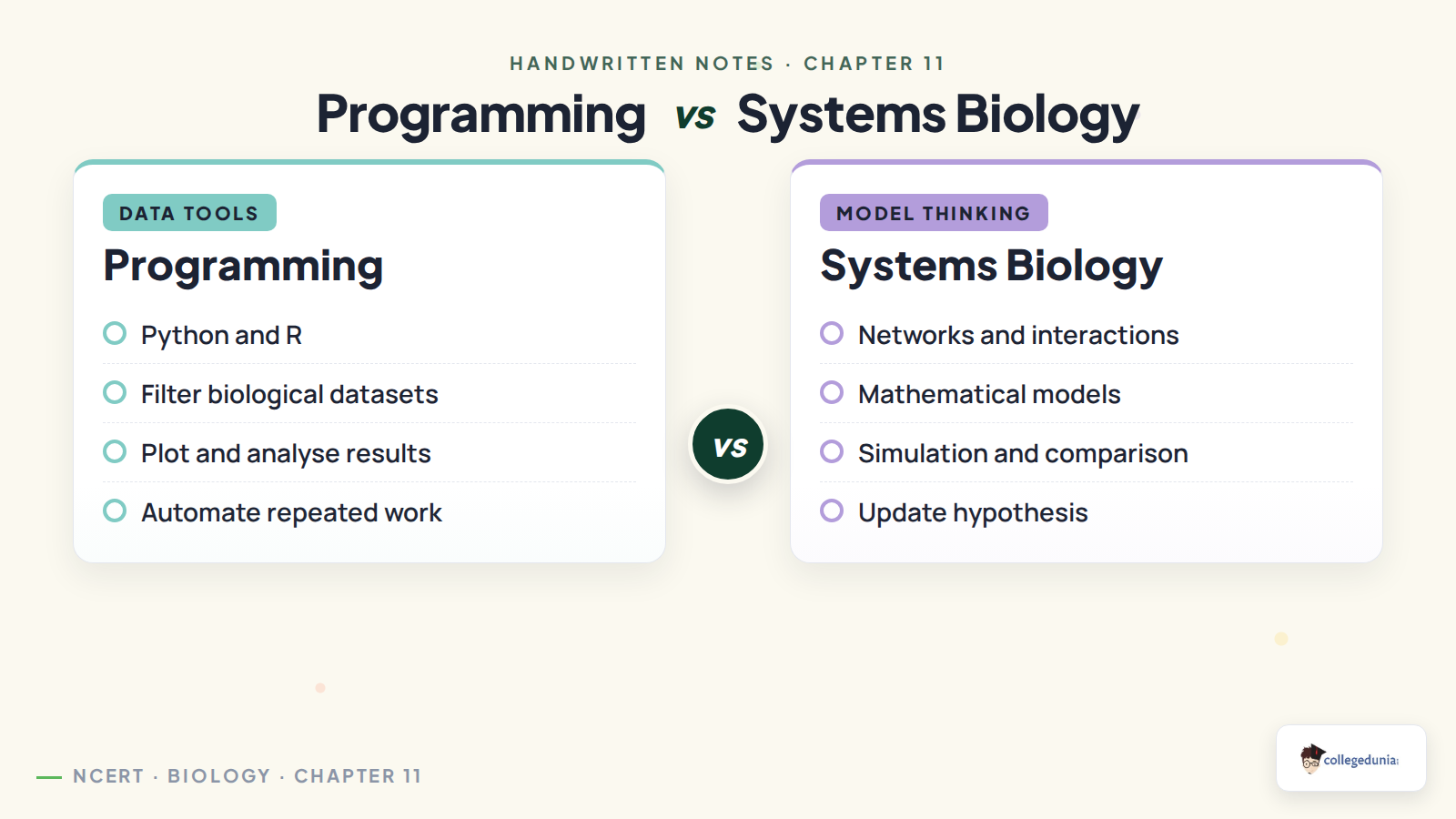
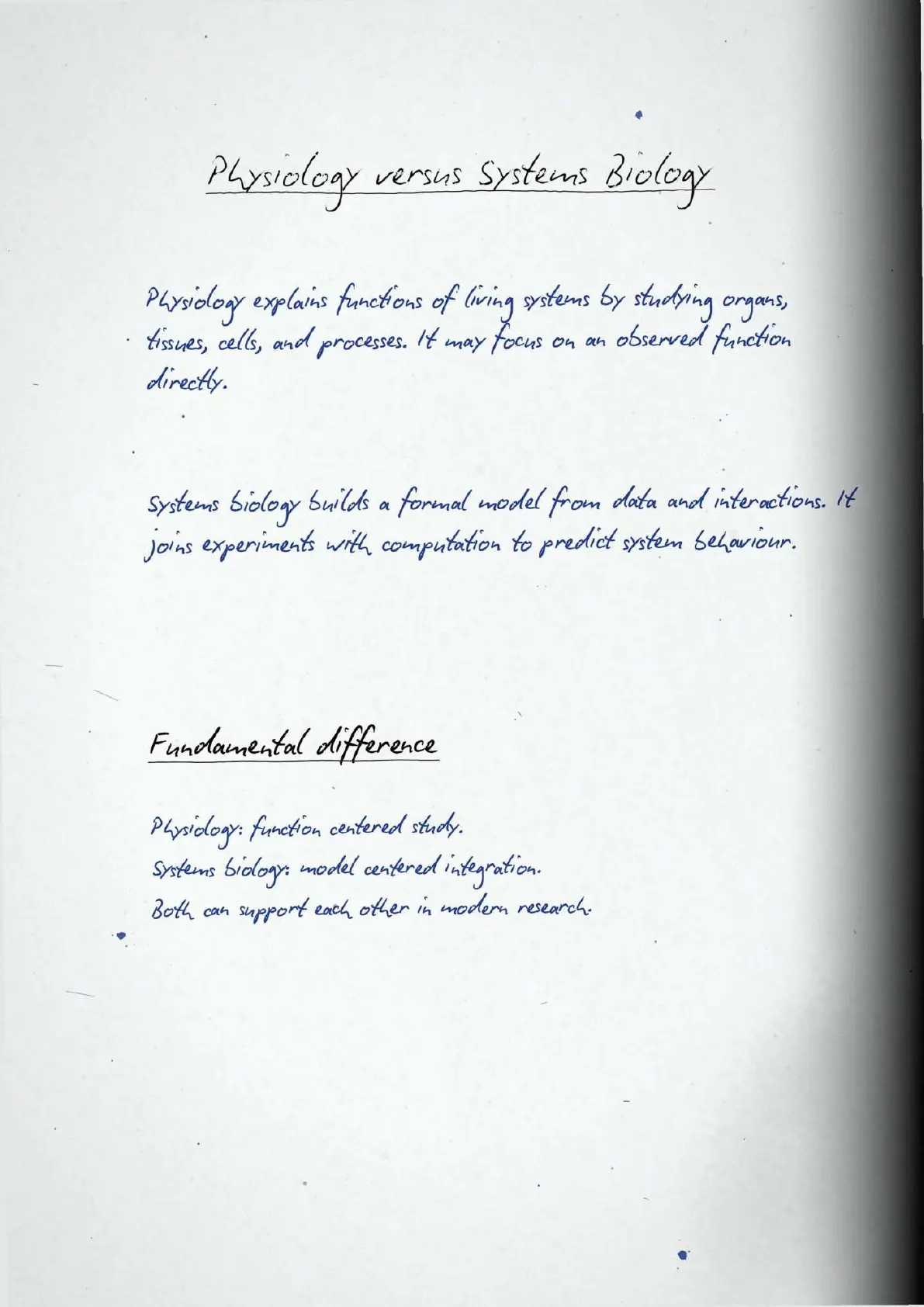
Programming is the tool layer. Systems biology is the model layer. A strong answer connects both: code helps process biological data, while systems biology uses the processed data to build and test models.
Exam tip: if a question asks the need for systems biology, mention complex datasets, networks, mathematical models and repeated simulation.
How to Use These Programming and Systems Biology Handwritten Notes
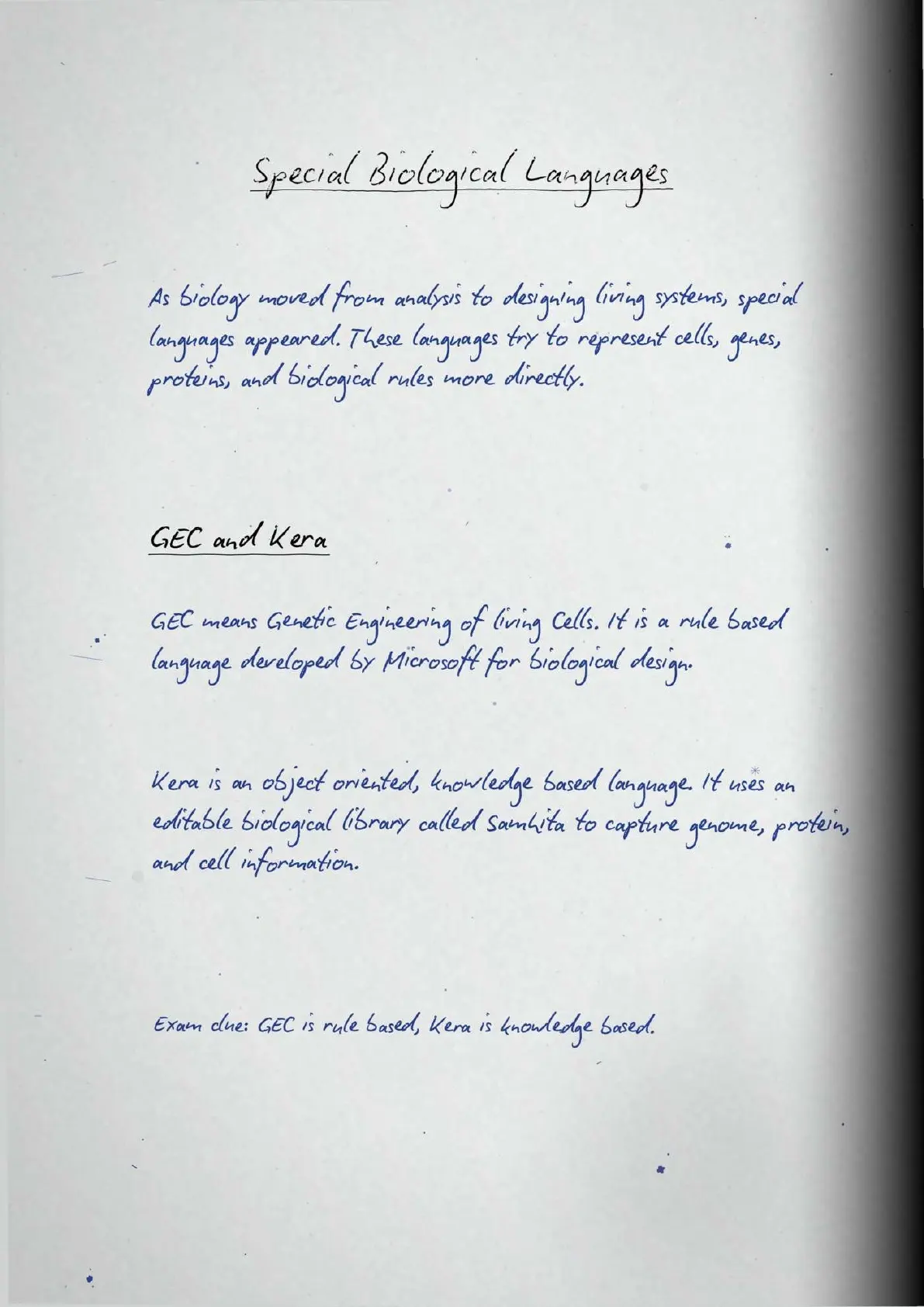
- Revise Python, R, GEC and Kera as one comparison block.
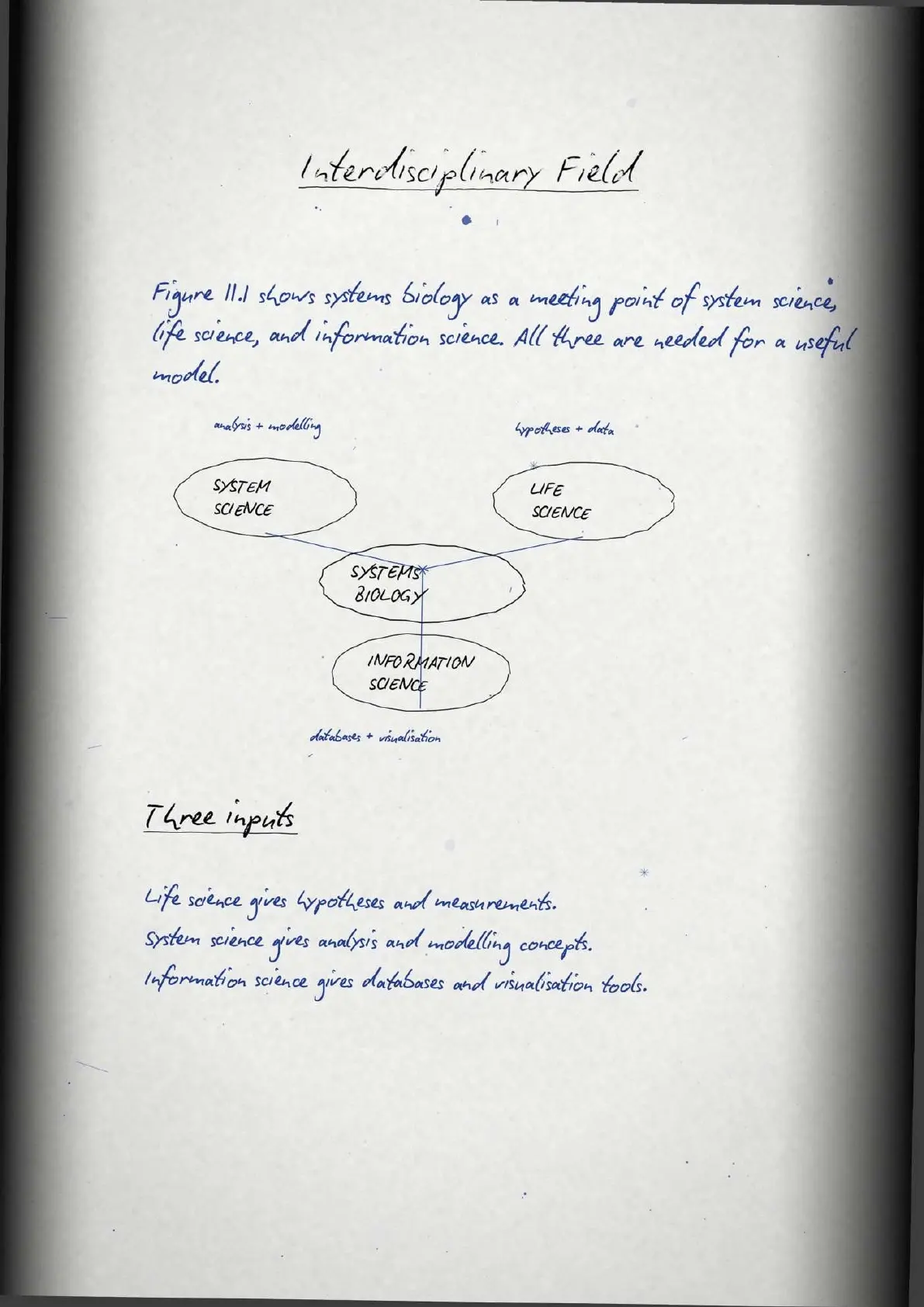
- Learn Figure 11.1 as three inputs: system science, life science and information science.
- Memorise data management as minimum information, file formats and ontologies.
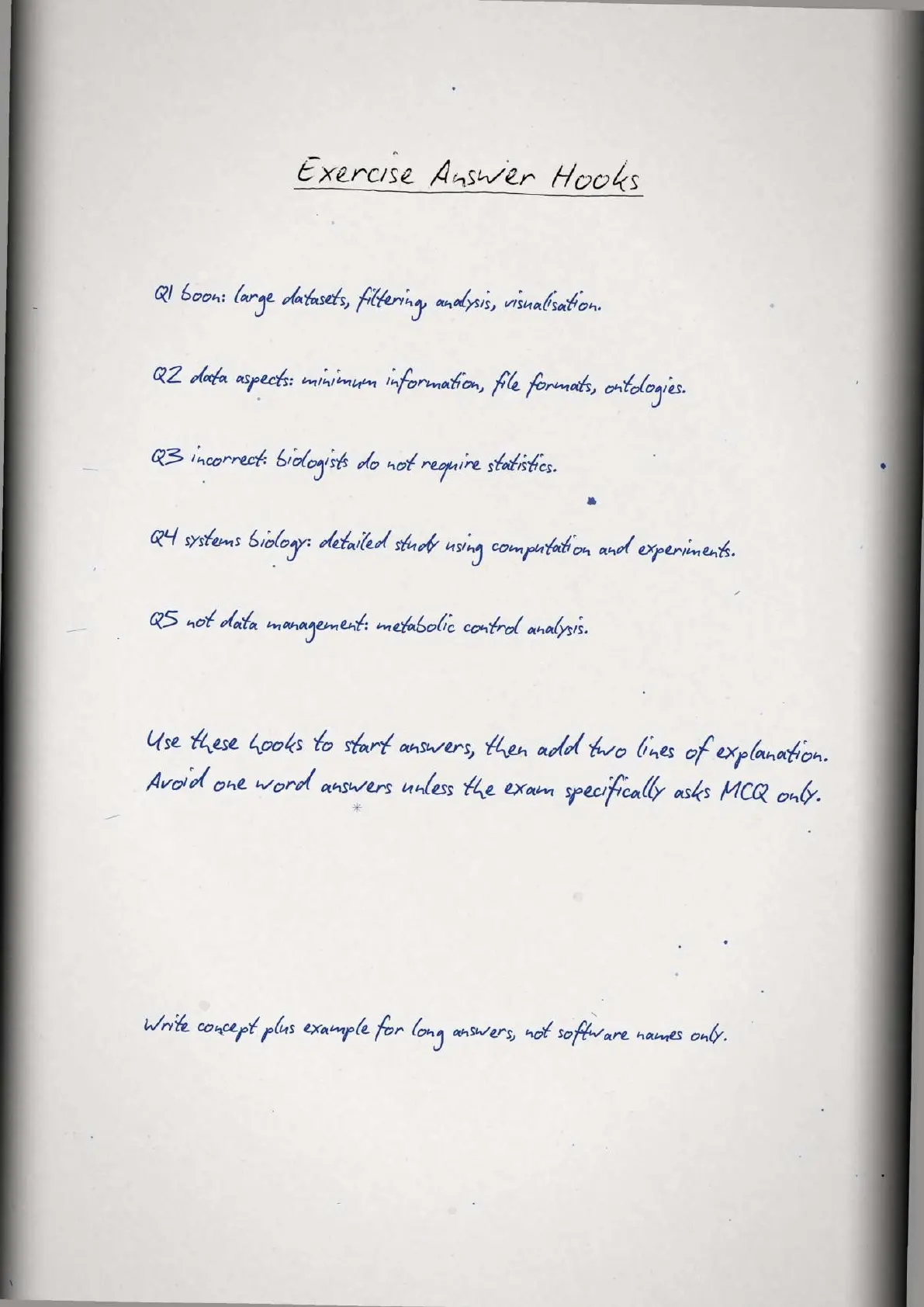
- Use page 20 of the PDF to practise NCERT exercise answer hooks.
Related Class 11 Biotechnology Chapter 11 Resources
| Resource | Link |
|---|---|
| NCERT Book PDF | Class 11 Biotechnology Chapter 11 Book PDF |
| NCERT Notes | Class 11 Biotechnology Chapter 11 Notes |
| NCERT Solutions | Class 11 Biotechnology Chapter 11 Solutions |
Class 11 Biotechnology Handwritten Notes for Other Chapters
| Chapter | Handwritten Notes |
|---|---|
| Chapter 7 | Basic Processes of DNA |
| Chapter 8 | Genetic Disorder |
| Chapter 9 | Introduction to Bioinformatics |
| Chapter 10 | Protein Informatics and Cheminformatics |
Programming and Systems Biology Biotechnology Handwritten Notes FAQs
Ques. What is covered in Class 11 Biotechnology Chapter 11 handwritten notes?
Ans. The notes cover programming in biology, Python, R, systems biology, data management, ontologies, workflow tools and model-analysis methods.
Ques. Are these handwritten notes based on the 2026-27 NCERT textbook?
Ans. Yes. The topic order and revision points follow the 2026-27 NCERT Class 11 Biotechnology Chapter 11 source.
Ques. What are the three data management aspects in systems biology?
Ans. The three aspects are minimum information, file formats and ontologies. These help researchers store, share and analyse biological data correctly.



Comments