




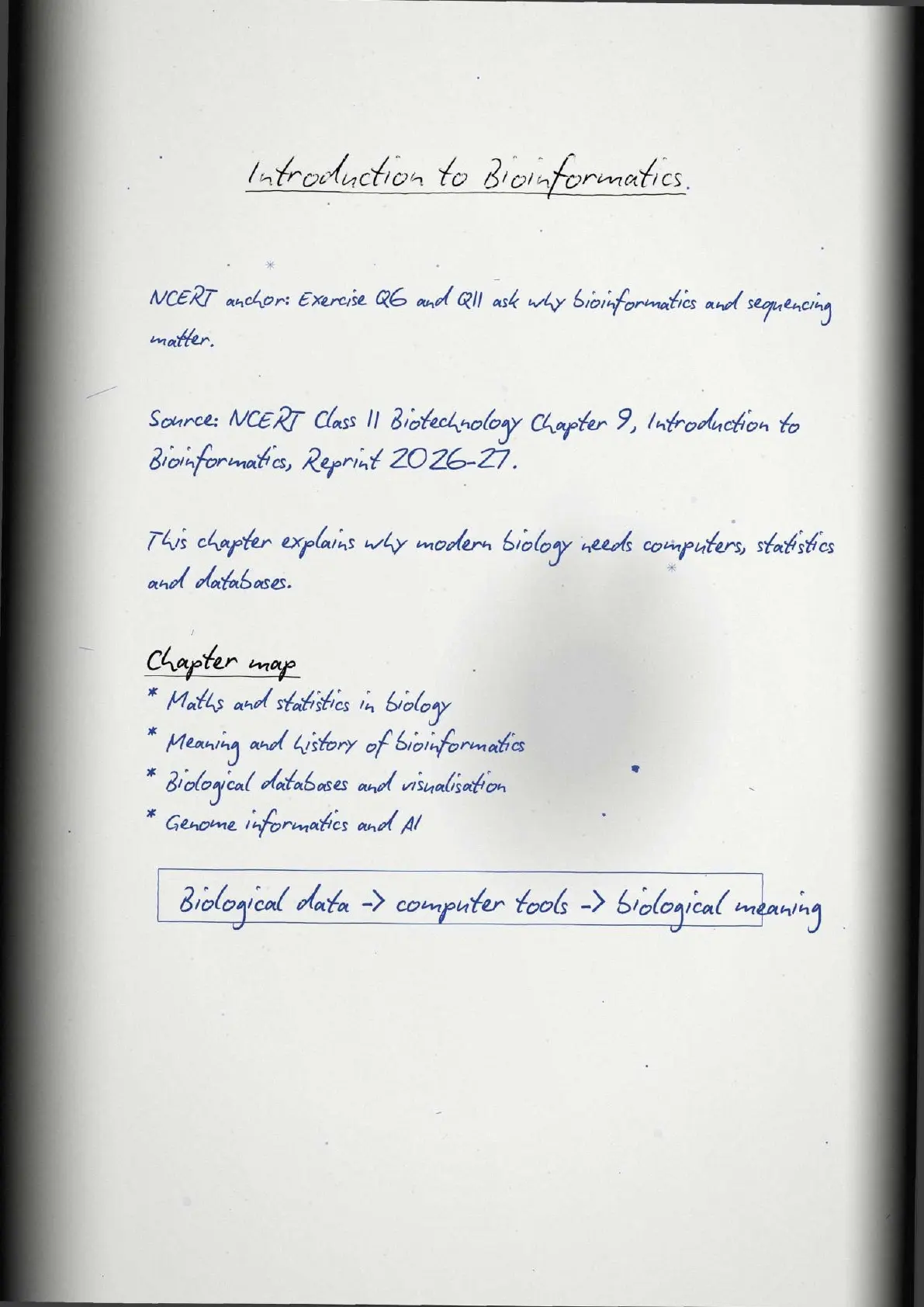
The handwritten notes on Class 11 Biotechnology Chapter 9 Introduction to Bioinformatics have been prepared for quick revision from the 2026-27 NCERT textbook. The PDF covers statistics in biology, biological databases, FASTA and FASTQ formats, genome informatics, BLAST and BLAT, annotation tools and AI applications in compact notebook-style pages.
- Covers the chapter sequence from data handling to genome interpretation.
- Includes database examples, file-format cues, tool names and NCERT exercise anchors.
- Useful for school tests, NCERT exercise revision and last-week concept recall.
Student Feedback: In a Collegedunia revision check, 73% of students said that keeping databases, formats and tools in separate recall boxes made bioinformatics easier to revise before tests.
|
Table of Contents |
Introduction to Bioinformatics Handwritten Notes PDF Highlights
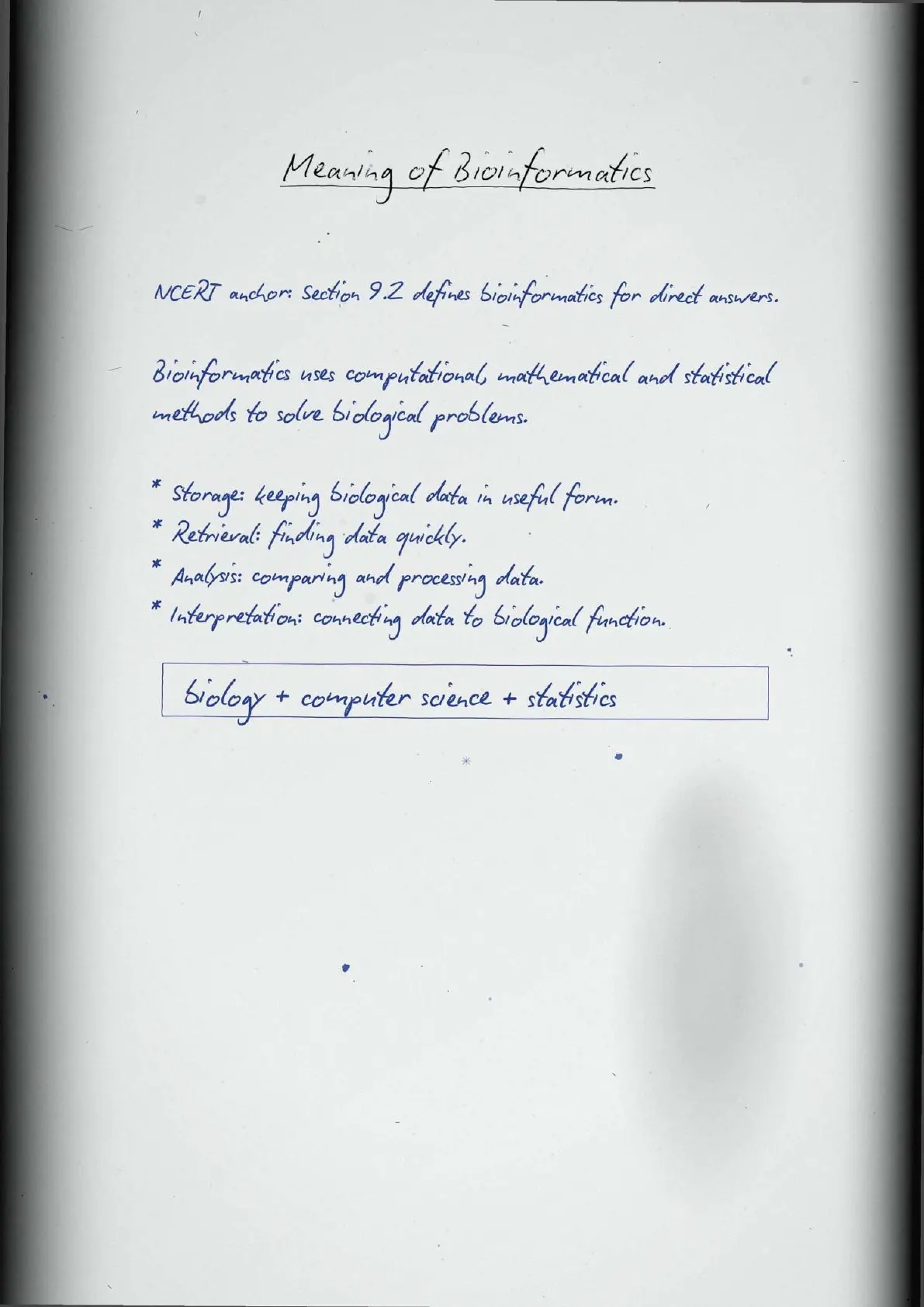
Class 11 Biotechnology Chapter 9 explains how biological data is stored, searched, analysed and interpreted with computational and statistical tools. The handwritten PDF keeps the chapter in NCERT order so students can revise definitions, examples and tool names without reading a long textbook section again.
Important: this is a revision resource. Students should still read the NCERT textbook for original tables, figure labels and full exercise wording.
| Revision area | What the PDF covers |
|---|---|
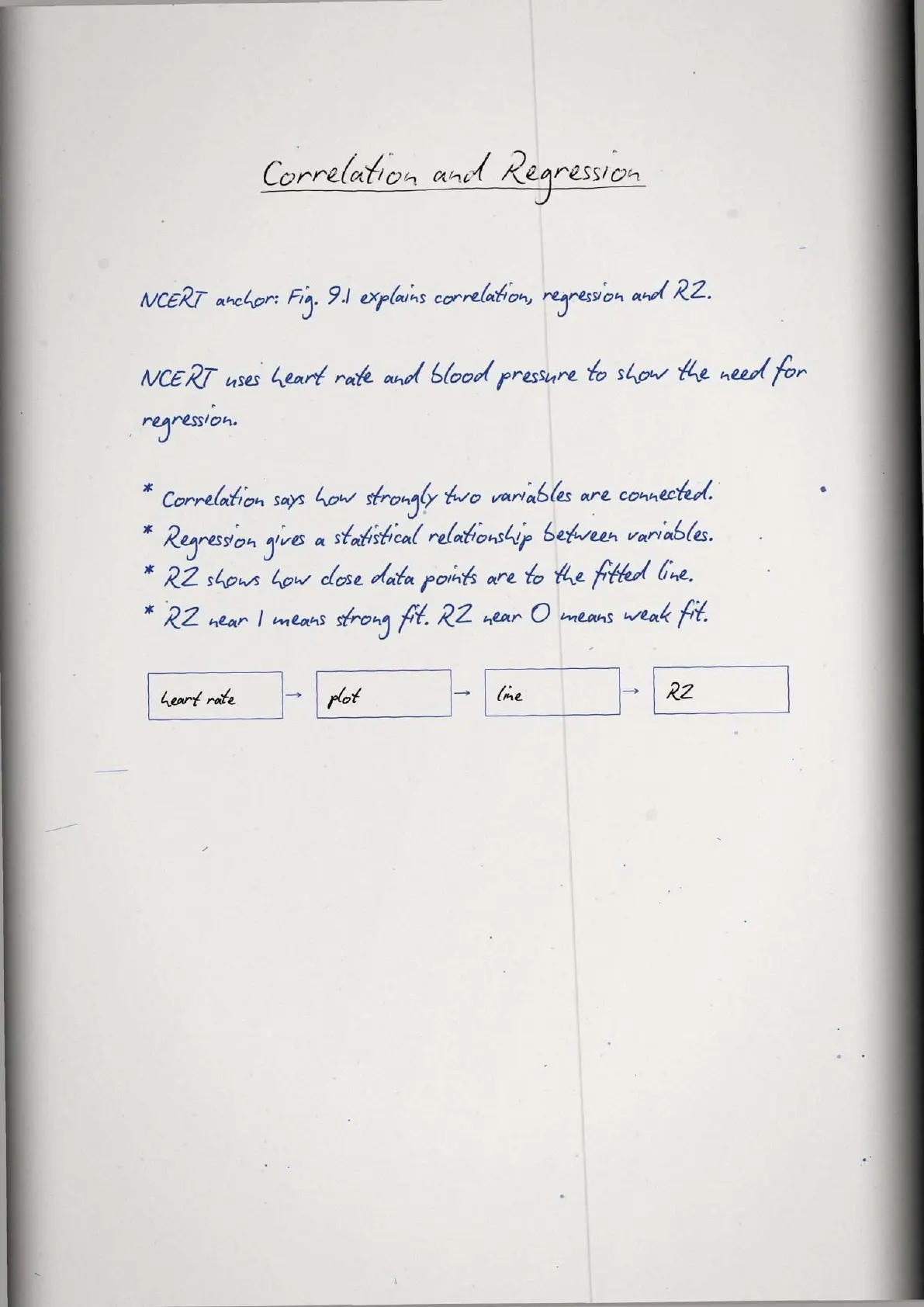
| Statistics in biology | Null hypothesis, p-value, regression, R2, sampling, replicates and statistical significance. |
| Bioinformatics basics | Storage, retrieval, analysis and interpretation of biological data. |
| Genome informatics | FASTA, FASTQ, quality control, alignment, de novo assembly, BLAST, BLAT and annotation. |
Bioinformatics Workflow From Data to Function
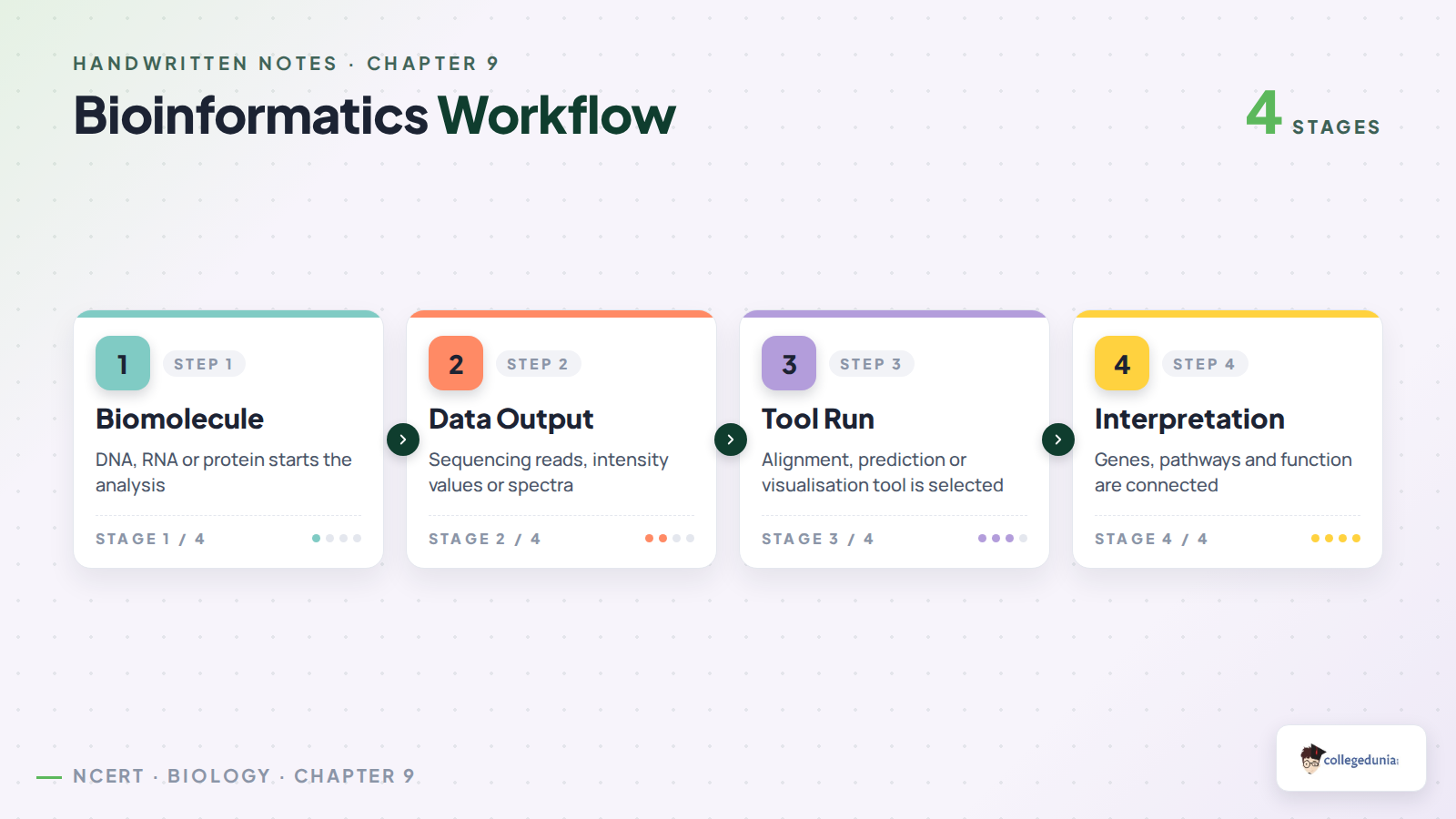
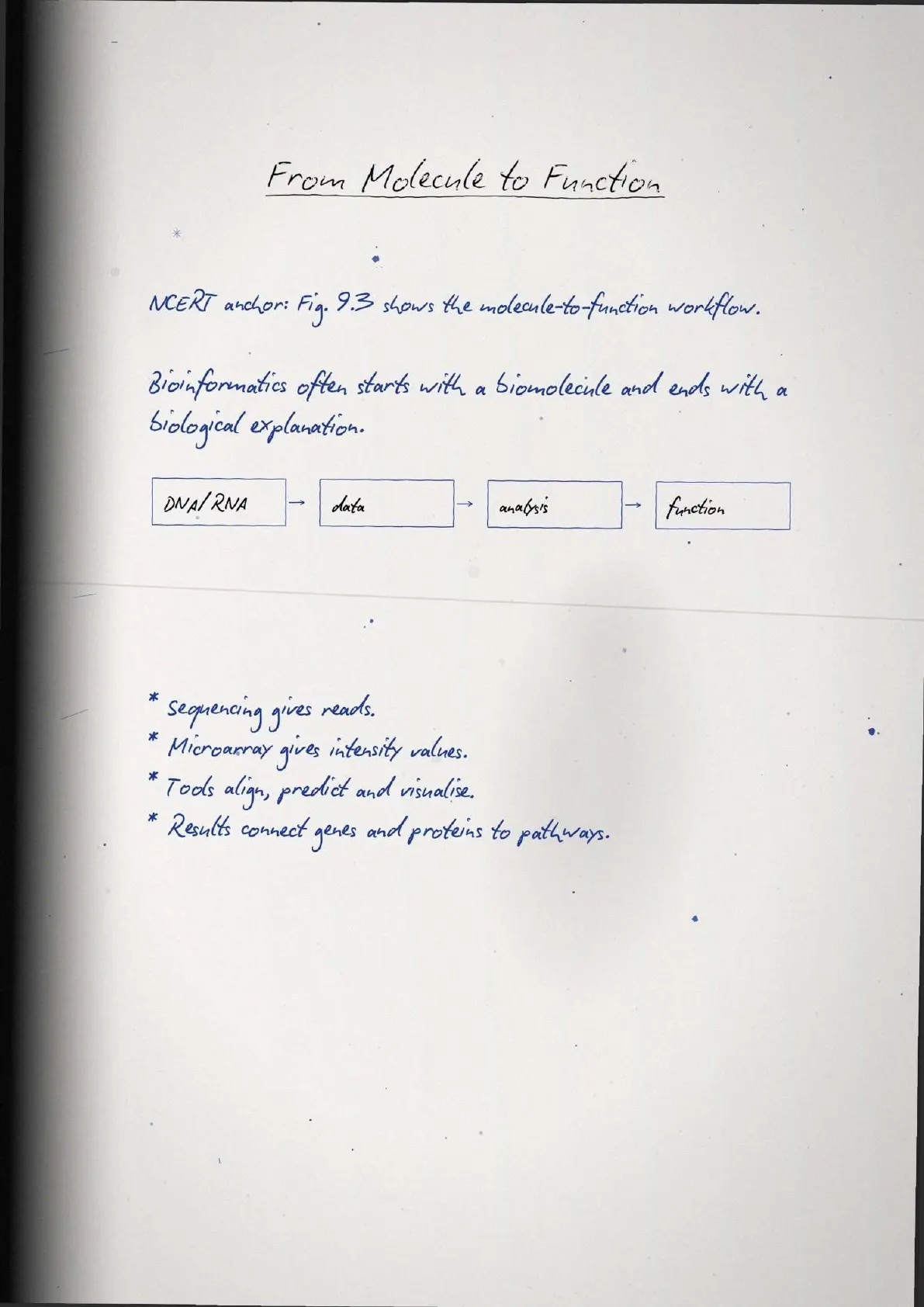
The chapter shows that bioinformatics starts with biological material such as DNA, RNA, protein or metabolites. Instruments produce data, tools process it and the final step connects the pattern to a biological function.
The notes revise this as a simple chain: biomolecule, data output, analytical tool, visualisation and functional interpretation. This helps students remember Fig. 9.3 without copying the full textbook diagram.
Introduction to Bioinformatics Video Revision
Source: Magnet Brains on YouTube
Statistics Concepts Used in Biology
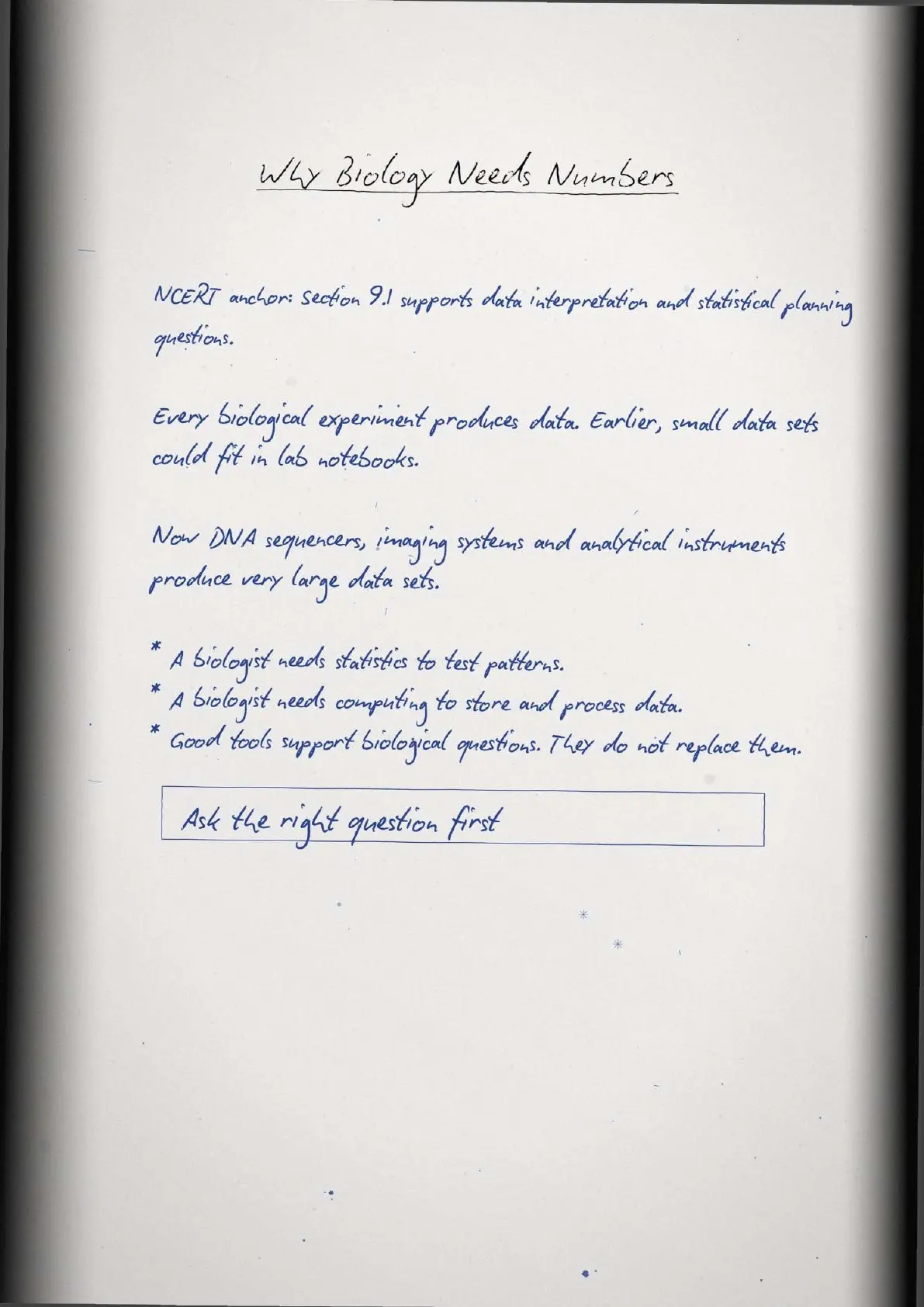
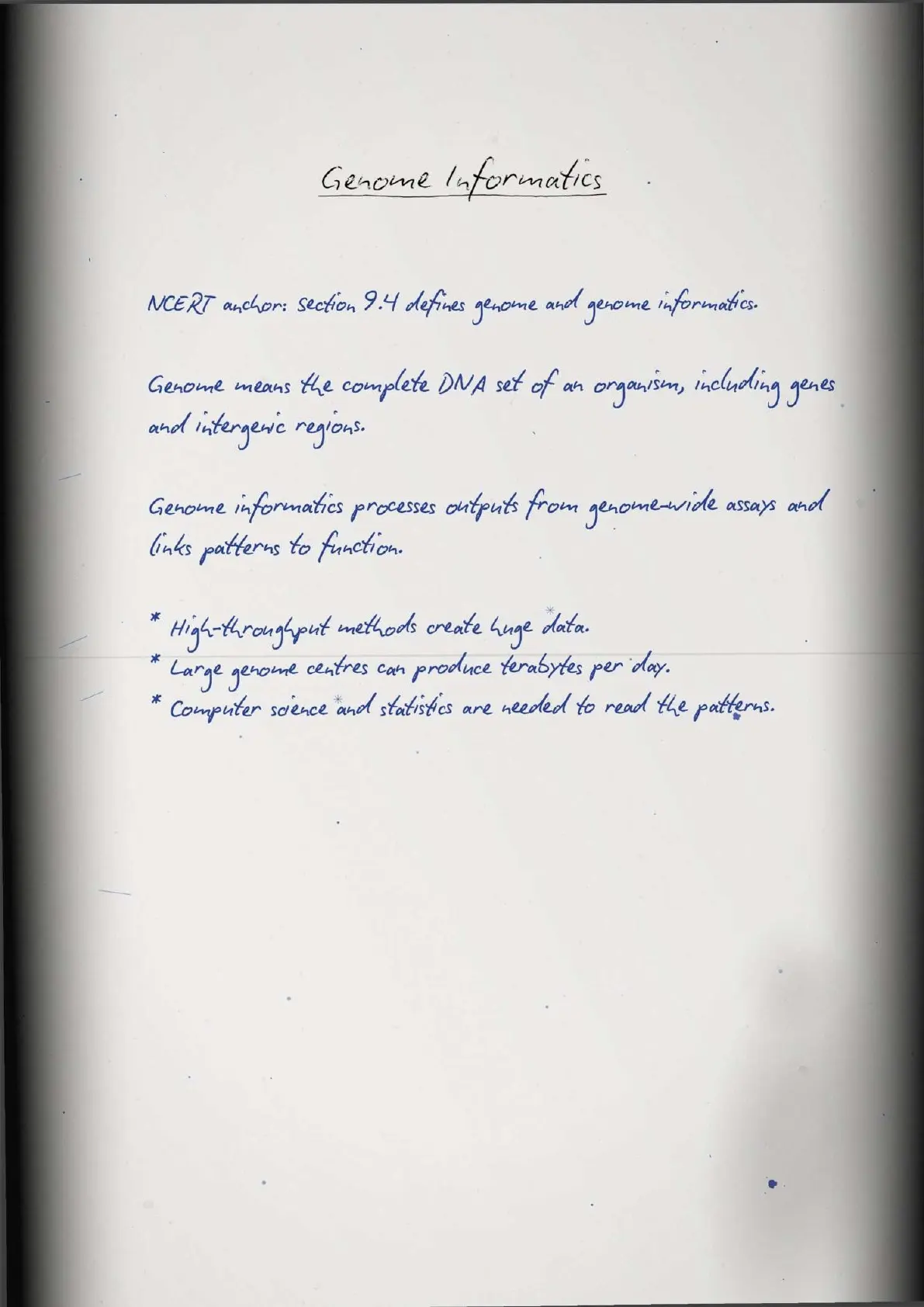
The first part of Chapter 9 explains why biology now needs mathematics and statistics. High-throughput sequencers, microscopes and analytical instruments produce data sets that cannot be handled only through lab notebooks.
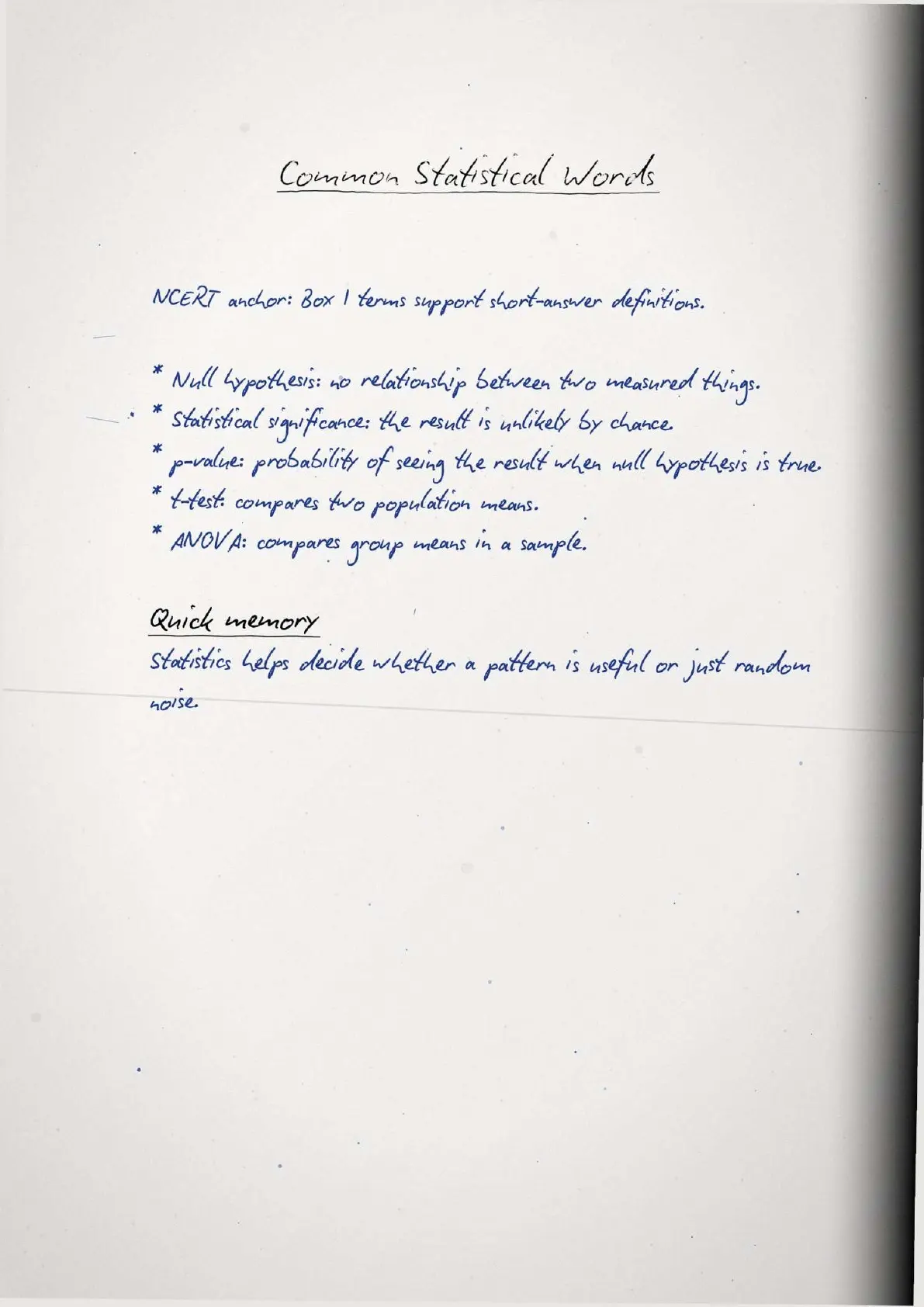
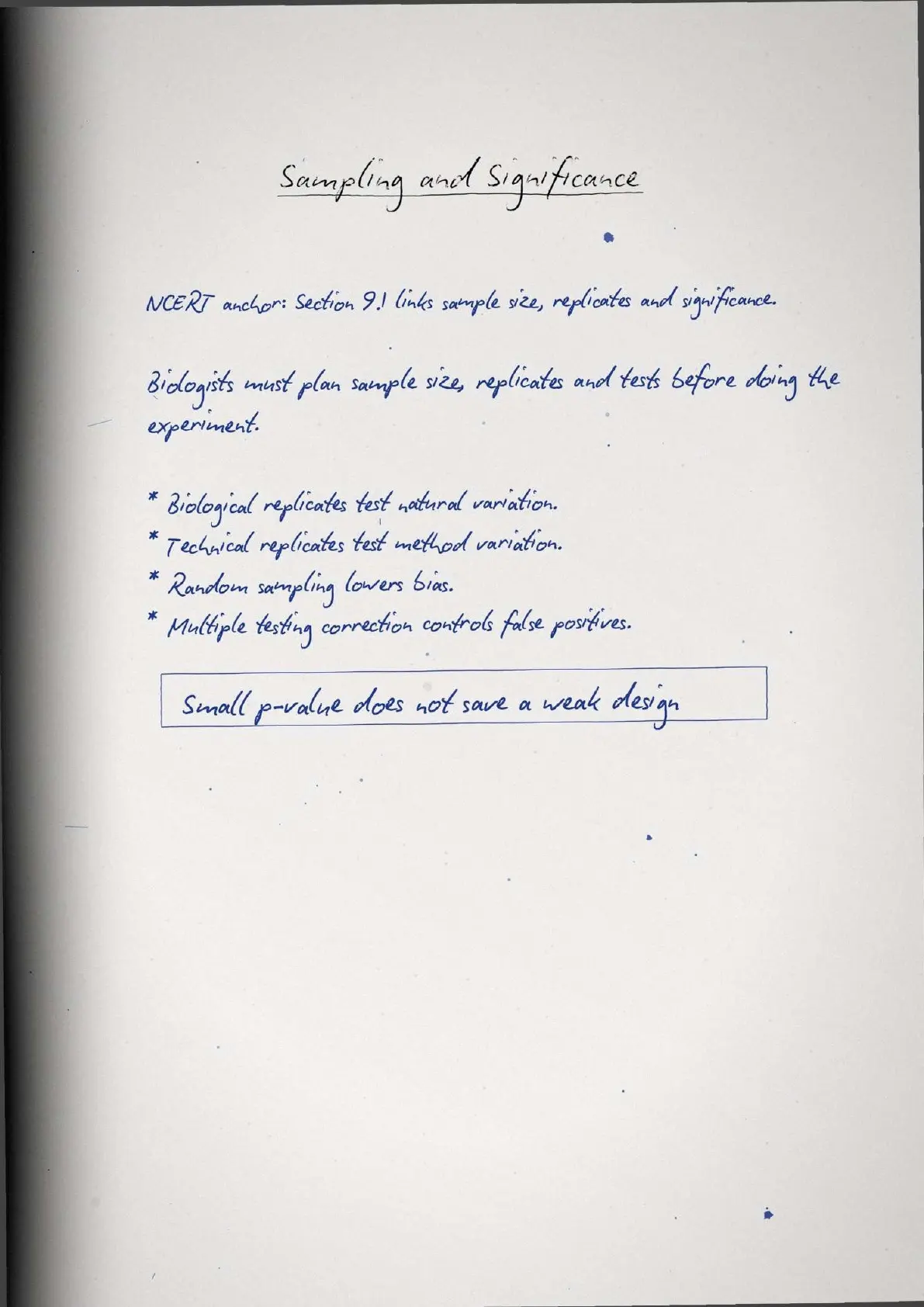
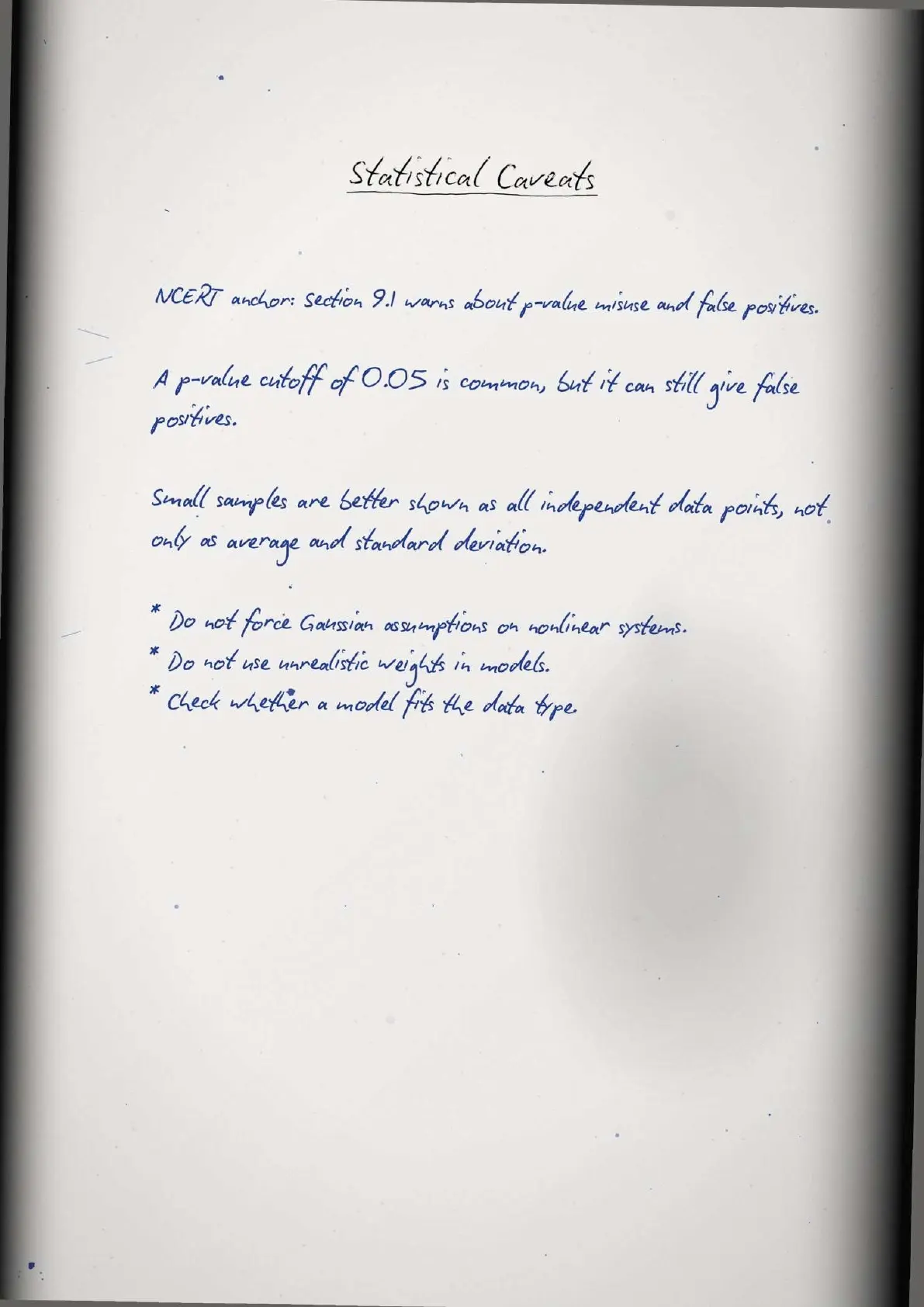
Students should revise null hypothesis, statistical significance, p-value, regression and ANOVA as short definitions. A small p-value does not automatically fix a weak experimental design. NCERT also warns against wrong assumptions, small sample misuse and false positives.
Biological Databases and Their Uses
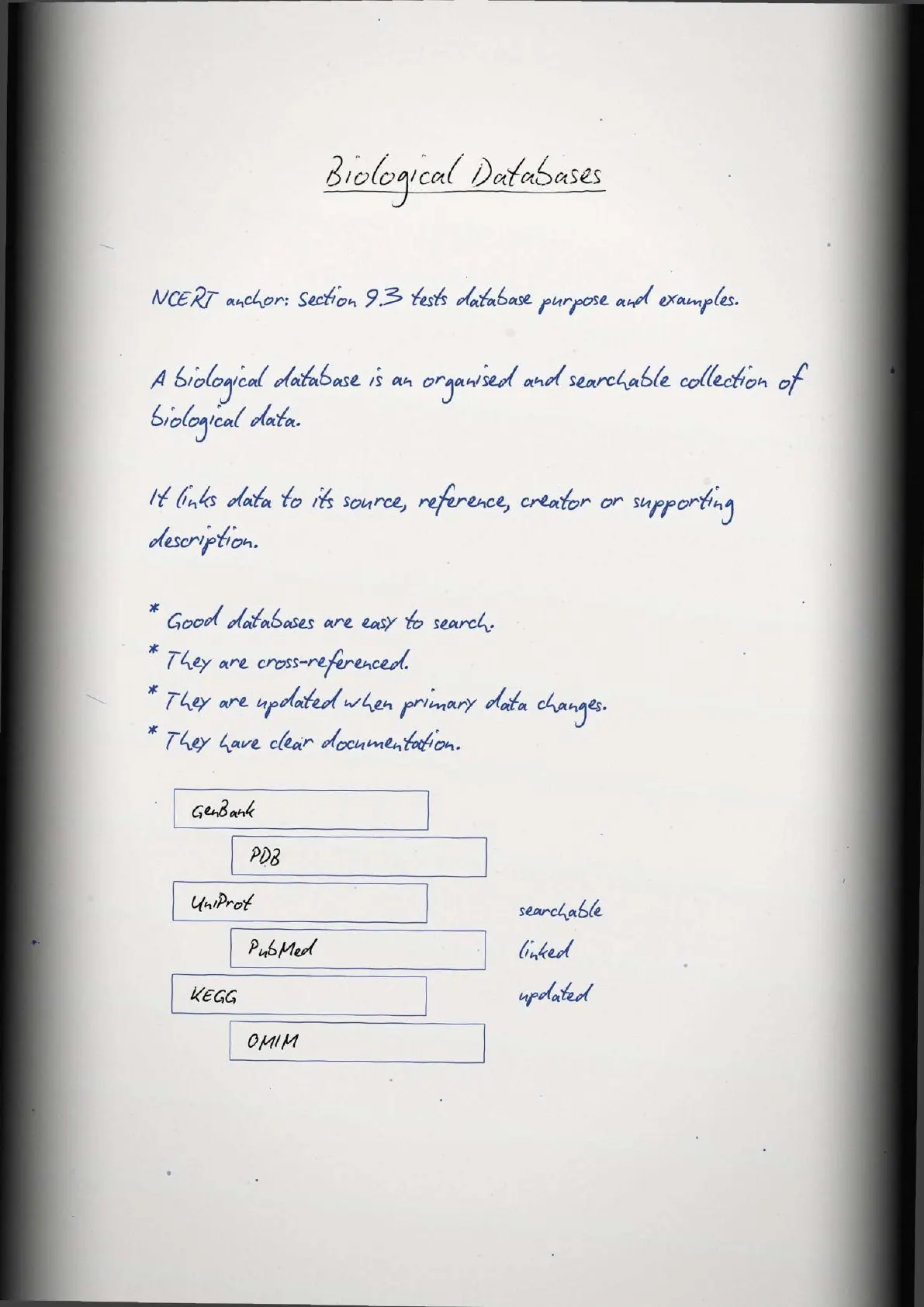
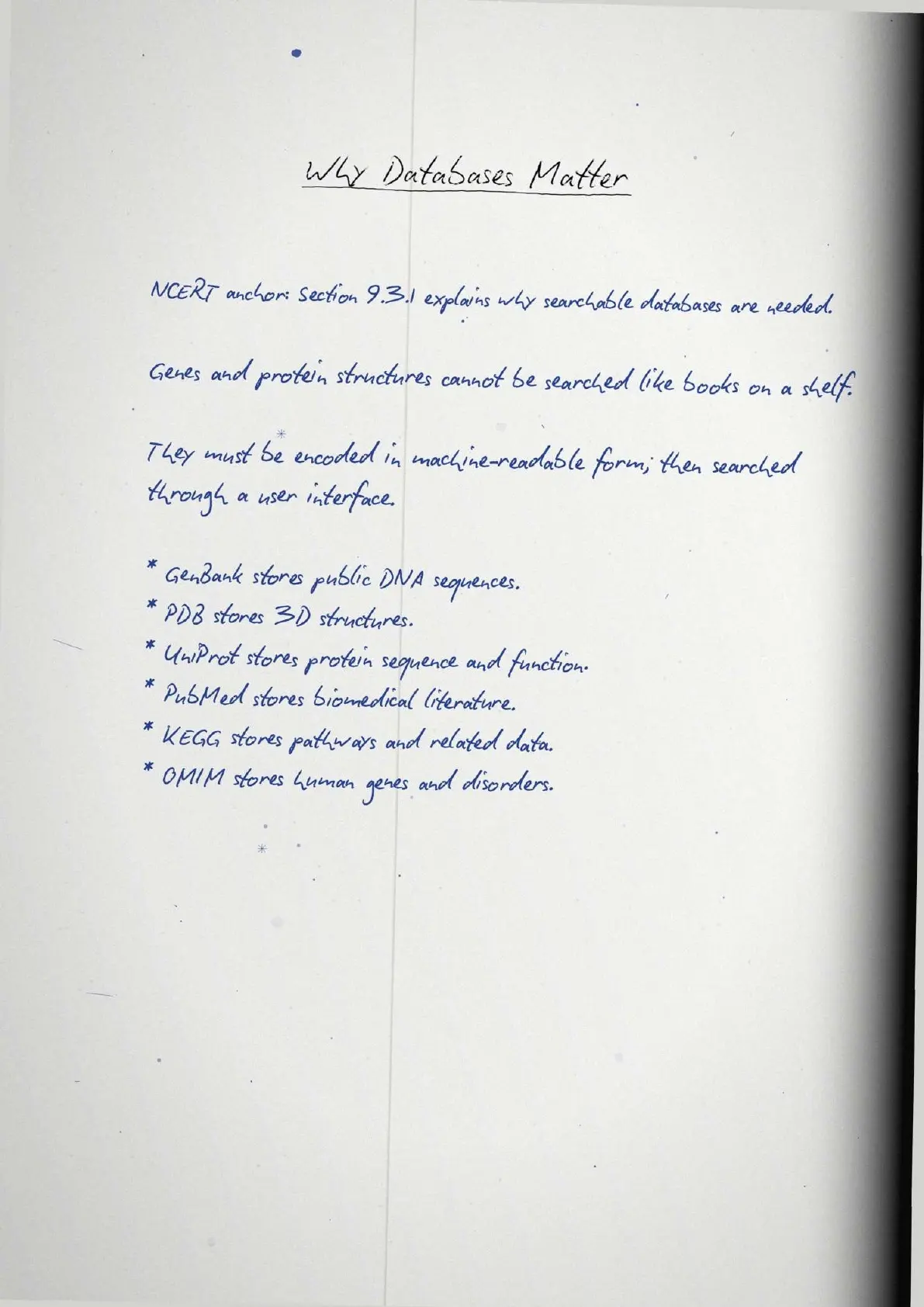
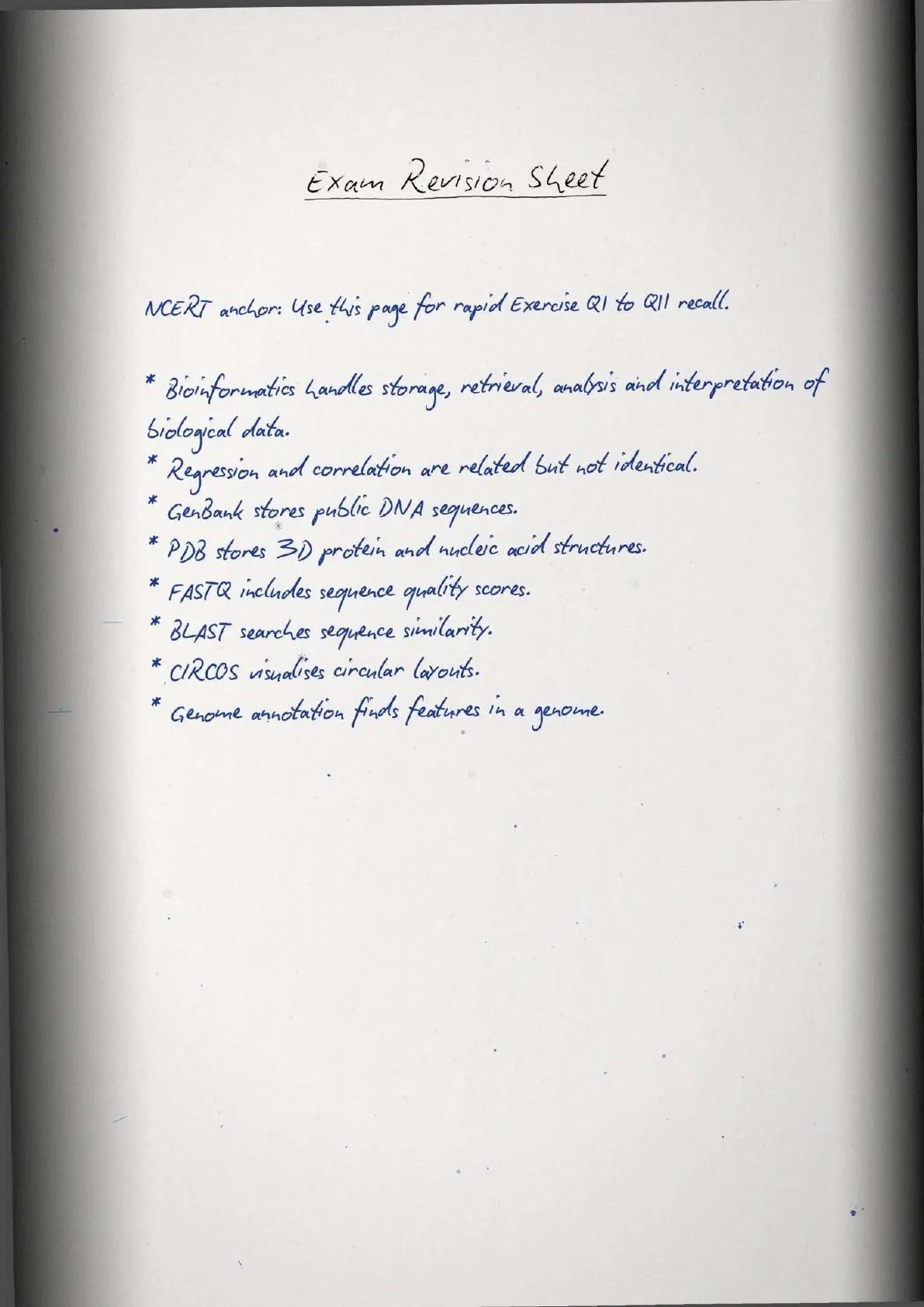
A biological database is a searchable library of biological information. GenBank stores public DNA sequences, PDB stores three-dimensional structures, UniProt stores protein sequence and function, PubMed stores literature and KEGG stores pathways.
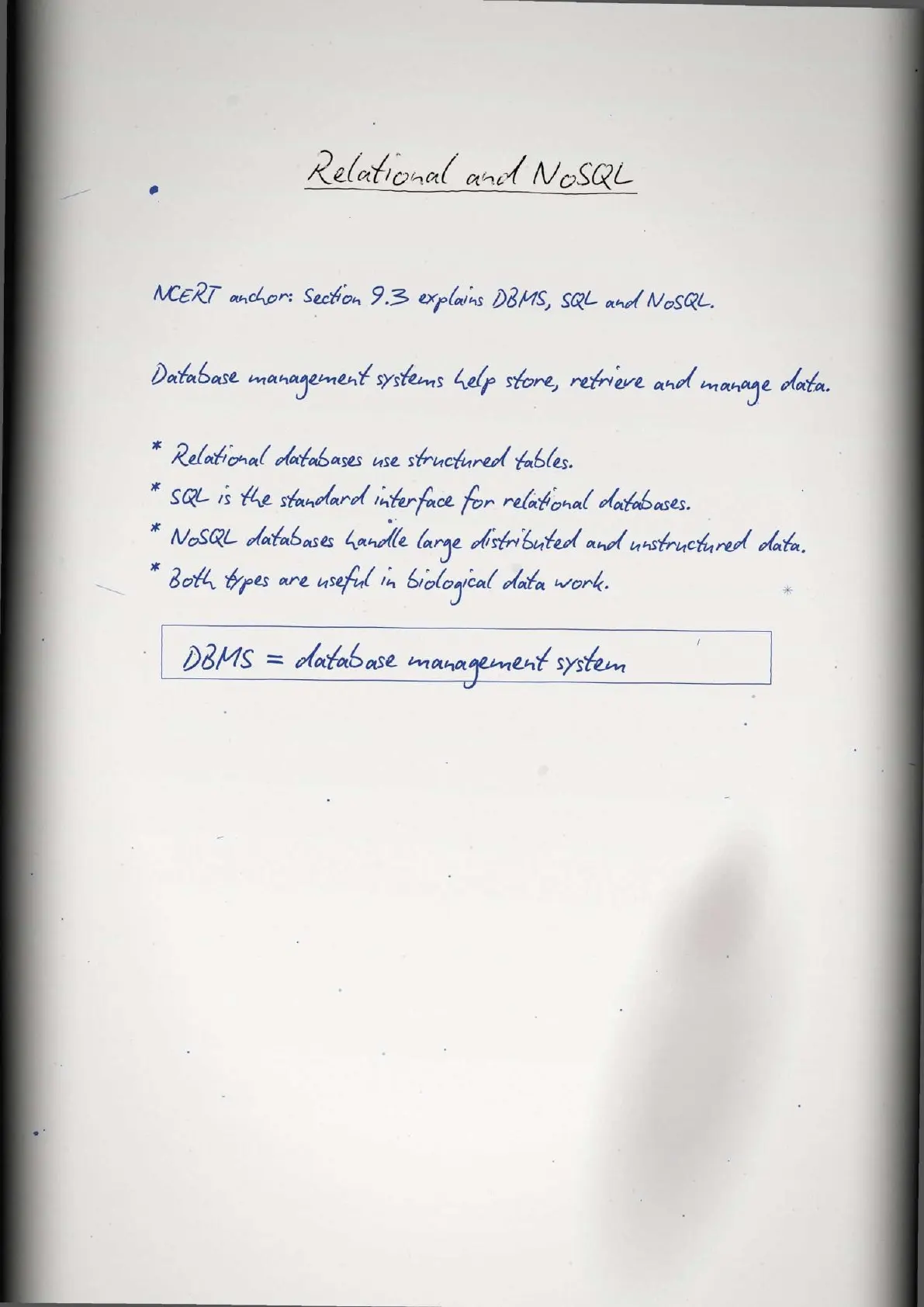
The notes also cover database management ideas such as DBMS, SQL and NoSQL. These terms matter because the chapter treats biological information as machine-readable data, not as physical books on a shelf.
FASTA, FASTQ and Molecular Data Formats
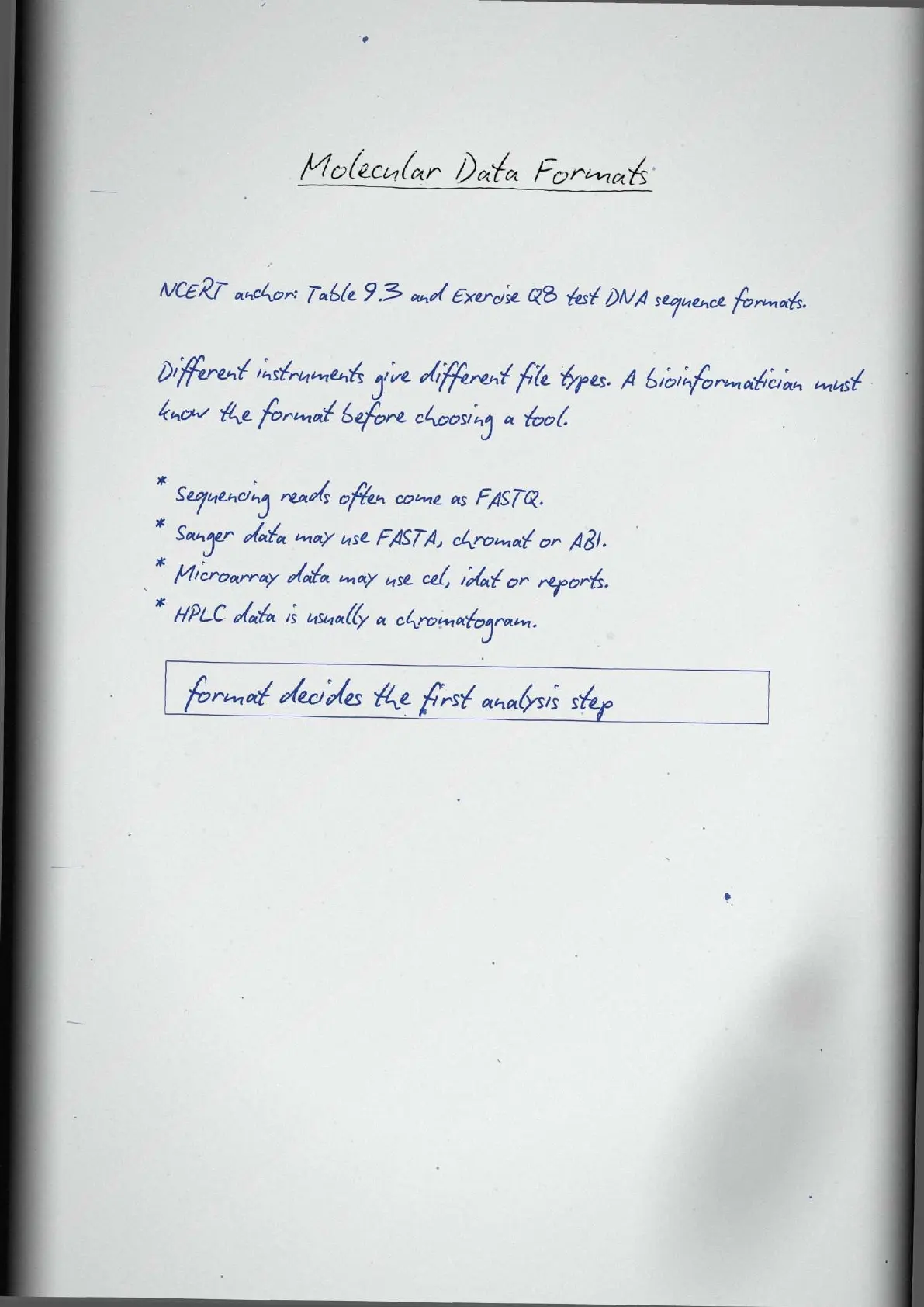
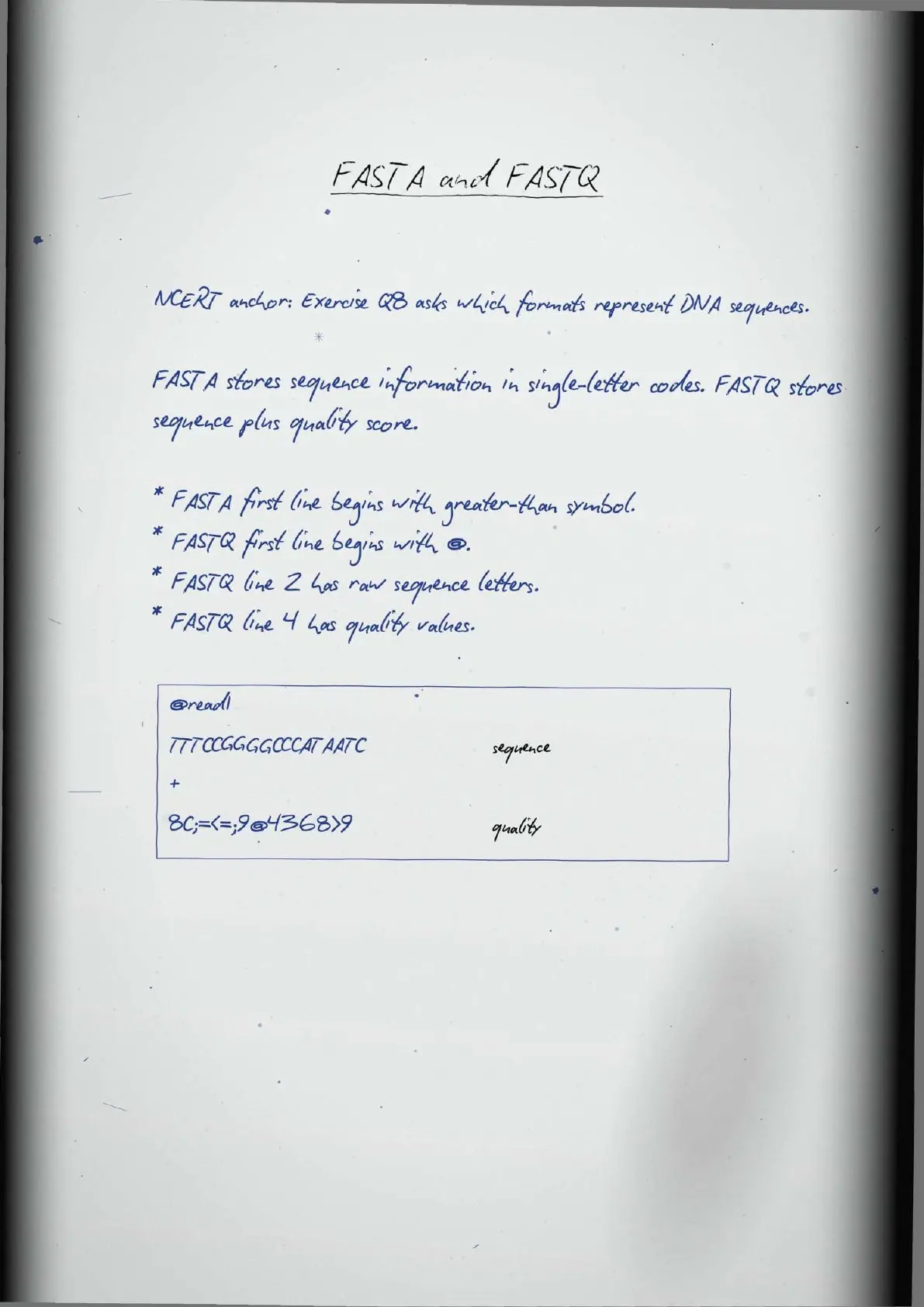
FASTA and FASTQ are the most important file-format names in this chapter. FASTA stores sequence information in single-letter codes. FASTQ stores sequence letters along with quality values, usually in four lines per read.
NCERT Exercise Question 8 asks which formats can represent DNA sequences. The answer includes FASTQ, FASTA and AB1, so students should not memorise only one format.
BLAST and BLAT Difference for Exercise Revision
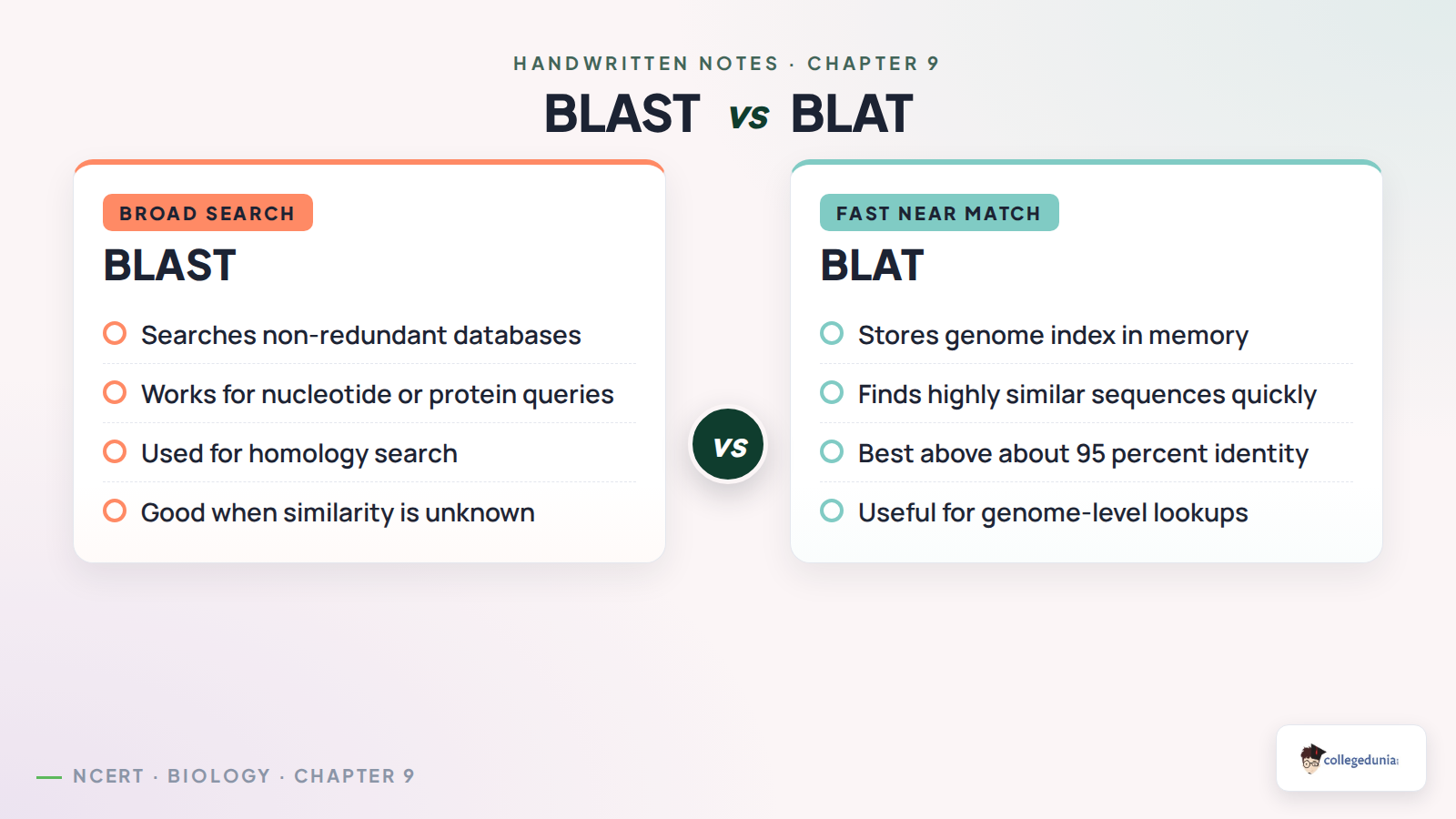
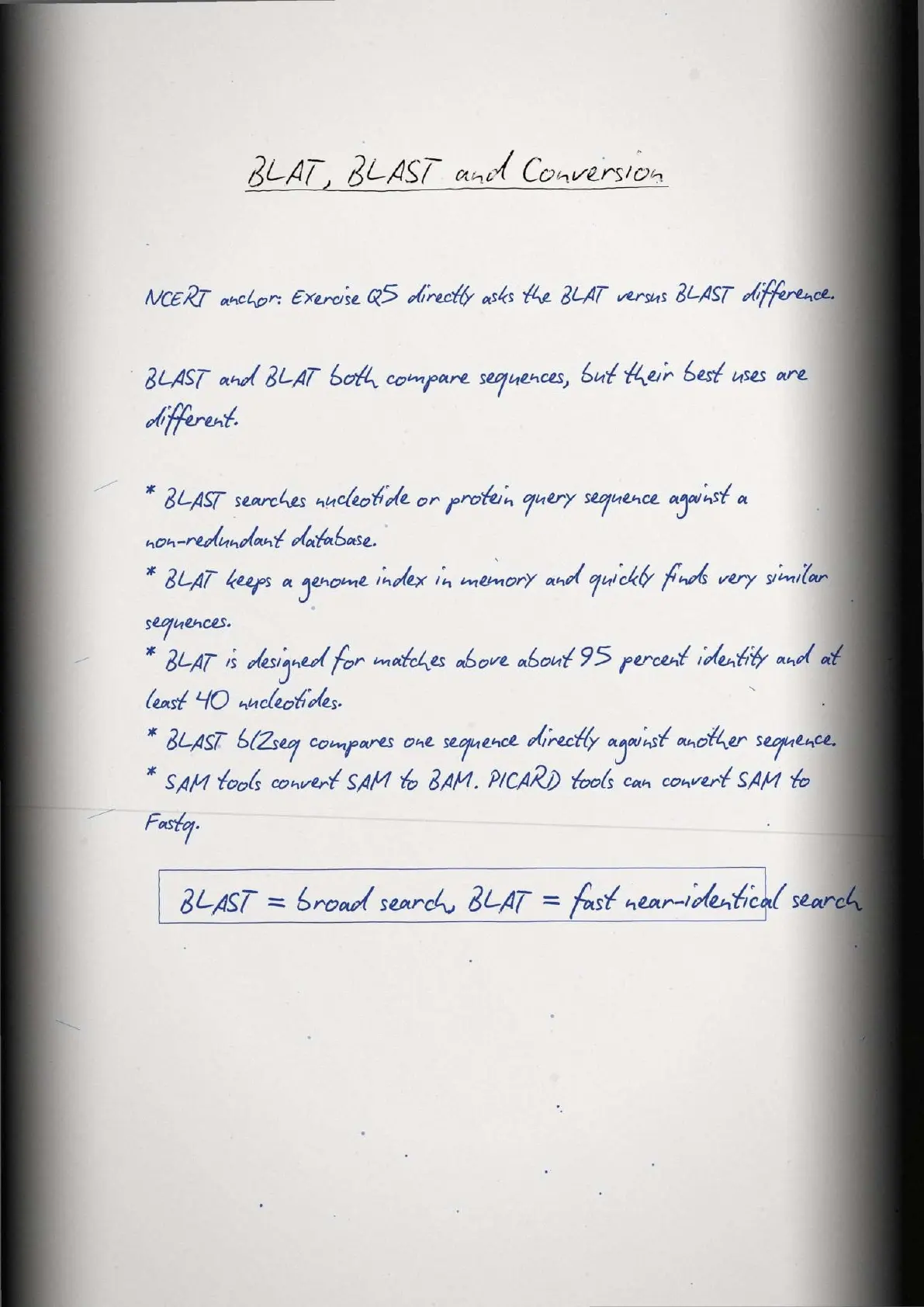
BLAST searches a nucleotide or protein query sequence against a non-redundant sequence database. BLAT stores a genome index in memory and quickly finds highly similar sequences, usually above about 95% identity and at least 40 nucleotides.
Exercise Question 5 directly asks the difference between BLAT and BLAST. Write BLAST as the broader database-search tool and BLAT as the faster near-identical genome lookup tool.
Genome Informatics and Downstream Analysis
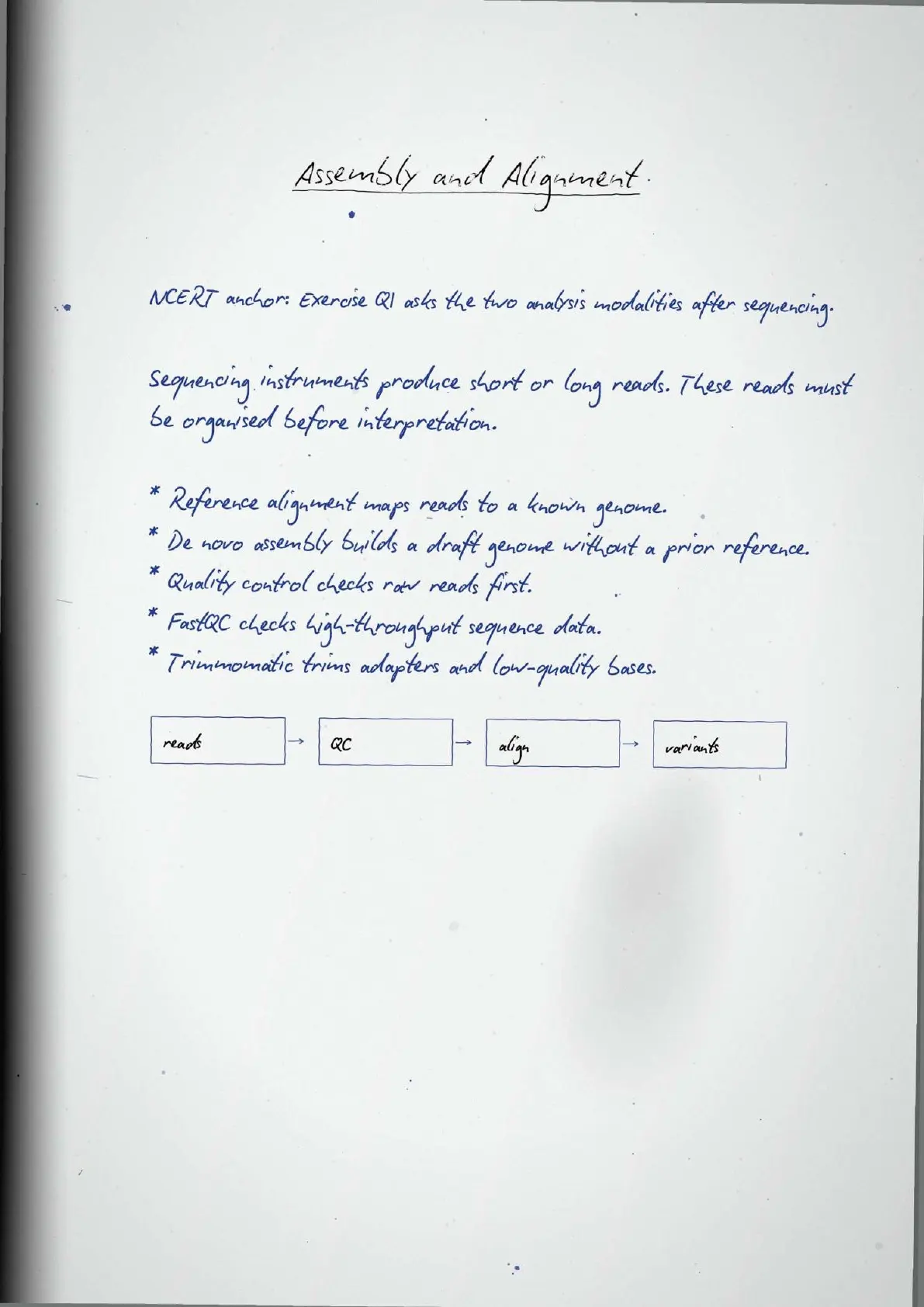
Genome informatics handles large outputs from genome-wide technologies. Reads can be aligned to a reference genome, or they can be assembled de novo when no reference is available. Quality control comes first, with tools such as FastQC and Trimmomatic.
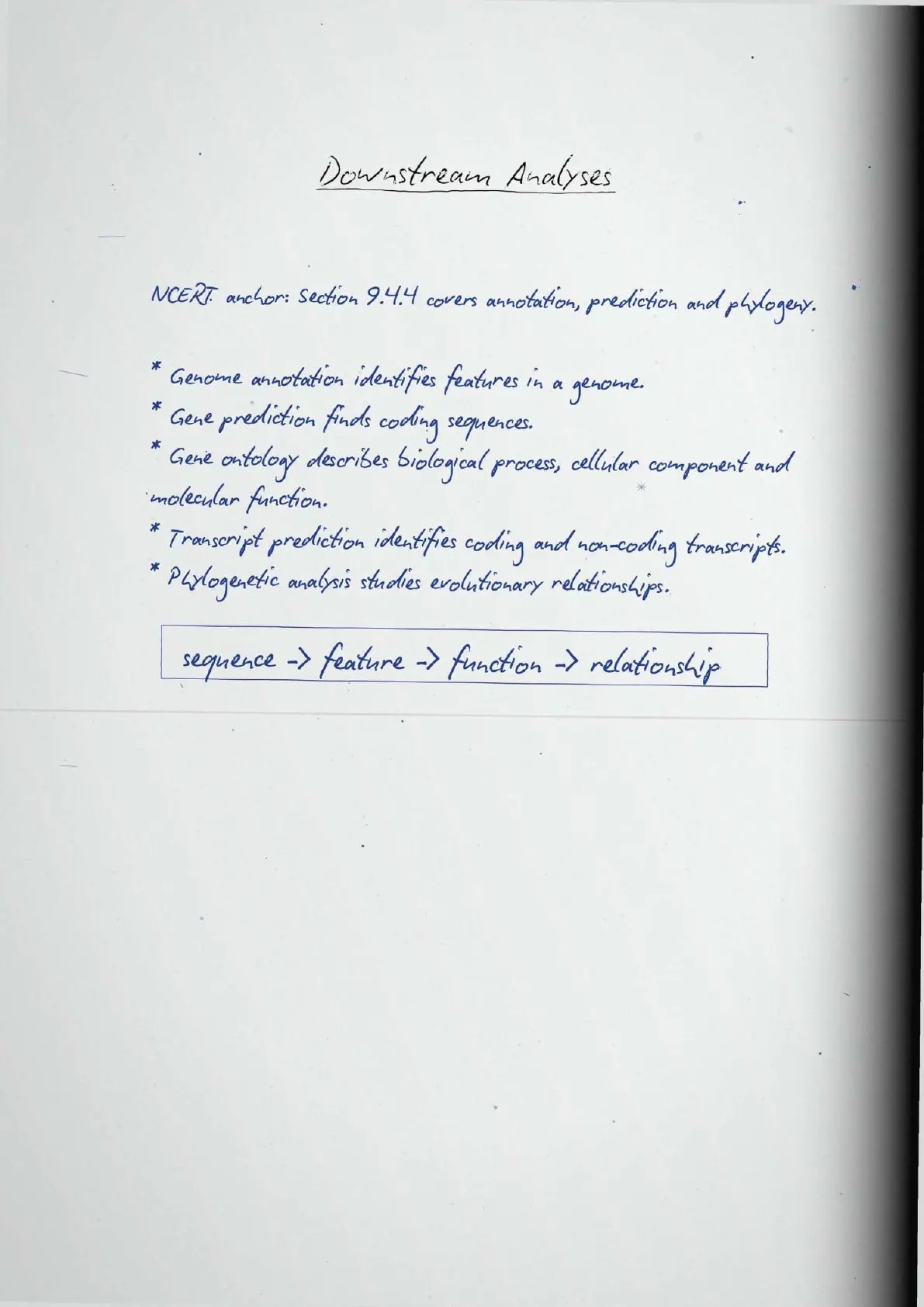
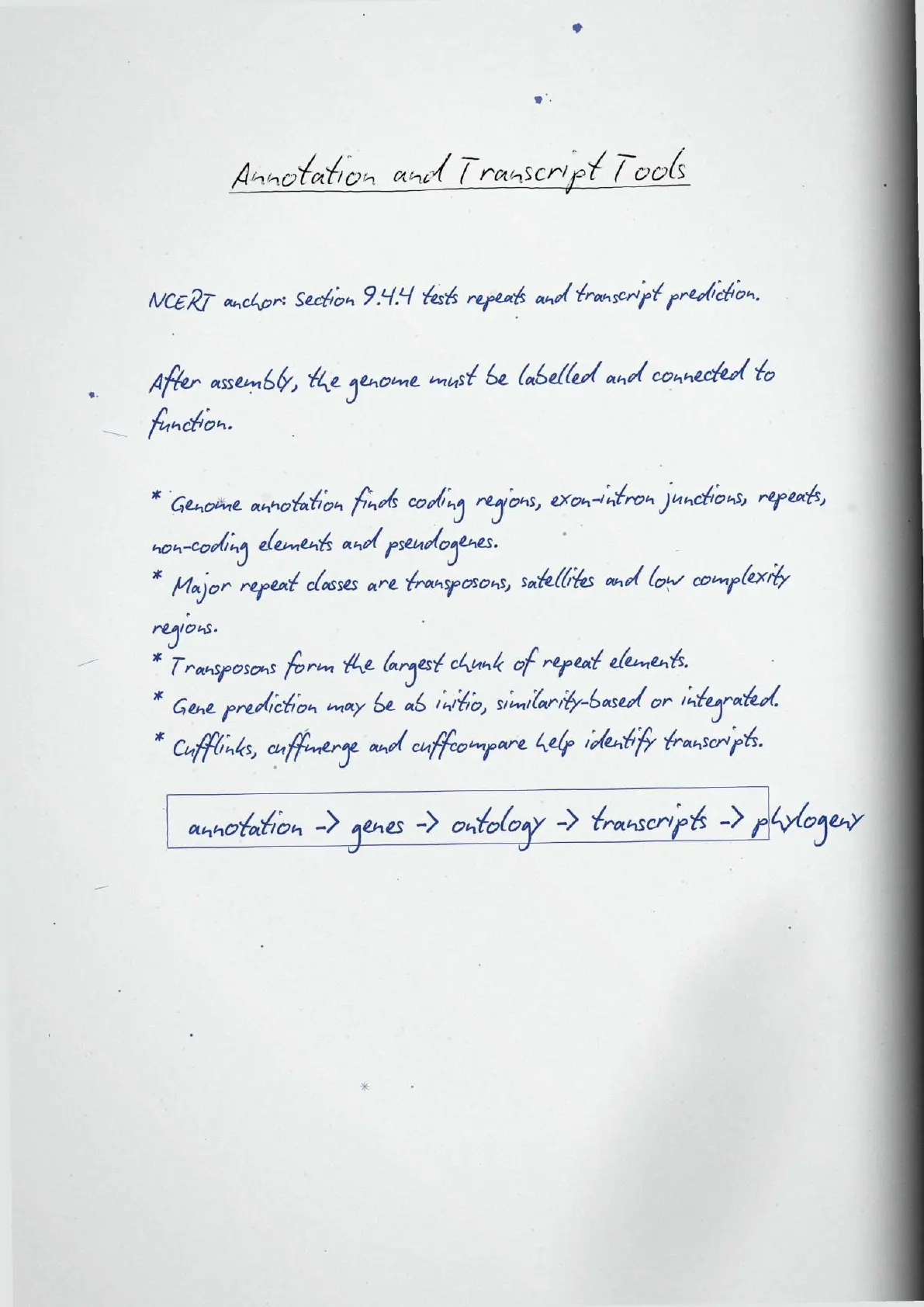
After assembly, genome annotation identifies coding parts, exon-intron junctions, repeats, pseudogenes and non-coding elements. Transcript prediction tools such as Cufflinks, cuffmerge and cuffcompare help identify transcripts.
Tool Names Students Should Not Miss
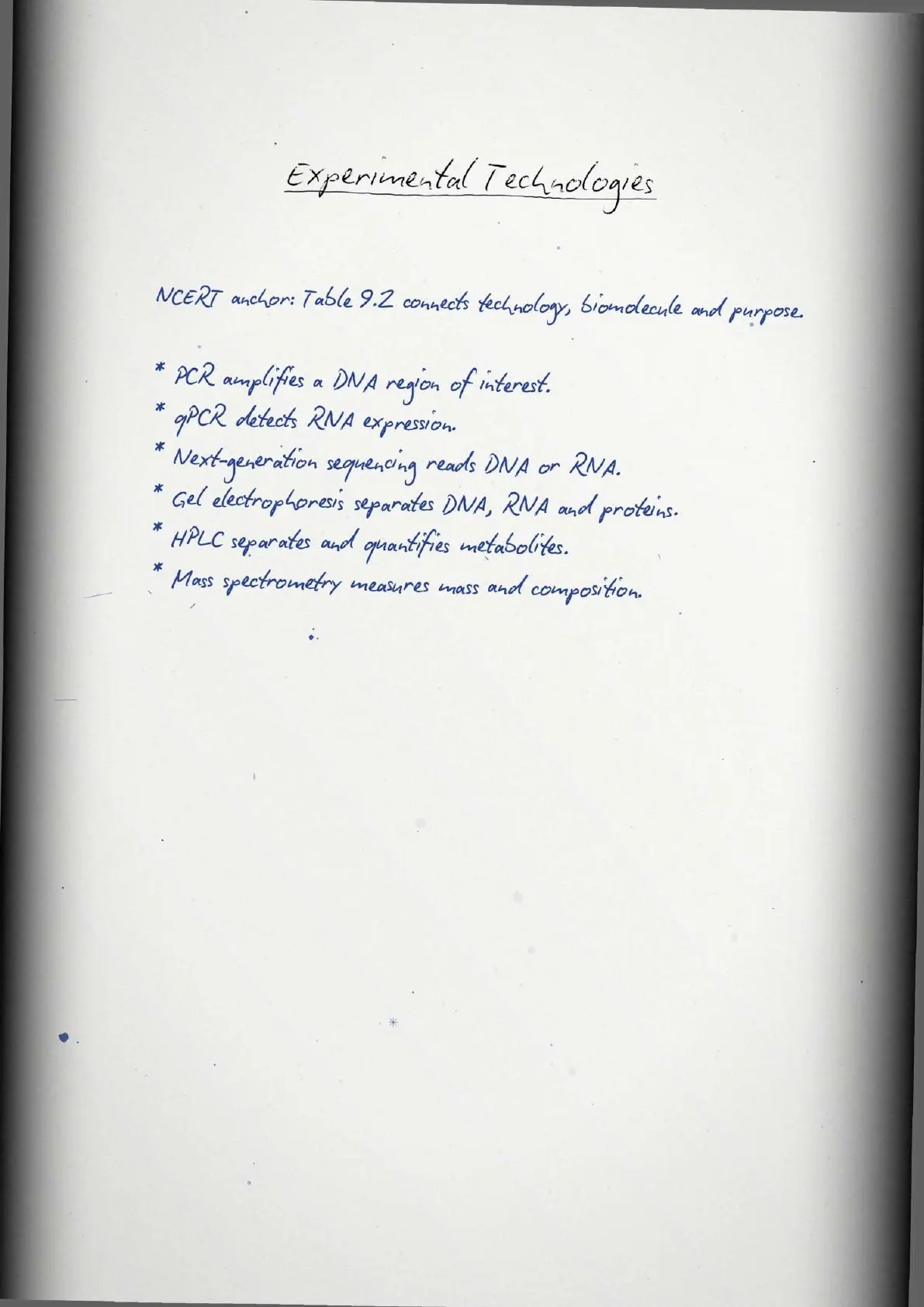
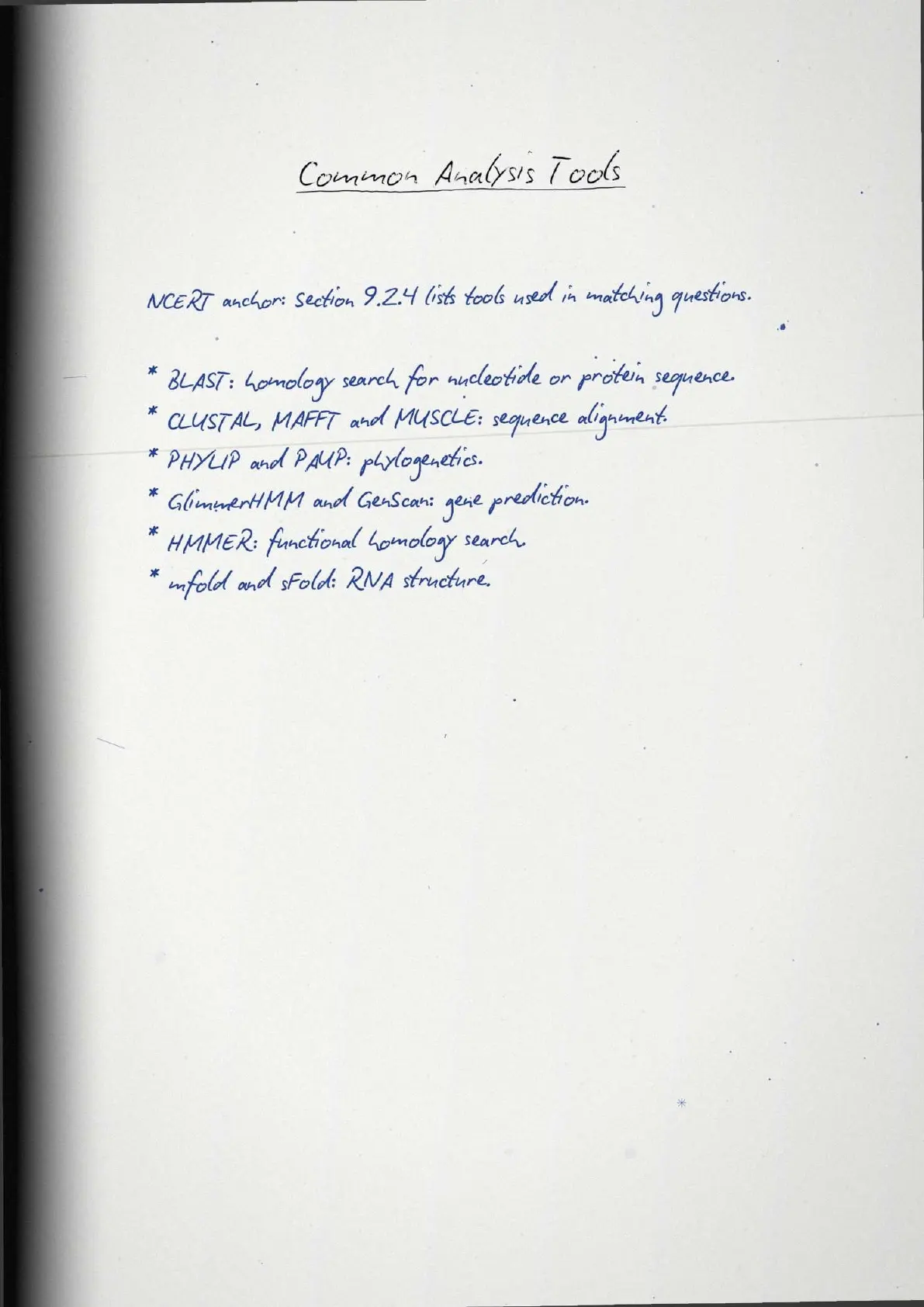
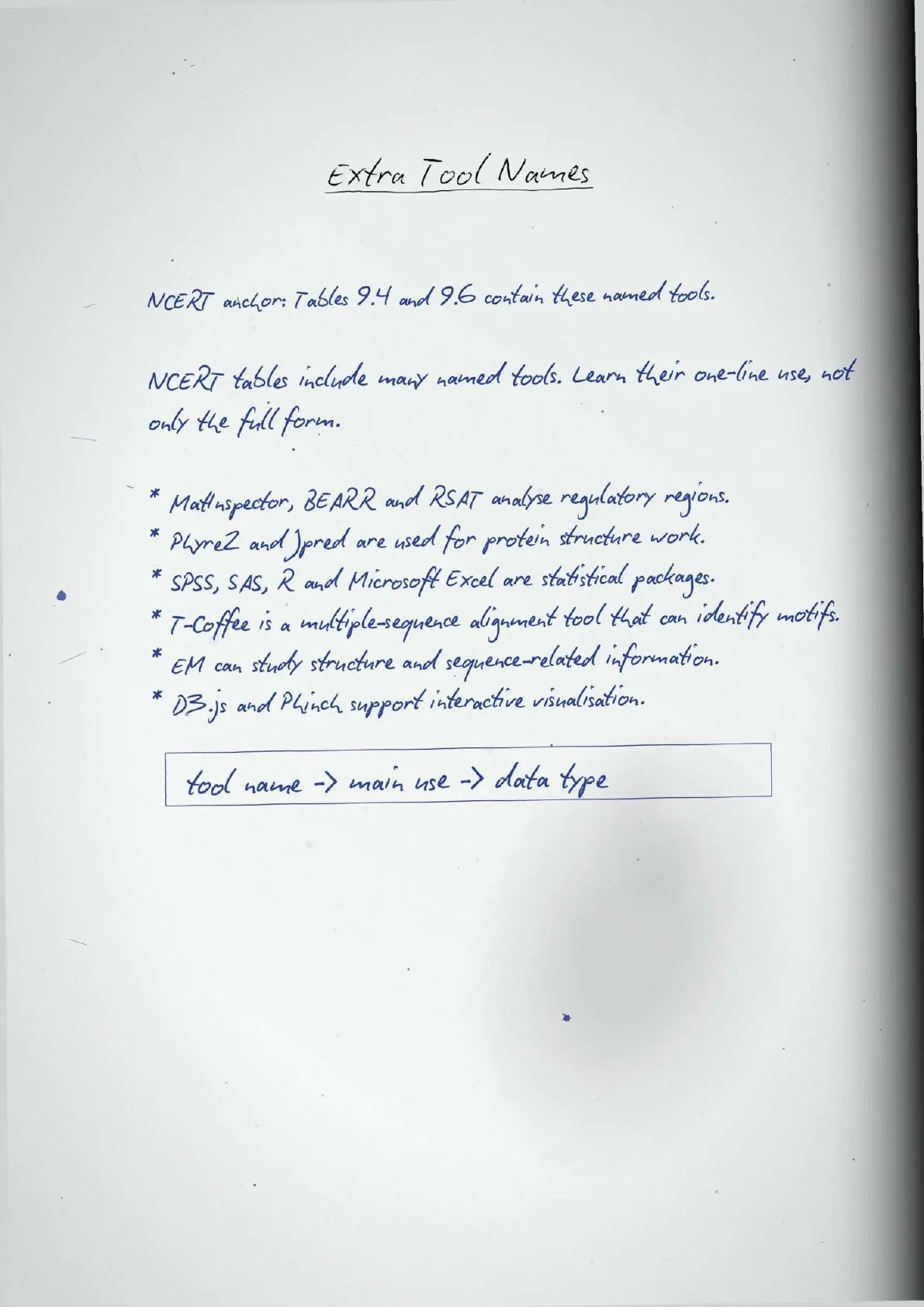
Many Chapter 9 questions can be answered by matching the tool to its use. CLUSTAL, MAFFT, MUSCLE and T-Coffee are alignment tools. MatInspector, BEARR and RSAT analyse regulatory regions. Phyre2 and Jpred support protein-structure work.
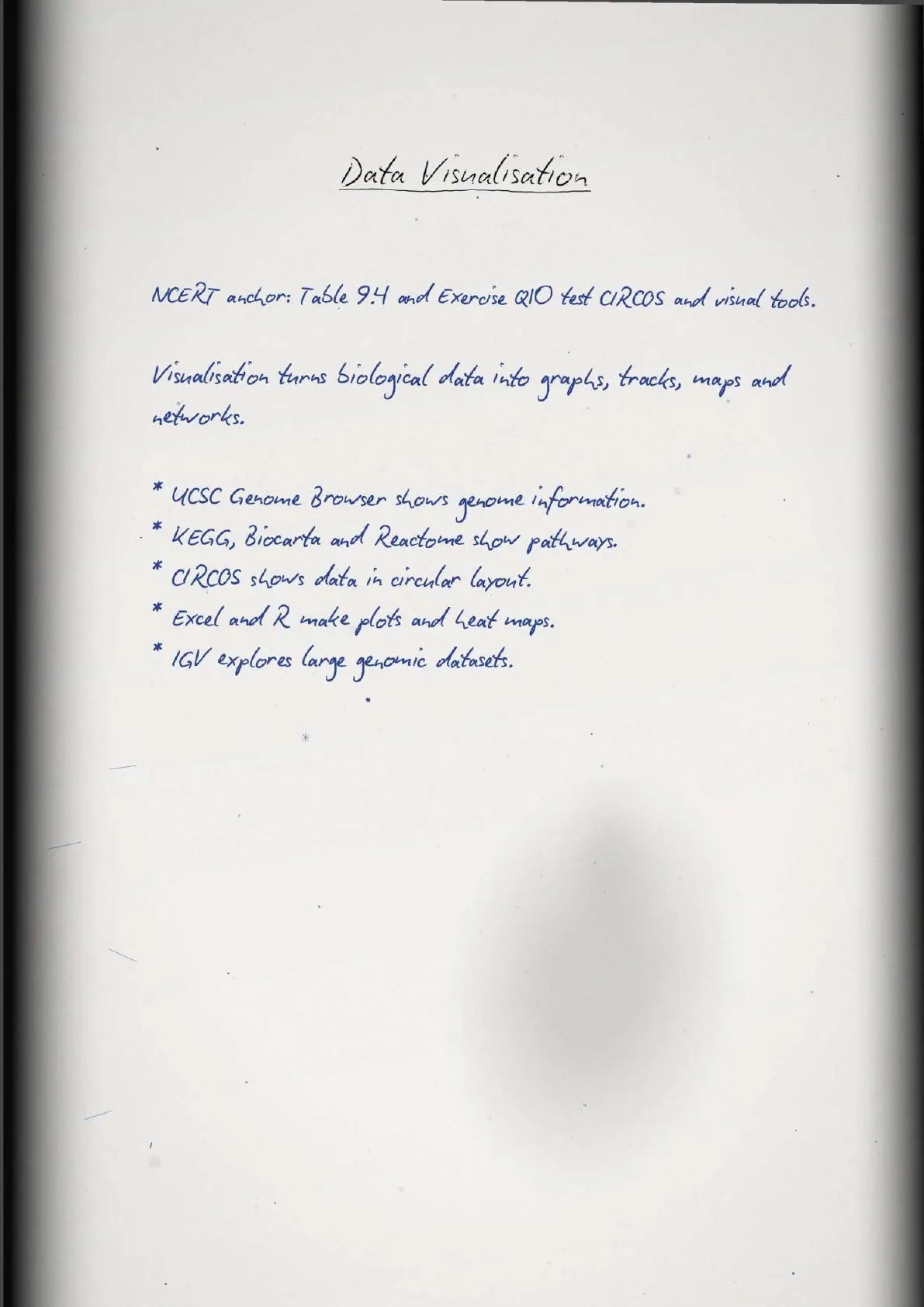
For data visualisation, revise UCSC Genome Browser, CIRCOS, D3.js, Phinch and IGV. For statistics packages, remember SPSS, SAS, R and Microsoft Excel.
Artificial Intelligence in Bioinformatics
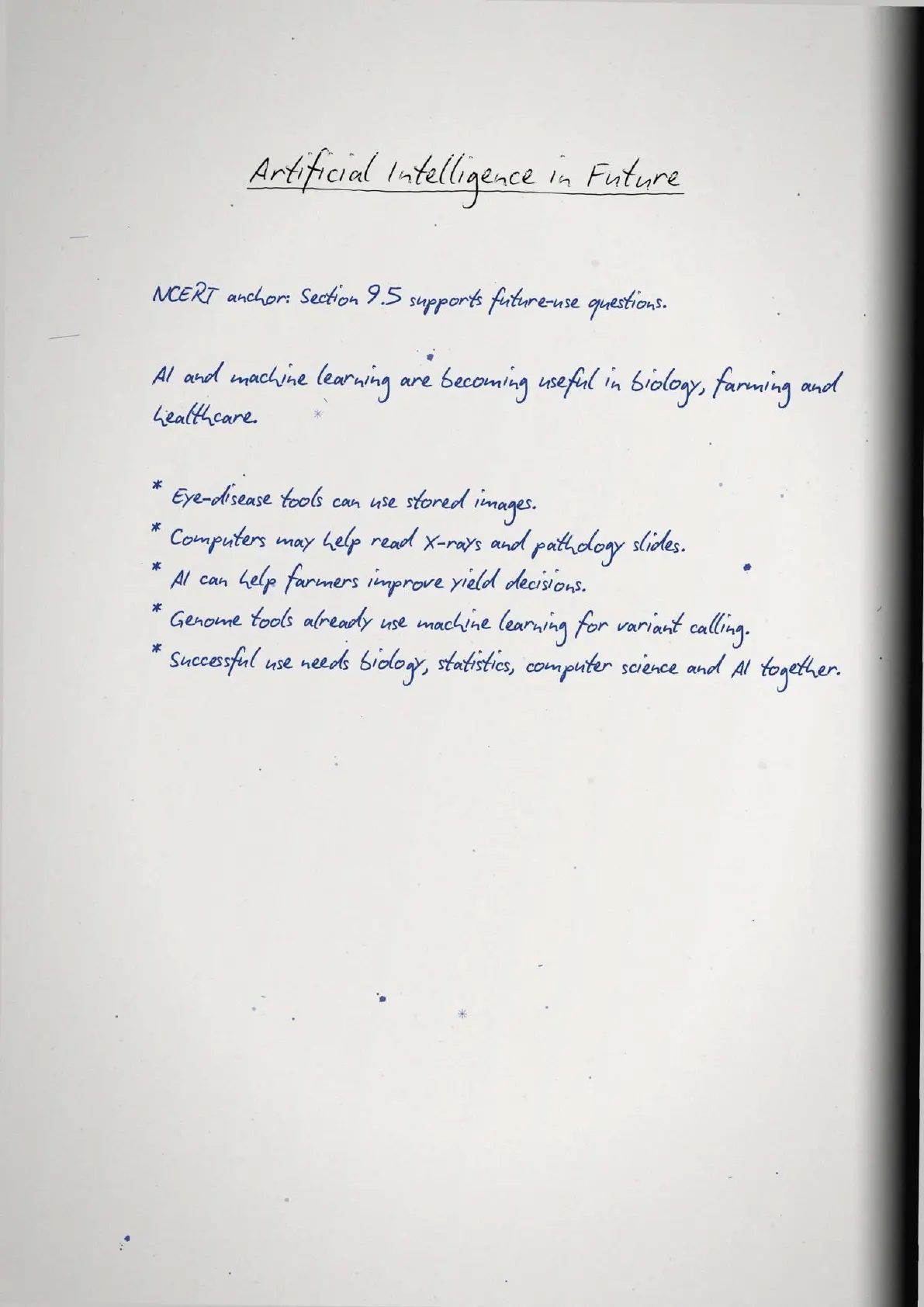
The final section explains that AI and machine learning are already used in healthcare, farming and variant calling. NCERT also makes a careful point: a useful AI and bioinformatics intersection needs biology, computer science, statistics and AI expertise together.
For a short answer, write that AI can help interpret images, support disease diagnosis, improve crop decisions and call genomic variants, but tools still need multidisciplinary development.
How to Use These Handwritten Notes
- Revise the database list before attempting definition-based questions.
- Keep FASTA, FASTQ and AB1 together for Exercise Question 8.
- Use the BLAST versus BLAT page before Exercise Question 5.
- Memorise visualisation tools as a table: tool name, use and example.
Related Class 11 Biotechnology Chapter 9 Resources
| Resource | Link |
|---|---|
| NCERT Notes | Class 11 Biotechnology Chapter 9 Notes |
| NCERT Book PDF | Class 11 Biotechnology Chapter 9 Book PDF |
| NCERT Solutions | Class 11 Biotechnology Chapter 9 Solutions |
Class 11 Biotechnology Handwritten Notes for Other Chapters
| Chapter | Handwritten Notes |
|---|---|
| Chapter 5 | Cellular Processes |
| Chapter 6 | Basic Principles of Inheritance |
| Chapter 7 | Basic Processes of DNA |
| Chapter 8 | Genetic Disorder |
Introduction to Bioinformatics Biotechnology Handwritten Notes FAQs
Ques. What is covered in Class 11 Biotechnology Chapter 9 Introduction to Bioinformatics handwritten notes?
Ans. The notes cover statistical terms, biological databases, FASTA, FASTQ, genome informatics, BLAST, BLAT, annotation and AI applications.
Ques. Are these handwritten notes based on the 2026-27 NCERT textbook?
Ans. Yes. The topic order and revision anchors follow the 2026-27 NCERT Class 11 Biotechnology Chapter 9 source.
Ques. Which bioinformatics topic should students revise first from this PDF?
Ans. Start with the definition of bioinformatics, then revise biological databases, FASTA and FASTQ, and the BLAST versus BLAT difference.



Comments