




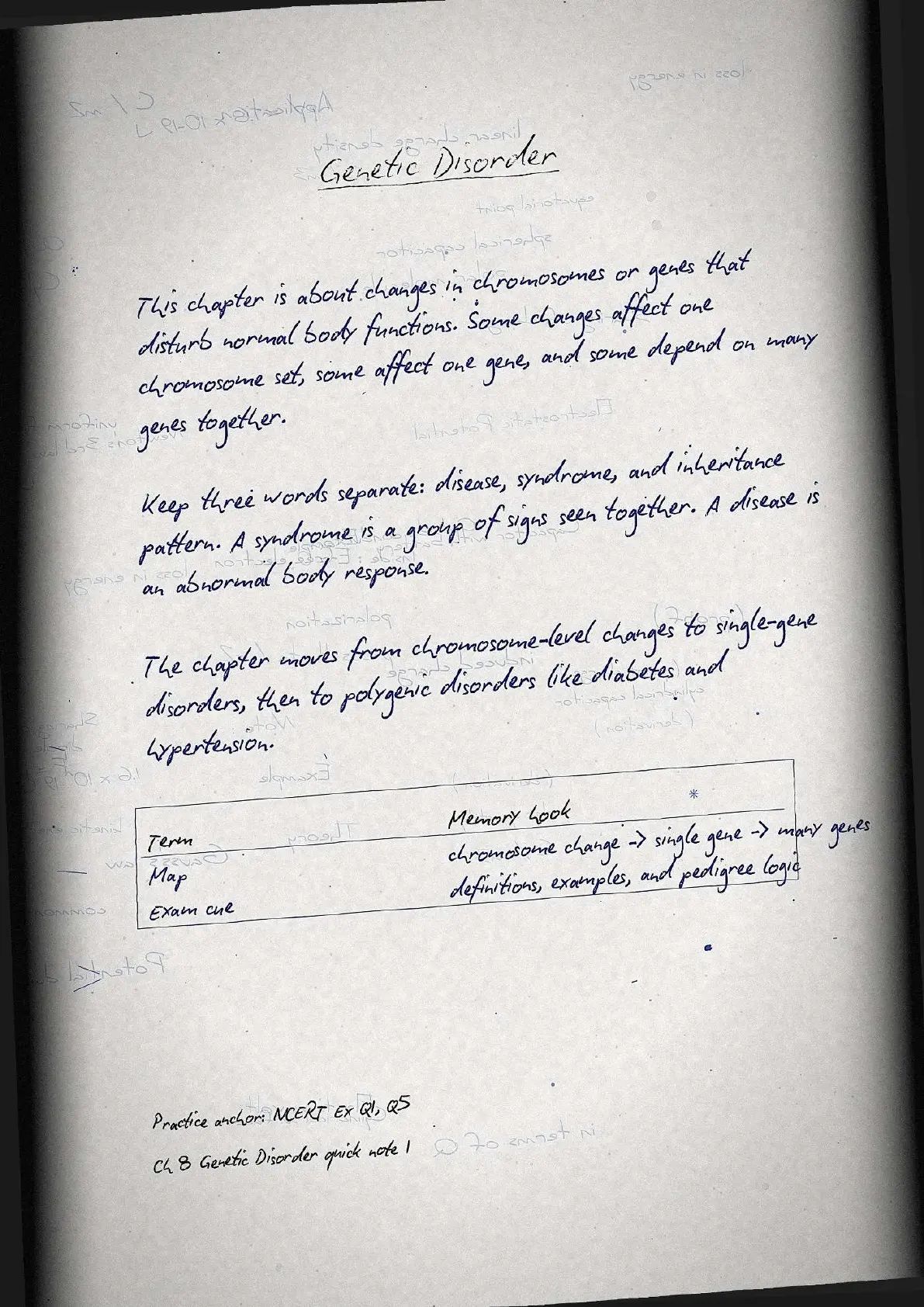
The handwritten notes on Class 11 Biotechnology Chapter 8 Genetic Disorder have been prepared for quick revision from the 2026-27 NCERT textbook. The PDF covers chromosomal abnormalities, Down syndrome, Klinefelter syndrome, Turner syndrome, monogenic inheritance, polygenic disorders and mitochondrial inheritance in compact handwritten pages.
- Covers the chapter sequence from chromosome changes to inheritance patterns.
- Includes karyotype cues, pedigree symbols, syndrome comparison and disease examples.
- Useful for NCERT exercise revision, school tests and last-week concept recall.
Student Feedback: In a Collegedunia revision check, students said that keeping karyotypes and inheritance patterns in separate recall boxes made Genetic Disorder easier to revise before tests.
Genetic Disorder Handwritten Notes PDF Highlights
Class 11 Biotechnology Chapter 8 explains how genetic disorders can arise from changes in chromosome structure, chromosome number, a single gene, multiple genes or mitochondrial DNA. The handwritten PDF keeps the lesson in NCERT order so students can revise the chapter as a chain of linked ideas.
Important: this is a revision resource. Students should still read the NCERT textbook for full explanations, official figure labels and complete exercise wording.
| Revision area | What the PDF covers |
|---|---|
| Chromosome changes | Deletion, duplication, inversion, translocation, aneuploidy and polyploidy. |
| Syndromes | Down syndrome, Klinefelter syndrome and Turner syndrome with karyotype cues. |
| Inheritance patterns | Autosomal recessive, autosomal dominant, X-linked recessive, X-linked dominant and mitochondrial inheritance. |
Types of Genetic Disorders in Chapter 8
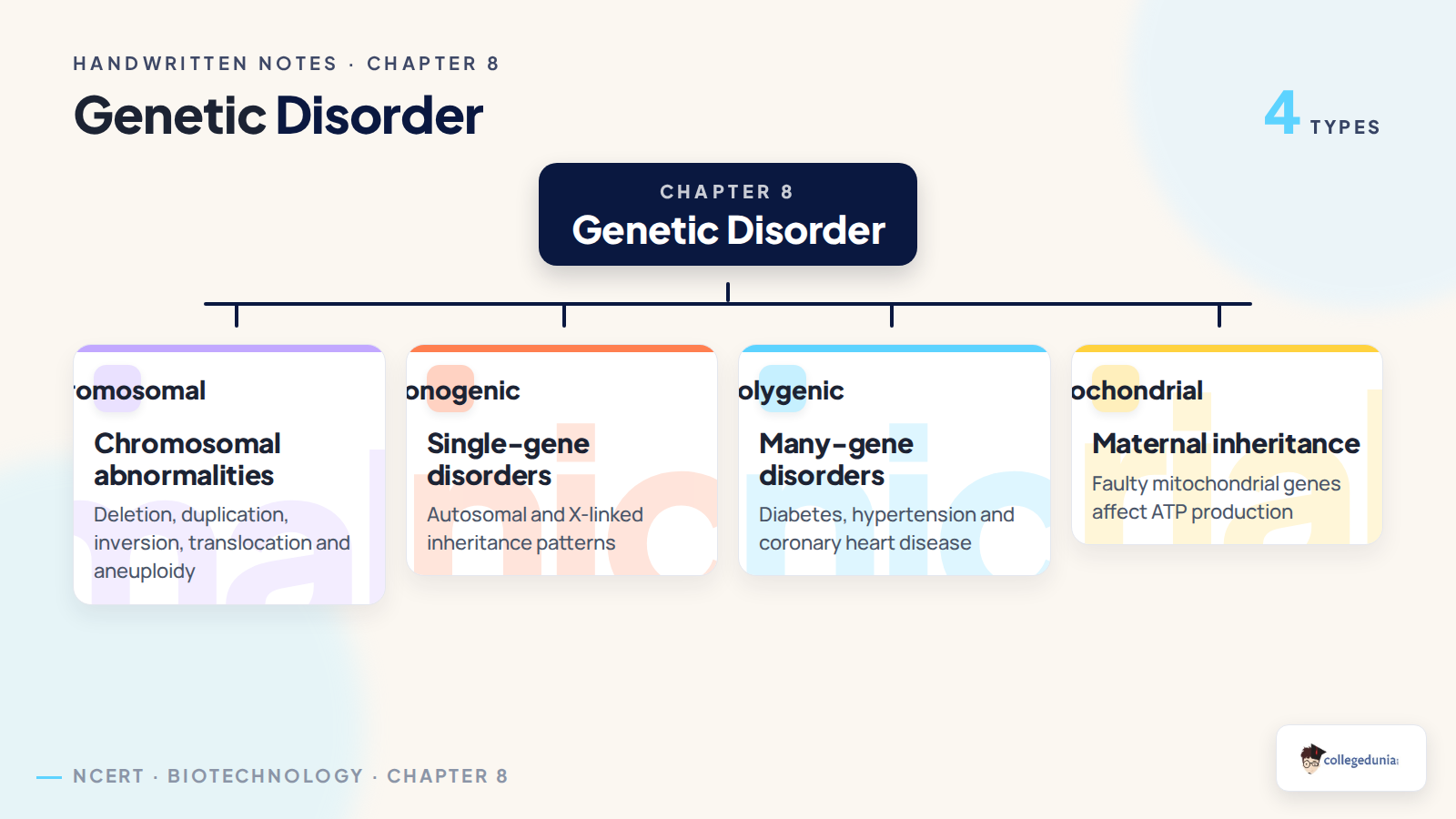
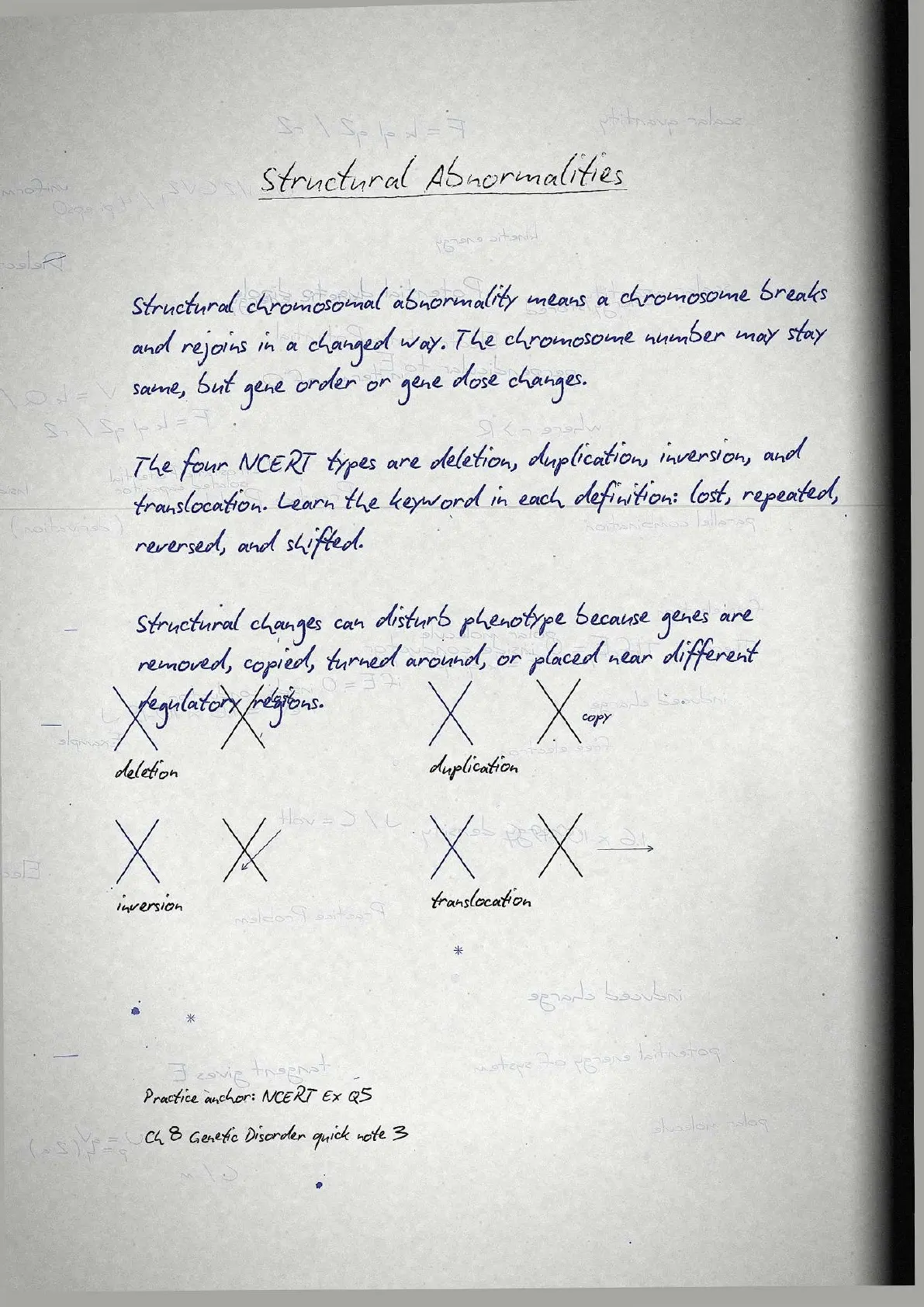
The chapter first separates structural chromosomal abnormalities from numerical chromosomal abnormalities. Structural changes affect the arrangement of chromosome segments, while numerical changes affect the chromosome count.
After that, the chapter moves into monogenic disorders, polygenic disorders and mitochondrial inheritance. This order is important because exam answers often begin by naming the category before explaining the example.
Chromosomal Abnormalities and Syndrome Recall
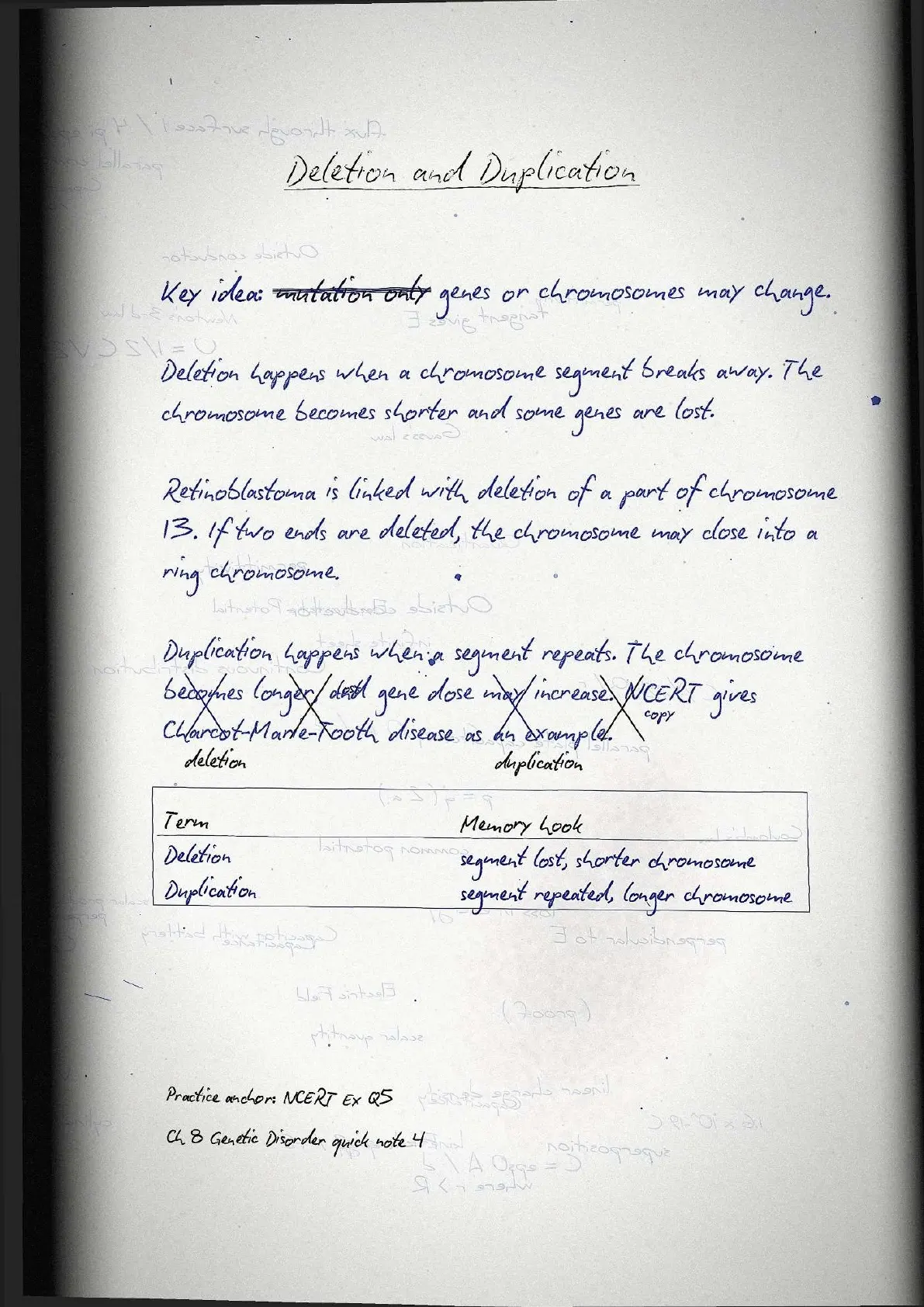
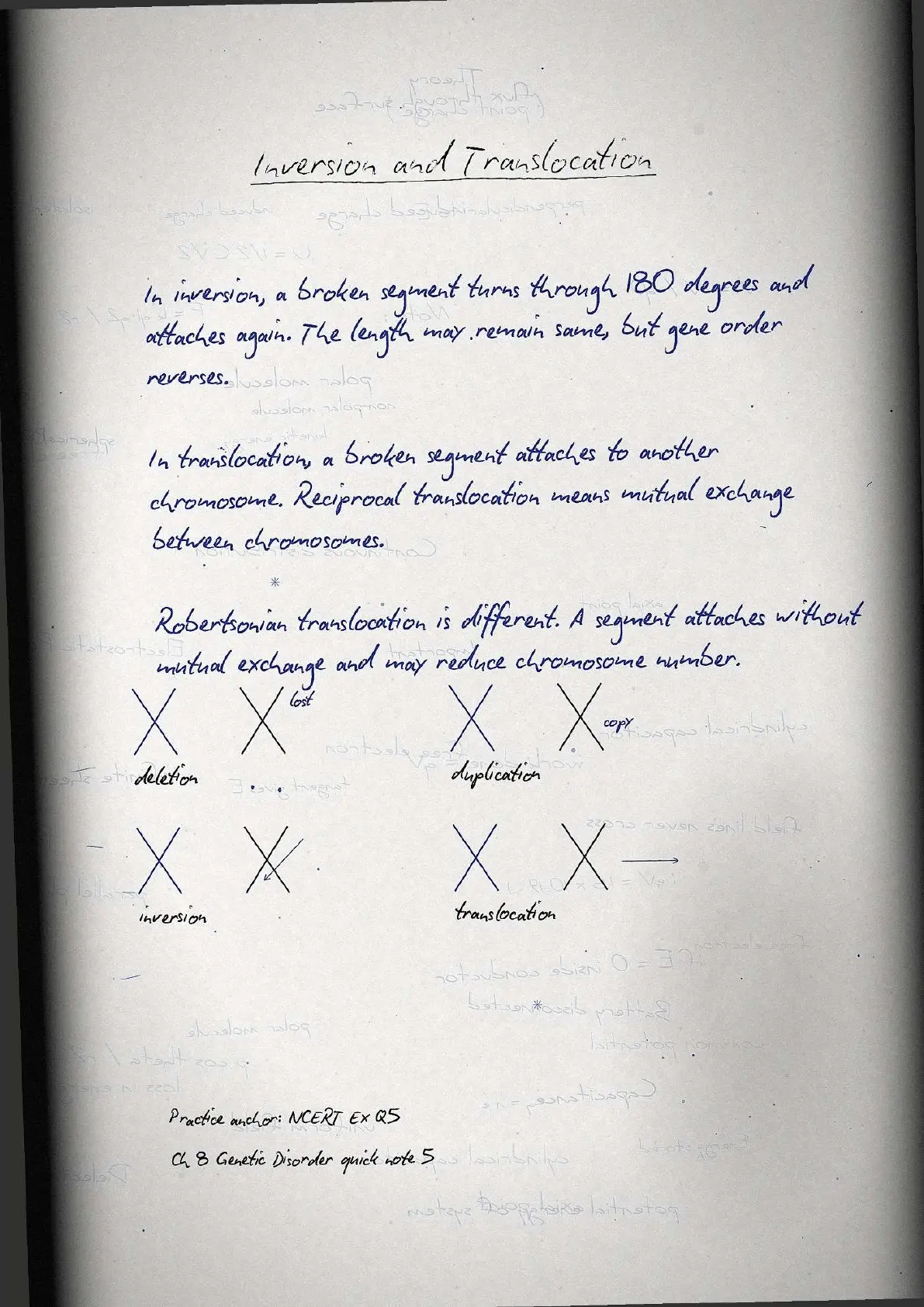
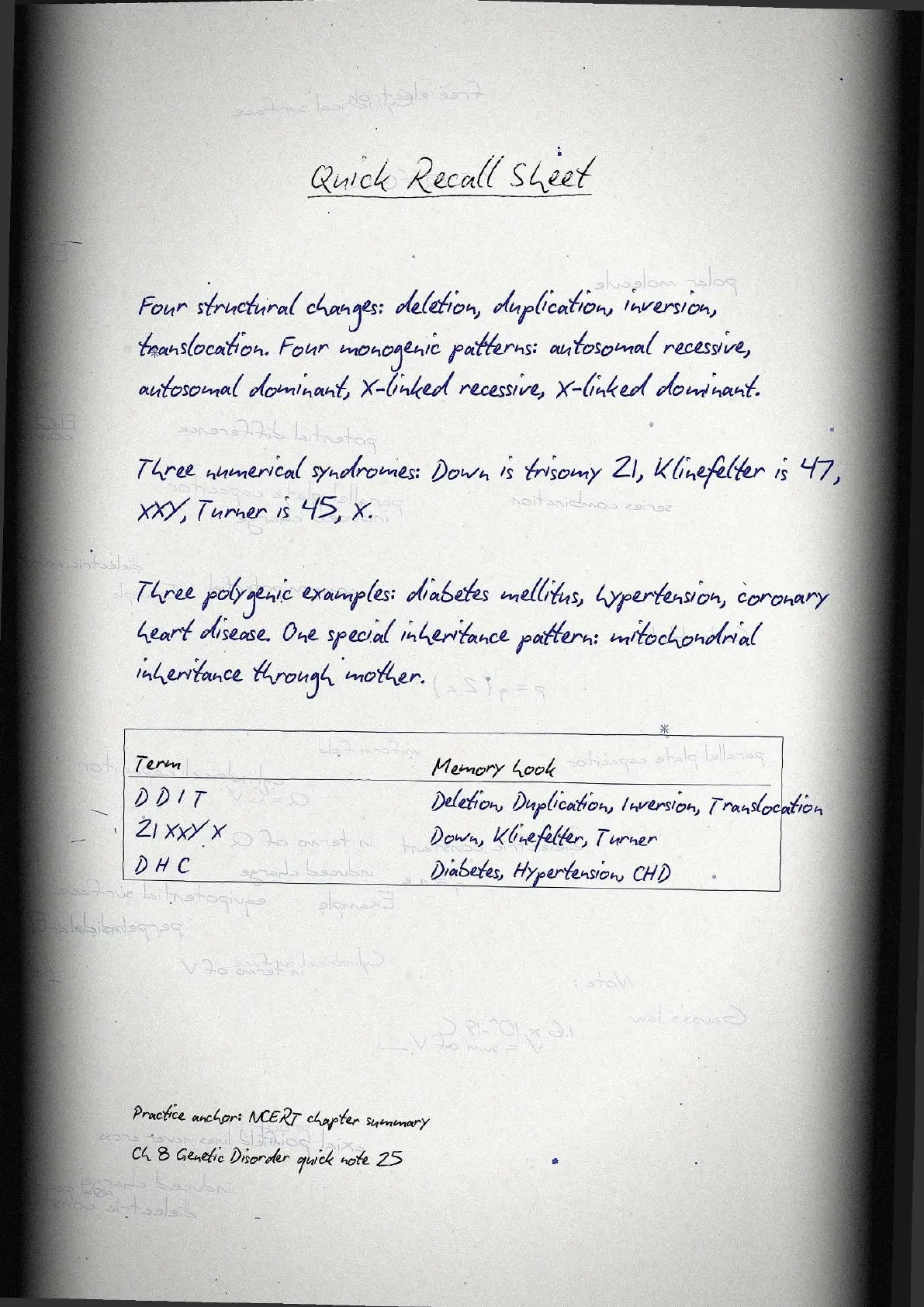
Structural chromosomal abnormalities include deletion, duplication, inversion and translocation. Deletion means a segment is lost, duplication means a segment is repeated, inversion means a segment reverses and translocation means a segment shifts to another chromosome.
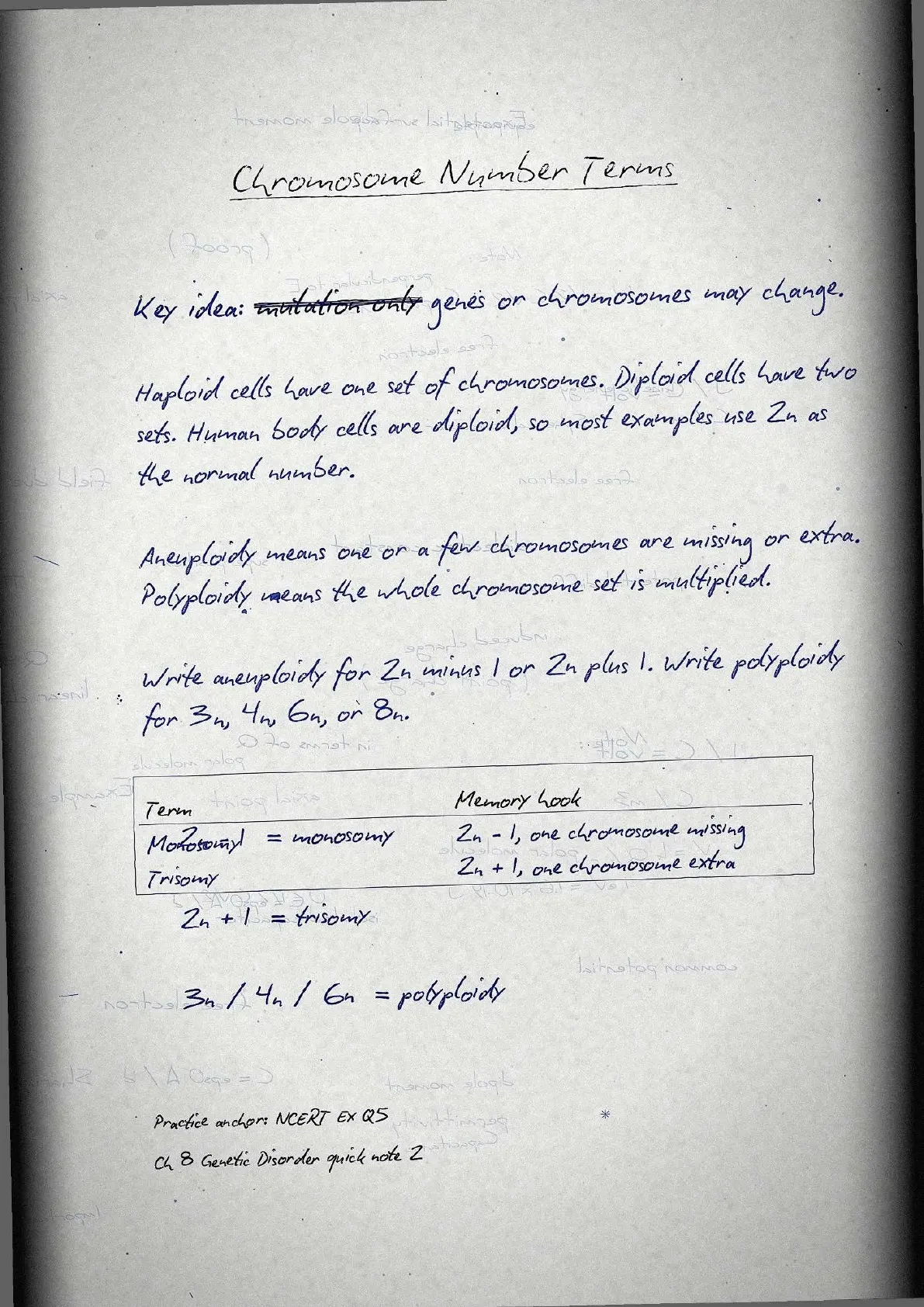
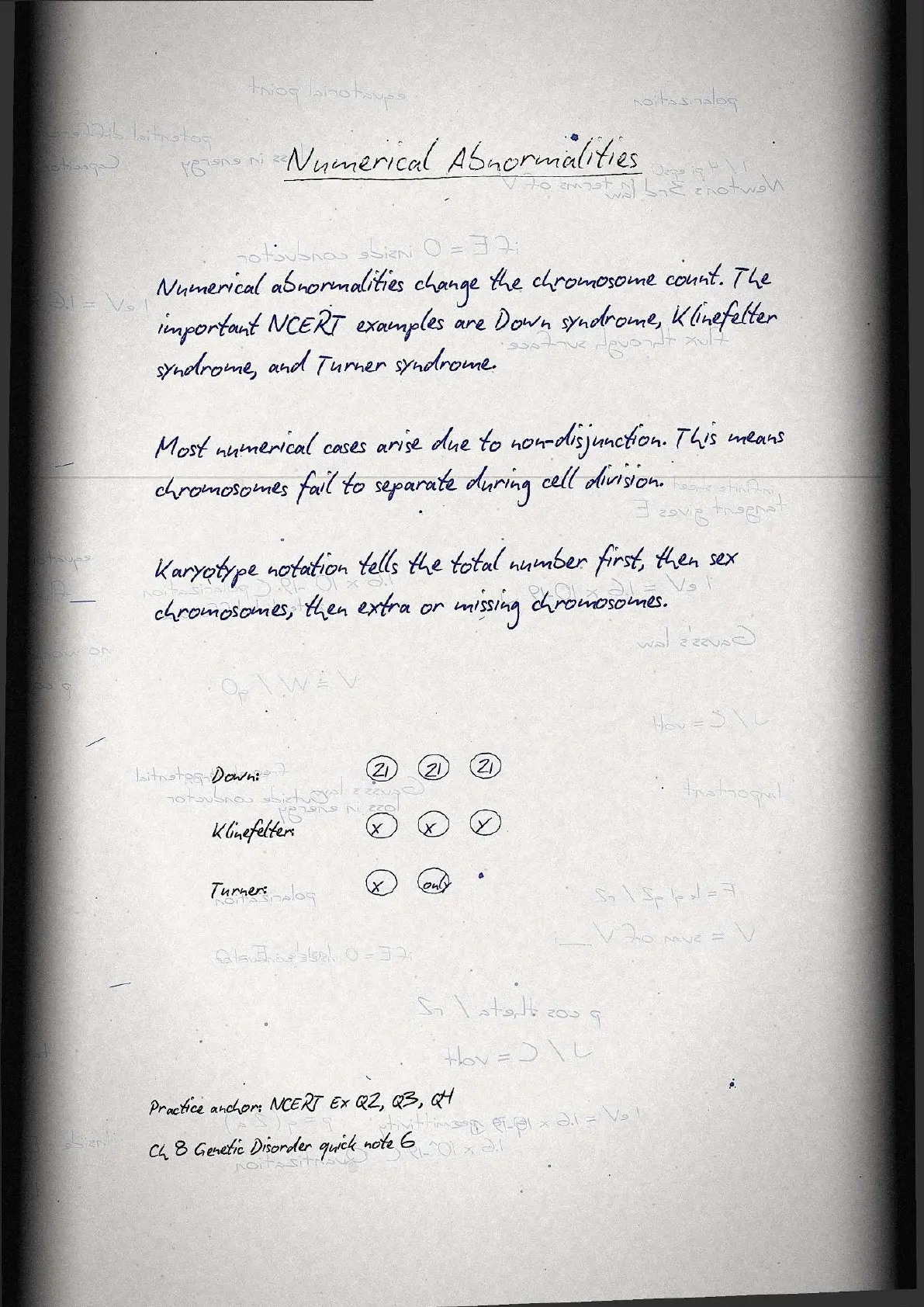
Numerical chromosomal abnormalities include monosomy, trisomy and changes in whole chromosome sets. The notes highlight aneuploidy for one or a few missing or extra chromosomes and polyploidy for multiplication of the entire set.
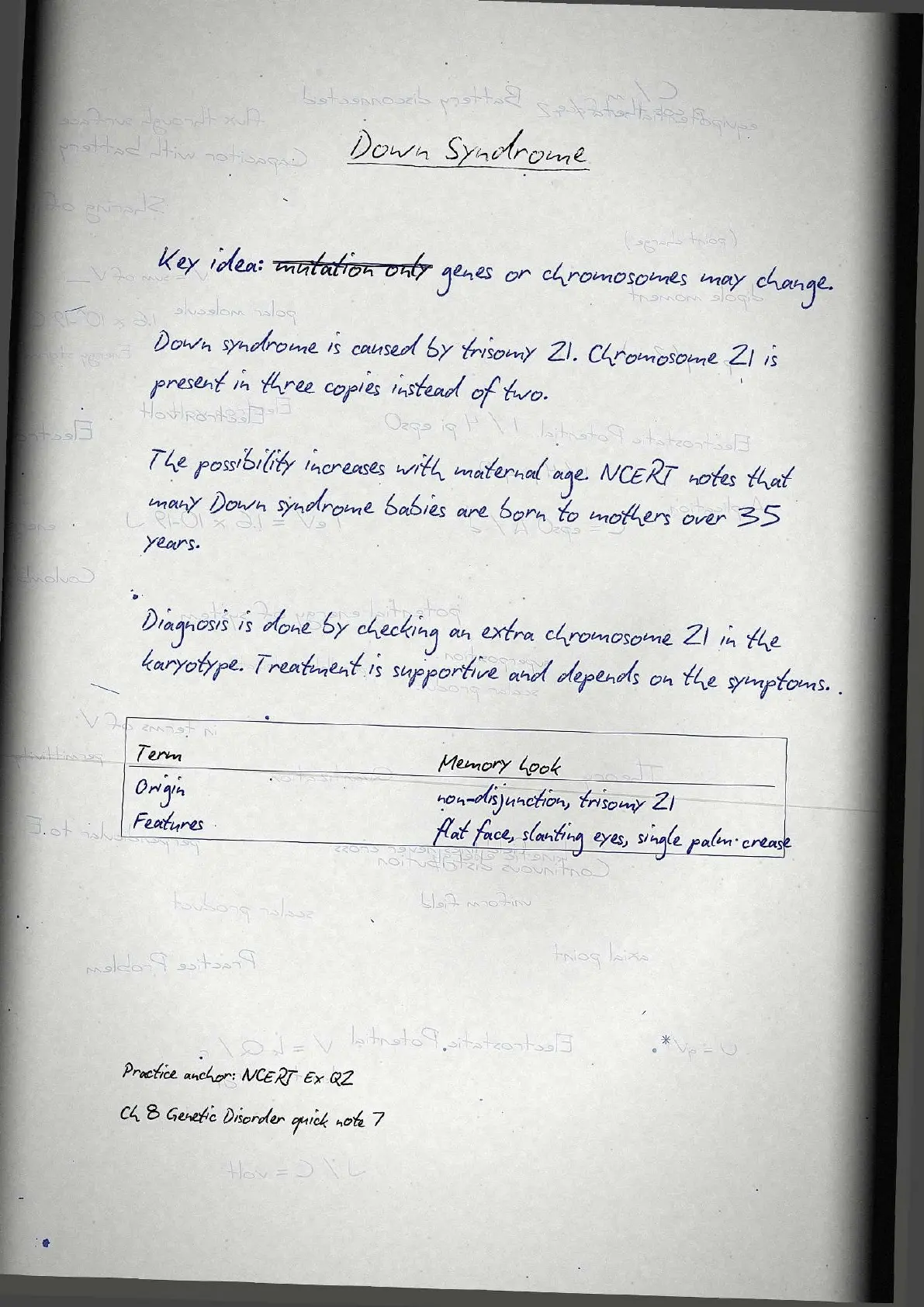
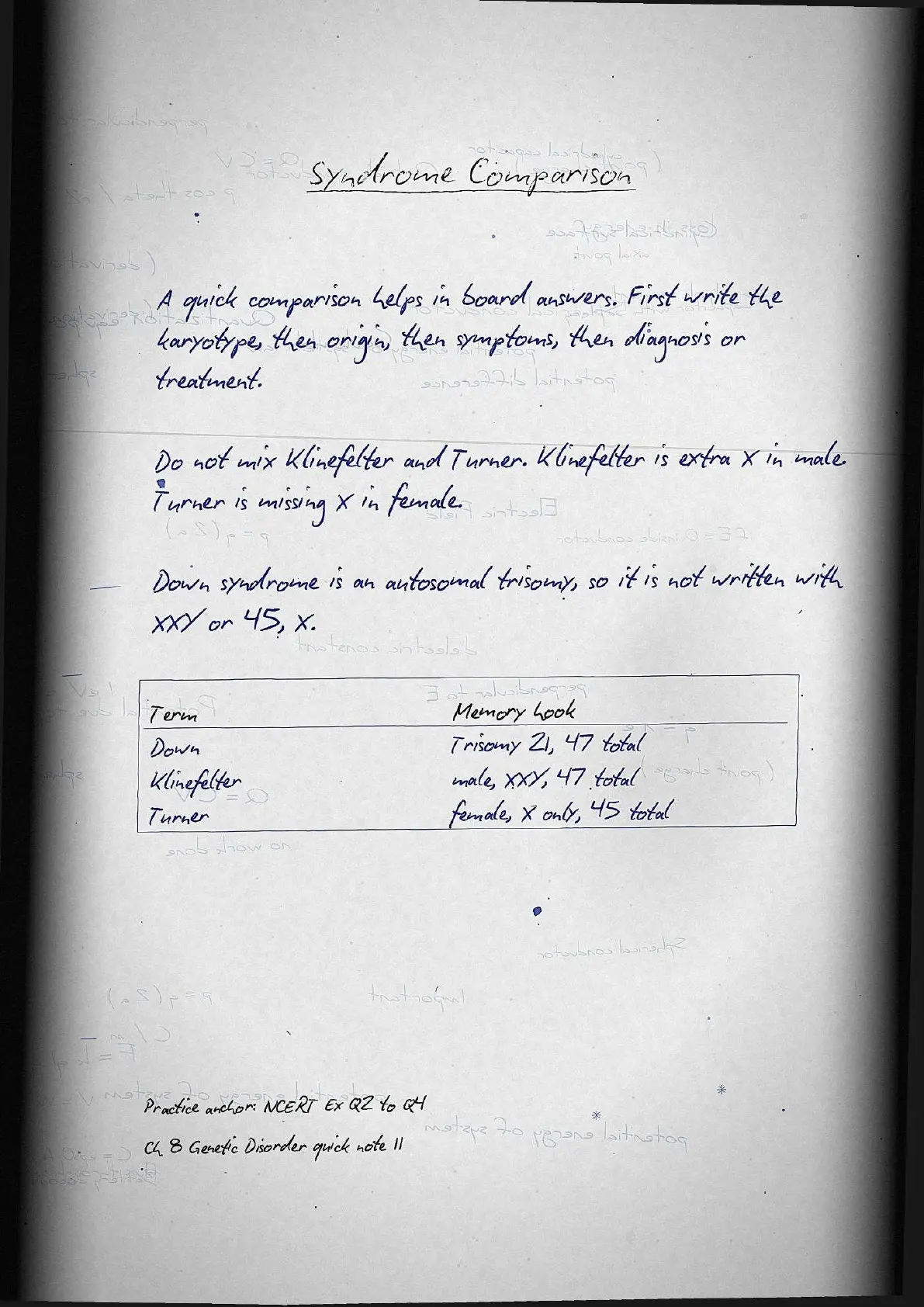
- Down syndrome: trisomy 21, usually written as 47 chromosomes with an extra chromosome 21.
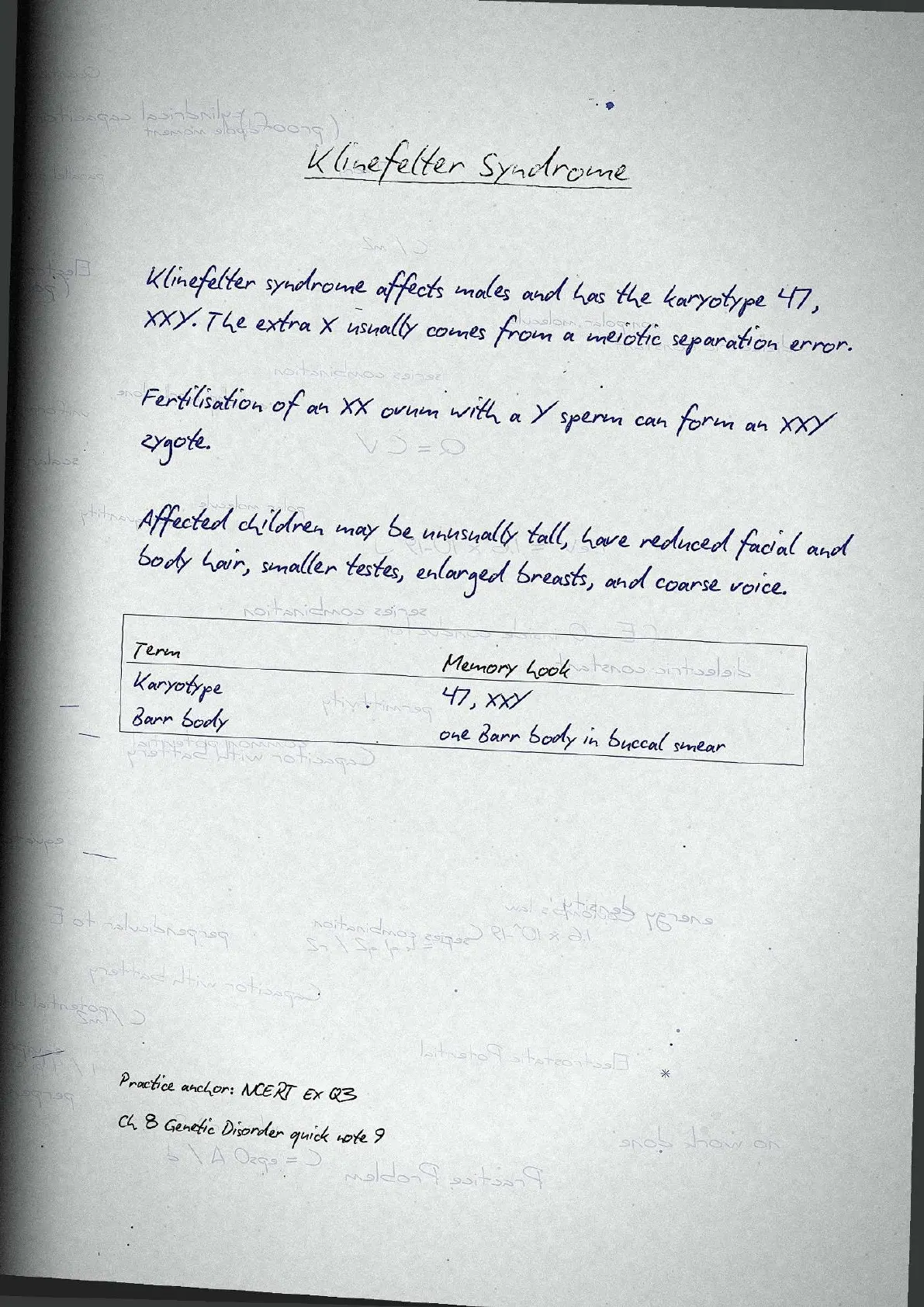
- Klinefelter syndrome: affects males and is commonly written as 47, XXY.
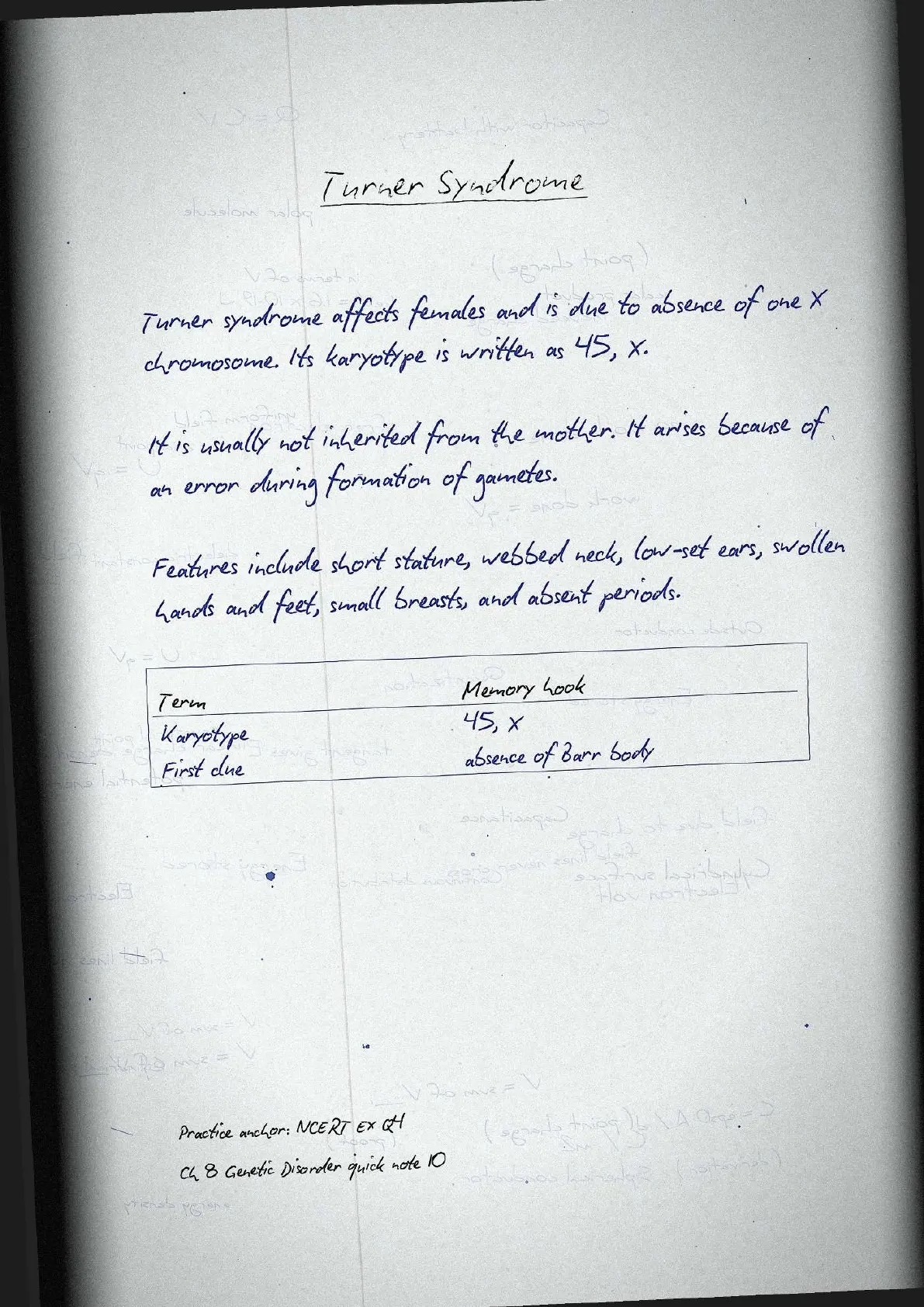
- Turner syndrome: affects females and is commonly written as 45, X.
Karyotype Comparison for Quick Revision
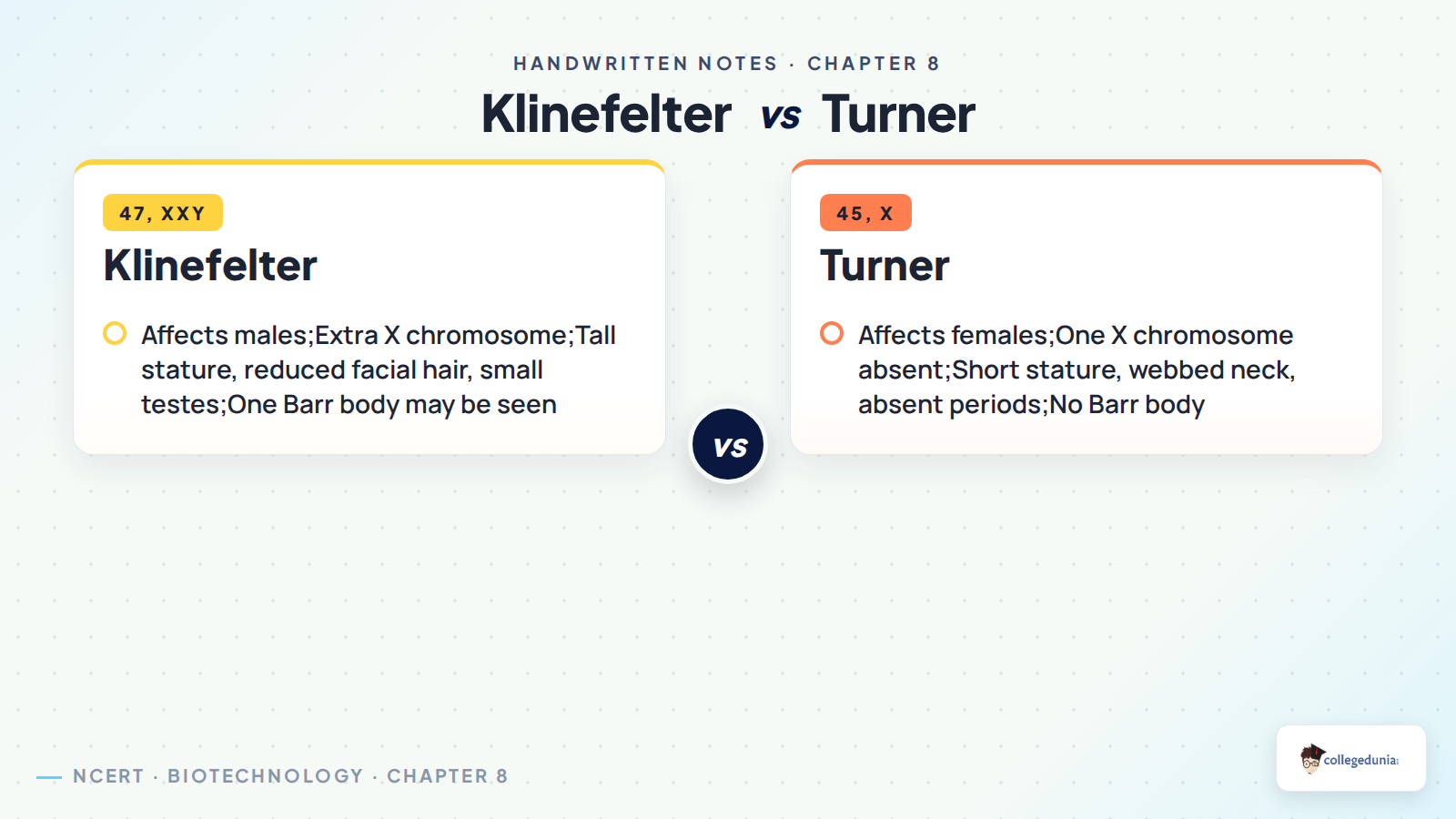
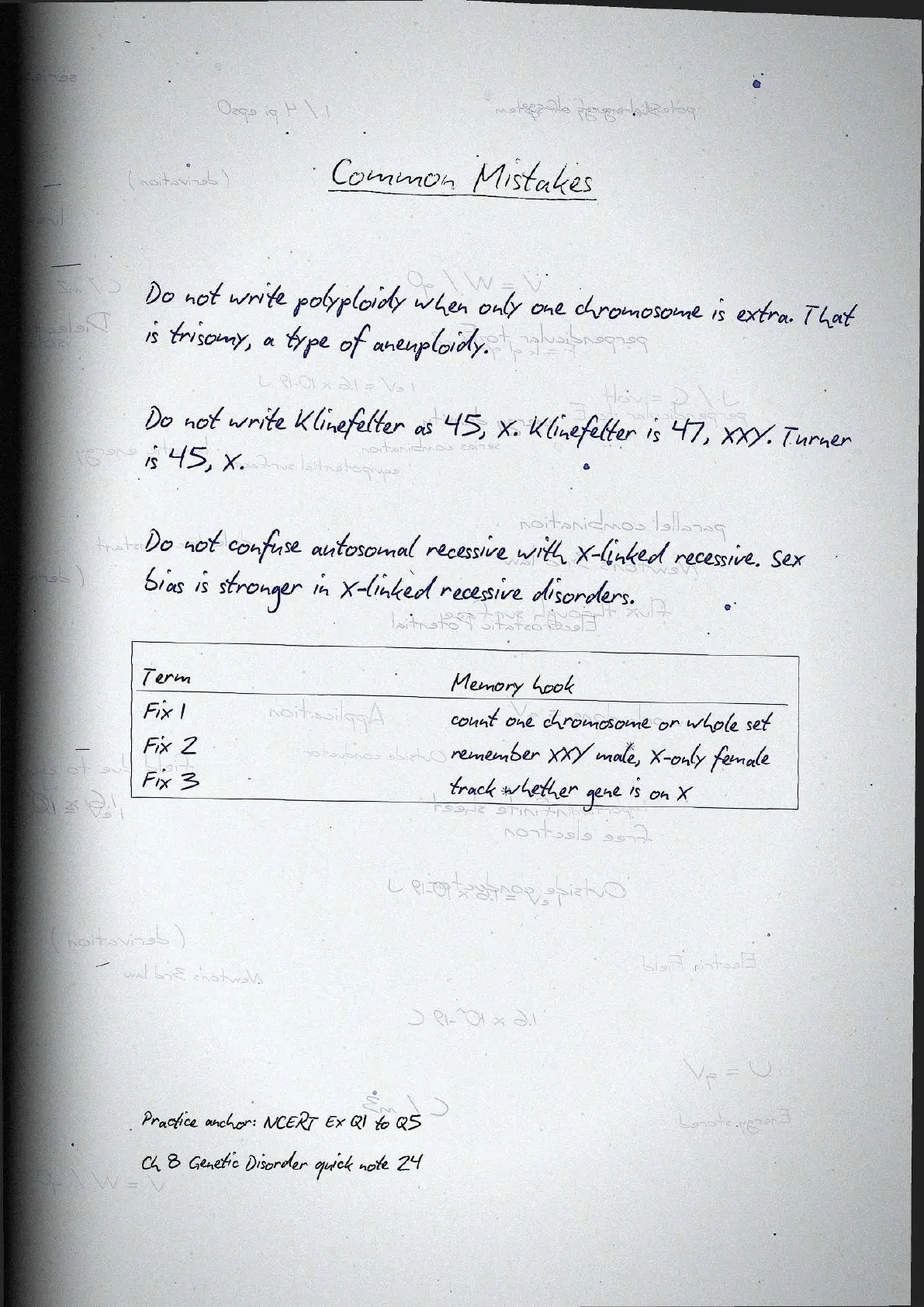
A common mistake in this chapter is mixing Klinefelter and Turner syndrome. Klinefelter syndrome has an extra X chromosome in a male, while Turner syndrome has one X chromosome missing in a female.
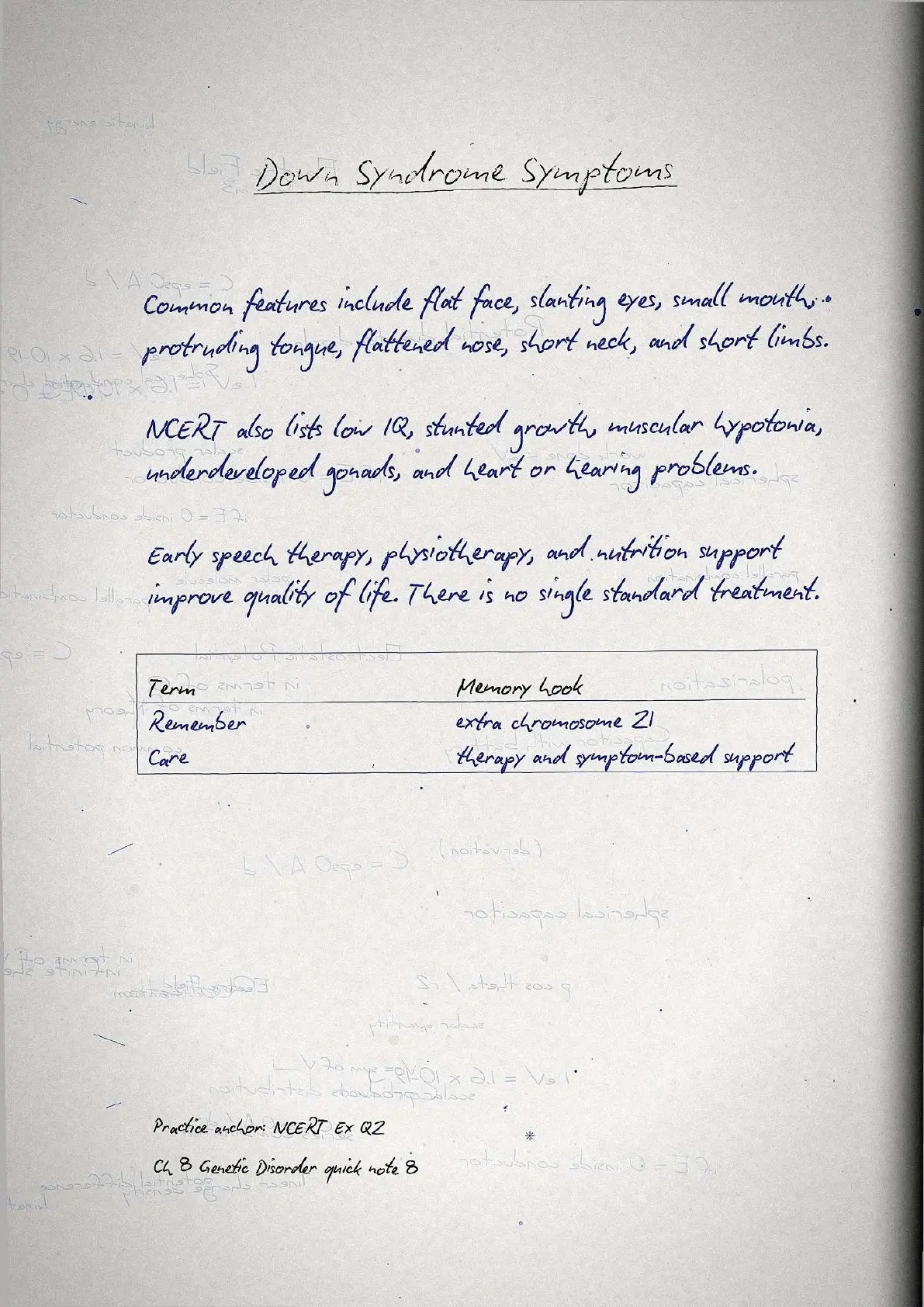
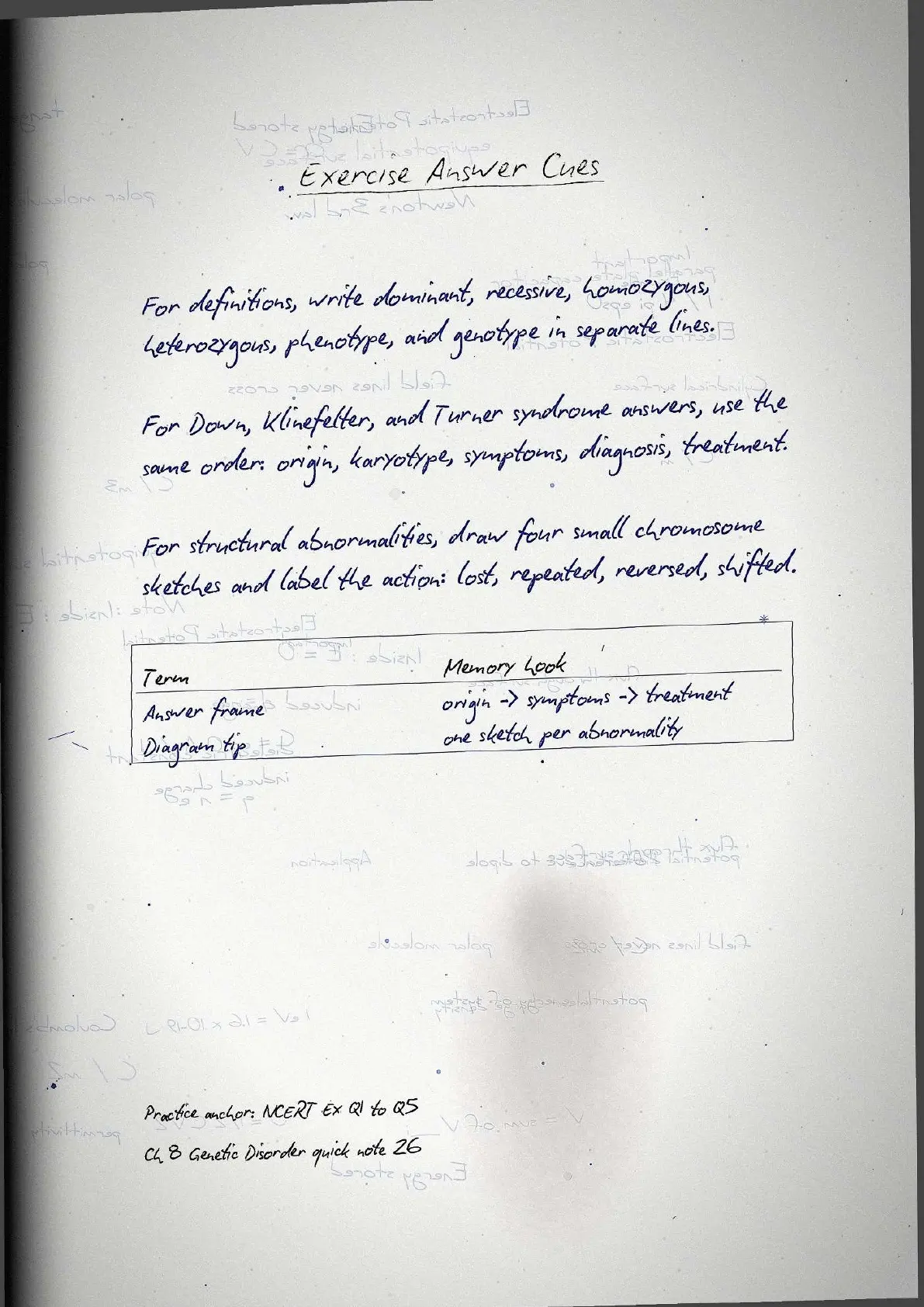
For short answers, write the same order each time: origin, karyotype, major symptoms, diagnosis and treatment or support. This structure keeps syndrome answers complete without becoming too long.
Genetic Disorder Video Revision
Source: Magnet Brains on YouTube
Monogenic Disorders and Pedigree Mapping
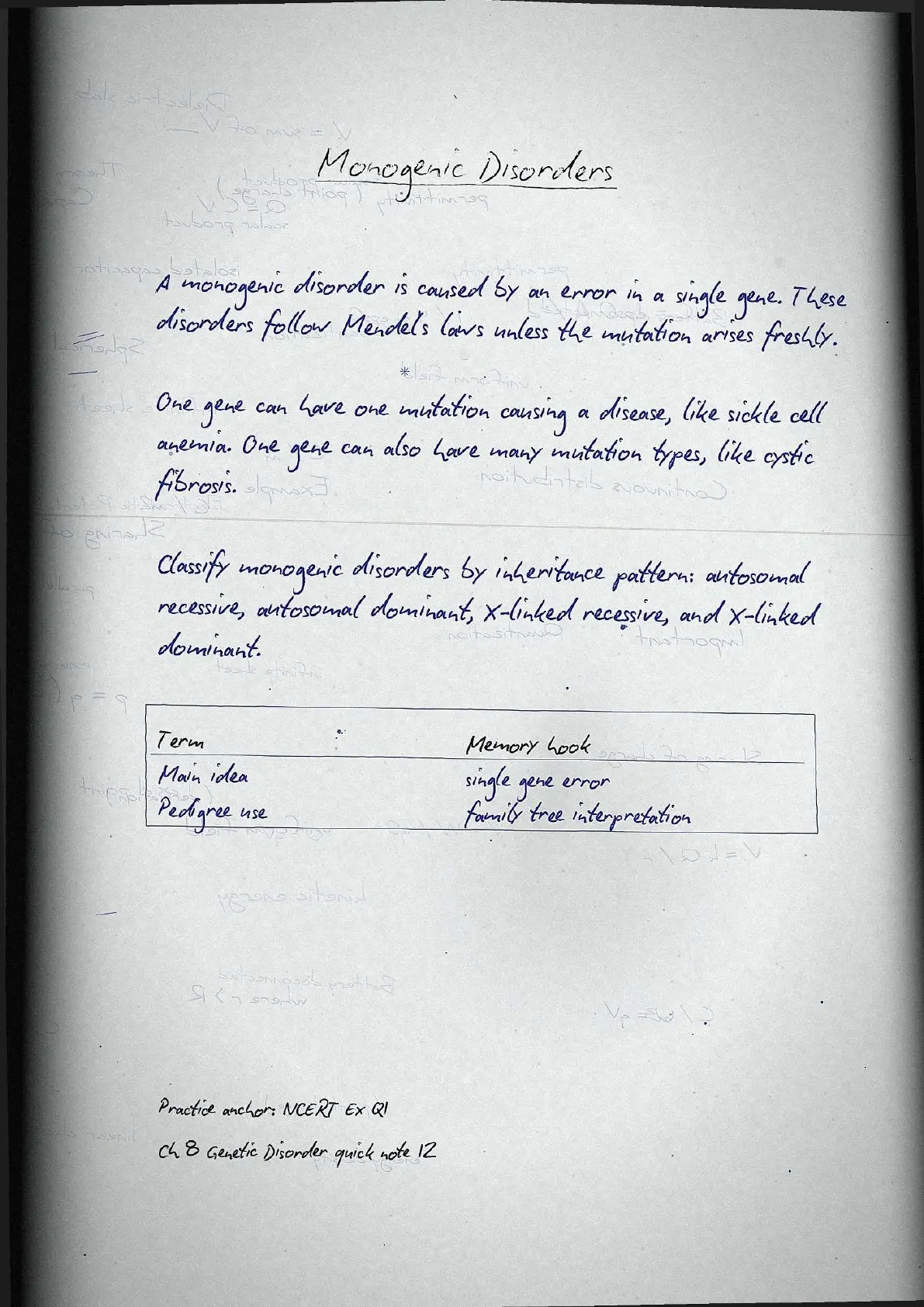
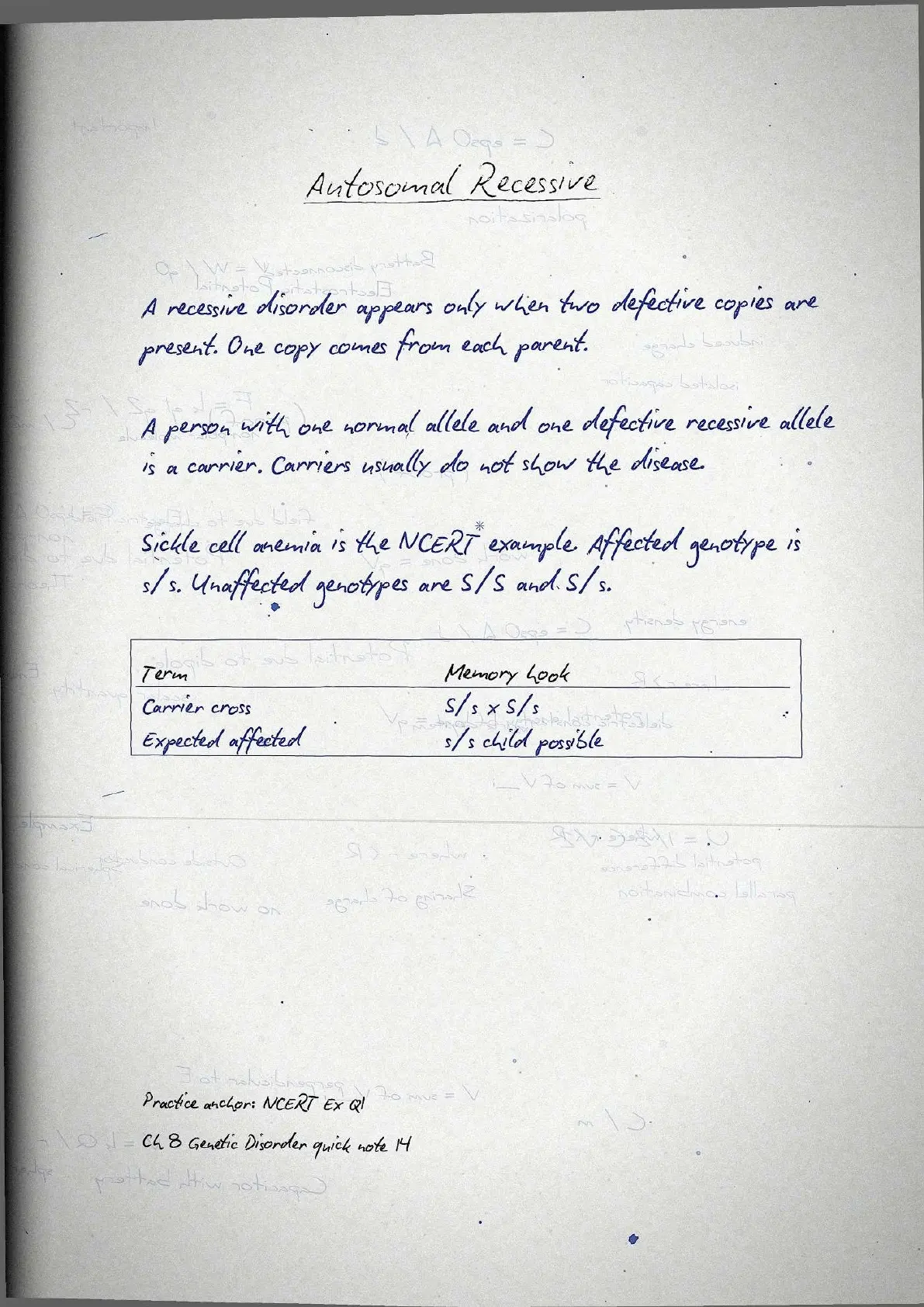
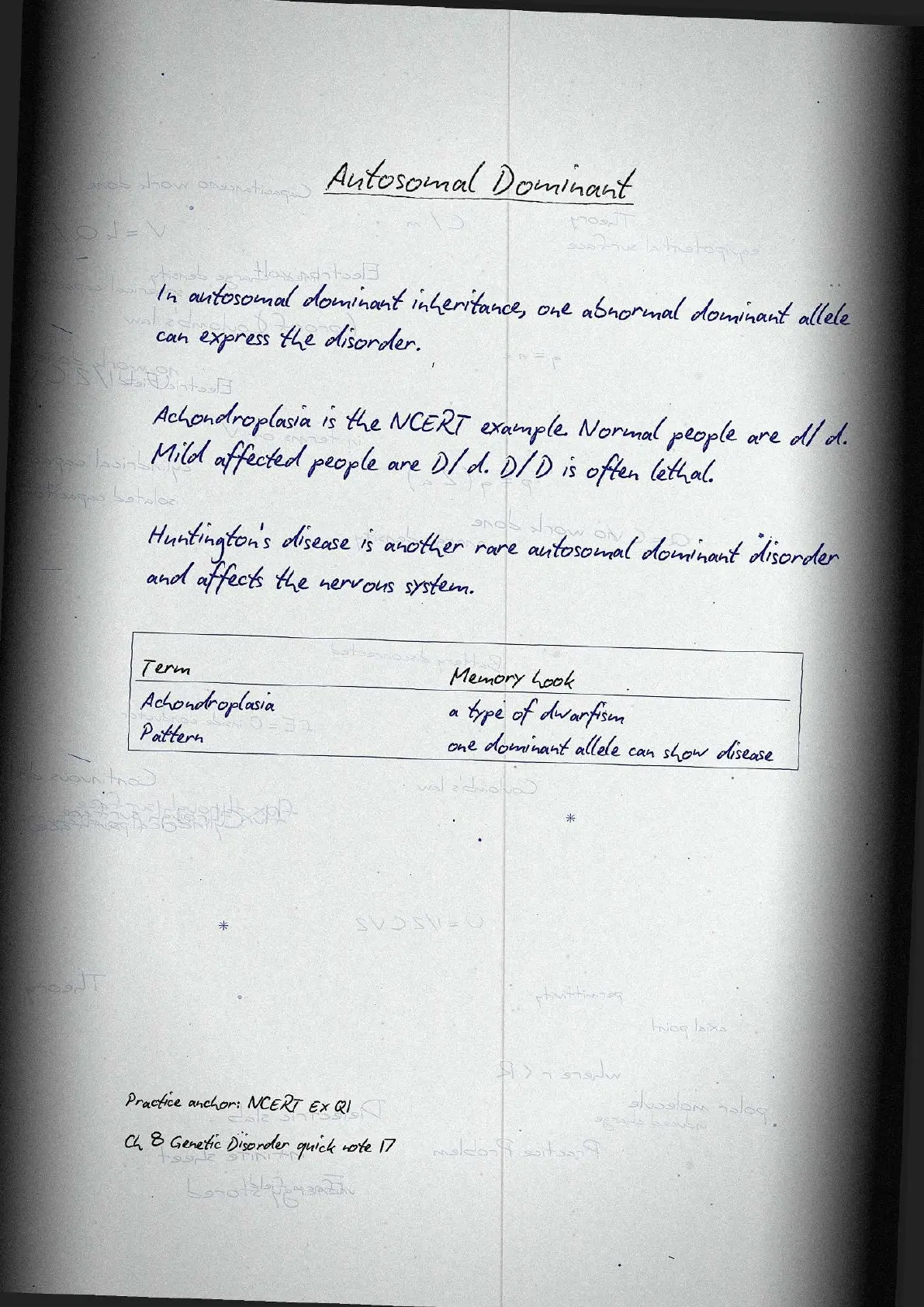
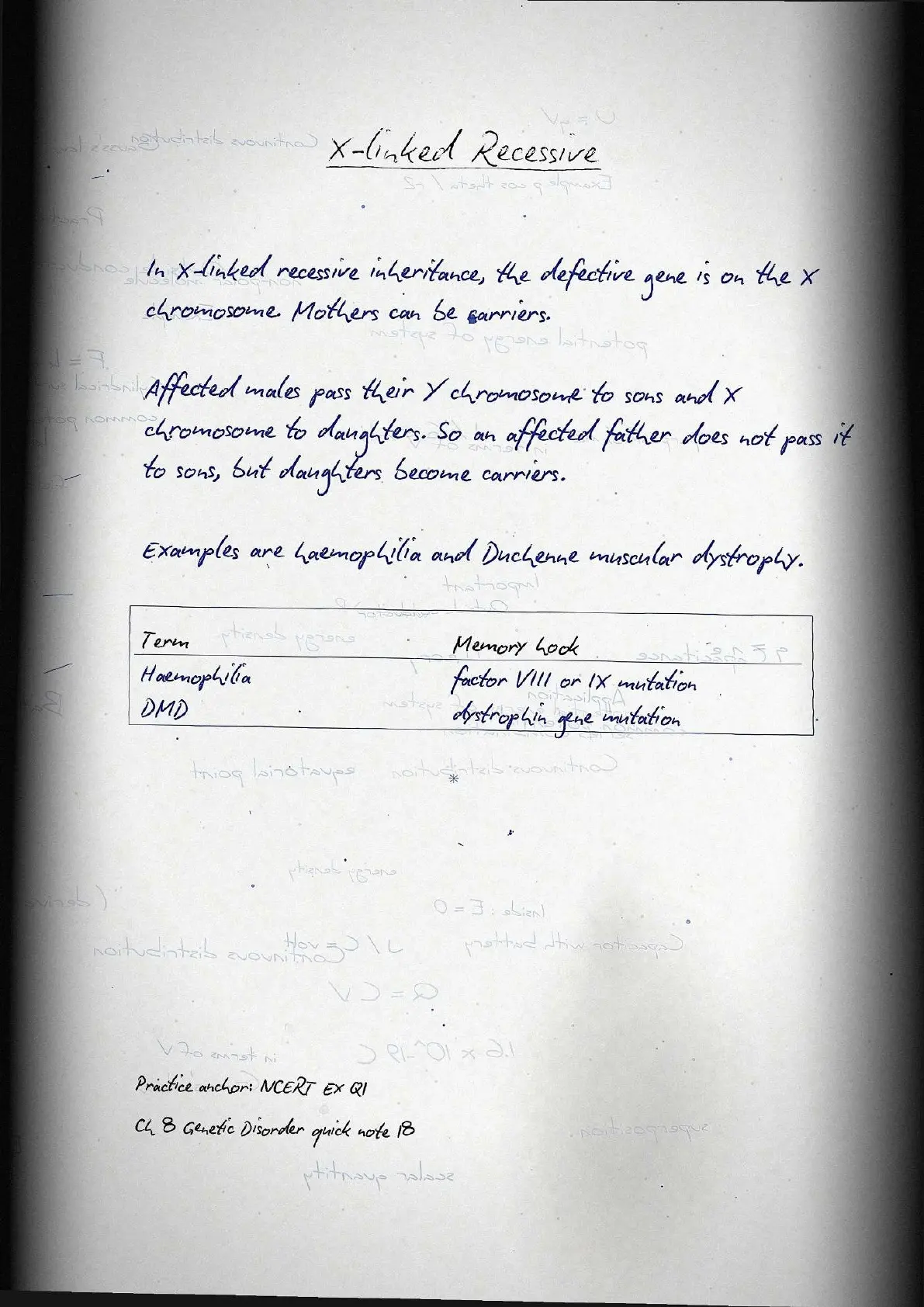
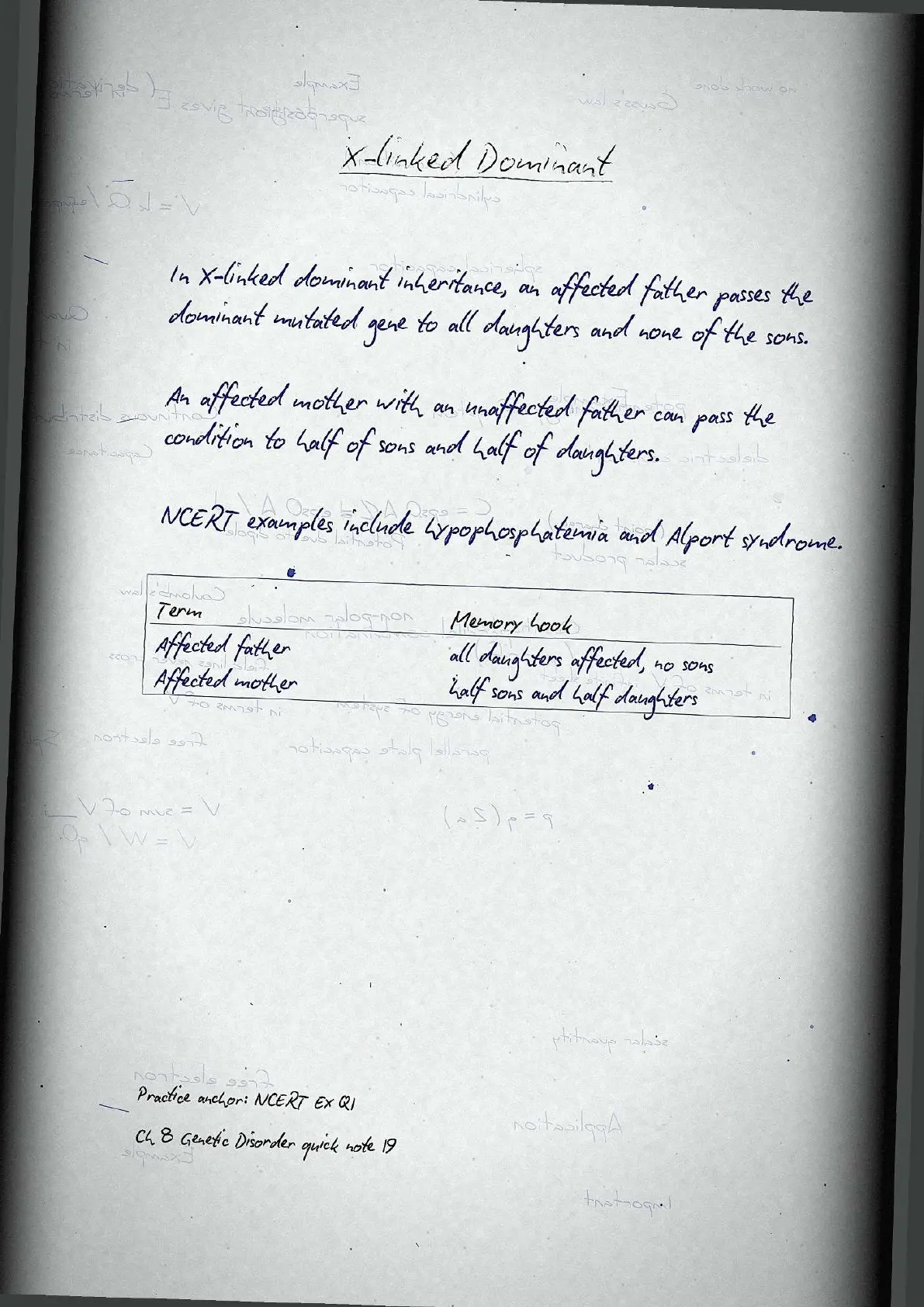
Monogenic disorders are caused by an error in a single gene. The NCERT chapter groups them by inheritance pattern: autosomal recessive, autosomal dominant, X-linked recessive and X-linked dominant.
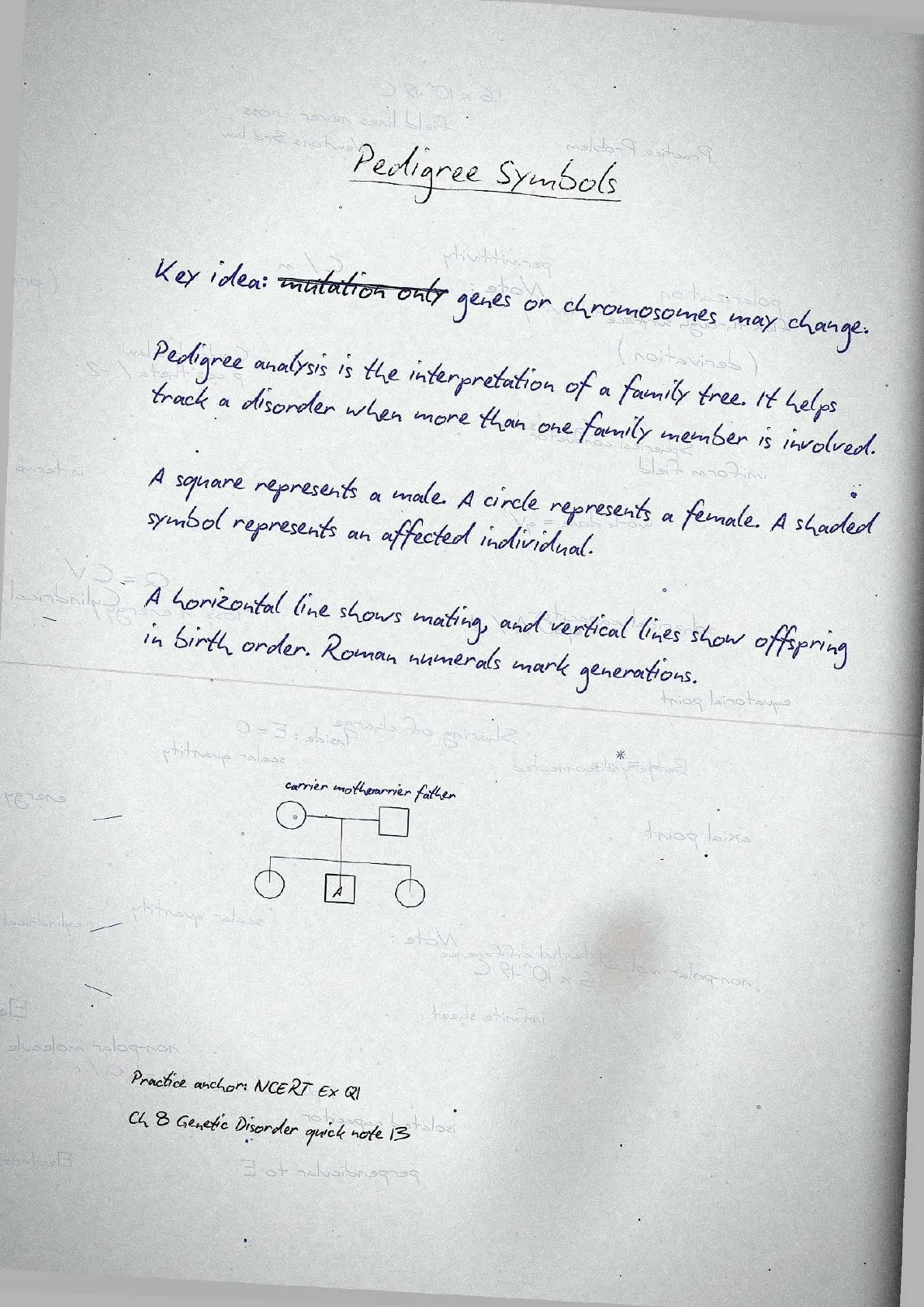
Pedigree mapping is used to interpret a family tree when more than one family member is involved. The notes revise common symbols such as square for male, circle for female and shaded symbol for an affected individual.
| Pattern | Revision cue | NCERT example |
|---|---|---|
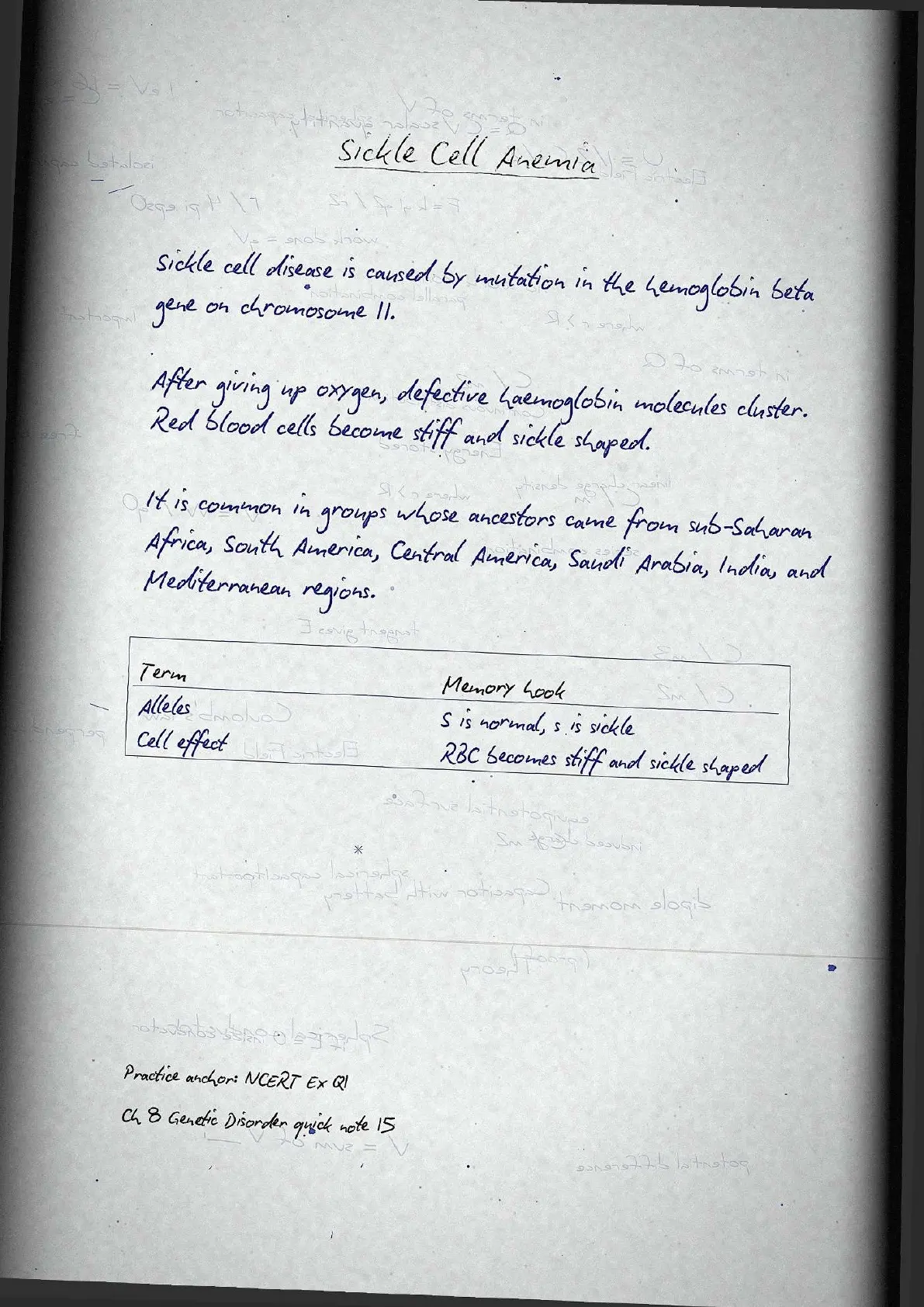
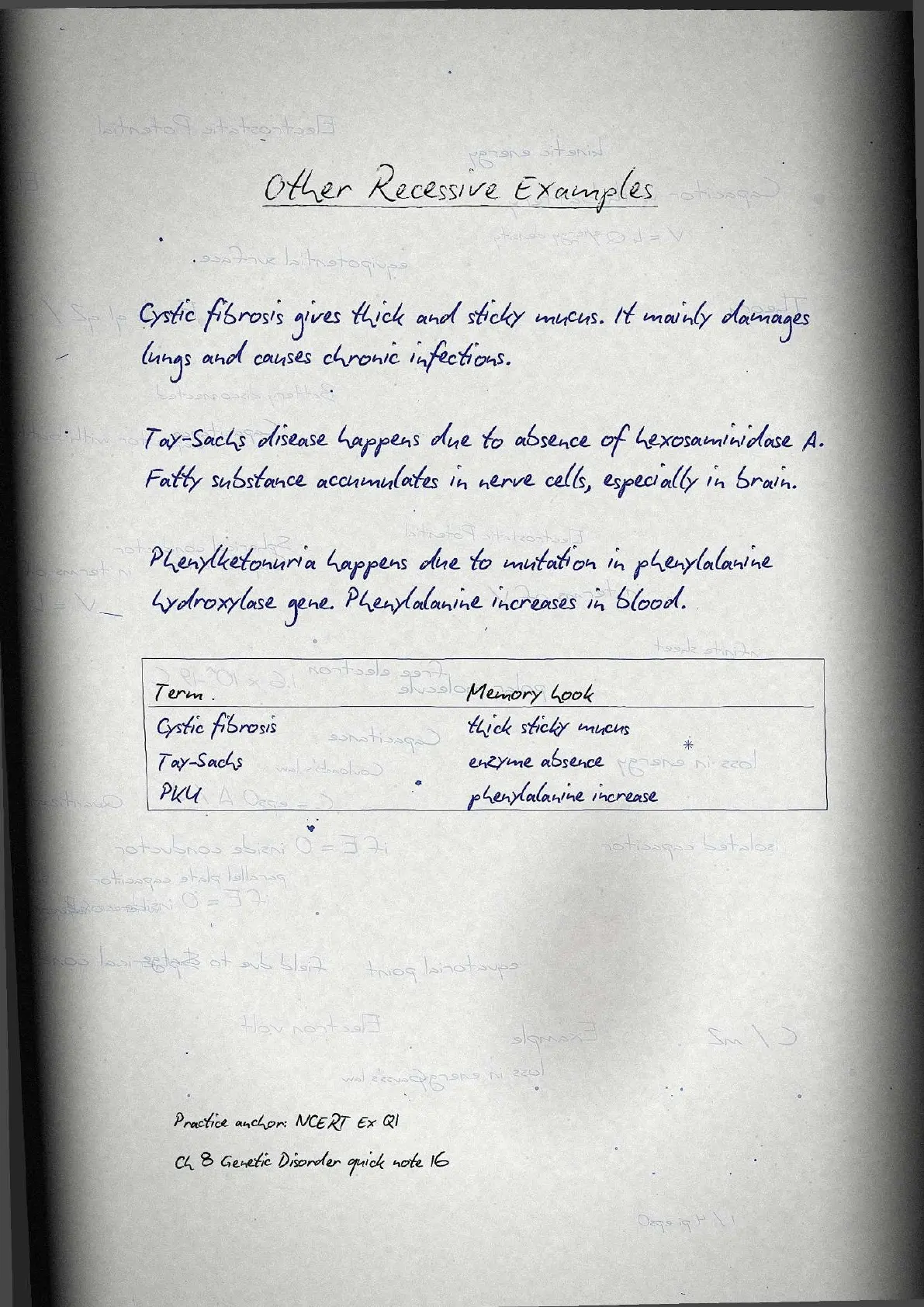
| Autosomal recessive | Two defective copies are needed | Sickle cell anemia, cystic fibrosis, Tay-Sachs disease, phenylketonuria |
| Autosomal dominant | One abnormal dominant allele can show disease | Achondroplasia, Huntington disease |
| X-linked recessive | Males are commonly affected, mothers may be carriers | Haemophilia, Duchenne muscular dystrophy |
| X-linked dominant | Affected father passes it to all daughters and no sons | Hypophosphatemia, Alport syndrome |
Polygenic Disorders and Mitochondrial Inheritance
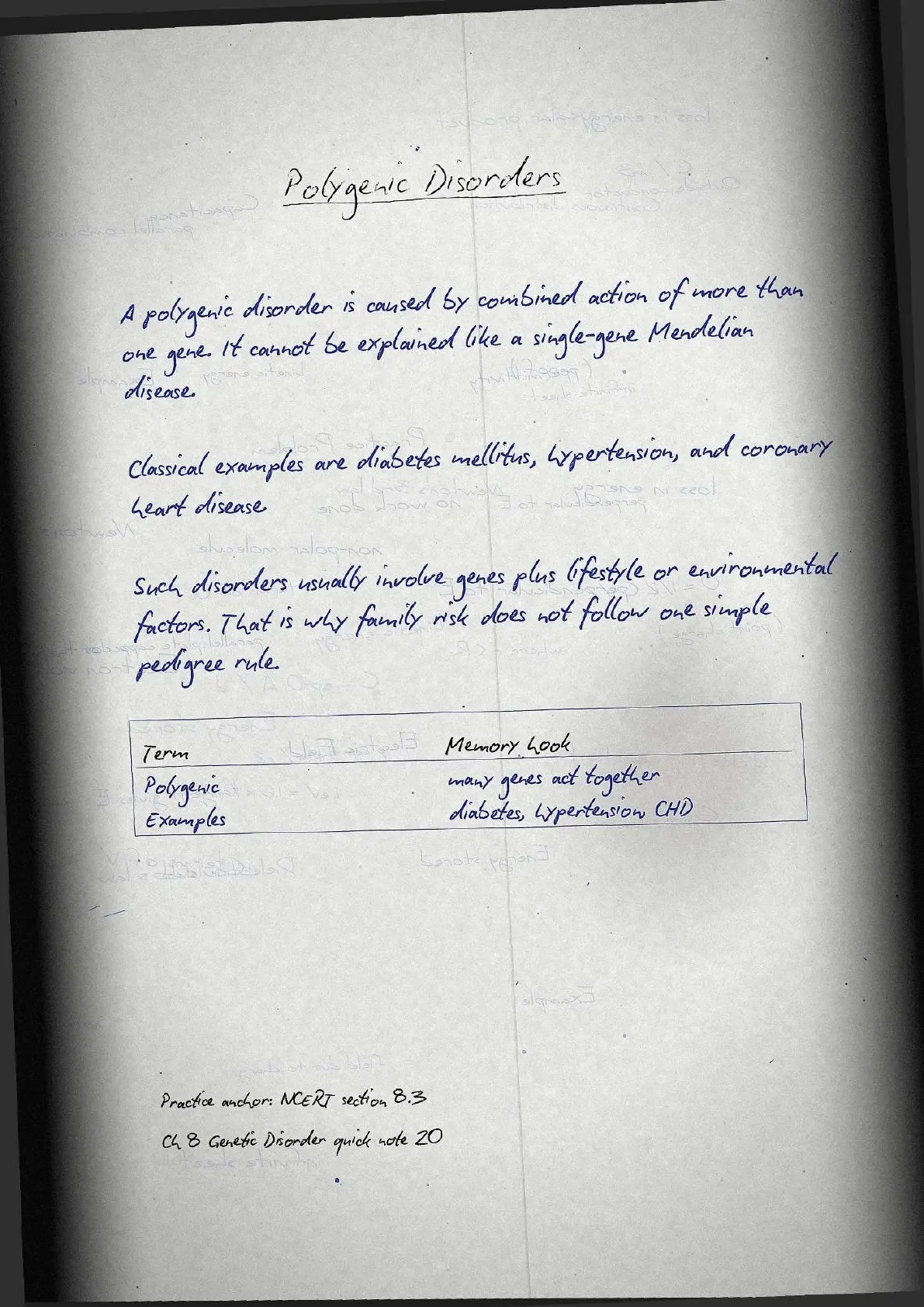
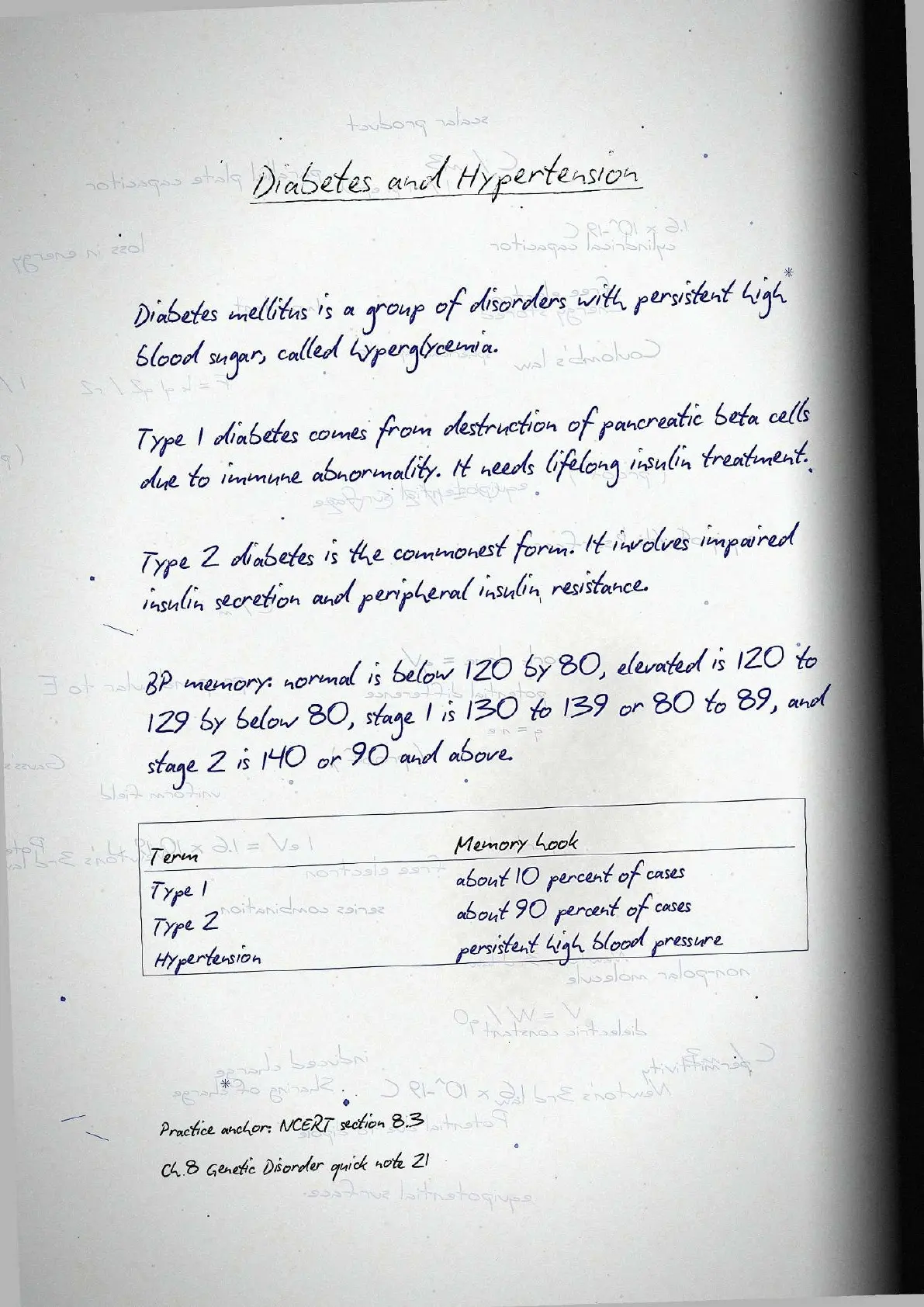
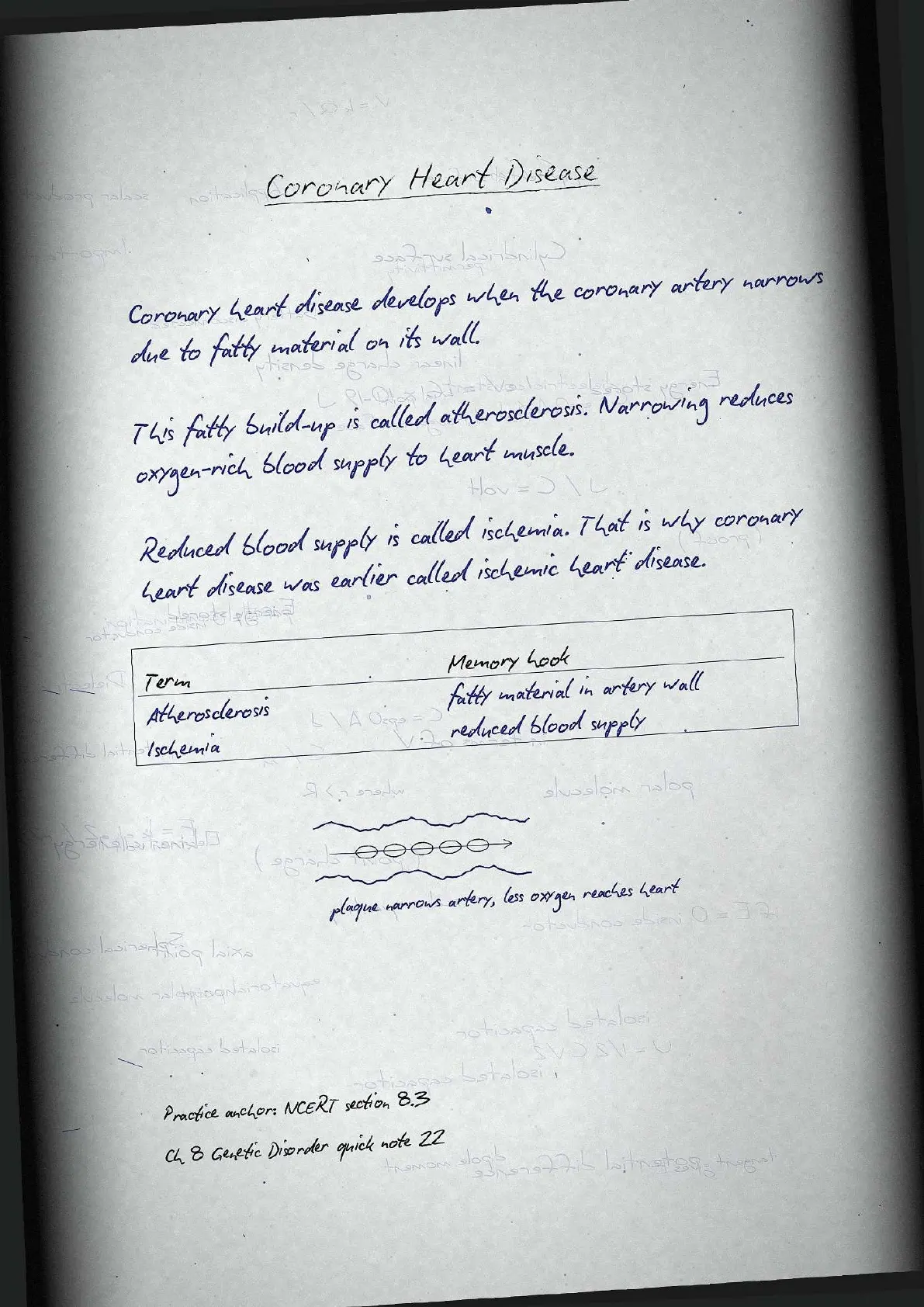
Polygenic disorders are caused by the combined action of more than one gene. The NCERT examples are diabetes mellitus, hypertension and coronary heart disease. These disorders do not follow one simple Mendelian pedigree pattern.
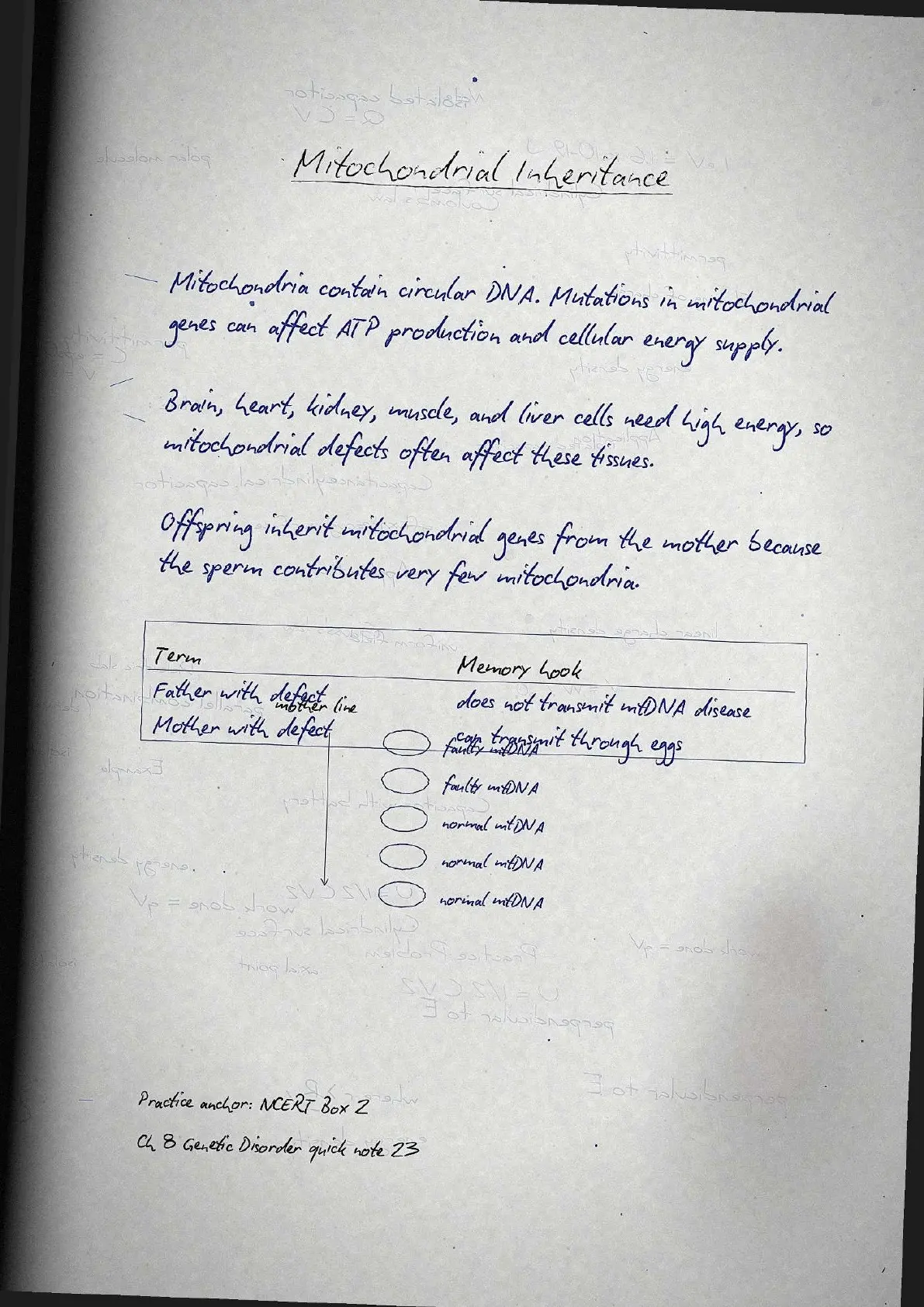
Mitochondrial inheritance is different because mitochondrial genes are inherited from the mother. The notes connect mitochondrial gene defects with ATP production and tissues that need continuous energy, such as brain, heart, kidney, muscle and liver.
How to Use These Handwritten Notes
- Revise the structural abnormality terms before attempting NCERT Exercise Question 5.
- Memorise Down, Klinefelter and Turner syndrome karyotypes as a three-line comparison.
- Use pedigree symbols while revising monogenic disorders instead of only reading definitions.
- Keep polygenic and mitochondrial inheritance separate from single-gene inheritance.
Related Class 11 Biotechnology Chapter 8 Resources
| Resource | Link |
|---|---|
| NCERT Notes | Class 11 Biotechnology Chapter 8 Notes |
| NCERT Book PDF | Class 11 Biotechnology Chapter 8 Book PDF |
| NCERT Solutions | Class 11 Biotechnology Chapter 8 Solutions |
Class 11 Biotechnology Handwritten Notes for Other Chapters
| Chapter | Handwritten Notes |
|---|---|
| Chapter 1 | An Introduction to Biotechnology |
| Chapter 2 | Cellular Organelles |
| Chapter 3 | Biomolecules |
| Chapter 4 | Enzymes and Bioenergetics |
| Chapter 5 | Cellular Processes |
| Chapter 6 | Basic Principles of Inheritance |
| Chapter 7 | Basic Processes of DNA |
Genetic Disorder Biotechnology Handwritten Notes FAQs
Ques. What is covered in Class 11 Biotechnology Chapter 8 Genetic Disorder handwritten notes?
Ans. The notes cover chromosomal abnormalities, Down syndrome, Klinefelter syndrome, Turner syndrome, monogenic disorders, polygenic disorders and mitochondrial inheritance.
Ques. Are these handwritten notes based on the 2026-27 NCERT textbook?
Ans. Yes. The topic order and revision anchors follow the 2026-27 NCERT Class 11 Biotechnology Chapter 8 source.
Ques. Which Genetic Disorder topic should students revise first from this PDF?
Ans. Start with deletion, duplication, inversion and translocation, then revise syndrome karyotypes and inheritance patterns.



Comments