




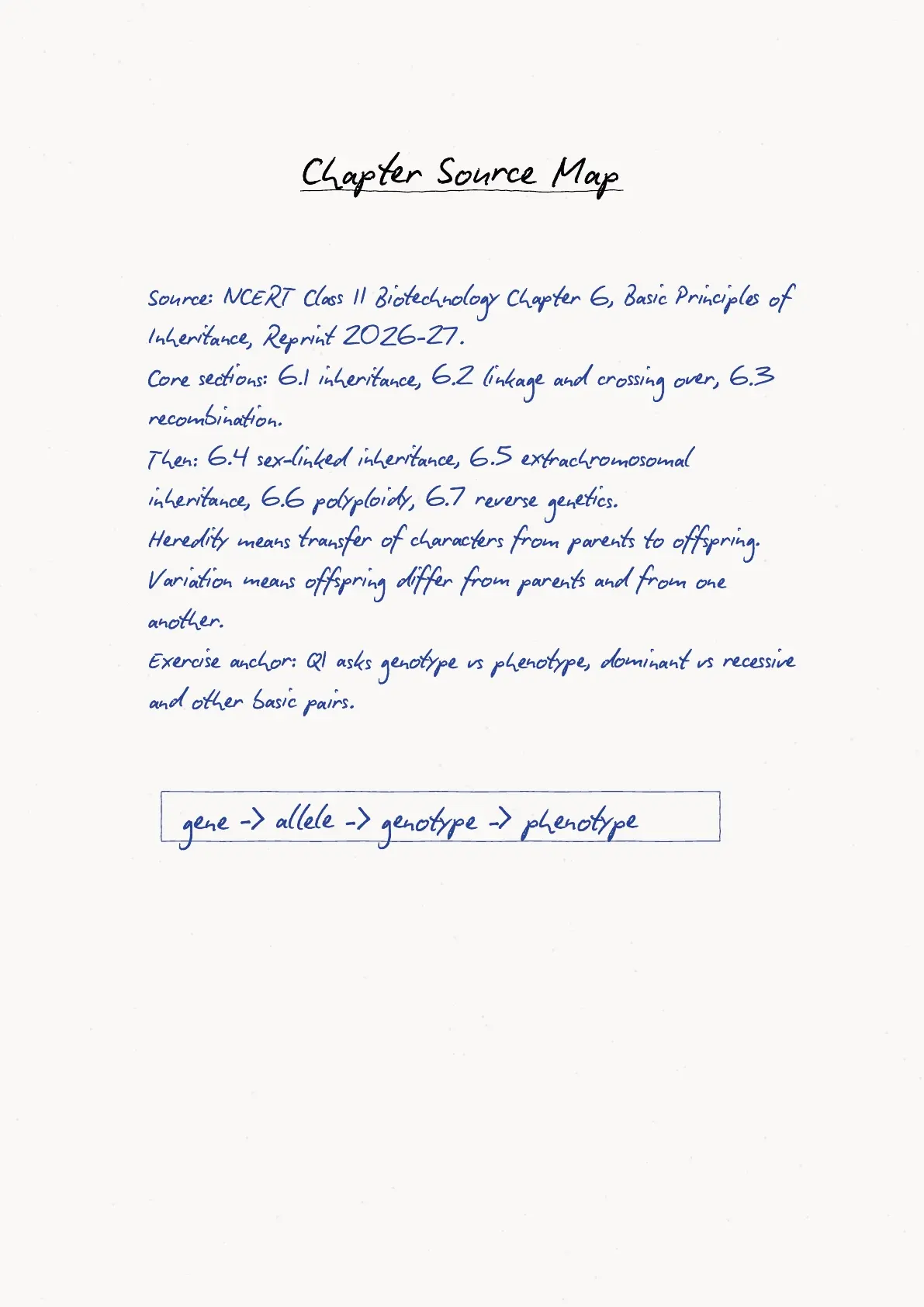
The handwritten notes on Class 11 Biotechnology Chapter 6 Basic Principles of Inheritance have been carefully prepared for quick revision according to the 2026-27 NCERT textbook. The PDF covers Mendel's crosses, linkage, recombination, sex-linked inheritance, extrachromosomal inheritance, polyploidy and reverse genetics in clear revision pages.
- Covers all seven NCERT chapter sections from heredity to reverse genetics.
- Includes ratio boxes, cross diagrams, linkage notes and NCERT exercise anchors.
- Useful for school revision, class tests and NCERT exercise preparation.
Student Feedback: In a Collegedunia revision poll, 76% of students said inheritance-ratio charts helped them revise Mendelian genetics faster before tests.
|
Table of Contents |
Basic Principles of Inheritance Handwritten Notes PDF Highlights
Class 11 Biotechnology Chapter 6 is the genetics chapter where students revise heredity, variation, genes, alleles and inheritance ratios together. The handwritten PDF keeps the chapter in NCERT order, starting with Mendel's pea-plant crosses and ending with reverse genetics.
Important: this is a revision-first resource. It does not replace the NCERT textbook, but it helps students recall crosses, ratios and examples before a class test.
| Revision area | What the PDF covers |
|---|---|
| Mendelian genetics | Monohybrid cross, Punnett square, dominance, segregation, test cross and dihybrid cross. |
| Linkage and recombination | Bateson-Punnett sweet pea evidence, crossing over, Morgan's map idea and maize evidence. |
| Inheritance types | Sex-linked, extrachromosomal, polyploidy, aneuploidy, forward genetics and reverse genetics. |
Mendelian Crosses and Ratios Revision Map
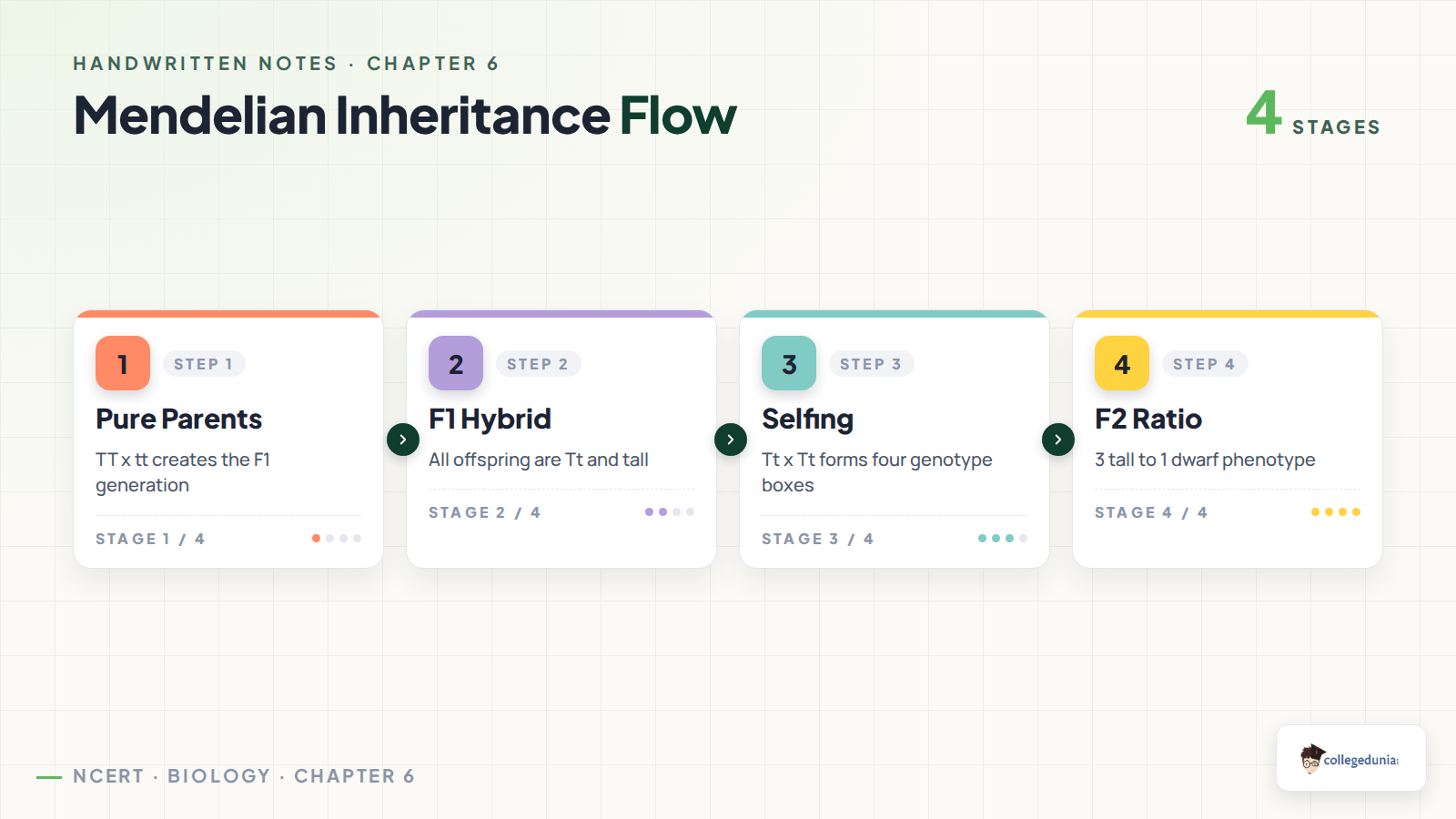
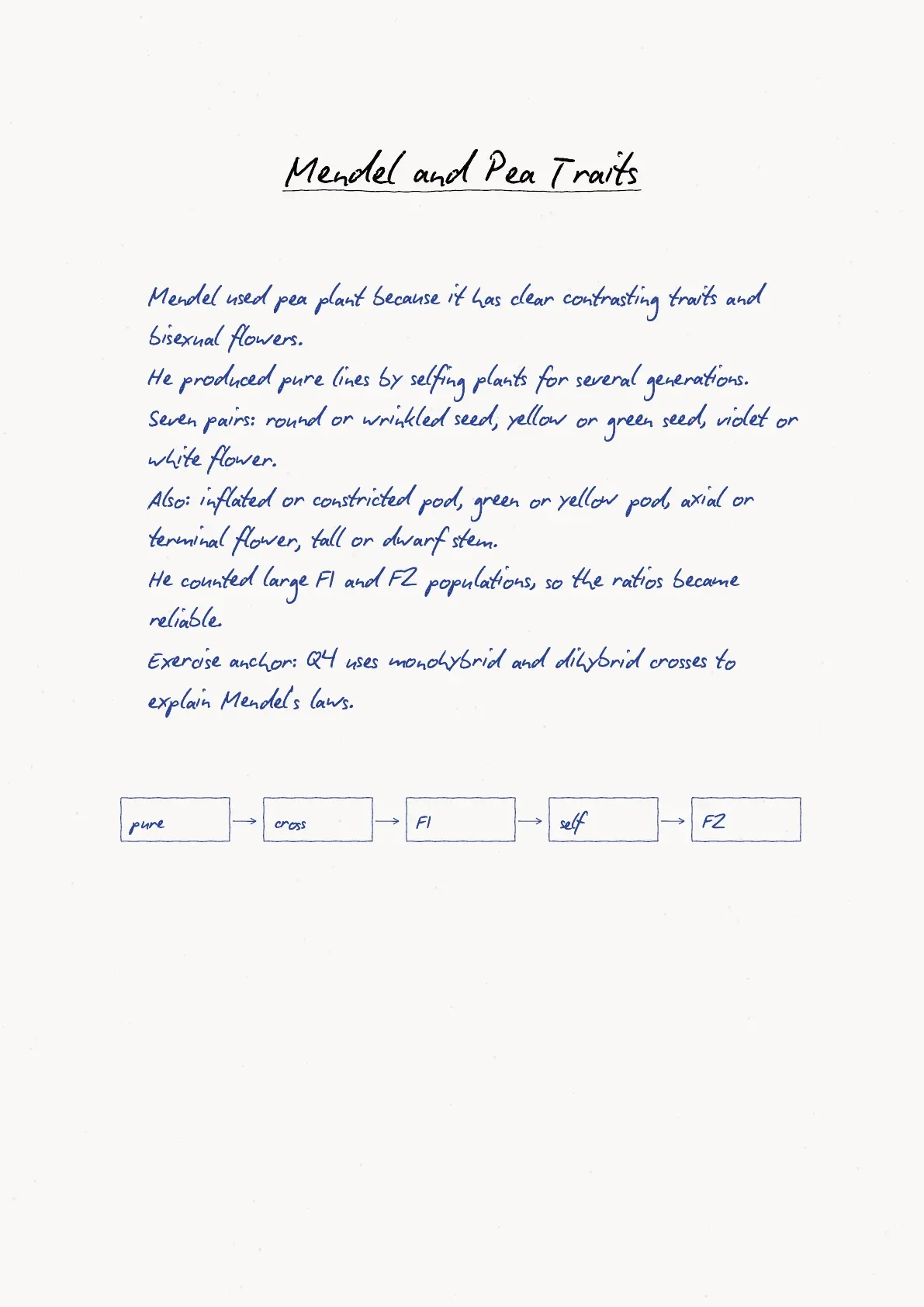
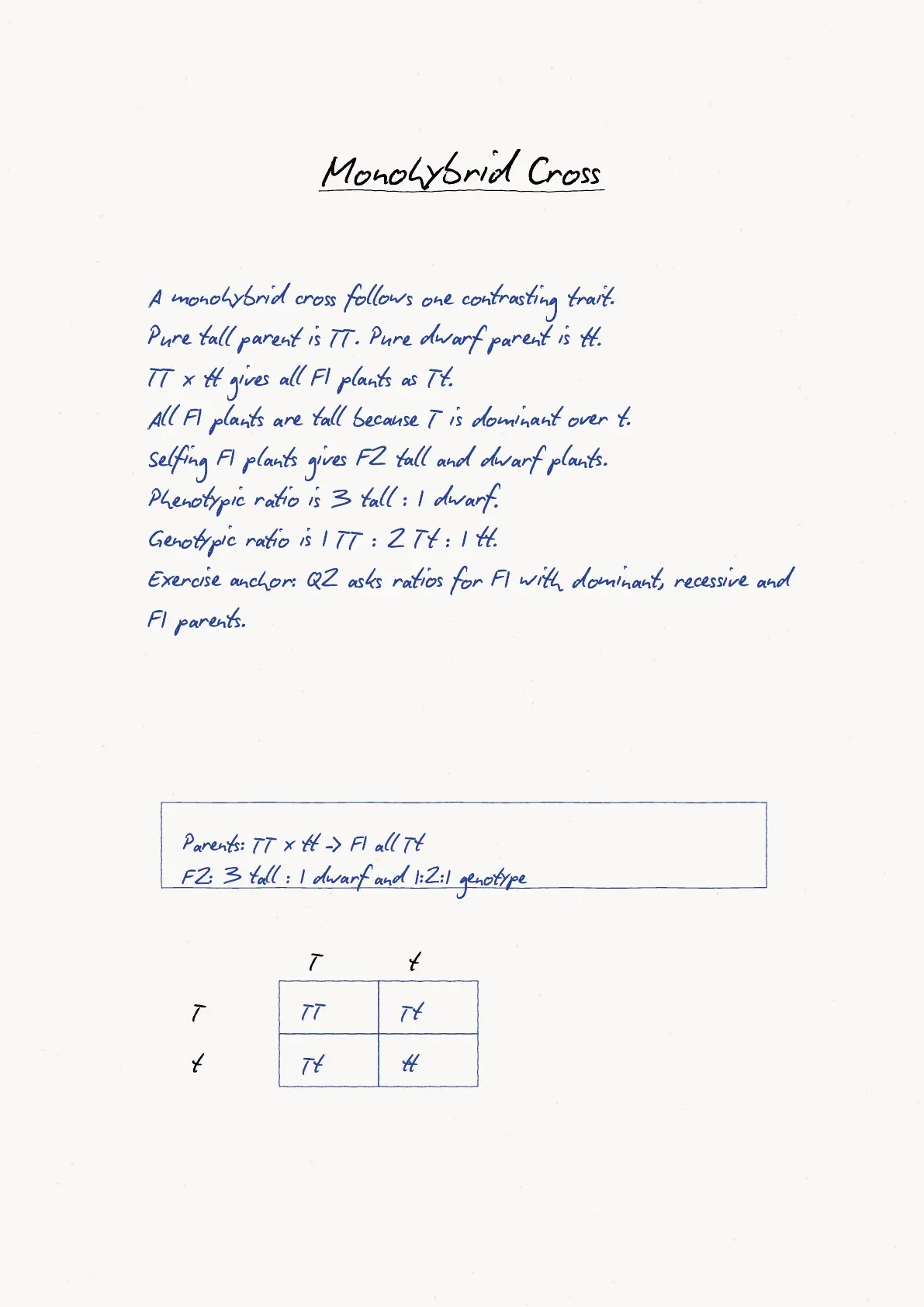
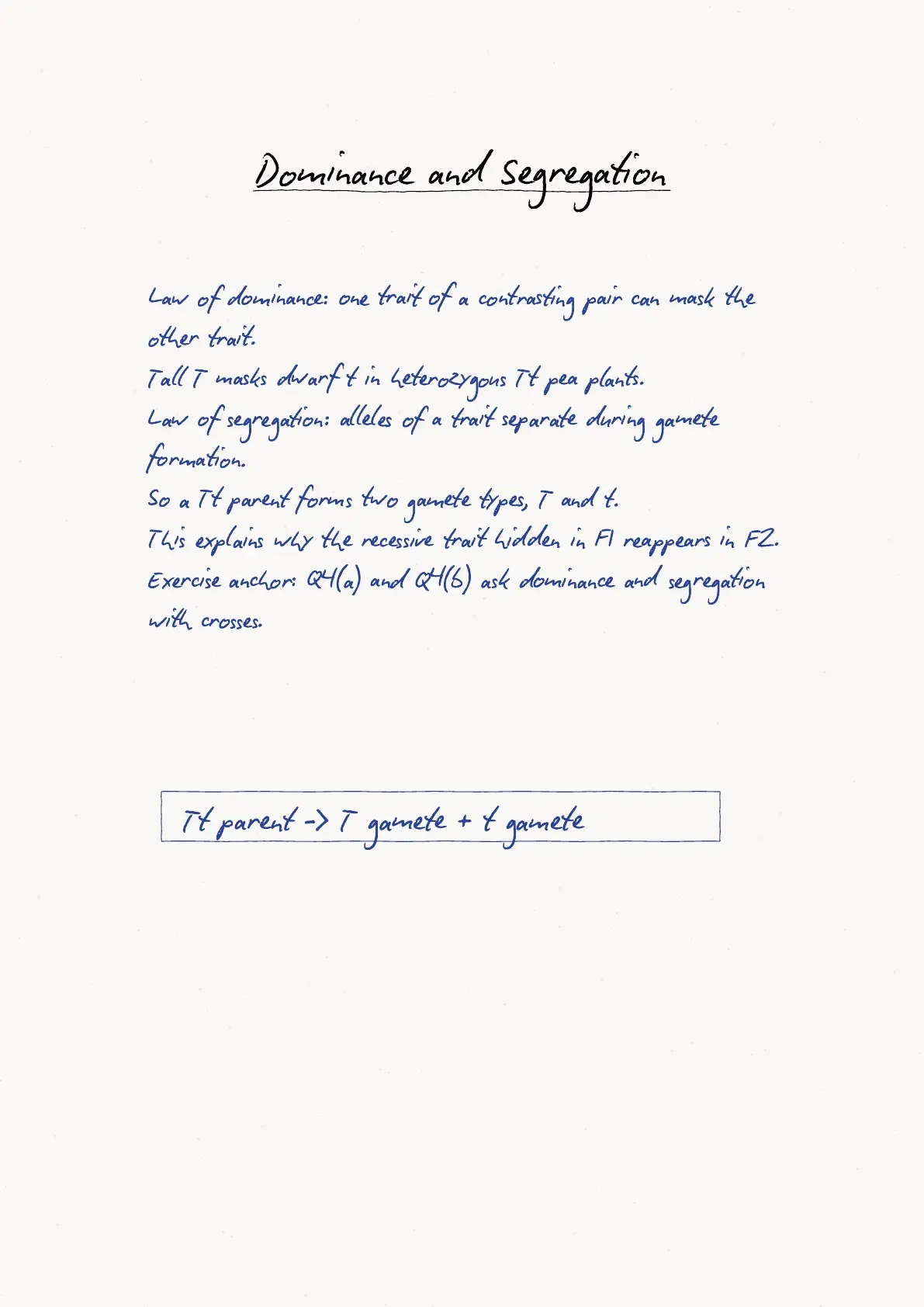
The first part of the PDF explains how Mendel used pure pea lines. A pure tall parent is written as TT and a pure dwarf parent is written as tt. Their F1 offspring are Tt and tall because T is dominant over t.
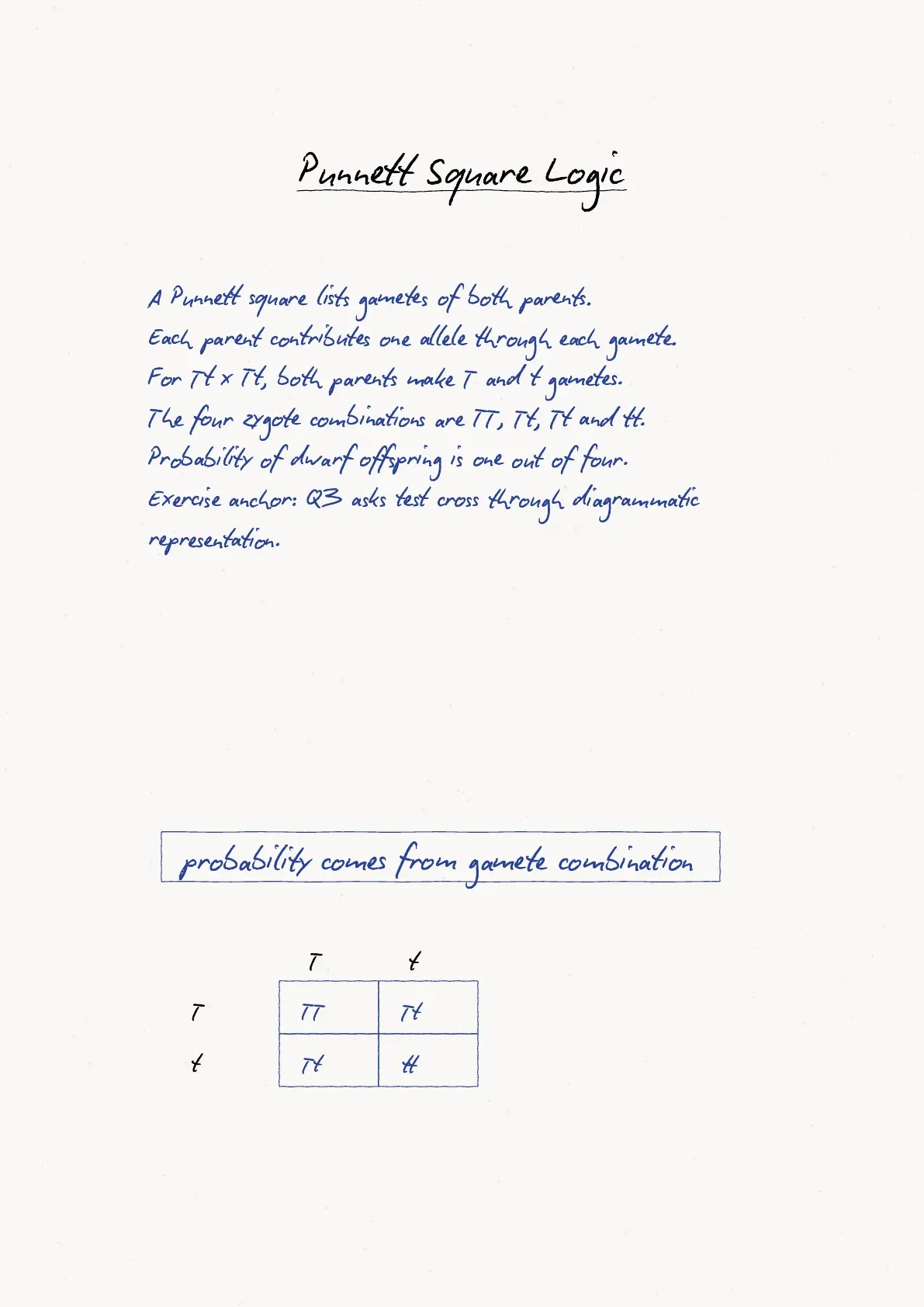
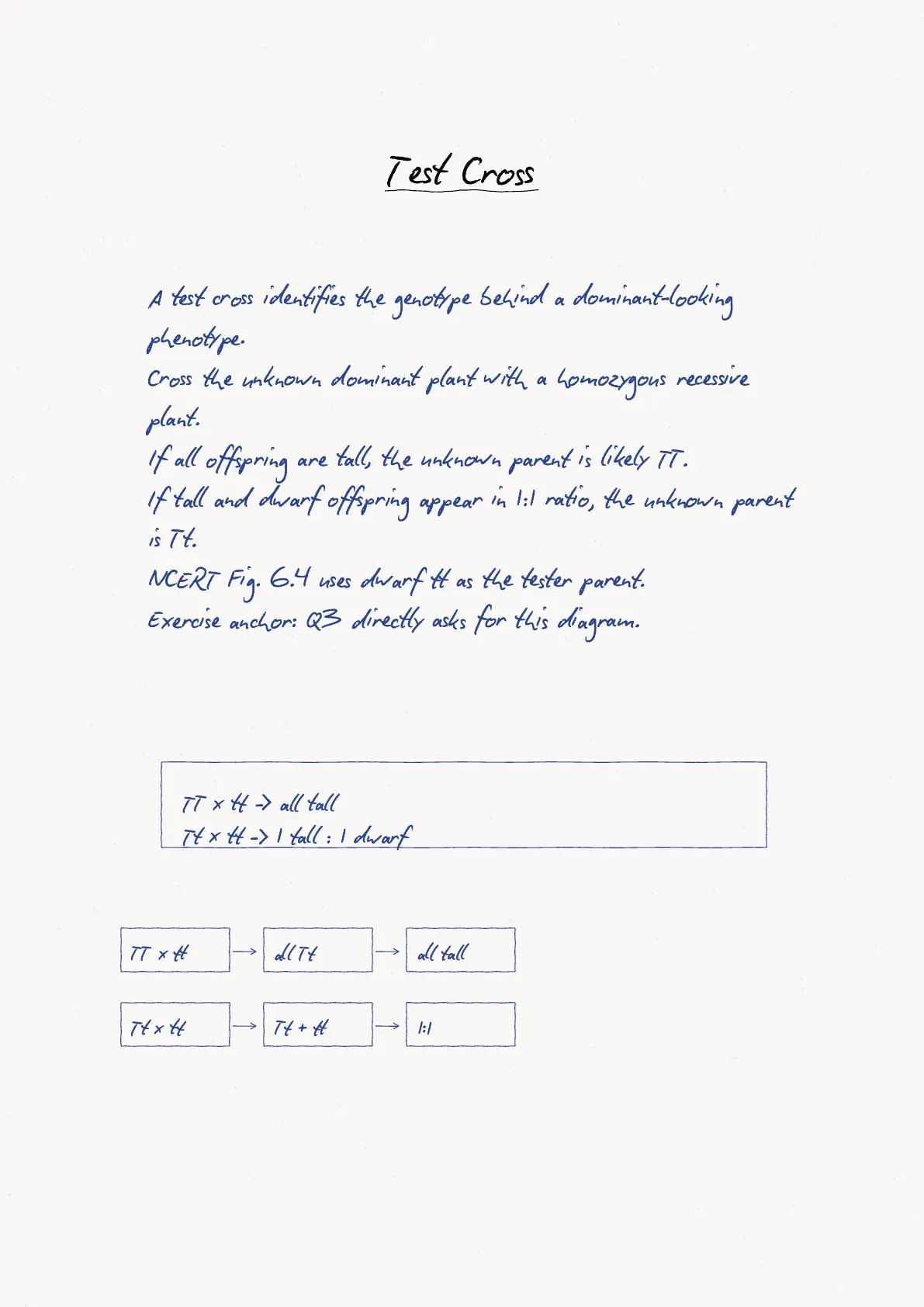
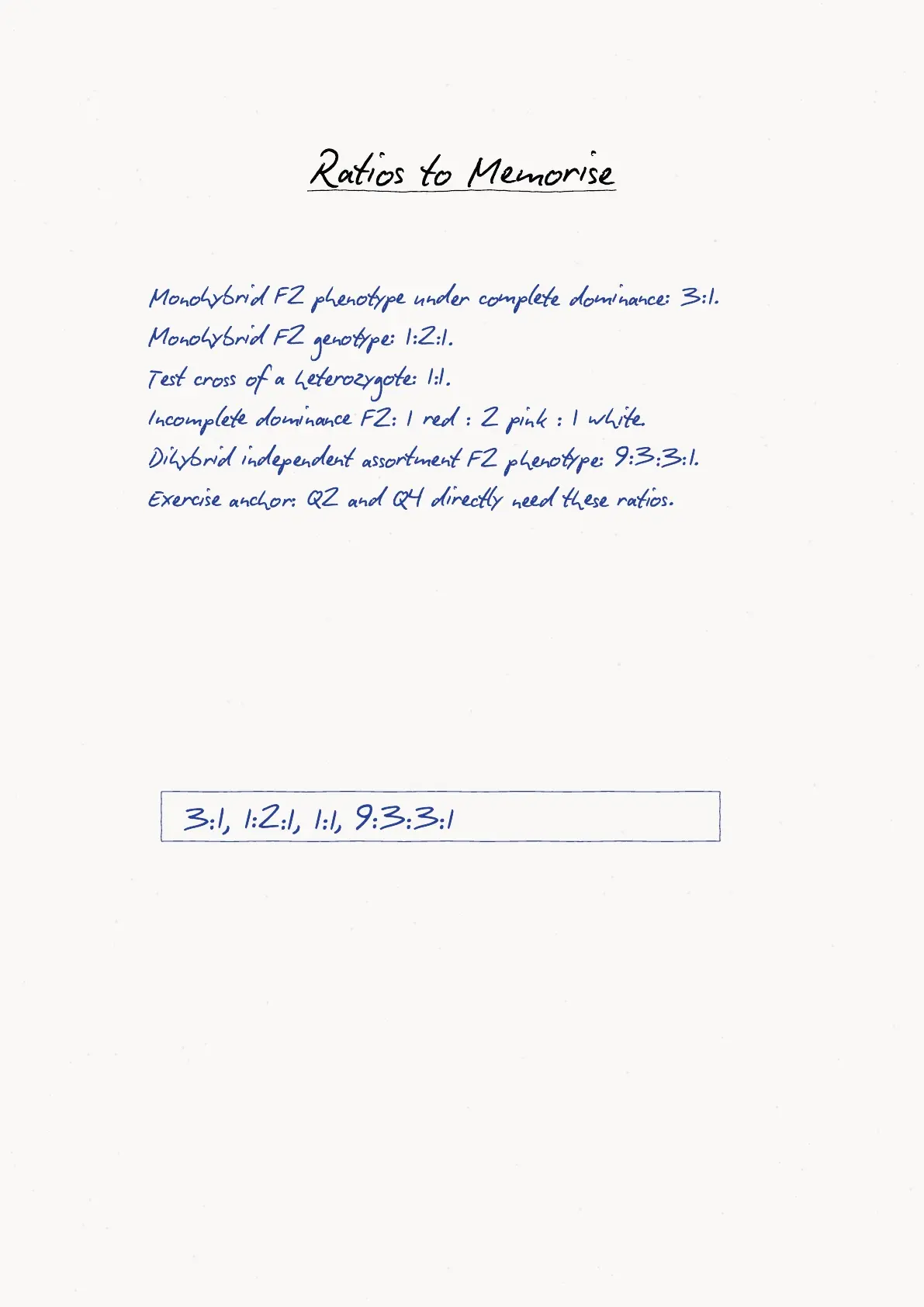
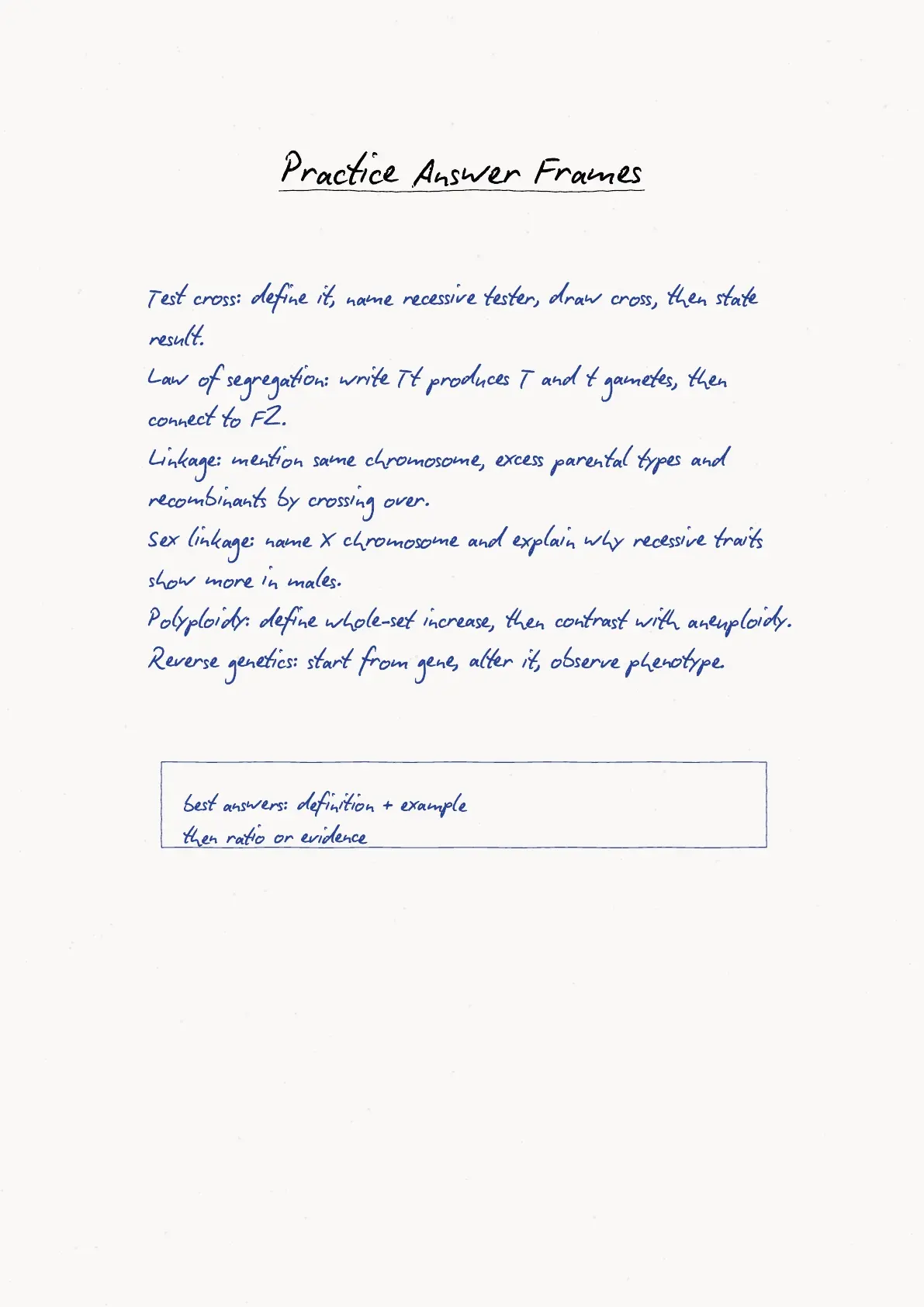
The notes then use a Punnett square to show why F2 gives a 3:1 phenotypic ratio and a 1:2:1 genotypic ratio. The test-cross page also shows how TT and Tt plants can be separated using a dwarf tt parent.
Basic Principles of Inheritance Video Revision
Source: Magnet Brains on YouTube
Incomplete Dominance, Codominance and Dihybrid Cross
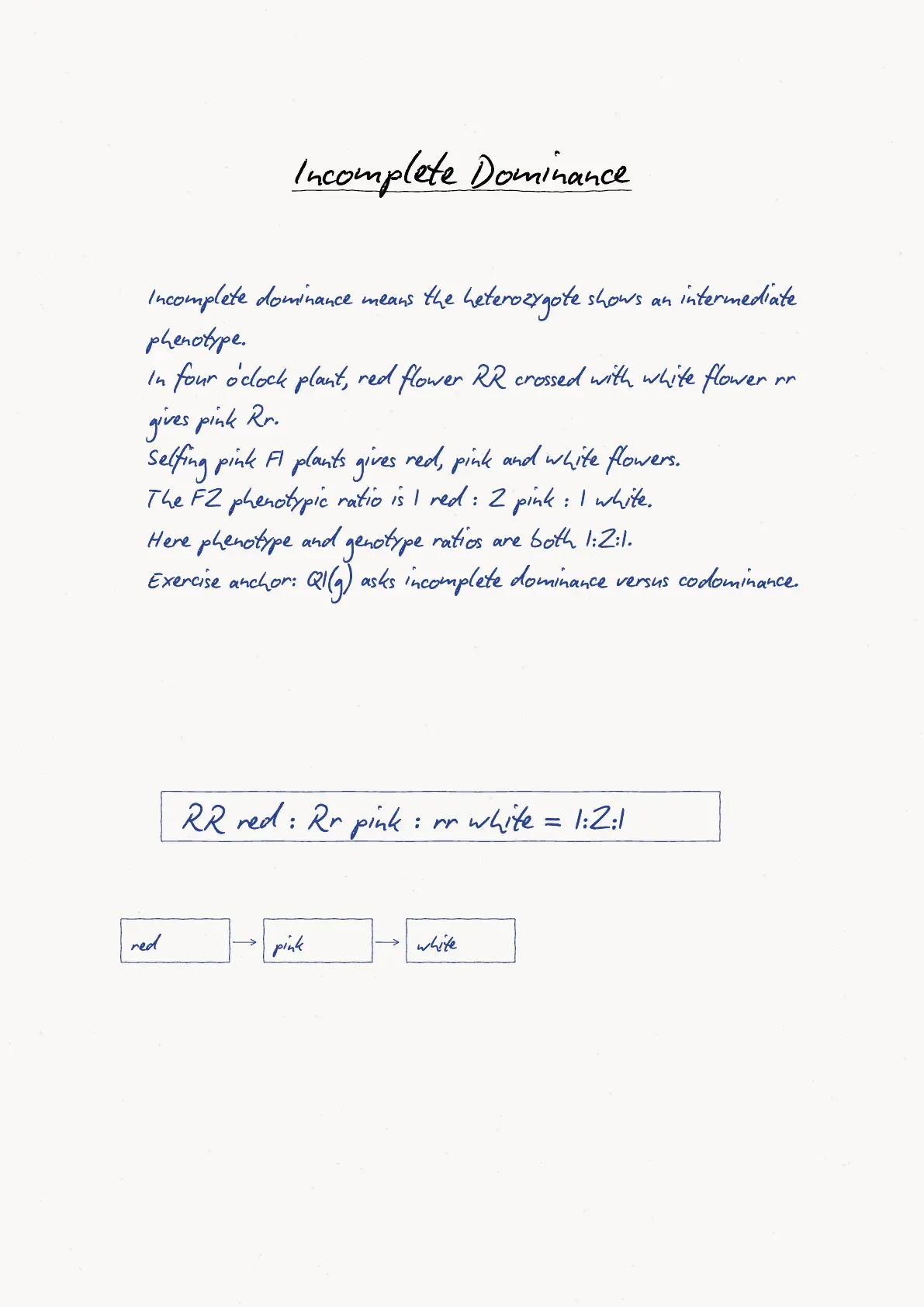
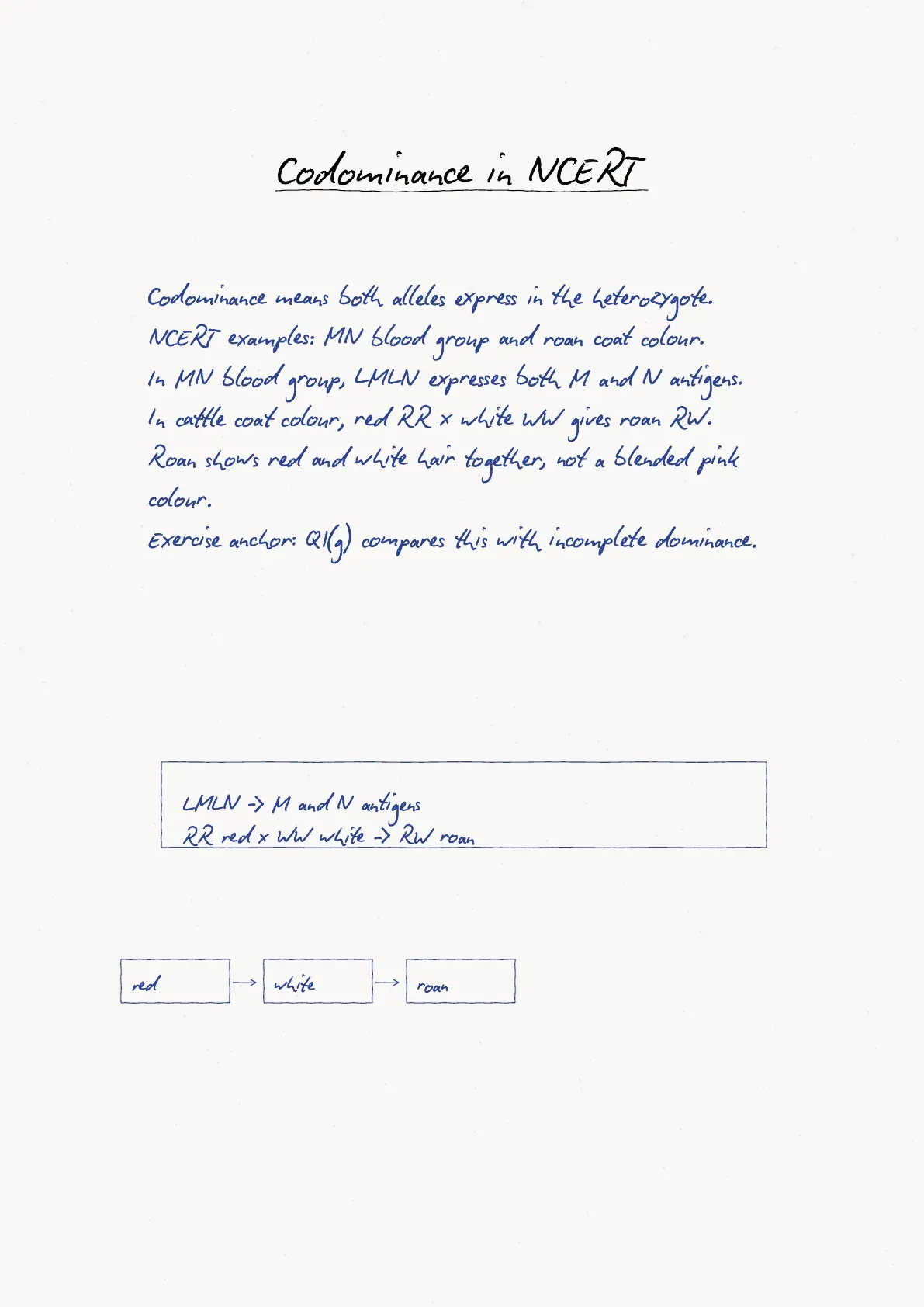
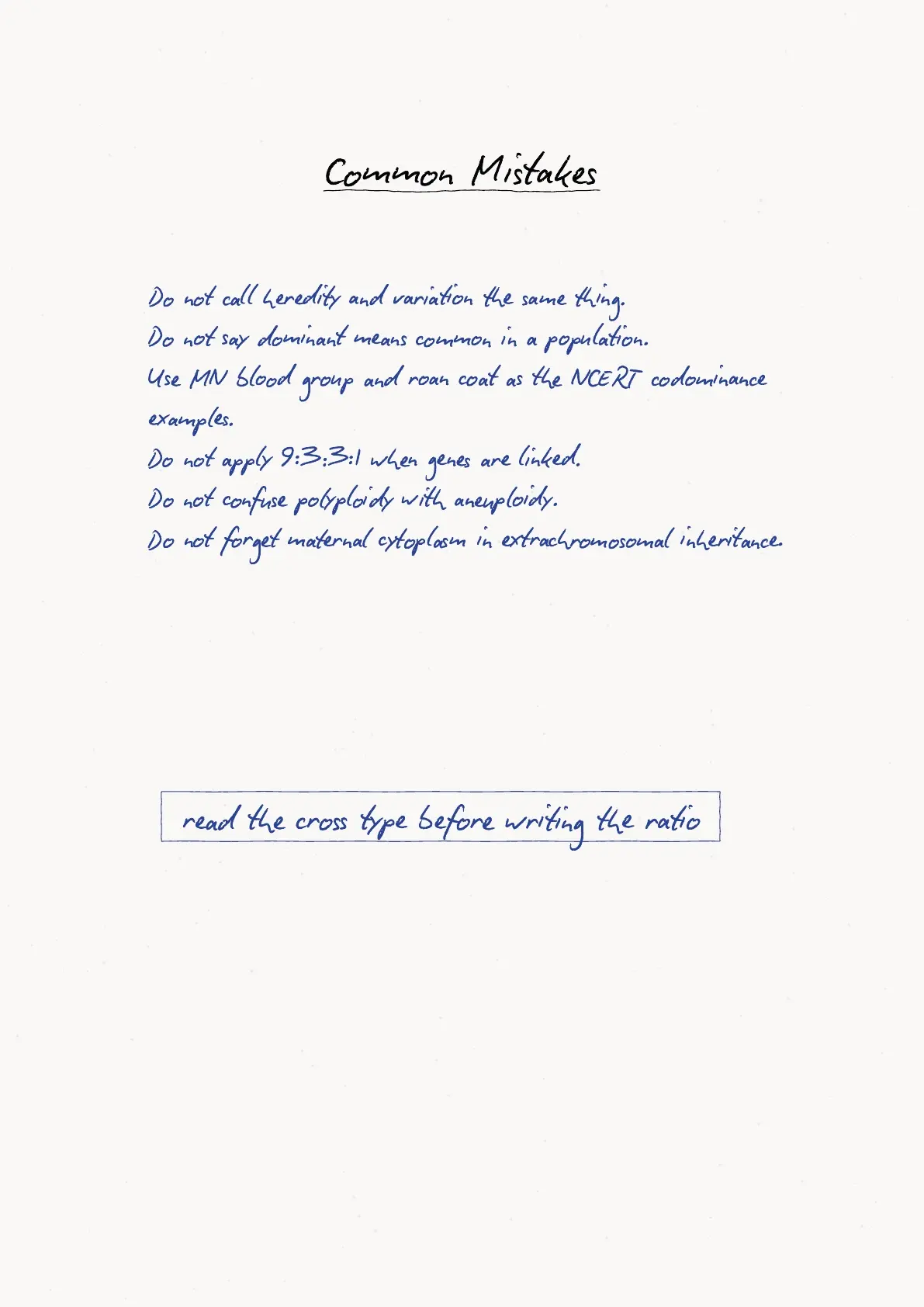
Incomplete dominance is revised with the four o'clock plant example. Red RR crossed with white rr gives pink Rr, and selfing the pink F1 gives 1 red : 2 pink : 1 white. The codominance page uses NCERT's MN blood group and roan coat colour examples.
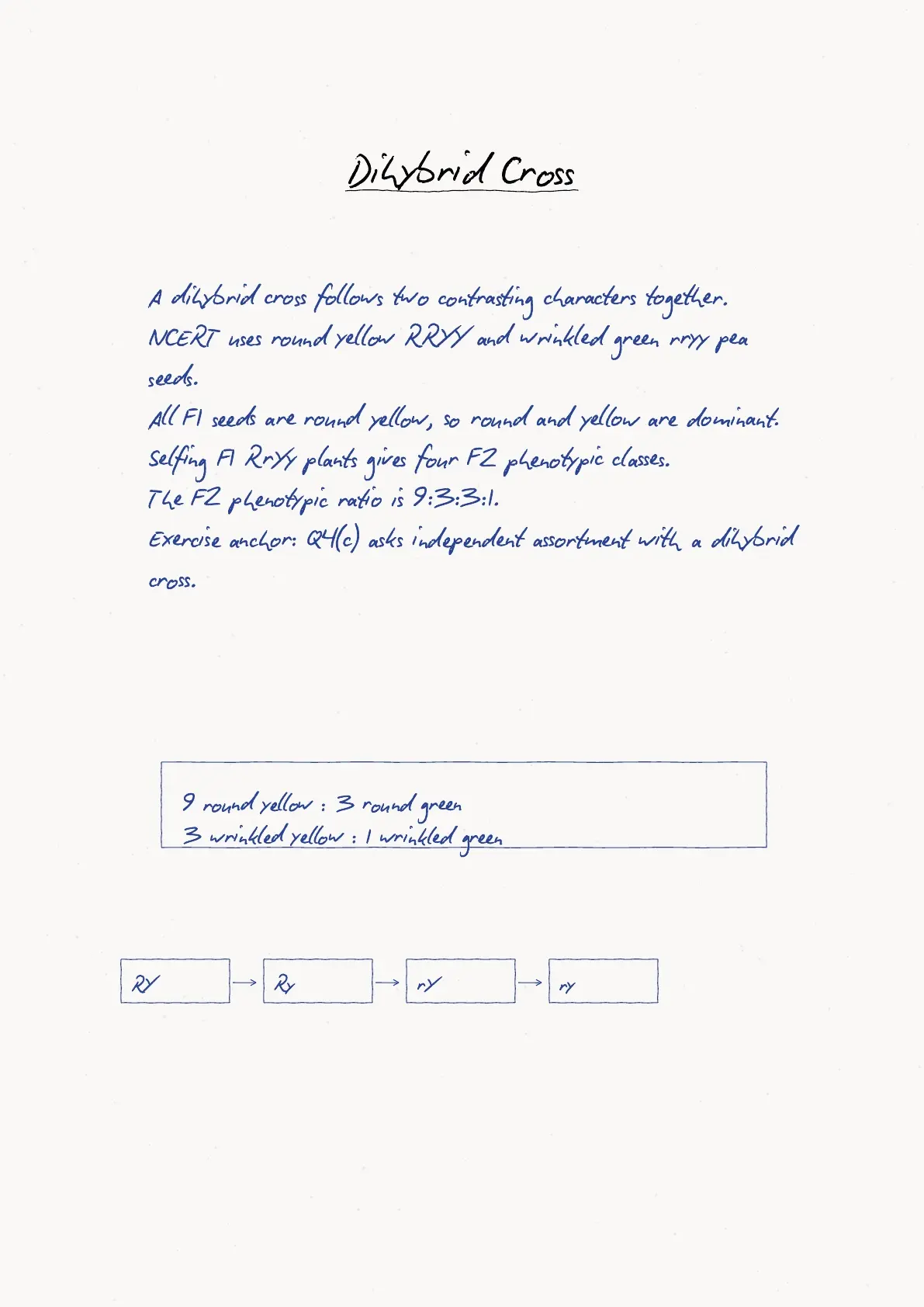
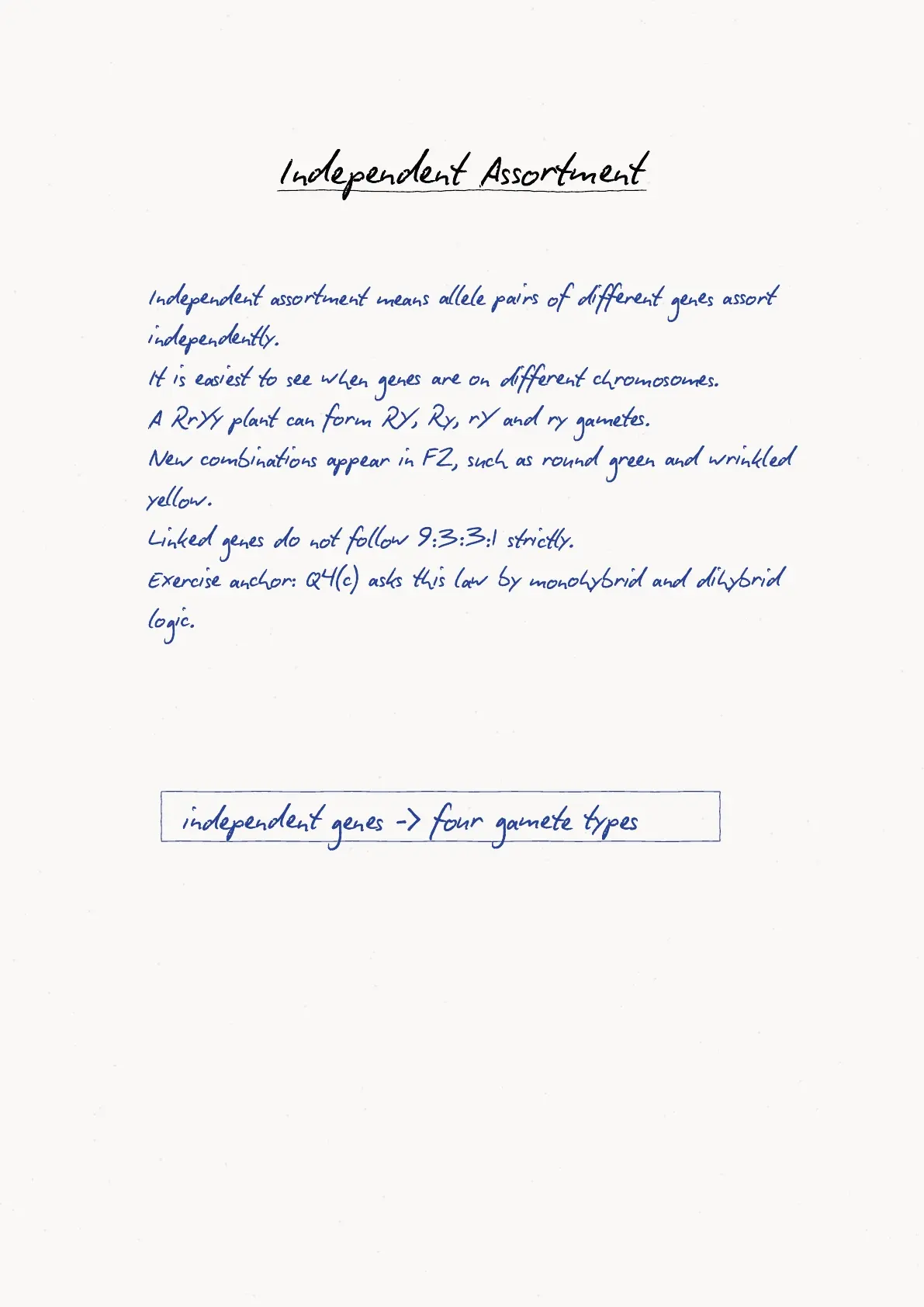
The dihybrid cross page keeps the 9:3:3:1 ratio with round yellow, round green, wrinkled yellow and wrinkled green seeds. This helps students connect independent assortment with new trait combinations.
Linkage, Crossing Over and Recombination
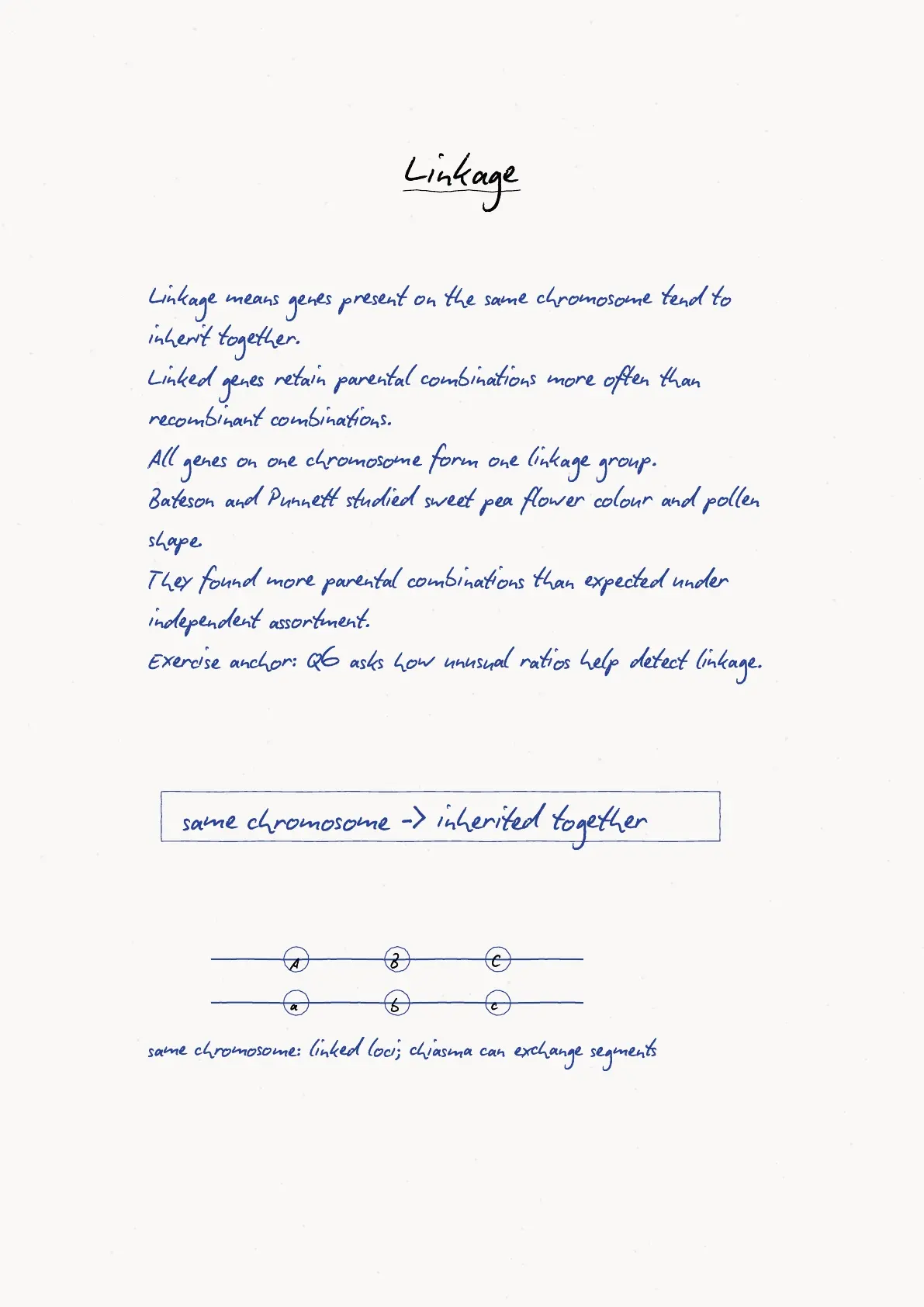
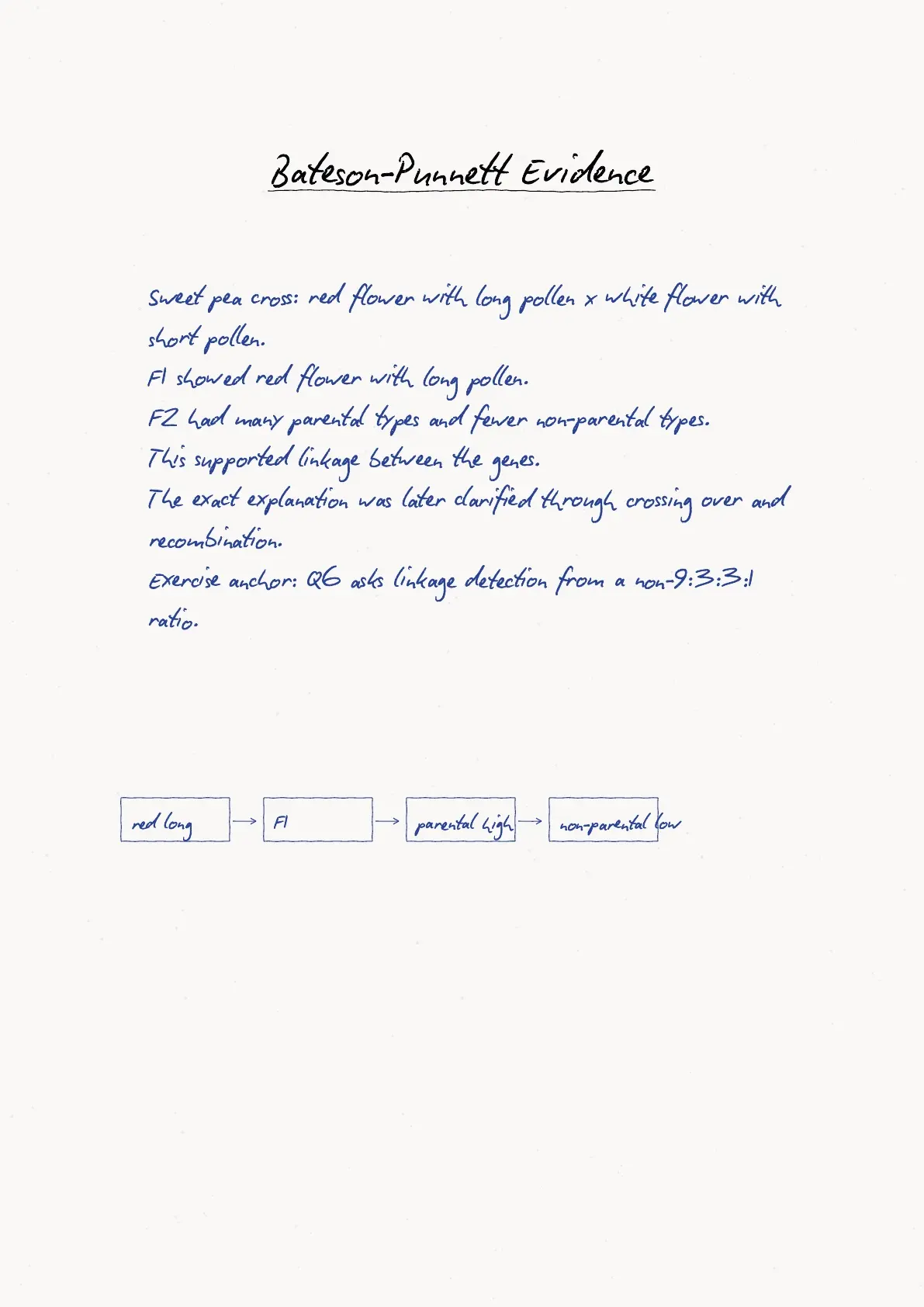
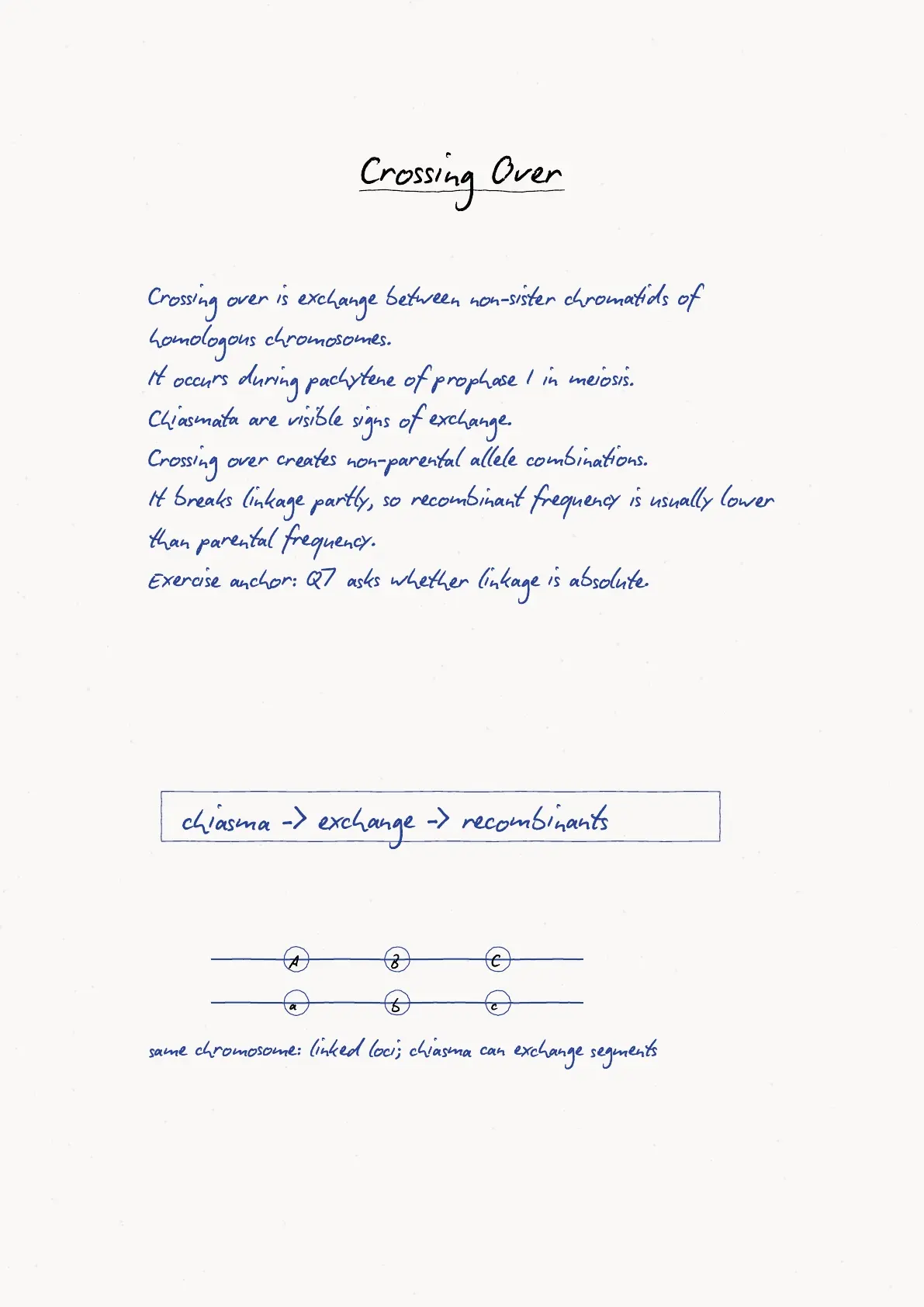
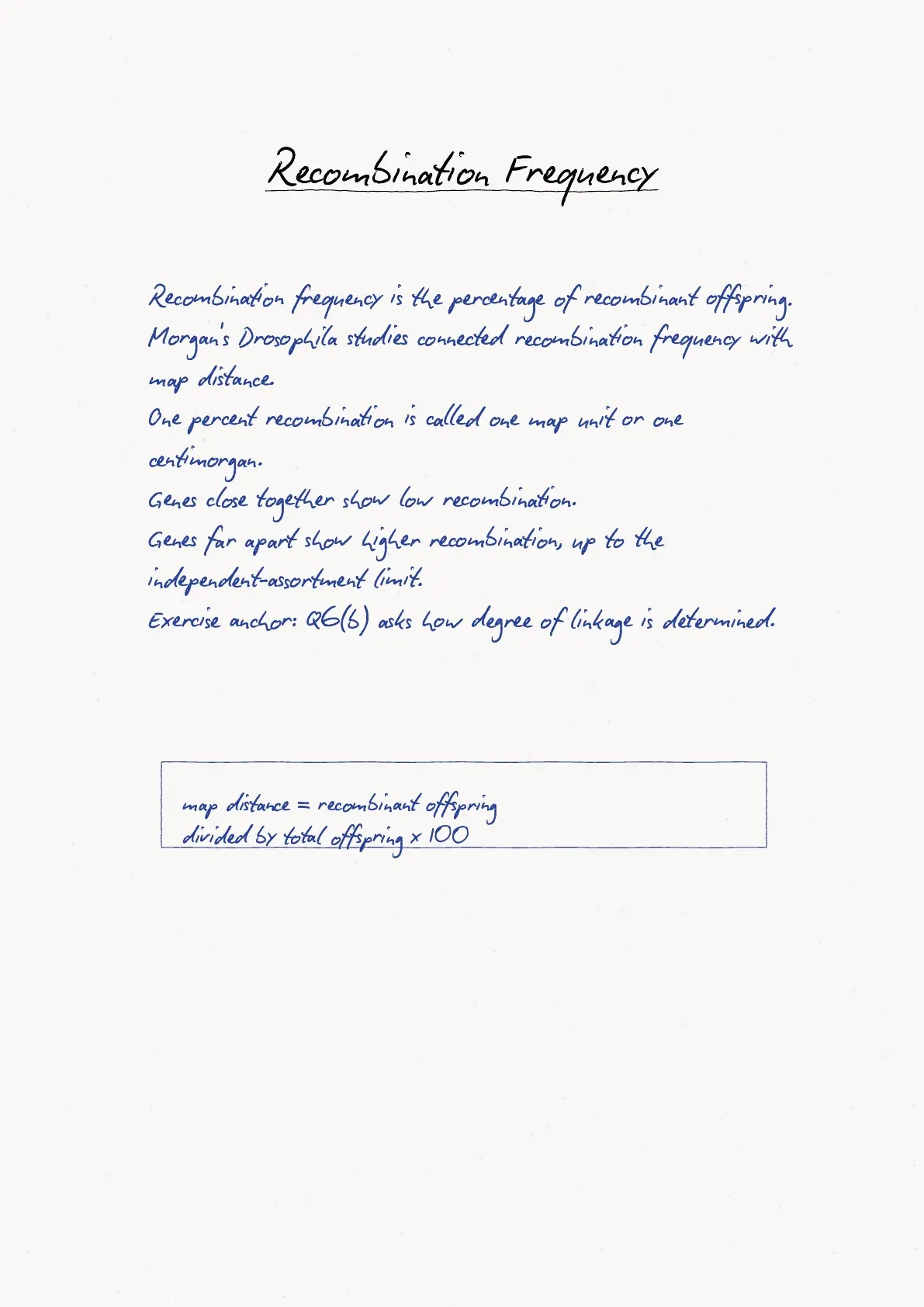
The linkage pages explain why some genes do not assort independently. Linked genes are present on the same chromosome, so parental combinations appear more often than recombinant combinations. The PDF includes Bateson-Punnett sweet pea evidence and Morgan's Drosophila idea of map distance.
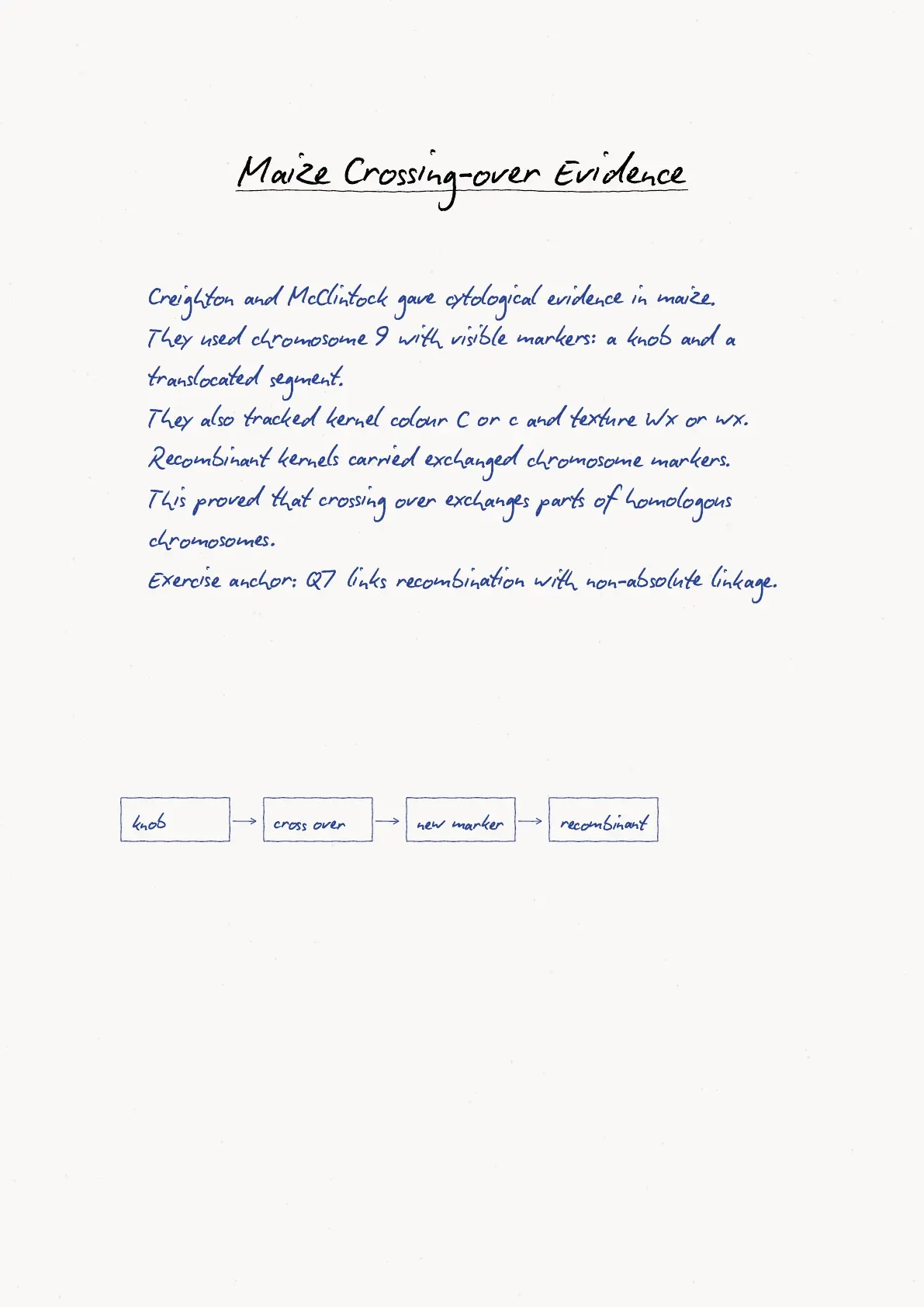
Crossing over is shown as exchange between non-sister chromatids during pachytene. Recombination frequency is written as recombinant offspring divided by total offspring, multiplied by 100. The maize evidence page names Creighton and McClintock for cytological proof of crossing over.
Sex-linked and Extrachromosomal Inheritance
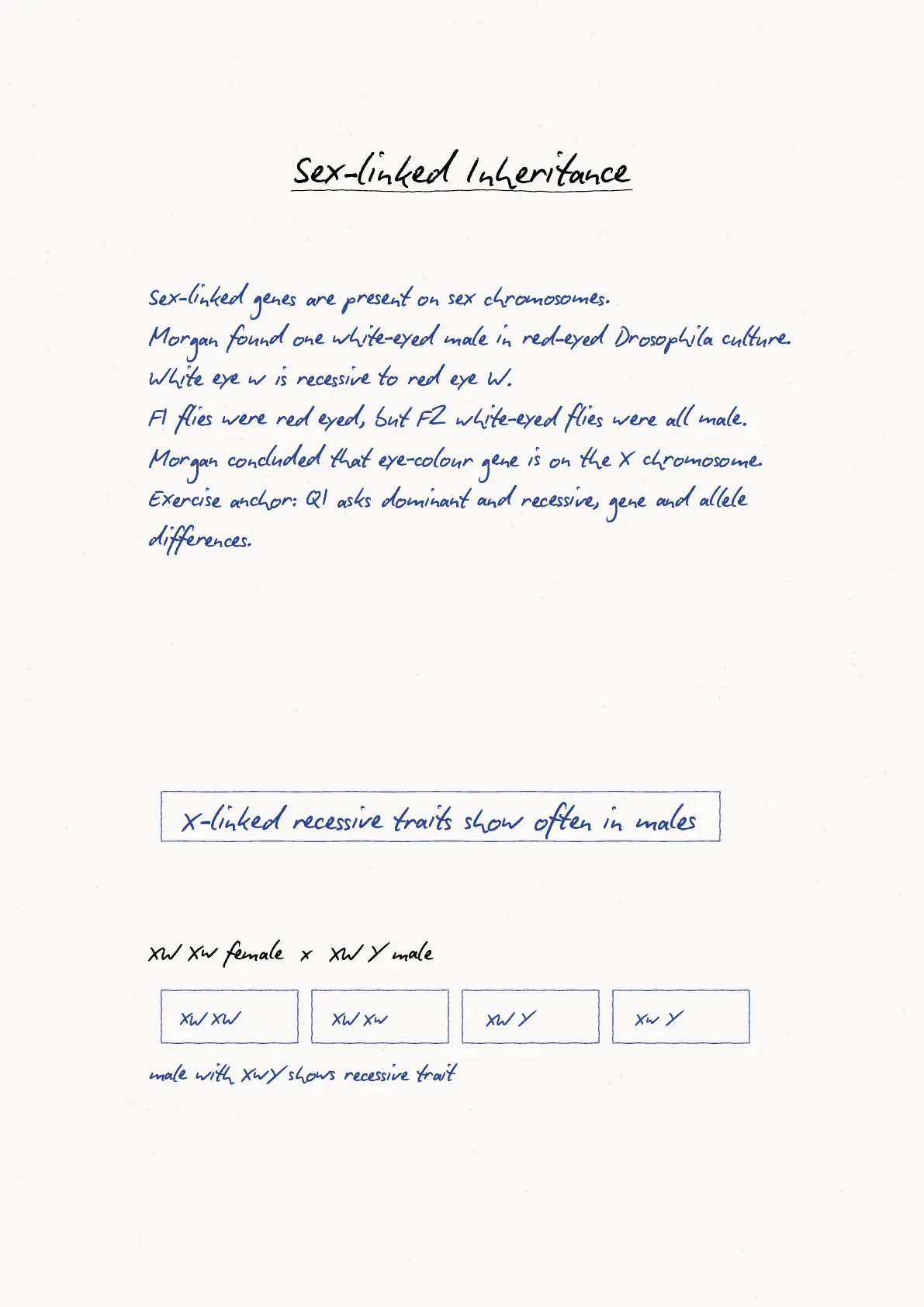
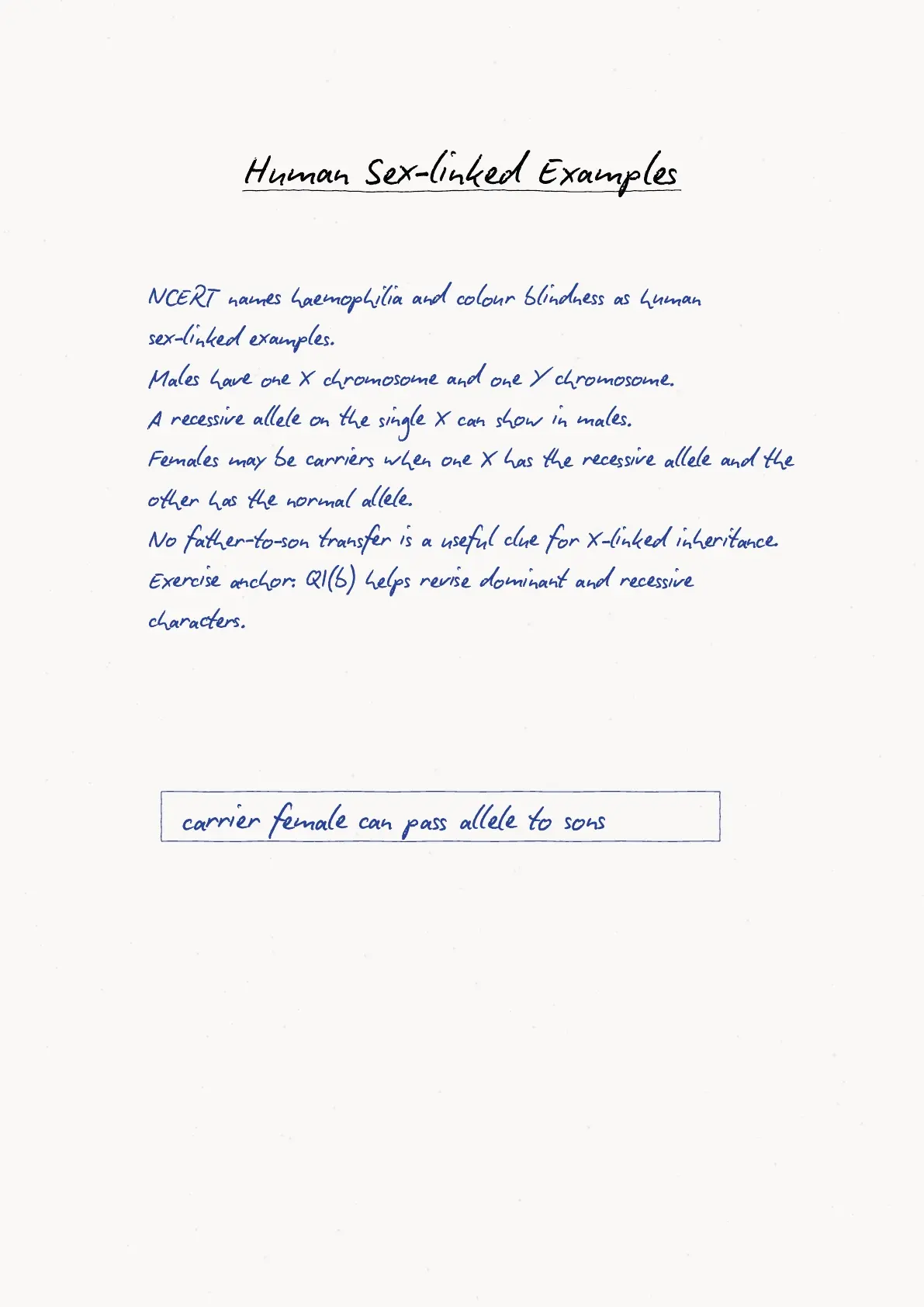
The sex-linked inheritance pages cover Morgan's white-eyed Drosophila example. The PDF explains why a recessive allele on the X chromosome can show more easily in males. It also names haemophilia and colour blindness as common human examples.
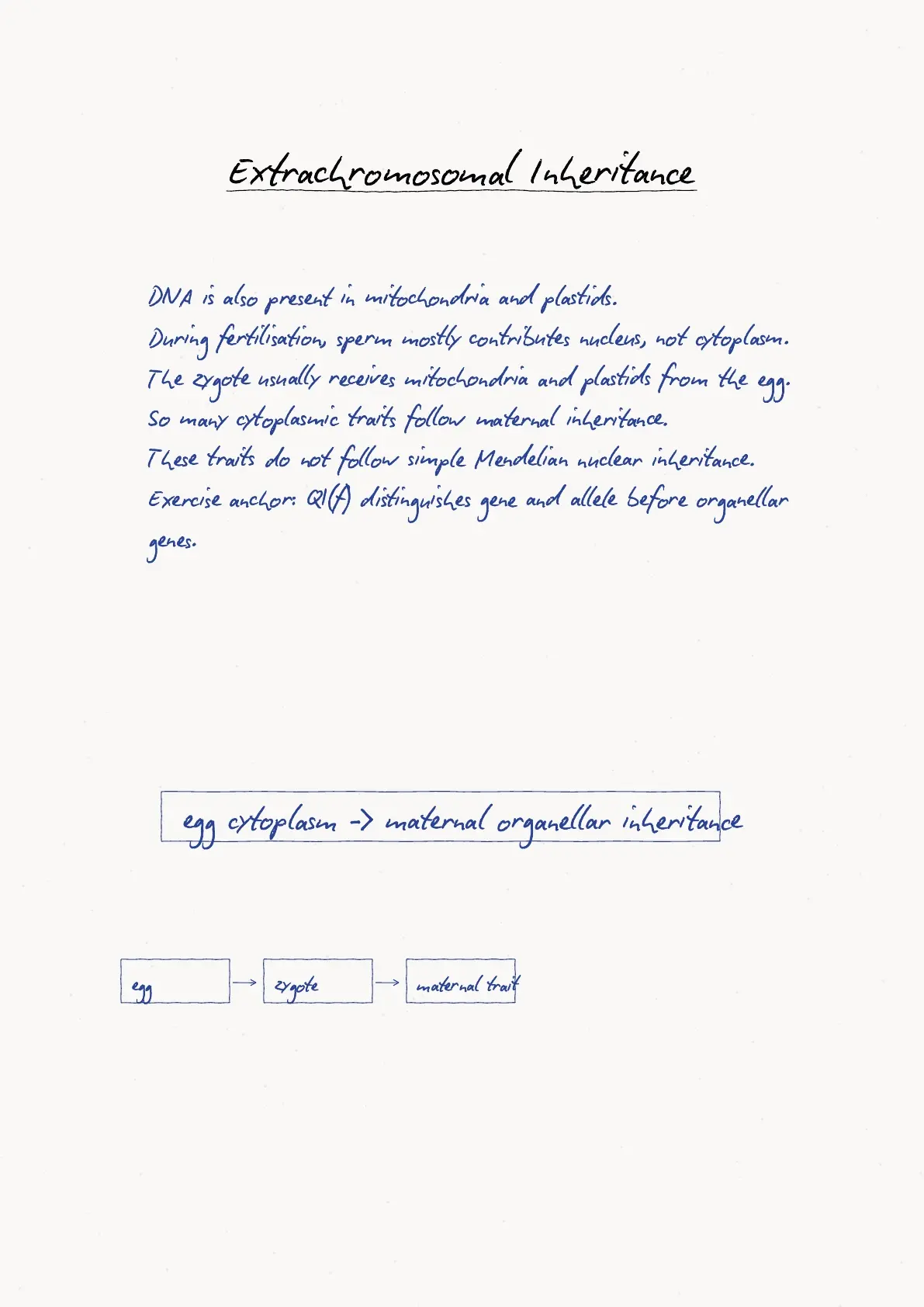
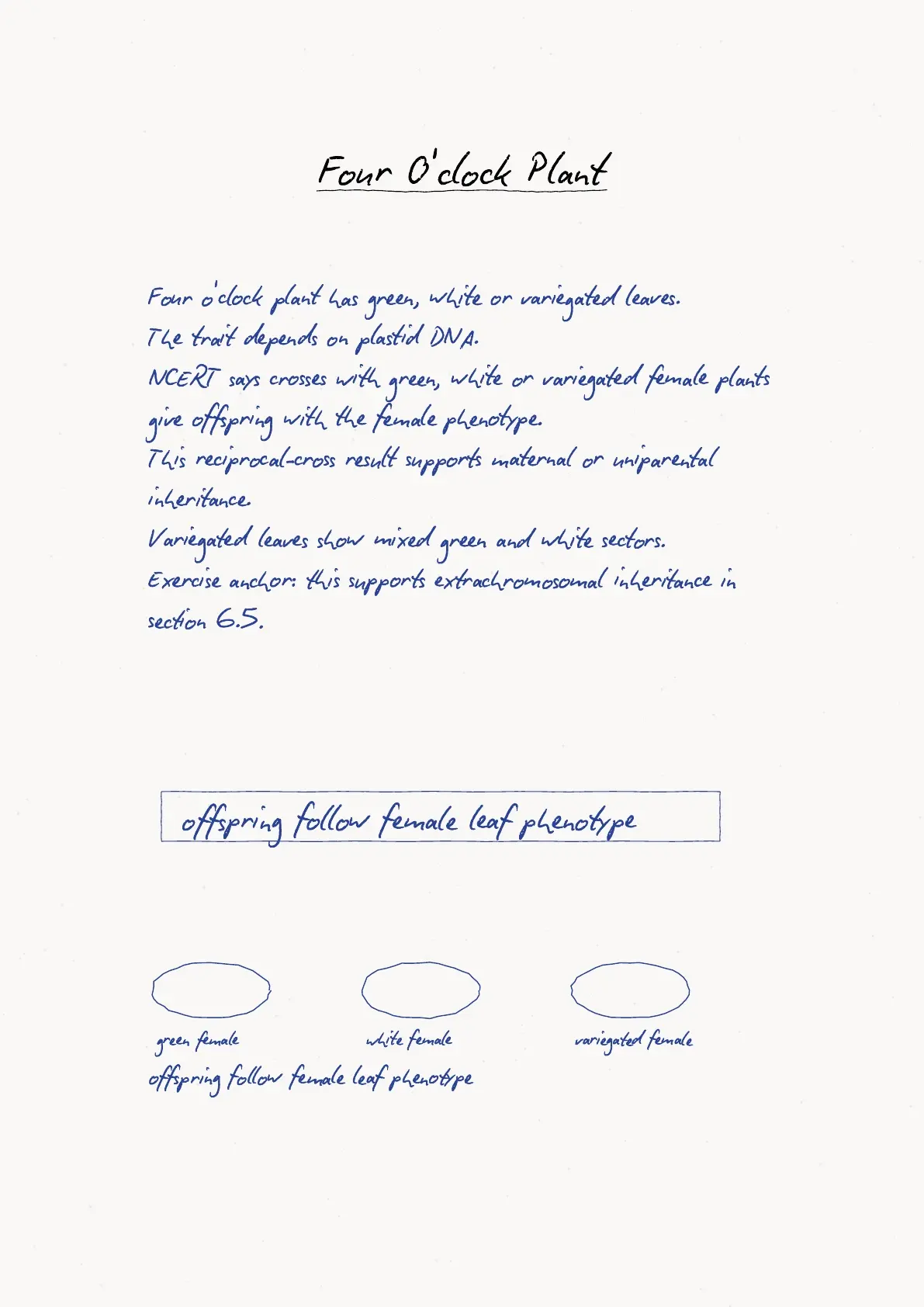
The extrachromosomal inheritance page explains maternal inheritance through mitochondria and plastids. The four o'clock plant page shows how green, white or variegated female leaves decide the offspring leaf phenotype.
Polyploidy and Aneuploidy Comparison
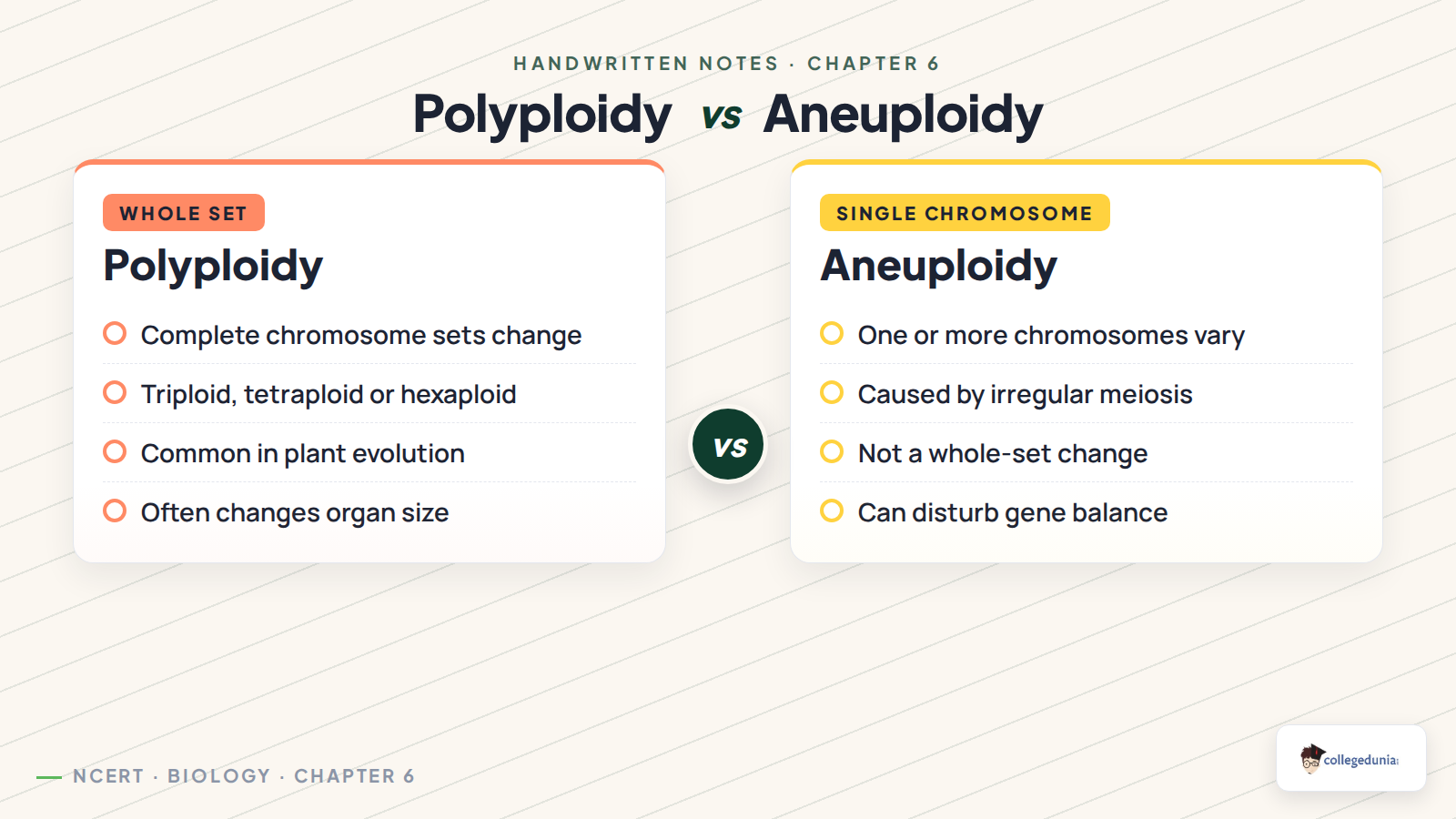
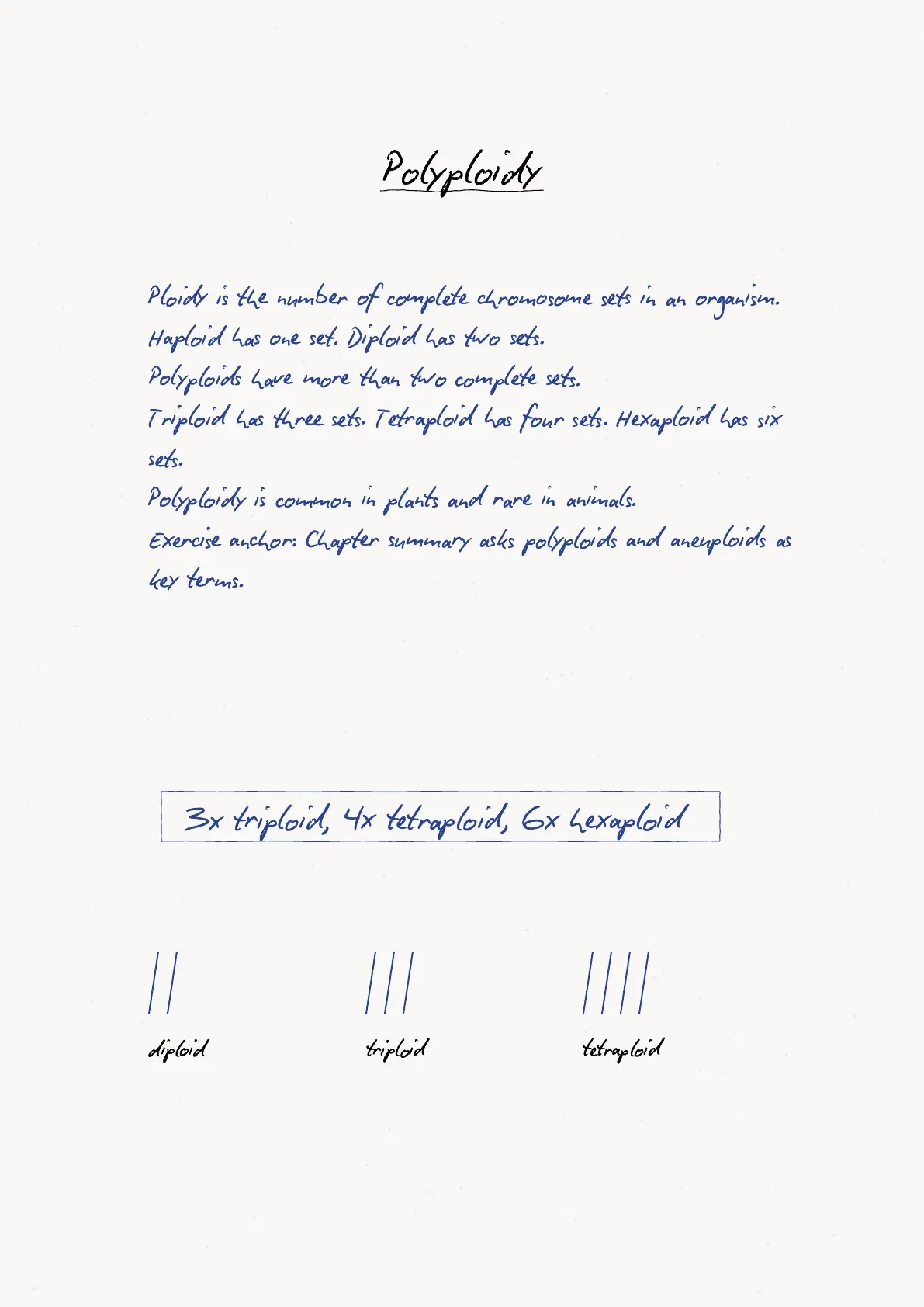
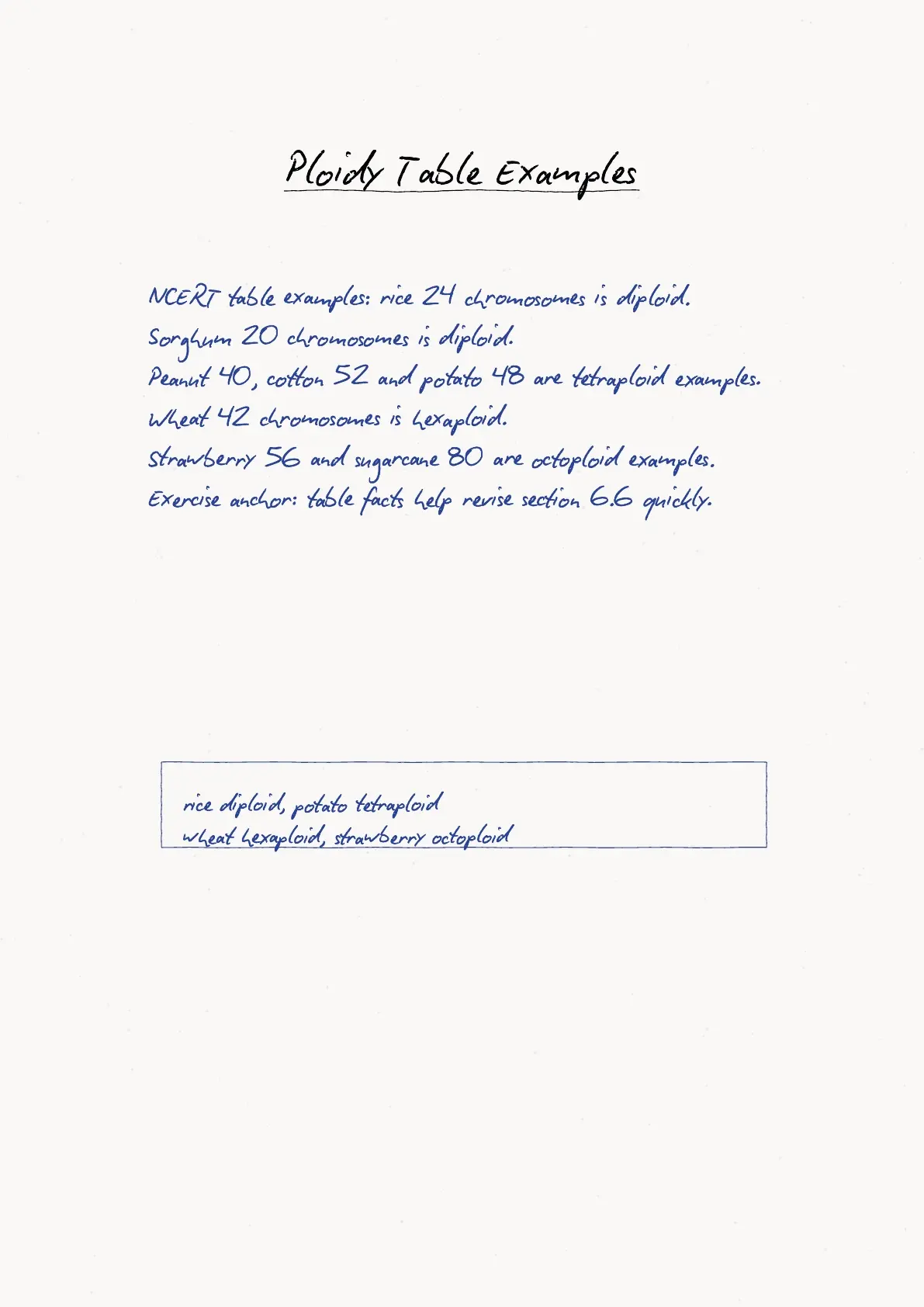
Polyploidy means more than two complete chromosome sets. Triploid, tetraploid and hexaploid examples are kept in a separate page. The table page also revises NCERT examples such as rice, potato, wheat and strawberry.
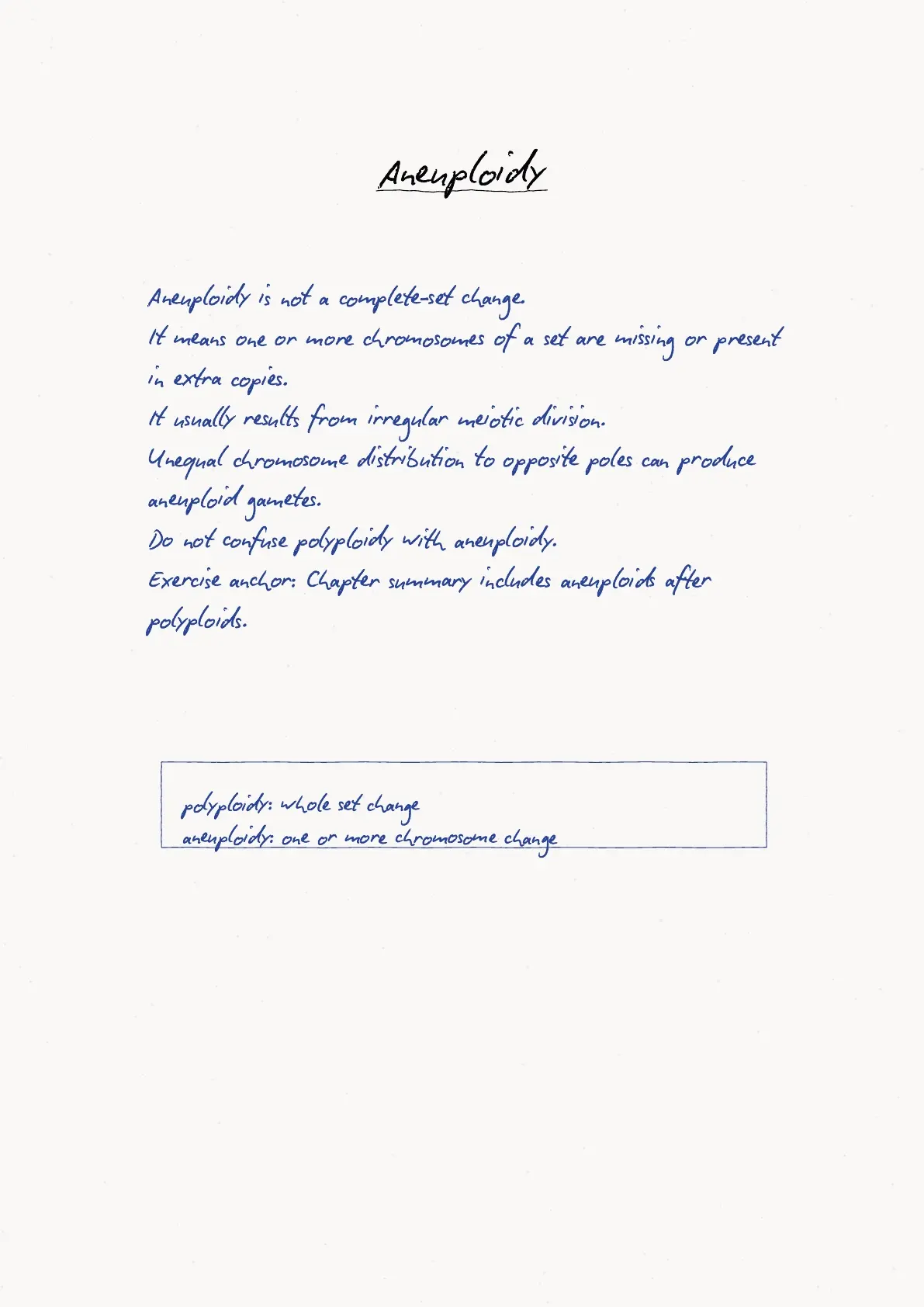
Aneuploidy is revised separately because it is not a whole-set change. It means one or more chromosomes are missing or present in extra copies, usually because of irregular meiotic division.
Forward Genetics and Reverse Genetics
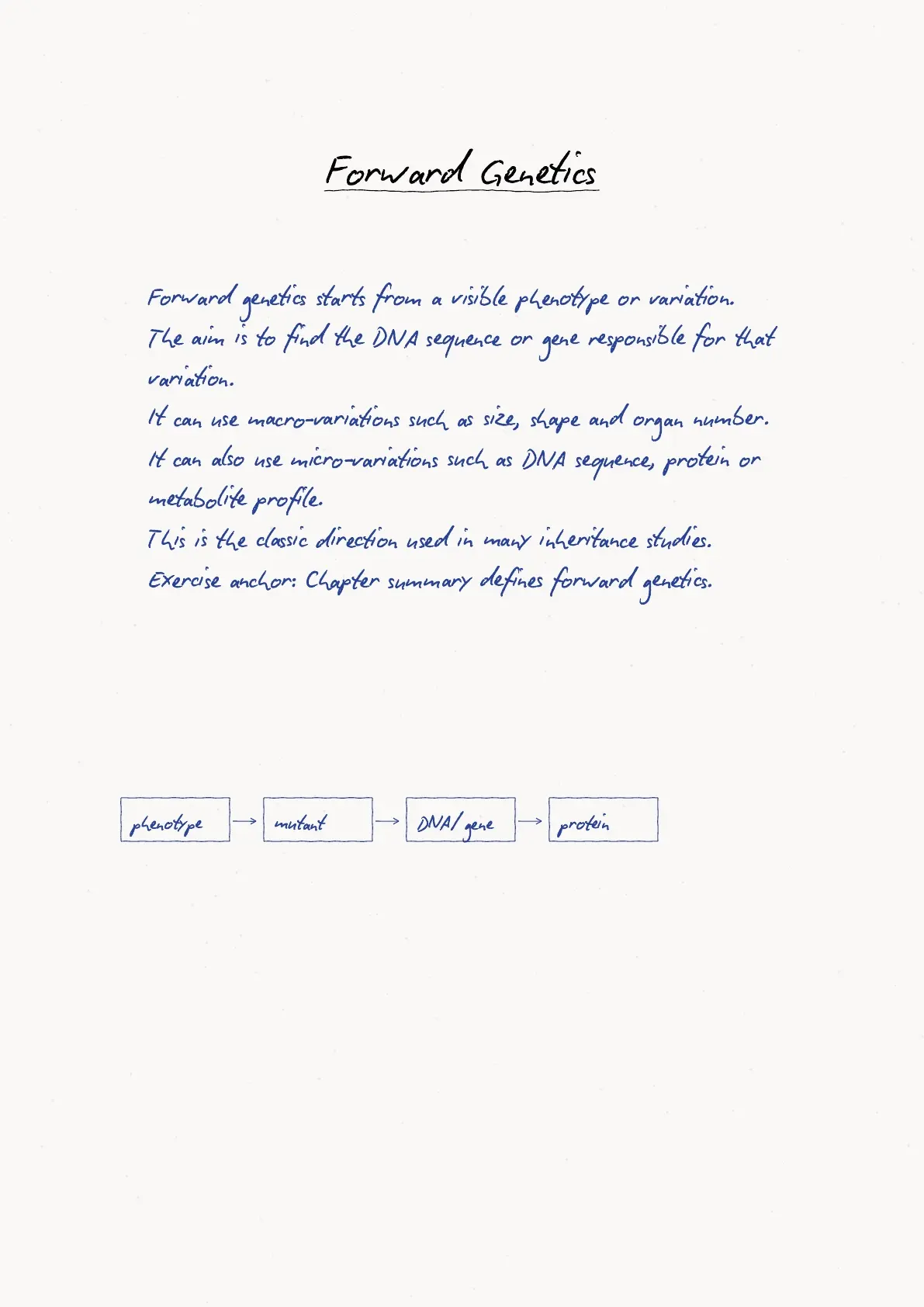
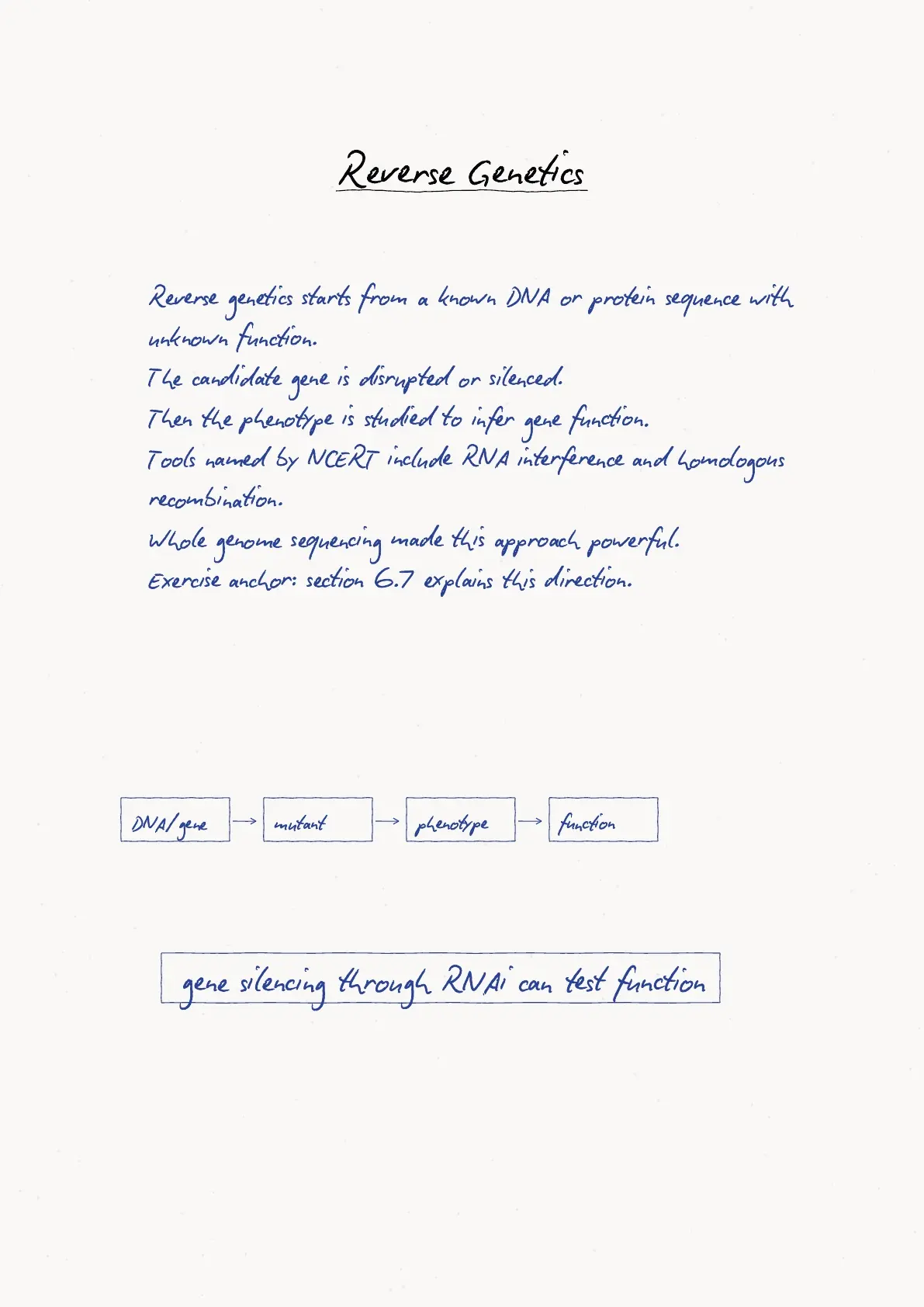
The final pages compare forward and reverse genetics. Forward genetics starts from a phenotype and searches for the gene behind it. Reverse genetics starts from a known DNA or protein sequence and checks what changes when the candidate gene is disrupted or silenced.
RNA interference and homologous recombination are named in the reverse-genetics page because NCERT mentions them as tools for testing gene function.
How to Use These Handwritten Notes
- Revise ratios first: 3:1, 1:2:1, 1:1 and 9:3:3:1.
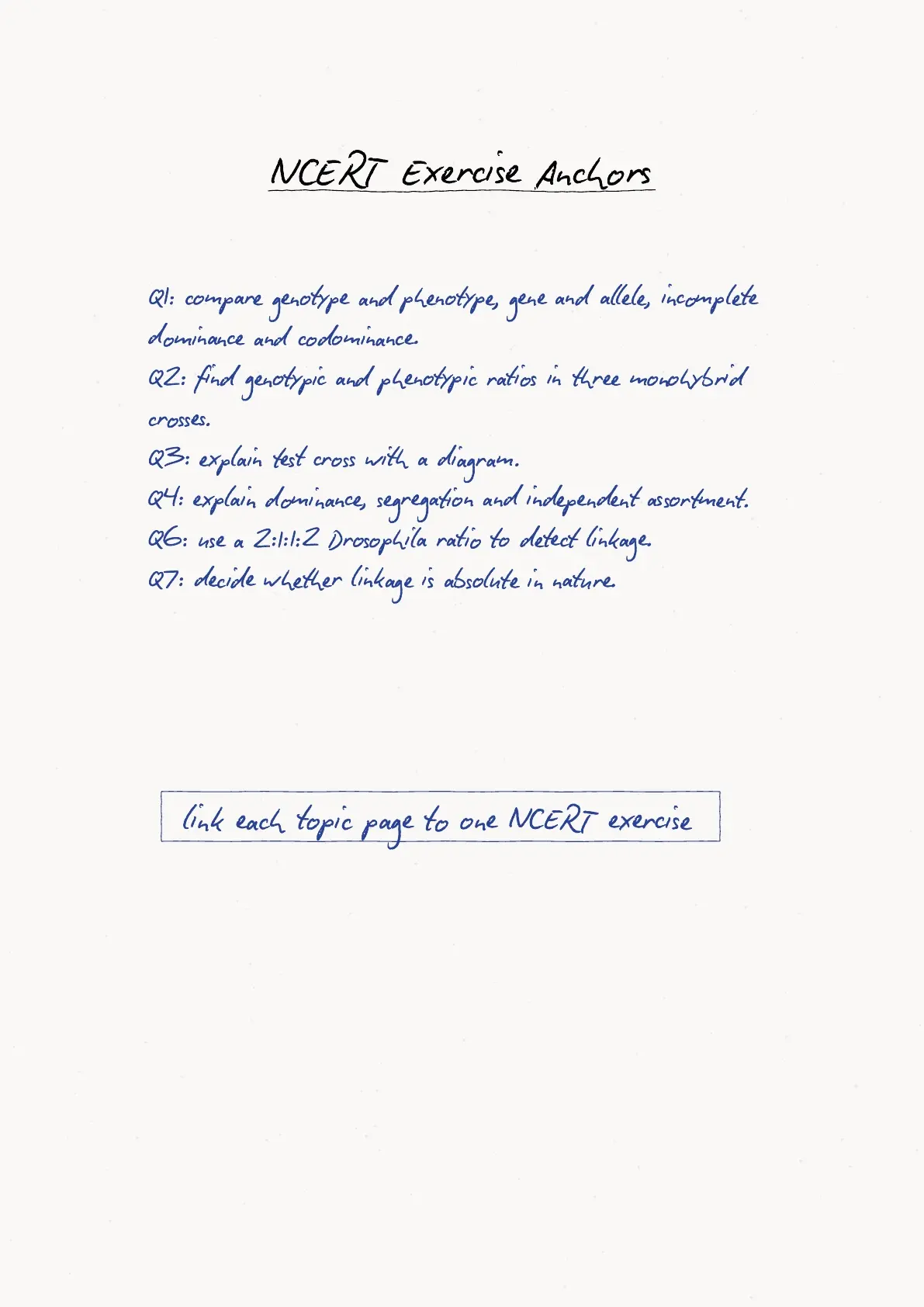
- Practise the test-cross diagram before attempting NCERT Exercise Q3.
- Read linkage and recombination together, not as separate definitions.
- Return to the NCERT textbook for full source diagrams and exercise wording.
Related Class 11 Biotechnology Chapter 6 Resources
| Resource | Link |
|---|---|
| NCERT Notes | Class 11 Biotechnology Chapter 6 Notes |
| NCERT Book PDF | Class 11 Biotechnology Chapter 6 Book PDF |
| NCERT Solutions | Class 11 Biotechnology Chapter 6 Solutions |
Class 11 Biotechnology Handwritten Notes for Other Chapters
| Chapter | Handwritten Notes |
|---|---|
| Chapter 1 | An Introduction to Biotechnology |
| Chapter 2 | Cellular Organelles |
| Chapter 3 | Biomolecules |
| Chapter 4 | Enzymes and Bioenergetics |
Basic Principles of Inheritance Biotechnology Handwritten Notes FAQs
Ques. What is covered in Class 11 Biotechnology Chapter 6 Basic Principles of Inheritance handwritten notes?
Ans. The notes cover heredity, Mendel's crosses, linkage, recombination, sex-linked inheritance, extrachromosomal inheritance, polyploidy and reverse genetics.
Ques. Are these handwritten notes based on the 2026-27 NCERT textbook?
Ans. Yes. The chapter order and core examples follow the 2026-27 NCERT Class 11 Biotechnology Chapter 6 source.
Ques. Which ratios should students revise first from this PDF?
Ans. Start with 3:1, 1:2:1, 1:1 and 9:3:3:1 because they appear in monohybrid, test-cross and dihybrid questions.



Comments