



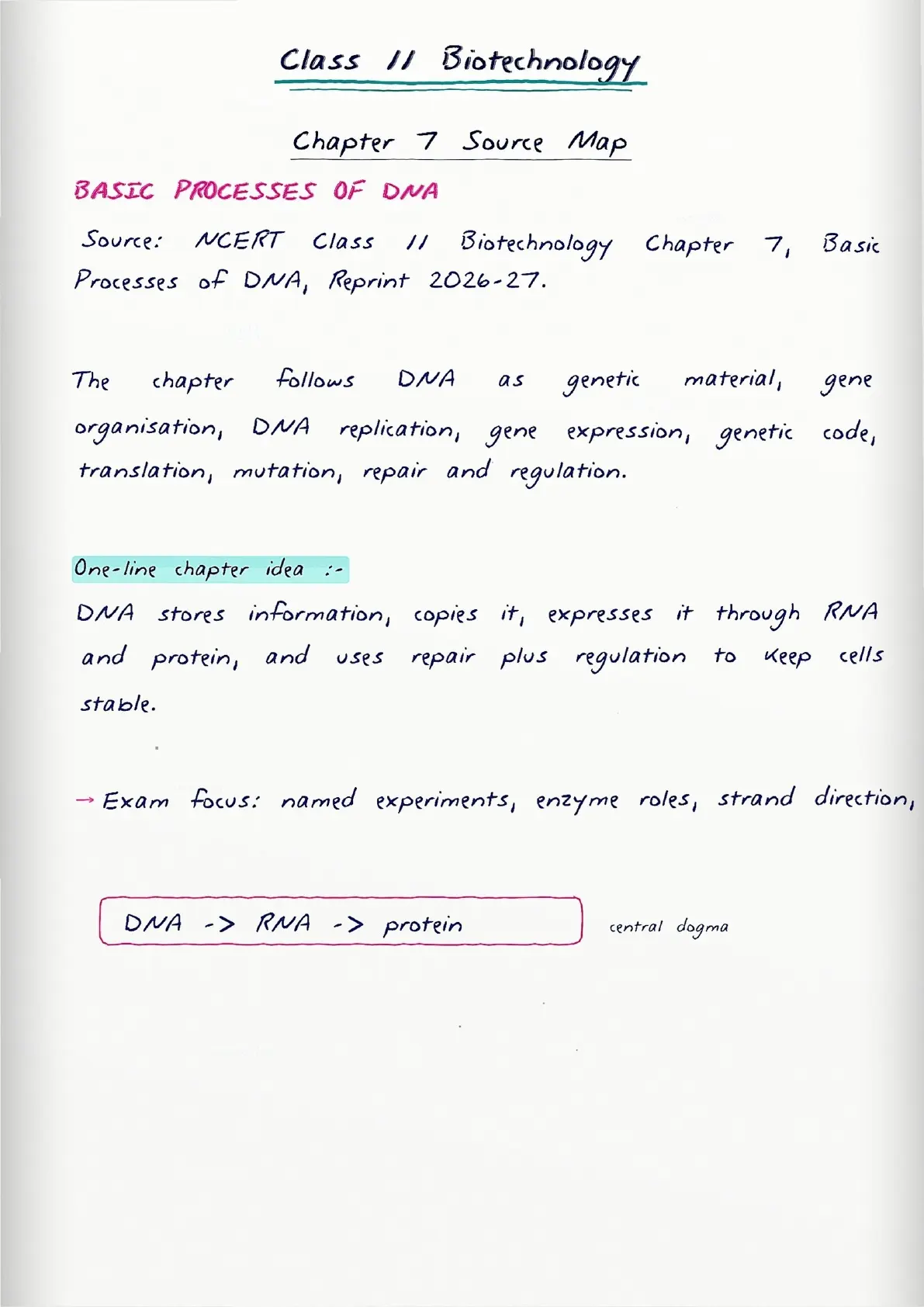
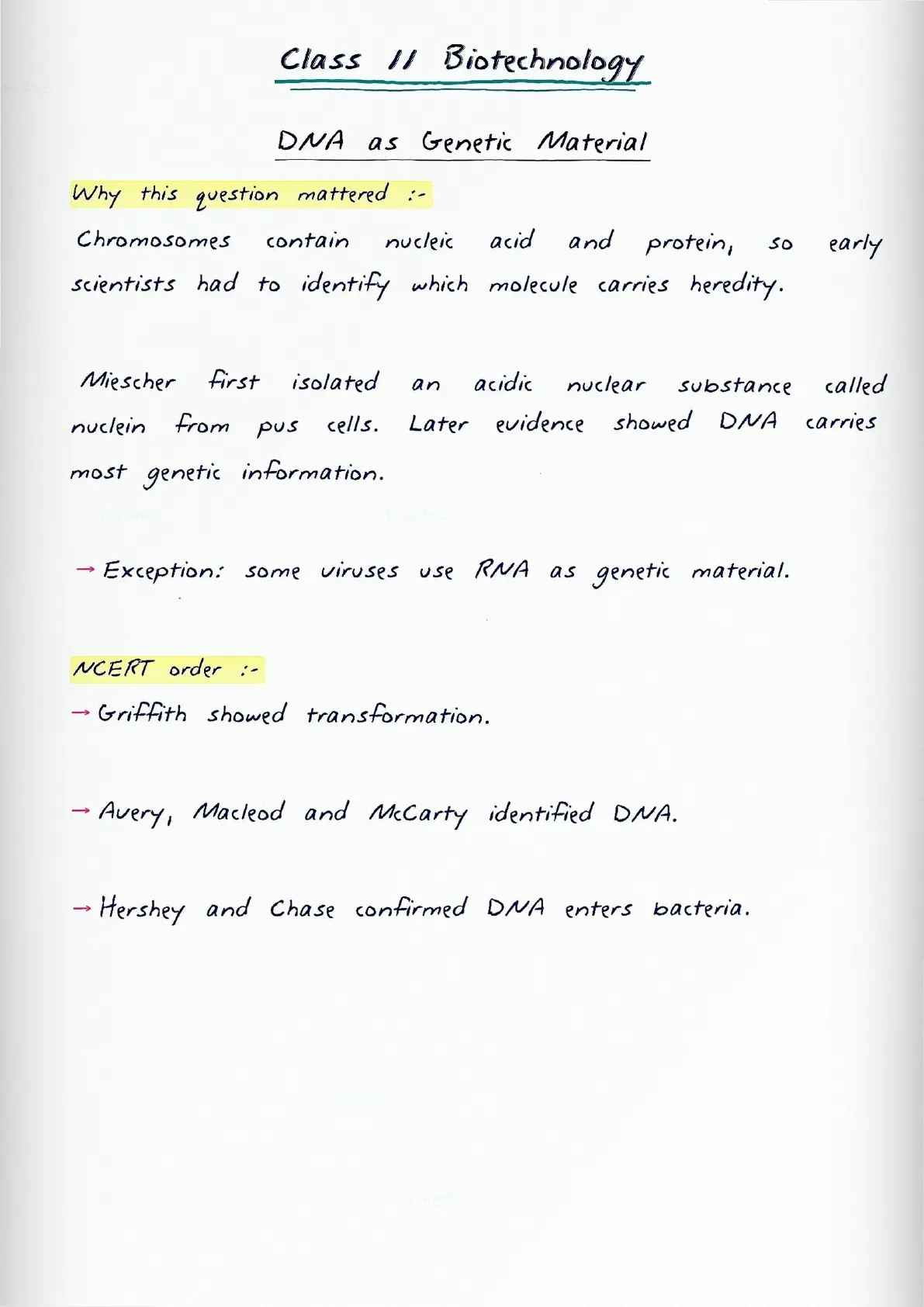
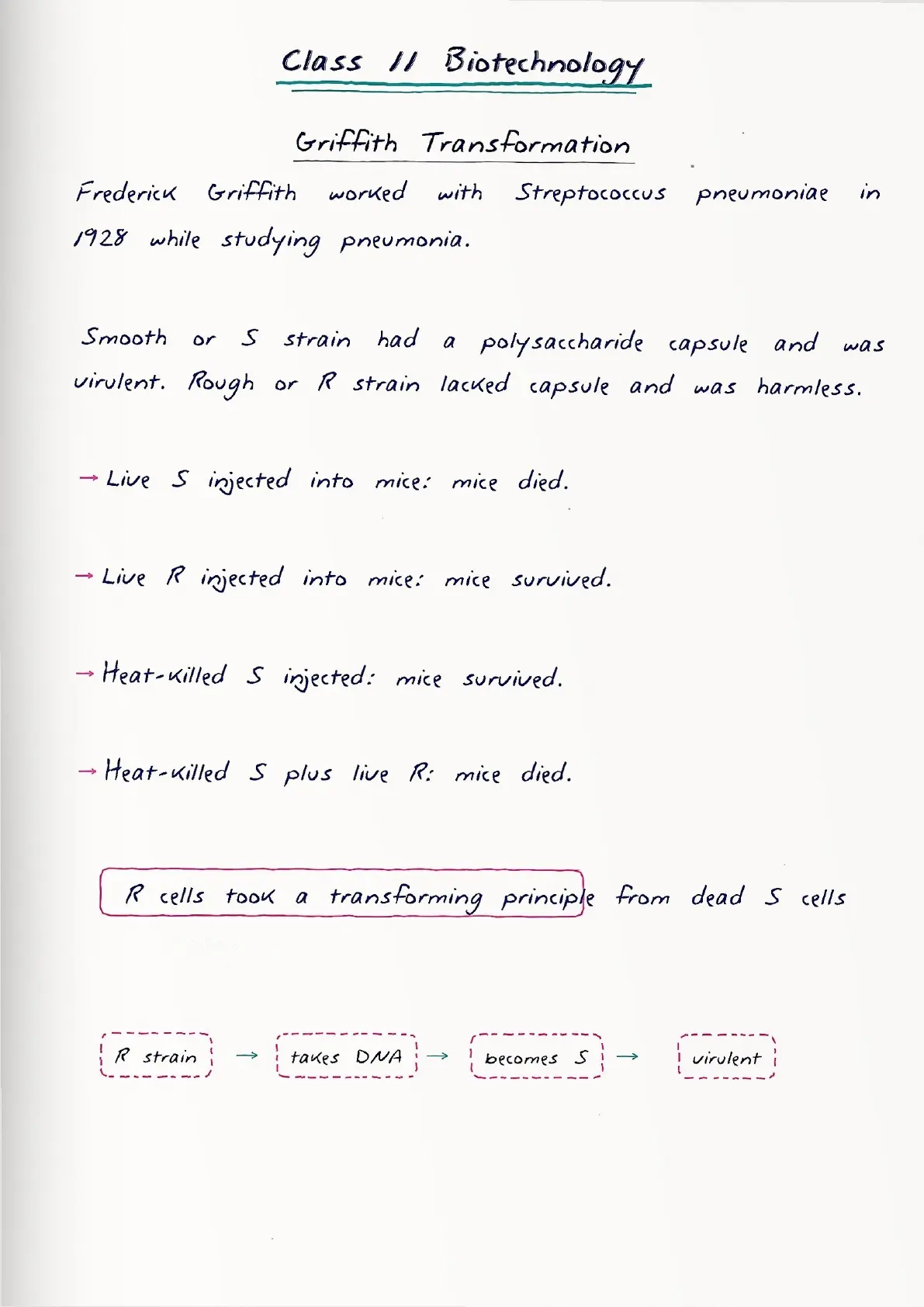
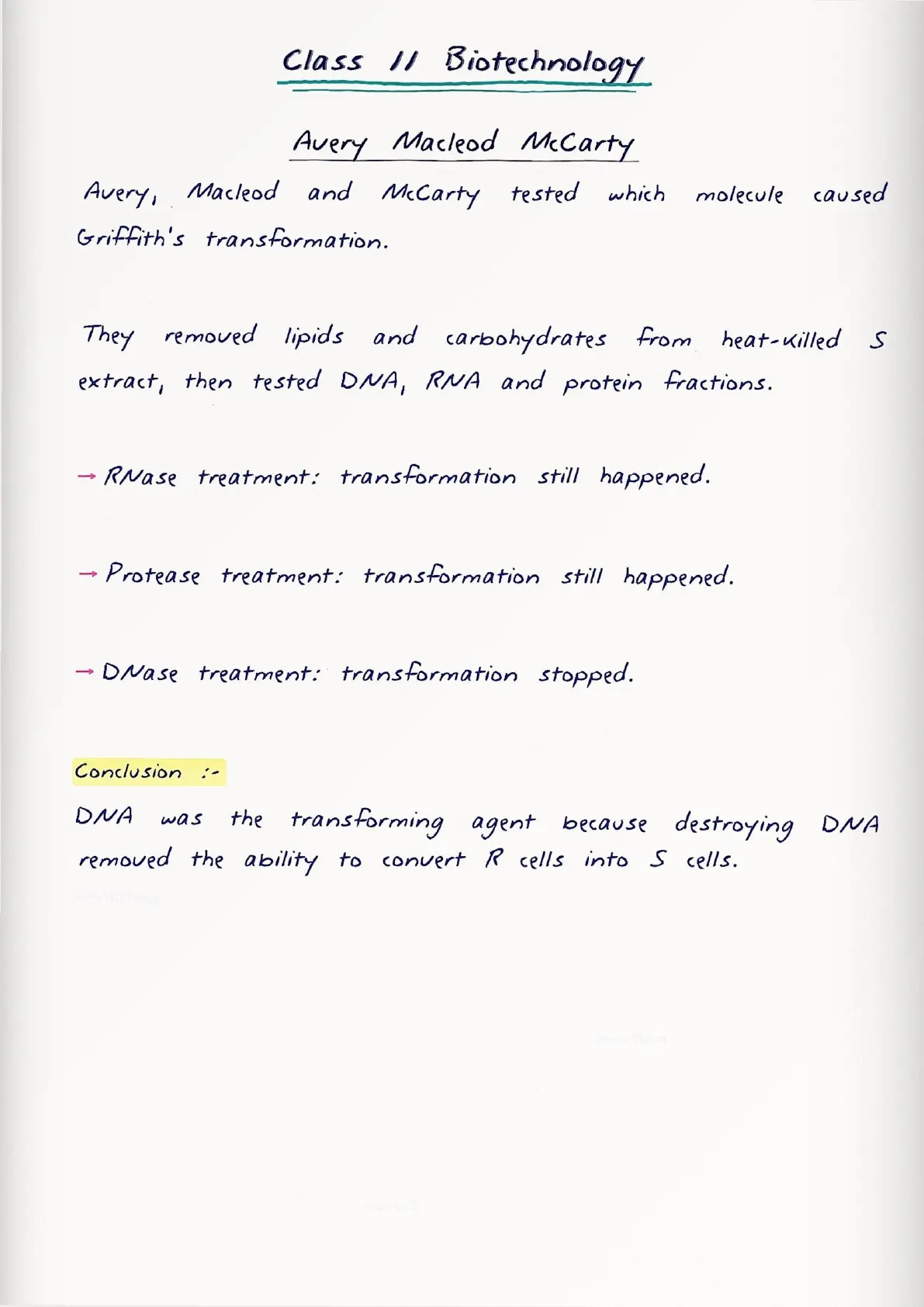
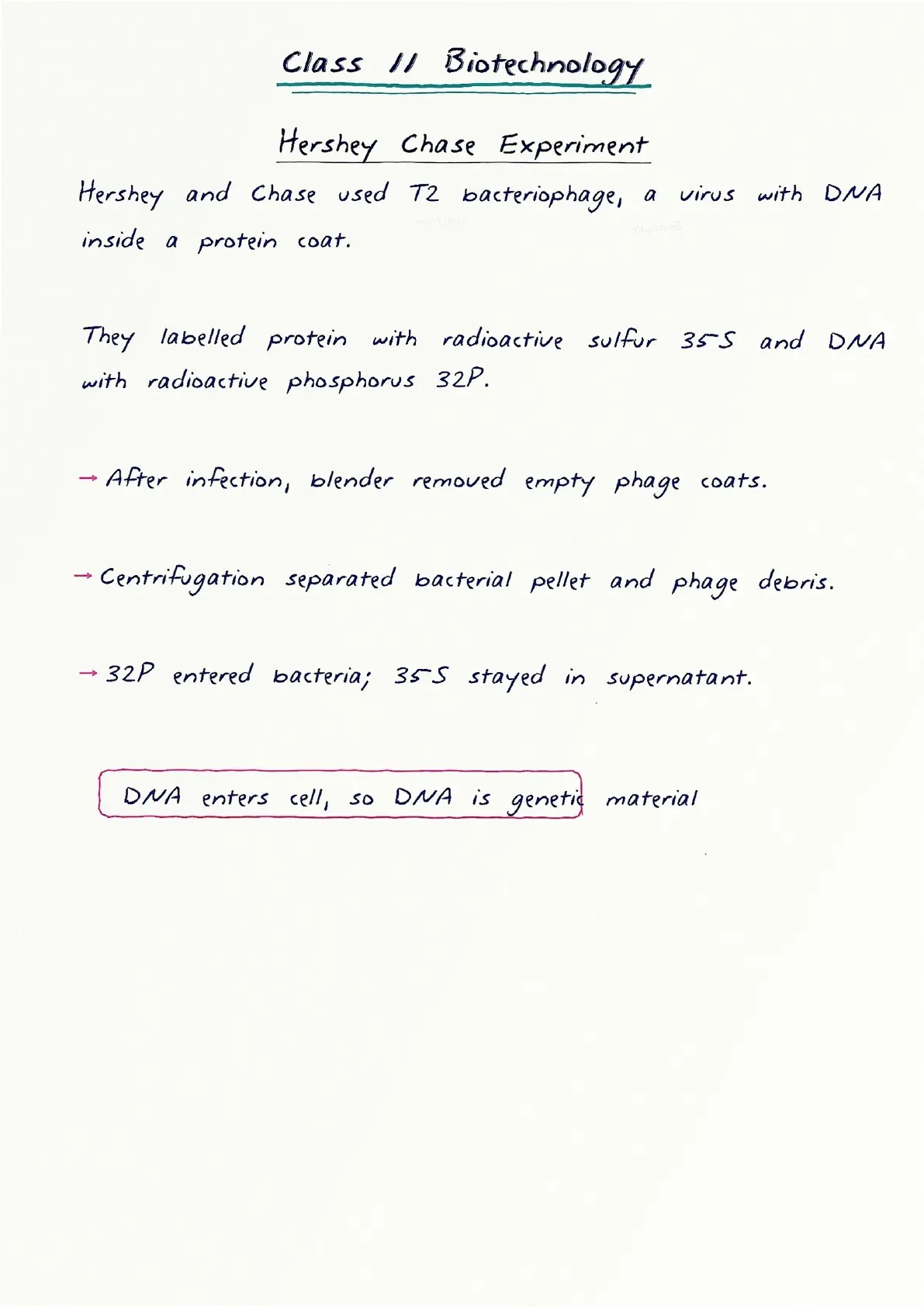
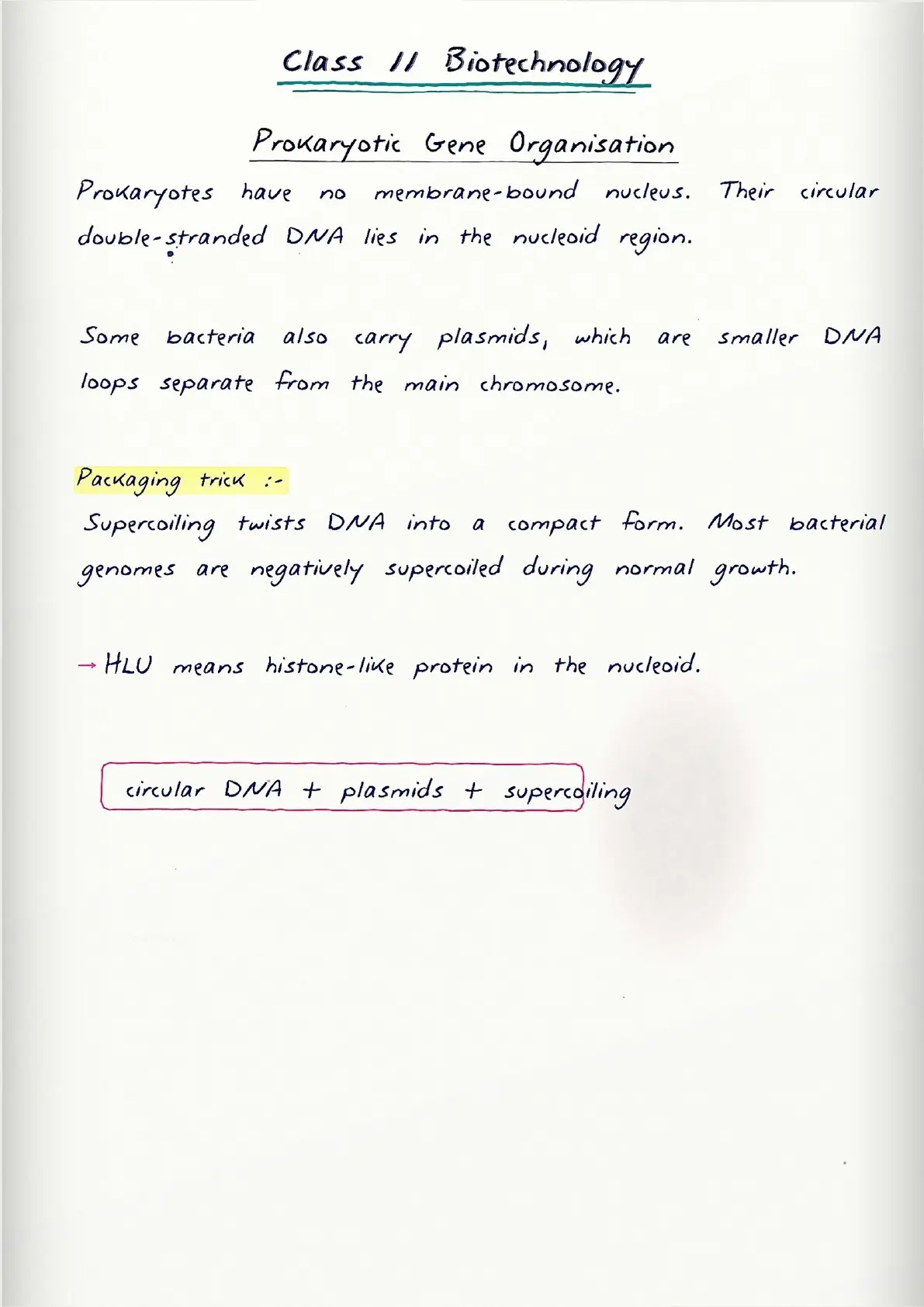
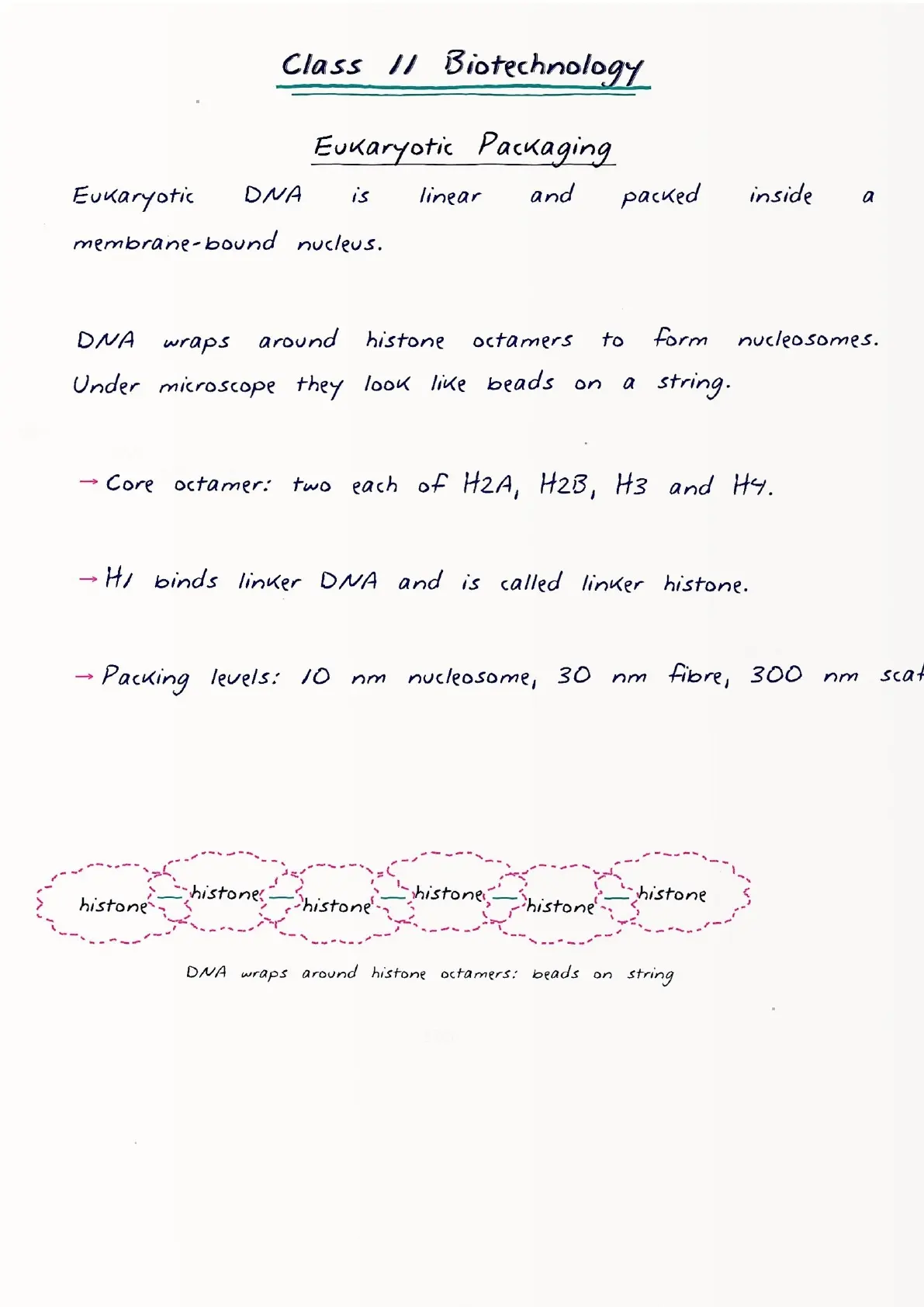
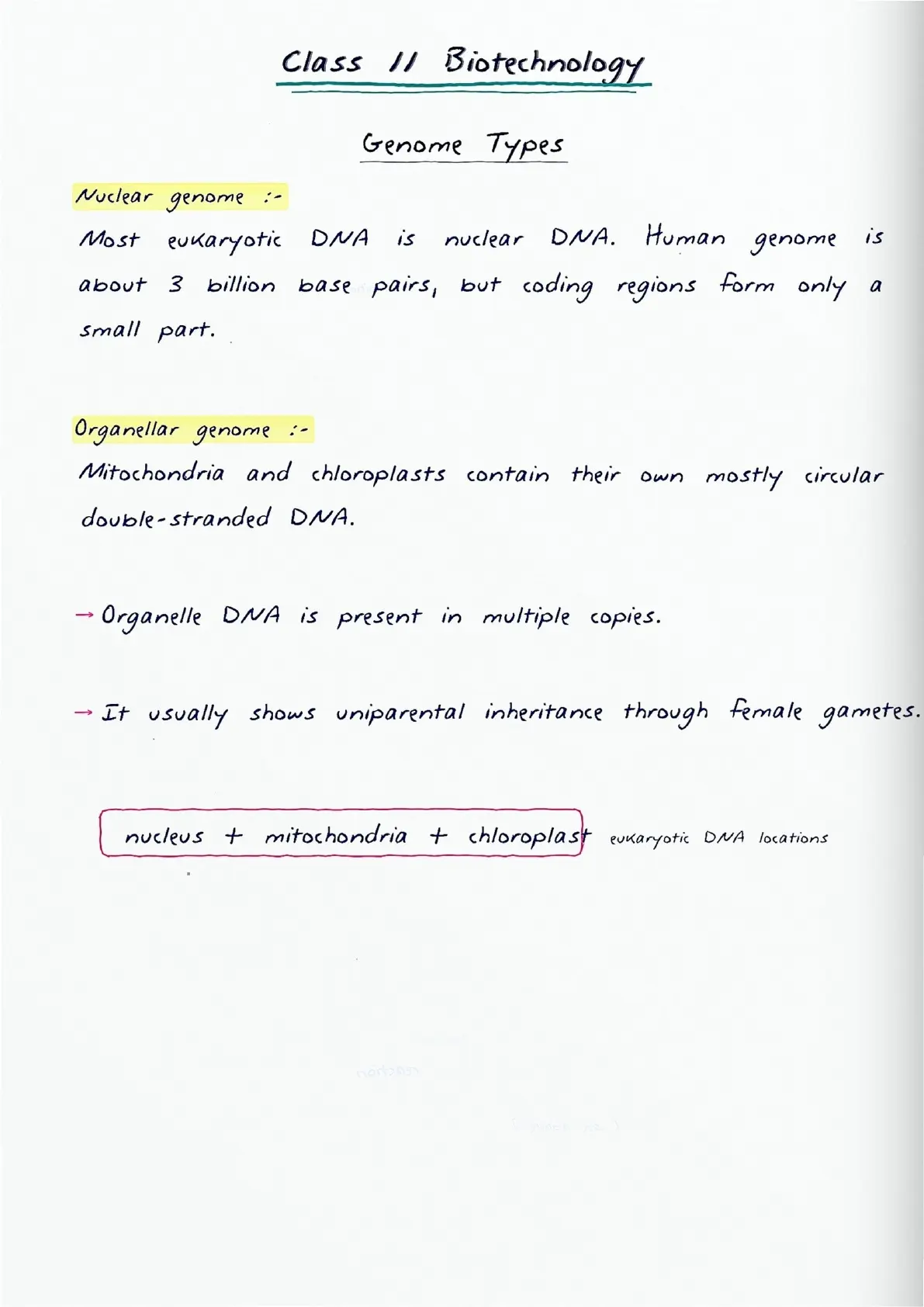
The handwritten notes on Class 11 Biotechnology Chapter 7 Basic Processes of DNA have been prepared for focused revision from the 2026-27 NCERT textbook. The PDF covers DNA as genetic material, replication machinery, proofreading, repair, transcription, genetic code and translation in concise notebook-style pages.
- Covers the chapter sequence from DNA structure to protein synthesis.
- Includes replication fork notes, enzyme roles, codon rules and mutation checkpoints.
- Useful for school tests, NCERT exercise revision and last-week concept recall.
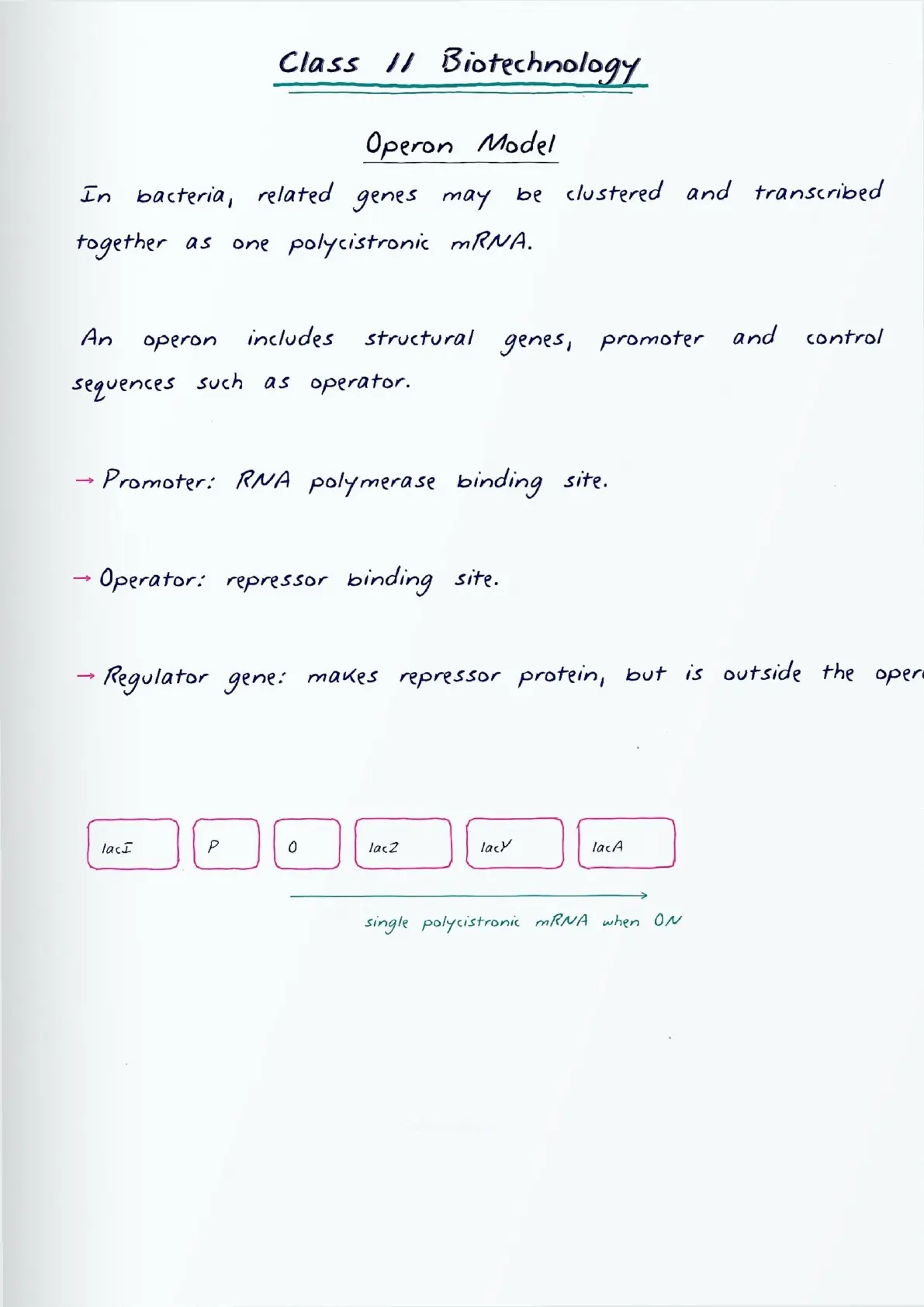
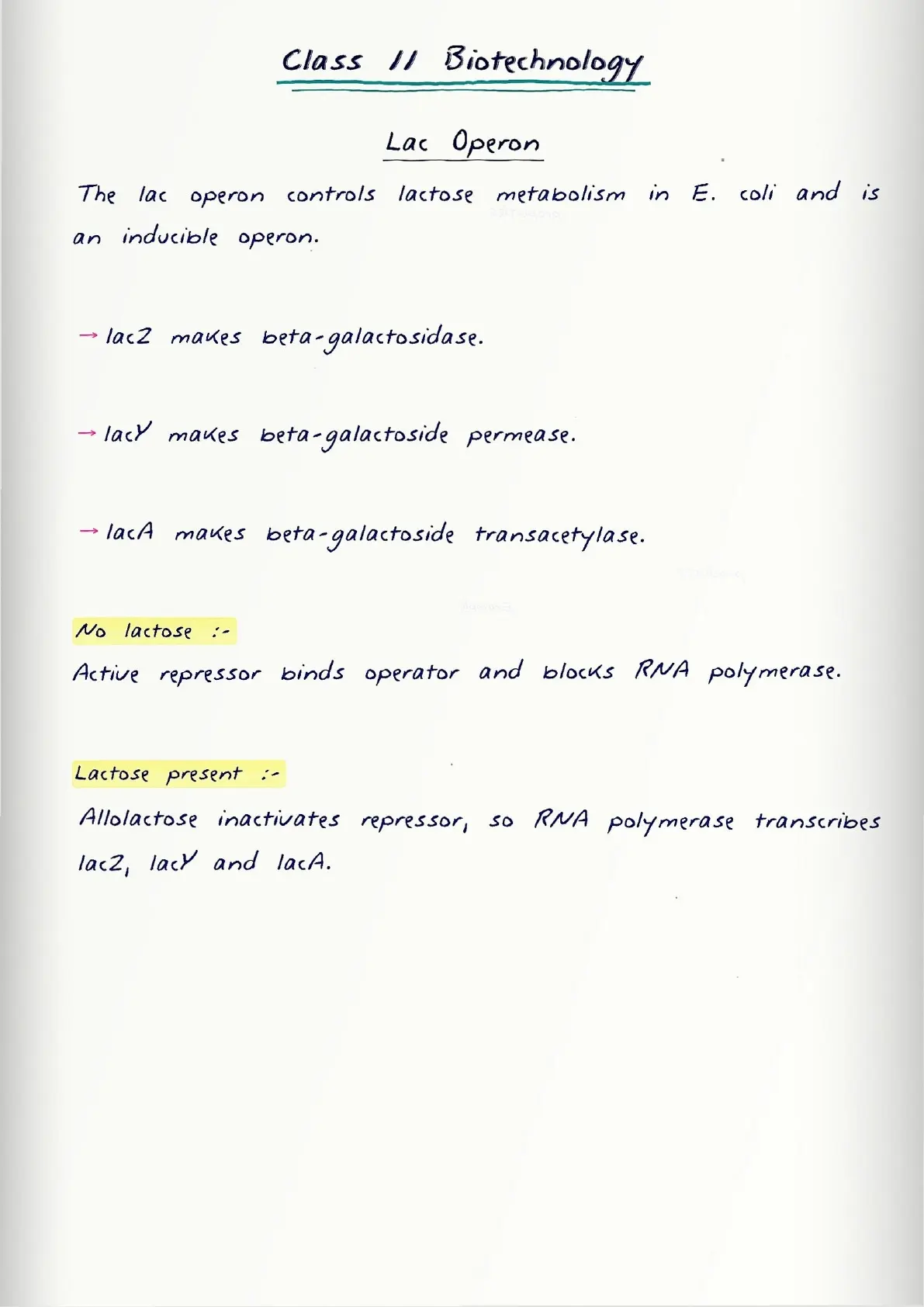
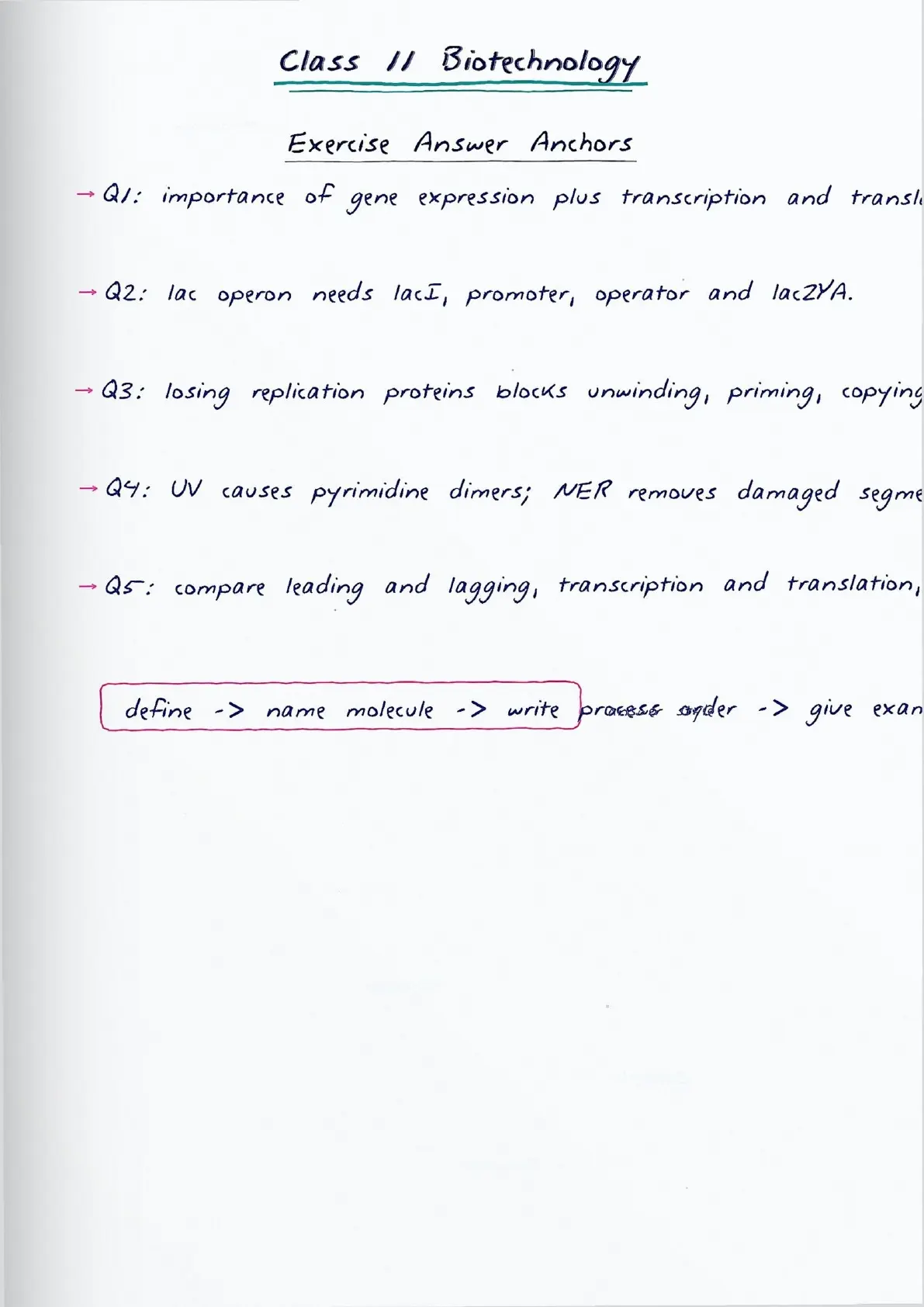
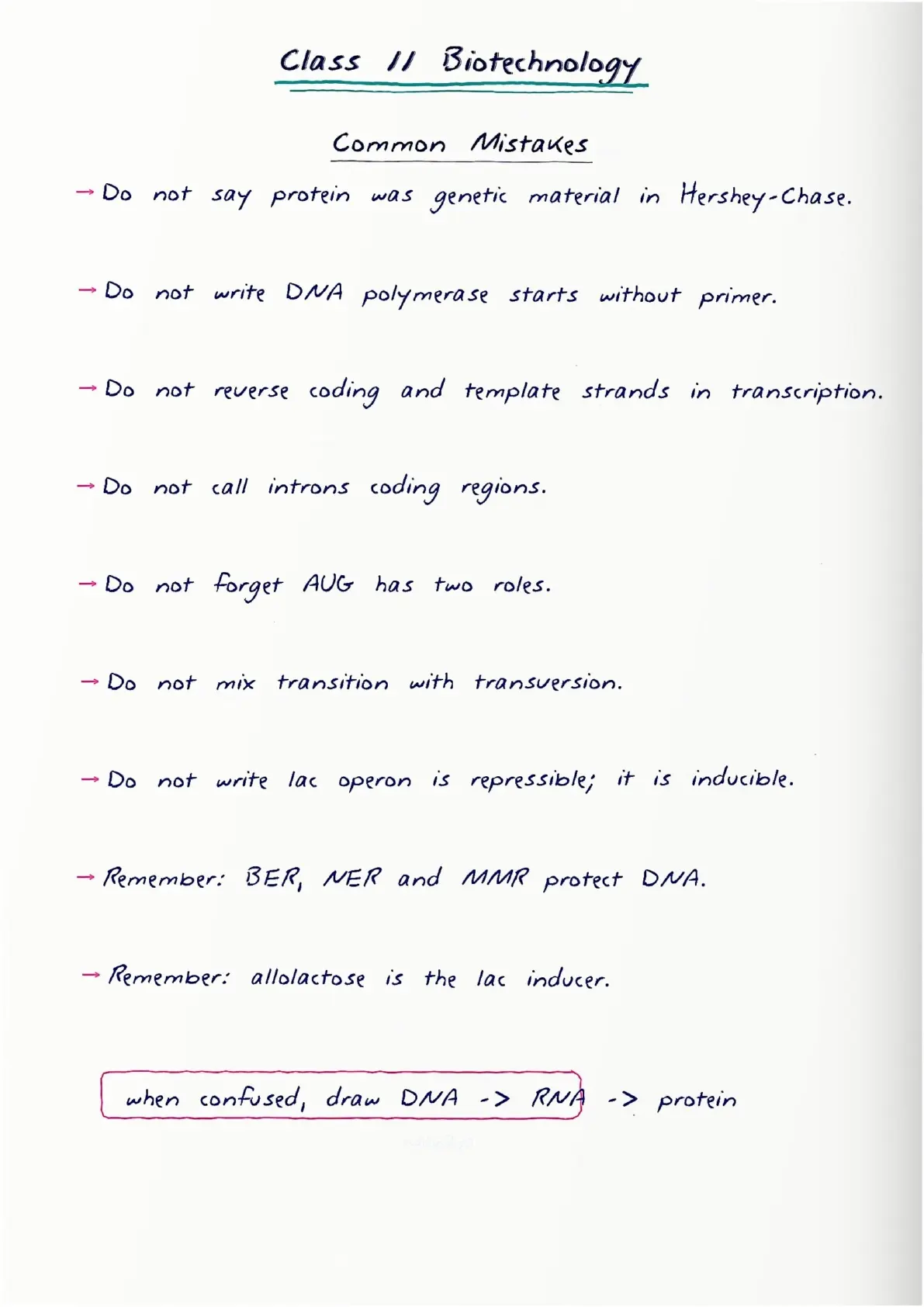
Student Feedback: In a Collegedunia revision check, students said that separating replication, transcription and translation into flow charts made Chapter 7 easier to revise before tests.
|
Table of Contents |
Basic Processes of DNA Handwritten Notes PDF Highlights
Class 11 Biotechnology Chapter 7 connects DNA structure with the way cells copy and express genetic information. The handwritten PDF keeps the lesson in NCERT order, beginning with the central dogma and moving through replication, repair and protein synthesis.
Important: this is a revision resource. Students should still read the NCERT textbook for complete explanations and original diagrams, then use these pages for fast recall.
| Revision area | What the PDF covers |
|---|---|
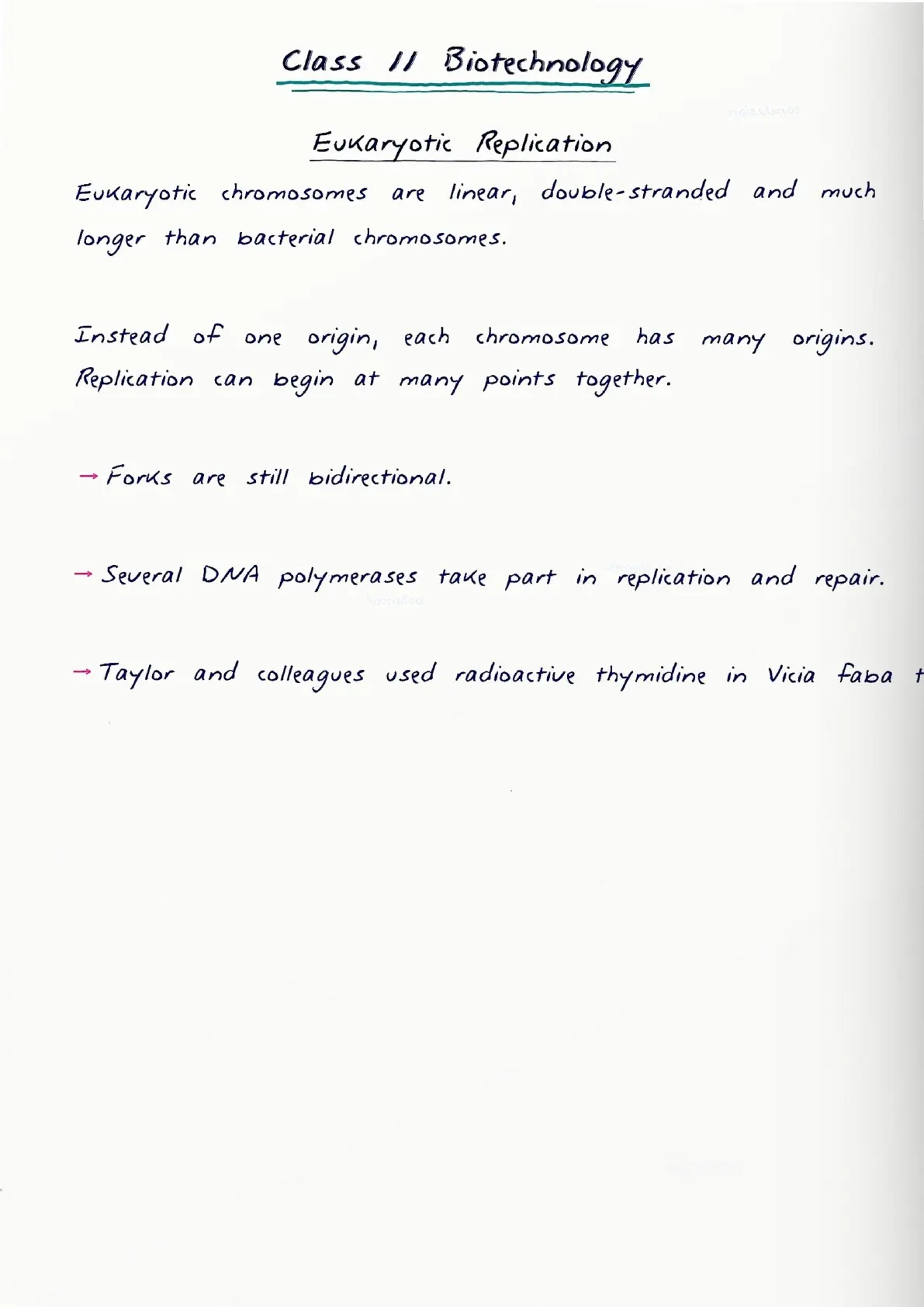
| Replication | Origin of replication, replication fork, helicase, primase, DNA polymerase, ligase and Okazaki fragments. |
| DNA expression | Transcription, RNA processing idea, codons, anticodons, tRNA and ribosome movement. |
| DNA stability | Proofreading, mismatch repair, base-excision repair and mutation effects on proteins. |
Central Dogma and DNA Information Flow
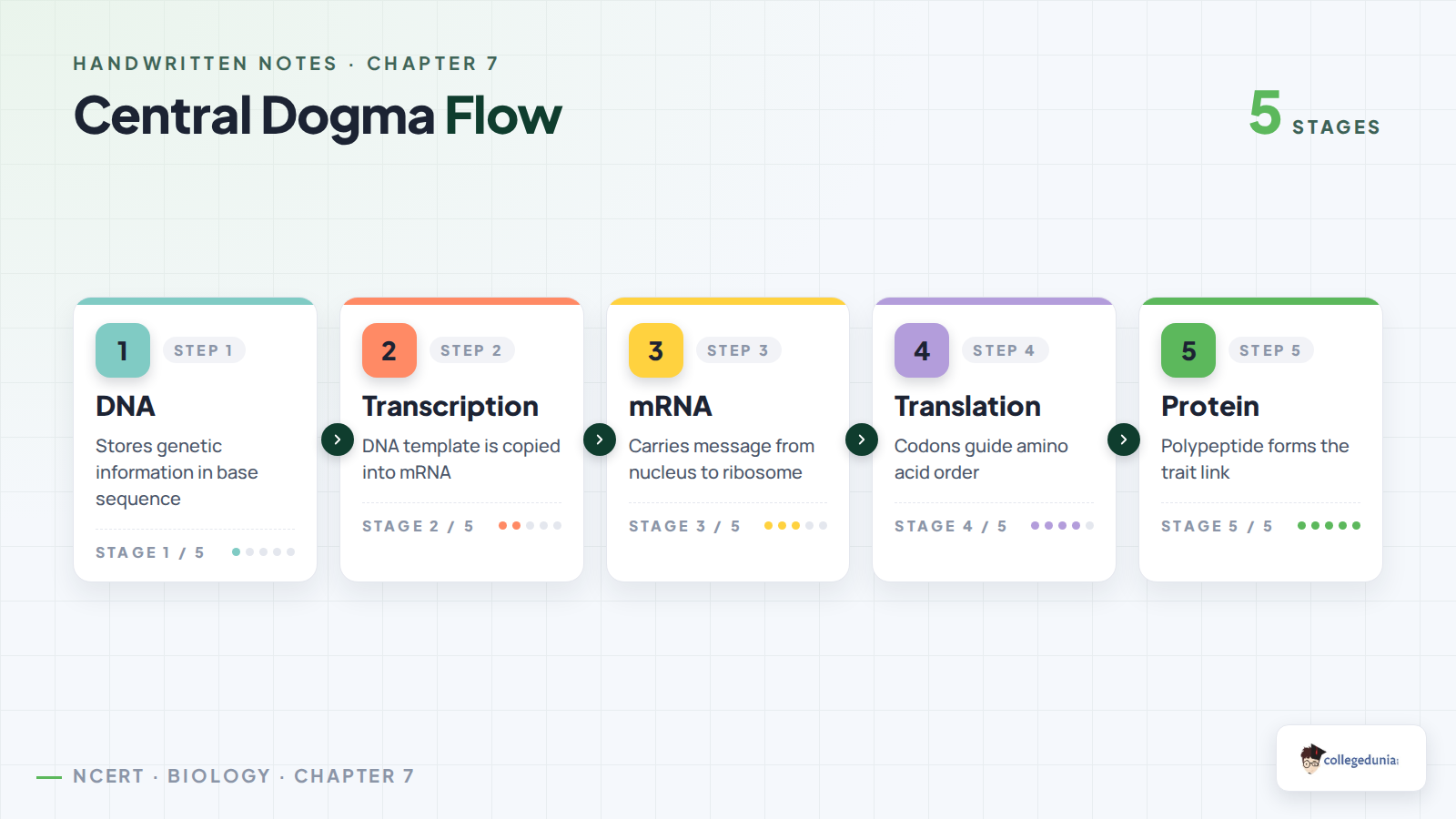
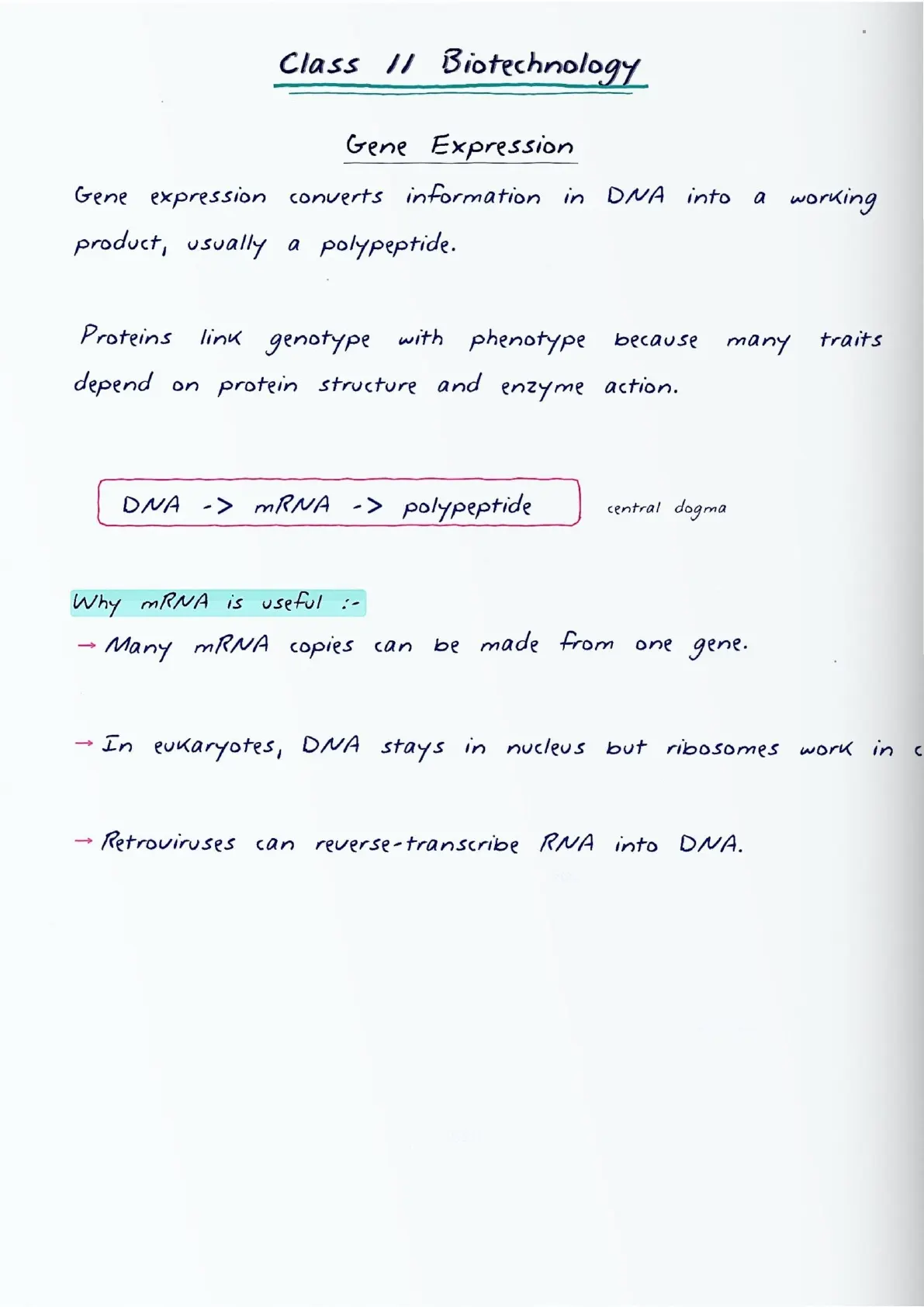
The notes explain the central dogma as the flow of biological information from DNA to RNA to protein. DNA stores the base sequence, RNA carries a working message and the protein sequence gives the cell its functional product.
Replication is placed separately because it copies DNA before cell division. Transcription and translation are then revised as expression steps, where a selected gene is used to make a polypeptide.
Basic Processes of DNA Video Revision
Source: Magnet Brains on YouTube
Replication Fork and Enzyme Roles
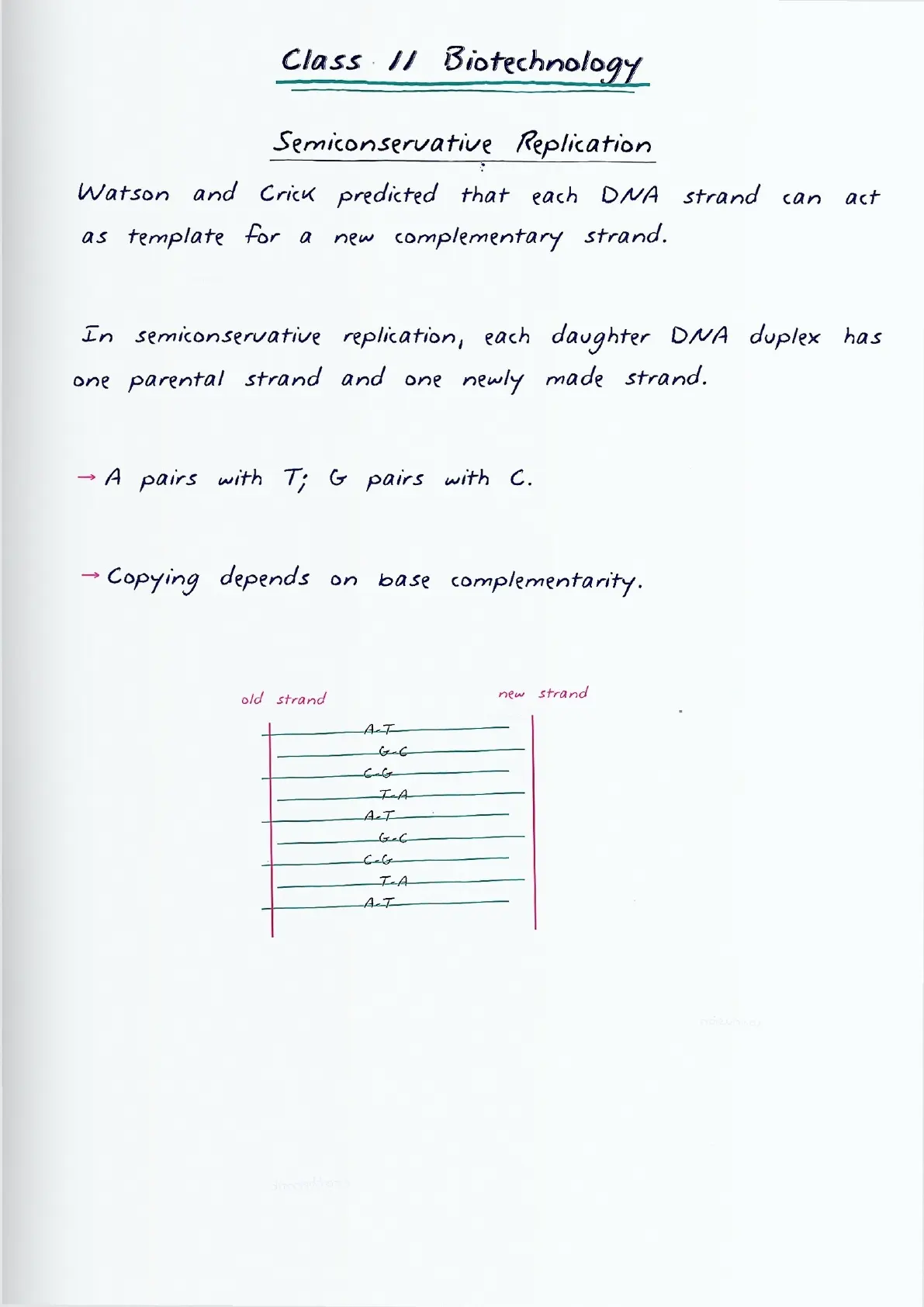
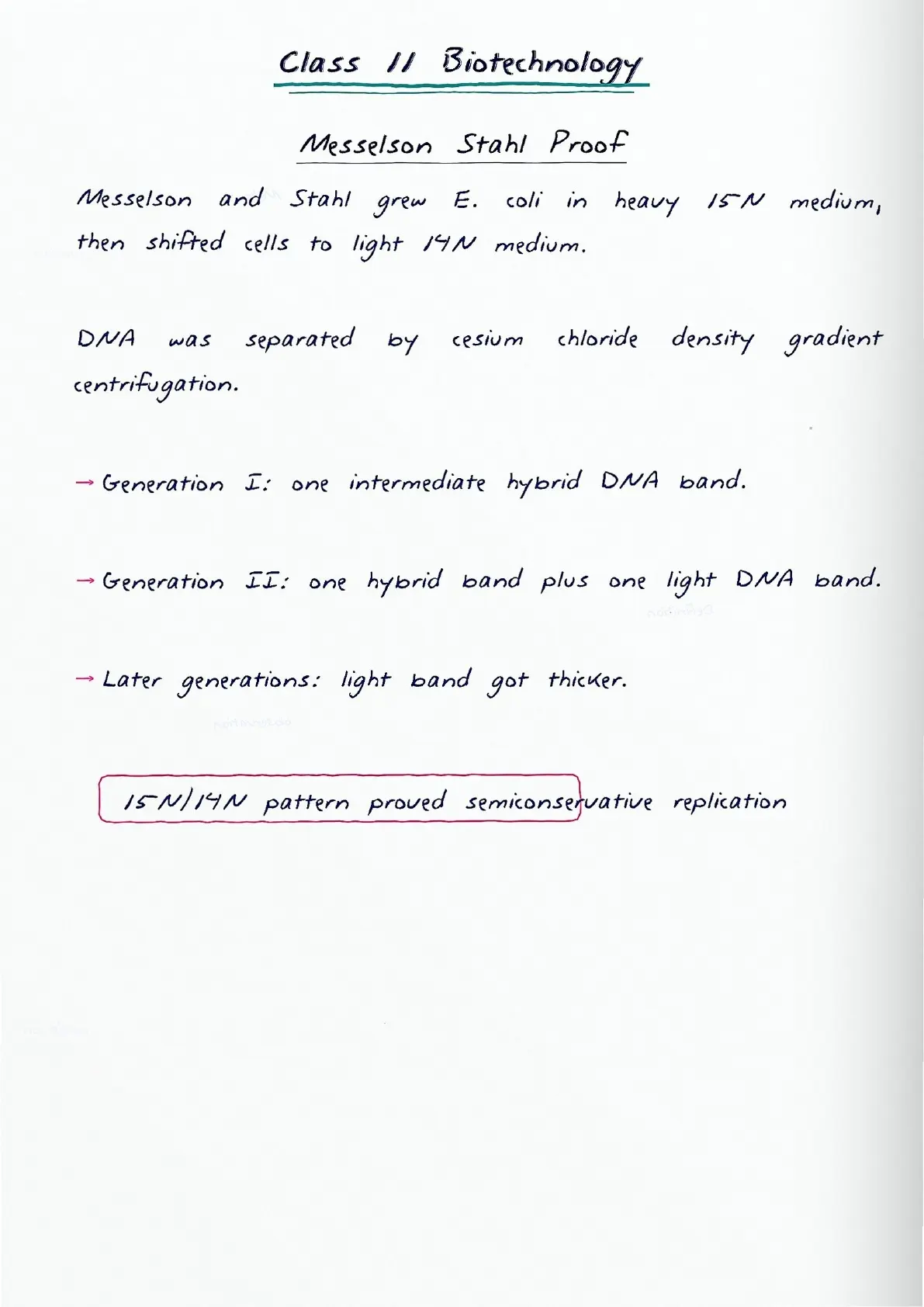
The replication pages show why DNA synthesis is semi-conservative. Each daughter molecule receives one parental strand and one newly synthesised strand. The PDF marks the template strand, new strand and direction of synthesis clearly.
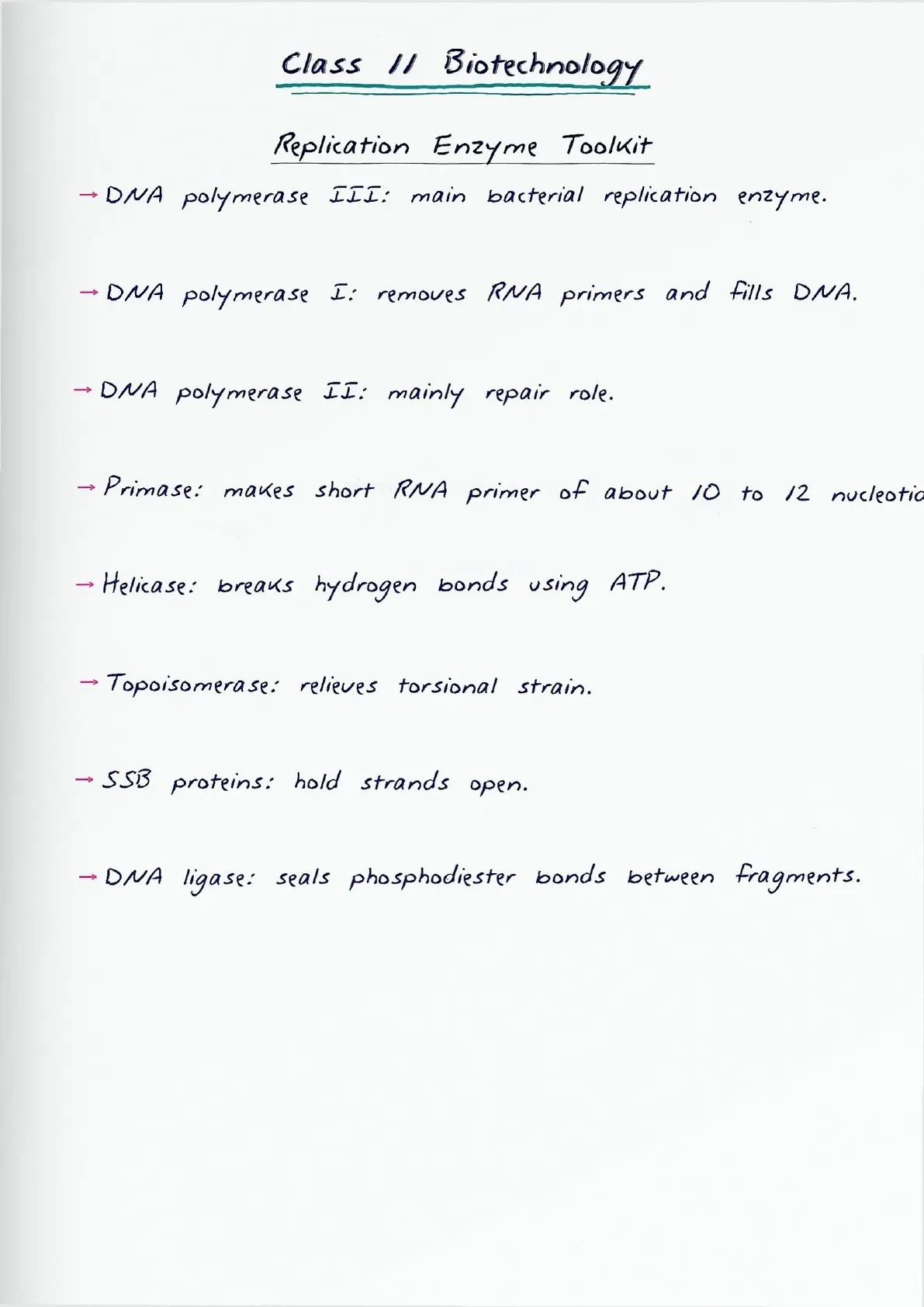
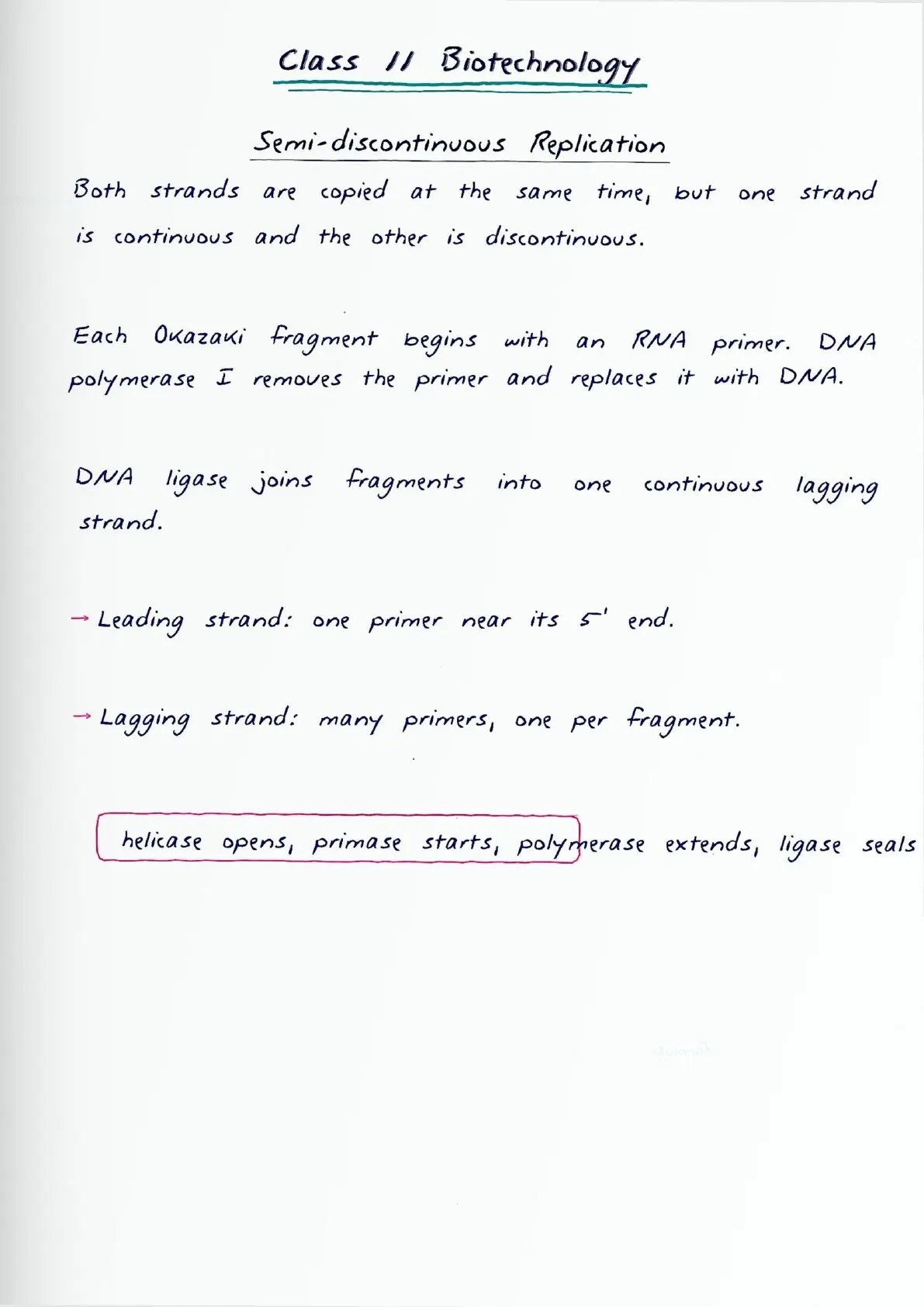
Helicase opens the helix, primase places RNA primers, DNA polymerase extends the new strand and DNA ligase seals gaps. The handwritten layout keeps these enzyme roles in a single recall table so students do not mix up their order.
Leading Strand and Lagging Strand Difference
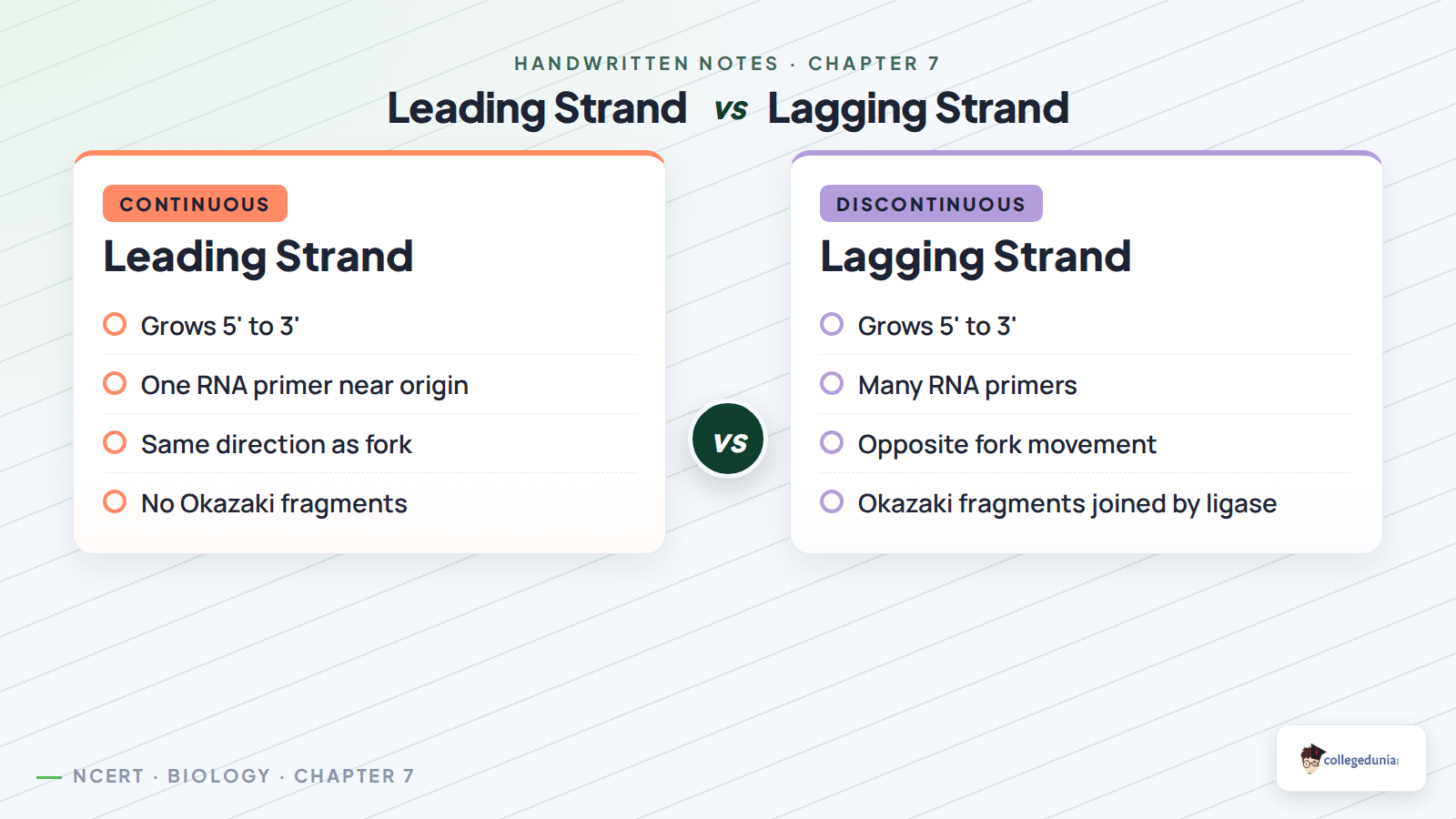
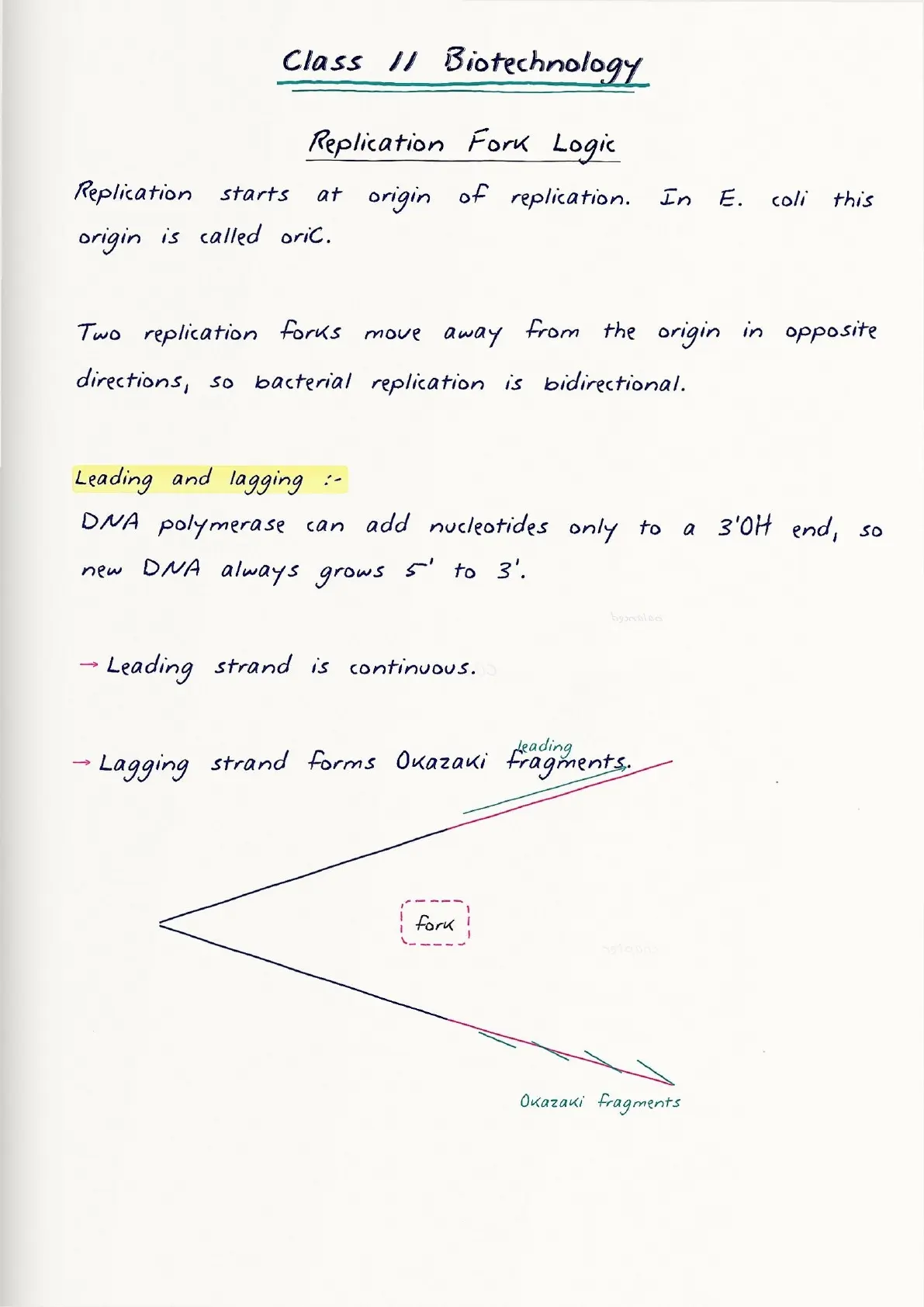
The leading strand is synthesised continuously in the same direction as fork movement. The lagging strand is synthesised discontinuously in short Okazaki fragments because DNA polymerase still adds nucleotides only in the 5' to 3' direction.
The most common revision error is writing that one strand grows 3' to 5'. Both new strands grow 5' to 3'; only their relation with fork movement is different.
Proofreading, Repair and Mutations
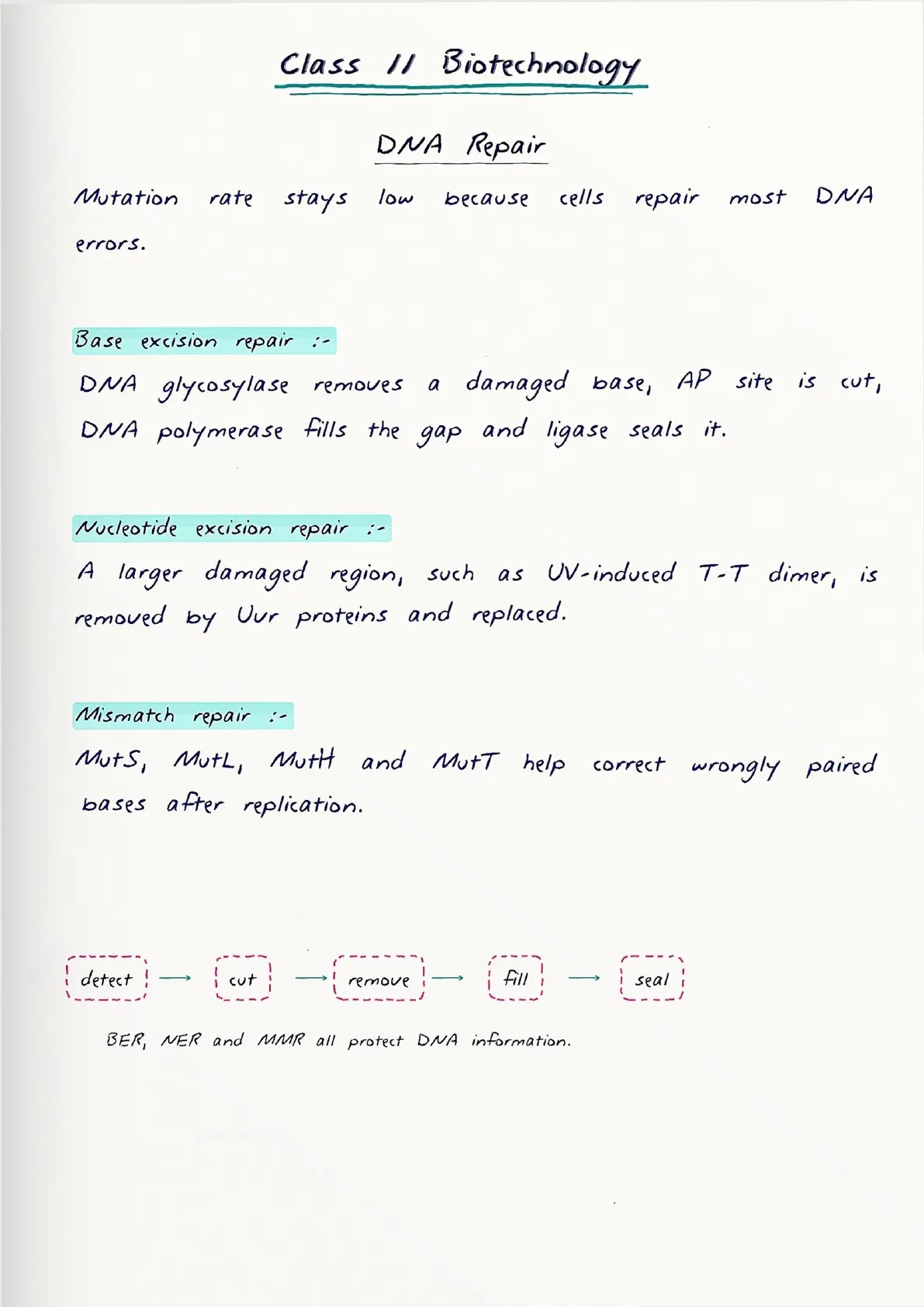
The DNA stability section covers why replication must be accurate. DNA polymerase has proofreading ability, and repair systems reduce the effect of mismatched bases or damaged bases after replication.
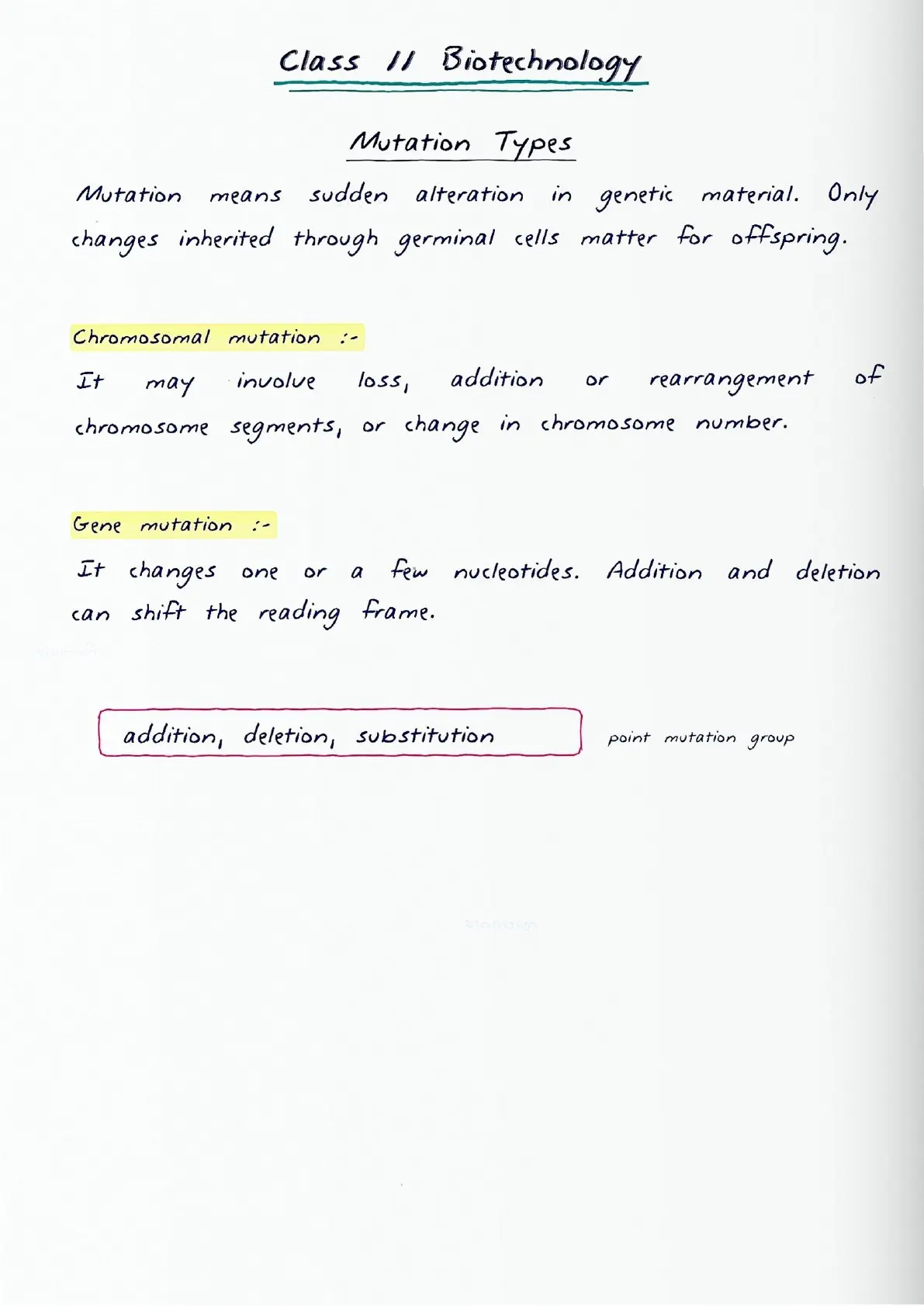
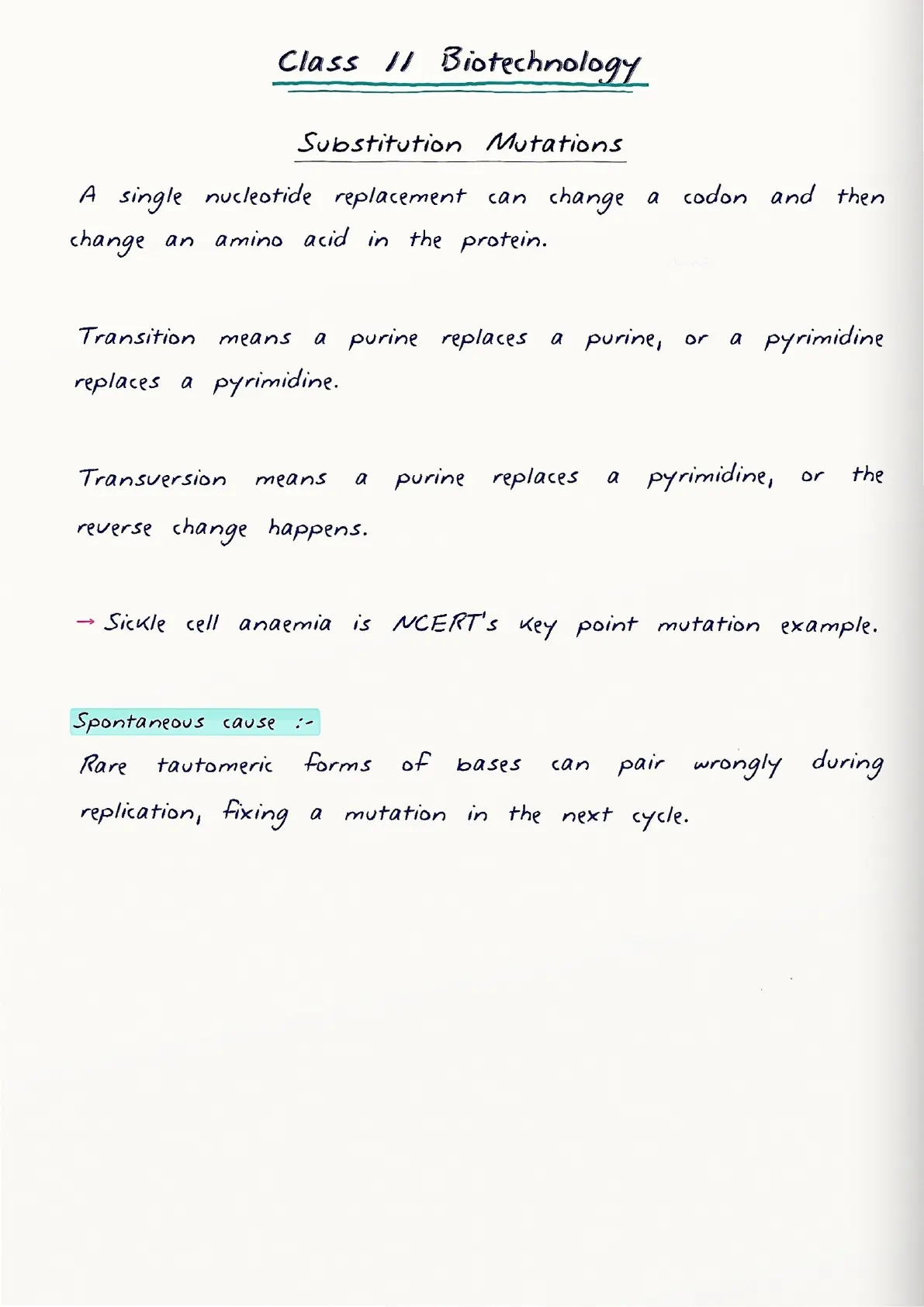
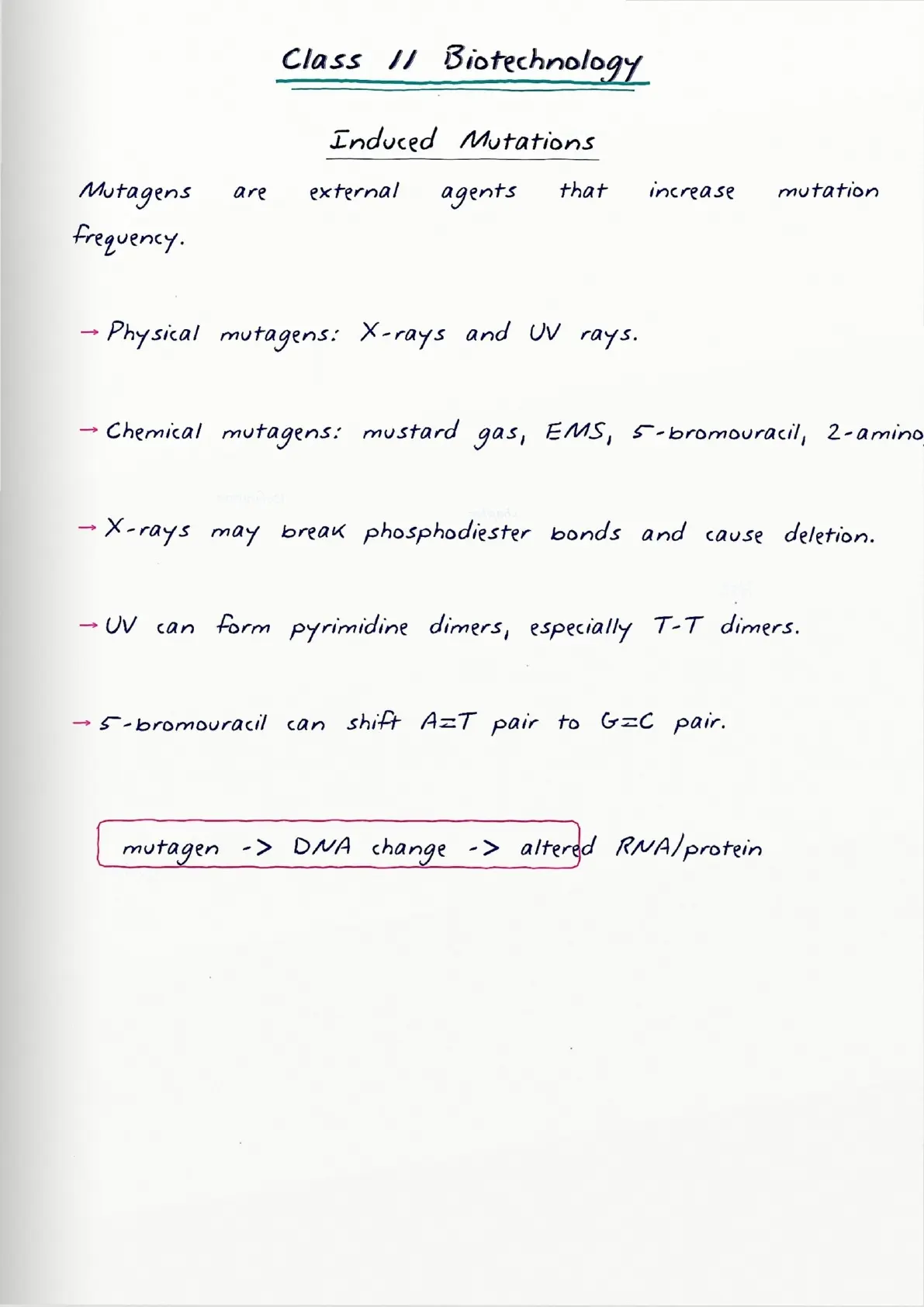
Mutations are introduced as changes in DNA sequence. The notes connect mutations with altered codons so students can see why even a small base change may affect a protein, depending on the position and codon change.
Transcription and RNA Processing Recall
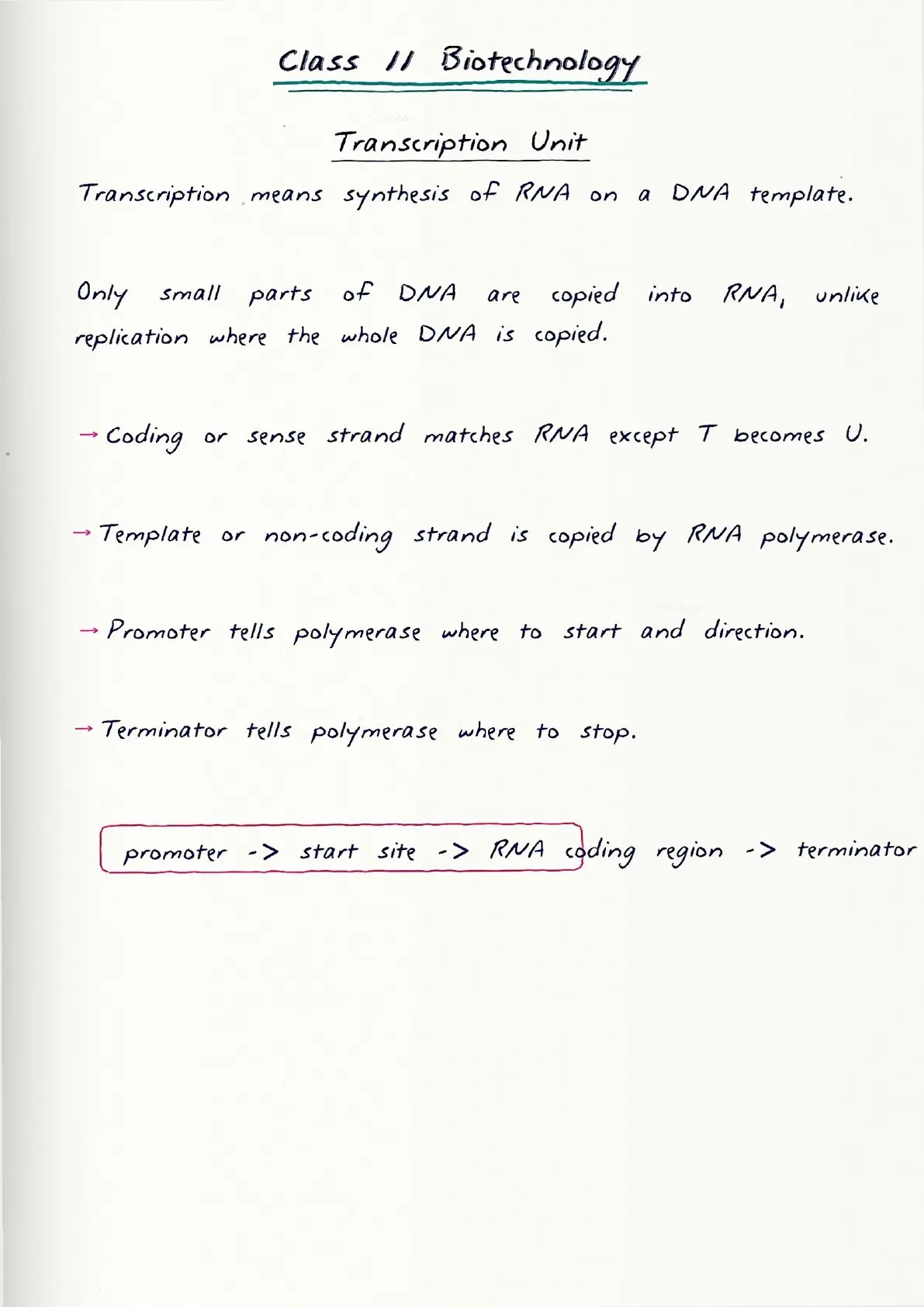
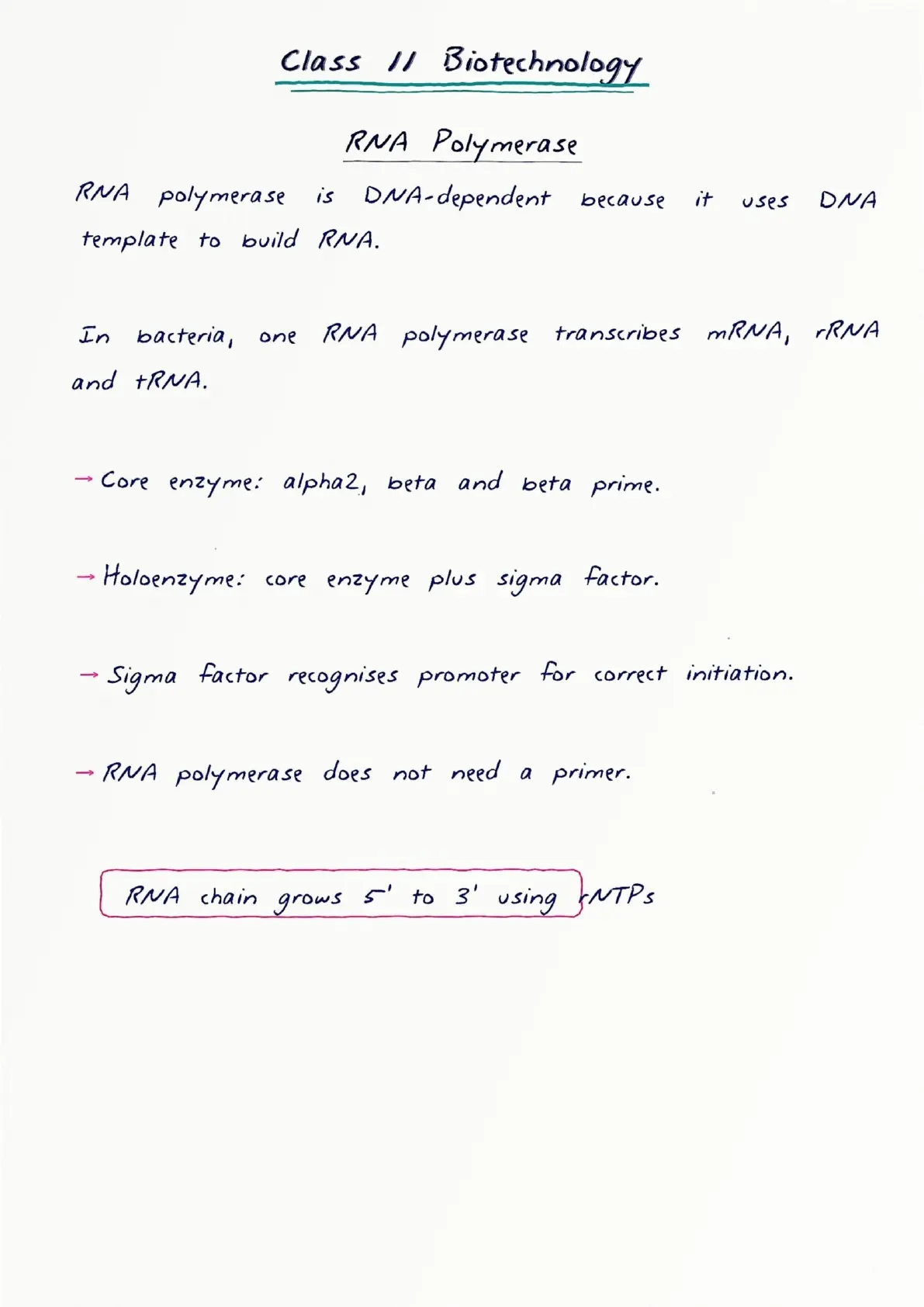
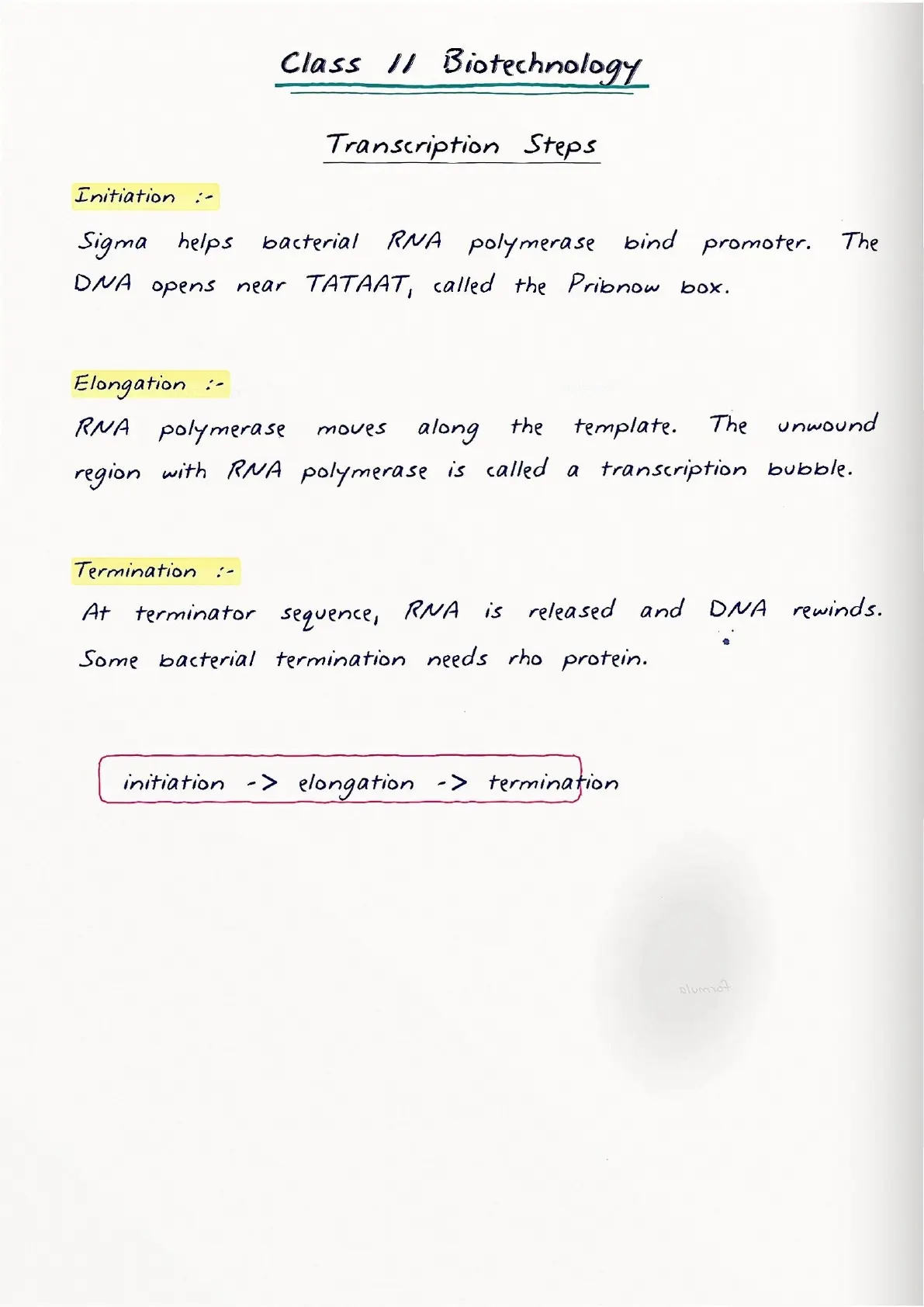
Transcription is revised as copying information from DNA into RNA. The PDF separates promoter, template strand, coding strand and RNA polymerase so students can identify what each term means in a short-answer question.
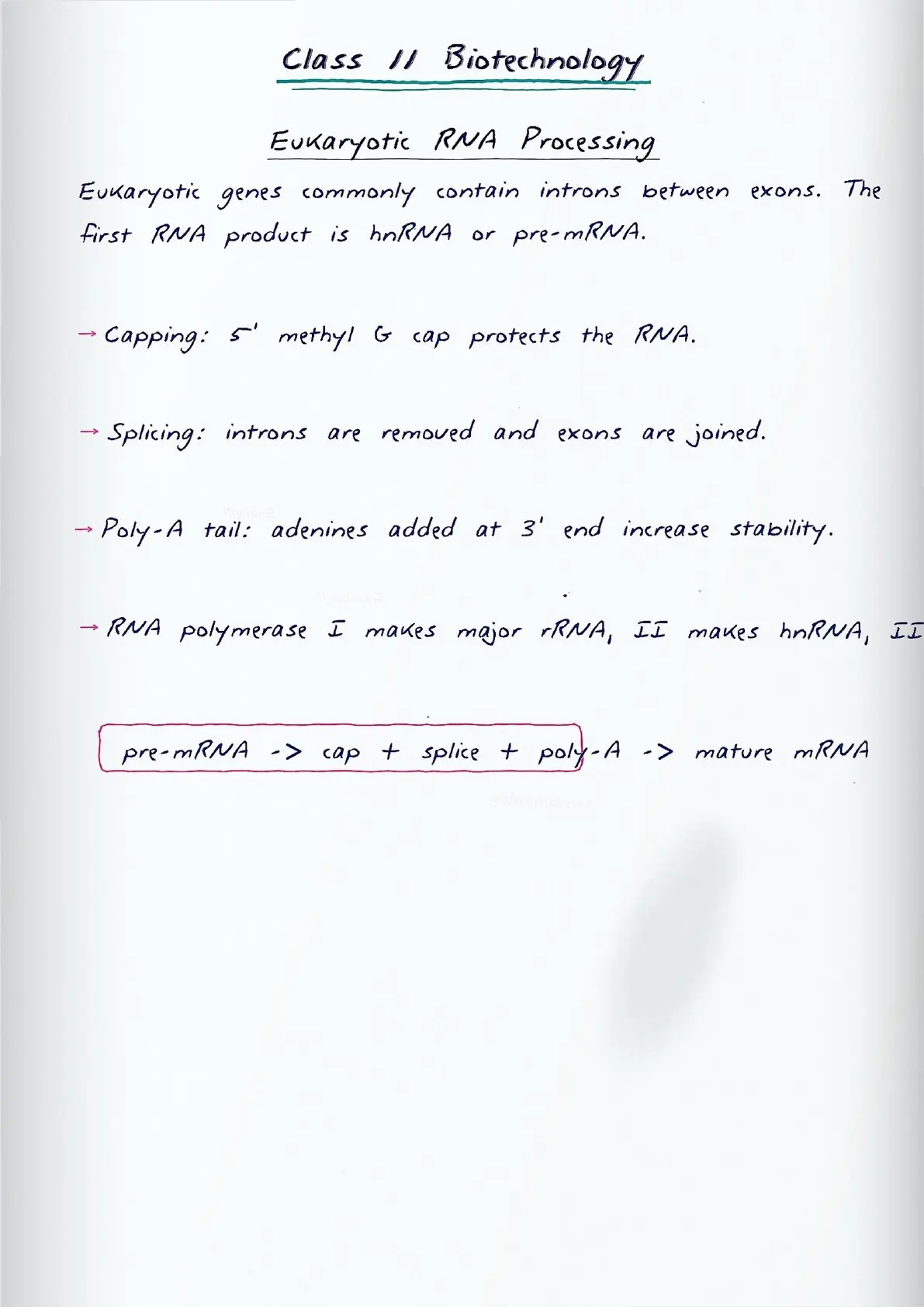
For eukaryotic gene expression, the notes mark the idea of primary transcript processing. Splicing, capping and tailing are named as processing steps, while the final mRNA is treated as the molecule ready for translation.
Genetic Code and Translation Revision
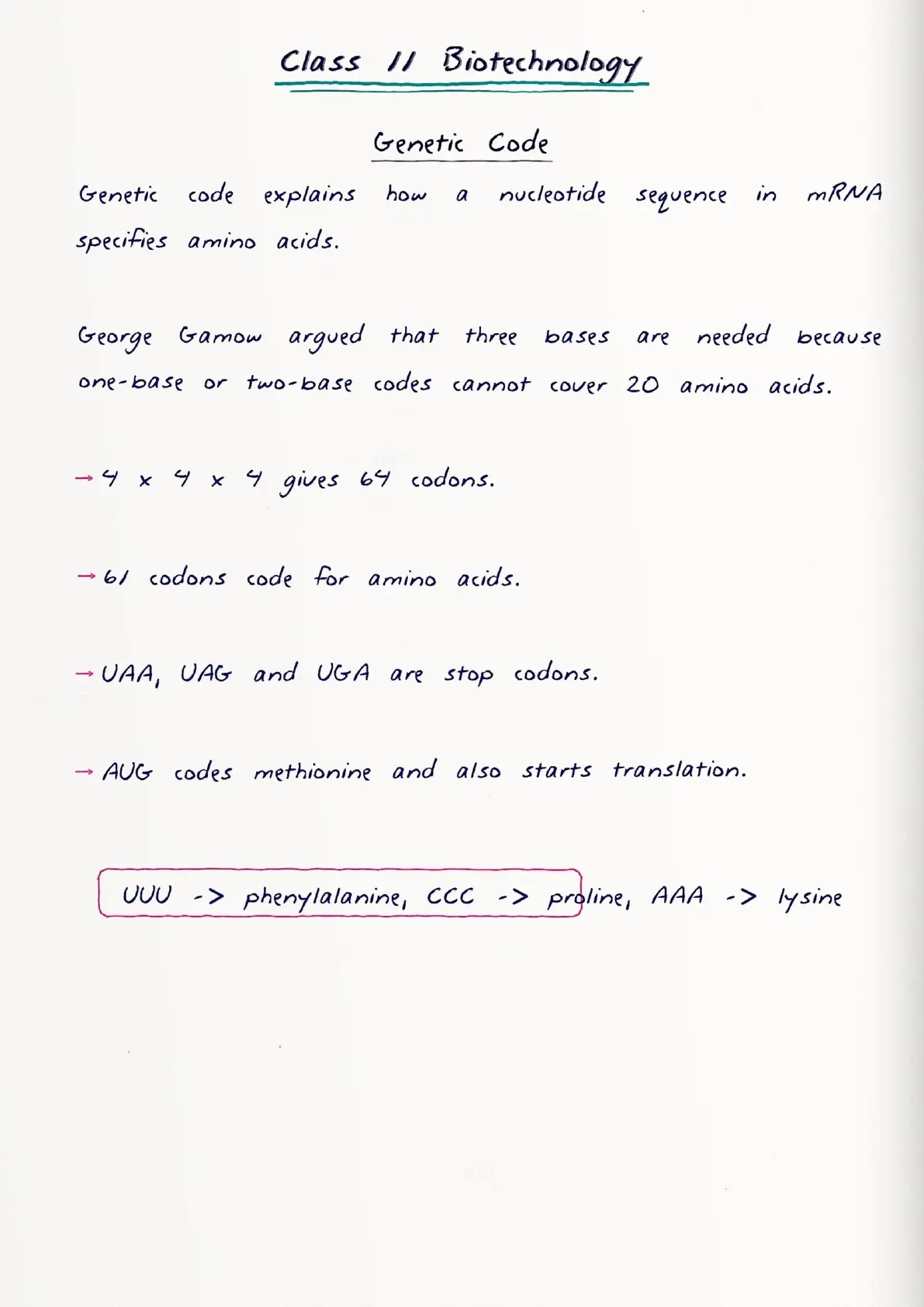
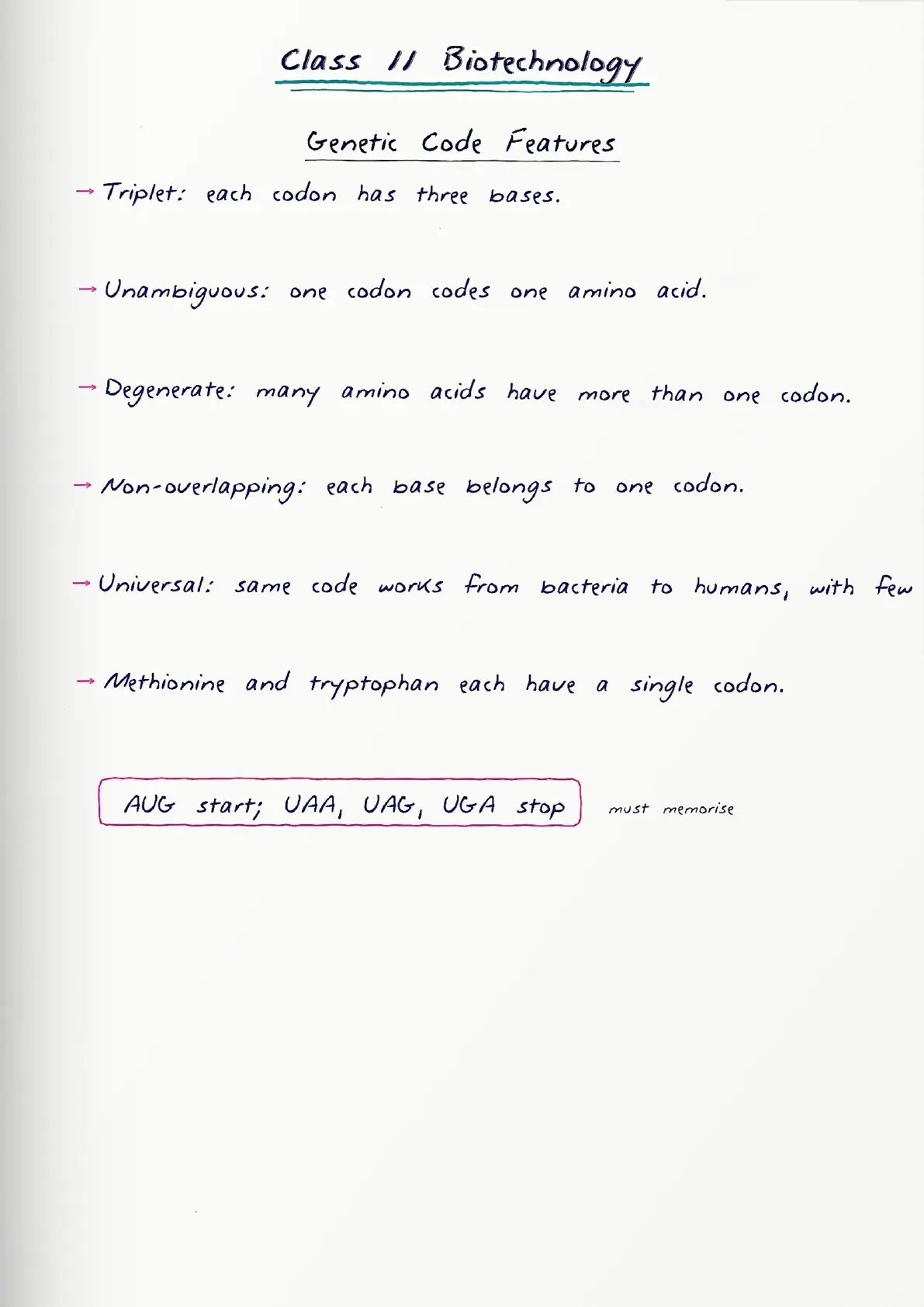
The genetic code section highlights triplet codons, start codon, stop codons, degeneracy and universality. The handwritten table keeps codon features beside their meaning so definitions can be revised quickly.
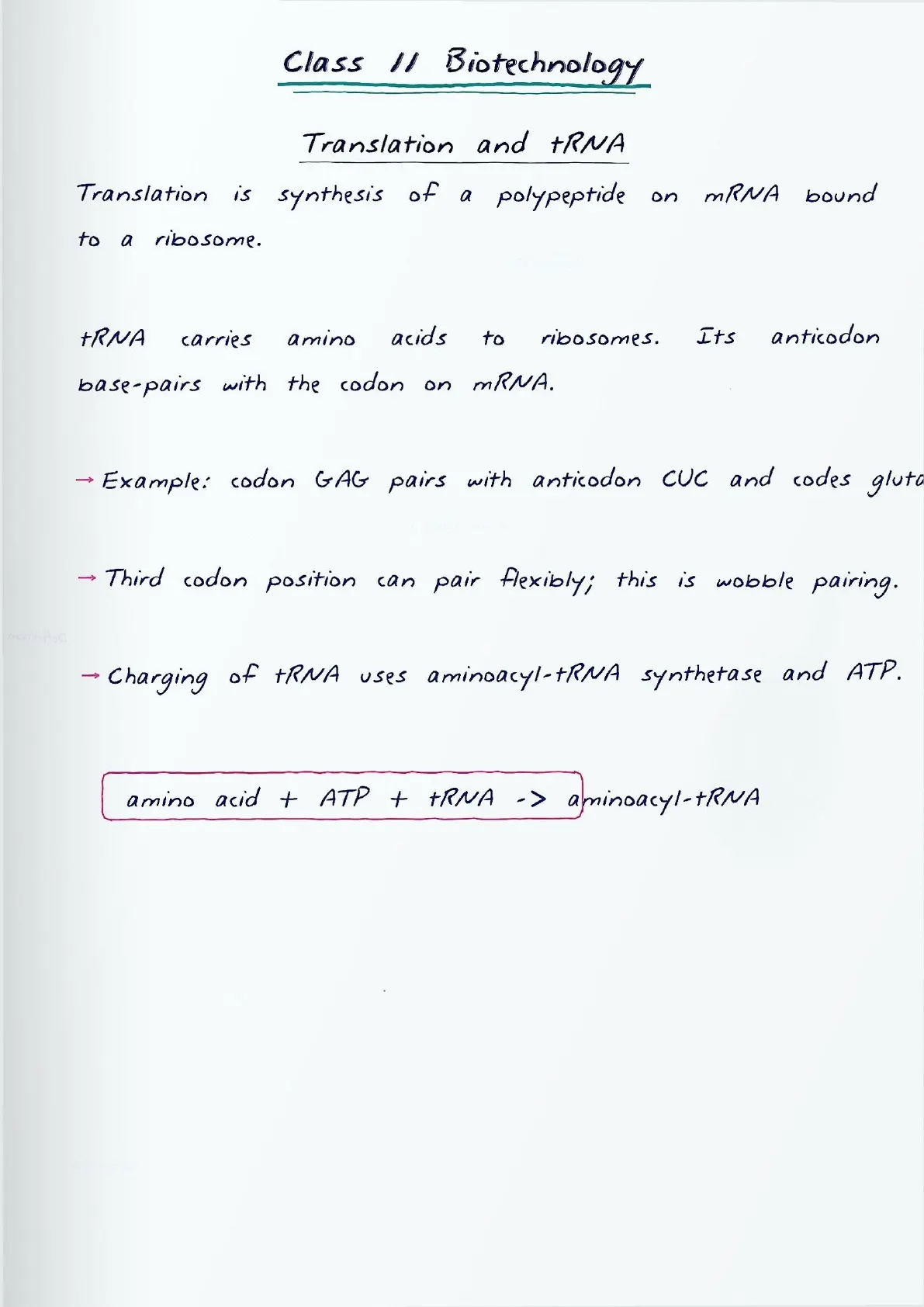
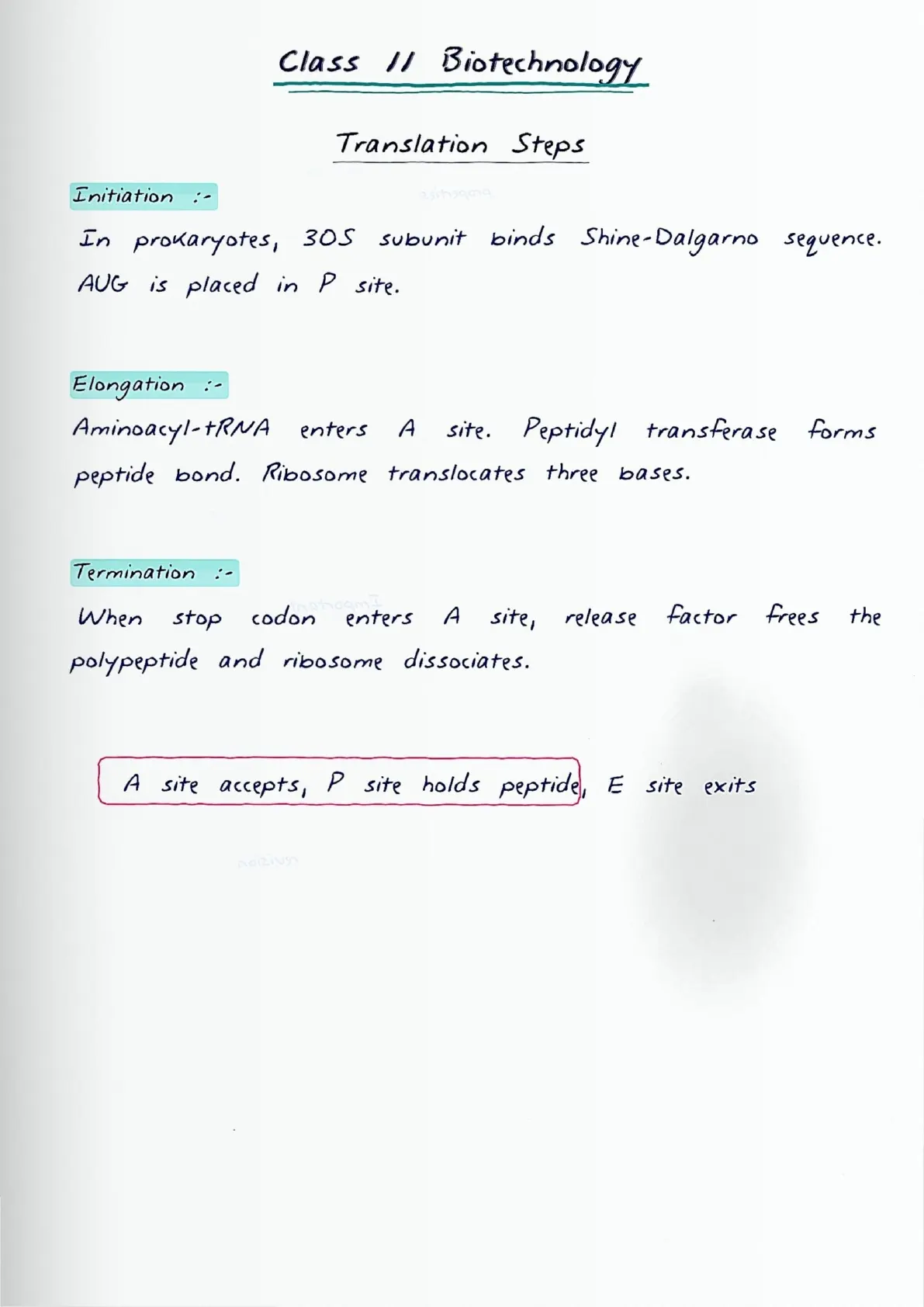
Translation is explained using mRNA, tRNA, ribosome, amino acid activation, initiation, elongation and termination. The PDF uses arrows to show how the ribosome reads codons and how peptide bonds build the polypeptide chain.
How to Use These Handwritten Notes
- Revise the enzyme table before attempting replication questions.
- Draw one replication fork from memory and label both strands.
- Keep codon, anticodon and amino acid roles separate while revising translation.
- Use the NCERT textbook for original figure labels and full exercise wording.
Related Class 11 Biotechnology Chapter 7 Resources
| Resource | Link |
|---|---|
| NCERT Notes | Class 11 Biotechnology Chapter 7 Notes |
| NCERT Book PDF | Class 11 Biotechnology Chapter 7 Book PDF |
| NCERT Solutions | Class 11 Biotechnology Chapter 7 Solutions |
Class 11 Biotechnology Handwritten Notes for Other Chapters
| Chapter | Handwritten Notes |
|---|---|
| Chapter 1 | An Introduction to Biotechnology |
| Chapter 2 | Cellular Organelles |
| Chapter 3 | Biomolecules |
| Chapter 4 | Enzymes and Bioenergetics |
| Chapter 6 | Basic Principles of Inheritance |
Basic Processes of DNA Biotechnology Handwritten Notes FAQs
Ques. What is covered in Class 11 Biotechnology Chapter 7 Basic Processes of DNA handwritten notes?
Ans. The notes cover DNA replication, enzyme roles, proofreading, repair, transcription, genetic code and translation.
Ques. Are these handwritten notes based on the 2026-27 NCERT textbook?
Ans. Yes. The topic order and revision anchors follow the 2026-27 NCERT Class 11 Biotechnology Chapter 7 source.
Ques. Which DNA replication concept should students revise first from this PDF?
Ans. Start with semi-conservative replication, replication fork direction and the difference between leading and lagging strands.



Comments