



The handwritten notes on Class 11 English Hornbill Chapter 10, Childhood, have been carefully prepared for quick one-shot revision, according to the latest 2026-27 CBSE syllabus. They cover Markus Natten's poem line by line, so students can revise the full chapter in one sitting before an exam or a class test.
- Board Weightage: poetry extracts from this chapter carry 4-6 marks through reference-to-context and short-answer questions.
- Question Types: extract-based questions, one-line meaning questions, and short answers on poetic devices.
- 2026-27 NCERT: Childhood stays unchanged in the rationalised Hornbill syllabus.

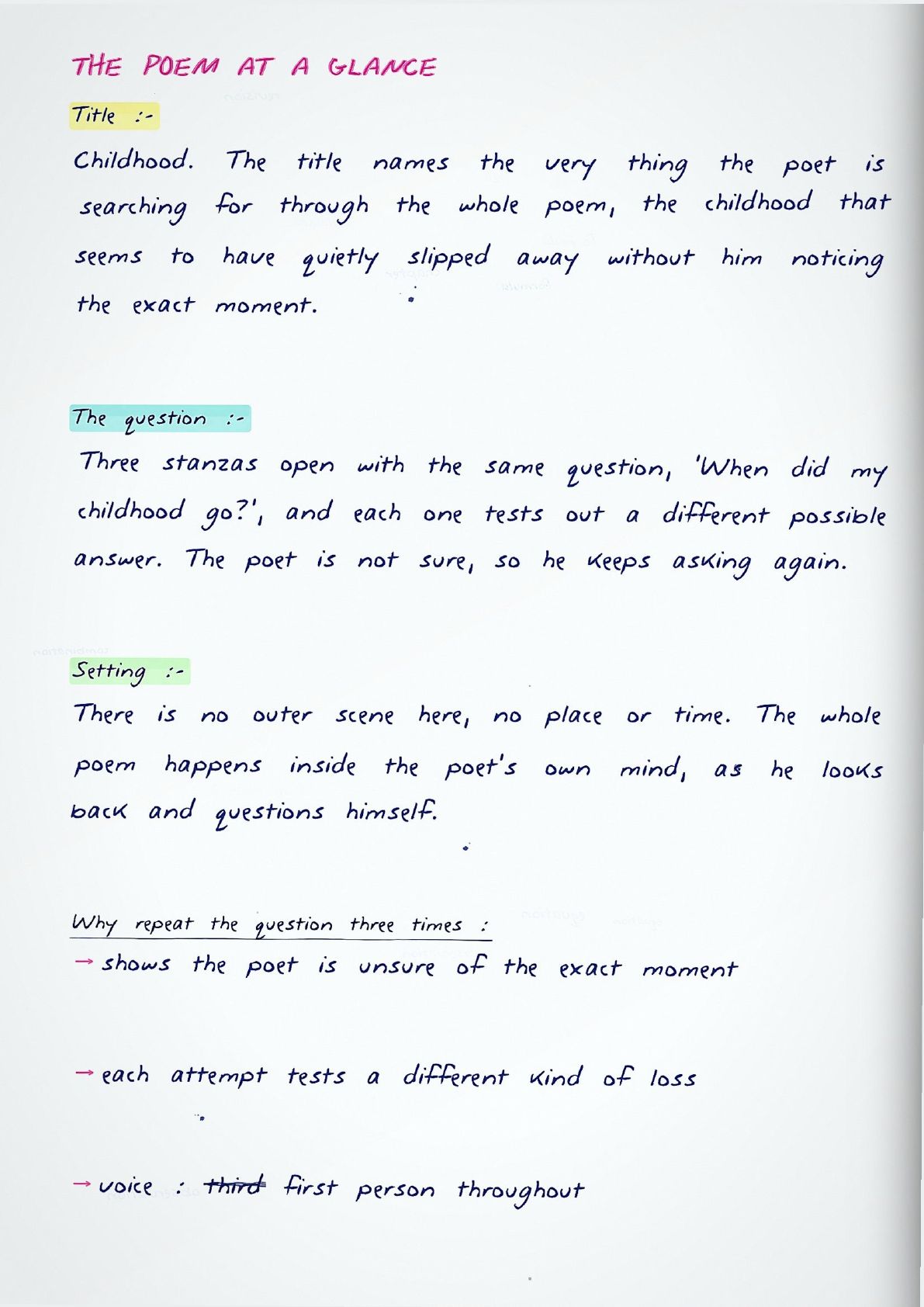
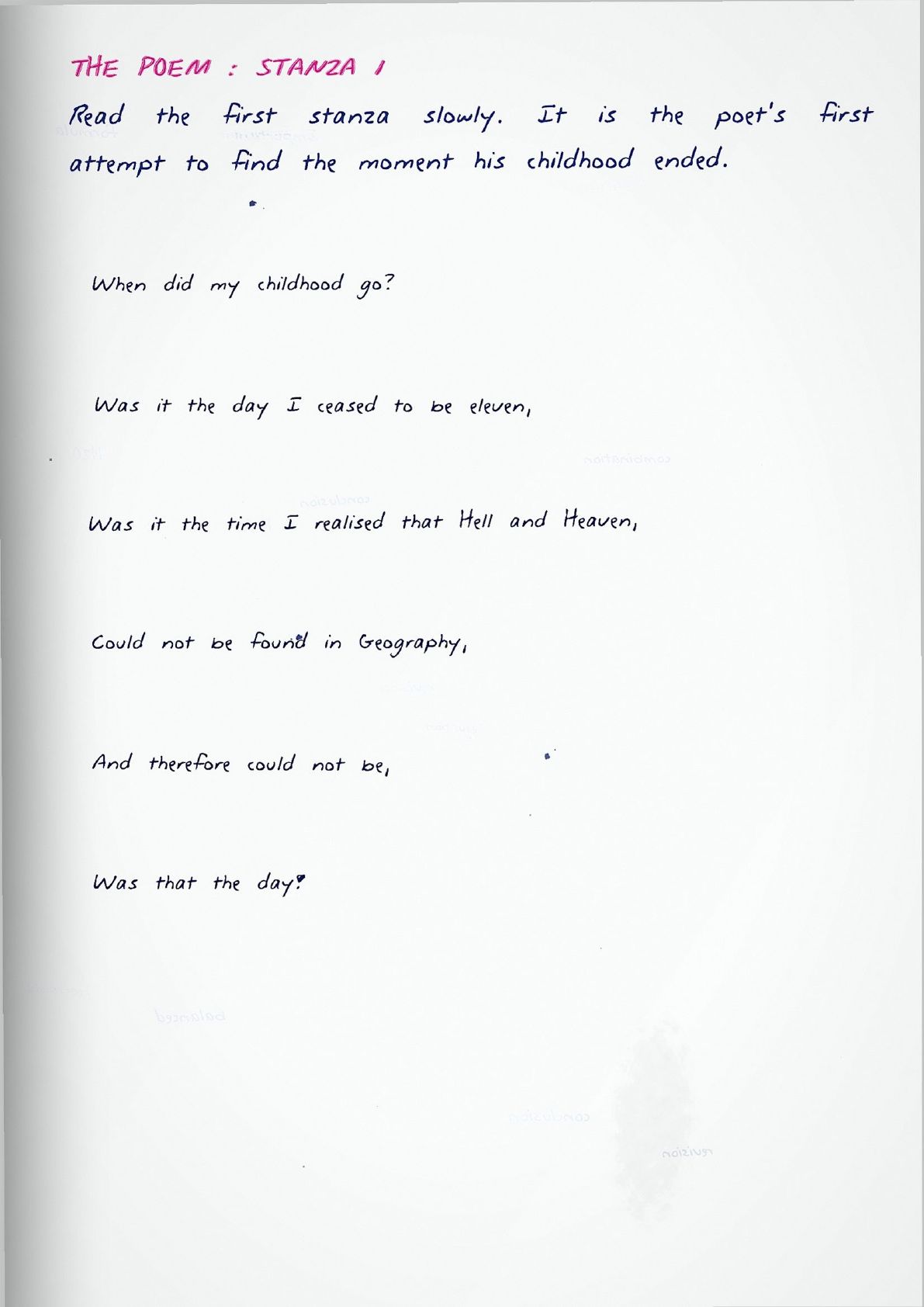
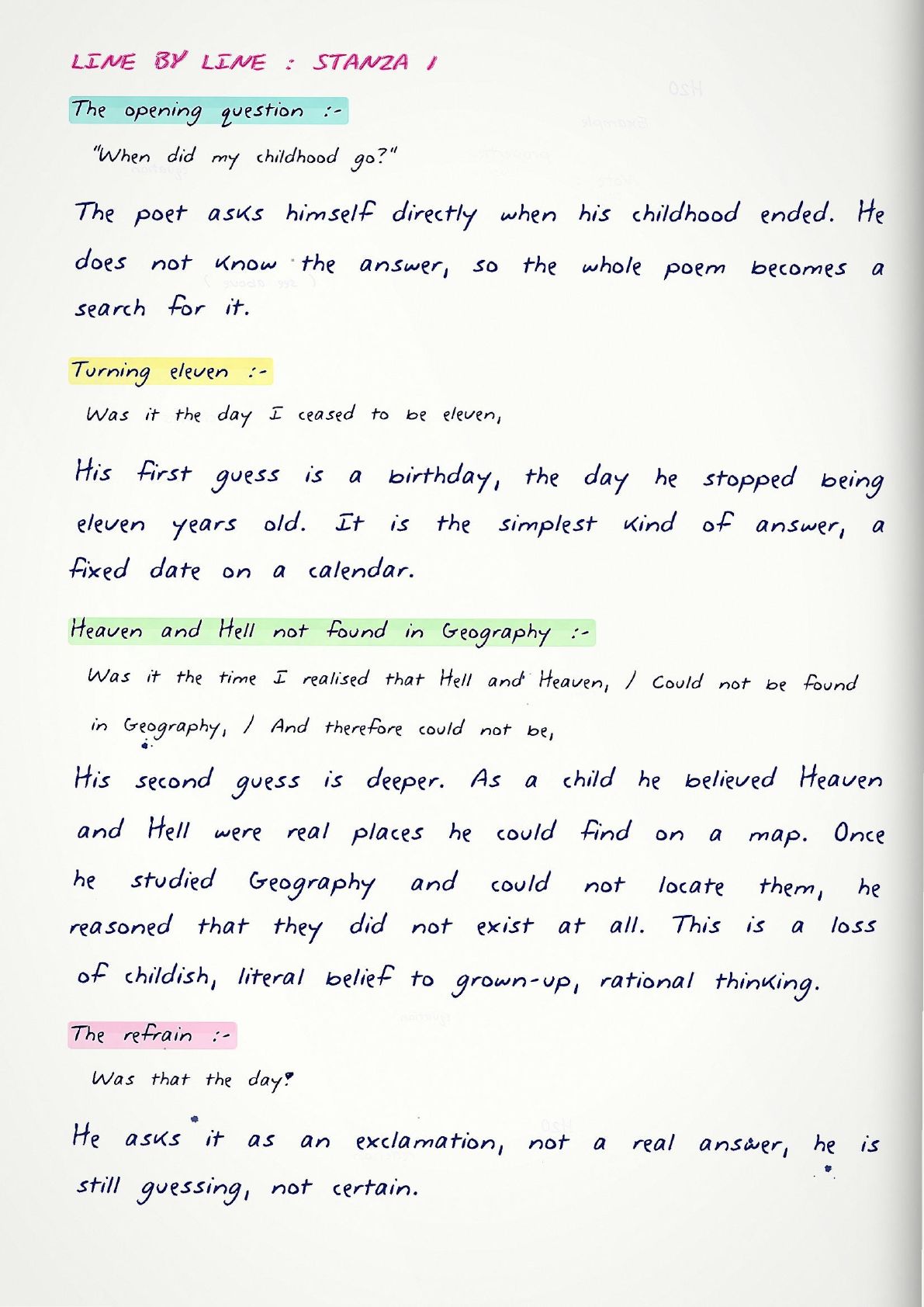
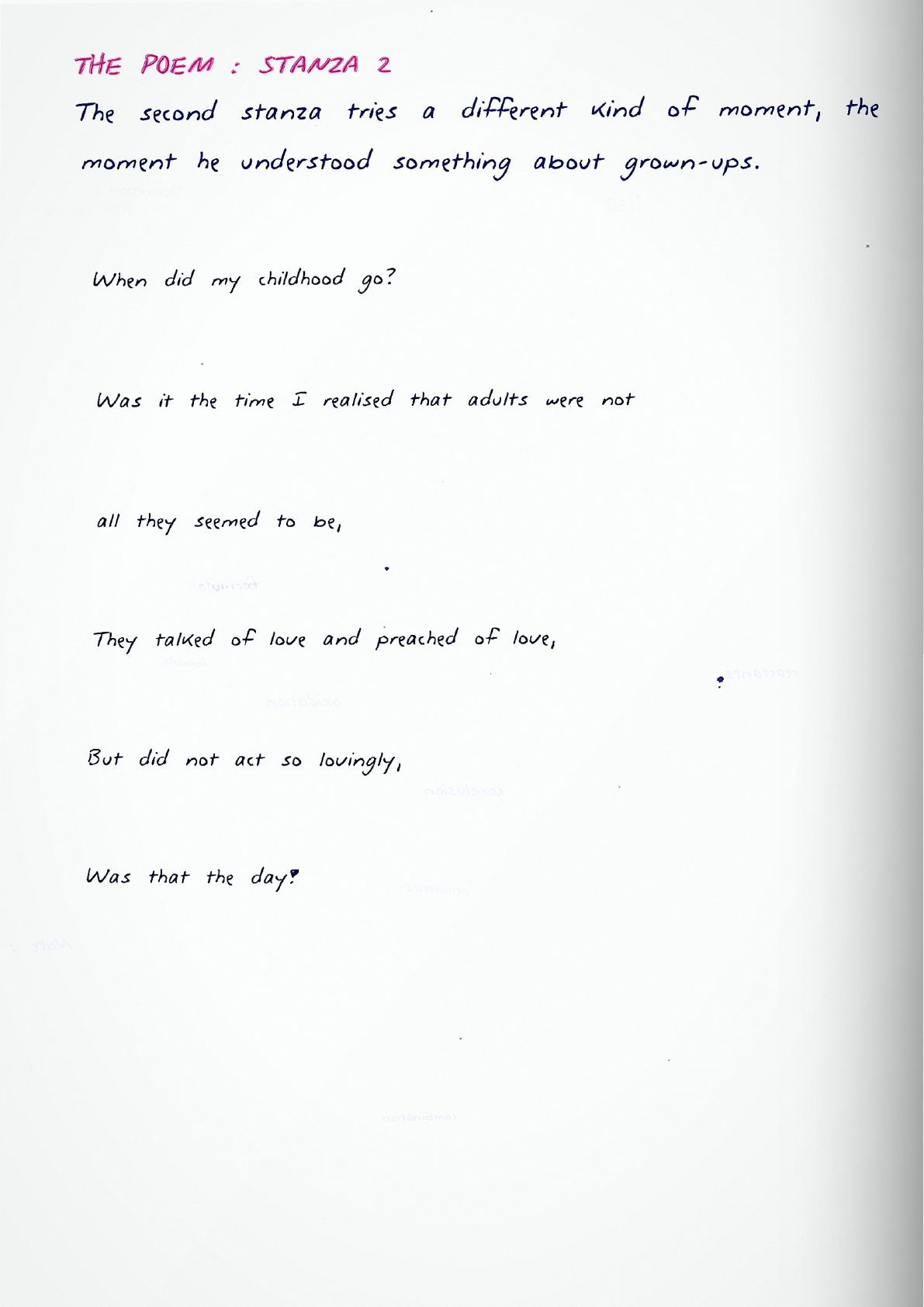





Every page in these Childhood notes is written by hand, checked against the 2026-27 Class 11 Hornbill print, and matched to the way CBSE board papers ask about Markus Natten's poem.
You will find the full poem text, a line-by-line paraphrase, every poetic device Natten uses, and NCERT's own exercise answers inside this 24-page set, all according to the latest 2026-27 CBSE syllabus.
|
Table of Contents |
About the Poem Childhood and Poet Markus Natten
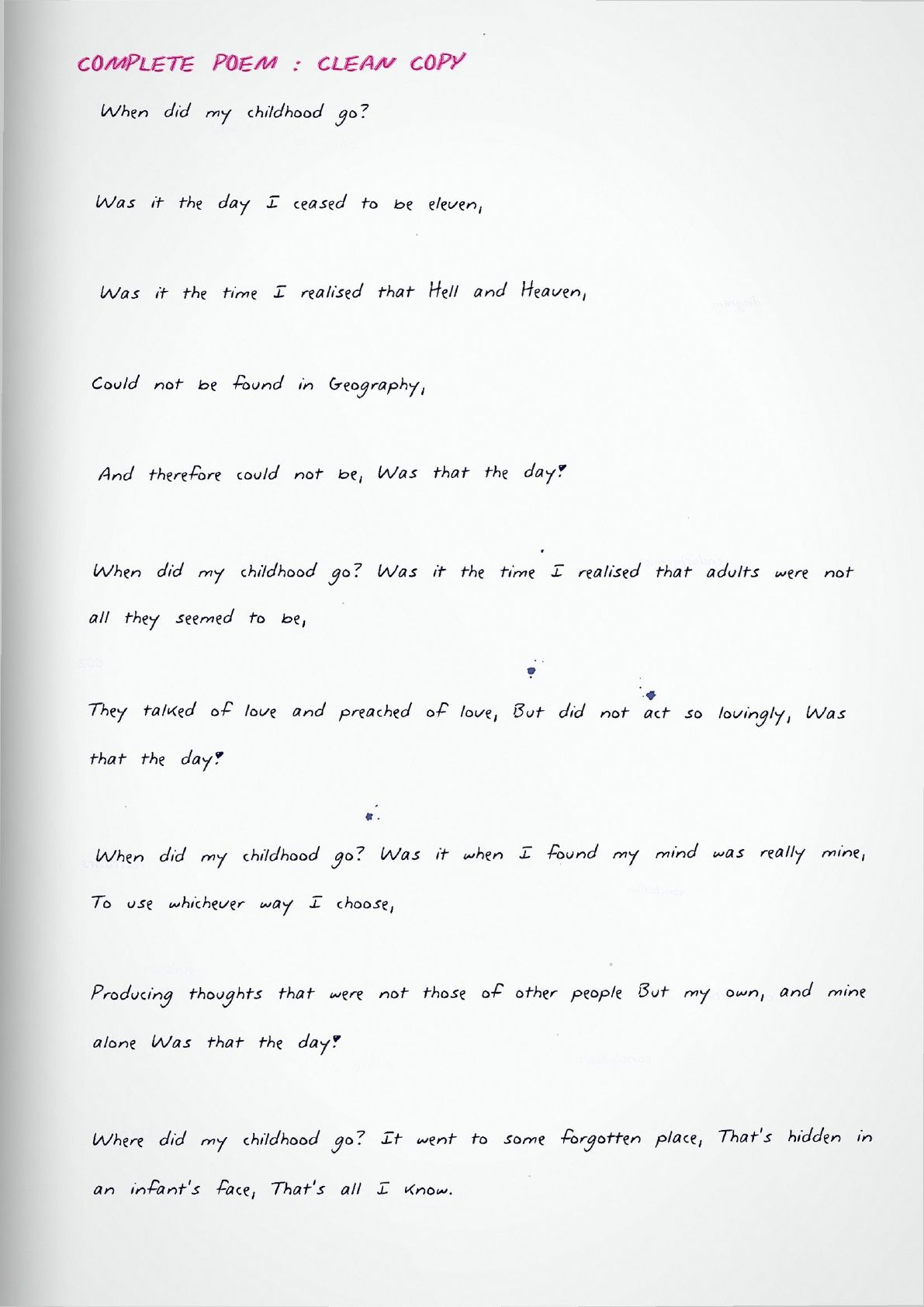
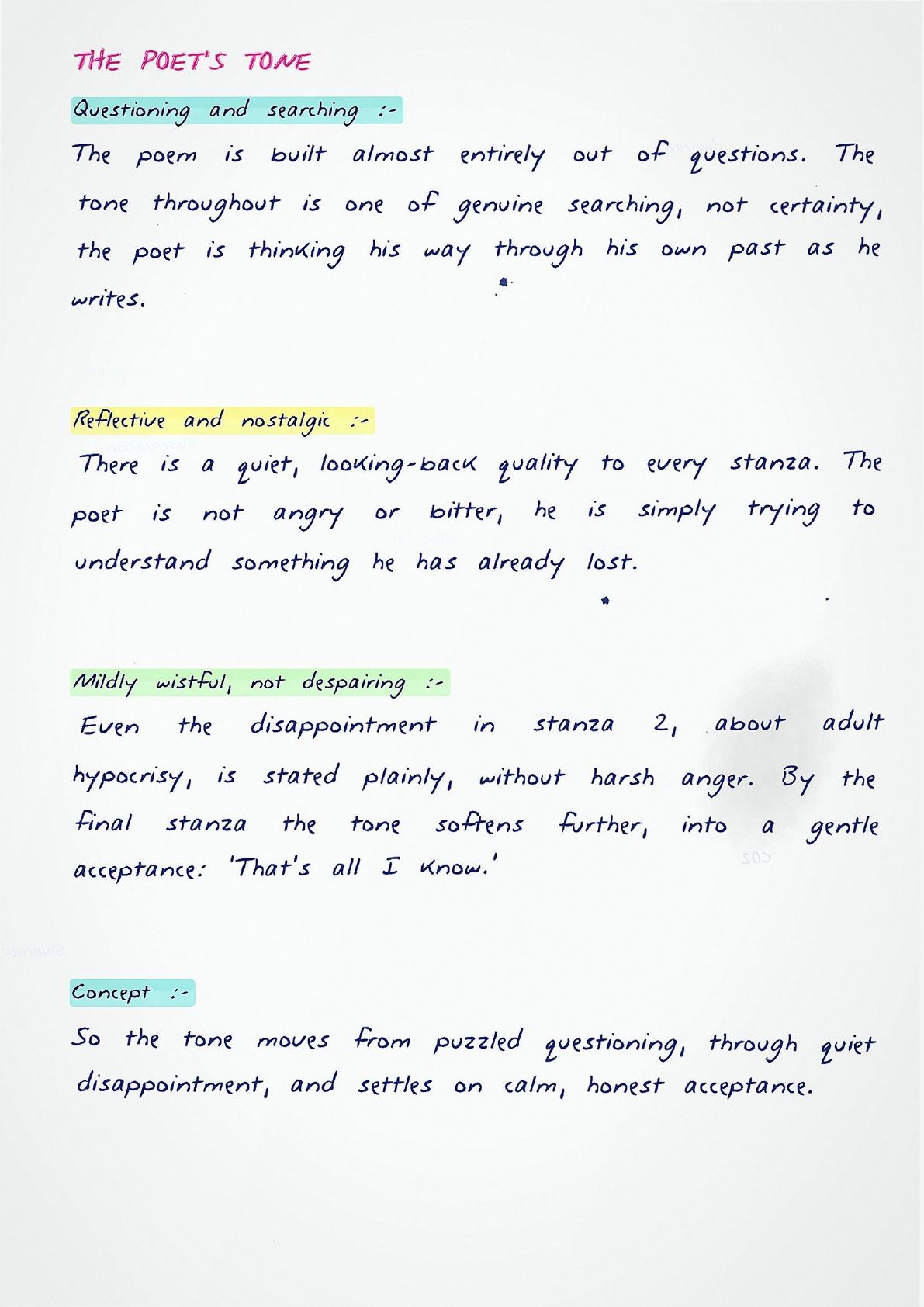
Childhood is written by Markus Natten, whose poem looks back at growing up as a series of small realisations rather than one single event. The poem is built almost entirely around one repeated question, "When did my childhood go?", asked at the start of each stanza.
- The poem is written in free verse, with no fixed rhyme scheme, which suits its reflective, questioning tone.
- Each stanza offers the poet's own answer to the opening question, moving from doubt about religion to doubt about adults to a discovery about his own mind.
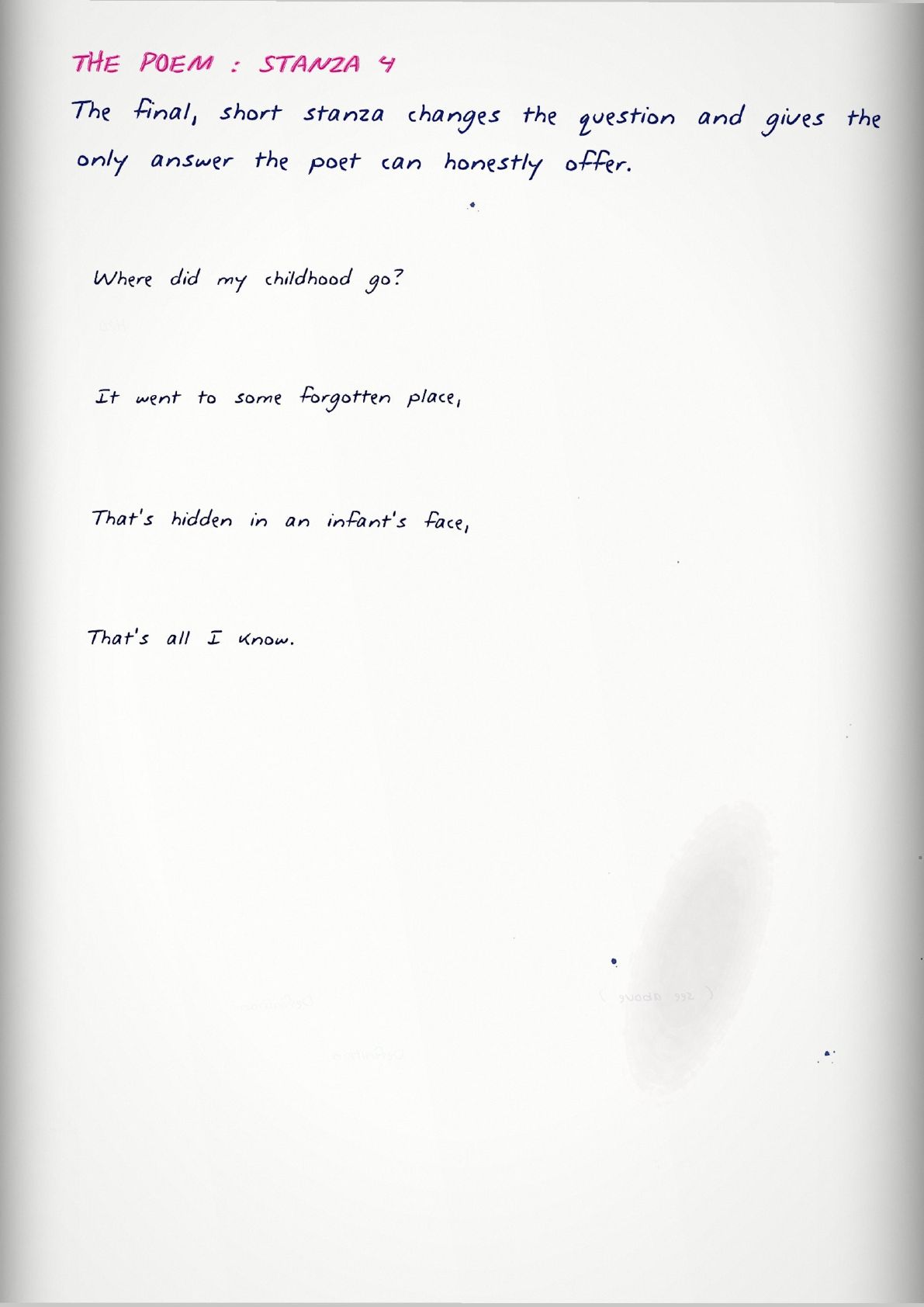
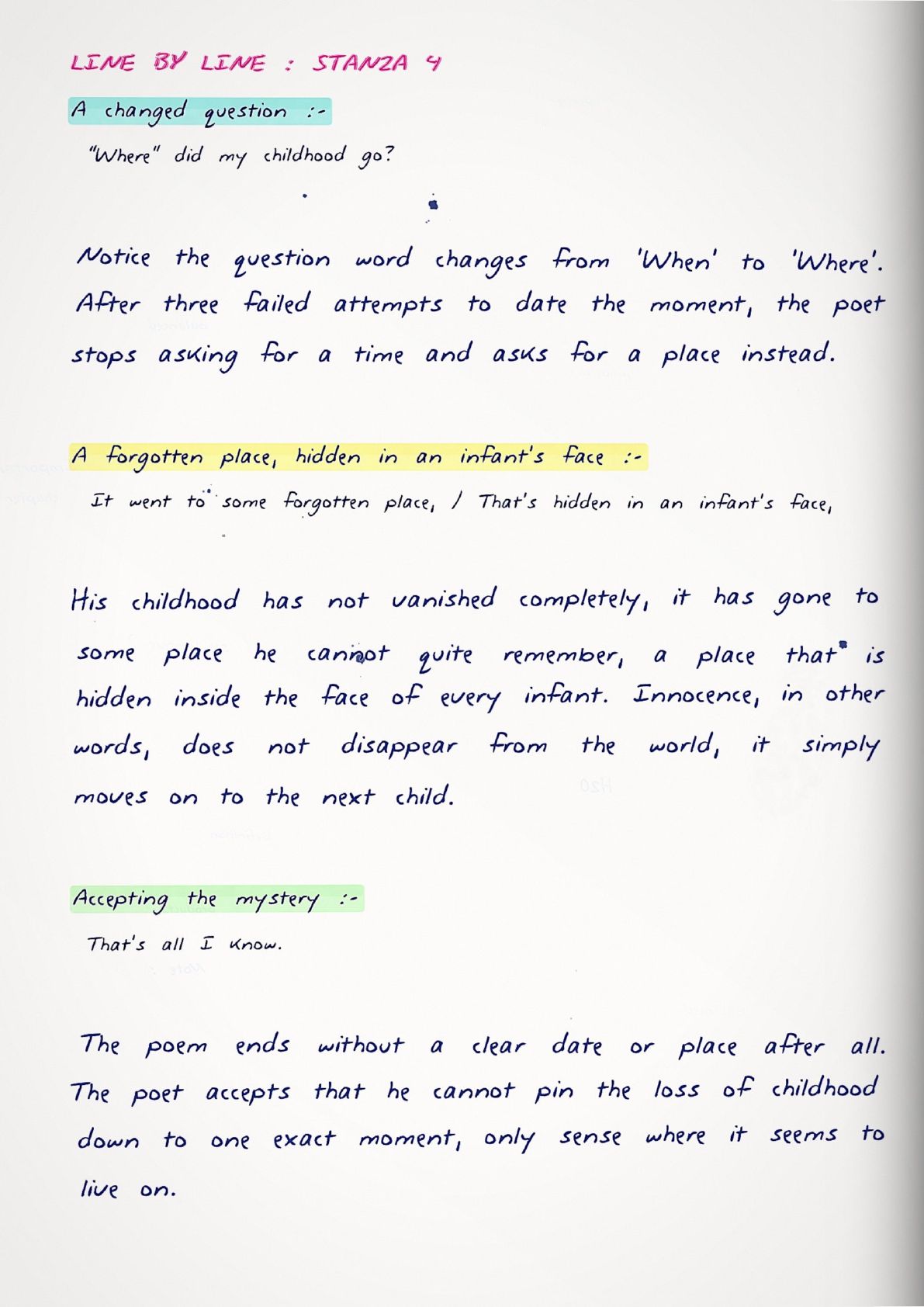
- The final stanza changes the question itself, from "When" to "Where", and admits the poet still does not have a clear answer.
Childhood Video Explanation
Source: English Tutorials by Poonam on YouTube
Childhood Summary in Simple Words
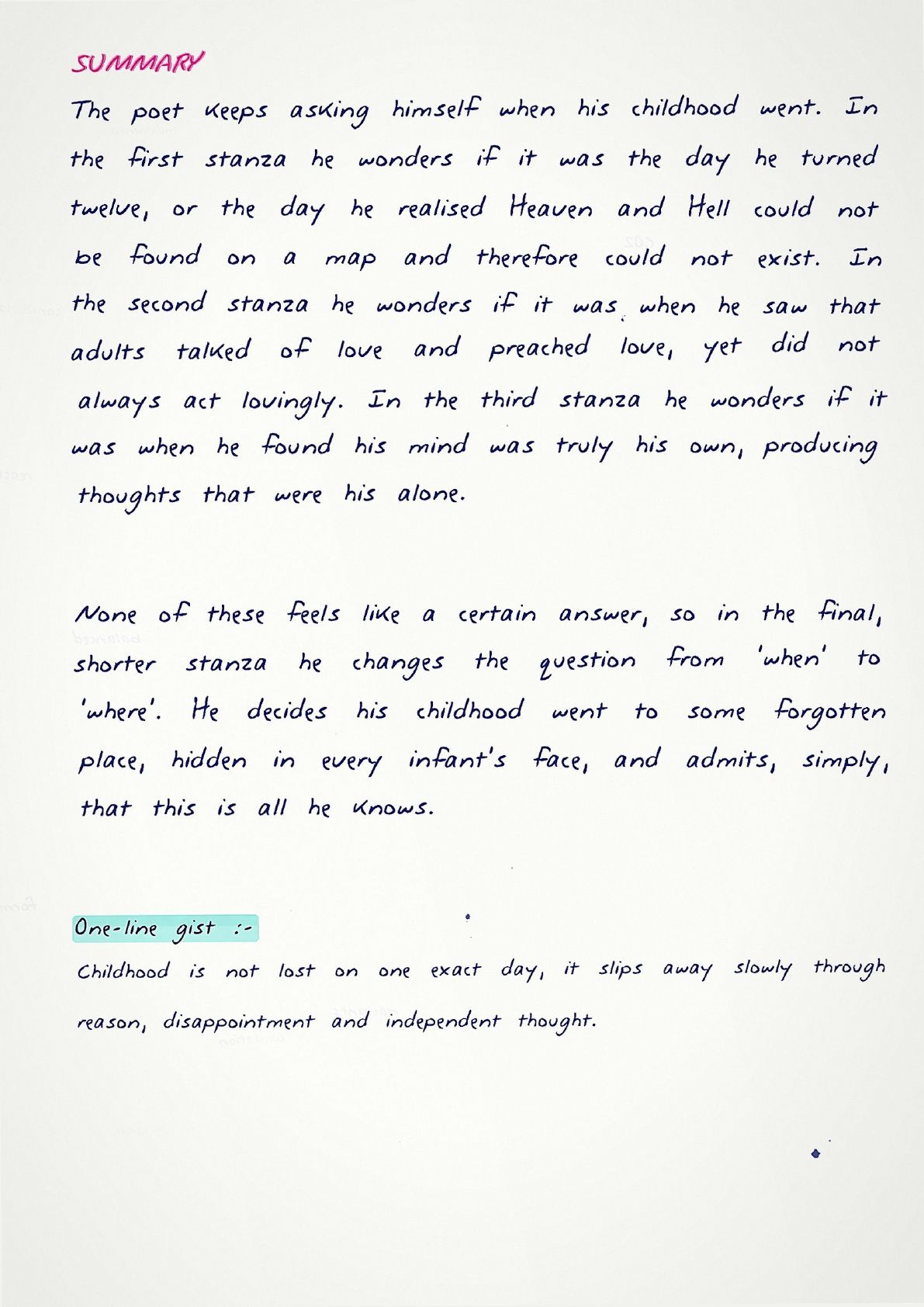
The poet asks himself when exactly his childhood ended. His first guess is the day he stopped believing that Heaven and Hell were real places he could find on a map. Once reasoning told him that Geography had no room for them, blind childhood faith gave way to logical thought.
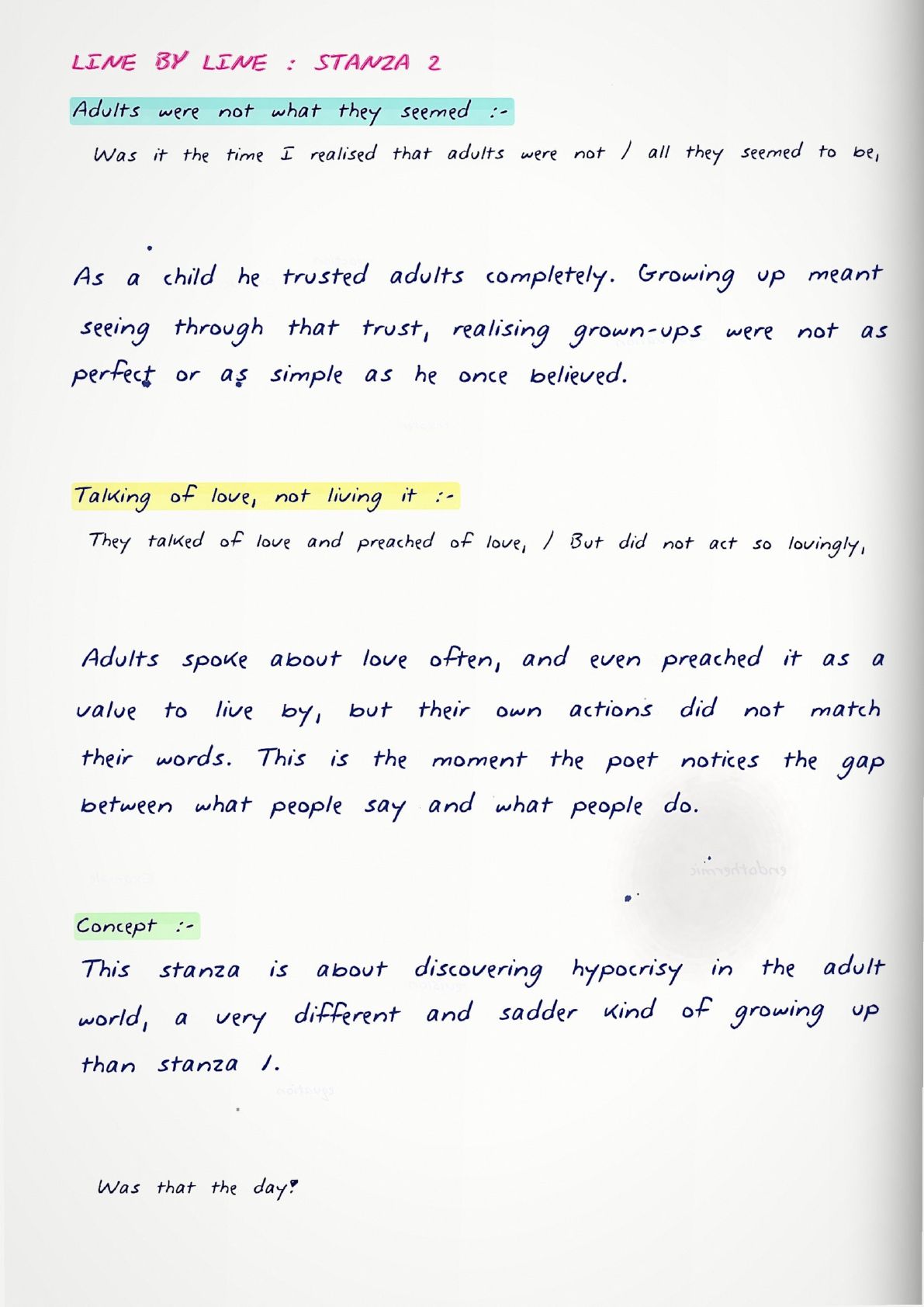
His second guess is the day he noticed that adults did not practise what they preached. Grown-ups spoke of love, peace, and God, yet still went to war. That gap between adult words and adult actions felt like another piece of childhood breaking away.
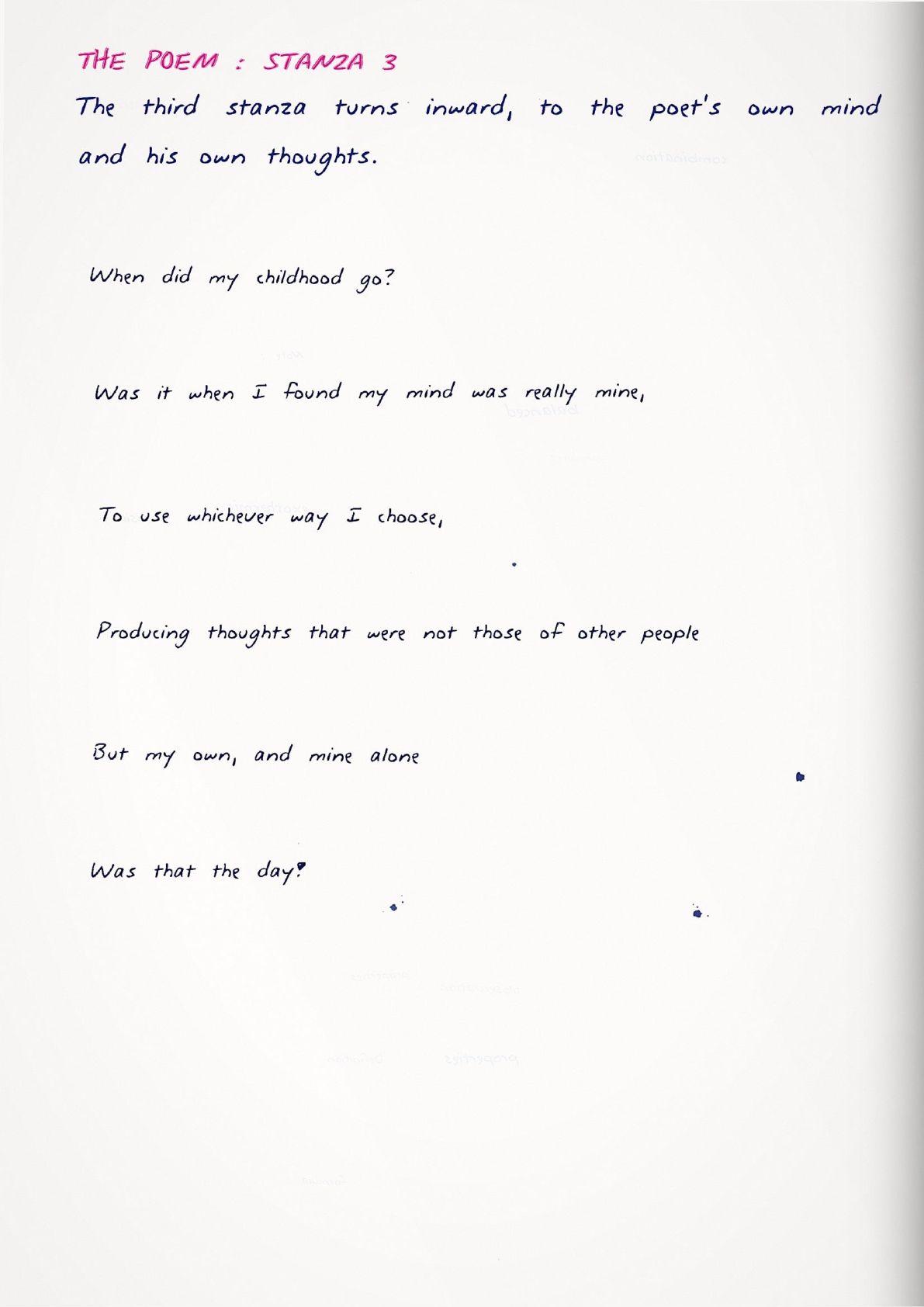
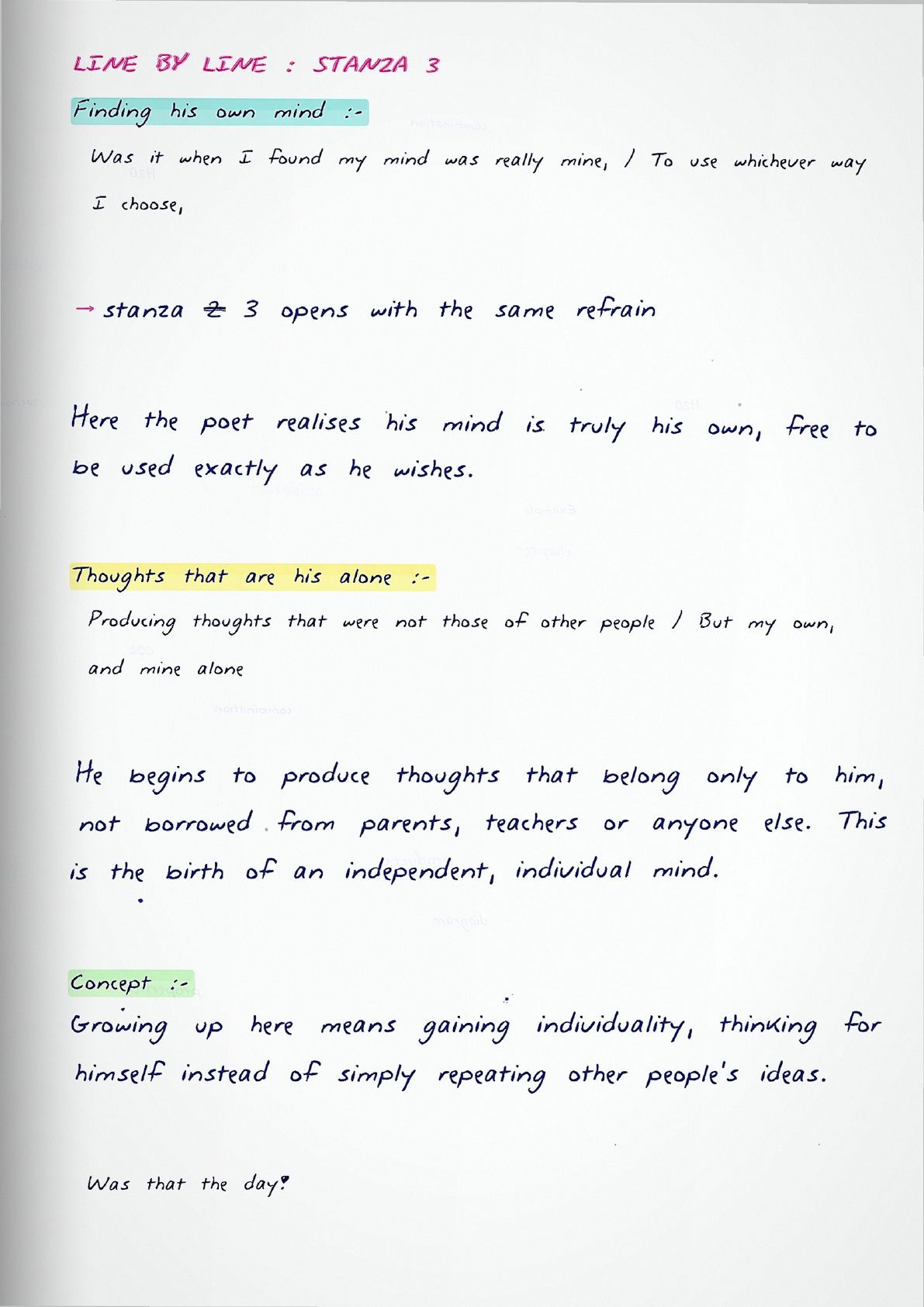
The third guess is more personal. The poet remembers the day he realised his mind was truly his own, free to form thoughts that were not borrowed from anyone else. In the closing stanza, he changes the question to "Where did my childhood go?" and admits he cannot point to an answer. He only knows it is hidden somewhere in the face of every infant, in that stretch of innocence before questions like his own begin.
Poetic Devices Used in Childhood
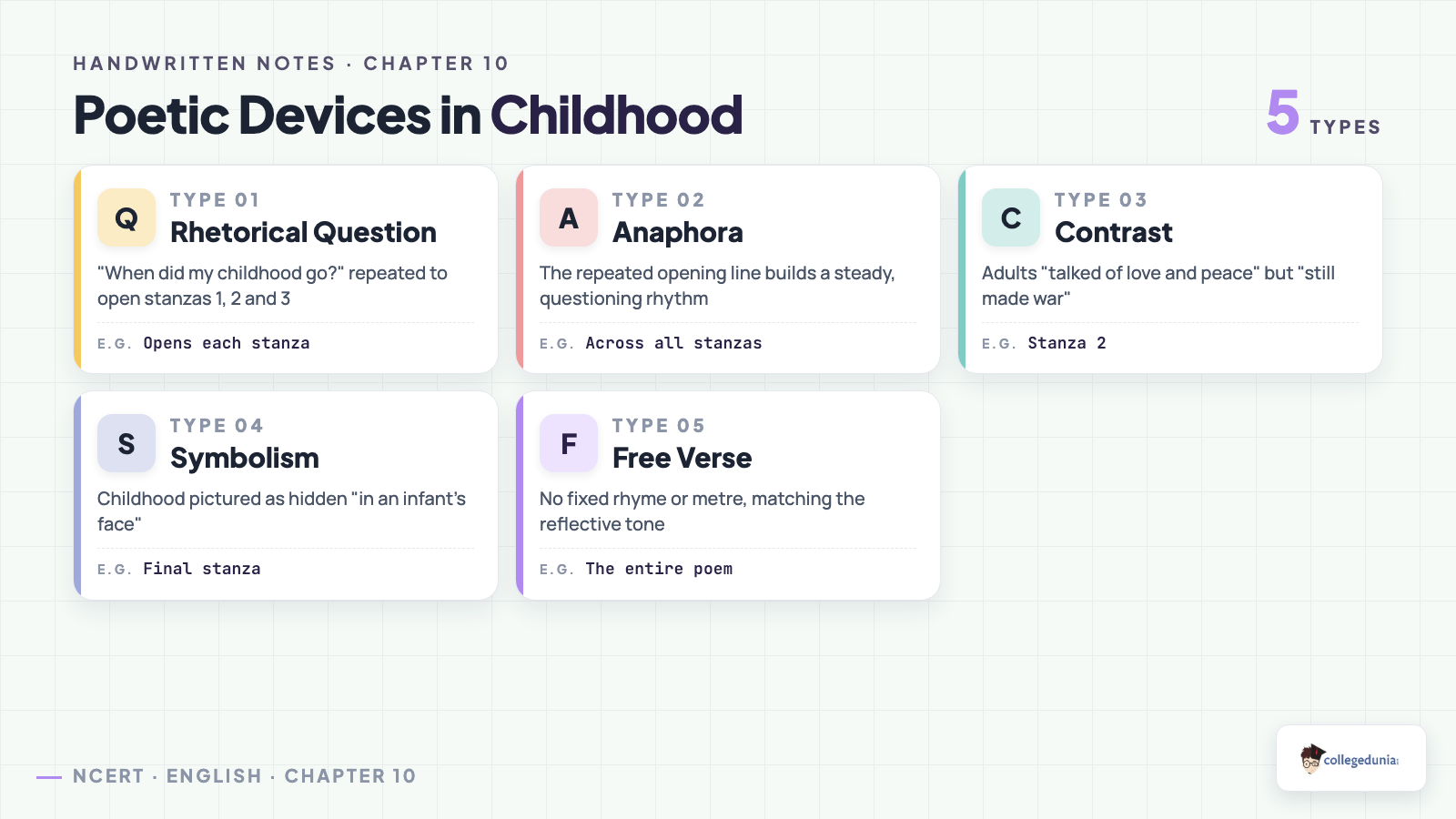
Natten builds the whole poem around a small set of devices, repeated with small variations from stanza to stanza. The table below lists each one with where it appears.
| Poetic Device | Where It Appears | Effect |
|---|---|---|
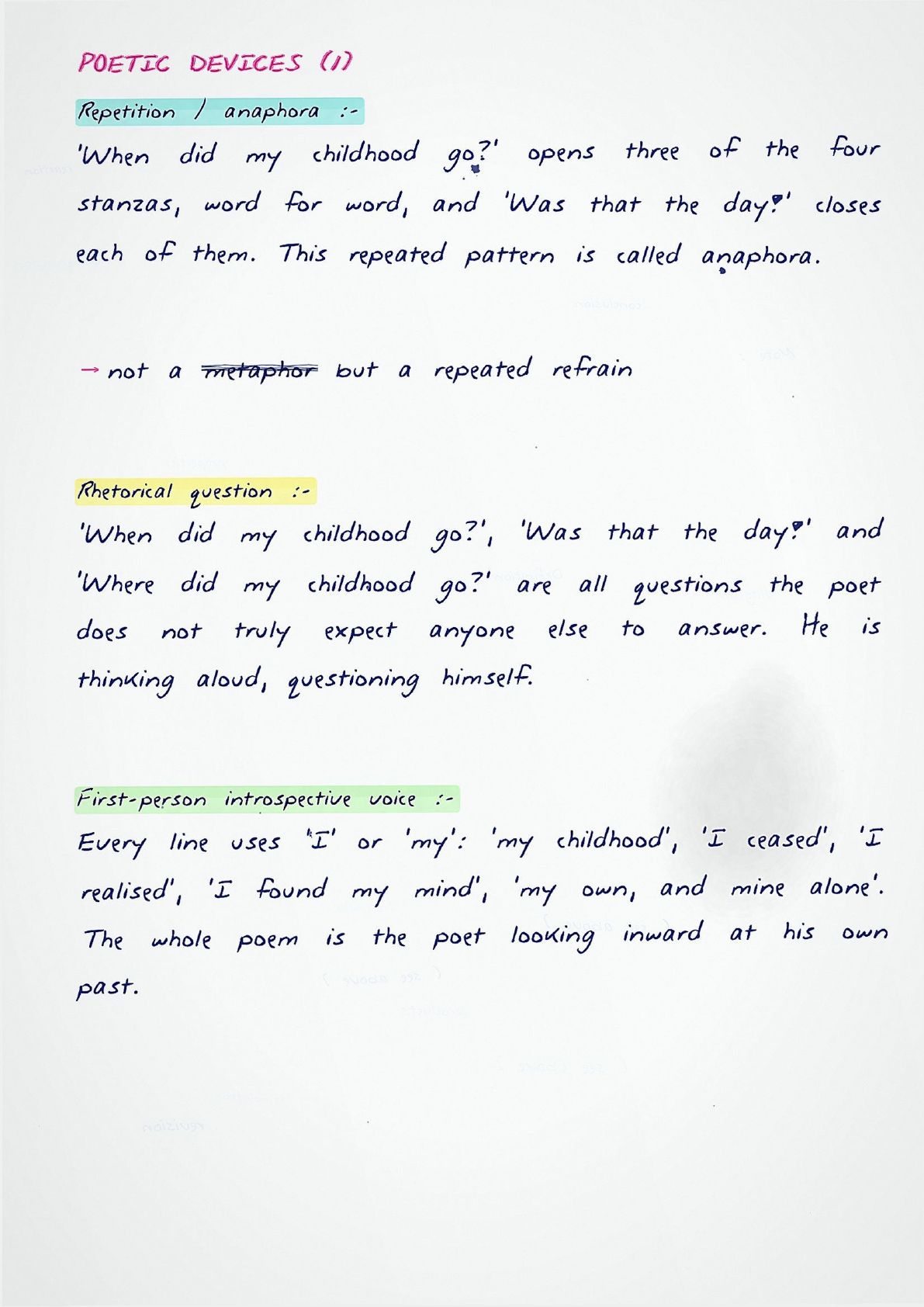
| Rhetorical Question | "When did my childhood go?" repeated at the start of stanzas 1, 2 and 3 | Turns the poem into a personal search rather than a statement of fact |
| Anaphora | The repeated opening line across stanzas | Builds a steady, questioning rhythm that mirrors the poet's own thinking |
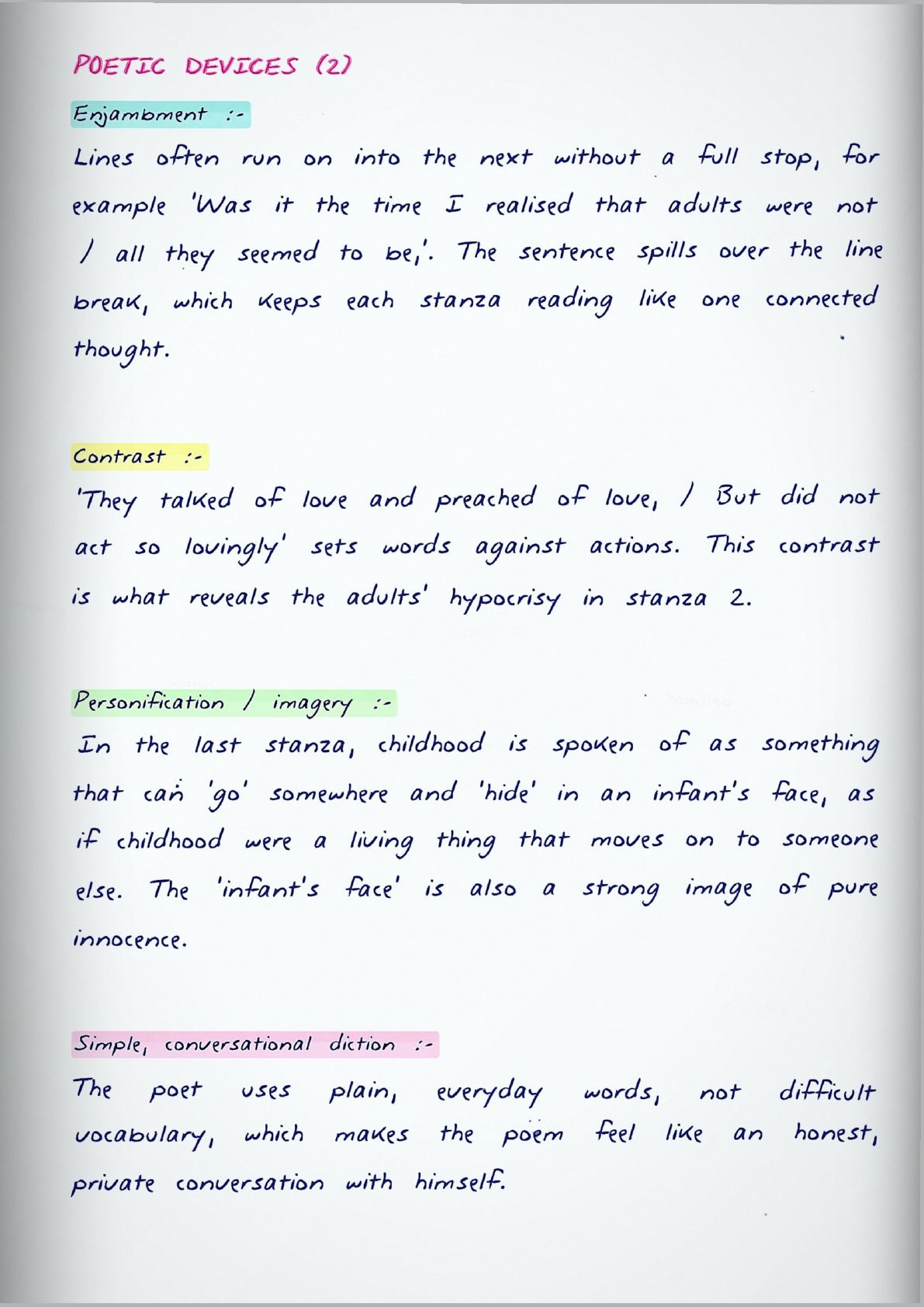
| Contrast | Adults who "talked of love and peace" but "still made war" | Exposes the hypocrisy the poet notices in the grown-up world |
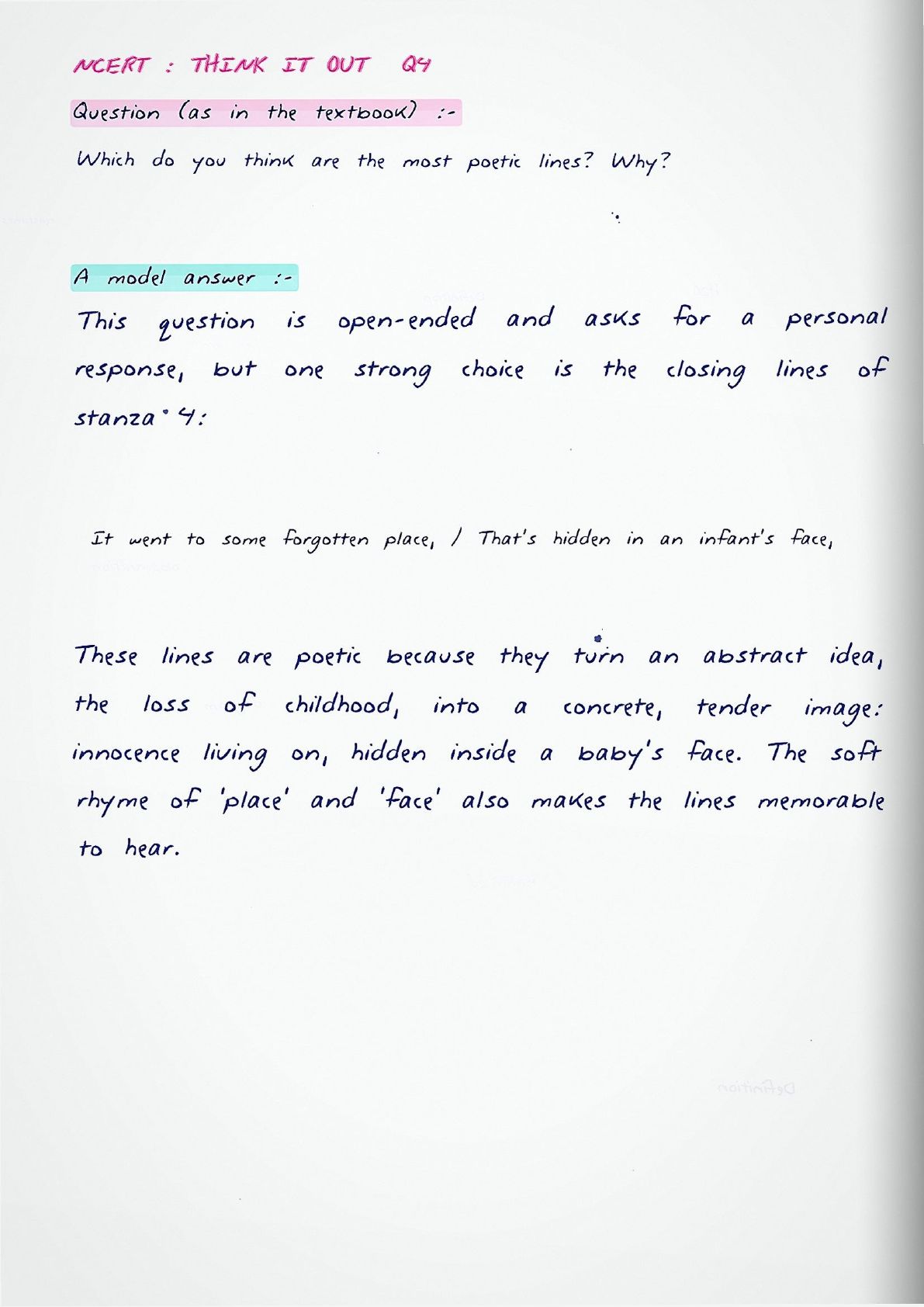
| Symbolism | Childhood hidden "in an infant's face" | Turns an abstract idea, lost innocence, into a single visual image |
| Free Verse | The entire poem | No fixed rhyme or metre, matching the poem's reflective, conversational tone |
Three Turning Points Behind the Loss of Childhood
The poem's three middle stanzas each mark a different kind of realisation. Reading them side by side makes the poem's structure much easier to remember for an exam answer.
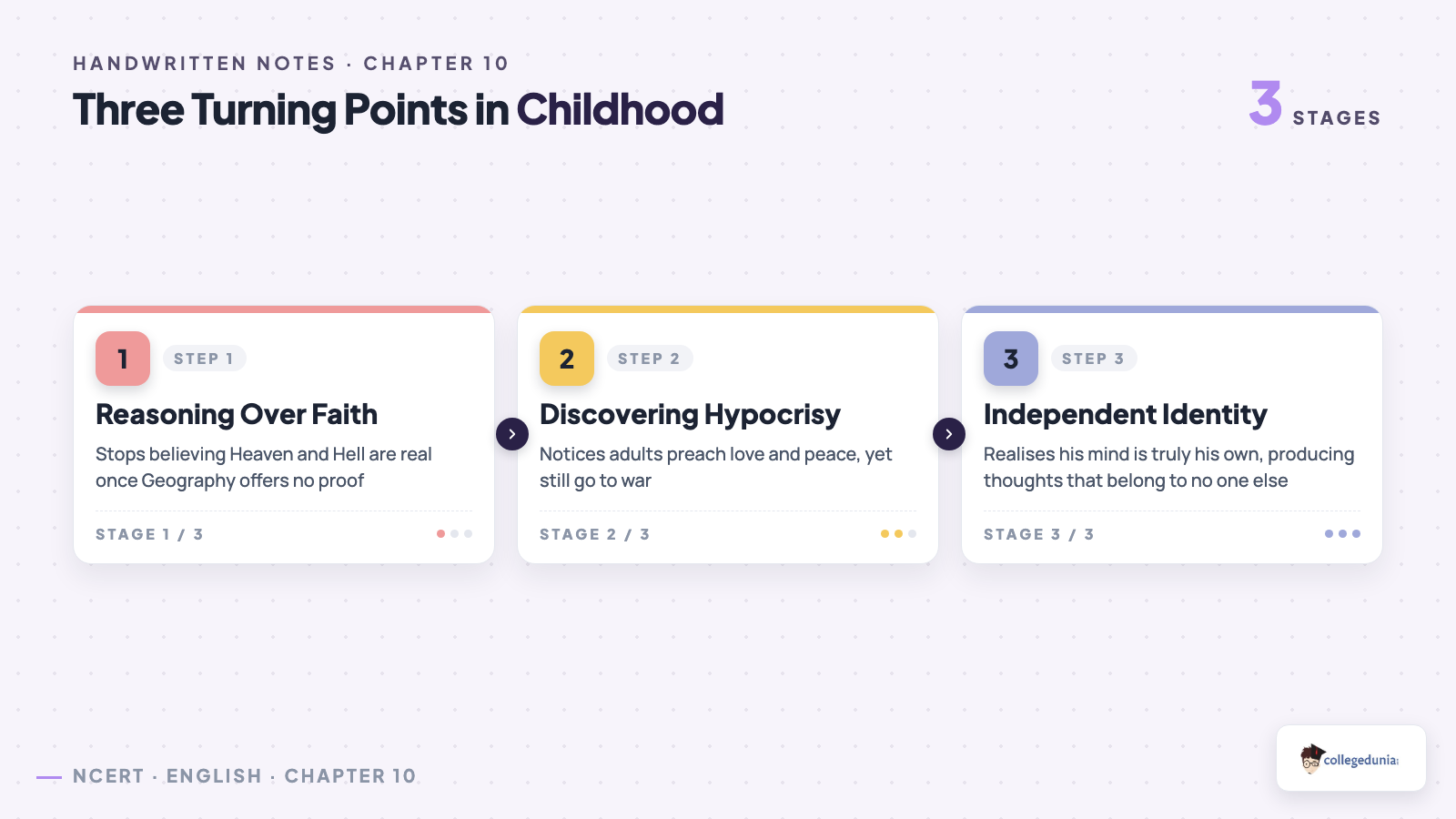
- Reasoning over faith: the poet stops believing in Heaven and Hell once Geography offers no proof they exist.
- Discovering adult hypocrisy: he notices that adults preach love and peace, yet still go to war.
- Finding an independent identity: he realises his mind is truly his own, producing thoughts that belong to no one else.
Theme and Message of Childhood
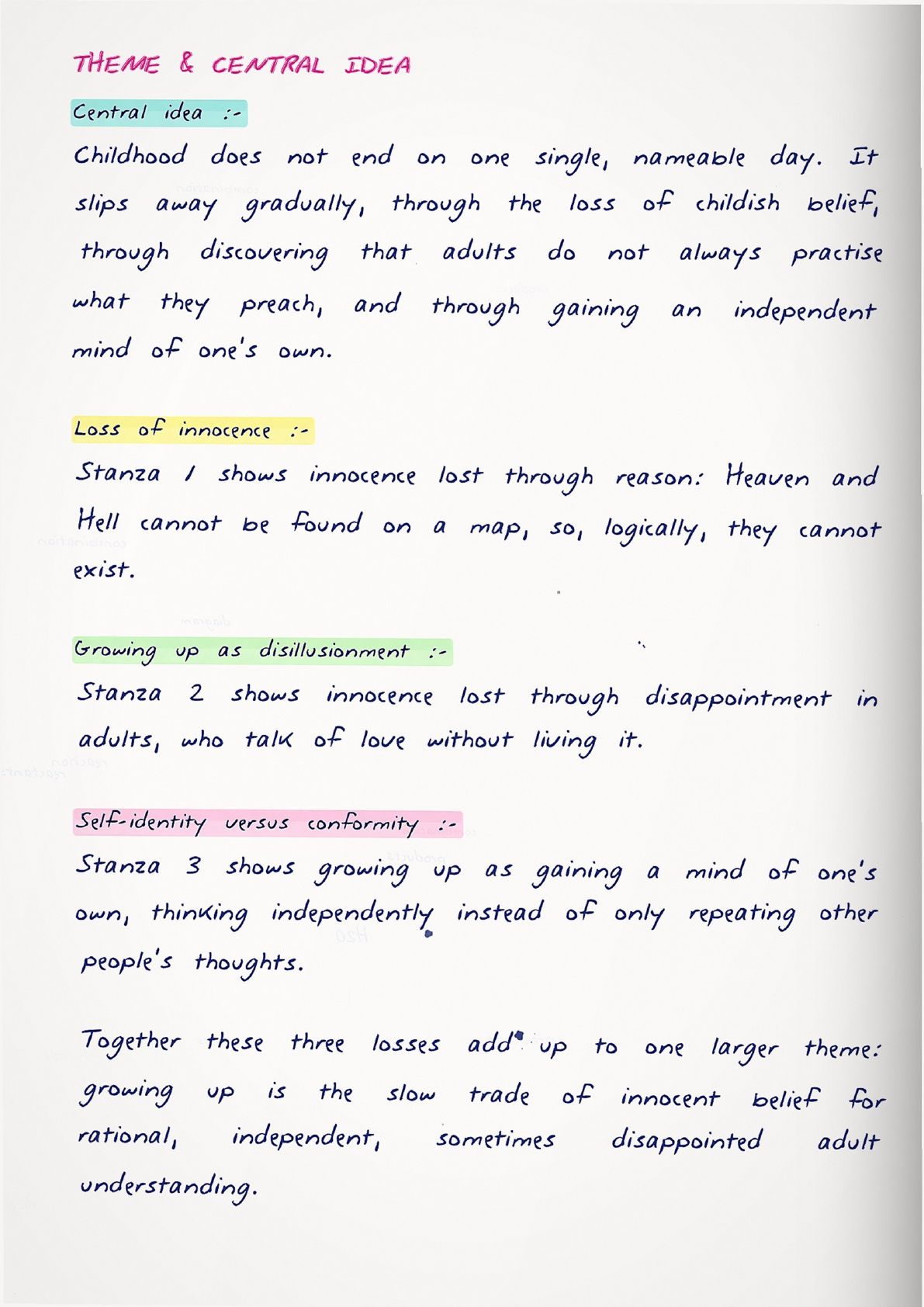
At its core, the poem is about growing up as a loss of certainty. A child accepts what it is told; an adult starts to question it. Natten shows that this shift, not any single birthday, is what really ends childhood.
- Belief gives way to reasoning once a child starts testing what adults have told them against the real world.
- Adults preach ideals like love, peace and God but do not always live by them, and noticing this gap is itself a part of growing up.
- Growing up also means discovering an independent identity, thoughts and opinions that belong to the person alone, not to their parents.
Word Meanings from Childhood
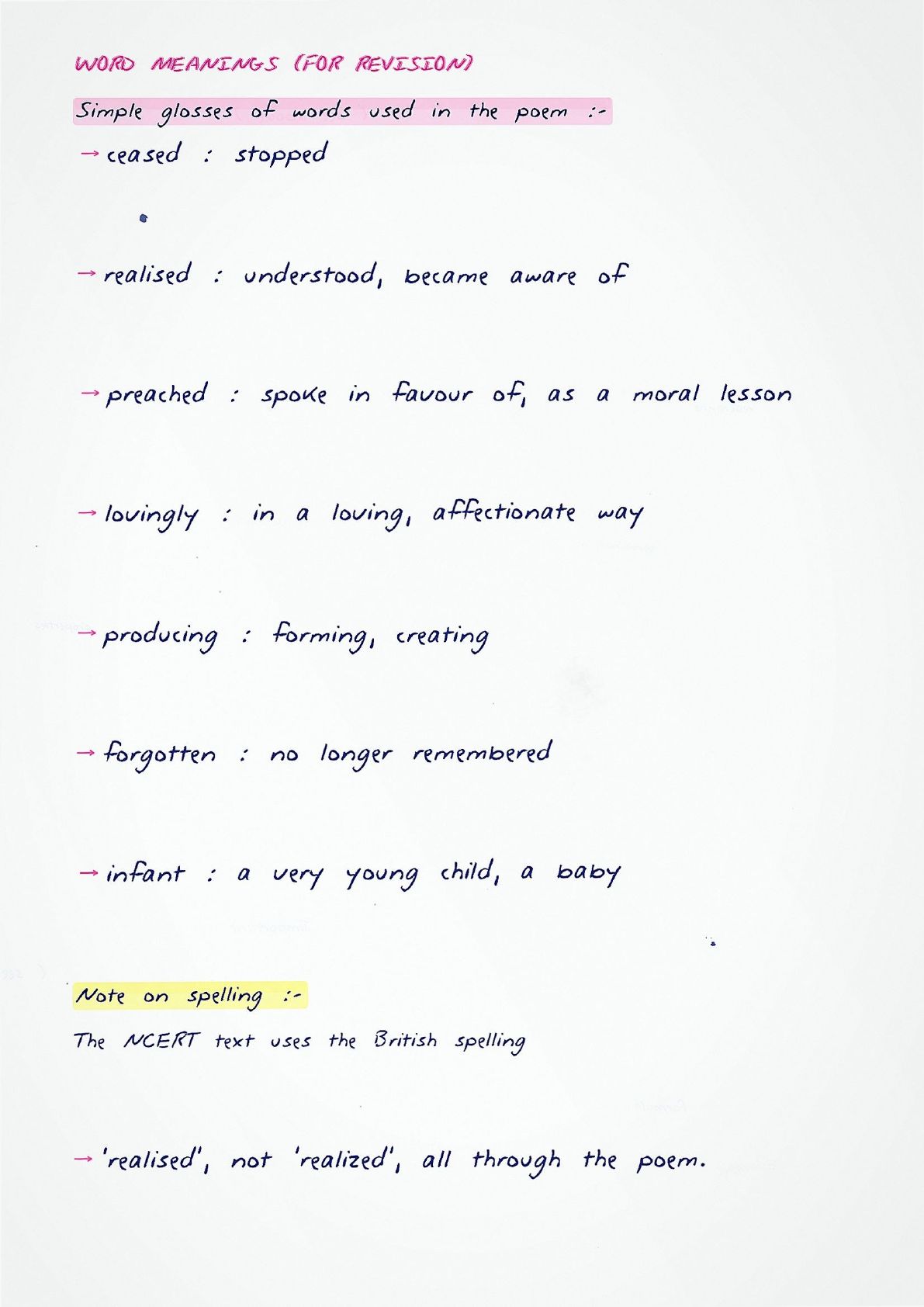
A few words and phrases in the poem are easy to misread on a first pass. This table explains each one in plain English.
| Word / Phrase | Meaning |
|---|---|
| Cease | To stop or come to an end |
| Geography | The school subject about the earth's physical features, used here to mean the real, mappable world |
| Preached | Talked about moral or religious ideals, often without practising them |
| Mind was really mine | The realisation that one's own thoughts are independent, not copied from others |
| Infant's face | A symbol for the innocence and openness that belongs only to early childhood |
Childhood NCERT Textbook Questions Covered
The handwritten notes answer every question NCERT sets under "Understanding the Poem" for this chapter.
| NCERT Question | What the Notes Cover |
|---|---|
| Which line in the poem tells us about the theme of the poem? | Line-by-line explanation pointing to the "Where did my childhood go?" closing lines |
| Which incident, from stanza two, does the poet regard as one that made him lose his innocence? | Marked-up explanation of the adults-preaching-peace-but-making-war lines |
| What did the poet realise when he "found his mind was really mine"? | Explanation of the independent-identity stanza and why it matters to the poem |
| Does the poet believe it is wrong for adults to preach one thing and practise another? | Full answer with reasoning, drawing on the contrast device used in stanza two |
Common Mistakes Students Make While Studying Childhood
Watch out for these:
- Treating the poem as one single event instead of three separate realisations across three stanzas.
- Missing that "Geography" stands for the real, provable world, not literally the school subject.
- Confusing the closing "Where" question with the earlier "When" refrain, and losing marks for misreading the shift.
Mixing up the three stanzas, or missing the shift from "When" to "Where" in the final stanza, is the most common reason students lose marks on this poem.
Student Feedback: In a Collegedunia survey of 10,860 Class 11 students conducted before the 2026 boards, 64% said explaining the "adults preached peace but made war" line in their own words was the hardest part of Childhood to answer.
Source: 2026-27 Class 11 English student poll. Sample of 10,860 students from CBSE schools across 13 states.
How These Handwritten Notes Help You Revise Childhood
The notes are built to be read once, right before the exam, without needing the full textbook open beside you.
- Full Poem Text: the complete poem is copied out by hand for quick reading.
- Line-by-Line Paraphrase: every stanza is explained in plain words next to the original lines.
- Poetic Devices Marked: rhetorical question, anaphora, contrast and symbolism are labelled where they occur.
- NCERT Answers Included: every "Understanding the Poem" question is answered in full.
Cross-Resource Study Material for Childhood
These handwritten notes work best alongside the other Class 11 English Hornbill Chapter 10 resources as Collegedunia adds them through the 2026-27 session.
| Resource | Status |
|---|---|
| Childhood Handwritten Notes | Live on this page |
| Childhood NCERT Solutions | Coming soon (coming soon) |
| Childhood Notes | Coming soon (coming soon) |
| Class 11 English NCERT Book PDF | Coming soon (coming soon) |
NCERT Handwritten Notes for Class 11 English Hornbill: All Chapters
Use this table to find handwritten notes for the rest of the Hornbill chapters as Collegedunia adds them through the 2026-27 session.
| Chapter | Resource |
|---|---|
| Chapter 7 | A Photograph Handwritten Notes |
| Chapter 8 | The Laburnum Top Handwritten Notes |
| Chapter 9 | The Voice of the Rain Handwritten Notes |
| Chapter 10 | Childhood Handwritten Notes |
| Chapter 11 | Father to Son Handwritten Notes (coming soon) |
Childhood Class 11 English Handwritten Notes FAQs
Ques. Where can I download Childhood Class 11 English Handwritten Notes PDF?
Ans. You can download Childhood Class 11 English Handwritten Notes PDF directly from this page. Both the Normal and HD versions are available, and both are free.
Ques. Who wrote the poem Childhood?
Ans. The poem Childhood was written by Markus Natten, whose work reflects on how growing up brings a loss of childhood belief and certainty.
Ques. What is the central theme of Childhood?
Ans. The poem is about how growing up replaces childhood belief with reasoning. The poet traces this loss through three stages: doubting religious belief, noticing adult hypocrisy, and discovering an independent mind.
Ques. Is this Handwritten Notes PDF aligned with the 2026-27 NCERT?
Ans. Yes. This page reflects the current 2026-27 syllabus for Class 11 English Hornbill. Childhood is unchanged in the rationalised syllabus.
Ques. How many pages is the Class 11th English Hornbill Chapter 10 Handwritten Notes PDF?
Ans. The Handwritten Notes PDF runs 24 pages and covers the full poem text, a line-by-line paraphrase, poetic devices, the theme, and NCERT's own exercise answers.
Ques. Why does the poet change the question from "When" to "Where" in the last stanza?
Ans. The shift shows the poet cannot pinpoint an exact moment his childhood ended. He can only say where it went, hidden in the face of every infant.
Ques. What does the poet mean by "my mind was really mine"?
Ans. It means the poet realised he could think for himself, forming opinions and ideas that were not simply copied from his parents or other adults.



Comments