




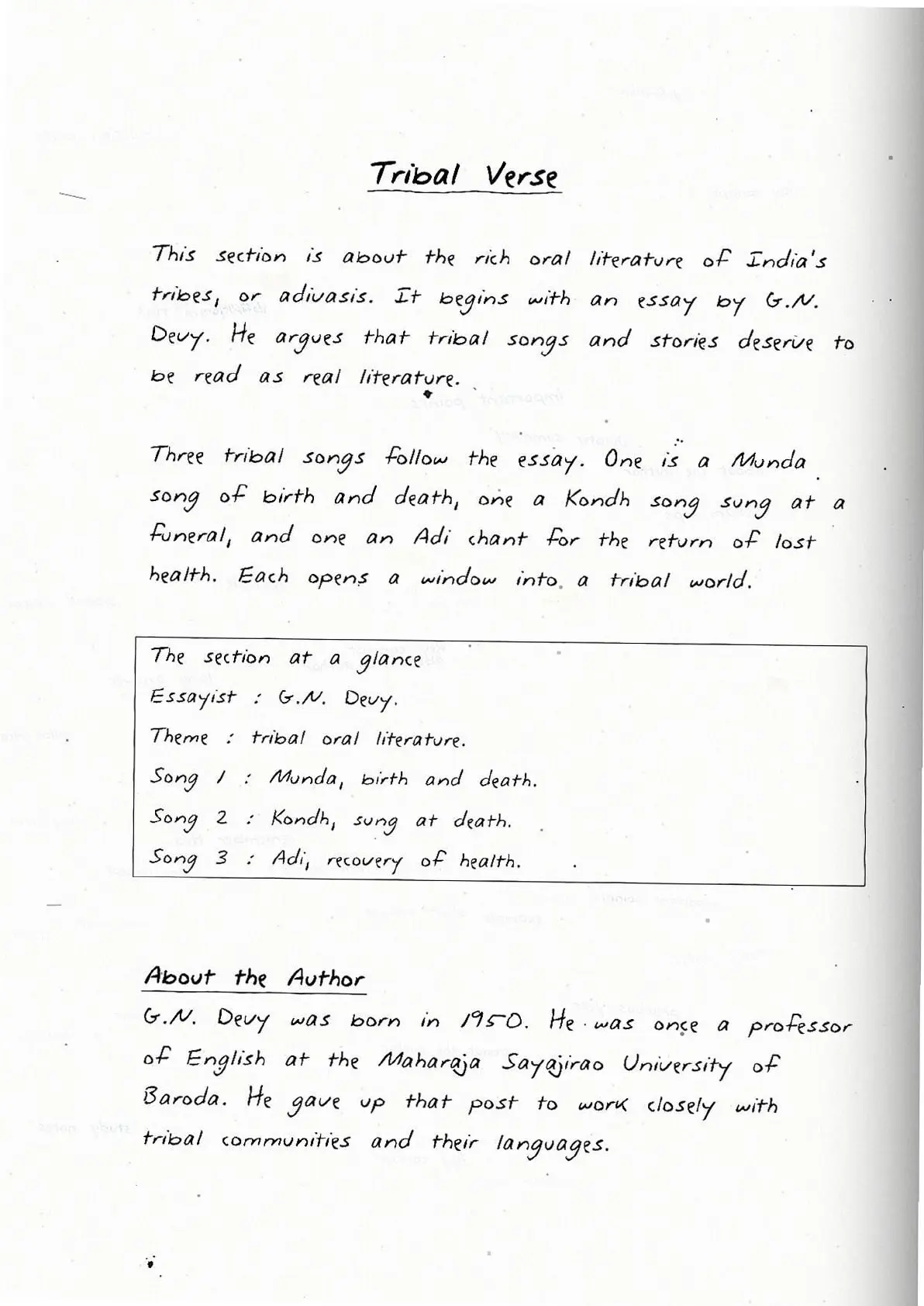
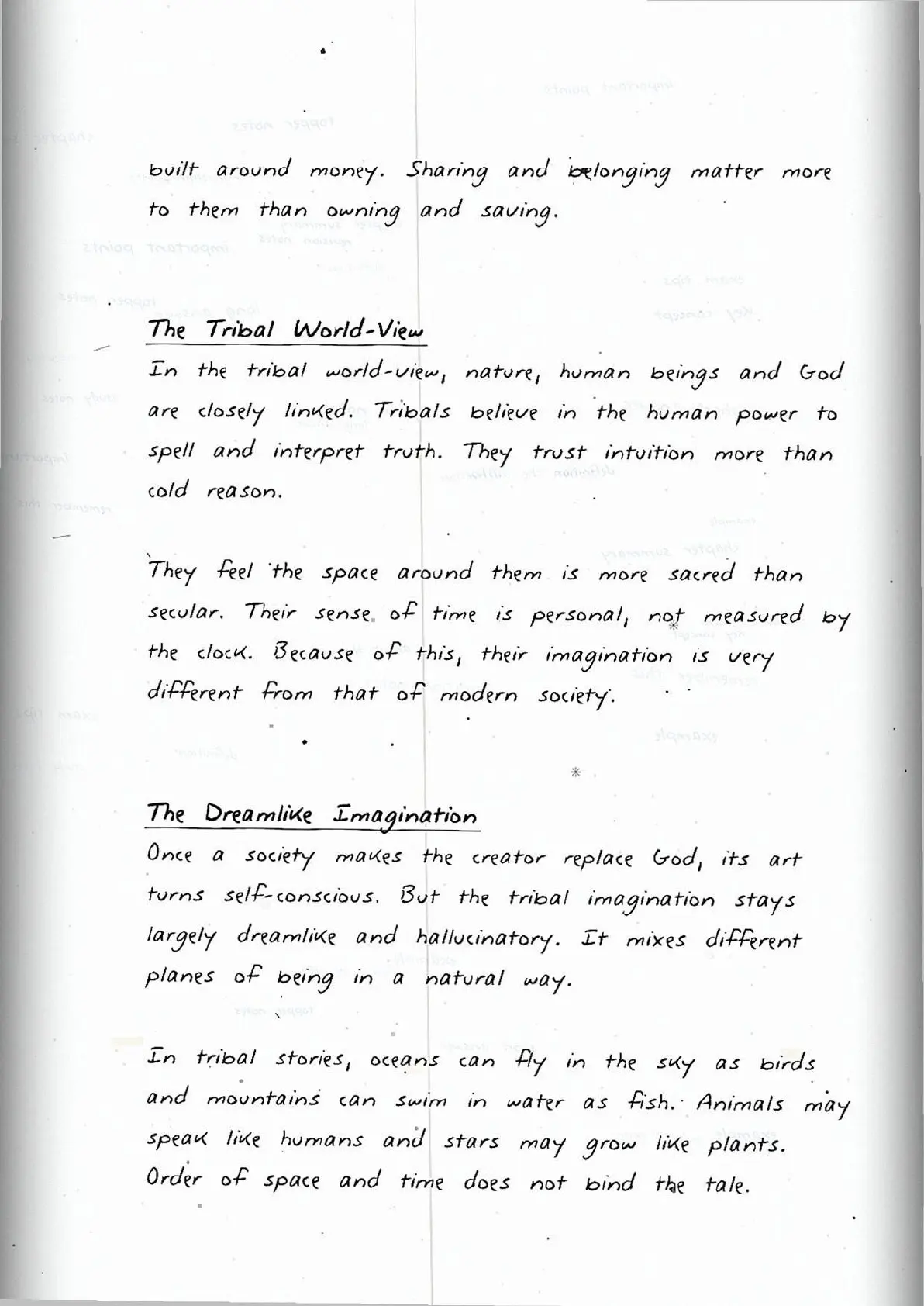
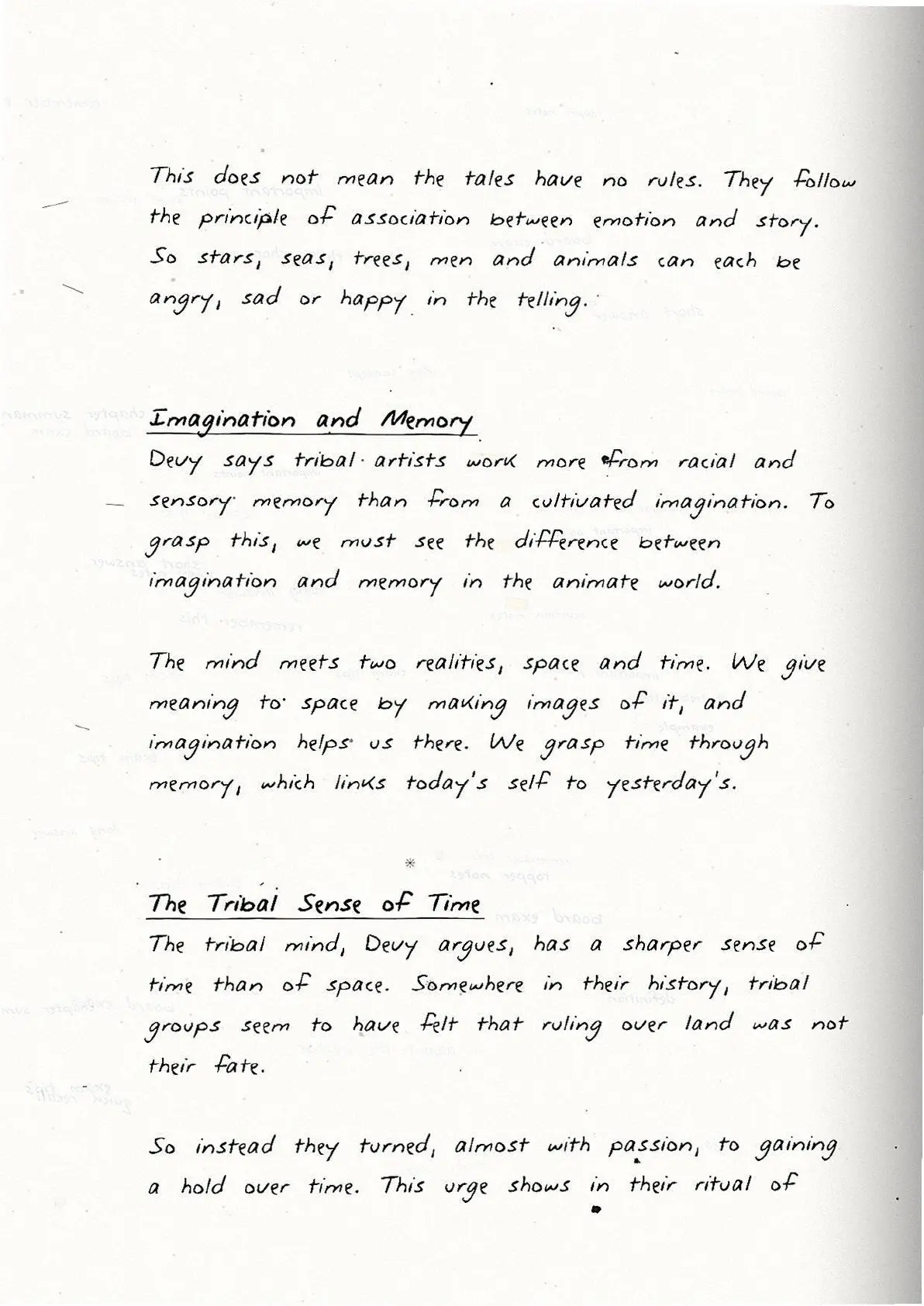
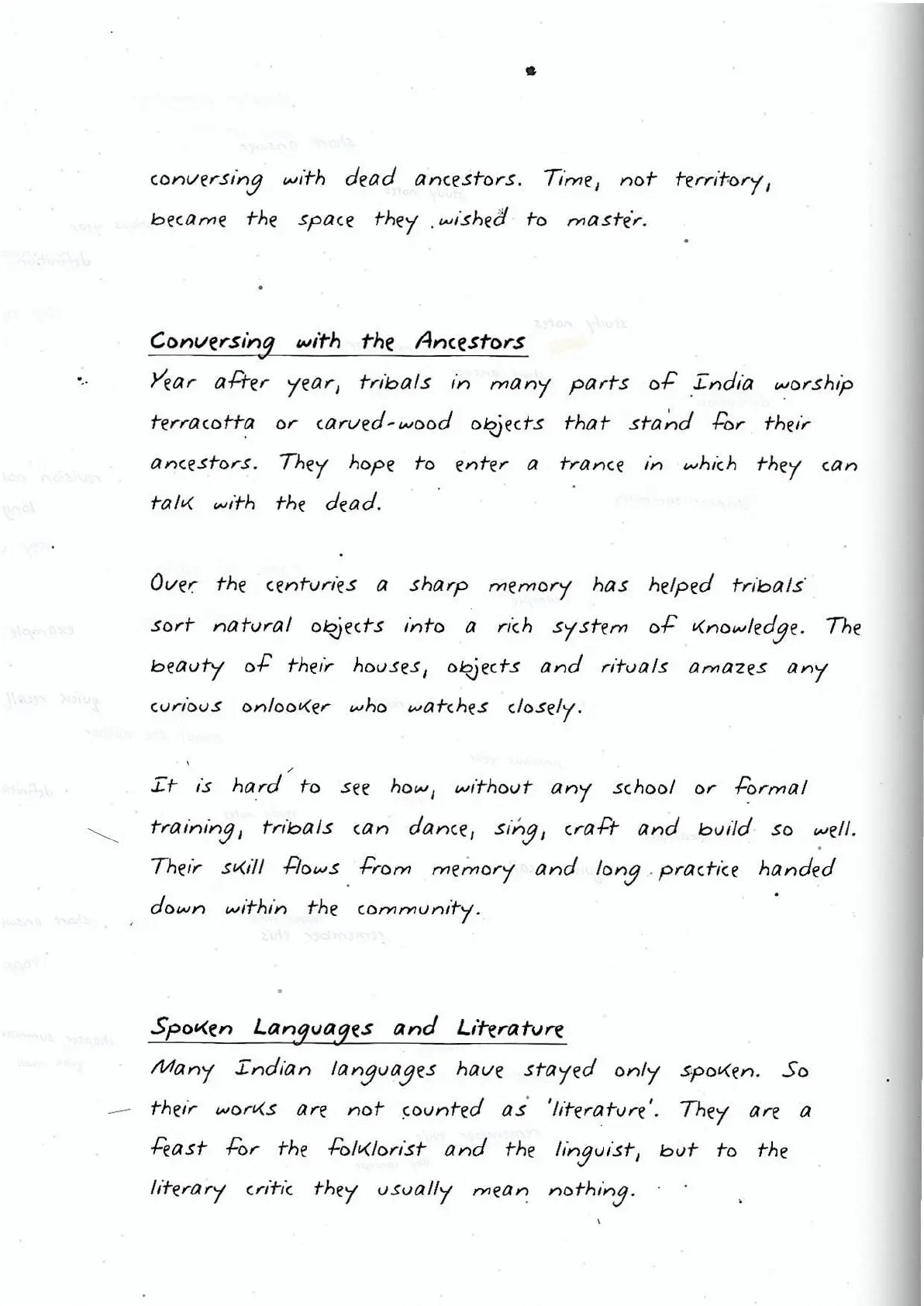
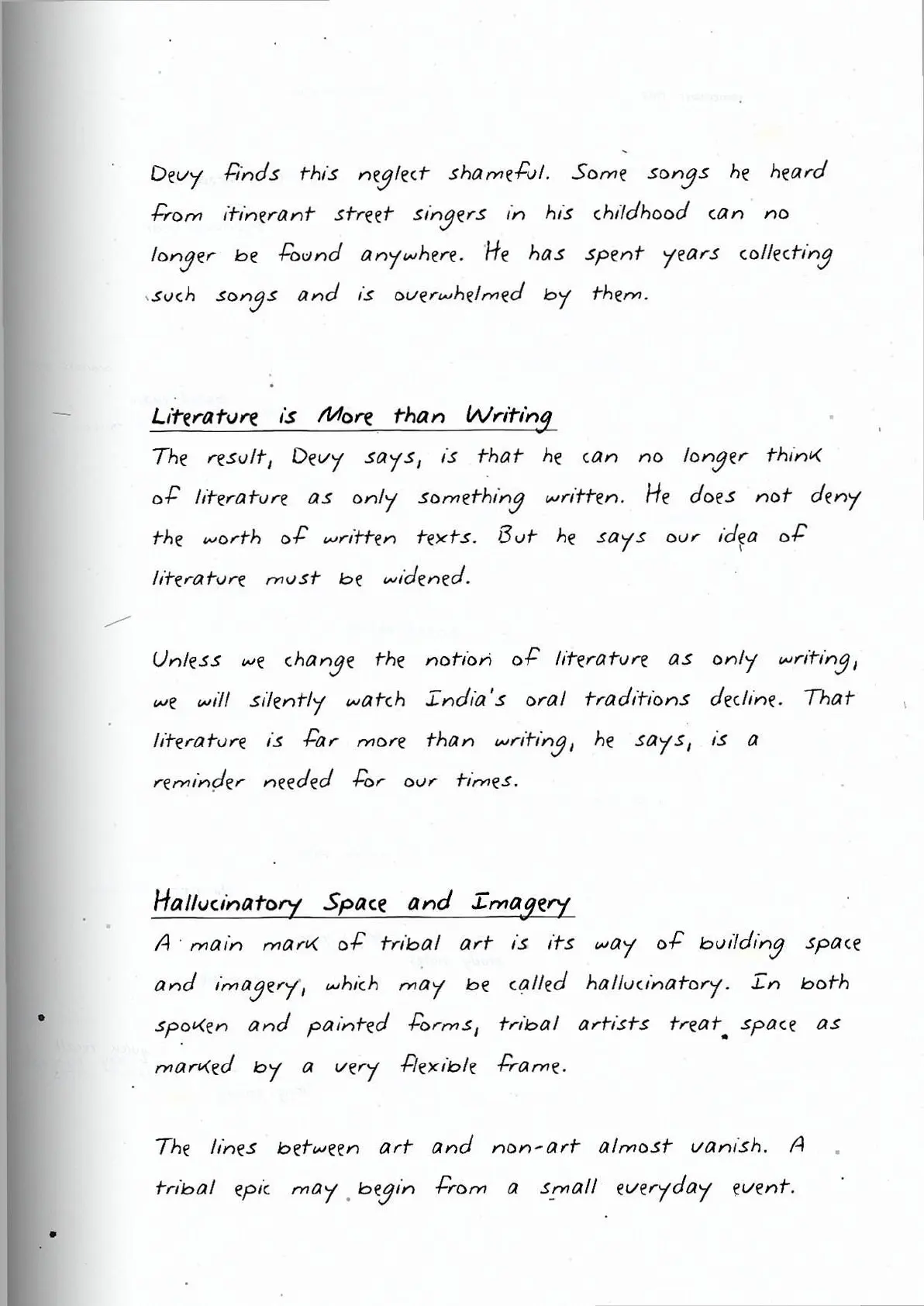
Tribal oral literature deserves respect as living art rooted in a world where nature, humans and God are one. Class 11 English Chapter 22 Tribal Verse builds this idea step by step. These class 11 english handwritten notes chapter 22 Tribal Verse follow the 2026-27 NCERT and cover tribal oral verse as real literature, the dreamlike, nature-bound tribal.
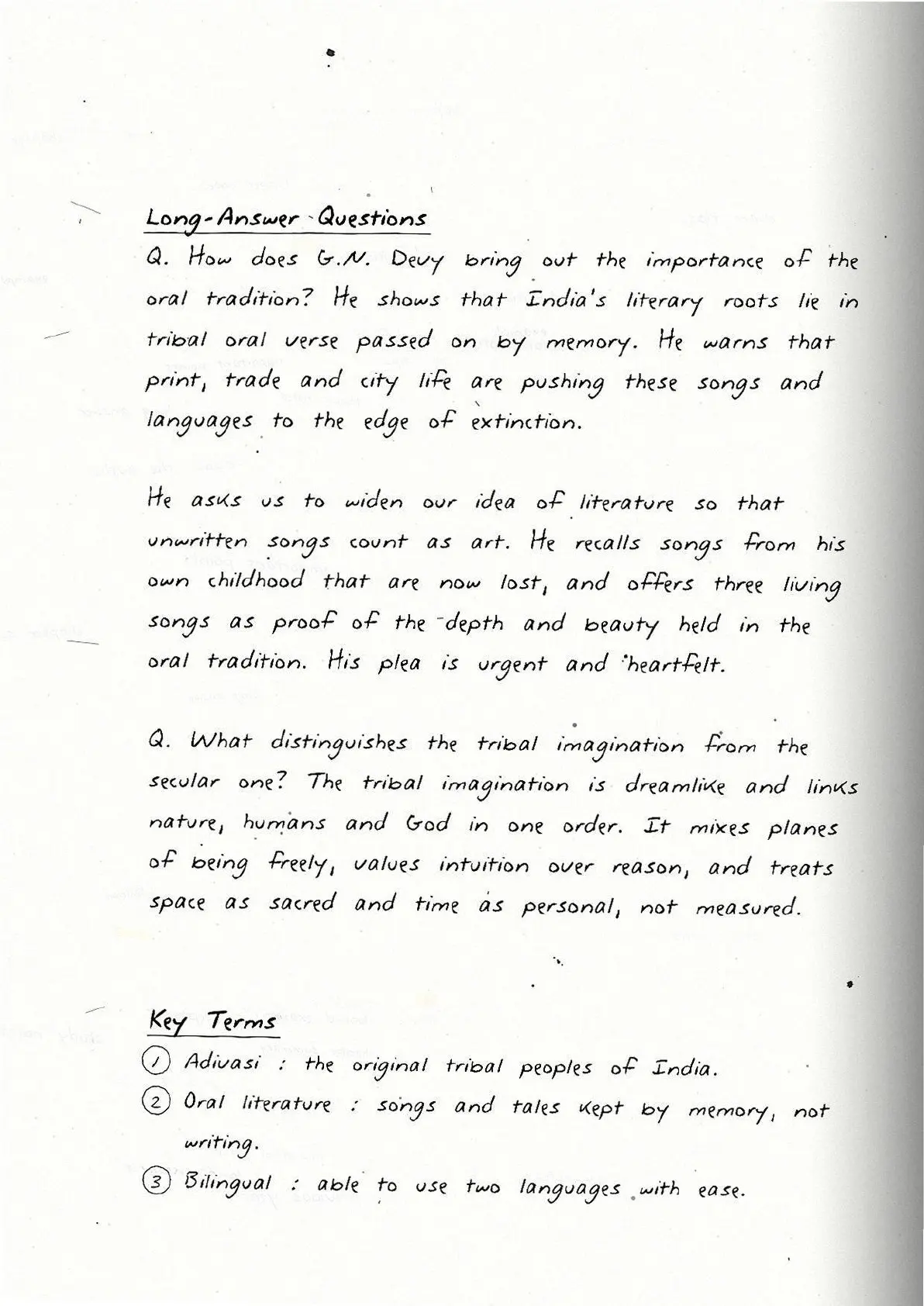
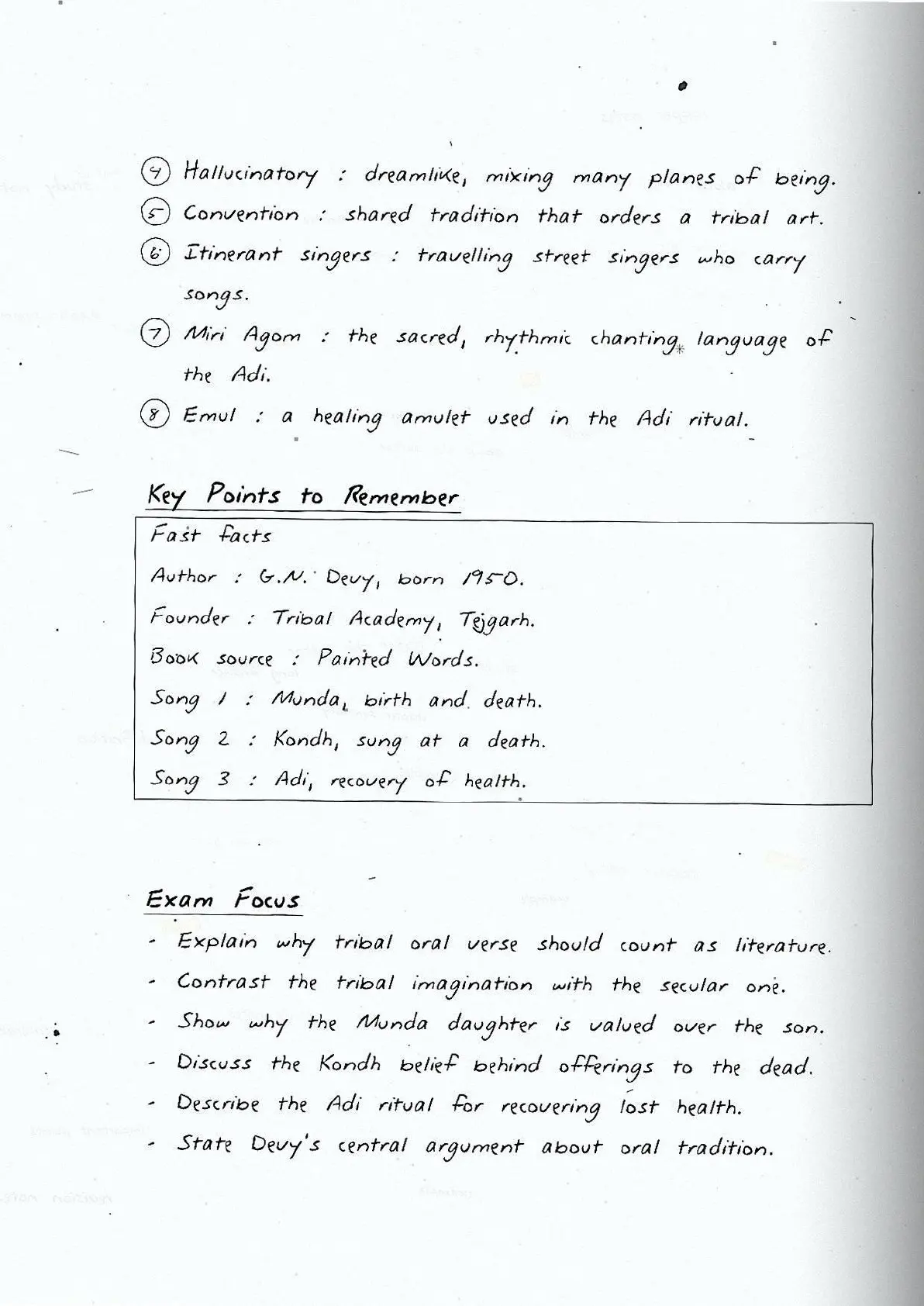
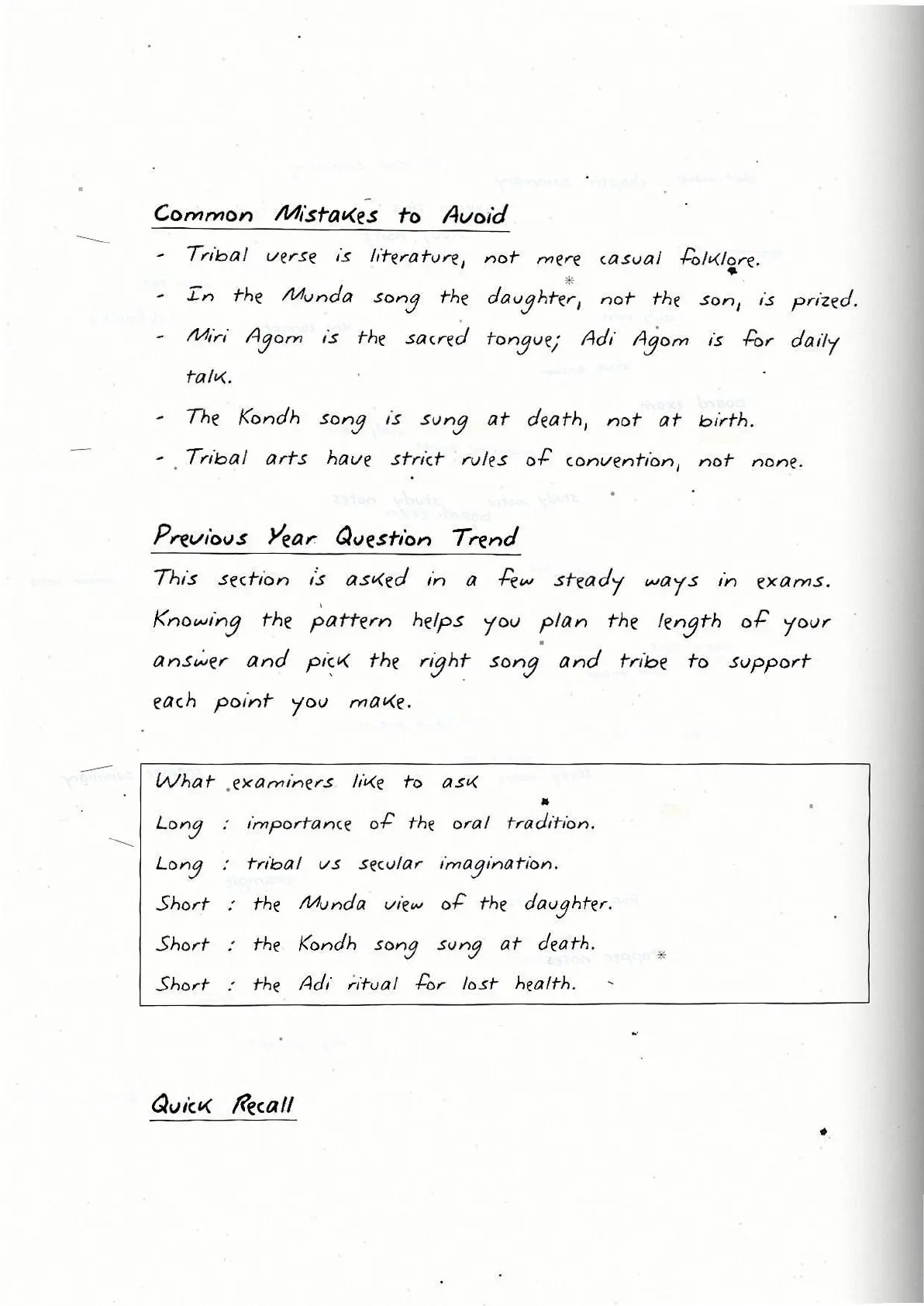
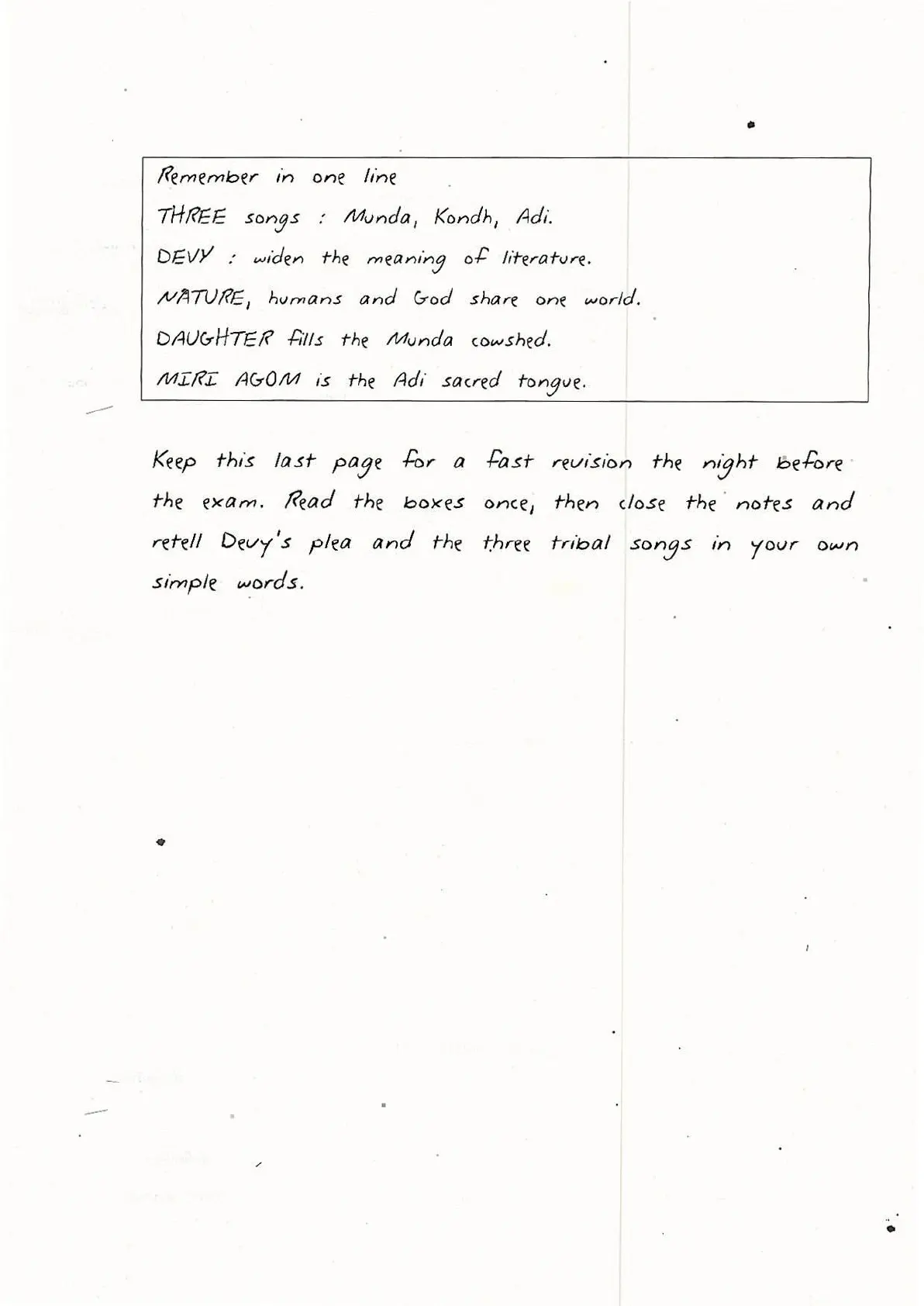
- CBSE Class 11 Weightage: a scoring chapter in the English paper, asked in short and long answers.
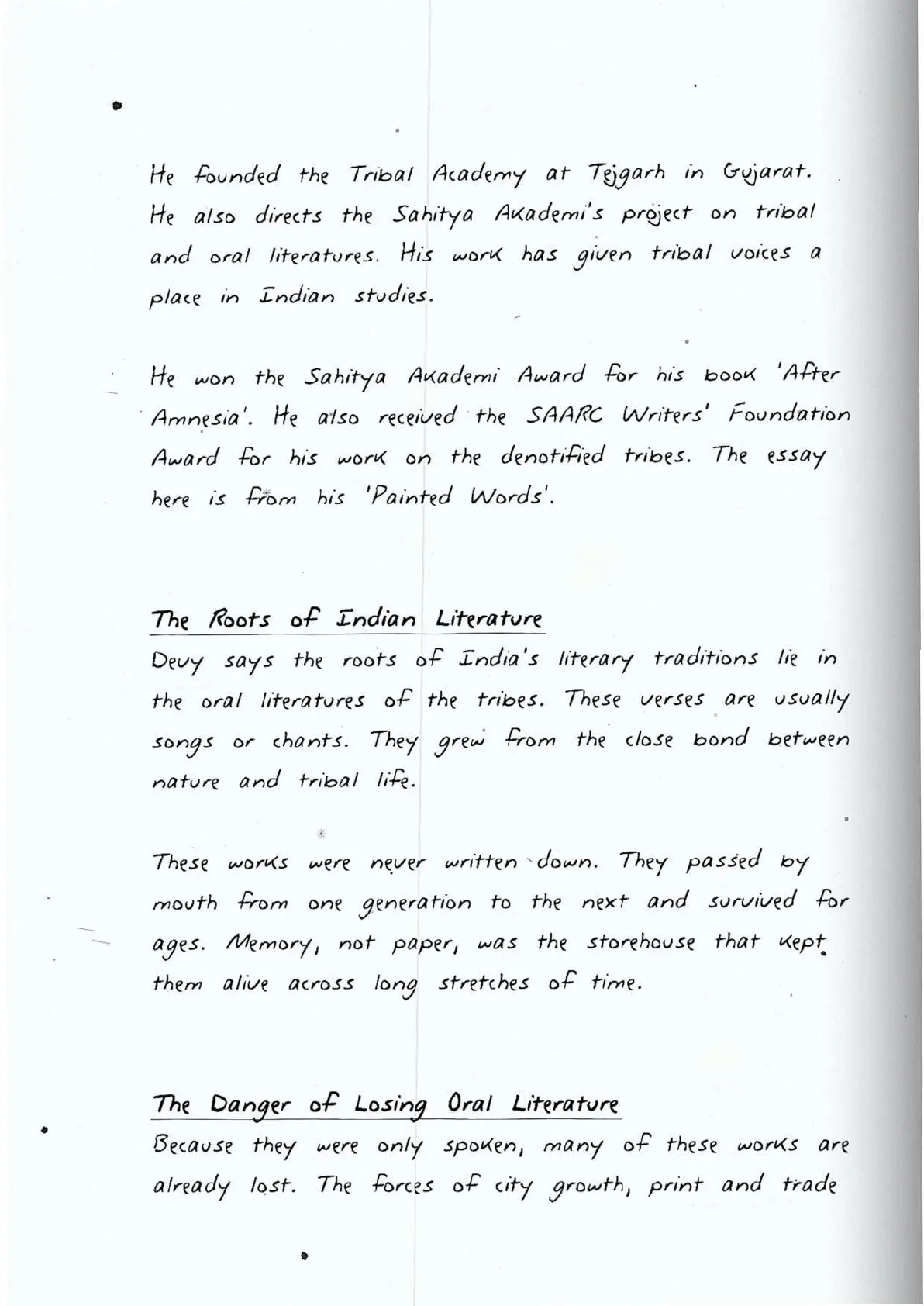
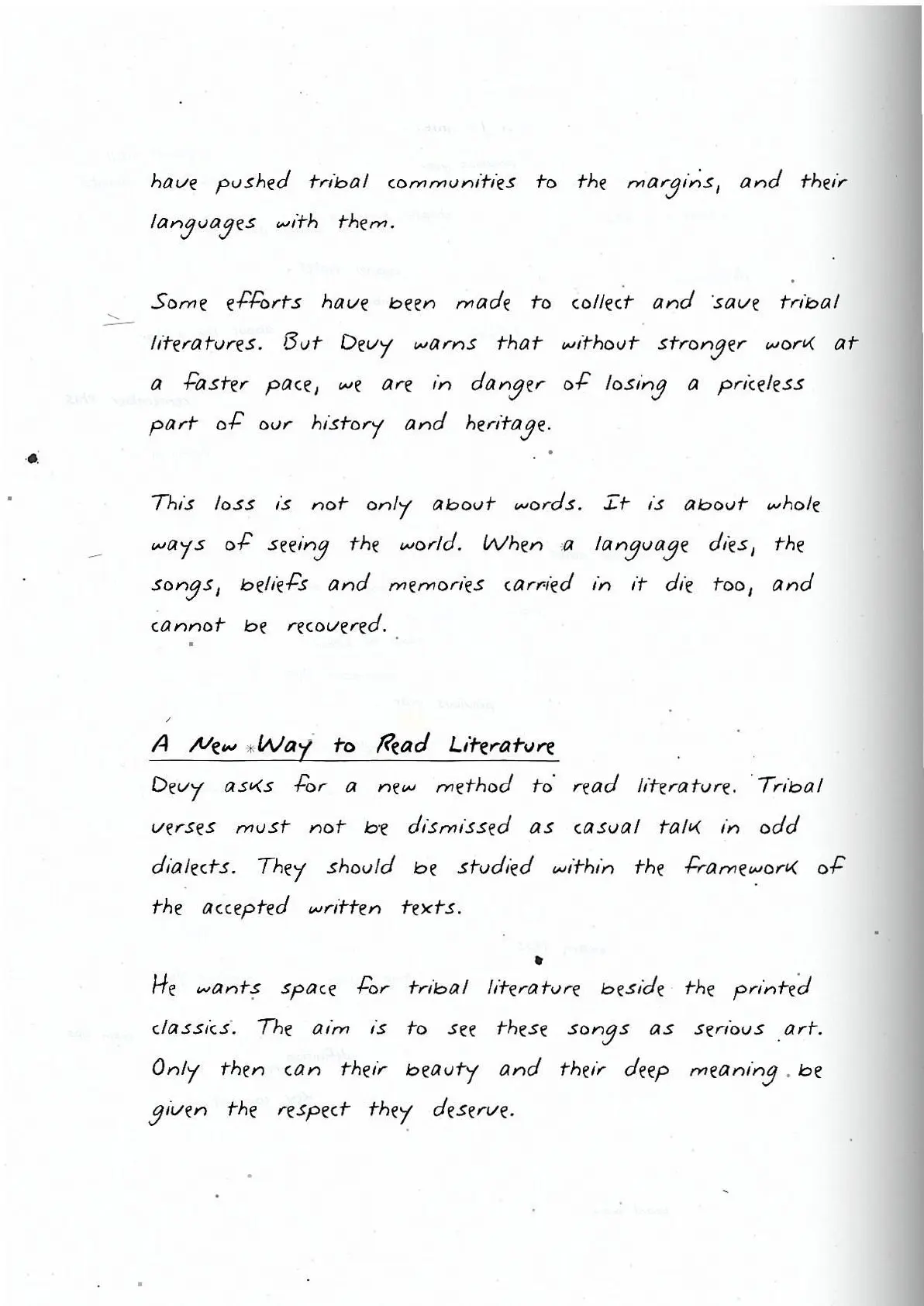
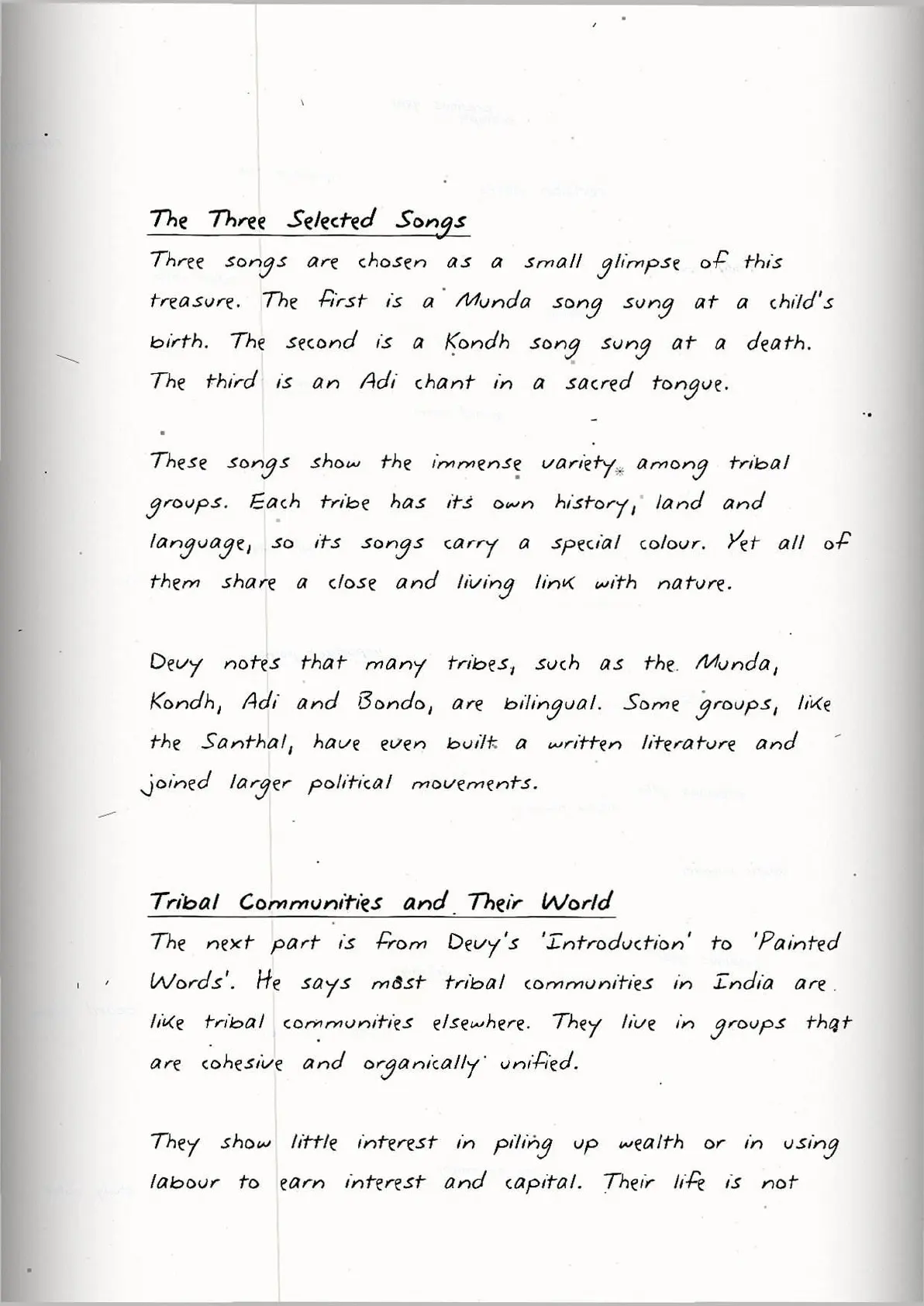
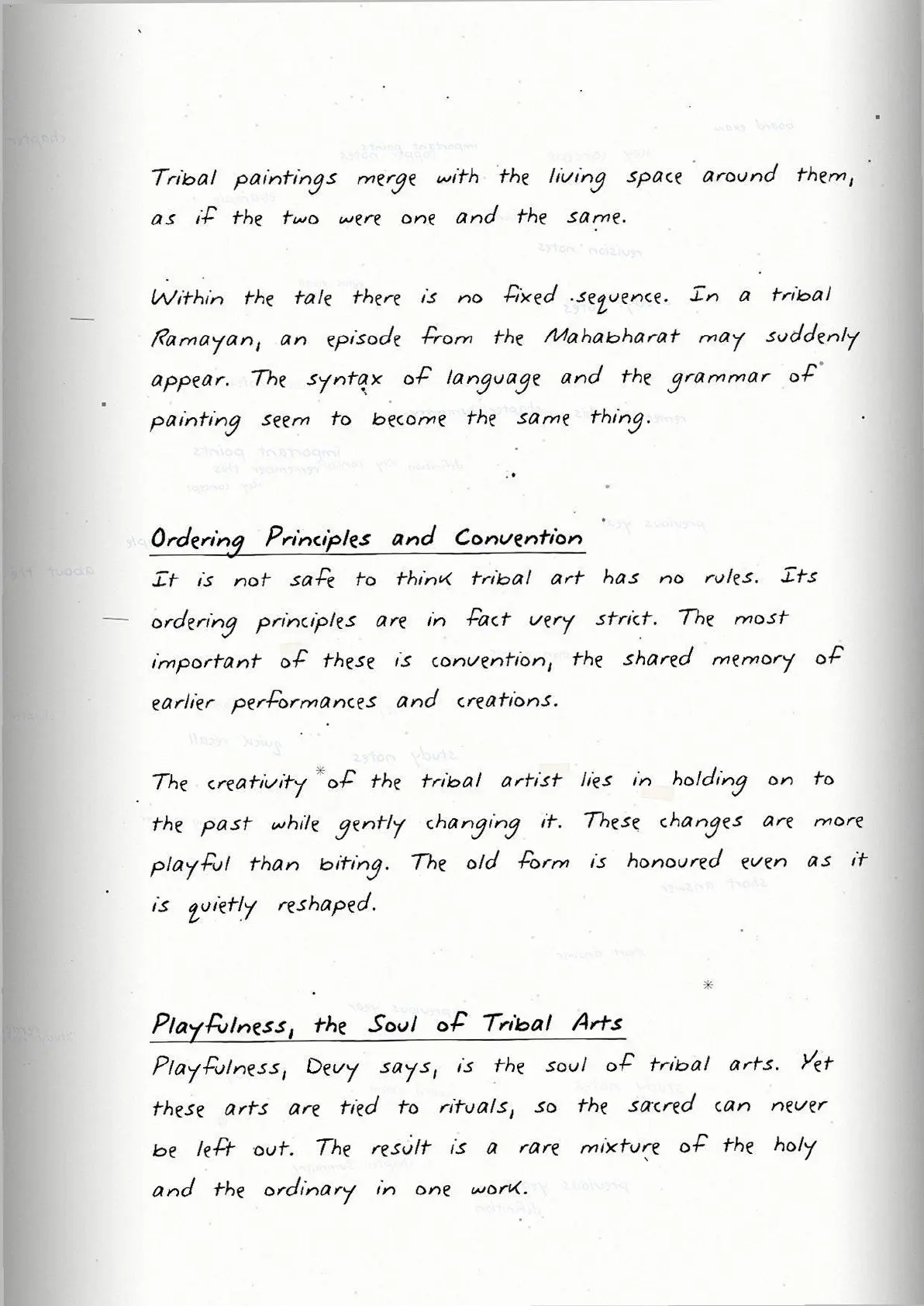
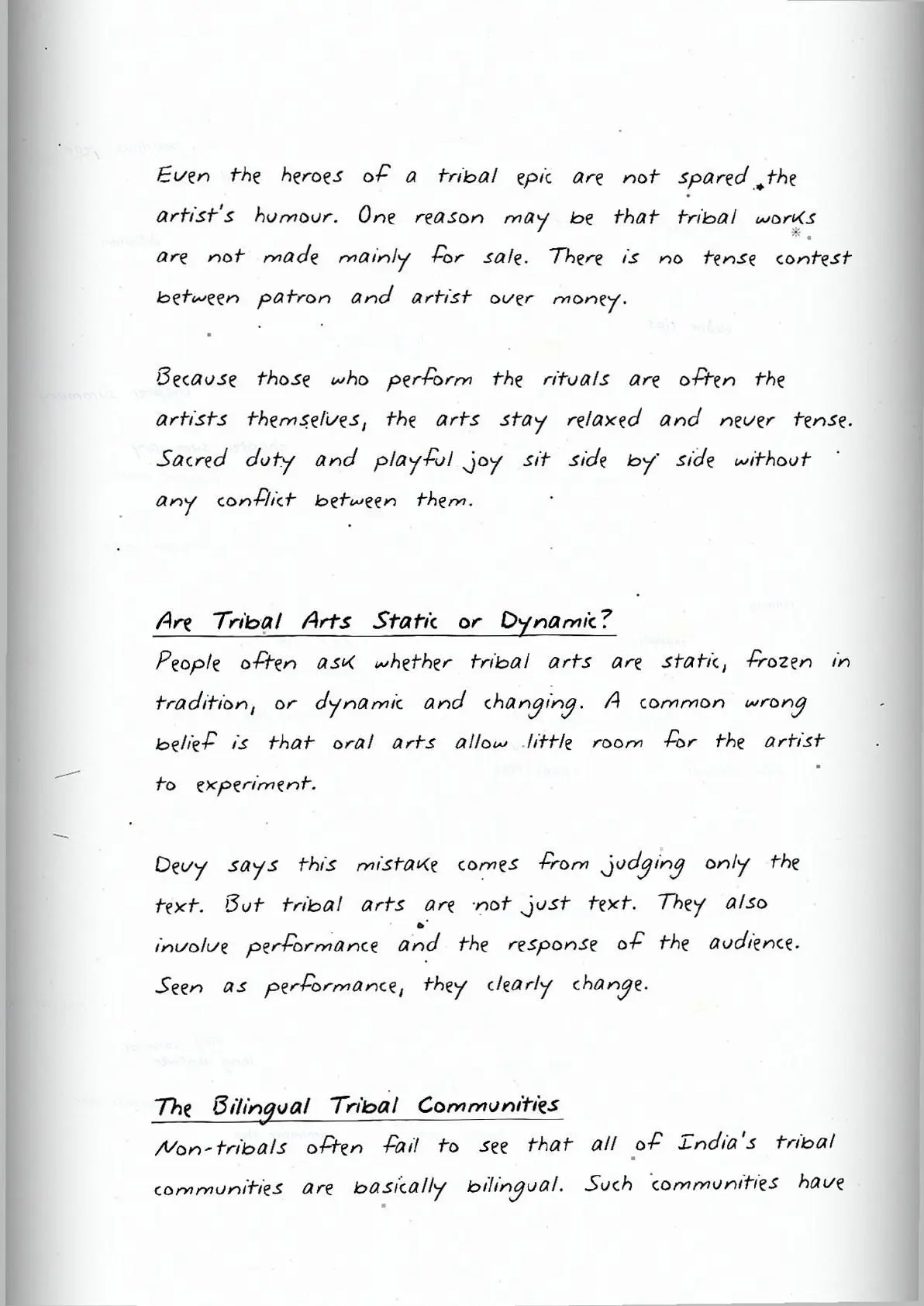
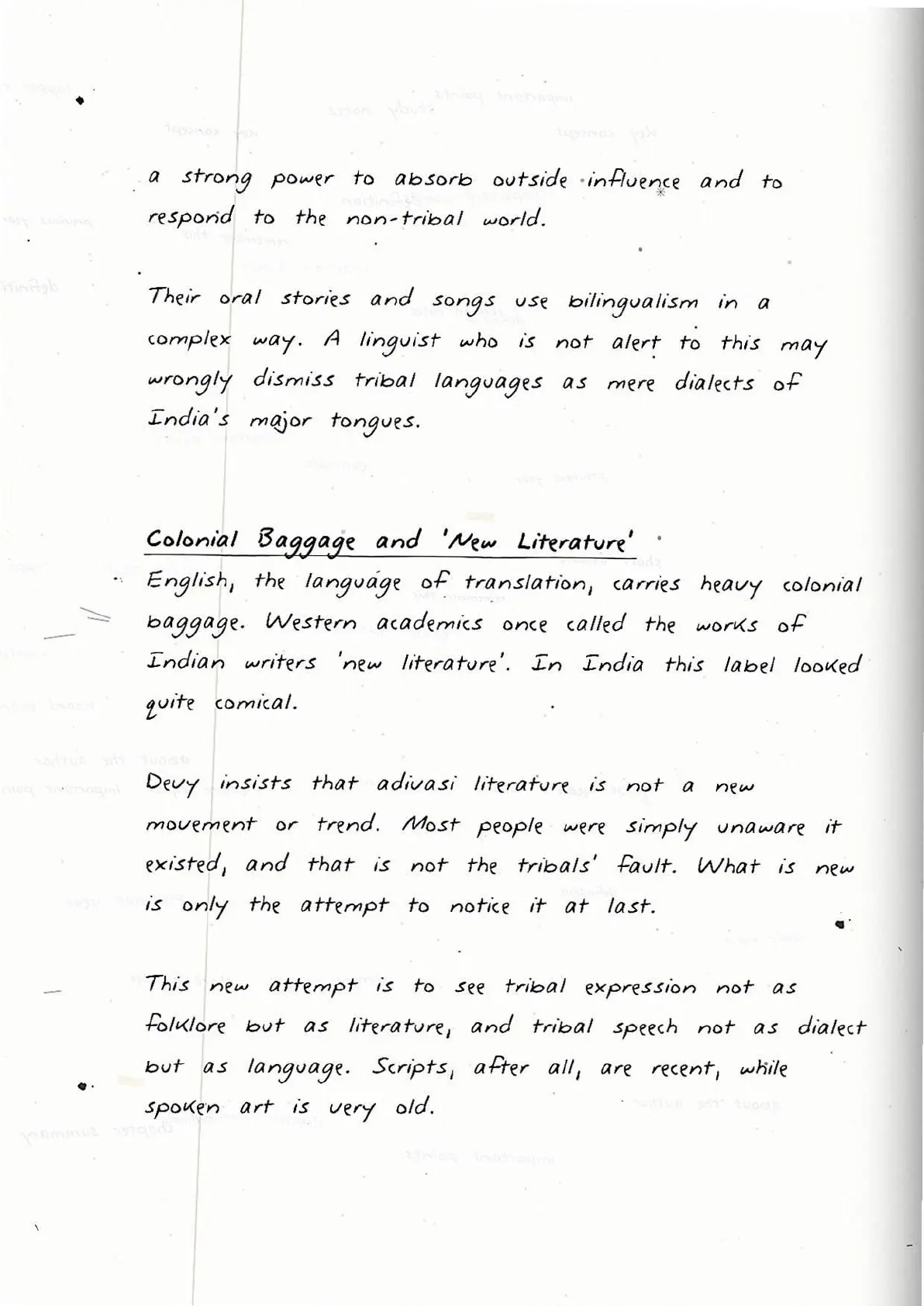
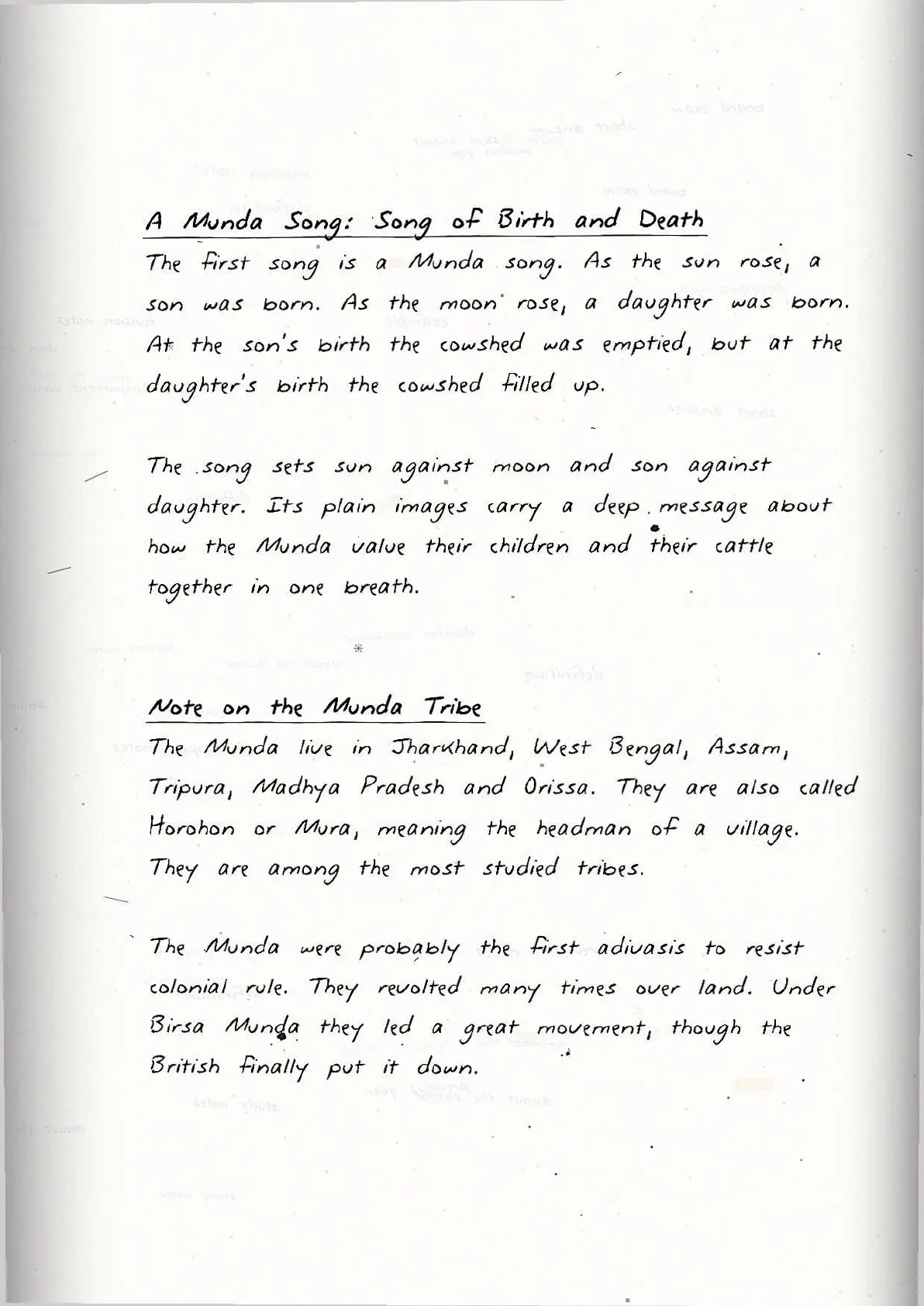
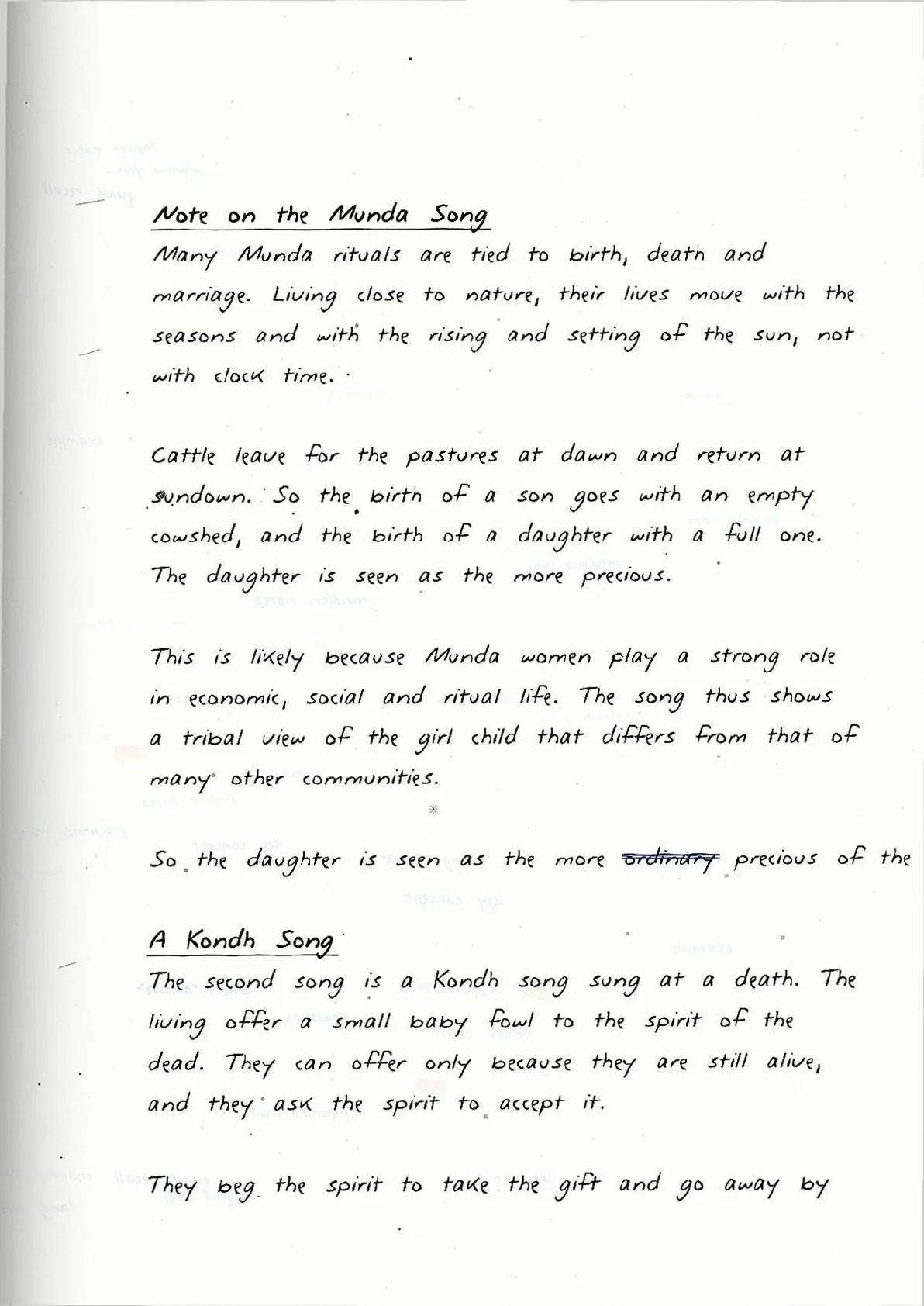
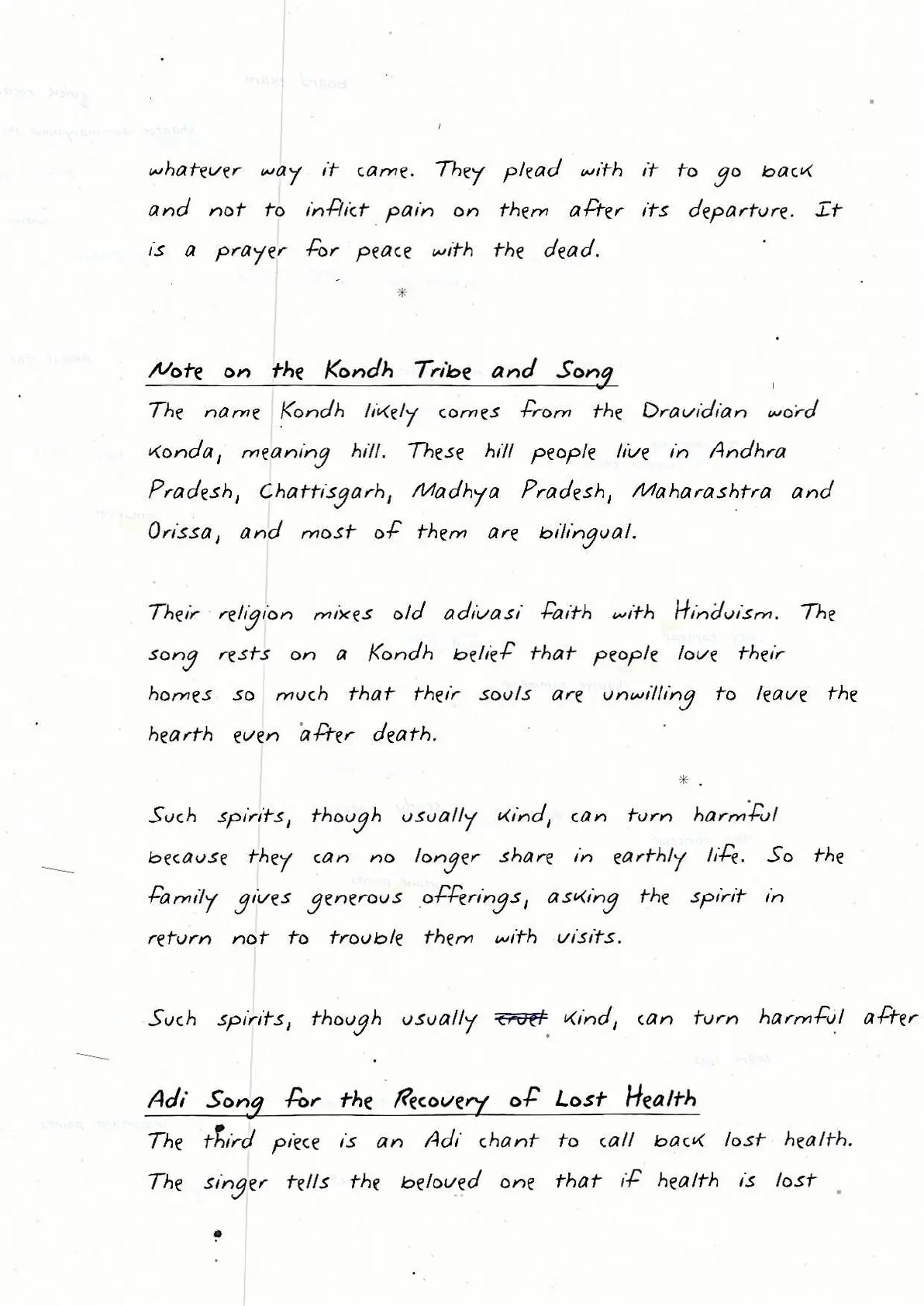
- What the notes cover: tribal oral verse as real literature, the dreamlike, nature-bound tribal imagination, memory, time and conversing with ancestors, a munda song of birth and death.
- Best for: quick revision before Class 11 exams and a base for CUET later.
You can read the complete class 11 english handwritten notes for Tribal Verse, with key terms, boxed definitions, and quick revision points, in the PDF below.
These handwritten notes are written by subject teachers, mapped to the 2026-27 NCERT, and checked against the last five years of CBSE Class 11 English papers.
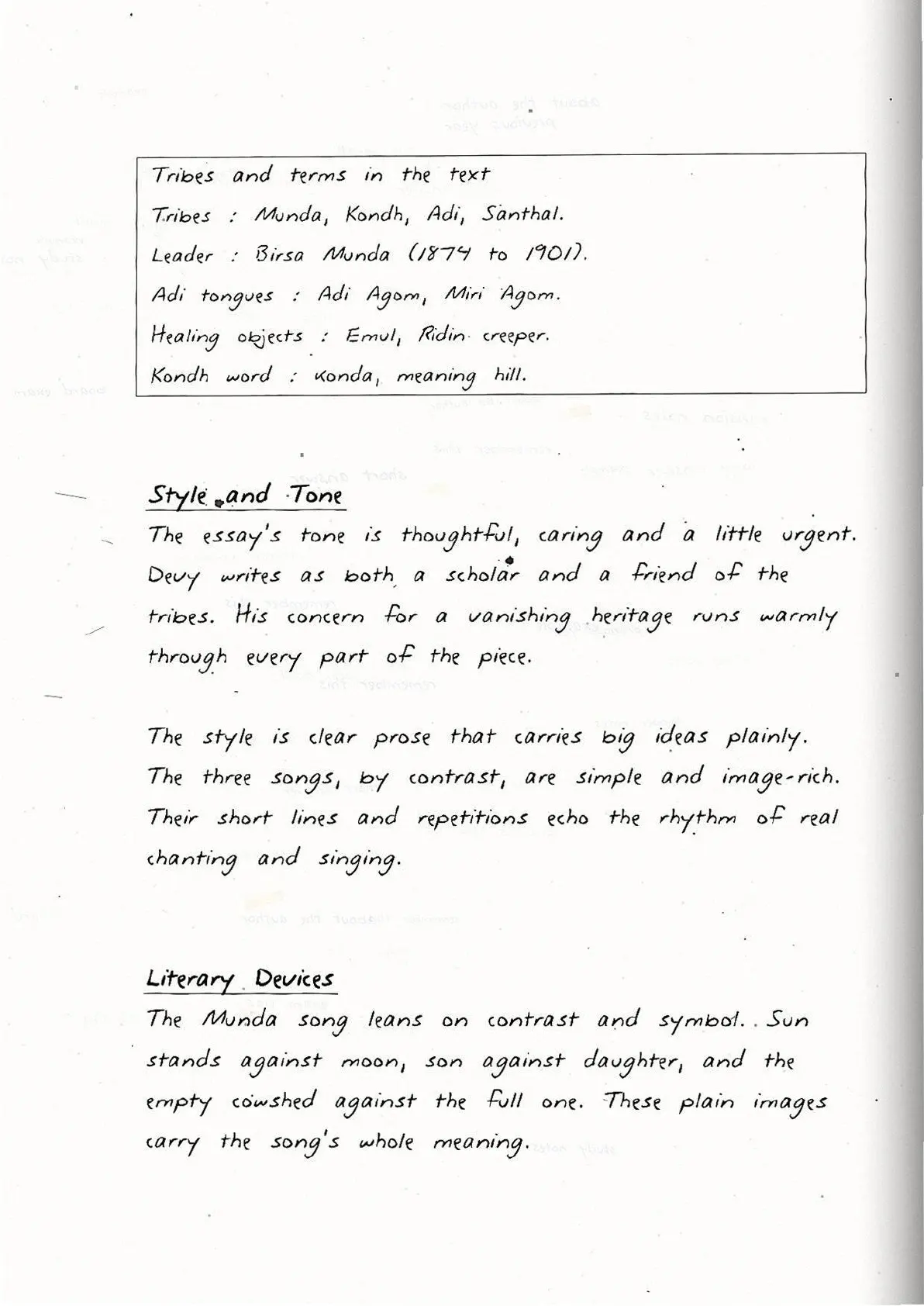
Key Terms and Ideas in Tribal Verse
These are the terms and ideas the exam asks about most. Learn each one so you can define it and use it in your answers.
| Term / Idea | What it means |
|---|---|
| G.N. Devy | essayist and founder of the Tribal Academy |
| Painted Words | the book the essay is drawn from |
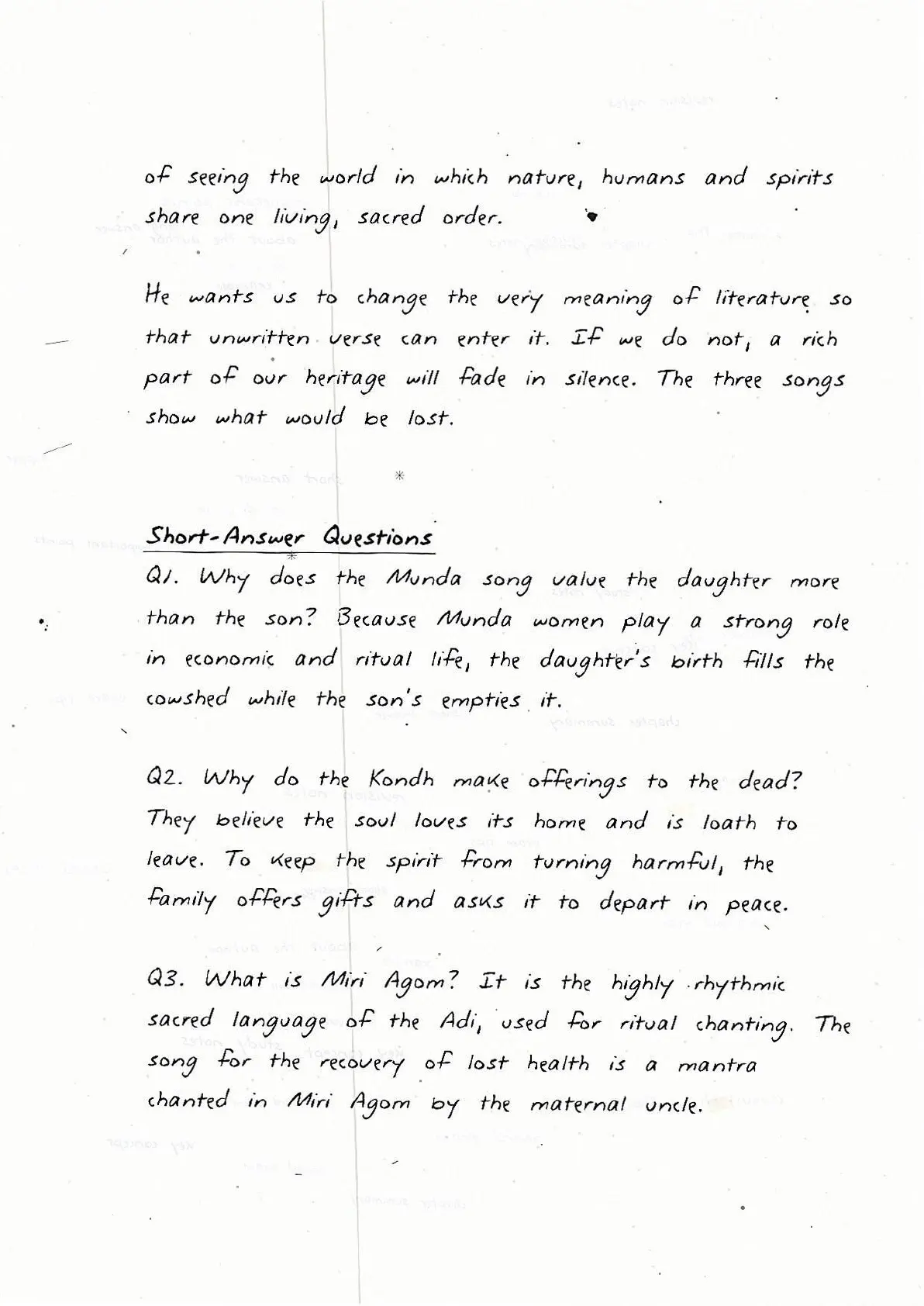
| Munda song | birth of a daughter fills the cowshed |
| Kondh song | sung at death, begging the spirit to depart |
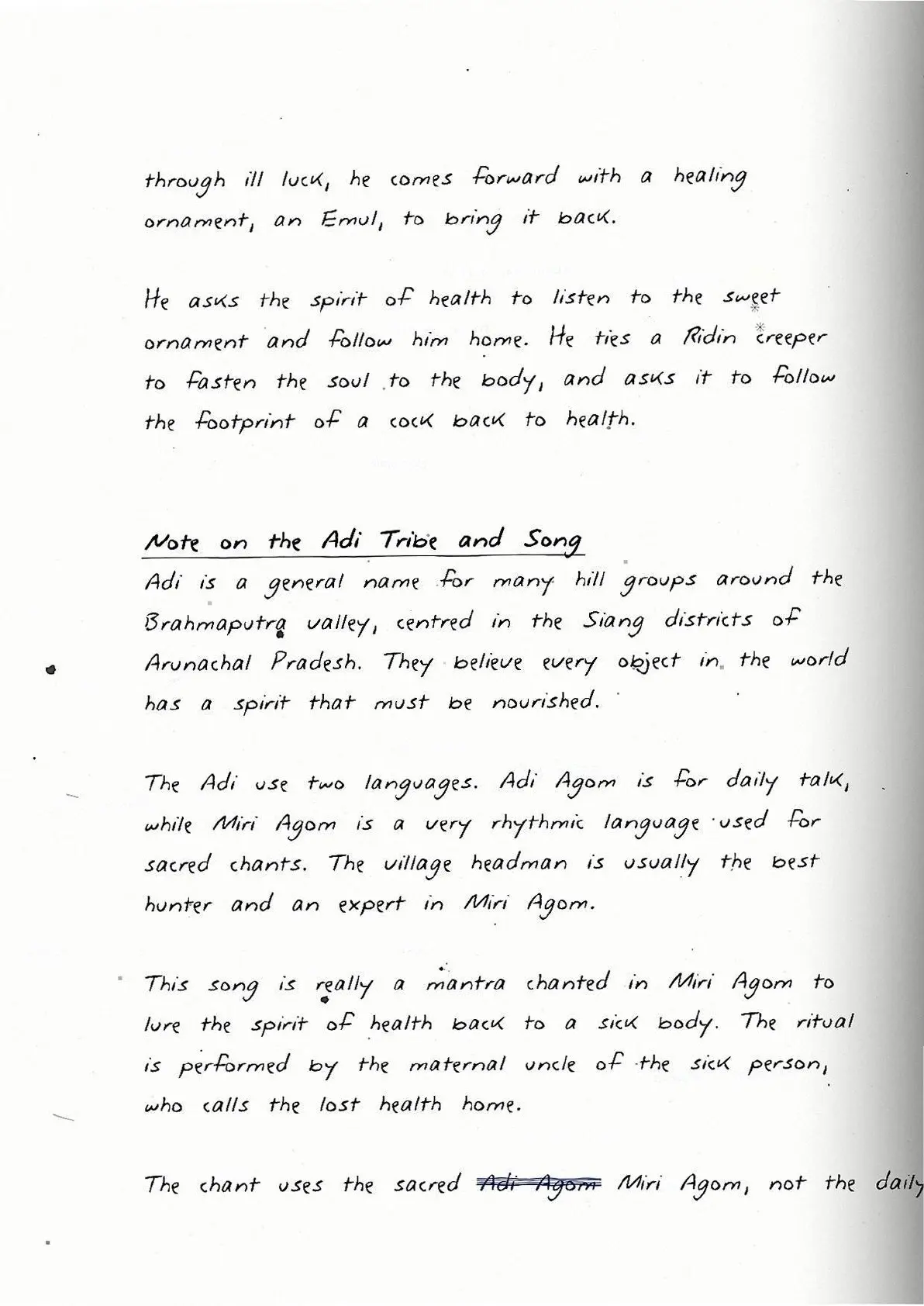
| Adi song | a Miri Agom mantra for lost health |
| Oral literature | songs kept alive by memory, not writing |
| Bilingualism | all Indian tribal communities use two tongues |
| Convention | the strict shared tradition ordering tribal art |
What the Tribal Verse Handwritten Notes Cover
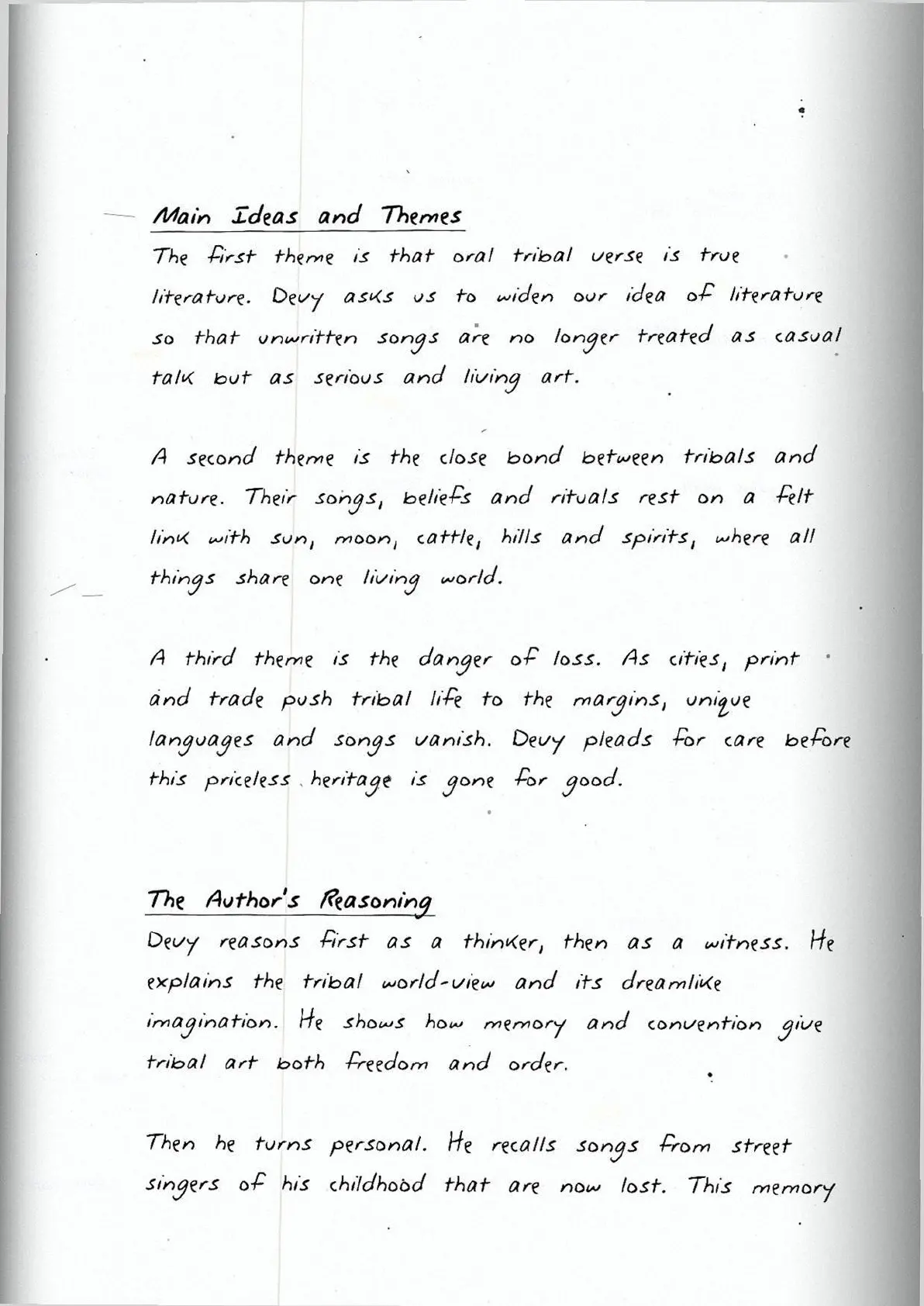
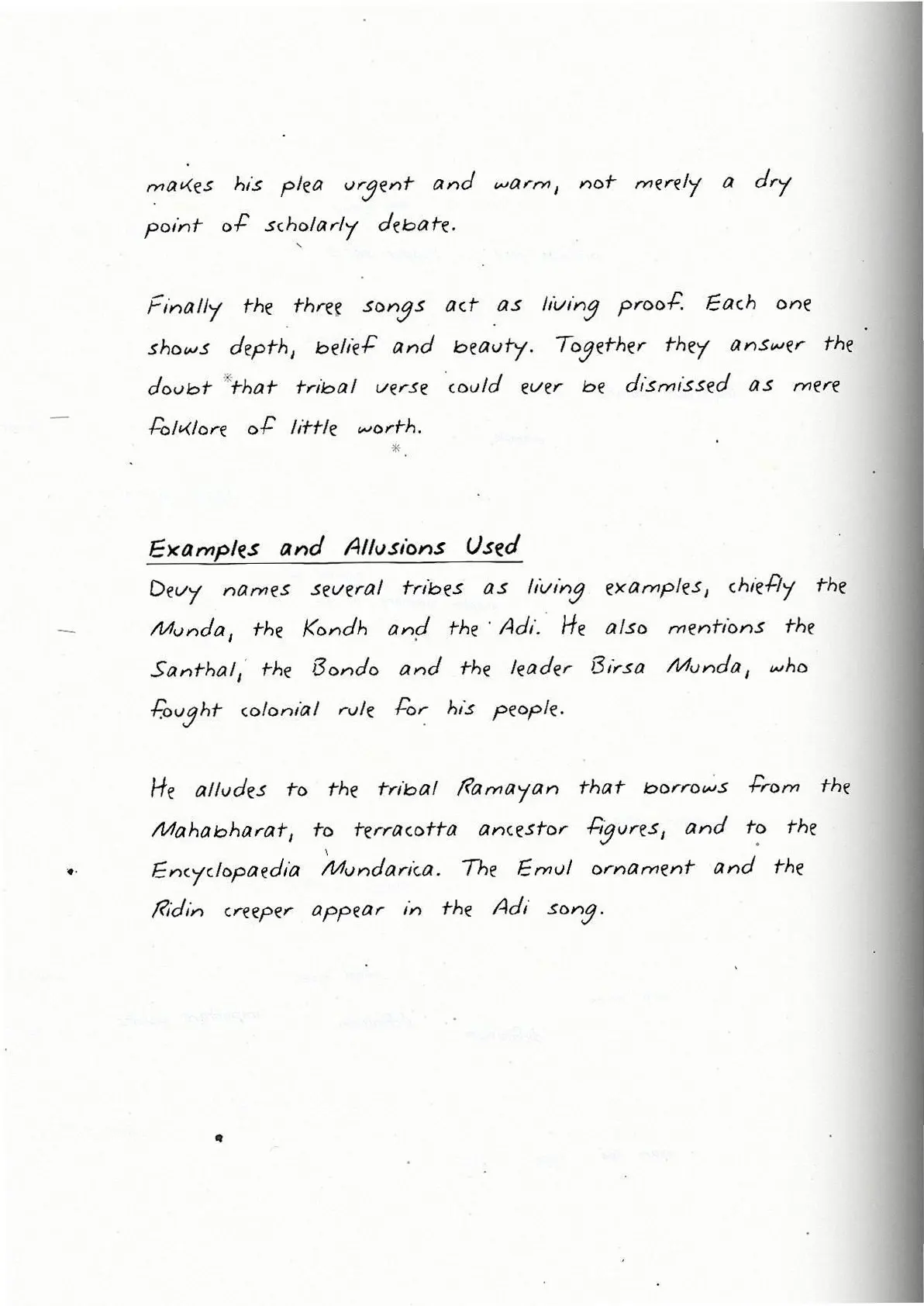
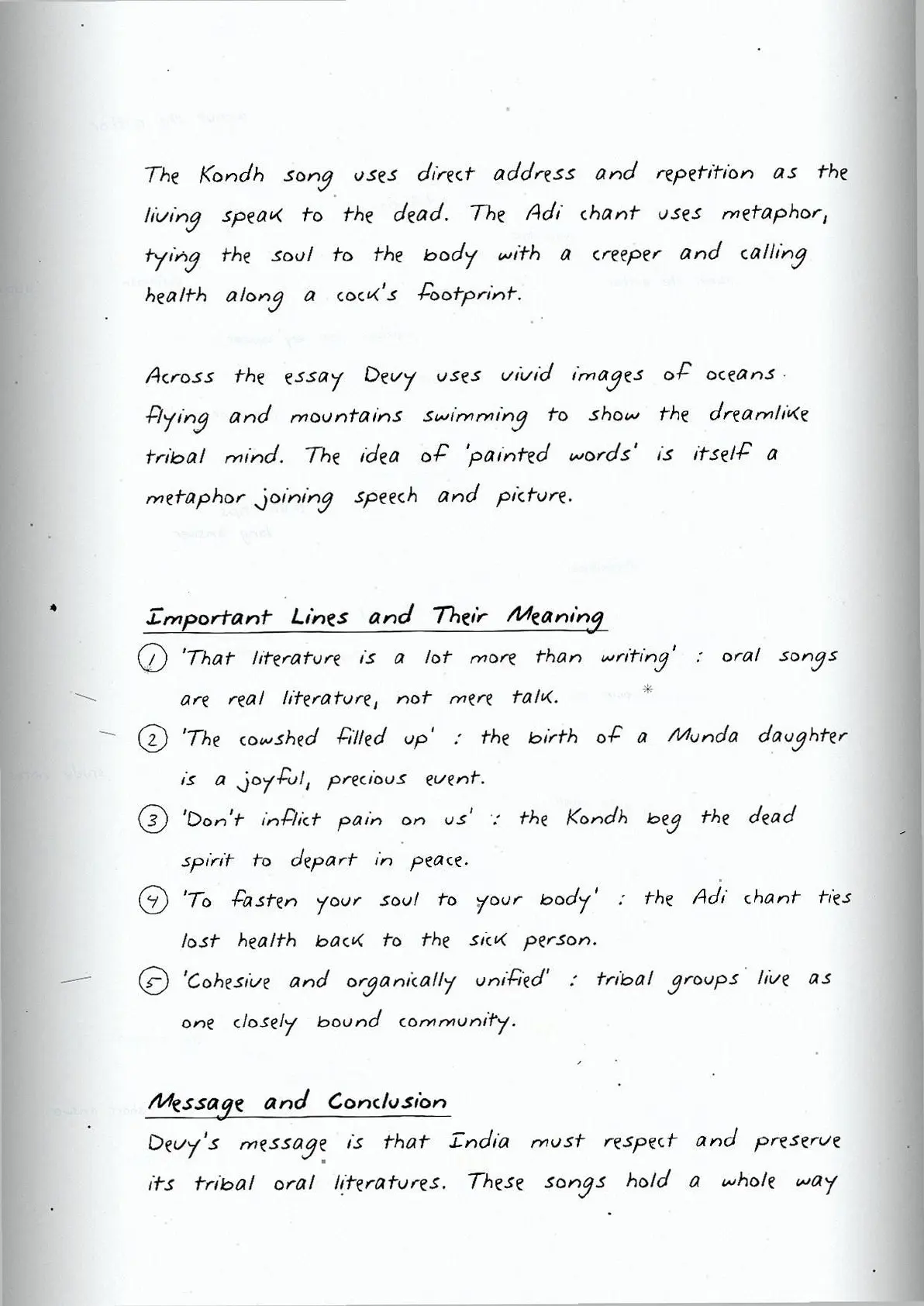
G.N. Devy argues that India's tribal oral songs are true literature, not casual talk. He explains the dreamlike tribal world-view and warns that this heritage is fading. Three tribal songs prove its depth.
- Tribal oral verse as real literature
- The dreamlike, nature-bound tribal imagination
- Memory, time and conversing with ancestors
- A Munda song of birth and death
- A Kondh song sung at a death
- An Adi chant for the recovery of health
- Widening the meaning of literature
Tribal Verse Topic-wise Weightage for CBSE Class 11 English
Some parts of this chapter are asked more often than others. The table below shows which sub-topics to revise first, based on recent CBSE Class 11 question trends.
| Sub-topic | Weightage | CBSE Frequency |
|---|---|---|
| Importance of the oral literary tradition | High | very frequent |
| Tribal versus secular imagination | High | frequent |
| The Munda view of the girl child | Medium | common |
| Kondh beliefs behind offerings to the dead | Medium | common |
| The Adi ritual and Miri Agom | Low | occasional |
How Collegedunia's Handwritten Notes Help You Revise Tribal Verse
These notes are made for the night before the exam. They keep the facts short and easy to scan. Collegedunia maps every point to the 2026-27 NCERT.
- Clear handwriting: each topic is written in neat, easy-to-read handwriting.
- Boxed key terms: the main terms and definitions are boxed by hand for fast recall.
- Diagrams and tables: simple hand-drawn tables and charts make ideas clear.
- Colour-coded headings: new sub-topics stand out, so you find any section in seconds.
Tribal Verse Self-Assessment Quiz
Try these quick questions after you read the notes. Tap each question to check your answer. They cover the points CBSE asks most often.
Who wrote the essay on Tribal Verse?
(a) S. Chandrasekhar (b) G.N. Devy (c) Birsa Munda (d) Matthew Arnold
Answer: (b) correct - it is by G.N. Devy, founder of the Tribal Academy at Tejgarh.
In the Munda song, whose birth fills the cowshed?
(a) the son (b) the daughter (c) the headman (d) no one
Answer: (b) correct - the daughter's birth fills the cowshed, showing she is valued.
When is the Kondh song sung?
(a) at a birth (b) at a marriage (c) at a death (d) at harvest
Answer: (c) correct - it is sung at death, begging the spirit to depart in peace.
What is Miri Agom?
(a) a tribe (b) the Adi sacred chanting language (c) a healing creeper (d) a village
Answer: (b) correct - Miri Agom is the rhythmic sacred language used in Adi rituals.
What does Devy want us to change?
(a) the tribal songs (b) the meaning of literature (c) the tribal languages (d) the school syllabus
Answer: (b) correct - he asks us to widen literature to include unwritten oral verse.
How to Use These Handwritten Notes for Class 11 English Revision
Use these class 11 english handwritten notes in two passes. Read them slowly once for the full chapter. Then, near the exam, read only the boxes and key terms for a fast recall.
- Read the notes once with the NCERT chapter open beside you.
- Say each key term and idea in your own words.
- Practise one long-answer question from a past paper.
- On the last day, revise only the key terms and the boxes.
Class 11 English Handwritten Notes for All Chapters
The table below links the class 11 english handwritten notes for every chapter. Use it to jump to any other chapter's notes.
Tribal Verse Class 11 English Handwritten Notes FAQs
Ques. Where can I download Tribal Verse Class 11 English Handwritten Notes PDF?
Ans. You can download the Tribal Verse Class 11 English Handwritten Notes PDF directly from this page. Both the Normal and HD versions are free.
Ques. Are these handwritten notes aligned with the 2026-27 NCERT?
Ans. Yes. These notes follow the current 2026-27 syllabus for Class 11 English. Students often ask why oral songs should be called literature at all.
Ques. How many pages is the Class 11 English Tribal Verse Handwritten Notes PDF?
Ans. The notes run about 22 pages. They cover the full chapter with key terms, hand-drawn boxes, and a short self-assessment quiz.
Ques. What is the main idea of the 11th standard English chapter Tribal Verse?
Ans. Devy argues that India's literary roots lie in oral tribal verse carried by memory. Unless we widen literature to include such unwritten songs, a rich and ancient part of our heritage will quietly disappear.
Ques. Are these Tribal Verse notes enough for the CBSE Class 11 exam?
Ans. Yes, for revision. The Collegedunia handwritten notes cover every key point and exam term. Read them with the NCERT chapter and practise past questions.



Comments