


These Physical Education handwritten notes turn the whole first chapter into clean, handwritten pages for fast last-minute revision. They follow the 2026-27 NCERT "Health and Physical Education" Class 11 Chapter 1 and cover the meaning and definitions of physical education, its aims and objectives, development through it, the need and importance in modern society, key terminology, and career options. Students get every definition and list in a pen-on-paper format that is easy to skim before a Class 11 test.
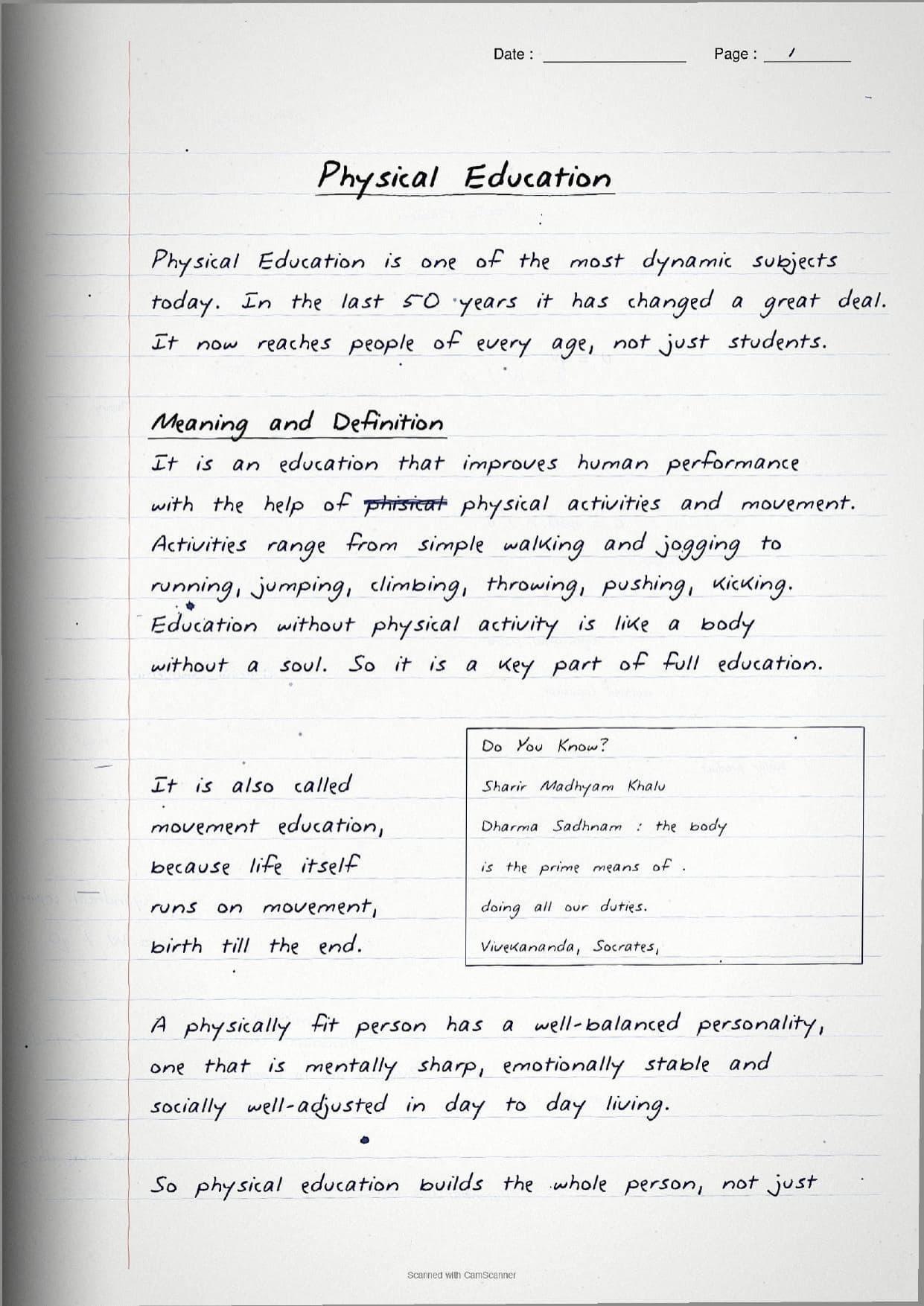
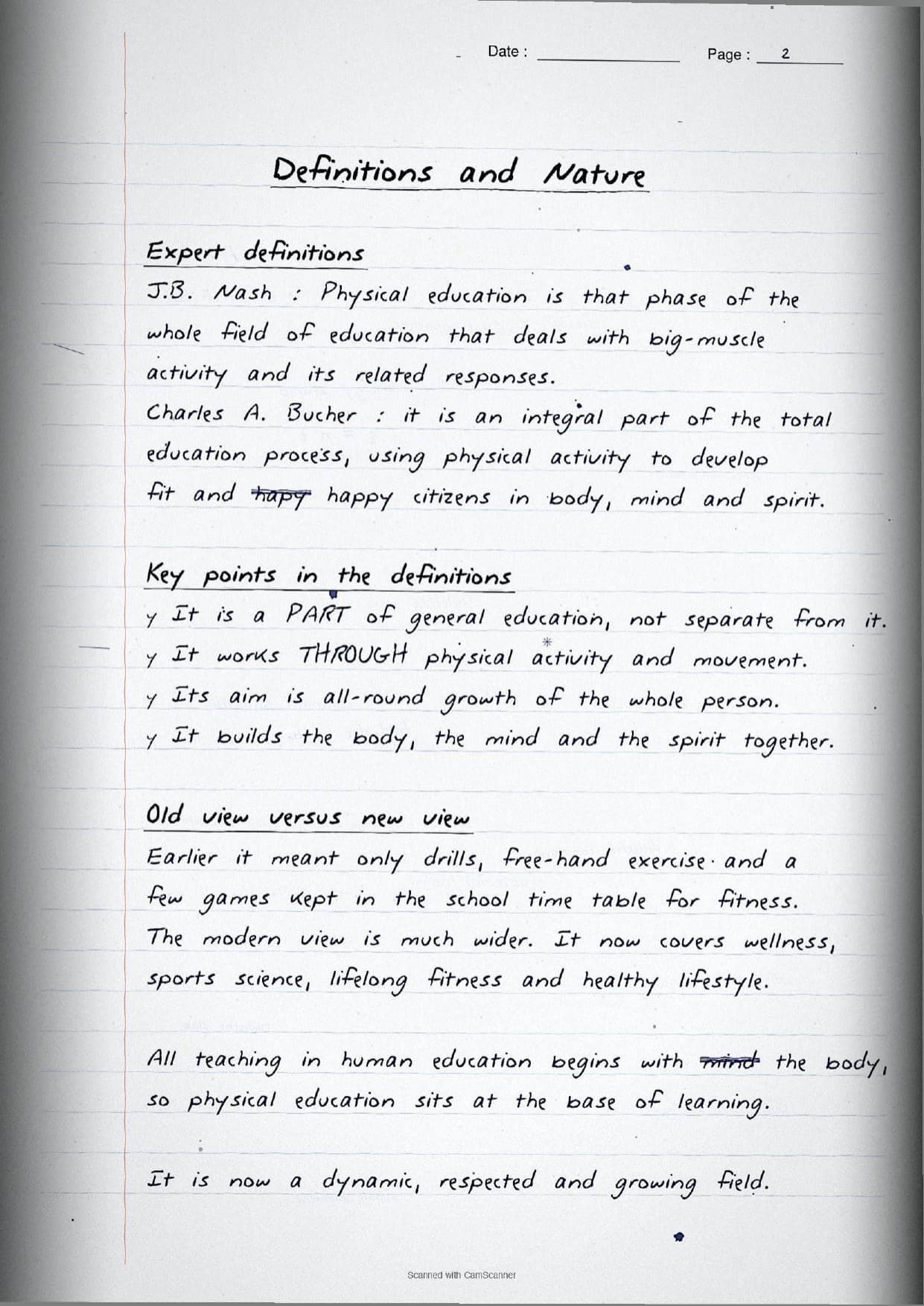
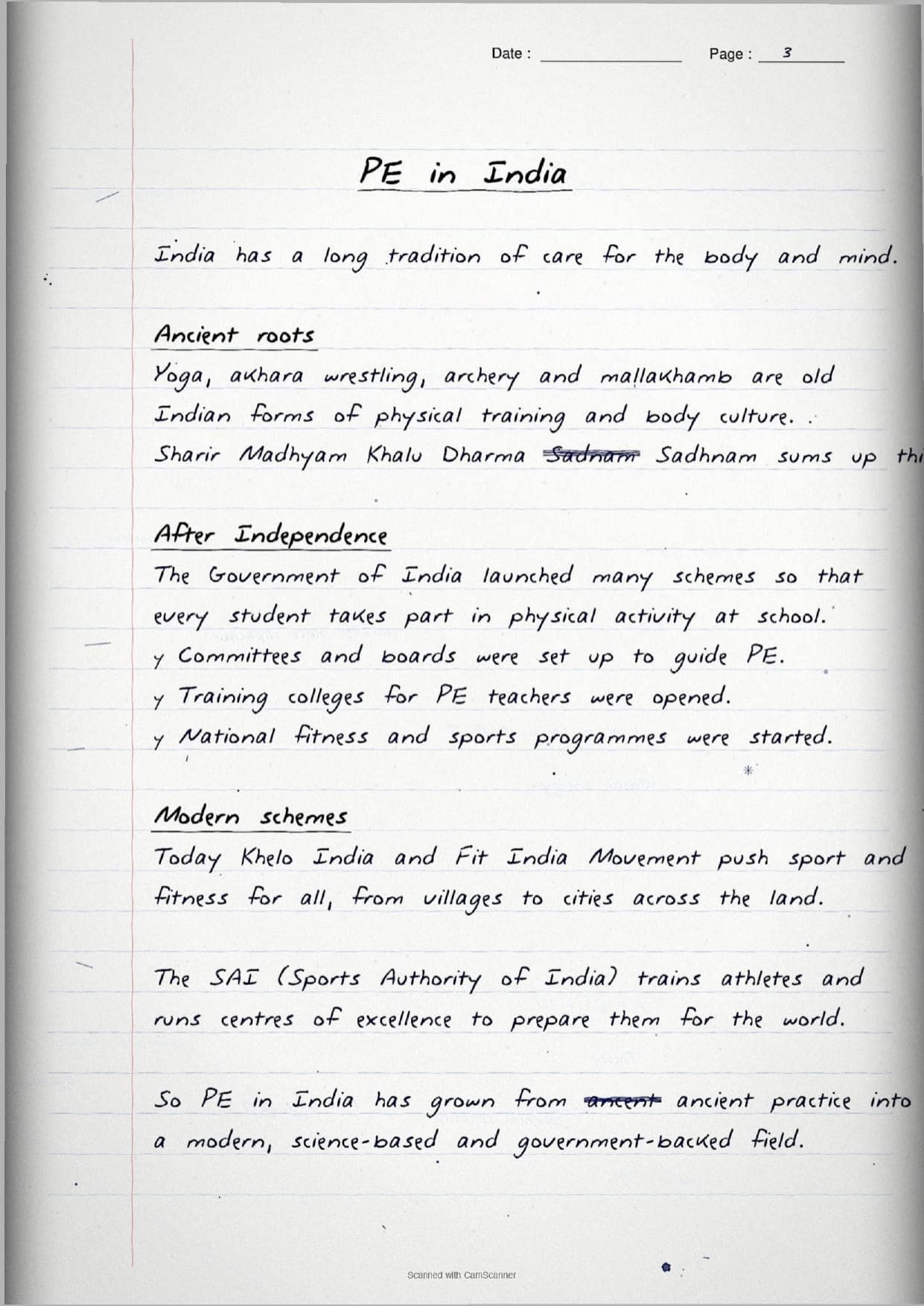
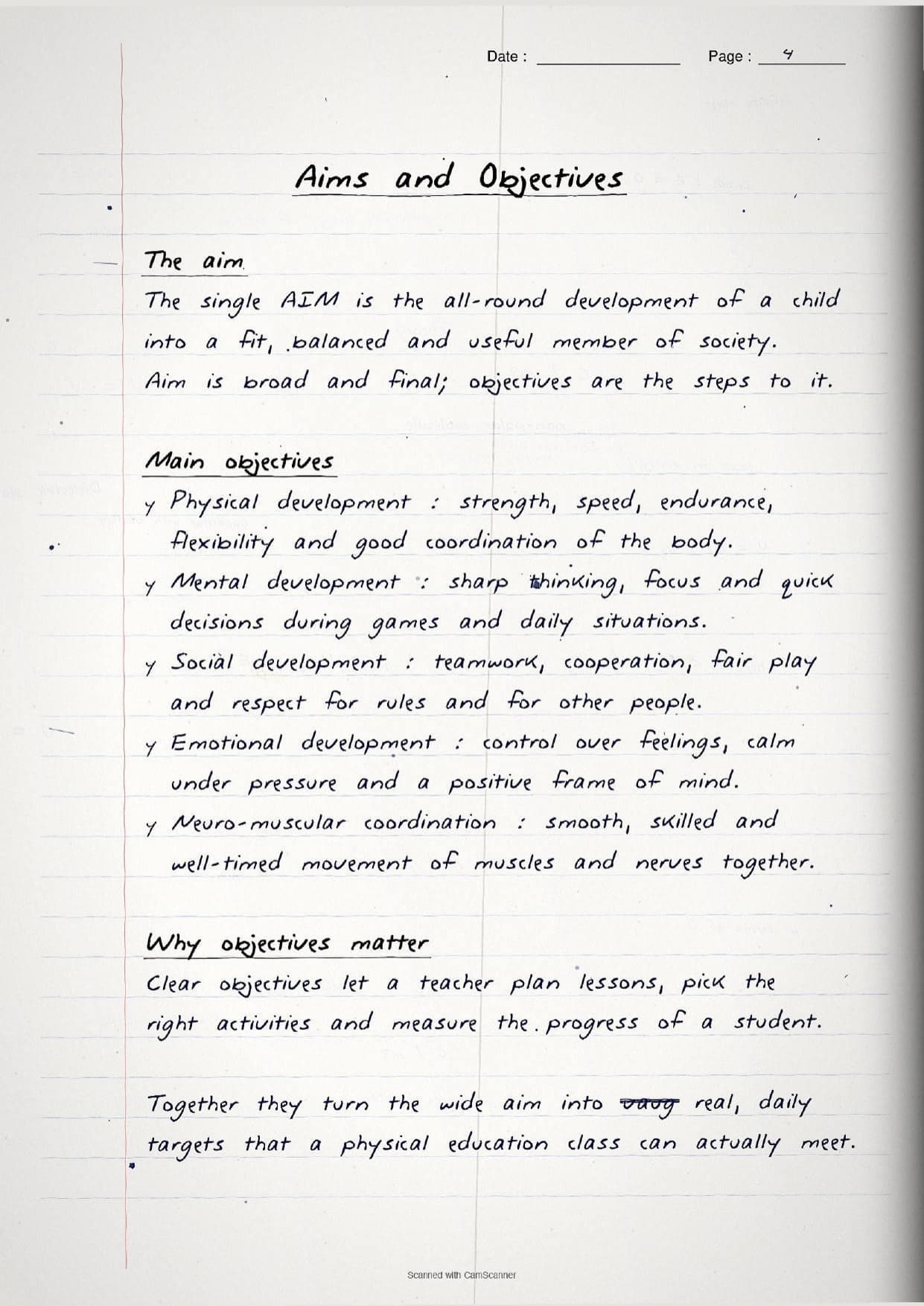
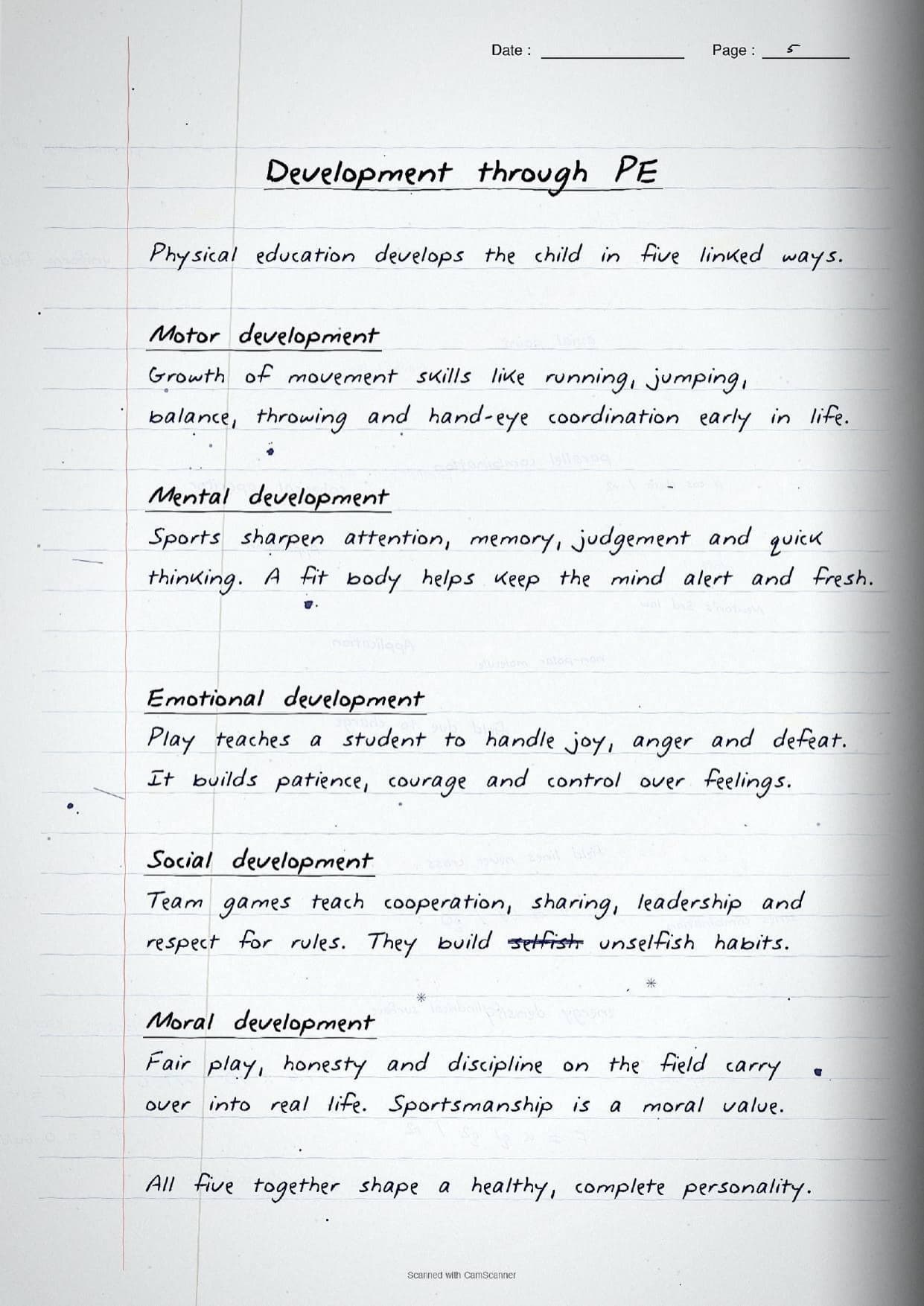
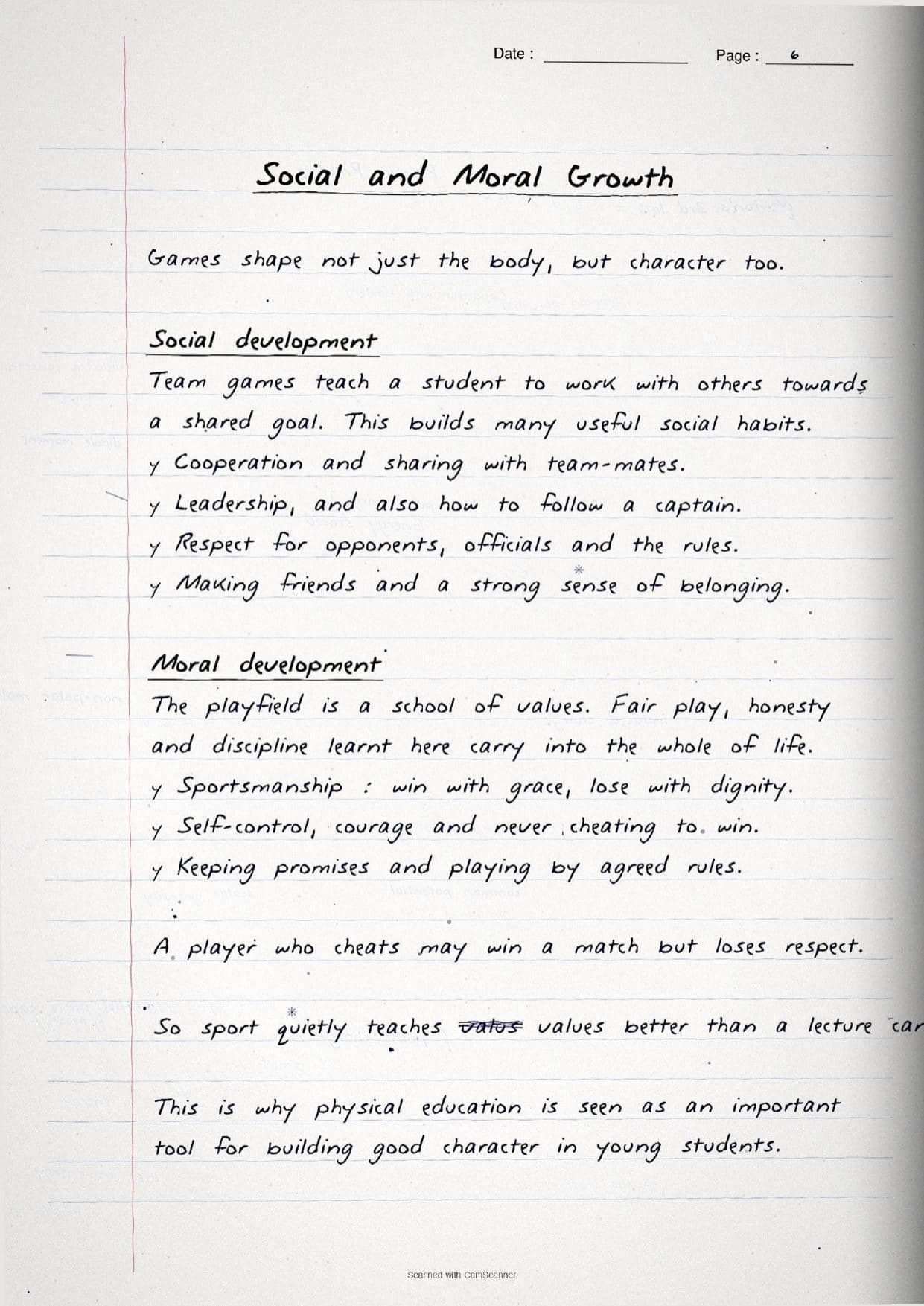
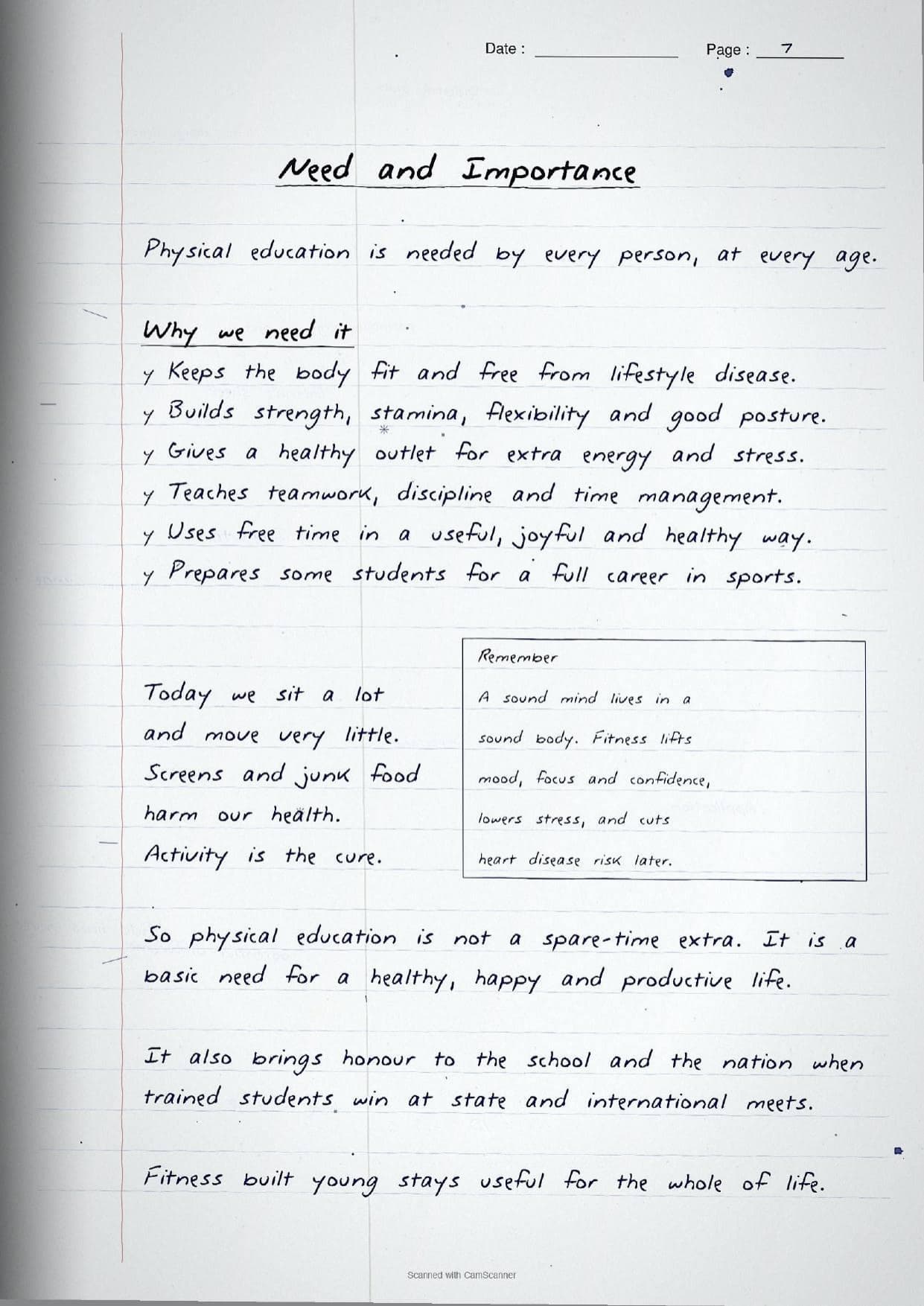
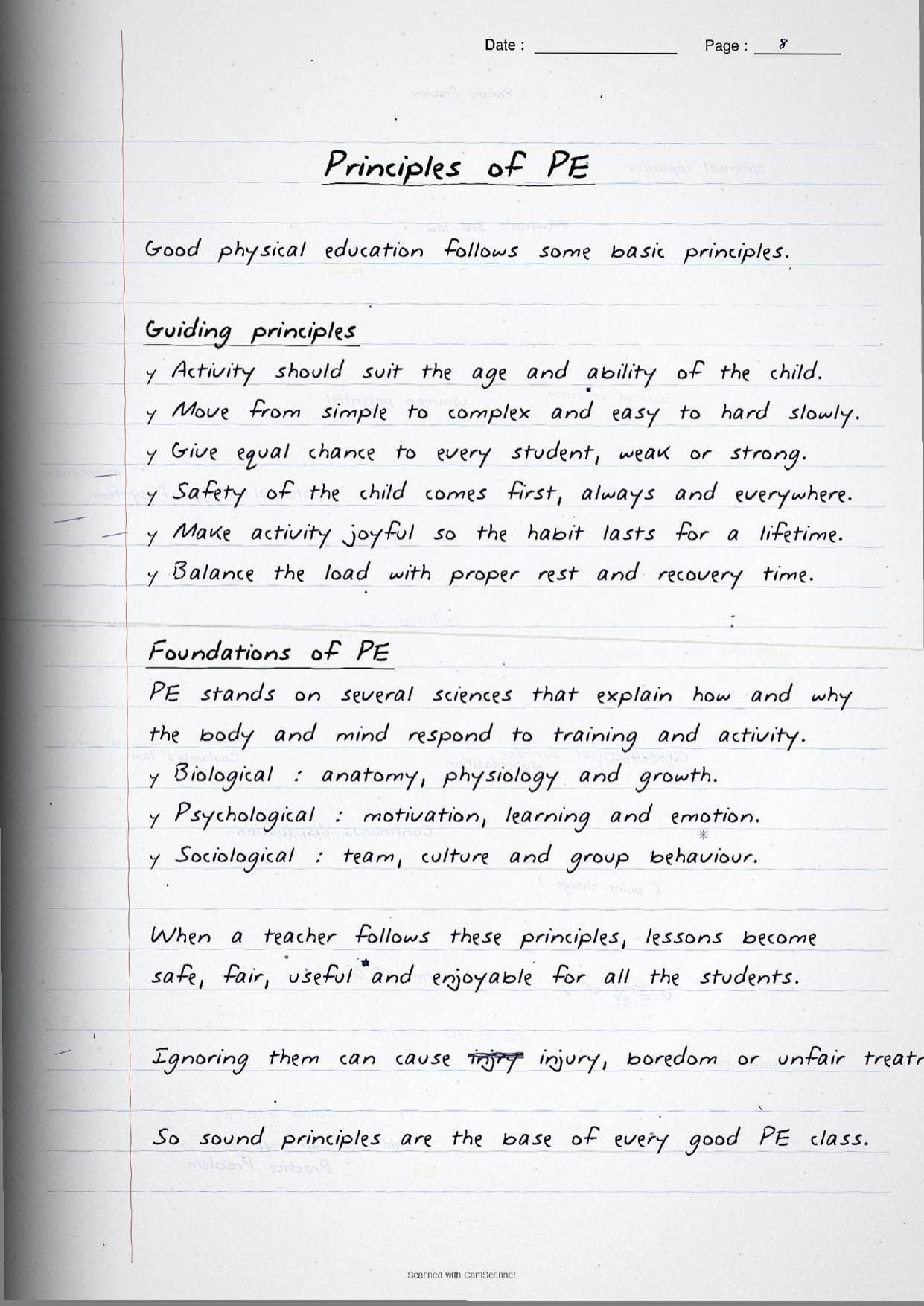
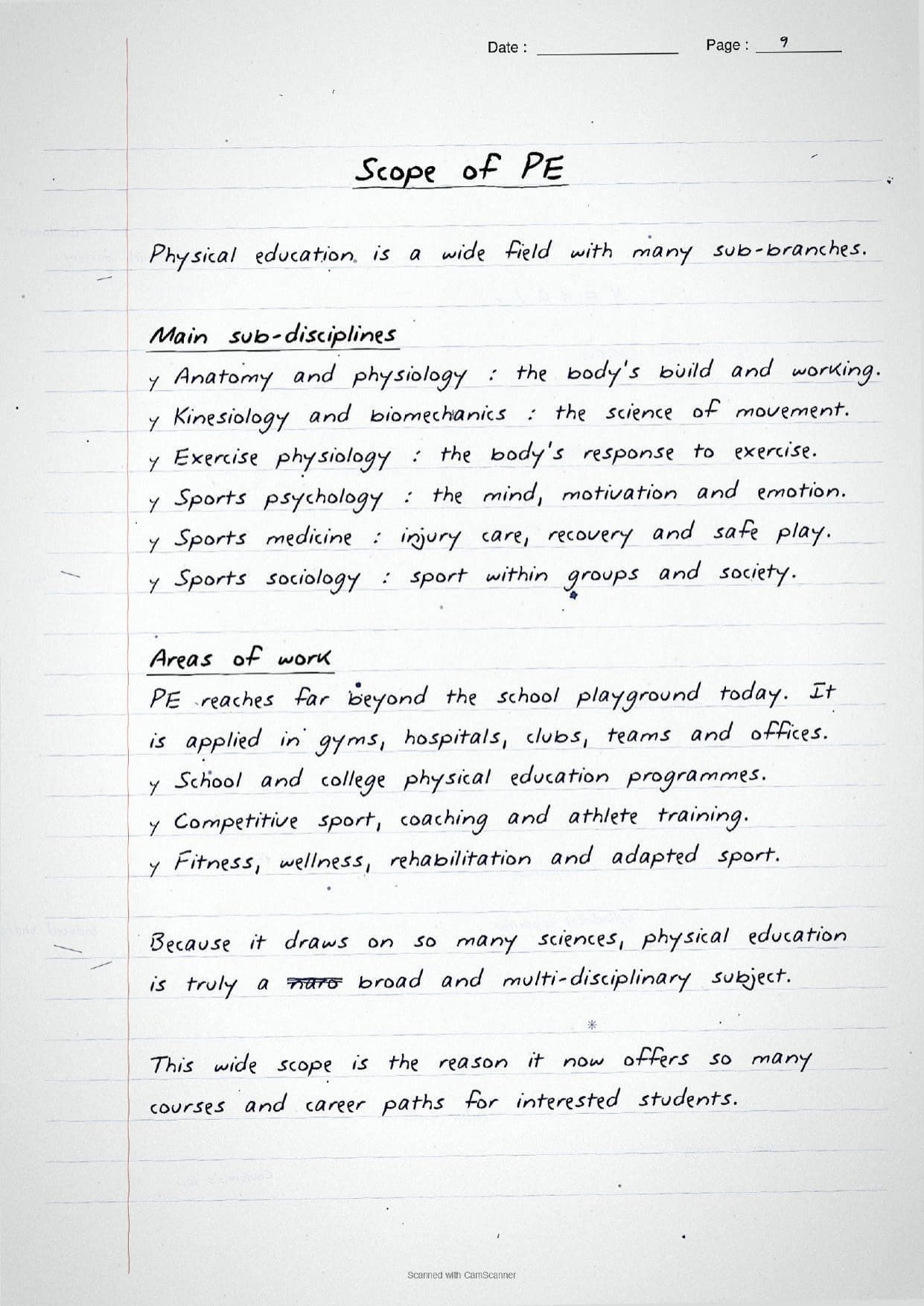
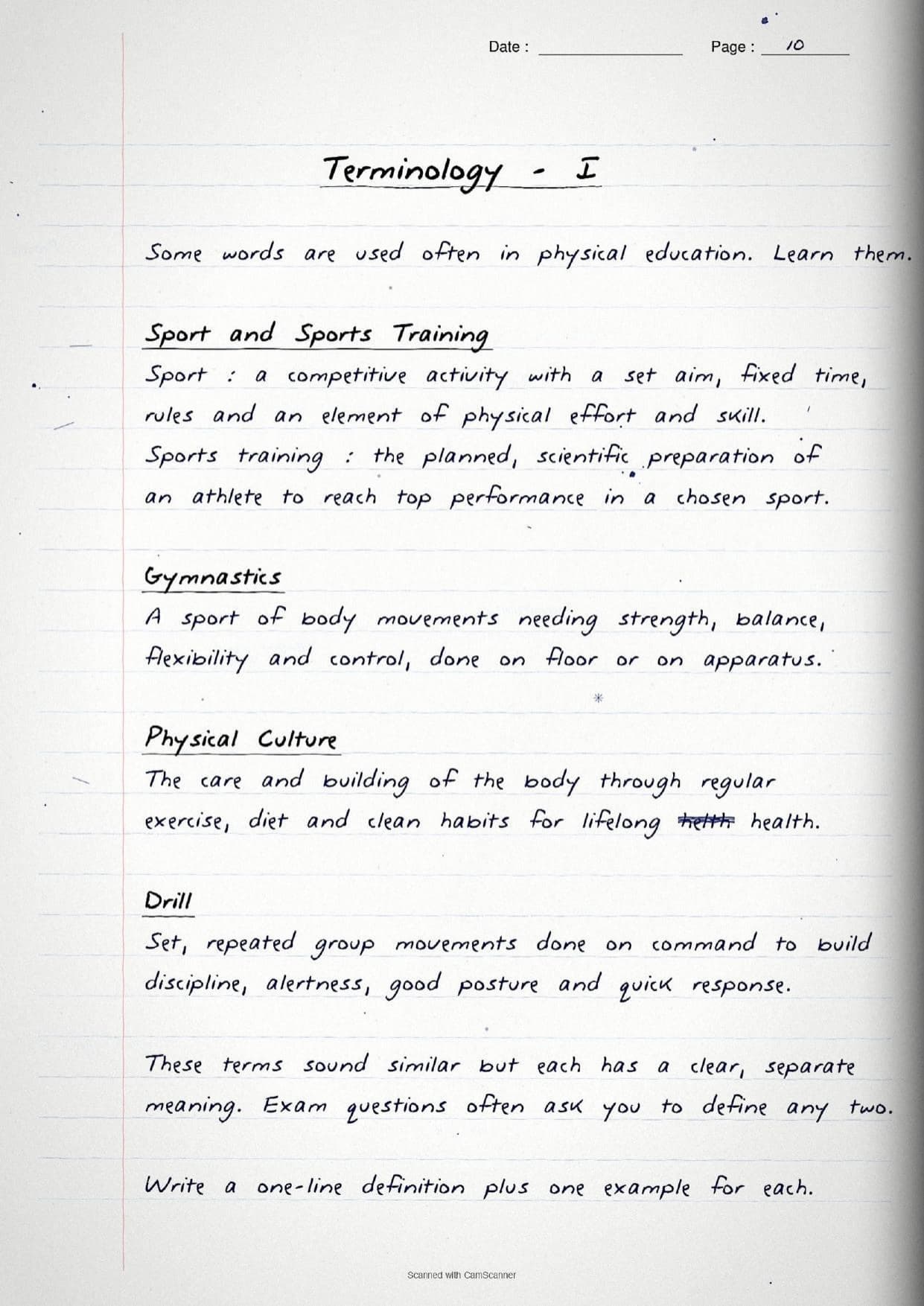
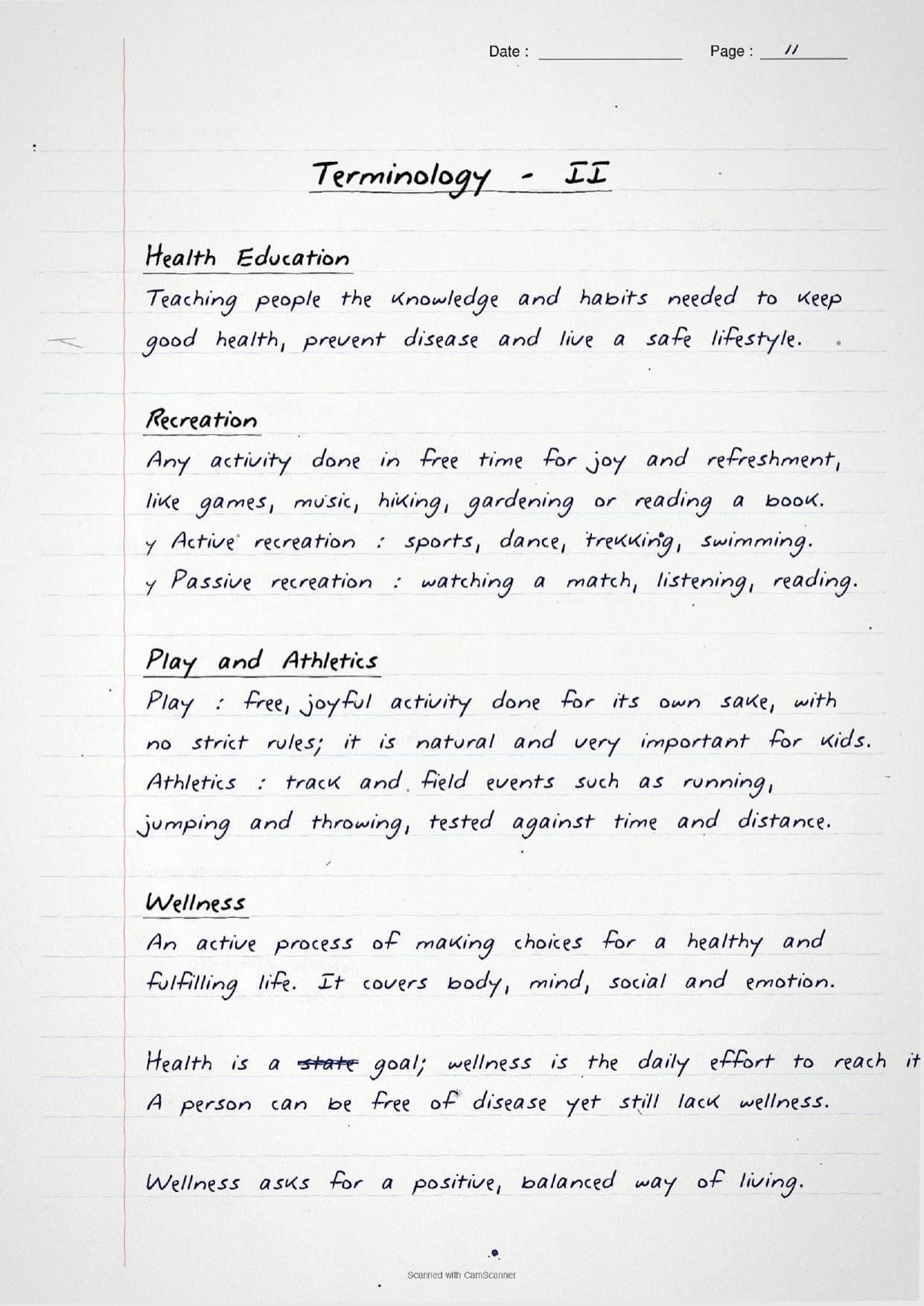
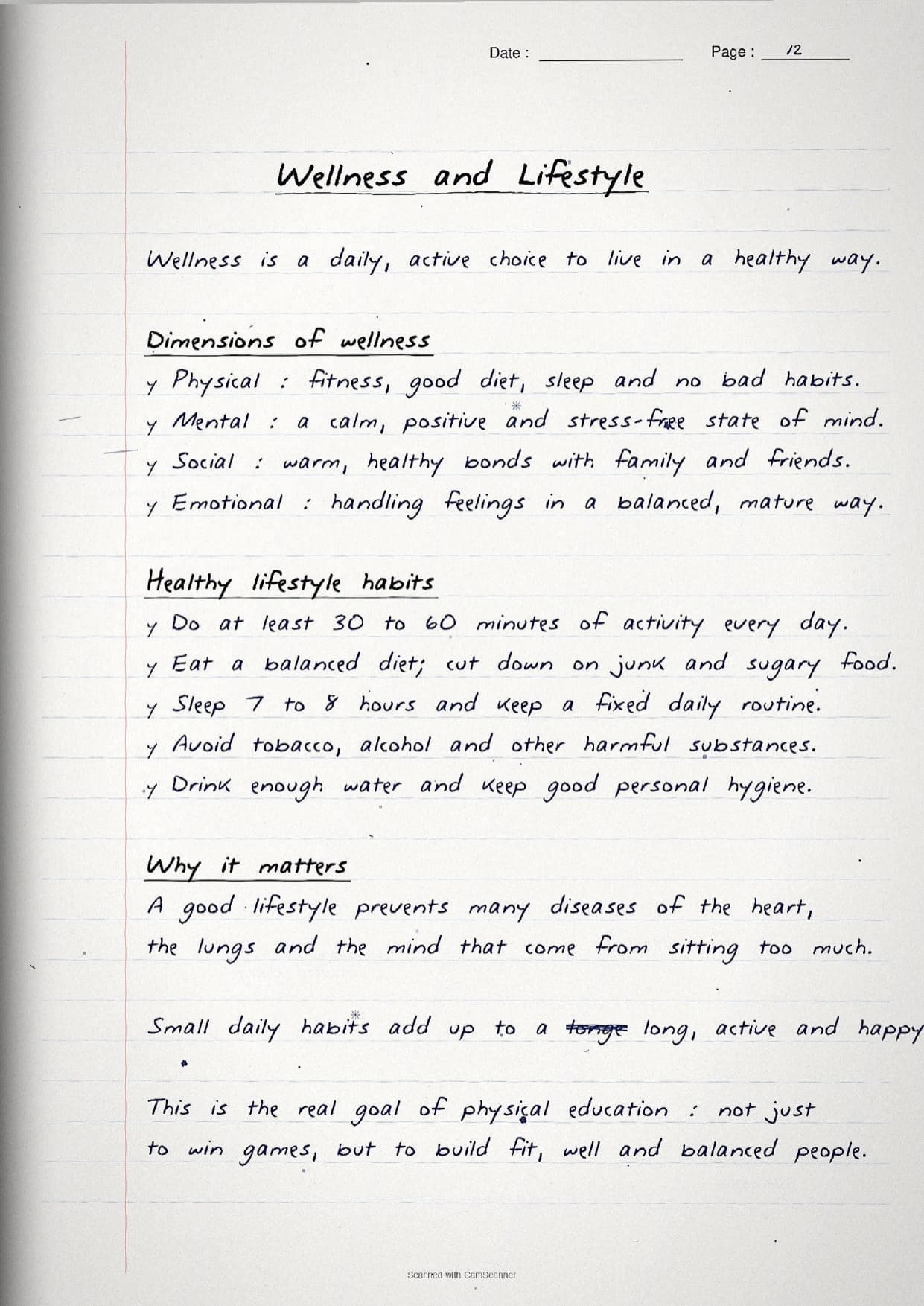
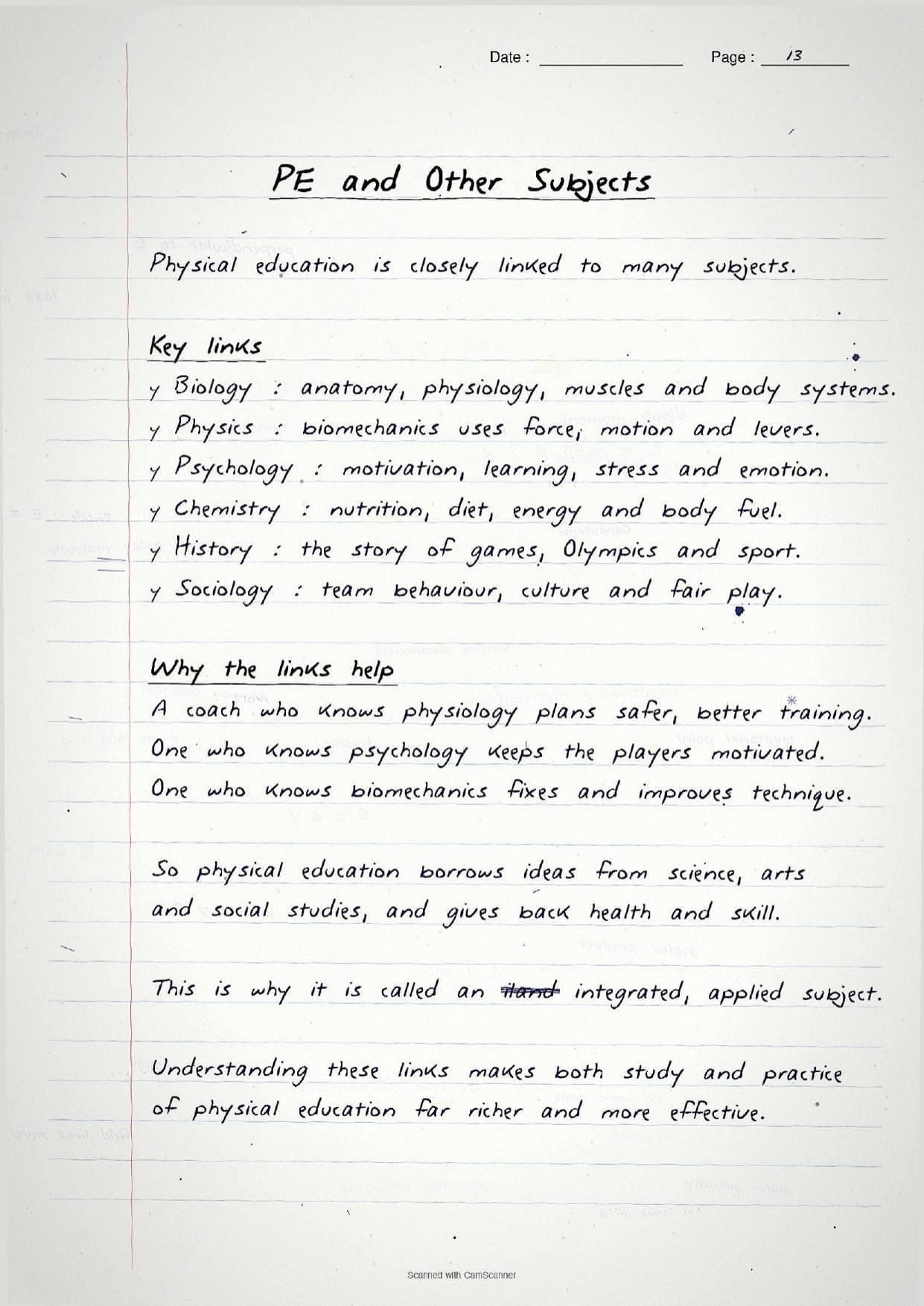
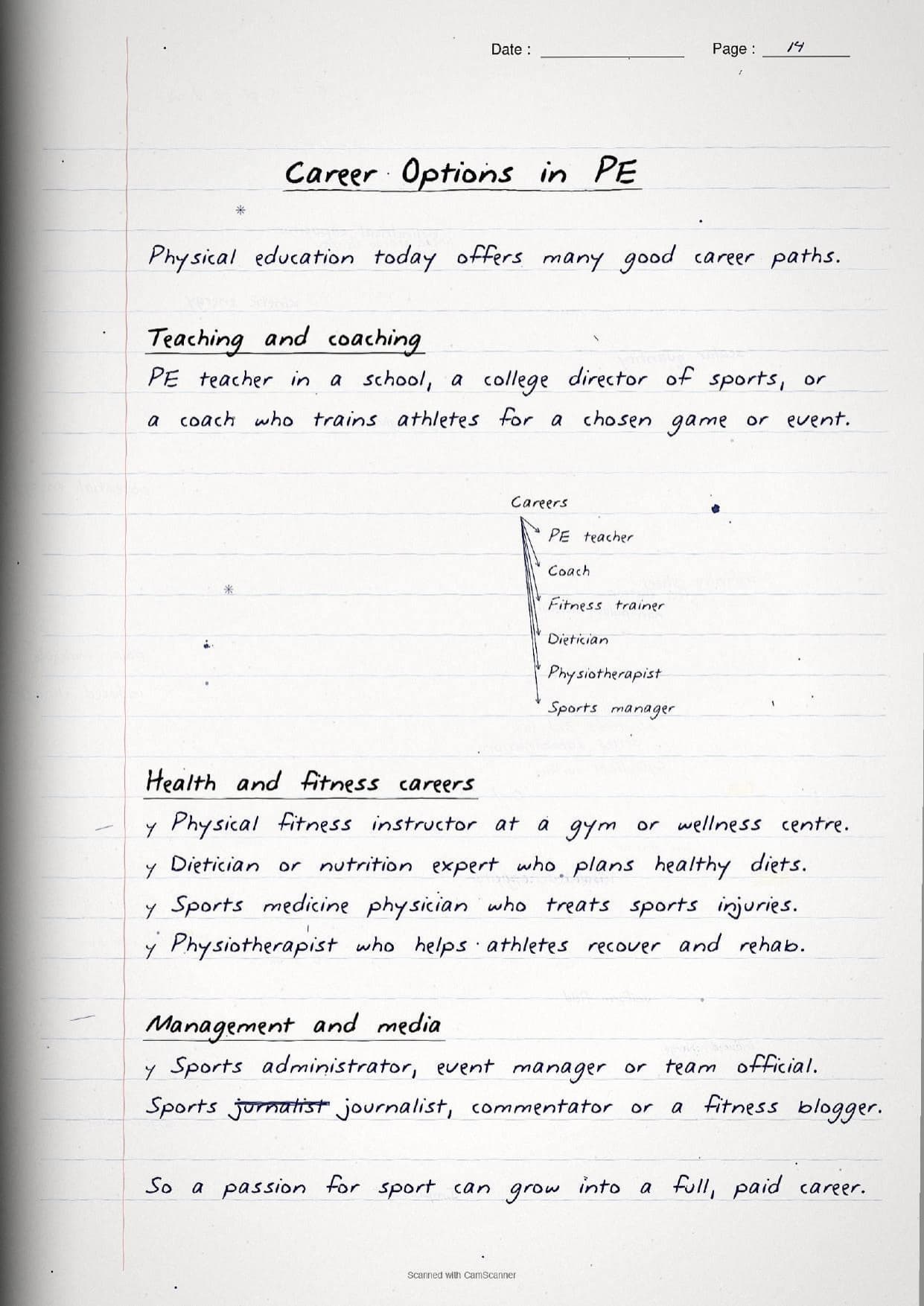
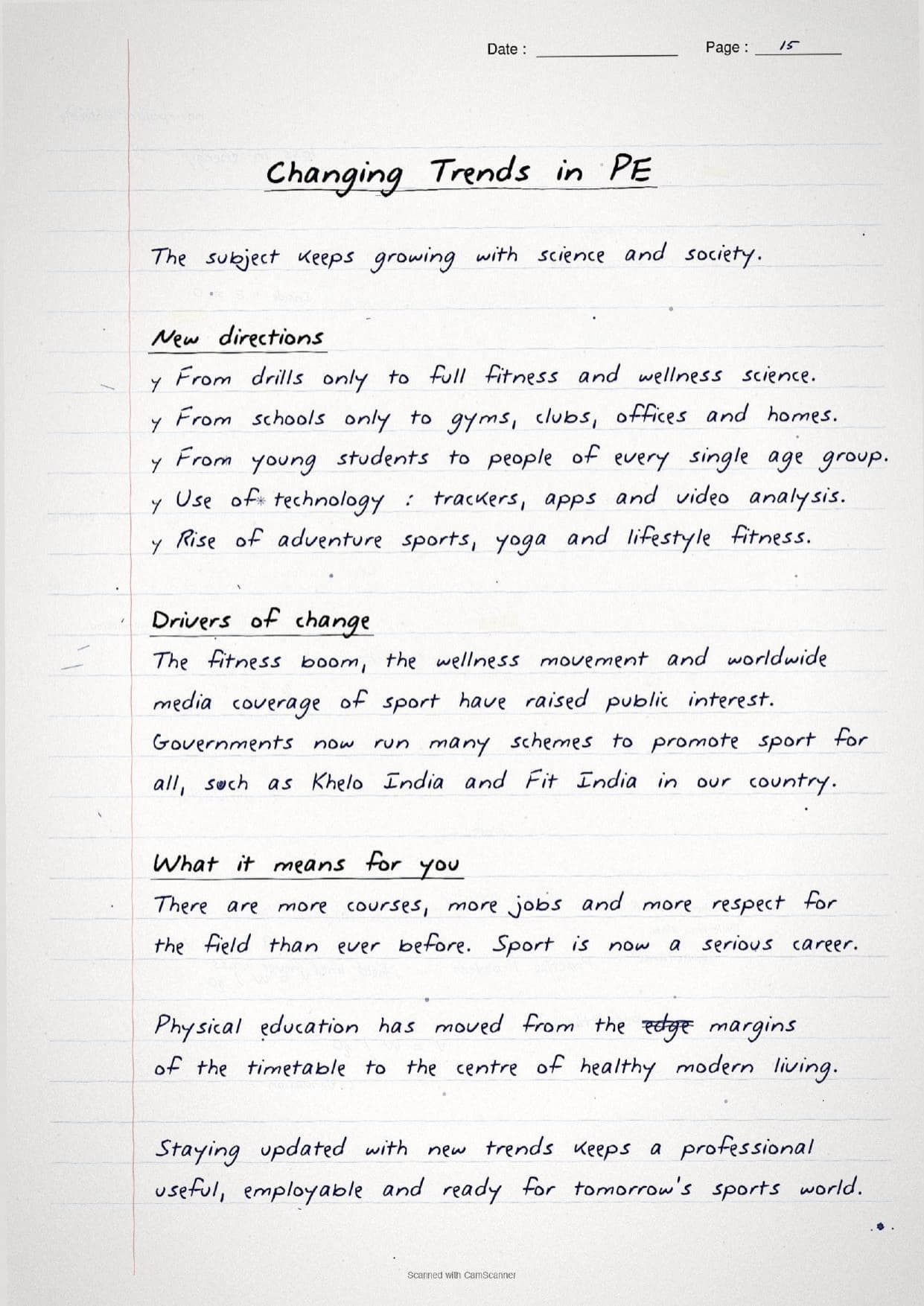
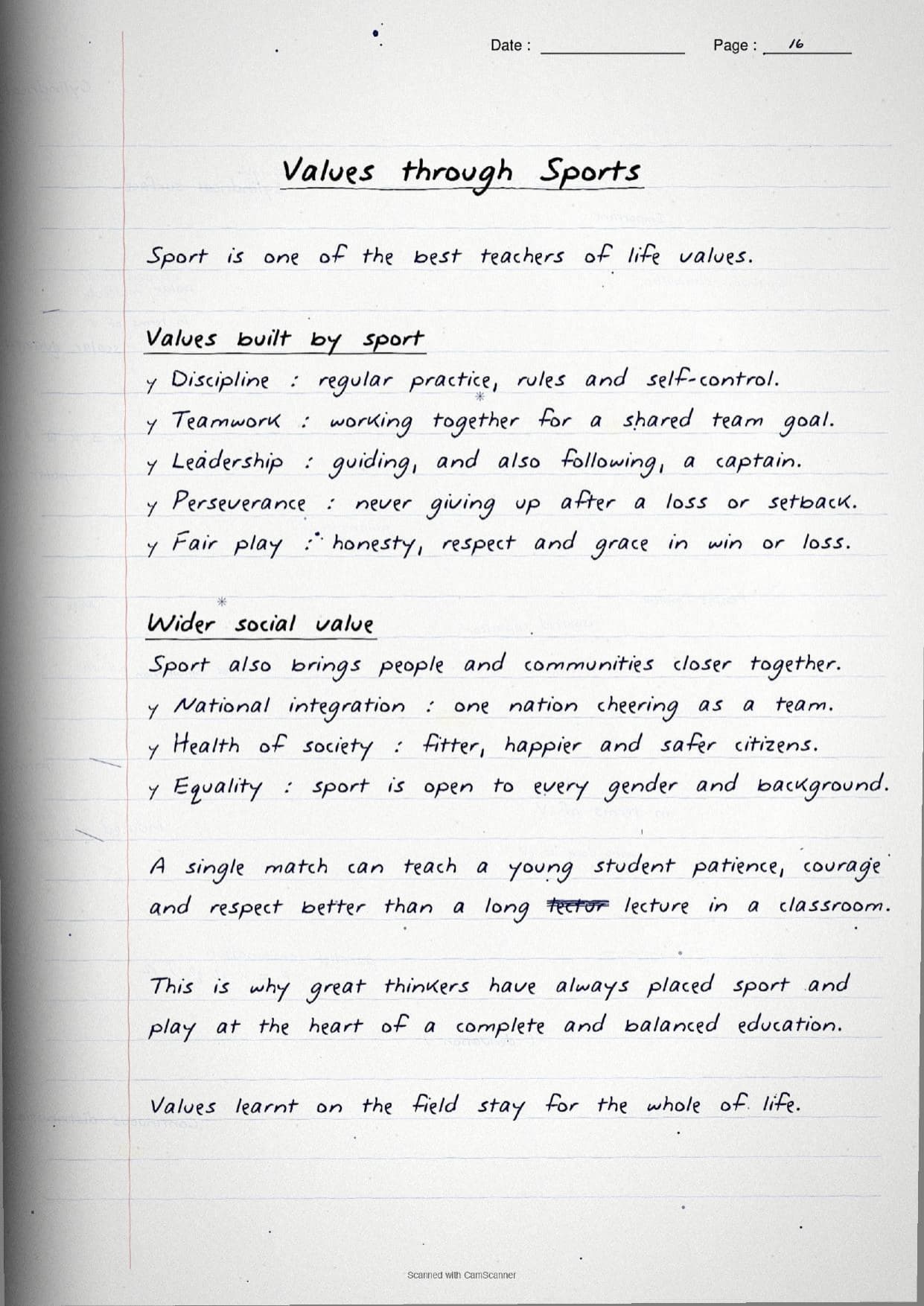
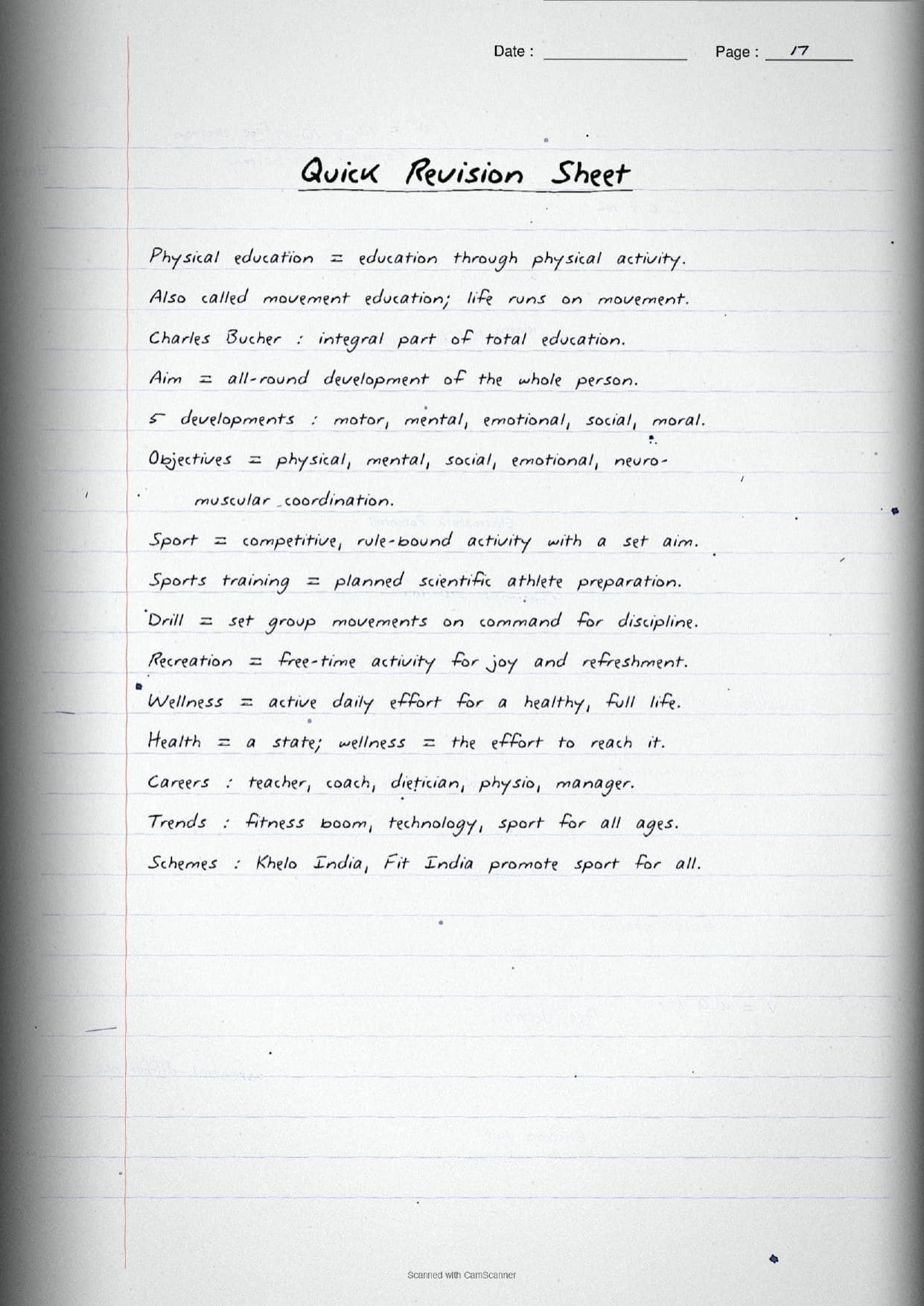
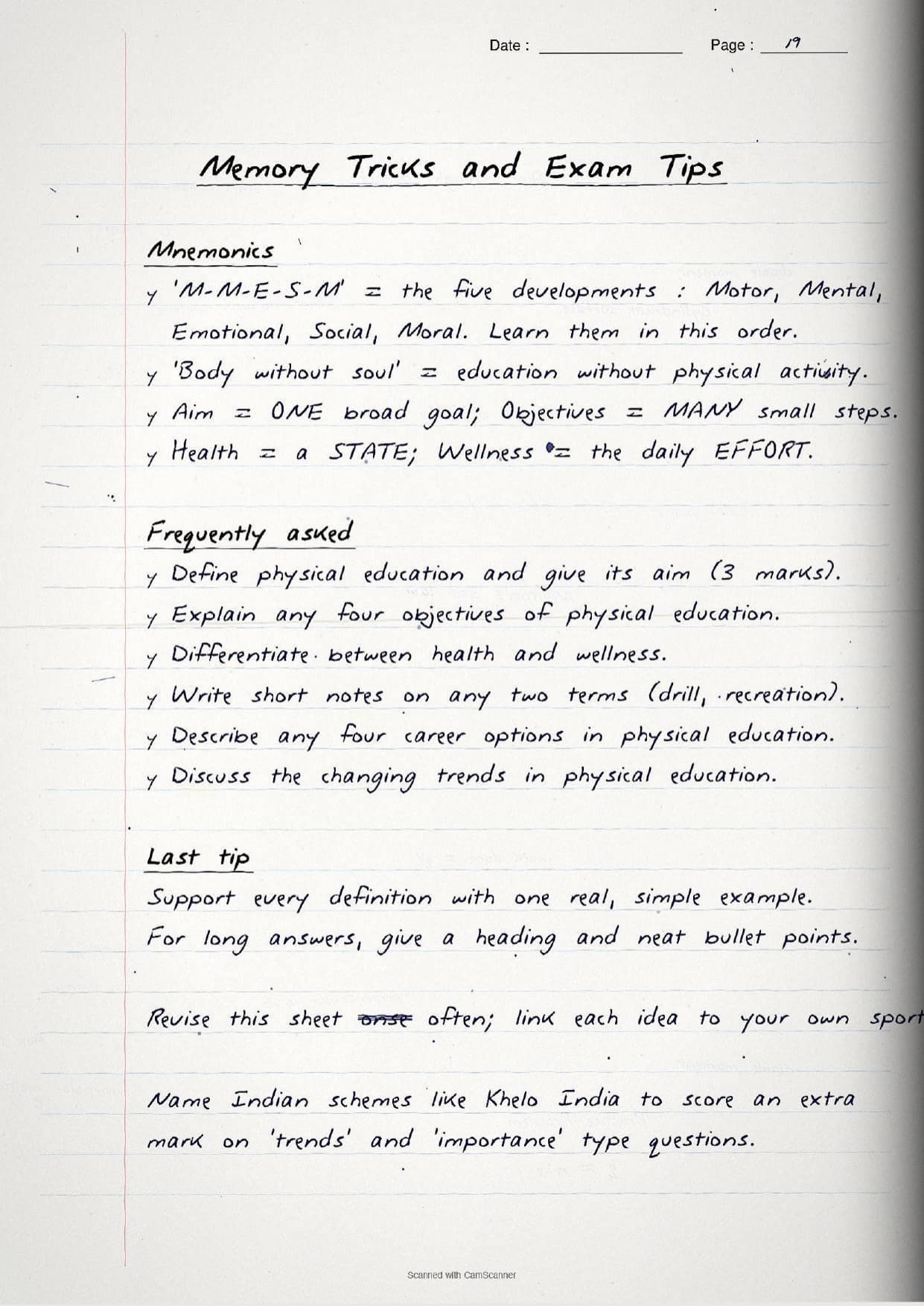
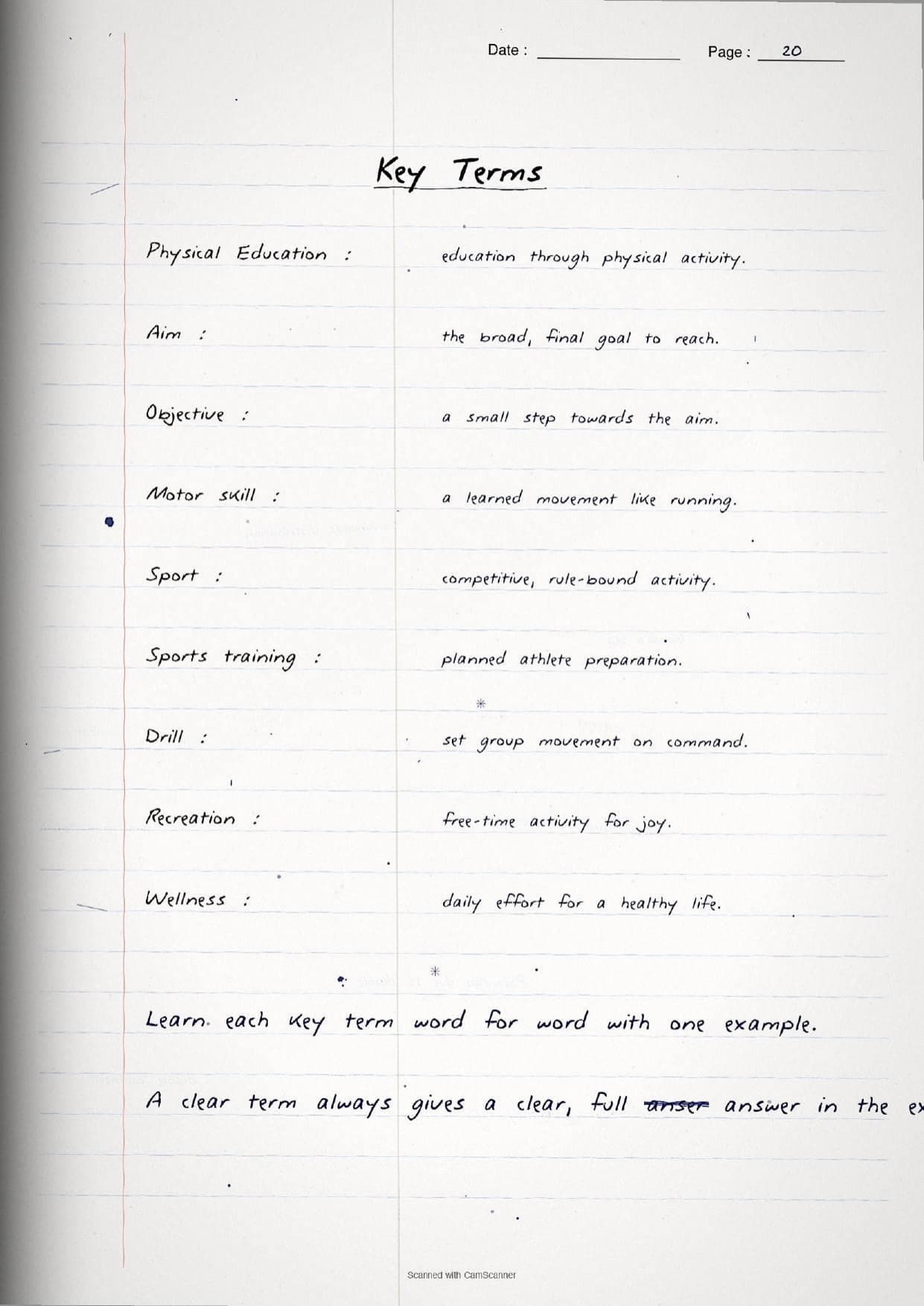
- Handwritten pages with boxed definitions, a five-part development map and a labelled terminology list.
- Chapter 1 is one of the most theory-heavy units in the Class 11 Physical Education course, so it carries steady marks in the final exam.
- Pairs with the Notes and Book PDF for the same chapter, linked lower on this page.
These Physical Education handwritten notes are prepared from the official NCERT Health and Physical Education textbook and checked against recent CBSE Class 11 Physical Education question papers.
Student Feedback: In a Collegedunia poll of 5,180 Class 11 Physical Education students, 72% of students said handwritten pages helped them recall the definitions and the five areas of development faster than printed text, because the boxed terms and arrows made the theory stick.
Source: 2026-27 Class 11 Physical Education student poll. Sample of 5,180 students from CBSE schools across 11 states.
What These Physical Education Handwritten Notes Contain
Physical Education is the first chapter of Class 11 Physical Education. It explains what the subject means, why it matters in modern society, and the careers it opens up. These handwritten notes condense the full chapter into handwritten pages that read like a topper's own notebook.
The notes are organised under three threads, each on its own set of pages:
- The concept: the meaning, the four main definitions and the aims and objectives.
- Development: the five areas of growth, plus the need and importance in modern society.
- The wider picture: common misconceptions, key terminology and the career options.
Because the pages are handwritten, the key terms sit in boxes and arrows rather than long paragraphs. A student can flip through the Class 11 Physical Education Chapter 1 pages in a few minutes and still pick up the definitions, the development areas and the terminology list before walking into the exam.
Meaning, Definitions and Aims in the Handwritten Pages
The opening pages fix the meaning of the subject. Physical education is defined as an education which brings improvement in human performance with the help of physical activities, from simple walking to running, jumping, climbing and throwing. The notes also flag that it is often called movement education, because life itself begins and is carried on through movement. Four textbook definitions are boxed for the definition-type question.
| Source | What the page shows |
|---|---|
| National Plan of Physical Education (1956) | Aims to make the child physically, mentally and emotionally fit and to build a good citizen. |
| Central Advisory Board | The process of education through physical activities that develops the total personality. |
| Charles A. Bucher | An integral part of the total educational process, developing fit citizens through physical activities. |
| AAHPERD | Education through physical activities selected for value in human growth, development and behaviour. |
The aims and objectives page then maps the total development of the human personality into five areas. The handwritten arrows make it easy to see how each area builds a fit and well-adjusted person:
- Motor development: the neuromuscular link that improves strength, speed, endurance and coordination.
- Mental development: the ability to think, decide and act wisely through activity.
- Emotional development: handling emotions like fear, anger and joy, and building confidence and belongingness.
- Social development: cooperation, friendship, team spirit and sportspersonship.
- Moral development: obeying rules and telling right from wrong with honesty.
The notes underline the point examiners reward: physical development is the foremost objective, but the mental, emotional, social and moral areas grow along with it. The pages also box the "need and importance" list, including physical fitness, character building, leadership and national integration, so the long-answer points are in one place.
Terminology and Career Options in the Notes
The later pages hold the two topics that carry the most short-answer marks: terminology and career options. The handwritten notes keep them as boxed lists, defining each term in one clean line so the exact wording is easy to recall.
- Game: an activity played by teams with defined objective, time, space, rules and a winner or loser.
- Sport: a wider institution covering all physical activities and individual skills, often played competitively.
- Sports training: a planned, systematic and scientific process to prepare an athlete for better performance.
- Gymnastics, physical culture and drill: exercises with and without apparatus, muscle-shaping, and rhythmic body drill.
- Health education and recreation: knowledge of health and hygiene, and pleasure activities that restore lost energy.
The career page then breaks the field into clear groups so students can name real options. The handwritten notes box these under one heading.
| Career group | Examples on the page |
|---|---|
| Teaching and coaching | Physical education teacher, sports coach in schools, colleges and clubs. |
| Health and fitness | Physical fitness instructor, dietician, sports medicine physician. |
| Administration and performance | Sports officer, professional performer, referee, umpire and other officials. |
| Communication, sales and others | Sports writer, publisher, photographer, broadcaster, events manager, defence and police. |
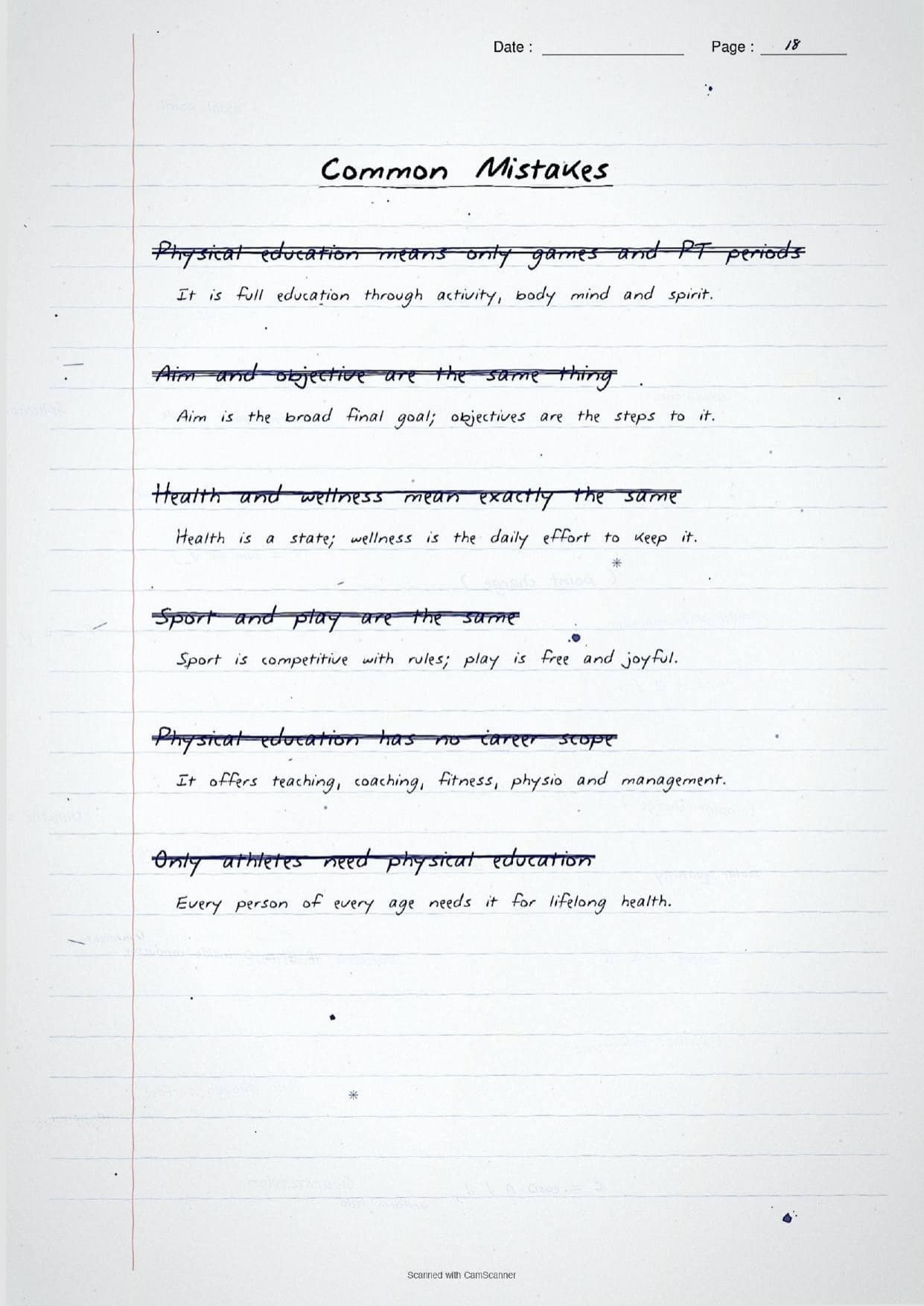
The pages also flag the chapter's list of misconceptions, such as the myth that physical education is "only drill" or "has no career prospects", because a "clear up the myth" question appears often. Pairing the terminology list with the career groups covers most of the objective and short-answer marks from this chapter.
How to Use These Handwritten Notes
Handwritten notes work best as a final-revision tool, not a first read. The steps below show how to get the most out of the Physical Education handwritten notes in the last days before a Class 11 test.
- Download: tap the download card above to save the handwritten pages to your device.
- First read: read the printed Notes once so the handwritten pages act as a refresher, not a first source.
- Recall drill: cover the page and try to write the four definitions and the five development areas from memory.
- Night before: flip through the boxed pages for a quick last-minute recall of the terminology and career groups.
Many students search for class 11 physical education chapter 1 notes on their phone the night before a test, so a saved set of handwritten pages means you can revise offline. Use the handwritten notes for speed, then check the Notes to confirm you have the answer points right.
Common Mistakes These Notes Help You Avoid
A few errors cost marks every year. The handwritten notes flag each one in the margin so you can fix it before the exam. These five are the most common.
- Naming only some development areas. The answer needs all five: motor, mental, emotional, social and moral.
- Mixing up game and sport. A game is one activity with a result; sport is the wider institution.
- Writing a vague definition. Learn at least one exact source, such as Charles A. Bucher or the 1956 National Plan.
- Confusing drill with recreation. Drill is disciplined body exercise; recreation restores lost energy for pleasure.
- Saying physical education has no careers. That is a listed misconception, not a fact.
Students who fix these five points usually move from average to high marks. The handwritten notes box each definition and list all five development areas in full, so the soft points are hard to miss when you revise.
How These Handwritten Notes Pair with the Notes and Book PDF
These handwritten notes are a fast revision tool. To prepare fully, students should use them alongside the other resources for the same chapter, all linked in the table below. Read the printed Notes, then use these pages for a final recall.
| Resource | Best used for |
|---|---|
| Physical Education Class 11 Notes | Quick chapter summary with all definitions, development areas and key terms in one place |
| Physical Education NCERT Book PDF | Reading the original NCERT chapter text and figures |
Tip: read the printed Notes first, then keep these handwritten pages for the final night-before flip. Using them for recall, not for the first read, builds memory faster.
All Class 11 Physical Education Handwritten Notes by Chapter
The table links the handwritten notes for every chapter in Class 11 Physical Education, so students can move across the course in one click. Physical Education is highlighted.
| Chapter | Handwritten Notes |
|---|---|
| Chapter 1 | Physical Education |
| Chapter 2 | Understanding Health |
| Chapter 3 | Physical and Physiological Aspects of Physical Education and Sports |
| Chapter 4 | Individual Games |
| Chapter 5 | Team Games |
| Chapter 6 | Yoga and its Relevance in the Modern Times |
| Chapter 7 | Safety and Security |
| Chapter 8 | Health Related Physical Fitness |
| Chapter 9 | Measurement and Evaluation |
| Chapter 10 | Tournaments and Competitions |
| Chapter 11 | Adventure Sports |
FAQs on Physical Education Handwritten Notes
Physical Education Class 11 Handwritten Notes Common Questions
Ques. Where can I download the Physical Education handwritten notes PDF?
Ans. You can download the Physical Education Class 11 handwritten notes PDF directly from this page. It is free, follows the 2026-27 NCERT, and presents the meaning, definitions, aims, development areas, terminology and career options as handwritten pages.
Ques. Are handwritten notes good for revising Class 11 Physical Education Chapter 1?
Ans. Yes. Handwritten notes are best for fast, last-minute revision because the boxed definitions and arrows make the theory and lists easy to skim. Use them after a first read of the printed Notes, not as your only source.
Ques. What topics do these handwritten notes cover?
Ans. They cover the meaning and definitions of physical education, its aims and objectives, development through it (motor, mental, emotional, social and moral), the need and importance in modern society, common misconceptions, terminology such as game, sport, sports training, drill and recreation, and the career options in the field.
Ques. Who prepared these handwritten notes?
Ans. They are written and proofread by hand by a subject expert with an MPEd, NIS coaching certification and years of CBSE Class 11 Physical Education teaching, using the official NCERT textbook and recent question papers.
Ques. How should I use these notes with the other resources?
Ans. Read the printed Notes first, use the Book PDF for the original chapter text, then keep these handwritten pages for the final night-before flip. Using them for recall rather than the first read builds memory faster.



Comments