




These Health Related Physical Fitness handwritten notes turn the whole chapter into clean, handwritten pages for fast revision. They follow the 2026-27 NCERT "Health and Physical Education" Class 11 Chapter 8 and cover the meaning of physical fitness, the five components of health related fitness, the types of strength, endurance and flexibility, body composition and cardiovascular endurance. Students get the definitions, the sub-types and the training methods in a pen-on-paper format that is easy to skim before a Class 11 test.
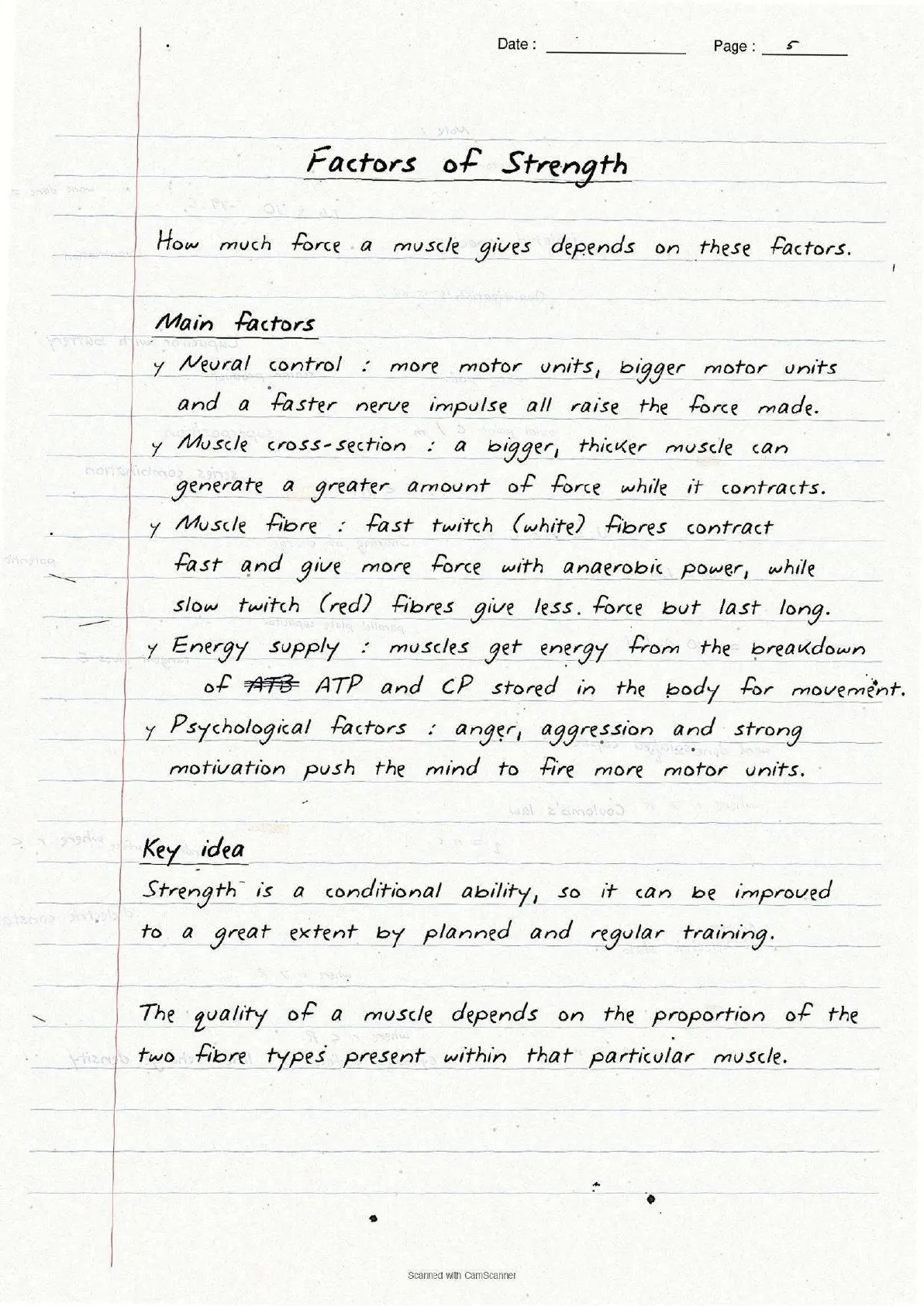
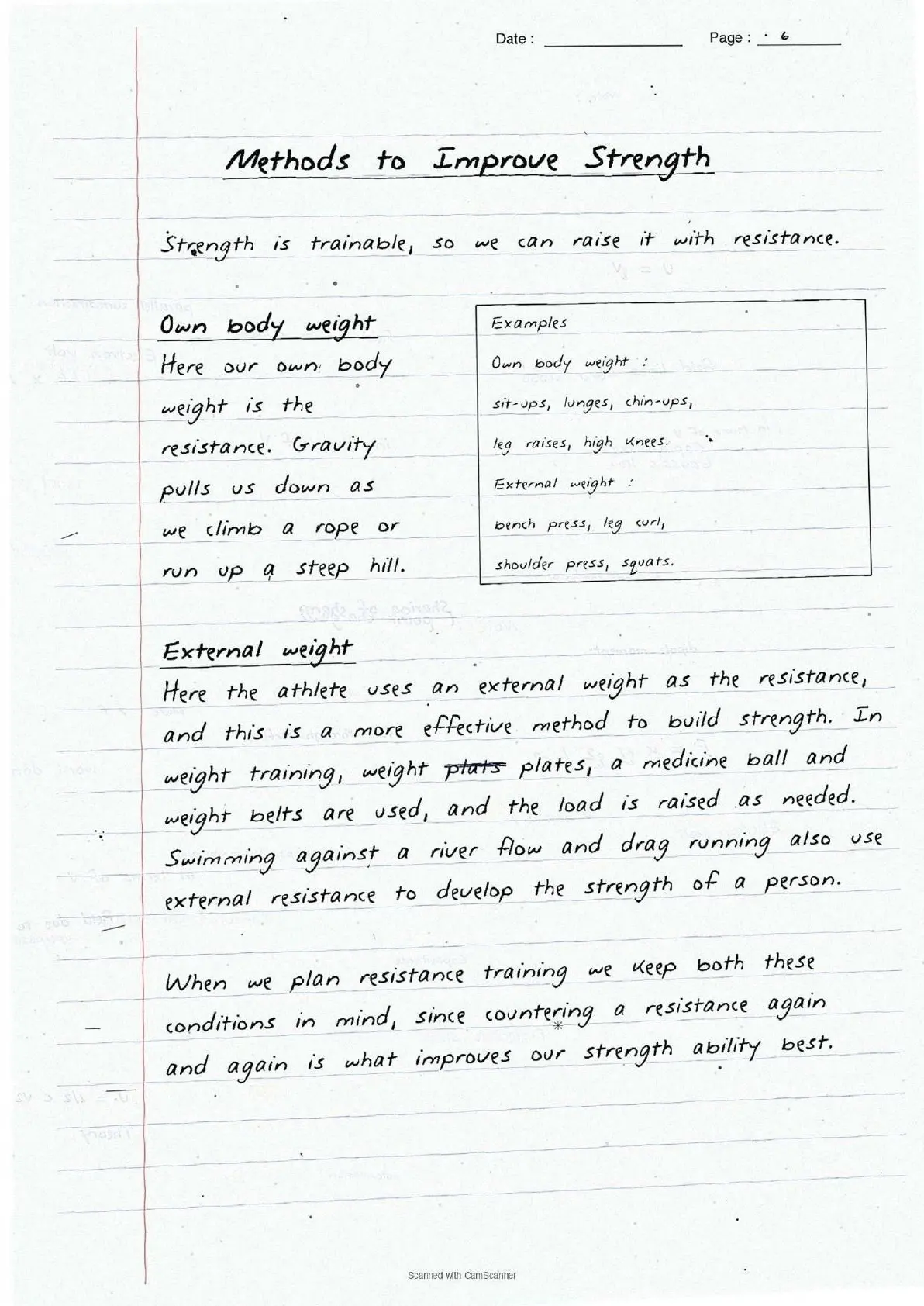
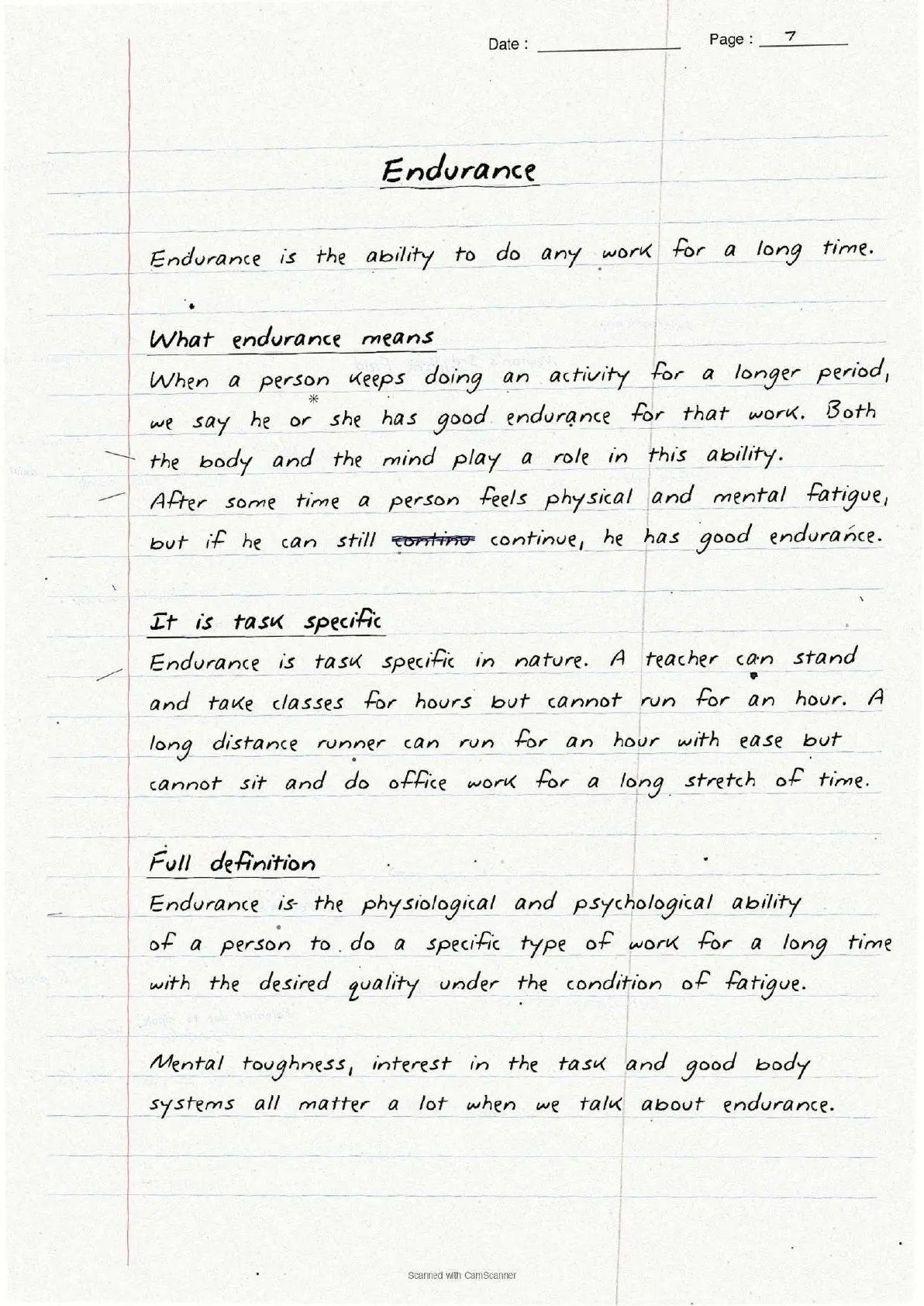
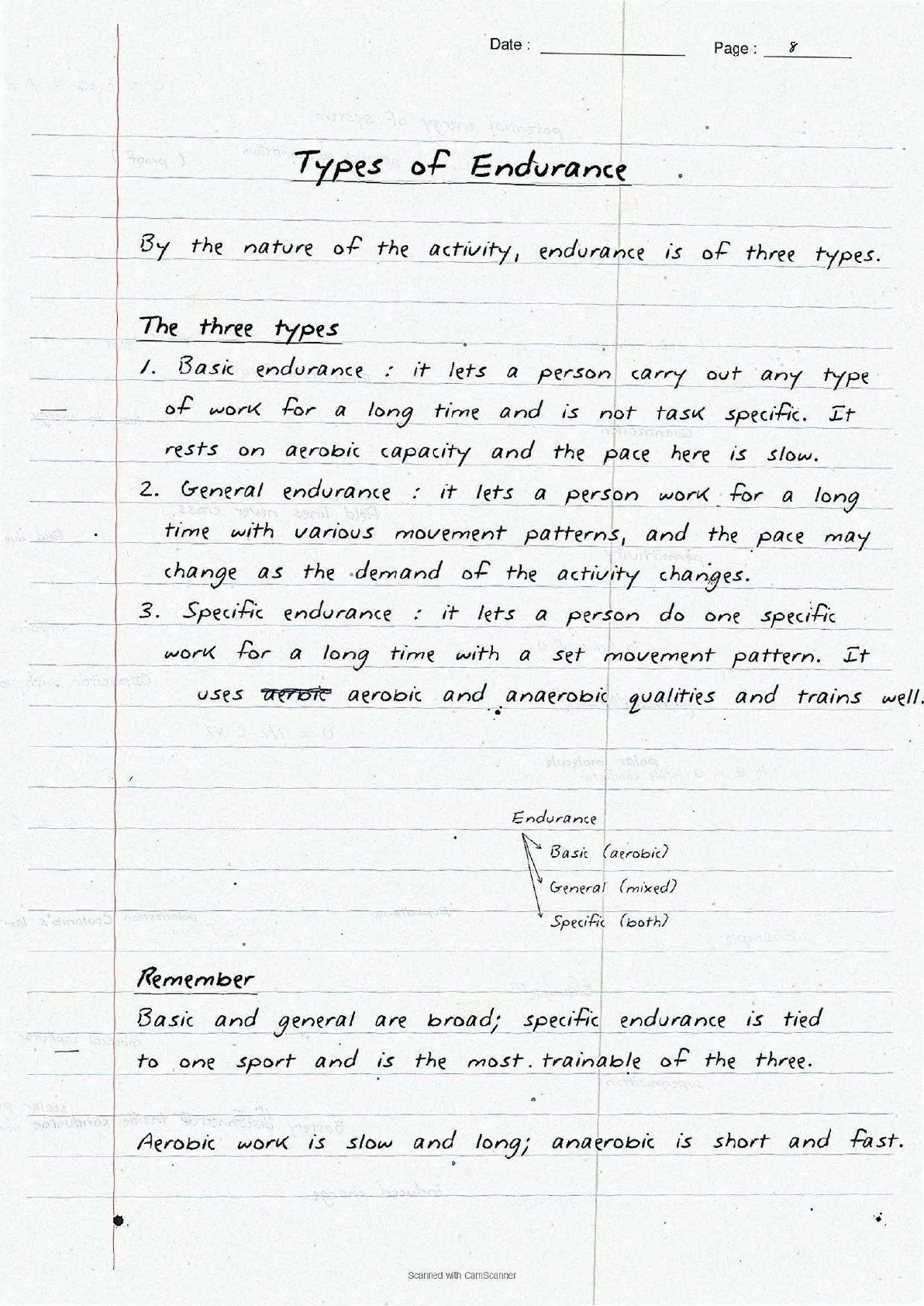
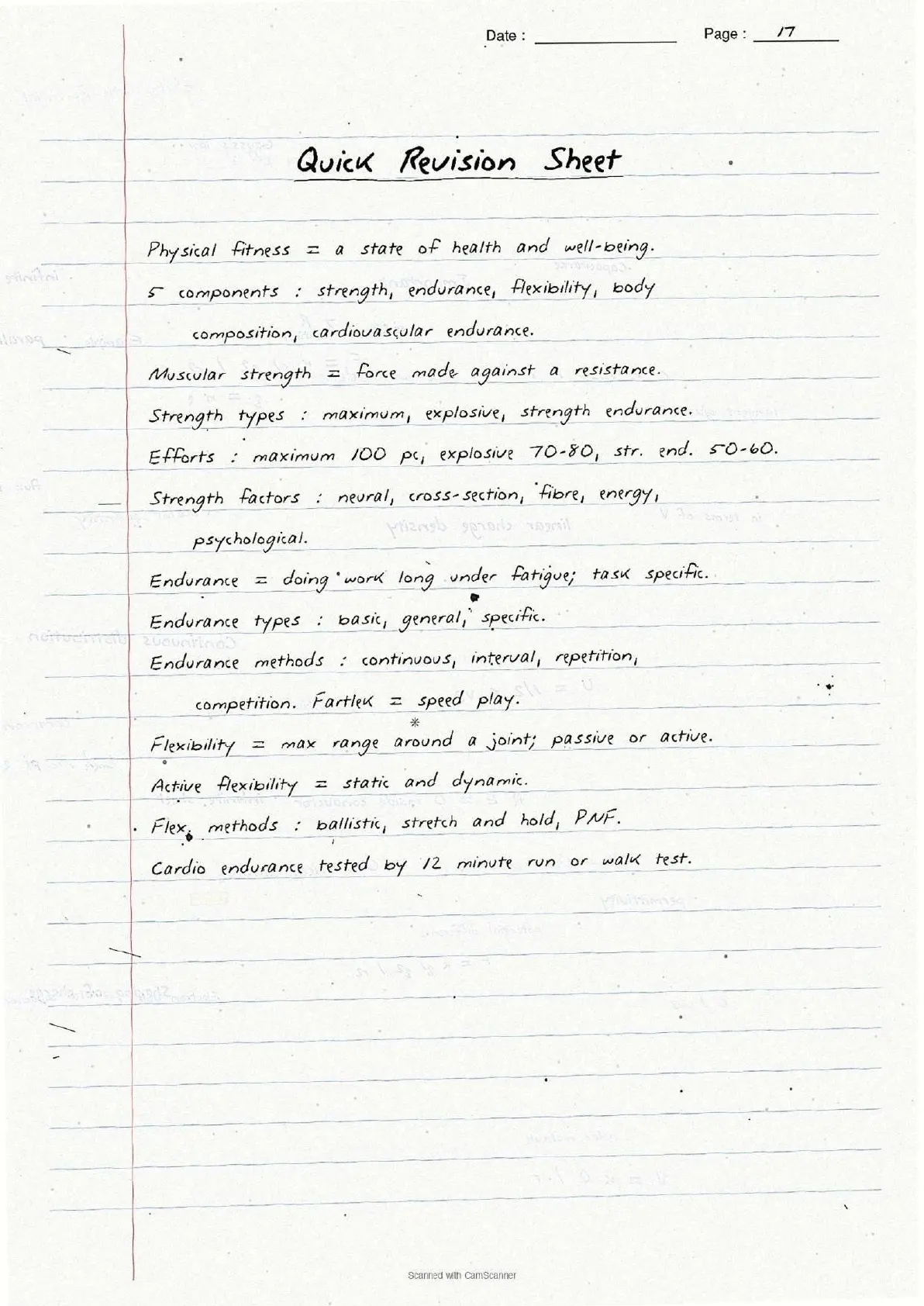
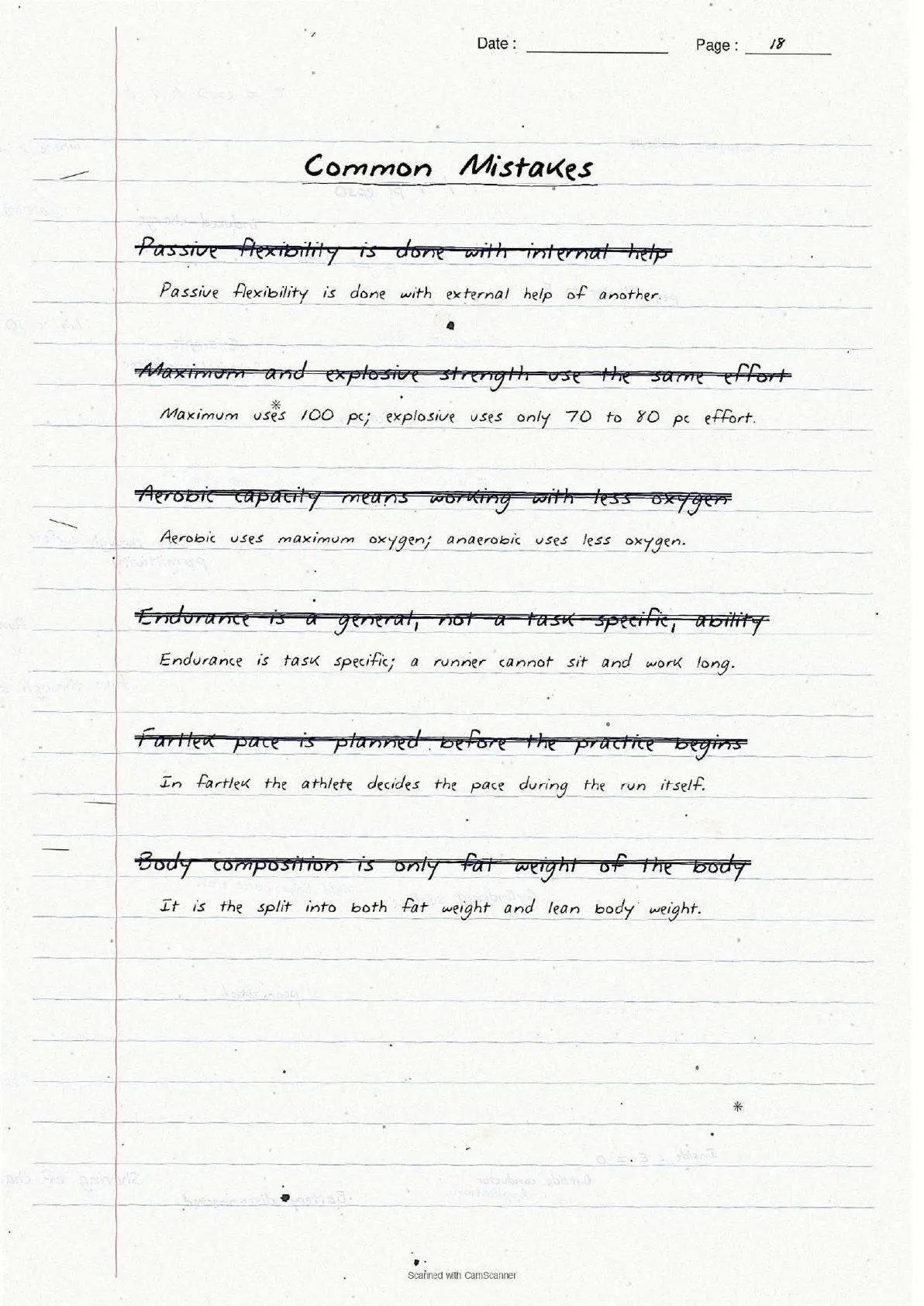
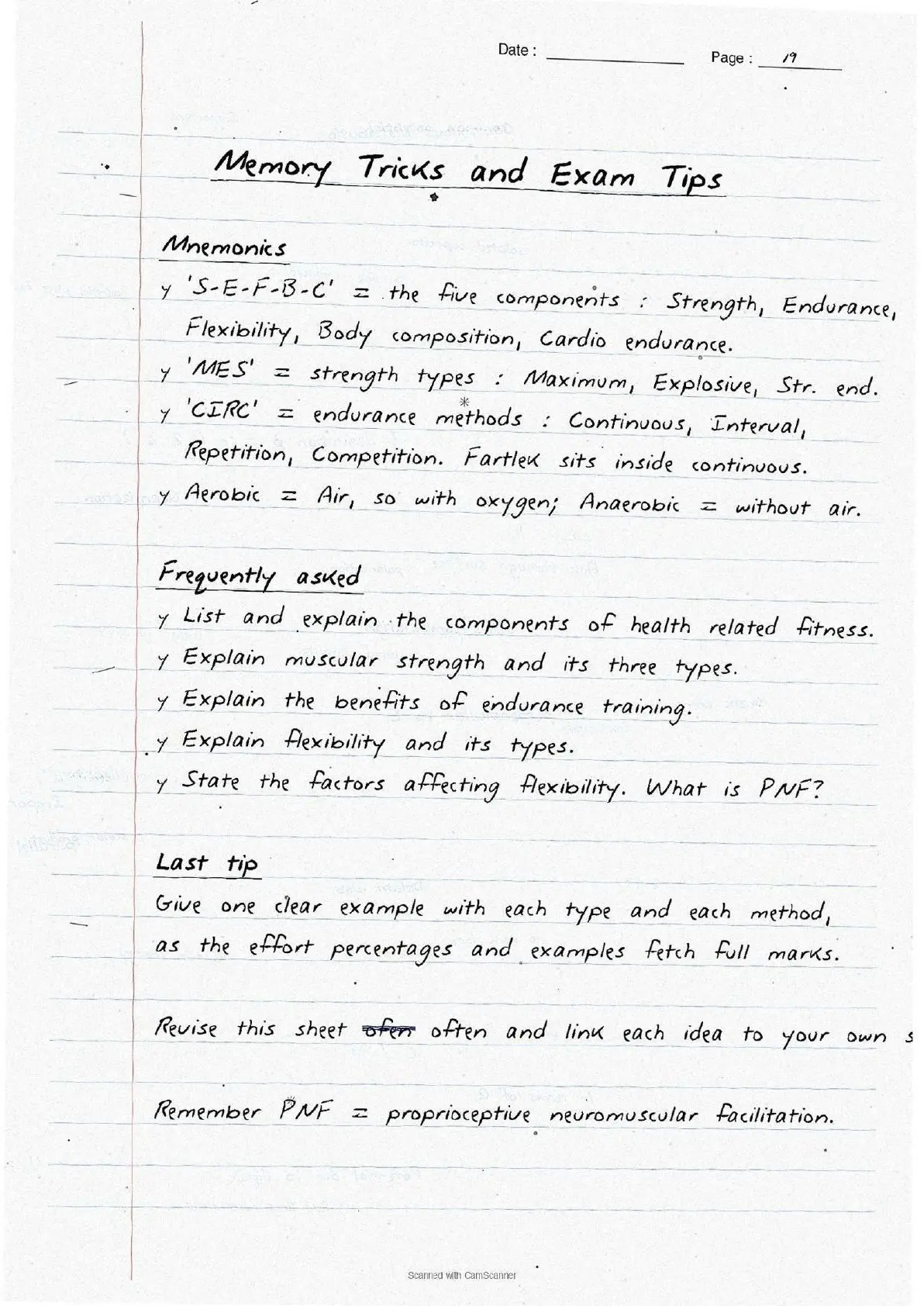
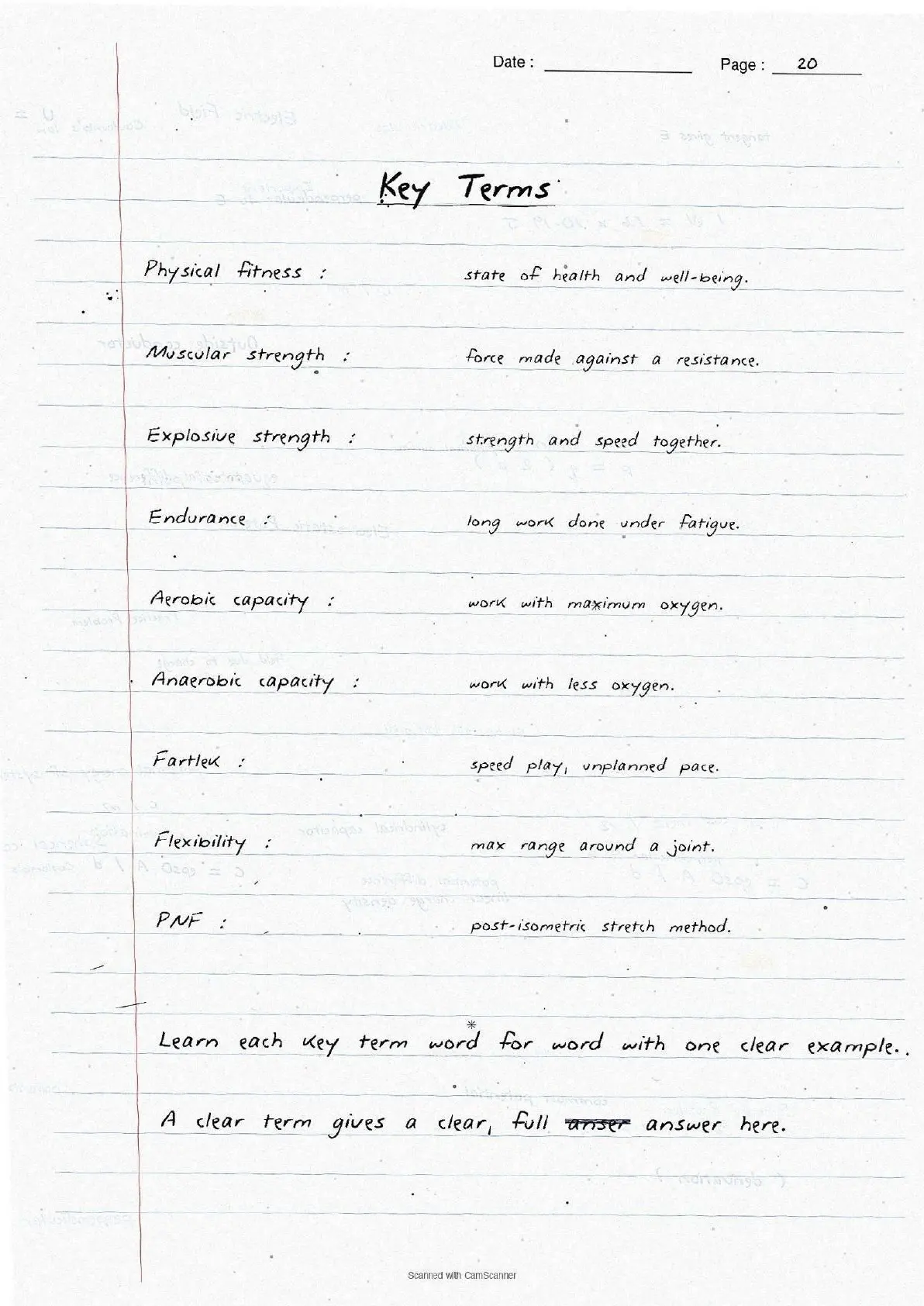
- Handwritten pages with boxed definitions and a labelled map of the five fitness components.
- Covers the full Class 11 Physical Education Chapter 8 syllabus, a common source of short and long answers.
- Pairs with the Notes and Book PDF linked lower on this page.
These Health Related Physical Fitness handwritten notes are prepared from the official NCERT Health and Physical Education textbook and checked against recent CBSE Class 11 Physical Education question papers.
Student Feedback: In a Collegedunia poll of 5,180 Class 11 Physical Education students before the 2026 final exam, 72% of students said handwritten pages helped them recall the five fitness components and the three strength types faster than printed text, because the boxed definitions and arrows made the sub-types stick.
Source: 2026-27 Class 11 Physical Education student poll. Sample of 5,180 students from CBSE schools across 11 states.
What These Health Related Physical Fitness Handwritten Notes Contain
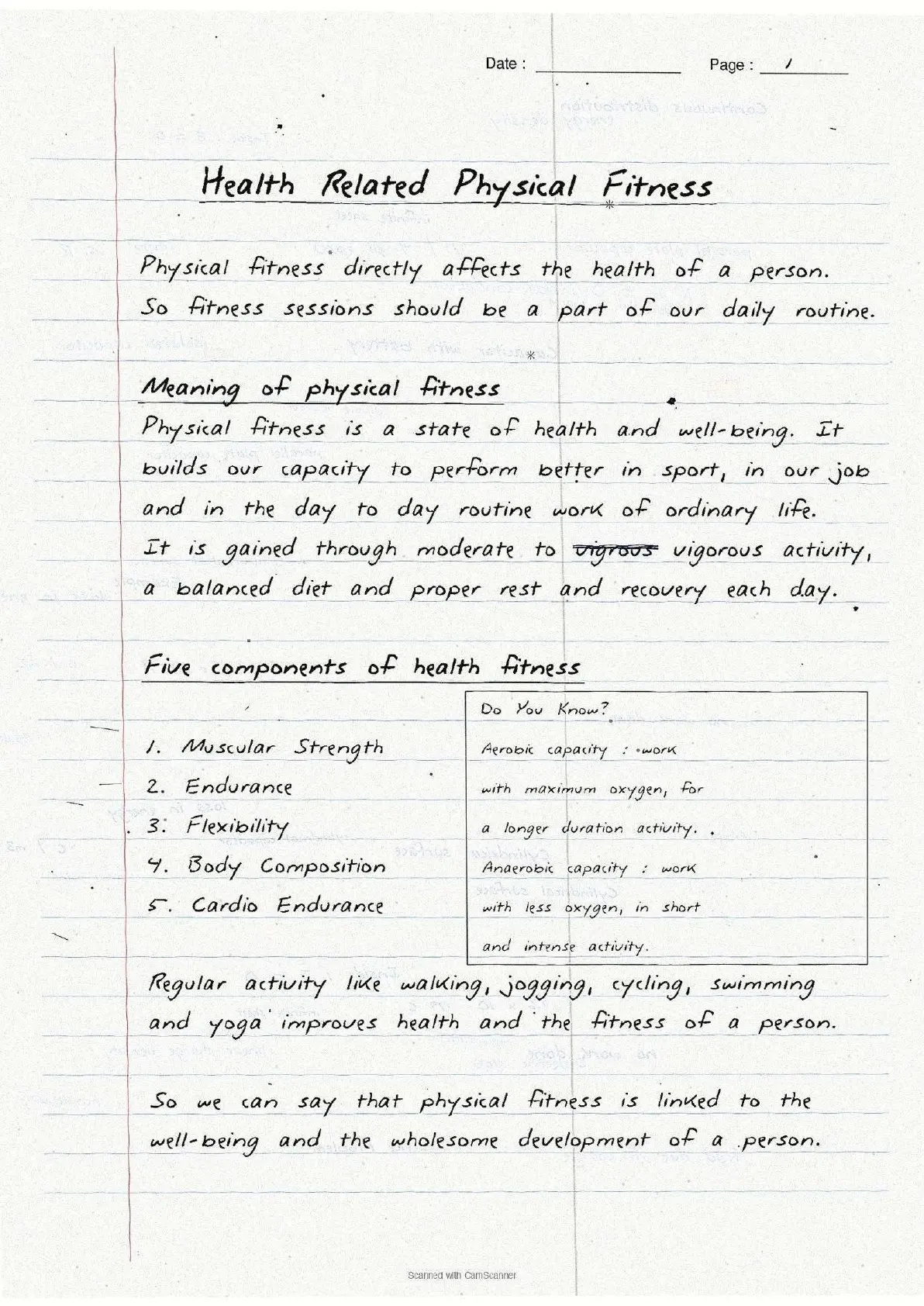
Health Related Physical Fitness is Chapter 8 of Class 11 Physical Education. It explains that physical fitness is a state of health and well-being that lets a person perform better in sport, at work and in daily routine, built through moderate to vigorous activity, a balanced diet and proper recovery. These handwritten notes condense the chapter into pages that read like a topper's own notebook.
The notes are organised under three threads, each on its own set of pages:
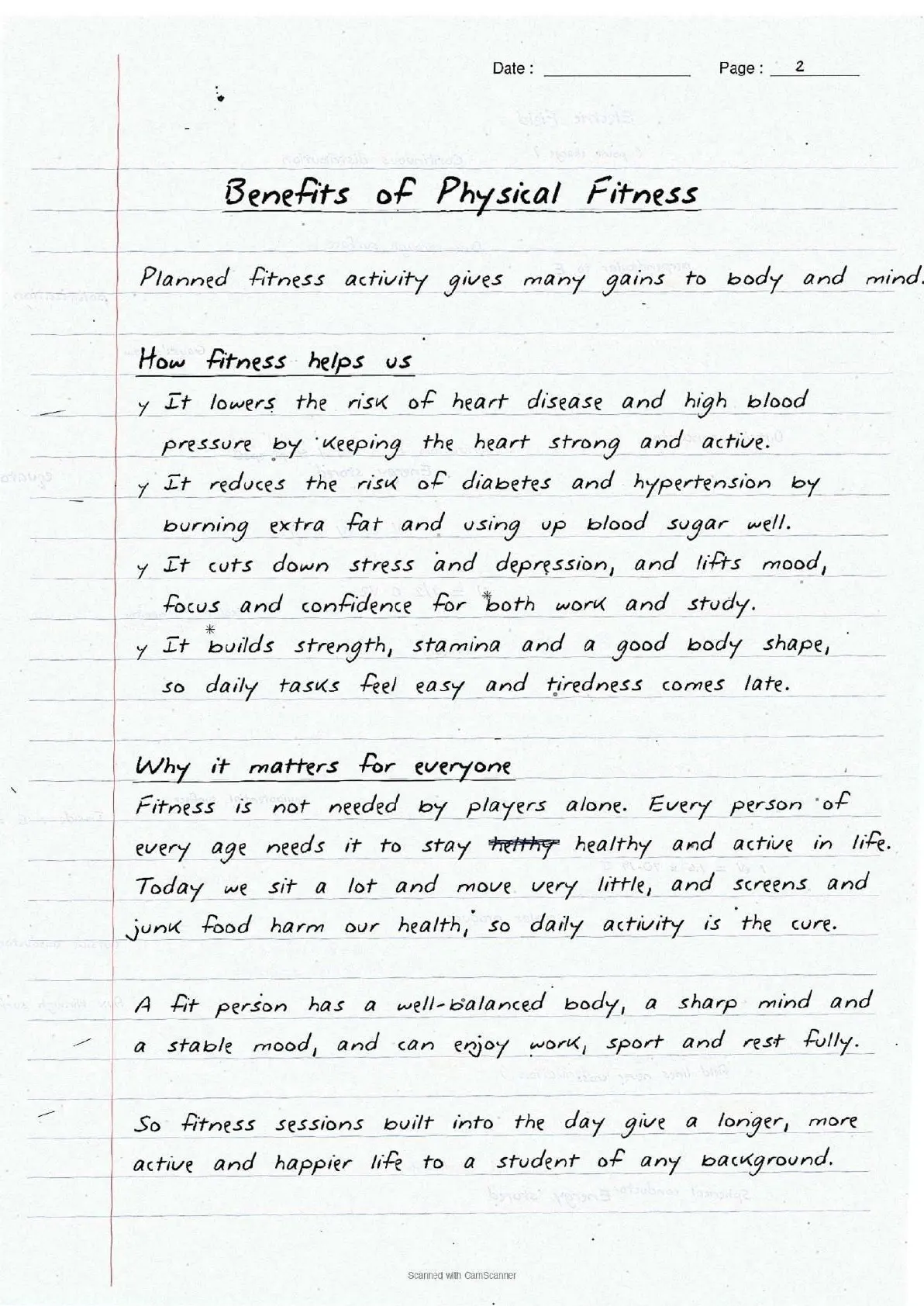
- The meaning: what physical fitness is and why regular activity like walking, jogging, cycling, swimming and yoga lowers the risk of heart disease, diabetes, hypertension and depression.
- The five components: muscular strength, endurance, flexibility, body composition and cardiovascular endurance.
- The training side: the sub-types of each component and the methods used to improve them.
Because the pages are handwritten, the key terms sit in boxes and arrows rather than long paragraphs. A student can flip through the Health Related Physical Fitness class 11 pages in a few minutes and still pick up the components, their sub-types and the main definitions before walking into the exam.
The Five Components of Health Related Fitness
The core pages hold the five components of health related fitness, drawn as one clear map so each stands apart. The table below shows what the handwritten notes record for every component straight from the NCERT chapter.
| Component | What the page shows |
|---|---|
| Muscular Strength | The ability of a muscle or muscle group to exert force against resistance; split into maximum, explosive and strength endurance. |
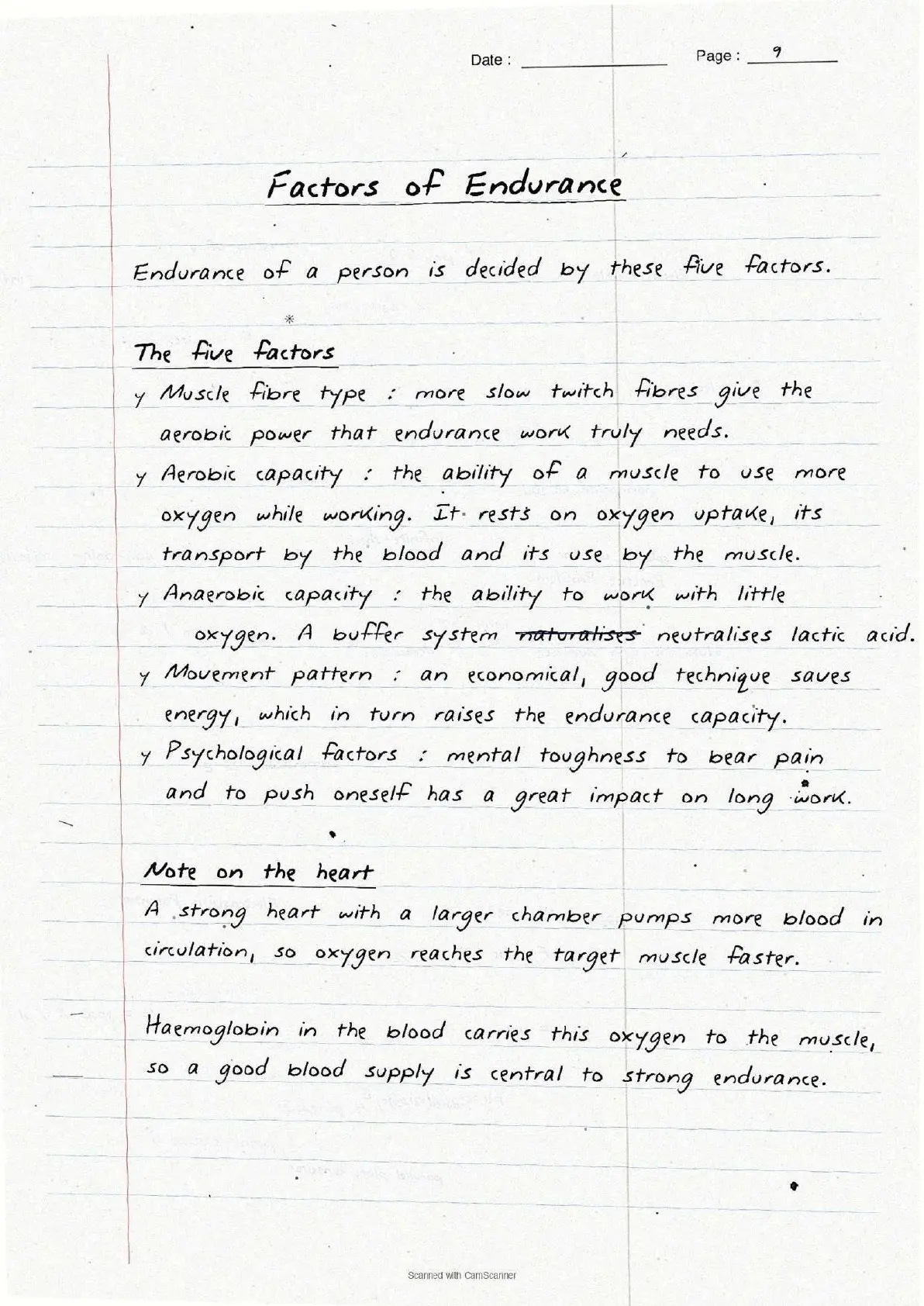
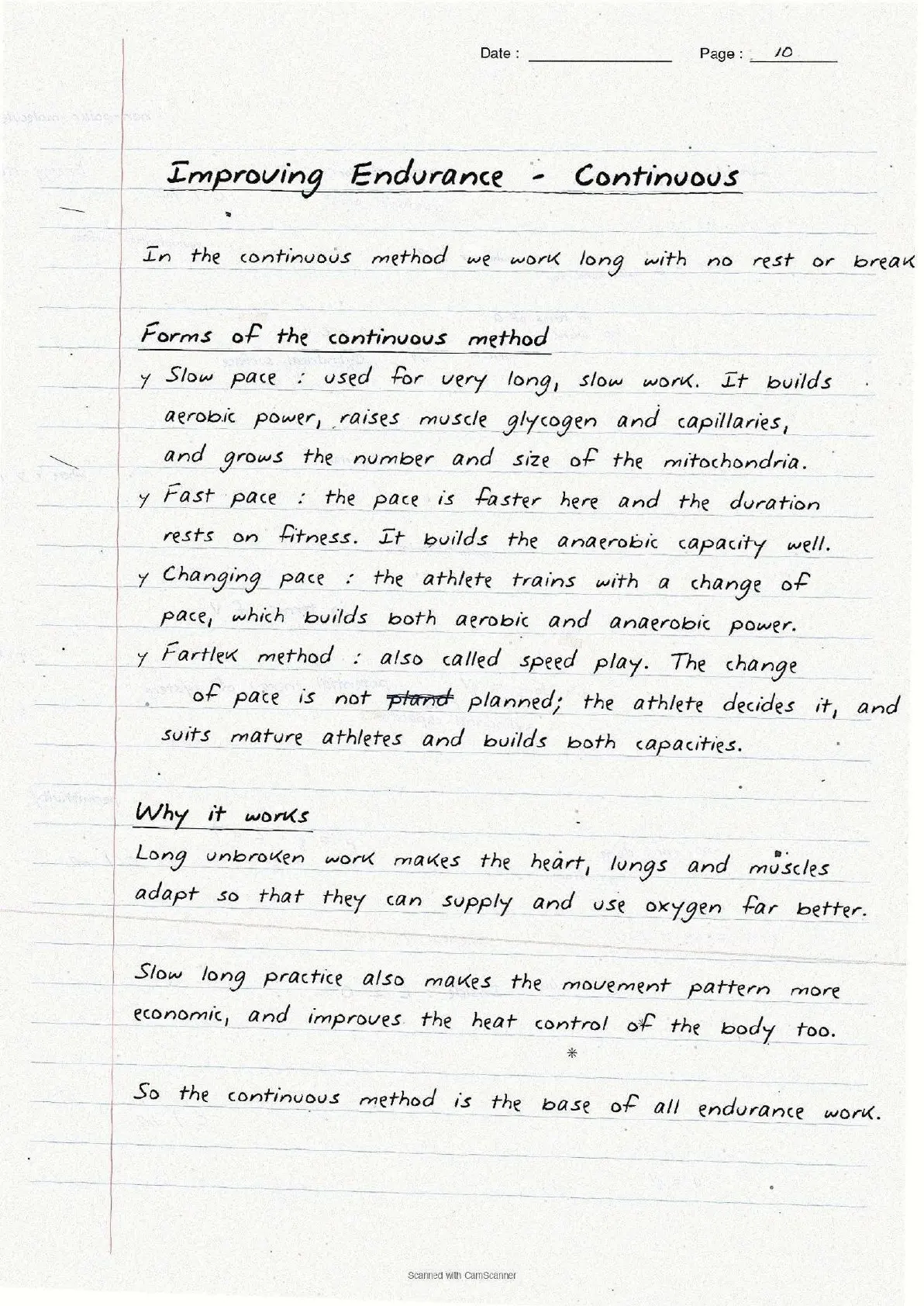
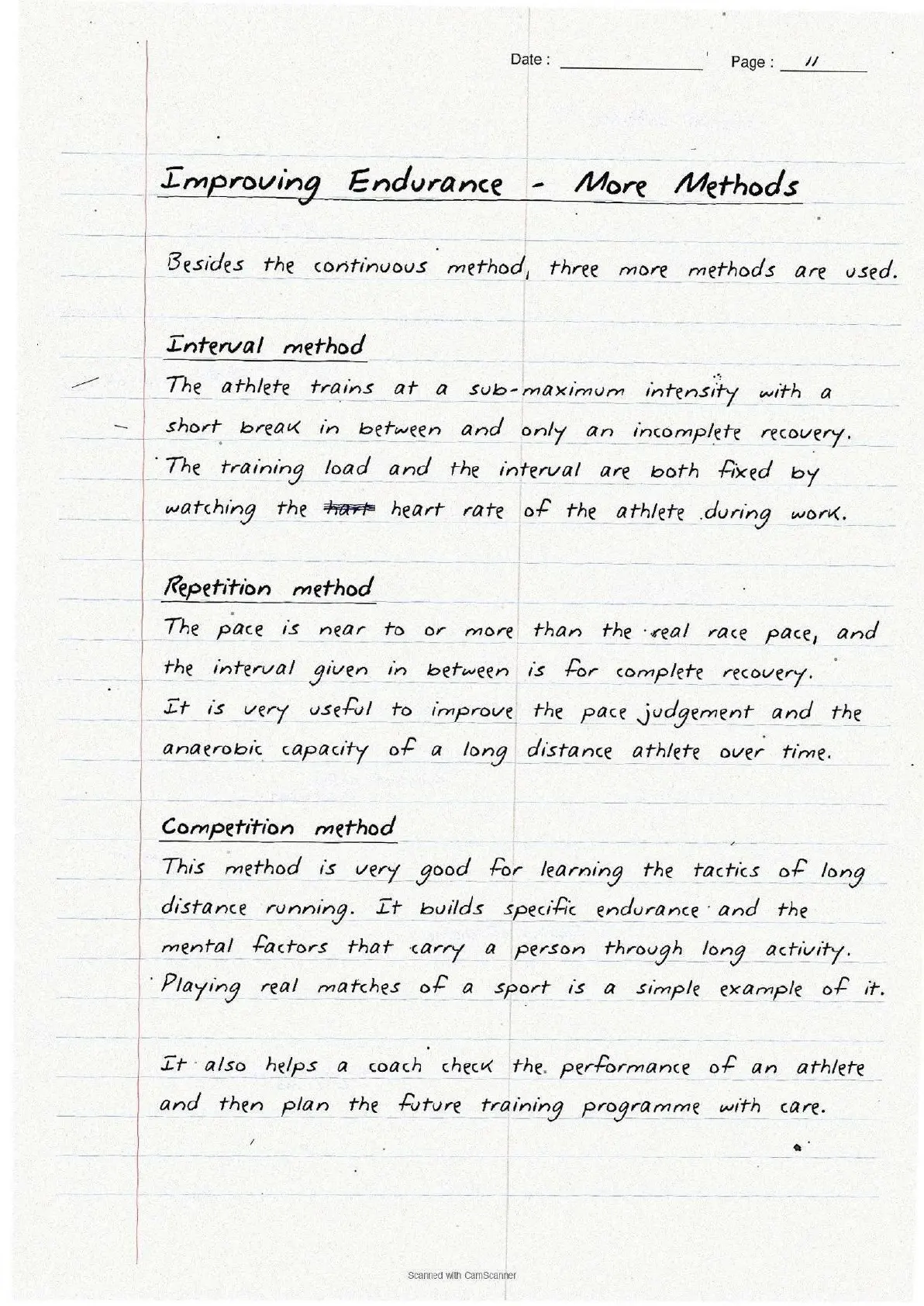
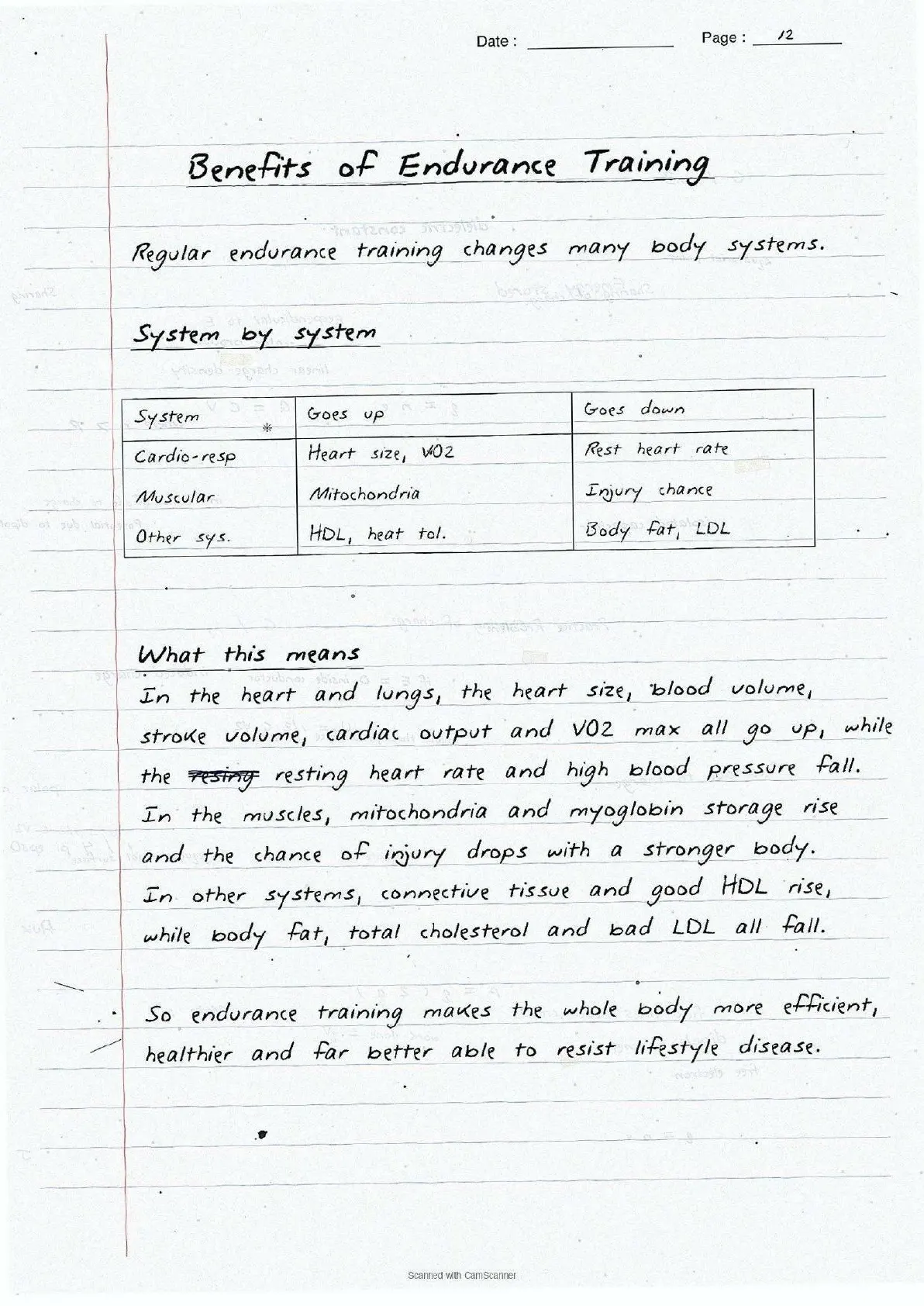
| Endurance | The ability to do work for a longer duration under fatigue; basic, general and specific types. |
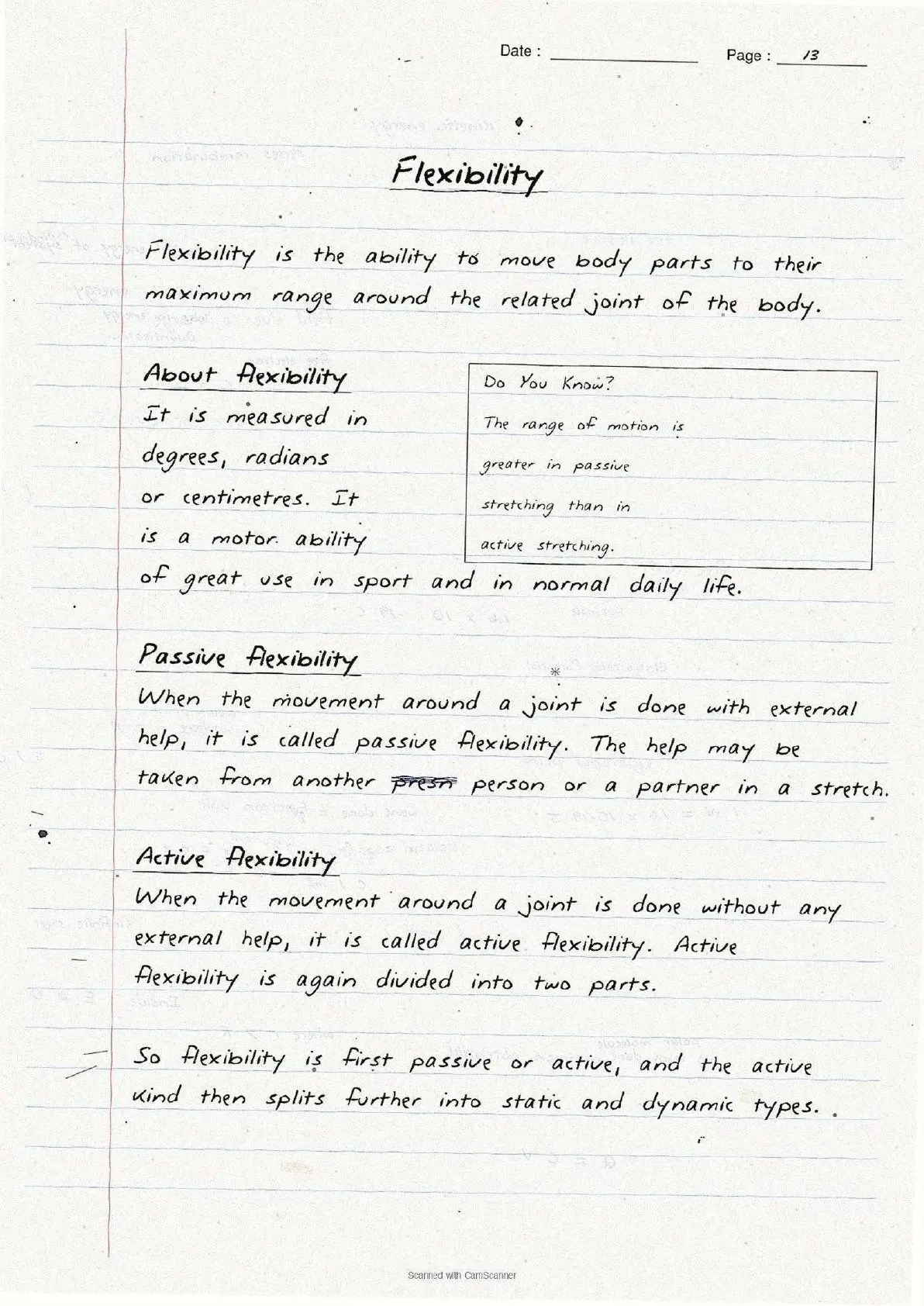
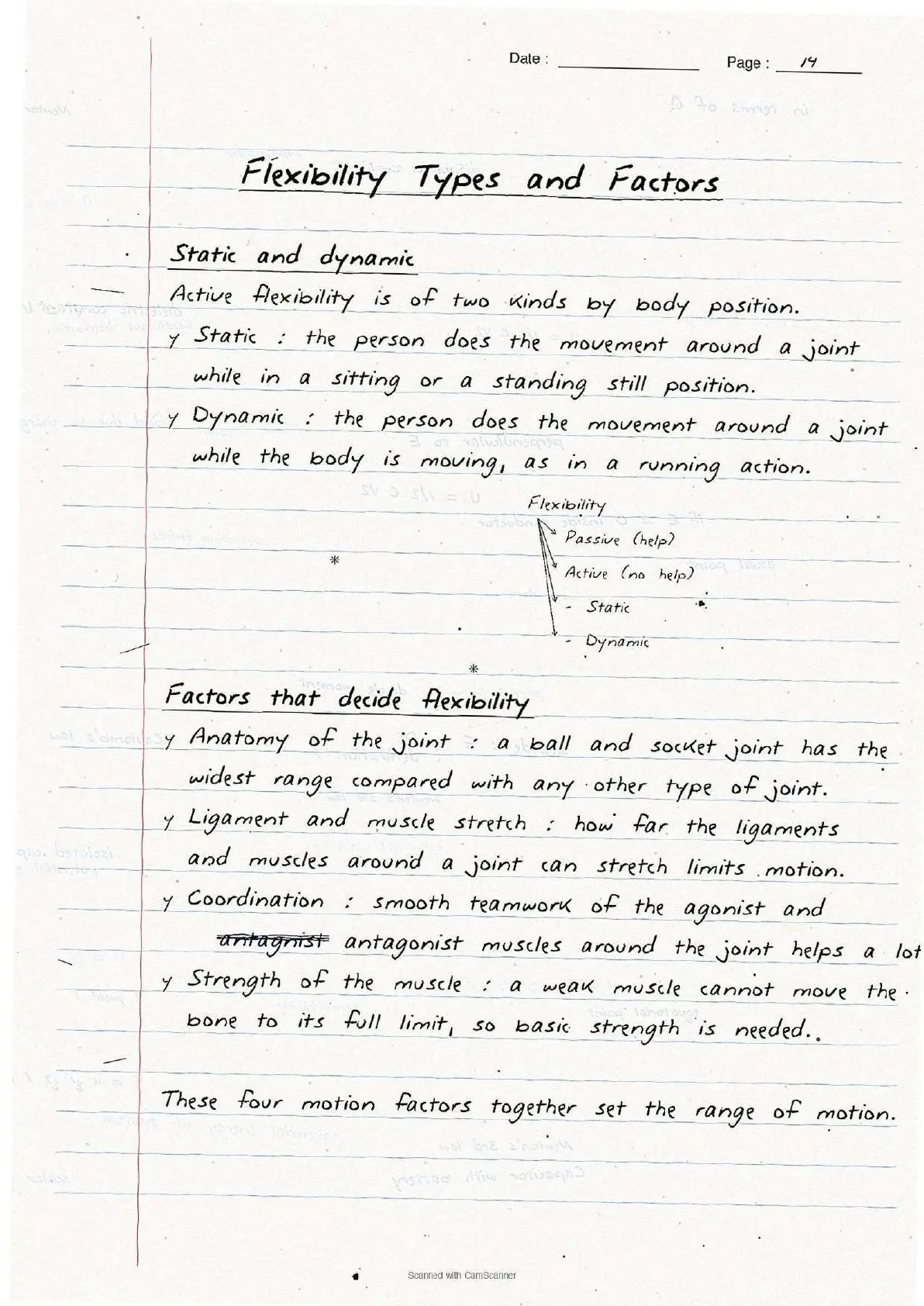
| Flexibility | Moving a body part to its maximum range around a joint; passive and active (static and dynamic). |
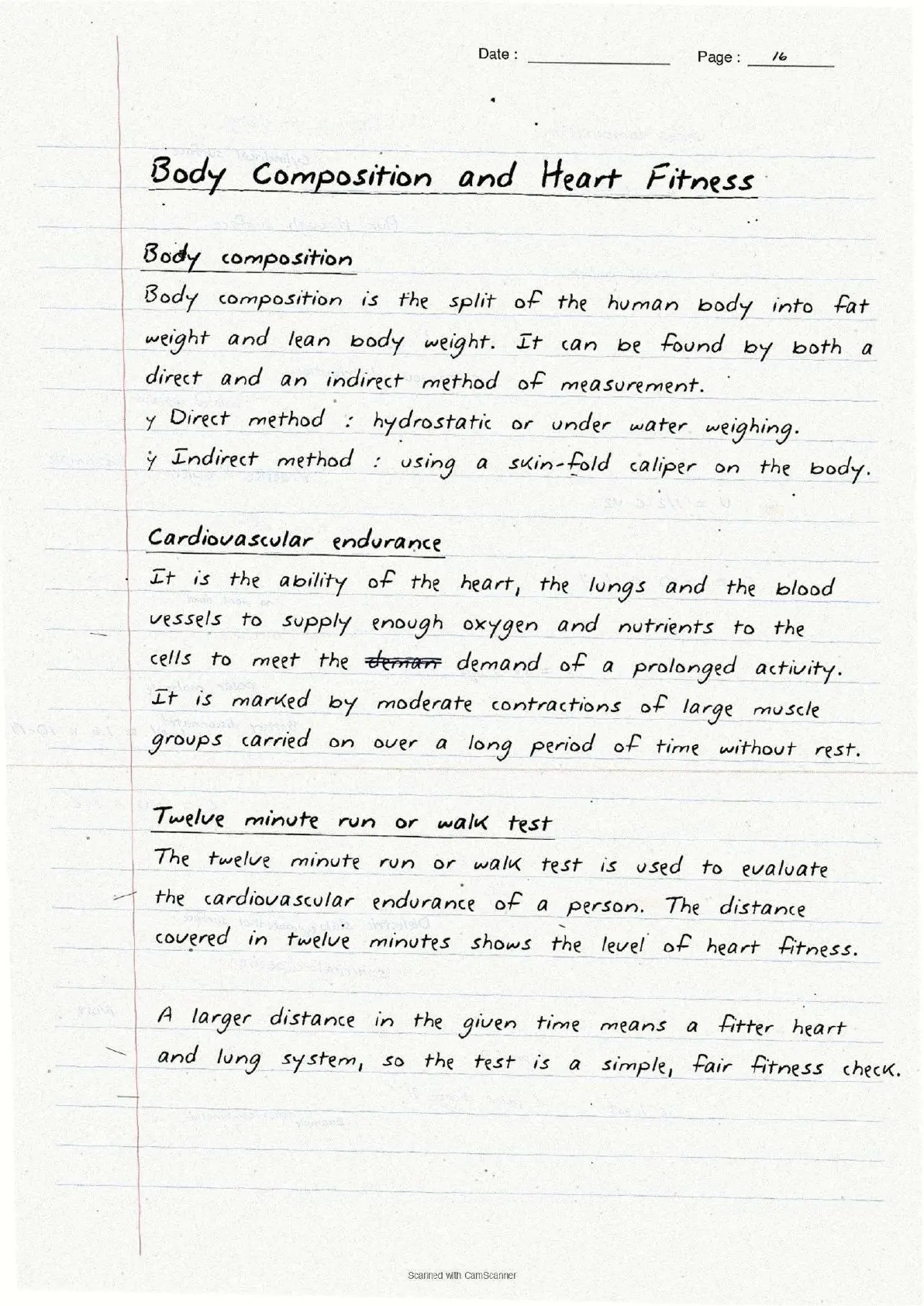
| Body Composition | The split of the body into fat weight and lean body weight, measured by hydrostatic weighing or a skin-fold caliper. |
| Cardiovascular Endurance | The ability of the heart, lungs and blood vessels to supply oxygen to the cells; checked by the twelve-minute run or walk test. |
The handwritten map makes the key point easy to see: strength and endurance are about force and duration, while flexibility, body composition and cardiovascular endurance describe range, structure and oxygen supply. Seeing all five side by side on one page is the fastest way to remember which definition sits where. Keep this list ready for the "list and explain the components of health related fitness" long-answer question.
Strength, Endurance and Flexibility in the Notes
The next pages break down the three trainable components that carry the most marks. The handwritten notes keep each one as a boxed list of its sub-types, so the contrasts are clear at a glance. The lists below show what each page covers.
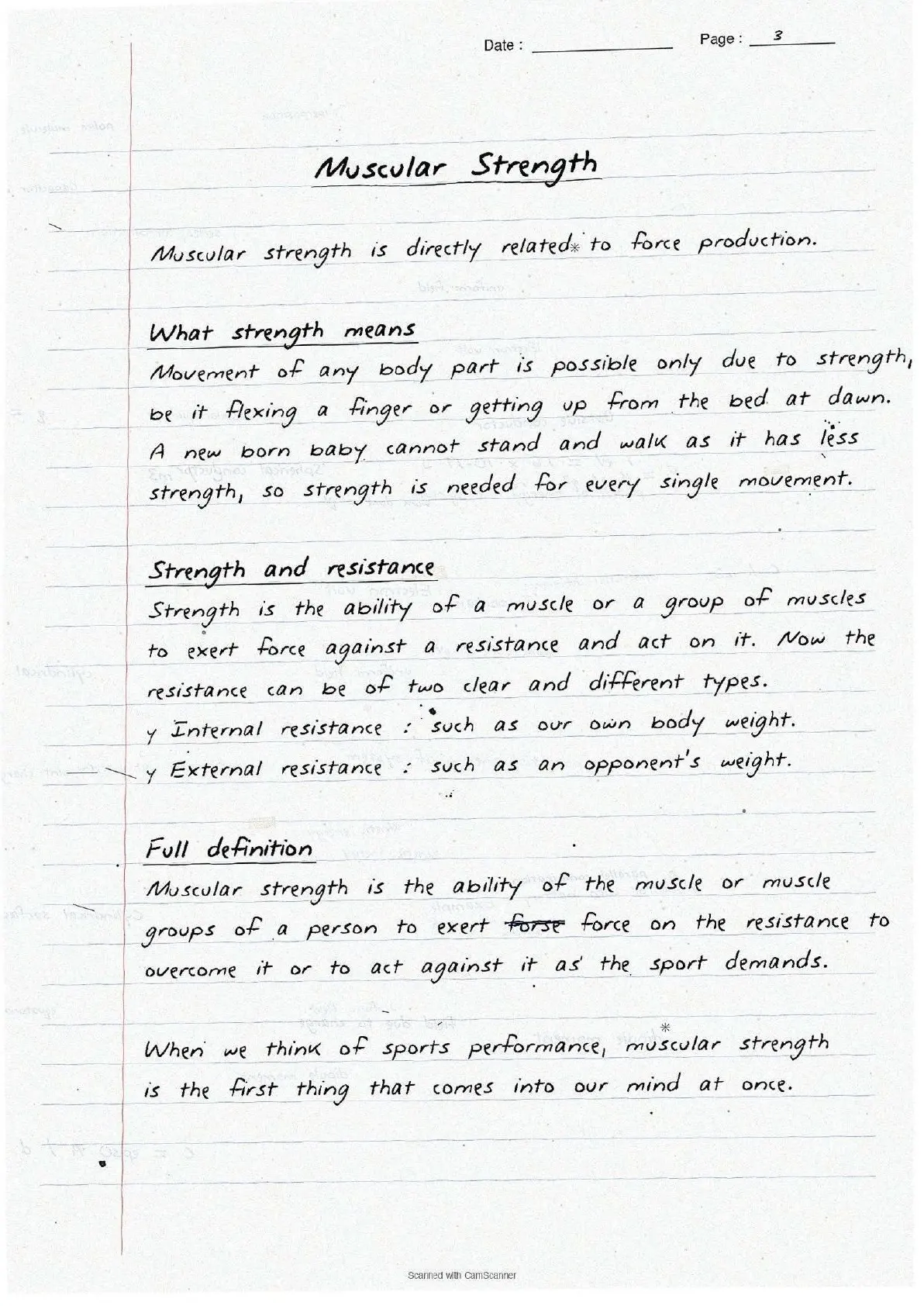
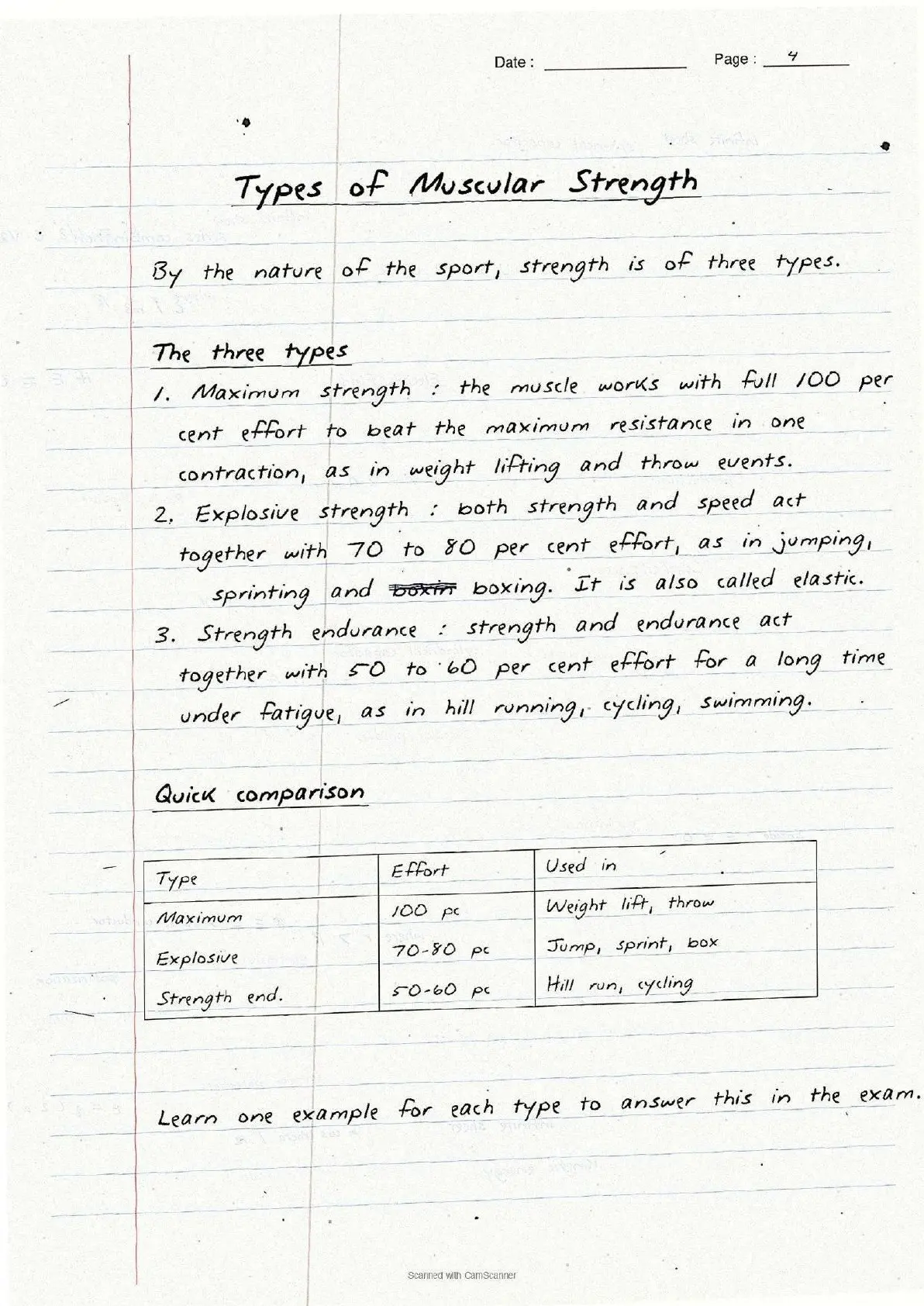
- Muscular strength: maximum strength (100 per cent effort in a single contraction, as in weight lifting), explosive strength (strength plus speed at 70 to 80 per cent effort, as in jumping and sprinting) and strength endurance (50 to 60 per cent effort held under fatigue, as in cross country and swimming).
- Endurance: basic (slow, not task specific, aerobic), general (varied pace and movement) and specific (a set movement pattern using both aerobic and anaerobic qualities).
- Flexibility: passive (movement with external help) and active, which is further split into static (in a sitting or standing position) and dynamic (while moving).
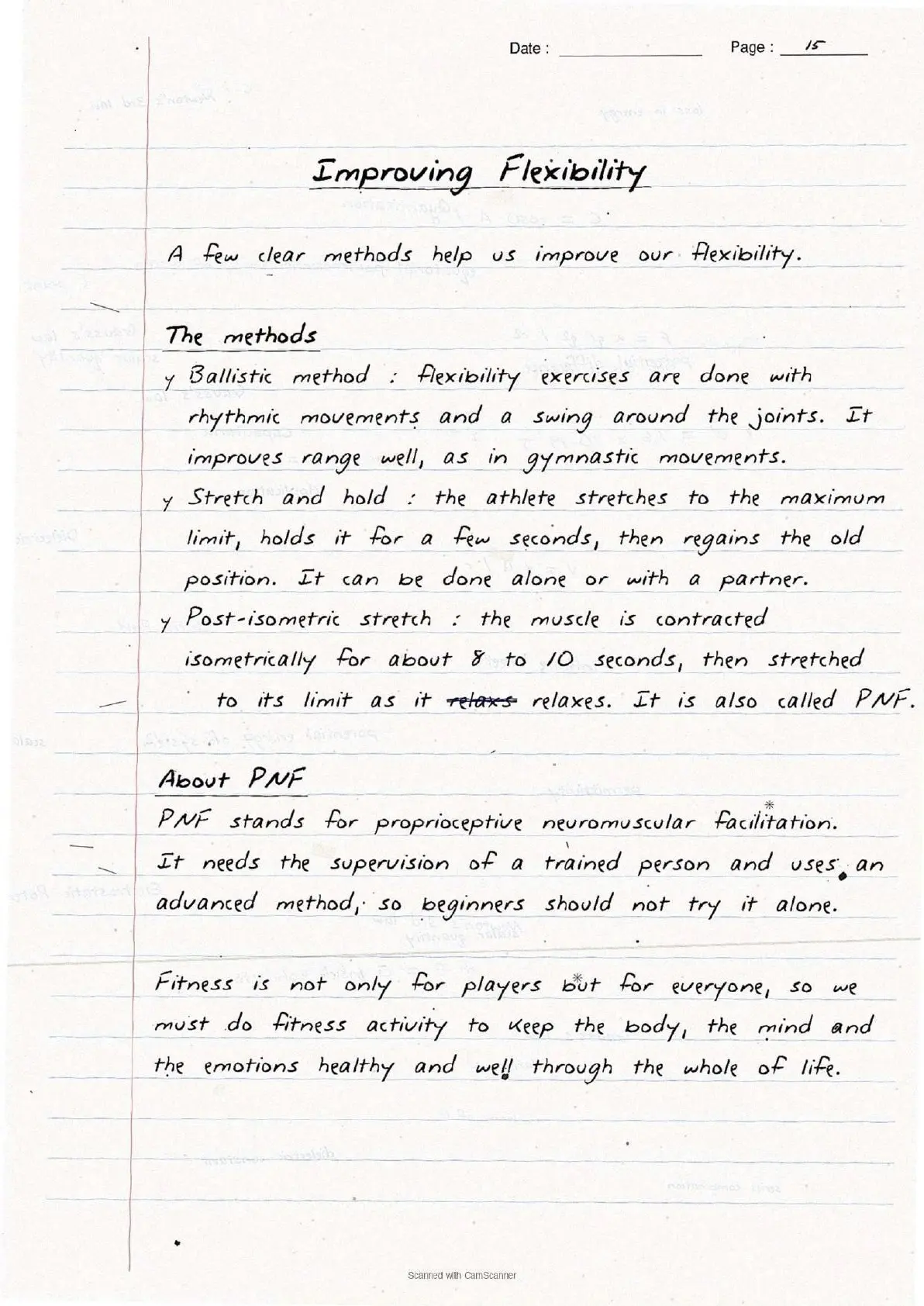
The pages also box the improvement methods so the training answers are quick to revise. Strength is built by using your own body weight or an external weight as resistance. Endurance improves through the continuous method (including the Fartlek or "speed play" method), the interval method with incomplete recovery, the repetition method with full recovery, and the competition method. Flexibility improves through the ballistic method, stretch and hold, and post-isometric stretch (PNF). The notes underline one judgement that scores well: endurance is task specific, so a good runner is not automatically good at every long task.
How to Use These Handwritten Notes
Handwritten notes work best as a final-revision tool, not a first read. The steps below show how to get the most out of the Health Related Physical Fitness handwritten notes in the last days before a Class 11 test.
- Download: save the handwritten pages to your device so you can revise offline.
- First read: read the printed Notes once so the handwritten pages act as a refresher, not a first source.
- Recall drill: cover the page and try to write the five components and the three strength types from memory.
- Night before: flip through the boxed pages for a quick last-minute recall of the definitions and training methods.
Many students search for class 11 physical education chapter 8 notes on their phone the night before a test, so a saved set of handwritten pages means you can revise anywhere. Use the handwritten notes for speed, then check the Notes to confirm you have the answer points right.
Common Mistakes These Notes Help You Avoid
A few errors cost marks every year. The handwritten notes flag each one in the margin so you can fix it before the exam. These five are the most common.
- Listing only four components. Health related fitness has five: strength, endurance, flexibility, body composition and cardiovascular endurance.
- Mixing up the strength types. Match each to its effort level: maximum is 100 per cent, explosive is 70 to 80 per cent, strength endurance is 50 to 60 per cent.
- Calling passive flexibility "internal help". Passive flexibility uses external help, active flexibility uses none.
- Confusing body composition with body weight. It is the split into fat weight and lean body weight, not just total weight.
- Forgetting the twelve-minute run or walk test as the measure of cardiovascular endurance.
Students who fix these five points usually move from average to high marks. The handwritten notes box the five components and list the effort levels in full, so the soft points are hard to miss when you revise.
How These Handwritten Notes Pair with the Notes and Book PDF
These handwritten notes are a fast revision tool. To prepare fully, students should use them alongside the other resources for the same chapter, both linked in the table below. Read the printed Notes, then use these pages for a final recall.
| Resource | Best used for |
|---|---|
| Health Related Physical Fitness Class 11 Notes | Quick chapter summary with all five components and key terms in one place |
| Health Related Physical Fitness NCERT Book PDF | Reading the original NCERT chapter text and figures |
Tip: read the printed Notes first, then keep these handwritten pages for the final night-before flip. Using them for recall, not for the first read, builds memory faster.
All Class 11 Physical Education Handwritten Notes by Chapter
The table links the handwritten notes for every chapter in Class 11 Physical Education, so students can move across the course in one click. Health Related Physical Fitness is highlighted.
| Chapter | Handwritten Notes |
|---|---|
| Chapter 1 | Physical Education |
| Chapter 2 | Understanding Health |
| Chapter 3 | Physical and Physiological Aspects of Physical Education and Sports |
| Chapter 4 | Individual Games |
| Chapter 5 | Team Games |
| Chapter 6 | Yoga and its Relevance in the Modern Times |
| Chapter 7 | Safety and Security |
| Chapter 8 | Health Related Physical Fitness |
| Chapter 9 | Measurement and Evaluation |
| Chapter 10 | Tournaments and Competitions |
| Chapter 11 | Adventure Sports |
FAQs on Health Related Physical Fitness Handwritten Notes
Health Related Physical Fitness Class 11 Physical Education Handwritten Notes Common Questions
Ques. Where can I download the Health Related Physical Fitness handwritten notes PDF?
Ans. You can download the Health Related Physical Fitness Class 11 Physical Education handwritten notes PDF directly from this page. It is free, follows the 2026-27 NCERT, and presents the meaning of physical fitness, the five components and their training methods as handwritten pages.
Ques. What are the five components of health related physical fitness?
Ans. The five components are muscular strength, endurance, flexibility, body composition and cardiovascular endurance. The handwritten notes box each one with its definition and sub-types so the full list is easy to recall for the long-answer question.
Ques. Are handwritten notes good for revising Class 11 Physical Education Chapter 8?
Ans. Yes. Handwritten notes are best for fast, last-minute revision because the boxed key terms and arrows make the components and their sub-types easy to skim. Use them after a first read of the printed Notes, not as your only source.
Ques. What topics do these handwritten notes cover?
Ans. They cover the meaning of physical fitness, muscular strength and its three types, endurance and its types, flexibility (passive and active), the factors and training methods for each, body composition, and cardiovascular endurance with the twelve-minute run or walk test.
Ques. How should I use these notes with the other resources?
Ans. Read the printed Notes first, then keep these handwritten pages for the final night-before flip. Using them for recall rather than the first read builds memory faster, and the Book PDF is there if you want the original NCERT text and figures.



Comments