




These Yoga and its Relevance in the Modern Times handwritten notes turn the whole chapter into clean, handwritten pages for fast last-minute revision. They follow the 2026-27 NCERT "Health and Physical Education" Class 11 Chapter 6. Students get the meaning of yoga, its history, the four schools of yoga, the guidelines for practice, and the asanas, pranayama and dhyana that keep coming up in the Class 11 final exam, all in a pen-on-paper format that is easy to skim.
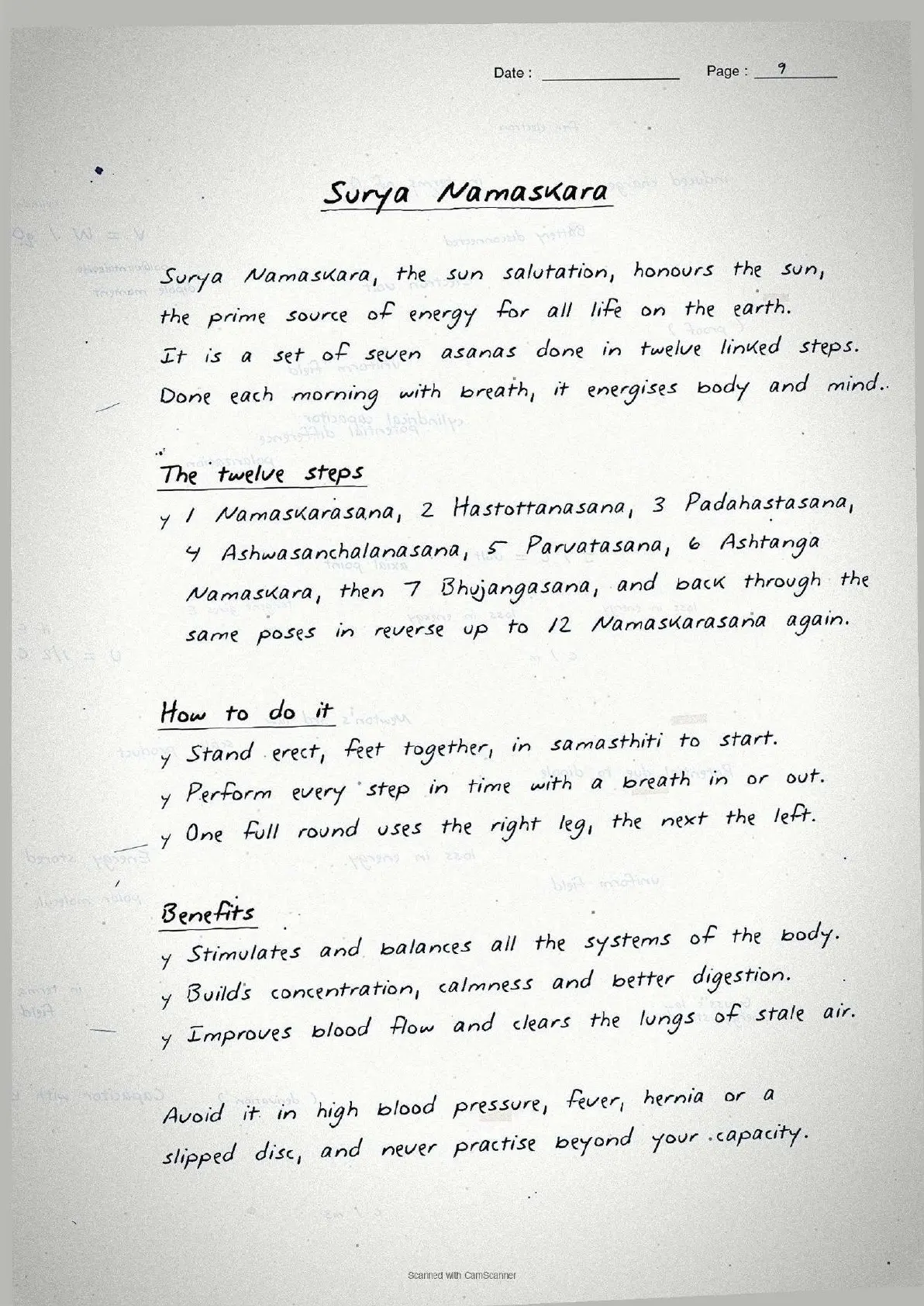
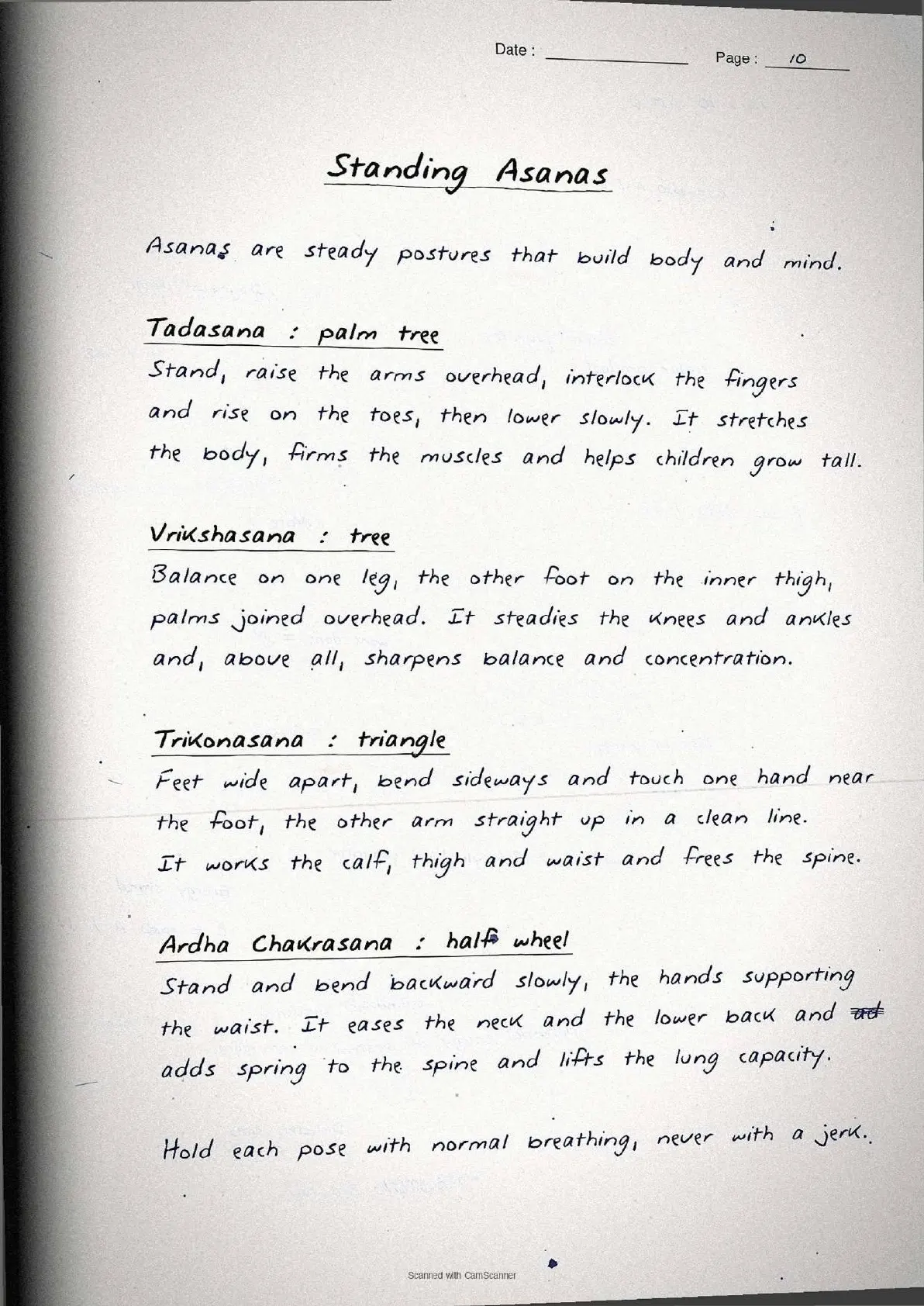
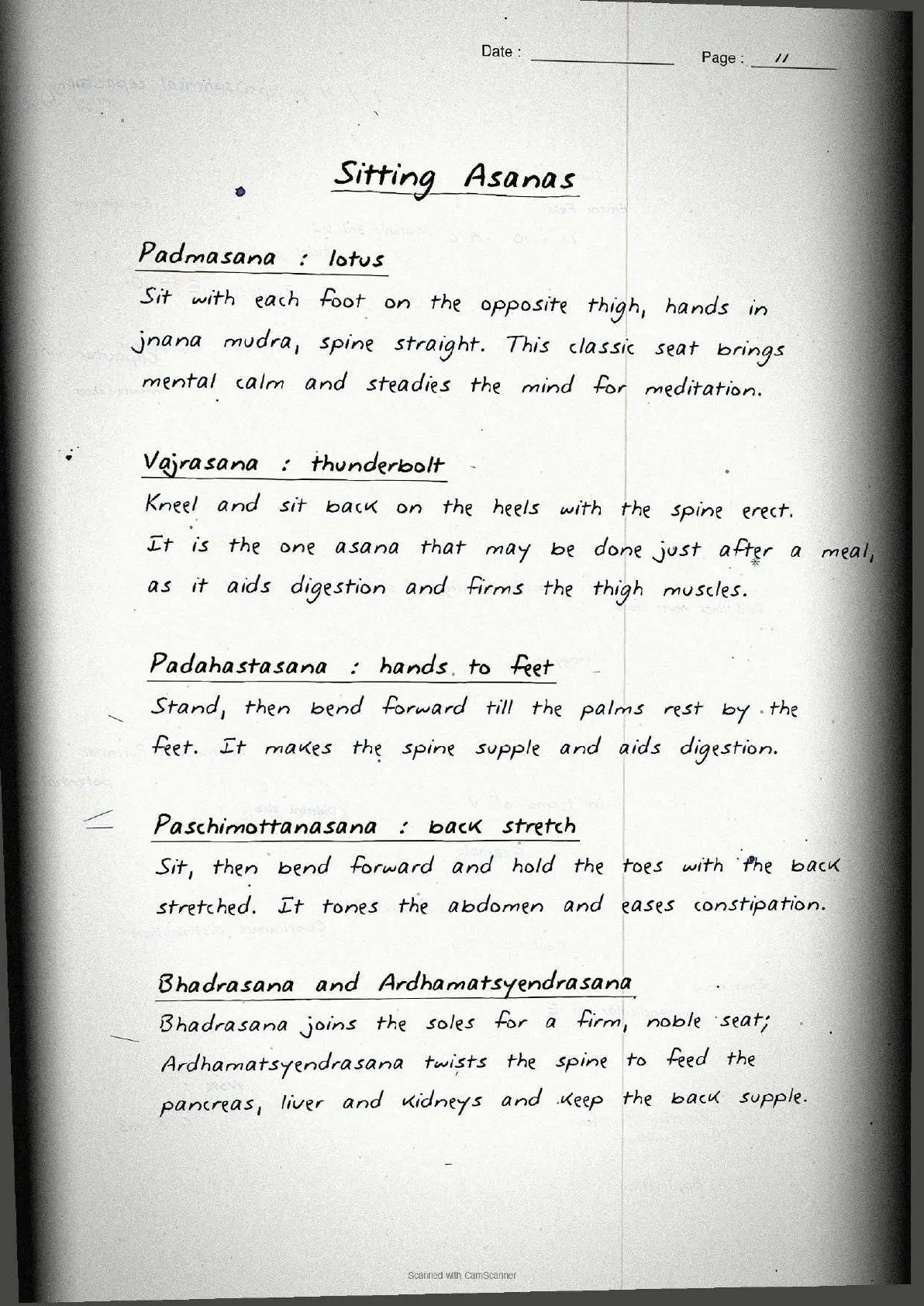
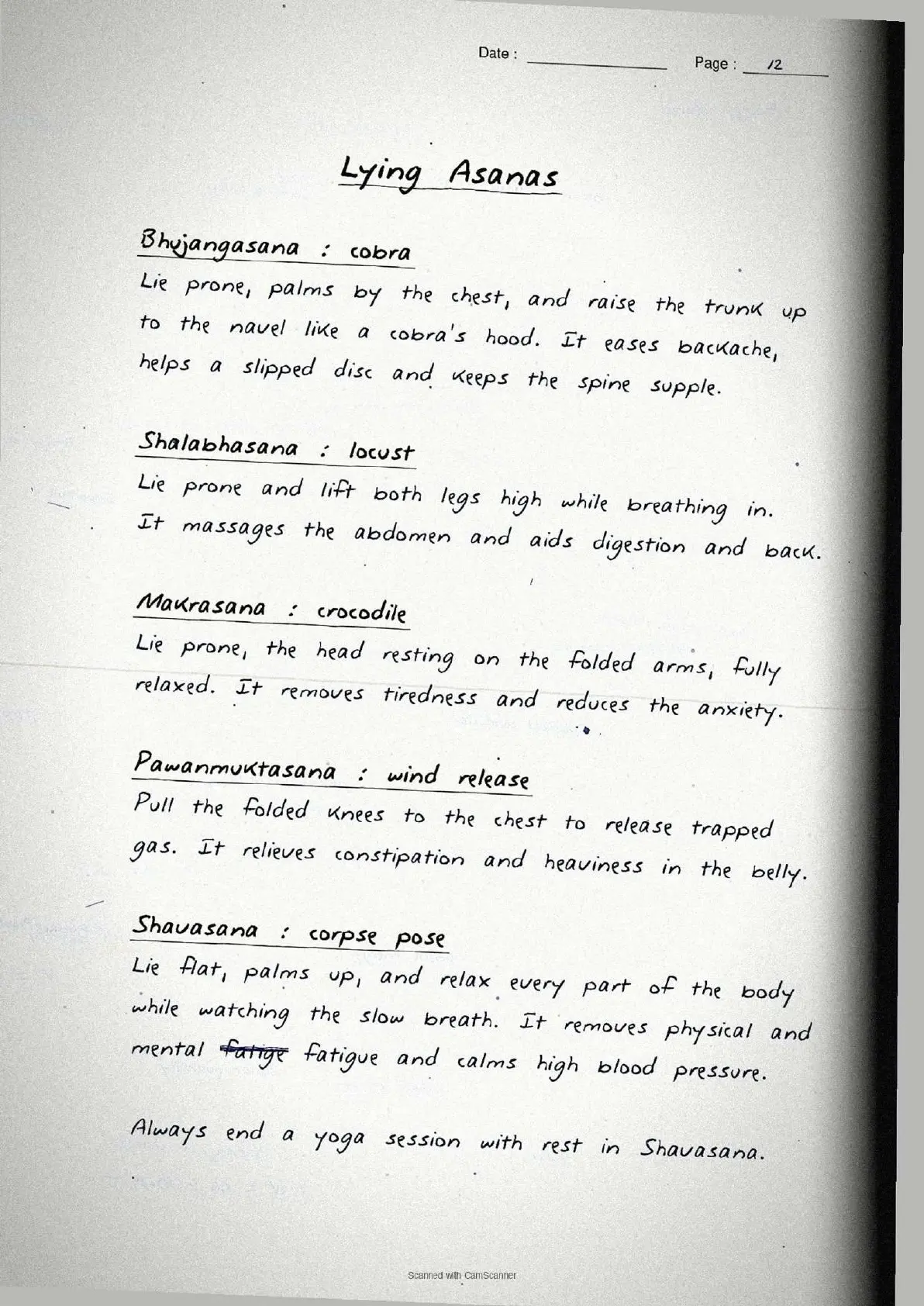
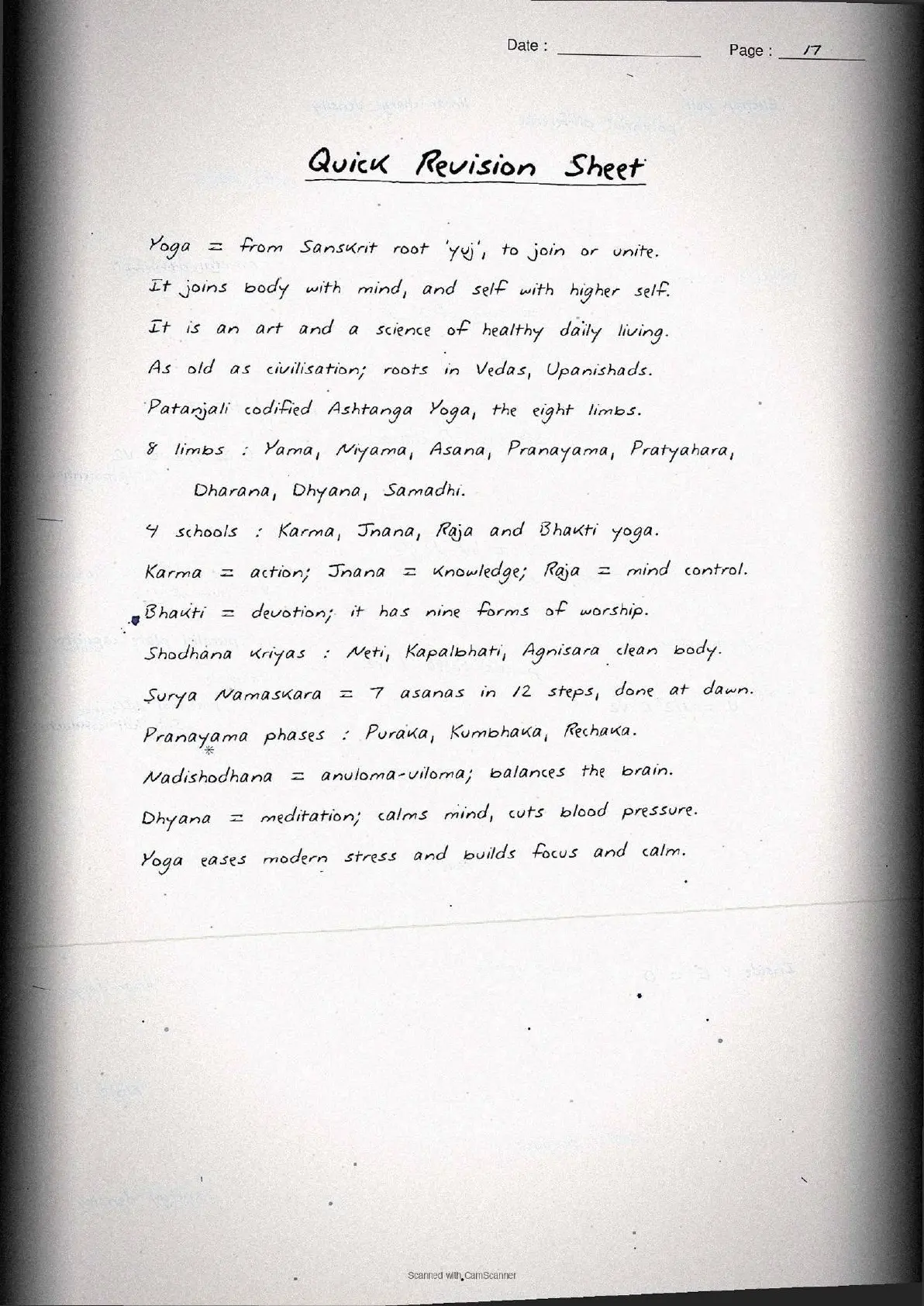
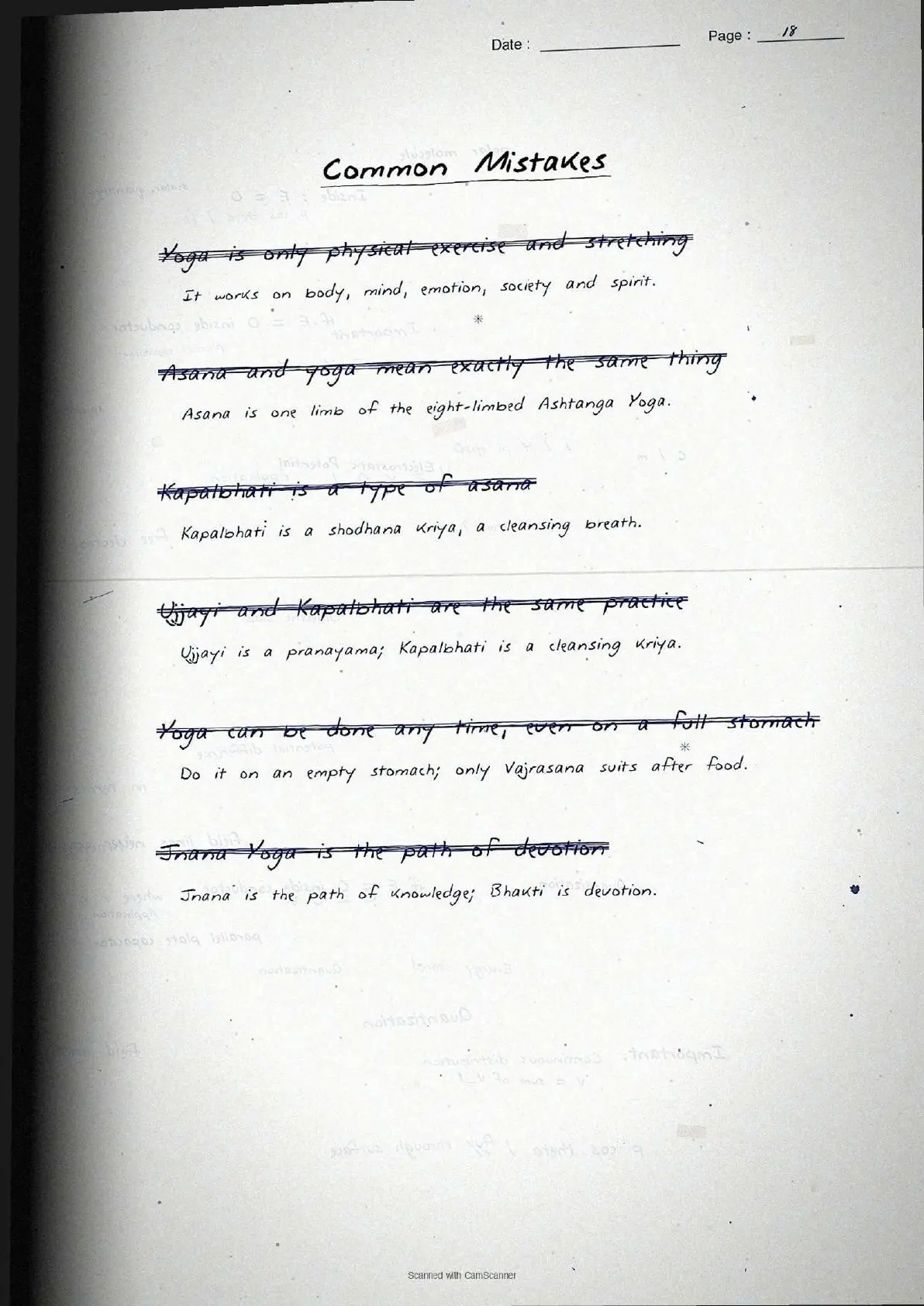
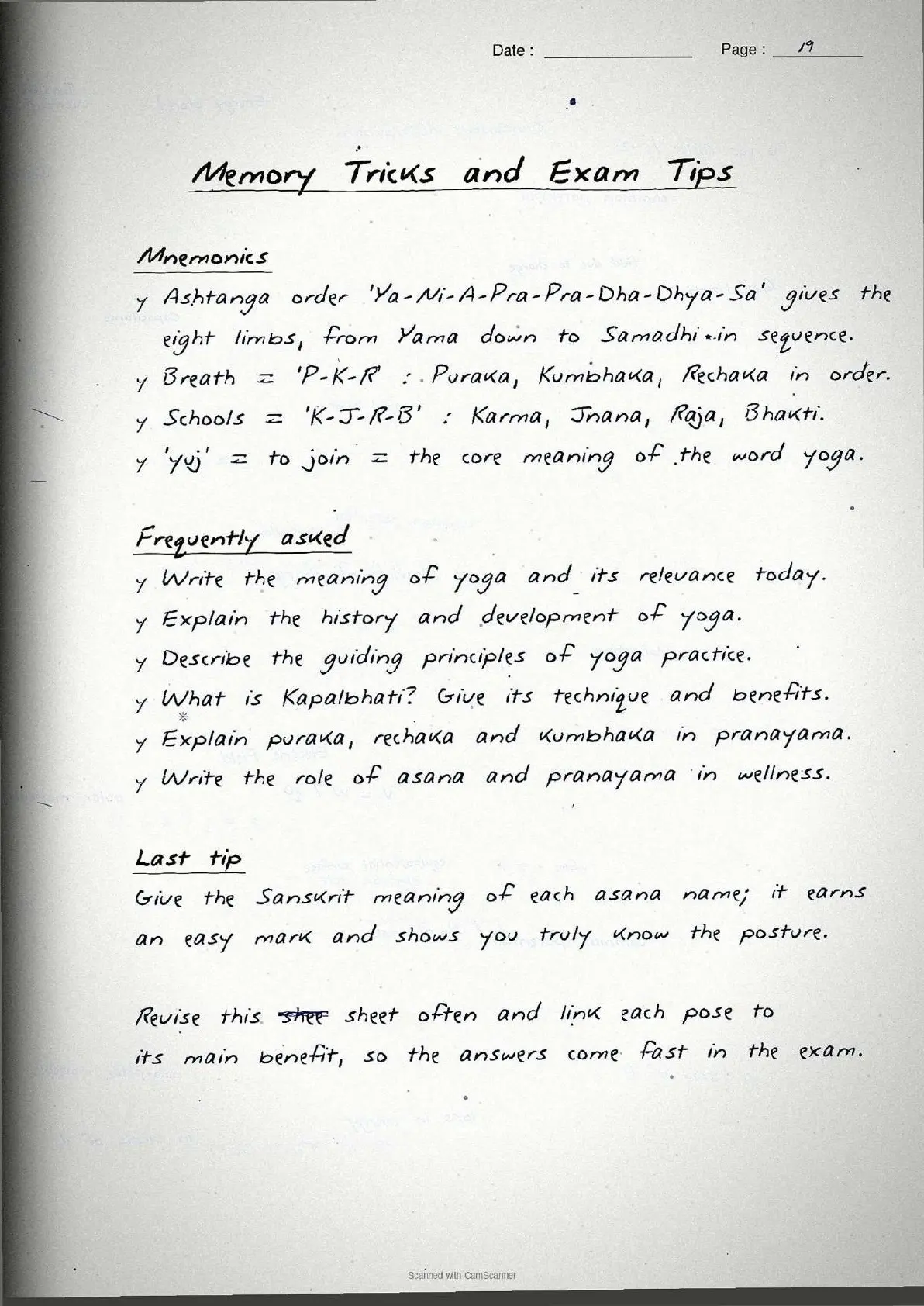
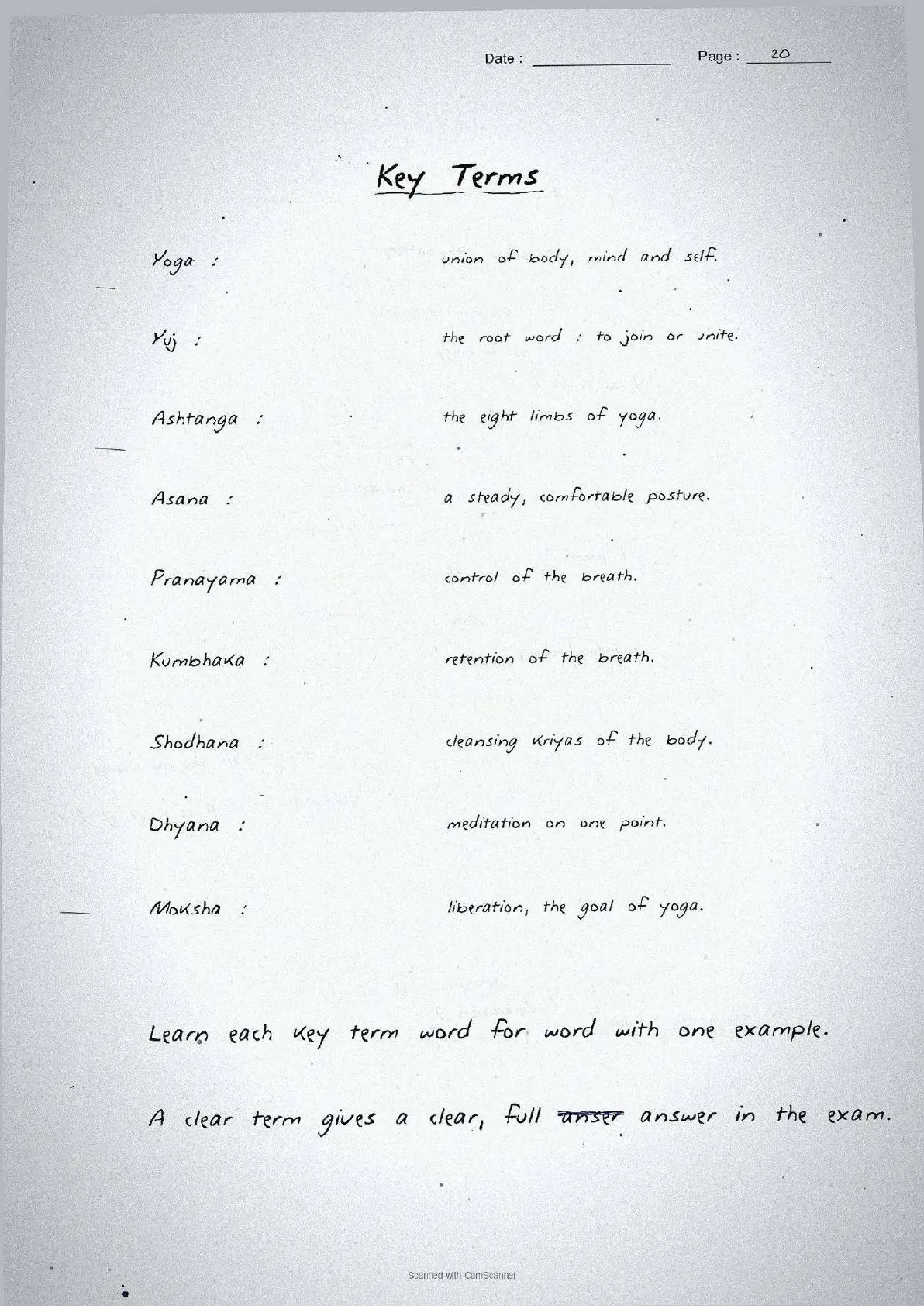
- Handwritten pages with boxed key terms, labelled asana sketches and the schools-of-yoga map.
- Covers the meaning of yoga, Ashtang Yoga, shodhana kriyas, asanas, pranayama, bandhas and dhyana in one place.
- Pairs with the Notes and Book PDF for the same chapter, linked lower on this page.
These Yoga and its Relevance in the Modern Times handwritten notes are prepared from the official NCERT Health and Physical Education textbook and checked against recent CBSE Class 11 Physical Education question papers.
Student Feedback: In a Collegedunia poll of 5,180 Class 11 Physical Education students, 72% of students said handwritten pages helped them recall the four schools of yoga and the asana benefits faster than printed text, because the boxed sketches and arrows made the postures and their effects stick.
Source: 2026-27 Class 11 Physical Education student poll. Sample of 5,180 students from CBSE schools across 11 states.
What These Yoga and its Relevance in the Modern Times Handwritten Notes Contain
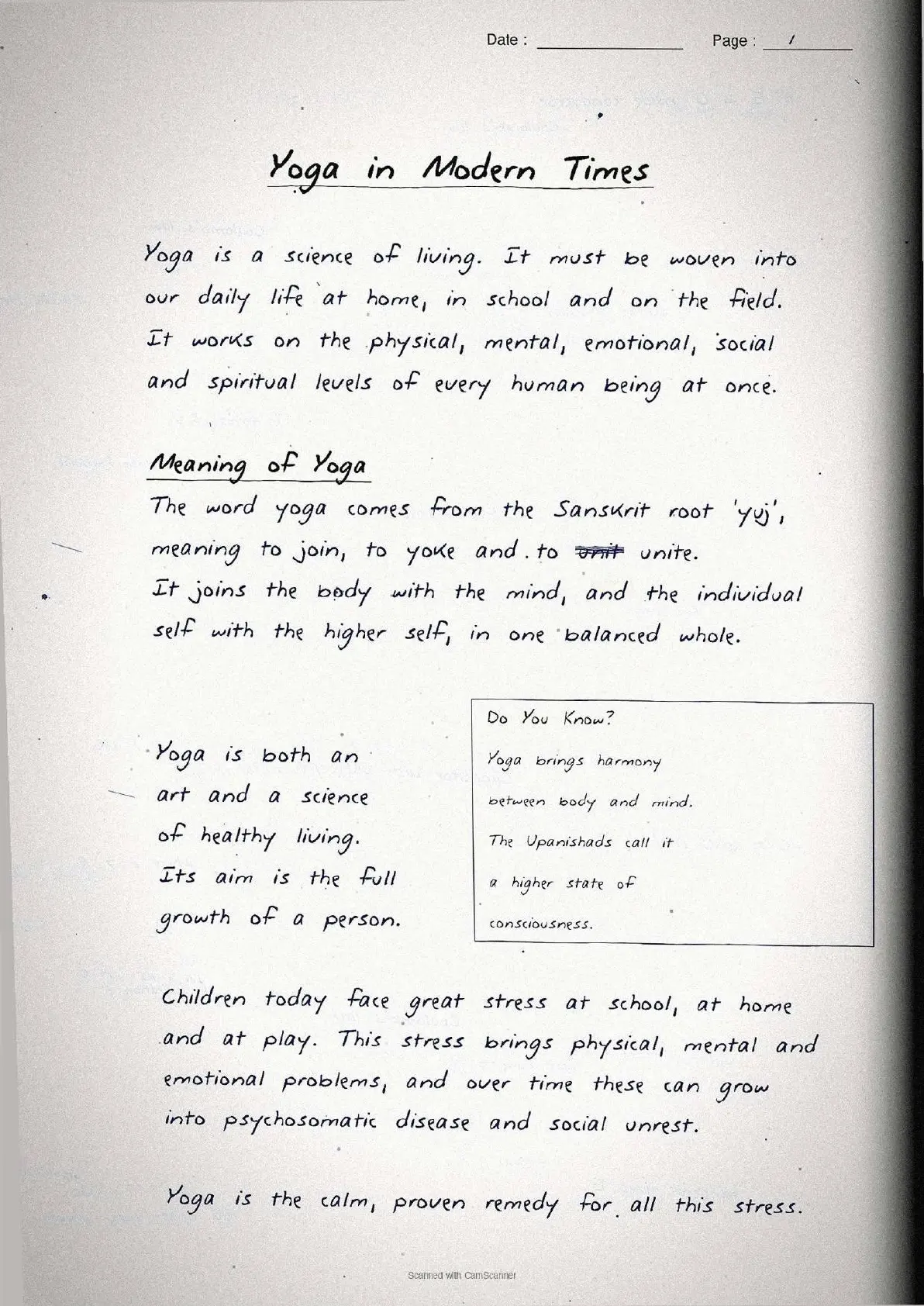
Yoga and its Relevance in the Modern Times is Chapter 6 of Class 11 Physical Education. The chapter explains that yoga is a science of living that works on the physical, mental, emotional, social and spiritual levels and brings harmony between body and mind. These handwritten notes condense that whole idea into handwritten pages that read like a topper's own notebook.
The notes are organised under three threads, each on its own set of pages:
- The foundation: the meaning of yoga, its history, and the four schools of yoga.
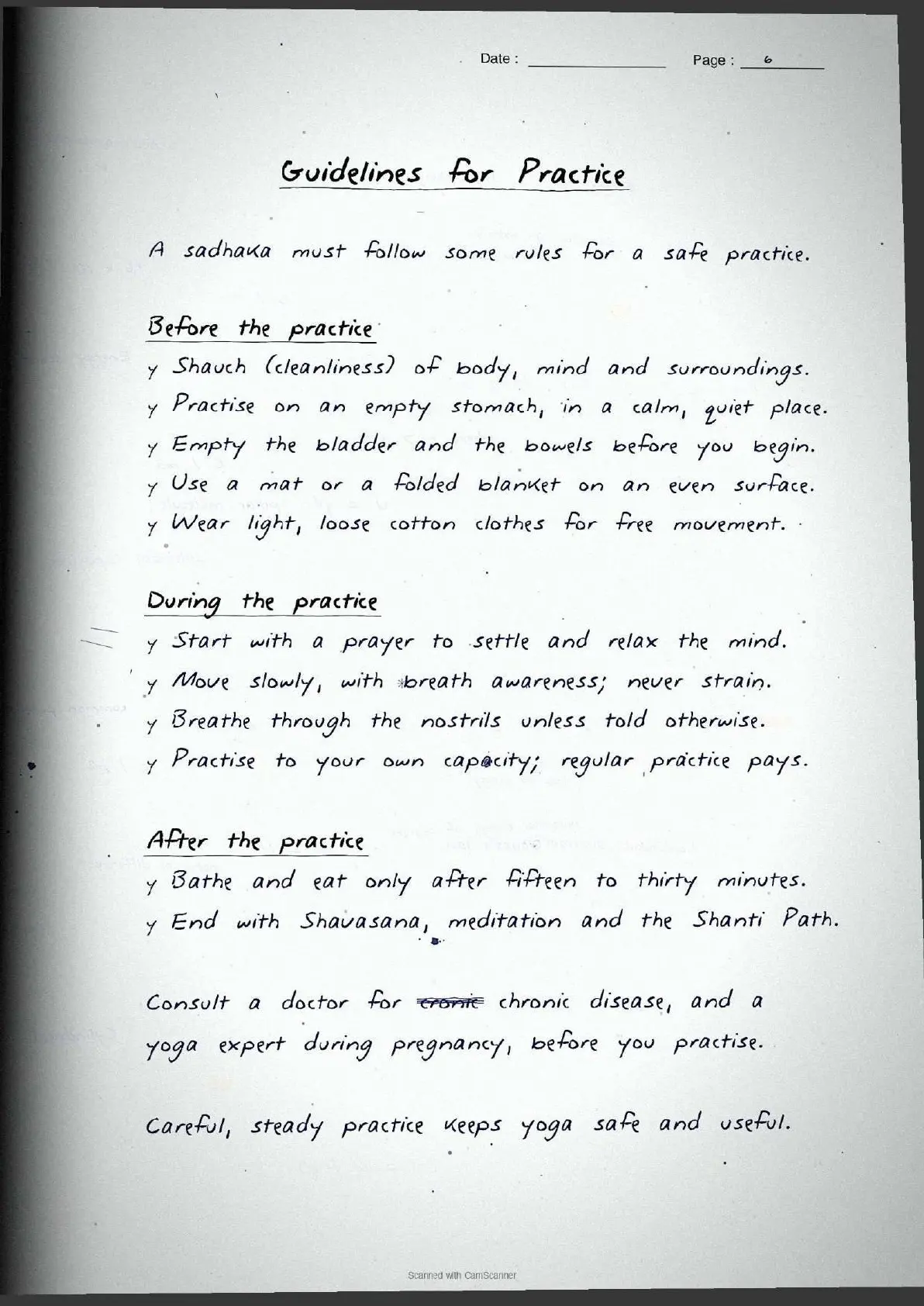
- The practice rules: the guidelines to follow before, during and after yogic practice.
- The techniques: shodhana kriyas, asanas, pranayama, bandhas and dhyana for wellness.
Because the pages are handwritten, the key terms sit in boxes and arrows rather than long paragraphs. A student can flip through the yoga and its relevance in the modern times class 11 pages in a few minutes and still recall the schools of yoga, the asana benefits and the phases of pranayama.
Meaning of Yoga and the Schools of Yoga in the Handwritten Pages
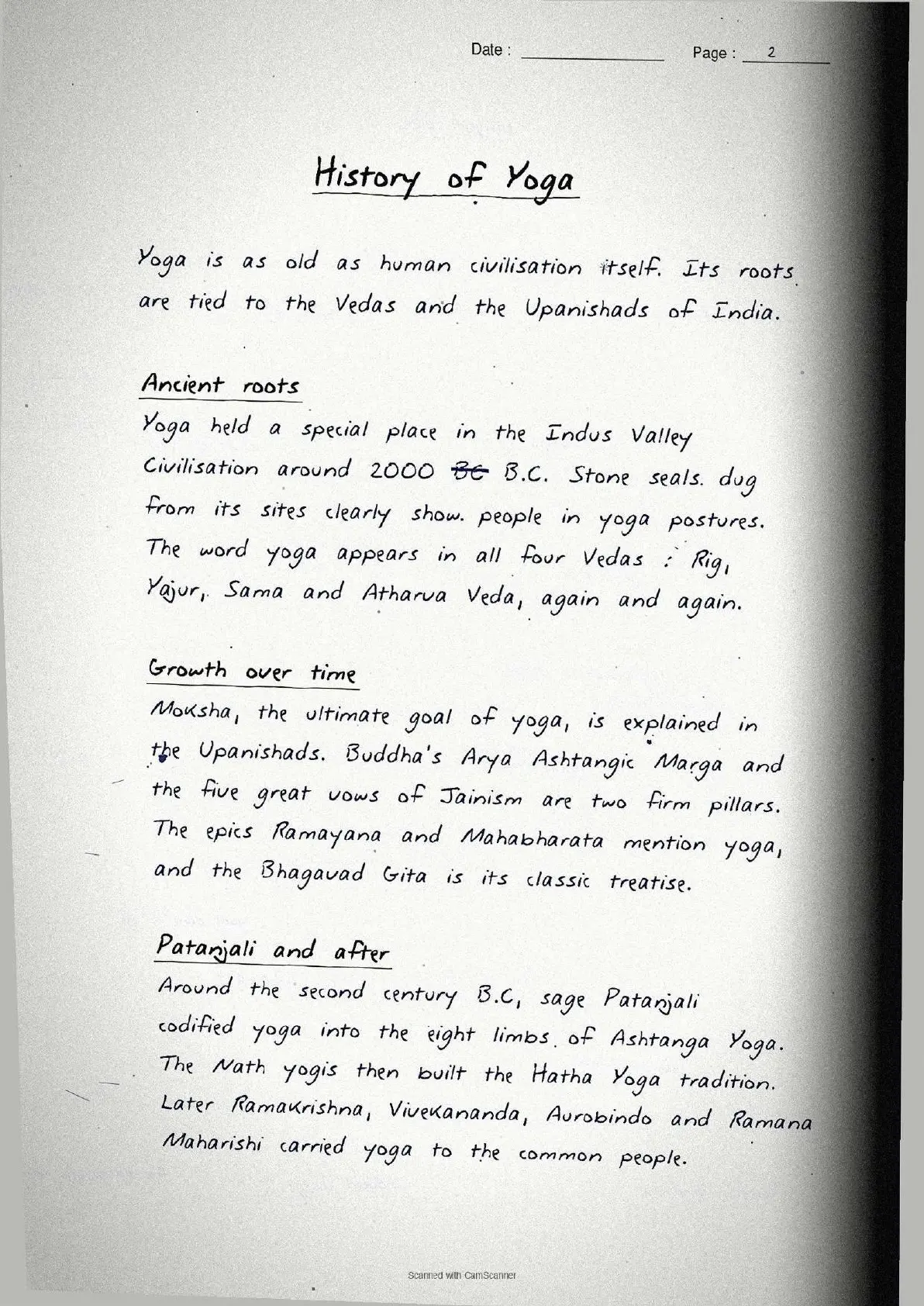
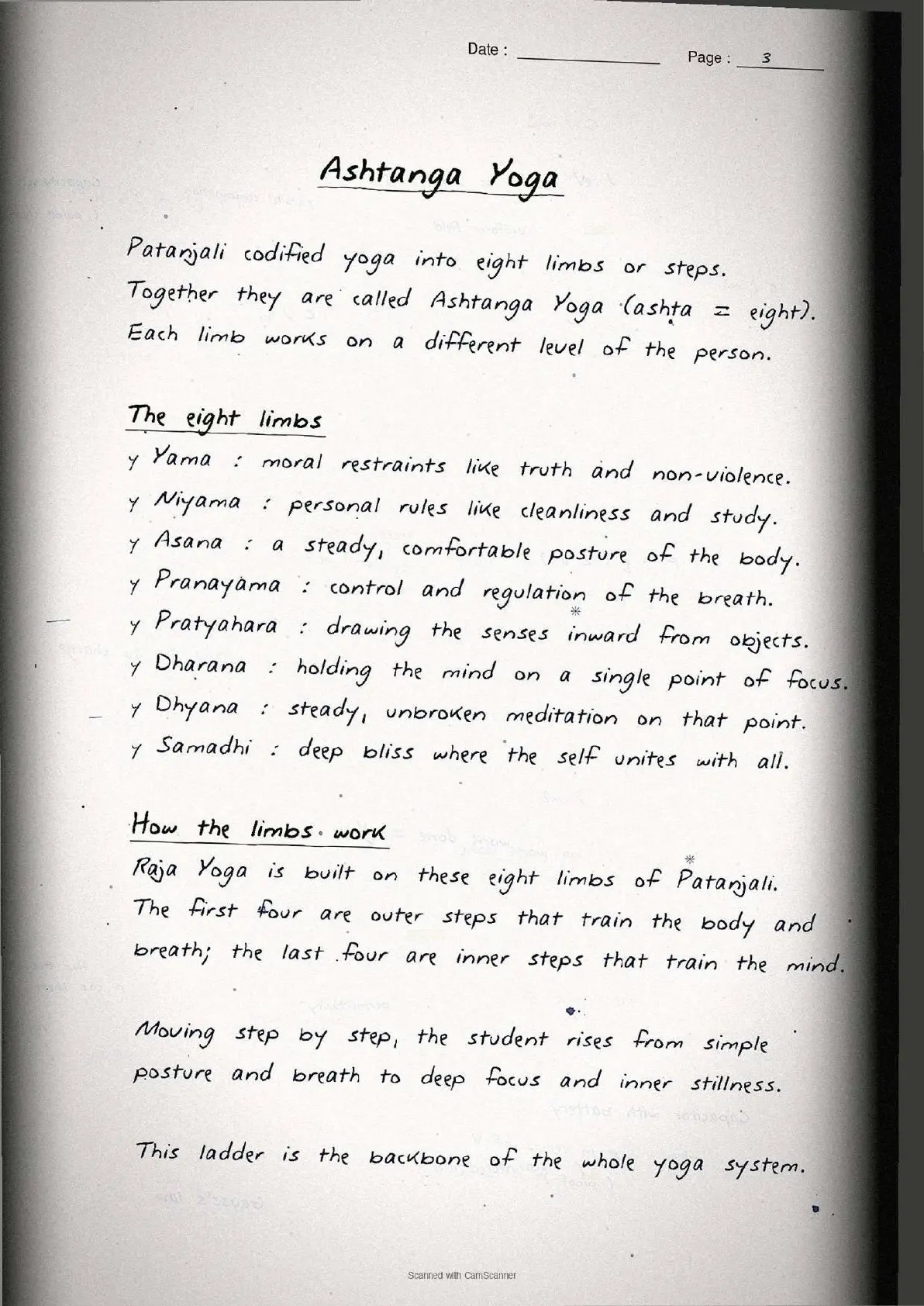
The opening pages fix the basics that the long-answer questions reward. The word yoga comes from the Sanskrit root yuj, meaning to join, to yoke and to unite. The notes trace its history through the Indus Valley Civilisation, the four Vedas and the Upanishads, and note that Maharishi Patanjali codified the system as Ashtang Yoga, the eight limbs of yoga, around the second century B.C.
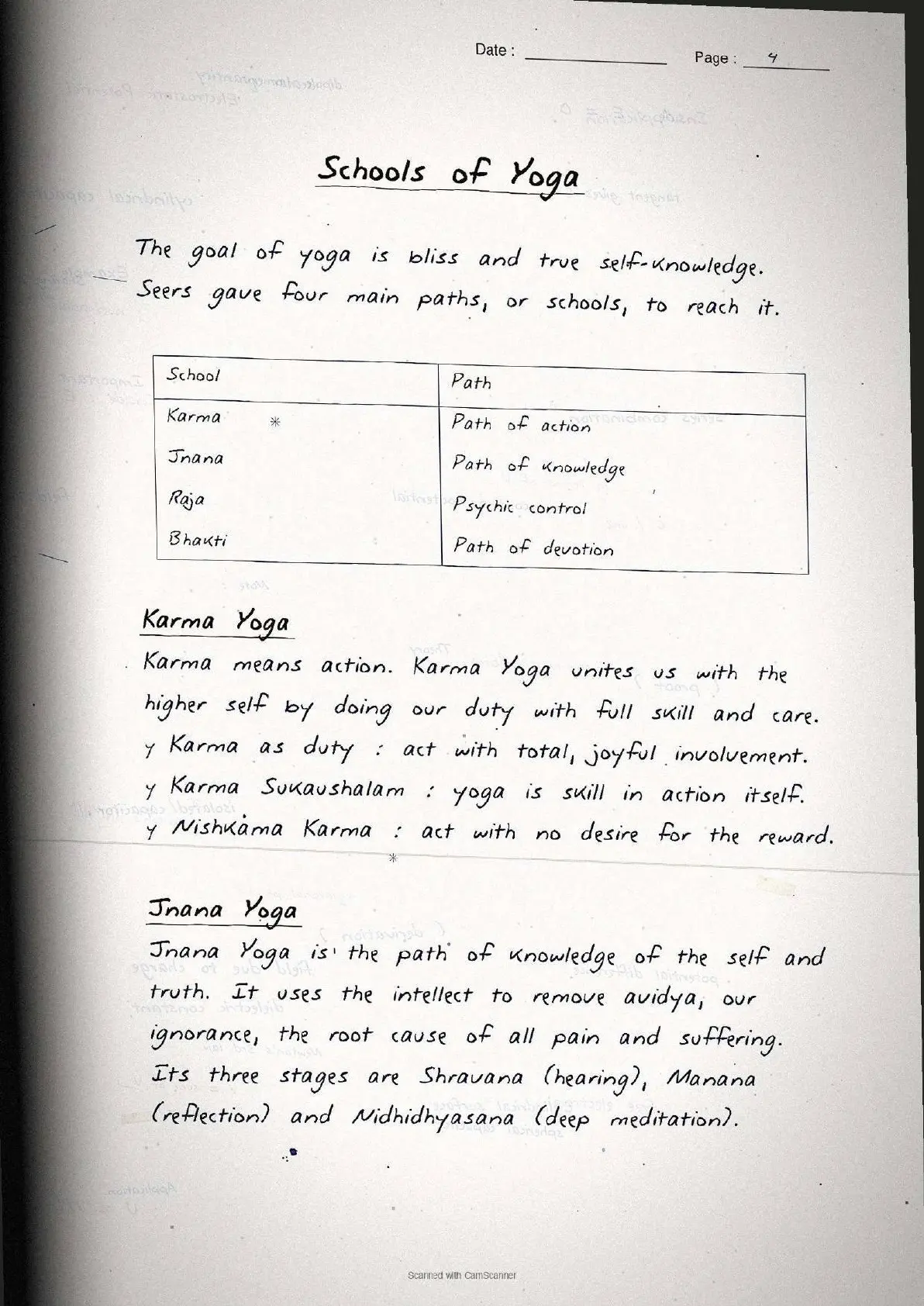
The four schools of yoga fill the central pages, drawn as a clear map so each path stands apart. The table below shows what the handwritten notes cover for each school.
| School of Yoga | What the page shows |
|---|---|
| Karma Yoga (path of action) | Union through selfless action, drawn with karma as duty, karma sukaushalam and nishkama karma. |
| Jnana Yoga (path of knowledge) | Removing avidya (ignorance) through shravan, manana and nidhidhyasana. |
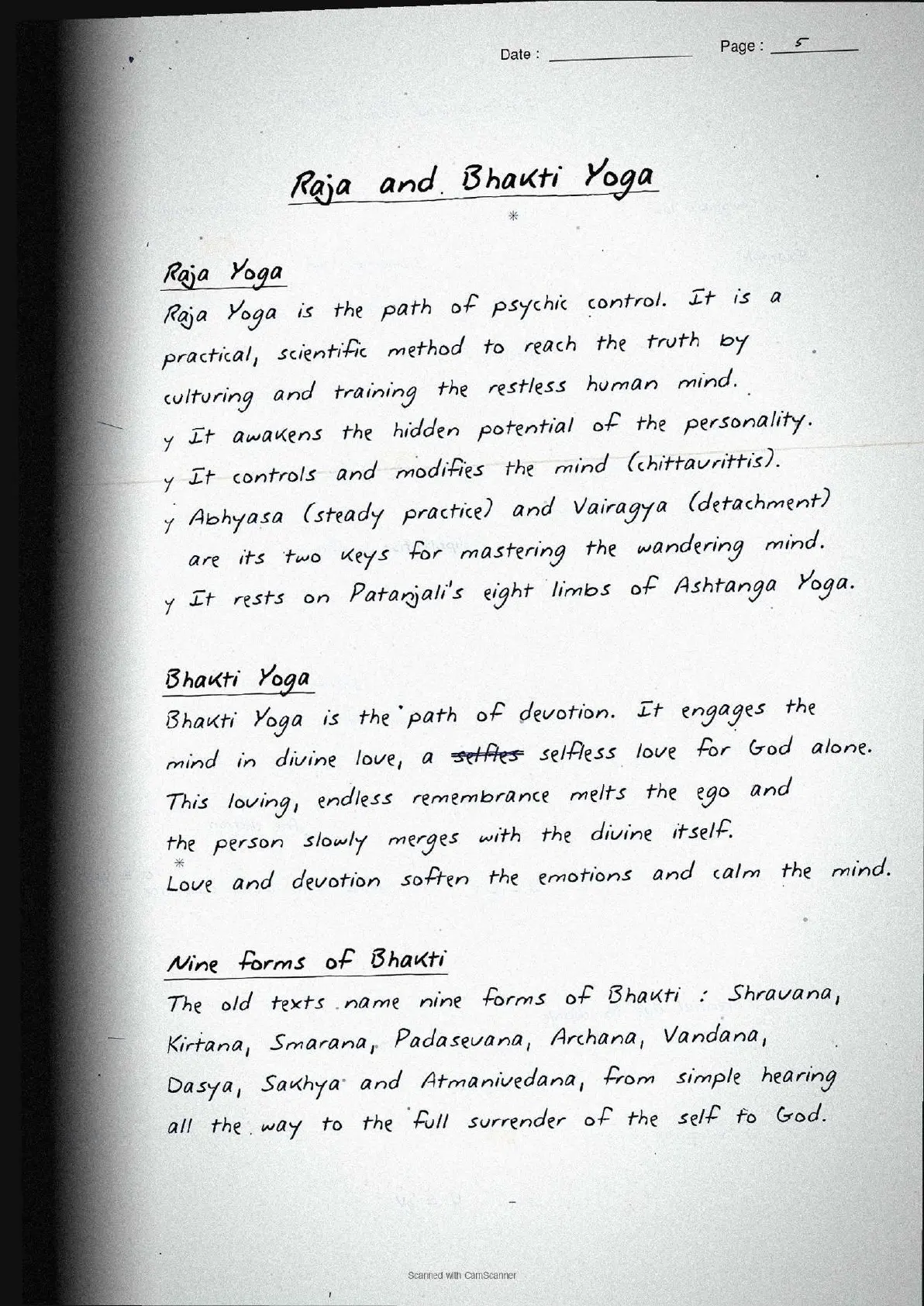
| Raja Yoga (path of psychic control) | Controlling the chittavrittis, based on Patanjali's Ashtang Yoga. |
| Bhakti Yoga (path of devotion) | Divine love, with the nine forms of bhakti listed in a box. |
The handwritten map makes the key point easy to see: every school reaches the same goal of union, but each takes a different route, action, knowledge, mental control or devotion. Seeing the four paths side by side on one page is the fastest way to remember which name means what for the short-answer questions on Karma, Jnana and Raja Yoga.
Asanas, Pranayama and Dhyana in the Notes
The later pages cover the actual practices, which is where most of the marks sit. The notes keep each technique as a boxed list of stages, cautions and benefits, so students can revise them quickly. The lists below show what each page covers.
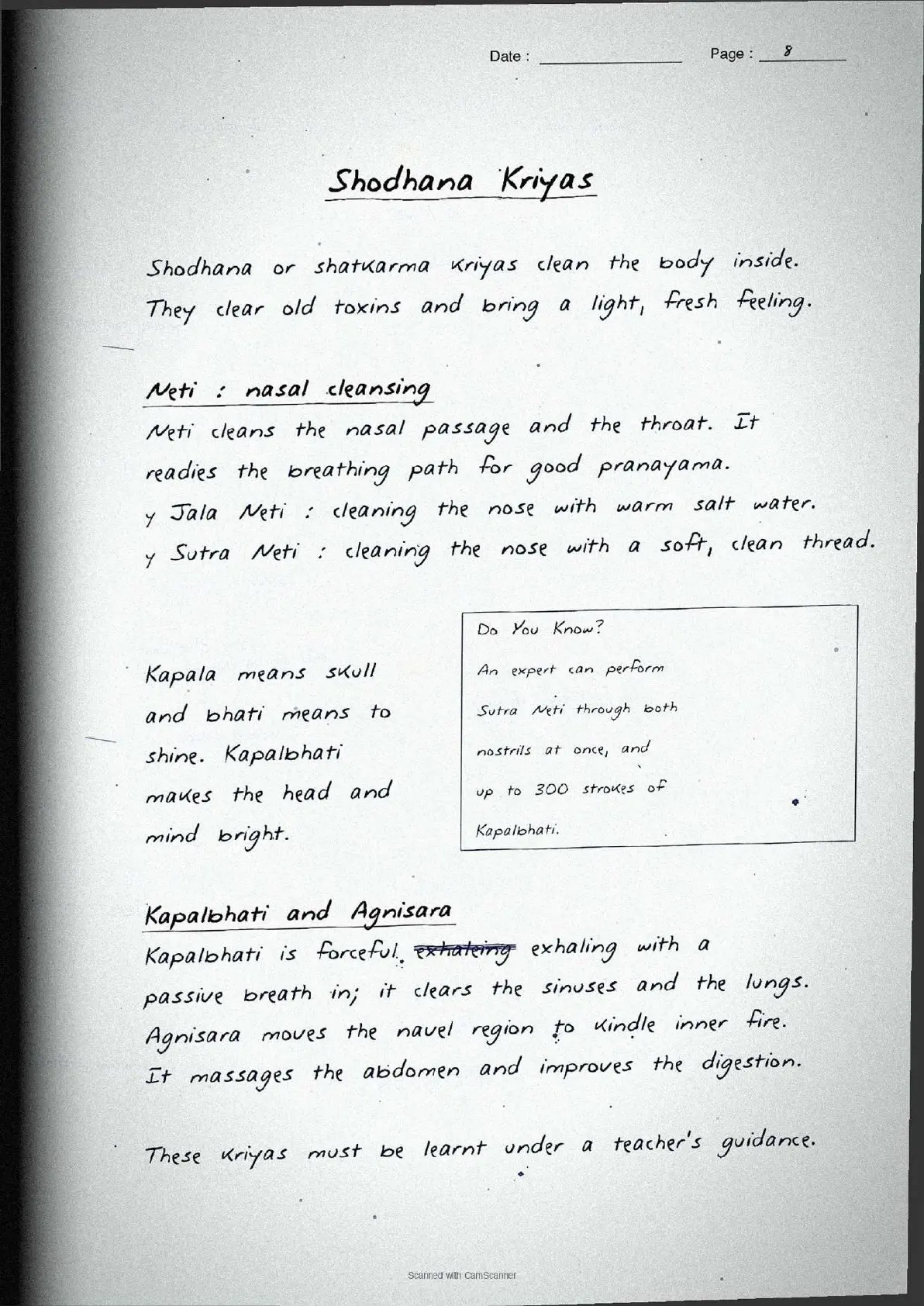
- Shodhana kriyas: internal cleansing such as Jala Neti, Sutra Neti, Kapalbhati and Agnisara.
- Surya Namaskara: the set of seven asanas performed in twelve steps with breathing.
- Asanas: Tadasana, Vrikshasana, Padmasana, Vajrasana, Bhujangasana, Shavasana and more, each with its benefits.
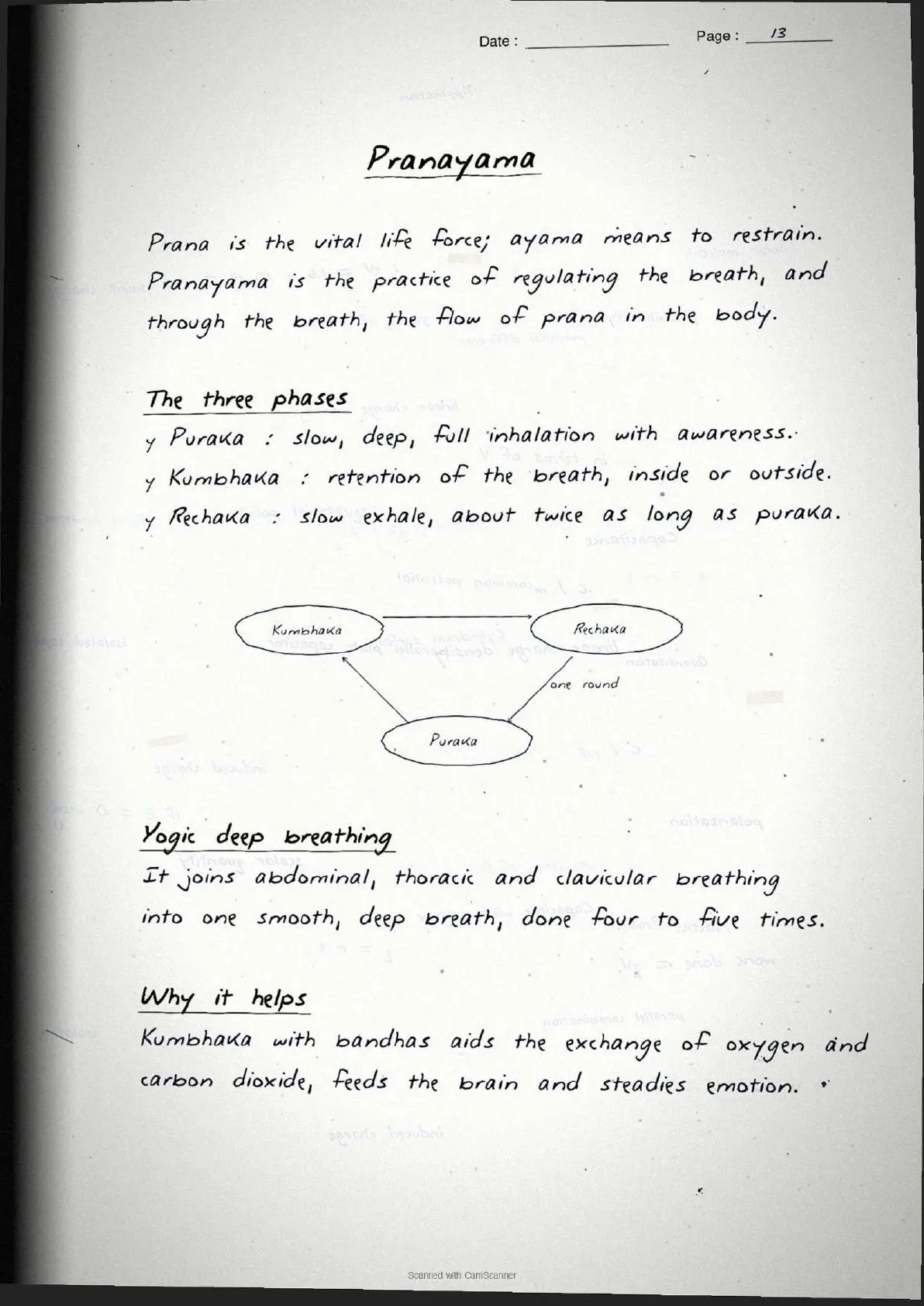
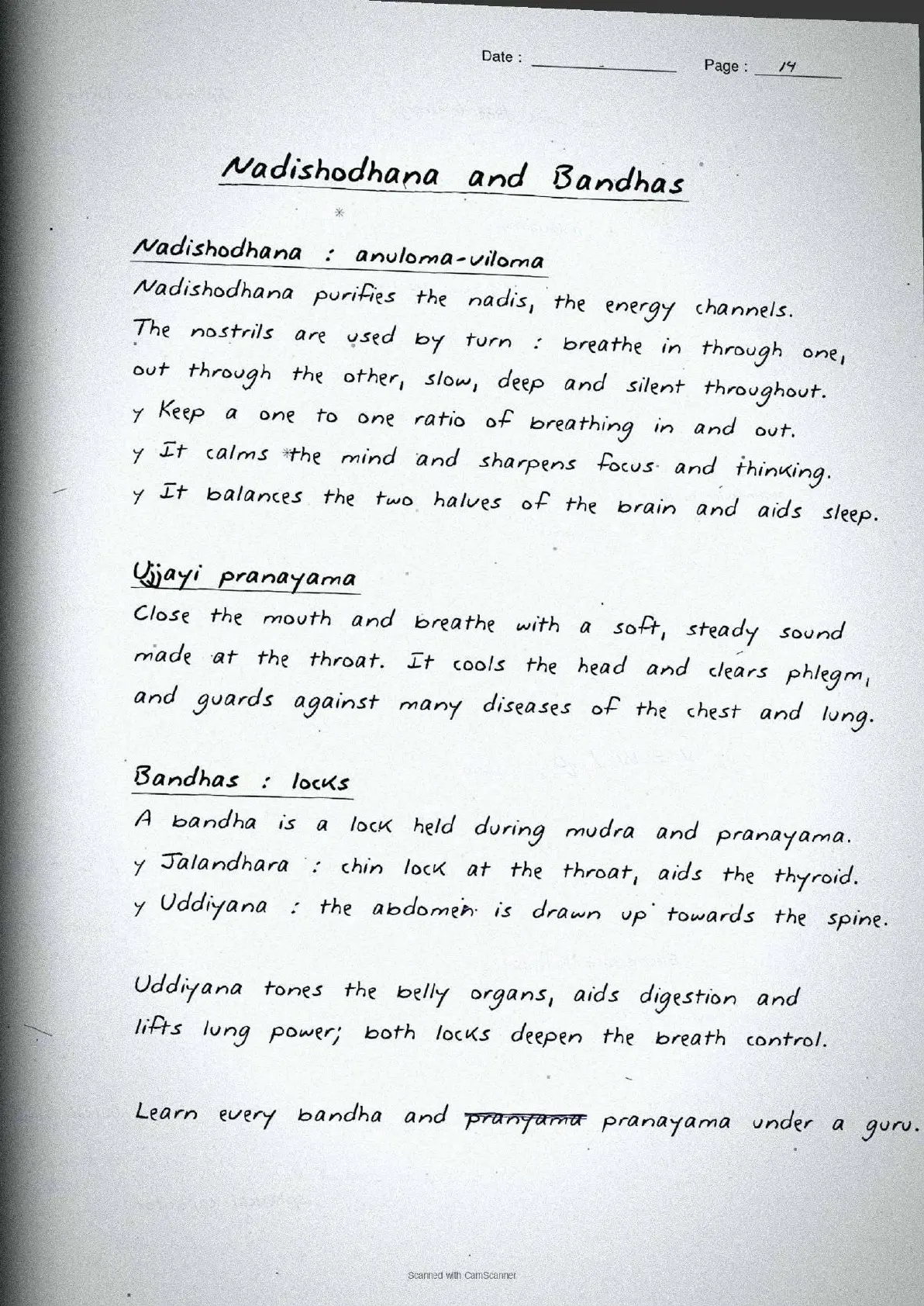
- Pranayama: the three phases, Puraka, Kumbhaka and Rechaka, plus Nadishodhana and Ujjayi.
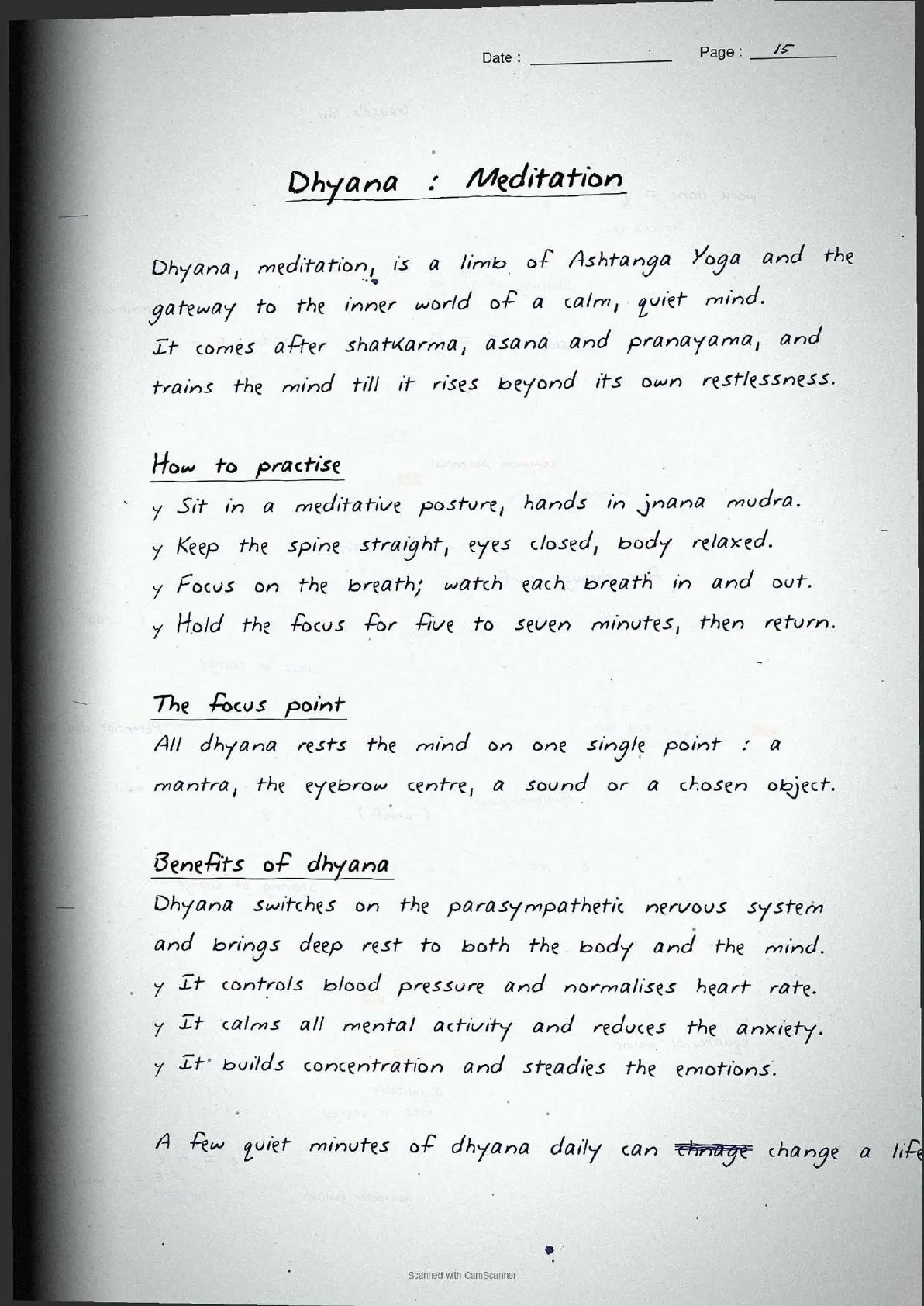
- Bandhas and Dhyana: Jalandhara and Uddiyana bandha, and dhyana for concentration and calm.
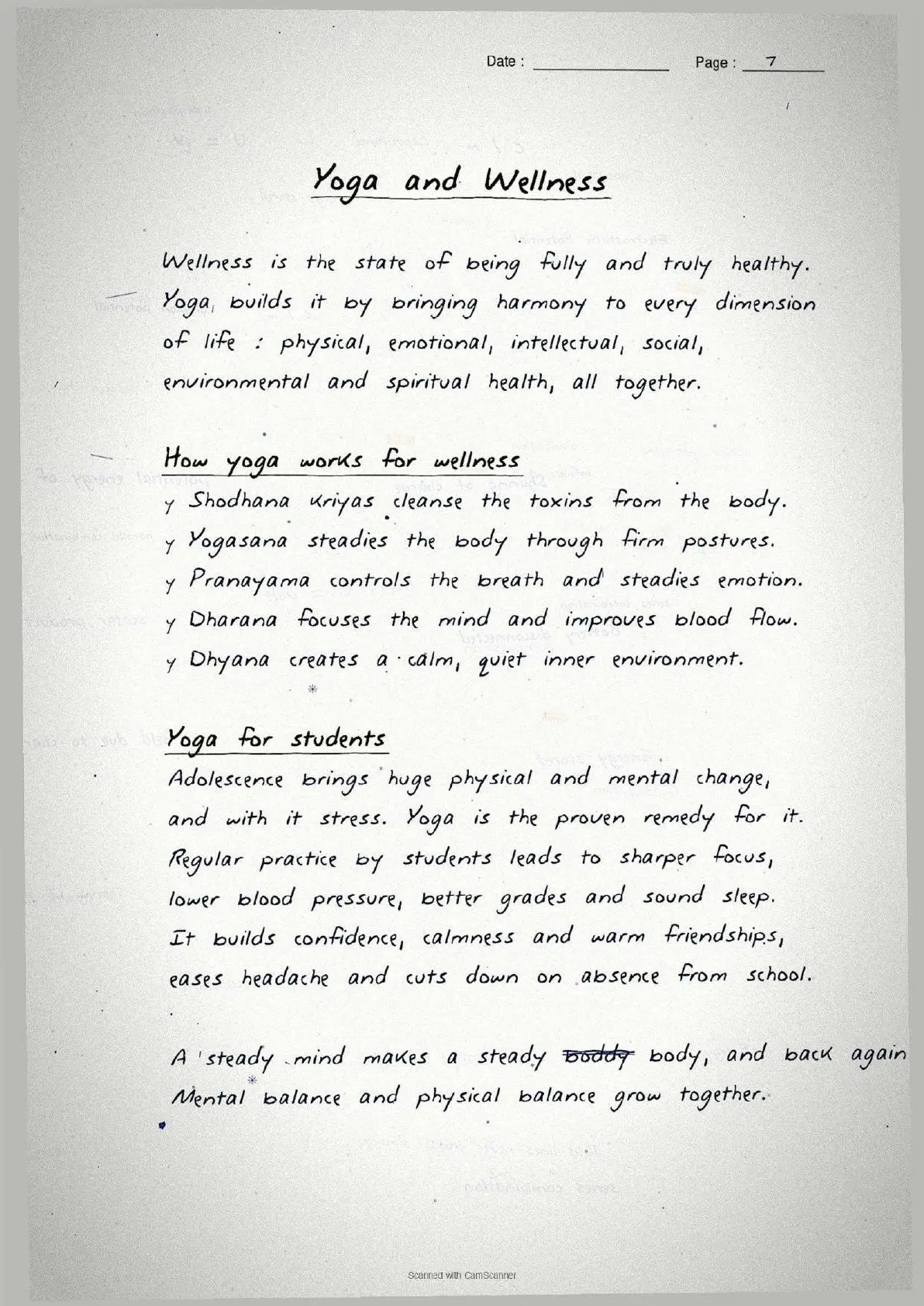
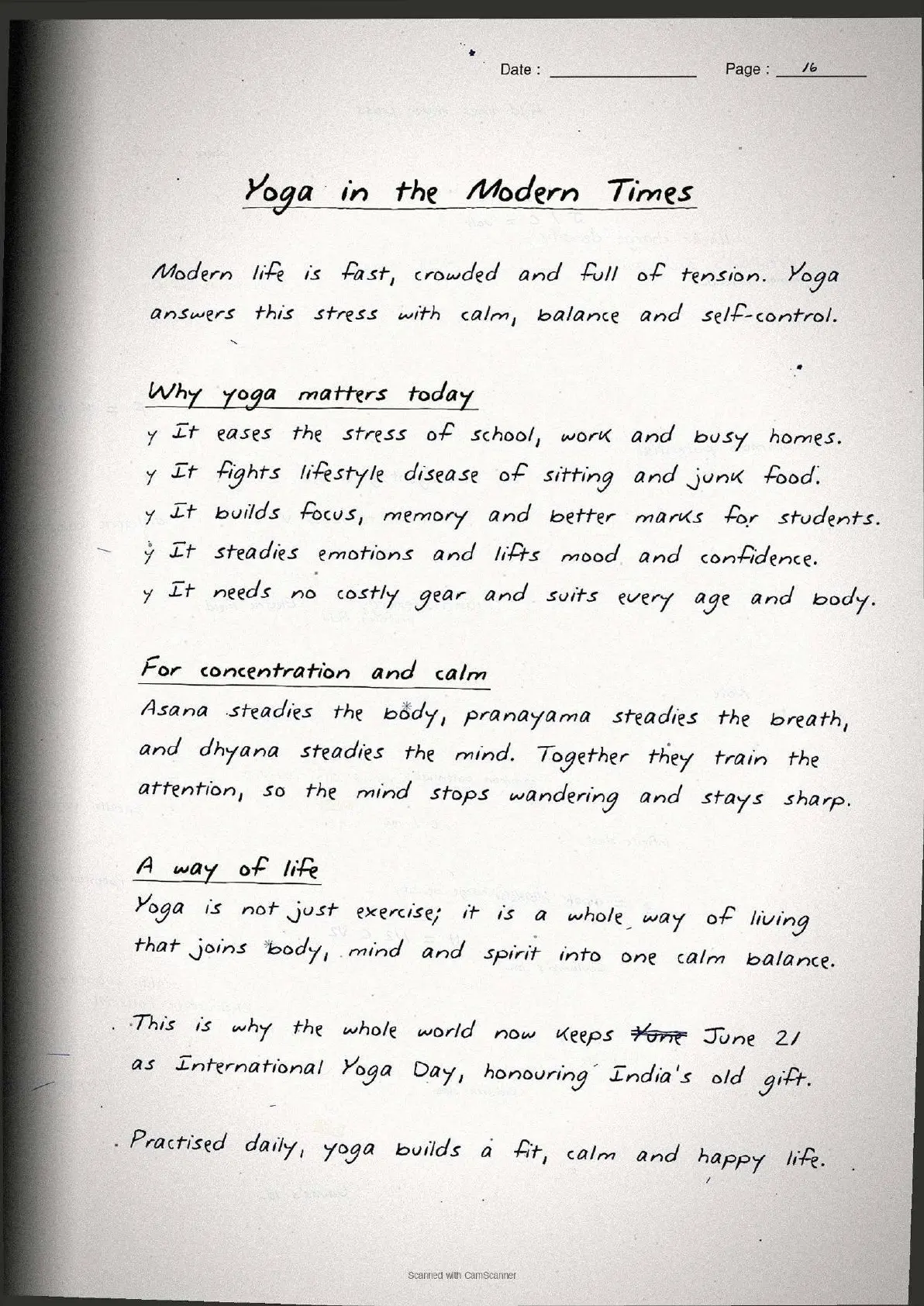
The notes underline one idea that runs through the whole chapter: regular yoga practice improves concentration, reduces stress and steadies both body and mind. The pages box how each practice works, for example Dhyana activating the parasympathetic nervous system to lower blood pressure and calm anxiety. That is exactly why yoga is so relevant in modern, high-stress student life.
How to Use These Handwritten Notes
Handwritten notes work best as a final-revision tool, not a first read. The steps below show how to get the most out of the Yoga and its Relevance in the Modern Times handwritten notes in the last days before a test.
- Download: save the handwritten pages to your device so you can revise offline.
- First read: read the printed Notes once so the handwritten pages act as a refresher, not a first source.
- Recall drill: cover the page and try to write the four schools of yoga and the phases of pranayama from memory.
- Night before: flip through the boxed asana pages for a quick last-minute recall of stages and benefits.
Many students search for class 11 physical education chapter 6 notes on their phone the night before a test, so a saved set of handwritten pages means you can revise anywhere. Use the handwritten notes for speed, then check the printed Notes to confirm you have the answer points right.
Common Mistakes These Notes Help You Avoid
A few errors cost marks every year. The handwritten notes flag each one in the margin so you can fix it before the exam. These five are the most common.
- Mixing up the schools of yoga. Karma is action, Jnana is knowledge, Raja is mental control, Bhakti is devotion.
- Forgetting the root word. Yoga comes from yuj, meaning to join or unite.
- Swapping the pranayama phases. Puraka is inhalation, Kumbhaka is retention, Rechaka is exhalation.
- Calling Kapalbhati an asana. It is a shodhana kriya, and Ujjayi is a pranayama, not an asana.
- Skipping the cautions. Every asana has contra-indications that the exam may ask you to state.
Students who fix these five points usually move from average to high marks. The handwritten notes box the schools of yoga and label each pranayama phase in full, so the soft points are hard to miss when you revise.
How These Handwritten Notes Pair with the Notes and Book PDF
These handwritten notes are a fast revision tool. To prepare fully, students should use them alongside the other resources for the same chapter, all linked in the table below. Read the printed Notes, then use these pages for a final recall.
| Resource | Best used for |
|---|---|
| Yoga and its Relevance in the Modern Times Class 11 Notes | Quick chapter summary with all schools, practices and key terms in one place |
| Yoga and its Relevance in the Modern Times NCERT Book PDF | Reading the original NCERT chapter text and asana figures |
Tip: read the printed Notes first, then keep these handwritten pages for the final night-before flip. Using them for recall, not for the first read, builds memory faster.
All Class 11 Physical Education Handwritten Notes by Chapter
The table links the handwritten notes for every chapter in Class 11 Physical Education, so students can move across the course in one click. Yoga and its Relevance in the Modern Times is highlighted.
| Chapter | Handwritten Notes |
|---|---|
| Chapter 1 | Physical Education |
| Chapter 2 | Understanding Health |
| Chapter 3 | Physical and Physiological Aspects of Physical Education and Sports |
| Chapter 4 | Individual Games |
| Chapter 5 | Team Games |
| Chapter 6 | Yoga and its Relevance in the Modern Times |
| Chapter 7 | Safety and Security |
| Chapter 8 | Health Related Physical Fitness |
| Chapter 9 | Measurement and Evaluation |
| Chapter 10 | Tournaments and Competitions |
| Chapter 11 | Adventure Sports |
FAQs on Yoga and its Relevance in the Modern Times Handwritten Notes
Yoga and its Relevance in the Modern Times Class 11 Physical Education Handwritten Notes Common Questions
Ques. Where can I download the Yoga and its Relevance in the Modern Times handwritten notes PDF?
Ans. You can download the Yoga and its Relevance in the Modern Times Class 11 Physical Education handwritten notes PDF directly from this page. It is free, follows the 2026-27 NCERT, and presents the meaning of yoga, the schools of yoga, asanas, pranayama and dhyana as handwritten pages.
Ques. Are handwritten notes good for revising Class 11 Physical Education Chapter 6?
Ans. Yes. Handwritten notes are best for fast, last-minute revision because the boxed key terms, asana sketches and arrows make the schools of yoga and the practices easy to skim. Use them after a first read of the printed Notes, not as your only source.
Ques. What topics do these handwritten notes cover?
Ans. They cover the meaning and importance of yoga, its history, the four schools of yoga (Karma, Jnana, Raja and Bhakti), the guidelines for yogic practice, shodhana kriyas, Surya Namaskara, the main asanas, pranayama with its phases, bandhas and dhyana.
Ques. Why is yoga relevant in the modern times?
Ans. The chapter explains that students today face stress from school, home and surroundings. Regular yoga practice improves concentration, reduces blood pressure, calms the mind and improves sleep and grades, which is why yoga is a proven remedy for stress in modern life.
Ques. Who prepared these handwritten notes?
Ans. They are written and proofread by hand by a subject expert with an MPEd, NIS coaching certification and years of CBSE Class 11 Physical Education teaching, using the official NCERT textbook and recent Class 11 question papers.



Comments