




These Physical and Physiological Aspects of Physical Education and Sports handwritten notes turn the whole chapter into clean, handwritten pages for fast revision. They follow the 2026-27 NCERT "Health and Physical Education" Class 11 Chapter 3. Students get growth and development, the factors that shape them, the developmental stages, warm-up and cool-down, and the effects of exercise on the muscular, circulatory, respiratory and digestive systems in a pen-on-paper format that is easy to skim before a Class 11 exam.
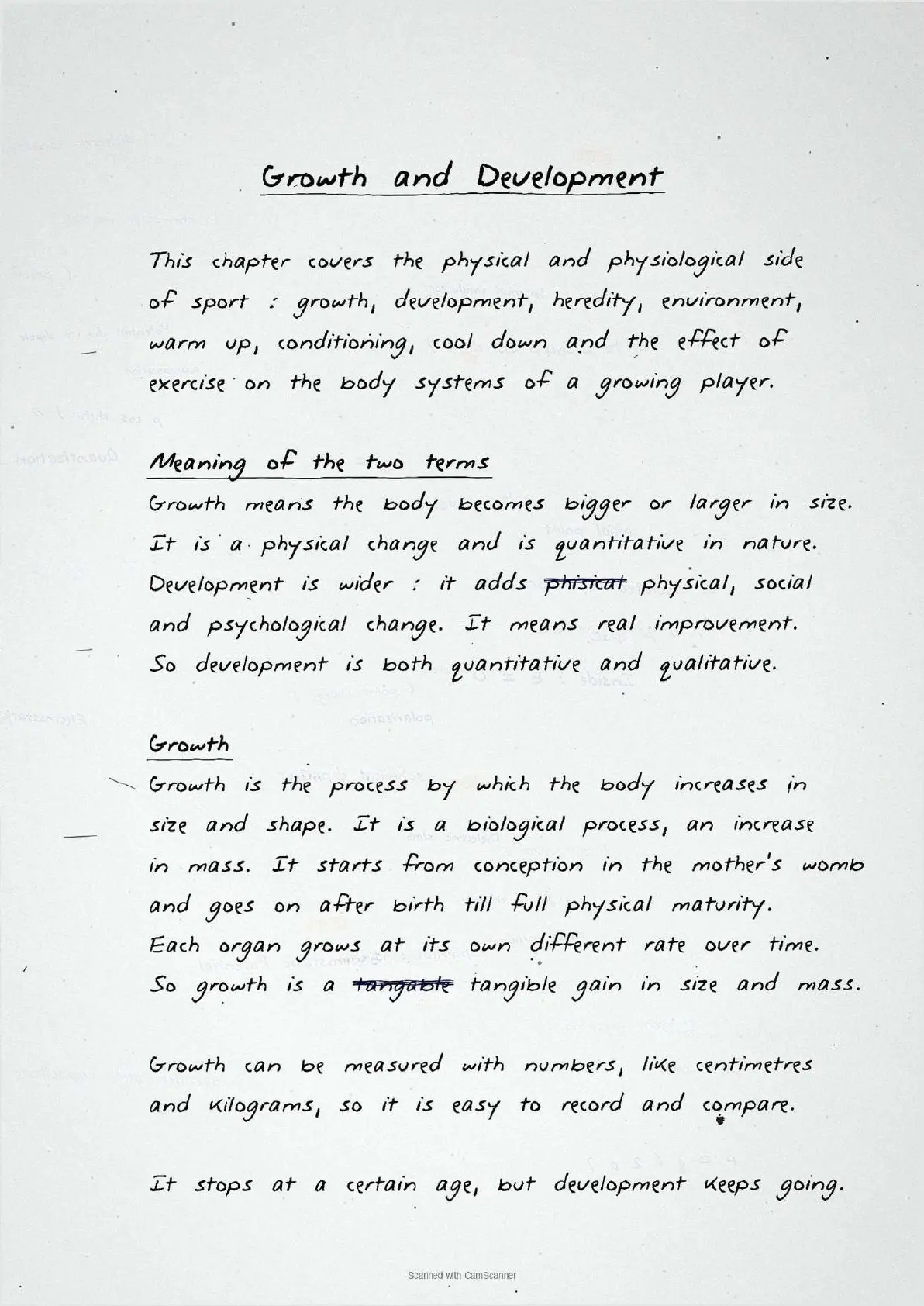
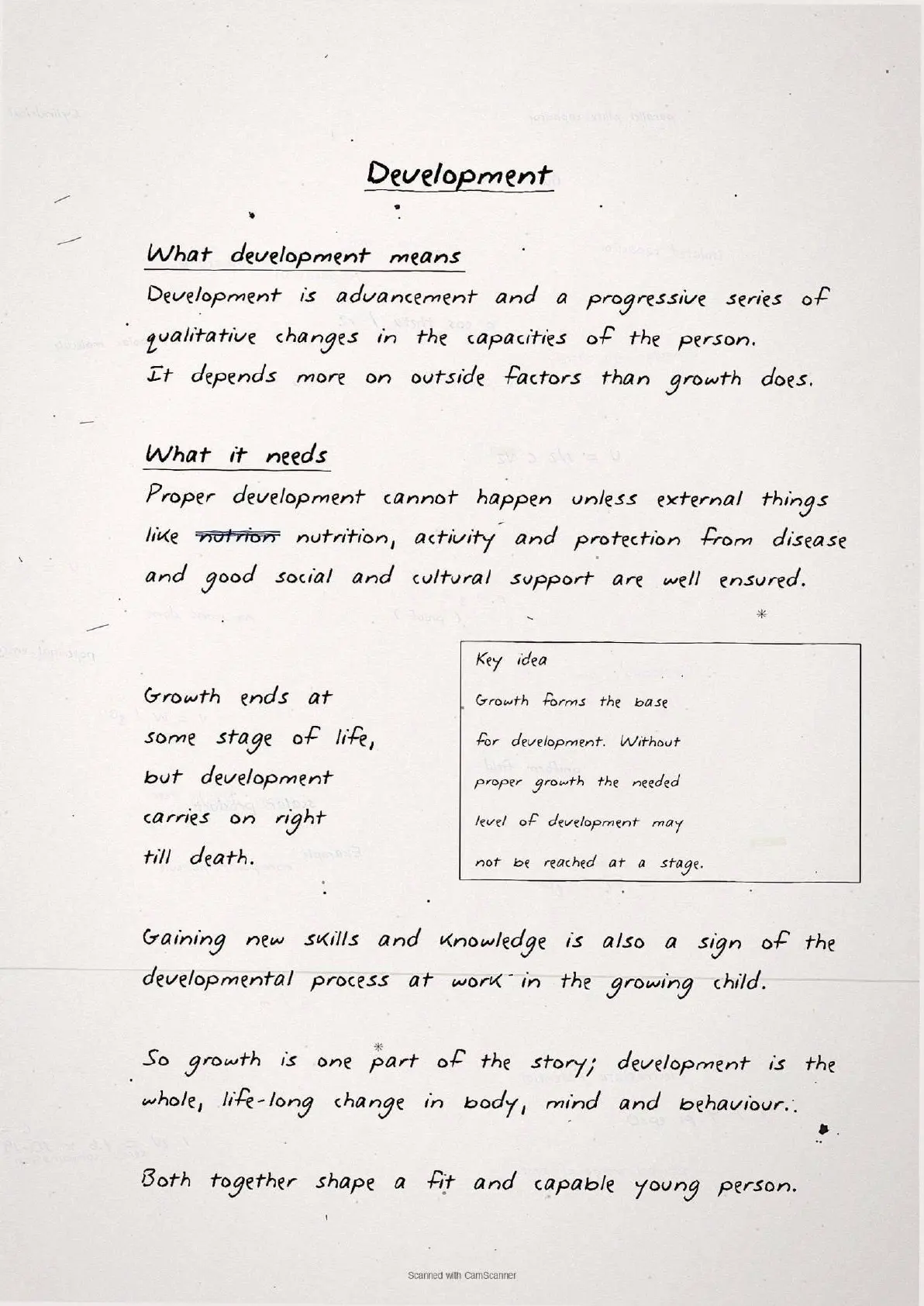
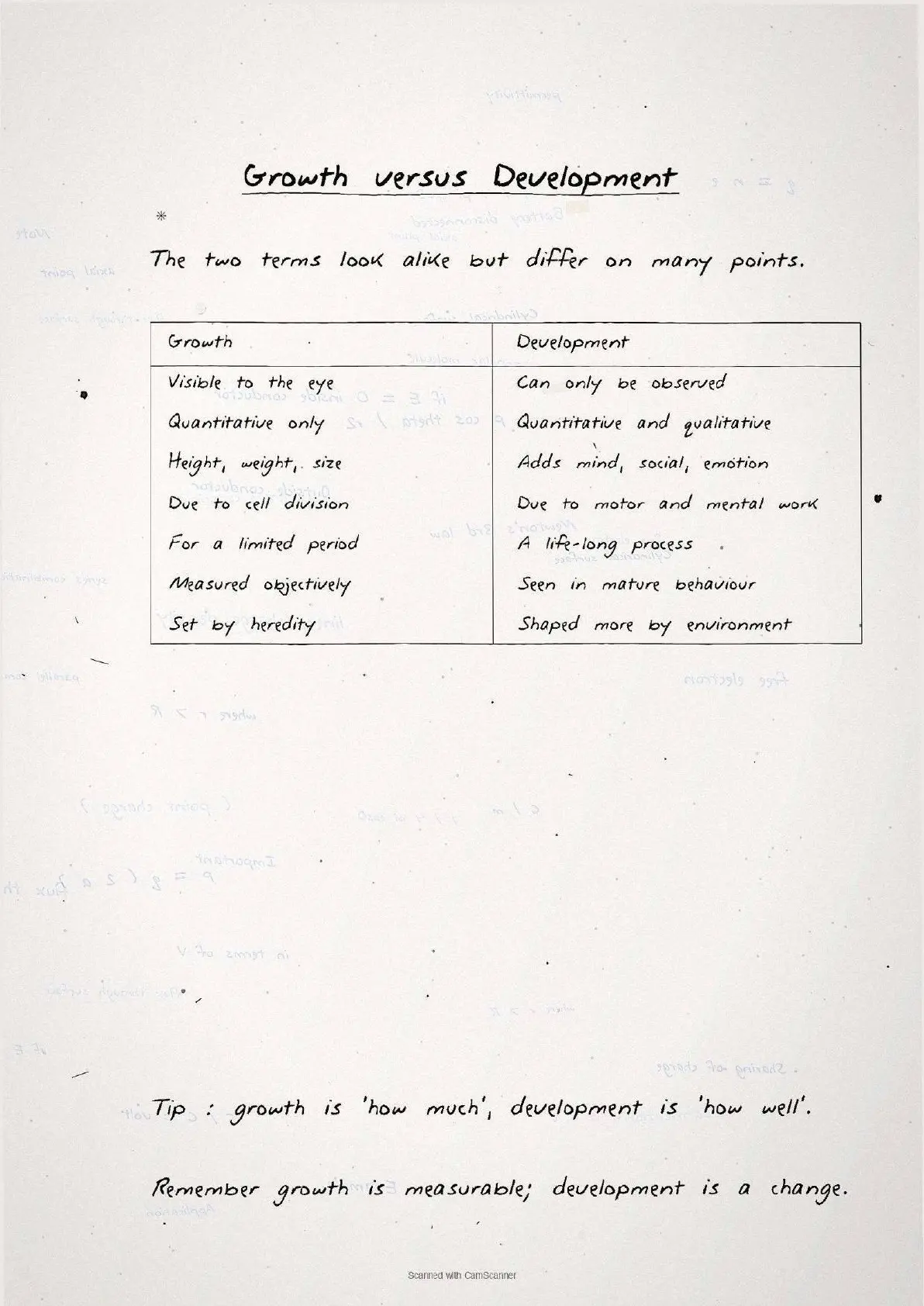
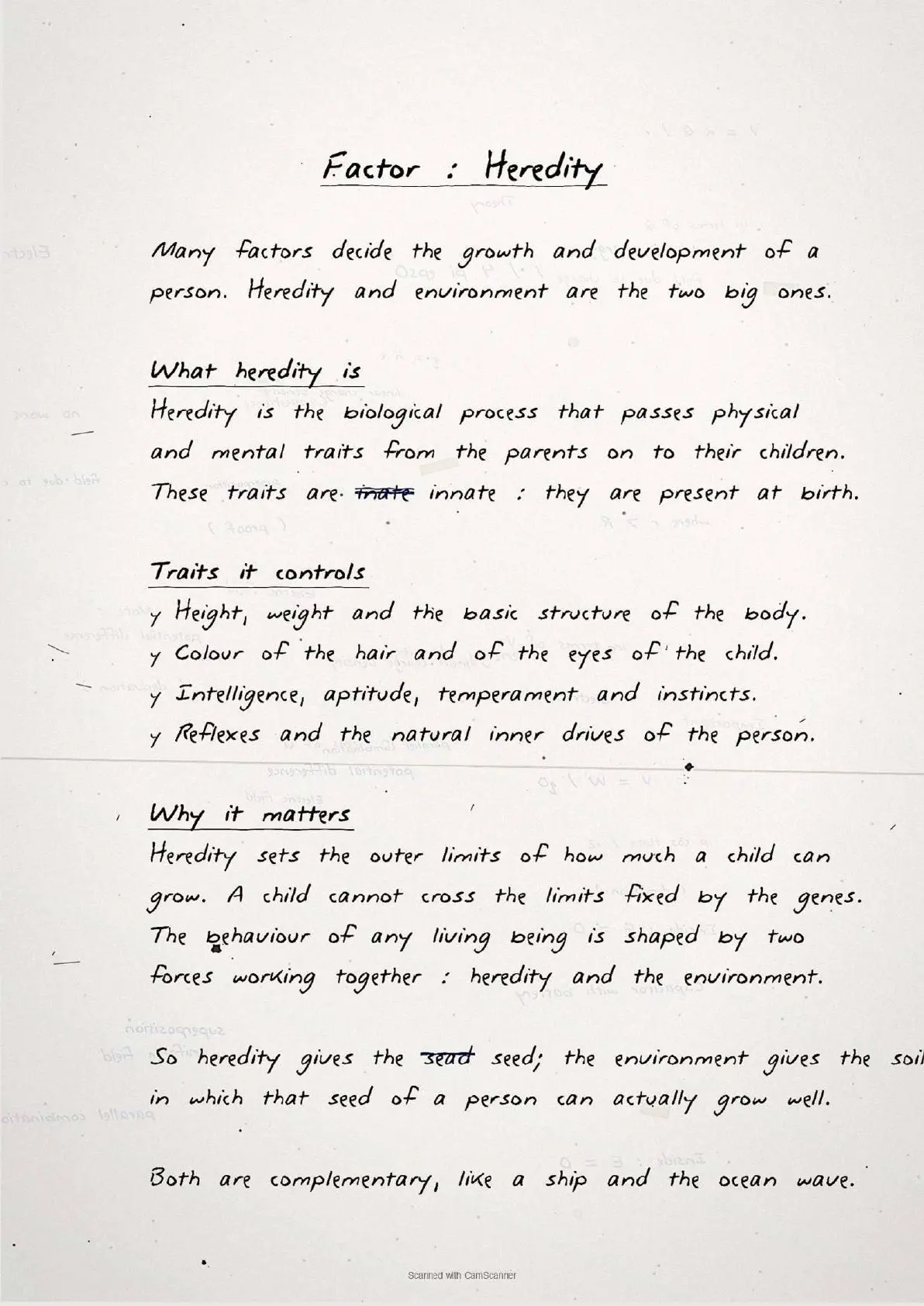
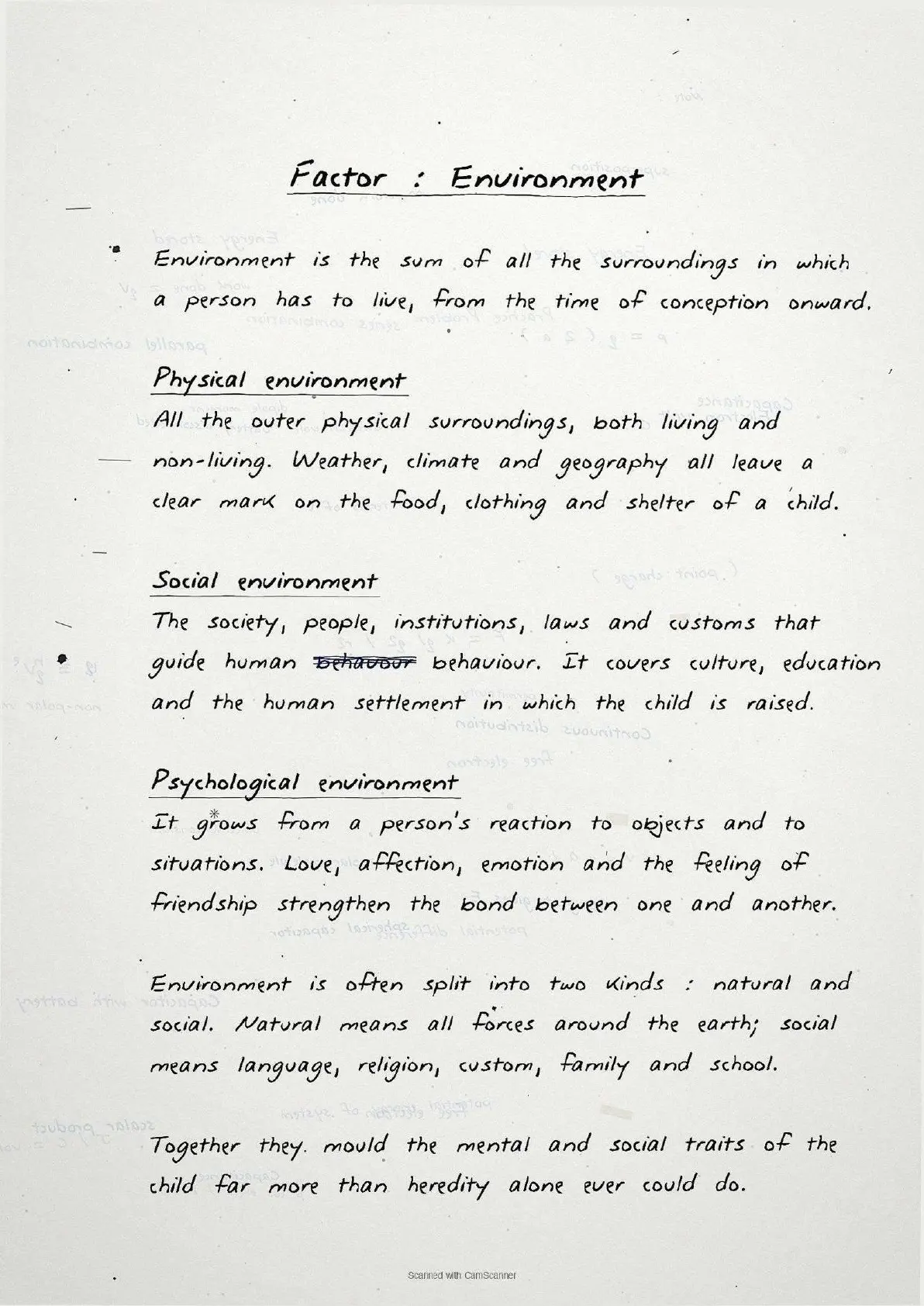
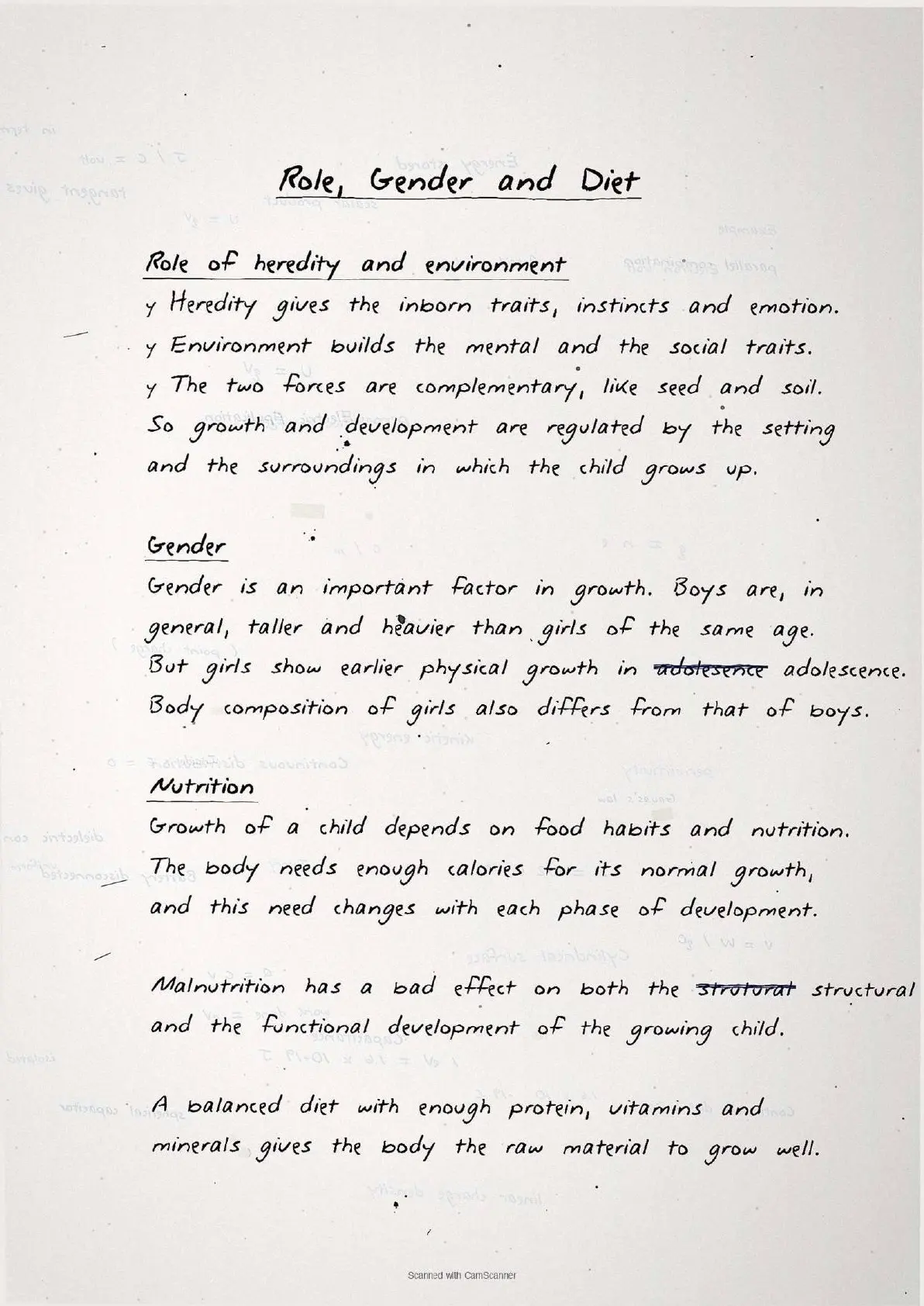
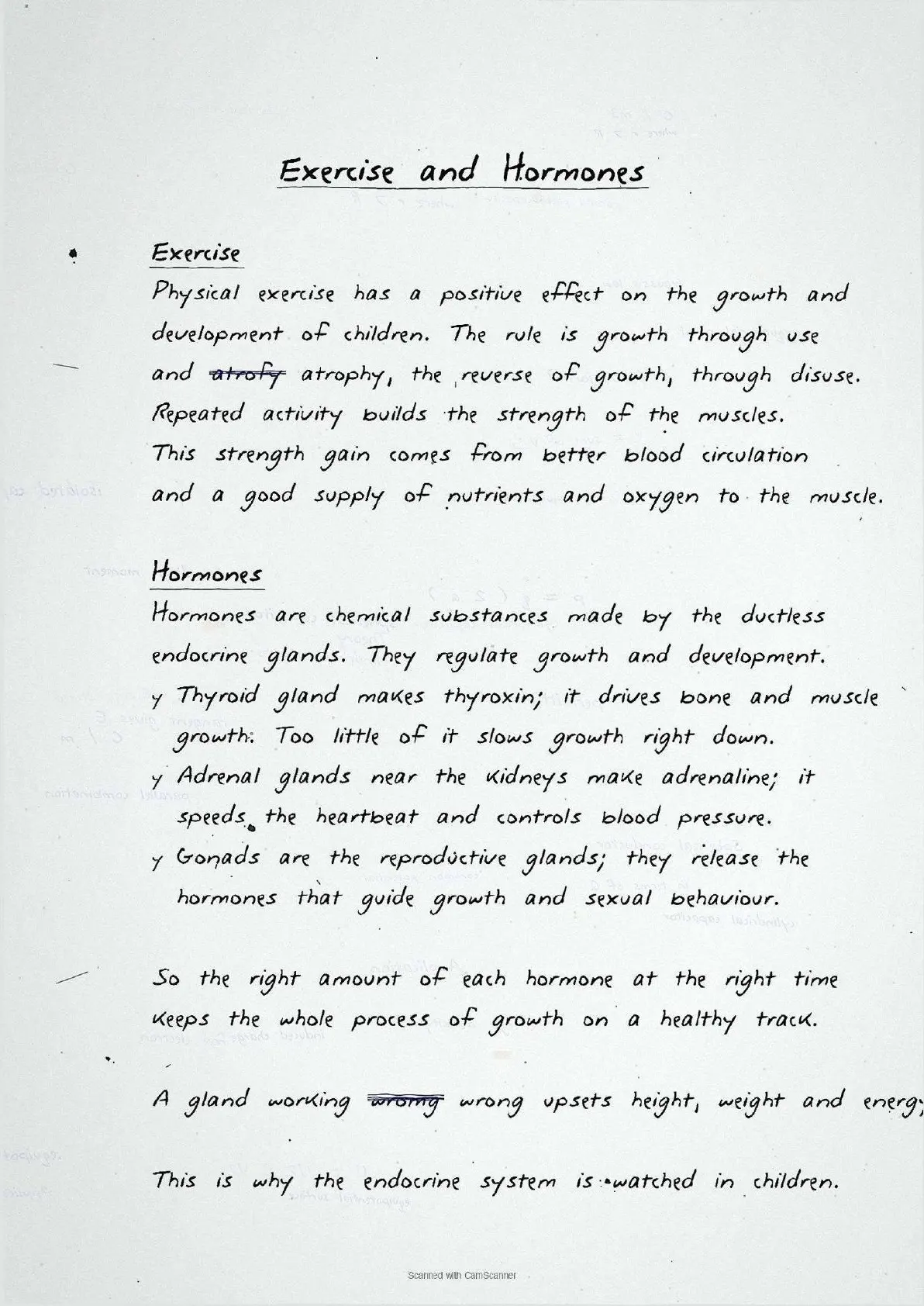
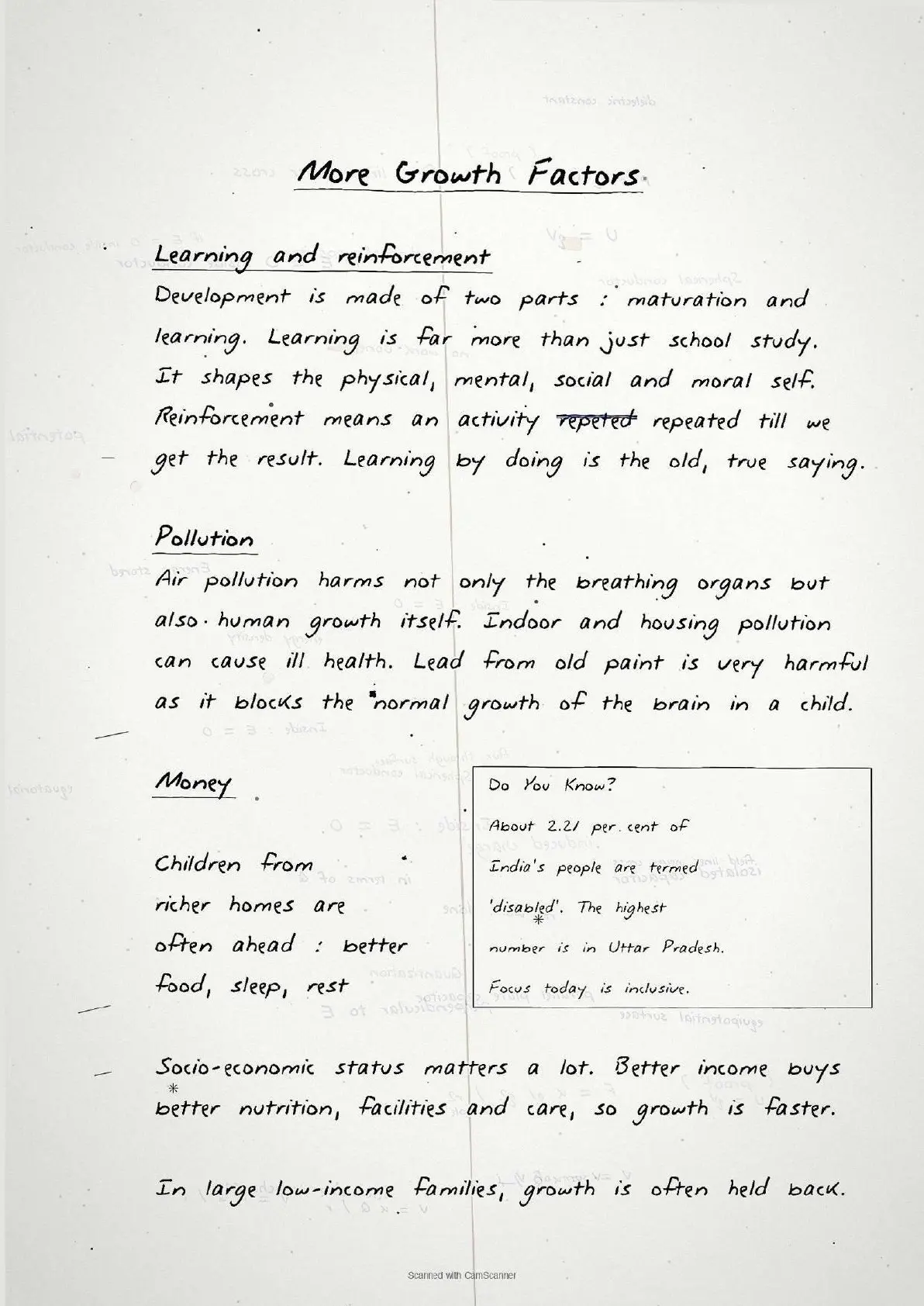
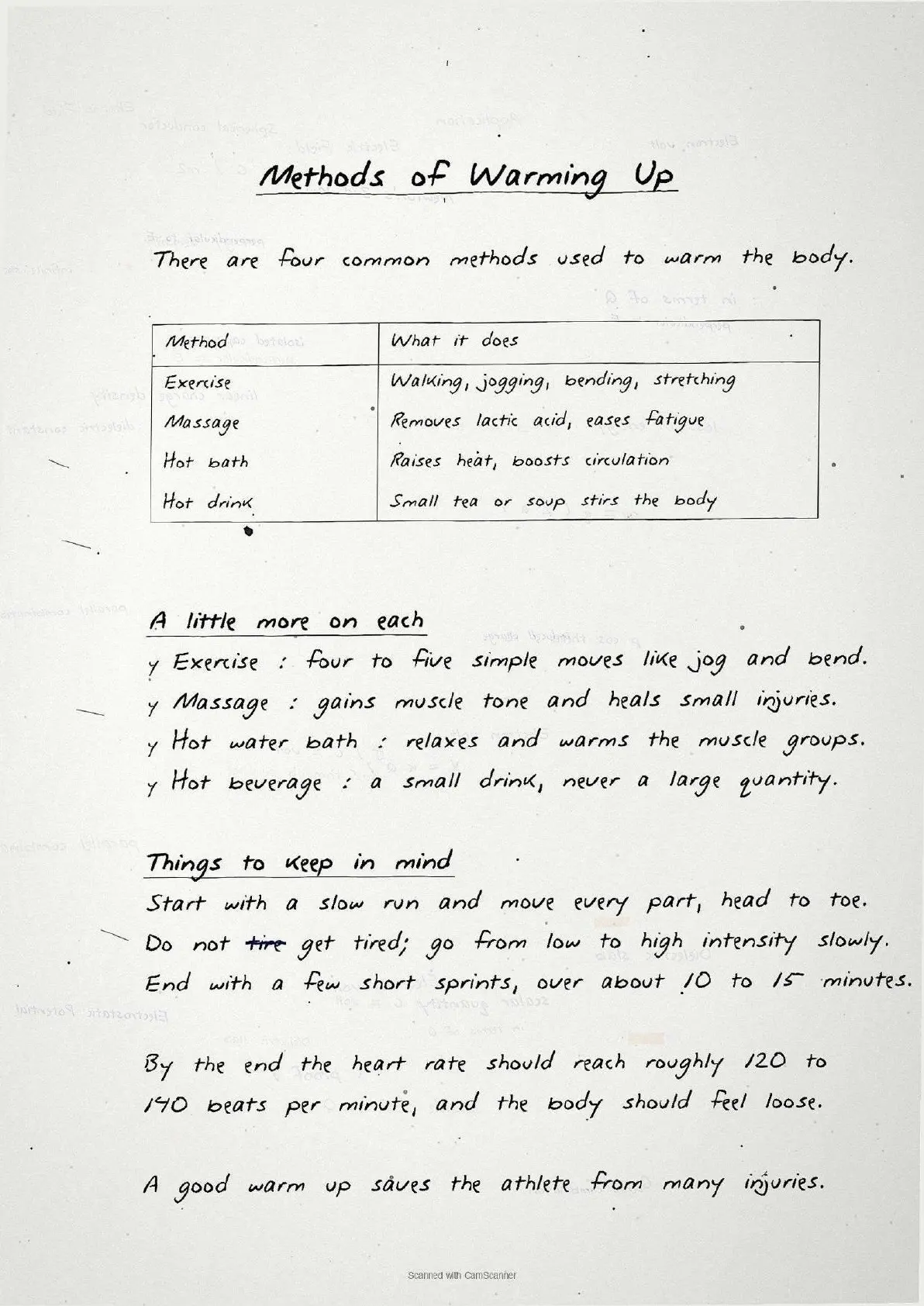
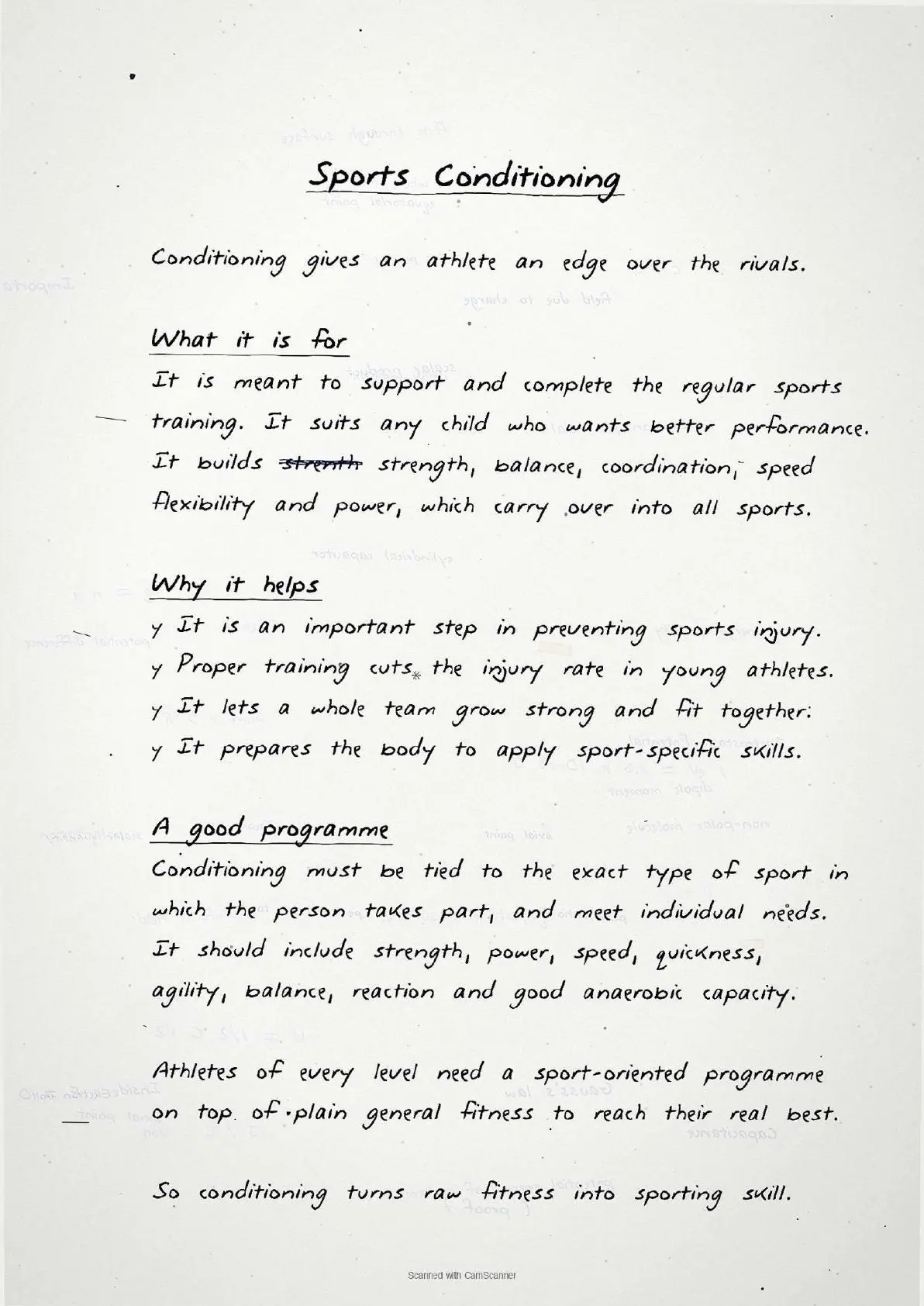

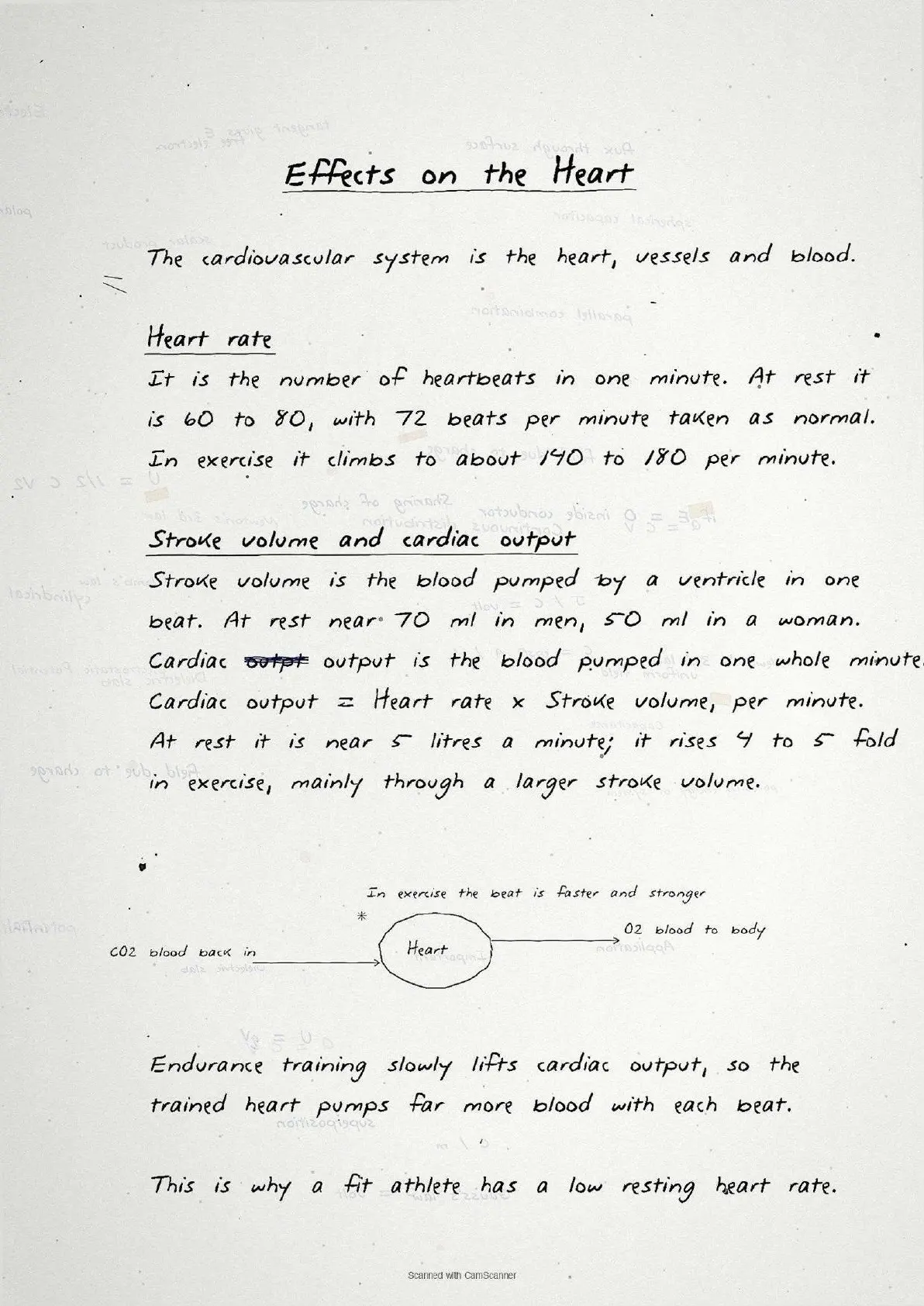
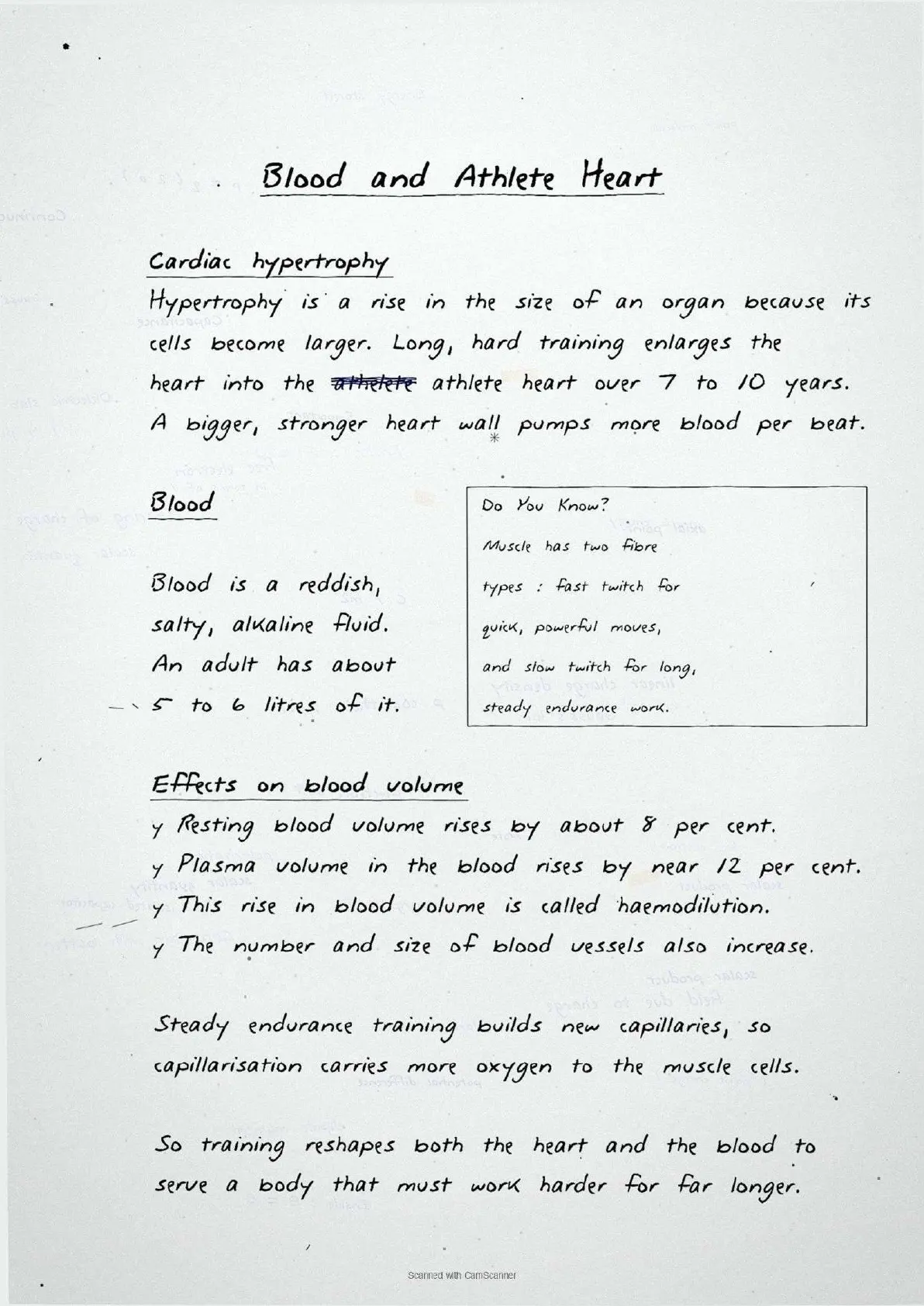


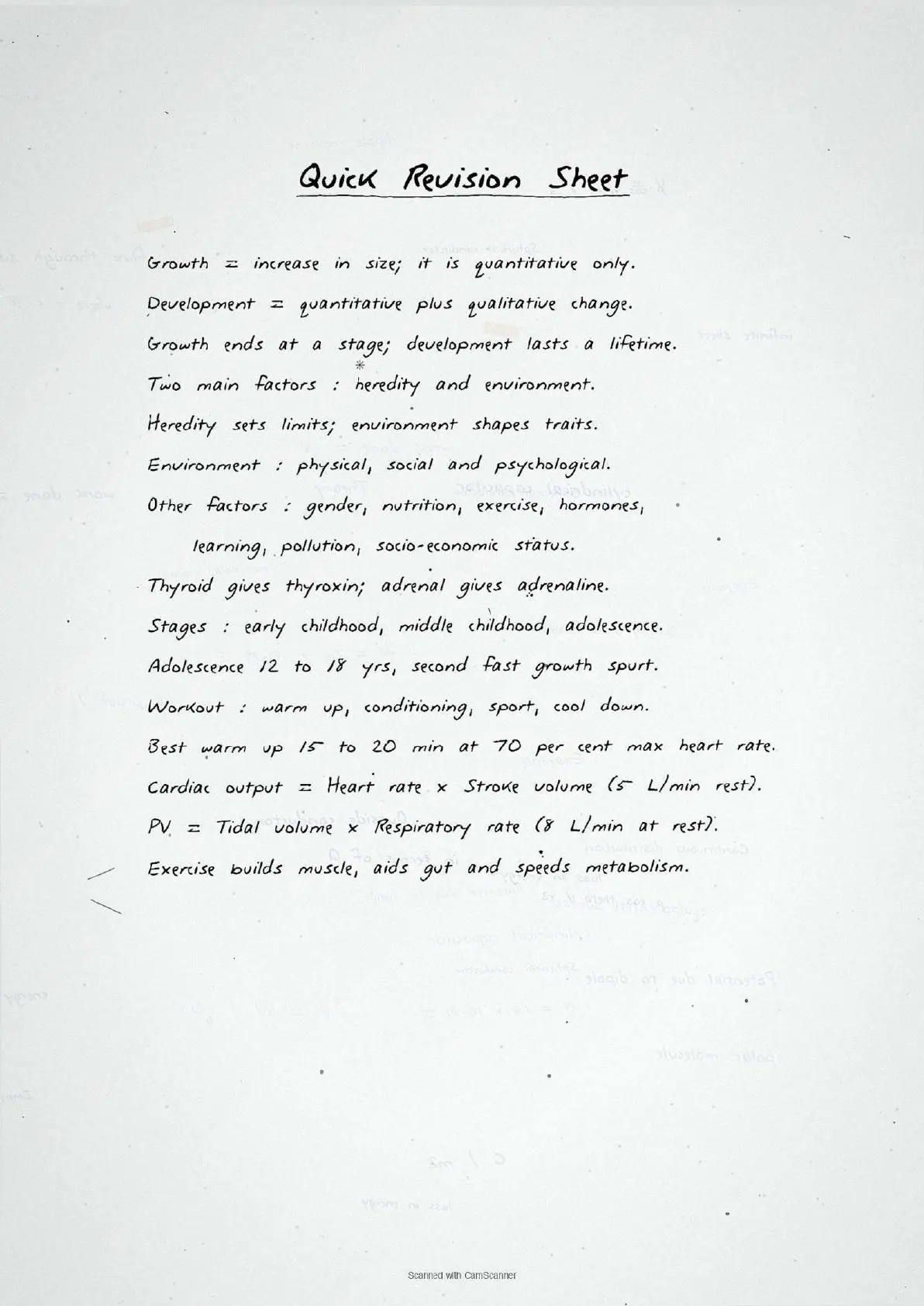
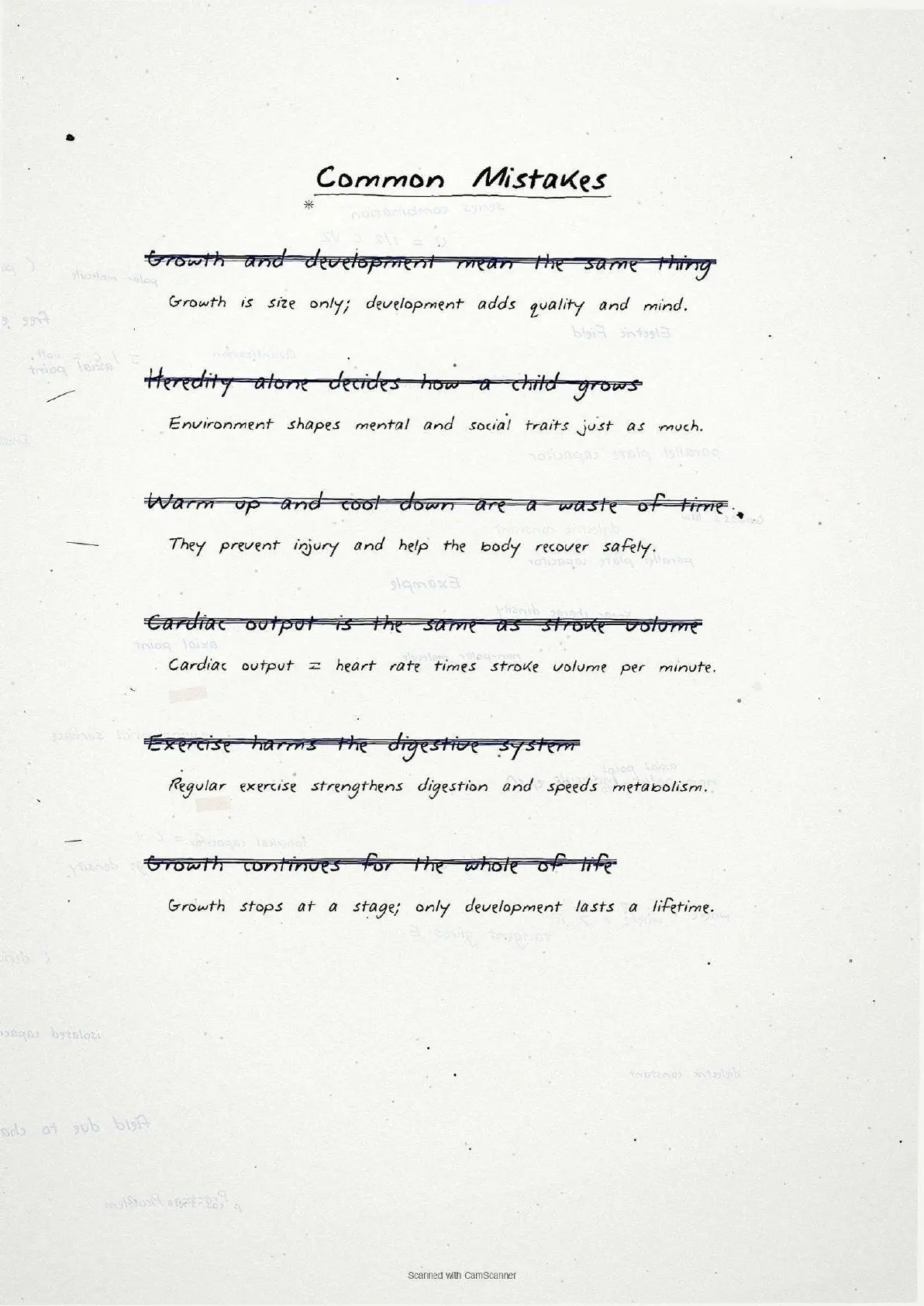

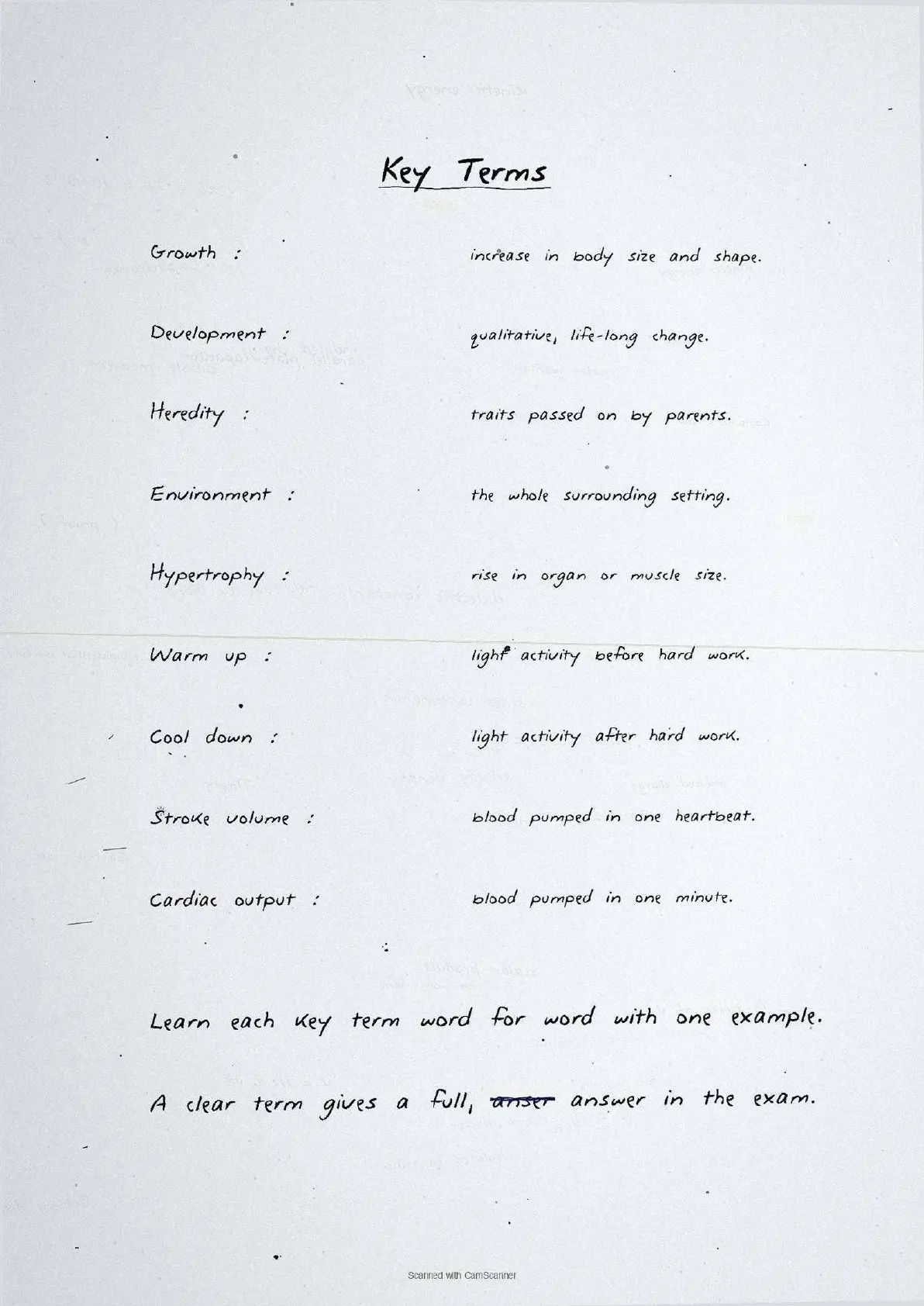
- Handwritten pages with boxed definitions, labelled body-system diagrams and side-by-side comparison tables.
- This Class 11 Physical Education chapter is a heavy scoring unit, so the notes keep every factor and every system on quick-recall pages.
- Pairs with the Notes and Book PDF linked lower on this page.
These Physical and Physiological Aspects of Physical Education and Sports handwritten notes are prepared from the official NCERT Health and Physical Education textbook and checked against recent CBSE Class 11 Physical Education question papers.
Student Feedback: In a Collegedunia poll of 5,180 Class 11 Physical Education students, 74% of students said the handwritten pages helped them recall the effects of exercise on each body system faster than printed text, because the boxed values and arrows made the heart-rate, stroke-volume and tidal-volume numbers stick.
Source: 2026-27 Class 11 Physical Education student poll. Sample of 5,180 students from CBSE schools across 11 states.
What These Physical and Physiological Aspects Handwritten Notes Contain
Physical and Physiological Aspects of Physical Education and Sports is Chapter 3 of Class 11 Physical Education. It studies how the body grows and develops, what shapes that process, and how the body responds physiologically to exercise. These handwritten notes condense the chapter into pages that read like a topper's own notebook.
The notes are organised under two big threads, each on its own set of pages:
- Growth and development: the difference between the two, the eight factors that affect them, and the changes across early childhood, middle childhood and adolescence.
- Physiological aspects: warm-up, sports conditioning and cool-down, plus the effects of exercise on the cardiovascular, respiratory, muscular and digestive systems.
Because the pages are handwritten, the key terms and values sit in boxes and arrows rather than long paragraphs. A student can flip through the physical and physiological aspects class 11 pages in a few minutes and still pick up every factor, every stage and every body-system change before walking into the exam.
Growth, Development and the Factors Behind Them
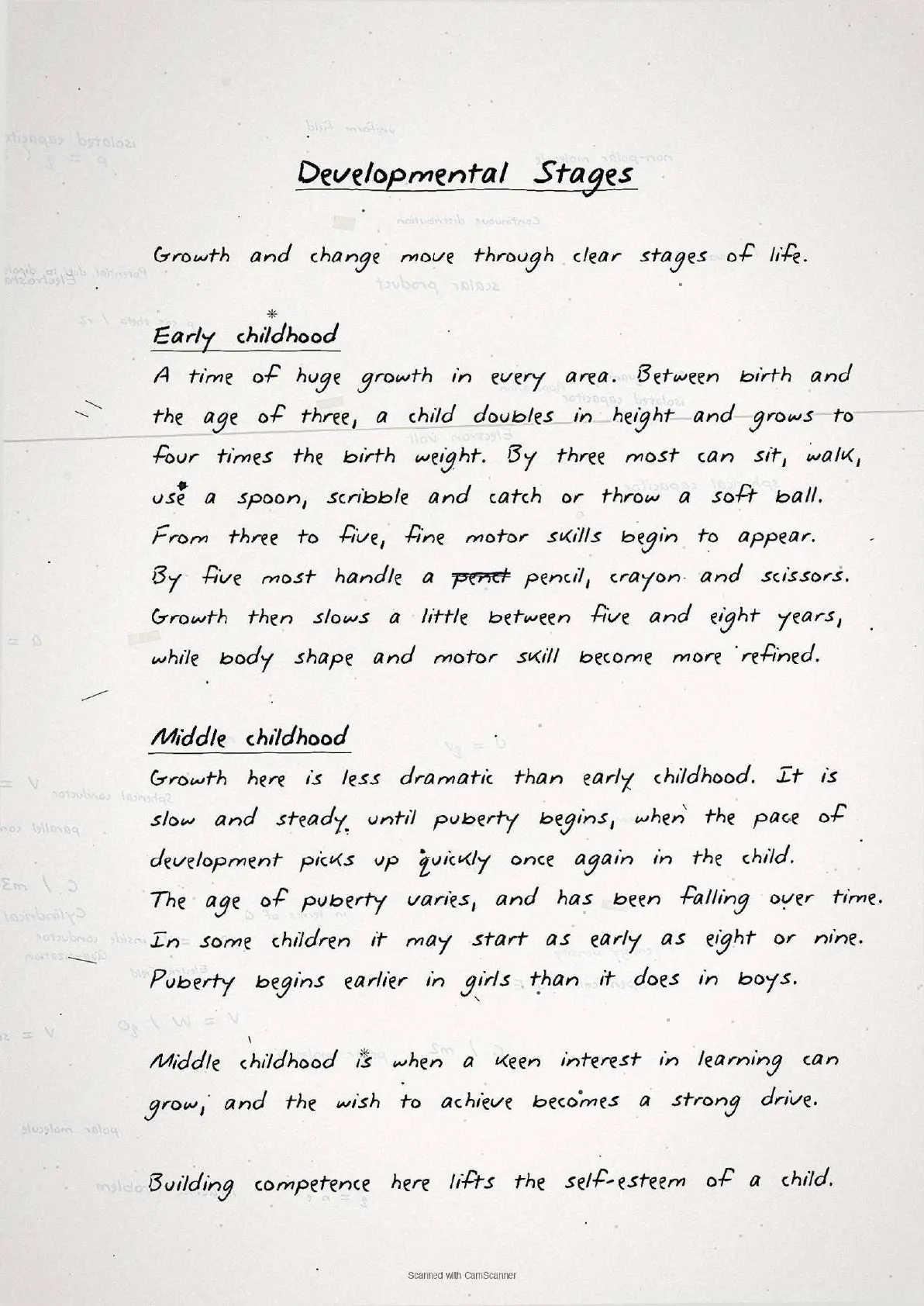
The first half of the notes handles growth and development. Growth is a quantitative increase in size and shape, it is visible, and it is set by heredity and limited to a certain age. Development is quantitative as well as qualitative, it covers cognitive, social and emotional change, and it continues as a lifelong process. The handwritten pages draw this contrast as a two-column table so the difference is easy to see.
The notes then box the eight factors that affect growth and development, one line each, so the whole "factors" long-answer sits on a single page.
| Factor | What the page notes |
|---|---|
| Heredity | Height, weight, body structure, hair and eye colour, intelligence and instincts passed from parents. |
| Environment | Physical, social and psychological surroundings shape mental and social traits. |
| Gender | Boys are generally taller and heavier; girls show earlier growth at adolescence. |
| Nutrition | Adequate calories are needed; malnutrition harms structural and functional development. |
| Exercise | Growth through use, atrophy through disuse; activity builds muscle strength. |
| Hormones | Thyroxin affects skeletal and muscular growth; adrenaline and gonad hormones also act. |
| Learning, pollution, socio-economic status | Learning plus reinforcement, air and lead pollution, and family income all shift the growth rate. |
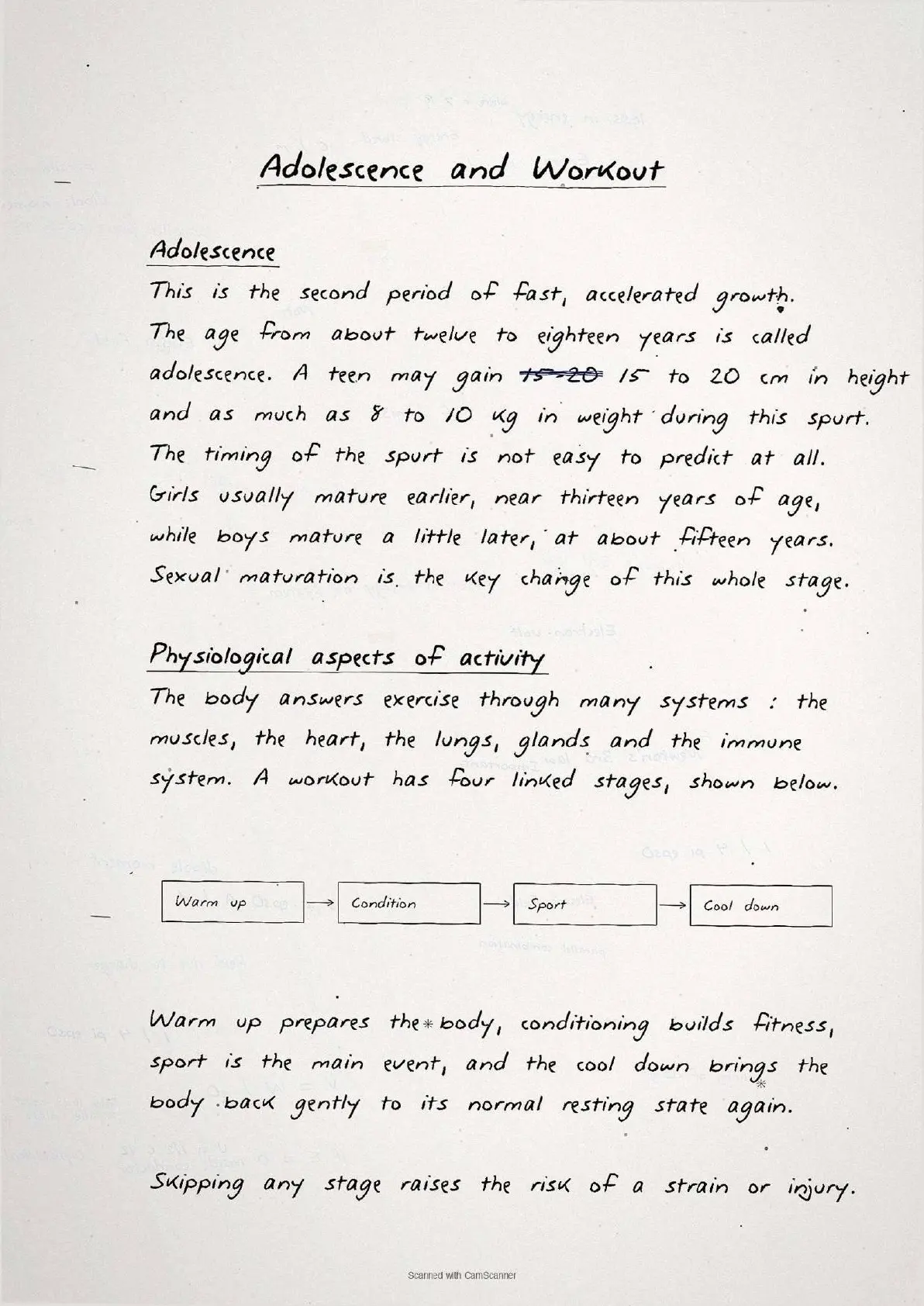
The notes then map the physical and physiological changes across developmental stages. In early childhood a child roughly doubles in height and quadruples in weight by age three and builds fine-motor skills. In middle childhood growth is slow and steady until puberty. In adolescence, the second period of accelerated growth, individuals may gain 15 to 20 cm in height and 8 to 10 kg in weight, and sexual maturation appears. Seeing the three stages stacked on one page is the fastest way to remember the order and the numbers for the developmental-stages question.
Warm-up, Cool-down and Effects of Exercise on Body Systems
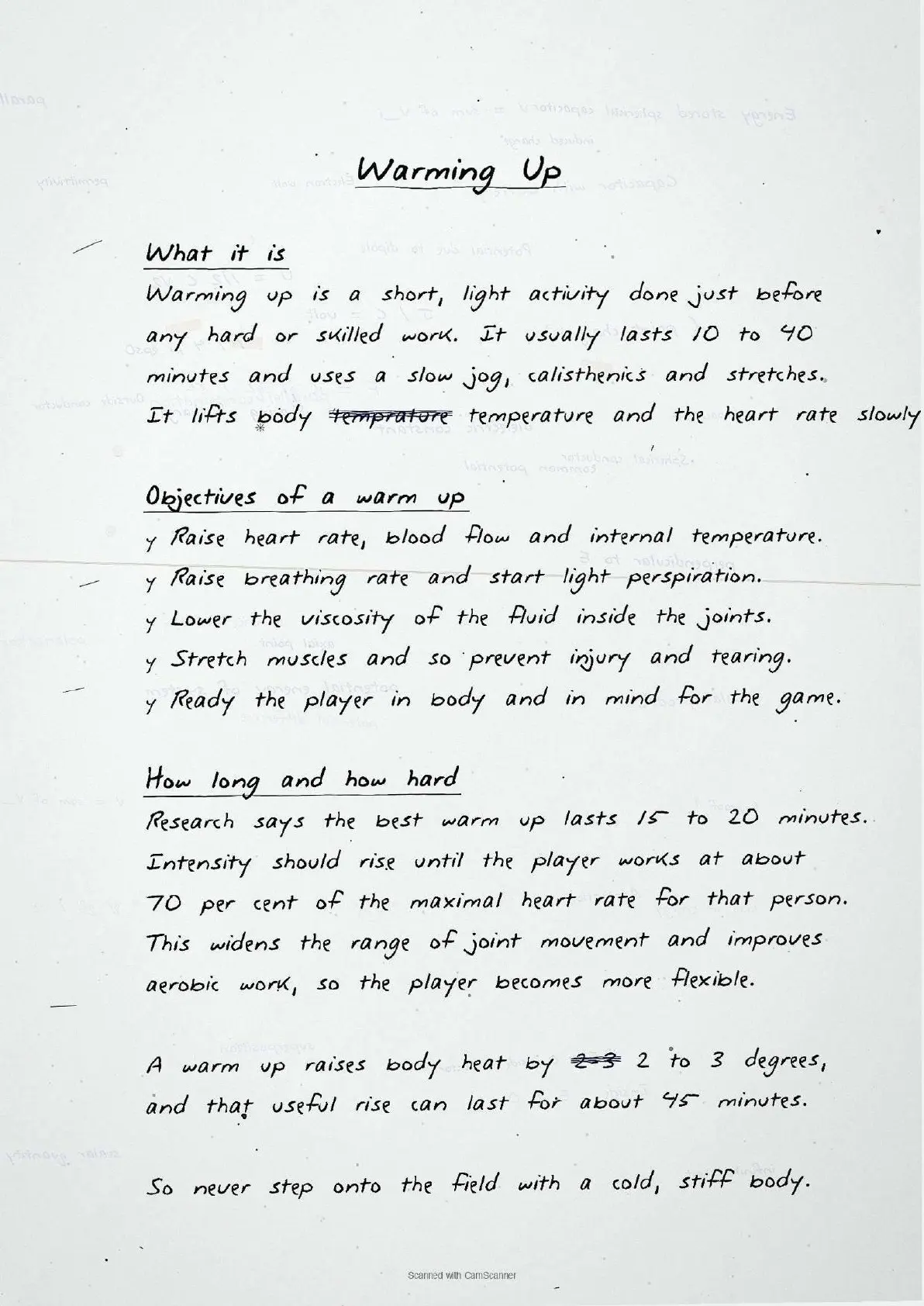
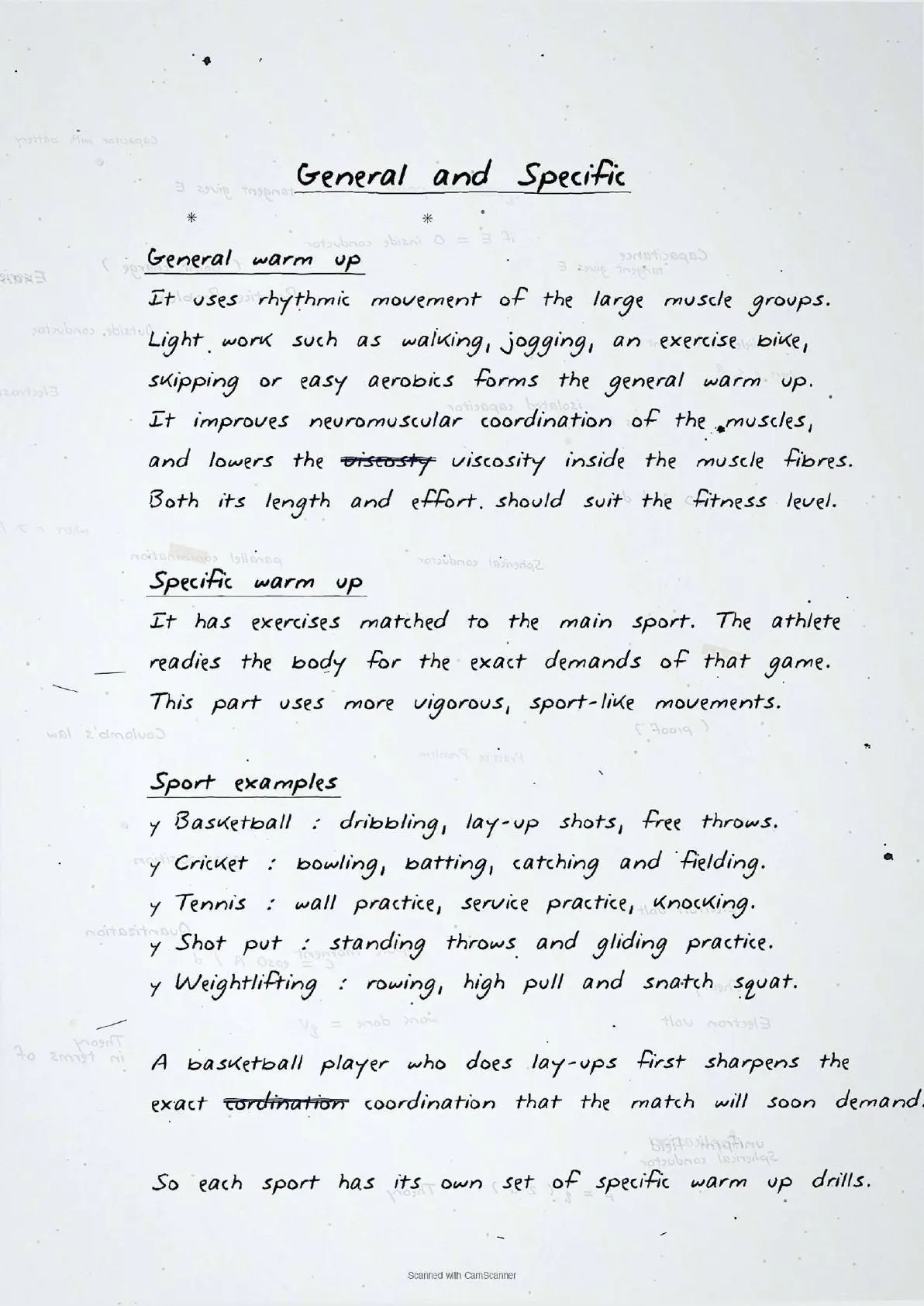
The second half of the notes covers the physiological aspects of activity. A warm-up is a short light activity of about 15 to 20 minutes done before intense work; it raises body temperature by 2 to 3 degrees, lifts heart rate to about 70 per cent of maximum, and reduces the viscosity of joint fluids. The pages split it into a general warm-up (rhythmic large-muscle work like jogging and skipping) and a specific warm-up (sport-matched drills, for example lay-up shots in basketball). Sports conditioning then builds strength, speed, agility and power to prevent injury, and the cool-down uses gentle stretching to bring heart rate and breathing back to resting levels and to clear lactic acid.
The exam weight, though, sits in the effects of exercise on the body systems, and the notes give each system its own boxed page with the key values.
| System | Key effects the page boxes |
|---|---|
| Cardiovascular | Heart rate rises from about 72 to 140-180 beats/min; stroke volume and cardiac output increase; long training causes cardiac hypertrophy ("athlete's heart"). |
| Respiratory | Tidal volume rises from about 500 ml up to 5-6 times; respiratory rate 2-3 times higher; pulmonary ventilation and diffusing capacity increase. |
| Muscular | Muscular hypertrophy, more myoglobin, better lactic-acid tolerance, and gains in strength, flexibility and endurance. |
| Digestive | Better blood flow, faster metabolism, less constipation and protection from digestive diseases. |
The handwritten map makes the point that scores well: every value rises with exercise except total lung capacity, which slightly decreases. Keeping the cardiovascular, respiratory, muscular and digestive pages next to each other lets a student answer any "effects of exercise on ___ system" long answer without hunting through the textbook.
How to Use These Handwritten Notes
Handwritten notes work best as a final-revision tool, not a first read. The steps below show how to get the most out of the Physical and Physiological Aspects handwritten notes in the last days before a Class 11 exam.
- Download: save the handwritten pages to your device once the PDF card above is live.
- First read: read the printed Notes once so the handwritten pages act as a refresher, not a first source.
- Recall drill: cover the page and try to write the eight factors and the effect of exercise on each body system from memory.
- Night before: flip through the boxed pages for a quick last-minute recall of the developmental-stage numbers and the system values.
Many students search for class 11 physical education chapter 3 notes on their phone the night before a test, so a saved set of handwritten pages means students can revise offline. Use the handwritten notes for speed, then check the Notes to confirm the answer points are right.
Common Mistakes These Notes Help You Avoid
A few errors cost marks every year. The handwritten notes flag each one in the margin so students can fix it before the exam. These five are the most common.
- Mixing up growth and development. Growth is quantitative and limited; development is qualitative too and lifelong.
- Forgetting the cardiac output formula. It is heart rate times stroke volume, about 5 litres/min at rest.
- Saying total lung capacity rises with exercise. It actually slightly decreases, while tidal volume and ventilation rise.
- Confusing general and specific warm-up. General uses large muscle groups; specific is matched to the sport.
- Naming only some factors of growth. The exam expects all of them, from heredity to socio-economic status.
Students who fix these five points usually move from average to high marks. The handwritten notes box the cardiac-output formula and list every factor and system value in full, so the soft points are hard to miss during revision.
How These Handwritten Notes Pair with the Notes and Book PDF
These handwritten notes are a fast revision tool. To prepare fully, students should use them alongside the other resources for the same chapter, linked in the table below. Read the printed Notes, check the original text in the Book PDF, then use these pages for a final recall.
| Resource | Best used for |
|---|---|
| Physical and Physiological Aspects Class 11 Notes | Quick chapter summary with all factors, stages and body-system effects in one place |
| Physical and Physiological Aspects NCERT Book PDF | Reading the original NCERT chapter text, tables and figures |
Tip: read the printed Notes first, cross-check the Book PDF, and keep these handwritten pages for the final night-before flip. Using them for recall, not for the first read, builds memory faster.
All Class 11 Physical Education Handwritten Notes by Chapter
The table links the handwritten notes for every chapter in Class 11 Physical Education, so students can move across the course in one click. Physical and Physiological Aspects of Physical Education and Sports is highlighted.
| Chapter | Handwritten Notes |
|---|---|
| Chapter 1 | Physical Education |
| Chapter 2 | Understanding Health |
| Chapter 3 | Physical and Physiological Aspects of Physical Education and Sports |
| Chapter 4 | Individual Games |
| Chapter 5 | Team Games |
| Chapter 6 | Yoga and its Relevance in the Modern Times |
| Chapter 7 | Safety and Security |
| Chapter 8 | Health Related Physical Fitness |
| Chapter 9 | Measurement and Evaluation |
| Chapter 10 | Tournaments and Competitions |
| Chapter 11 | Adventure Sports |
FAQs on Physical and Physiological Aspects Handwritten Notes
Physical and Physiological Aspects of Physical Education and Sports Class 11 Handwritten Notes Common Questions
Ques. Where can I download the Physical and Physiological Aspects handwritten notes PDF?
Ans. You can download the Physical and Physiological Aspects of Physical Education and Sports Class 11 handwritten notes PDF directly from this page. It is free, follows the 2026-27 NCERT, and presents growth and development, warm-up and cool-down, and the effects of exercise on the body systems as handwritten pages.
Ques. Are handwritten notes good for revising Class 11 Physical Education Chapter 3?
Ans. Yes. Handwritten notes are best for fast, last-minute revision because the boxed values and arrows make the developmental stages and the body-system effects easy to skim. Use them after a first read of the printed Notes, not as your only source.
Ques. What topics do these handwritten notes cover?
Ans. They cover growth and development and their difference, the factors affecting growth and development, the physical and physiological changes across early childhood, middle childhood and adolescence, warm-up, sports conditioning and cool-down, and the effects of exercise on the cardiovascular, respiratory, muscular and digestive systems.
Ques. Who prepared these handwritten notes?
Ans. They are written and proofread by hand by a subject expert with an MPEd, NIS coaching certification and ten years of CBSE Class 11 Physical Education teaching, using the official NCERT textbook and recent Class 11 question papers.
Ques. How should I use these notes with the other resources?
Ans. Read the printed Notes first, cross-check the original text in the NCERT Book PDF, then keep these handwritten pages for the final night-before flip. Using them for recall rather than the first read builds memory faster.



Comments