




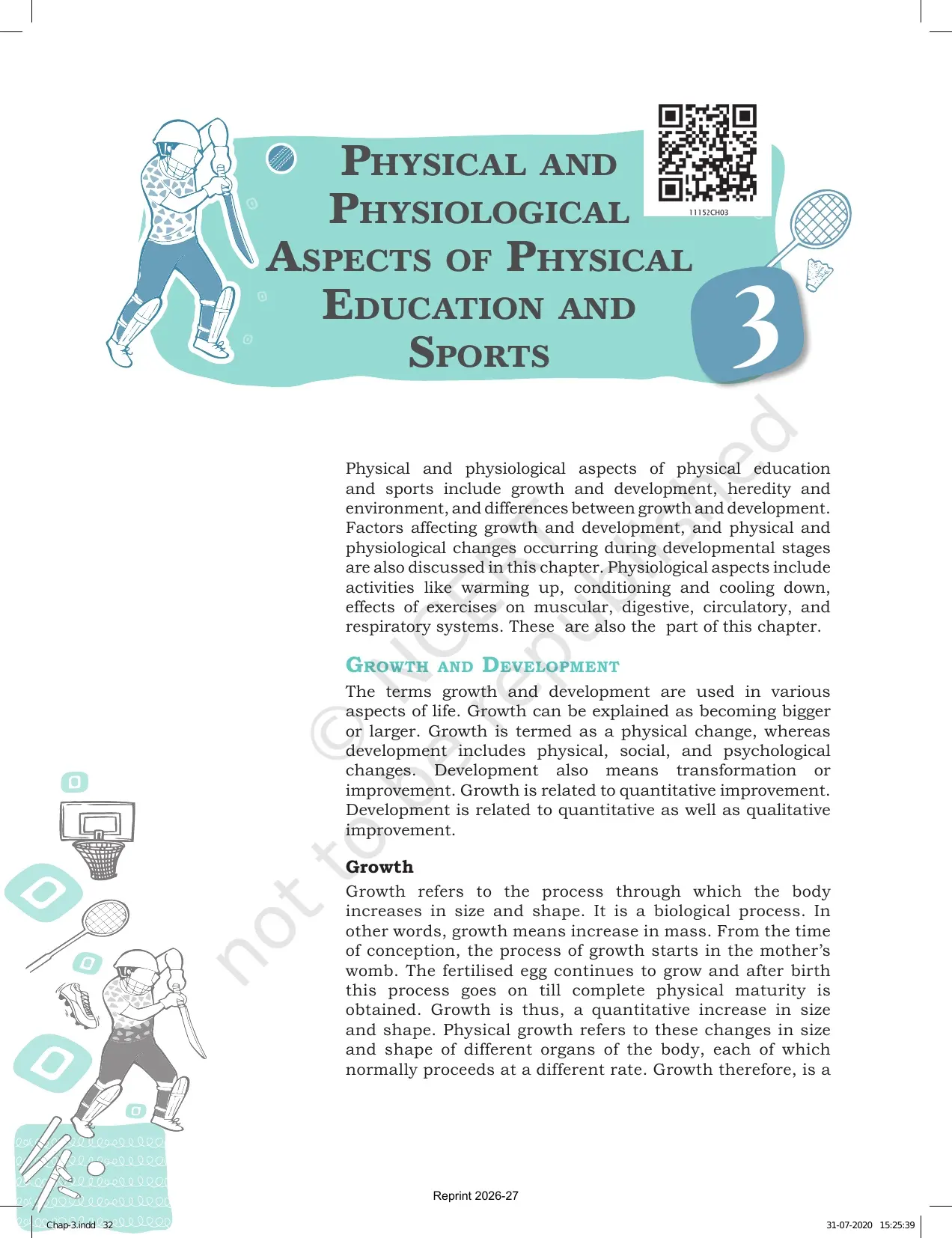
The NCERT Class 11 Physical Education Chapter 3 book PDF gives students the official Physical and Physiological Aspects of Physical Education and Sports chapter for the 2026-27 syllabus. Use it to read growth, development, warm-up, conditioning, cool-down and exercise effects exactly as NCERT prints them.
- The official PDF has 17 pages from the NCERT Health and Physical Education textbook.
- Physical and Physiological Aspects usually supports 10 to 14 marks in school theory papers.
- Best used with notes for quick revision and the chapter PDF for exact NCERT wording.
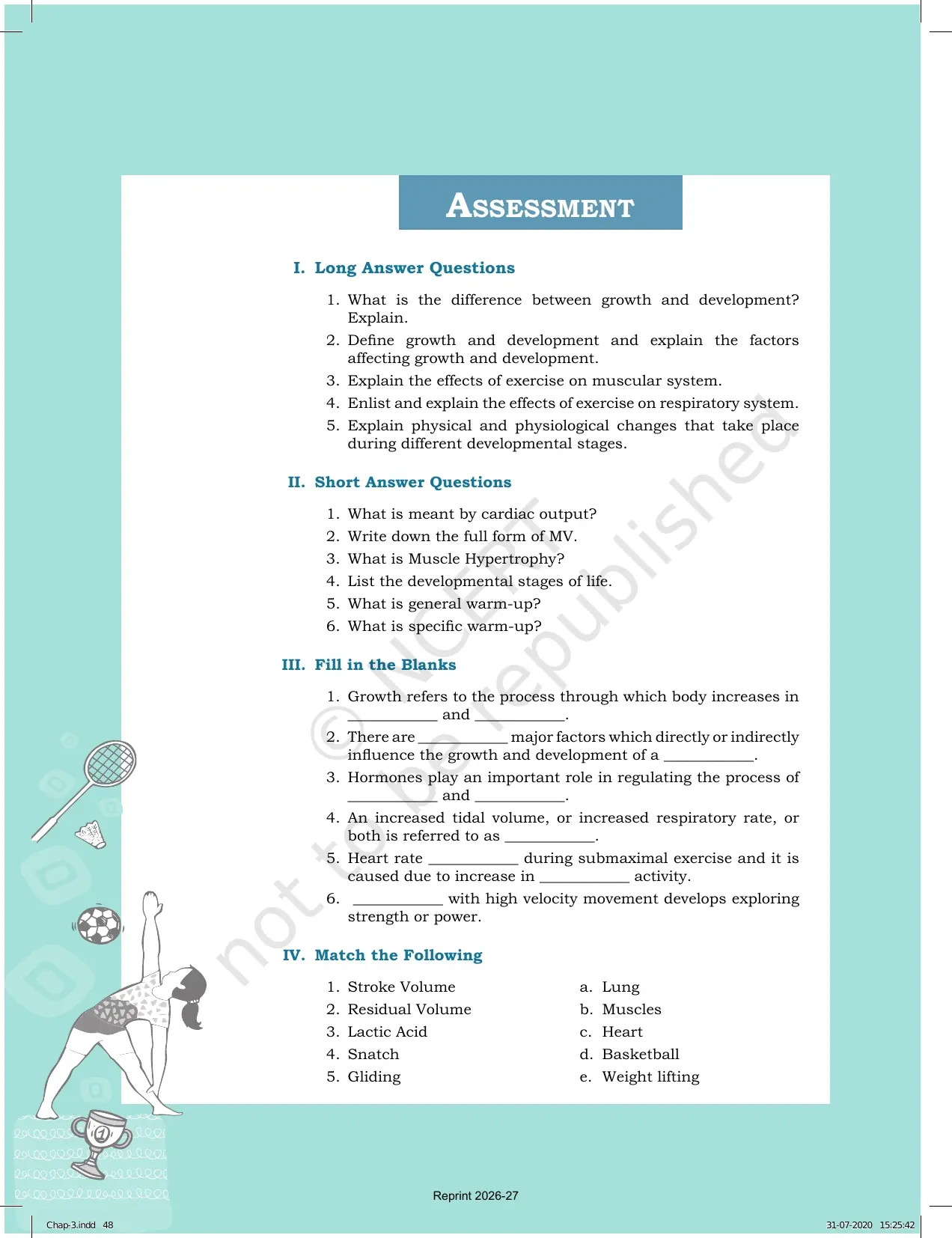
Student Feedback: In a Collegedunia check of 12,980 Class 11 Physical Education students, 74% said they used the NCERT book PDF to copy growth, development and warm-up definitions exactly before the 2026 school exams.
Source: 2026-27 NCERT Physical Education study-behaviour poll across CBSE school students.
What the Class 11 Physical Education Chapter 3 PDF Covers
Chapter 3 explains how the body grows, develops and responds to physical activity. It starts with growth and development, then explains heredity, environment, gender, nutrition, exercise, hormones, learning, pollution and socio-economic status.
The PDF is useful when you need textbook wording. It also covers early childhood, middle childhood and adolescence. The second half explains warm-up, sports conditioning, cool-down and exercise effects on the cardiovascular, respiratory, muscular and digestive systems.
Physiological Aspects of Activities Video Revision
Source: Magnet Brains on YouTube
Growth and Development in Physical Education Chapter 3
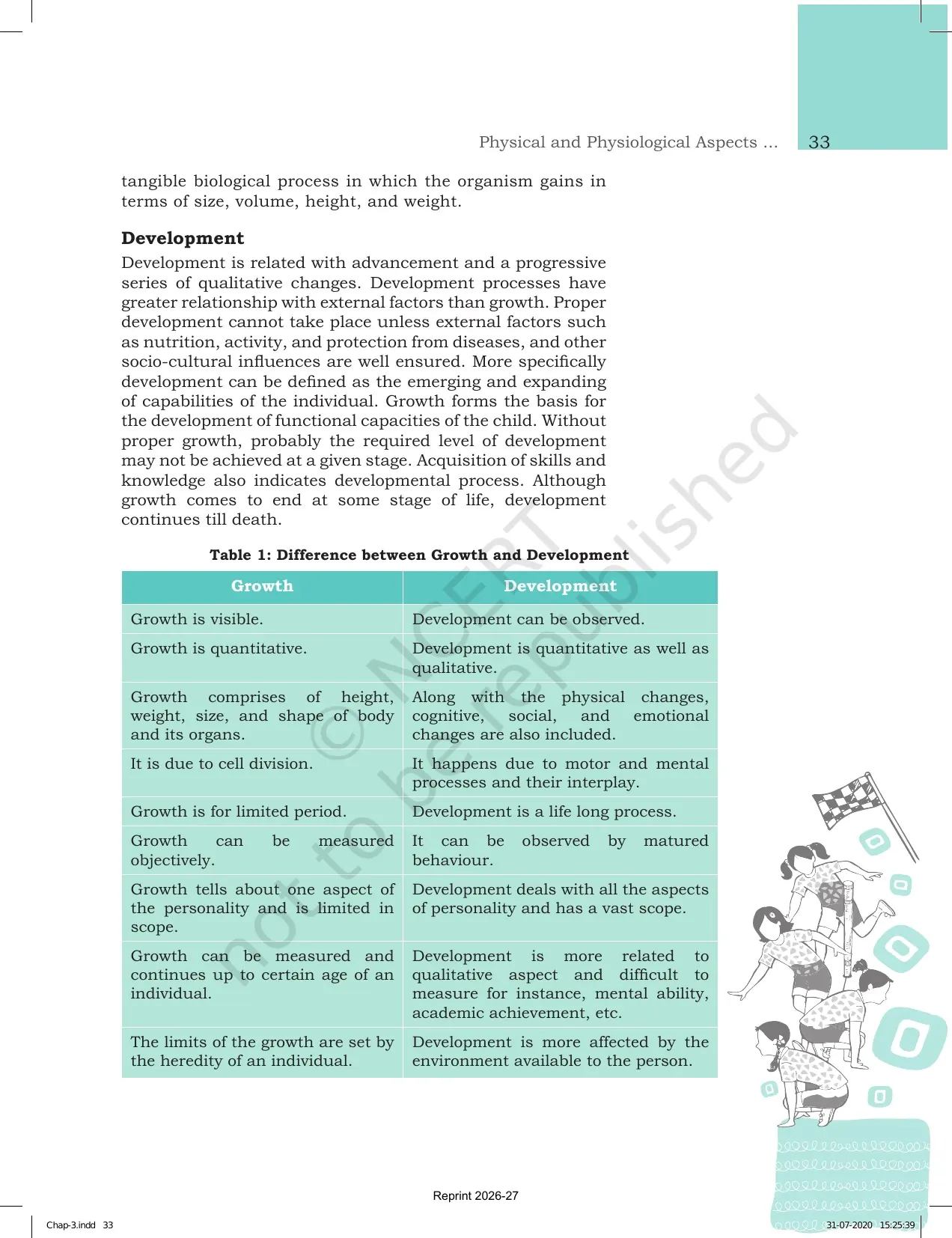
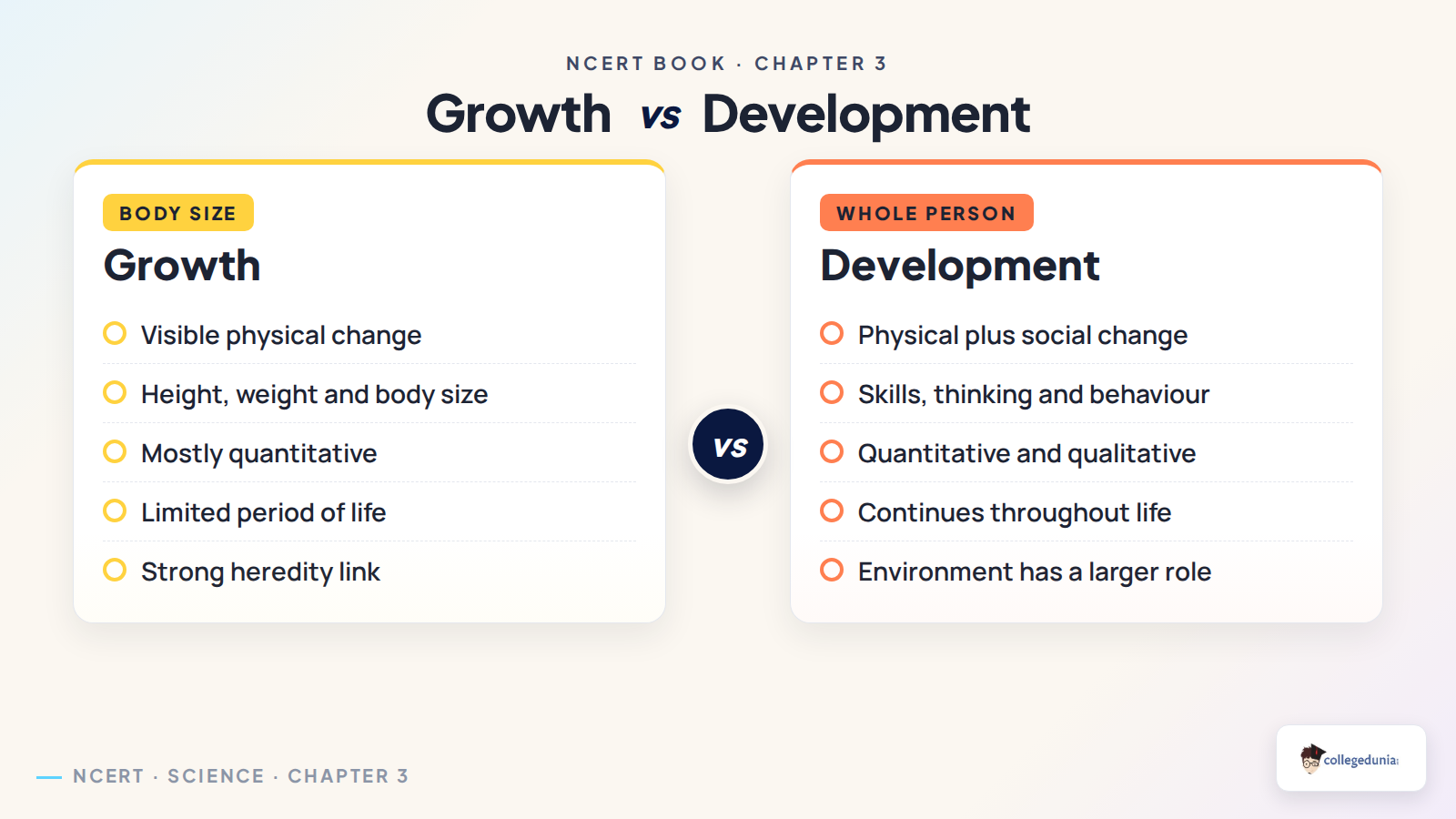
NCERT separates growth from development very clearly. Growth means increase in body size, shape, height and weight. Development is wider because it includes physical, social, emotional and mental changes.
| Point | Growth | Development |
|---|---|---|
| Meaning | Visible increase in size and mass. | Progressive improvement in abilities and behaviour. |
| Type | Mainly quantitative. | Quantitative and qualitative. |
| Period | Limited to a certain age. | Continues throughout life. |
| Influence | Strongly limited by heredity. | Strongly shaped by environment and learning. |
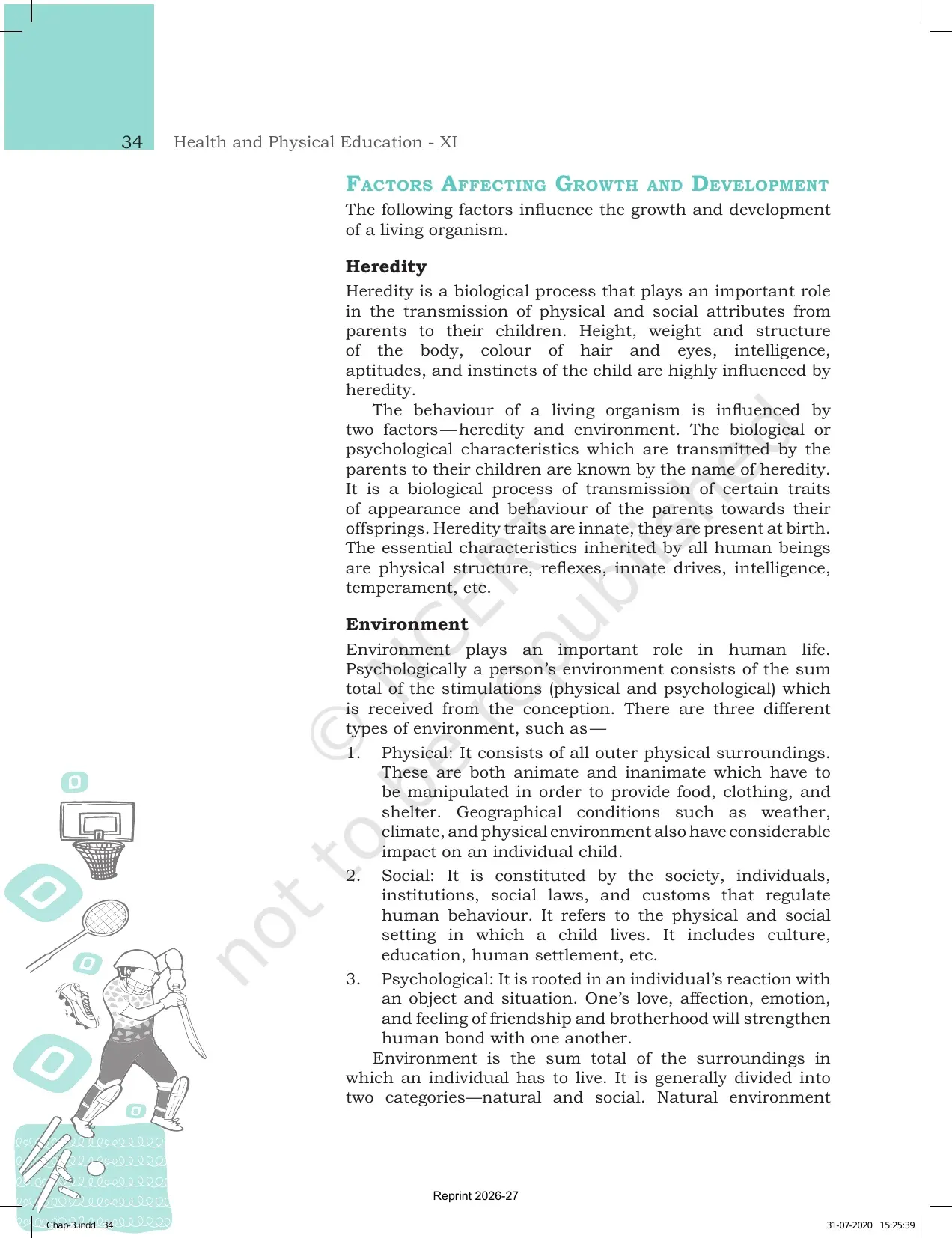
The chapter also explains the factors that affect growth and development. Heredity gives the child inborn traits. Environment, nutrition, exercise, hormones and learning decide how those traits develop in real life.
- Heredity affects body structure, intelligence, instincts and temperament.
- Environment includes physical, social and psychological surroundings.
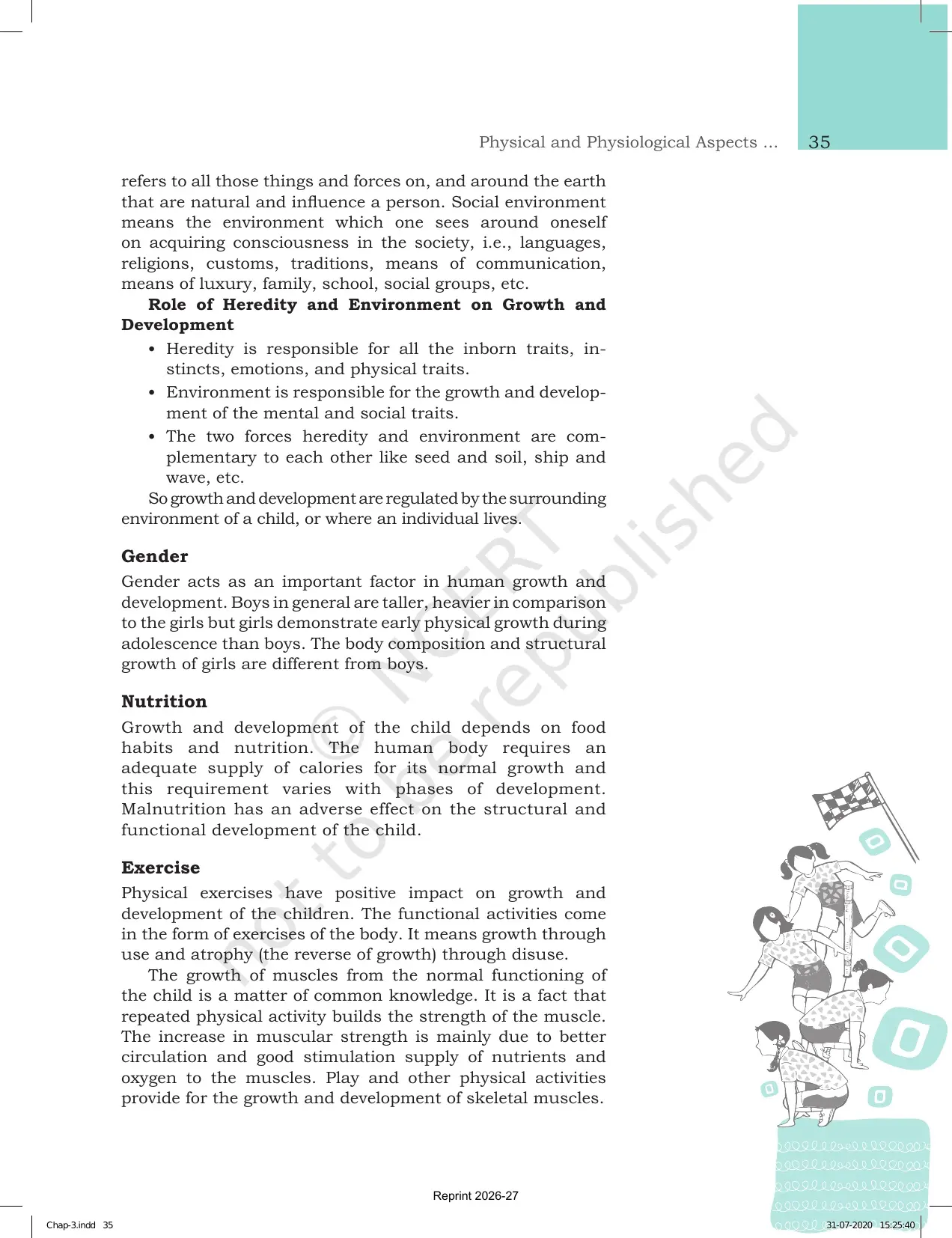
- Nutrition gives the calories and nutrients needed for normal growth.
- Exercise improves muscles, circulation, strength and body control.
Warm-up, Conditioning and Cool-down in Class 11 Physical Education
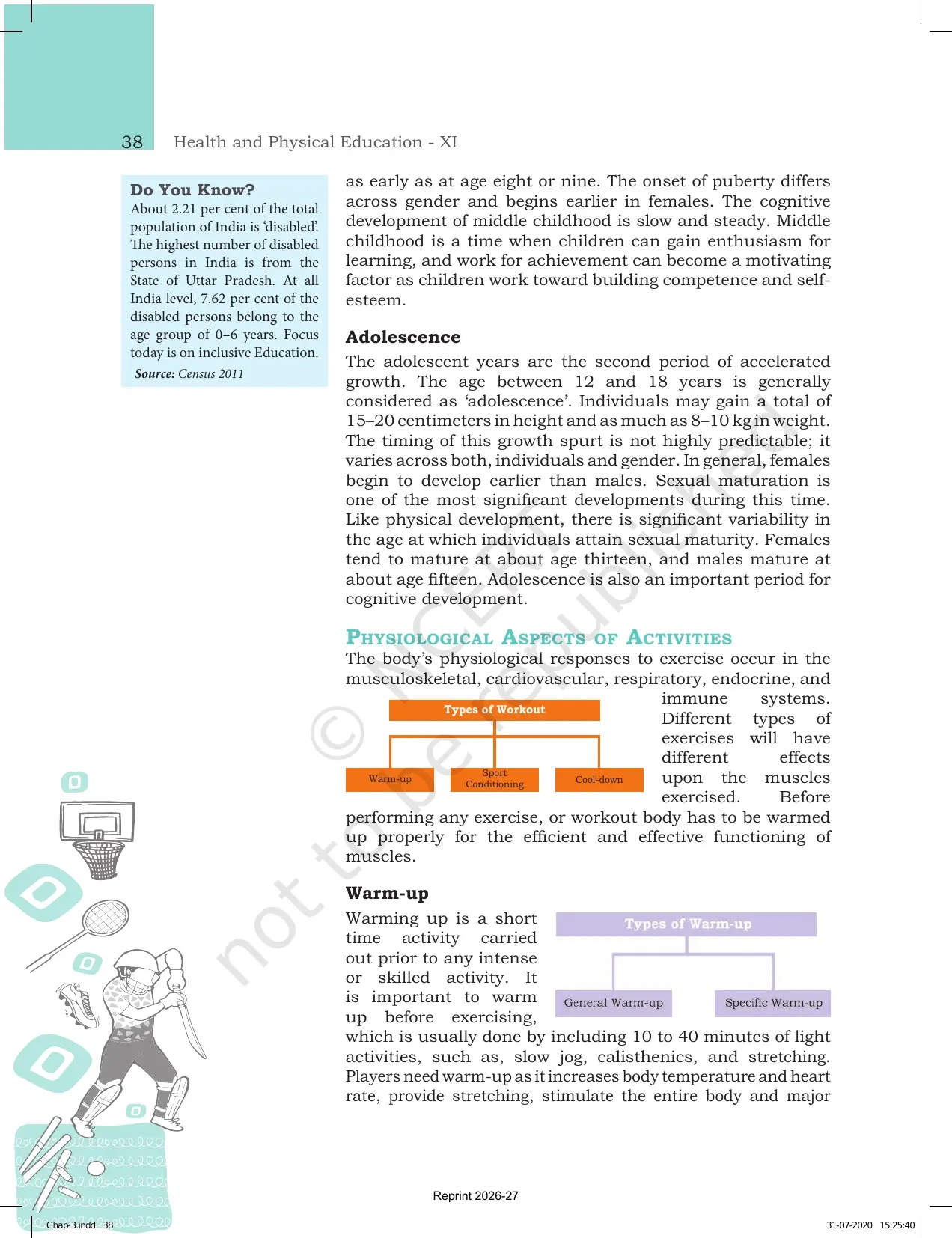
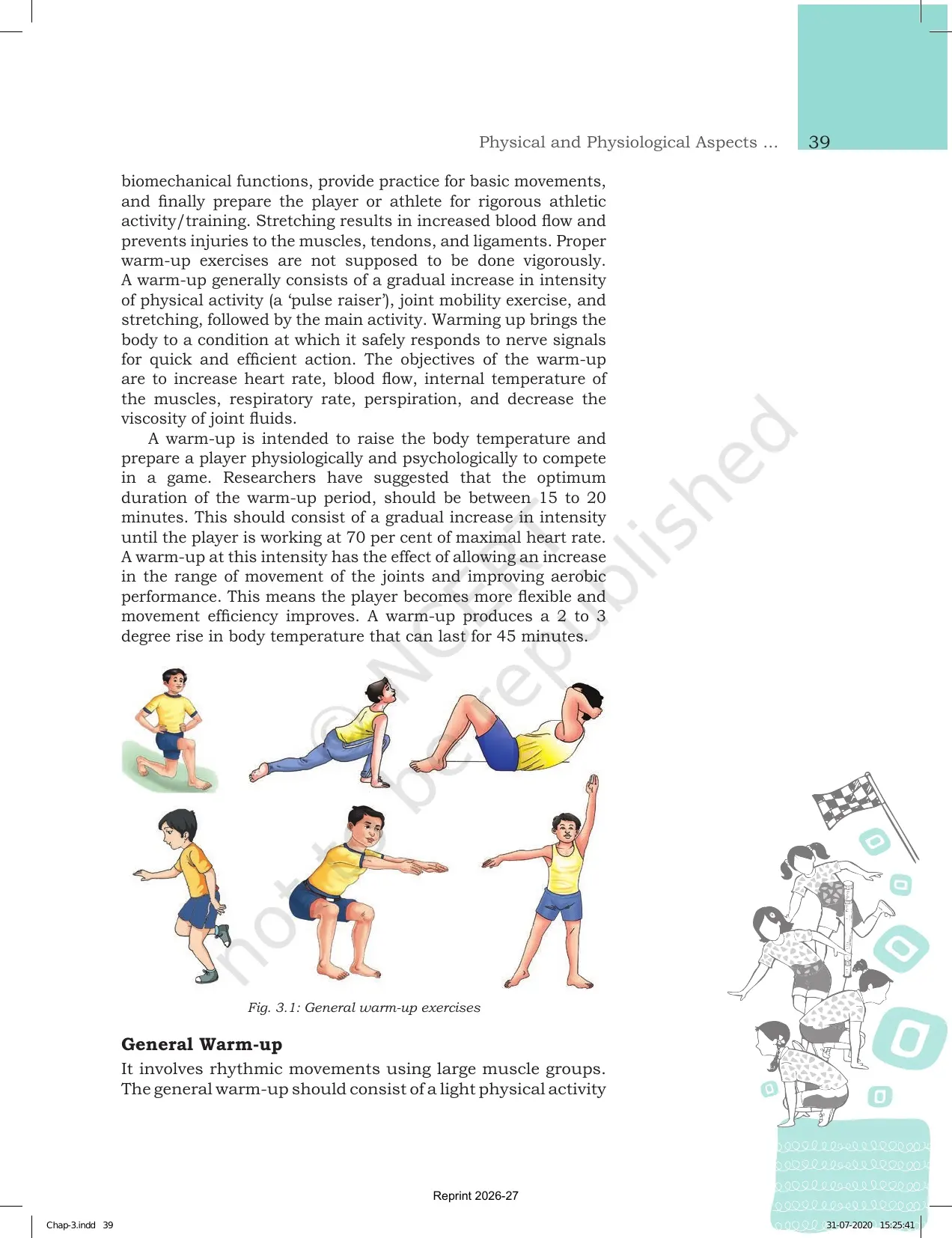
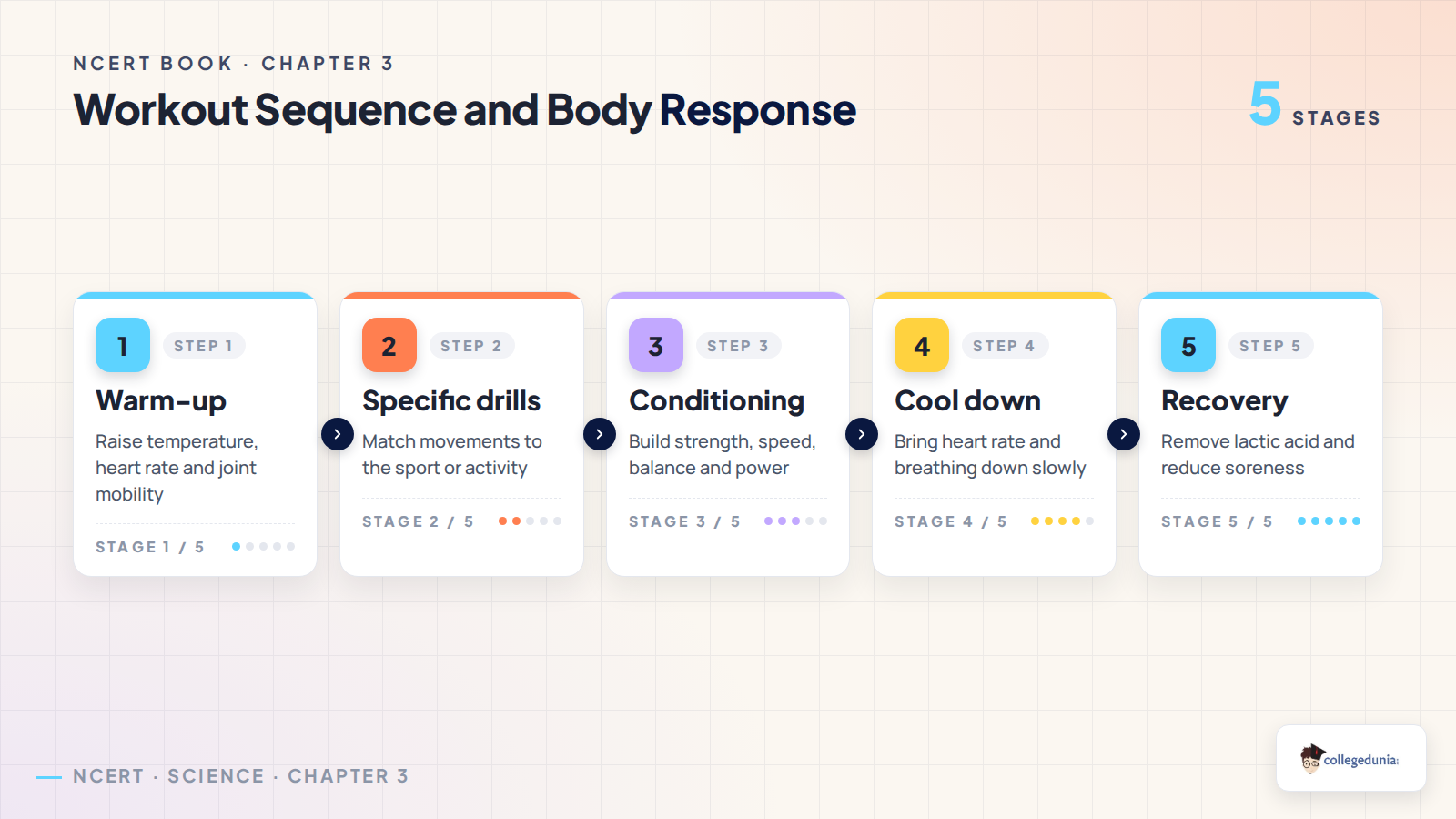
Chapter 3 gives a full exercise sequence. A player starts with a warm-up, moves into specific sport drills, trains through conditioning and ends with a cool-down. Warm-up usually lasts 10 to 15 minutes and should move from low intensity to higher intensity.
| Stage | What students should remember |
|---|---|
| General warm-up | Uses walking, jogging, skipping or easy aerobics with large muscle groups. |
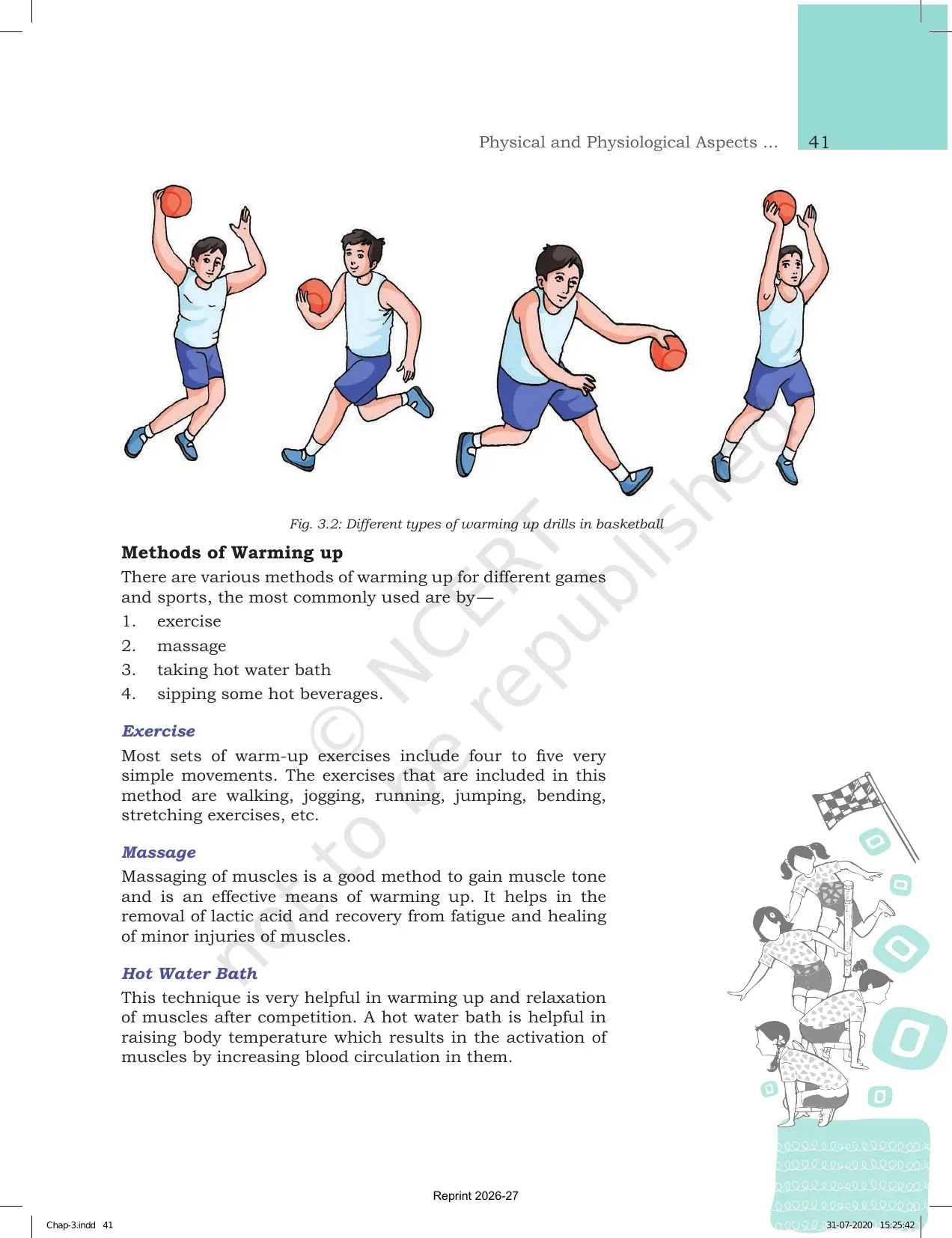
| Specific warm-up | Uses sport-related drills such as lay-up shots, bowling, service practice or bar work. |
| Sports conditioning | Builds strength, balance, coordination, flexibility, speed and power. |
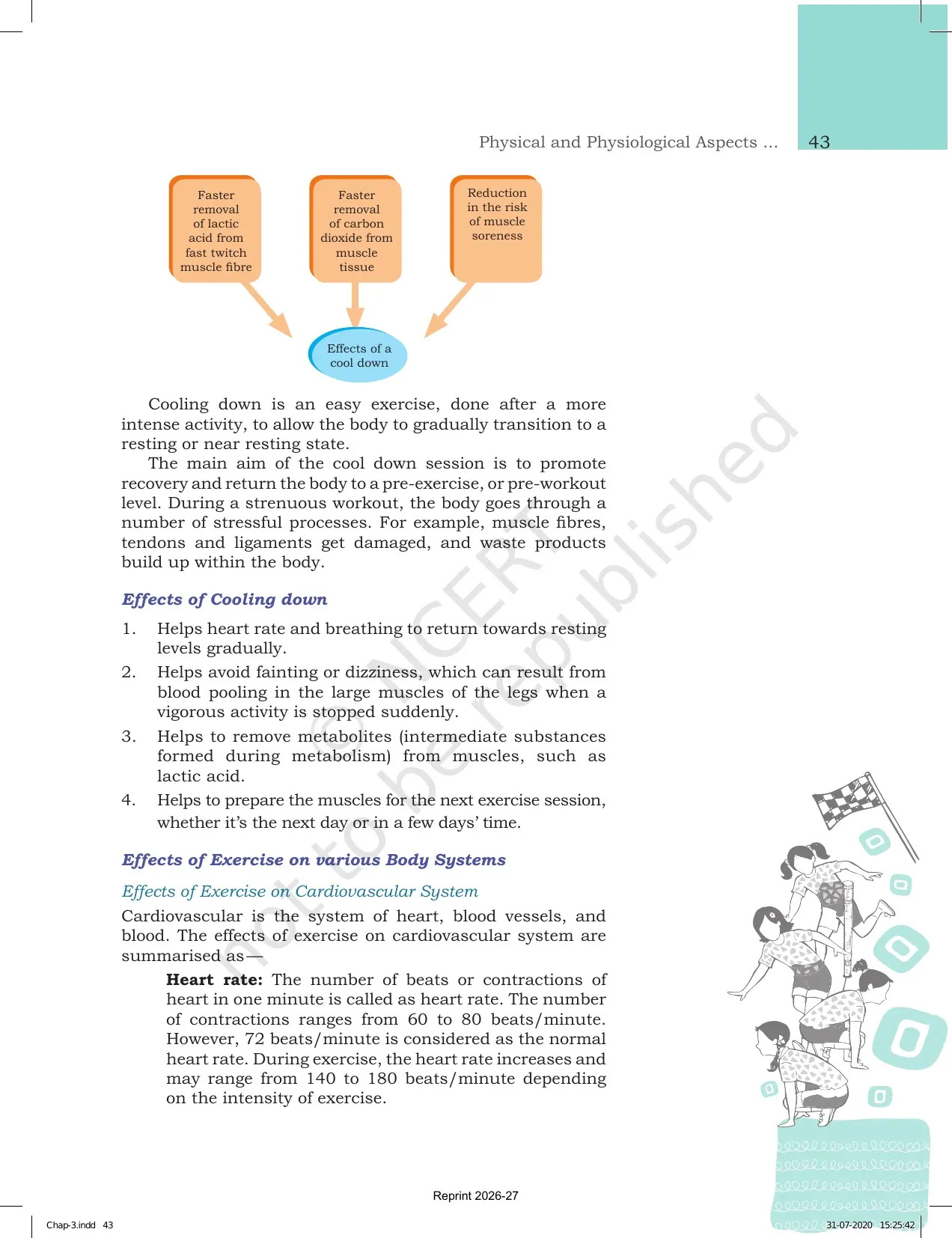
| Cool-down | Uses light exercise and stretching to return the body towards resting level. |
Exam tip: If a question asks for warm-up, write its meaning, duration, two objectives and two examples. That answer is clearer than writing a long paragraph.
Effects of Exercise on Body Systems in Chapter 3
The physiological part of the chapter explains what exercise does inside the body. It covers heart rate, stroke volume, cardiac output, tidal volume, respiratory rate, muscular hypertrophy, metabolism and digestion. These terms are important for short answers.
| Body system | Exercise effect printed in the chapter |
|---|---|
| Cardiovascular system | Heart rate rises from resting level and cardiac output increases during exercise. |
| Respiratory system | Tidal volume, respiratory rate and pulmonary ventilation increase during exercise. |
| Muscular system | Regular training increases muscle size, strength, endurance and capillary supply. |
| Digestive system | Exercise improves blood flow, speeds metabolism and helps reduce constipation. |
For revision, learn one definition and one effect for each system. Cardiac output = heart rate x stroke volume is the main formula-like line in this section. Keep the normal heart-rate range and the exercise range ready for quick recall.
Class 11 Physical Education Chapter 3 Resources
| Resource | Link |
|---|---|
| NCERT Notes | Class 11 Physical Education Chapter 3 Notes |
| NCERT Book PDF | Class 11 Physical Education Chapter 3 Book PDF |
NCERT Class 11 Physical Education Book PDFs for All Chapters
| Chapter | NCERT Book PDF |
|---|---|
| Chapter 1 Physical Education | Download Chapter 1 Book PDF |
| Chapter 2 Understanding Health | Download Chapter 2 Book PDF |
| Chapter 3 Physical and Physiological Aspects | Download Chapter 3 Book PDF |
| Chapter 4 Individual Games | Download Chapter 4 Book PDF |
| Chapter 5 Team Games | Download Chapter 5 Book PDF |
Class 11 Physical Education Chapter 3 Book PDF FAQs
Ques. What is included in the NCERT Class 11 Physical Education Chapter 3 book PDF?
Ans. It includes the official NCERT chapter on growth, development, heredity, environment, warm-up, sports conditioning, cool-down and exercise effects on body systems.
Ques. How many pages are there in the Chapter 3 Physical Education PDF?
Ans. The local NCERT Chapter 3 PDF has 17 pages, including the chapter text, tables, activity prompts, figures and reprint details.
Ques. Is the Class 11 Physical Education Chapter 3 PDF useful for exams?
Ans. Yes. It gives exact NCERT wording for growth, development, warm-up, cool-down, conditioning and physiological effects of exercise.
Ques. What is the difference between growth and development in Chapter 3?
Ans. Growth is a visible quantitative increase in body size and shape. Development is a wider lifelong process that includes physical, mental, social and emotional changes.
Ques. Should I study notes or the NCERT book PDF first?
Ans. Read the NCERT book PDF first for exact textbook language. Use notes after that for quick revision, tables and exam-focused summaries.



Comments