


These Measurement and Evaluation handwritten notes turn the whole chapter into clean, handwritten pages for fast last-minute revision. They follow the 2026-27 NCERT "Health and Physical Education" Class 11 syllabus and Chapter 9. Students get the meaning of test, measurement and evaluation, the fitness component tests like push-up, abdominal curl and sit and reach, plus BMI, waist-to-hip ratio and the three somato types, all in a pen-on-paper format that is easy to skim before a Class 11 test.
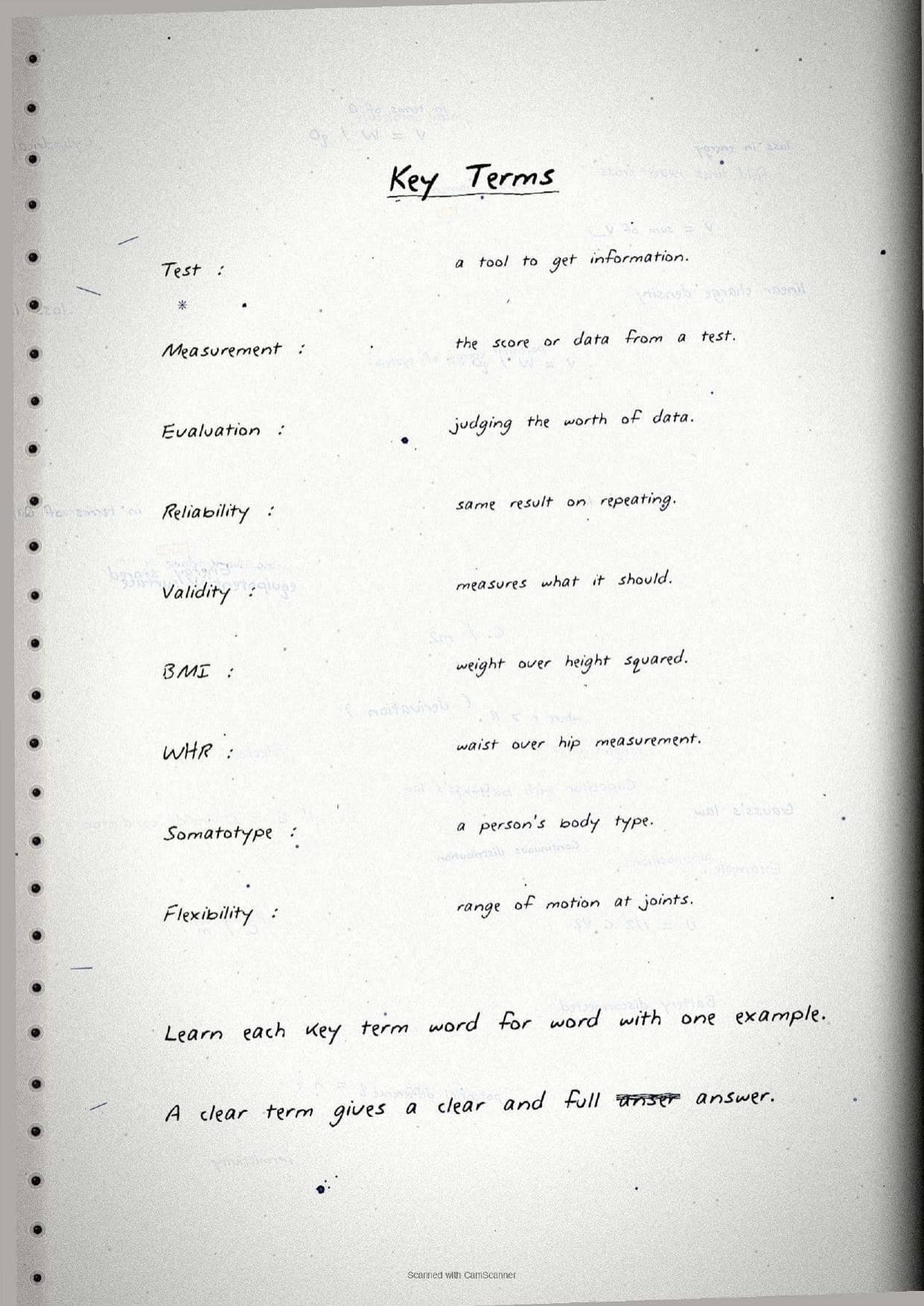
- Handwritten pages with boxed key terms, test procedures and the BMI and waist-to-hip ratio tables.
- Measurement and Evaluation is a high-scoring theory chapter in the Class 11 Physical Education final exam.
- Pairs with the Notes and Book PDF for this chapter, both linked lower on this page.
These Measurement and Evaluation handwritten notes are prepared from the official NCERT Health and Physical Education Class 11 textbook and checked against recent CBSE Class 11 Physical Education question papers.
Student Feedback: In a Collegedunia poll of 5,180 Class 11 Physical Education students, 72% of students said handwritten pages helped them recall the fitness test procedures and the BMI and WHR norms faster than printed text, because the boxed tables and step lists made the tests easy to remember.
Source: 2026-27 Class 11 Physical Education student poll. Sample of 5,180 students from CBSE schools across 11 states.
What These Measurement and Evaluation Handwritten Notes Contain
Measurement and Evaluation is Chapter 9 of Class 11 Physical Education. It explains how teachers and coaches judge a student's fitness and progress using tests, scores and interpretation. These handwritten notes condense the chapter into handwritten pages that read like a topper's own notebook.
The notes are organised under three threads, each on its own set of pages:
- The concepts: what a test, measurement and evaluation mean, and why the programme matters.
- The fitness tests: the tests for muscular strength, muscular endurance and flexibility, with each procedure and score.
- The body measures: BMI, the waist-to-hip ratio and the three somato types.
Because the pages are handwritten, the procedures and norms sit in boxes and step lists rather than long paragraphs. A student can flip through the Measurement and Evaluation Class 11 pages in a few minutes and still pick up the definitions, the test steps and the BMI and WHR tables before walking into the exam.
Test, Measurement and Evaluation in the Handwritten Pages
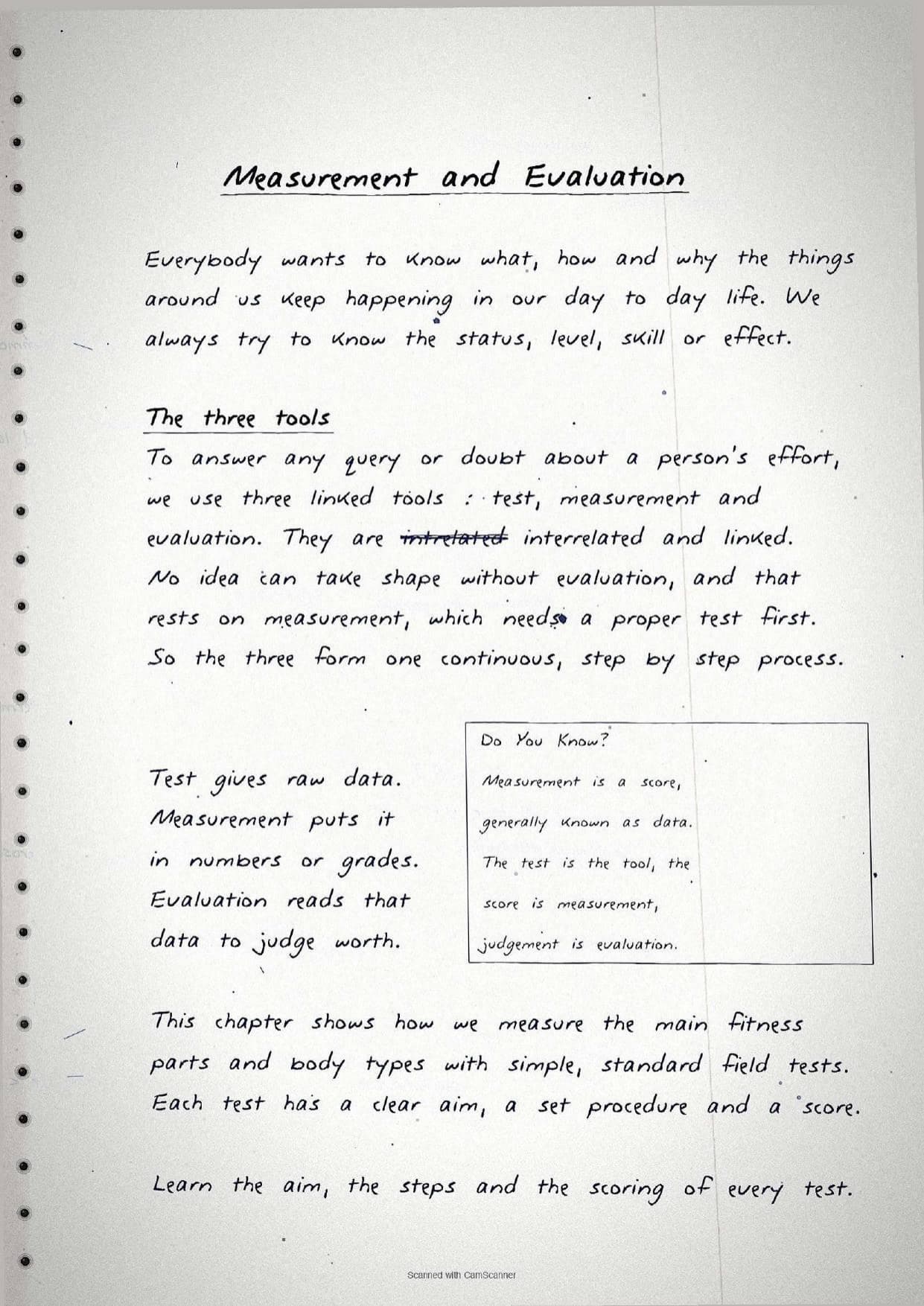
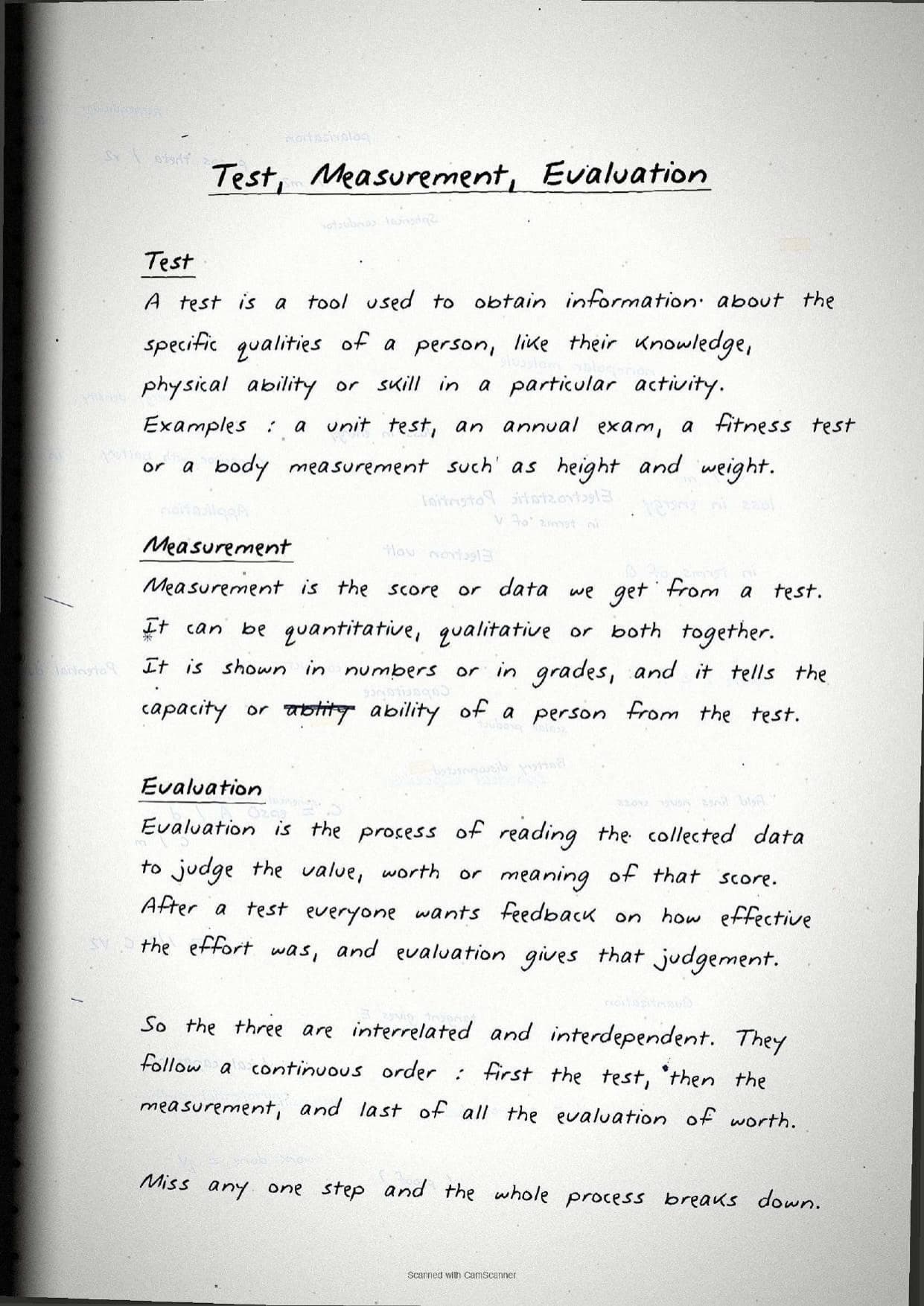
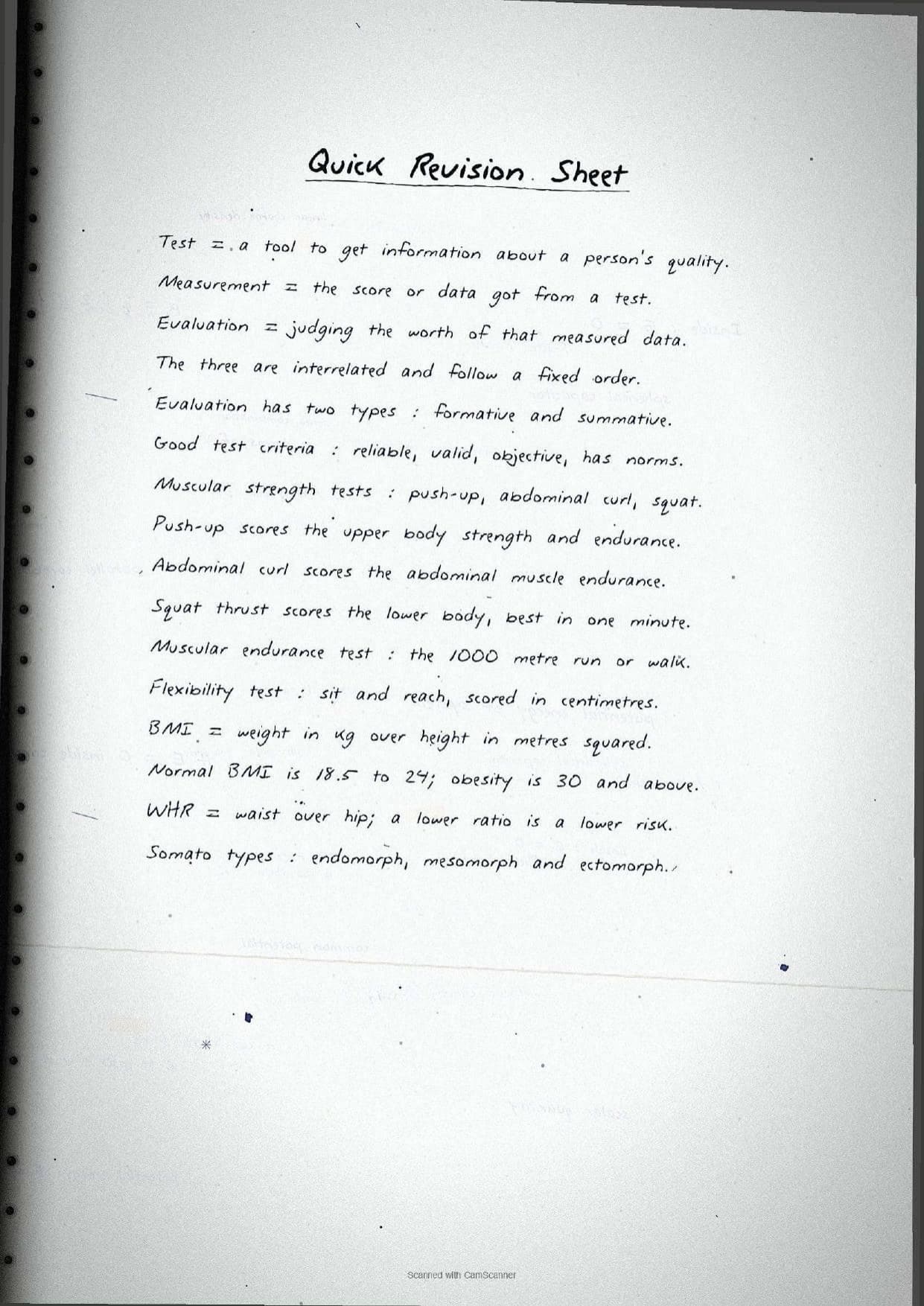
The opening pages fix the three core terms, because most short-answer questions come straight from them. The chapter stresses that test, measurement and evaluation are interrelated, interdependent and follow a continuous process. The table below shows how the handwritten notes define each one.
| Term | What the page shows |
|---|---|
| Test | A tool used to obtain information about an individual's knowledge, physical ability or skill, such as a unit test or a body measurement. |
| Measurement | A score or data in numerical or grading values that shows a person's capacity. It can be quantitative, qualitative or both. |
| Evaluation | The process of interpreting the collected data to make a professional judgement of value or worth. It may be formative or summative. |
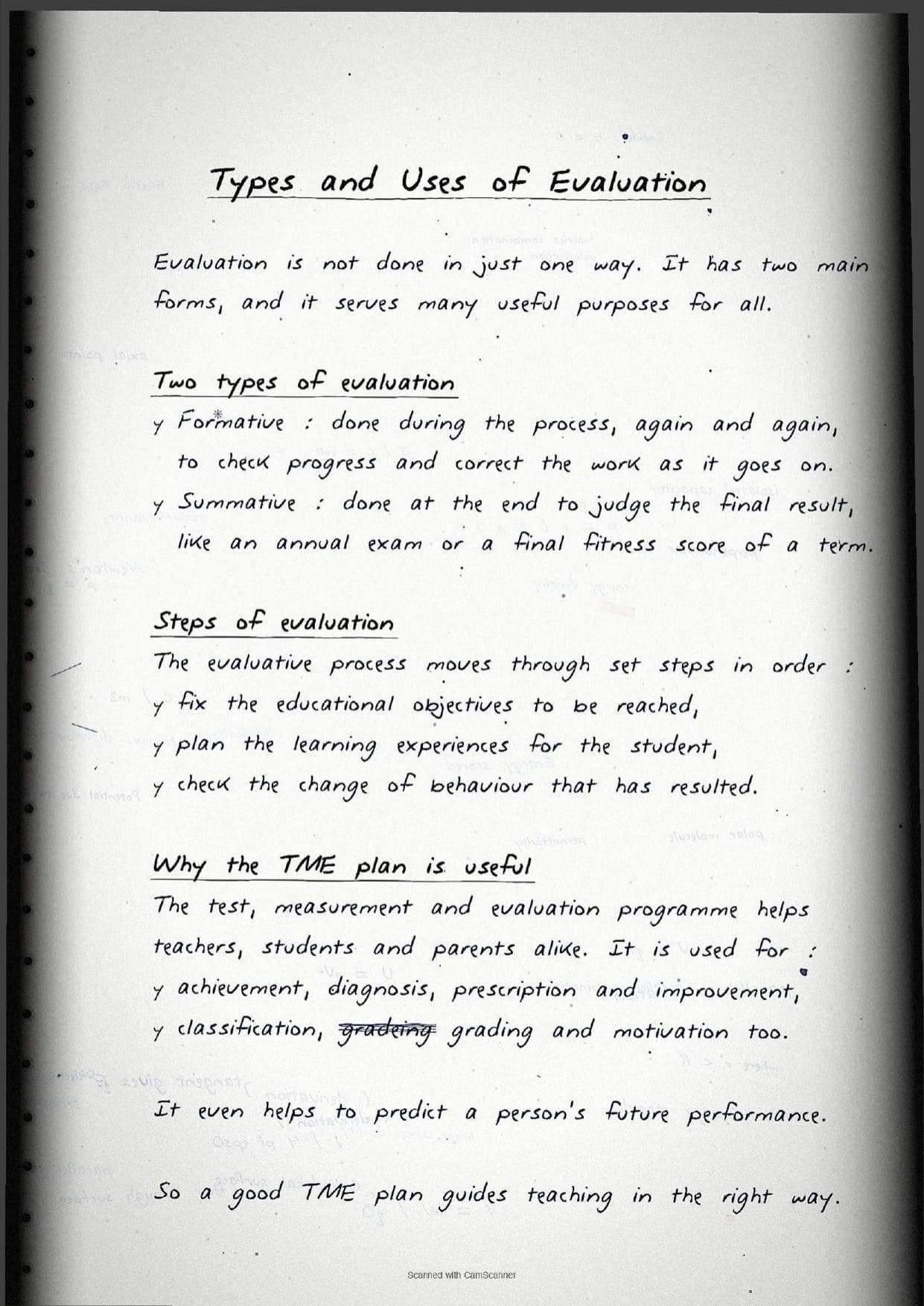
The pages also box the need and importance of the programme so it is ready for a long answer. The notes point out that the Test, Measurement and Evaluation process helps teachers, students and parents check both academics and the level of fitness. It is useful for achievement, diagnosis, prescription, improvement, classification, grading, motivation and the prediction of performance. Seeing the three definitions and this purpose list on one page is the fastest way to lock in the theory part of the chapter.
Fitness Tests, BMI and Body Types in the Notes
The largest set of pages covers the tests for the selected physical fitness components, plus the body measurements. These feed the long-answer questions, so the handwritten notes keep each test as a boxed procedure with its scoring rule. The lists below show what the pages cover.
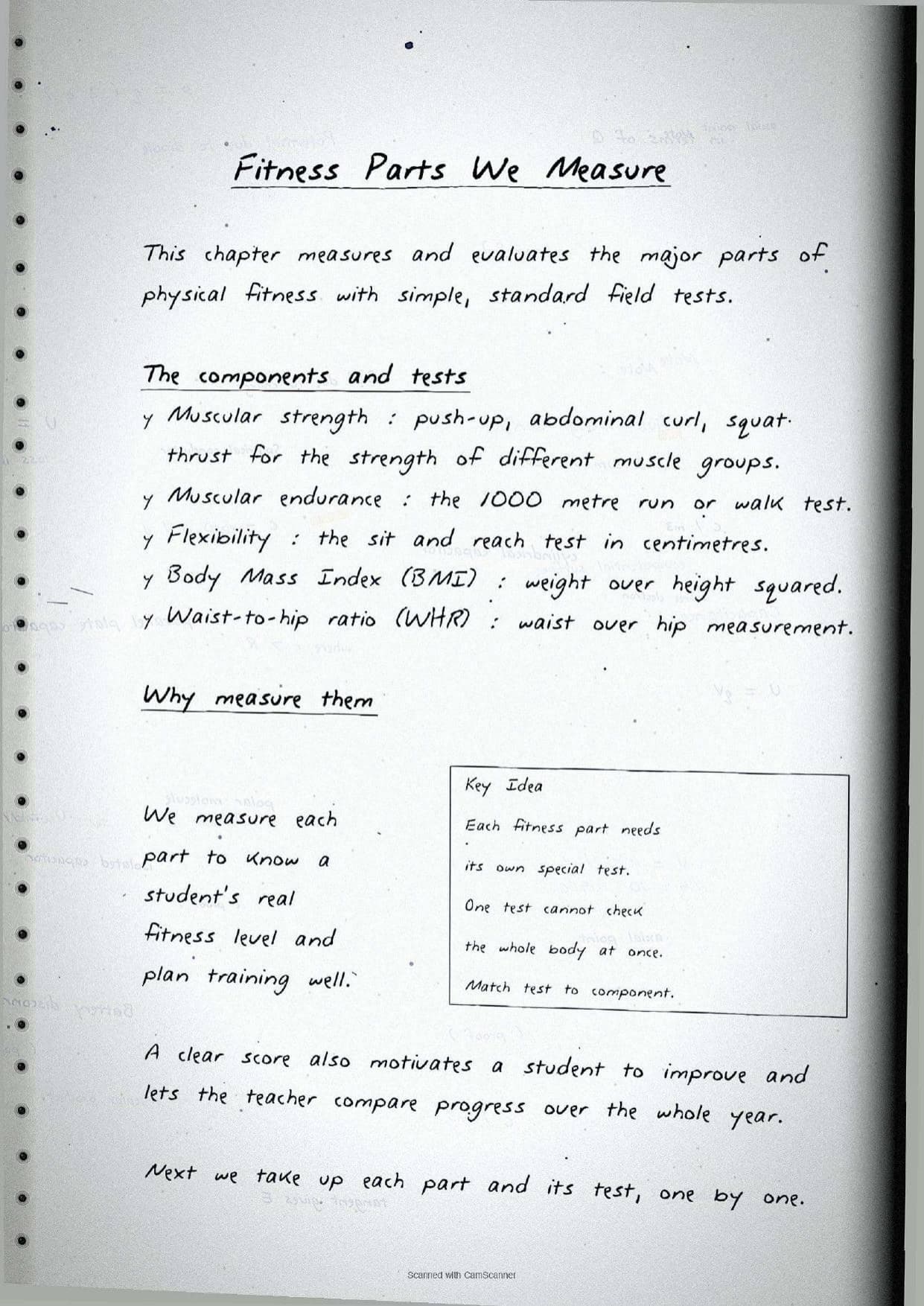
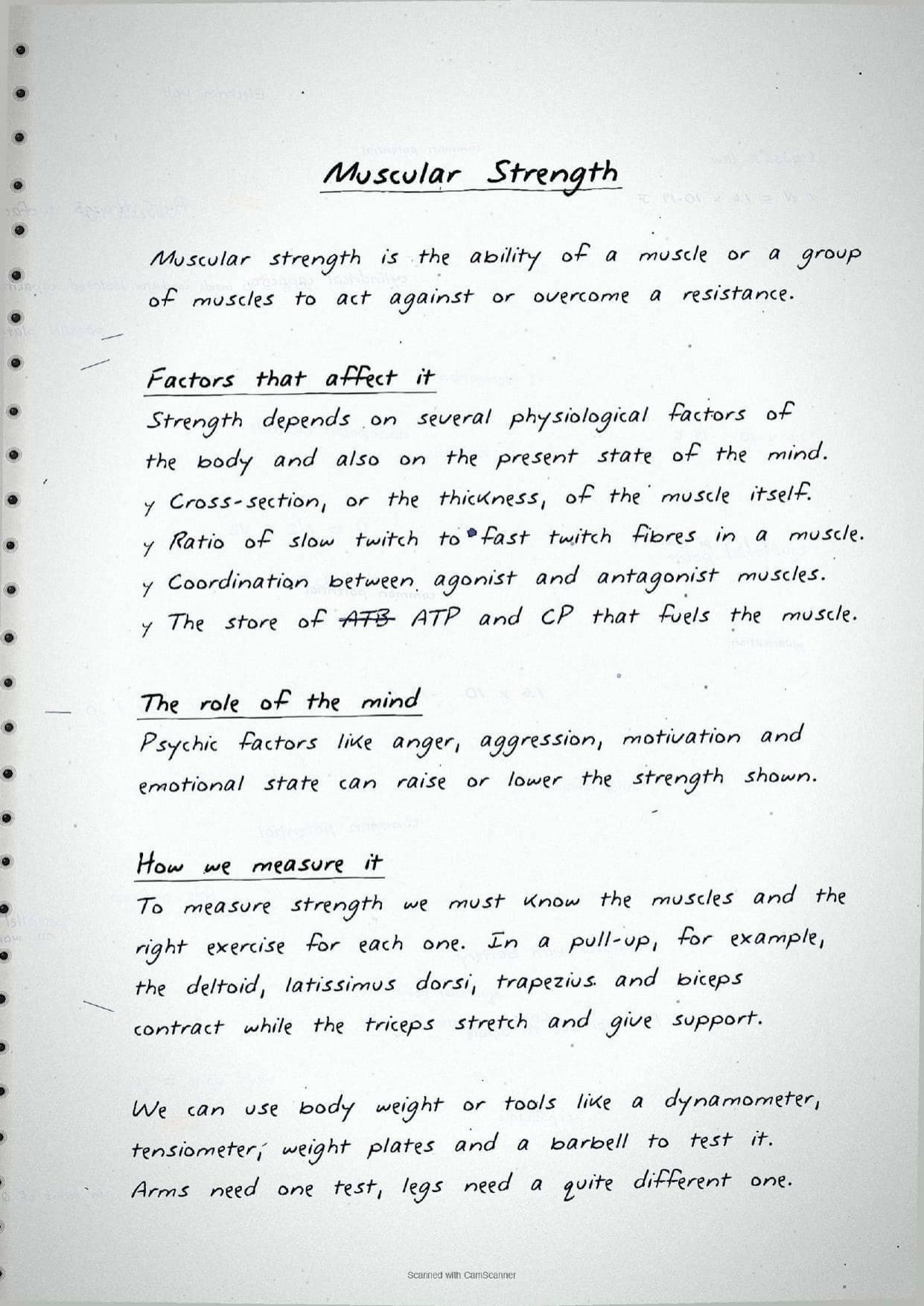
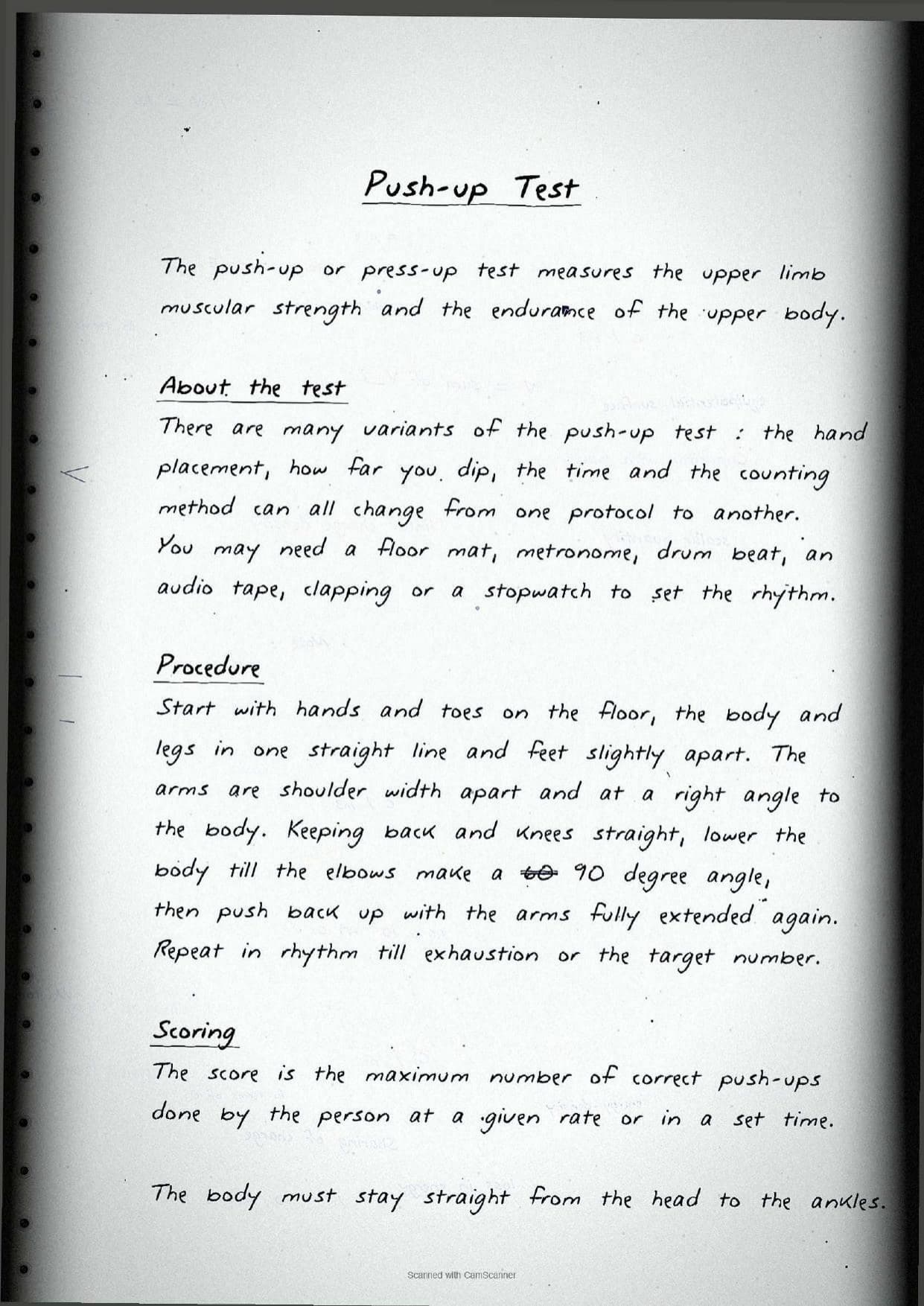
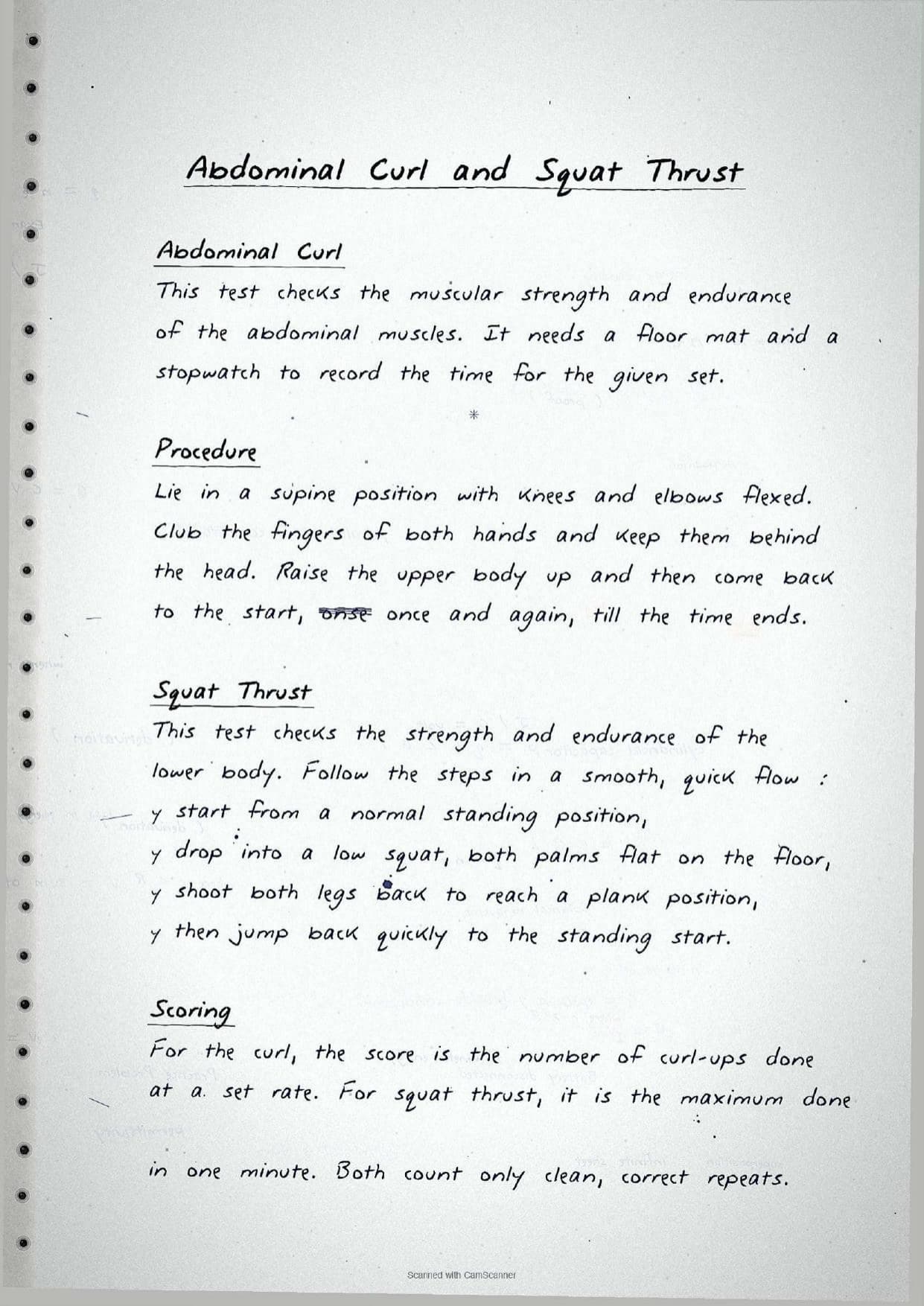
- Muscular strength: the push-up test (upper body), the abdominal curl test (abdominal muscles) and the squat thrust test (lower body), each with its procedure and score.
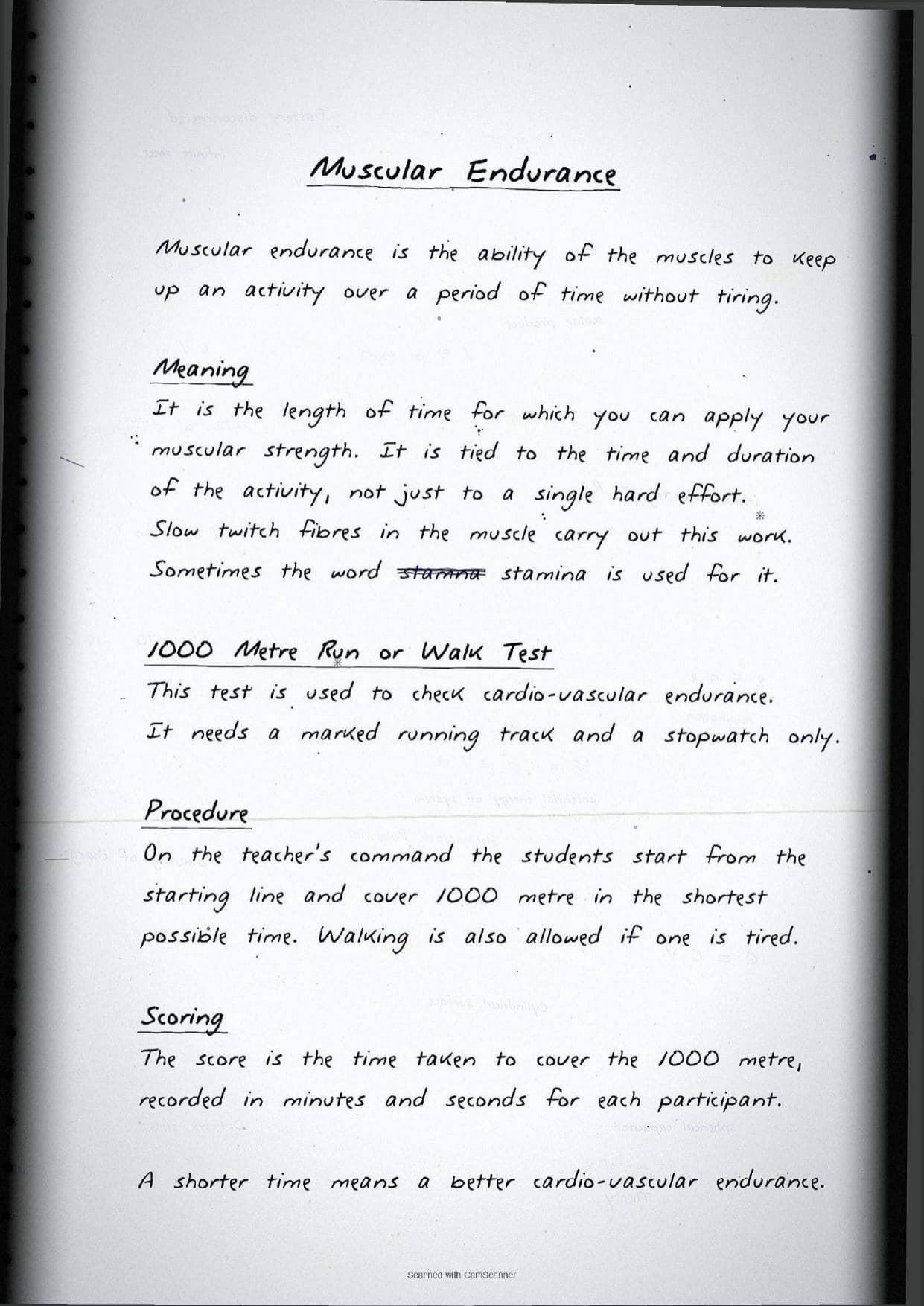
- Muscular endurance: the 1000 metre run or walk test, scored on the time taken to cover the distance.
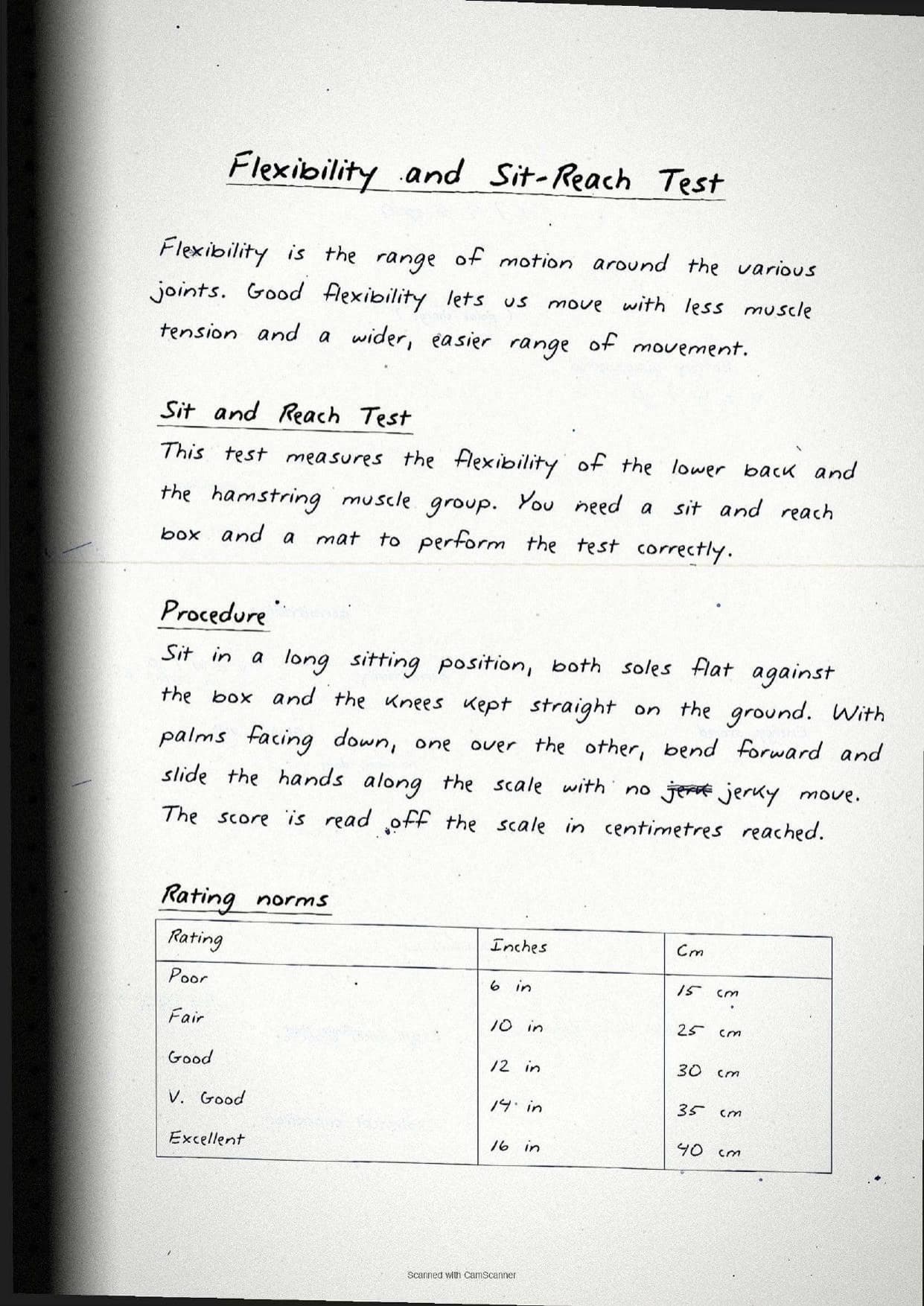
- Flexibility: the sit and reach test for the lower back and hamstring muscles, scored in centimetres.
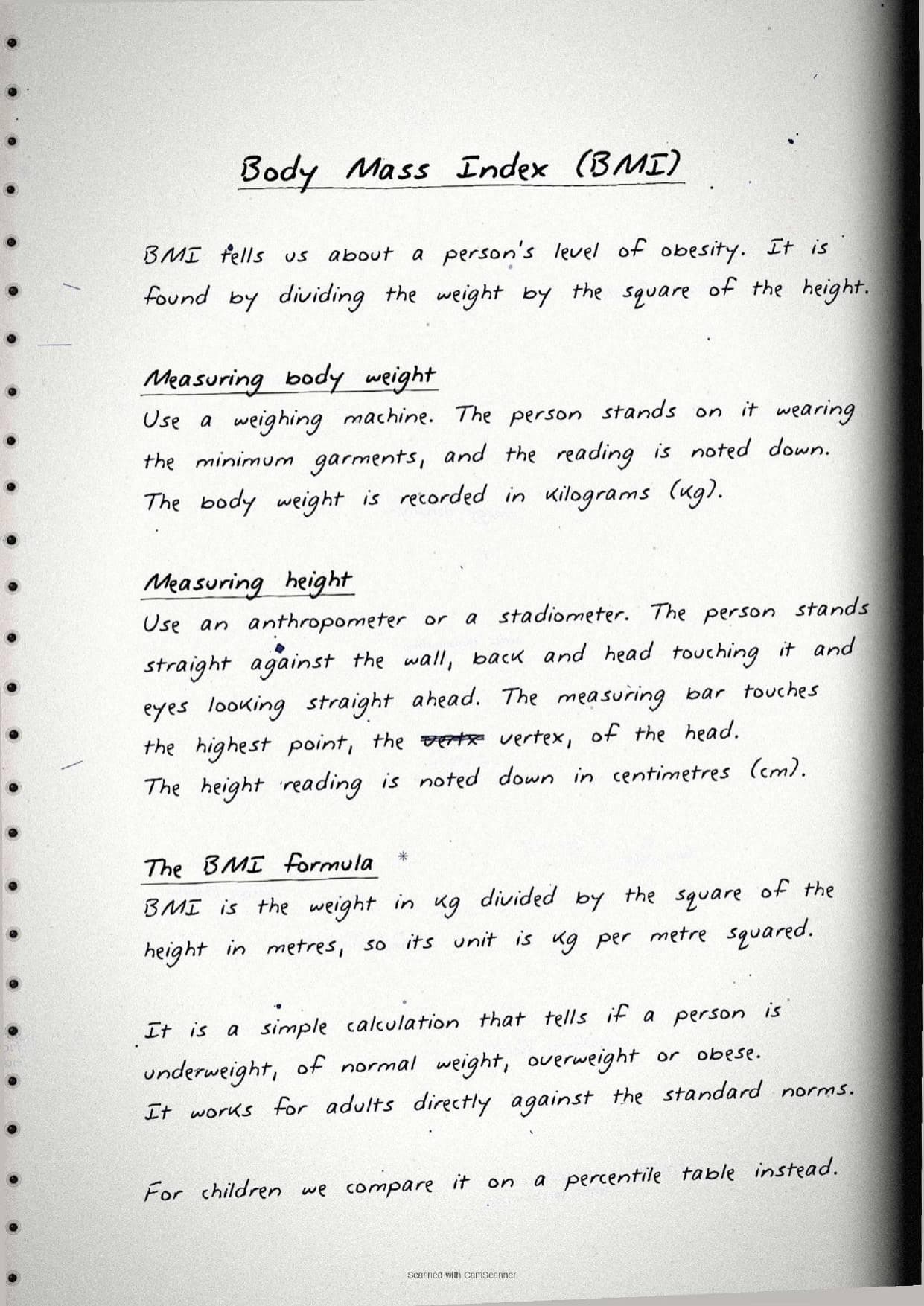
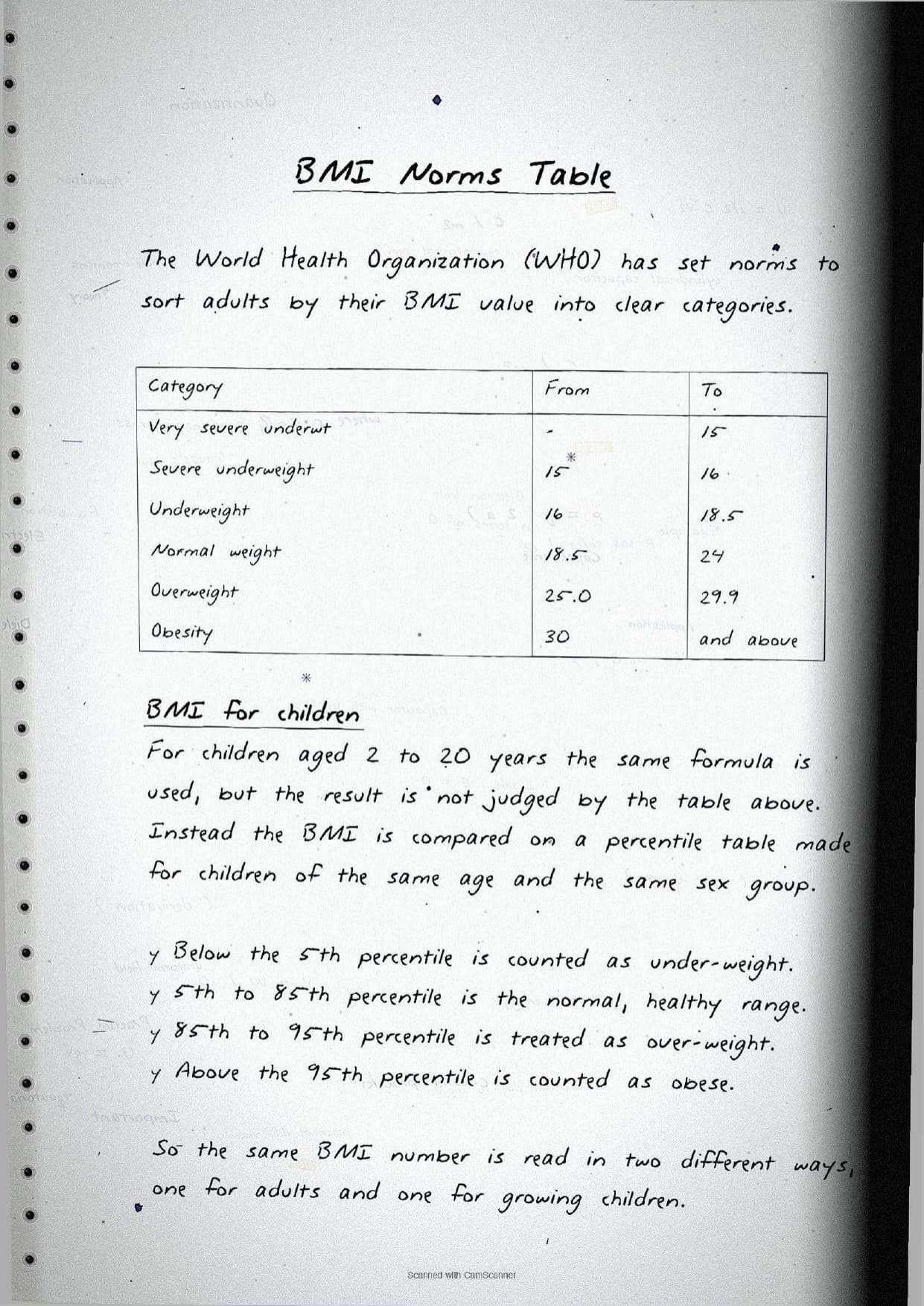
- Body Mass Index (BMI): weight in kilograms divided by height in metres squared, read against the WHO categories from underweight to obesity.
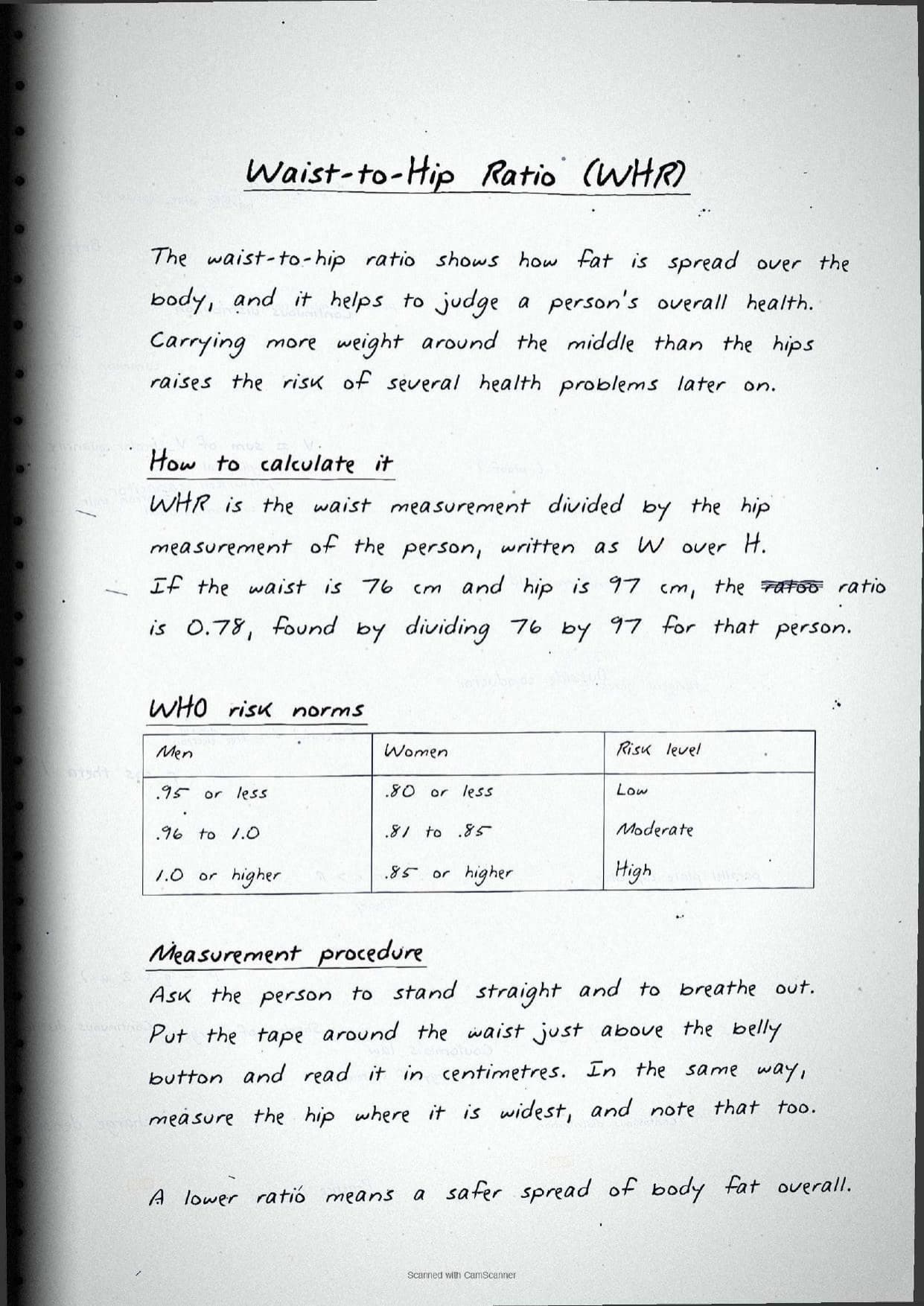
- Waist-to-hip ratio (WHR): waist circumference divided by hip circumference, used to judge fat distribution and health risk.
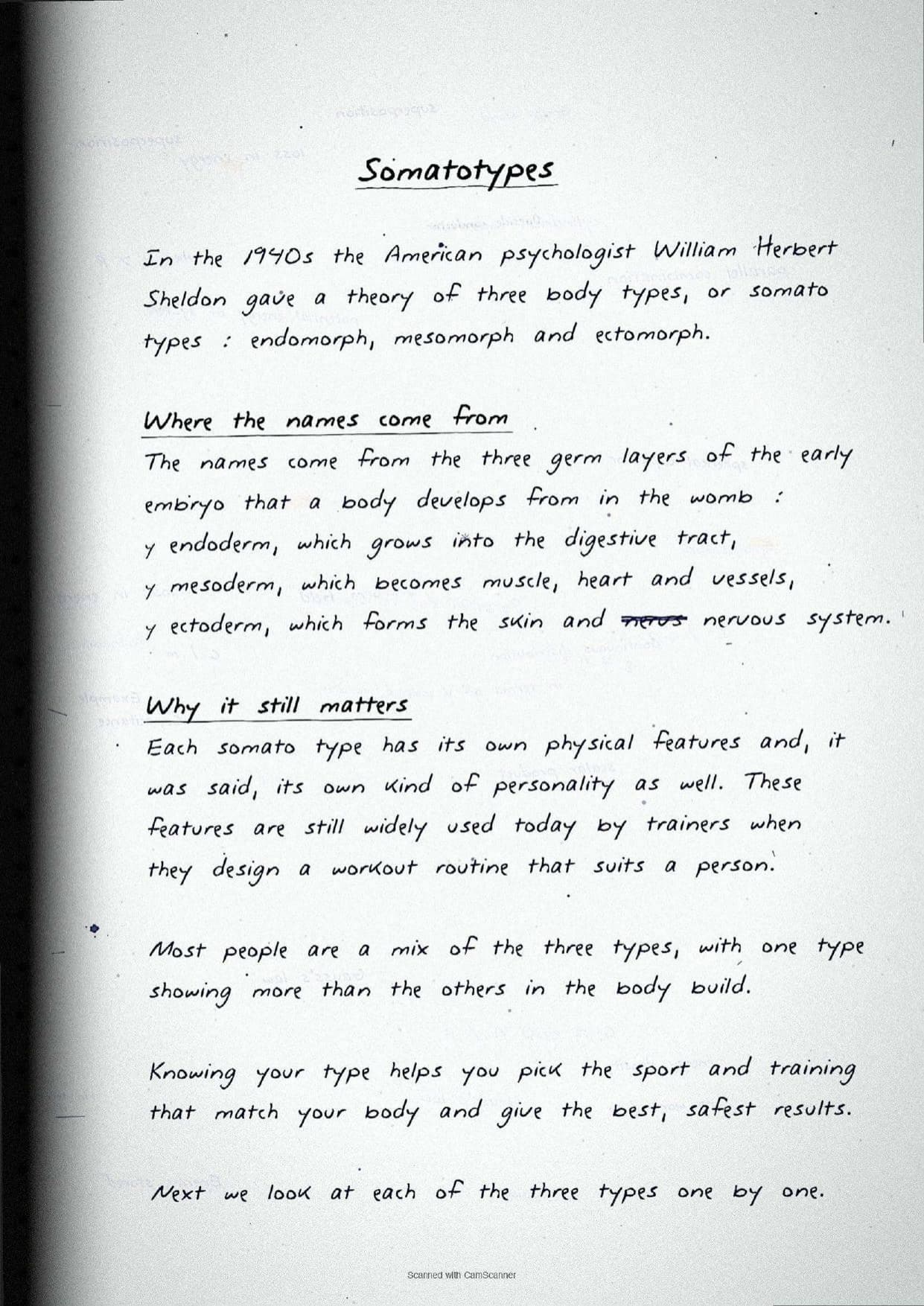
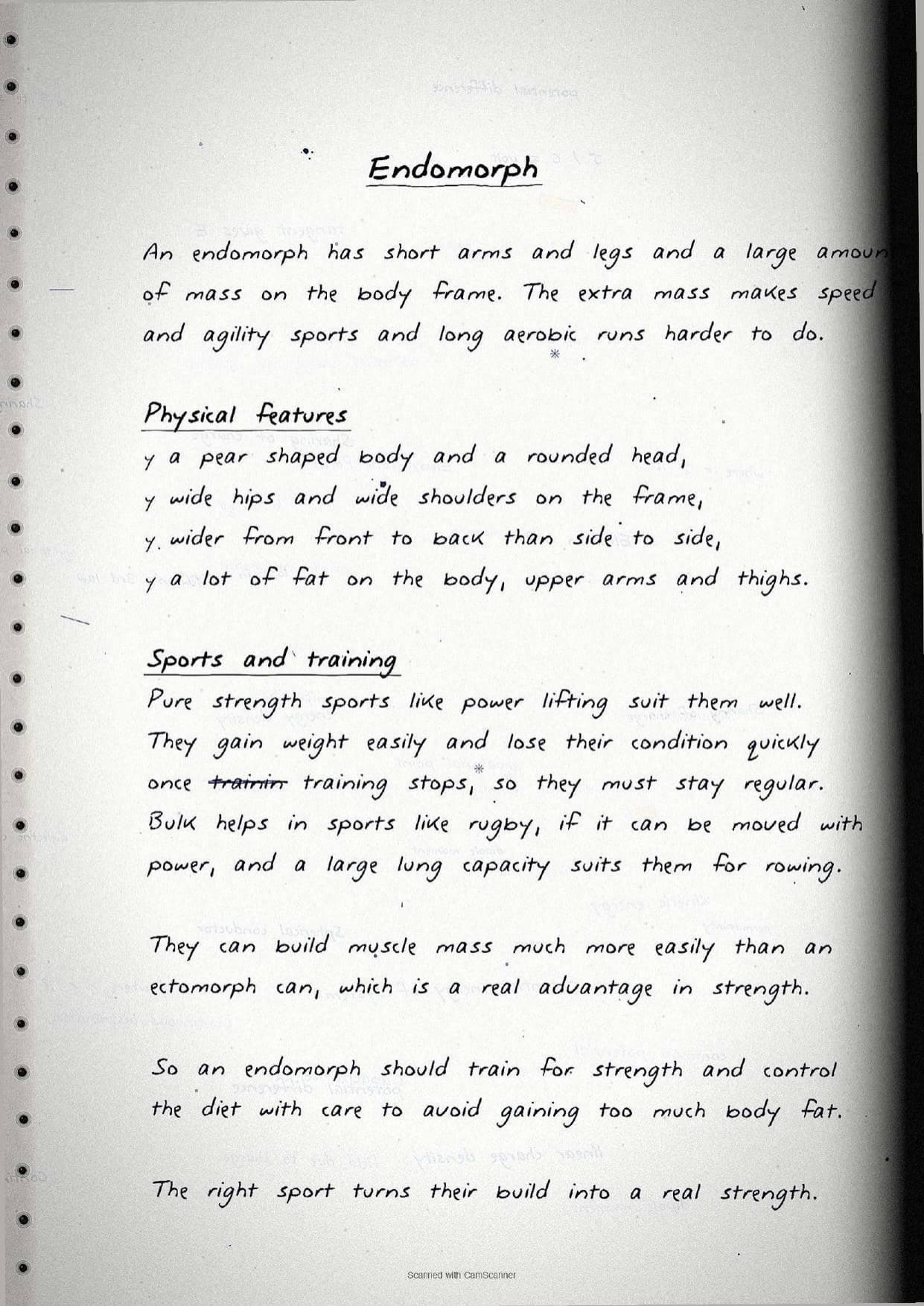
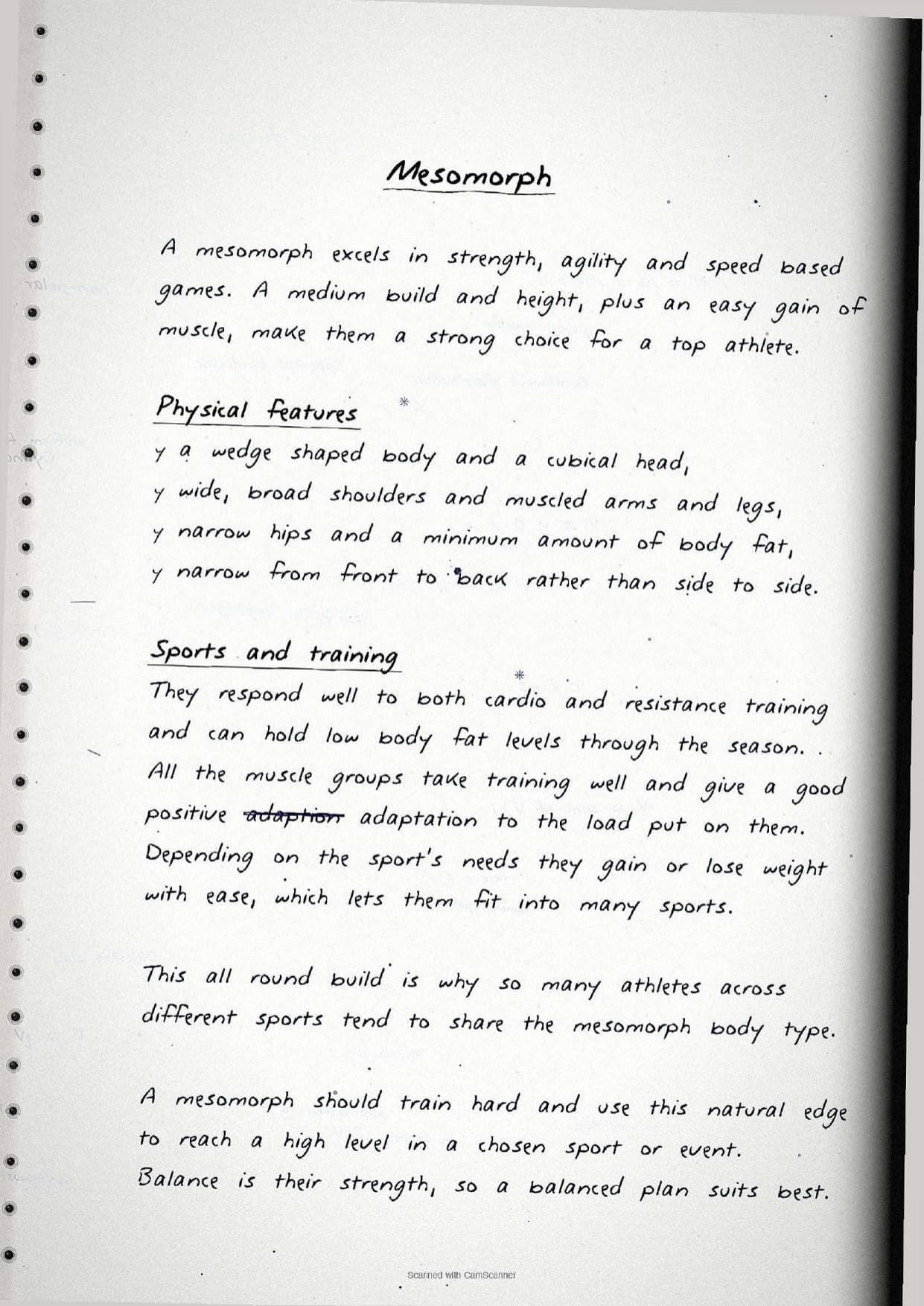
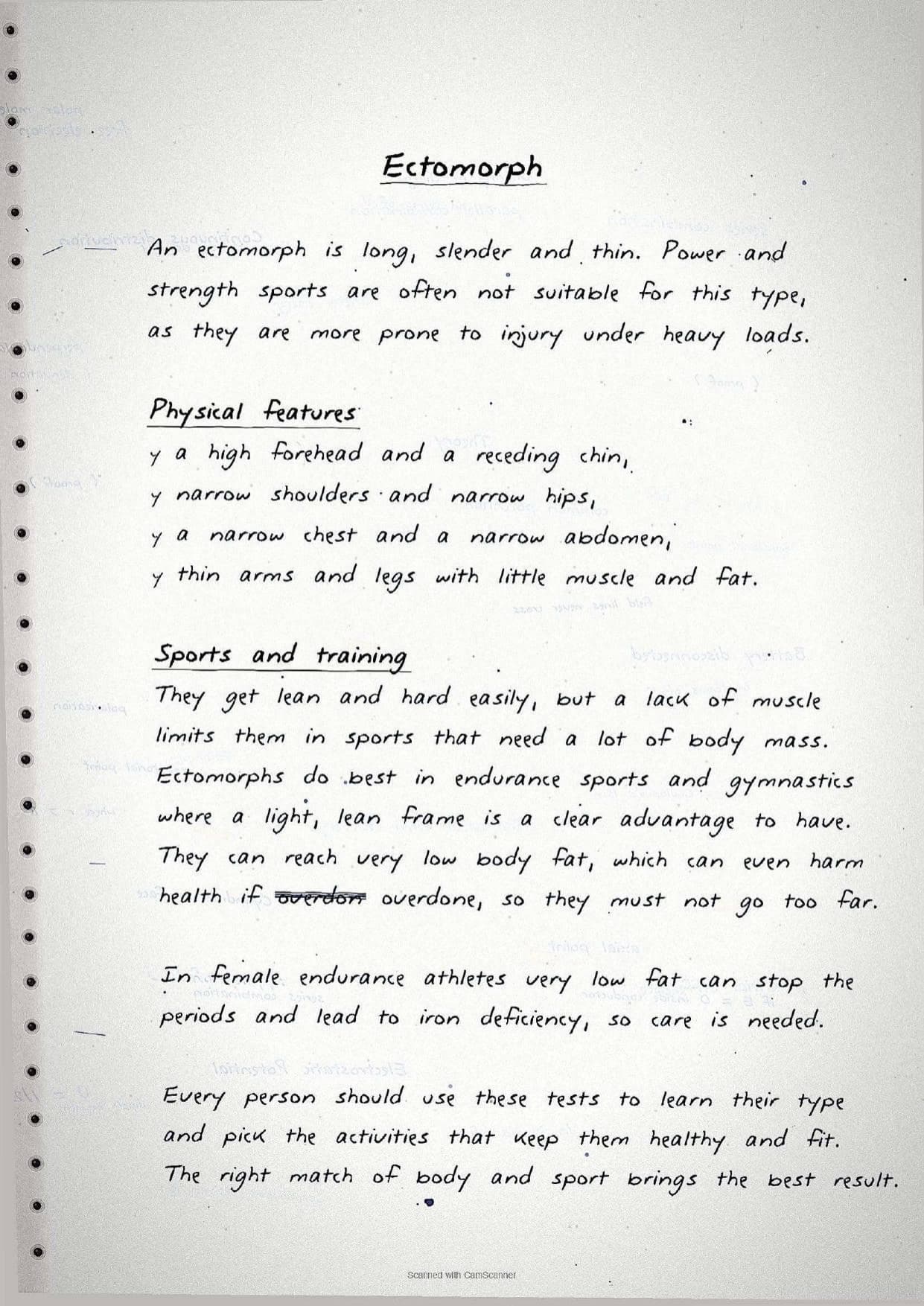
The final pages carry the three somato types: the endomorph (rounded, more fat, suited to pure strength sports), the mesomorph (wedge shaped, muscular, strong all-round athlete) and the ectomorph (long, slender, suited to endurance and gymnastics). The notes box the BMI table and the WHR risk levels because these exact numbers are easy to lose in the exam. Keep the strength, endurance and flexibility tests grouped together so you can list them quickly in the long answer.
How to Use These Handwritten Notes
Handwritten notes work best as a final-revision tool, not a first read. The steps below show how to get the most out of the Measurement and Evaluation handwritten notes in the last days before a Class 11 test.
- Download: save the handwritten pages to your device so you can revise offline.
- First read: read the printed Notes once so the handwritten pages act as a refresher, not a first source.
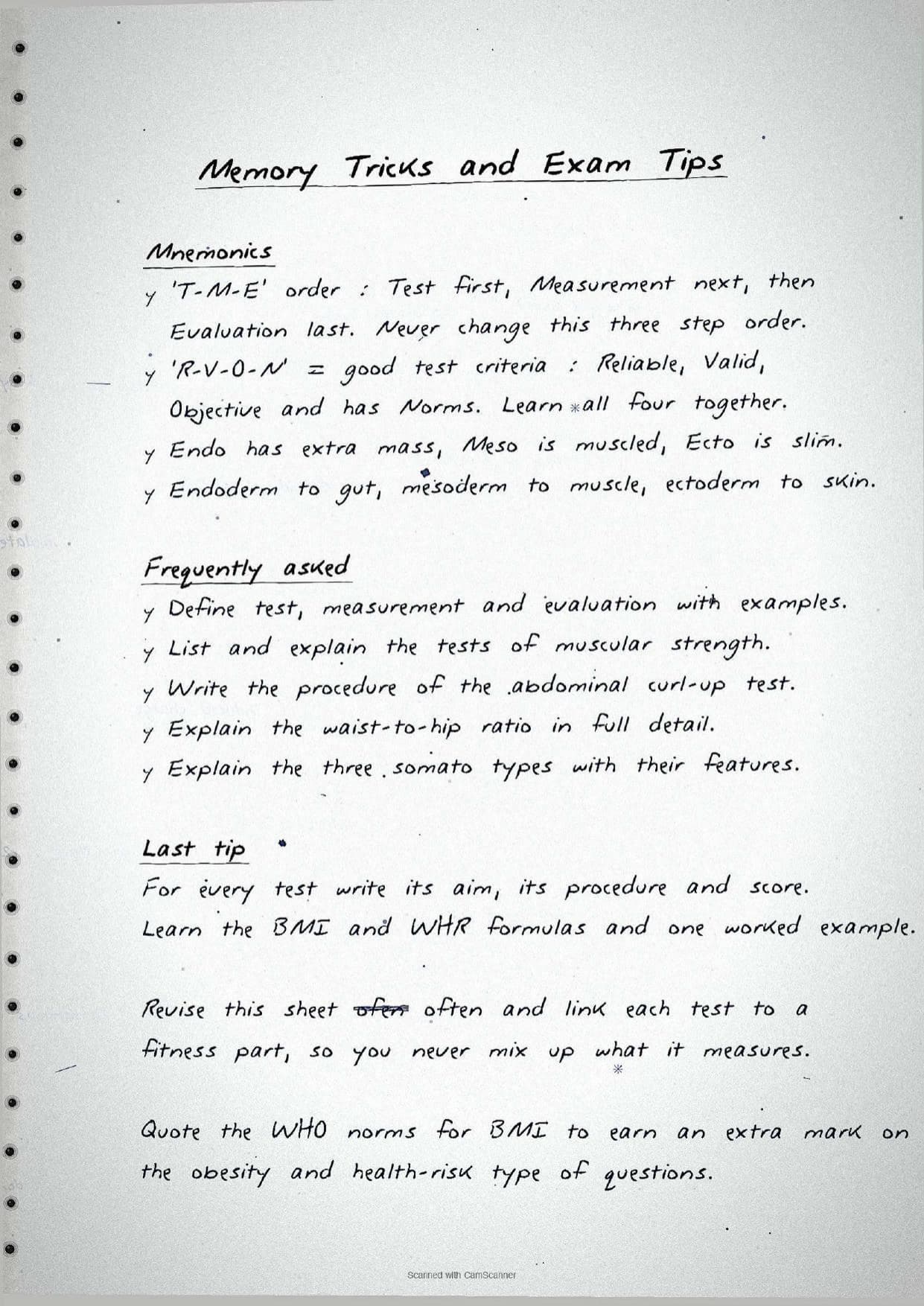
- Recall drill: cover the page and try to write the three definitions, the fitness tests and the BMI categories from memory.
- Night before: flip through the boxed pages for a quick last-minute recall of the test procedures and the WHR norms.
Many students search for Class 11 Physical Education Chapter 9 notes on their phone the night before a test, so a saved set of handwritten pages means you can revise anywhere. Use the handwritten notes for speed, then check the printed Notes to confirm you have the procedure steps and scoring rules right.
Common Mistakes These Notes Help You Avoid
A few errors cost marks every year. The handwritten notes flag each one in the margin so you can fix it before the exam. These five are the most common.
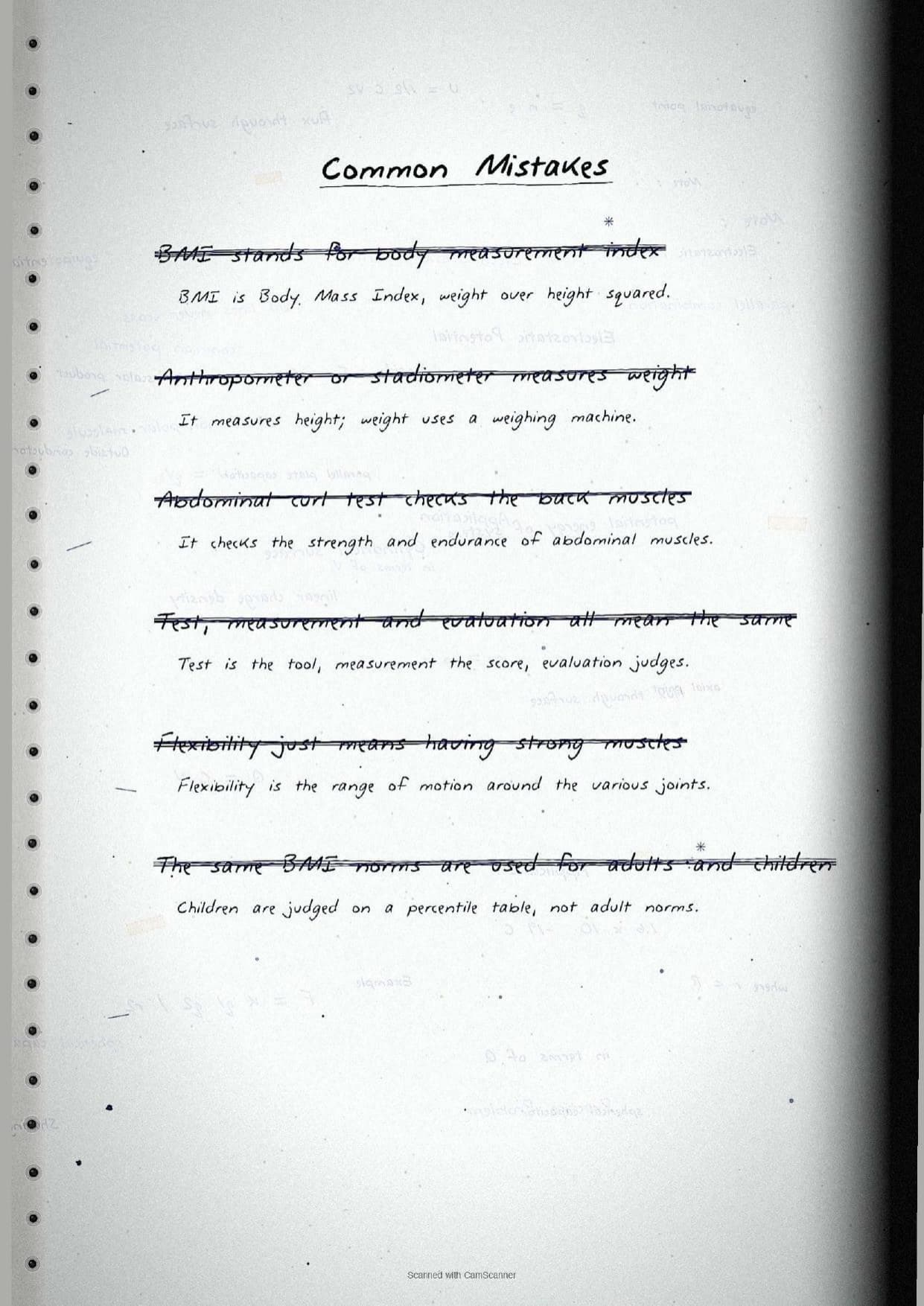
- Flipping the BMI formula. It is always weight in kilograms divided by height in metres squared, not the other way round.
- Mixing up the tests. Push-up is for the upper body, squat thrust for the lower body, and abdominal curl for the abdominal muscles.
- Confusing measurement with evaluation. Measurement is the score; evaluation is the judgement made from that score.
- Saying the anthropometer or stadiometer measures weight. It measures height; a weighing machine measures weight.
- Naming only two somato types. The exam needs all three: endomorph, mesomorph and ectomorph.
Students who fix these five points usually move from average to high marks. The handwritten notes box the BMI formula and list the three body types in full, so the soft points are hard to miss when you revise.
How These Handwritten Notes Pair with the Notes and Book PDF
These handwritten notes are a fast revision tool. To prepare fully, students should use them alongside the other resources for the same chapter, both linked in the table below. Read the printed Notes, then use these pages for a final recall.
| Resource | Best used for |
|---|---|
| Measurement and Evaluation Class 11 Notes | Quick chapter summary with all definitions, tests and body measures in one place |
| Measurement and Evaluation NCERT Book PDF | Reading the original NCERT chapter text, tables and figures |
Tip: read the printed Notes first, then keep these handwritten pages for the final night-before flip. Using them for recall, not for the first read, builds memory faster.
All Class 11 Physical Education Handwritten Notes by Chapter
The table links the handwritten notes for every chapter in Class 11 Physical Education, so students can move across the course in one click. Measurement and Evaluation is highlighted.
| Chapter | Handwritten Notes |
|---|---|
| Chapter 9 | Measurement and Evaluation |
| Chapter 1 | Physical Education |
| Chapter 2 | Understanding Health |
| Chapter 3 | Physical and Physiological Aspects of Physical Education and Sports |
| Chapter 4 | Individual Games |
| Chapter 5 | Team Games |
| Chapter 6 | Yoga and its Relevance in the Modern Times |
| Chapter 7 | Safety and Security |
| Chapter 8 | Health Related Physical Fitness |
| Chapter 10 | Tournaments and Competitions |
| Chapter 11 | Adventure Sports |
FAQs on Measurement and Evaluation Handwritten Notes
Measurement and Evaluation Class 11 Physical Education Handwritten Notes Common Questions
Ques. Where can I download the Measurement and Evaluation handwritten notes PDF?
Ans. You can download the Measurement and Evaluation Class 11 Physical Education handwritten notes PDF directly from this page. It is free, follows the 2026-27 NCERT, and presents the definitions of test, measurement and evaluation along with the fitness tests, BMI, WHR and somato types as handwritten pages.
Ques. Are handwritten notes good for revising Class 11 Physical Education Chapter 9?
Ans. Yes. Handwritten notes are best for fast, last-minute revision because the boxed procedures and norm tables make the fitness tests and body measures easy to skim. Use them after a first read of the printed Notes, not as your only source.
Ques. What is the difference between measurement and evaluation?
Ans. Measurement is the score or data collected using a test, given in numerical or grading values. Evaluation is the process of interpreting that collected data to make a professional judgement of value or worth. Measurement gives the number, evaluation gives the meaning.
Ques. Which fitness tests are covered in these handwritten notes?
Ans. They cover the push-up, abdominal curl and squat thrust tests for muscular strength, the 1000 metre run or walk test for muscular endurance, the sit and reach test for flexibility, plus the Body Mass Index and the waist-to-hip ratio, each with its procedure and scoring rule.
Ques. Who prepared these handwritten notes?
Ans. They are written and proofread by hand by a subject expert with an MPEd and NIS coaching certification, using the official NCERT Health and Physical Education Class 11 textbook and recent CBSE Class 11 question papers.



Comments