



The handwritten notes on Class 12 Fine Arts Chapter 5 The Bengal School and Cultural Nationalism have been carefully prepared for quick one-shot revision, according to the 2026-27 NCERT print of An Introduction to Indian Art Part 2.
- Best for revision: keep Company Painting, Raja Ravi Varma and the Bengal School as three separate stages.
- Artwork focus: revise Journey's End, Tiller of the Soil, Rasa-Lila, Radhika, City in the Night and Woman with Child.
- Exam focus: connect every artist with one style clue, one date and one nationalist idea.
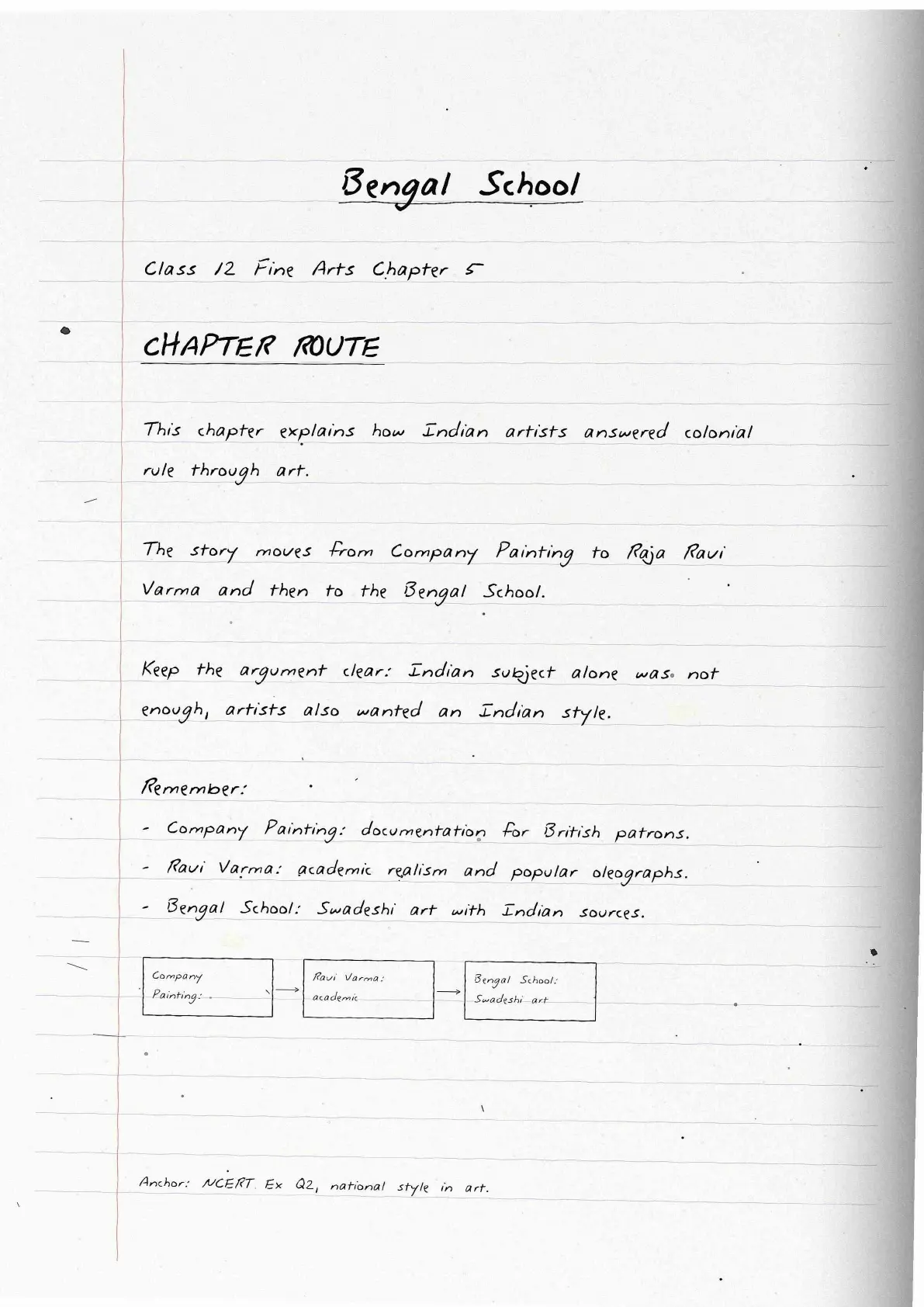
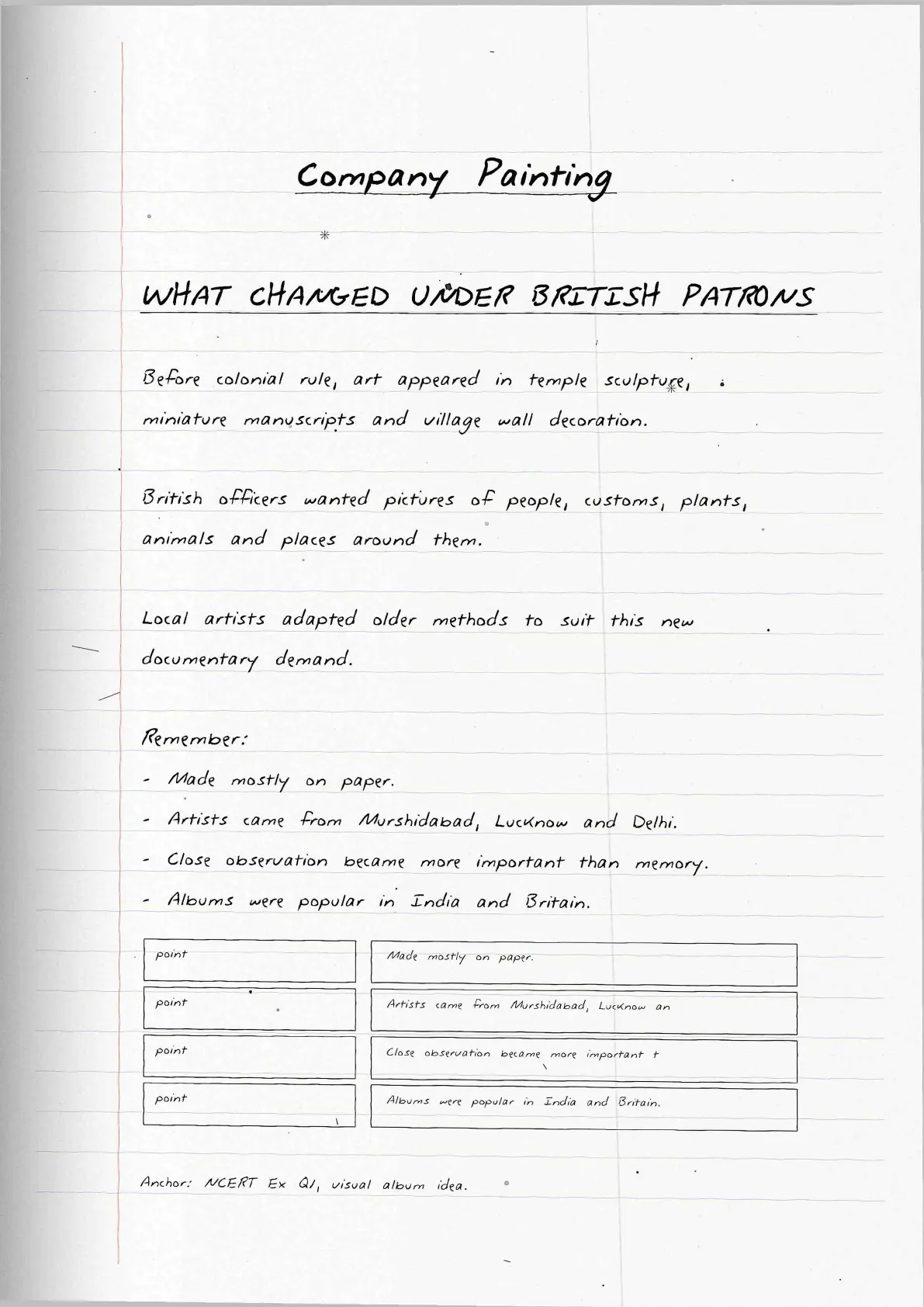
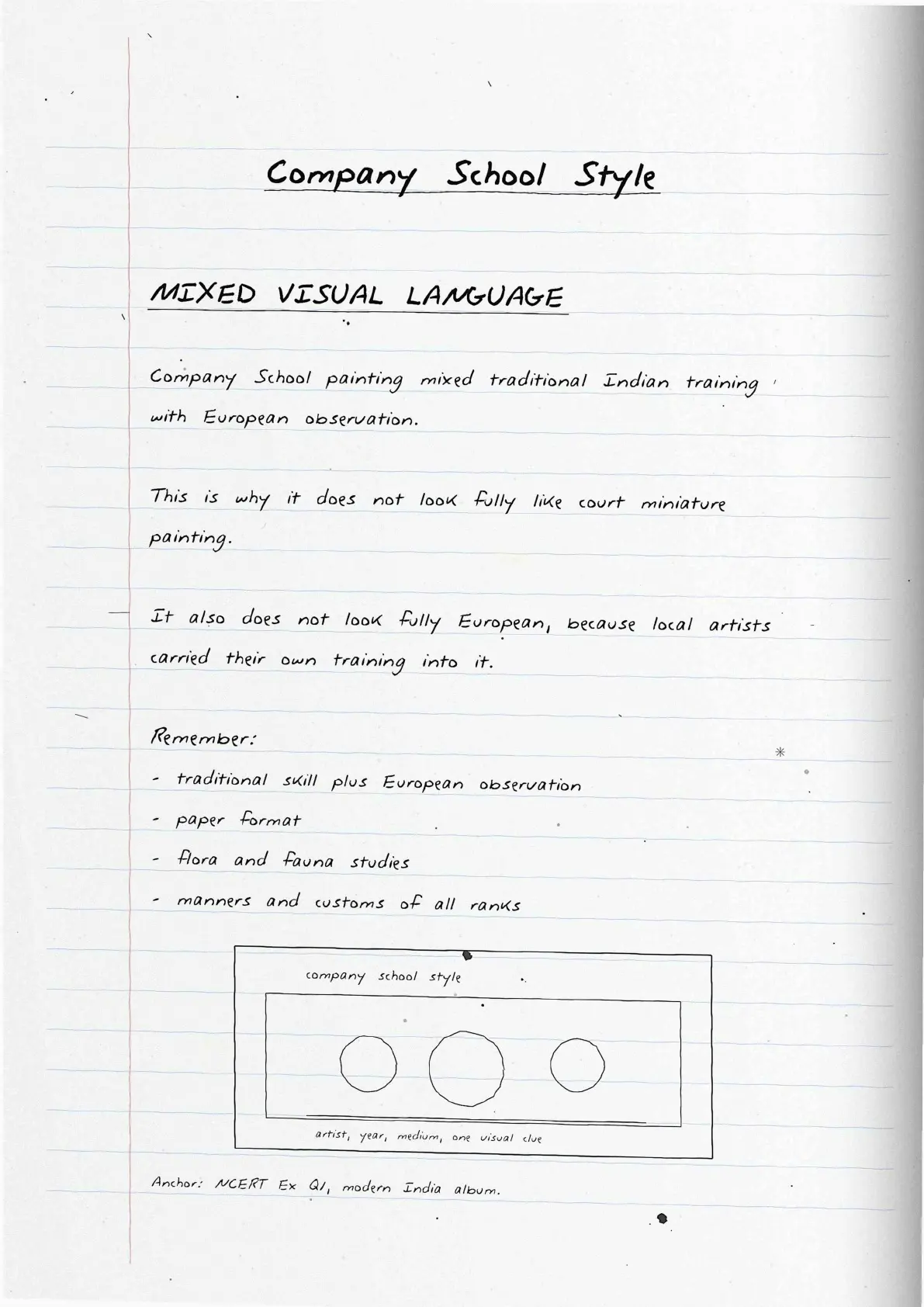
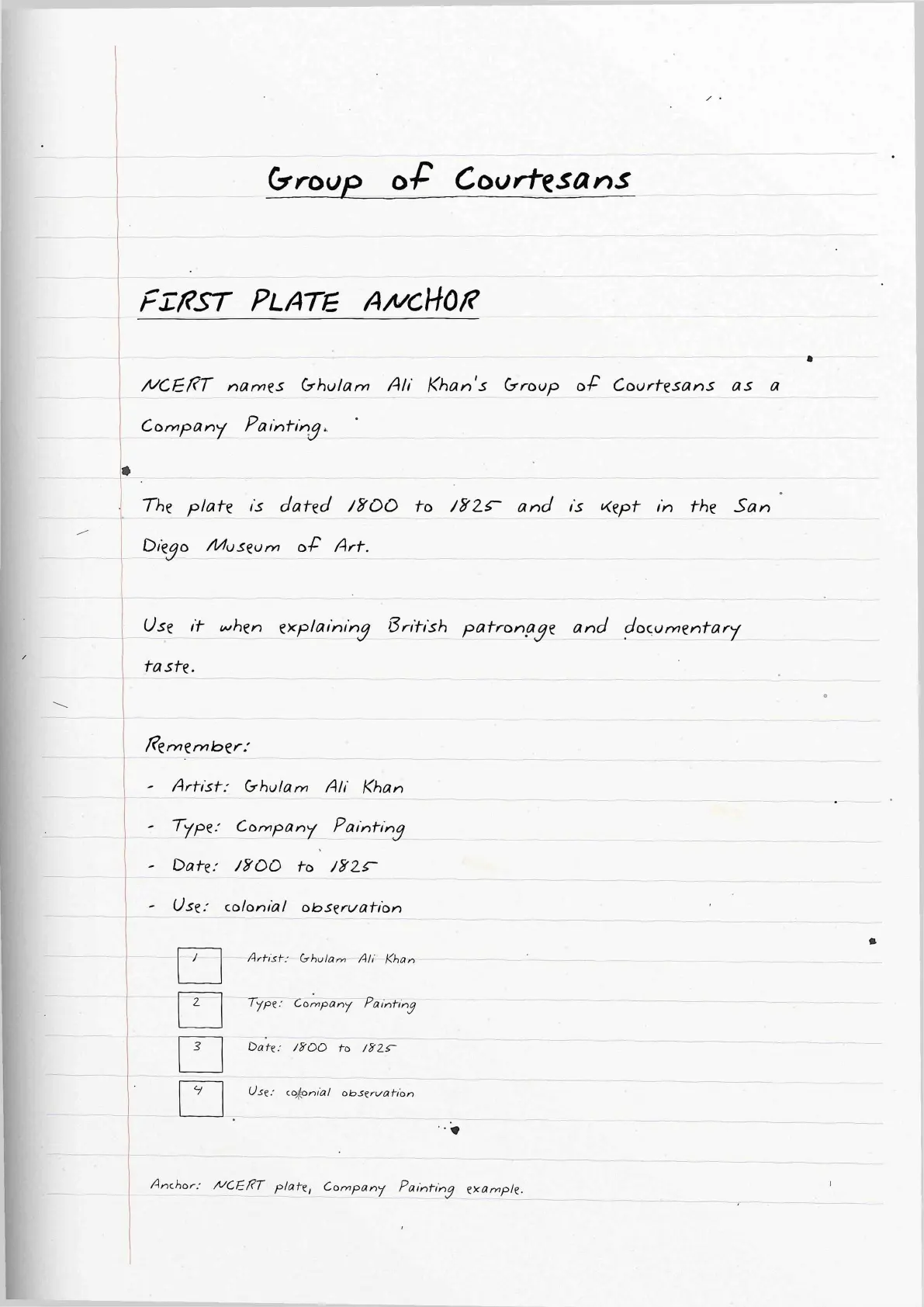
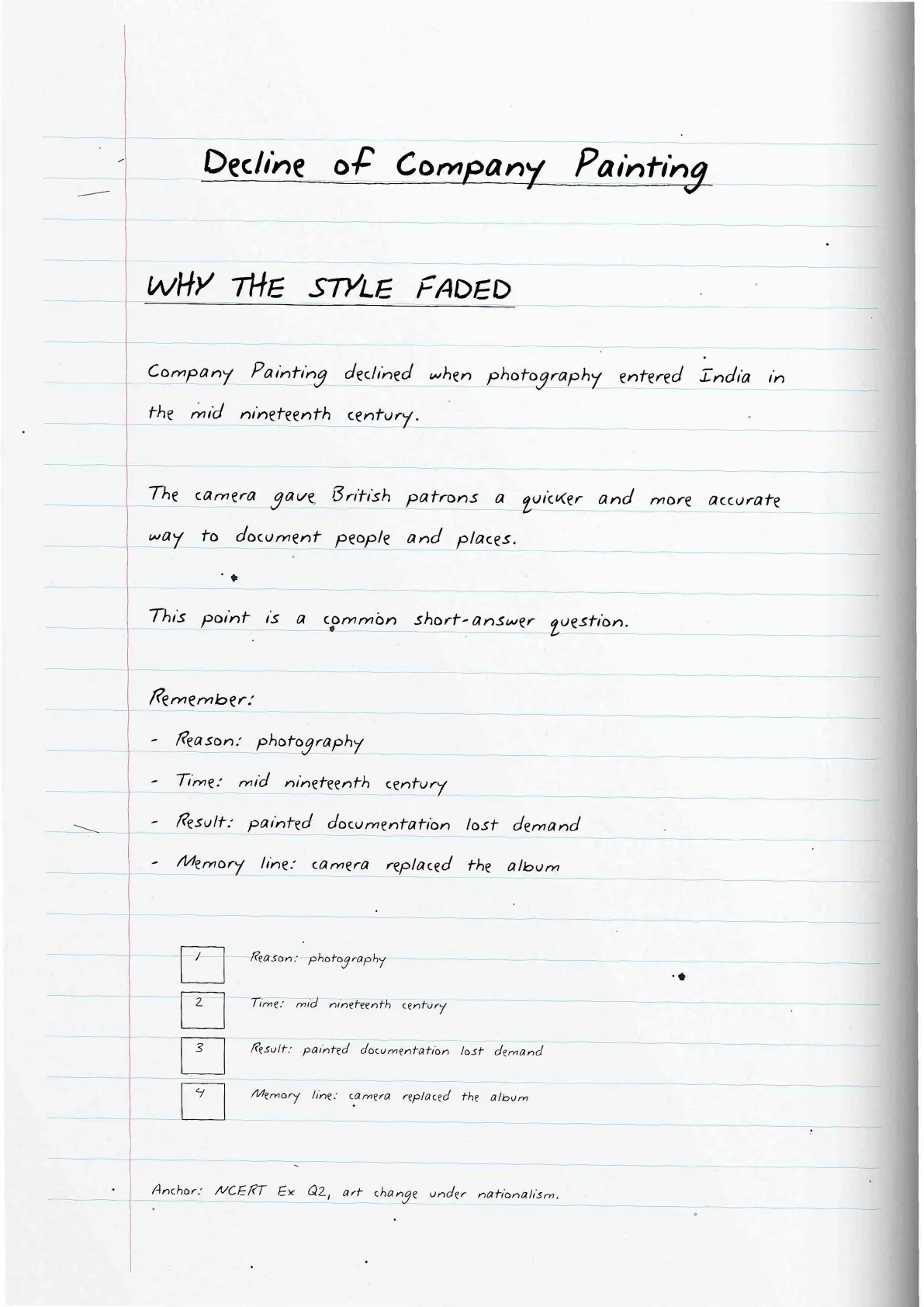
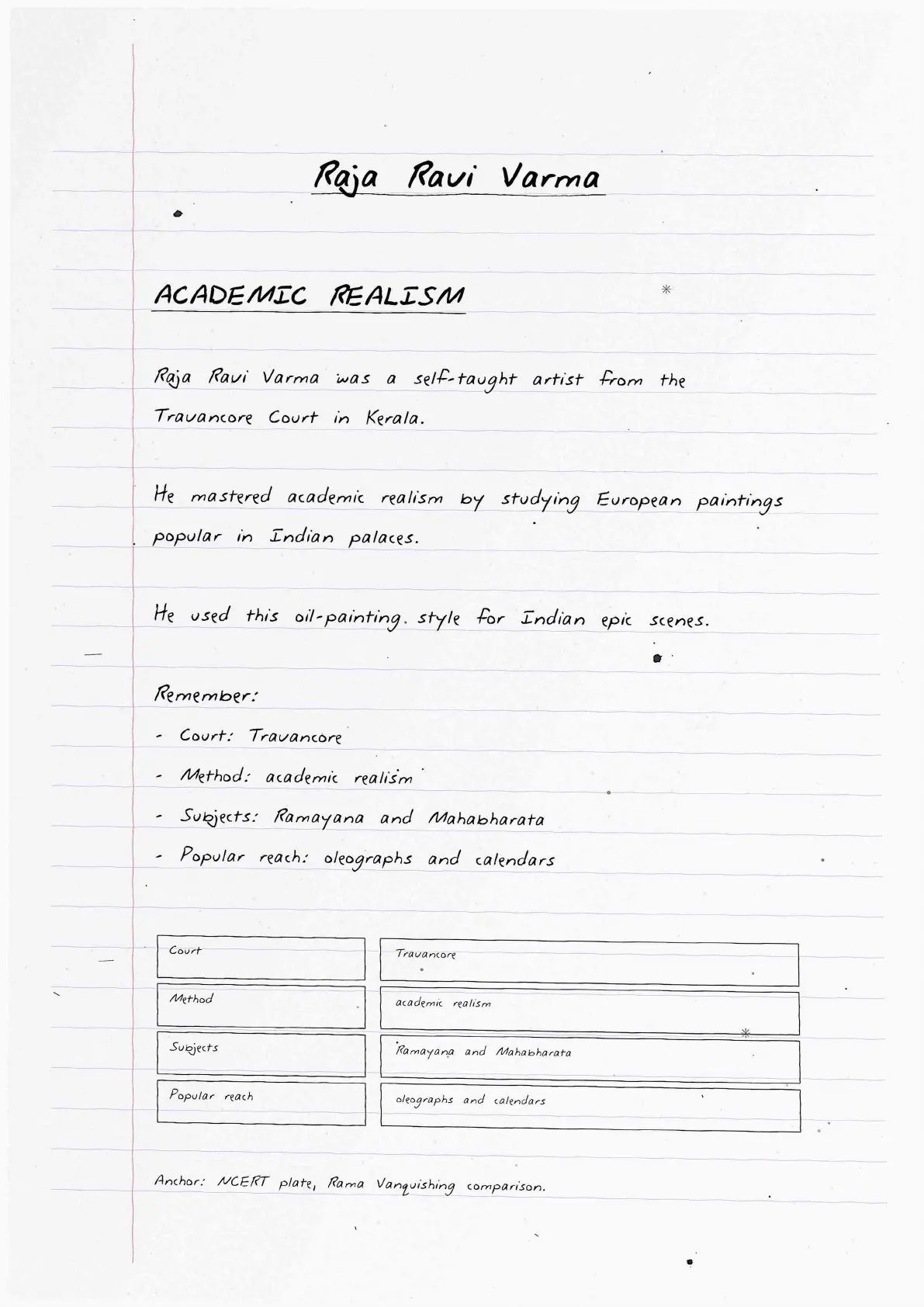
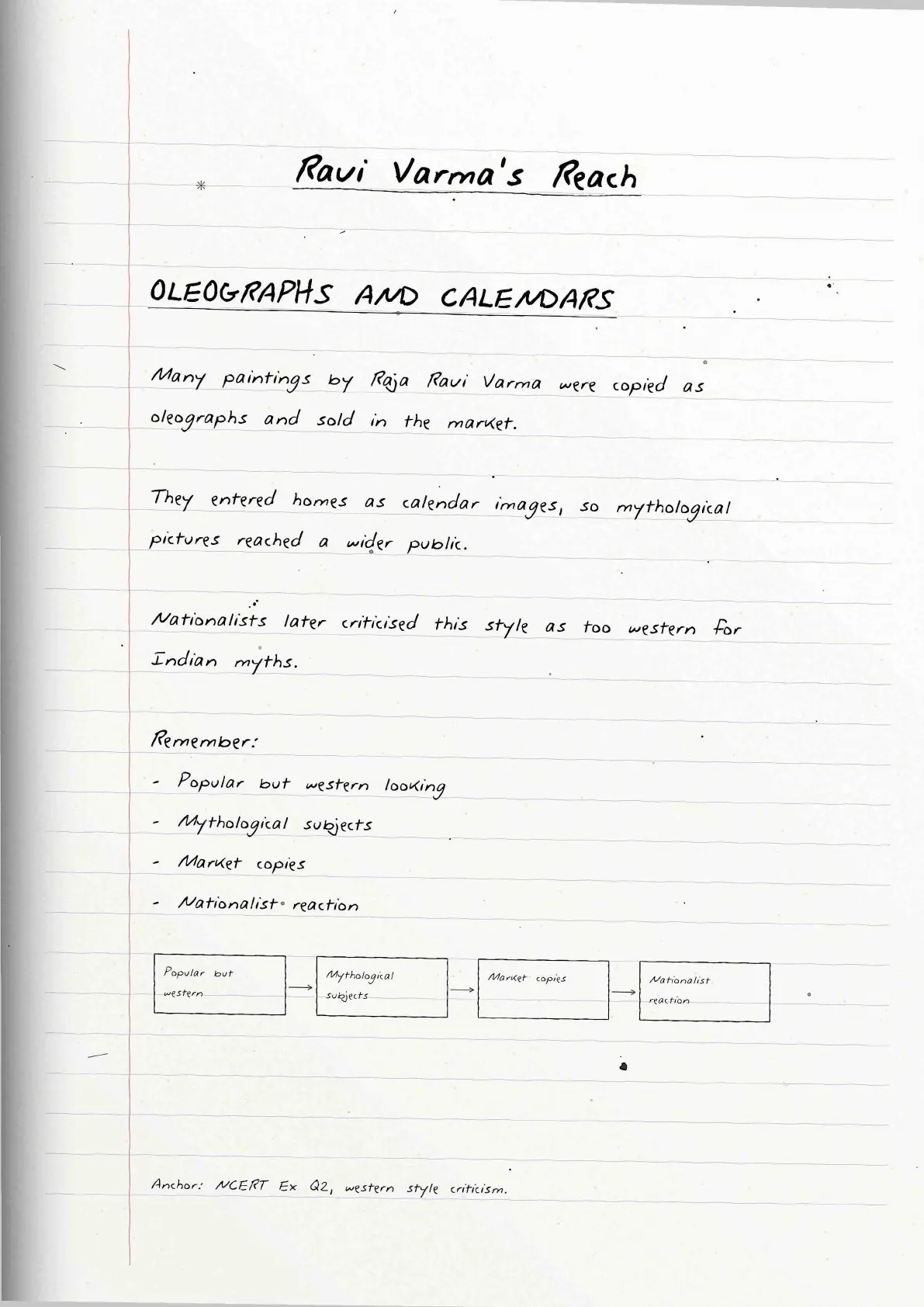
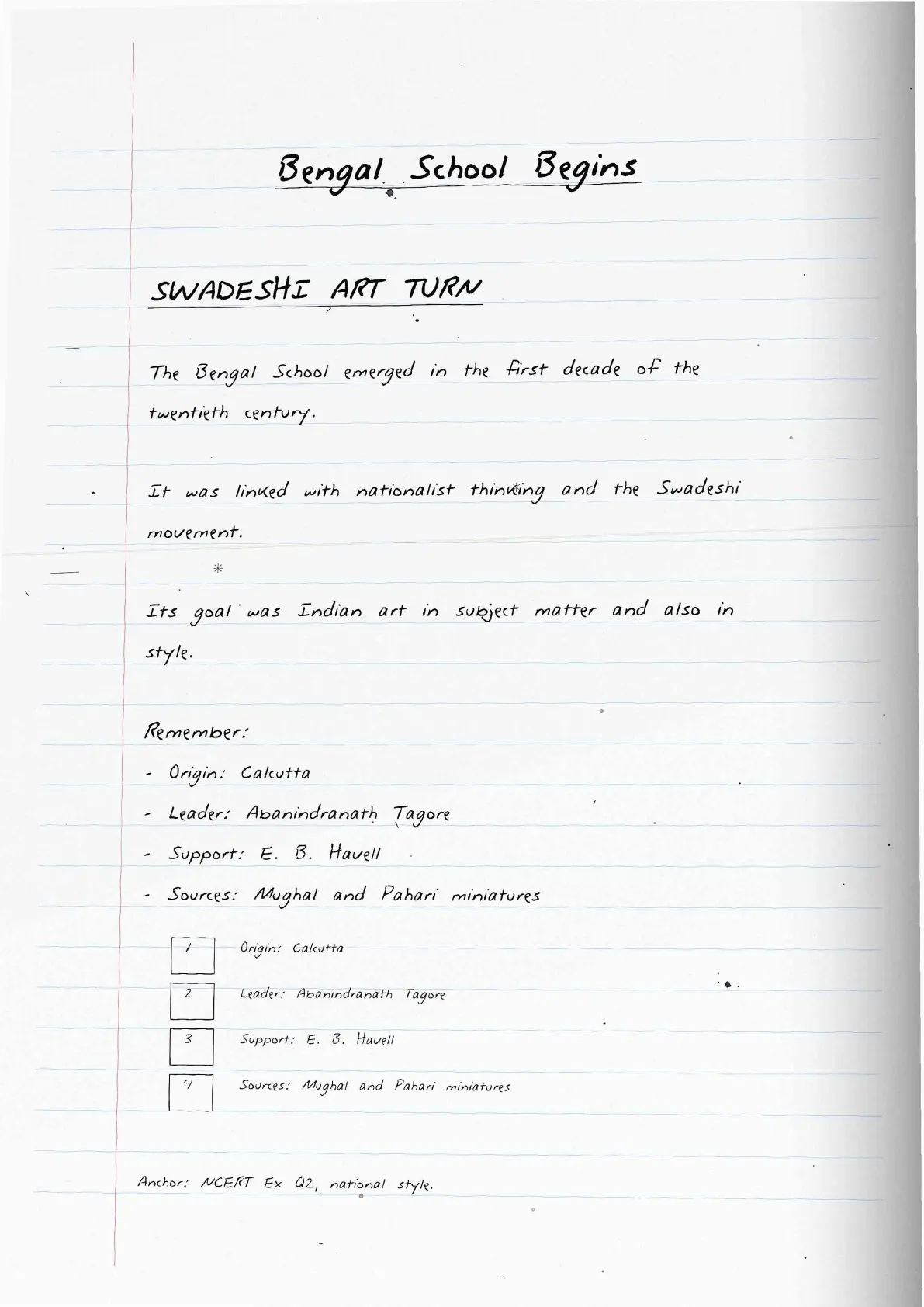
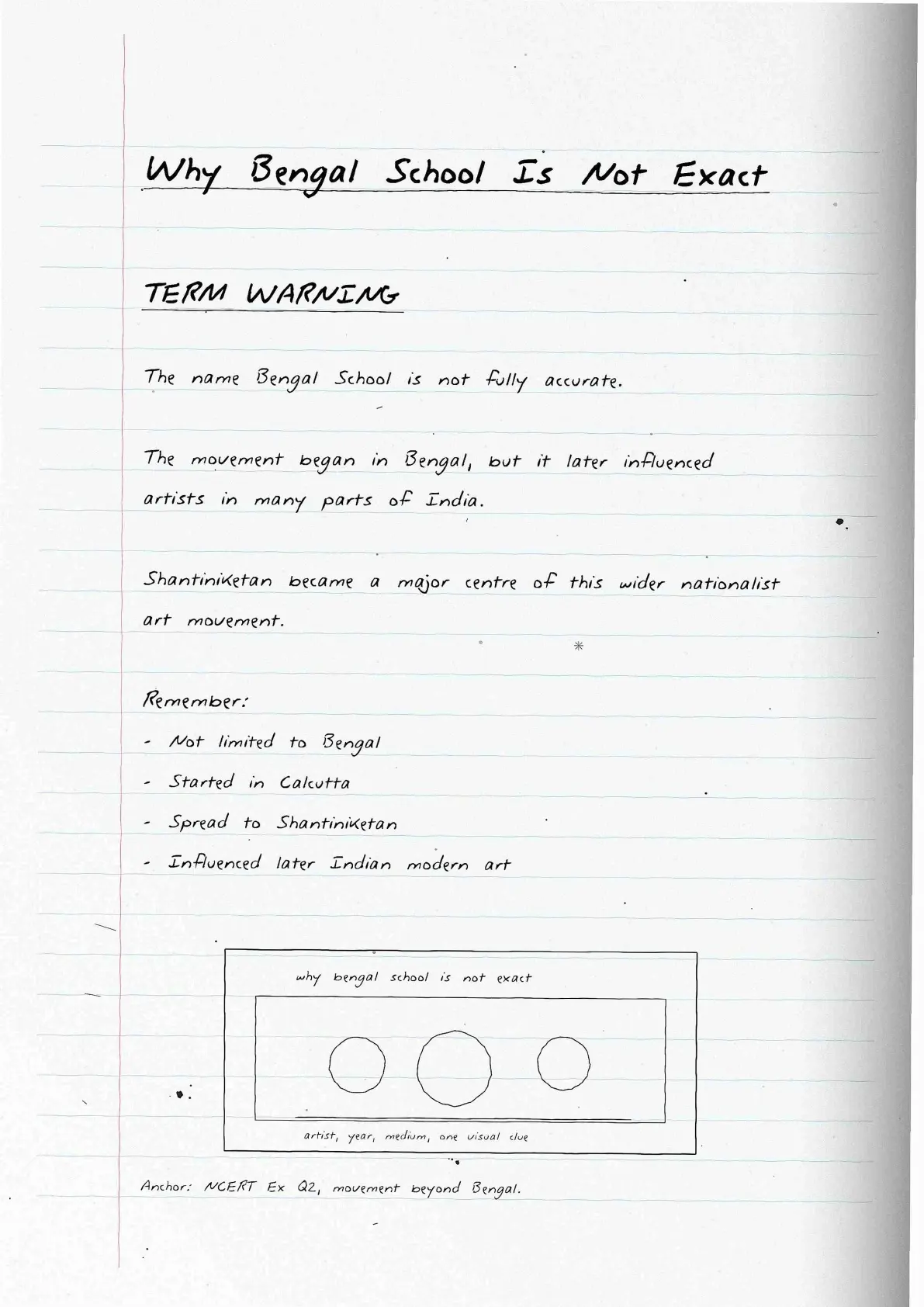
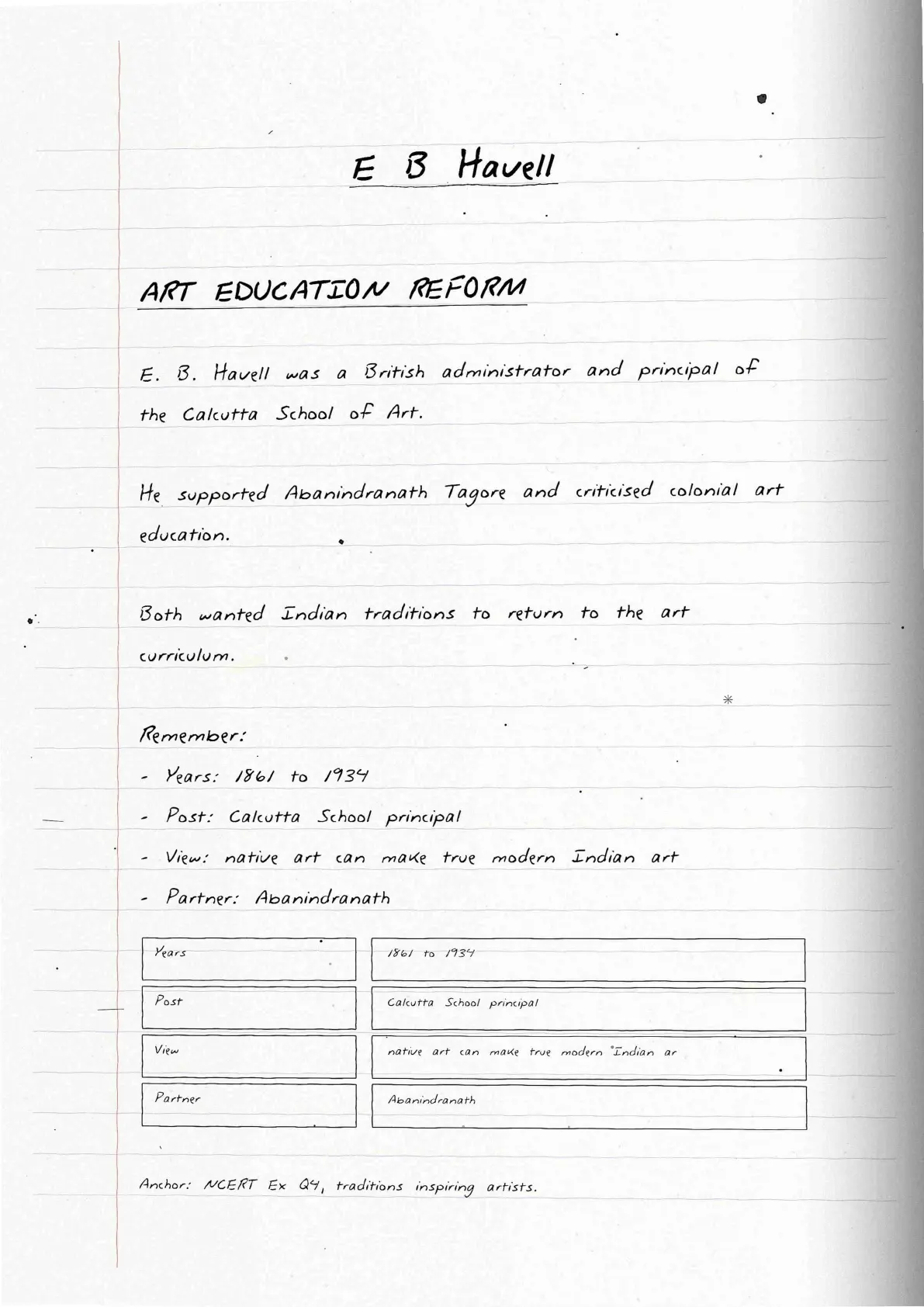
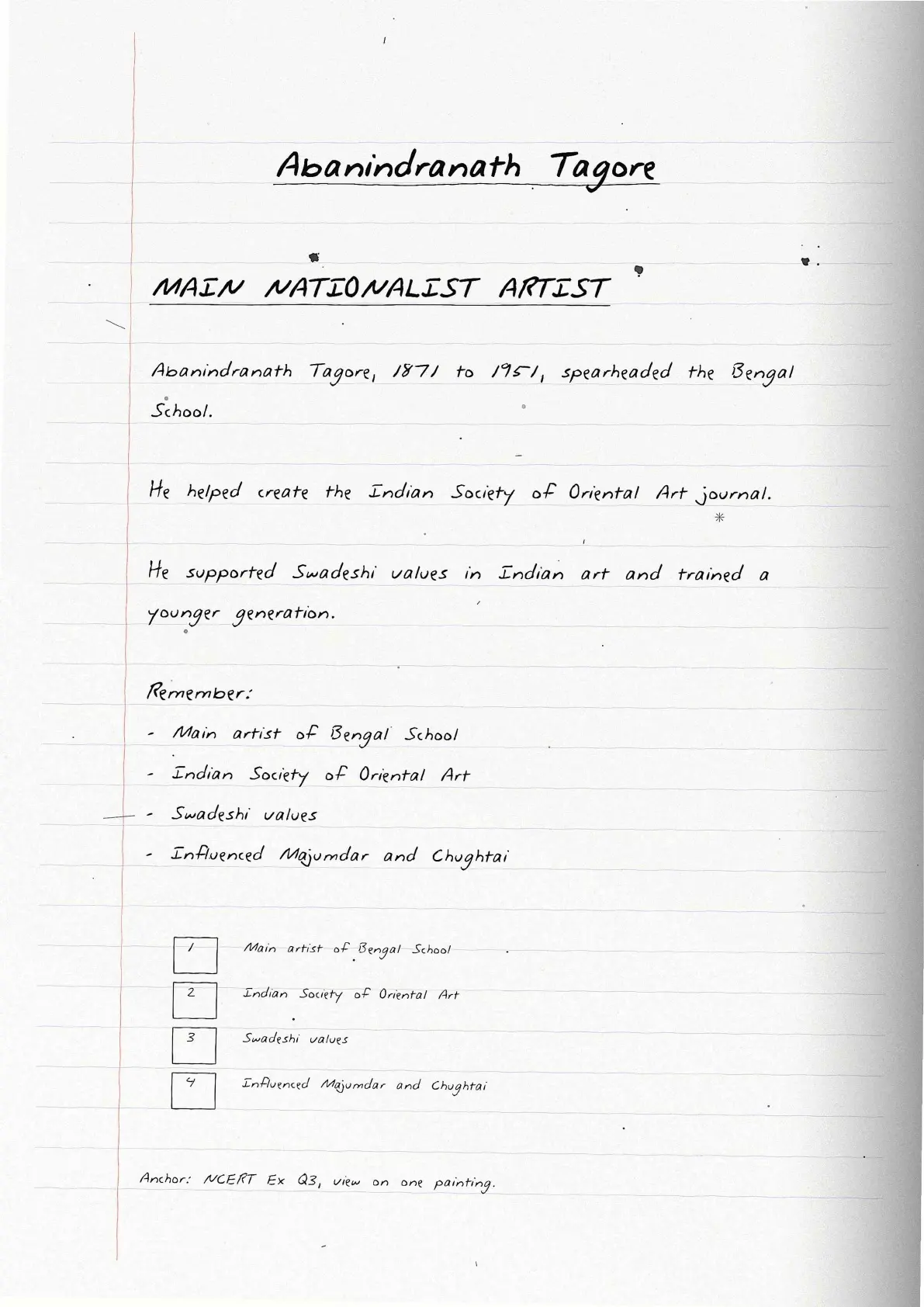
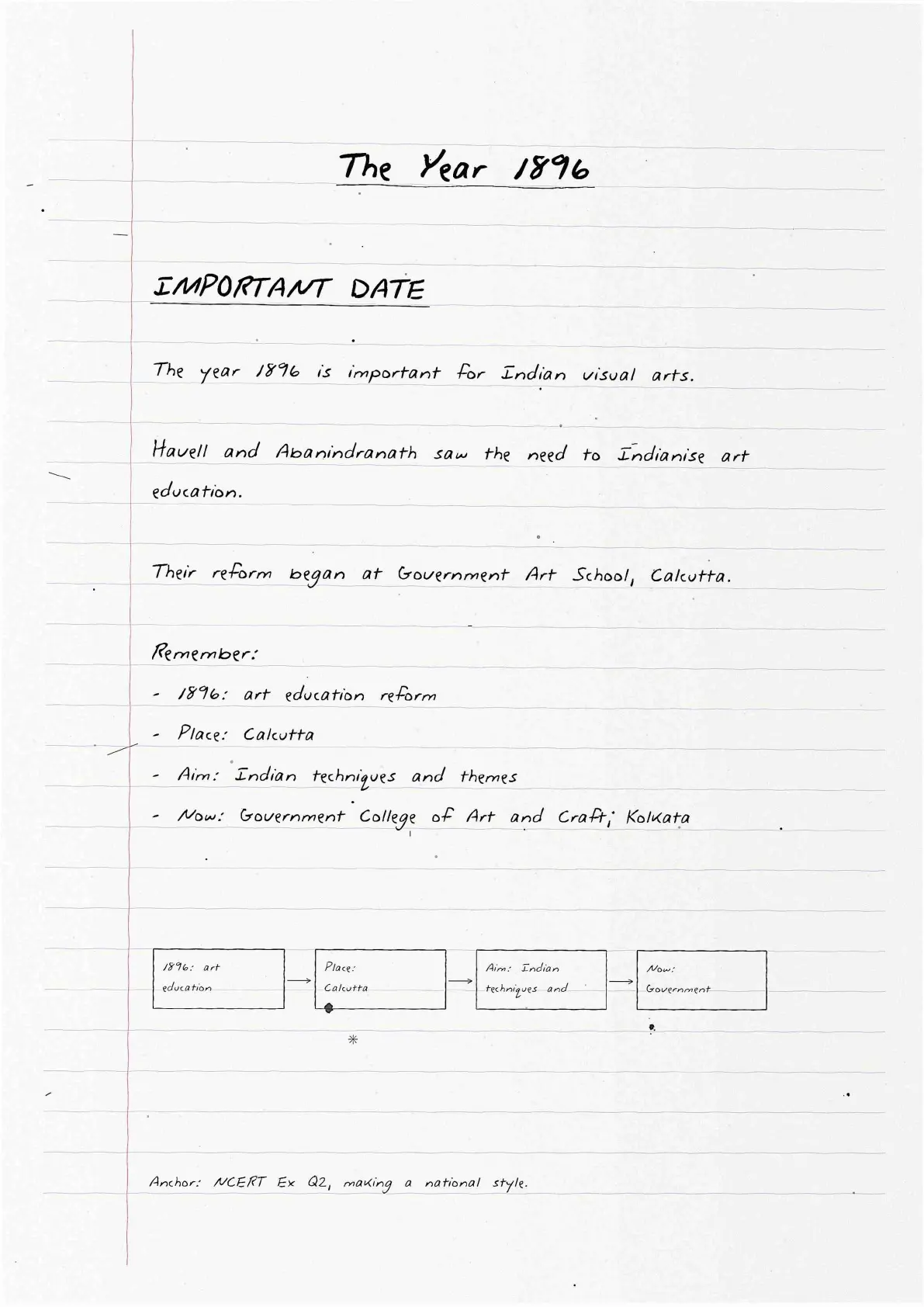
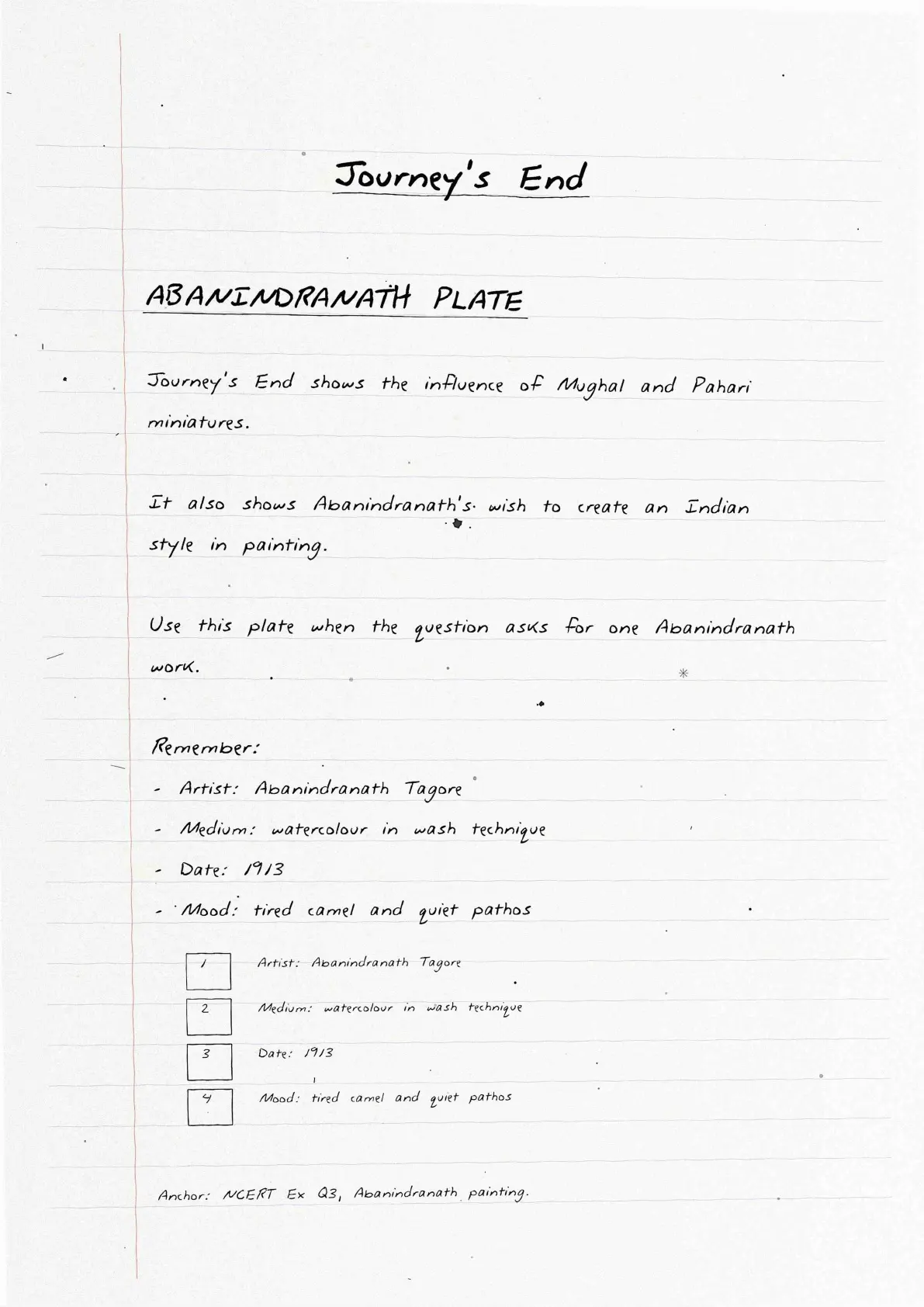
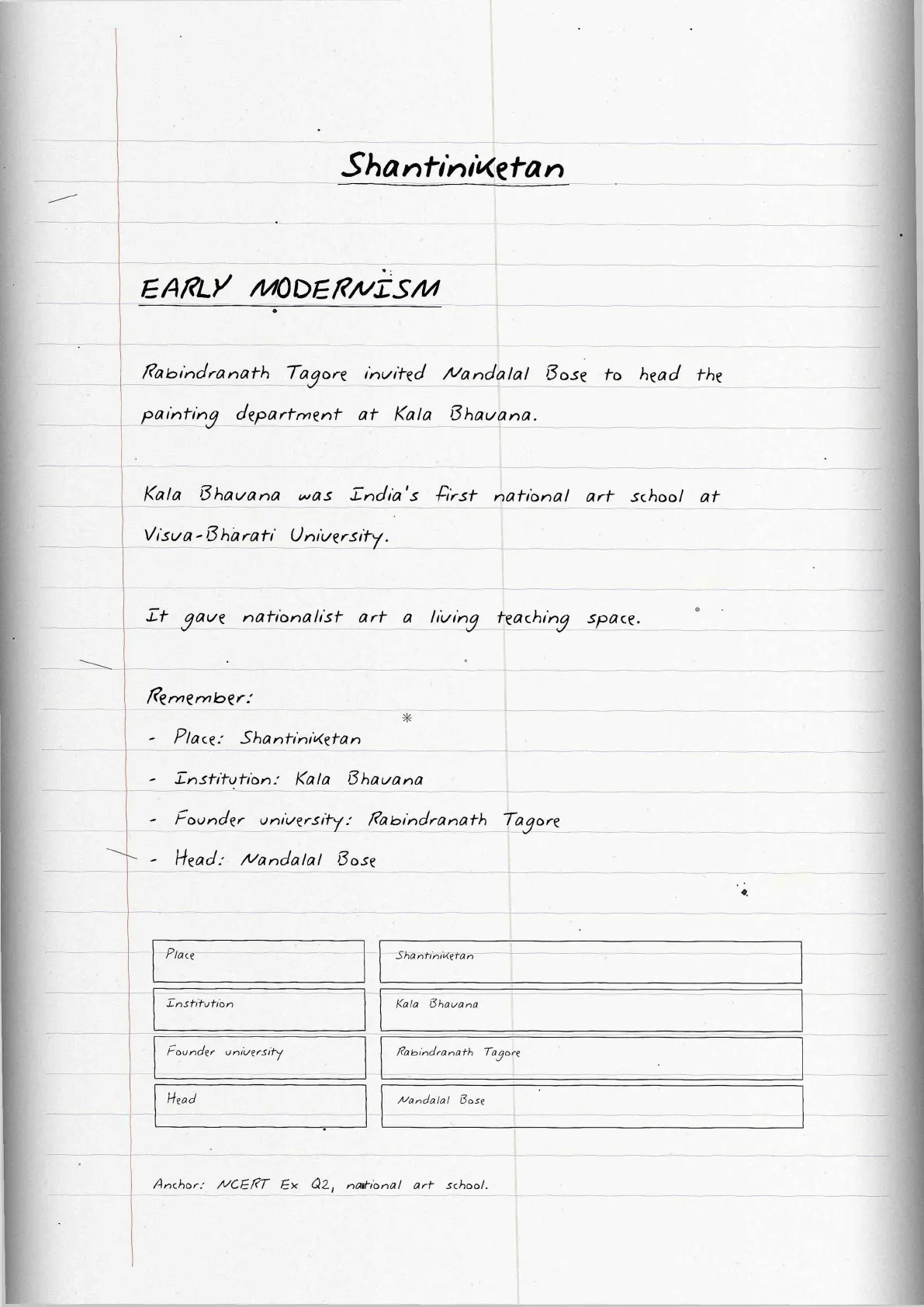
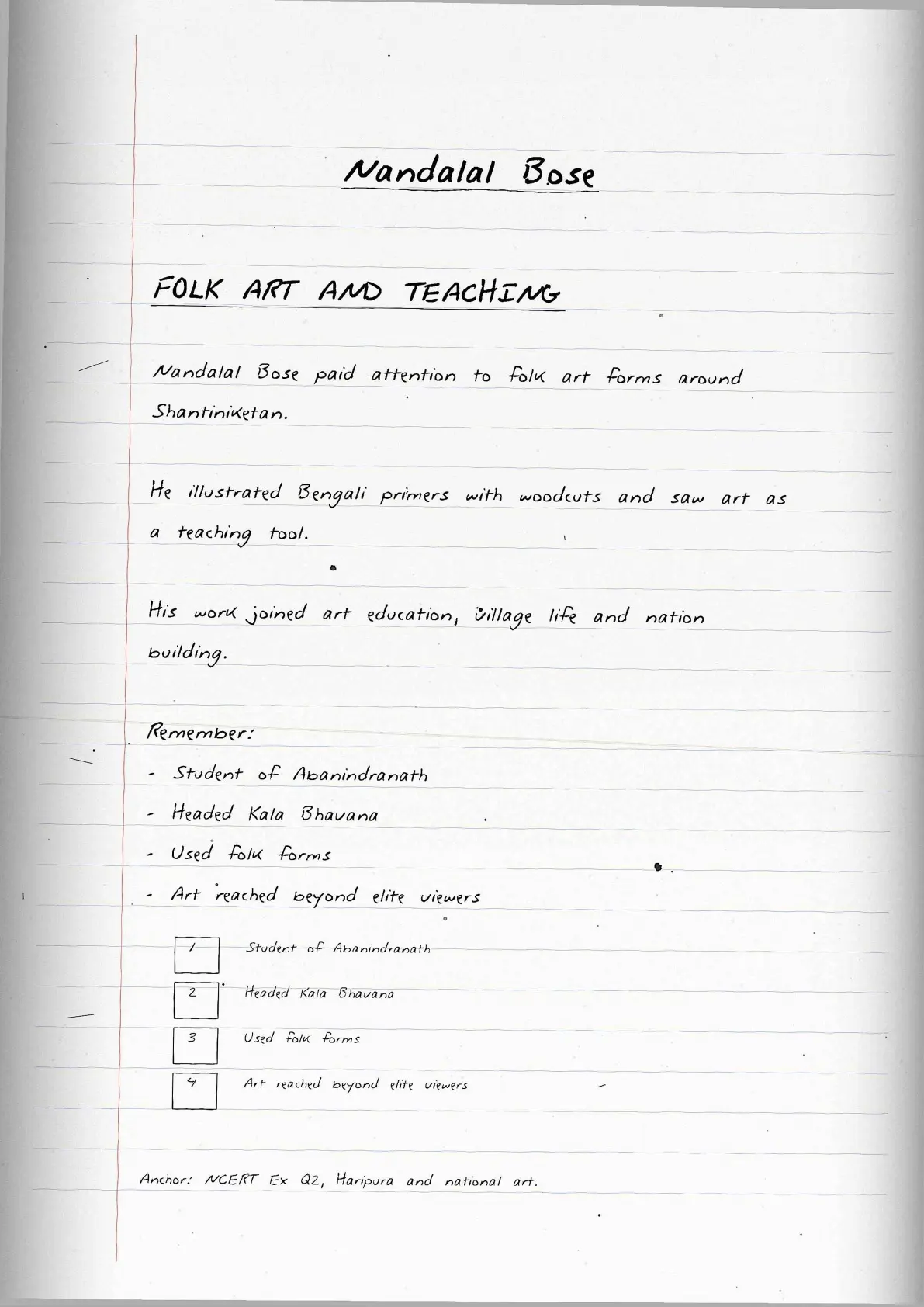
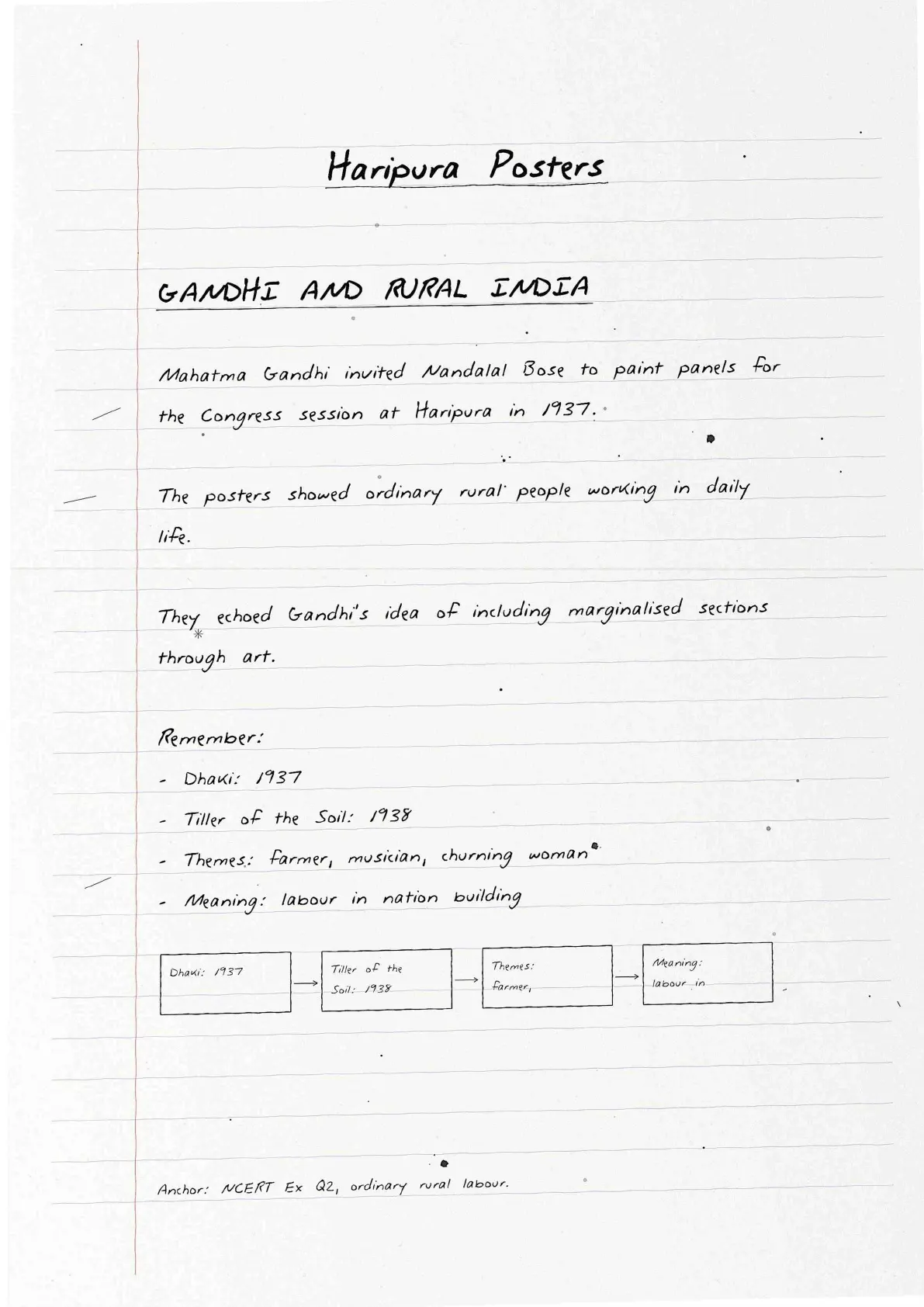
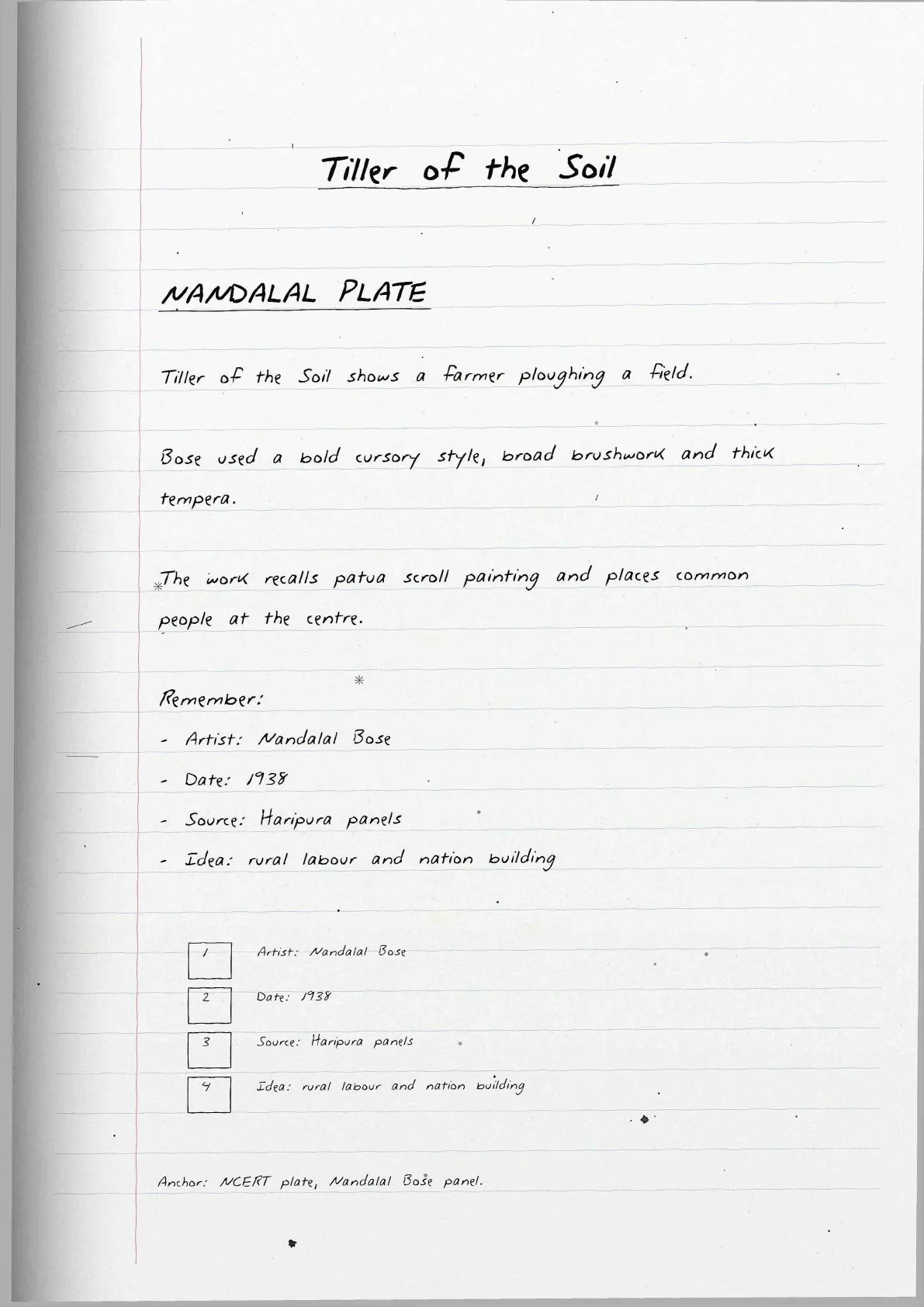
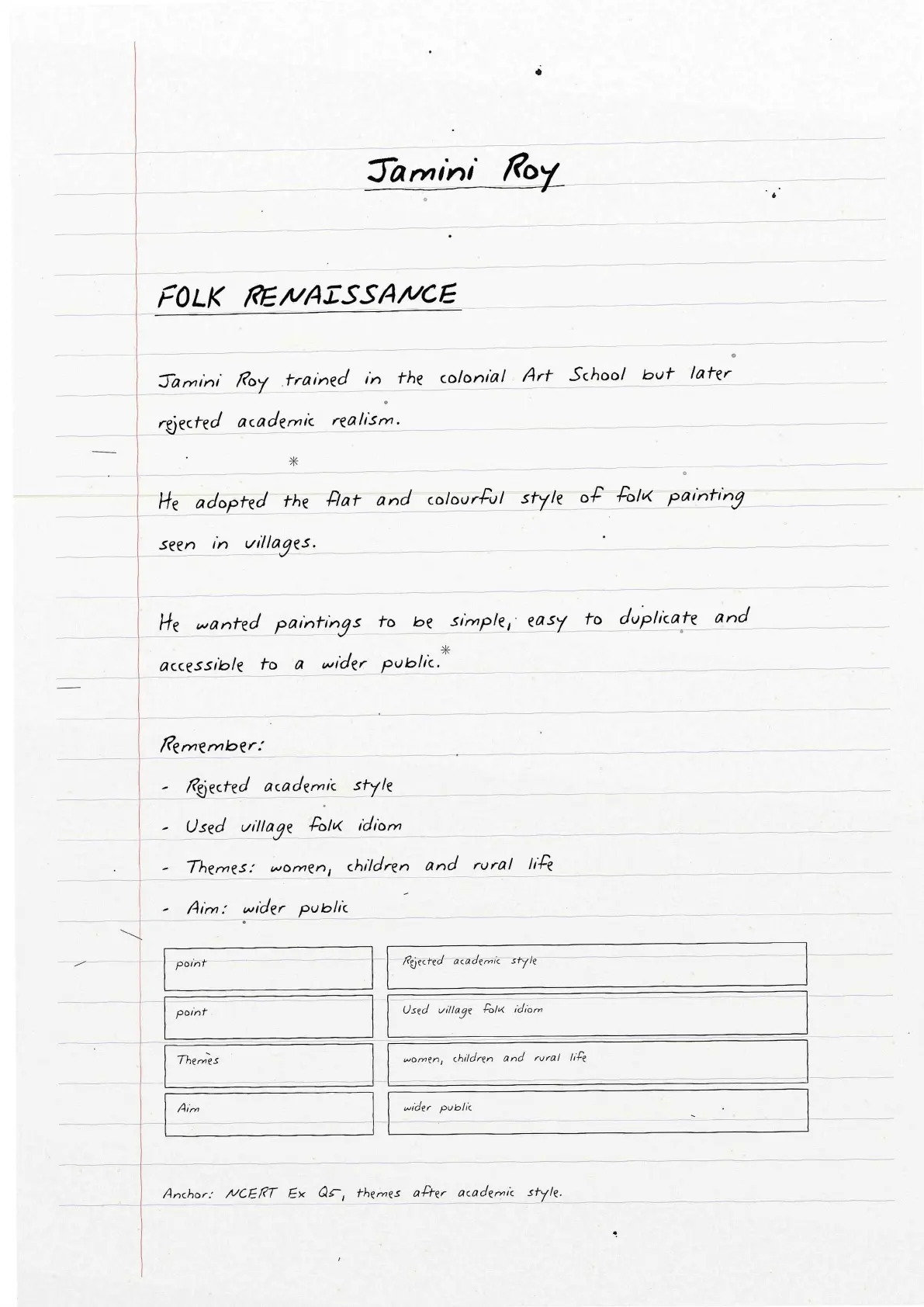
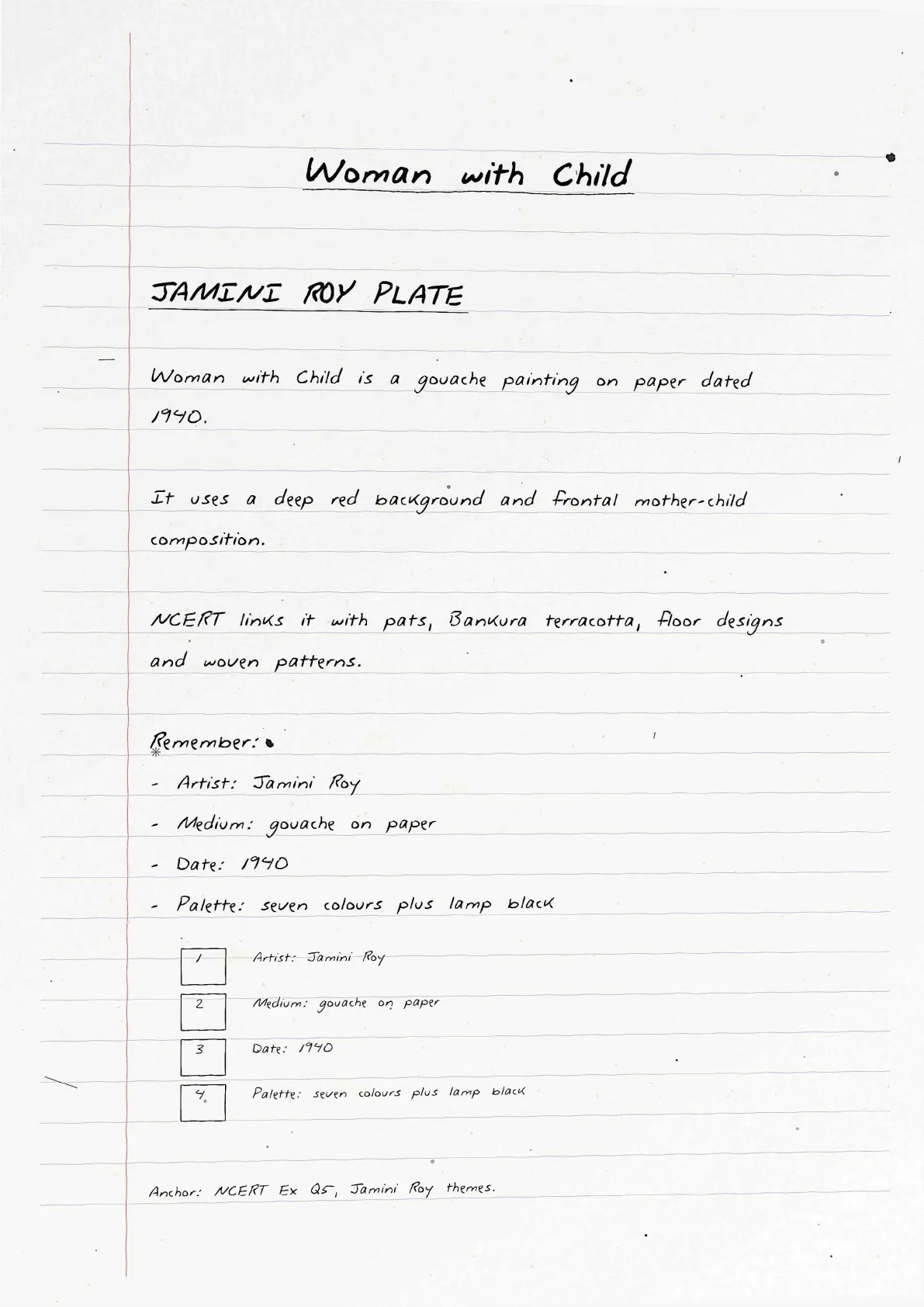
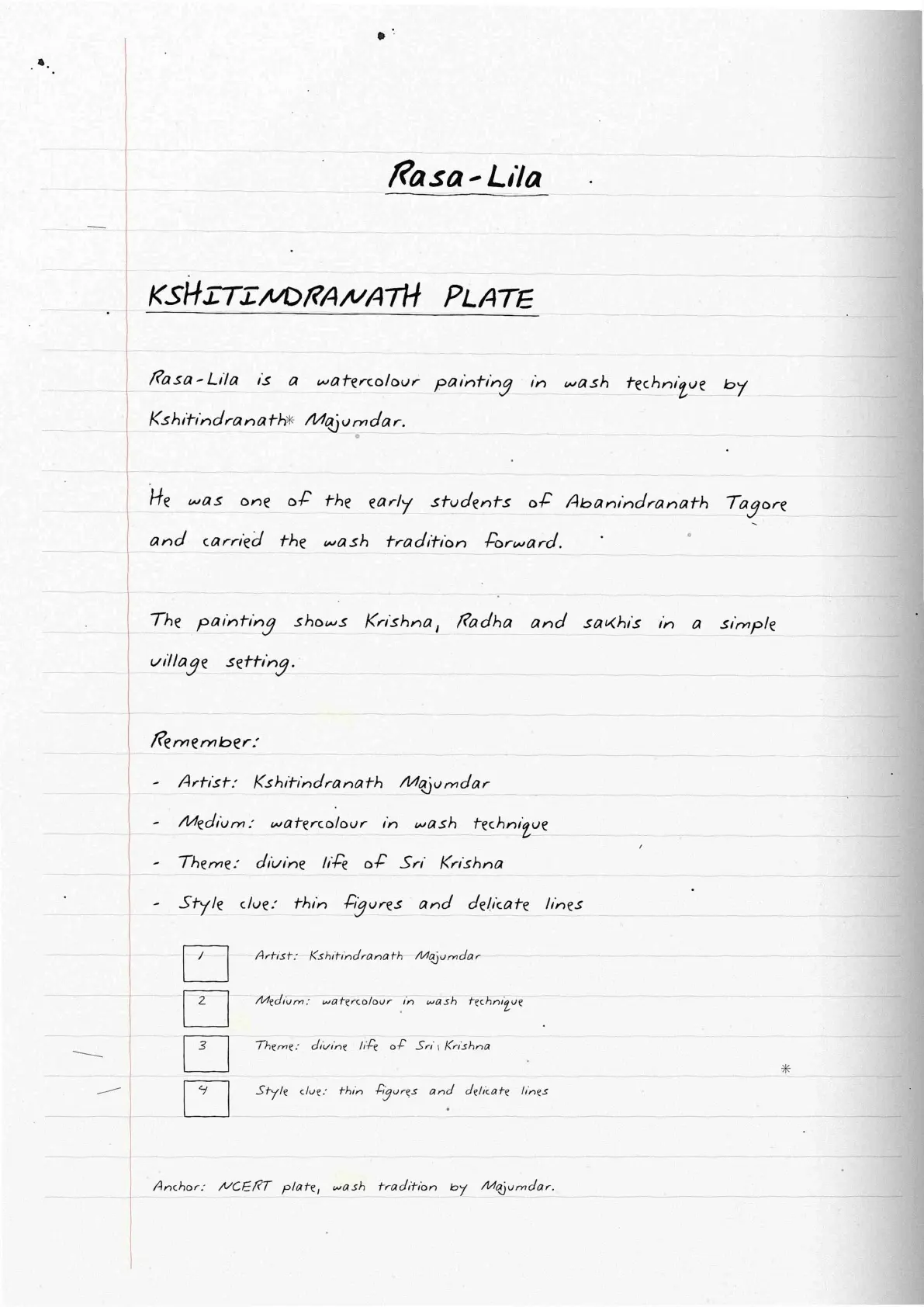
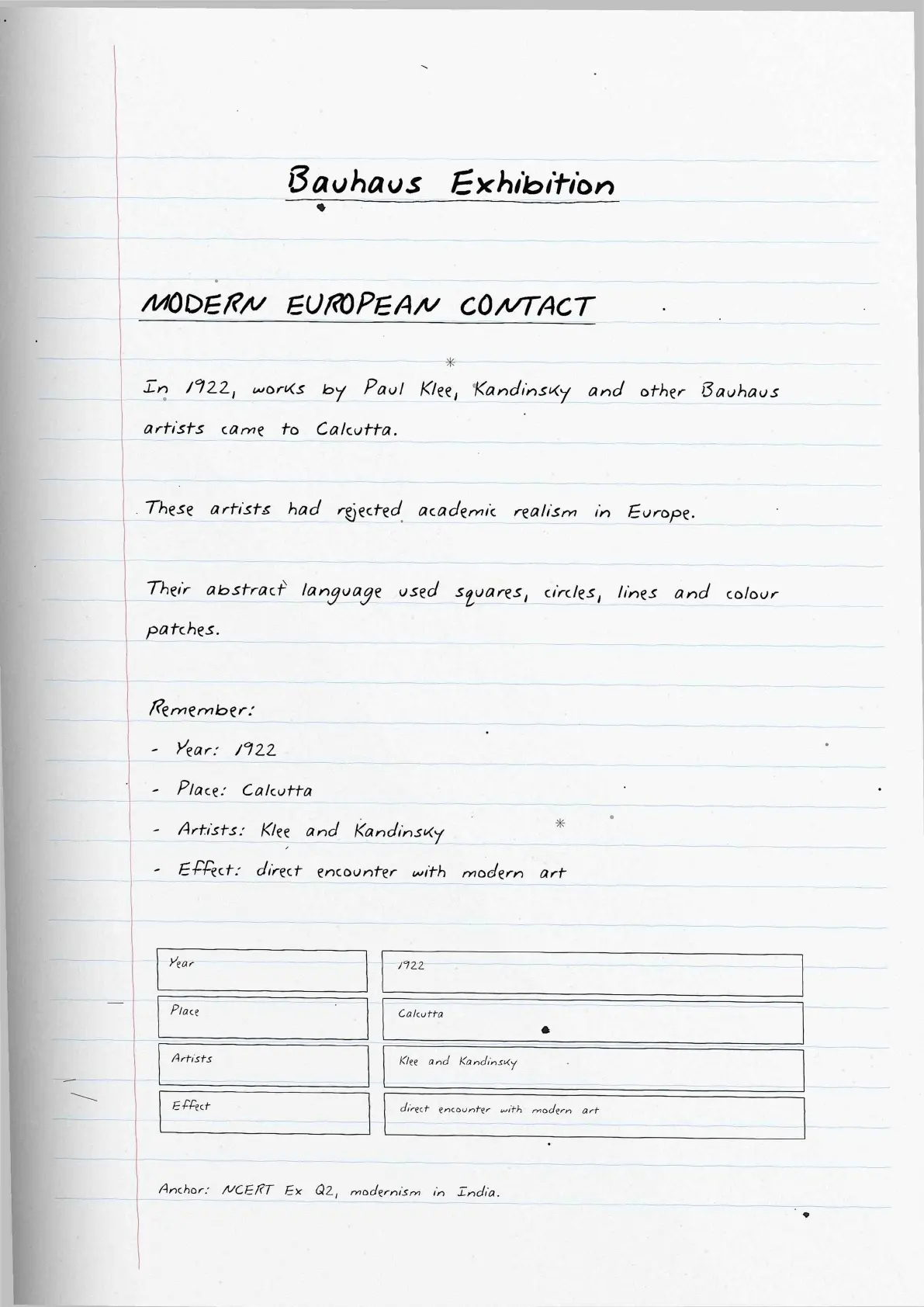
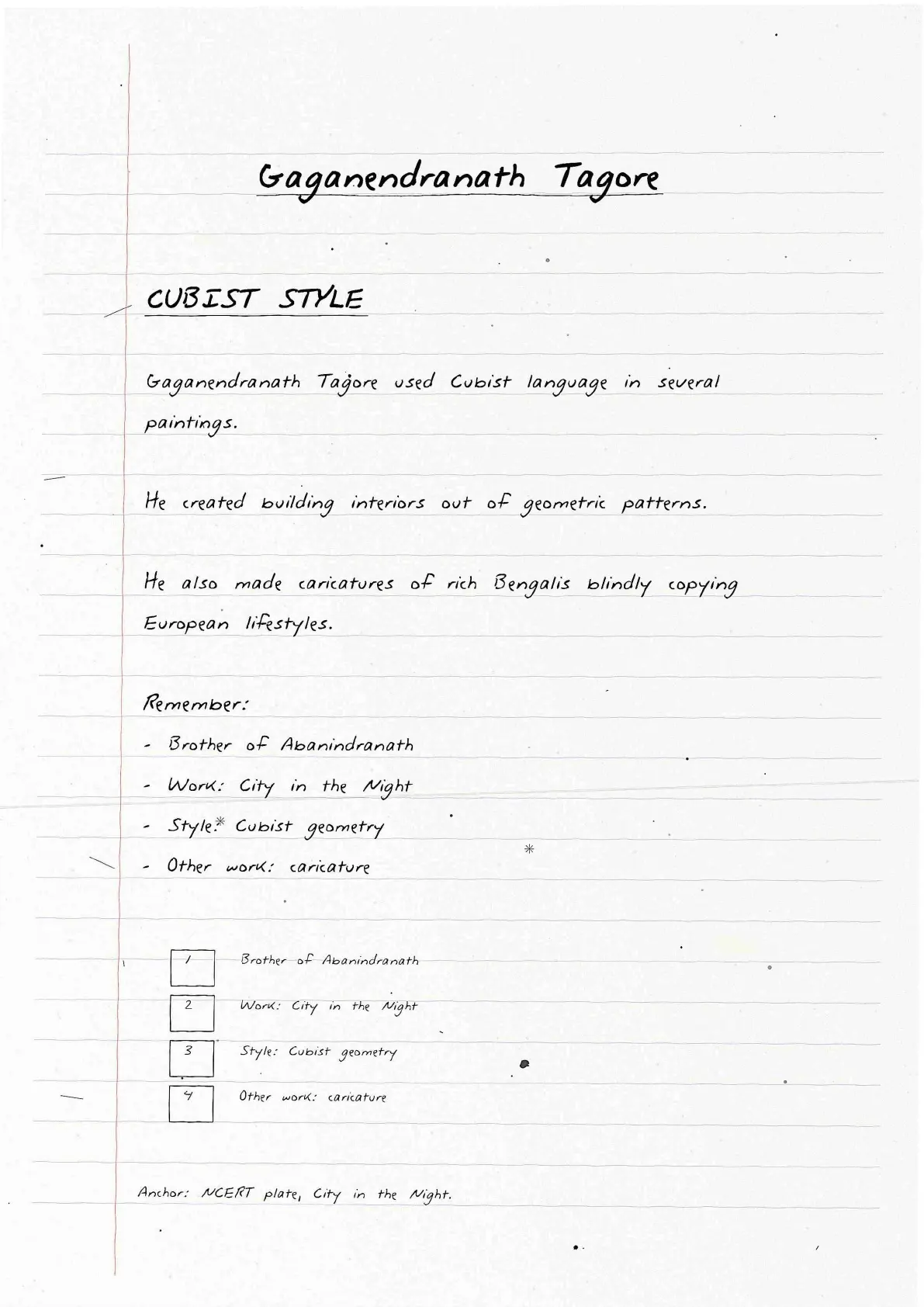
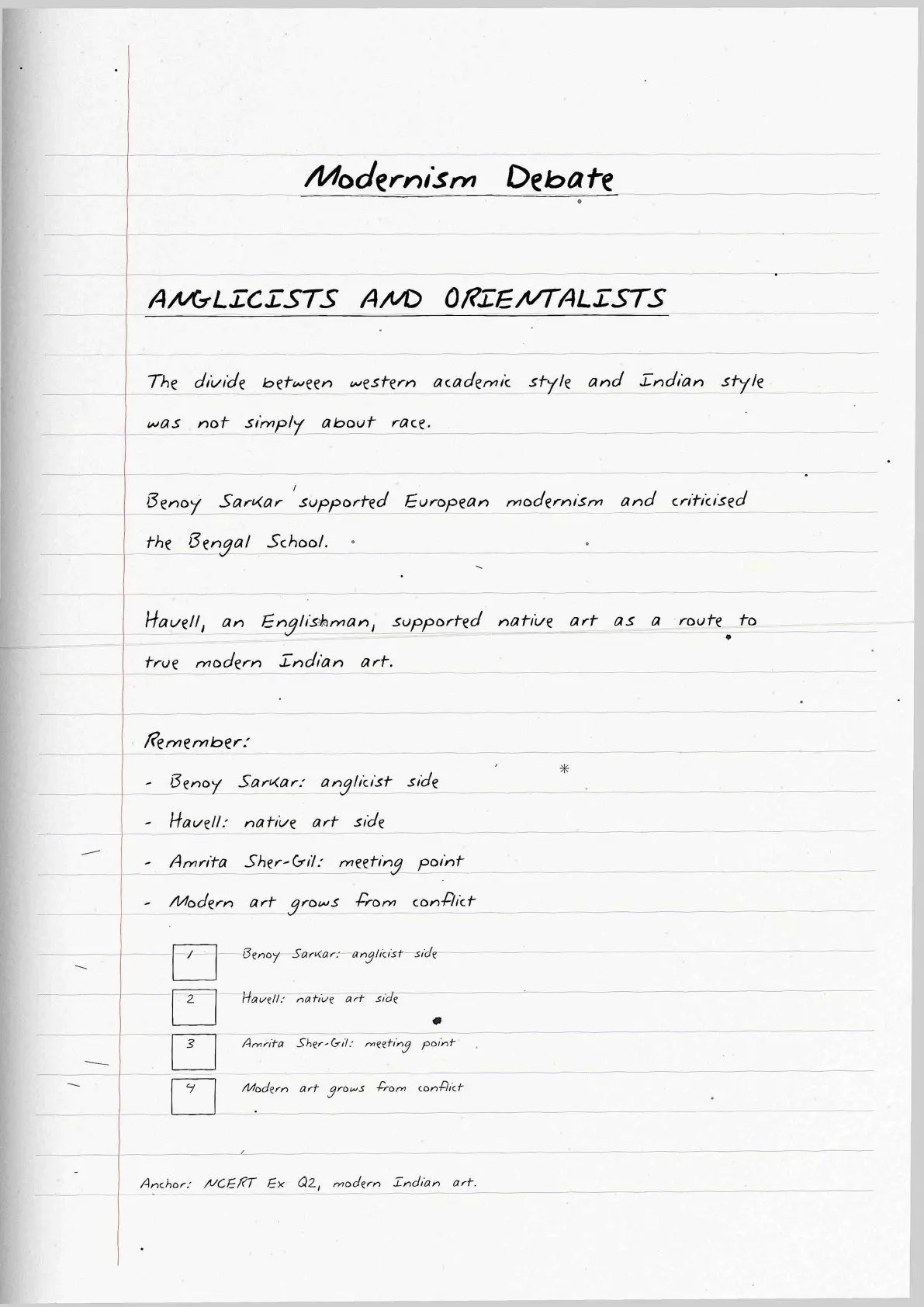
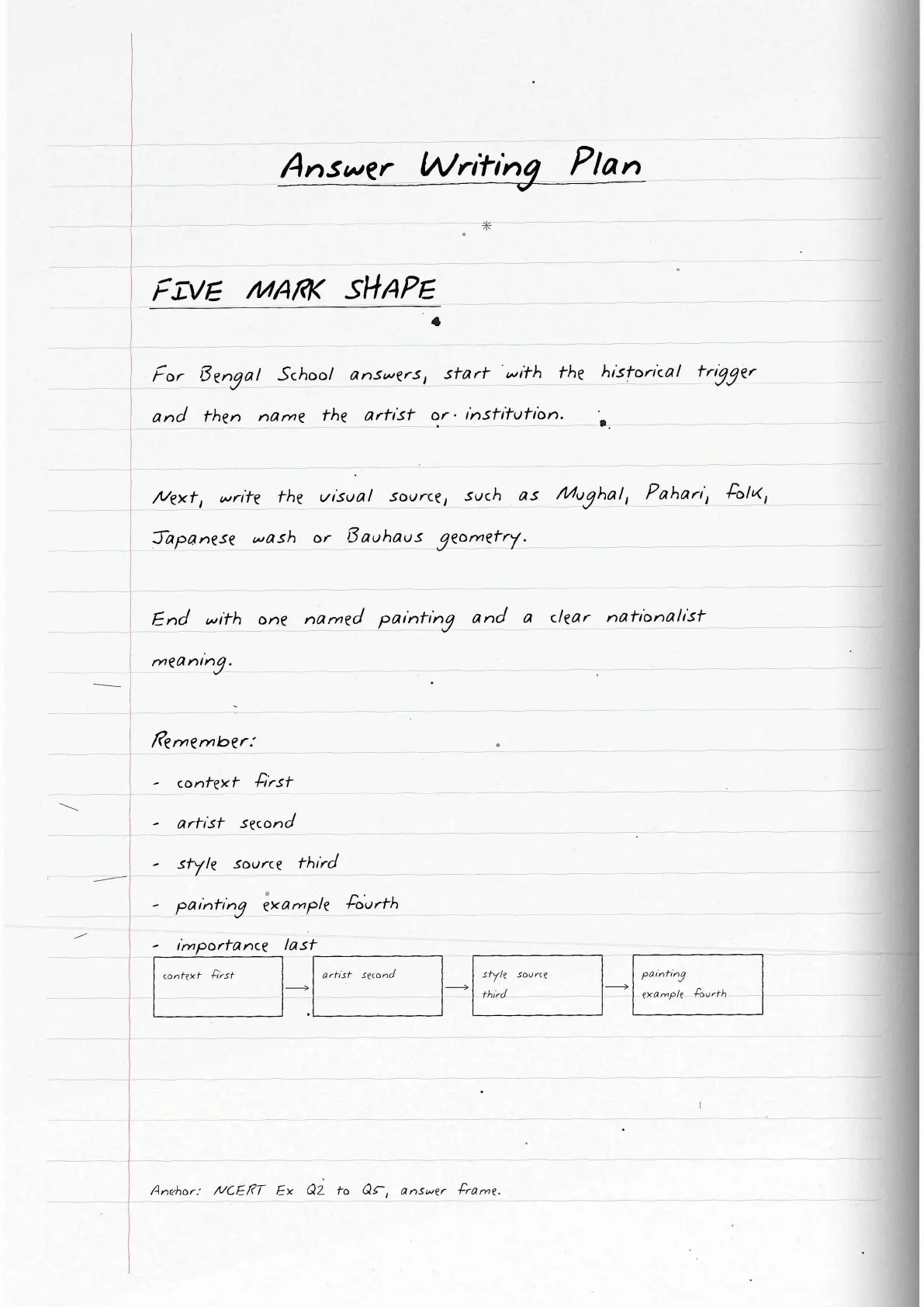
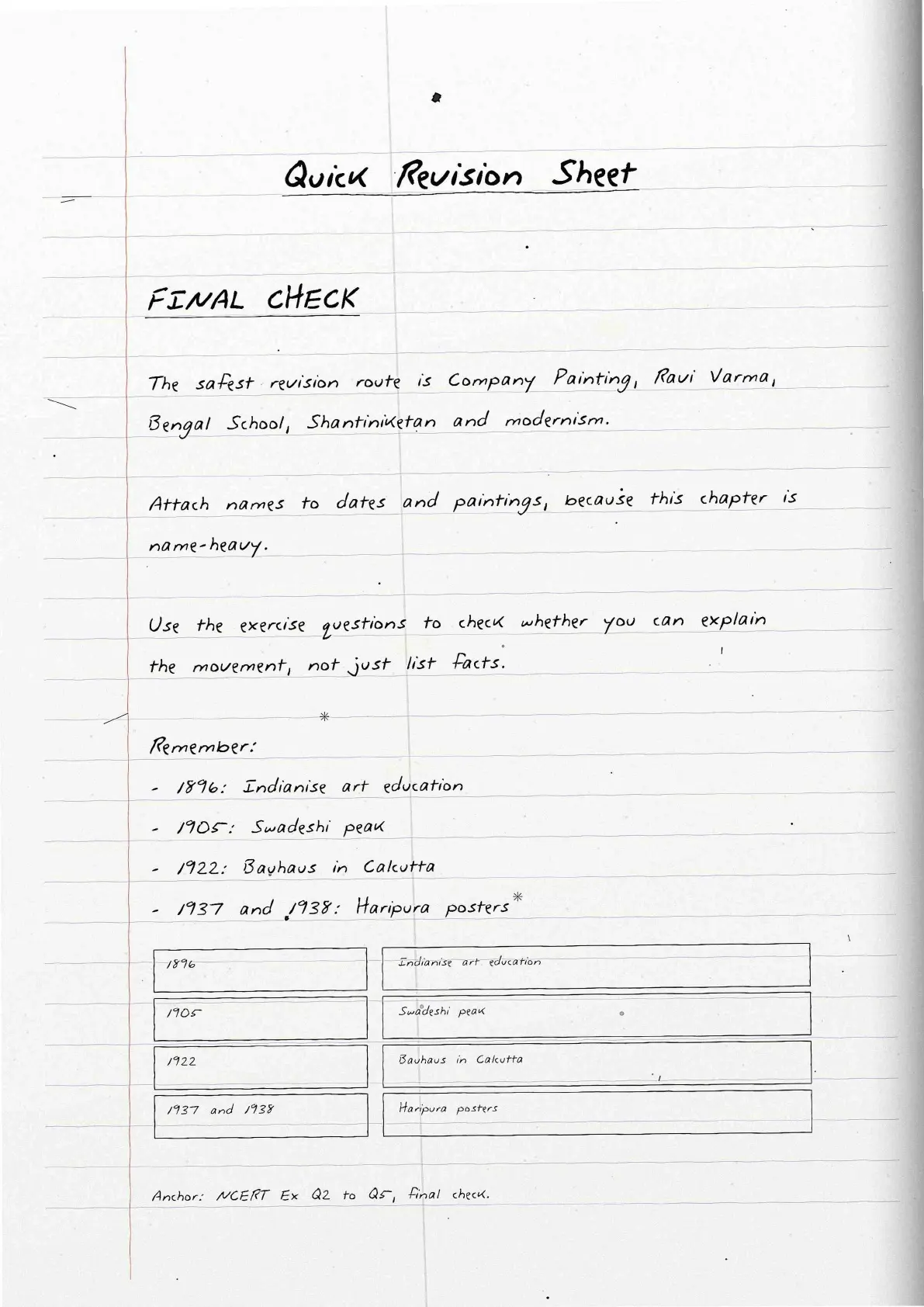
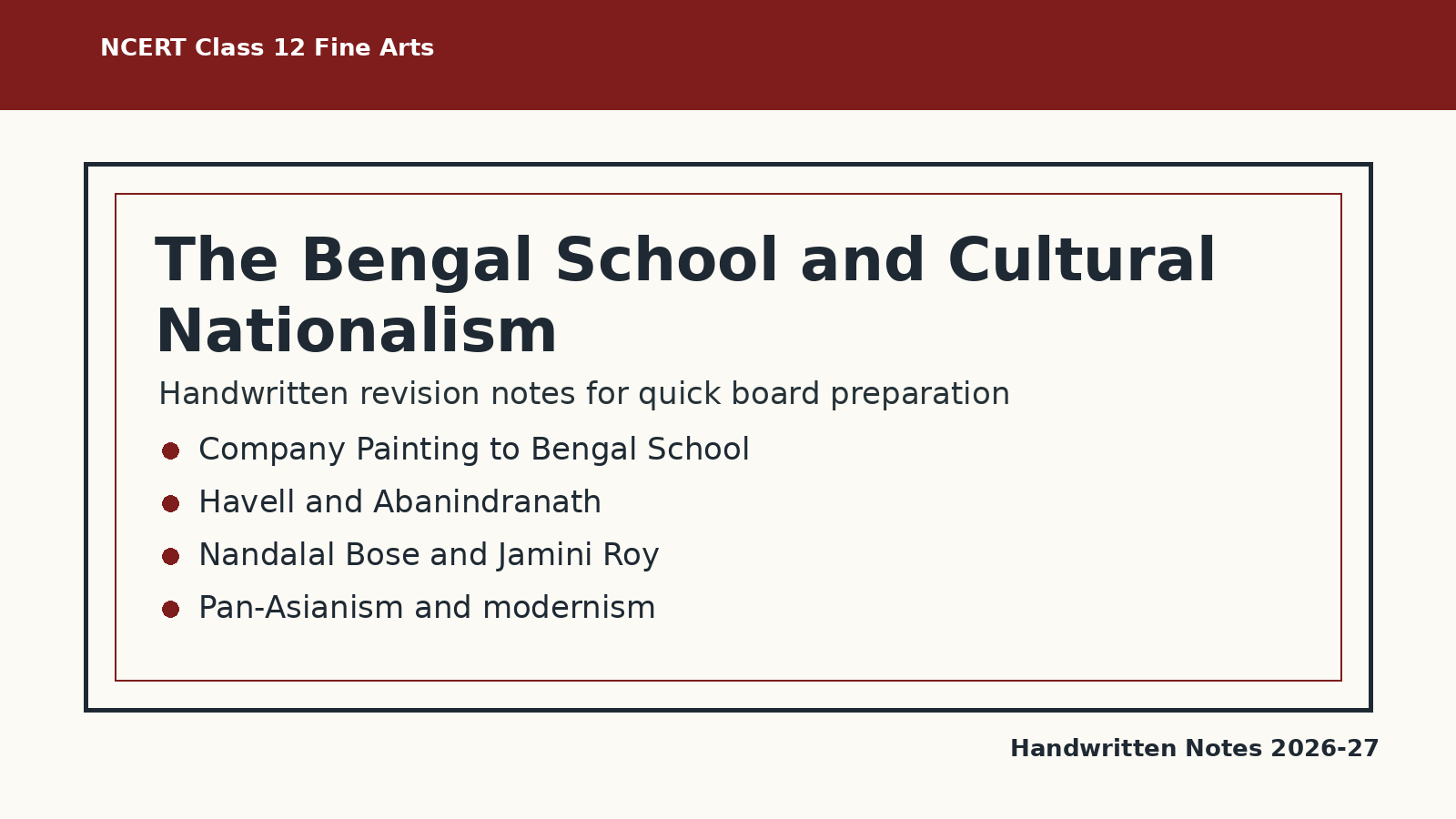
These Bengal School handwritten notes follow the official 2026-27 NCERT chapter and keep the revision order close to the CBSE Fine Arts theory answer pattern.
Student Feedback: In a Collegedunia Fine Arts revision poll of 13,620 students, students found this chapter easier when they revised it as a sequence of art responses to colonial rule.
- 81% wanted one timeline for Havell, Abanindranath, Nandalal Bose and the Bauhaus show.
- 74% mixed up Company Painting and Raja Ravi Varma's academic realism.
- 69% wanted artwork examples placed with one visible clue.
Bengal School Quick Revision Map for Class 12 Fine Arts
The Bengal School and Cultural Nationalism chapter explains how Indian art changed under colonial rule and nationalist thought. The handwritten notes start with Company Painting, move to Raja Ravi Varma's academic realism, and then explain why Abanindranath Tagore and E. B. Havell wanted an Indian style of modern art.
- Company Painting: local artists painted Indian people, customs, plants and places for British patrons.
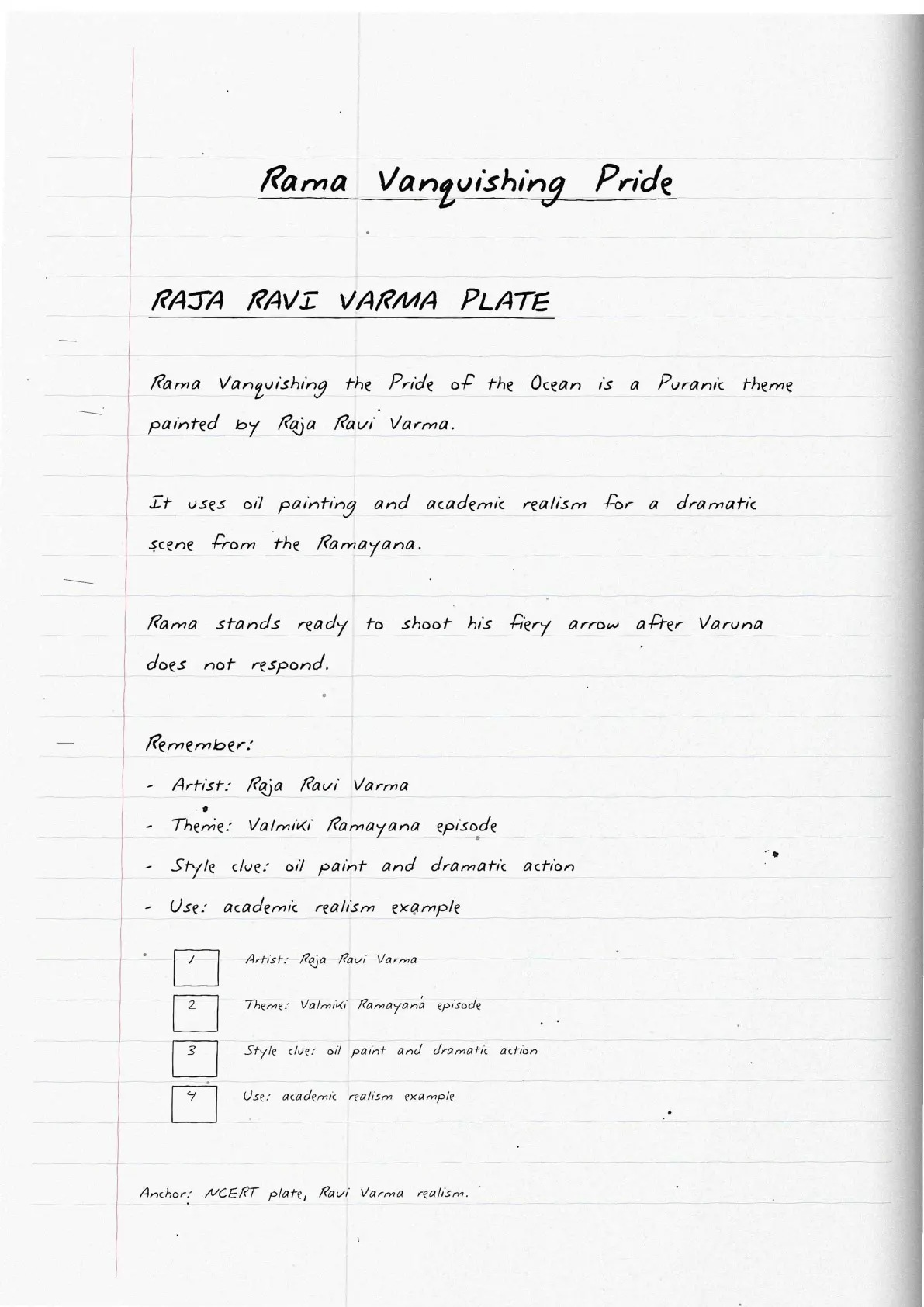
- Academic realism: Raja Ravi Varma used oil painting and European realism for Indian epic subjects.
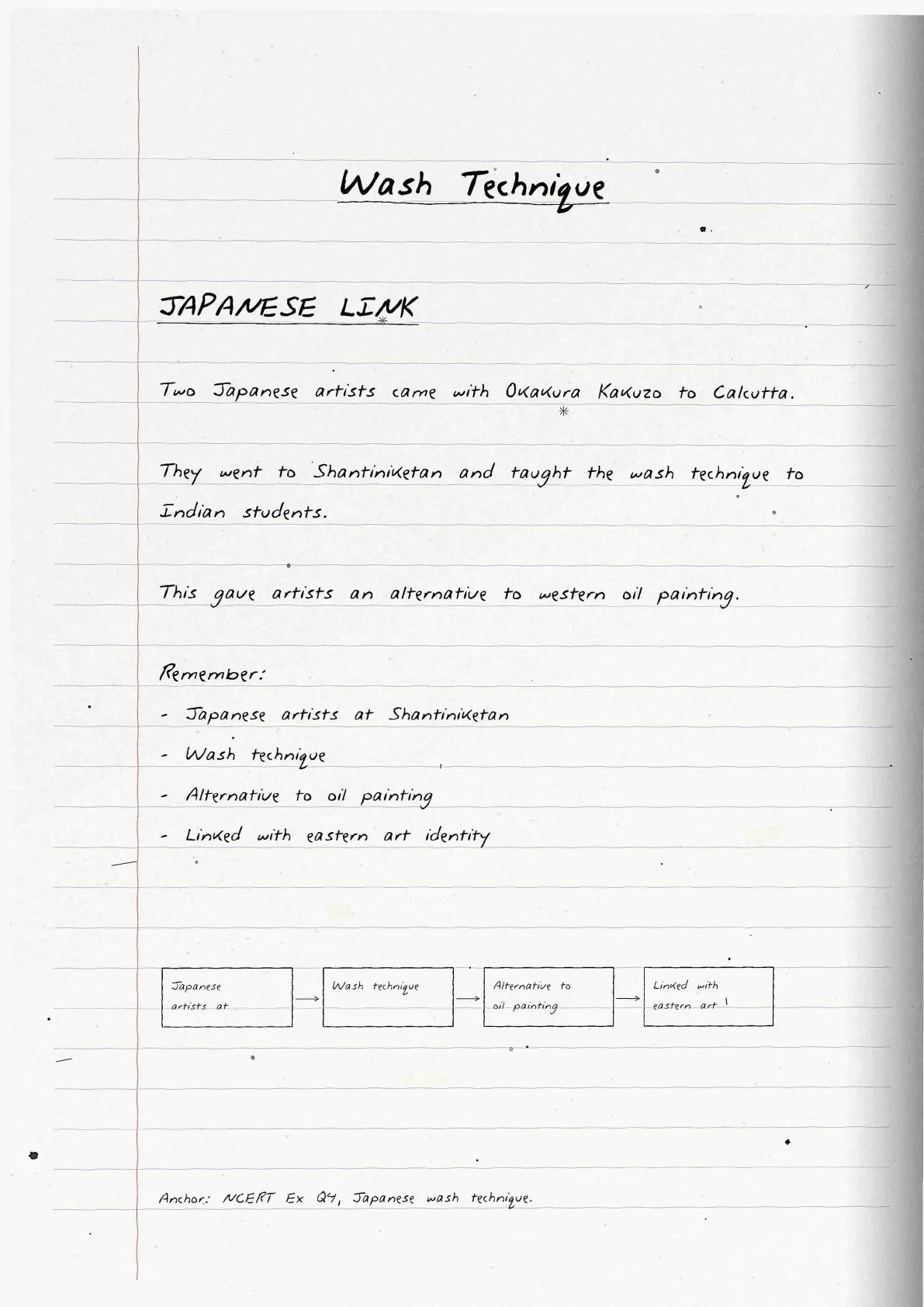
- Bengal School: Abanindranath and Havell turned to Mughal, Pahari and eastern sources for a national style.
- Shantiniketan: Nandalal Bose and Jamini Roy carried art toward folk forms and a wider public.
Bengal School Timeline for Class 12 Fine Arts
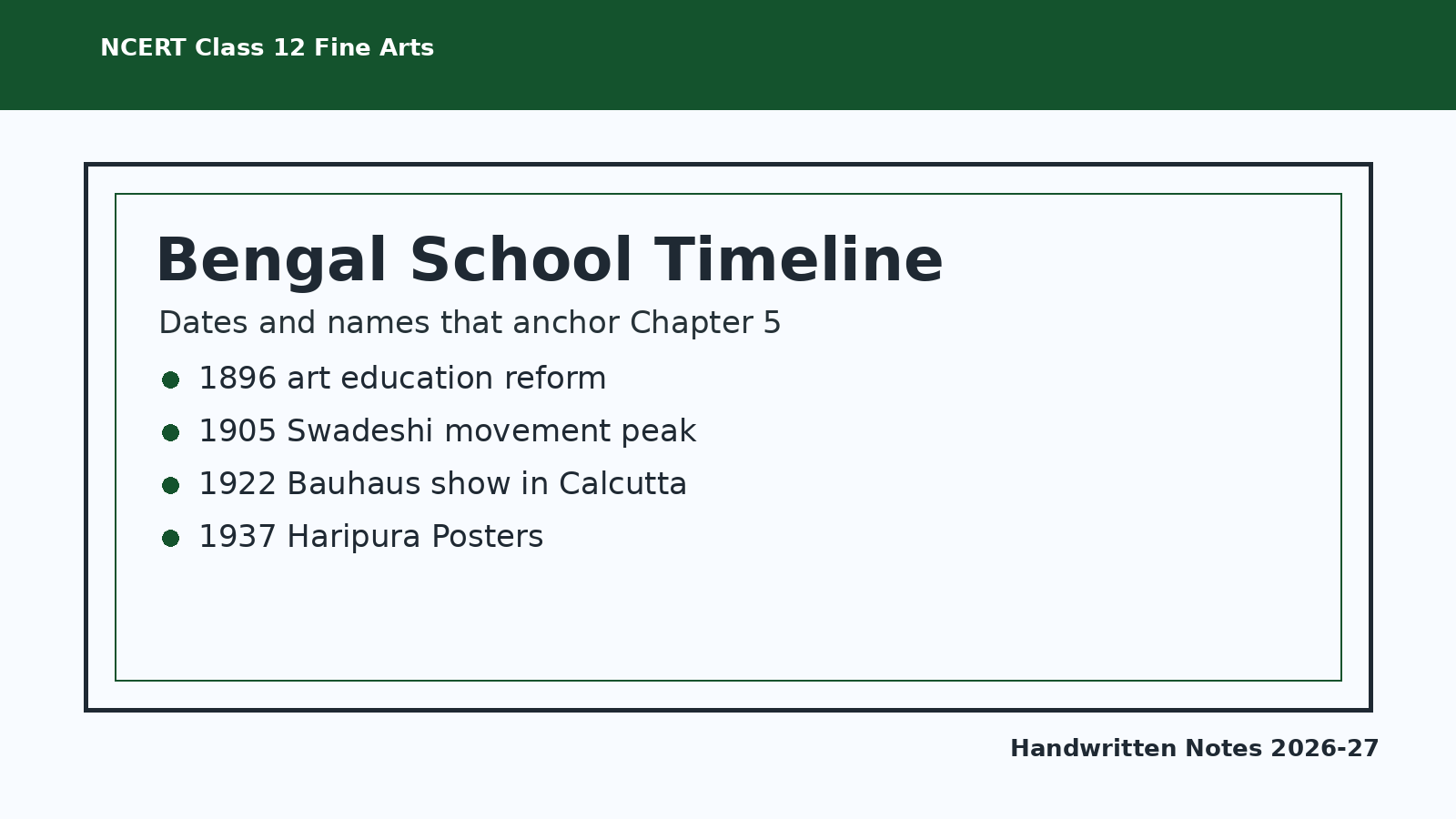
The timeline is the safest way to revise this chapter. Fine Arts answers improve when students connect the year, the artist and the movement in one line.
| Year | What to remember | Name to attach |
|---|---|---|
| 1800 to 1825 | Group of Courtesans shows Company Painting. | Ghulam Ali Khan |
| 1896 | Indianising art education begins at Calcutta. | E. B. Havell and Abanindranath Tagore |
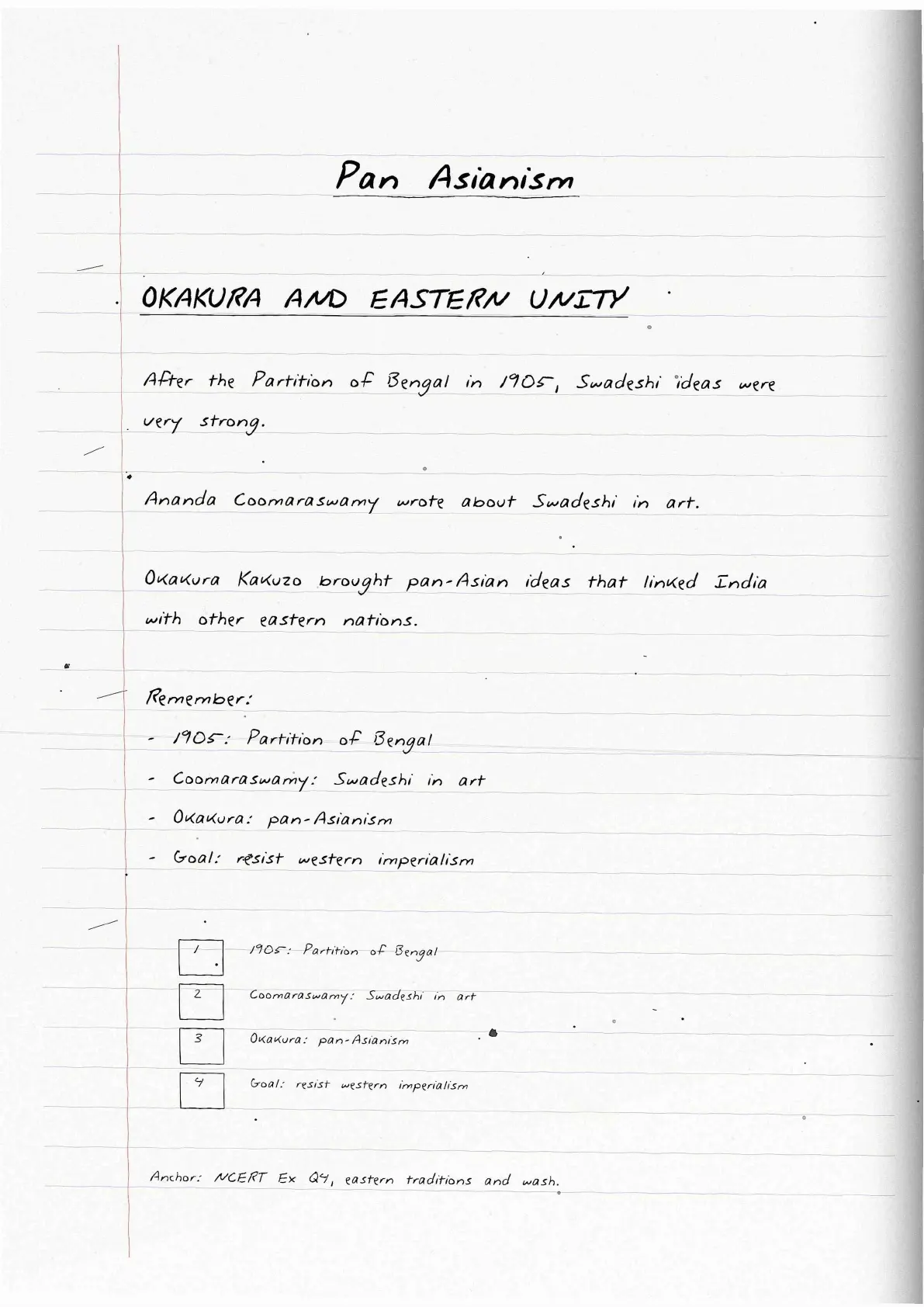
| 1905 | Swadeshi ideas become stronger after Partition of Bengal. | Coomaraswamy and Okakura Kakuzo |
| 1922 | Bauhaus works reach Calcutta. | Paul Klee, Kandinsky and Gaganendranath Tagore |
| 1937 and 1938 | Haripura Posters and Tiller of the Soil place rural workers at the centre. | Nandalal Bose |
Company Painting Raja Ravi Varma and Bengal School Compared
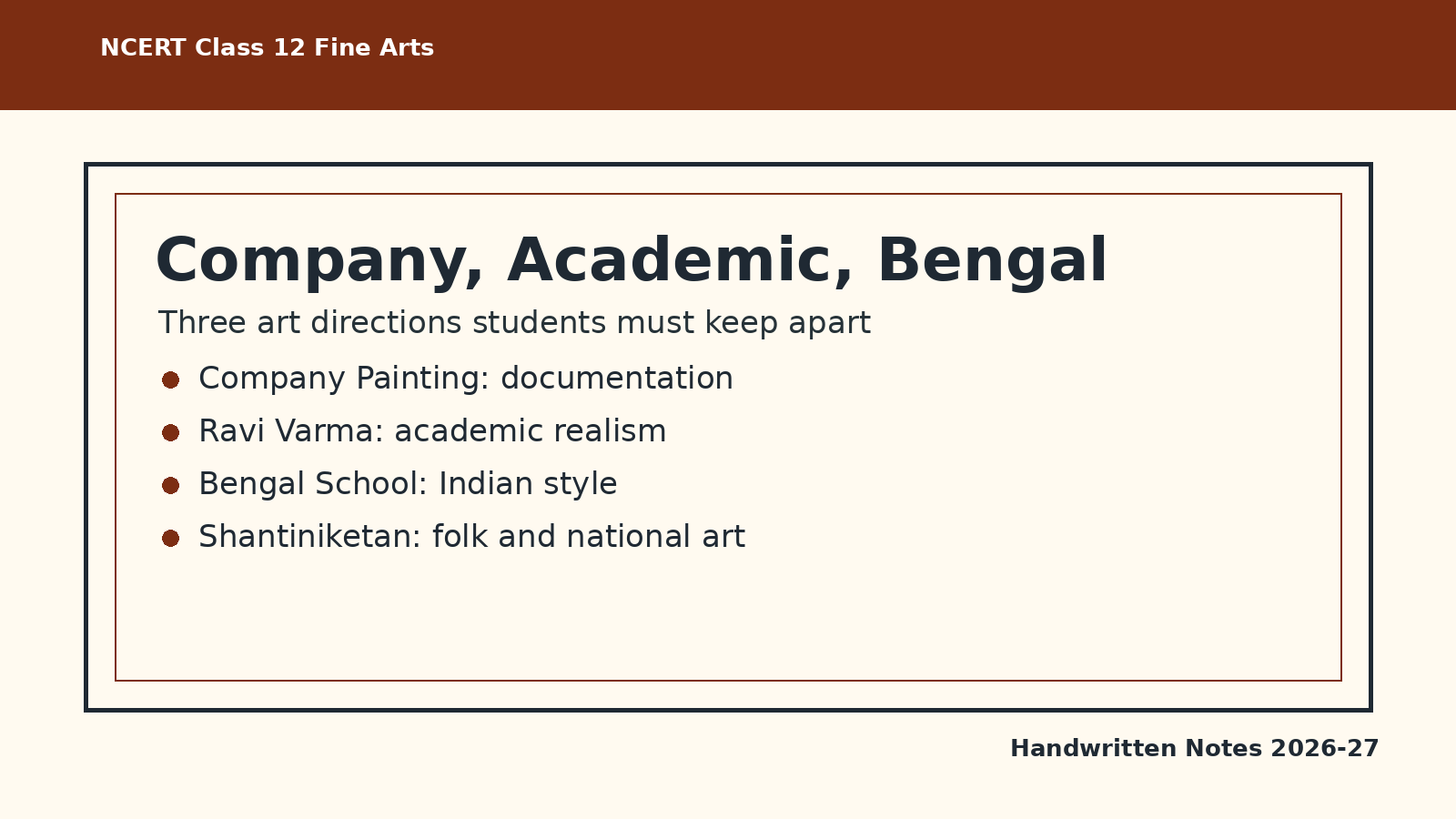
Many students lose marks because they merge three separate art directions. Use this comparison before writing any long answer.
| Direction | Main feature | Exam clue |
|---|---|---|
| Company Painting | Indian artists used close observation for British patrons. | Documentation, albums, photography caused decline. |
| Raja Ravi Varma | Academic realism and oil painting were used for Indian epic subjects. | Oleographs and calendar images made the works popular. |
| Bengal School | Nationalist artists wanted Indian subject matter and Indian style. | Mughal, Pahari, wash technique and Swadeshi values. |
| Shantiniketan | Artists used folk forms and art education for nation building. | Haripura Posters, Kala Bhavana and wider public reach. |
Important Bengal School Paintings and Artists for Class 12 Fine Arts
For appreciation questions, write the artist, medium or date, and one visible idea. Do not stop at the title.
| Painting | Artist | One exam-ready clue |
|---|---|---|
| Journey's End | Abanindranath Tagore | Wash technique, tired camel and quiet mood. |
| Tiller of the Soil | Nandalal Bose | Haripura panel showing a farmer and village labour. |
| Rasa-Lila | Kshitindranath Majumdar | Thin figures, delicate watercolour and Bhakti mood. |
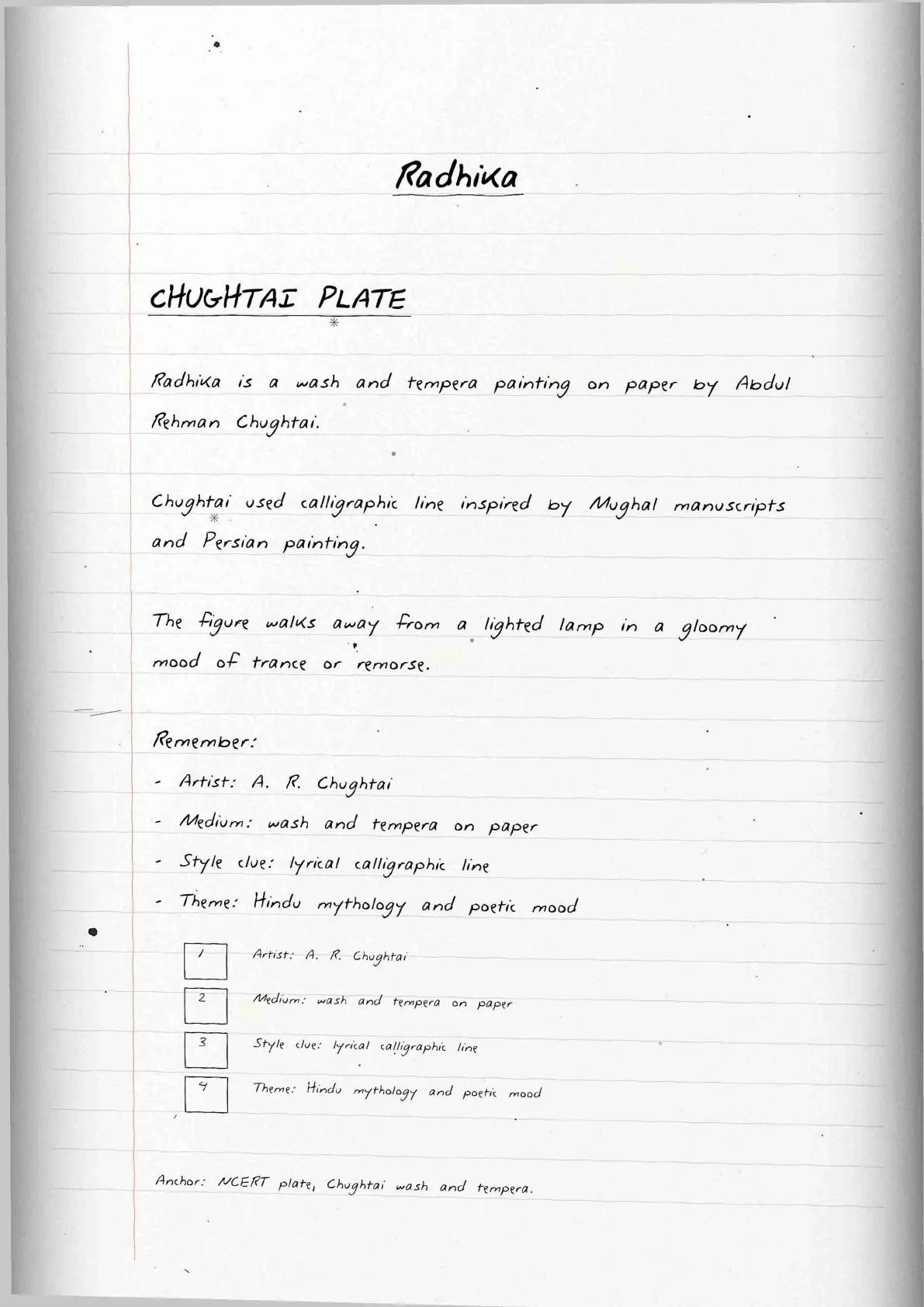
| Radhika | A. R. Chughtai | Calligraphic line, wash and tempera, poetic quality. |
| City in the Night | Gaganendranath Tagore | Cubist geometry and mysterious city forms. |
| Woman with Child | Jamini Roy | Folk style, deep red background and simple mother-child form. |
Bengal School Video Recap for Class 12 Fine Arts
This video gives a quick recap of the Bengal School before students revise the handwritten notes.
Source: YouTube
Related Class 12 Fine Arts Resources for The Bengal School and Cultural Nationalism
Use these resources with the handwritten notes when you want the official text or a typed revision version of the same chapter.
| Resource | Use It For | Link |
|---|---|---|
| NCERT Book PDF | Read the official chapter text and artwork captions. | The Bengal School Book PDF |
| Class 12 Fine Arts Notes | Revise the same chapter in typed notes format. | The Bengal School Notes |
| Previous Chapter | Compare the Bengal School with hill-school painting. | Pahari Schools Handwritten Notes |
All Class 12 Fine Arts Handwritten Notes
The table below keeps the same resource type together, so students can move chapter by chapter through Class 12 Fine Arts handwritten notes.
| Chapter | NCERT chapter title | Handwritten notes link |
|---|---|---|
| Chapter 1 | The Mughal School of Miniature Painting | Open handwritten notes |
| Chapter 2 | The Deccan Schools of Painting | Open handwritten notes |
| Chapter 3 | The Rajasthani Schools of Painting | Open handwritten notes |
| Chapter 4 | The Pahari Schools of Painting | Open handwritten notes |
| Chapter 5 | The Bengal School and Cultural Nationalism | Current handwritten notes |
| Chapter 6 | Modern Indian Art | Open handwritten notes |
| Chapter 7 | The Company School | Open handwritten notes |
| Chapter 8 | Living Art Traditions of India | Open handwritten notes |
Class 12 Fine Arts The Bengal School and Cultural Nationalism Handwritten Notes FAQs
Ques. What is covered in Class 12 Fine Arts The Bengal School and Cultural Nationalism handwritten notes?
Ans. The handwritten notes cover Company Painting, Raja Ravi Varma, Abanindranath Tagore, Havell, Shantiniketan, Nandalal Bose, Jamini Roy, pan-Asianism and key paintings.
Ques. Which artists are most important in this Fine Arts chapter?
Ans. Abanindranath Tagore, Nandalal Bose, Jamini Roy, Kshitindranath Majumdar, A. R. Chughtai and Gaganendranath Tagore are the main revision names.
Ques. Why did Company Painting decline?
Ans. Company Painting declined after photography entered India in the mid nineteenth century, because the camera documented people and places more directly.
Ques. Why should students use handwritten notes for the Bengal School chapter?
Ans. These handwritten revision notes help students recall dates, artists, art movements and plate clues quickly before a Fine Arts theory test.



Comments