




7 marks in the CBSE Class 12 Physical Education board paper come from Children and Women in Sports. These handwritten revision notes cover the WHO exercise guidelines for every age band, all seven postural deformities with their corrective measures, and the female athlete triad, according to the latest 2026-27 CBSE syllabus.
- Length: 46 handwritten pages covering the full unit in textbook order.
- Must-learn blocks: the four WHO age-band tables and the seven postural deformities with corrective exercises.
- Also on this page: a quick recall table, a common mistakes list and the eight menstrual disorders in one place.
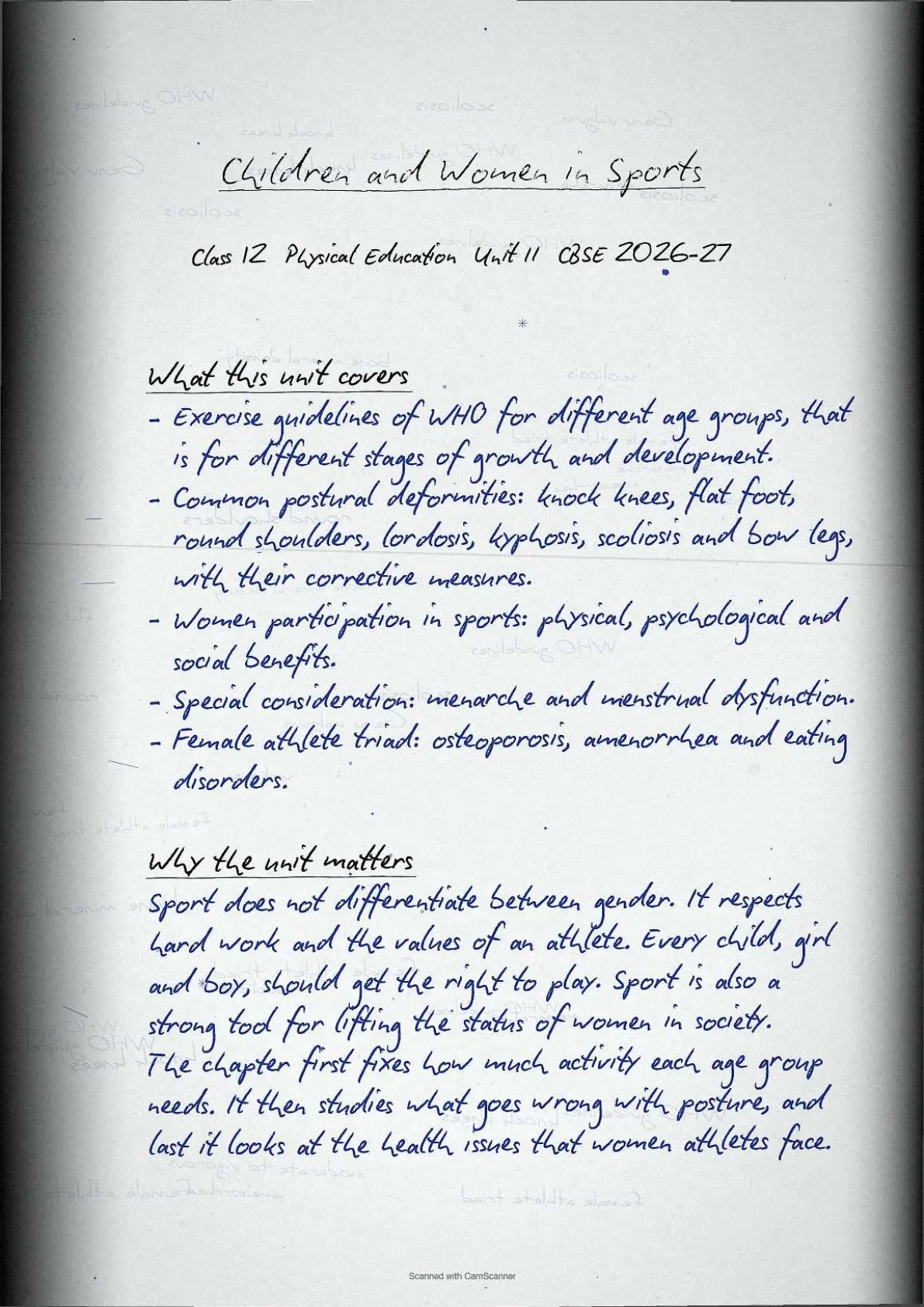
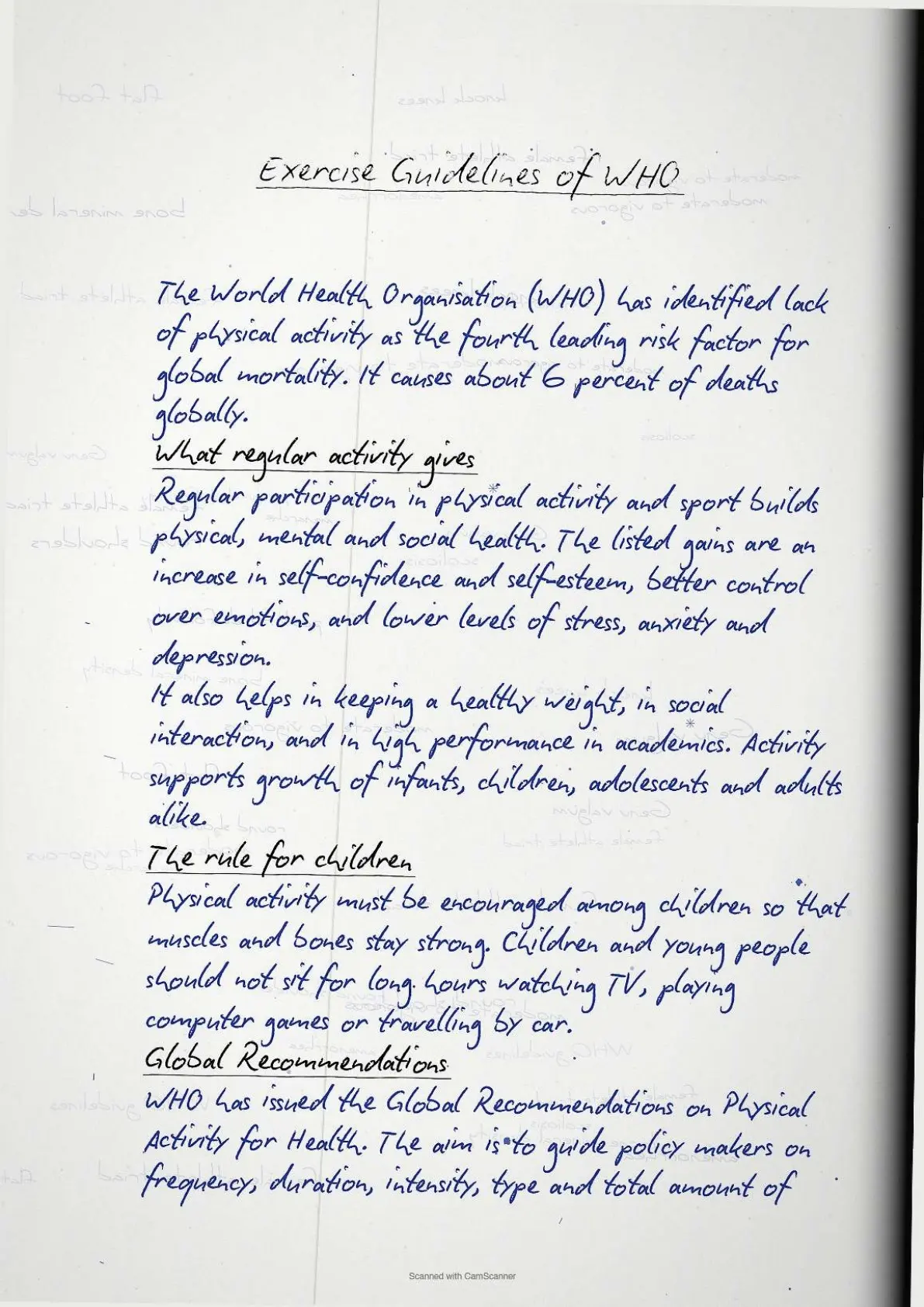
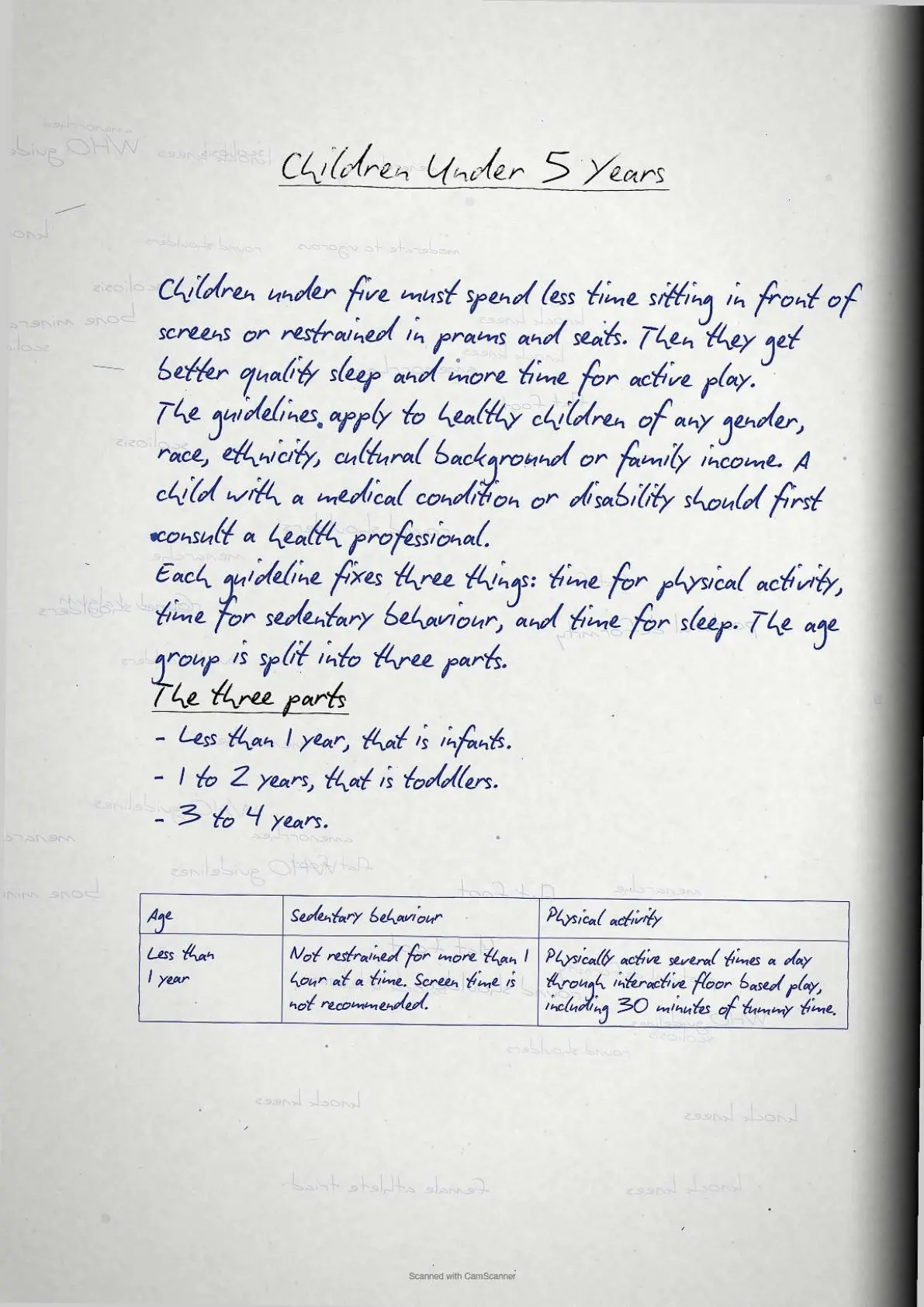
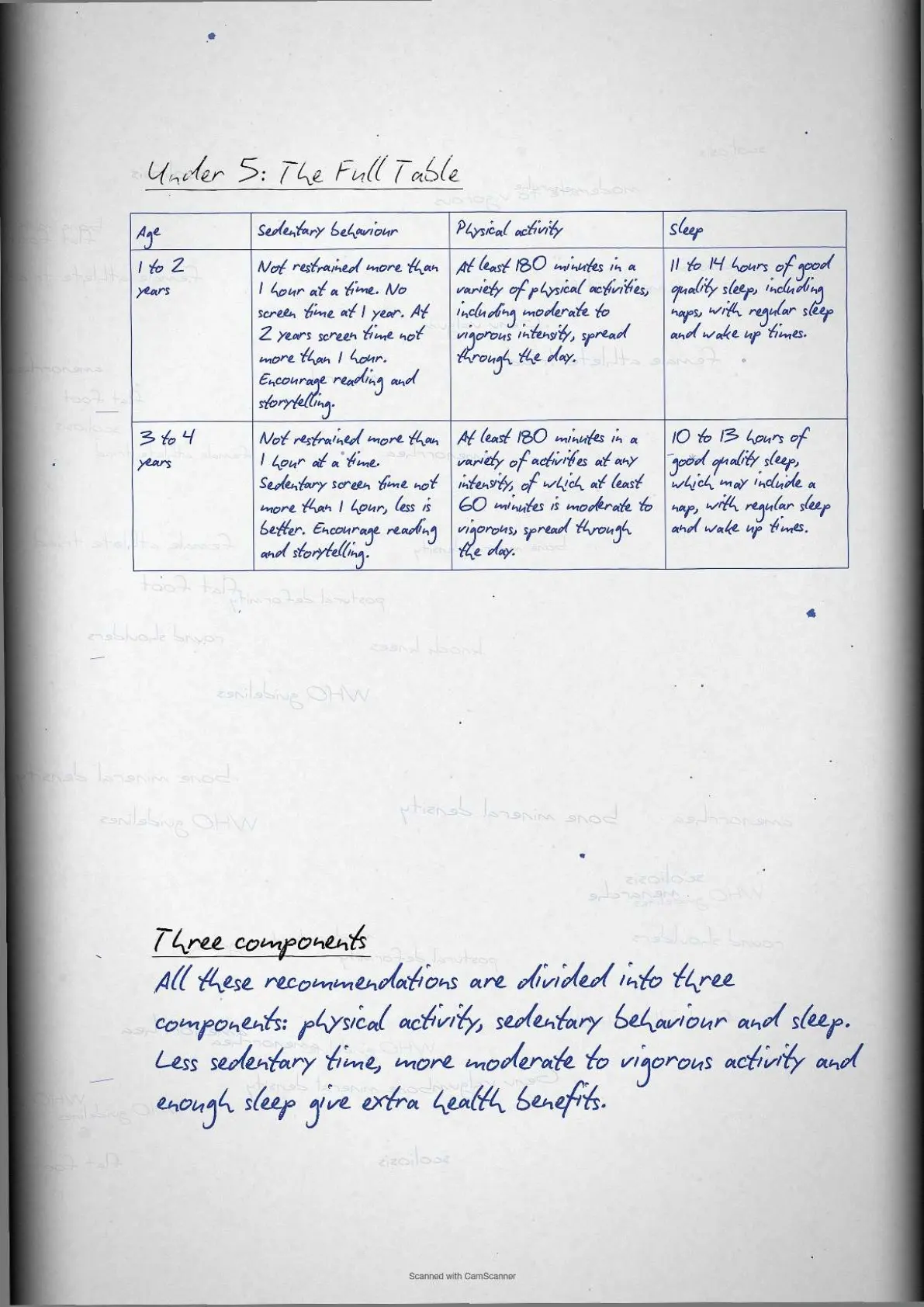
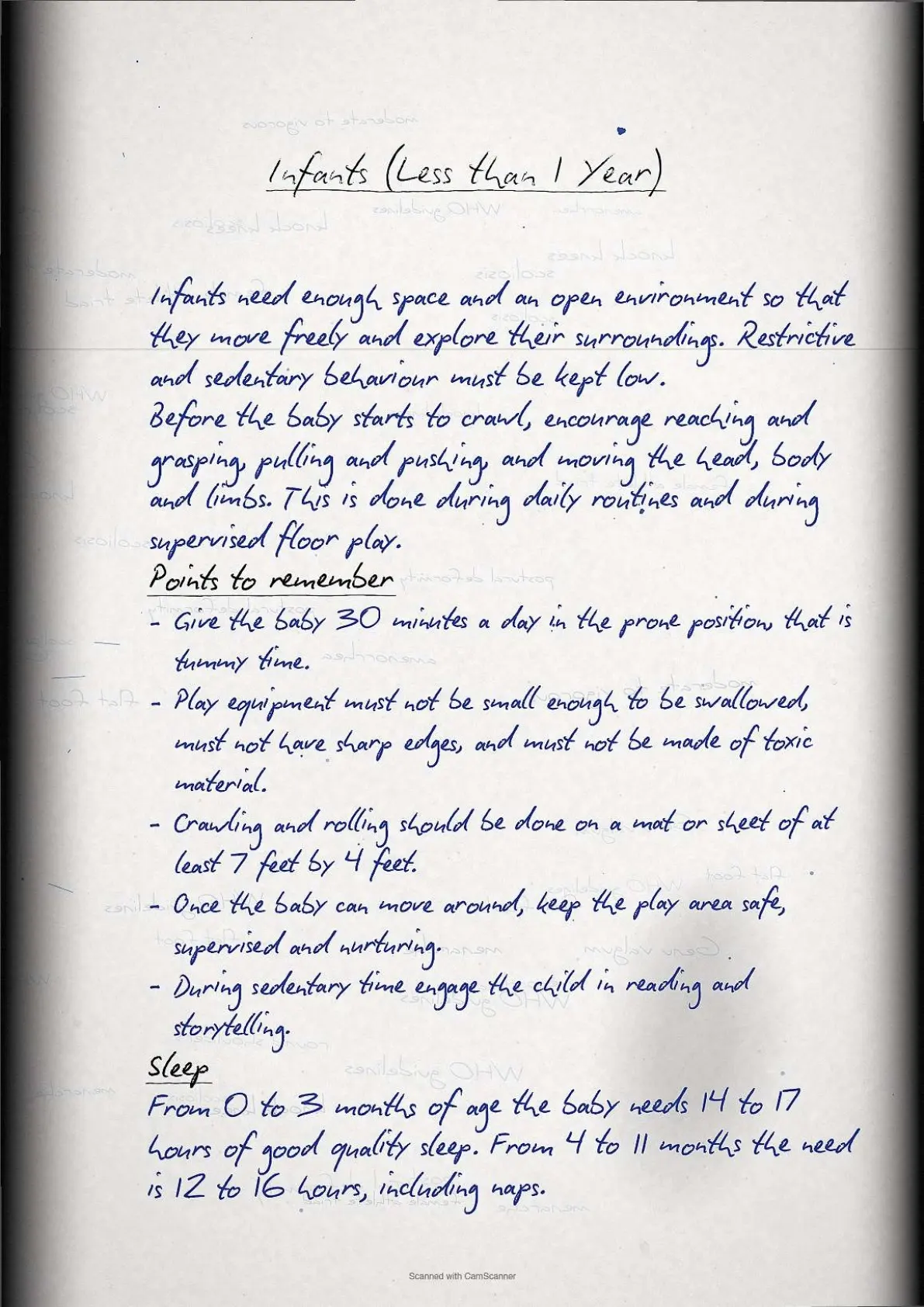
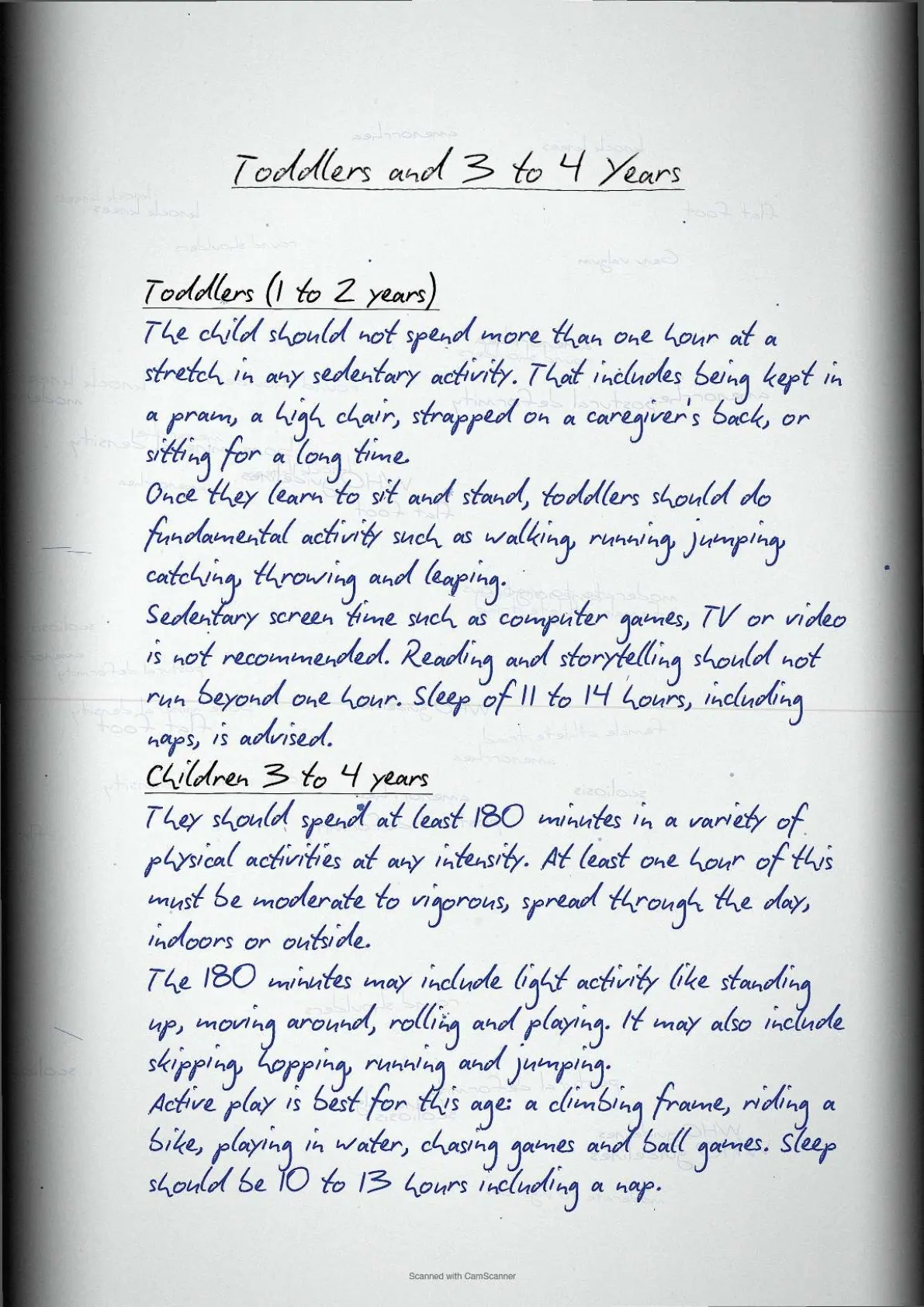
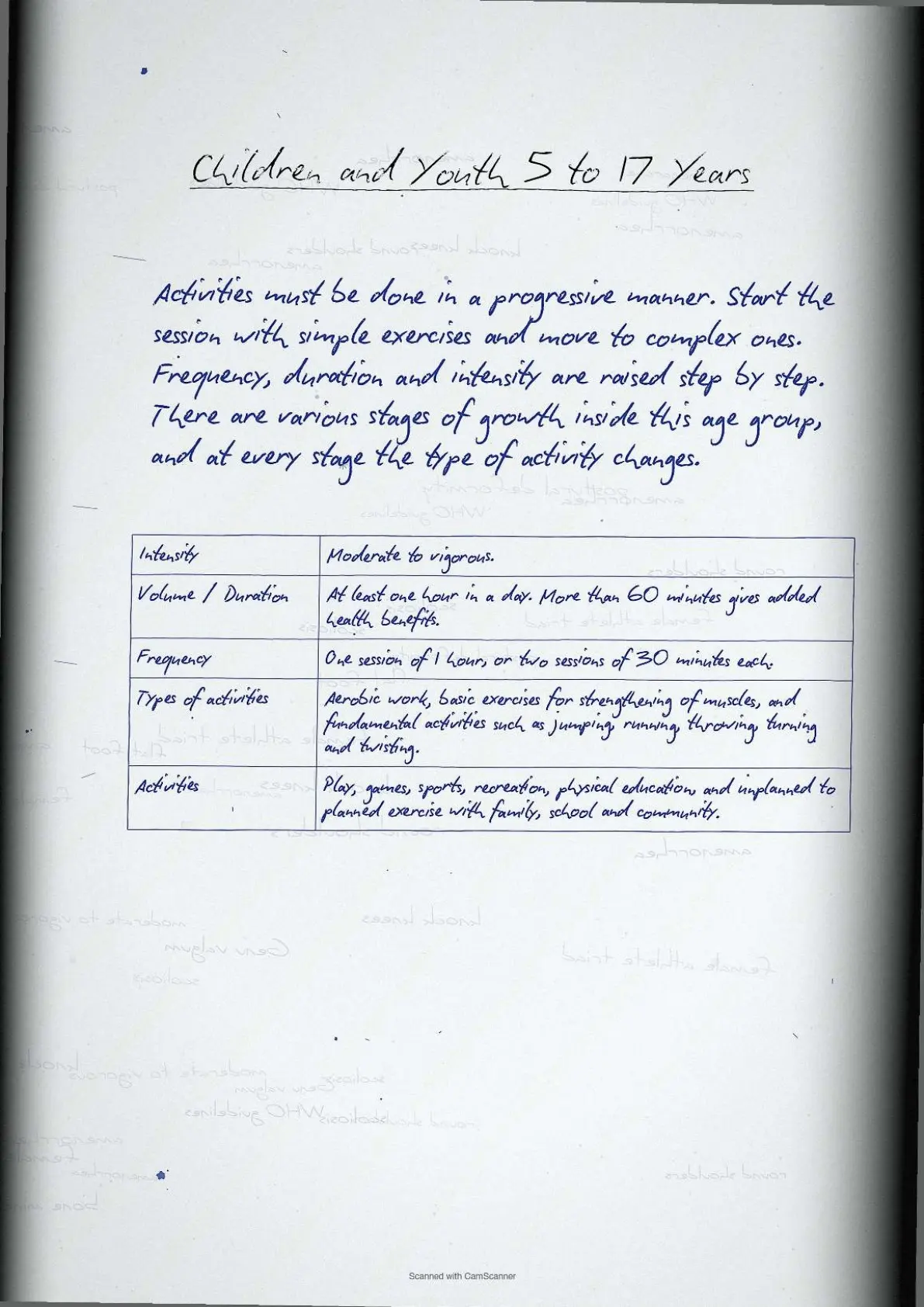
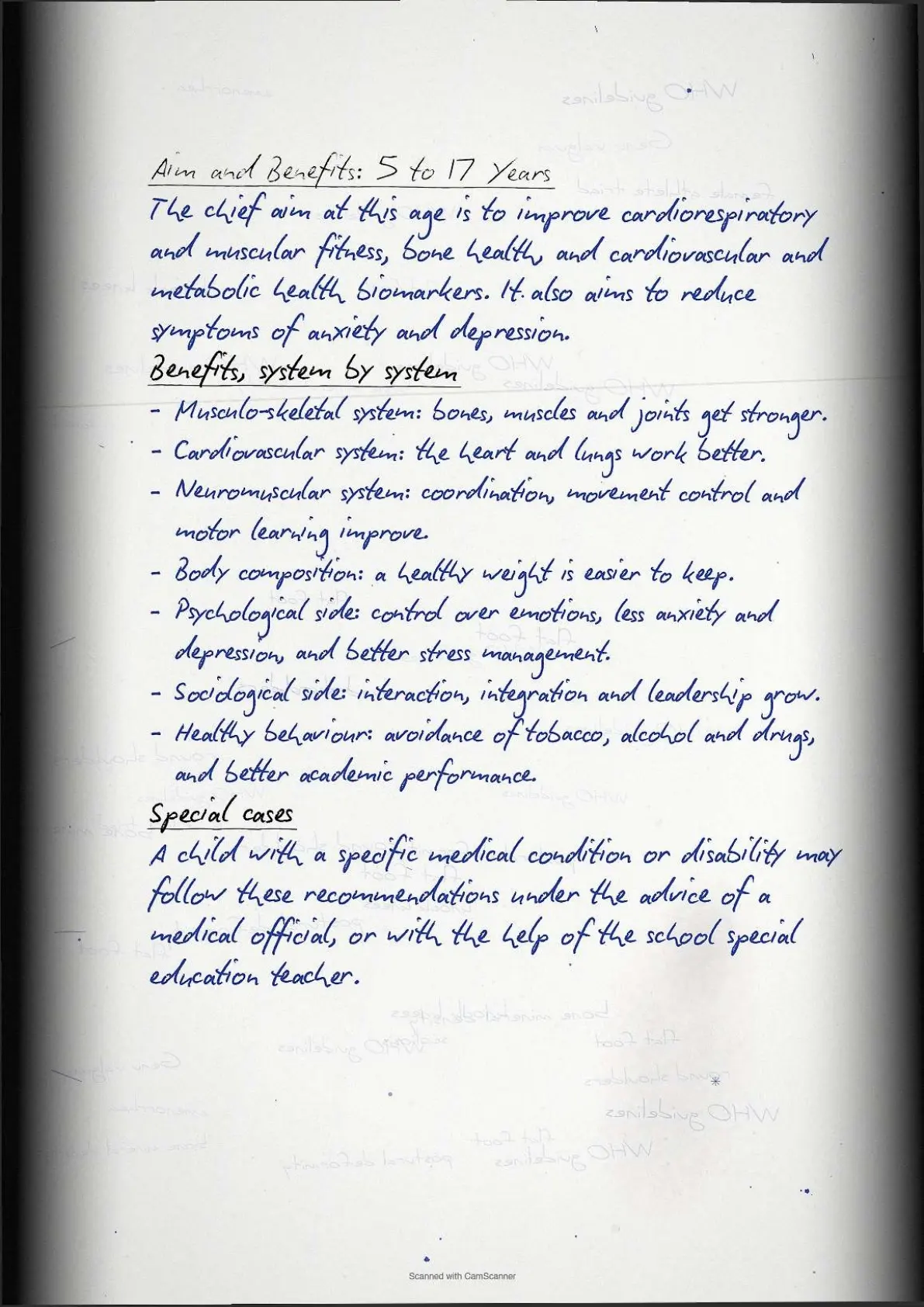
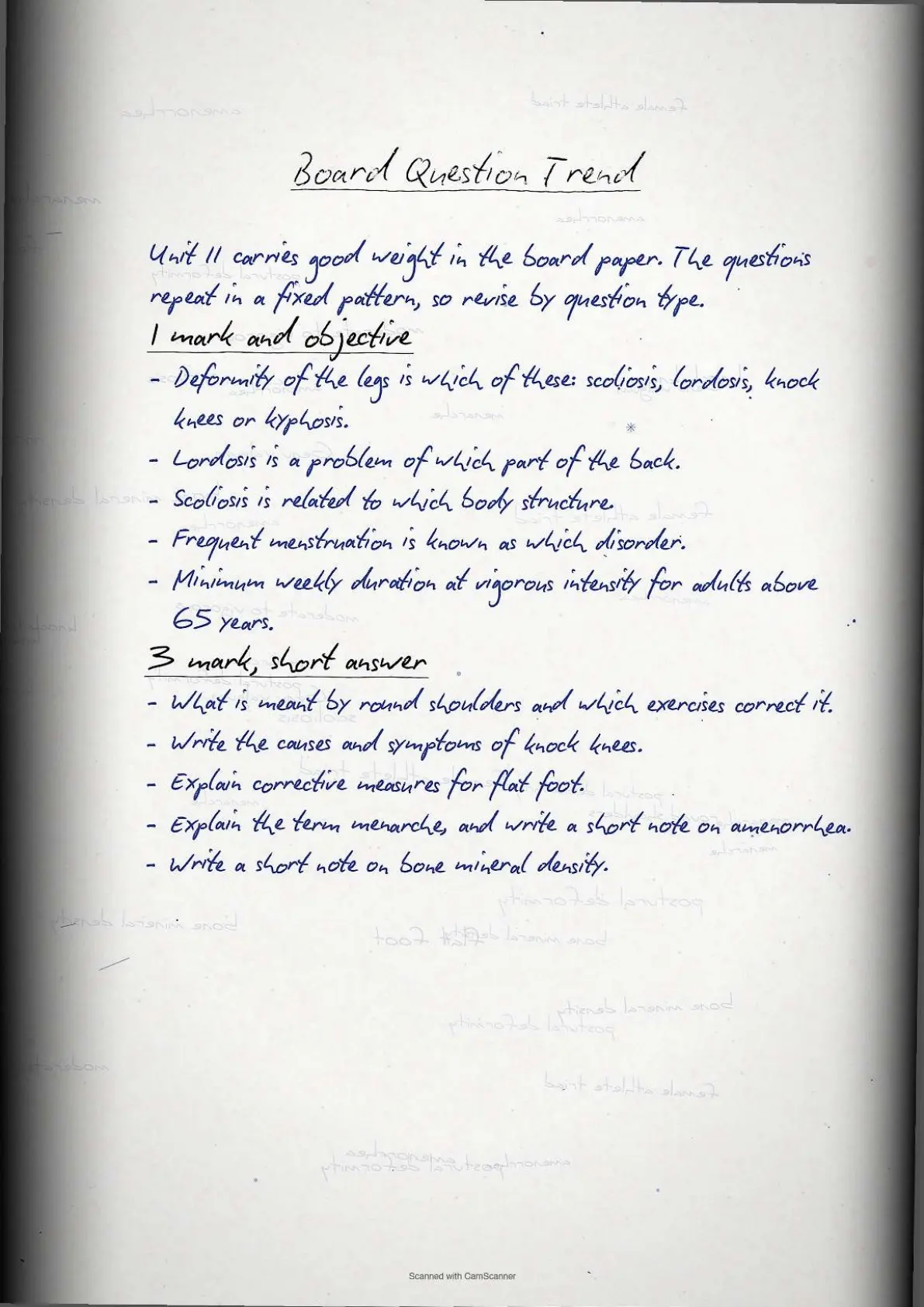
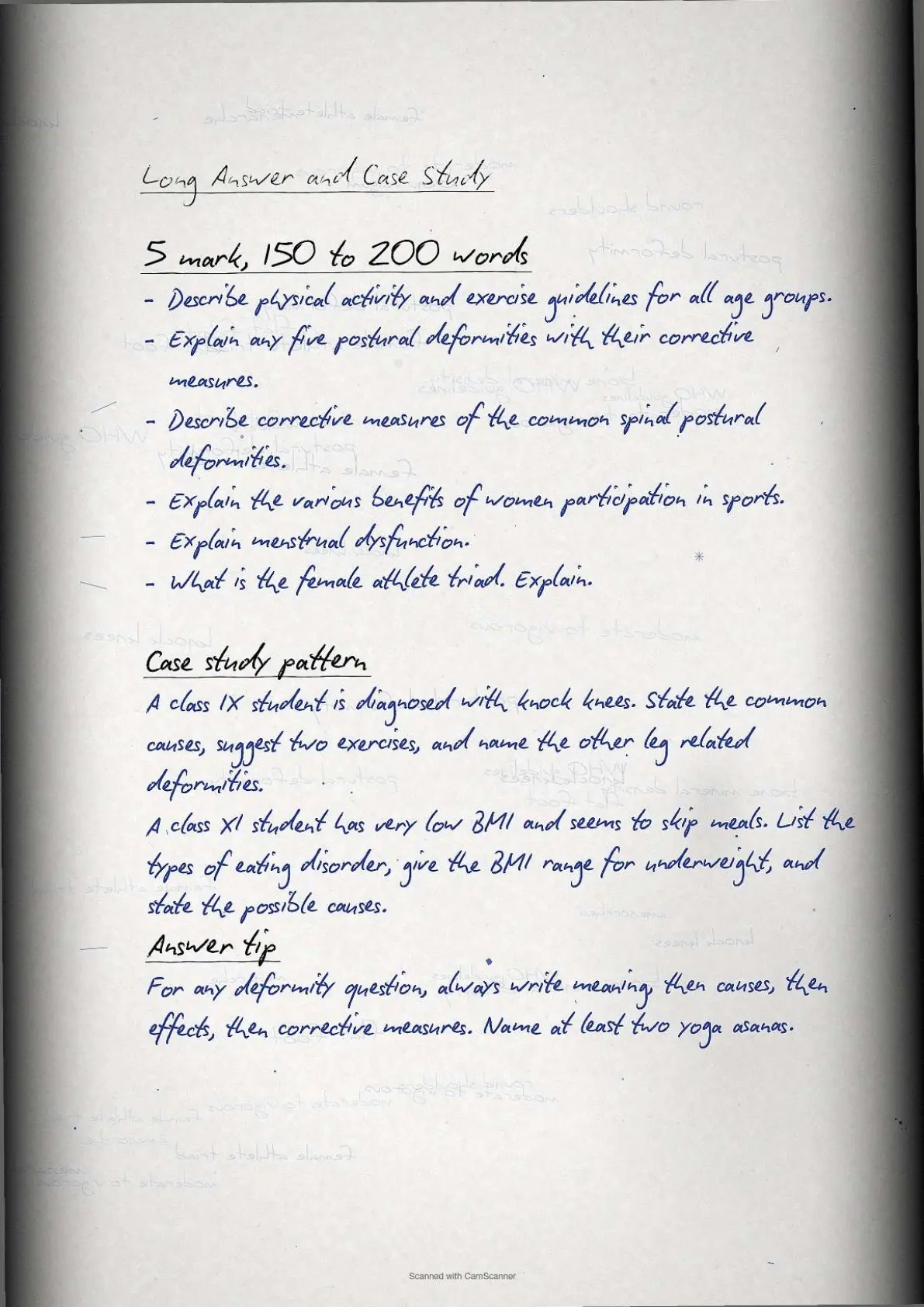
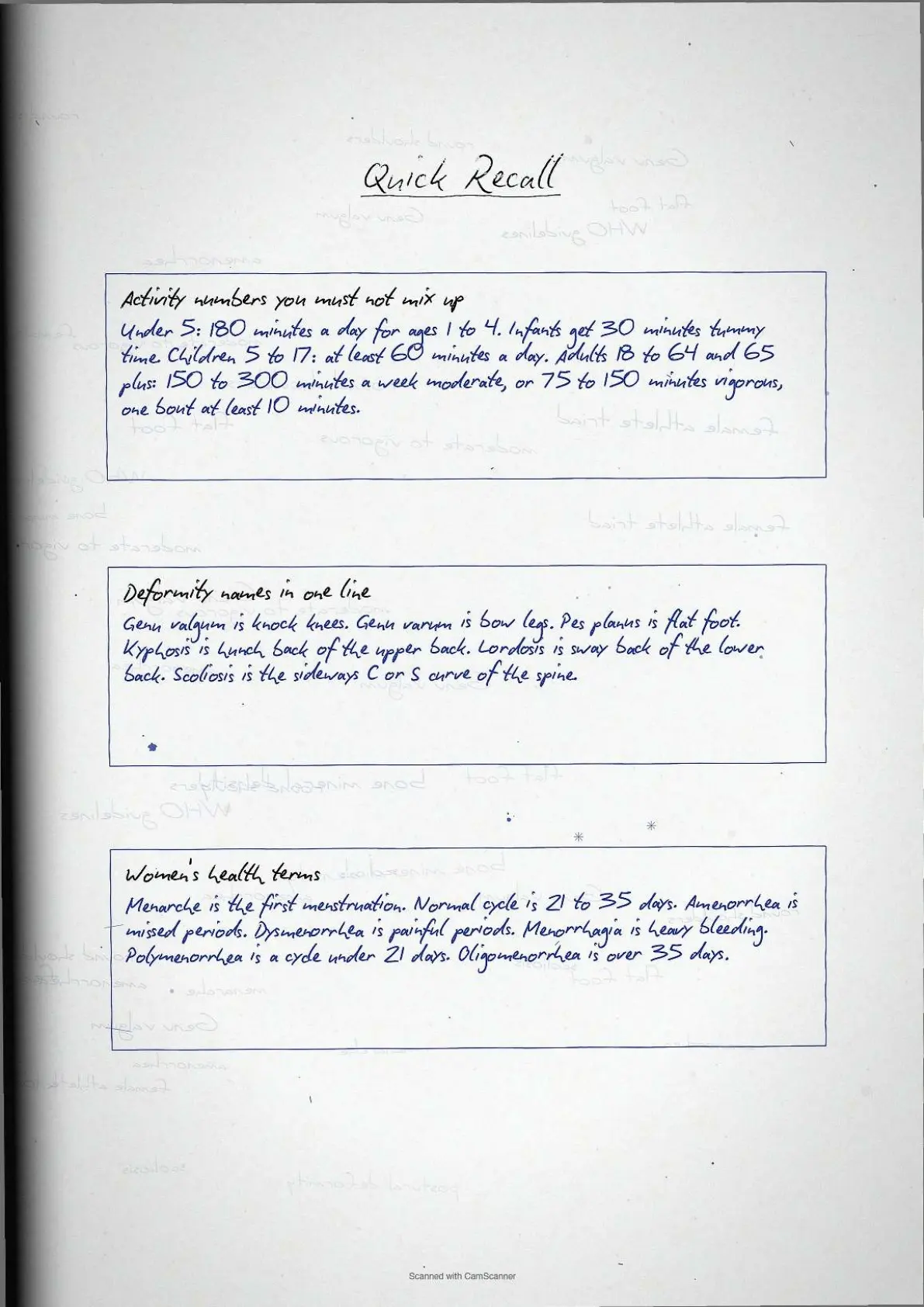
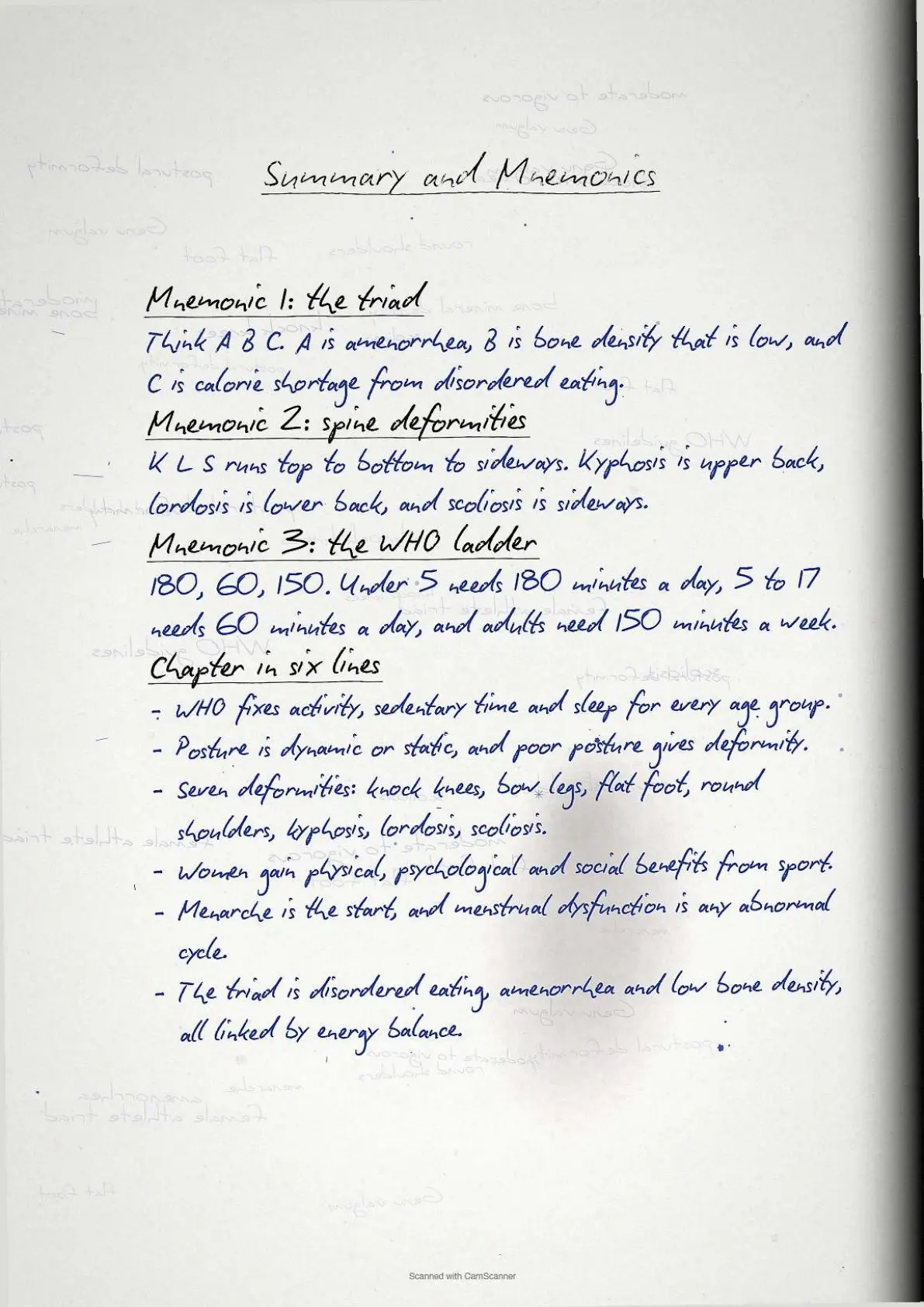
Every page here is written by hand, checked against the 2026-27 Class 12 Physical Education print, and matched to the way the board paper asks about WHO guidelines, postural deformities and the female athlete triad.
Student Feedback: In a Collegedunia survey of 12,460 Class 12 Physical Education students conducted before the 2026 boards, 68% said the WHO age-band numbers are the part they forget first. Students who wrote the four age bands on one card and the seven deformities on another said the recall got easier within a week.
Source: 2026-27 Class 12 Physical Education student poll. Sample of 12,460 students from CBSE schools across 17 states.
WHO Exercise Guidelines for Children Under 5 Years of Age
The unit opens with a WHO finding that examiners like to quote. WHO has identified physical inactivity as the fourth leading risk factor for global mortality, and it accounts for 6% of deaths globally. The guidelines themselves come from a WHO document called Global Recommendations on Physical Activity for Health.
For children under 5, the guidance is split into three components: physical activity, sedentary behaviour and sleep. The age group is further split into three bands.
| Age | Sedentary behaviour | Physical activity | Sleep |
|---|---|---|---|
| Less than 1 year | Not restrained for more than 1 hour at a time. Screen time is not recommended. Encourage reading and storytelling. | Active several times a day through interactive floor-based play, including 30 minutes of tummy time | 14 to 17 hours (0 to 3 months), 12 to 16 hours (4 to 11 months), including naps |
| 1 to 2 years | Not restrained for more than 1 hour at a time. No screen time for 1-year-olds. For 2-year-olds, sedentary screen time no more than 1 hour. | At least 180 minutes of varied activity including moderate to vigorous intensity, spread through the day | 11 to 14 hours of good quality sleep, with regular sleep and wake-up times |
| 3 to 4 years | Not restrained for more than 1 hour at a time. Sedentary screen time no more than 1 hour, less is better. | At least 180 minutes at any intensity, of which at least 60 minutes is moderate to vigorous | 10 to 13 hours of good quality sleep, which may include a nap |
Tip: the 180-minute figure is the same for the 1 to 2 and 3 to 4 bands. The difference is that the 3 to 4 band adds a 60-minute moderate to vigorous slice inside those 180 minutes.
WHO Exercise Guidelines for Children and Youth 5 to 17 Years
This is the band the board paper asks about most, because it is the band Class 12 students belong to. The stated aim of activity at this stage is to improve cardiorespiratory and muscular fitness, bone health, cardiovascular and metabolic health markers, and to reduce symptoms of anxiety and depression.
| Heading | WHO recommendation for 5 to 17 years |
|---|---|
| Intensity | Moderate to vigorous |
| Volume | At least 1 hour a day. More than 60 minutes gives additional health benefits. |
| Frequency | One session of 1 hour, or two sessions of 30 minutes each |
| Types of activity | Aerobic activity, basic muscle strengthening exercises, and fundamental activities such as jumping, running, throwing, turning and twisting |
| Activities | Play, games, sports, recreation, physical education, planned and unplanned exercise with family, school and community |
The textbook also lists the benefits at this age in four groups: musculo-skeletal (bones, muscles, joints), cardiovascular (heart and lungs), neuromuscular (coordination, movement control, motor learning), and healthy body composition. Regular activity at this age also supports control over emotions, lowers anxiety and depression, builds leadership, and promotes academic performance.
Children and Women in Sports Chapter 2 Explained
Source: Rajat Arora on YouTube
WHO Guidelines for Adults 18 to 64 Years and Older Adults 65 Years and Above
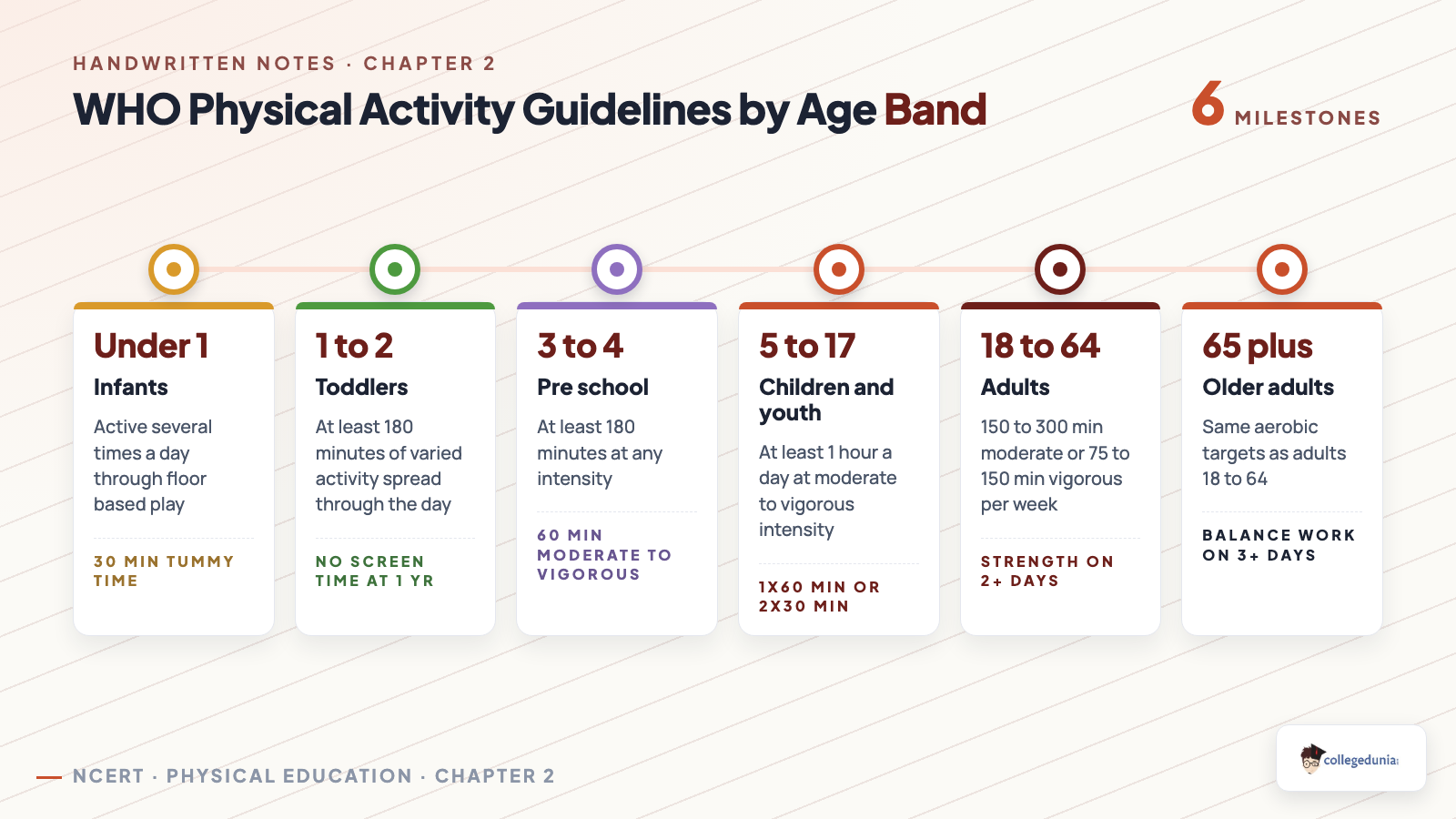
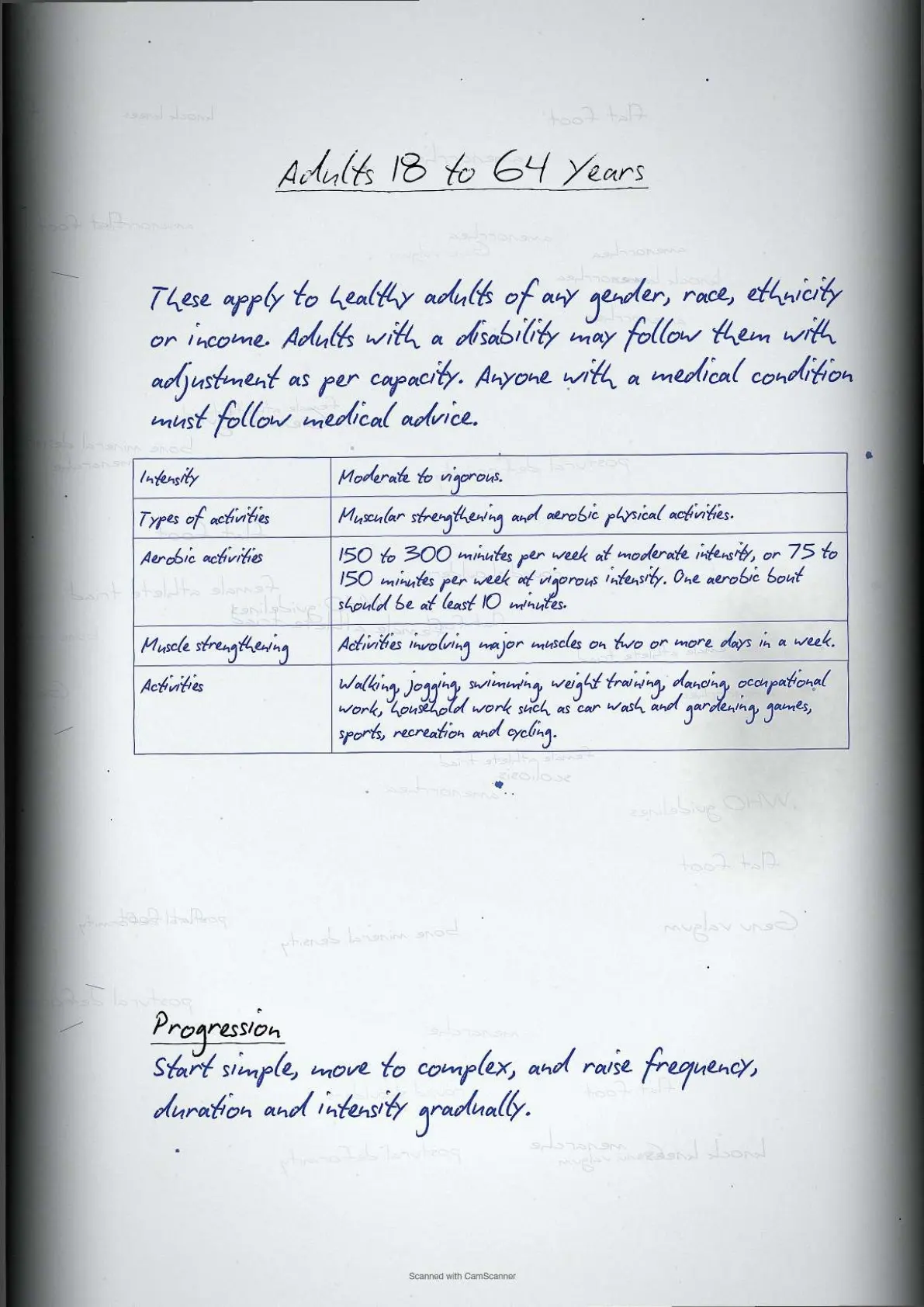
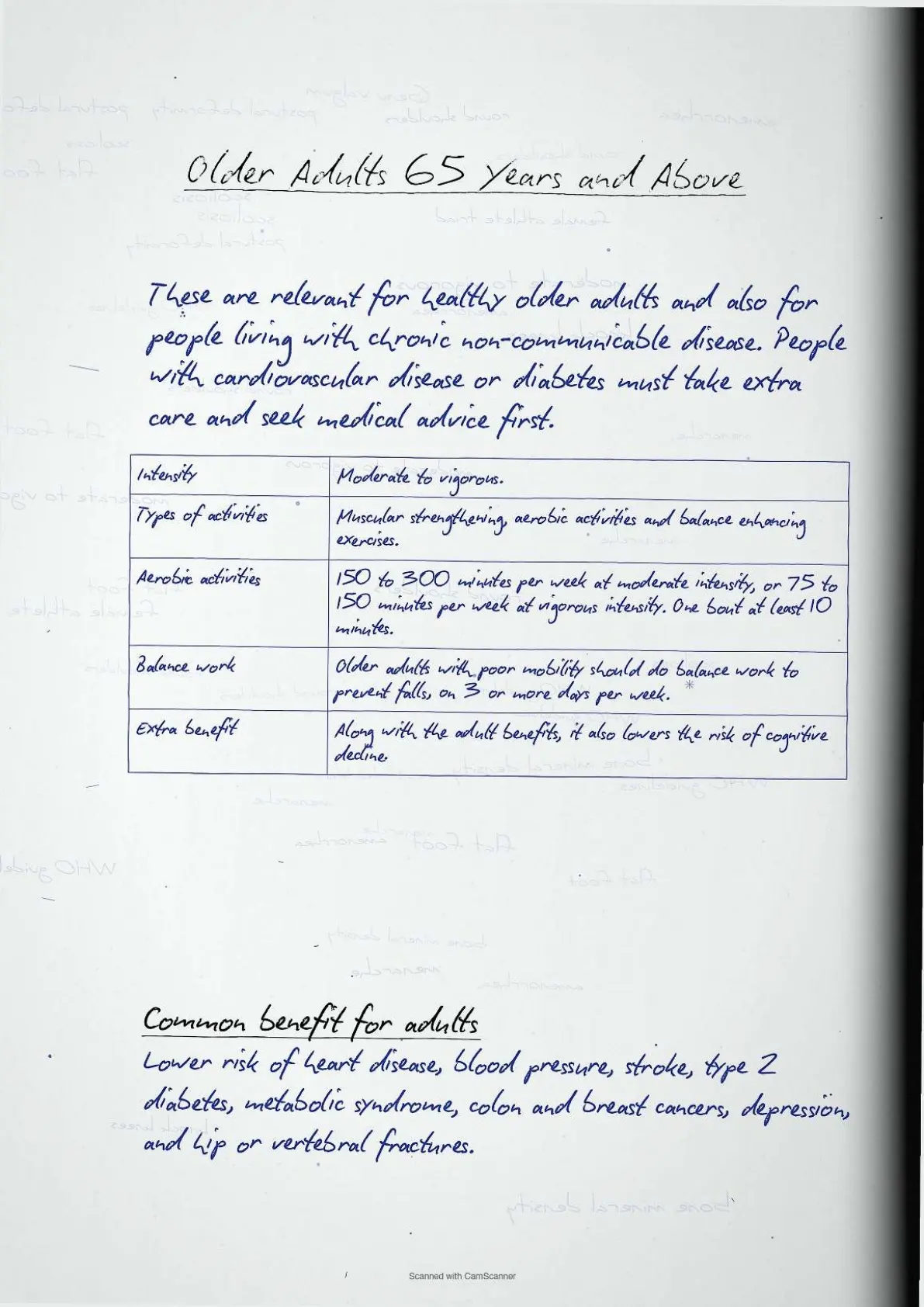
These two bands share most of their numbers, so learn them together and remember the one item that separates them. Both call for moderate to vigorous intensity and both mix aerobic work with muscle strengthening. The 65-plus band adds balance work.
| Heading | Adults 18 to 64 years | Older adults 65 years and above |
|---|---|---|
| Aerobic activity | 150 to 300 minutes a week at moderate intensity, or 75 to 150 minutes a week at vigorous intensity | Same, 150 to 300 minutes moderate or 75 to 150 minutes vigorous |
| Minimum bout | One aerobic bout should be at least 10 minutes | One aerobic bout should be at least 10 minutes |
| Muscle strengthening | Major muscle activities on two or more days a week | Major muscle activities on two or more days a week |
| Balance work | Not listed separately | Older adults with poor mobility should do balance activity on 3 or more days a week to prevent falls |
| Extra benefit listed | Lowers risk of non-communicable diseases and depression | Same, plus lowers cognitive decline |
Tip: a one-mark question often asks for the minimum vigorous-intensity duration for adults above 65. The answer is 75 minutes per week, not 150.
Intensity, Duration, Frequency and Volume: The WHO Terms Defined
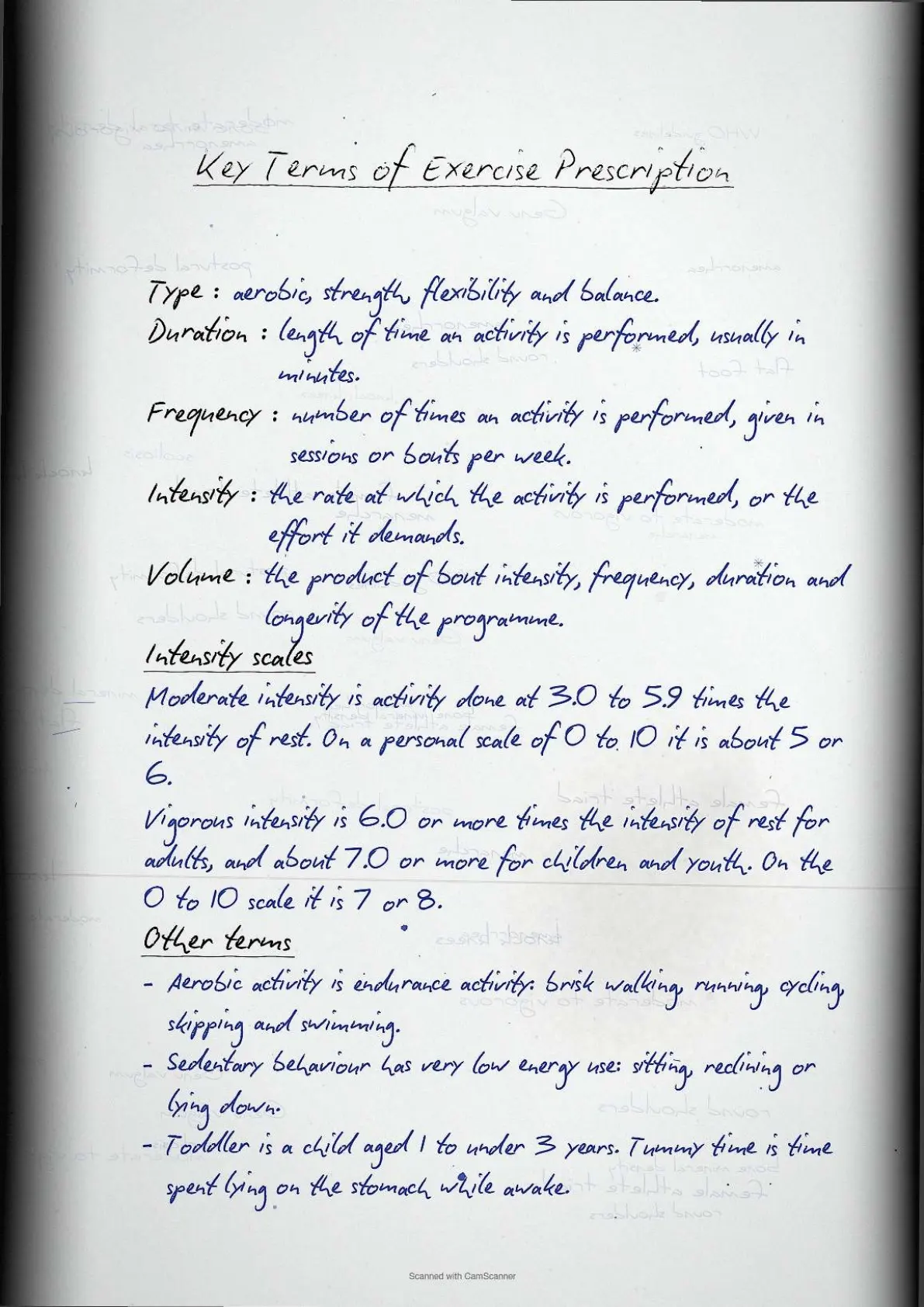
The textbook gives one-line definitions for the terms used inside the age-band tables. These come up as very short answer questions, so learn the exact wording.
| Term | Textbook definition |
|---|---|
| Type of activity | Aerobic, strength, flexibility and balance |
| Duration | Length of time an activity is performed, usually in minutes |
| Frequency | Number of times an activity is performed, usually as sessions or bouts per week |
| Intensity | The rate at which the activity is performed, or the effort needed to perform it |
| Volume | The product of bout intensity, frequency, duration and how long the programme runs |
| Moderate intensity | 3.0 to 5.9 times the intensity of rest, or 5 to 6 on a scale of 0 to 10 |
| Vigorous intensity | 6.0 or more times rest for adults, 7.0 or more for children and youth, or 7 to 8 on a scale of 0 to 10 |
| Sedentary behaviour | Very low energy use, such as sitting, reclining or lying down |
| Toddler | A child aged 1 to under 3 years, that is 12.0 to 35.9 months |
| Tummy time | Time an infant spends awake in the prone position with free movement of the limbs |
Posture Defined: Dynamic Posture, Static Posture and the Causes of Deformity
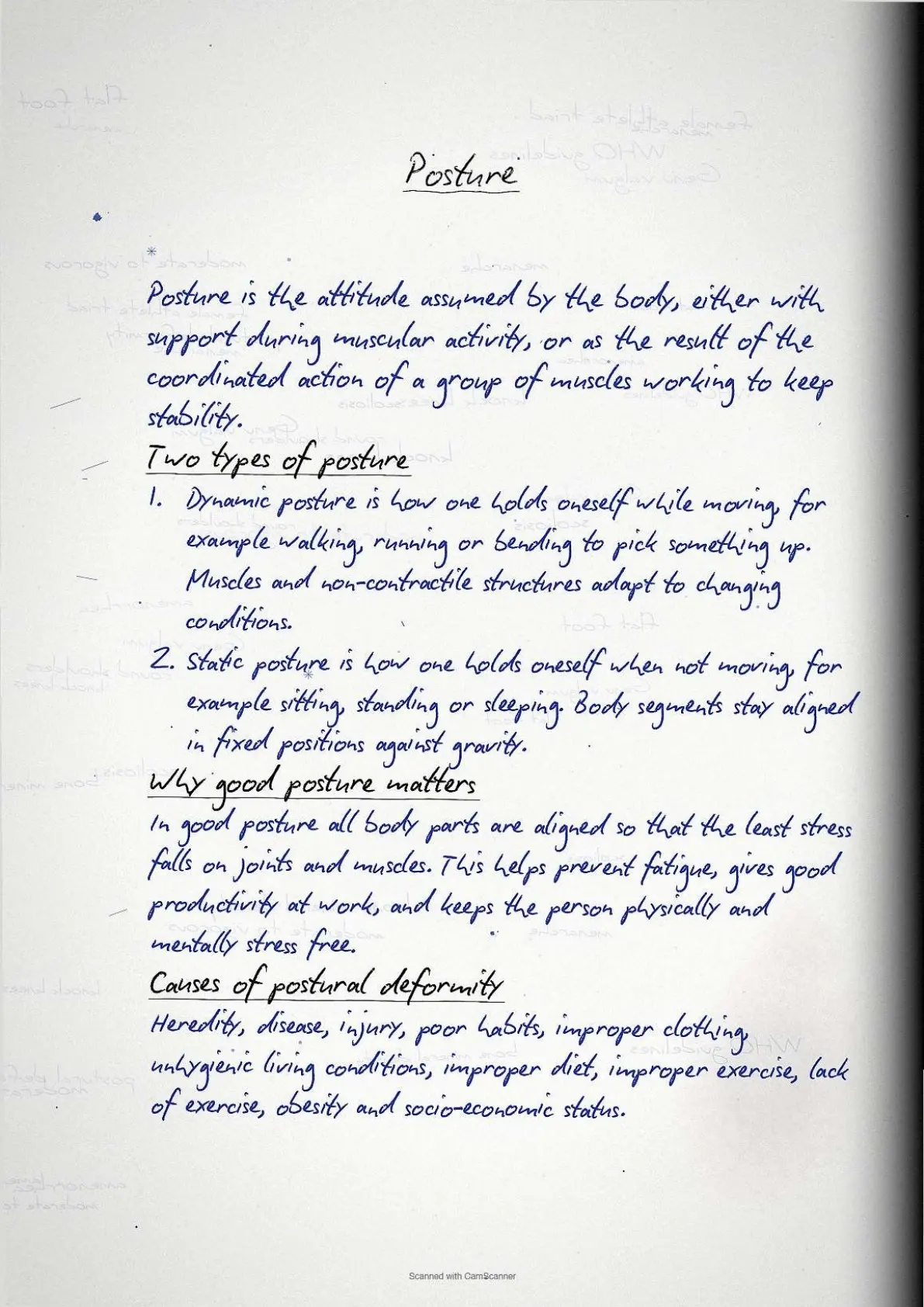
Posture is the attitude the body assumes, either with support during muscular activity or through the coordinated action of a group of muscles working to keep the body stable. The textbook then splits posture into two types.
- Dynamic posture: how a person holds themselves while moving, for example walking, running, or bending to pick something up. Muscles and non-contractile structures adapt to changing circumstances.
- Static posture: how a person holds themselves when still, for example sitting, standing or sleeping. Body segments stay aligned in fixed positions while muscle groups work against gravity.
Good posture keeps every body part aligned so the least stress falls on joints and muscles, which helps prevent fatigue. Postural deformity may be caused by heredity, disease, injury, poor habits, improper clothing, unhygienic living conditions, improper diet, improper exercise, lack of exercise, obesity and socio-economic status. That list of causes is a standard three-mark answer.
Knock Knees and Bow Legs: Two Leg Deformities and Their Corrective Measures
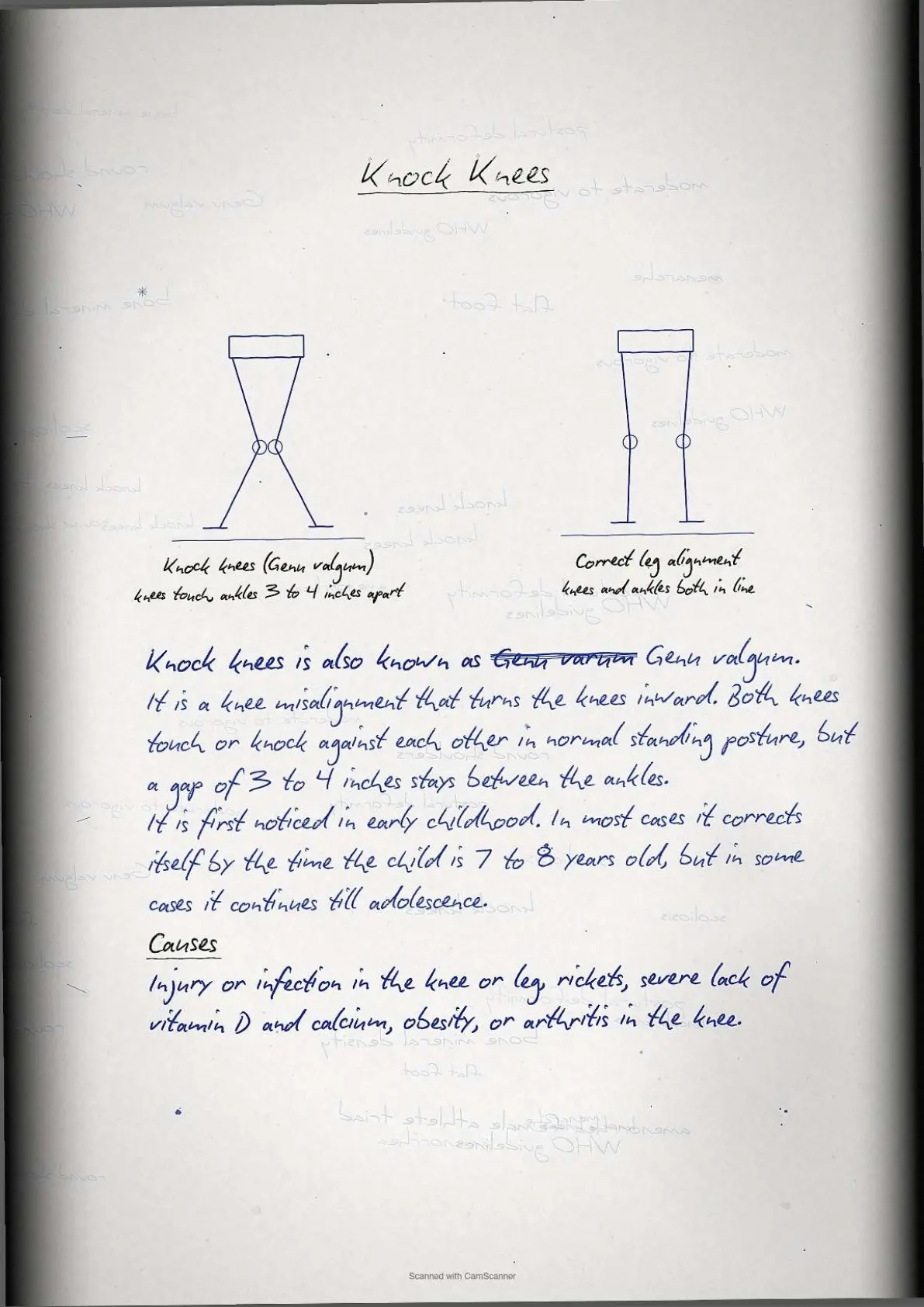
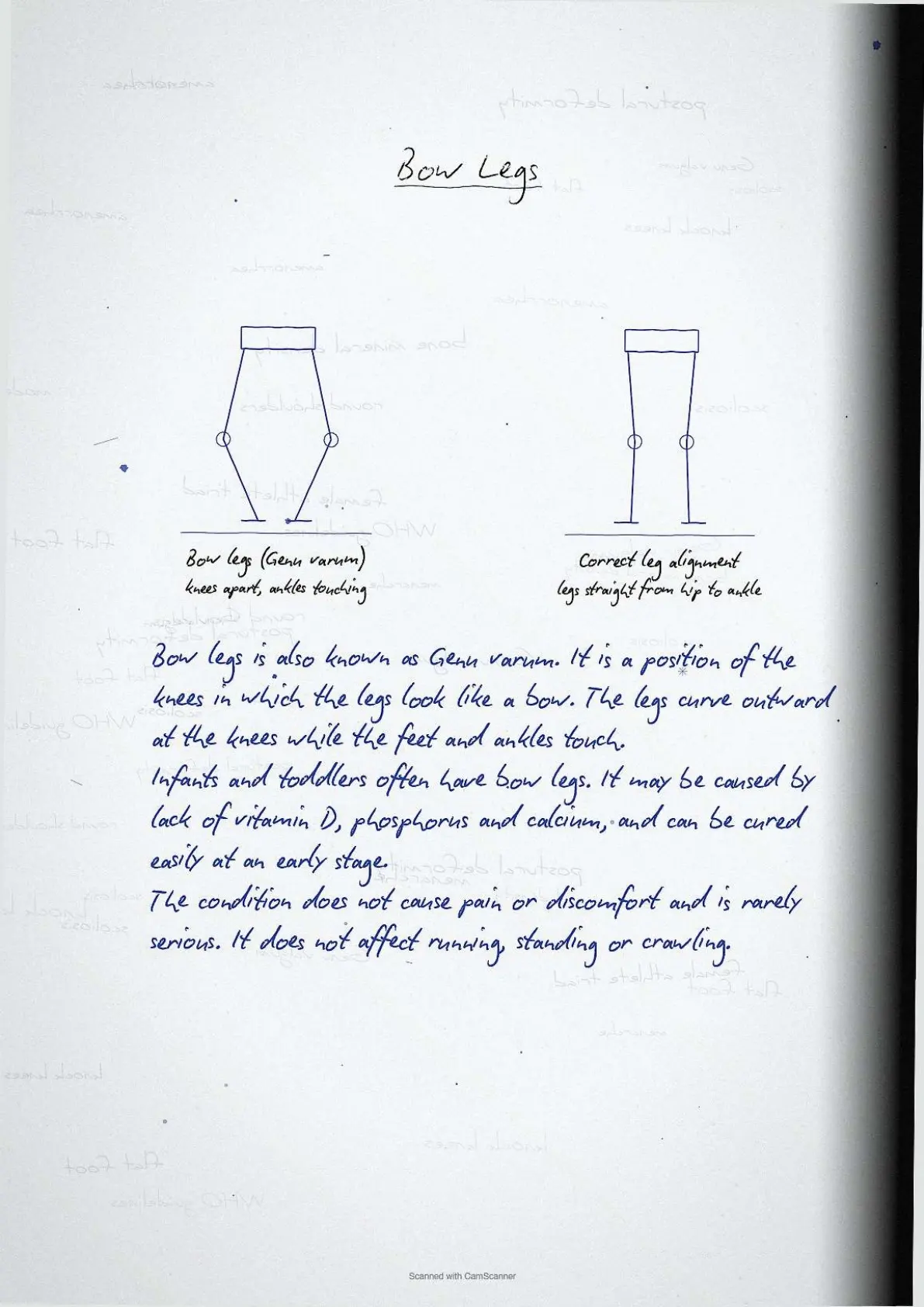
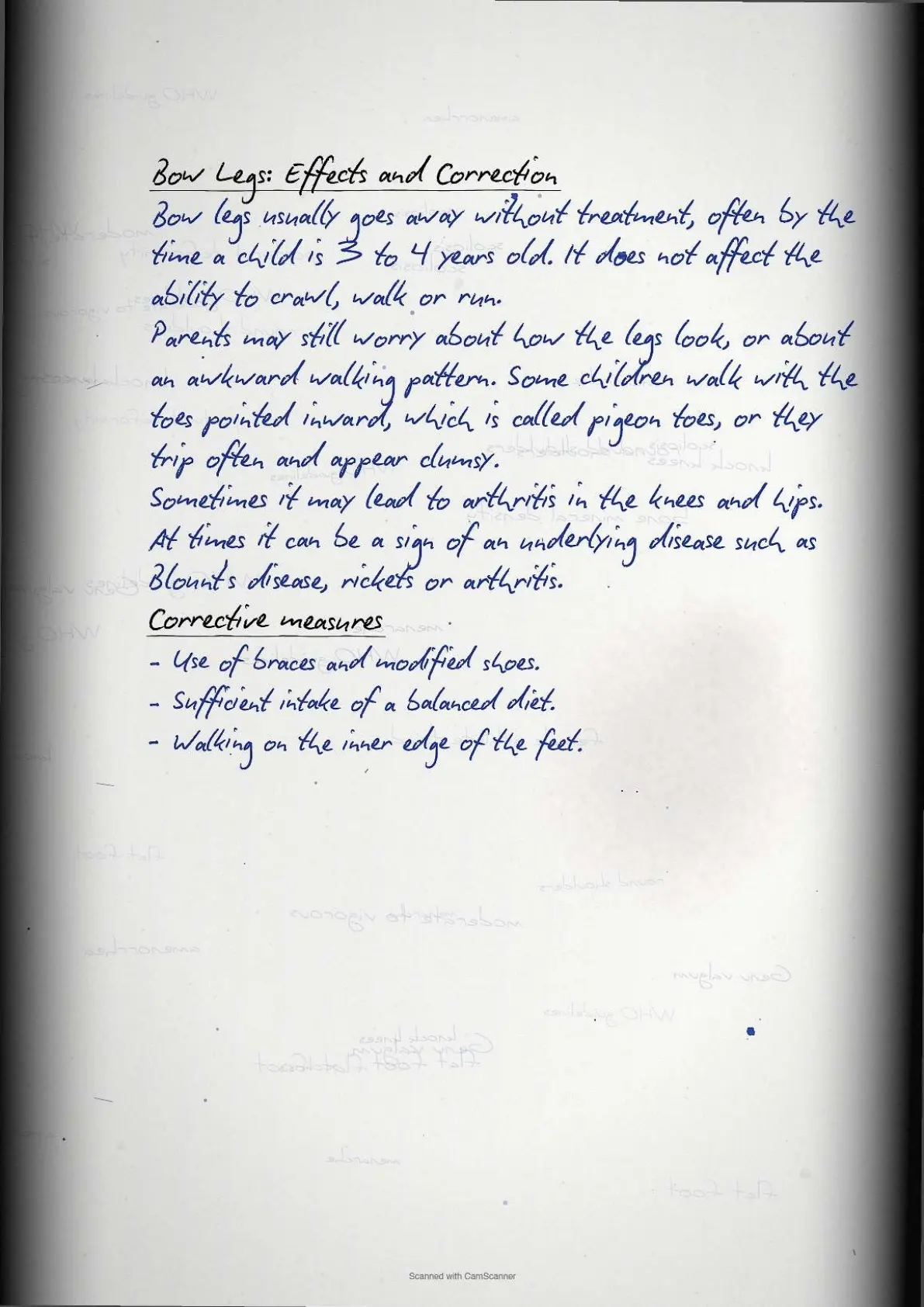
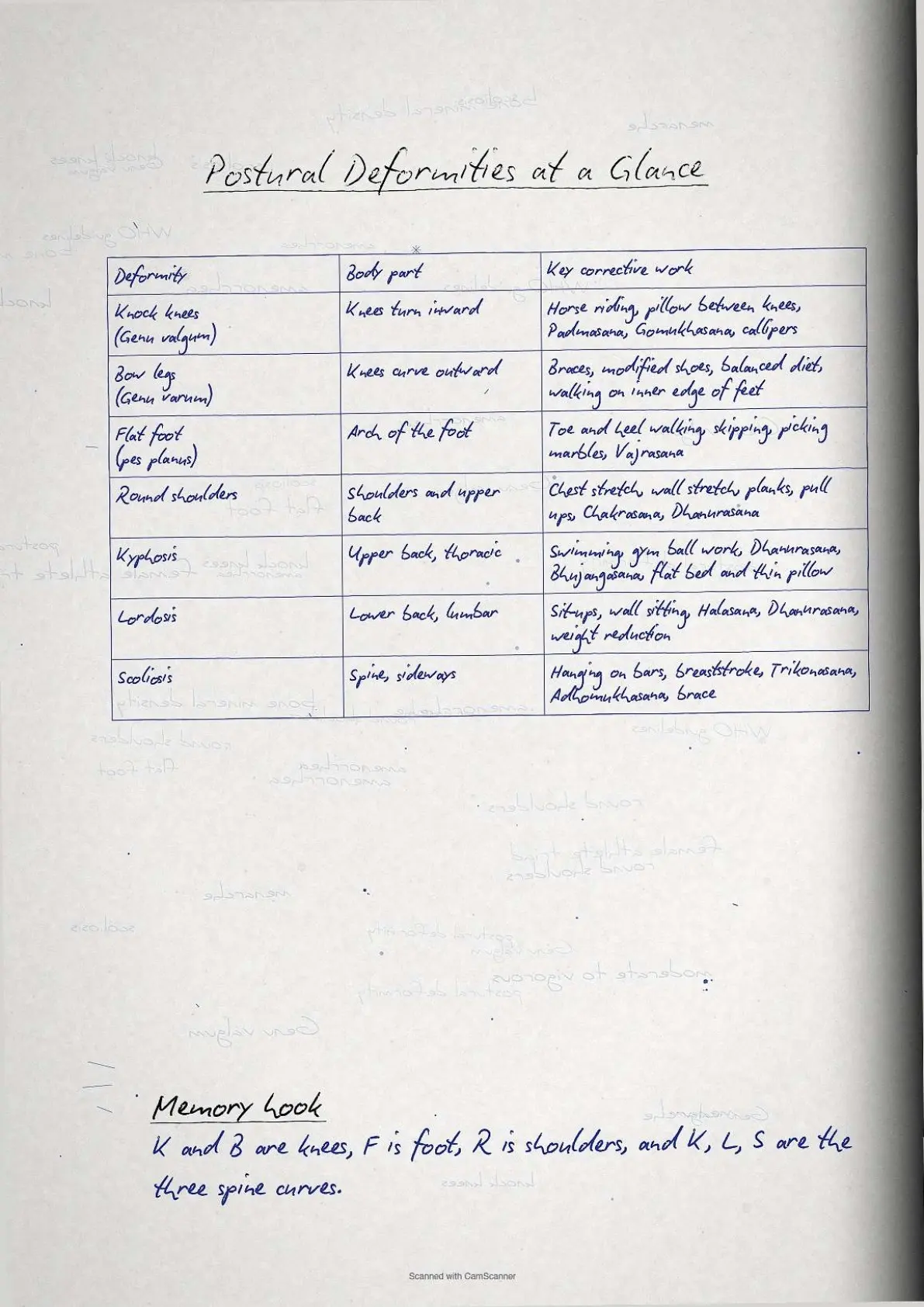
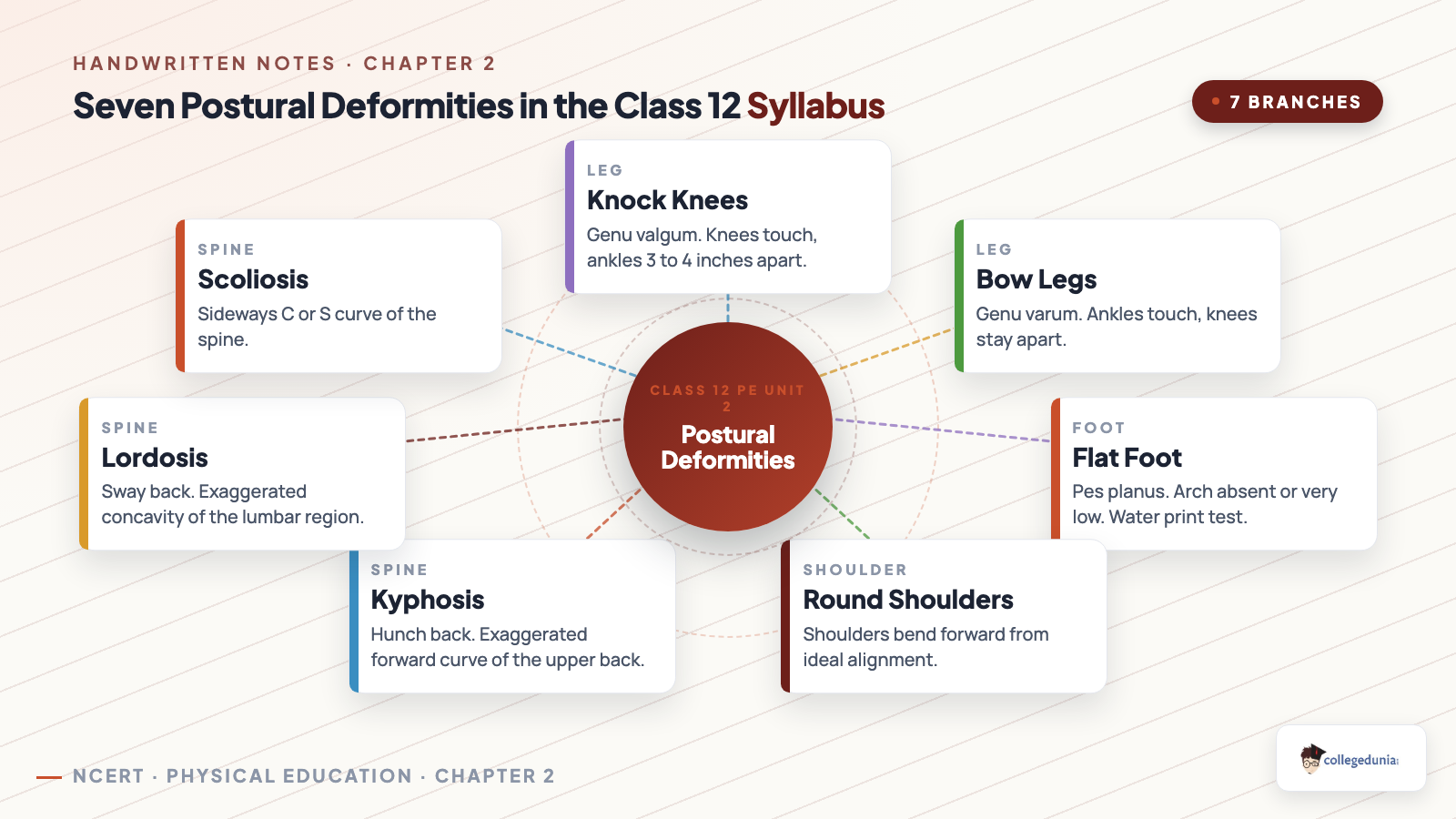
These two are opposites, and mixing them up is the single most common error in this unit. Knock knees, or Genu valgum, turns the knees inward so both knees touch in a normal standing position while a gap of 3 to 4 inches stays between the ankles. Bow legs, or Genu varum, curves the legs outward at the knees while the feet and ankles touch.
| Point | Knock knees (Genu valgum) | Bow legs (Genu varum) |
|---|---|---|
| What touches | Knees touch, ankles stay 3 to 4 inches apart | Feet and ankles touch, knees stay apart |
| Usually corrects by | 7 to 8 years of age, though it can continue to adolescence | 3 to 4 years of age, usually without treatment |
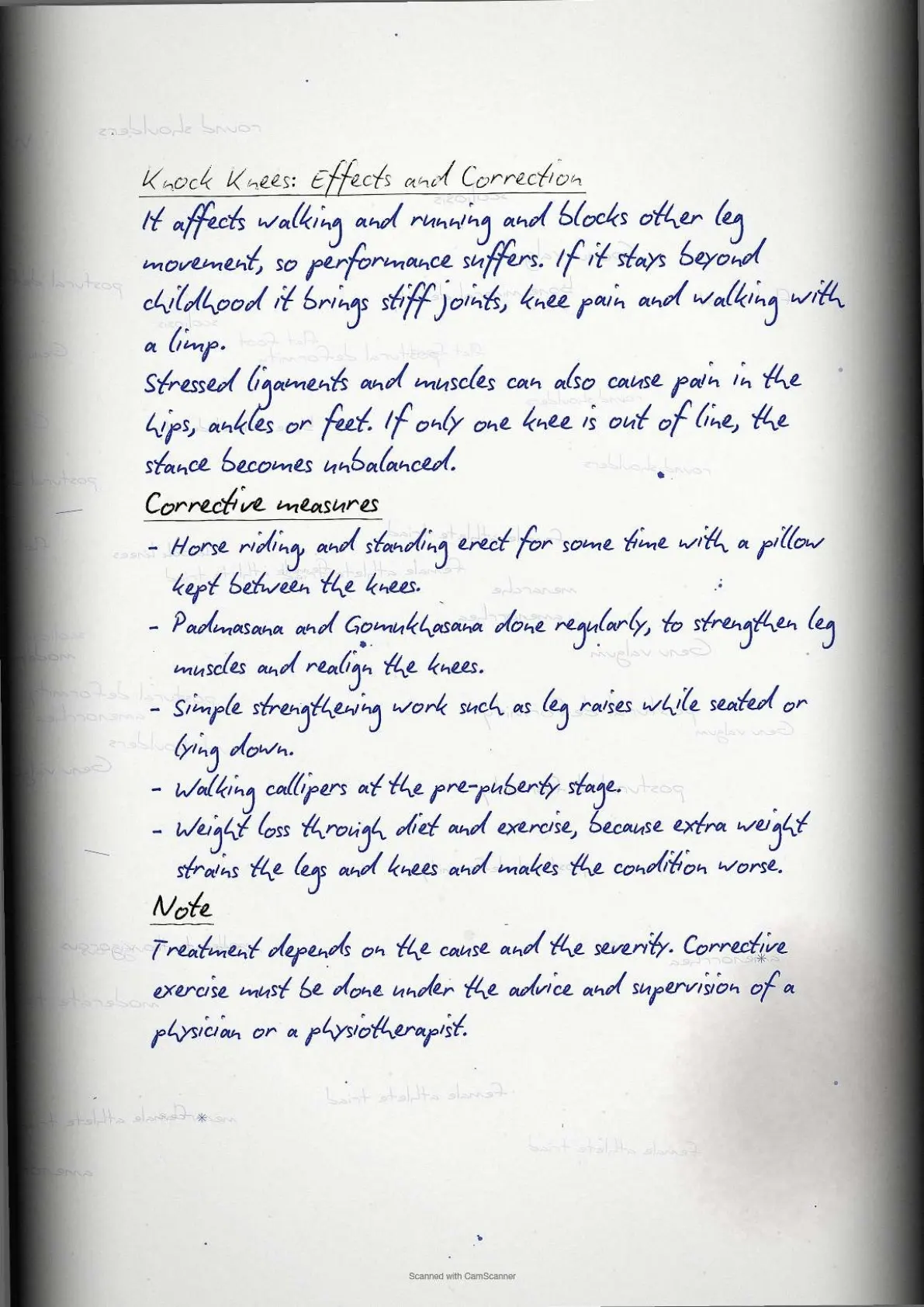
| Causes | Injury or infection in the knee, rickets, severe lack of vitamin D and calcium, obesity, arthritis | Lack of vitamin D, phosphorus and calcium. Sometimes a sign of Blount's disease, rickets or arthritis |
| Effect | Affects walking and running, causes stiff joints, knee pain and a limp | No pain or discomfort, rarely serious, may cause pigeon-toed walking |
| Corrective measures | Horse-riding, keeping a pillow between the knees and standing erect, seated or lying leg raises, walking callipers before puberty, Padmasana and Gomukhasana, weight loss | Braces and modified shoes, a balanced diet, walking on the inner edge of the feet |
Flat Foot and Round Shoulders with Their Corrective Exercises
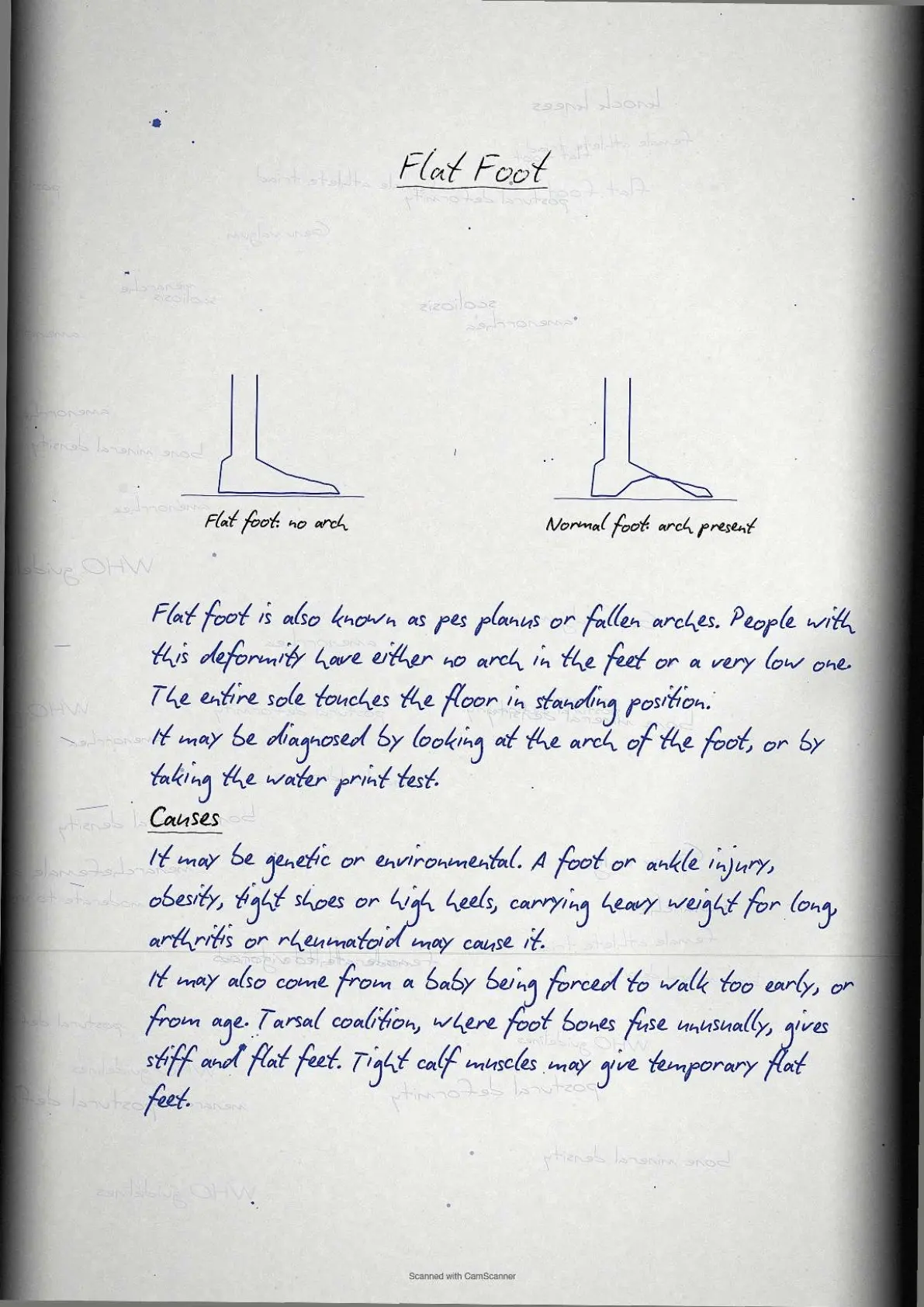
Flat foot, also called pes planus or fallen arches, is a condition where the arch of the foot is absent or very low, so the entire sole touches the floor while standing. It can be diagnosed by looking at the arch or by the water print test.
Causes include heredity, a foot or ankle injury, obesity, tight shoes or high heels, and carrying heavy weight for a long time. Arthritis, being made to walk too early, and tarsal coalition, where foot bones fuse unusually, are also listed. Tight calf muscles can cause temporary flat feet.
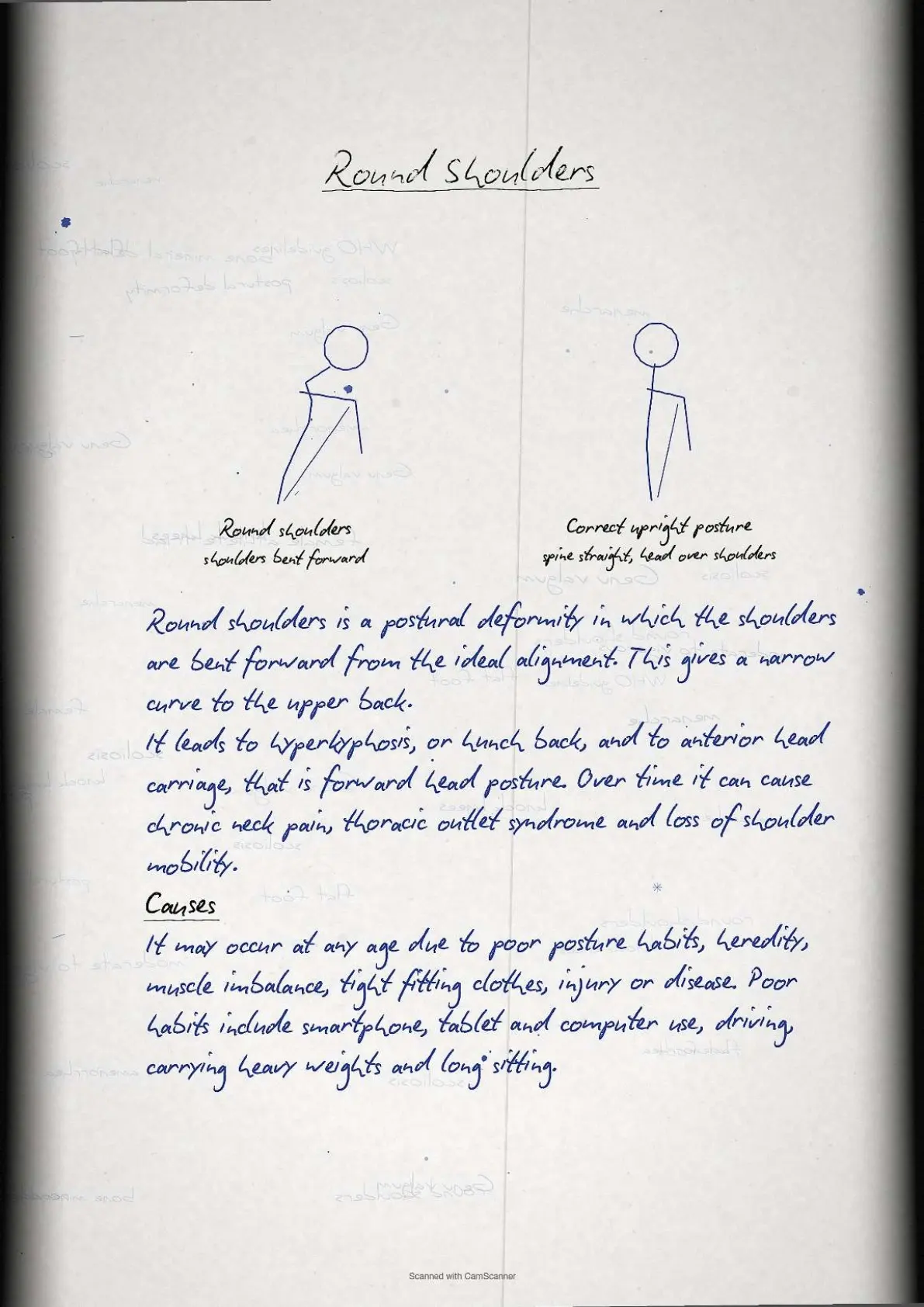
Round shoulders is a deformity in which the shoulders bend forward from ideal alignment, giving a narrow curve to the upper back. It can lead on to hyperkyphosis and forward head posture, and over time to chronic neck pain and loss of shoulder mobility. Causes include poor posture habits from smartphone, tablet and computer use, driving, carrying heavy weights, long sitting, heredity, muscle imbalance and tight fitting clothes.
| Deformity | Corrective measures from the textbook |
|---|---|
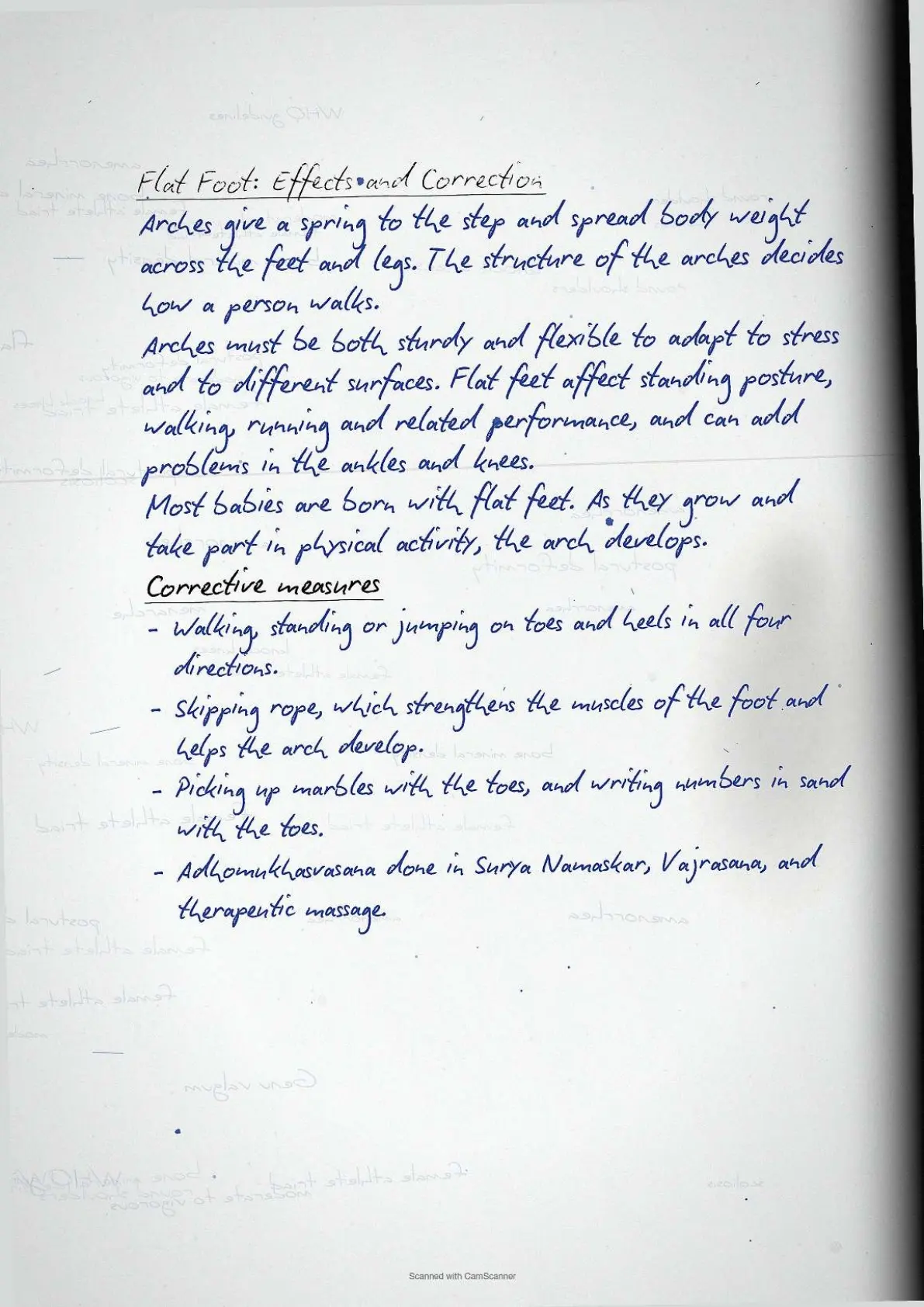
| Flat foot | Walking, standing and jumping on toes and heels in all four directions, skipping rope, picking up marbles with the toes, writing numbers in sand with the toes, Adhomukhsavasana in Surya Namaskar, Vajrasana, therapeutic massage |
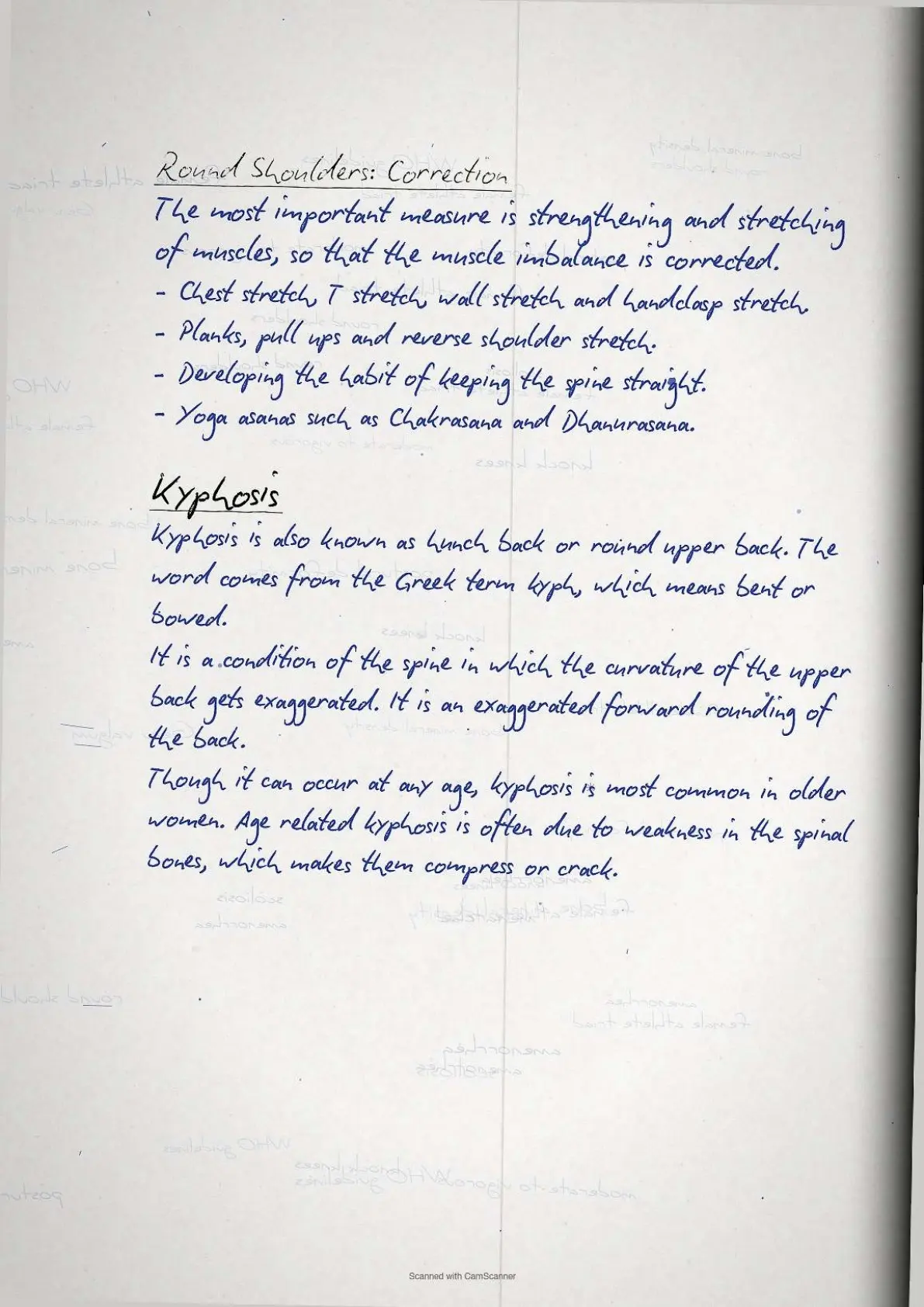
| Round shoulders | Chest stretch, T stretch, wall stretch, handclasp stretch, planks, pull ups, reverse shoulder stretch, keeping the spine straight as a habit, Chakrasana and Dhanurasana |
Kyphosis, Lordosis and Scoliosis: The Three Spinal Deformities Every Student Must Know
All three are spinal, all three have Greek roots the textbook spells out, and each affects a different region or plane. Learn the Greek word, the region and one corrective asana for each, and a five-mark answer writes itself.
| Deformity | Greek root and meaning | What happens | Corrective measures |
|---|---|---|---|
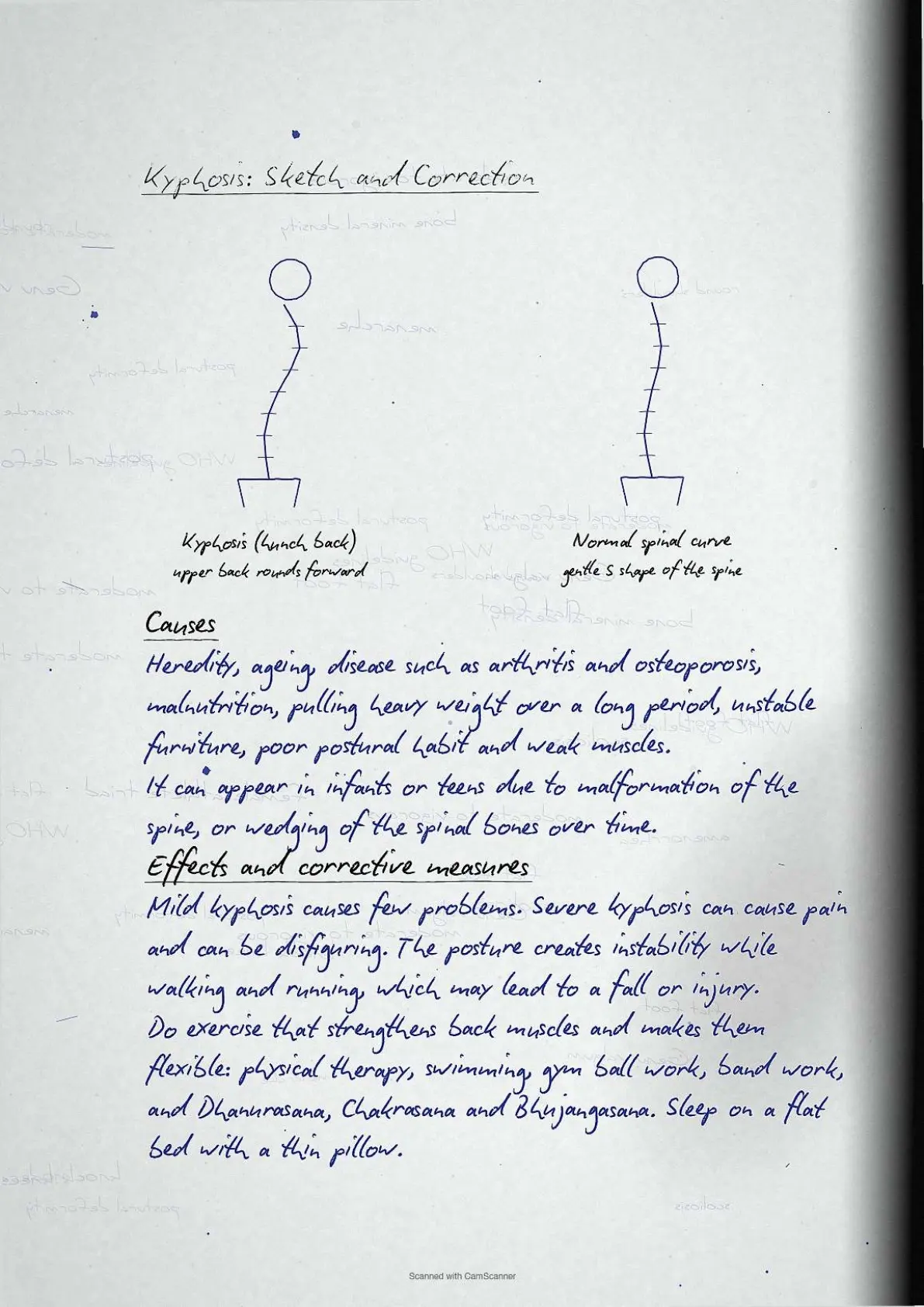
| Kyphosis | kyph, bent or bowed | Also called hunch back. The curve of the upper back becomes exaggerated into a forward rounding. Most common in older women. | Back strengthening exercise, physical therapy, swimming, gym ball and band exercises, Dhanurasana, Chakrasana, Bhujangasana, a flat bed with a thin pillow |
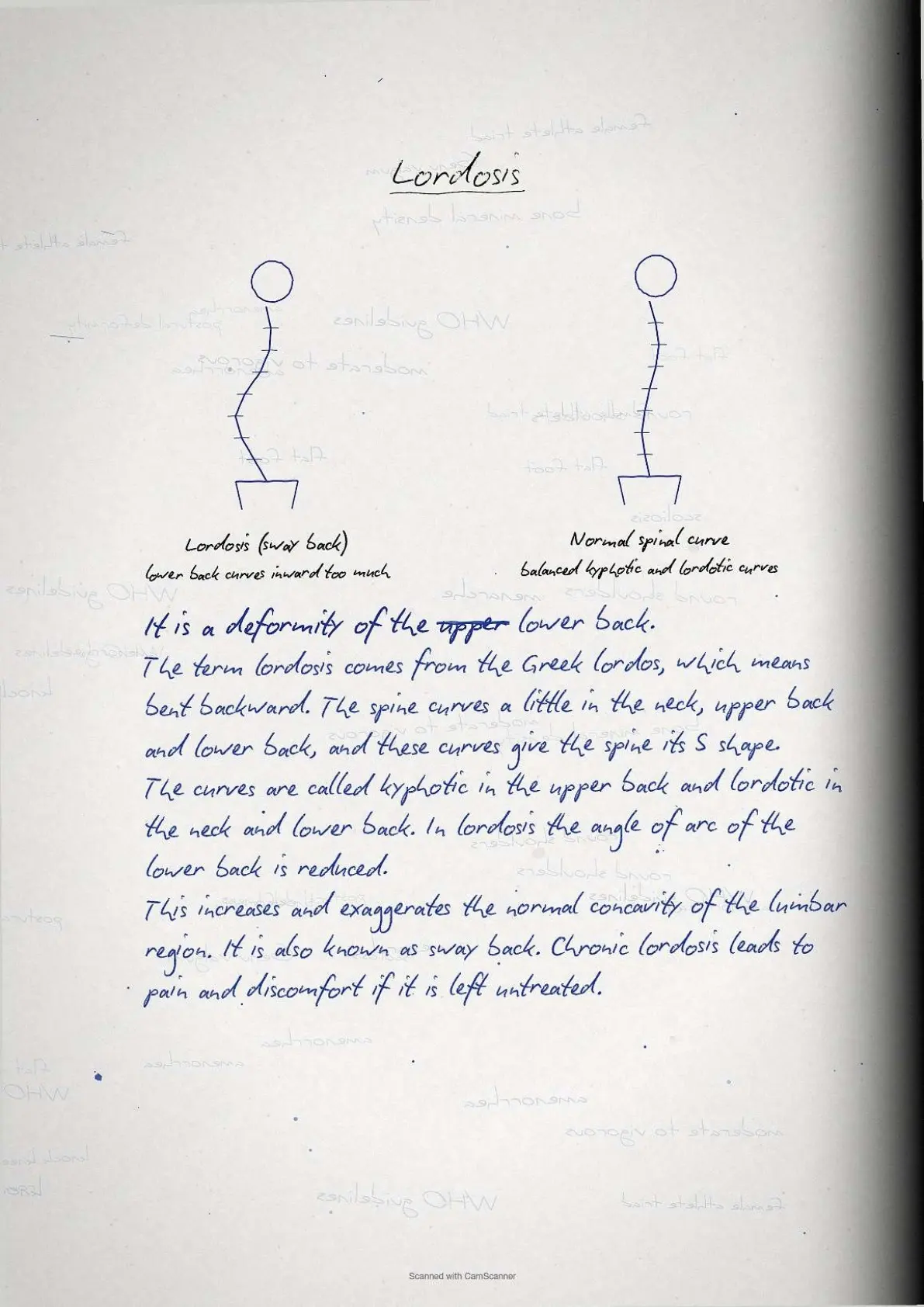
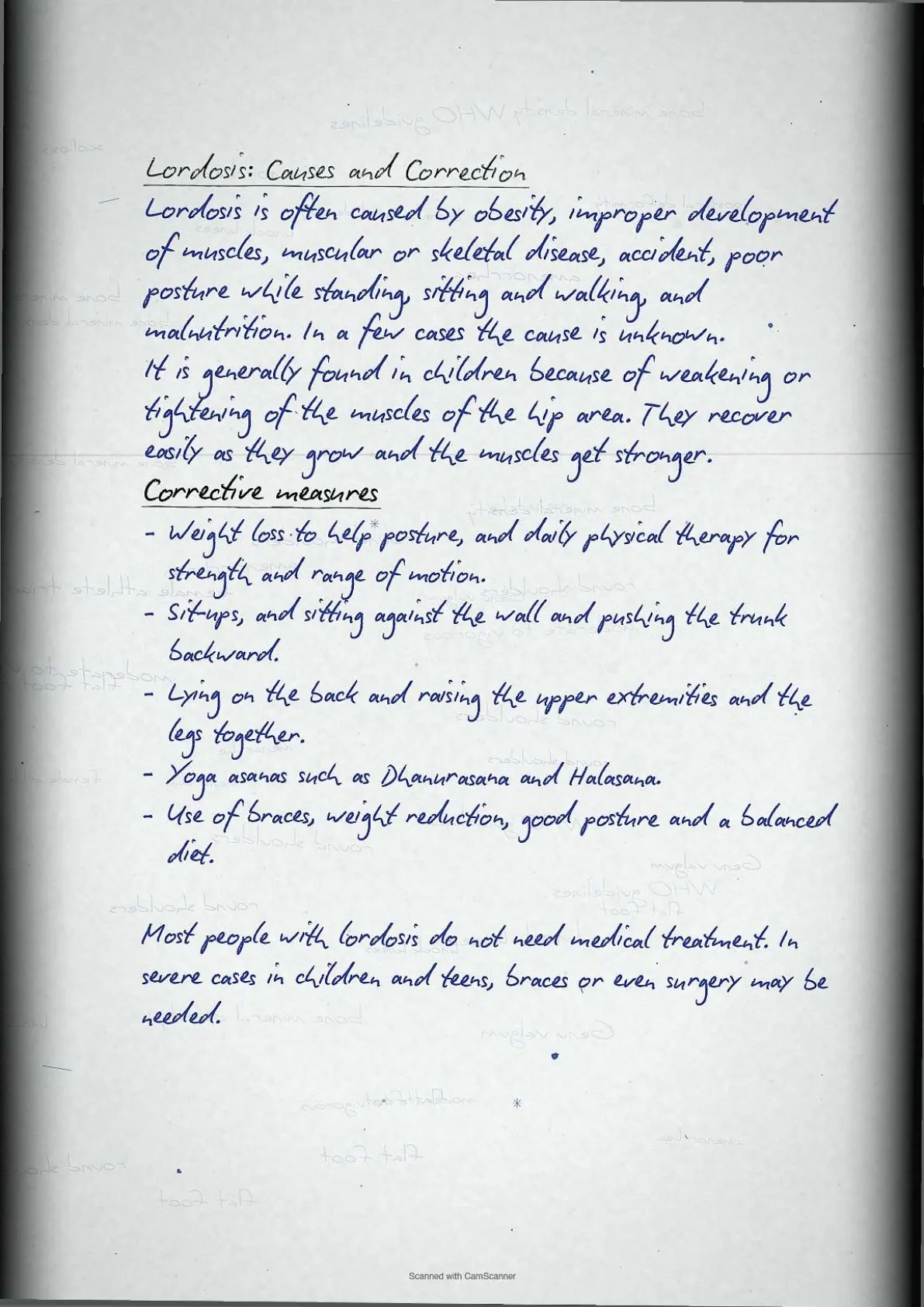
| Lordosis | lordos, bent backward | Also called sway back. The angle of the arc of the lower back is reduced, so the normal concavity of the lumbar region is exaggerated. | Weight loss, physical therapy, sit-ups, sitting against a wall and pushing the trunk backward, lying on the back and raising the arms and legs together, Dhanurasana, Halasana, braces in severe cases |
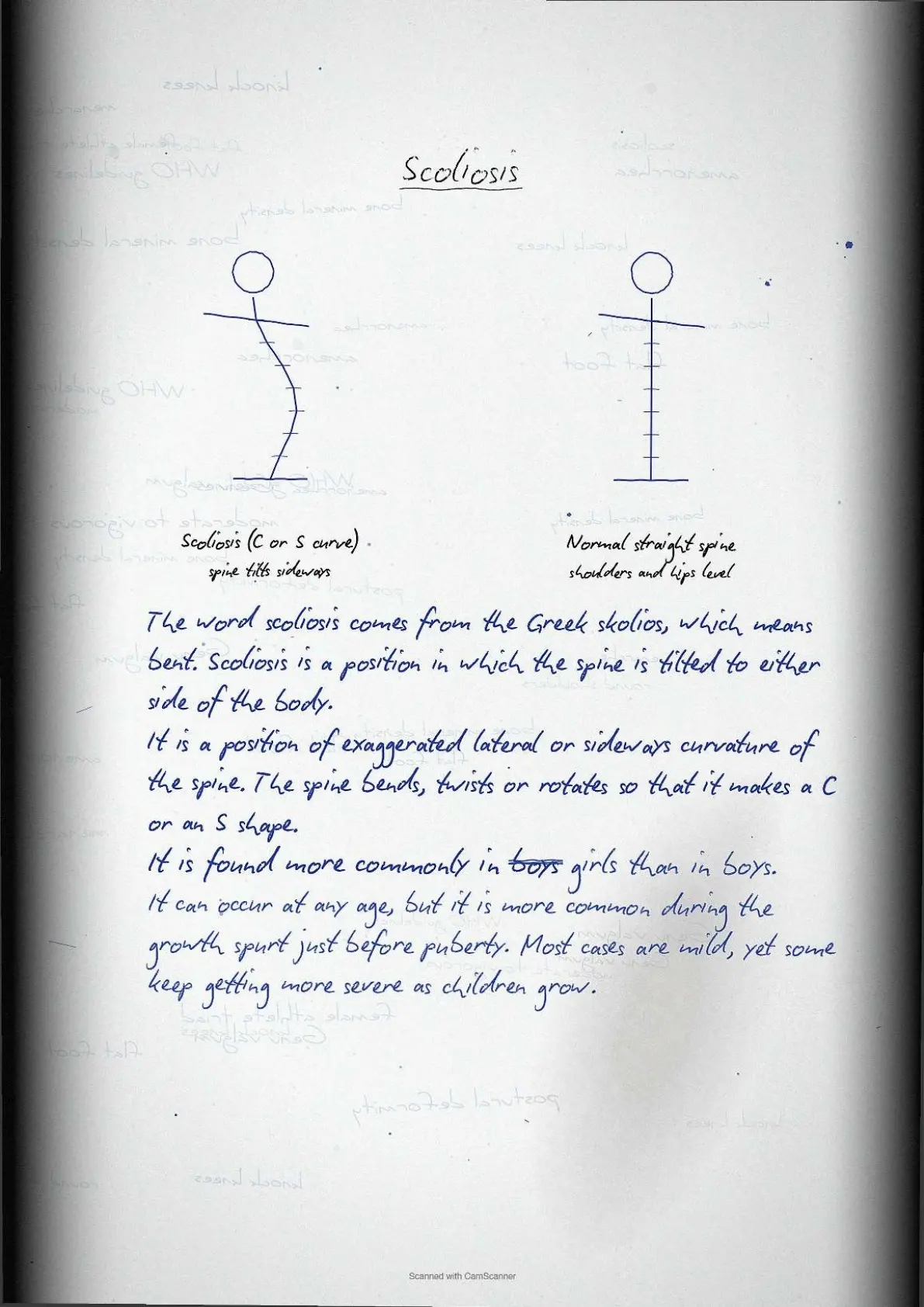
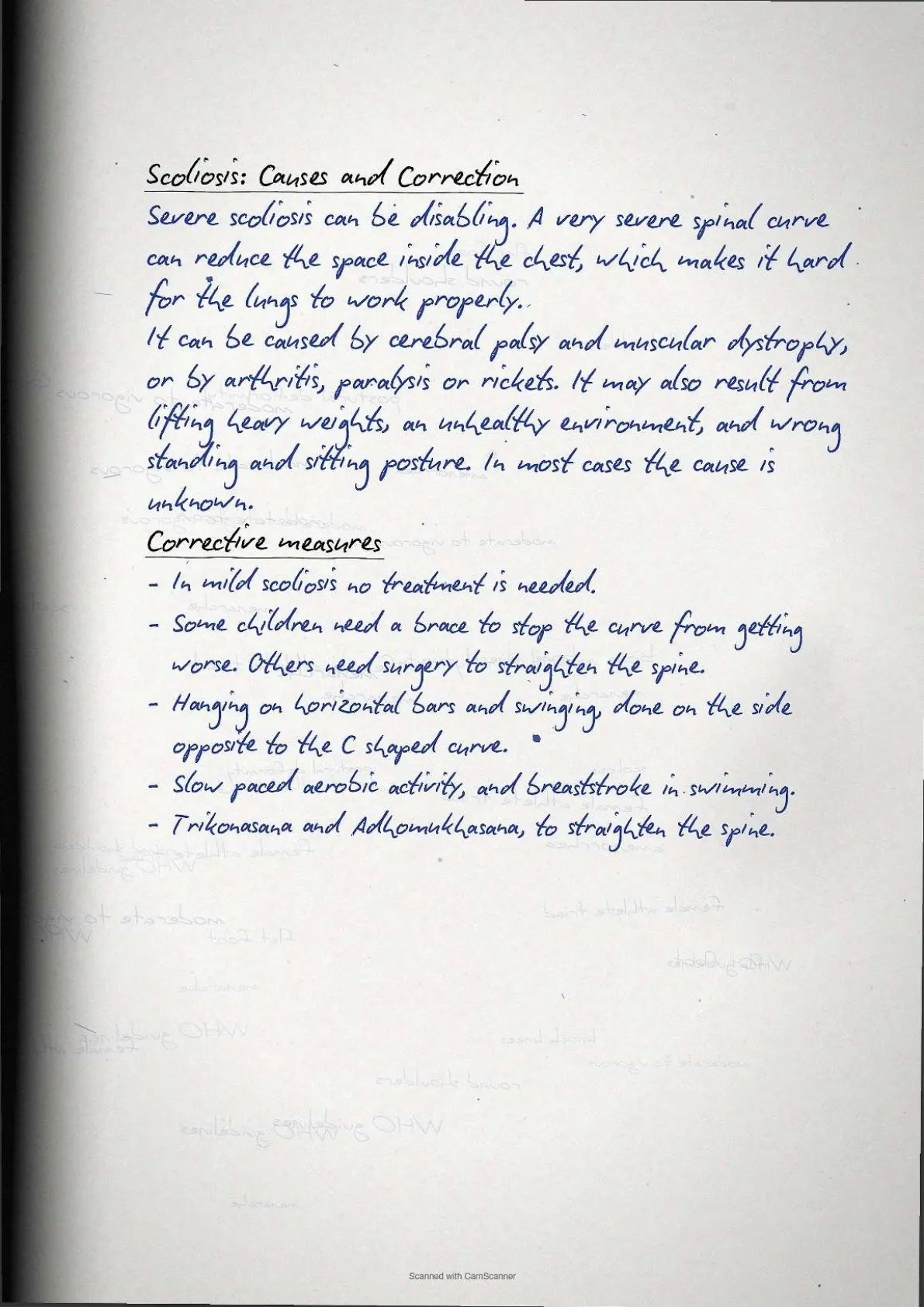
| Scoliosis | skolios, bent | The spine tilts sideways, bending, twisting or rotating into a C or an S shape. More common in girls than boys, and most common during the growth spurt just before puberty. | Brace or surgery in severe cases, hanging and swinging on a horizontal bar on the side opposite the C curve, slow aerobic activity, breaststroke swimming, Trikonasana, Adhomukhasana |
Kyphosis and lordosis both change a front-to-back curve. Scoliosis is the only one of the three that curves the spine sideways. Severe scoliosis can reduce the space inside the chest and make it harder for the lungs to work properly.
Women Participation in Sports in India: History, Barriers and Government Schemes
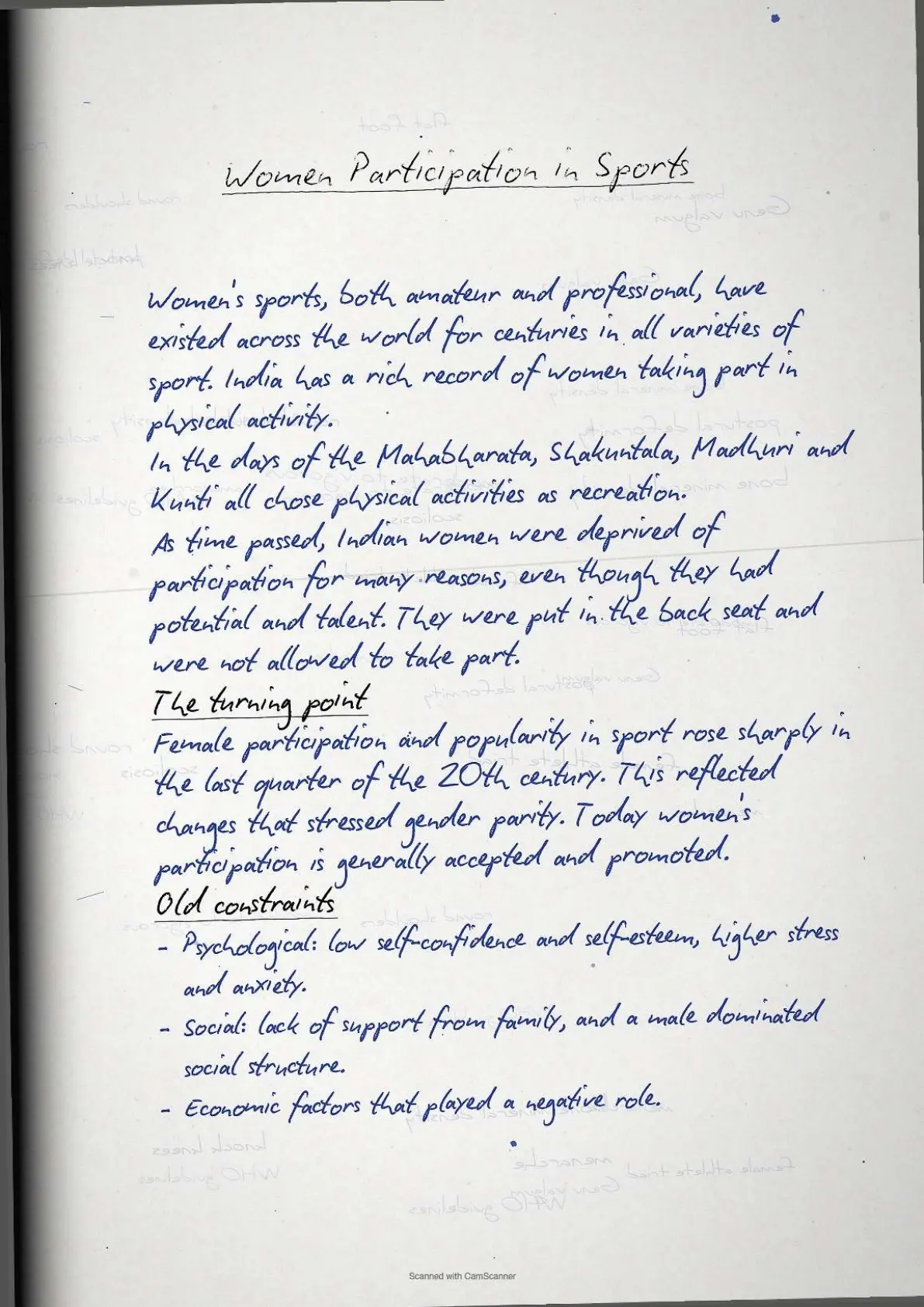
The textbook traces a long record of women in Indian sport, going back to the days of the Mahabharata when Shakuntala, Madhuri and Kunti chose physical activity as recreation. Participation and popularity then rose sharply in the last quarter of the 20th century as gender parity became a stated goal.
The chapter is direct about what held participation back and what is being done about it. The barriers are grouped into three types.
- Psychological constraints: low self-confidence and self-esteem, and higher levels of stress and anxiety.
- Social causes: lack of support or positive reinforcement from the family, and a social structure led mainly by men.
- Economic factors: the cost of equipment, training and travel.
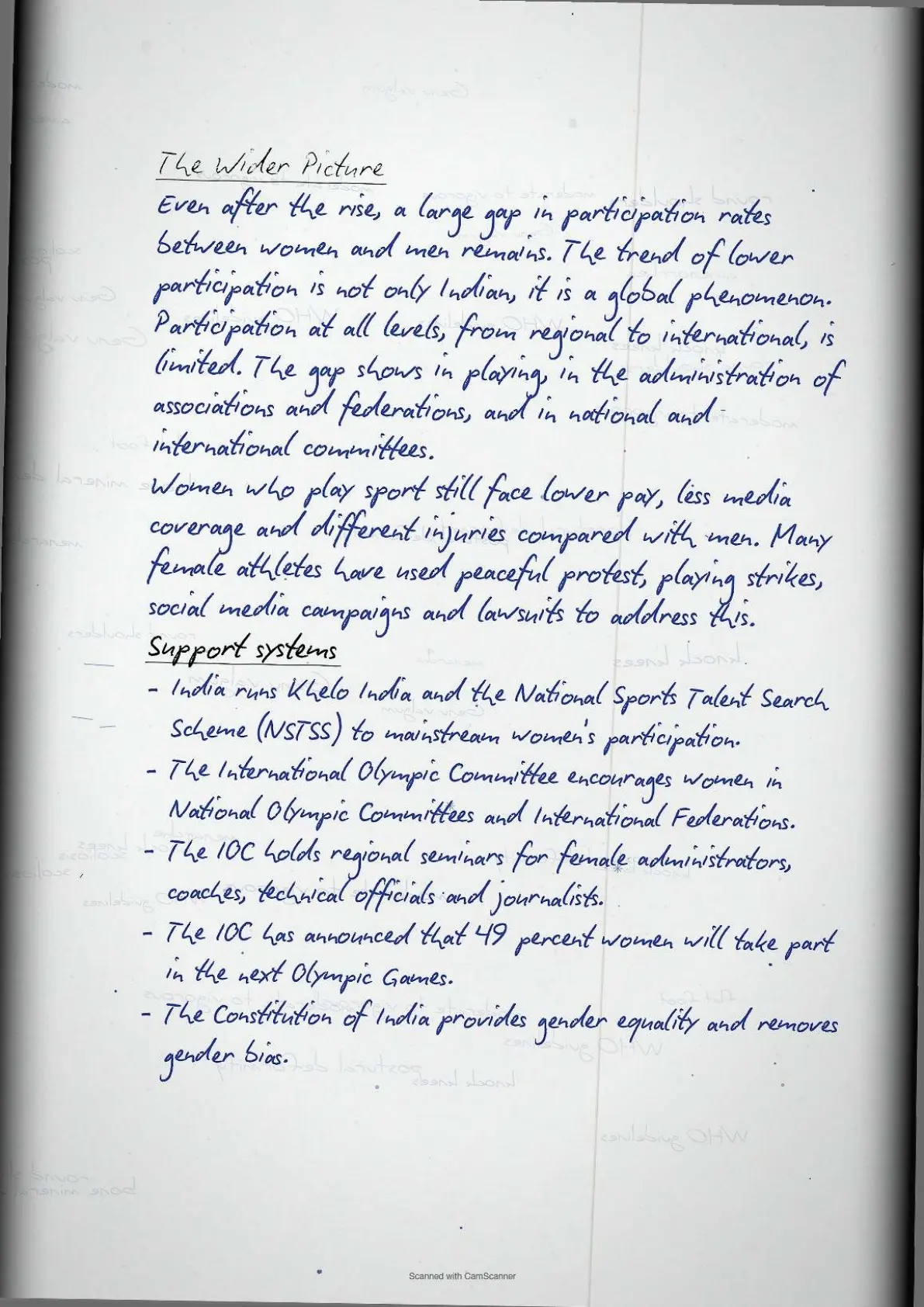
Two national schemes are named as the response: Khelo India and the National Sports Talent Search Scheme (NSTSS). Globally, the International Olympic Committee promotes participation in National Olympic Committees and International Federations, and runs regional seminars for female administrators, coaches, technical officials and journalists. The IOC has announced that 49% women will take part in the next Olympic Games. The Constitution of India also provides for gender equality and the removal of gender bias.
Physical, Psychological and Social Benefits of Women Participation in Sports
This is a guaranteed long-answer question, and the textbook groups the benefits into exactly three heads with named sub-points under each. Write the head, then the sub-points, and the marker can tick straight down the page.
| Group | Named benefits |
|---|---|
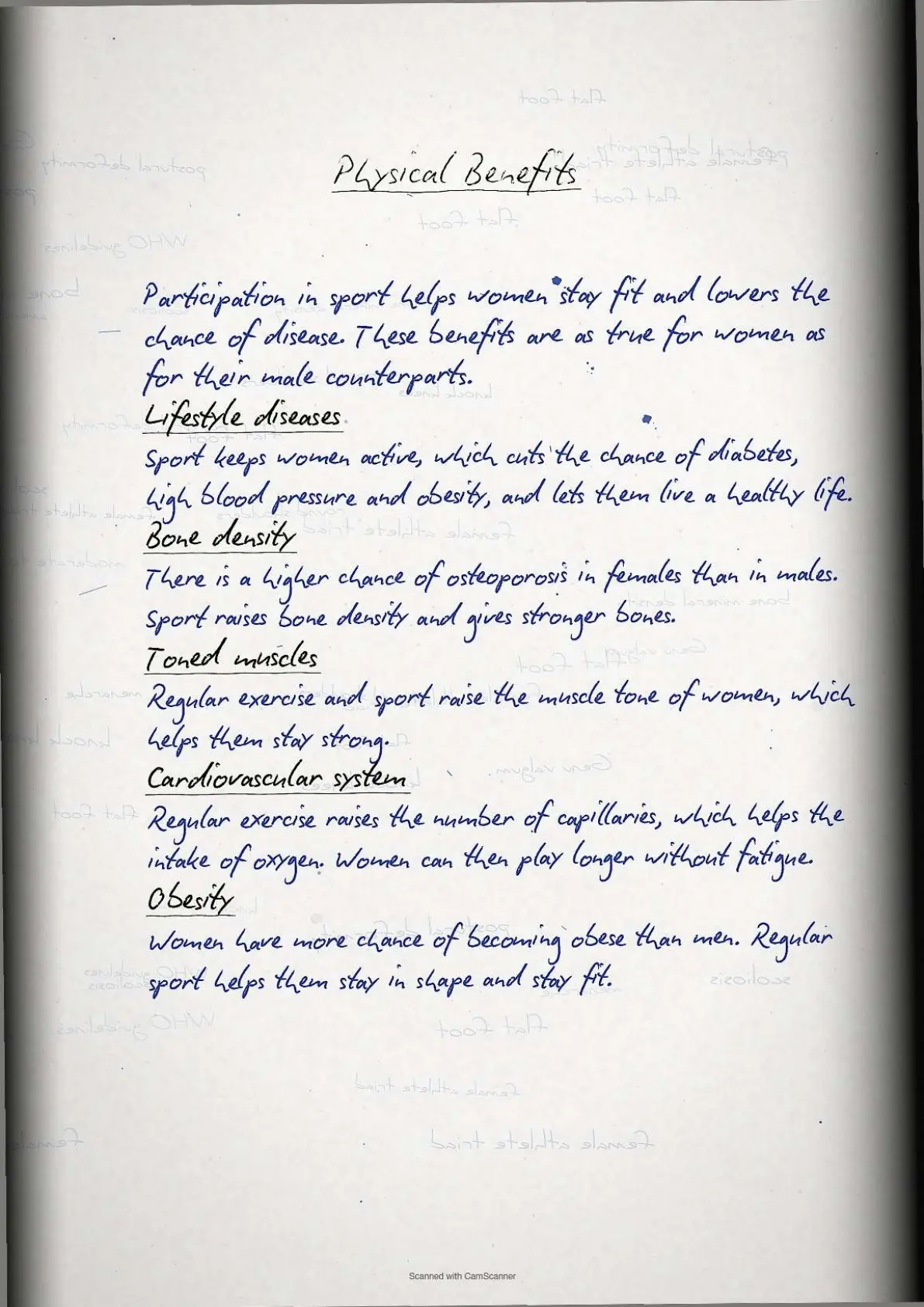
| Physical benefits | Lifestyle diseases (lower risk of diabetes, high blood pressure and obesity), bone density (women have a higher chance of osteoporosis, so sport builds stronger bones), toned muscles, cardiovascular system (more capillaries, better oxygen intake, less fatigue), obesity control |
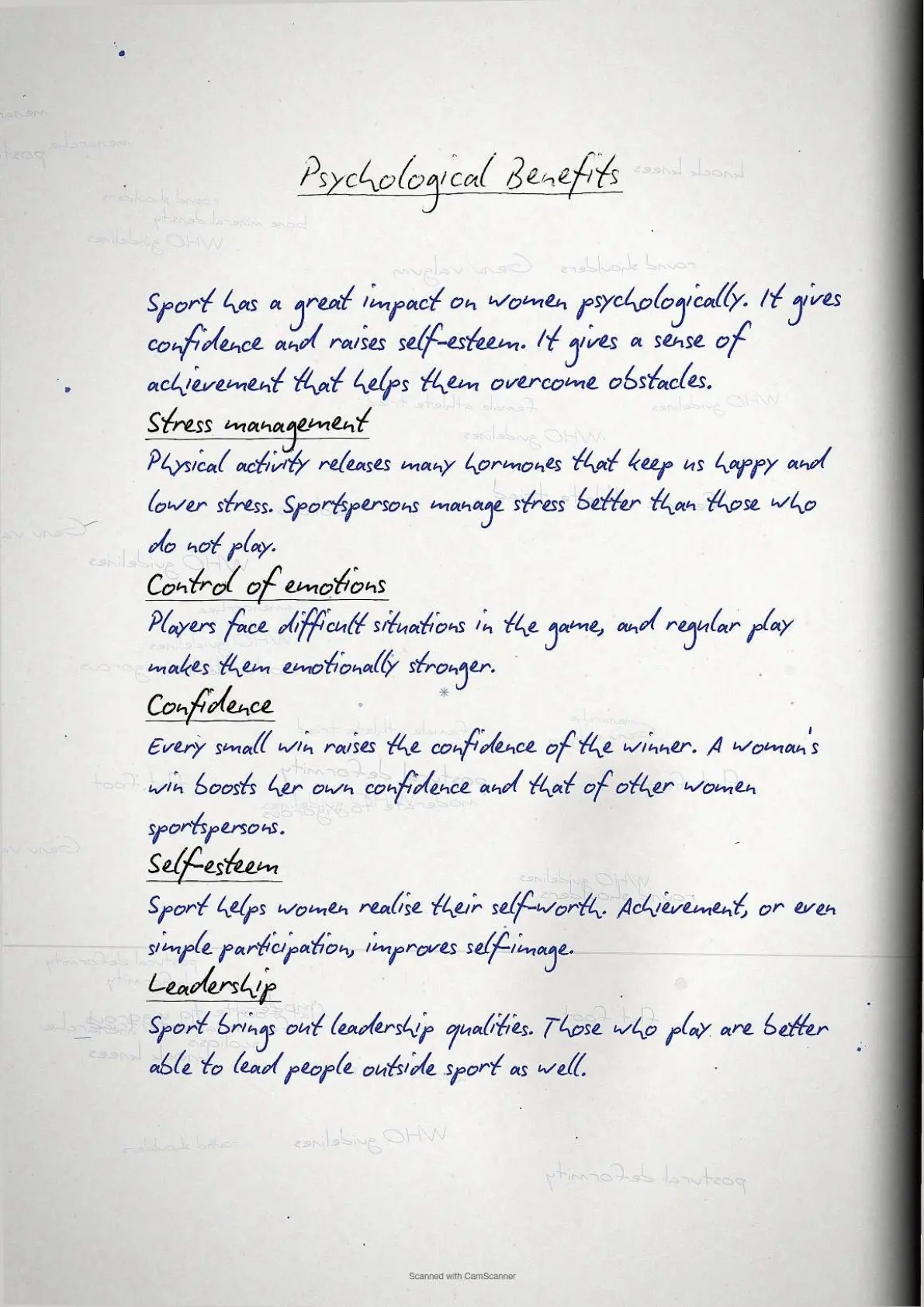
| Psychological benefits | Stress management, control over emotions, confidence, self-esteem, leadership |
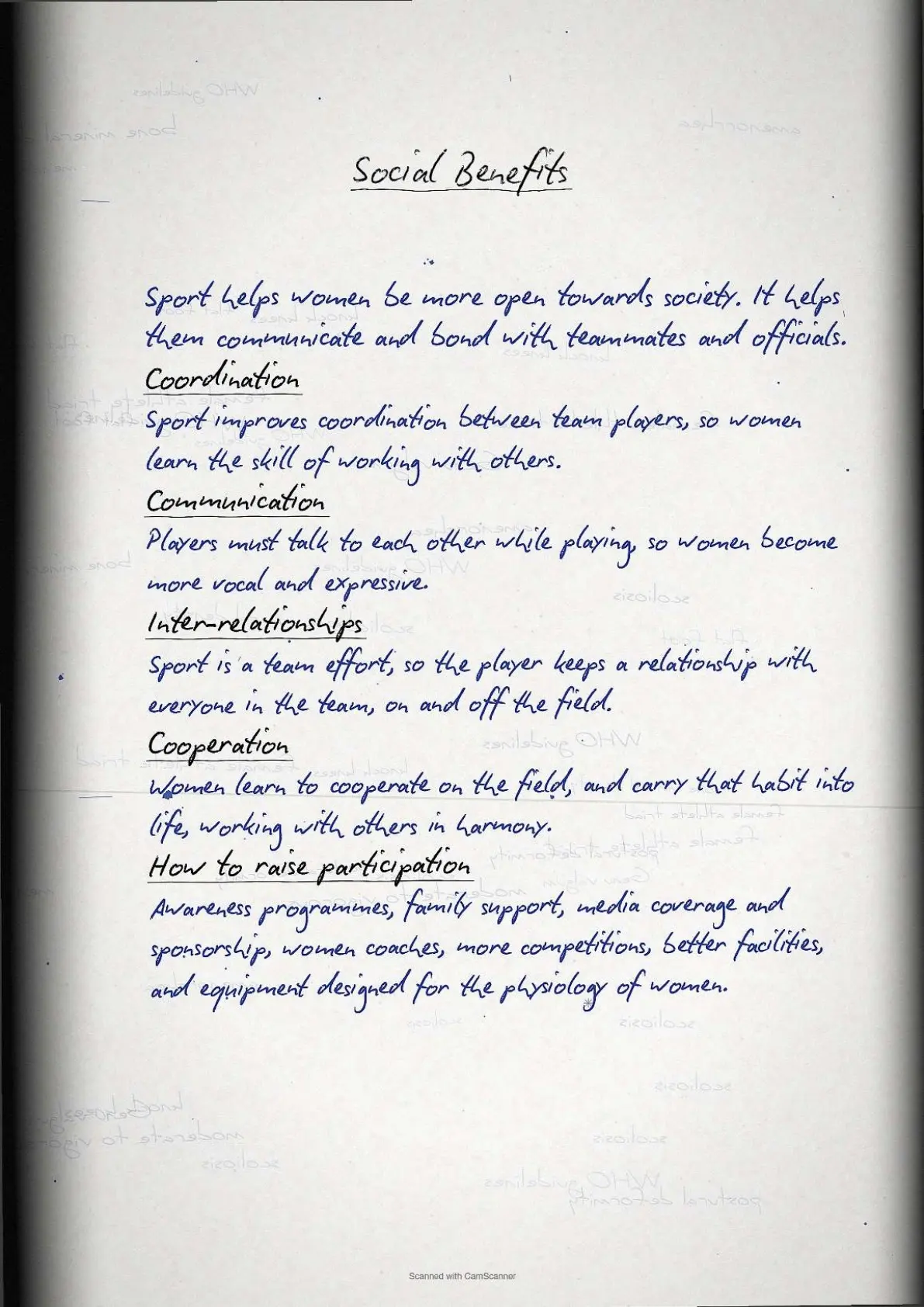
| Social benefits | Coordination, communication, inter-relationships, cooperation |
The chapter closes this section with a list of what would raise participation further: awareness programmes, family support for girls, media coverage and sponsorship, sports equipment designed around the physiology of women, the appointment of women coaches, more competition opportunities, and better facilities.
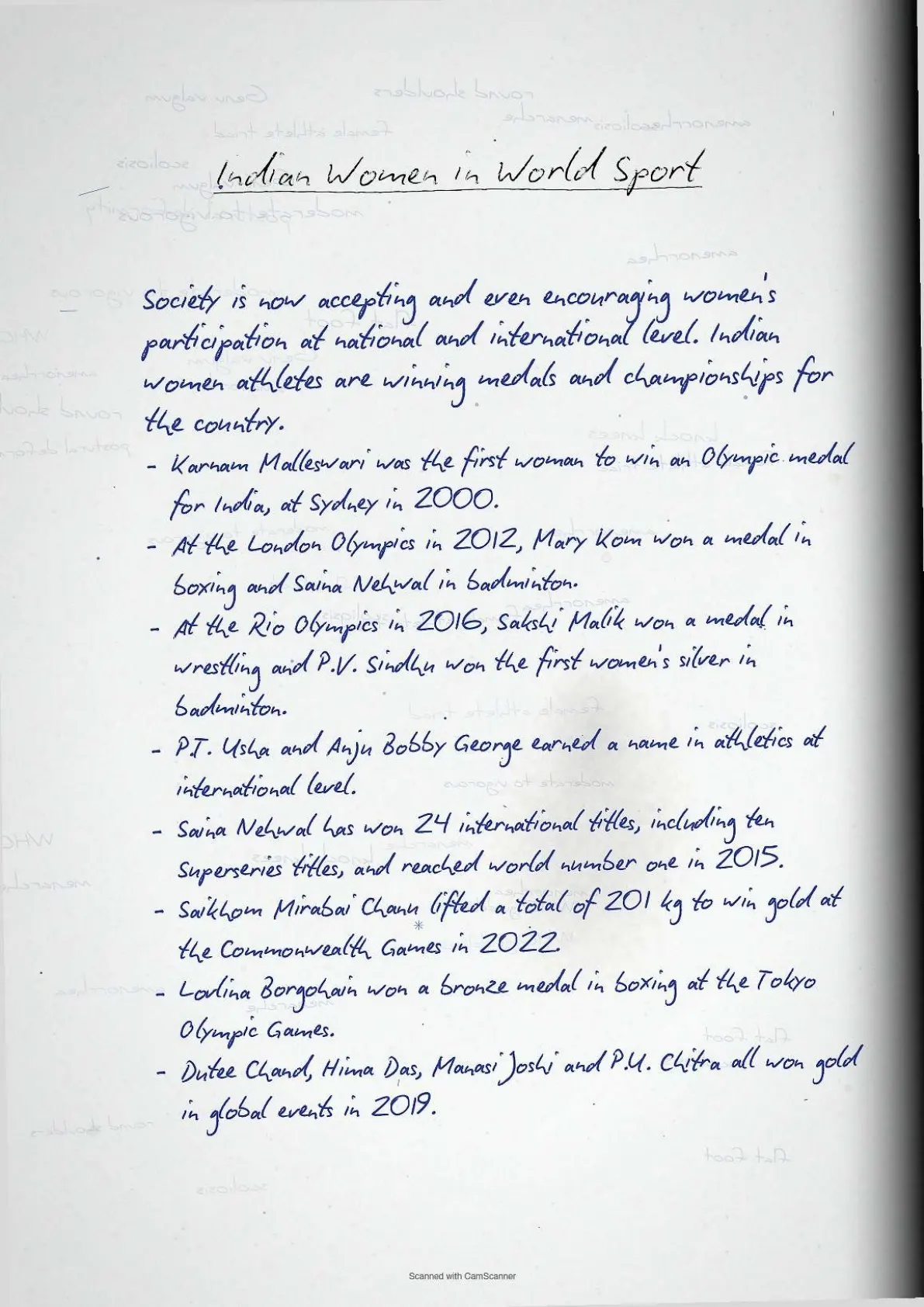
Indian Women Athletes Named in the Chapter and What They Won
The textbook names a specific set of athletes. Case-based questions often quote one of them, so keep the name, the sport and the event together in memory.
| Athlete | Sport | Achievement named in the chapter |
|---|---|---|
| Karnam Malleswari | Weightlifting | First Indian woman to win an Olympic medal, Sydney 2000 |
| Mary Kom | Boxing | Five times world champion, medal at the 2012 London Olympics |
| Saina Nehwal | Badminton | Medal at London 2012, 24 international titles including ten Superseries, world number 1 in 2015 |
| Sakshi Malik | Wrestling | Medal at the 2016 Rio Olympics |
| P.V. Sindhu | Badminton | First ever women's silver in badminton at Rio 2016, first Indian to win the World Championships, gold in 2019 |
| Saikhom Mirabai Chanu | Weightlifting | Lifted a total of 201 kg for gold at the Commonwealth Games 2022 |
| Lovlina Borgohain | Boxing | Bronze at the 2020 Olympic Games in the women's welterweight event |
| Dutee Chand | Athletics | First Indian to win a 100m gold at a global event, 30th Summer University Games, Napoli |
| Hima Das | Athletics | Won 5 gold medals in 20 days in 2019 |
| Manasi Joshi | Para-badminton | Gold at the BWF Para-Badminton World Championships |
| P.U. Chitra | Athletics | Gold in the women's 1500m at the Asian Athletics Championship 2019 in Doha |
P.T. Usha and Anju Bobby George are also named as athletes who earned a name in athletics at international level.
Menarche and Menstrual Dysfunction: The Eight Disorders CBSE Asks About
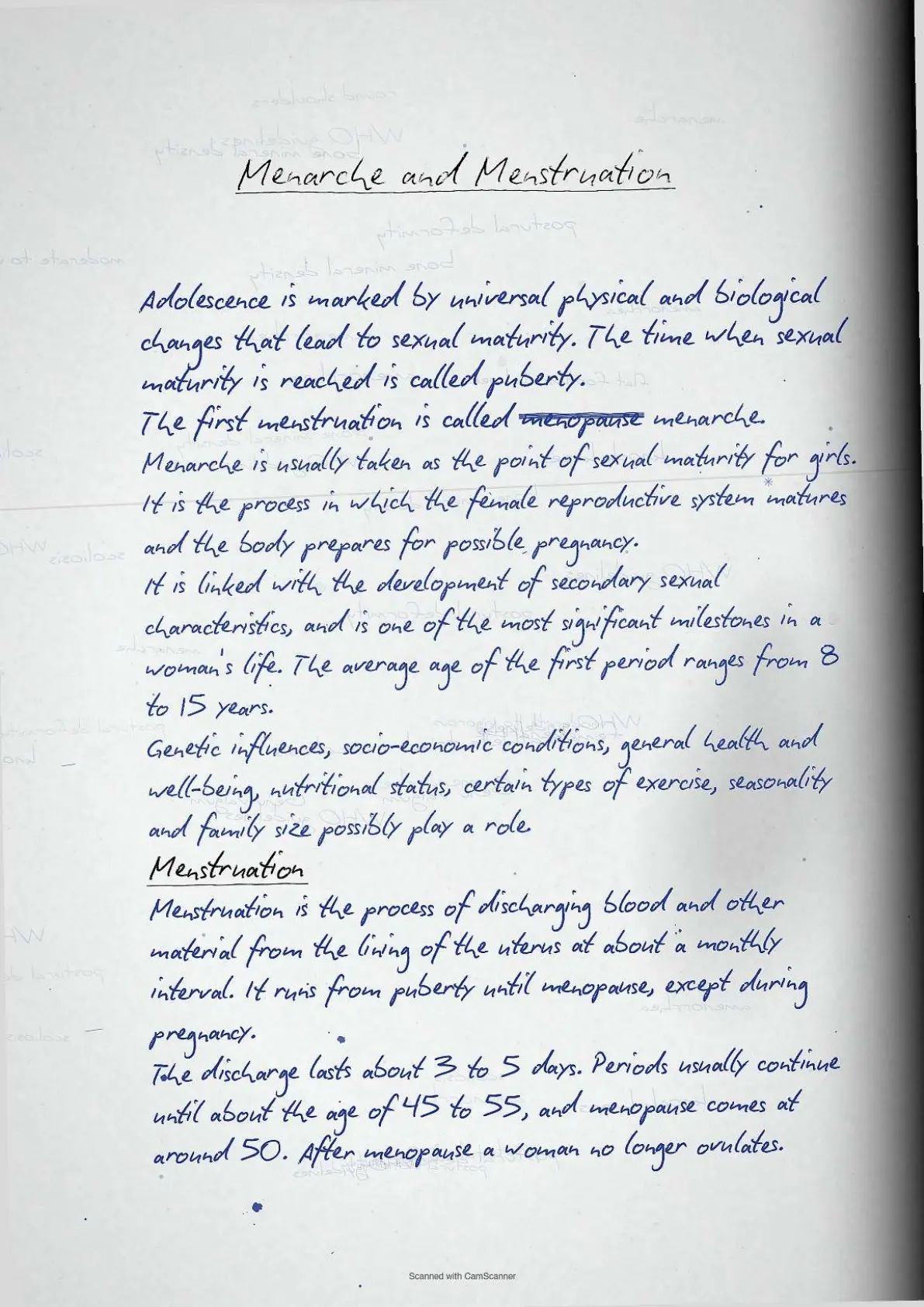
Menarche is the first menstruation, and it is treated as the point of sexual maturity for girls. It is the stage at which the female reproductive system matures and secondary sexual characteristics develop. The textbook puts the average age for a first period at 8 to 15 years. Menstruation itself lasts about 3 to 5 days, periods usually continue until about ages 45 to 55, and menopause usually comes around age 50.
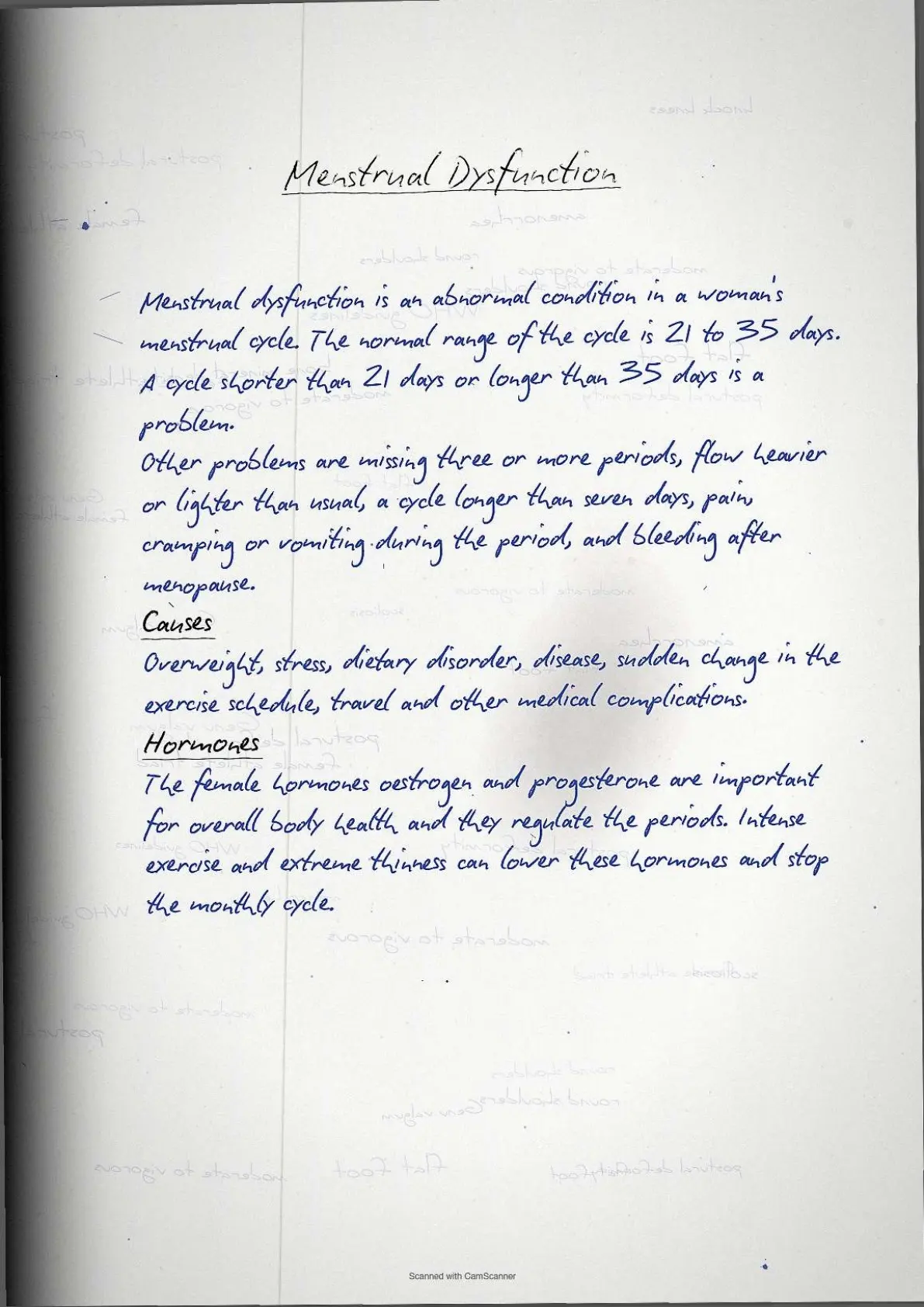
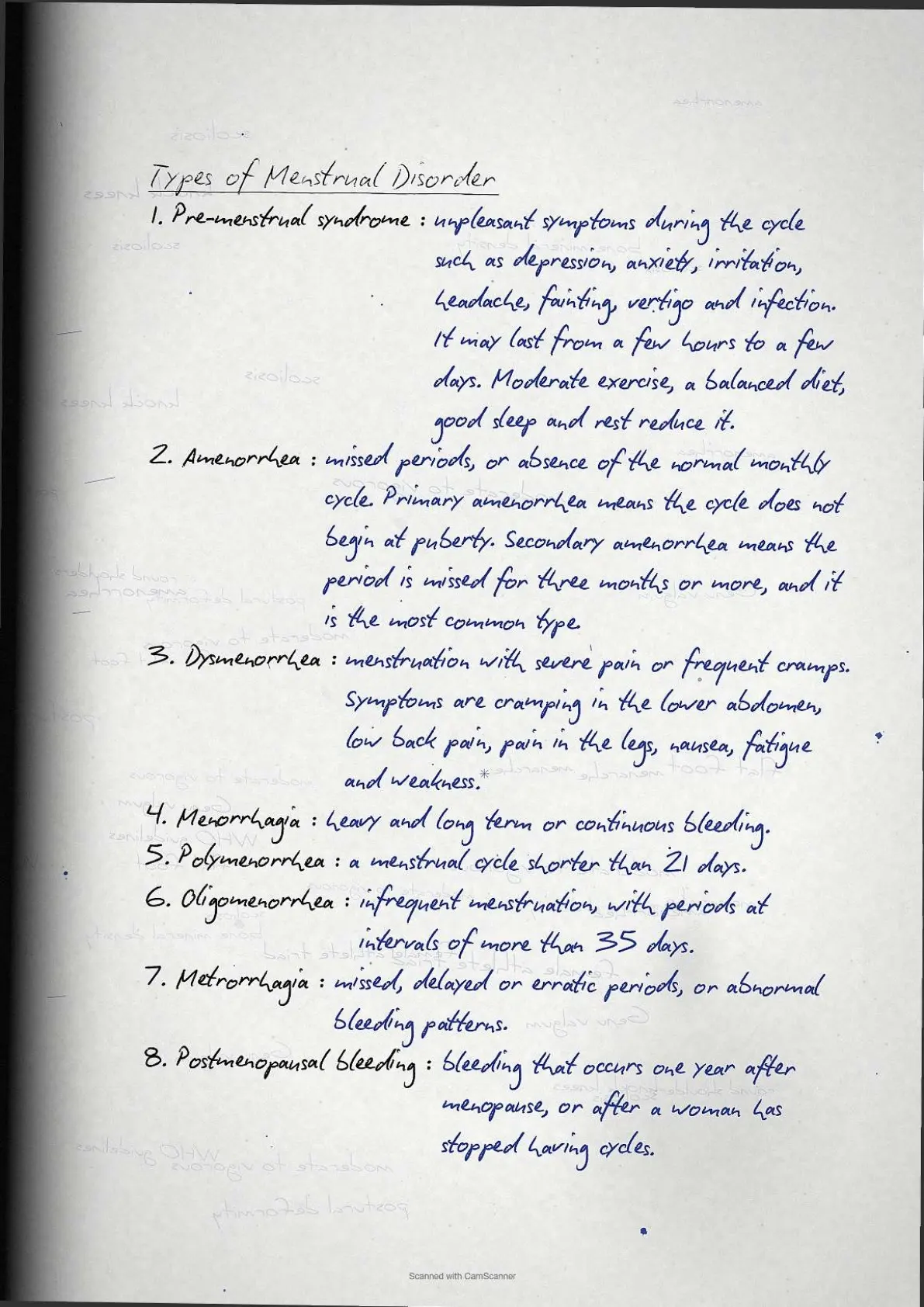
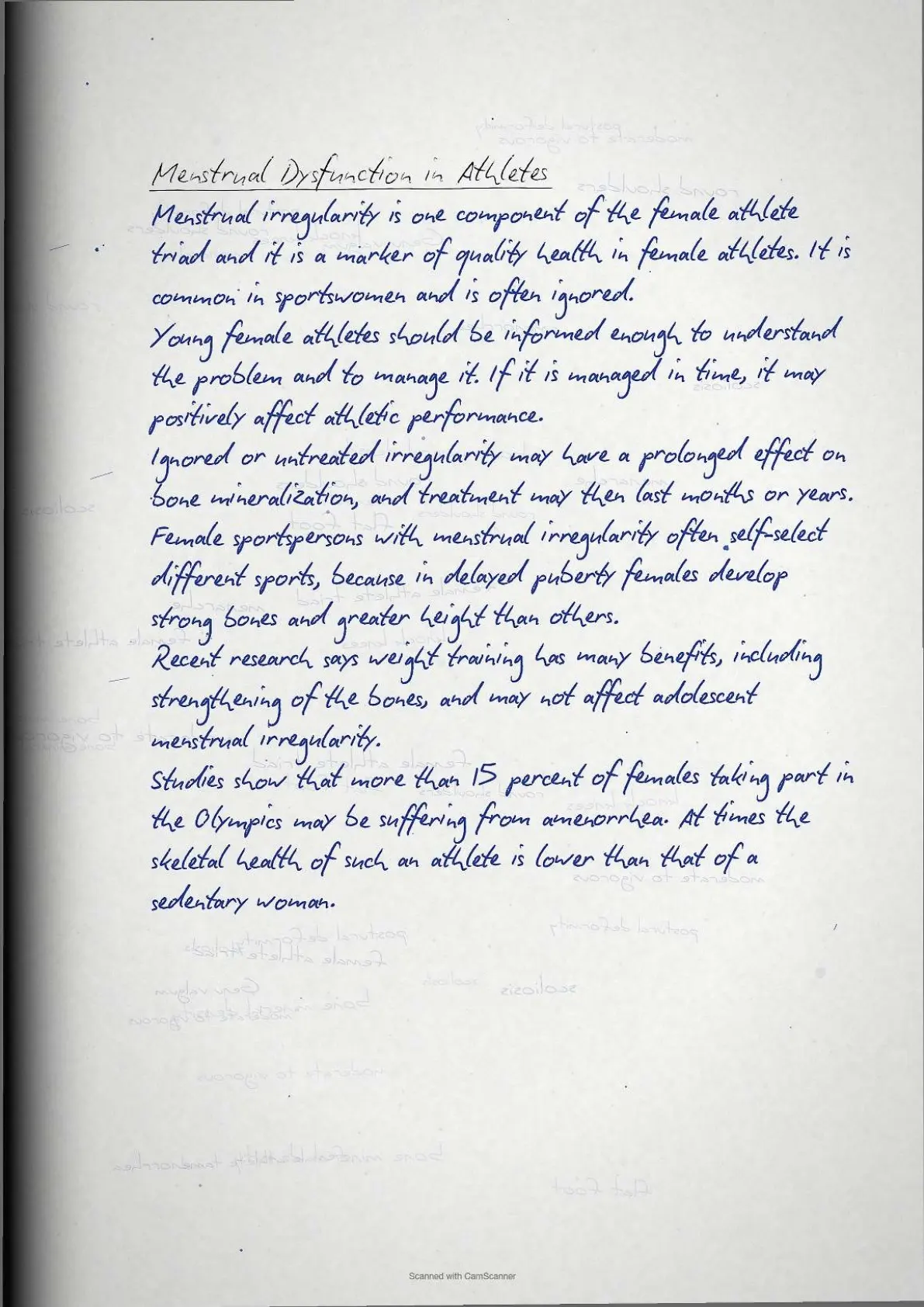
Menstrual dysfunction is an abnormal condition in the menstrual cycle. The normal range is 21 to 35 days, so a cycle shorter than 21 days or longer than 35 days is treated as a problem. Listed causes are being overweight, stress, dietary disorder, disease, a sudden change in the exercise schedule, travel and other medical complications. The textbook then names eight disorders.
| Disorder | Textbook meaning |
|---|---|
| Pre-menstrual syndrome | Uncomfortable symptoms during the cycle such as depression, anxiety, irritation, headache, fainting and vertigo, lasting a few hours to a few days |
| Amenorrhea | Missed periods or absence of a normal monthly cycle. Primary means the cycle never begins at puberty. Secondary means periods are missed for three months or more, and is the more common type. |
| Dysmenorrhea | Menstruation with severe pain or frequent cramps, with lower abdomen cramping, low back pain, leg pain, nausea and fatigue |
| Menorrhagia | Heavy, long term or continuous menstrual bleeding |
| Polymenorrhea | A menstrual cycle shorter than 21 days |
| Oligomenorrhea | Infrequent menstruation, with periods at intervals greater than 35 days |
| Metrorrhagia | Missed, delayed or erratic periods, or abnormal bleeding patterns |
| Postmenopausal bleeding | Bleeding after one year of menopause, or after cycles have stopped due to menopause |
The chapter closes the section by naming the two hormones involved. Oestrogen and progesterone regulate the menstrual cycle, and intense exercise together with extreme thinness can reduce their levels enough to stop monthly cycles. That single sentence is the bridge into the next section.
Female Athlete Triad: Osteoporosis, Amenorrhea and Disordered Eating
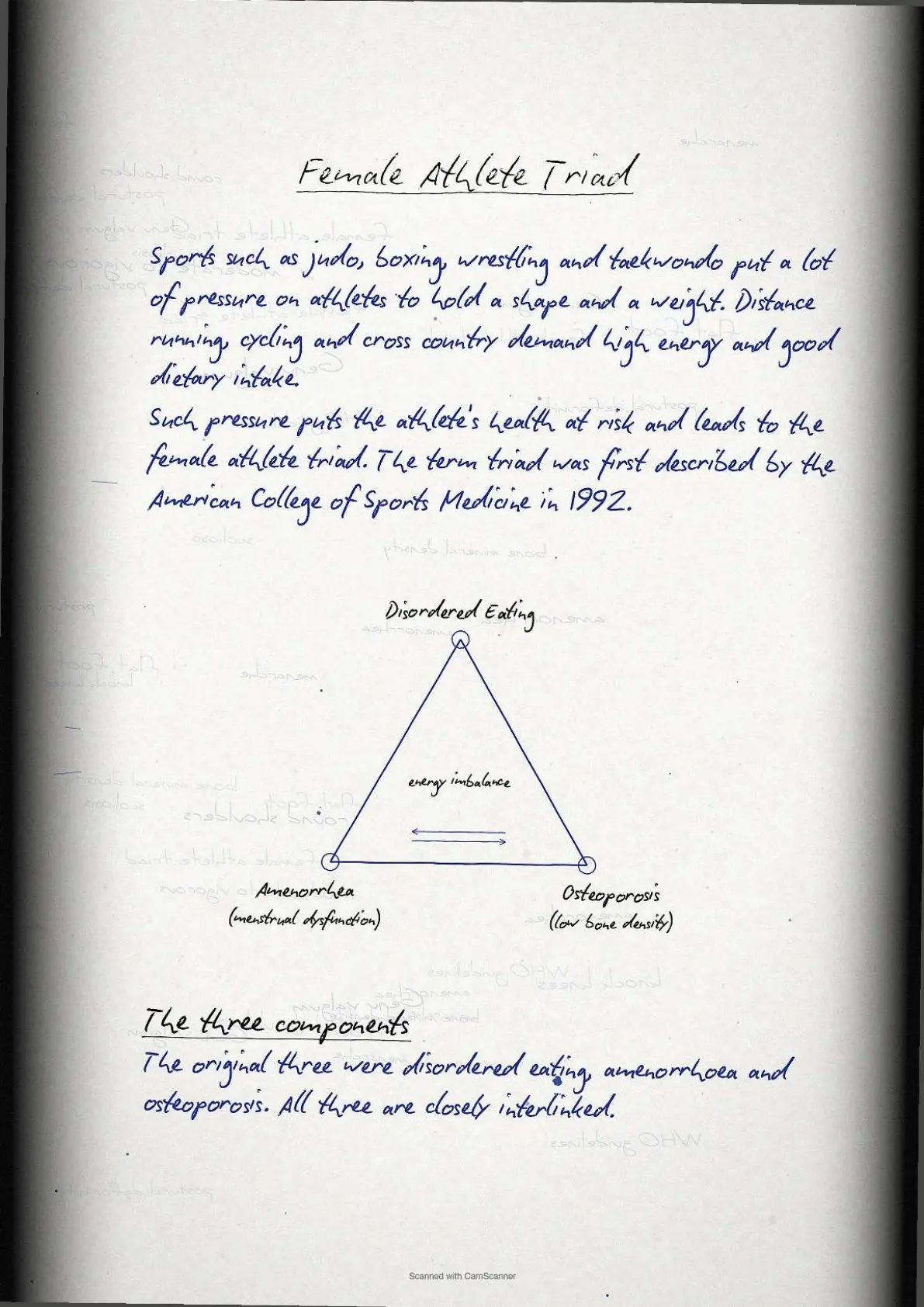
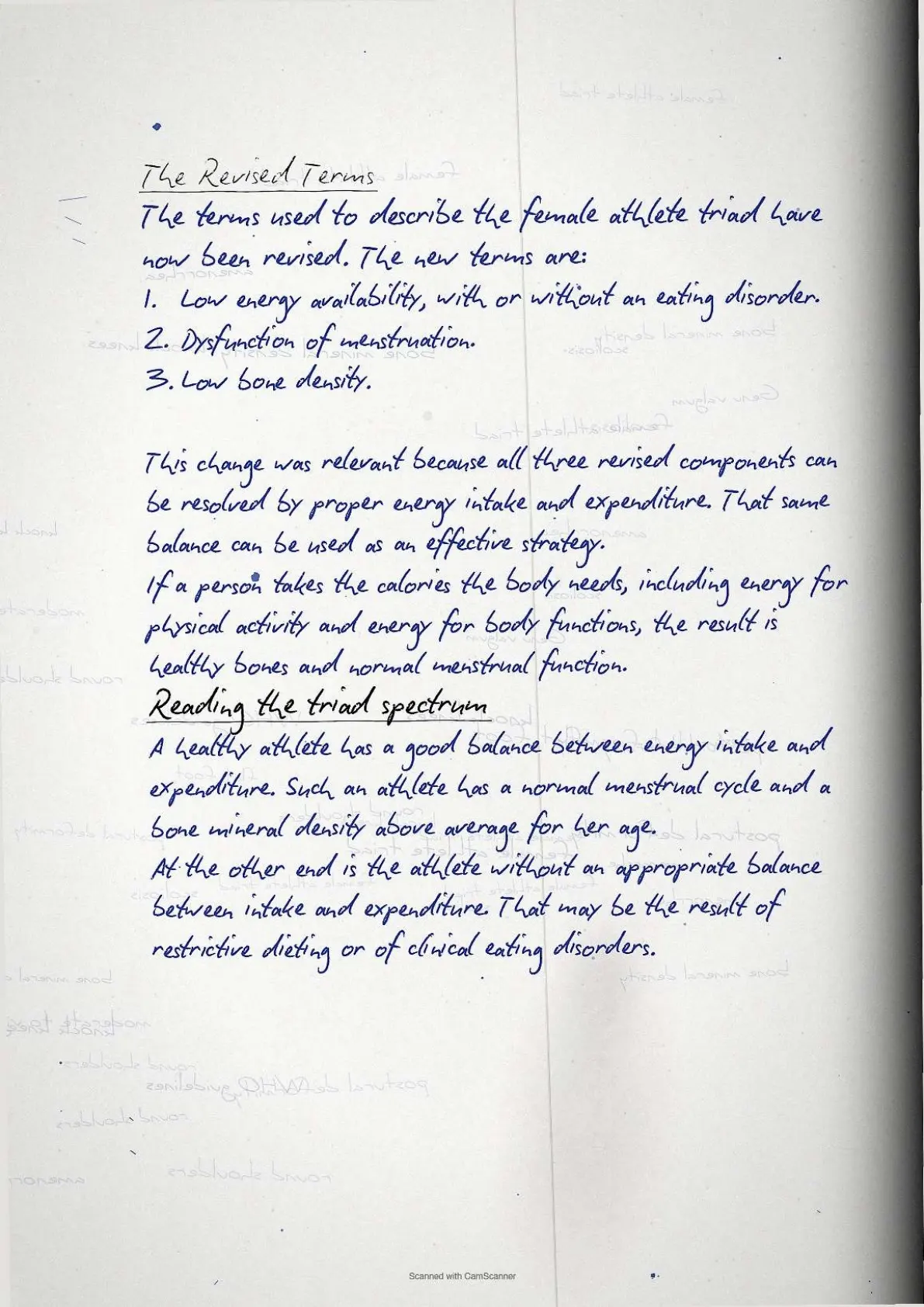
The term triad was first described by the American College of Sports Medicine in 1992. The three original components were disordered eating, amenorrhoea and osteoporosis. The textbook then gives the revised set of terms and explains why the wording changed.
| Original 1992 term | Revised term |
|---|---|
| Disordered eating | Low energy availability with or without eating disorder |
| Amenorrhoea | Dysfunction of menstruation |
| Osteoporosis | Low bone density |
The reason for the change is that all three revised components can be addressed by correcting energy intake against energy expenditure. If an athlete takes in the calories her body needs for both training and normal body function, the result is healthier bones and normal menstrual function. All three components are interlinked.
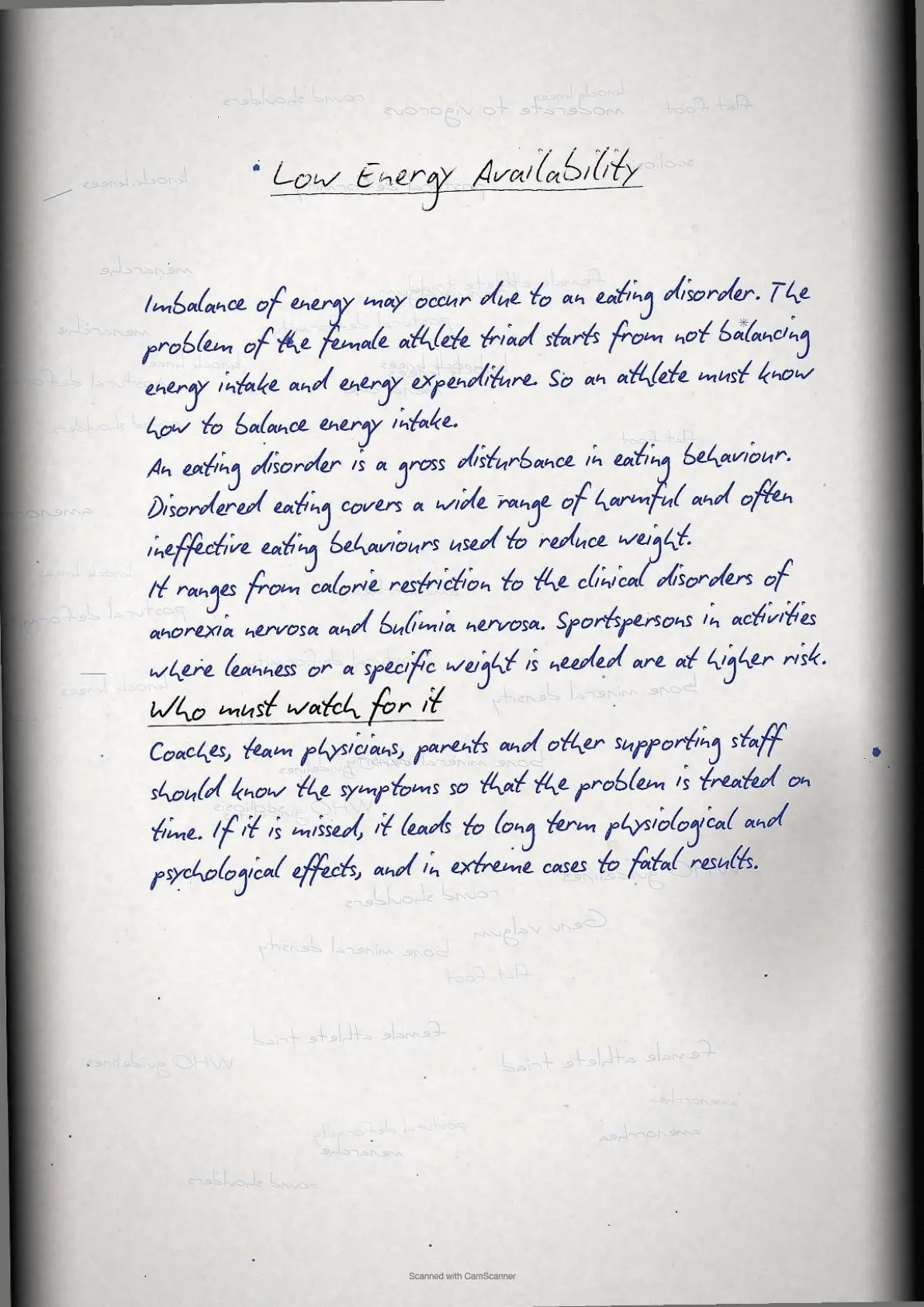
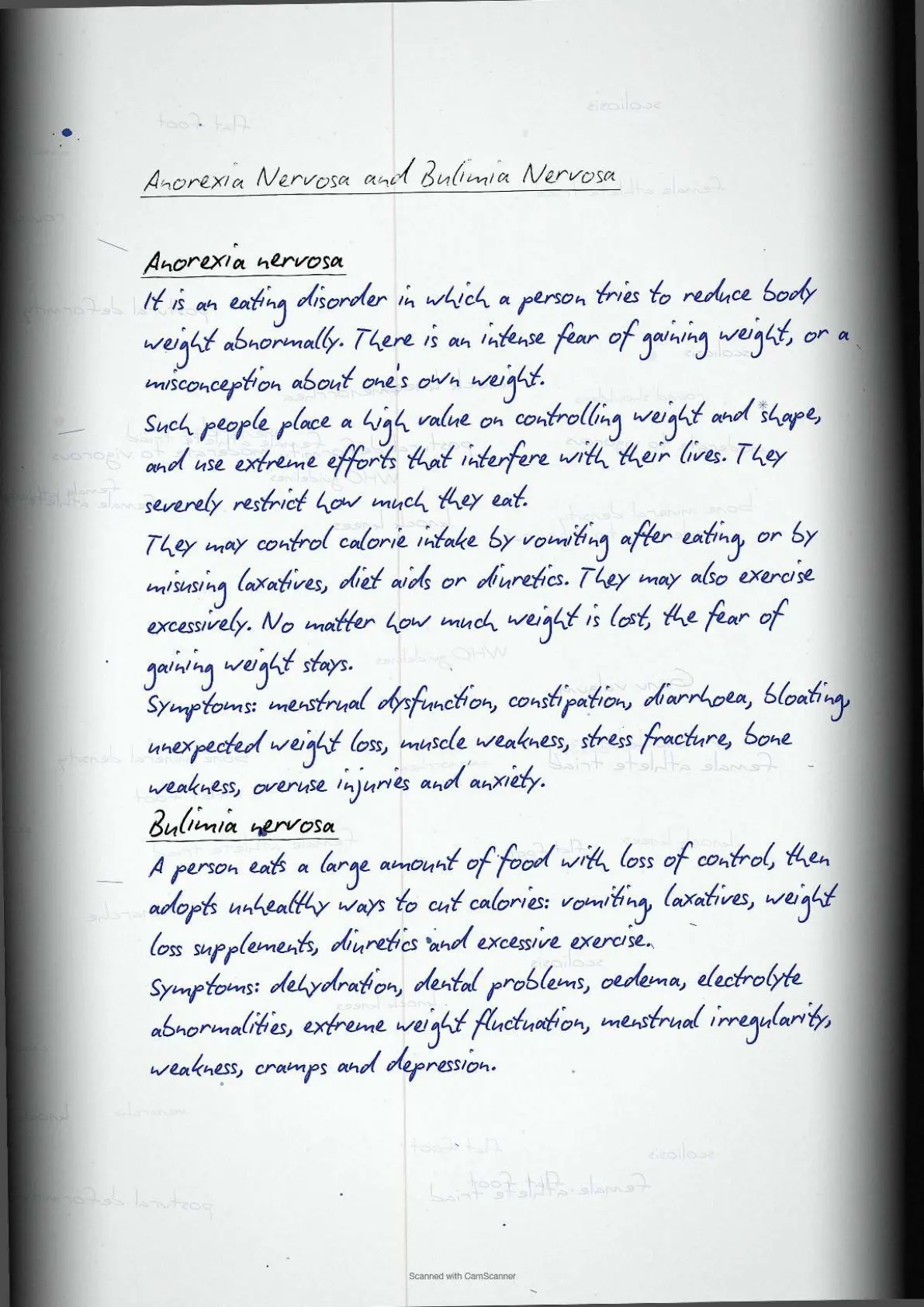
On the eating component, the textbook defines an eating disorder as a gross disturbance in eating behaviour and names two clinical conditions. Anorexia nervosa involves severe restriction of food intake, an intense fear of gaining weight, and control of calorie intake through vomiting, laxatives, diet aids, diuretics or excessive exercise. Bulimia nervosa involves eating a large amount of food with loss of control, followed by the same methods of cutting calories.
Athletes in sports where leanness or a specific weight is required carry a higher risk. That is why the textbook says coaches, team physicians, parents and support staff should know the symptoms, so the problem is treated in time.
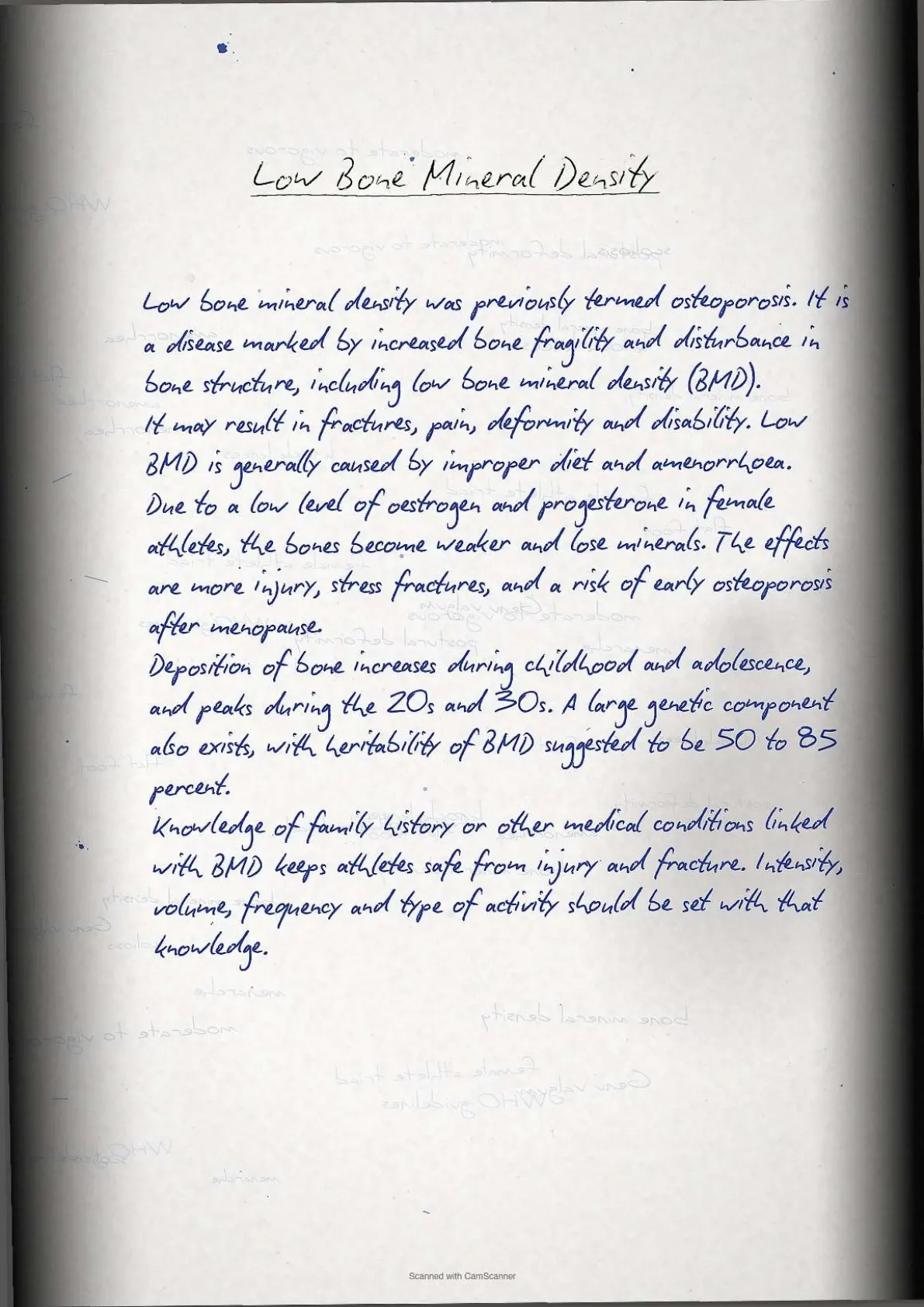
On the bone component, low bone mineral density, previously termed osteoporosis, is marked by increased bone fragility and disturbed bone structure that can lead to fractures, pain, deformity and disability. It is generally caused by improper diet and amenorrhoea, because low oestrogen and progesterone levels make bones weaker.
Bone deposition peaks during the 20s and 30s, and heritability of bone mineral density is put at 50 to 85%. The chapter also notes that more than 15% of females participating in the Olympics may be affected by amenorrhea.
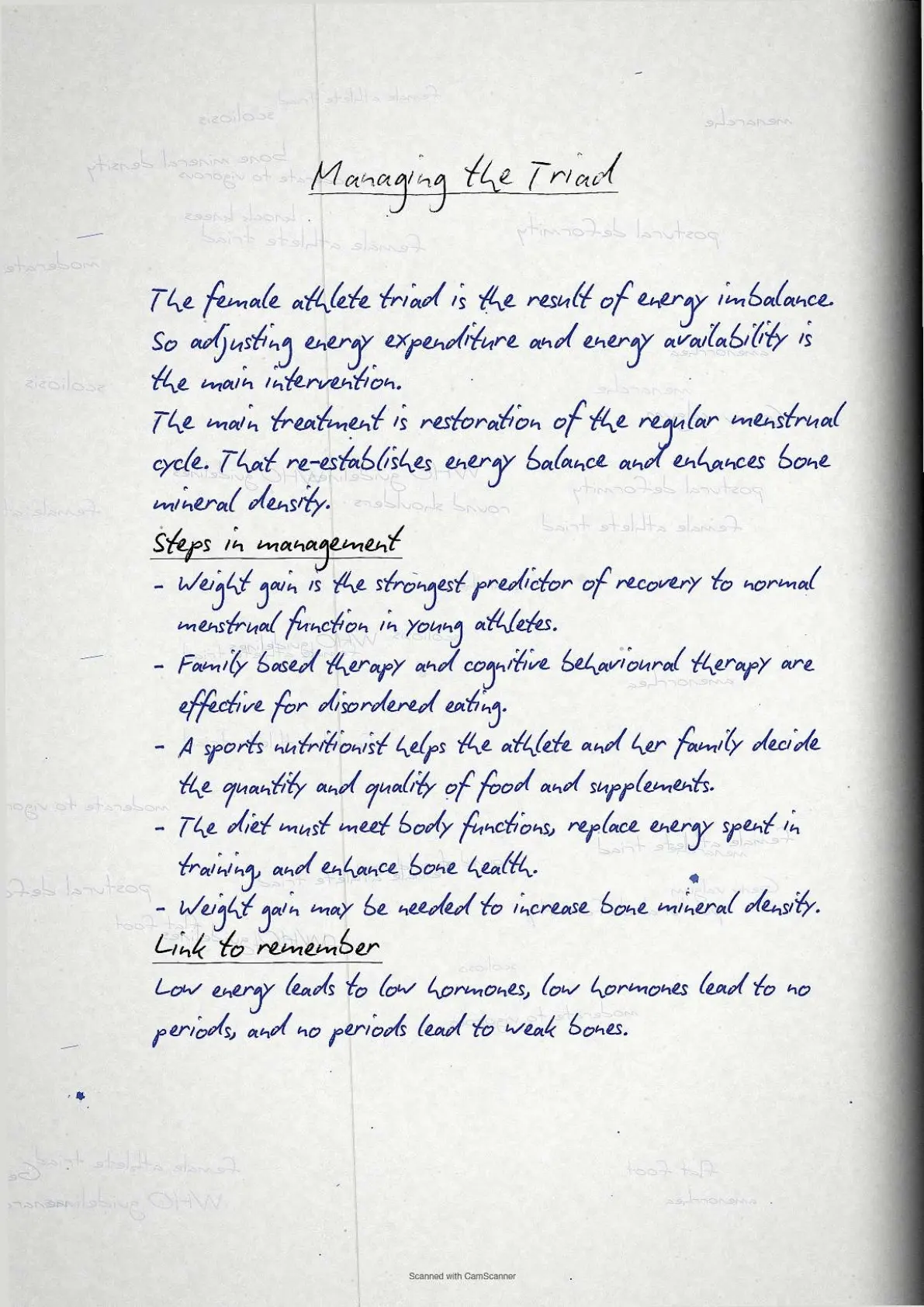
Tip: for the treatment question, the textbook says the main intervention is adjusting energy expenditure against energy availability. The strongest predictor of a return to normal menstrual function in young athletes is weight gain, supported by family-based therapy, cognitive behavioural therapy and guidance from a sports nutritionist.
Common Mistakes Students Make in the Children and Women in Sports Chapter
Five traps that cost easy marks in the Class 12 Physical Education paper:
- Swapping knock knees and bow legs. In knock knees the knees touch, in bow legs the ankles touch.
- Mixing up kyphosis and lordosis. Kyphosis is the upper back, lordosis is the lower back and is also called sway back.
- Giving 150 minutes as the vigorous-intensity minimum. For adults it is 75 to 150 minutes vigorous, or 150 to 300 minutes moderate.
- Confusing polymenorrhea and oligomenorrhea. Polymenorrhea is a cycle shorter than 21 days, oligomenorrhea is intervals longer than 35 days.
- Naming only the old triad terms. A full-mark answer gives both the 1992 set and the revised set.
Quick Recall Sheet for the Children and Women in Sports Chapter
These are the twelve items that carry the most one-mark and two-mark questions in this unit. Read the table once the night before the paper, and check that you can say the right-hand column from the left-hand term alone.
| Term | One-line meaning |
|---|---|
| Physical inactivity | Fourth leading risk factor for global mortality, 6% of deaths globally |
| Tummy time | 30 minutes of prone play a day for infants under 1 year |
| 180 minutes | Daily activity target for both the 1 to 2 and 3 to 4 age bands |
| Genu valgum | Knock knees, knees touch with a 3 to 4 inch gap at the ankles |
| Genu varum | Bow legs, ankles touch while the knees stay apart |
| Pes planus | Flat foot, no arch or a very low arch, tested by the water print test |
| Kyphosis | Hunch back, exaggerated forward curve of the upper back |
| Lordosis | Sway back, exaggerated concavity of the lumbar region |
| Scoliosis | Sideways C or S curve of the spine |
| Menarche | First menstruation, average age 8 to 15 years |
| Normal cycle | 21 to 35 days |
| Female athlete triad | Disordered eating, amenorrhoea and osteoporosis, named by the American College of Sports Medicine in 1992 |
What the Children and Women in Sports Class 12 Handwritten Notes PDF Contains
The file runs to 46 handwritten pages and follows the textbook order, with the WHO tables and the deformity list drawn where the chapter uses them.
- Pages 1 to 12: the WHO guidelines, all four age bands, and the definitions of intensity, duration, frequency and volume.
- Pages 13 to 20: posture, dynamic and static, and the causes of postural deformity.
- Pages 21 to 32: the seven postural deformities with causes, effects and corrective exercises for each.
- Pages 33 to 39: women participation in sports, the three benefit groups, and the named Indian athletes.
- Pages 40 to 46: menarche, the eight menstrual disorders, the female athlete triad and the quick recall sheet.
How to Use These Handwritten Notes Most Effectively
This unit is a list chapter rather than a concept chapter. Almost every question asks for named items, so spaced recall works better than one long reading session.
- Block 1, 40 minutes. The four WHO age bands and the definitions table. Write the numbers out once from memory.
- Block 2, 45 minutes. Posture, causes of deformity, and the leg and foot deformities.
- Block 3, 40 minutes. Kyphosis, lordosis and scoliosis with one corrective asana each.
- Block 4, 40 minutes. Women participation, the three benefit groups and the athlete table.
- Block 5, 35 minutes. Menarche, the eight menstrual disorders and the female athlete triad.
- Night before, 15 minutes. The quick recall sheet and the five common mistakes, nothing else.
How These Handwritten Notes Pair with Other Children and Women in Sports Resources
| Resource | Best used for | Open it |
|---|---|---|
| Class 11 Physical Education Understanding Health Handwritten Notes | Health, wellness and lifestyle disease basics that this unit assumes you already know | Understanding Health Class 11 Handwritten Notes |
| Class 11 Physical Education Health Related Physical Fitness Handwritten Notes | Fitness components and postural awareness at Class 11 level, before the deformity list here | Health Related Physical Fitness Class 11 Handwritten Notes |
| Class 12 Physical Education Chapter 2 Notes | Typed revision notes with the WHO age-band tables explained line by line | Children and Women in Sports Class 12 Notes (coming soon) |
| Class 12 Physical Education Chapter 2 NCERT Solutions | Solved answers for the tick-the-option, brief-answer and 150 to 200 word question sets | Children and Women in Sports Class 12 NCERT Solutions (coming soon) |
| Class 12 Physical Education Chapter 2 Book PDF | The official chapter text with the WHO tables and the female athlete triad diagram | Children and Women in Sports Class 12 Book PDF (coming soon) |
| Class 12 Physical Education Chapter 3 Handwritten Notes | The next unit, on asanas that prevent obesity, diabetes, asthma, hypertension and back pain | Yoga as Preventive Measure for Lifestyle Disease Class 12 Handwritten Notes (coming soon) |
NCERT Handwritten Notes for Class 12 Physical Education: All Chapters
Related Links: handwritten revision notes for every unit of the Class 12 Physical Education textbook, written to the 2026-27 syllabus.
| Chapter | Class 12 Physical Education Handwritten Notes |
|---|---|
| Chapter 1 | Management of Sporting Events Class 12 Handwritten Notes |
| Chapter 2 | Children and Women in Sports Class 12 Handwritten Notes (this page) |
| Chapter 3 | Yoga as Preventive Measure for Lifestyle Disease Class 12 Handwritten Notes |
| Chapter 4 | Physical Education and Sports for CWSN Class 12 Handwritten Notes |
Children and Women in Sports Class 12 Physical Education Handwritten Notes FAQs
Ques. What are the WHO exercise guidelines for children under 5 years of age?
Ans. Infants under 1 year should be active several times a day through interactive floor-based play, including 30 minutes of tummy time, and should not be restrained for more than 1 hour at a time. Children aged 1 to 2 years and 3 to 4 years both need at least 180 minutes of varied physical activity a day. In the 3 to 4 band, at least 60 minutes of those 180 minutes should be moderate to vigorous intensity.
Ques. How much physical activity does WHO recommend for children and youth aged 5 to 17 years?
Ans. At least 1 hour a day at moderate to vigorous intensity, and more than 60 minutes gives additional health benefits. This can be one session of 1 hour or two sessions of 30 minutes each. The activity should mix aerobic work, basic muscle strengthening, and fundamental activities such as jumping, running, throwing, turning and twisting.
Ques. What is the aerobic activity recommendation for adults aged 18 to 64 years?
Ans. 150 to 300 minutes a week at moderate intensity, or 75 to 150 minutes a week at vigorous intensity, with each aerobic bout lasting at least 10 minutes. Muscle strengthening activity using major muscle groups should be done on two or more days a week. Adults aged 65 and above follow the same numbers, and those with poor mobility should add balance activity on 3 or more days a week to prevent falls.
Ques. What is the difference between dynamic posture and static posture?
Ans. Dynamic posture is how a person holds themselves while moving, for example walking, running or bending to pick something up, and muscles adapt to changing circumstances. Static posture is how a person holds themselves when stationary, for example sitting, standing or sleeping, and body segments stay aligned in fixed positions through coordinated muscle work against gravity.
Ques. What is the difference between knock knees and bow legs?
Ans. In knock knees, also called Genu valgum, the knees turn inward and touch each other in normal standing while a gap of 3 to 4 inches stays between the ankles. In bow legs, also called Genu varum, the legs curve outward at the knees while the feet and ankles touch. Knock knees usually corrects by 7 to 8 years of age and bow legs usually by 3 to 4 years.
Ques. What are the corrective measures for flat foot?
Ans. Walking, standing and jumping on the toes and heels in all four directions, along with skipping rope, strengthens the foot muscles and helps develop the arch. Picking up marbles with the toes and writing numbers in the sand with the toes also help. The textbook adds the yoga asanas Adhomukhsavasana performed in Surya Namaskar and Vajrasana, along with therapeutic massage.
Ques. How are kyphosis, lordosis and scoliosis different from each other?
Ans. Kyphosis, also called hunch back, is an exaggerated forward rounding of the upper back. Lordosis, also called sway back, is an exaggerated concavity of the lumbar or lower back region. Scoliosis is a sideways tilt of the spine that bends, twists or rotates it into a C or an S shape, and it is the only one of the three that curves the spine laterally.
Ques. What are the physical, psychological and social benefits of women participation in sports?
Ans. The physical benefits are a lower risk of lifestyle diseases, higher bone density, toned muscles, a stronger cardiovascular system with more capillaries, and control of obesity. The psychological benefits are stress management, control over emotions, confidence, self-esteem and leadership. The social benefits are coordination, communication, inter-relationships and cooperation.
Ques. Which schemes support women participation in sports in India?
Ans. The textbook names the Khelo India scheme and the National Sports Talent Search Scheme, known as NSTSS, as the two programmes running in India to bring more women into sport. The International Olympic Committee also promotes participation in National Olympic Committees and International Federations, and has announced that 49% women will take part in the next Olympic Games.
Ques. What is the normal range of the menstrual cycle and when is it called a dysfunction?
Ans. The normal range of the menstrual cycle is 21 to 35 days. A cycle that comes earlier than 21 days or later than 35 days is treated as menstrual dysfunction. Other signs listed are missing three or more periods, a flow heavier or lighter than usual, a cycle lasting longer than seven days, pain or cramping during the period, and bleeding after menopause.
Ques. What is the difference between primary and secondary amenorrhea?
Ans. Primary amenorrhea means the menstruation cycle does not begin at puberty at all. Secondary amenorrhea happens when menstruation is missed for three months or more after cycles have already started, and the textbook notes it is the more common of the two types.
Ques. How is the female athlete triad treated according to the textbook?
Ans. Because the triad results from an energy imbalance, the main intervention is adjusting energy expenditure against energy availability. The main treatment aim is restoring a regular menstrual cycle so energy balance returns and bone mineral density improves. The strongest predictor of recovery in young athletes is weight gain, supported by family-based therapy, cognitive behavioural therapy and advice from a sports nutritionist.
Ques. What is posture?
Ans. Posture is the attitude assumed by the body, either with support during muscular activity or as a result of the coordinated action of a group of muscles working to maintain stability. Good posture aligns every body part so that the least stress falls on the joints and muscles, which helps prevent fatigue and supports better productivity at work and study.
Ques. What is menarche?
Ans. Menarche is the first menstruation, and it is usually considered the point of sexual maturity for girls. It marks the stage at which the female reproductive system matures and is associated with the development of secondary sexual characteristics. The average age for a first period ranges from 8 to 15 years, and factors such as genetics, socio-economic conditions, general health, nutritional status and certain types of exercise can influence it.
Ques. What is the female athlete triad?
Ans. The female athlete triad was first described by the American College of Sports Medicine in 1992 and had three components: disordered eating, amenorrhoea and osteoporosis. The revised terms are low energy availability with or without eating disorder, dysfunction of menstruation, and low bone density. All three components are interlinked and can be addressed by correcting energy intake against energy expenditure.
Ques. Where can I download the Class 12 Physical Education Chapter 2 Children and Women in Sports handwritten notes PDF?
Ans. Use the download option at the top of this page. The file is free and printable, runs to 46 handwritten pages, and follows the 2026-27 chapter order, so it can sit beside the textbook while you revise for the 7-mark unit.



Comments