




Inside the NCERT handwritten notes for Class 12 Physical Education Chapter 4 Physical Education and Sports for CWSN, you will find the three-organisation comparison, the ten eligible impairment types recognised by the IPC, and the classification against divisioning table, all written according to the latest 2026-27 CBSE syllabus.
- Length: 60 handwritten pages covering all five sections of Unit IV, from the sports organisations to accessibility strategies.
- The comparison that carries the marks: Paralympics, Special Olympics and Deaflympics, with the correct founding year and governing body for each.
- Also on this page: a full date timeline, the eight advantages of physical activity, a quick recall sheet and the traps that cost easy marks.
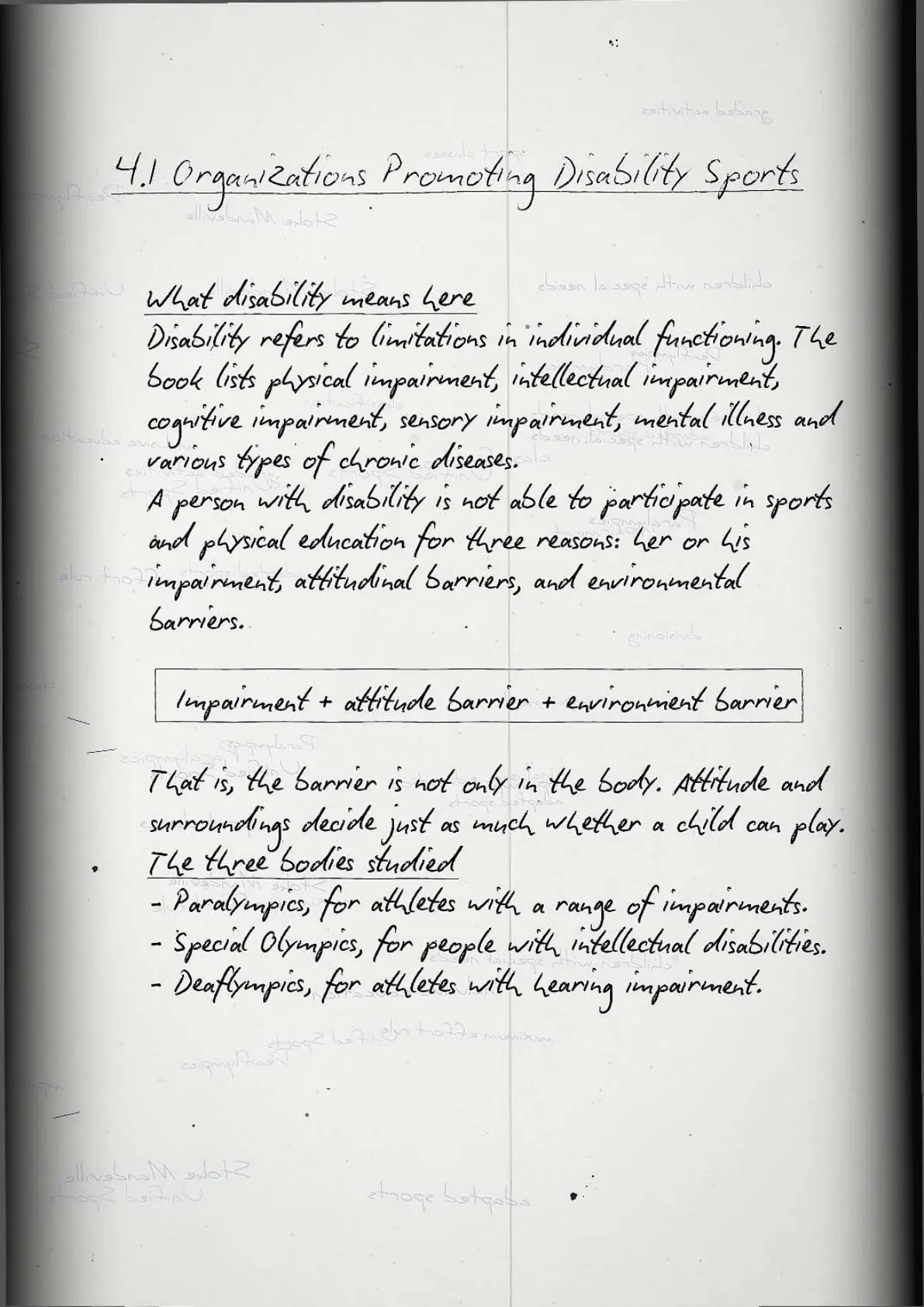
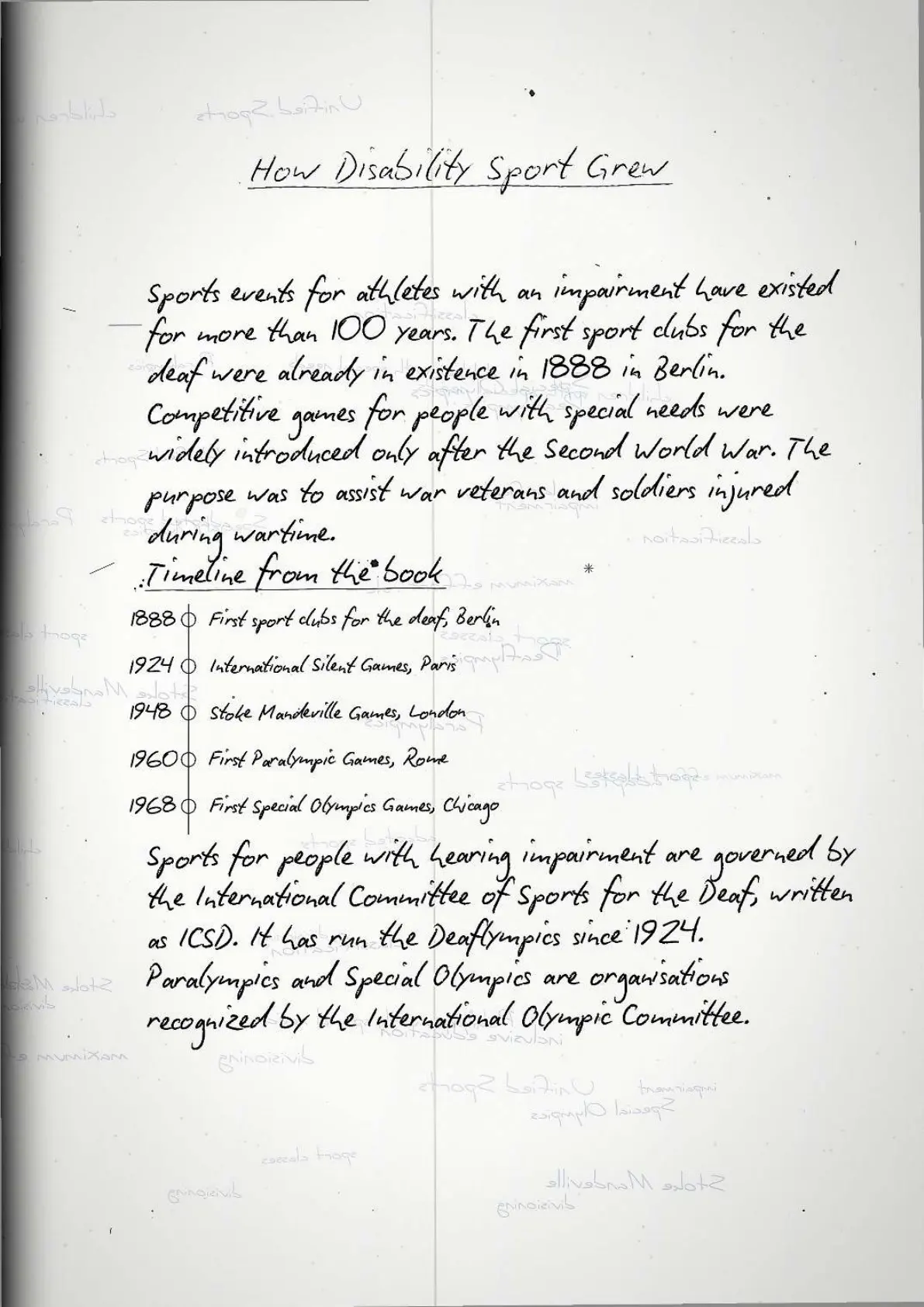
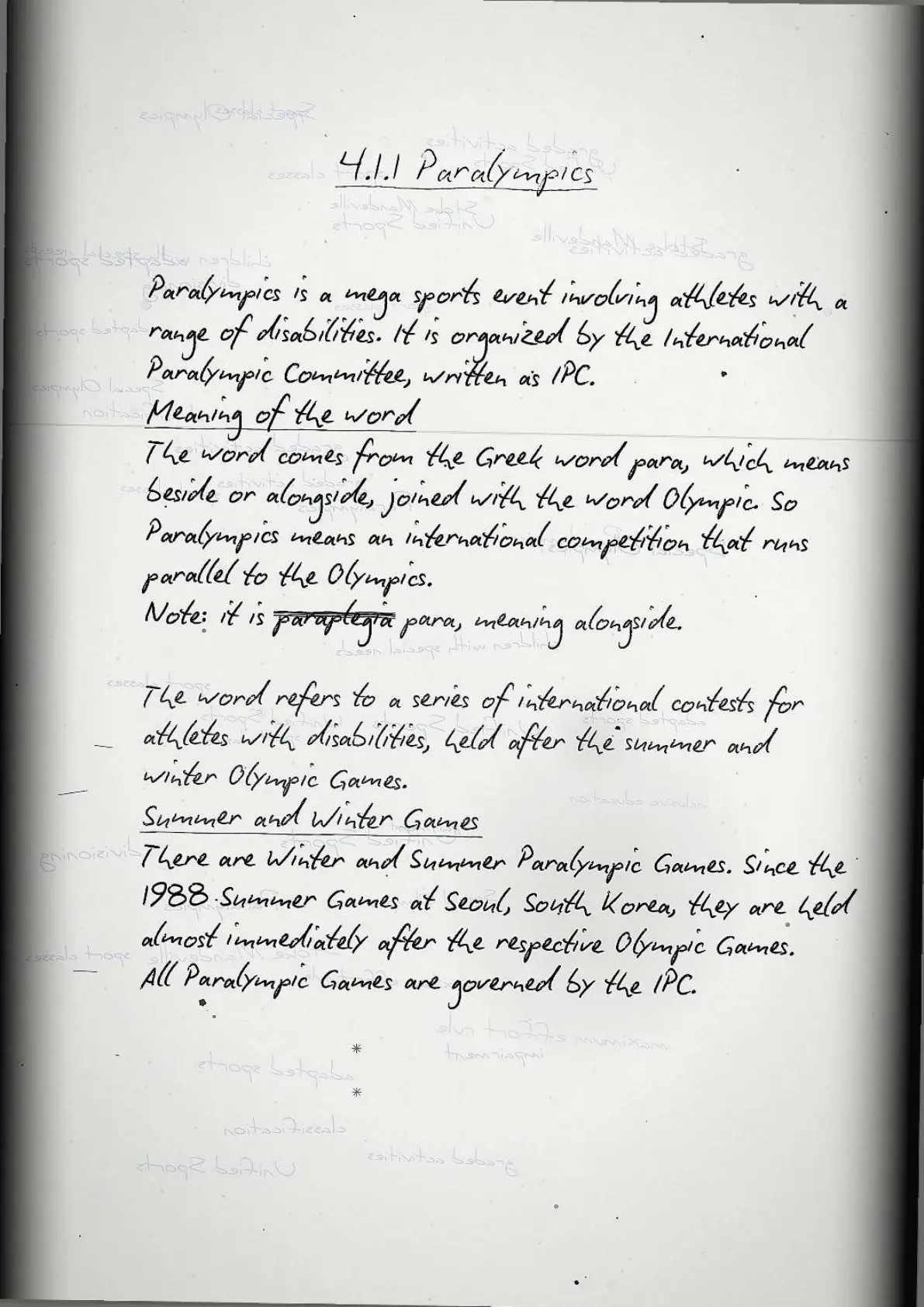
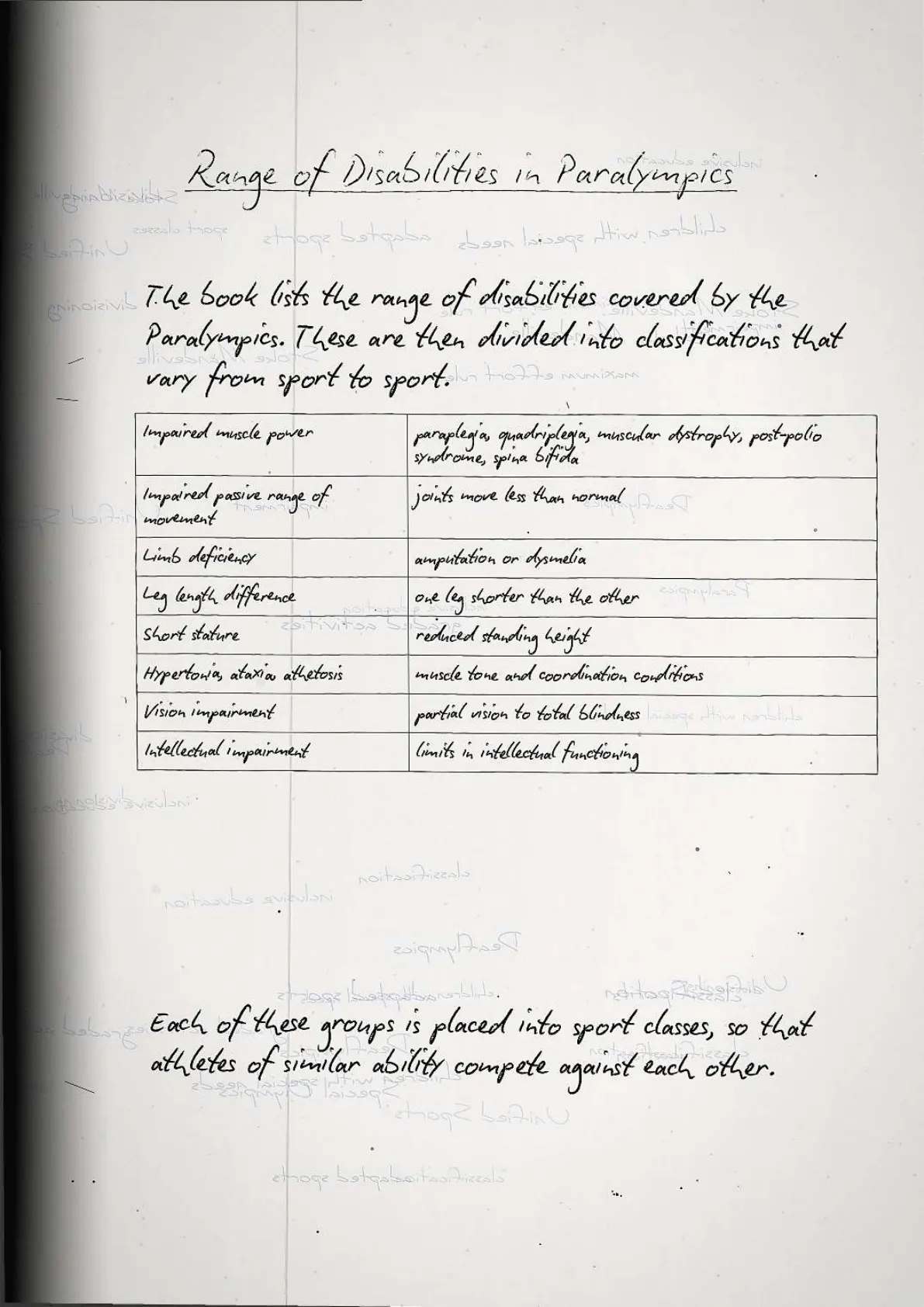
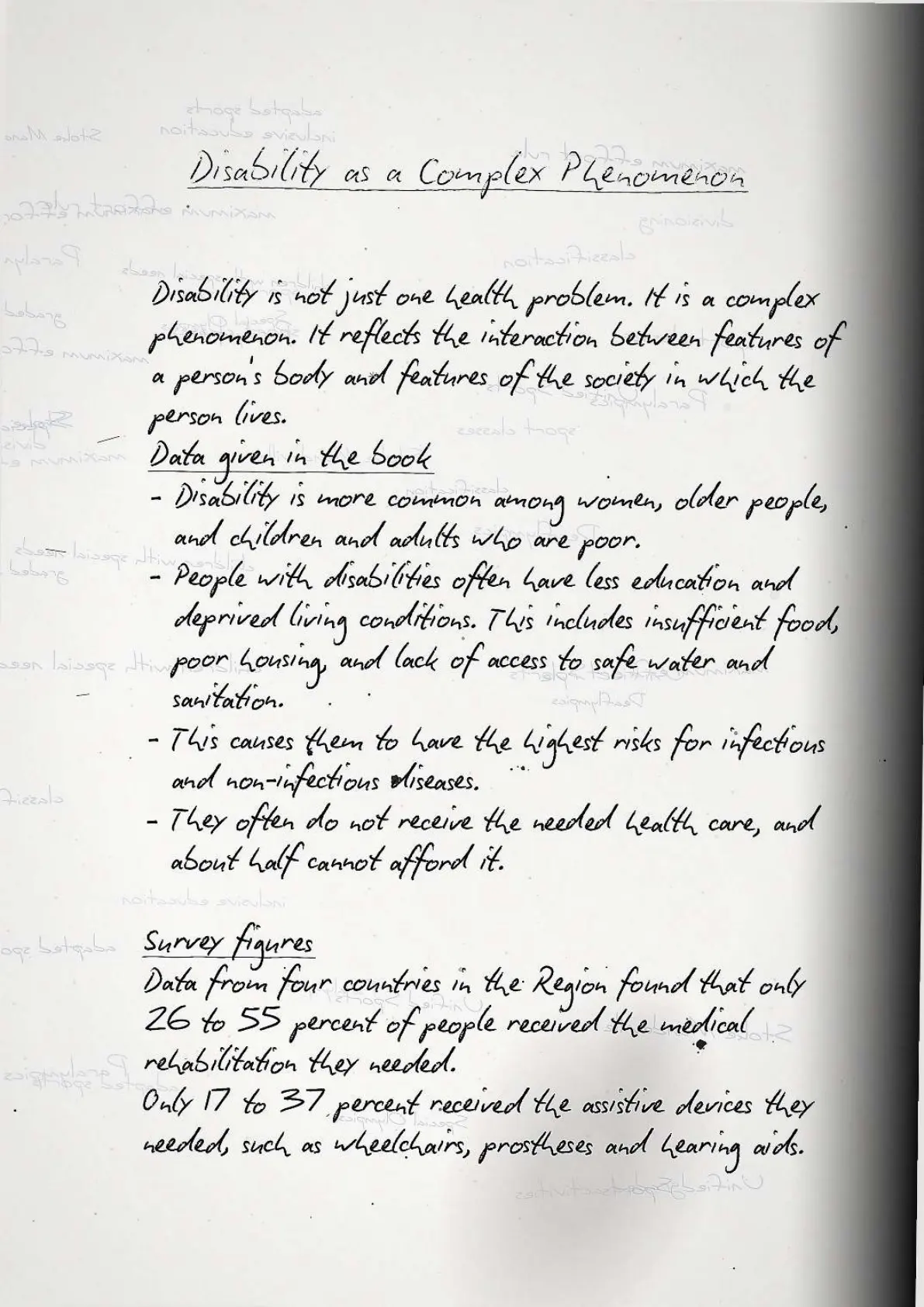
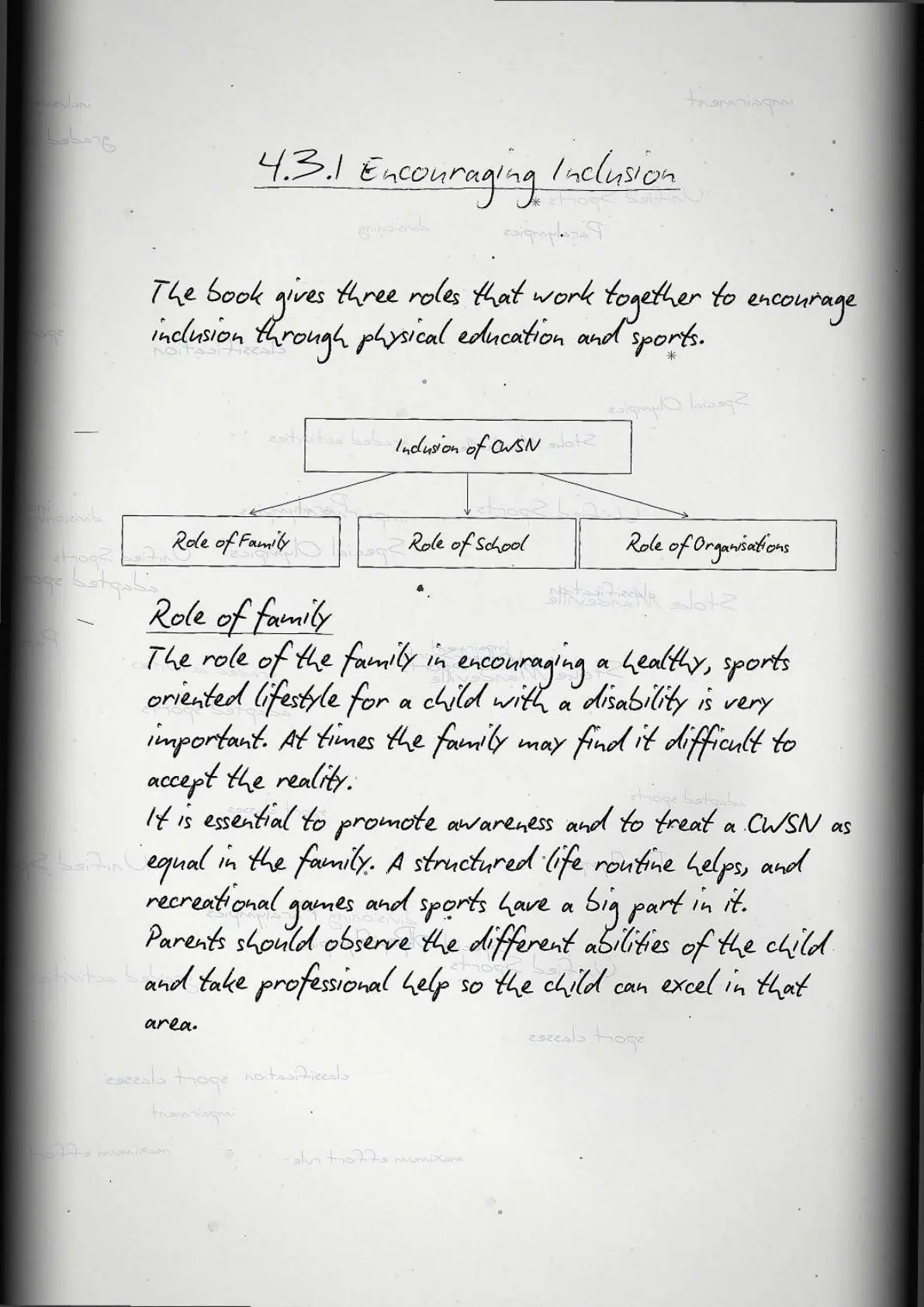
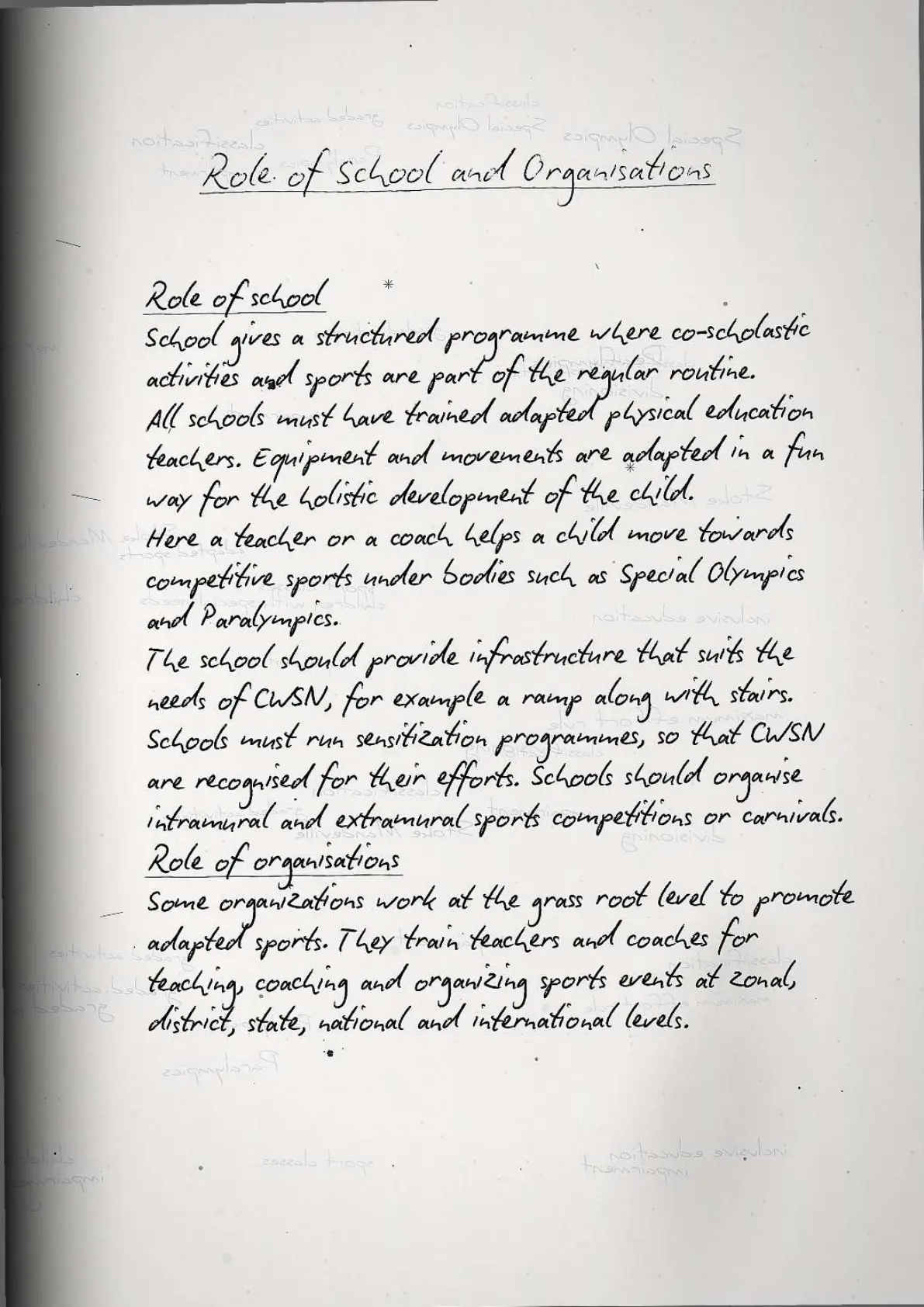
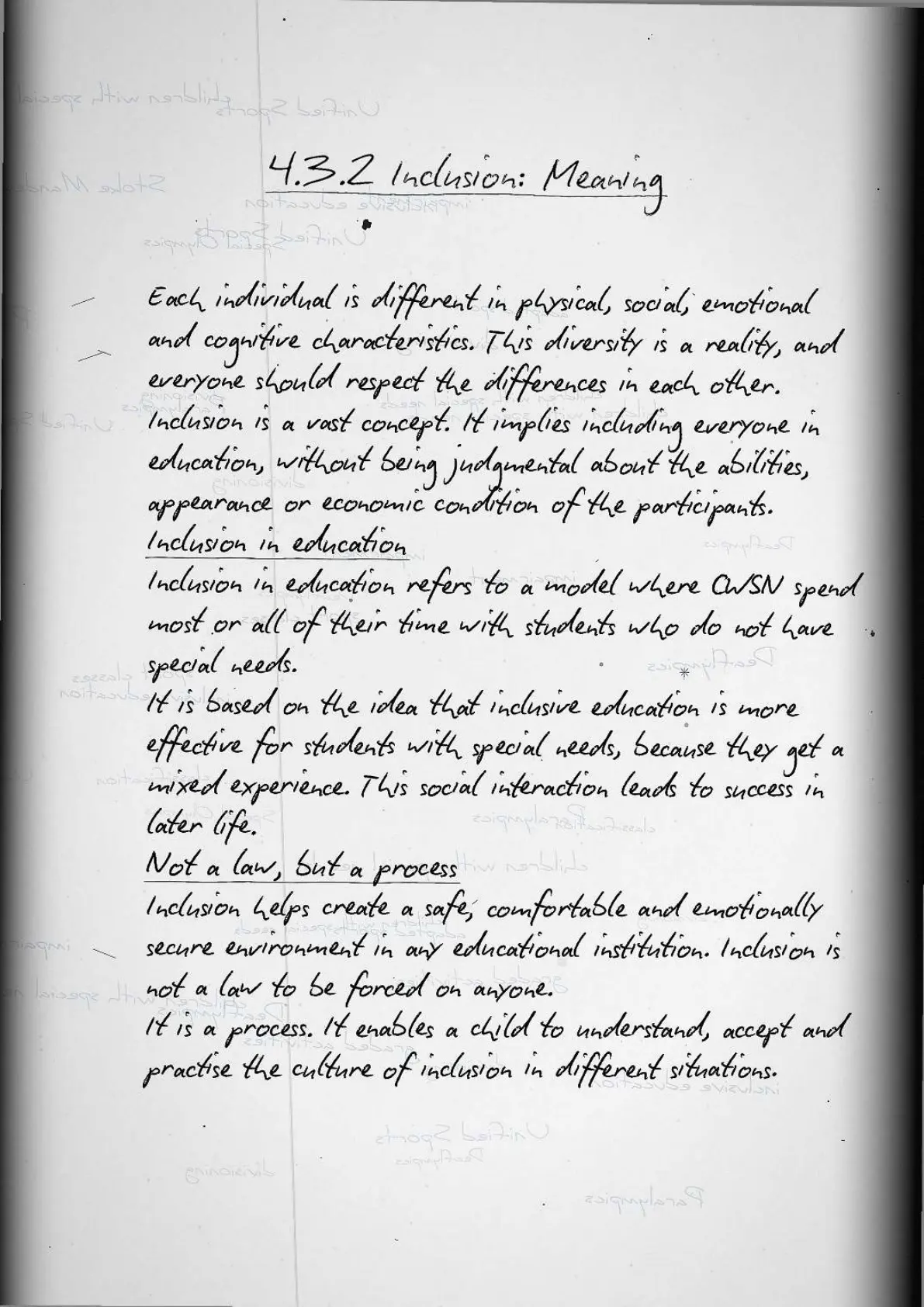
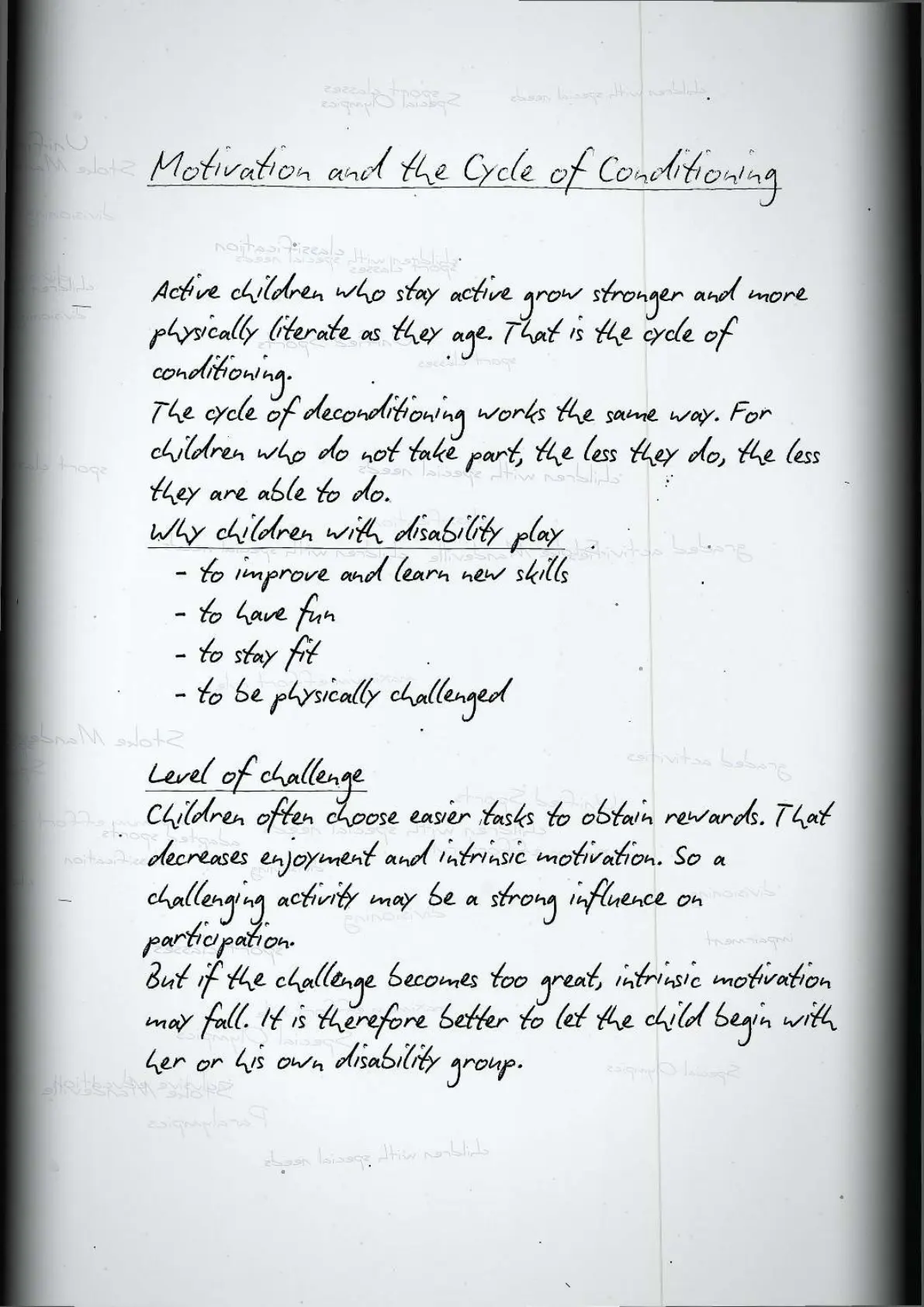
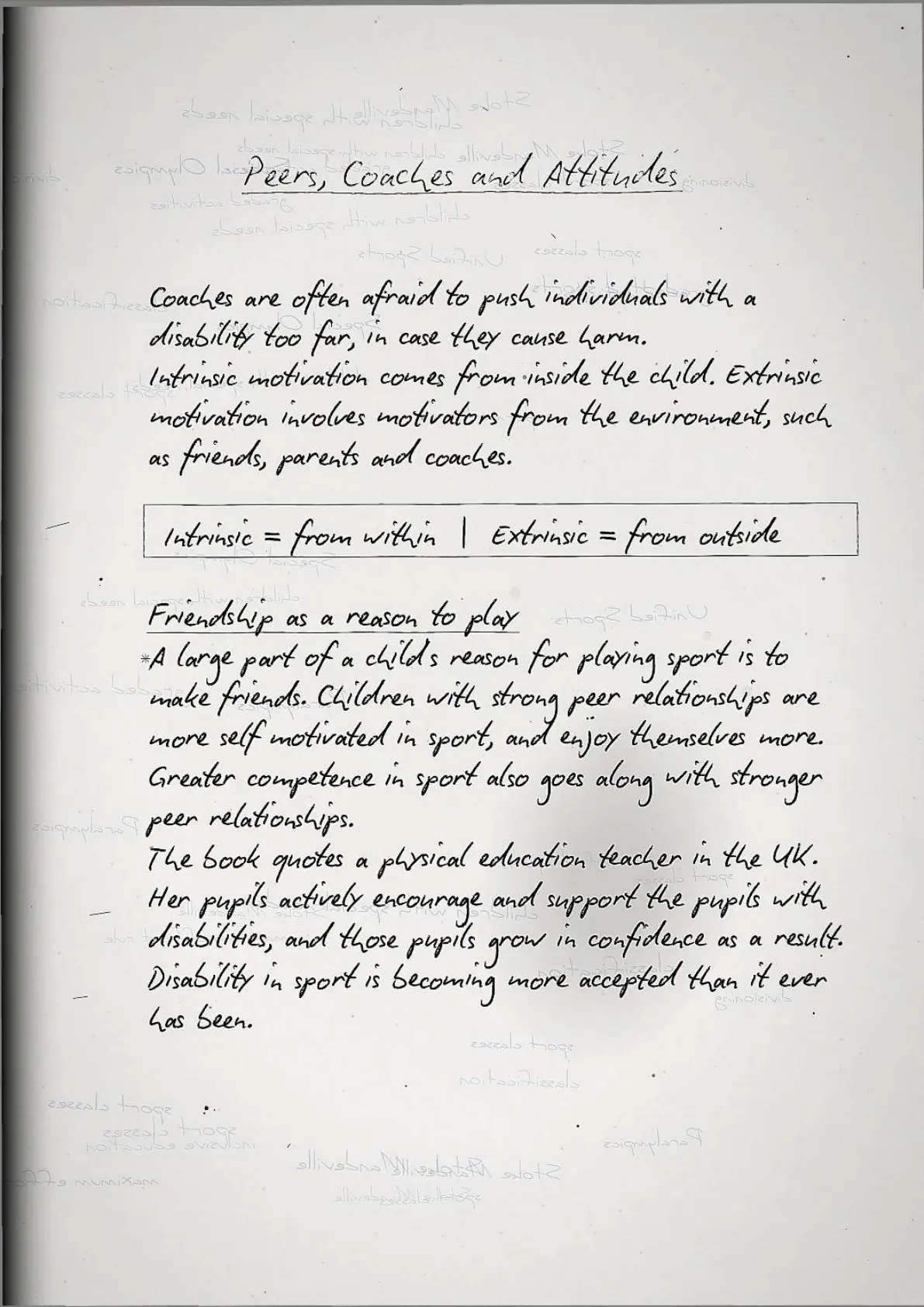
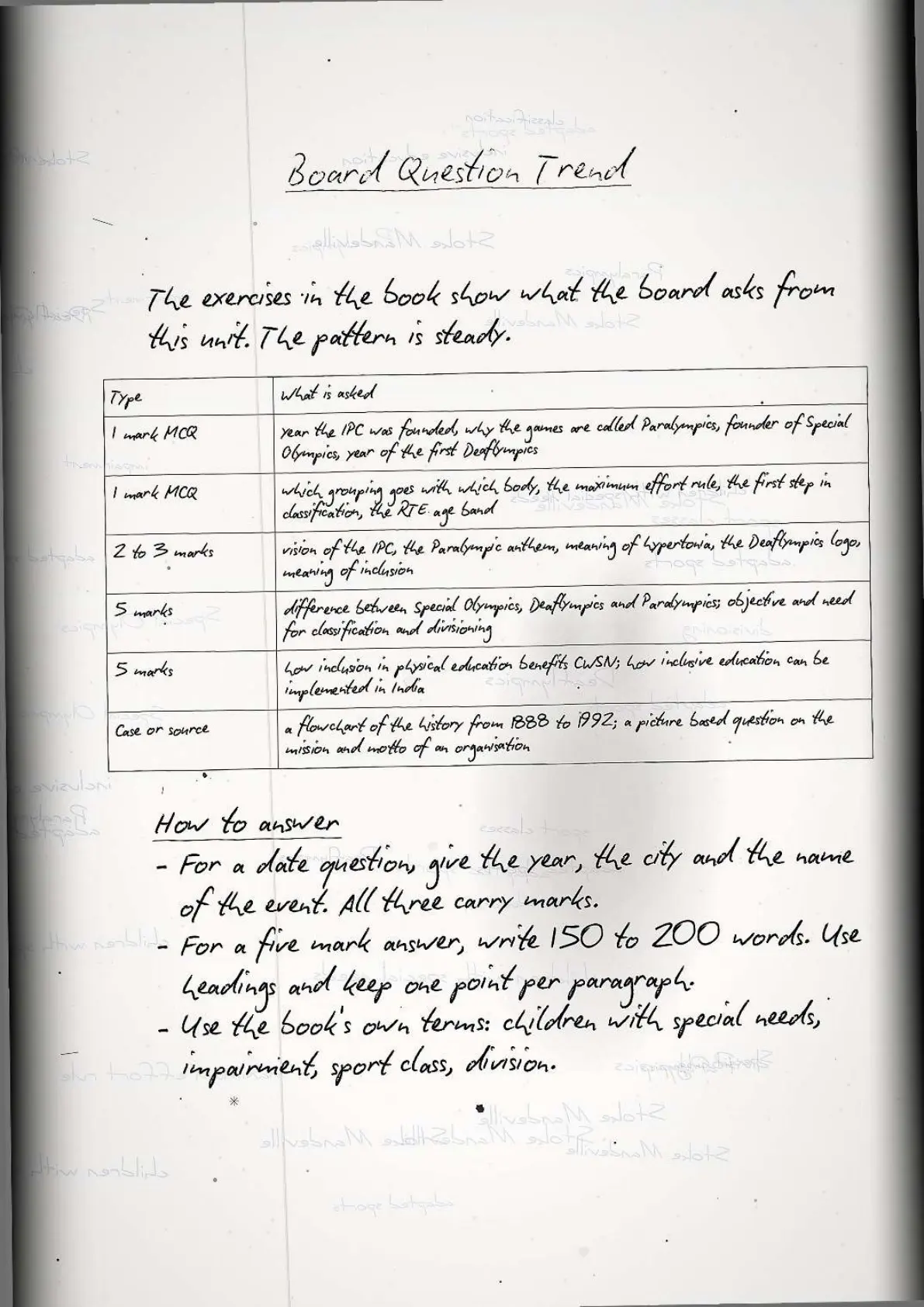
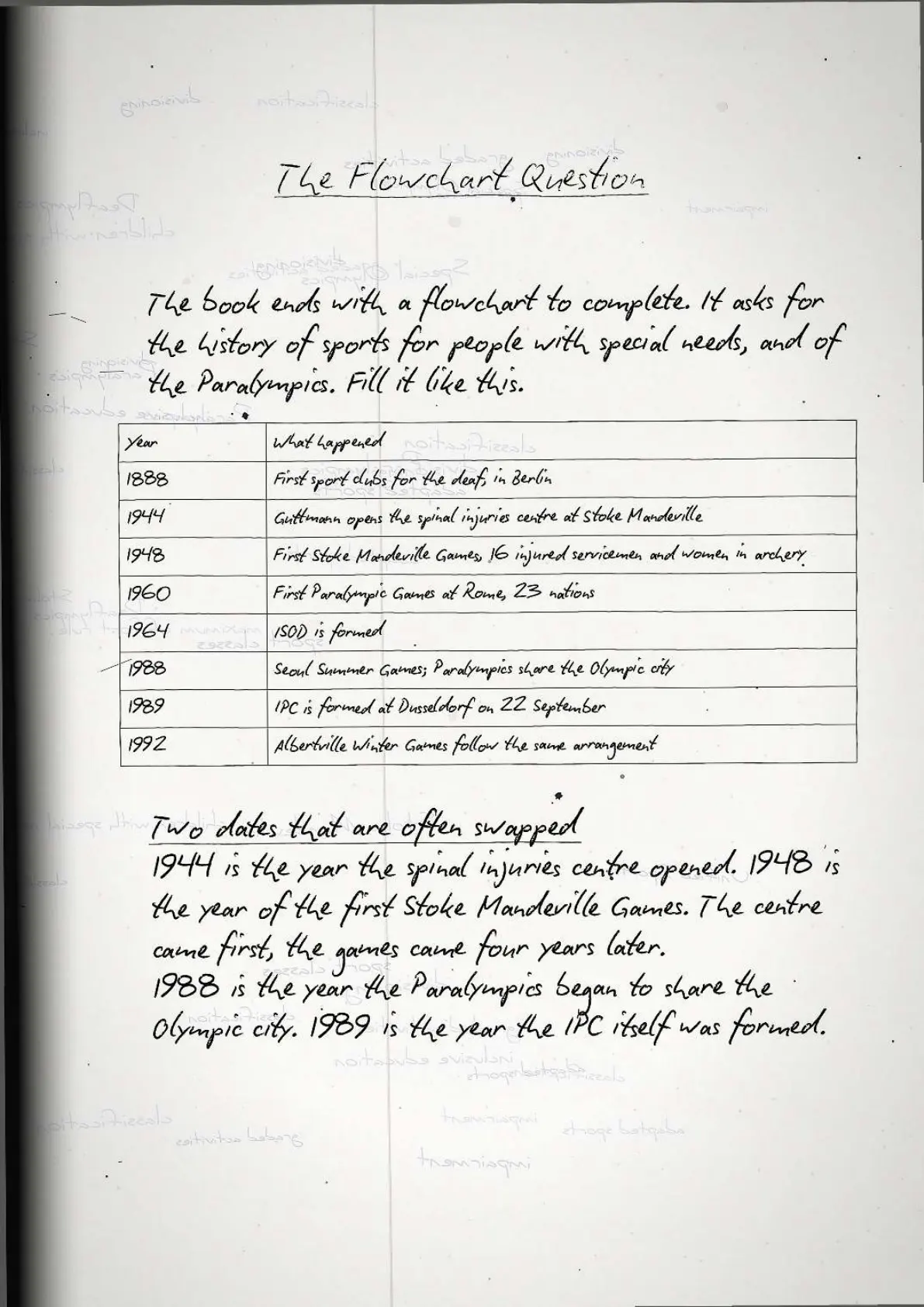
Every date, organisation name and impairment type in these notes is written by hand and checked against the 2026-27 CBSE Physical Education print, using the same person-first wording the textbook uses throughout the chapter.
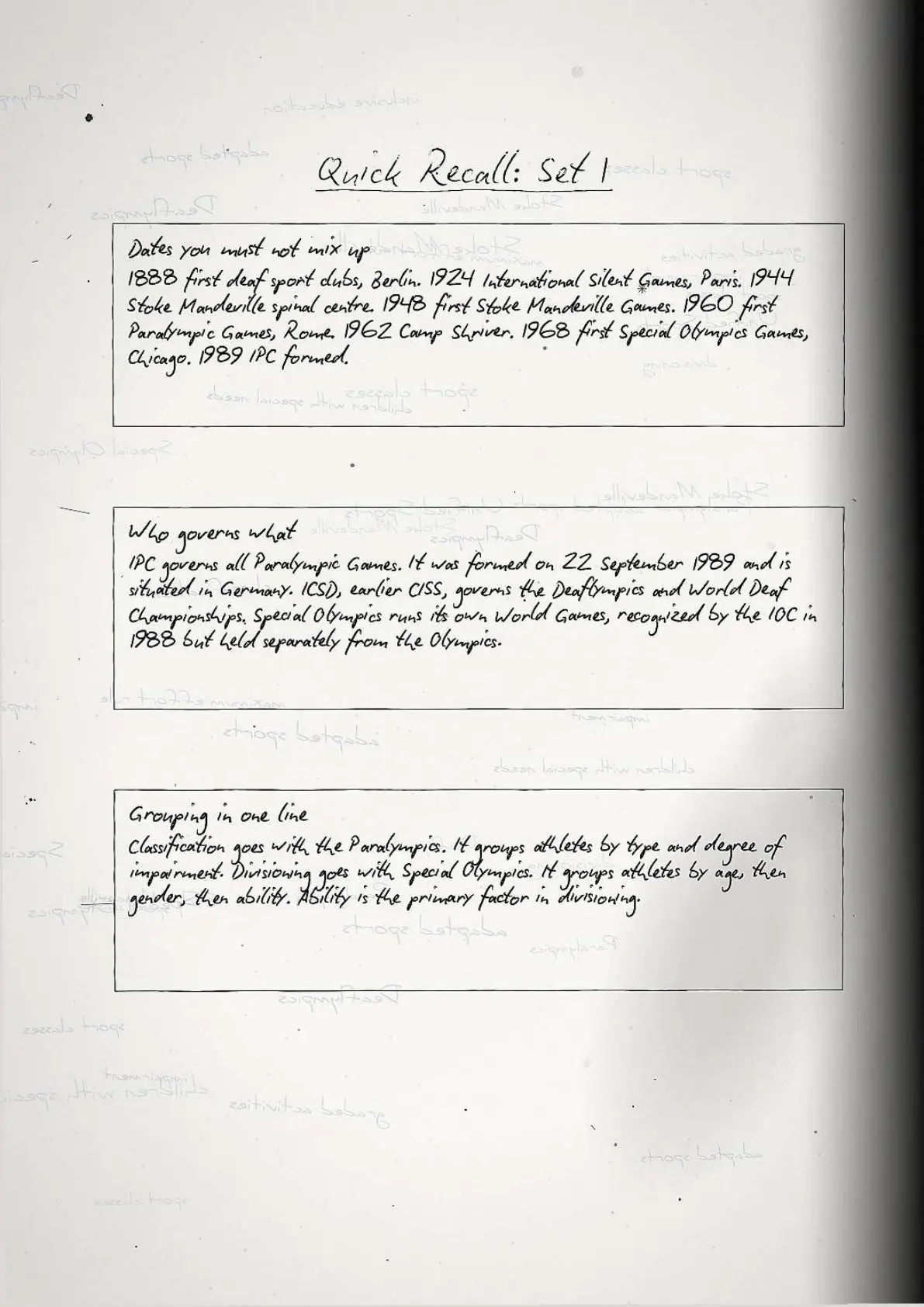
Student Feedback: In a Collegedunia survey of 11,960 Class 12 Physical Education students conducted before the 2026 boards, 64% of students said they had swapped classification and divisioning in a school test. The fix most students named was to learn the two words with their organisation attached. Classification goes with Paralympics, divisioning goes with Special Olympics.
Source: 2026-27 Class 12 Physical Education student poll. Sample of 11,960 students from CBSE schools across 18 states.
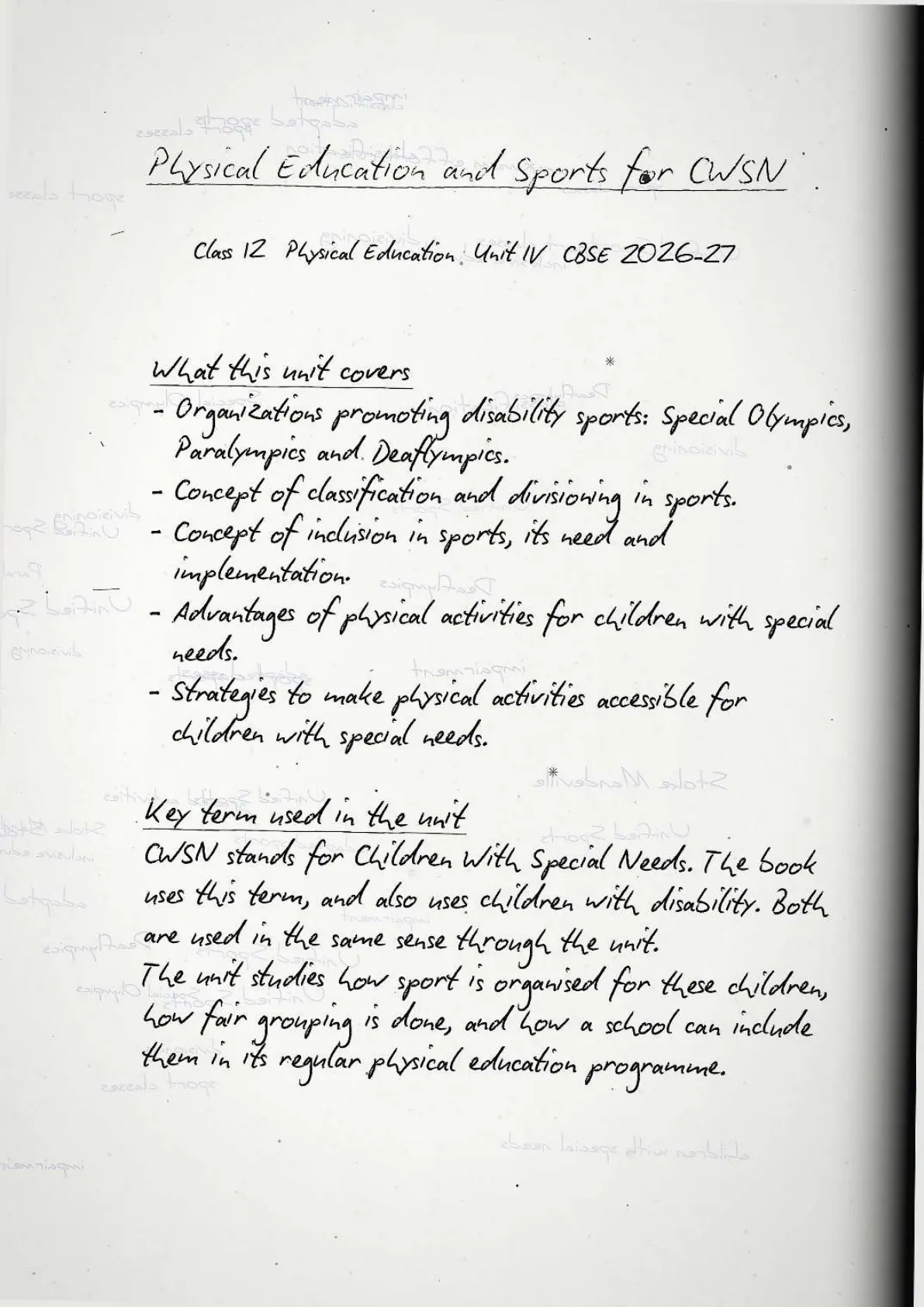
What Physical Education and Sports for CWSN Covers: The Five Sections of Unit IV
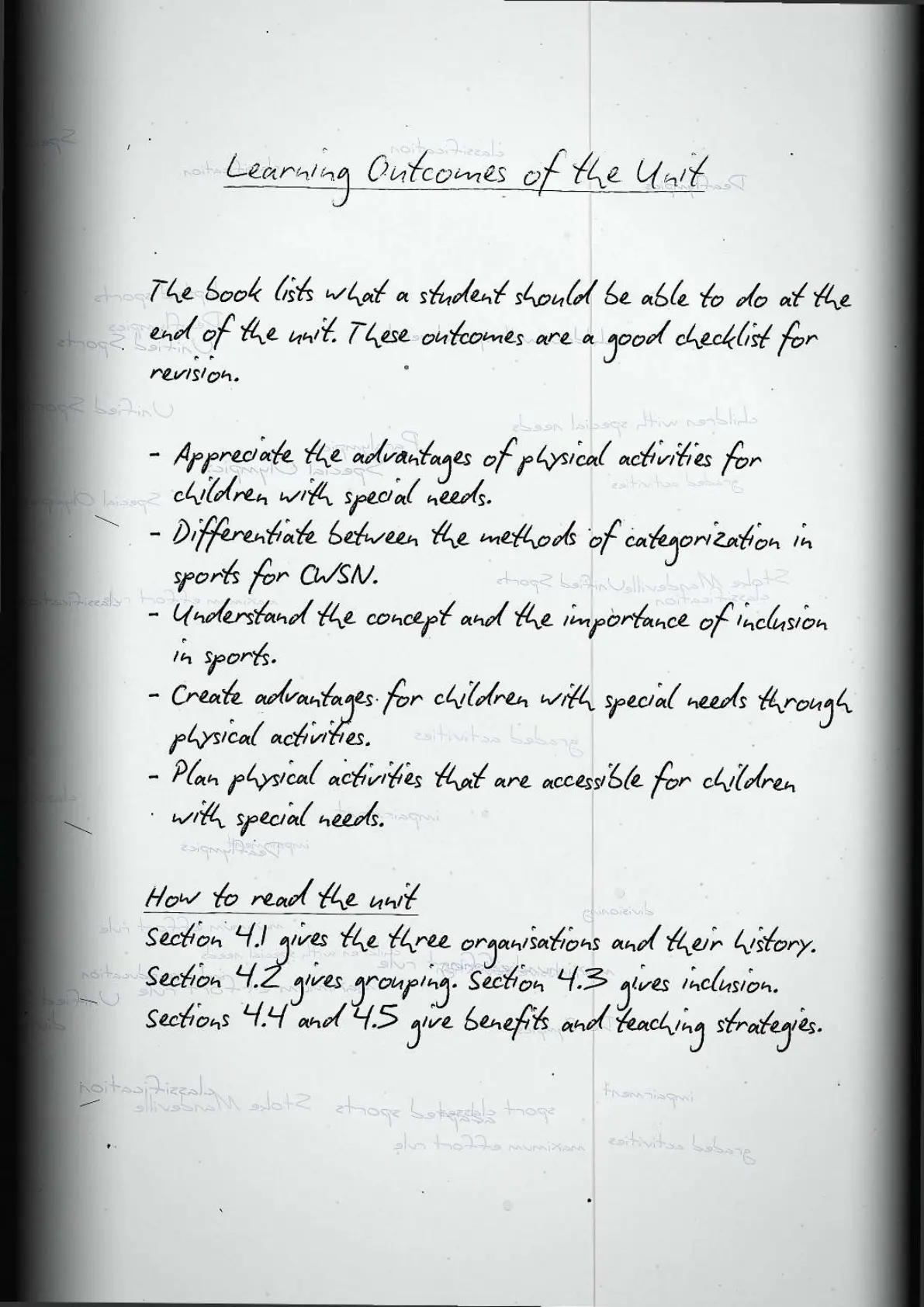
CBSE places this chapter in Unit IV. It has five numbered sections, and every board question comes out of one of them. The table below is the map the rest of these notes follow.
| Section | What it covers | Names to remember |
|---|---|---|
| 4.1 | Organisations promoting disability sports | Paralympics, Special Olympics, Deaflympics |
| 4.2 | Classification and divisioning in sports | IPC, the ten eligible impairment types, the Maximum Effort Rule |
| 4.3 | Inclusion in sports, its need and implementation | Role of family, role of school, role of organisations |
| 4.4 | Advantages of physical activities for CWSN | Eight numbered benefits |
| 4.5 | Strategies to make physical activities accessible | Communication, space, equipment, graded activities, social, psychological |
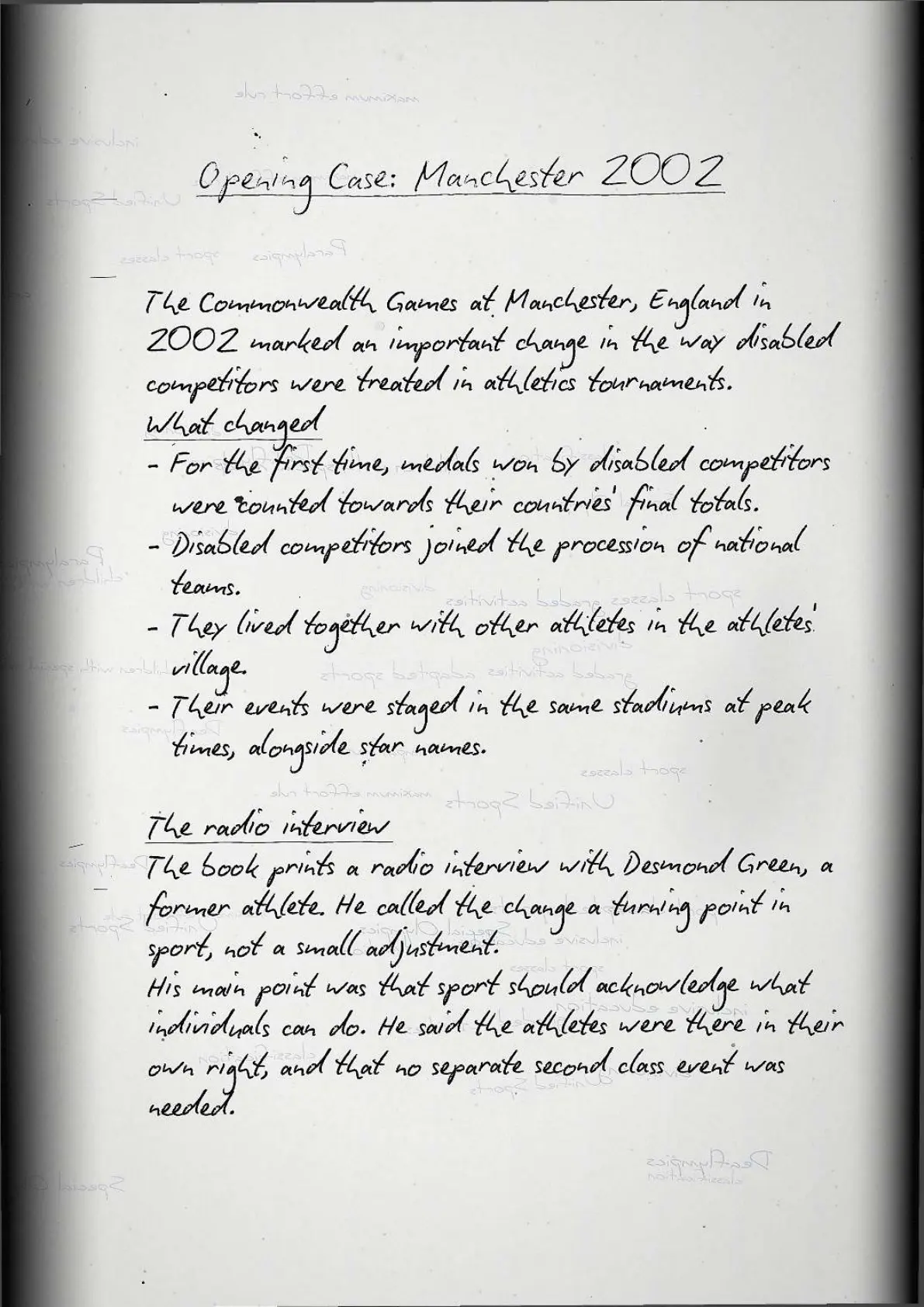
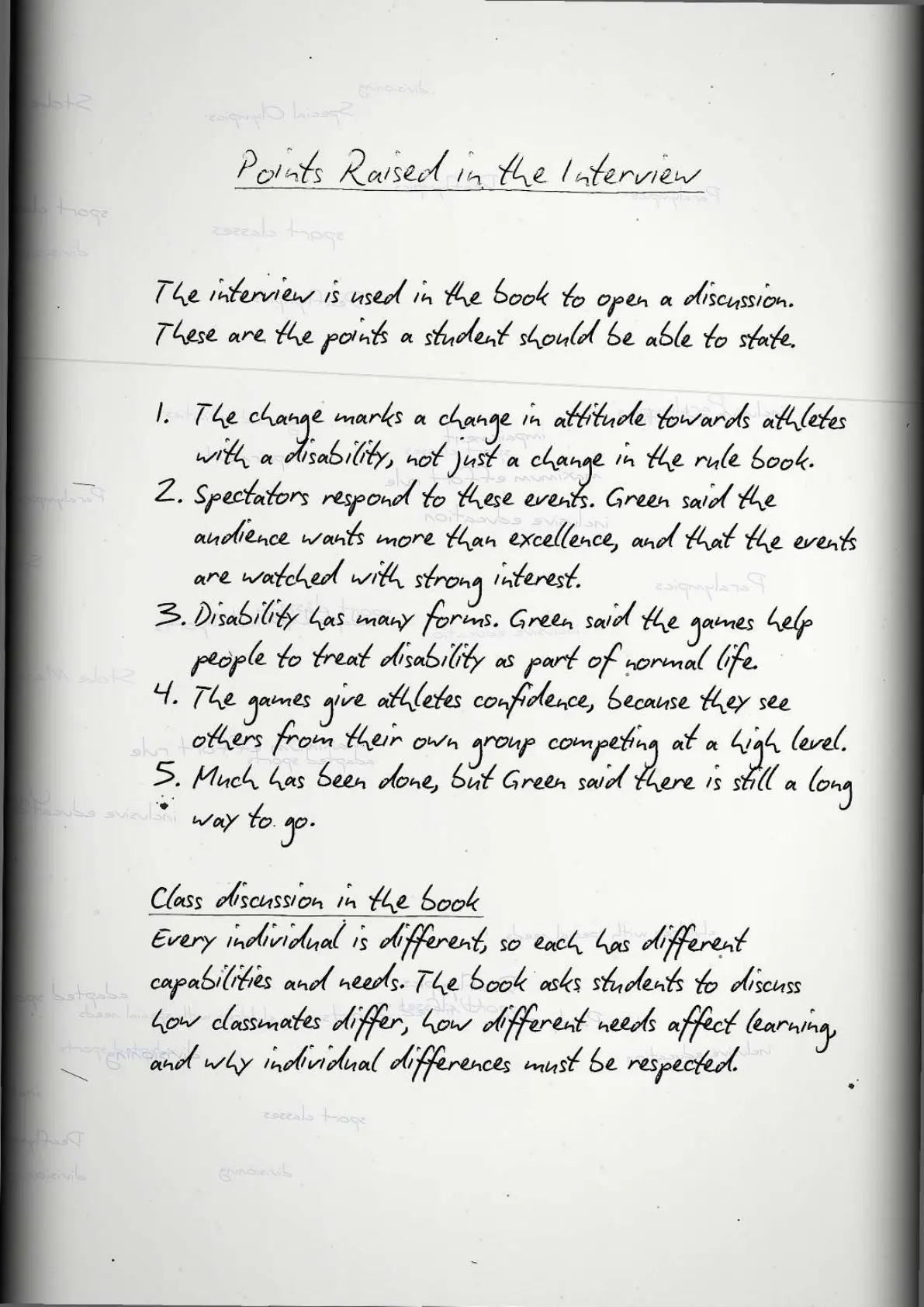
The chapter opens with a real change in sport, not a definition. At the 2002 Commonwealth Games in Manchester, medals won by competitors with a disability counted towards their countries' totals for the first time, and their events were staged in the same stadiums at peak times. That opening sets up everything the five sections go on to explain.
Organisations Promoting Disability Sports: Paralympics, Special Olympics and Deaflympics Compared
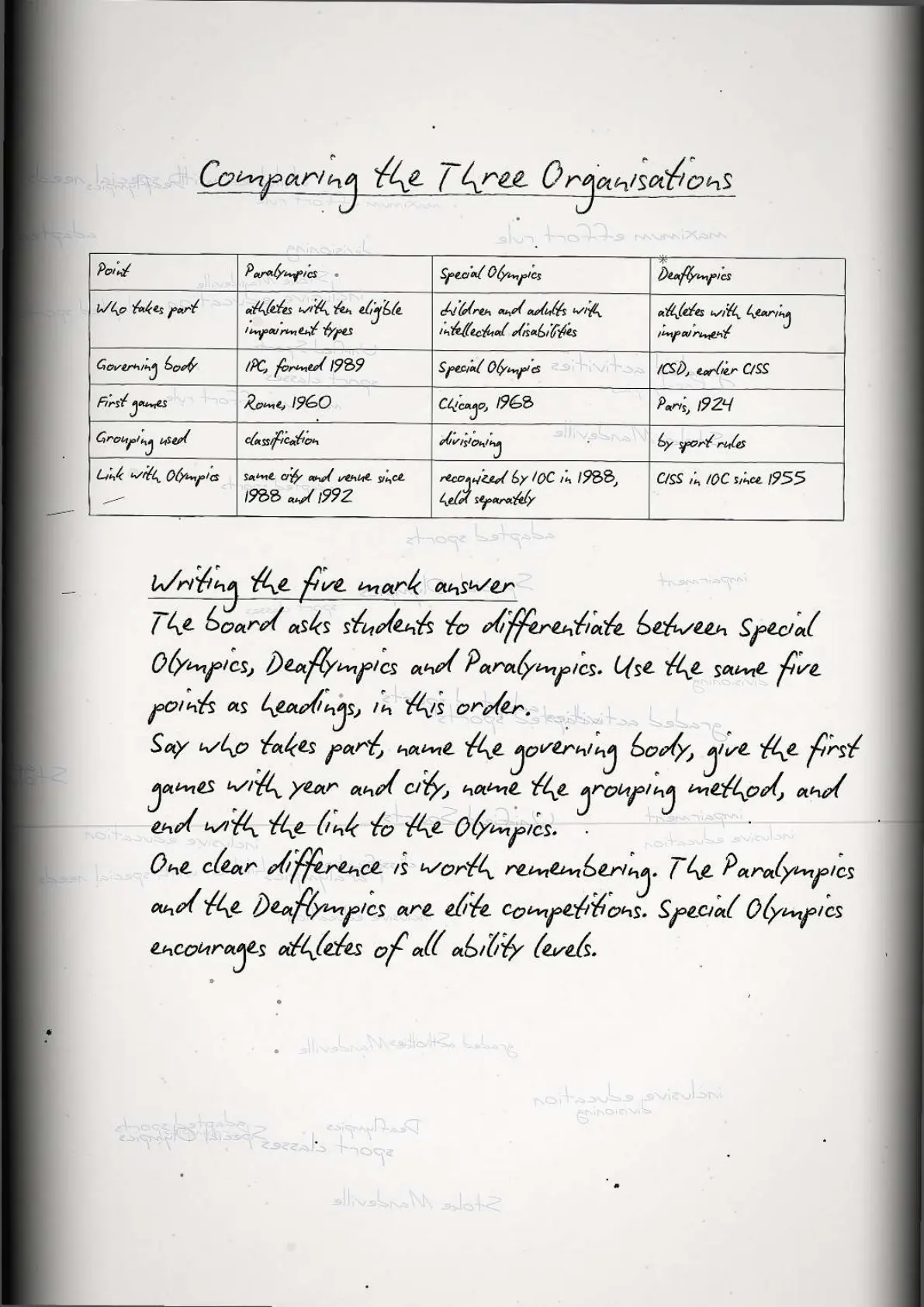
One five-mark question in this chapter asks students to differentiate the three organisations. The three columns below are the answer, and they are worth learning row by row rather than as three separate paragraphs.
| Point | Paralympics | Special Olympics | Deaflympics |
|---|---|---|---|
| Who it serves | Athletes with a range of physical, visual and intellectual impairments | Children and adults with intellectual and physical disabilities | Athletes who are deaf or hard of hearing |
| First games | Rome, 1960, athletes from 23 nations | Chicago, 20 July 1968, about 1000 athletes | Paris, 1924, 148 athletes from nine European nations |
| Governing body | International Paralympic Committee, formed 22 September 1989 | Special Olympics, founded by Eunice Kennedy Shriver | International Committee of Sports for the Deaf, the ICSD |
| Grouping system | Classification | Divisioning | Held every four years since 1924 |
| Relation to the Olympics | Held immediately after the Olympic Games in the same cities since 1988 | Recognised by the IOC in 1988, but not held in the same year or place | CISS admitted to the IOC in 1955 as an International Federation |
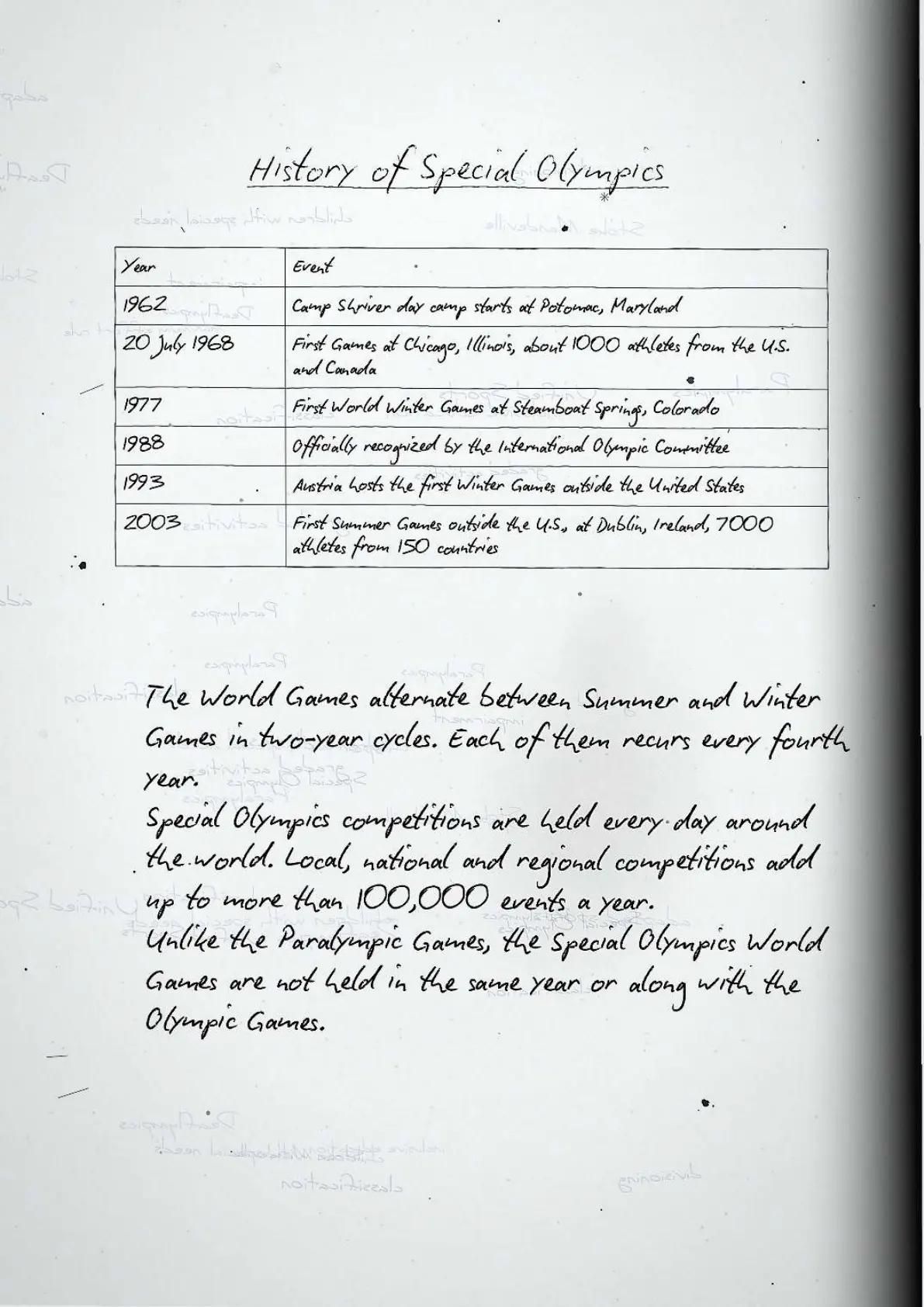
Both the IPC and Special Olympics are recognised by the International Olympic Committee. The difference is timing and venue. Paralympic Games follow the Olympics in the same host city, while Special Olympics World Games run on their own cycle, alternating summer and winter every two years and returning to each season every fourth year.
Physical Education and Sports for CWSN Unit 4 Full Chapter Revision
Source: Zaki Saudagar on YouTube
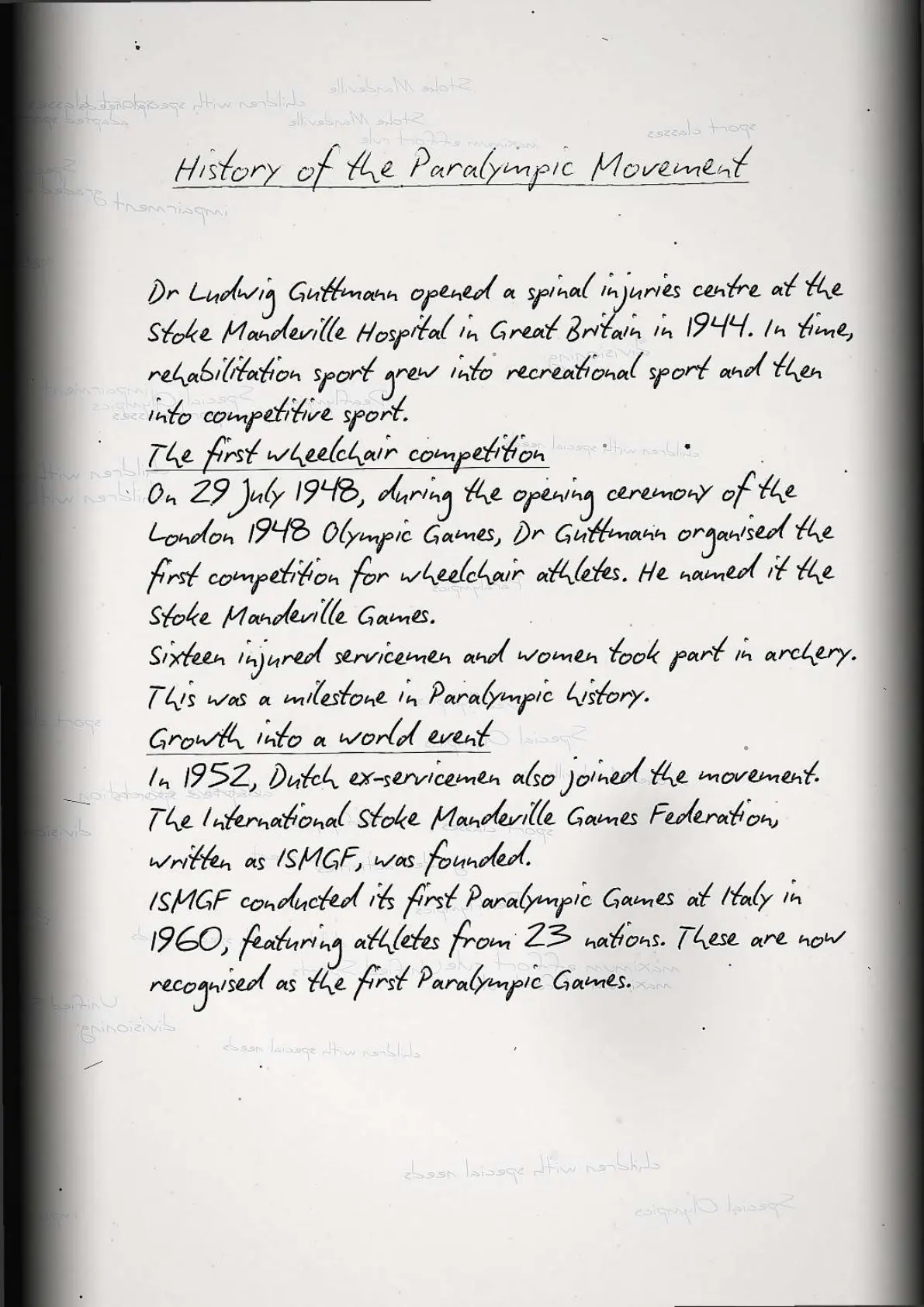
Paralympics: From the Stoke Mandeville Games of 1948 to the IPC
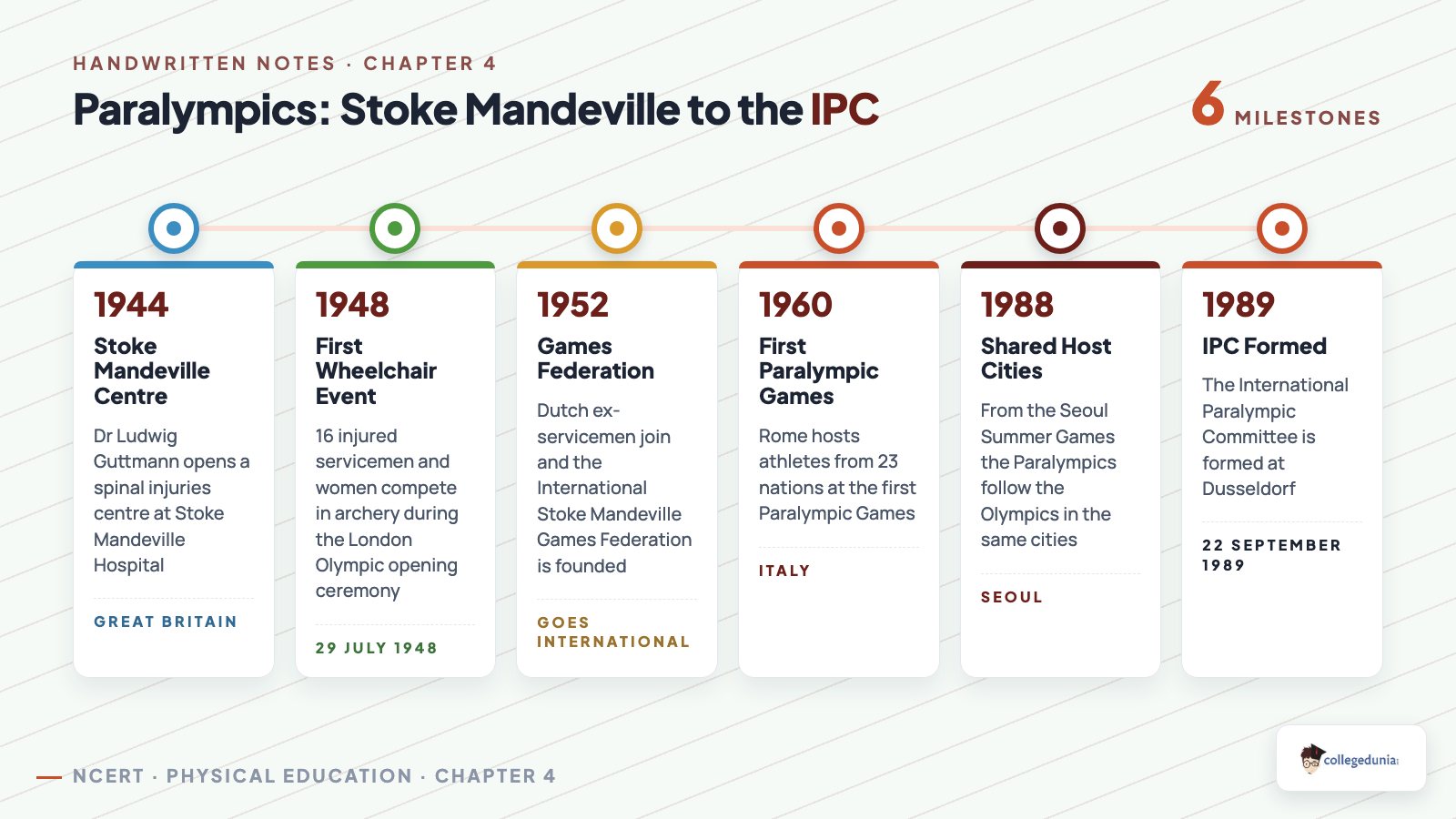
The word Paralympics comes from the Greek para, meaning beside or alongside, joined to Olympic. It means an international competition held parallel to the Olympics, and the dates below are the ones the exercise questions ask for.
| Year | What happened |
|---|---|
| 1888 | The first sport clubs for the deaf are already in existence in Berlin |
| 1944 | Dr Ludwig Guttmann opens a spinal injuries centre at Stoke Mandeville Hospital in Great Britain |
| 29 July 1948 | During the London Olympic opening ceremony, Guttmann holds the first wheelchair competition, the Stoke Mandeville Games, with 16 injured servicemen and women in archery |
| 1952 | Dutch ex-servicemen join and the International Stoke Mandeville Games Federation is founded |
| 1960 | The first Paralympic Games are held in Italy with athletes from 23 nations |
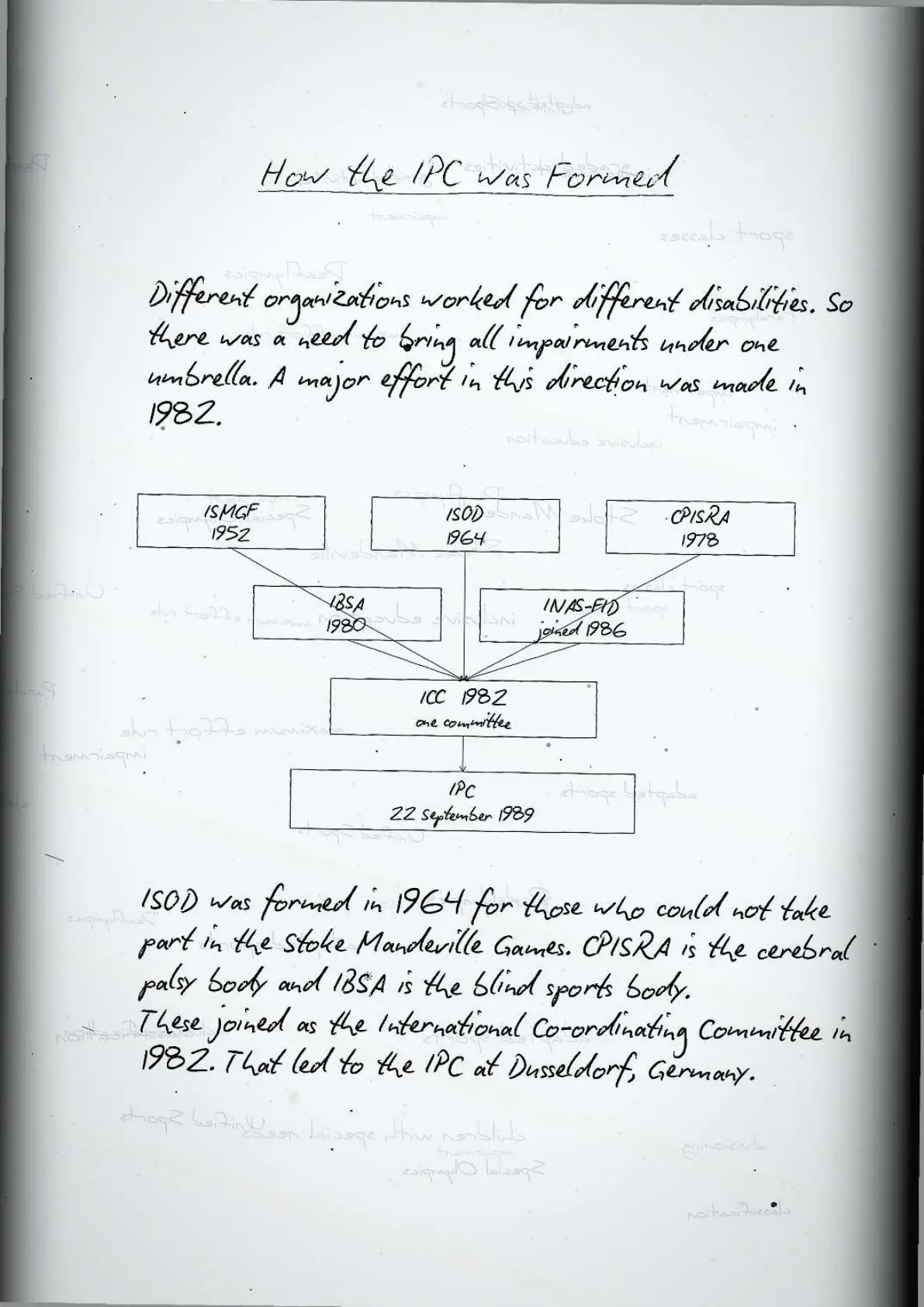
| 1964 | The International Sport Organisation for the Disabled is formed |
| 1982 | Four bodies join as the International Co-ordinating Committee, the ICC |
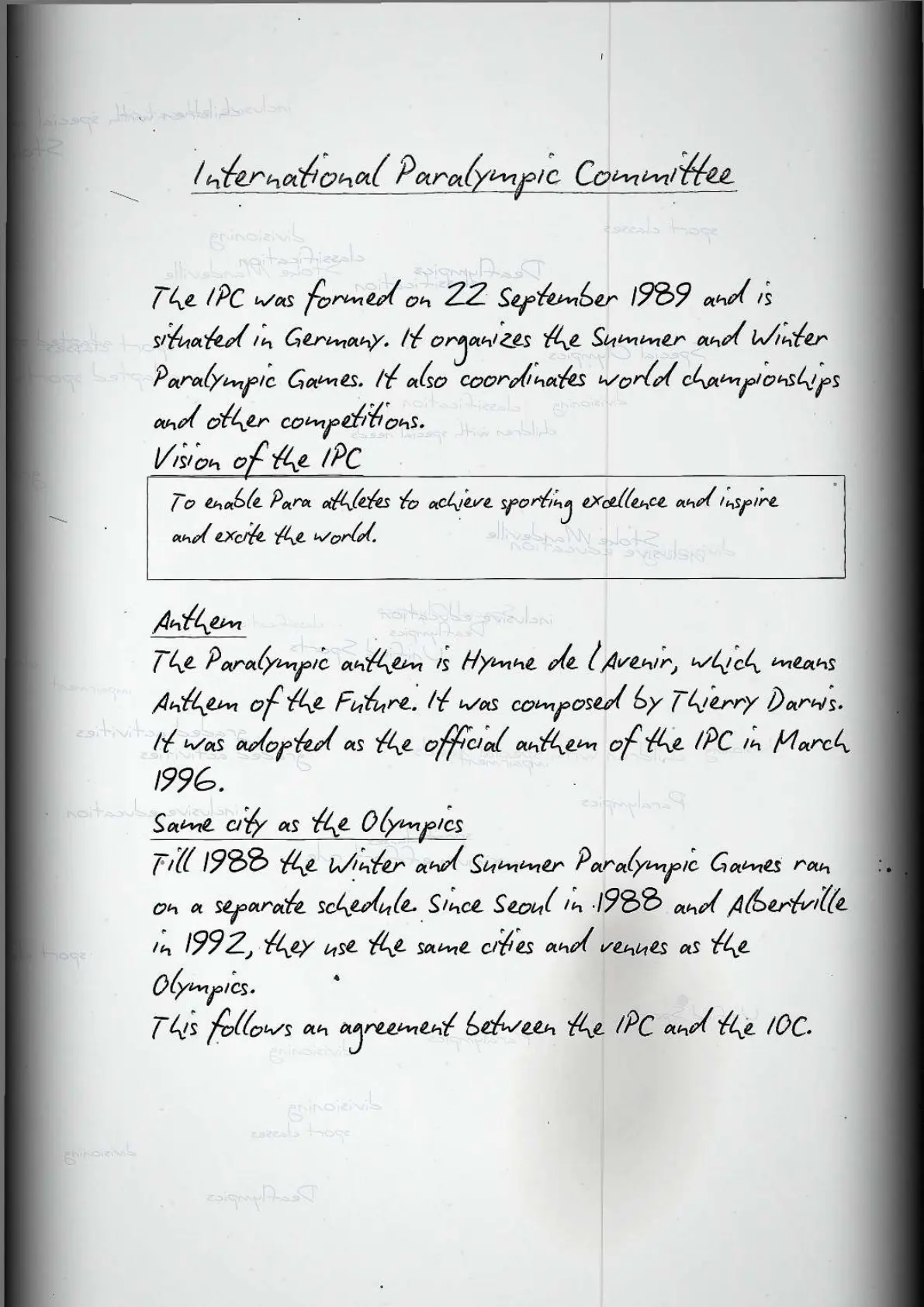
| 1988 | From the Seoul Summer Games, Paralympics follow the Olympics in the same cities |
| 22 September 1989 | The International Paralympic Committee is formed at Dusseldorf, Germany |
| 1992 | Winter Games at Albertville, France, under the same shared-venue agreement |
Two more facts are asked directly. The vision of the IPC is to enable Para athletes to achieve sporting excellence and to inspire and excite the world. The Paralympic anthem is Hymne de l'Avenir, or Anthem of the Future, composed by Thierry Darnis and adopted in March 1996.
Special Olympics: Camp Shriver, the Athlete Oath and Four Global Programmes
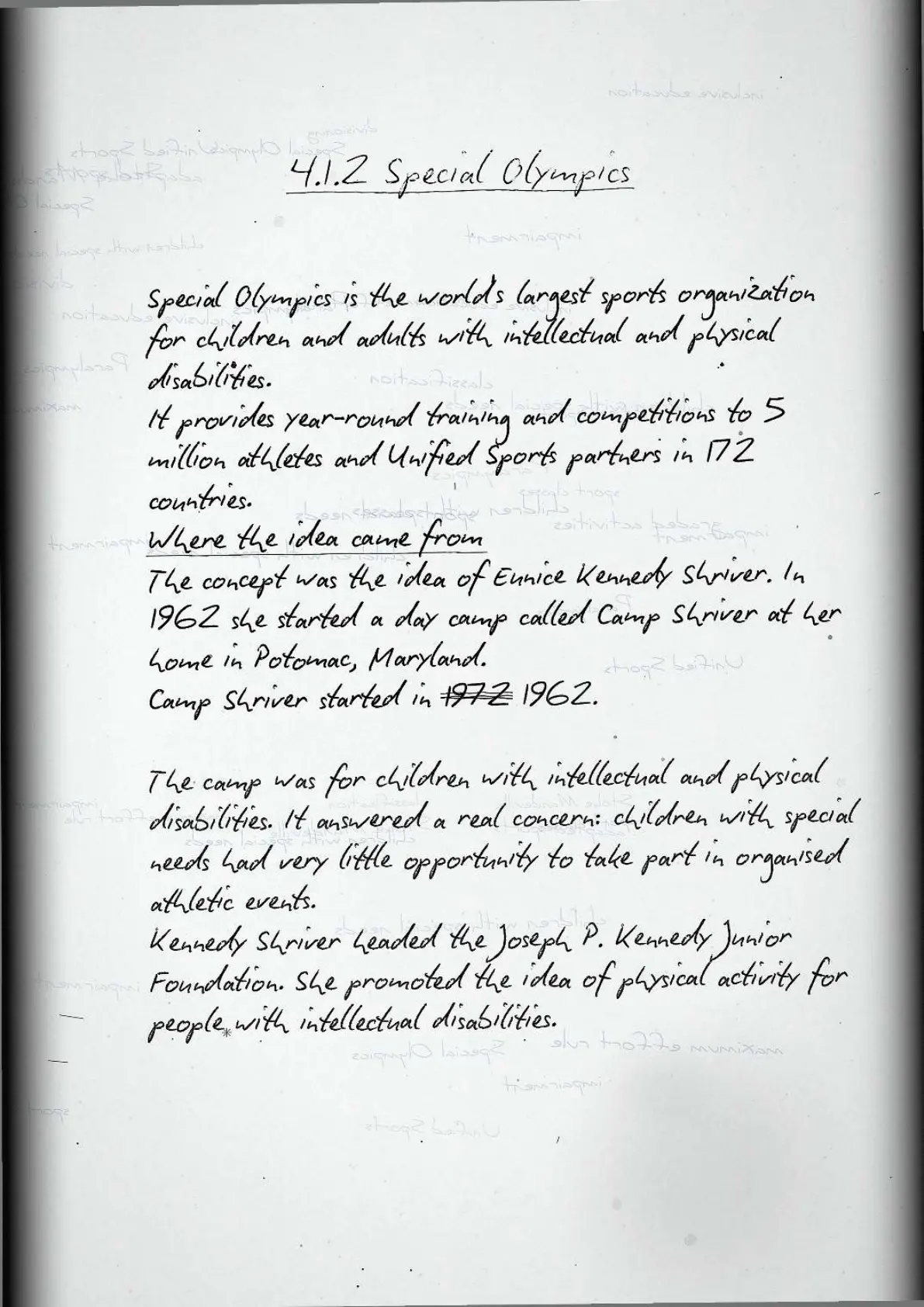
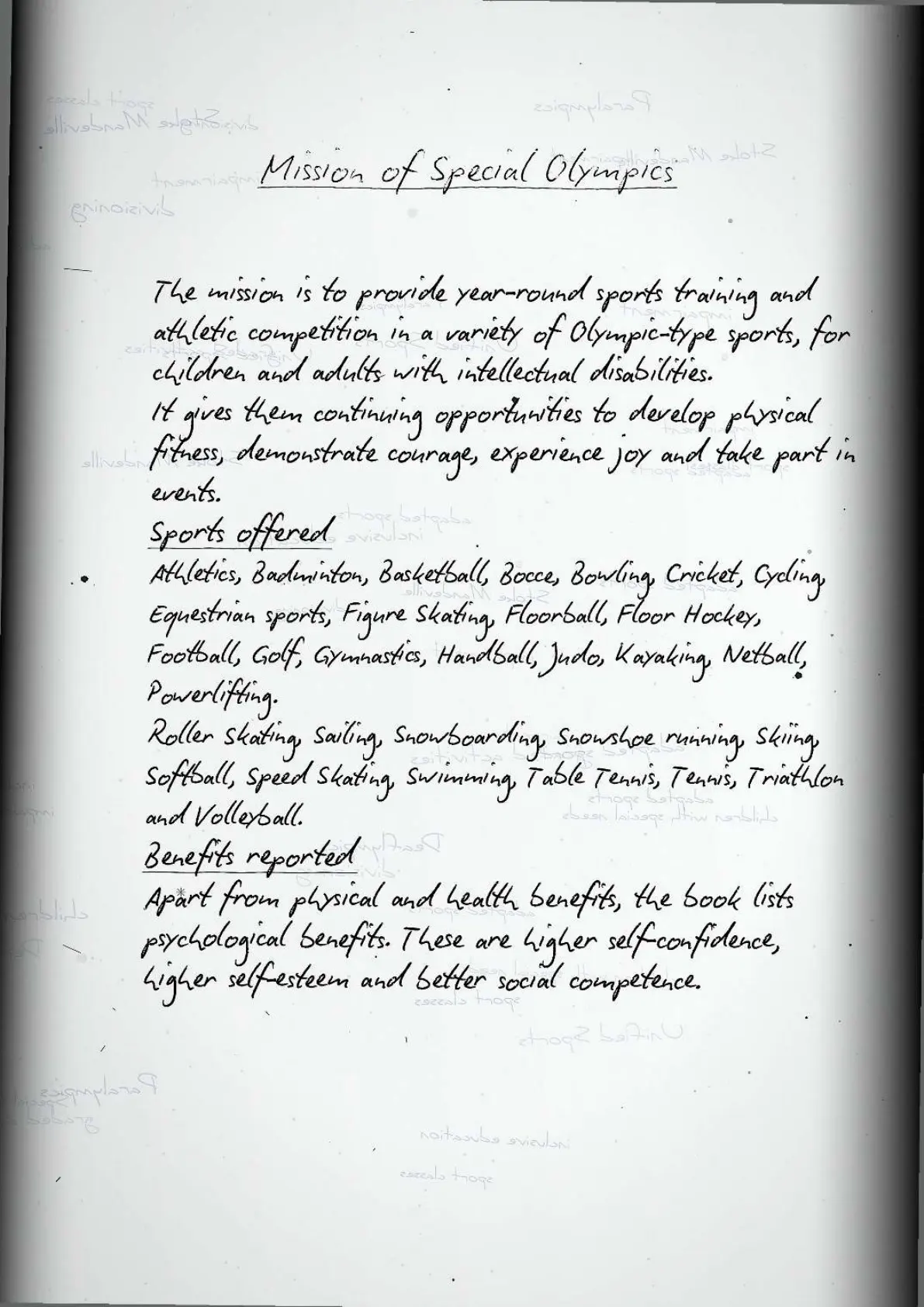
Special Olympics is the world's largest sports organisation for children and adults with intellectual and physical disabilities. It runs year-round training and competition for 5 million athletes and Unified Sports partners in 172 countries, adding up to more than 100,000 events a year.
- Founder: Eunice Kennedy Shriver, who started a day camp called Camp Shriver at her home in Potomac, Maryland, in June 1962.
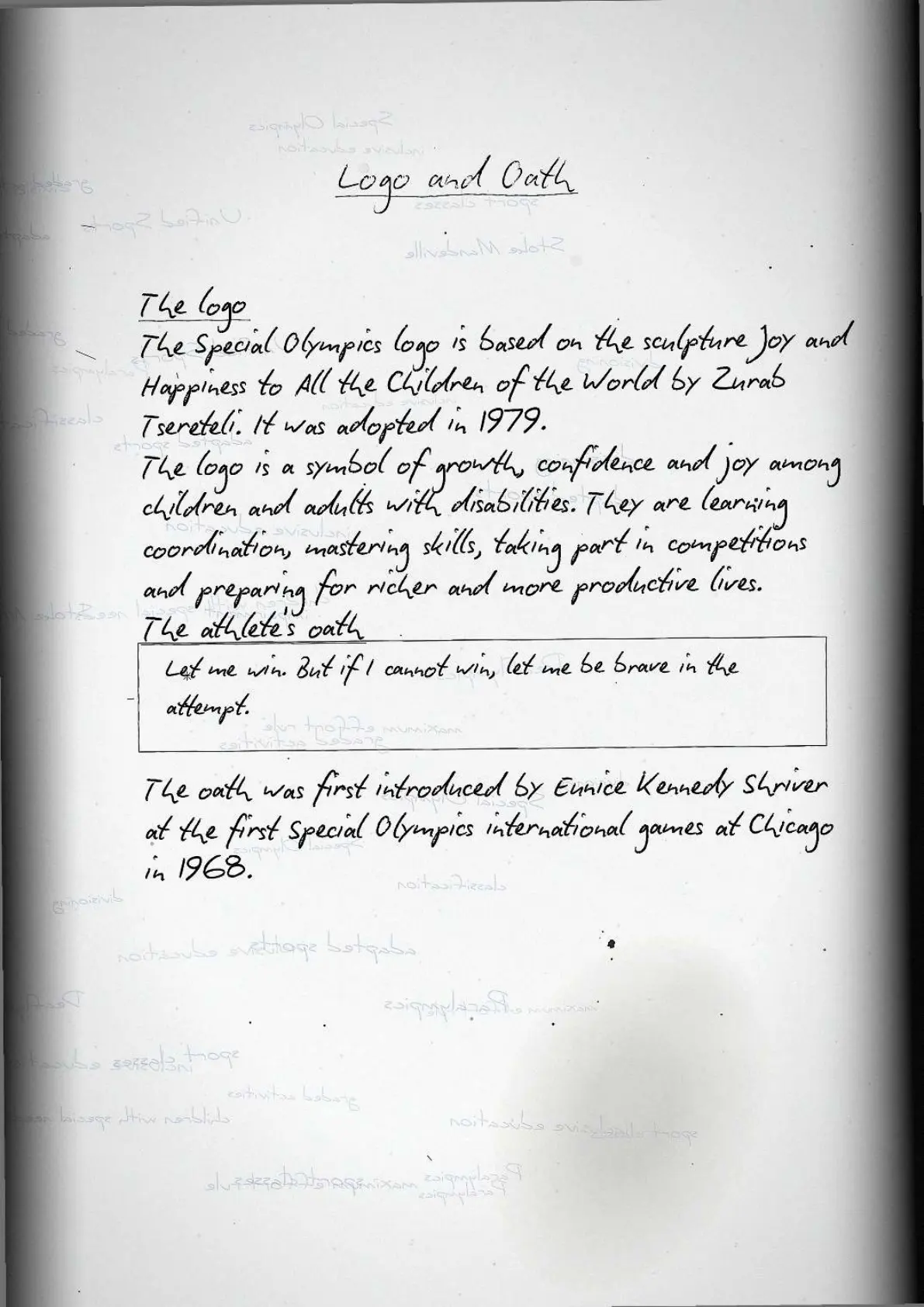
- Athlete oath: "Let me win. But if I cannot win, let me be brave in the attempt," first used at the Chicago games in 1968.
- Logo: based on the sculpture "Joy and Happiness to All the Children of the World" by Zurab Tsereteli, adopted in 1979.
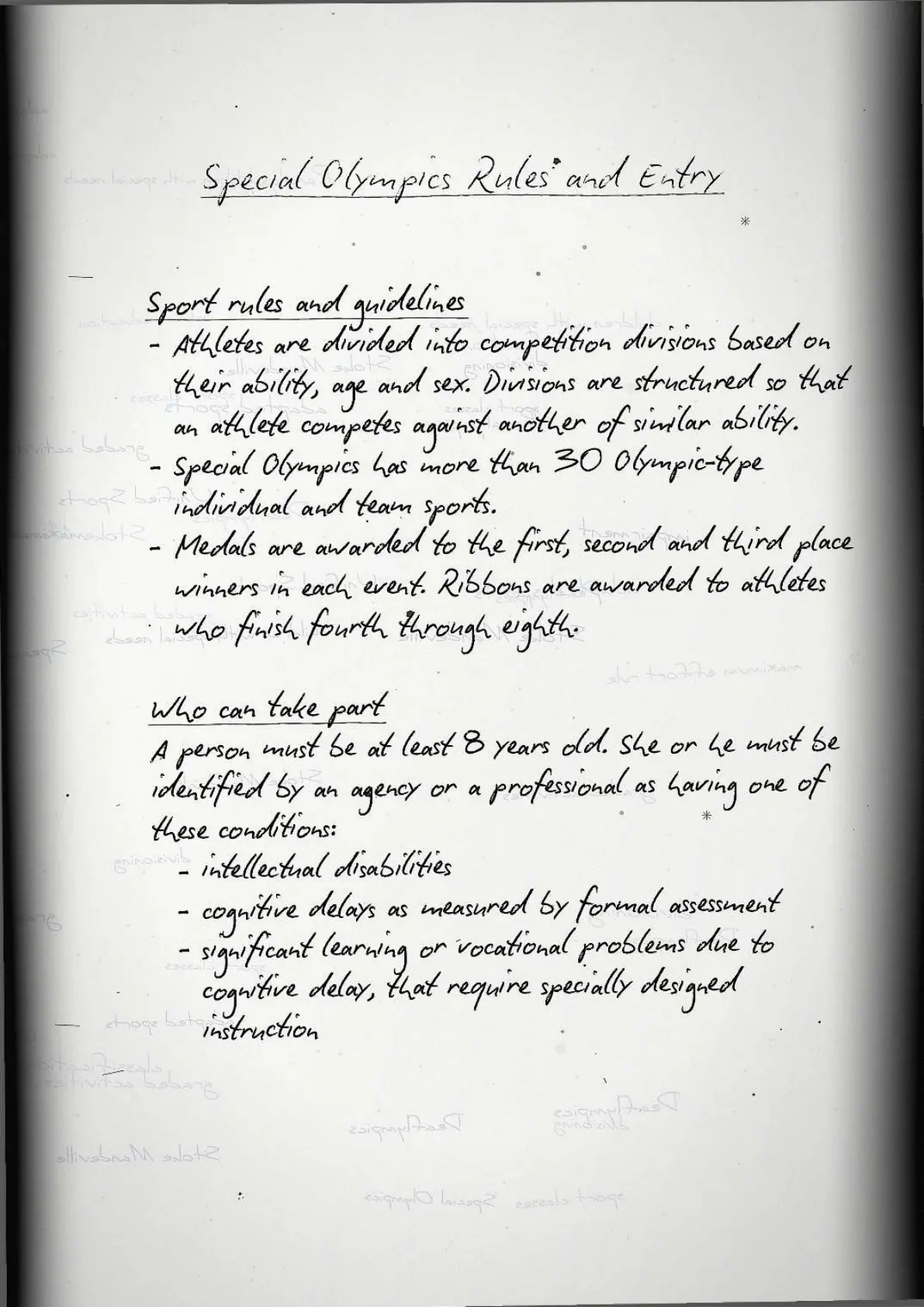
- Entry rule: a participant must be at least 8 years old and identified by an agency or professional as having an intellectual disability, a cognitive delay measured by formal assessment, or significant learning or vocational problems due to cognitive delay.
- Awards: medals for first, second and third place, ribbons for fourth through eighth place.
The chapter names four programmes run around the world, and a short-answer question can ask for the list.
| Programme | What it does |
|---|---|
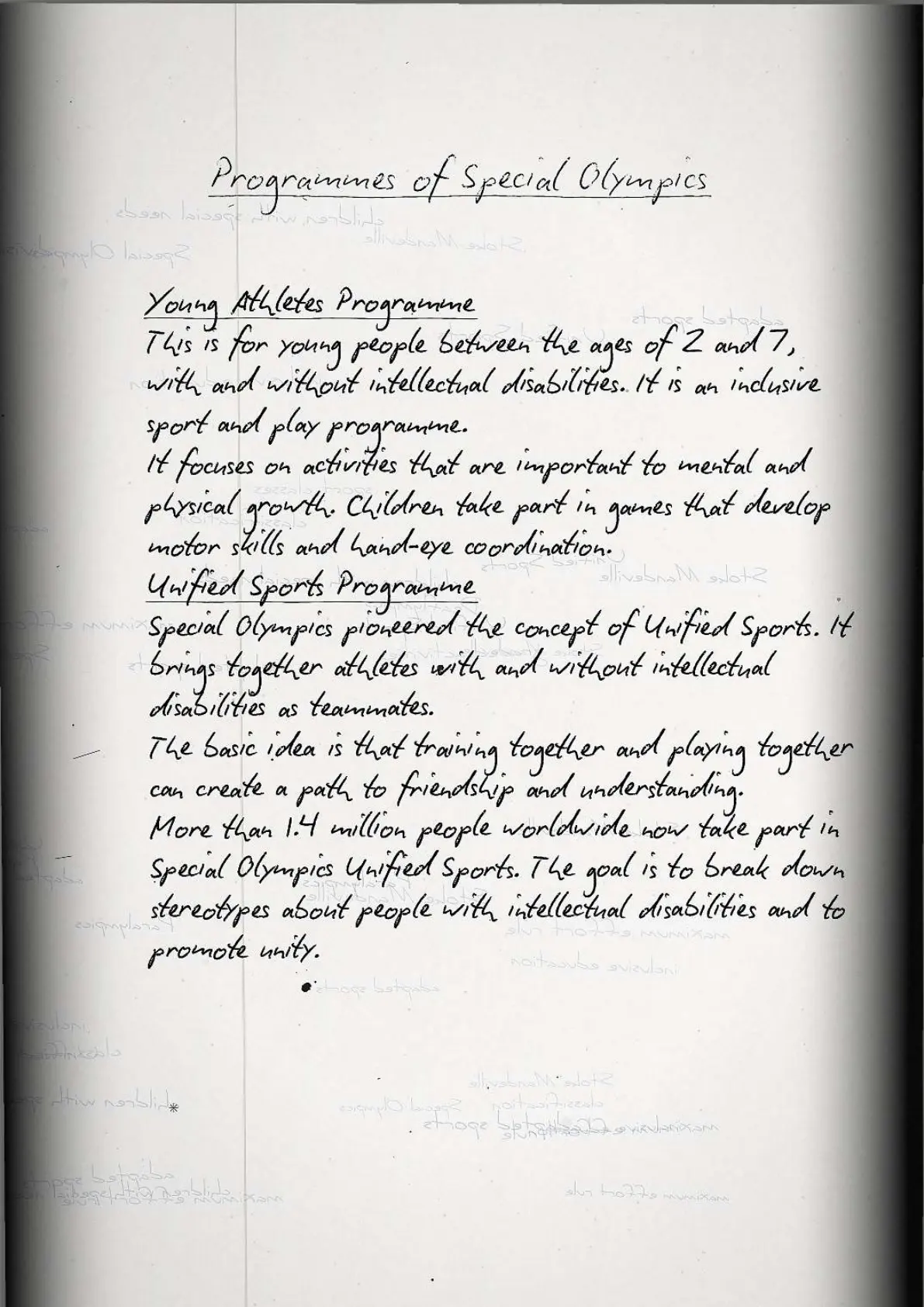
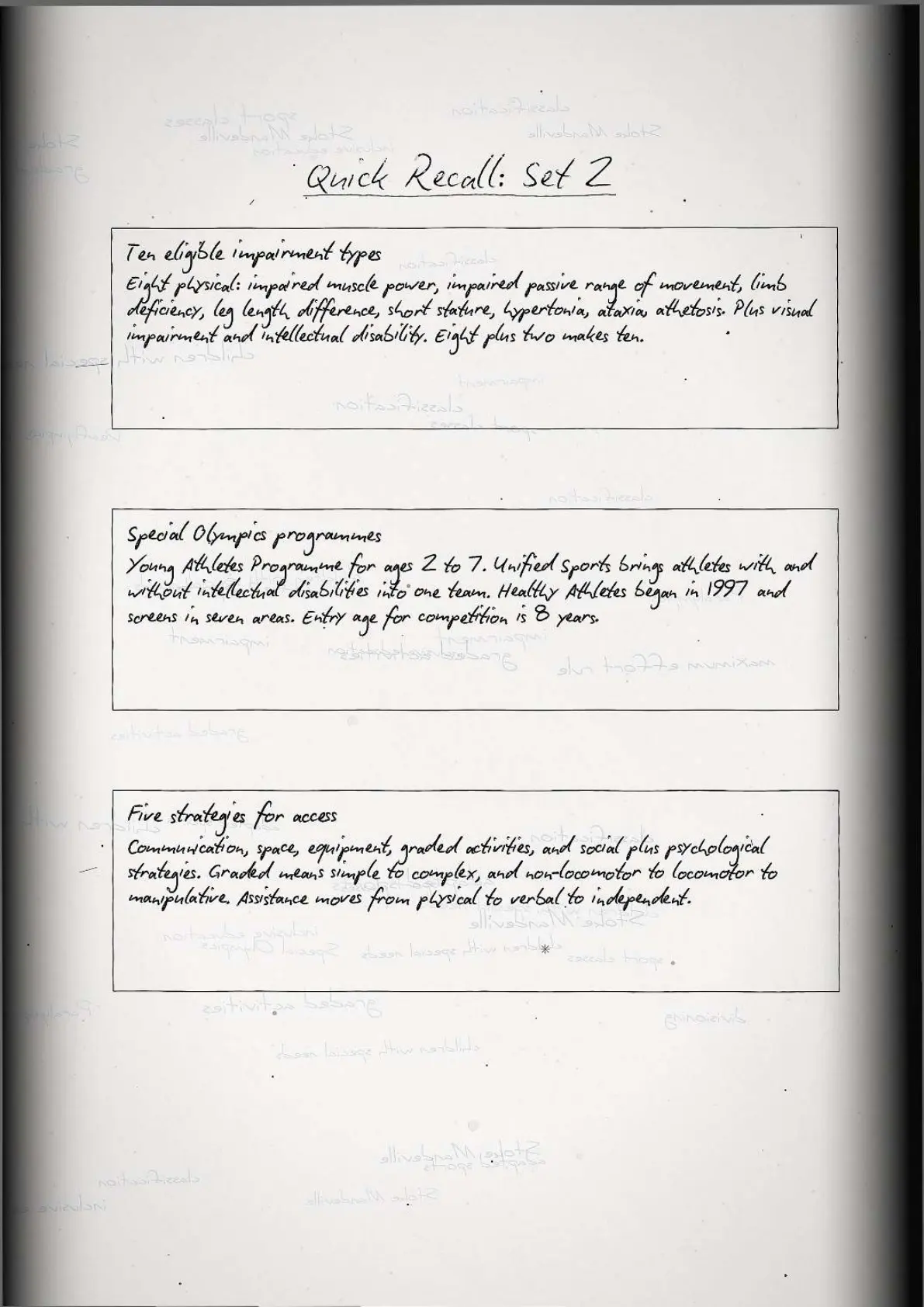
| Young Athletes Programme | Inclusive sport and play for children aged 2 to 7, with and without intellectual disabilities, building motor skills and hand-eye co-ordination |
| Unified Sports Programme | Athletes with and without intellectual disabilities train and play as teammates; more than 1.4 million people take part worldwide |
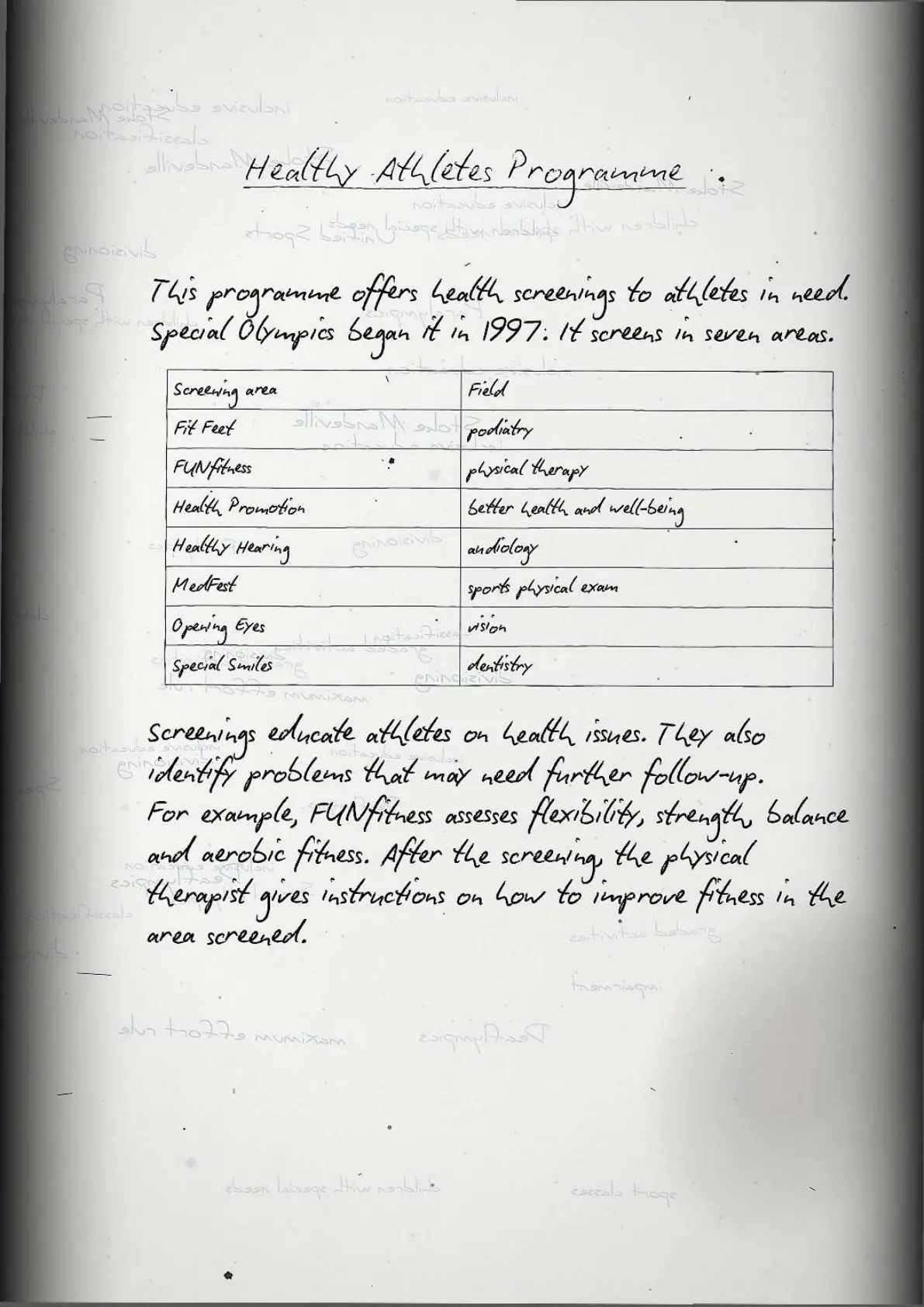
| Healthy Athletes Programme | Health screenings started in 1997 in seven areas: Fit Feet, FUNfitness, Health Promotion, Healthy Hearing, MedFest, Opening Eyes and Special Smiles |
| World Games | First held in Chicago in July 1968; the first Winter Games followed in 1977 at Steamboat Springs, Colorado |
Deaflympics: The International Silent Games of 1924 and the ICSD Logo
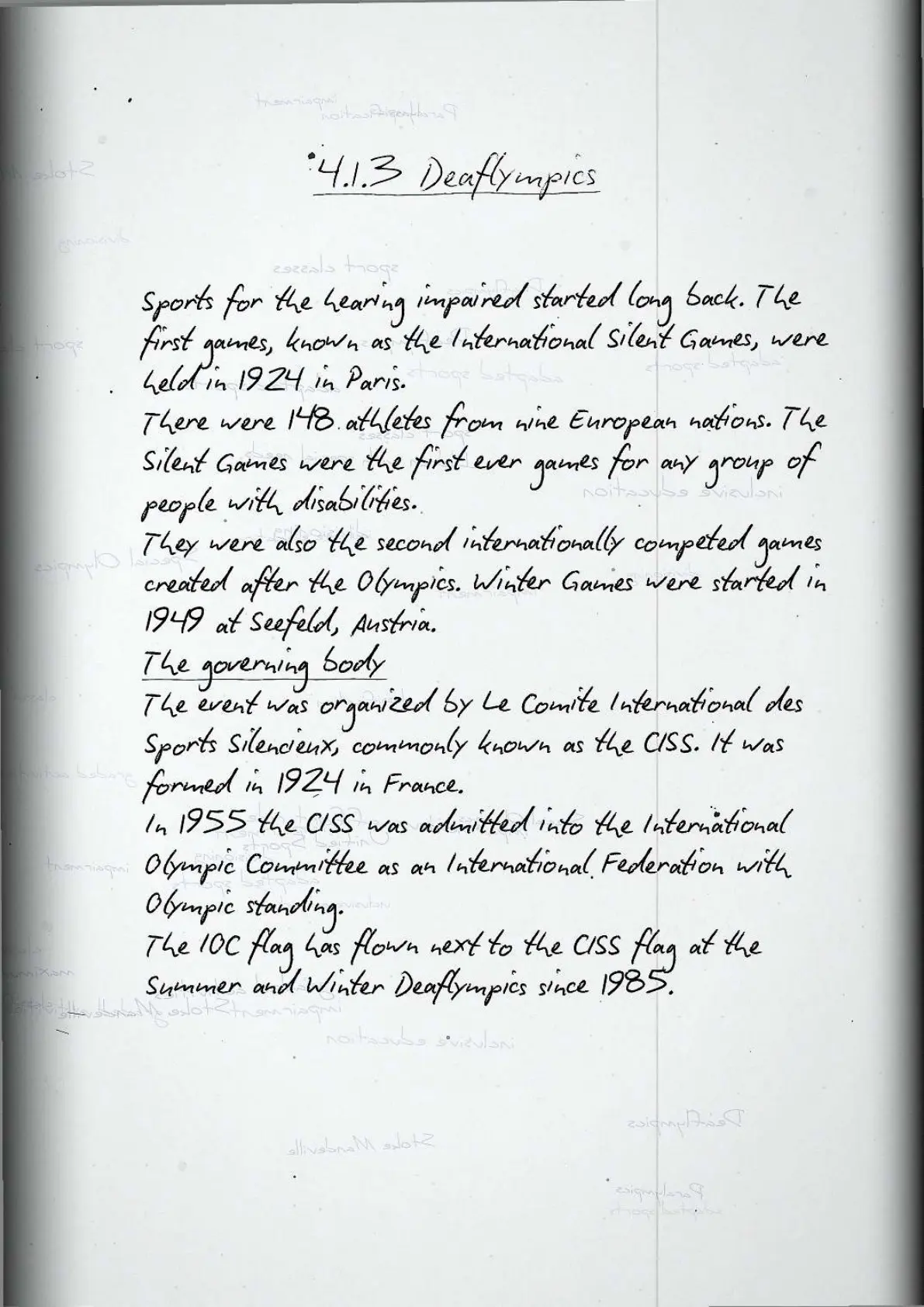
The Deaflympics have the longest history of the three. The International Silent Games of 1924 were the first international games ever held for any group of people with disabilities, and the second internationally contested games created after the Olympics.
- 1924: first games in Paris, 148 athletes from nine European nations, organised by the CISS, formed the same year in France.
- 1949: Winter Games instituted at Seefeld, Austria.
- 1955: the CISS is admitted into the IOC as an International Federation with Olympic standing.
- 1985: the IOC flag flies next to the CISS flag at the Summer and Winter Deaflympics.
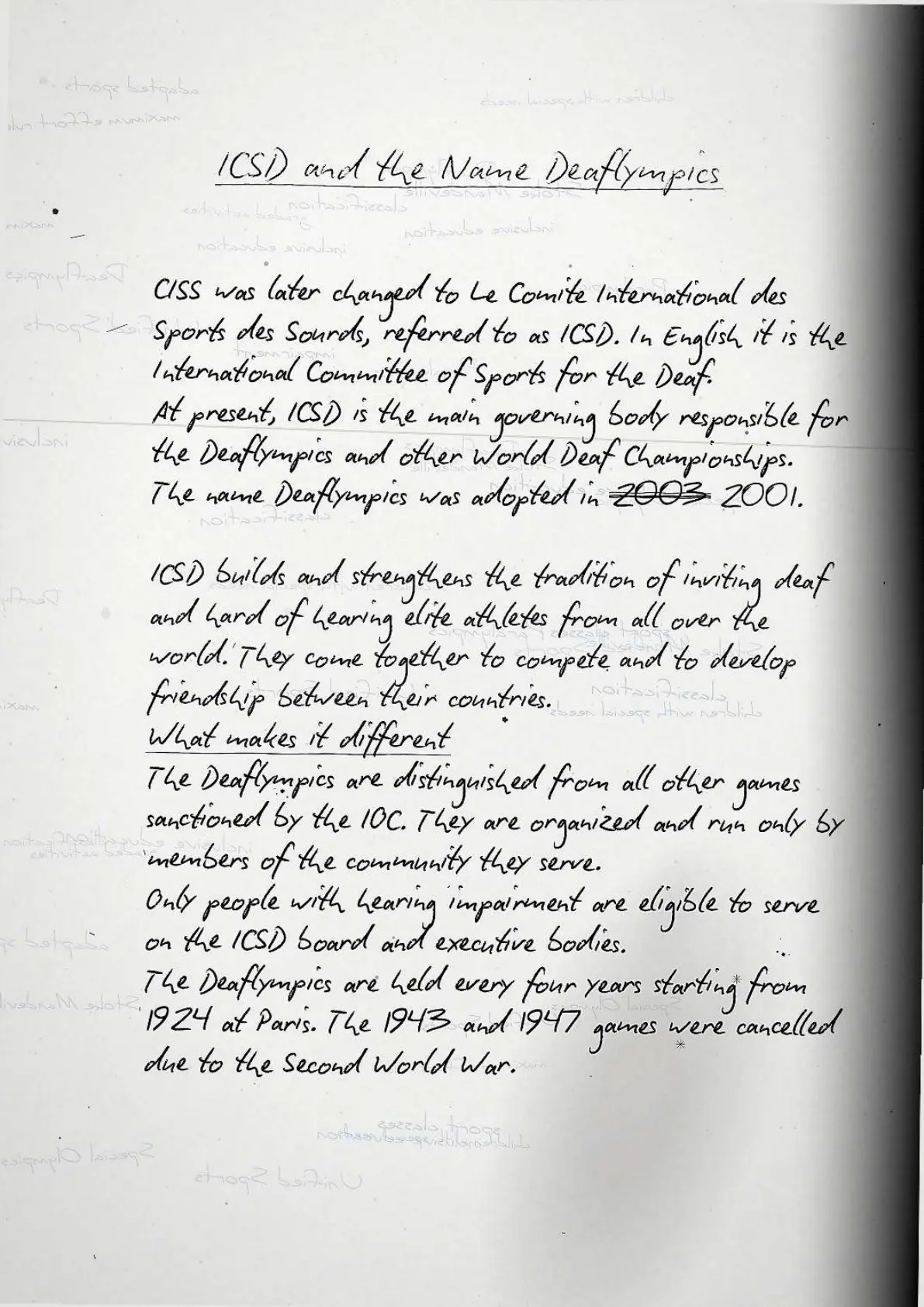
- 2001: the name "Deaflympics" is formally adopted.
One feature sets the Deaflympics apart from every other IOC-sanctioned games. They are organised and run exclusively by members of the community they serve, and only people with hearing impairment are eligible to serve on the ICSD board and executive bodies. The games have run every four years since 1924, with the 1943 and 1947 editions cancelled because of the Second World War.
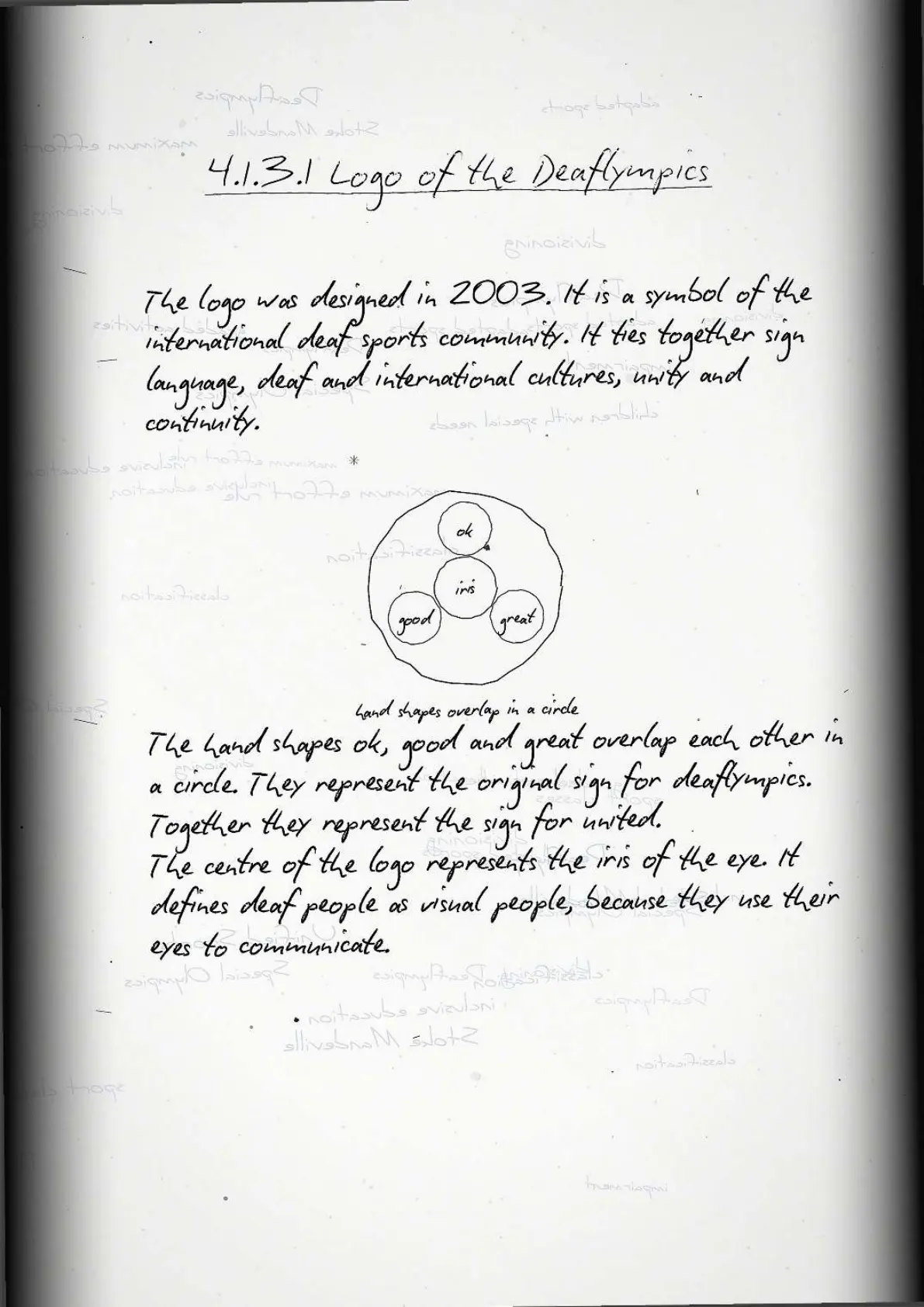
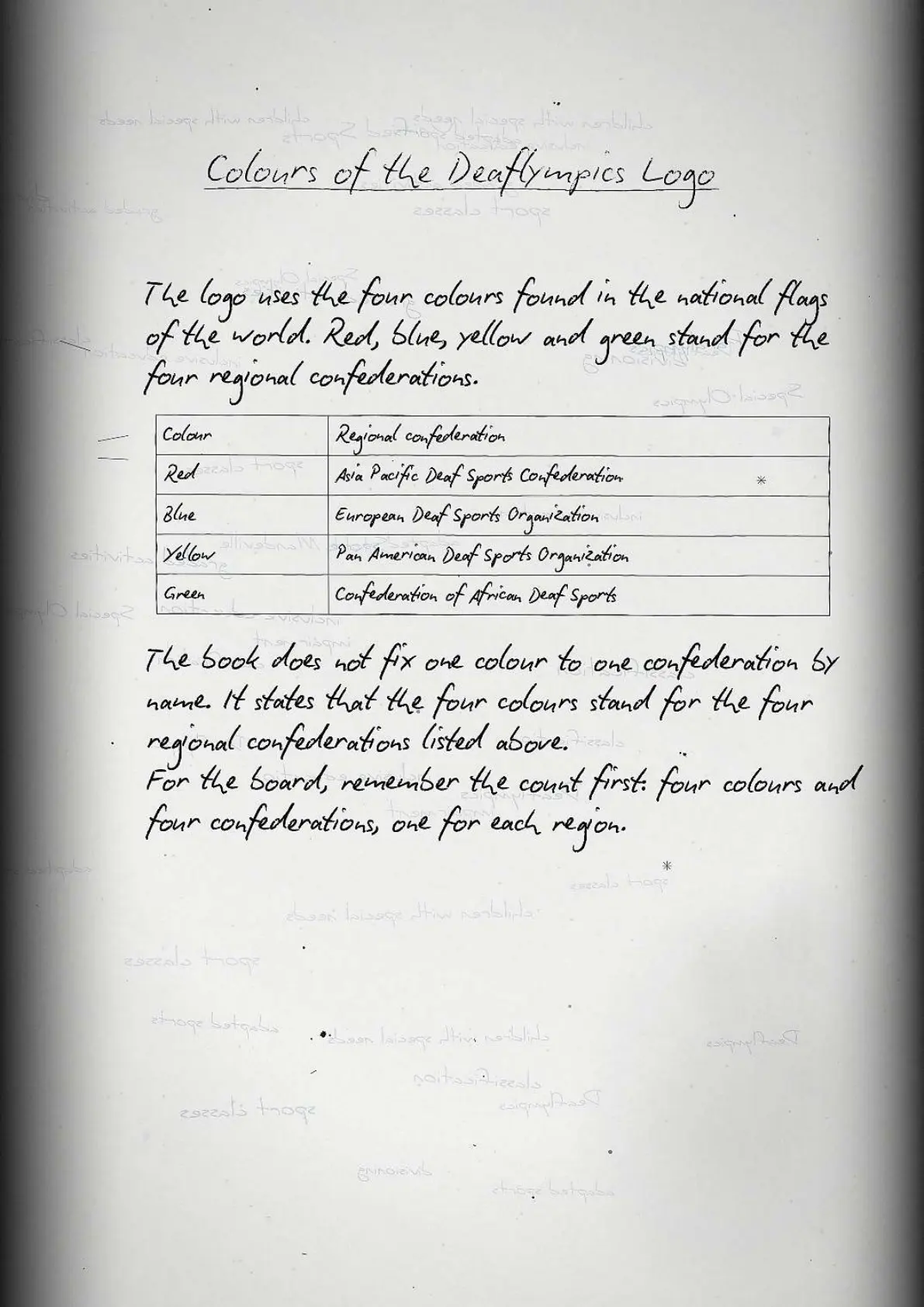
The logo, designed in 2003, is a frequent short-answer question. The hand shapes for "ok", "good" and "great" overlap in a circle to form the original sign for "deaflympics", and together they make the sign for "united". The centre of the logo is the iris of the eye, which marks deaf people as visual people. The four colours, red, blue, yellow and green, stand for the four regional confederations of Asia Pacific, Europe, Pan America and Africa.
Classification and Divisioning: The Two Grouping Systems Students Must Not Swap
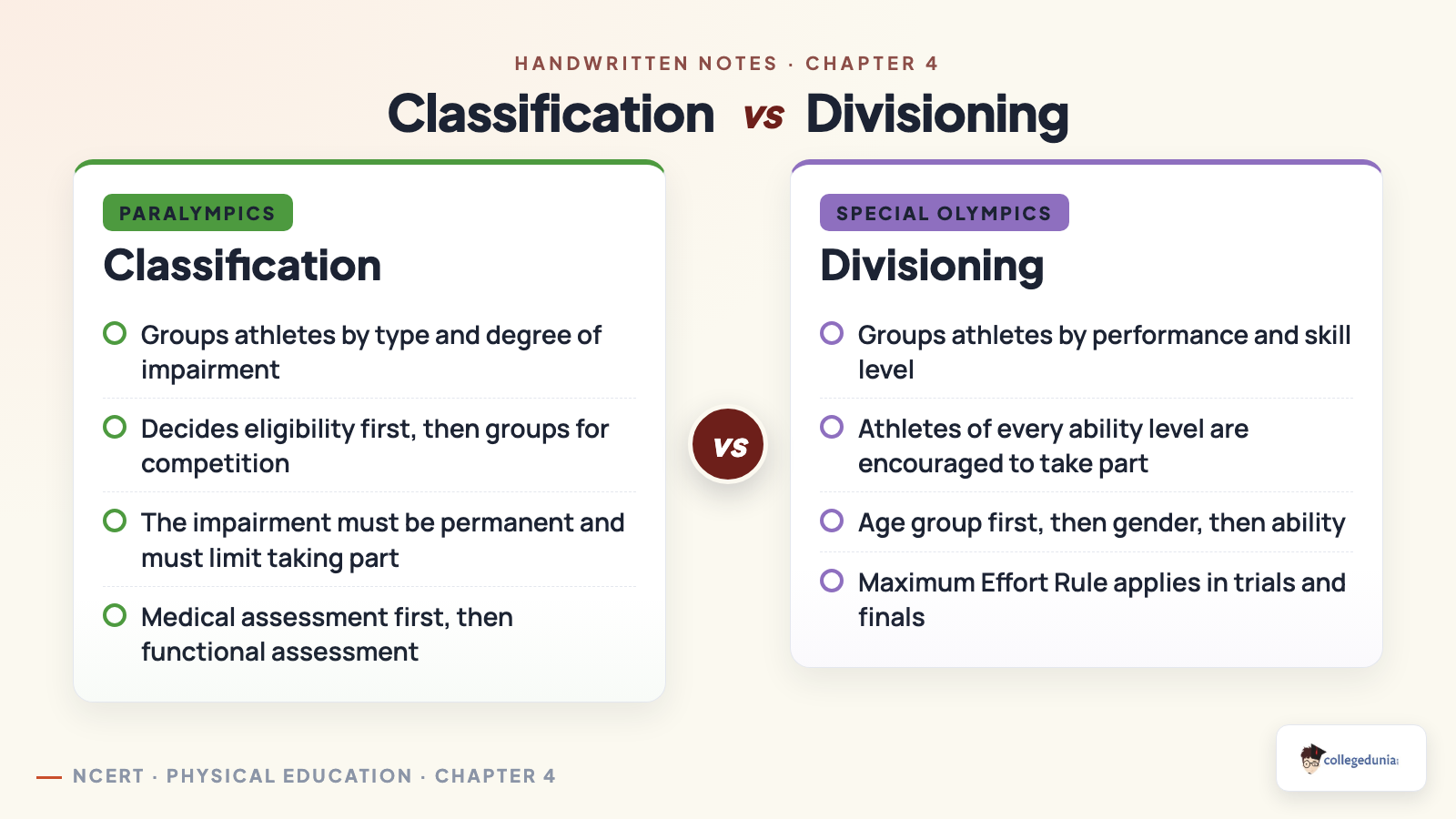
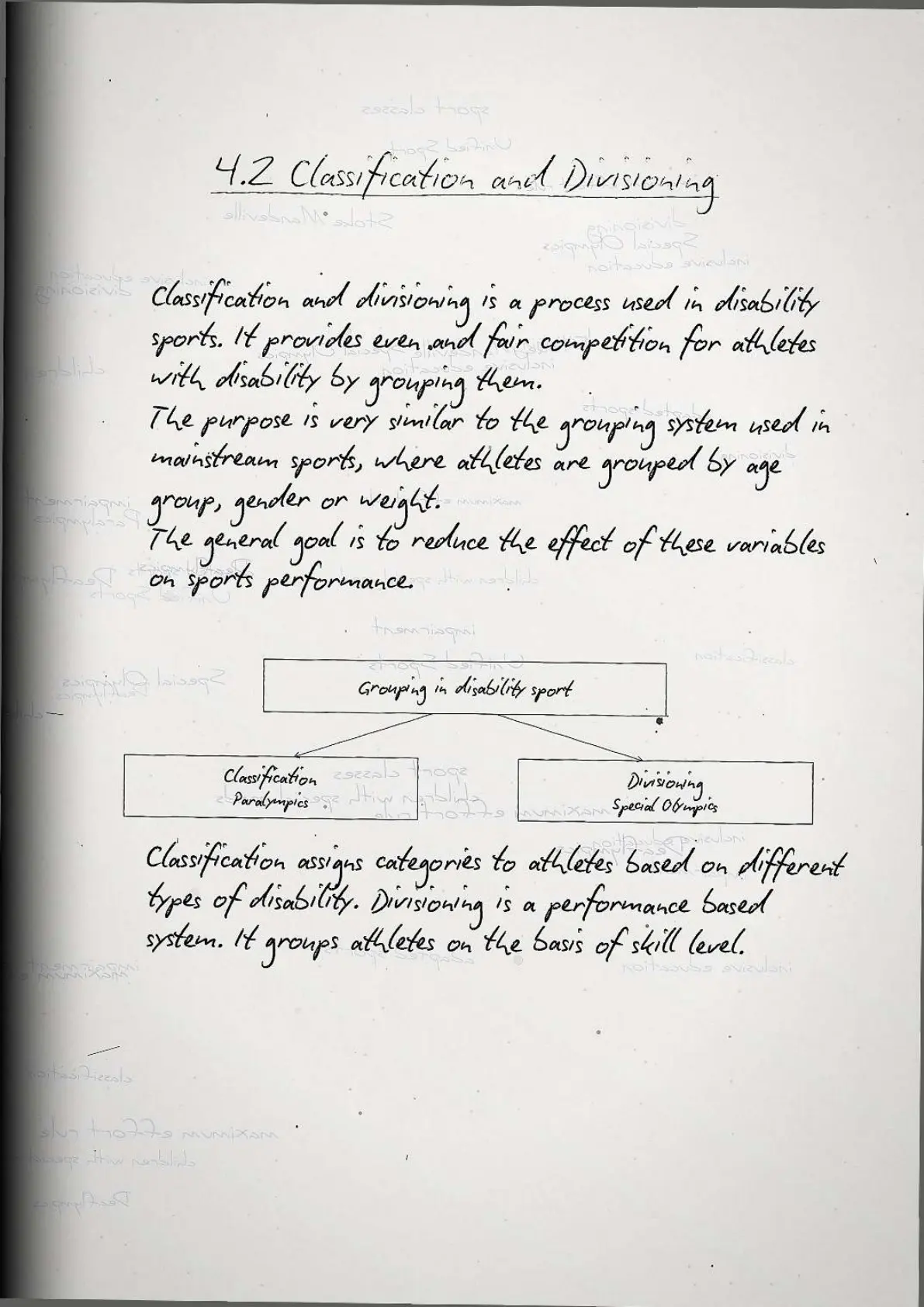
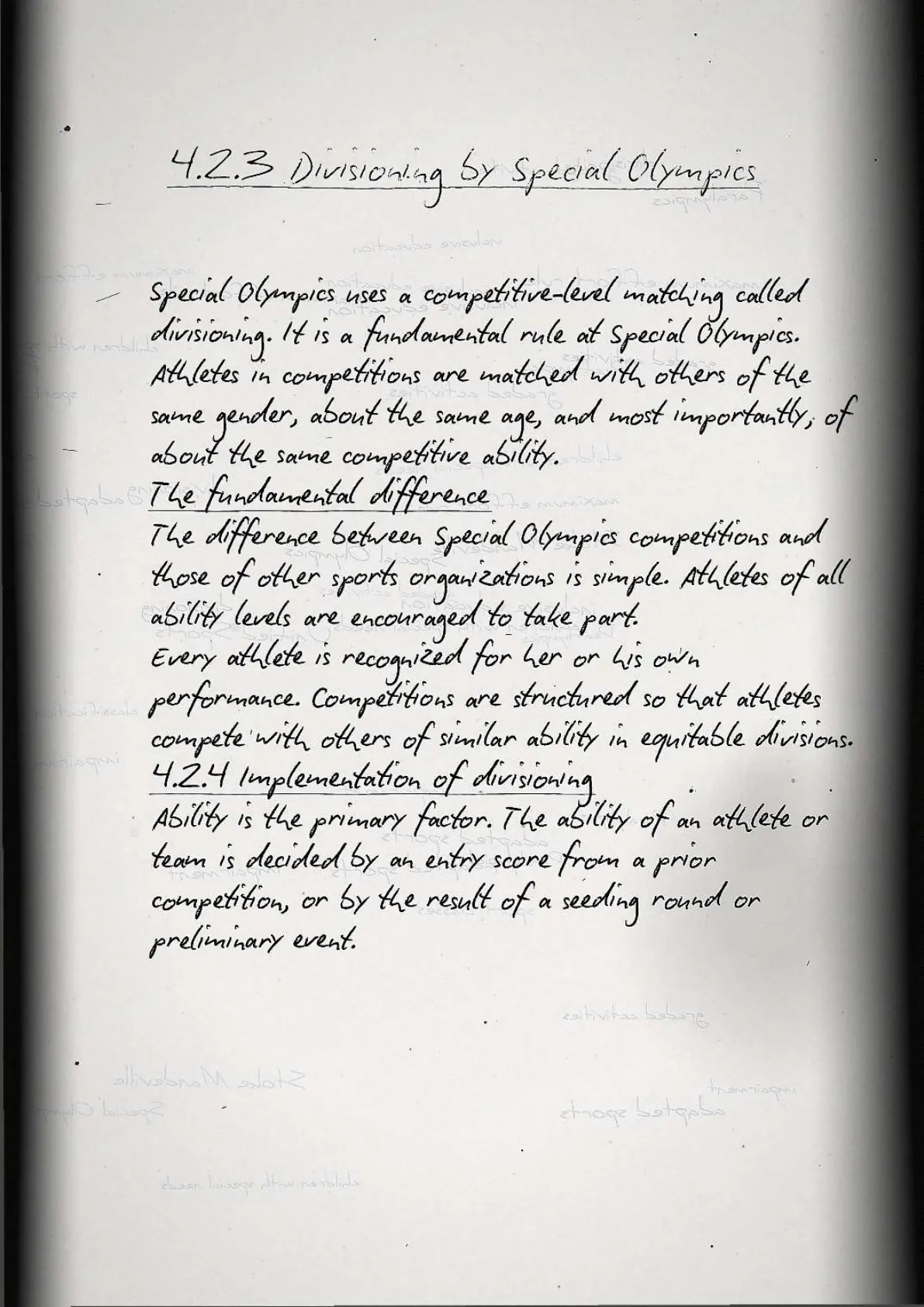
Both words mean grouping athletes so that competition stays fair, in the same way mainstream sport groups by age, gender or weight. The difference is which organisation uses which word, and what the grouping is based on.
| Point of difference | Classification | Divisioning |
|---|---|---|
| Used by | Paralympics and para-athletes | Special Olympics |
| Based on | Type and degree of impairment | Performance and skill level |
| Purpose | Decide who is eligible, then group athletes for competition | Match athletes of about the same ability, age and gender |
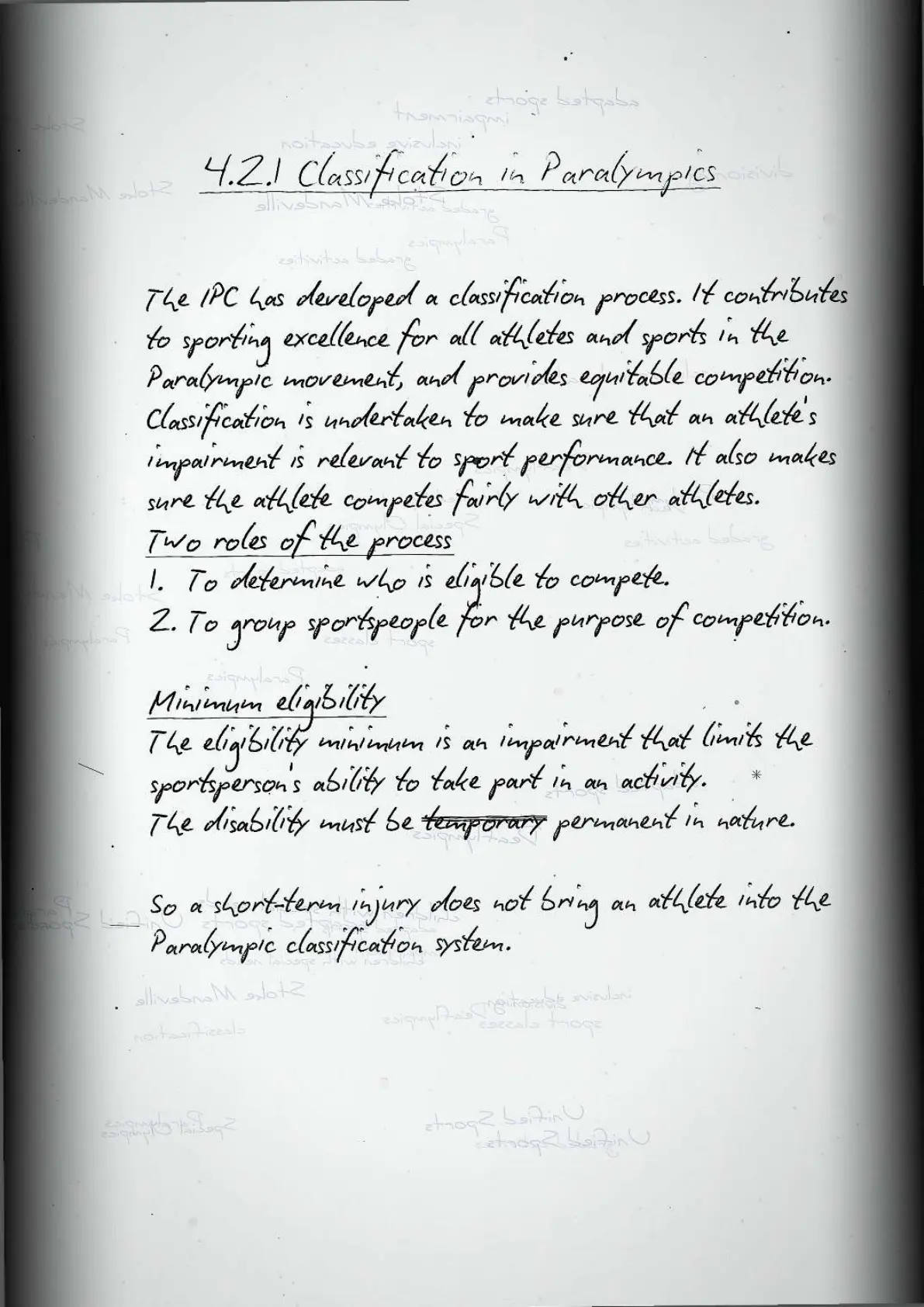
| Eligibility rule | The impairment must limit the ability to take part, and must be permanent | Athletes of all ability levels are encouraged to take part |
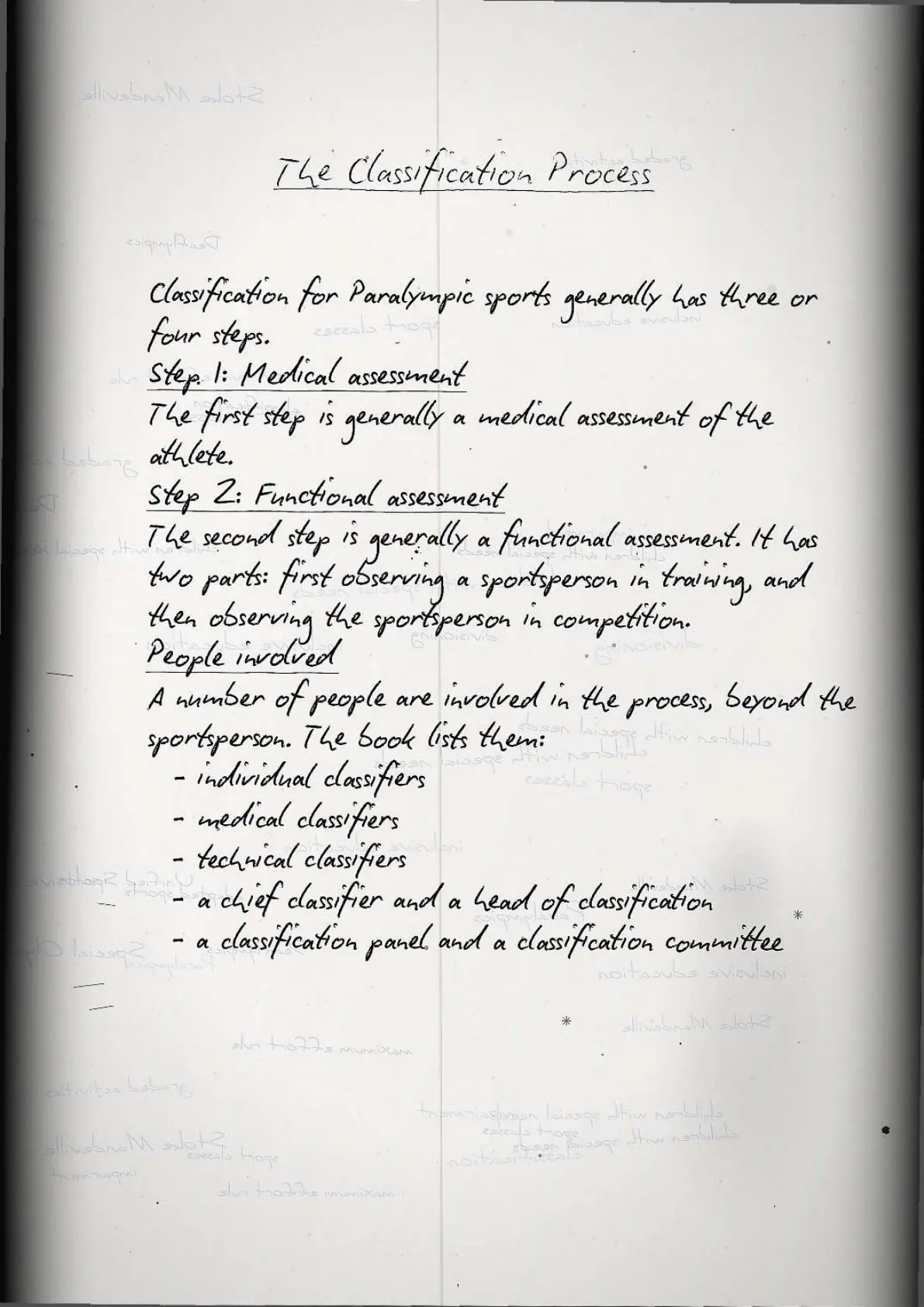
| Steps | Three or four steps, starting with a medical assessment, then a functional assessment | Age group first, then gender, then ability |
The functional assessment has two parts. A classifier observes the athlete in training, then observes the same athlete in competition. Individual, medical and technical classifiers take part, along with a chief classifier, a head of classification, a classification panel and a classification committee.
The 10 Eligible Impairment Types Recognised by the IPC
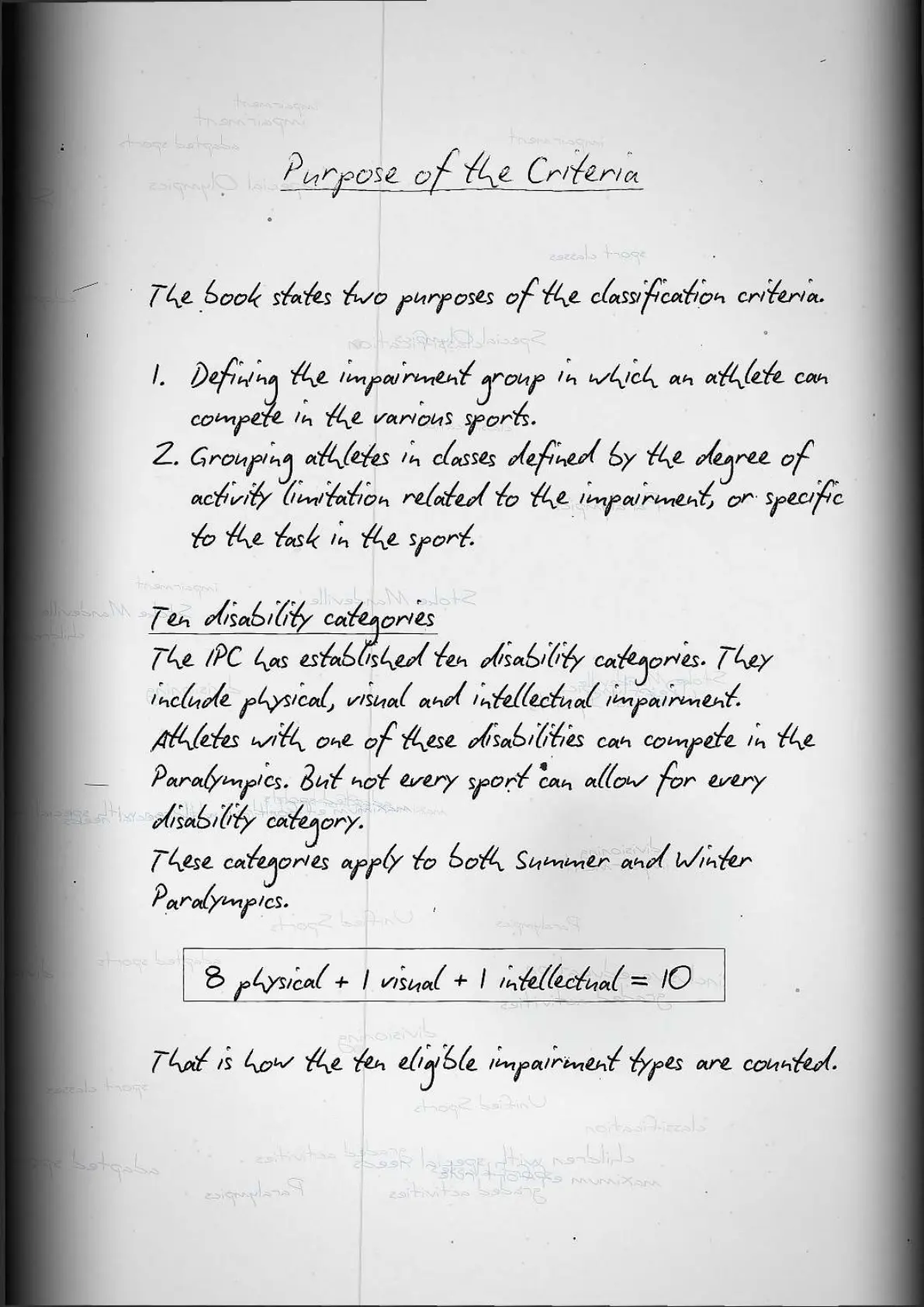
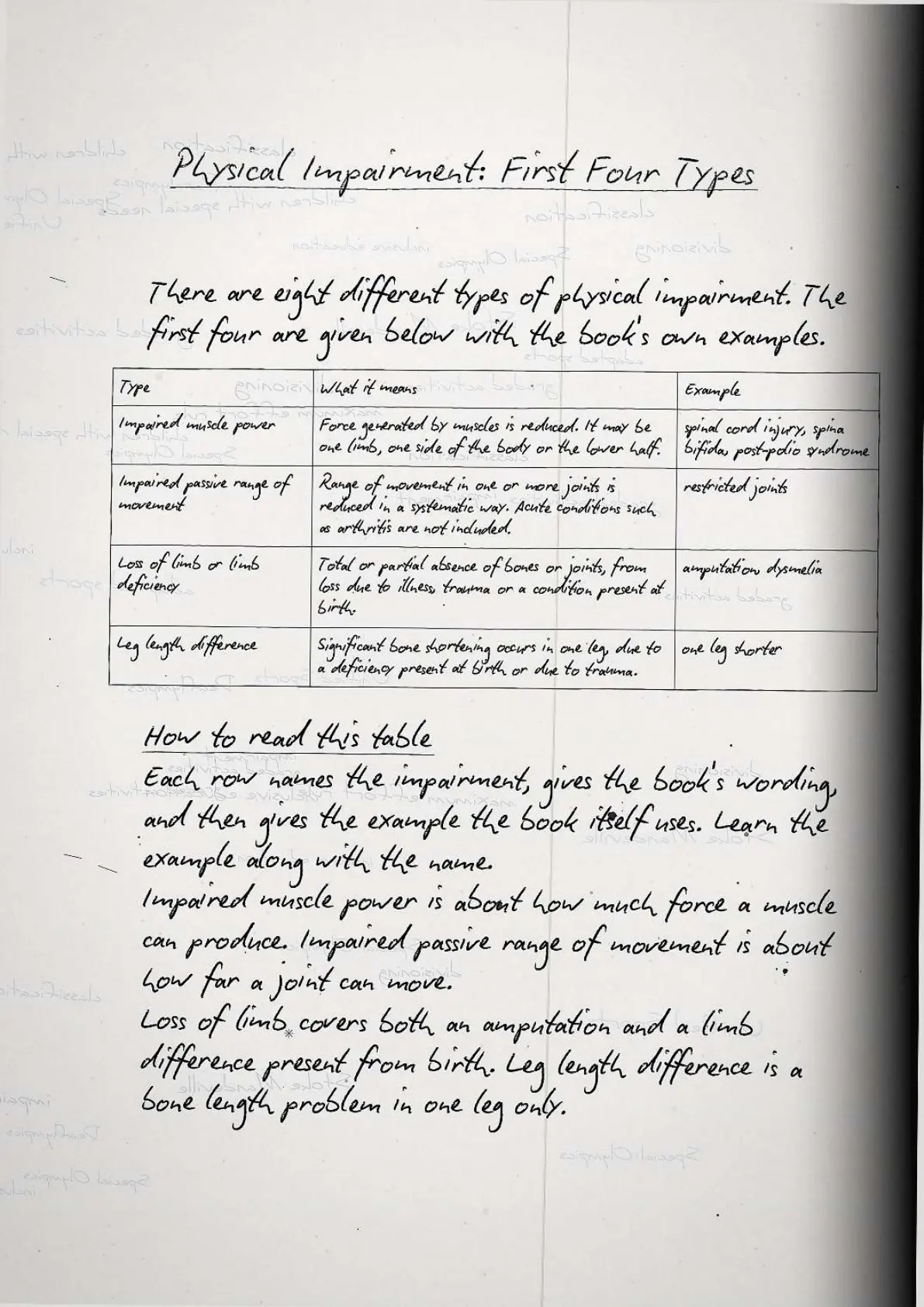
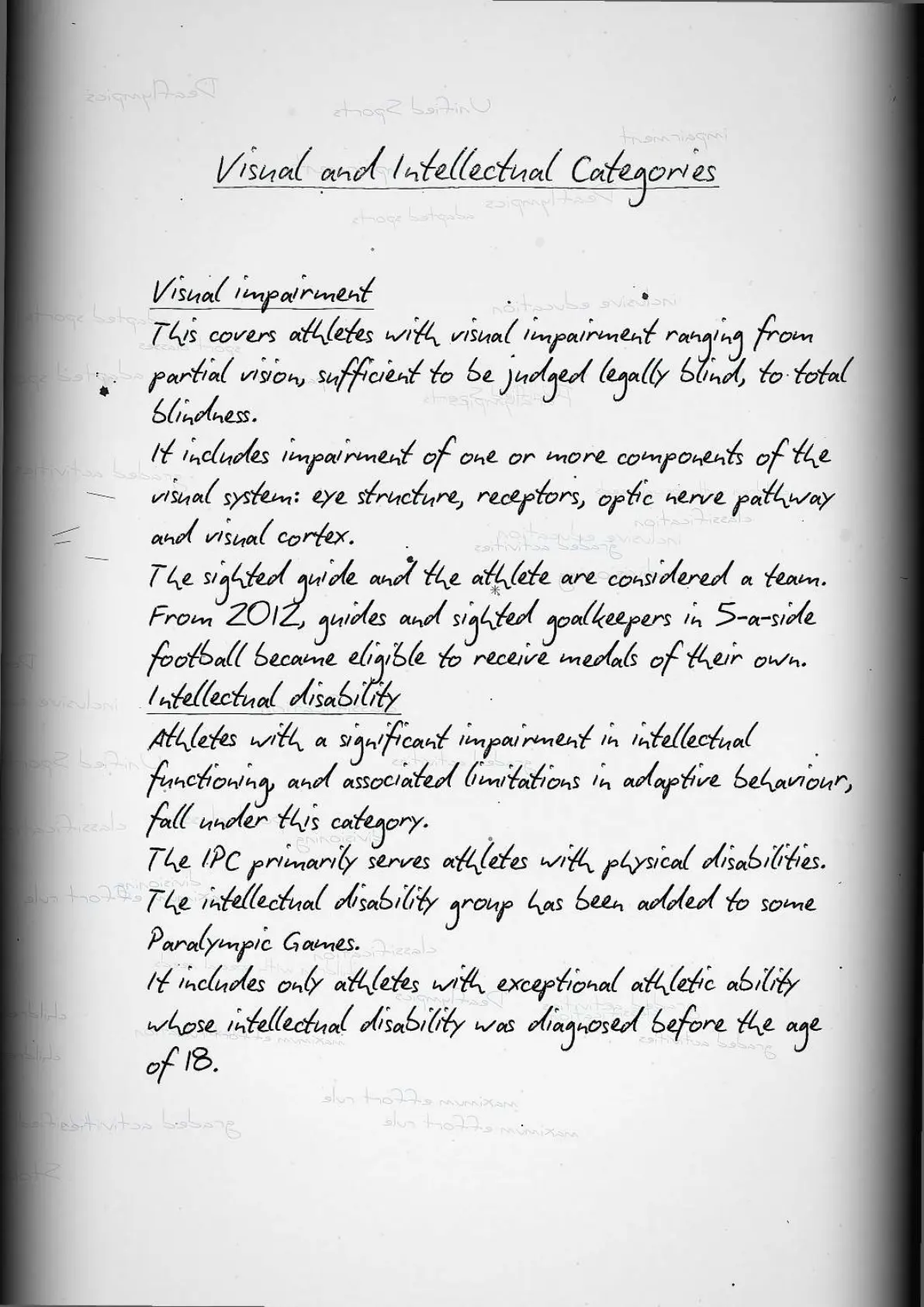
Section 4.2 lists ten eligible impairment types. Eight of them are physical, and the remaining two are visual impairment and intellectual disability. A question that asks for "the ten categories" is asking for this exact list.
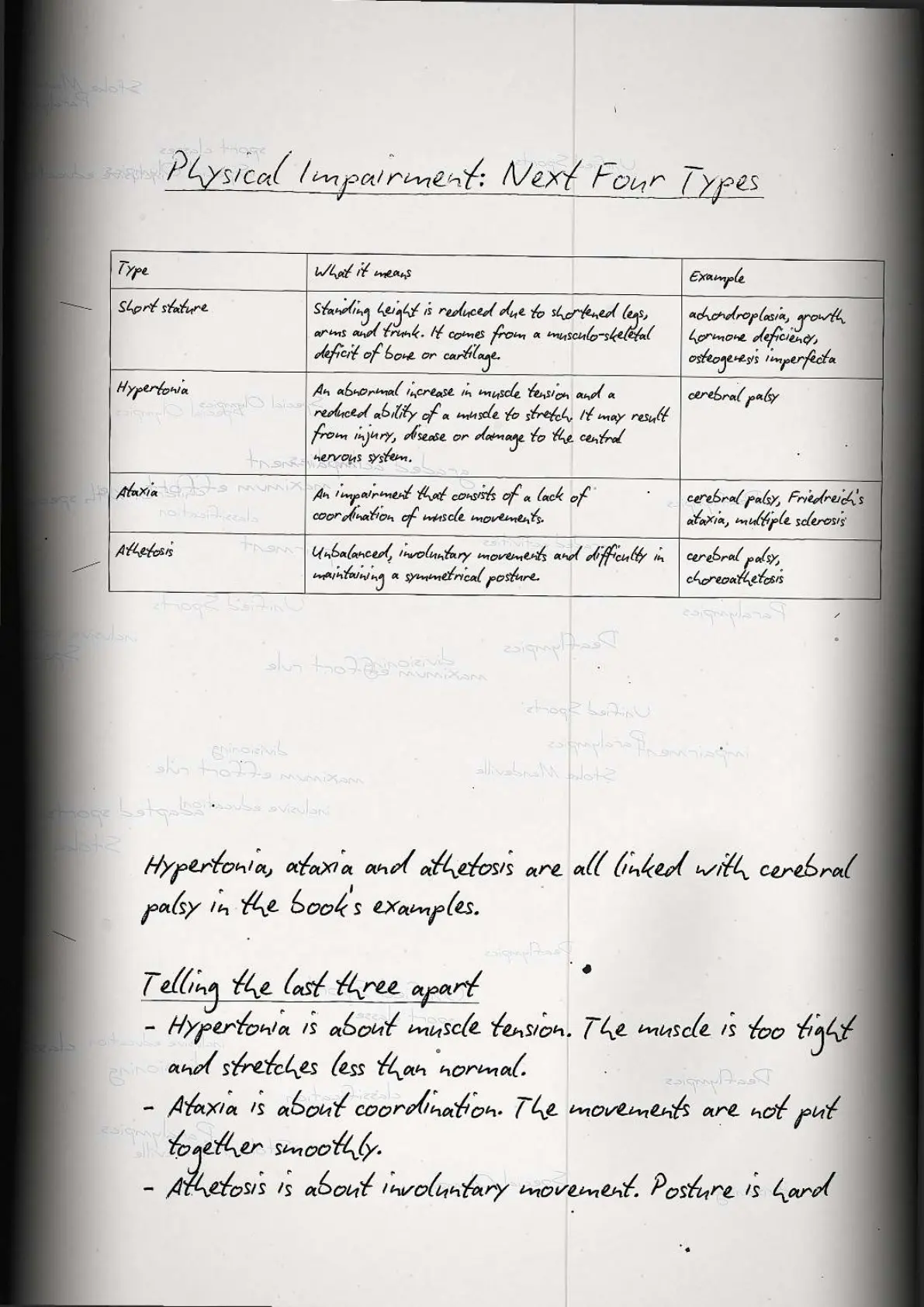
| Impairment type | What the book says |
|---|---|
| Impaired muscle power | Force generated by muscles is reduced, for example spinal cord injury, spina bifida, post-polio syndrome |
| Impaired passive range of movement | Movement in one or more joints is reduced in a systematic way; acute conditions such as arthritis are not included |
| Loss of limb or limb deficiency | Total or partial absence of bones or joints, for example amputation or dysmelia |
| Leg-length difference | Significant bone shortening in one leg, from congenital deficiency or trauma |
| Short stature | Standing height reduced by a musculoskeletal deficit of bone or cartilage, for example achondroplasia |
| Hypertonia | Abnormal increase in muscle tension and reduced ability of a muscle to stretch, for example cerebral palsy |
| Ataxia | Lack of coordination of muscle movements, for example cerebral palsy or multiple sclerosis |
| Athetosis | Unbalanced, involuntary movements and difficulty holding a symmetrical posture |
| Visual impairment | Ranges from partial vision judged legally blind to total blindness; since 2012 sighted guides can receive medals of their own |
| Intellectual disability | Significant impairment in intellectual functioning with limits in adaptive behaviour, diagnosed before the age of 18 |
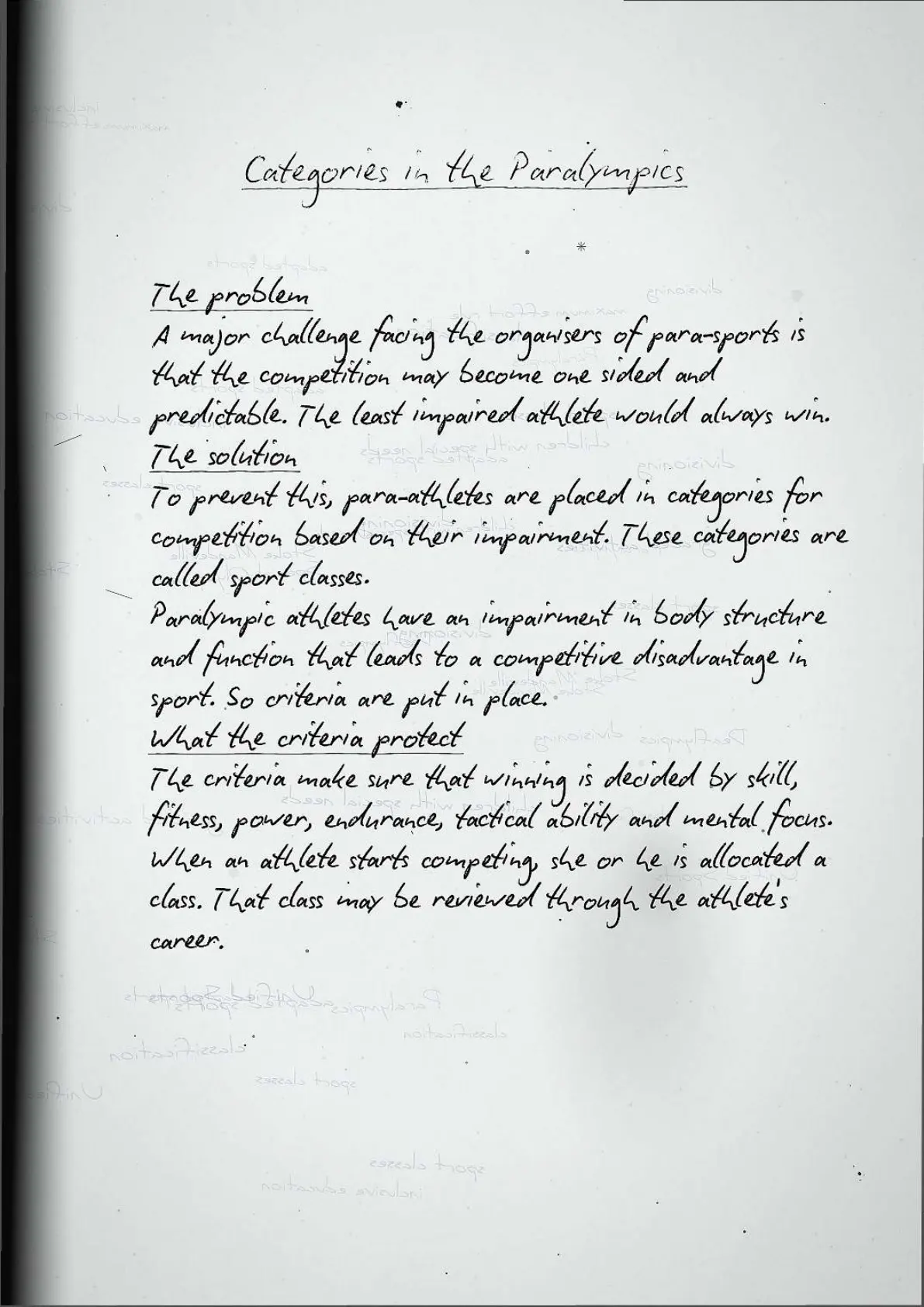
The problem this list solves is stated plainly in the chapter: without it, competition becomes one sided and predictable, and the least impaired athlete always wins. Sport classes exist so that the result is decided by skill, fitness, power, endurance, tactical ability and mental focus instead.
Divisioning in Special Olympics: Age Bands, Gender, Ability and the Maximum Effort Rule
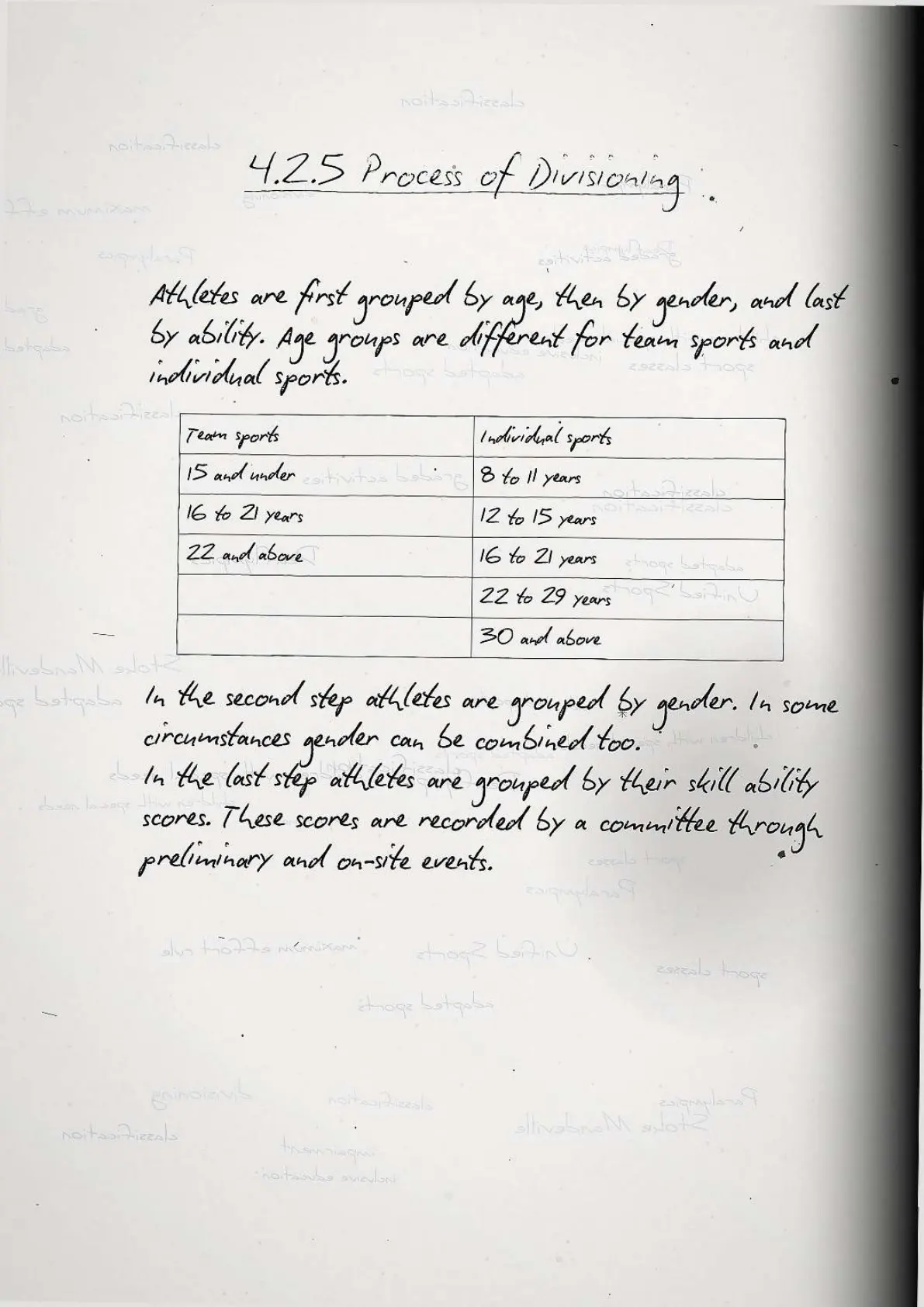
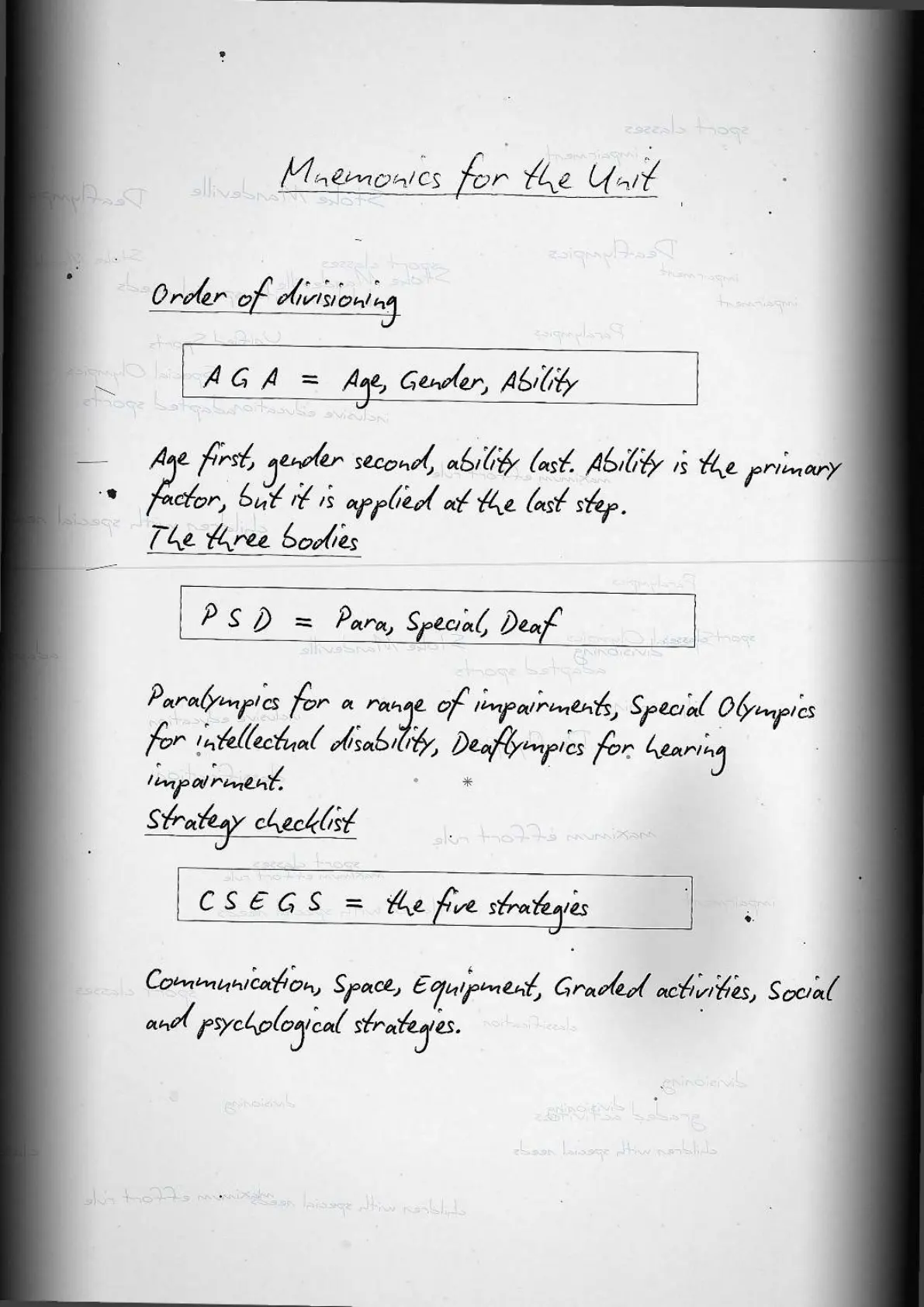
Divisioning runs in a fixed order. Athletes are grouped by age first, then by gender, and finally by ability, measured from an entry score, a seeding round or a preliminary event.
| Team sports age groups | Individual sports age groups |
|---|---|
| 15 and under | 8 to 11 years |
| 16 to 21 years | 12 to 15 years |
| 22 and above | 16 to 21 years |
| 22 to 29 years | |
| 30 and above |
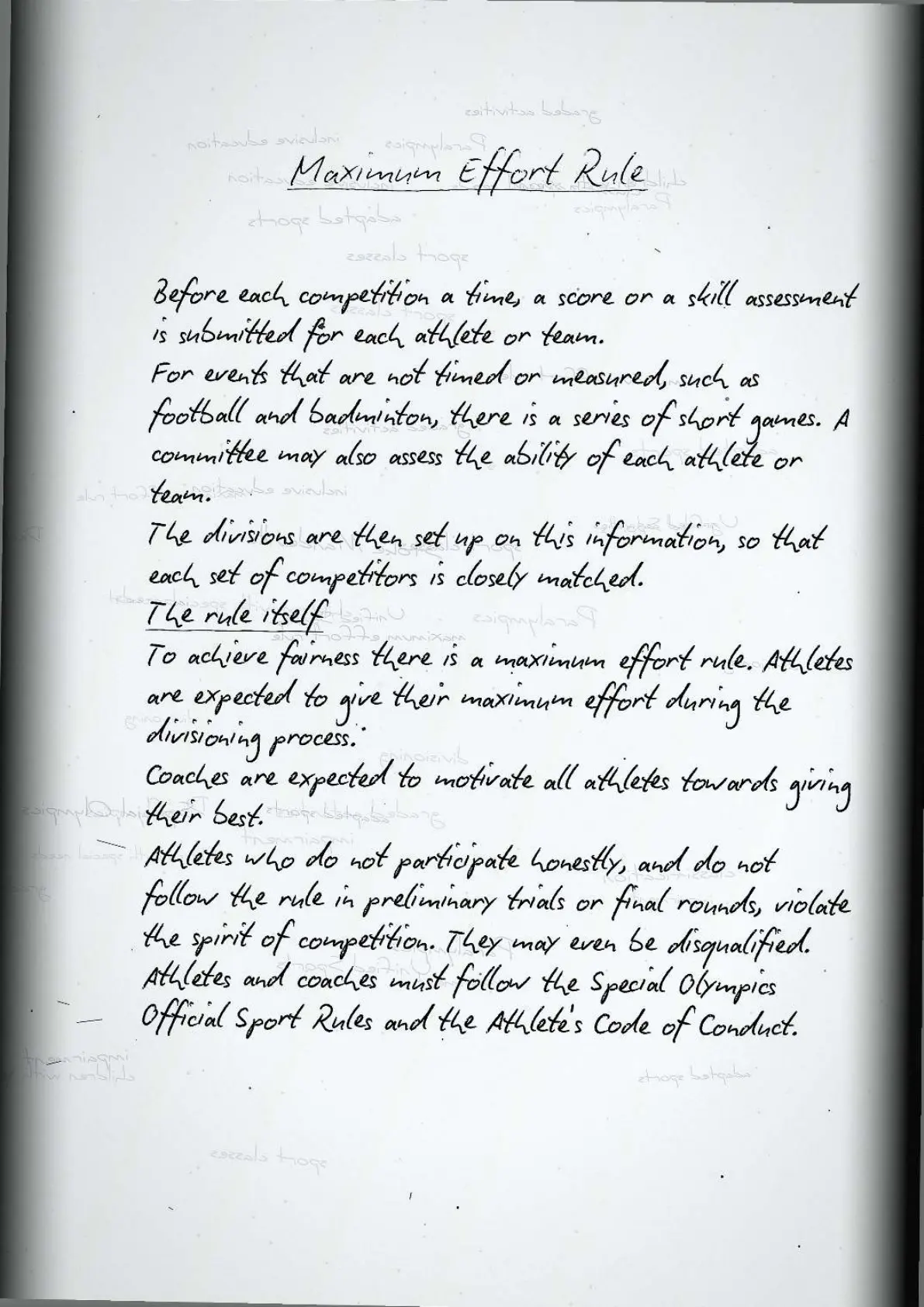
The Maximum Effort Rule is the one term this section always asks for. Athletes are expected to give their maximum effort during the divisioning process, and coaches are expected to push every athlete to do the same. An athlete who does not compete honestly in preliminary trials or final rounds violates the spirit of competition and may be disqualified. For events that are not timed or measured, such as football and badminton, a series of short games or a committee assessment sets the divisions instead.
Inclusion in Sports: Role of Family, Role of School and Role of Organisations
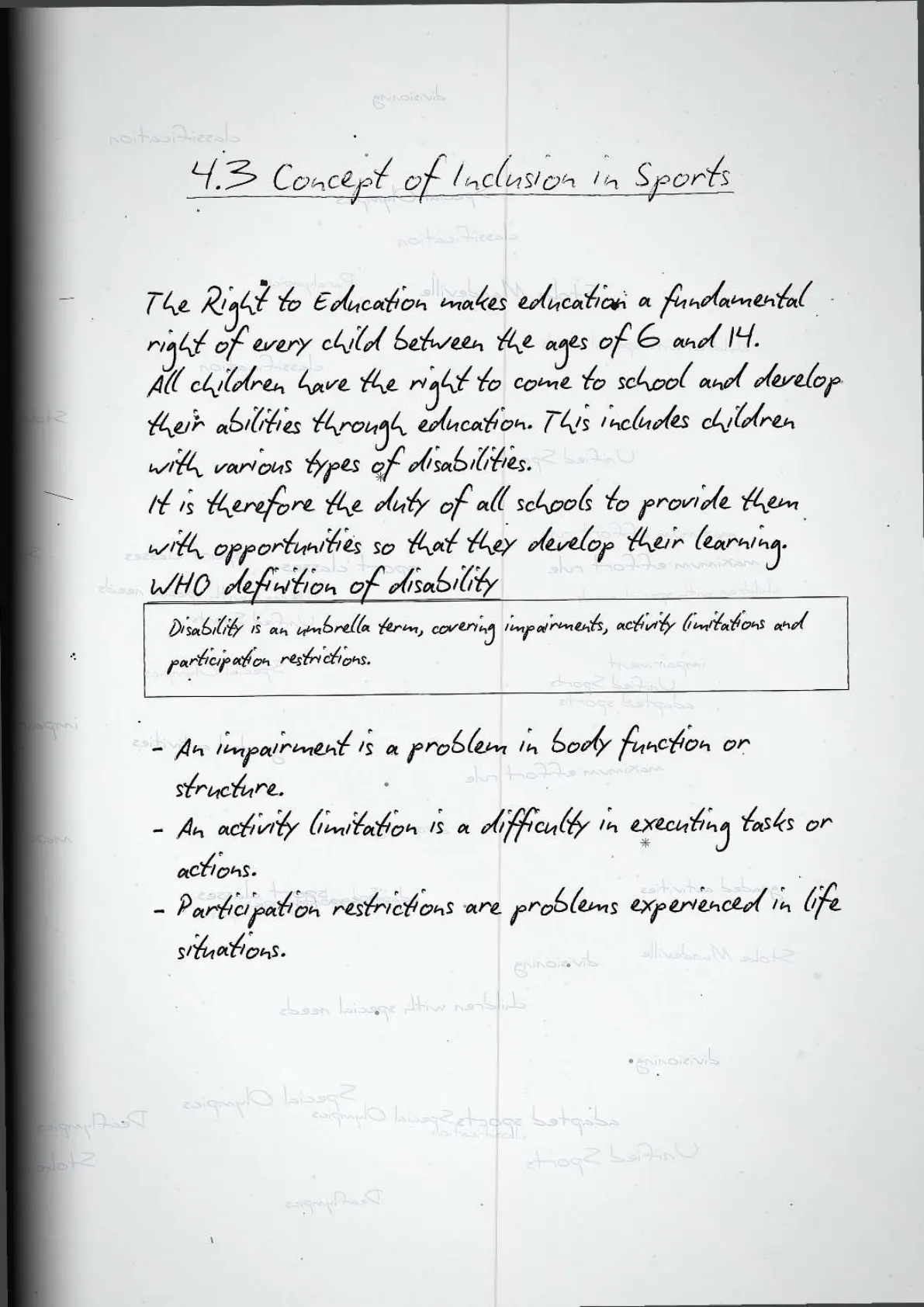
The Right to Education makes education a fundamental right for every child between the ages of 6 and 14, which includes every child with a disability. Section 4.3 then splits the work of inclusion three ways.
- Role of family: treat a child with special needs as equal in the family, build a structured routine with recreational games and sport, notice the child's abilities and take professional help so the child can excel in that area.
- Role of school: keep sport in the regular routine, have trained adapted physical education teachers, adapt equipment and movements, provide accessible infrastructure such as a ramp alongside stairs, run sensitisation programmes and organise intramural and extramural competitions.
- Role of organisations: work at the grass root level to promote adapted sports, and train teachers and coaches to teach, coach and organise events at zonal, district, state, national and international levels.
The chapter also quotes the World Health Organization definition, which is worth learning word for word. Disability is an umbrella term covering impairments, activity limitations and participation restrictions, where an impairment is a problem in body function or structure, an activity limitation is difficulty in carrying out a task, and a participation restriction is a problem experienced in life situations.
Why Inclusive Education is Needed and How India Can Implement It
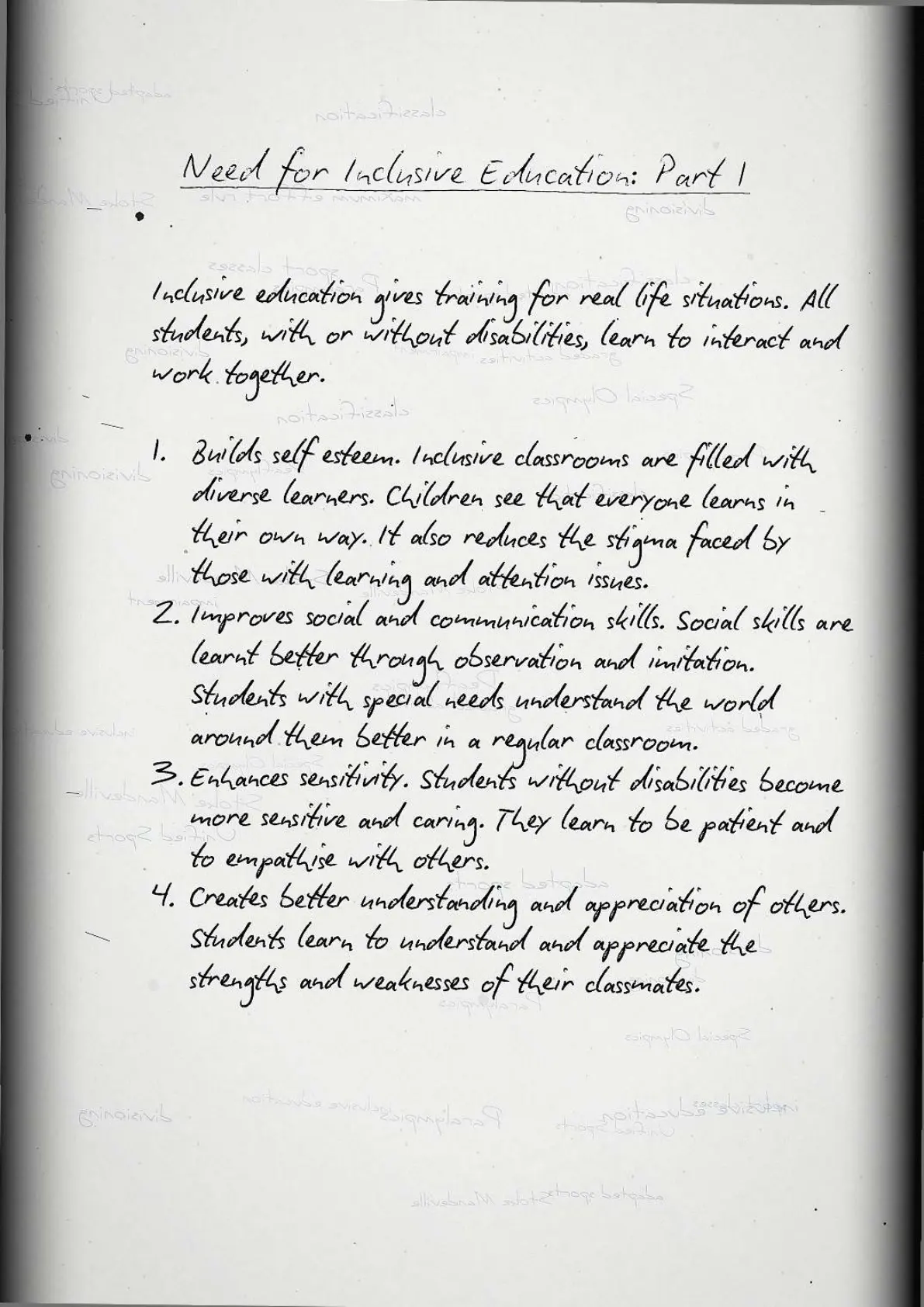
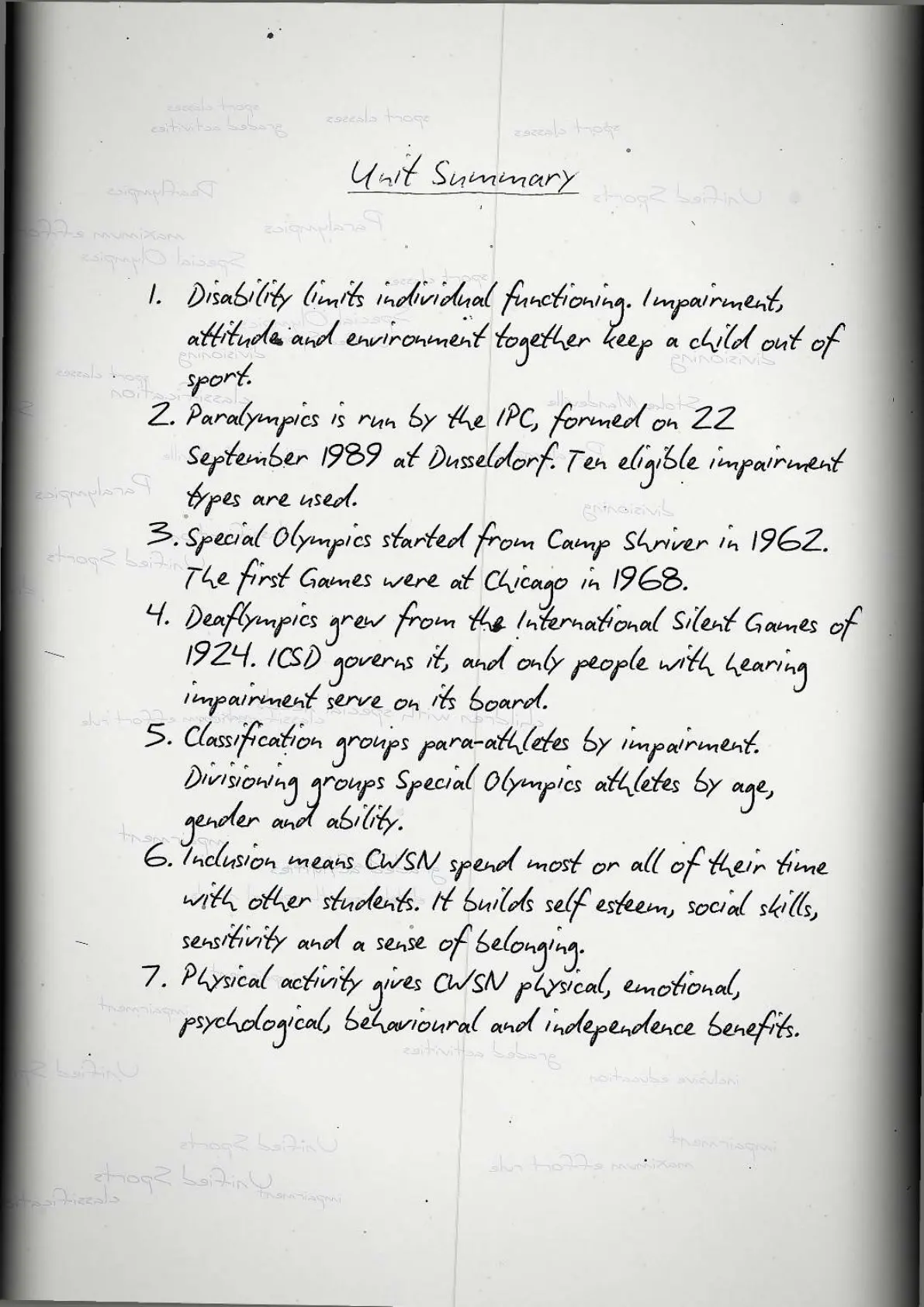
Inclusion means including everyone in education without judging ability, appearance or economic condition. In an inclusive model, children with special needs spend most or all of their time with students without special needs. The chapter gives seven reasons why this is needed.
- Builds self esteem. Diverse classrooms let children see that everyone learns in their own way, which reduces the stigma around learning and attention issues.
- Improves social and communication skills. Social skills are learnt through observation and imitation, so a regular classroom teaches them faster.
- Enhances sensitivity. Students without disabilities become more patient and more able to empathise.
- Creates better understanding and appreciation of others. Classmates learn each other's strengths and weaknesses.
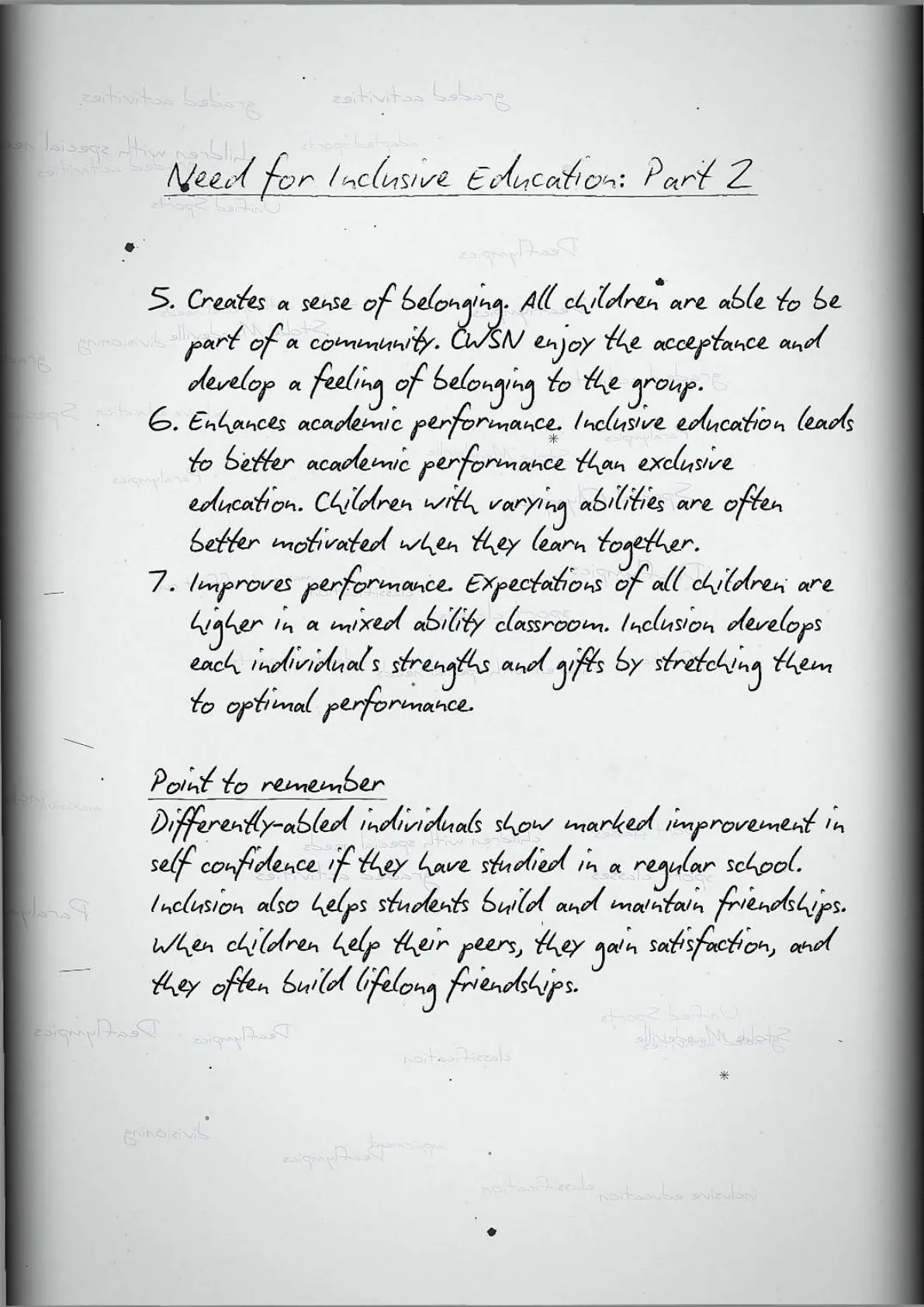
- Creates a sense of belonging. Every child becomes part of a community and learns to value differences.
- Enhances academic performance. Children with varying abilities are better motivated in mixed classes.
- Improves performance. Higher expectations across a mixed-ability classroom stretch each individual towards their best.
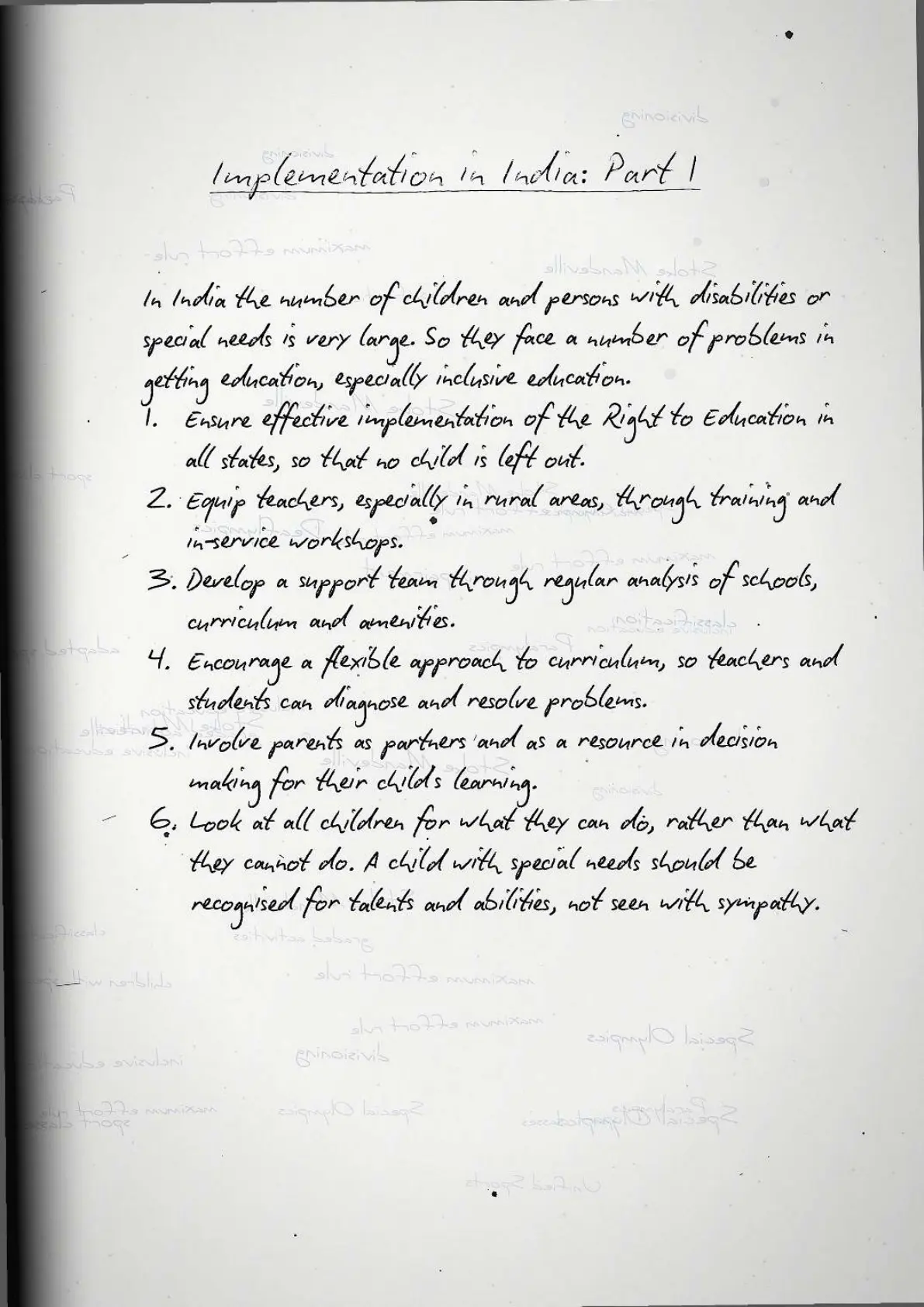
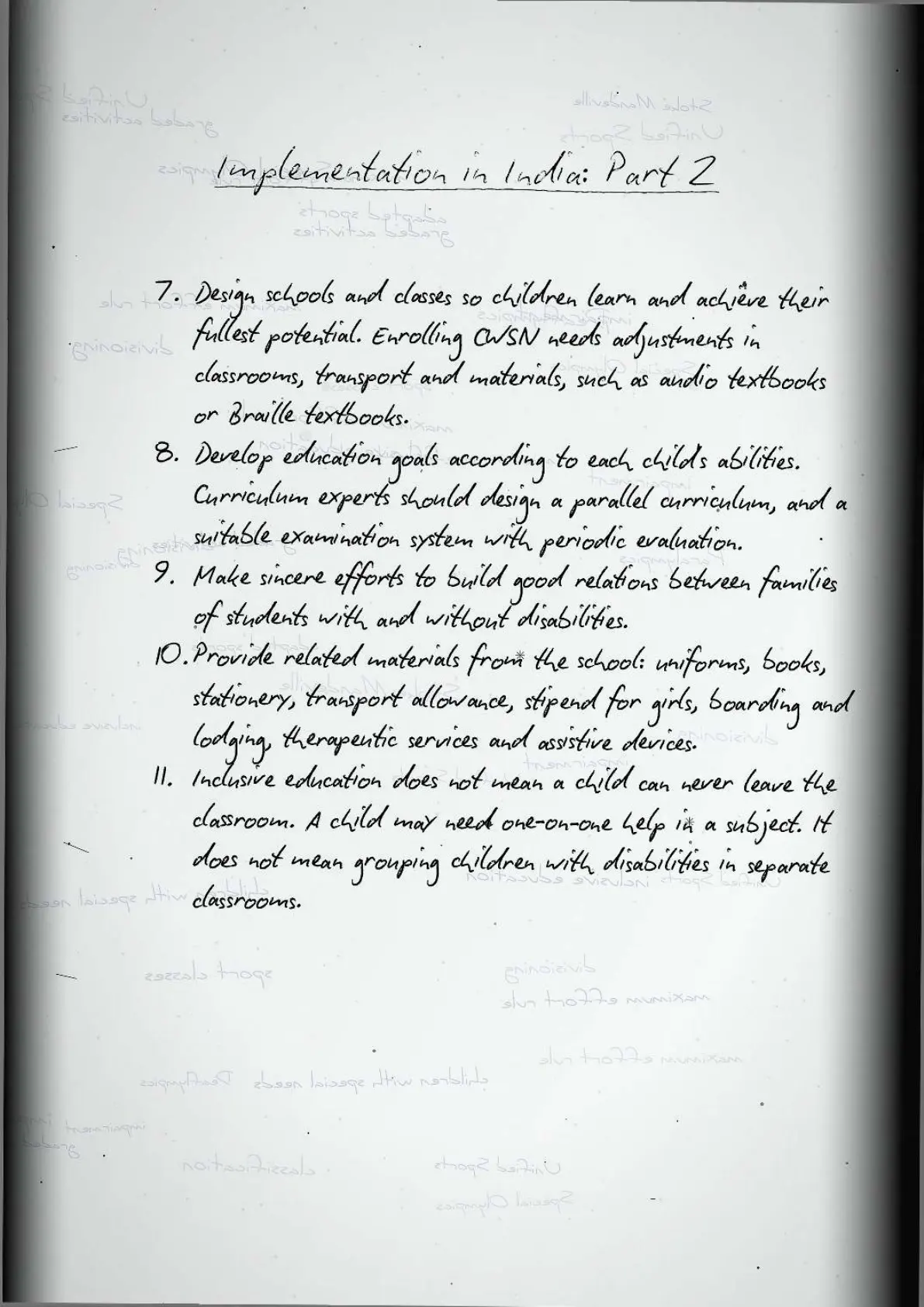
For implementation in India, the chapter lists eleven measures. The ones most often quoted in answers are effective delivery of the Right to Education in every state, training teachers especially in rural areas, involving parents as partners in decisions, designing education goals according to each child's abilities, and looking at all children for what they can do rather than what they cannot do.
Advantages of Physical Activities for CWSN: The Eight Benefits the Chapter Lists
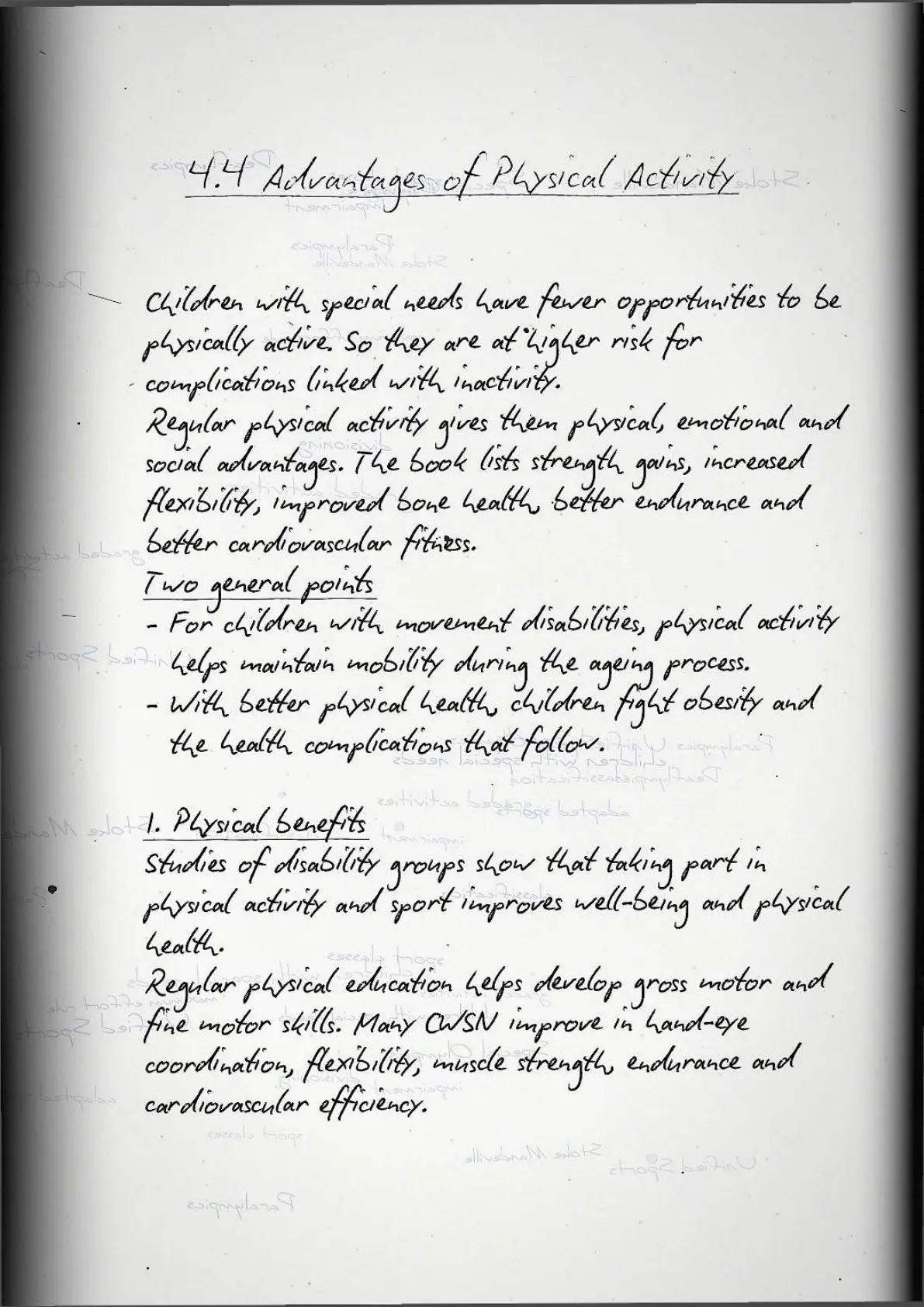
Children with special needs have fewer opportunities to be physically active, which puts them at higher risk of the problems that follow inactivity. The chapter notes that they are about twice as likely as other children to be overweight or obese. Section 4.4 answers this with eight numbered advantages.
| Advantage | What it means |
|---|---|
| Physical benefits | Gross and fine motor skills, hand-eye coordination, flexibility, muscle strength, endurance and cardiovascular efficiency all improve |
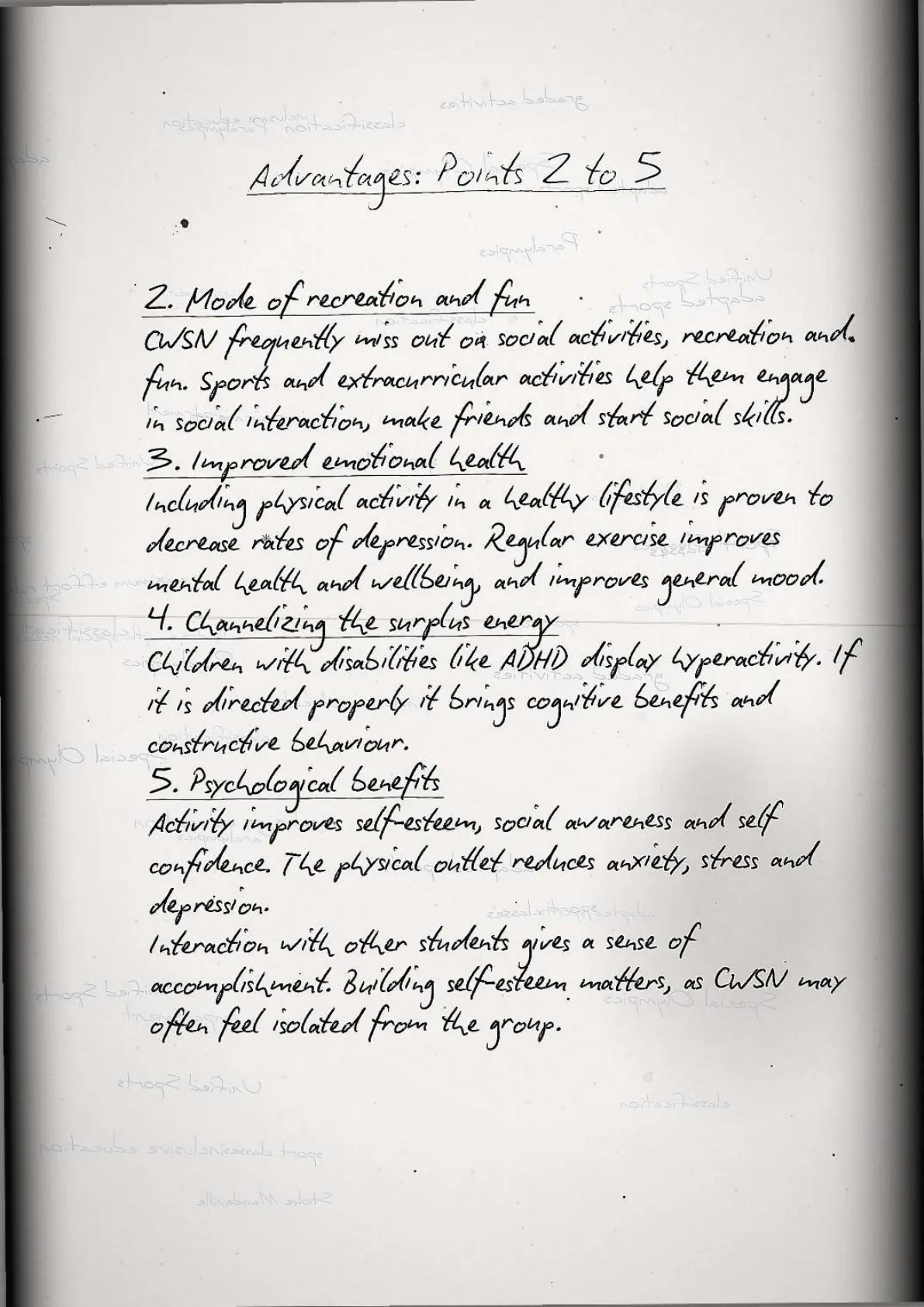
| Mode of recreation and fun | Sport gives access to social interaction, friendships and social skills that are otherwise missed |
| Improved emotional health | Regular physical activity is proven to lower rates of depression and lifts general mood and wellness |
| Channelising the surplus energy | Hyperactivity, as seen in children with ADHD, produces cognitive and behavioural gains when it is directed well |
| Psychological benefits | Self-esteem, social awareness and self-confidence rise while anxiety, stress and depression fall |
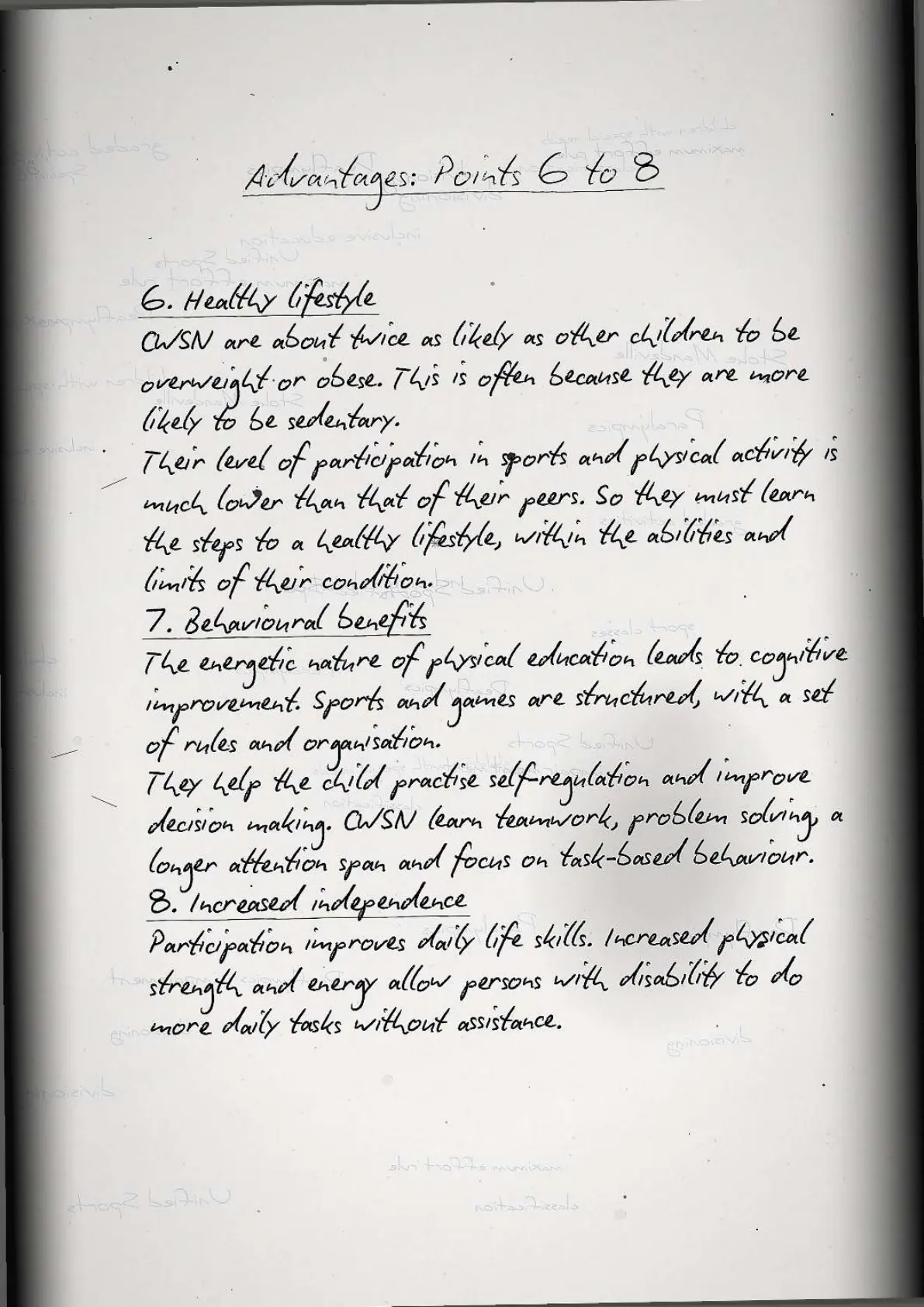
| Healthy lifestyle | Children learn the steps to a healthy lifestyle within the abilities and limits of their own condition |
| Behavioural benefits | Sport teaches self-regulation, decision making, teamwork, problem solving and a longer attention span |
| Increased independence | Greater strength and energy let more daily tasks be done without assistance |
For children with movement disabilities, the chapter adds one more point that answers often miss. Physical activity matters for keeping mobility through the ageing process, not only for fitness in the present.
Strategies to Make Physical Activities Accessible for CWSN
Section 4.5 names six strategies. A long-answer question on this section expects all six with one working detail each, not a general paragraph about being helpful.
| Strategy | What the chapter asks for |
|---|---|
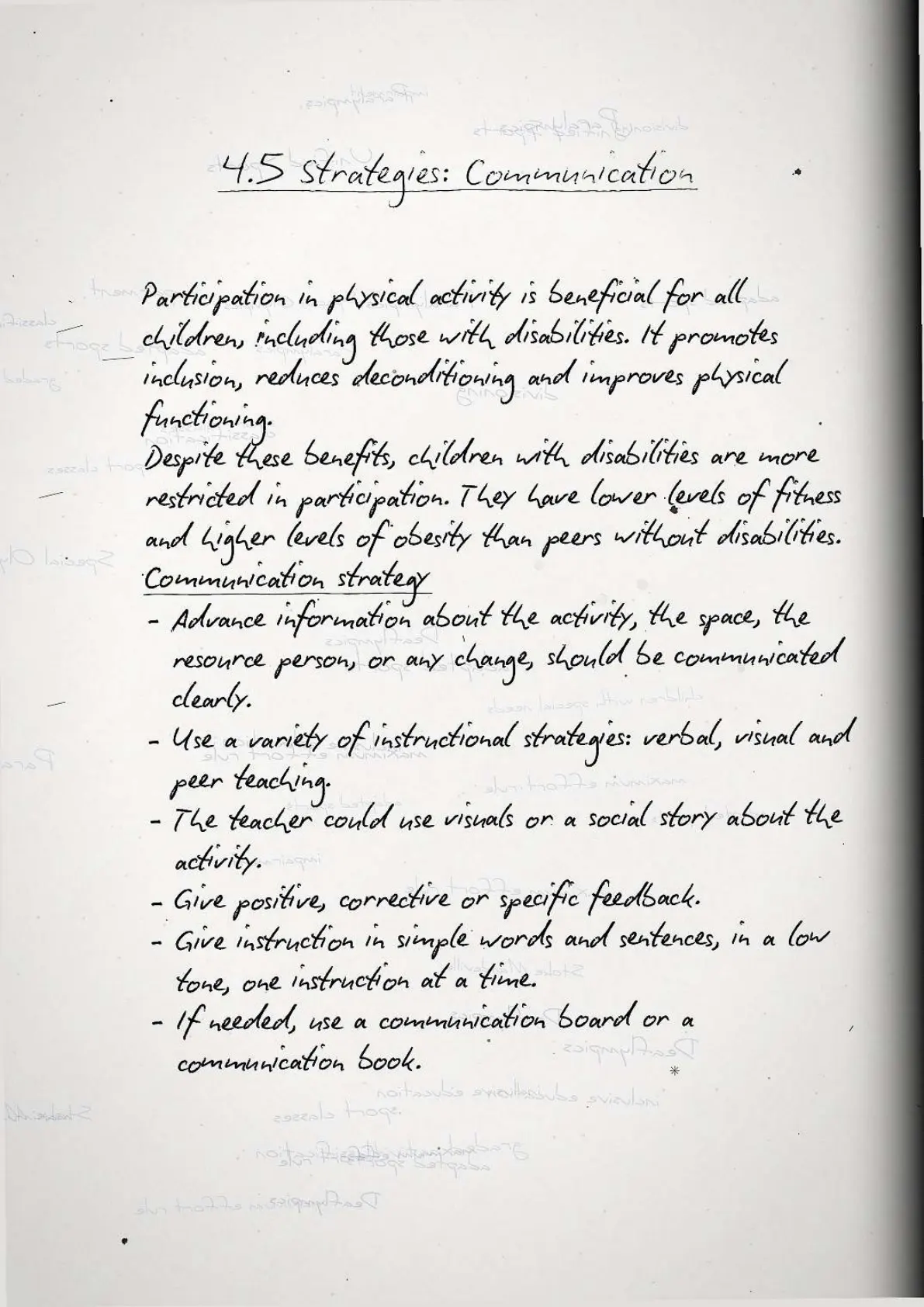
| Communication | Give advance information about the activity and any change; use verbal, visual and peer teaching; keep instructions in simple words, one at a time, in a low tone; use a communication board or book if needed |
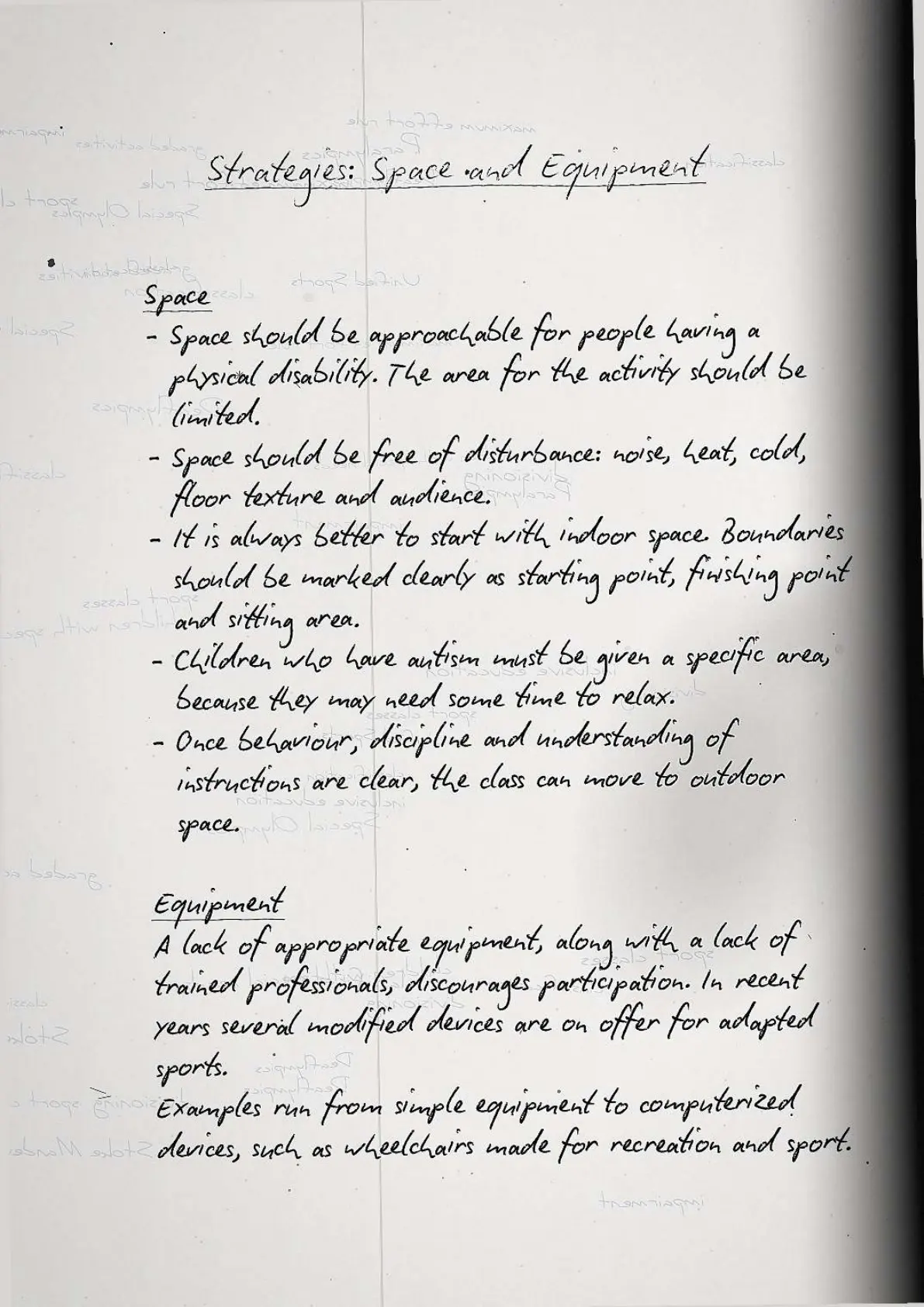
| Space | Keep the area limited, approachable and free of disturbance; start indoors; mark starting point, finishing point and sitting area clearly; give children with autism a specific area to relax in |
| Equipment | Use modified and adapted devices, including computerised equipment such as wheelchairs built for recreation and sport |
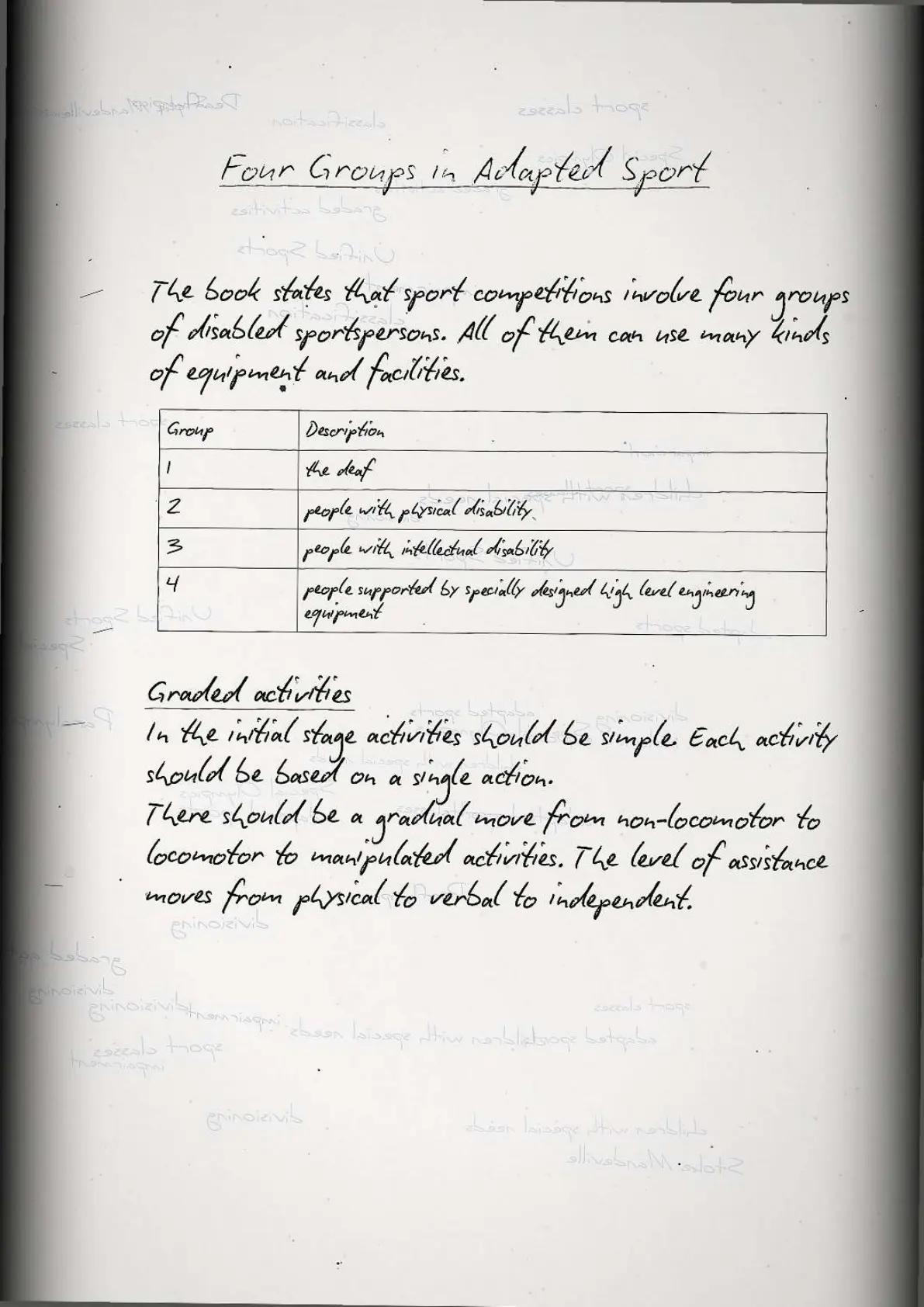
| Graded activities | Start simple, one action per activity, and move from non-locomotor to locomotor to manipulative work, with assistance graded from physical to verbal to independent |
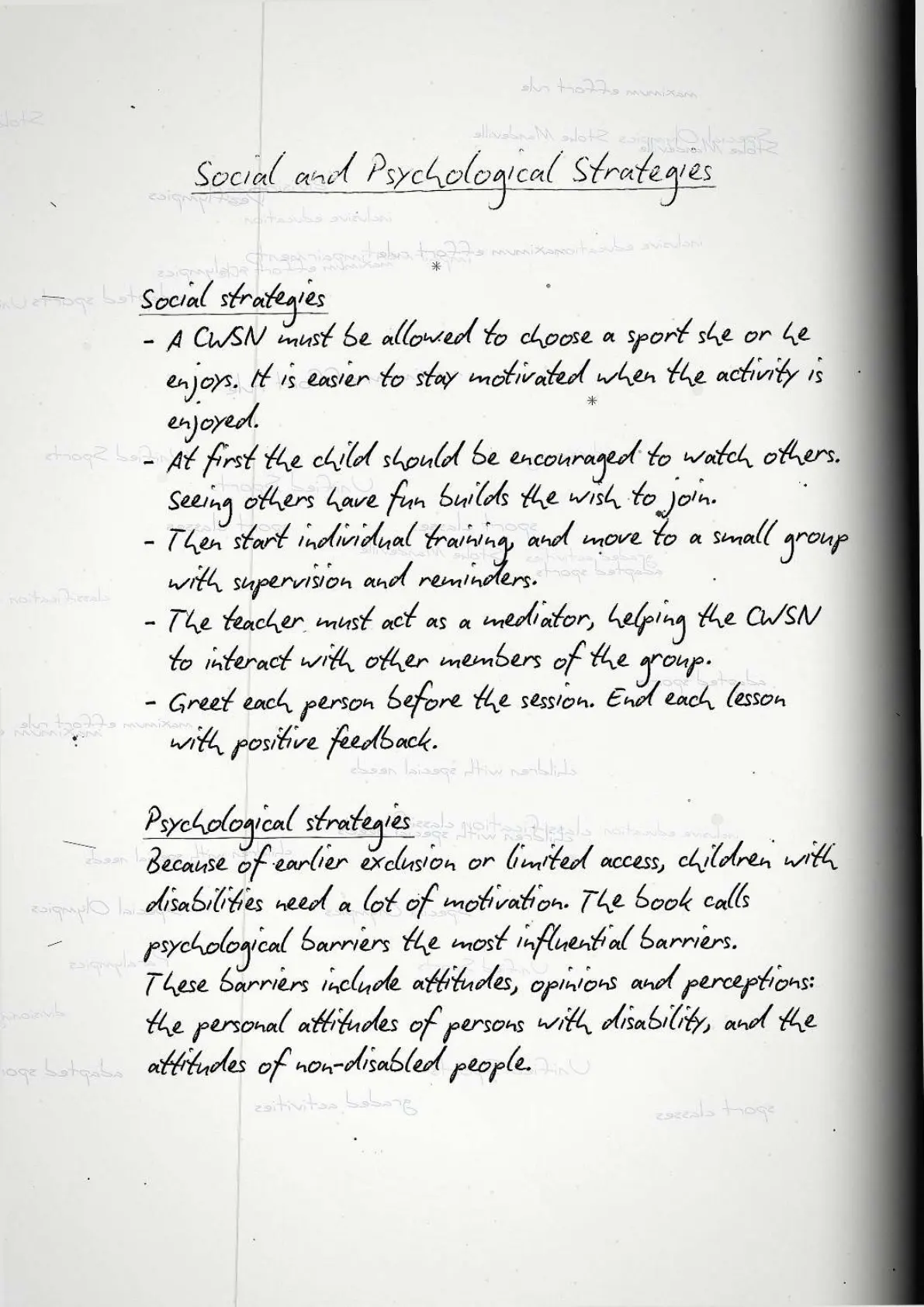
| Social strategies | Let the child choose a sport they enjoy, start by watching others, then individual training, then a small supervised group, with the teacher acting as mediator |
| Psychological strategies | Address attitudes and perceptions, which the chapter calls the most influential barrier; both the personal attitudes of persons with disability and the attitudes of non-disabled people |
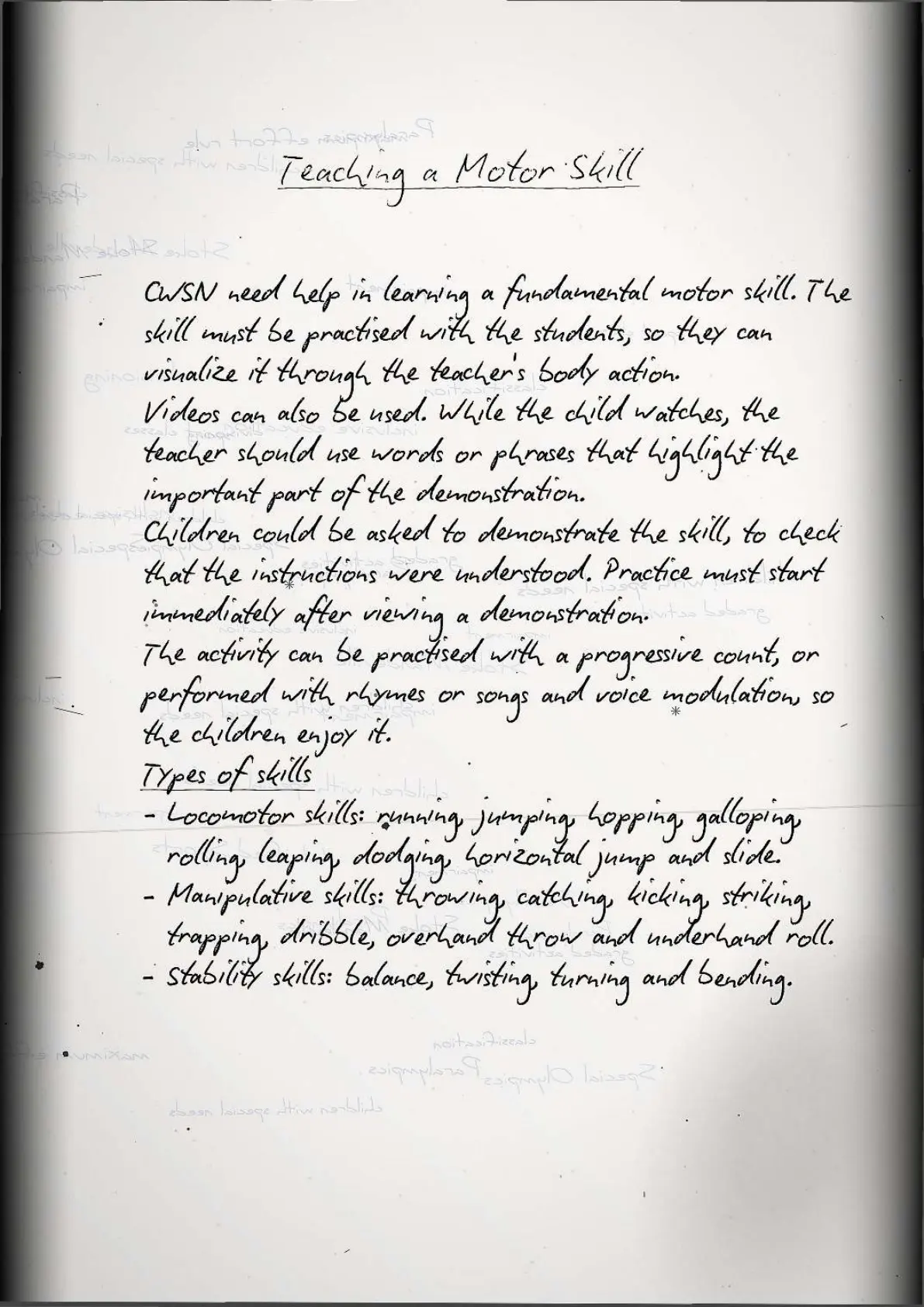
Two supporting lists are worth memorising alongside this section. Locomotor skills are running, jumping, hopping, galloping, rolling, leaping, dodging, the horizontal jump and the slide. Manipulative skills are throwing, catching, kicking, striking, trapping, dribbling, the overhand throw and the underhand roll. Stability skills are balance, twisting, turning and bending.
Common Mistakes Students Make in the Physical Education and Sports for CWSN Chapter
Five traps that cost easy marks in this chapter:
- Swapping classification and divisioning. Classification belongs to Paralympics and is based on impairment. Divisioning belongs to Special Olympics and is based on ability.
- Mixing up 1924, 1948, 1960 and 1968. 1924 is the first Deaflympics in Paris, 1948 is the Stoke Mandeville Games, 1960 is the first Paralympic Games in Italy, and 1968 is the first Special Olympics in Chicago.
- Listing nine or eleven impairment types. There are exactly ten: eight physical types plus visual impairment and intellectual disability.
- Writing the wrong founding date for the IPC. It was formed on 22 September 1989 at Dusseldorf, Germany, not in 1960 or 1948.
- Giving a general answer on strategies. Section 4.5 has six named strategies, and a full-mark answer names all six.
Write these five out from memory once before the exam. Students who did this reported that the classification and divisioning mix-up stopped repeating within one revision round.
Quick Recall Sheet for Physical Education and Sports for CWSN
| Term | One-line meaning |
|---|---|
| CWSN | Children With Special Needs |
| IPC | International Paralympic Committee, formed 22 September 1989 at Dusseldorf |
| ICSD | International Committee of Sports for the Deaf, the governing body of the Deaflympics |
| CISS | The earlier French name of the ICSD, formed in 1924 |
| Stoke Mandeville Games | Wheelchair competition held by Dr Ludwig Guttmann on 29 July 1948 |
| Para | Greek for beside or alongside, so Paralympics runs parallel to the Olympics |
| Classification | Grouping by impairment, used by Paralympics |
| Divisioning | Grouping by ability, age and gender, used by Special Olympics |
| Maximum Effort Rule | Athletes must give their best in every trial and round, or face disqualification |
| Unified Sports | Athletes with and without intellectual disabilities playing as teammates |
| Healthy Athletes | Special Olympics health screening in seven areas, started in 1997 |
| Hypertonia | Abnormal increase in muscle tension with reduced ability to stretch |
| Ataxia | Lack of coordination of muscle movements |
| Athetosis | Unbalanced, involuntary movements with difficulty holding posture |
The notebook also carries the running order of the chapter as a five-letter cue: O-C-I-A-S, standing for Organisations, Classification, Inclusion, Advantages and Strategies.
What the Physical Education and Sports for CWSN Handwritten Notes PDF Contains
The file runs to 60 pages in clear handwriting, with each of the five sections starting on a fresh page so the dates and the lists never run into each other.
- Pages 1 to 18: the three organisations, with the full Paralympics timeline and the Special Olympics programme list.
- Pages 19 to 30: classification and divisioning, the ten eligible impairment types and the divisioning age bands.
- Pages 31 to 42: inclusion, the three roles, the seven reasons it is needed and the implementation measures for India.
- Pages 43 to 52: the eight advantages of physical activity, written one to a block.
- Pages 53 to 60: the six accessibility strategies, the motor skill lists and the quick recall sheet.
Textbook Exercise Questions and How These Notes Answer Them
Each section ends with its own exercise set, and the chapter closes with a history flowchart and a case study. The table below shows where the answer material sits.
| Exercise question | Where the answer is built |
|---|---|
| When and where did Paralympics start, and what was the purpose? | The Paralympics timeline, from the 1944 spinal injuries centre to the 1960 Rome games |
| What is the vision of the International Paralympic Committee? | The vision line quoted in full in the Paralympics section |
| Differentiate between Special Olympics, Deaflympics and Paralympics | The five-row three-column comparison table |
| What do you understand by the term hypertonia? | The ten impairment types table |
| Describe the Maximum Effort Rule used in Special Olympics | The divisioning section, with the disqualification consequence |
| Difference between classification and divisioning in disability sports | The five-row comparison table on the two grouping systems |
| How can inclusive education be implemented in India? | The seven reasons list plus the implementation measures |
| In what ways does participation in sports benefit a person with disability? | The eight-row advantages table |
| Complete the flowchart from 1888 to 1992 | The Paralympics timeline table, which carries every year the flowchart asks for |
How to Use These Handwritten Notes Most Effectively
This chapter is dense with dates and names sitting close together, so short blocks work better than one long sitting. Students who used this split reported finishing the chapter in about three and a half hours.
- Block 1, 45 minutes. The three organisations and the comparison table, read across the rows rather than down the columns.
- Block 2, 40 minutes. The full date timeline from 1888 to 1992, written out once from memory.
- Block 3, 40 minutes. Classification against divisioning, then the ten impairment types.
- Block 4, 40 minutes. Inclusion, the three roles and the seven reasons it is needed.
- Block 5, 35 minutes. The eight advantages and the six accessibility strategies.
- Night before, 15 minutes. Quick recall sheet and the five common mistakes, nothing else.
How These Handwritten Notes Pair with Other Class 12 Physical Education Resources
| Resource | Best used for | Open it |
|---|---|---|
| Class 11 Physical Education Handwritten Notes | What physical education is, its aims and its objectives, the base this chapter builds on | Physical Education Class 11 Handwritten Notes |
| Class 11 Physical Education Handwritten Notes | Health related physical fitness, the base for the eight advantages in this chapter | Health Related Physical Fitness Class 11 Handwritten Notes |
| Class 11 Physical Education Handwritten Notes | Measurement and evaluation, which explains the assessment ideas behind classification | Measurement and Evaluation Class 11 Handwritten Notes |
| Class 12 Physical Education Notes | Typed revision notes with the three organisations set out in full | Physical Education & Sports for CWSN Class 12 Notes (coming soon) |
| Class 12 Physical Education Book PDF | The official chapter text with every exercise question and the case study | Physical Education & Sports for CWSN Class 12 Book PDF (coming soon) |
| Class 12 Physical Education Chapter 3 Handwritten Notes | Yoga as Preventive Measure for Lifestyle Disease, the chapter before this one | Yoga as Preventive Measure for Lifestyle Disease Class 12 Handwritten Notes (coming soon) |
NCERT Handwritten Notes for Class 12 Physical Education: All Chapters
| Chapter | Class 12 Physical Education Handwritten Notes |
|---|---|
| Chapter 1 | Management of Sporting Events Class 12 Handwritten Notes |
| Chapter 2 | Children and Women in Sports Class 12 Handwritten Notes |
| Chapter 3 | Yoga as Preventive Measure for Lifestyle Disease Class 12 Handwritten Notes |
| Chapter 4 | Physical Education & Sports for CWSN Class 12 Handwritten Notes (this page) |
Physical Education and Sports for CWSN Class 12 Handwritten Notes FAQs
Ques. What does CWSN stand for in Class 12 Physical Education?
Ans. CWSN stands for Children With Special Needs. The chapter uses the term for children with physical, intellectual, cognitive or sensory impairments, and covers how sport and physical education are organised, classified and made accessible for them.
Ques. What is the difference between classification and divisioning in disability sports?
Ans. Classification is the grouping process used by Paralympics, and it groups athletes by the type and degree of their impairment. Divisioning is the grouping process used by Special Olympics, and it groups athletes by ability, along with age and gender. Classification also decides who is eligible to compete, while divisioning assumes all ability levels can take part.
Ques. What are the ten eligible impairment types recognised by the IPC?
Ans. Eight are physical: impaired muscle power, impaired passive range of movement, loss of limb or limb deficiency, leg-length difference, short stature, hypertonia, ataxia and athetosis. The remaining two are visual impairment and intellectual disability, where the intellectual disability must be diagnosed before the age of 18.
Ques. When and where did the Paralympic Games start?
Ans. Dr Ludwig Guttmann opened a spinal injuries centre at Stoke Mandeville Hospital in Great Britain in 1944. On 29 July 1948, during the opening ceremony of the London Olympic Games, he held the first wheelchair competition, the Stoke Mandeville Games, with 16 injured servicemen and women taking part in archery. The first Paralympic Games followed in Italy in 1960 with athletes from 23 nations.
Ques. Who founded Special Olympics and what is the athlete oath?
Ans. Eunice Kennedy Shriver founded Special Olympics, starting with a day camp called Camp Shriver at her home in Potomac, Maryland, in June 1962. The athlete oath, first introduced at the 1968 Chicago games, is "Let me win. But if I cannot win, let me be brave in the attempt."
Ques. What do you know about the logo of the Deaflympics?
Ans. The logo was designed in 2003. The hand shapes for "ok", "good" and "great" overlap in a circle to form the original sign for "deaflympics", and together they make the sign for "united". The centre represents the iris of the eye, marking deaf people as visual people, and the four colours red, blue, yellow and green stand for the four regional confederations of Asia Pacific, Europe, Pan America and Africa.
Ques. What is the Maximum Effort Rule in Special Olympics?
Ans. The Maximum Effort Rule requires athletes to give their maximum effort during the divisioning process, and requires coaches to motivate every athlete to do the same. An athlete who does not take part honestly in preliminary trials or final rounds violates the spirit of competition and may be disqualified. The rule exists so that divisions are set from a true measure of ability.
Ques. What are the advantages of physical activities for children with special needs?
Ans. The chapter lists eight: physical benefits, a mode of recreation and fun, improved emotional health, channelising surplus energy, psychological benefits, a healthy lifestyle, behavioural benefits and increased independence. It also notes that children with special needs are about twice as likely as other children to be overweight or obese, which makes regular activity more important, not less.
Ques. What strategies make physical activities accessible for CWSN?
Ans. Section 4.5 names six: communication, space, equipment, graded activities, social strategies and psychological strategies. Graded activities move from non-locomotor to locomotor to manipulative work, with assistance graded from physical to verbal to independent, and psychological barriers are described in the chapter as the most influential of all.
Ques. What is inclusion in education and why is it needed?
Ans. Inclusion means including everyone in education without judging ability, appearance or economic condition, with children with special needs spending most or all of their time alongside students without special needs. The chapter gives seven reasons: it builds self esteem, improves social and communication skills, enhances sensitivity, creates better understanding of others, creates a sense of belonging, enhances academic performance and improves performance overall.
Ques. Where can I download the Class 12 Physical Education Chapter 4 handwritten notes PDF?
Ans. Use the download option at the top of this page. The file is free and printable, runs to 60 handwritten pages, and follows the 2026-27 chapter order from the sports organisations through to the accessibility strategies, so it can sit open beside the textbook while you revise.



Comments