




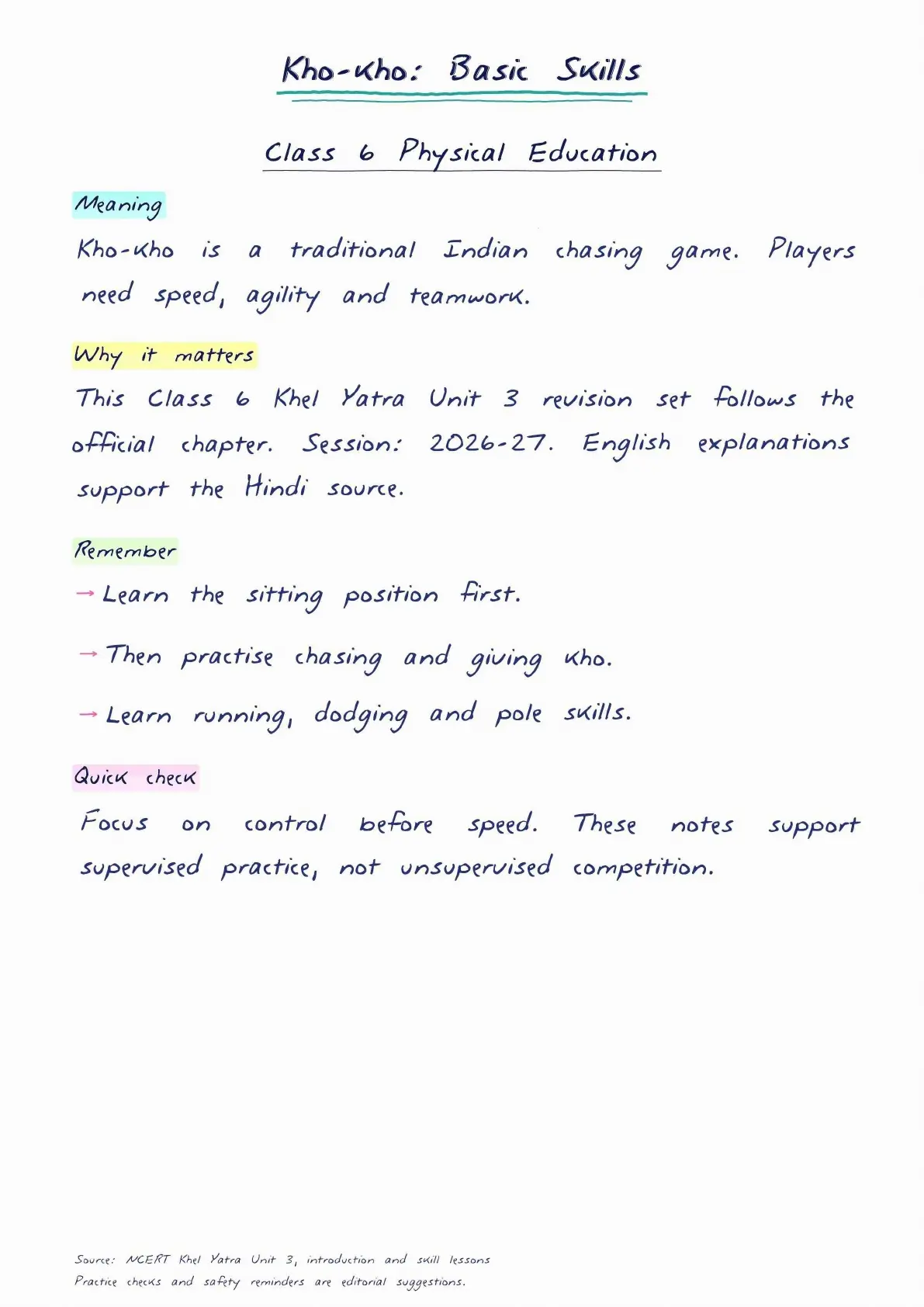
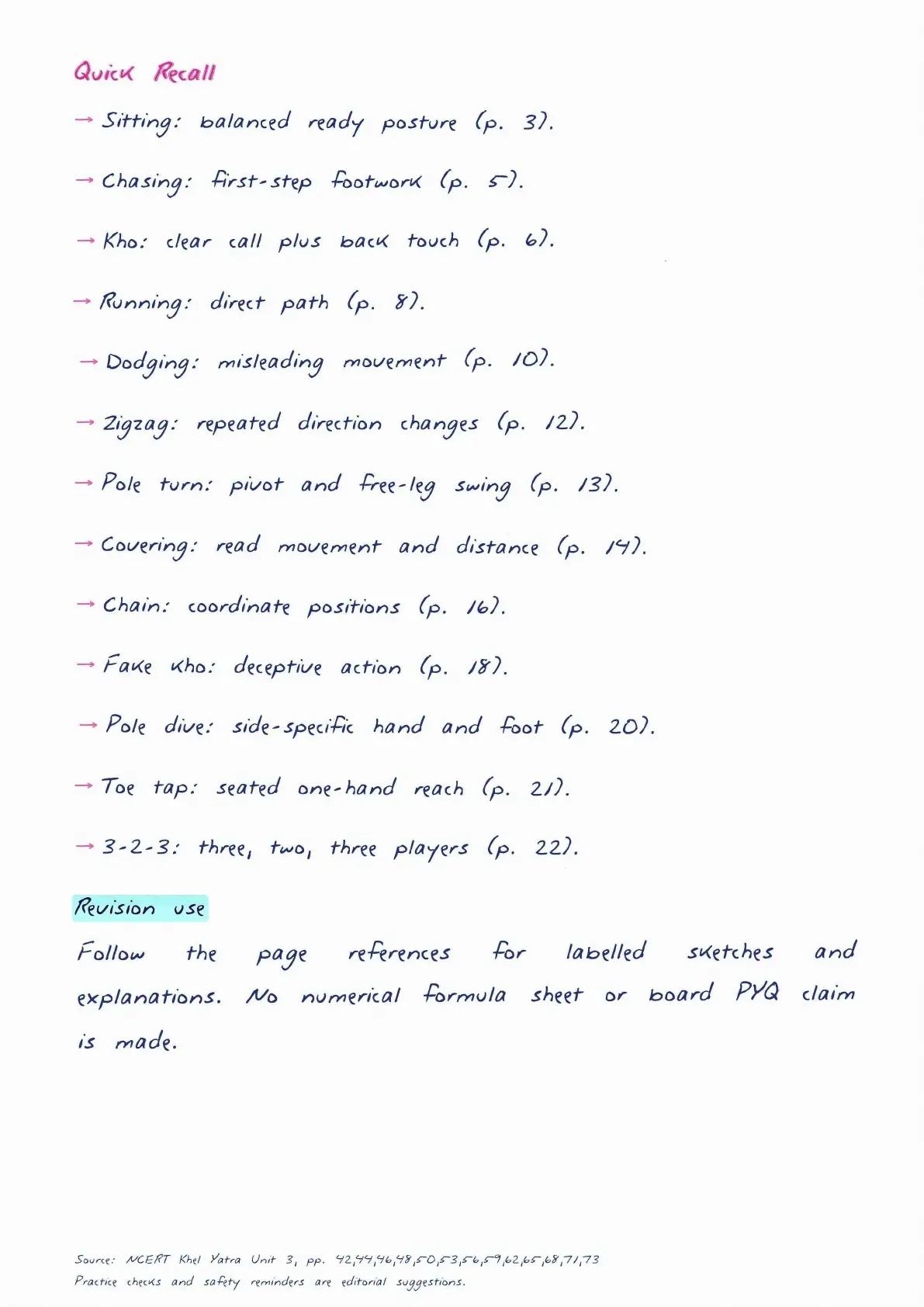
Inside the Class 6 Khel Yatra Chapter 3 Handwritten Notes, you will find reminders on sitting, chasing, giving kho, running and dodging. These notes support revision of खो-खो के आधारभूत कौशल for 2026-27. Use them with the official Hindi NCERT chapter, then explain each skill through a playground example.
- Recall the difference between chasing and defending.
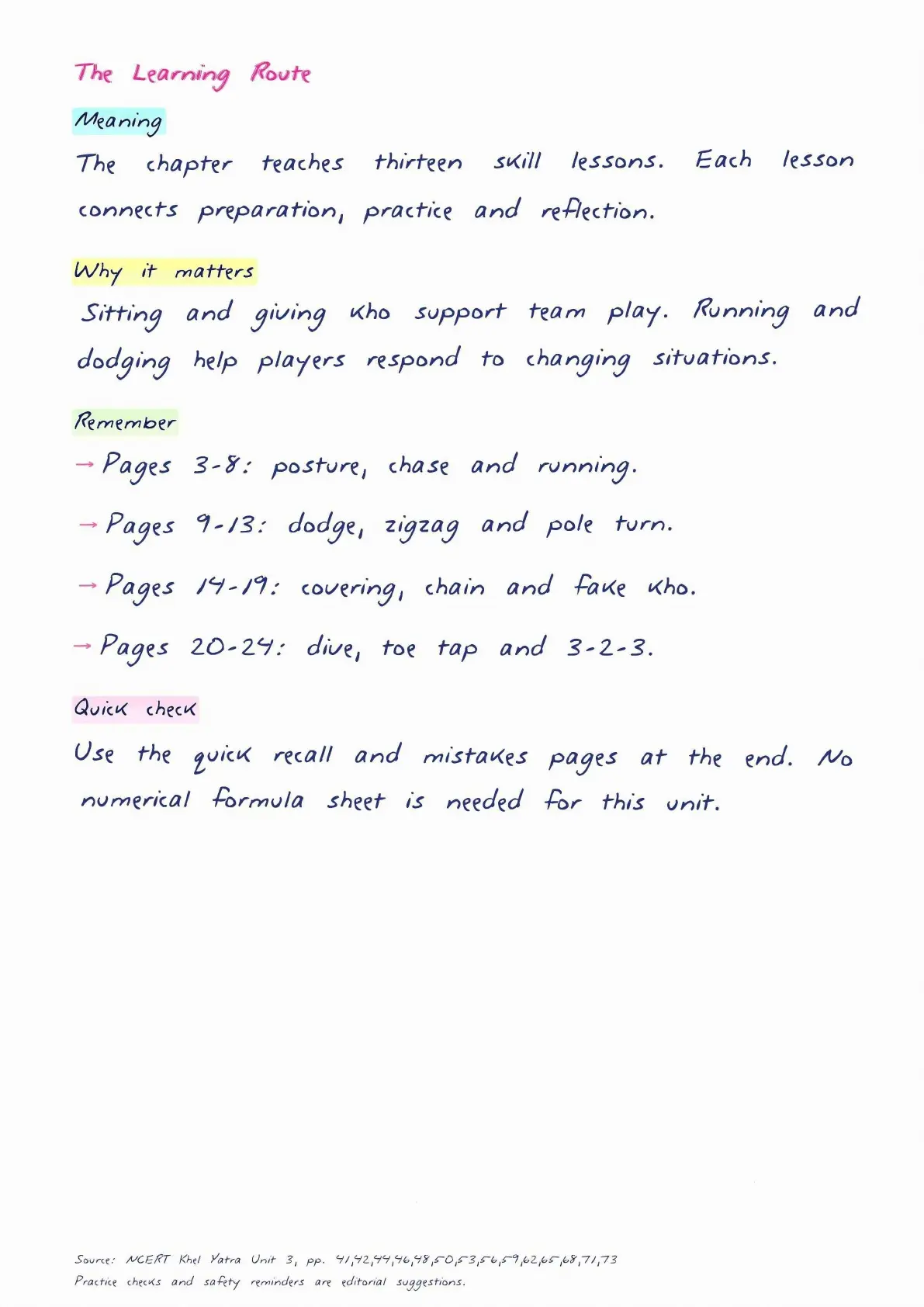
- Review straight running, zigzag running and controlled direction changes.
- Connect each activity with teamwork and reflection.
Read these supporting notes alongside the official NCERT chapter and follow your teacher's activity instructions.
Student Feedback: After practice, describe one movement you controlled well and one you want to improve. Use your own experience.
Kho-Kho Basic Skills and the Two Playing Roles
Kho-kho combines speed, alertness and teamwork. Chasers try to tag defenders. Defenders try to avoid the tag within the rules. A good player needs body control as well as speed. The same student can learn both roles through class activities.
| Skill | What to recall |
|---|---|
| Sitting | A ready body position helps a seated chaser respond. |
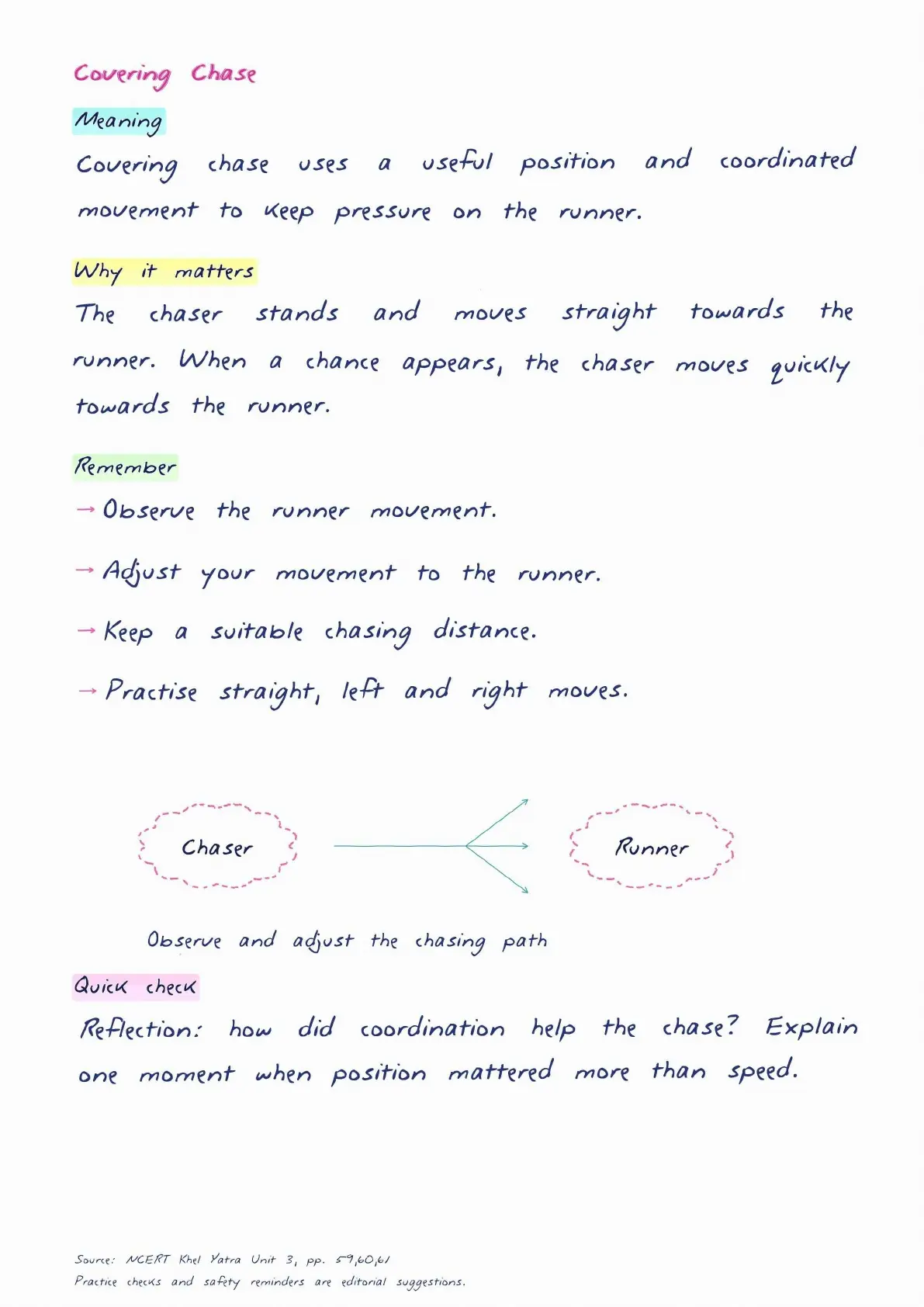
| Chasing | Watch the runner and move with control. |
| Giving kho | Coordinate the spoken signal with the required touch. |
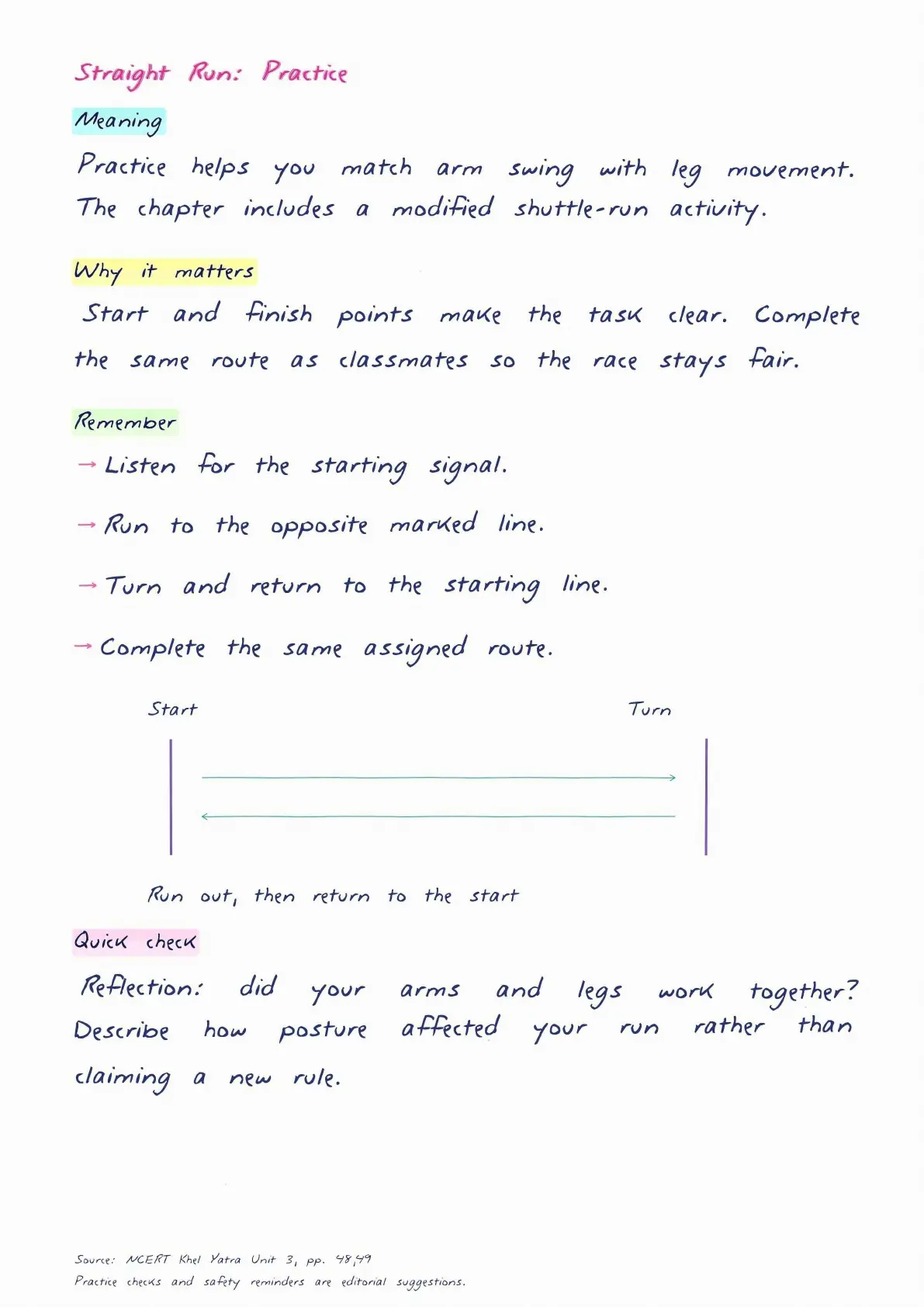
| Straight running | Move along the intended line with coordinated arm action. |
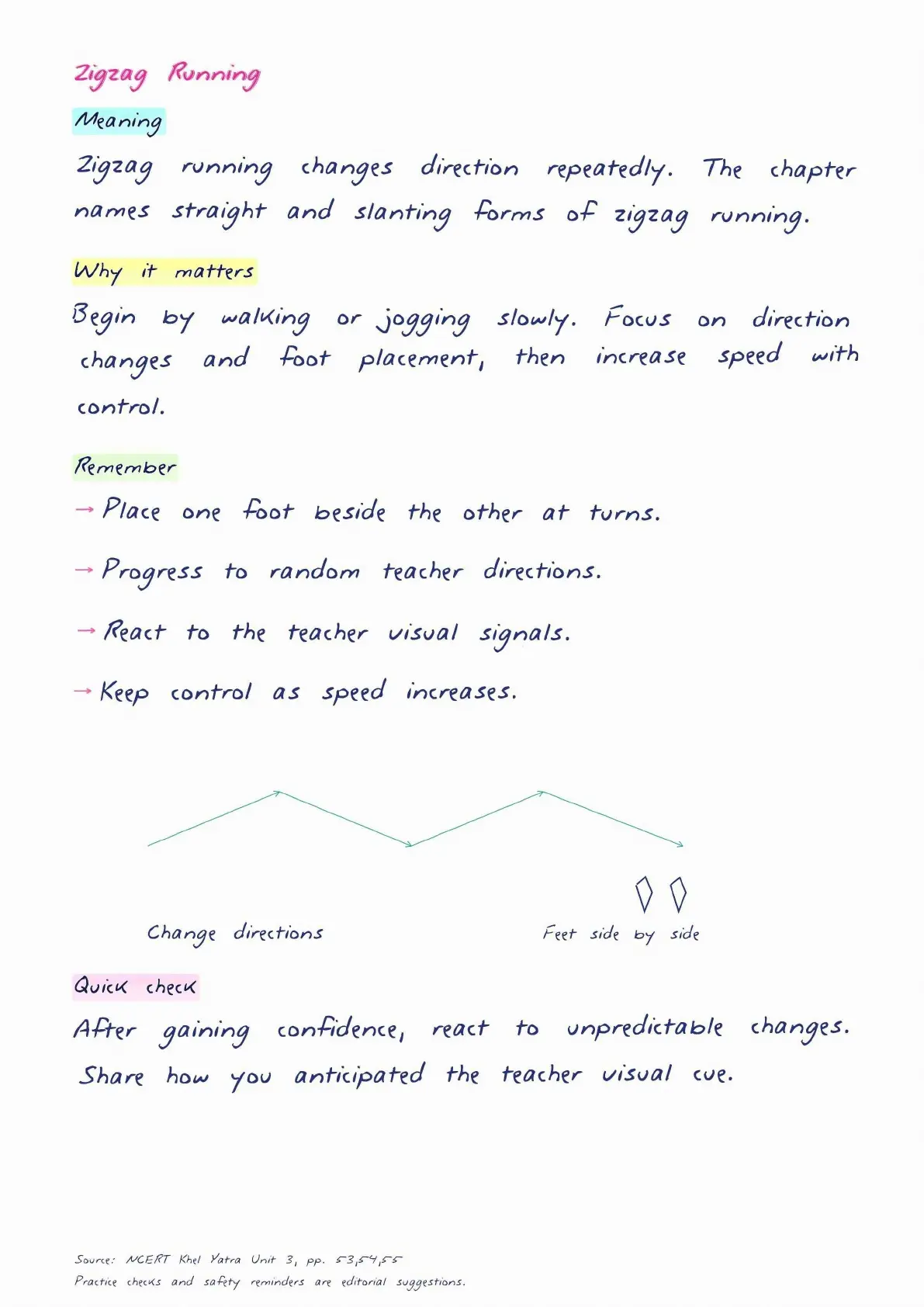
| Zigzag running | Change direction while keeping balance. |
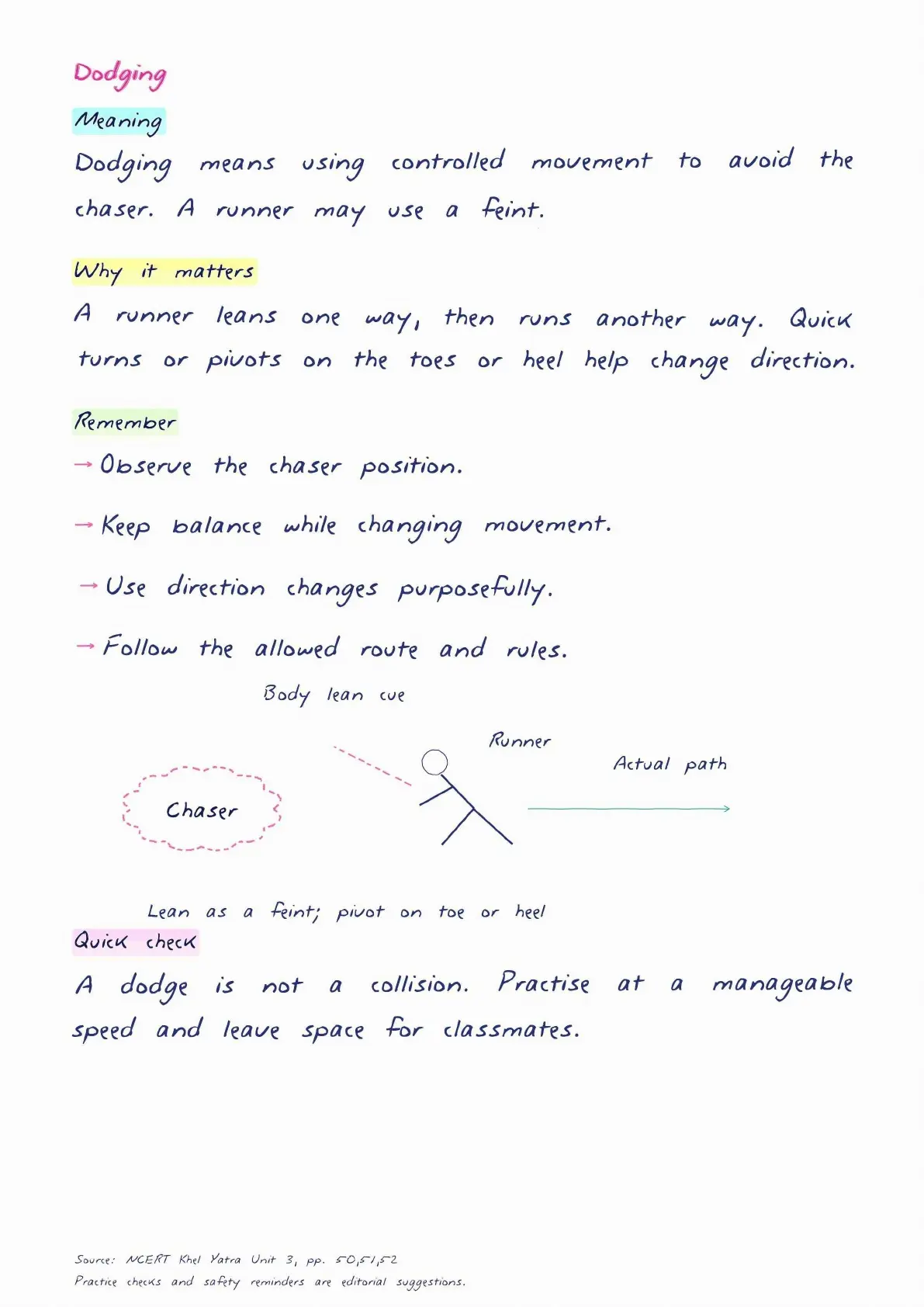
| Dodging | Use changes of pace or direction to avoid a tag. |
Kho-Kho Skills Hindi Audio Lesson
Source: NCERT OFFICIAL on YouTube
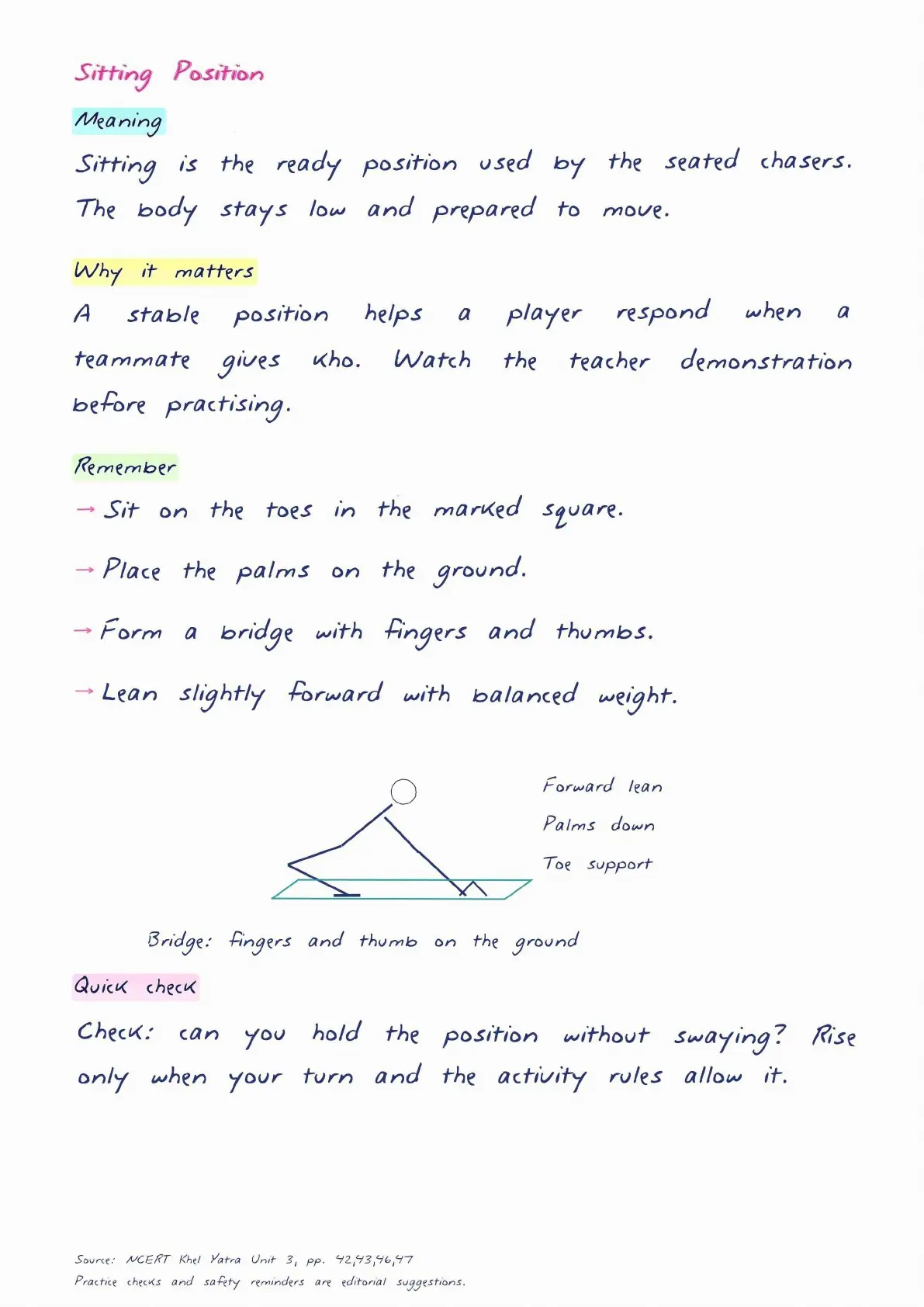
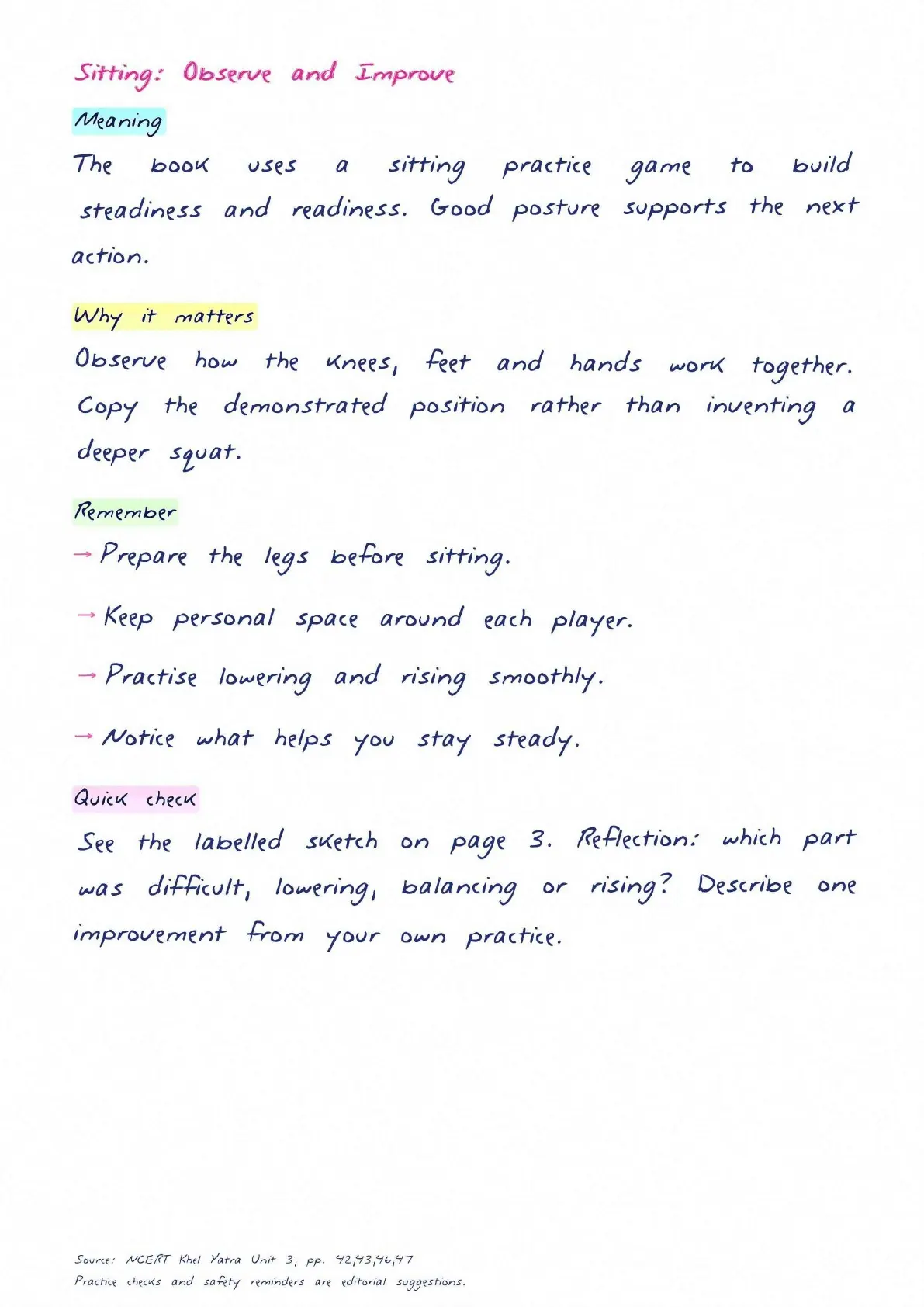
Kho-Kho Sitting and Giving Kho with Clear Timing
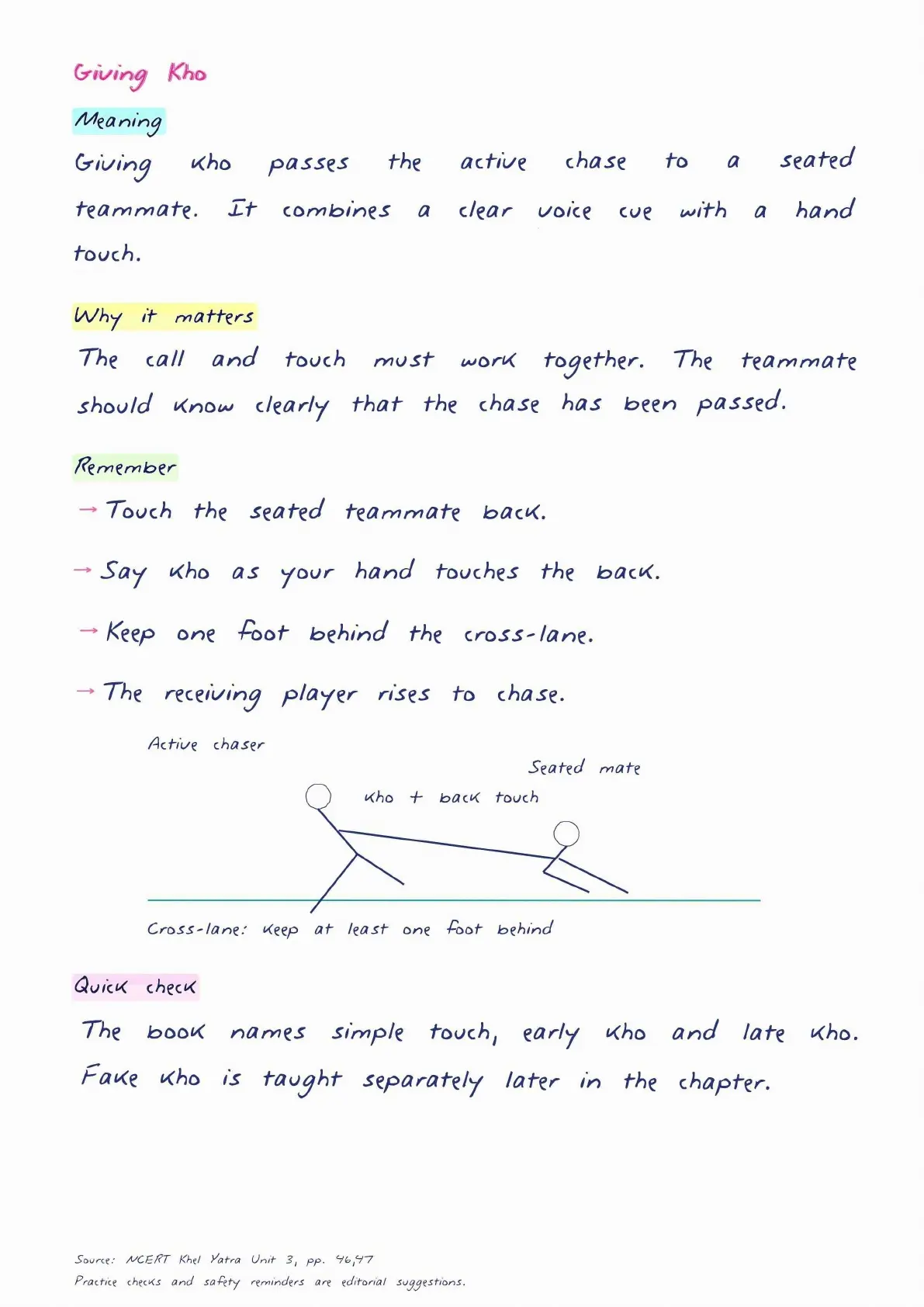
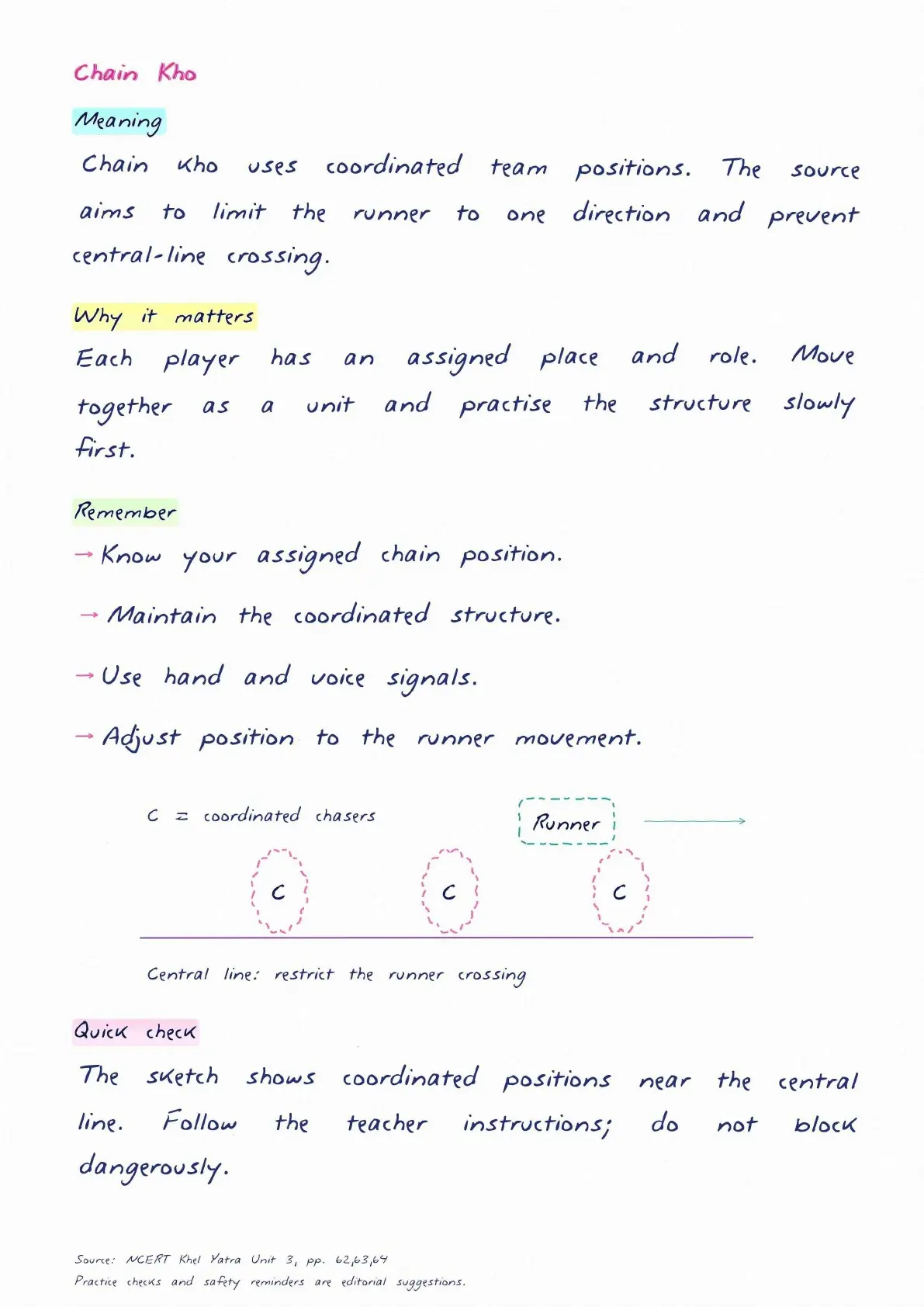
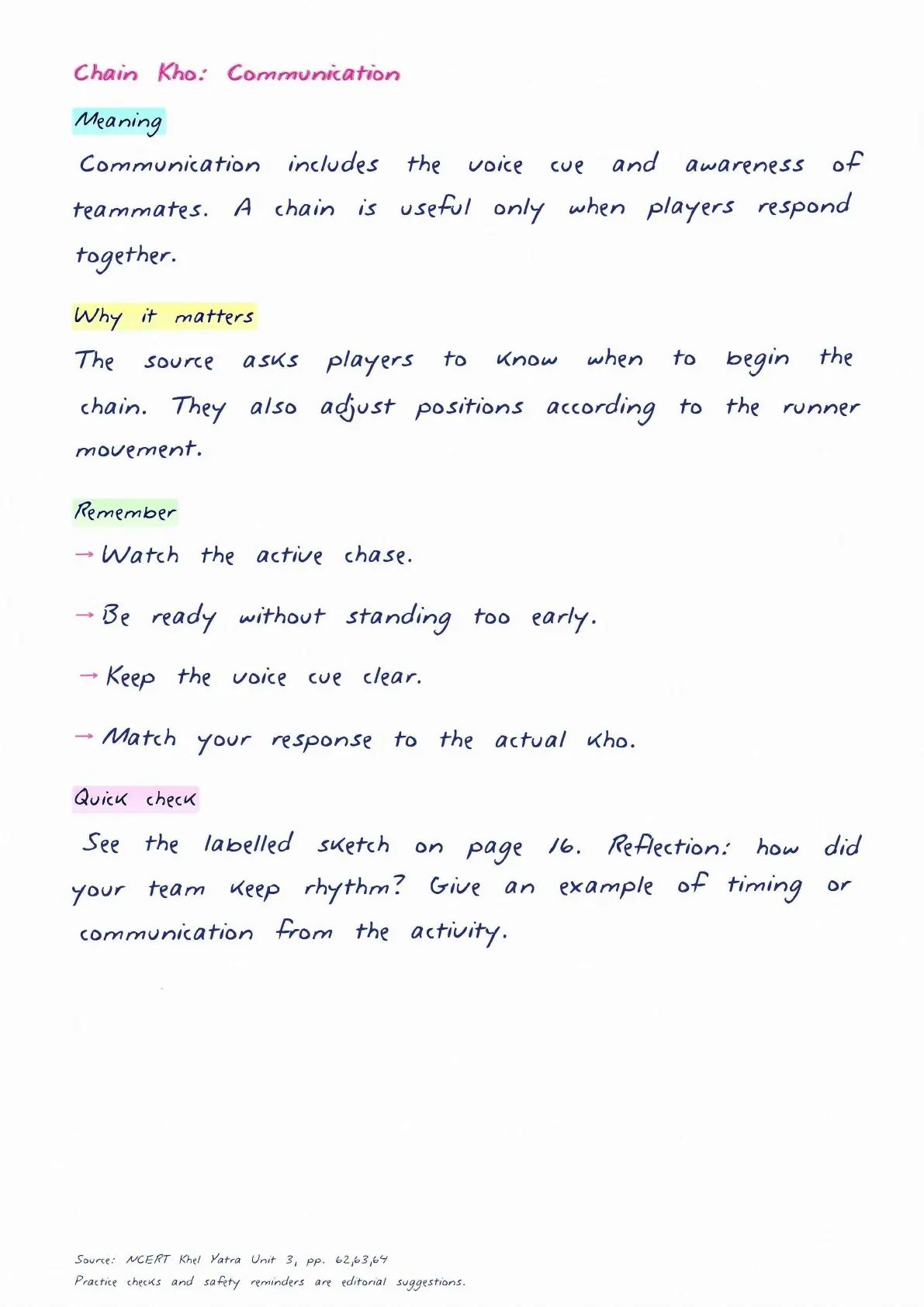
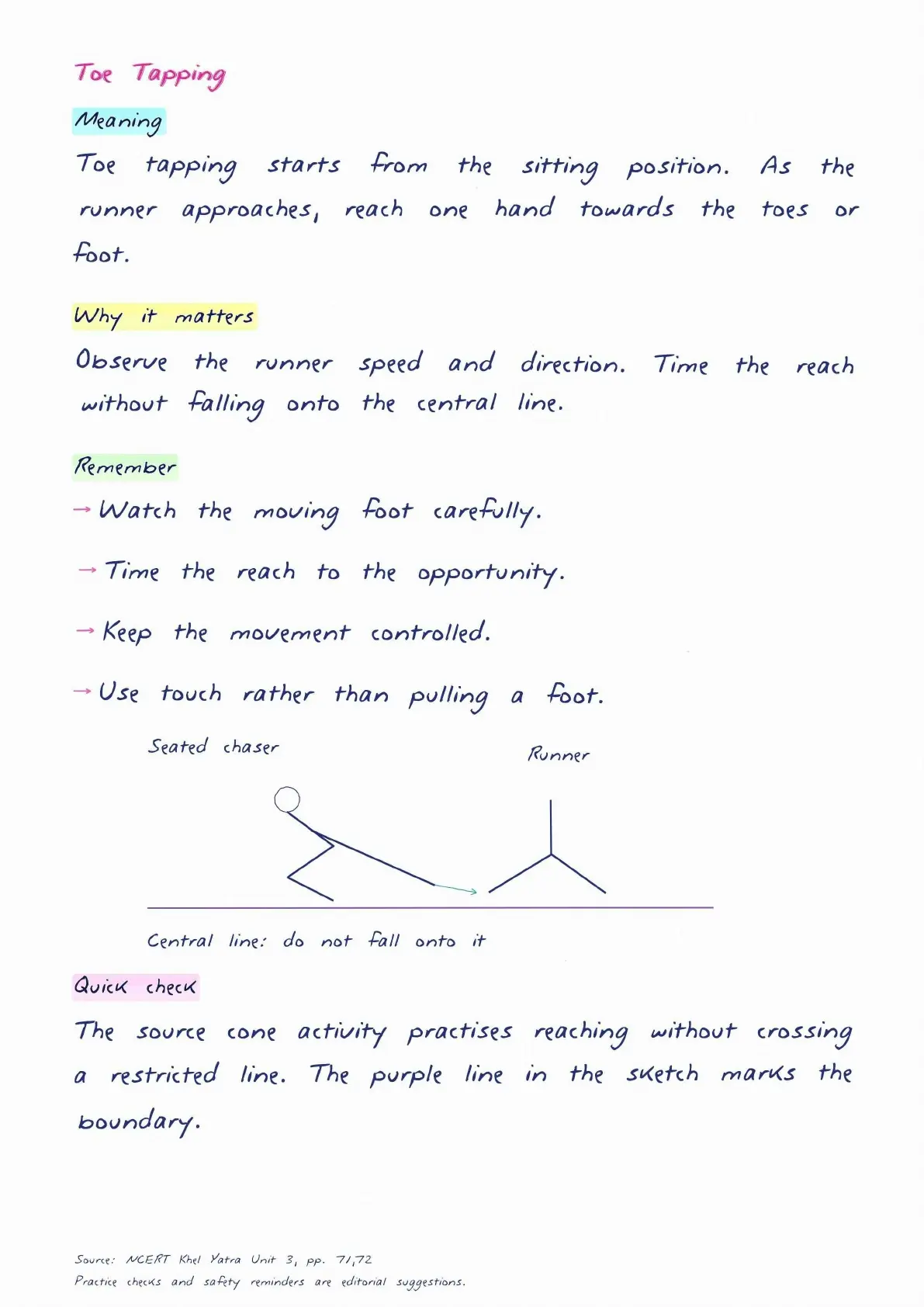
The seated chaser must be ready to respond. Giving kho transfers the chase to a teammate through the game's signal. Touch and the call of “kho” must be coordinated. Watch the teacher's demonstration before trying the movement.
- Recognise the ready sitting position shown in the textbook.
- Listen carefully for the kho signal.
- Practise the required touch and spoken signal together.
- Follow the direction and movement rules explained in class.
Kho-Kho Chasing and Defending Compared
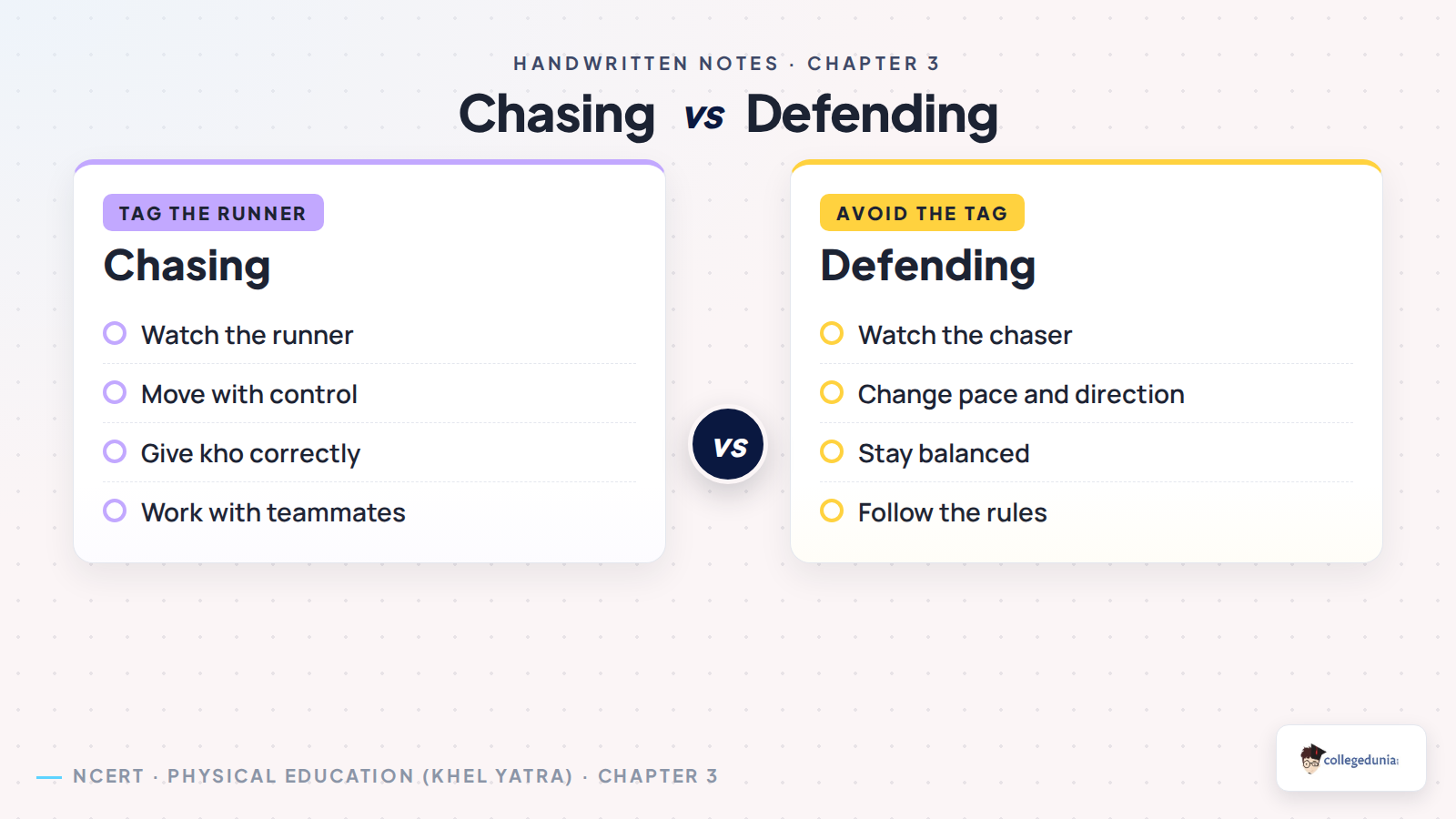
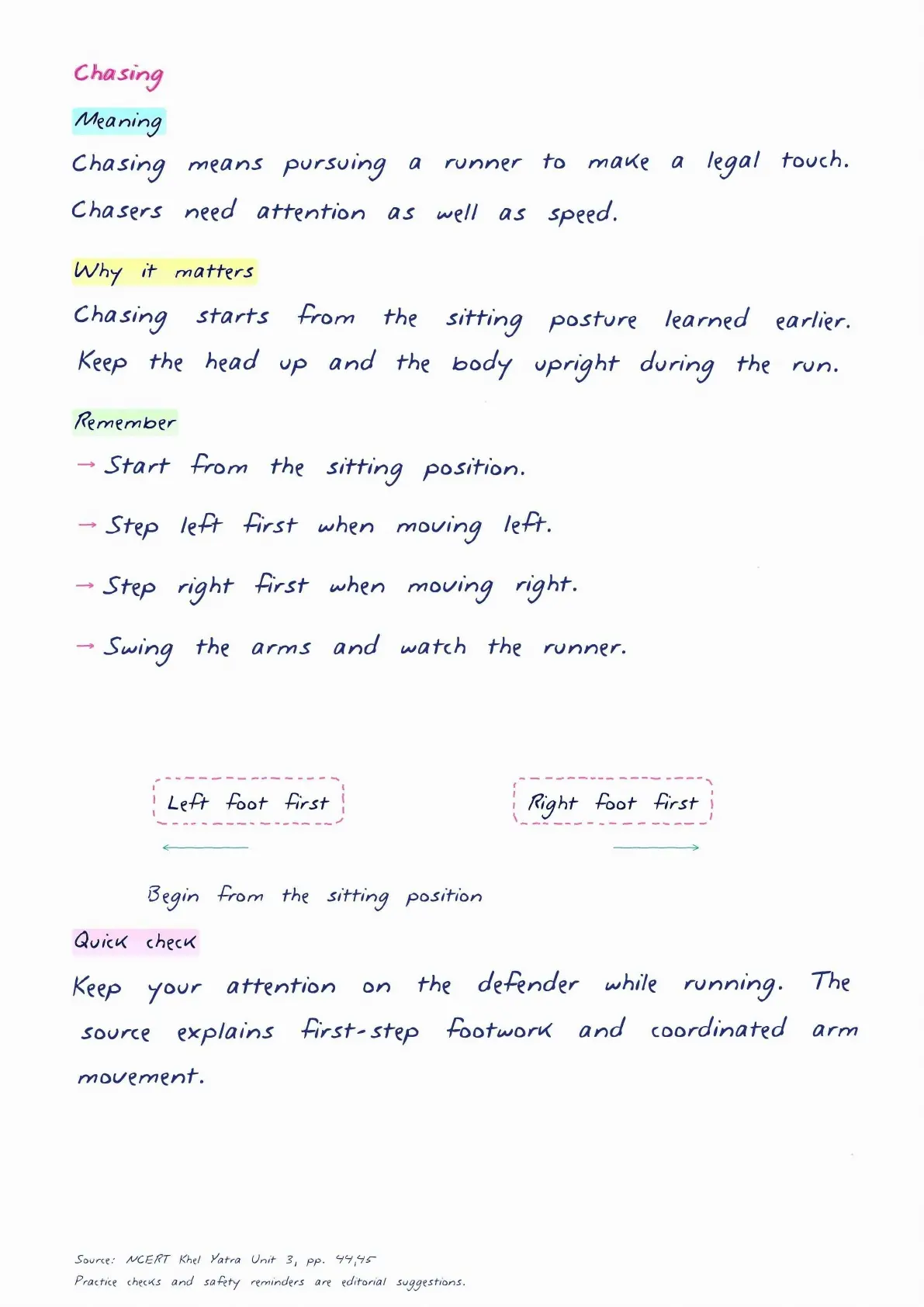
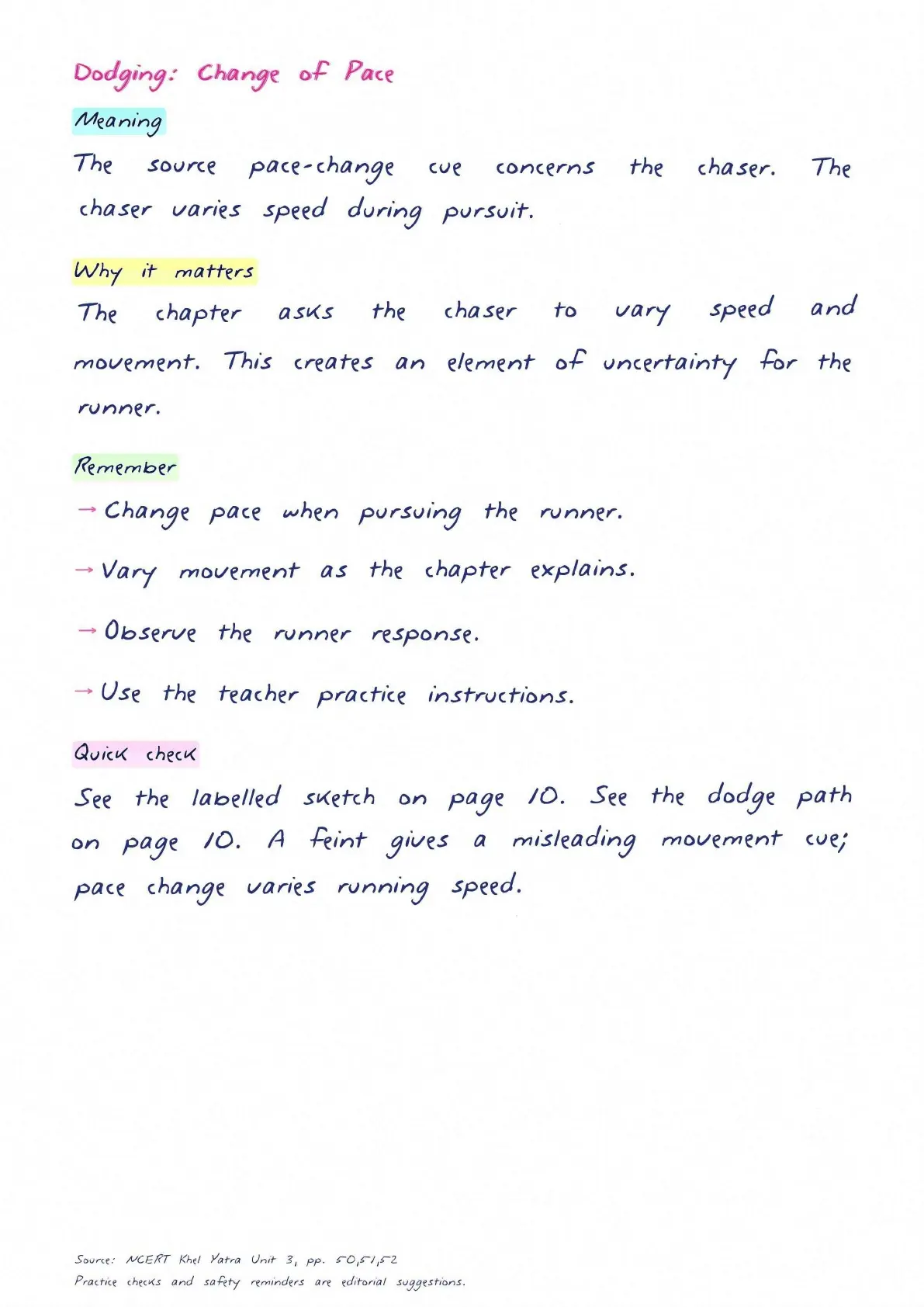
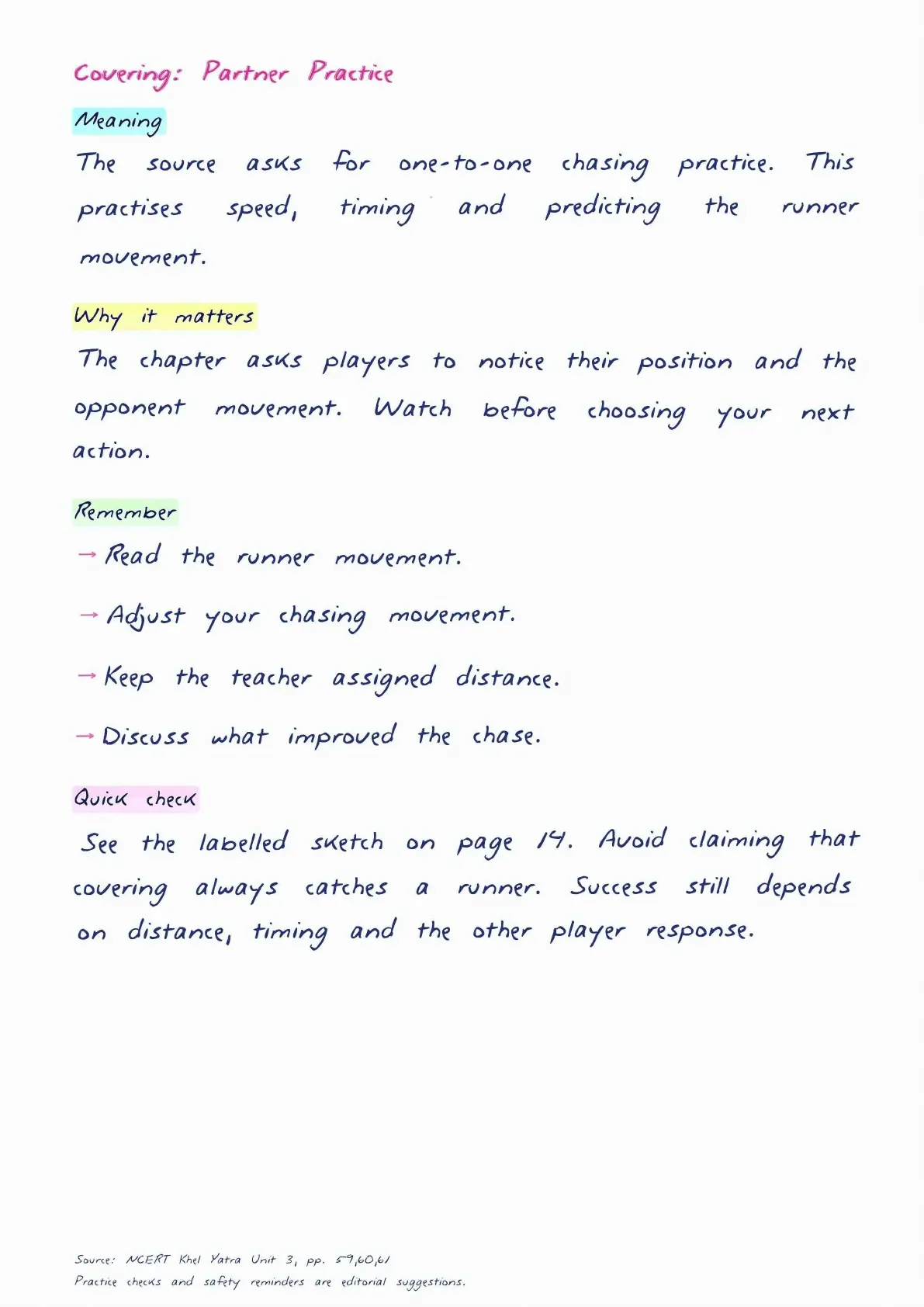
Chasing and defending have different aims. A chaser follows opportunities to tag; a defender watches the chaser and avoids contact. Dodging involves timing and control, rather than random turning. In both roles, players need awareness of other children and the playing space.
| Chaser | Defender |
|---|---|
| Tries to tag the runner | Tries to avoid being tagged |
| Uses teamwork and kho | Uses alert movement and dodging |
| Observes the runner's path | Observes the chaser's movement |
Kho-Kho Straight and Zigzag Running with Control
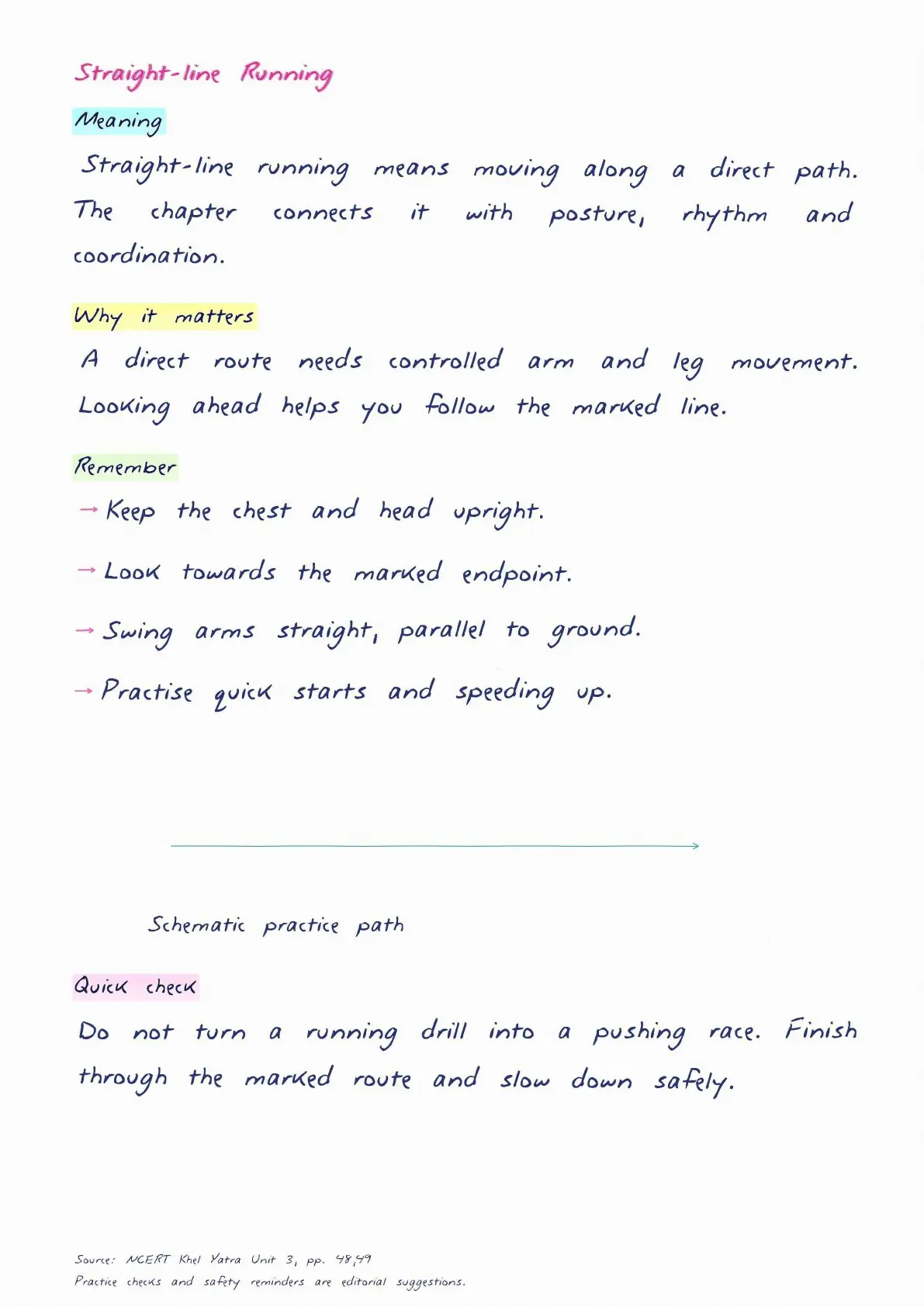
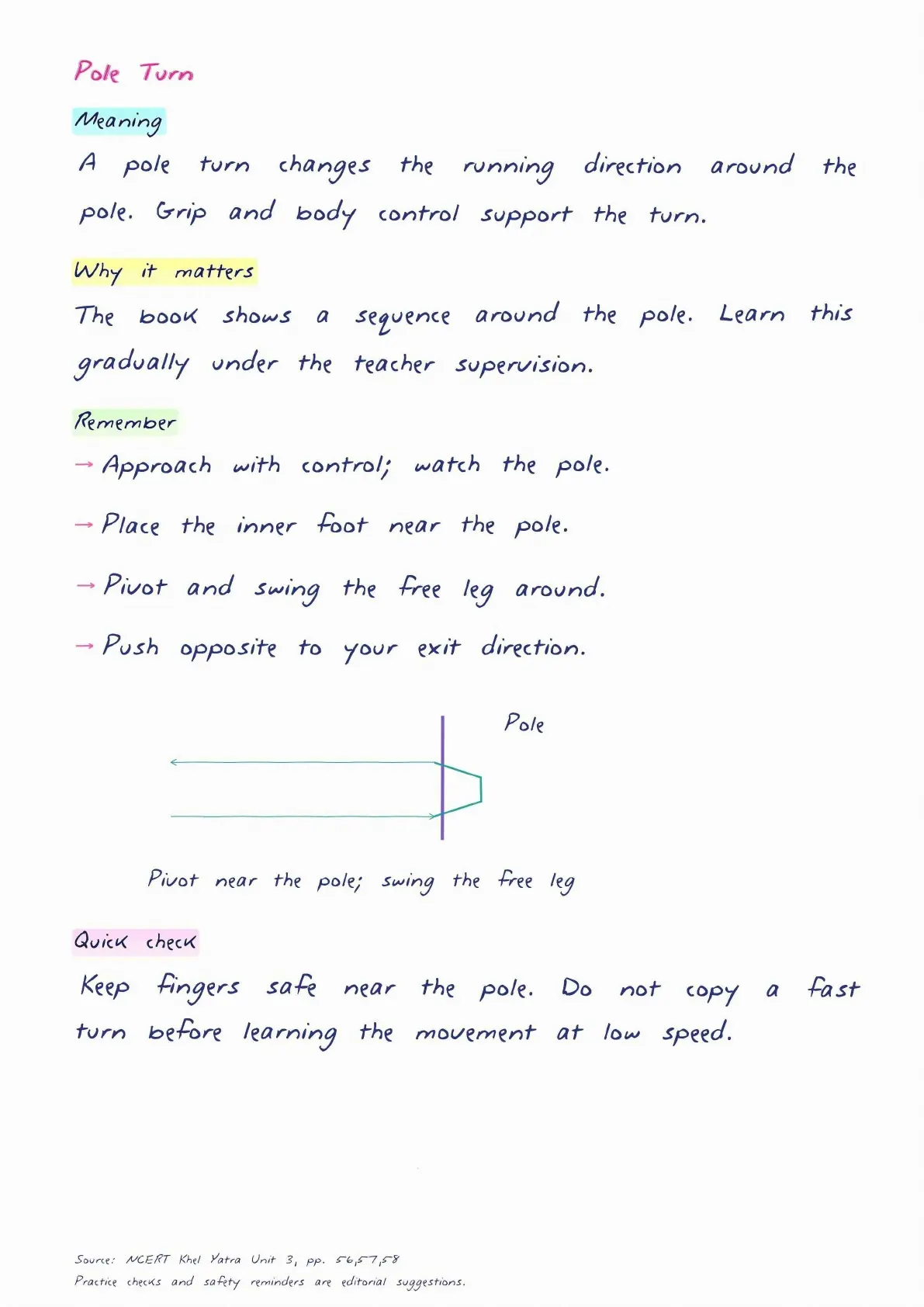
Straight running and zigzag running build different movement habits. Straight running follows a line. Zigzag running adds repeated direction changes. Both need coordinated movement. Practise control before increasing speed. Keep enough space between players and follow the activity route.
- Look towards the intended path.
- Keep arm and leg movements coordinated.
- Change direction without crowding another player.
- Compare how your balance feels in each running activity.
Kho-Kho Revision Through Practice and Reflection
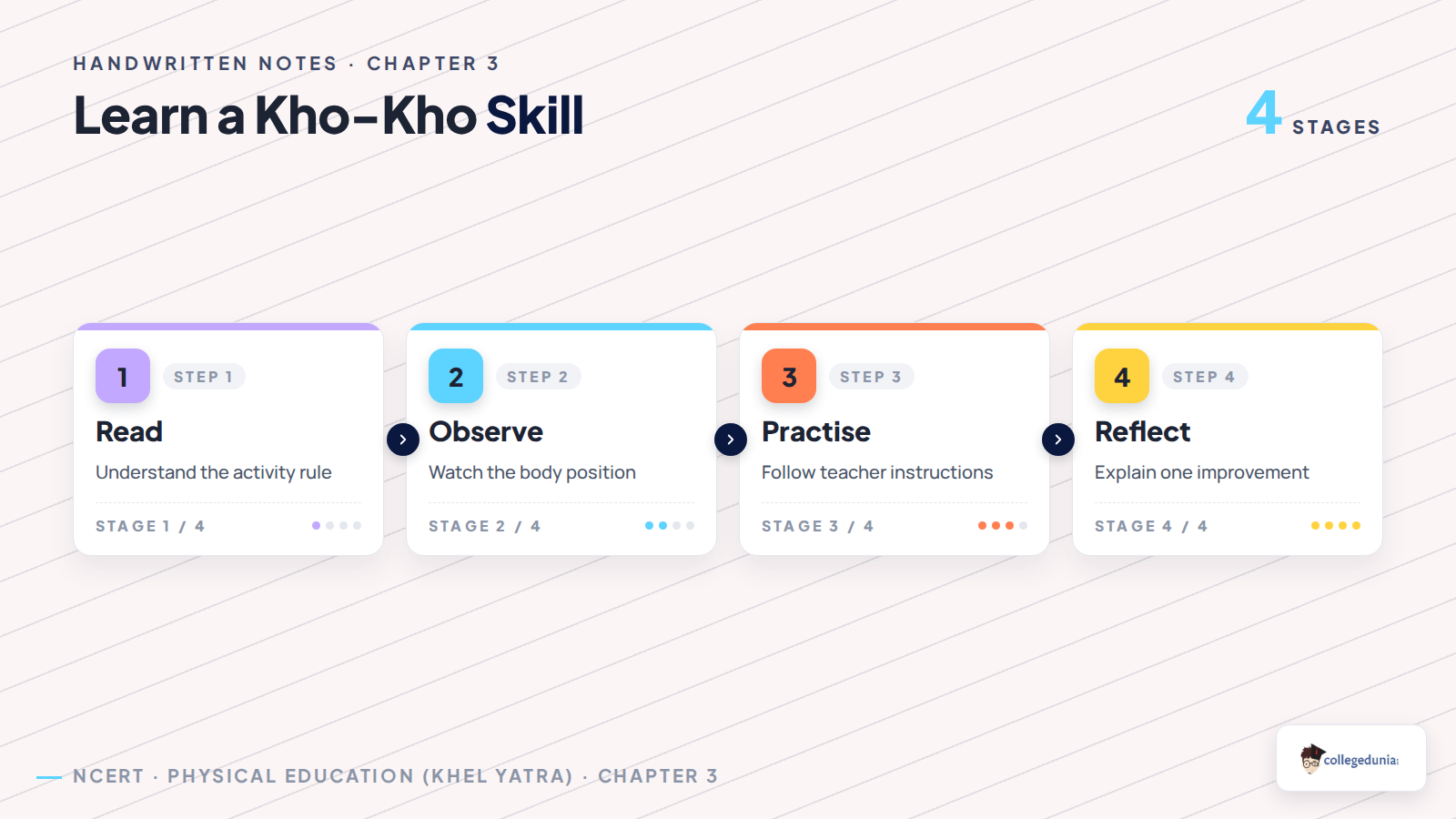
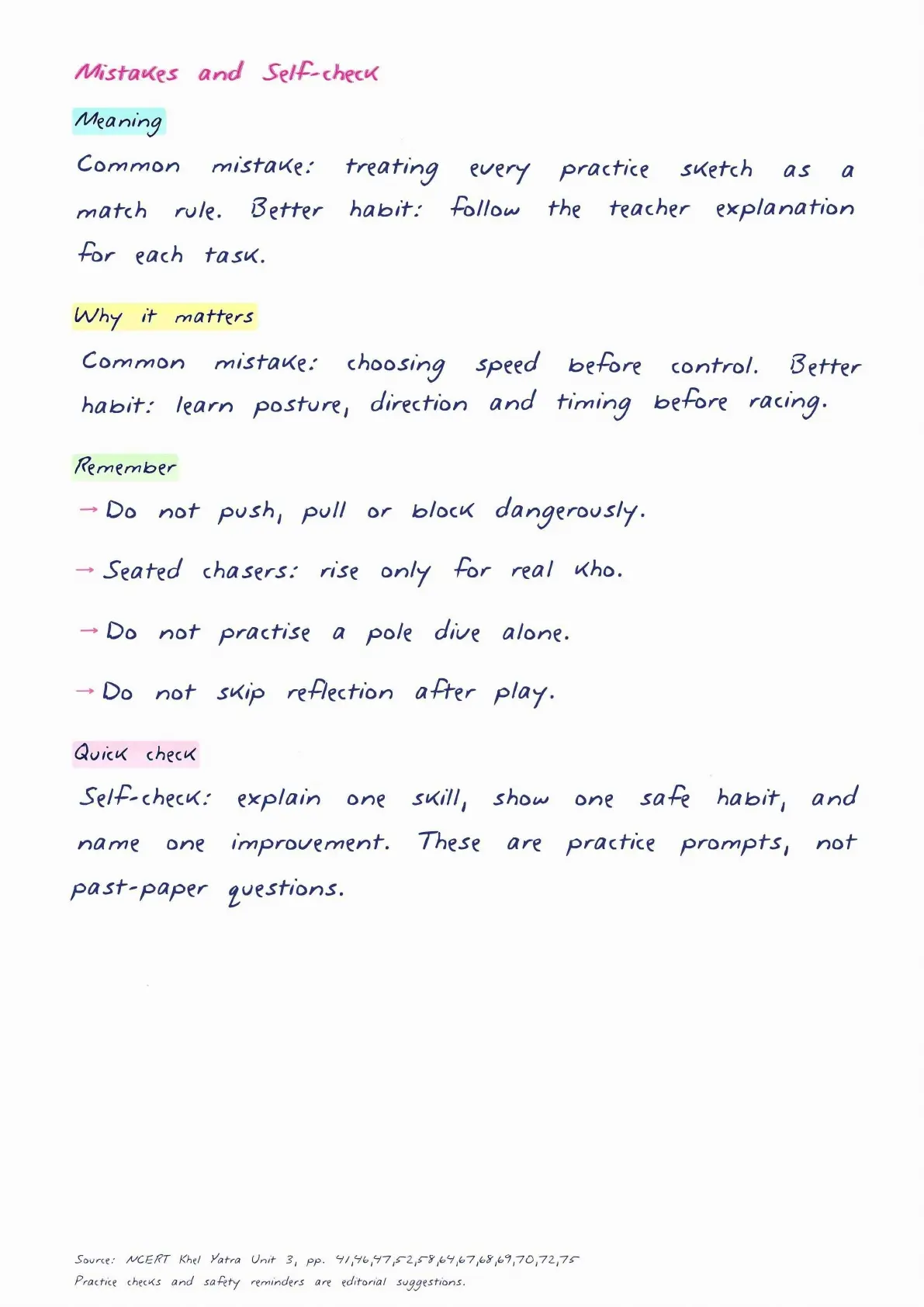
Reading helps you recall a rule. Supervised practice helps you understand how it works. After an activity, describe what happened instead of copying a classmate's reflection. Your answer should connect the skill, the movement and what you noticed.
- Read the activity aim and rule in the official chapter.
- Observe the body position and movement.
- Practise under your teacher's guidance after the warm-up.
- Write one useful observation and one improvement.
| Self-check | Useful response |
|---|---|
| Why does a defender dodge? | To avoid a tag through controlled movement. |
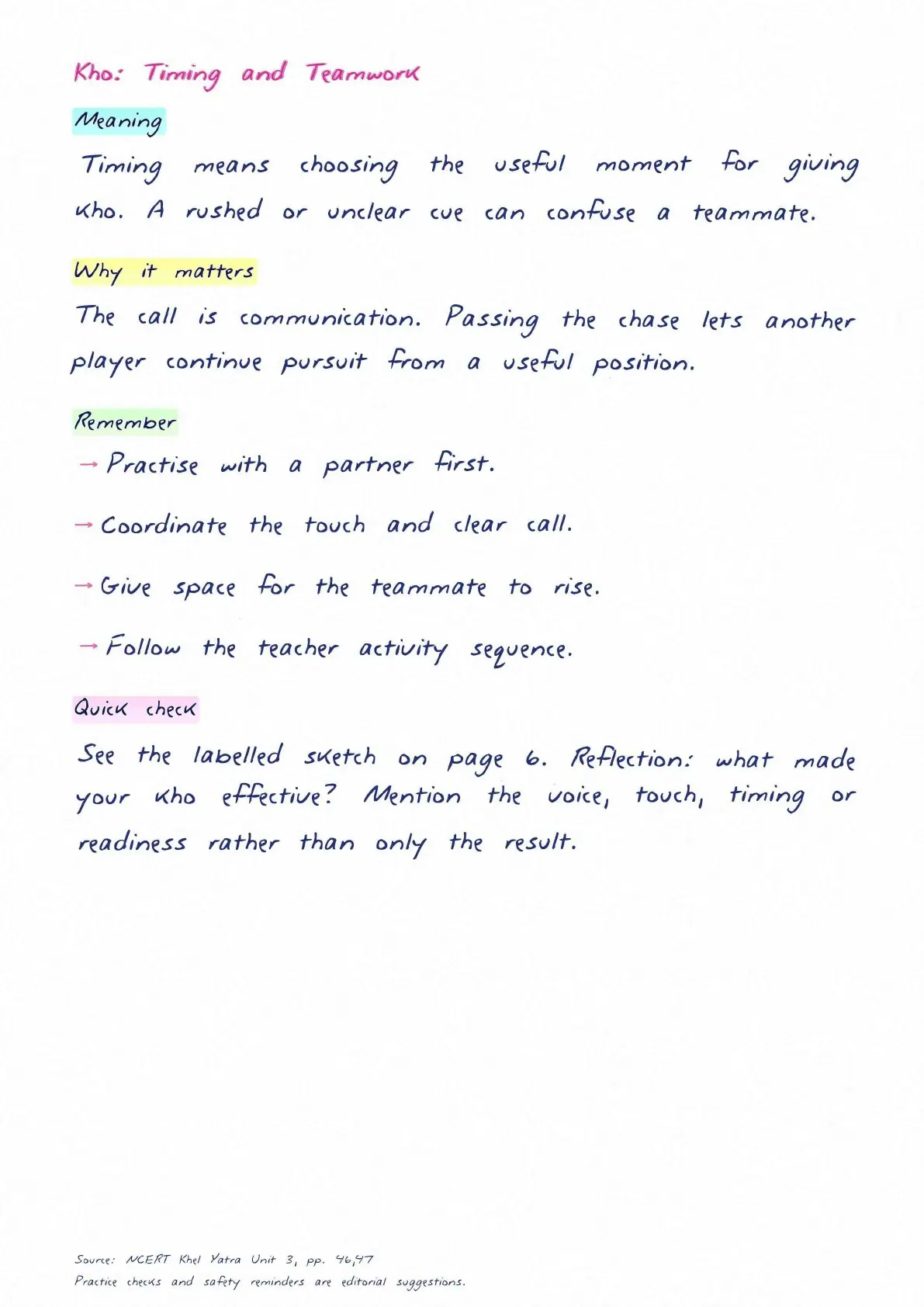
| What makes giving kho effective? | Clear timing of touch and the spoken signal. |
| What did I improve? | One real example, such as keeping balance during a turn. |
Related Kho-Kho Resources for Class 6 Khel Yatra
| Resource | Use it for |
|---|---|
| Official NCERT Book | Original Hindi text, pictures and activity instructions. |
| NCERT Solutions | Compare explanations after writing your own response. |
Khel Yatra Handwritten Notes for All Chapters
| Chapter | Handwritten Notes |
|---|---|
| Chapter 1 | शारीरिक शिक्षा और आरोग्य का महत्व |
| Chapter 2 | गामक दक्षता |
| Chapter 3 | खो-खो के आधारभूत कौशल |
| Chapter 4 | हैंडबॉल के आधारभूत कौशल |
| Chapter 5 | योग |
Kho-Kho Class 6 Handwritten Notes FAQs
Ques. What do these kho-kho notes cover?
Ans. They recap sitting, chasing, giving kho, straight running, zigzag running, dodging and activity reflection.
Ques. Are these notes the official NCERT chapter?
Ans. No. They are supporting revision material. Read the official Hindi NCERT chapter for original instructions and illustrations.
Ques. Can I learn kho-kho only by reading?
Ans. Reading helps recall rules, but practical skills need supervised participation and teacher guidance.
Ques. How should I answer reflection questions?
Ans. Describe your own activity experience. Name the skill, explain what happened and identify one improvement.
Ques. What is giving kho?
Ans. It is the game signal used to pass the chase to a seated teammate, coordinating the required touch with the spoken call.
Ques. What is dodging?
Ans. Dodging means using controlled changes in movement to avoid being tagged.
Ques. How are chasing and defending different?
Ans. The chaser tries to tag the defender. The defender tries to avoid the tag while following the rules.



Comments