




The handwritten notes on Class 6 Science Chapter 3 Mindful Eating: A Path to a Healthy Body have been prepared for quick 2026-27 revision. These notes cover food diversity, nutrients, deficiency diseases, food tests, balanced diet, millets, food miles and food-waste habits in a clear topper-style format.
- Best use: revise the chapter after one full reading of the NCERT Curiosity textbook.
- PDF focus: nutrients, food component tests, balanced diet, millets and food miles.
- Chapter value: this chapter connects daily meals with health, environment and responsible food choices.
Chapter3MindfulEating:APathtoaHealthyBodyHandwrittenNotes.pdf?page=1&dpi=150)
Chapter3MindfulEating:APathtoaHealthyBodyHandwrittenNotes.pdf?page=2&dpi=150)
Chapter3MindfulEating:APathtoaHealthyBodyHandwrittenNotes.pdf?page=3&dpi=150)
Chapter3MindfulEating:APathtoaHealthyBodyHandwrittenNotes.pdf?page=4&dpi=150)
Chapter3MindfulEating:APathtoaHealthyBodyHandwrittenNotes.pdf?page=5&dpi=150)
Chapter3MindfulEating:APathtoaHealthyBodyHandwrittenNotes.pdf?page=6&dpi=150)
Chapter3MindfulEating:APathtoaHealthyBodyHandwrittenNotes.pdf?page=7&dpi=150)
Chapter3MindfulEating:APathtoaHealthyBodyHandwrittenNotes.pdf?page=8&dpi=150)
Chapter3MindfulEating:APathtoaHealthyBodyHandwrittenNotes.pdf?page=9&dpi=150)
Chapter3MindfulEating:APathtoaHealthyBodyHandwrittenNotes.pdf?page=10&dpi=150)
Chapter3MindfulEating:APathtoaHealthyBodyHandwrittenNotes.pdf?page=11&dpi=150)
Chapter3MindfulEating:APathtoaHealthyBodyHandwrittenNotes.pdf?page=12&dpi=150)
Chapter3MindfulEating:APathtoaHealthyBodyHandwrittenNotes.pdf?page=13&dpi=150)
Chapter3MindfulEating:APathtoaHealthyBodyHandwrittenNotes.pdf?page=14&dpi=150)
Chapter3MindfulEating:APathtoaHealthyBodyHandwrittenNotes.pdf?page=15&dpi=150)
Chapter3MindfulEating:APathtoaHealthyBodyHandwrittenNotes.pdf?page=16&dpi=150)
Chapter3MindfulEating:APathtoaHealthyBodyHandwrittenNotes.pdf?page=17&dpi=150)
Chapter3MindfulEating:APathtoaHealthyBodyHandwrittenNotes.pdf?page=18&dpi=150)
Chapter3MindfulEating:APathtoaHealthyBodyHandwrittenNotes.pdf?page=19&dpi=150)
Chapter3MindfulEating:APathtoaHealthyBodyHandwrittenNotes.pdf?page=20&dpi=150)
Chapter3MindfulEating:APathtoaHealthyBodyHandwrittenNotes.pdf?page=21&dpi=150)
Chapter3MindfulEating:APathtoaHealthyBodyHandwrittenNotes.pdf?page=22&dpi=150)
Chapter3MindfulEating:APathtoaHealthyBodyHandwrittenNotes.pdf?page=23&dpi=150)
Chapter3MindfulEating:APathtoaHealthyBodyHandwrittenNotes.pdf?page=24&dpi=150)
Chapter3MindfulEating:APathtoaHealthyBodyHandwrittenNotes.pdf?page=25&dpi=150)
Chapter3MindfulEating:APathtoaHealthyBodyHandwrittenNotes.pdf?page=26&dpi=150)
Chapter3MindfulEating:APathtoaHealthyBodyHandwrittenNotes.pdf?page=27&dpi=150)
Student Feedback: In a Collegedunia study check, 74% of Class 6 students said the nutrient tables helped them revise food components faster before school tests.
|
Table of Contents |
Class 6 Science Chapter 3 Handwritten Notes Overview
Class 6 Science Chapter 3 begins with the thought that food gives life to living beings. The chapter then asks students to observe what they eat, compare food habits, and understand why food differs across India.
The PDF keeps the chapter easy to revise. It covers carbohydrates, fats, proteins, vitamins, minerals, roughage and water with simple examples from daily food. The key idea is that mindful eating means choosing wholesome food, eating the right amount, and avoiding waste.
Mindful Eating Balanced Diet Video Revision
Source: Magnet Brains on YouTube
What These Handwritten Notes Cover
The notes start with food diversity. Students compare weekly meals and see that different families and states eat different foods. Local crops, soil, climate, culture and traditions affect traditional dishes.
The PDF then explains how cooking has changed over time. A chulha and sil-batta were common earlier, while gas stoves and electrical grinders are common today. These changes happened because of technology, transport and easier communication.
- Food variety: Punjab, Karnataka and Manipur show how local crops shape traditional food.
- Cooking change: old and new tools both show how culinary practices change with time.
- Healthy habit: food choices should match the body's need, not only taste.
Energy Foods and Protective Foods in Mindful Eating
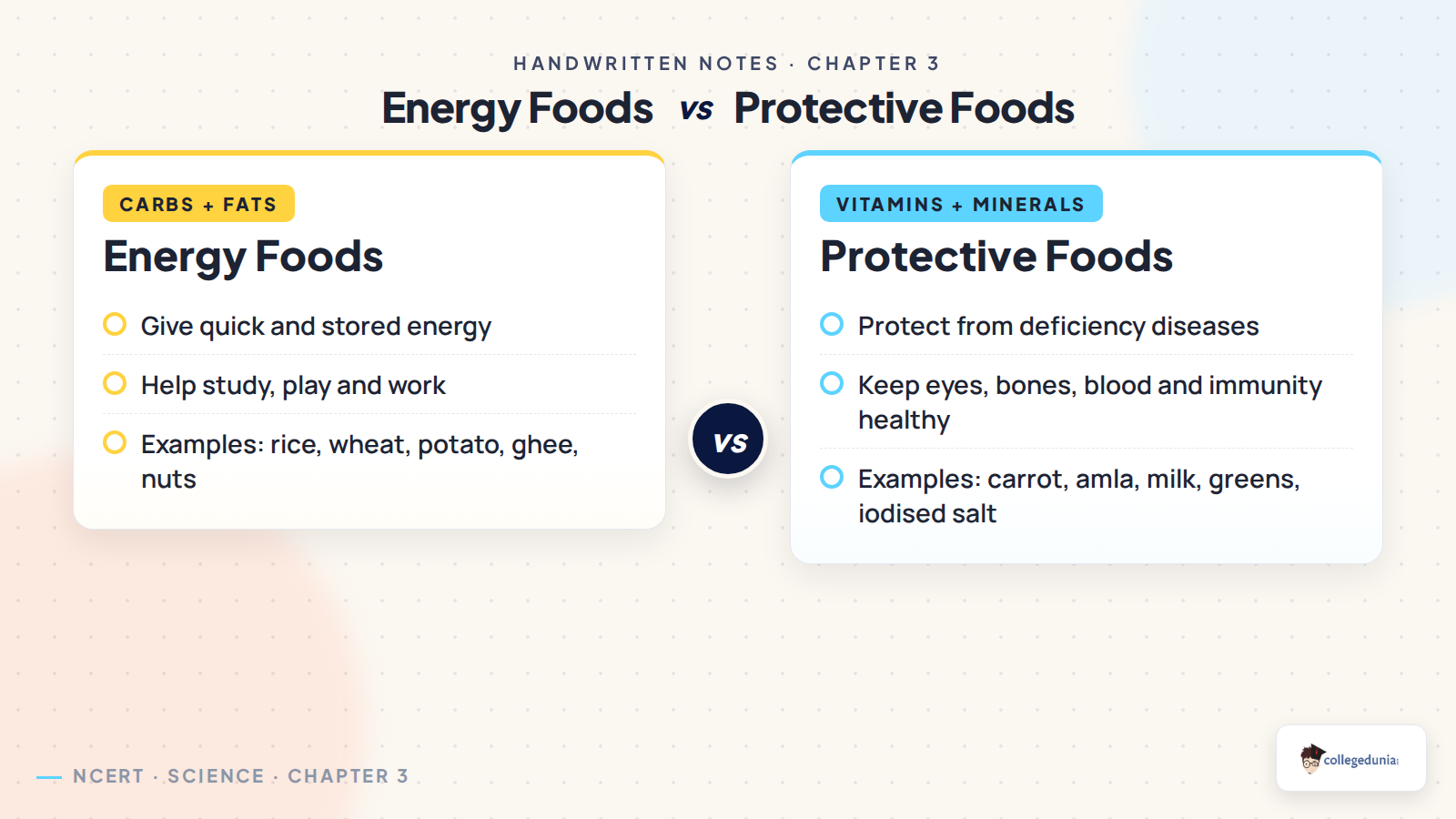
Carbohydrates and fats are energy-giving foods. Glucose gives instant energy, while fats store energy for later use. Wheat, rice, maize, potato, banana and sugarcane are carbohydrate sources. Ghee, oils, nuts, seeds, butter and curd are fat sources.
Proteins are body-building foods. They help in growth and repair of the body. Pulses, beans, peas, nuts and soya bean are plant protein sources. Milk, paneer, egg, fish and meat are animal protein sources.
Vitamins and minerals are protective nutrients. They help the body fight diseases and work properly. Although they are needed in small amounts, they are essential for healthy eyes, bones, blood and immunity.
Deficiency Diseases and Food Sources
A deficiency disease can happen when one nutrient is missing for a long time. The chapter gives the example of scurvy, which is linked with lack of Vitamin C. Lemons and oranges helped sailors recover from bleeding and swollen gums.
Goitre is linked with lack of iodine. Iodised salt is common salt mixed with required iodine salts. Iron deficiency can lead to anaemia, while Vitamin D deficiency can lead to rickets.
| Component | Helps with | Food sources |
|---|---|---|
| Vitamin A | Eyes and skin | Papaya, carrot, mango, milk |
| Vitamin C | Fighting diseases | Amla, guava, orange, lemon |
| Vitamin D | Bone and teeth health | Sunlight, milk, butter, fish, eggs |
| Calcium | Bones and teeth | Milk, curd, cheese, paneer |
| Iron | Blood health | Green leafy vegetables, beetroot, pomegranate |
How to Test Food Components
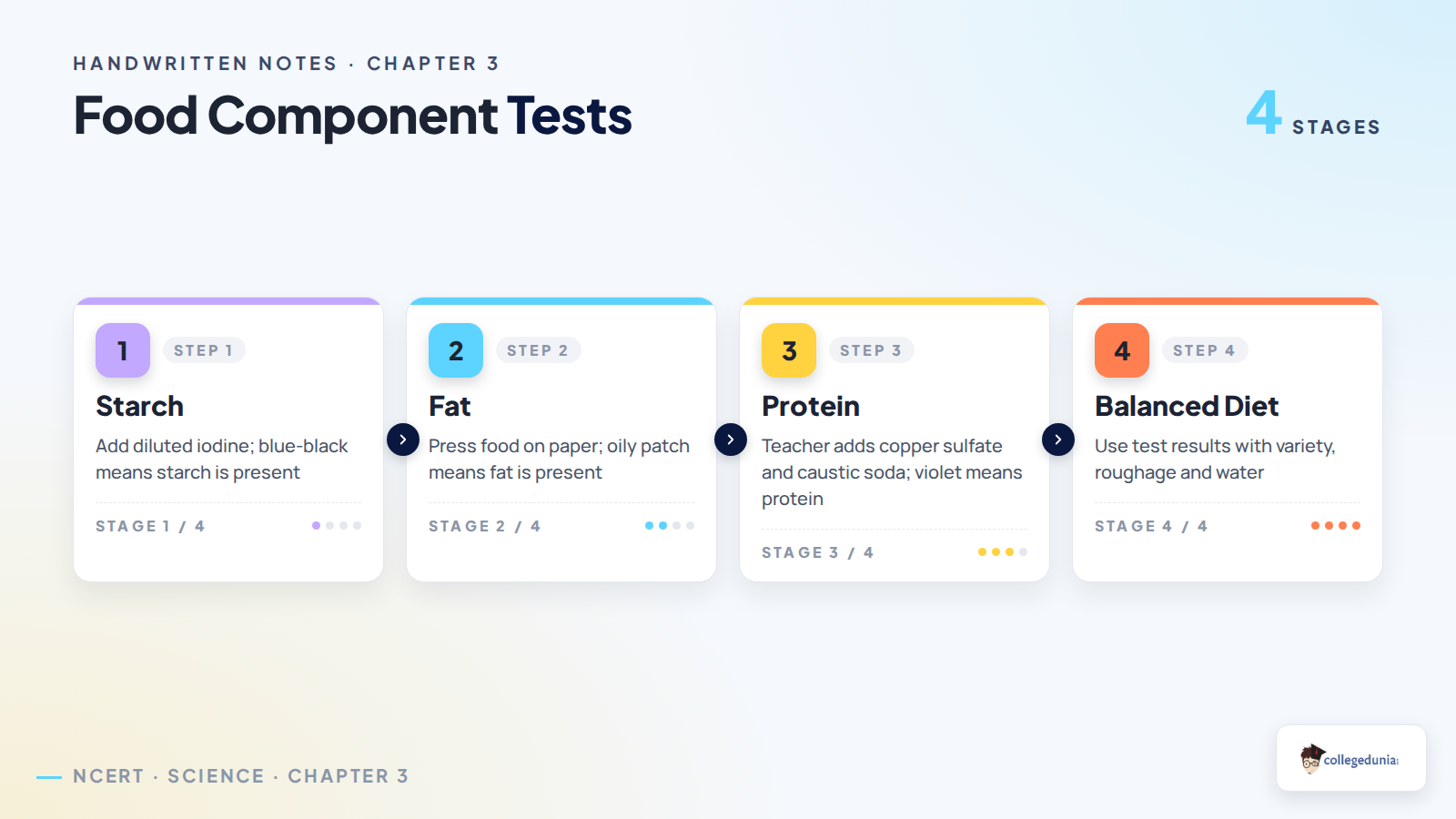
NCERT explains simple tests for starch, fat and protein. The starch test uses diluted iodine solution. If the food turns blue-black, starch is present. Potato, rice, bread and chapati often show starch.
The fat test uses paper. If a food item leaves an oily patch on paper after pressing and drying, it contains fat. The protein test uses copper sulfate solution and caustic soda solution. This activity should be done only by the teacher because the chemicals are harmful.
- Starch test result: blue-black colour.
- Fat test result: oily patch on paper.
- Protein test result: violet colour.
- Peanuts can show both proteins and fats.
Balanced Diet and Junk Food
A balanced diet has all essential nutrients, roughage and water in the right amount. The amount of nutrients needed can change with age, health, activity, lifestyle and gender.
Junk foods usually have high sugar and fat but little protein, vitamins, minerals and dietary fibre. Potato wafers, candy bars and carbonated drinks are examples. A tasty food is not always a healthy food, so students should read nutrition labels when possible.
Roughage helps the body remove undigested food. Green leafy vegetables, fresh fruits, whole grains, pulses and nuts are good roughage sources. Water helps absorb nutrients and removes waste through sweat and urine.
Millets and Food Miles
Millets such as jowar, bajra, ragi and sanwa are small grains that have been part of Indian food for many years. They are called nutri-cereals because they provide vitamins, minerals and dietary fibre.
Food miles means the total distance travelled by a food item from producer to consumer. The story of chapati includes growing wheat, threshing, storage, grinding, transport and cooking. Lower food miles can reduce transport cost and pollution.
Eating local and plant-based food, as much as possible, is good for health and the environment. It also supports local farmers and keeps food fresher.
Key Takeaways for Quick Revision
- People across India eat diverse food because crops, culture, climate and taste differ.
- Carbohydrates and fats give energy.
- Proteins help in growth and repair.
- Vitamins and minerals protect the body from diseases.
- Roughage helps remove undigested food.
- A balanced diet has nutrients, roughage and water in the right amount.
- Food miles should be reduced when possible.
Common Mistakes to Avoid
- Do not write that all carbohydrates turn iodine blue-black. Only starch gives that result.
- Do not confuse roughage with a nutrient. It helps digestion but does not provide nutrients.
- Do not call every tasty packaged food healthy. Always check the food value.
- Do not write that millets alone are enough. A balanced diet still needs variety.
- Do not waste food. Take only as much as you can eat.
For better answers, students should always give one food example with every nutrient. For example, rice with carbohydrates, pulses with protein, amla with Vitamin C, and iodised salt with iodine.
More Class 6 Science Handwritten Notes
| Chapter | Handwritten Notes |
|---|---|
| Chapter 1 | The Wonderful World of Science |
| Chapter 2 | Diversity in the Living World |
| Chapter 4 | Exploring Magnets |
Mindful Eating Class 6 Handwritten Notes FAQs
Ques. What is covered in Mindful Eating handwritten notes?
Ans. The notes cover food diversity, nutrients, deficiency diseases, starch, fat and protein tests, balanced diet, millets, food miles and food-waste habits.
Ques. Are these handwritten notes based on the 2026-27 NCERT Curiosity textbook?
Ans. Yes. The PDF follows Class 6 Science Curiosity Chapter 3 for the 2026-27 syllabus and keeps the NCERT examples in a short revision format.
Ques. How should students revise nutrients from this PDF?
Ans. Students should revise carbohydrates and fats as energy foods, proteins as body-building foods, and vitamins and minerals as protective nutrients.



Comments