




NCERT Handwritten Notes for Class 7 Arts (Kriti) Chapter 2 Say More without Speech Mime help students revise mime, Mukaabhinaya, imaginary objects, facial expression, body language, costume, make up and group performance practice for the 2026-27 NCERT syllabus. The PDF keeps the chapter short, visual and activity-focused, so students can revise the silent-performance ideas before class practice.
- Download a 20-page handwritten revision PDF for Chapter 2.
- Revise mime terms, object handling, expression practice and group activity steps.
- Use the PDF for quick recap before performance, class discussion or portfolio work.
Clear topper-style handwritten revision notes for mime.
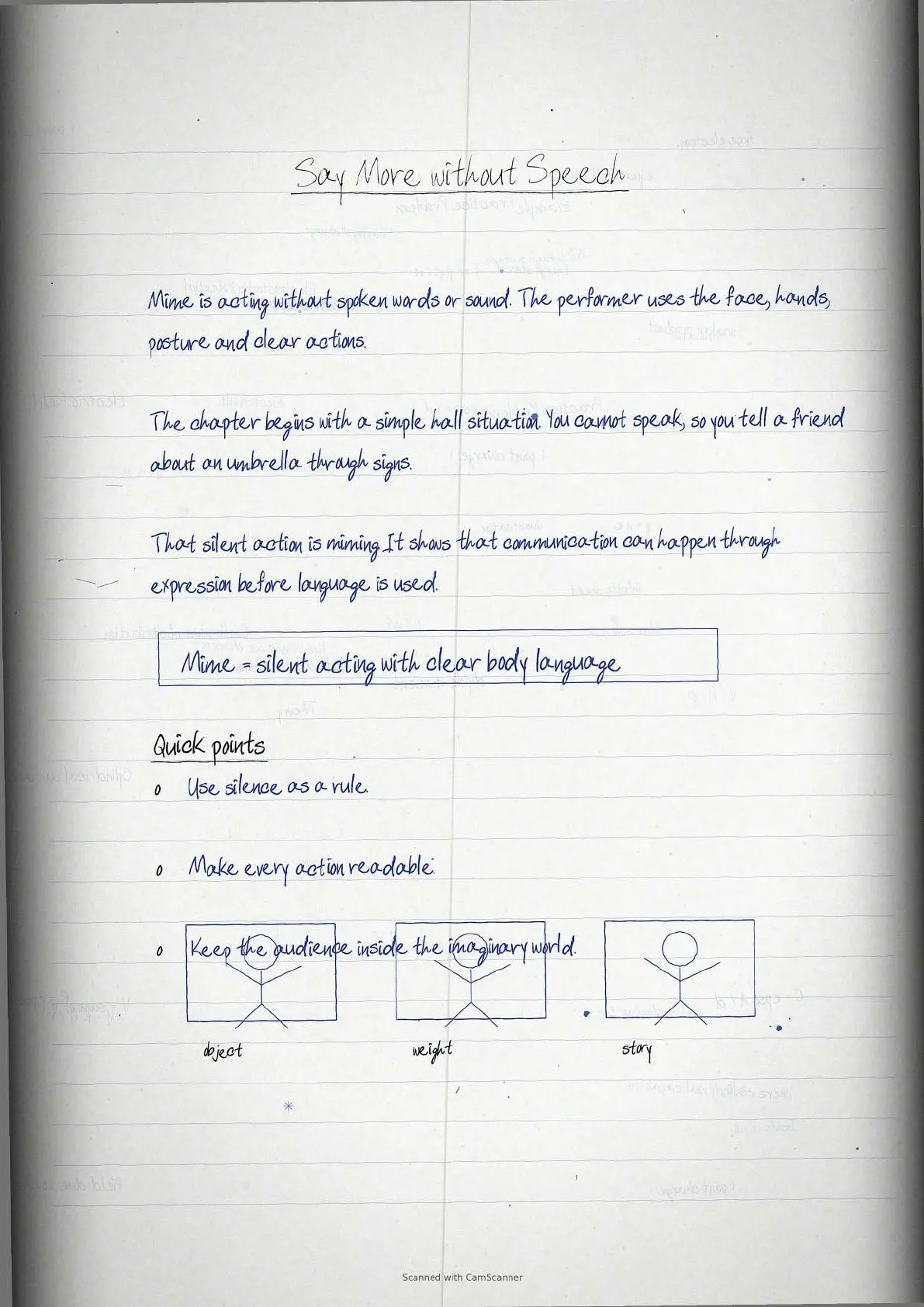
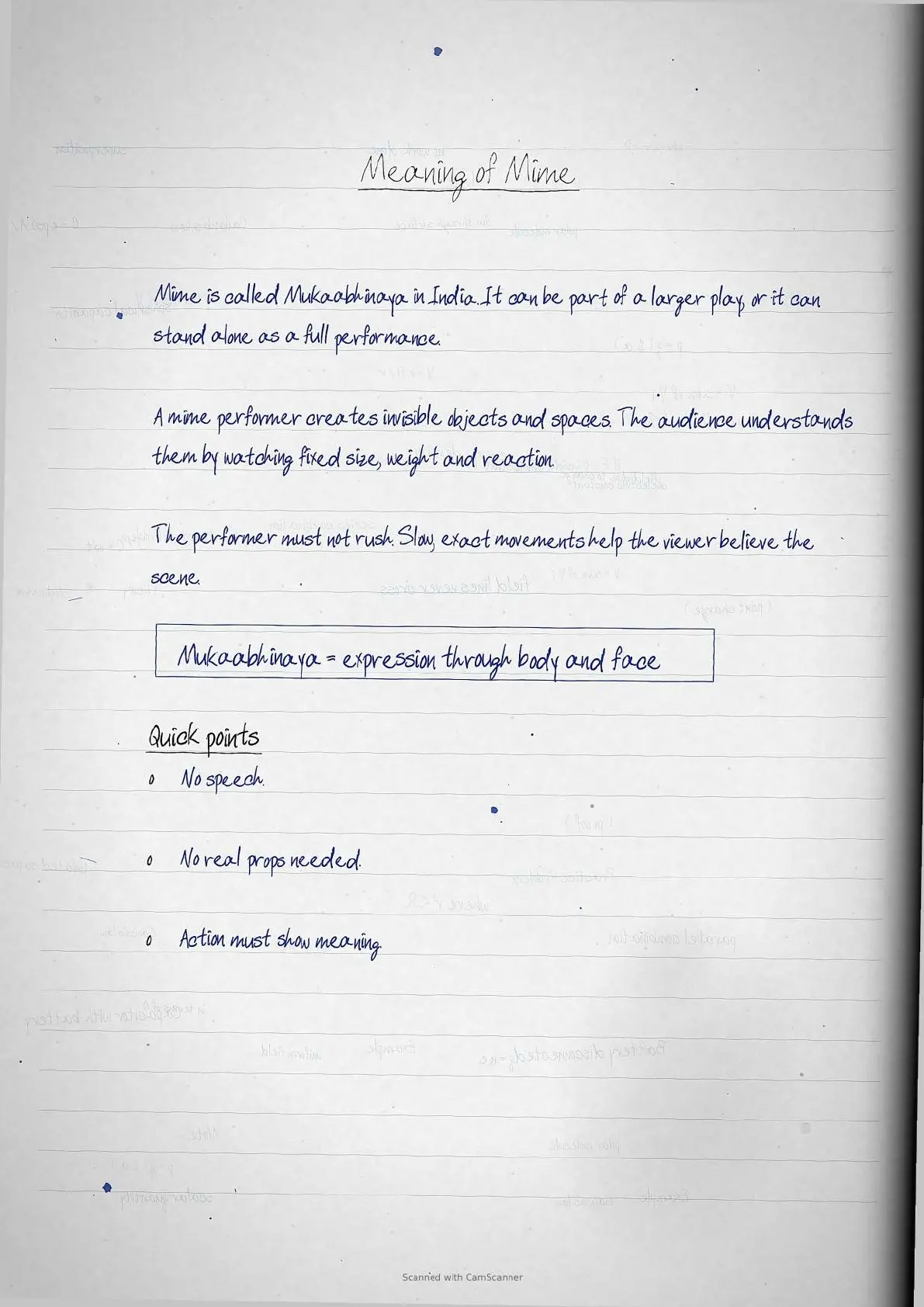
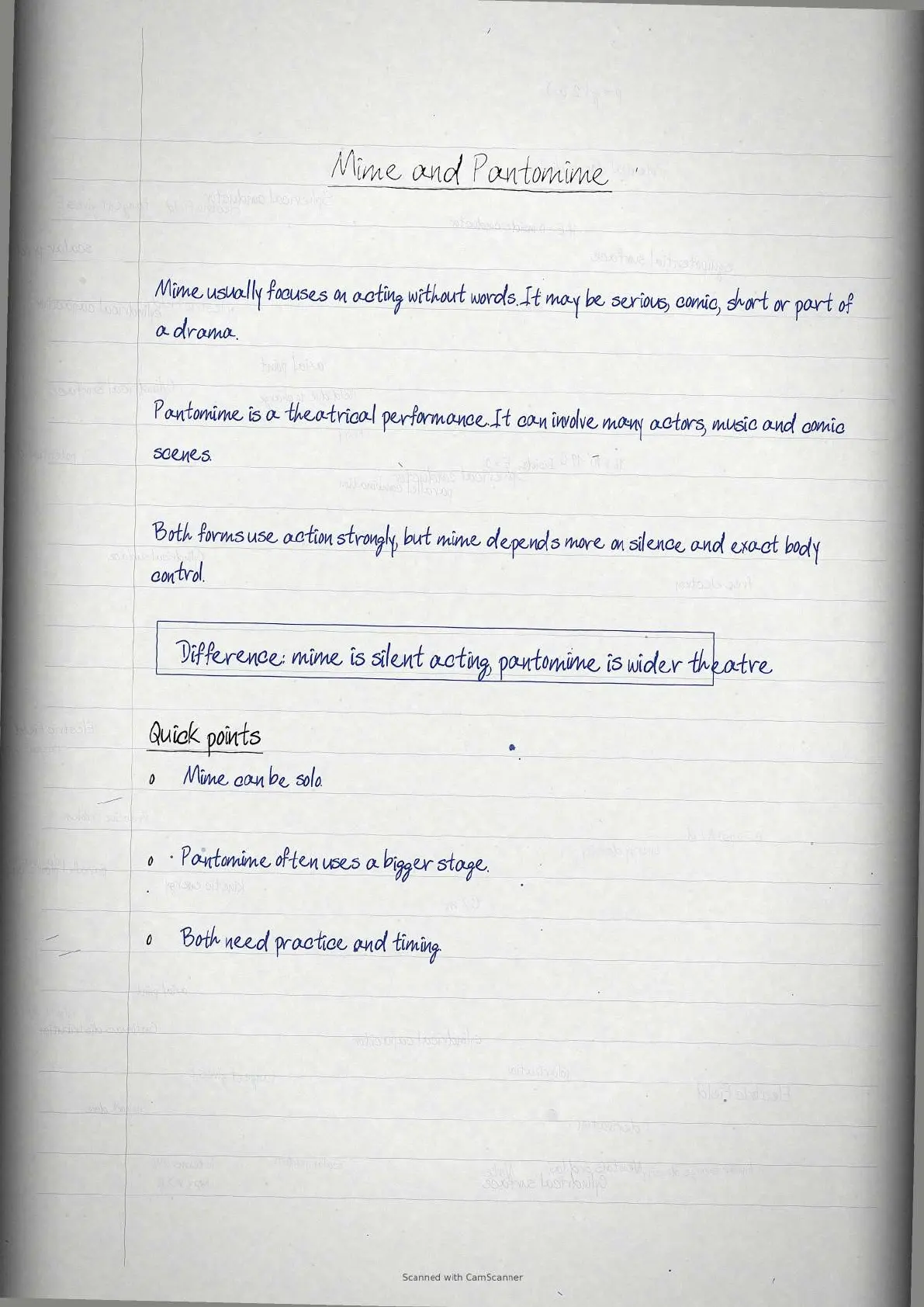
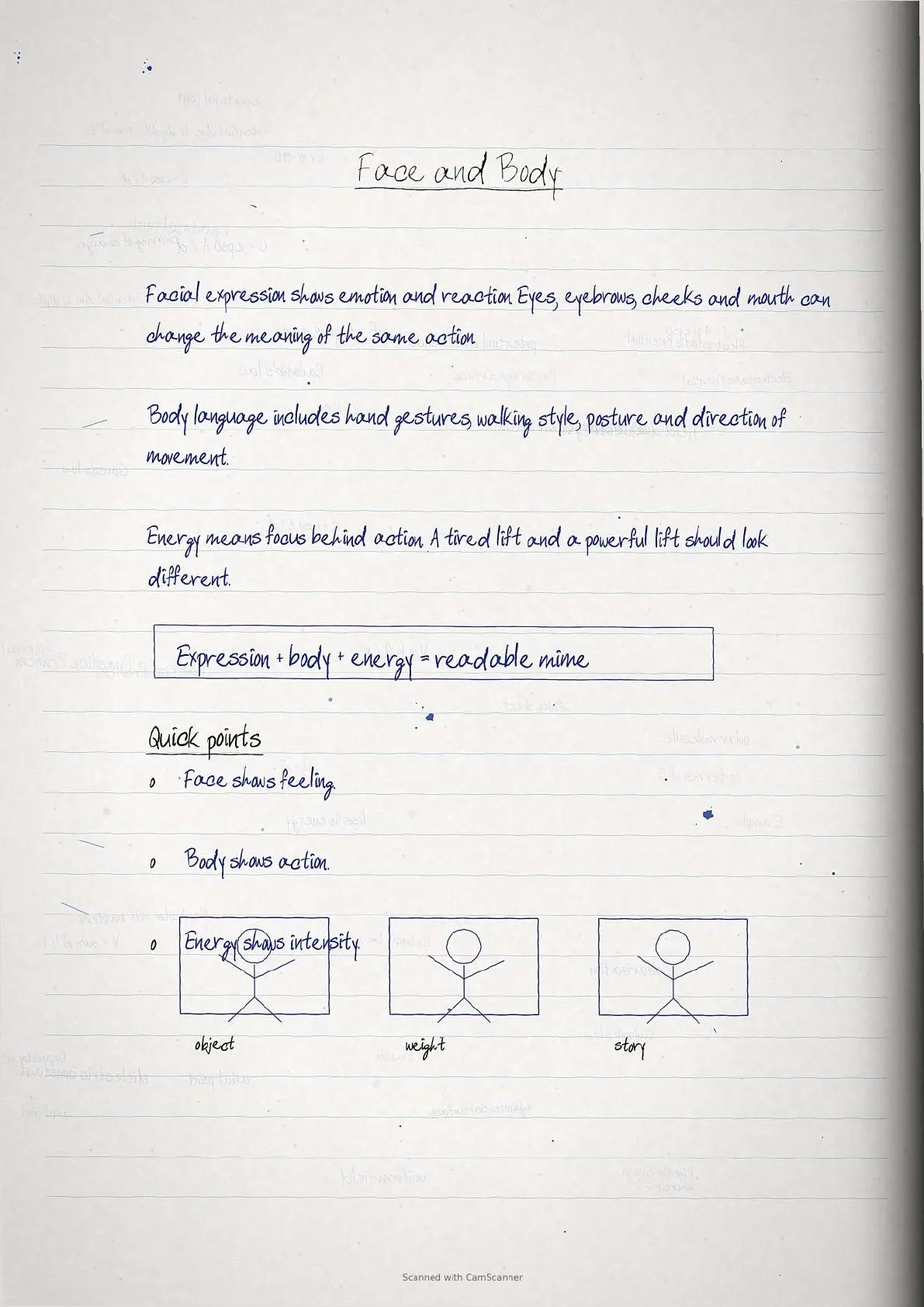
What Class 7 Arts Chapter 2 Teaches About Mime
Chapter 2 explains mime as a form of acting where students communicate without speech or sound. The chapter begins with a simple classroom situation: a student has to tell a friend about an umbrella without speaking. This turns into the main learning idea of the chapter, communication through actions, expressions and body control.
The chapter also introduces Mukaabhinaya, the Indian term linked with expression through face and body. It then explains important technique words such as mime, pantomime, facial expression, body language, energy and interactive performance. These notes keep each term short, so students can revise the idea and then practise it immediately.
| Term | Revision Meaning |
|---|---|
| Mime | Silent acting through gestures, posture and expressions. |
| Pantomime | A wider theatrical performance with many actors, music and comic action. |
| Energy | The intensity and focus behind each movement. |
How Students Should Practise Mime in Chapter 2
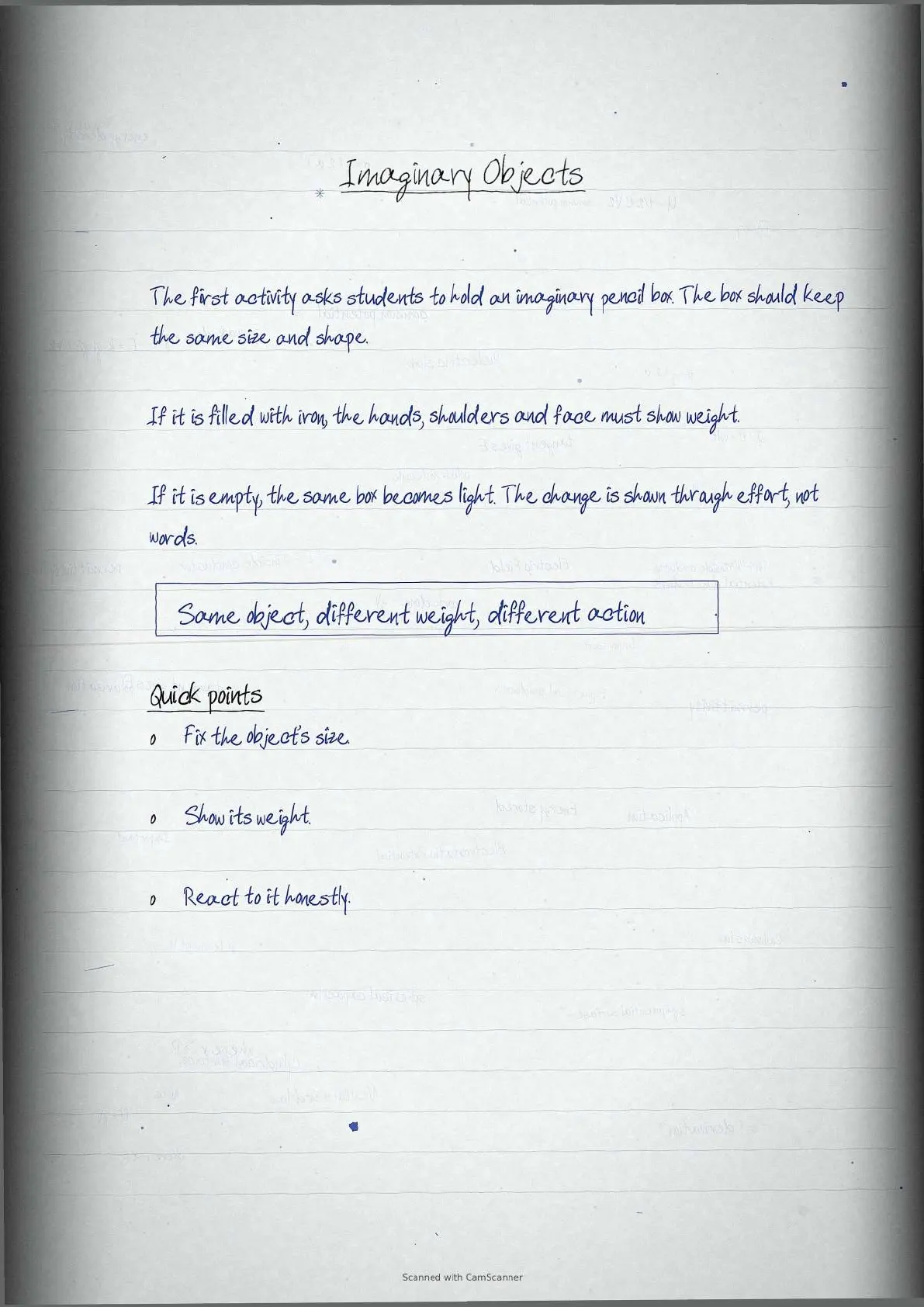
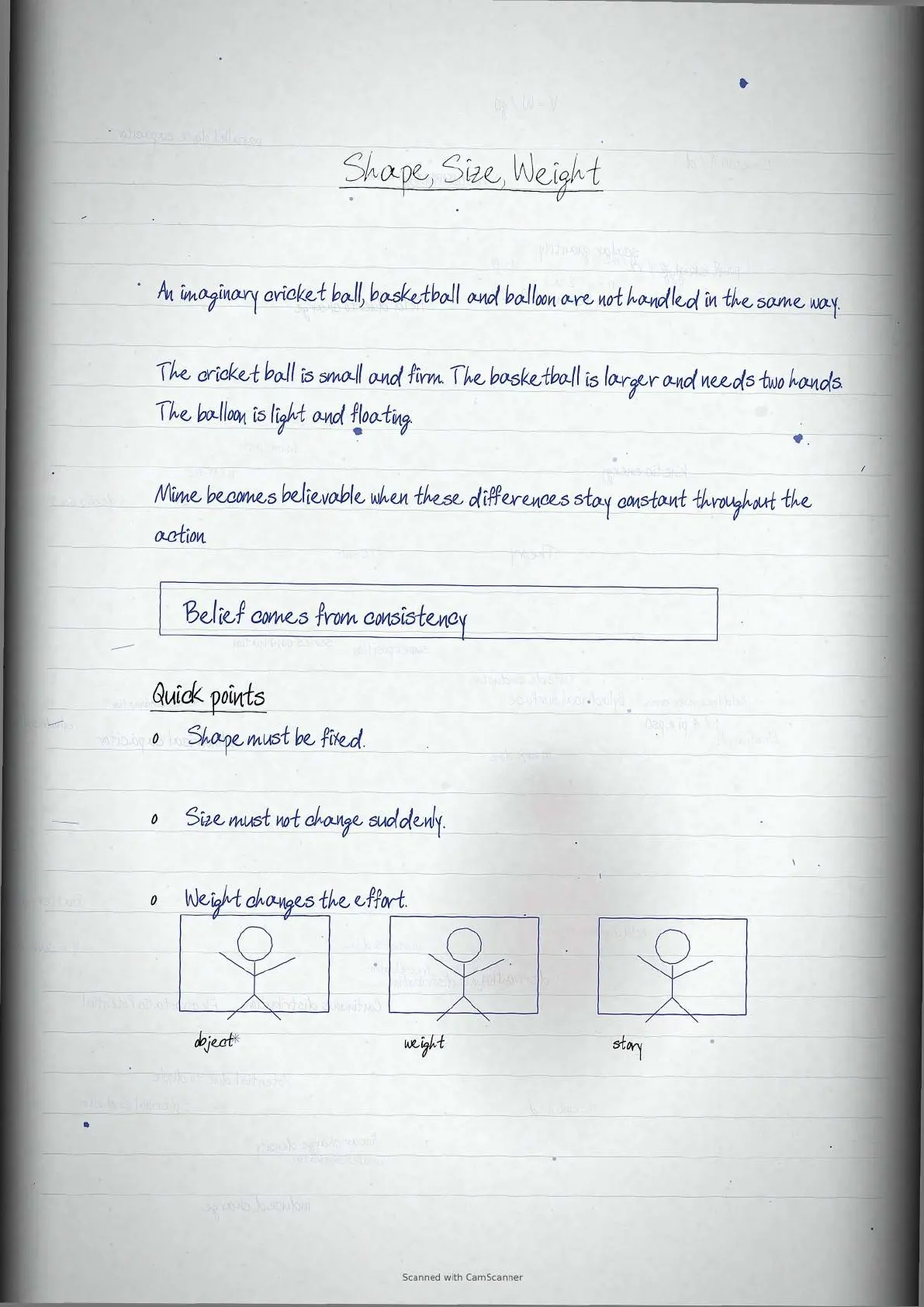
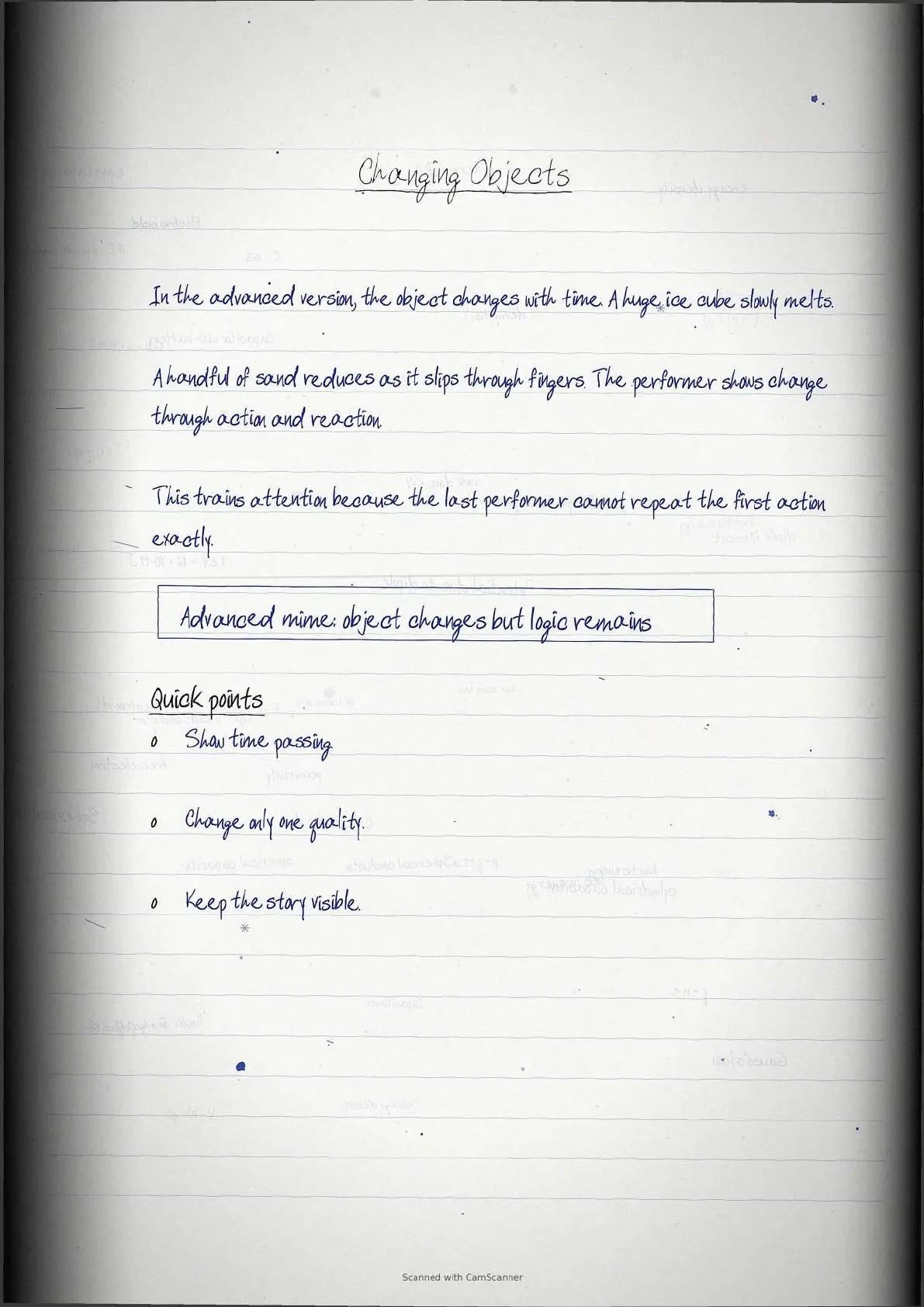
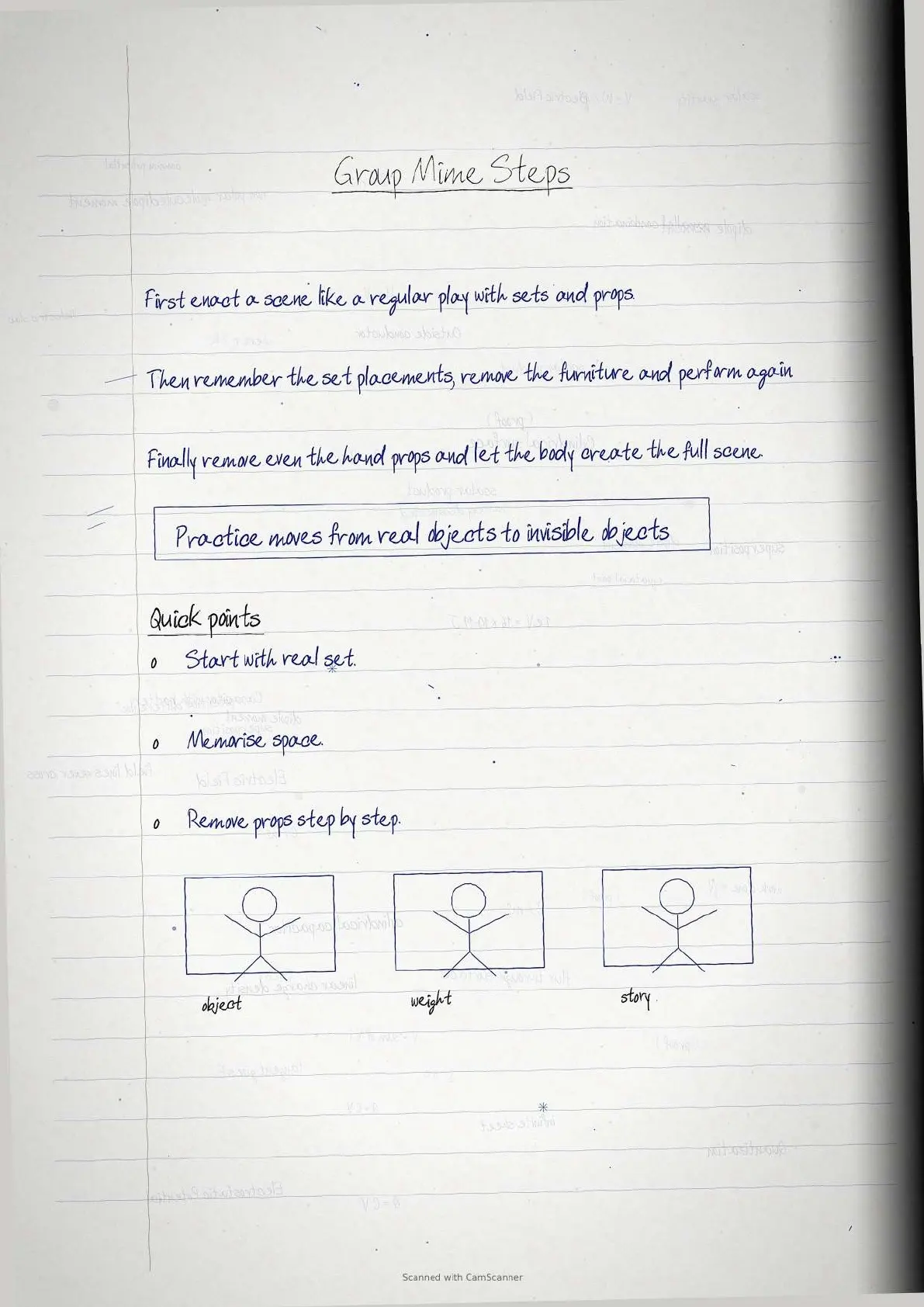
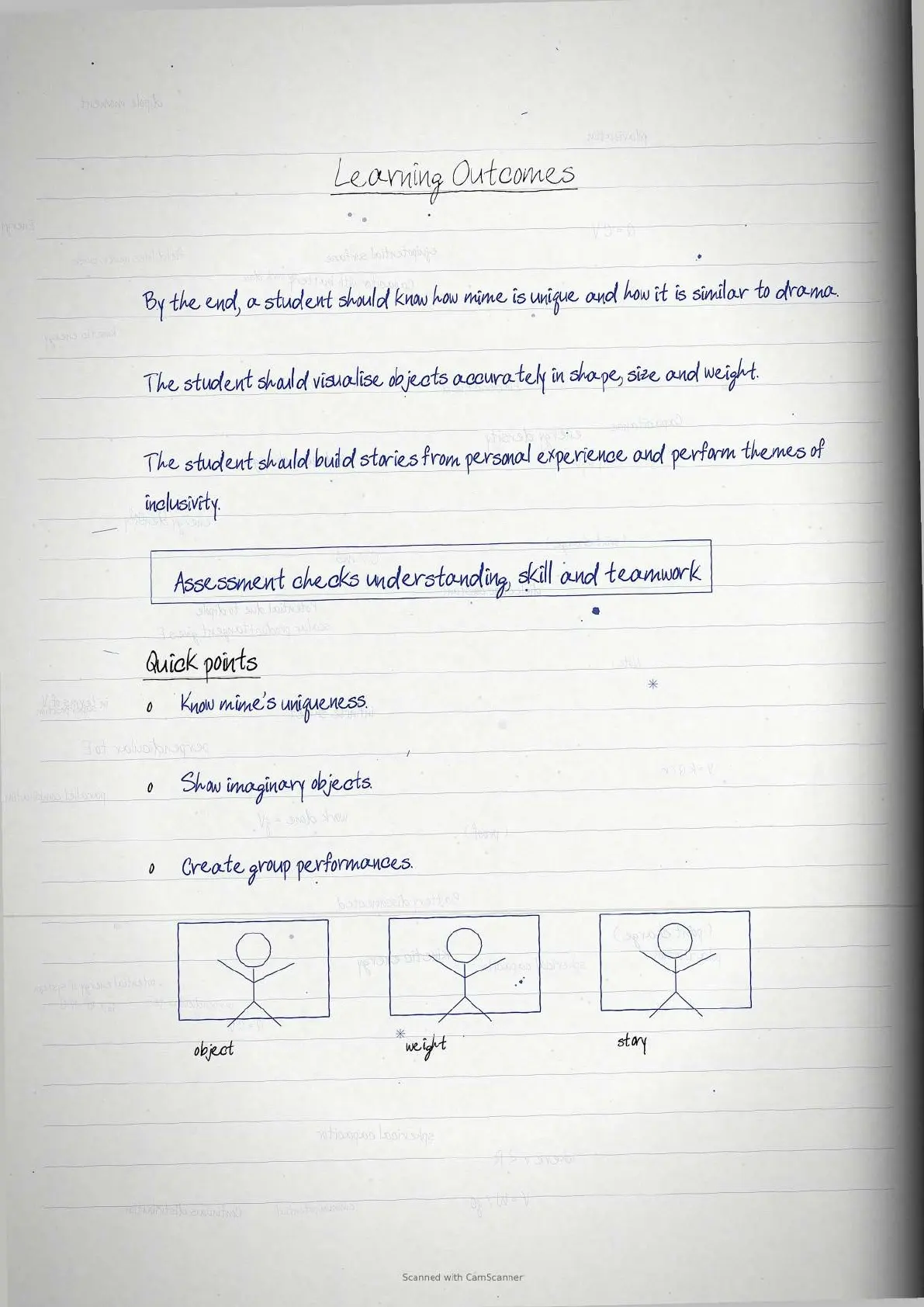
The handwritten PDF gives special attention to the chapter activities. In the individual activity, students imagine an everyday object such as a pencil box. The object must keep the same size and shape, but the body changes when the box is heavy or light. This helps students understand how imaginary objects become believable.
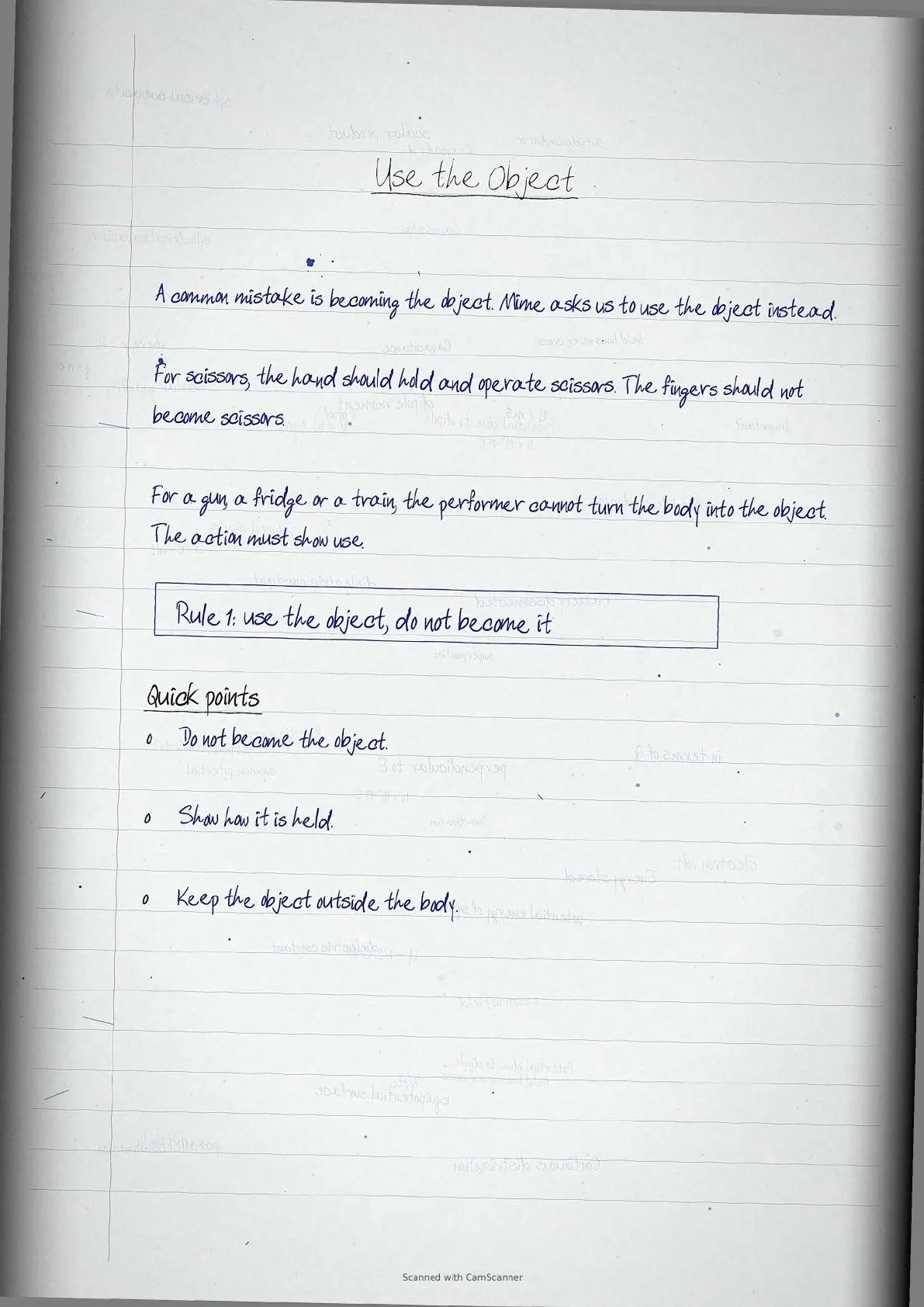
The most important rule is: use the object, do not become the object. For example, students should show how scissors are held and used. They should not turn fingers into scissors. This rule also helps with larger objects such as a train, car or fridge, where the performer must show use, effort and reaction instead of becoming the object.
- Fix the object's size before starting the action.
- Show weight through shoulders, hands, speed and facial reaction.
- Keep the action slow enough for classmates to understand.
How Mime Practice Builds Silent Communication
Source: YouTube education channel
Three Pillars of a Mime Show
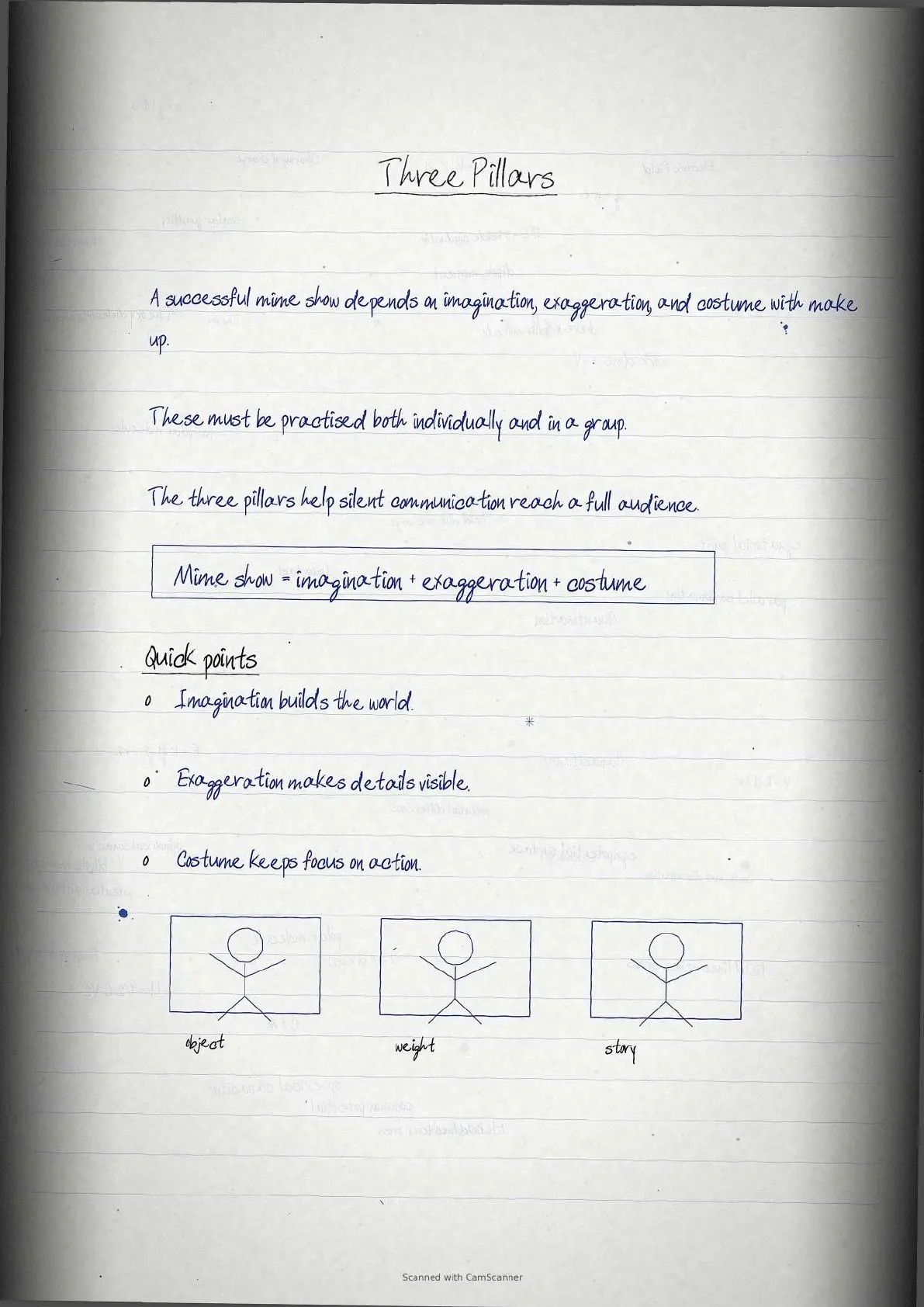
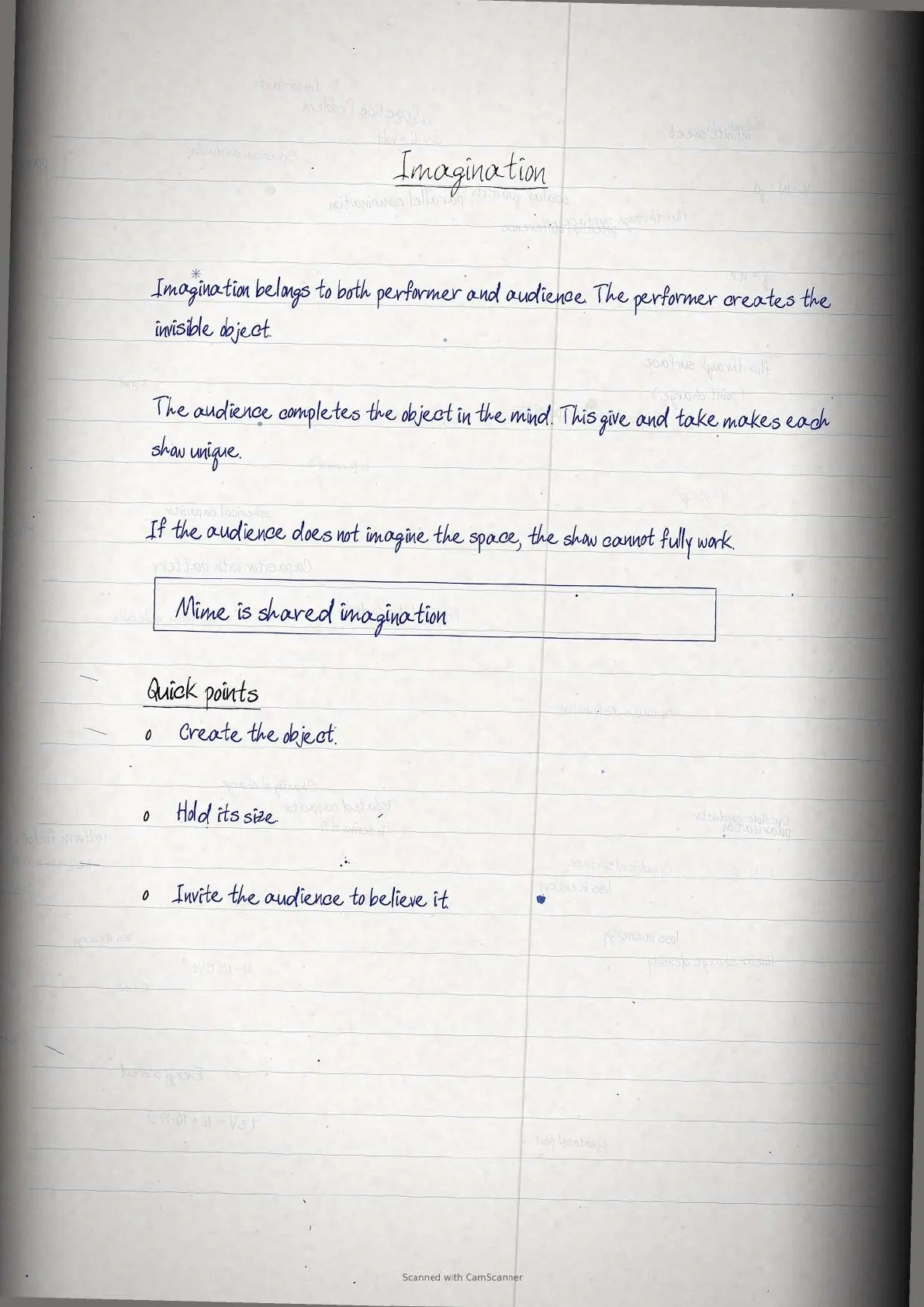
The chapter says that a successful mime show depends on imagination, exaggeration, and costume with make up. Imagination is shared by performer and viewers. The performer creates the invisible object or space, while viewers complete the world in their mind.
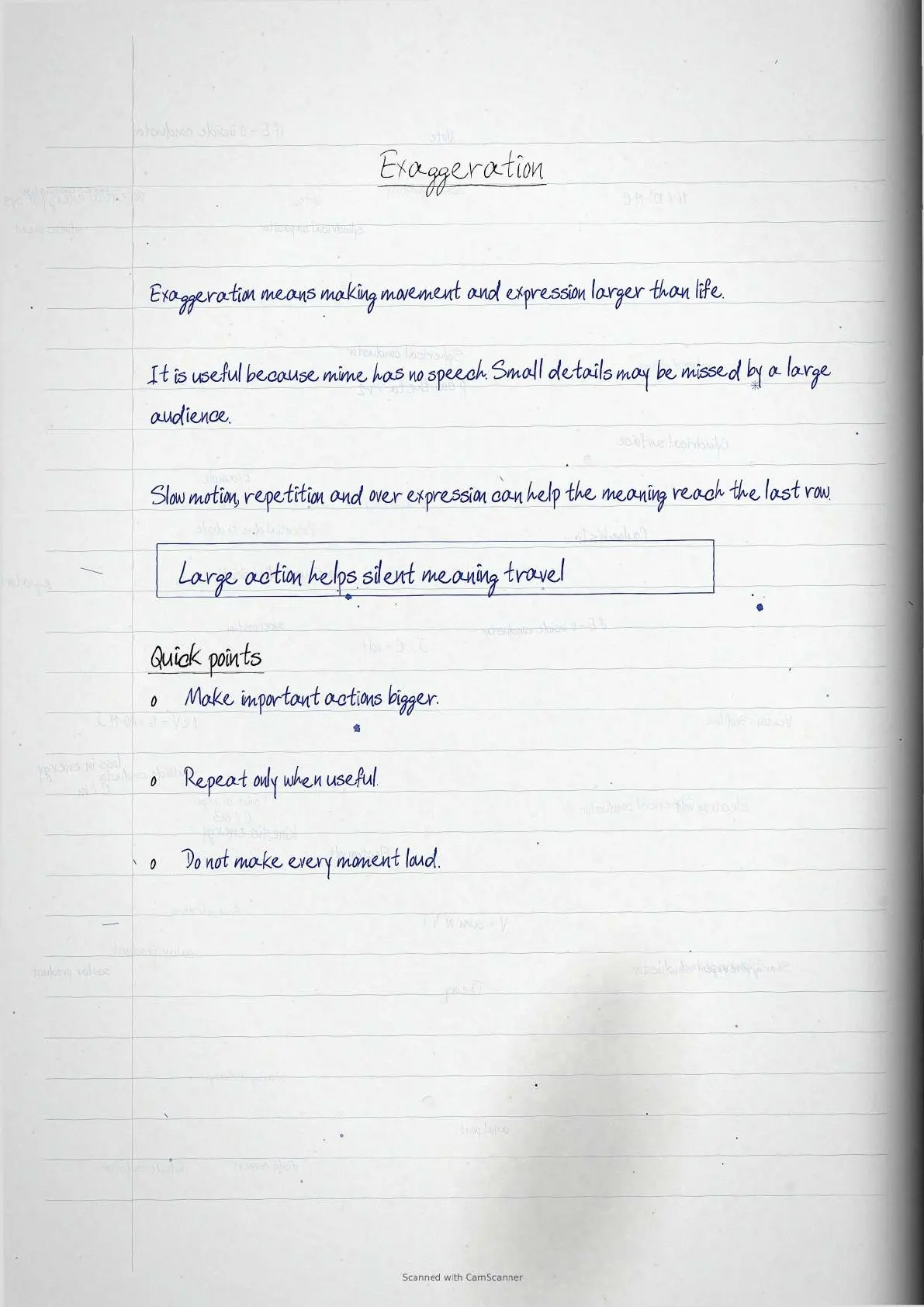
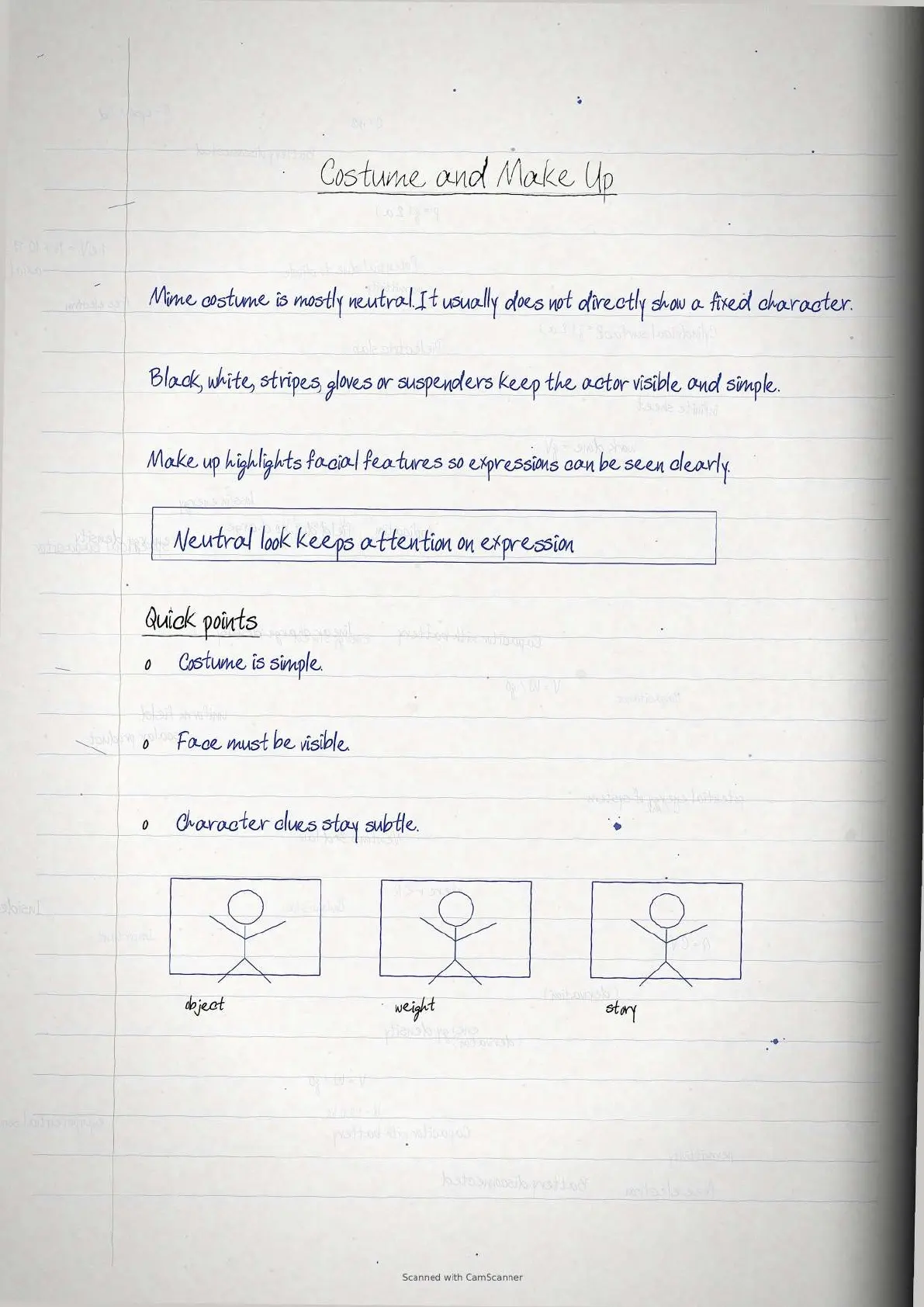
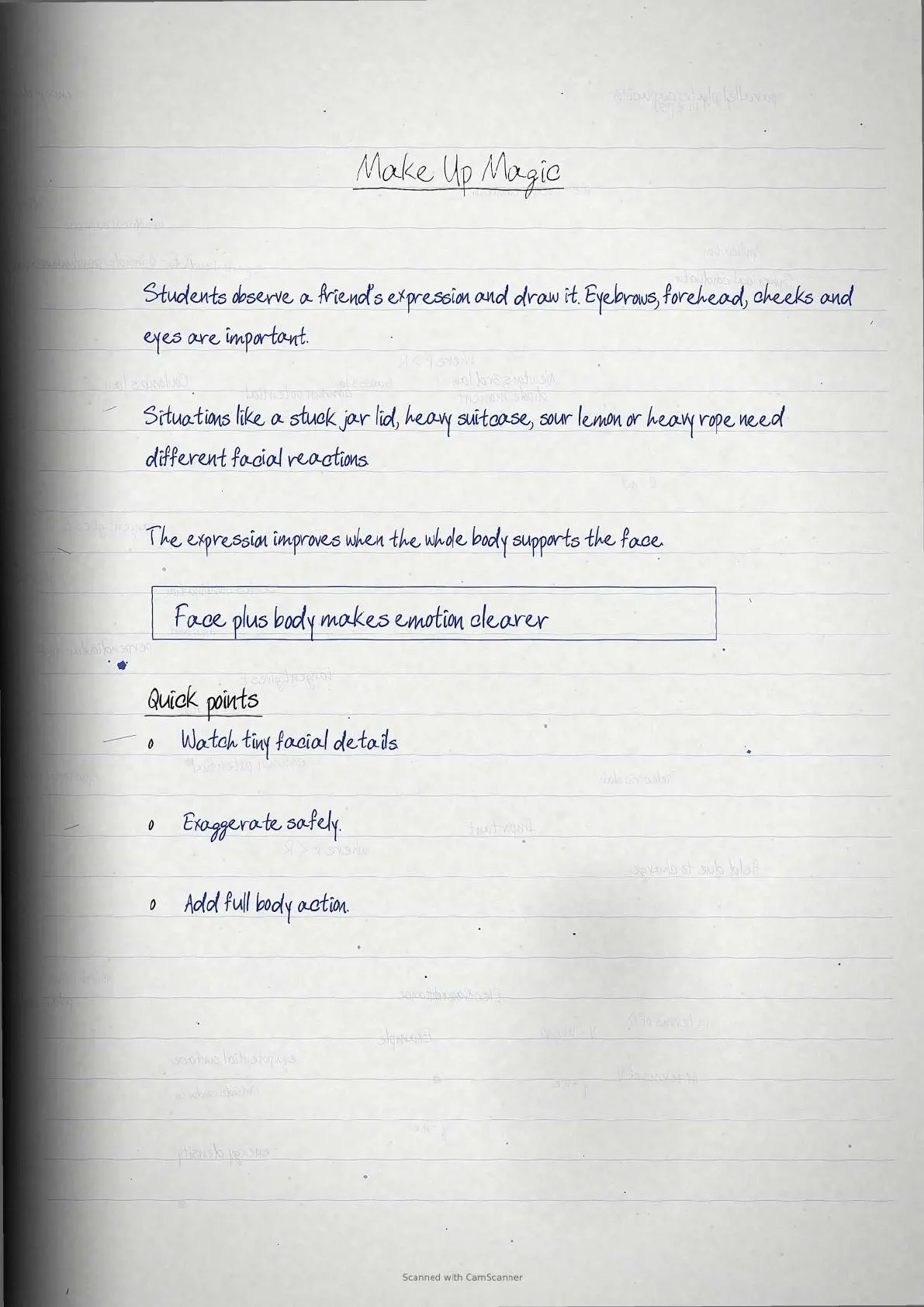
Exaggeration makes silent details visible. Since there is no spoken explanation, movement, reaction and expression must be large enough to reach the whole class. Costume and make up remain neutral, often black and white, so attention stays on expression rather than labels or stereotypes.
| Pillar | What to Remember |
|---|---|
| Imagination | Performer and viewers build the invisible scene together. |
| Exaggeration | Movements and expressions are made bigger for clarity. |
| Costume and make up | Neutral colours and clear face work support silent storytelling. |
Why Mime Is Called a Universal Language
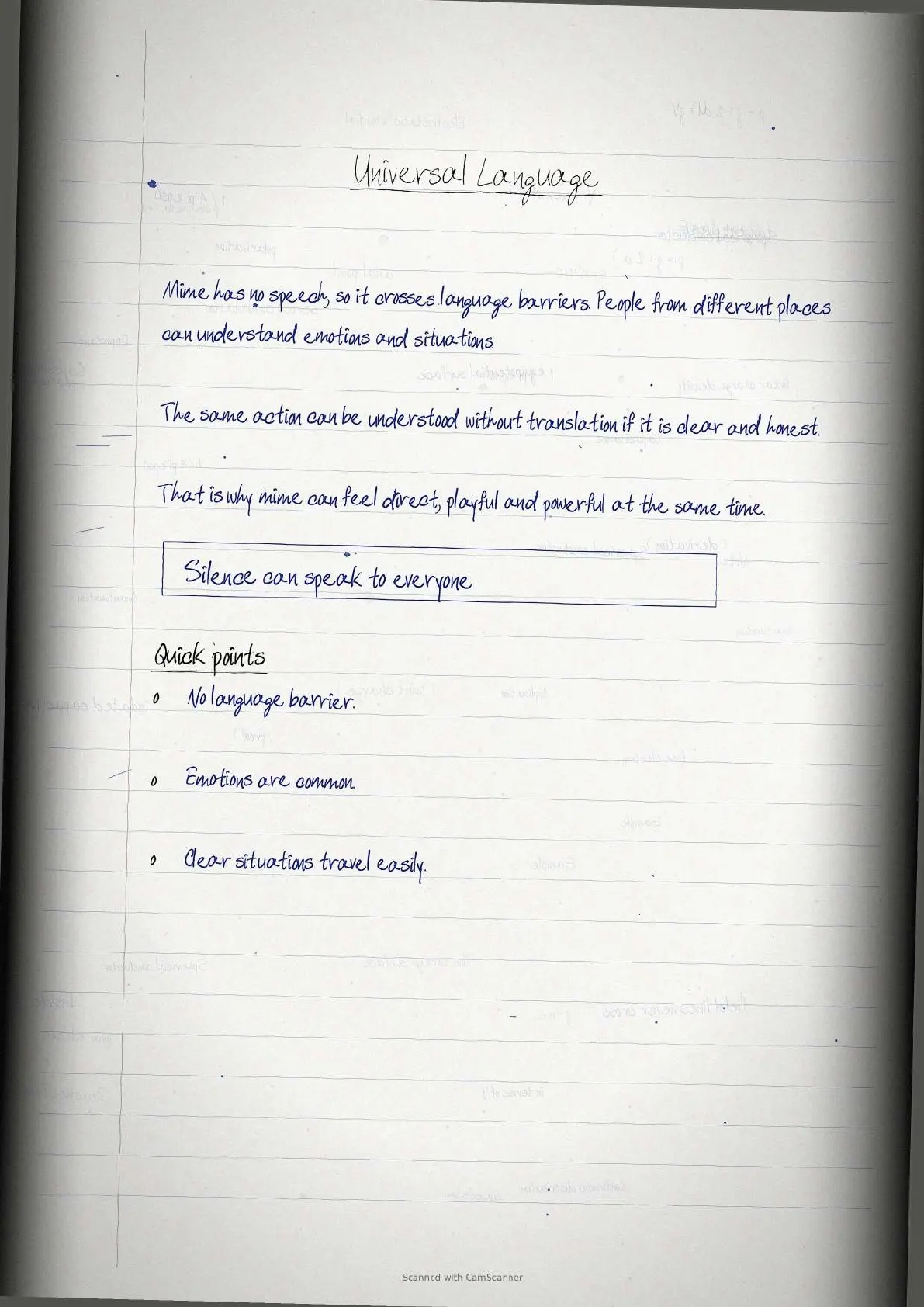
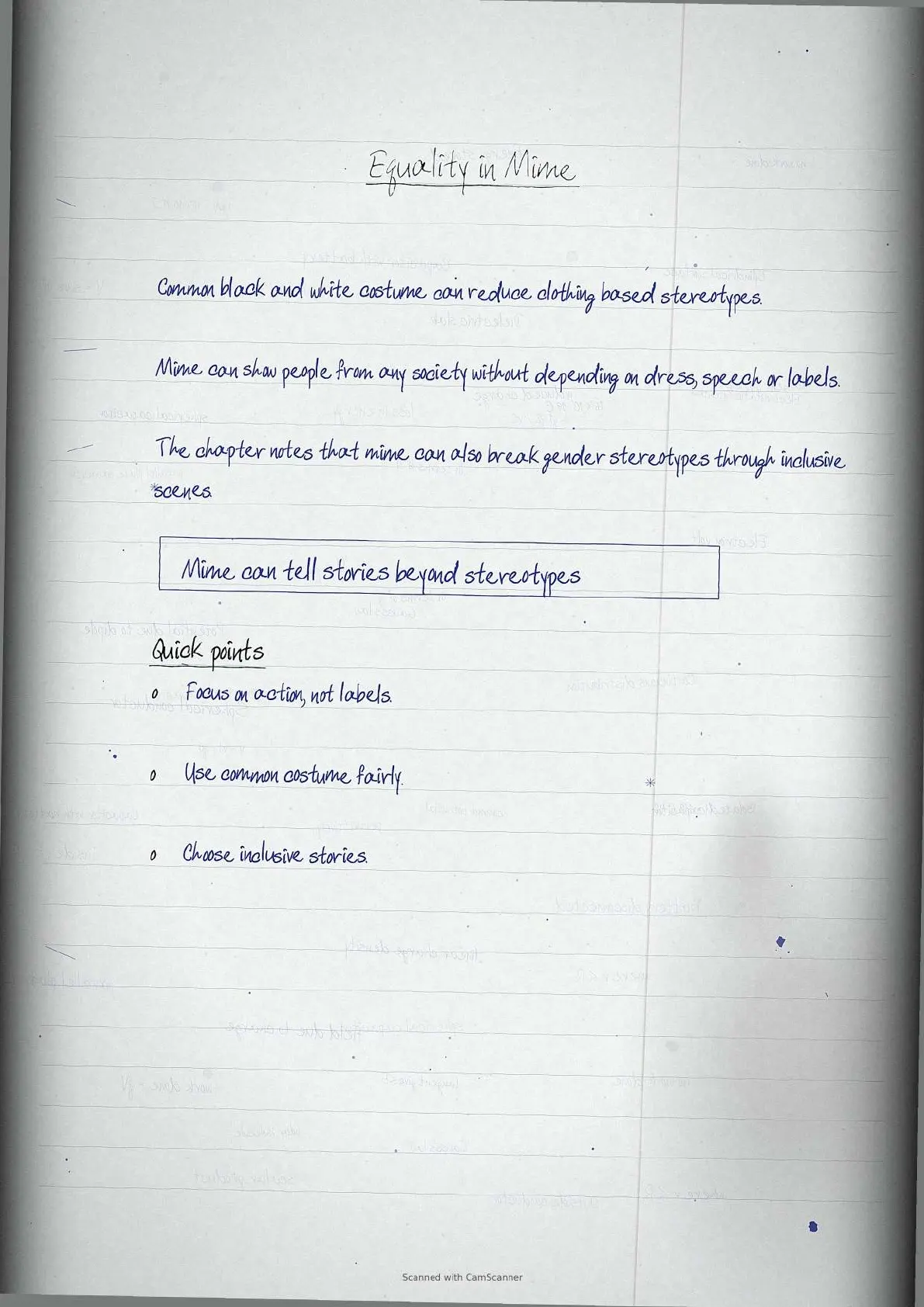
Mime uses no speech, so it can cross language barriers. Students from different regions can understand common emotions such as fear, joy, surprise, effort and confusion through expression and action. The chapter also connects mime with equality because simple costume reduces judgement based on clothing or social labels.
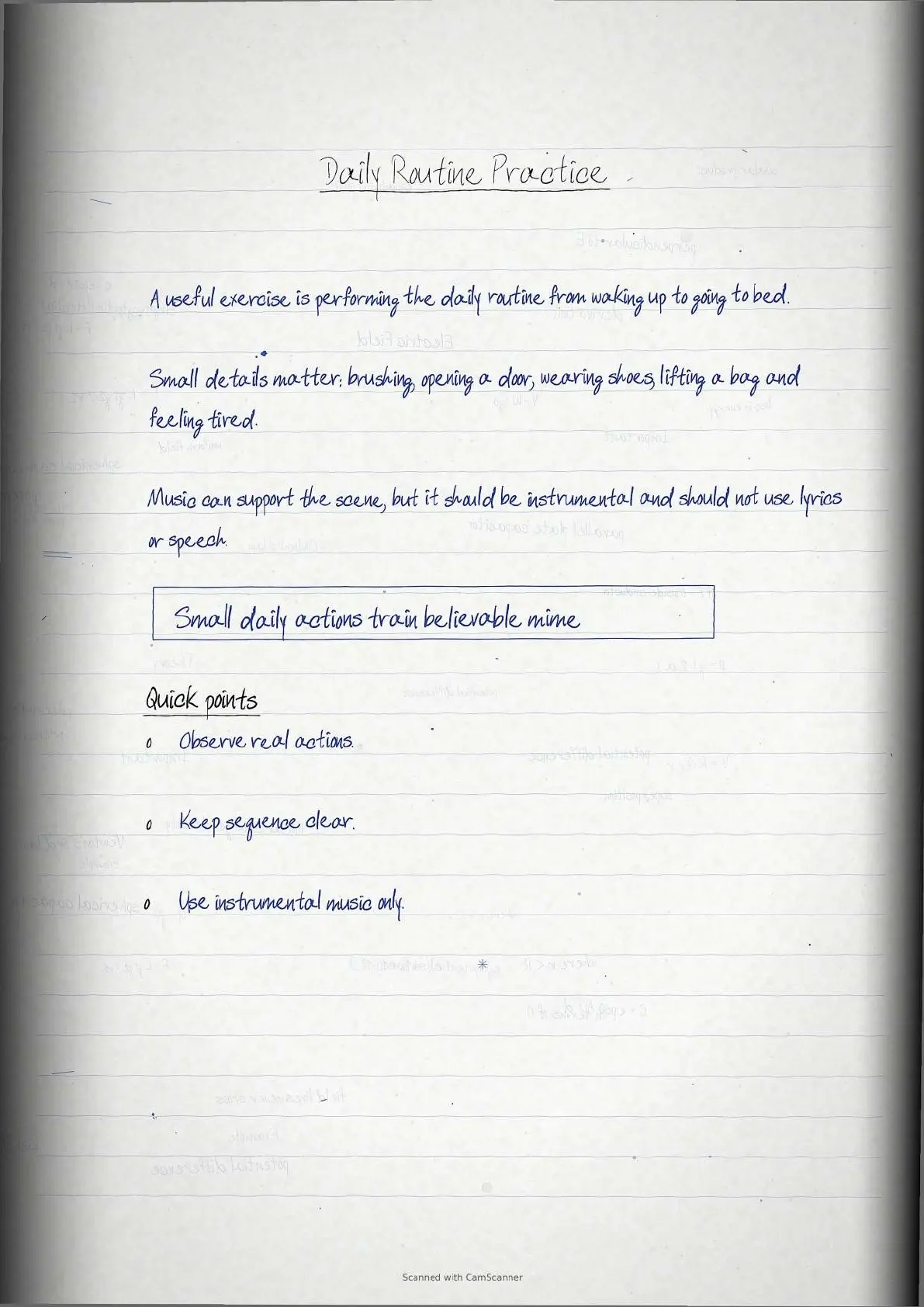
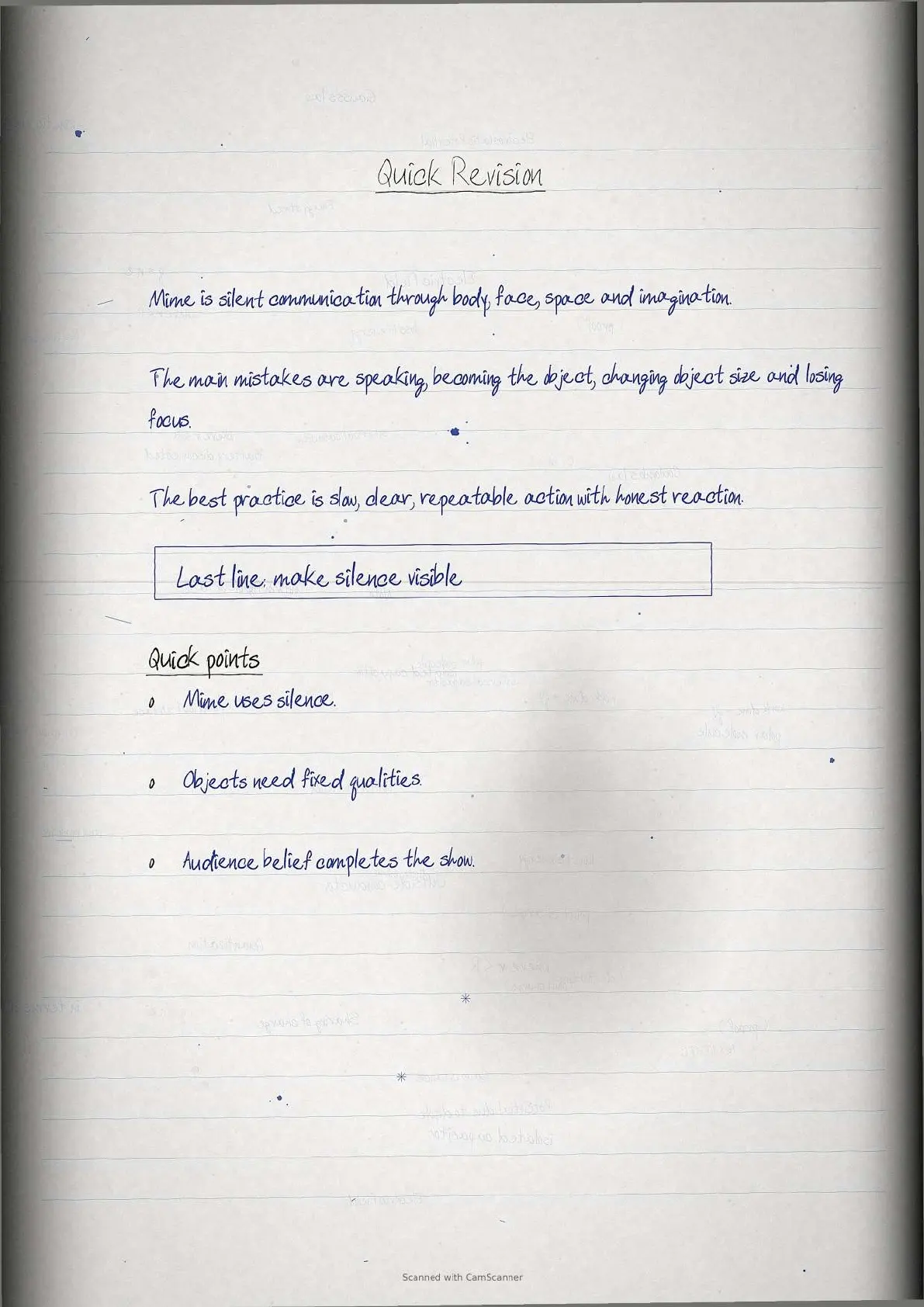
The handwritten notes include a quick revision page on inclusivity and stereotype-free scenes. Students can use this section while planning a group mime on daily routine, classroom life, teamwork, sports, environment or social harmony.
Related NCERT Class 7 Arts (Kriti) Resources
| Resource | Link |
|---|---|
| NCERT Notes | Class 7 Arts Chapter 2 Notes |
| NCERT Book PDF | Class 7 Arts Chapter 2 NCERT Book PDF |
| Handwritten Notes | Class 7 Arts Chapter 2 Handwritten Notes |
All Chapters for Class 7 Arts (Kriti) Handwritten Notes
| Chapter | Handwritten Notes |
|---|---|
| Chapter 1 Understanding Emotions | Download Notes |
| Chapter 2 Say More without Speech Mime | Download Notes |
| Chapter 3 Let's Design Stage Technicals 2 | Download Notes |
Class 7 Arts Chapter 2 Questions
FAQs on NCERT Class 7 Arts Chapter 2 Handwritten Notes
Ques. What is mime in Class 7 Arts Chapter 2?
Ans. Mime is acting without spoken words or sound. Students use facial expression, body language, gesture, posture and energy to communicate a situation or story.
Ques. What is the main rule for showing imaginary objects in mime?
Ans. The main rule is to use the object, not become the object. The performer shows how the object is held, moved and felt through action.
Ques. Why are these handwritten notes useful for revision?
Ans. The notes reduce the chapter into short points, activity cues, practice steps and quick tables. This makes it easier to revise before class performance or discussion.
Ques. Which topics are covered in the Class 7 Arts Chapter 2 handwritten notes?
Ans. The PDF covers mime, Mukaabhinaya, pantomime, facial expression, body language, energy, imaginary objects, exaggeration, costume, make up and group mime practice.



Comments