



NCERT Handwritten Notes for Class 7 Arts (Kriti) Chapter 5 Making Music help students revise musical terms, song-analysis activities, harmony, canon singing, Sama-gana teamwork and group chanting for the 2026-27 NCERT syllabus.
- Download a 23-page handwritten revision PDF for Class 7 Arts Chapter 5.
- Revise swara, raga, tala, laya, aroh, avroh, canon and harmony.
- Use the notes before classroom song analysis, chanting practice and assessment work.
Chapter5MakingMusicHandwrittenNotes.pdf?page=1&dpi=150)
Chapter5MakingMusicHandwrittenNotes.pdf?page=2&dpi=150)
Chapter5MakingMusicHandwrittenNotes.pdf?page=3&dpi=150)
Chapter5MakingMusicHandwrittenNotes.pdf?page=4&dpi=150)
Chapter5MakingMusicHandwrittenNotes.pdf?page=5&dpi=150)
Chapter5MakingMusicHandwrittenNotes.pdf?page=6&dpi=150)
Chapter5MakingMusicHandwrittenNotes.pdf?page=7&dpi=150)
Chapter5MakingMusicHandwrittenNotes.pdf?page=8&dpi=150)
Chapter5MakingMusicHandwrittenNotes.pdf?page=9&dpi=150)
Chapter5MakingMusicHandwrittenNotes.pdf?page=10&dpi=150)
Chapter5MakingMusicHandwrittenNotes.pdf?page=11&dpi=150)
Chapter5MakingMusicHandwrittenNotes.pdf?page=12&dpi=150)
Chapter5MakingMusicHandwrittenNotes.pdf?page=13&dpi=150)
Chapter5MakingMusicHandwrittenNotes.pdf?page=14&dpi=150)
Chapter5MakingMusicHandwrittenNotes.pdf?page=15&dpi=150)
Chapter5MakingMusicHandwrittenNotes.pdf?page=16&dpi=150)
Chapter5MakingMusicHandwrittenNotes.pdf?page=17&dpi=150)
Chapter5MakingMusicHandwrittenNotes.pdf?page=18&dpi=150)
Chapter5MakingMusicHandwrittenNotes.pdf?page=19&dpi=150)
Chapter5MakingMusicHandwrittenNotes.pdf?page=20&dpi=150)
Chapter5MakingMusicHandwrittenNotes.pdf?page=21&dpi=150)
Chapter5MakingMusicHandwrittenNotes.pdf?page=22&dpi=150)
Chapter5MakingMusicHandwrittenNotes.pdf?page=23&dpi=150)
Clear handwritten revision notes on Making Music.
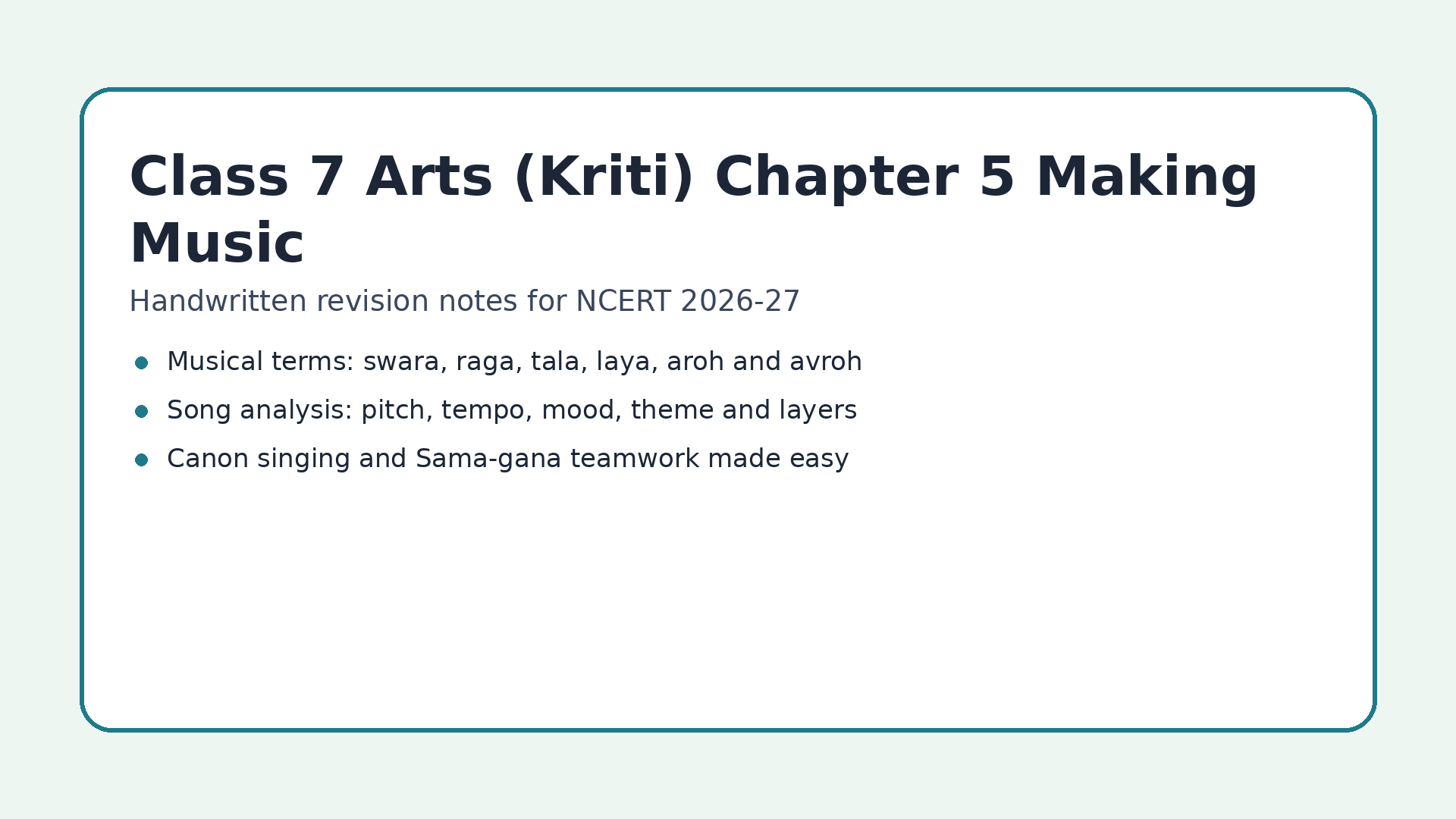
Making Music Chapter Snapshot
Chapter 5 begins with Nada, or musical sound, and then moves into practical listening. Students learn how sur, laya and shabd shape a song.
The chapter is activity-based, so revision should focus on terms, listening cues and group performance roles.
| Area | What to Remember |
|---|---|
| Terms | Swara, raga, tala, laya, aroh, avroh and sargam. |
| Activity | Choose songs and study voice, instruments, pitch, tempo, mood and theme. |
| Teamwork | Canon singing and Sama-gana roles show coordination. |
Common Musical Terms in Chapter 5
The handwritten notes define each core term in short lines. Aadhara Shruti is the base note. Swara means a note, and the seven notes are Sa, Re, Ga, Ma, Pa, Dha and Ni.
Raga is a rule-based melody. Tala is the rhythm cycle, and laya is speed. Aroh means the ascending scale, while Avroh means the descending scale.
Song Layers and Listening Activity
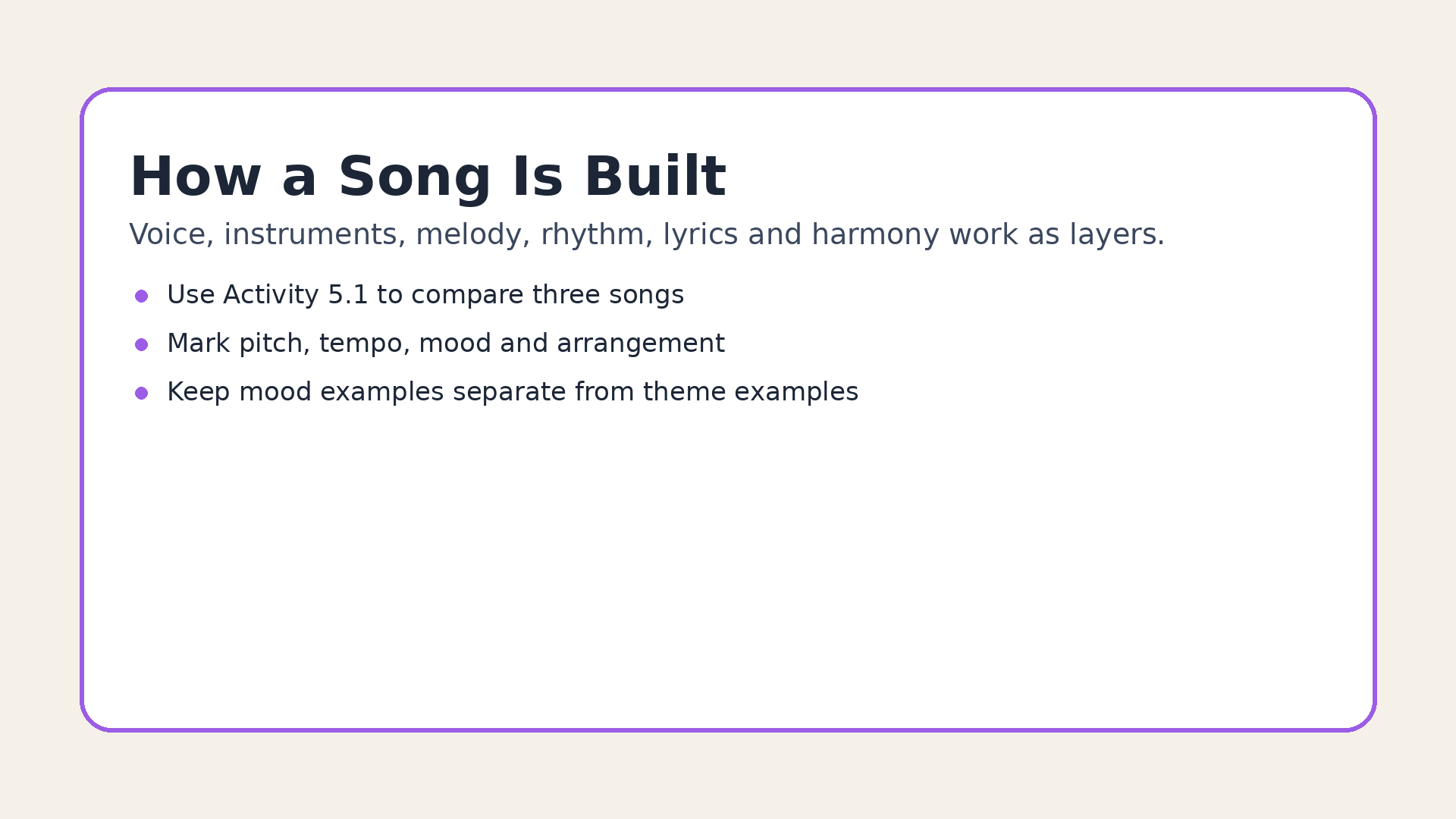
Activity 5.1 asks students to choose songs and identify their musical parts. Voice, instruments, melody, harmony, rhythm and lyrics are treated as song layers.
- Pitch: high, medium or low sound.
- Tempo: slow, medium or fast speed.
- Mood: emotion or rasa, such as joy or sadness.
- Theme: main idea, such as devotion, rain, travel or patriotism.
Harmony and Canon Singing
Harmony means multiple voices singing together in a pleasing blend. A canon is a simple way to start harmony because groups sing the same melody but enter at different times.
For canon singing, the main rule is timing. Each group must keep the same pulse while listening to the other groups.
Sama-gana Teamwork and Group Chanting
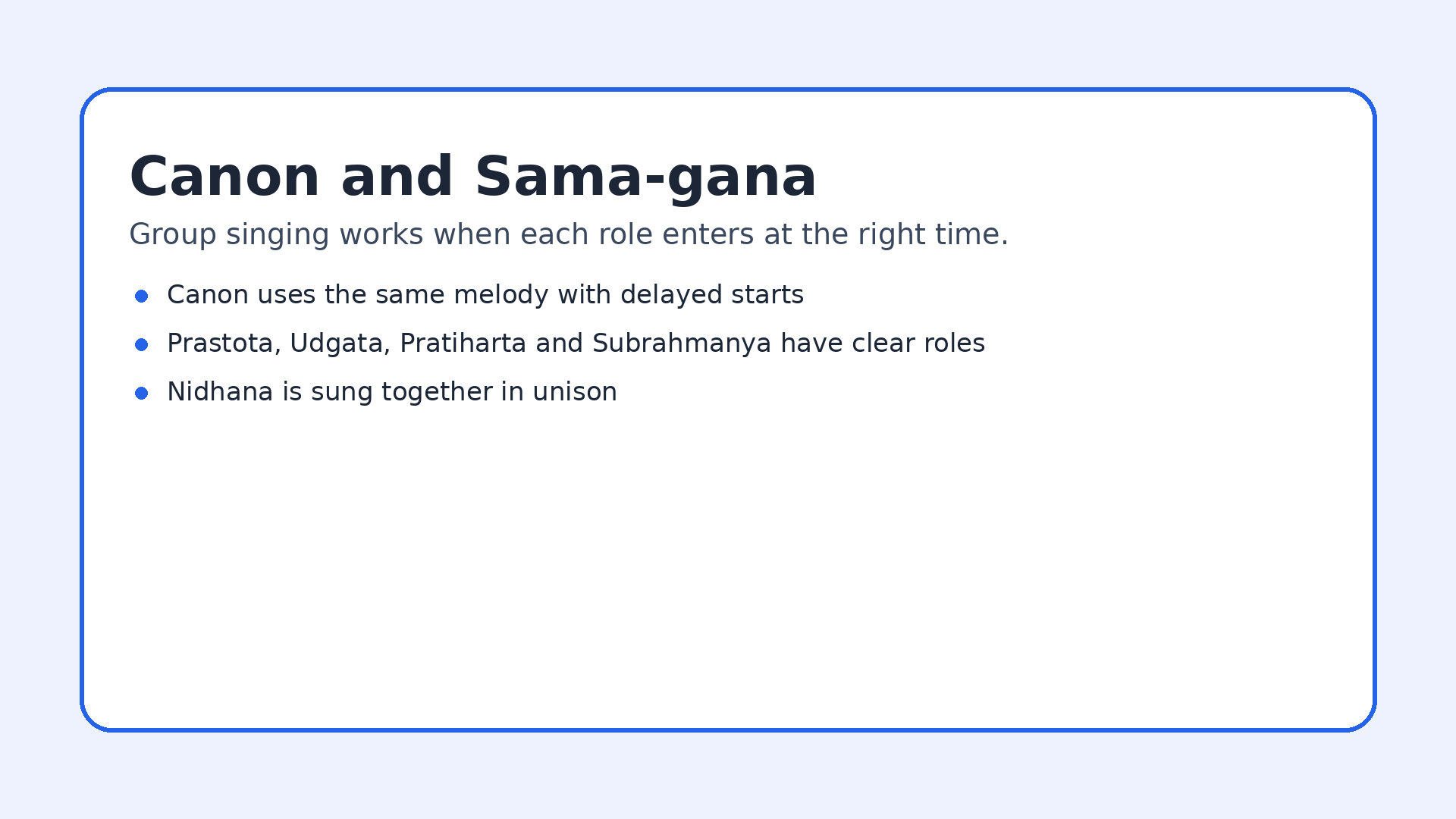
The chapter also explains music as teamwork through Sama-gana. Prastota begins Prastava, Udgata sings Udgitha, Pratiharta continues Pratihara and Subrahmanya has a special chanting role.
Nidhana is sung in unison by all ritvijs. Activity 5.3 then moves students toward group chanting with clear pronunciation and coordination.
Making Music Revision Video for Class 7 Arts
Source: Edzy on YouTube
Related NCERT Class 7 Arts (Kriti) Resources
| Resource | Link |
|---|---|
| NCERT Book PDF | Class 7 Arts Chapter 5 NCERT Book PDF |
| Previous Chapter | Class 7 Arts Chapter 4 Handwritten Notes |
| Next Chapter | Class 7 Arts Chapter 6 Handwritten Notes |
All Chapters for Class 7 Arts (Kriti) Handwritten Notes
| Chapter | Handwritten Notes |
|---|---|
| Chapter 2 Say More without Speech Mime | Download Notes |
| Chapter 3 Let's Design Stage Technicals 2 | Download Notes |
| Chapter 4 Story of India's Storytelling Tradition | Download Notes |
| Chapter 5 Making Music | Download Notes |
FAQs on NCERT Class 7 Arts Chapter 5 Handwritten Notes
Ques. What is Making Music in Class 7 Arts about?
Ans. It explains musical terms, song layers, listening activities, harmony, canon singing, Sama-gana teamwork and group chanting.
Ques. What are the main musical terms in Chapter 5?
Ans. The main terms are Aadhara Shruti, Swara, Raga, Tala, Laya, Aroh, Avroh and Sargam.
Ques. What is canon singing?
Ans. Canon singing happens when groups sing the same melody but start at different times, creating harmony.
Ques. Why are these handwritten notes useful?
Ans. The notes turn the chapter into short handwritten pages with diagrams, tables and quick recall points for revision.



Comments