




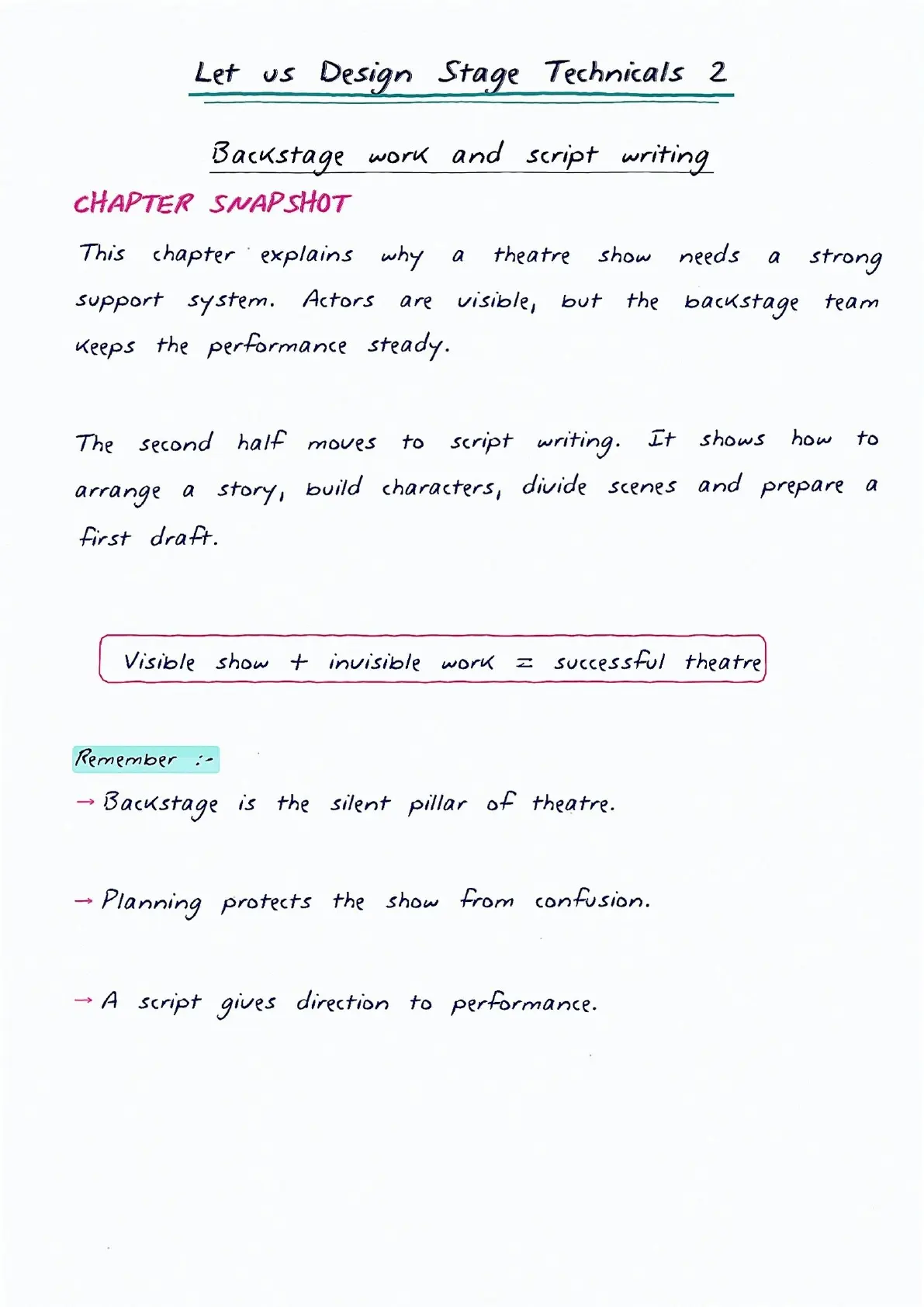
NCERT Handwritten Notes for Class 7 Arts (Kriti) Chapter 3 Let's Design Stage Technicals 2 help students revise backstage work, theatre planning, green room, script structure, character arc and scene division for the 2026-27 NCERT syllabus. The PDF turns the chapter into a neat topper-style notebook for fast school revision.
- Download a 24-page handwritten revision PDF for Class 7 Arts Chapter 3.
- Revise backstage departments, theatre discipline and script-writing steps.
- Use the notes before class discussion, theatre activity or portfolio work.
Clear colour-coded revision notes for backstage and script writing.
What Class 7 Arts Chapter 3 Teaches About Backstage Work
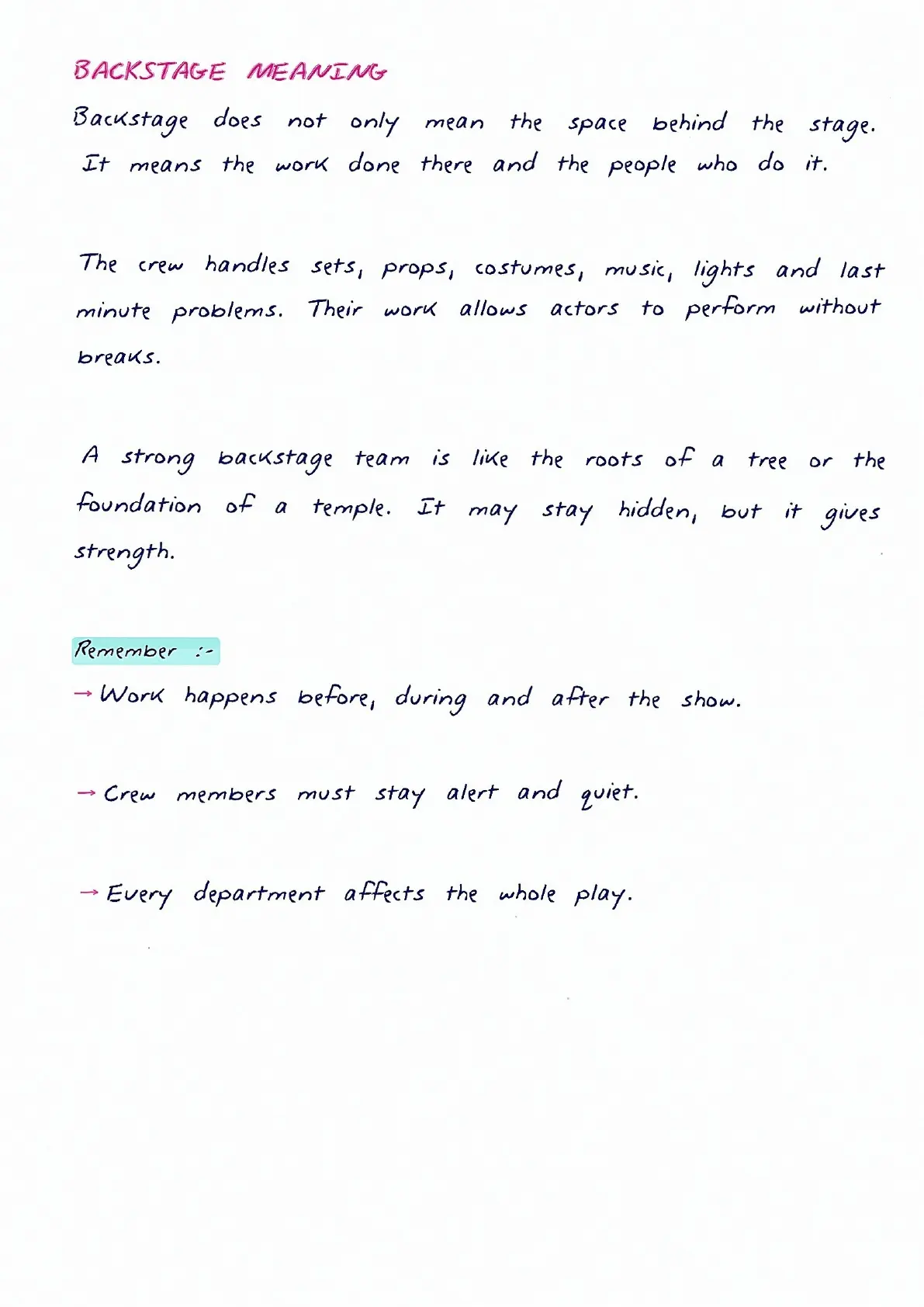
Chapter 3 explains that theatre is not only acting on stage. A performance needs people who manage sets, props, costume, make up, music, sound and lights. Backstage work is the hidden support system that keeps the visible show steady.
The handwritten notes compare backstage work with roots of a tree and the foundation of a temple. Both stay hidden, but both give strength. The same idea helps students understand why theatre needs respect for every team member.
| Backstage Area | Revision Point |
|---|---|
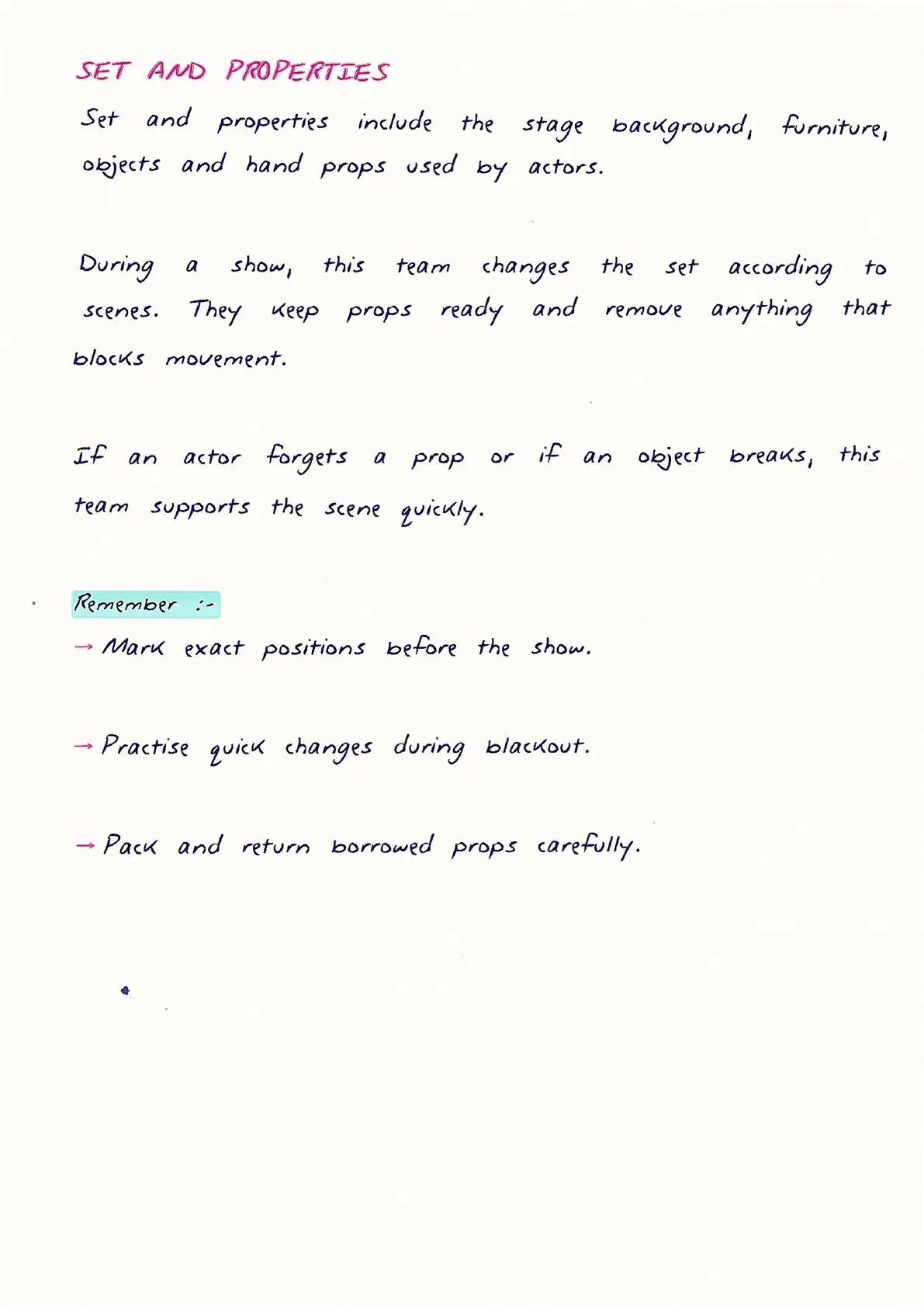
| Set and properties | Prepare, place, change and pack stage objects safely. |
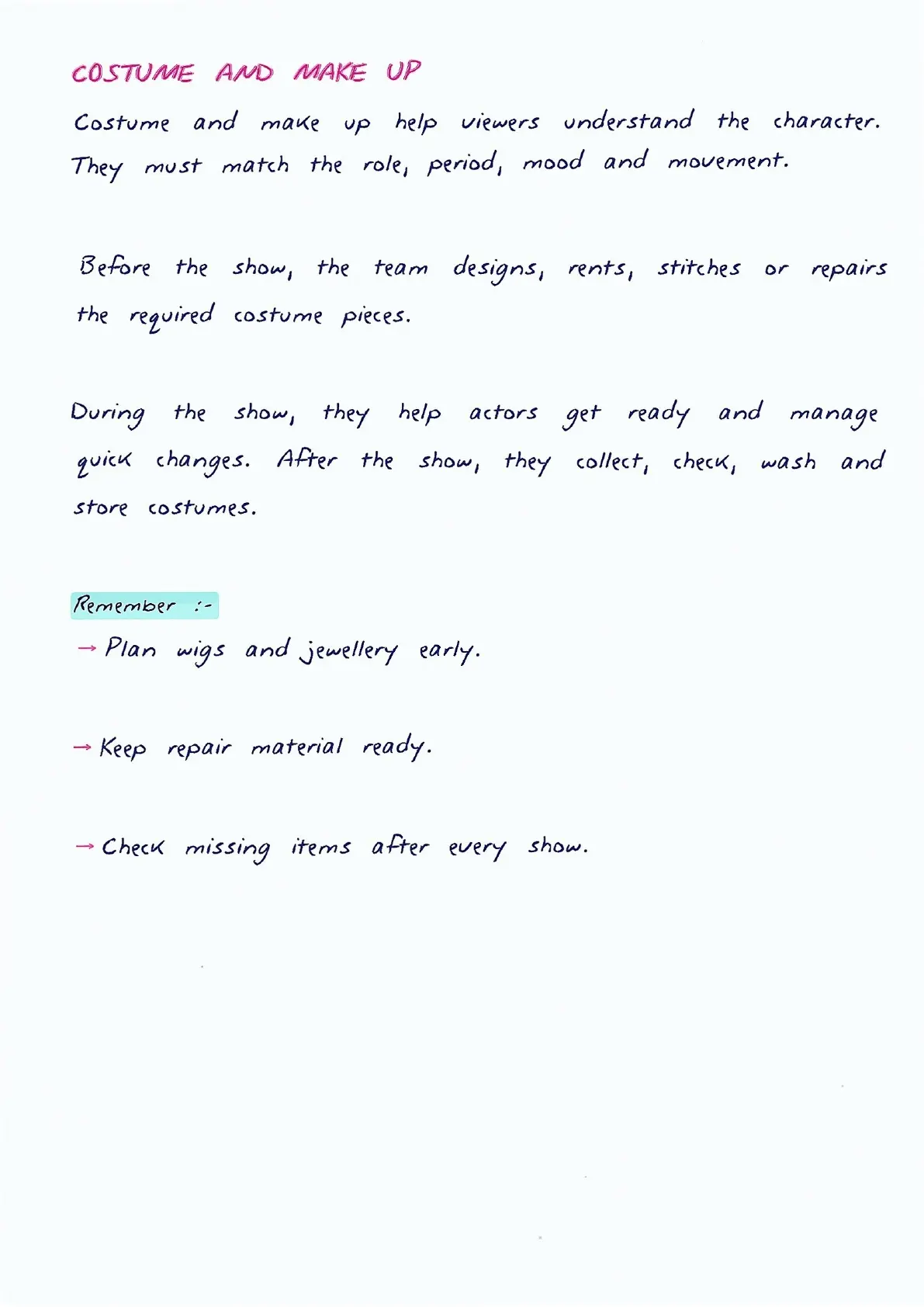
| Costume and make up | Match the character, manage quick changes and check damage. |
| Music and lights | Use cues, timing and mood to support actors. |
Backstage Departments Students Should Revise
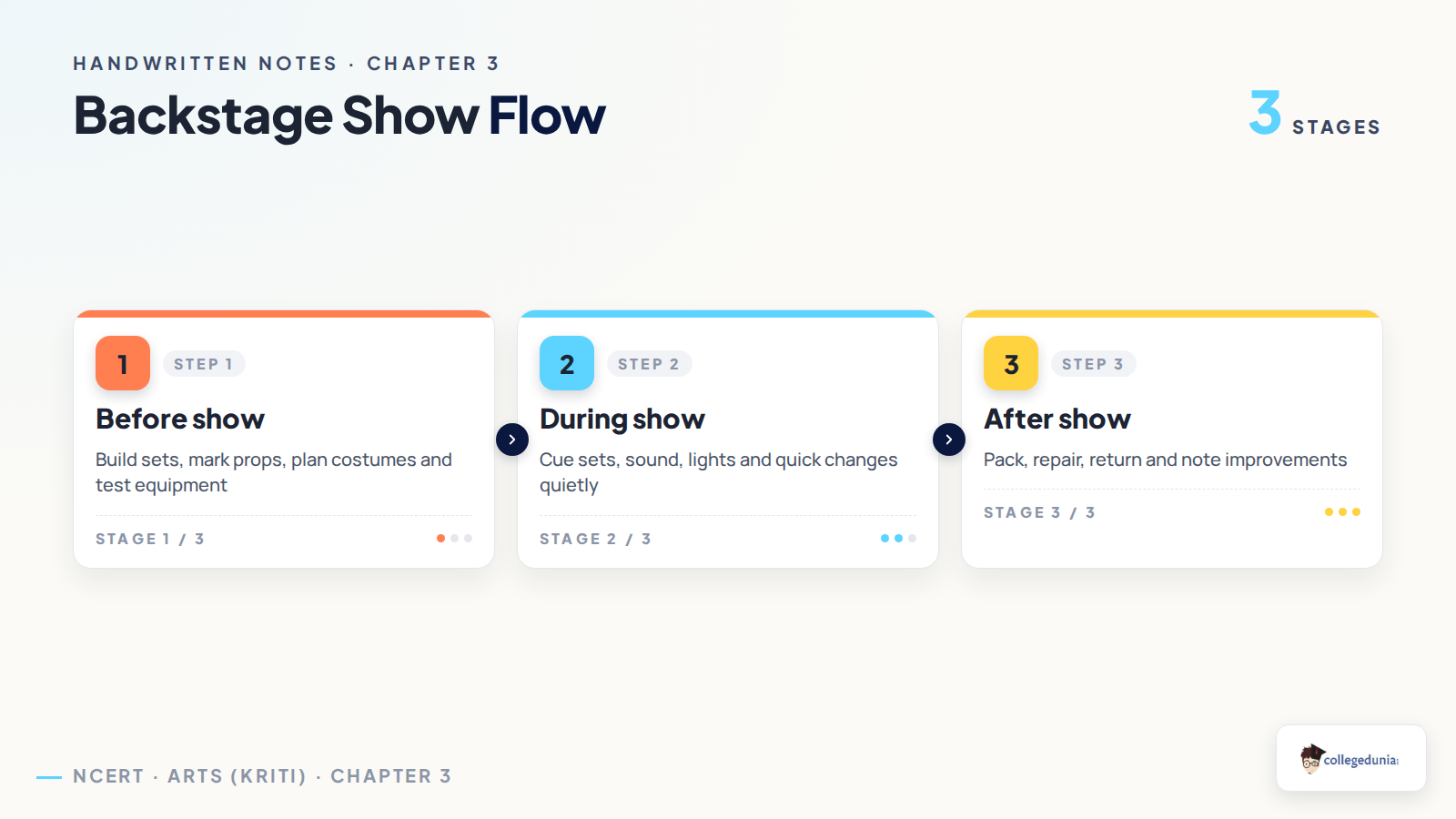
The PDF separates the four main backstage departments so students can revise them quickly. Set and properties covers changing scenes, keeping hand props ready and clearing objects that may block actors. Costume and make up covers character-related dressing, quick changes and small repairs.
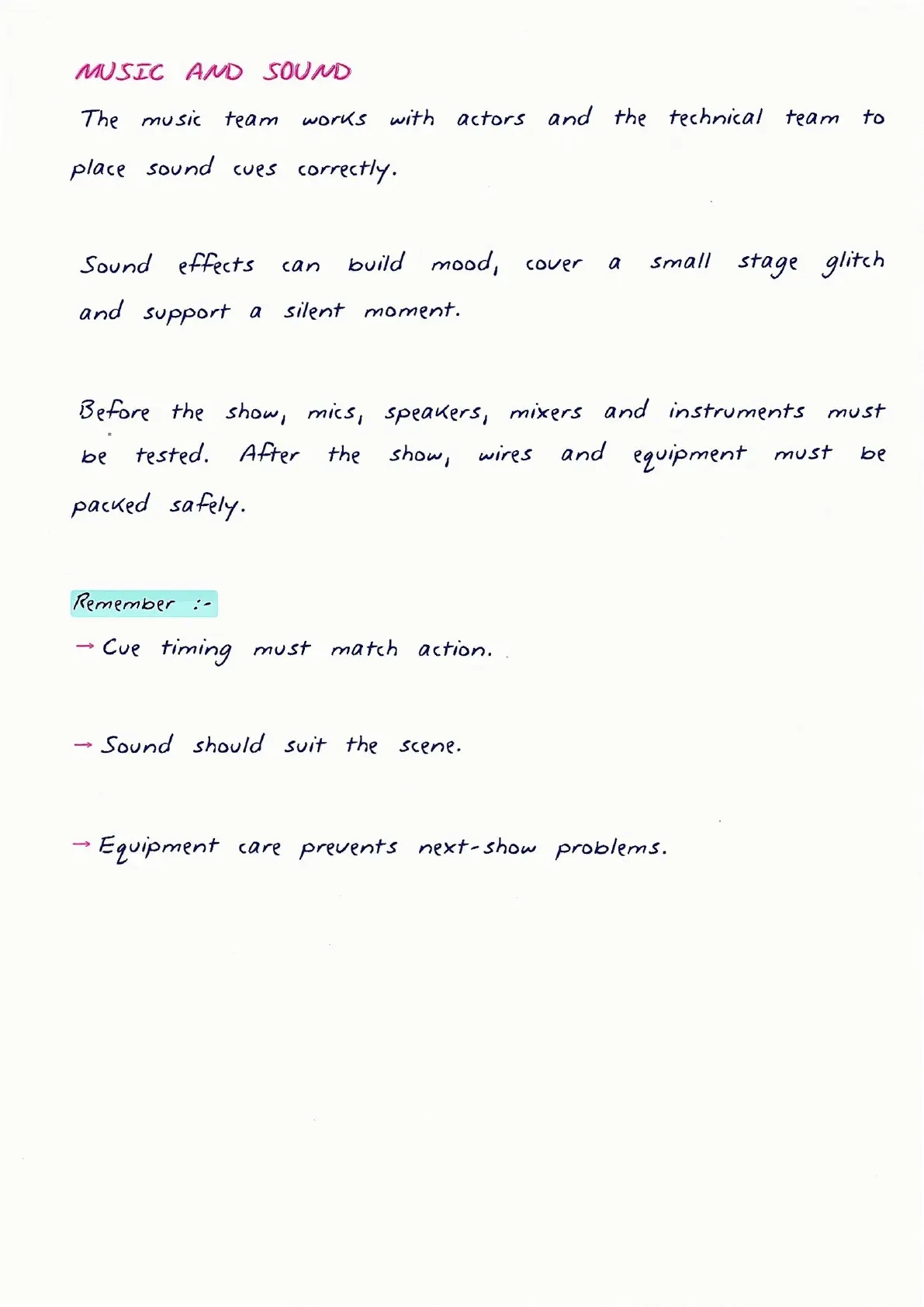
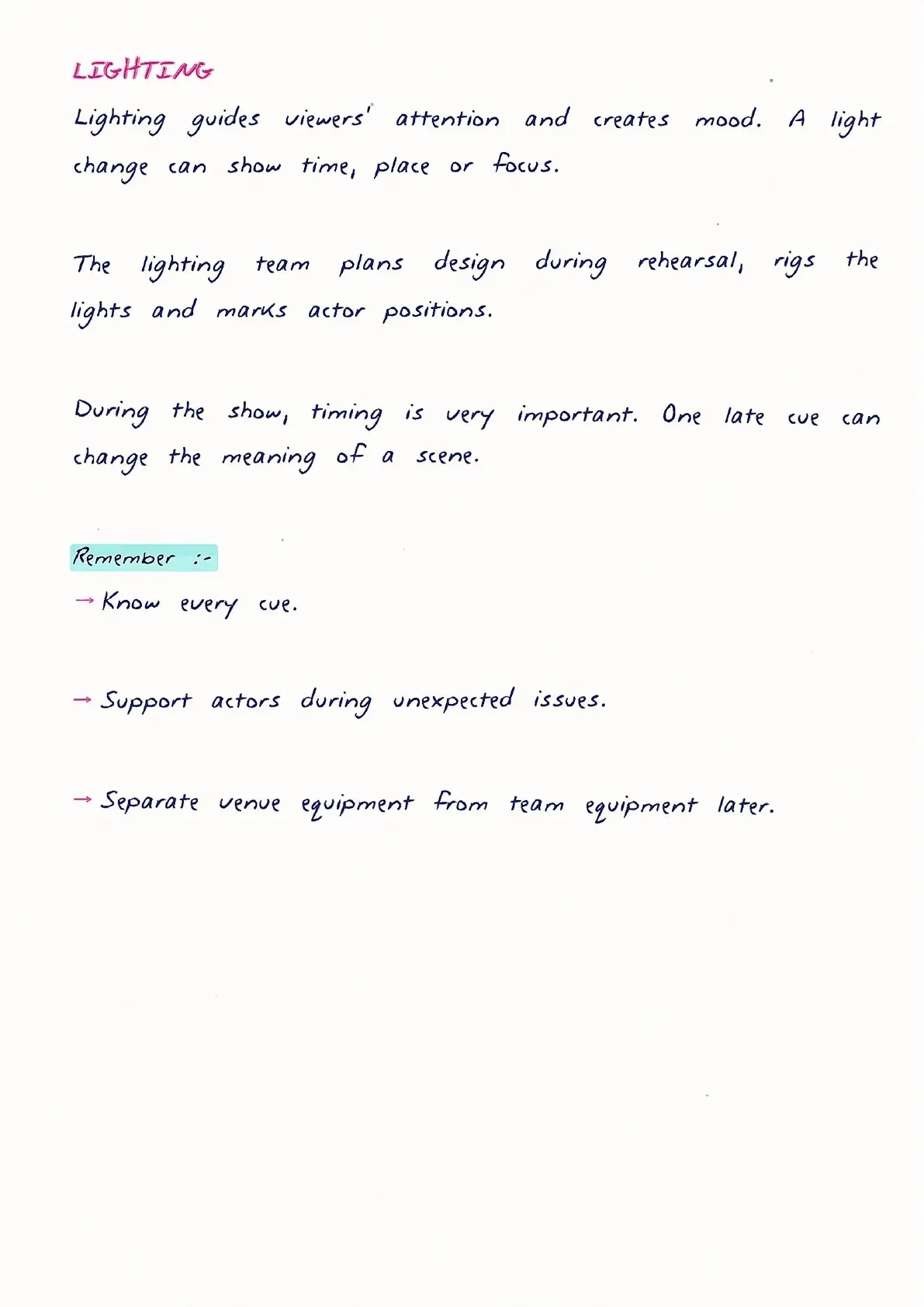
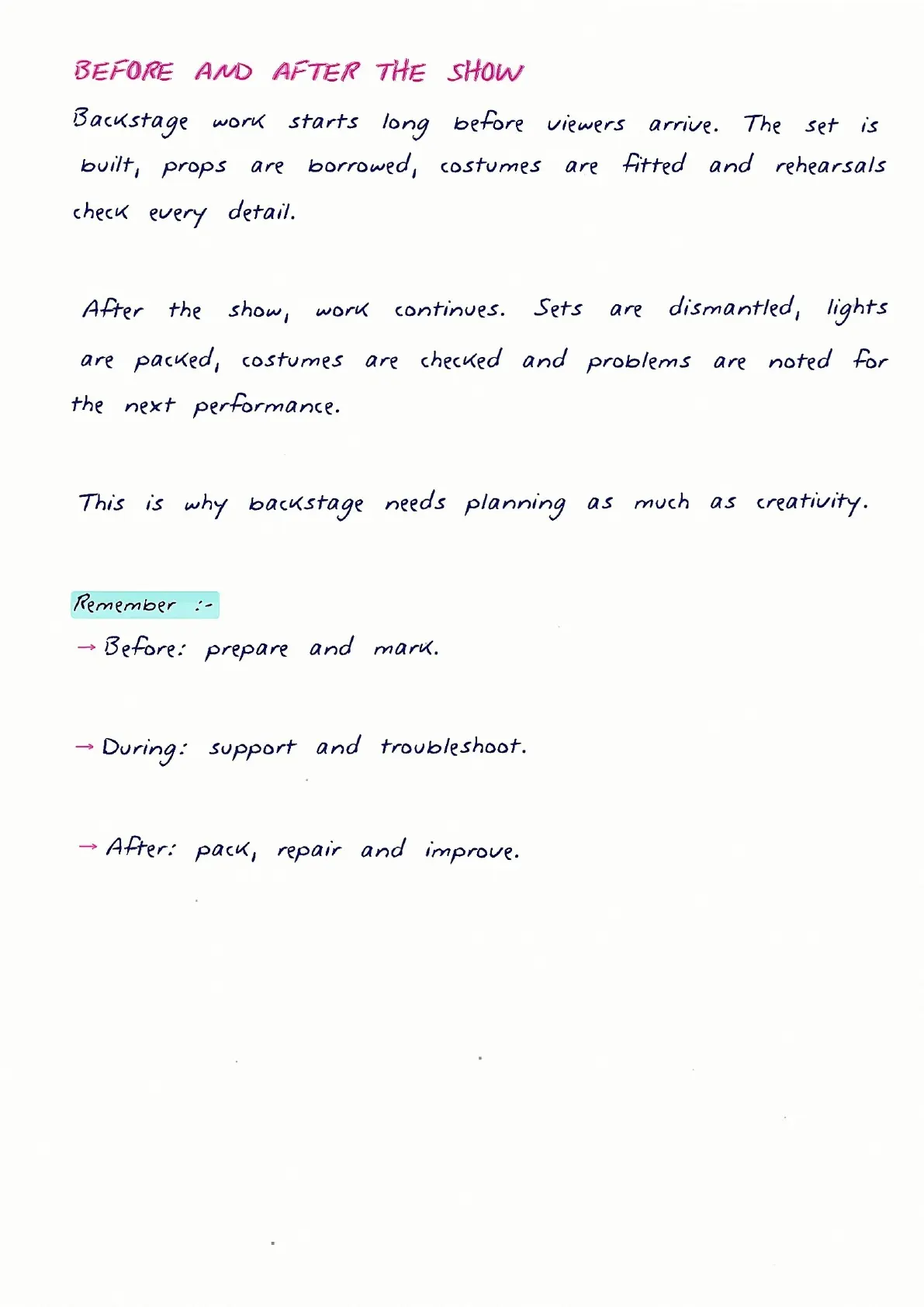
Music covers sound tracks, sound effects and cue timing. Lighting covers planning lights, knowing cues and helping actors during unexpected issues. Together, these departments show why backstage work needs planning before, during and after the show.
Backstage Life Skills for School and Daily Life
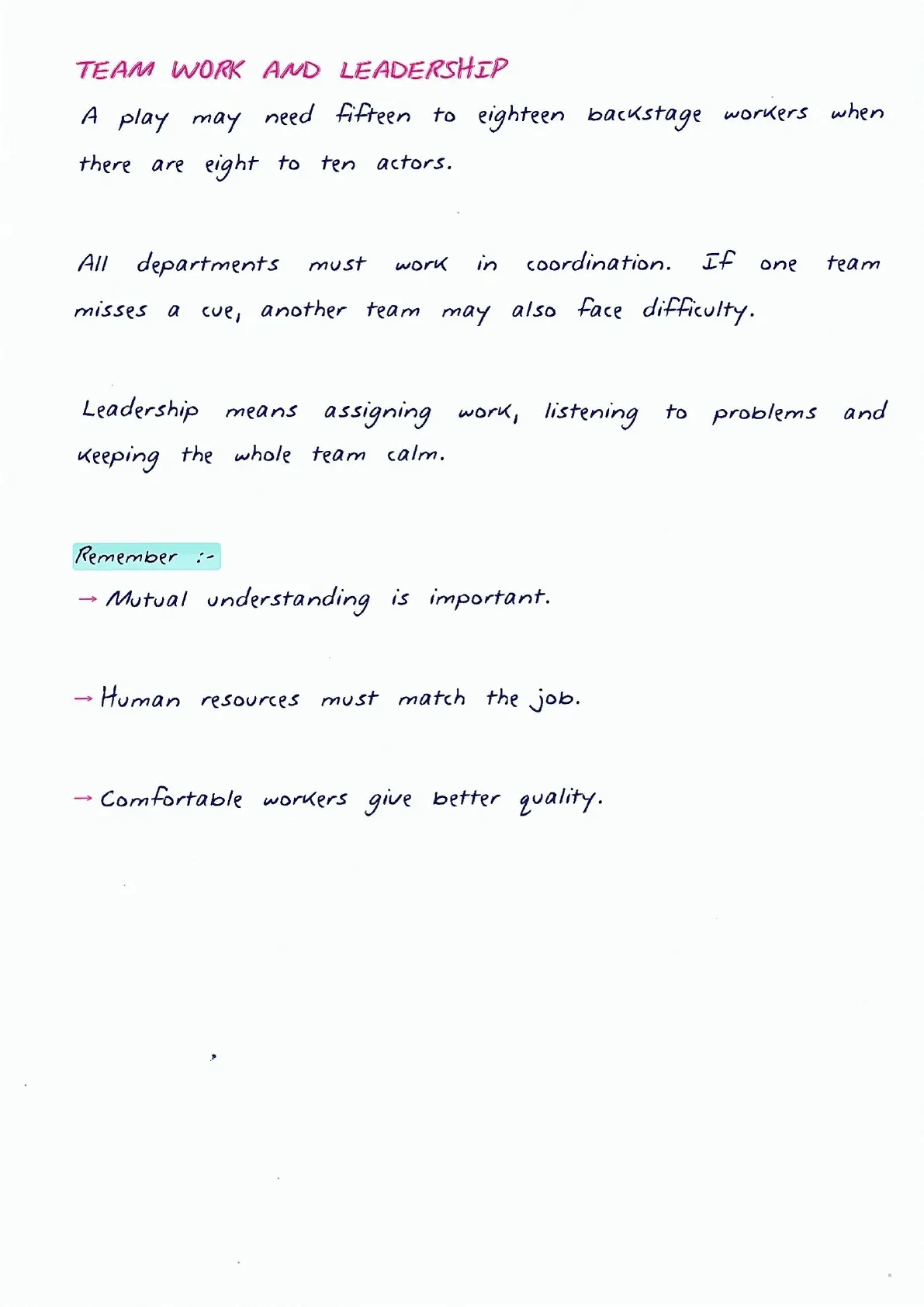
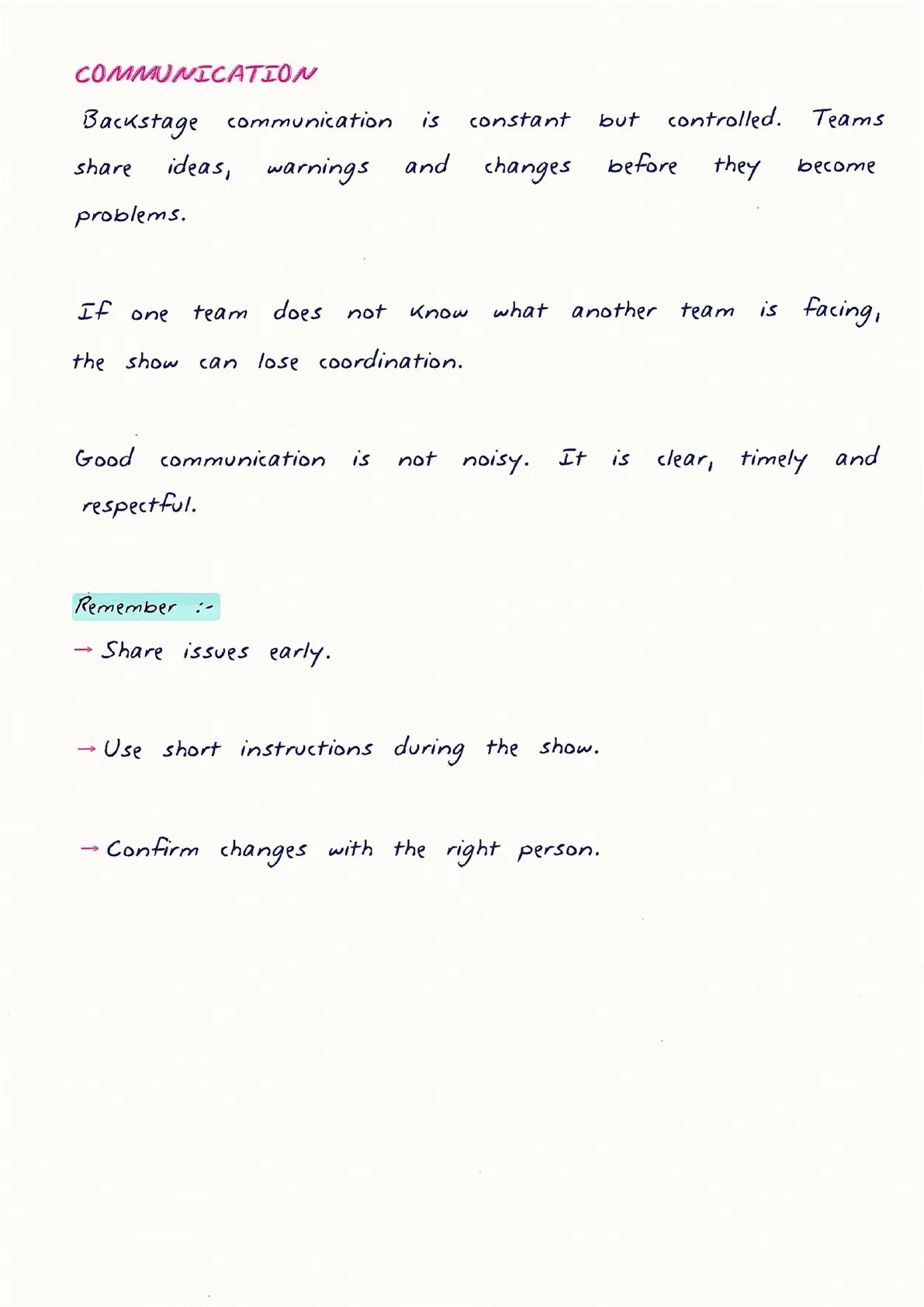
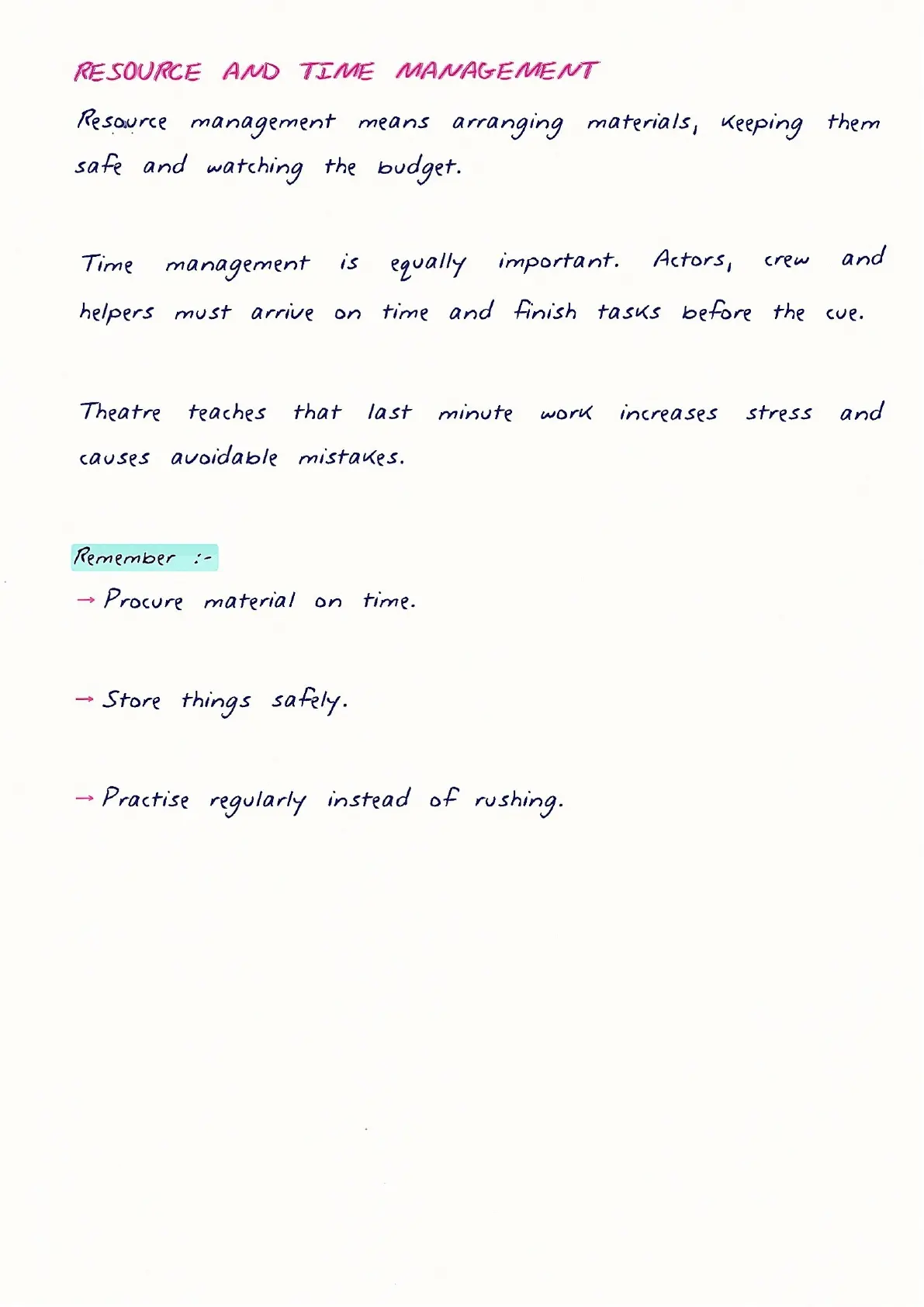
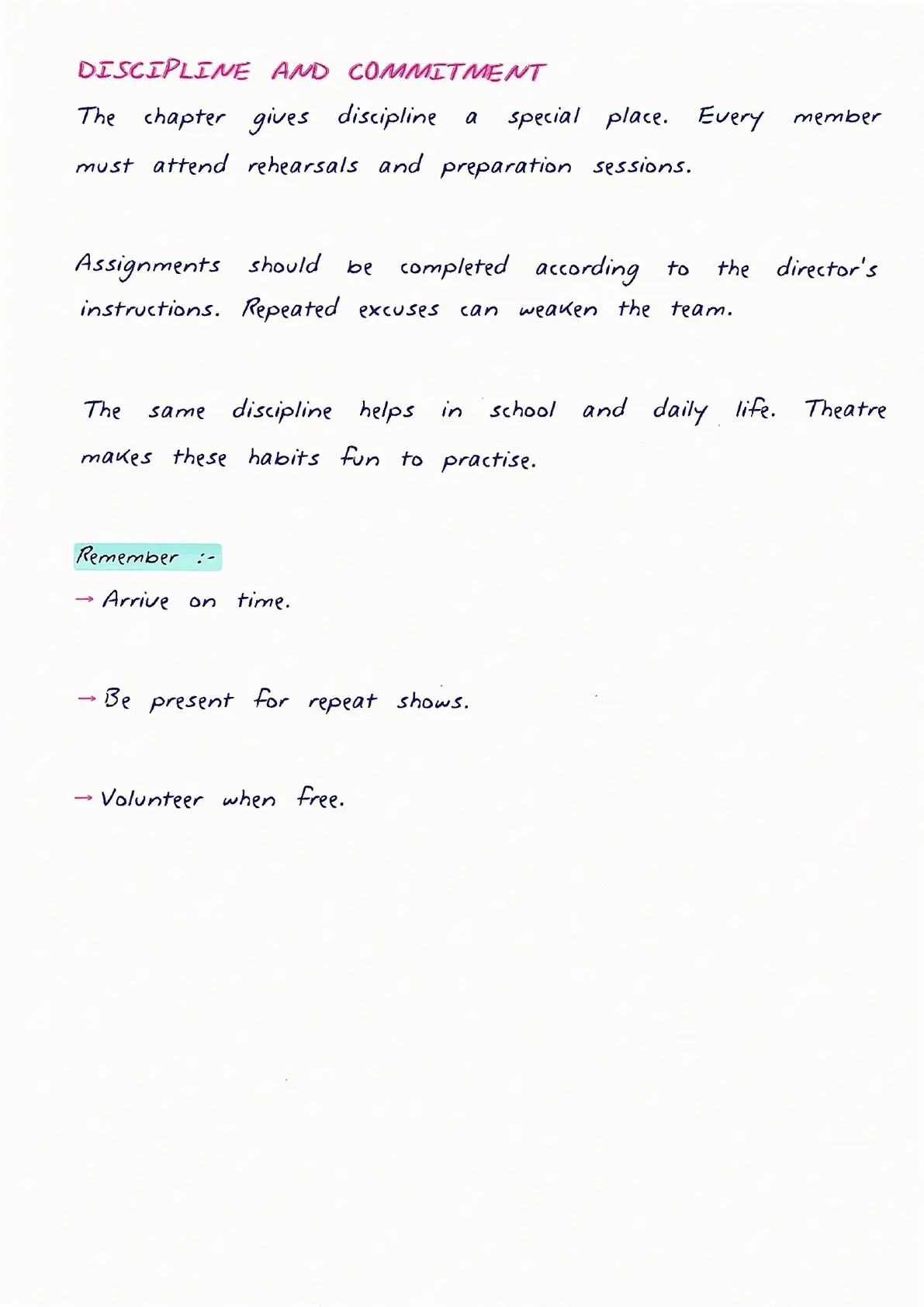
Chapter 3 connects theatre with daily discipline. Teamwork, leadership, communication, resource management, time management and commitment are not only theatre skills. They also help in school projects, exams, group work and events.
Time management is one of the most important points. If students keep everything for the last minute, stress increases. The handwritten notes turn this into a simple exam lesson: practise regularly and prepare early.
- Teamwork keeps every department connected.
- Communication prevents confusion between teams.
- Discipline helps students attend, prepare and finish work on time.
Stage Technicals 2 Video Explanation
Source: NCERT OFFICIAL on YouTube
History of Backstage and Green Room
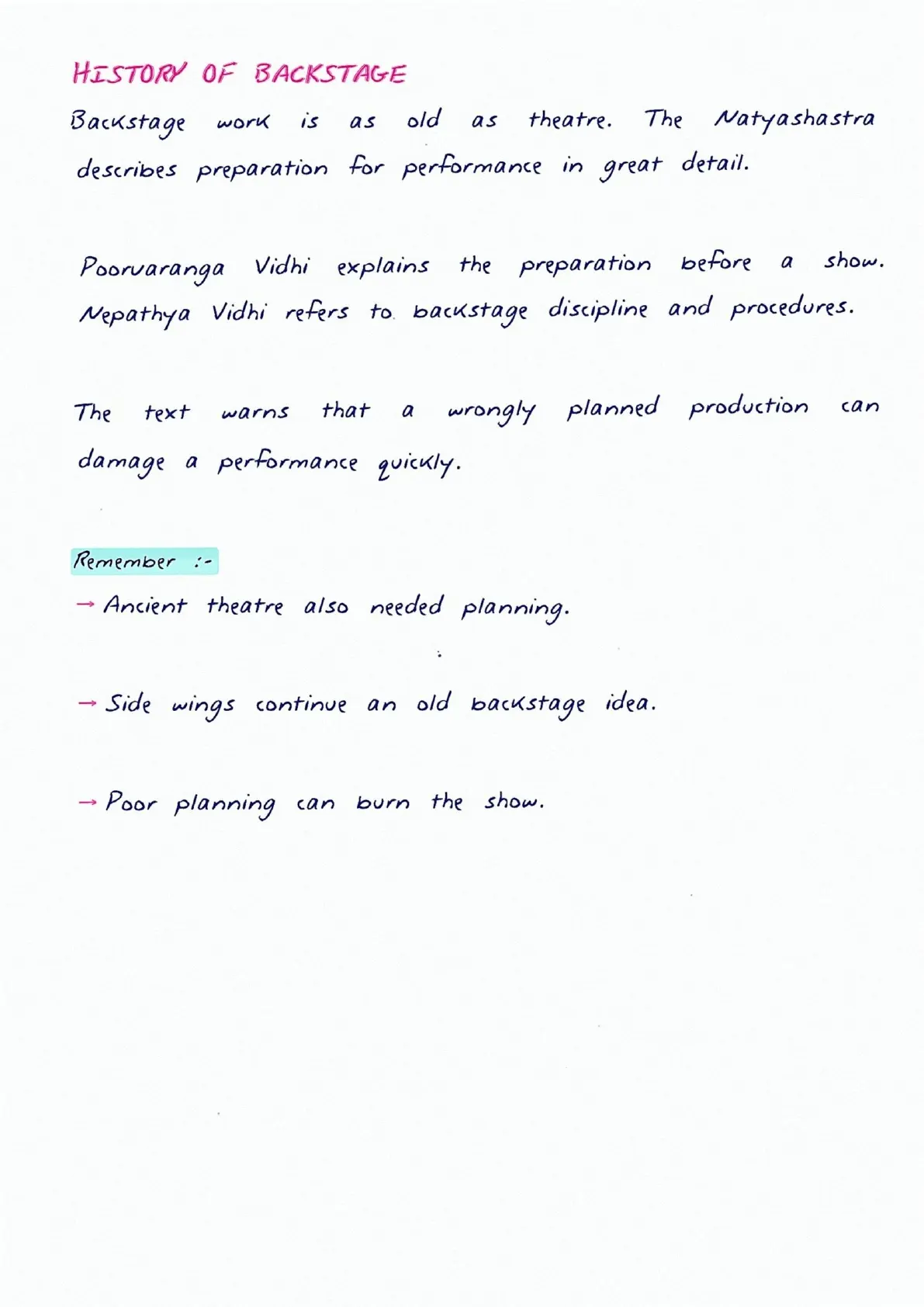
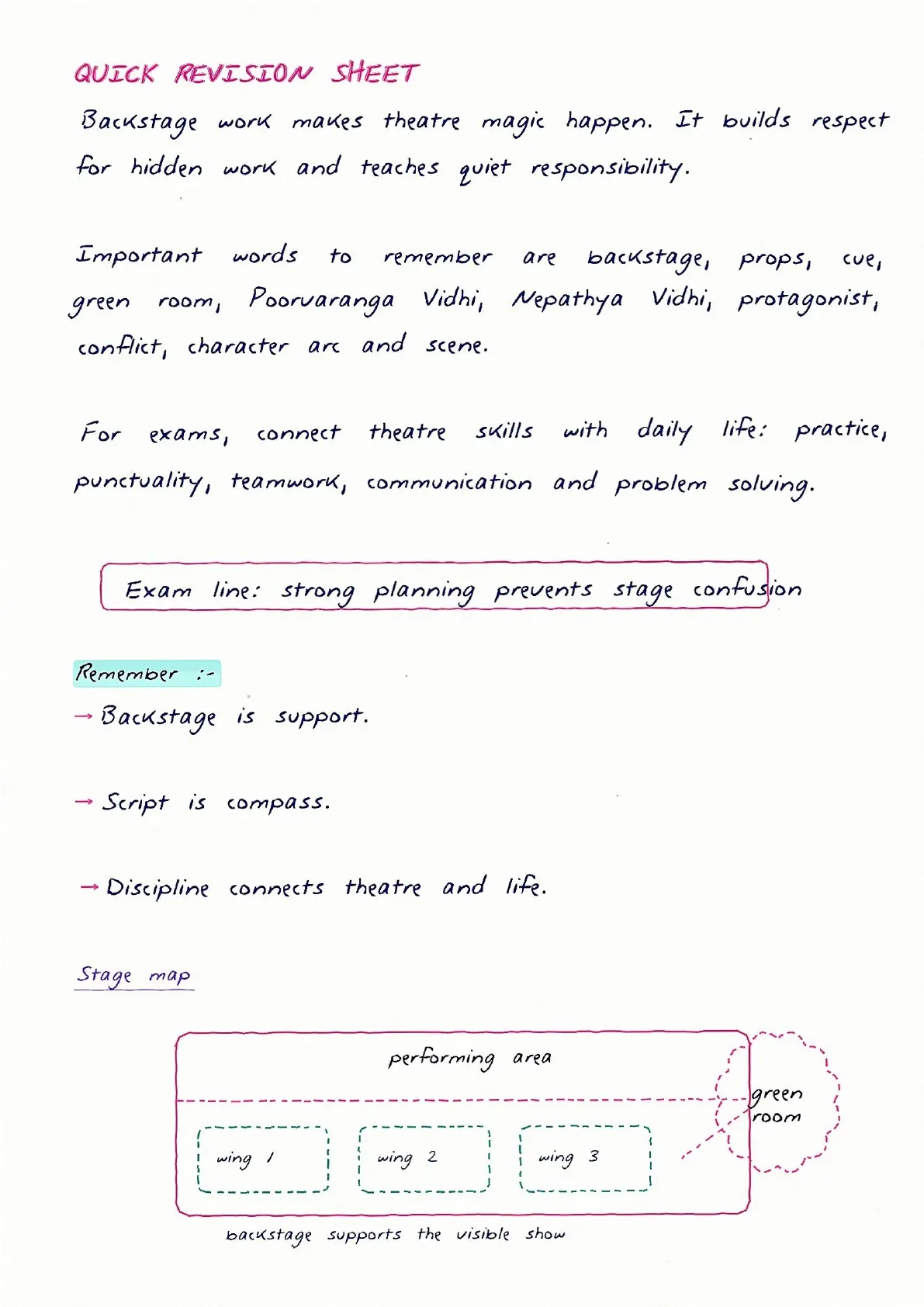
The chapter says backstage work is as old as theatre. The Natyashastra describes preparation for a performance through Poorvaranga Vidhi and explains backstage discipline through Nepathya Vidhi. Students also learn how old side-wing arrangements connect with modern theatre pathways.
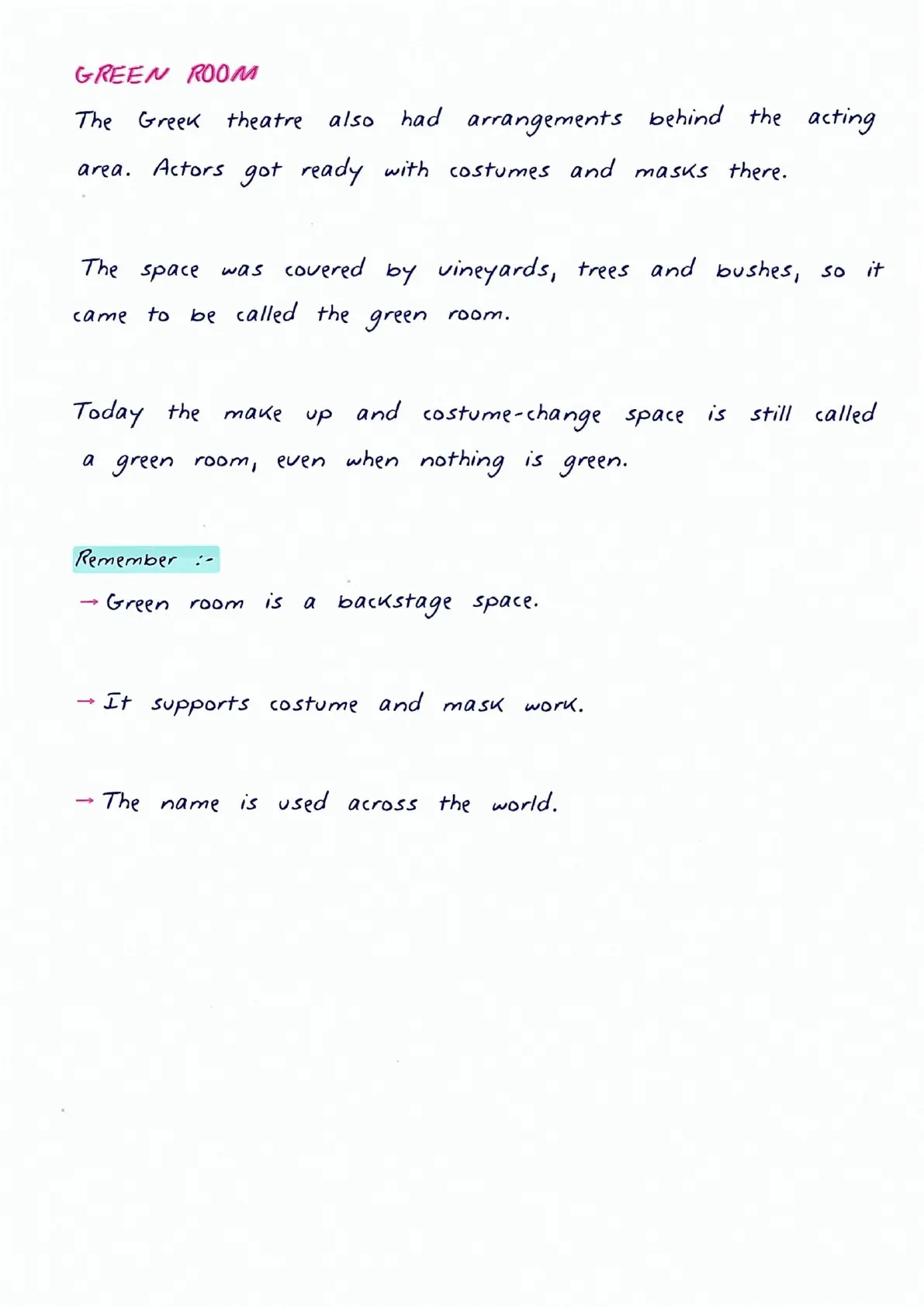
The green room idea comes from theatre spaces where actors got ready behind the performing area, near green surroundings. Today, a green room simply means the place where performers prepare costumes, masks and make up before entering the stage.
Script Writing Structure in Class 7 Arts Chapter 3
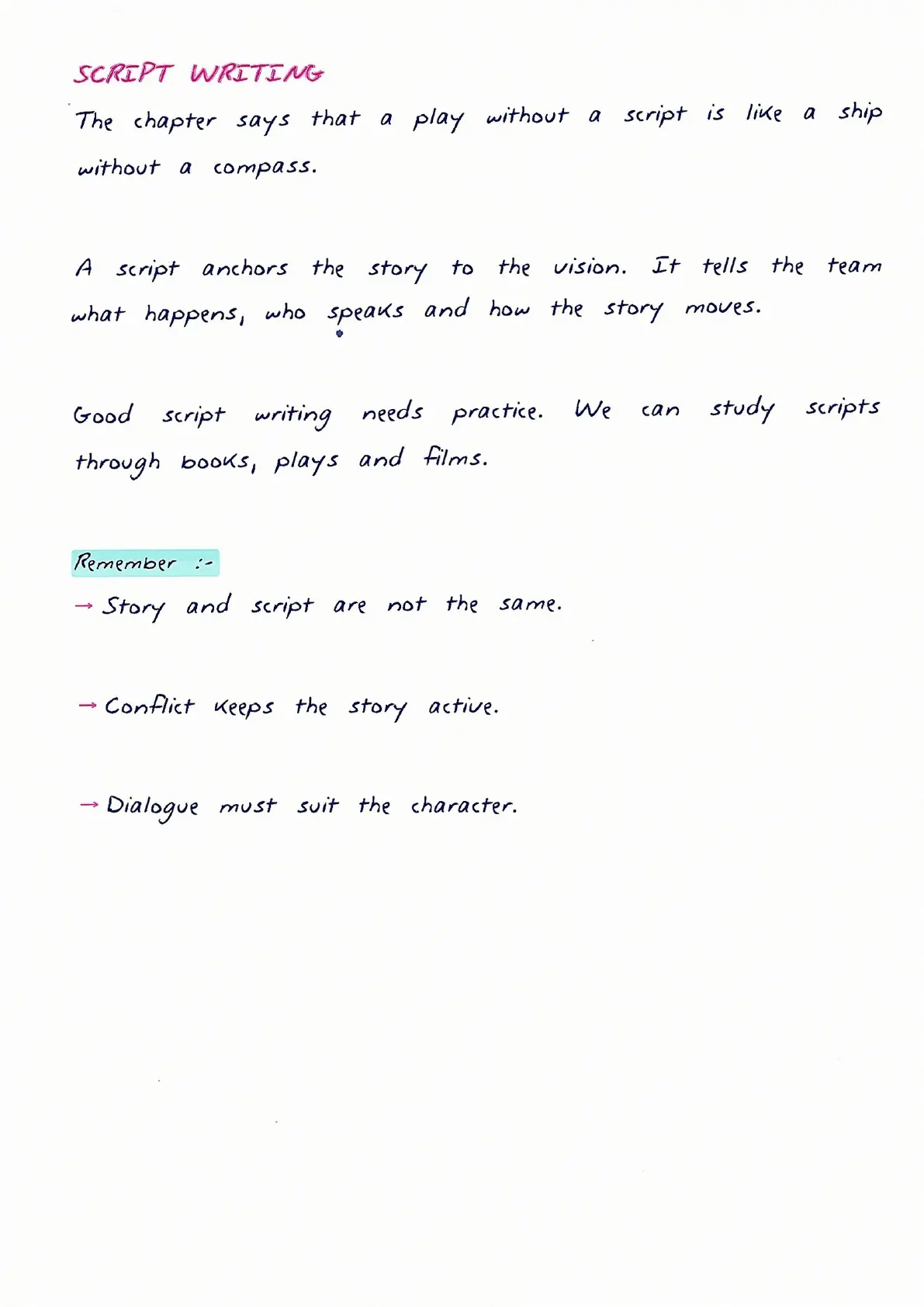
The script-writing section explains that a play without a script is like a ship without a compass. A script gives the story a clear direction. It tells the team who acts, what happens and how each scene moves forward.
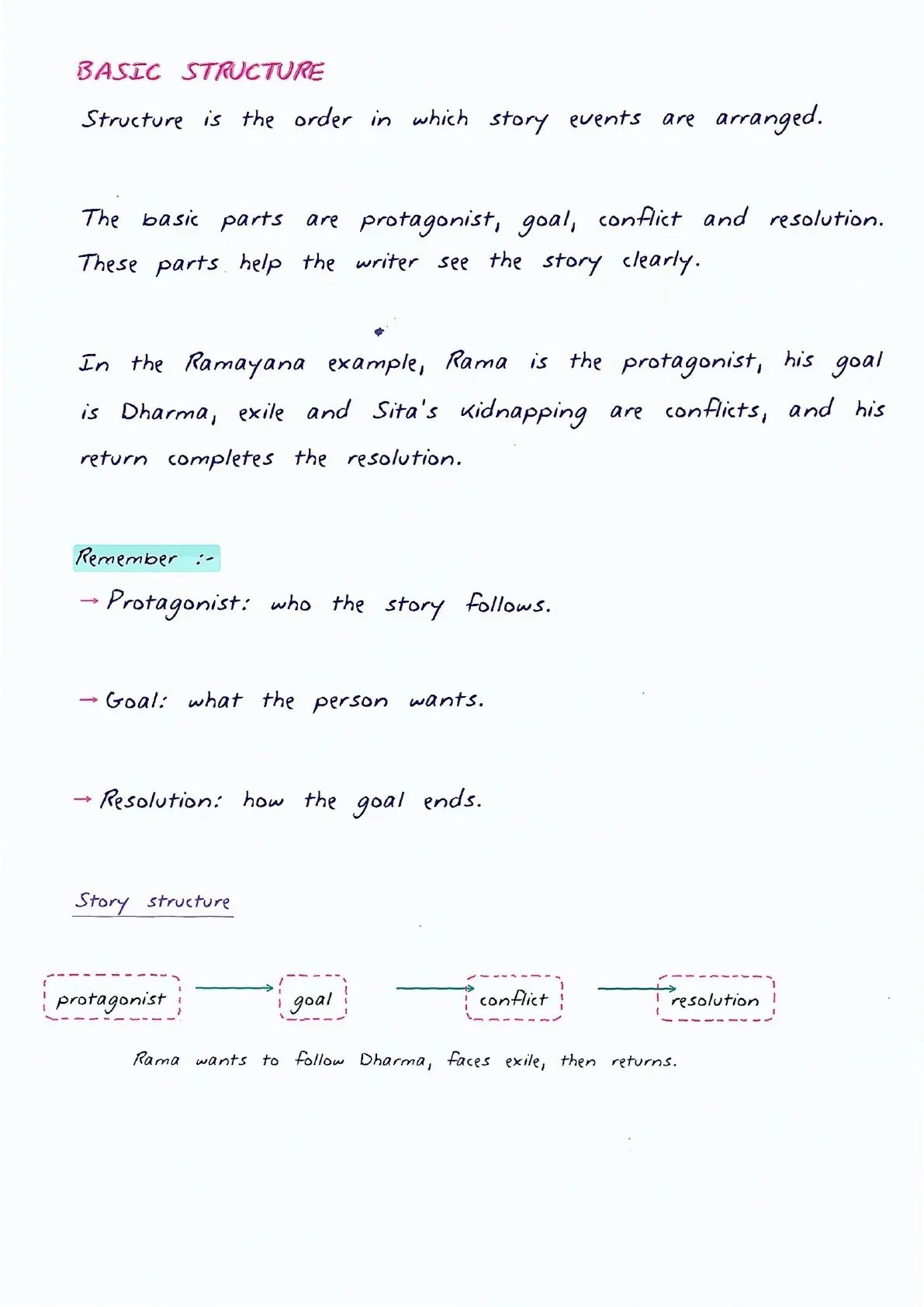
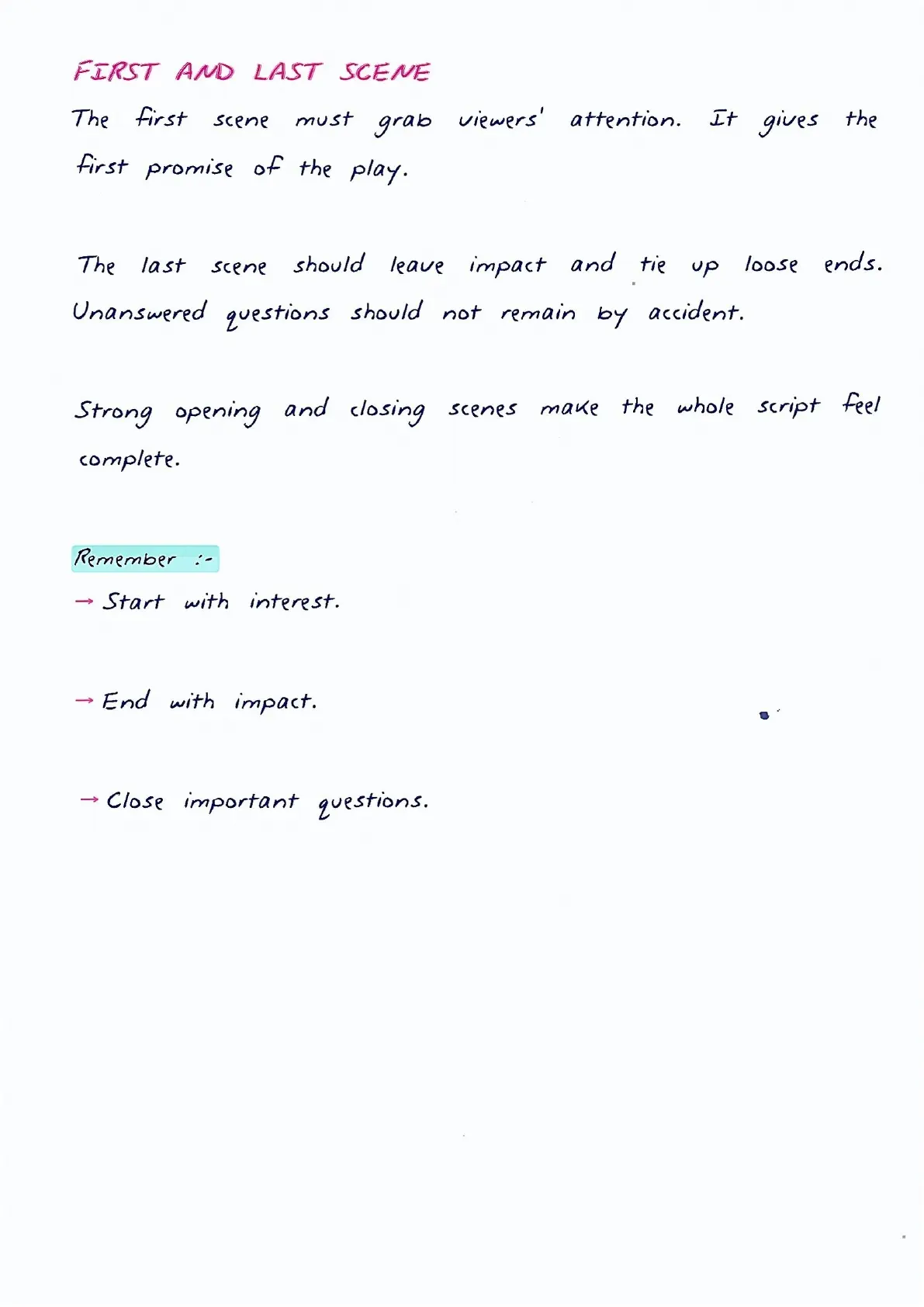
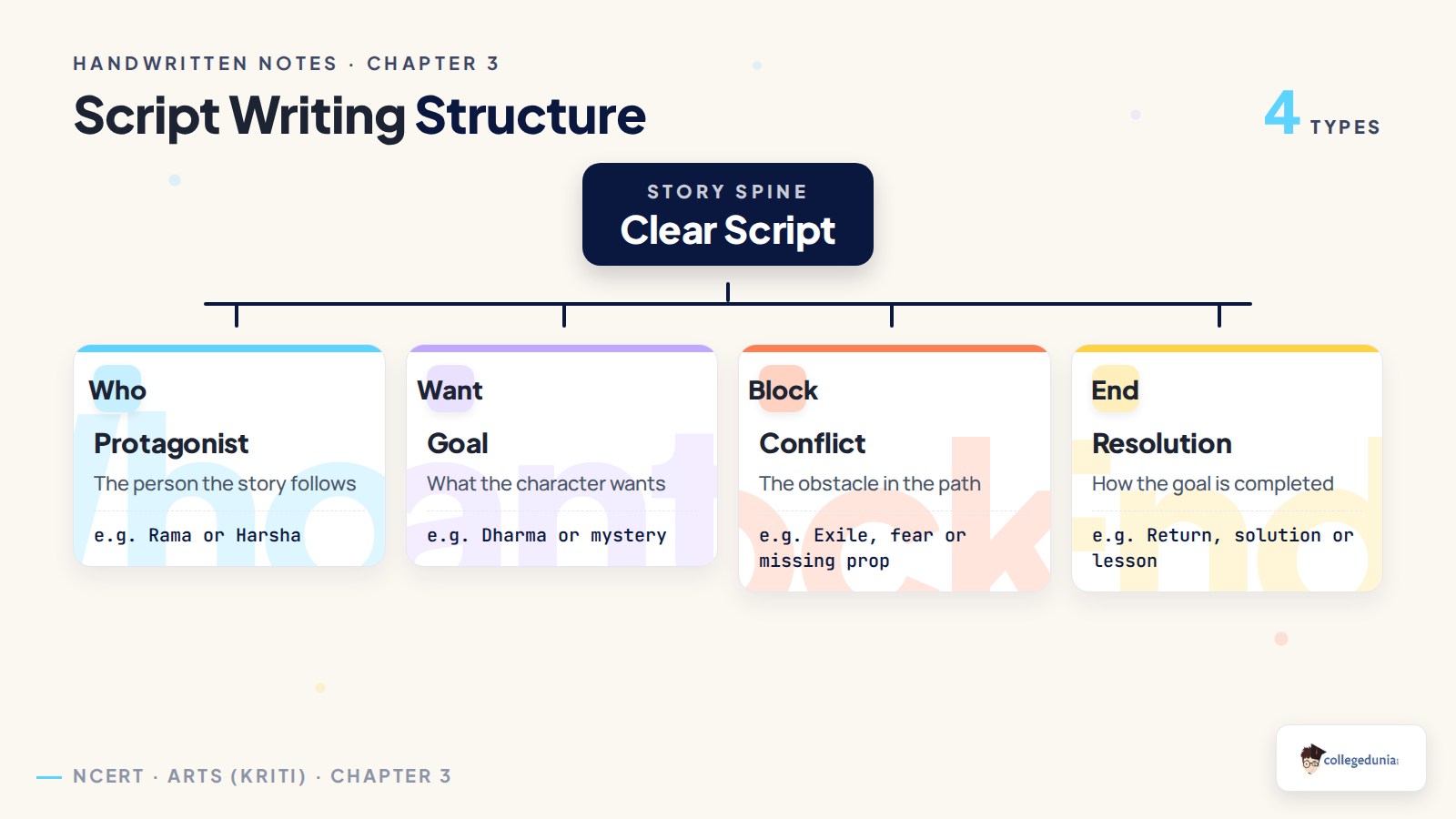
The basic structure has four parts: protagonist, goal, conflict and resolution. The chapter uses the Ramayana example to show this structure in a familiar way.
Characters, Character Arc and Scenes
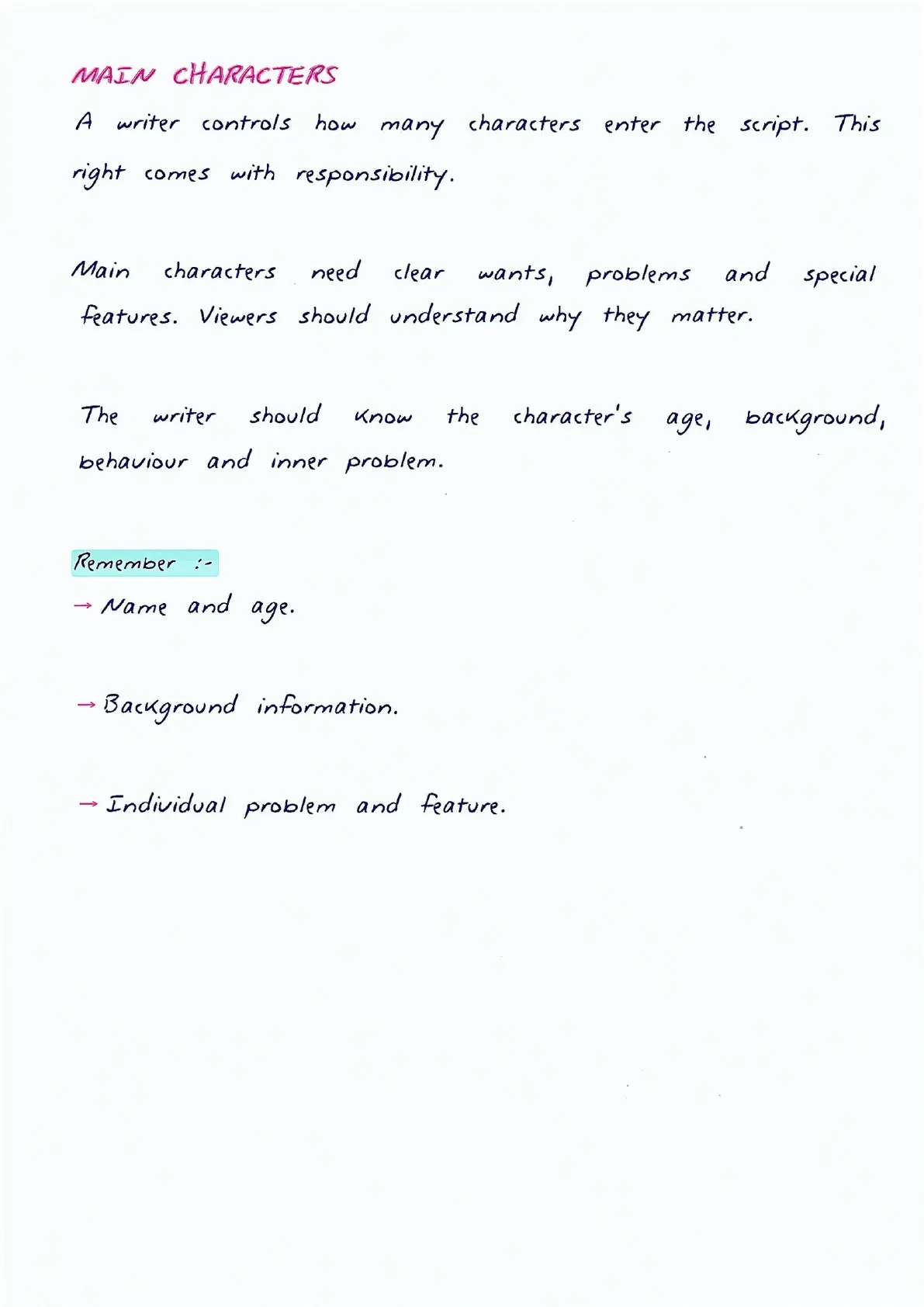
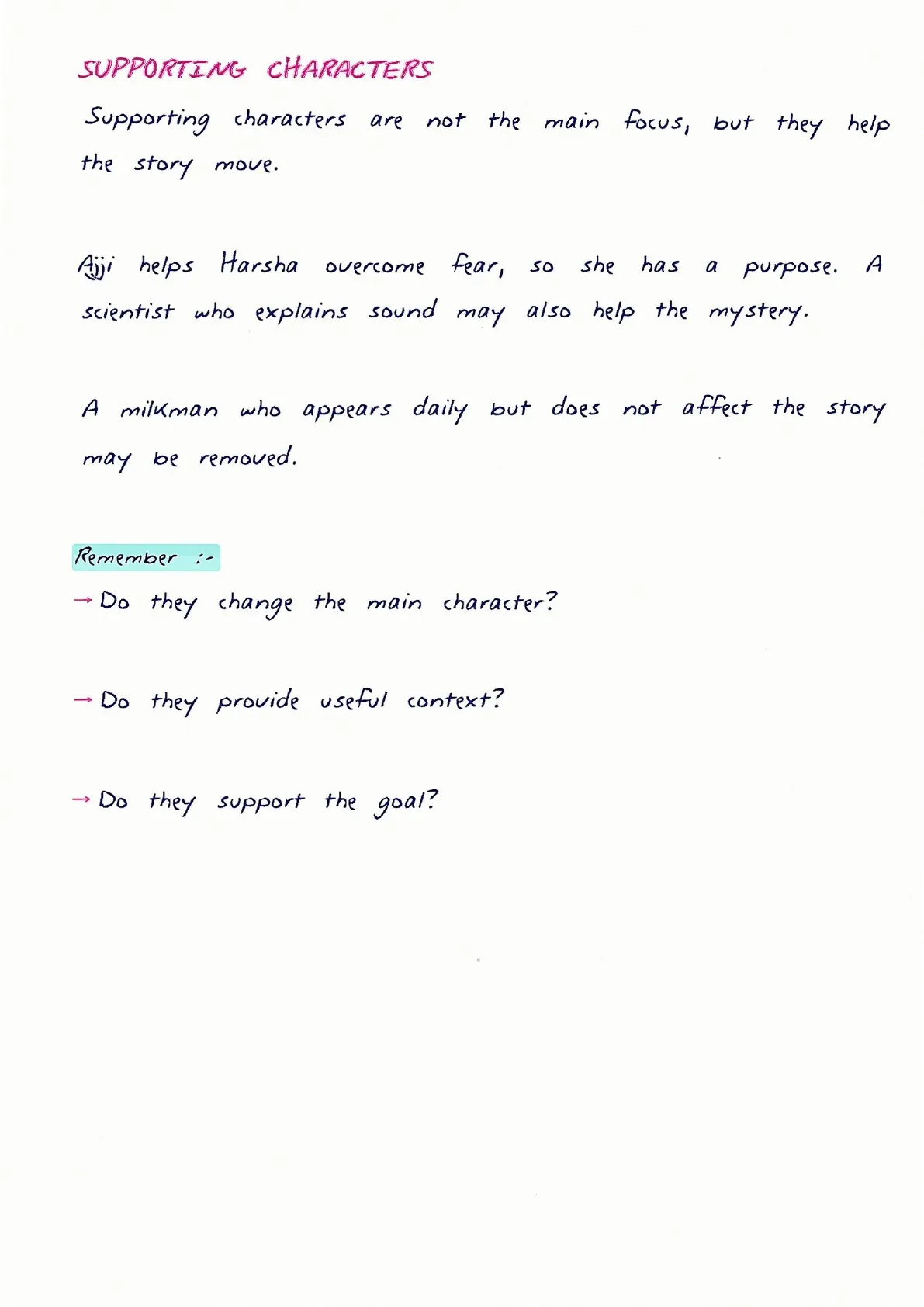
A script can have main characters and supporting characters, but every character must have a purpose. The notes explain that a supporting character should help the main character, add context or move the story toward the goal.
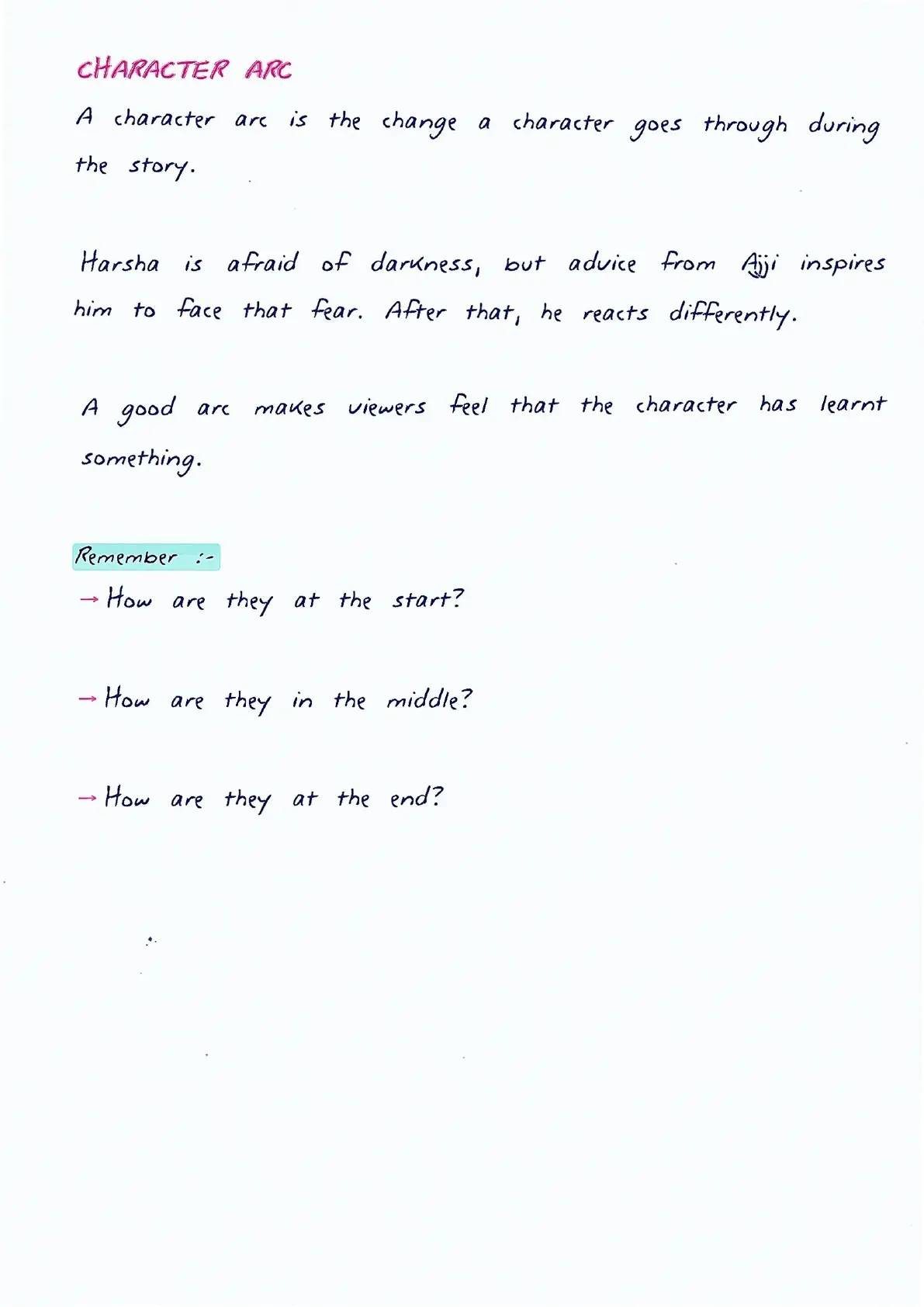
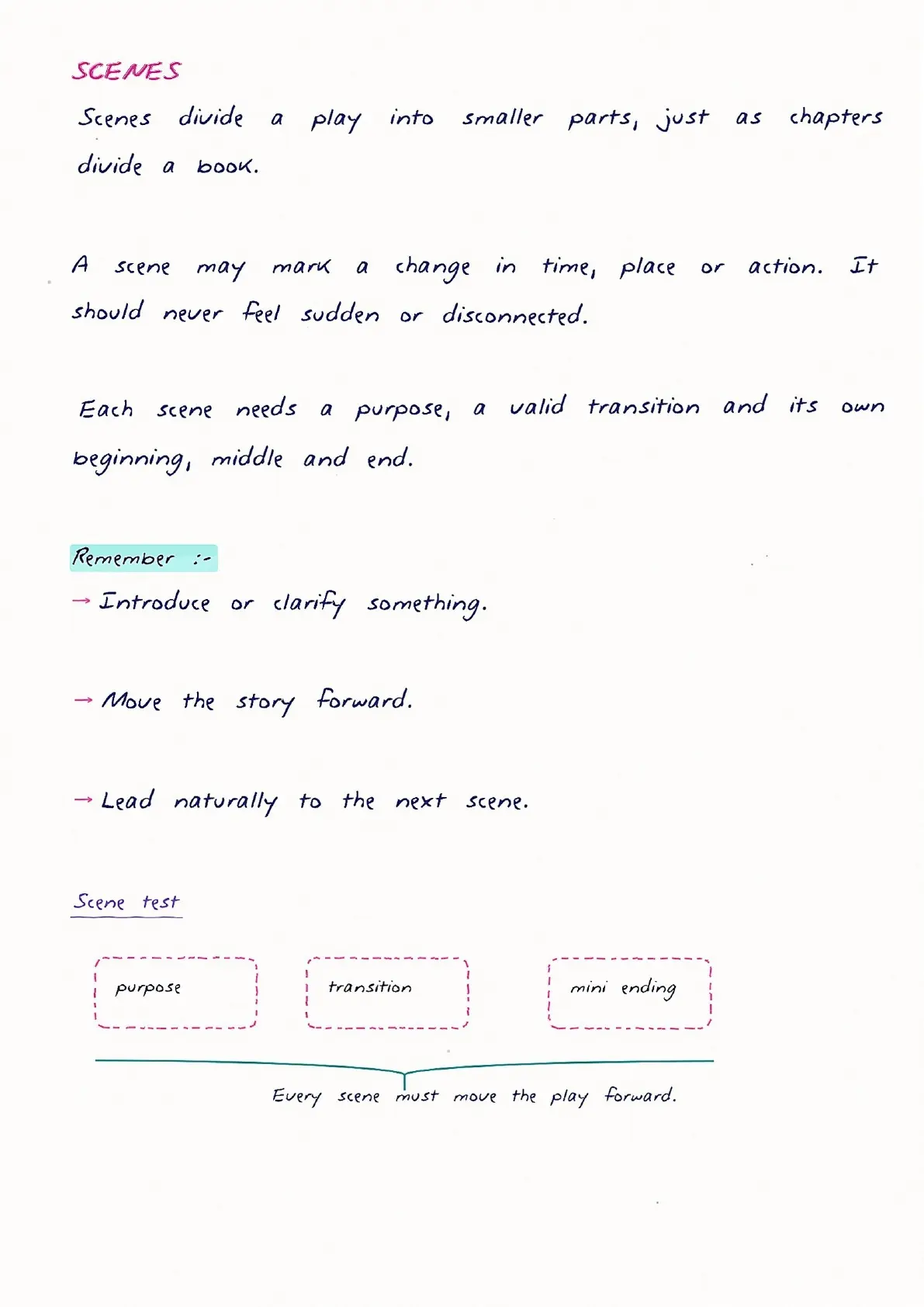
Character arc means the change a character goes through. The Harsha example shows how fear of darkness changes after advice from Ajji. Scenes then divide the play into smaller parts, each with purpose, transition and its own beginning, middle and end.
How to Use These Handwritten Notes for Revision
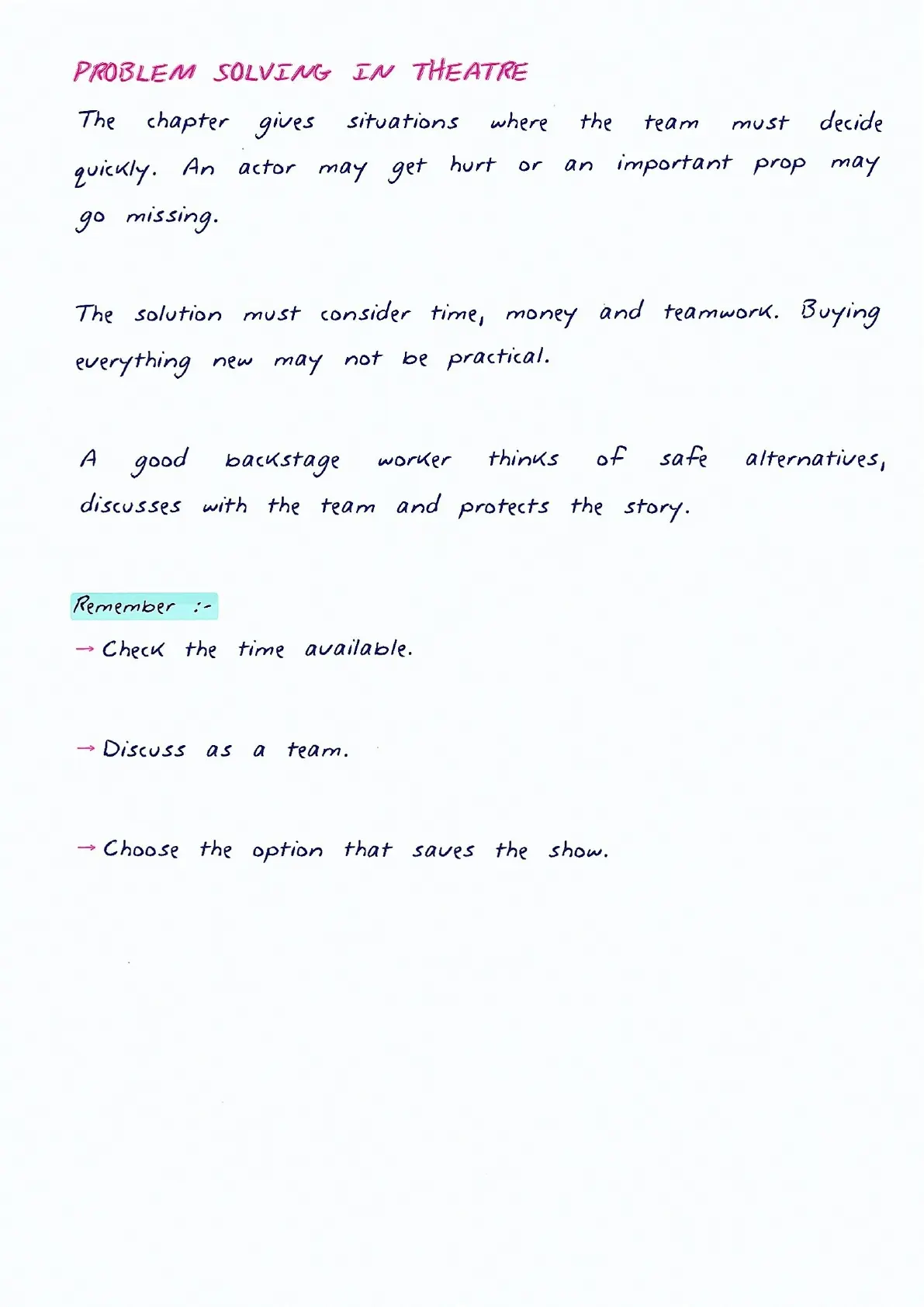
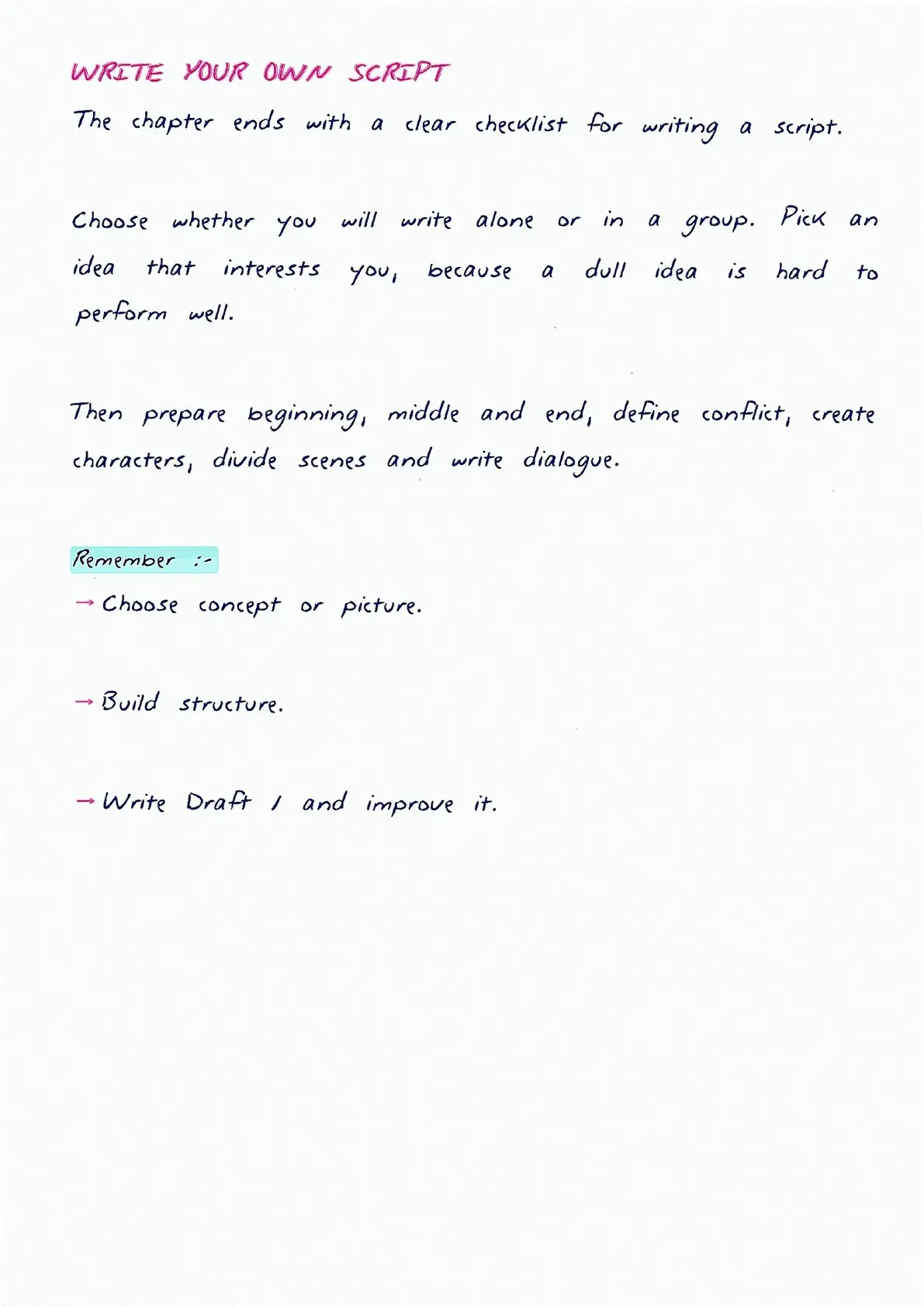
Start with the first ten pages if the test focuses on backstage work. Use the later pages for script-writing questions. For a quick oral revision, ask: who works backstage, what problem do they solve, and how does the script guide them?
- Read one page and say the key term aloud.
- Write one real school-event example for each department.
- Revise protagonist, goal, conflict and resolution through any known story.
Related NCERT Class 7 Arts (Kriti) Resources
| Resource | Link |
|---|---|
| NCERT Book PDF | Class 7 Arts Chapter 3 NCERT Book PDF |
| NCERT Notes | Class 7 Arts Chapter 3 Notes |
| Handwritten Notes | Class 7 Arts Chapter 2 Handwritten Notes |
All Chapters for Class 7 Arts (Kriti) Handwritten Notes
| Chapter | Handwritten Notes |
|---|---|
| Chapter 1 Understanding Emotions | Download Notes |
| Chapter 2 Say More without Speech Mime | Download Notes |
| Chapter 3 Let's Design Stage Technicals 2 | Download Notes |
FAQs on NCERT Class 7 Arts Chapter 3 Handwritten Notes
Ques. What is backstage work in Class 7 Arts Chapter 3?
Ans. Backstage work is the planning and support done behind the stage. It includes sets, props, costumes, make up, music, lights and quick problem solving.
Ques. What are the main parts of script structure?
Ans. The main parts are protagonist, goal, conflict and resolution. These four points help students arrange story events in a clear order.
Ques. Why are these handwritten notes useful for revision?
Ans. The notes convert the chapter into short handwritten pages, tables, flow points and quick recap cues. Students can revise backstage and script-writing topics faster.
Ques. Which life skills are covered in Stage Technicals 2?
Ans. The chapter covers teamwork, leadership, communication, resource management, time management, discipline and commitment through theatre practice.



Comments