



The handwritten notes on Class 7 Vocational Education Chapter 5 Storytime with Puppets help students revise the 2026-27 Kaushal Bodh project quickly. The PDF covers storytelling, script writing, puppet-making, stage design, voice, sound, light, rehearsal and feedback.
- Best use: revise the puppet show project before writing the script or rehearsing the final show.
- PDF focus: story selection, character sketch, puppet types, props, stage, backdrop and show checklist.
- Revision style: topper's handwritten notes with short points, flow charts and hand-drawn project diagrams.
Chapter5StorytimewithPuppetsHandwrittenNotes.compressed.pdf?page=1&dpi=150)
Chapter5StorytimewithPuppetsHandwrittenNotes.compressed.pdf?page=2&dpi=150)
Chapter5StorytimewithPuppetsHandwrittenNotes.compressed.pdf?page=3&dpi=150)
Chapter5StorytimewithPuppetsHandwrittenNotes.compressed.pdf?page=4&dpi=150)
Chapter5StorytimewithPuppetsHandwrittenNotes.compressed.pdf?page=5&dpi=150)
Chapter5StorytimewithPuppetsHandwrittenNotes.compressed.pdf?page=6&dpi=150)
Chapter5StorytimewithPuppetsHandwrittenNotes.compressed.pdf?page=7&dpi=150)
Chapter5StorytimewithPuppetsHandwrittenNotes.compressed.pdf?page=8&dpi=150)
Chapter5StorytimewithPuppetsHandwrittenNotes.compressed.pdf?page=9&dpi=150)
Chapter5StorytimewithPuppetsHandwrittenNotes.compressed.pdf?page=10&dpi=150)
Chapter5StorytimewithPuppetsHandwrittenNotes.compressed.pdf?page=11&dpi=150)
Chapter5StorytimewithPuppetsHandwrittenNotes.compressed.pdf?page=12&dpi=150)
Chapter5StorytimewithPuppetsHandwrittenNotes.compressed.pdf?page=13&dpi=150)
Chapter5StorytimewithPuppetsHandwrittenNotes.compressed.pdf?page=14&dpi=150)
Chapter5StorytimewithPuppetsHandwrittenNotes.compressed.pdf?page=15&dpi=150)
Chapter5StorytimewithPuppetsHandwrittenNotes.compressed.pdf?page=16&dpi=150)
Chapter5StorytimewithPuppetsHandwrittenNotes.compressed.pdf?page=17&dpi=150)
Chapter5StorytimewithPuppetsHandwrittenNotes.compressed.pdf?page=18&dpi=150)
Chapter5StorytimewithPuppetsHandwrittenNotes.compressed.pdf?page=19&dpi=150)
Chapter5StorytimewithPuppetsHandwrittenNotes.compressed.pdf?page=20&dpi=150)
Chapter5StorytimewithPuppetsHandwrittenNotes.compressed.pdf?page=21&dpi=150)
Chapter5StorytimewithPuppetsHandwrittenNotes.compressed.pdf?page=22&dpi=150)
Chapter5StorytimewithPuppetsHandwrittenNotes.compressed.pdf?page=23&dpi=150)
Chapter5StorytimewithPuppetsHandwrittenNotes.compressed.pdf?page=24&dpi=150)
Chapter5StorytimewithPuppetsHandwrittenNotes.compressed.pdf?page=25&dpi=150)
Chapter5StorytimewithPuppetsHandwrittenNotes.compressed.pdf?page=26&dpi=150)
Chapter5StorytimewithPuppetsHandwrittenNotes.compressed.pdf?page=27&dpi=150)
Chapter5StorytimewithPuppetsHandwrittenNotes.compressed.pdf?page=28&dpi=150)
Chapter5StorytimewithPuppetsHandwrittenNotes.compressed.pdf?page=29&dpi=150)
Chapter5StorytimewithPuppetsHandwrittenNotes.compressed.pdf?page=30&dpi=150)
Chapter5StorytimewithPuppetsHandwrittenNotes.compressed.pdf?page=31&dpi=150)
Chapter5StorytimewithPuppetsHandwrittenNotes.compressed.pdf?page=32&dpi=150)
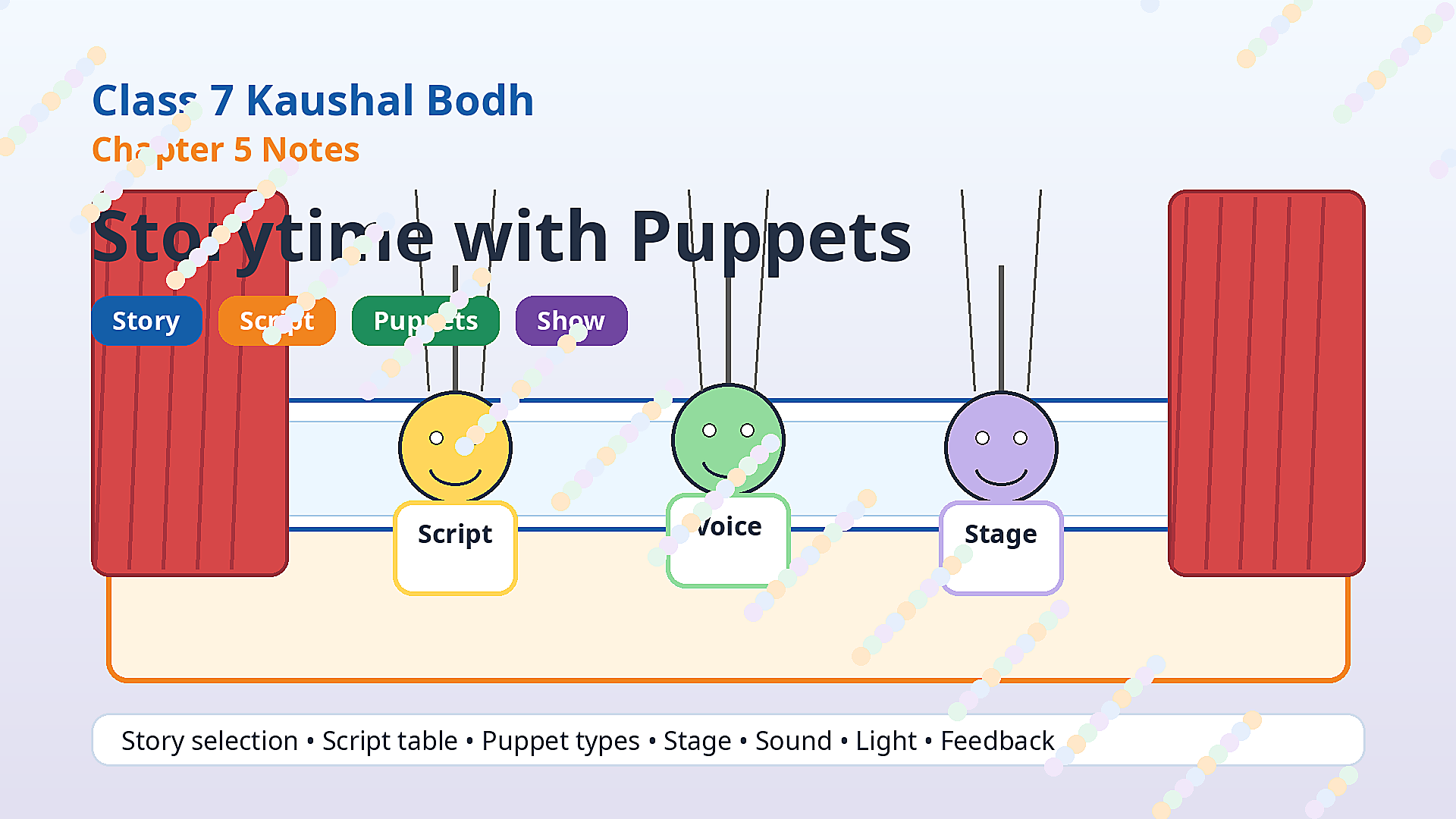
These handwritten revision notes follow the 2026-27 NCERT Kaushal Bodh Storytime with Puppets chapter and keep the full puppet show workflow easy to revise.
Student Feedback: In a Collegedunia classroom check of 11,700 middle-school students, students found Storytime with Puppets easier after revising it as a step-by-step show plan.
Storytime with Puppets Handwritten Notes Overview
Storytime with Puppets is Project 5 in Class 7 Kaushal Bodh. It teaches students how to convert a short story into a puppet show using a script, puppets, stage, backdrop, props, sound, light and teamwork.
The handwritten PDF turns the full project into quick revision pages. It is useful before selecting a story, filling the NCERT activity tables, making puppets or rehearsing for Kaushal Mela.
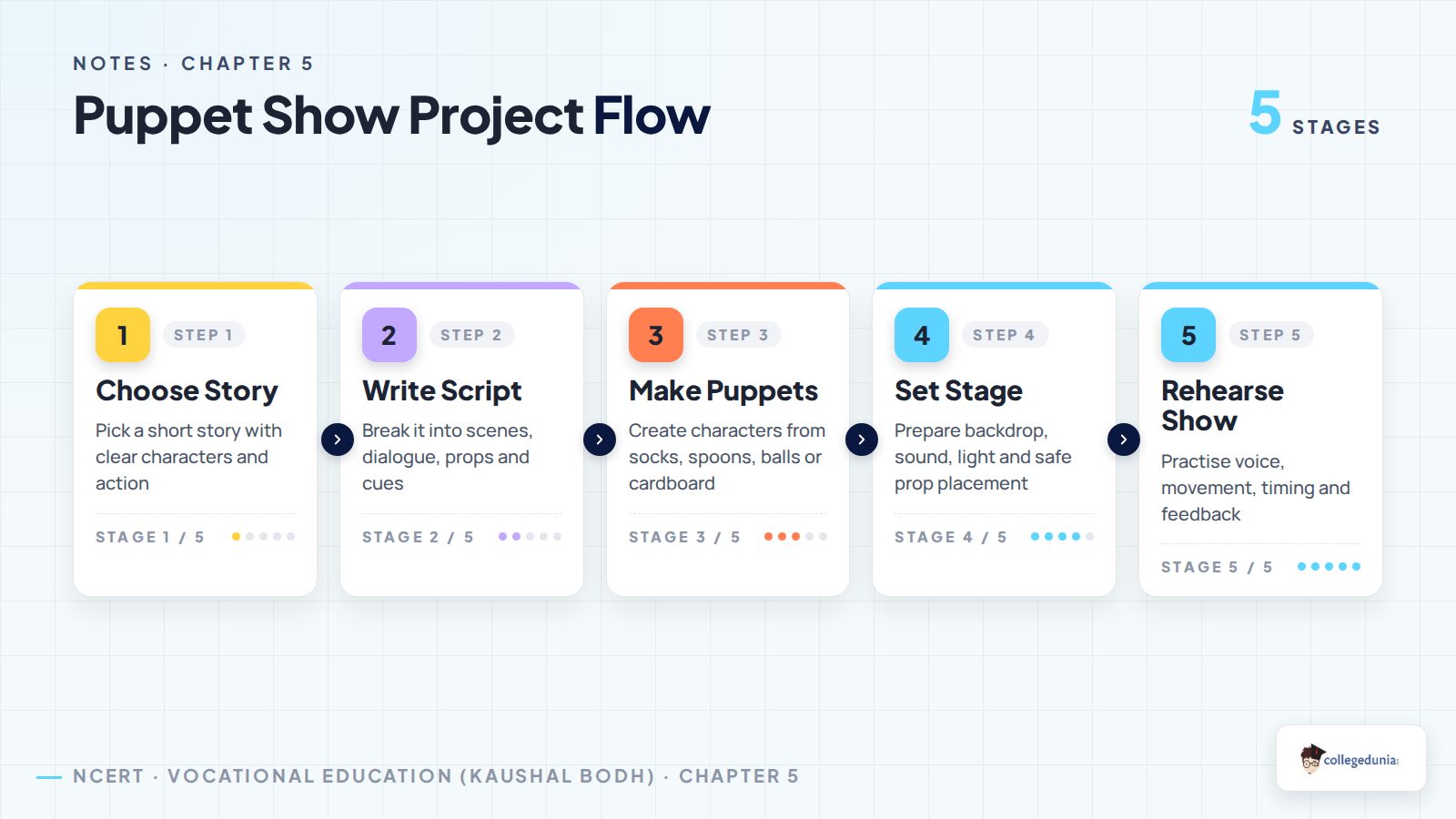
- Project order: choose story, write script, make puppets, rehearse and perform.
- Key materials: cloth, cardboard, socks, spoons, balls, leaves, sticks, glue, thread and colours.
- Safety focus: use tools carefully, keep work stored safely and respect people's feelings.
- The show works best when movement, voice and story support one another.
Storytelling and Puppetry Basics
Storytelling can happen through oral narration, songs, paintings, theatre, cinema, animation and puppetry. The chapter mentions traditions such as Baul songs, Dastangoi, Katha, Kavad, Yakshagana and Ram Leela.
Puppetry is the art of moving puppets by hand, rods or strings to narrate a story. A sock with stitched eyes can become a puppet when a puppeteer moves it and gives it a voice.
- Puppets can help share sensitive social messages in a friendly way.
- A puppet show can be performed by a small team with simple materials.
- Students should observe puppet movement, dress, stage, backdrop, sound and light.
- Voice modulation helps each puppet feel like a different character.
Storytime with Puppets Revision Video
Source: NCERT Hindi Tutor on YouTube
Script, Character Sketch and Puppet Types
A puppet show script records scenes, characters, dialogues, emotions, movements, props and special effects. The Gopal and the Hilsa Fish example shows how a story becomes a scene-wise performance plan.
A character sketch decides how each puppet looks, talks and behaves. Students should decide whether a puppet is cheerful, scared, shy, brave, tall, short or funny before making its face and body.
| Puppet Type | Material | Movement |
|---|---|---|
| Sock puppet | Old sock, wool, stitched eyes and mouth | Worn on hand |
| Spoon or fork puppet | Spoon, fork, husk, paper clothes | Held by handle |
| Ball puppet | Ball, paper face, colours, broomstick | Moved with stick |
| Cardboard puppet | Discarded cardboard and pasted features | Moved with stick or taped broomsticks |
Stage, Voice, Sound and Light Checklist
The final show needs a visible stage, changing backdrops, light props, distinct voices, sound effects, lighting and rehearsed puppeteers. Students can use a table with a bedsheet, a curtain or a frame as the stage.
- Keep puppets hidden but close to the stage before their entry.
- Draw backdrops on chart paper, bedsheet or curtain according to each scene.
- Use light props made from paper, cardboard or aluminium foil.
- Use tapping, bottles, voice and simple instruments for sound effects.
- Use a torch, table lamp, fairy lights or diya safely for light effects.
- Rehearse puppet entry, exit, dialogue timing and cast introduction.
How to Use These Notes for the Project
Use the handwritten notes while filling the NCERT activity tables. They help students remember what to observe in a puppet show, how to write a script and how to prepare the pre-show checklist.
The notes are also useful after the show. Students can revise how to collect show feedback, list cast roles, record time taken and reflect on jobs connected with script writing, puppet making, costume design, voice work, sound and light.
- For Activity 1, revise what makes a story exciting for listeners.
- For Activity 3, revise story title, characters, setting, plot and message.
- For Activity 5, revise character sketch before making puppets.
- For Activity 8, revise the pre-show checklist before performance.
Related Storytime with Puppets Class 7 Resources
Use the links below with the handwritten notes. They help students move from quick revision to the official chapter and sibling resources.
| Resource | Use it for | Link |
|---|---|---|
| NCERT Notes | Read the chapter summary and project points | Open Storytime with Puppets notes |
| NCERT Book PDF | Official chapter text, figures and activity tables | Open book PDF |
| Previous Handwritten Notes | Revise the previous project before Storytime with Puppets | Open AI Assistant notes |
All Class 7 Vocational Education Handwritten Notes
Students revising Kaushal Bodh can move through the handwritten notes chapter by chapter.
| Chapter | Topic | Handwritten notes link |
|---|---|---|
| Chapter 1 | Plant Nursery | Open Chapter 1 notes |
| Chapter 2 | School Habitat Garden | Open Chapter 2 notes |
| Chapter 3 | Tie and Dye | Open Chapter 3 notes |
| Chapter 4 | AI Assistant | Open Chapter 4 notes |
| Chapter 5 | Storytime with Puppets | Current page |
| Chapter 6 | Family Health Handbook | Open Chapter 6 notes |
Storytime with Puppets Class 7 Handwritten Notes FAQs
Ques. What is covered in Storytime with Puppets handwritten notes?
Ans. The notes cover storytelling, puppetry, script writing, character sketch, puppet types, stage, props, voice, sound, light, rehearsal and feedback.
Ques. How do these handwritten notes help in the Class 7 project?
Ans. They break the project into short revision pages so students can plan the story, make puppets, rehearse the show and use the final checklist.
Ques. What should a puppet show script include?
Ans. A script should include scenes, characters, dialogue style, puppet movement, props, sound, music and light effects.
Ques. Which puppet types are covered in the chapter?
Ans. The chapter covers sock, spoon, fork, shoe, slipper, ball, vegetable, leaf, cardboard and puppet head designs.



Comments