




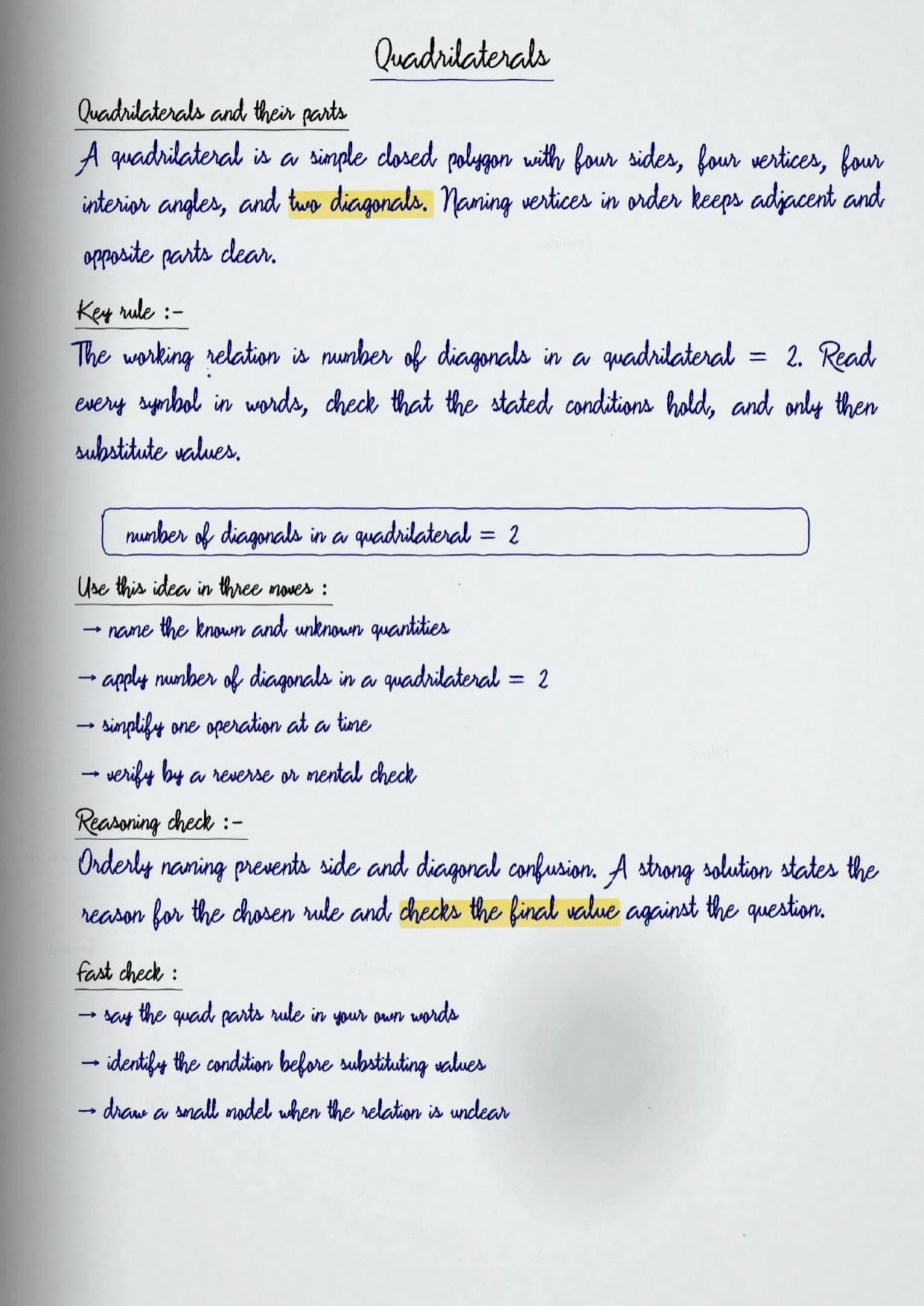
The 2026-27 NCERT keeps Class 8 Mathematics Chapter 4 Quadrilaterals in full for the CBSE course. These class 8 maths handwritten notes chapter 4 Quadrilaterals follow the 2026-27 NCERT and cover what makes a figure a quadrilateral, rectangles and their diagonal properties, squares as special rectangles. This page hosts the notes PDF, key terms, and quick revision points.
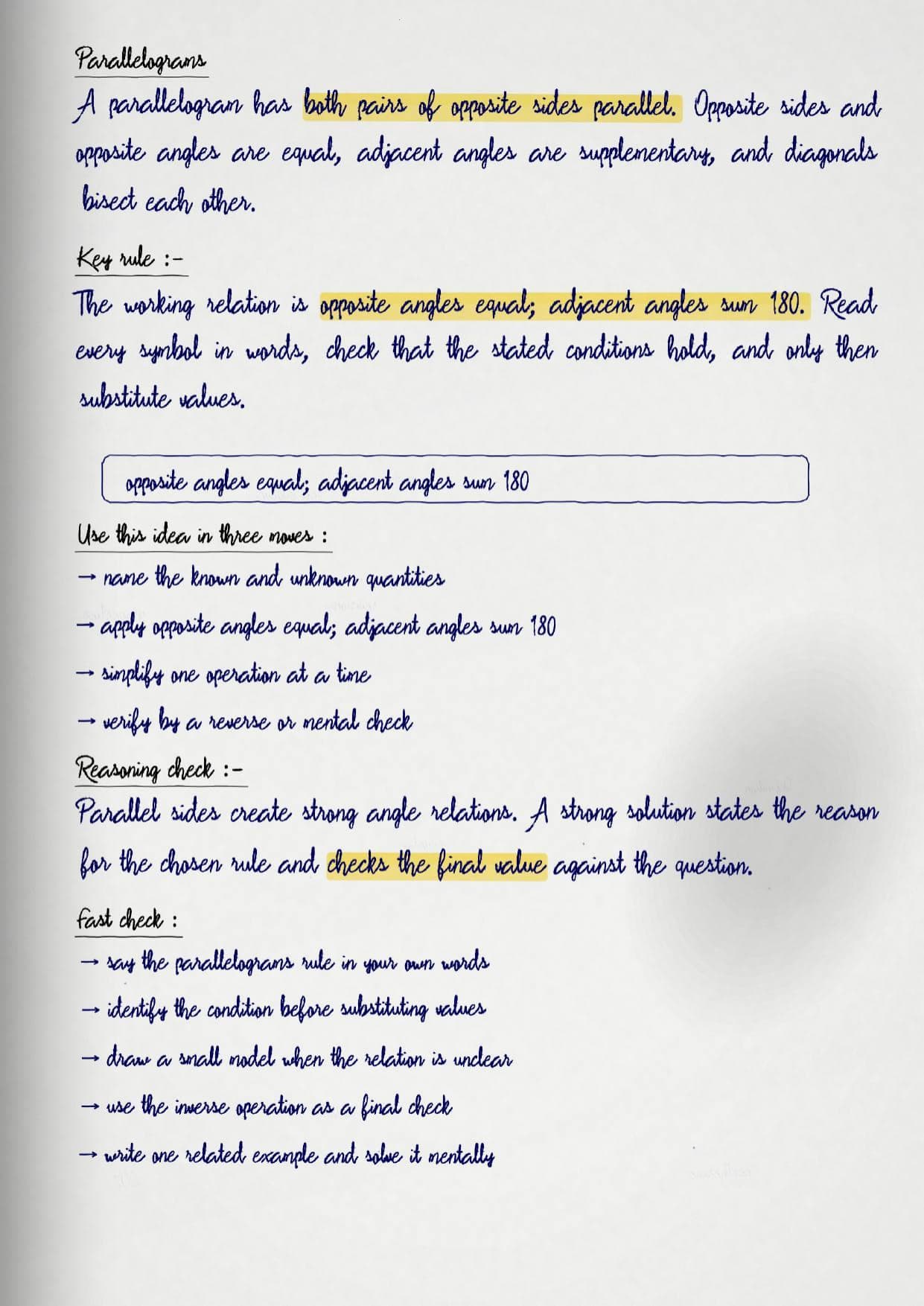
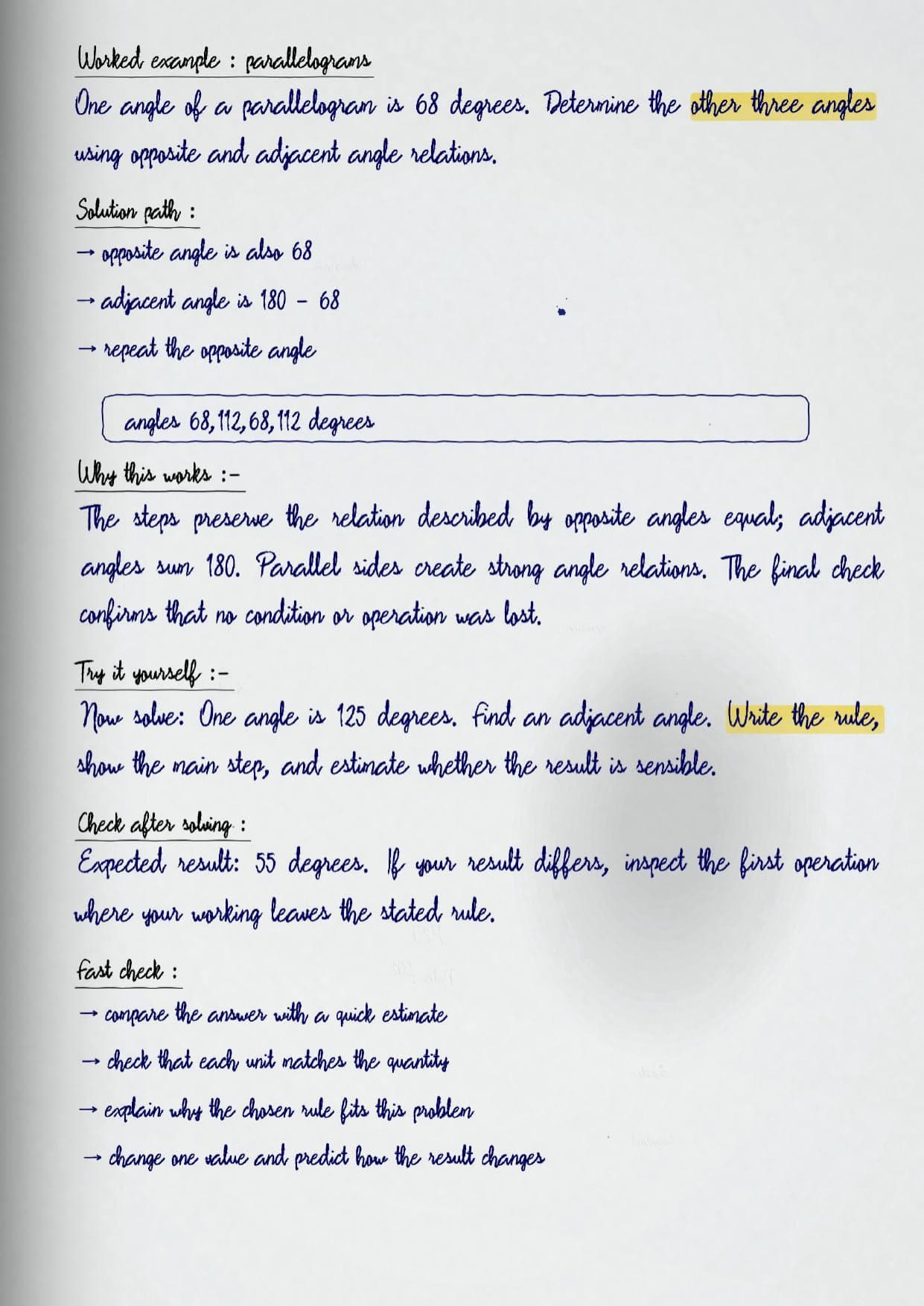
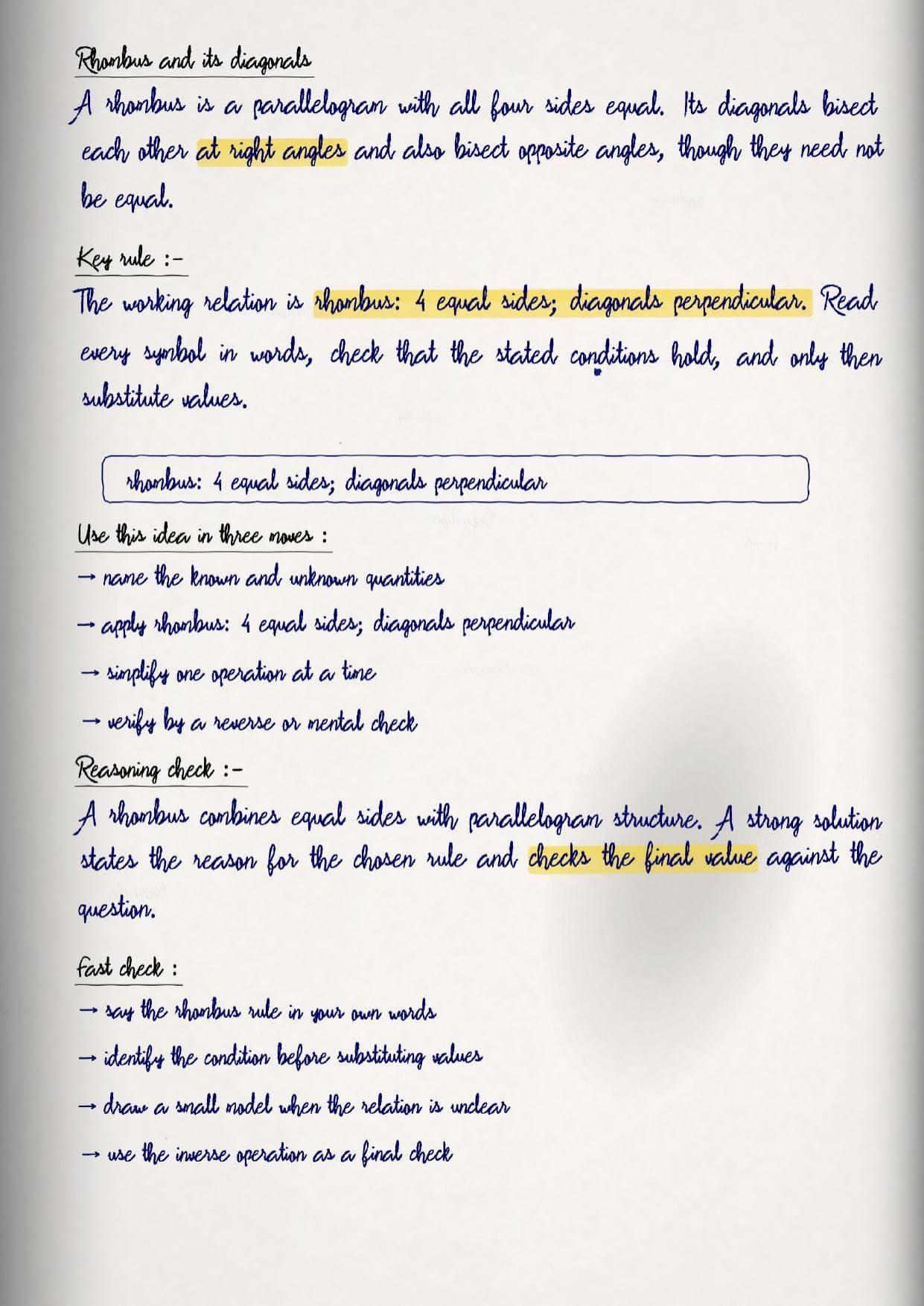
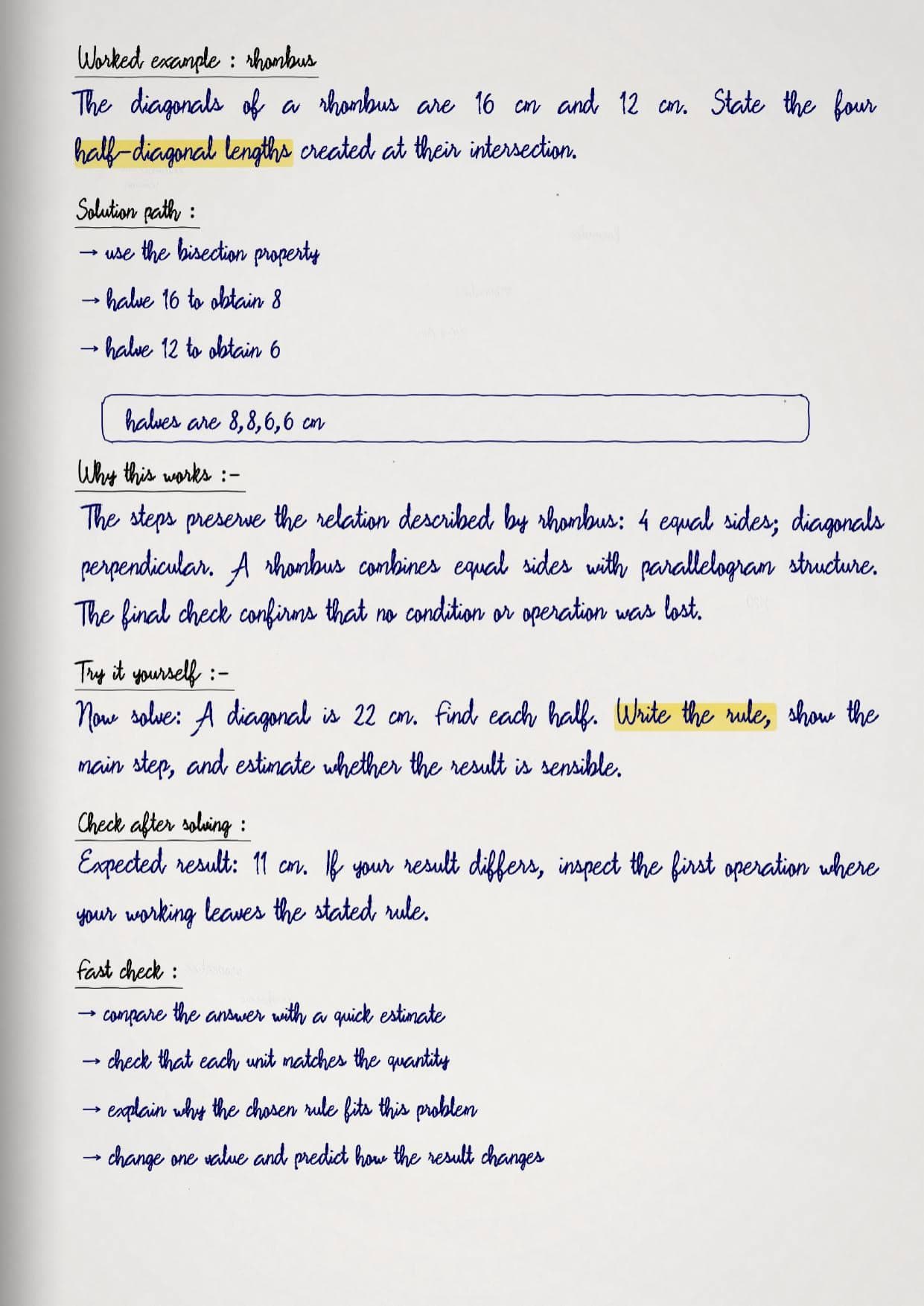
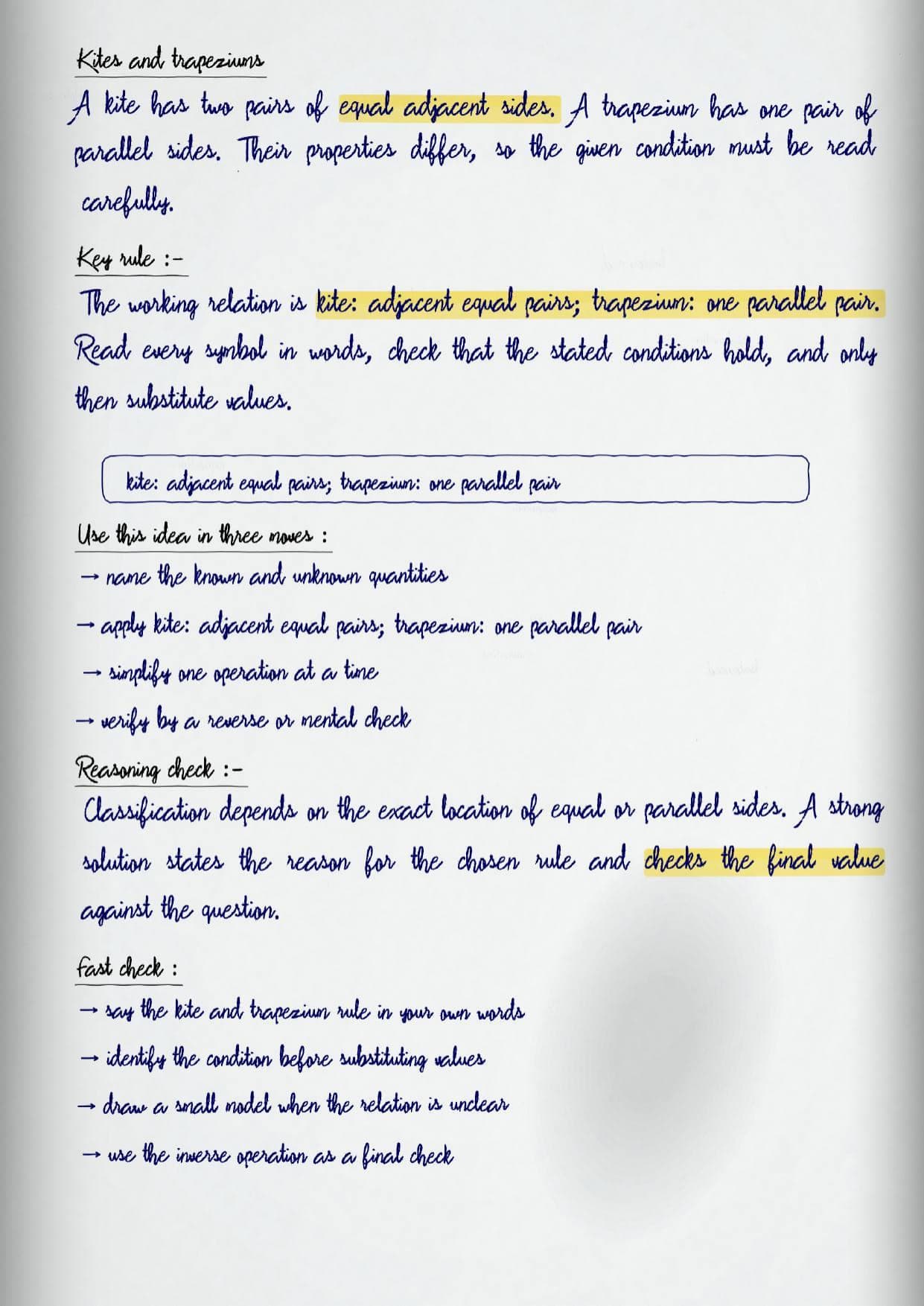
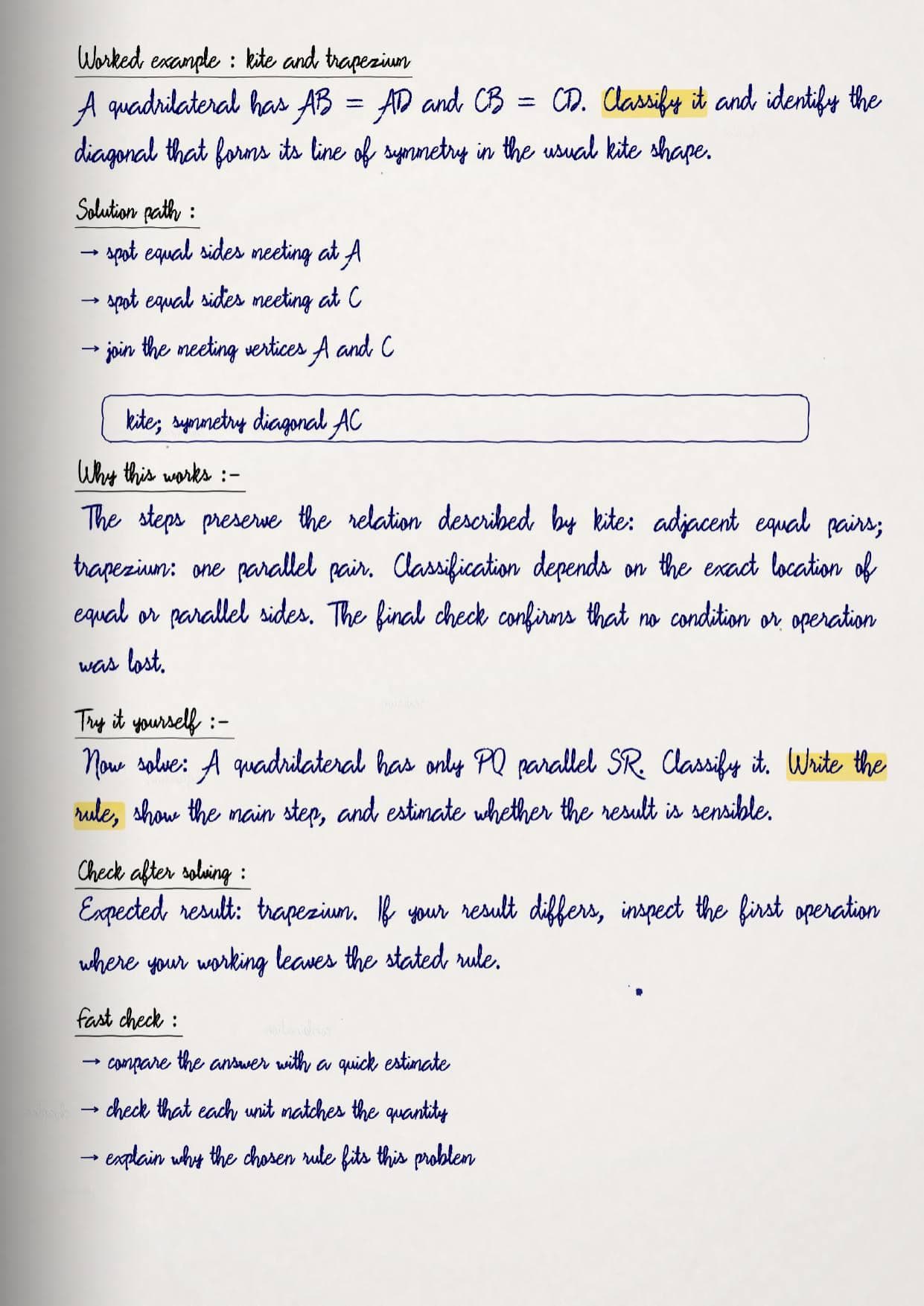
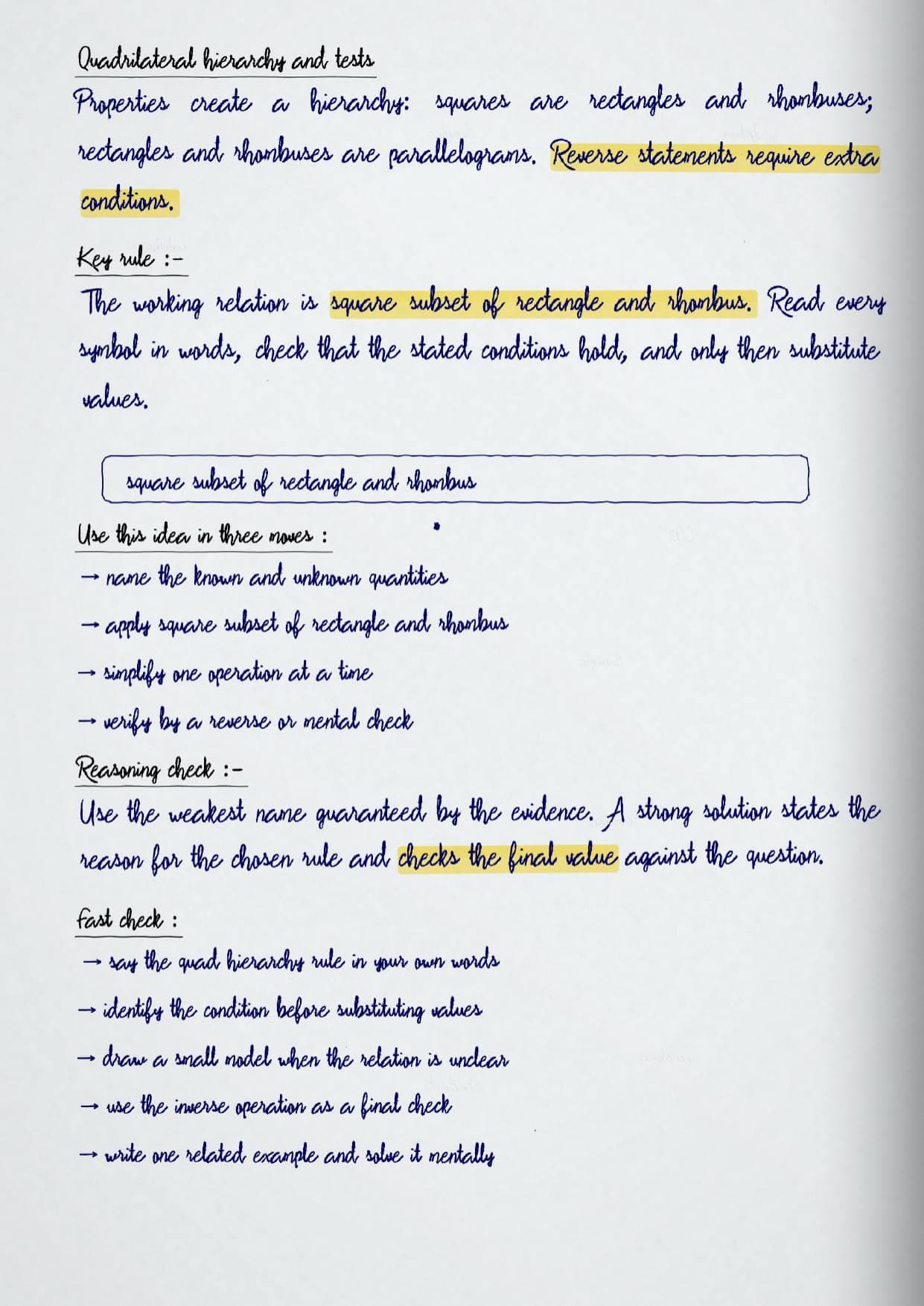
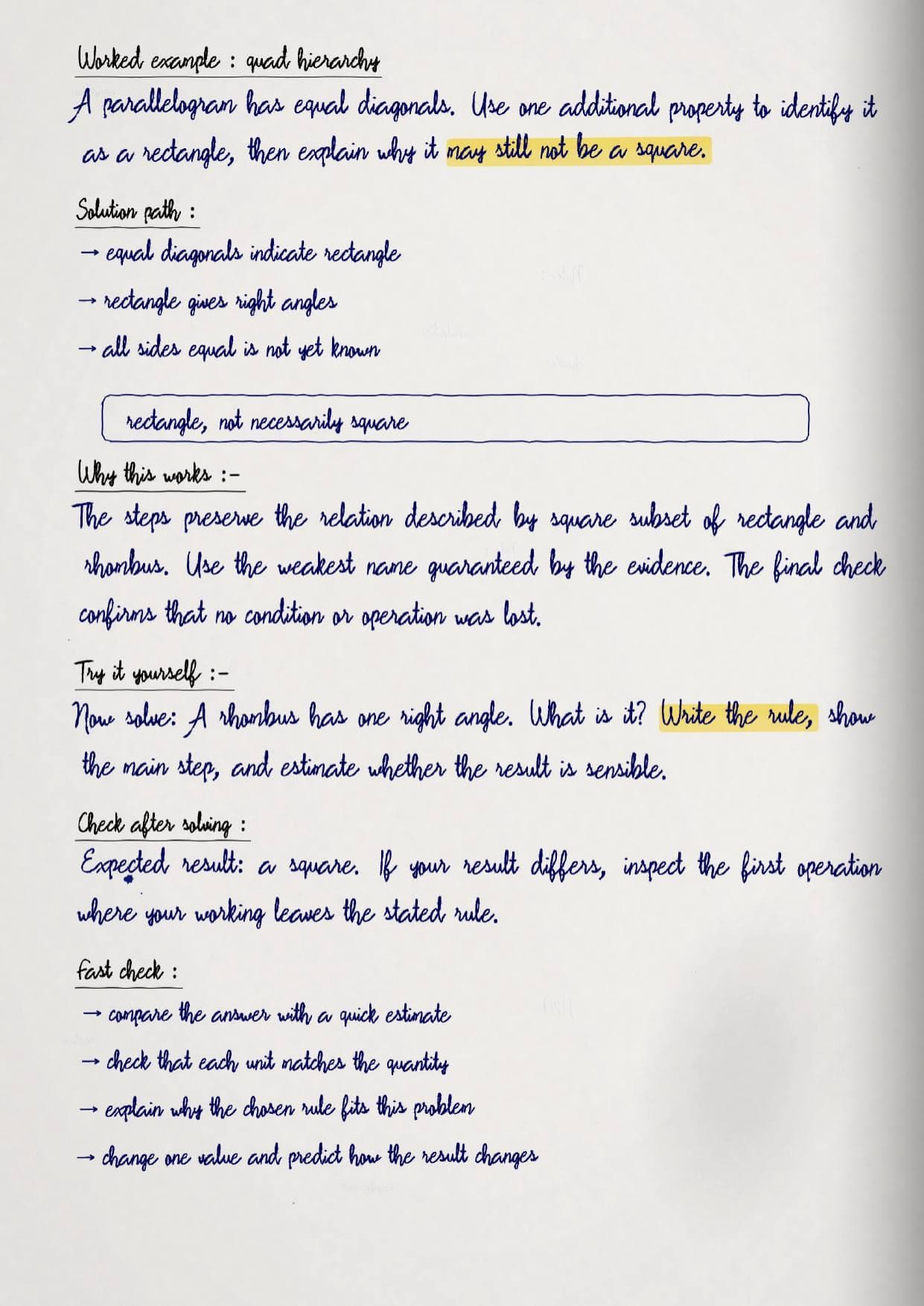
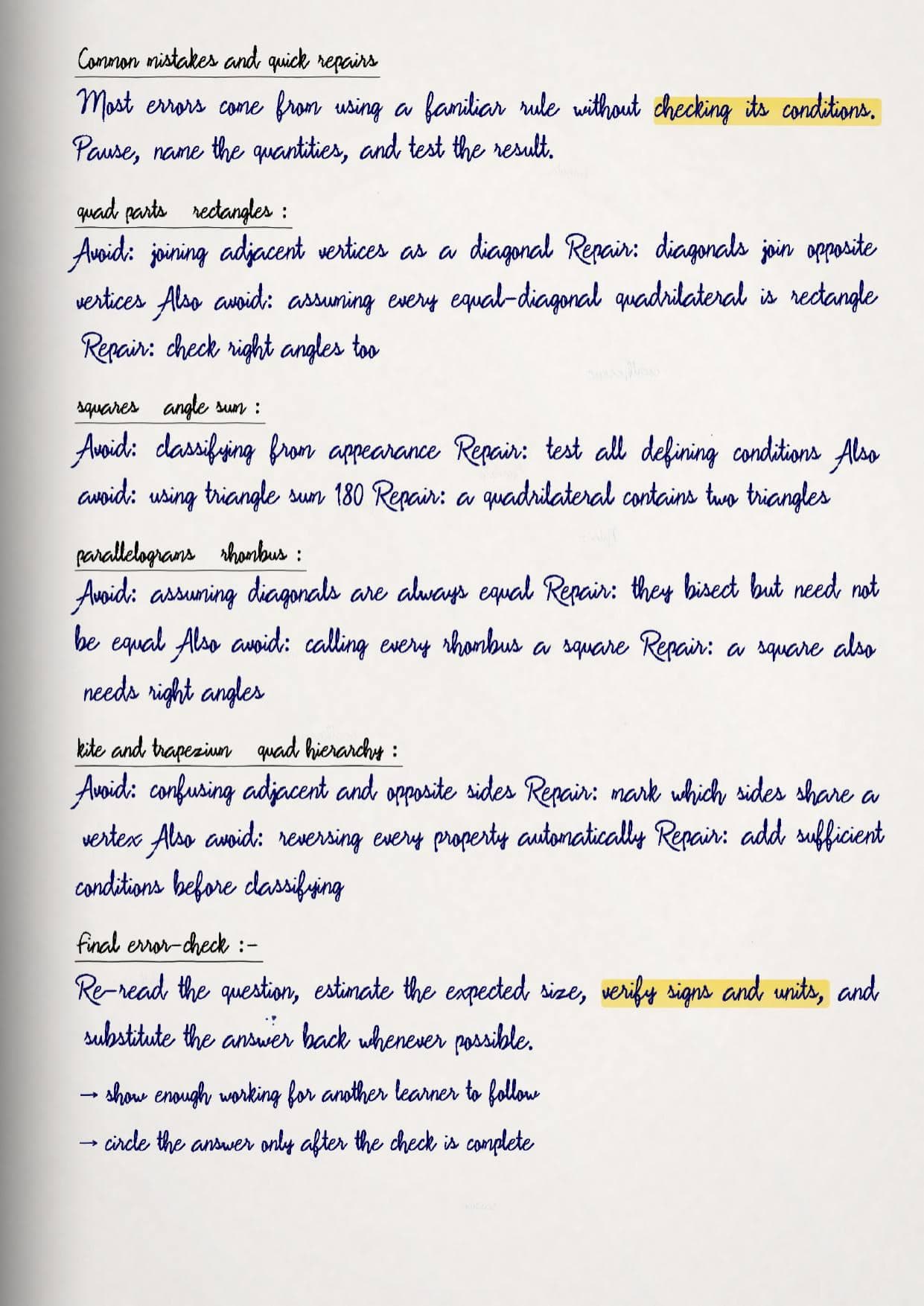
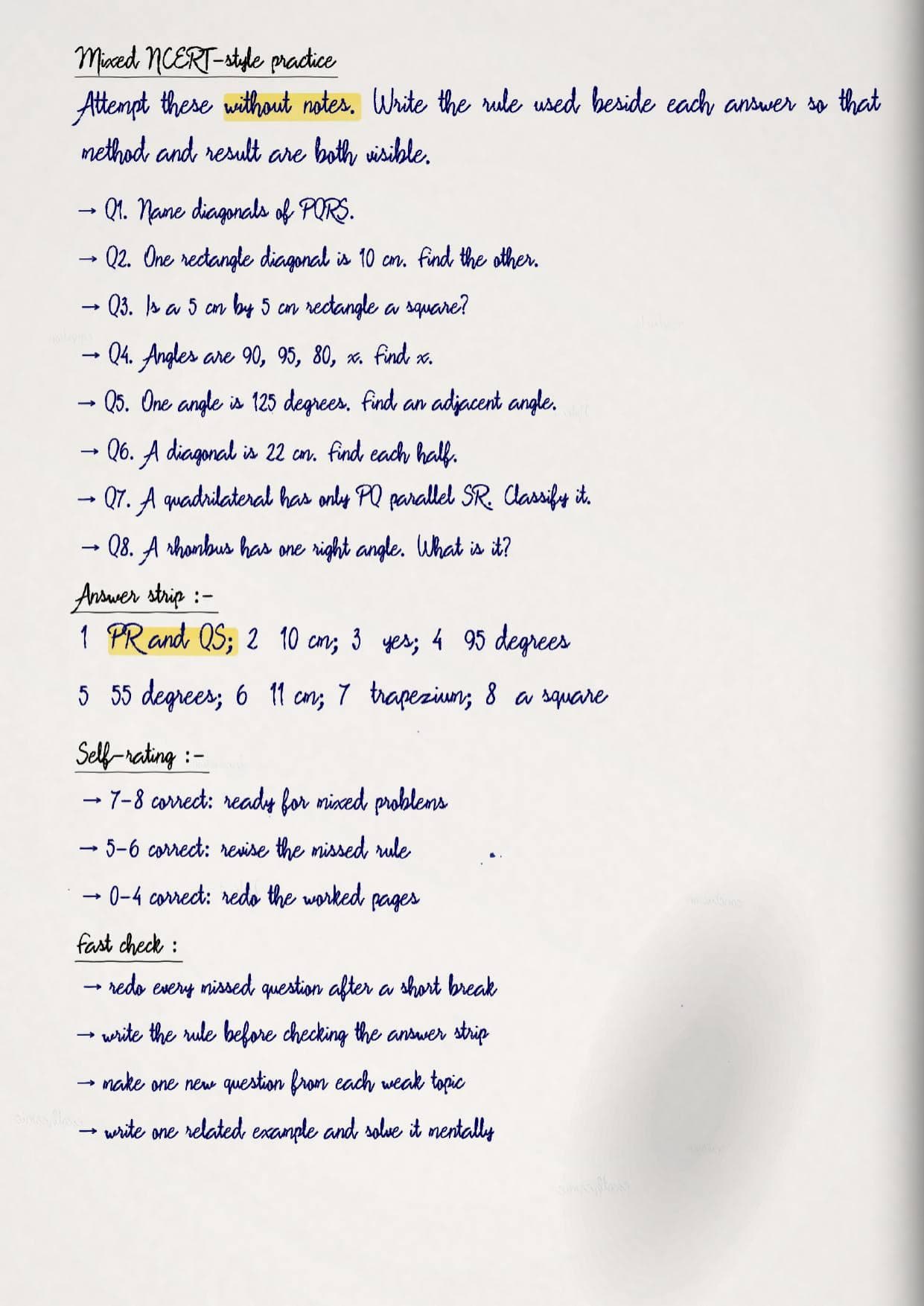
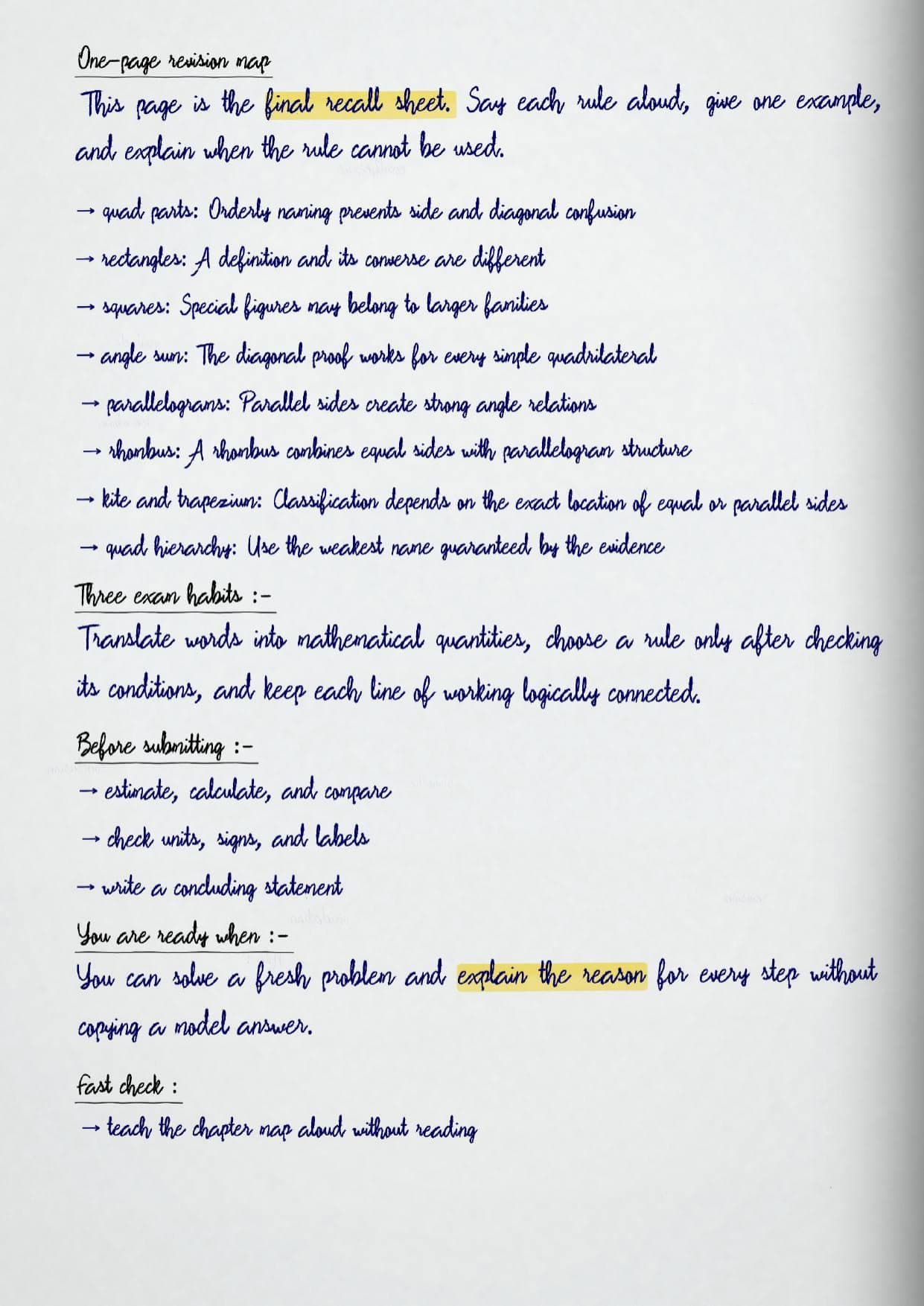
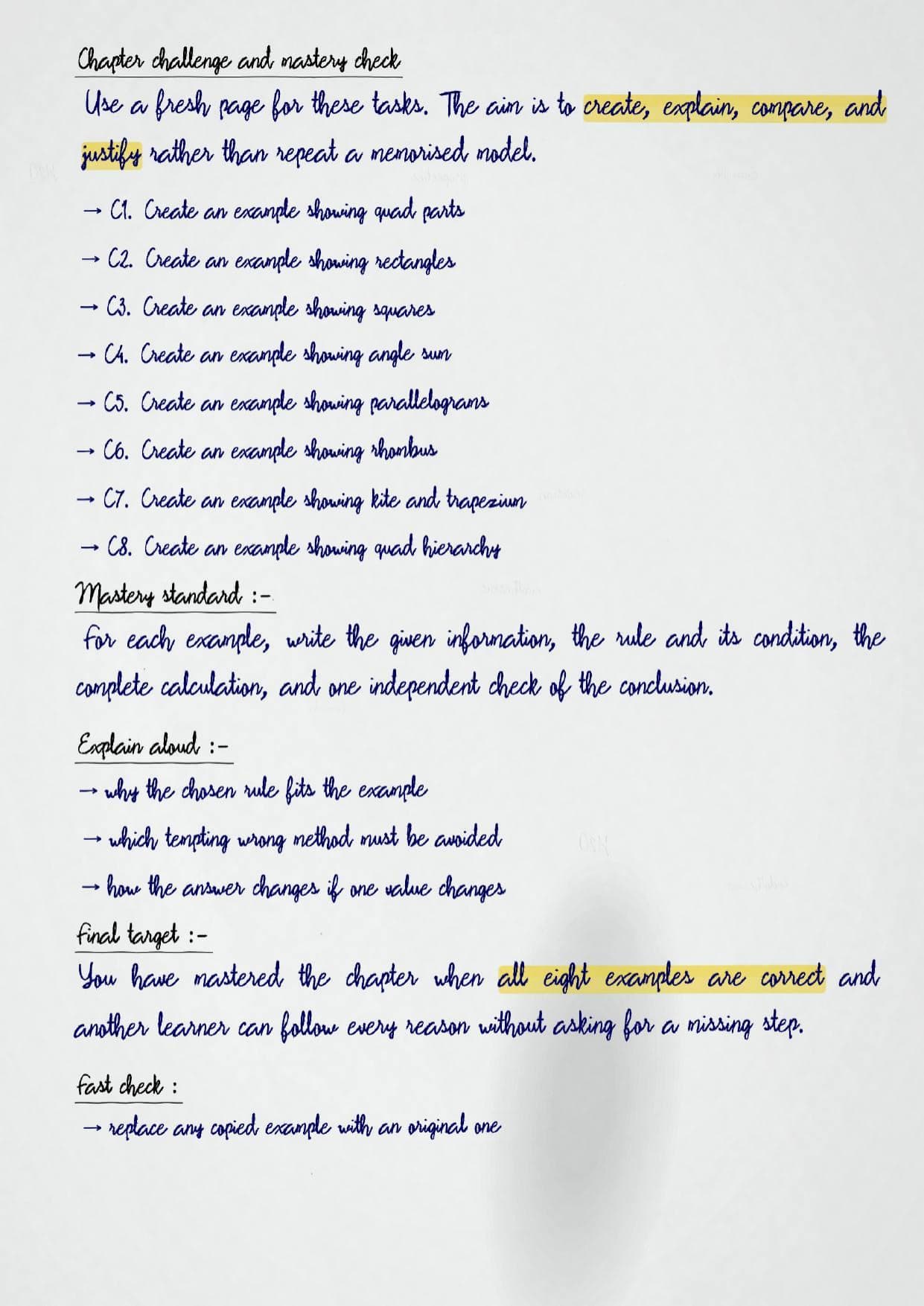
- CBSE Class 8 Weightage: a scoring chapter in the Mathematics paper, asked in short and long answers.
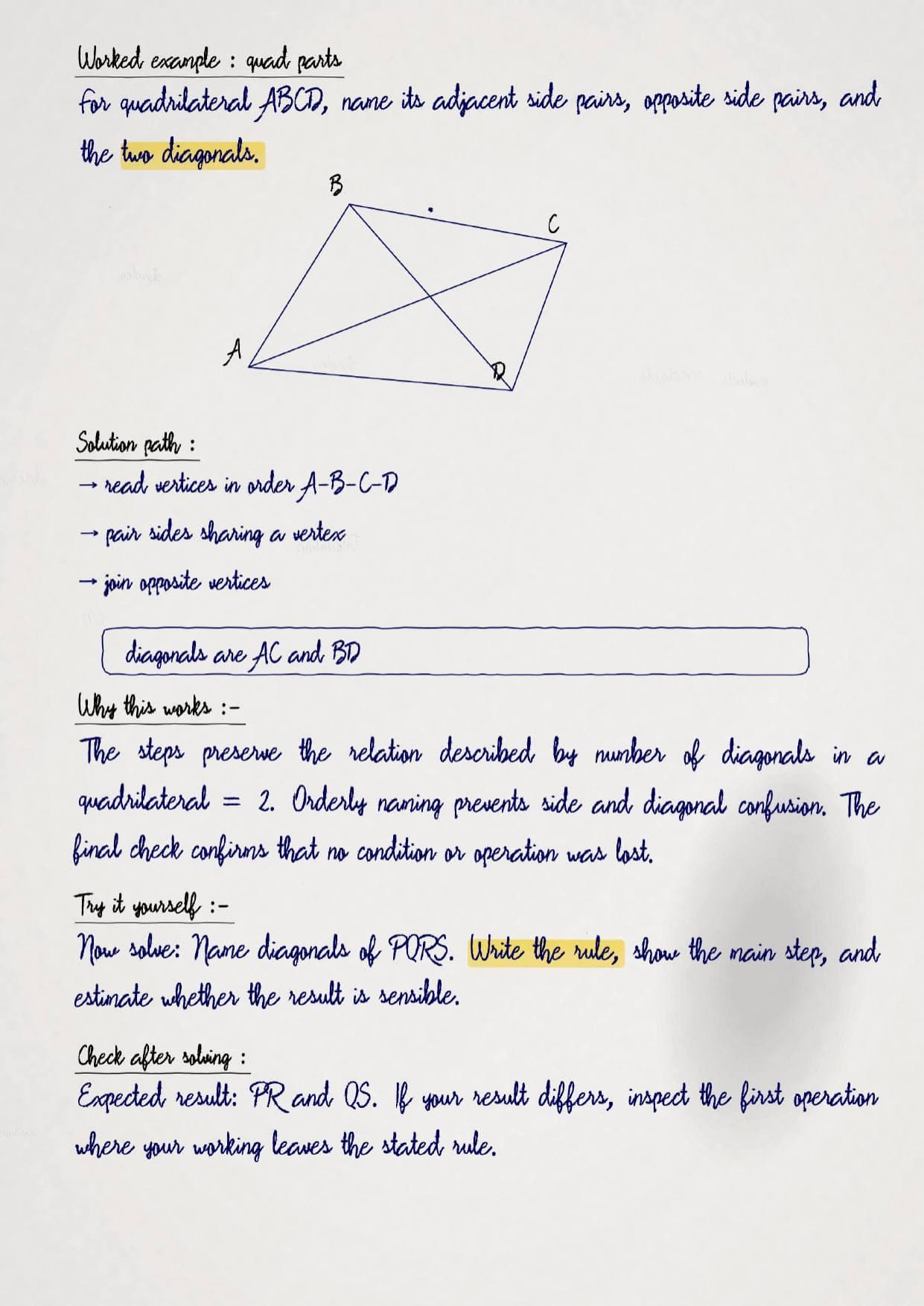
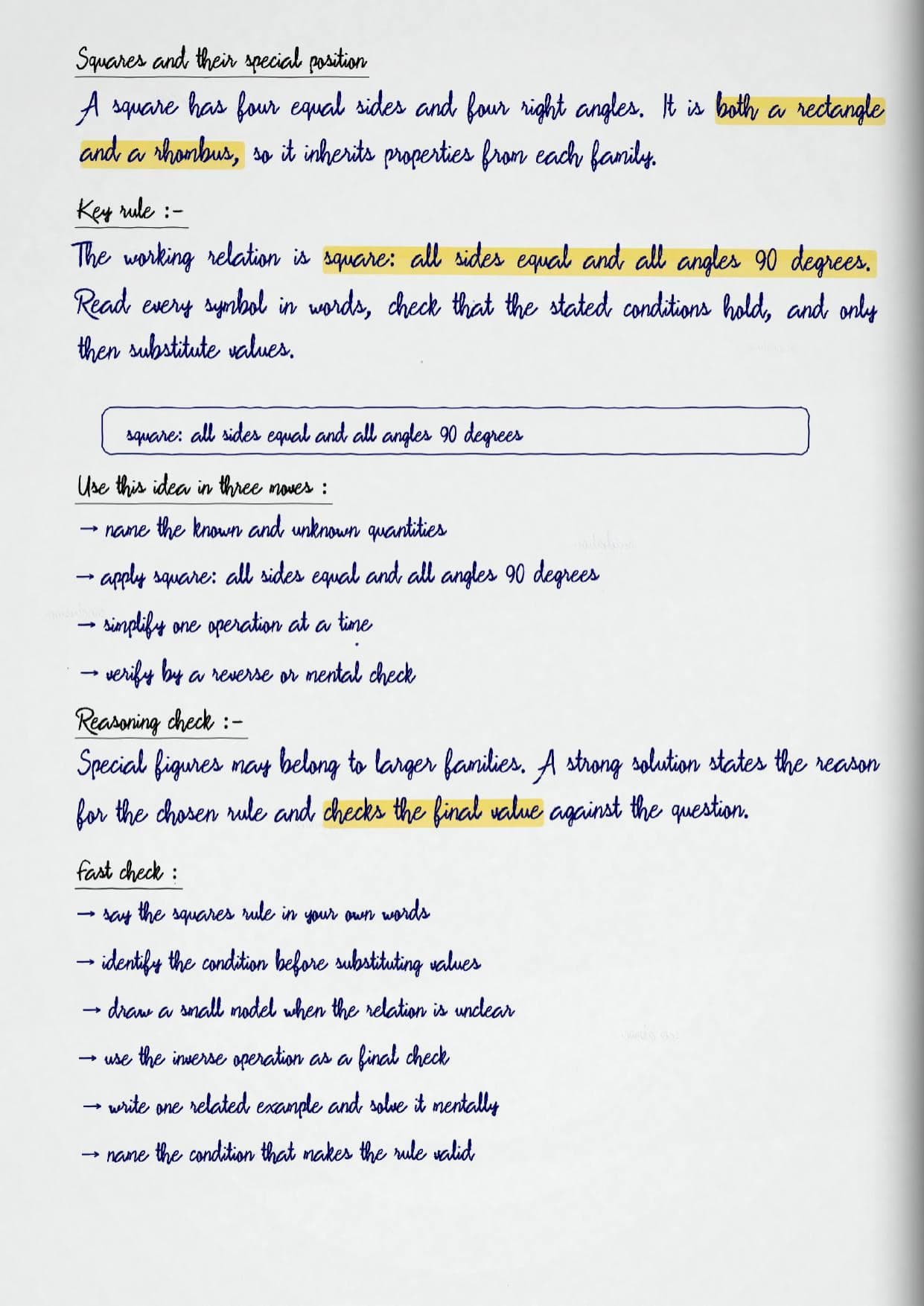
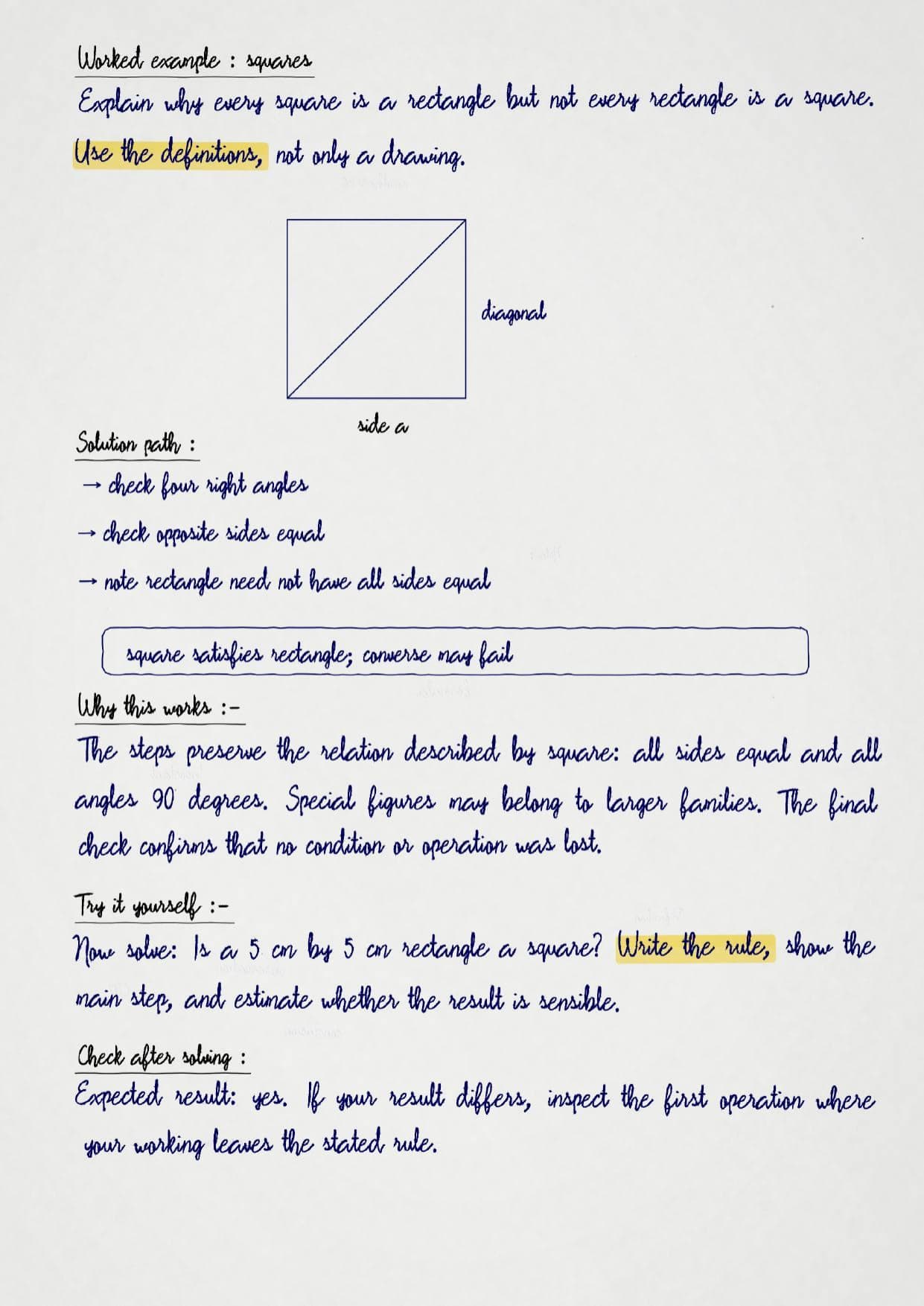
- What the notes cover: what makes a figure a quadrilateral, rectangles and their diagonal properties, squares as special rectangles, the carpenter's diagonal problem.
- Best for: quick revision before Class 8 exams and a strong base for Class 9.
You can read the complete class 8 maths handwritten notes for Quadrilaterals, with key terms, boxed definitions, and quick revision points, in the PDF below.
These handwritten notes are written by subject teachers, mapped to the 2026-27 NCERT, and checked against the last five years of CBSE Class 8 Mathematics papers.
Quadrilaterals Topic-wise Weightage for CBSE Class 8 Mathematics
Some parts of this chapter are asked more often than others. The table below shows which sub-topics to revise first, based on recent CBSE Class 8 question trends.
| Sub-topic | Weightage | CBSE Frequency |
|---|---|---|
| Properties of rectangles and squares | High | asked often |
| Properties of parallelograms | High | asked often |
| Angle sum of a quadrilateral | High | asked often |
| Diagonals of special quadrilaterals | Medium | asked sometimes |
| Rhombus and its angles | Medium | asked sometimes |
| Venn diagram relations among quadrilaterals | Low | asked rarely |
What the Quadrilaterals Handwritten Notes Cover
This chapter studies four-sided figures called quadrilaterals. You learn the properties of rectangles, squares, parallelograms and rhombuses, and use congruence and angle reasoning to prove why these properties hold.
- What makes a figure a quadrilateral
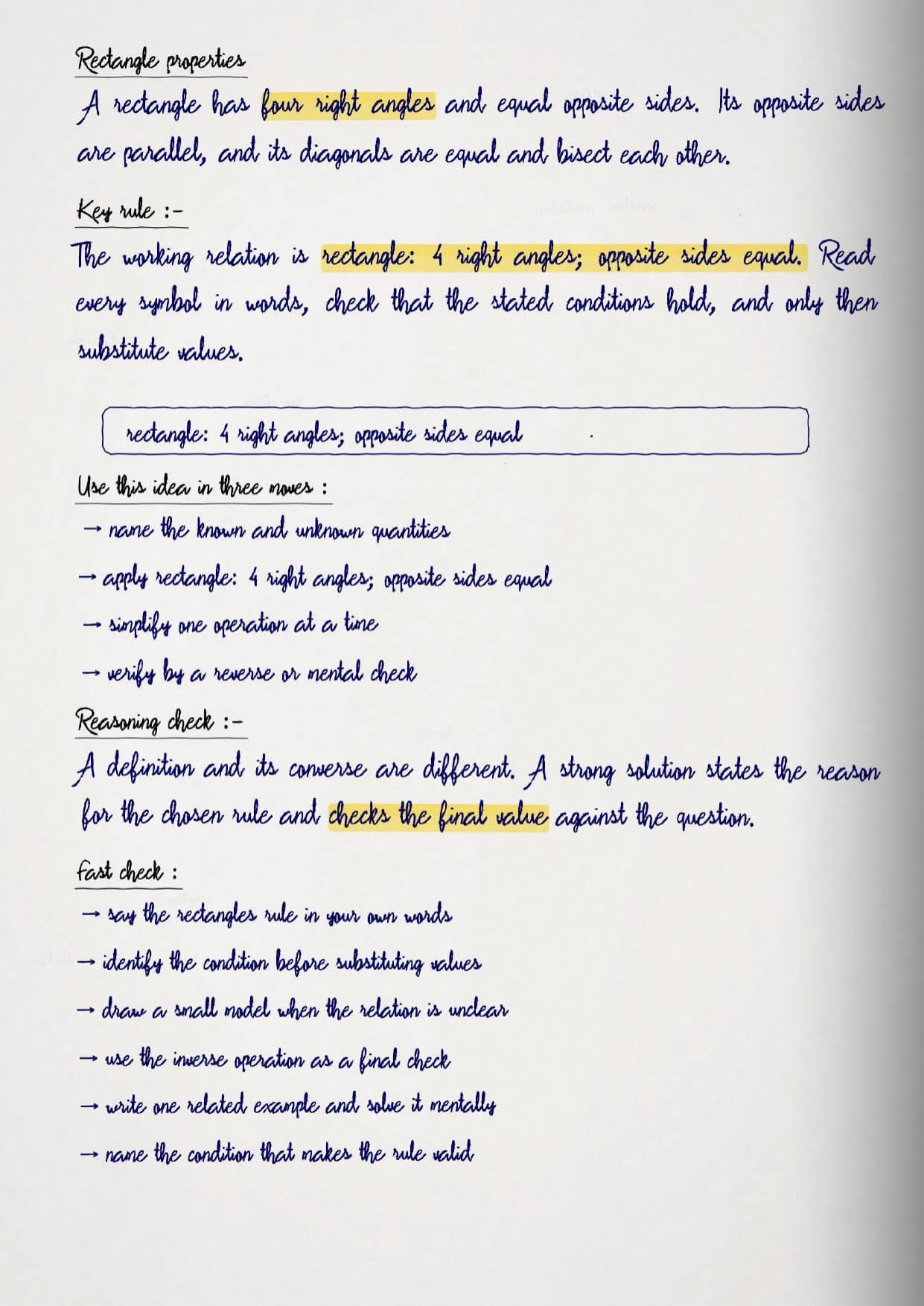
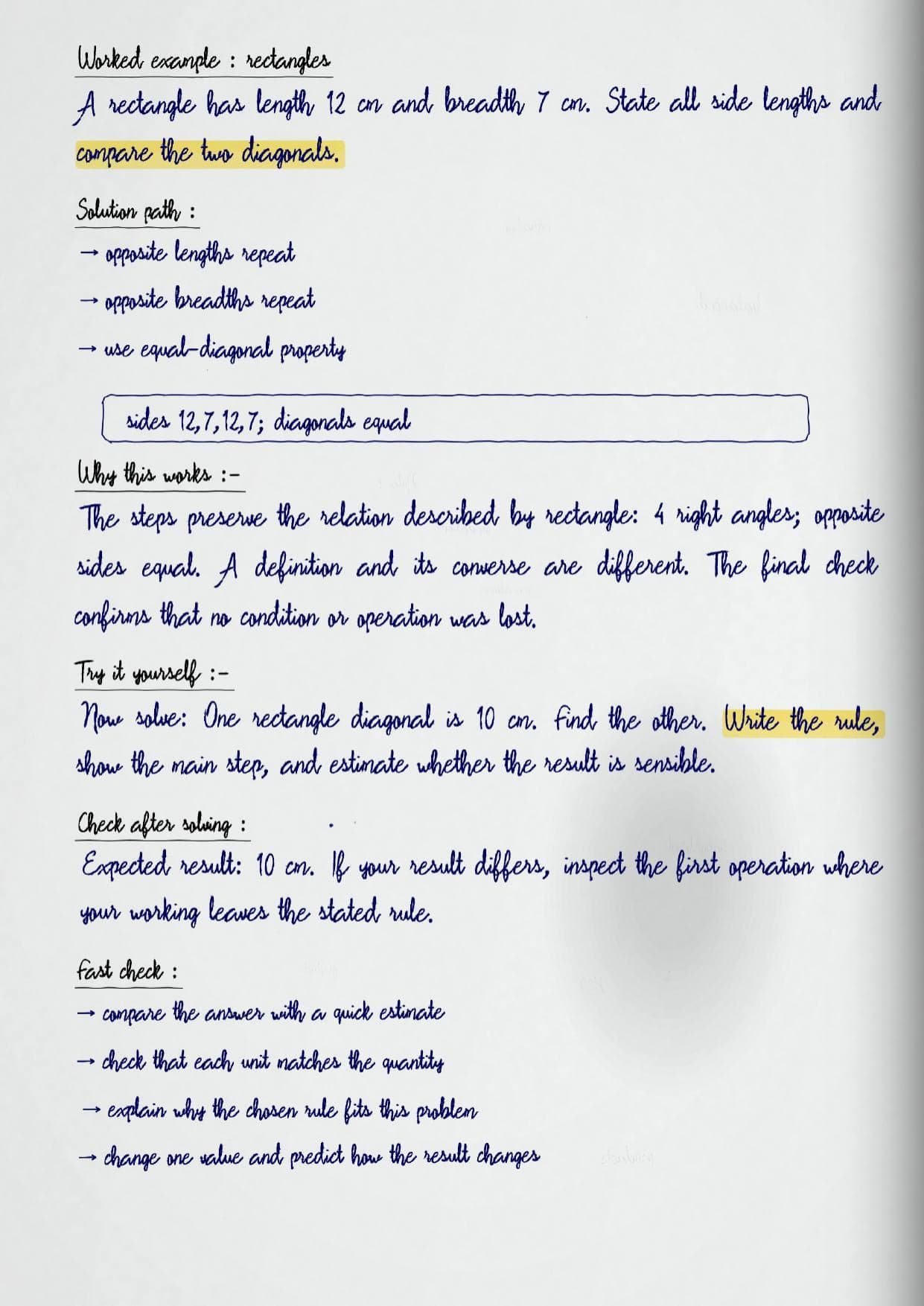
- Rectangles and their diagonal properties
- Squares as special rectangles
- The carpenter's diagonal problem
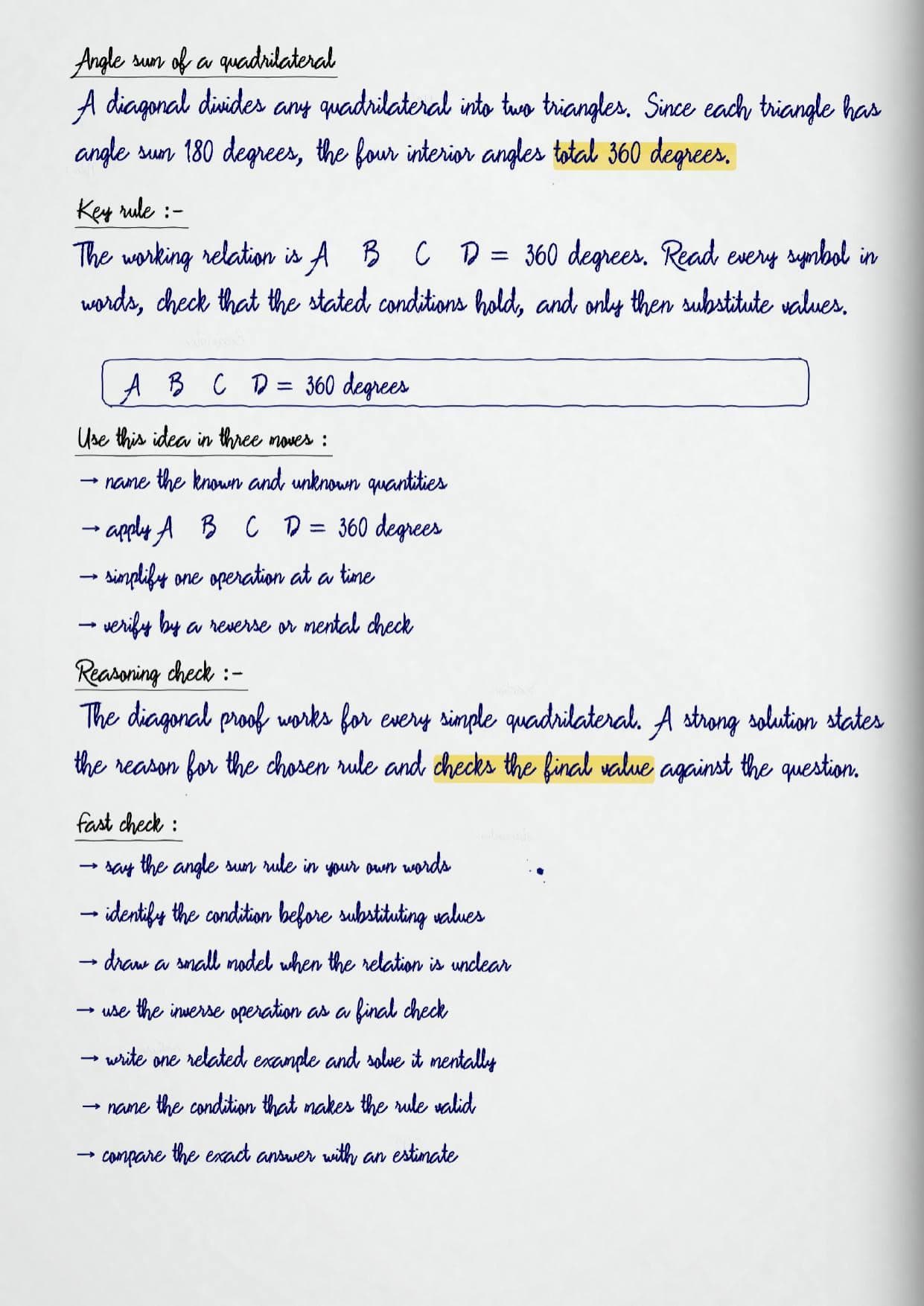
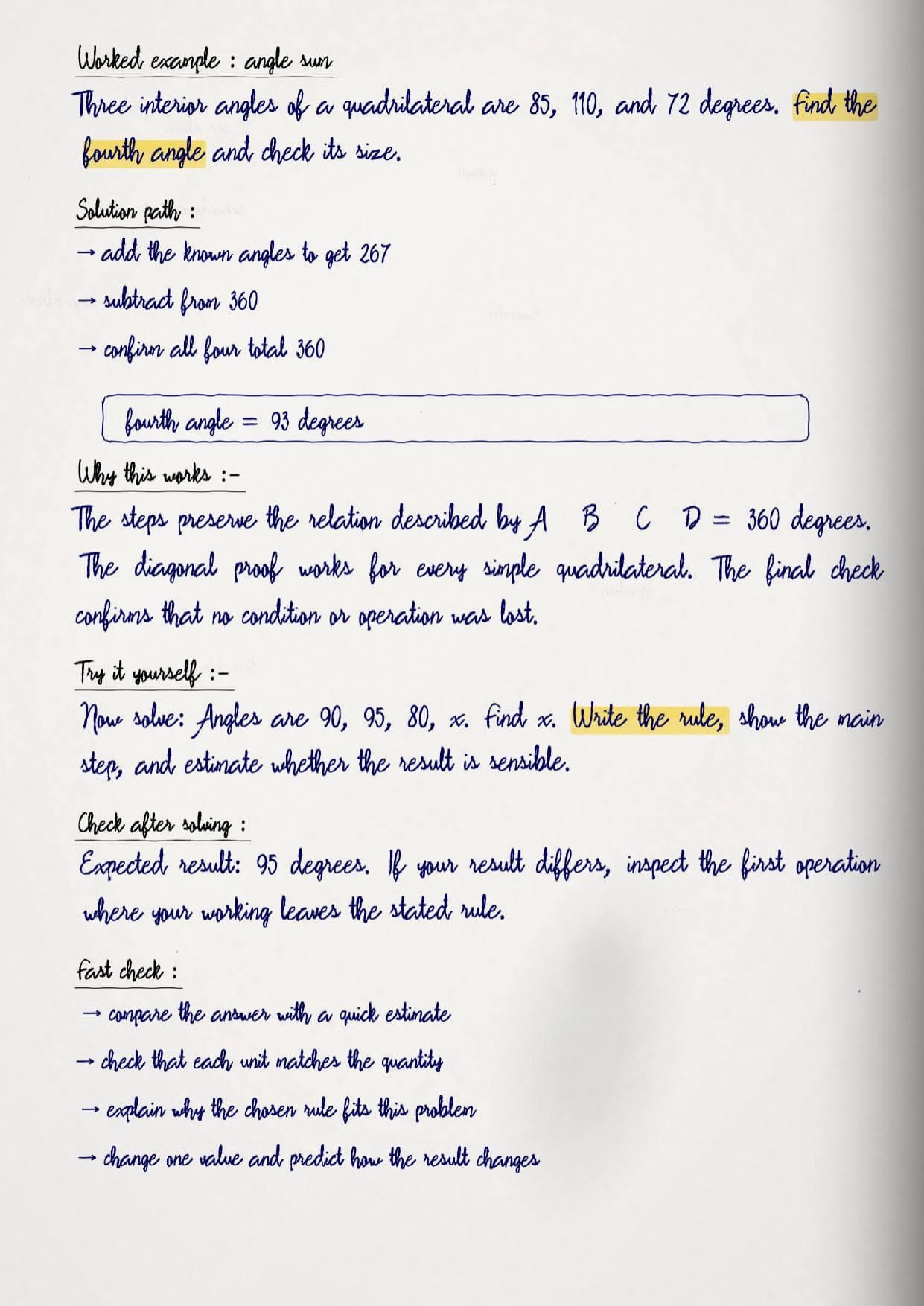
- Sum of angles in a quadrilateral is 360 degrees
- Parallelograms and their properties
- Rhombus with equal side lengths
- Using congruence to prove properties
- Venn diagram of quadrilateral families
Key Terms and Ideas in Quadrilaterals
These are the terms and ideas the exam asks about most. Learn each one so you can define it and use it in your answers.
| Term / Idea | What it means |
|---|---|
| Quadrilateral | a closed figure with four straight sides and four angles |
| Rectangle | a quadrilateral in which all four angles are 90 degrees |
| Square | a rectangle in which all four sides are also equal |
| Parallelogram | a quadrilateral whose opposite sides are parallel |
| Rhombus | a quadrilateral in which all four sides are equal |
| Diagonal property of a rectangle | the diagonals are equal and bisect each other |
| Diagonal property of a square | the diagonals are equal and bisect each other at 90 degrees |
| Angle sum | the four angles of any quadrilateral add up to 360 degrees |
| Congruence | two triangles that match exactly, used to prove side and angle facts |
How Collegedunia's Handwritten Notes Help You Revise Quadrilaterals
These notes are made for the night before the exam. They keep the facts short and easy to scan. Collegedunia maps every point to the 2026-27 NCERT.
- Clear handwriting: each topic is written in neat, easy-to-read handwriting.
- Boxed key terms: the main terms and definitions are boxed by hand for fast recall.
- Diagrams and tables: simple hand-drawn tables and charts make ideas clear.
- Colour-coded headings: new sub-topics stand out, so you find any section in seconds.
Quadrilaterals Self-Assessment Quiz
Try these quick questions after you read the notes. Tap each question to check your answer. They cover the points CBSE asks most often.
The four angles of any quadrilateral add up to
(a) 180 degrees (b) 270 degrees (c) 360 degrees (d) 90 degrees
Answer: (c) 360 degrees - a diagonal splits it into two triangles
In a rectangle the diagonals are
(a) unequal (b) equal and bisect each other (c) always perpendicular (d) parallel
Answer: (b) equal and bisect each other - proved using congruence
A quadrilateral with all four sides equal is a
(a) rectangle (b) trapezium (c) rhombus (d) kite
Answer: (c) rhombus - equal side lengths is its defining property
Which statement is true?
(a) every rectangle is a square (b) every square is a rectangle (c) no square is a rectangle (d) no rectangle is a parallelogram
Answer: (b) every square is a rectangle - a square just has equal sides too
In a parallelogram the opposite angles are
(a) equal (b) supplementary always (c) both 90 degrees (d) unequal
Answer: (a) equal - and adjacent angles add up to 180 degrees
The diagonals of a square meet at an angle of
(a) 45 degrees (b) 60 degrees (c) 90 degrees (d) 120 degrees
Answer: (c) 90 degrees - they bisect each other at right angles
How to Use These Handwritten Notes for Class 8 Mathematics Revision
Use these class 8 maths handwritten notes in two passes. Read them slowly once for the full chapter. Then, near the exam, read only the boxes and key terms for a fast recall.
- Read the notes once with the NCERT chapter open beside you.
- Say each key term and idea in your own words.
- Practise one long-answer question from a past paper.
- On the last day, revise only the key terms and the boxes.
Class 8 Mathematics Handwritten Notes for All Chapters
The table below links the class 8 maths handwritten notes for every chapter. Use it to jump to any other chapter's notes.
| Chapter | Resource |
|---|---|
| Chapter 1 | A Square and A Cube Handwritten Notes |
| Chapter 2 | Power Play Handwritten Notes |
| Chapter 3 | A Story of Numbers Handwritten Notes |
| Chapter 4 | Quadrilaterals Handwritten Notes |
| Chapter 5 | Number Play Handwritten Notes |
| Chapter 6 | We Distribute, Yet Things Multiply Handwritten Notes |
| Chapter 7 | Proportional Reasoning-1 Handwritten Notes |
Quadrilaterals Class 8 Mathematics Handwritten Notes FAQs
Ques. Where can I download Quadrilaterals Class 8 Mathematics Handwritten Notes PDF?
Ans. You can download the Quadrilaterals Class 8 Mathematics Handwritten Notes PDF directly from this page. Both the Normal and HD versions are free.
Ques. Are these handwritten notes aligned with the 2026-27 NCERT?
Ans. Yes. These notes follow the current 2026-27 syllabus for Class 8 Mathematics. How a square, rectangle and parallelogram are related to each other.
Ques. How many pages is the Class 8 Mathematics Quadrilaterals Handwritten Notes PDF?
Ans. The notes run about 20 pages. They cover the full chapter with key terms, hand-drawn boxes, and a short self-assessment quiz.
Ques. What is the main idea of the 8th standard Mathematics chapter Quadrilaterals?
Ans. The chapter shows that rectangles, squares, parallelograms and rhombuses are special quadrilaterals with fixed properties for their sides, angles and diagonals. It uses congruence and angle reasoning to prove these properties instead of only measuring them.
Ques. Are these Quadrilaterals notes enough for the CBSE Class 8 exam?
Ans. Yes, for revision. The Collegedunia handwritten notes cover every key point and exam term. Read them with the NCERT chapter and practise past questions.



Comments