


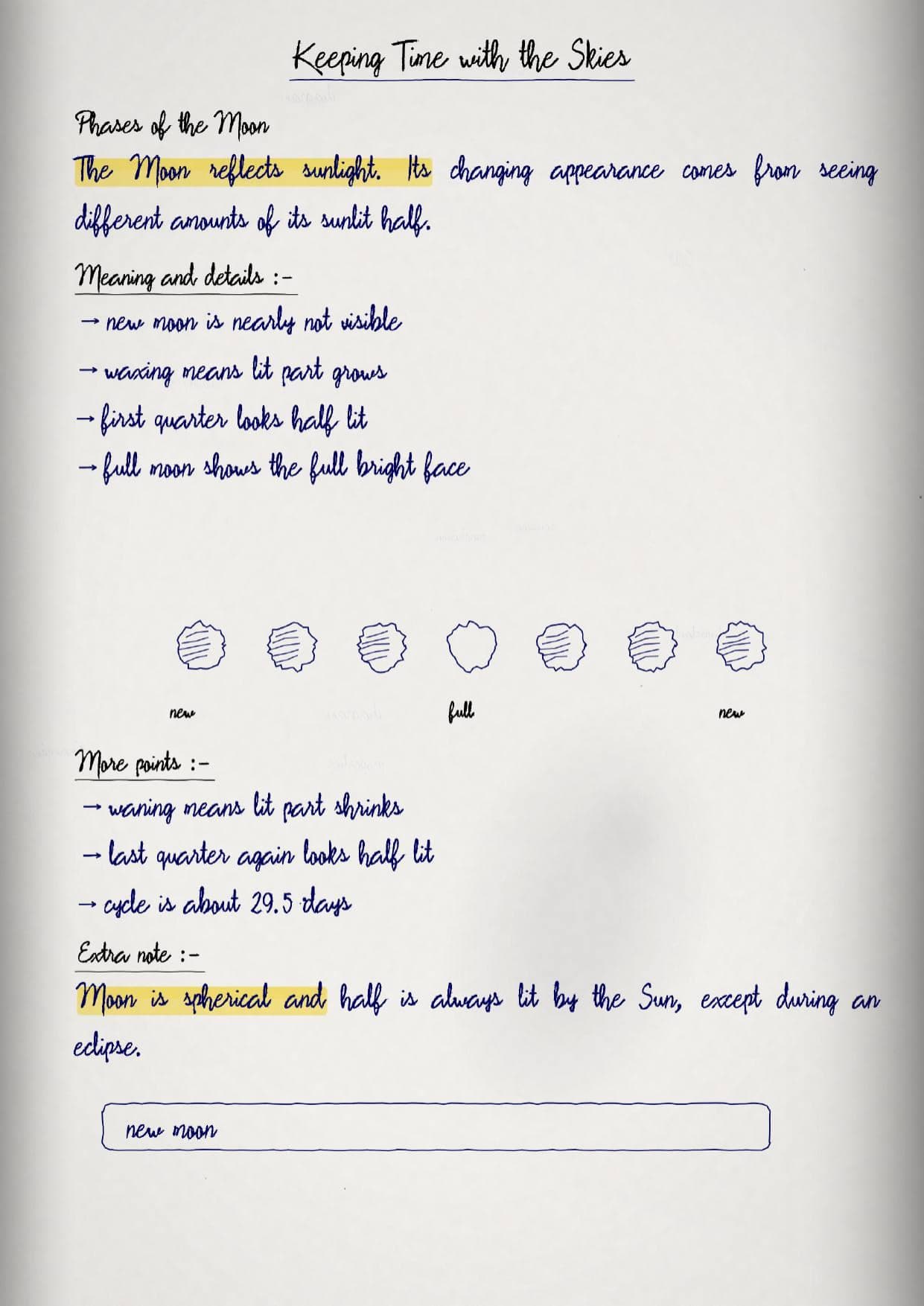
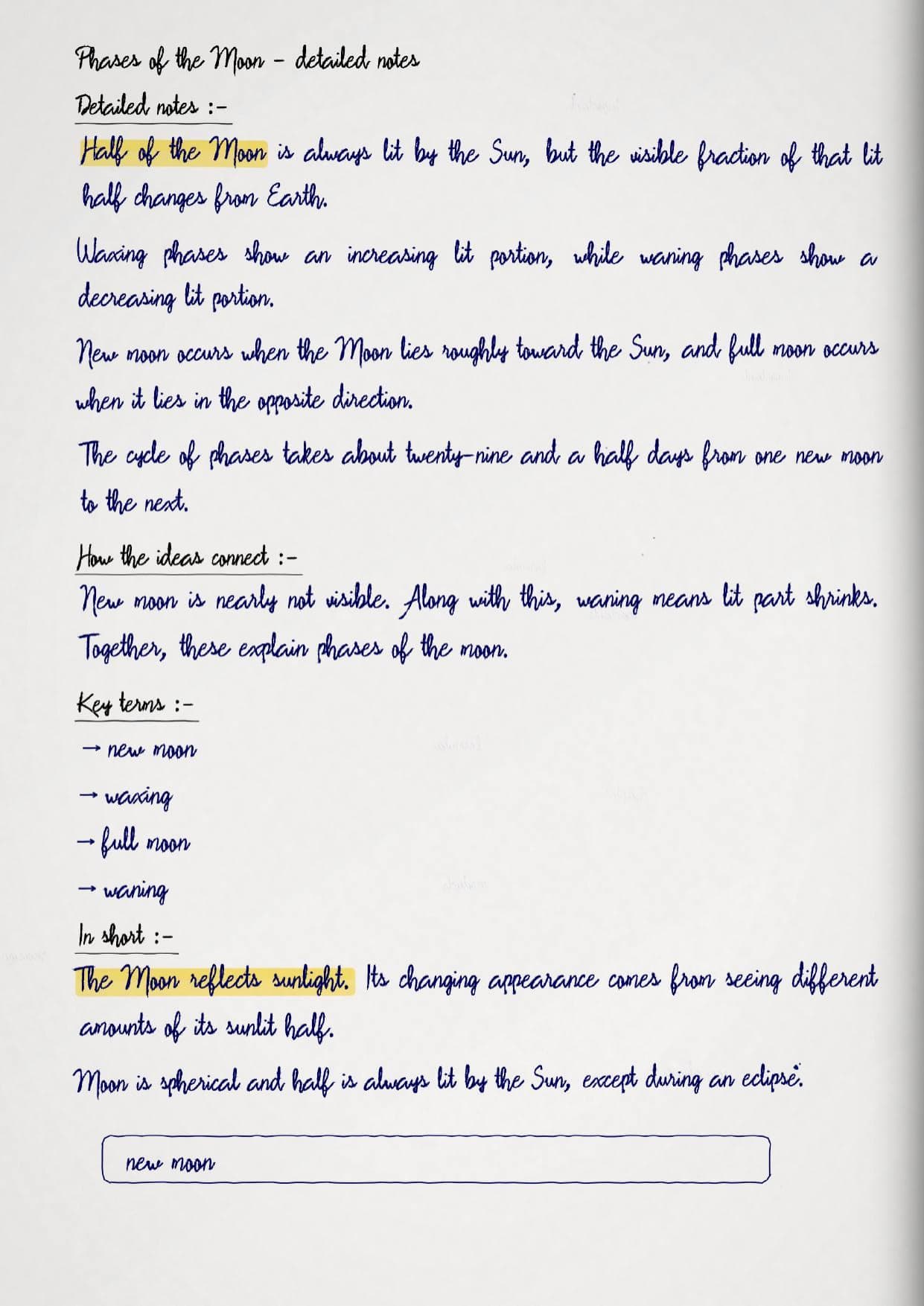
Questions from Class 8 Science Chapter 11 Keeping Time with the Skies come up often in the CBSE Class 8 exam. These class 8 science handwritten notes chapter 11 Keeping Time with the Skies follow the 2026-27 NCERT and cover phases of the moon, waxing and waning periods, locating the moon in the sky. This page hosts the.
- CBSE Class 8 Weightage: a scoring chapter in the Science paper, asked in short and long answers.
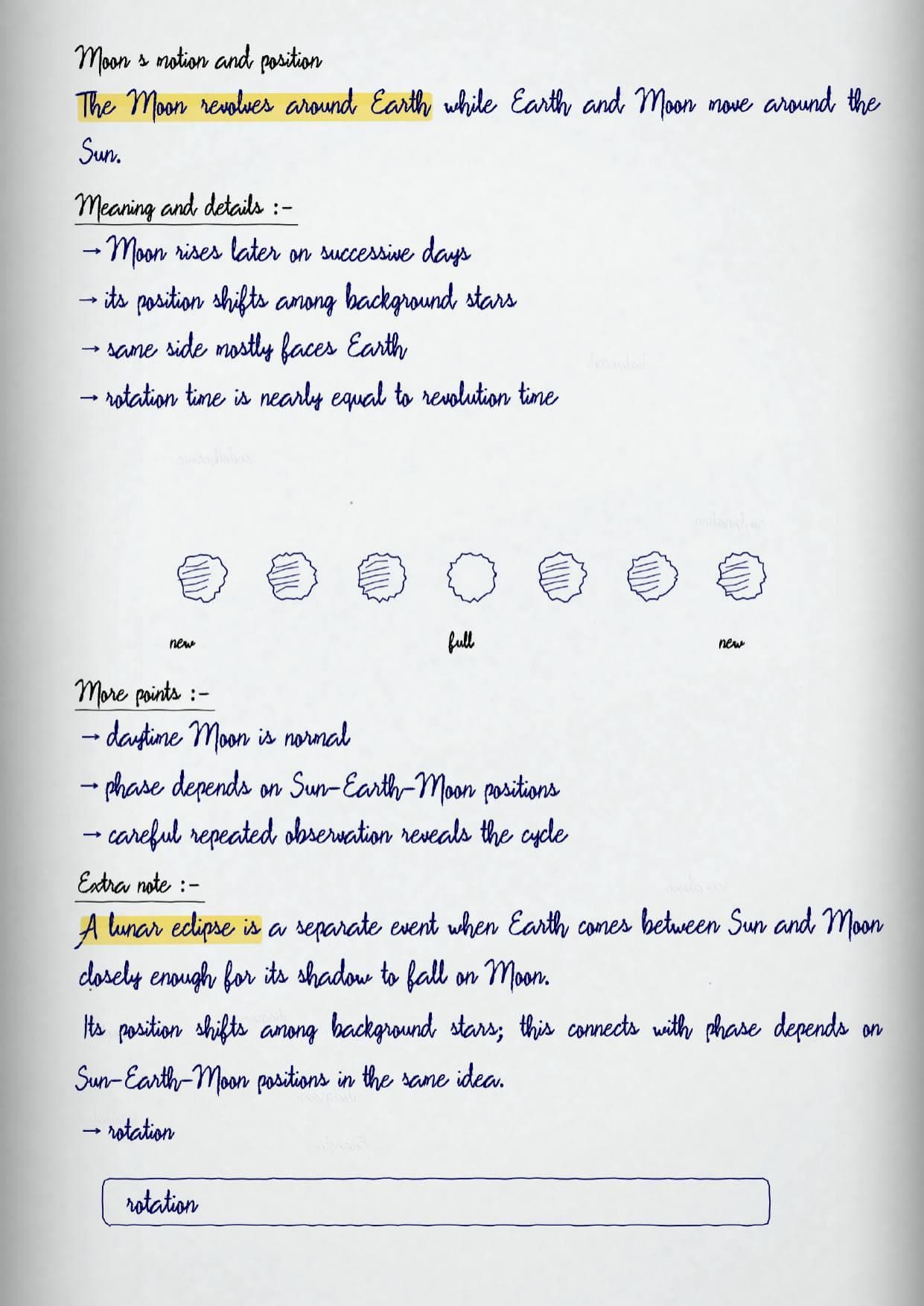
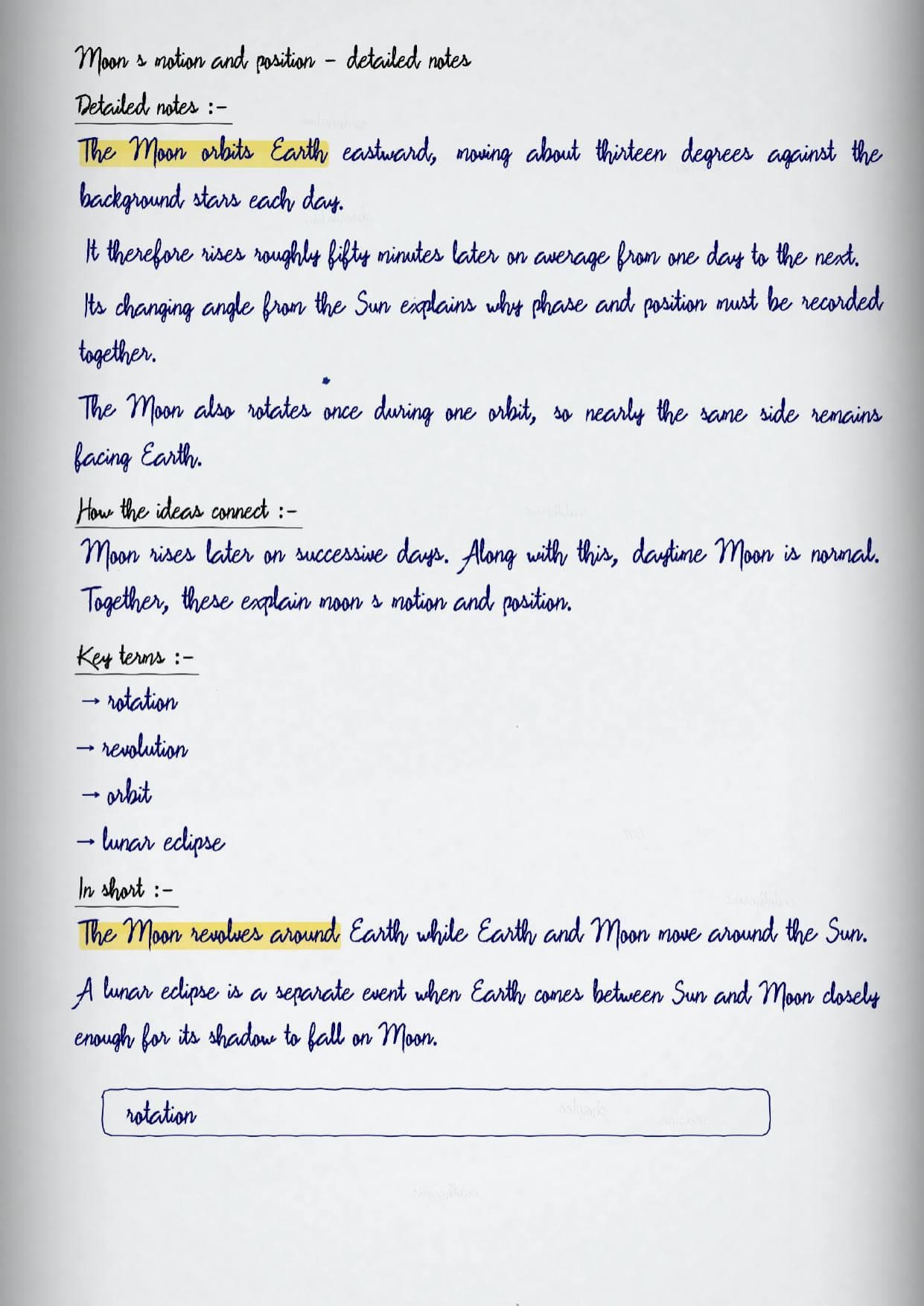
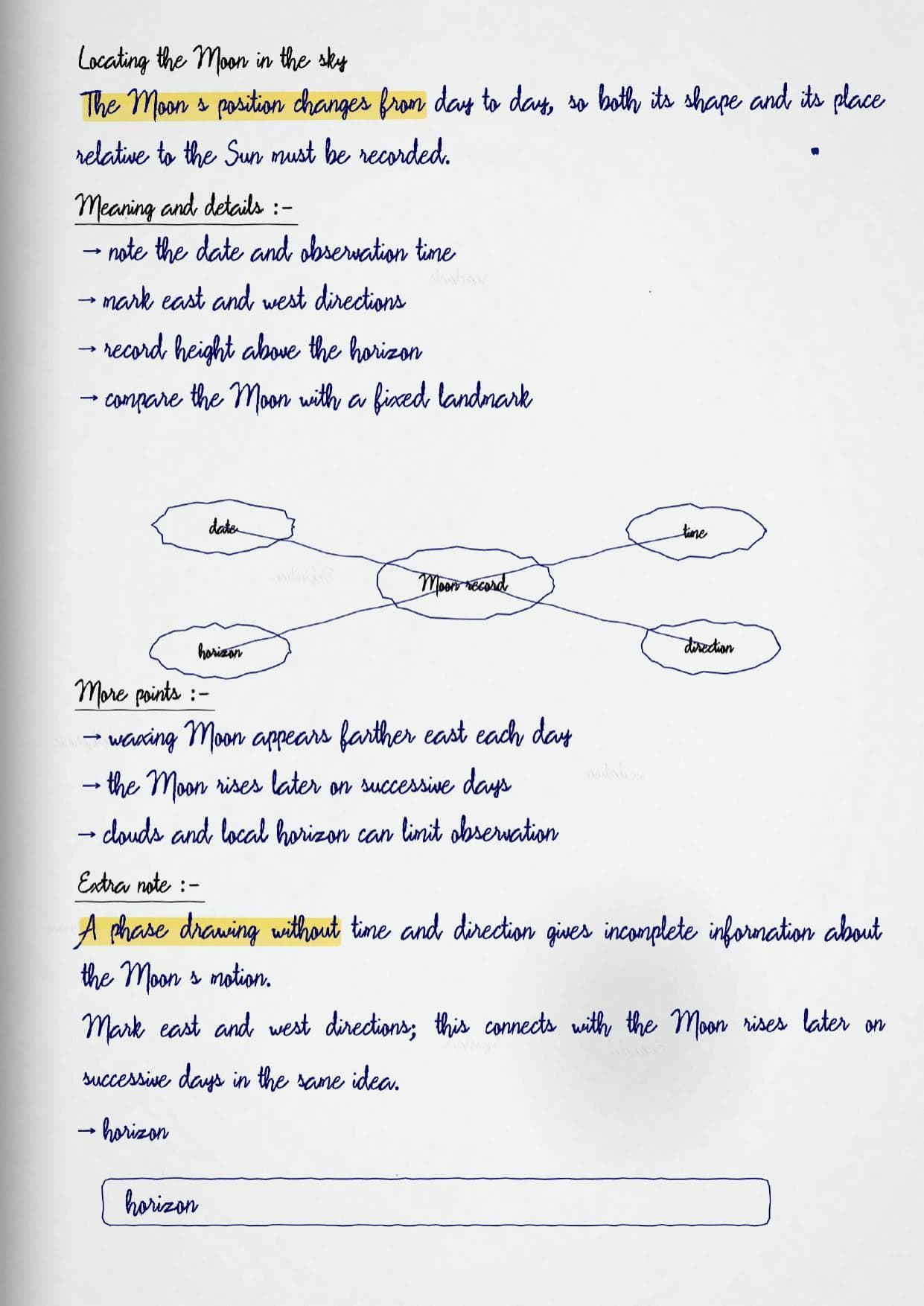
- What the notes cover: phases of the moon, waxing and waning periods, locating the moon in the sky, why the moon looks different each day.
- Best for: quick revision before Class 8 exams and a strong base for Class 9.
You can read the complete class 8 science handwritten notes for Keeping Time with the Skies, with key terms, boxed definitions, and quick revision points, in the PDF below.
These handwritten notes are written by subject teachers, mapped to the 2026-27 NCERT, and checked against the last five years of CBSE Class 8 Science papers.
What the Keeping Time with the Skies Handwritten Notes Cover
This chapter connects the sky with the way we measure time. It explains the changing phases of the Moon, how calendars came about, why festivals fall on shifting dates, and the role of artificial satellites.
- Phases of the Moon
- Waxing and waning periods
- Locating the Moon in the sky
- Why the Moon looks different each day
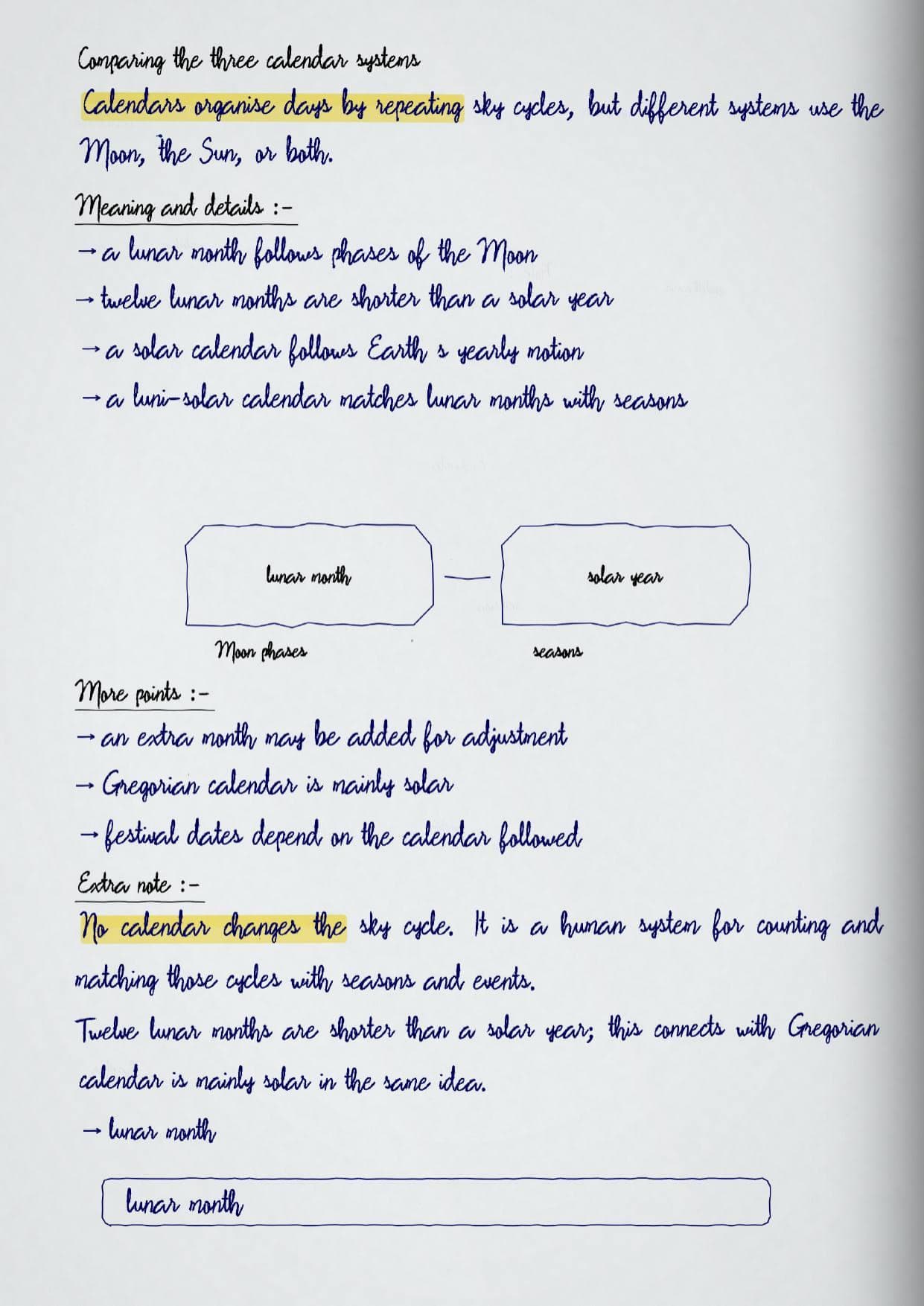
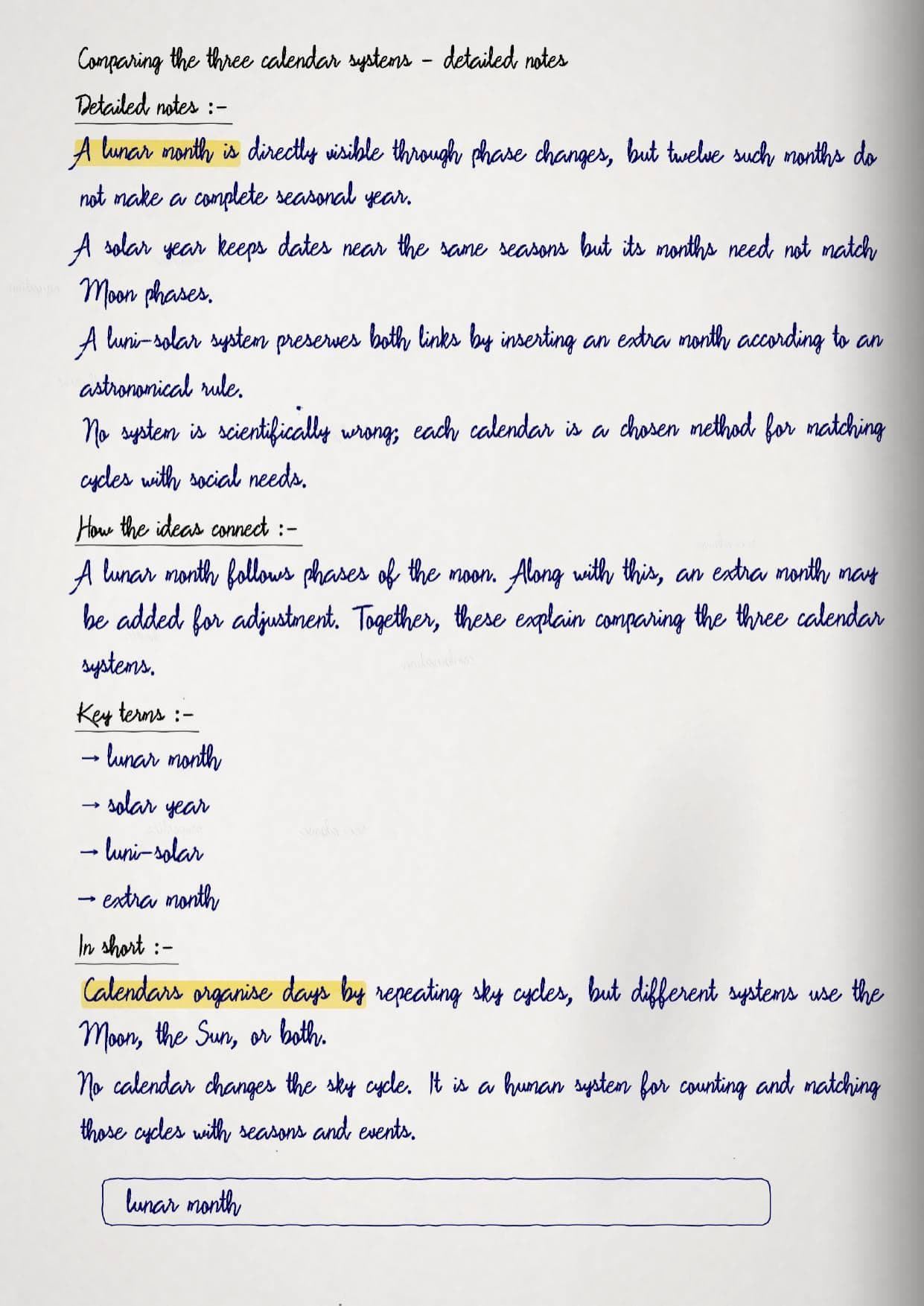
- How calendars came into existence
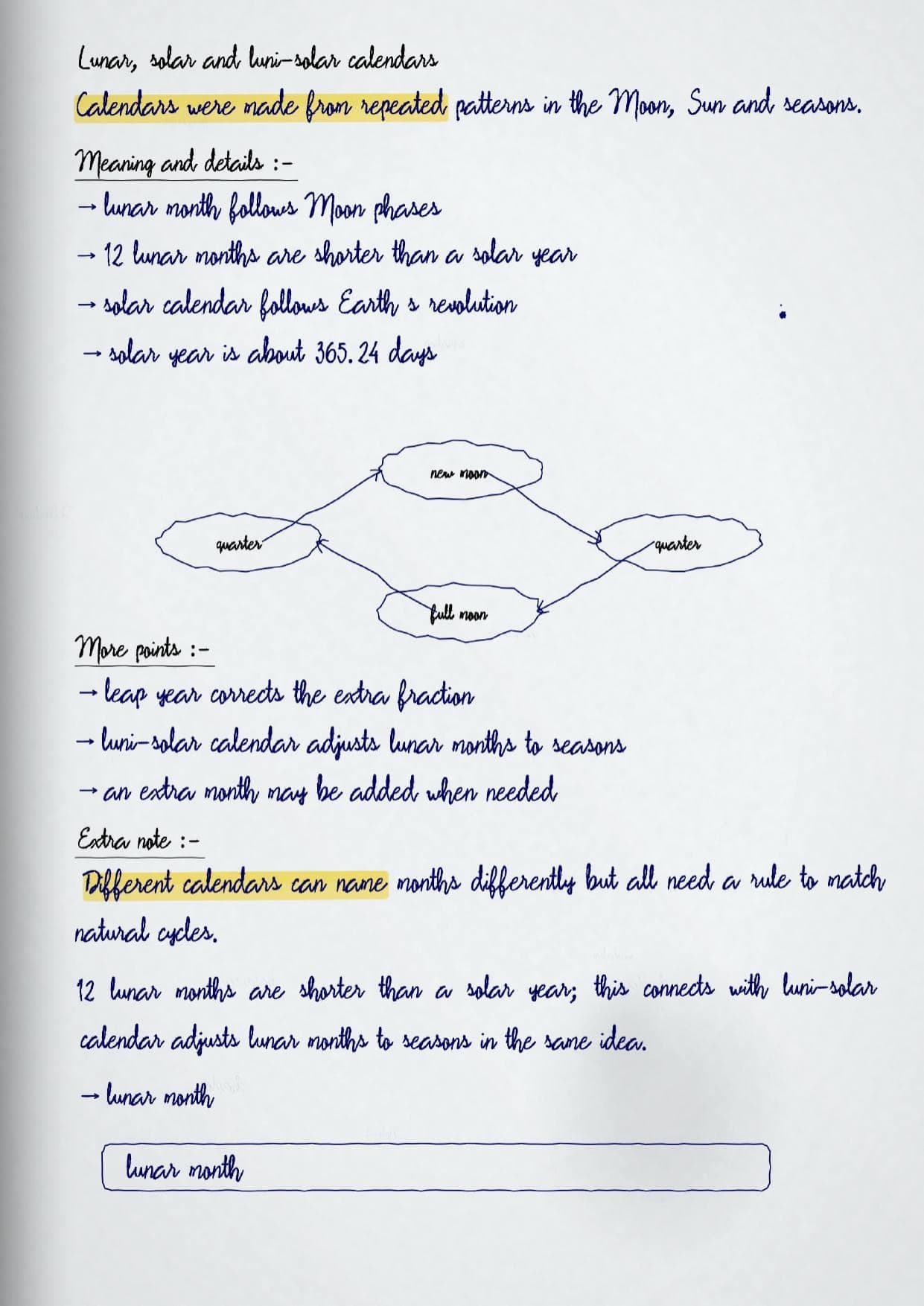
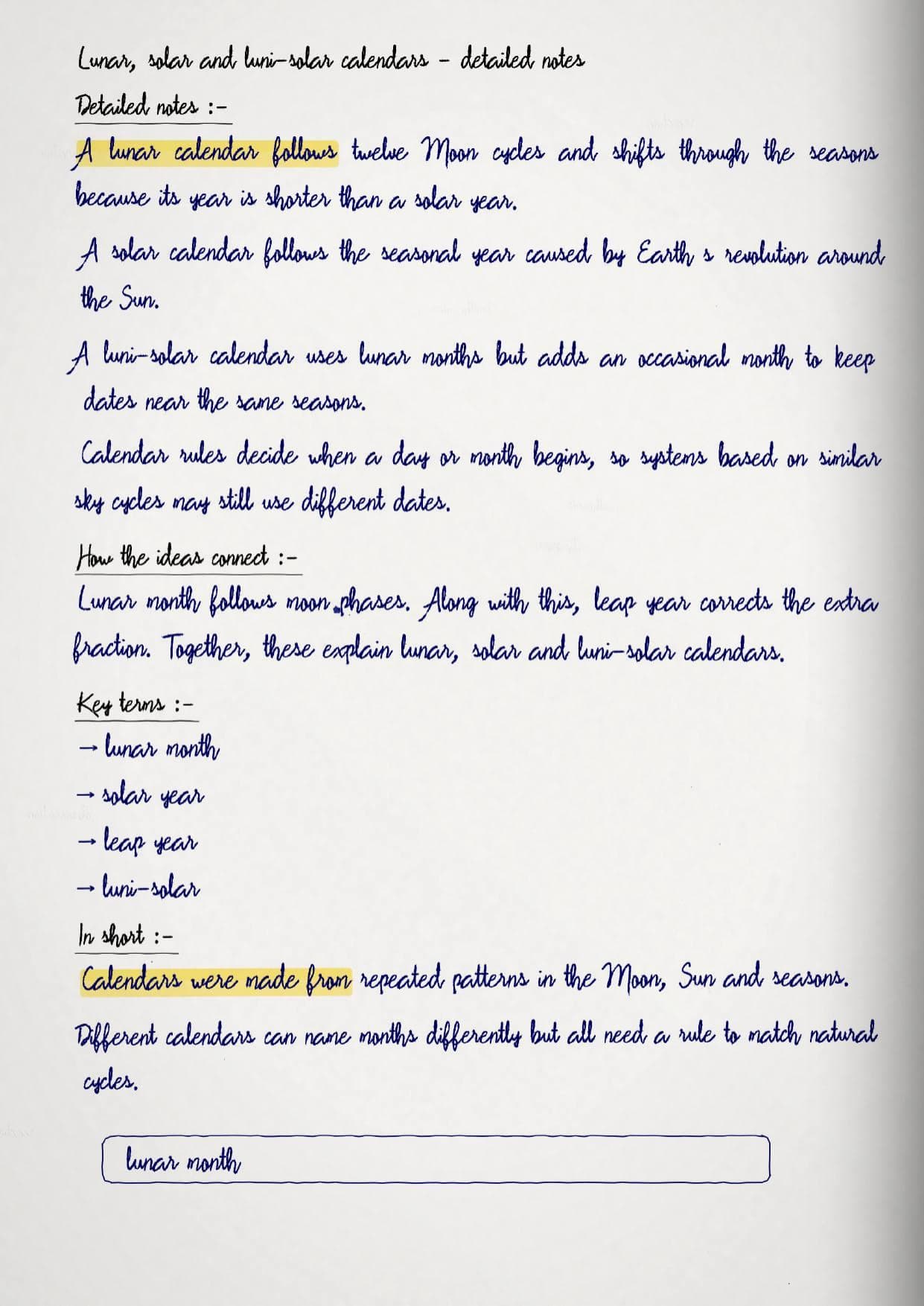
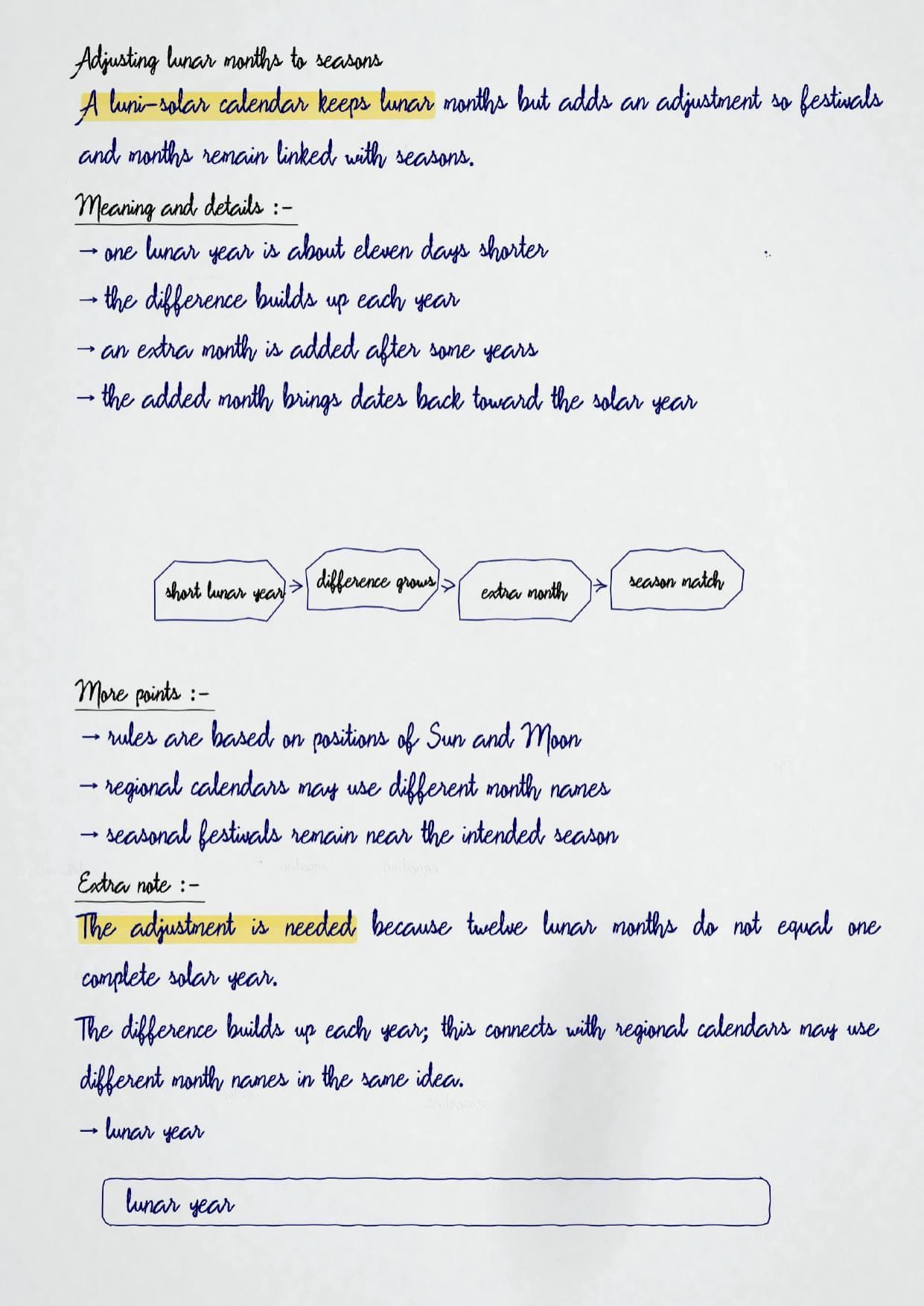
- Lunar, solar and luni-solar calendars
- Leap years
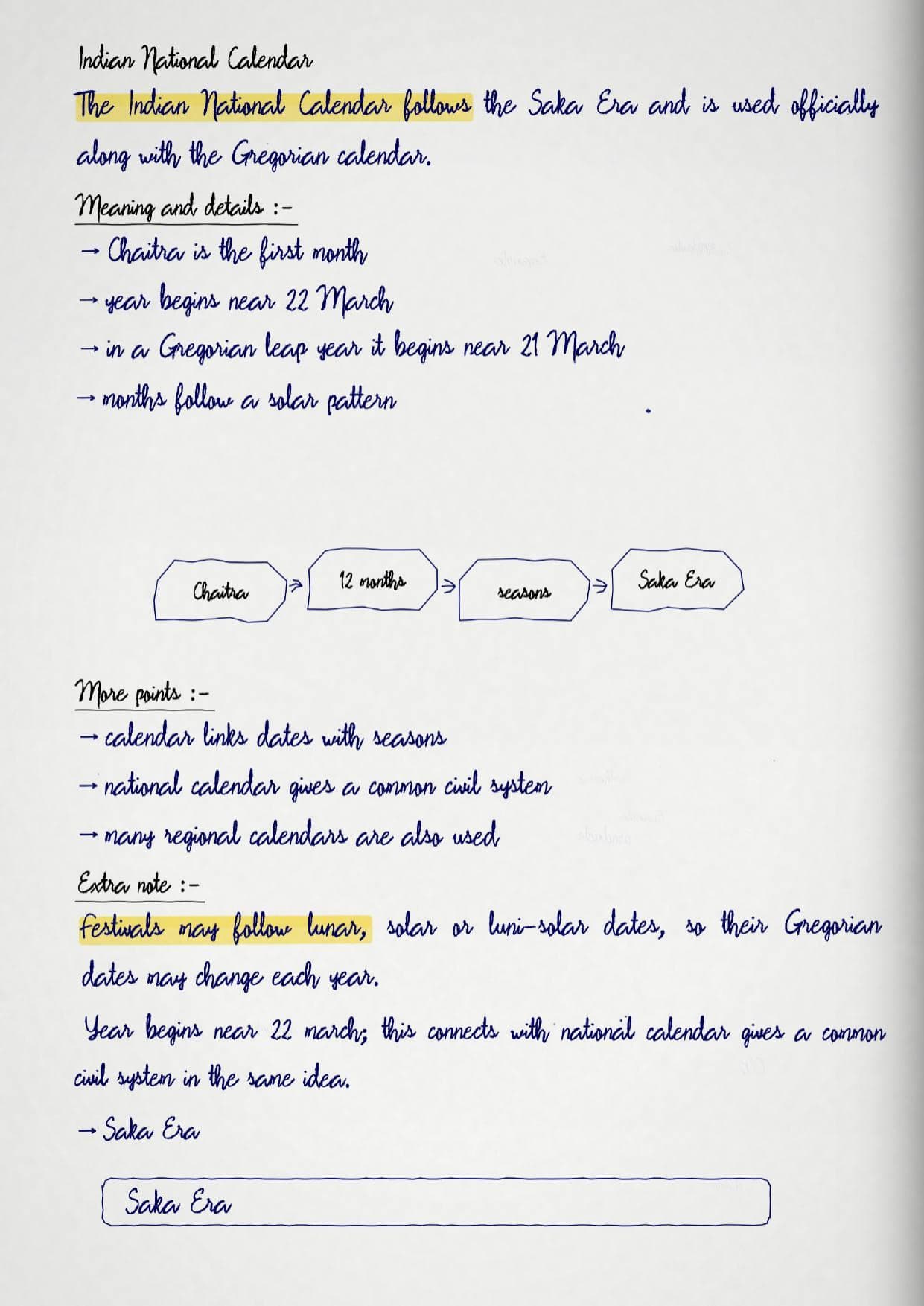
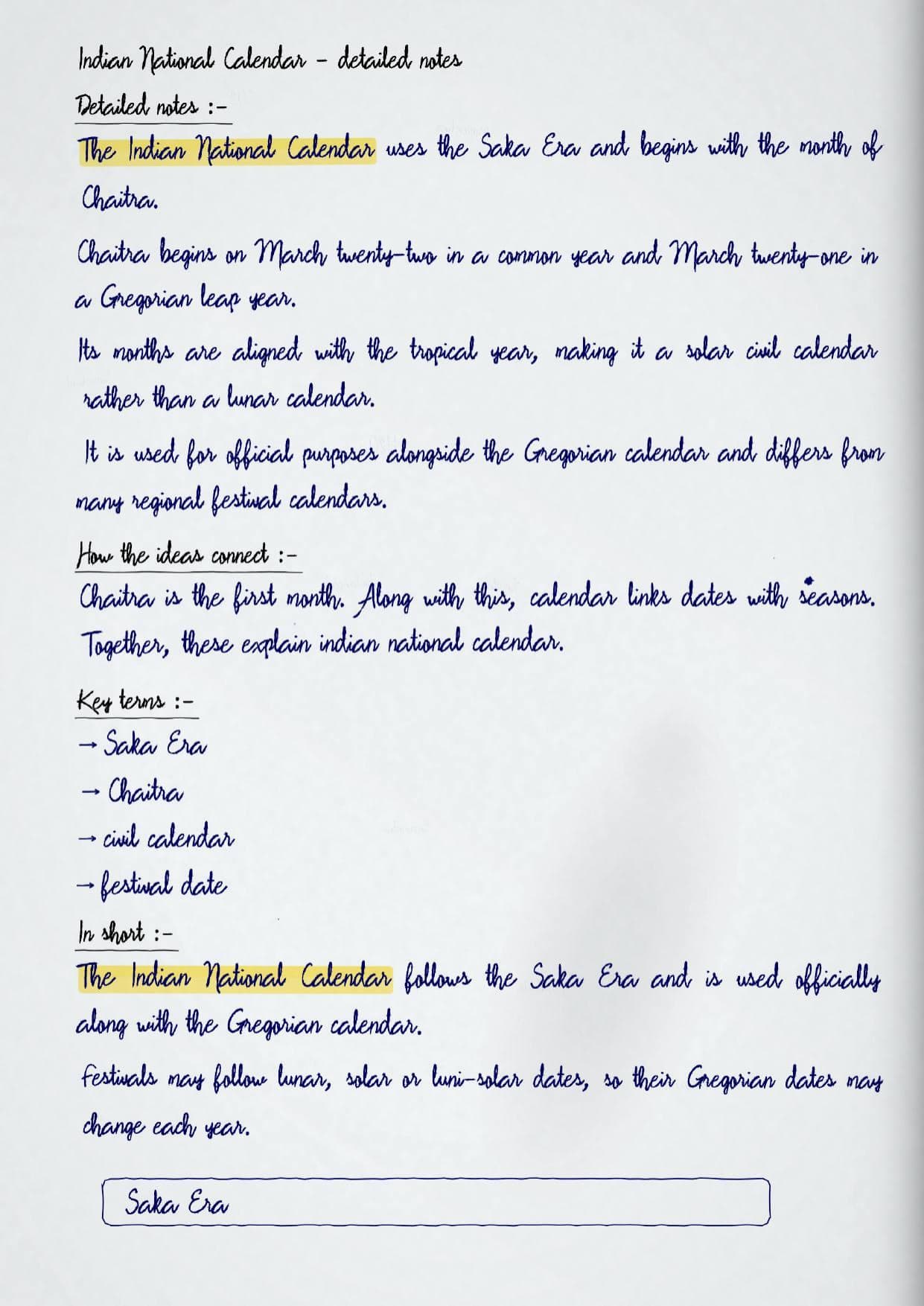
- The Indian National Calendar
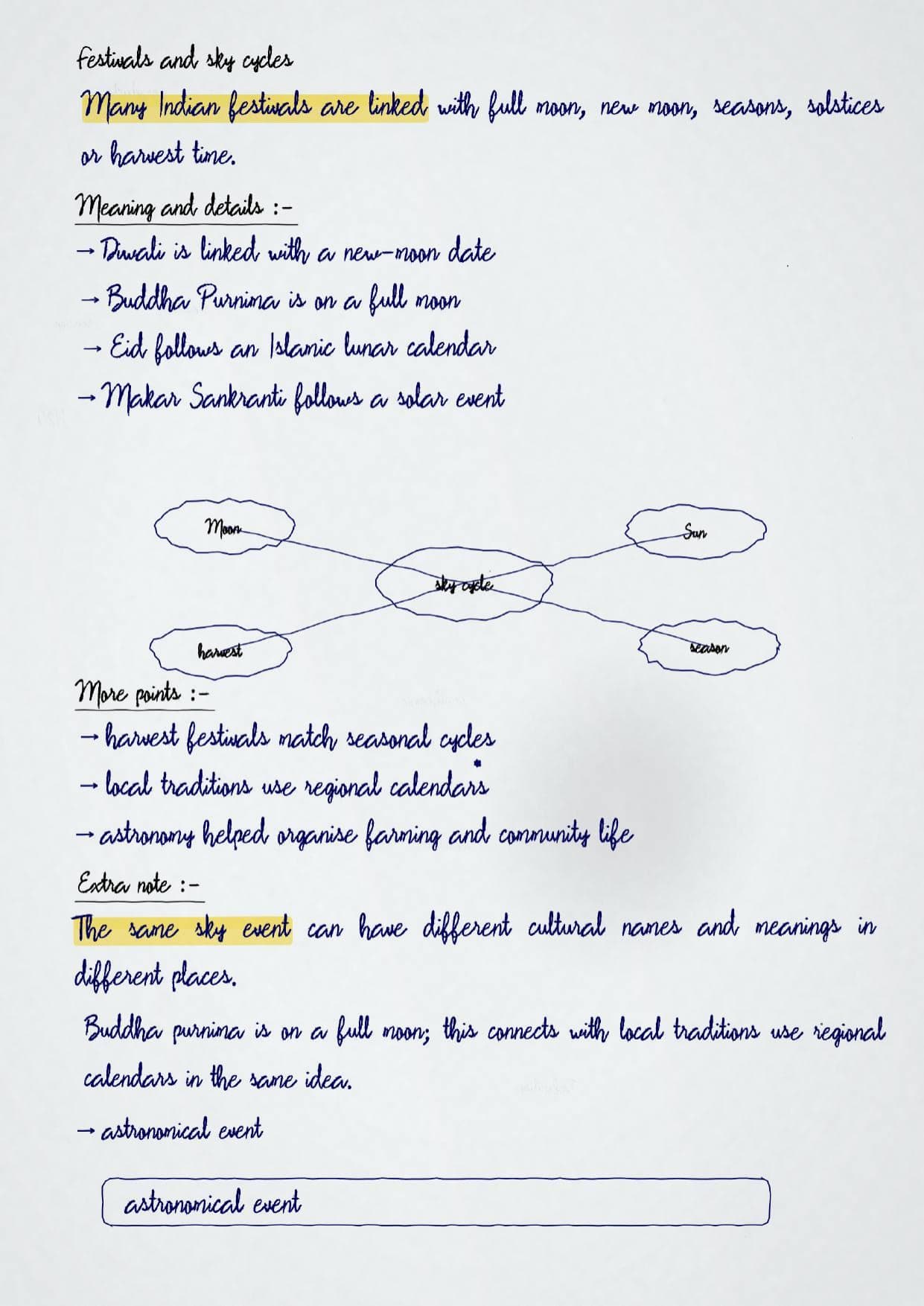
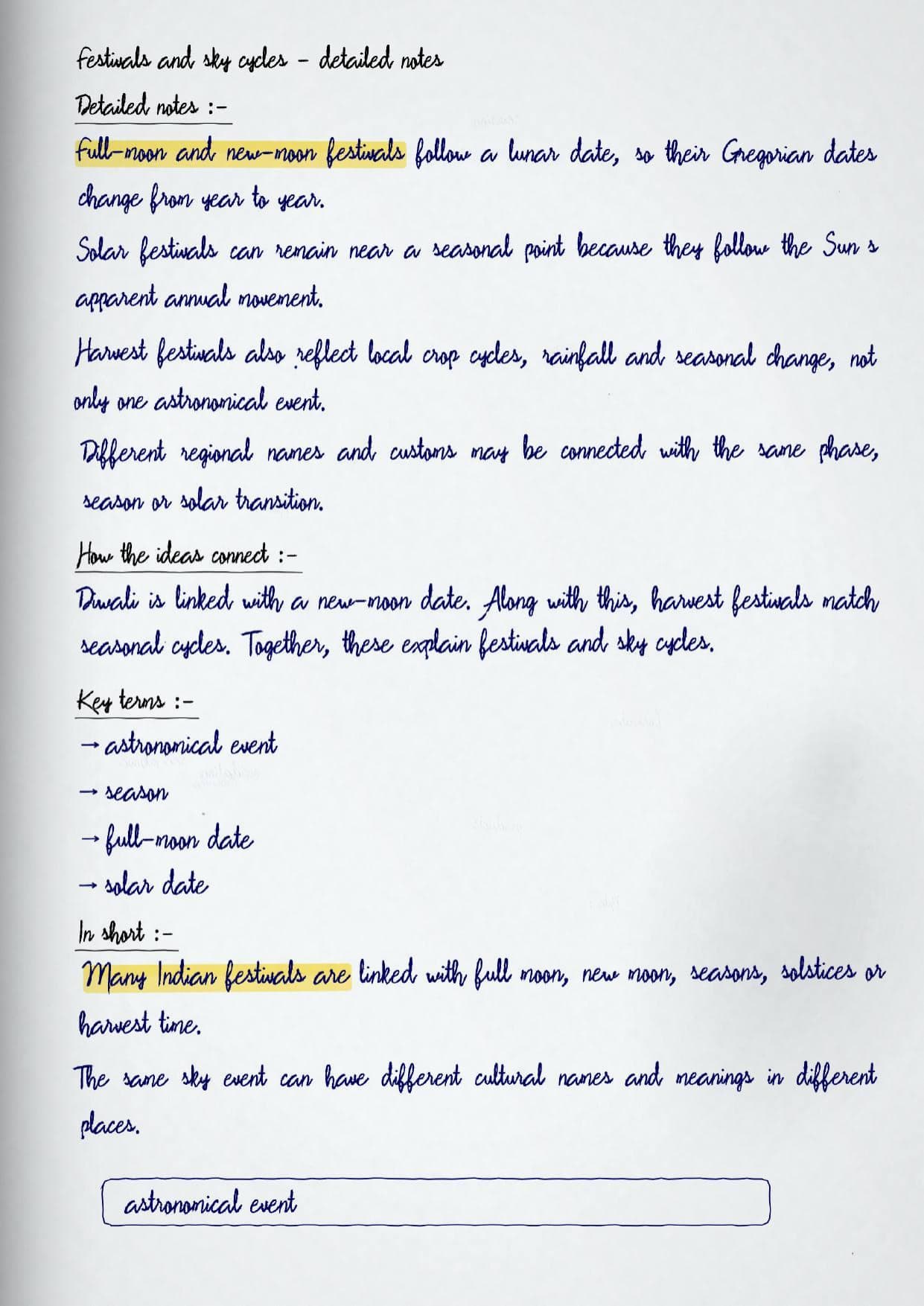
- Festivals and astronomical events
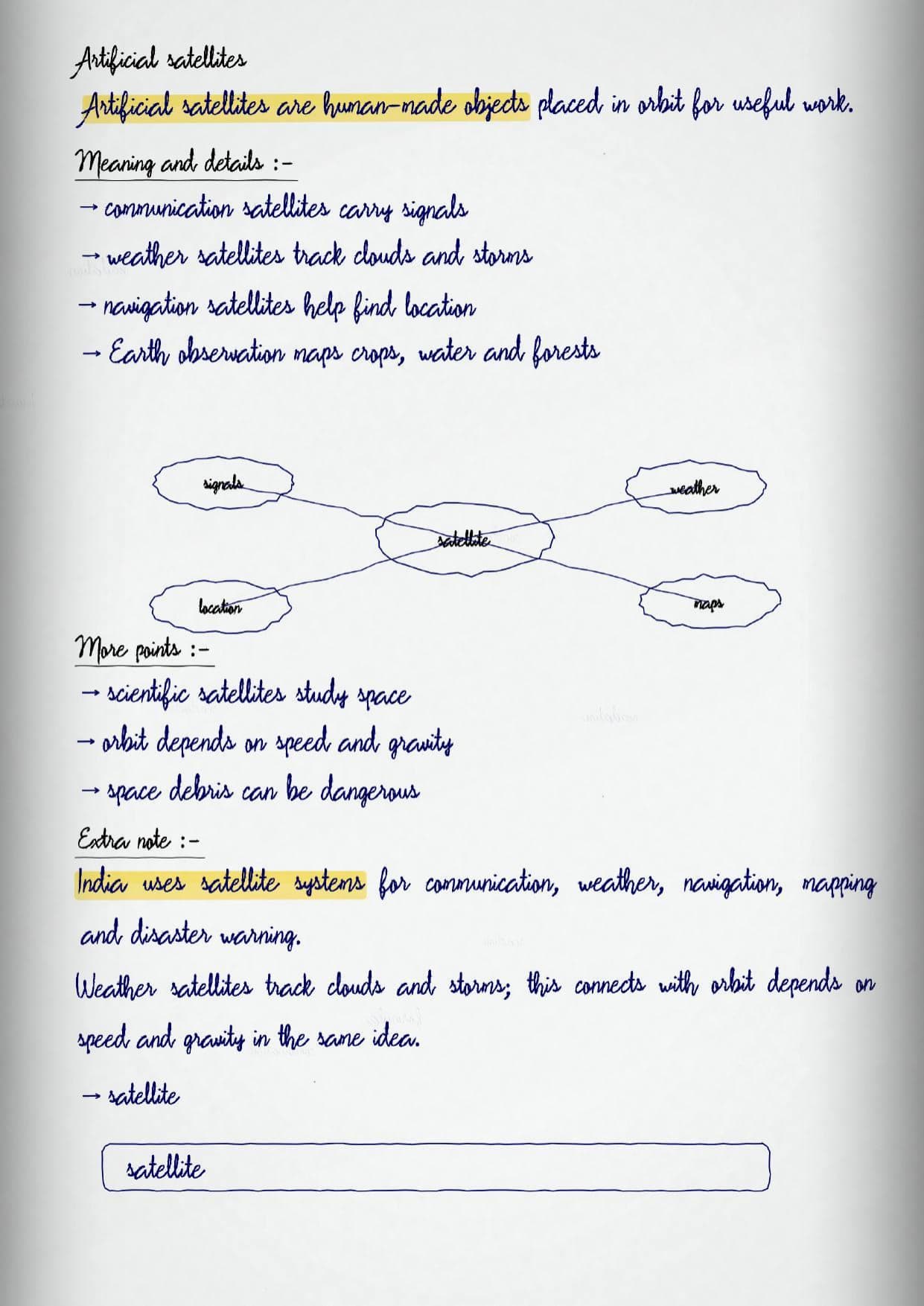
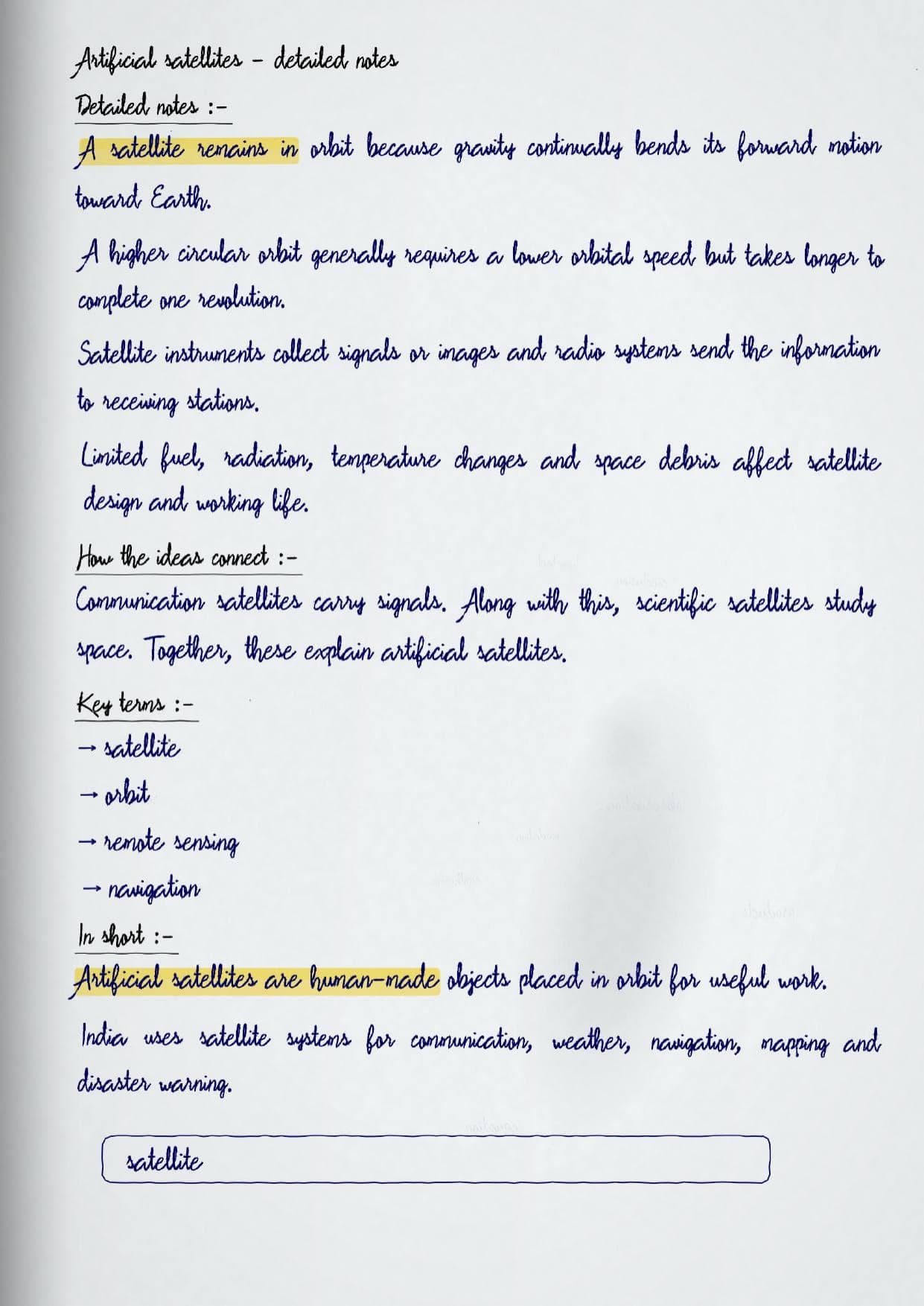
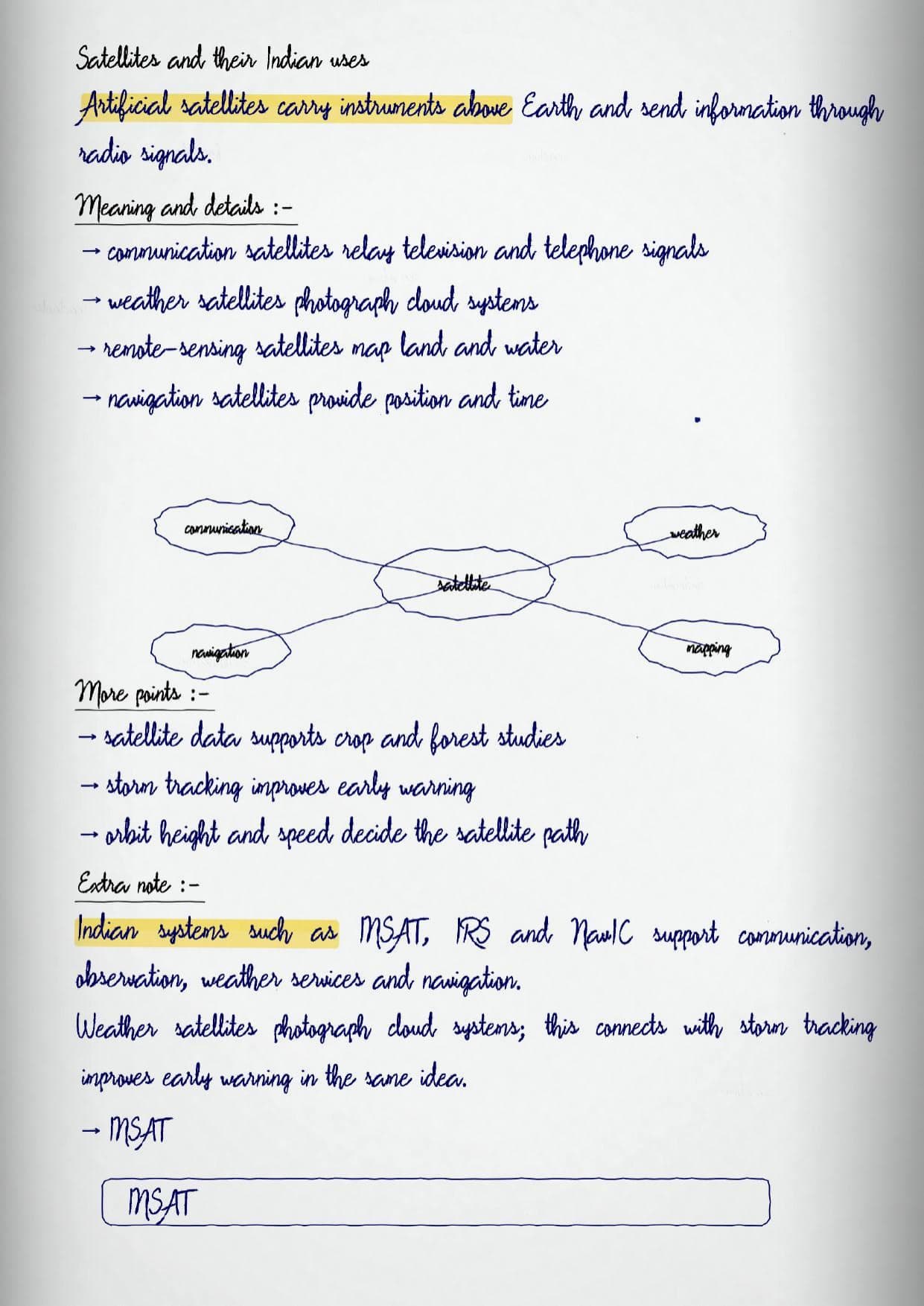
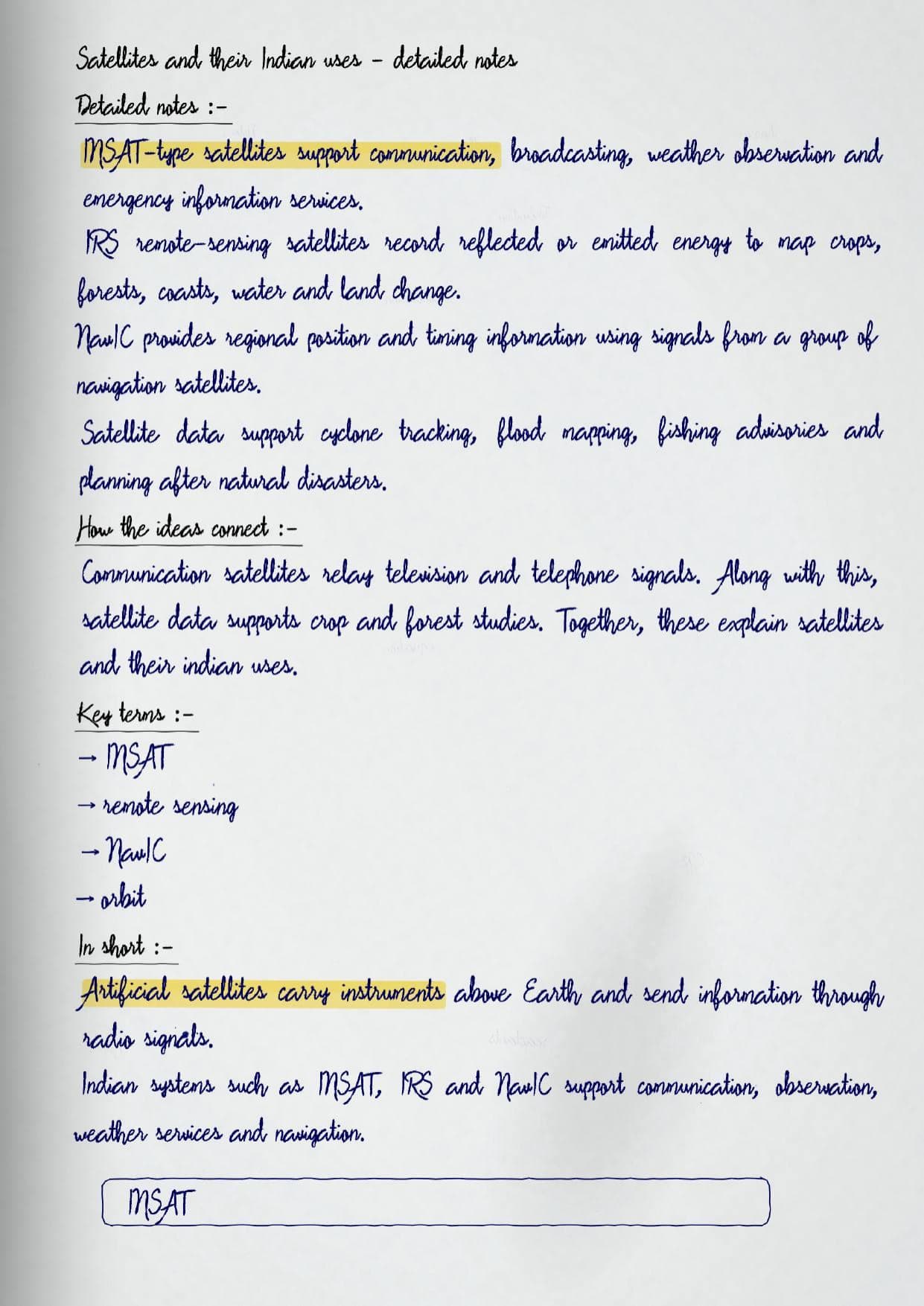
- Artificial satellites
Keeping Time with the Skies Topic-wise Weightage for CBSE Class 8 Science
Some parts of this chapter are asked more often than others. The table below shows which sub-topics to revise first, based on recent CBSE Class 8 question trends.
| Sub-topic | Weightage | CBSE Frequency |
|---|---|---|
| Phases of the Moon | High | asked often |
| Waxing and waning periods | High | asked often |
| Types of calendars | High | asked often |
| Day, month and year as units of time | Medium | asked sometimes |
| Leap years and the Indian National Calendar | Medium | asked sometimes |
| Artificial satellites | Low | asked rarely |
Key Terms and Ideas in Keeping Time with the Skies
These are the terms and ideas the exam asks about most. Learn each one so you can define it and use it in your answers.
| Term / Idea | What it means |
|---|---|
| Phases of the Moon | the changing shapes of the bright part of the Moon seen from Earth day to day |
| Full Moon | the day the Moon appears as a full bright circle, also called Purnima |
| New Moon | the day the Moon is not visible at all, also called Amavasya |
| Waxing period | the two weeks when the bright part of the Moon grows, called Shukla Paksha |
| Waning period | the two weeks when the bright part of the Moon shrinks, called Krishna Paksha |
| Mean solar day | the average time of 24 hours for the Sun to return to its highest point |
| Lunar calendar | a calendar based on the phases of the Moon |
| Solar calendar | a calendar based on the cycle of seasons, like the Gregorian calendar |
| Leap year | a year with an extra day added every four years to match the seasons |
| Artificial satellite | a human-made object launched to orbit the Earth for communication and study |
How Collegedunia's Handwritten Notes Help You Revise Keeping Time with the Skies
These notes are made for the night before the exam. They keep the facts short and easy to scan. Collegedunia maps every point to the 2026-27 NCERT.
- Clear handwriting: each topic is written in neat, easy-to-read handwriting.
- Boxed key terms: the main terms and definitions are boxed by hand for fast recall.
- Diagrams and tables: simple hand-drawn tables and charts make ideas clear.
- Colour-coded headings: new sub-topics stand out, so you find any section in seconds.
Keeping Time with the Skies Self-Assessment Quiz
Try these quick questions after you read the notes. Tap each question to check your answer. They cover the points CBSE asks most often.
The Moon shines because it?
(a) makes its own light (b) reflects sunlight (c) is very hot (d) is a star
Answer: (b) reflects sunlight - only the sunlit half of the Moon is bright
The period when the bright part of the Moon grows is called?
(a) waning (b) new Moon (c) waxing (d) eclipse
Answer: (c) waxing - the bright portion increases towards full Moon
One full cycle of the phases of the Moon takes about?
(a) one week (b) 29.5 days (c) one year (d) 365 days
Answer: (b) 29.5 days - this is the basis for a lunar month
A calendar based on the cycle of seasons is a?
(a) lunar calendar (b) solar calendar (c) luni-solar calendar (d) tidal calendar
Answer: (b) solar calendar - the Gregorian calendar is an example
An extra day is added in February in a?
(a) new Moon day (b) full Moon day (c) leap year (d) lunar month
Answer: (c) leap year - this keeps the calendar matched to the seasons
How to Use These Handwritten Notes for Class 8 Science Revision
Use these class 8 science handwritten notes in two passes. Read them slowly once for the full chapter. Then, near the exam, read only the boxes and key terms for a fast recall.
- Read the notes once with the NCERT chapter open beside you.
- Say each key term and idea in your own words.
- Practise one long-answer question from a past paper.
- On the last day, revise only the key terms and the boxes.
Class 8 Science Handwritten Notes for All Chapters
The table below links the class 8 science handwritten notes for every chapter. Use it to jump to any other chapter's notes.
Keeping Time with the Skies Class 8 Science Handwritten Notes FAQs
Ques. Where can I download Keeping Time with the Skies Class 8 Science Handwritten Notes PDF?
Ans. You can download the Keeping Time with the Skies Class 8 Science Handwritten Notes PDF directly from this page. Both the Normal and HD versions are free.
Ques. Are these handwritten notes aligned with the 2026-27 NCERT?
Ans. Yes. These notes follow the current 2026-27 syllabus for Class 8 Science. why the Moon looks different on different days
Ques. How many pages is the Class 8 Science Keeping Time with the Skies Handwritten Notes PDF?
Ans. The notes run about 20 pages. They cover the full chapter with key terms, hand-drawn boxes, and a short self-assessment quiz.
Ques. What is the main idea of the 8th standard Science chapter Keeping Time with the Skies?
Ans. The chapter explains that the Moon appears to change shape because we see different parts of its sunlit half as it moves around the Earth. These repeating sky events, along with the motion of the Sun, gave people the day, the month and the year and led to different kinds of calendars.
Ques. Are these Keeping Time with the Skies notes enough for the CBSE Class 8 exam?
Ans. Yes, for revision. The Collegedunia handwritten notes cover every key point and exam term. Read them with the NCERT chapter and practise past questions.



Comments