




All living things are made of one or more cells, and tiny living beings called microorganisms are all around us, some helpful and some harmful. Class 8 Science Chapter 2 The Invisible Living World: Beyond Our Naked Eye builds this idea step by step. These class 8 science handwritten notes chapter 2 The Invisible Living World: Beyond Our.
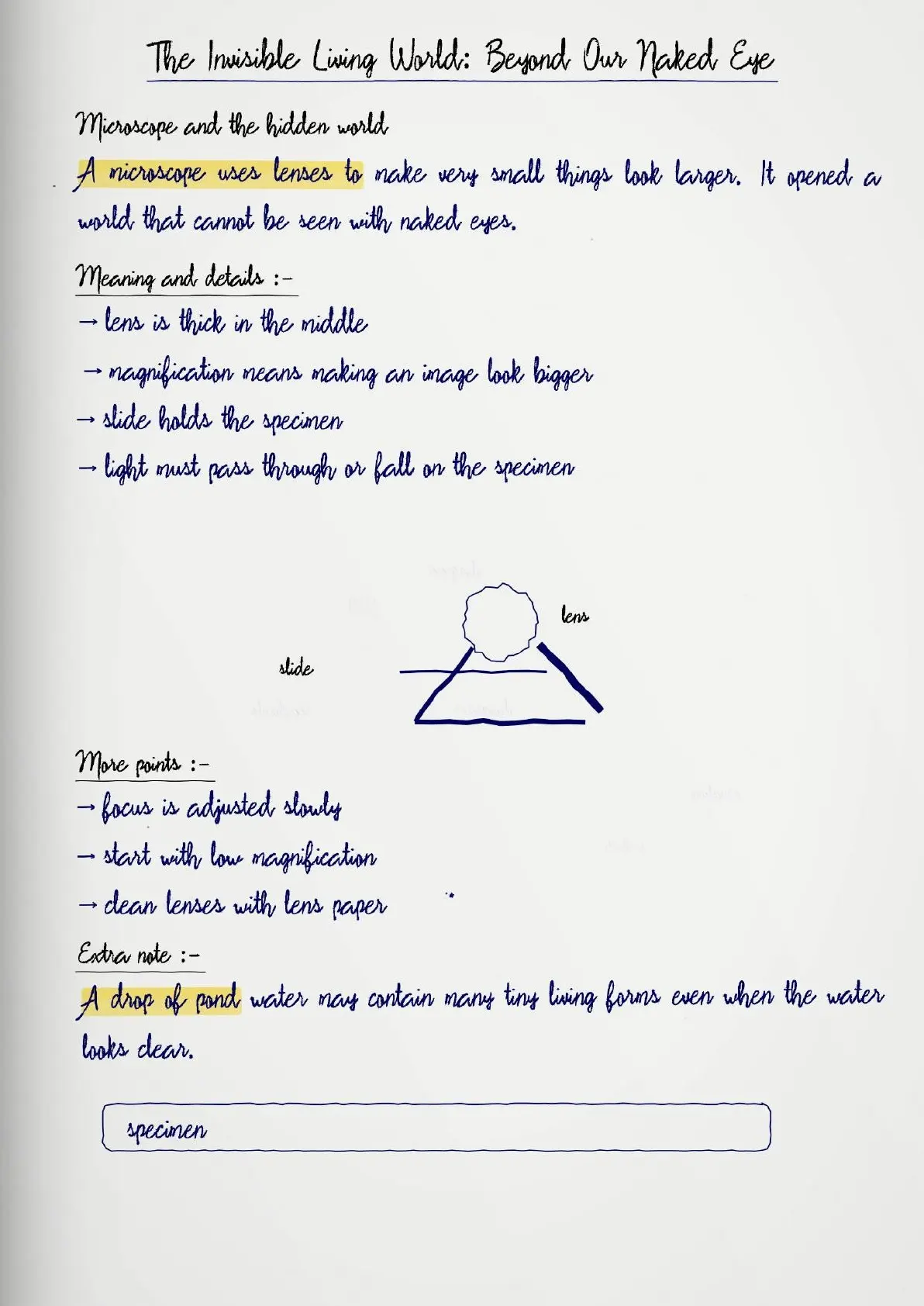
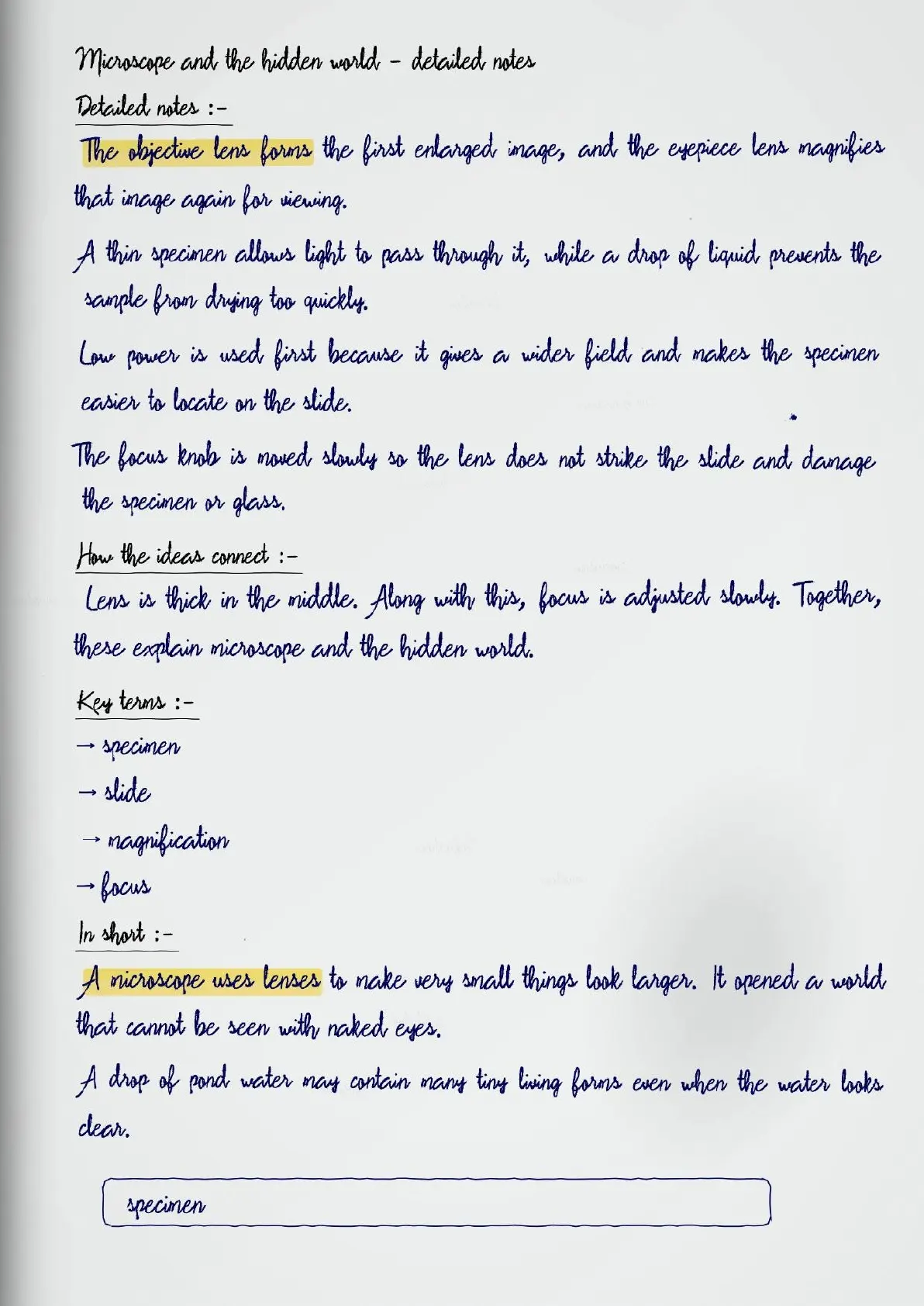
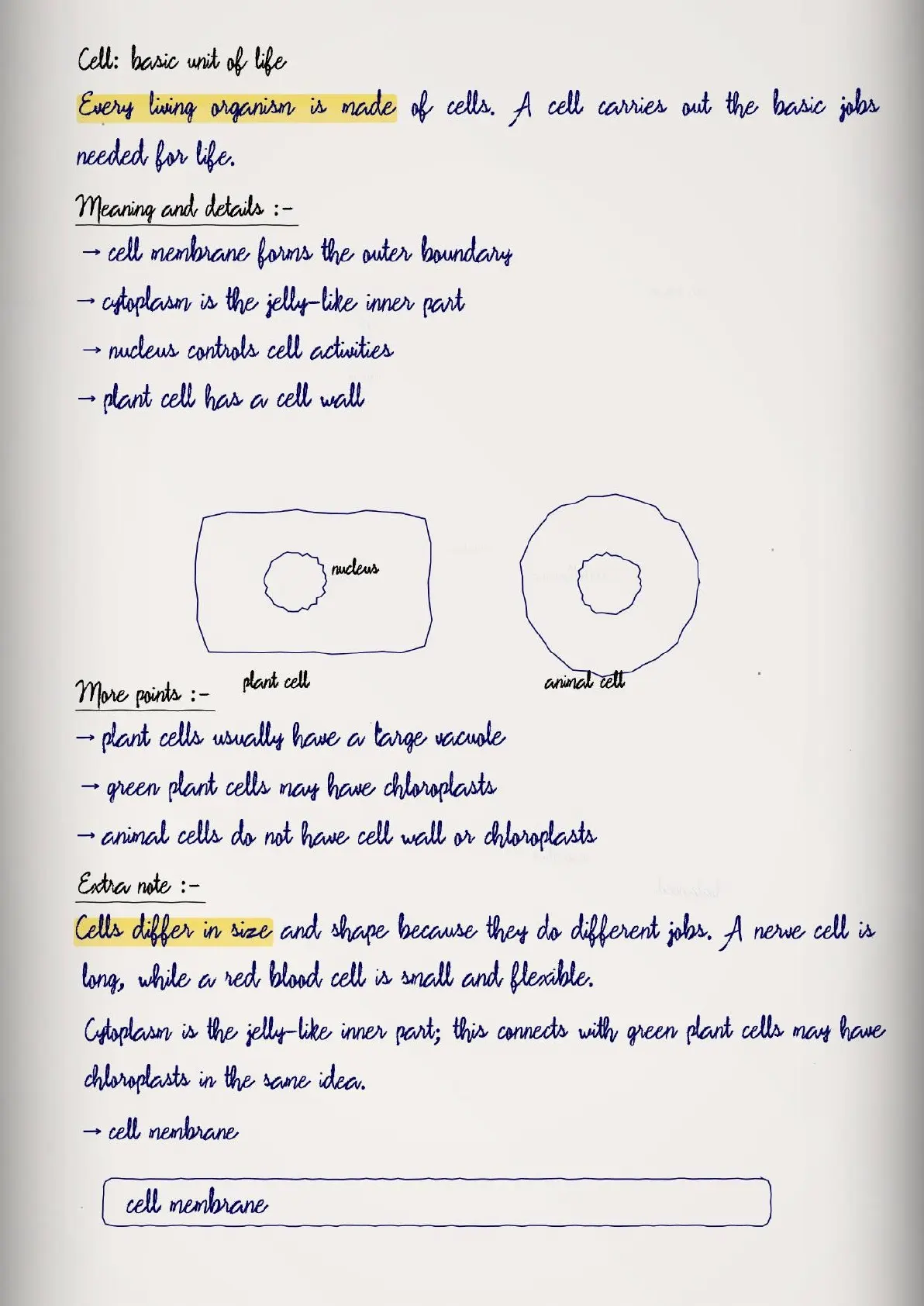
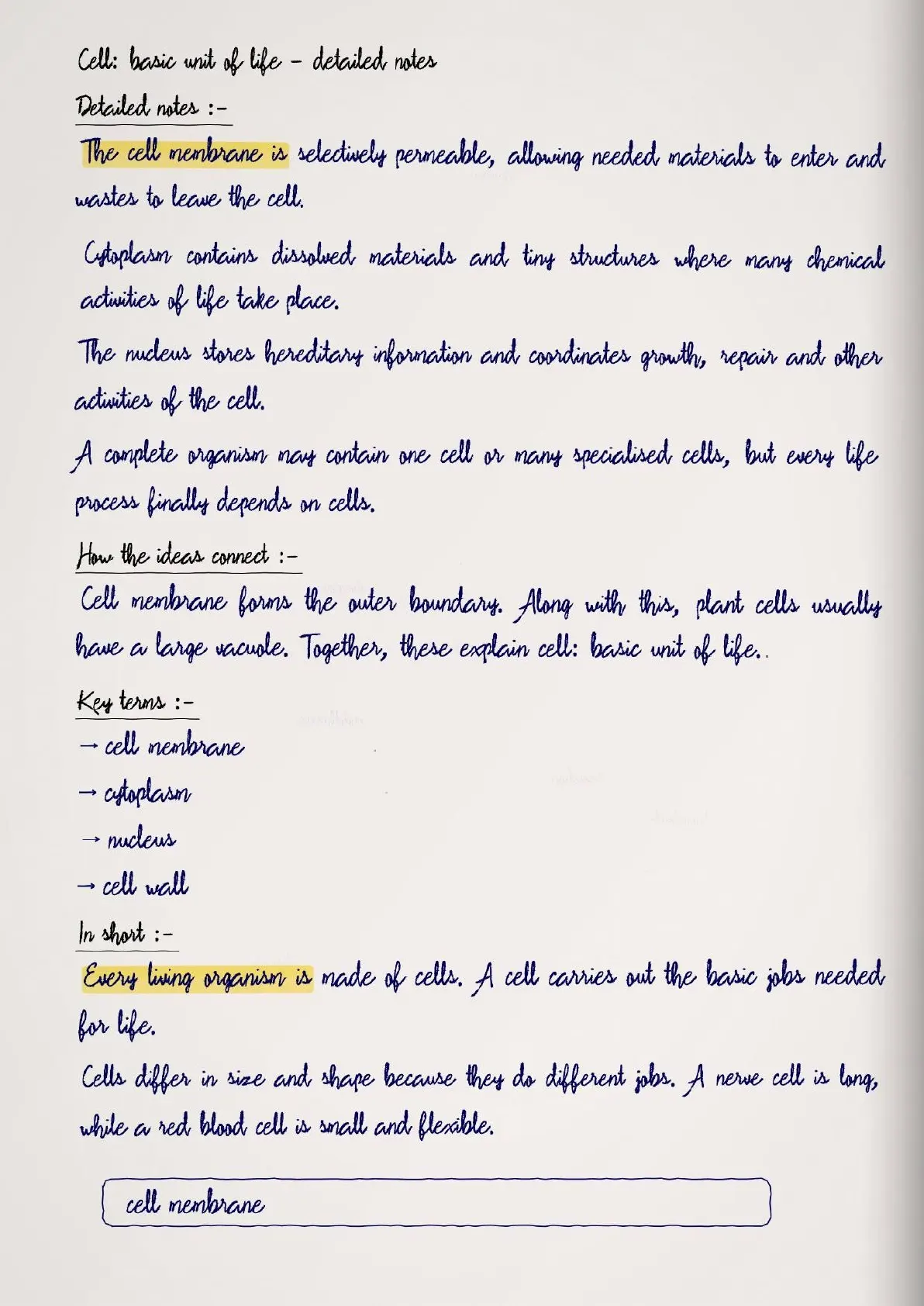
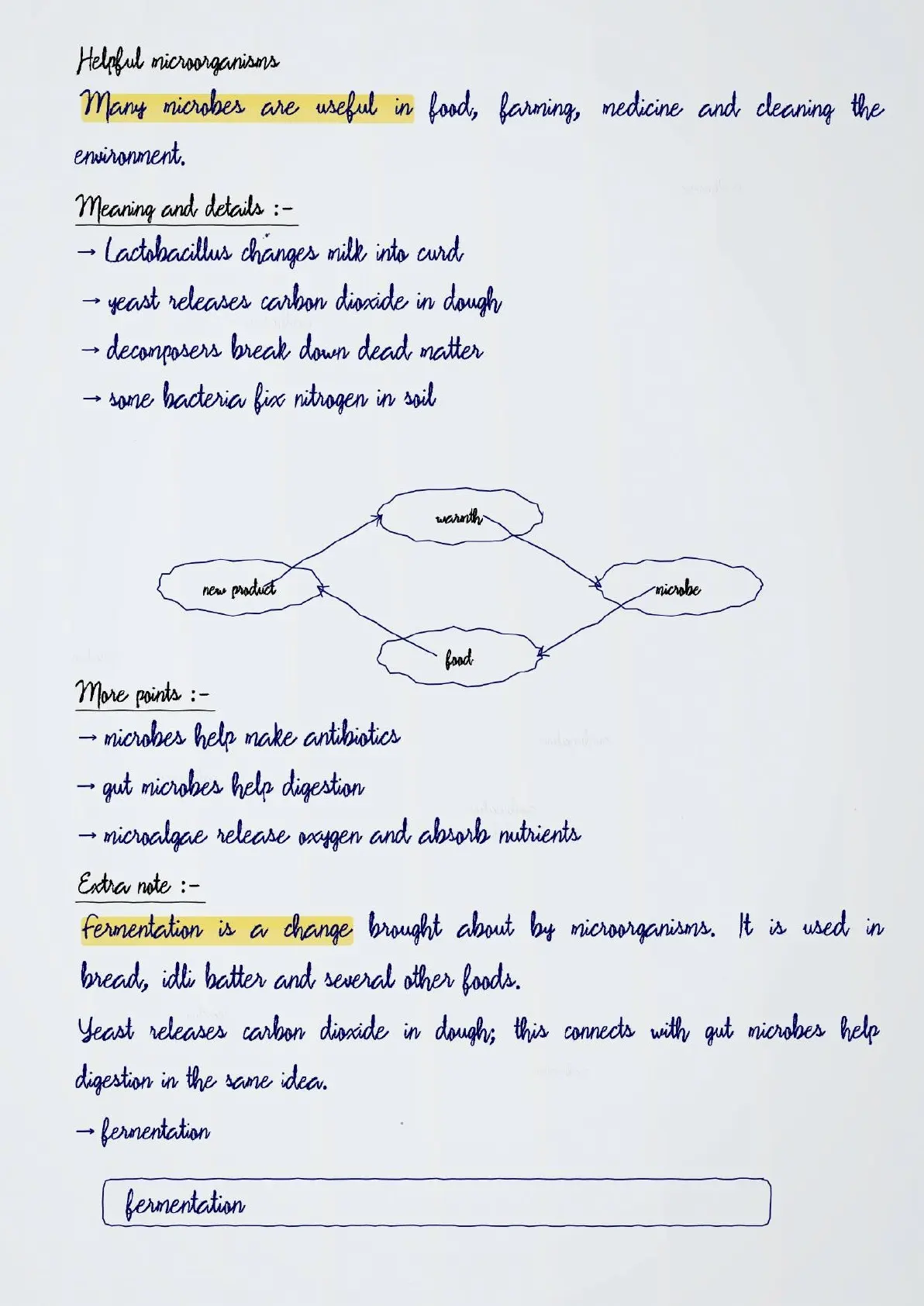
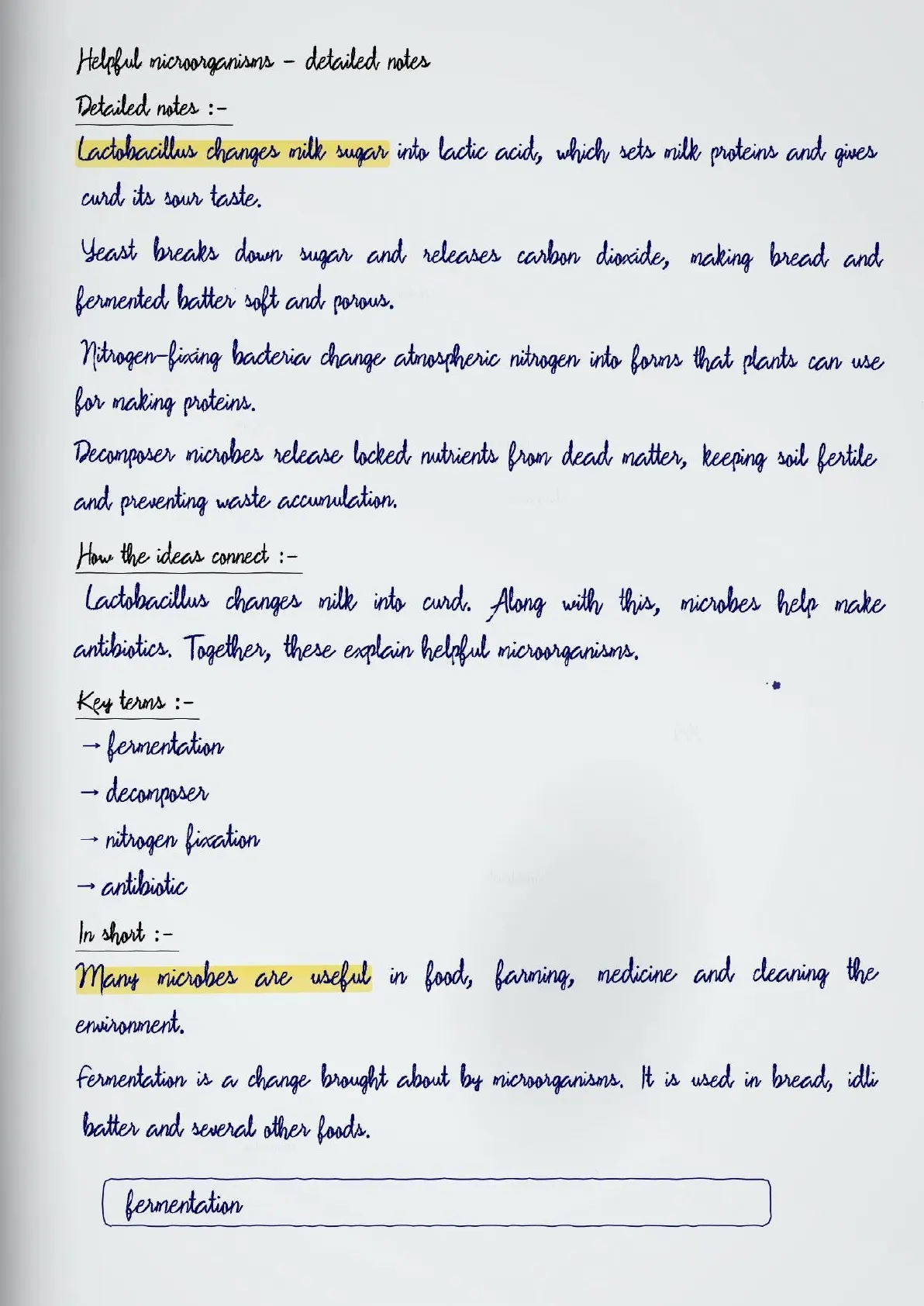
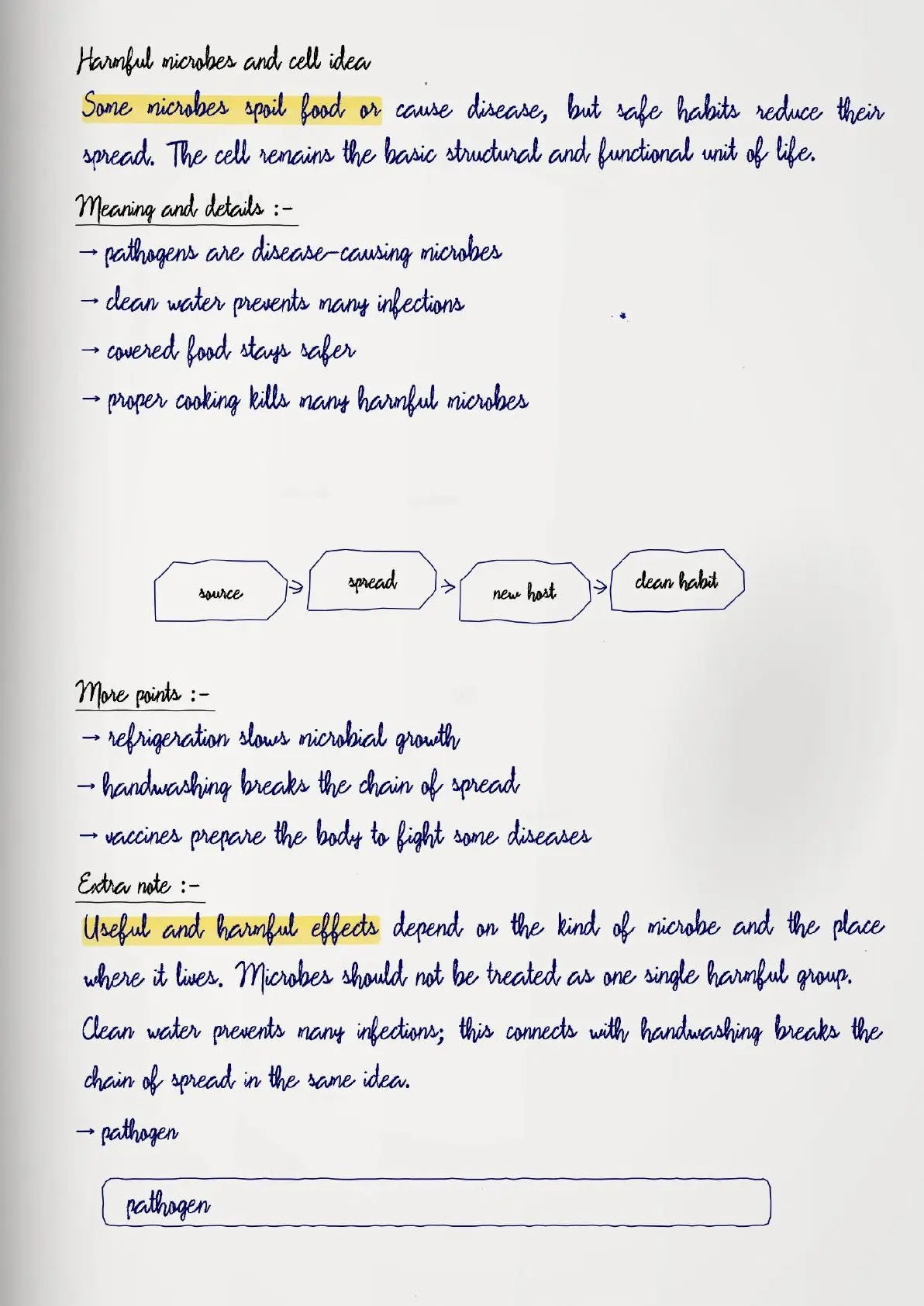
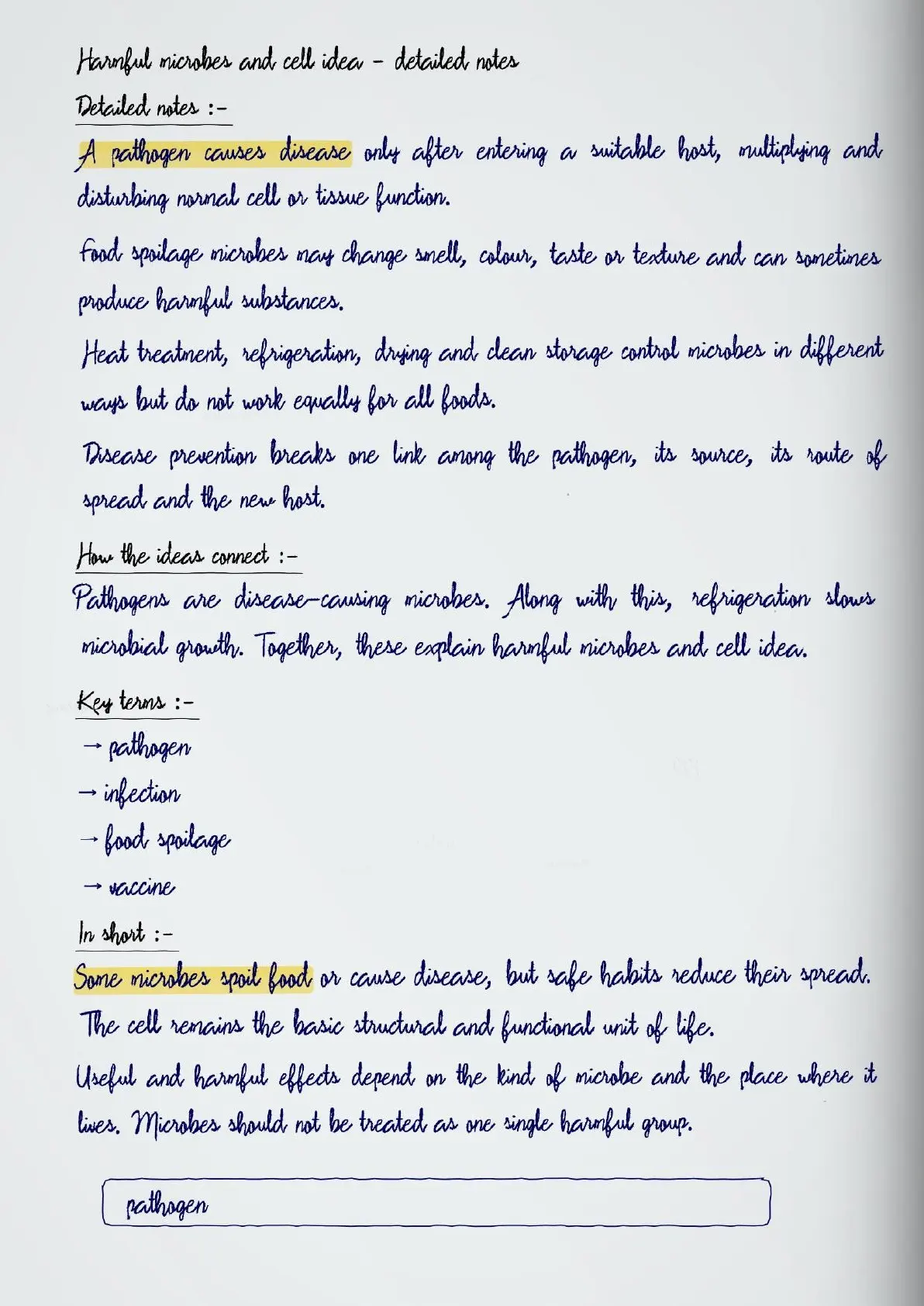
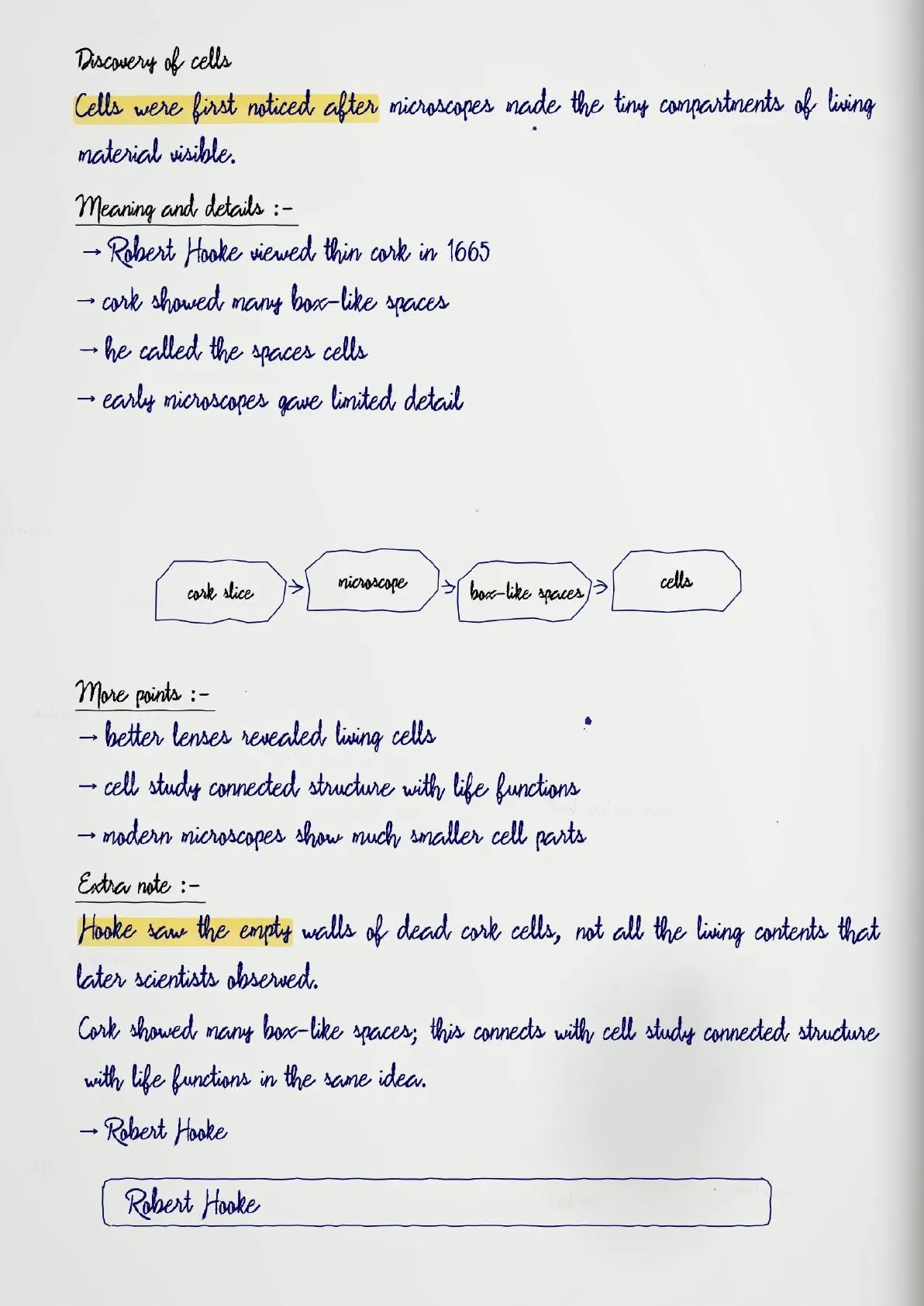
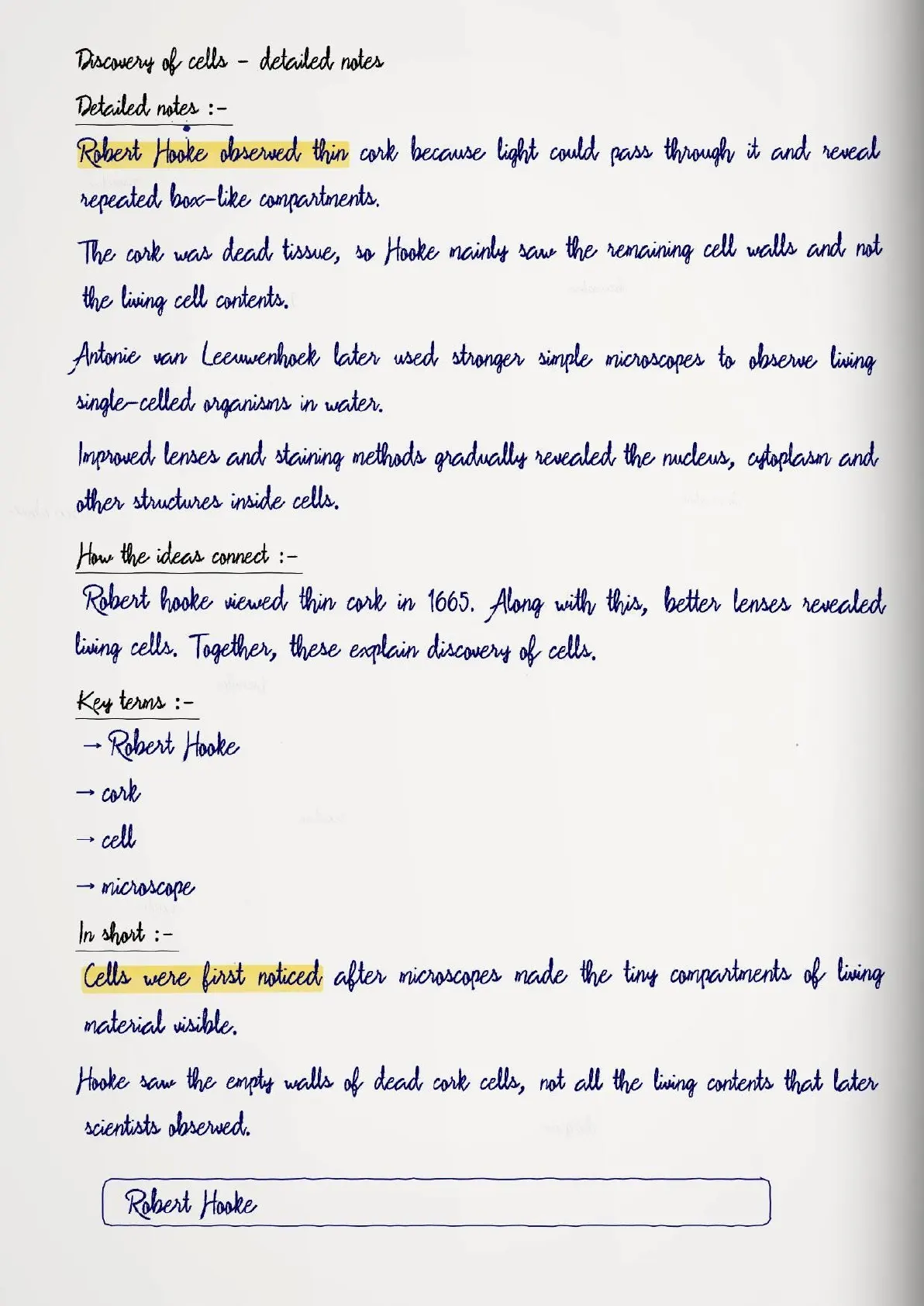
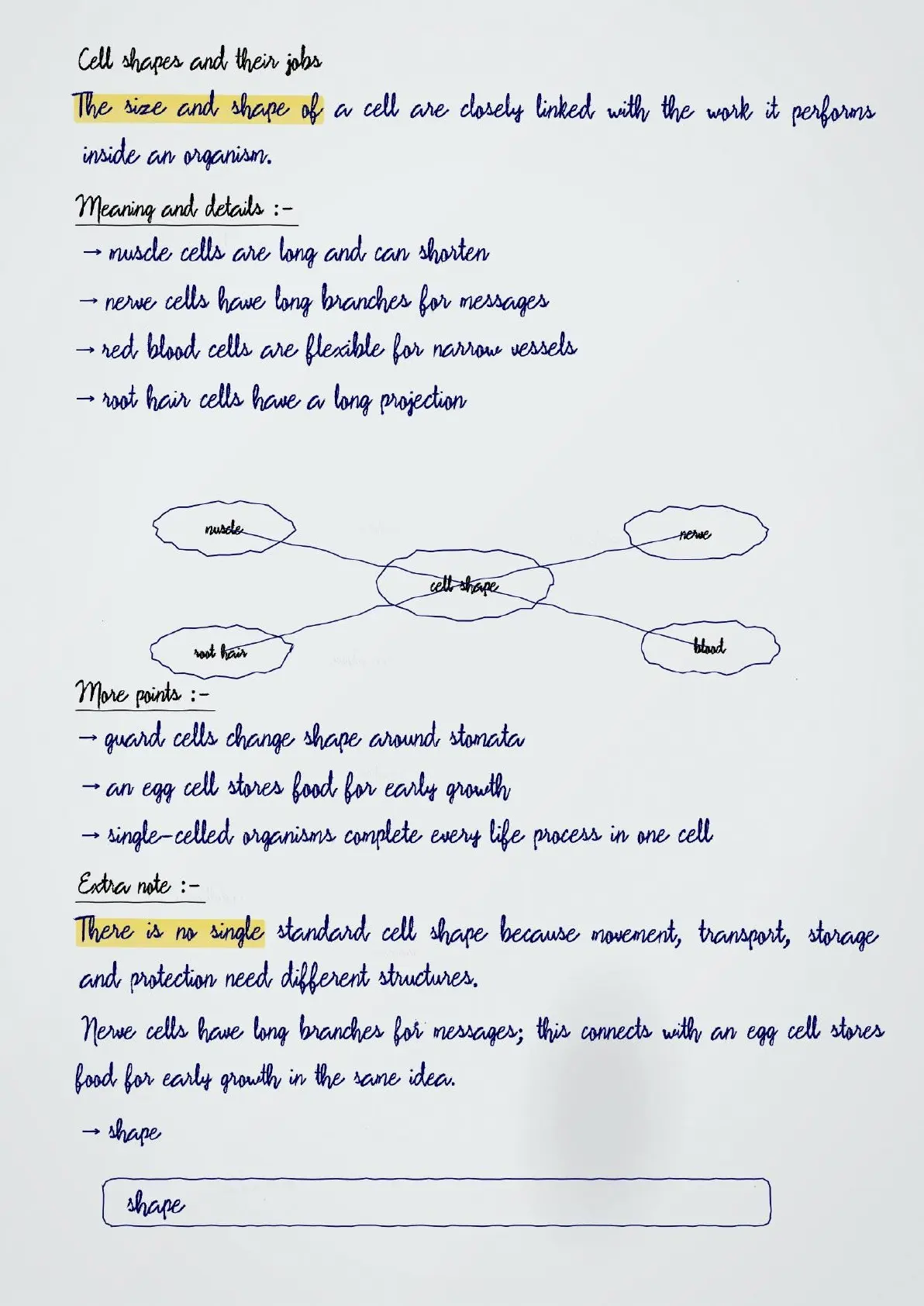
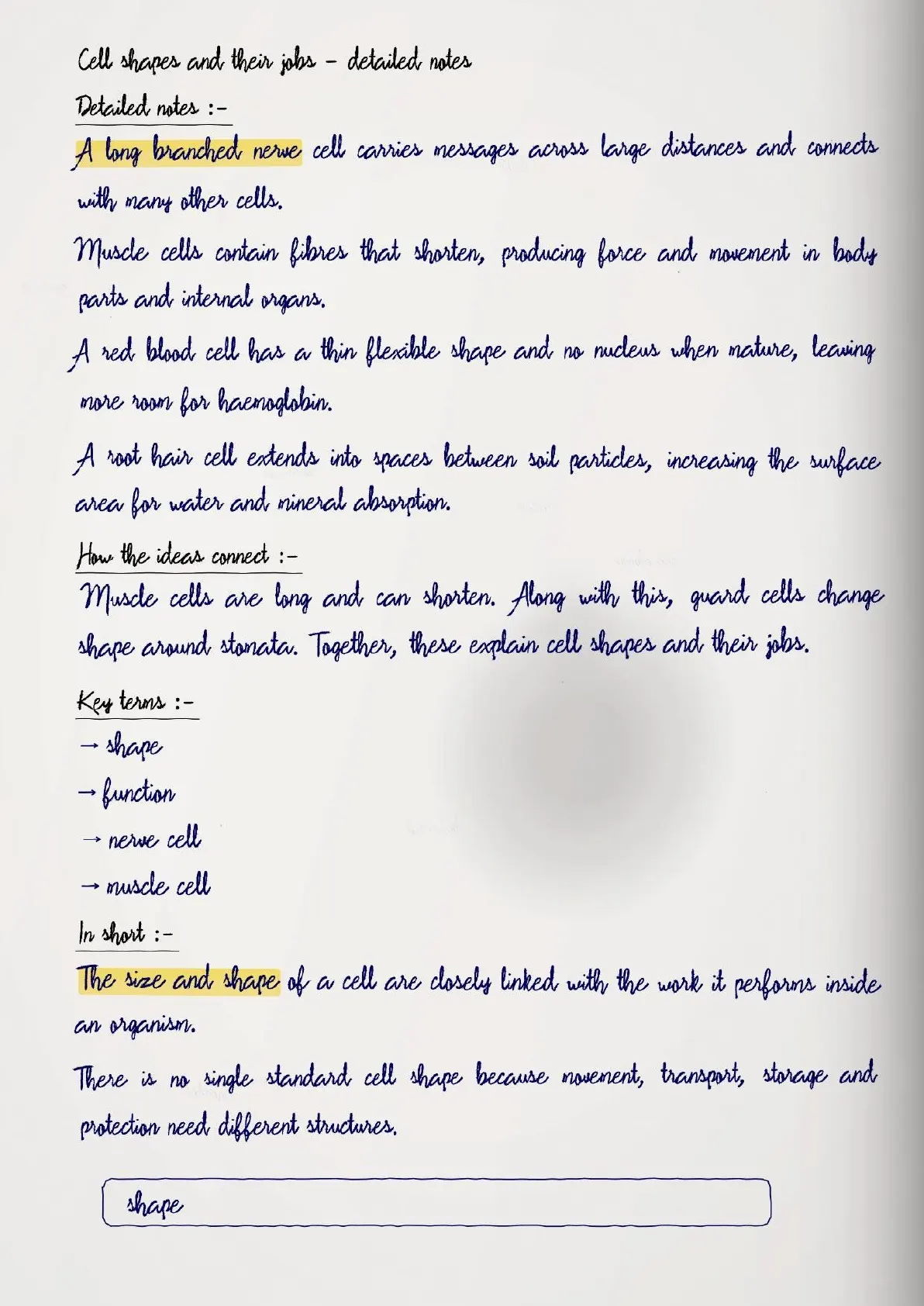
- CBSE Class 8 Weightage: a scoring chapter in the Science paper, asked in short and long answers.
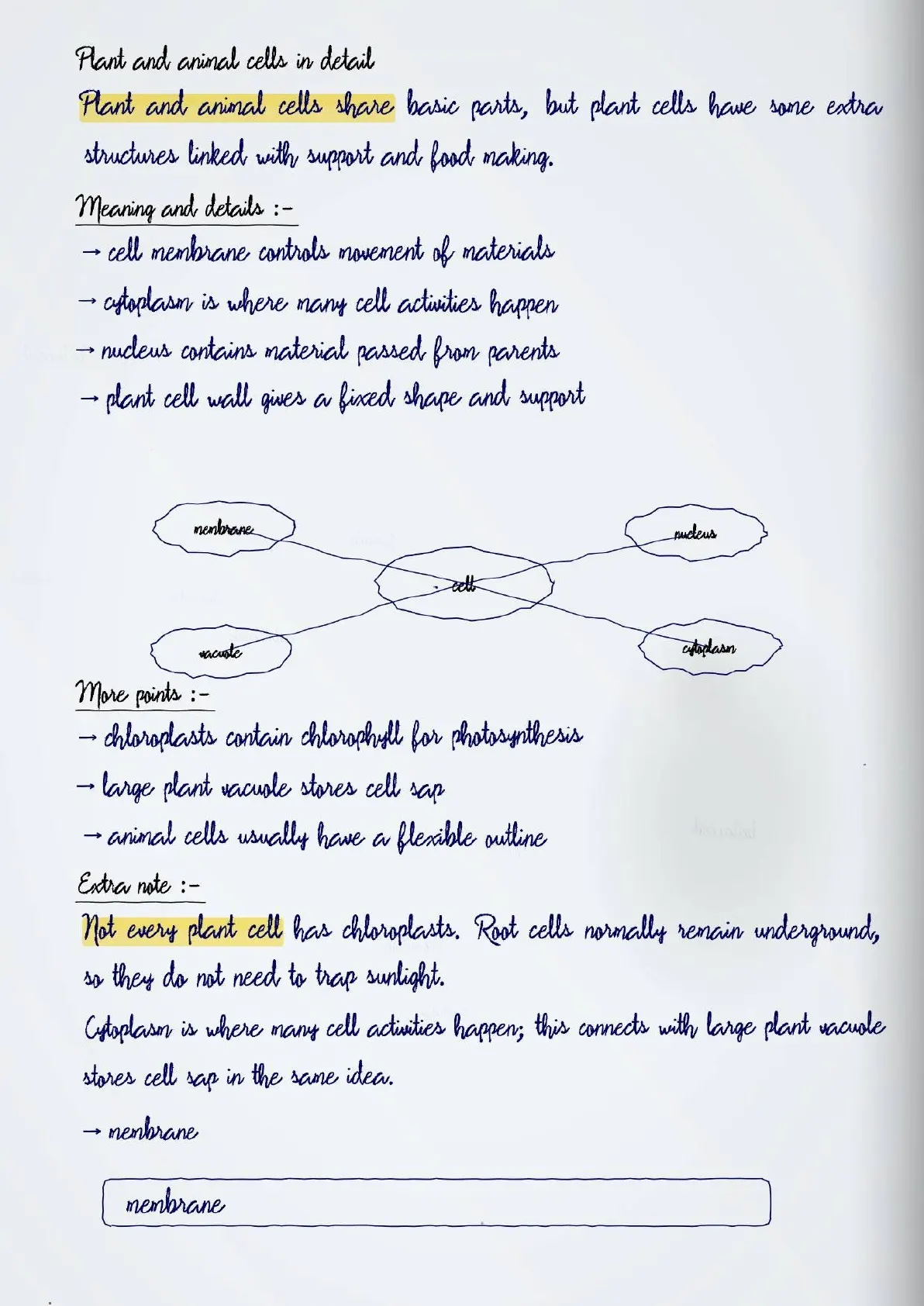
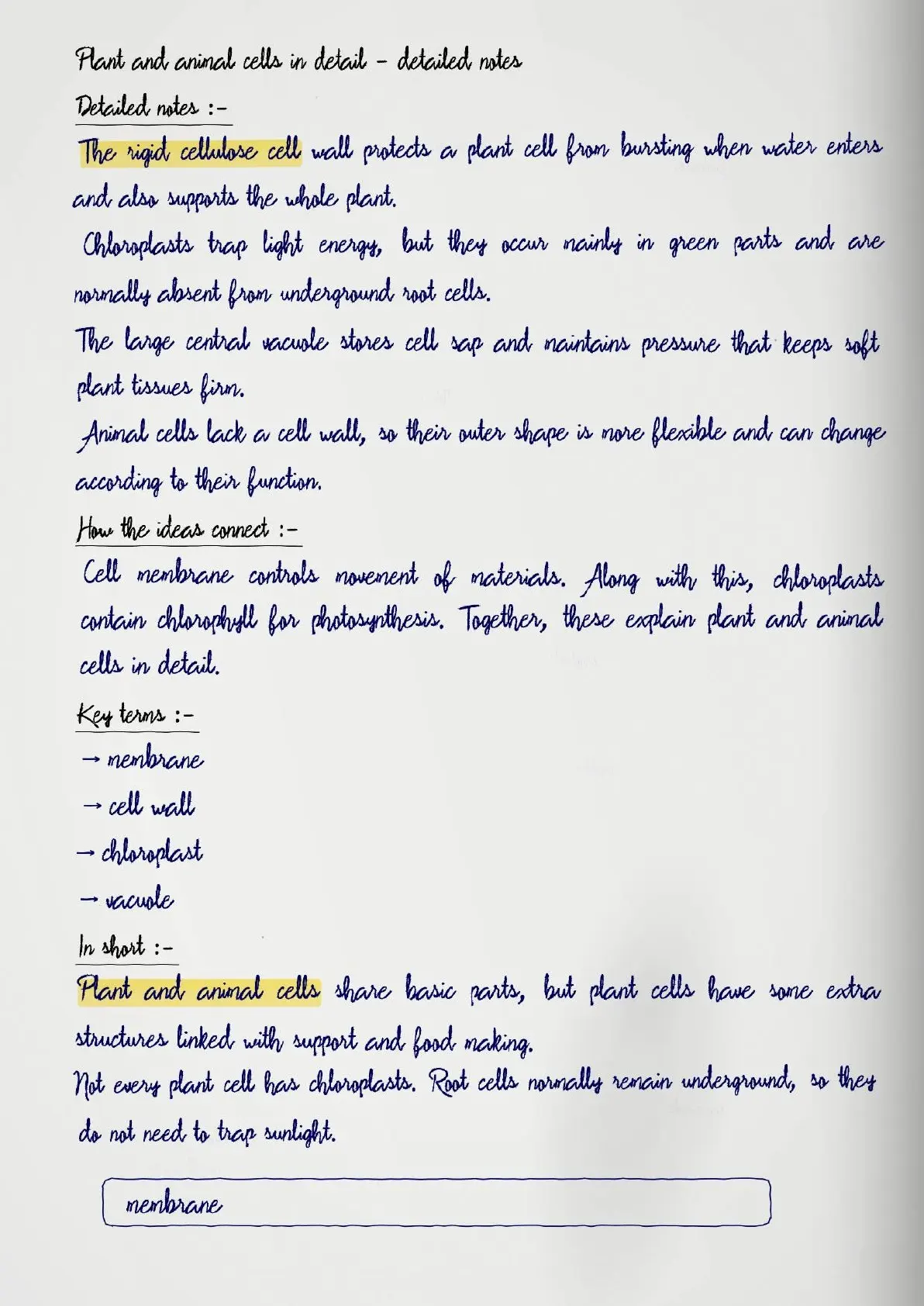
- What the notes cover: the invention of the lens and microscope, what is a cell, parts of a cell, plant cells and animal cells.
- Best for: quick revision before Class 8 exams and a strong base for Class 9.
You can read the complete class 8 science handwritten notes for The Invisible Living World: Beyond Our Naked Eye, with key terms, boxed definitions, and quick revision points, in the PDF below.
These handwritten notes are written by subject teachers, mapped to the 2026-27 NCERT, and checked against the last five years of CBSE Class 8 Science papers.
Key Terms and Ideas in The Invisible Living World: Beyond Our Naked Eye
These are the terms and ideas the exam asks about most. Learn each one so you can define it and use it in your answers.
| Term / Idea | What it means |
|---|---|
| Cell | the basic unit of life that makes up all living things |
| Cell membrane | the thin outer layer that encloses the cell and lets materials in and out |
| Nucleus | the round central part that controls the activities of the cell |
| Cytoplasm | the jelly-like part where most life processes take place |
| Cell wall | an extra rigid outer layer found in plant, fungal and bacterial cells |
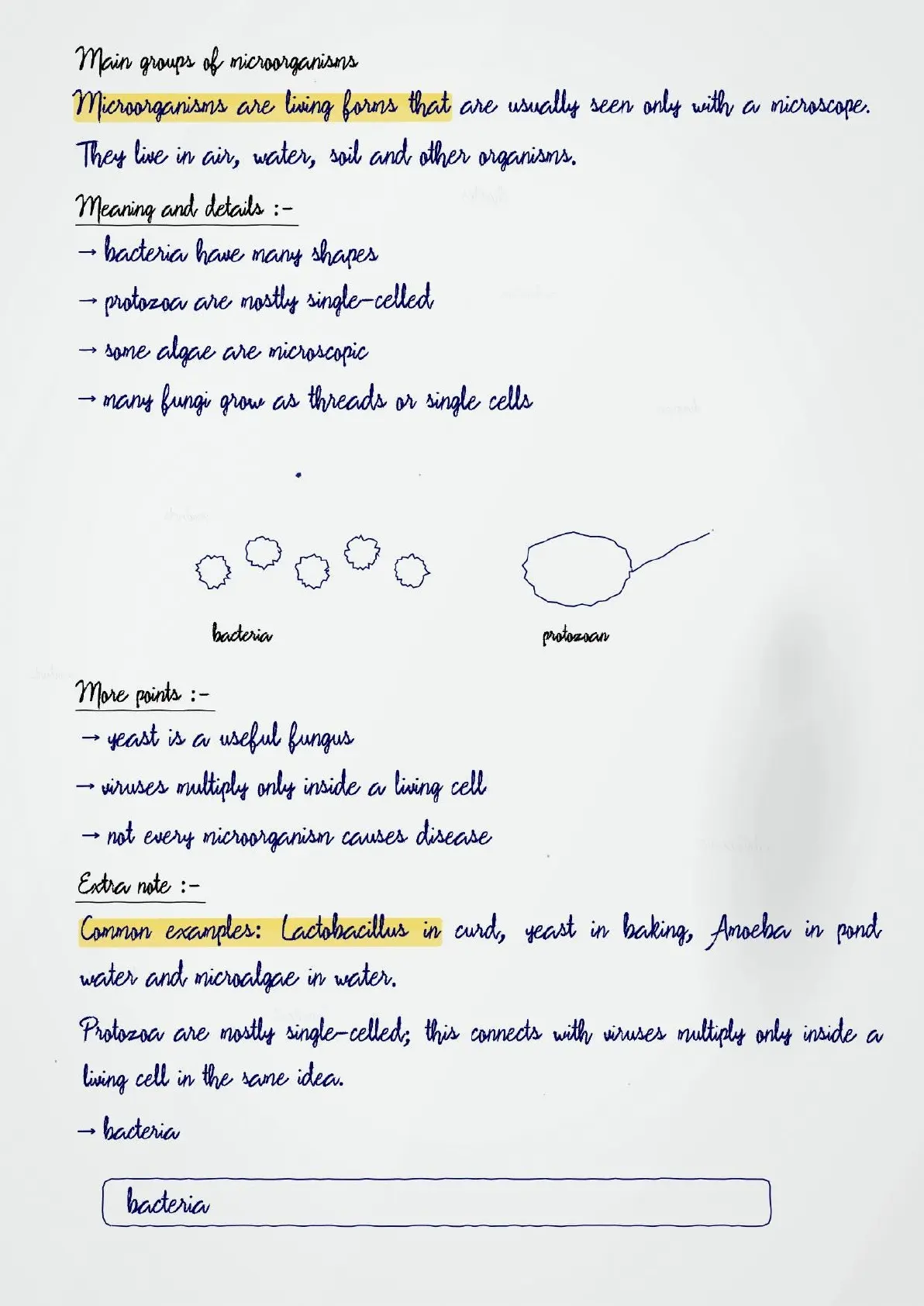
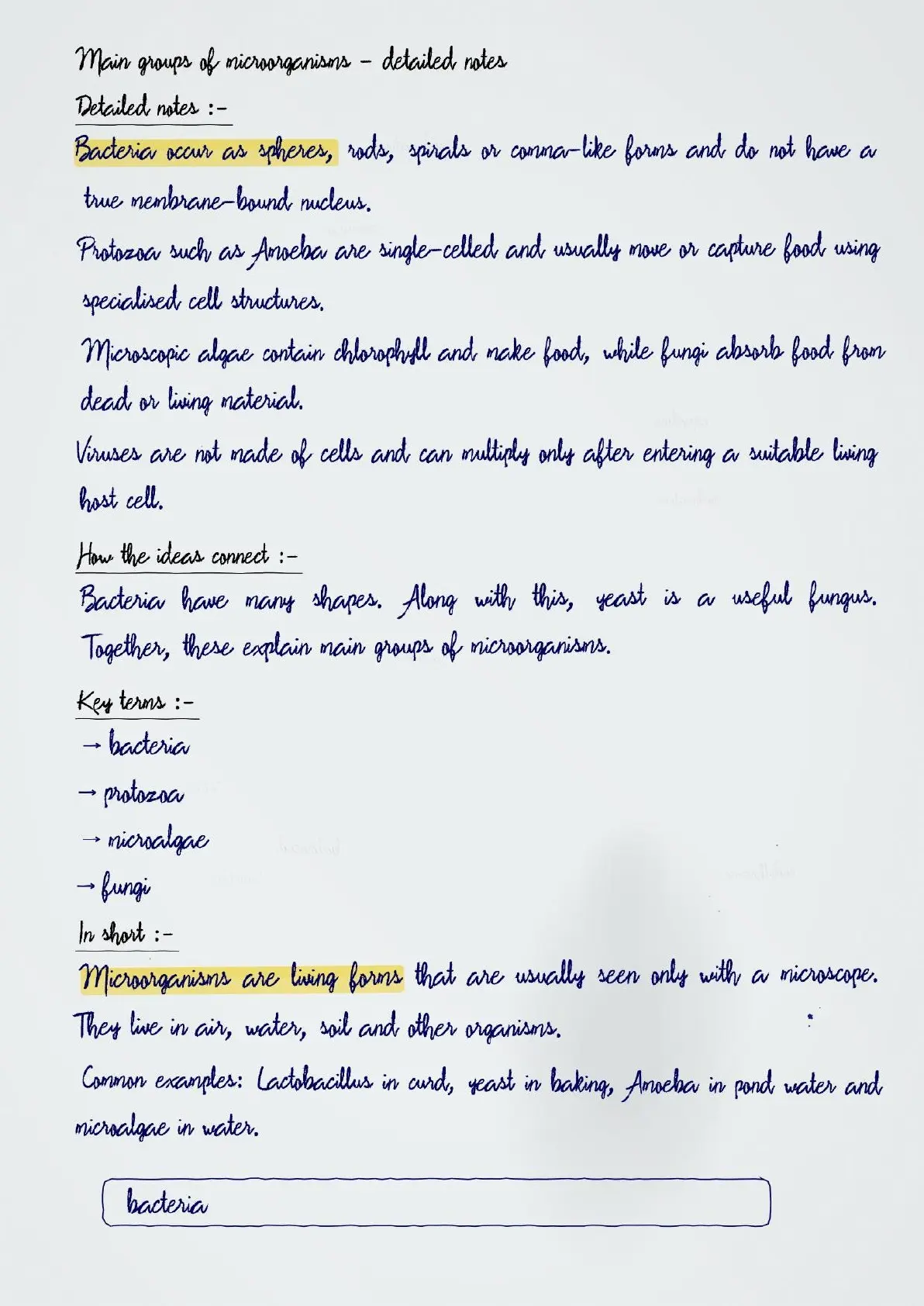
| Microorganism | a living being too small to see with the naked eye, like bacteria or amoeba |
| Unicellular | made of a single cell, such as bacteria and amoeba |
| Multicellular | made of many cells, such as plants and animals |
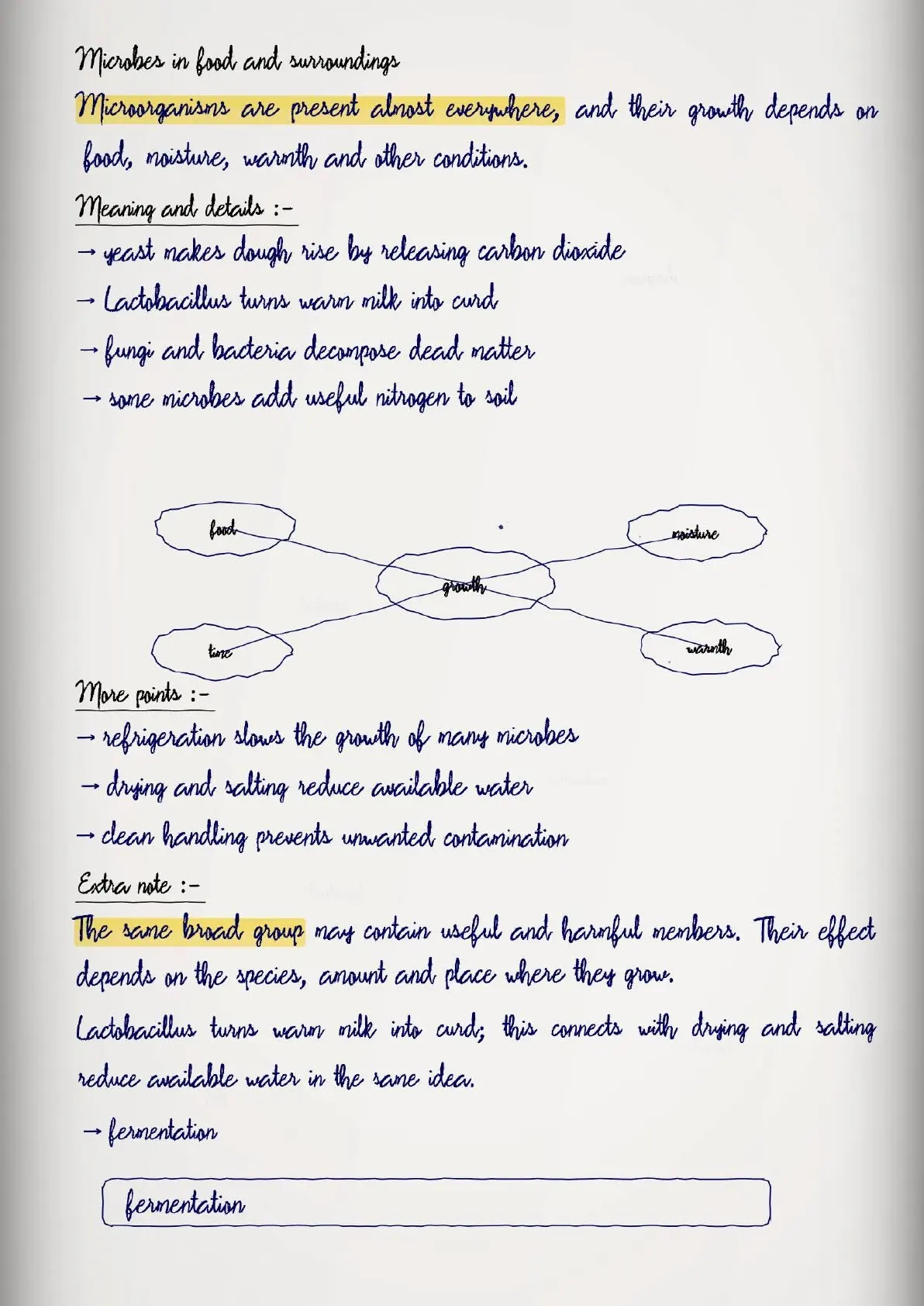
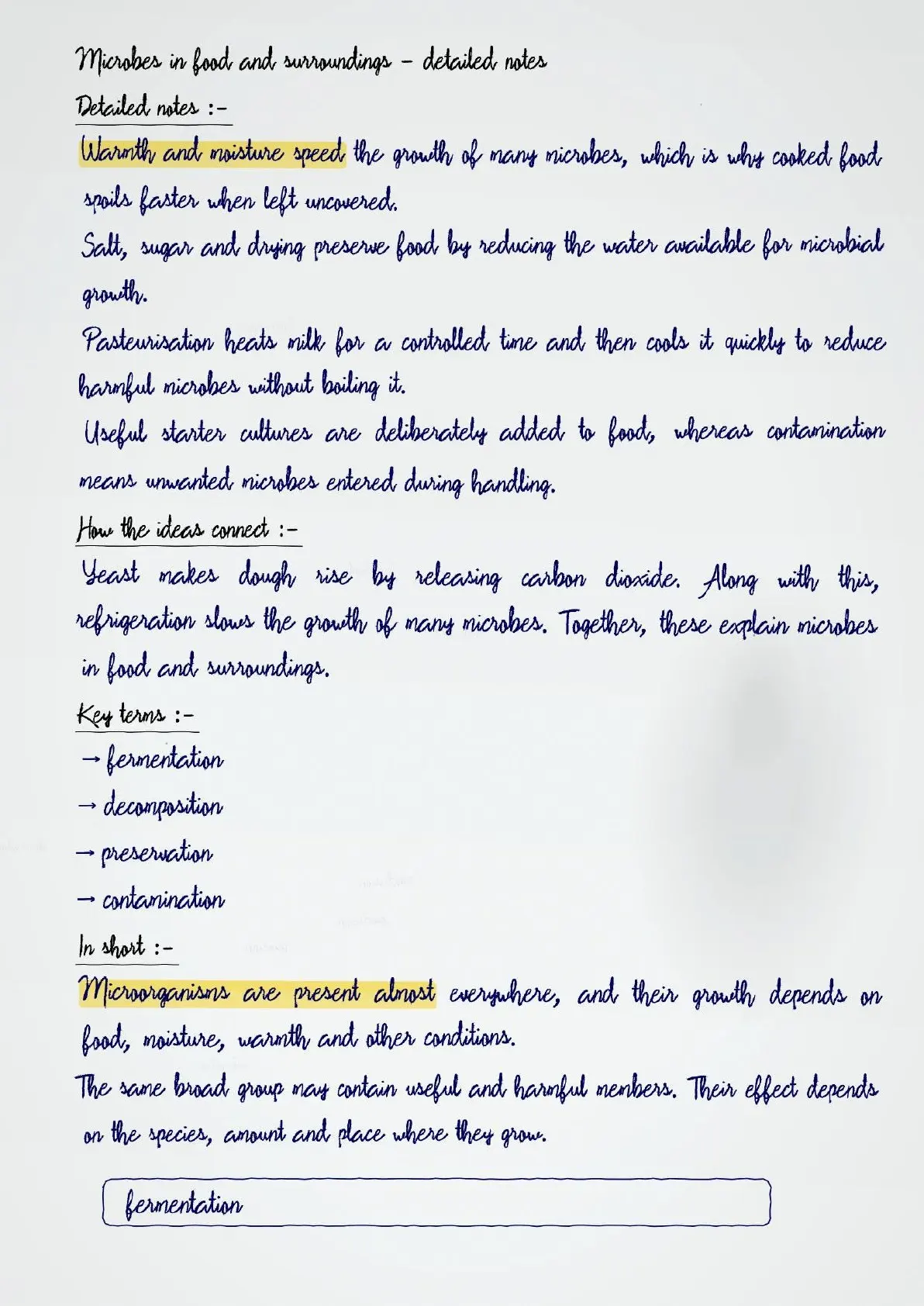
| Decomposition | the breaking down of dead matter by microbes into simple nutrients |
What the The Invisible Living World: Beyond Our Naked Eye Handwritten Notes Cover
This chapter opens the hidden world of tiny living things that we cannot see with our eyes. It explains how the microscope was invented, what a cell is, and how living bodies are built from cells. It also introduces microorganisms and the many ways they affect our lives.
- The invention of the lens and microscope
- What is a cell
- Parts of a cell
- Plant cells and animal cells
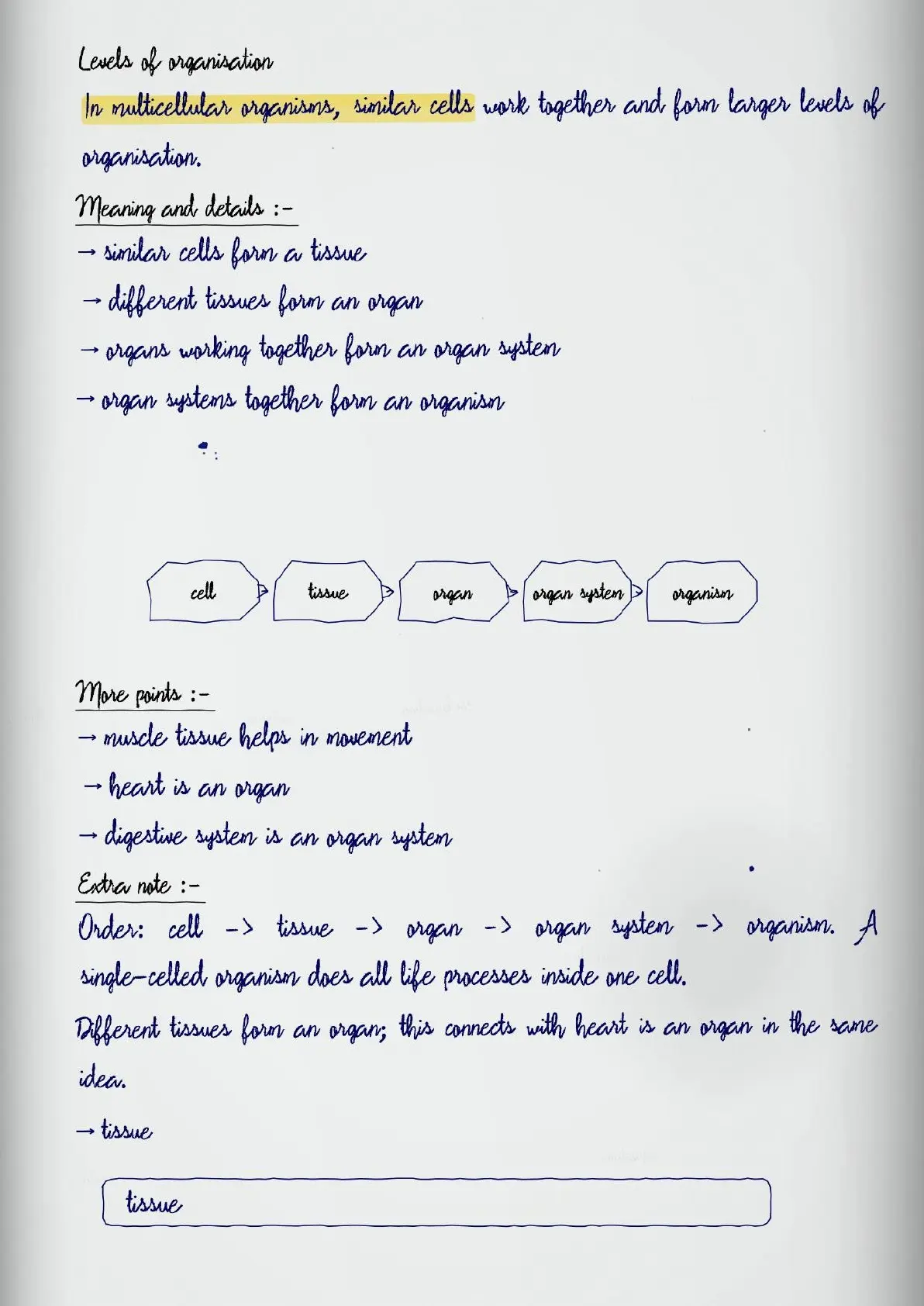
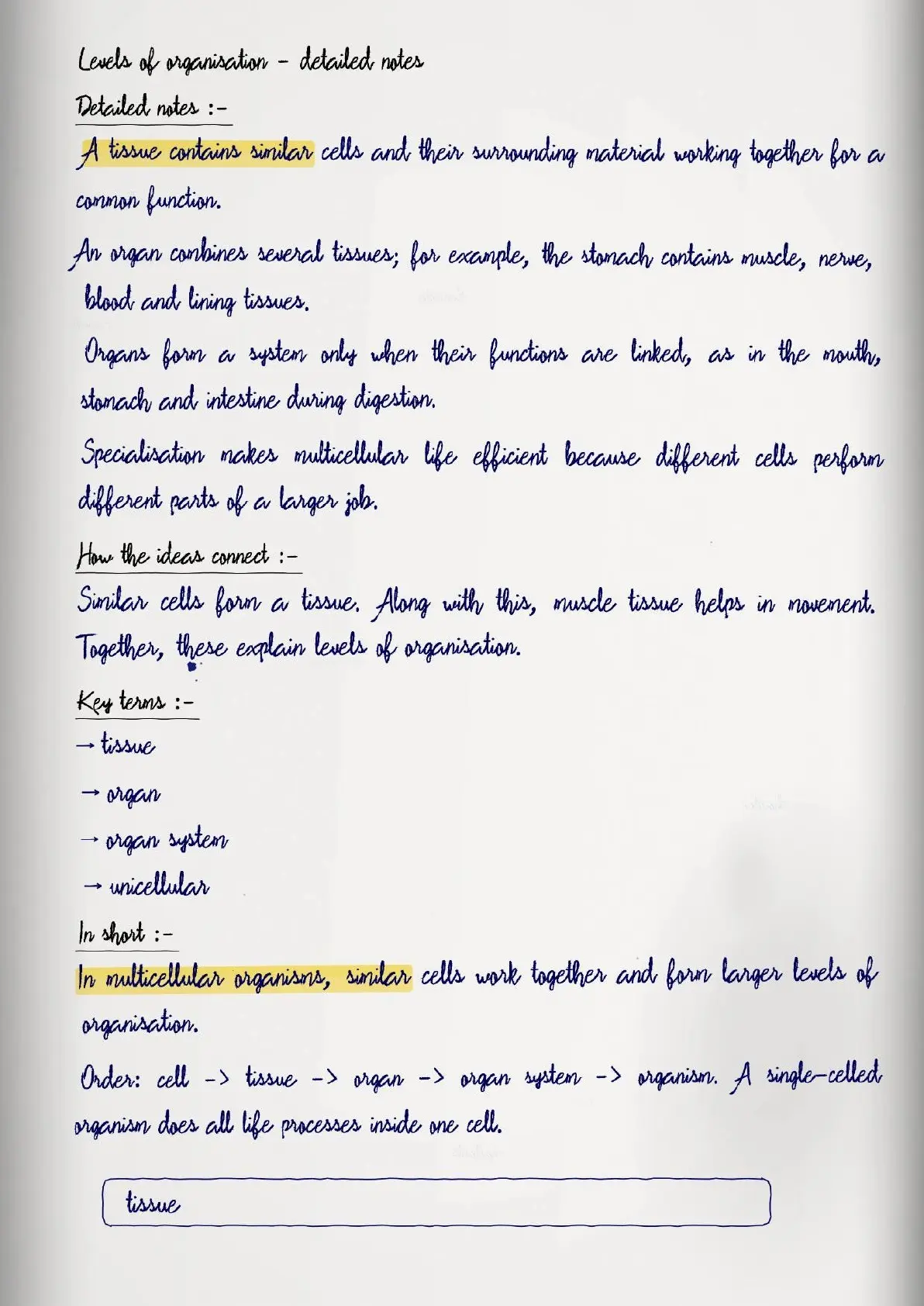
- Levels of organisation in the body
- What are microorganisms
- Useful and harmful microbes
- Cell as the basic unit of life
The Invisible Living World: Beyond Our Naked Eye Topic-wise Weightage for CBSE Class 8 Science
Some parts of this chapter are asked more often than others. The table below shows which sub-topics to revise first, based on recent CBSE Class 8 question trends.
| Sub-topic | Weightage | CBSE Frequency |
|---|---|---|
| Structure and parts of a cell | High | asked often |
| Difference between plant and animal cells | High | asked often |
| Types of microorganisms | High | asked often |
| Levels of organisation in the body | Medium | asked sometimes |
| Useful roles of microbes | Medium | asked sometimes |
| Unicellular and multicellular organisms | Low | asked rarely |
How Collegedunia's Handwritten Notes Help You Revise The Invisible Living World: Beyond Our Naked Eye
These notes are made for the night before the exam. They keep the facts short and easy to scan. Collegedunia maps every point to the 2026-27 NCERT.
- Clear handwriting: each topic is written in neat, easy-to-read handwriting.
- Boxed key terms: the main terms and definitions are boxed by hand for fast recall.
- Diagrams and tables: simple hand-drawn tables and charts make ideas clear.
- Colour-coded headings: new sub-topics stand out, so you find any section in seconds.
The Invisible Living World: Beyond Our Naked Eye Self-Assessment Quiz
Try these quick questions after you read the notes. Tap each question to check your answer. They cover the points CBSE asks most often.
Which structure is found in a plant cell but not in an animal cell?
(a) nucleus (b) cell wall (c) cytoplasm (d) cell membrane
Answer: (b) cell wall - it gives rigidity and strength to plant cells
Who first used the word 'cell' after looking at a slice of cork?
(a) Robert Hooke (b) Antonie van Leeuwenhoek (c) Ananda Mohan Chakrabarty (d) Kamal Ranadive
Answer: (a) Robert Hooke - the empty spaces reminded him of a honeycomb
Which microorganism helps set curd from milk?
(a) Rhizobium (b) Lactobacillus (c) yeast (d) amoeba
Answer: (b) Lactobacillus - it ferments milk into curd by making lactic acid
The correct order of levels of organisation is
(a) organ, cell, tissue, organism (b) cell, tissue, organ, organ system, organism (c) tissue, cell, organ, organism (d) organism, organ, cell
Answer: (b) cell, tissue, organ, organ system, organism - simple parts build up to the whole
Yeast makes dough rise because it
(a) releases carbon dioxide (b) adds water (c) removes air (d) makes it cold
Answer: (a) releases carbon dioxide - the gas forms bubbles that make the dough soft and fluffy
How to Use These Handwritten Notes for Class 8 Science Revision
Use these class 8 science handwritten notes in two passes. Read them slowly once for the full chapter. Then, near the exam, read only the boxes and key terms for a fast recall.
- Read the notes once with the NCERT chapter open beside you.
- Say each key term and idea in your own words.
- Practise one long-answer question from a past paper.
- On the last day, revise only the key terms and the boxes.
Class 8 Science Handwritten Notes for All Chapters
The table below links the class 8 science handwritten notes for every chapter. Use it to jump to any other chapter's notes.
The Invisible Living World: Beyond Our Naked Eye Class 8 Science Handwritten Notes FAQs
Ques. Where can I download The Invisible Living World: Beyond Our Naked Eye Class 8 Science Handwritten Notes PDF?
Ans. You can download the The Invisible Living World: Beyond Our Naked Eye Class 8 Science Handwritten Notes PDF directly from this page. Both the Normal and HD versions are free.
Ques. Are these handwritten notes aligned with the 2026-27 NCERT?
Ans. Yes. These notes follow the current 2026-27 syllabus for Class 8 Science. Why plant and animal cells look different from each other
Ques. How many pages is the Class 8 Science The Invisible Living World: Beyond Our Naked Eye Handwritten Notes PDF?
Ans. The notes run about 20 pages. They cover the full chapter with key terms, hand-drawn boxes, and a short self-assessment quiz.
Ques. What is the main idea of the 8th standard Science chapter The Invisible Living World: Beyond Our Naked Eye?
Ans. The main idea of this chapter is that the cell is the basic unit of life and every living thing is made of one or more cells. It also shows that many living things are microorganisms too small to see, and that these microbes affect us in useful ways, like making curd and manure, and in harmful ways too.
Ques. Are these The Invisible Living World: Beyond Our Naked Eye notes enough for the CBSE Class 8 exam?
Ans. Yes, for revision. The Collegedunia handwritten notes cover every key point and exam term. Read them with the NCERT chapter and practise past questions.



Comments