




Class 8 Science Chapter 5 Exploring Forces is a high-frequency chapter in the CBSE Class 8 Science exam. These class 8 science handwritten notes chapter 5 Exploring Forces follow the 2026-27 NCERT and cover what is a force, effects of a force on objects, contact forces: muscular and friction. This page hosts the notes PDF, key terms, and.
- CBSE Class 8 Weightage: a scoring chapter in the Science paper, asked in short and long answers.
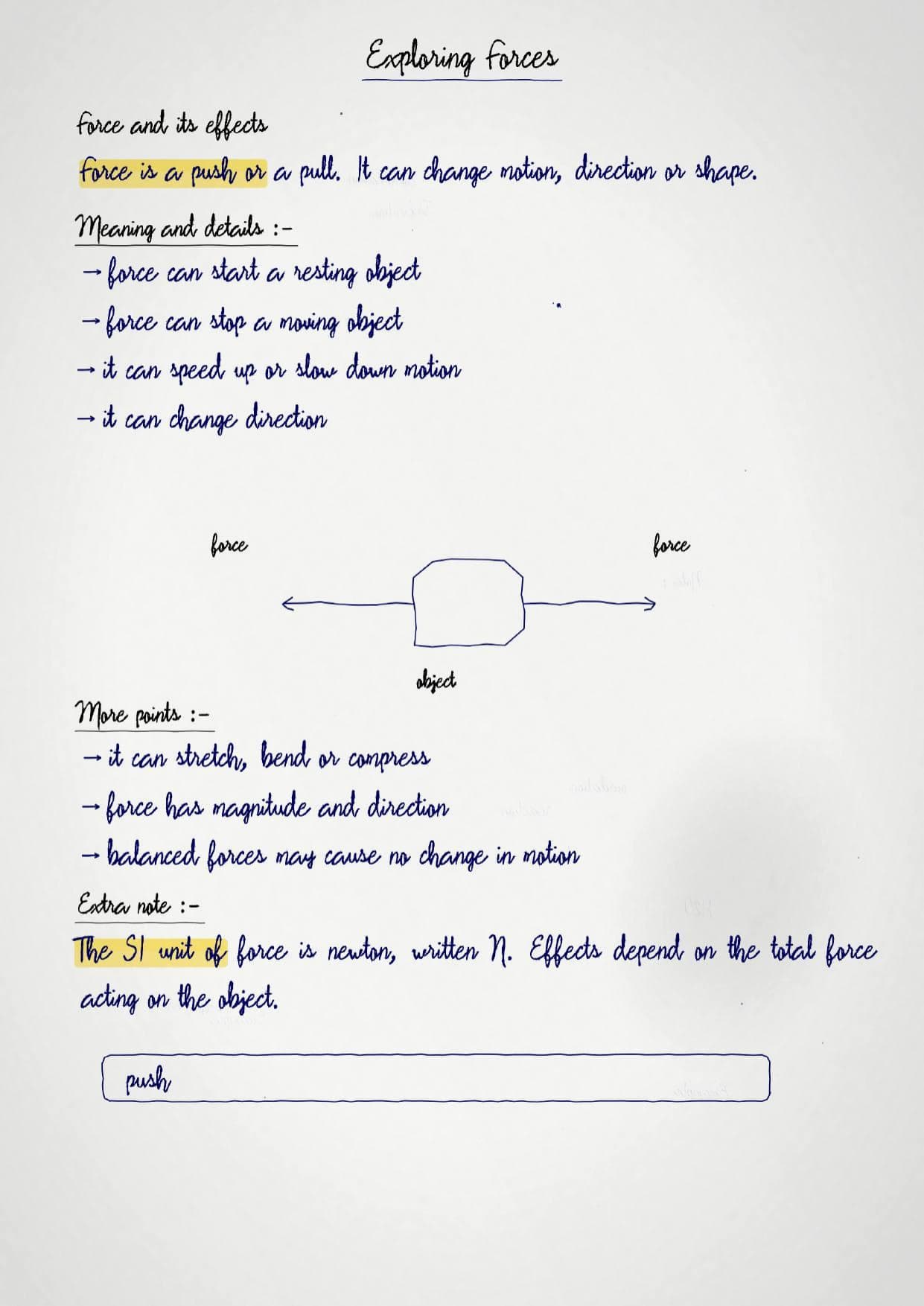
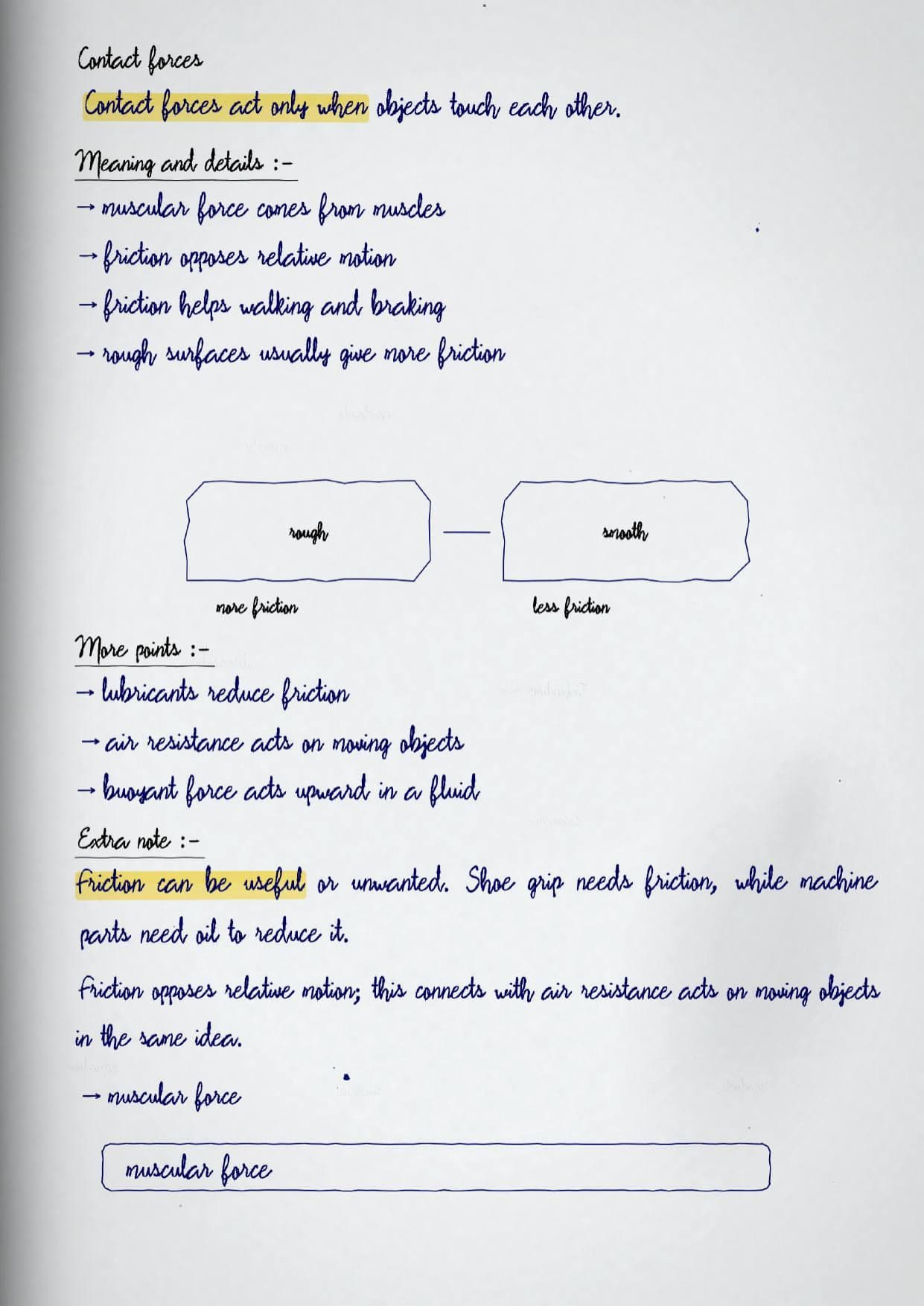
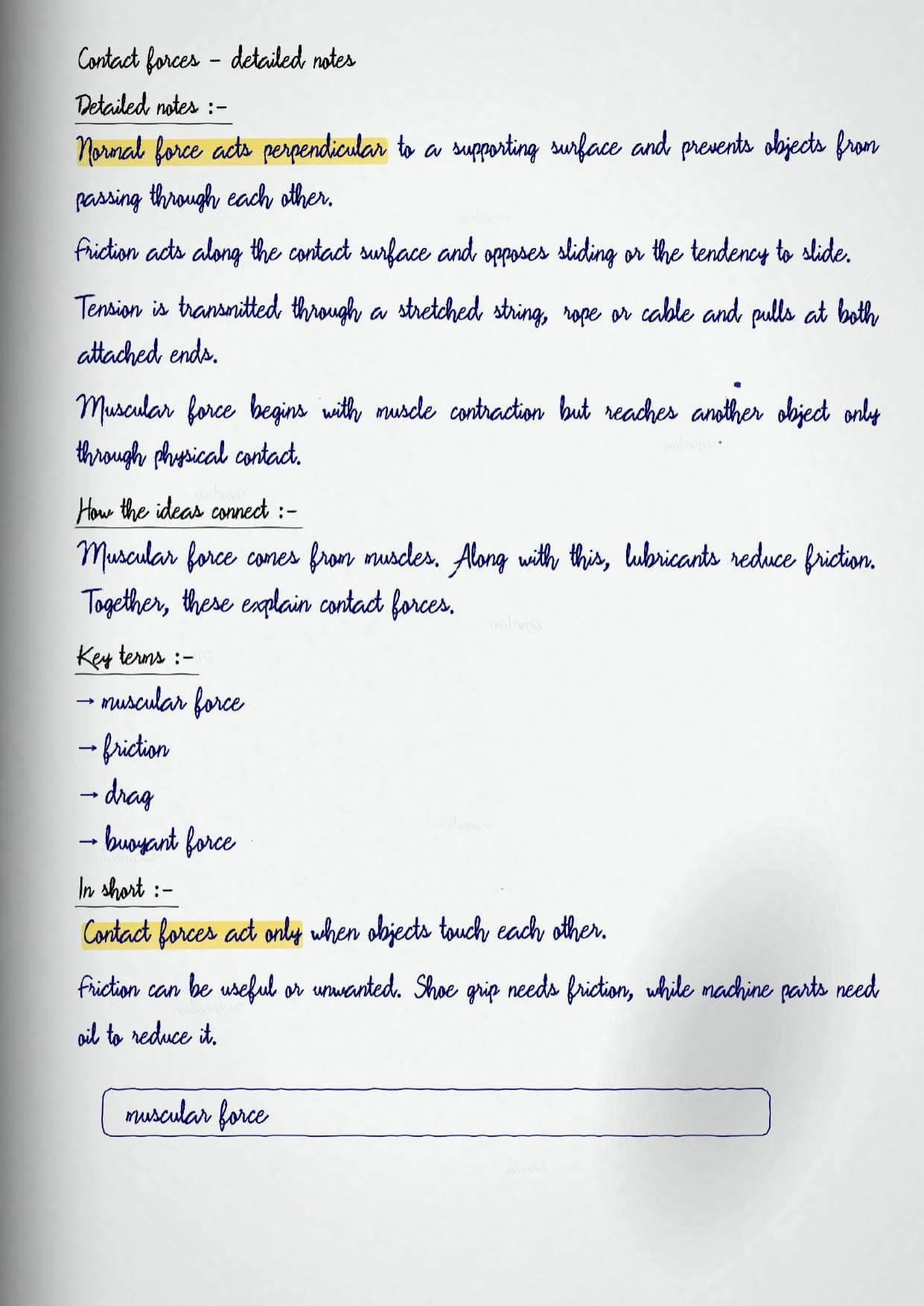
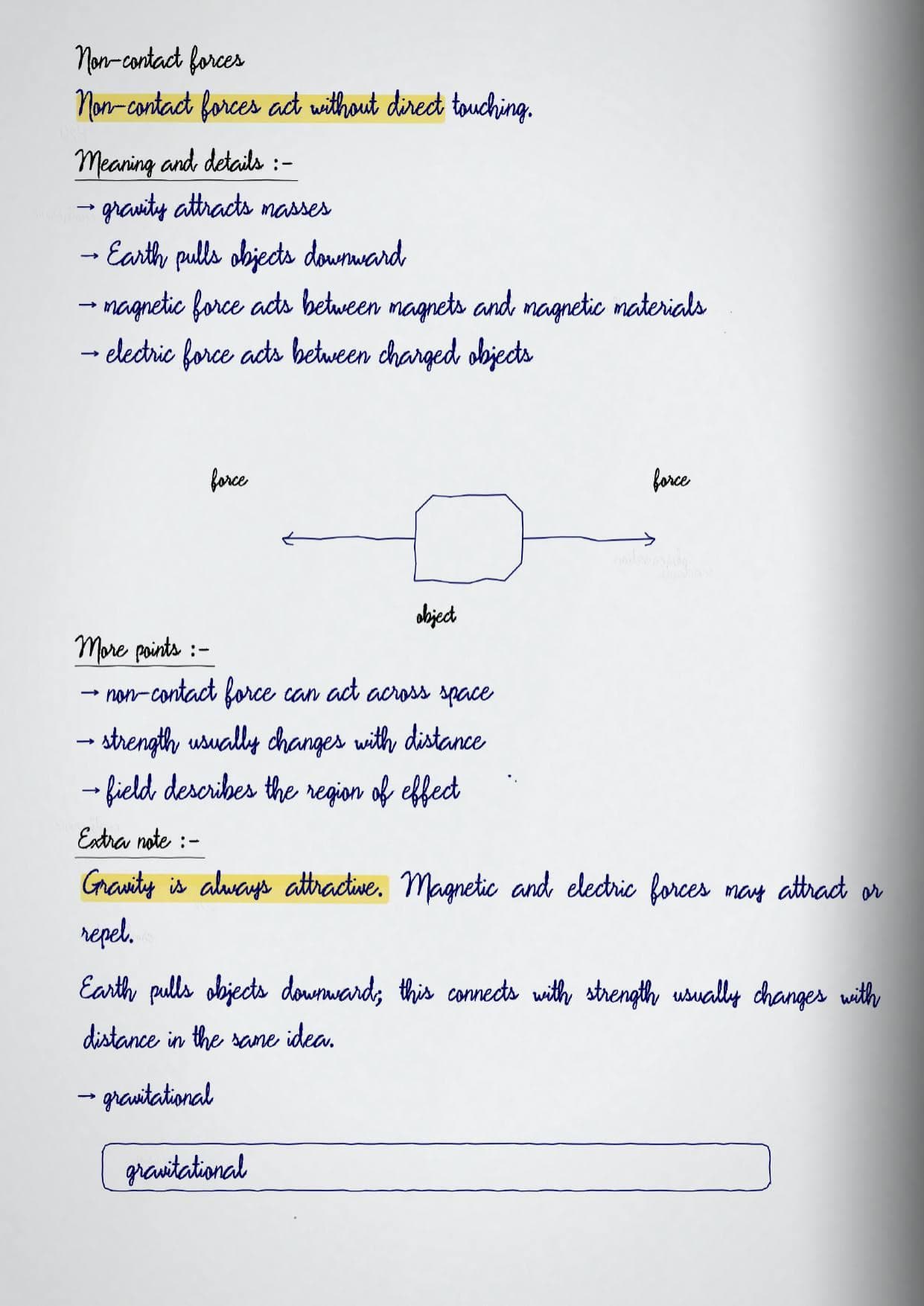
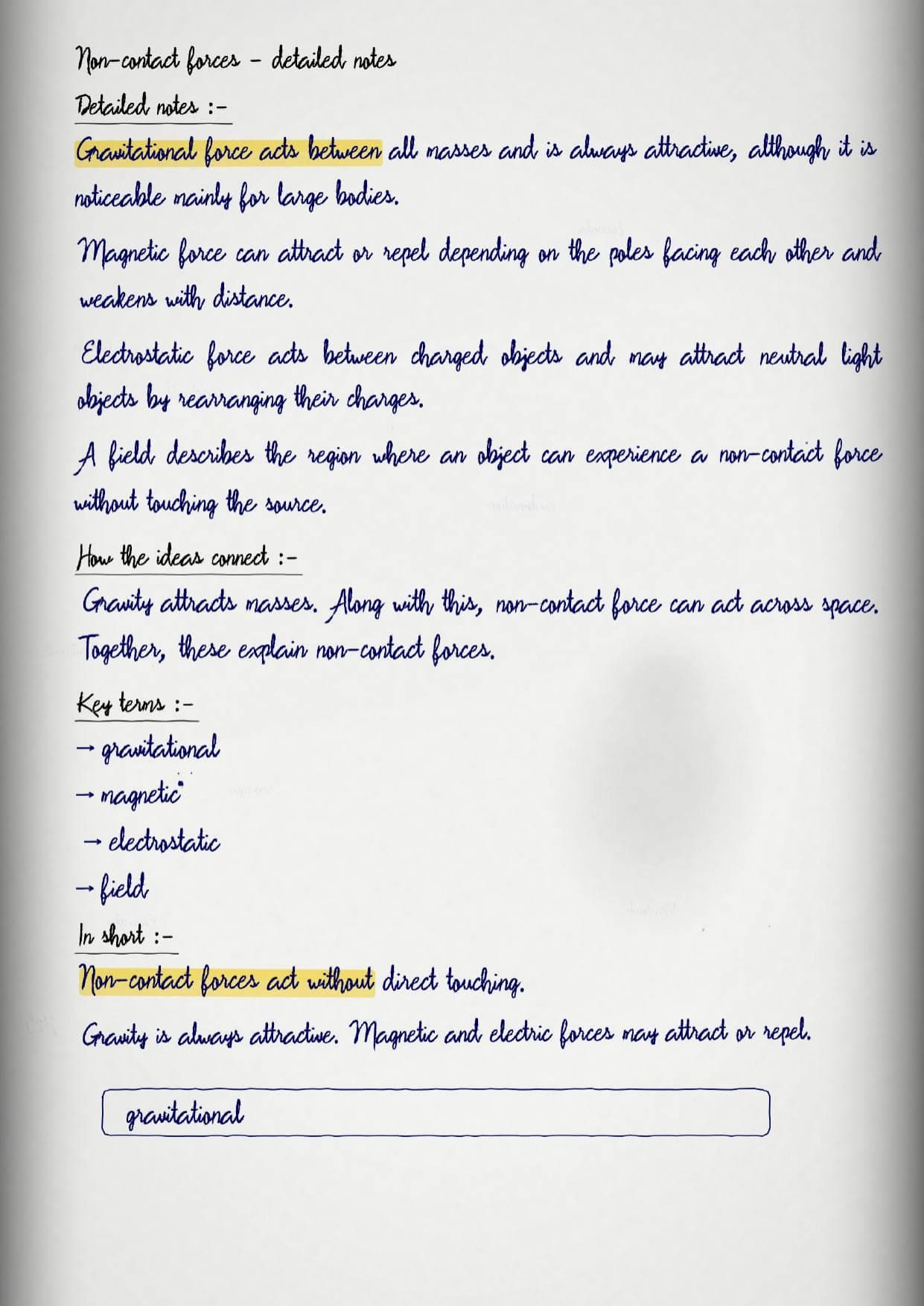
- What the notes cover: what is a force, effects of a force on objects, contact forces: muscular and friction, non-contact forces: magnetic, electrostatic, gravitational.
- Best for: quick revision before Class 8 exams and a strong base for Class 9.
You can read the complete class 8 science handwritten notes for Exploring Forces, with key terms, boxed definitions, and quick revision points, in the PDF below.
These handwritten notes are written by subject teachers, mapped to the 2026-27 NCERT, and checked against the last five years of CBSE Class 8 Science papers.
What the Exploring Forces Handwritten Notes Cover
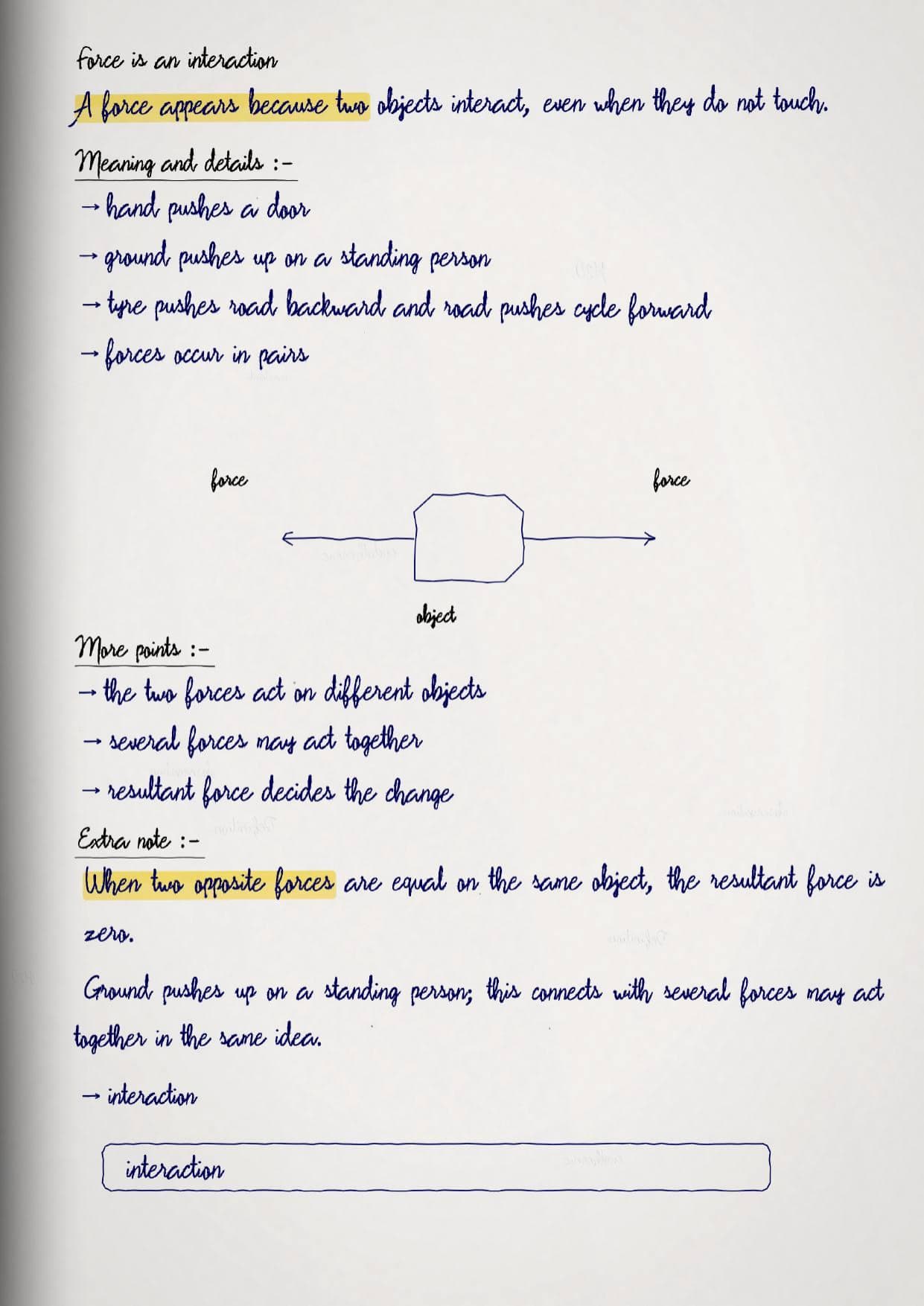
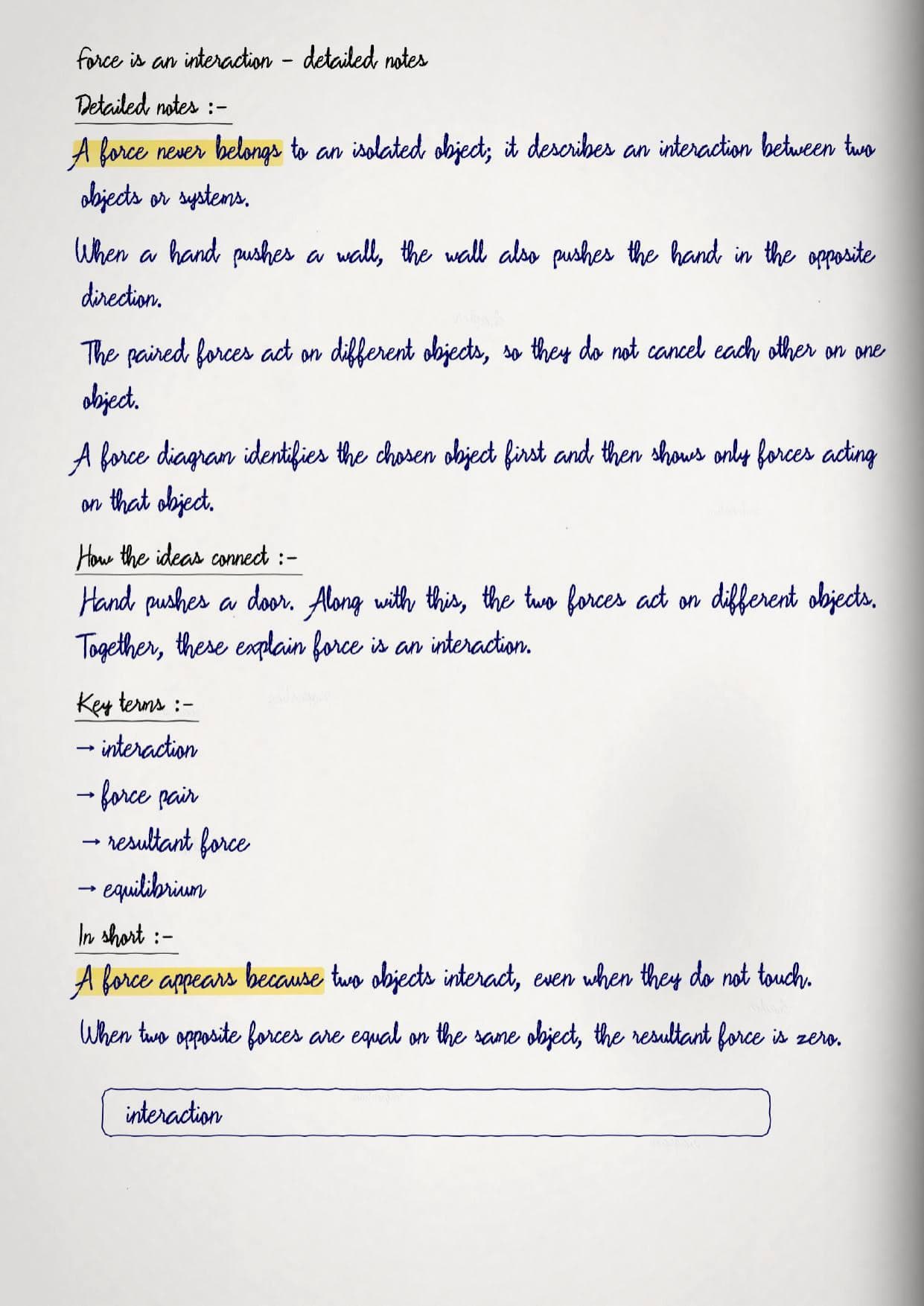
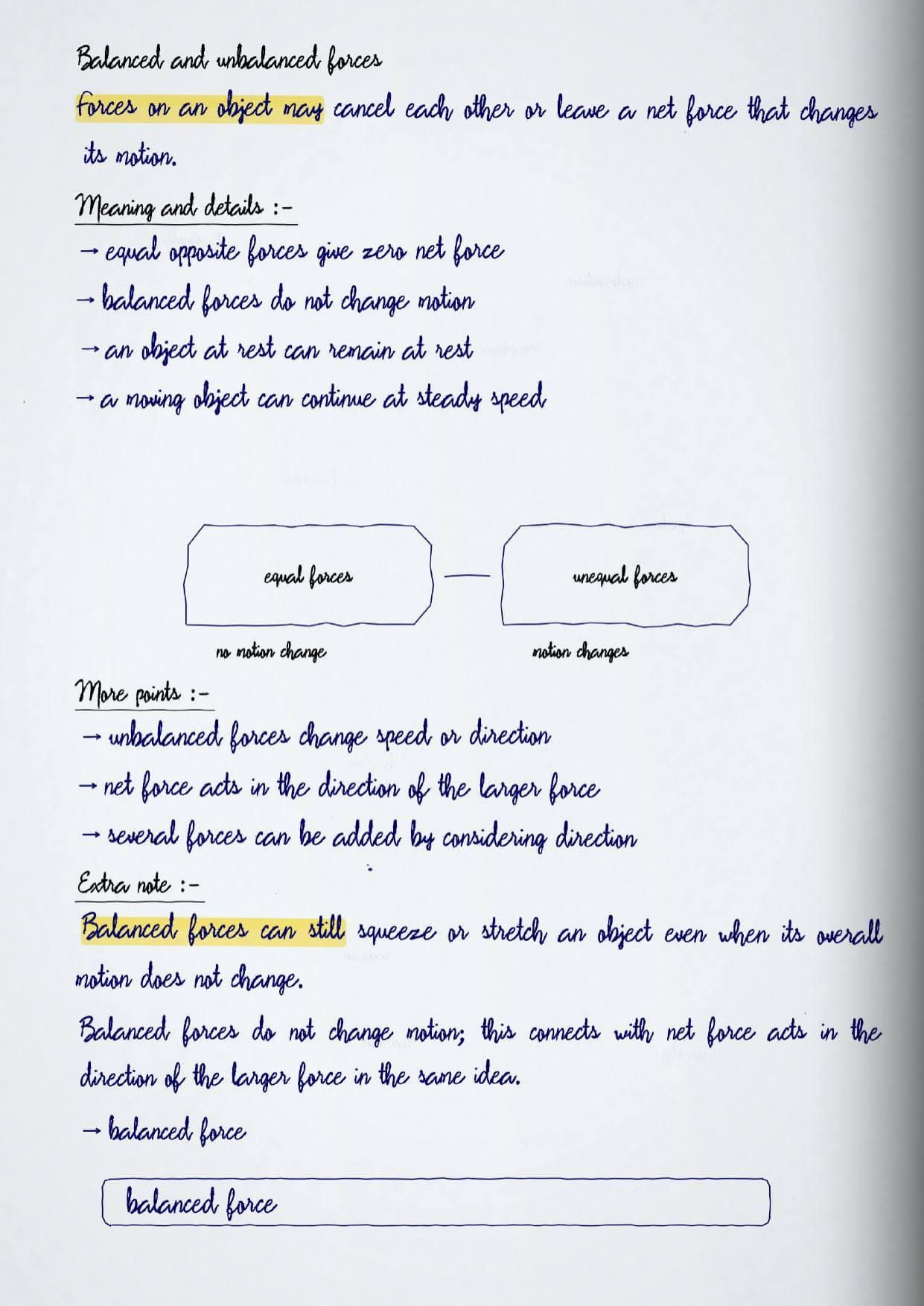
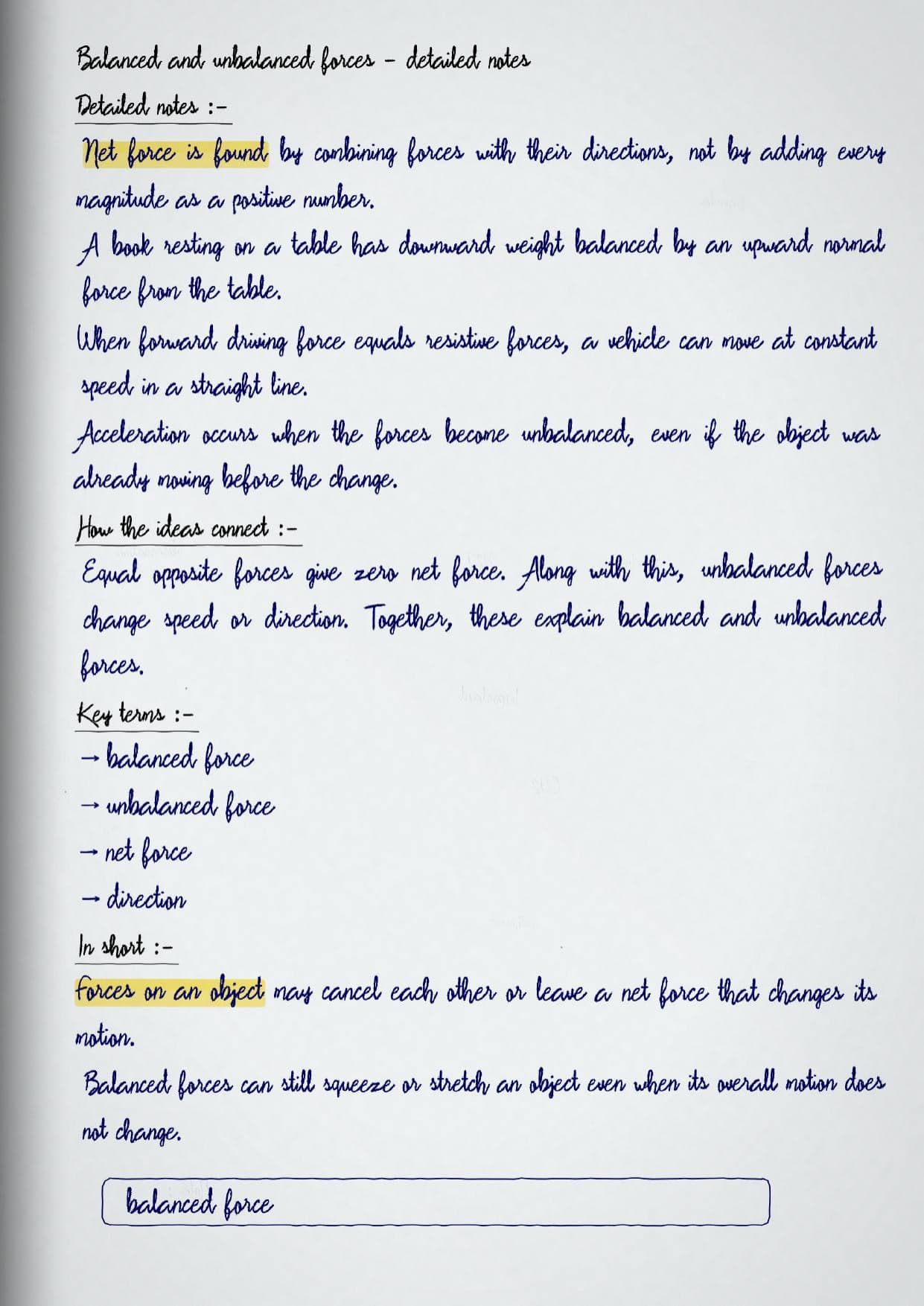
This chapter explores forces, the pushes and pulls that act all around us. It explains what a force can do, how forces need two objects to interact, and the difference between contact and non-contact forces. It also covers weight, mass, and why some objects float while others sink.
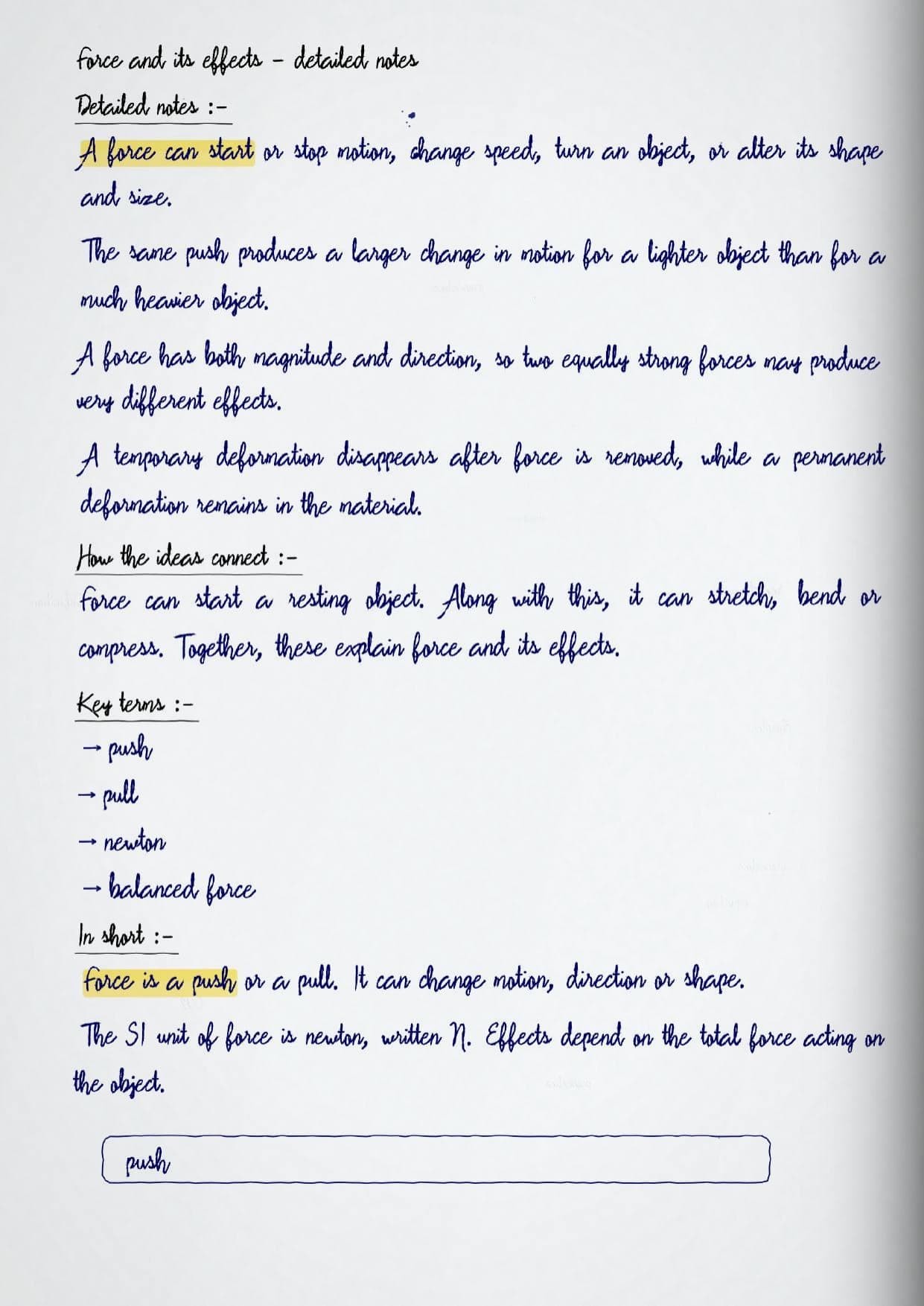
- What is a force
- Effects of a force on objects
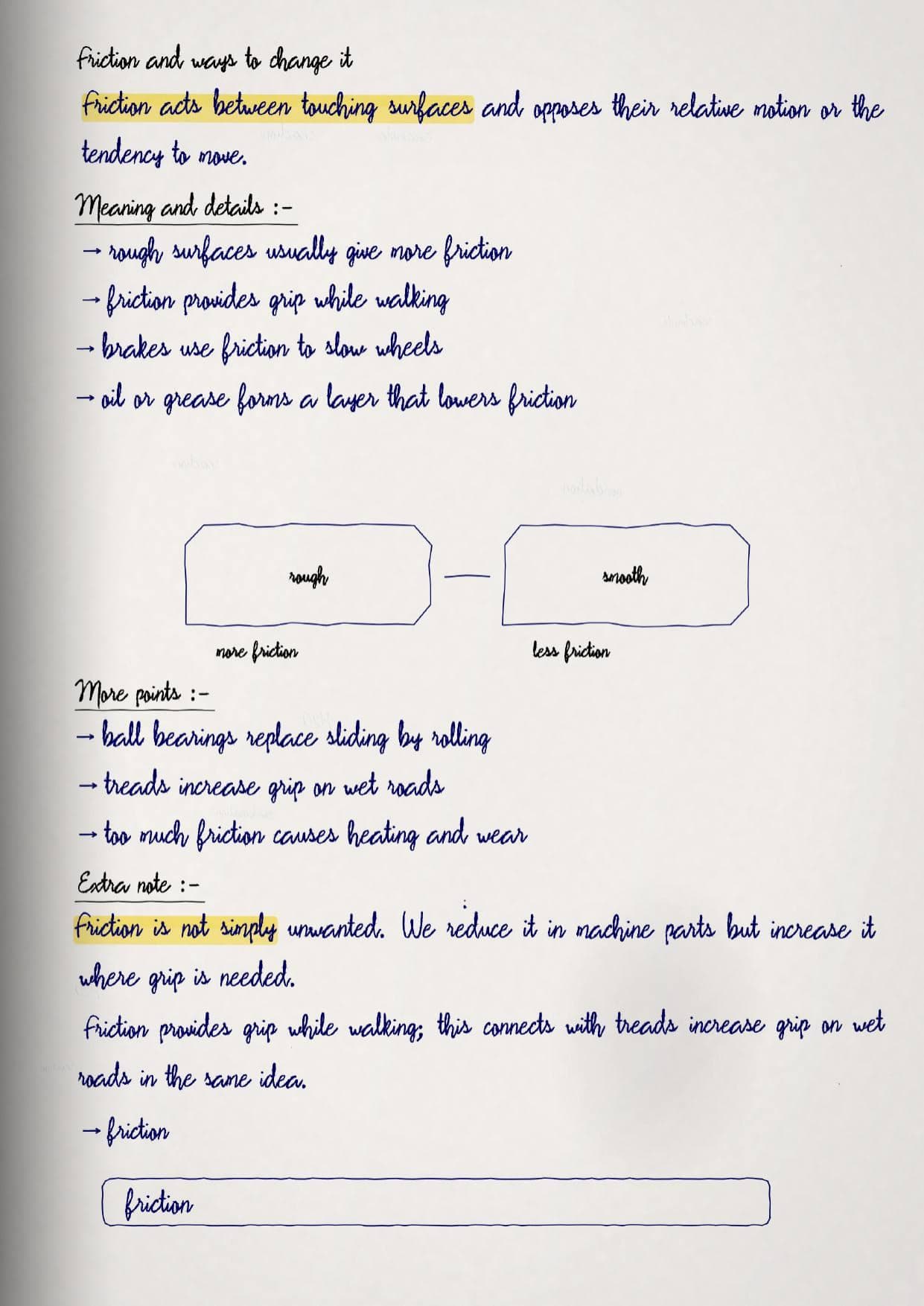
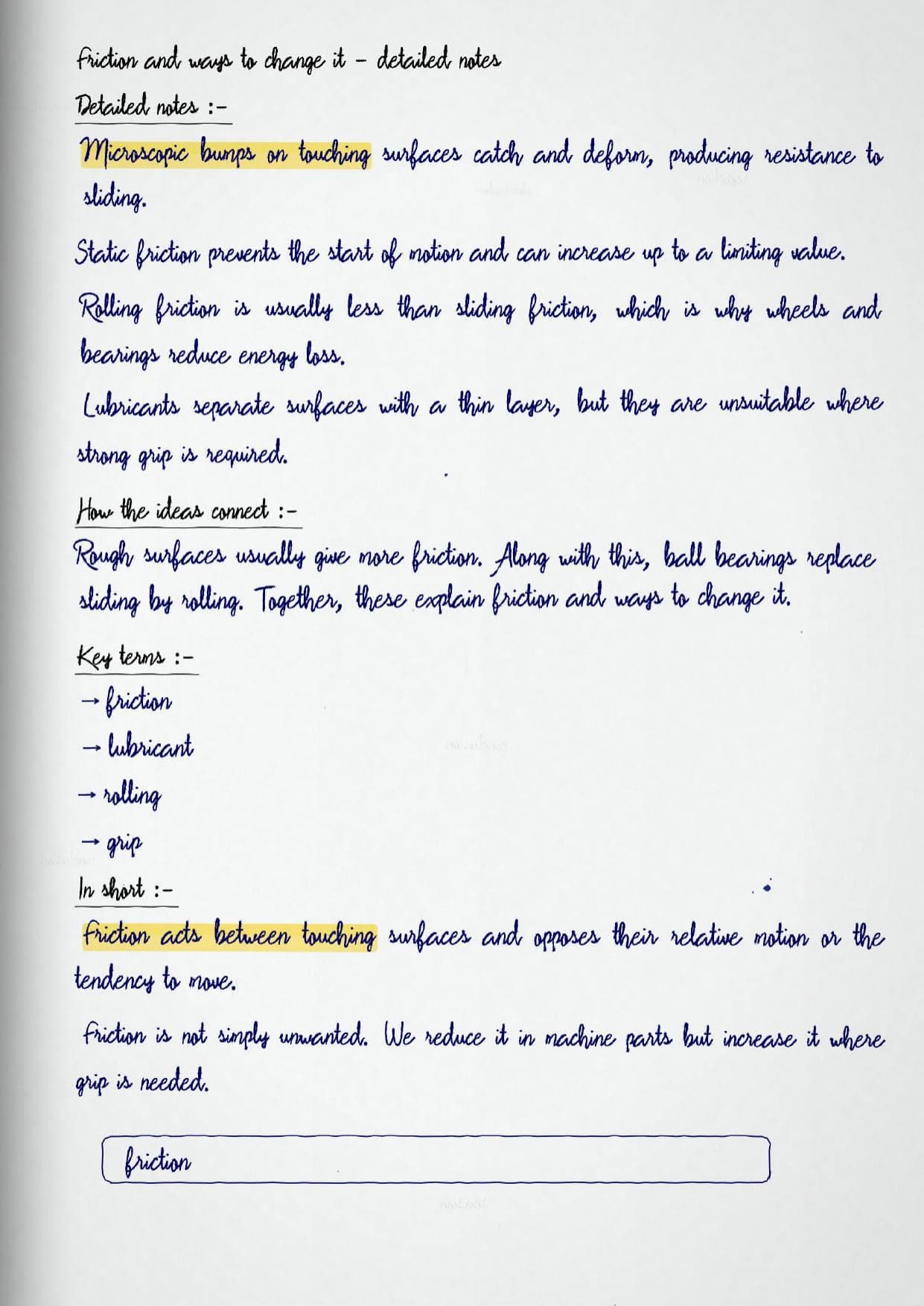
- Contact forces: muscular and friction
- Non-contact forces: magnetic, electrostatic, gravitational
- Gravity and vertical motion
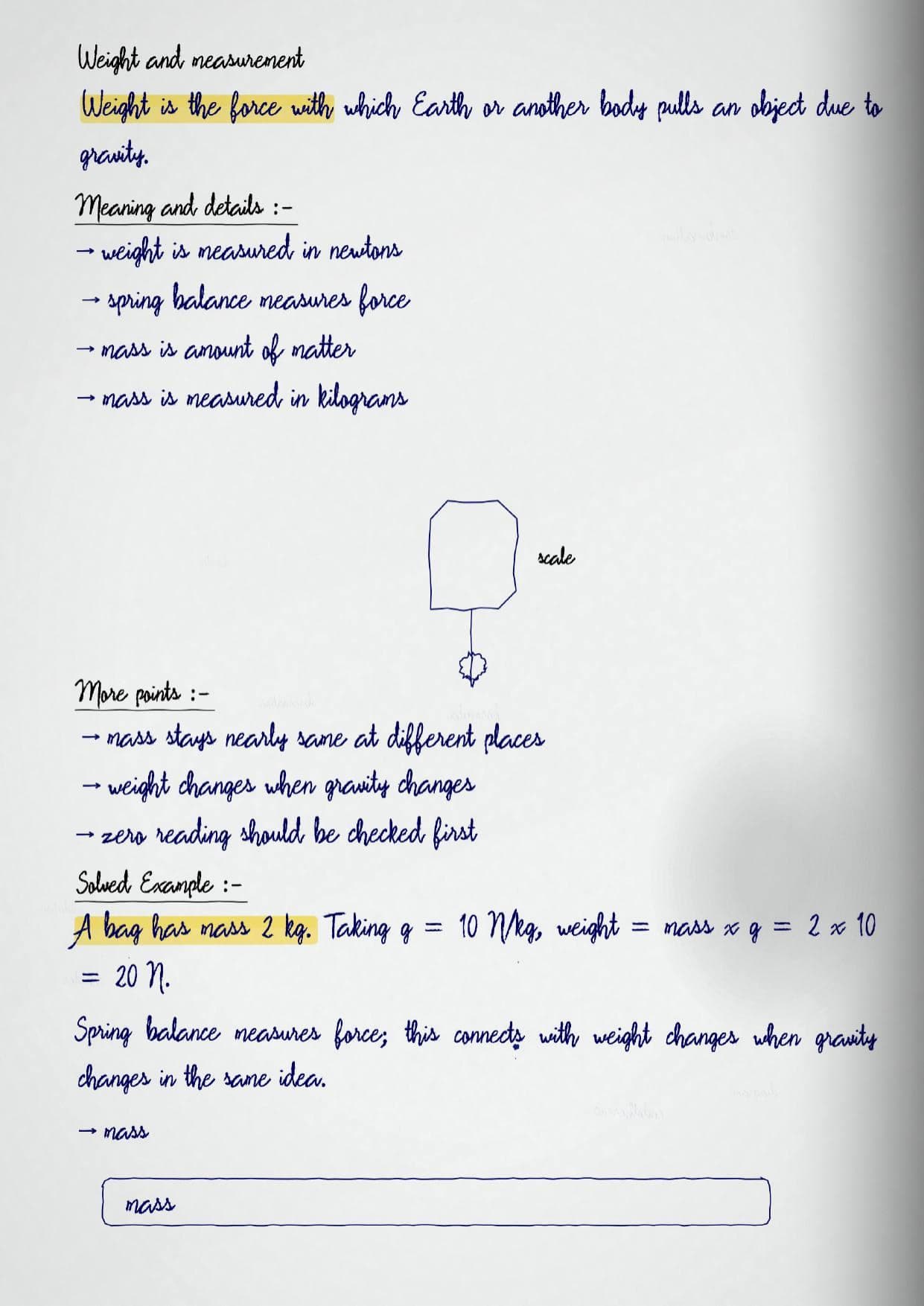
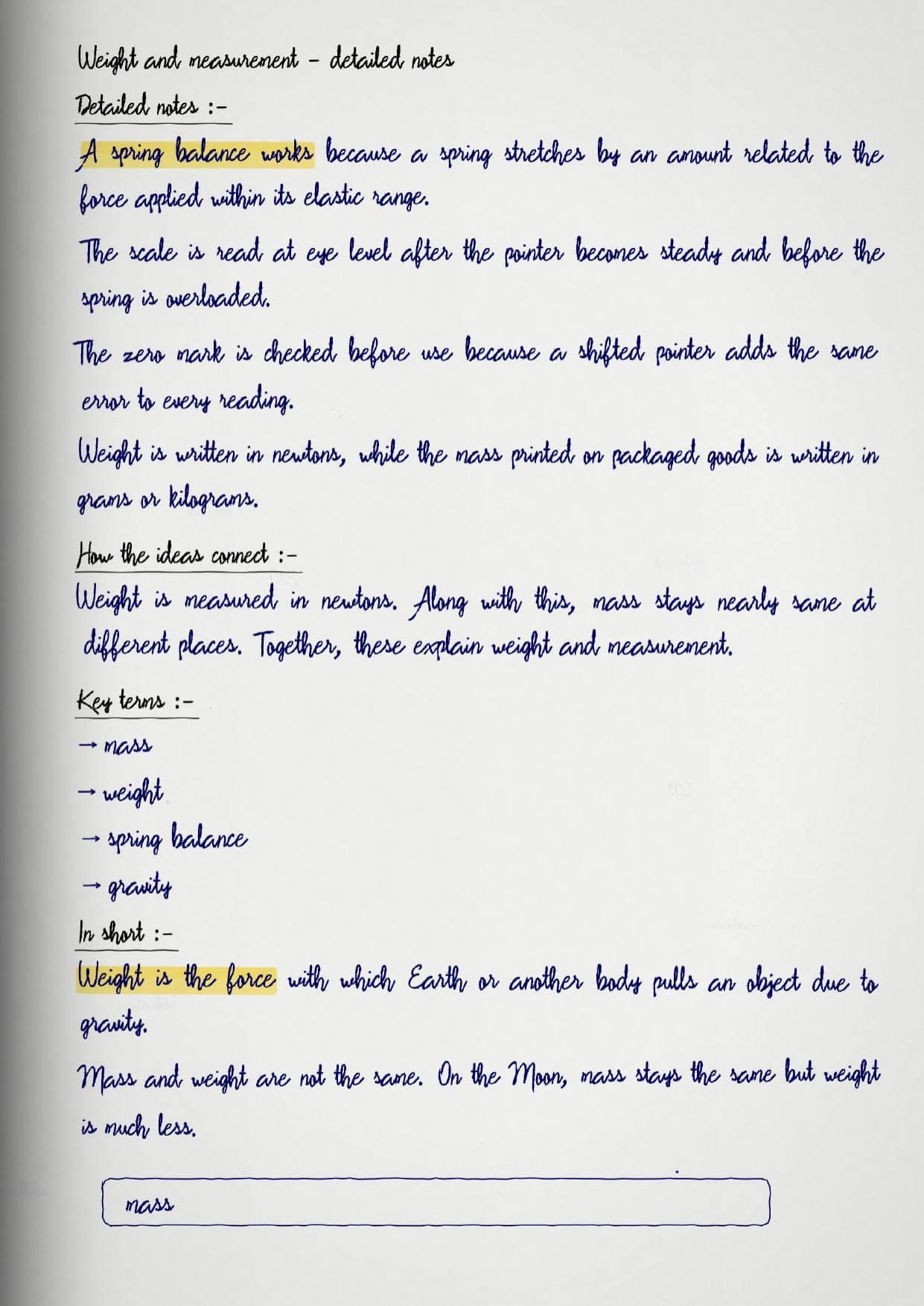
- Weight and its measurement
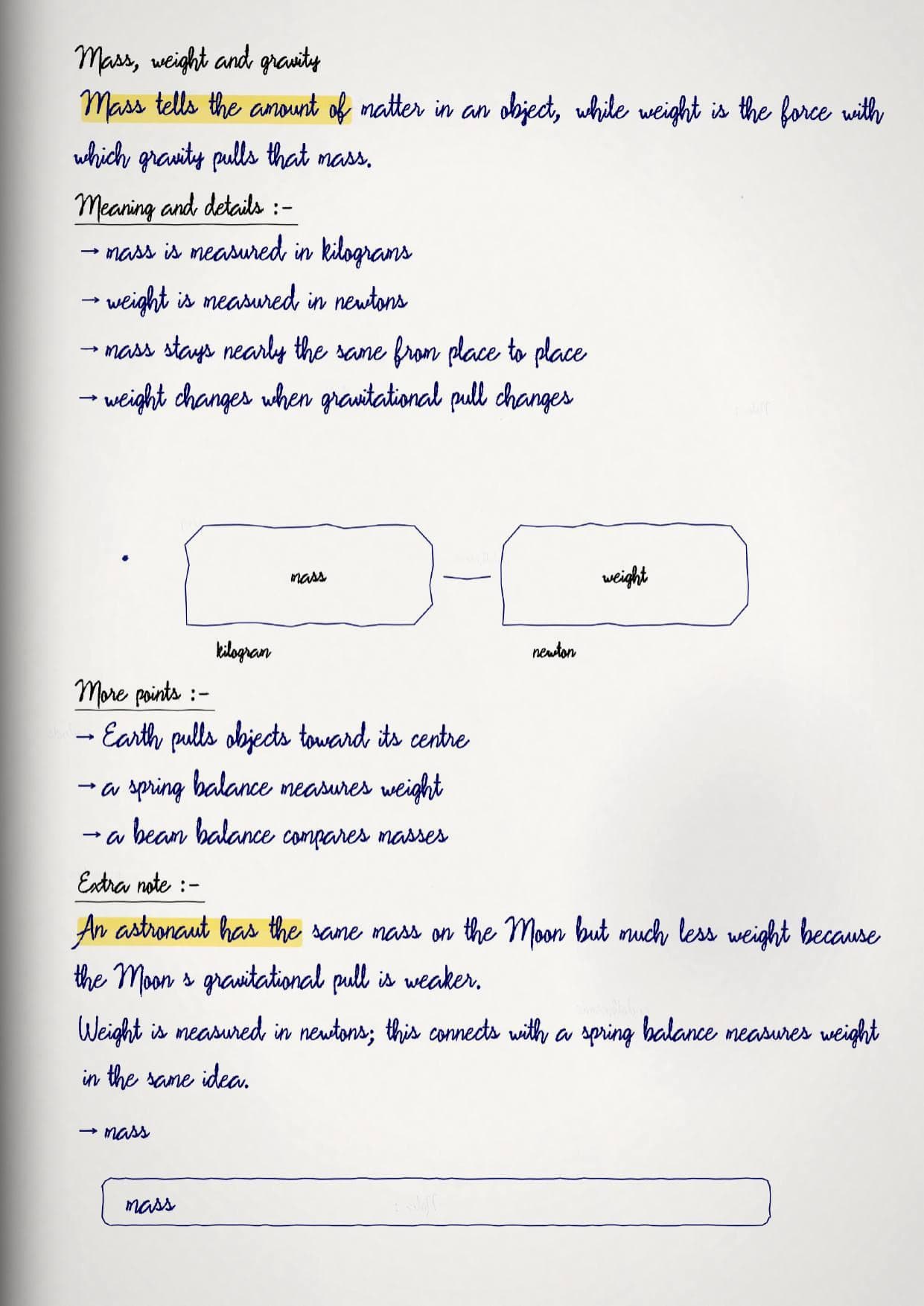
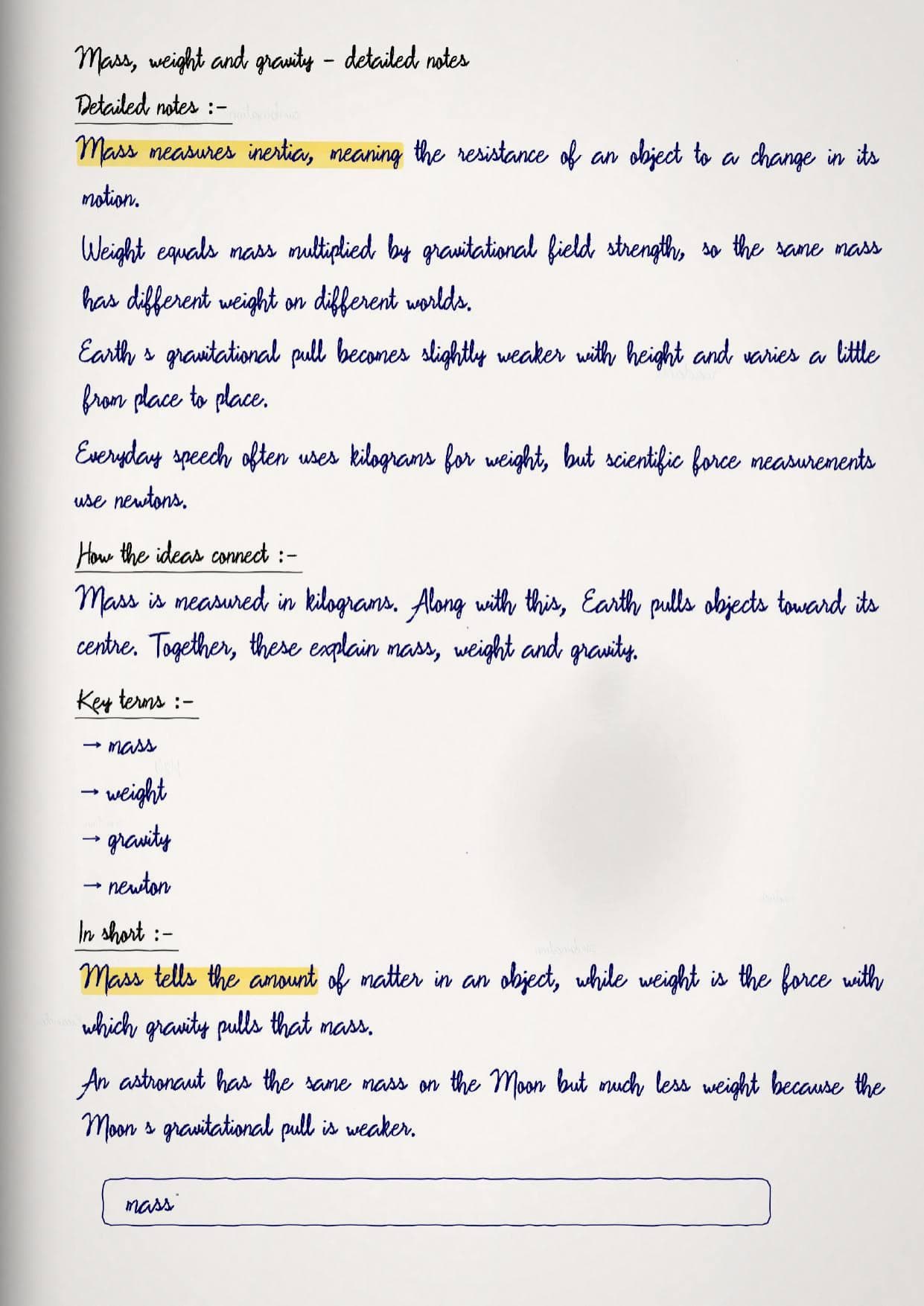
- Difference between weight and mass
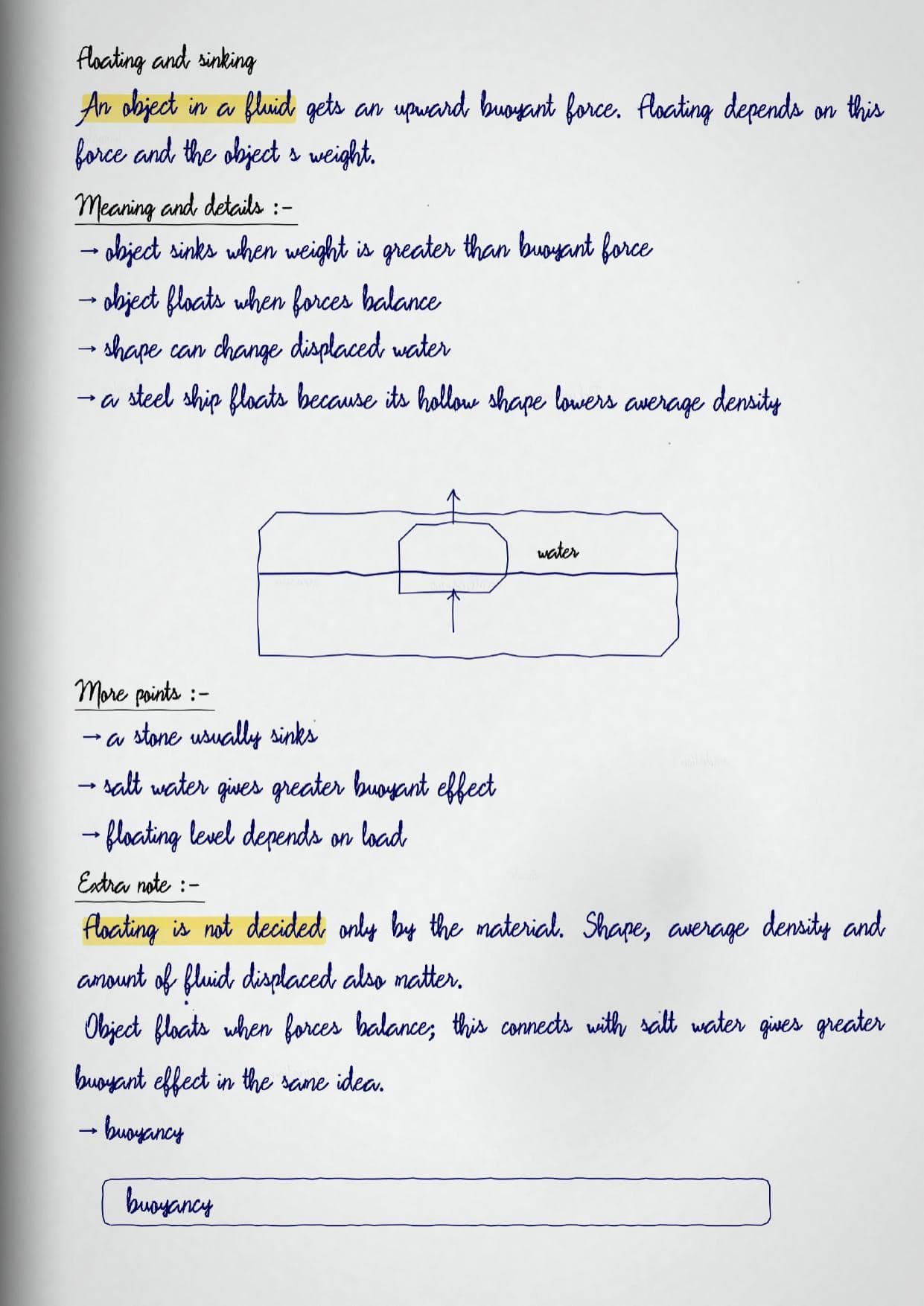
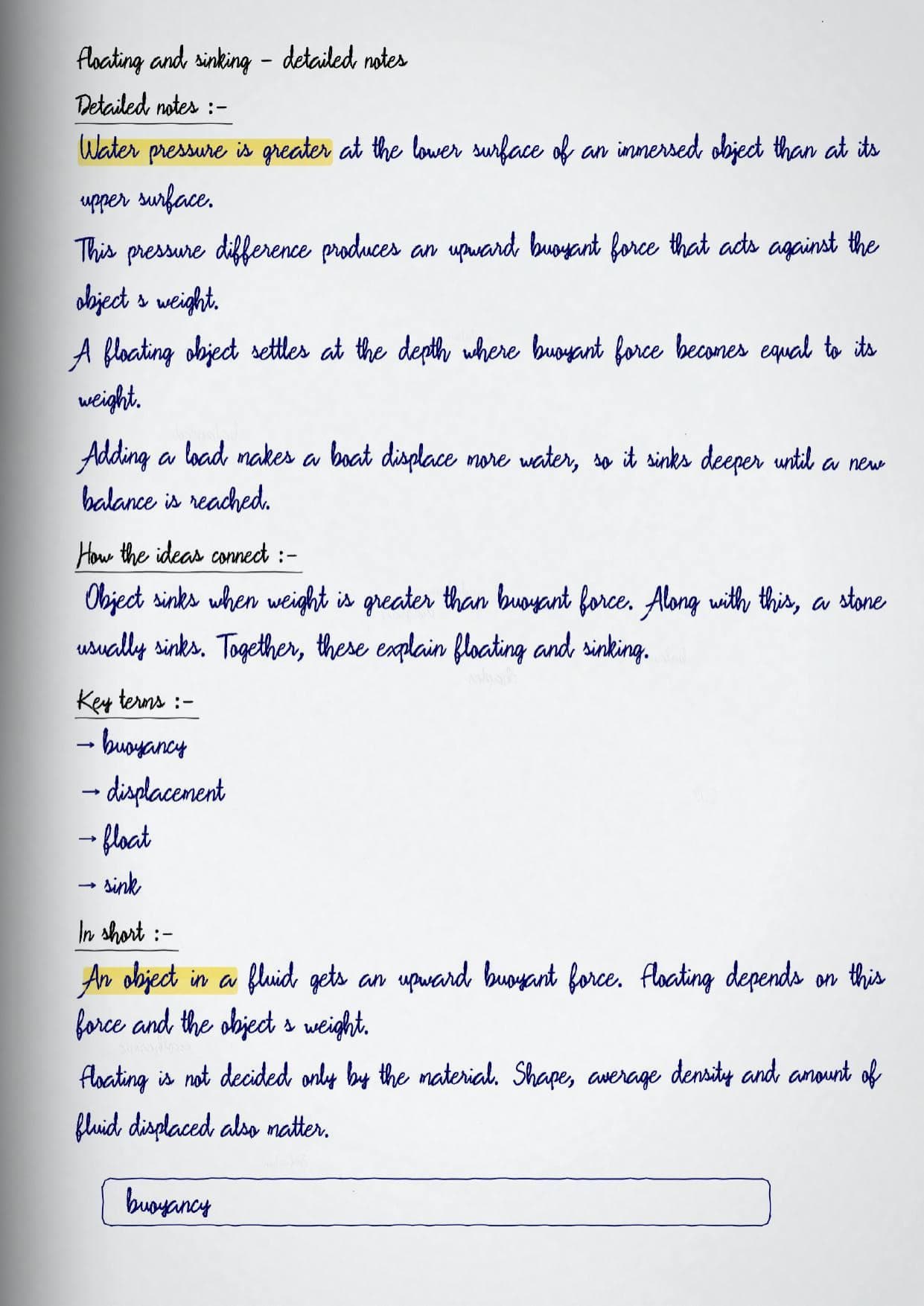
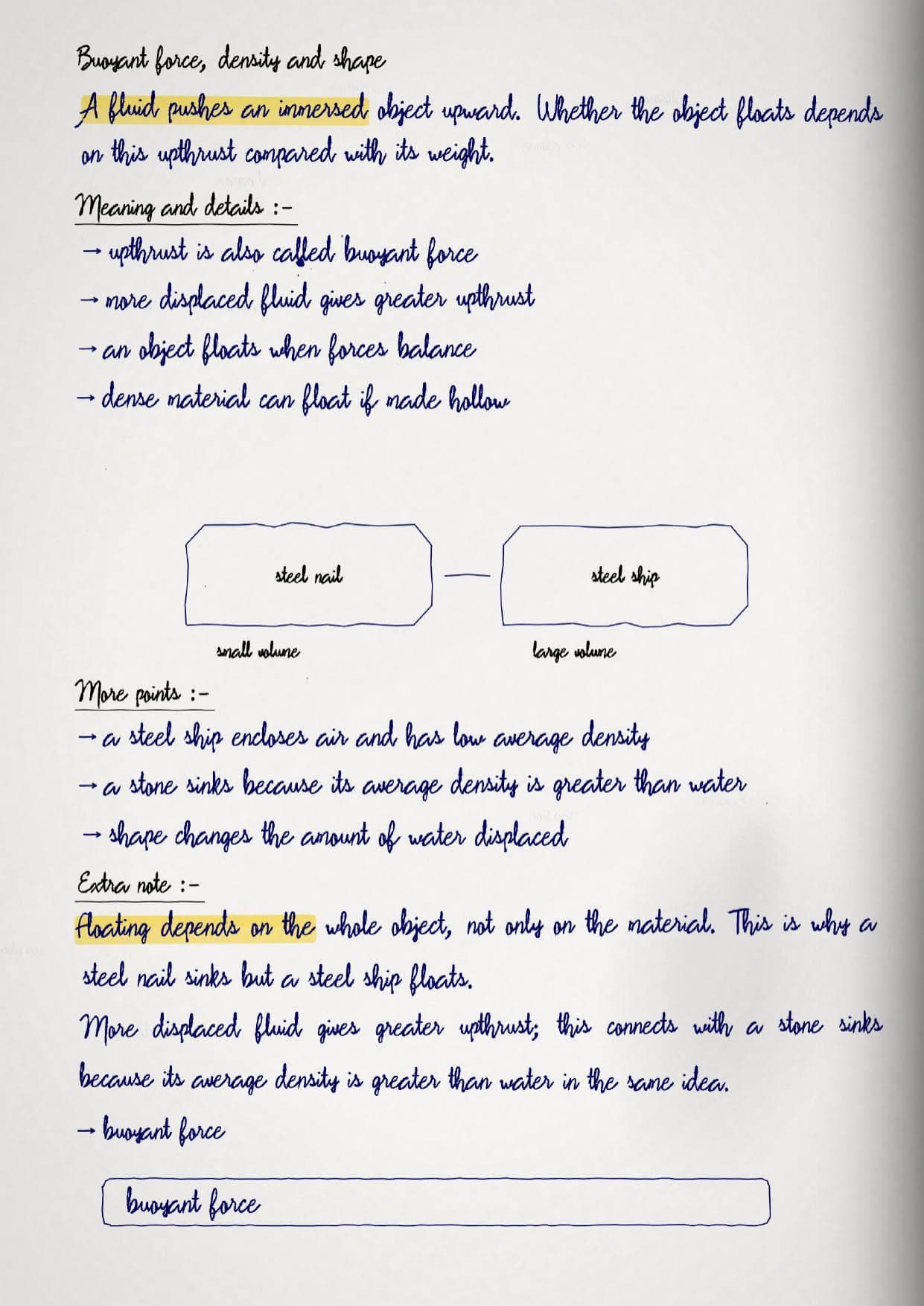
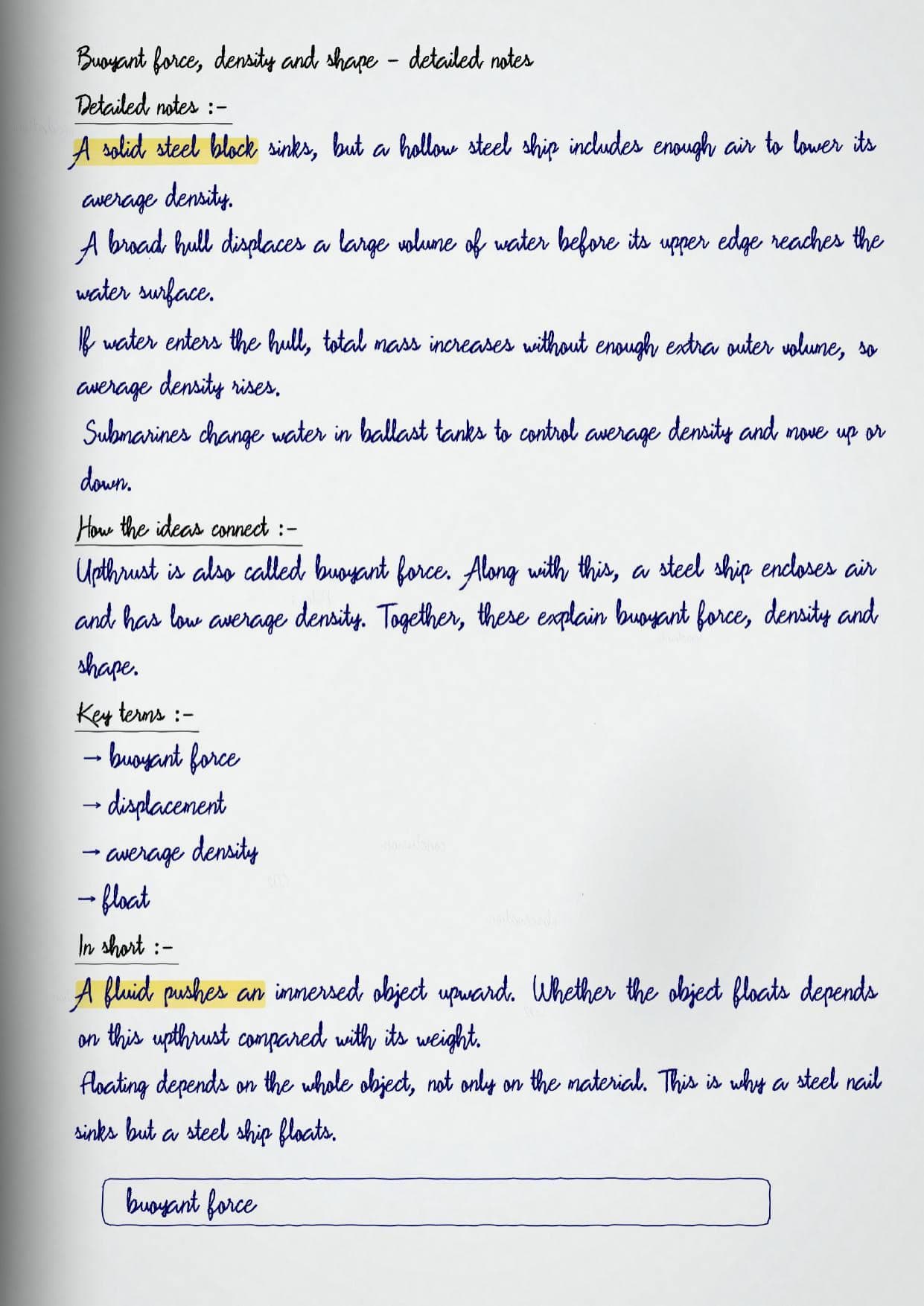
- Floating, sinking and buoyant force
Exploring Forces Self-Assessment Quiz
Try these quick questions after you read the notes. Tap each question to check your answer. They cover the points CBSE asks most often.
Which of these is a non-contact force?
(a) muscular force (b) friction (c) gravitational force (d) pushing a box
Answer: (c) gravitational force - it acts without any contact between the objects
Friction between two surfaces is greater when the surfaces are
(a) smoother (b) rougher (c) wet (d) polished
Answer: (b) rougher - more irregularities lock together and oppose motion
An object weighs 10 N on Earth. On the Moon its mass will be
(a) less (b) more (c) the same (d) zero
Answer: (c) the same - mass does not change with place, only weight does
Two balloons rubbed with wool move away from each other because
(a) like charges repel (b) unlike charges attract (c) they are heavy (d) of gravity
Answer: (a) like charges repel - both balloons gained the same kind of charge
An object sinks in a liquid when the gravitational force on it is
(a) equal to the buoyant force (b) more than the buoyant force (c) less than the buoyant force (d) zero
Answer: (b) more than the buoyant force - the downward pull wins and the object sinks
Exploring Forces Topic-wise Weightage for CBSE Class 8 Science
Some parts of this chapter are asked more often than others. The table below shows which sub-topics to revise first, based on recent CBSE Class 8 question trends.
| Sub-topic | Weightage | CBSE Frequency |
|---|---|---|
| Types of forces: contact and non-contact | High | asked often |
| Effects of a force on an object | High | asked often |
| Friction and what it depends on | Medium | asked sometimes |
| Gravitational force and weight | Medium | asked sometimes |
| Difference between weight and mass | Medium | asked sometimes |
| Floating, sinking and buoyant force | Low | asked rarely |
Key Terms and Ideas in Exploring Forces
These are the terms and ideas the exam asks about most. Learn each one so you can define it and use it in your answers.
| Term / Idea | What it means |
|---|---|
| Force | a push or pull on an object resulting from its interaction with another object |
| Newton | the SI unit of force, written with symbol N |
| Contact force | a force that acts only when objects are in physical contact, like muscular force and friction |
| Friction | the force that opposes motion when one surface moves over another |
| Non-contact force | a force that acts without contact, like magnetic, electrostatic and gravitational force |
| Electrostatic force | the force between charged objects, which may attract or repel |
| Gravitational force | the pull with which the Earth attracts objects towards itself, always attractive |
| Weight | the force with which the Earth pulls an object, measured in newton |
| Mass | the amount of matter in an object, measured in grams or kilograms, the same everywhere |
| Buoyant force | the upward push a liquid applies on an object placed in it |
How Collegedunia's Handwritten Notes Help You Revise Exploring Forces
These notes are made for the night before the exam. They keep the facts short and easy to scan. Collegedunia maps every point to the 2026-27 NCERT.
- Clear handwriting: each topic is written in neat, easy-to-read handwriting.
- Boxed key terms: the main terms and definitions are boxed by hand for fast recall.
- Diagrams and tables: simple hand-drawn tables and charts make ideas clear.
- Colour-coded headings: new sub-topics stand out, so you find any section in seconds.
How to Use These Handwritten Notes for Class 8 Science Revision
Use these class 8 science handwritten notes in two passes. Read them slowly once for the full chapter. Then, near the exam, read only the boxes and key terms for a fast recall.
- Read the notes once with the NCERT chapter open beside you.
- Say each key term and idea in your own words.
- Practise one long-answer question from a past paper.
- On the last day, revise only the key terms and the boxes.
Class 8 Science Handwritten Notes for All Chapters
The table below links the class 8 science handwritten notes for every chapter. Use it to jump to any other chapter's notes.
Exploring Forces Class 8 Science Handwritten Notes FAQs
Ques. Where can I download Exploring Forces Class 8 Science Handwritten Notes PDF?
Ans. You can download the Exploring Forces Class 8 Science Handwritten Notes PDF directly from this page. Both the Normal and HD versions are free.
Ques. Are these handwritten notes aligned with the 2026-27 NCERT?
Ans. Yes. These notes follow the current 2026-27 syllabus for Class 8 Science. The difference between weight and mass of an object
Ques. How many pages is the Class 8 Science Exploring Forces Handwritten Notes PDF?
Ans. The notes run about 20 pages. They cover the full chapter with key terms, hand-drawn boxes, and a short self-assessment quiz.
Ques. What is the main idea of the 8th standard Science chapter Exploring Forces?
Ans. The main idea of this chapter is that a force is a push or pull that comes from the interaction of two objects and can change an object's speed, direction or shape. It explains that some forces act by contact, like muscular force and friction, while others act from a distance, like magnetic, electrostatic and gravitational force.
Ques. Are these Exploring Forces notes enough for the CBSE Class 8 exam?
Ans. Yes, for revision. The Collegedunia handwritten notes cover every key point and exam term. Read them with the NCERT chapter and practise past questions.



Comments