



The 2026-27 NCERT keeps Class 8 Science Chapter 4 Electricity: Magnetic and Heating Effects in full for the CBSE course. These class 8 science handwritten notes chapter 4 Electricity: Magnetic and Heating Effects follow the 2026-27 NCERT and cover magnetic effect of electric current, building an electromagnet, poles of an electromagnet. This page hosts the notes PDF, key.
- CBSE Class 8 Weightage: a scoring chapter in the Science paper, asked in short and long answers.
- What the notes cover: magnetic effect of electric current, building an electromagnet, poles of an electromagnet, making electromagnets stronger.
- Best for: quick revision before Class 8 exams and a strong base for Class 9.
You can read the complete class 8 science handwritten notes for Electricity: Magnetic and Heating Effects, with key terms, boxed definitions, and quick revision points, in the PDF below.
These handwritten notes are written by subject teachers, mapped to the 2026-27 NCERT, and checked against the last five years of CBSE Class 8 Science papers.
Electricity: Magnetic and Heating Effects Topic-wise Weightage for CBSE Class 8 Science
Some parts of this chapter are asked more often than others. The table below shows which sub-topics to revise first, based on recent CBSE Class 8 question trends.
| Sub-topic | Weightage | CBSE Frequency |
|---|---|---|
| Magnetic effect and electromagnets | High | asked often |
| Heating effect of electric current | High | asked often |
| Factors that change electromagnet strength | Medium | asked sometimes |
| Cells and how they generate electricity | Medium | asked sometimes |
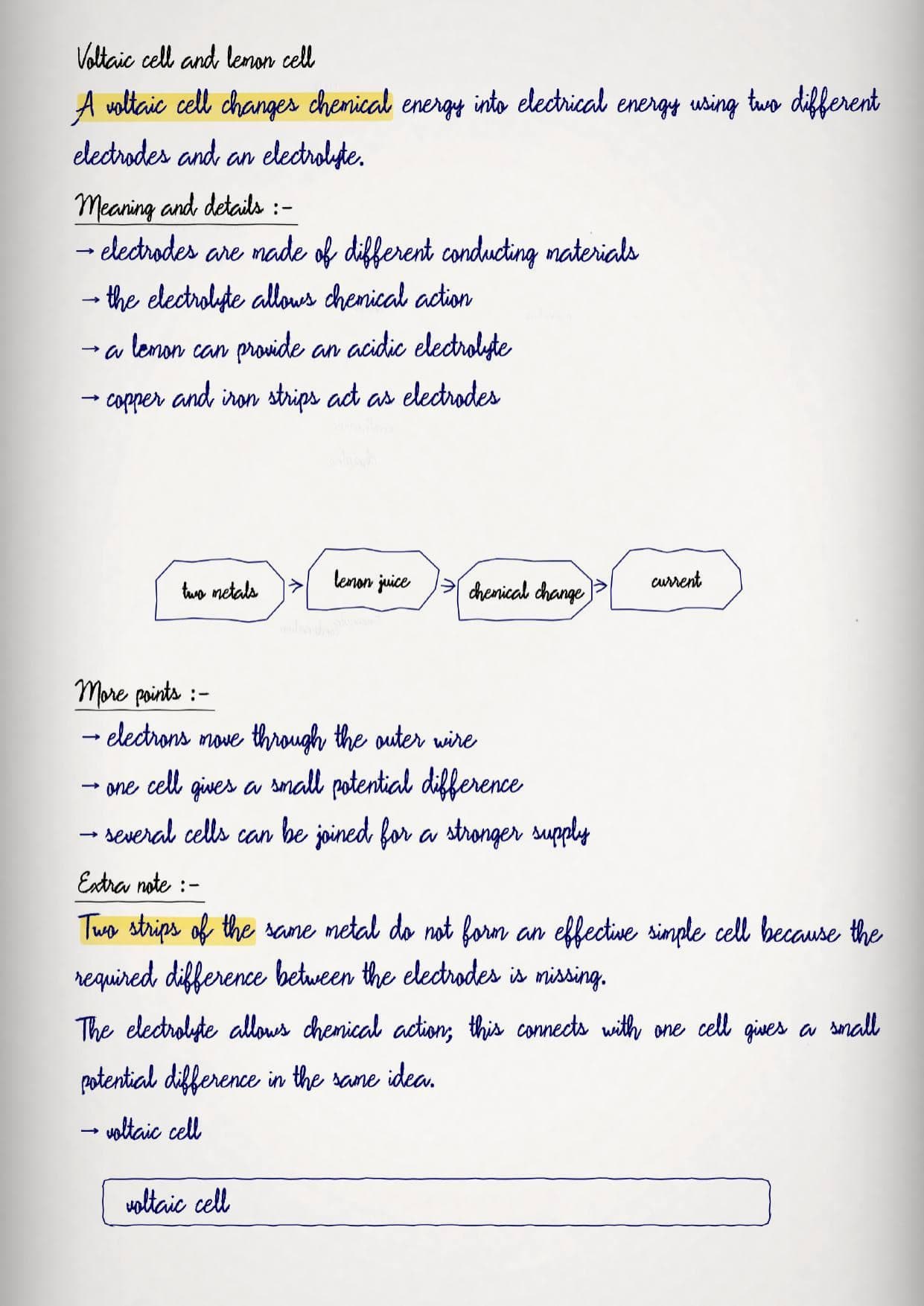
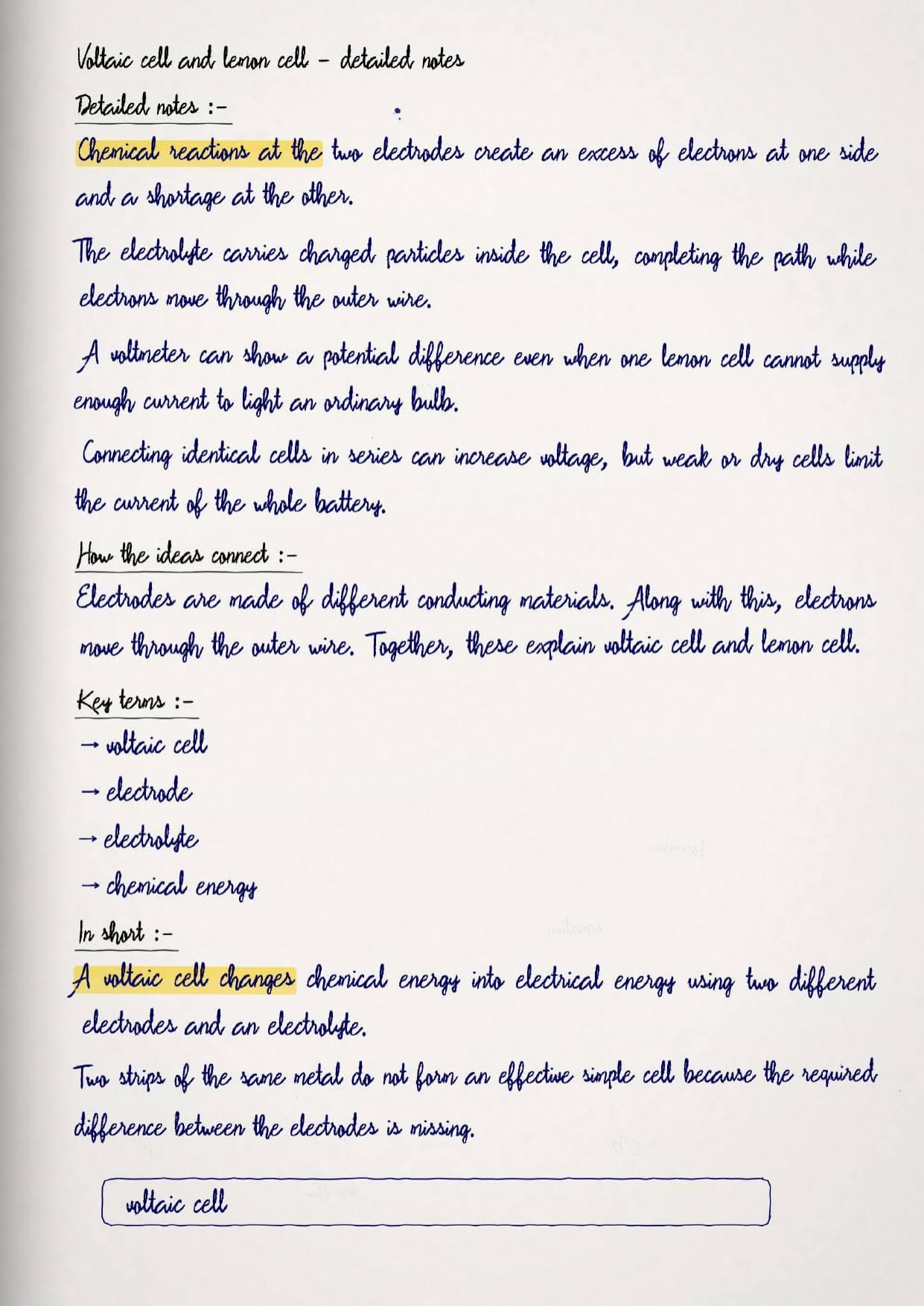
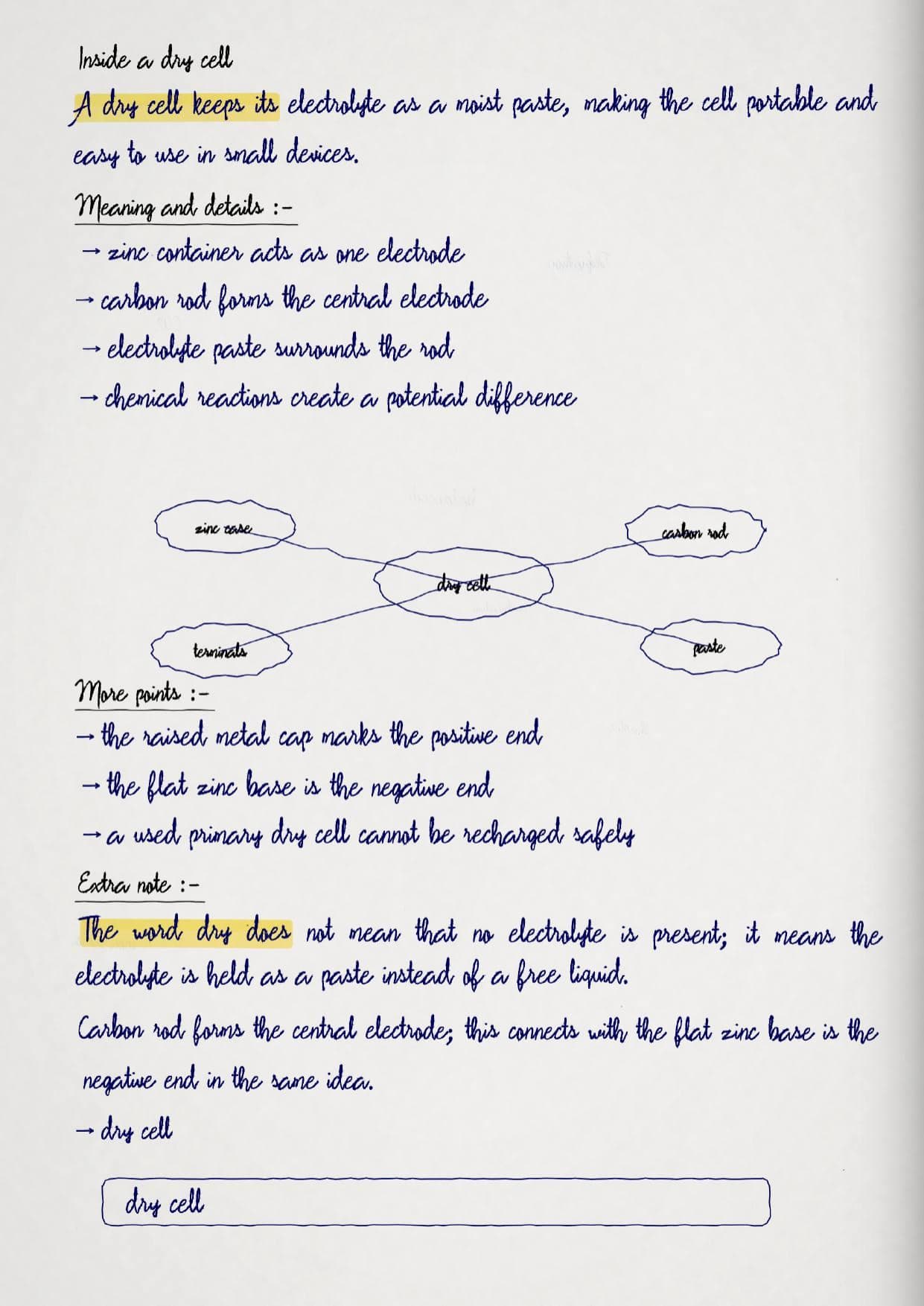
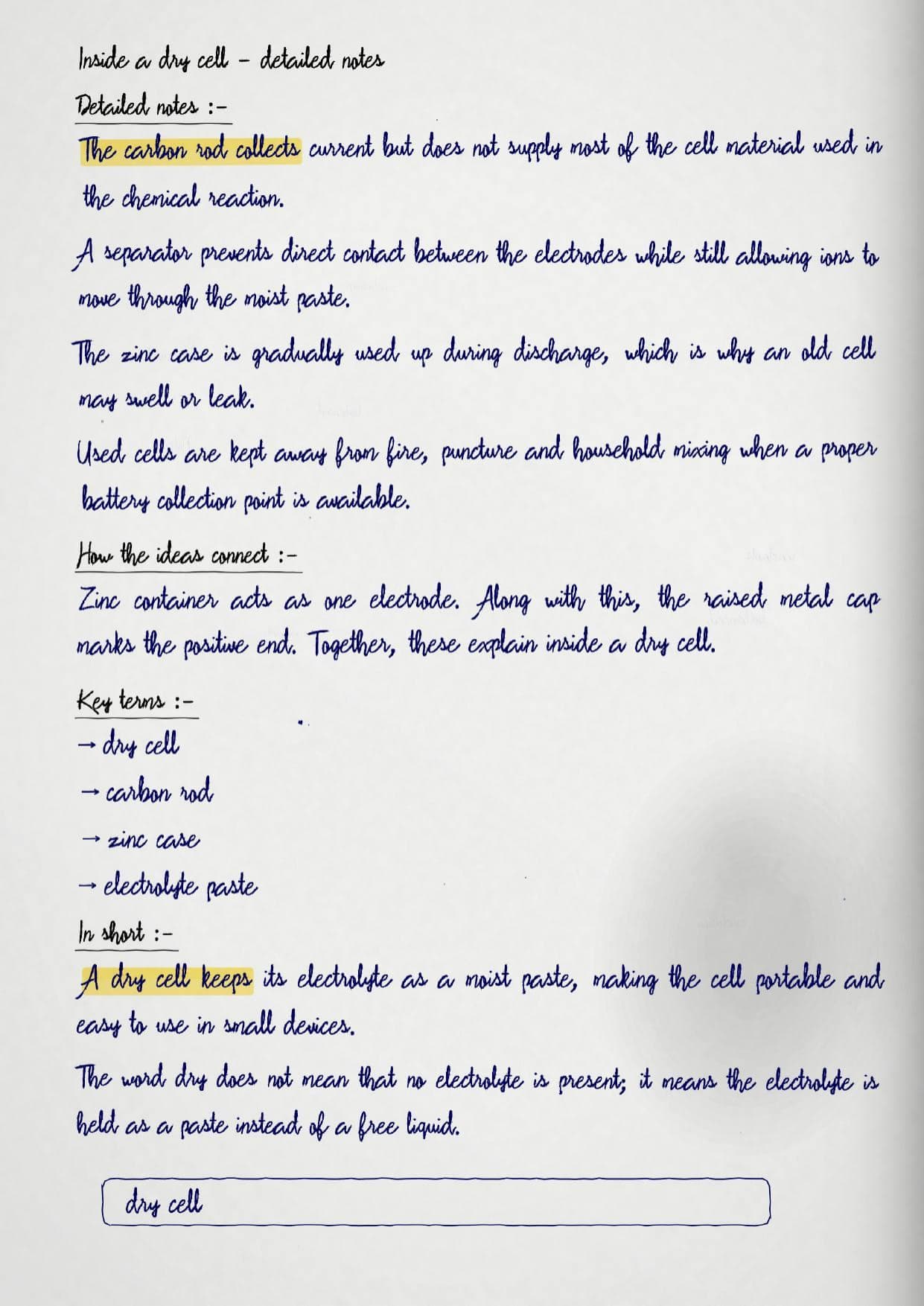
| Voltaic cell and dry cell parts | Medium | asked sometimes |
| Rechargeable batteries and e-waste | Low | asked rarely |
What the Electricity: Magnetic and Heating Effects Handwritten Notes Cover
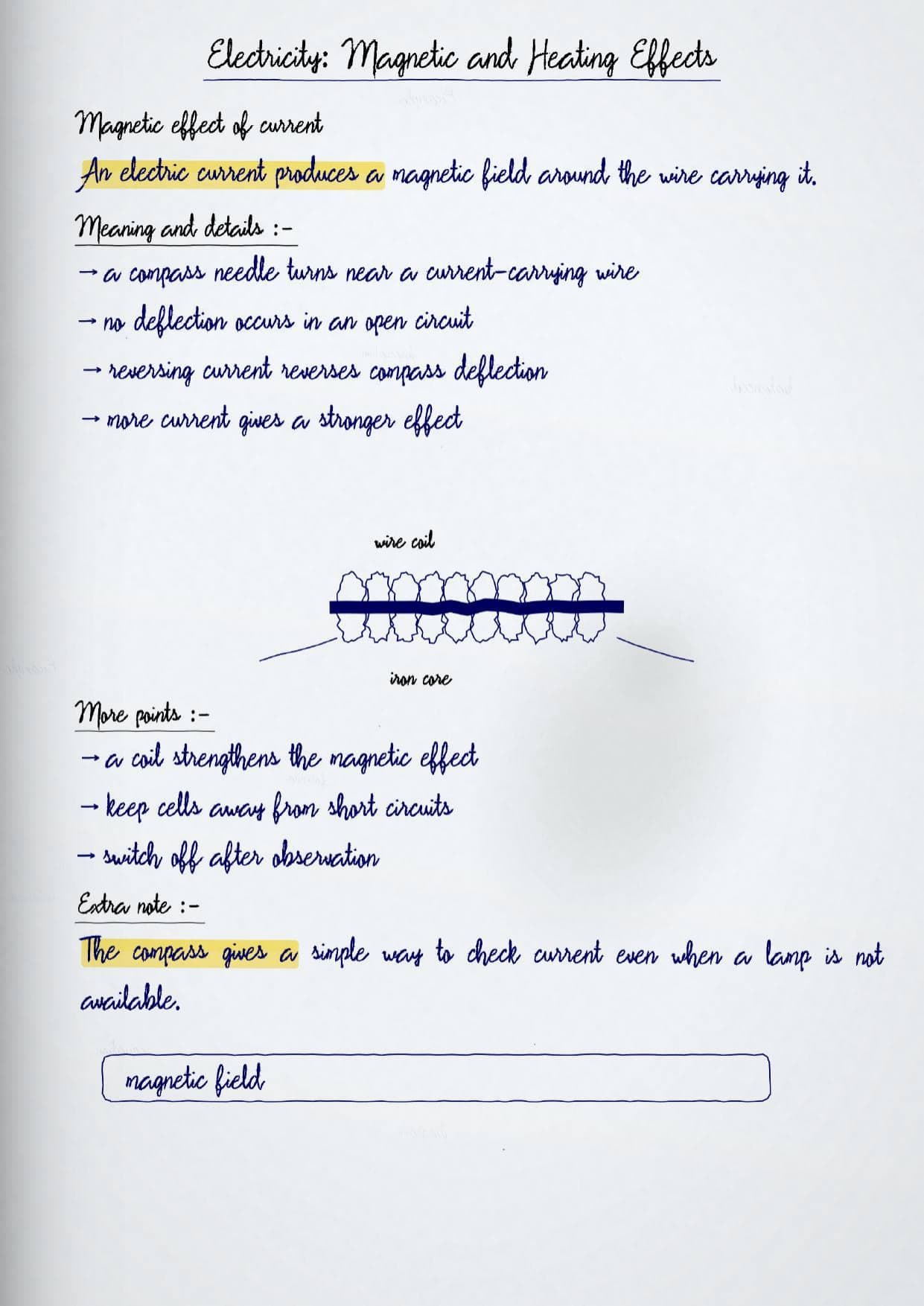
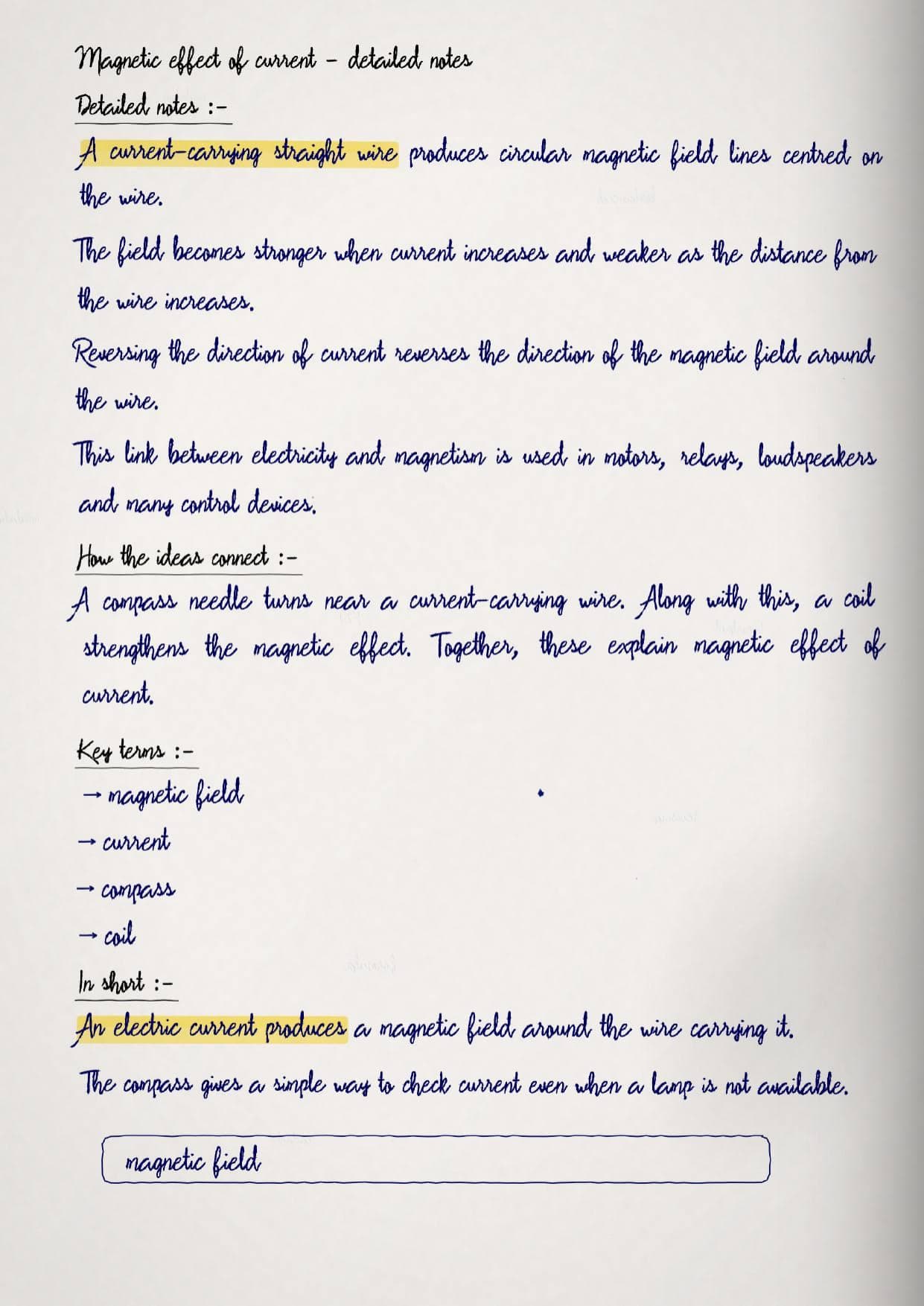
This chapter shows two important effects of electric current: the magnetic effect and the heating effect. It explains how a current makes a compass move, how electromagnets are built and used, and how current heats a wire. It also looks at how cells and batteries generate electricity.
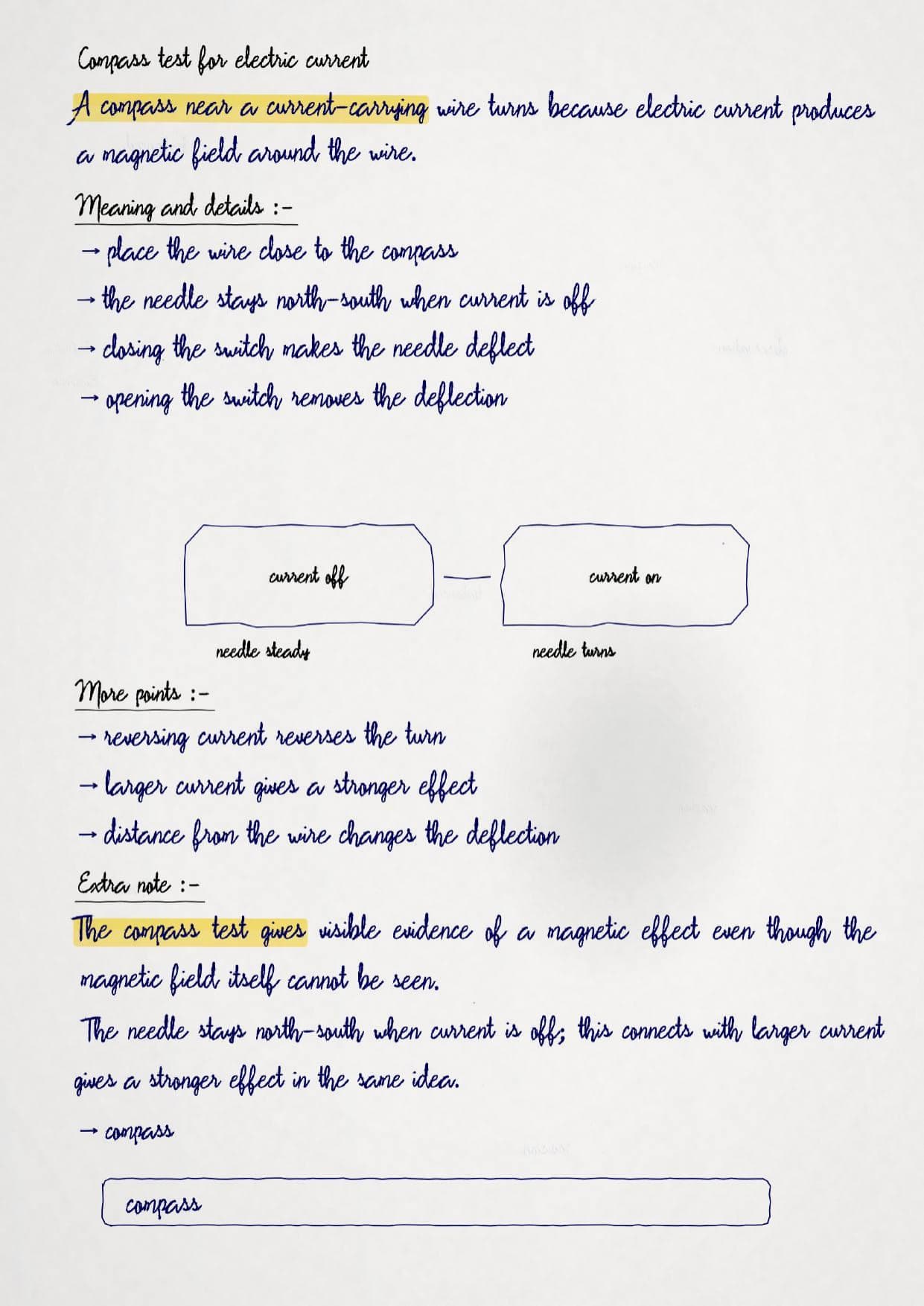
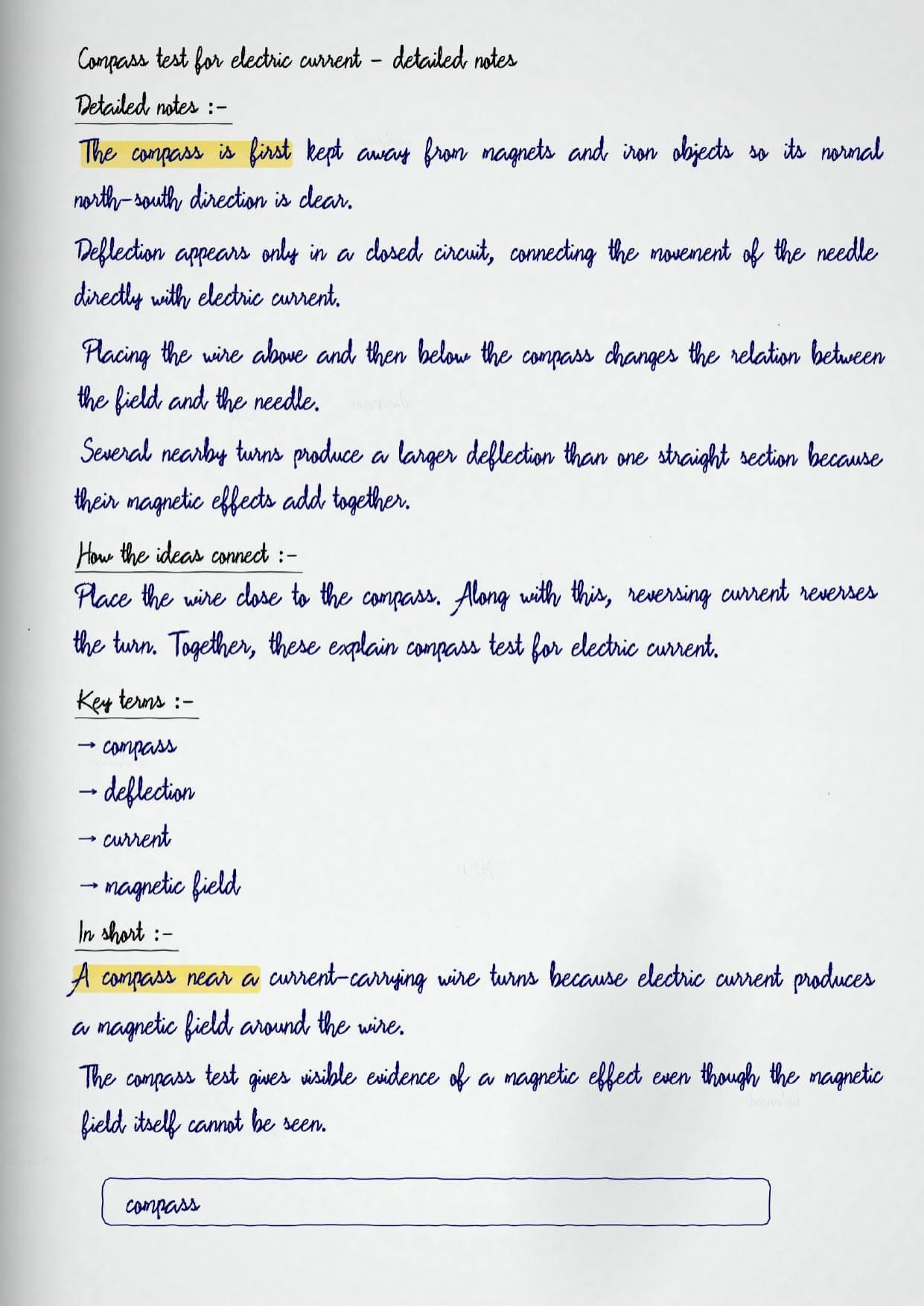
- Magnetic effect of electric current
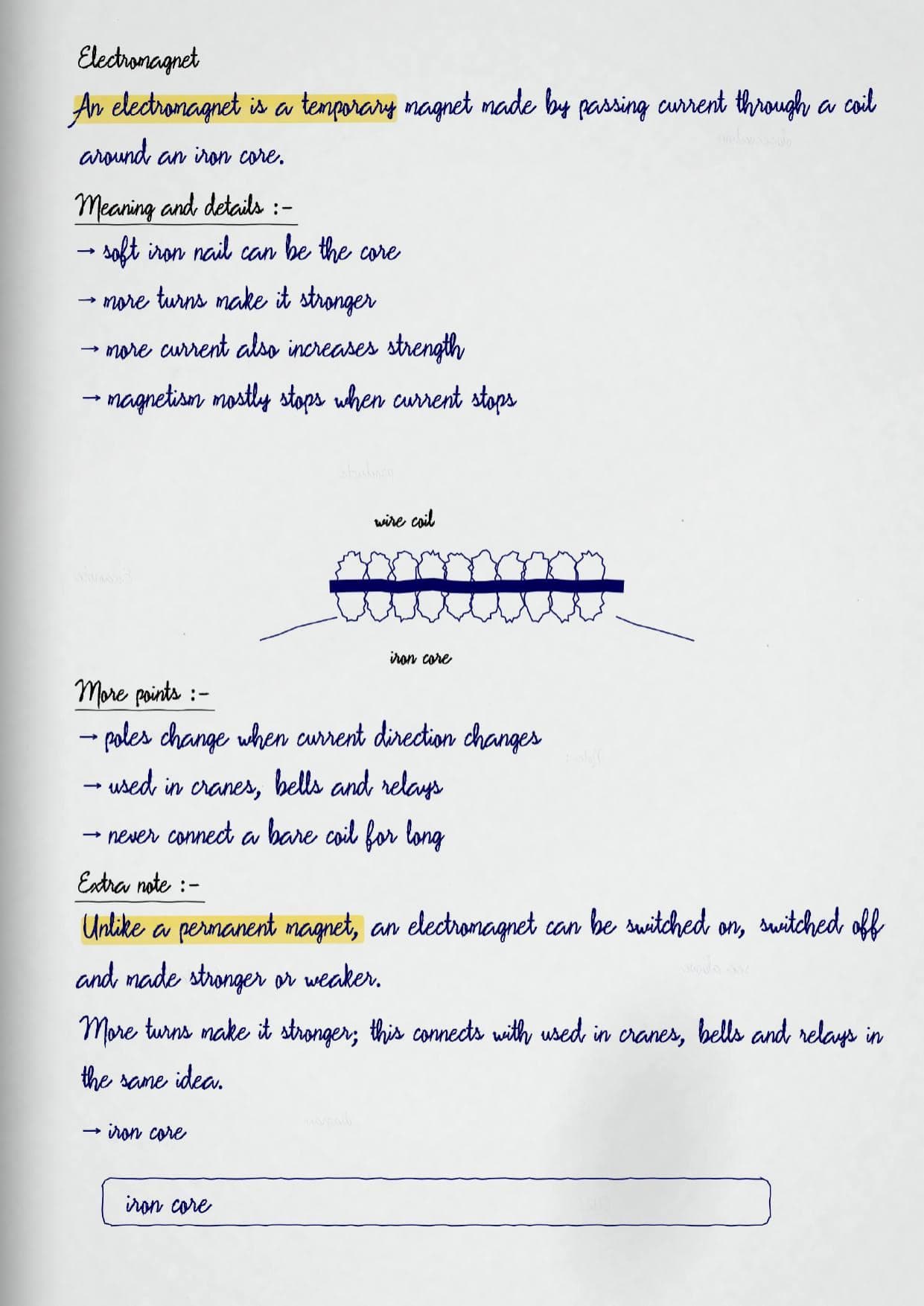
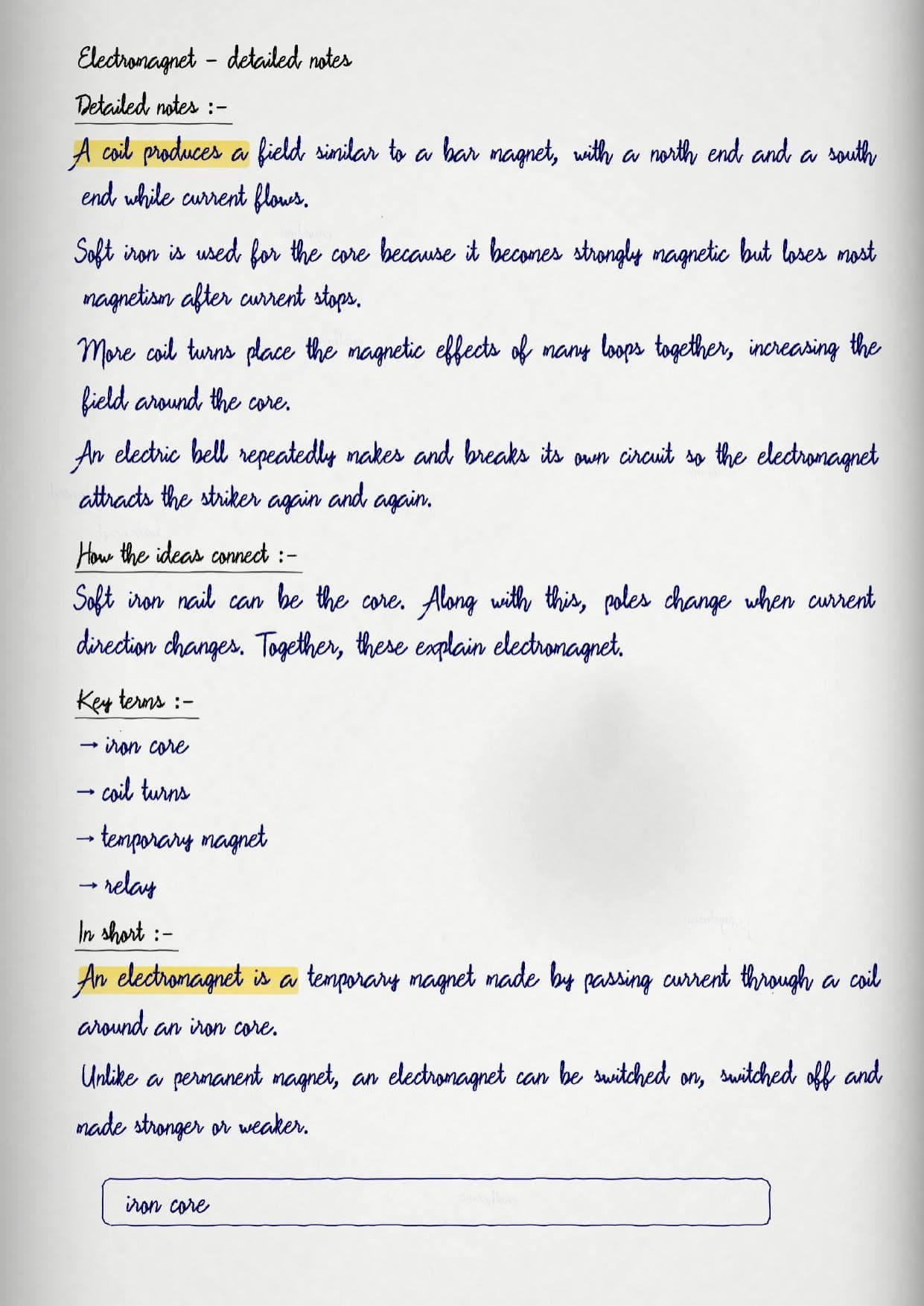
- Building an electromagnet
- Poles of an electromagnet
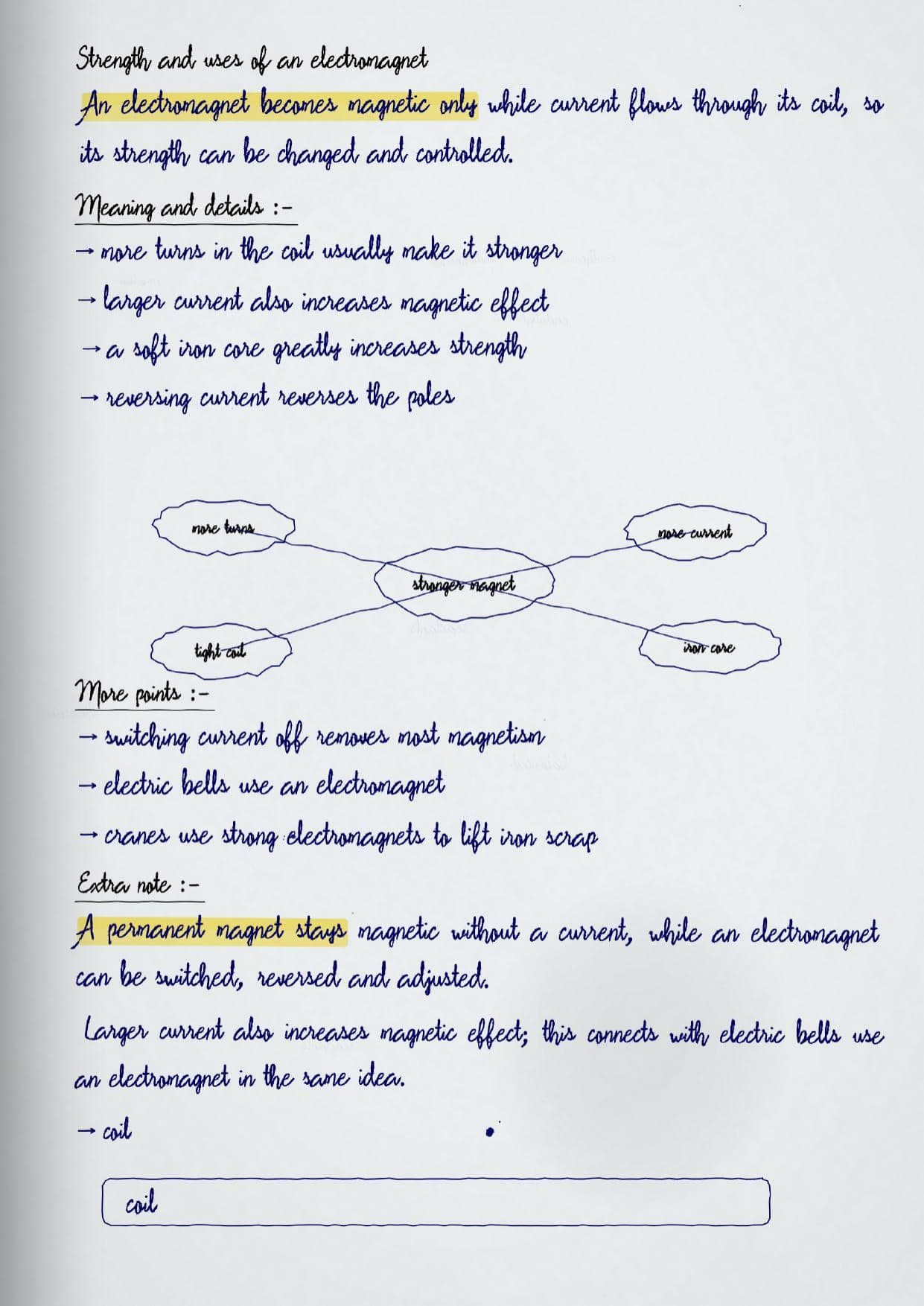
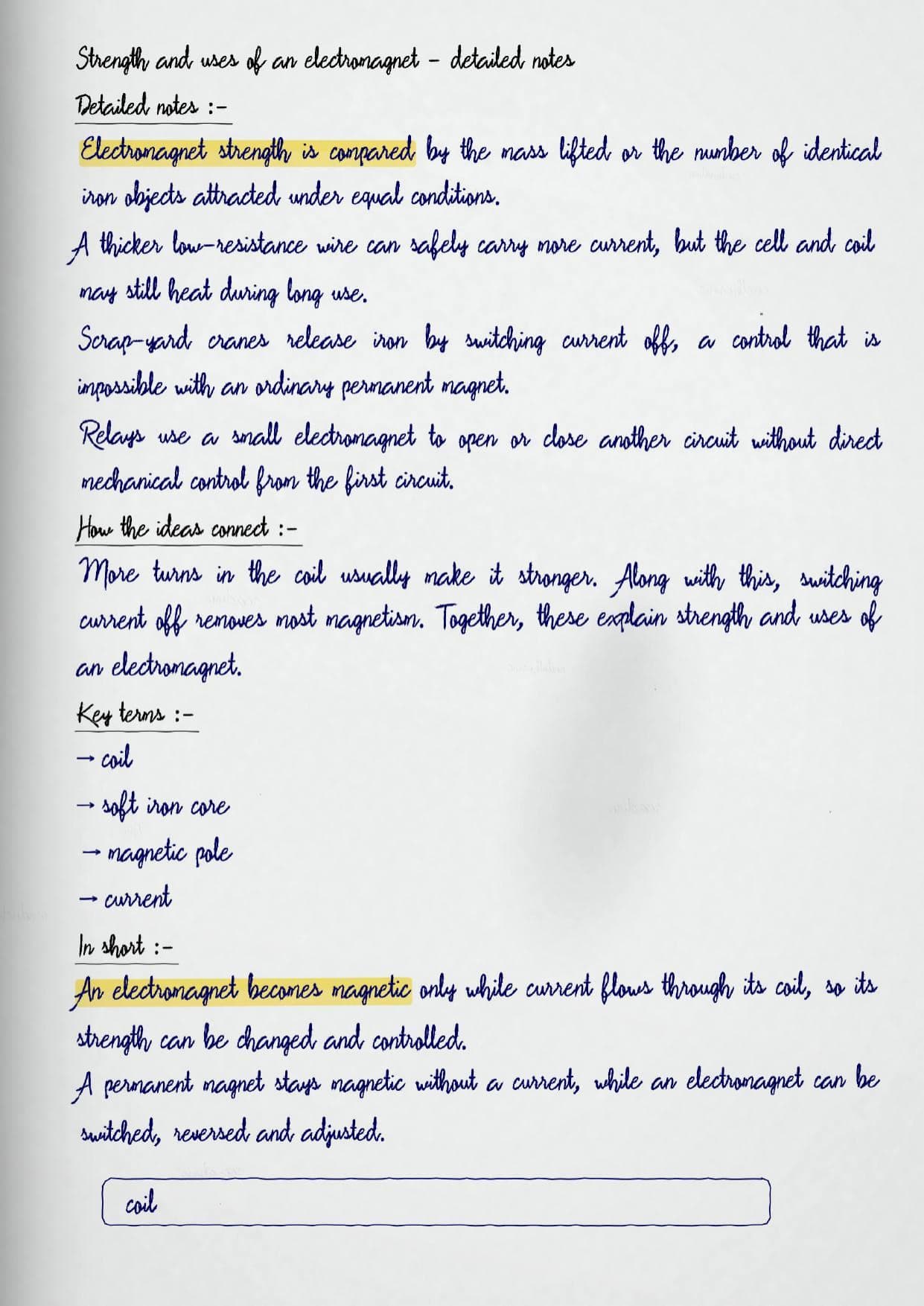
- Making electromagnets stronger
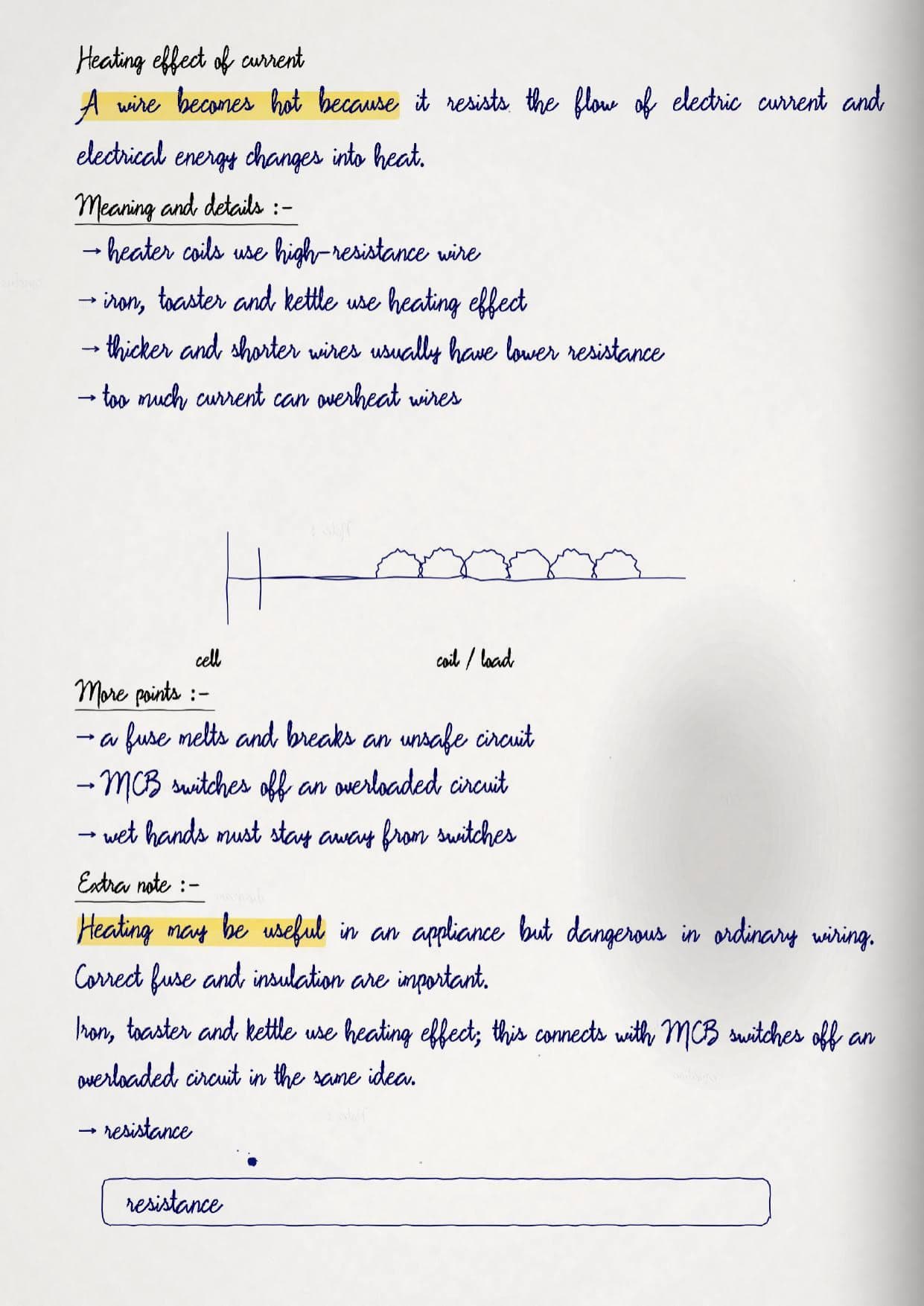
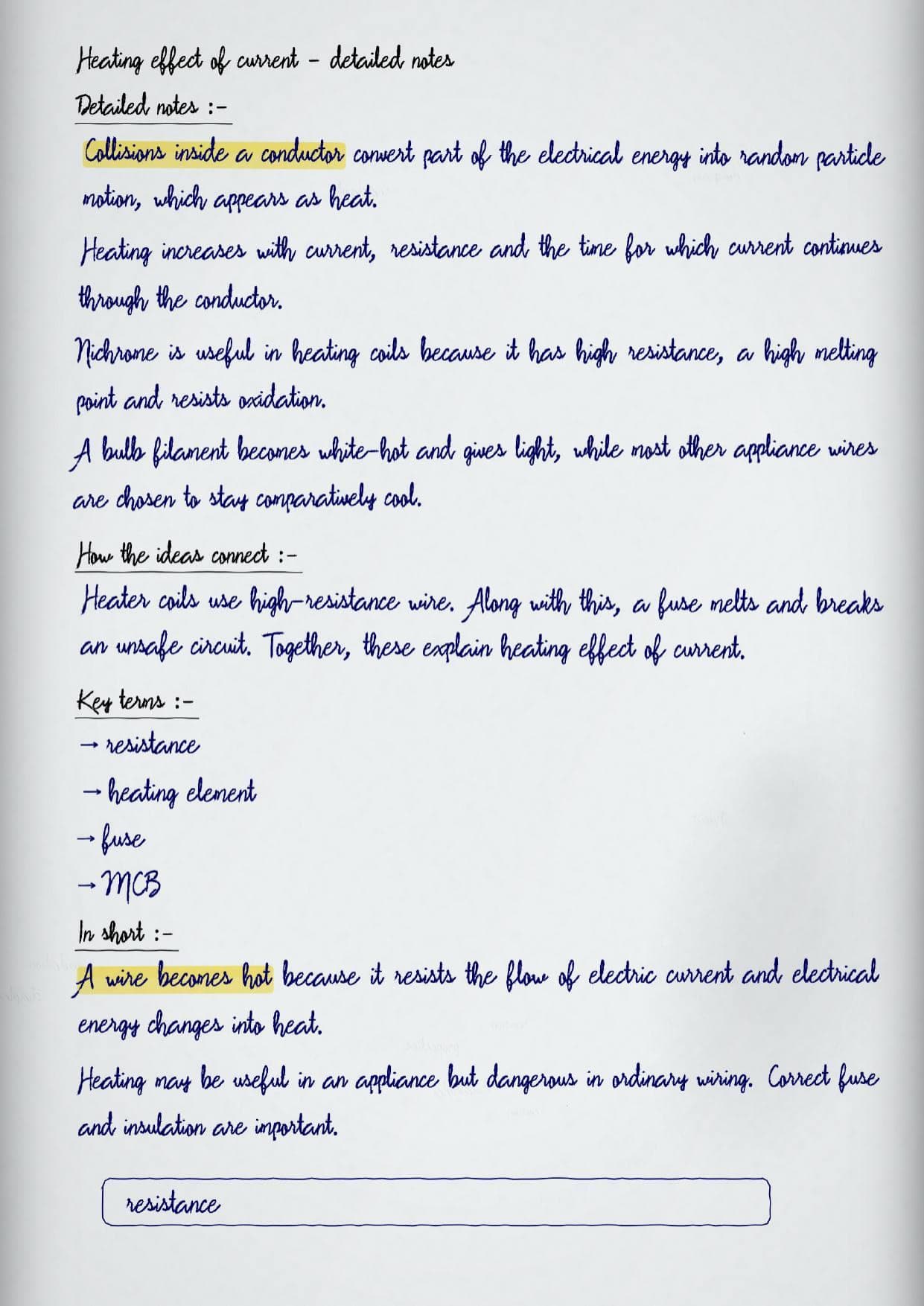
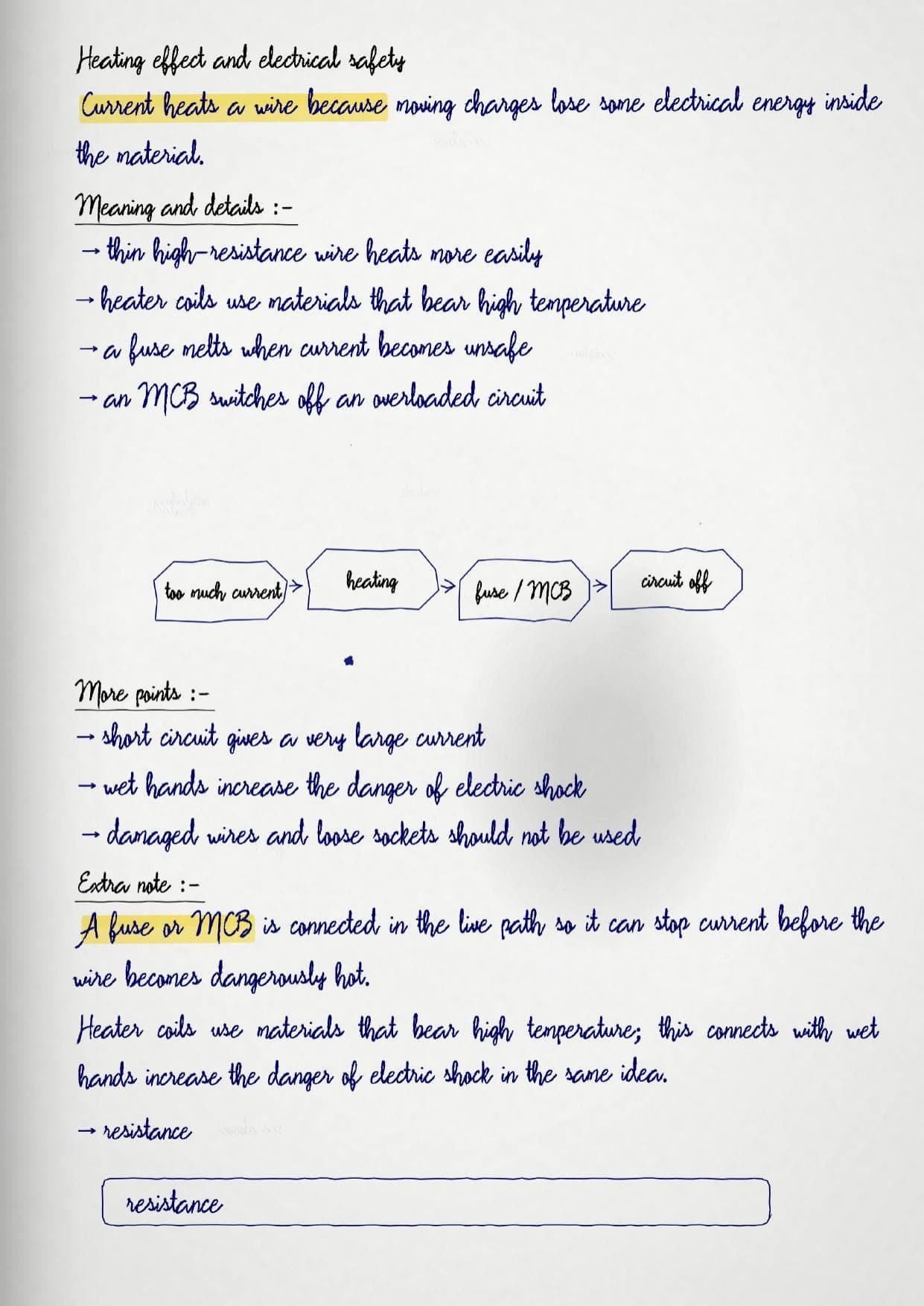
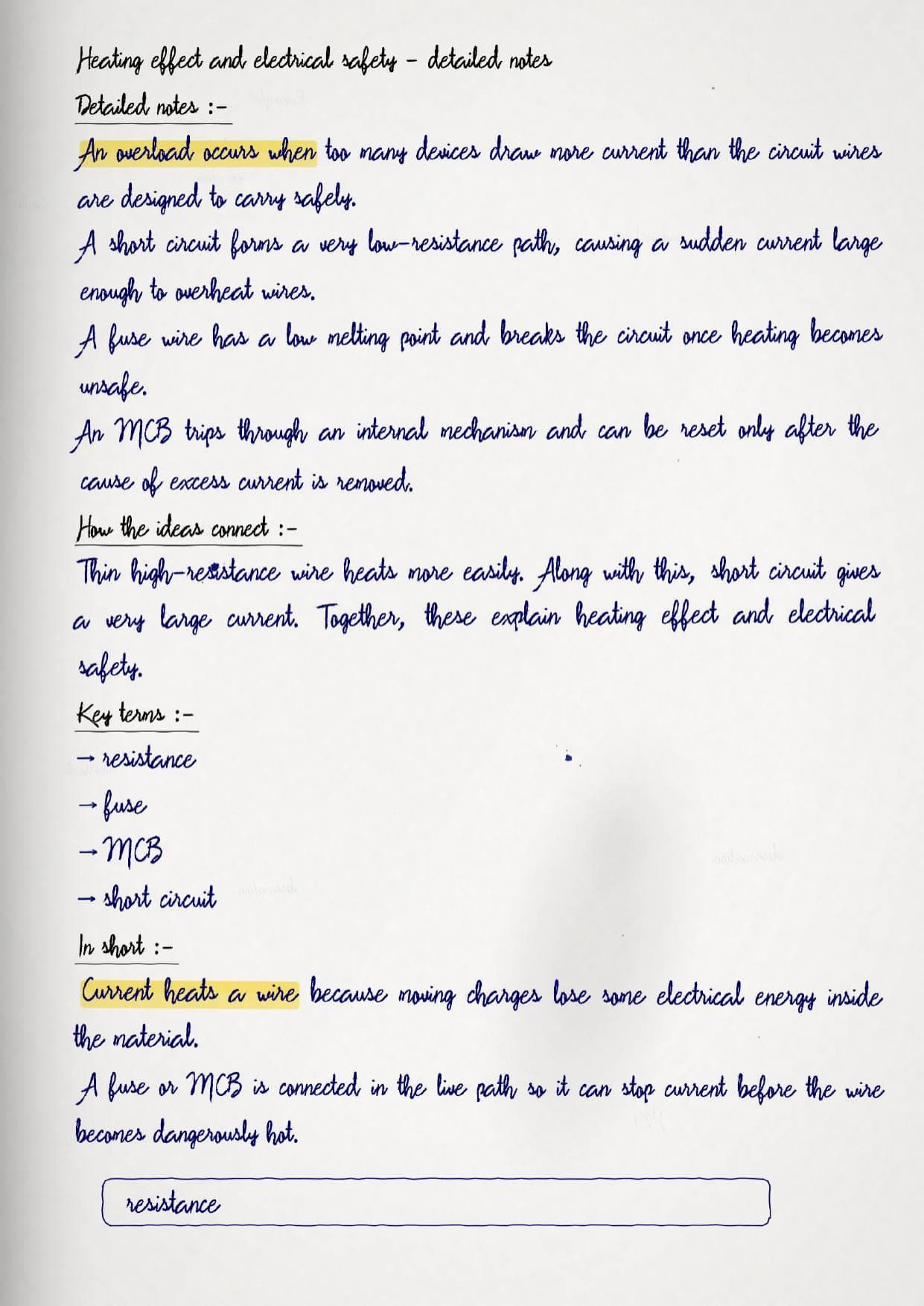
- Heating effect of electric current
- Heating appliances at home
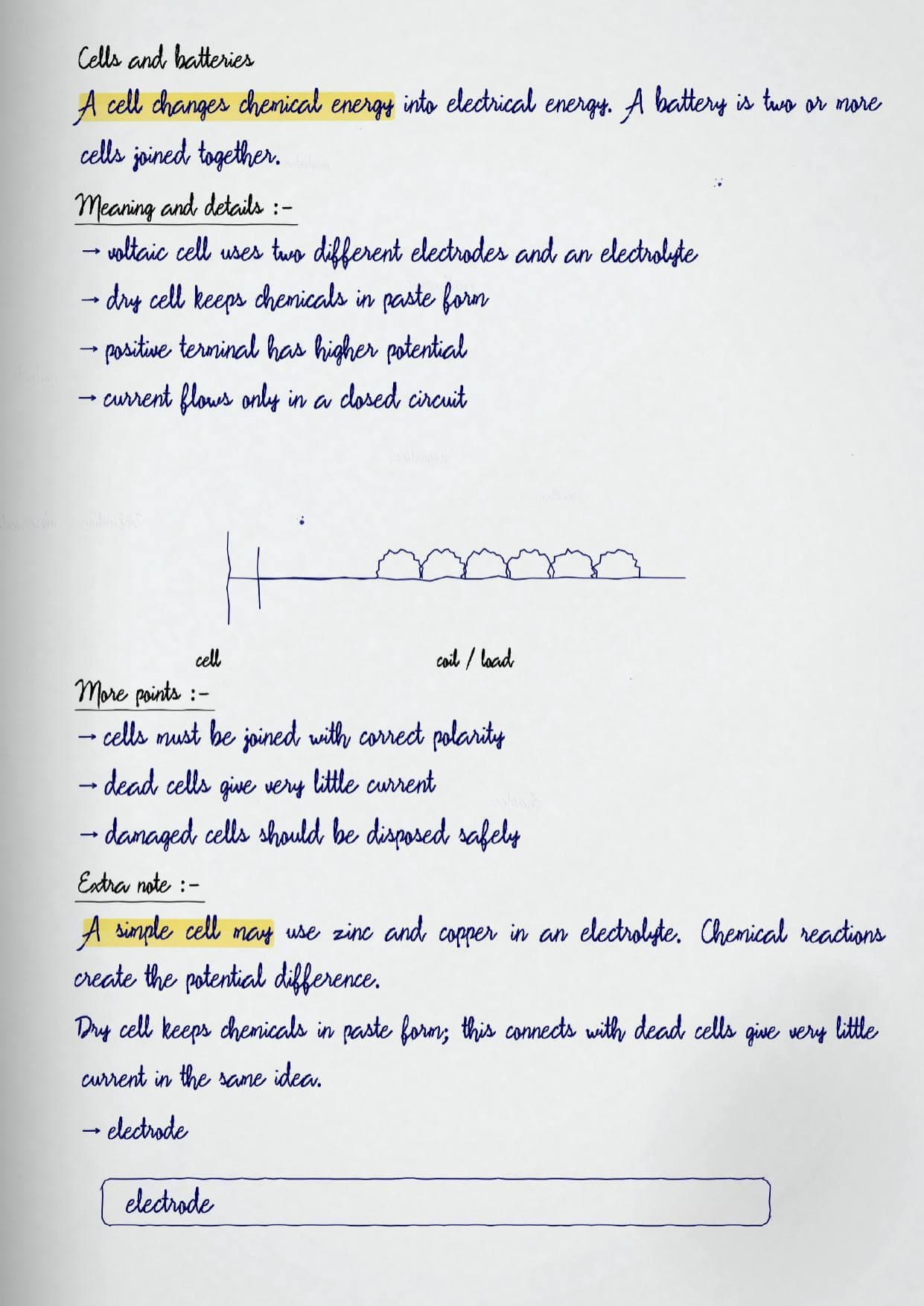
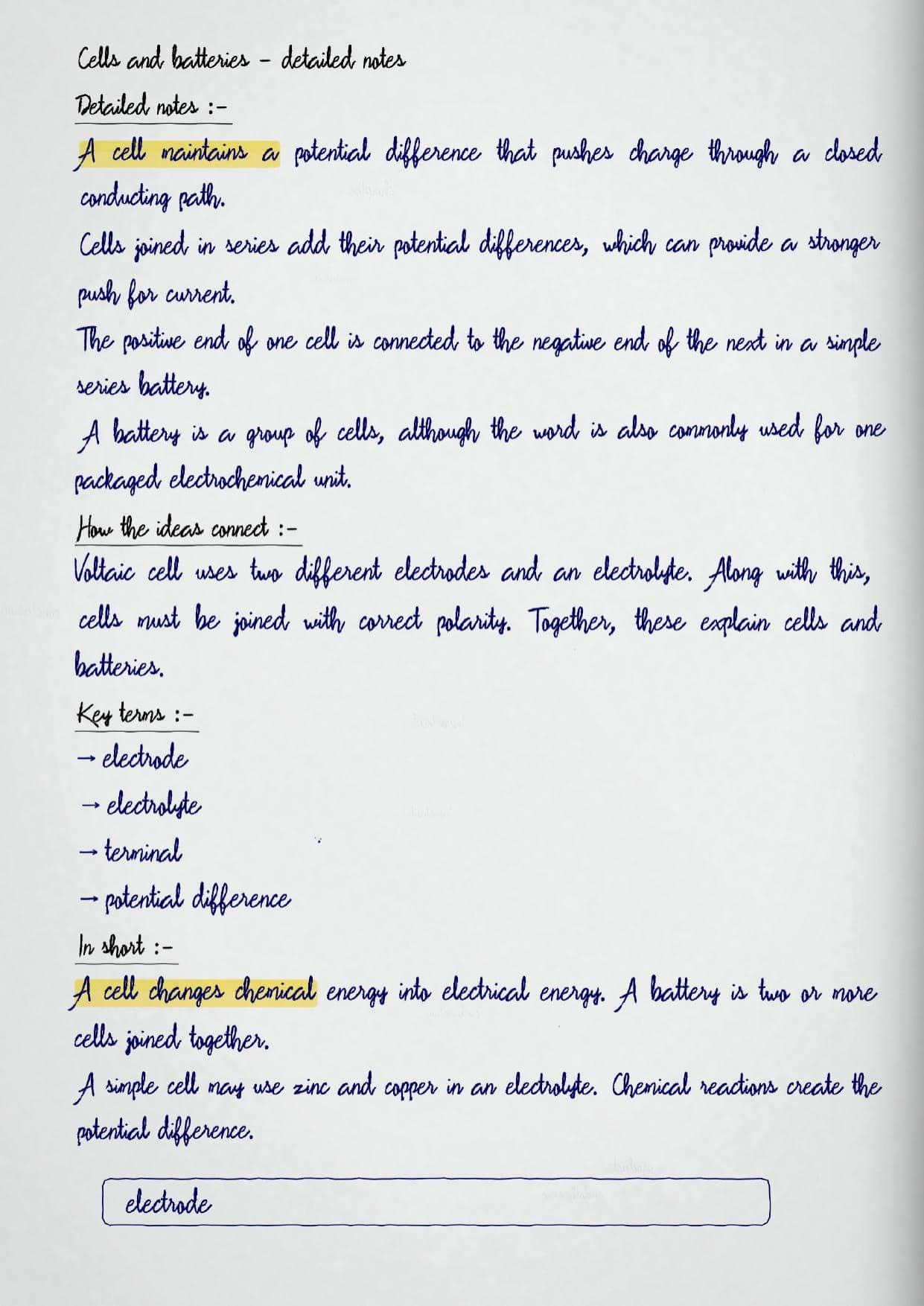
- Voltaic cell and dry cell
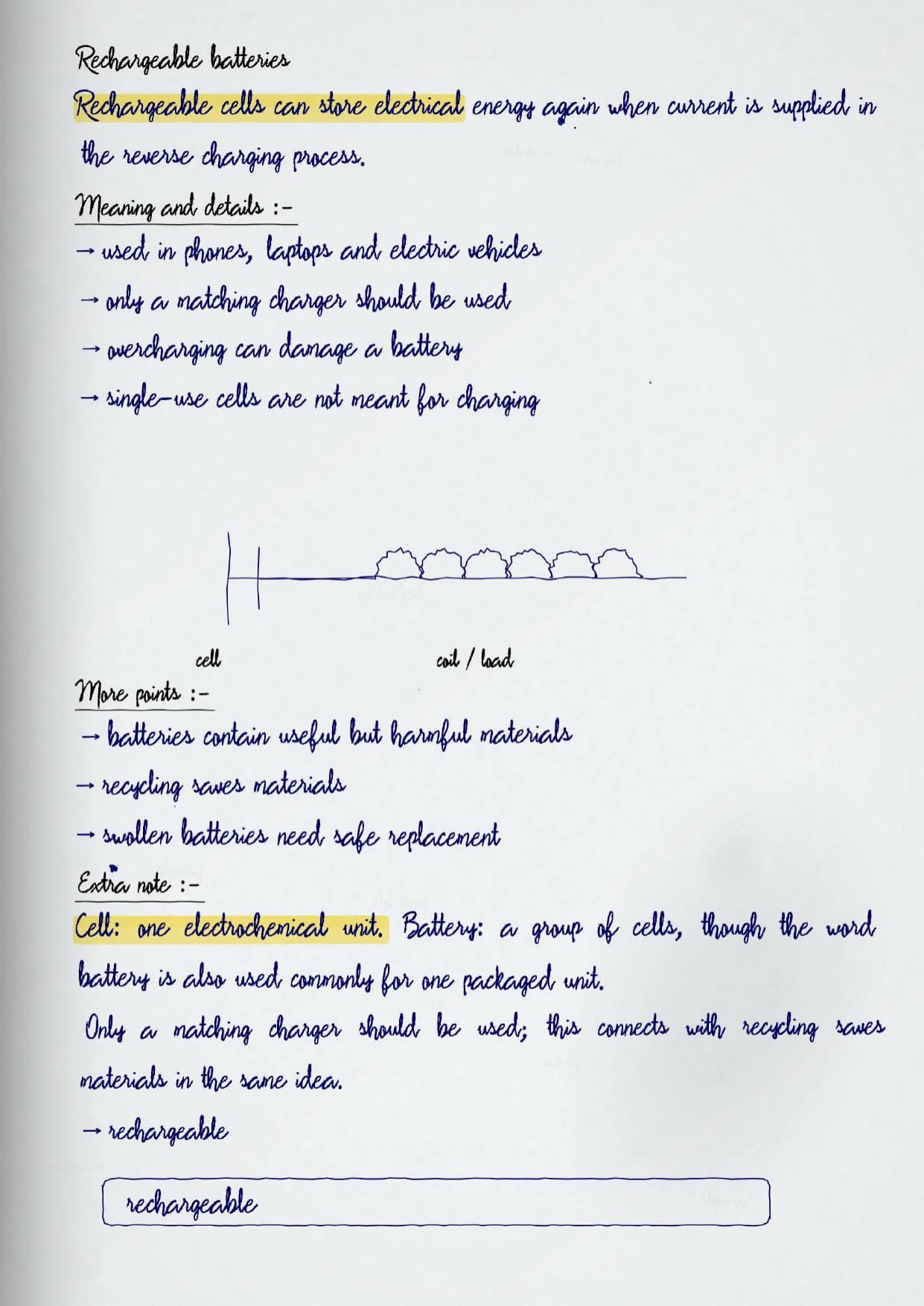
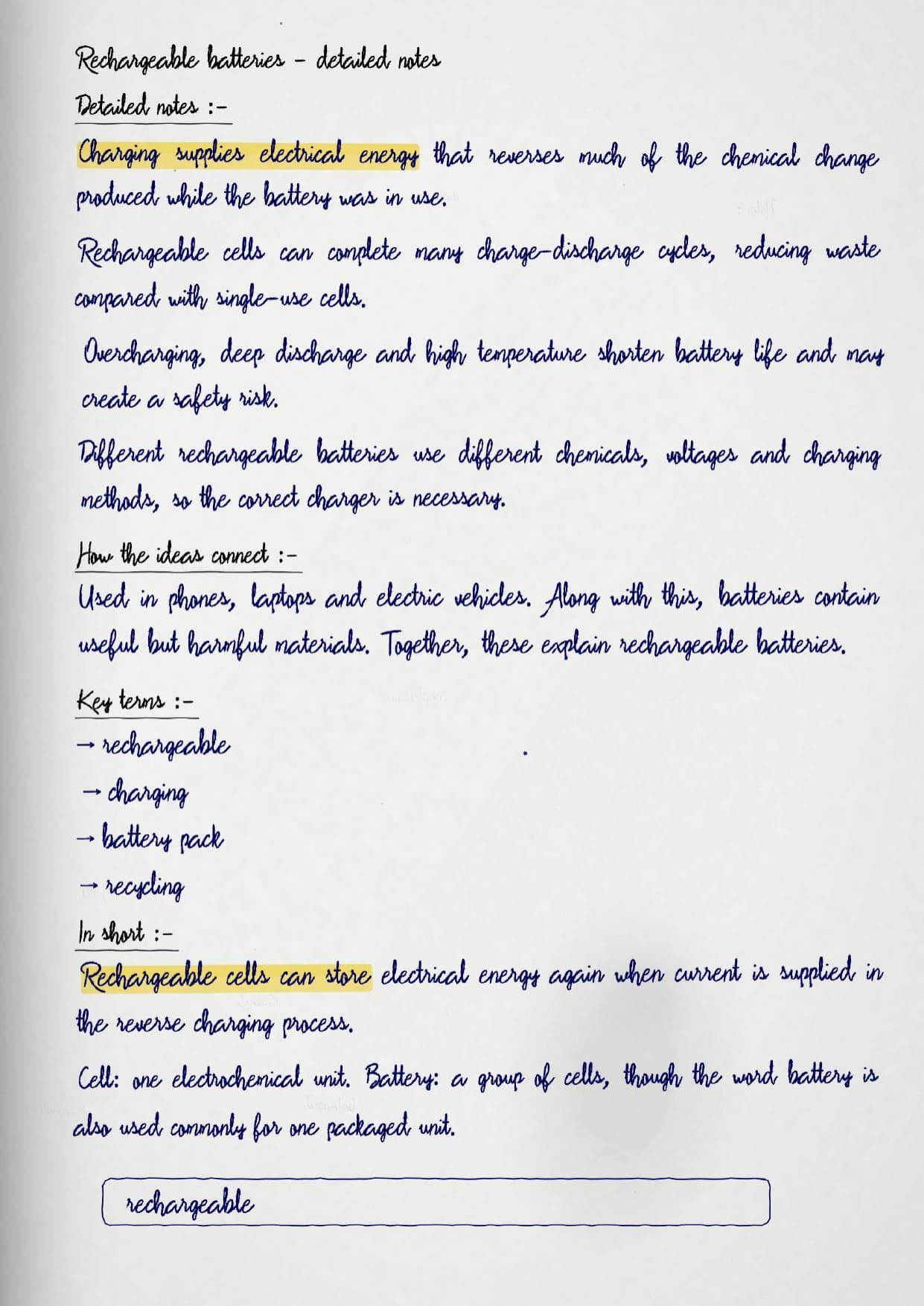
- Rechargeable batteries
Key Terms and Ideas in Electricity: Magnetic and Heating Effects
These are the terms and ideas the exam asks about most. Learn each one so you can define it and use it in your answers.
| Term / Idea | What it means |
|---|---|
| Magnetic effect of electric current | a current-carrying wire produces a magnetic field around it |
| Magnetic field | the region around a magnet or current where its magnetic effect can be felt |
| Electromagnet | a current-carrying coil that behaves like a magnet, often with an iron core |
| Heating effect of electric current | a conductor gets warm when current passes through it due to resistance |
| Resistance | the opposition a conductor offers to the flow of current |
| Nichrome wire | a high-resistance wire used in heating devices because it heats up strongly |
| Voltaic cell | an early cell where two different metal electrodes in an electrolyte produce current |
| Dry cell | a common single-use cell that uses a moist paste electrolyte instead of a liquid |
| Rechargeable battery | a cell that can be charged and reused many times |
How Collegedunia's Handwritten Notes Help You Revise Electricity: Magnetic and Heating Effects
These notes are made for the night before the exam. They keep the facts short and easy to scan. Collegedunia maps every point to the 2026-27 NCERT.
- Clear handwriting: each topic is written in neat, easy-to-read handwriting.
- Boxed key terms: the main terms and definitions are boxed by hand for fast recall.
- Diagrams and tables: simple hand-drawn tables and charts make ideas clear.
- Colour-coded headings: new sub-topics stand out, so you find any section in seconds.
Electricity: Magnetic and Heating Effects Self-Assessment Quiz
Try these quick questions after you read the notes. Tap each question to check your answer. They cover the points CBSE asks most often.
When current flows through a coil with an iron nail inside, the nail
(a) behaves like a magnet (b) melts (c) glows (d) does nothing
Answer: (a) behaves like a magnet - this is the magnetic effect of electric current
Nichrome wire is used in heaters because it
(a) is a poor conductor (b) offers high resistance and heats up (c) stays cold (d) is a magnet
Answer: (b) offers high resistance and heats up - resistance turns electrical energy into heat
Which scientist first showed that electricity and magnetism are linked?
(a) Hans Christian Oersted (b) Alessandro Volta (c) Edward Jenner (d) Luigi Galvani
Answer: (a) Hans Christian Oersted - he saw a compass deflect near a current-carrying wire
A Voltaic cell produces electricity through
(a) heating (b) chemical reactions between electrodes and electrolyte (c) sunlight (d) magnetism
Answer: (b) chemical reactions between electrodes and electrolyte - once chemicals are used up the cell goes dead
Using two cells instead of one makes an electromagnet
(a) weaker (b) stronger (c) unchanged (d) reversed
Answer: (b) stronger - more current means a stronger magnetic field and more clips lifted
How to Use These Handwritten Notes for Class 8 Science Revision
Use these class 8 science handwritten notes in two passes. Read them slowly once for the full chapter. Then, near the exam, read only the boxes and key terms for a fast recall.
- Read the notes once with the NCERT chapter open beside you.
- Say each key term and idea in your own words.
- Practise one long-answer question from a past paper.
- On the last day, revise only the key terms and the boxes.
Class 8 Science Handwritten Notes for All Chapters
The table below links the class 8 science handwritten notes for every chapter. Use it to jump to any other chapter's notes.
Electricity: Magnetic and Heating Effects Class 8 Science Handwritten Notes FAQs
Ques. Where can I download Electricity: Magnetic and Heating Effects Class 8 Science Handwritten Notes PDF?
Ans. You can download the Electricity: Magnetic and Heating Effects Class 8 Science Handwritten Notes PDF directly from this page. Both the Normal and HD versions are free.
Ques. Are these handwritten notes aligned with the 2026-27 NCERT?
Ans. Yes. These notes follow the current 2026-27 syllabus for Class 8 Science. Why an electromagnet can be switched on and off unlike a bar magnet
Ques. How many pages is the Class 8 Science Electricity: Magnetic and Heating Effects Handwritten Notes PDF?
Ans. The notes run about 20 pages. They cover the full chapter with key terms, hand-drawn boxes, and a short self-assessment quiz.
Ques. What is the main idea of the 8th standard Science chapter Electricity: Magnetic and Heating Effects?
Ans. The main idea of this chapter is that an electric current shows two useful effects. It produces a magnetic field, which lets us build electromagnets, and it heats up conductors, which runs many home appliances. The chapter also explains that cells and batteries create this current through chemical reactions inside them.
Ques. Are these Electricity: Magnetic and Heating Effects notes enough for the CBSE Class 8 exam?
Ans. Yes, for revision. The Collegedunia handwritten notes cover every key point and exam term. Read them with the NCERT chapter and practise past questions.



Comments