


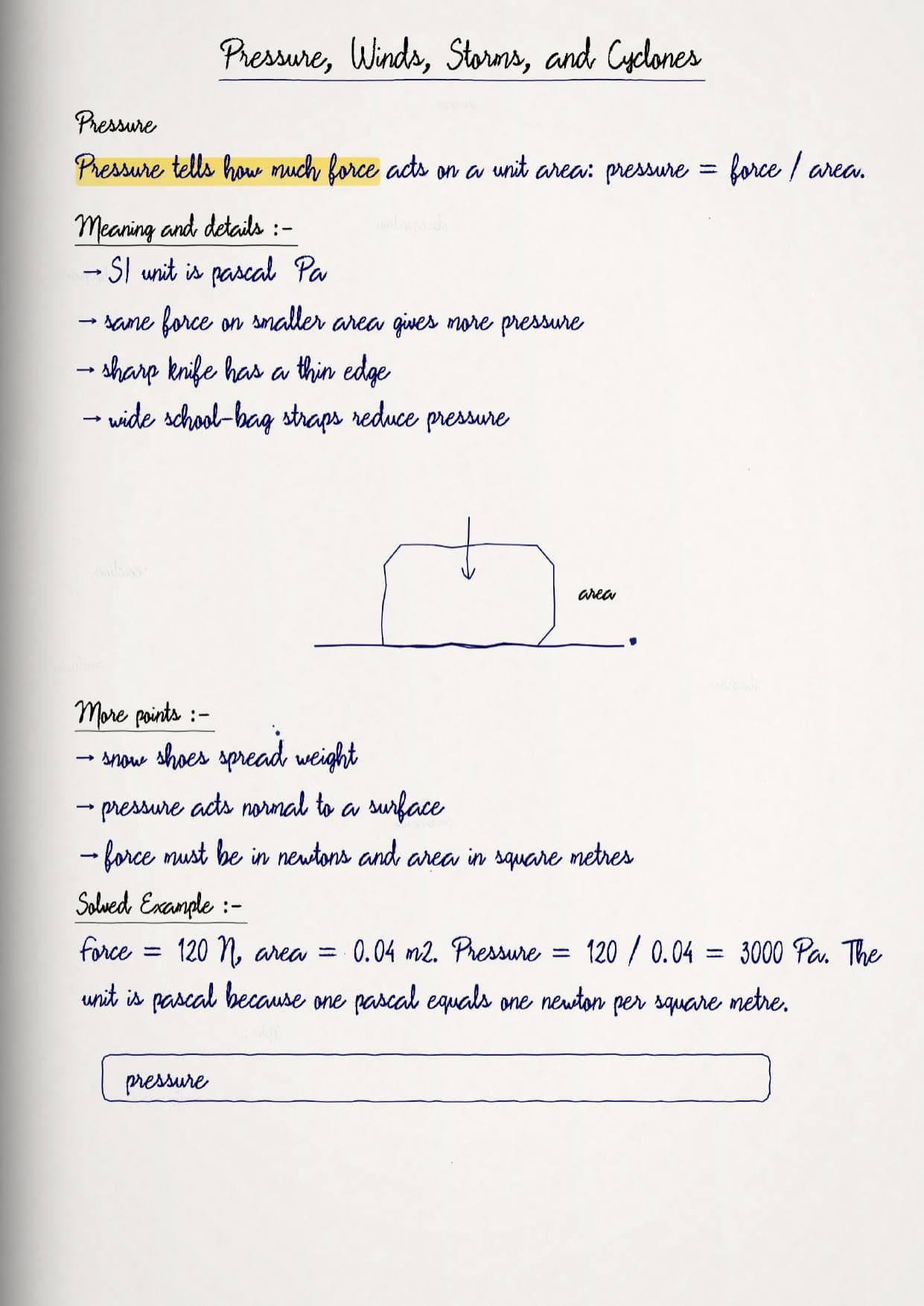
Pressure is the force acting on a unit area, and differences in air pressure drive winds that can grow into storms and cyclones. Class 8 Science Chapter 6 Pressure, Winds, Storms, and Cyclones builds this idea step by step. These class 8 science handwritten notes chapter 6 Pressure, Winds, Storms, and Cyclones follow the 2026-27 NCERT and cover.
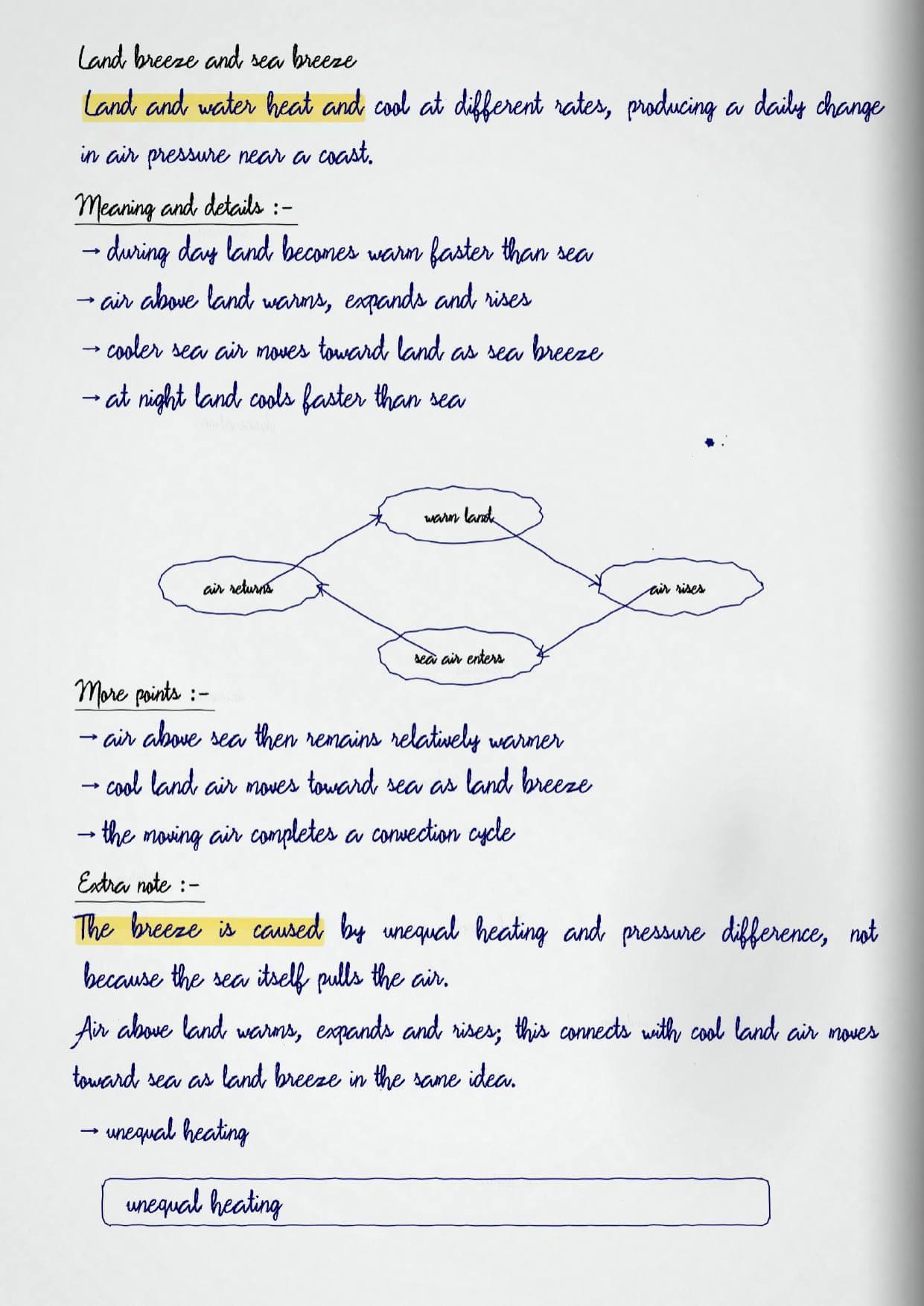
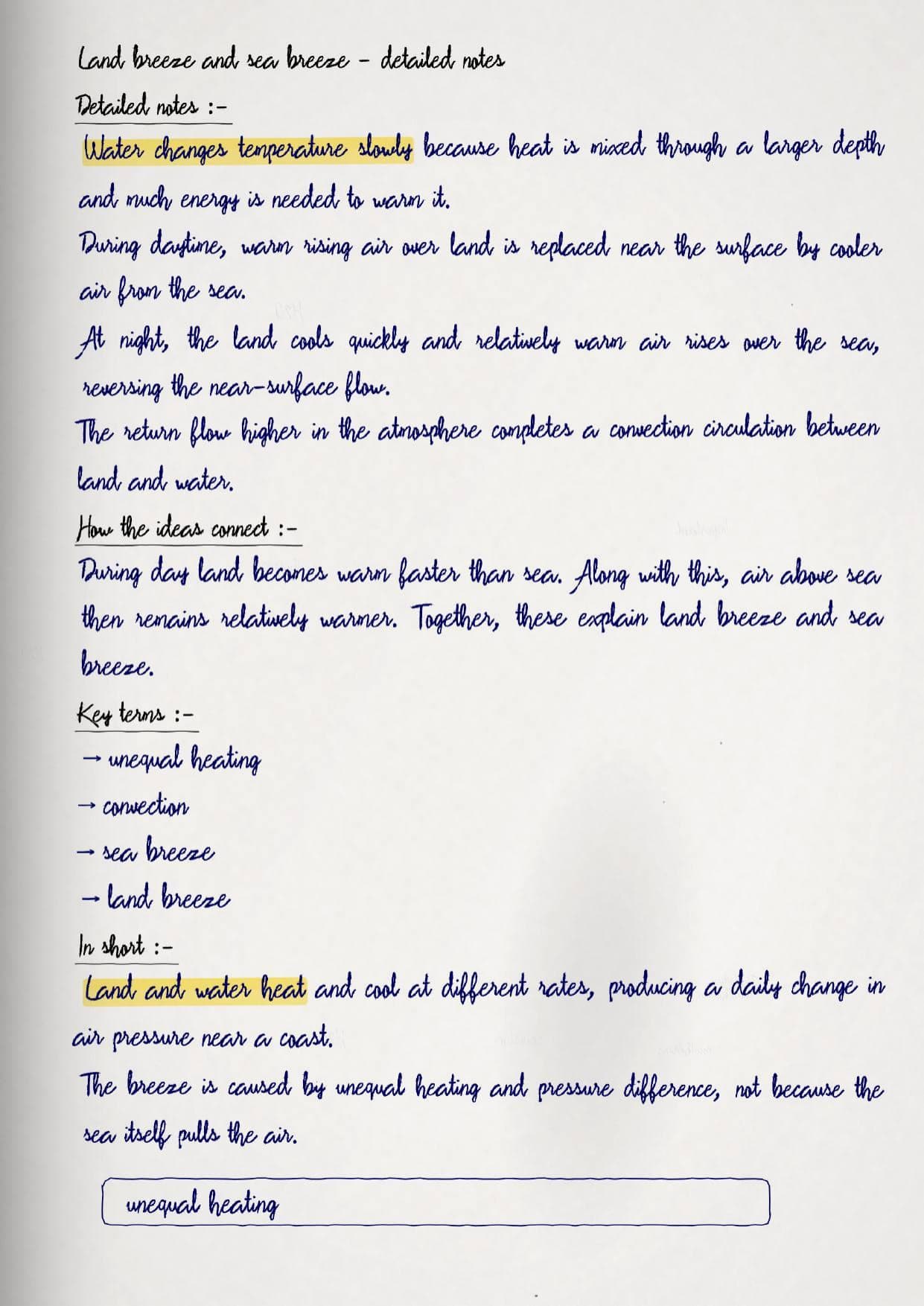
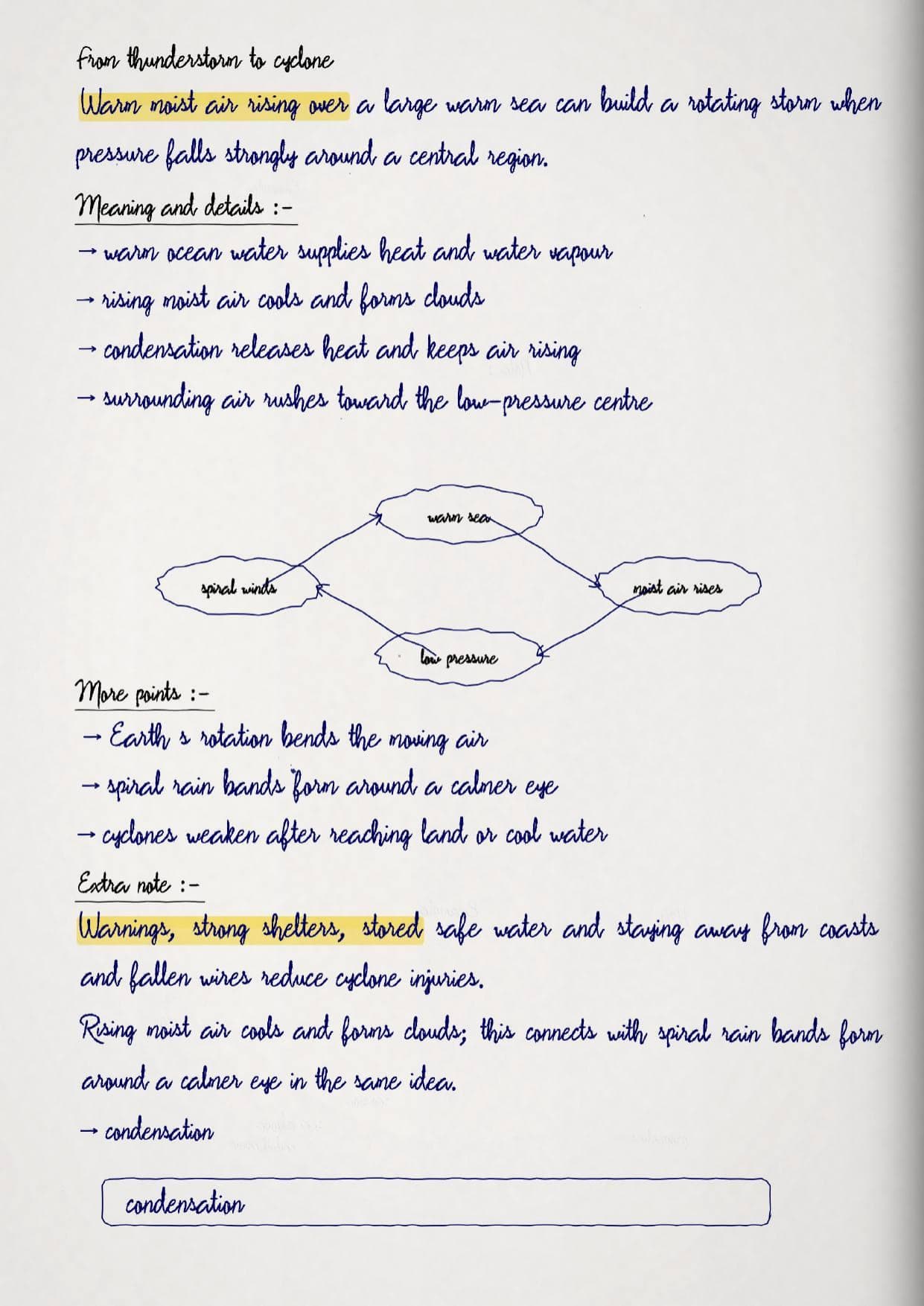
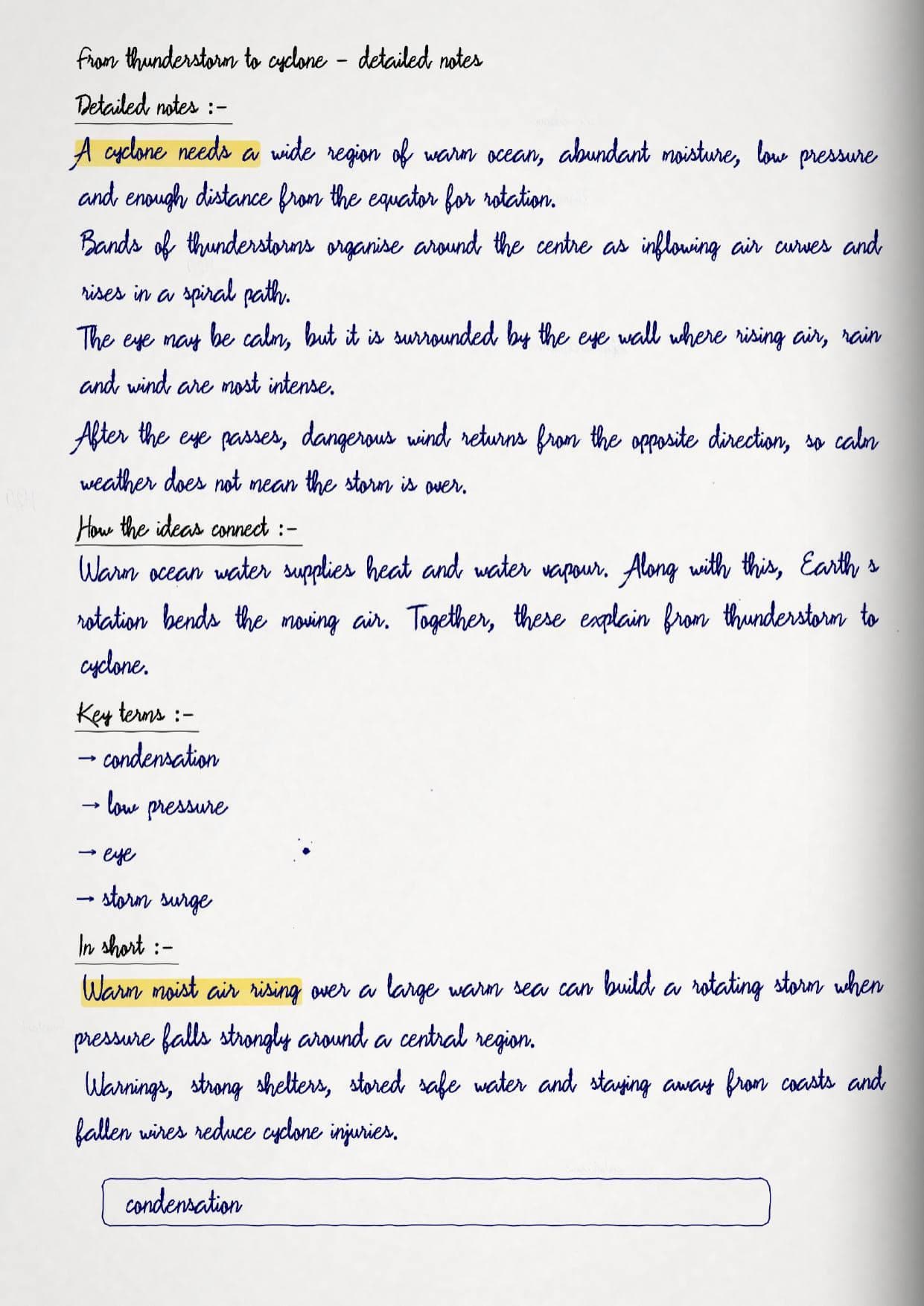
- CBSE Class 8 Weightage: a scoring chapter in the Science paper, asked in short and long answers.
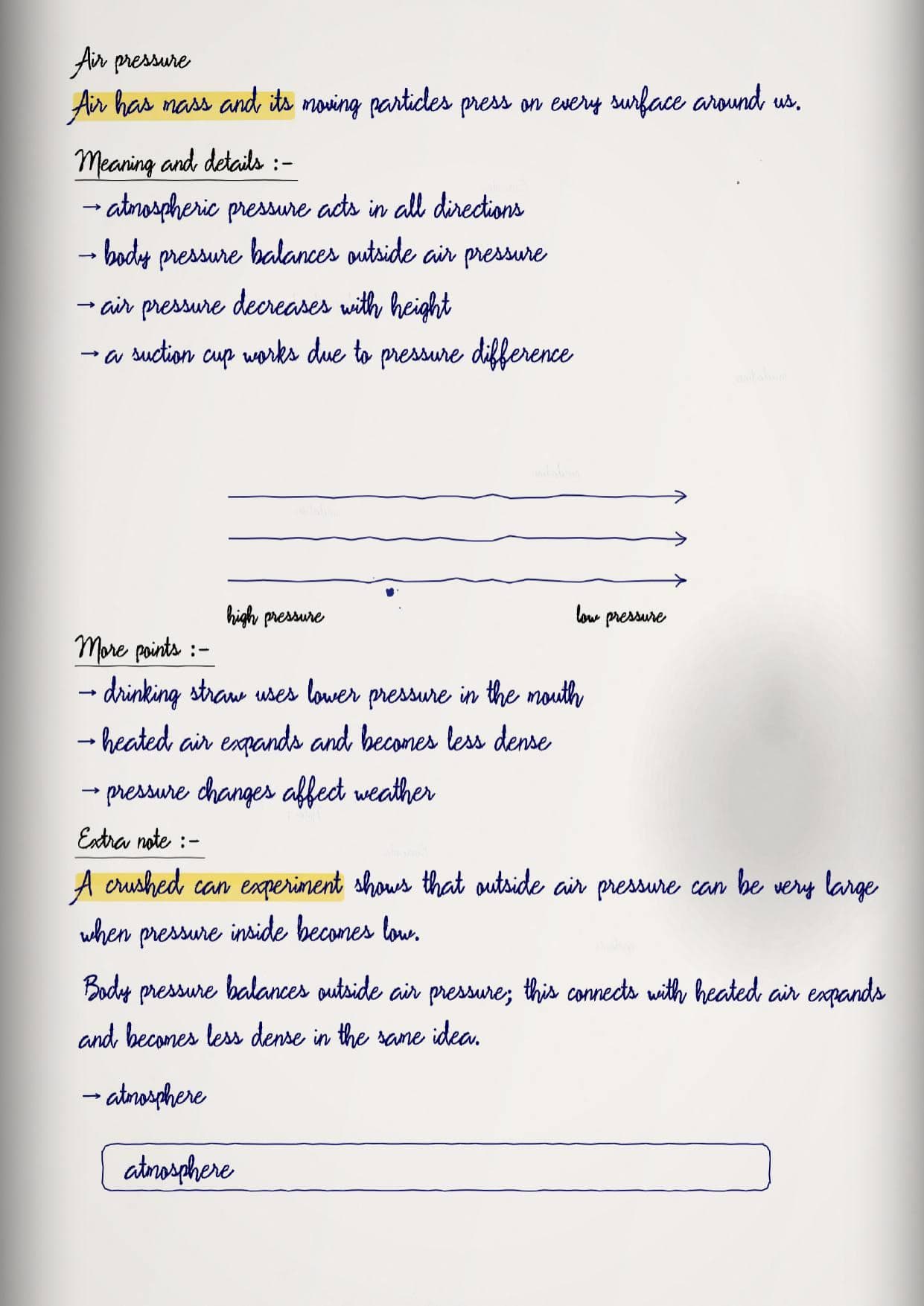
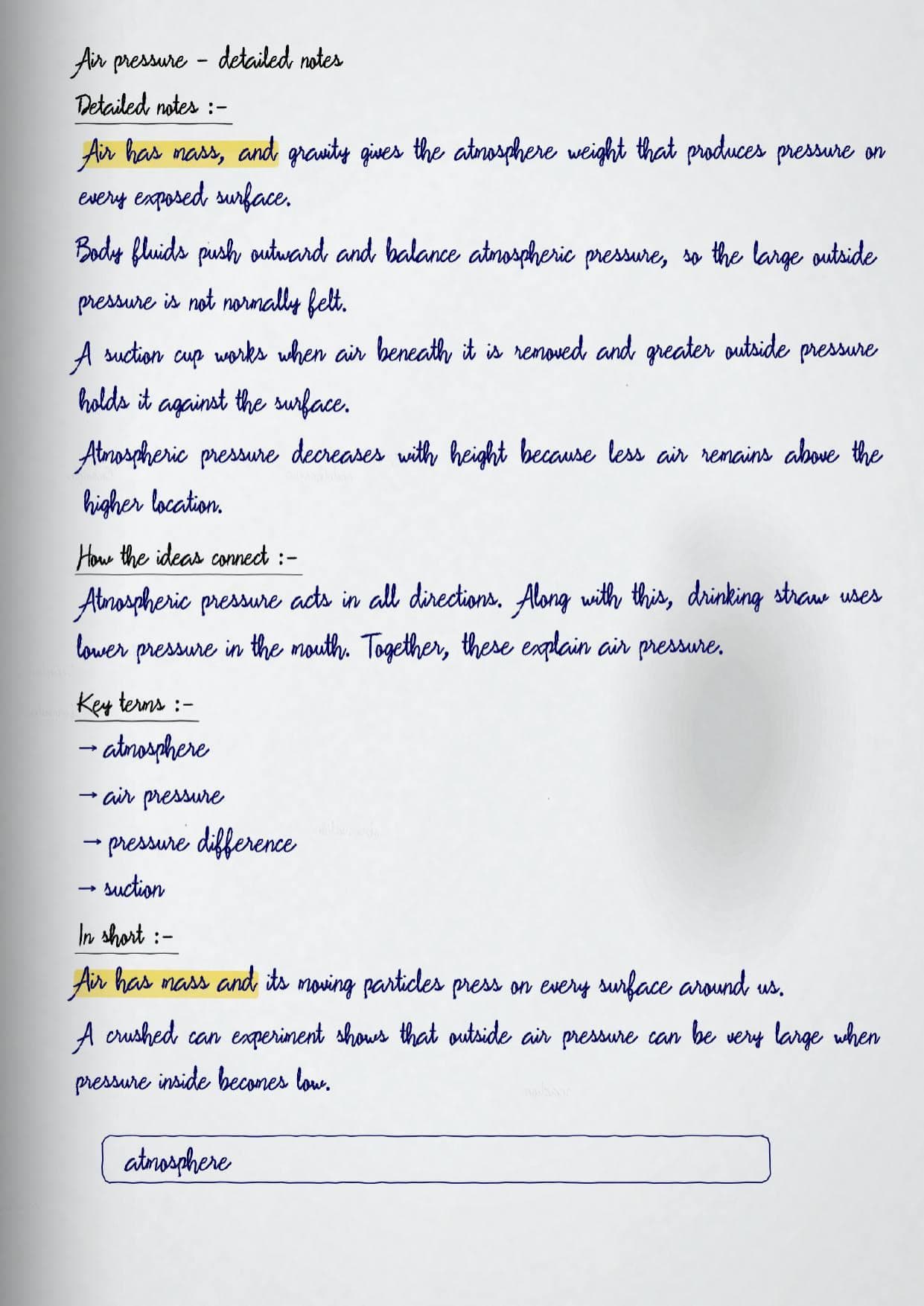
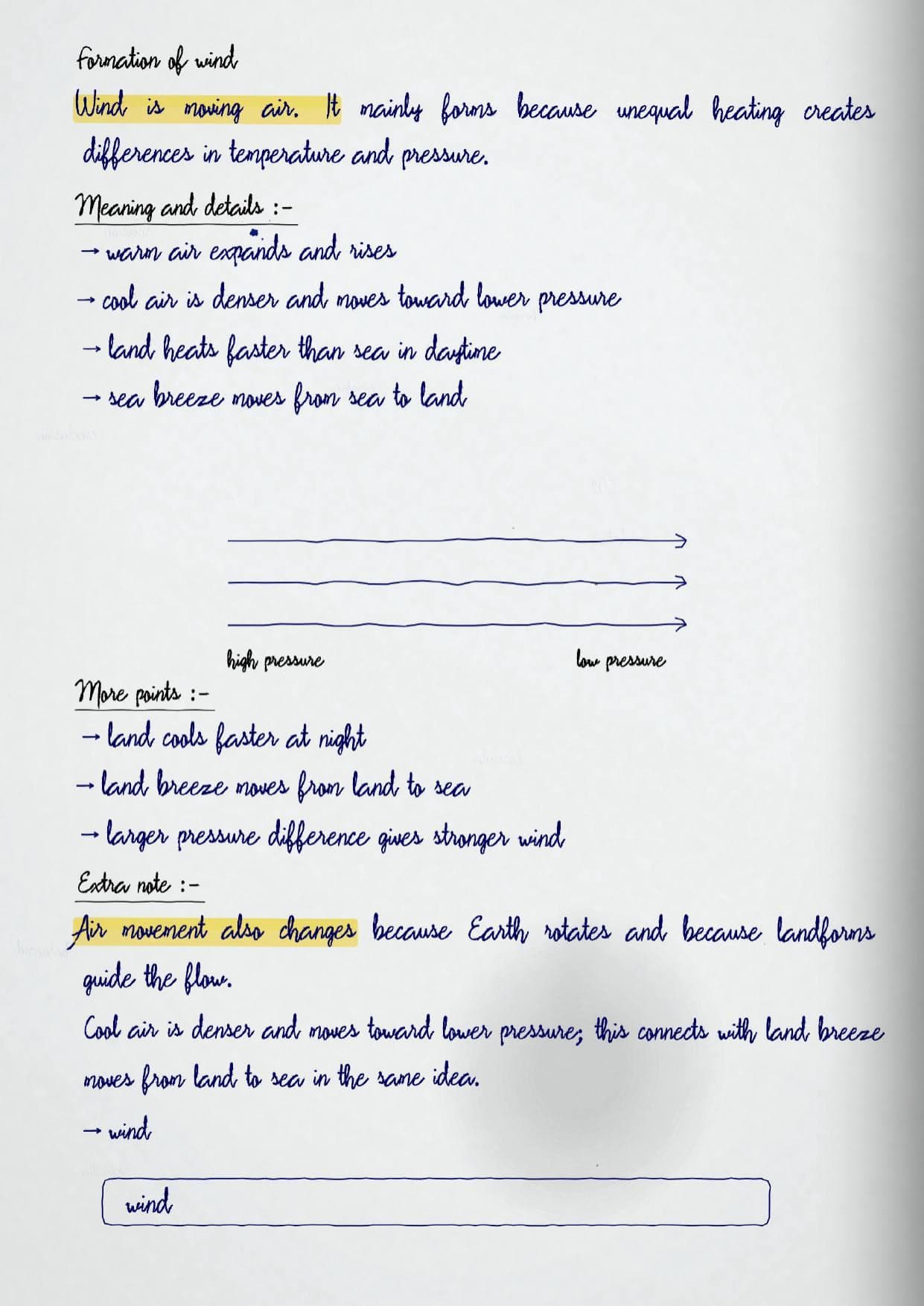
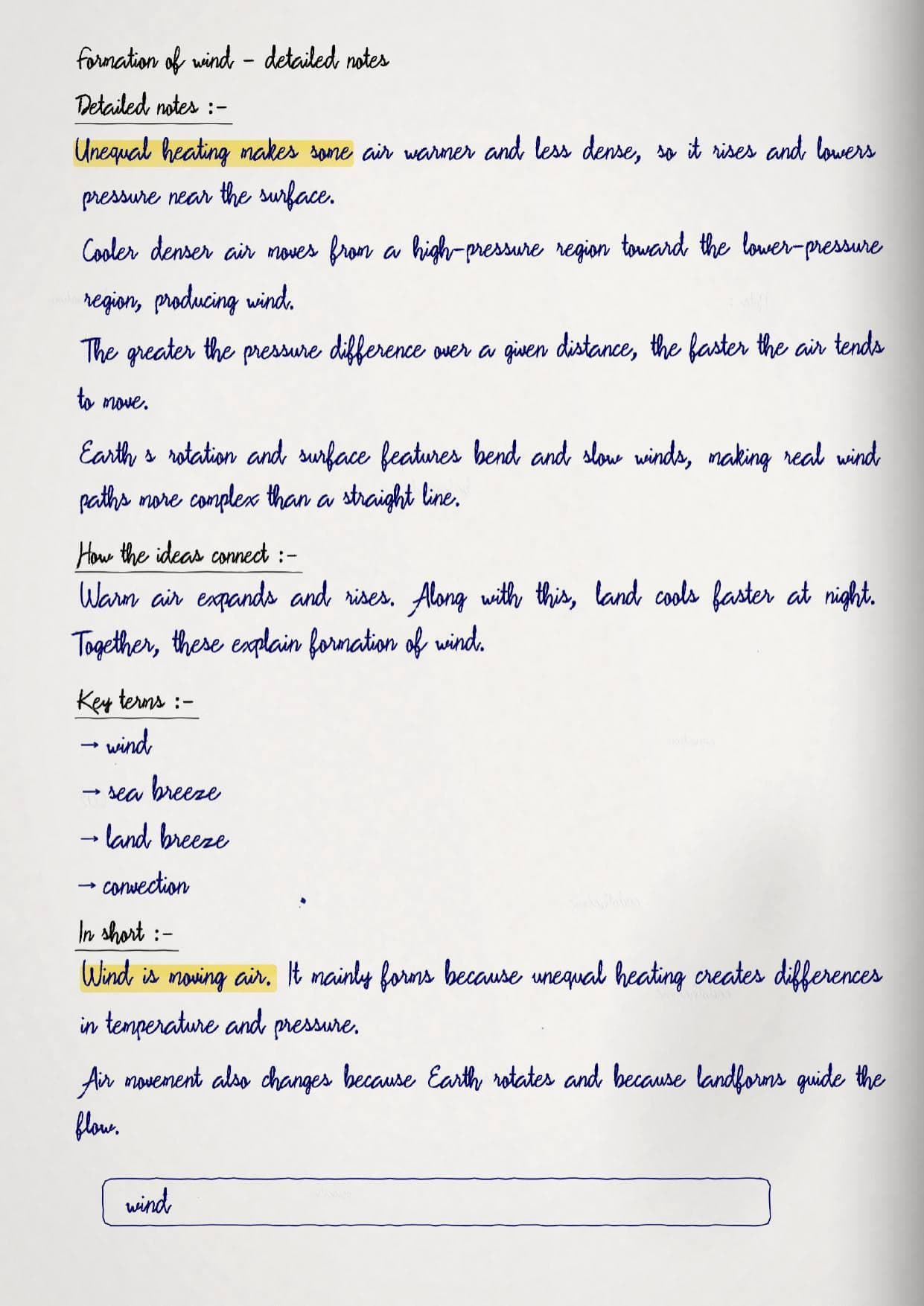
- What the notes cover: pressure as force per unit area, pressure exerted by liquids, atmospheric pressure, formation of wind.
- Best for: quick revision before Class 8 exams and a strong base for Class 9.
You can read the complete class 8 science handwritten notes for Pressure, Winds, Storms, and Cyclones, with key terms, boxed definitions, and quick revision points, in the PDF below.
These handwritten notes are written by subject teachers, mapped to the 2026-27 NCERT, and checked against the last five years of CBSE Class 8 Science papers.
Key Terms and Ideas in Pressure, Winds, Storms, and Cyclones
These are the terms and ideas the exam asks about most. Learn each one so you can define it and use it in your answers.
| Term / Idea | What it means |
|---|---|
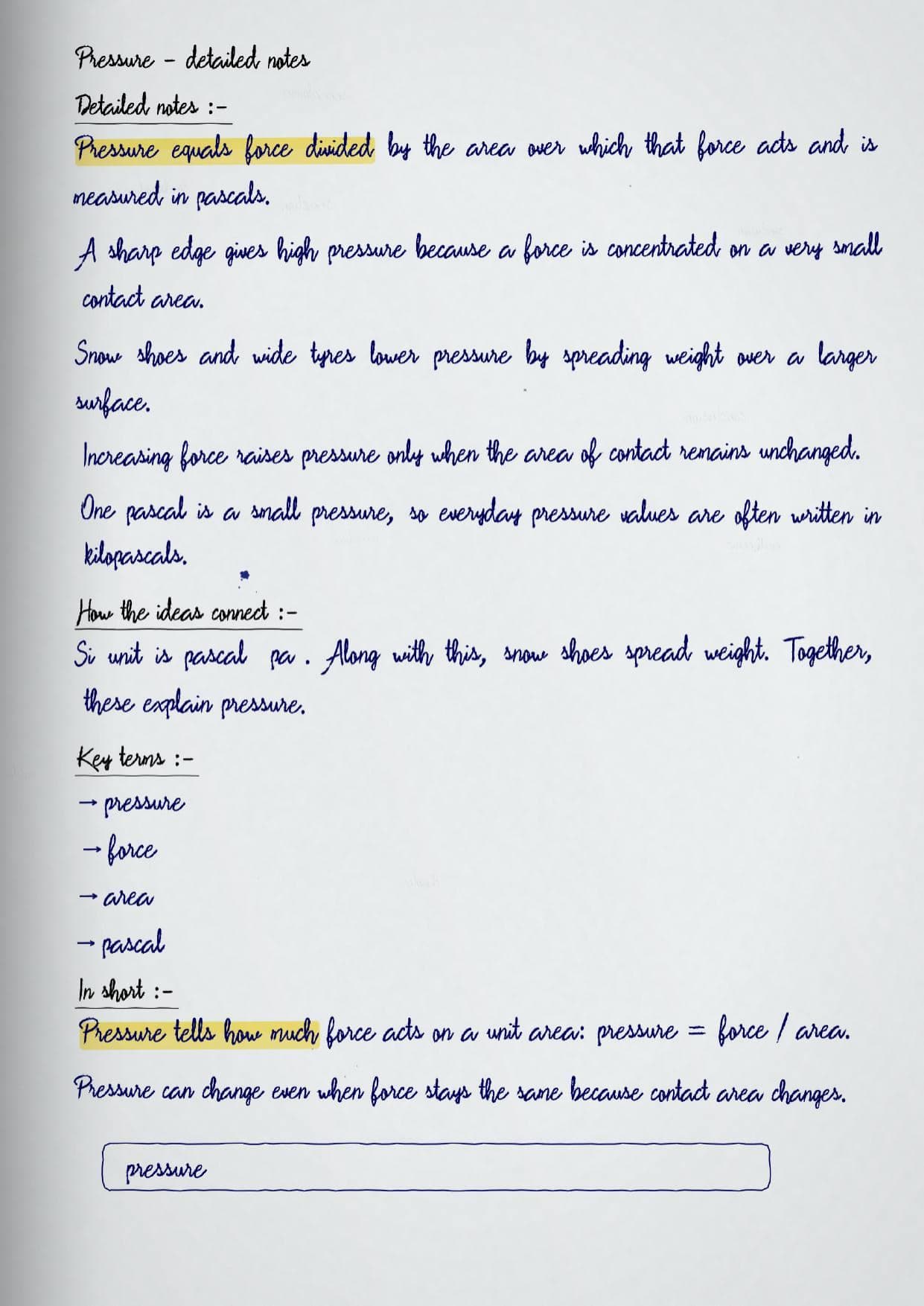
| Pressure | the force acting on a unit area, given by force divided by area |
| Pascal | the SI unit of pressure, equal to one newton per square metre |
| Atmospheric pressure | the pressure exerted by the air around us |
| Wind | moving air that flows from a region of high pressure to a region of low pressure |
| Storm | strong winds accompanied by rain, formed when warm moist air rises |
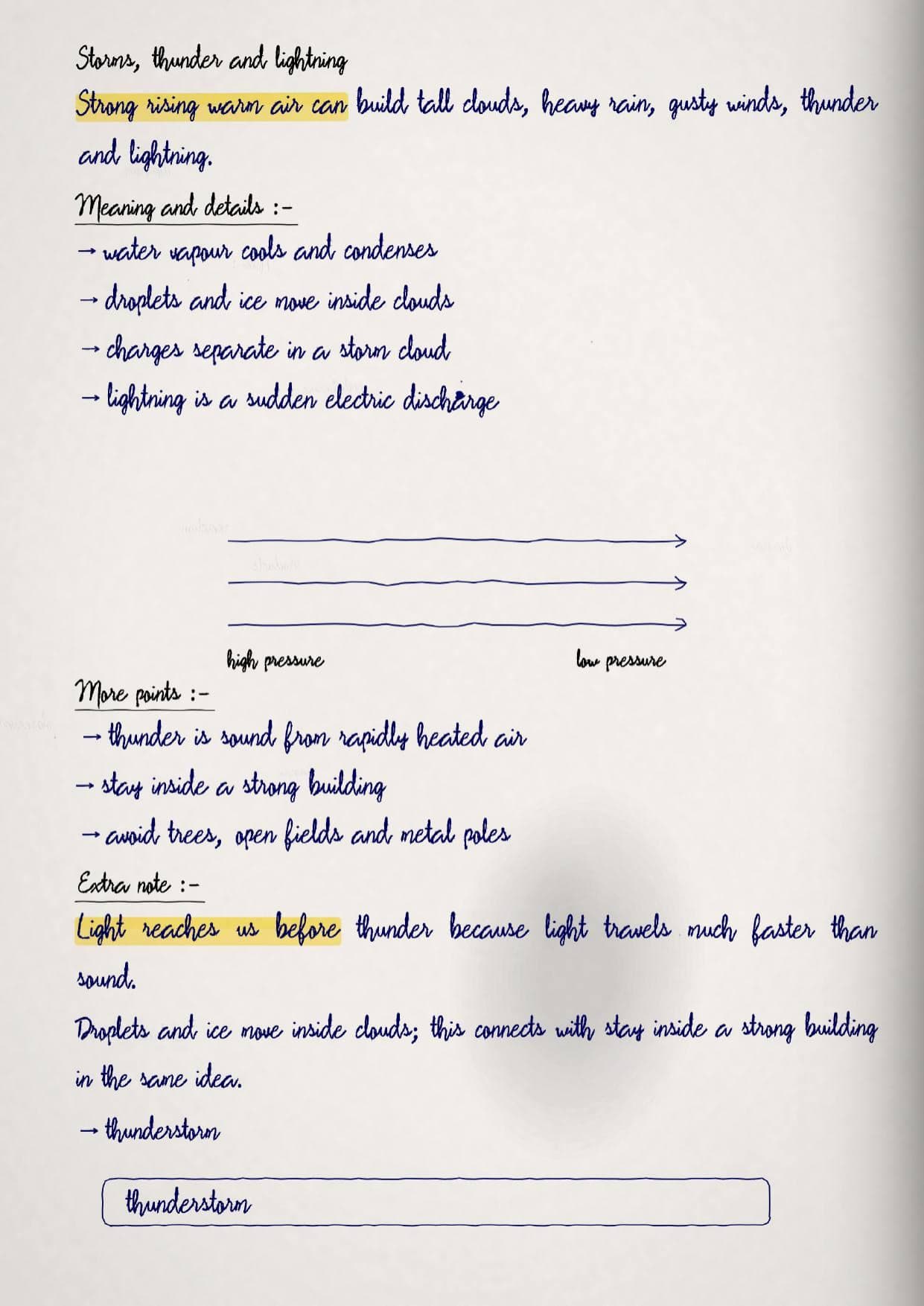
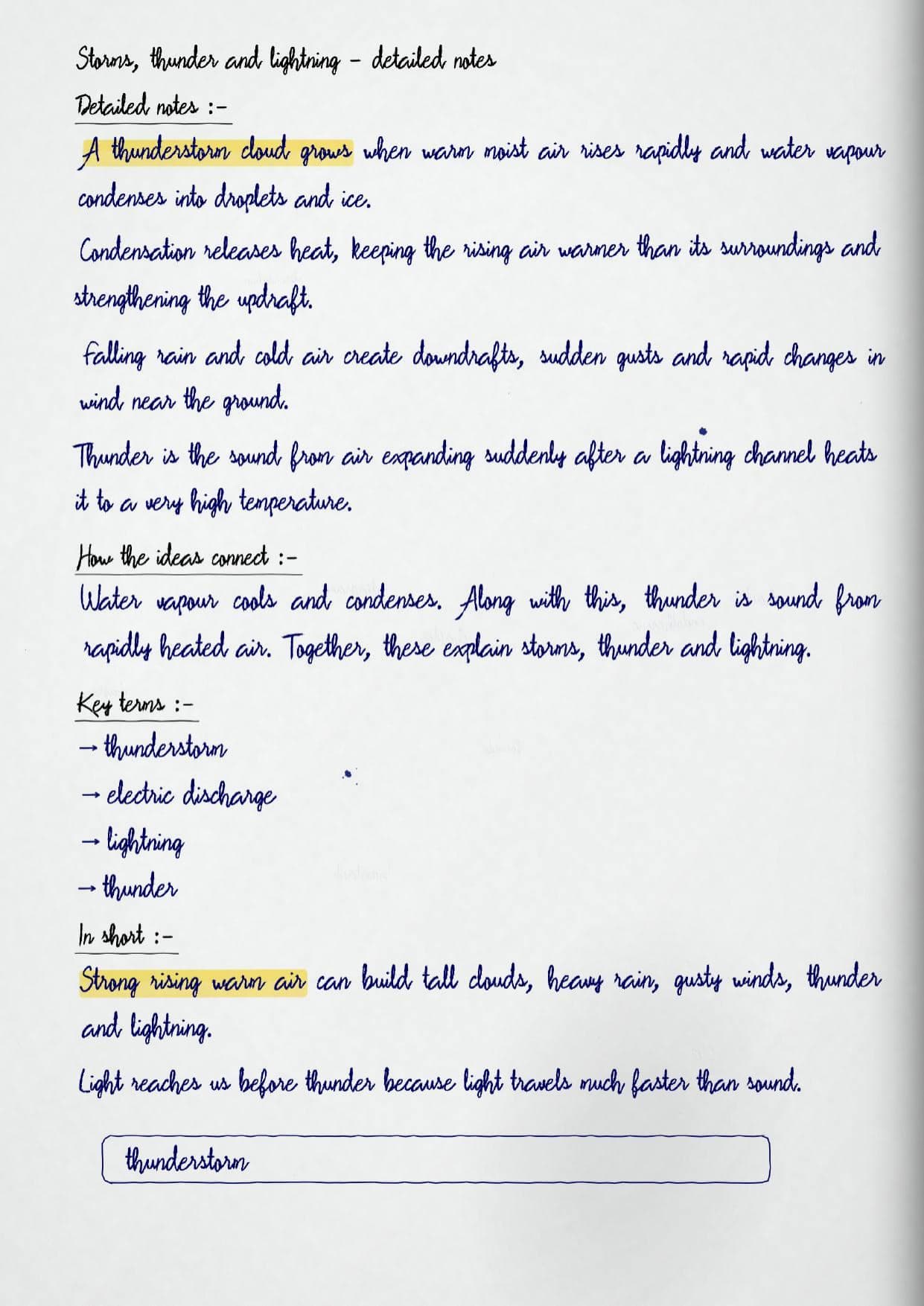
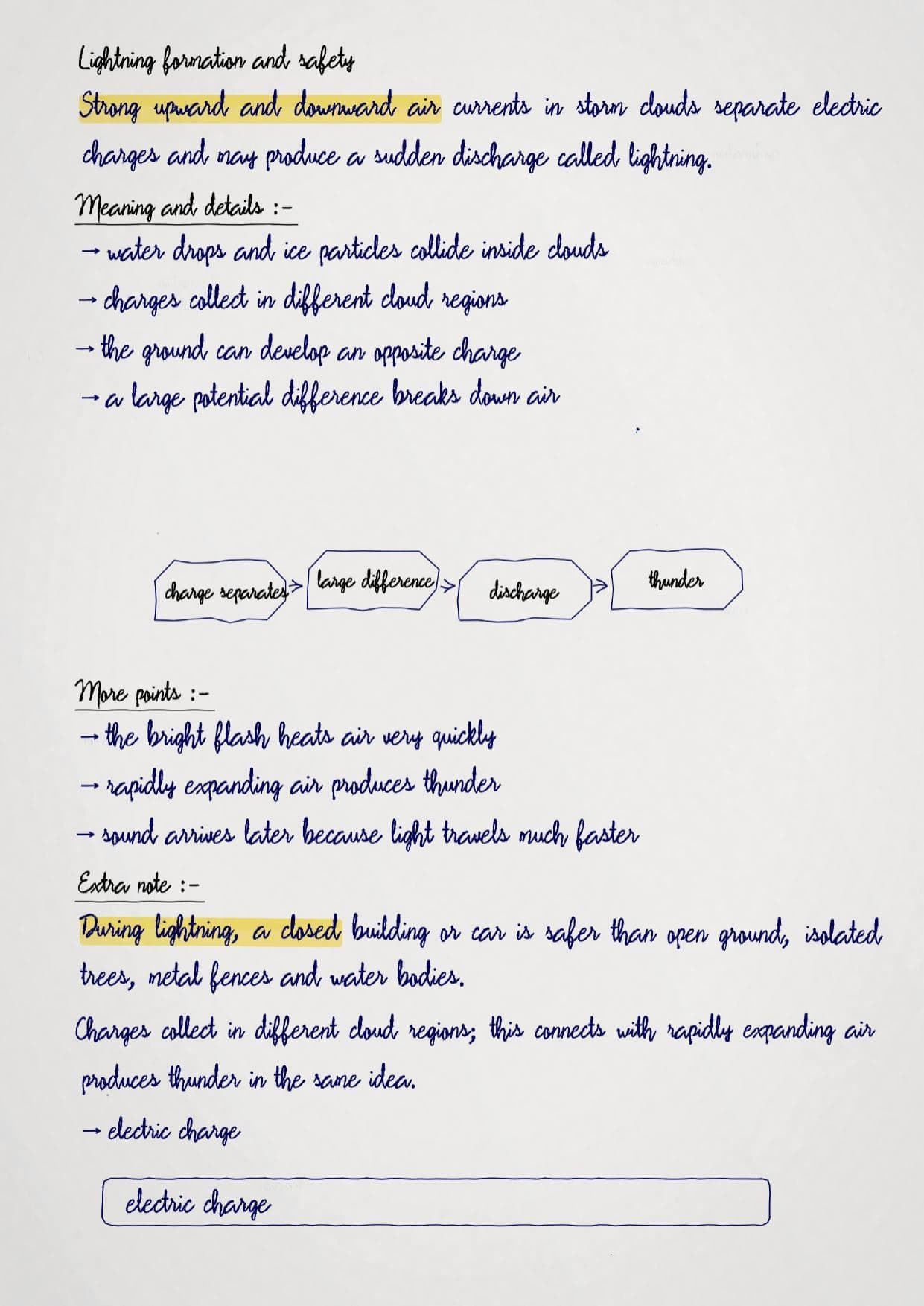
| Lightning | a bright flash caused by a sudden flow of charges built up in clouds |
| Thunderstorm | a storm accompanied by lightning and thunder |
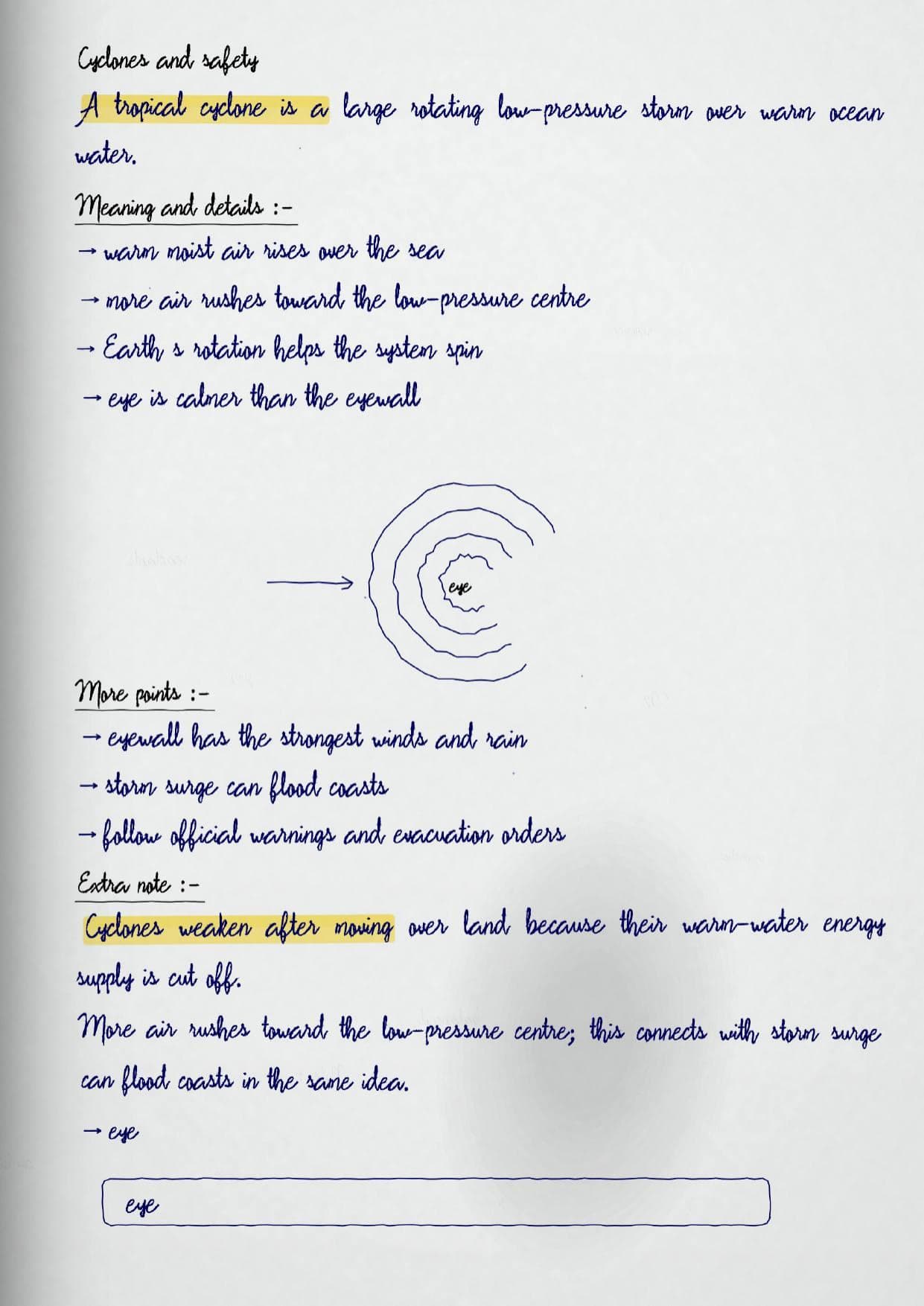
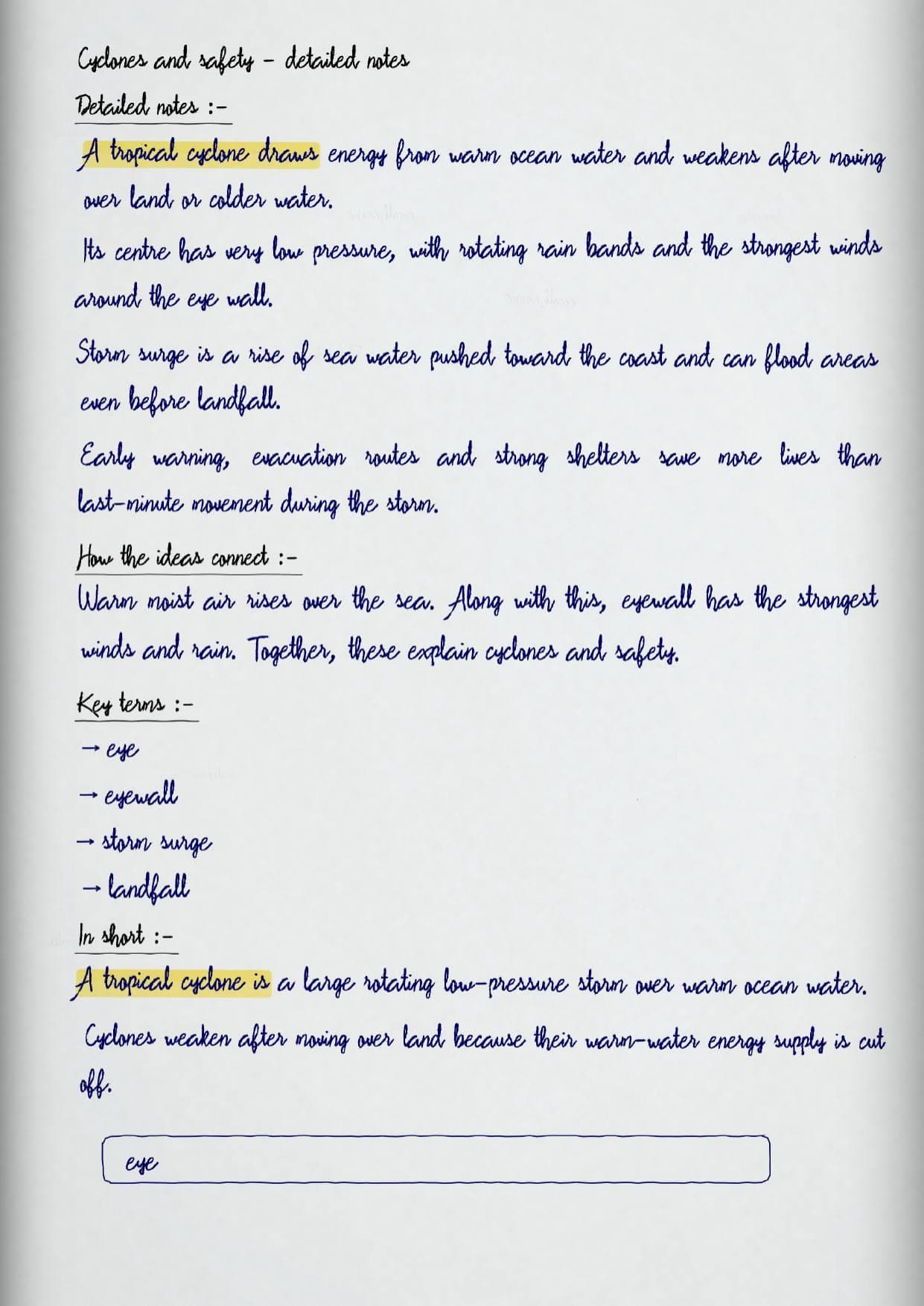
| Cyclone | a large spinning system of low pressure, high-speed winds and rain over warm ocean waters |
| Eye of the cyclone | the calm central region of lowest pressure in a cyclone |
What the Pressure, Winds, Storms, and Cyclones Handwritten Notes Cover
This chapter builds on forces to explain pressure, which is force spread over an area. It shows that liquids and air both exert pressure, and how differences in air pressure make winds blow. It then explains how storms, thunderstorms, lightning and cyclones form.
- Pressure as force per unit area
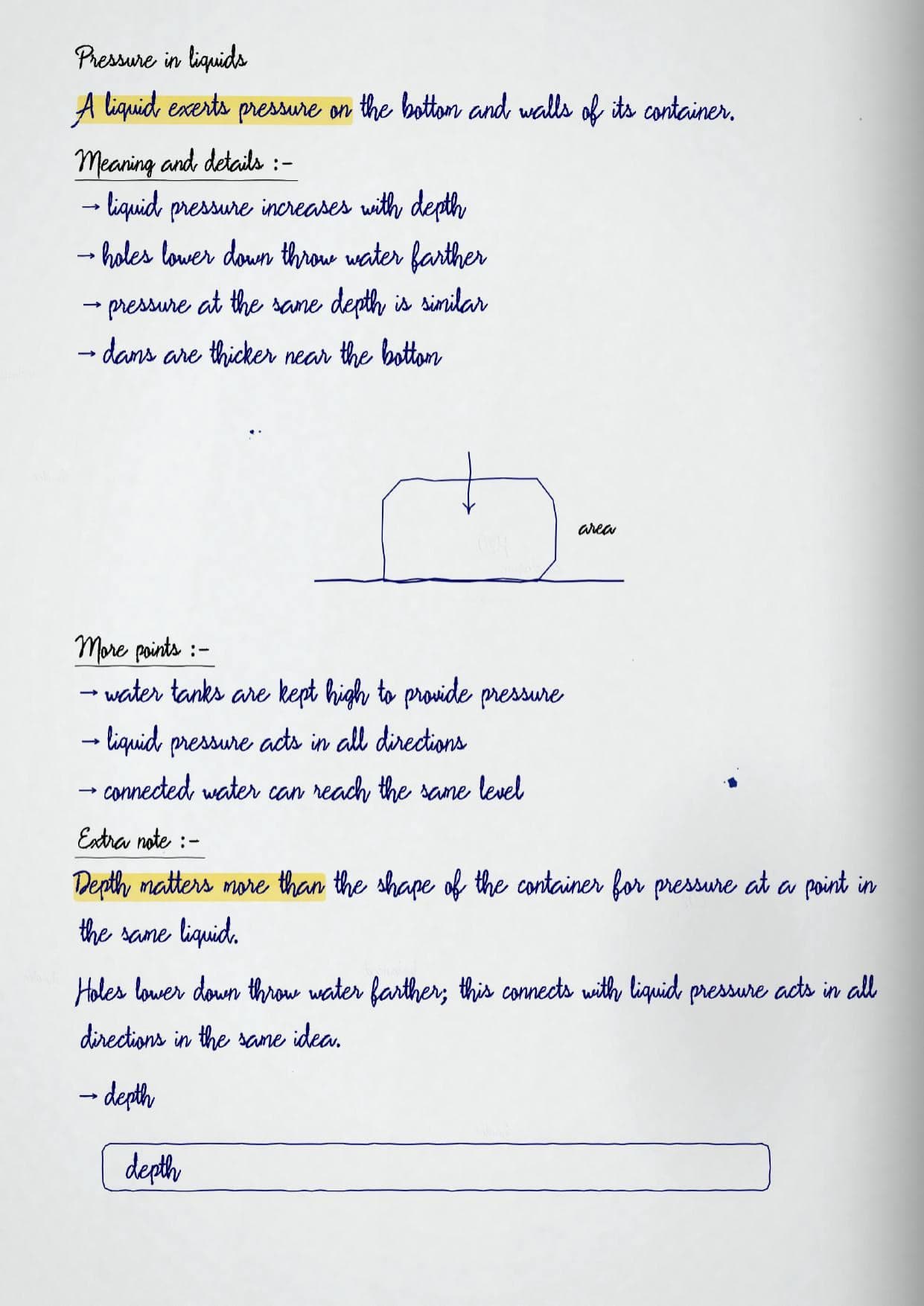
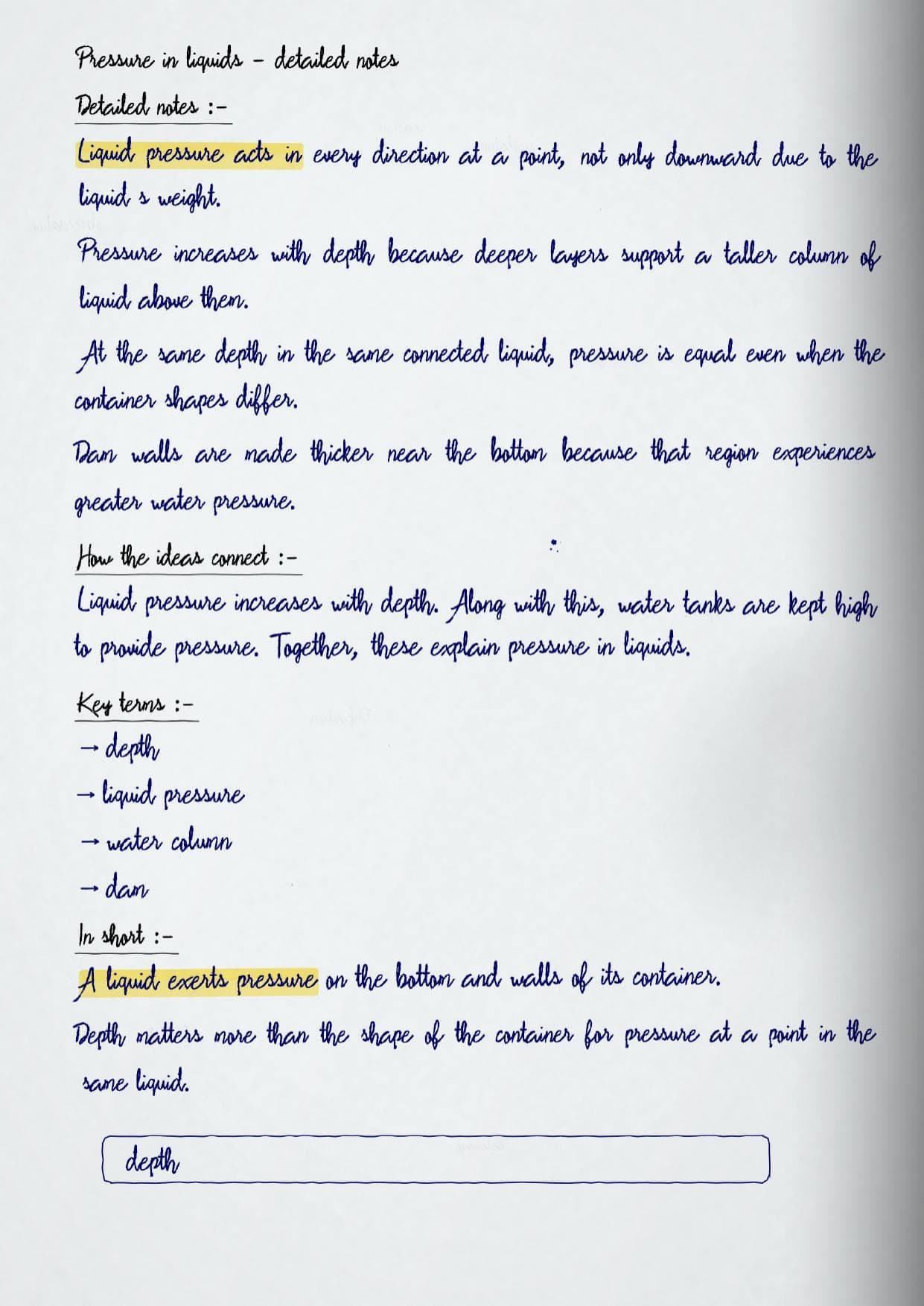
- Pressure exerted by liquids
- Atmospheric pressure
- Formation of wind
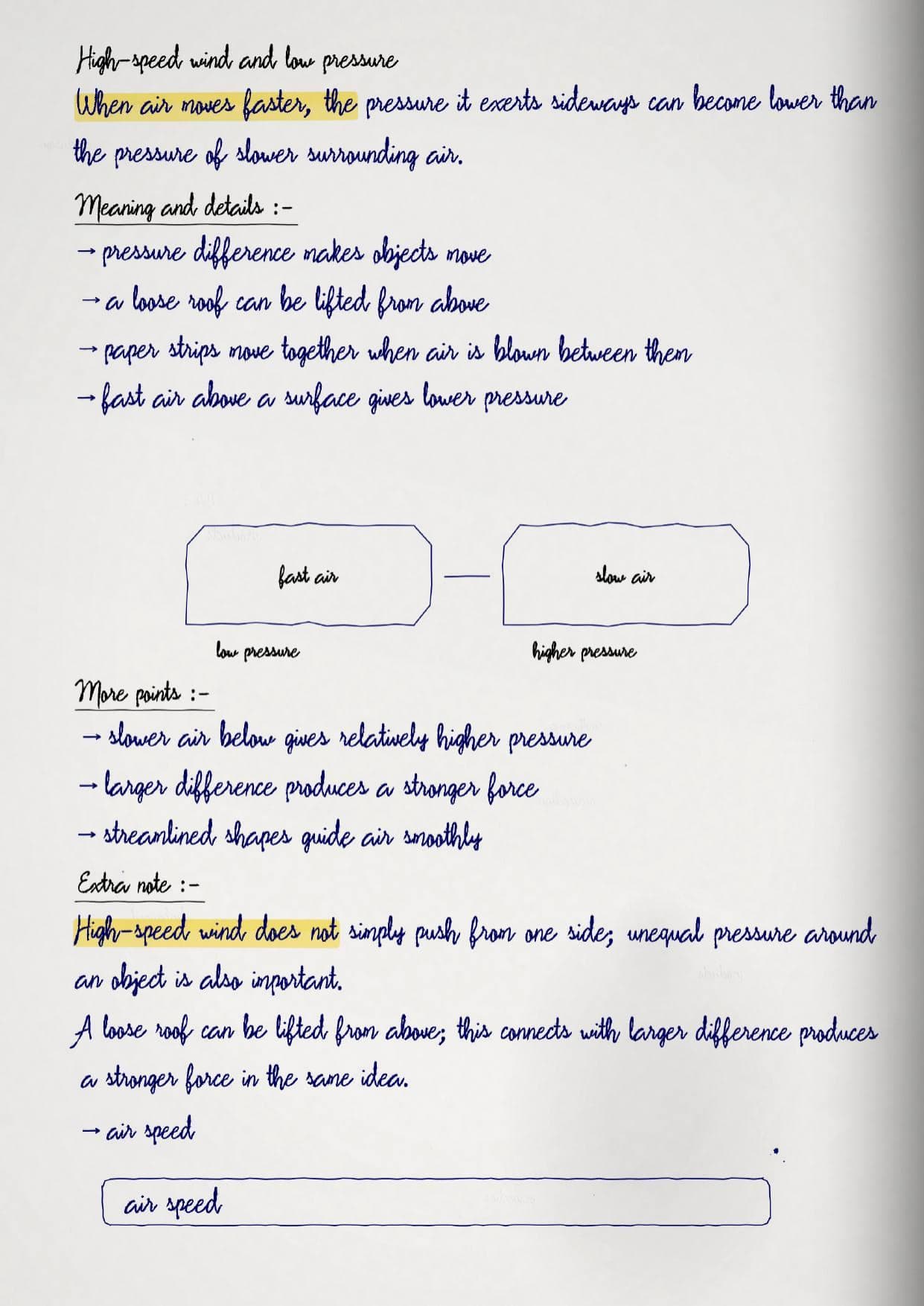
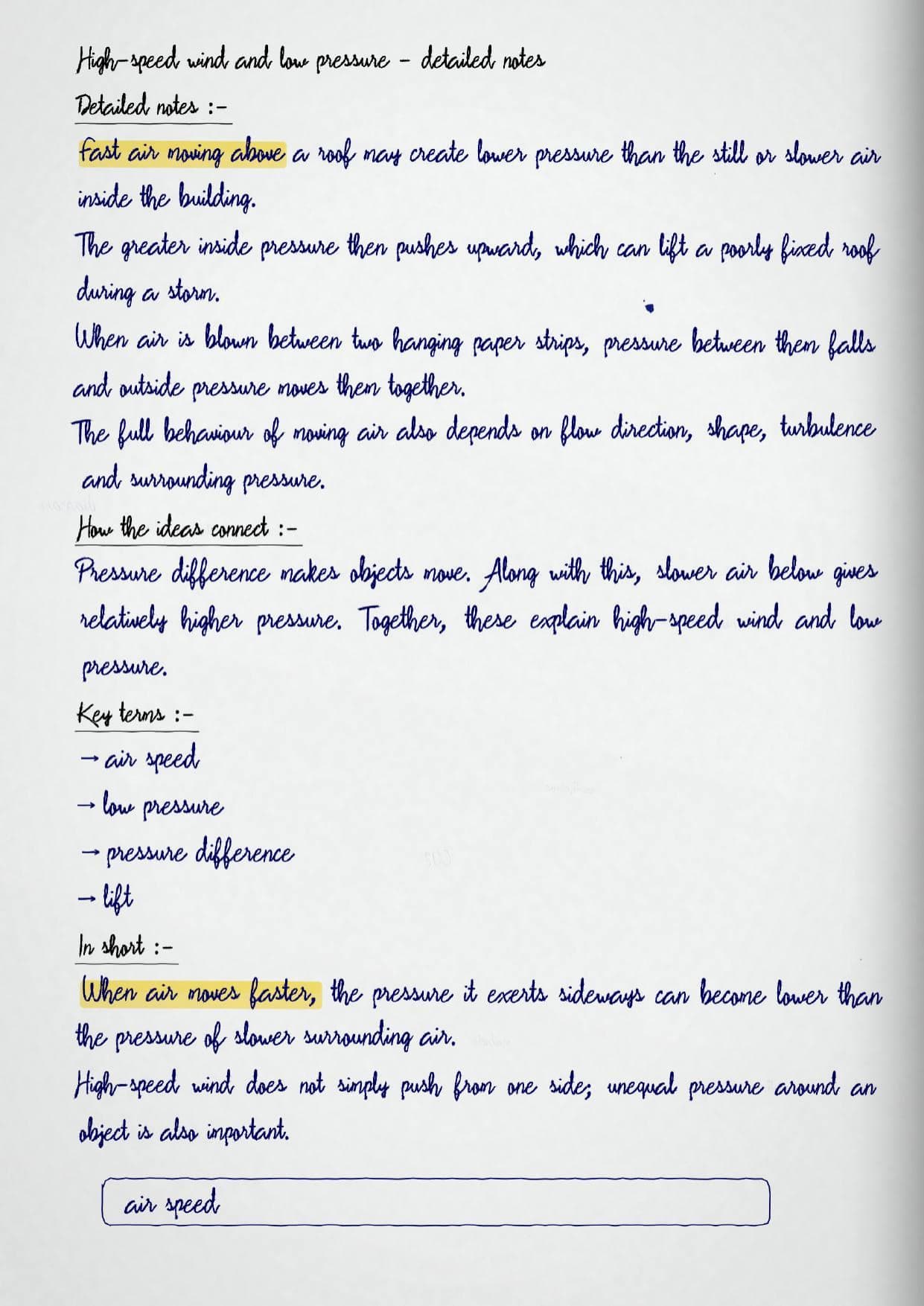
- High-speed winds and low pressure
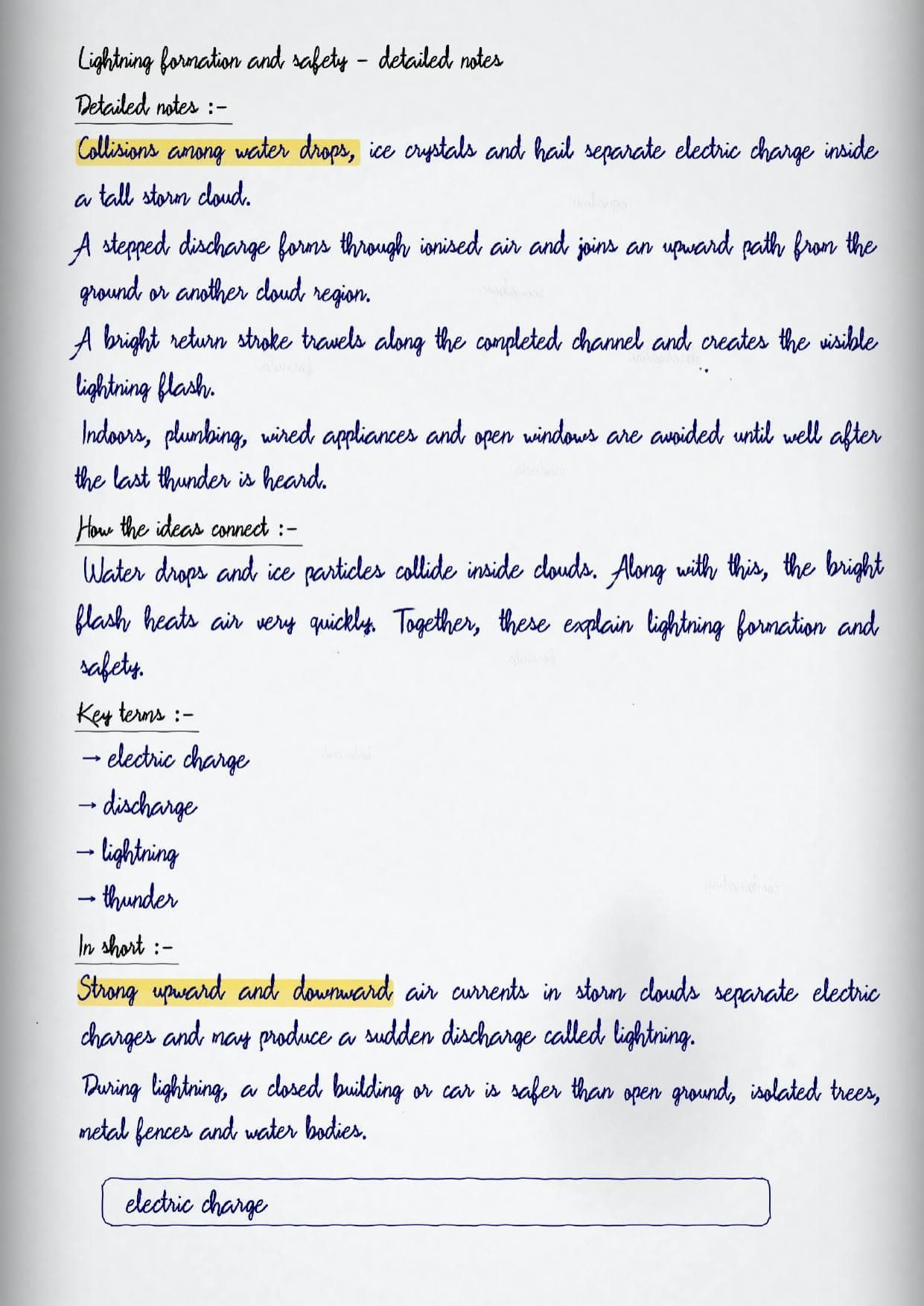
- Storms, thunderstorms and lightning
- Formation of cyclones
- Staying safe during lightning and cyclones
Pressure, Winds, Storms, and Cyclones Topic-wise Weightage for CBSE Class 8 Science
Some parts of this chapter are asked more often than others. The table below shows which sub-topics to revise first, based on recent CBSE Class 8 question trends.
| Sub-topic | Weightage | CBSE Frequency |
|---|---|---|
| Definition and calculation of pressure | High | asked often |
| Formation of wind and pressure differences | High | asked often |
| Formation of cyclones | High | asked often |
| Pressure exerted by liquids and air | Medium | asked sometimes |
| Thunderstorms and lightning | Medium | asked sometimes |
| Safety during lightning and cyclones | Low | asked rarely |
How Collegedunia's Handwritten Notes Help You Revise Pressure, Winds, Storms, and Cyclones
These notes are made for the night before the exam. They keep the facts short and easy to scan. Collegedunia maps every point to the 2026-27 NCERT.
- Clear handwriting: each topic is written in neat, easy-to-read handwriting.
- Boxed key terms: the main terms and definitions are boxed by hand for fast recall.
- Diagrams and tables: simple hand-drawn tables and charts make ideas clear.
- Colour-coded headings: new sub-topics stand out, so you find any section in seconds.
Pressure, Winds, Storms, and Cyclones Self-Assessment Quiz
Try these quick questions after you read the notes. Tap each question to check your answer. They cover the points CBSE asks most often.
If a force of 100 N acts on an area of 2 square metre, the pressure is
(a) 200 N per square metre (b) 50 N per square metre (c) 102 N per square metre (d) 98 N per square metre
Answer: (b) 50 N per square metre - pressure is force divided by area, 100 divided by 2
A broad strap on a bag feels more comfortable because it
(a) increases pressure (b) reduces pressure by spreading the weight over a larger area (c) reduces weight (d) adds force
Answer: (b) reduces pressure by spreading the weight over a larger area
Wind blows from a region of
(a) low pressure to high pressure (b) high pressure to low pressure (c) equal pressure (d) no pressure
Answer: (b) high pressure to low pressure - air always moves this way
The calm central region of a cyclone is called the
(a) eye (b) storm (c) edge (d) vector
Answer: (a) eye - it has the lowest pressure and calm winds while the surrounding region is stormy
Lightning is caused by
(a) a sudden flow of charges built up in clouds (b) rain drops (c) warm air only (d) sea water
Answer: (a) a sudden flow of charges built up in clouds - the insulating air breaks down and charges flow
How to Use These Handwritten Notes for Class 8 Science Revision
Use these class 8 science handwritten notes in two passes. Read them slowly once for the full chapter. Then, near the exam, read only the boxes and key terms for a fast recall.
- Read the notes once with the NCERT chapter open beside you.
- Say each key term and idea in your own words.
- Practise one long-answer question from a past paper.
- On the last day, revise only the key terms and the boxes.
Class 8 Science Handwritten Notes for All Chapters
The table below links the class 8 science handwritten notes for every chapter. Use it to jump to any other chapter's notes.
Pressure, Winds, Storms, and Cyclones Class 8 Science Handwritten Notes FAQs
Ques. Where can I download Pressure, Winds, Storms, and Cyclones Class 8 Science Handwritten Notes PDF?
Ans. You can download the Pressure, Winds, Storms, and Cyclones Class 8 Science Handwritten Notes PDF directly from this page. Both the Normal and HD versions are free.
Ques. Are these handwritten notes aligned with the 2026-27 NCERT?
Ans. Yes. These notes follow the current 2026-27 syllabus for Class 8 Science. Why overhead water tanks are placed at a height
Ques. How many pages is the Class 8 Science Pressure, Winds, Storms, and Cyclones Handwritten Notes PDF?
Ans. The notes run about 20 pages. They cover the full chapter with key terms, hand-drawn boxes, and a short self-assessment quiz.
Ques. What is the main idea of the 8th standard Science chapter Pressure, Winds, Storms, and Cyclones?
Ans. The main idea of this chapter is that pressure is the force acting on a unit area, and that liquids and air both exert pressure. It explains that differences in air pressure make winds blow, and that under the right conditions these winds grow into storms, thunderstorms and powerful cyclones.
Ques. Are these Pressure, Winds, Storms, and Cyclones notes enough for the CBSE Class 8 exam?
Ans. Yes, for revision. The Collegedunia handwritten notes cover every key point and exam term. Read them with the NCERT chapter and practise past questions.



Comments