



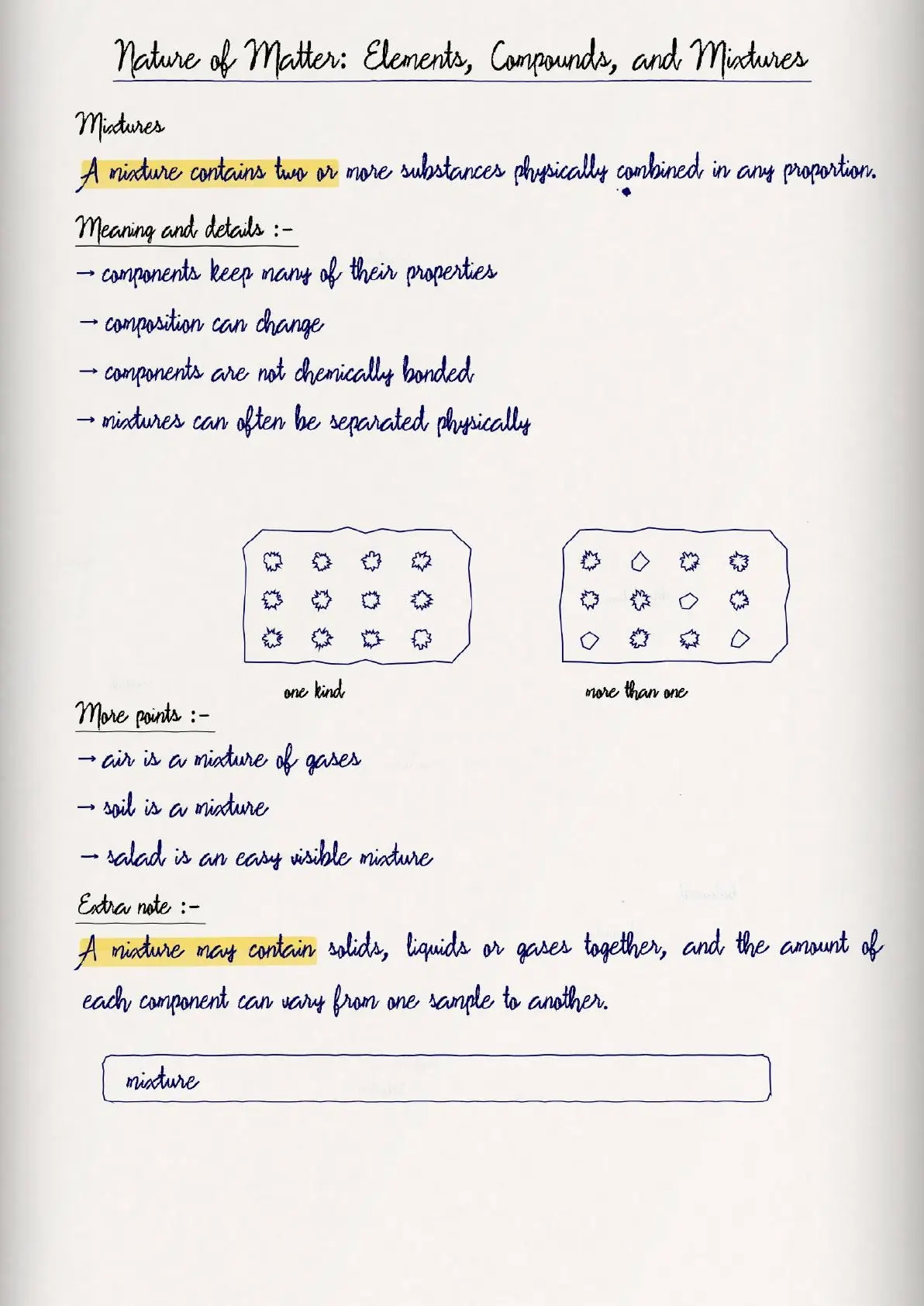
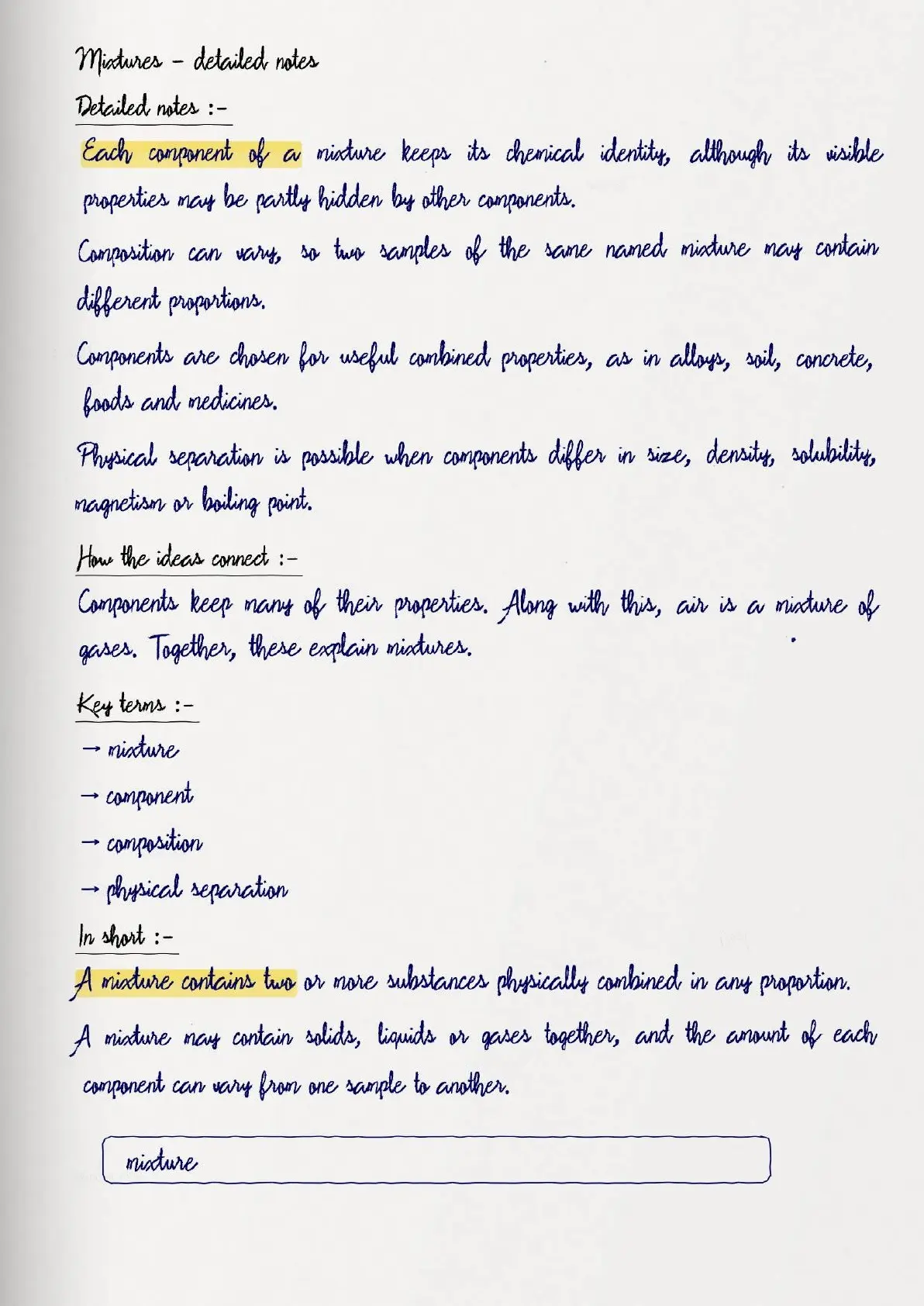
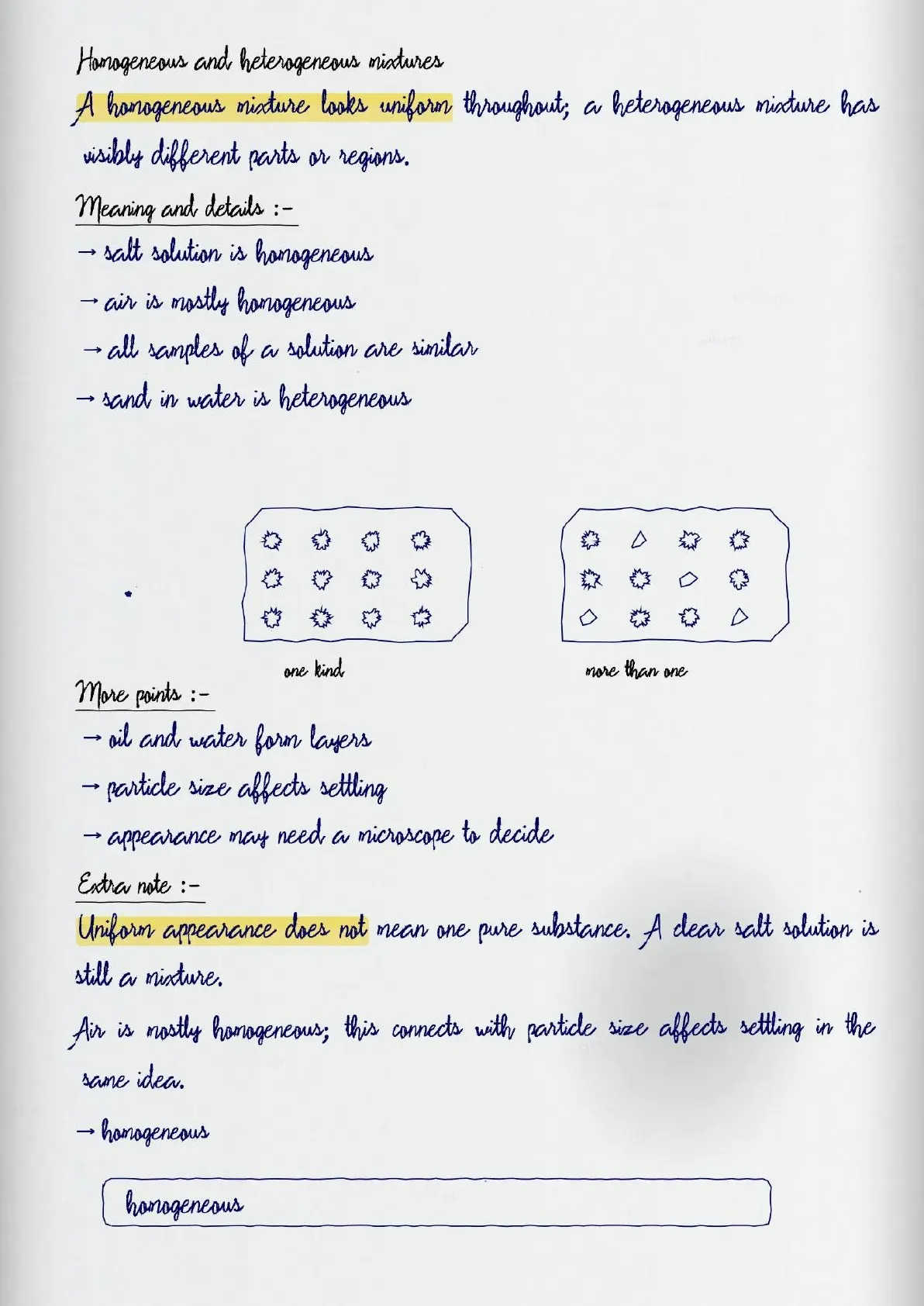
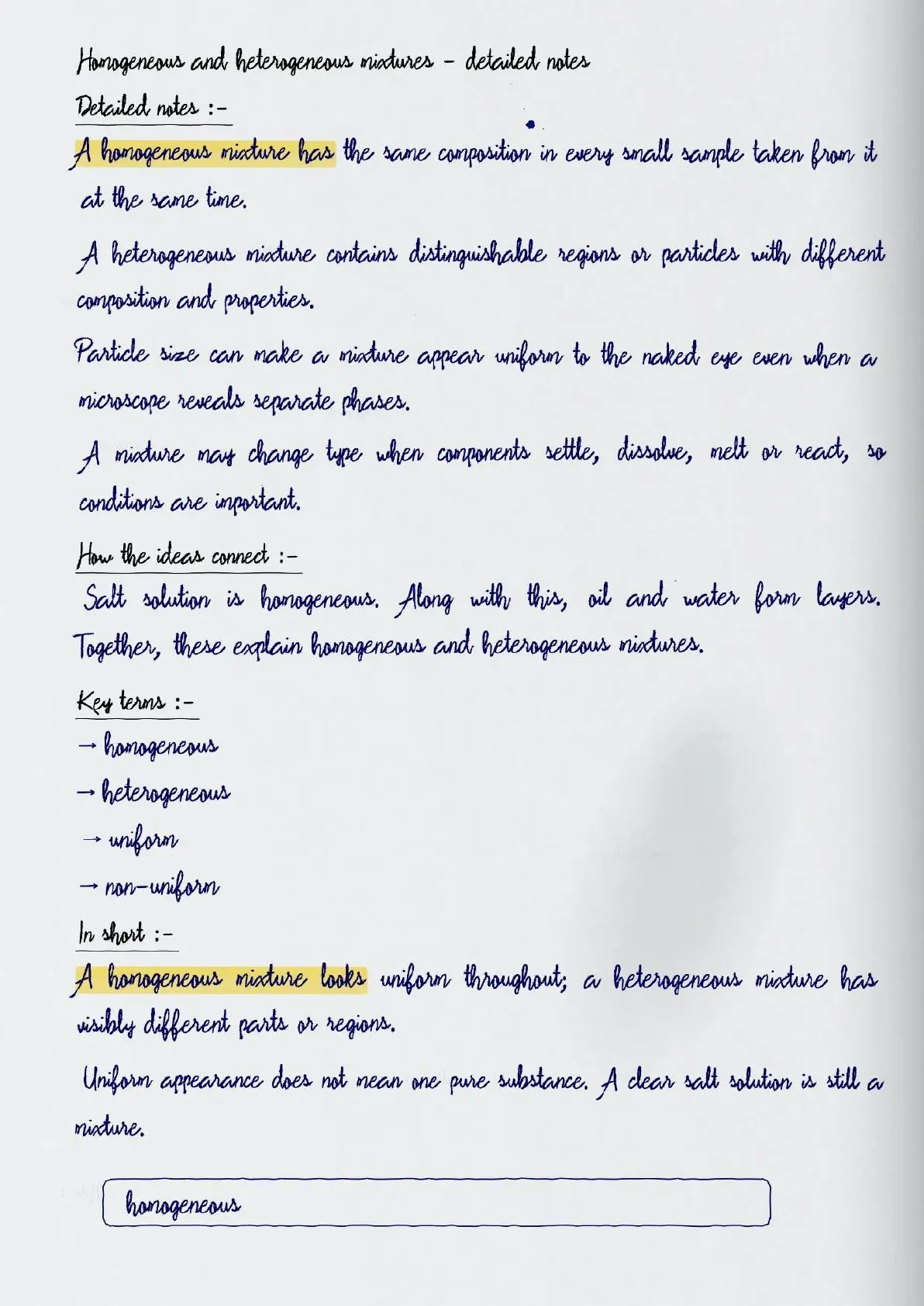
The 2026-27 NCERT keeps Class 8 Science Chapter 8 Nature of Matter: Elements, Compounds, and Mixtures in full for the CBSE course. These class 8 science handwritten notes chapter 8 Nature of Matter: Elements, Compounds, and Mixtures follow the 2026-27 NCERT and cover what are mixtures, uniform and non-uniform mixtures, types of mixtures and alloys. This page hosts.
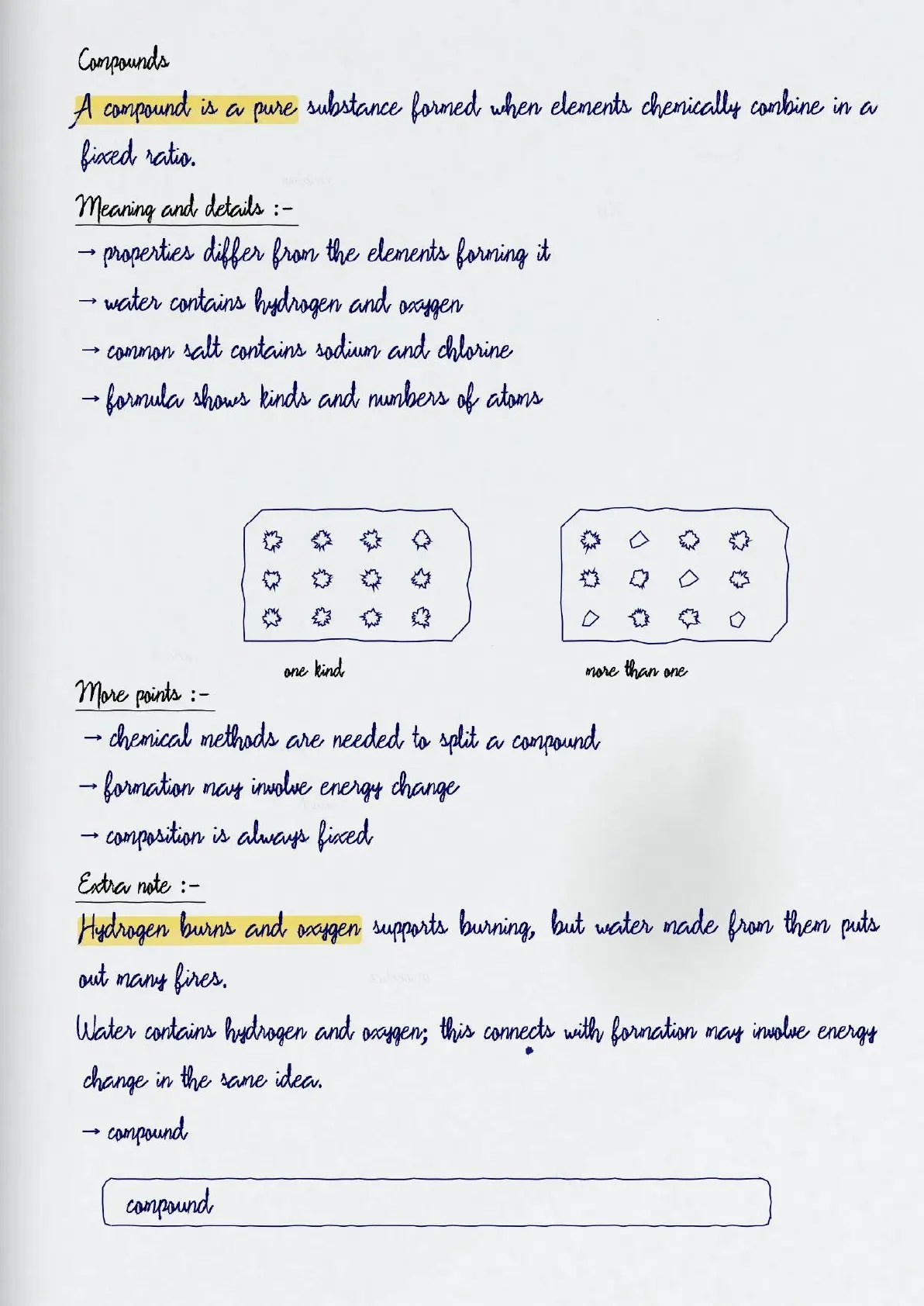
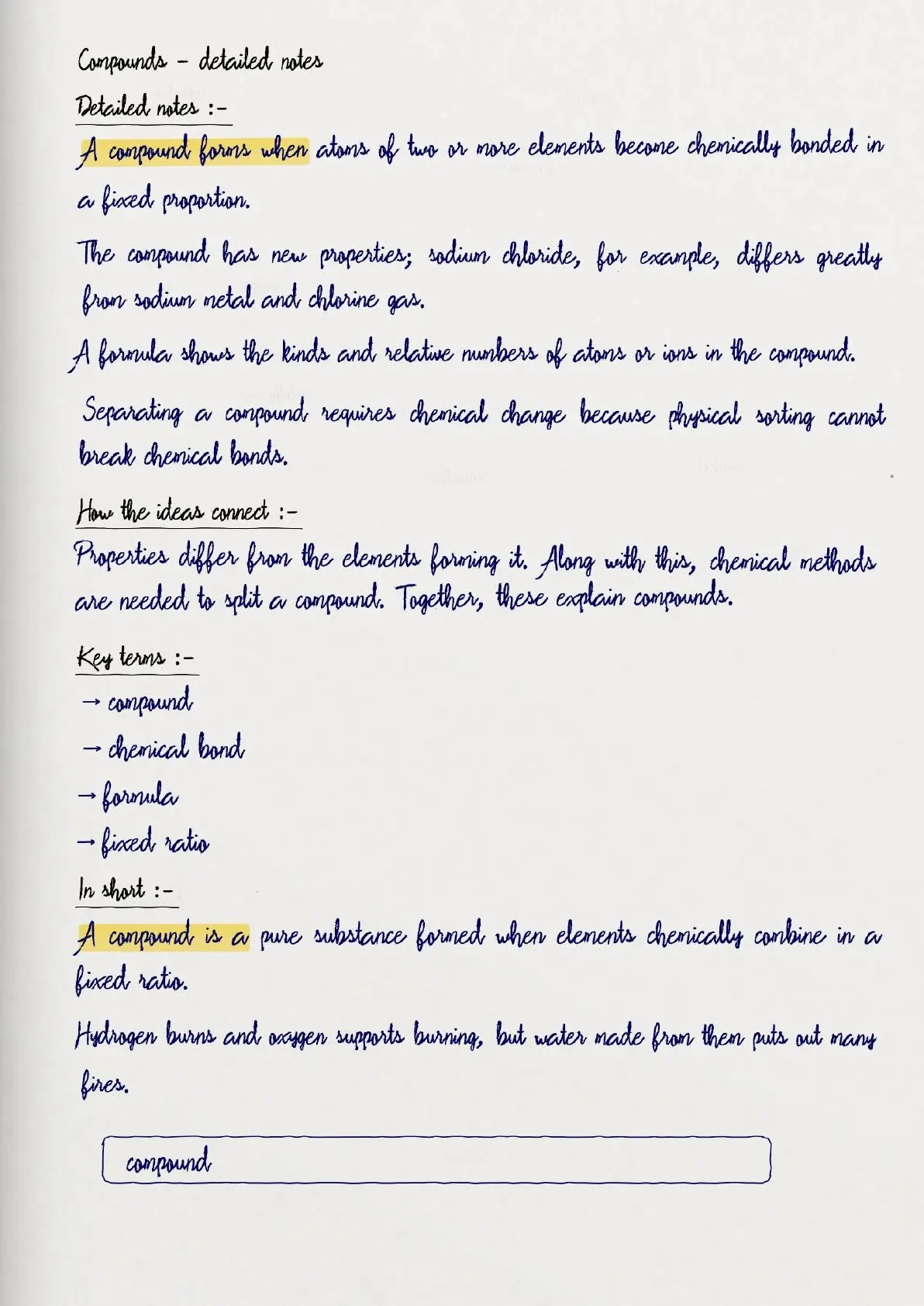
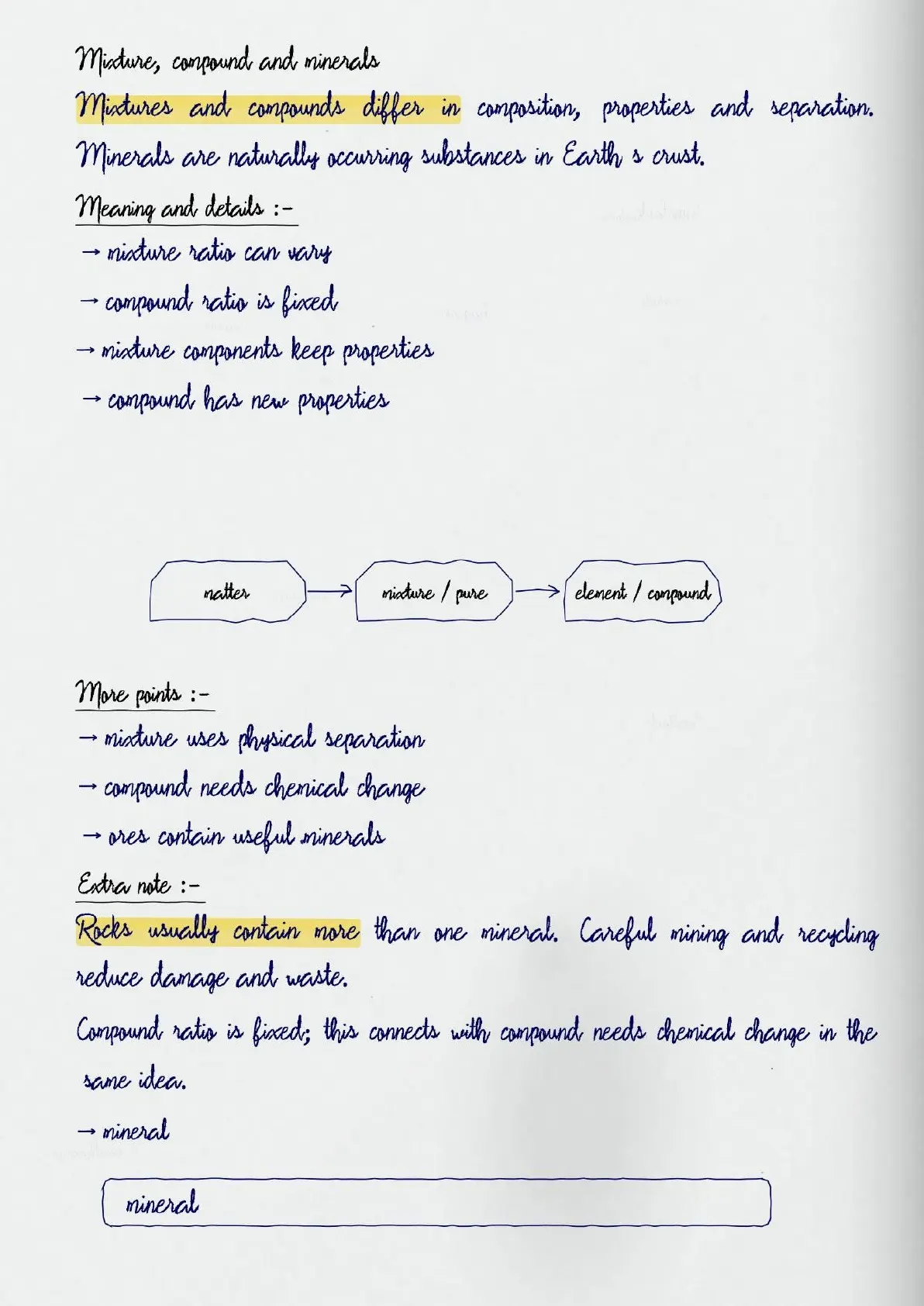
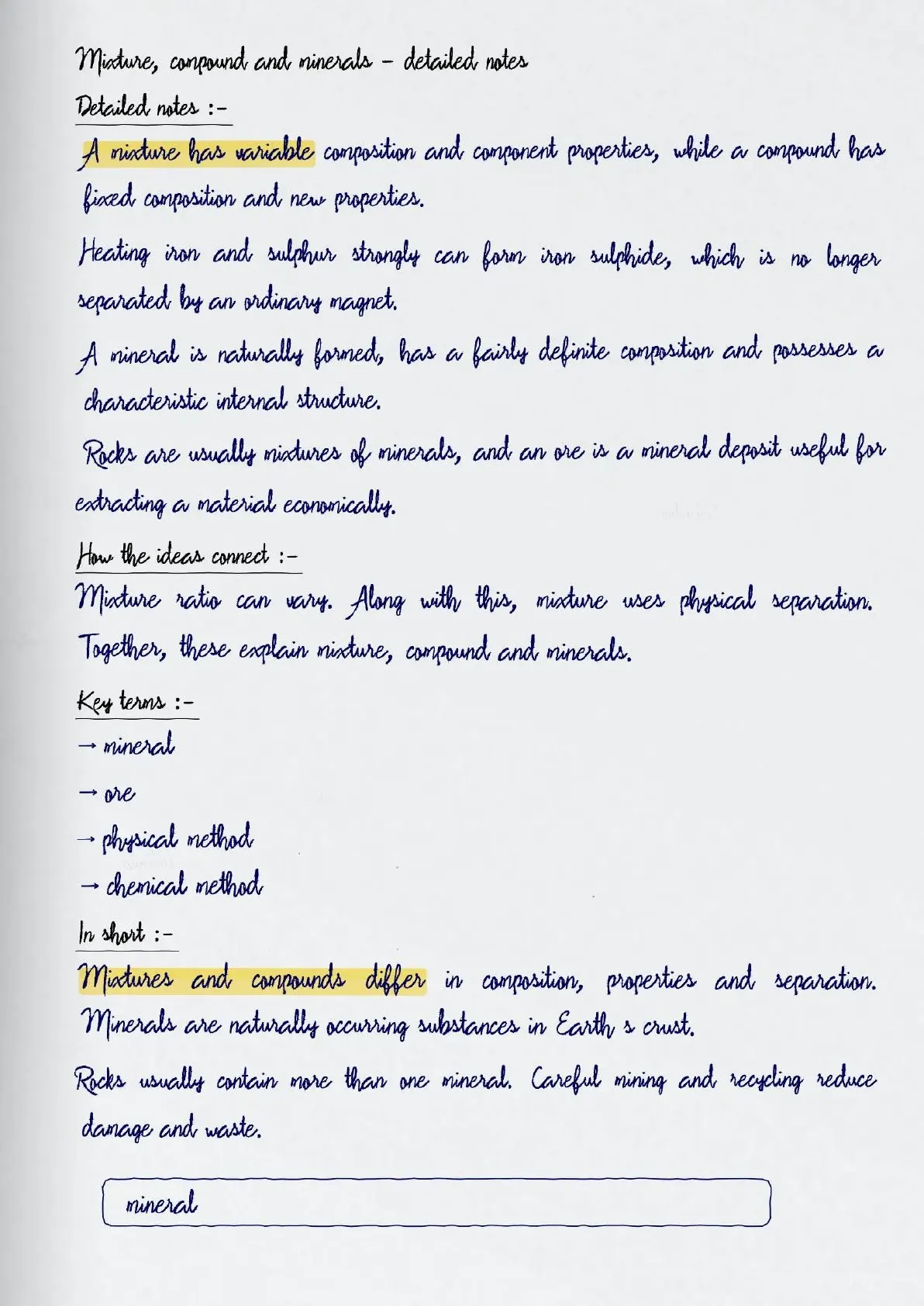
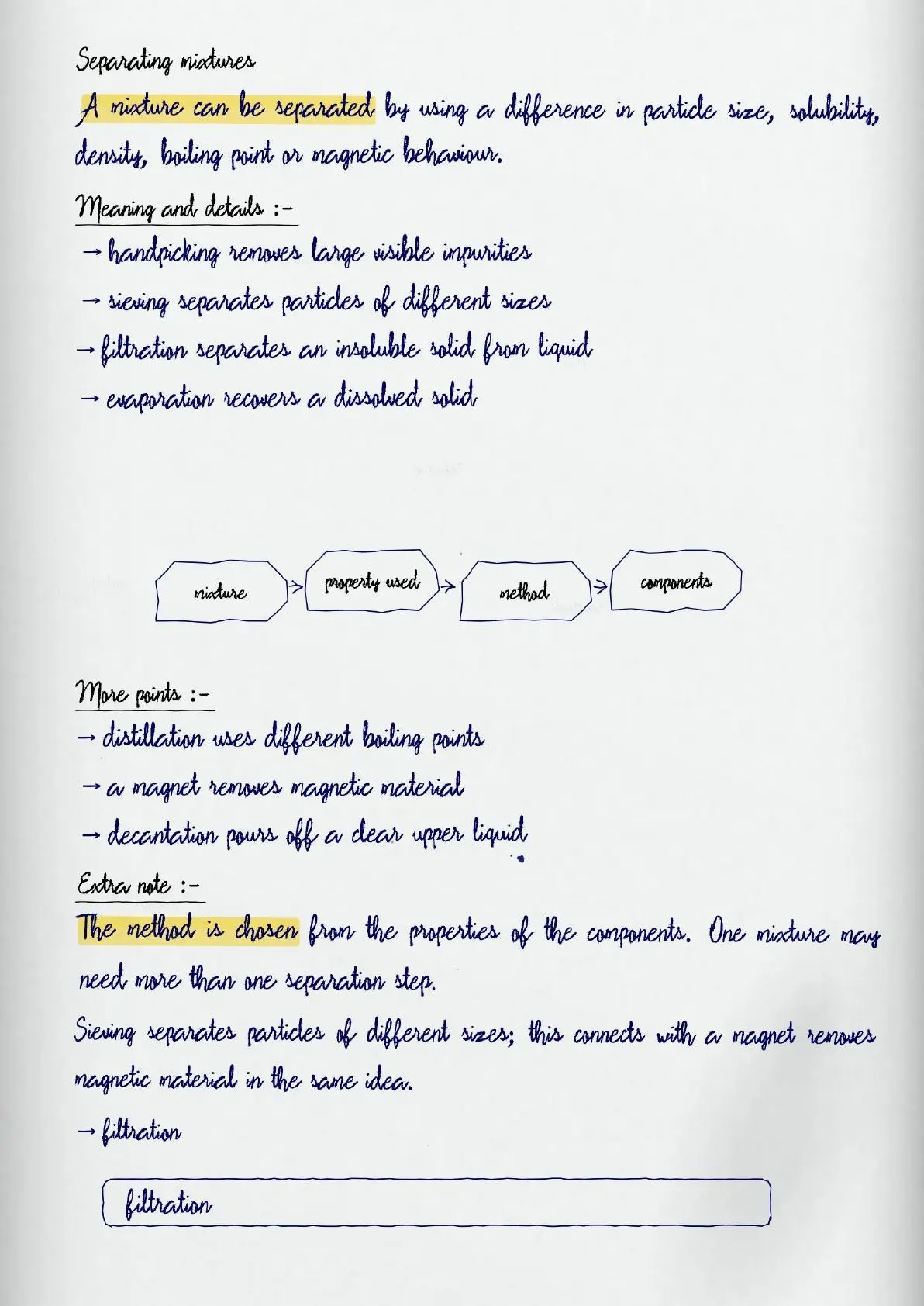
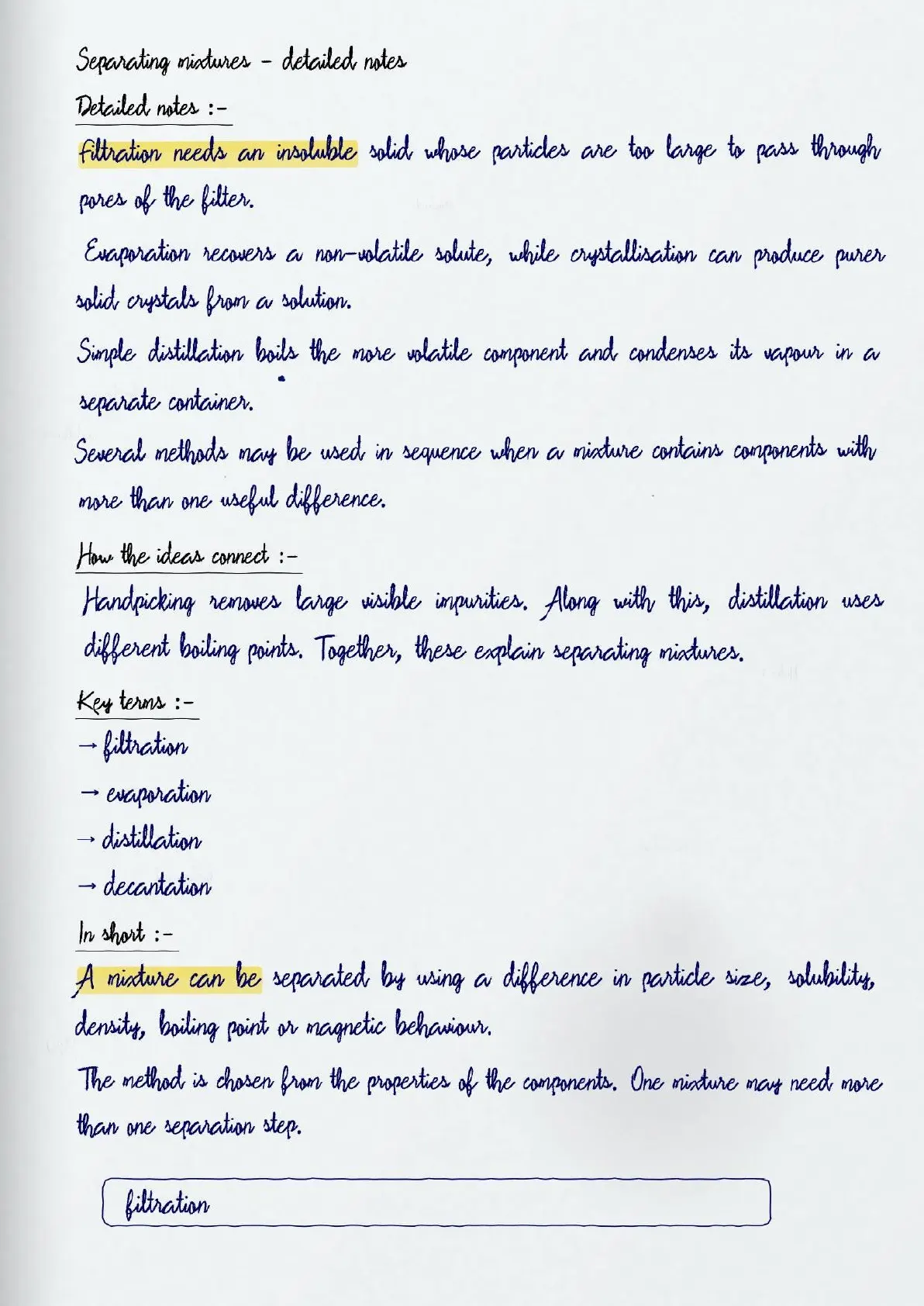
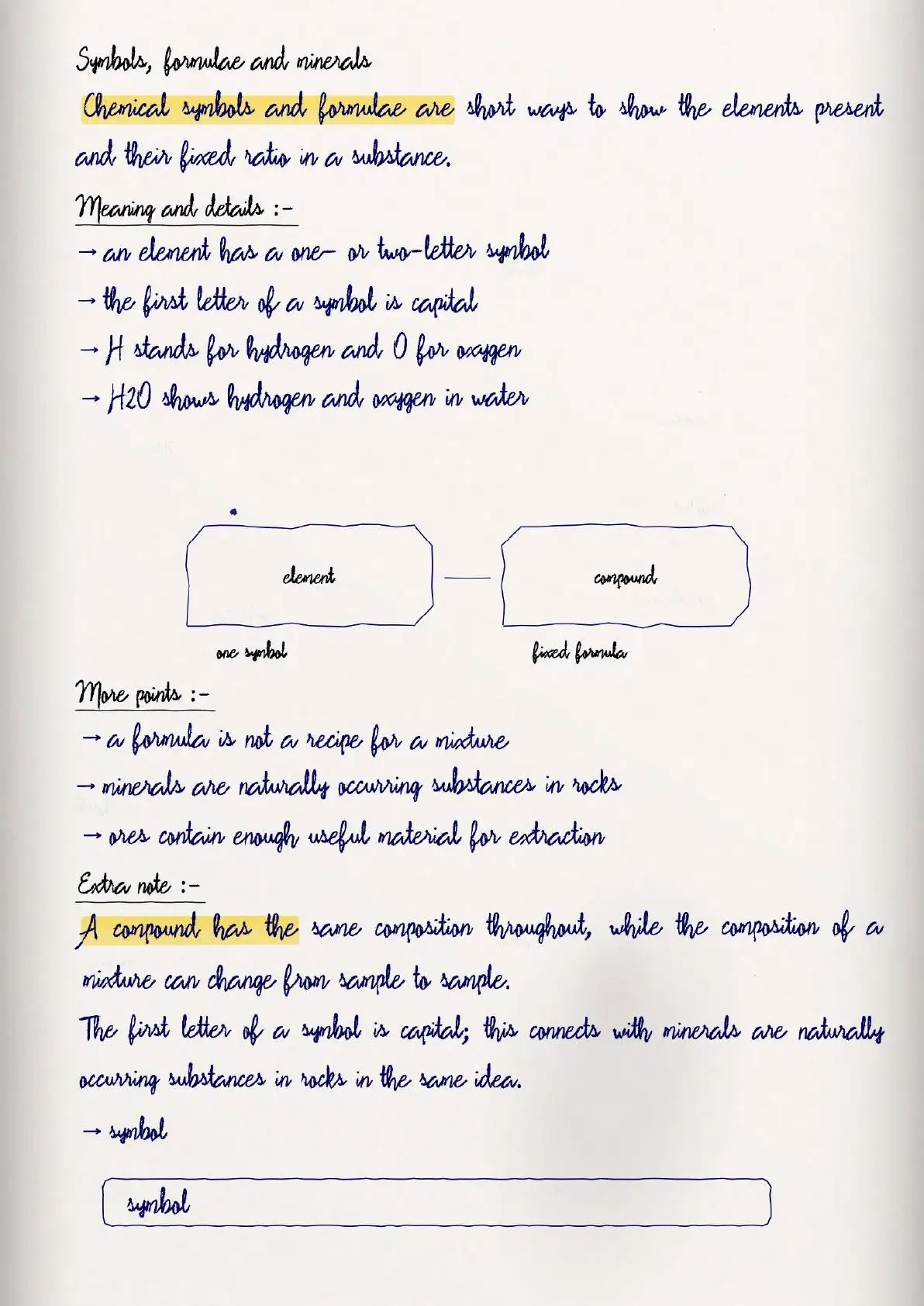
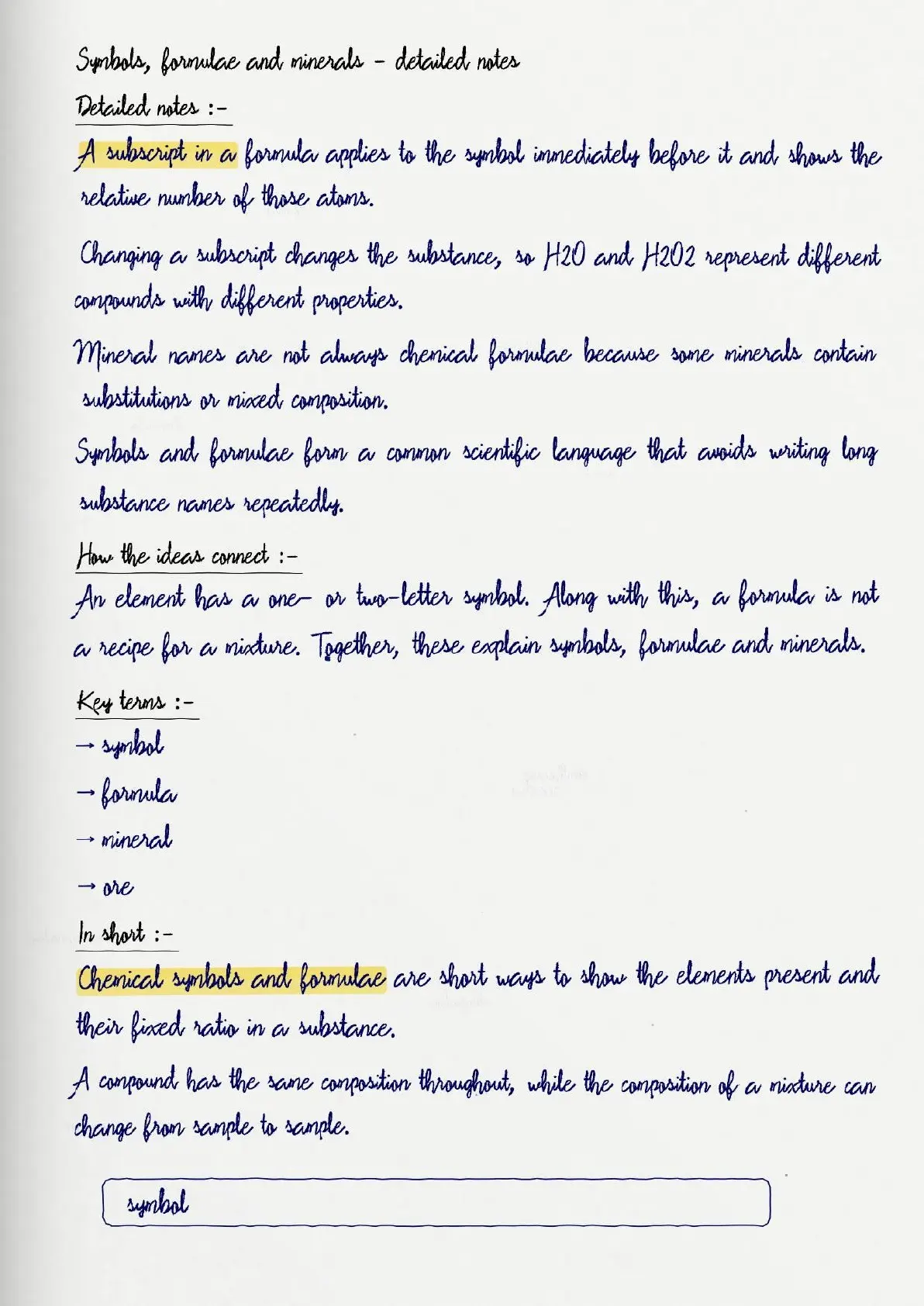
- CBSE Class 8 Weightage: a scoring chapter in the Science paper, asked in short and long answers.
- What the notes cover: what are mixtures, uniform and non-uniform mixtures, types of mixtures and alloys, pure substances and adulteration.
- Best for: quick revision before Class 8 exams and a strong base for Class 9.
You can read the complete class 8 science handwritten notes for Nature of Matter: Elements, Compounds, and Mixtures, with key terms, boxed definitions, and quick revision points, in the PDF below.
These handwritten notes are written by subject teachers, mapped to the 2026-27 NCERT, and checked against the last five years of CBSE Class 8 Science papers.
Nature of Matter: Elements, Compounds, and Mixtures Topic-wise Weightage for CBSE Class 8 Science
Some parts of this chapter are asked more often than others. The table below shows which sub-topics to revise first, based on recent CBSE Class 8 question trends.
| Sub-topic | Weightage | CBSE Frequency |
|---|---|---|
| Elements, compounds and mixtures | High | asked often |
| Pure substances vs mixtures | High | asked often |
| Uniform and non-uniform mixtures | Medium | asked sometimes |
| Iron and sulfur activity (Sample A and B) | Medium | asked sometimes |
| Types of mixtures and alloys | Medium | asked sometimes |
| Minerals | Low | asked rarely |
What the Nature of Matter: Elements, Compounds, and Mixtures Handwritten Notes Cover
This chapter looks at what everything around us is made of. It sorts matter into three groups: elements, compounds, and mixtures. You will see how to tell them apart, how pure substances differ from mixtures, and where minerals fit in.
- What are mixtures
- Uniform and non-uniform mixtures
- Types of mixtures and alloys
- Pure substances and adulteration
- Elements, metals and non-metals
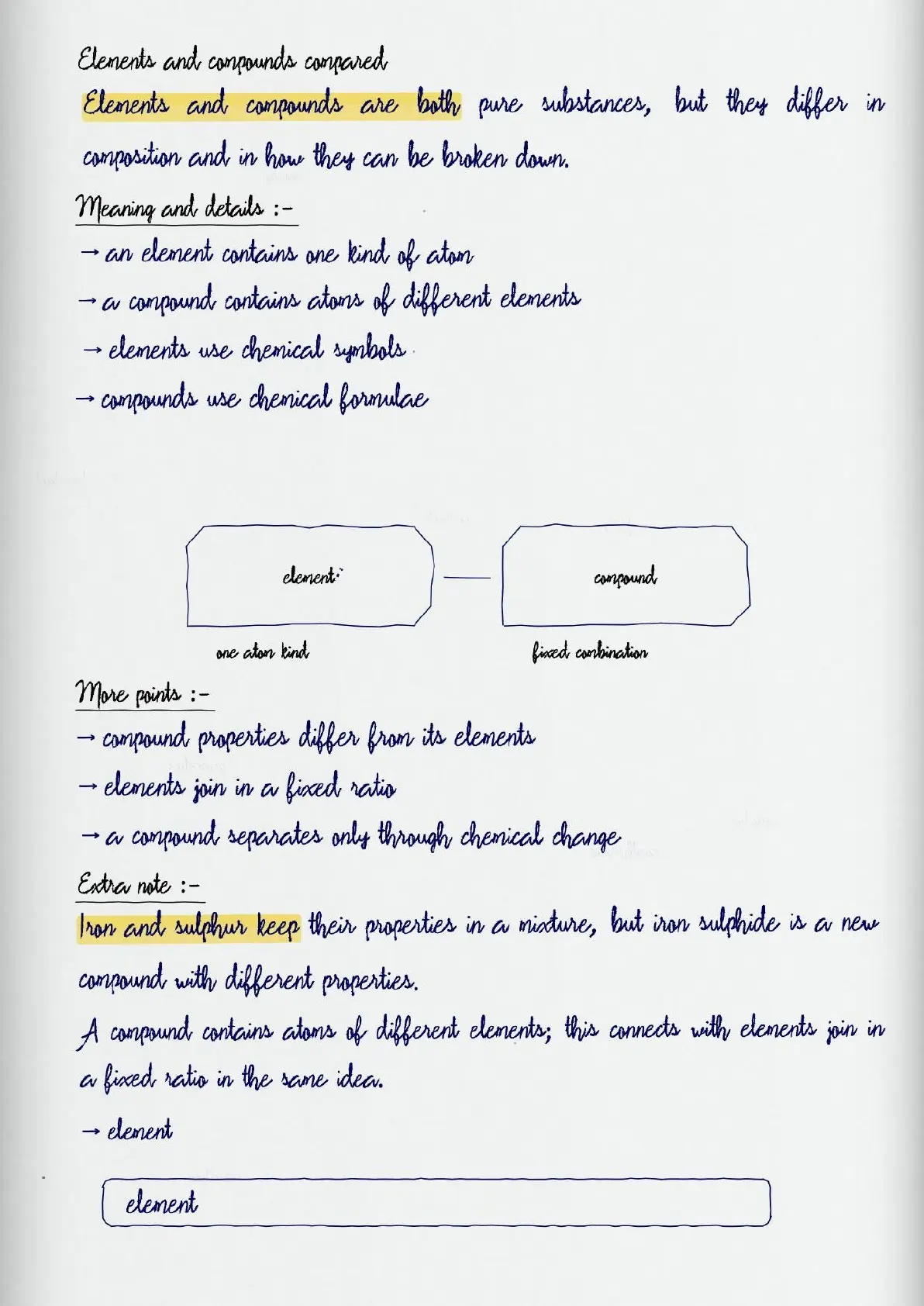
- Compounds and fixed ratios
- Separating iron and sulfur (Sample A and B)
- Uses of elements, compounds and mixtures
- Minerals
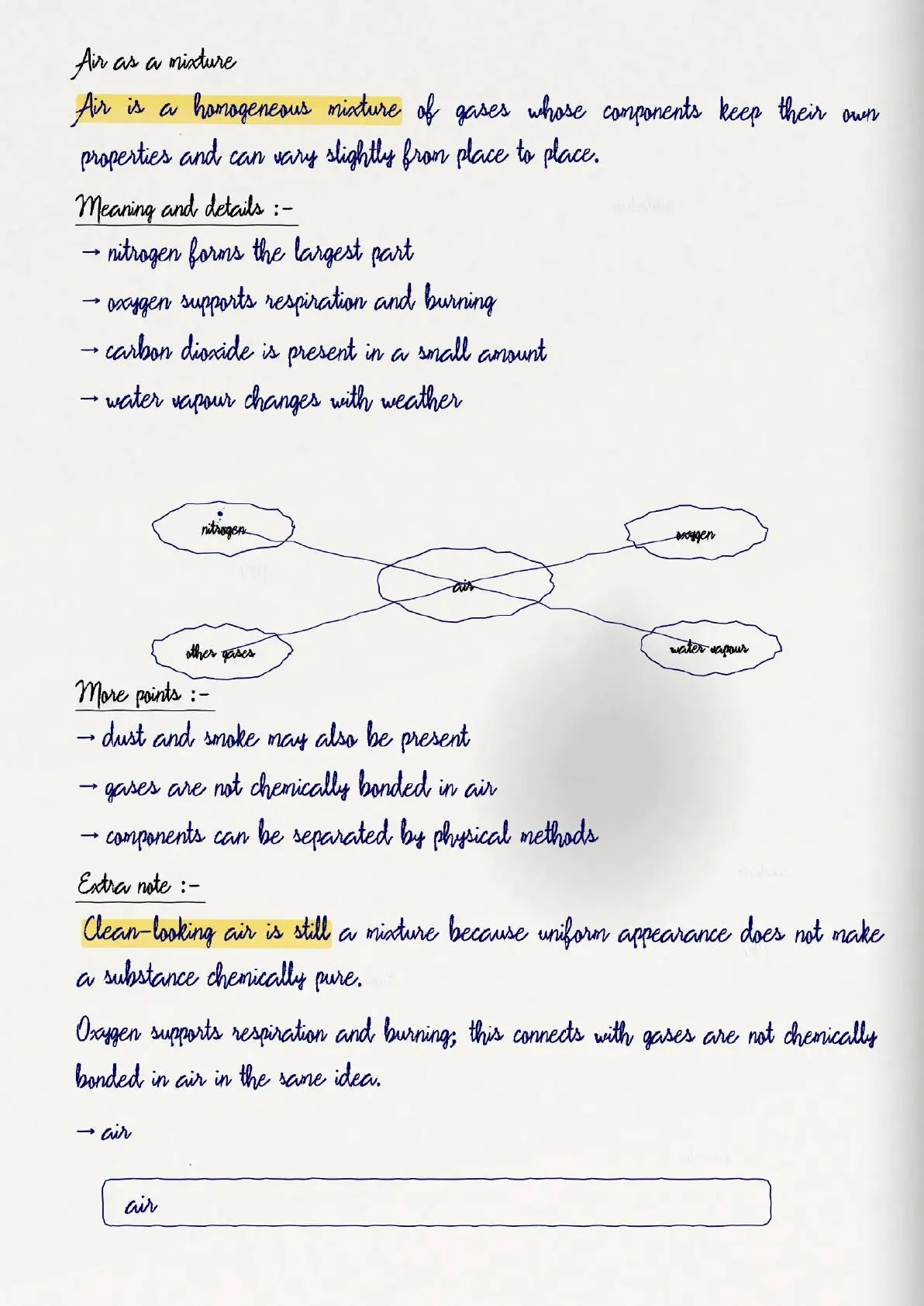
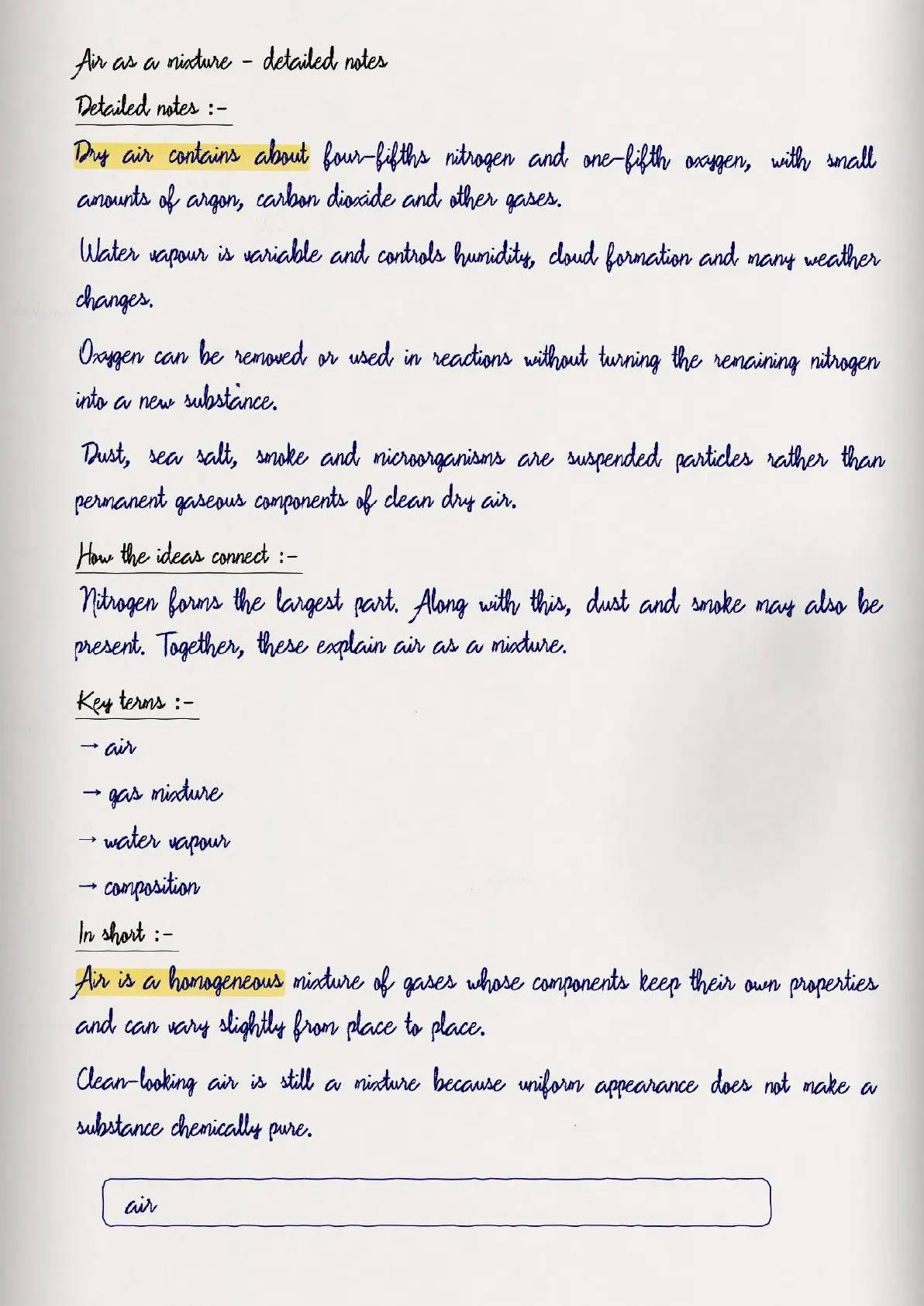
- Air as a mixture
Key Terms and Ideas in Nature of Matter: Elements, Compounds, and Mixtures
These are the terms and ideas the exam asks about most. Learn each one so you can define it and use it in your answers.
| Term / Idea | What it means |
|---|---|
| Mixture | two or more substances mixed together where each keeps its own properties |
| Components | the individual substances that make up a mixture |
| Uniform mixture | components are evenly spread and cannot be told apart, like sugar in water |
| Non-uniform mixture | components are visible and not evenly spread, like a sprout salad |
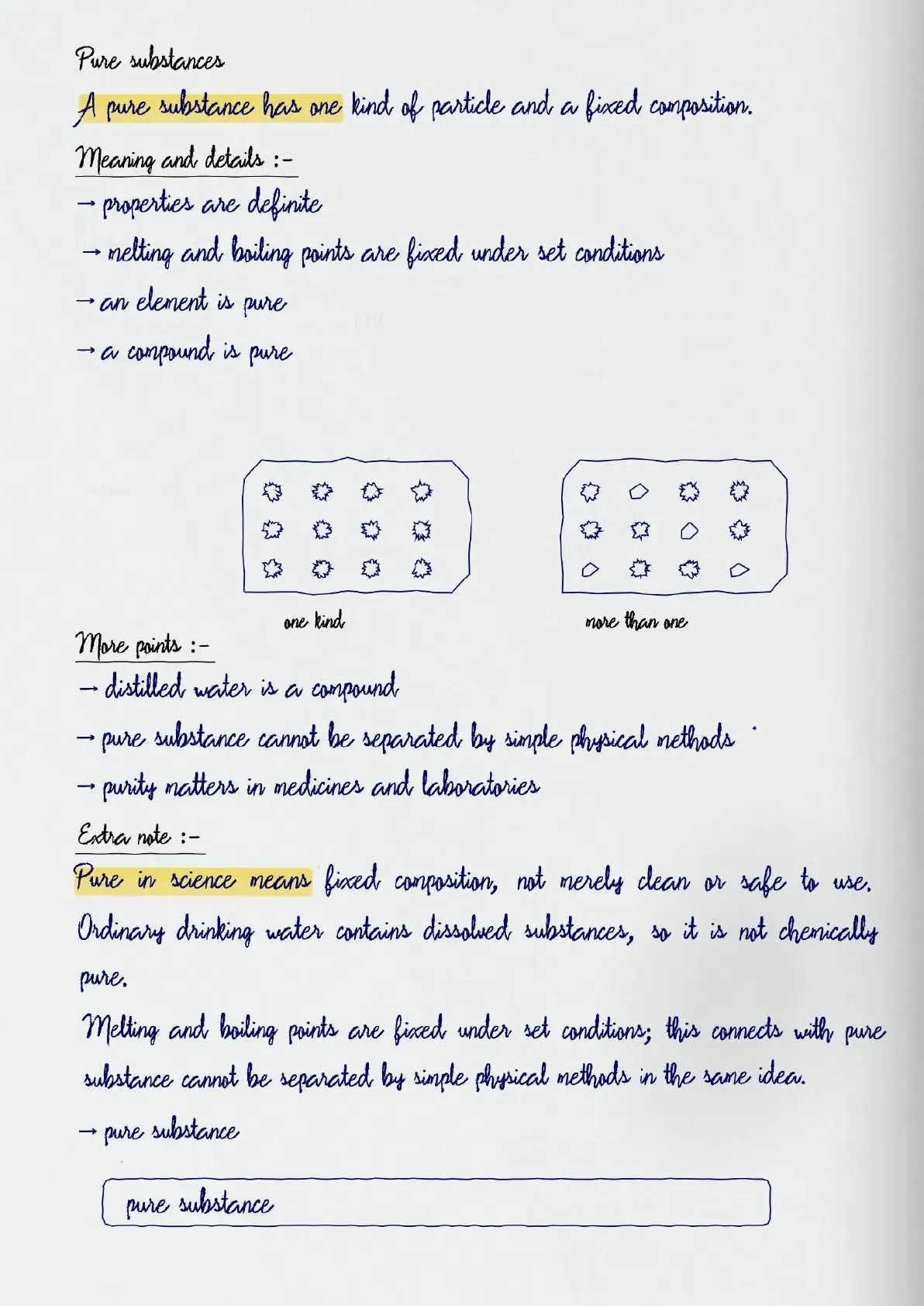
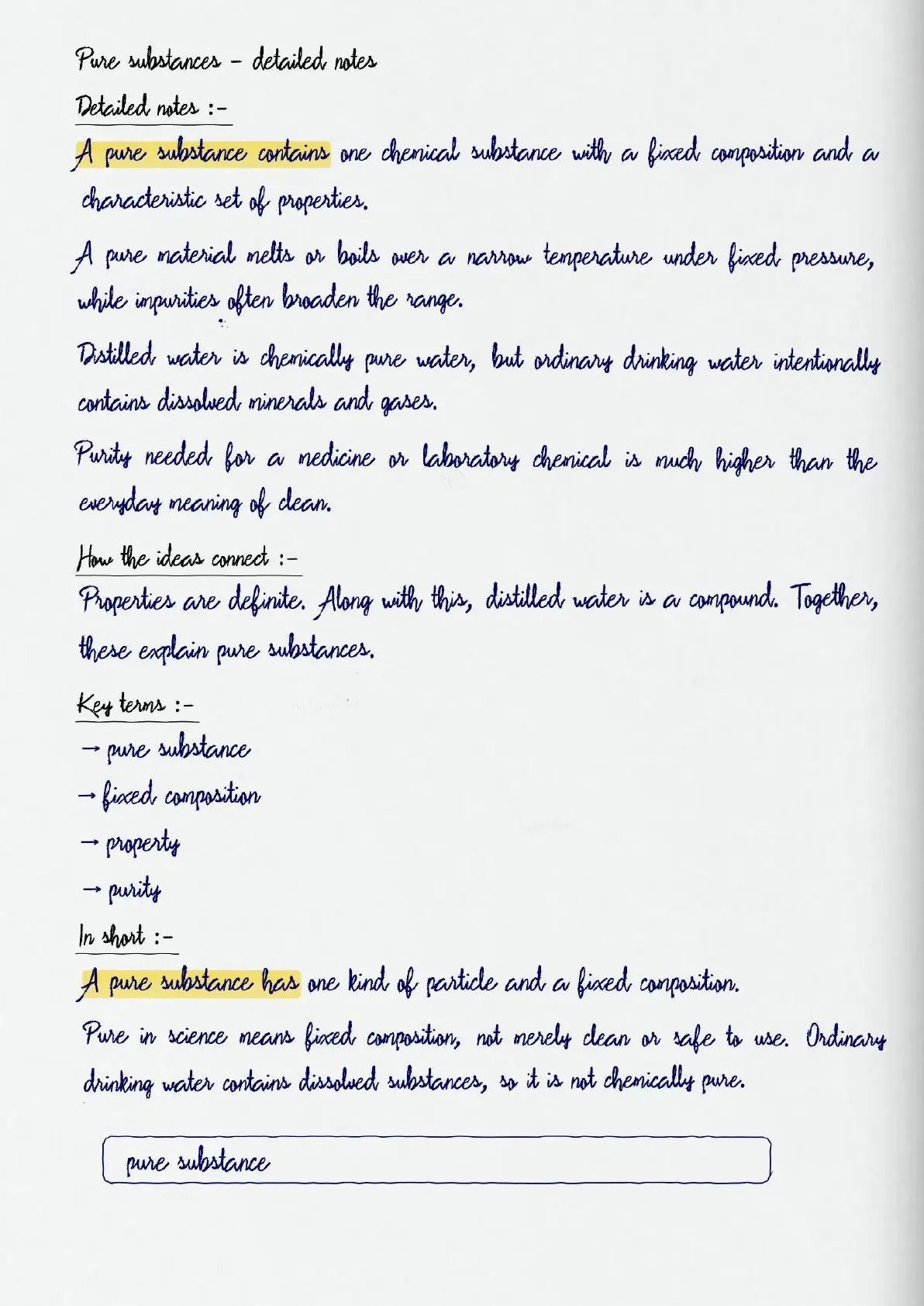
| Pure substance | matter made of one type of particle that cannot be split by physical means |
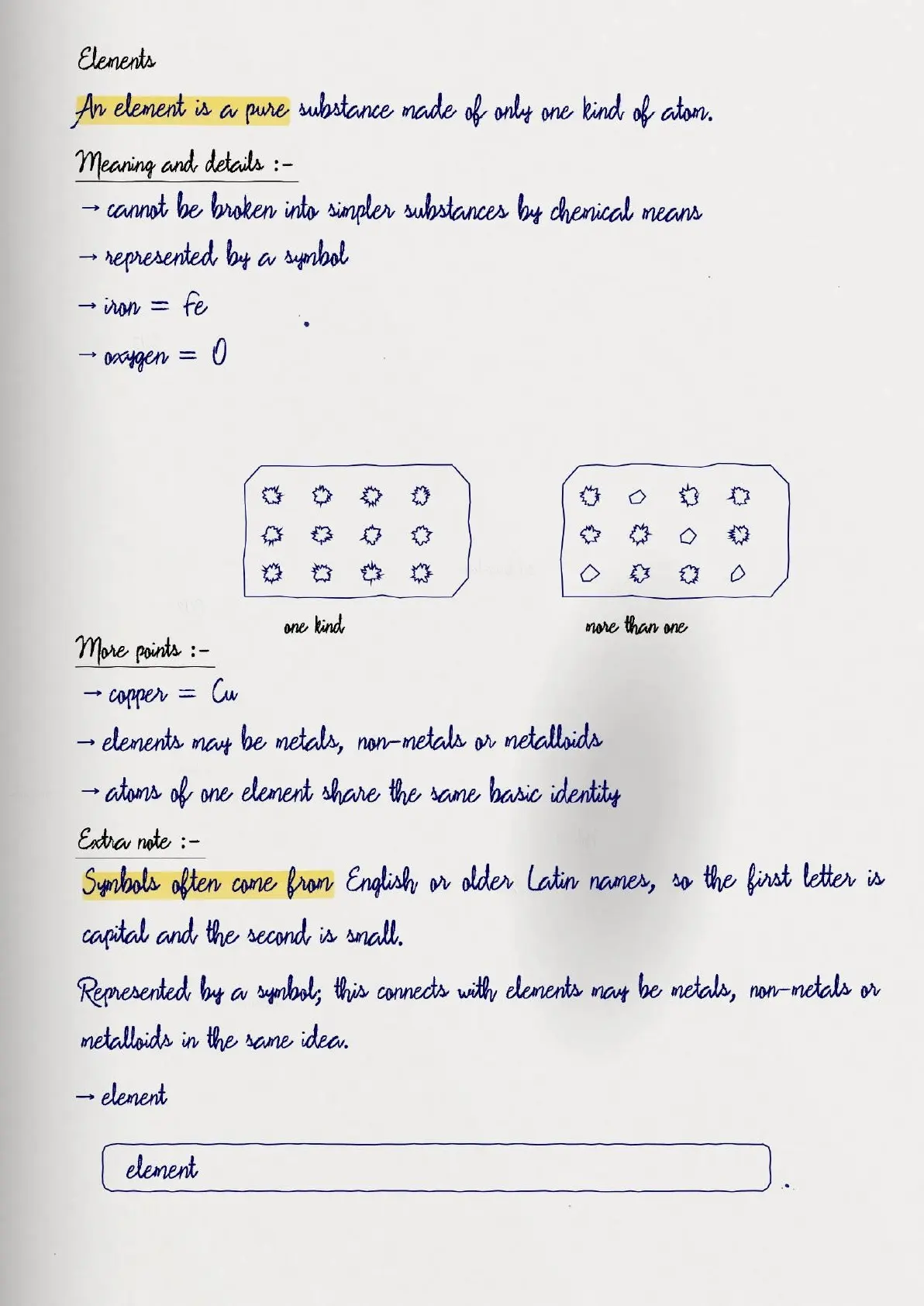
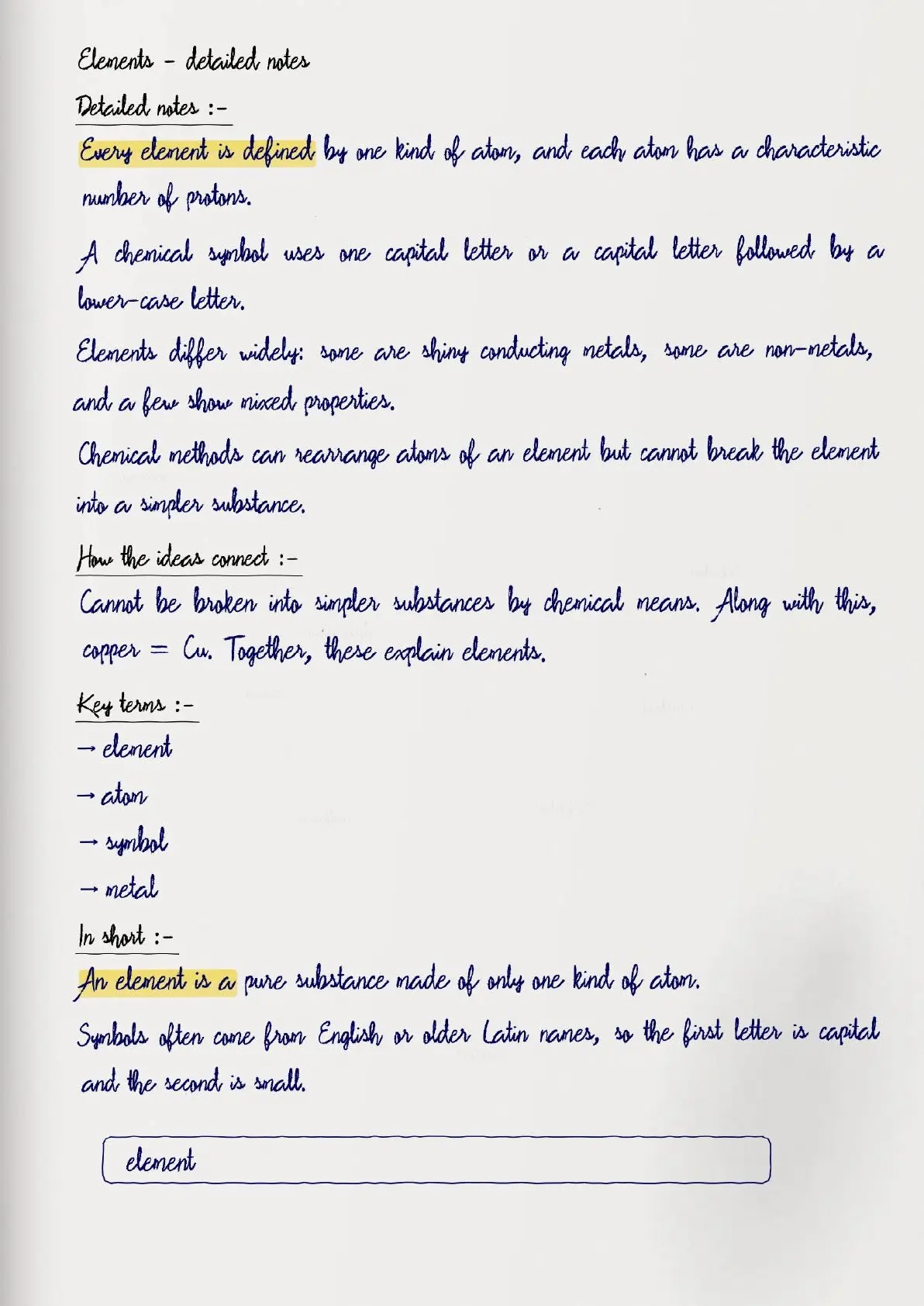
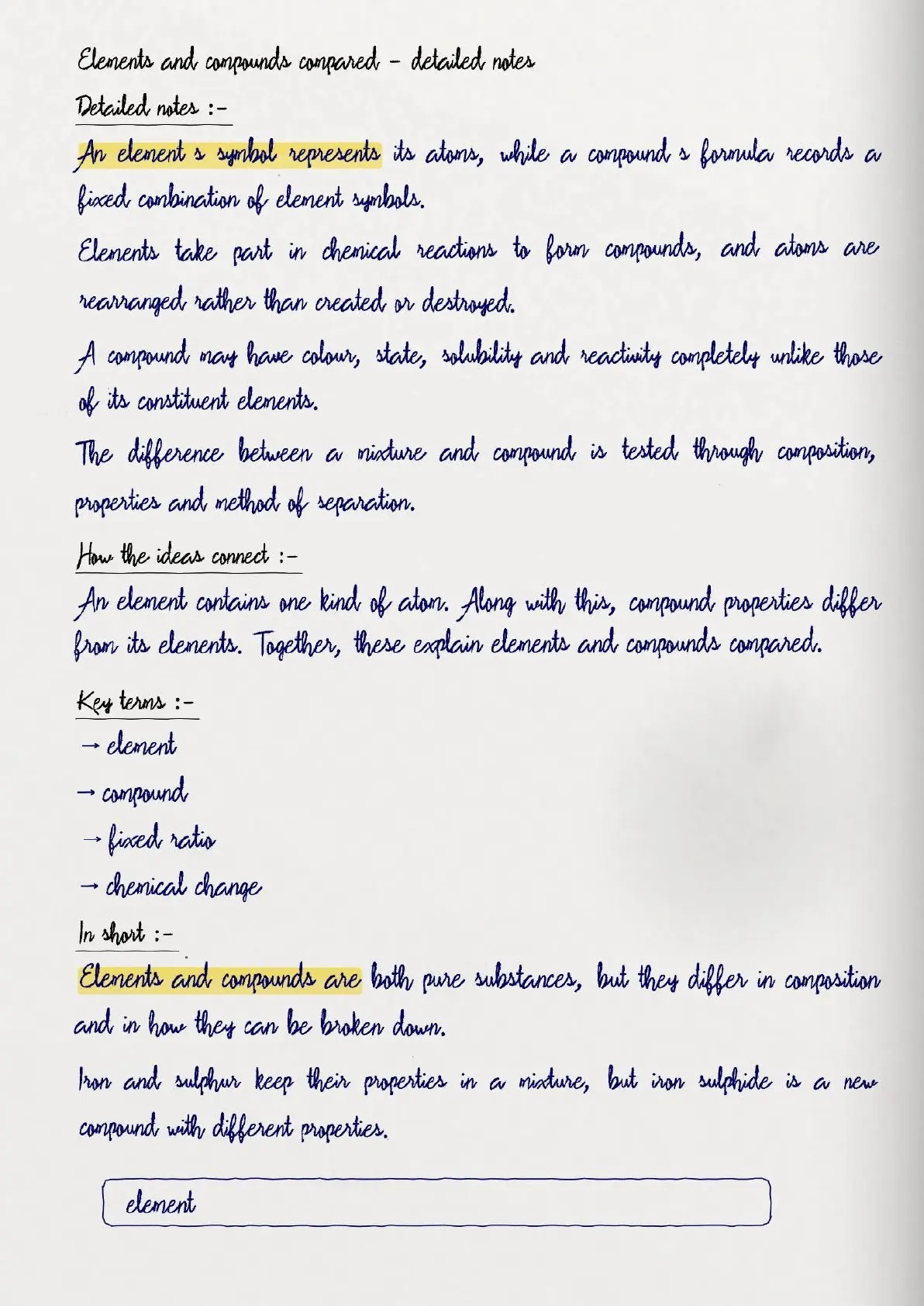
| Element | a pure substance made of one kind of atom that cannot be broken down further |
| Compound | a pure substance made when elements combine chemically in a fixed ratio |
| Alloy | a uniform mixture of metals, such as brass, bronze or stainless steel |
| Adulteration | adding cheaper or poor quality substances to a product, which lowers its quality |
| Mineral | a natural solid found in the Earth with a fixed chemical make-up |
How Collegedunia's Handwritten Notes Help You Revise Nature of Matter: Elements, Compounds, and Mixtures
These notes are made for the night before the exam. They keep the facts short and easy to scan. Collegedunia maps every point to the 2026-27 NCERT.
- Clear handwriting: each topic is written in neat, easy-to-read handwriting.
- Boxed key terms: the main terms and definitions are boxed by hand for fast recall.
- Diagrams and tables: simple hand-drawn tables and charts make ideas clear.
- Colour-coded headings: new sub-topics stand out, so you find any section in seconds.
Nature of Matter: Elements, Compounds, and Mixtures Self-Assessment Quiz
Try these quick questions after you read the notes. Tap each question to check your answer. They cover the points CBSE asks most often.
Which of these is a compound?
(a) air (b) water (c) brass (d) iron
Answer: (b) water - it is hydrogen and oxygen joined chemically in a fixed ratio
Sugar dissolved in water is an example of a?
(a) non-uniform mixture (b) element (c) uniform mixture (d) compound
Answer: (c) uniform mixture - the sugar spreads evenly and cannot be seen separately
When iron and sulfur are heated together, the black mass formed is?
(a) a mixture (b) iron sulfide, a compound (c) an element (d) an alloy
Answer: (b) iron sulfide, a compound - it has new properties and is not pulled by a magnet
Which pair are both elements?
(a) water and air (b) gold and oxygen (c) salt and sugar (d) brass and bronze
Answer: (b) gold and oxygen - both are made of a single kind of atom
Stainless steel and brass are examples of?
(a) compounds (b) elements (c) alloys (d) non-uniform mixtures
Answer: (c) alloys - uniform mixtures of metals
How to Use These Handwritten Notes for Class 8 Science Revision
Use these class 8 science handwritten notes in two passes. Read them slowly once for the full chapter. Then, near the exam, read only the boxes and key terms for a fast recall.
- Read the notes once with the NCERT chapter open beside you.
- Say each key term and idea in your own words.
- Practise one long-answer question from a past paper.
- On the last day, revise only the key terms and the boxes.
Class 8 Science Handwritten Notes for All Chapters
The table below links the class 8 science handwritten notes for every chapter. Use it to jump to any other chapter's notes.
Nature of Matter: Elements, Compounds, and Mixtures Class 8 Science Handwritten Notes FAQs
Ques. Where can I download Nature of Matter: Elements, Compounds, and Mixtures Class 8 Science Handwritten Notes PDF?
Ans. You can download the Nature of Matter: Elements, Compounds, and Mixtures Class 8 Science Handwritten Notes PDF directly from this page. Both the Normal and HD versions are free.
Ques. Are these handwritten notes aligned with the 2026-27 NCERT?
Ans. Yes. These notes follow the current 2026-27 syllabus for Class 8 Science. how a compound is different from a mixture
Ques. How many pages is the Class 8 Science Nature of Matter: Elements, Compounds, and Mixtures Handwritten Notes PDF?
Ans. The notes run about 20 pages. They cover the full chapter with key terms, hand-drawn boxes, and a short self-assessment quiz.
Ques. What is the main idea of the 8th standard Science chapter Nature of Matter: Elements, Compounds, and Mixtures?
Ans. The chapter explains that everything around us is either an element, a compound, or a mixture. Elements and compounds are pure substances, while a mixture is two or more substances put together that still keep their own properties.
Ques. Are these Nature of Matter: Elements, Compounds, and Mixtures notes enough for the CBSE Class 8 exam?
Ans. Yes, for revision. The Collegedunia handwritten notes cover every key point and exam term. Read them with the NCERT chapter and practise past questions.



Comments