


The 2026-27 NCERT keeps Class 8 Social Science Chapter 4 The Colonial Era in India in full for the CBSE course. These class 8 social-science handwritten notes chapter 4 The Colonial Era in India follow the 2026-27 NCERT and cover what colonialism is and why europeans colonised, the portuguese, dutch and french in india, the english east india.
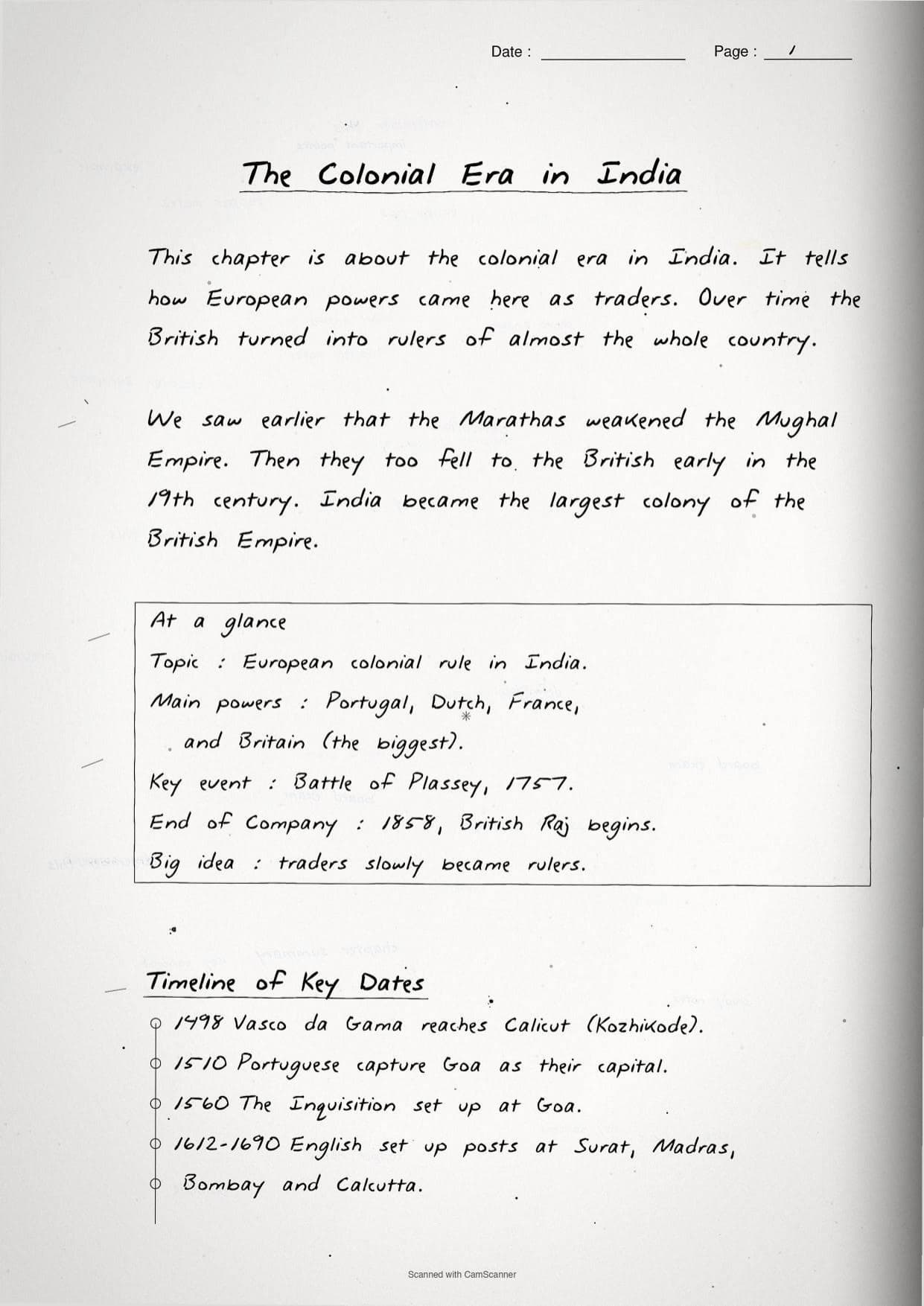
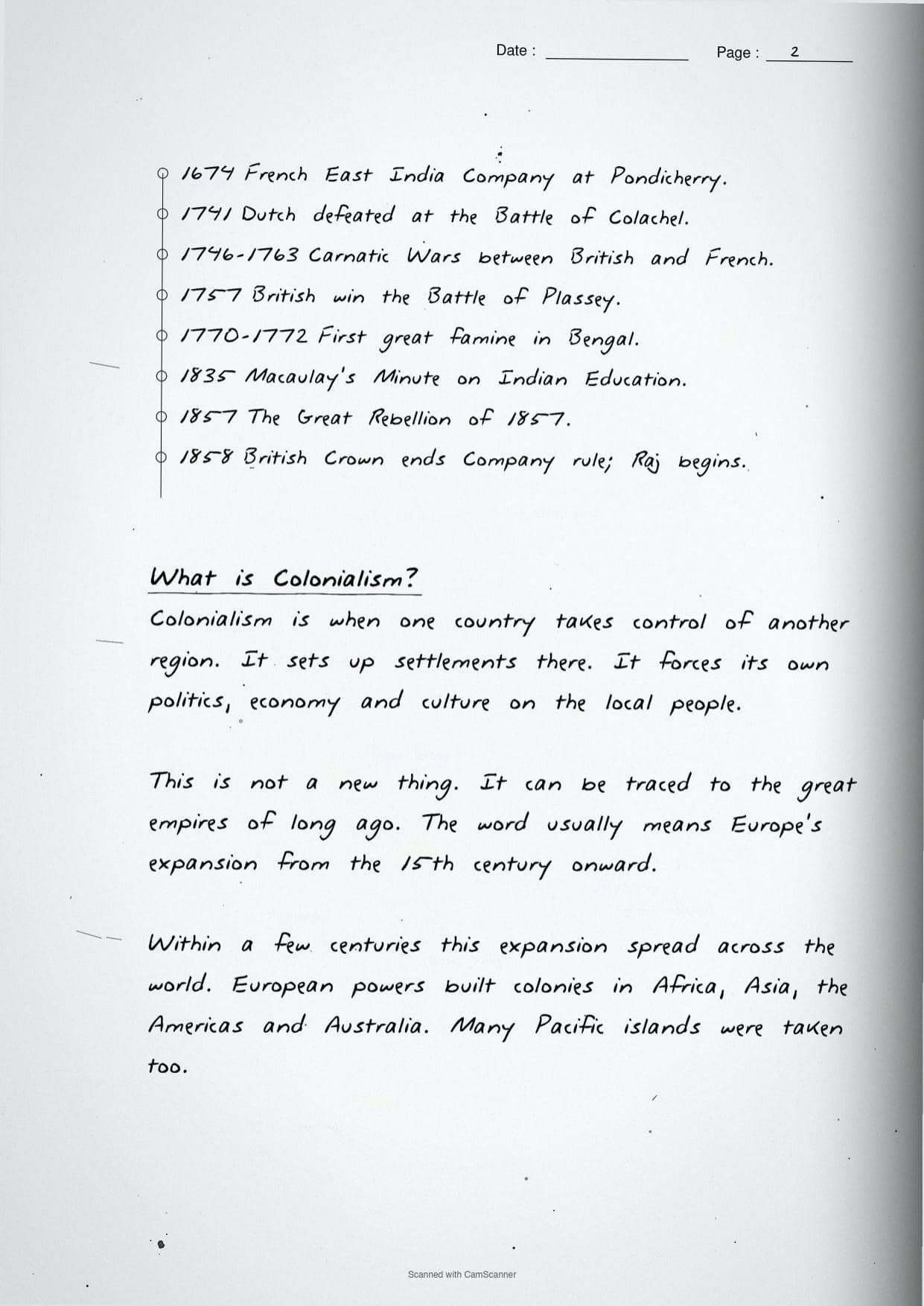
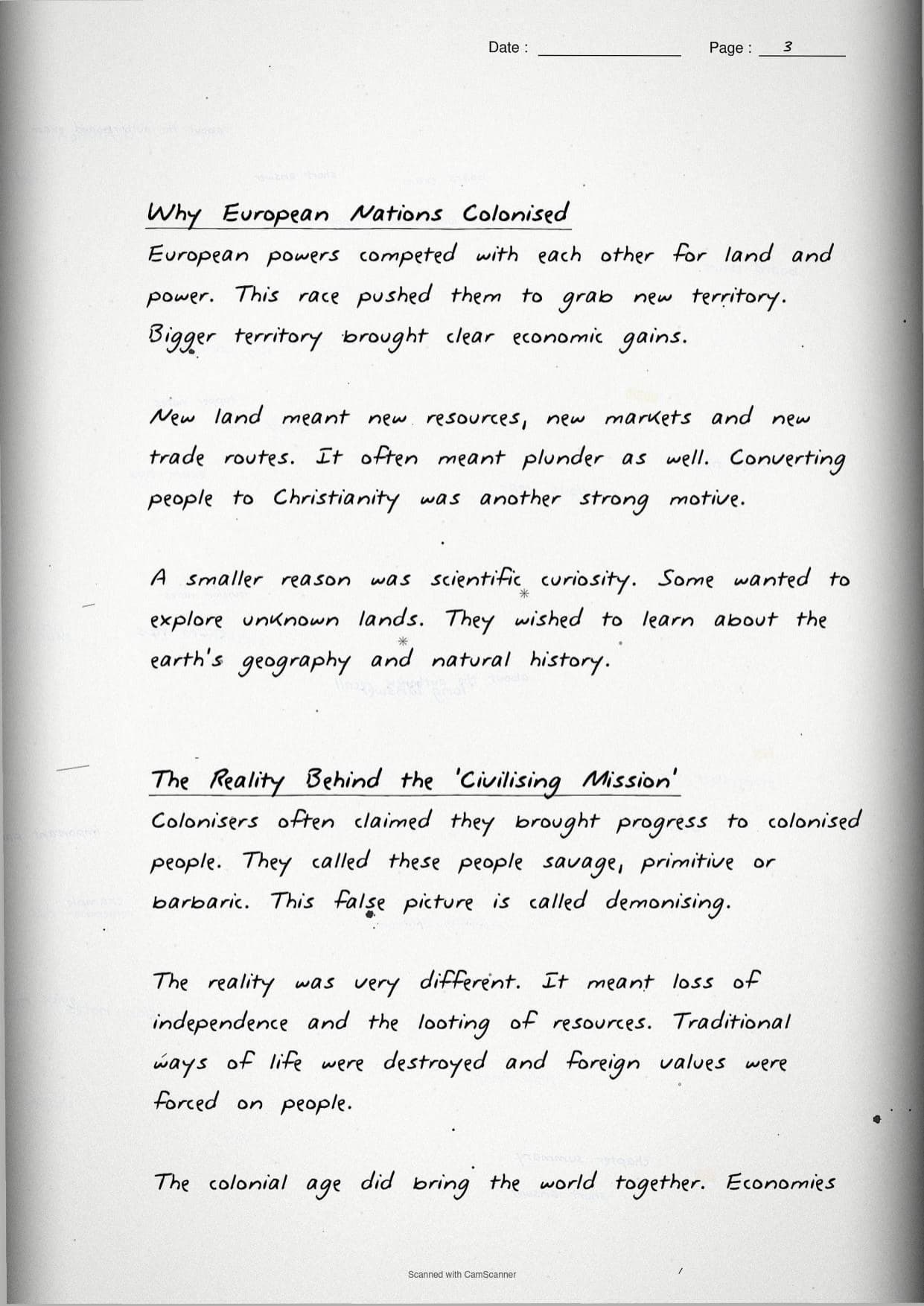
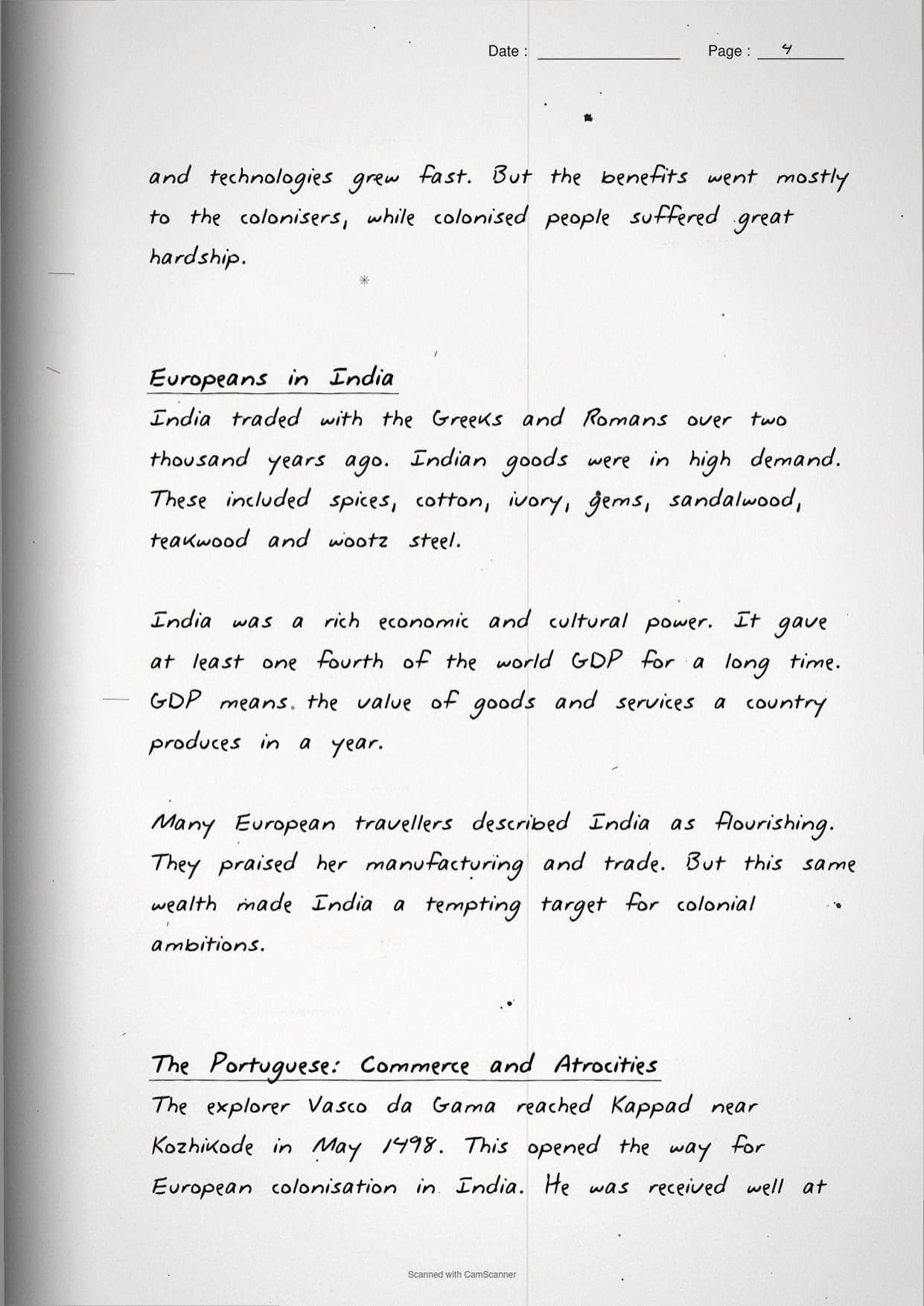
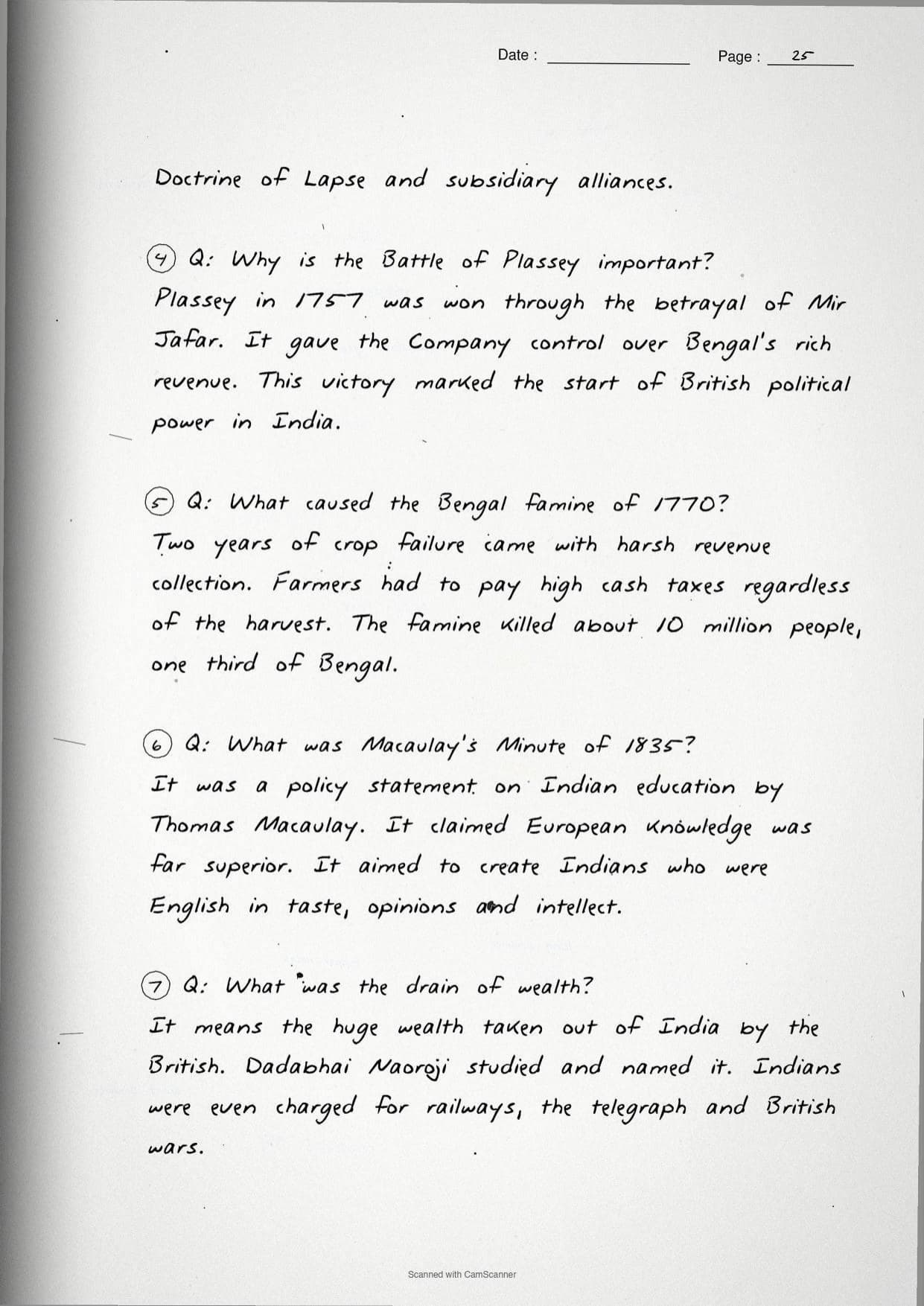
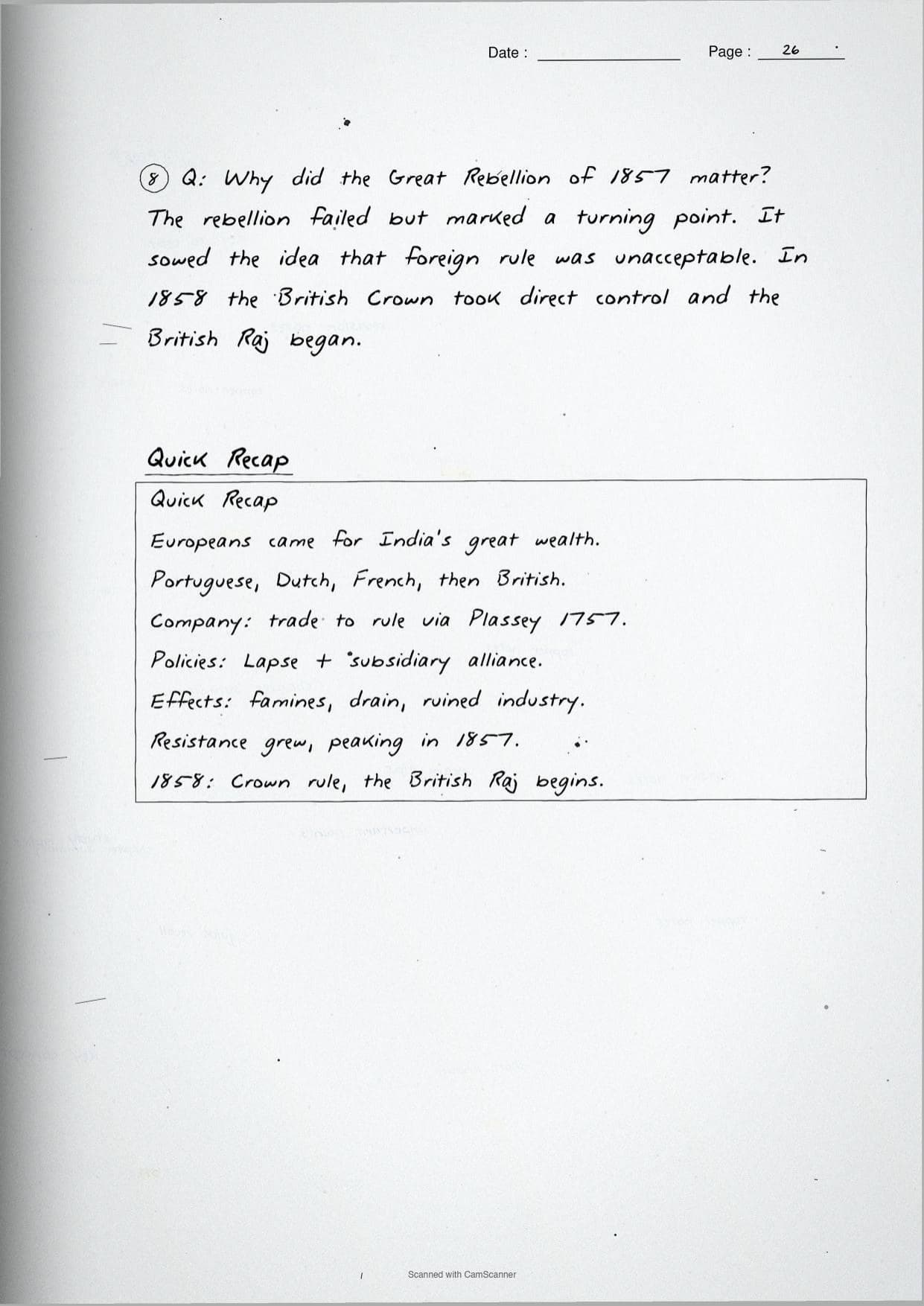
- CBSE Class 8 Weightage: a scoring chapter in the Social Science paper, asked in short and long answers.
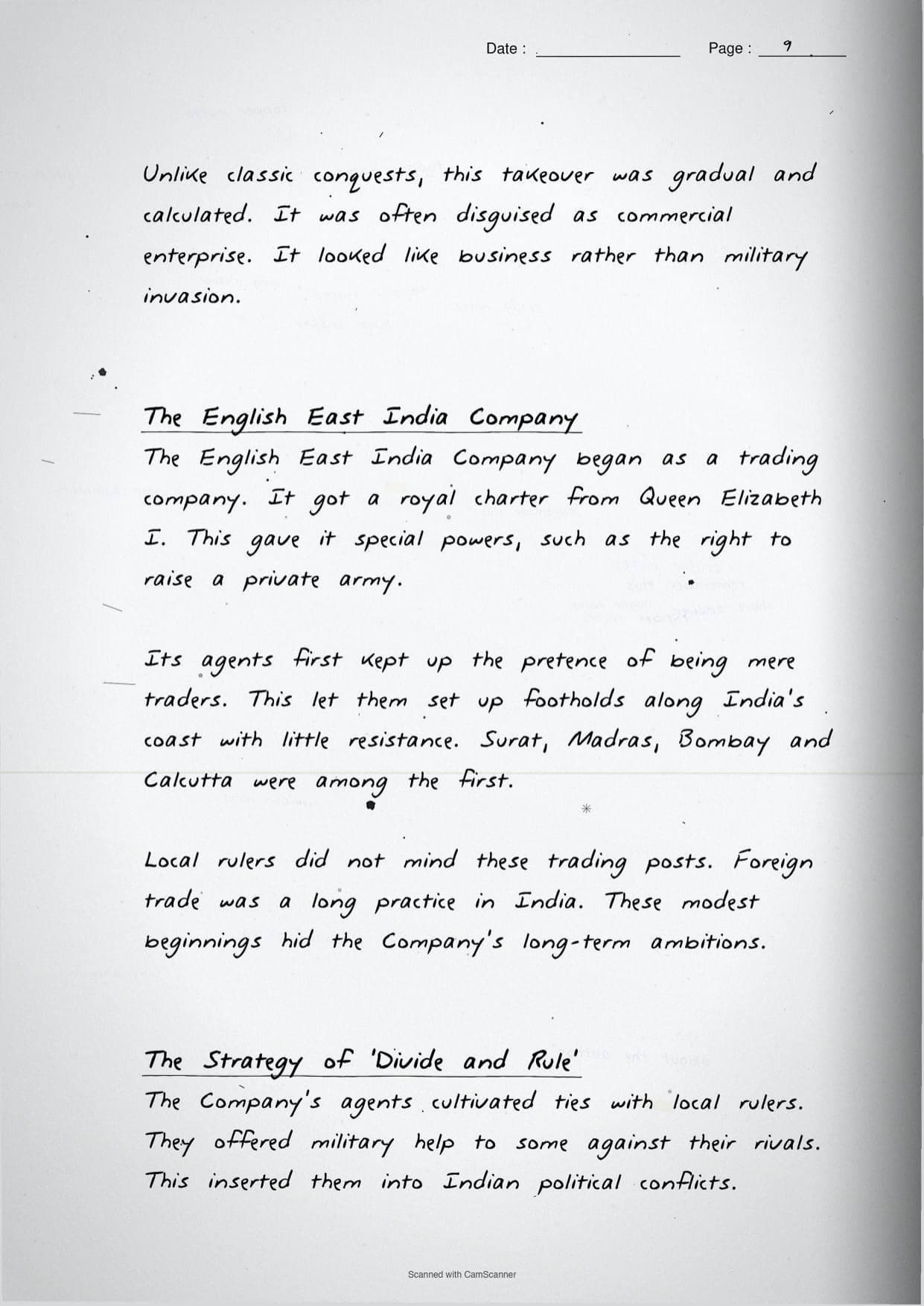
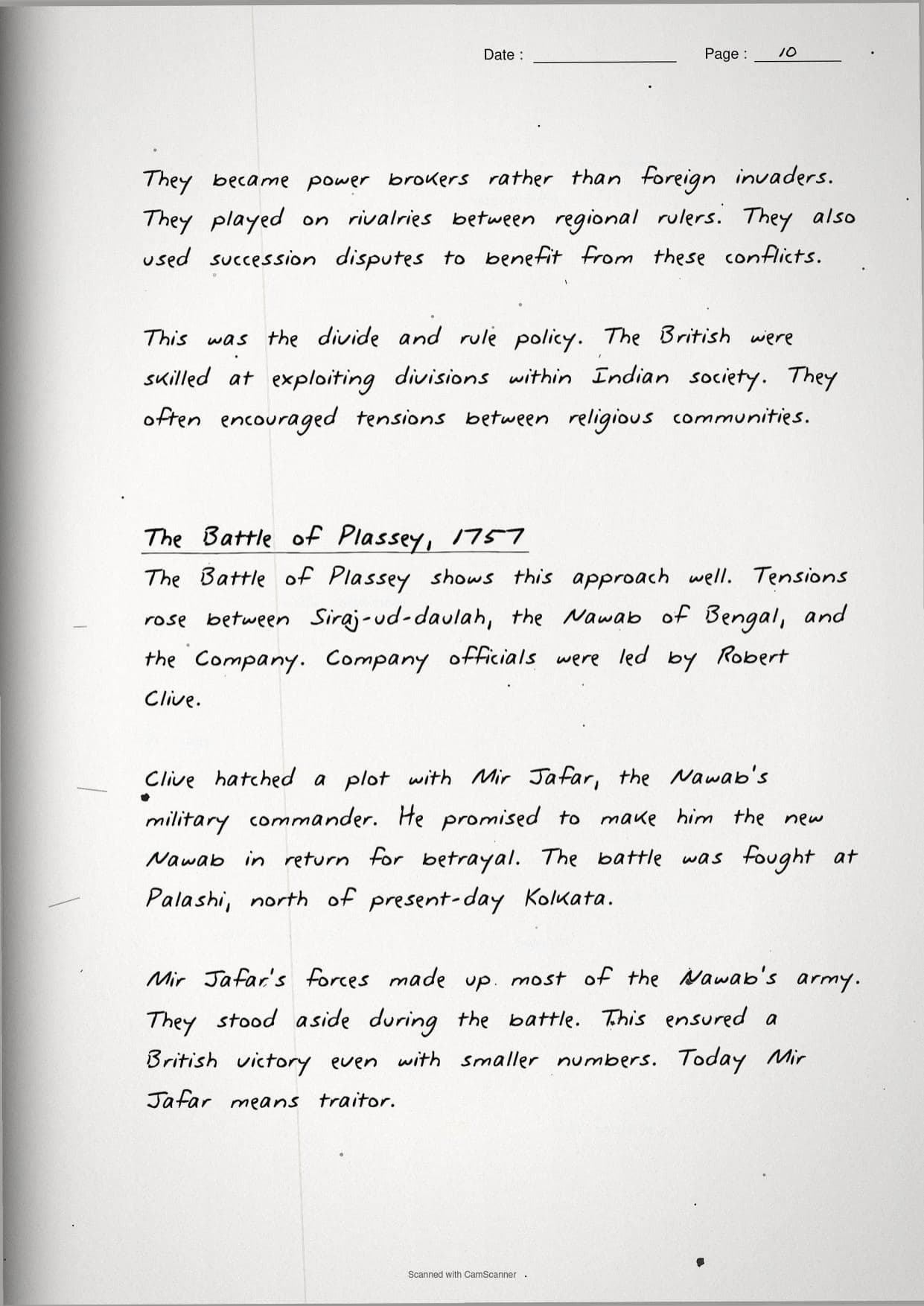
- What the notes cover: what colonialism is and why europeans colonised, the portuguese, dutch and french in india, the english east india company, divide and rule and the battle of plassey.
- Best for: quick revision before Class 8 exams and a strong base for Class 9.
You can read the complete class 8 social-science handwritten notes for The Colonial Era in India, with key terms, boxed definitions, and quick revision points, in the PDF below.
These handwritten notes are written by subject teachers, mapped to the 2026-27 NCERT, and checked against the last five years of CBSE Class 8 Social Science papers.
The Colonial Era in India Topic-wise Weightage for CBSE Class 8 Social Science
Some parts of this chapter are asked more often than others. The table below shows which sub-topics to revise first, based on recent CBSE Class 8 question trends.
| Sub-topic | Weightage | CBSE Frequency |
|---|---|---|
| The East India Company and Battle of Plassey | High | asked often |
| The drain of wealth and famines | High | asked often |
| Doctrine of Lapse and subsidiary alliance | Medium | asked sometimes |
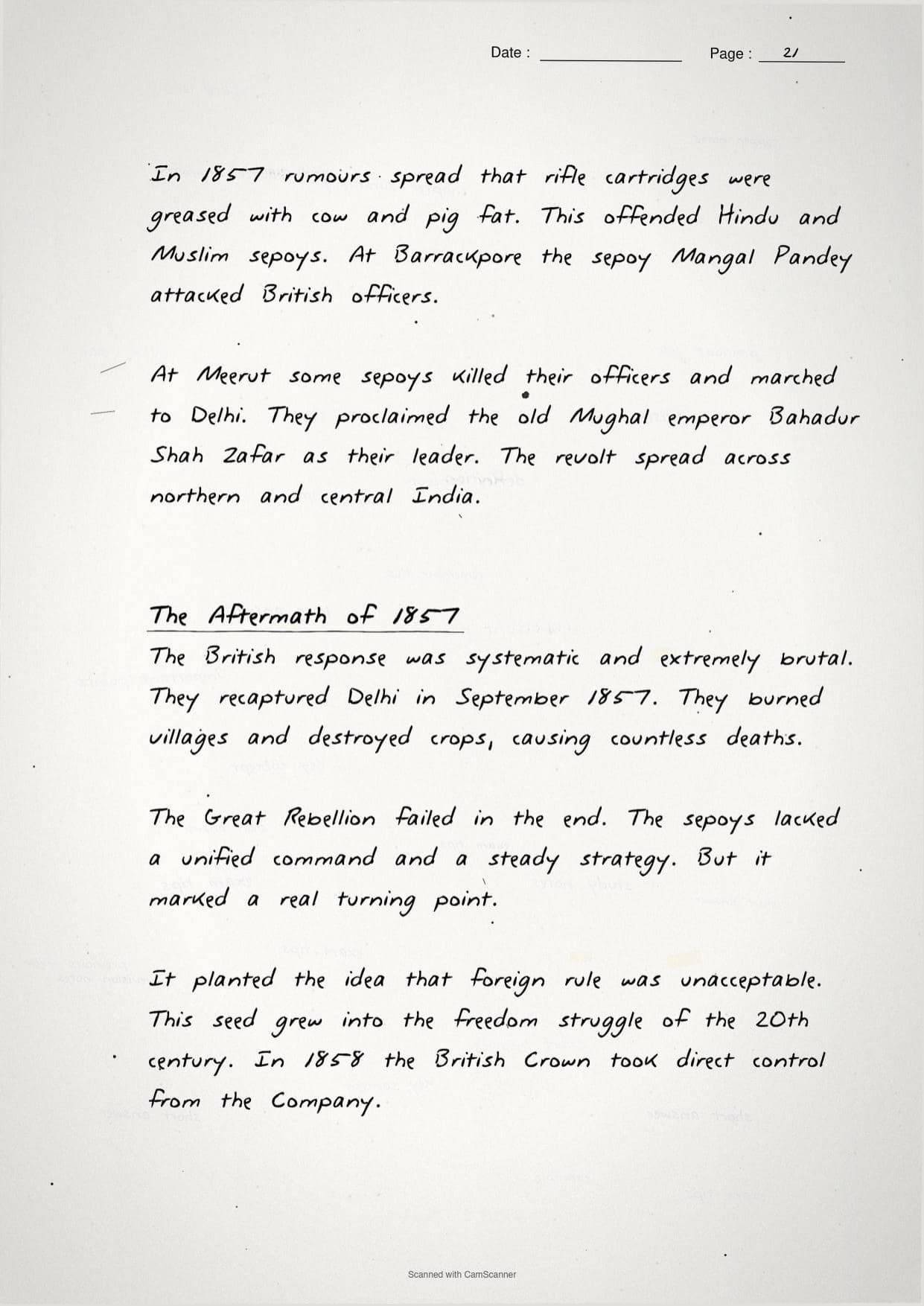
| The Great Rebellion of 1857 | Medium | asked sometimes |
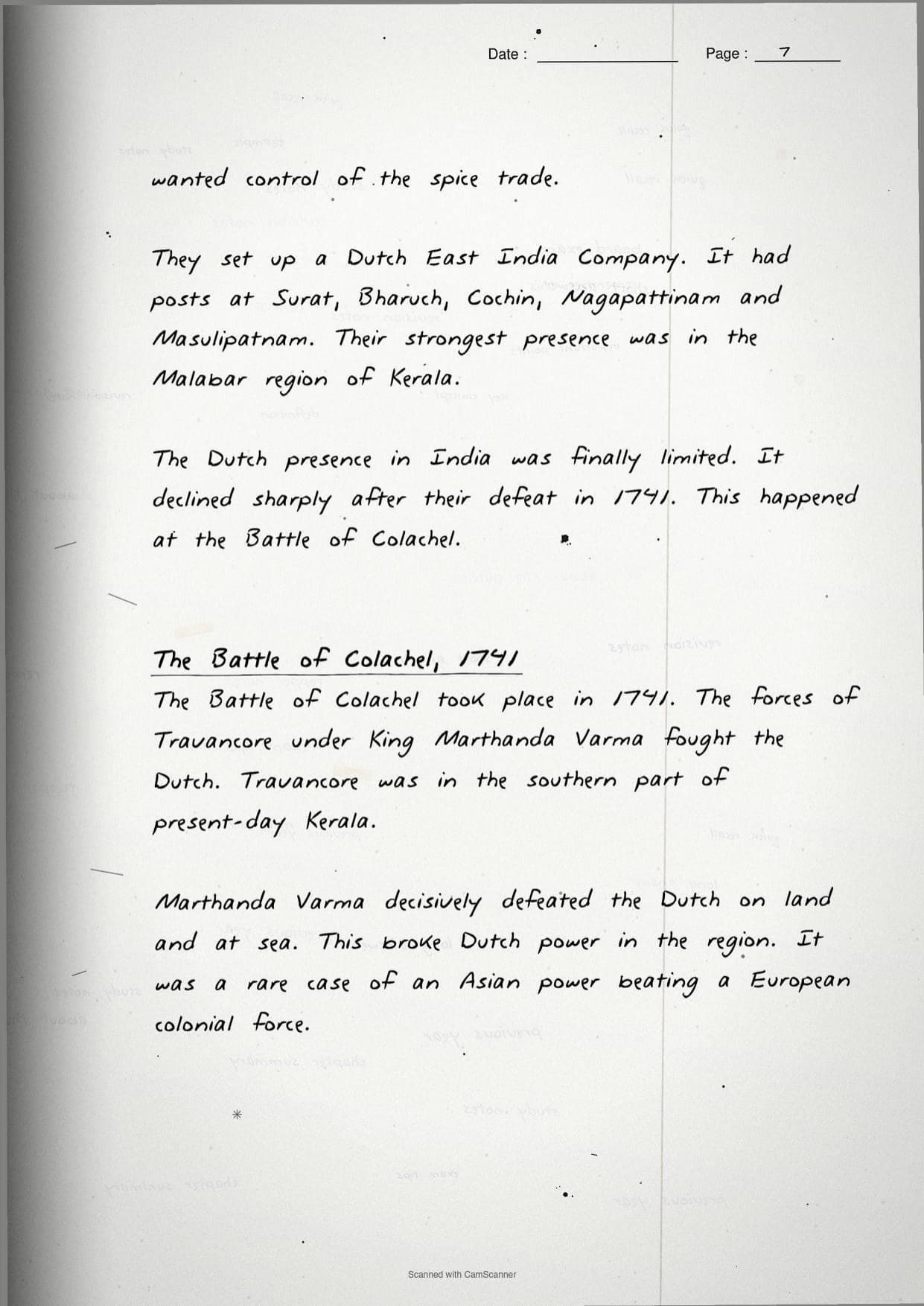
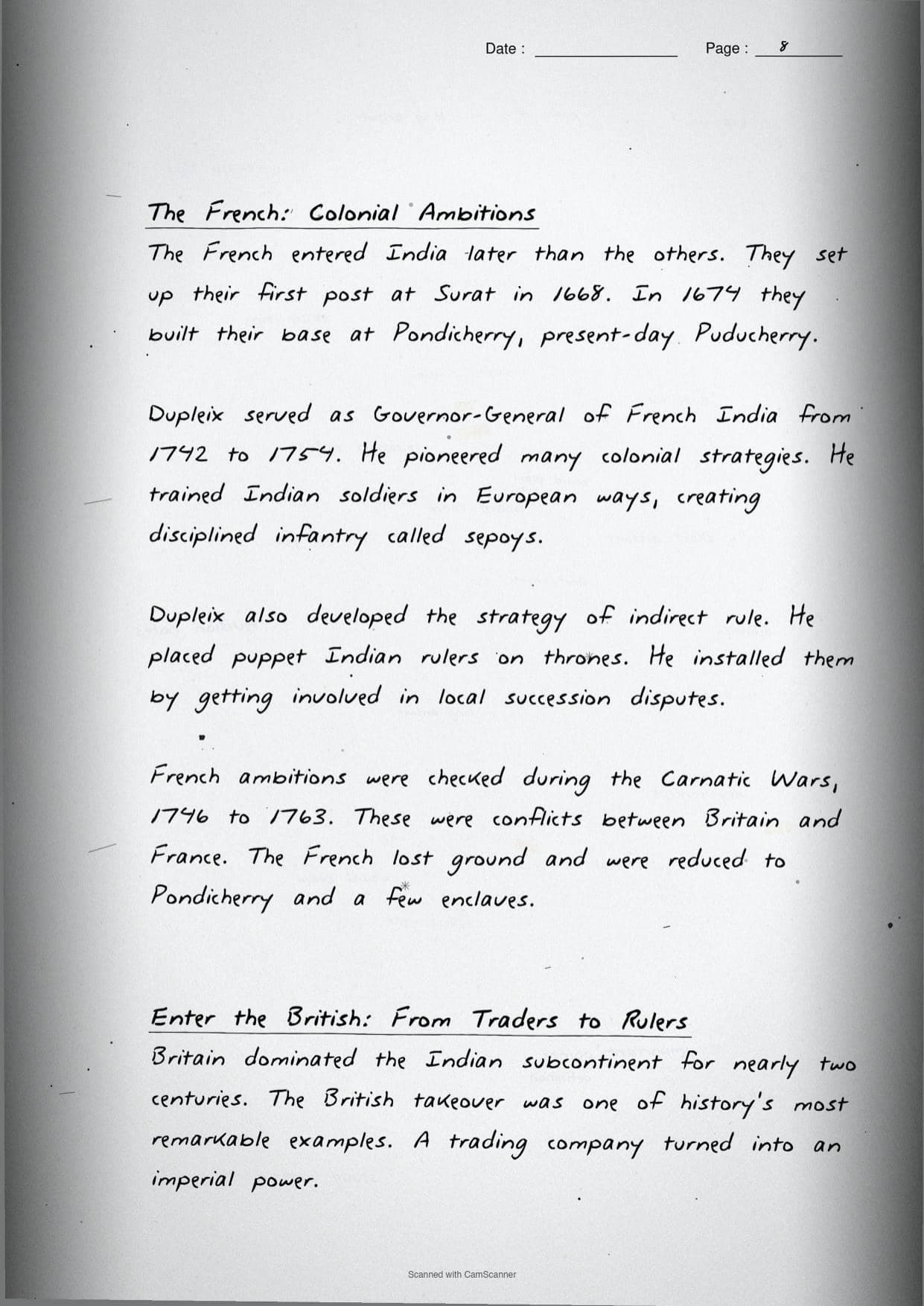
| The Portuguese, Dutch and French | Medium | asked sometimes |
| Macaulay's Minute on education | Low | asked rarely |
What the The Colonial Era in India Handwritten Notes Cover
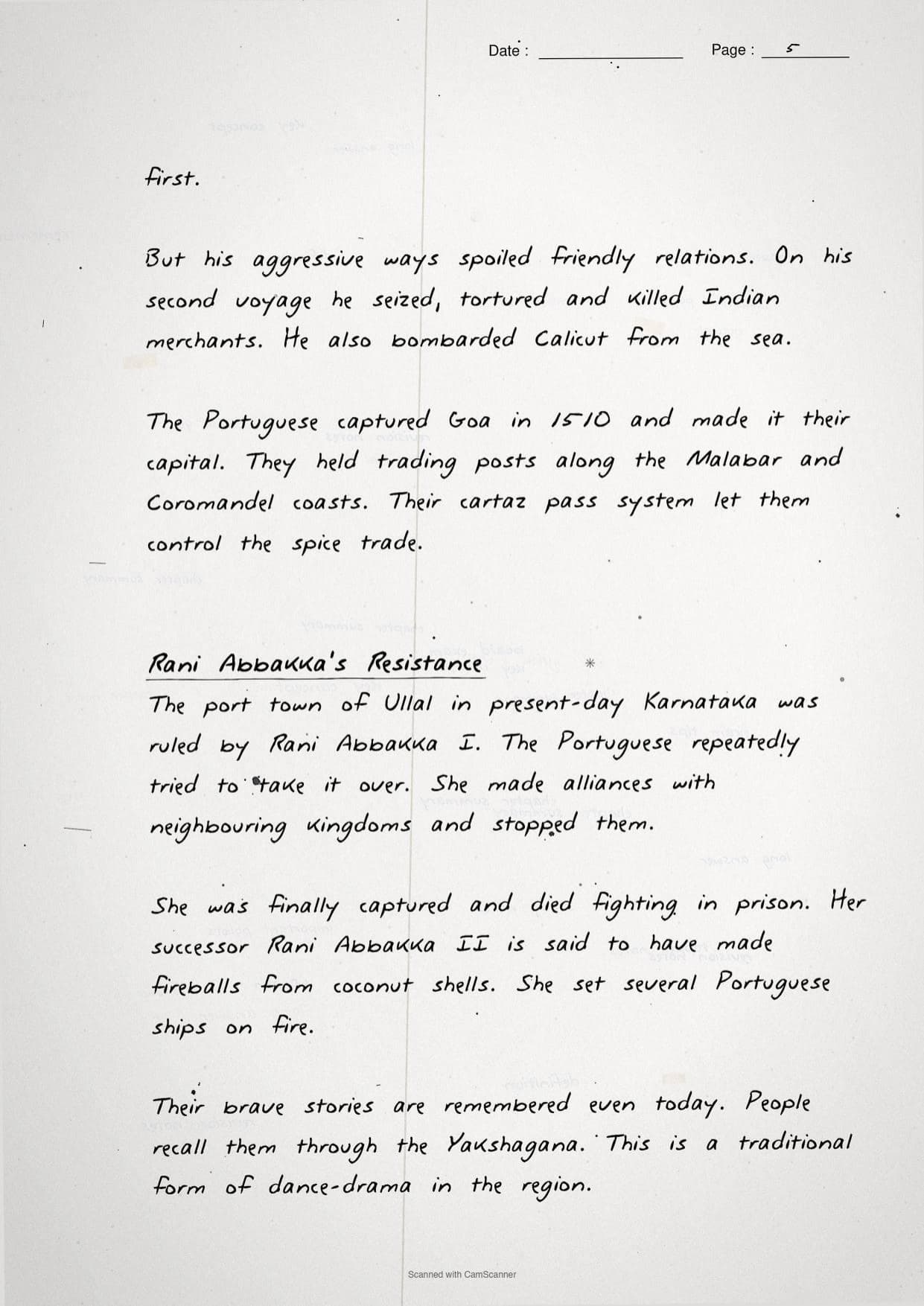
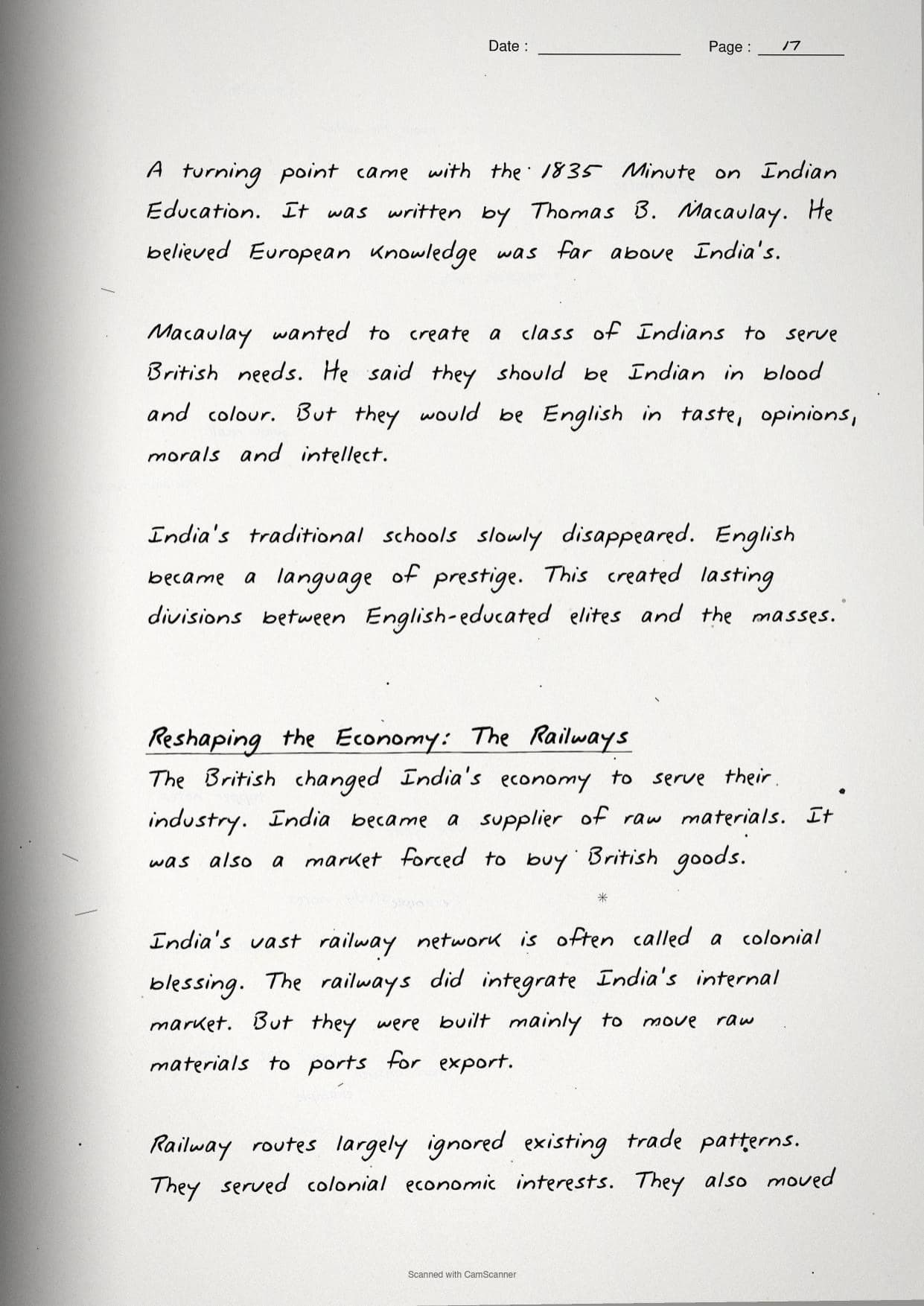
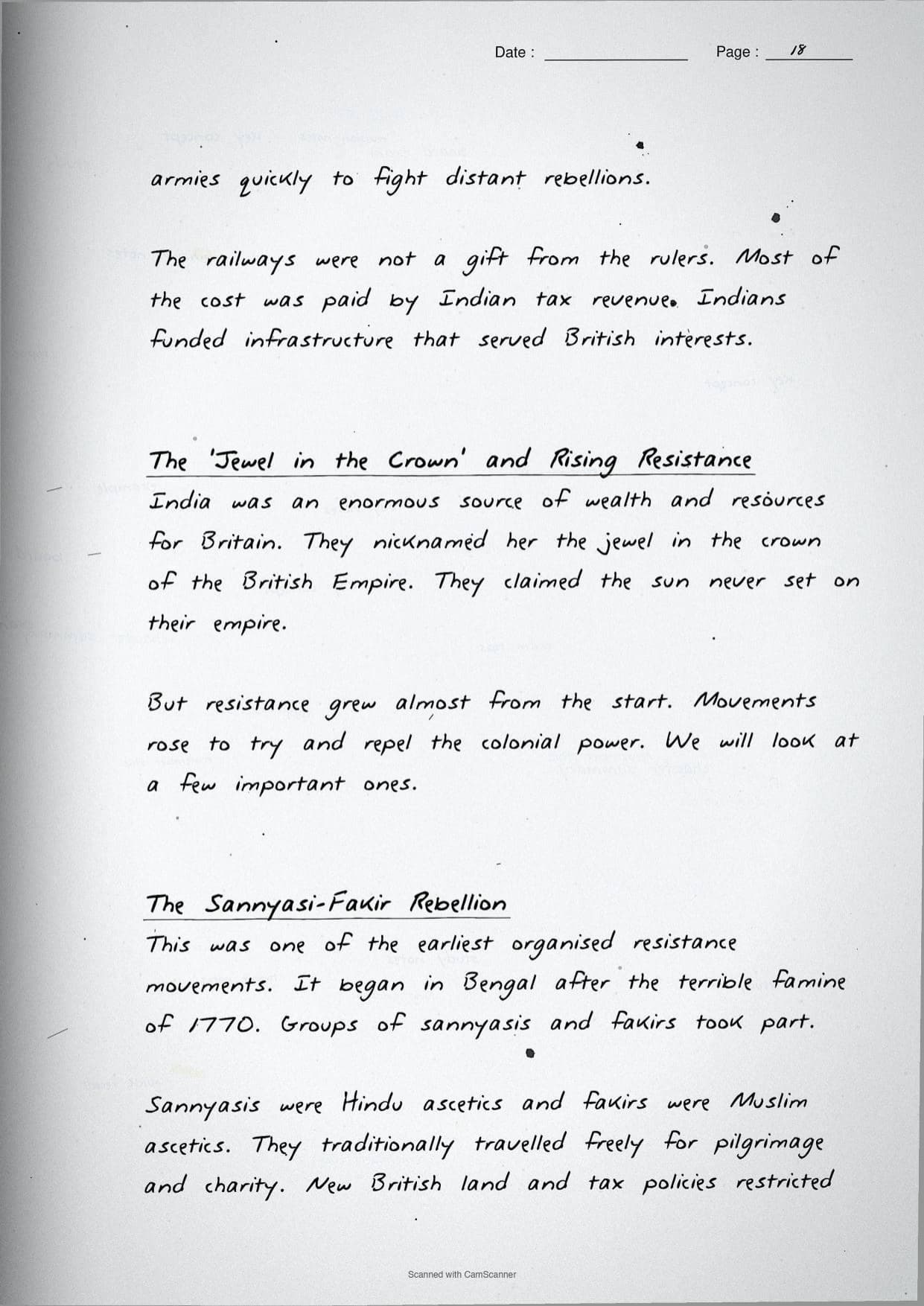
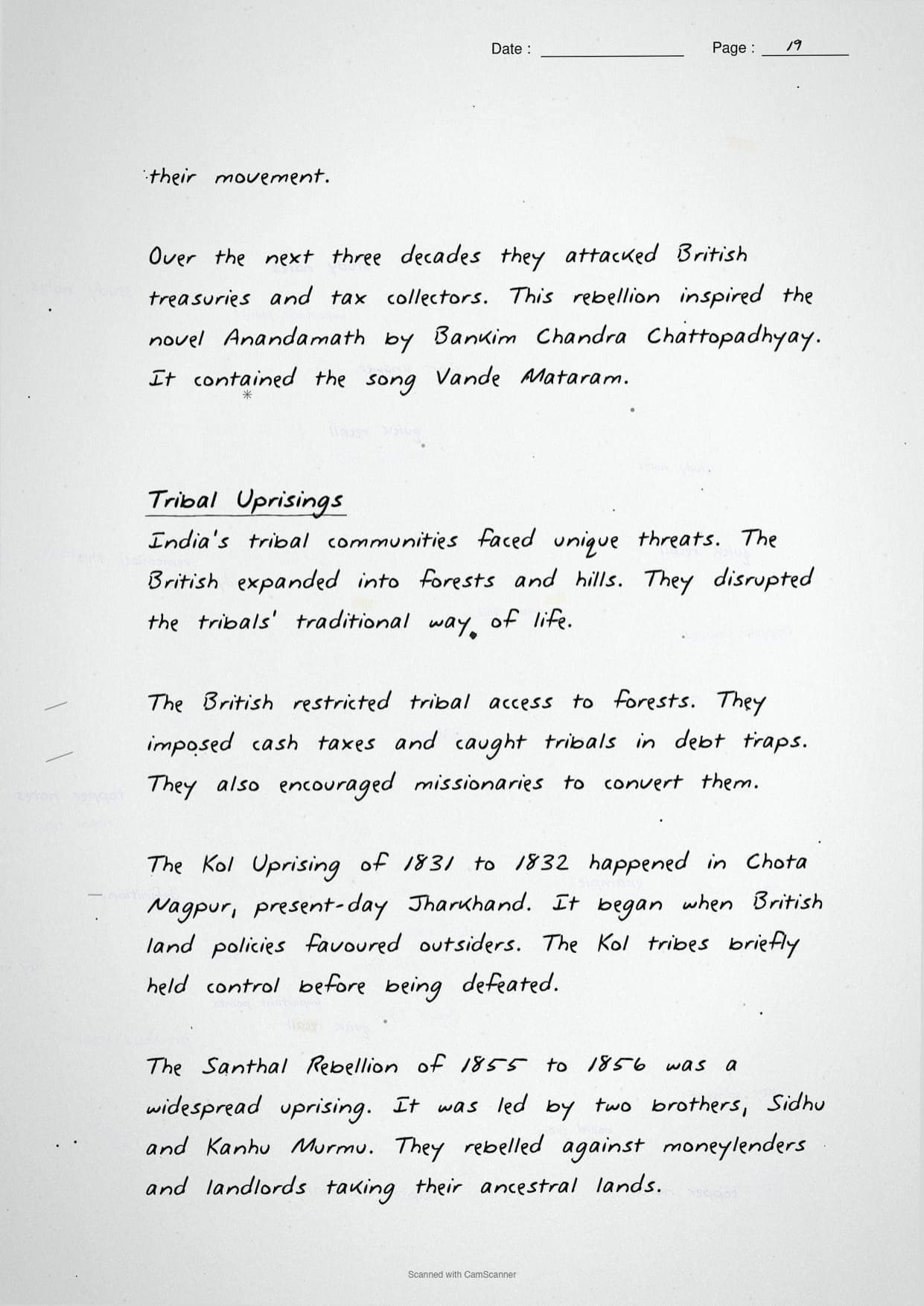
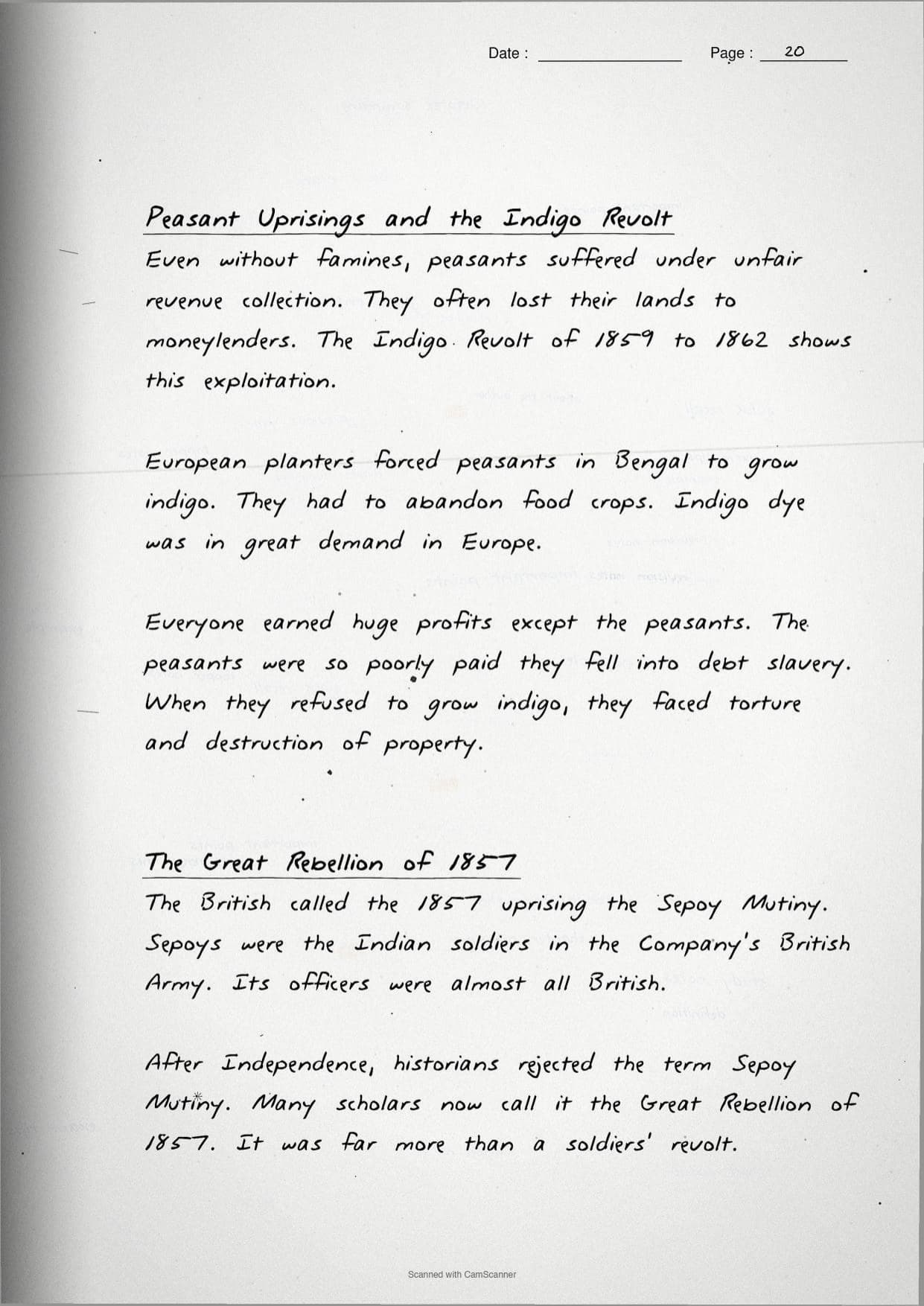
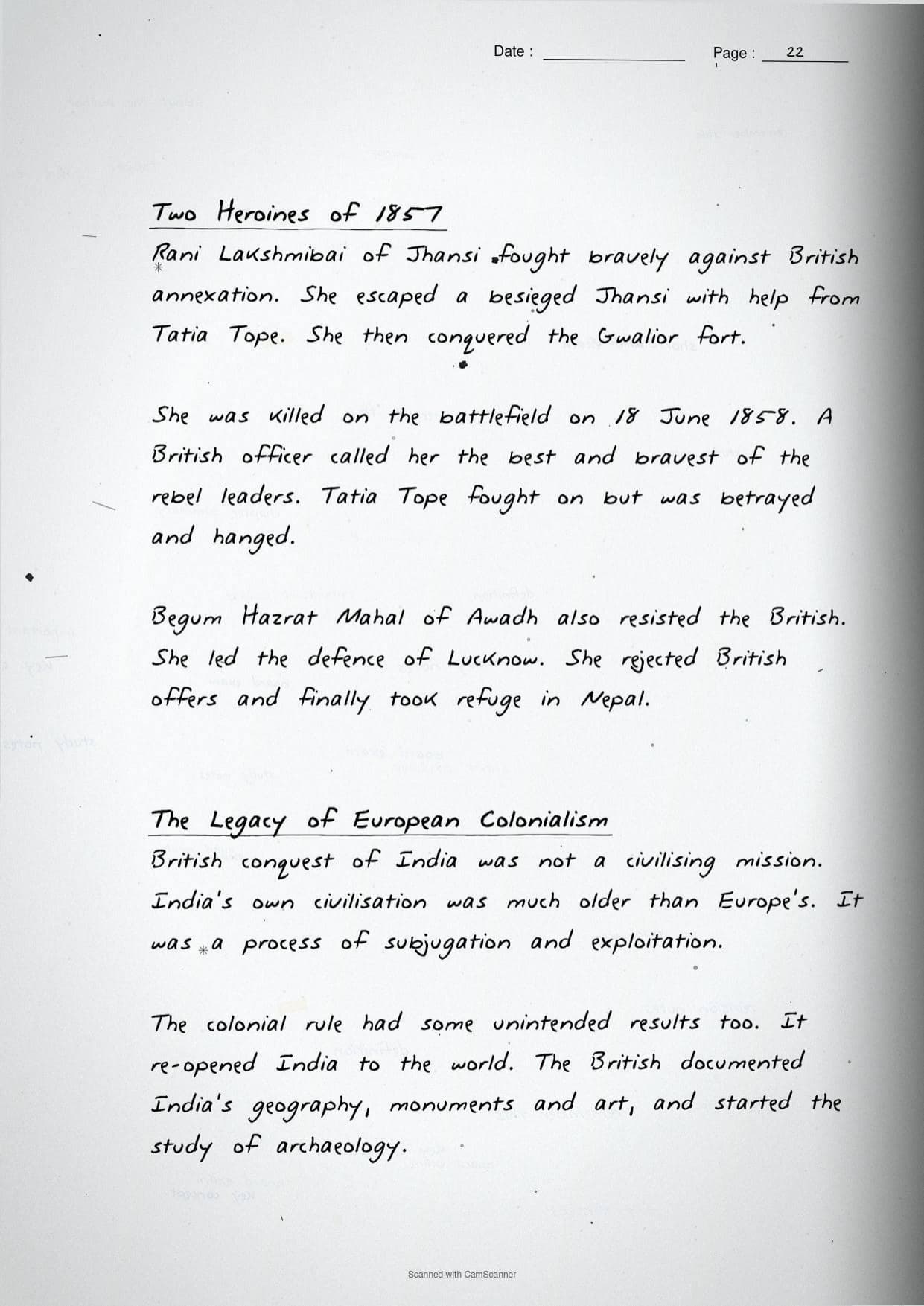
This chapter is about the colonial era in India. It tells how European powers came here as traders and how the British slowly turned into rulers of almost the whole country. It covers the Portuguese, Dutch, French and British, the effects of their rule and the resistance they faced.
- What colonialism is and why Europeans colonised
- The Portuguese, Dutch and French in India
- The English East India Company
- Divide and rule and the Battle of Plassey
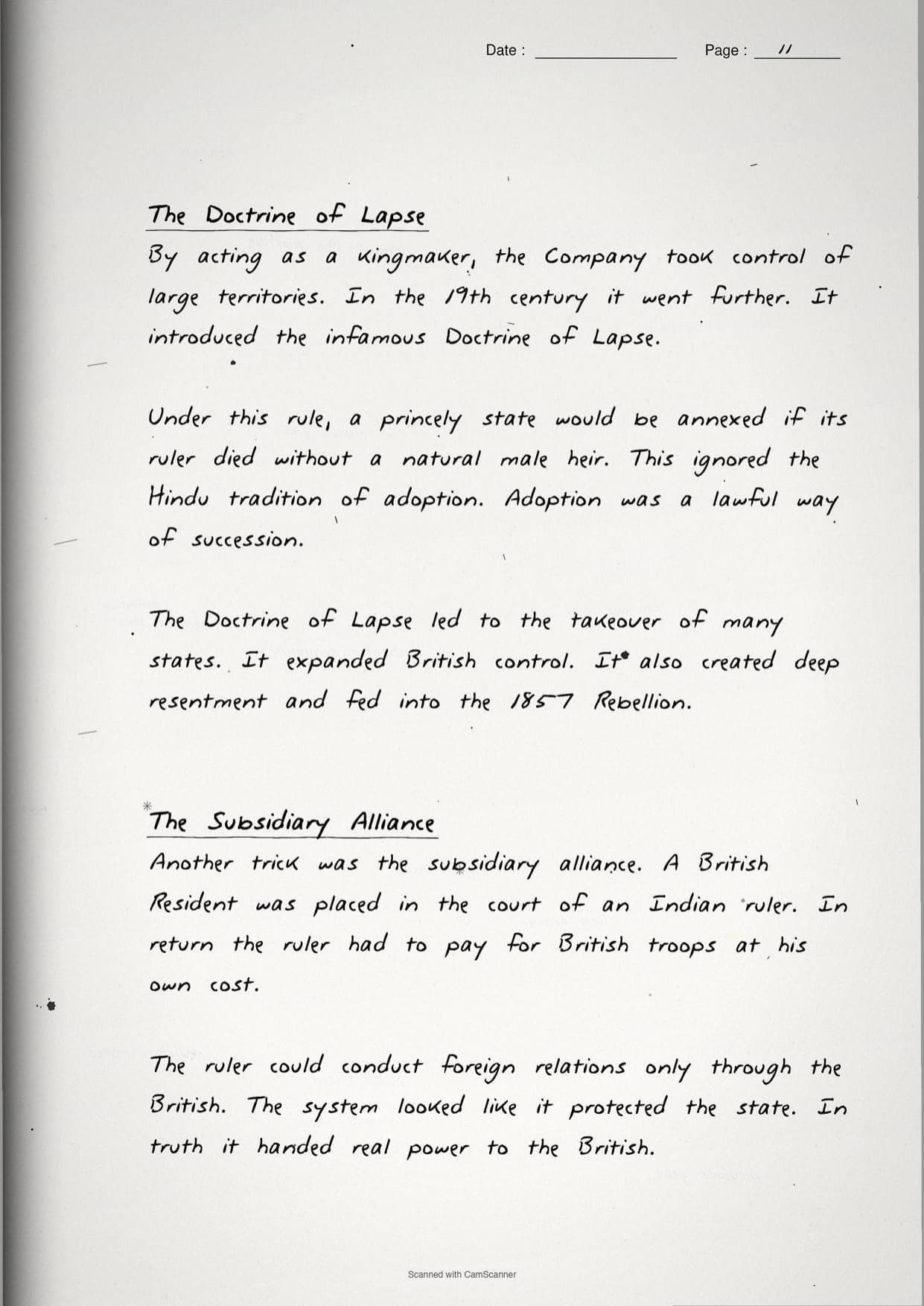
- Doctrine of Lapse and subsidiary alliance
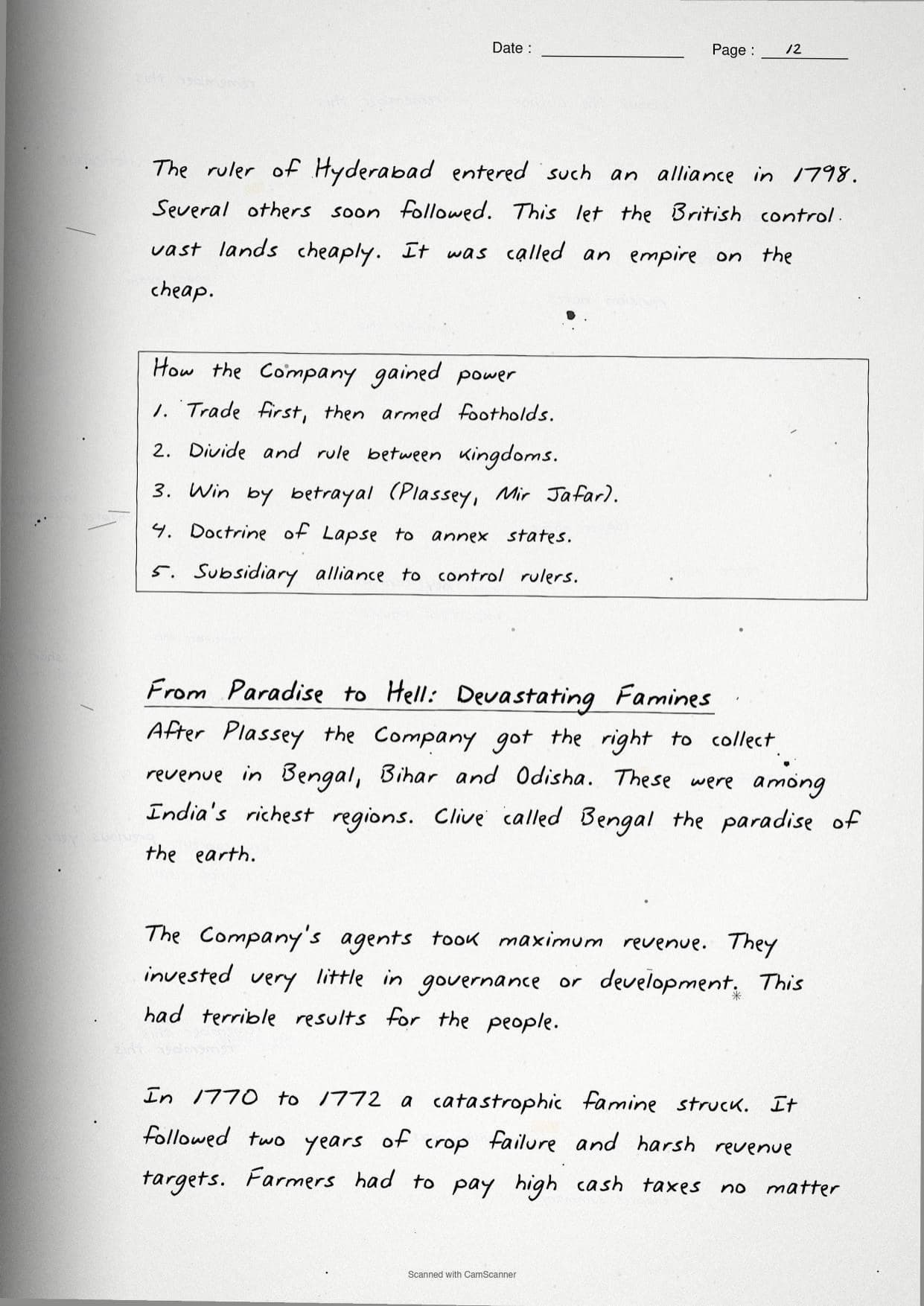
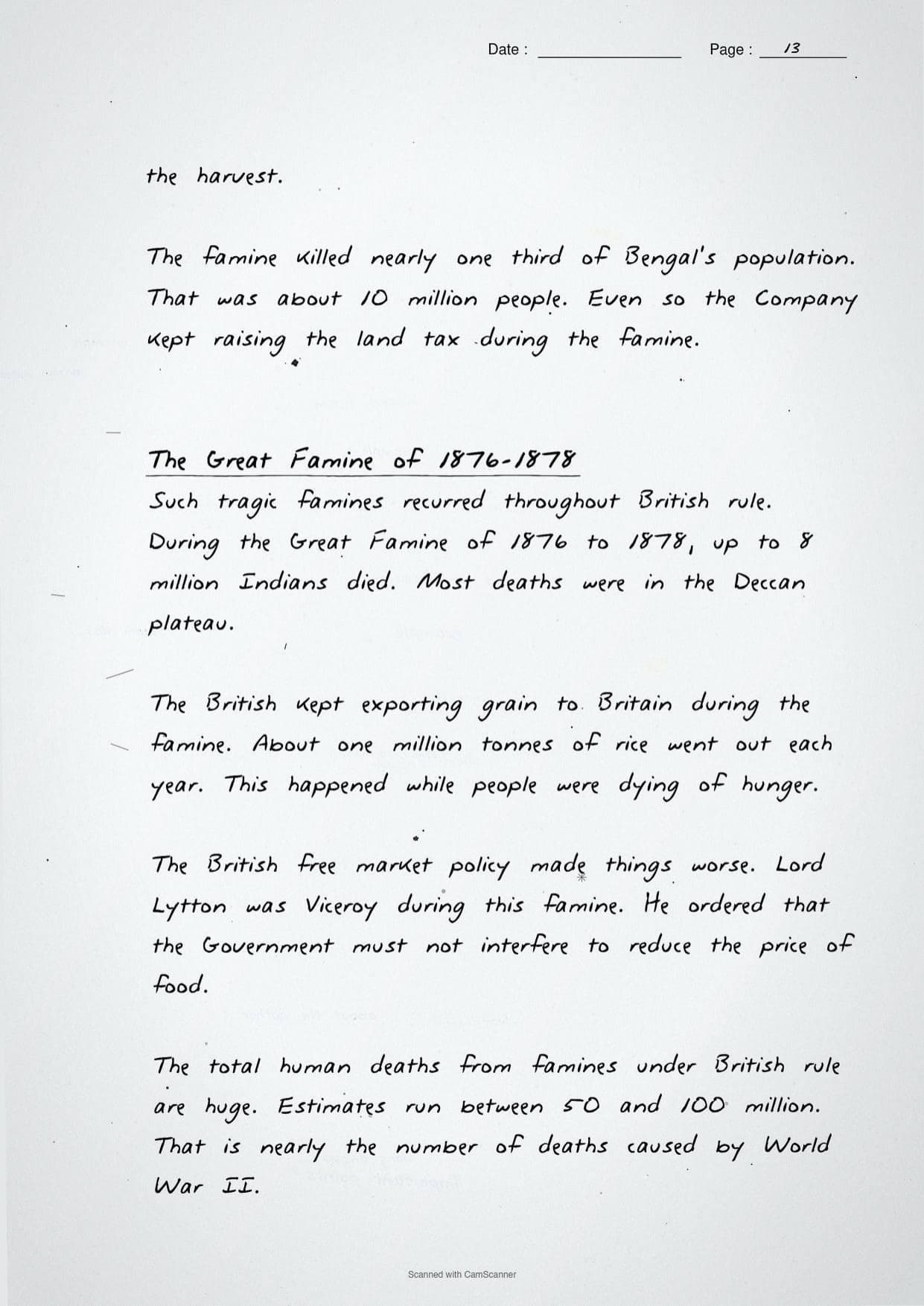
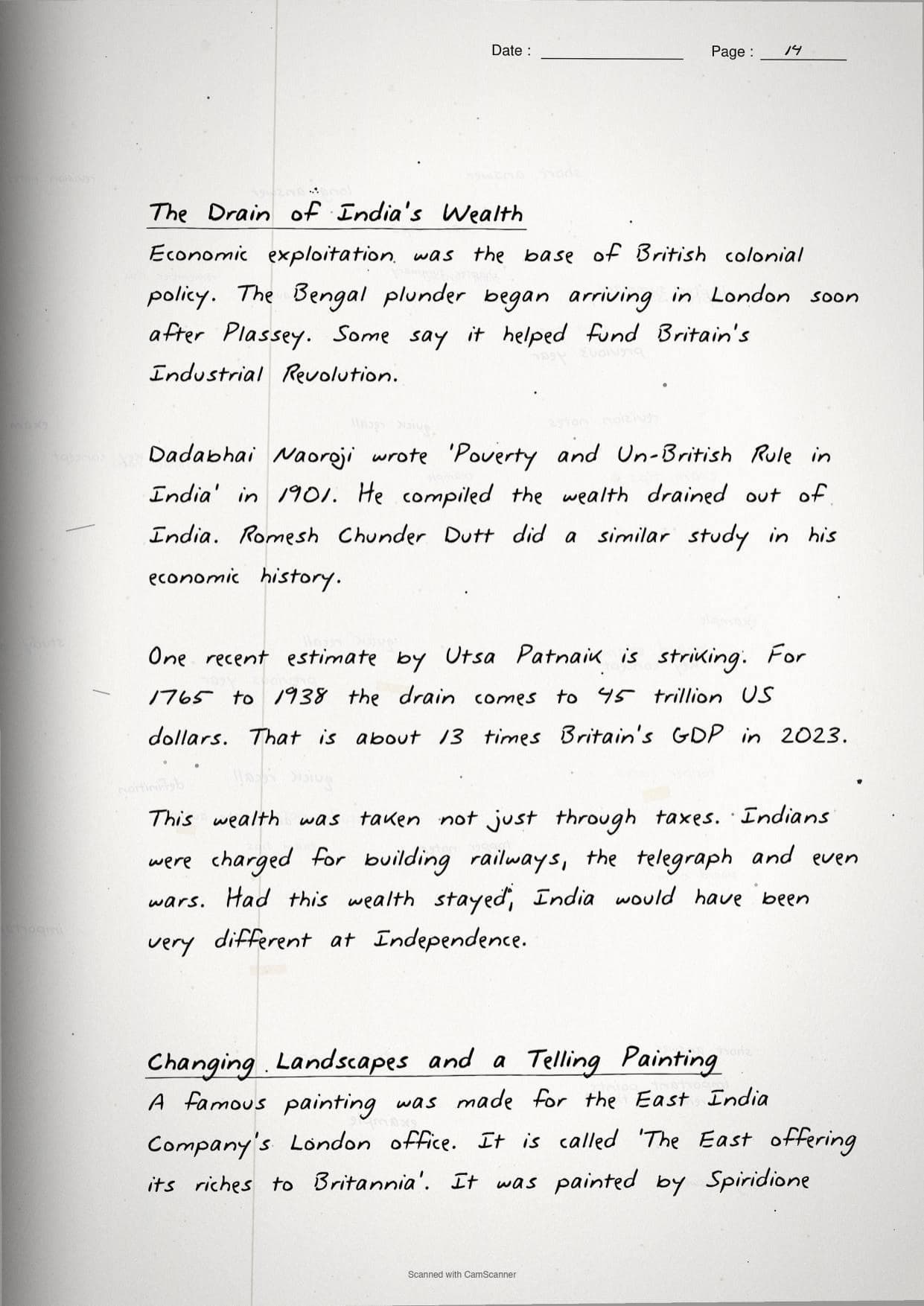
- Famines and the drain of India's wealth
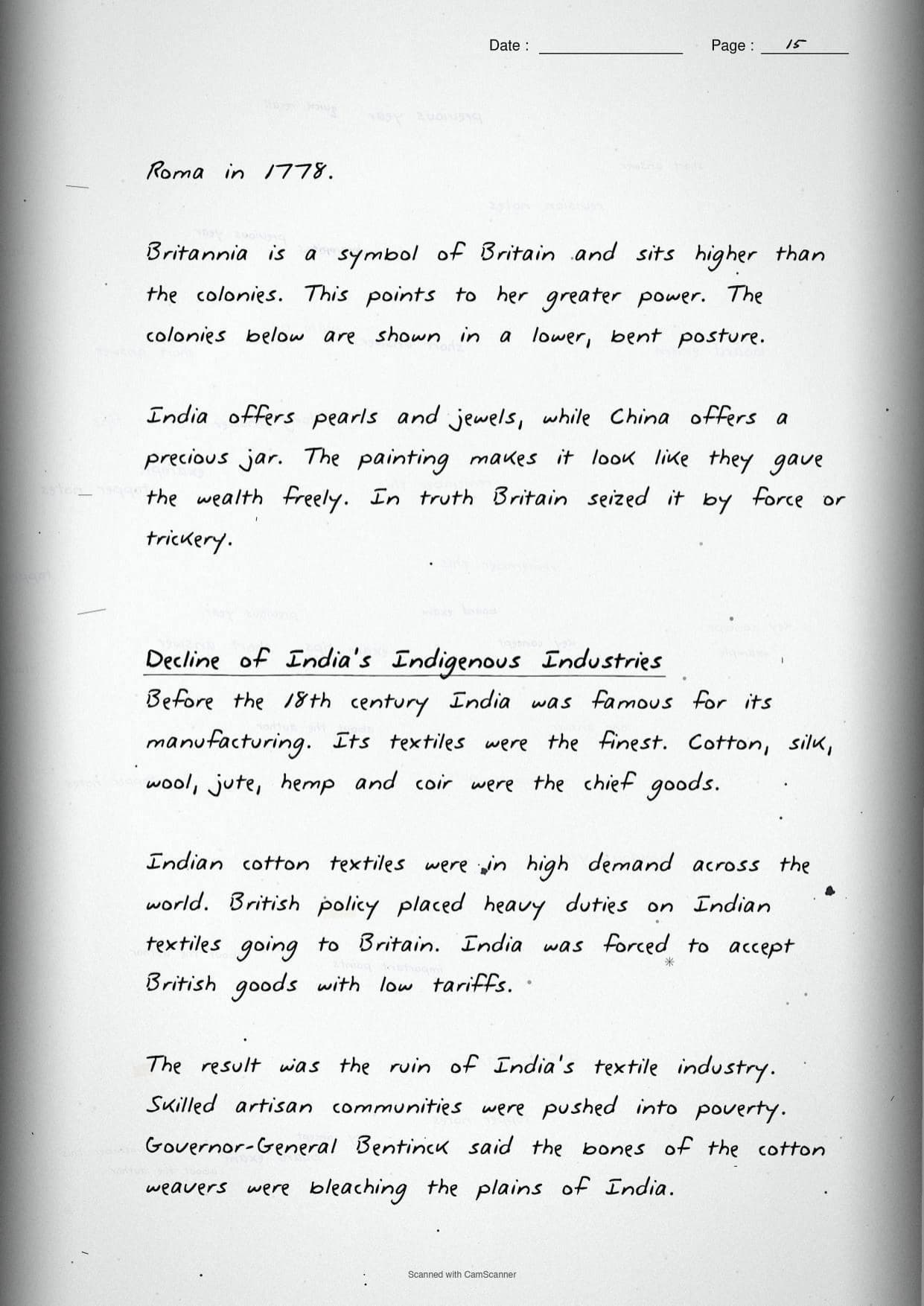
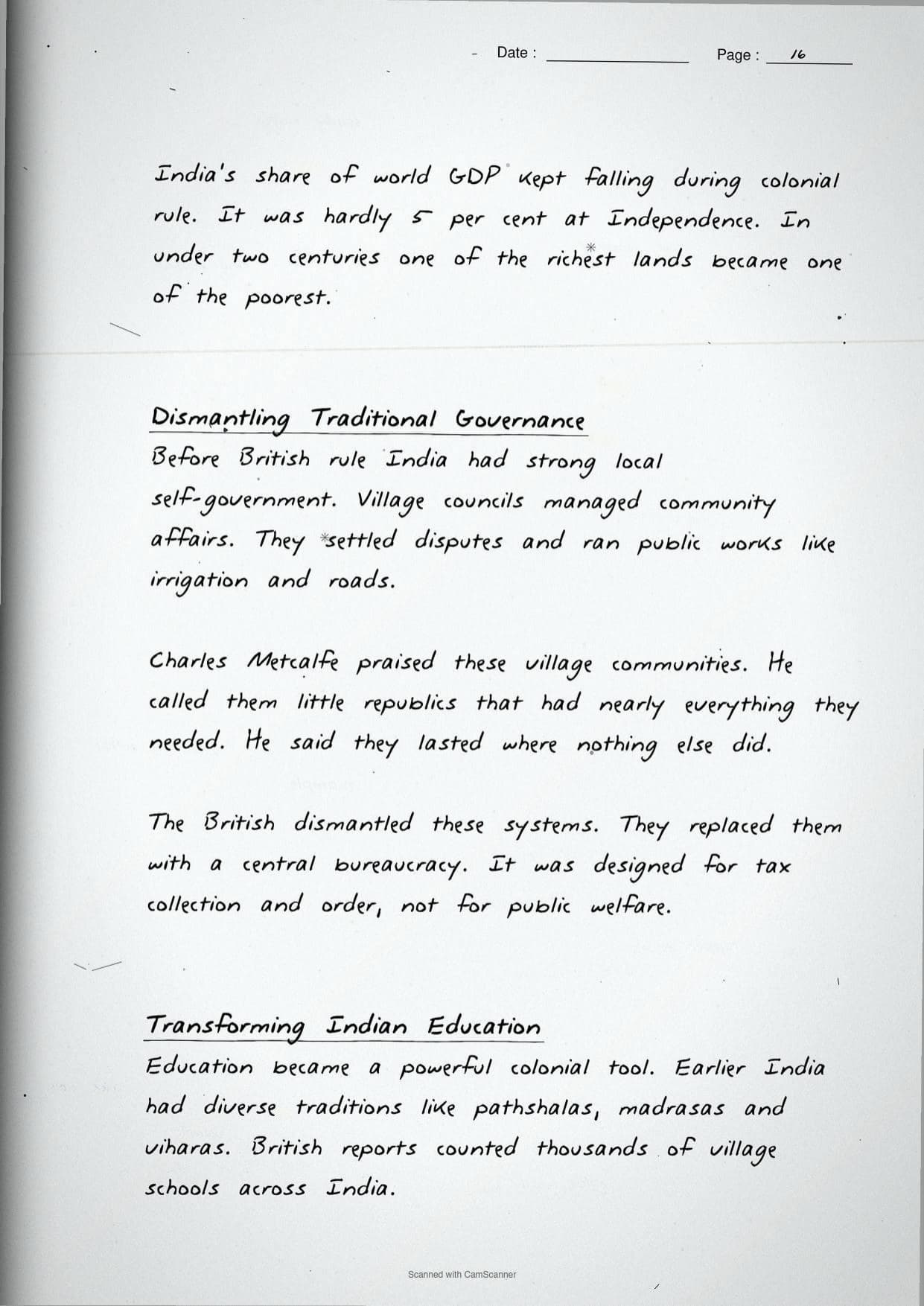
- Decline of Indian industries and education
- Resistance and the Great Rebellion of 1857
Key Terms and Ideas in The Colonial Era in India
These are the terms and ideas the exam asks about most. Learn each one so you can define it and use it in your answers.
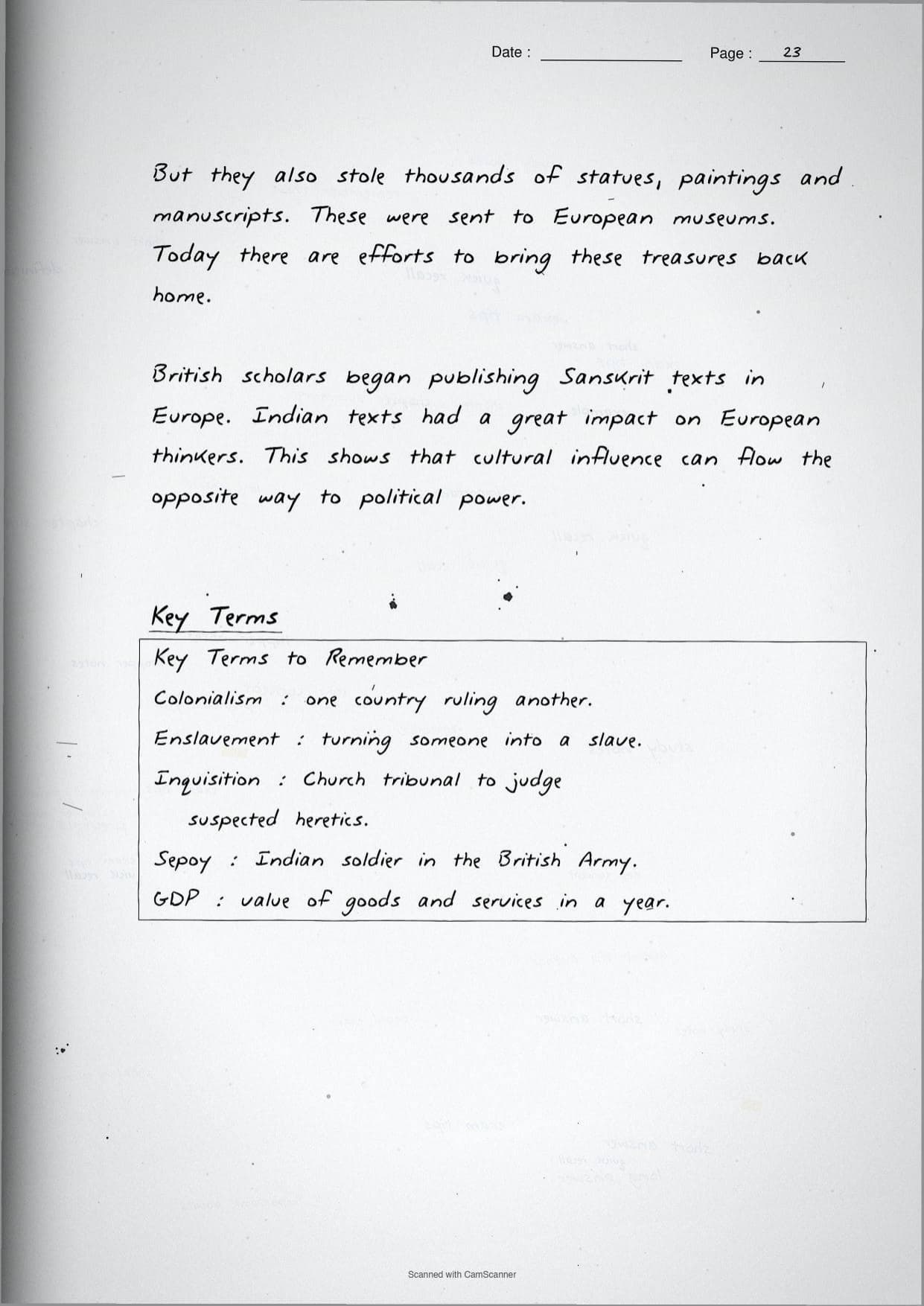
| Term / Idea | What it means |
|---|---|
| Colonialism | when one country controls another and forces its own systems on it |
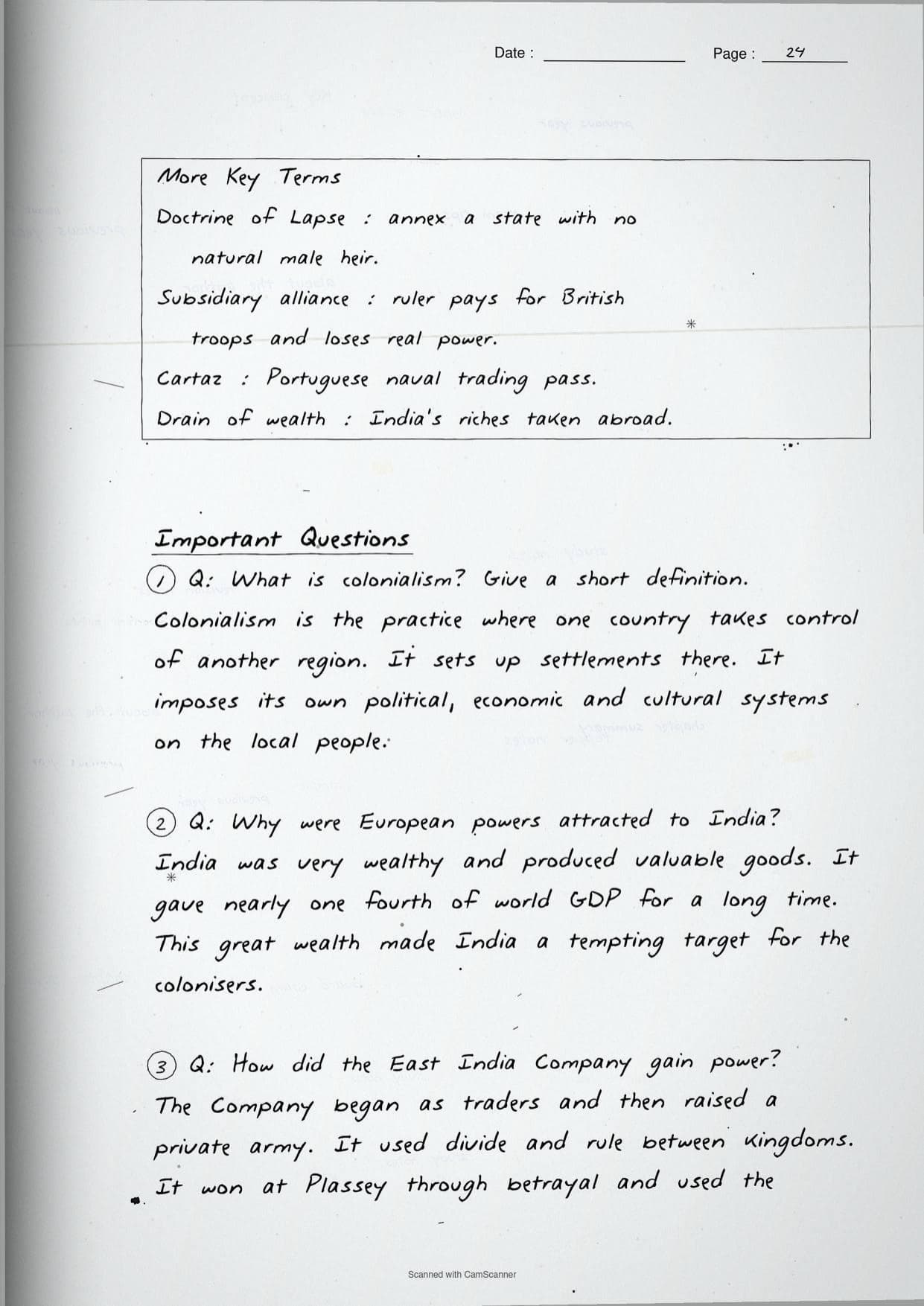
| Doctrine of Lapse | annexing a state whose ruler died without a natural male heir |
| Subsidiary alliance | a ruler pays for British troops and loses real power |
| Drain of wealth | the huge wealth taken out of India by the British |
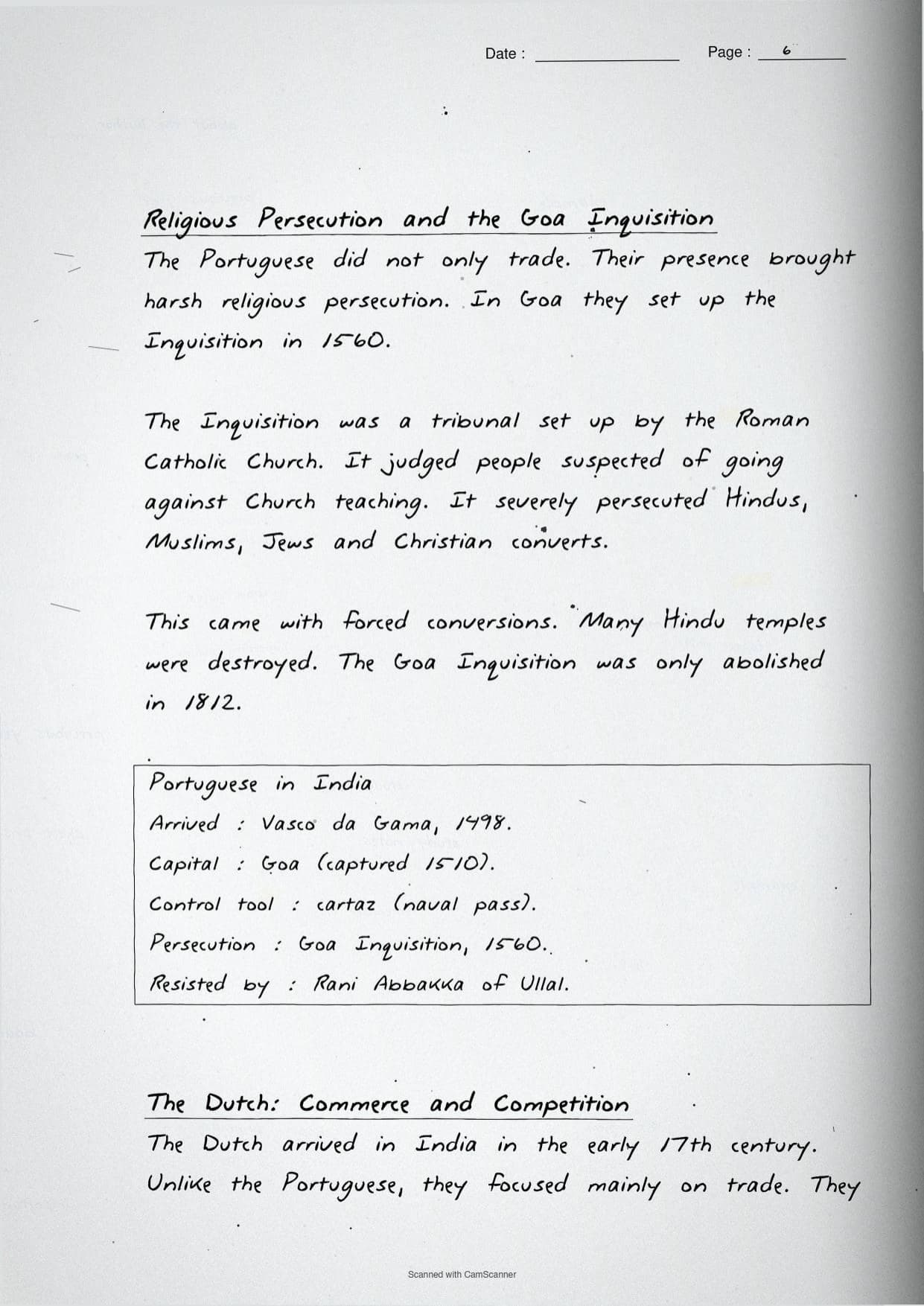
| Cartaz | the Portuguese naval trading pass |
| Sepoy | an Indian soldier in the Company's British Army |
| Inquisition | a Church tribunal that judged suspected heretics |
| GDP | the value of goods and services a country produces in a year |
How Collegedunia's Handwritten Notes Help You Revise The Colonial Era in India
These notes are made for the night before the exam. They keep the facts short and easy to scan. Collegedunia maps every point to the 2026-27 NCERT.
- Clear handwriting: each topic is written in neat, easy-to-read handwriting.
- Boxed key terms: the main terms and definitions are boxed by hand for fast recall.
- Diagrams and tables: simple hand-drawn tables and charts make ideas clear.
- Colour-coded headings: new sub-topics stand out, so you find any section in seconds.
The Colonial Era in India Self-Assessment Quiz
Try these quick questions after you read the notes. Tap each question to check your answer. They cover the points CBSE asks most often.
Who reached Kappad near Kozhikode in 1498?
(a) Robert Clive (b) Vasco da Gama (c) Dupleix (d) Marthanda Varma
Answer: (b) Vasco da Gama - this opened the way for European colonisation.
The Battle of Plassey was won mainly through?
(a) larger numbers (b) better guns (c) Mir Jafar's betrayal (d) a treaty
Answer: (c) Mir Jafar's betrayal - his forces stood aside during the battle.
The Doctrine of Lapse annexed a state when the ruler had no?
(a) money (b) army (c) natural male heir (d) fort
Answer: (c) natural male heir - it ignored the tradition of adoption.
Who wrote 'Poverty and Un-British Rule in India'?
(a) Utsa Patnaik (b) Dadabhai Naoroji (c) Macaulay (d) Bentinck
Answer: (b) Dadabhai Naoroji - he studied and named the drain of wealth.
Who led the defence of Jhansi in 1857?
(a) Begum Hazrat Mahal (b) Rani Abbakka (c) Rani Lakshmibai (d) Tarabai
Answer: (c) Rani Lakshmibai - called the best and bravest of the rebel leaders.
How to Use These Handwritten Notes for Class 8 Social Science Revision
Use these class 8 social-science handwritten notes in two passes. Read them slowly once for the full chapter. Then, near the exam, read only the boxes and key terms for a fast recall.
- Read the notes once with the NCERT chapter open beside you.
- Say each key term and idea in your own words.
- Practise one long-answer question from a past paper.
- On the last day, revise only the key terms and the boxes.
Class 8 Social Science Handwritten Notes for All Chapters
The table below links the class 8 social-science handwritten notes for every chapter. Use it to jump to any other chapter's notes.
The Colonial Era in India Class 8 Social Science Handwritten Notes FAQs
Ques. Where can I download The Colonial Era in India Class 8 Social Science Handwritten Notes PDF?
Ans. You can download the The Colonial Era in India Class 8 Social Science Handwritten Notes PDF directly from this page. Both the Normal and HD versions are free.
Ques. Are these handwritten notes aligned with the 2026-27 NCERT?
Ans. Yes. These notes follow the current 2026-27 syllabus for Class 8 Social Science. What the drain of wealth meant for India.
Ques. How many pages is the Class 8 Social Science The Colonial Era in India Handwritten Notes PDF?
Ans. The notes run about 26 pages. They cover the full chapter with key terms, hand-drawn boxes, and a short self-assessment quiz.
Ques. What is the main idea of the 8th standard Social Science chapter The Colonial Era in India?
Ans. The chapter shows how European traders, above all the British East India Company, gradually turned into rulers of India through betrayal, annexation and cheap alliances. Its main idea is that colonial rule drained India's wealth and ruined its industries, while resistance grew and peaked in the Great Rebellion of 1857.
Ques. Are these The Colonial Era in India notes enough for the CBSE Class 8 exam?
Ans. Yes, for revision. The Collegedunia handwritten notes cover every key point and exam term. Read them with the NCERT chapter and practise past questions.



Comments