



India is governed by a parliamentary system where an elected Parliament makes the laws and an executive led by the Prime Minister runs the government. Class 8 Social Science Chapter 6 The Parliamentary System: Legislature and Executive builds this idea step by step. These class 8 social-science handwritten notes chapter 6 The Parliamentary System: Legislature and Executive follow.
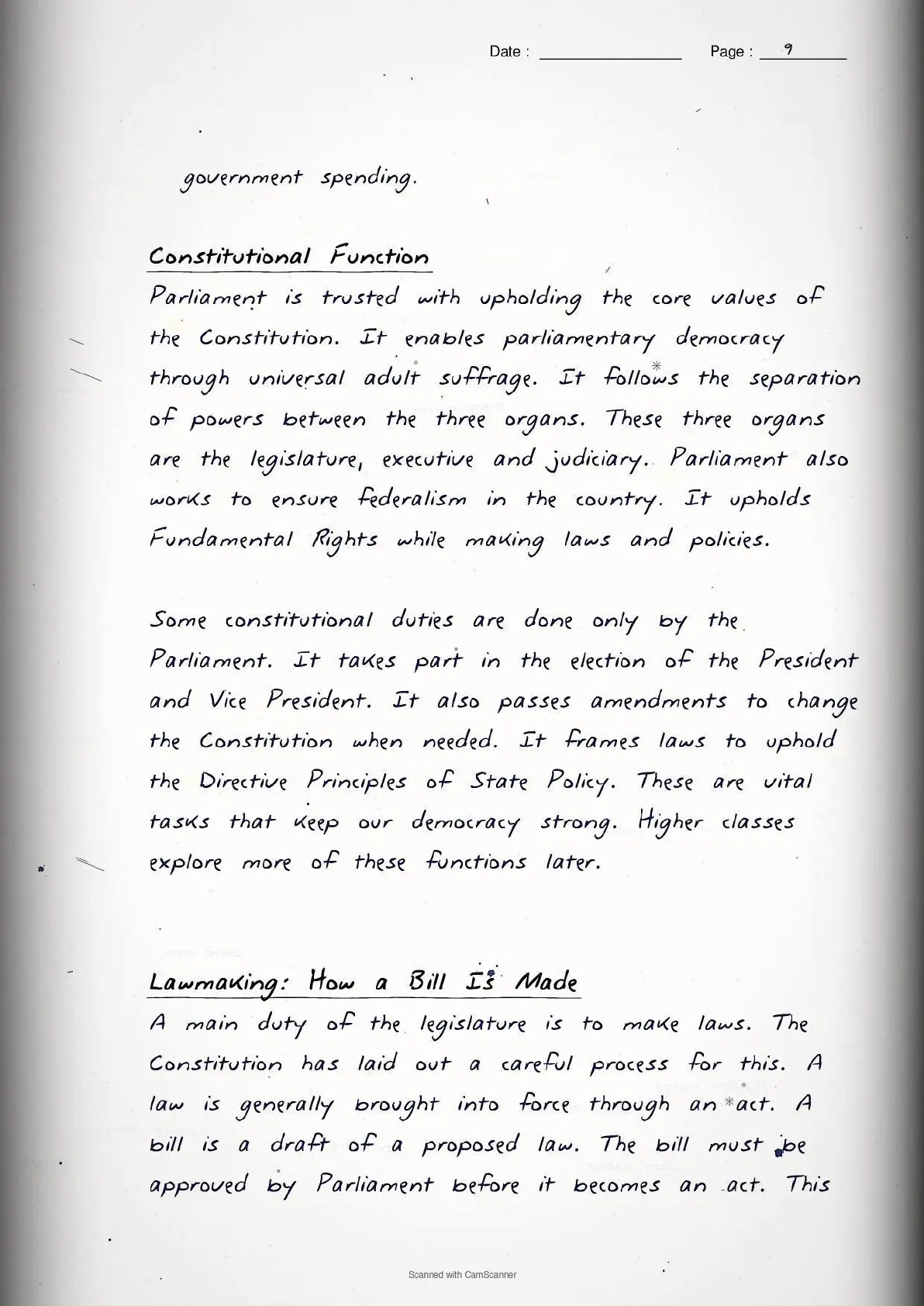
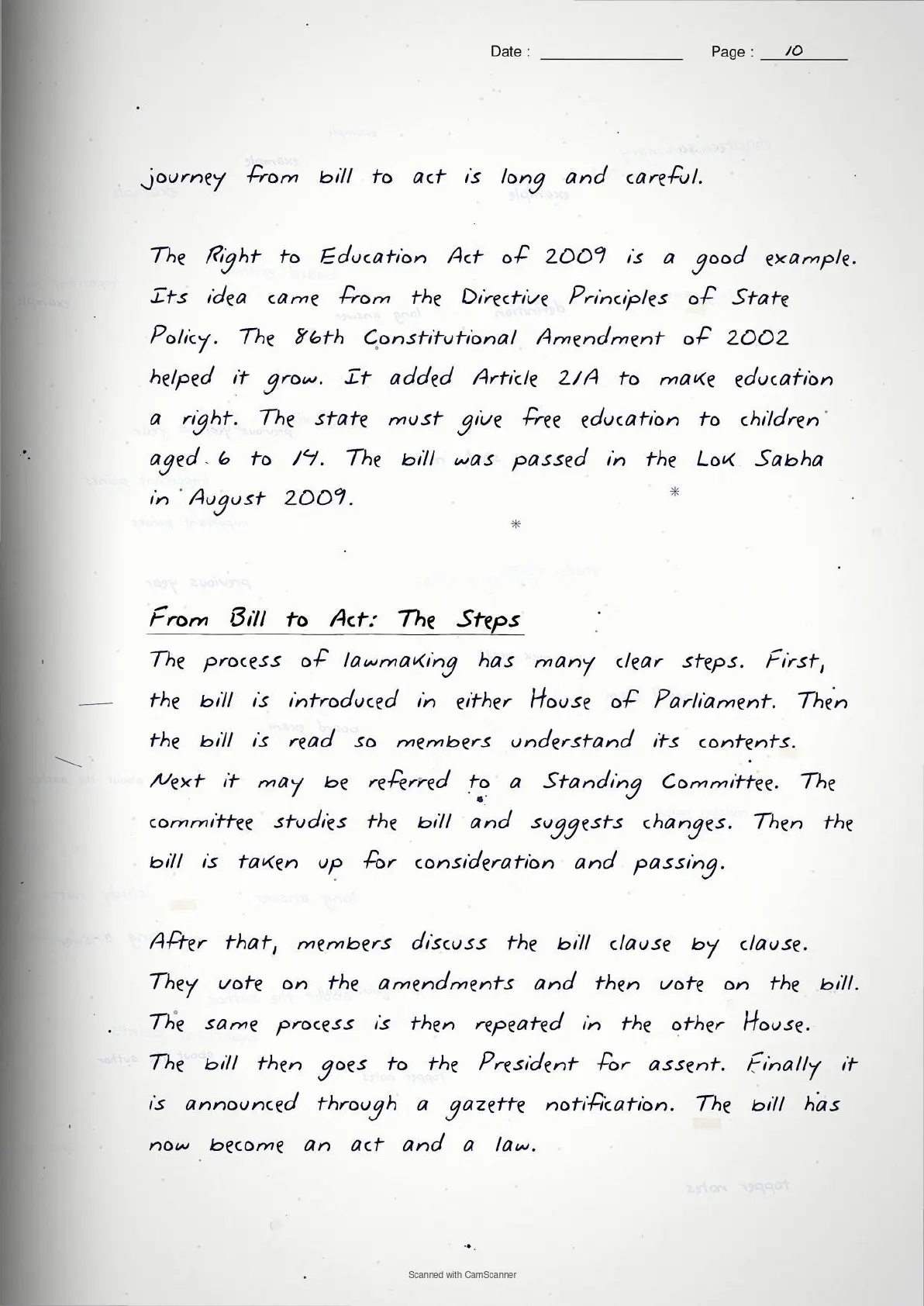
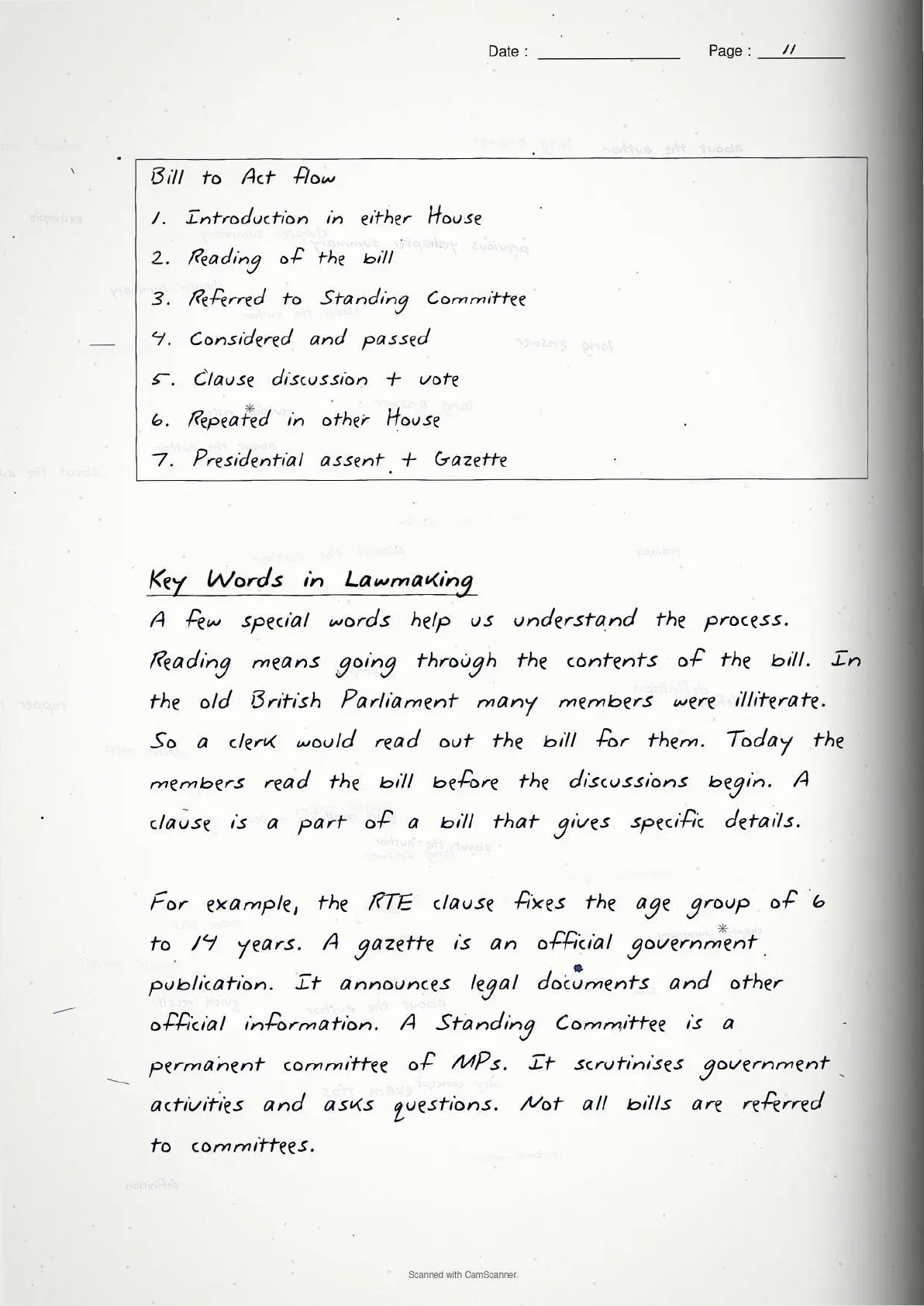
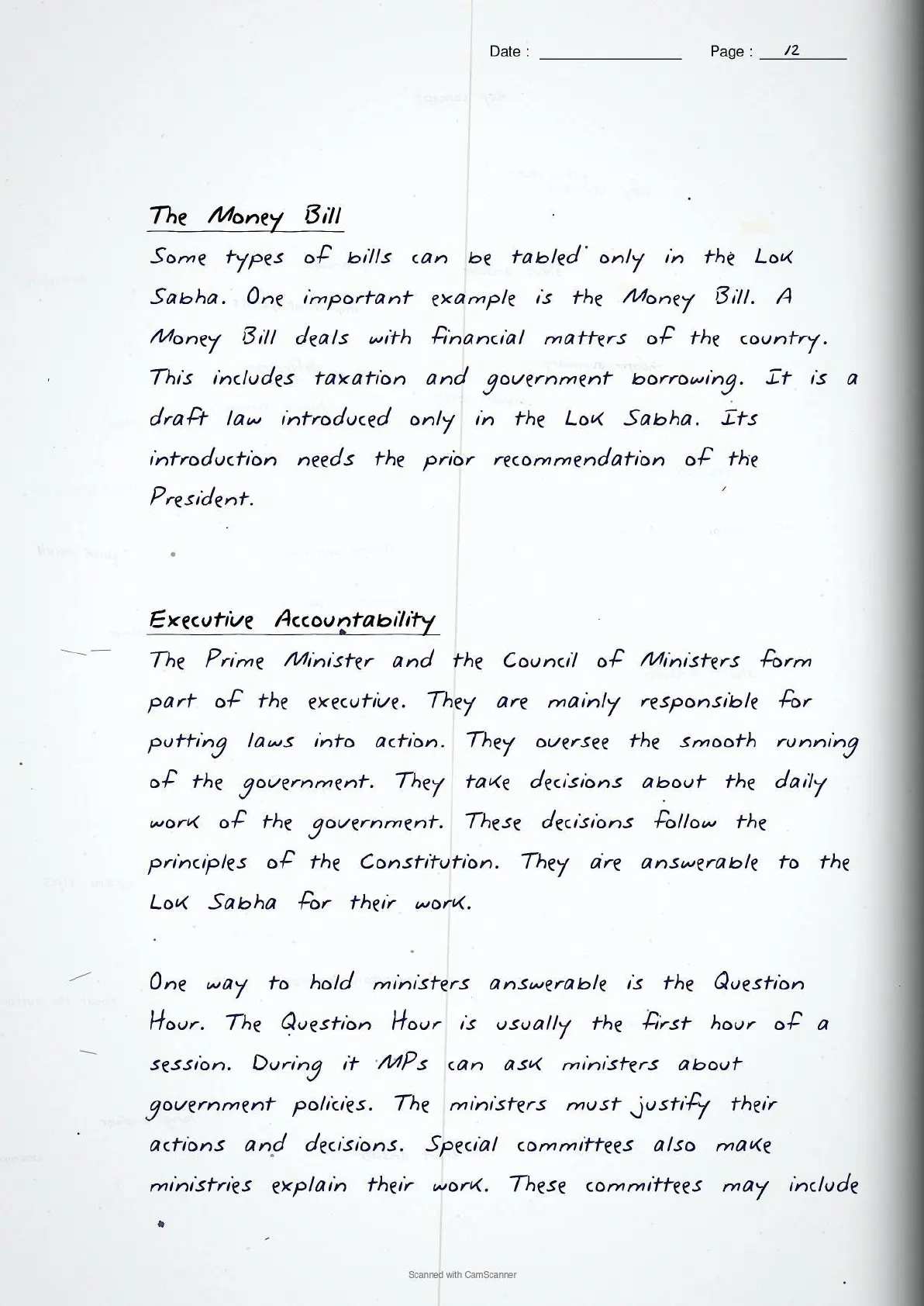
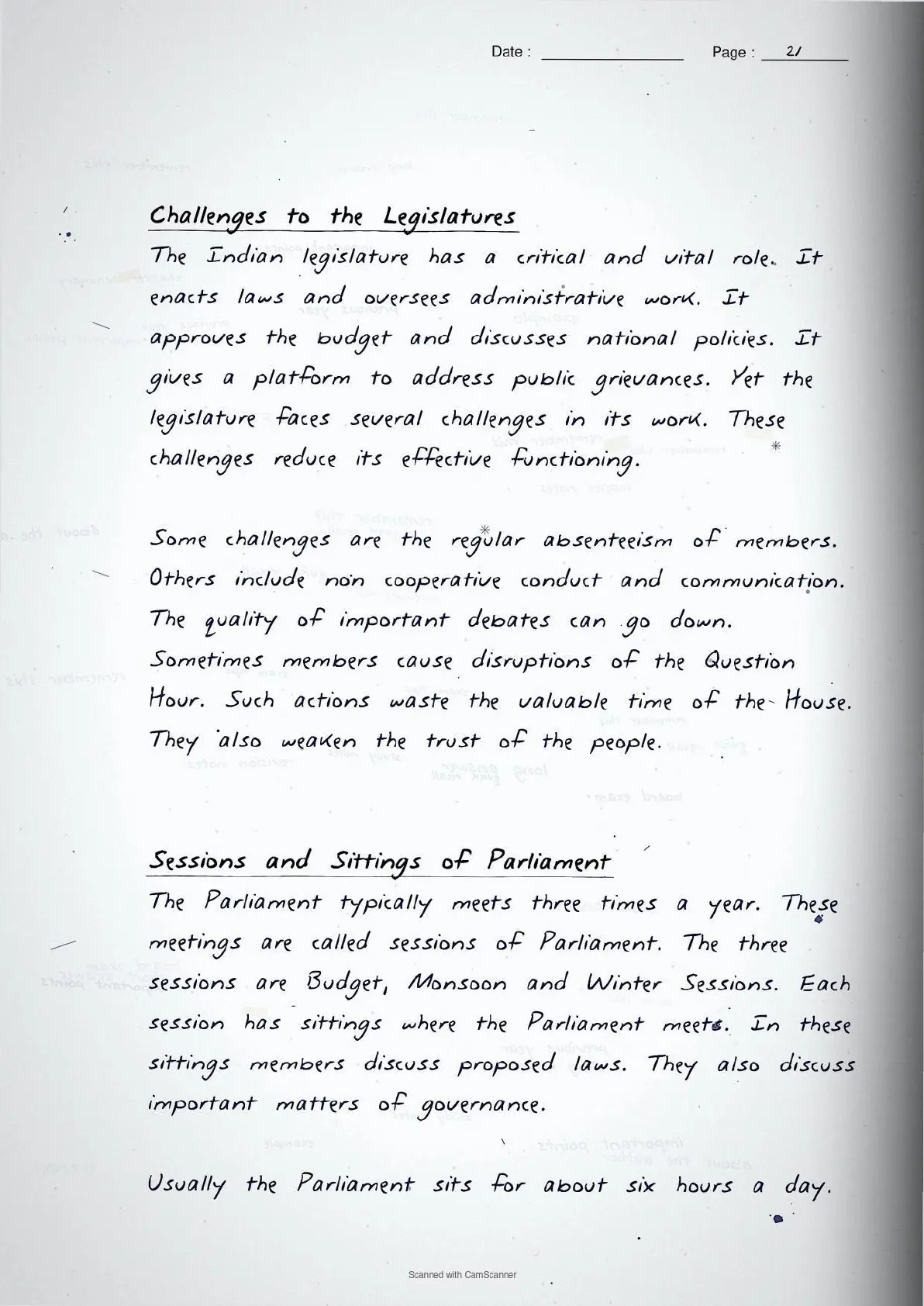
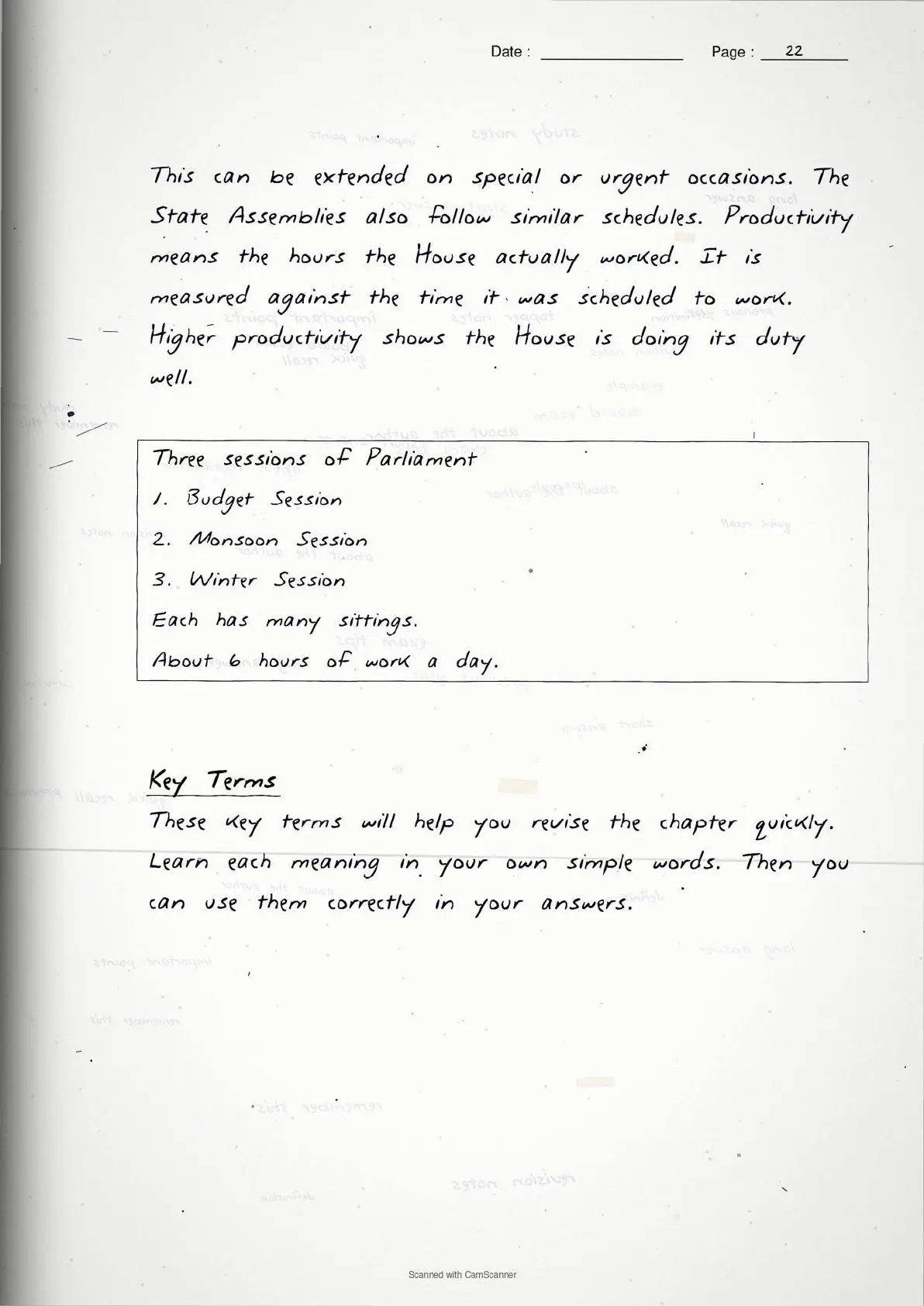
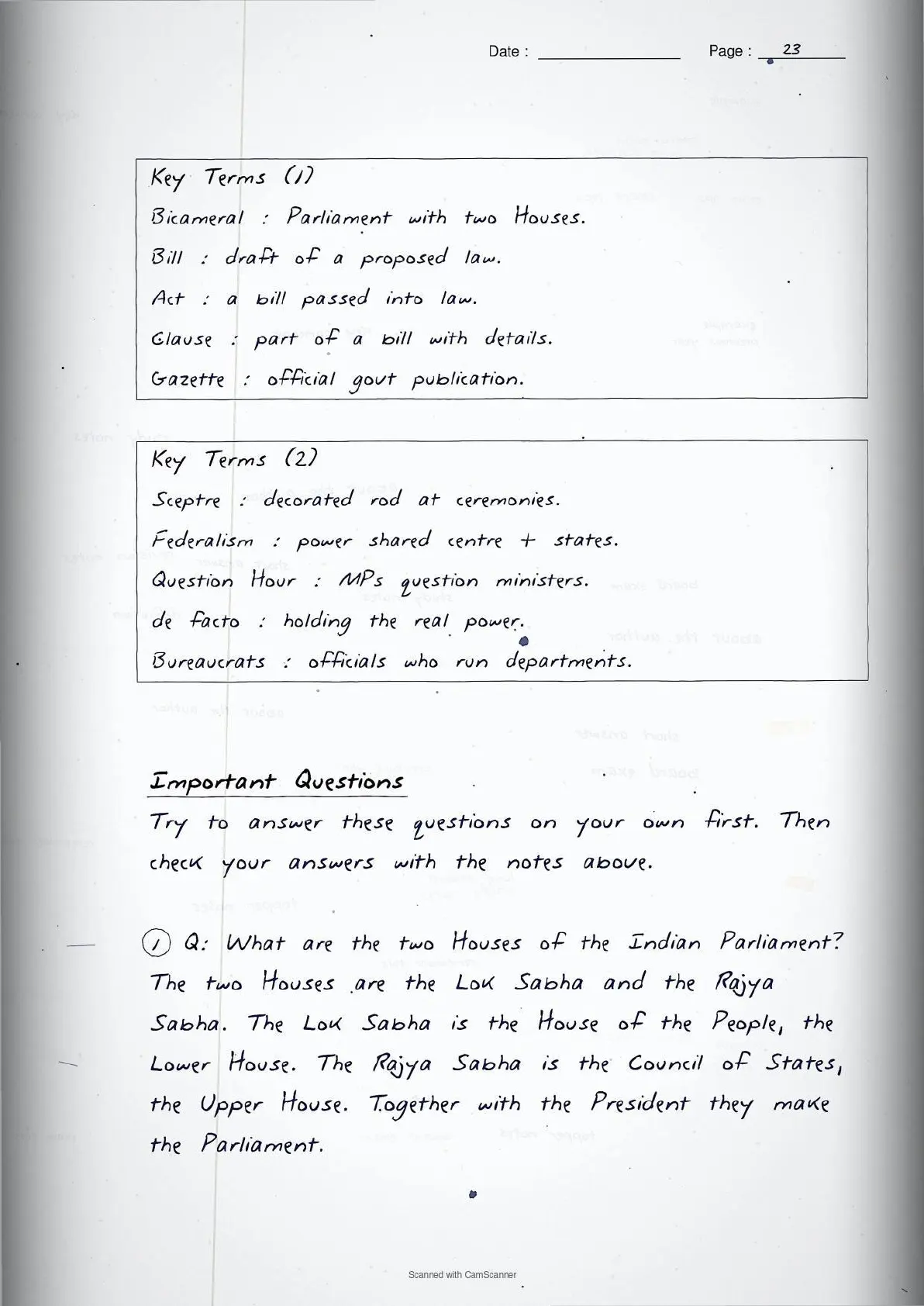
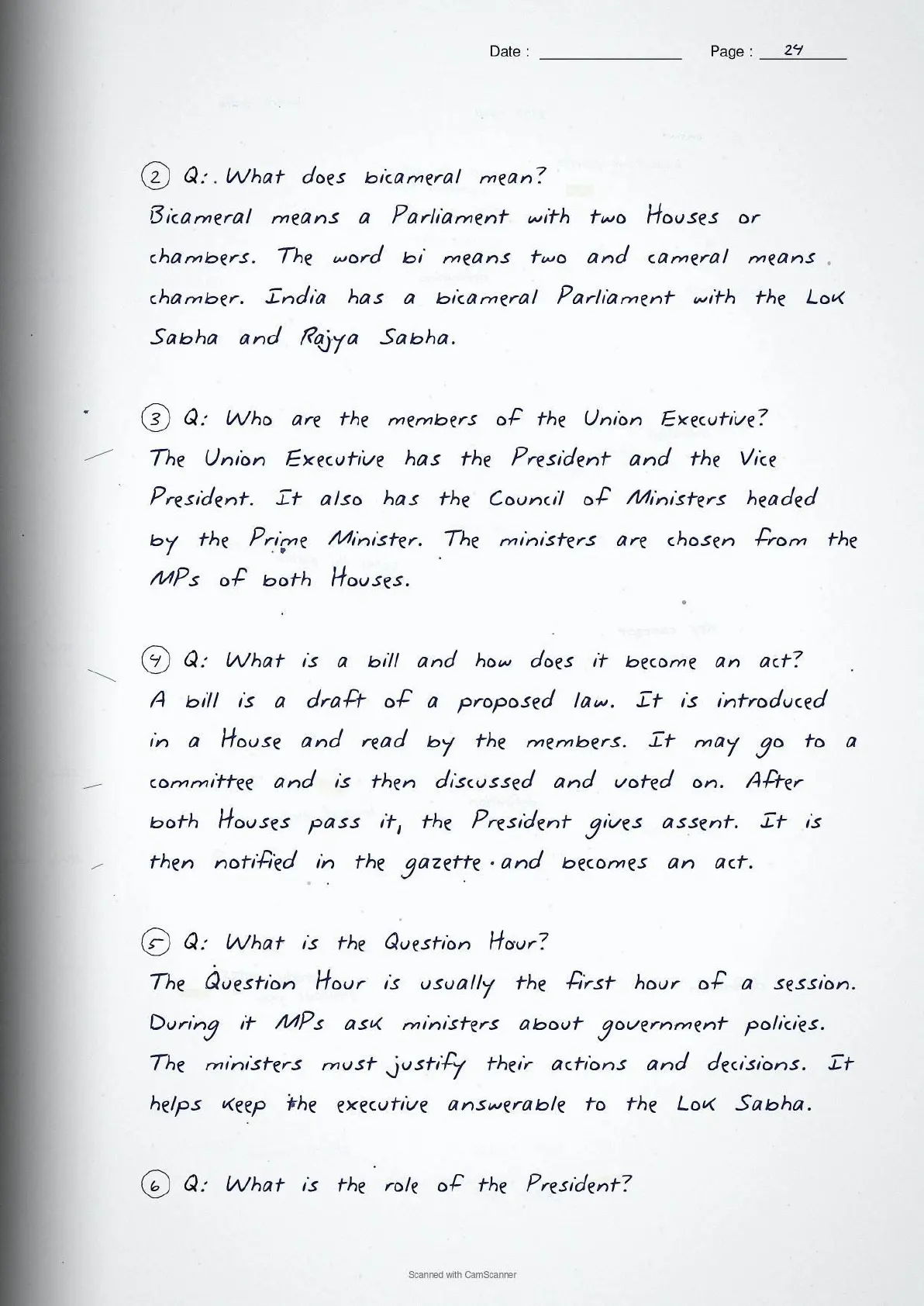
- CBSE Class 8 Weightage: a scoring chapter in the Social Science paper, asked in short and long answers.
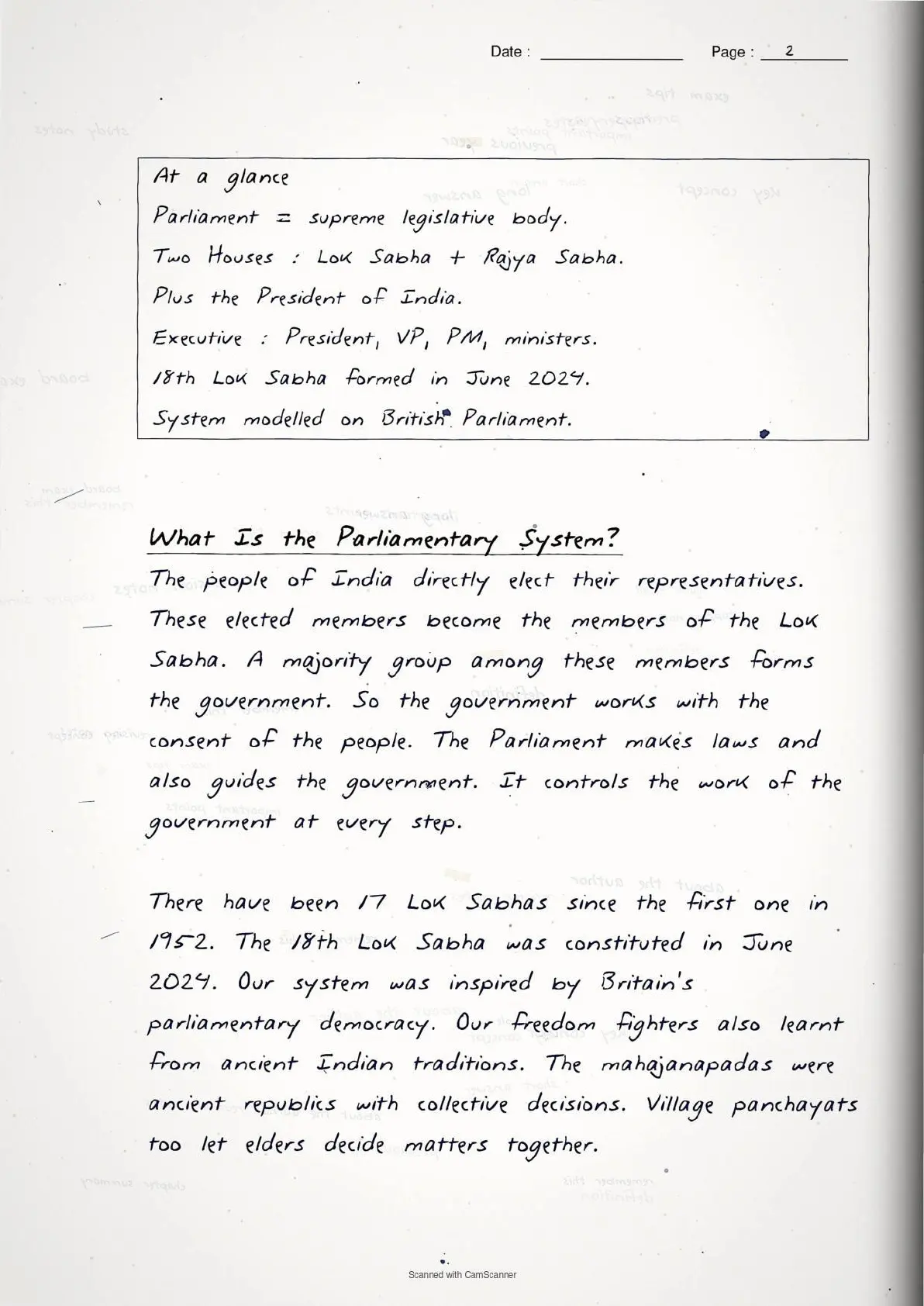
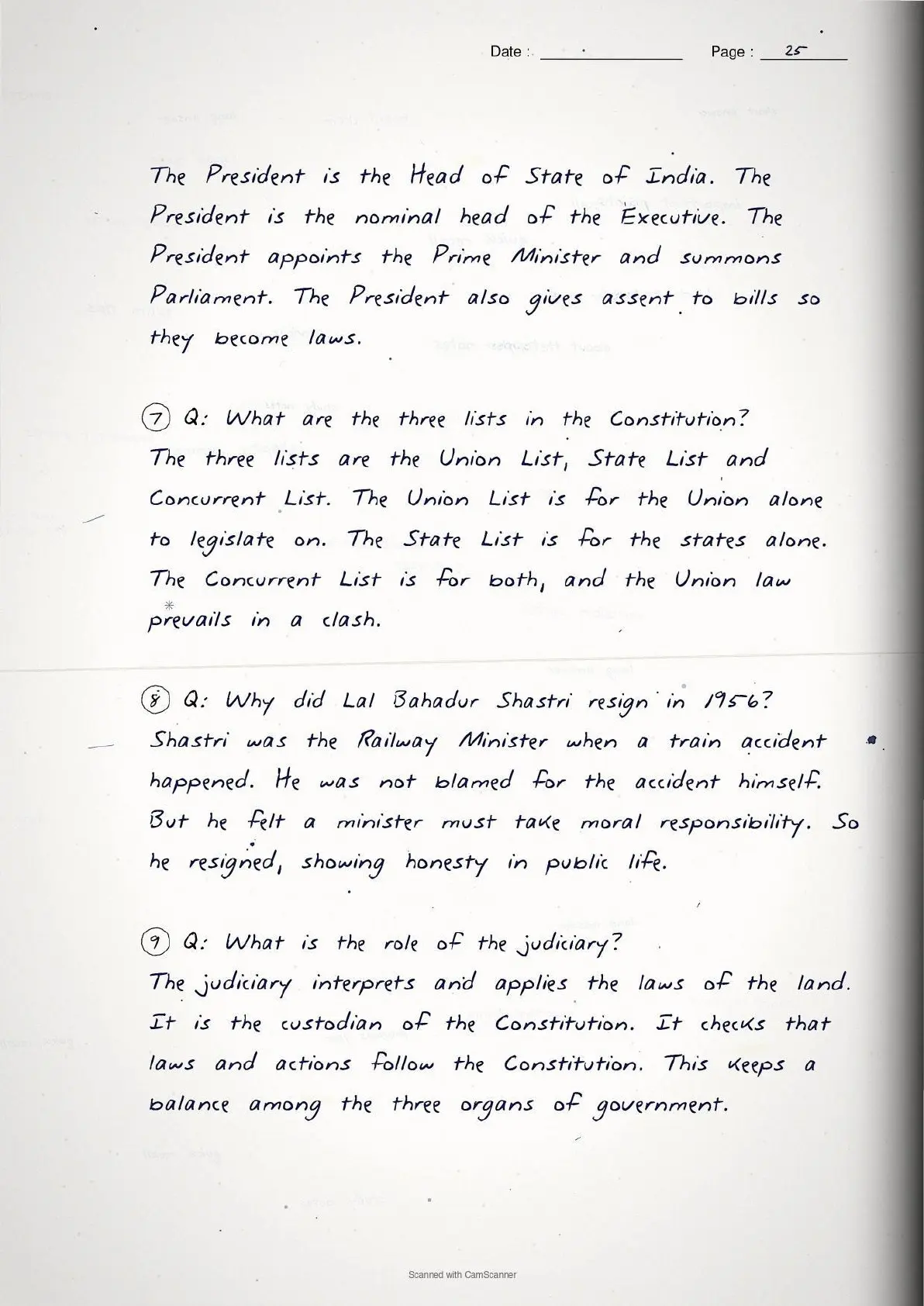
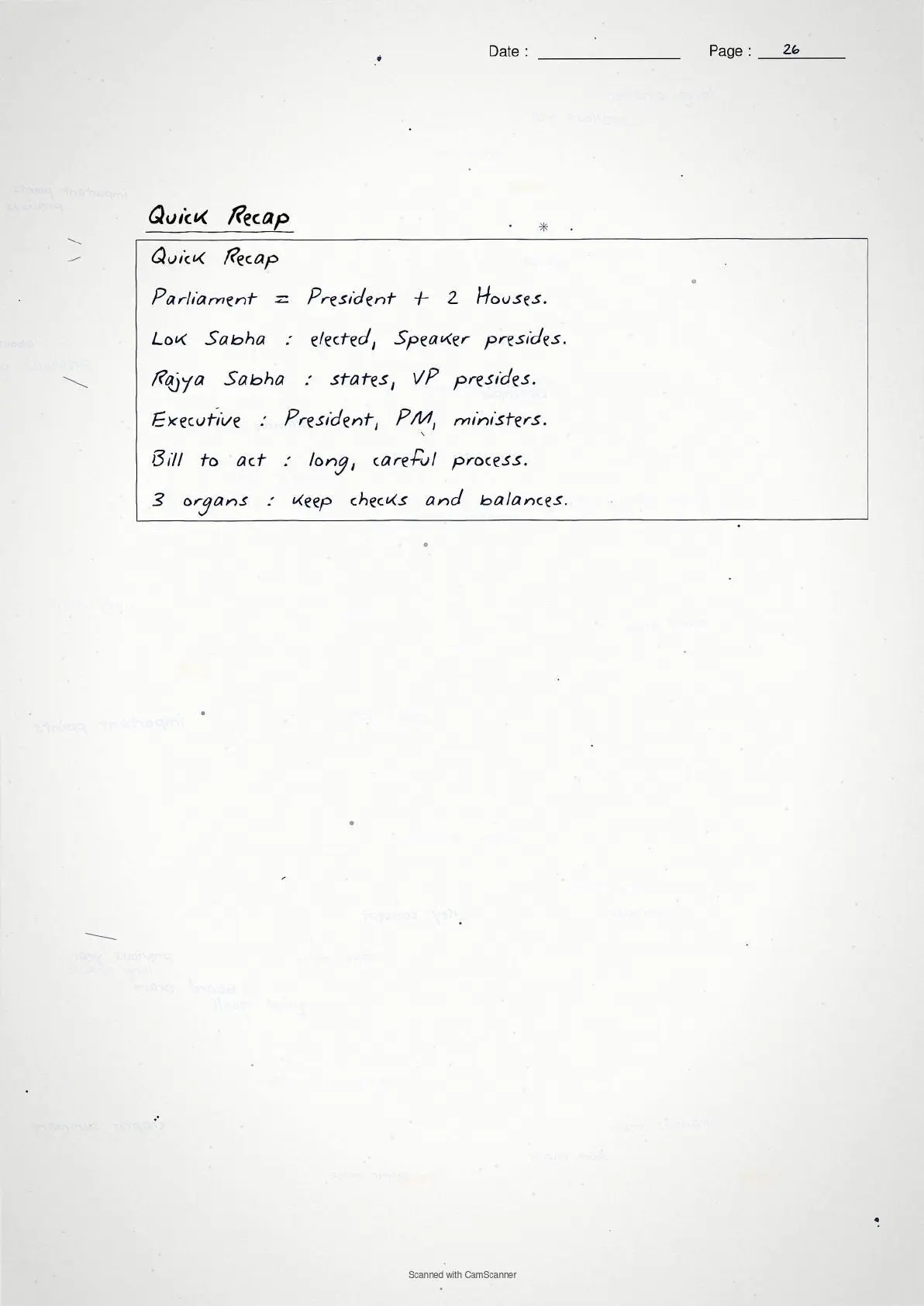
- What the notes cover: what the parliamentary system is, composition of parliament and bicameralism, the lok sabha and the rajya sabha, the union executive: president, vp, pm.
- Best for: quick revision before Class 8 exams and a strong base for Class 9.
You can read the complete class 8 social-science handwritten notes for The Parliamentary System: Legislature and Executive, with key terms, boxed definitions, and quick revision points, in the PDF below.
These handwritten notes are written by subject teachers, mapped to the 2026-27 NCERT, and checked against the last five years of CBSE Class 8 Social Science papers.
Key Terms and Ideas in The Parliamentary System: Legislature and Executive
These are the terms and ideas the exam asks about most. Learn each one so you can define it and use it in your answers.
| Term / Idea | What it means |
|---|---|
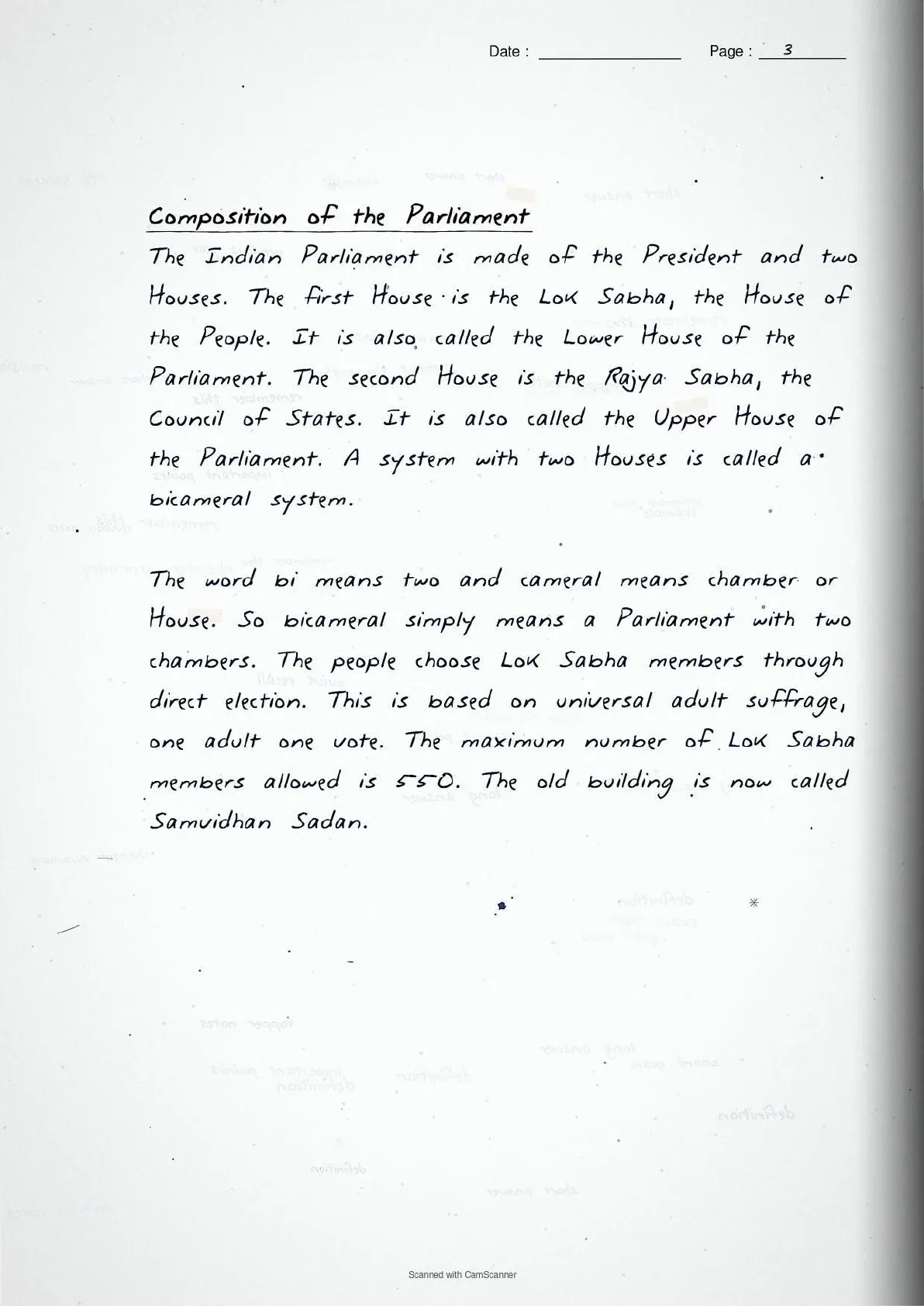
| Bicameral | a Parliament with two Houses or chambers |
| Bill | a draft of a proposed law |
| Act | a bill that has been passed into law |
| Clause | a part of a bill that gives specific details |
| Gazette | an official government publication that announces laws |
| Question Hour | the first hour of a session when MPs question ministers |
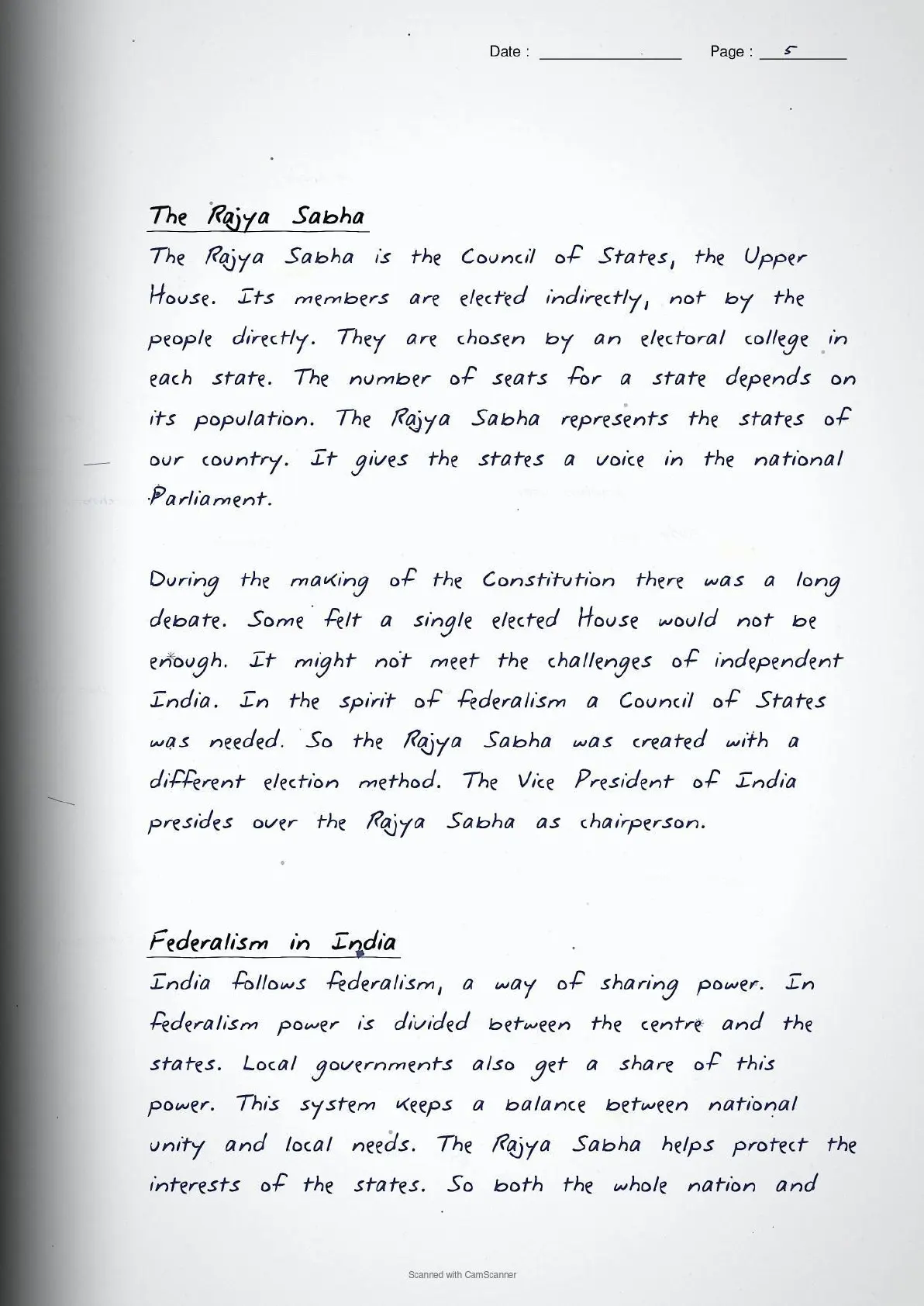
| Federalism | sharing of power between the centre and the states |
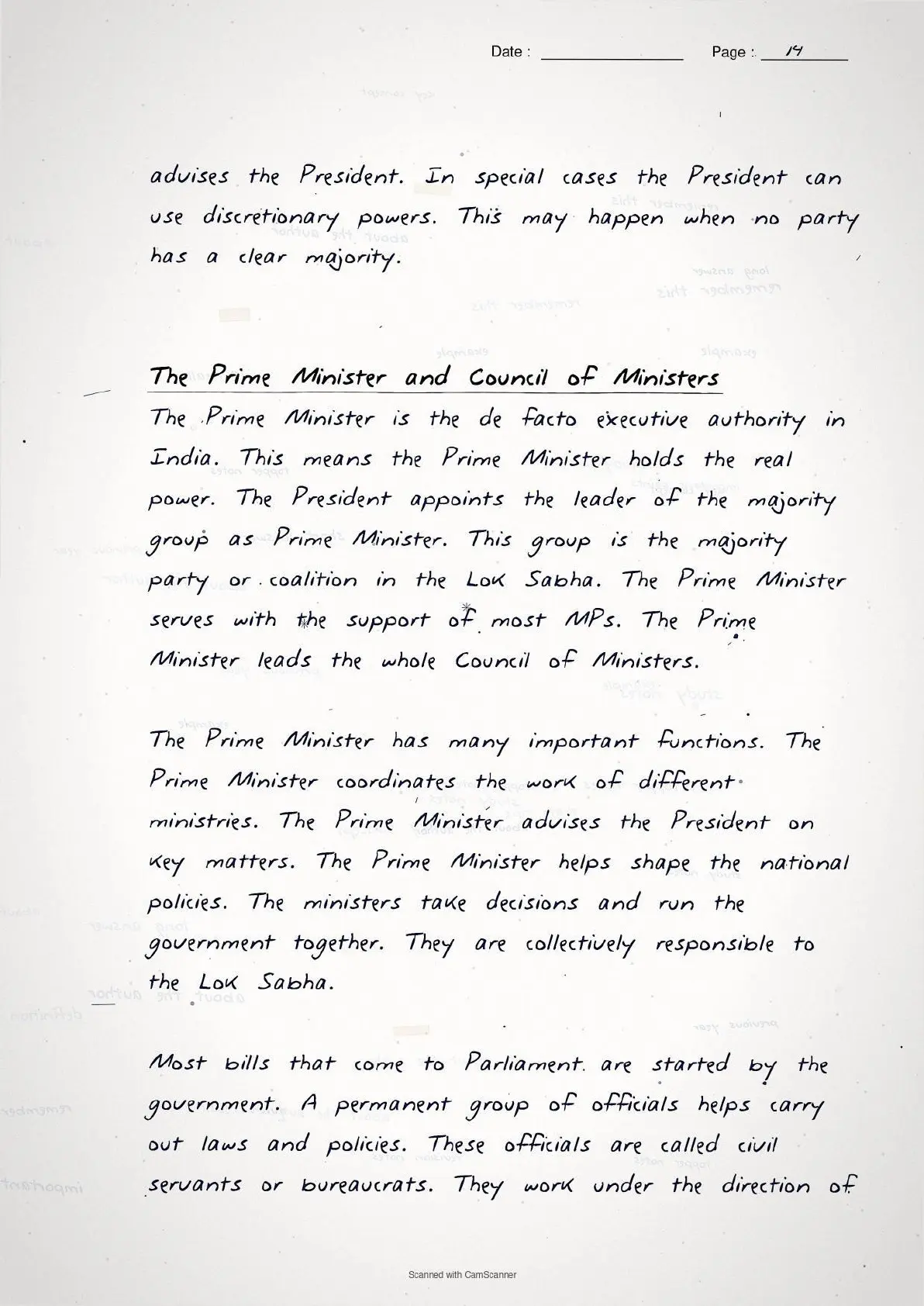
| de facto | holding the real power, as the Prime Minister does |
What the The Parliamentary System: Legislature and Executive Handwritten Notes Cover
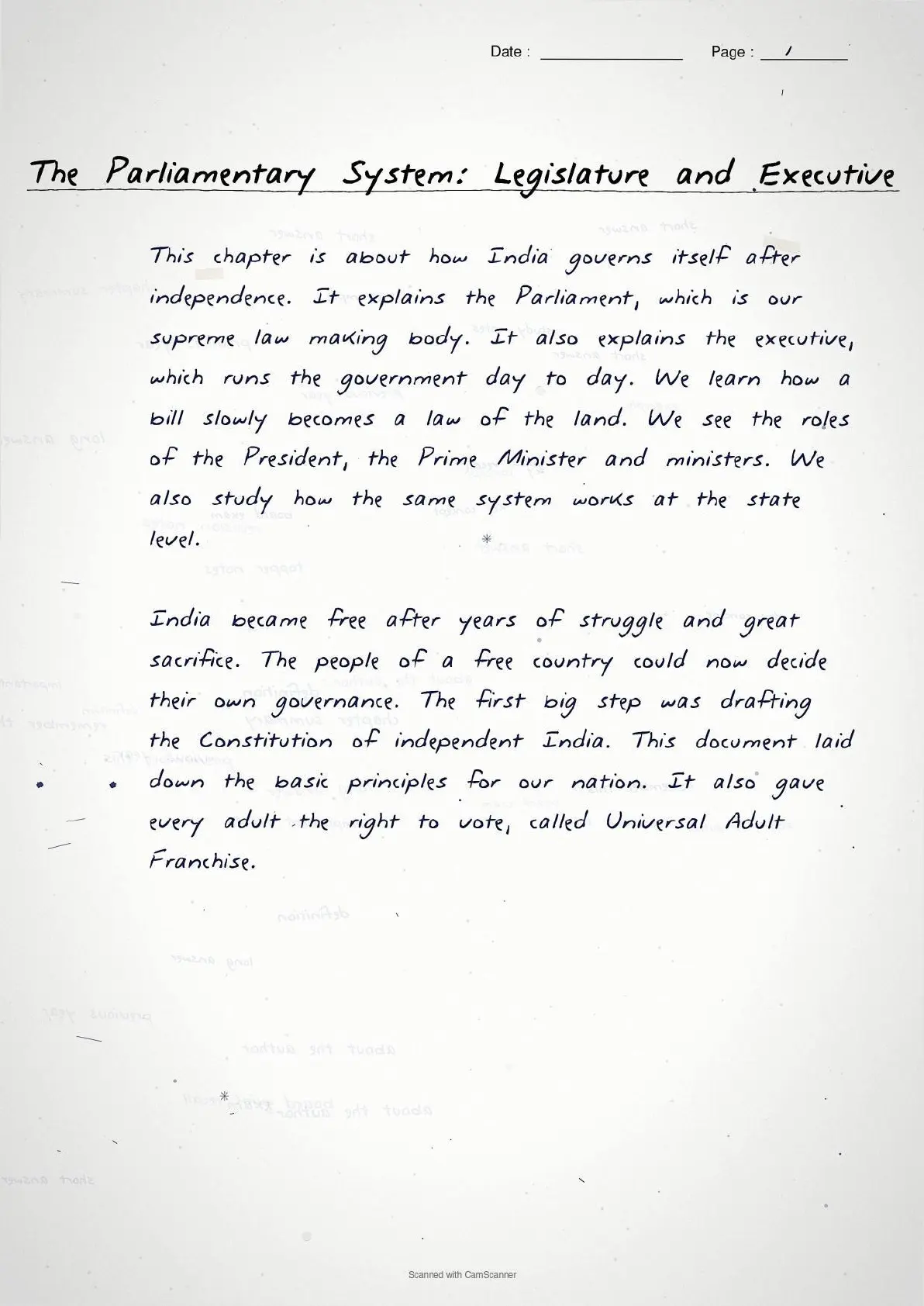
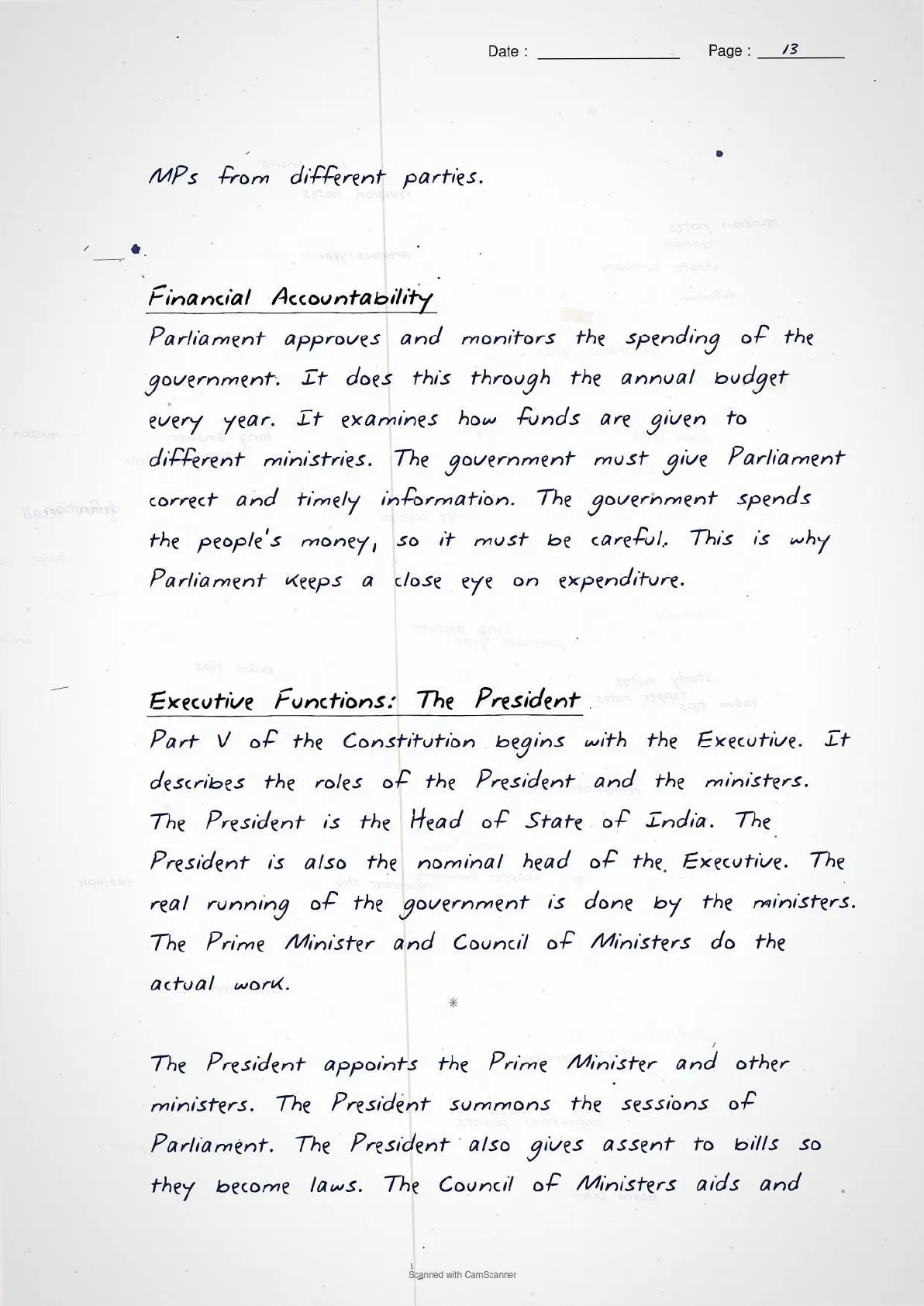
This Civics chapter is about how India governs itself after Independence. It explains the Parliament, our supreme law-making body, and the executive that runs the government day to day. It shows how a bill becomes a law and how the same system works at the state level.
- What the parliamentary system is
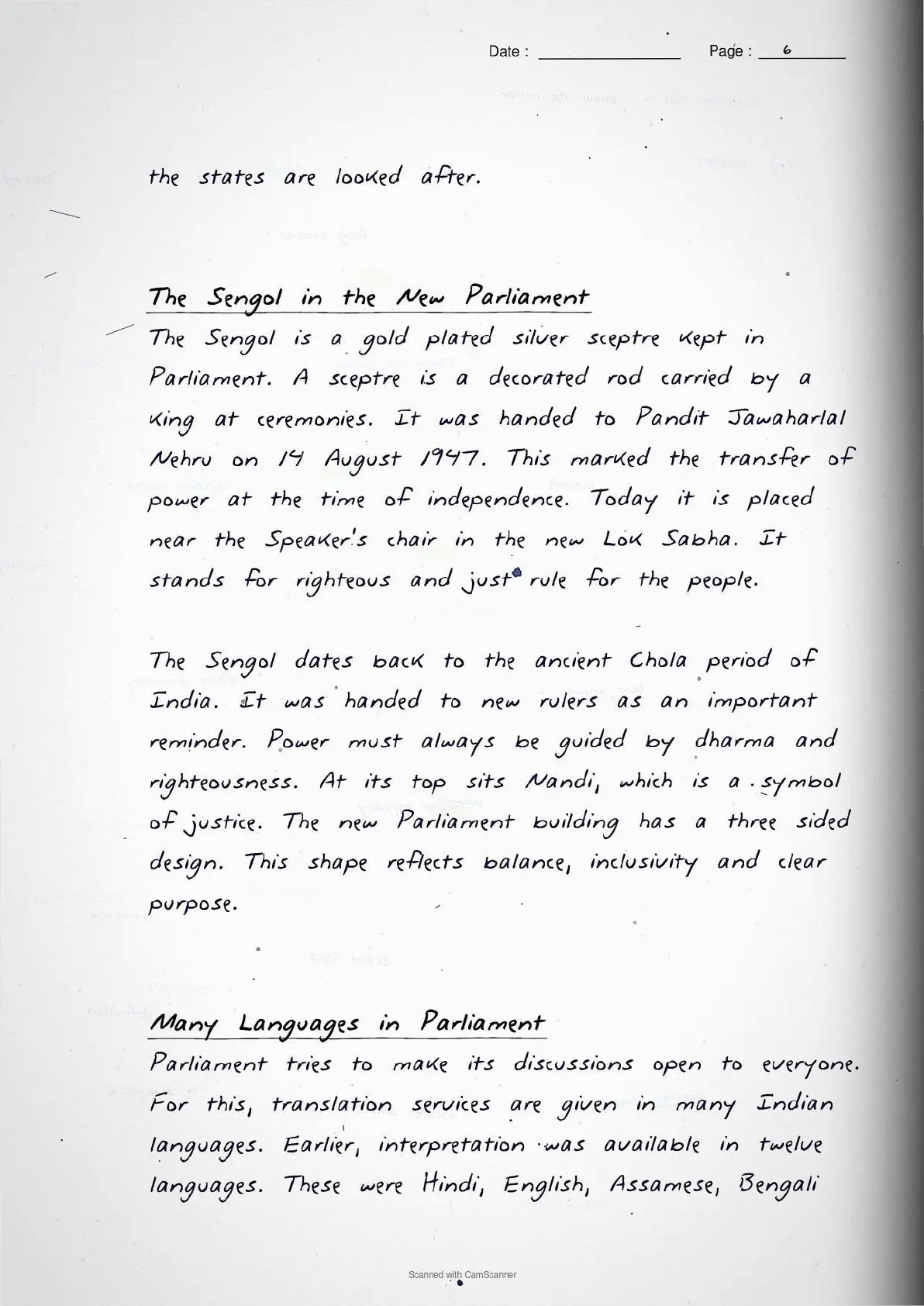
- Composition of Parliament and bicameralism
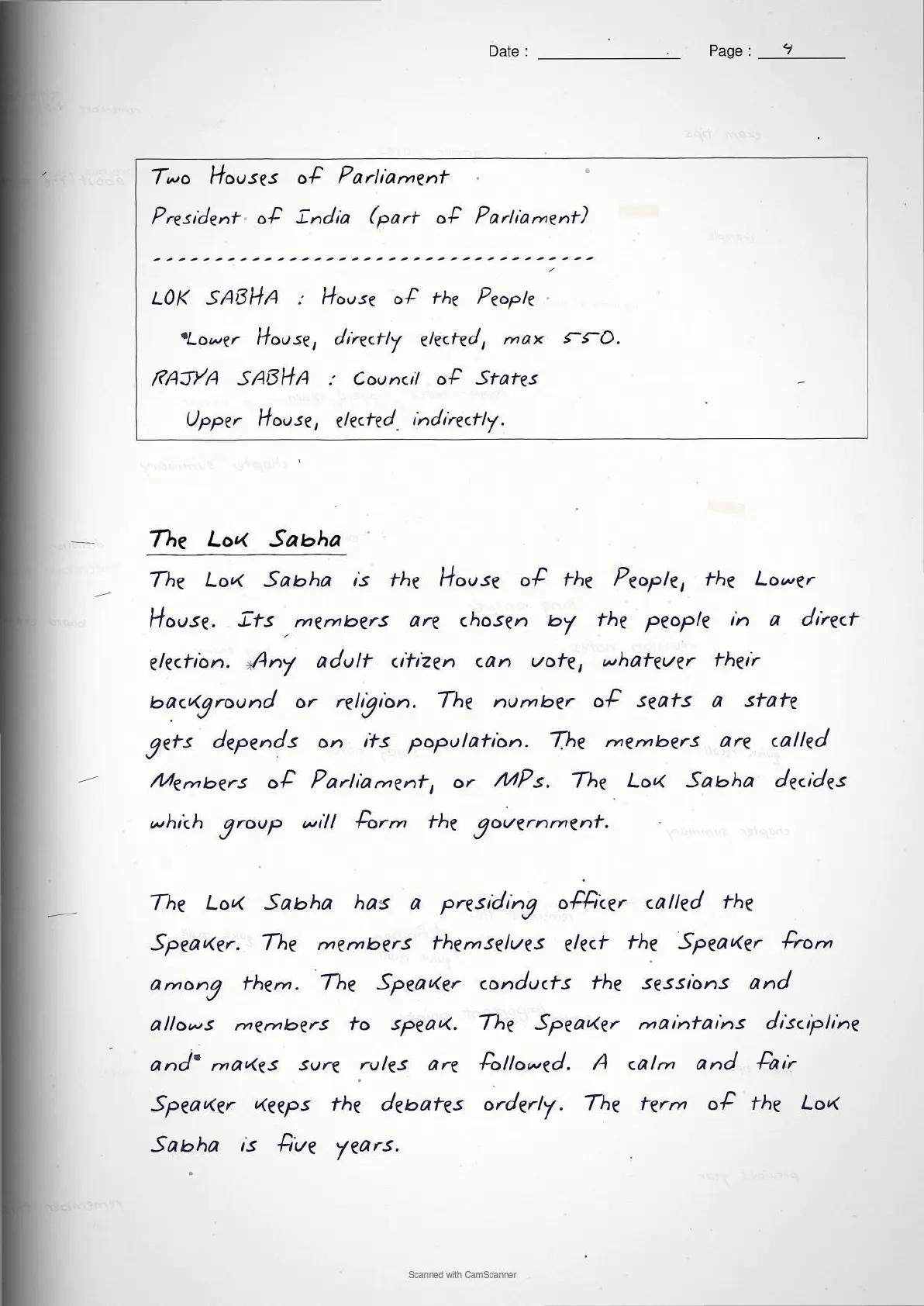
- The Lok Sabha and the Rajya Sabha
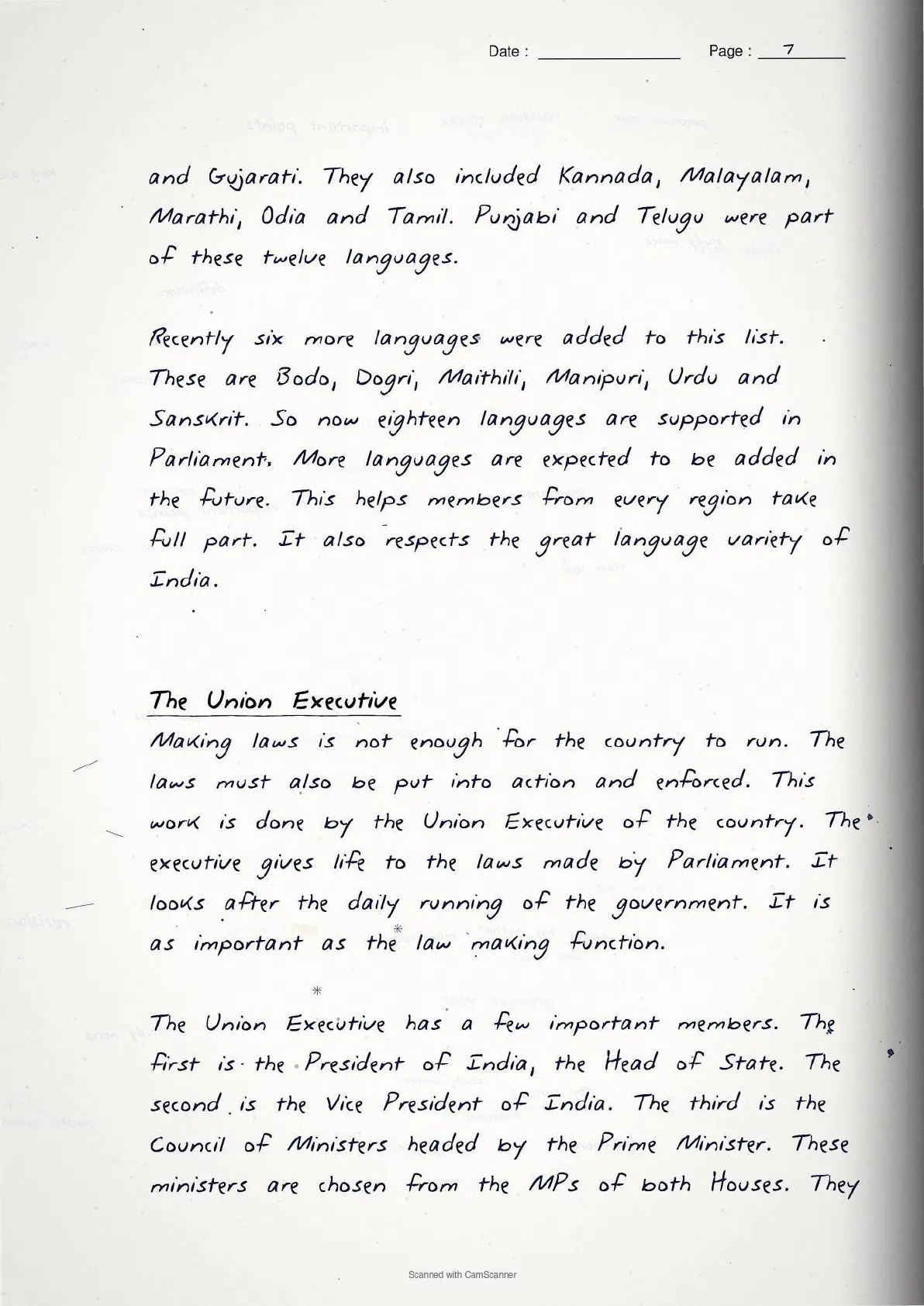
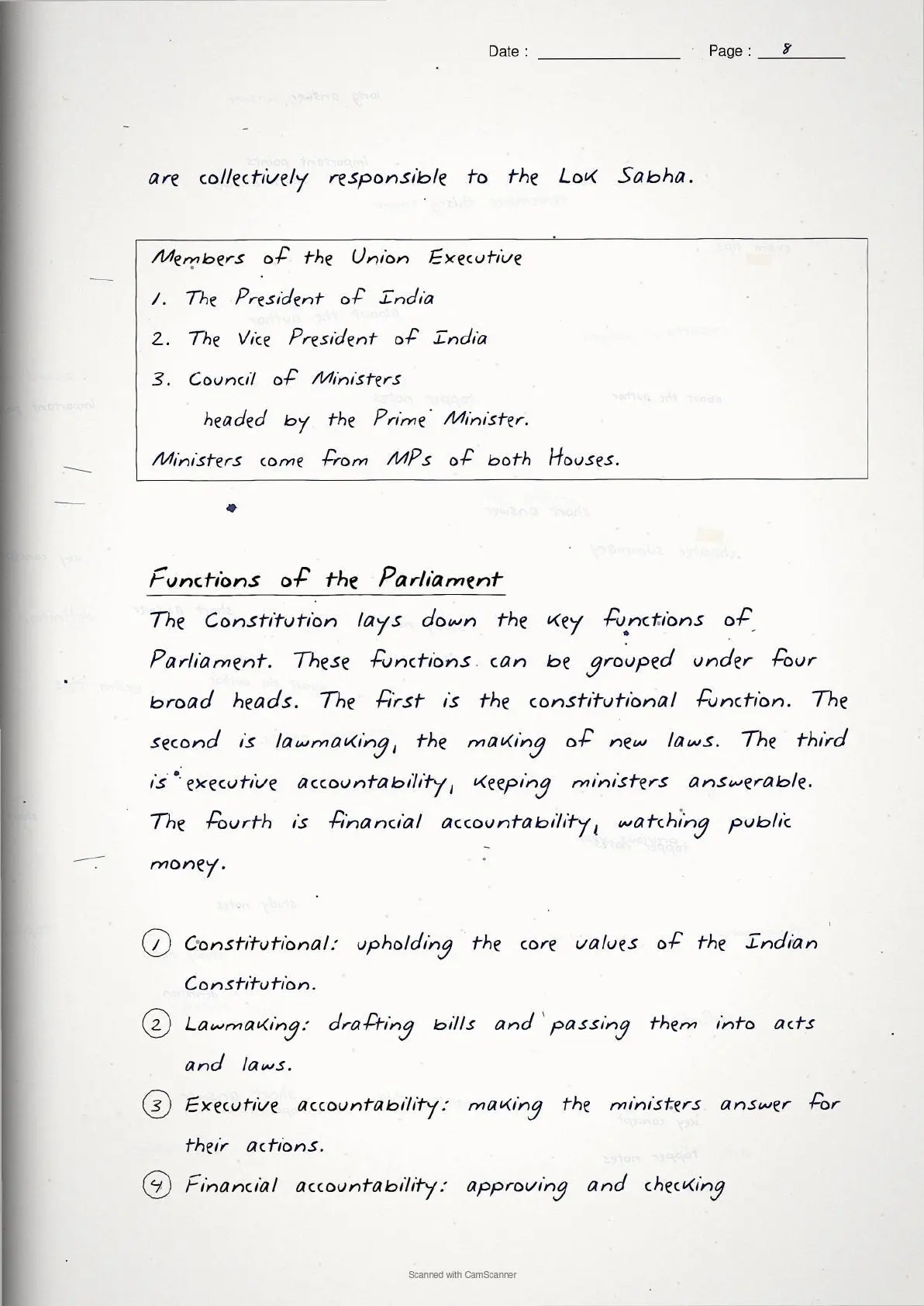
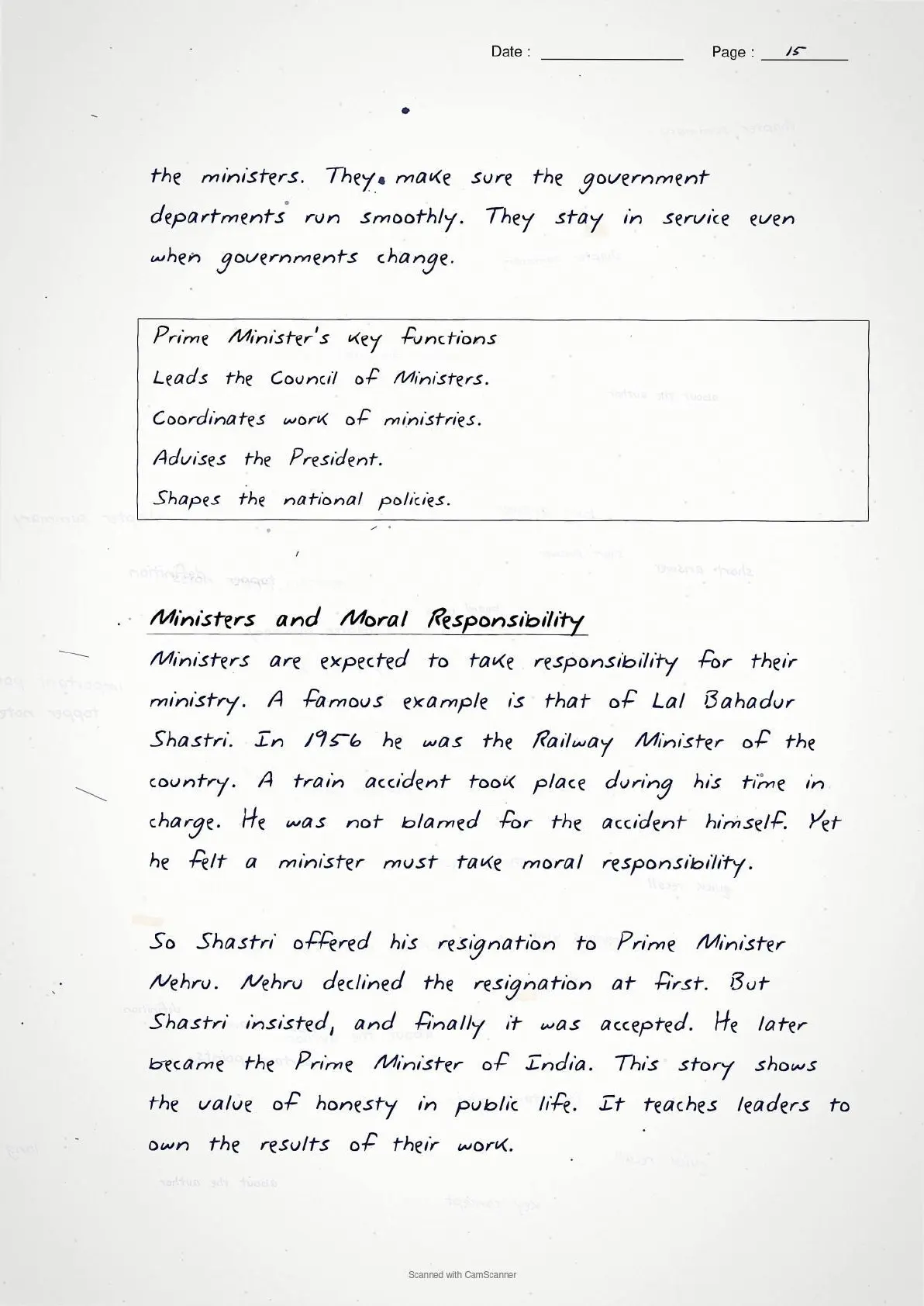
- The Union Executive: President, VP, PM
- Functions of Parliament
- How a bill becomes an act
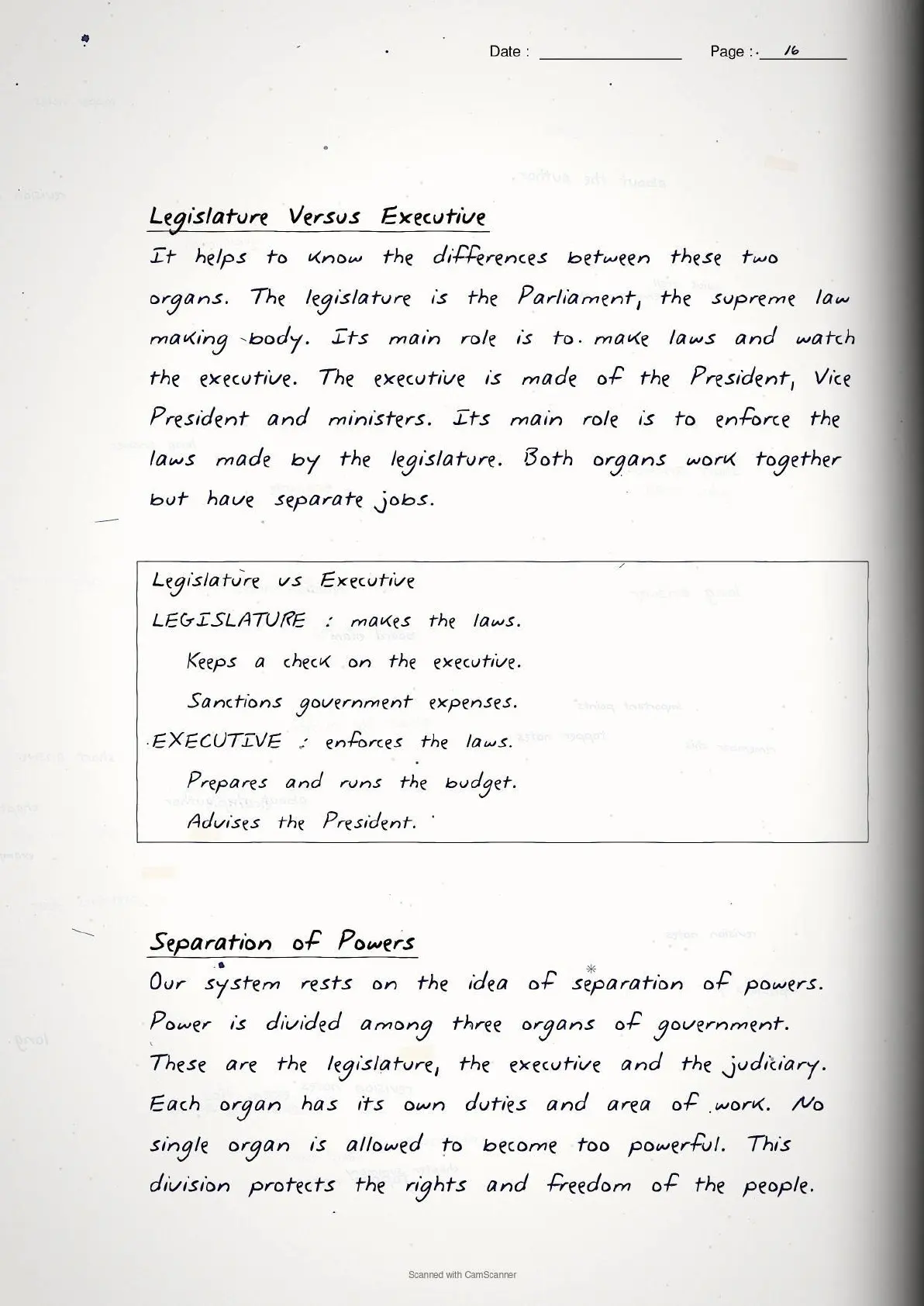
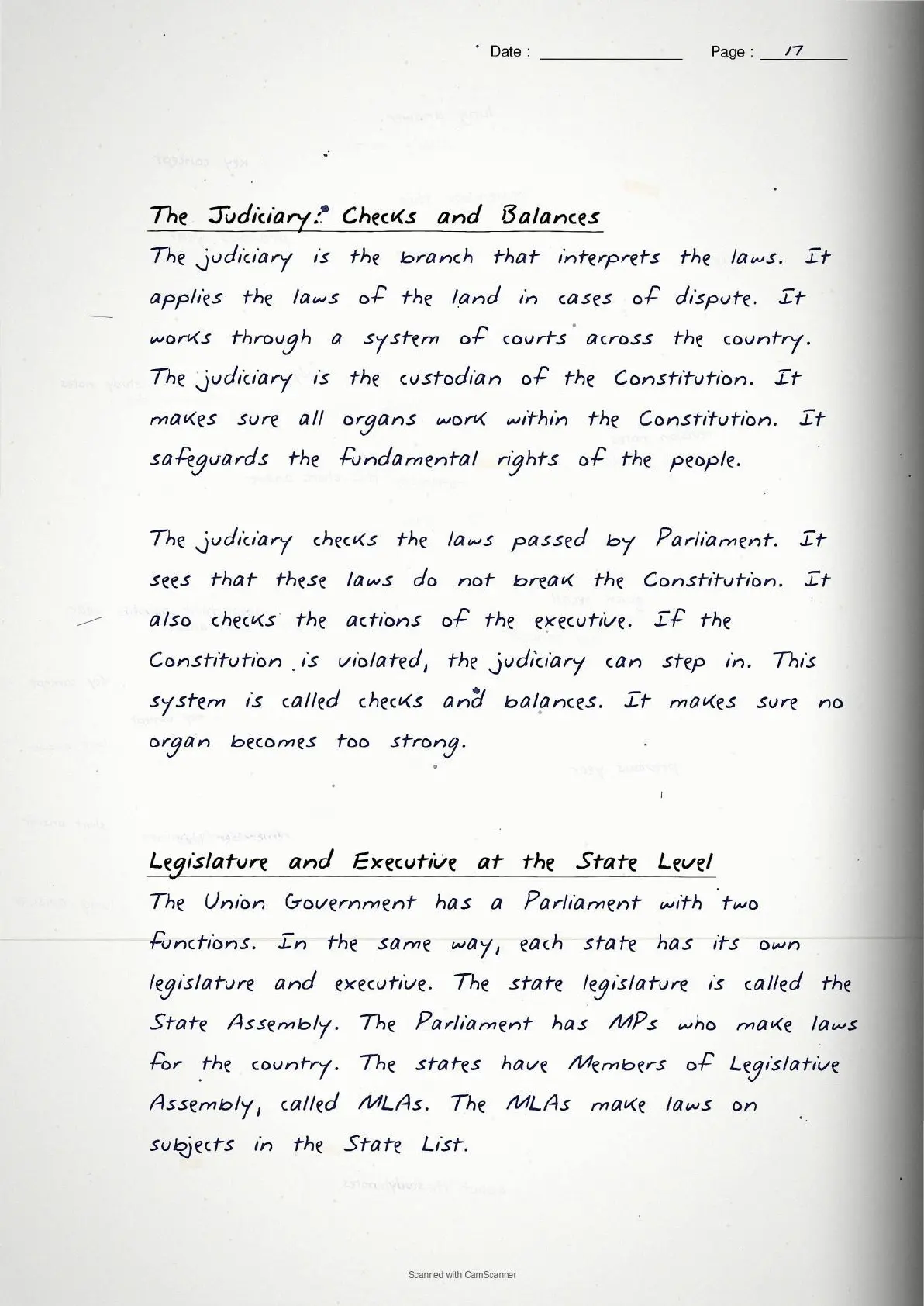
- Separation of powers and the judiciary
- Legislature and executive at the state level
The Parliamentary System: Legislature and Executive Topic-wise Weightage for CBSE Class 8 Social Science
Some parts of this chapter are asked more often than others. The table below shows which sub-topics to revise first, based on recent CBSE Class 8 question trends.
| Sub-topic | Weightage | CBSE Frequency |
|---|---|---|
| The two Houses of Parliament | High | asked often |
| How a bill becomes an act | High | asked often |
| The Union Executive and the President | Medium | asked sometimes |
| Separation of powers and the judiciary | Medium | asked sometimes |
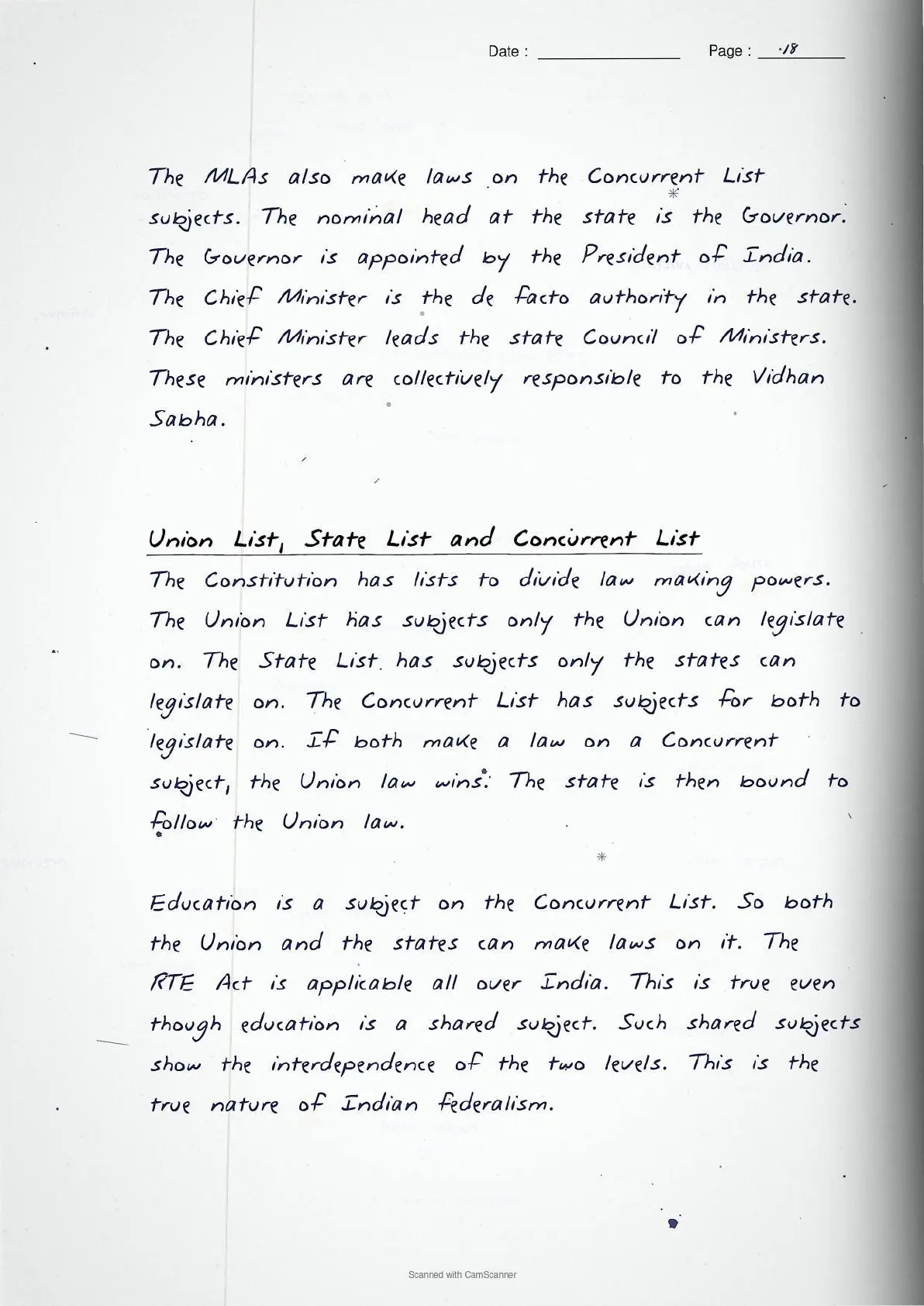
| Union, State and Concurrent Lists | Medium | asked sometimes |
| Sessions and sittings of Parliament | Low | asked rarely |
How Collegedunia's Handwritten Notes Help You Revise The Parliamentary System: Legislature and Executive
These notes are made for the night before the exam. They keep the facts short and easy to scan. Collegedunia maps every point to the 2026-27 NCERT.
- Clear handwriting: each topic is written in neat, easy-to-read handwriting.
- Boxed key terms: the main terms and definitions are boxed by hand for fast recall.
- Diagrams and tables: simple hand-drawn tables and charts make ideas clear.
- Colour-coded headings: new sub-topics stand out, so you find any section in seconds.
The Parliamentary System: Legislature and Executive Self-Assessment Quiz
Try these quick questions after you read the notes. Tap each question to check your answer. They cover the points CBSE asks most often.
What are the two Houses of Parliament?
(a) Lok Sabha and Vidhan Sabha (b) Lok Sabha and Rajya Sabha (c) Rajya Sabha and Vidhan Parishad (d) Senate and Assembly
Answer: (b) Lok Sabha and Rajya Sabha - together with the President they form Parliament.
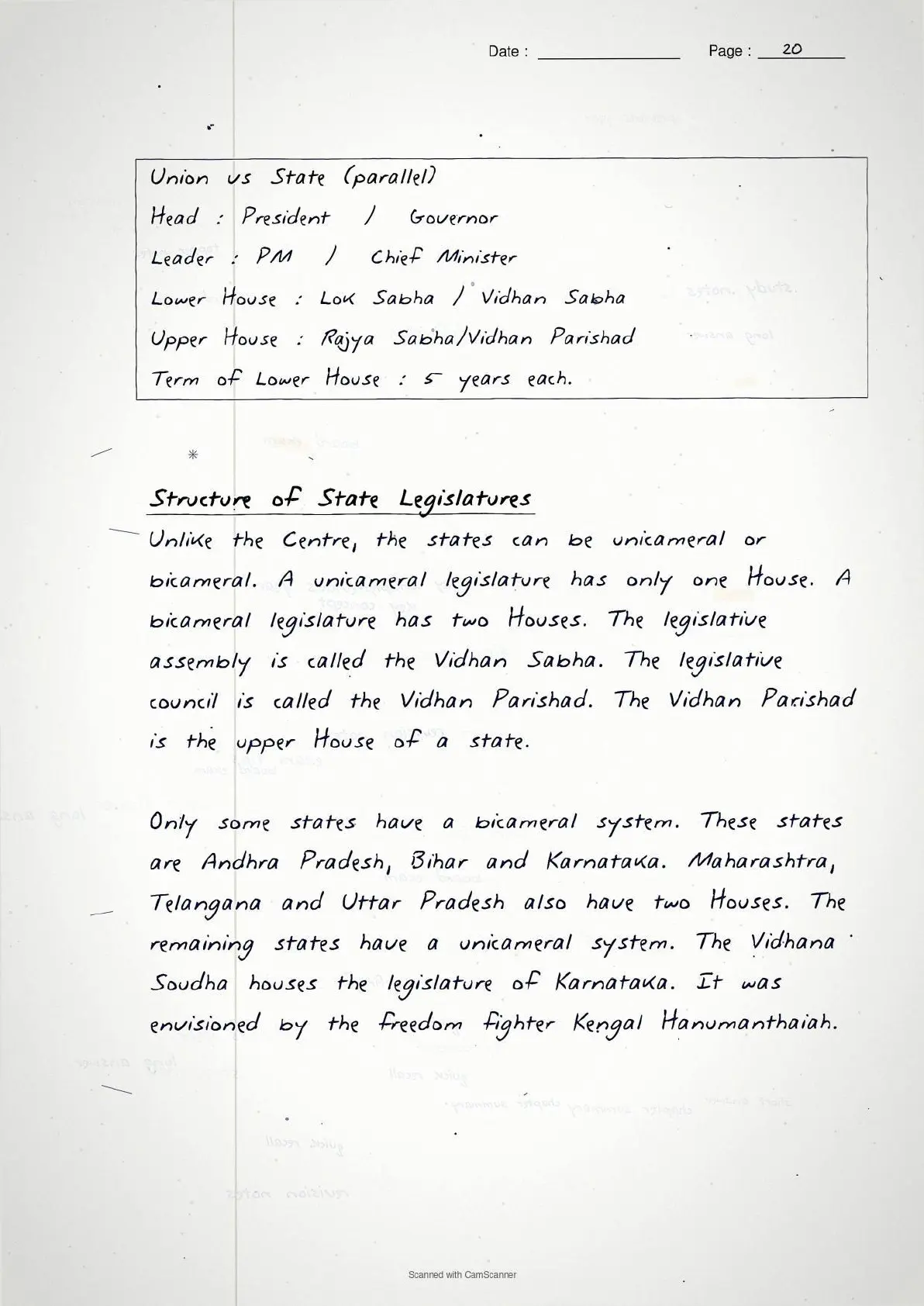
What does bicameral mean?
(a) one House (b) two Houses (c) three organs (d) no House
Answer: (b) two Houses - bi means two and cameral means chamber.
Who presides over the Lok Sabha?
(a) President (b) Vice President (c) Speaker (d) Prime Minister
Answer: (c) Speaker - elected by the members from among themselves.
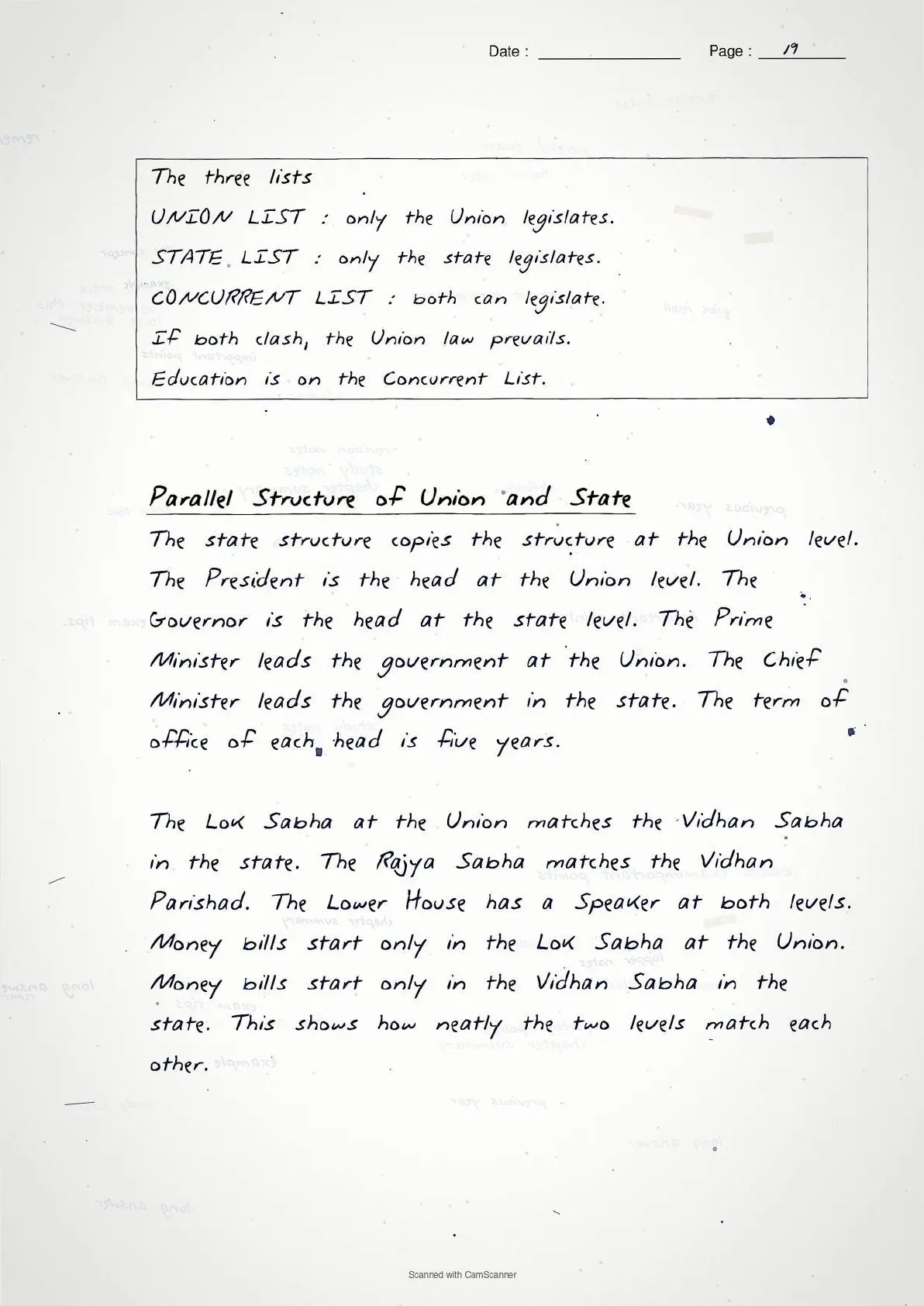
A Money Bill can be introduced only in the?
(a) Rajya Sabha (b) Lok Sabha (c) Vidhan Parishad (d) Supreme Court
Answer: (b) Lok Sabha - and it needs the President's prior recommendation.
If Union and State laws clash on a Concurrent subject, which wins?
(a) State law (b) Union law (c) both (d) neither
Answer: (b) Union law - the state is then bound to follow it.
How to Use These Handwritten Notes for Class 8 Social Science Revision
Use these class 8 social-science handwritten notes in two passes. Read them slowly once for the full chapter. Then, near the exam, read only the boxes and key terms for a fast recall.
- Read the notes once with the NCERT chapter open beside you.
- Say each key term and idea in your own words.
- Practise one long-answer question from a past paper.
- On the last day, revise only the key terms and the boxes.
Class 8 Social Science Handwritten Notes for All Chapters
The table below links the class 8 social-science handwritten notes for every chapter. Use it to jump to any other chapter's notes.
The Parliamentary System: Legislature and Executive Class 8 Social Science Handwritten Notes FAQs
Ques. Where can I download The Parliamentary System: Legislature and Executive Class 8 Social Science Handwritten Notes PDF?
Ans. You can download the The Parliamentary System: Legislature and Executive Class 8 Social Science Handwritten Notes PDF directly from this page. Both the Normal and HD versions are free.
Ques. Are these handwritten notes aligned with the 2026-27 NCERT?
Ans. Yes. These notes follow the current 2026-27 syllabus for Class 8 Social Science. The difference between the legislature and the executive.
Ques. How many pages is the Class 8 Social Science The Parliamentary System: Legislature and Executive Handwritten Notes PDF?
Ans. The notes run about 26 pages. They cover the full chapter with key terms, hand-drawn boxes, and a short self-assessment quiz.
Ques. What is the main idea of the 8th standard Social Science chapter The Parliamentary System: Legislature and Executive?
Ans. The chapter explains that India's Parliament makes the laws while the executive, led by the Prime Minister, puts them into action. Its main idea is that power is divided among the legislature, executive and judiciary through separation of powers and checks and balances, and the same structure is repeated at the state level.
Ques. Are these The Parliamentary System: Legislature and Executive notes enough for the CBSE Class 8 exam?
Ans. Yes, for revision. The Collegedunia handwritten notes cover every key point and exam term. Read them with the NCERT chapter and practise past questions.



Comments