




Class 11 Geography Chapter 3 Interior of the Earth is one of the most diagram-heavy chapters in the Fundamentals of Physical Geography unit. According to Toppers and experts, sketching the focus and epicentre first solves half of any wave-based question. This page hosts the 2026-27 NCERT notes PDF, a P-wave vs S-wave table, and every named discontinuity.
- CBSE Weightage: 4 to 6 marks, usually one short-answer question on waves plus one on volcanic landforms.
- UPSC and State PSC Relevance: a regularly asked topic in prelims general studies and geography optional papers.
- Format: a 21-page PDF with the original NCERT cross-section figure, colour diagrams and a discontinuities quick-reference table.
These notes follow the printed NCERT chapter section by section, from the first evidence scientists ever had about the deep earth to the volcanic landforms still forming today.
These NCERT Notes Class 11 Geography Chapter 3 Interior of the Earth are curated by subject experts, checked against the 2026-27 NCERT textbook, and organised the same way the chapter itself flows: sources of evidence, earthquake waves, the layered interior, and volcanic landforms.
What 11,760 students told us about this chapter. In a Collegedunia poll of 11,760 Class 11 Geography students conducted before their 2026-27 annual exams, 64% said they mixed up the focus and the epicentre on their first attempt at a diagram-based question, more than any other mistake in this chapter.
How Collegedunia's Notes Help You With Interior of the Earth
Nobody has ever reached the centre of the earth, so this chapter builds its entire picture from indirect evidence. The NCERT Notes Class 11 Geography Chapter 3 Interior of the Earth walk through that evidence in the same order the NCERT chapter uses, then link it straight to the layered structure it proves.
- Direct vs indirect sources laid out side by side, so the difference is never a guessing game in an exam.
- P-wave and S-wave behaviour mapped to exactly what each one proves about the crust, mantle and core.
- All four discontinuities, Mohorovicic, Repetti, Gutenberg and Lehmann, in one table with their approximate depths.
Interior of the Earth: Crust, Mantle and Core Explained
Source: Magnet Brains on YouTube
What Interior of the Earth Chapter Covers
The NCERT Notes Class 11 Geography Chapter 3 Interior of the Earth move through four blocks: how scientists study a place nobody can visit, how earthquake waves are read, what the layered interior looks like, and how volcanoes build landforms above it.
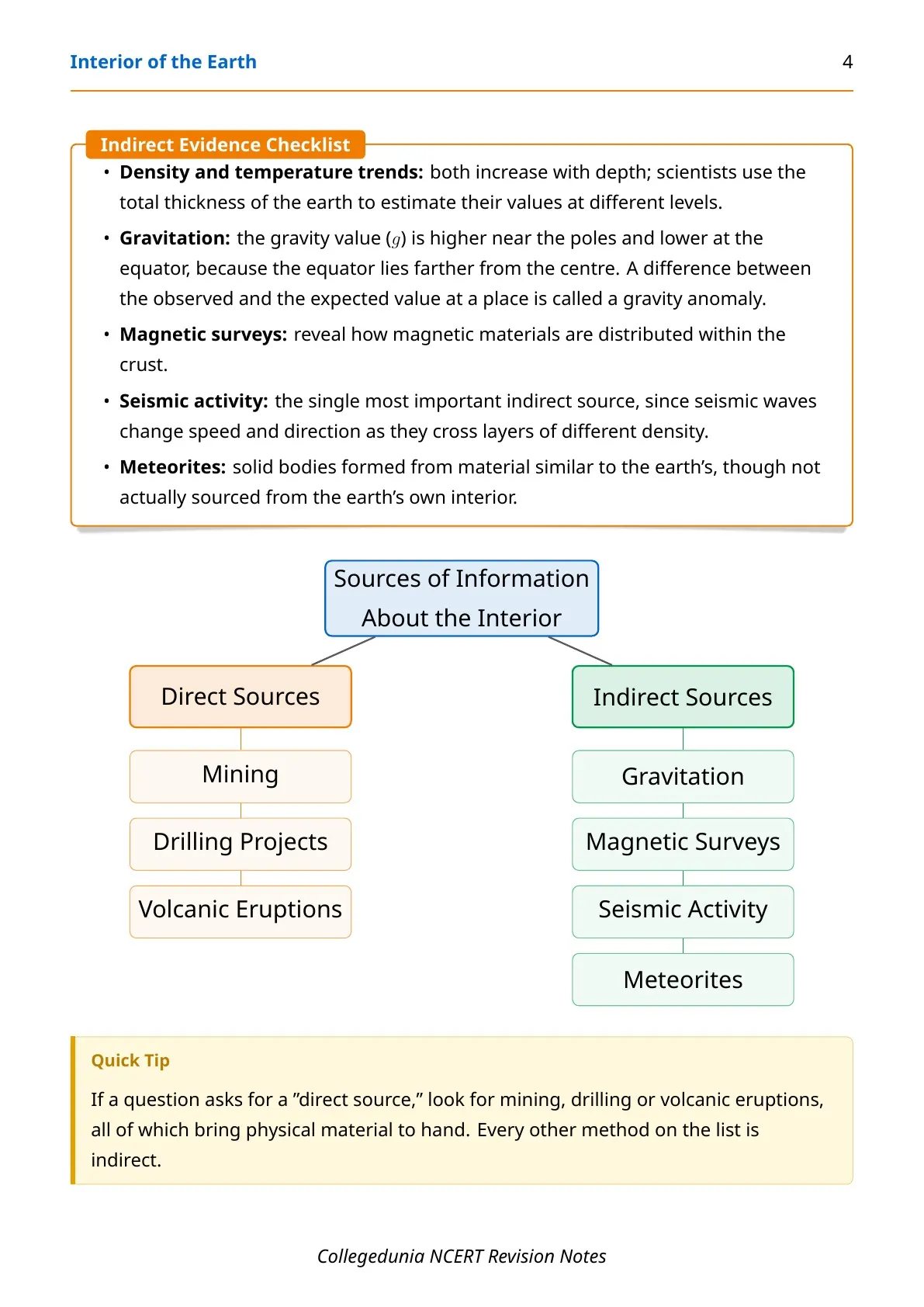
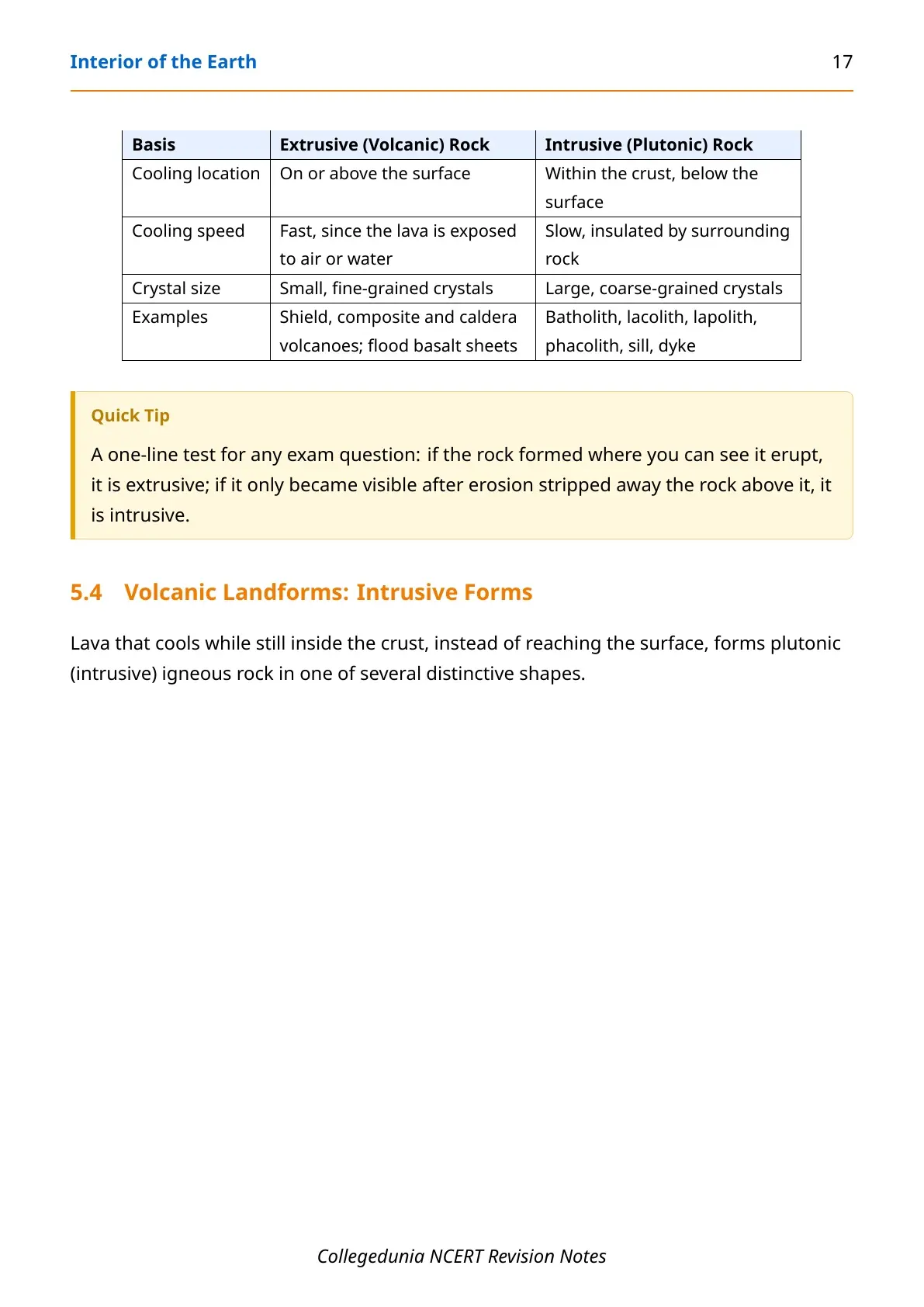
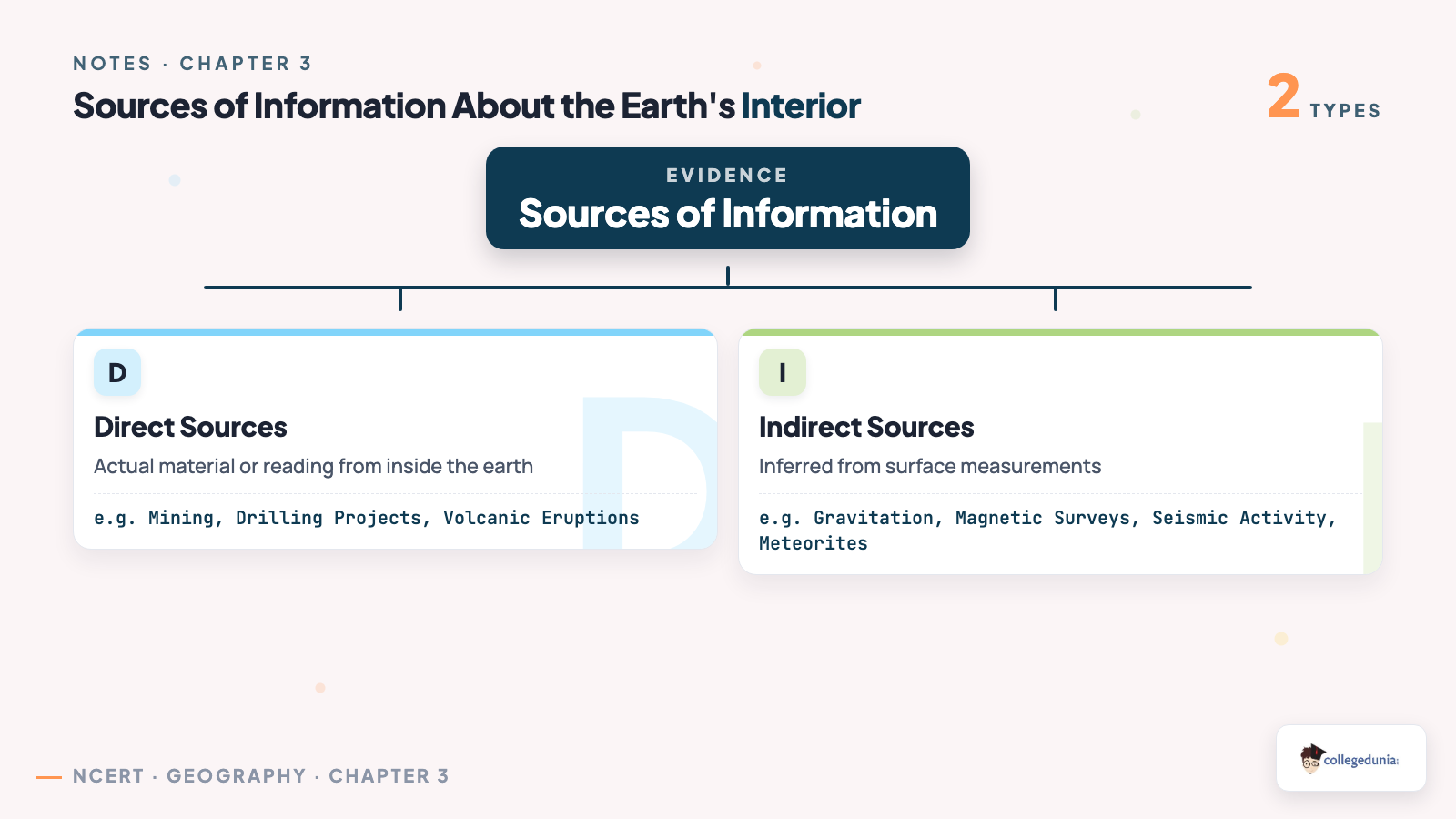
- Sources of information: direct sources (mining, drilling, volcanic eruptions) and indirect sources (gravitation, magnetic surveys, seismic activity, meteorites).
- Earthquakes and earthquake waves: focus, epicentre, body waves (P and S), surface waves, and the shadow zone.
- Structure of the earth's interior: crust, mantle, core, and the four named discontinuities.
- Volcanoes and volcanic landforms: shield, composite, caldera, flood basalt and mid-ocean ridge volcanoes, plus intrusive landforms.
Direct and Indirect Sources of Information About the Earth's Interior
The earth's radius is about 6,378 km, but the deepest borehole ever drilled, at Kola in the Arctic, reaches only about 12 km. Everything beyond that depth is known through indirect evidence, not direct sampling.
| Type | Sources | What It Tells Us |
|---|---|---|
| Direct | Mining, deep drilling projects, volcanic eruptions | Actual rock or magma samples, but only from shallow depths |
| Indirect | Gravitation, magnetic surveys, seismic activity, meteorites | Density, temperature and material distribution at depths no drill can reach |
Seismic activity is the single most useful indirect source, since the speed and path of an earthquake wave change every time it crosses into material of a different density.
Earthquake Waves: How Focus, Epicentre and Body Waves Are Tested
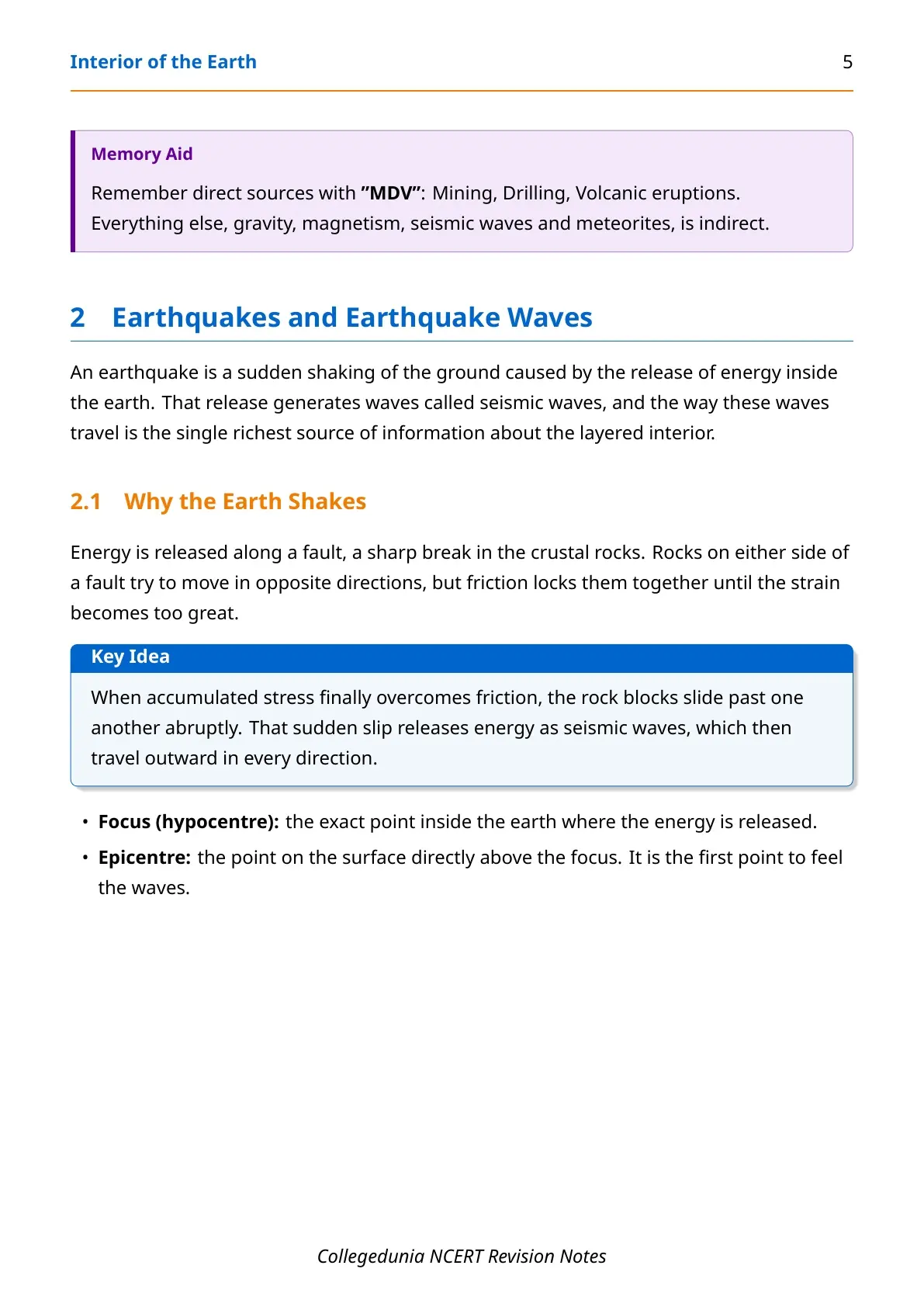
An earthquake releases energy along a fault, a break in the crustal rocks where stress finally overcomes friction. The point inside the earth where that energy is released is the focus; the point directly above it on the surface is the epicentre.
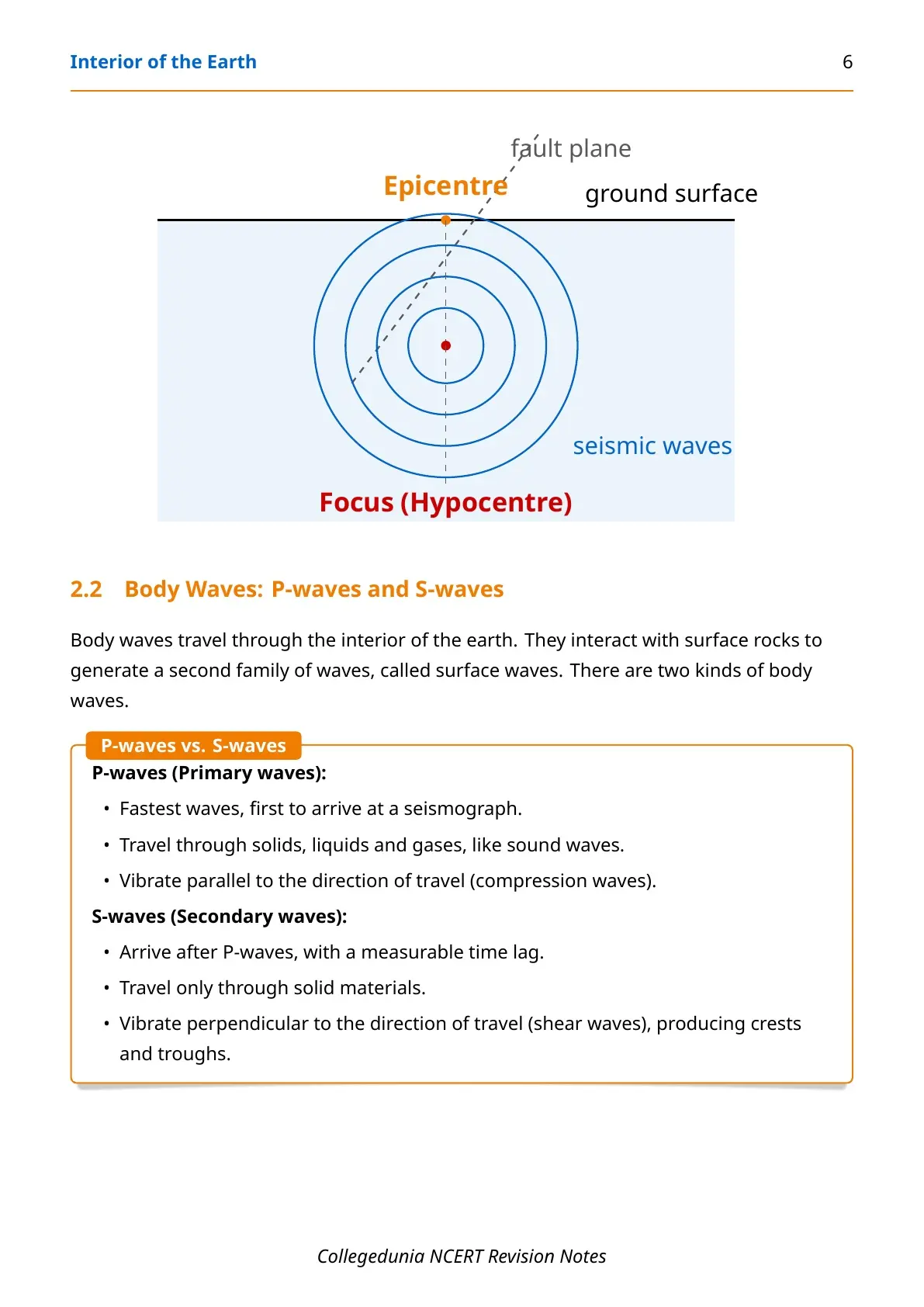
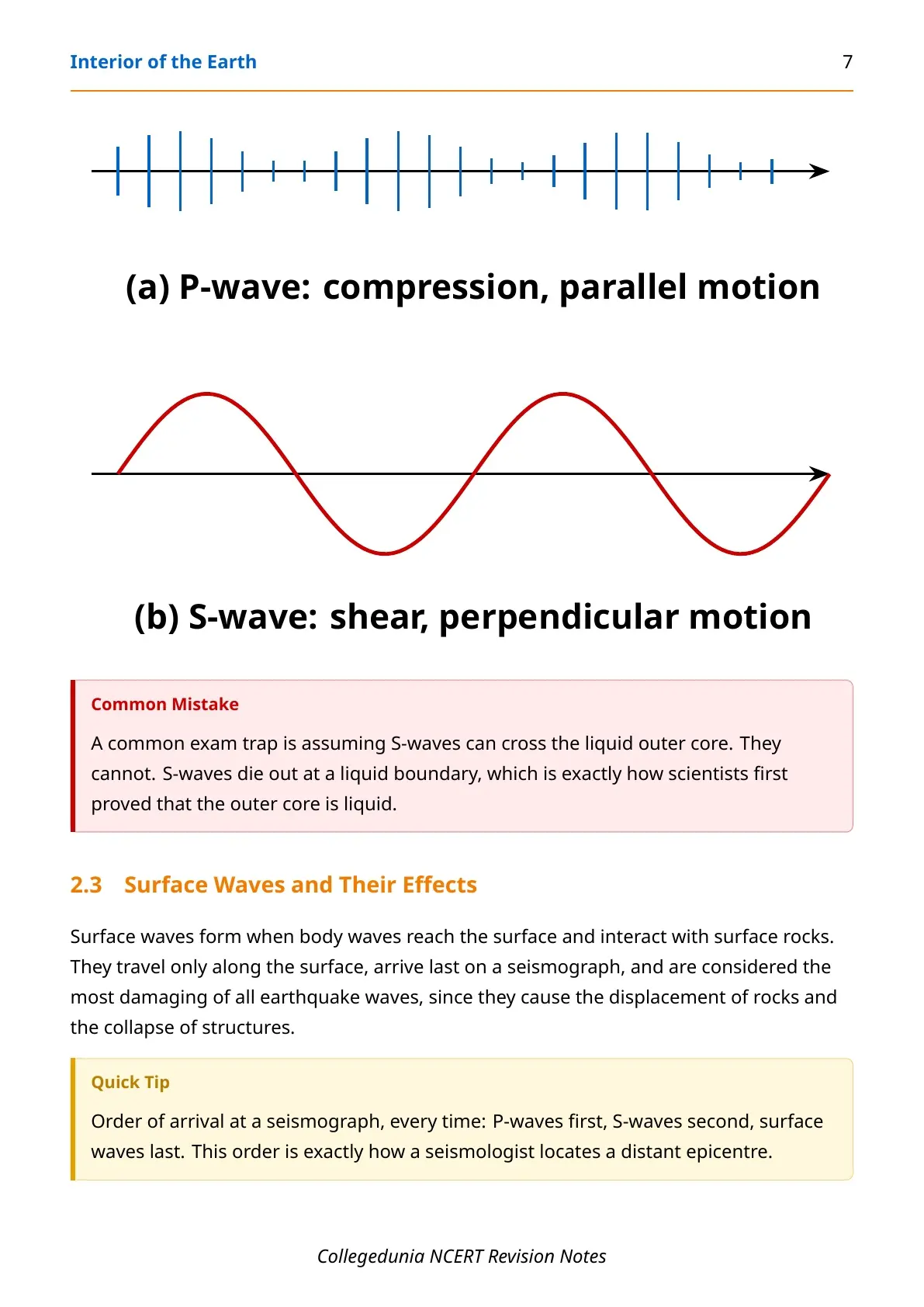
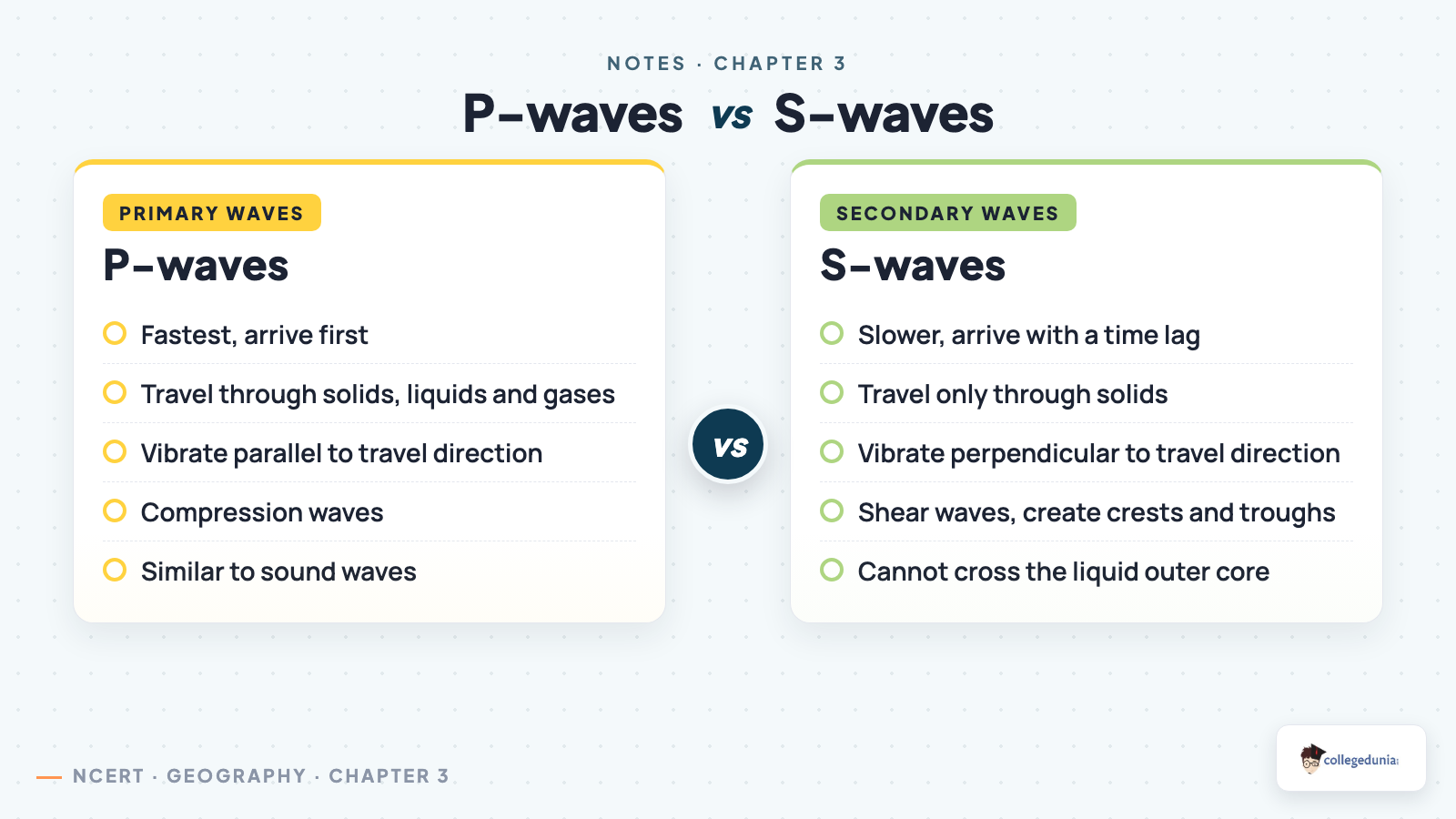
The energy travels outward as body waves, P-waves and S-waves, which then generate surface waves once they reach the ground. Board papers regularly ask students to tell the two body waves apart.
| Feature | P-wave (Primary) | S-wave (Secondary) |
|---|---|---|
| Speed | Fastest, arrives first | Slower, arrives with a time lag |
| Motion | Parallel to travel direction (compression) | Perpendicular to travel direction (shear) |
| Travels through | Solids, liquids and gases | Solids only |
| What it proves | Confirms material exists all the way to the centre | Its absence beyond 105° proves the outer core is liquid |
The Shadow Zone: Reading the 105° and 145° Rule
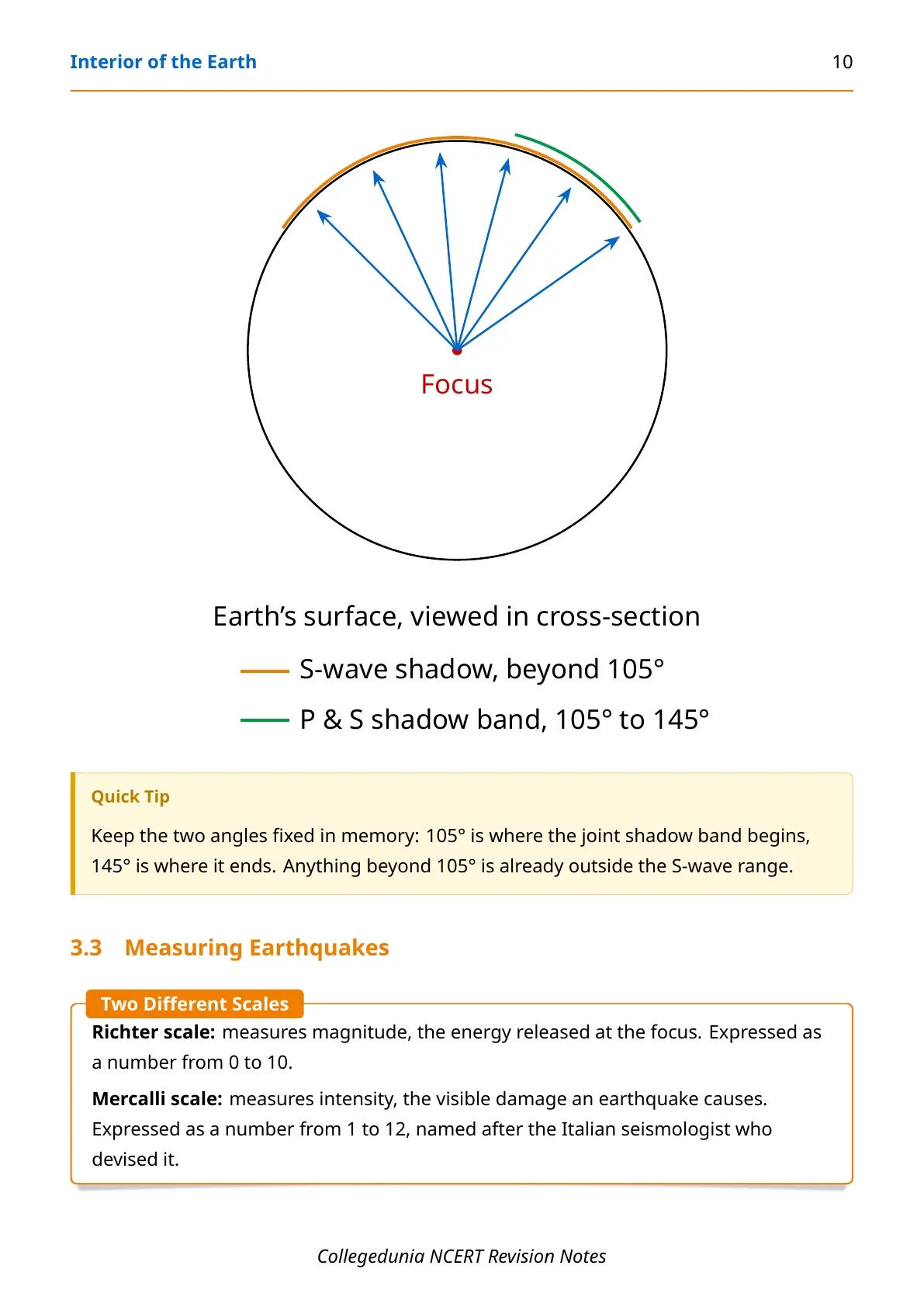
Seismographs within 105° of the epicentre record both P-waves and S-waves. Beyond 145°, only P-waves arrive. The band between the two, and the whole zone past 105° for S-waves, is called the shadow zone.
- The joint P and S shadow band sits between 105° and 145° from the epicentre.
- The S-wave shadow zone alone covers just over 40% of the earth's surface, since S-waves cannot cross the liquid outer core at all.
Structure of the Earth's Interior: Crust, Mantle, Core and the Four Discontinuities
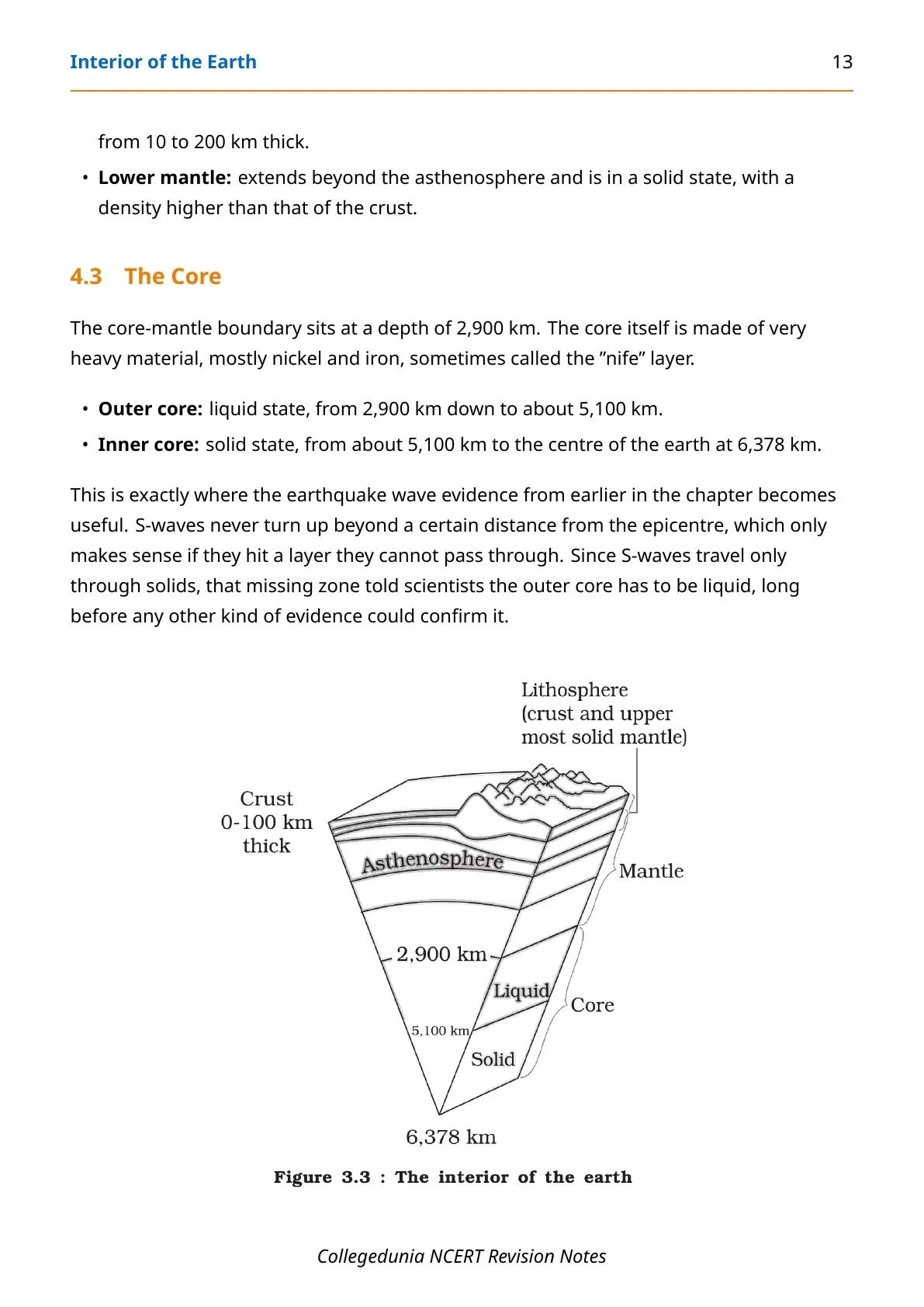
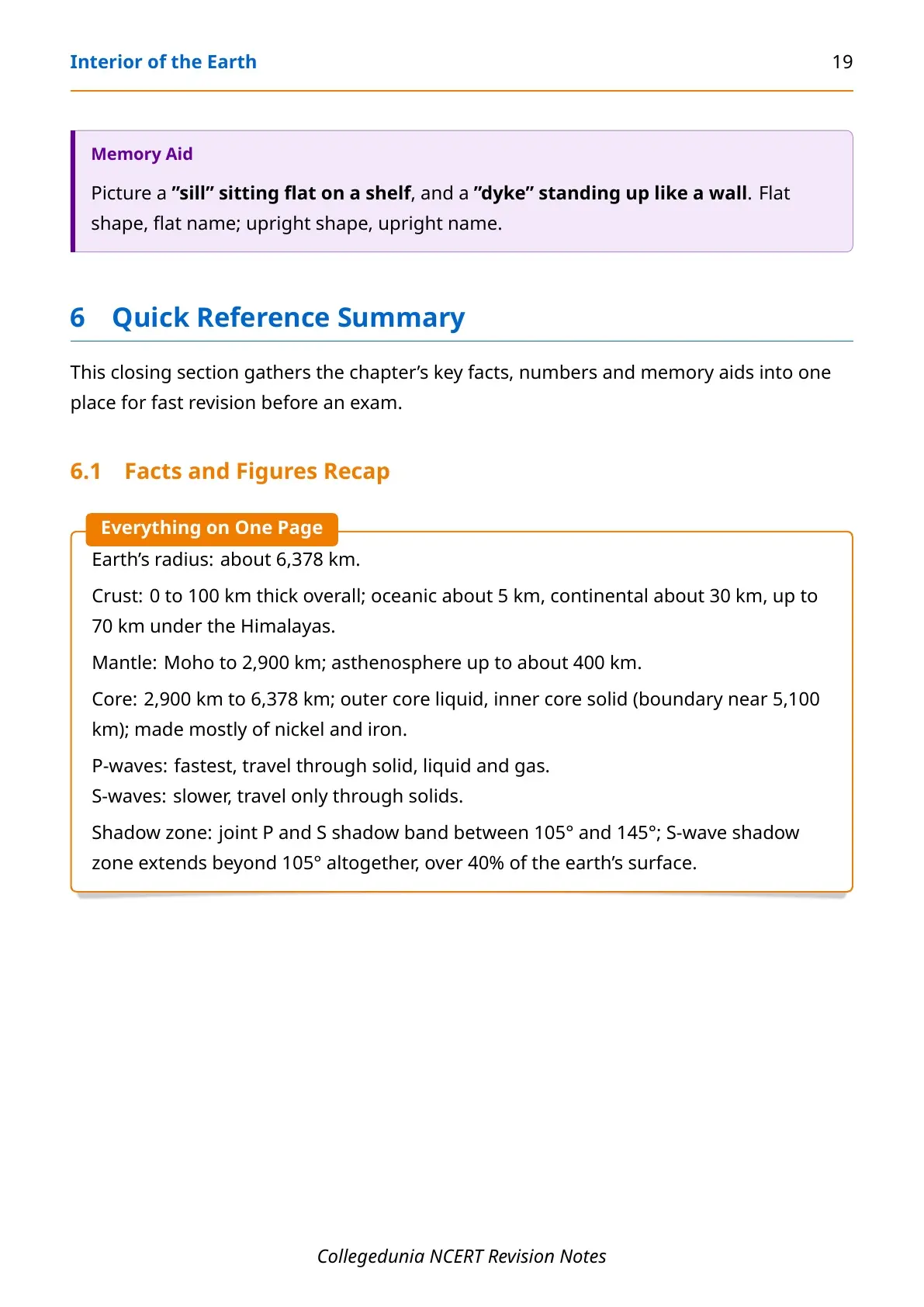
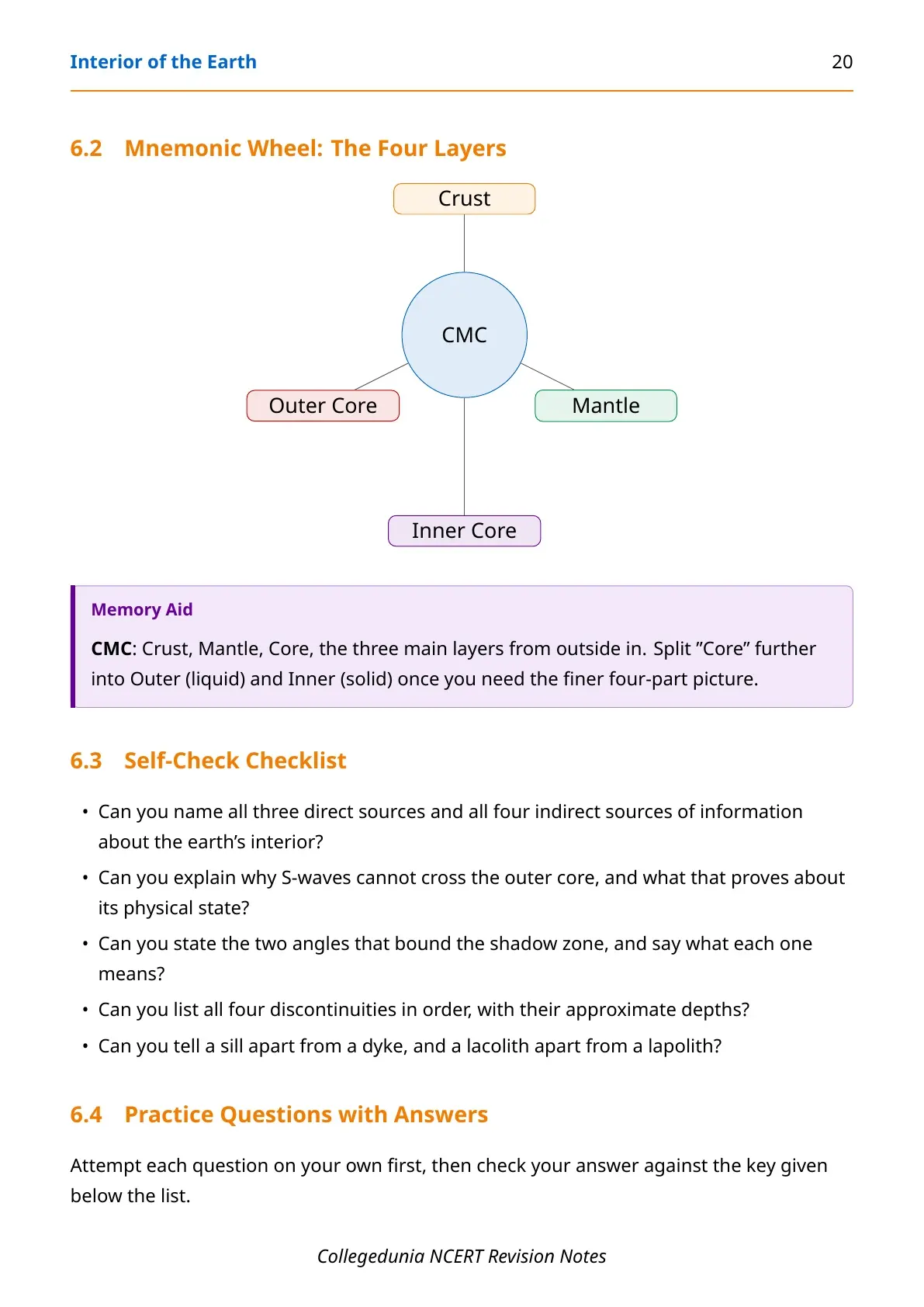
Seismic evidence divides the earth into three main layers. Oceanic crust averages just 5 km thick, continental crust about 30 km, and up to 70 km under the Himalayas. The mantle runs from the crust down to 2,900 km, and the core fills the rest, out to a radius of 6,378 km.
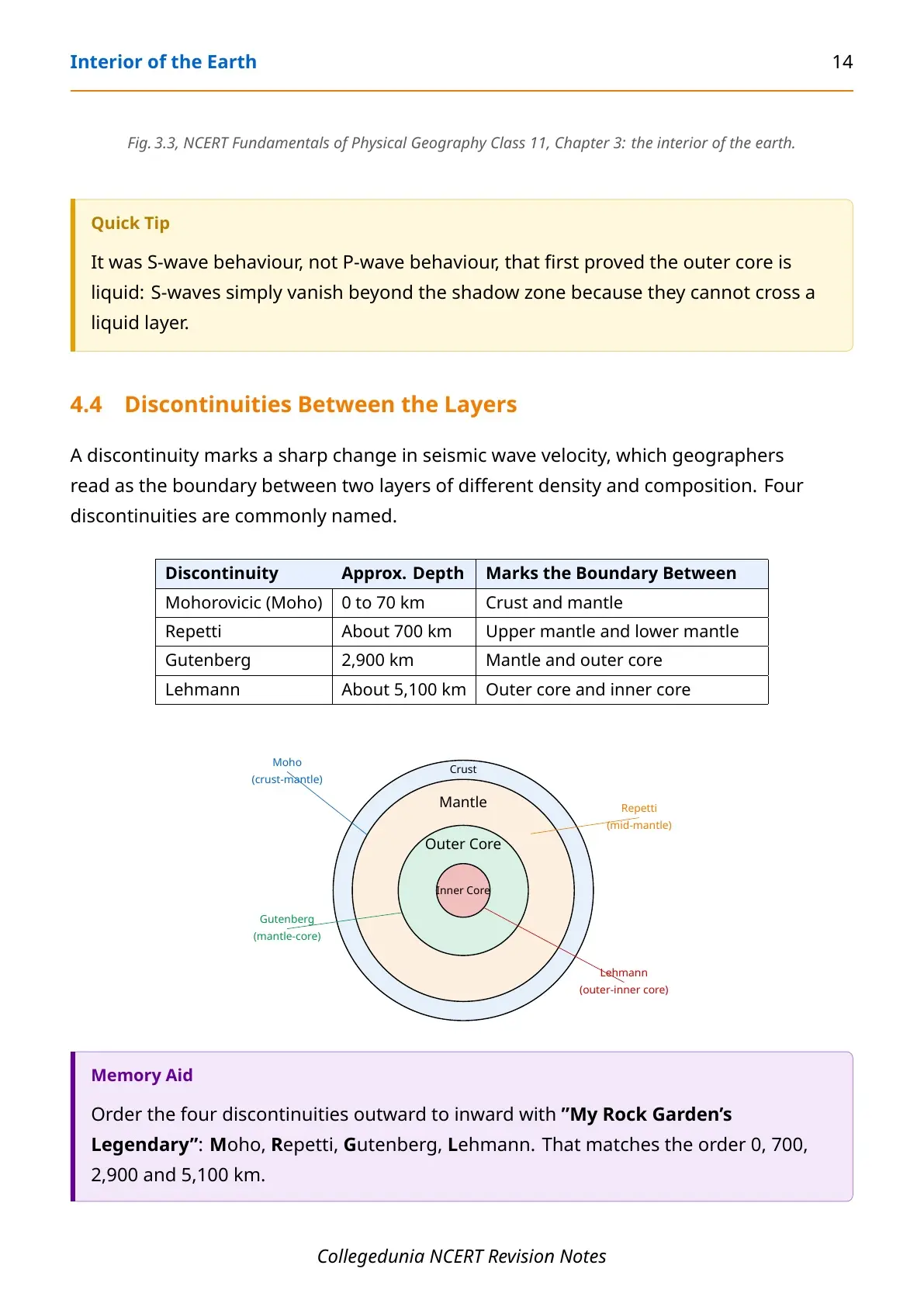
A discontinuity is where seismic wave speed jumps sharply, marking the boundary between two layers of different density. Four of these are named after the scientists who identified them.
| Discontinuity | Approx. Depth | Boundary |
|---|---|---|
| Mohorovicic (Moho) | 0 to 70 km | Crust and mantle |
| Repetti | About 700 km | Upper mantle and lower mantle |
| Gutenberg | 2,900 km | Mantle and outer core |
| Lehmann | About 5,100 km | Outer core and inner core |
The core itself is made mostly of nickel and iron, sometimes called the nife layer. The outer core is liquid; the inner core, despite higher temperatures, is solid because of the extreme pressure at that depth.
Volcanoes and Volcanic Landforms in Interior of the Earth
A volcano is a vent through which gases, ash and lava reach the surface. NCERT groups volcanoes by how explosive the eruption is and by the landform each style builds.
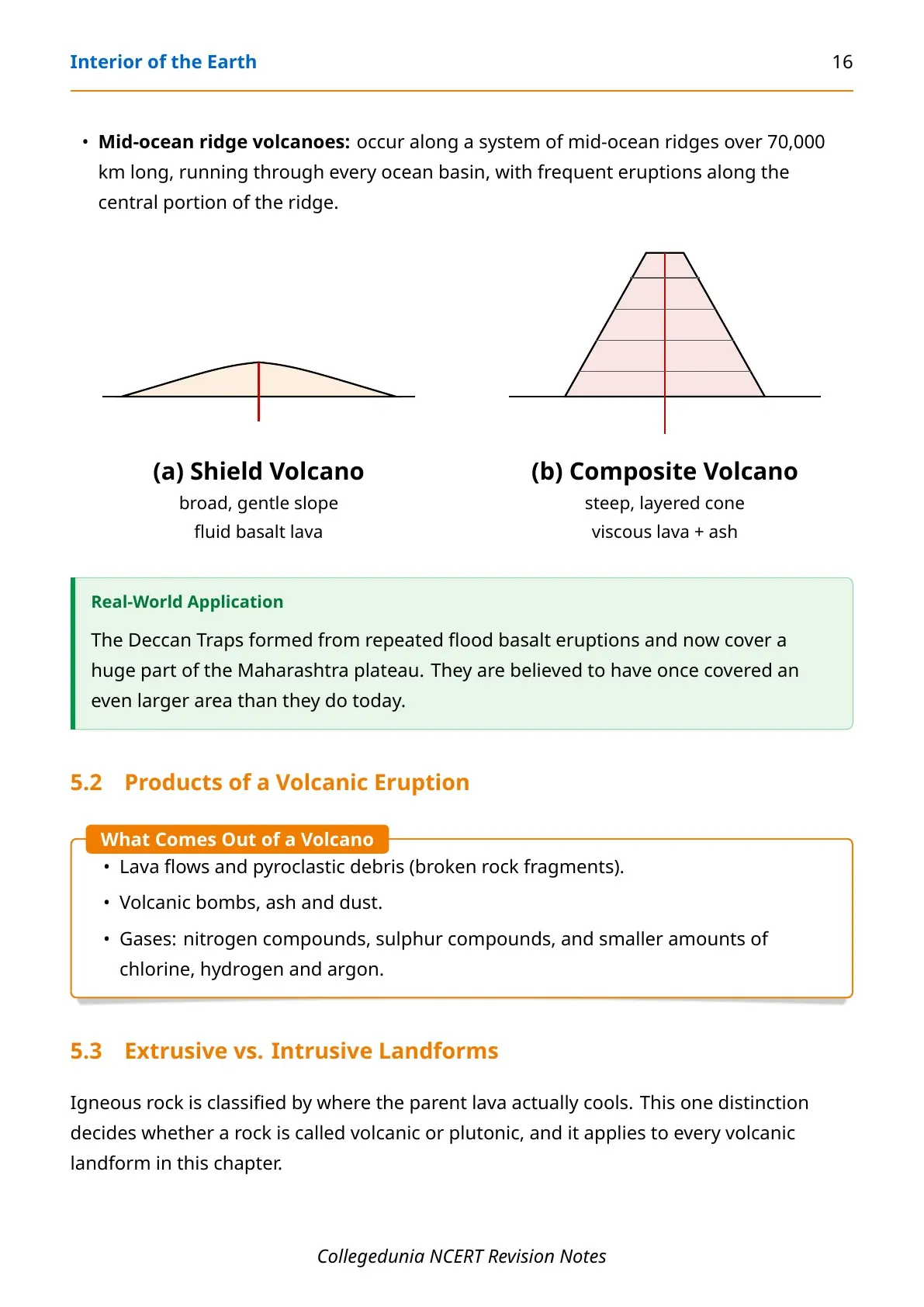
- Shield volcanoes: broad and gentle, built from fluid basalt lava; the Hawaiian volcanoes are the standard example.
- Composite volcanoes: steep and explosive, built from layers of viscous lava and ash.
- Caldera: the most explosive type; the volcano collapses on itself instead of building height.
- Flood basalt provinces: highly fluid lava over huge areas; India's Deccan Traps across the Maharashtra plateau are the textbook case.
- Mid-ocean ridge volcanoes: occur along a 70,000 km ridge system running through every ocean basin.
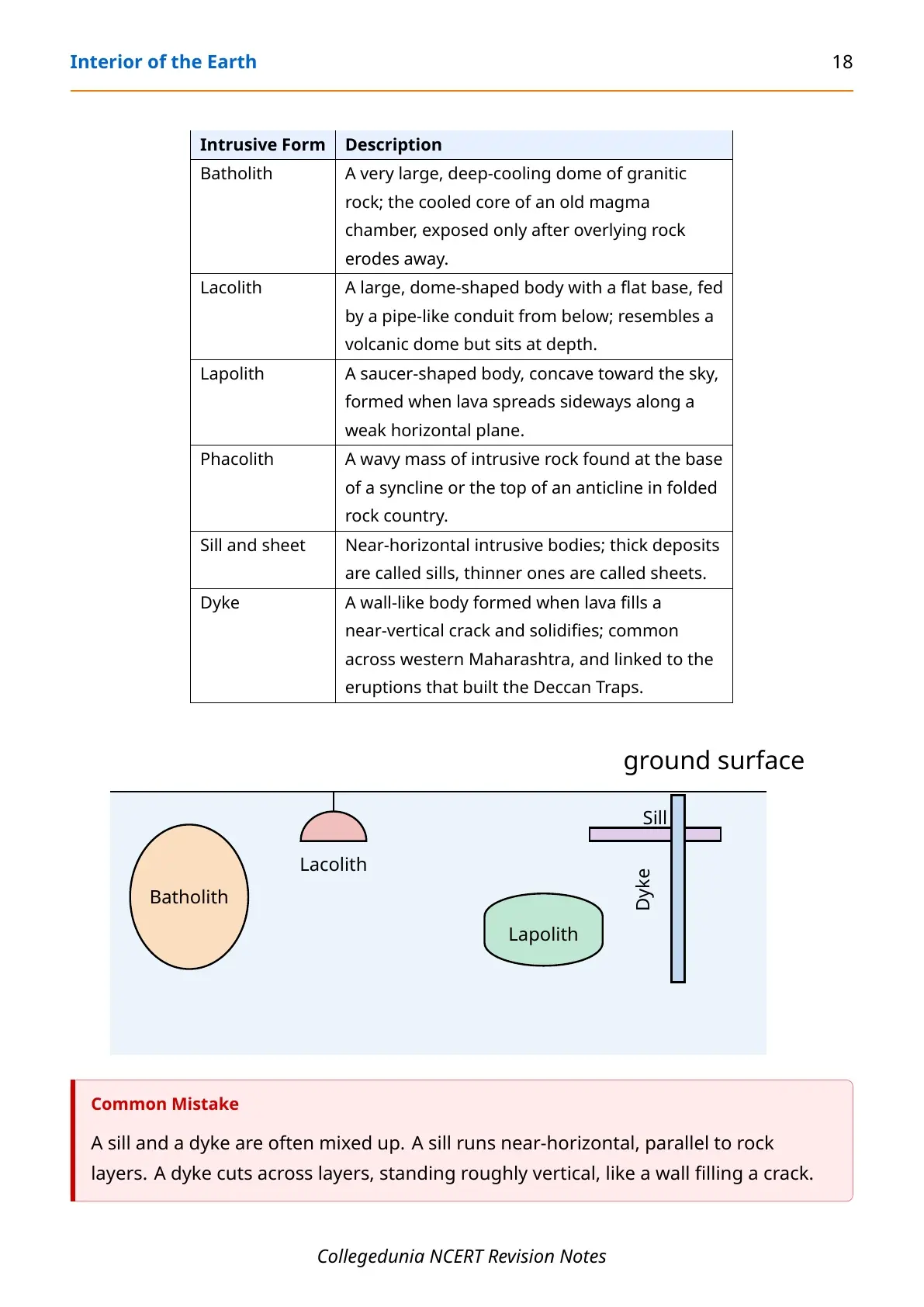
Lava that cools inside the crust, instead of reaching the surface, forms intrusive landforms: batholith, lacolith, lapolith, phacolith, sill and dyke. A sill runs parallel to rock layers; a dyke cuts across them, standing almost vertical.
Common Mistakes Students Make in This Chapter
- Swapping focus (inside the earth) and epicentre (on the surface) in diagram-based questions.
- Believing S-waves travel through the outer core; they cannot, since it is liquid.
- Confusing the Gutenberg discontinuity (mantle to outer core, 2,900 km) with the Lehmann discontinuity (outer to inner core, about 5,100 km).
- Mixing up a sill (horizontal, parallel to rock layers) with a dyke (vertical, cuts across layers).
How to Use These Notes Most Effectively
The NCERT Notes Class 11 Geography Chapter 3 Interior of the Earth work best read in the same four-block order as the printed chapter.
- First pass: read the sources-of-information table and the P-wave vs S-wave comparison table to fix the basic facts.
- Second pass: work through the crust-mantle-core diagram and the discontinuities table together.
- Final revision: use the Common Mistakes box and the volcanic landforms list the night before the exam.
Other NCERT Resources for Interior of the Earth
The table below lists every Collegedunia resource for this chapter, including the page you are reading.
| Resource | Link |
|---|---|
| Notes (this page) | Interior of the Earth Class 11 Geography Notes |
| Handwritten Notes | (coming soon) |
| NCERT Solutions | (coming soon) |
| NCERT Book PDF | (coming soon) |
NCERT Notes for Class 11 Geography: All Chapters
Use this table to move to any other Class 11 Geography chapter's notes once this chapter is done.
| Chapter | Resource |
|---|---|
| Chapter 1 | Geography as a Discipline Notes (coming soon) |
| Chapter 2 | The Origin and Evolution of the Earth Notes |
| Chapter 3 | Interior of the Earth Notes |
| Chapter 4 | Distribution of Oceans and Continents Notes (coming soon) |
| All Chapters | Class 11 Geography, All Chapters |
Interior of the Earth Class 11 Geography Notes FAQs
Ques. Where can I download the Class 11 Geography Chapter 3 Notes PDF?
Ans. You can download the NCERT Notes Class 11 Geography Chapter 3 Interior of the Earth PDF directly from this page, free of cost.
Ques. Are these notes based on the 2026-27 NCERT syllabus?
Ans. Yes. These notes follow the current 2026-27 NCERT textbook for Class 11 Geography, chapter by chapter, in the same order as the printed book.
Ques. How many pages is the Class 11th Geography Chapter 3 Notes PDF?
Ans. The Notes PDF runs about 21 pages and covers sources of information about the earth's interior, earthquake waves, the structure of the earth, and volcanoes and volcanic landforms.
Ques. What is the difference between the focus and the epicentre of an earthquake?
Ans. The focus is the exact point inside the earth where energy is released. The epicentre is the point on the surface directly above the focus, and it is the first point to feel the waves.
Ques. What is the difference between P-waves and S-waves?
Ans. P-waves are the fastest earthquake waves and travel through solids, liquids and gases. S-waves are slower, arrive after P-waves, and travel only through solid material.
Ques. What are the four discontinuities of the earth's interior?
Ans. The Mohorovicic discontinuity separates the crust and mantle, the Repetti discontinuity separates the upper and lower mantle, the Gutenberg discontinuity separates the mantle and outer core, and the Lehmann discontinuity separates the outer and inner core.
Ques. Why does an earthquake develop a shadow zone?
Ans. S-waves cannot cross the liquid outer core, and both P-waves and S-waves refract and reflect at internal density boundaries, so some zones on the earth's surface never record a direct wave arrival.
Ques. What type of volcanic eruption formed the Deccan Traps?
Ans. The Deccan Traps formed through repeated flood basalt eruptions, which release highly fluid lava that spreads over very long distances.



Comments