




The NCERT Class 11 Informatics Practices Chapter 2 Emerging Trends notes explain the technologies that shape modern computing, from artificial intelligence and machine learning to cloud computing, big data, blockchain and the Internet of Things. The PDF is built for CBSE 2026-27 revision, with definitions, examples, diagrams and comparison tables in one place.
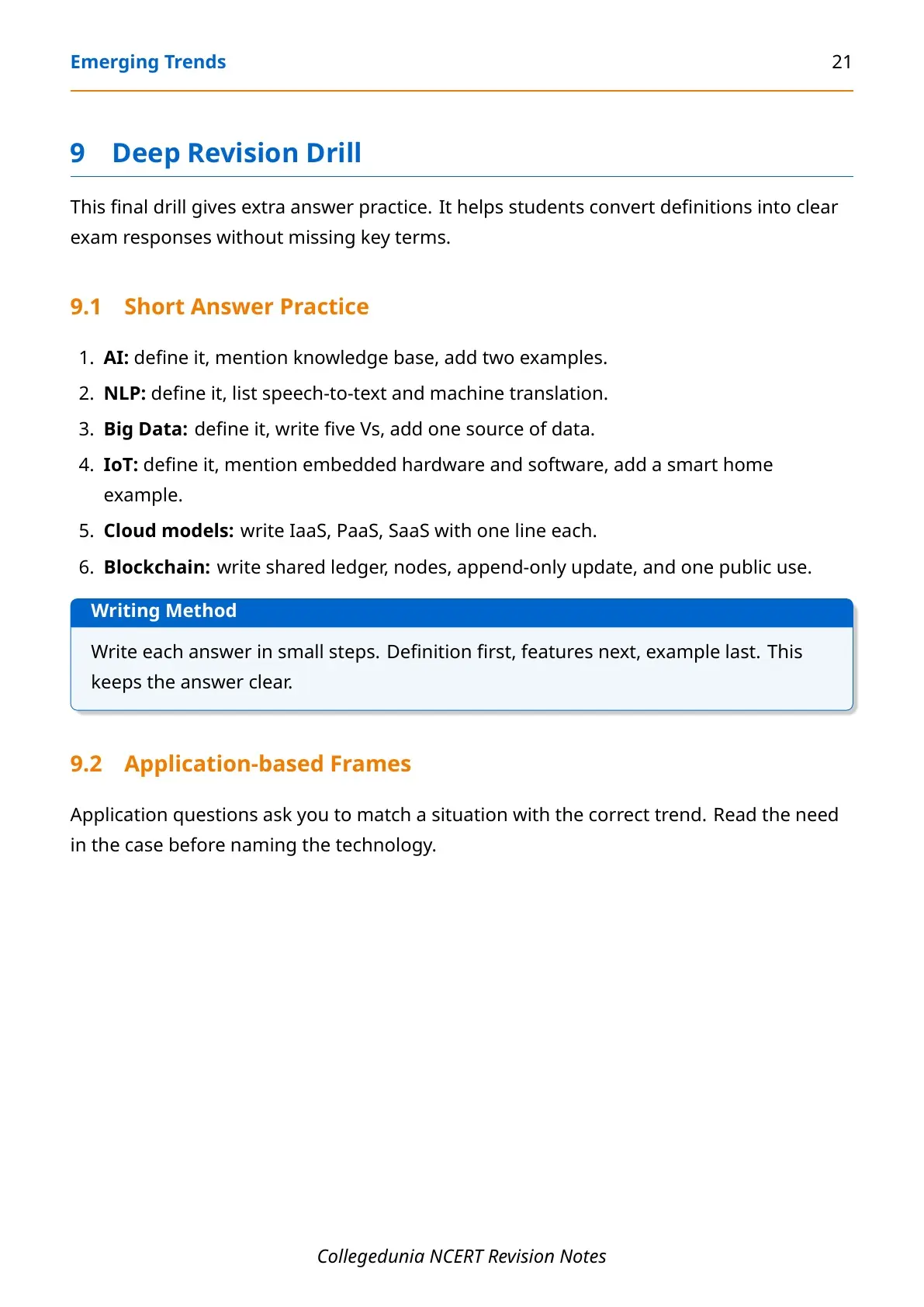
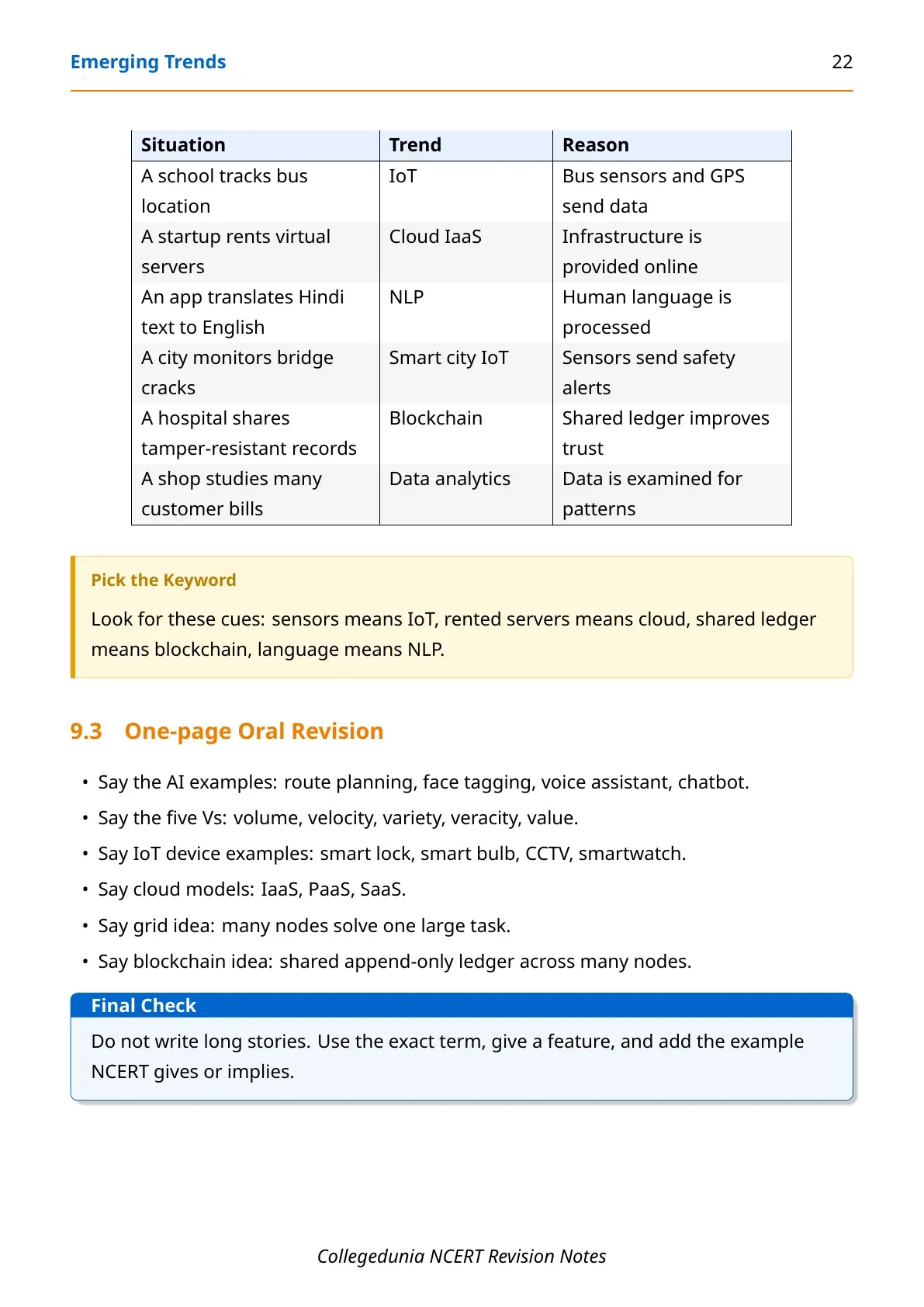
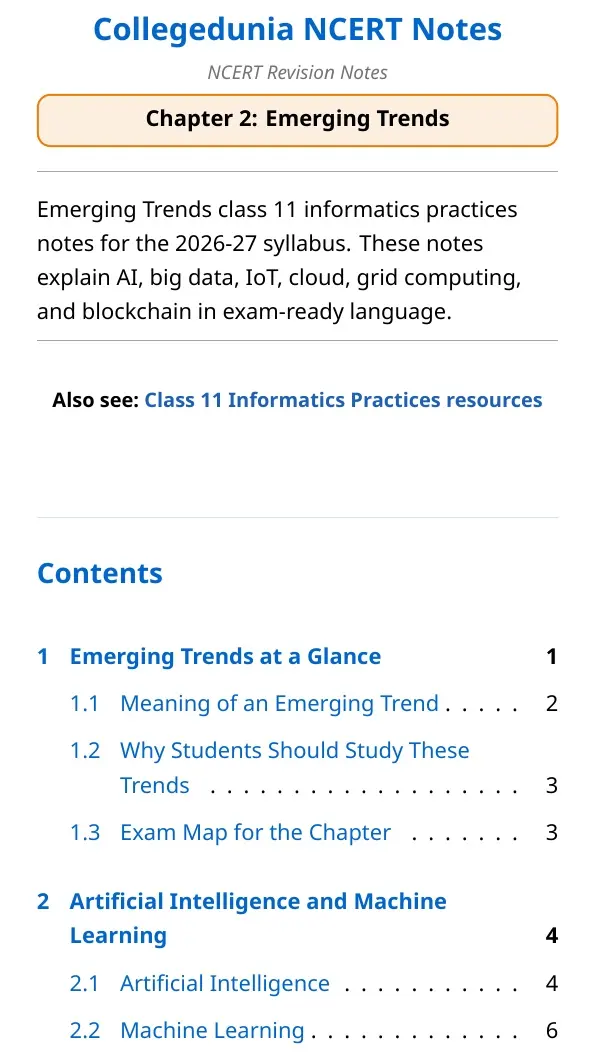
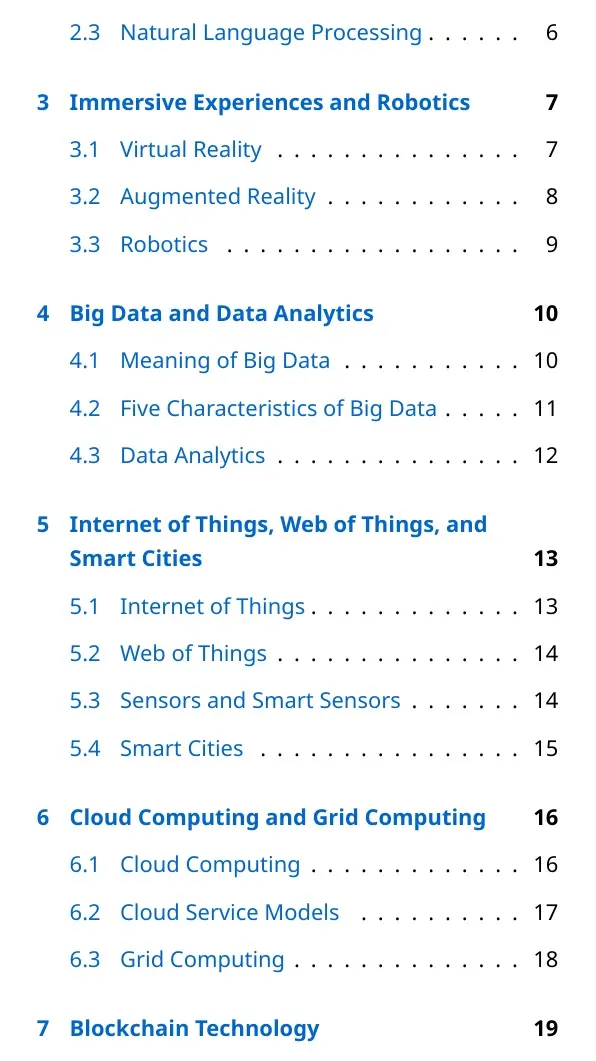
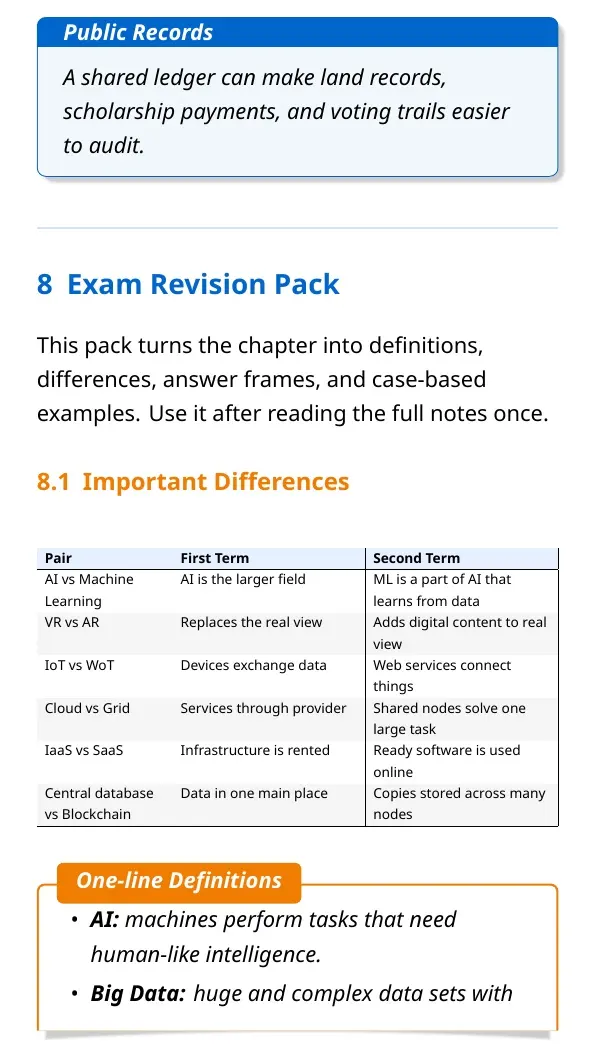
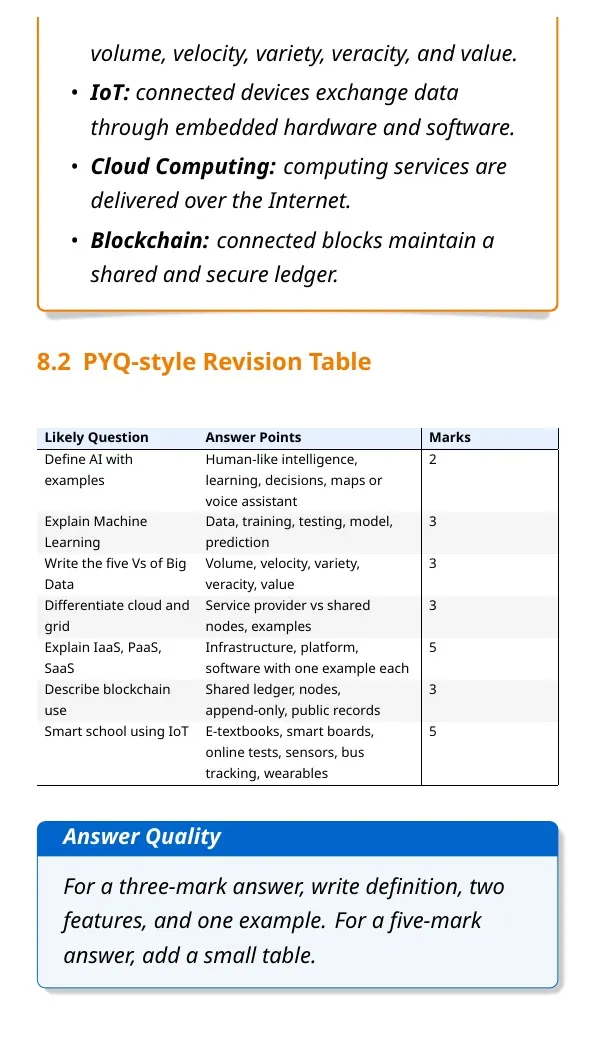
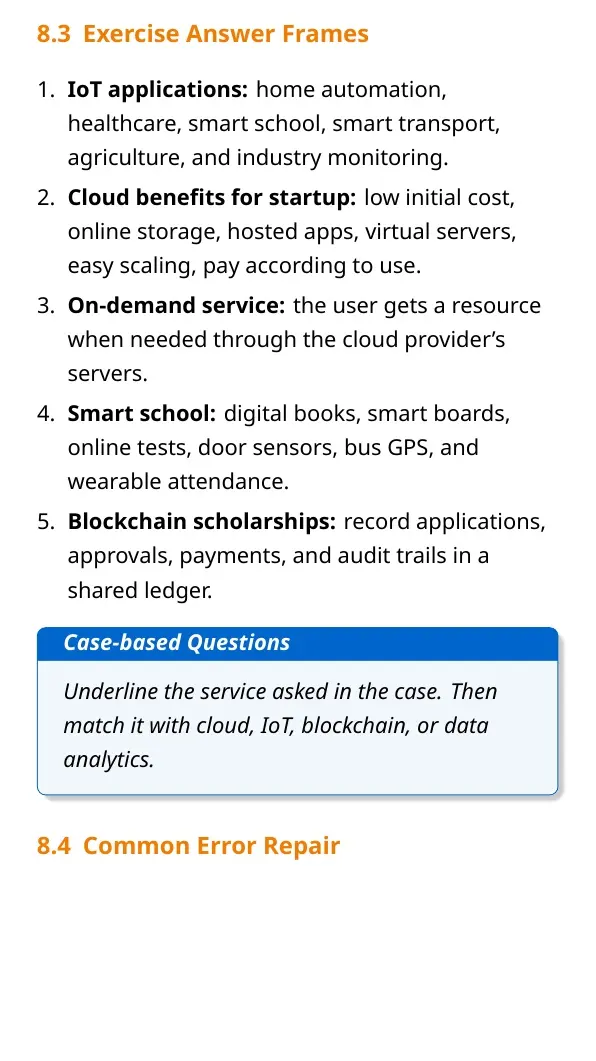
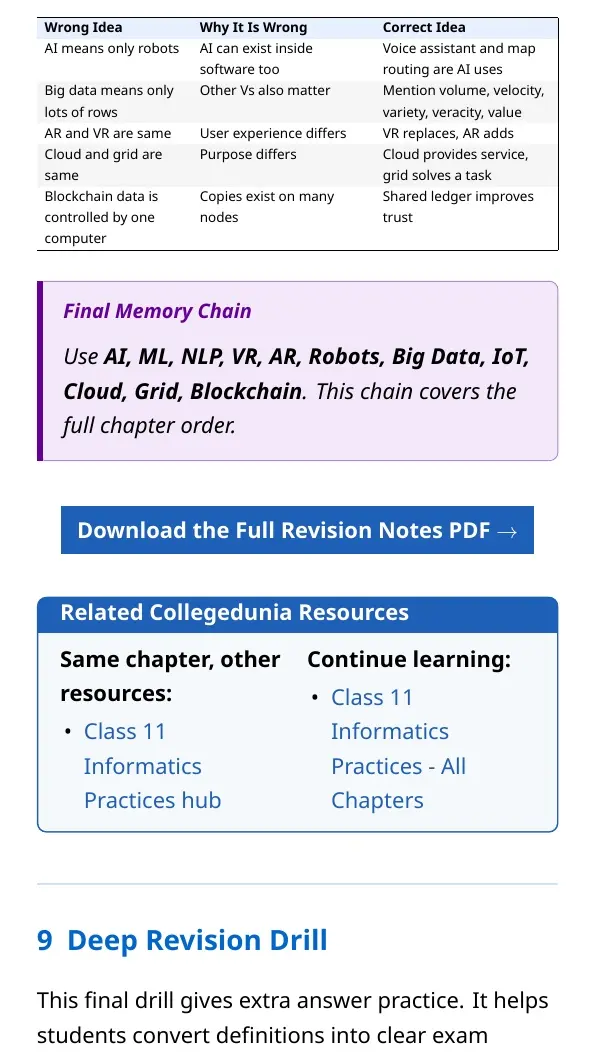
- Chapter focus: artificial intelligence, machine learning, natural language processing, big data, cloud computing, IoT, blockchain and 3D printing.
- Best for: quick revision before Informatics Practices exams, practical file discussions and viva style questions.
- PDF includes: 22 pages, concept maps, comparison tables, real-life examples and last-minute recall points.
|
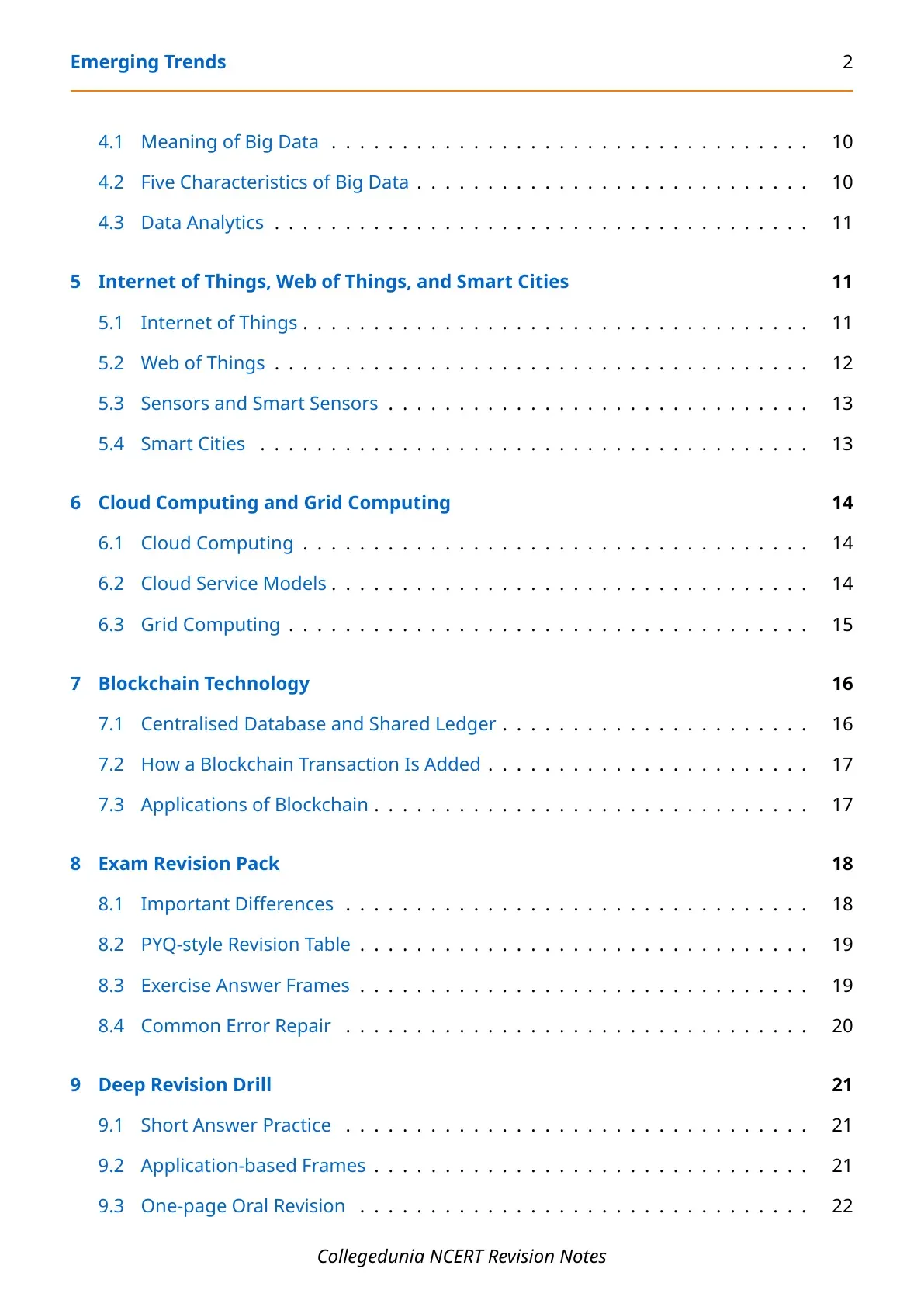
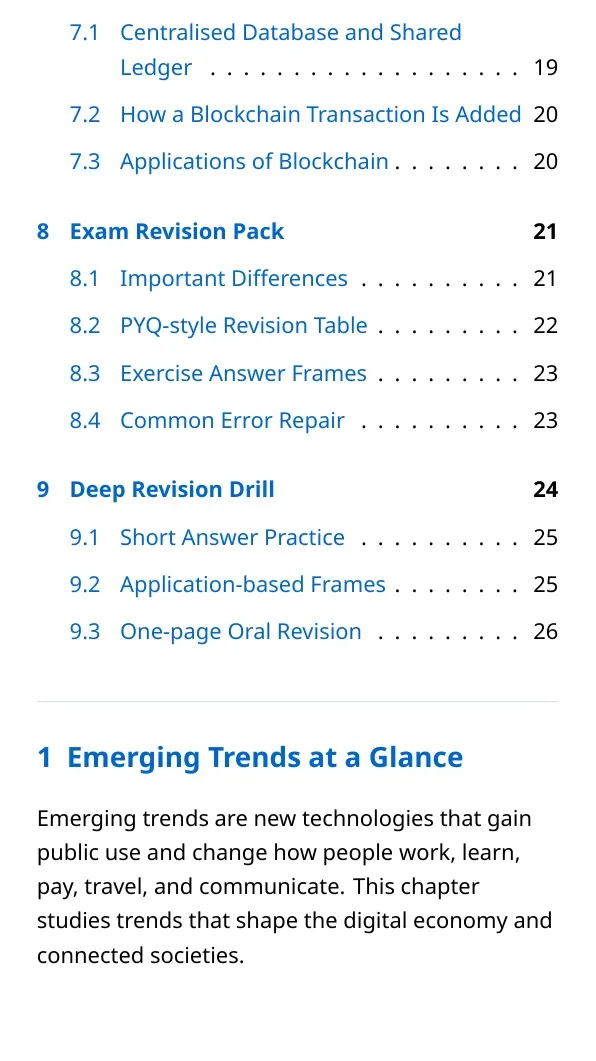
Table of Contents |
Class 11 Informatics Practices Emerging Trends Notes PDF Highlights
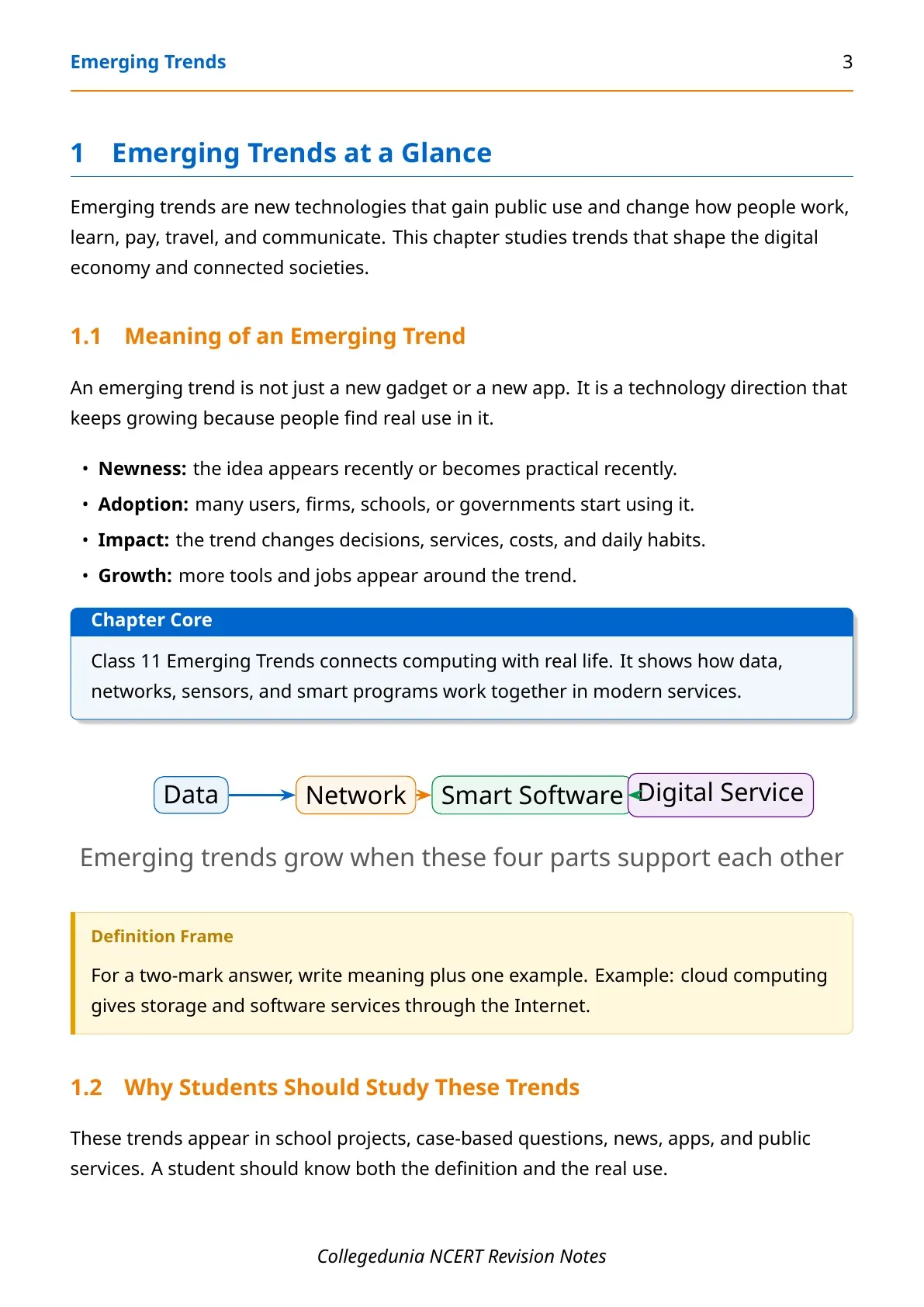
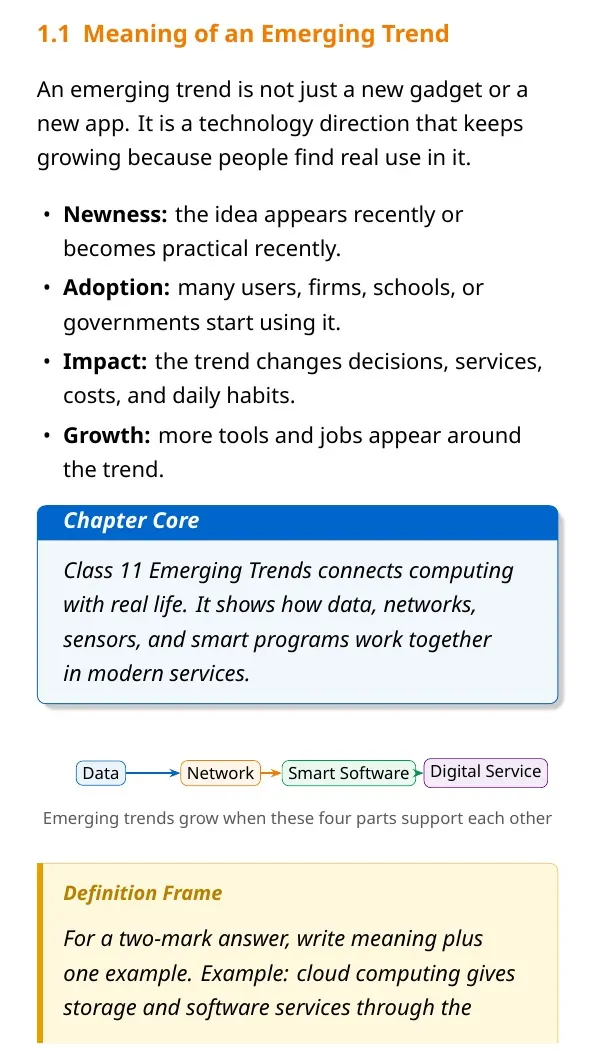
Emerging Trends is the second chapter of the Class 11 Informatics Practices textbook. It introduces technologies that students see in daily life, such as recommendation systems, chatbots, online storage, smart devices, digital payments and connected sensors.
The notes keep each trend exam-ready by giving a short definition, a simple example, a key advantage and the main limitation. This definition-example-benefit pattern is the safest answer frame for the chapter.
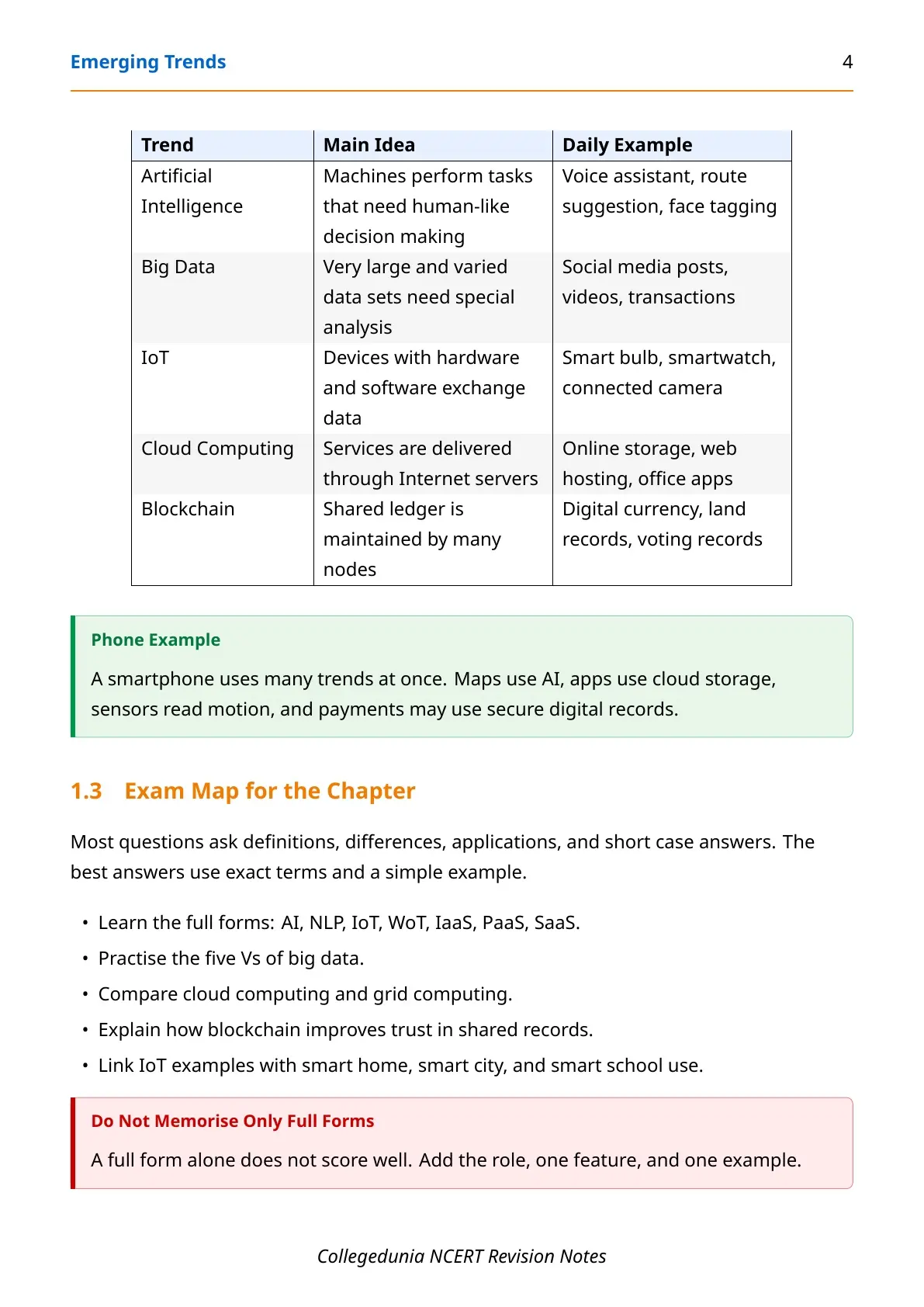
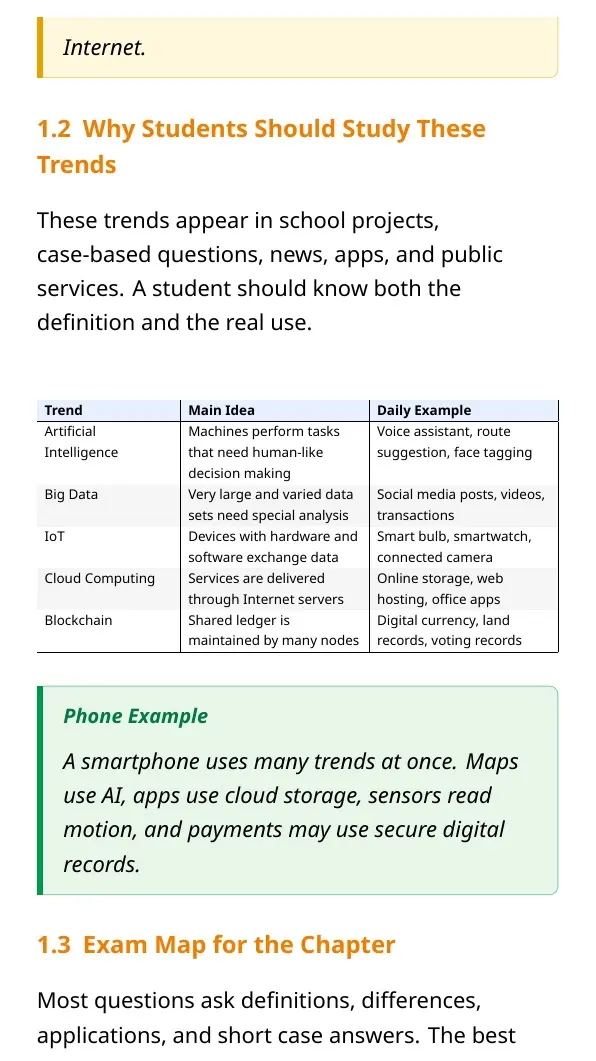
| Technology | Revision focus |
|---|---|
| Artificial intelligence | Meaning, examples, expert systems, vision and natural language processing |
| Machine learning | Learning from data, prediction, classification and recommendation systems |
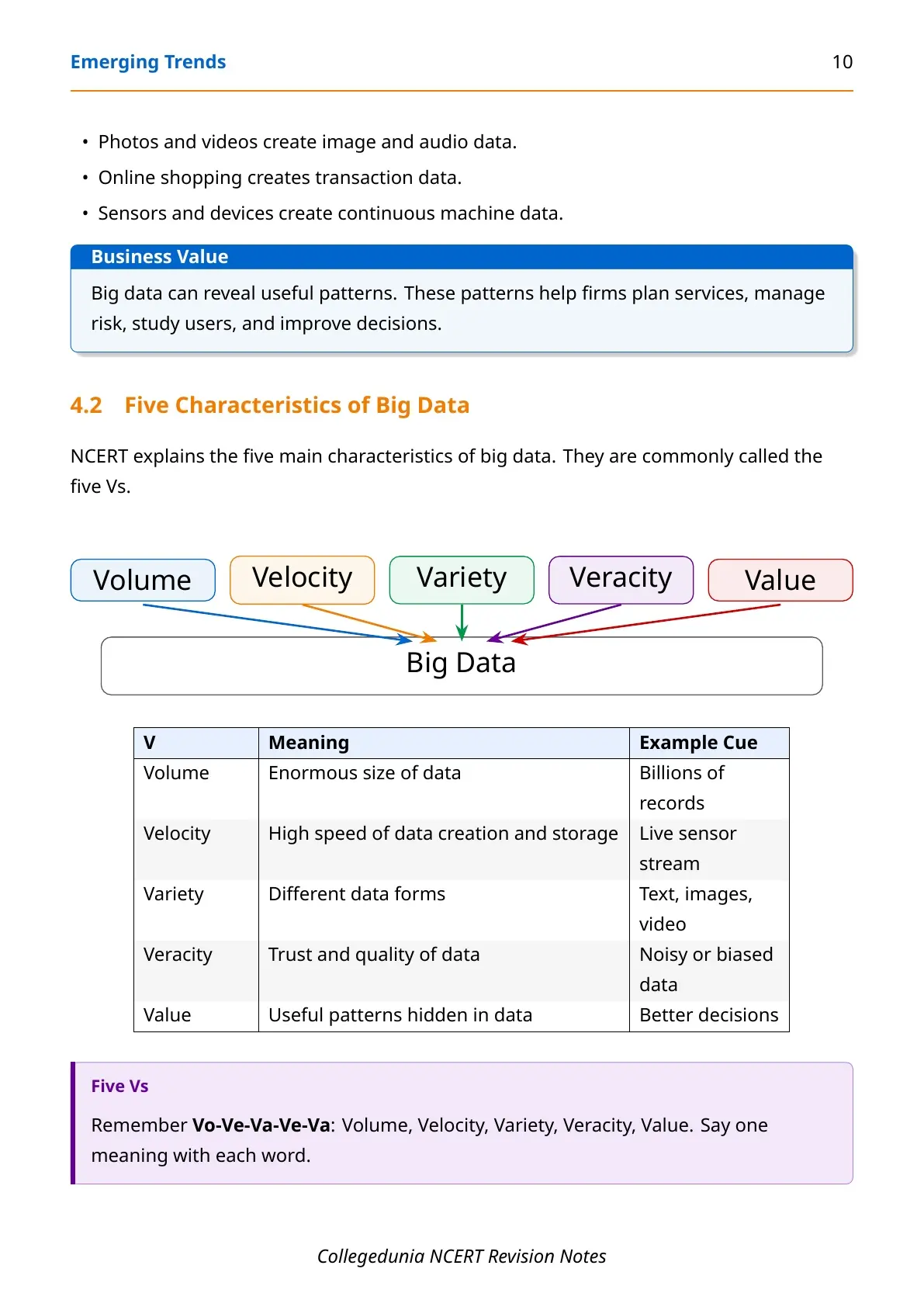
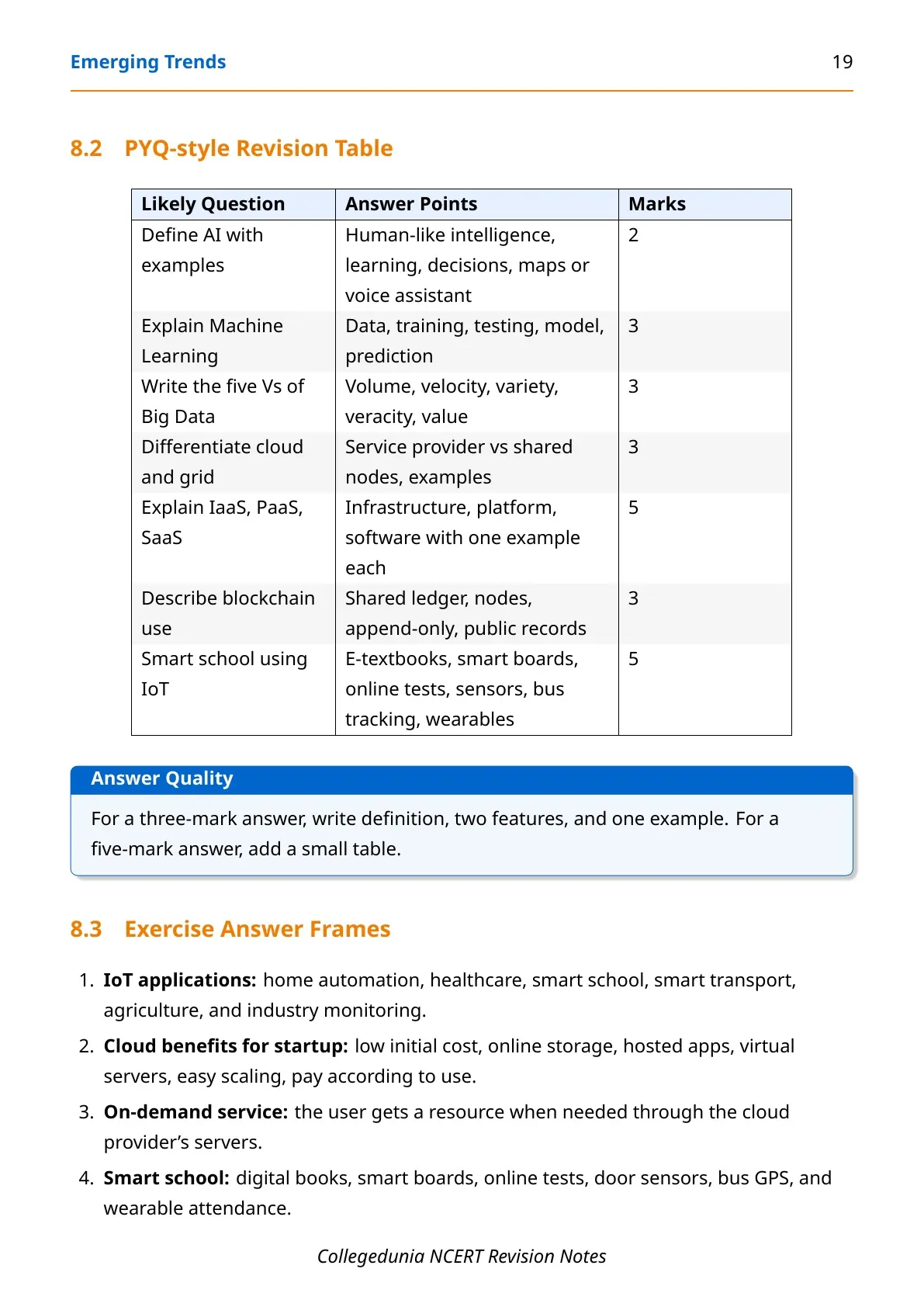
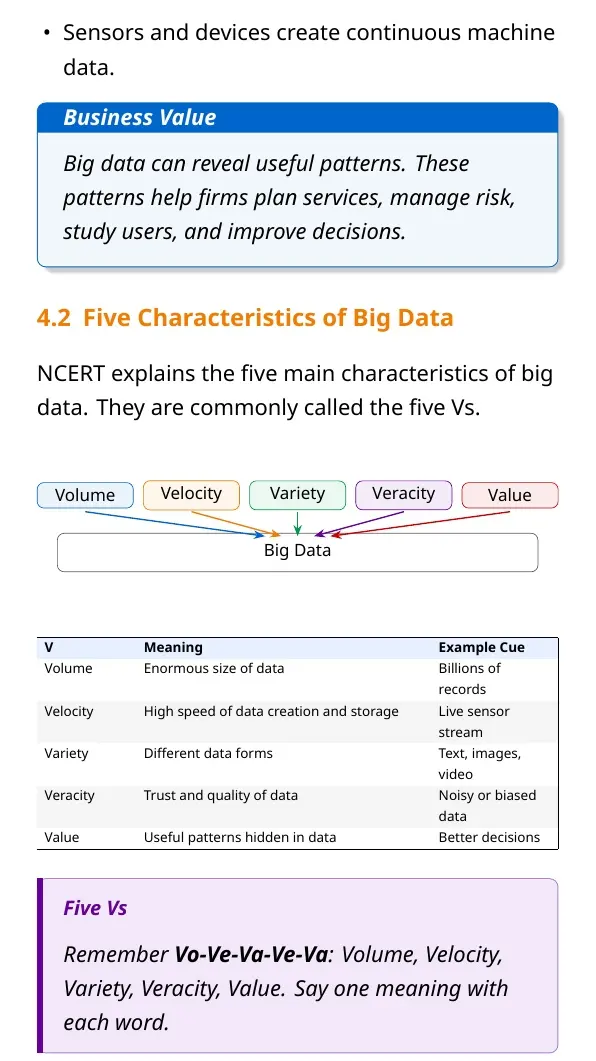
| Big data | Volume, velocity, variety, veracity and value |
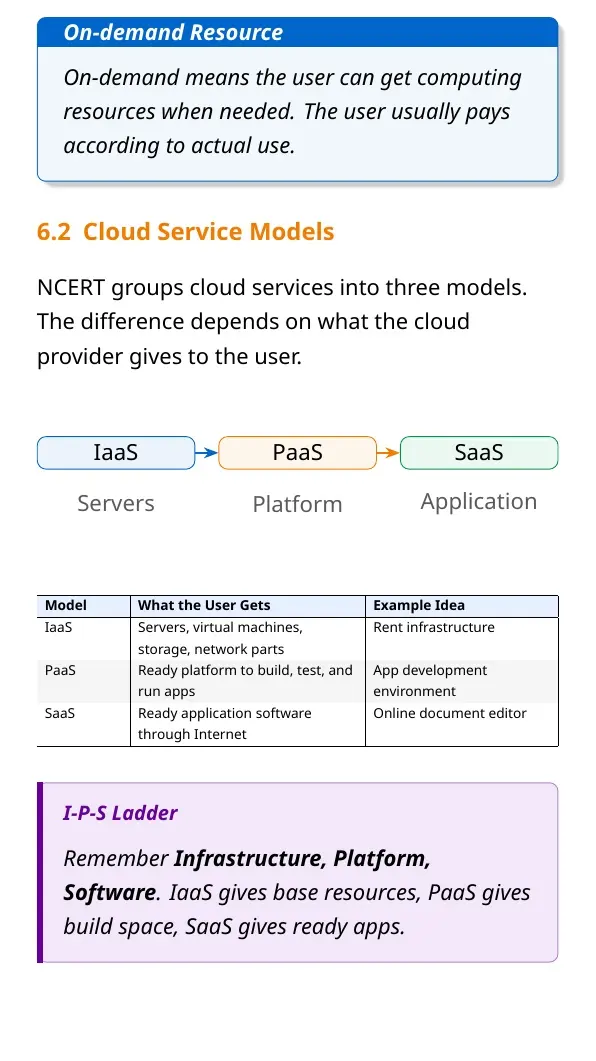
| Cloud computing | Online resources, storage, software services and scalability |
| Internet of Things | Sensors, smart devices, communication and automation |
Emerging Trends Class 11 Video Revision
Source: Magnet Brains on YouTube
What is Covered in Emerging Trends Class 11 Notes?
The notes follow the NCERT flow and connect every term with a familiar example. Students first revise artificial intelligence and machine learning, then move to natural language processing, big data, cloud computing, IoT, blockchain, robotics and 3D printing.
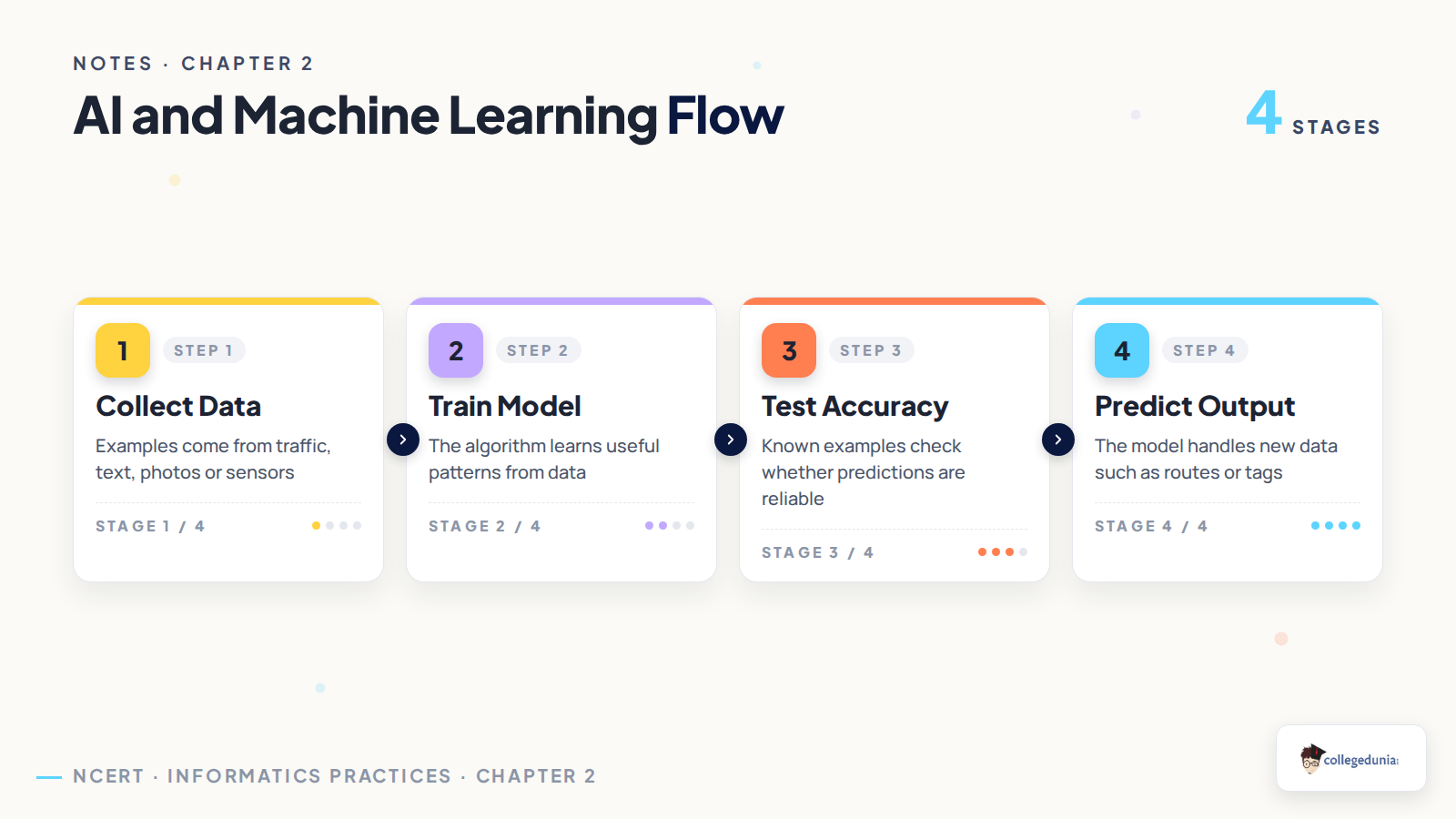
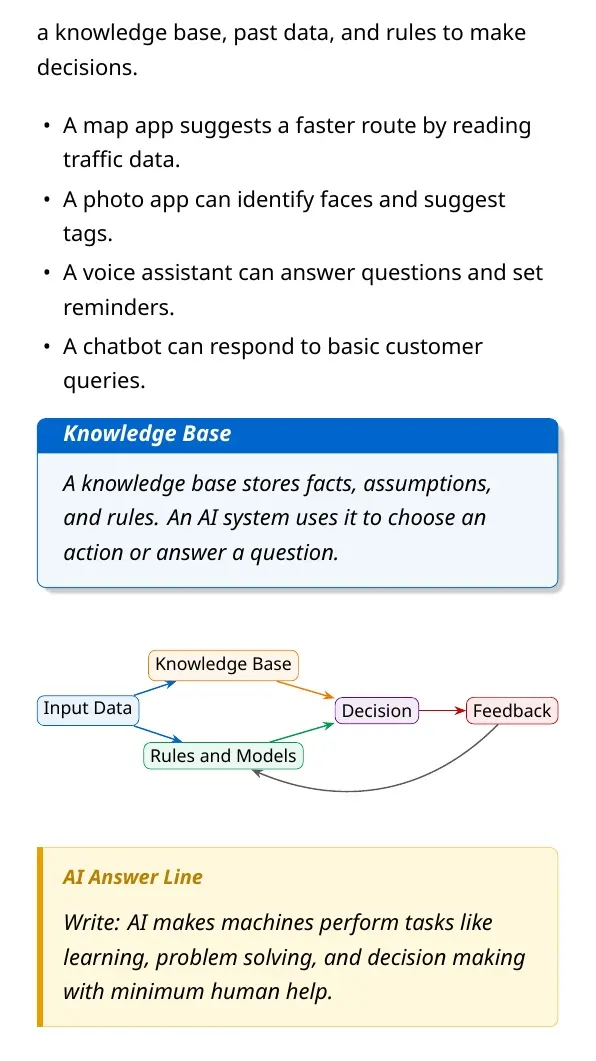
- Artificial intelligence: how machines perform tasks that usually need human intelligence.
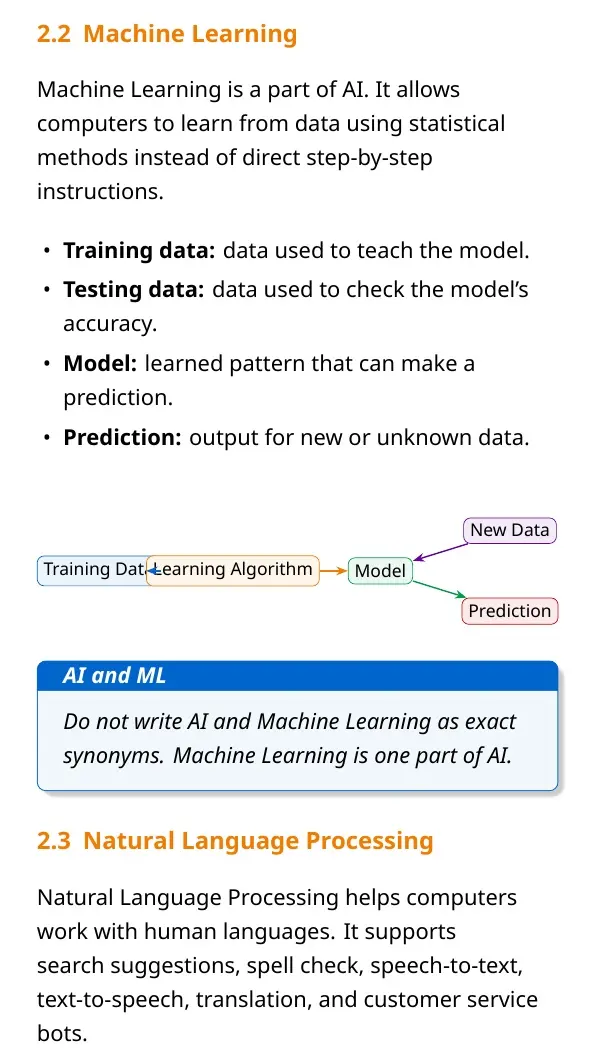
- Machine learning: how systems improve prediction by learning patterns from data.
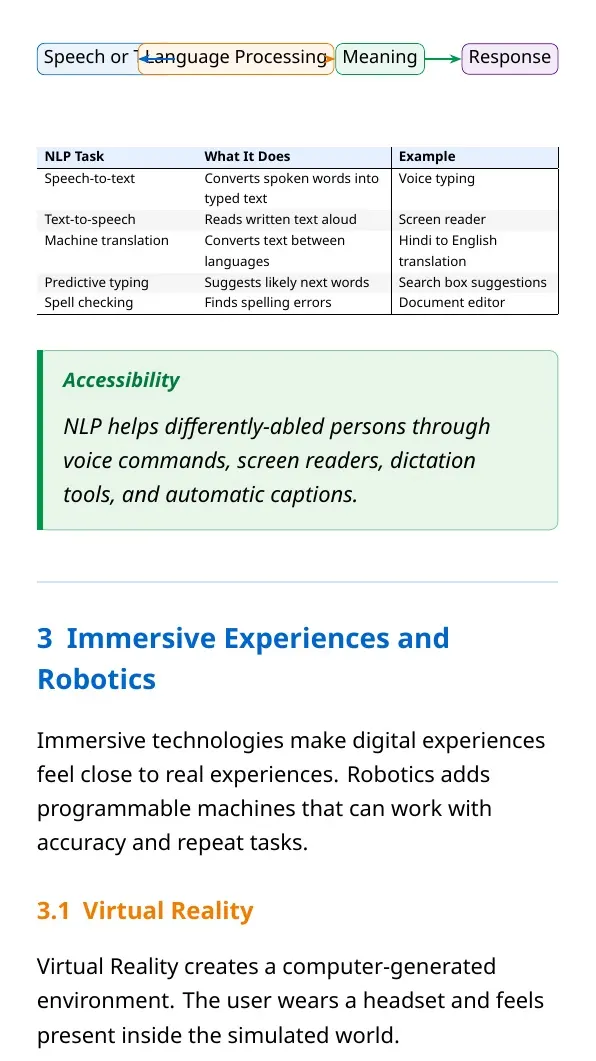
- Natural language processing: how computers handle speech, text and translation.
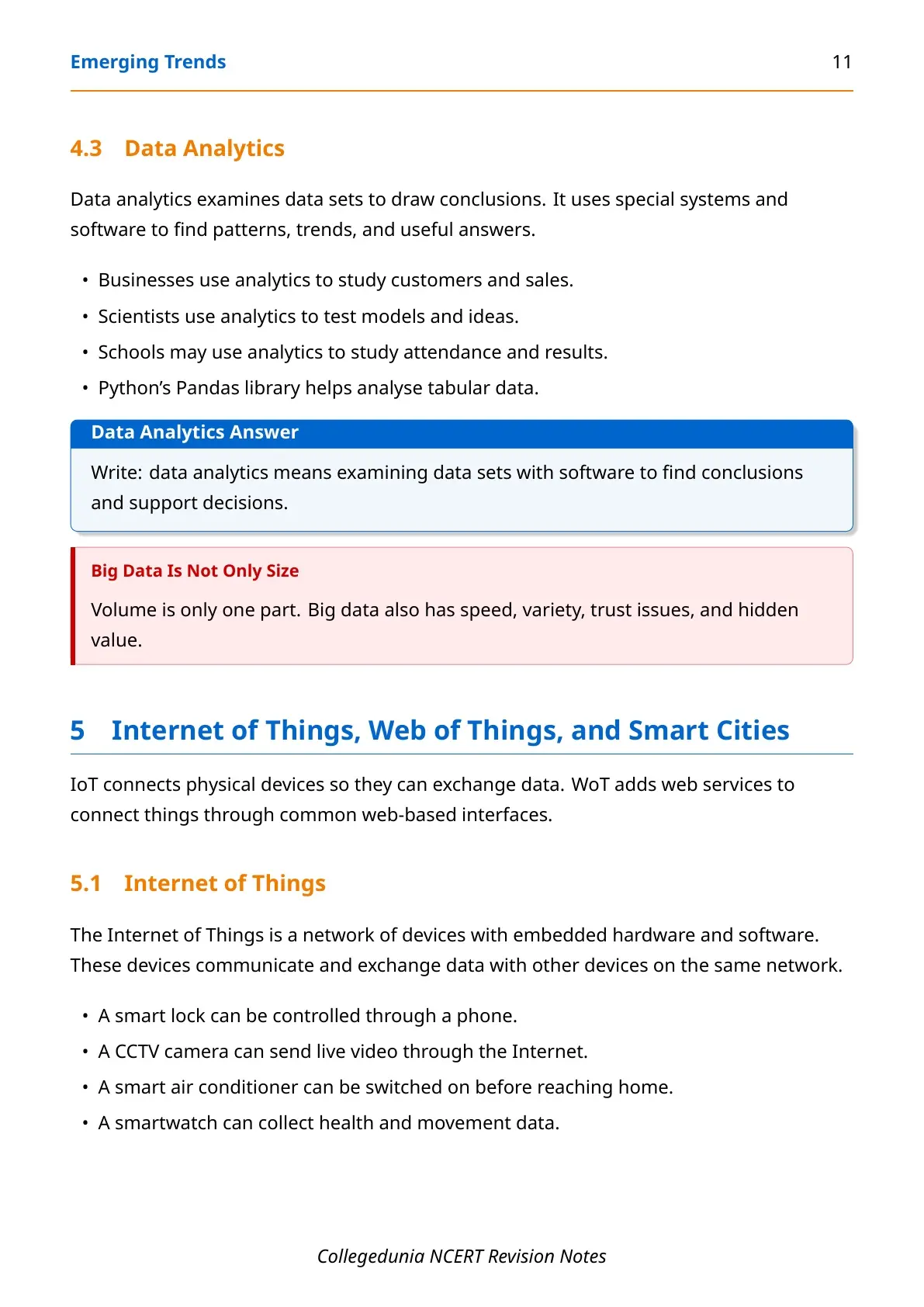
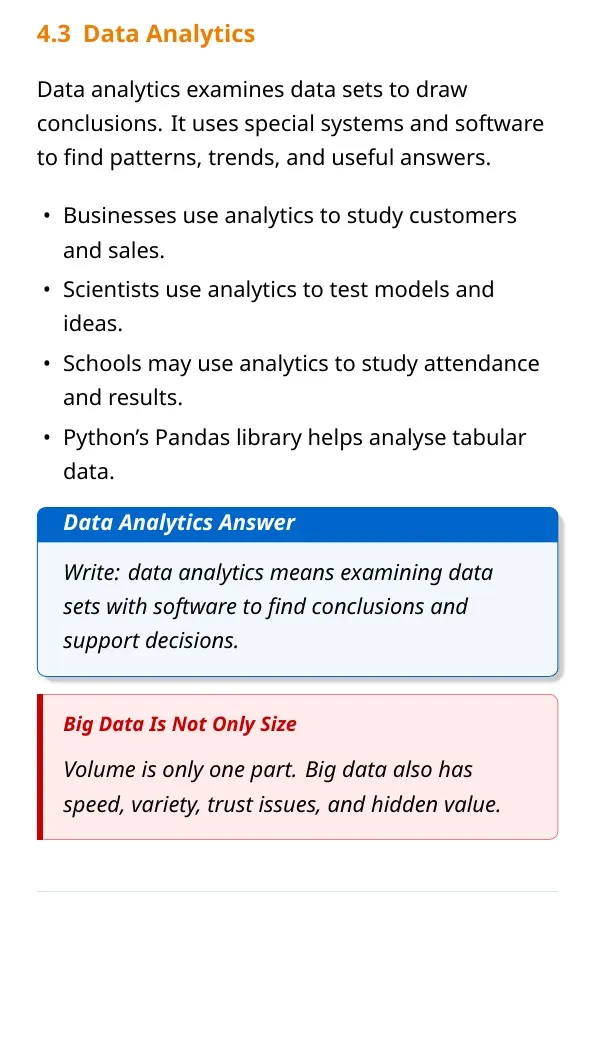
- Big data: how very large datasets are stored, processed and analysed.
- Cloud and IoT: how online infrastructure and connected devices work together.
Artificial Intelligence and Machine Learning Revision
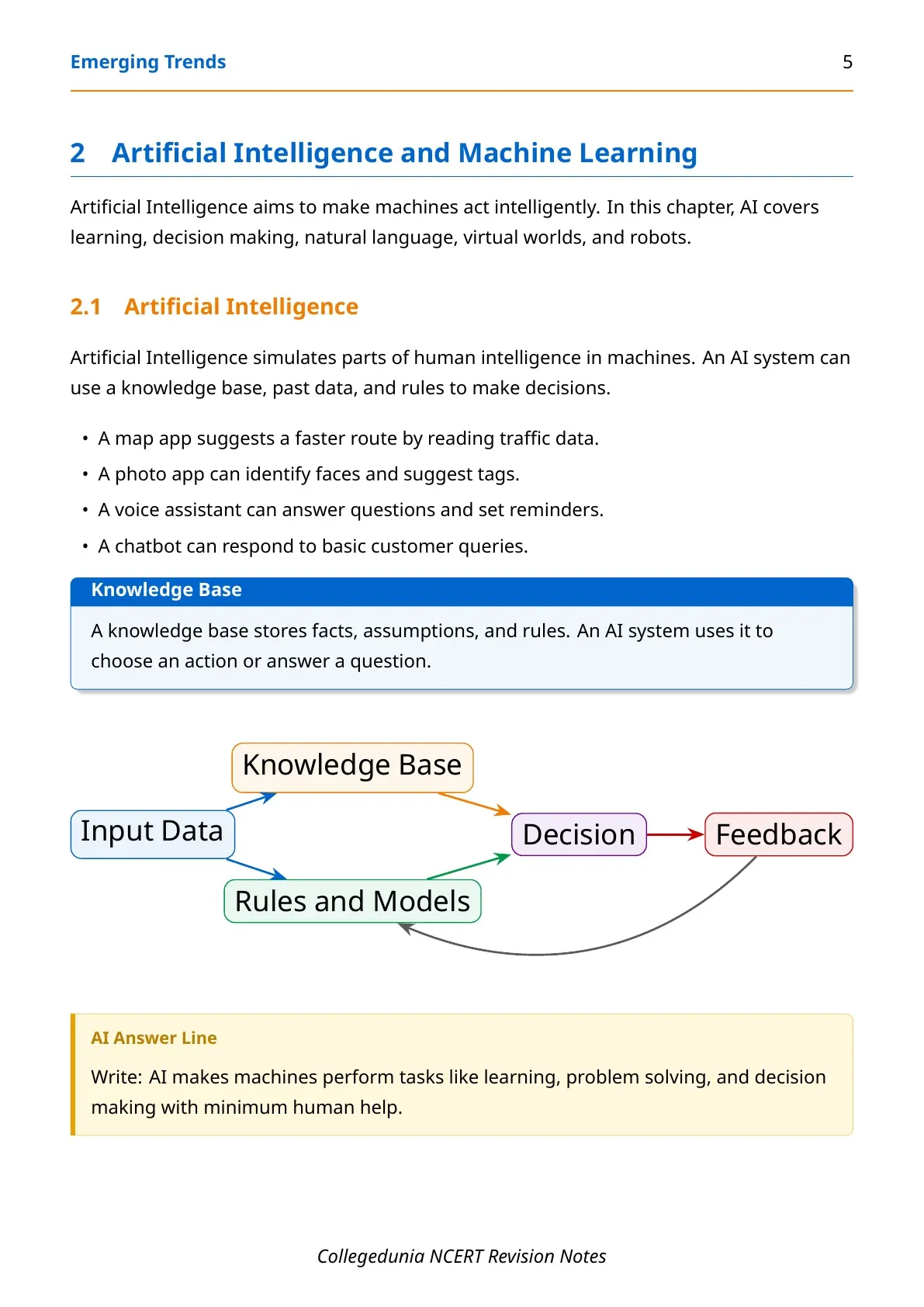
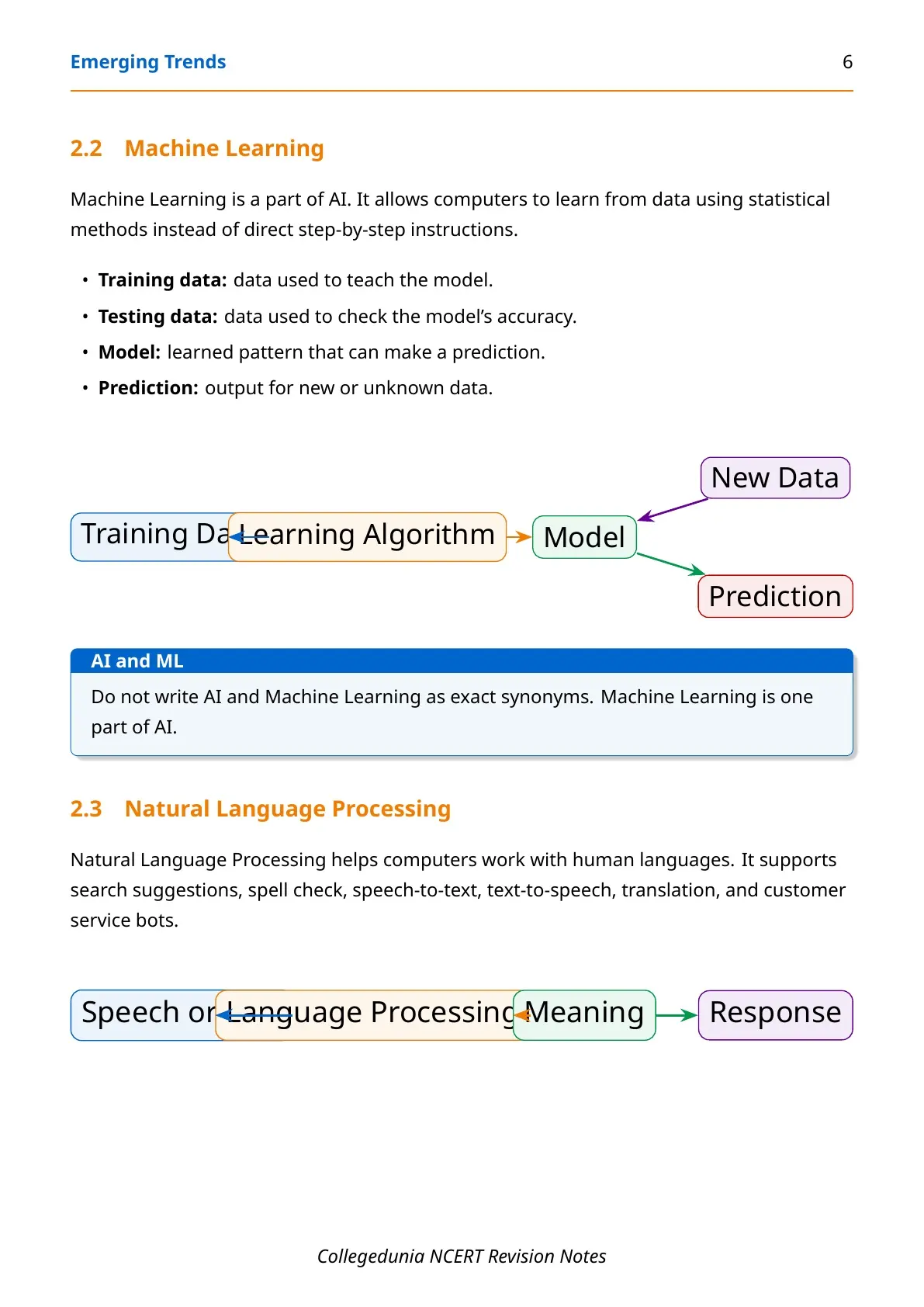
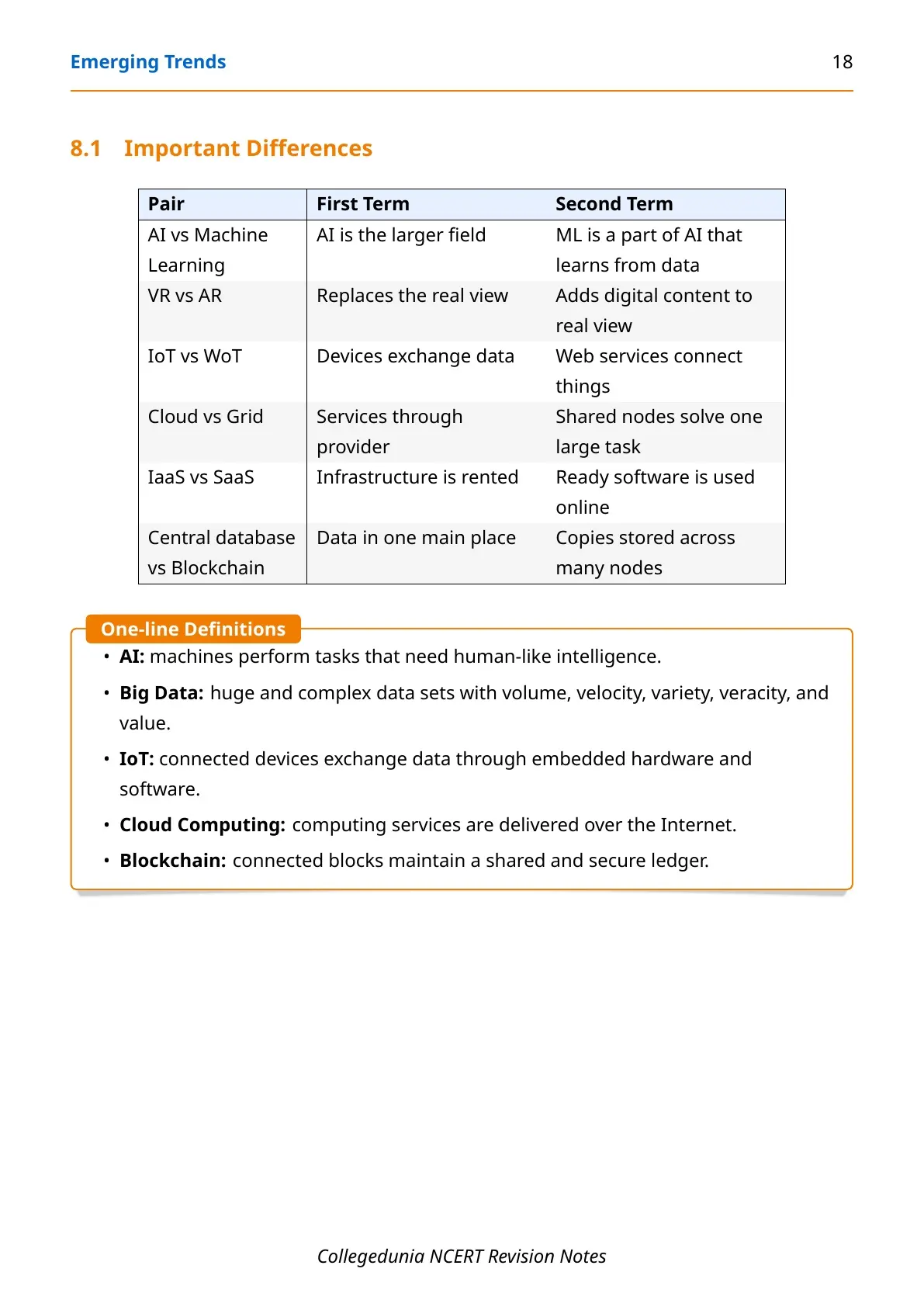
Artificial intelligence is the broader field where a machine shows intelligent behaviour. Machine learning is a part of artificial intelligence where a system learns from data instead of following only fixed instructions.
A useful exam example is an online shopping recommendation. The system checks earlier clicks, searches and purchases, then predicts what a user may like next. The rule is not typed separately for every product. The model learns the pattern from data.
| Term | Meaning | Example |
|---|---|---|
| Artificial intelligence | Computer system performing intelligent tasks | Voice assistant answering a question |
| Machine learning | System improving using data patterns | Recommendation engine |
| Natural language processing | Computer processing human language | Translation app or chatbot |
| Computer vision | Computer interpreting images or video | Face unlock or traffic camera analysis |
Cloud Computing, Big Data and IoT Revision
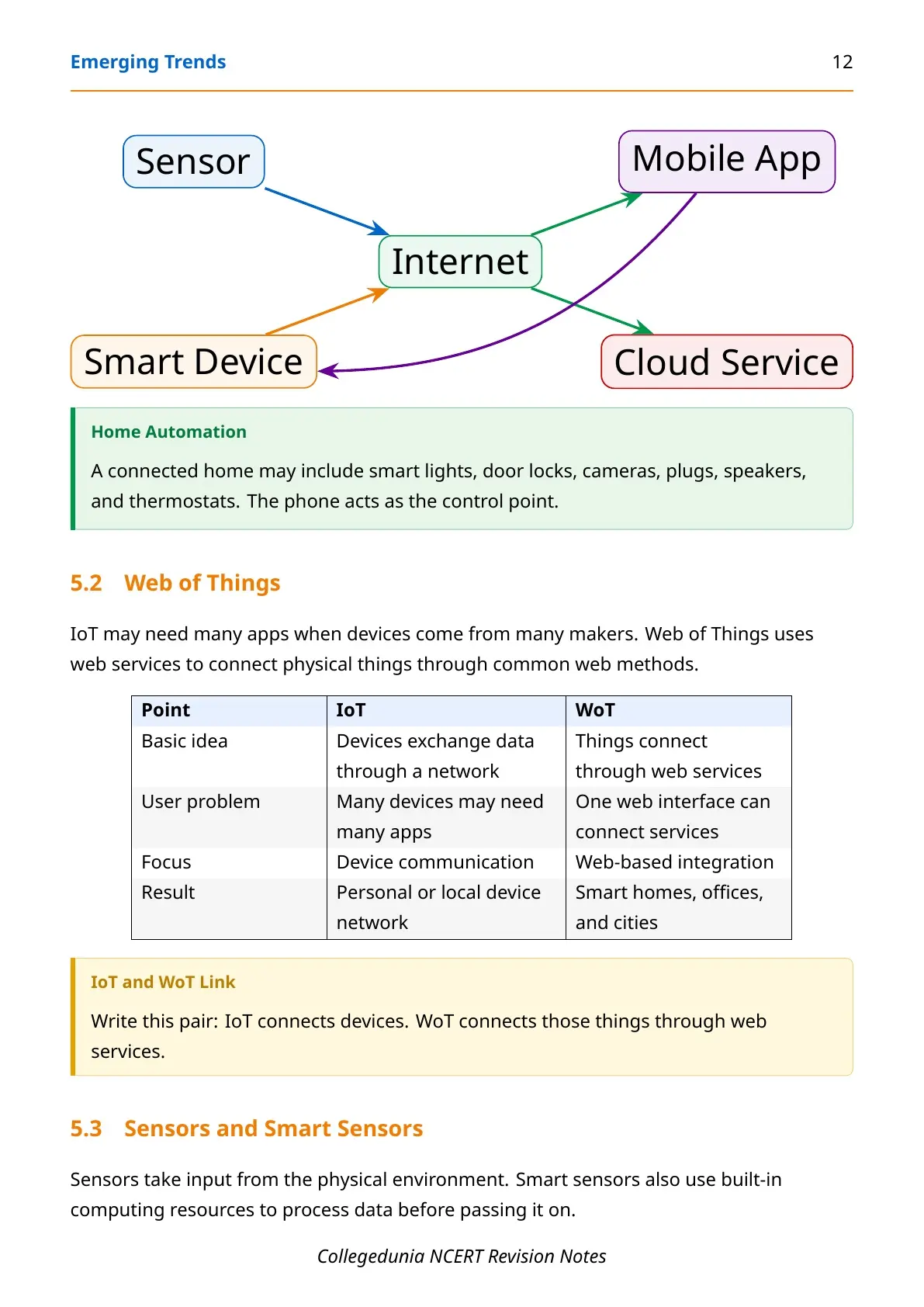
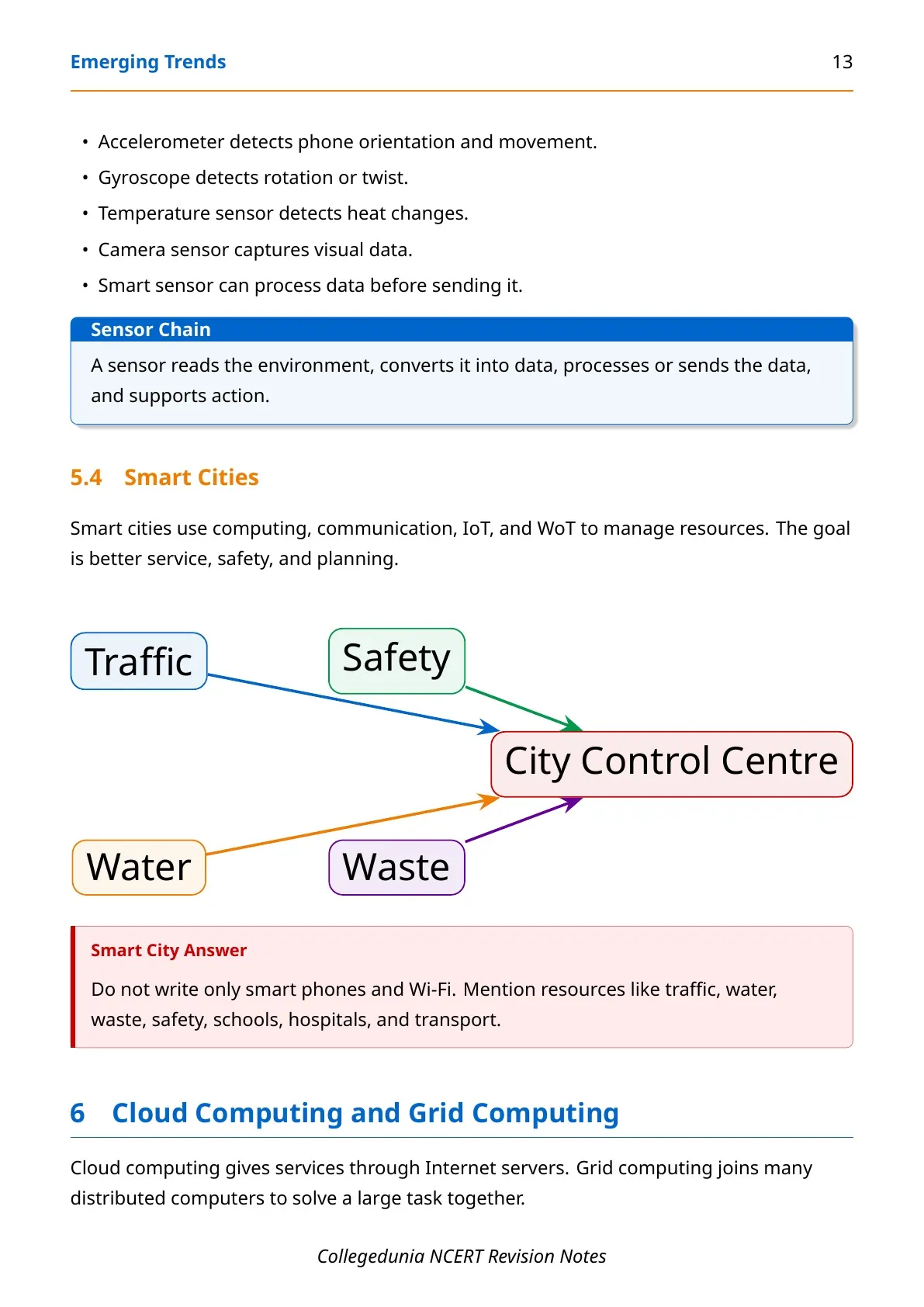
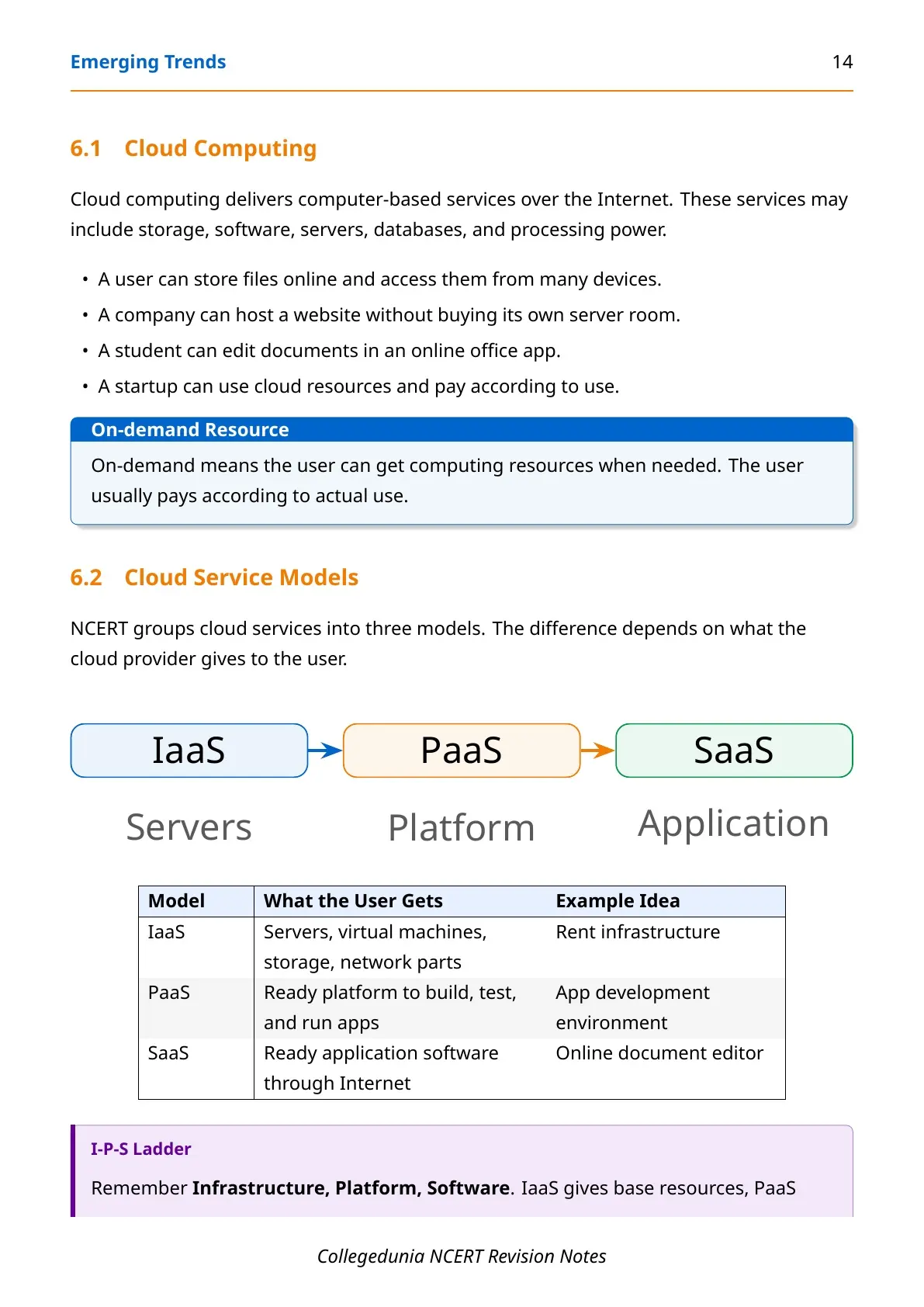
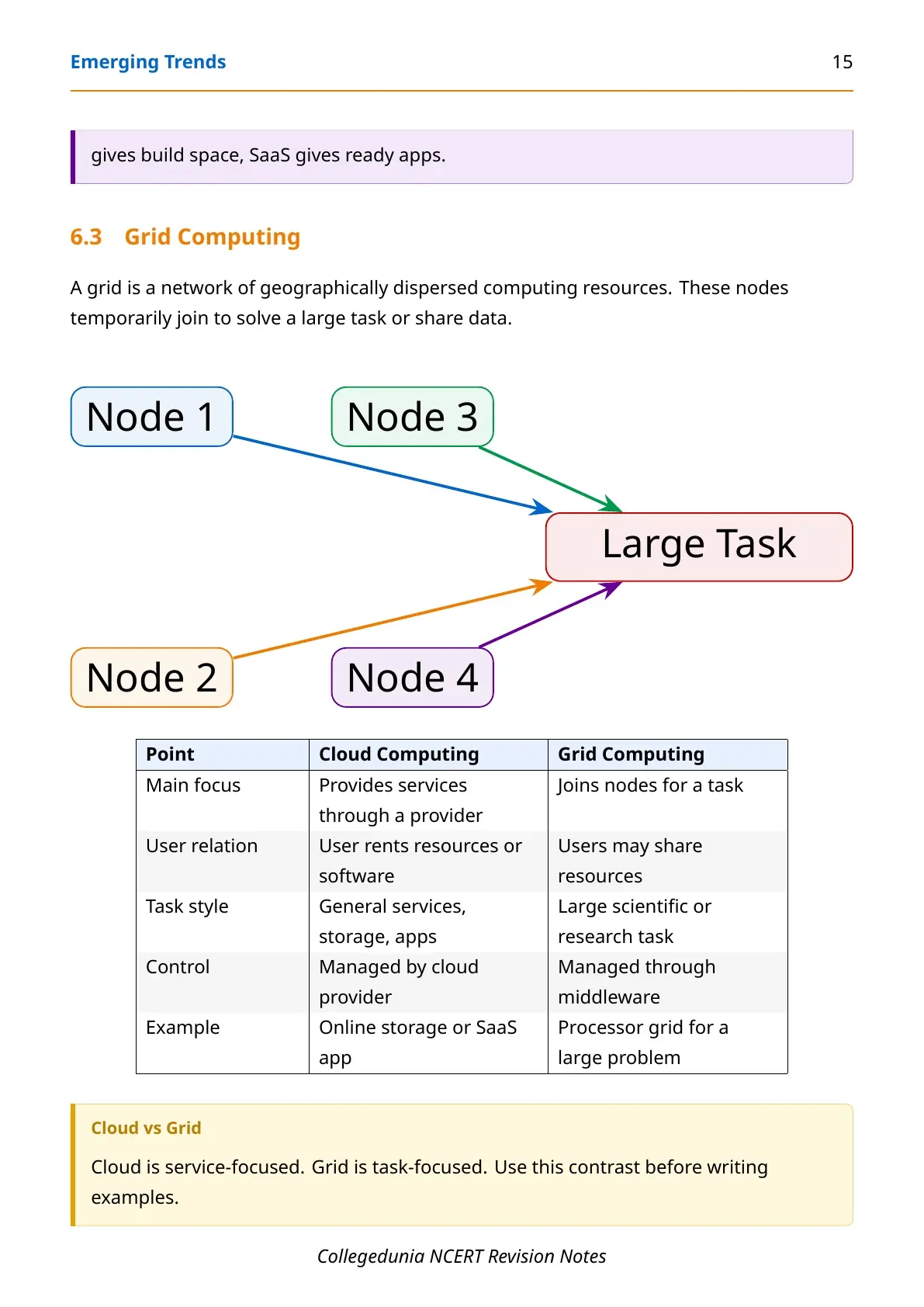
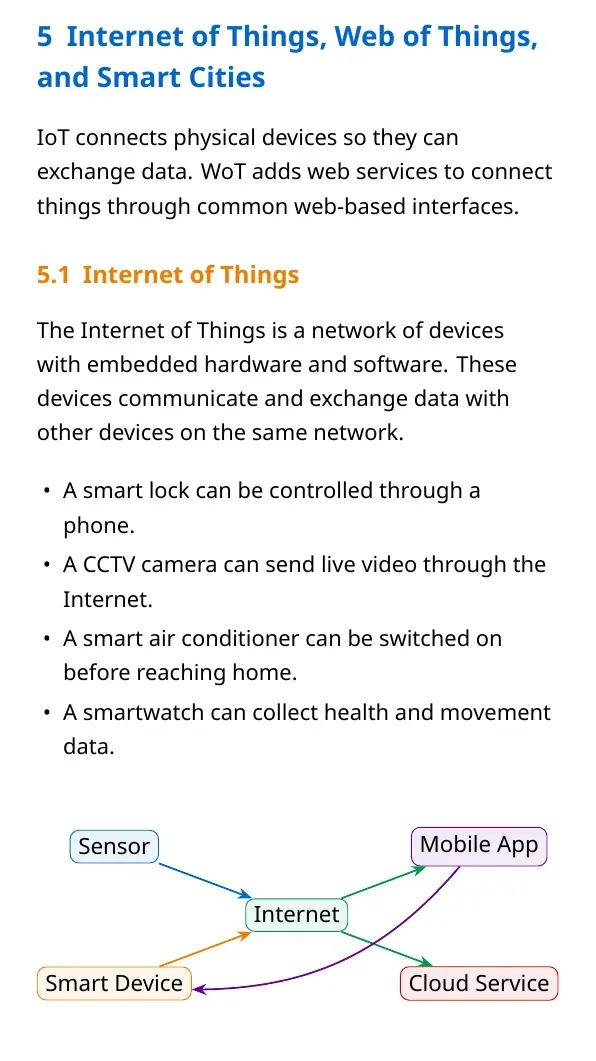
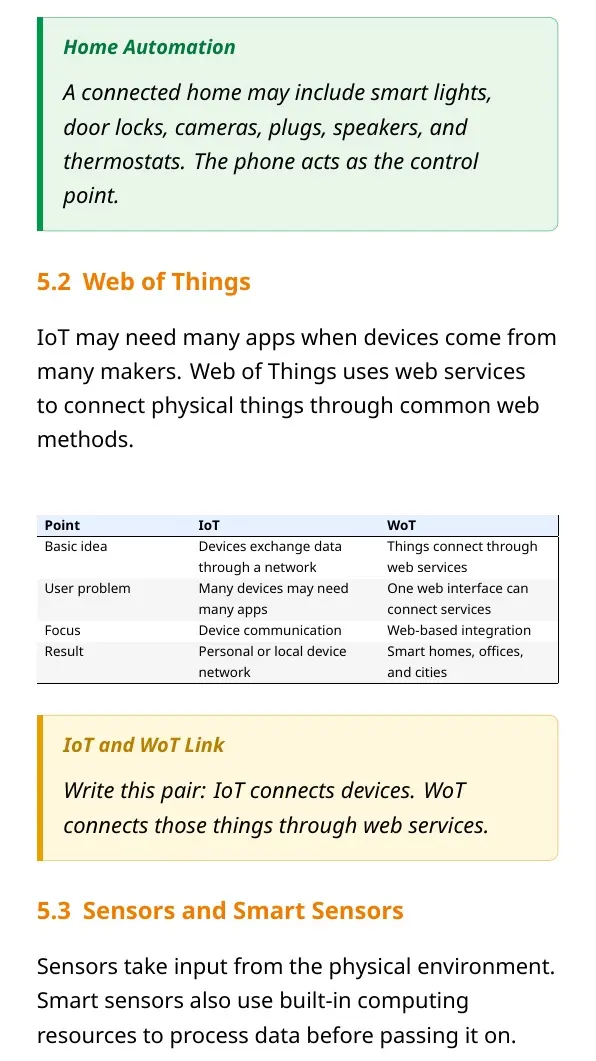
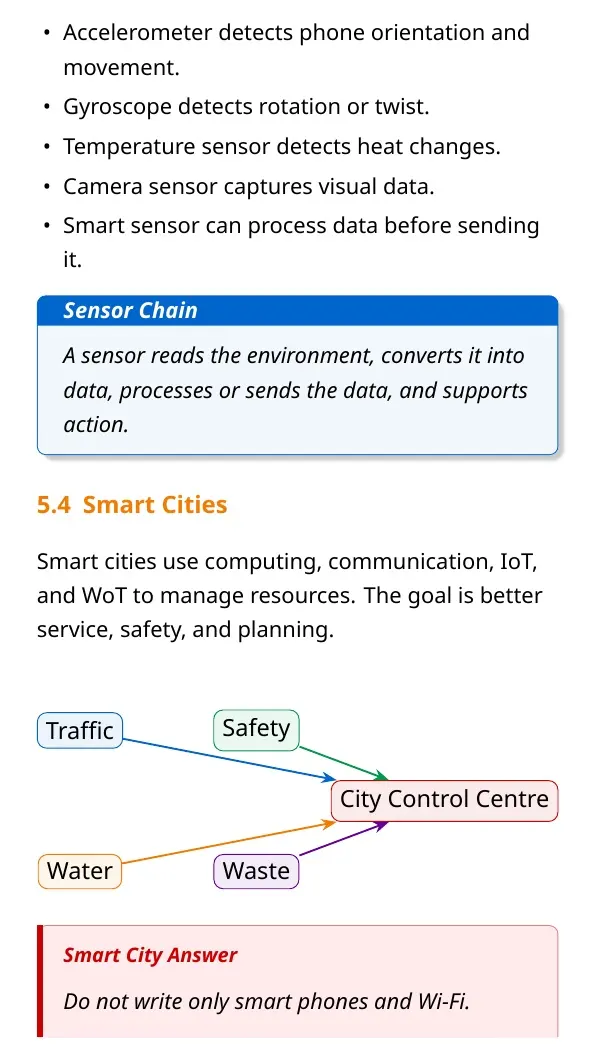
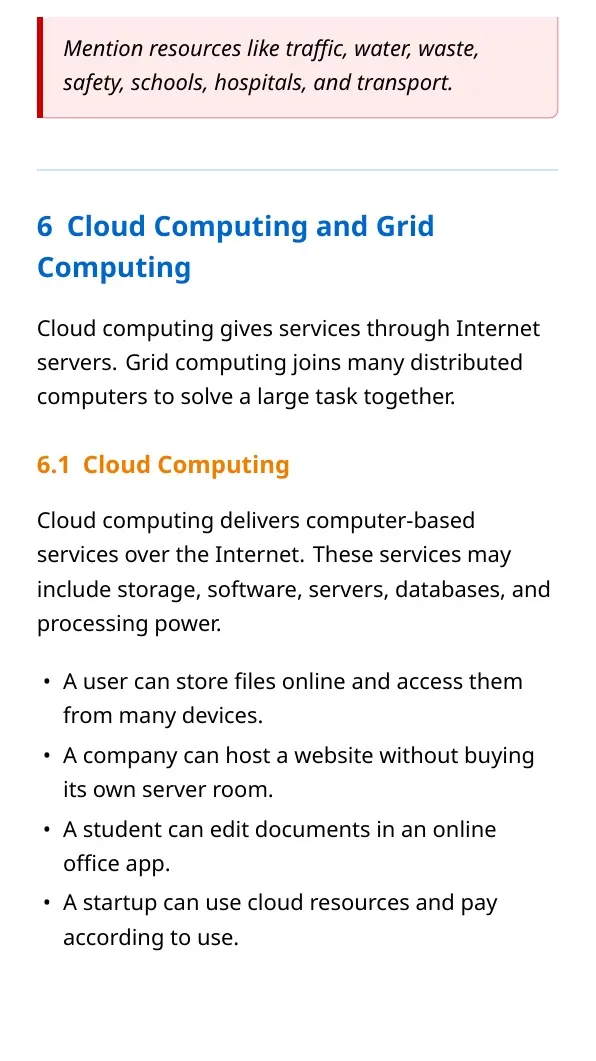
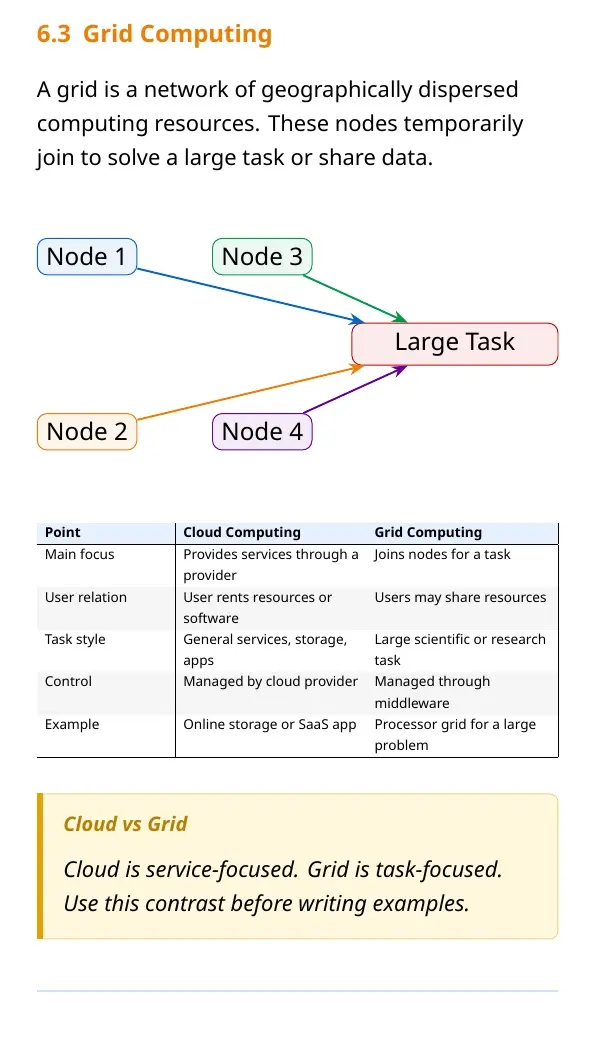
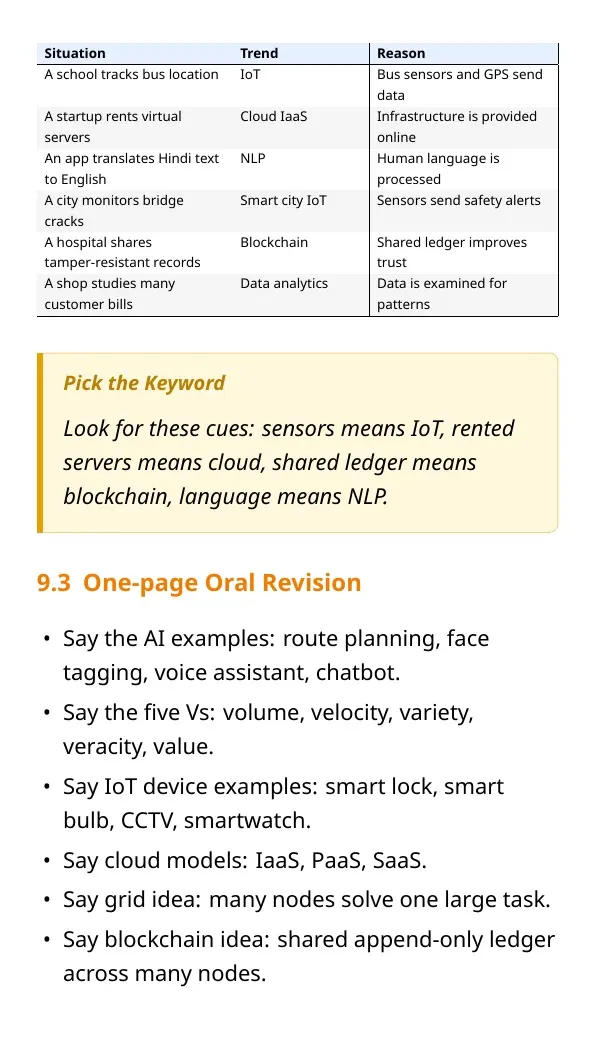
Cloud computing provides computing resources such as storage, applications and servers through the internet. Big data deals with datasets that are too large or fast-changing for simple tools. IoT connects physical devices through sensors and networks so that they can collect and exchange data.
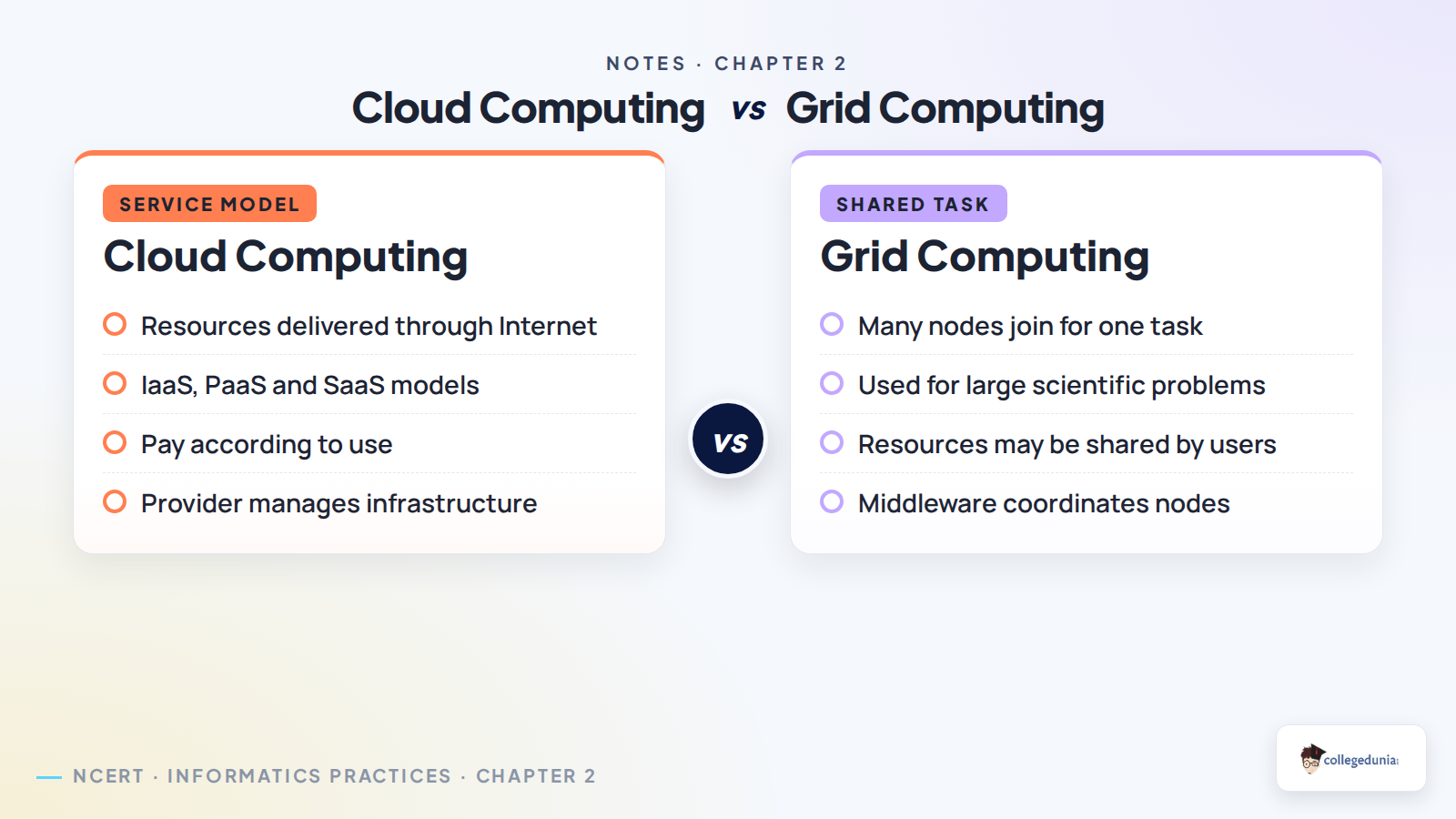
- Cloud example: saving documents on an online drive and accessing them from another device.
- Big data example: analysing millions of app clicks to understand customer behaviour.
- IoT example: a smart meter sending electricity usage automatically to a server.
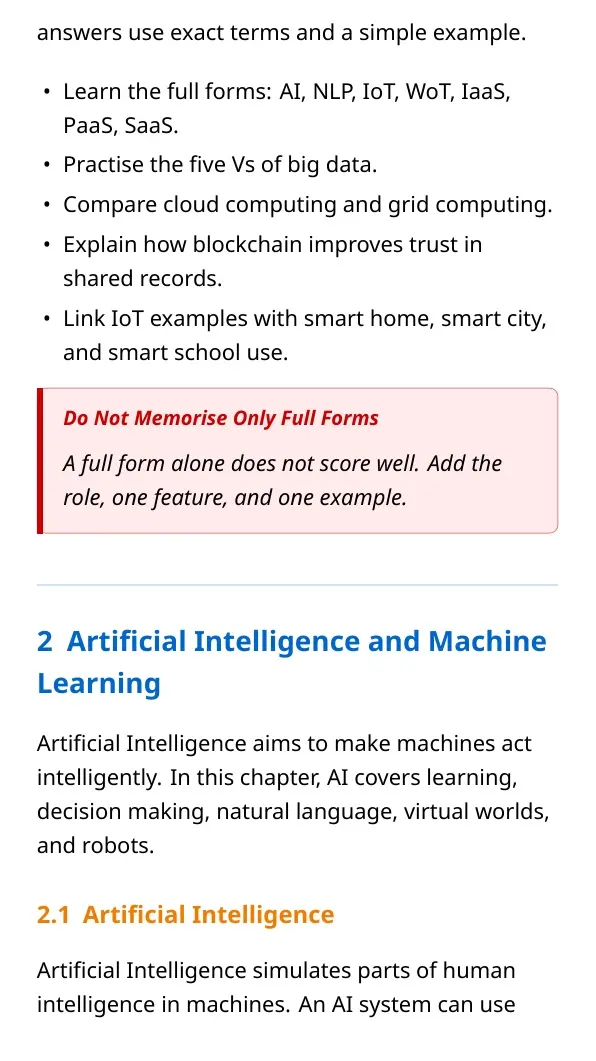
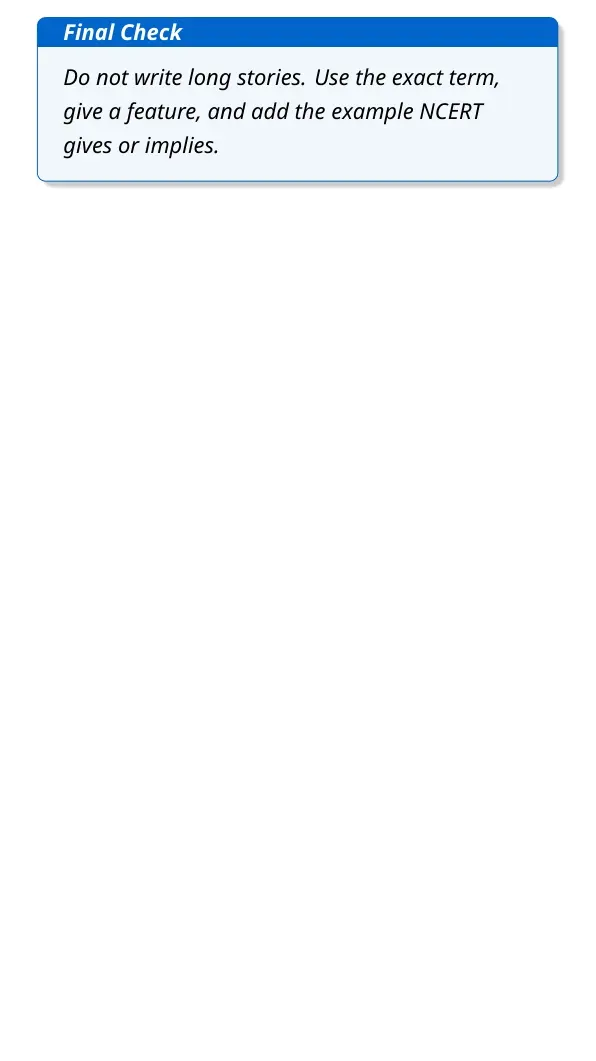
- Exam tip: write both the technology name and one real application to make answers complete.
Blockchain, 3D Printing and Robotics
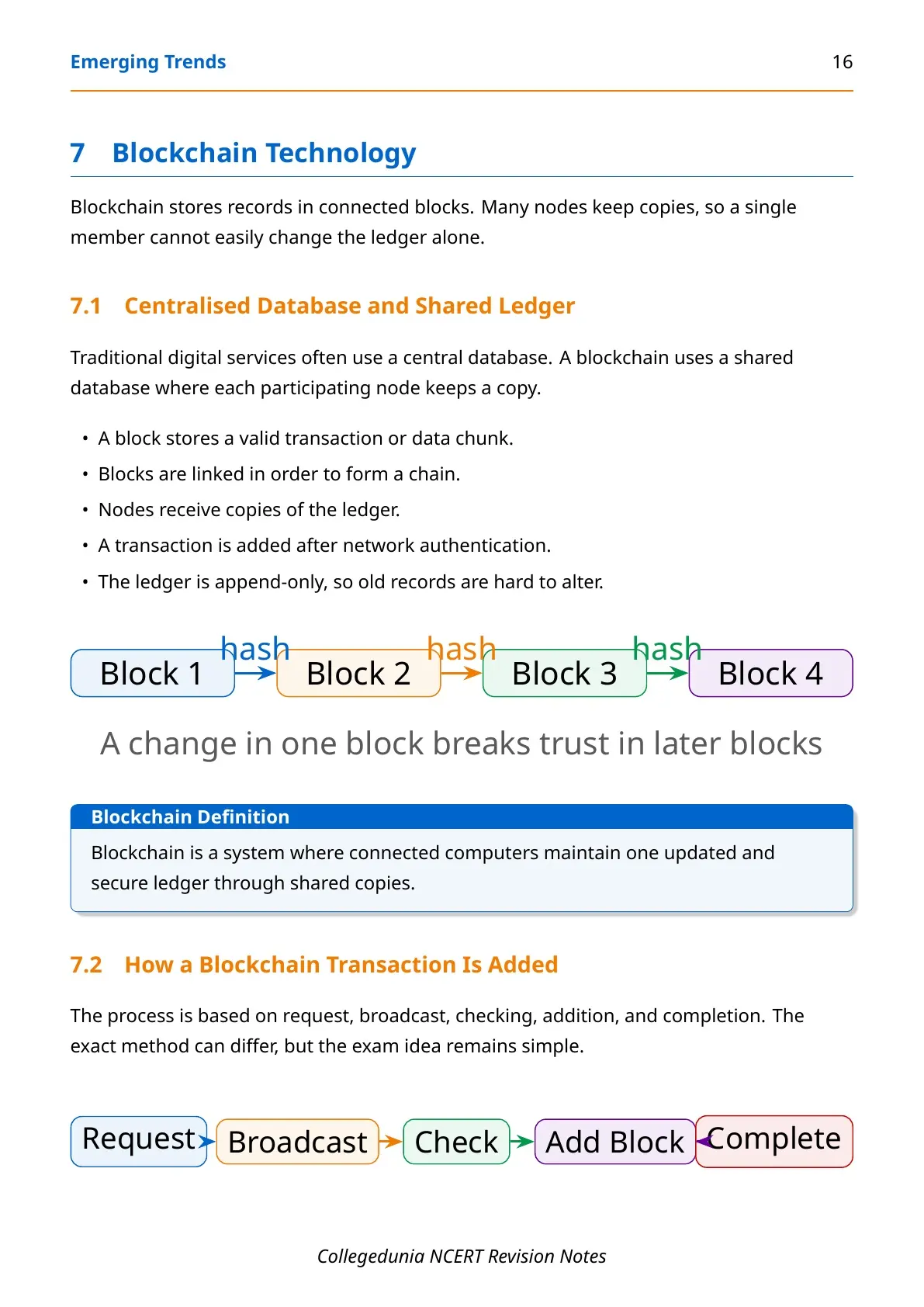
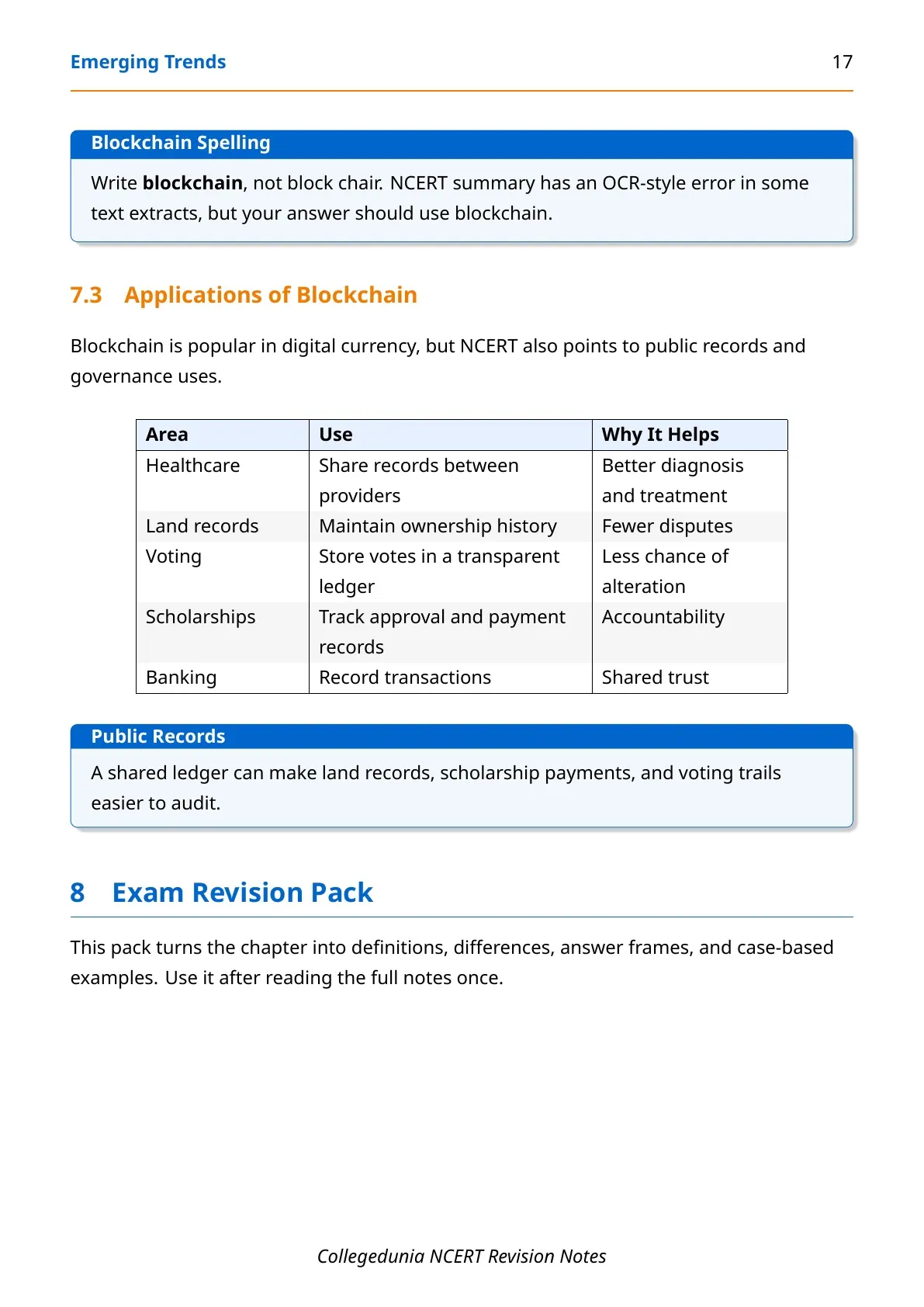
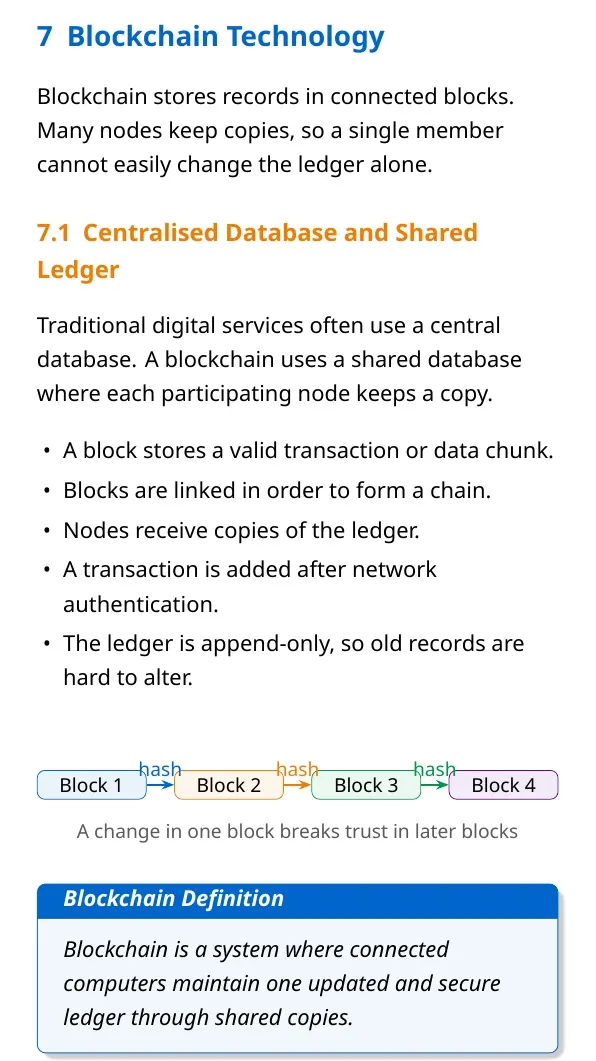
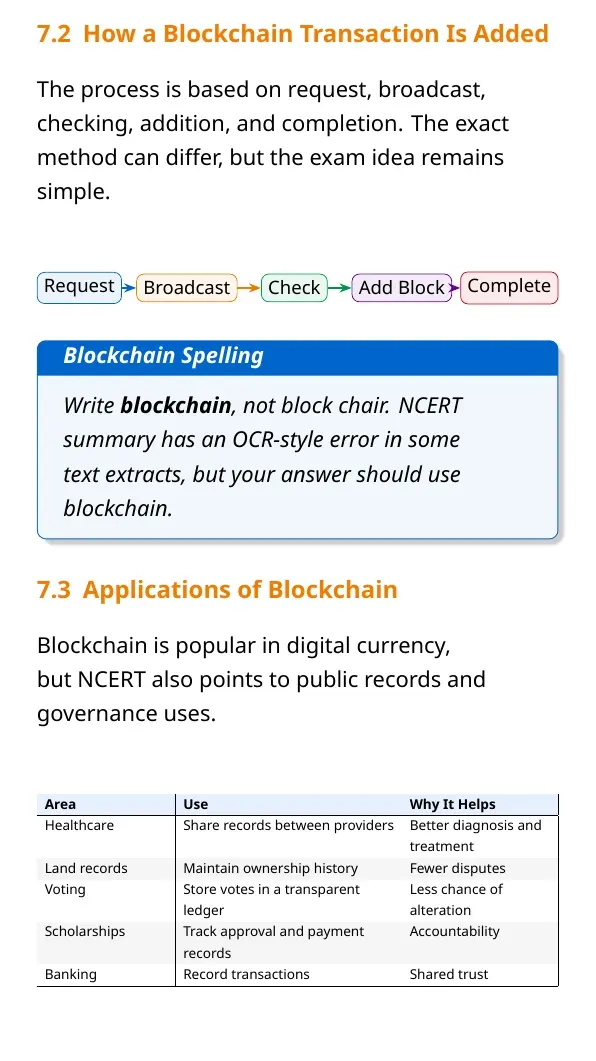
Blockchain stores records in connected blocks, where each block is linked to the previous one. This makes tampering difficult because changing one record affects the chain. In school-level answers, students should focus on secure record keeping rather than only cryptocurrency.
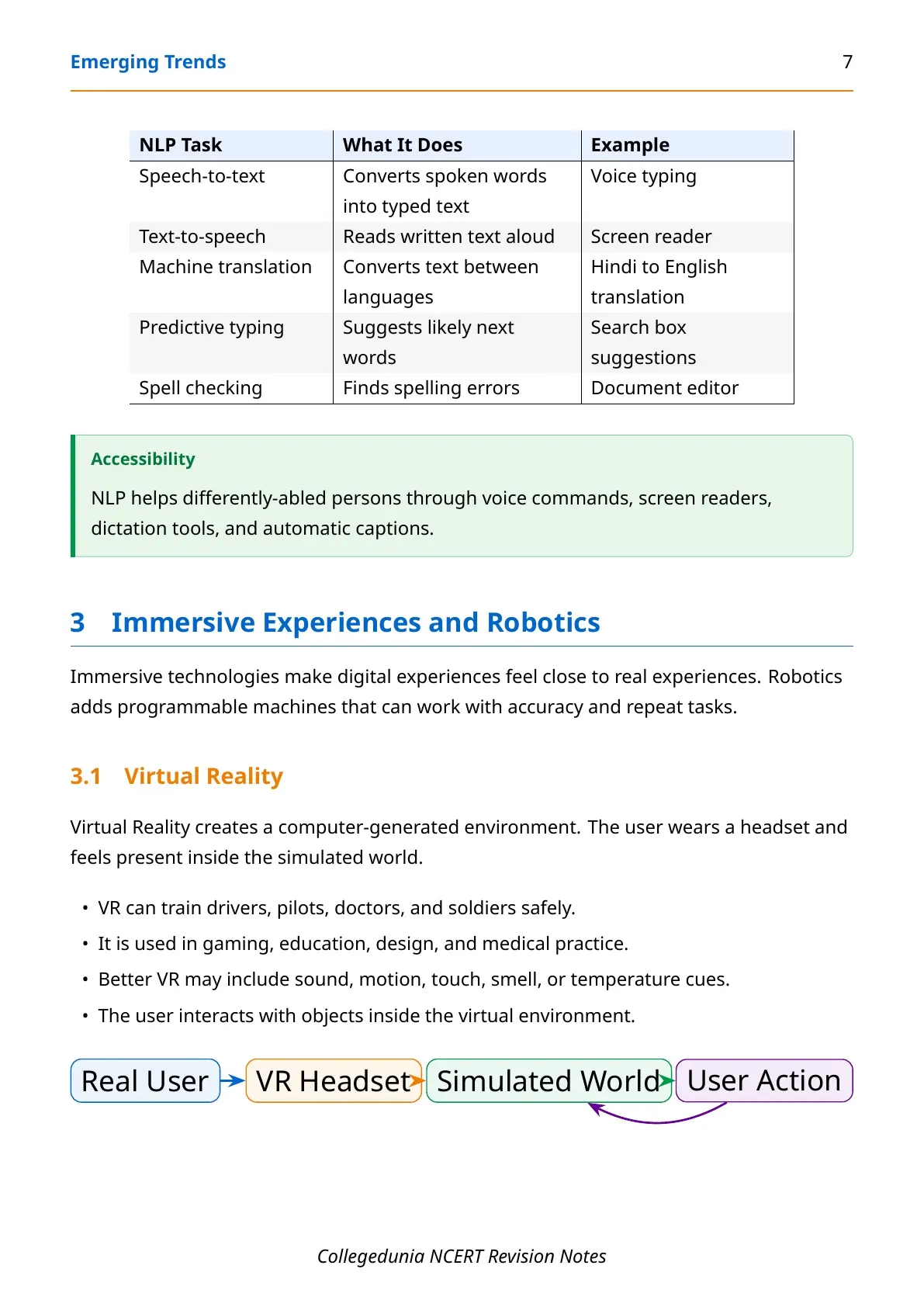
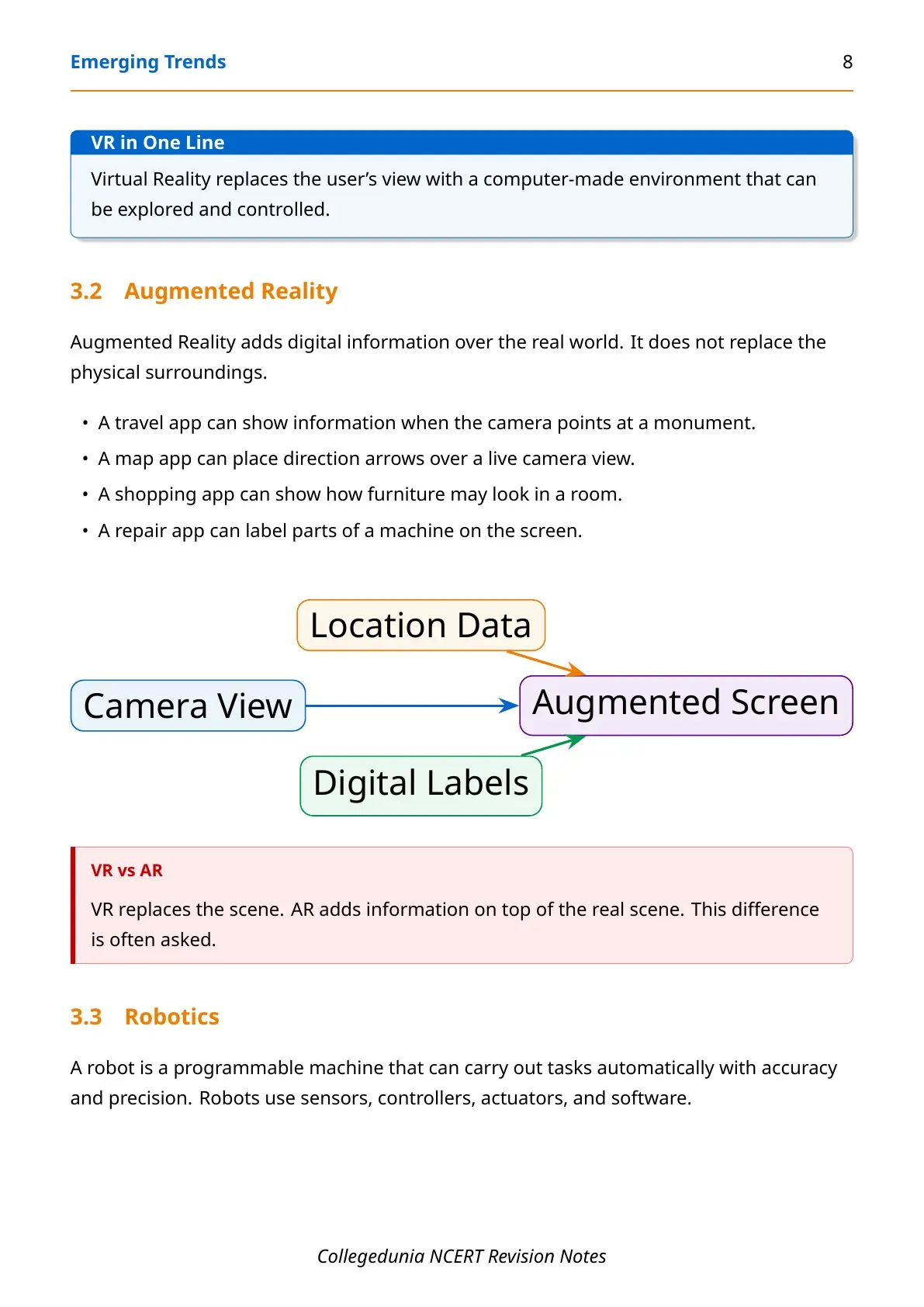
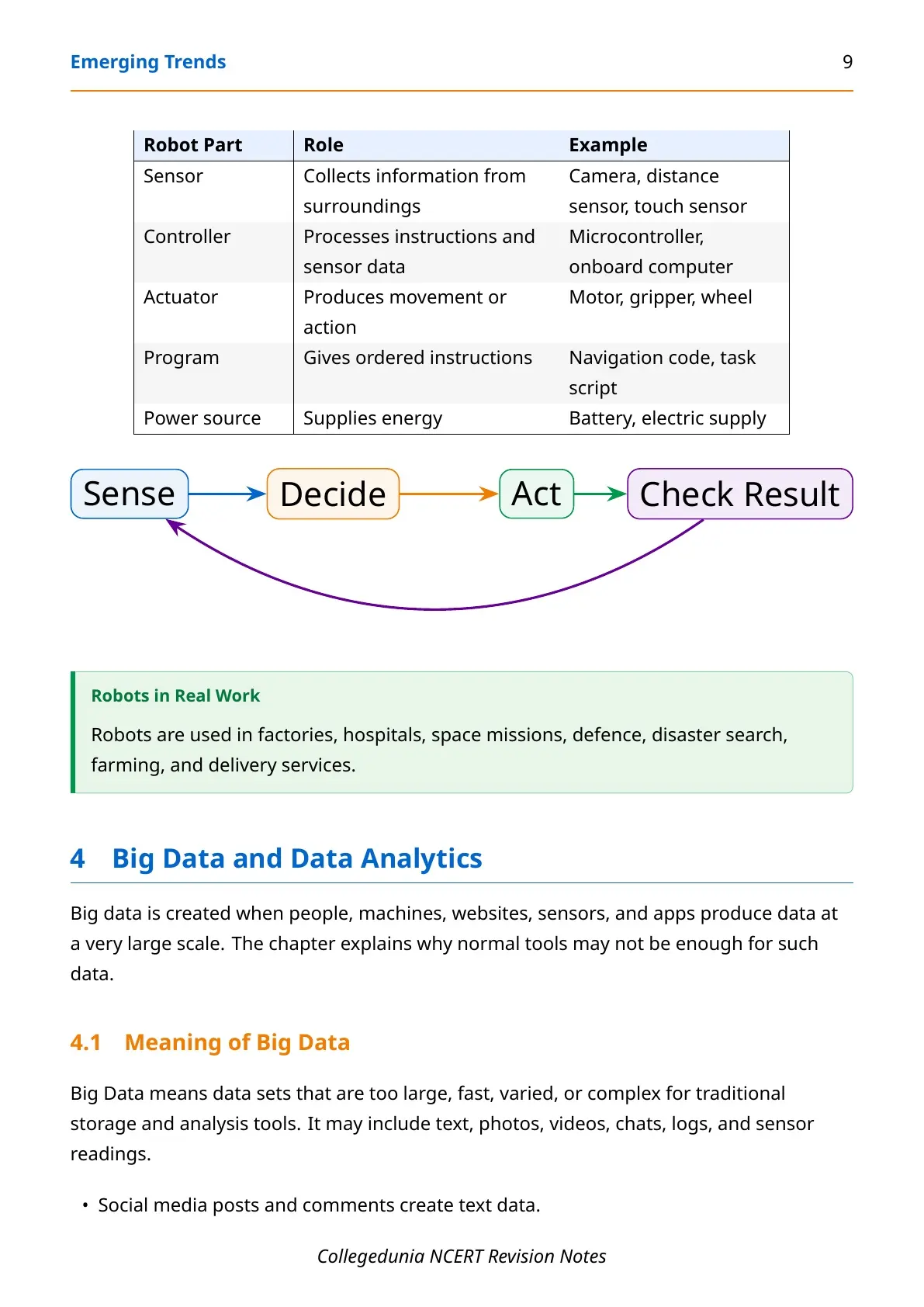
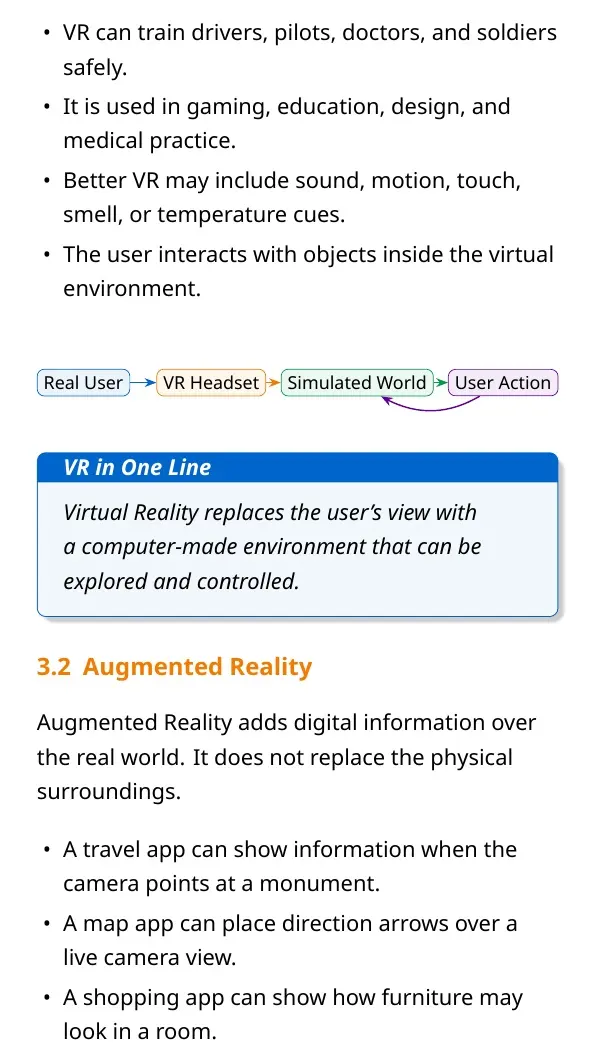
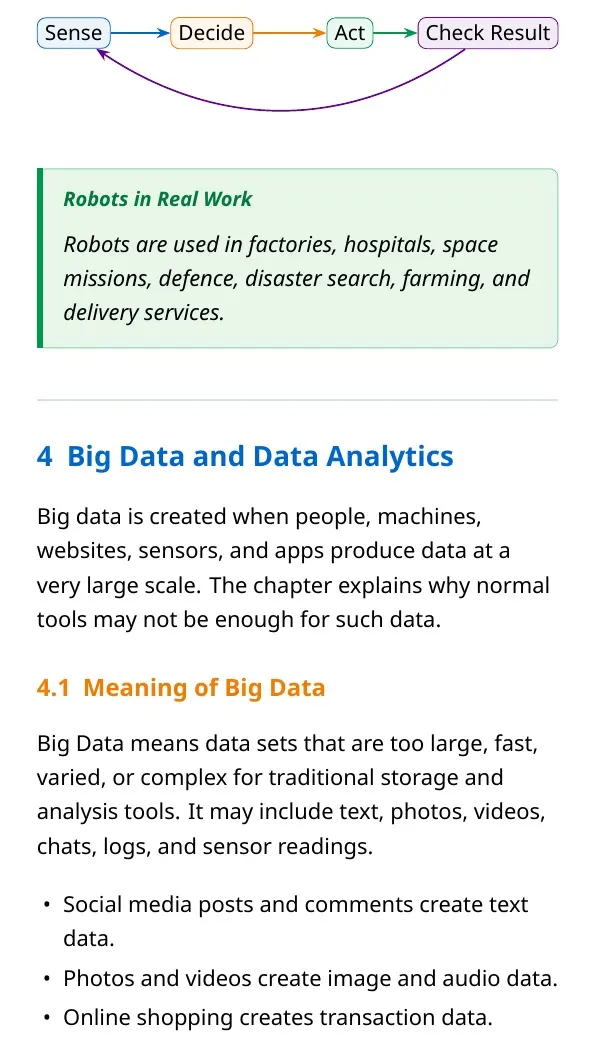
3D printing creates a physical object layer by layer from a digital model. Robotics combines sensors, control systems and mechanical parts to perform tasks. These technologies are often used with artificial intelligence, cloud platforms and IoT devices in modern systems.
| Trend | Core idea | Application |
|---|---|---|
| Blockchain | Distributed and tamper-resistant record system | Supply chain tracking and digital records |
| 3D printing | Layer-by-layer object creation | Prototypes, models and medical implants |
| Robotics | Machines sensing and acting in the physical world | Industrial automation and assistive robots |
Common Mistakes in Emerging Trends Chapter
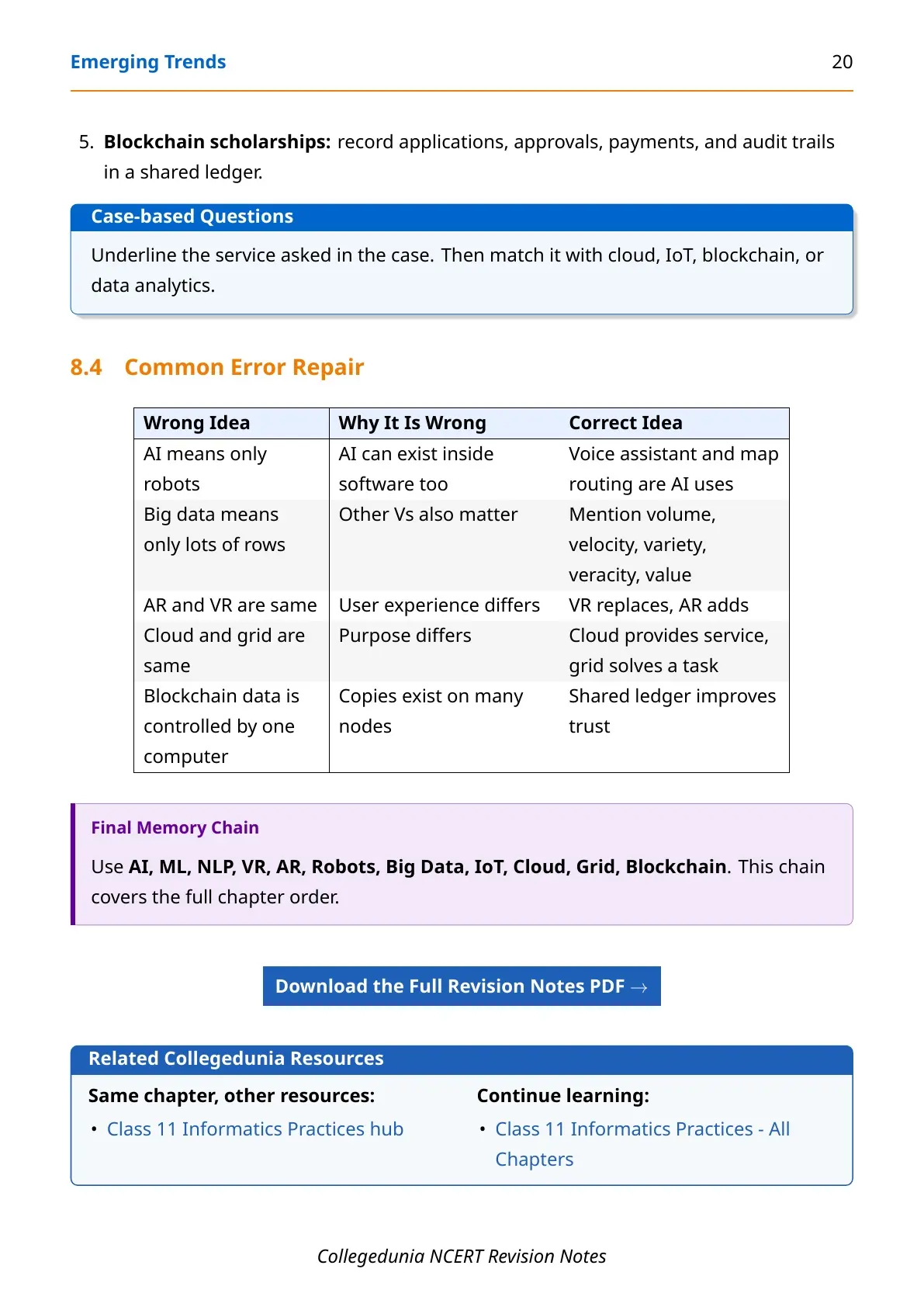
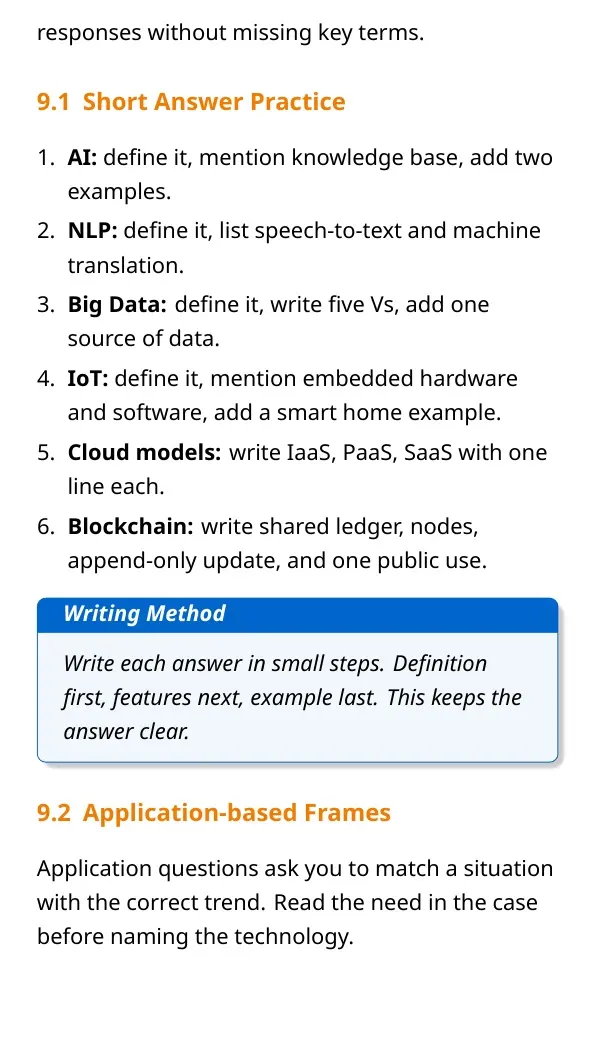
Many answers lose marks because students write only examples and skip the definition. A safe answer pattern is definition first, then one example, then one benefit or limitation.
| Mistake | Correct point |
|---|---|
| Calling machine learning the same as artificial intelligence | Machine learning is a branch of artificial intelligence. |
| Writing cloud computing as only online storage | Cloud includes storage, software, platforms and computing resources. |
| Using IoT without sensors | IoT devices usually collect data using sensors and communicate over networks. |
| Explaining blockchain only with digital currency | Blockchain can support secure records in many fields. |
Other Class 11 Informatics Practices Emerging Trends Resources
| Resource | Link |
|---|---|
| NCERT Solutions | Emerging Trends NCERT Solutions |
| NCERT Book PDF | Emerging Trends NCERT Book PDF |
| Handwritten Notes | Emerging Trends Handwritten Notes |
| Chapter 1 Notes | Computer System Notes |
Class 11 Informatics Practices Notes All Chapters
| Chapter | Notes Link |
|---|---|
| Chapter 1 Computer System | Computer System Notes |
| Chapter 2 Emerging Trends | Emerging Trends Notes |
| Chapter 3 Brief Overview of Python | Brief Overview of Python Notes |
| Chapter 4 Working with Lists and Dictionaries | Lists and Dictionaries Notes |
Emerging Trends Class 11 Informatics Practices Notes FAQs
Ques. What is covered in Emerging Trends Class 11 Informatics Practices?
Ans. The chapter covers artificial intelligence, machine learning, natural language processing, big data, cloud computing, IoT, blockchain, robotics and 3D printing.
Ques. What is the difference between artificial intelligence and machine learning?
Ans. Artificial intelligence is the broader idea of machines performing intelligent tasks. Machine learning is a branch where systems learn patterns from data.
Ques. Why is cloud computing important in this chapter?
Ans. Cloud computing is important because it provides storage, software and computing resources through the internet, making services scalable and accessible.
Ques. How should students revise Emerging Trends for exams?
Ans. Students should revise definitions, examples and comparison tables. Each answer should include the trend name, its meaning and one real-life application.



Comments