



NCERT Notes Class 11 Psychology Chapter 1 What is Psychology? help students revise behaviour, experience, mental processes, scientific method, history and branches of psychology for the 2026-27 syllabus. The notes keep the chapter ready for school tests through definitions, comparison tables and quick answer cues.
- Download the What is Psychology? notes PDF for offline revision.
- Revise overt behaviour, covert behaviour, scientific claims, schools of thought and applied branches.
- Use the tables to frame short answers and long answers in clear steps.
Student Feedback: In a Collegedunia poll of 9,840 Class 11 Psychology students, 68% said they could define psychology but struggled to separate scientific psychology from popular belief.
Source: 2026-27 Class 11 Psychology student poll across CBSE schools.
|
Table of Contents |
What is Psychology? Class 11 Notes: Chapter Overview
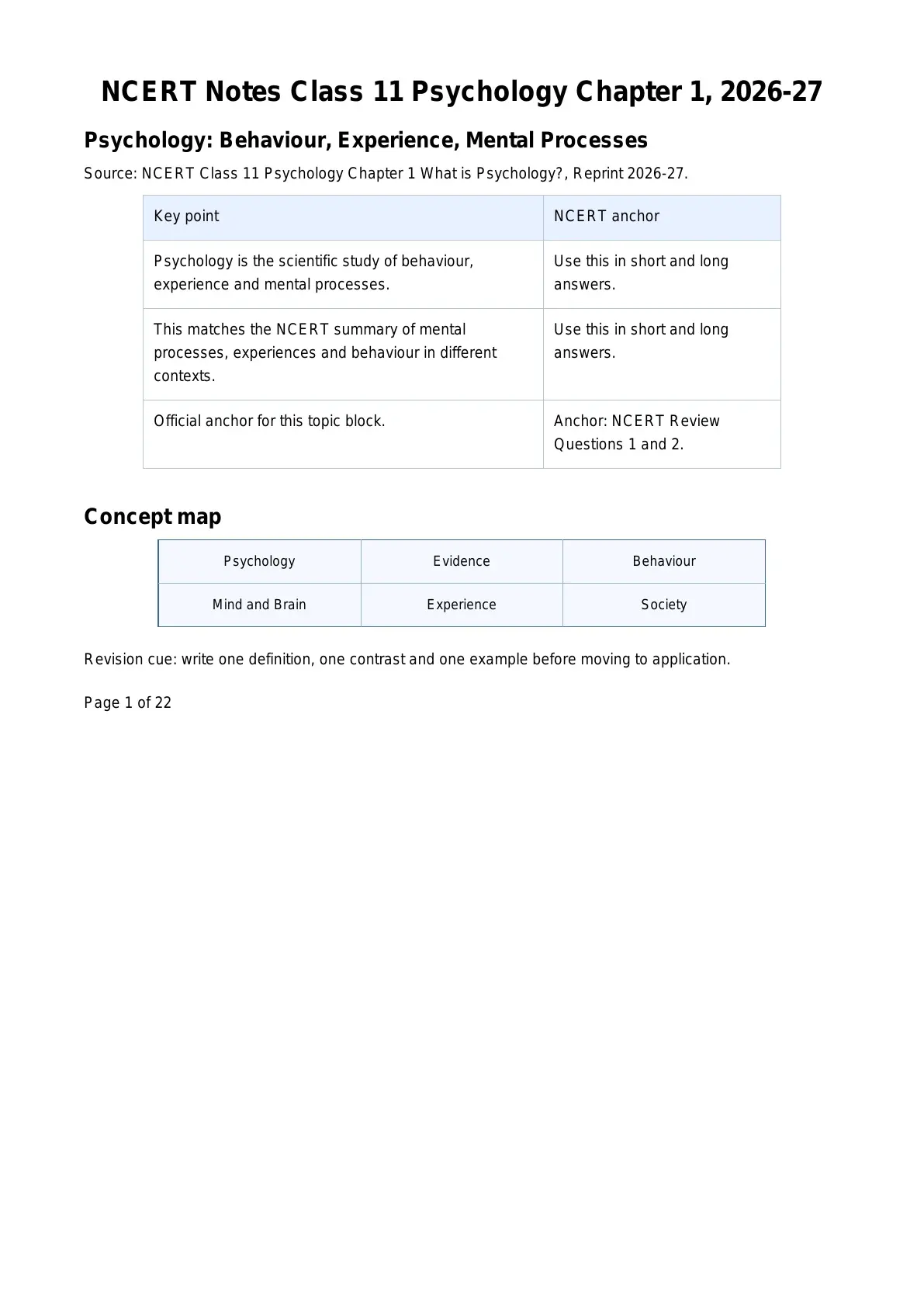
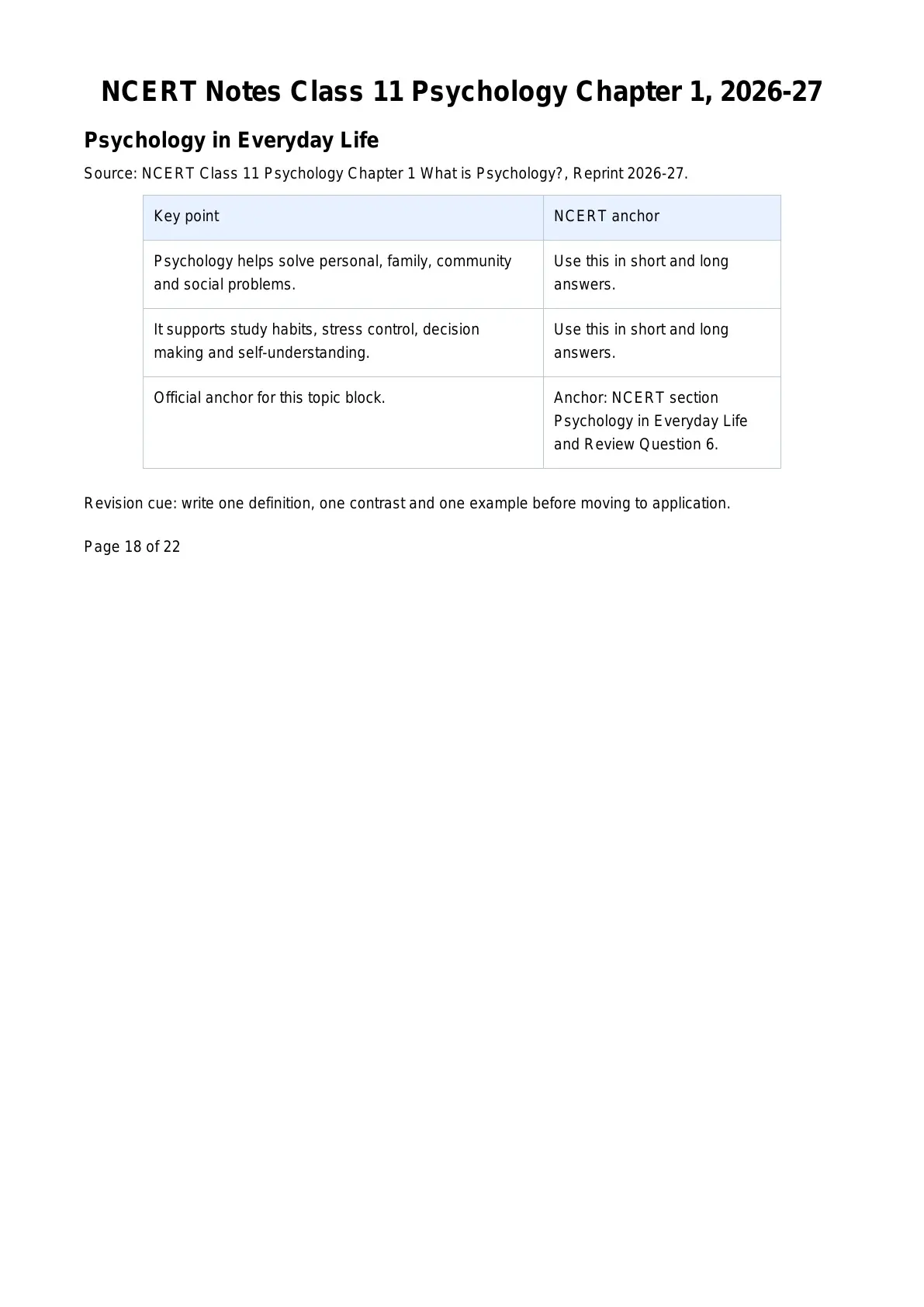
Chapter 1 introduces psychology as the scientific study of behaviour, experience and mental processes. Behaviour includes visible actions, while experience and mental processes include feelings, remembering, thinking, deciding and imagining. The safest exam line is simple: psychology studies what people do, what they feel and how they think.
| Chapter area | What to revise | Answer cue |
|---|---|---|
| Meaning | Behaviour, experience, mental processes | Start with scientific study |
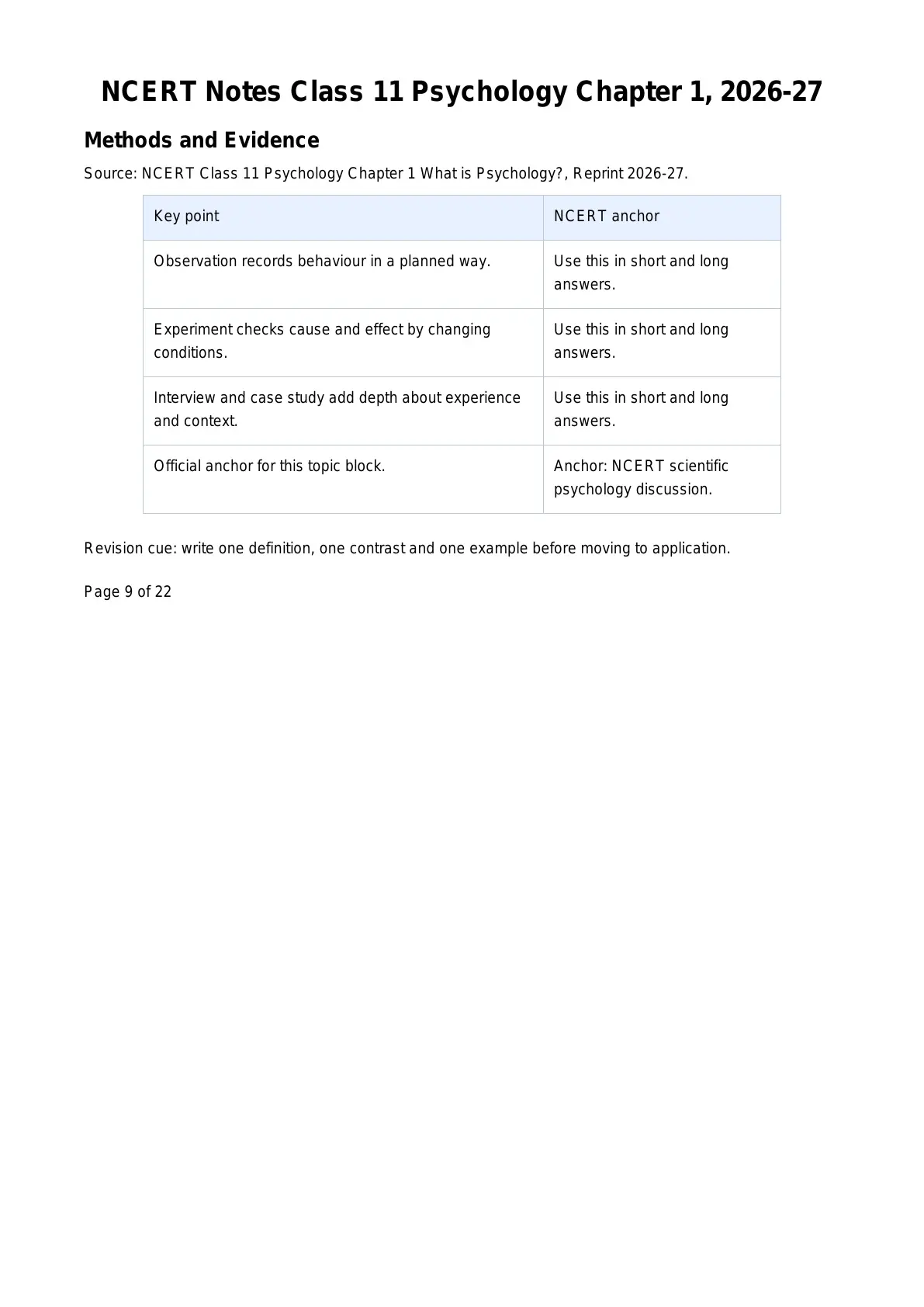
| Science | Observation, experiment, evidence | Contrast with popular beliefs |
| History | Major schools and modern view | Move from mind to behaviour and cognition |
| Branches | Clinical, counselling, educational, environmental, forensic | Add examples |
What is Psychology? Video Revision
Source: Magnet Brains on YouTube
Behaviour, Experience and Mental Processes
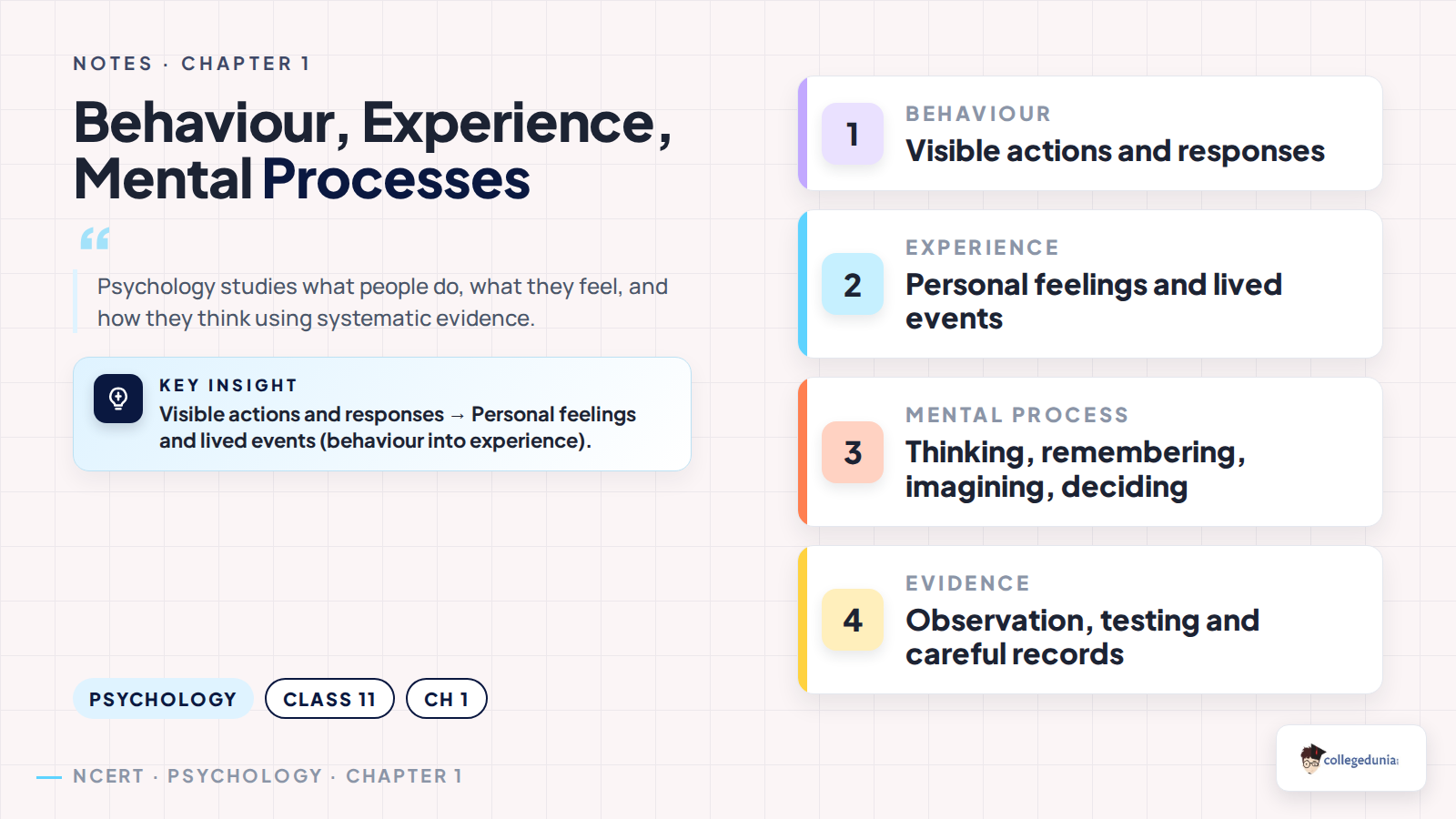
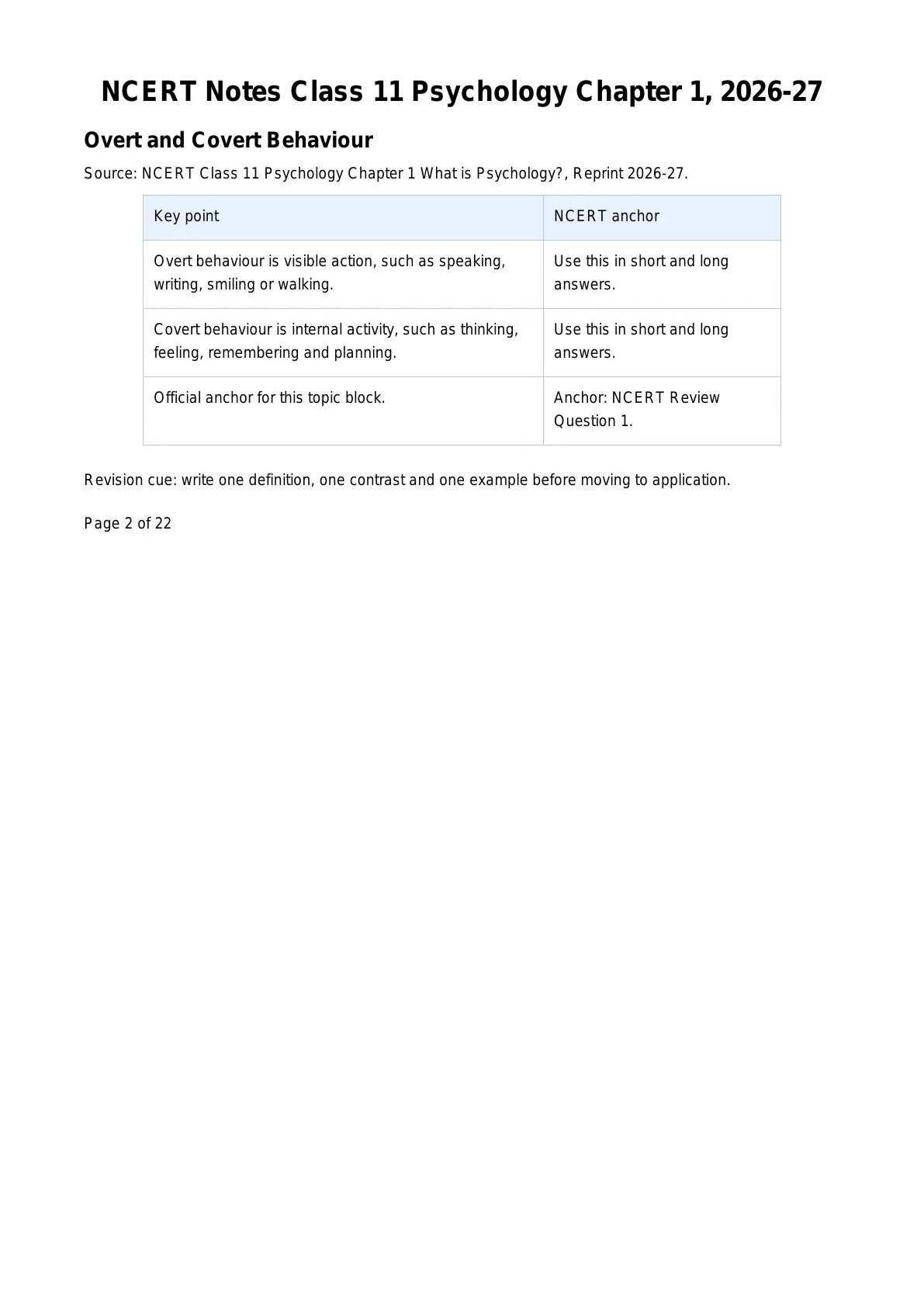
Overt behaviour can be seen directly, such as speaking, smiling or writing. Covert behaviour happens inside the person, such as feeling anxious, remembering a poem or silently planning an answer. Both matter because psychology studies visible action and inner life together.
- Behaviour: action or response of a person in a setting.
- Experience: the felt side of life, such as fear, joy, stress or confidence.
- Mental process: thinking, remembering, judging, problem solving and deciding.
Psychology as a Science and Popular Beliefs
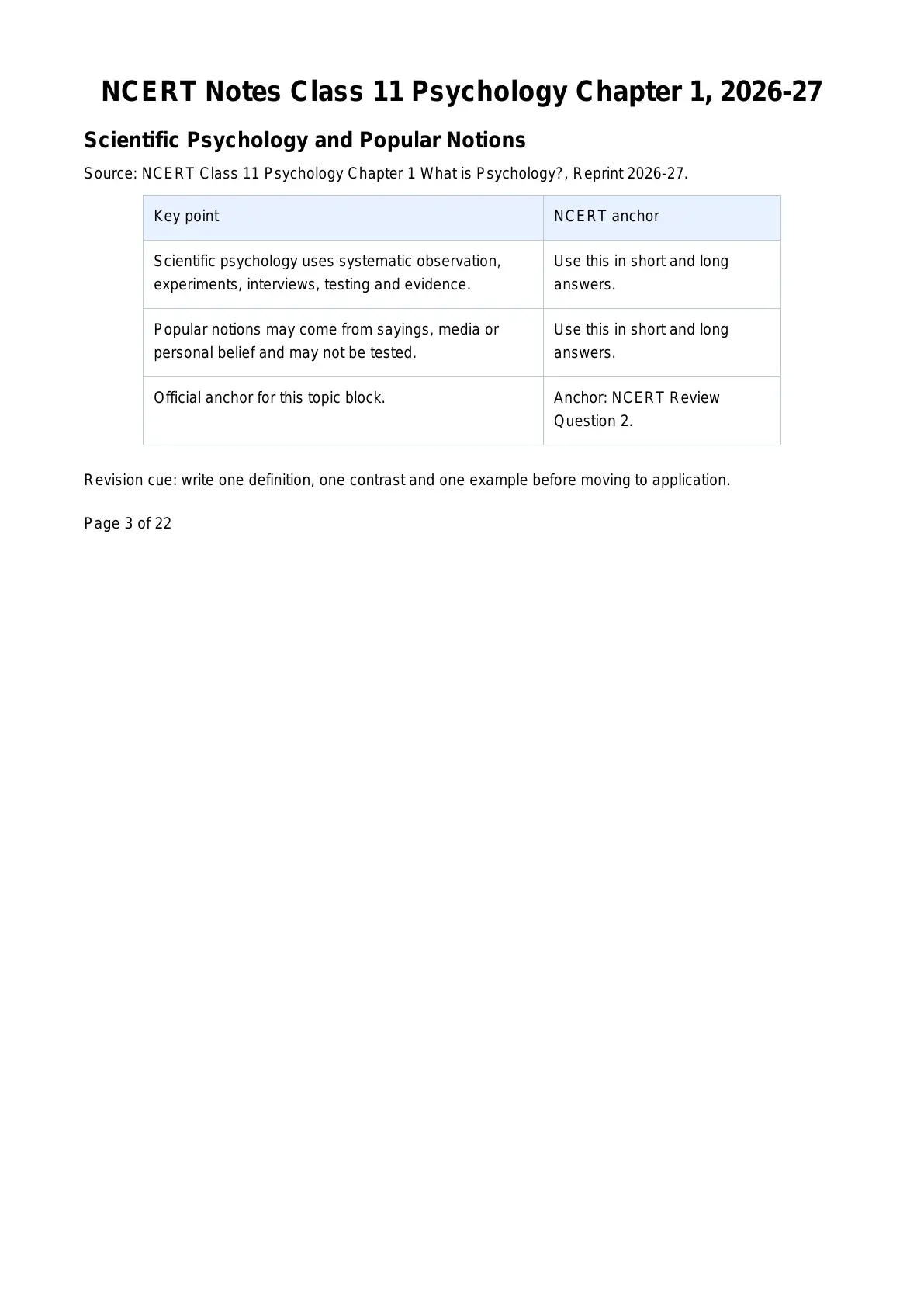
Popular psychology often spreads through casual advice, sayings or media claims. Scientific psychology asks a stricter question: what does careful evidence show? A claim should be clear, checked through method and open to correction.
| Point | Scientific psychology | Popular belief |
|---|---|---|
| Source | Research, observation, test, interview or case study | Tradition, media or personal opinion |
| Method | Systematic and recorded | Casual and often unchecked |
| Correction | Changes when better evidence appears | May continue even after exceptions |
Historical Growth of Psychology
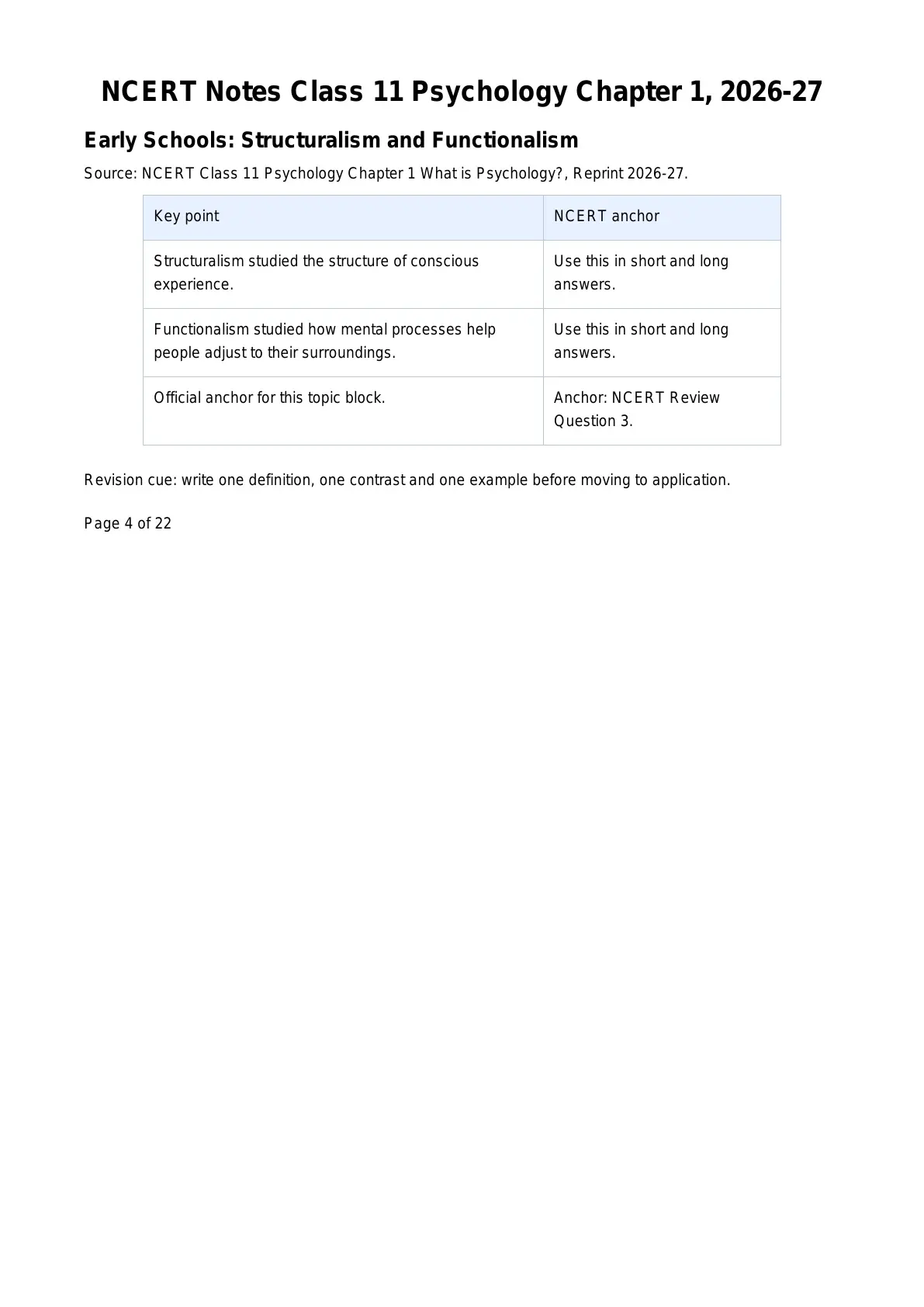
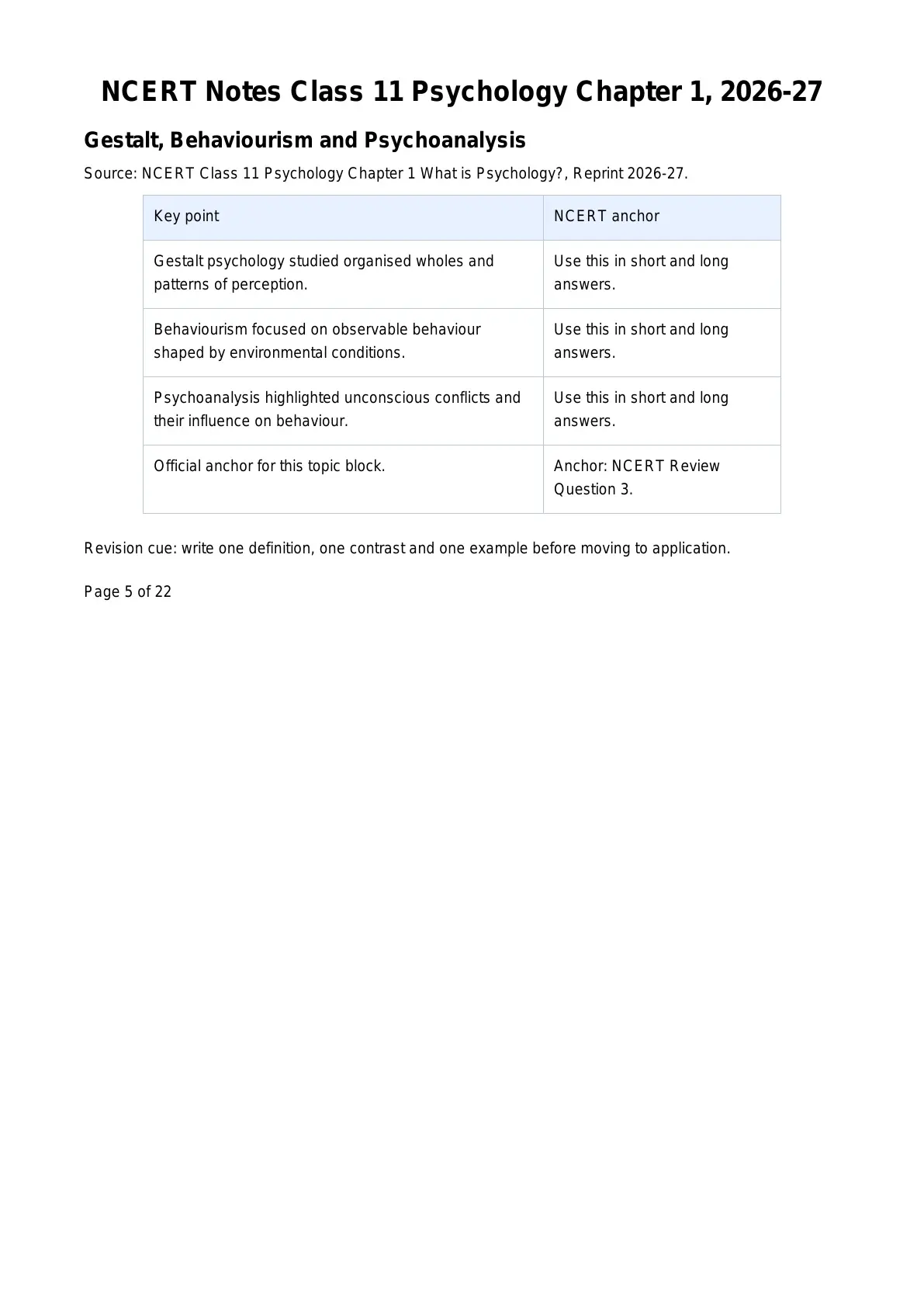
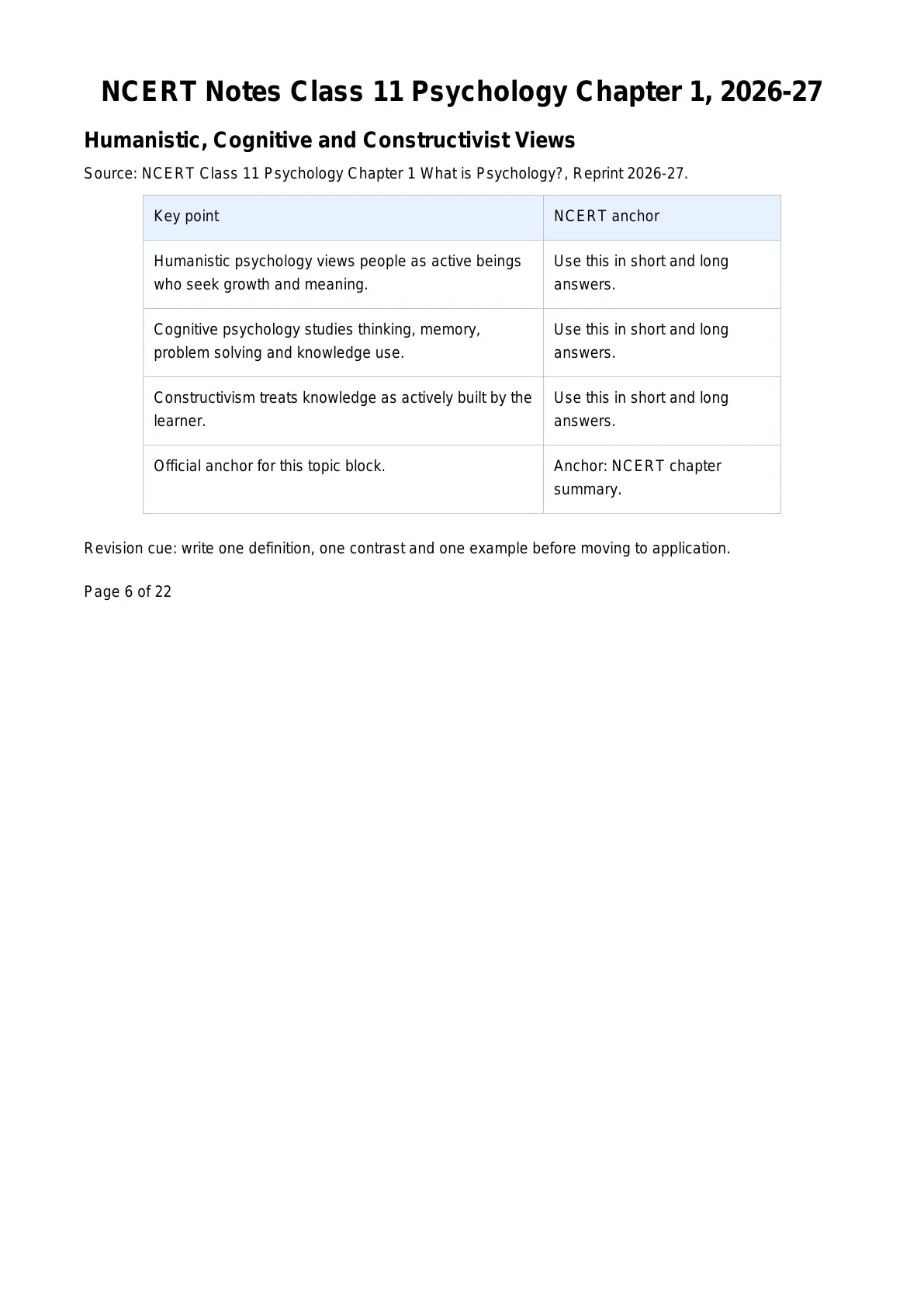
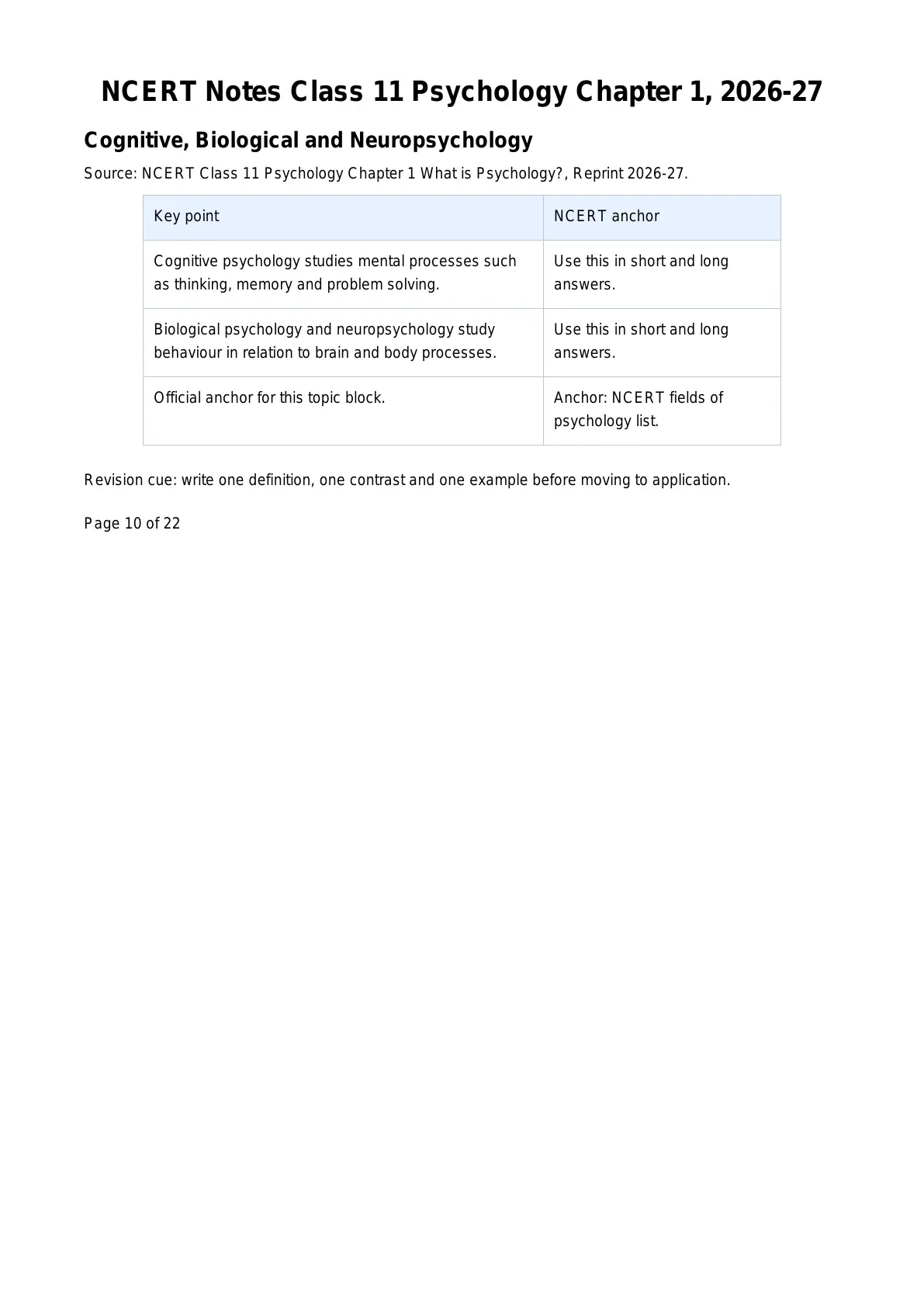
Psychology grew from philosophical questions about mind into laboratory study and applied work. Structuralism studied conscious experience. Functionalism studied how mental processes help adjustment. Behaviourism focused on observable action. Gestalt psychology studied whole patterns, and cognitive psychology studied thought, memory and problem solving.
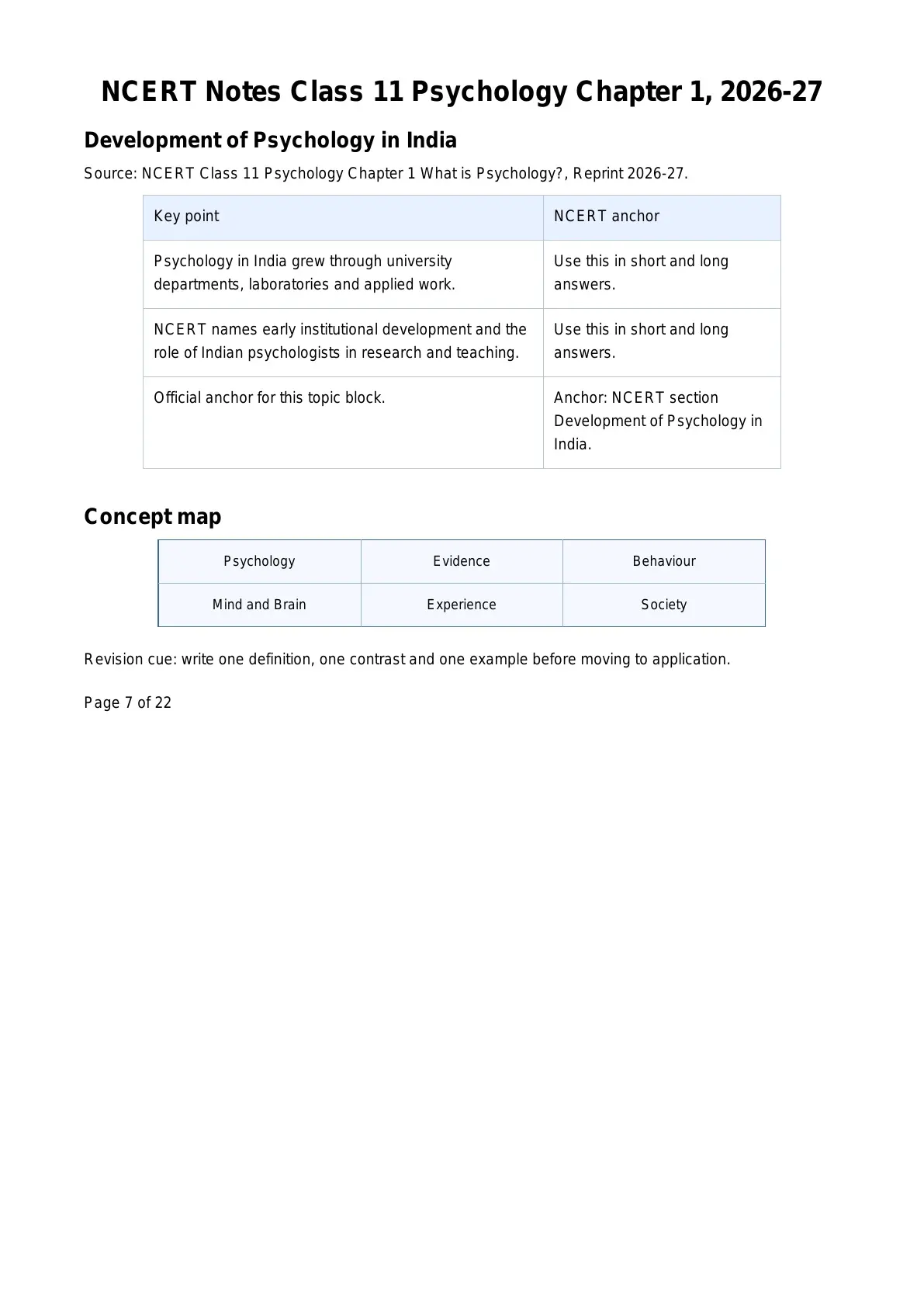
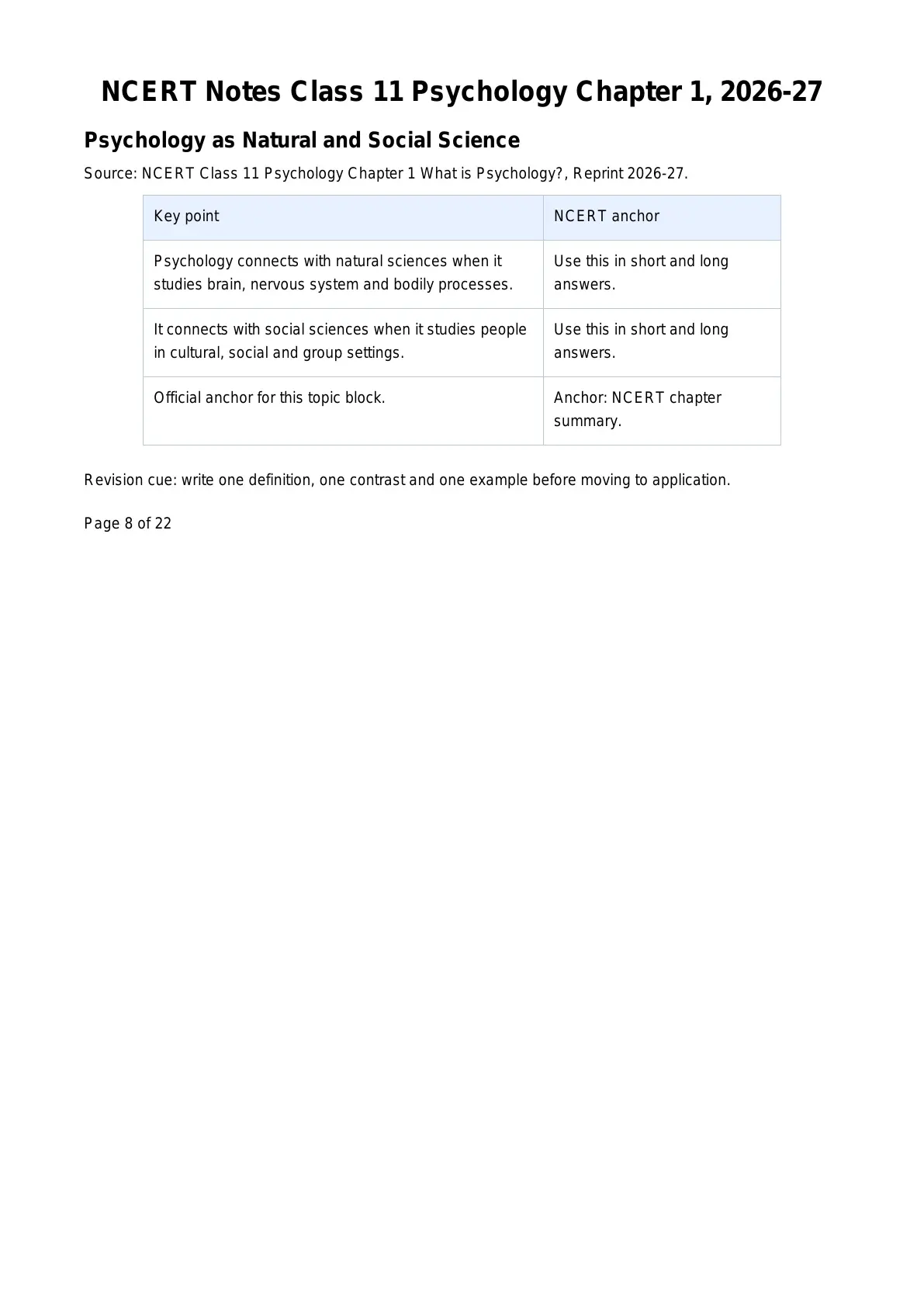
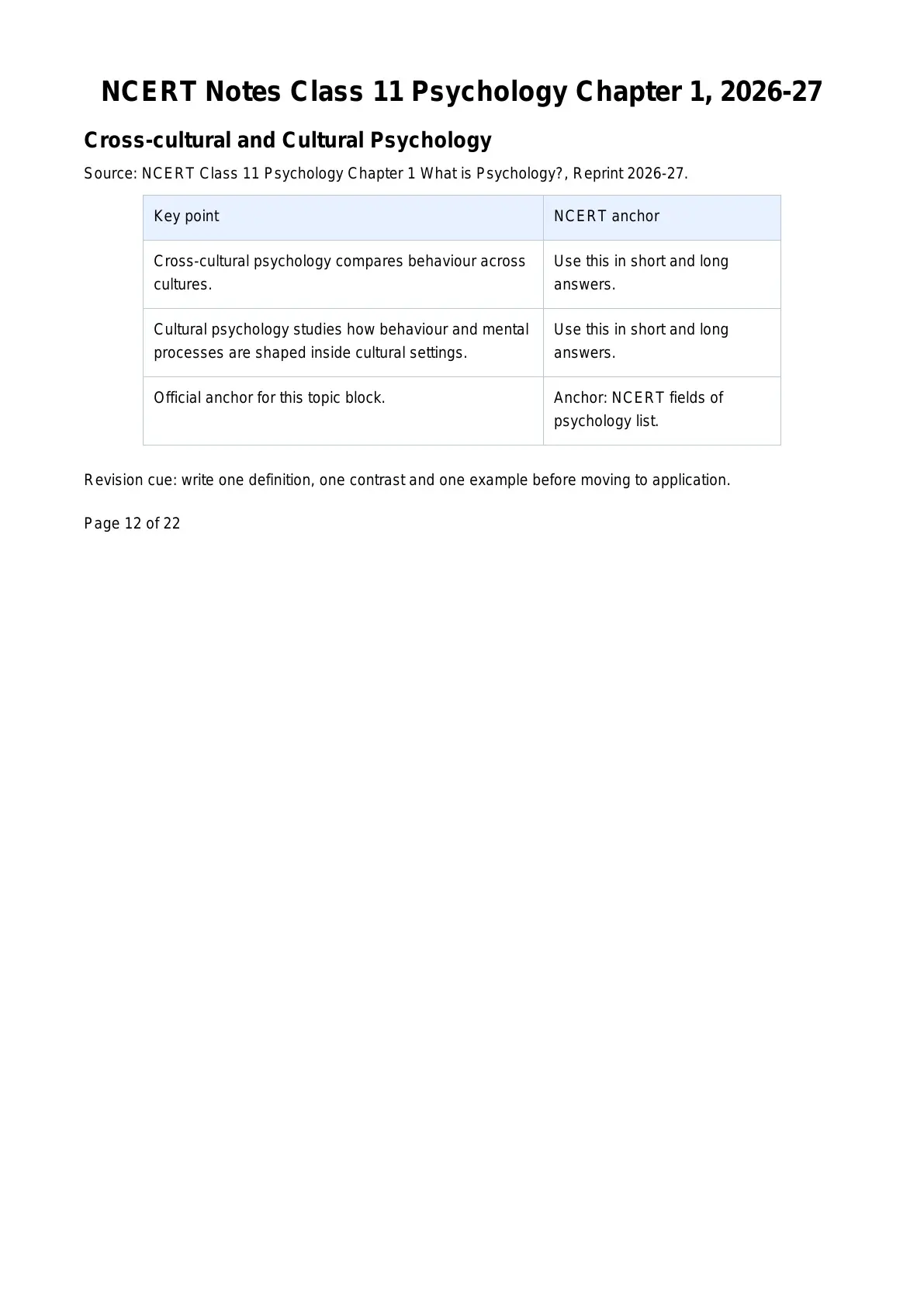
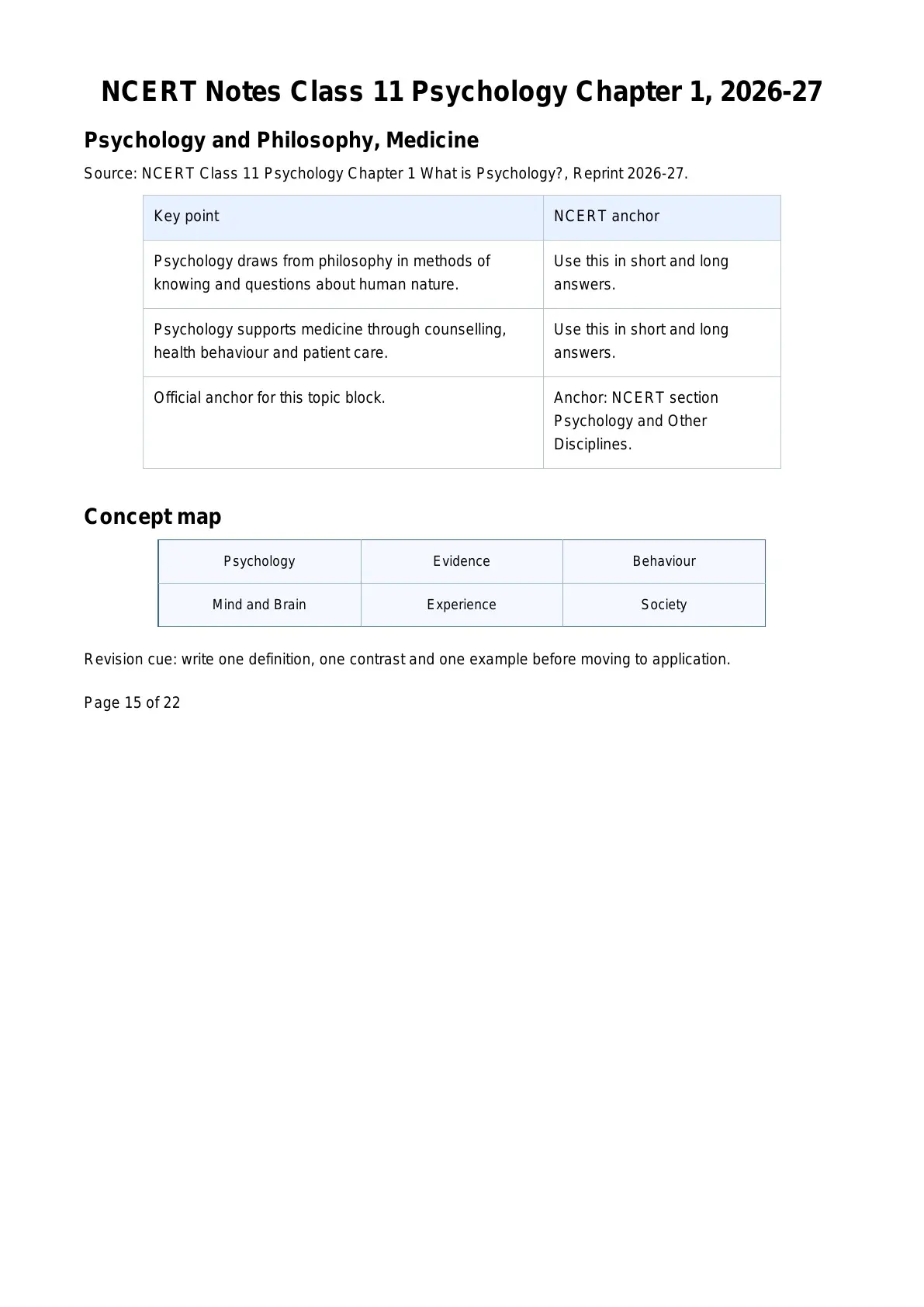
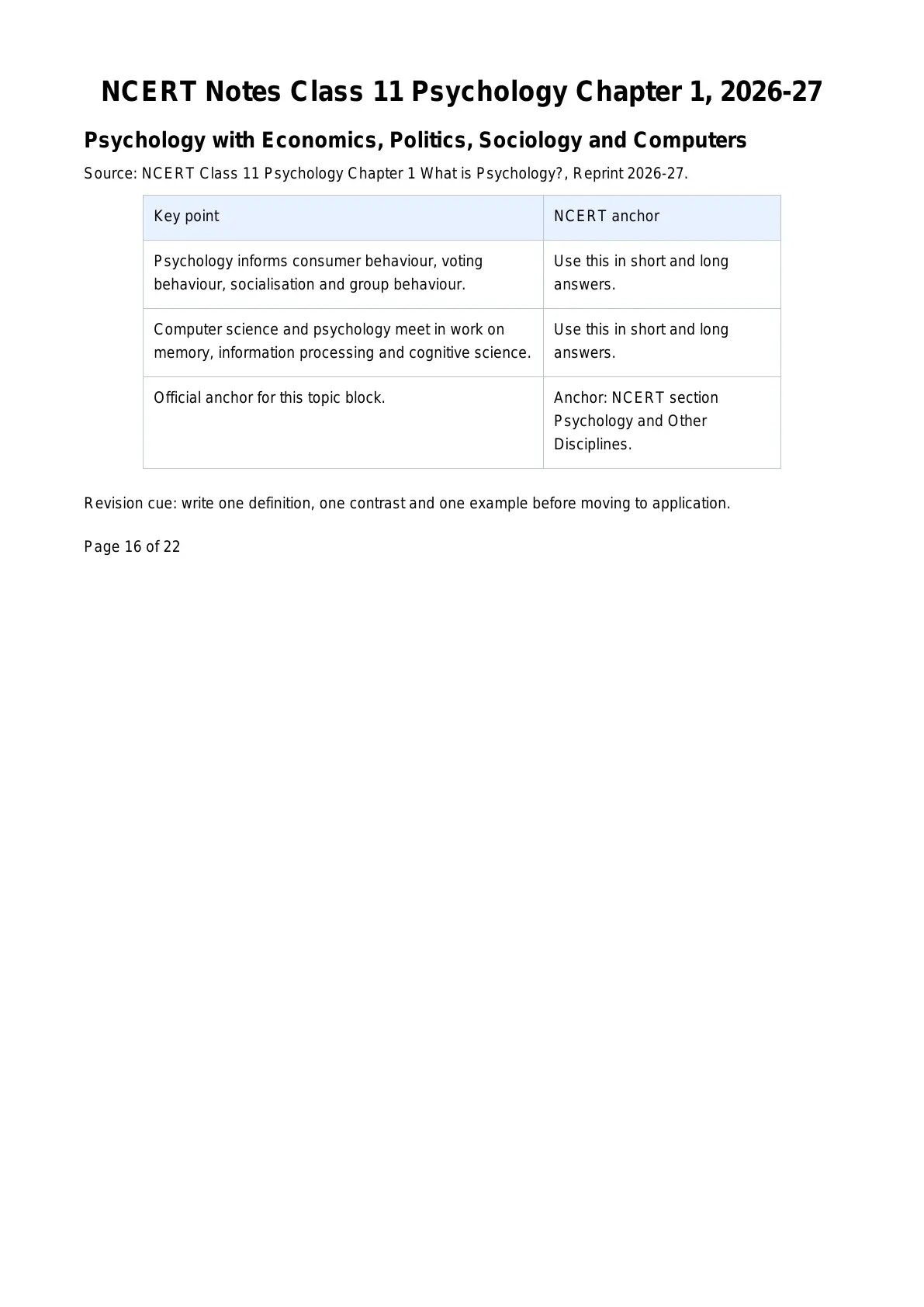
Use history to avoid one-sided answers. Psychology is not only mind, only behaviour or only biology. NCERT presents it as a broad subject that connects body, mind, society and culture.
Branches of Psychology in Class 11 Chapter 1
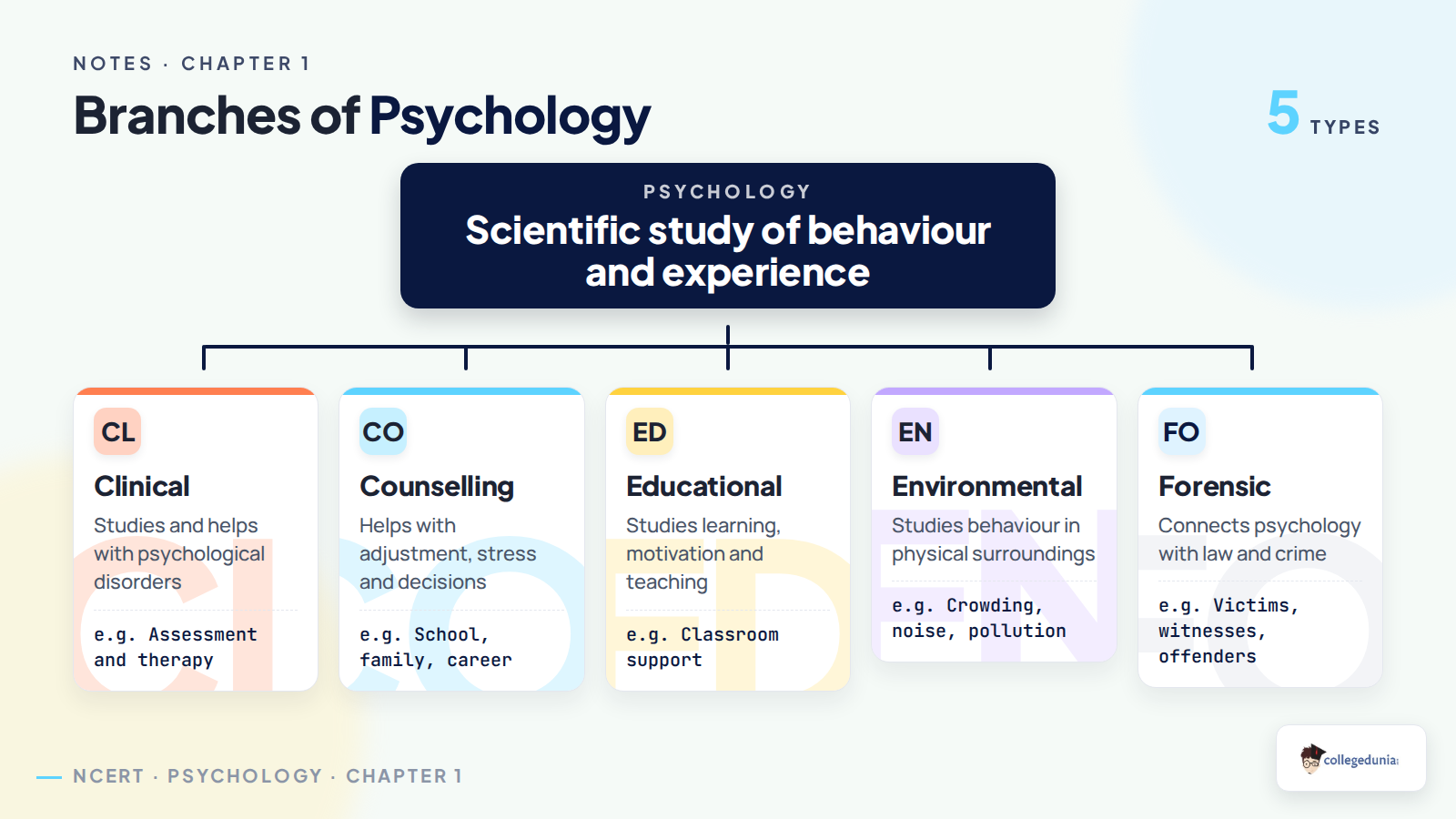
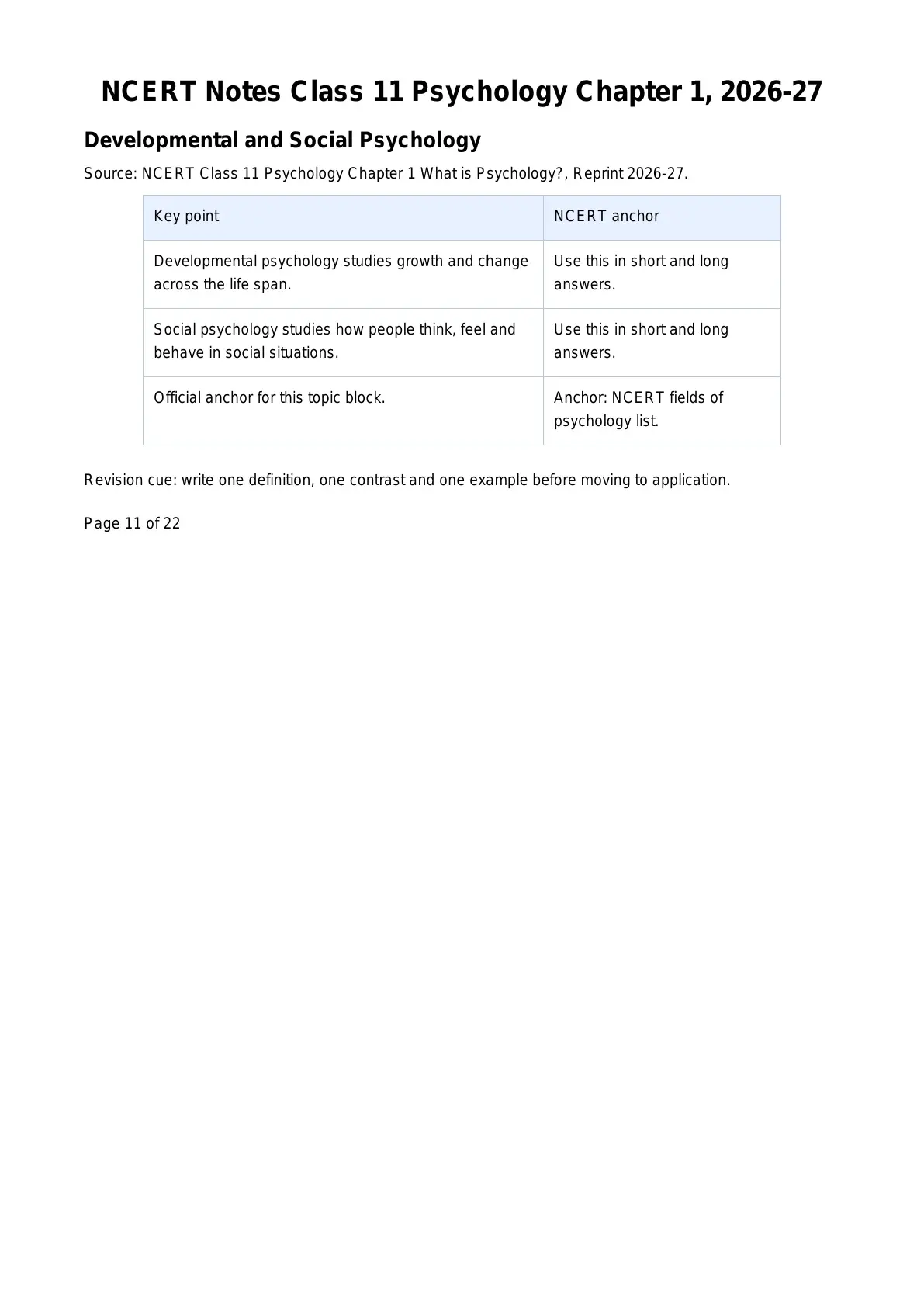
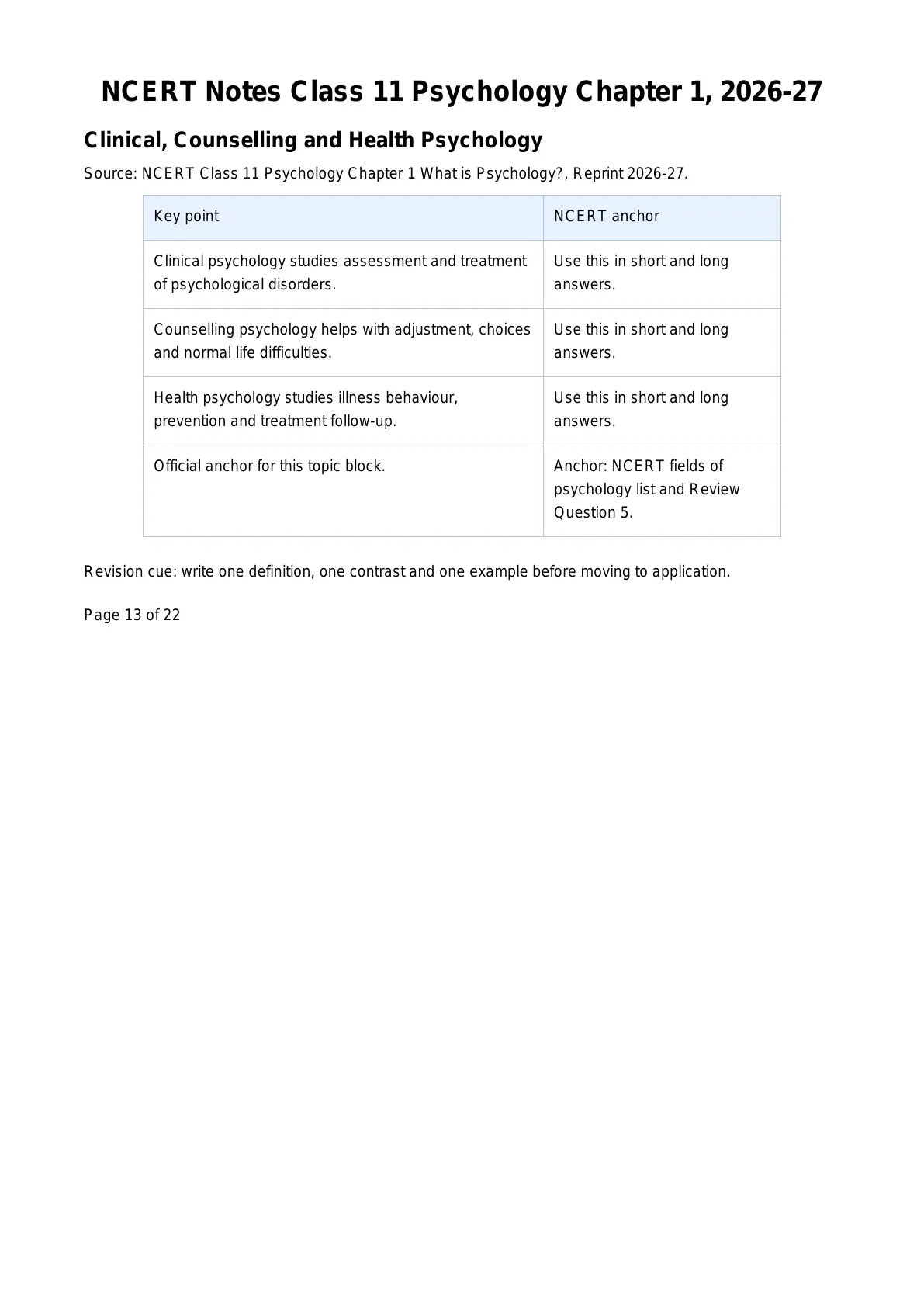
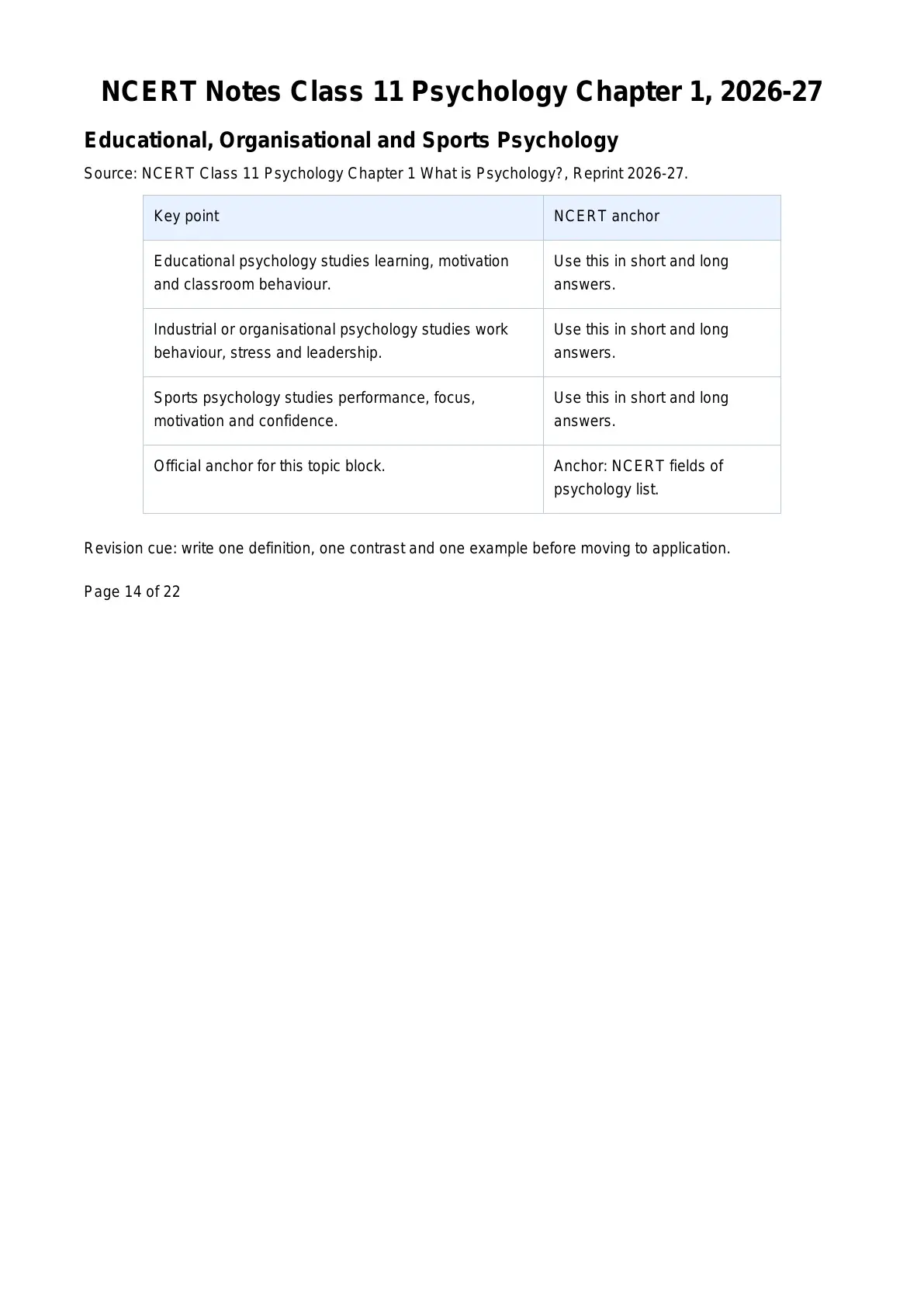
Branches of psychology show how the subject is used in real life. Clinical psychology studies and helps with psychological disorders. Counselling psychology helps with adjustment, stress, decisions and relationships. Educational psychology studies learning and classroom behaviour.
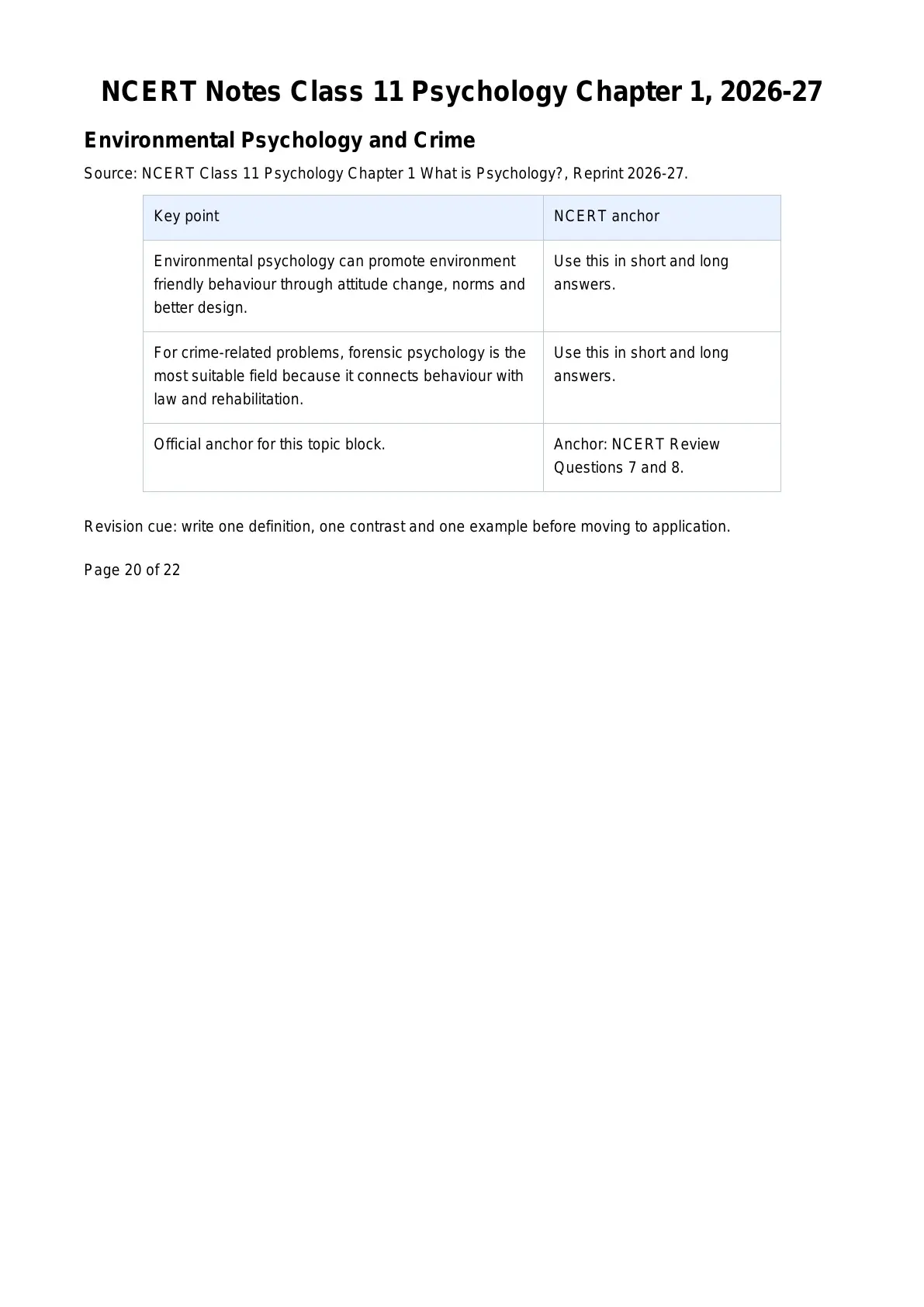
- Environmental psychology: studies crowding, noise, pollution and environment friendly behaviour.
- Organisational psychology: studies work behaviour, leadership and job stress.
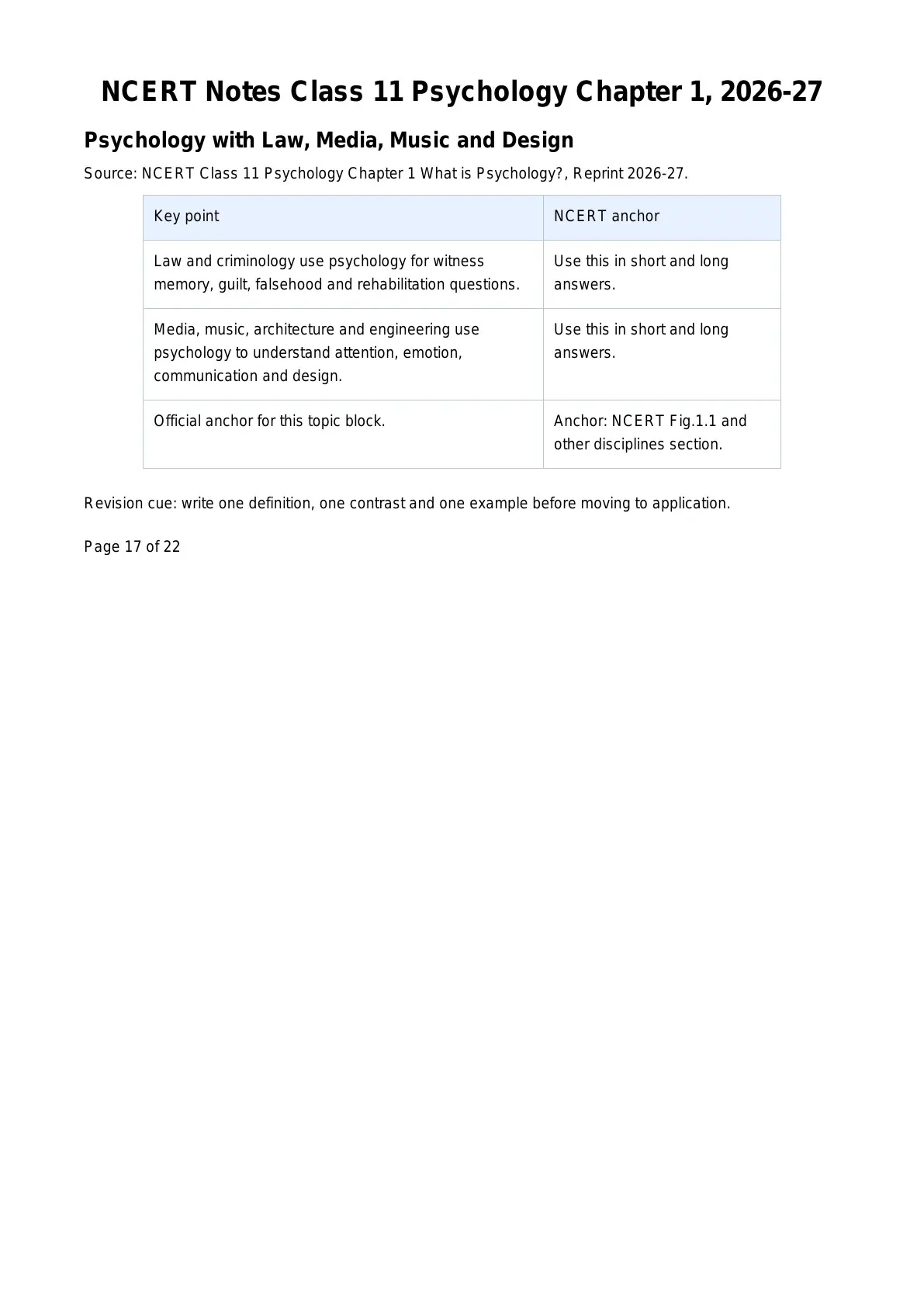
- Forensic psychology: connects behaviour with crime, law, victims, witnesses and rehabilitation.
Professional Roles: Psychologist, Psychiatrist and Counsellor
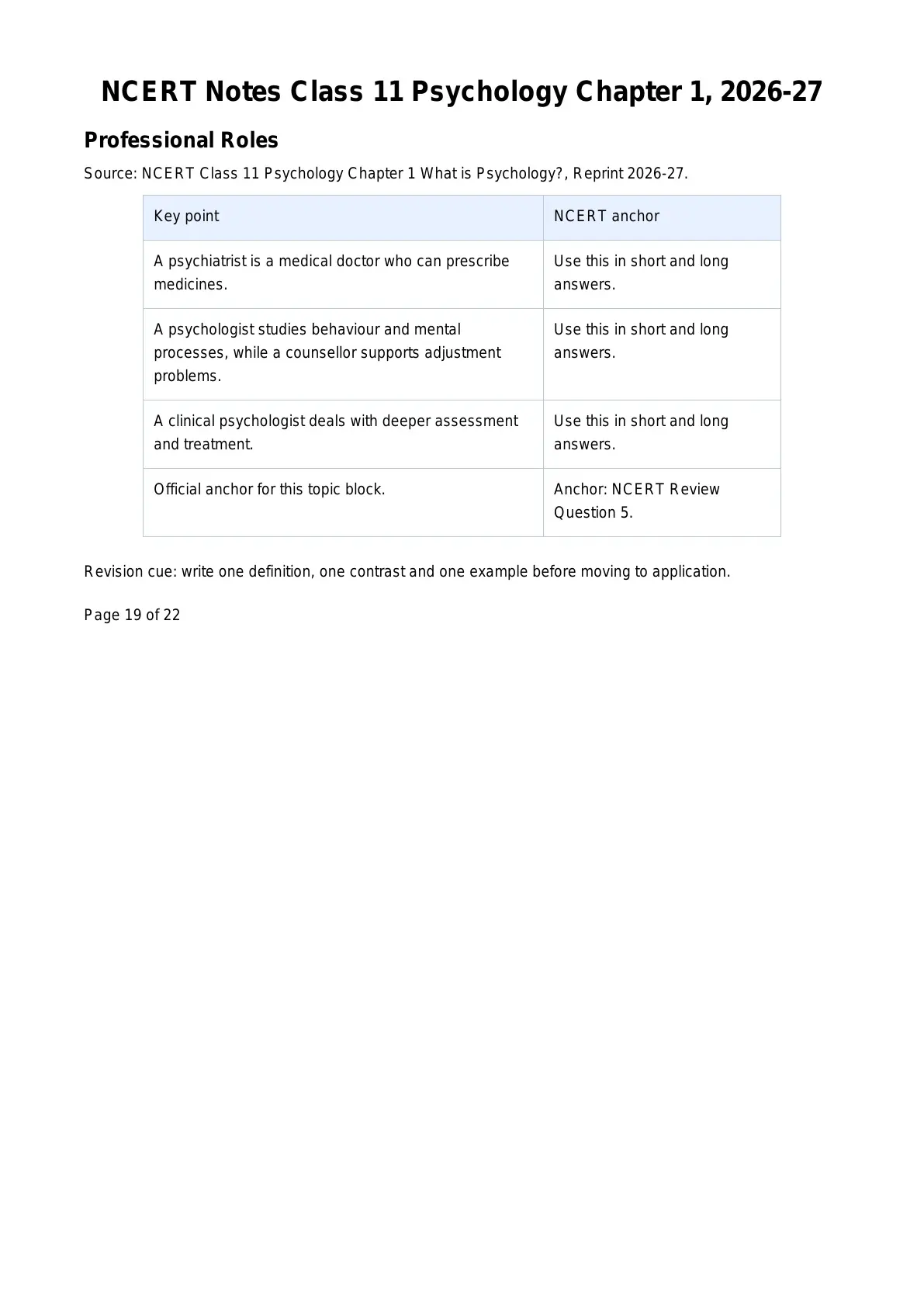
A psychiatrist is a medical doctor who can prescribe medicine. A psychologist studies behaviour and mental processes but need not be a medical doctor. A counsellor helps people handle everyday adjustment problems, while a clinical psychologist deals with deeper assessment and treatment work.
| Role | Main work | Exam distinction |
|---|---|---|
| Psychologist | Studies behaviour, experience and mental processes | Research, assessment and applied work |
| Psychiatrist | Medical treatment for mental disorders | Can prescribe medicines |
| Counsellor | Adjustment, choices and daily problems | Not the same as clinical treatment |
| Clinical psychologist | Assessment and therapy for deeper concerns | Works with psychological disorders |
How to Use the What is Psychology? Notes PDF
The PDF above gives a 22-page revision set for Chapter 1. It covers definitions, scientific method, historical growth, branches, professional roles and answer-writing cues. Use it after reading the NCERT book once, then revise the tables before class tests.
- Read the definition page first.
- Revise overt and covert behaviour with examples.
- Memorise one example for each branch.
- Practise one short answer on scientific psychology versus popular belief.
Download the What is Psychology? Notes PDF
Use the PDF for Chapter 1 definitions, branches and exam-ready comparison tables.
Download PDFRelated Psychology Resources for What is Psychology?
Also Check: use these links with the notes PDF when you need the same chapter in another format.
| Resource | Best use | Link |
|---|---|---|
| NCERT Solutions | Stepwise answers to textbook questions | What is Psychology? Class 11 NCERT Solutions |
| NCERT Book PDF | Original NCERT reading and review questions | What is Psychology? Class 11 NCERT Book PDF |
| Handwritten Notes | Fast visual revision before tests | What is Psychology? Class 11 Handwritten Notes |
Class 11 Psychology Notes for All Chapters
| Chapter | Notes Link |
|---|---|
| Chapter 1 | You are here |
| Chapter 2 | Methods of Enquiry in Psychology Notes |
| Chapter 3 | Human Development Notes |
| Chapter 4 | Sensory, Attentional and Perceptual Processes Notes |
| Chapter 5 | Learning Notes |
| Chapter 6 | Human Memory Notes |
| Chapter 7 | Thinking Notes |
| Chapter 8 | Motivation and Emotion Notes |
What is Psychology? Class 11 Notes FAQs
Ques. What is covered in Class 11 Psychology Chapter 1 notes?
Ans. The notes cover behaviour, experience, mental processes, scientific psychology, historical growth, branches and professional roles.
Ques. What is the main definition of psychology in Chapter 1?
Ans. Psychology is the scientific study of behaviour, experience and mental processes in different settings.
Ques. What is the difference between overt and covert behaviour?
Ans. Overt behaviour is visible, such as speaking or walking. Covert behaviour is internal, such as thinking, remembering or feeling anxious.
Ques. Which branches of psychology are important in Chapter 1?
Ans. Clinical, counselling, educational, organisational, environmental and forensic psychology are important branches in this chapter.



Comments