



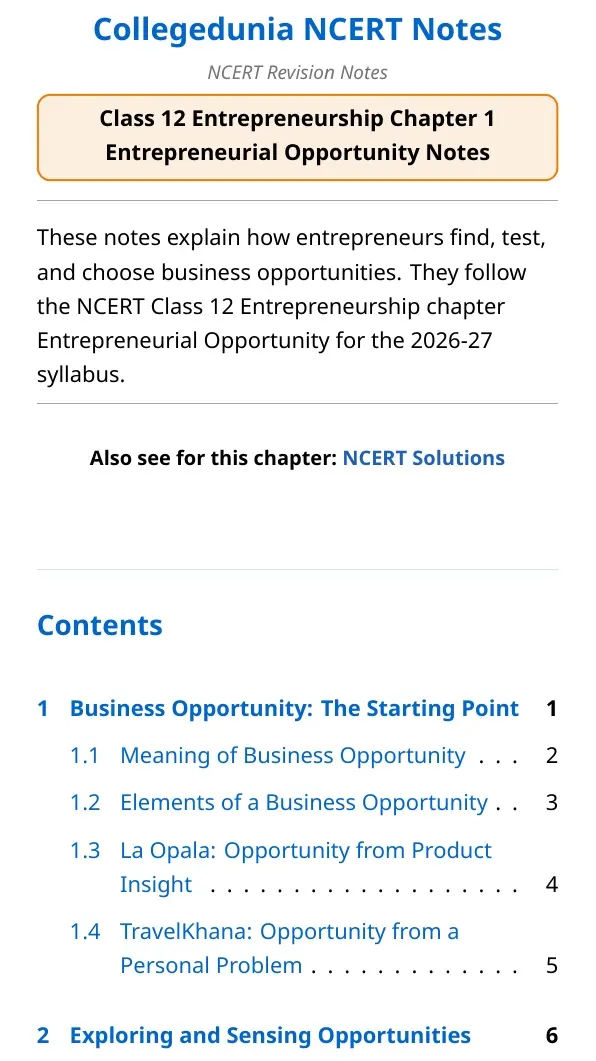
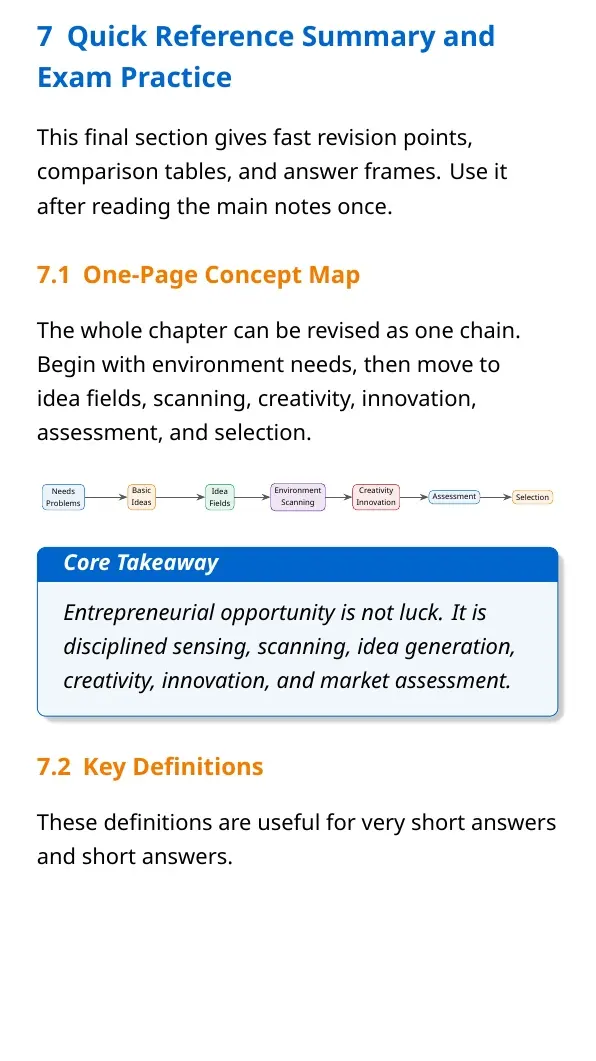
Class 12 Entrepreneurship Chapter 1 Entrepreneurial Opportunity notes help students revise how business ideas become workable opportunities for the 2026-27 syllabus. The PDF covers business opportunity, sensing factors, environment scanning, problem identification, idea fields, creativity, innovation and selection of the right opportunity.
- 27-page PDF follows the official NCERT chapter order.
- Best for quick revision before board-style case and definition questions.
- New coverage includes SWOT, Opportunity-Project Interface and PYQ anchors.
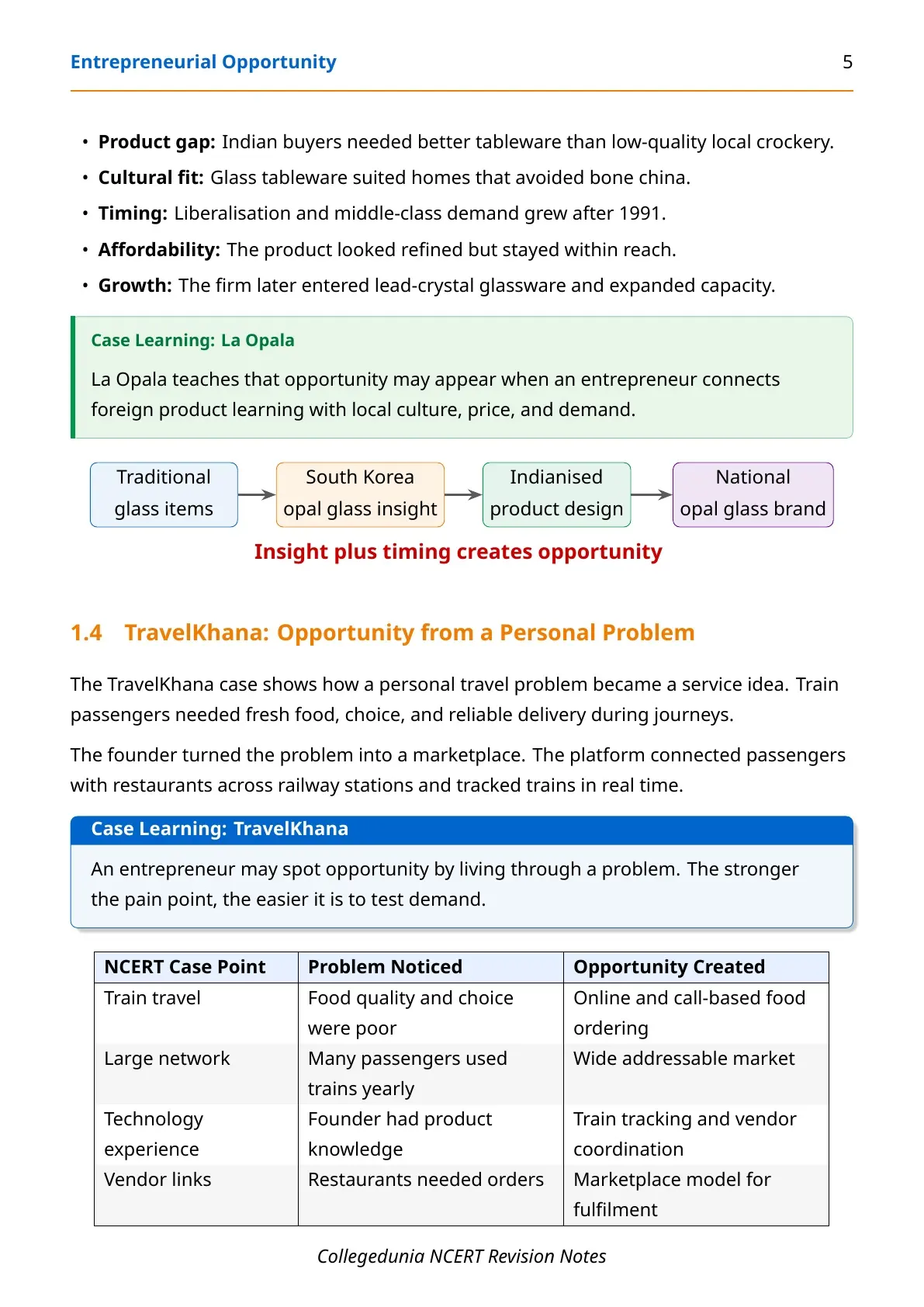
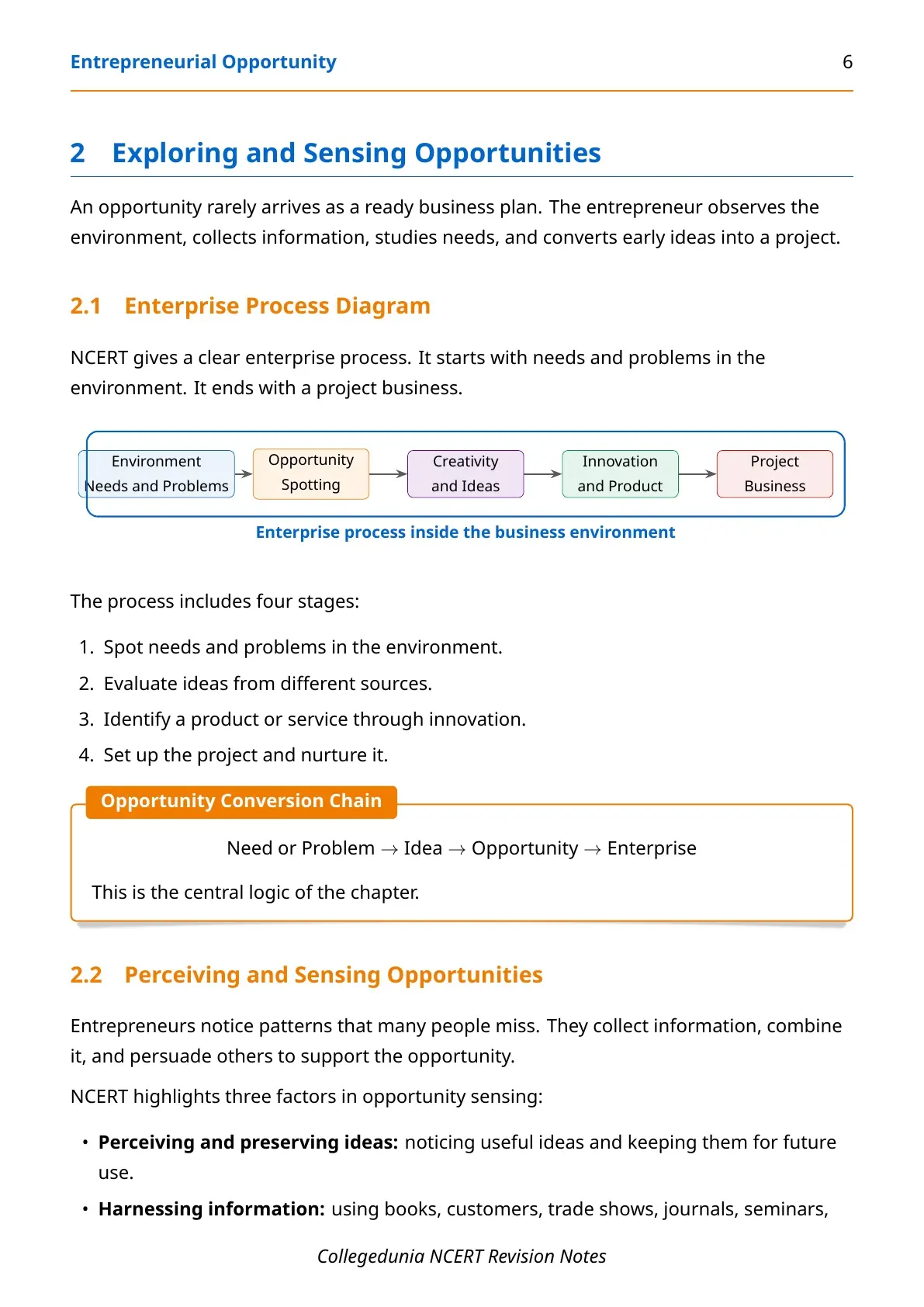
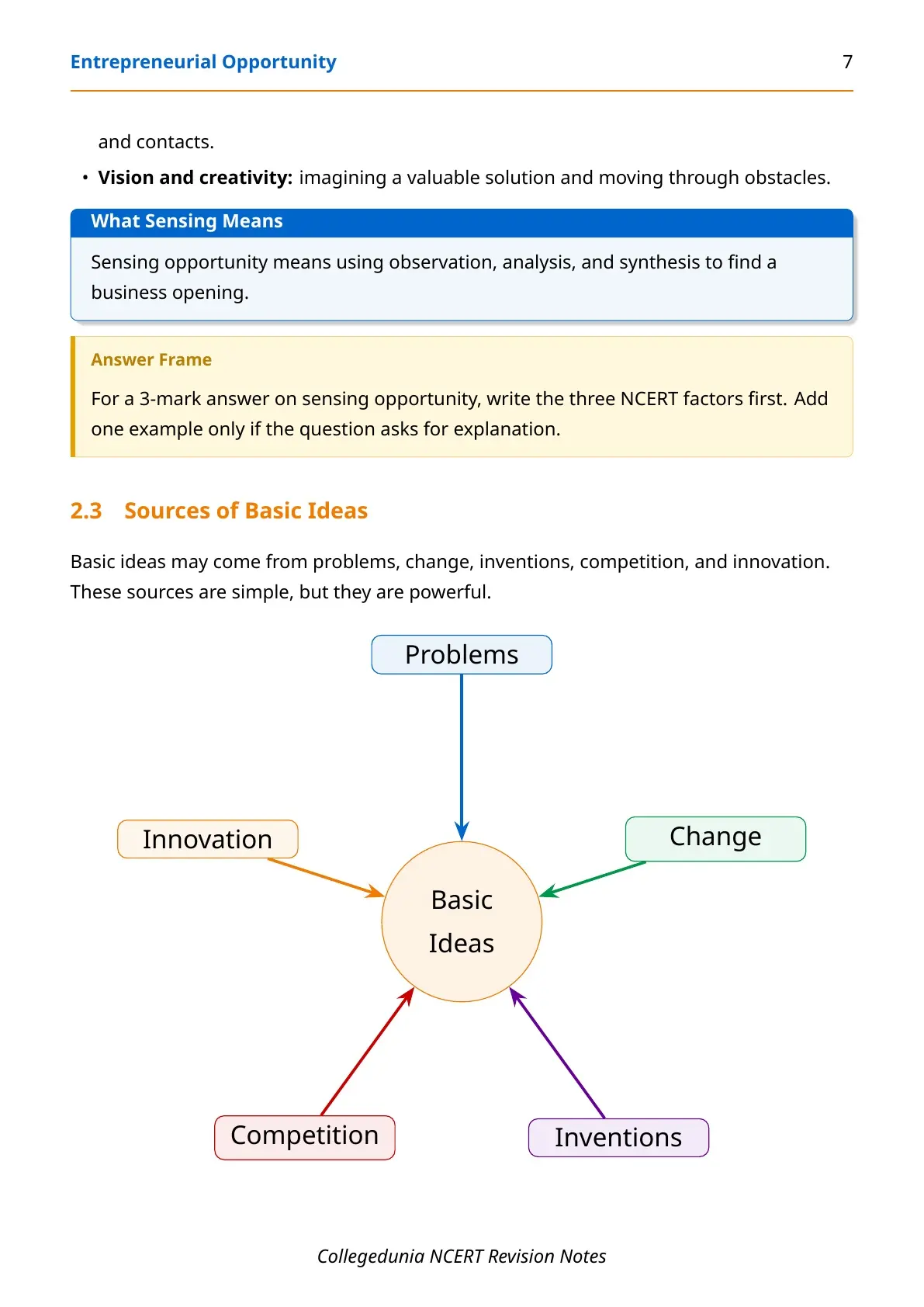
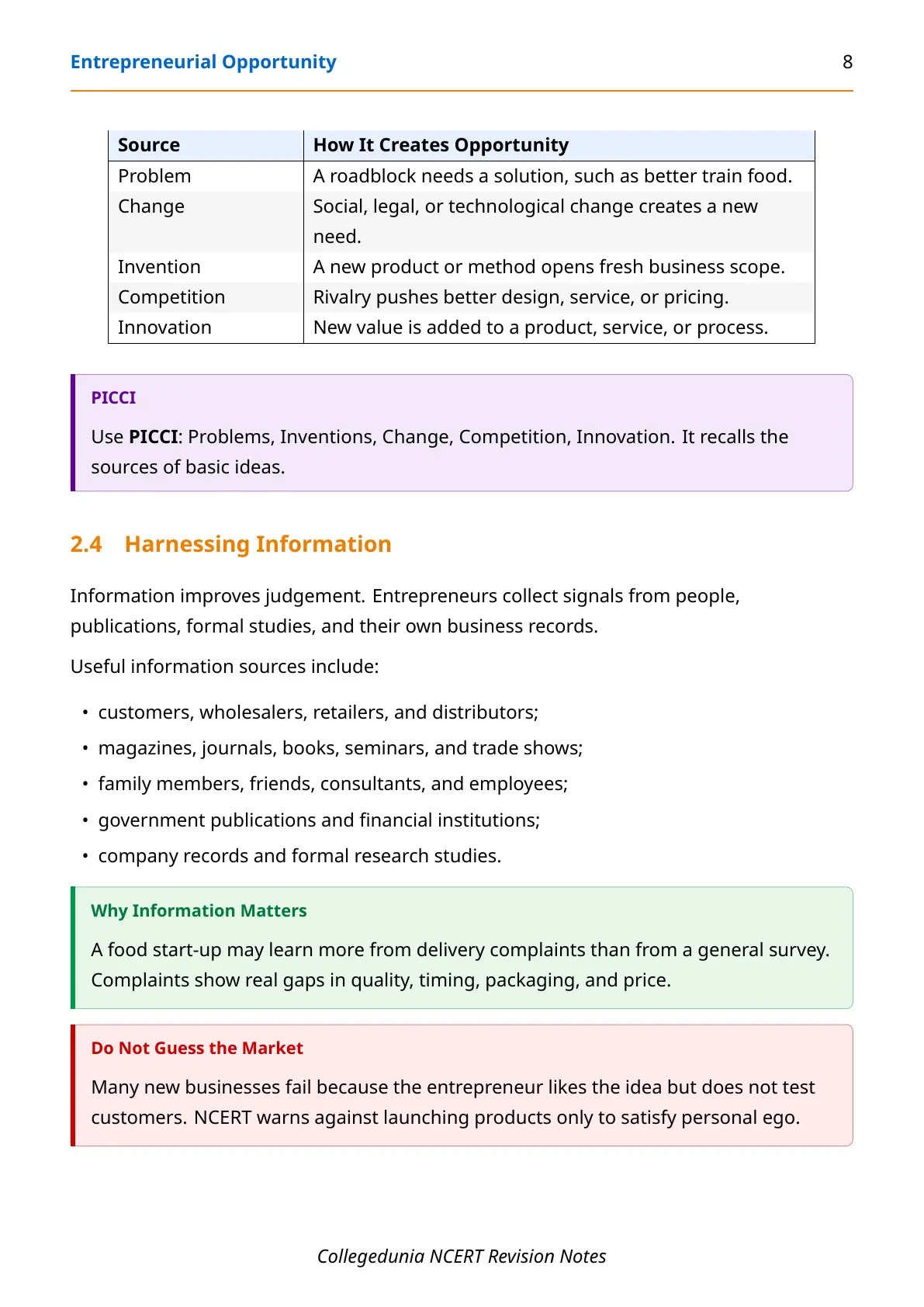


Student Feedback on Entrepreneurial Opportunity Notes
In a Collegedunia review sample of 10,420 Class 12 students before the 2026 boards, most students said this chapter becomes easier when examples are tied to exact NCERT terms.
- 72% wanted creativity and innovation separated in simple points.
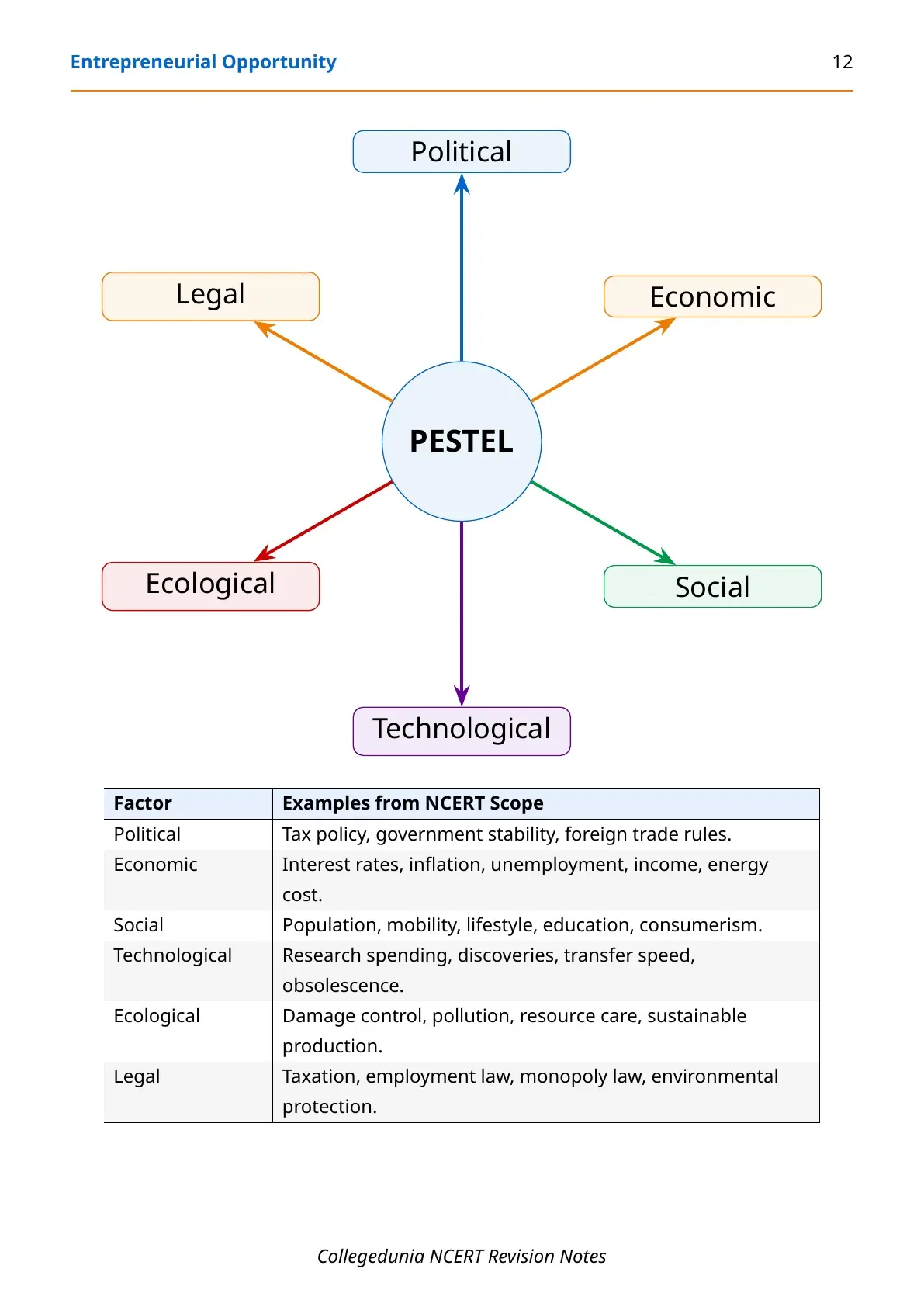
- 68% asked for PESTEL, SWOT and opportunity assessment in table form.
- 6 out of 10 students preferred a final PYQ-style revision table.
Source: 2026-27 Class 12 Entrepreneurship student feedback sample for Collegedunia NCERT resources.
These notes are checked against the official NCERT Entrepreneurship chapter and follow the 2026-27 Class 12 syllabus.
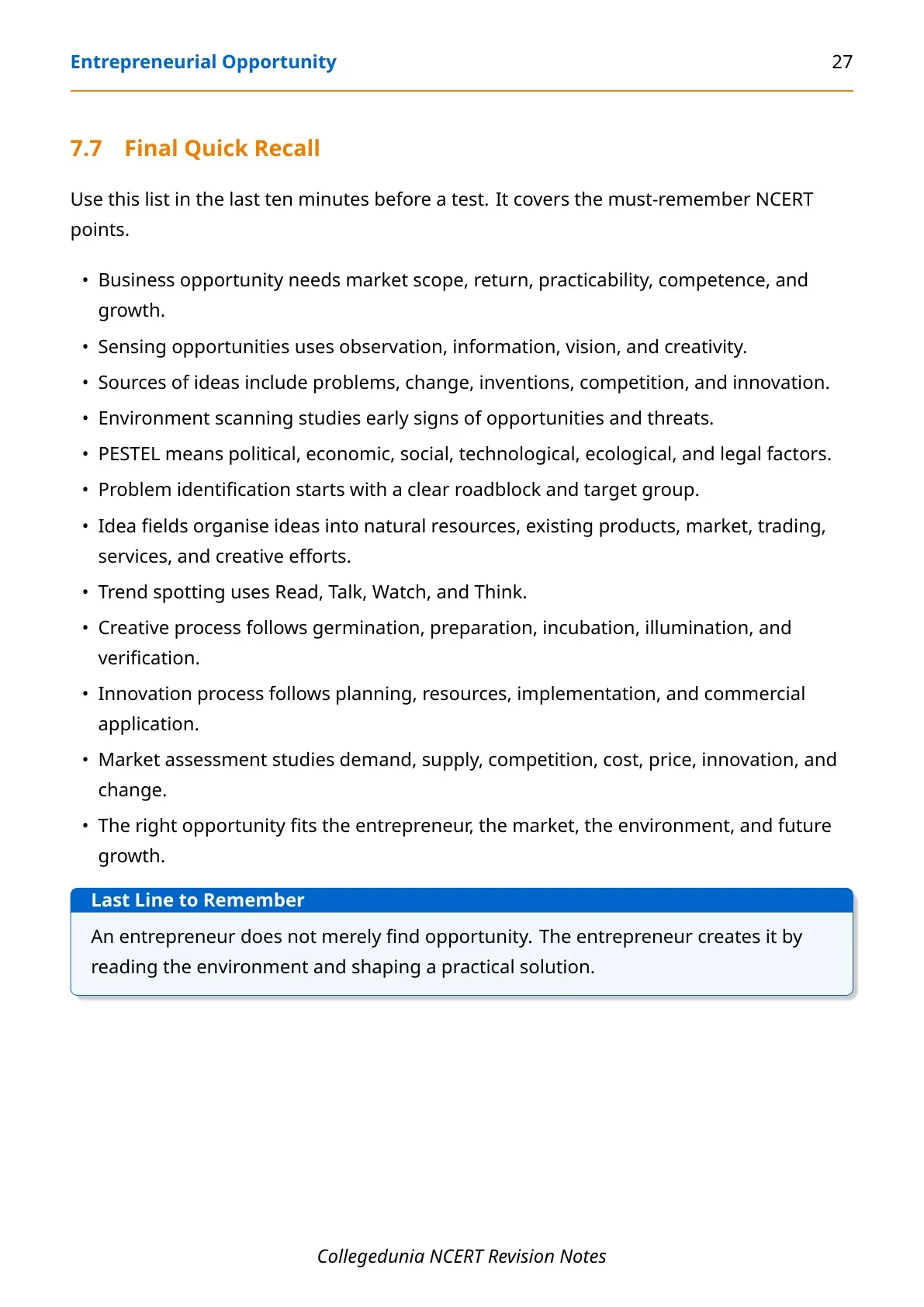
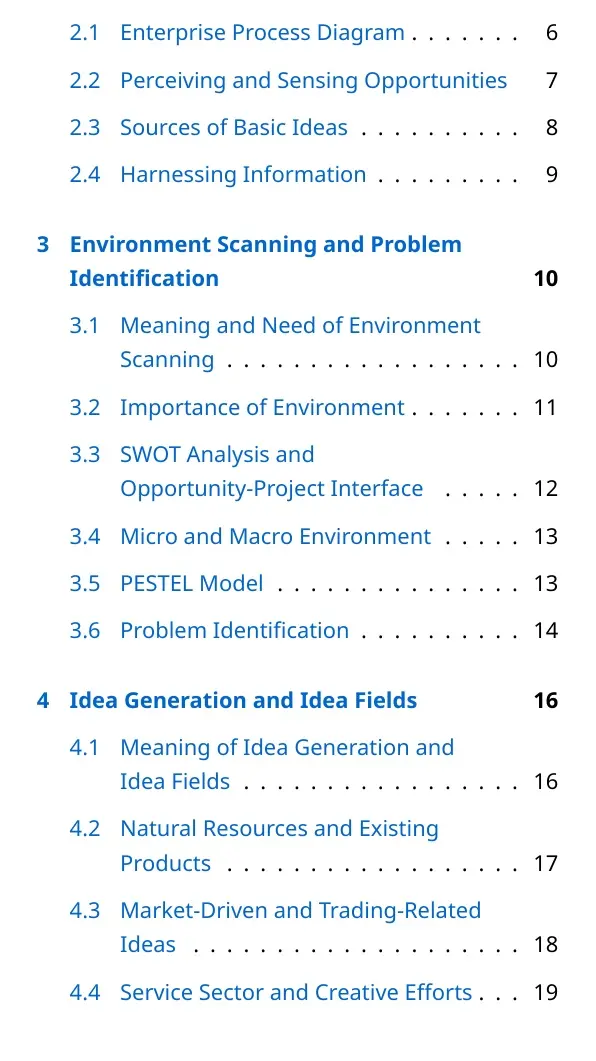
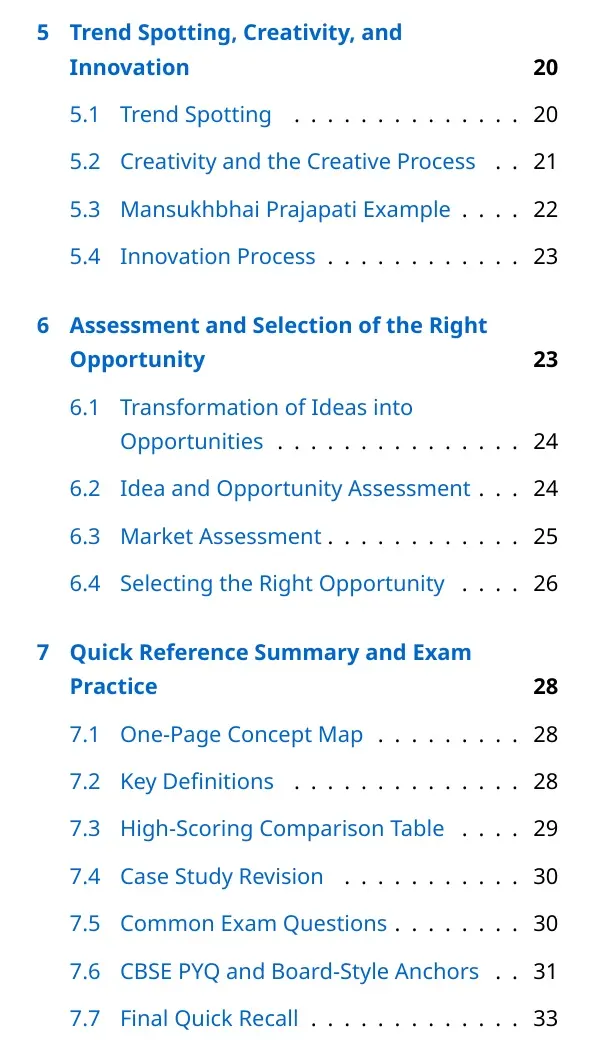
Entrepreneurial Opportunity Notes PDF Highlights
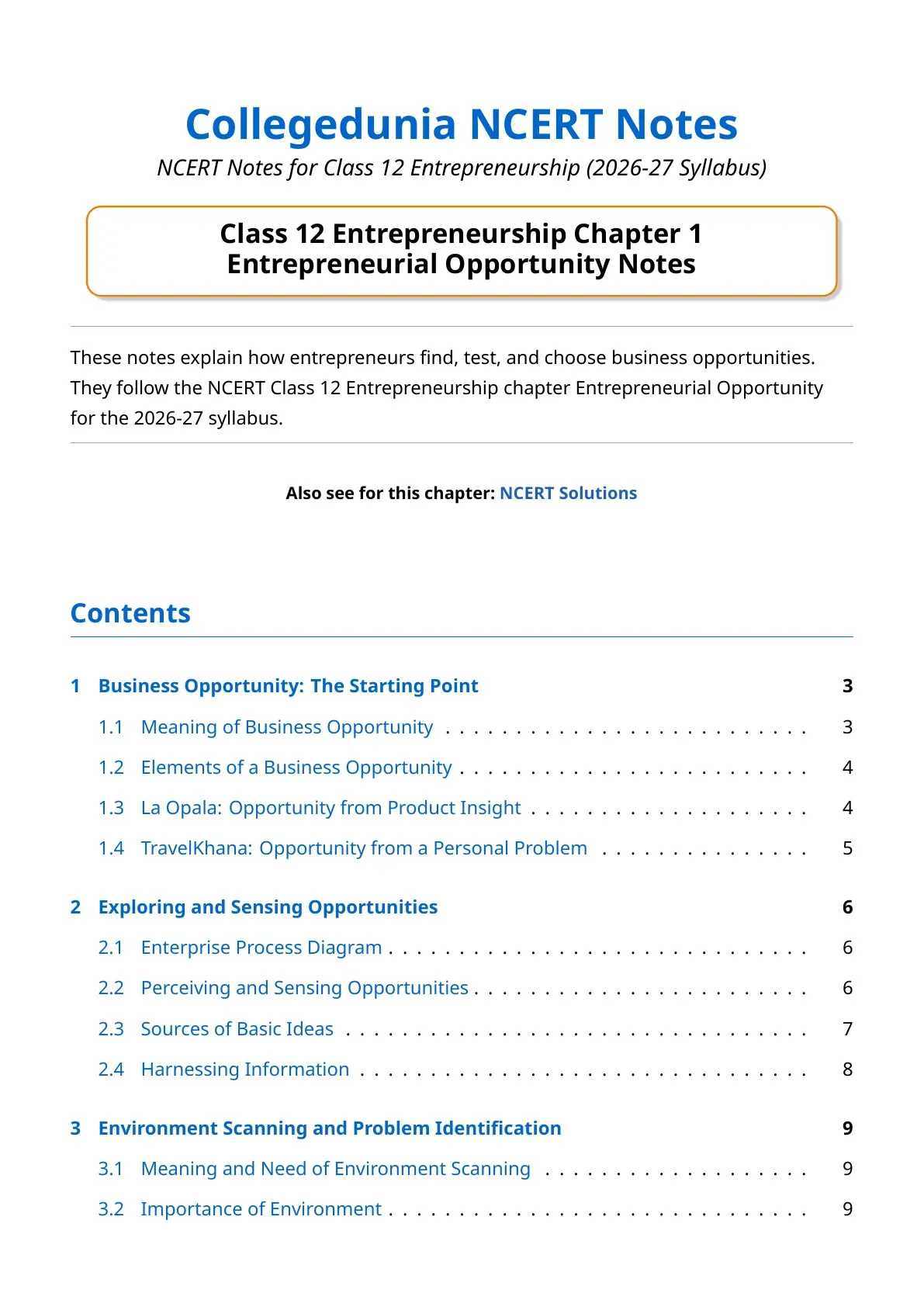
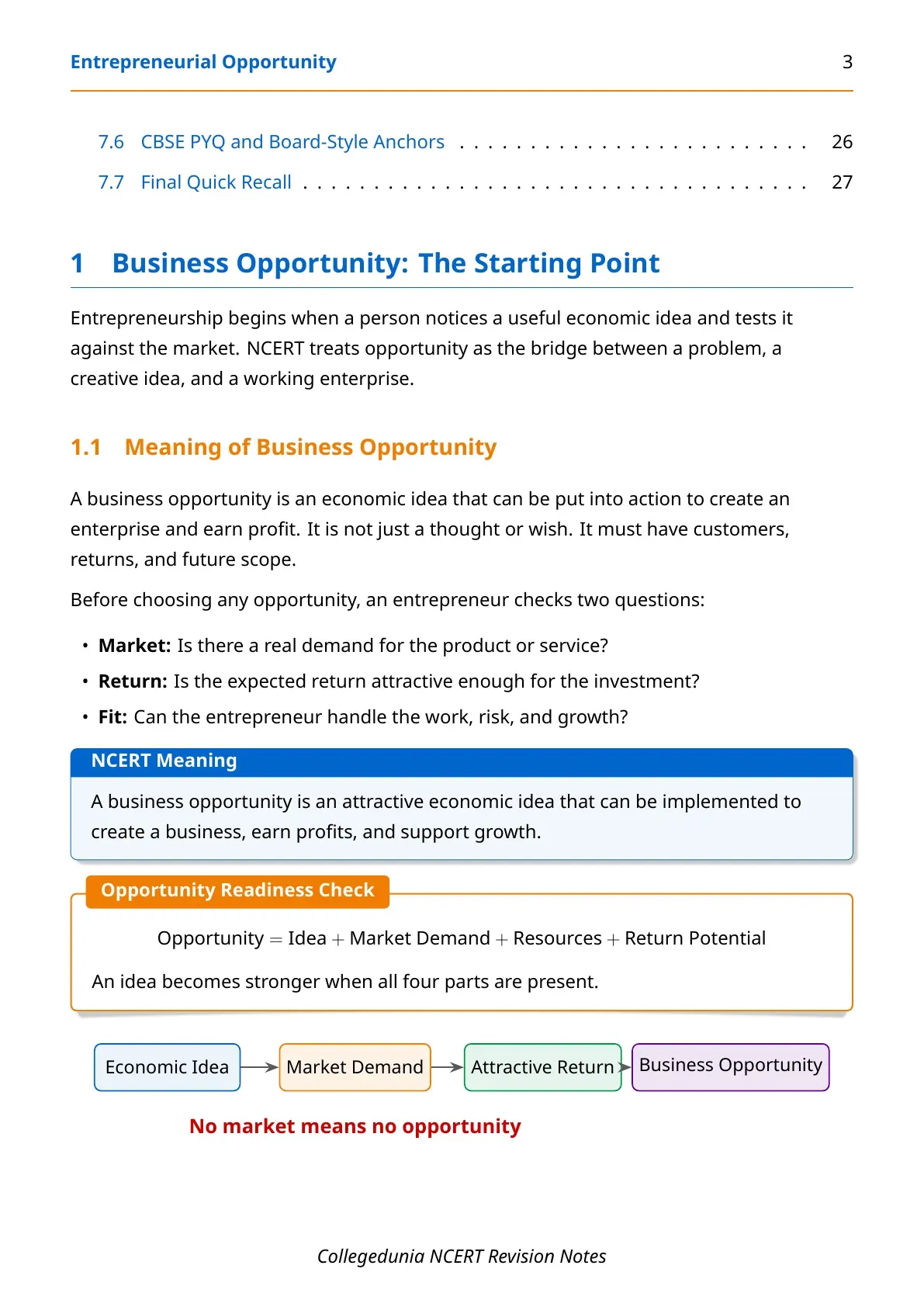
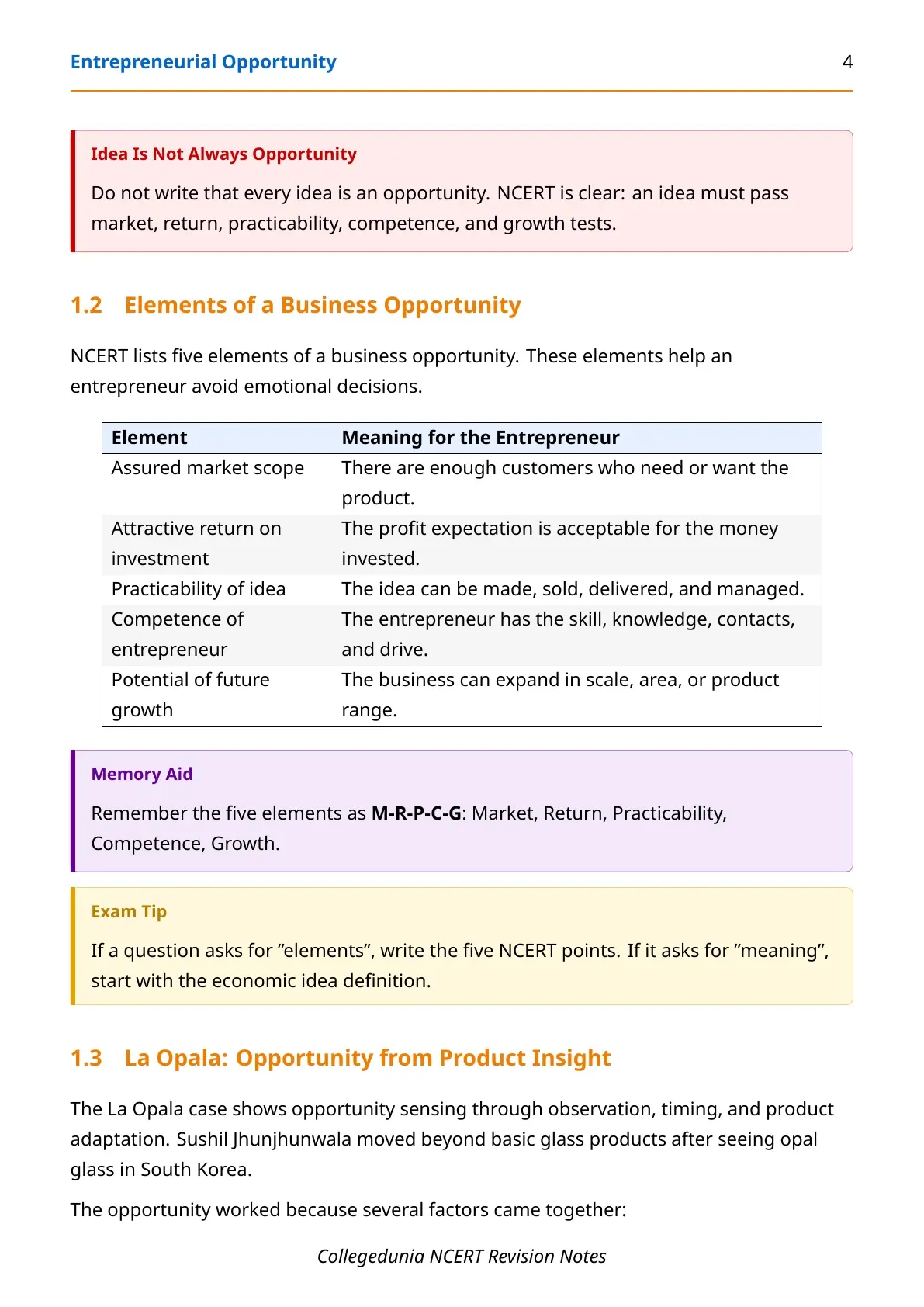
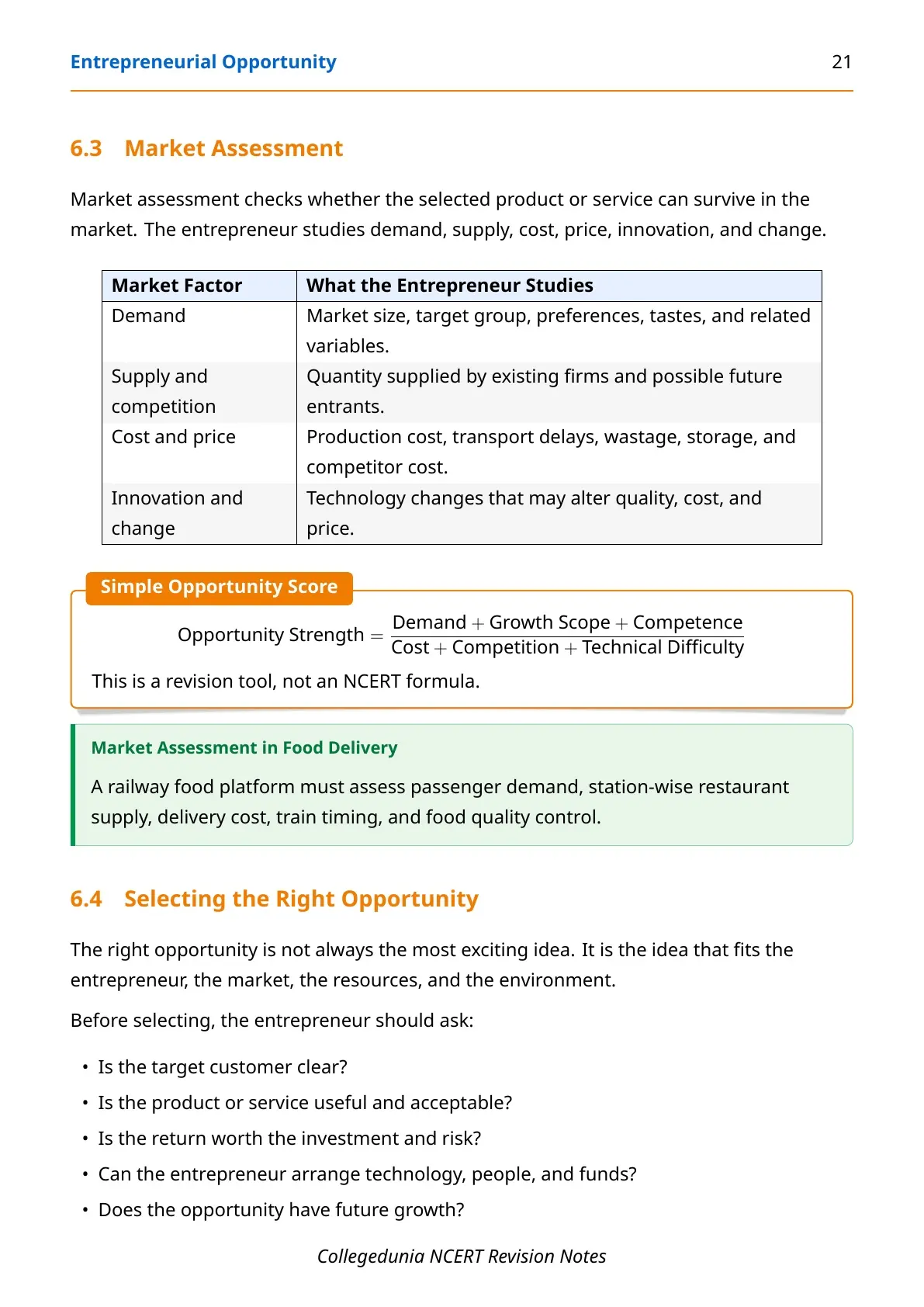
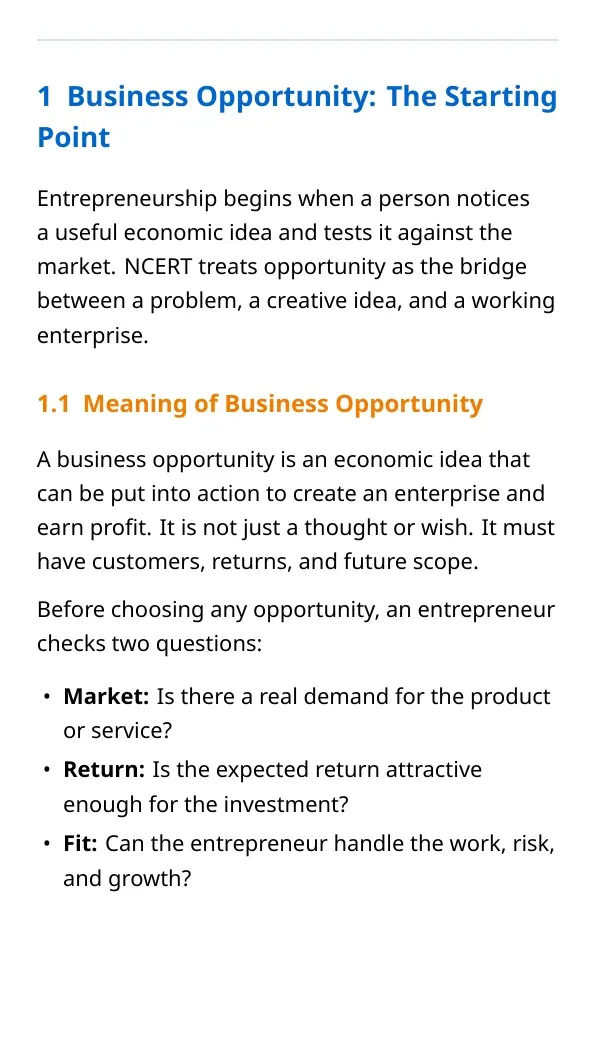
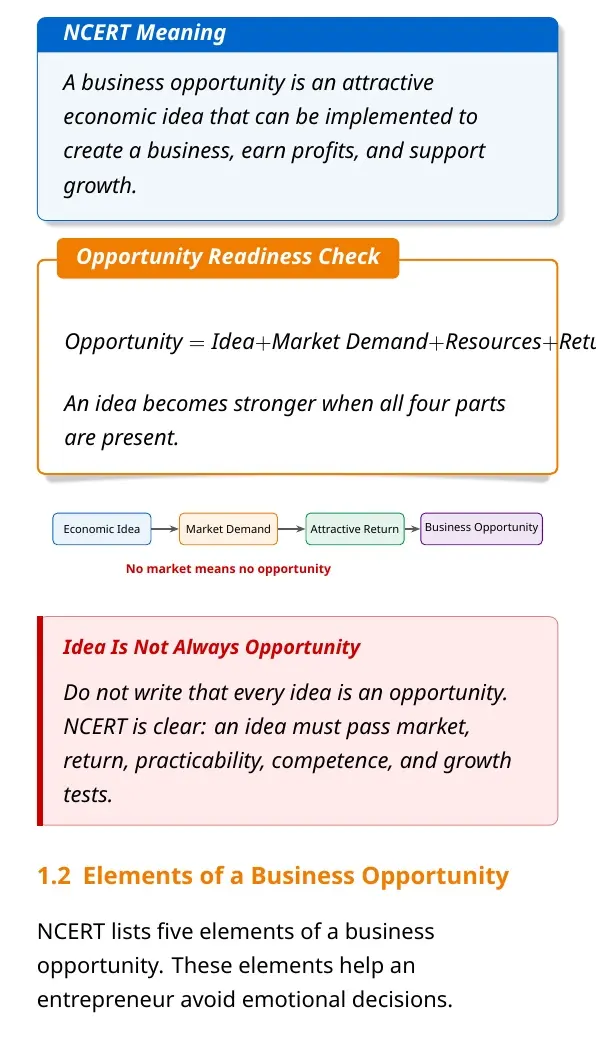
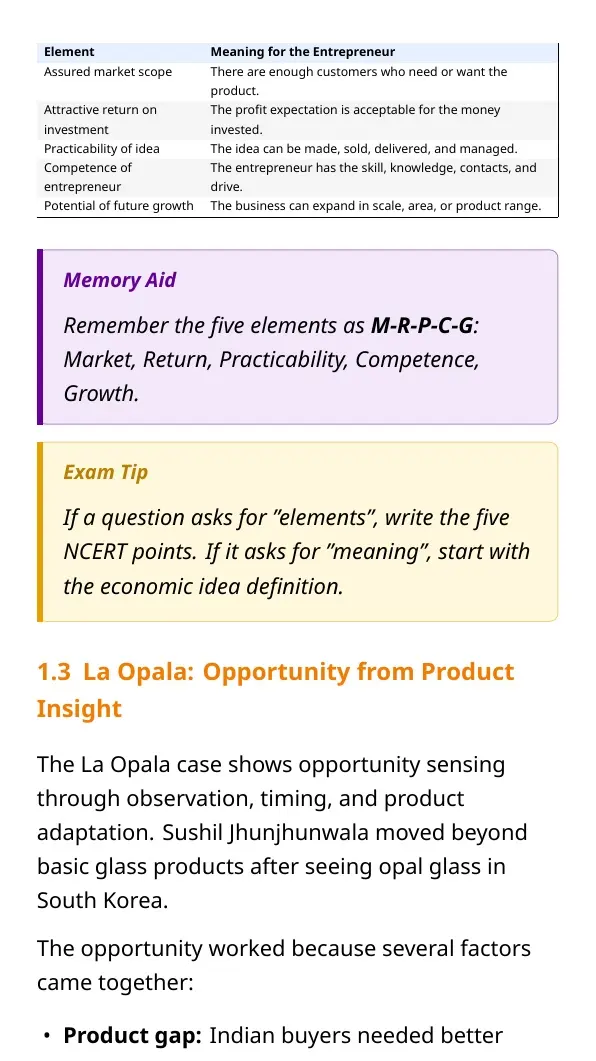
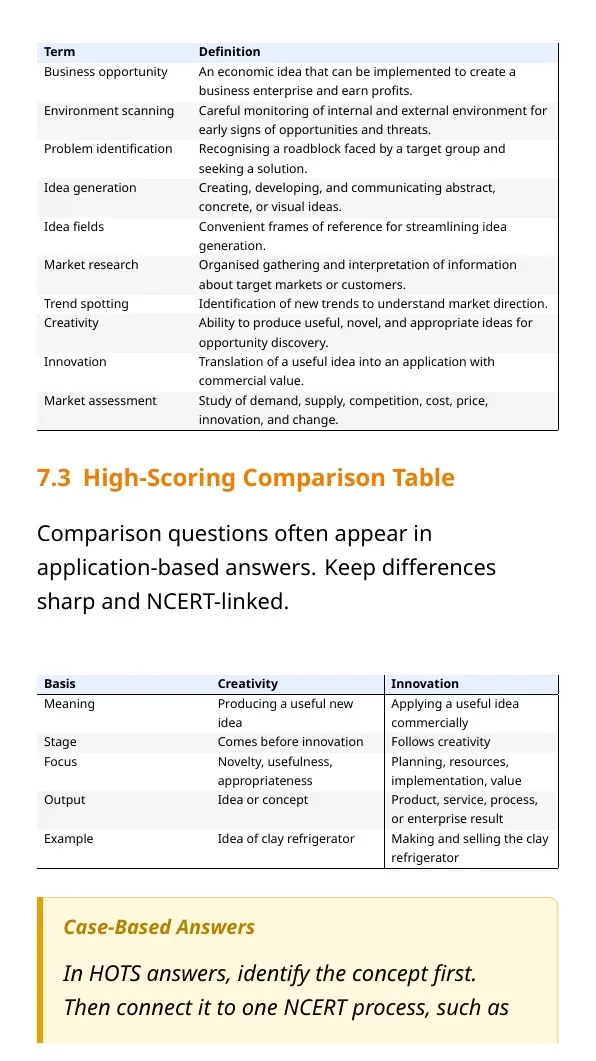
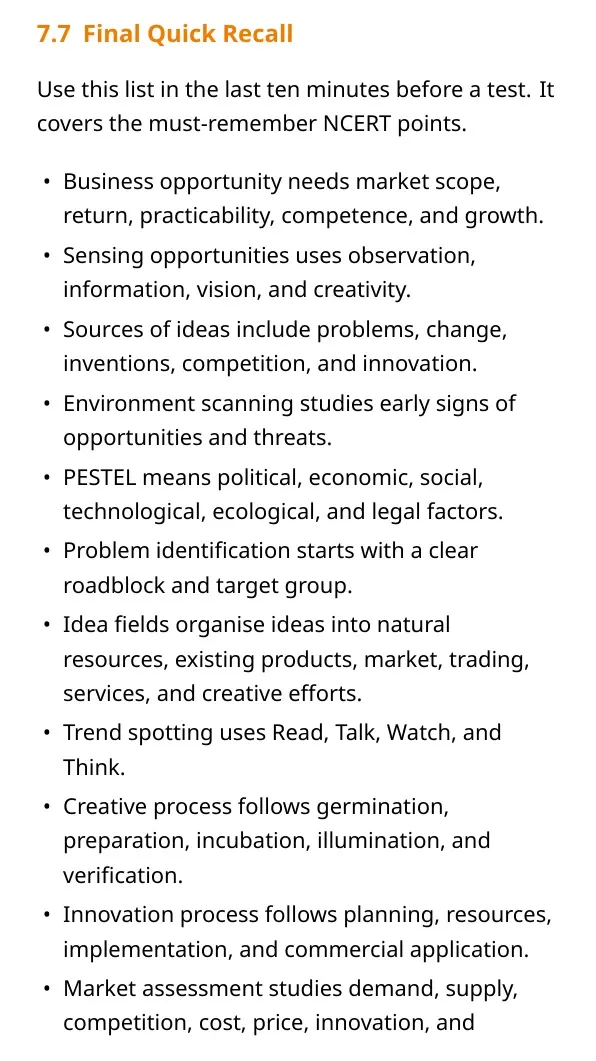
The notes start with the meaning of business opportunity and then move to the process of sensing, testing and selecting it. Students should first learn the five opportunity elements: market scope, return, practicability, competence and future growth.
| Part of the PDF | What students revise | Exam use |
|---|---|---|
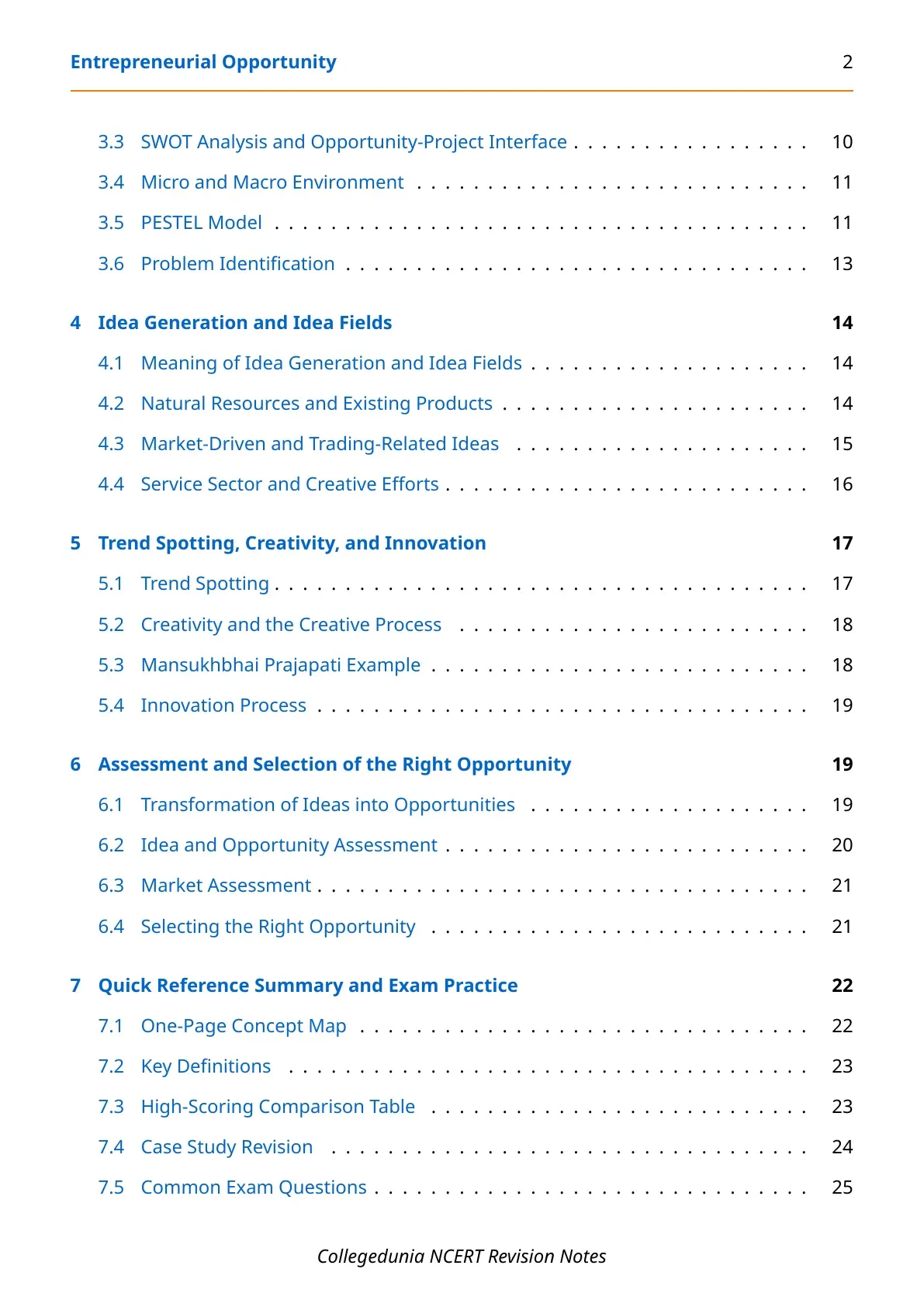
| Business opportunity | Meaning, elements and La Opala case | Definition and short answer |
| Sensing opportunities | Ideas, information, vision and creativity | 3-mark and 4-mark answers |
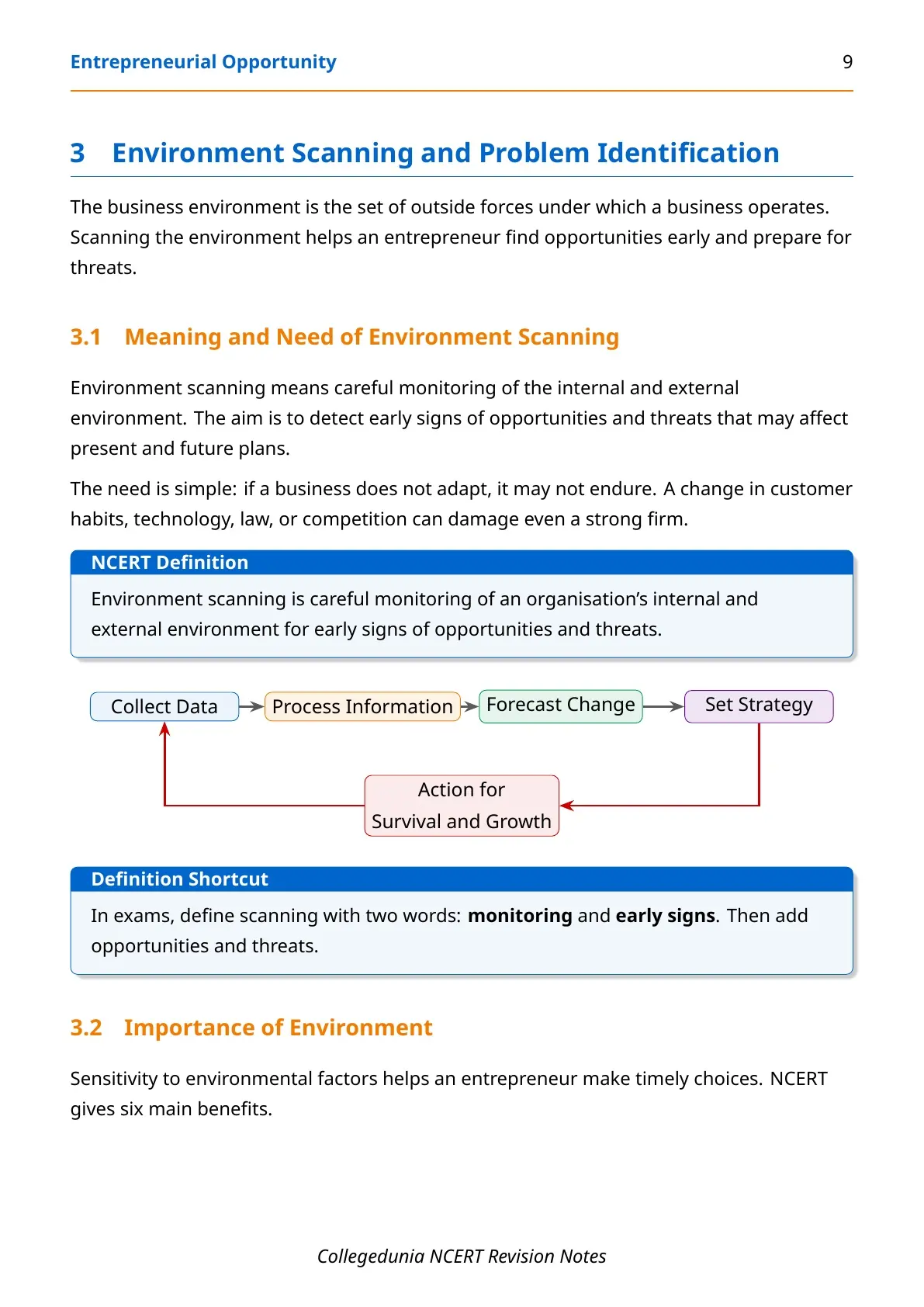
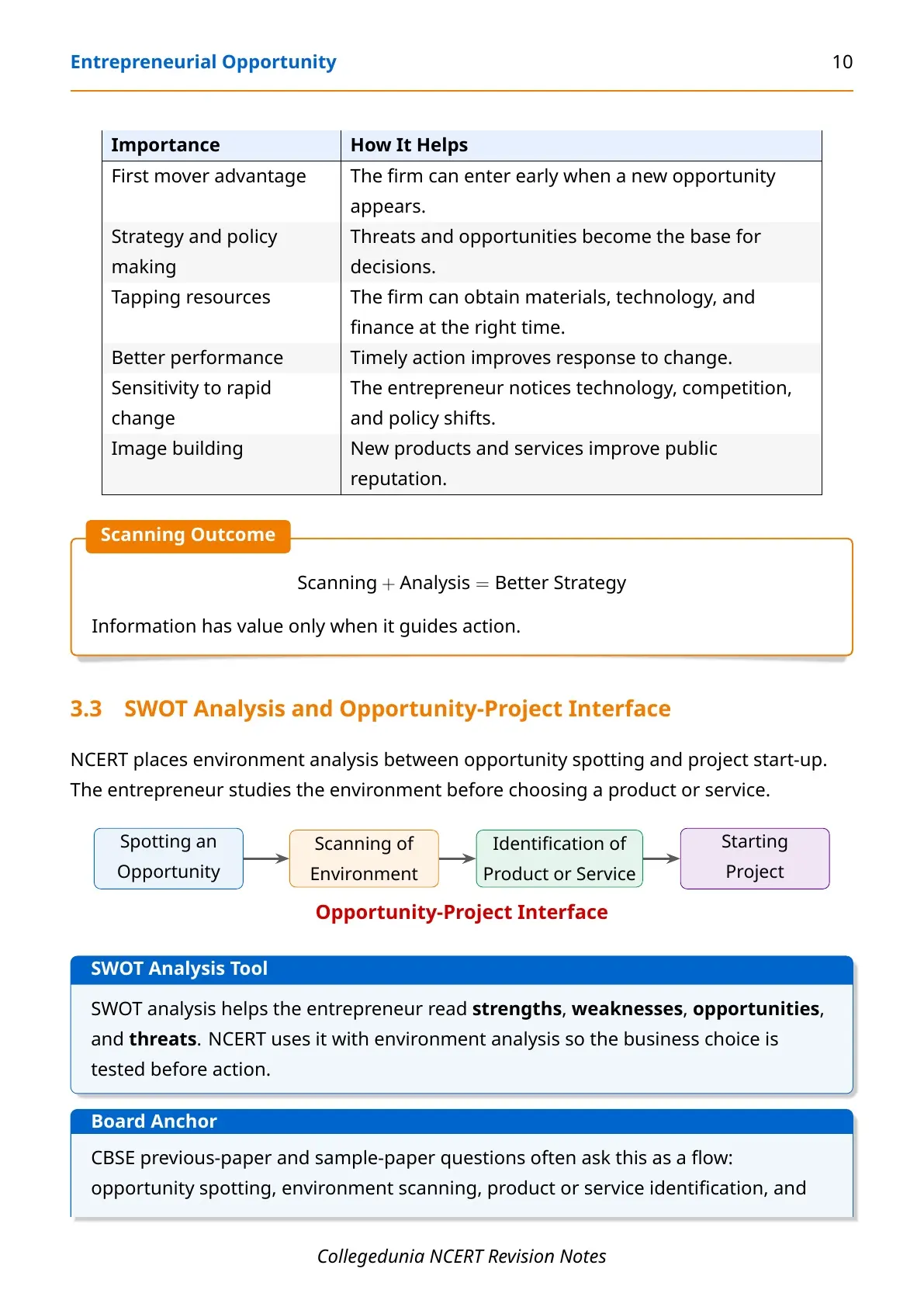
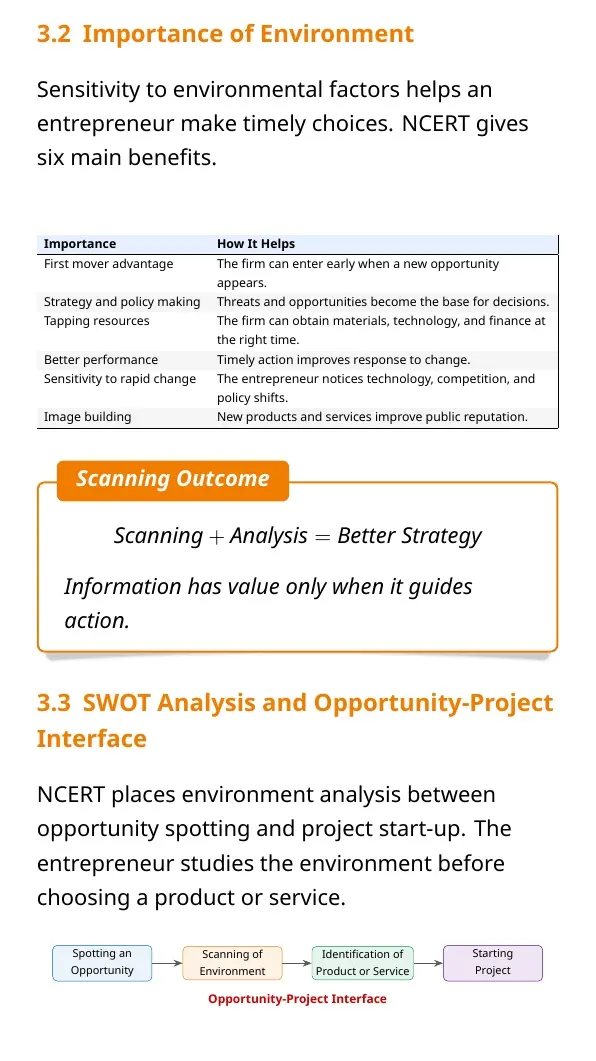
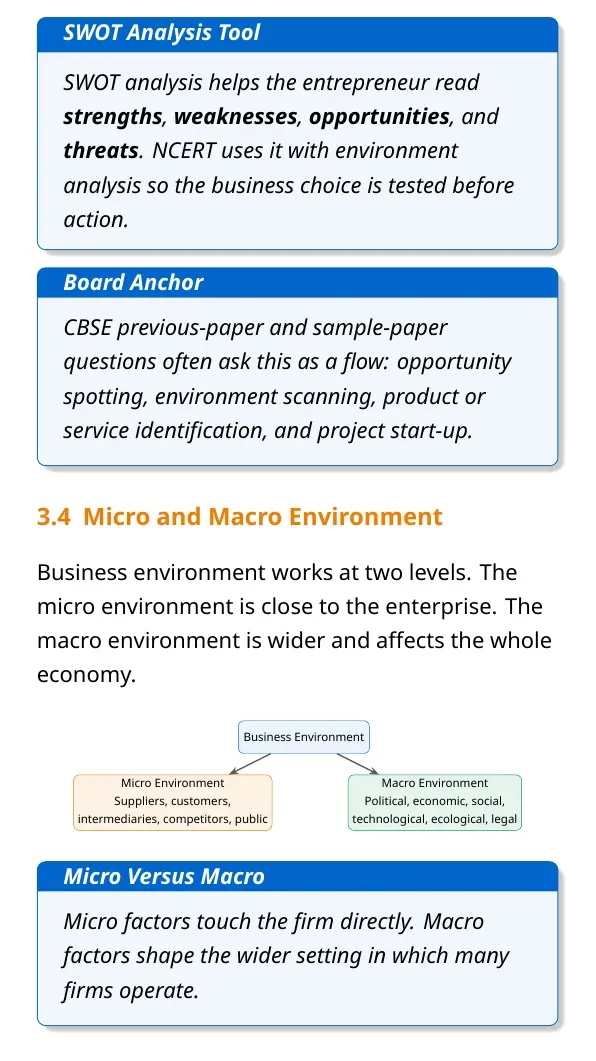
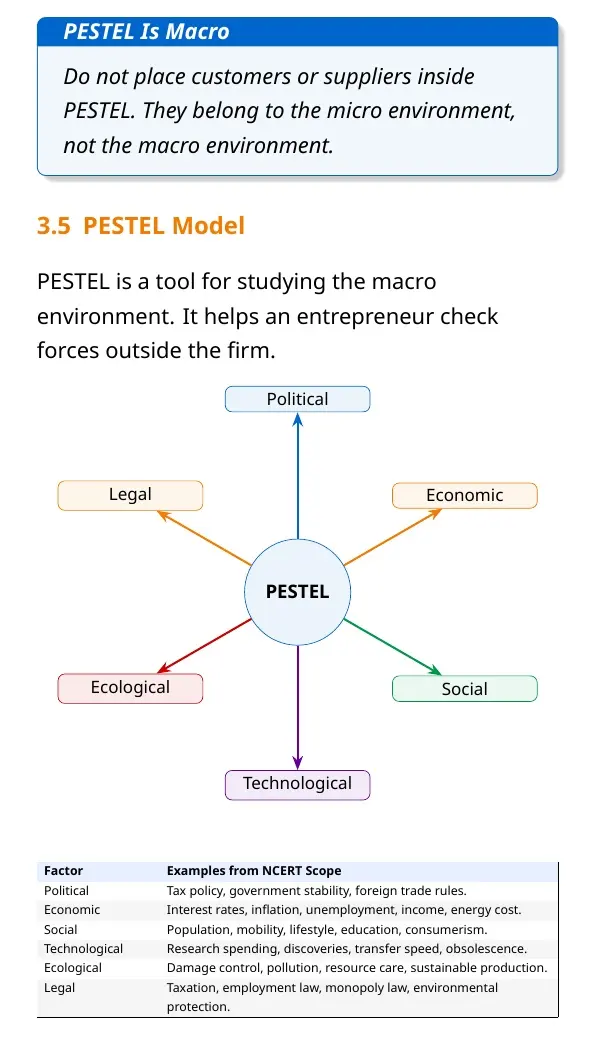
| Environment scanning | PESTEL, SWOT and Opportunity-Project Interface | Case-based explanation |
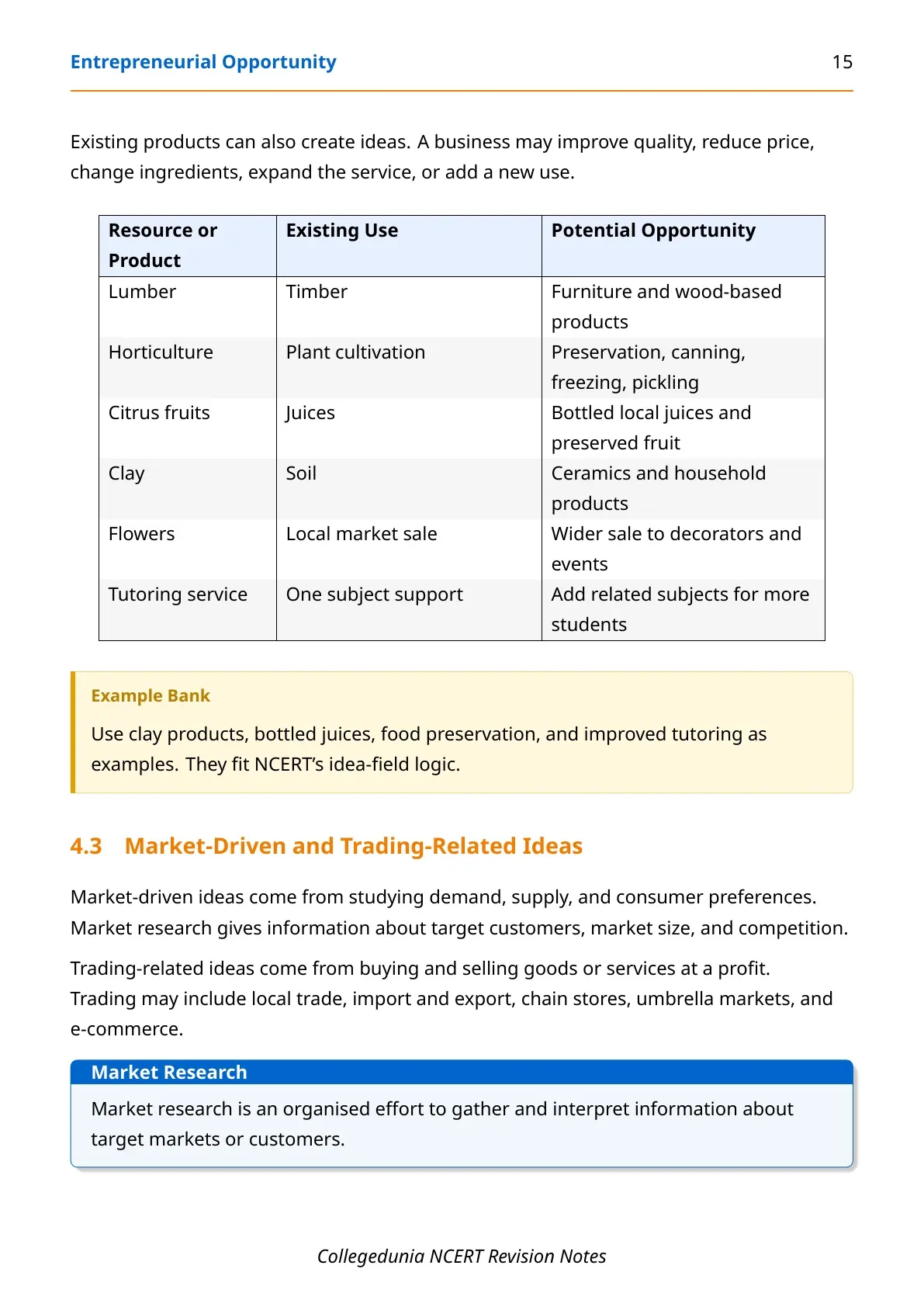
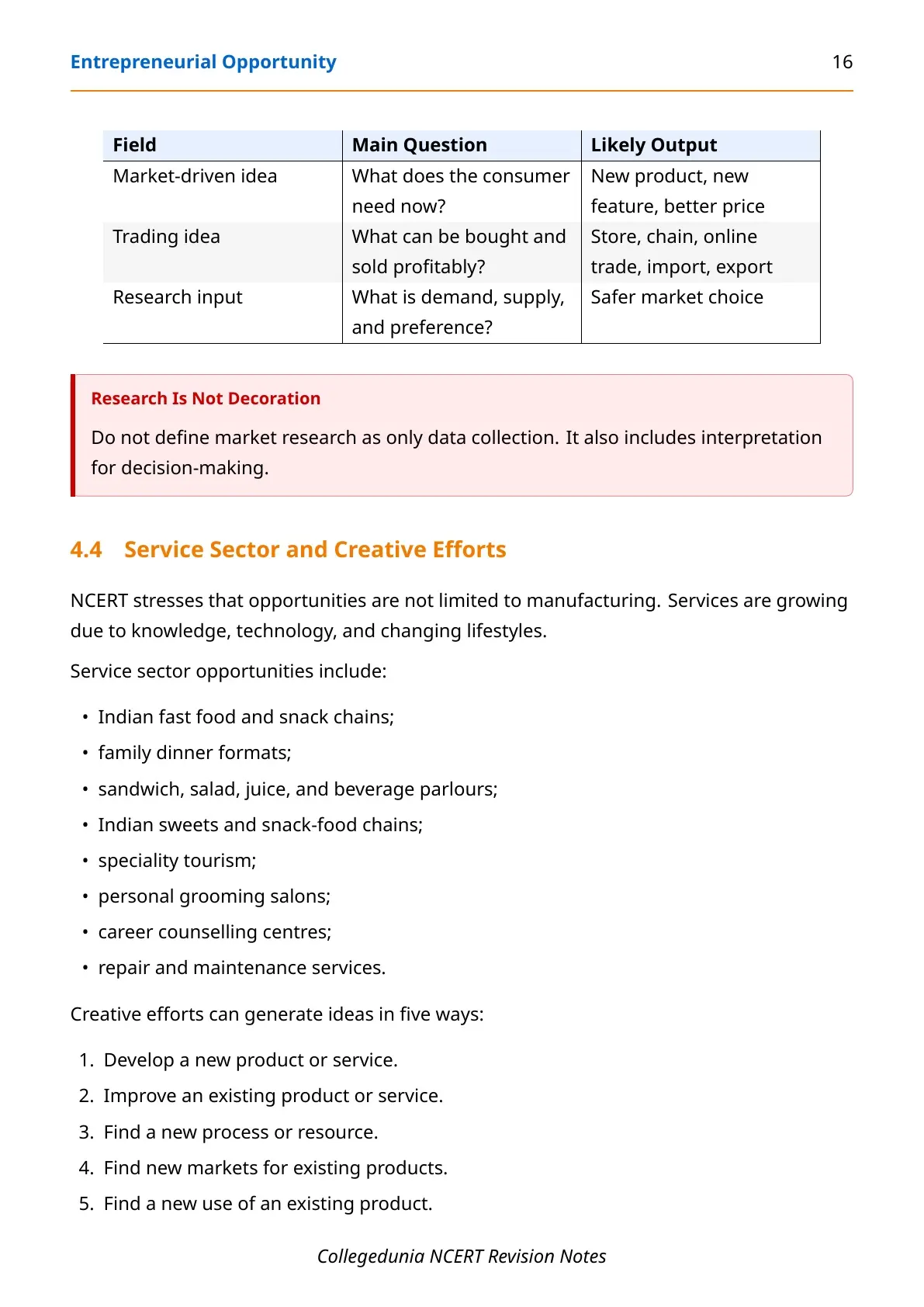
| Idea fields | Natural resources, existing products, markets and services | Long answer planning |
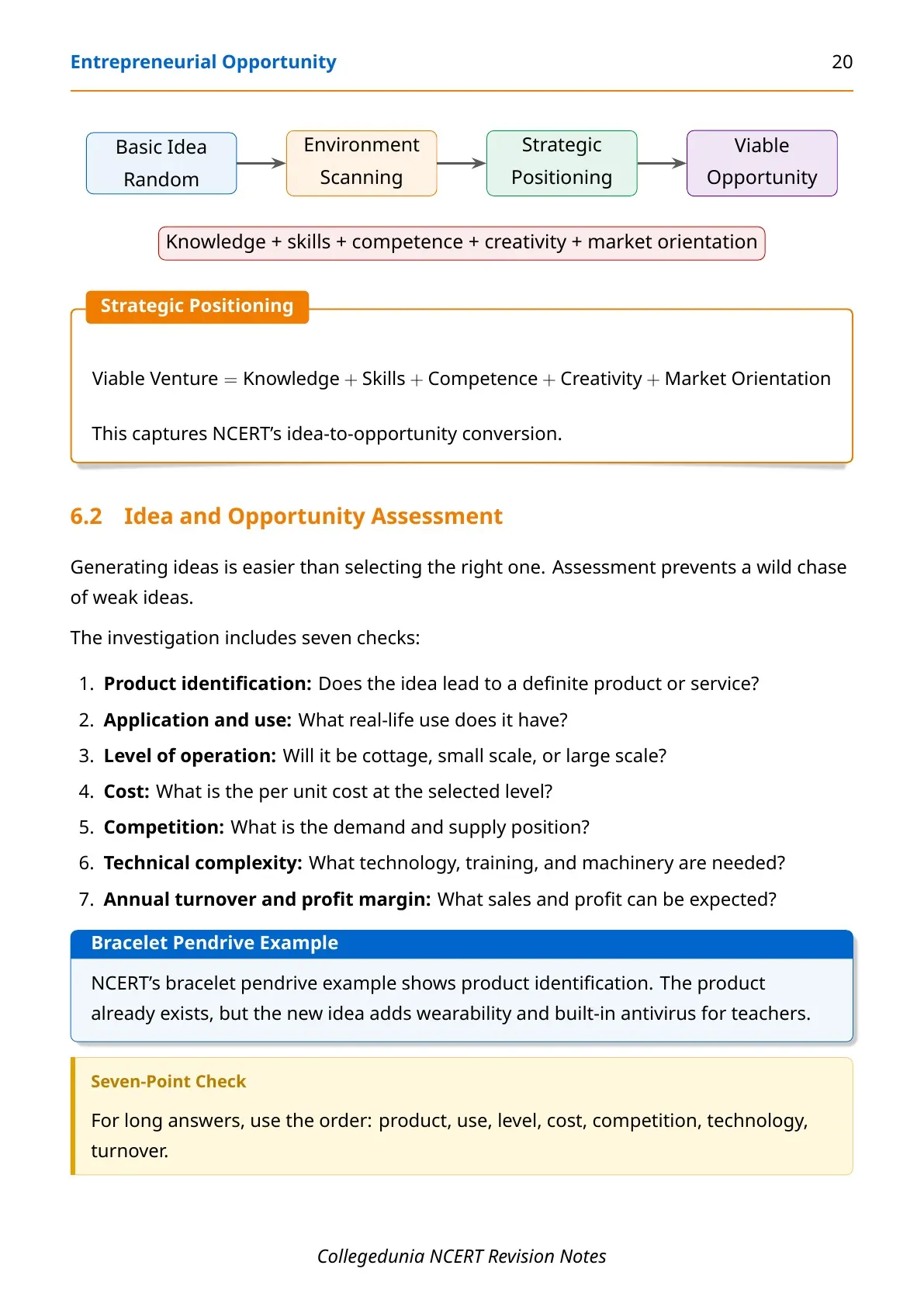
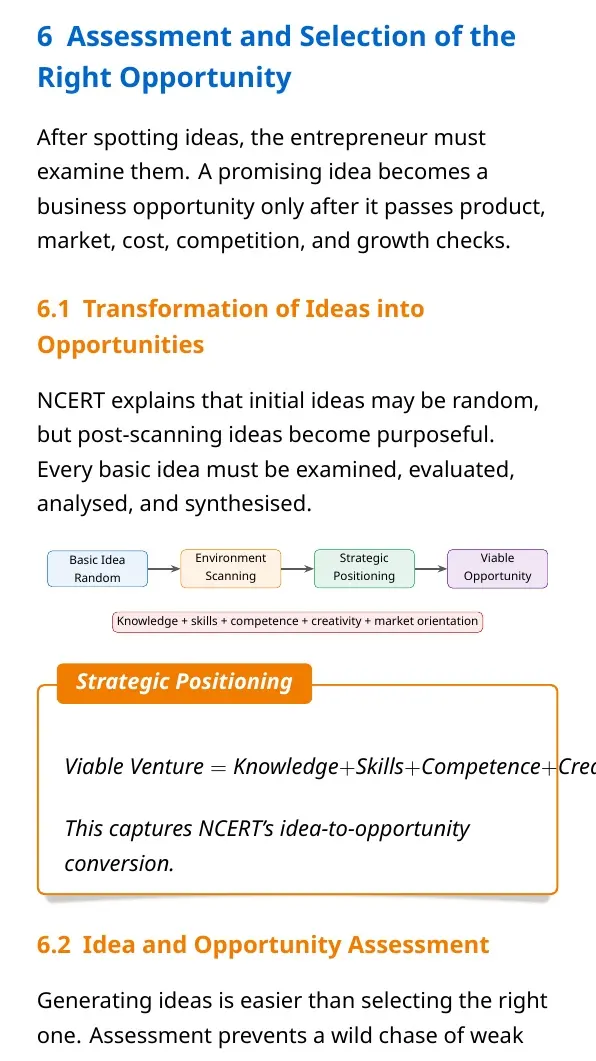
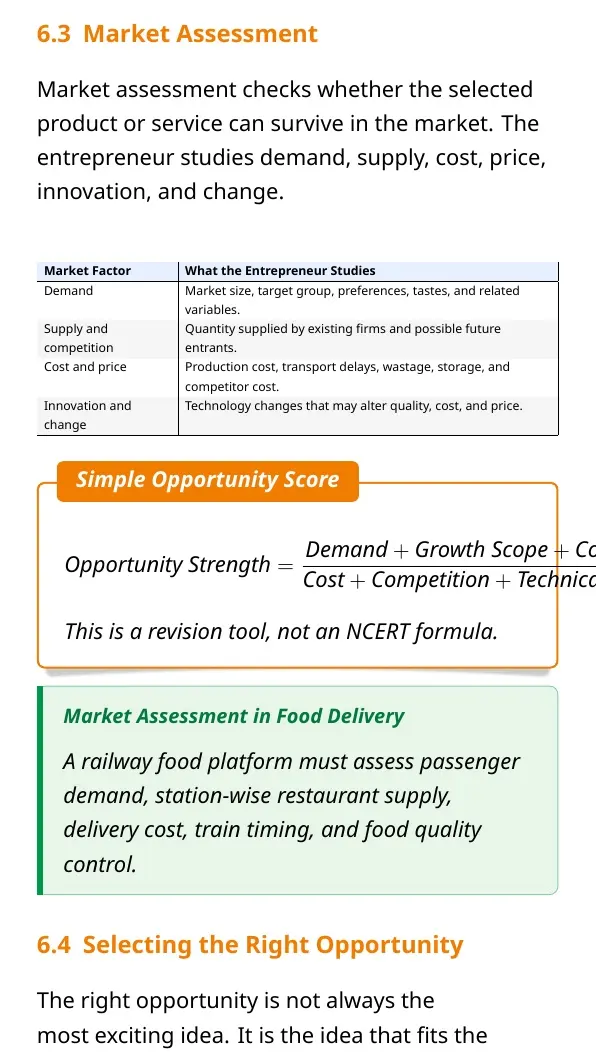
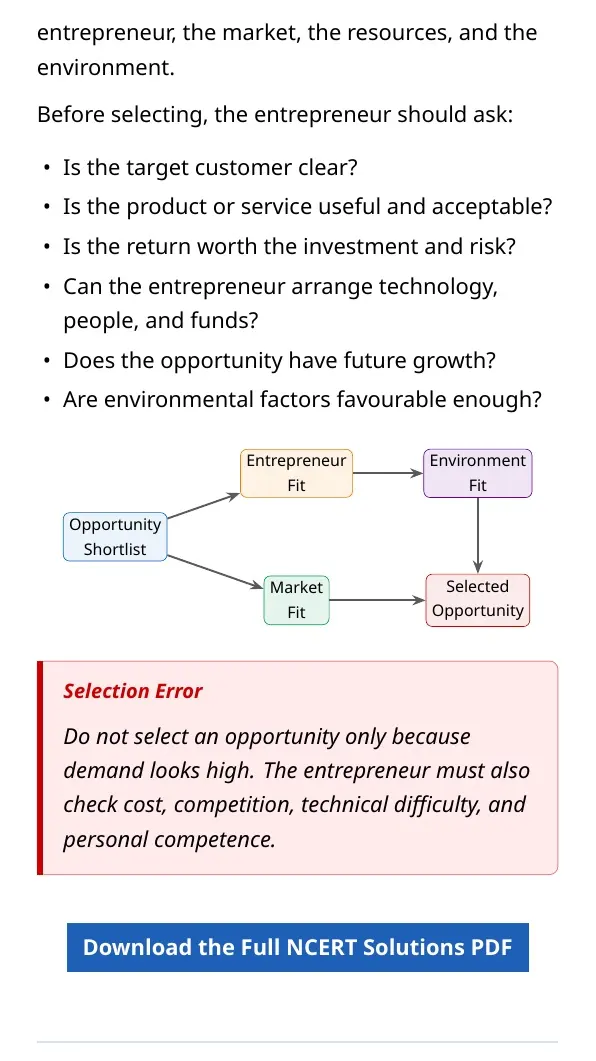
| Selection of opportunity | Product, market, cost, competition and growth checks | HOTS and application questions |
Opportunity Sensing Process in Class 12 Entrepreneurship
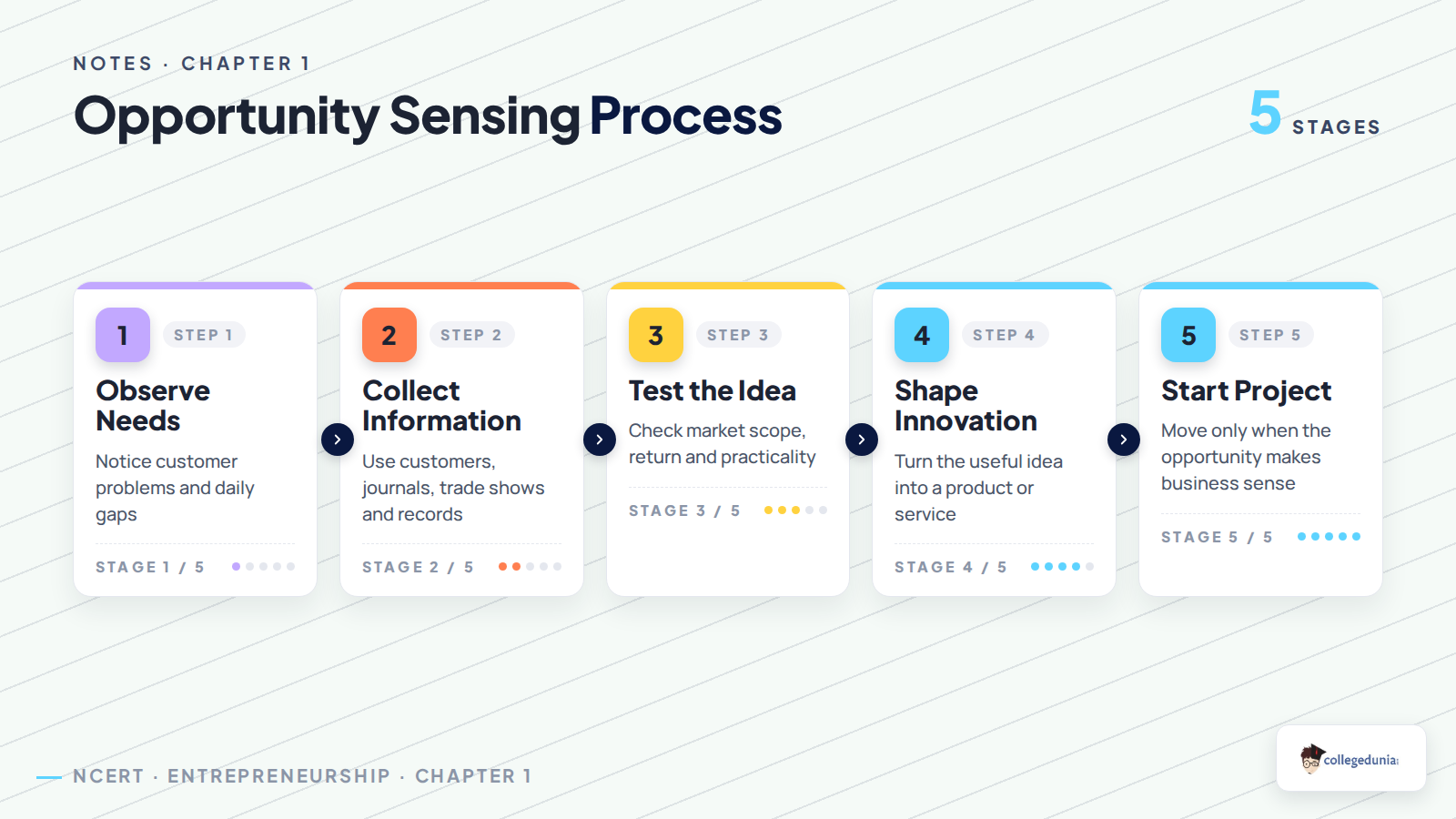
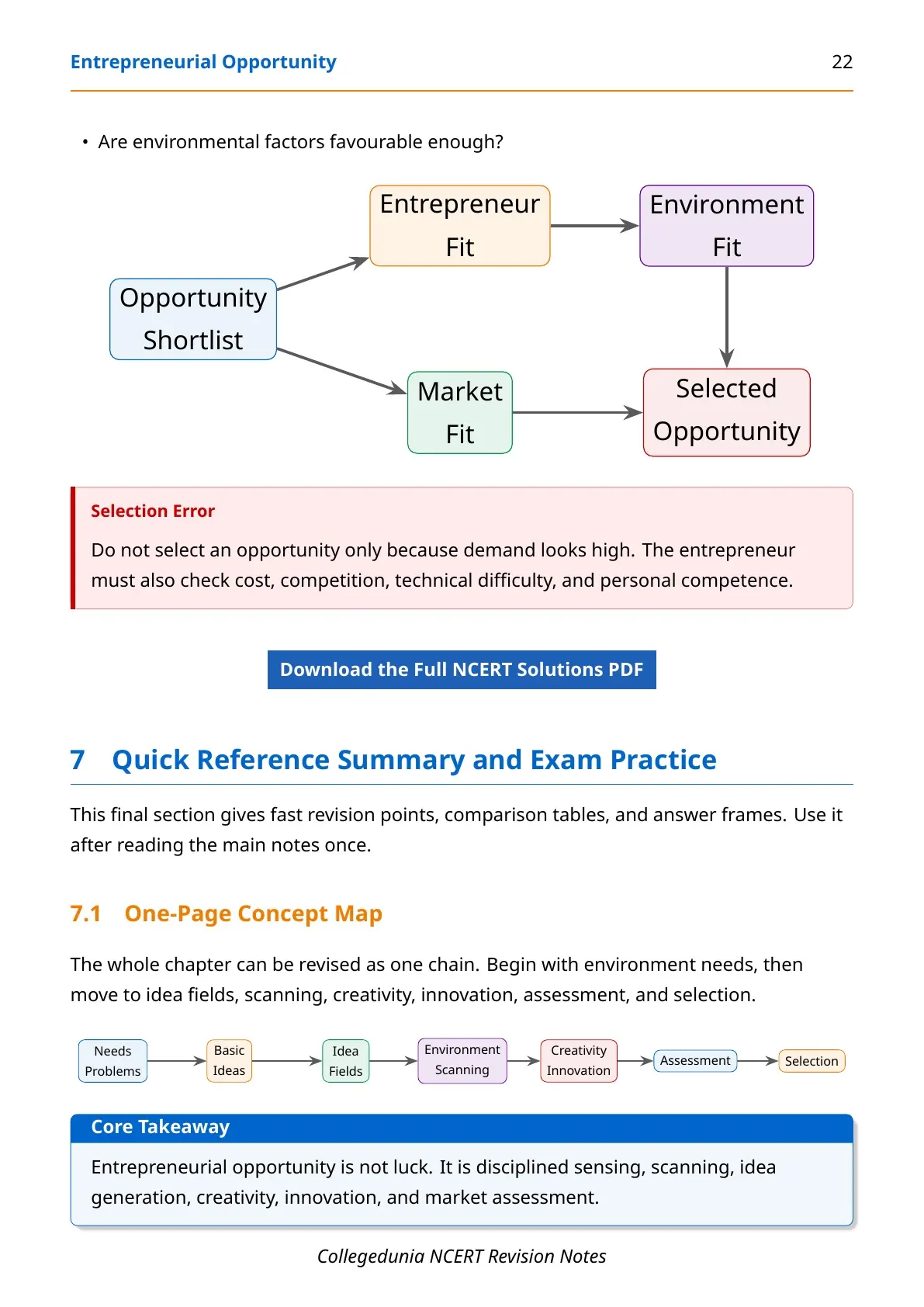
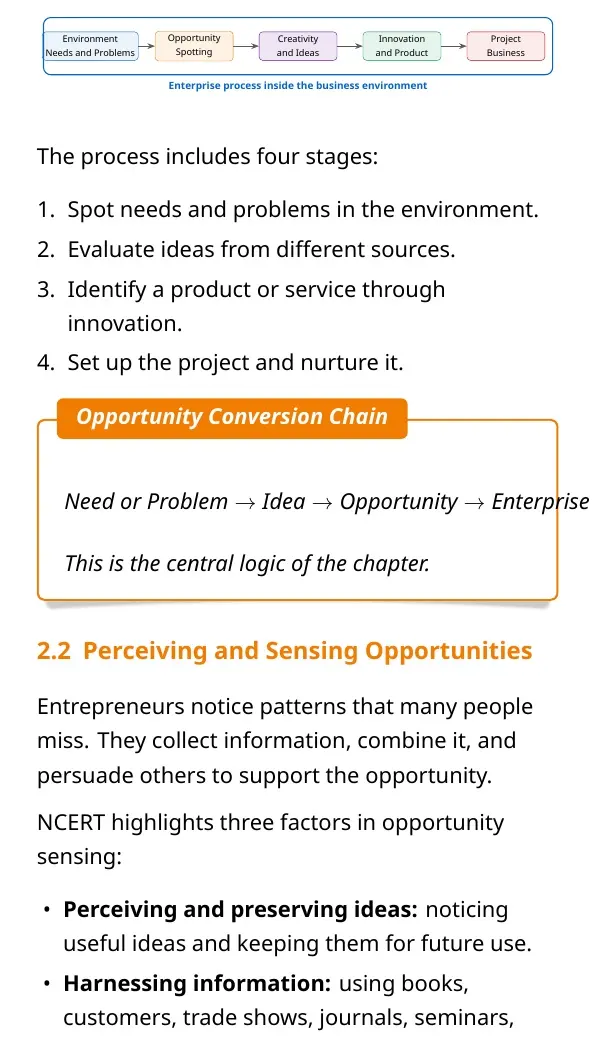
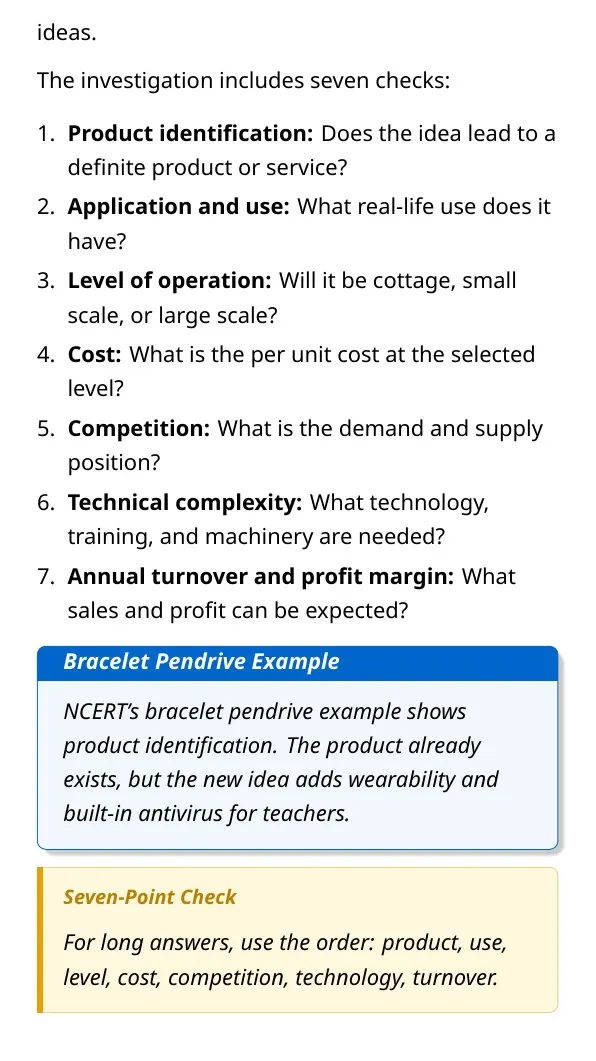
Opportunity sensing means using observation, information and creativity to find a business opening. NCERT shows that an entrepreneur does not jump from idea to project. The idea must pass through market, resource and environment checks first.
- Observe: spot a need, problem or change in the environment.
- Collect: use customers, journals, records, trade shows and advisers.
- Test: check return, practicality, skill and future growth.
- Act: convert a useful idea into an innovation and then a project.
Entrepreneurial Opportunity Class 12 Revision Video
Source: Rajat Arora on YouTube
Idea Fields and Problem Identification Notes
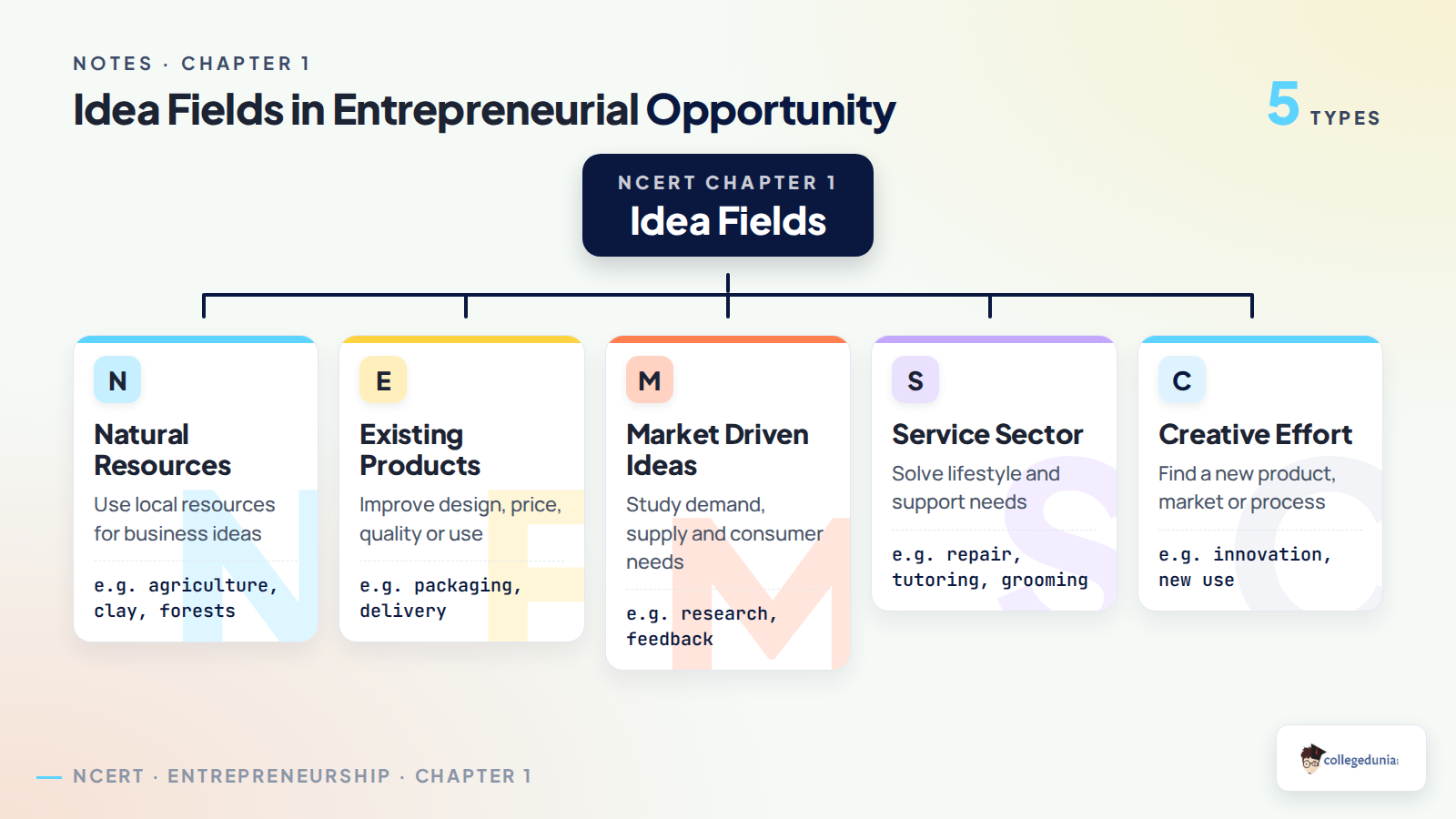
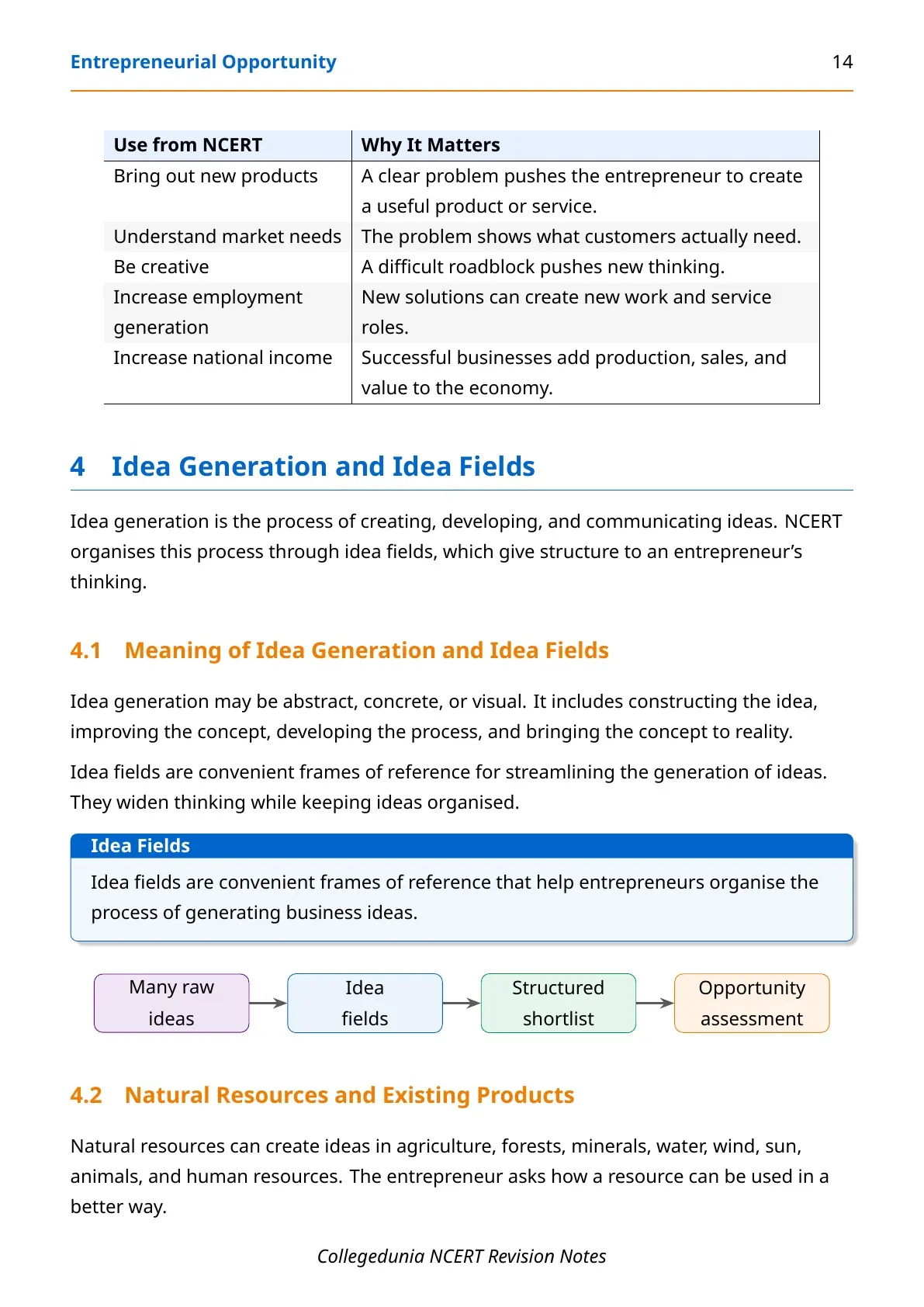
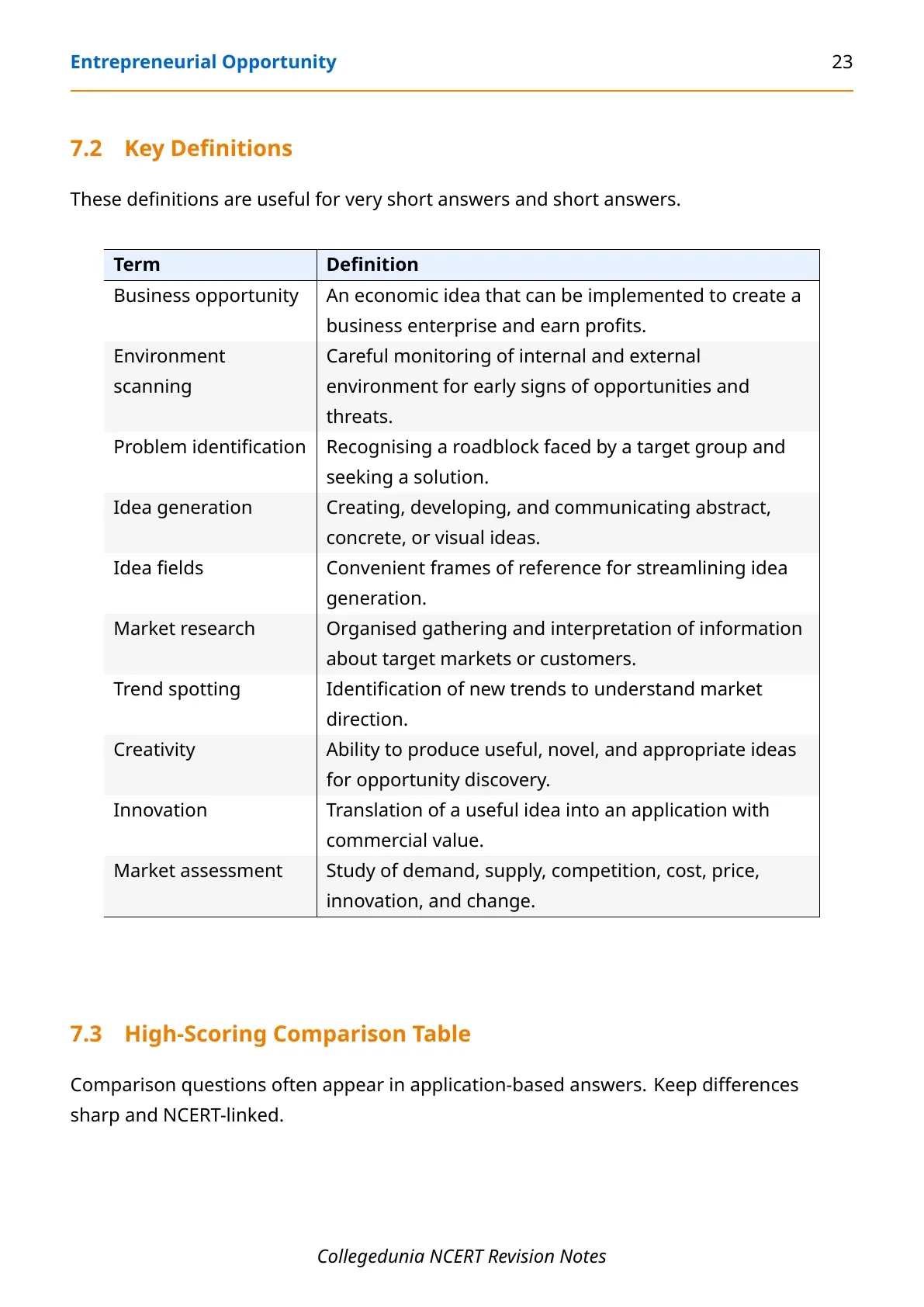
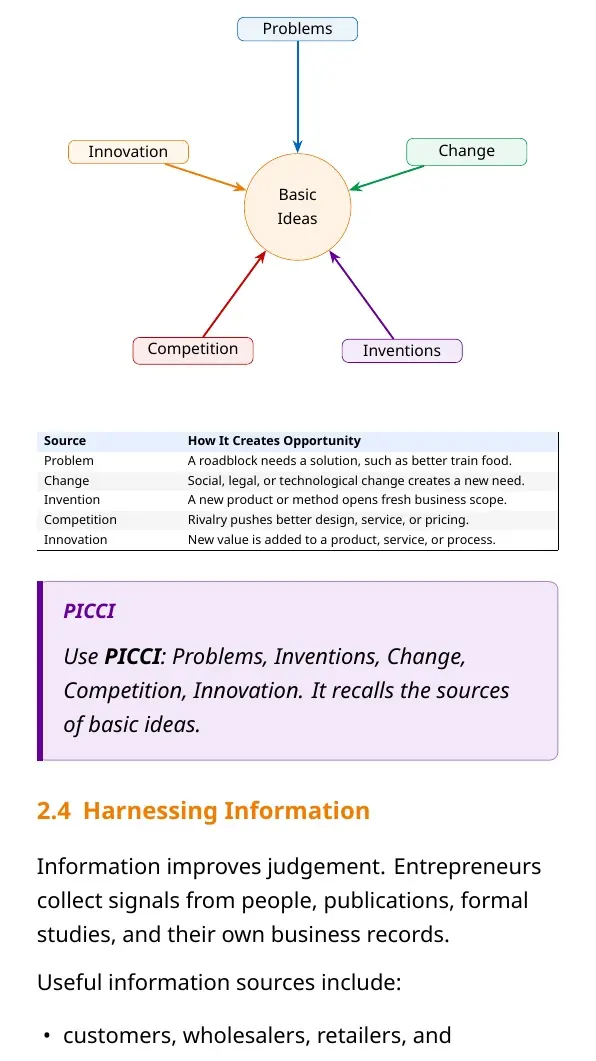
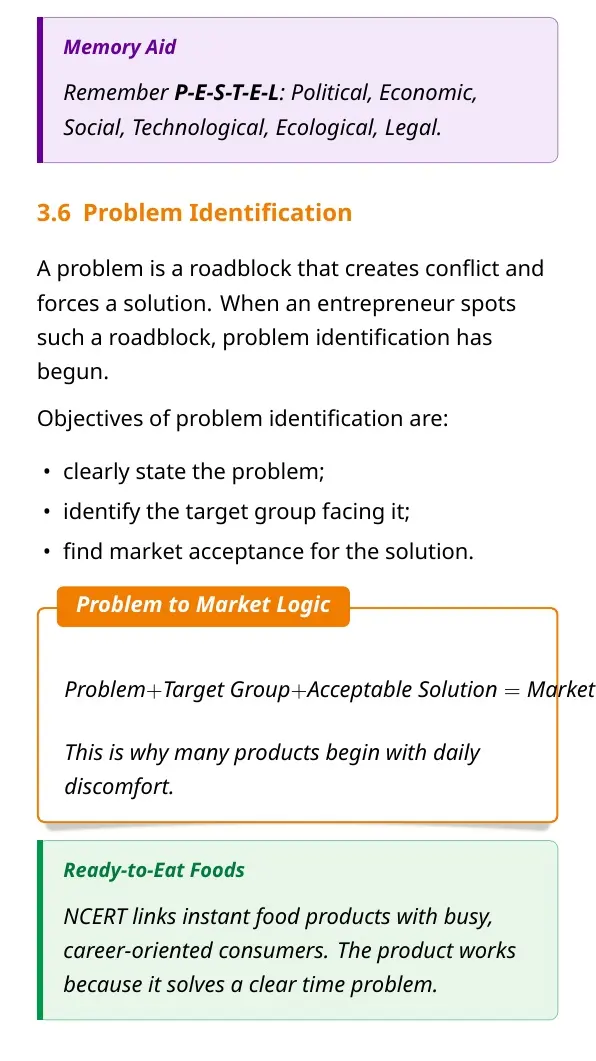
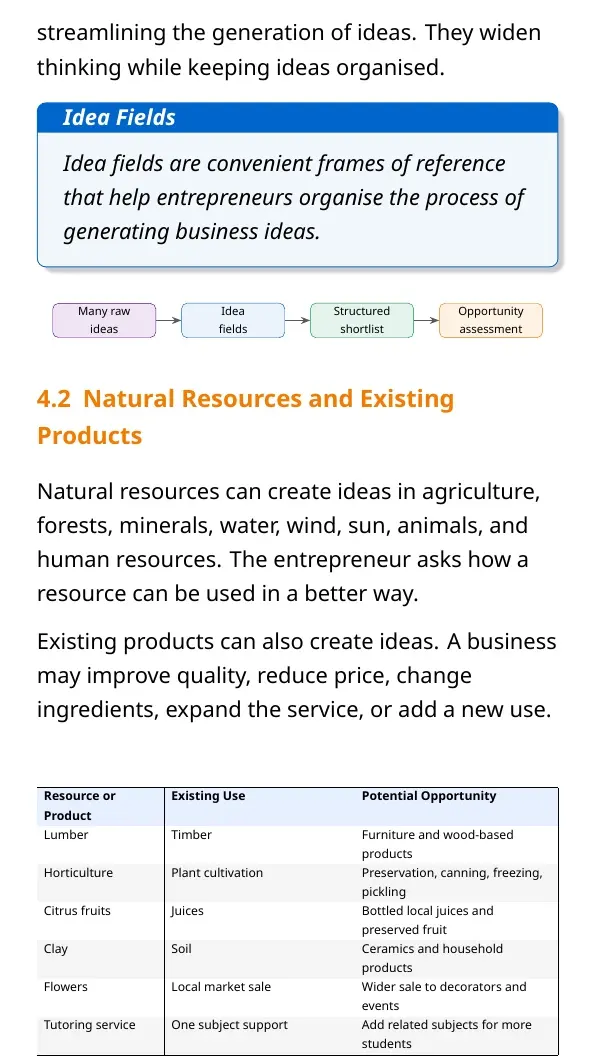
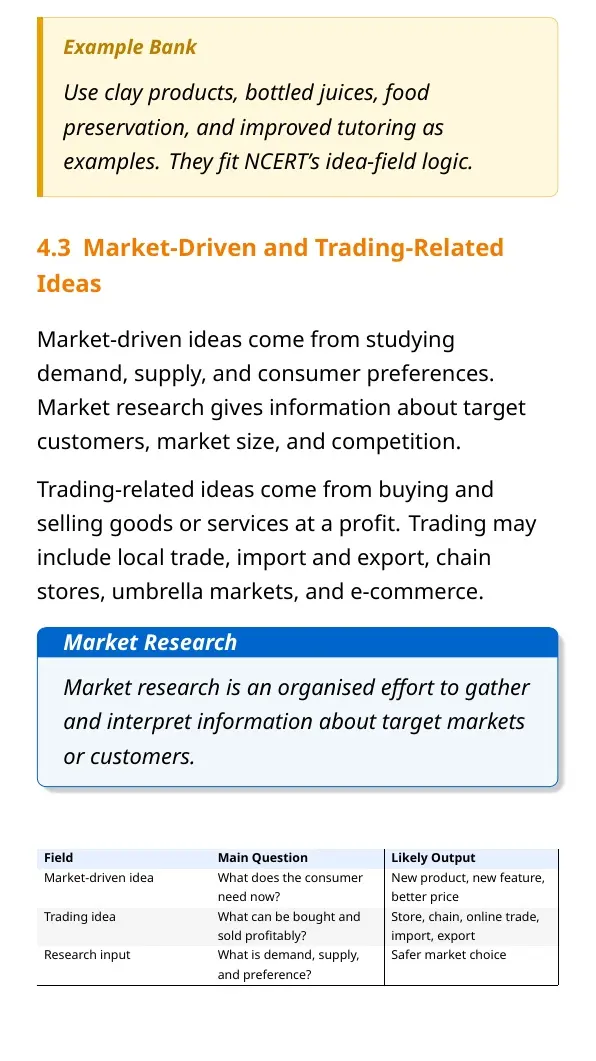
Idea fields help students organise the sources of business ideas. They prevent vague answers because each example can be placed under a clear NCERT heading.
| NCERT Term | Revision Point | Example |
|---|---|---|
| Problems | A roadblock creates demand for a solution. | Ready-to-eat food for busy consumers |
| Change | Social, legal or technology shifts create new needs. | Online booking and delivery services |
| Existing products | A product can be improved in design, price or use. | Better packaging or refill packs |
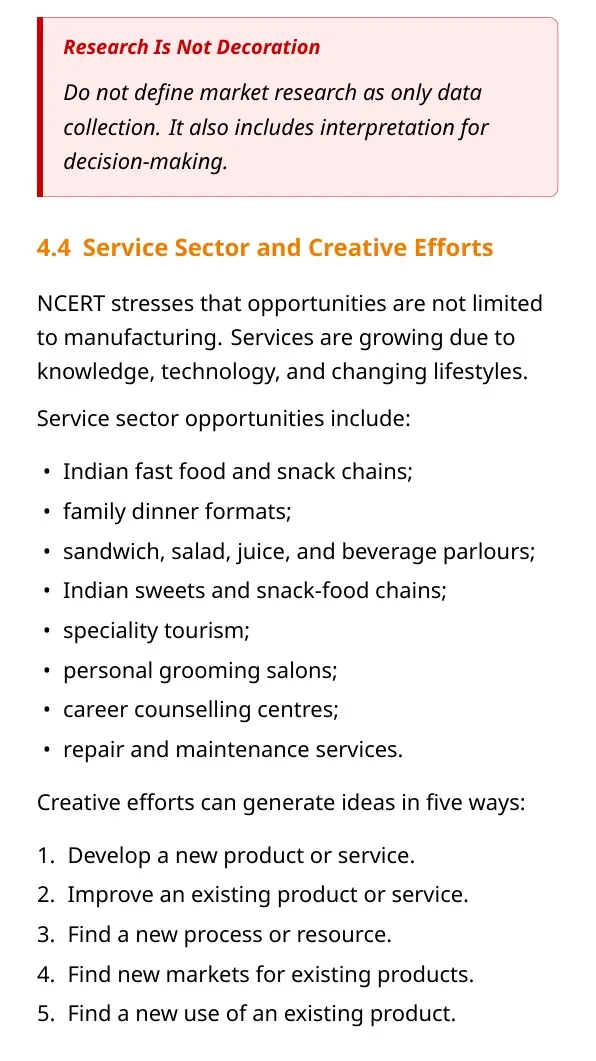
| Service sector | Lifestyle needs open new enterprise areas. | Career counselling, grooming, repair services |
Common Mistakes in Entrepreneurial Opportunity Answers
Many students know the chapter but lose marks because they mix up similar terms. Keep the answer language close to NCERT and use one example only when it helps the point.
- Do not call every idea an opportunity. An opportunity must have market scope, return, practicality and growth.
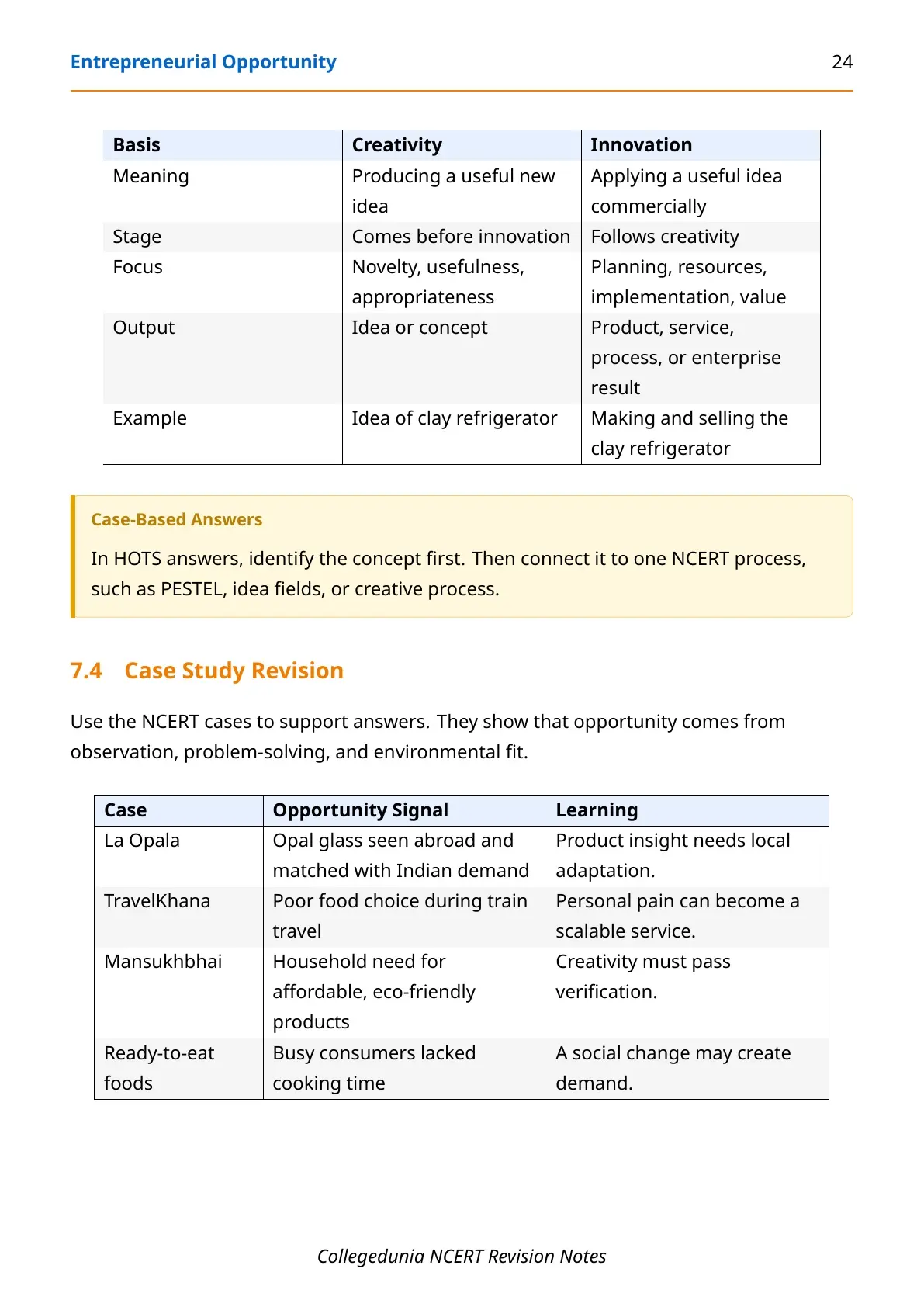
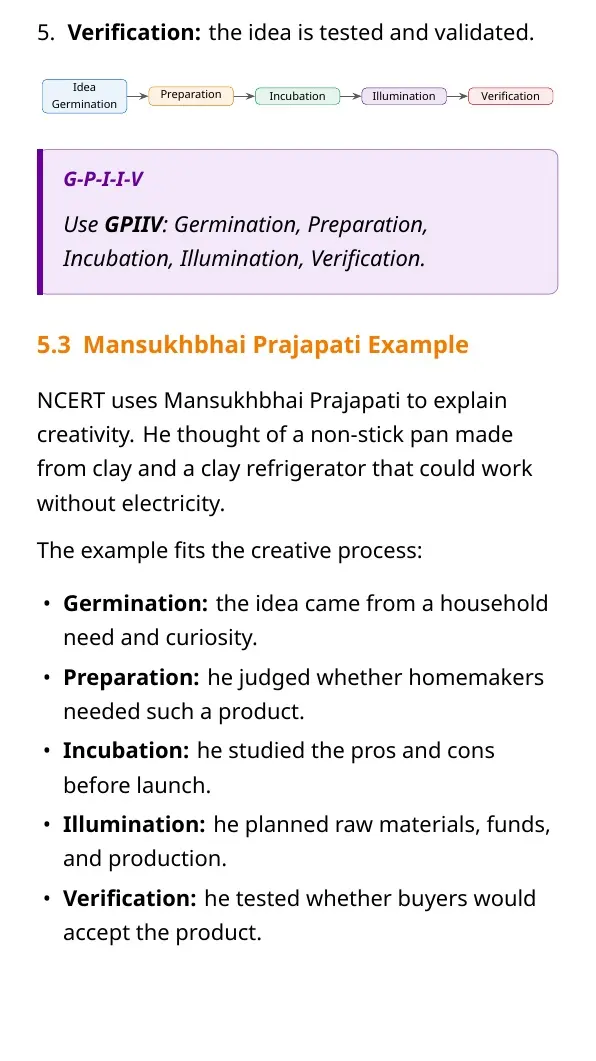
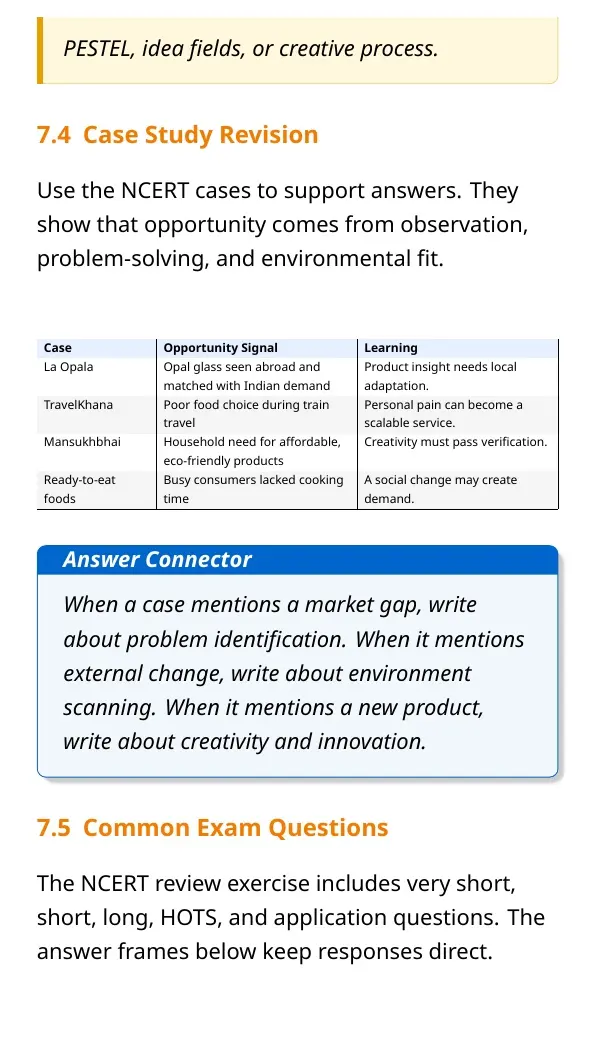
- Do not merge creativity with innovation. Creativity gives the idea; innovation applies it commercially.
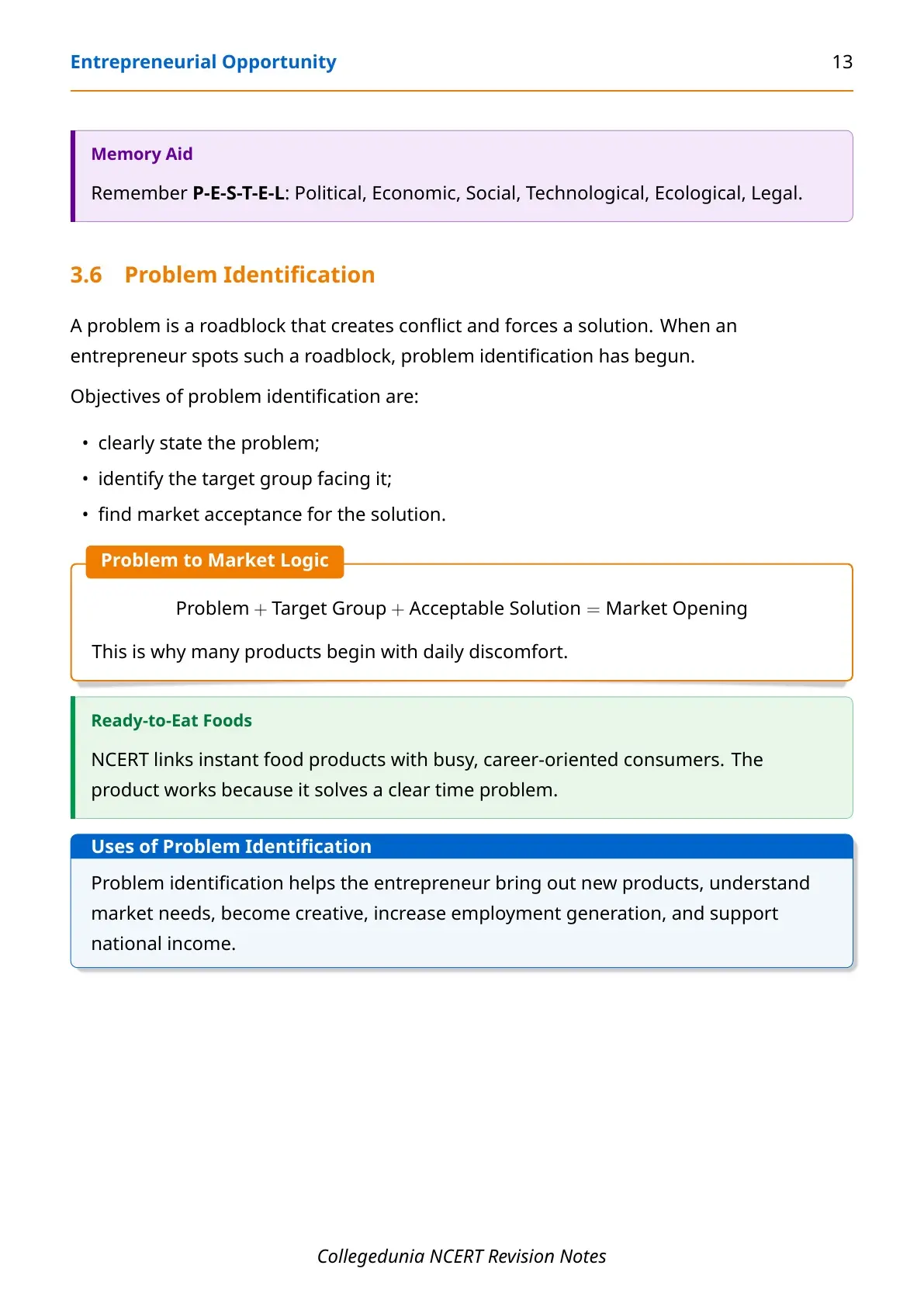
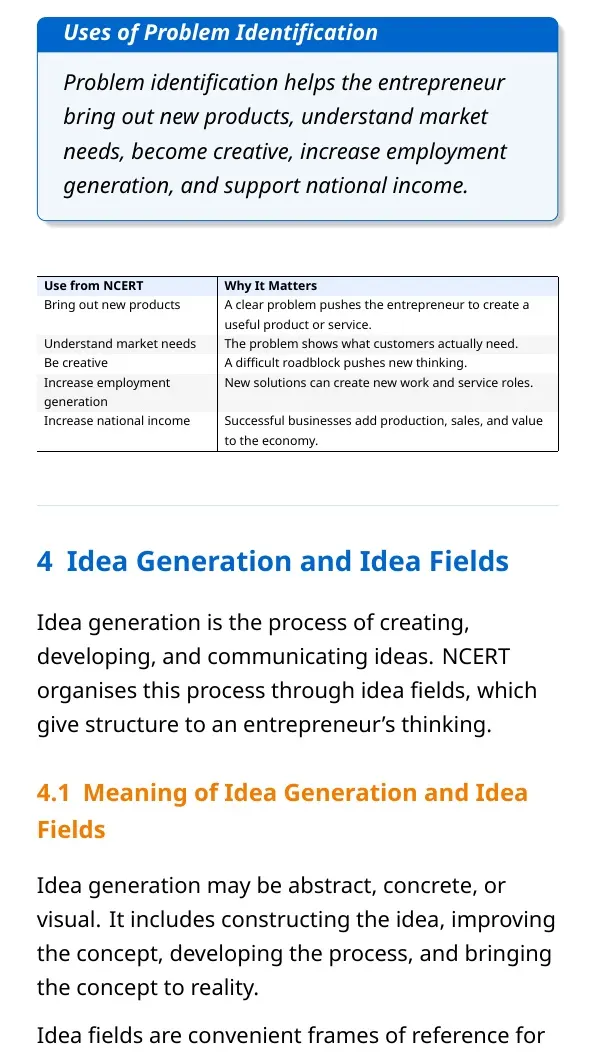
- Do not skip problem identification uses. It helps create products, understand needs, add jobs and support national income.
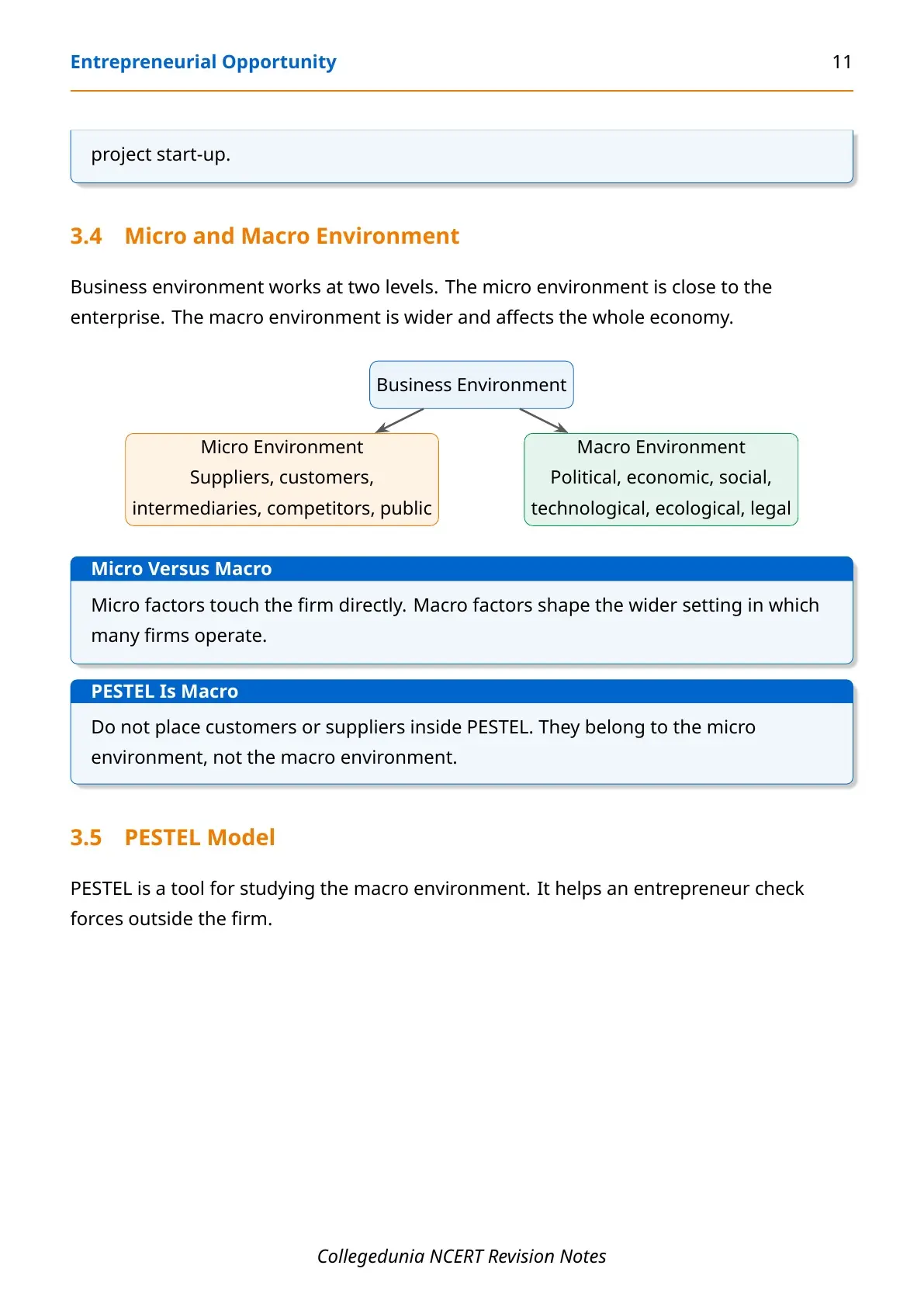
- Do not place customers inside PESTEL. Customers are micro environment; PESTEL is macro environment.
Entrepreneurial Opportunity Board-Style PYQ Anchors
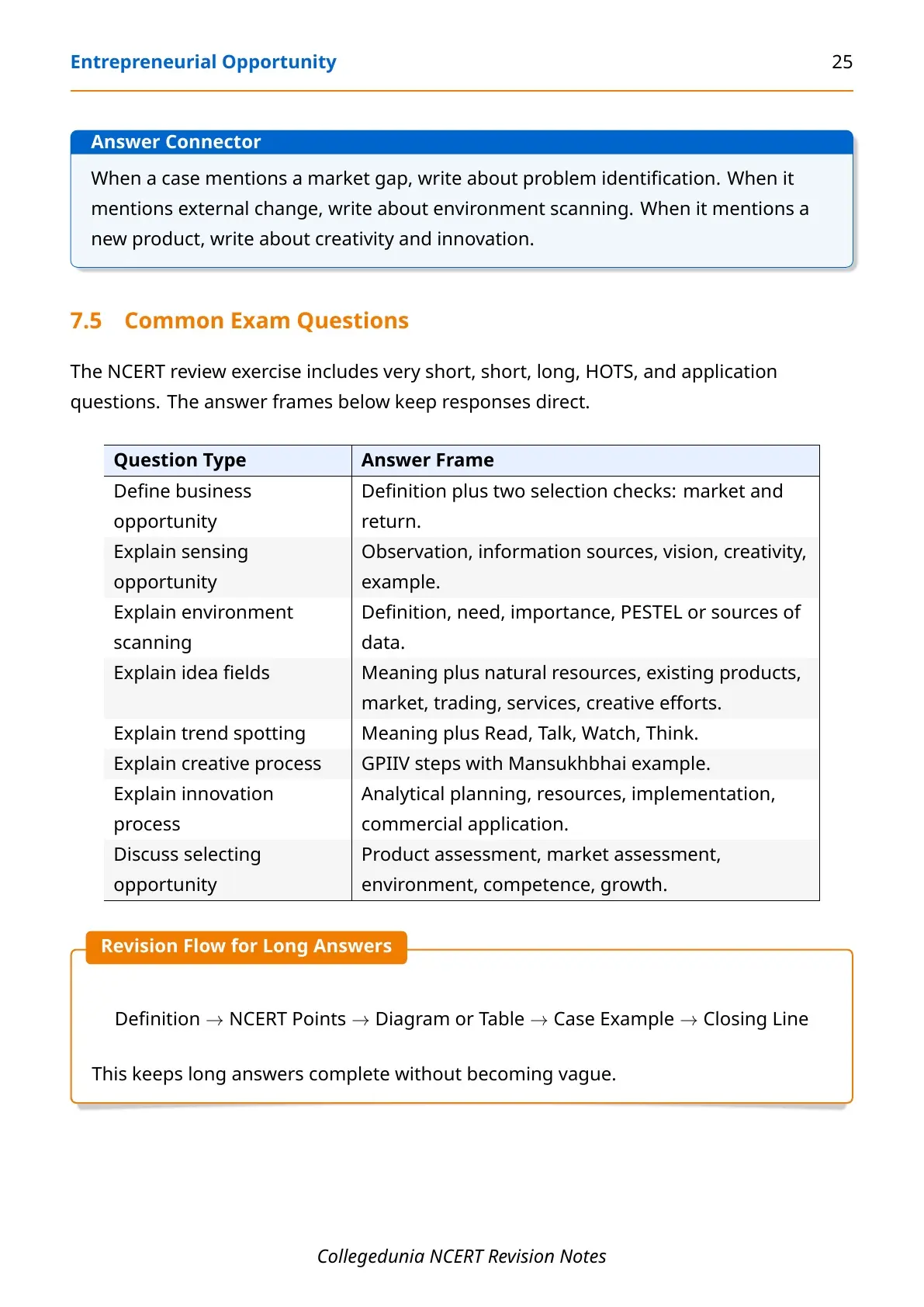
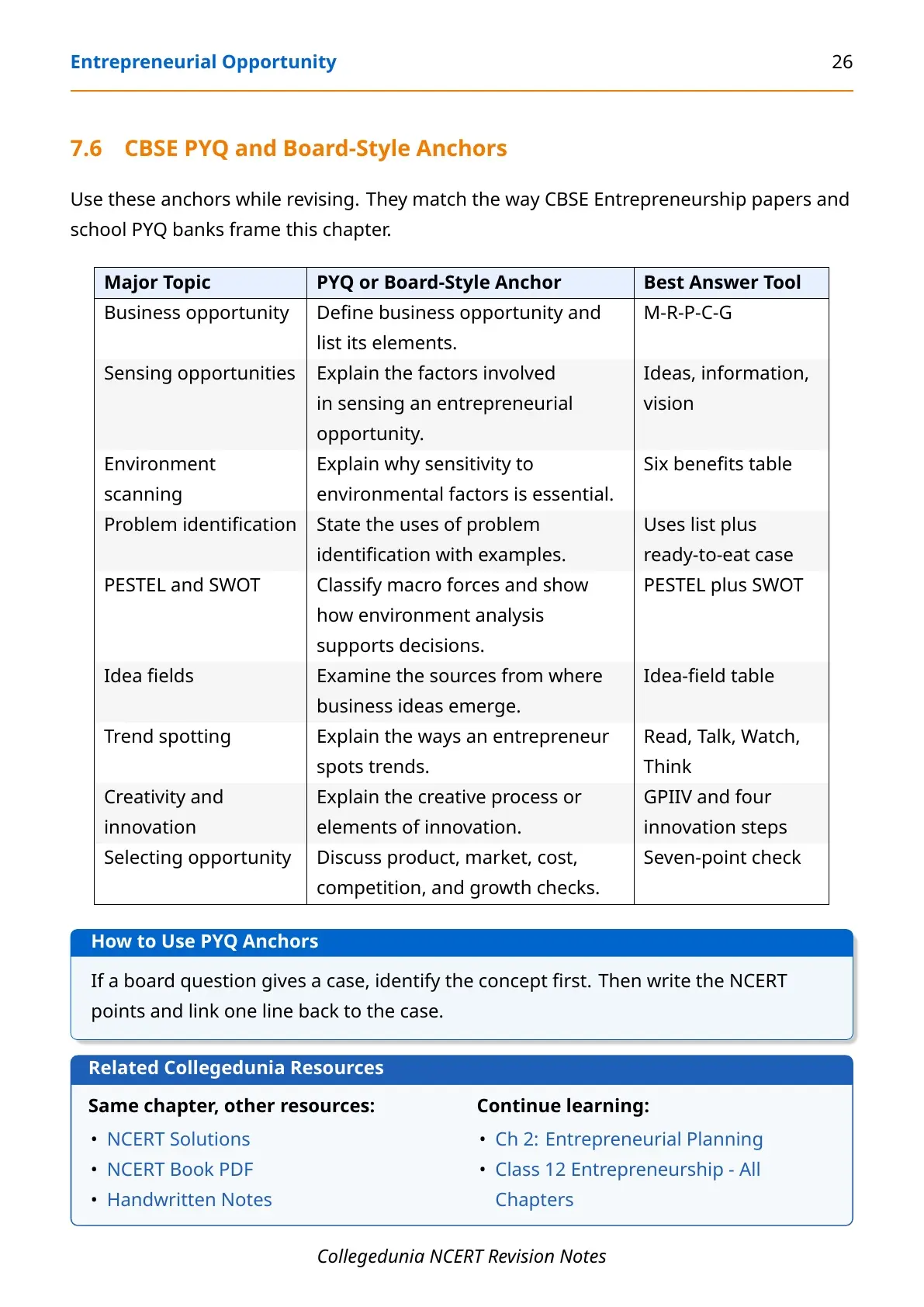
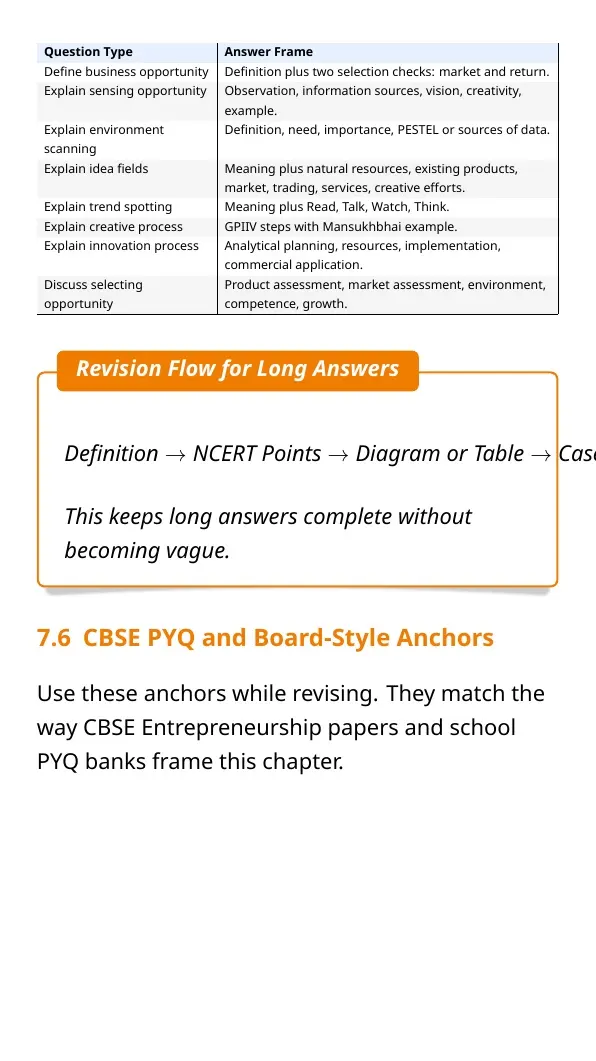
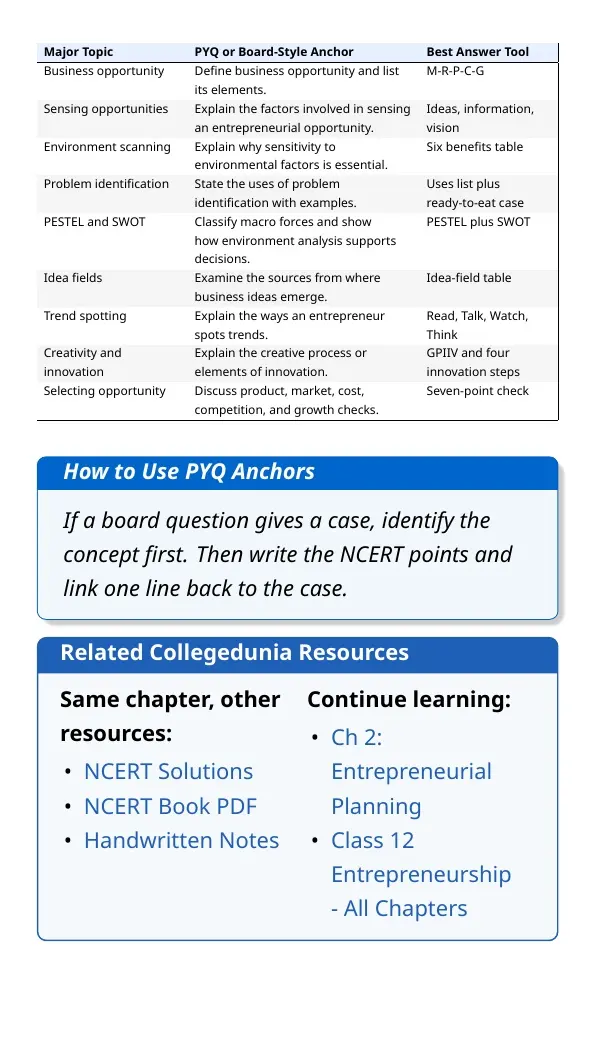
This chapter is usually tested through definitions, factor lists and short case prompts. The safest answer pattern is: define the term, list the NCERT points, then connect one example.
| Topic | Board-style prompt | Use this in answer |
|---|---|---|
| Business opportunity | Define business opportunity and state its elements. | M-R-P-C-G list |
| Sensing opportunity | Explain factors involved in sensing opportunities. | Ideas, information, vision |
| Environment scanning | Why should entrepreneurs scan the environment? | Six benefits and PESTEL |
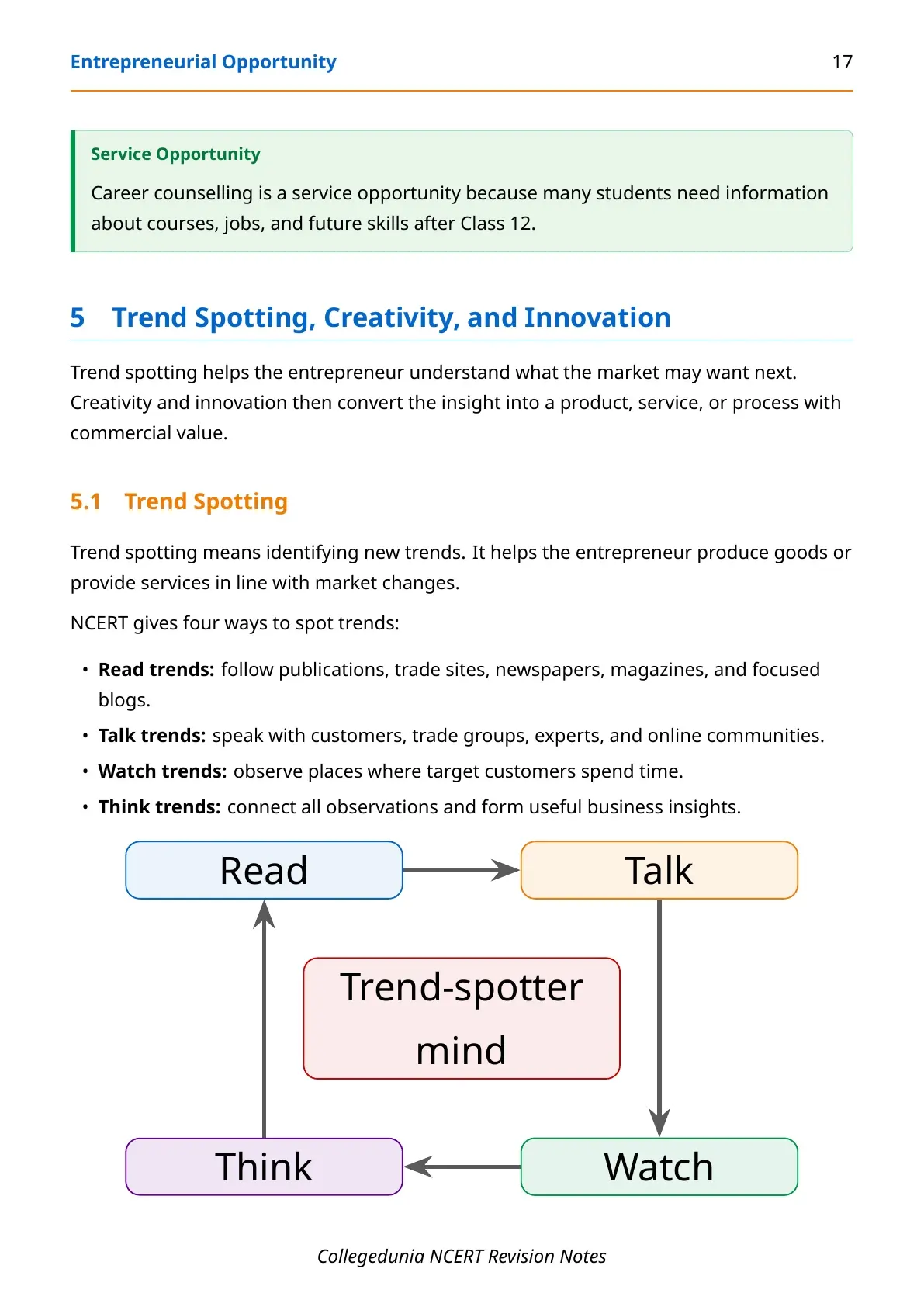
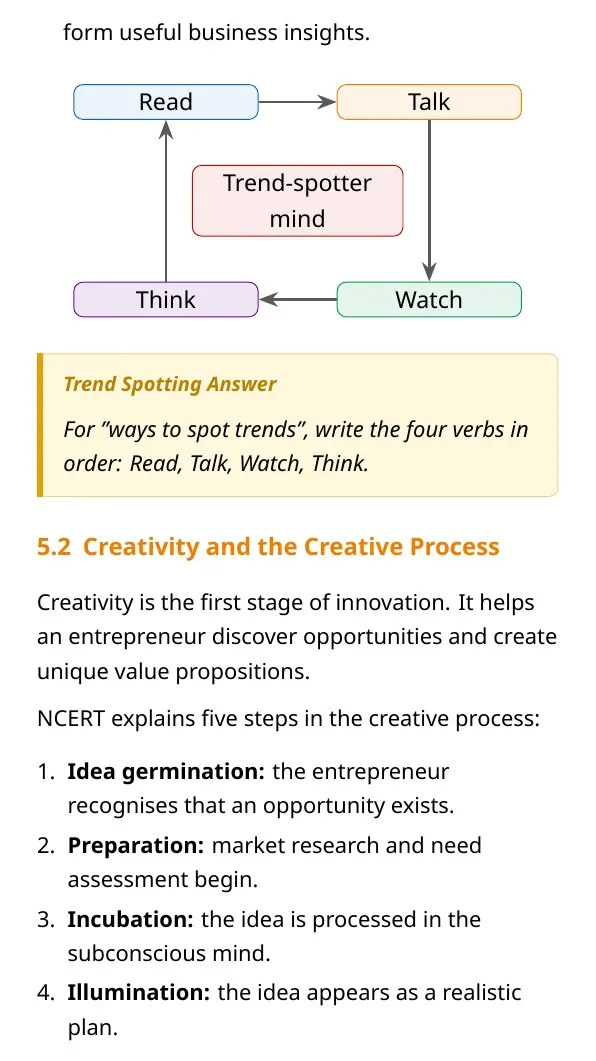
| Trend spotting | How can entrepreneurs spot trends? | Read, Talk, Watch, Think |
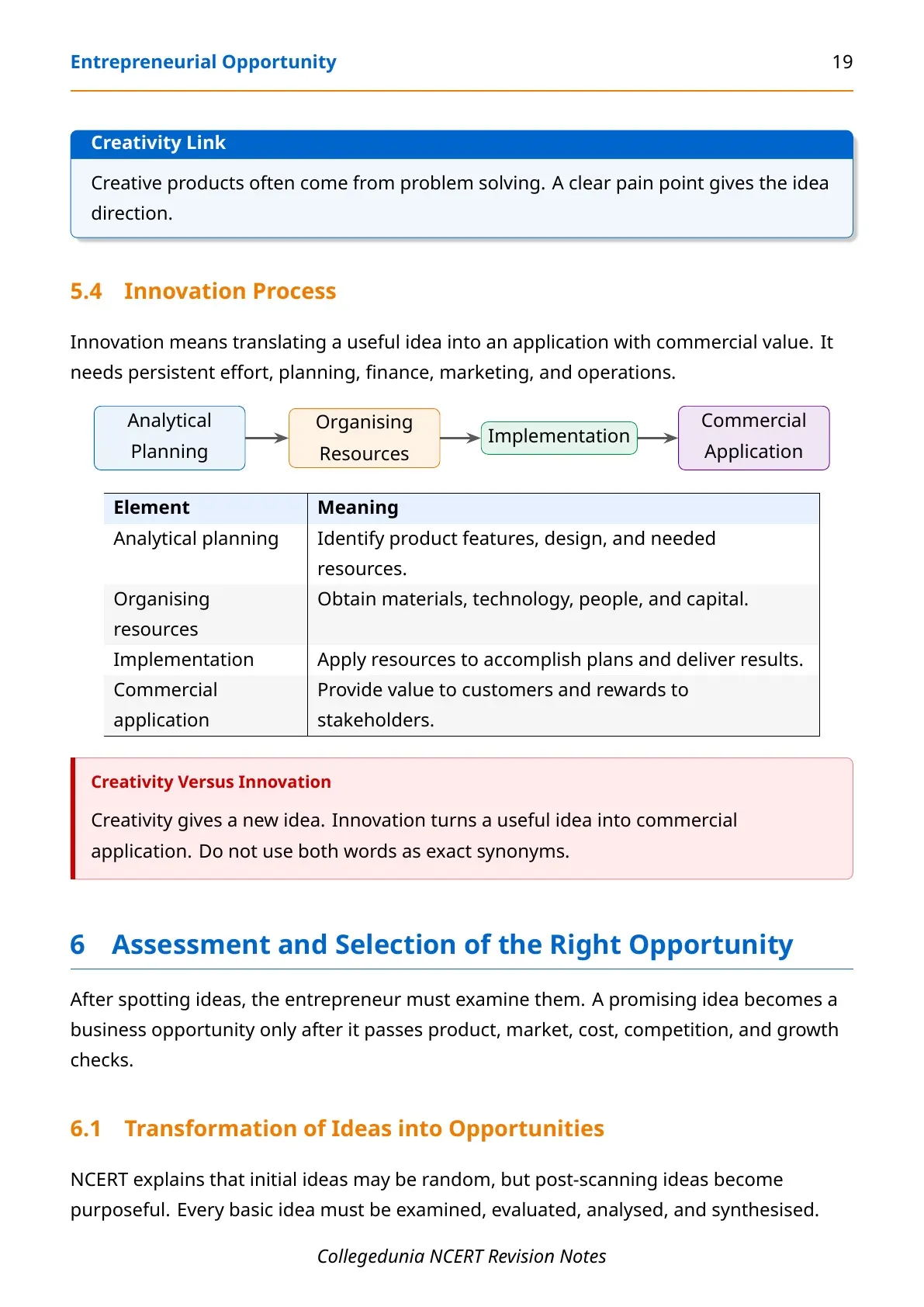
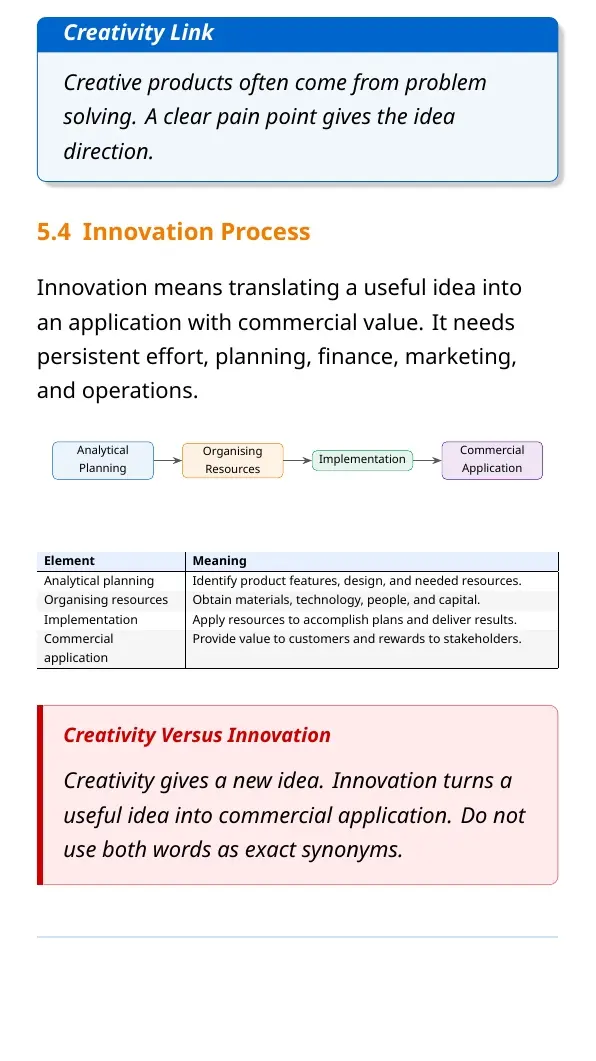
| Innovation process | Explain the elements in innovation. | Planning, resources, implementation, commercial application |
Class 12 Entrepreneurship Chapter 1 Related Resources
Use the Notes PDF with these companion resources when revising the same chapter.
| Resource | Best use | Link |
|---|---|---|
| NCERT Solutions | Practice solved textbook questions | Entrepreneurial Opportunity Class 12 NCERT Solutions |
| Handwritten Notes | Revise definitions in a quick visual format | Entrepreneurial Opportunity Class 12 Handwritten Notes |
| NCERT Book PDF | Read the original NCERT chapter | Entrepreneurial Opportunity Class 12 Book PDF |
NCERT Notes for Class 12 Entrepreneurship All Chapters
The same Notes series helps students move through the Entrepreneurship syllabus chapter by chapter.
| Chapter | Chapter Name | NCERT Notes |
|---|---|---|
| Chapter 1 | Entrepreneurial Opportunity | View notes |
| Chapter 2 | Entrepreneurial Planning | View notes |
| Chapter 3 | Enterprise Marketing | View notes |
| Chapter 4 | Enterprise Growth Strategies | View notes |
Entrepreneurial Opportunity Class 12 Notes FAQs
Ques. What do Class 12 Entrepreneurship Chapter 1 notes cover?
Ans. They cover business opportunity, opportunity sensing, environment scanning, problem identification, idea fields, trend spotting, creativity, innovation and opportunity selection.
Ques. Why is problem identification important in Entrepreneurial Opportunity?
Ans. Problem identification helps entrepreneurs create products, understand market needs, become creative, increase employment generation and support national income.
Ques. What is the Opportunity-Project Interface?
Ans. It is the NCERT flow where an entrepreneur moves from spotting an opportunity to scanning the environment, identifying a product or service and starting a project.
Ques. How should students revise Entrepreneurial Opportunity for boards?
Ans. Revise definitions first, then learn the NCERT point lists, use the PESTEL and idea-field tables, and practise one case answer for each major topic.



Comments