



Inside the NCERT Class 6 Arts (Kriti-I) notes for Objects and Still Life, you will find observation prompts, simple art terms and activity reminders. Use them beside the 2026-27 textbook while drawing familiar objects. The chapter asks you to explore your own way of seeing, arranging and drawing things.
- Observe shape, material, proportion, light and shadow
- Try seven activities, from object sketches to a flipbook
- Compare your drawing with the objects you can see
Student Feedback: Reflect on your work. Which view helped you show the object clearly? Where did you see the darkest tone? What would you change in your next arrangement?
These notes follow the activities in the NCERT Kriti-I 2026-27 chapter. Keep the textbook open for its artworks and picture prompts.
Objects and Still Life: What to Notice Before Drawing
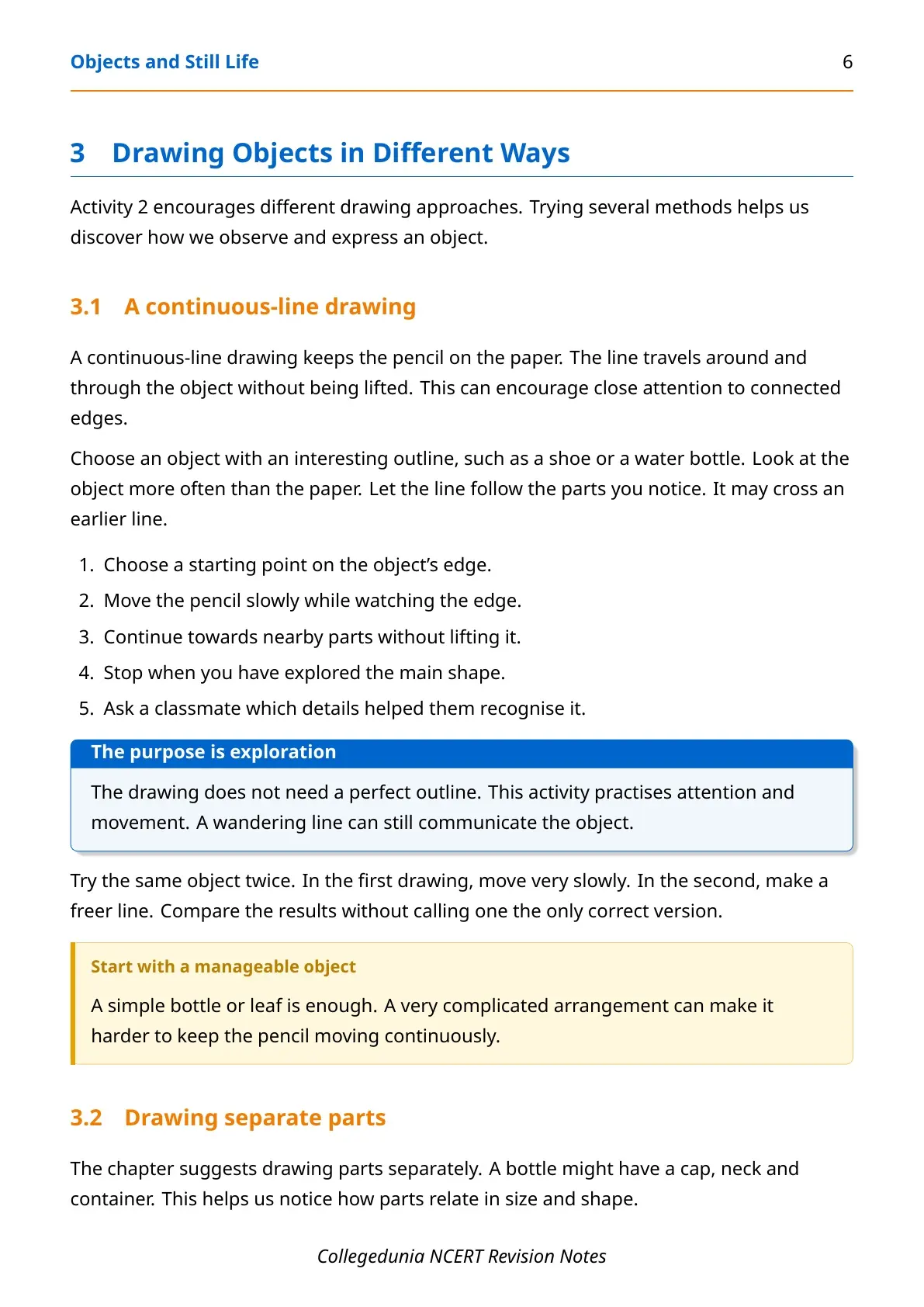
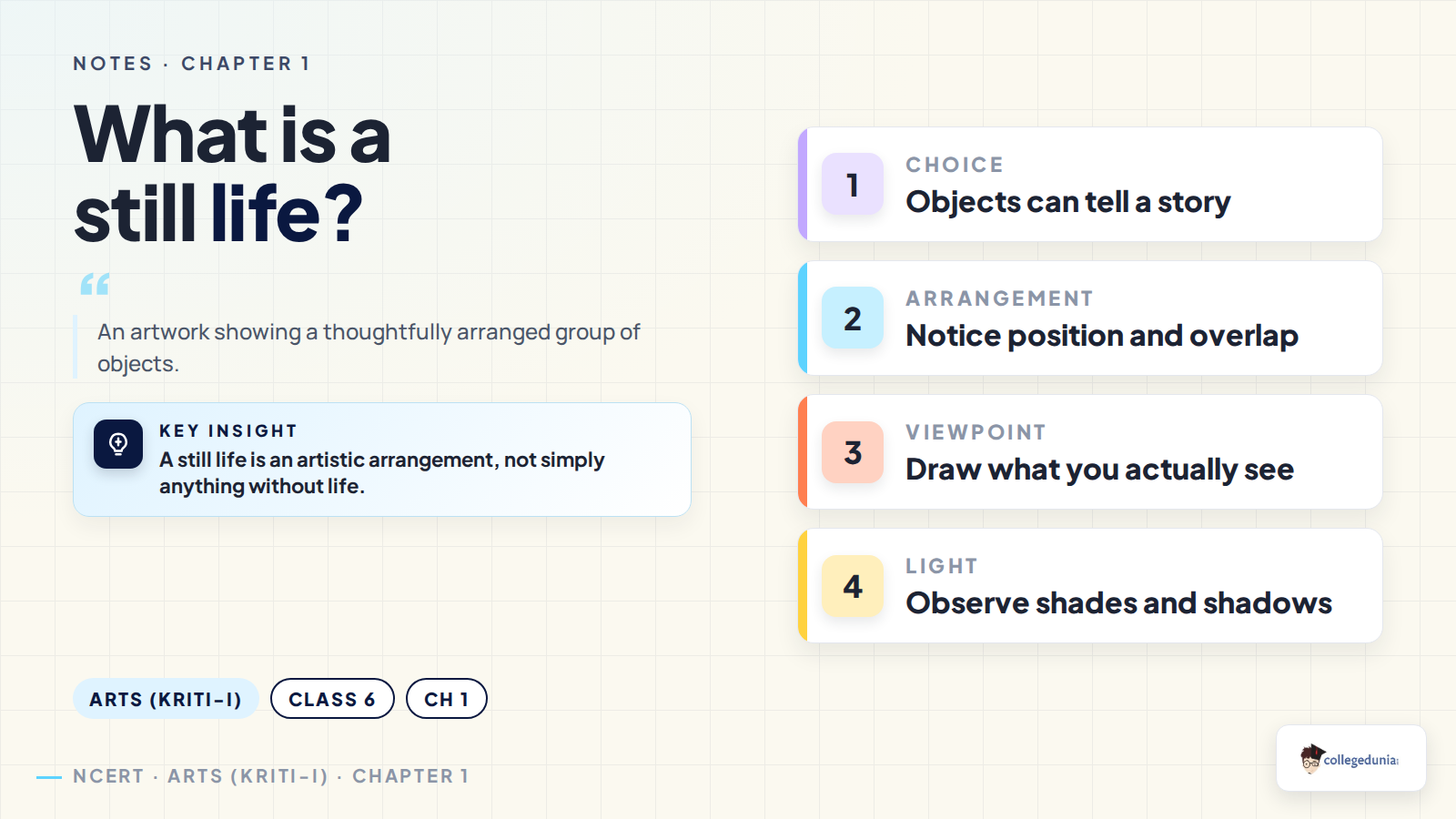
A still life artwork shows objects arranged for study. It can include fruit, flowers, tools, cloth and household things. Artists can make still life drawings, paintings, photographs or sculptures. The choice of objects and their arrangement help express an idea.
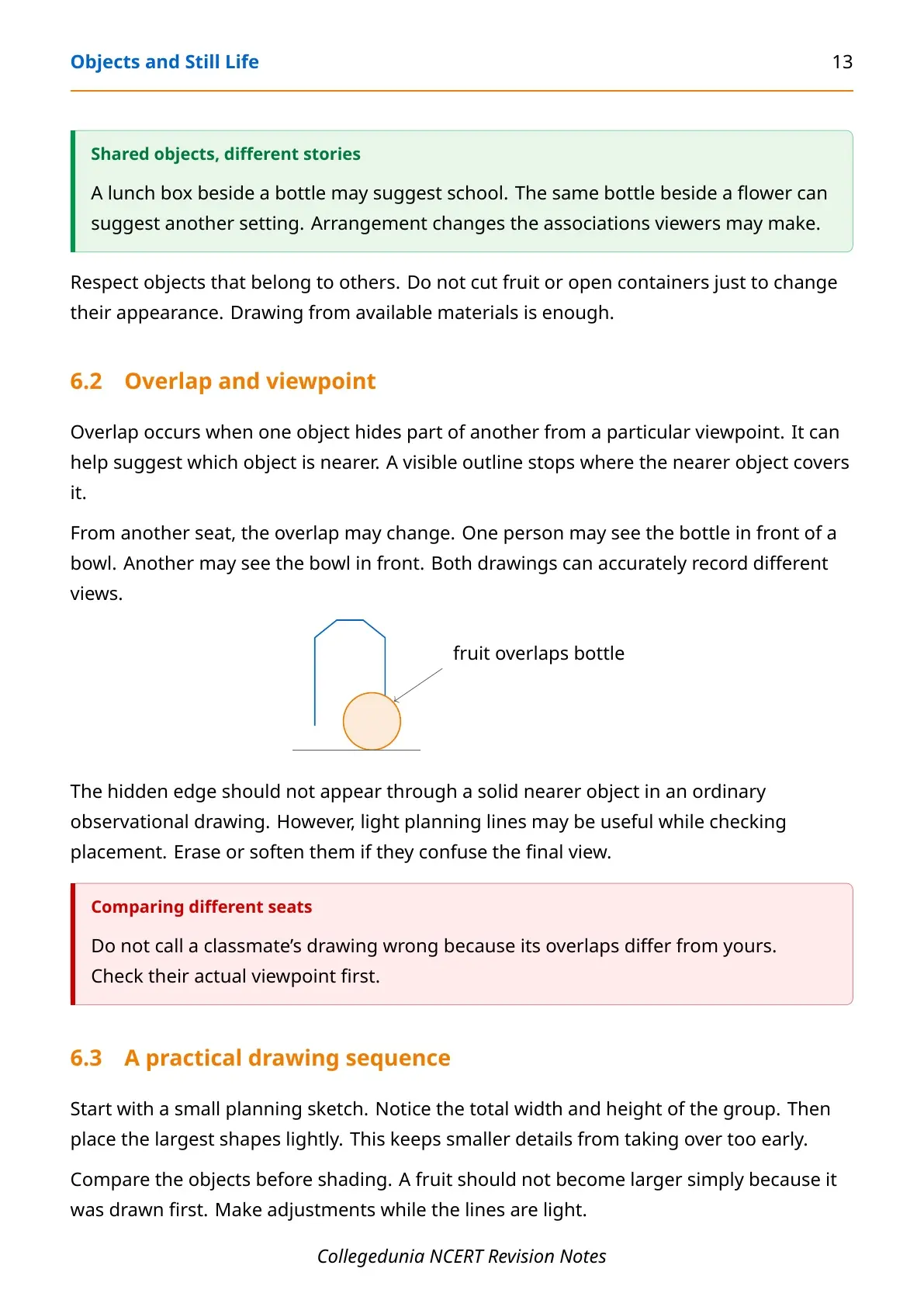
Observe the objects before you begin drawing. Walk around them and notice how their appearance changes. A bottle viewed from above looks different from the same bottle viewed at eye level.
- Look at the material: wood, metal, clay, plastic or cloth
- Compare each object's height and width
- Notice empty spaces between and around objects
- Check which objects hide parts of others
Still Life Drawing from Lines to Shading
Source: Circle Line Art School on YouTube
Objects and Still Life: Shape, Form, Shade and Shadow
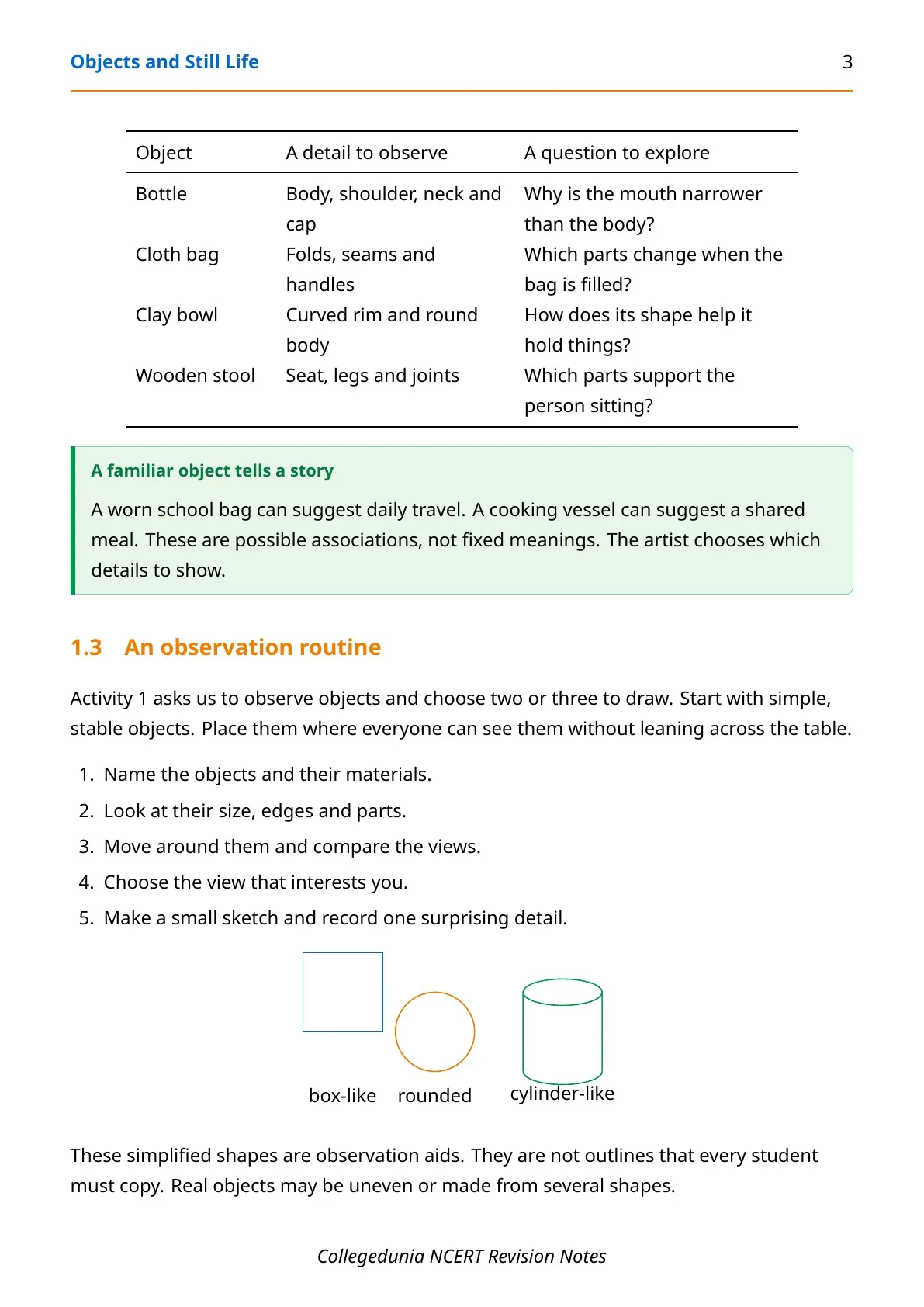
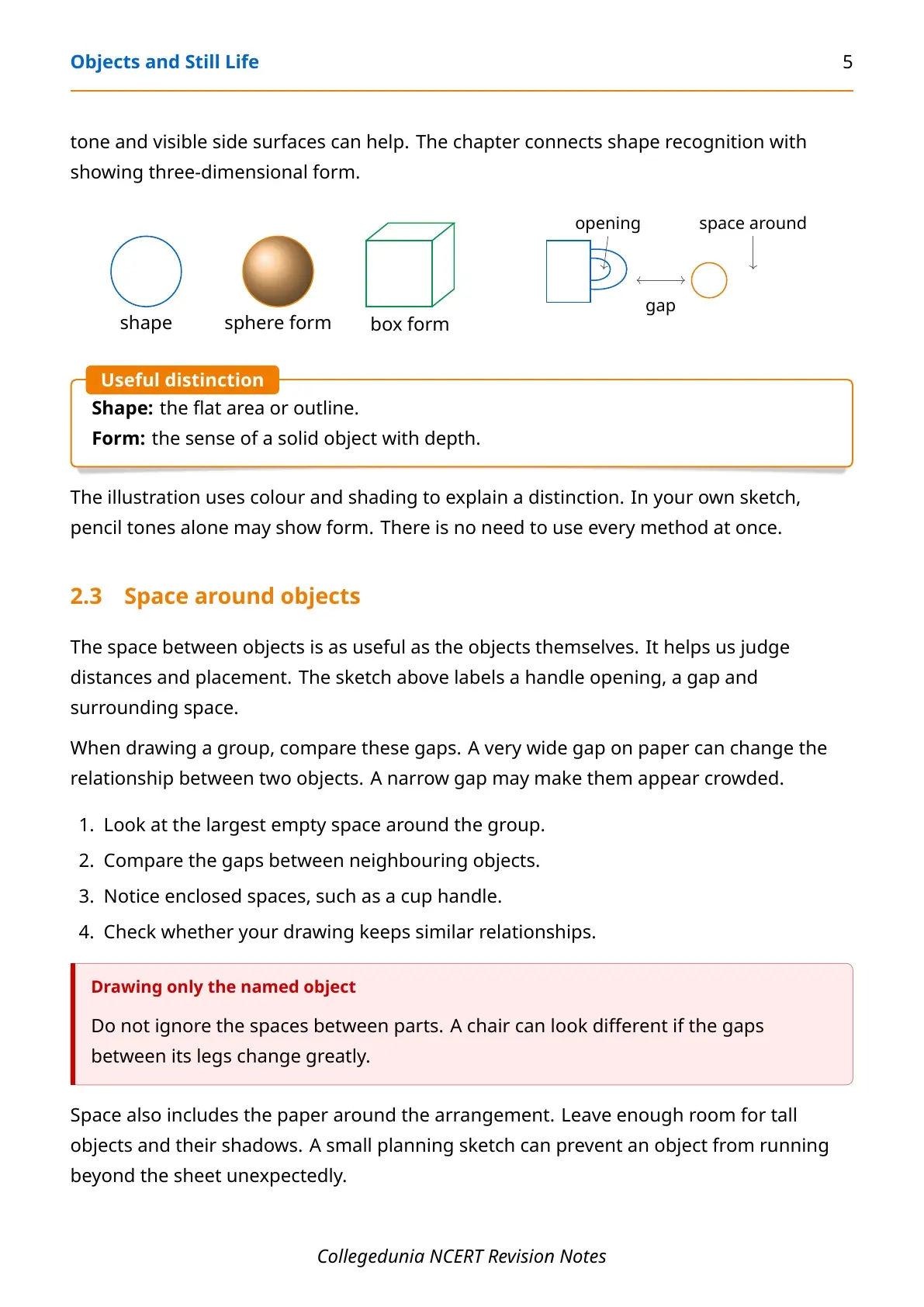
Shape describes a flat area, such as a circle. Form has depth, like a ball. In a drawing, light and dark areas can help a flat image suggest a solid object.
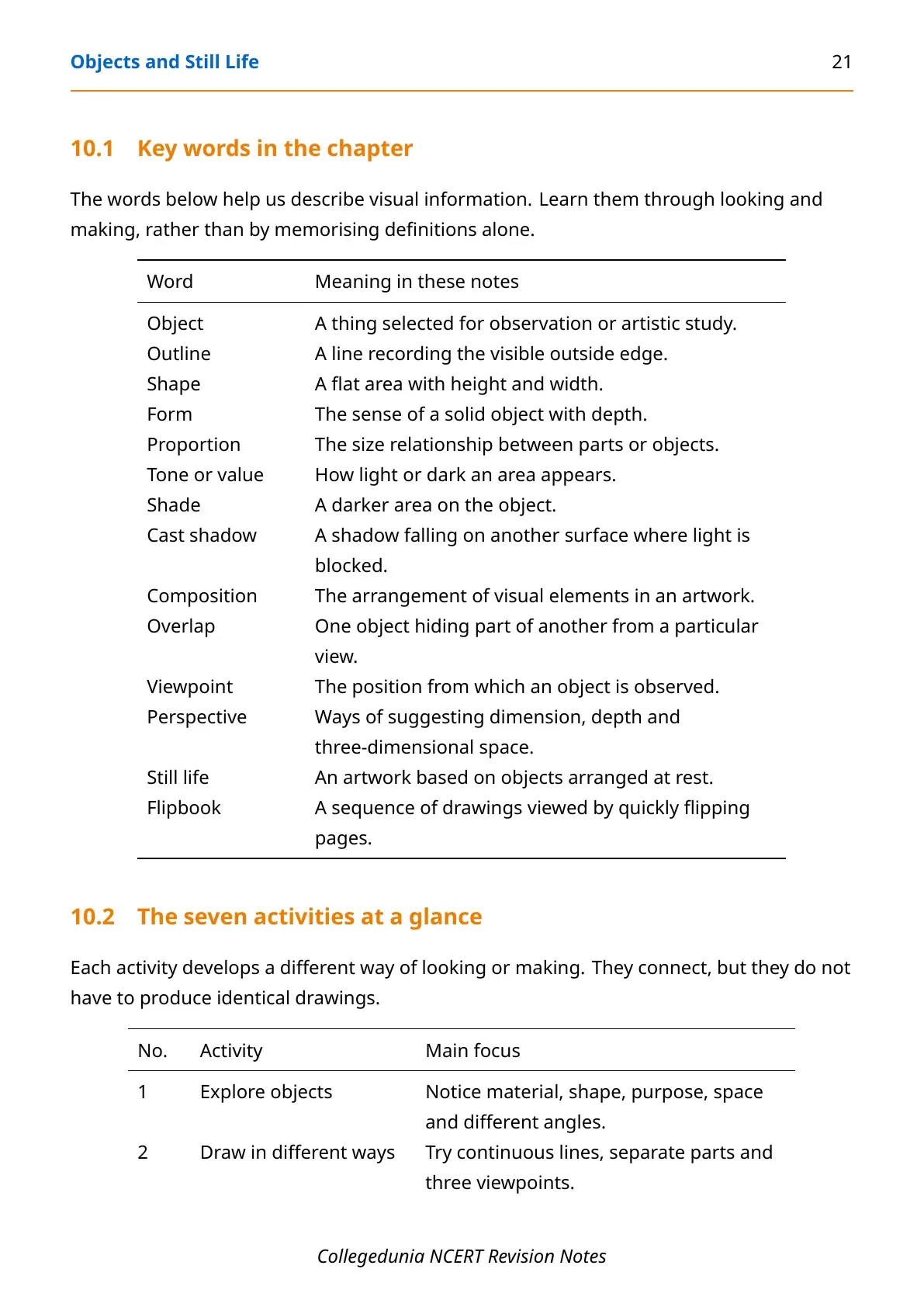
| Art term | Meaning | What to try |
|---|---|---|
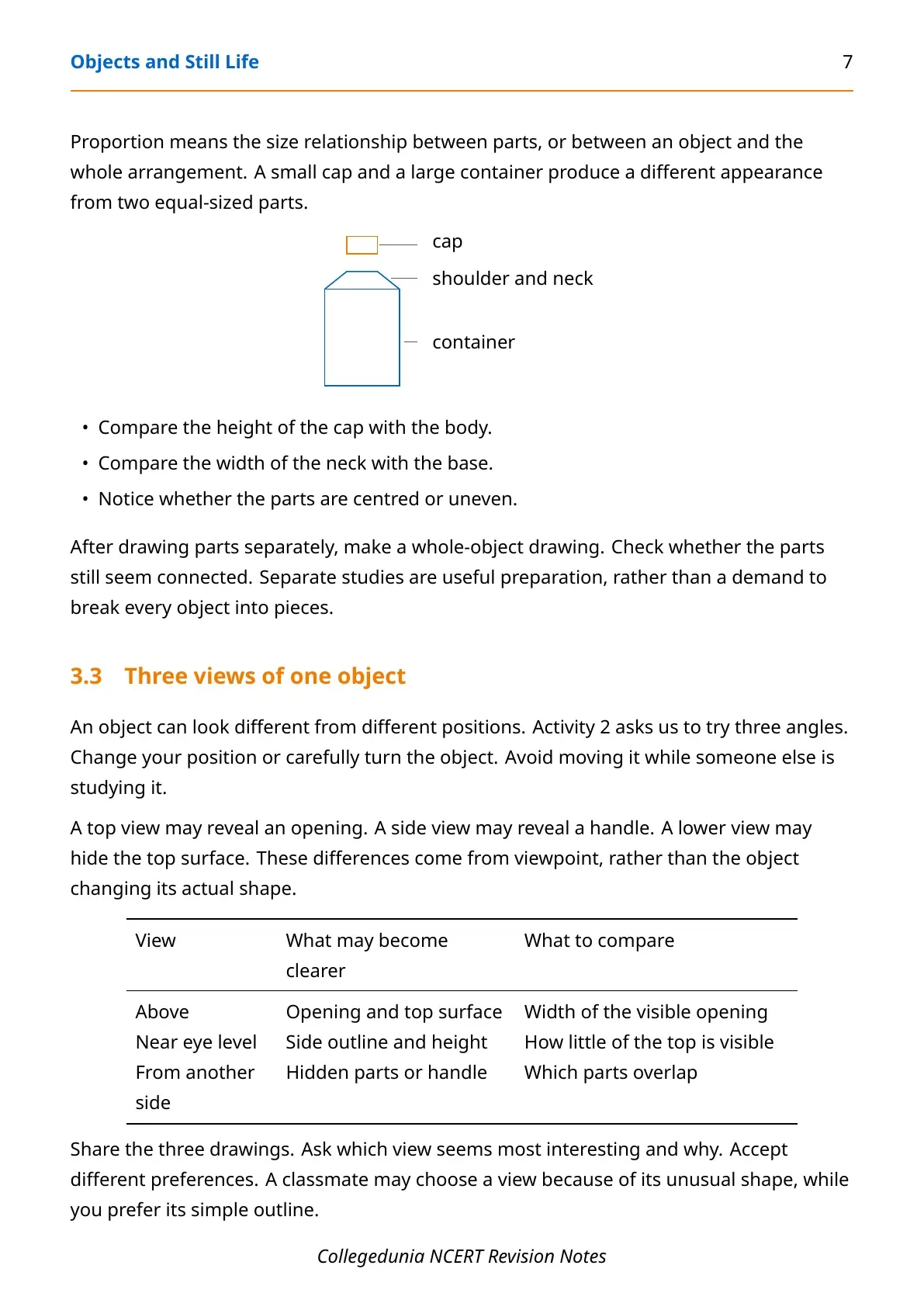
| Proportion | Size of one part compared with another | Compare a bottle's cap with its body |
| Tone | How light or dark an area appears | Make light, medium and dark pencil strokes |
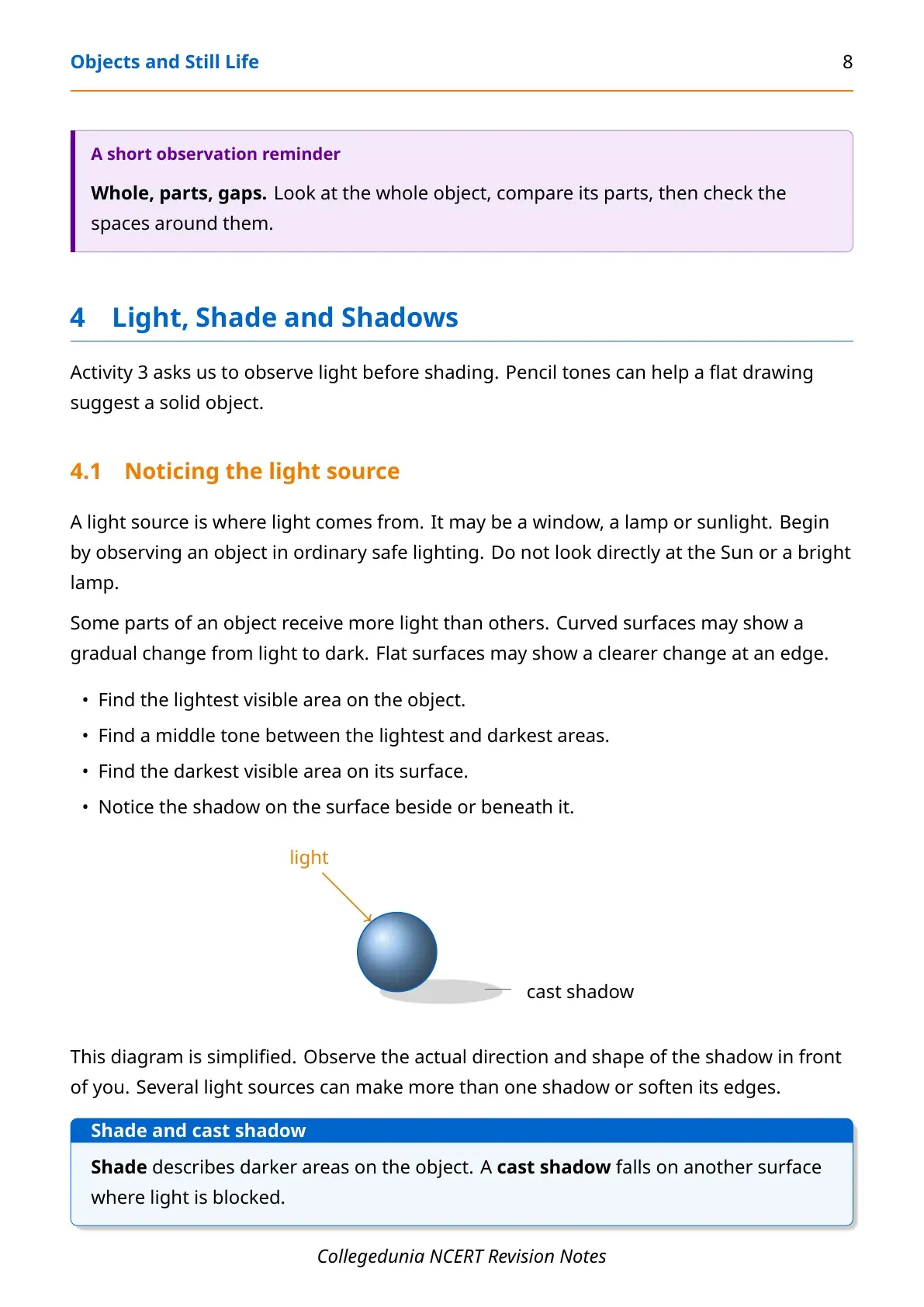
| Shade | A darker area on the object | Look for the side receiving less light |
| Cast shadow | A shadow falling on another surface | Observe its shape on the table |
| Composition | The arrangement of parts in an artwork | Move the objects before choosing a view |
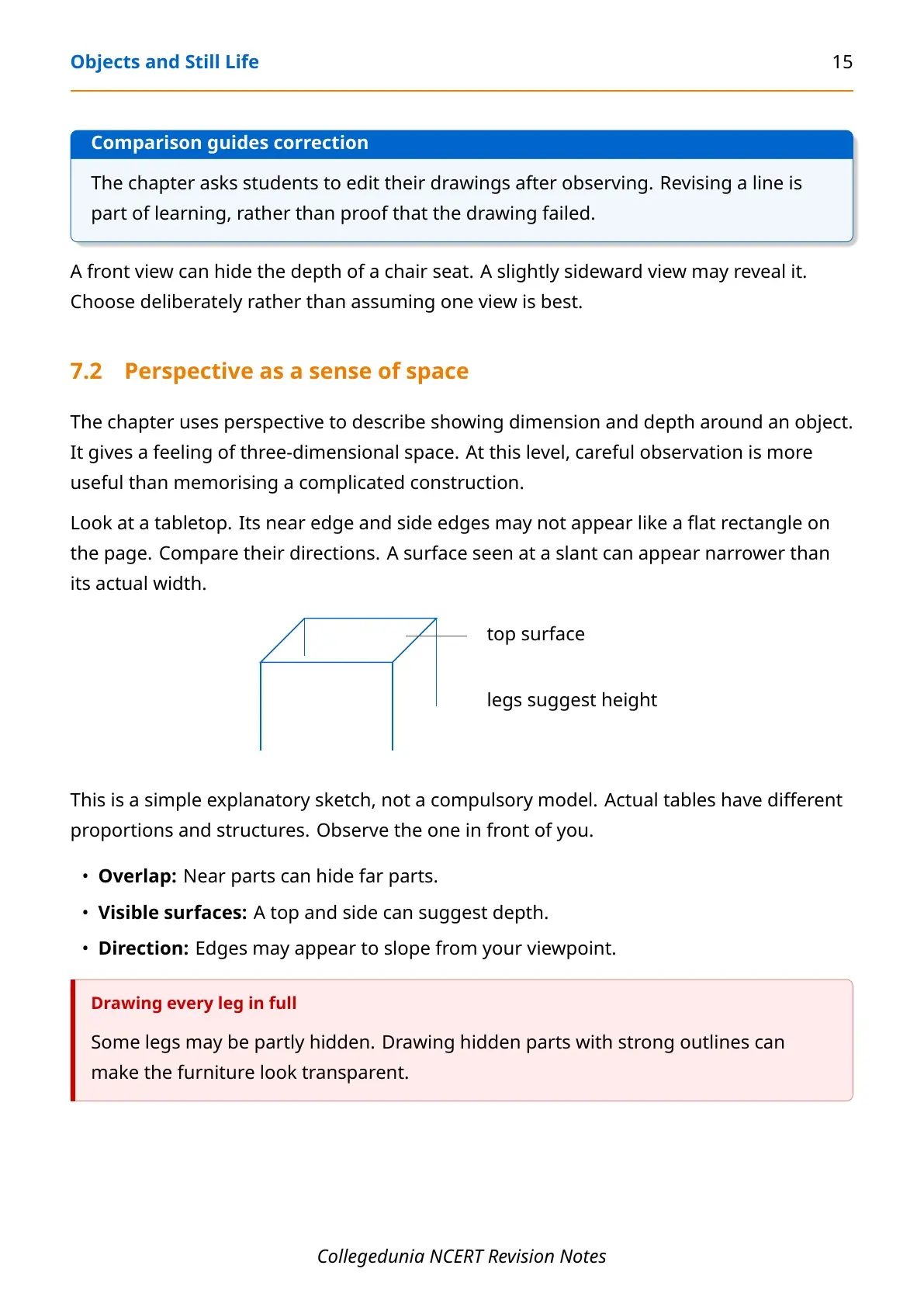
| Perspective | A way to show depth and space | Compare the angles in a chair with your sketch |
Shade on an object and its cast shadow are different. Draw both by looking carefully. Do not make every shadow the same shape or darkness.
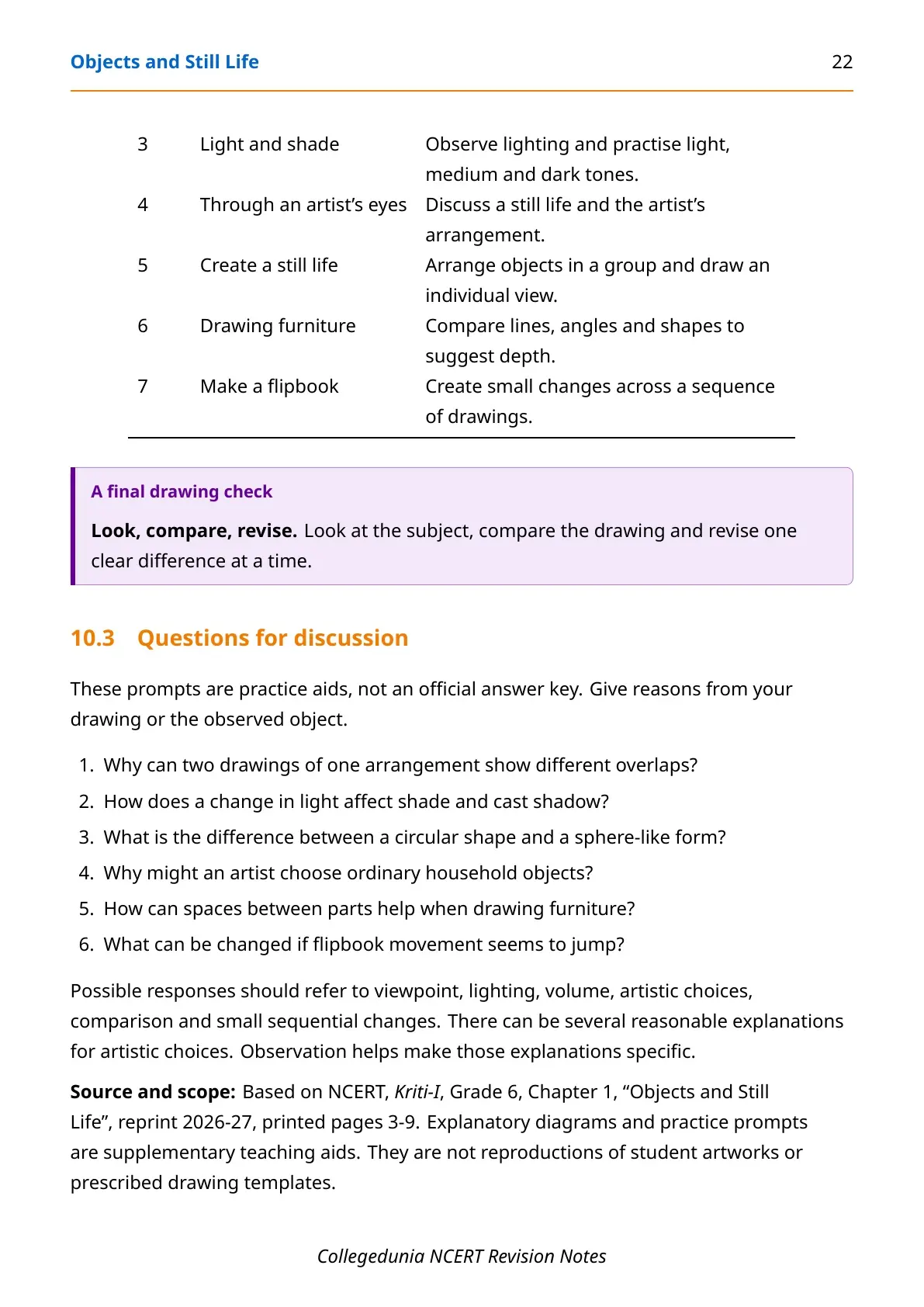
Objects and Still Life: Seven Activities to Revisit
The textbook builds drawing skills through experiments. Each activity offers a different way to observe. You can revisit an activity with a new object instead of repeating the same drawing.
- Explore your surroundings and select two or three objects to draw
- Try a continuous line, separate parts and three different viewing angles
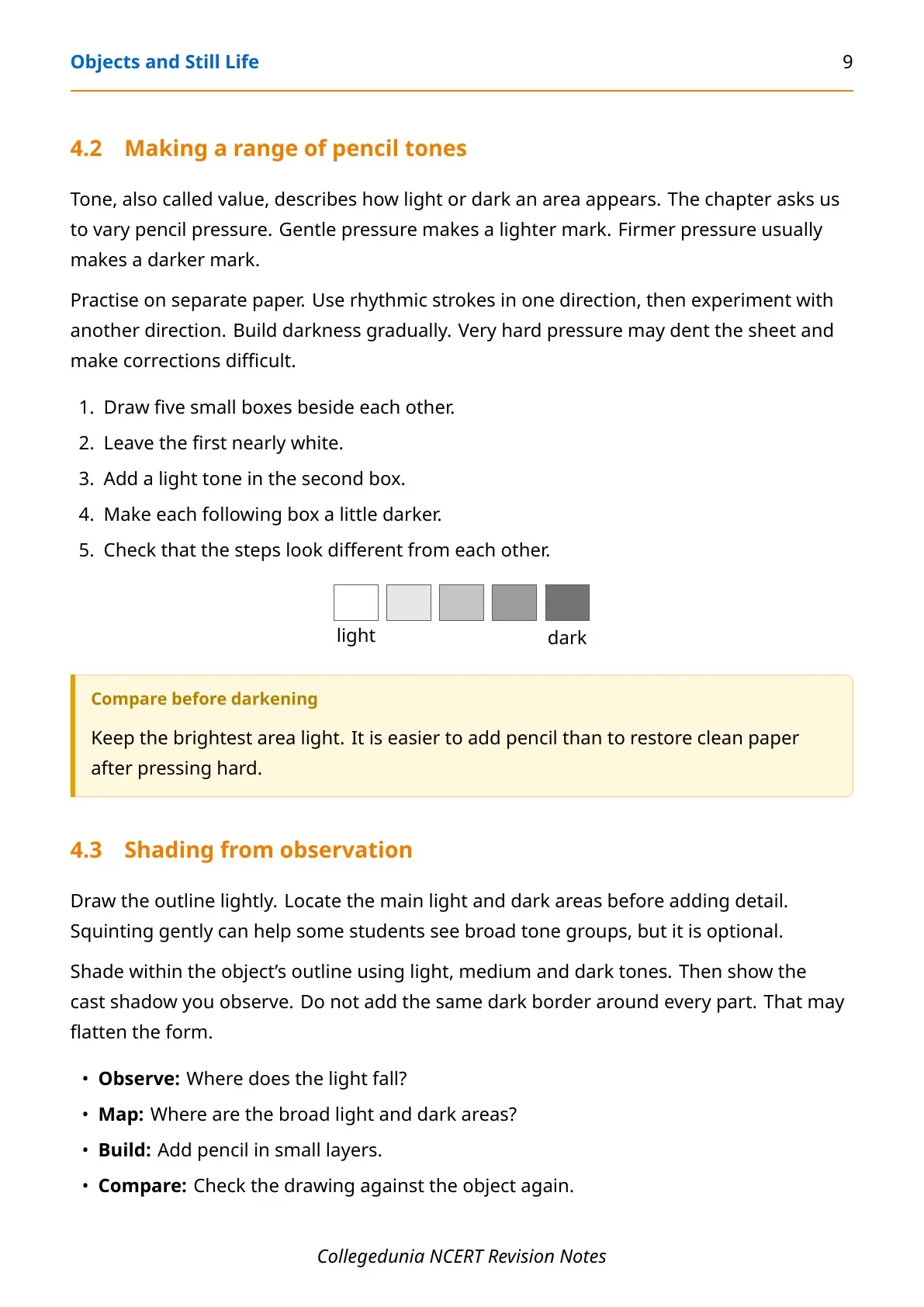
- Observe light and shade, then practise light-to-dark pencil strokes
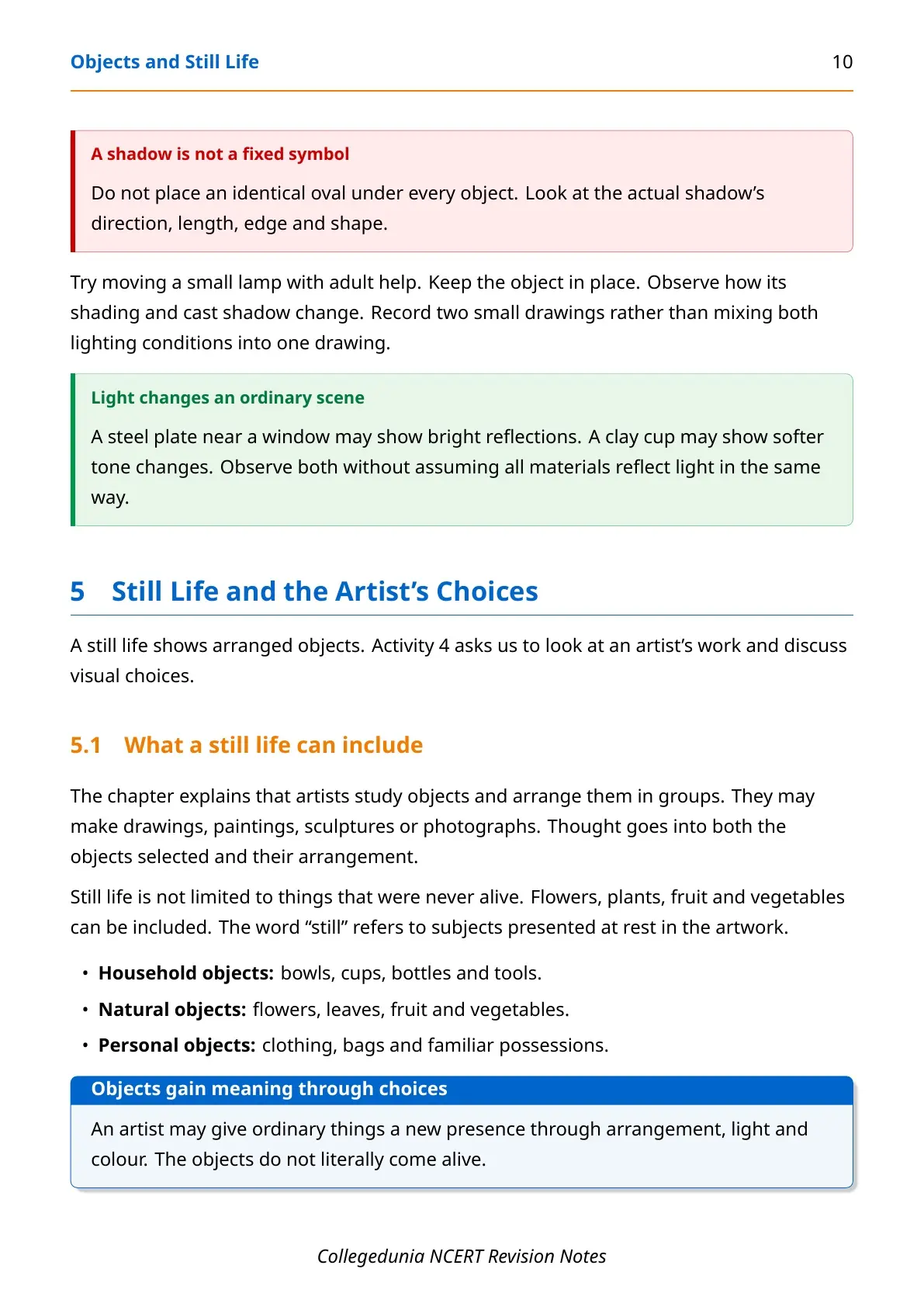
- Discuss the arrangement and lighting in the still life painting by Amrita Sher-Gil
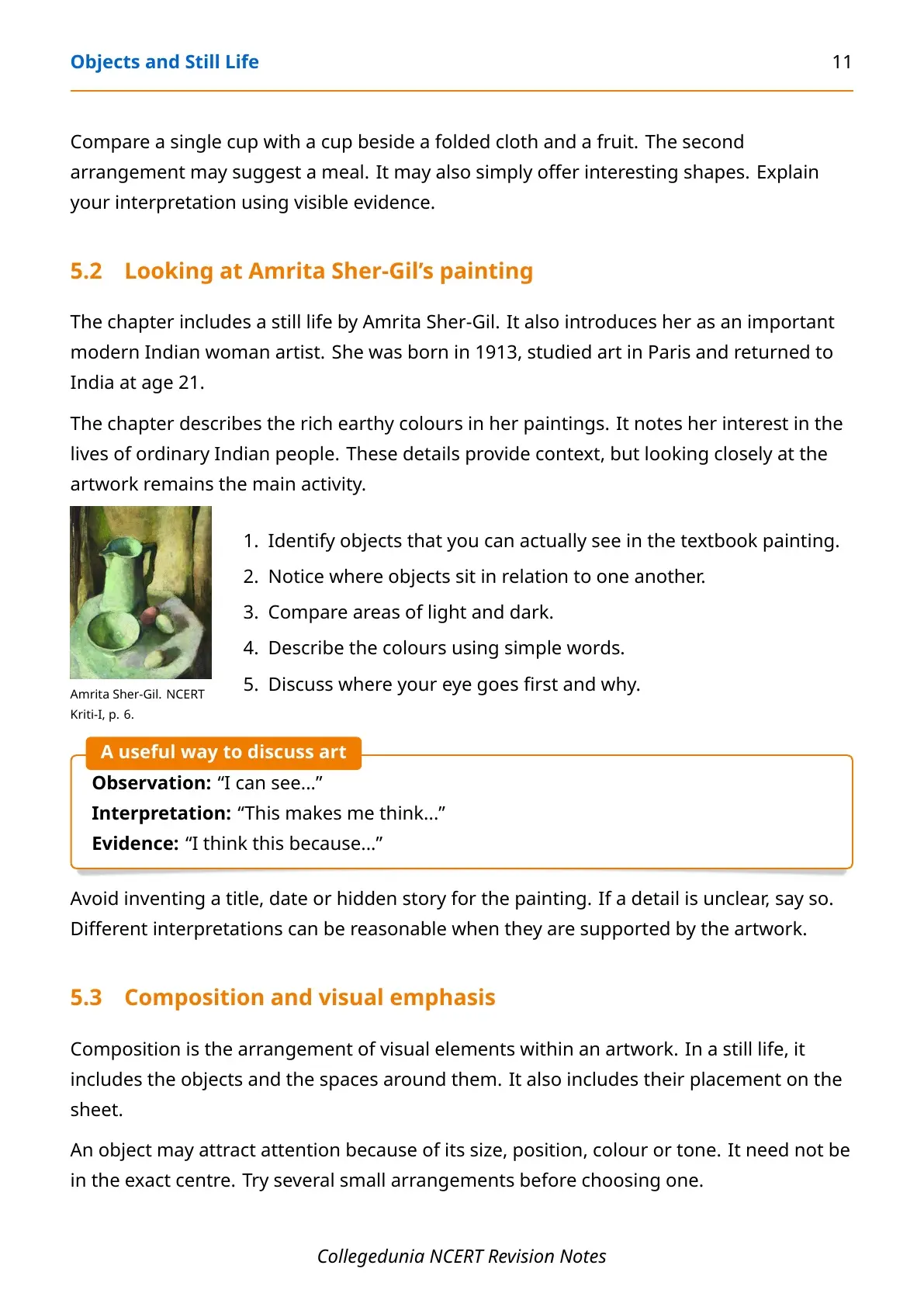
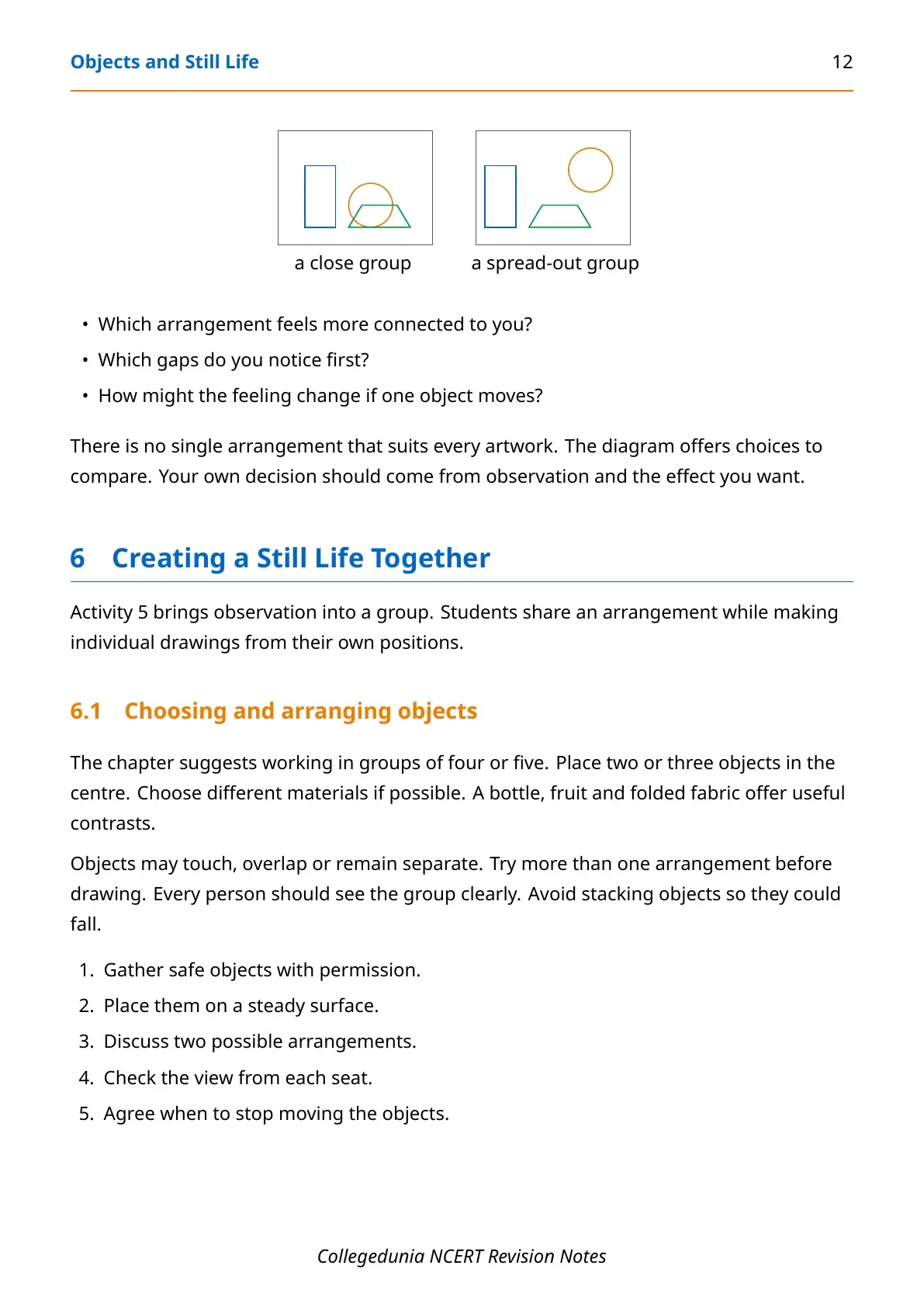
- Arrange two or three objects in a group and draw them from your seat
- Draw furniture, comparing its lines, angles and shapes with your sketch
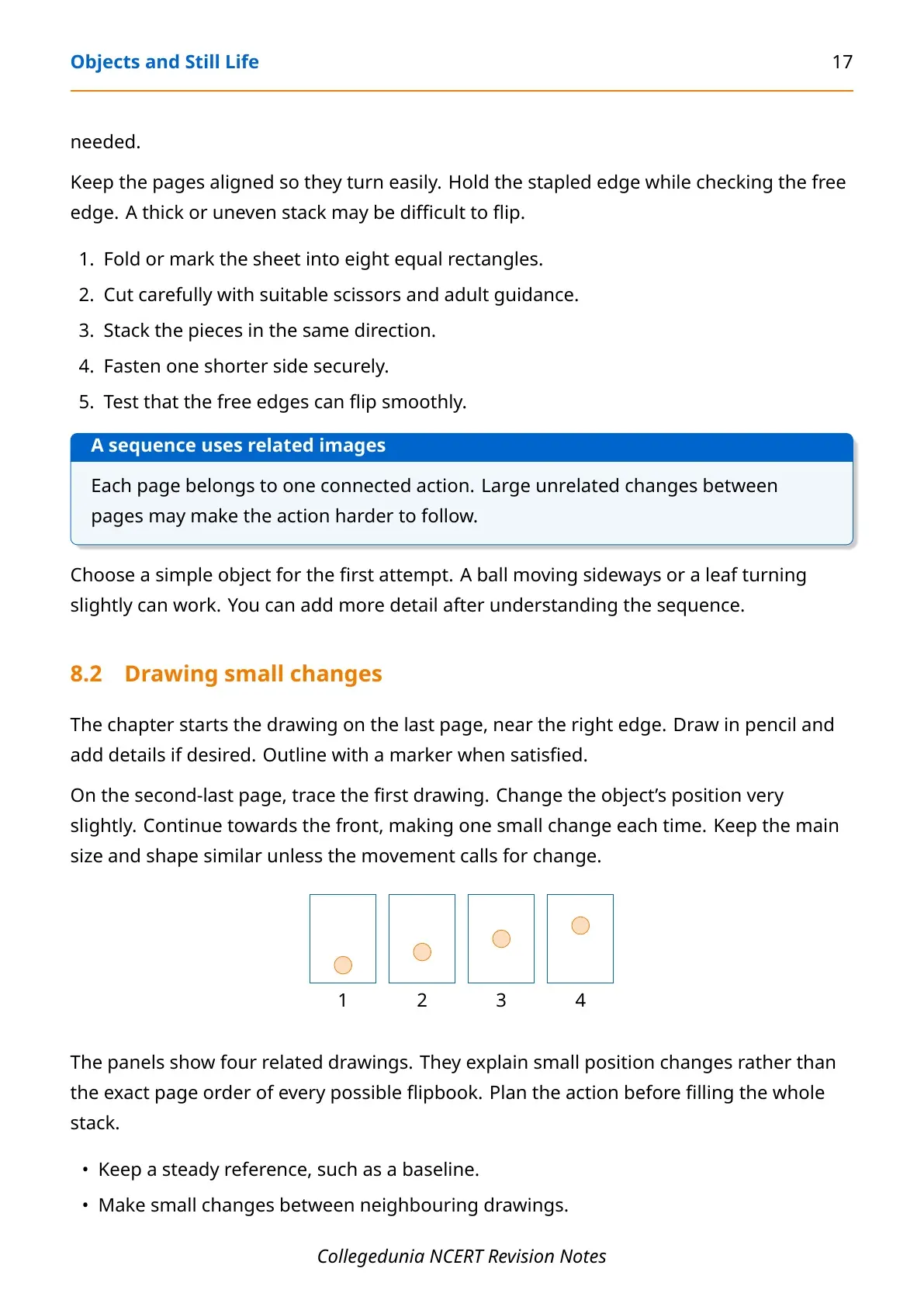
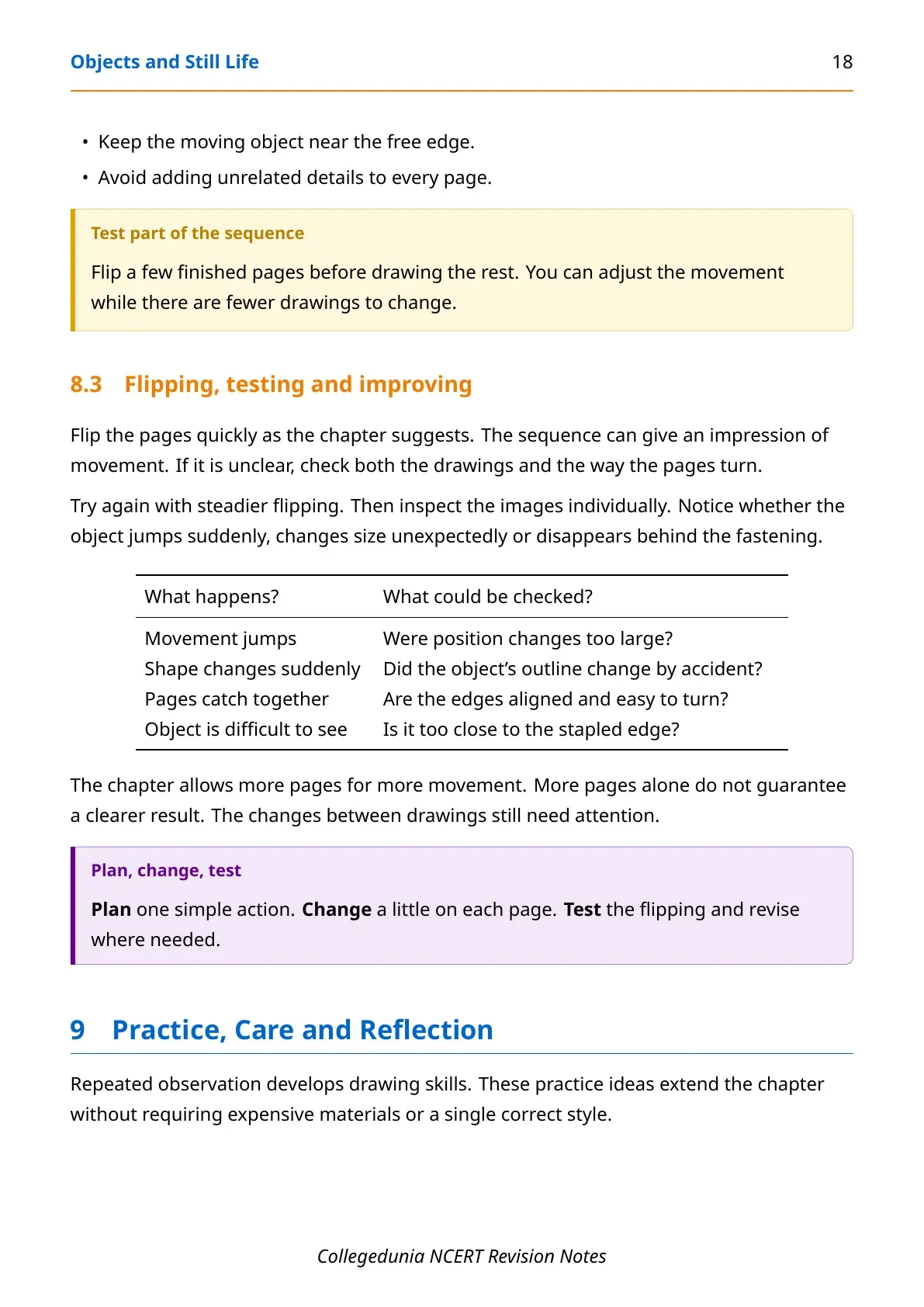
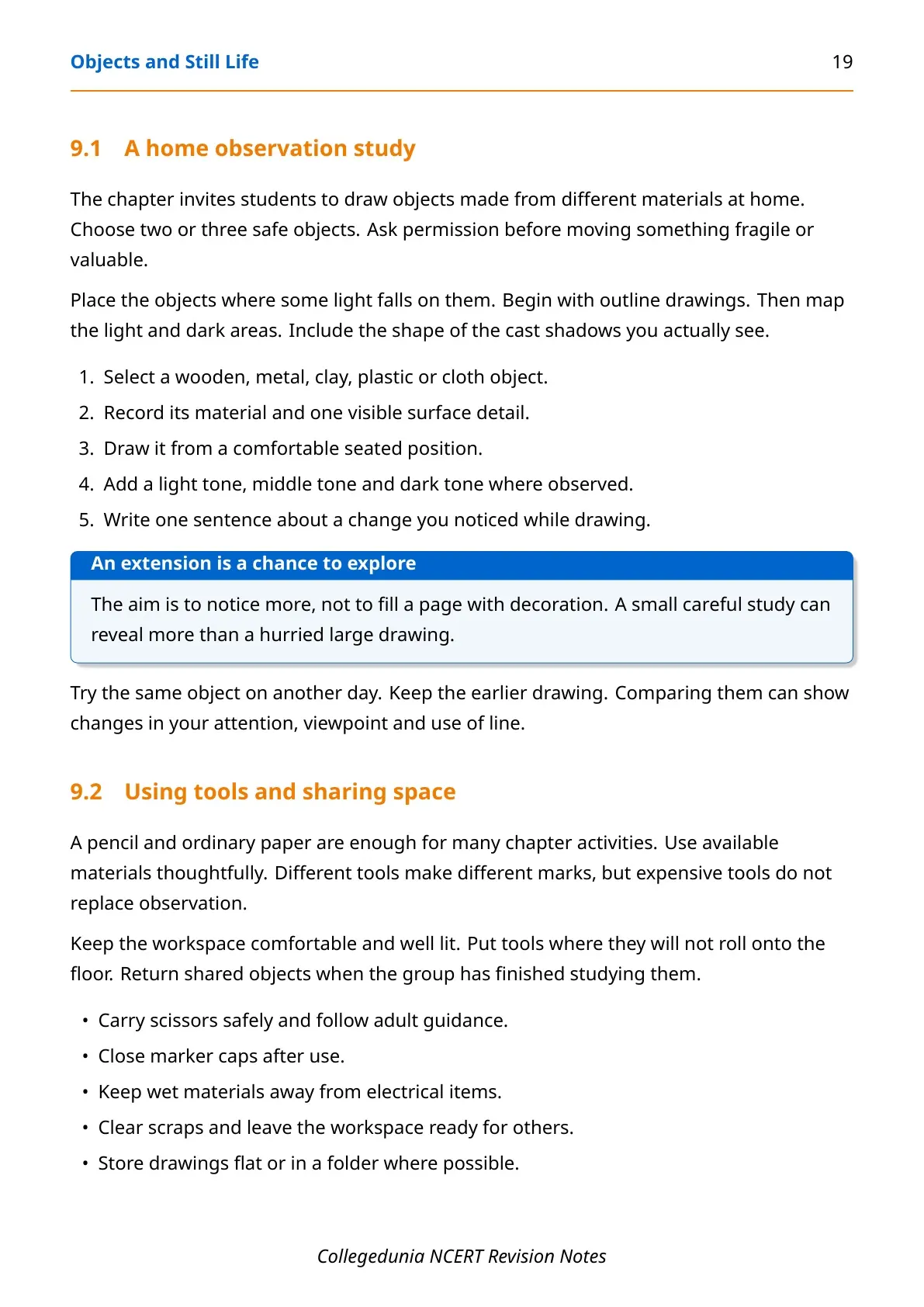
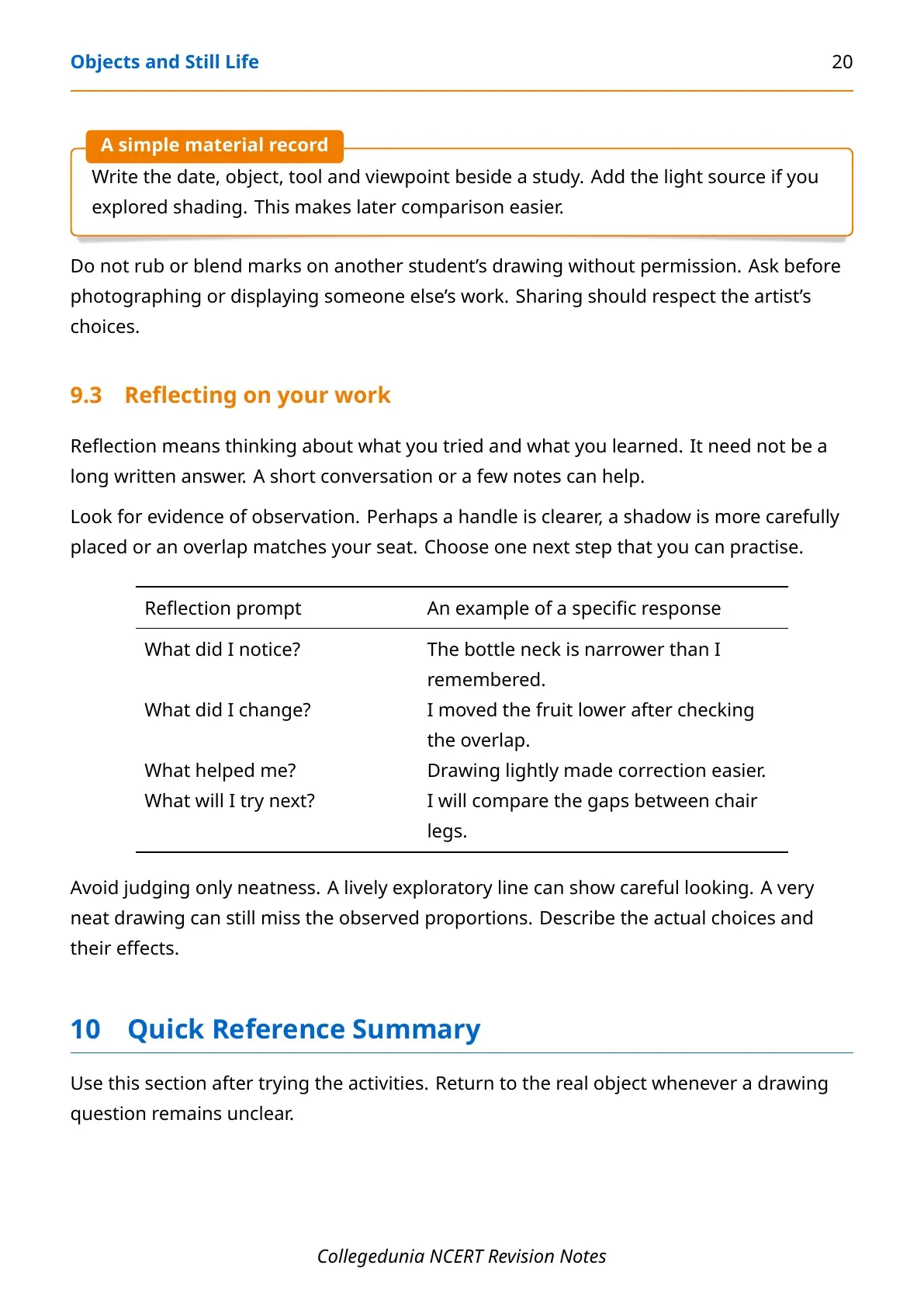
- Create a flipbook with small changes between successive drawings
Different students may see the same arrangement differently. Your seat changes the view and the overlap of objects. Share what you noticed rather than trying to make everyone's drawing identical.
Objects and Still Life: A Simple Drawing Practice
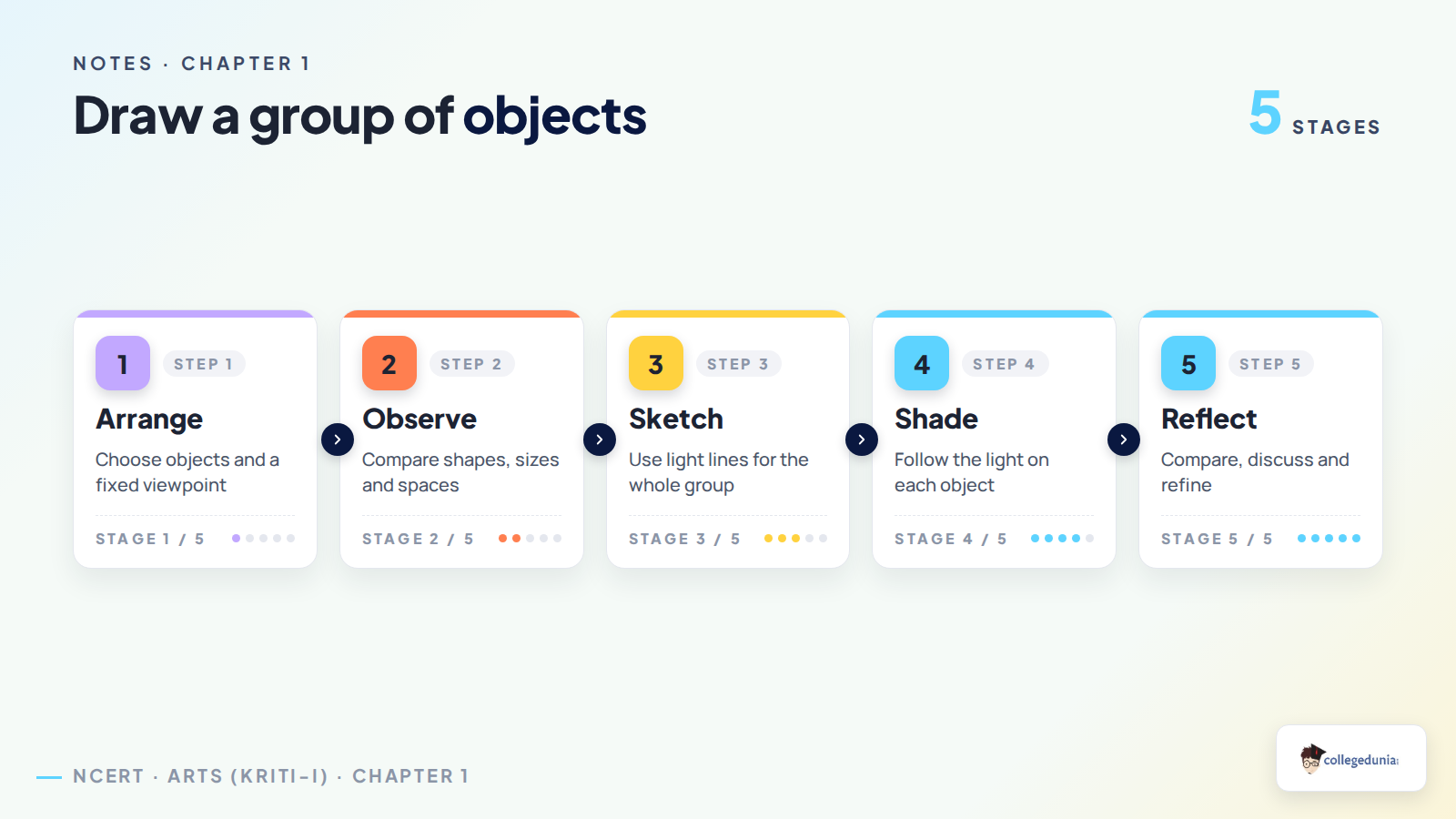
Choose familiar, safe objects such as a cup, a fruit and folded cloth. Place them where you can see them clearly. This is a suggested practice using the chapter's ideas.
- Choose a viewpoint and keep your seat in the same place
- Draw the main outlines lightly, checking relative sizes
- Compare the gaps and overlaps with the real arrangement
- Add light, medium and dark tones where you observe them
- Draw the cast shadows and compare your work with the objects again
Look again before adding details. If a cup looks too wide, adjust its outline before darkening it. Use gentle pencil pressure first so you can make changes.
Objects and Still Life: Flipbook and Reflection Prompts
A flipbook uses a series of slightly changed drawings. Rapidly turning the pages creates an impression of movement. The textbook starts with an A4 sheet cut into eight equal pieces.
- Ask an adult for help with cutting and stapling
- Bind the shorter side and start drawing on the last page
- Change the object's position slightly on each following page
- Flip quickly to test the movement
Objects and Still Life: Related Resources for Practice
Read the original chapter alongside these notes. Its paintings, drawings and activity pictures support your own observations.
| Resource | How to use it |
|---|---|
| Objects and Still Life Class 6 NCERT Solutions | Compare your explanations of the chapter activities |
| NCERT Kriti-I textbook | Open Objects and Still Life for the original activities and artworks |
NCERT Notes for Class 6 Arts (Kriti-I): All Chapters
Continue exploring visual arts with the following chapter notes.
| Chapter | Notes |
|---|---|
| 2 | Changing the Typical Picture Class 6 Notes |
| 3 | Portraying People Class 6 Notes |
| 4 | Paper Crafts Class 6 Notes |
| 5 | Seals to Prints Class 6 Notes |
Objects and Still Life Class 6 Arts Notes FAQs
Ques. What topics do the Objects and Still Life notes cover?
Ans. They cover observing everyday objects, drawing from different angles, light and shade, still life arrangements, furniture and flipbooks.
Ques. Which textbook do these notes follow?
Ans. They follow Objects and Still Life in the NCERT Kriti-I Class 6 Arts textbook, reprint 2026-27. Use the original chapter for its visual examples.
Ques. Do I need expensive materials?
Ans. Start with a pencil, paper and familiar objects. Use the materials your teacher suggests for each activity.
Ques. Why should I draw an object from different angles?
Ans. A new angle changes the visible parts, outlines and overlaps. Comparing views helps you observe rather than draw only from memory.
Ques. What is still life?
Ans. Still life is an artwork based on objects arranged for study. It can include fruit, flowers, cloth, tools and other everyday things.
Ques. What is tone in drawing?
Ans. Tone means how light or dark an area looks. Changing pencil pressure helps you practise a range of tones.
Ques. What is perspective?
Ans. Perspective helps a drawing suggest depth and three-dimensional space. In the furniture activity, compare the actual lines and angles with your drawing.



Comments