




Class 6 Arts Chapter 3 Portraying People asks you to look closely at faces before drawing them. These Collegedunia notes explain the four activities in the 2026-27 NCERT Kriti-I chapter. Use them to plan a partner portrait, compare historical artworks and explore how people can perform many roles. Keep your sketchbook nearby and try each idea through drawing.
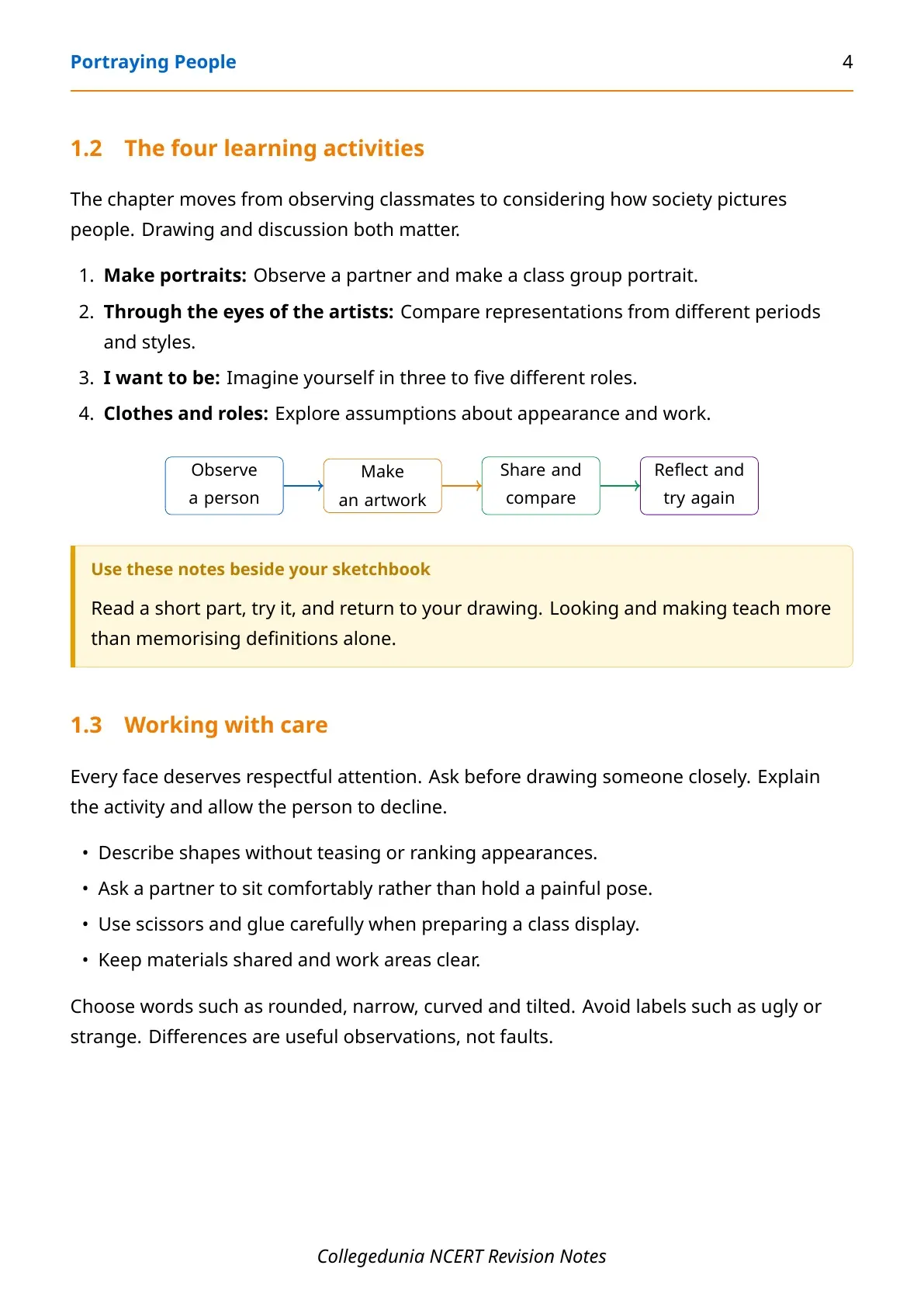
- Observe facial features and join individual drawings into a class portrait.
- Compare Buddha and Bodhisattva images from different periods and styles.
- Draw future roles and question assumptions about clothes and gender.
Student Feedback: look, share and reflect
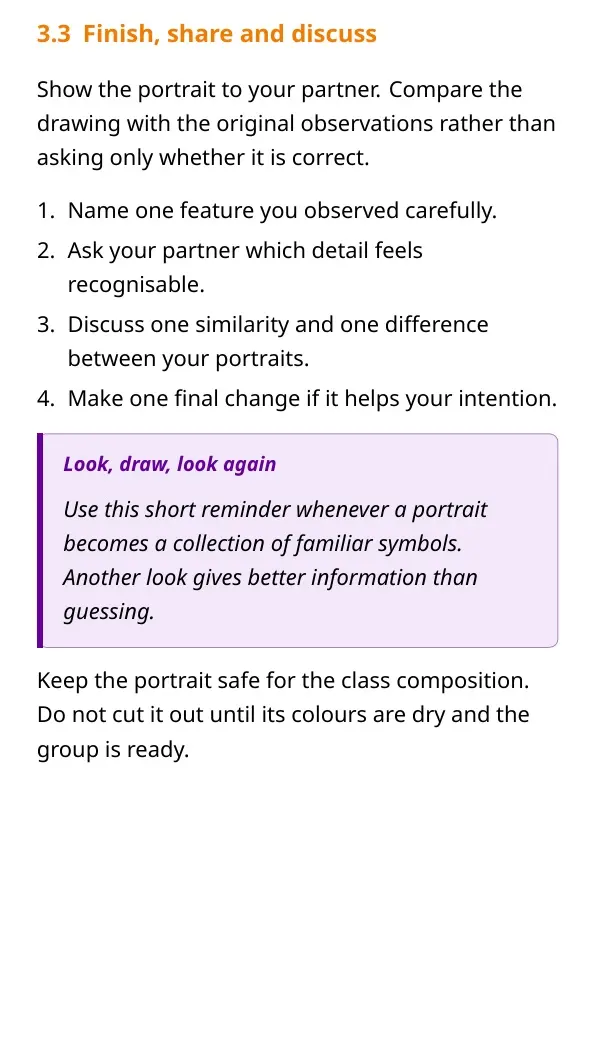
Show your partner one detail you noticed in their face. Ask which part of your portrait they recognise. Listen respectfully and explain one drawing choice.
These notes follow the four activities in the official NCERT Kriti-I Portraying People chapter.
|
Table of Contents |
Portraying People: Observe a Face Before Drawing
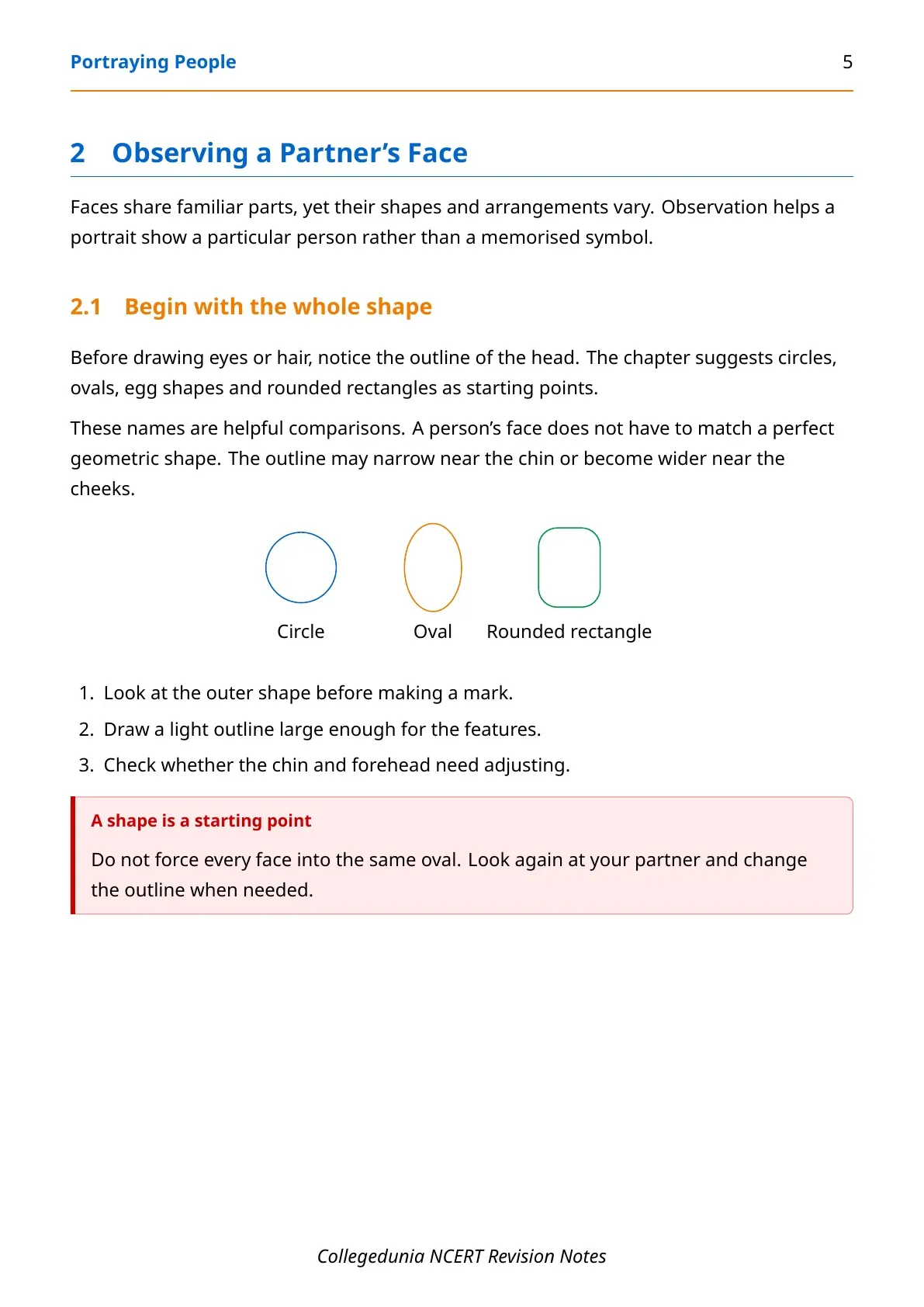
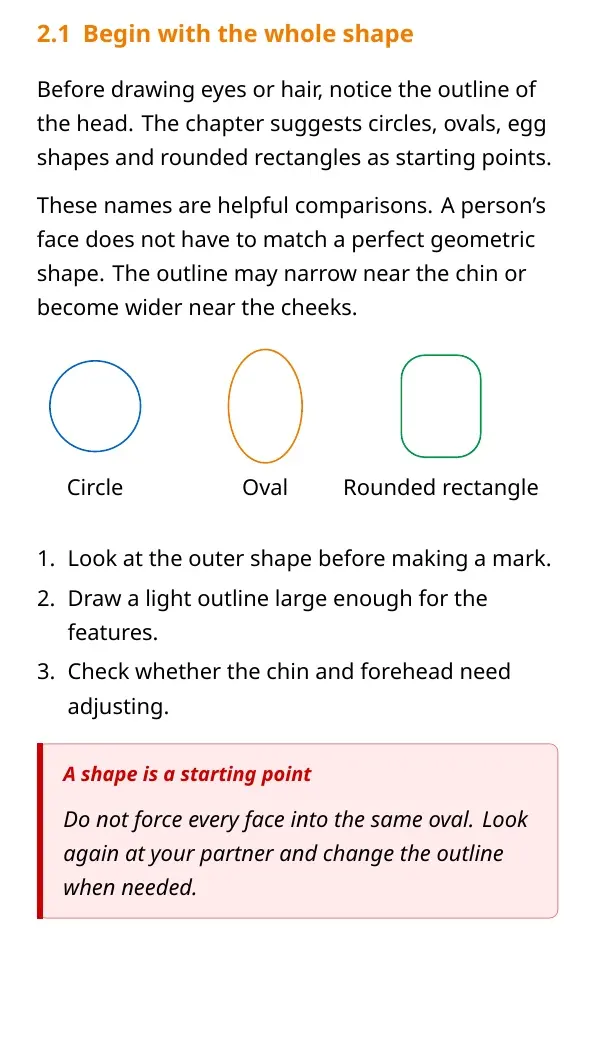
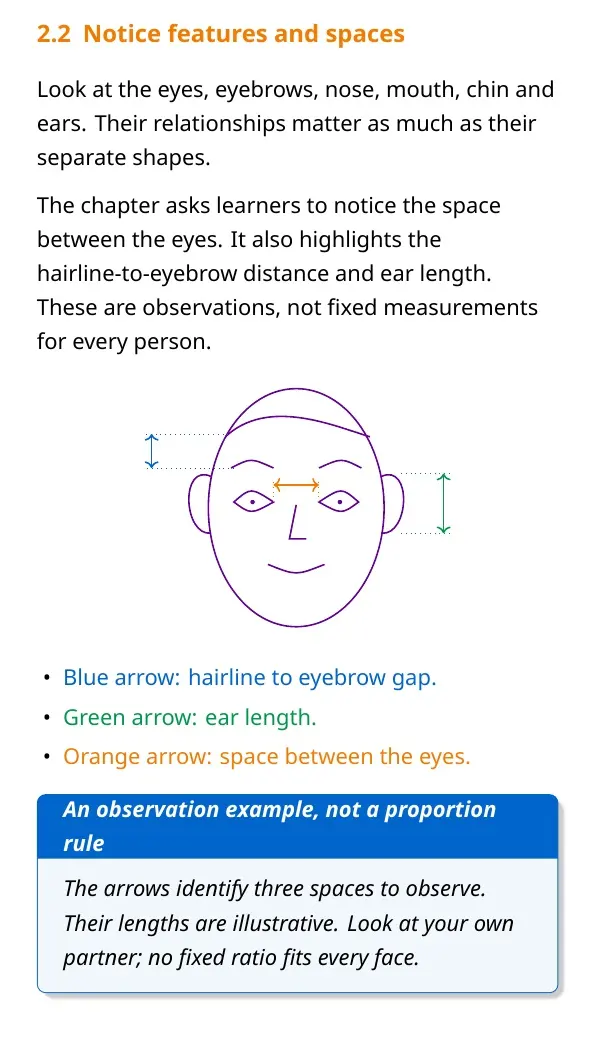
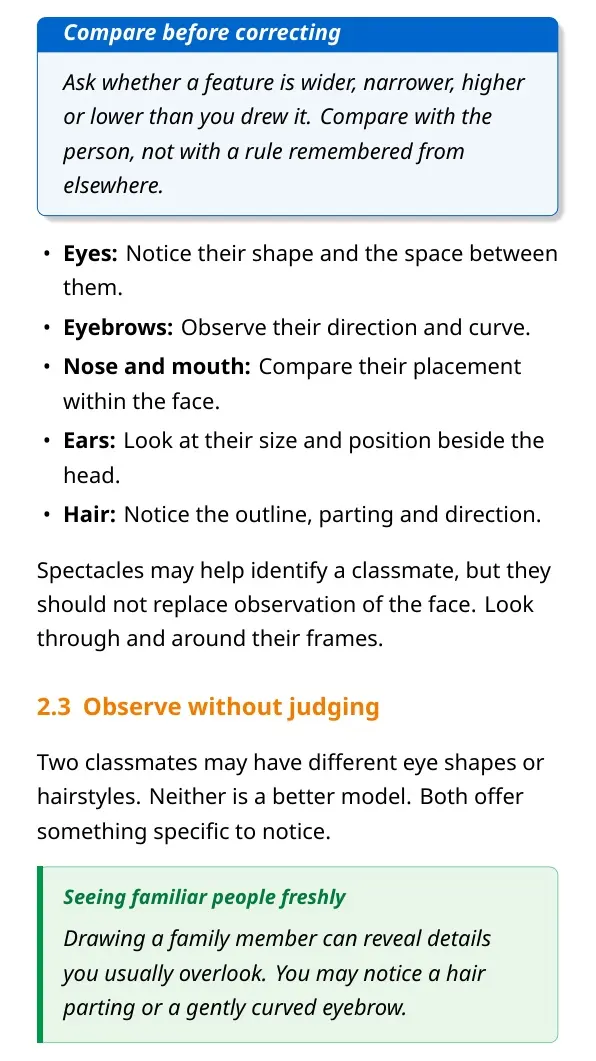
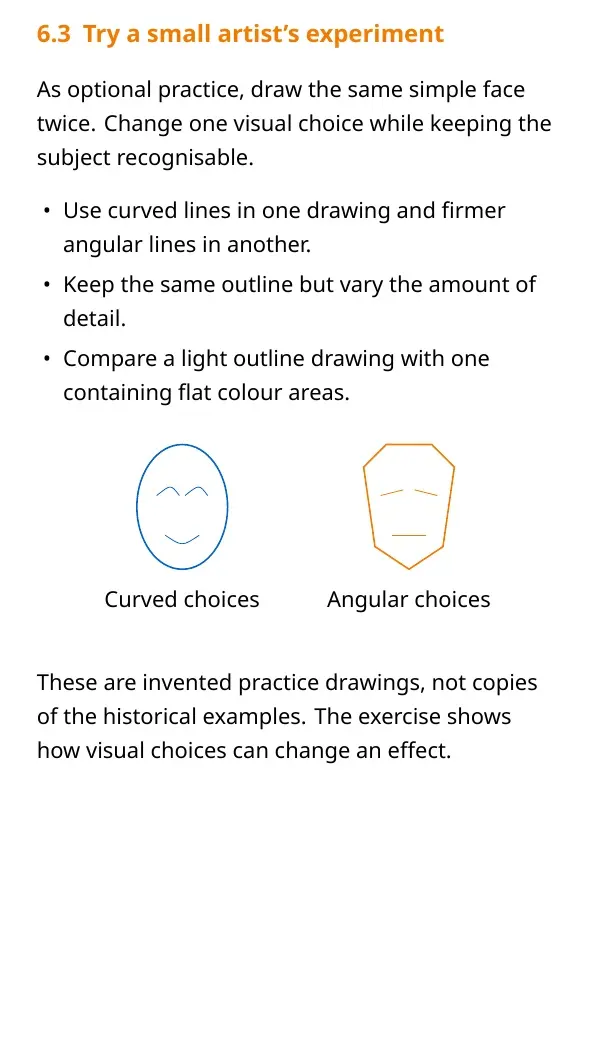
Faces share features such as eyes, eyebrows, nose, mouth, ears and hair. Their shapes, sizes and spacing differ. Observation means looking carefully at your actual partner rather than drawing the same remembered face each time.
- Notice whether the face looks circular, oval, egg-shaped or like a rounded rectangle.
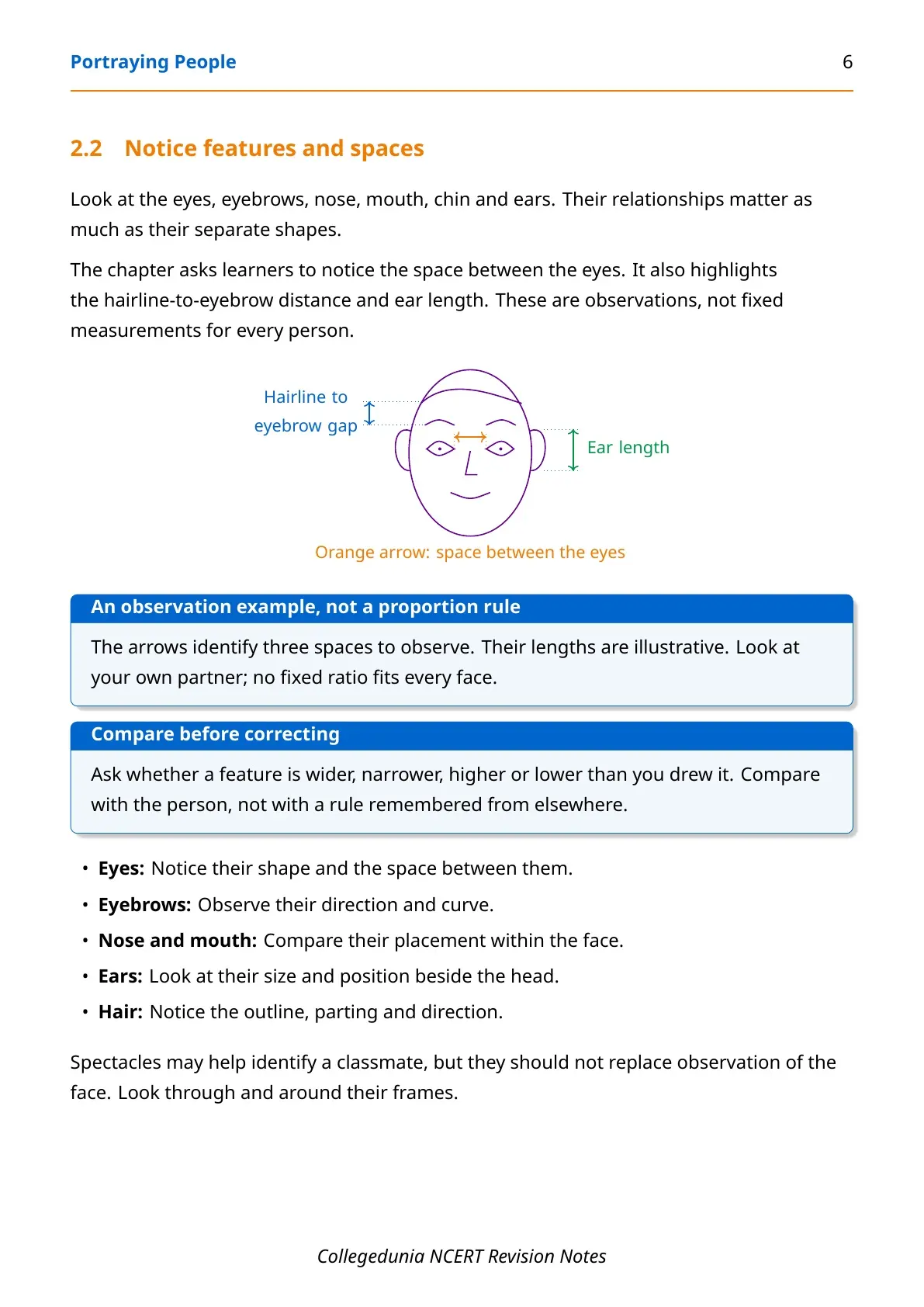
- Compare the size and shape of the eyes, nose, lips, chin and ears.
- Look at the space between the eyes and between the hairline and eyebrows.
- Notice ear length, hairstyle and details such as spectacles.
Your portrait does not need to be picture perfect. Personal choices in line and colour are welcome. Avoid treating one fixed face shape or spacing rule as correct for everyone.
How Artists Build Characters from Simple Shapes
Source: Khan Academy Labs on YouTube
Make Portraits and Arrange a Class Group Picture
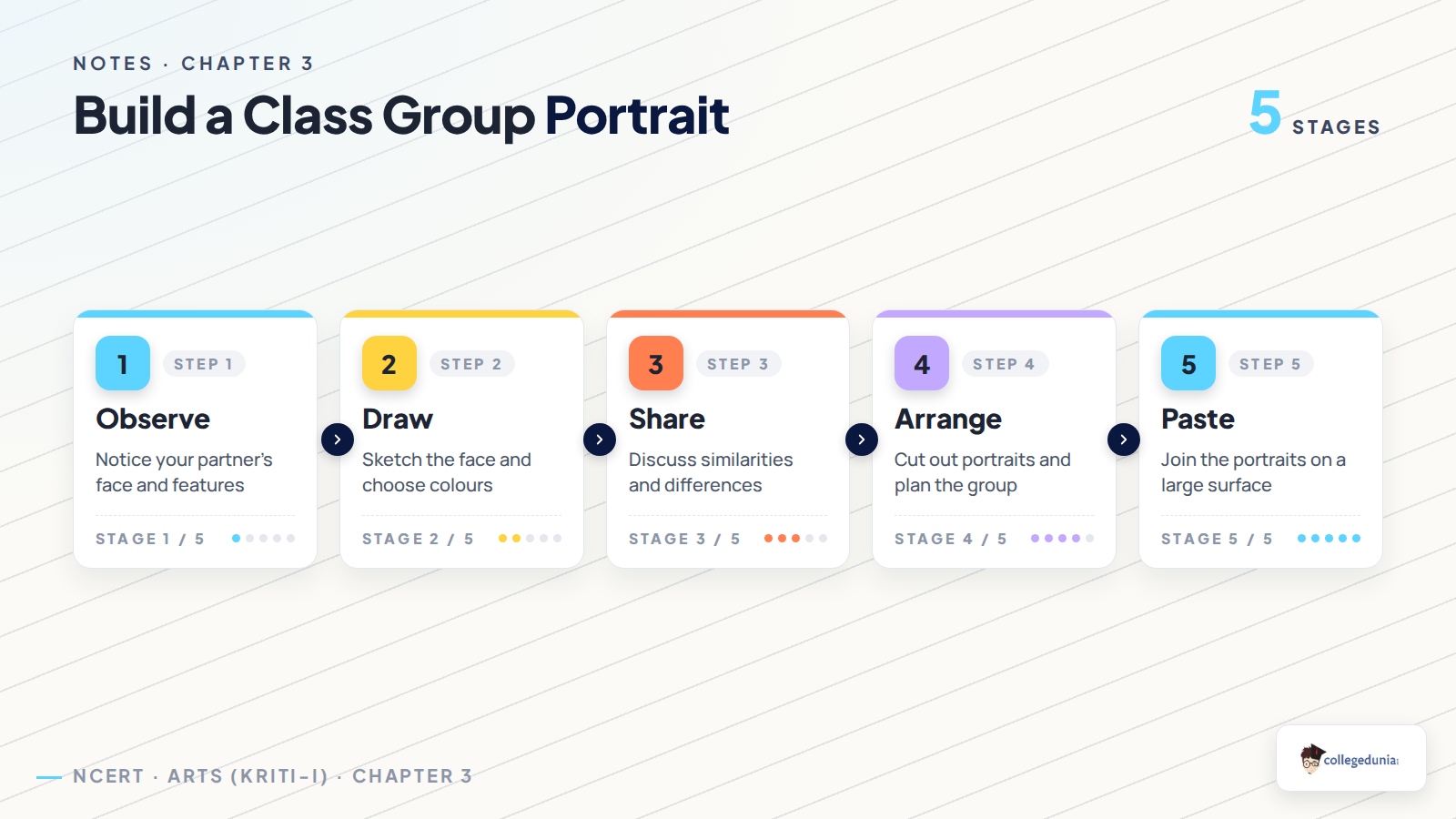
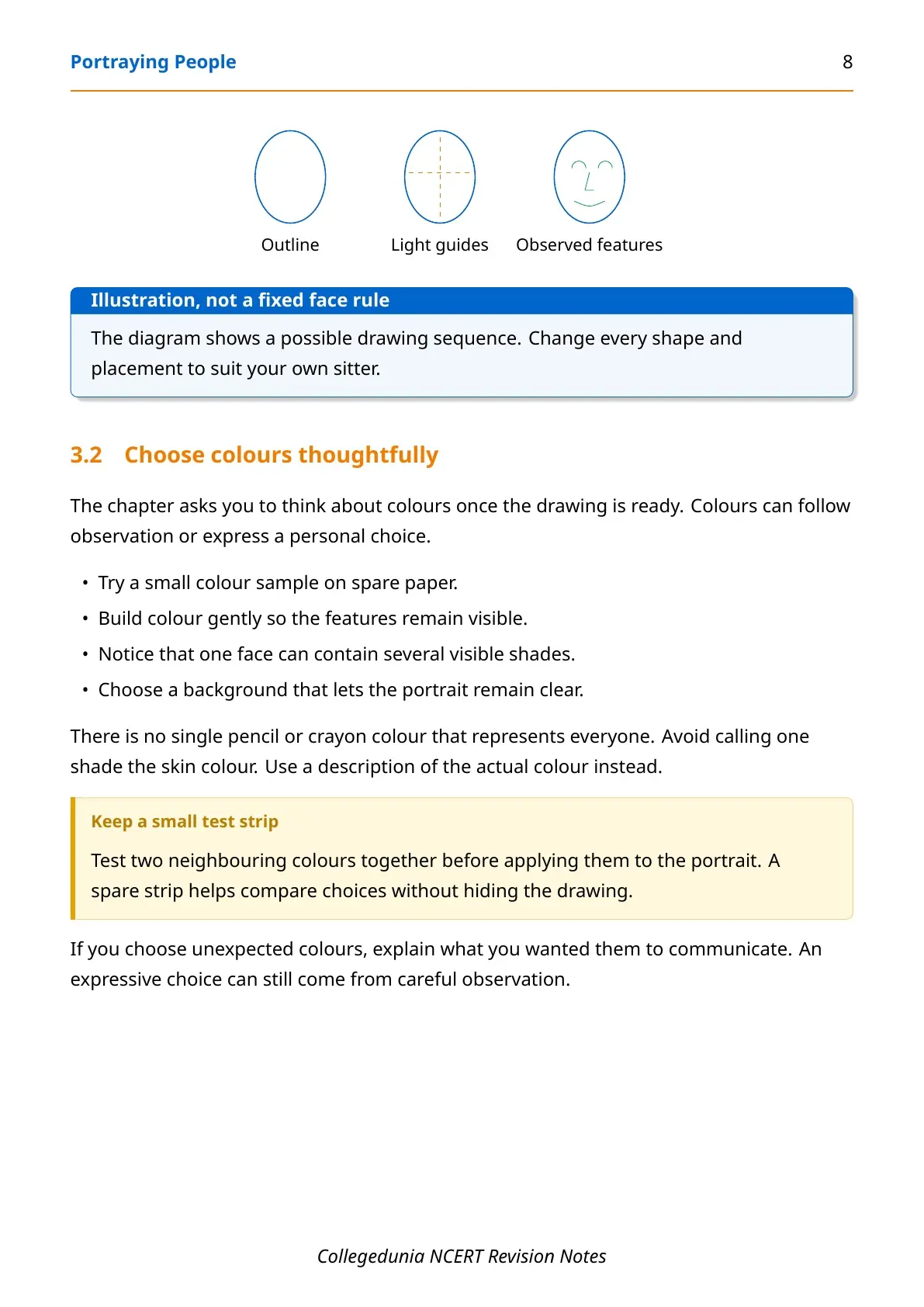
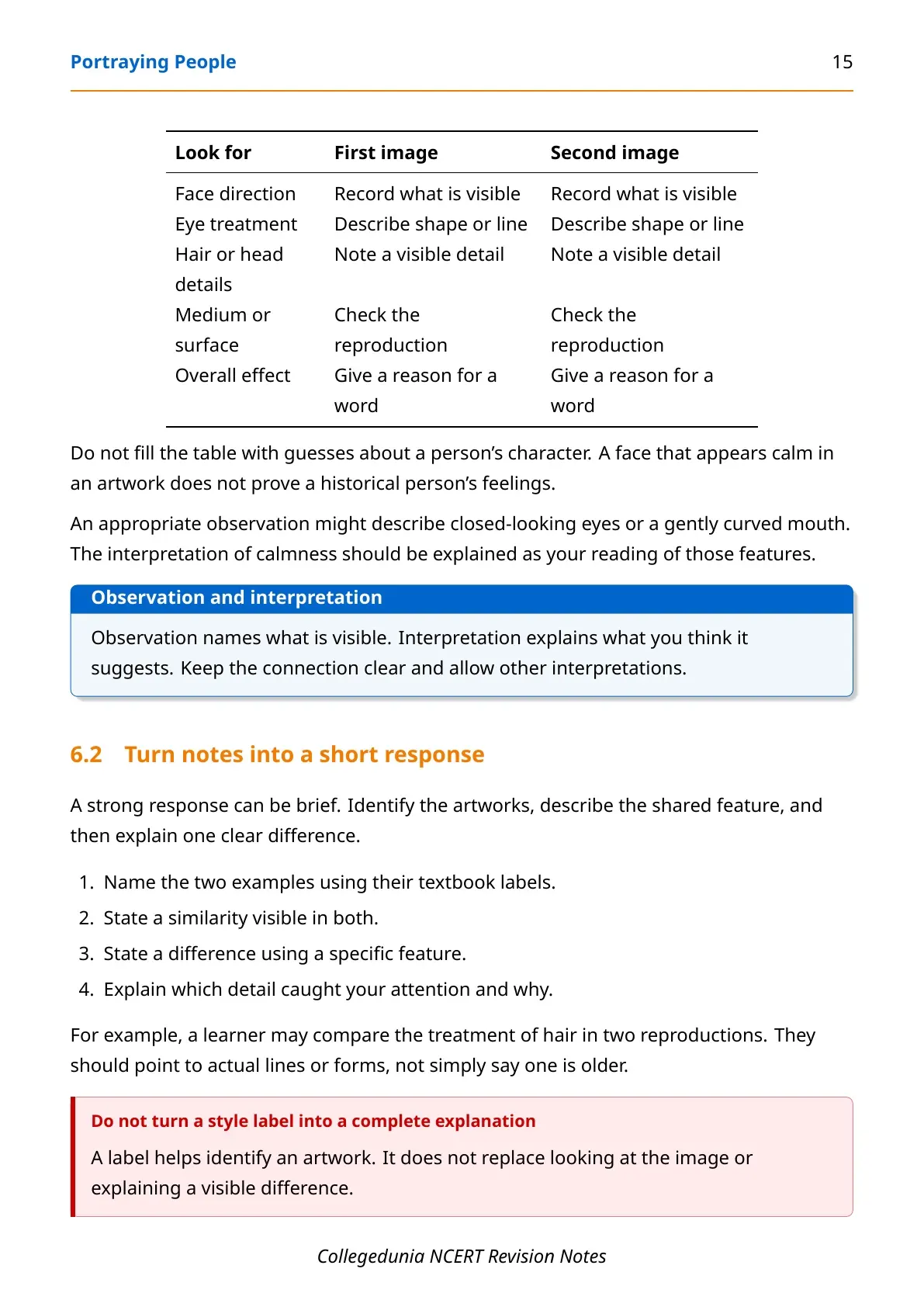
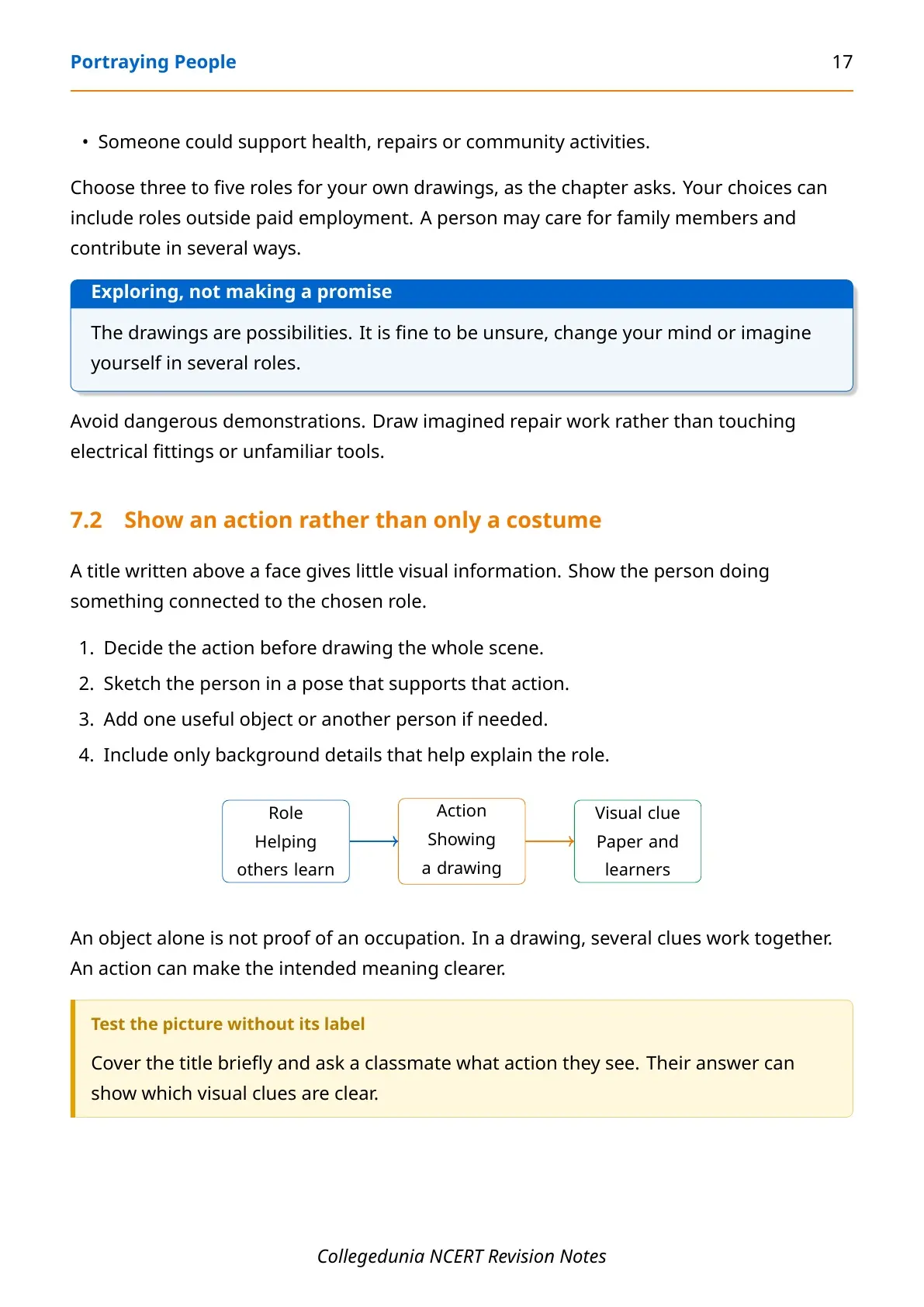
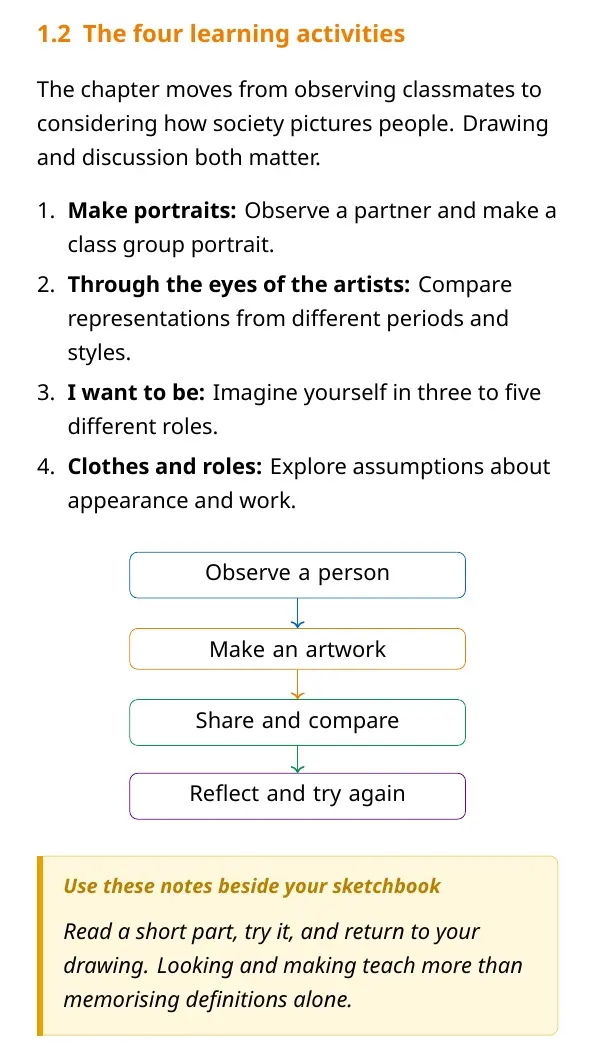
For Activity 1, work in pairs and draw your partner on an A4 sheet. The textbook gives eight steps. The image above groups them into five stages for a quick reminder.
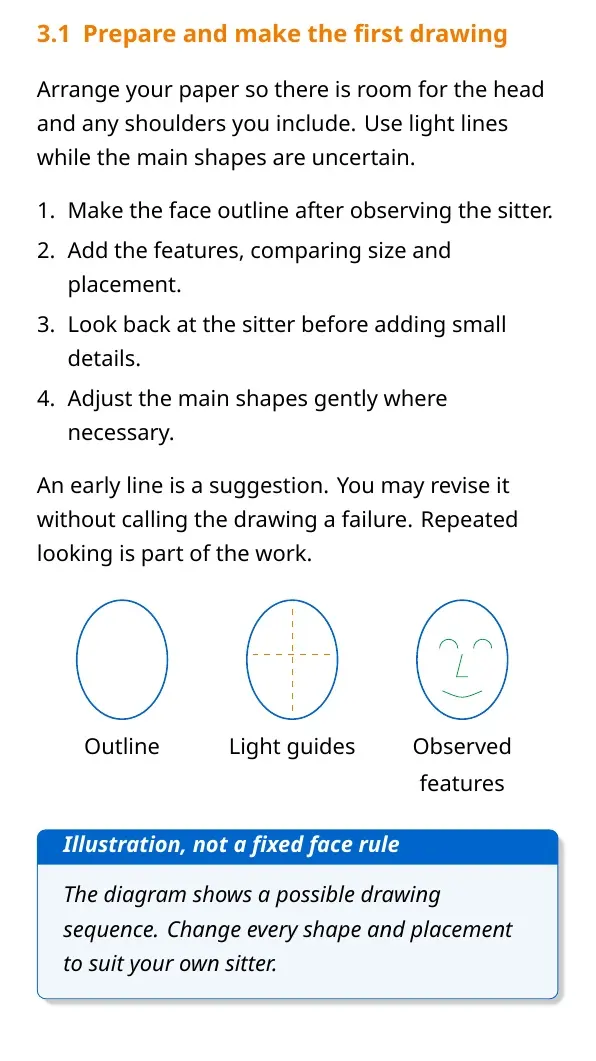
- Draw the shape of your partner's face.
- Add facial features after observing their shape, size and spacing.
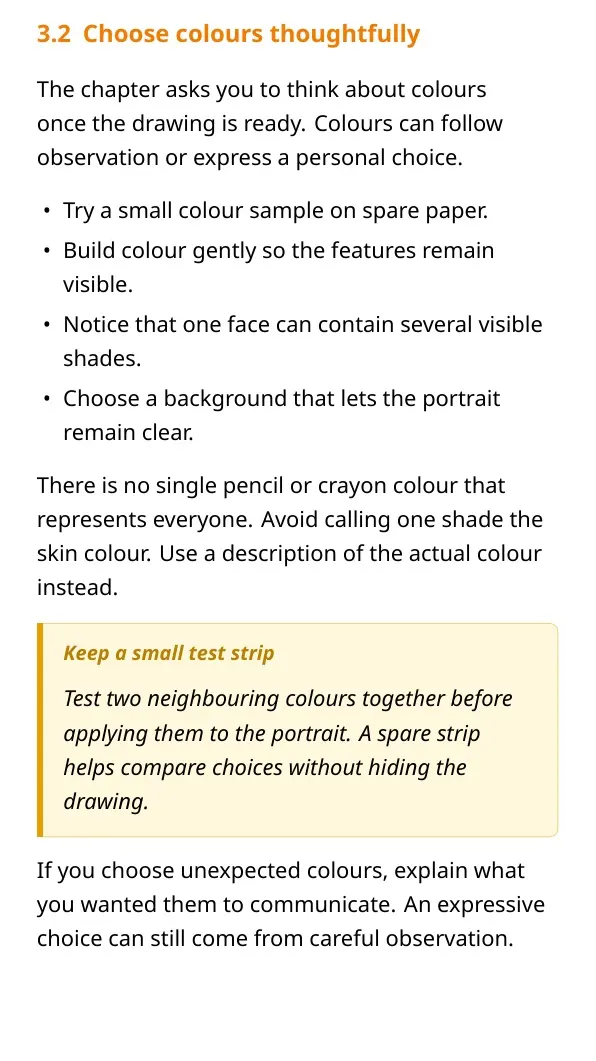
- Choose the colours you want to use.
- Complete the portrait and discuss similarities and differences with classmates.
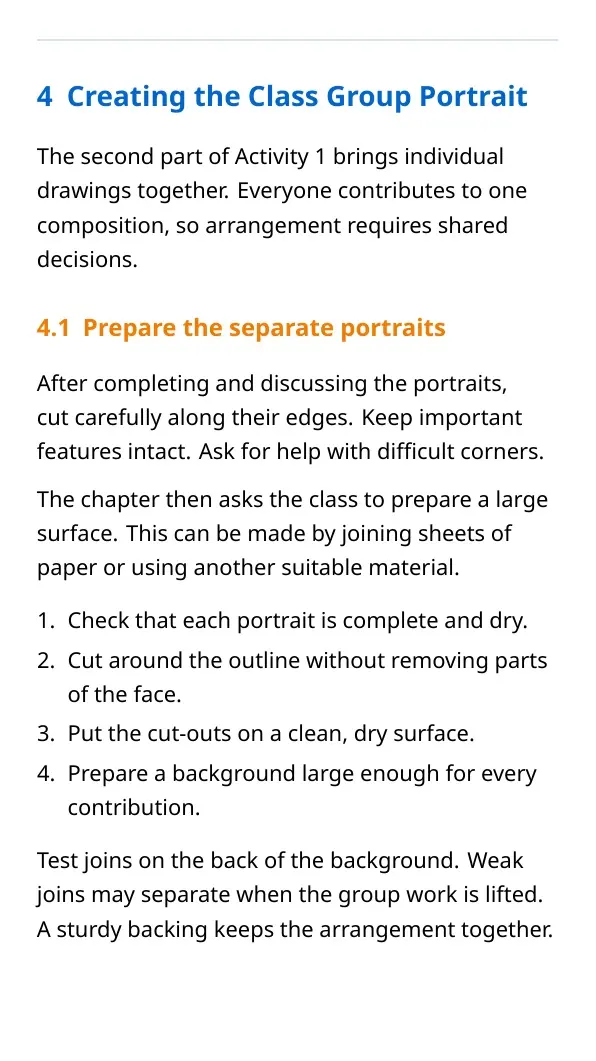
- Cut out the portrait along its edge.
- Join sheets or other suitable materials to make a large surface.
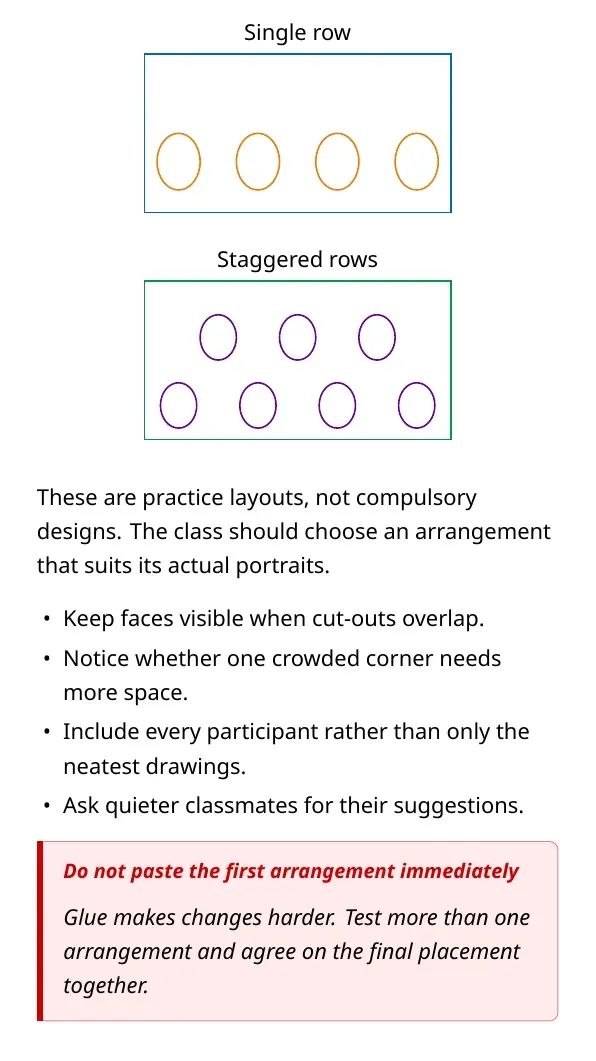
- Gather everyone's portraits and agree on an arrangement.
- Paste the portraits in that arrangement to finish the class picture.
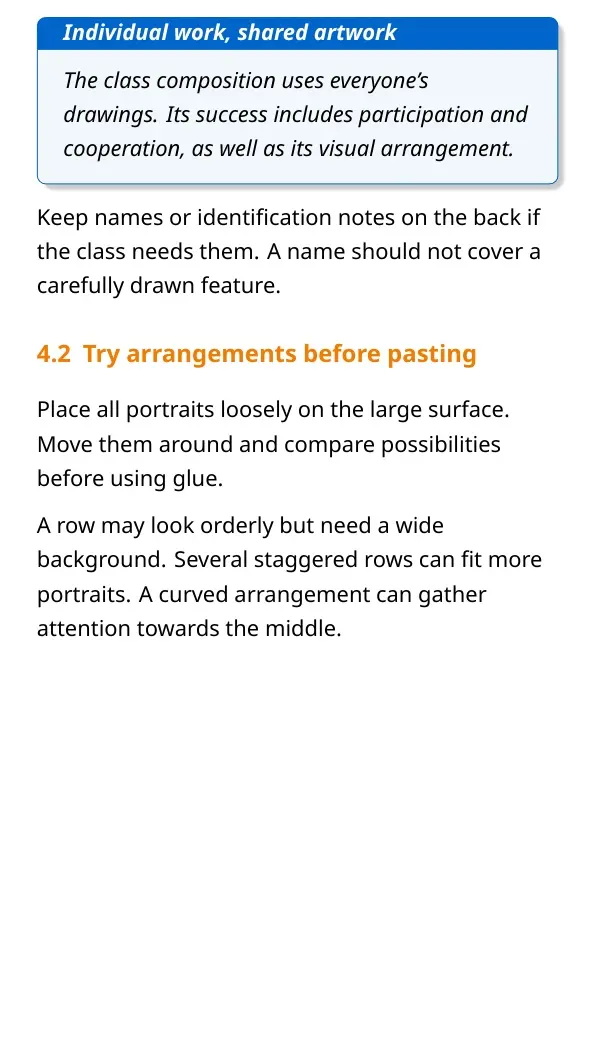
Composition is how parts of an artwork are arranged. Try different positions before pasting so everyone can discuss the class portrait.
Compare Portraying People Through Artists' Eyes
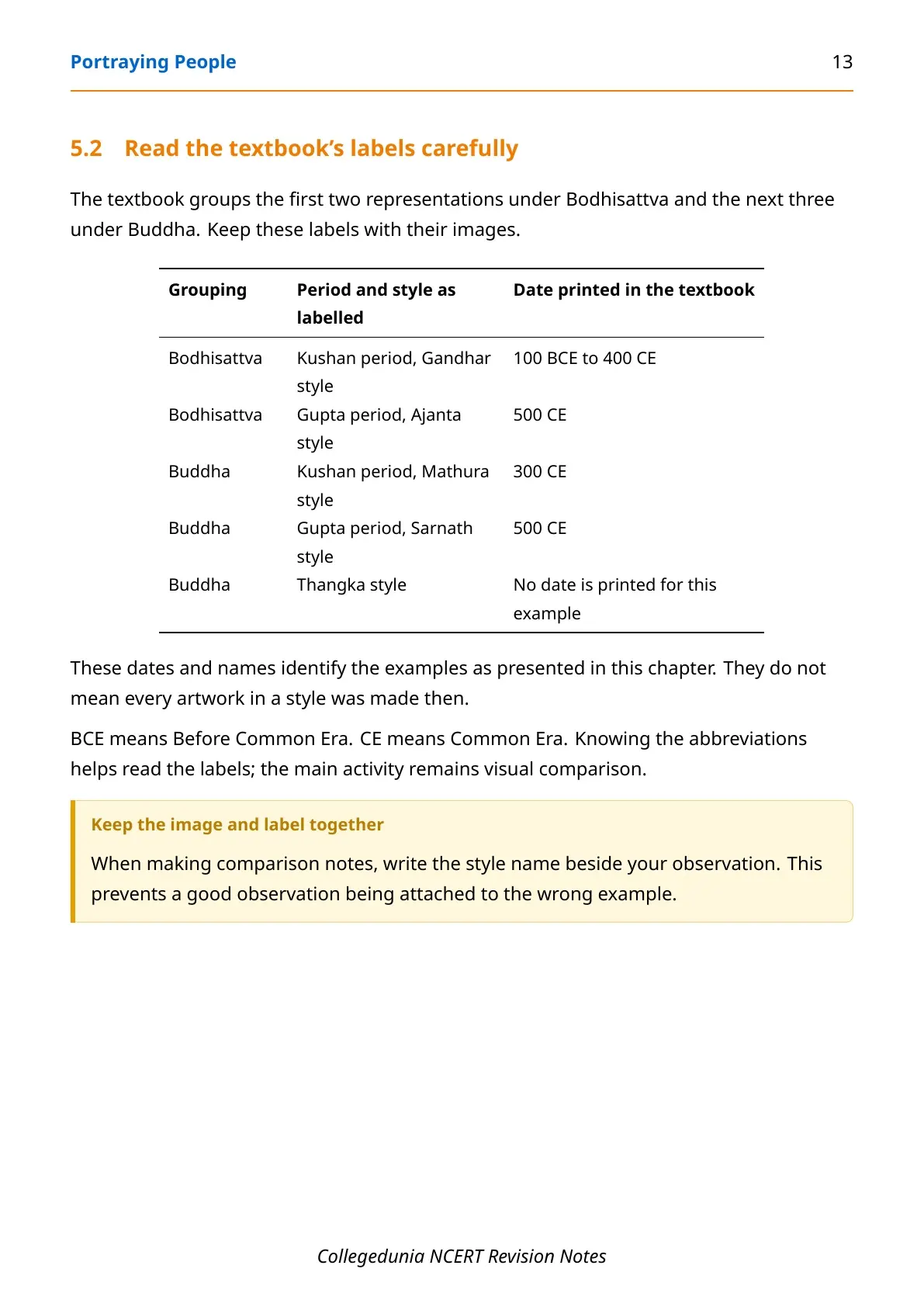
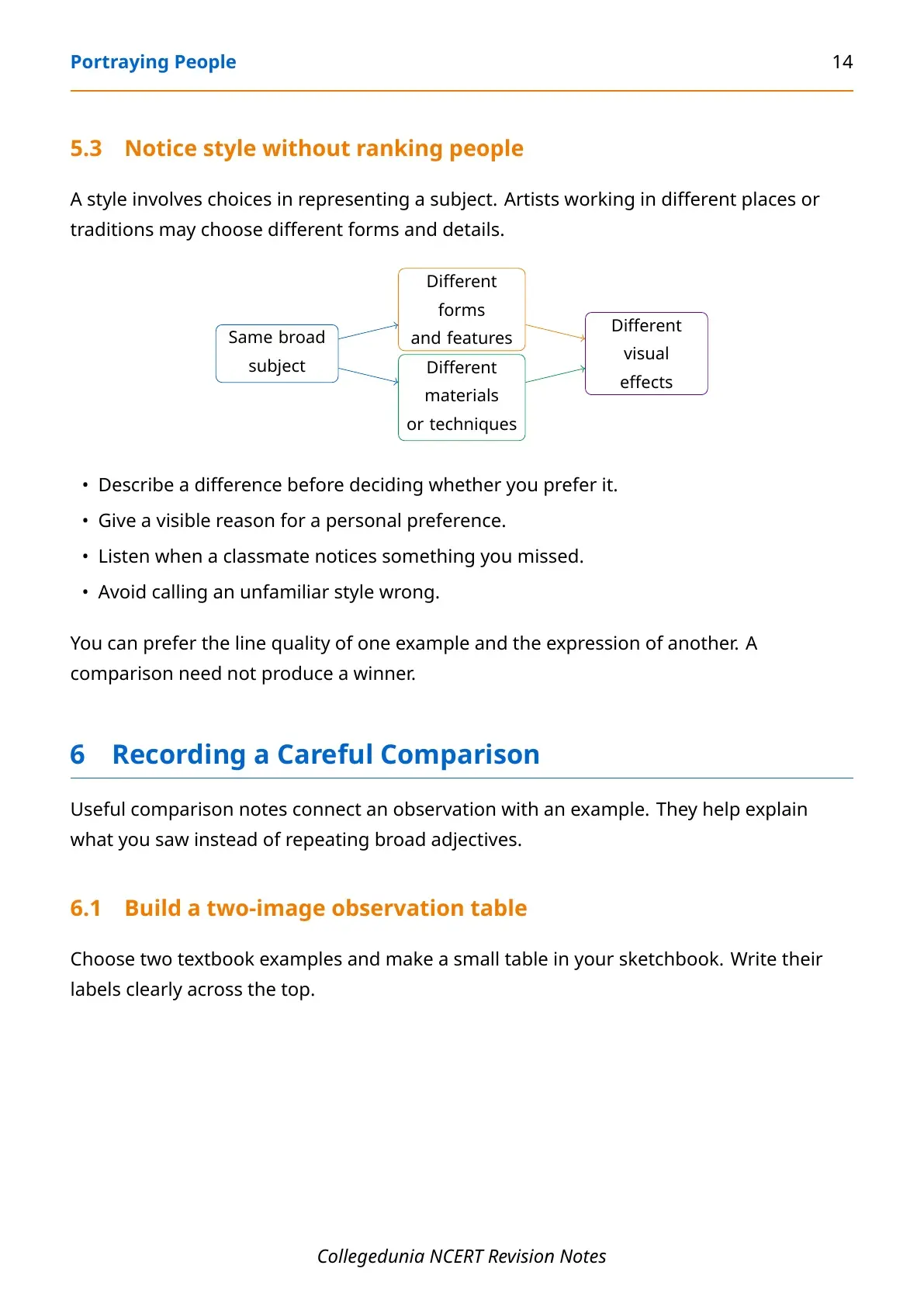
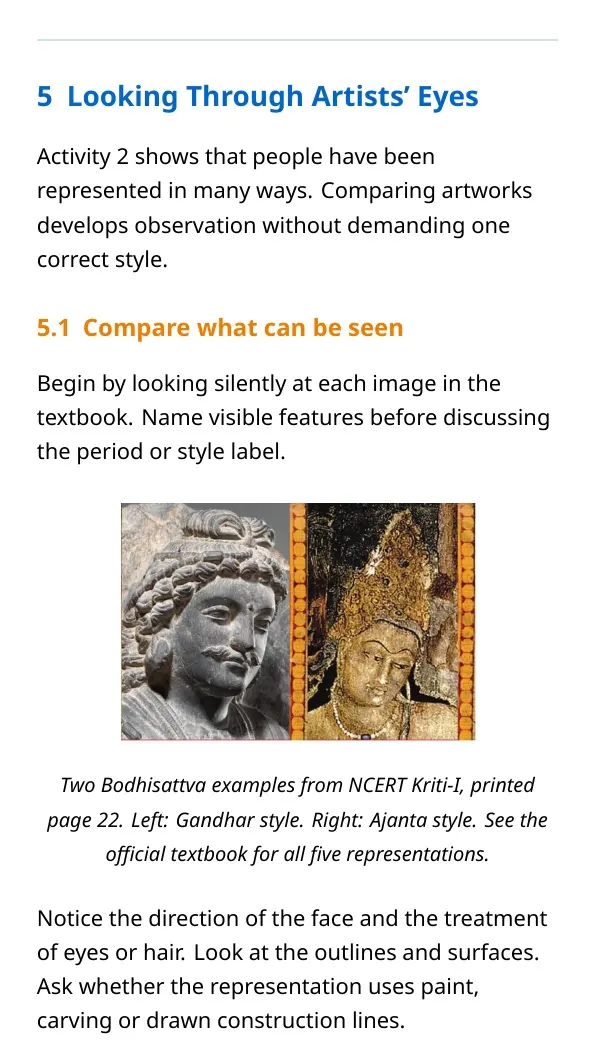
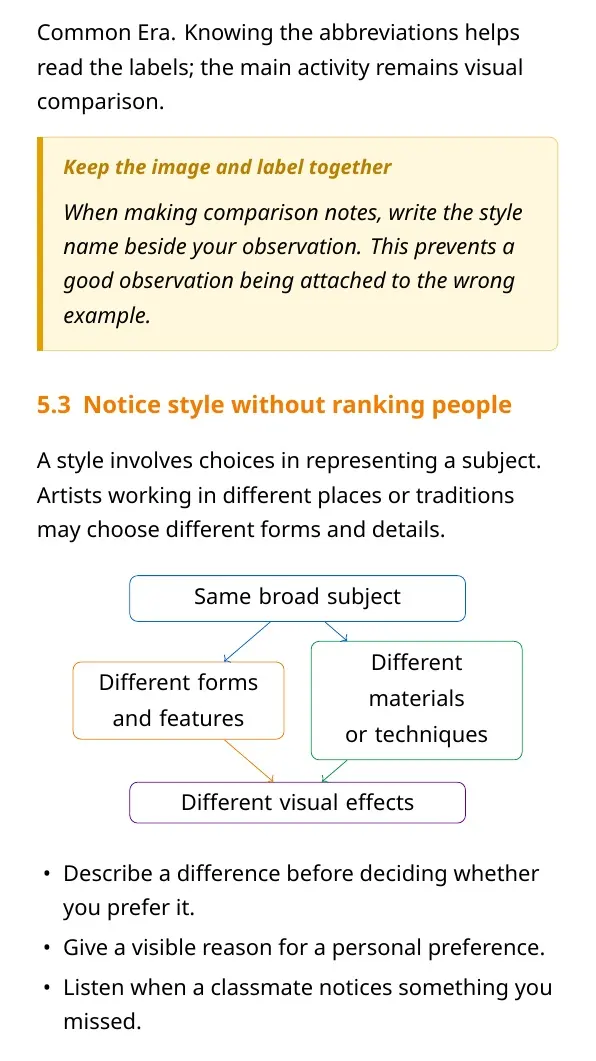
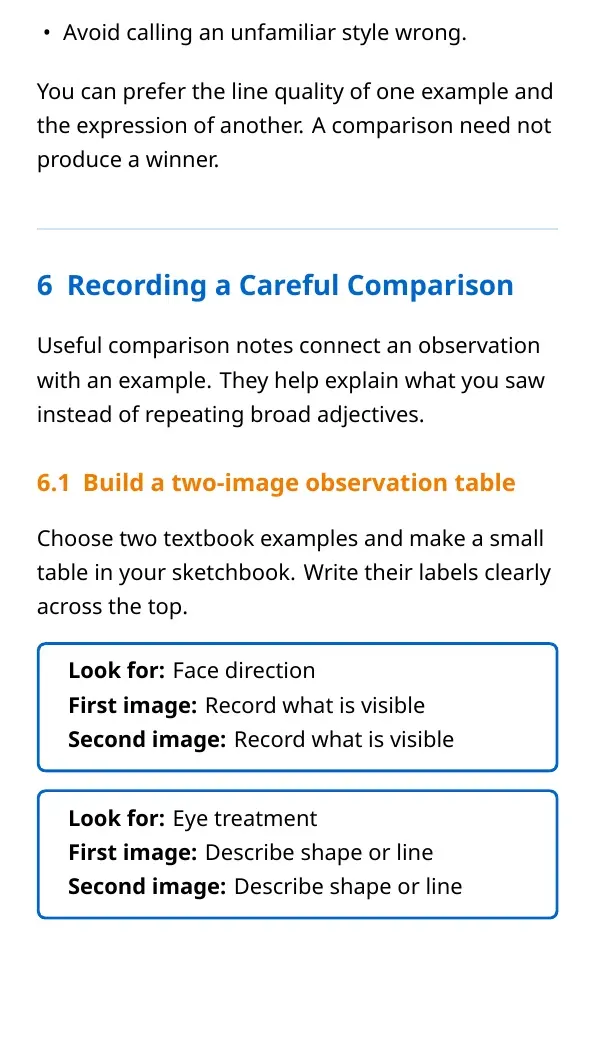
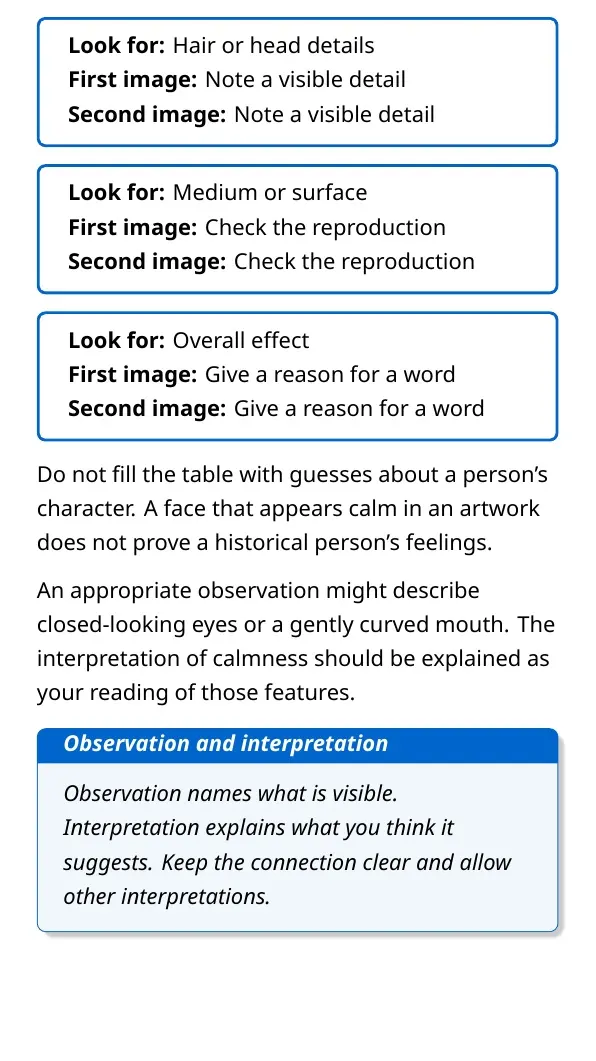
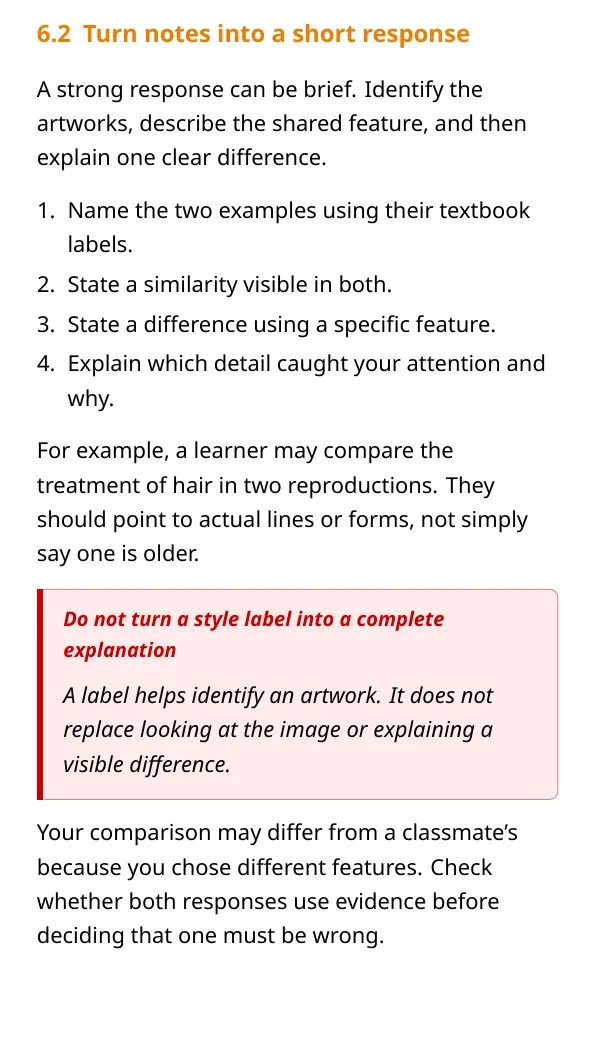
Activity 2 shows Buddha and Bodhisattva images made in different periods and styles. Look at the original textbook images while comparing. The aim is to notice artistic choices, not rank the images from best to worst.
| What to observe | Comparison prompt |
|---|---|
| Facial features | How do the eyes, nose, lips and face shape differ? |
| Expression | Which visible details suggest calmness or another quality? |
| Hair and clothing | How are hair and folds of cloth shown? |
| Style and medium | How do painted and sculpted forms look different? |
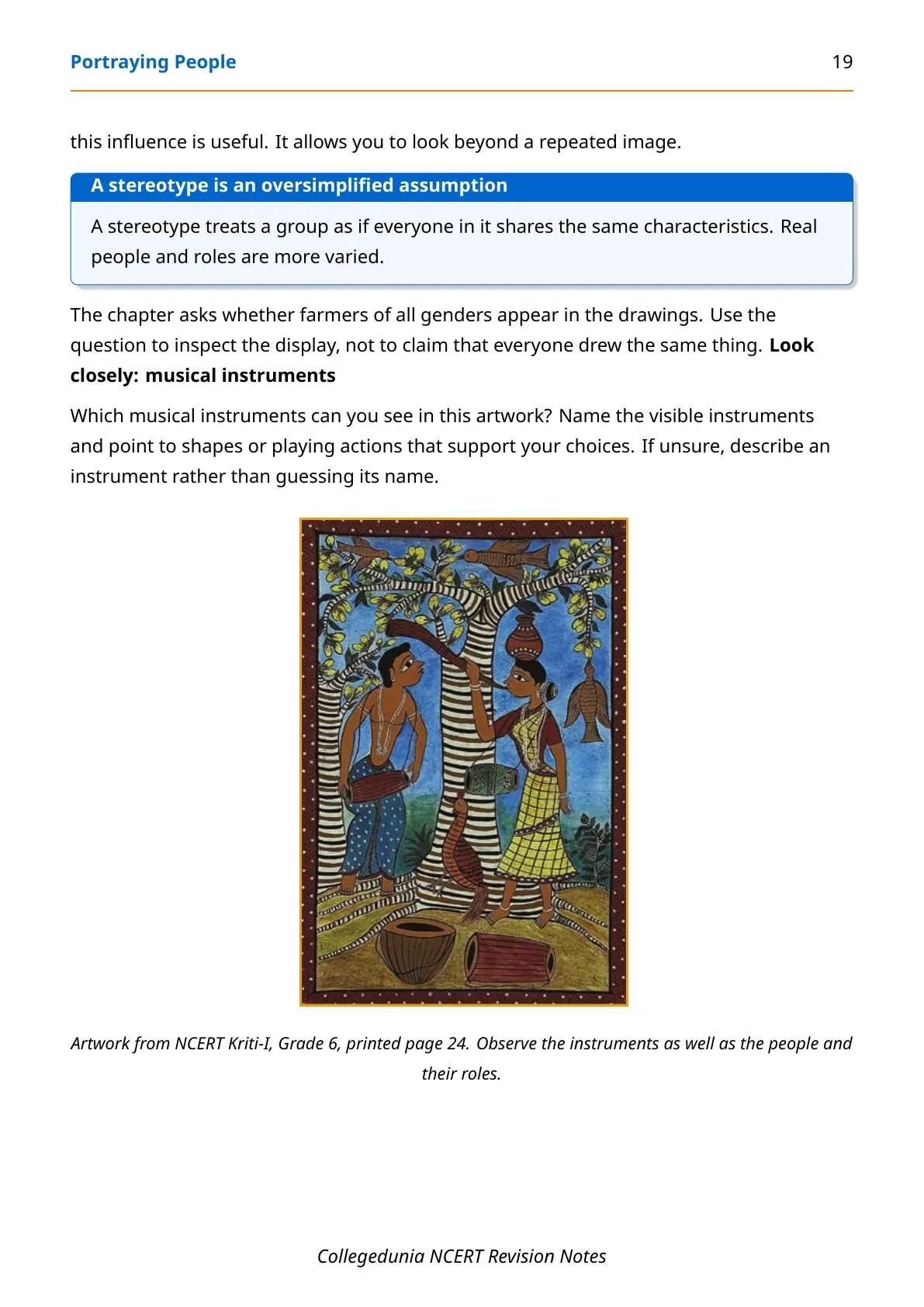
The examples include Gandhar, Ajanta, Mathura, Sarnath and Thanka styles. Use the labels beneath the images for their period and style. Support a comparison with a detail you can point to.
Imagine Future Roles in the Portraying People Activity
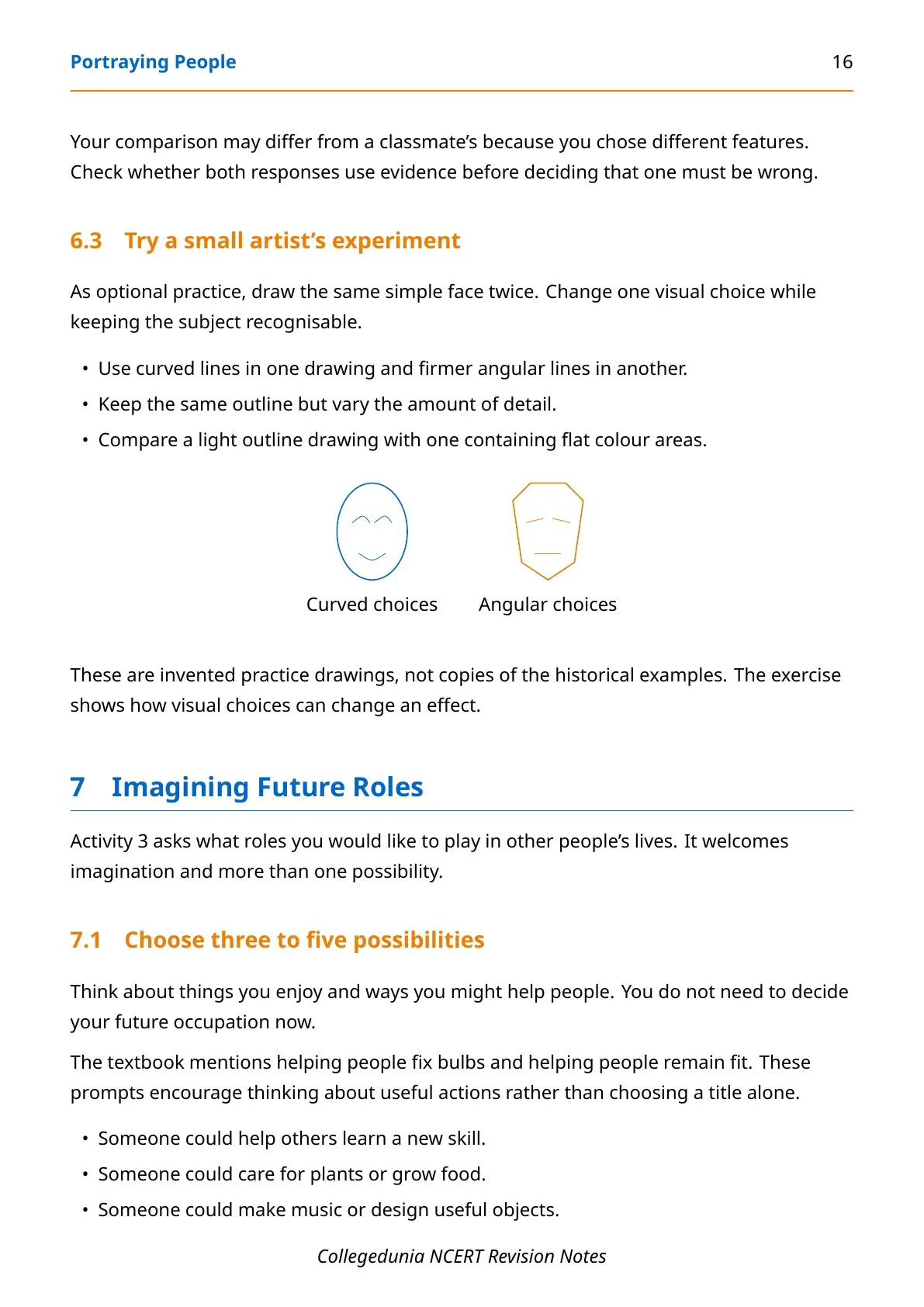
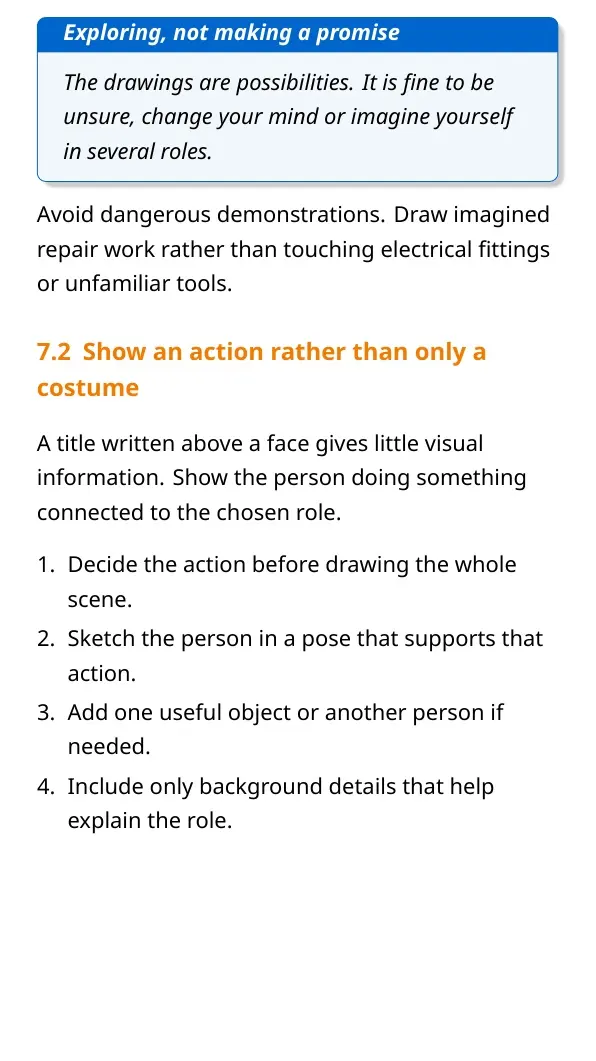
In Activity 3, draw yourself in three to five roles you might take on when you grow up. You can explore several possibilities. You do not need to choose a single future job now.
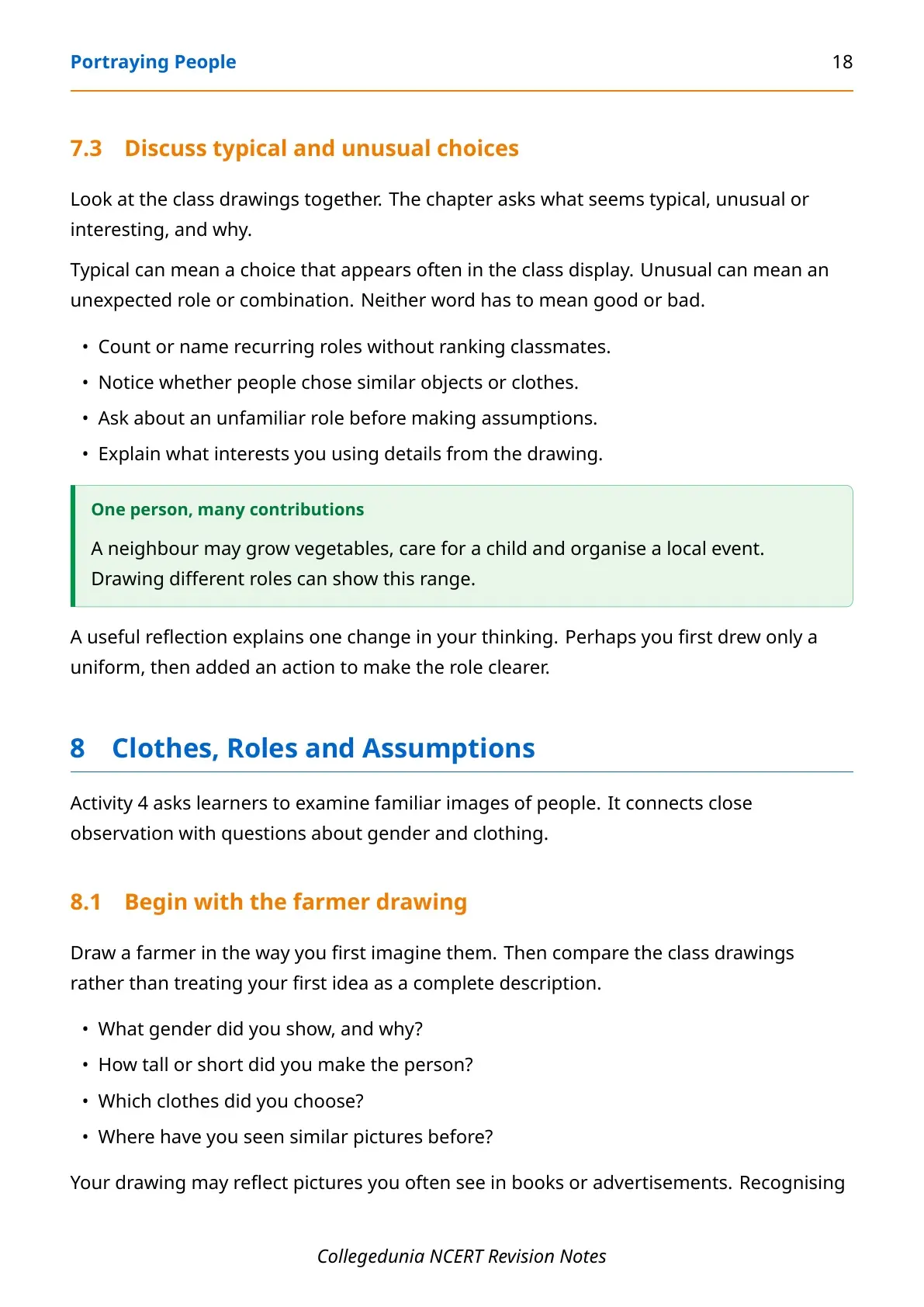
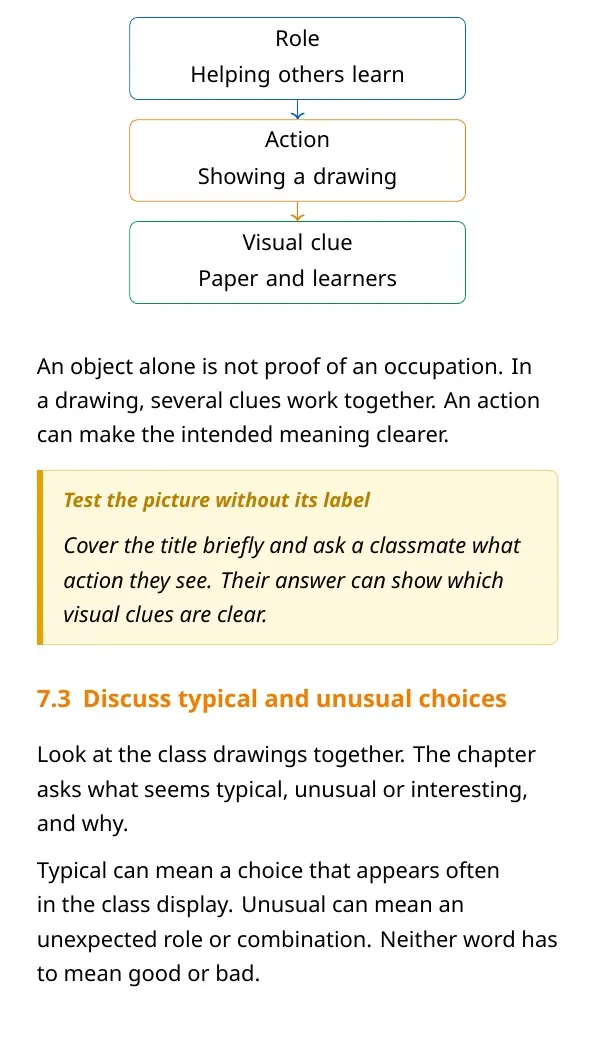
- Show what you are doing, such as helping someone exercise or fixing a light.
- Add a place, tool or action that makes the role clear.
- Compare classmates' drawings and explain which choices interest you.
As an optional extension, the video above shows how artists build characters from shapes. It introduces another way to portray people; computer modelling is not required for these activities.
Clothes and Roles: Draw People Without Assumptions
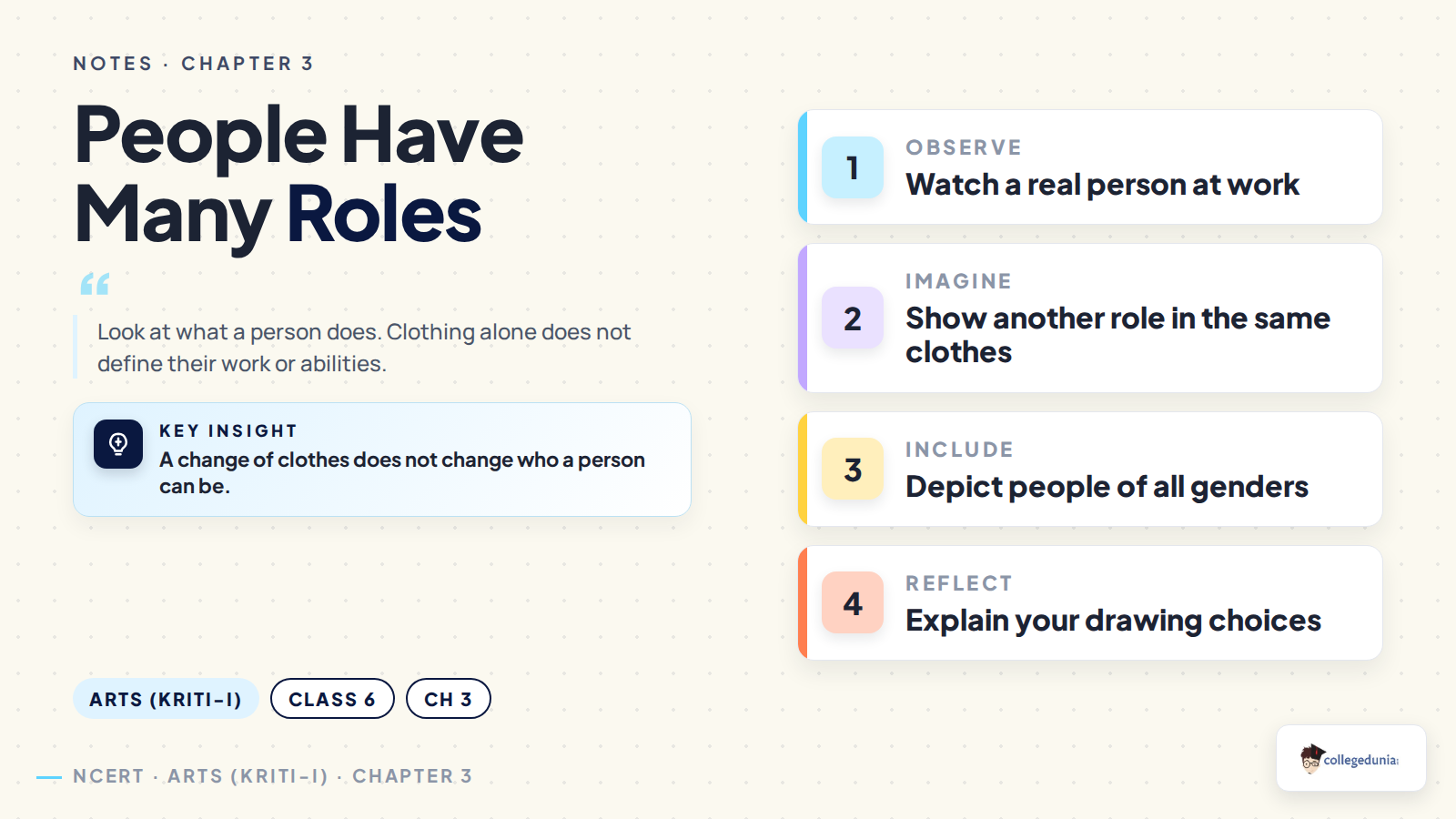
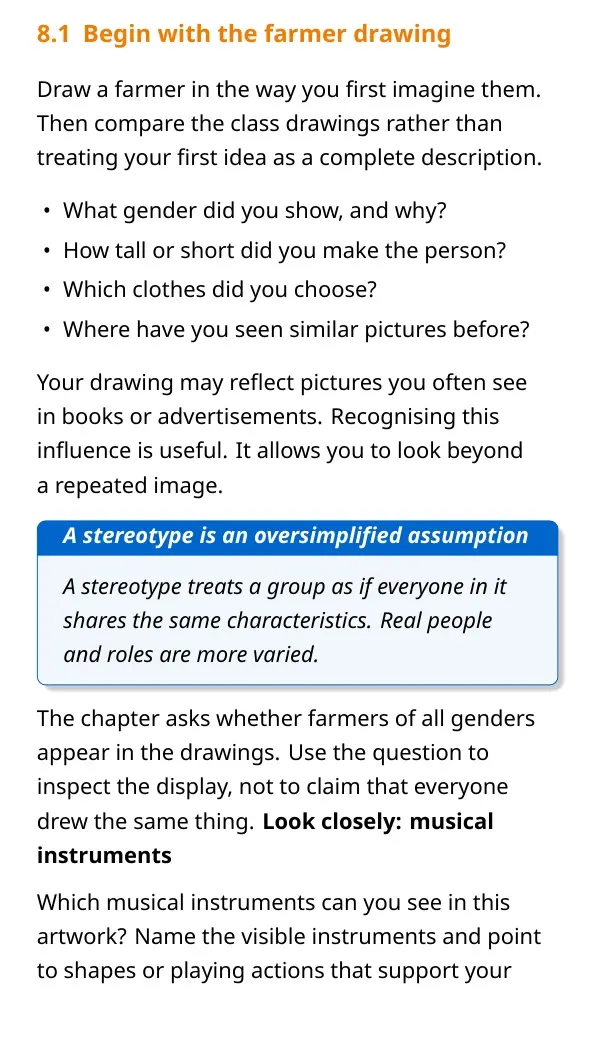
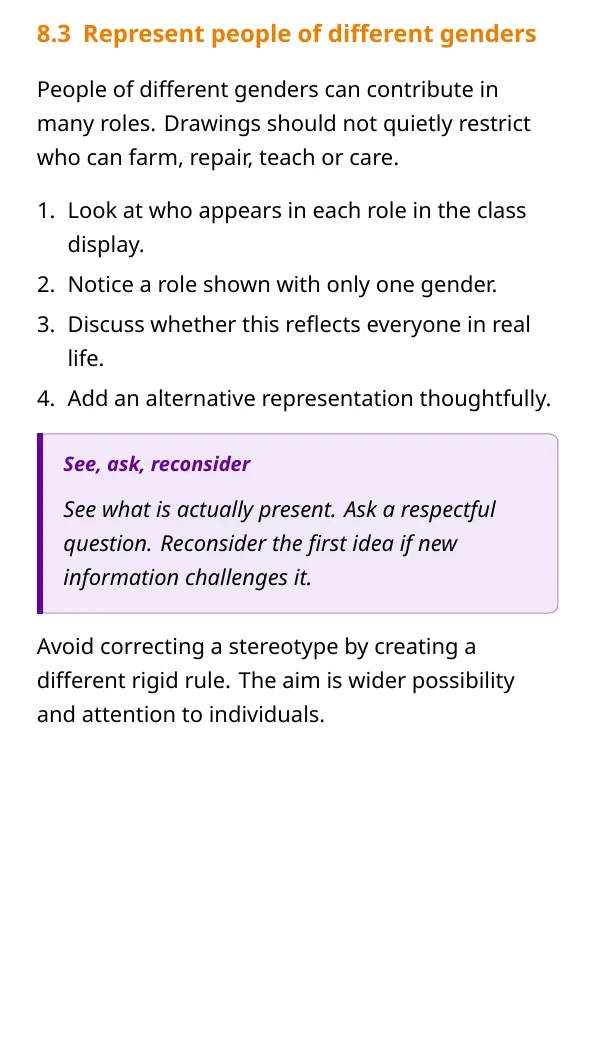
Activity 4 begins with a farmer drawn from imagination. Compare the class drawings. Ask how you decided the farmer's gender, height and clothing. Consider where those ideas came from.
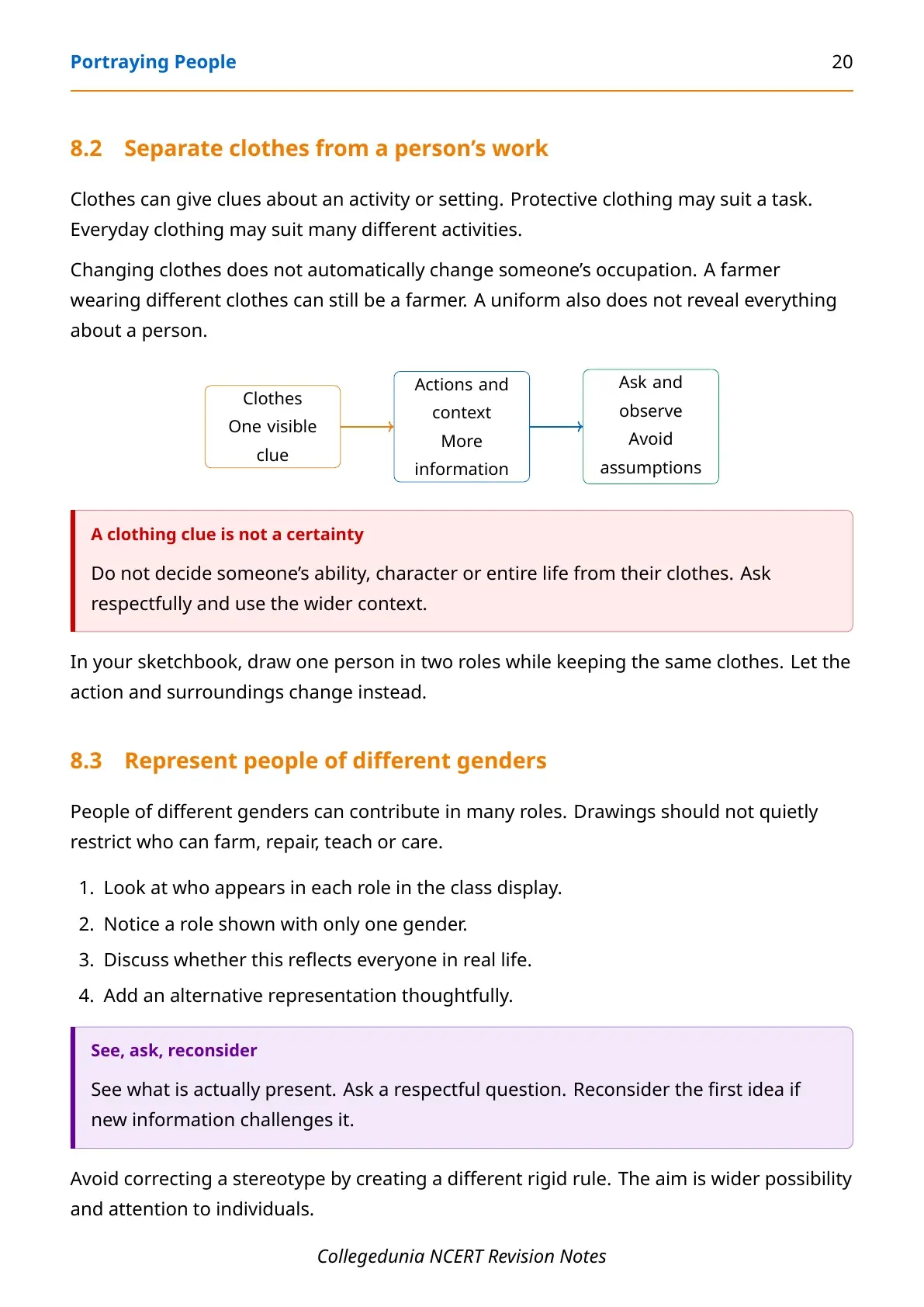
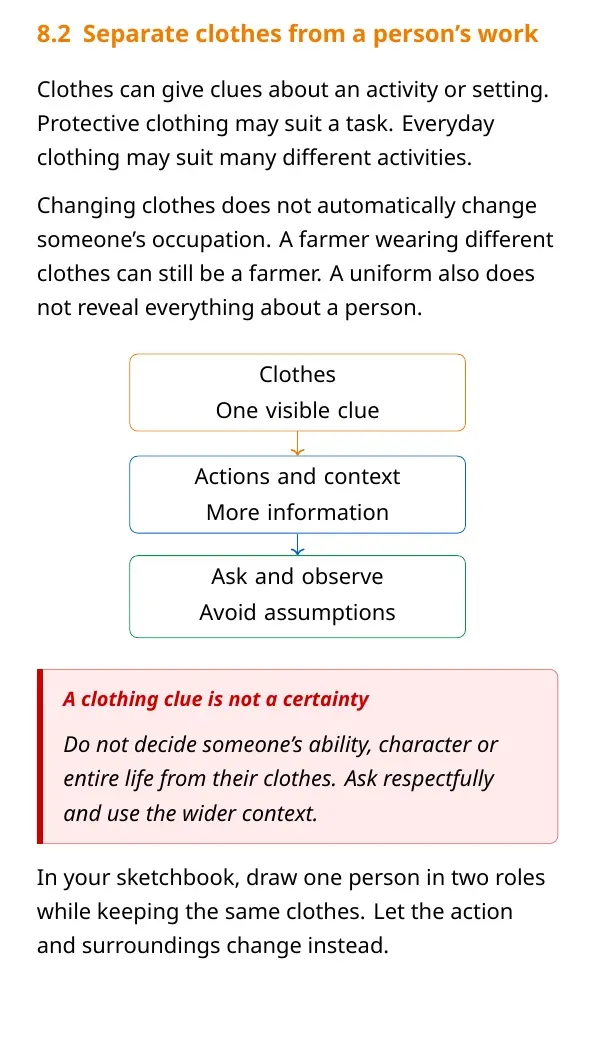
Changing clothes does not stop a farmer being a farmer. Clothing may give clues, but it cannot tell you everything about someone's work or abilities.
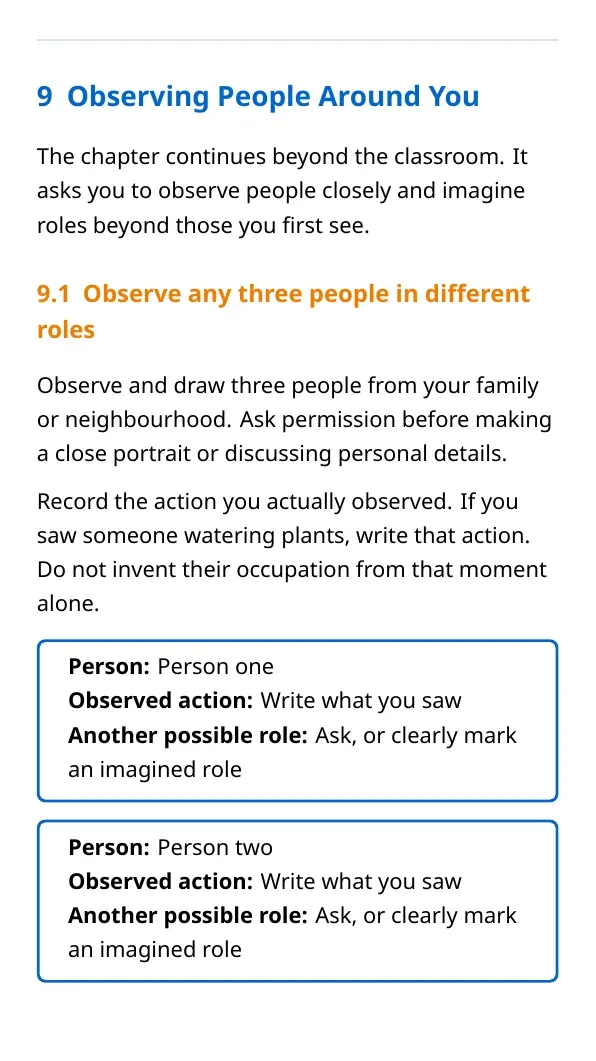
- Observe and draw three people in different roles around you.
- Imagine other roles each person might have.
- Check whether people of all genders appear in different roles.
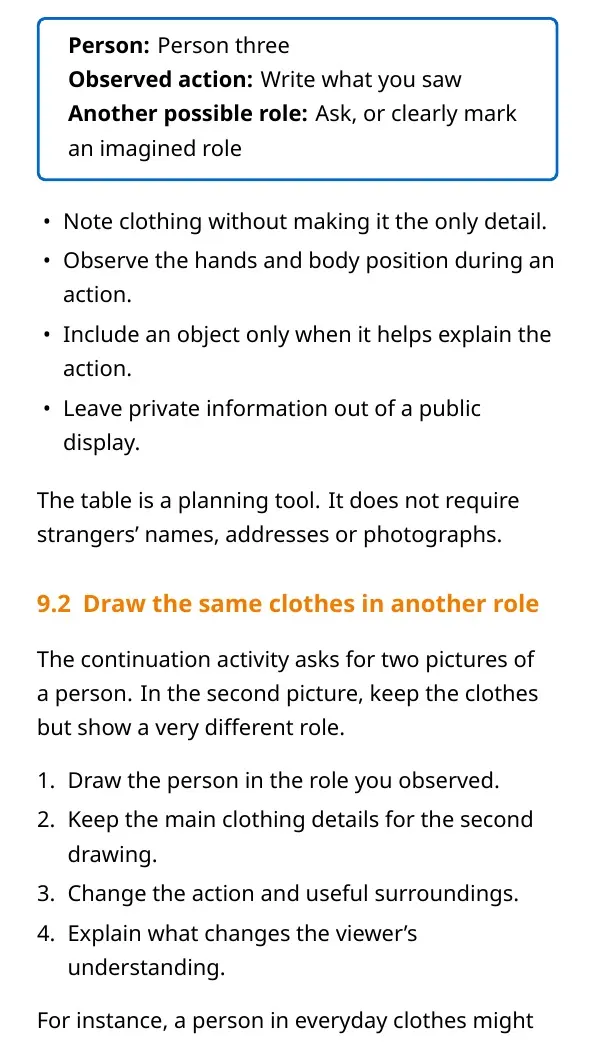
- Draw someone in their usual role, then in another role wearing the same clothes.
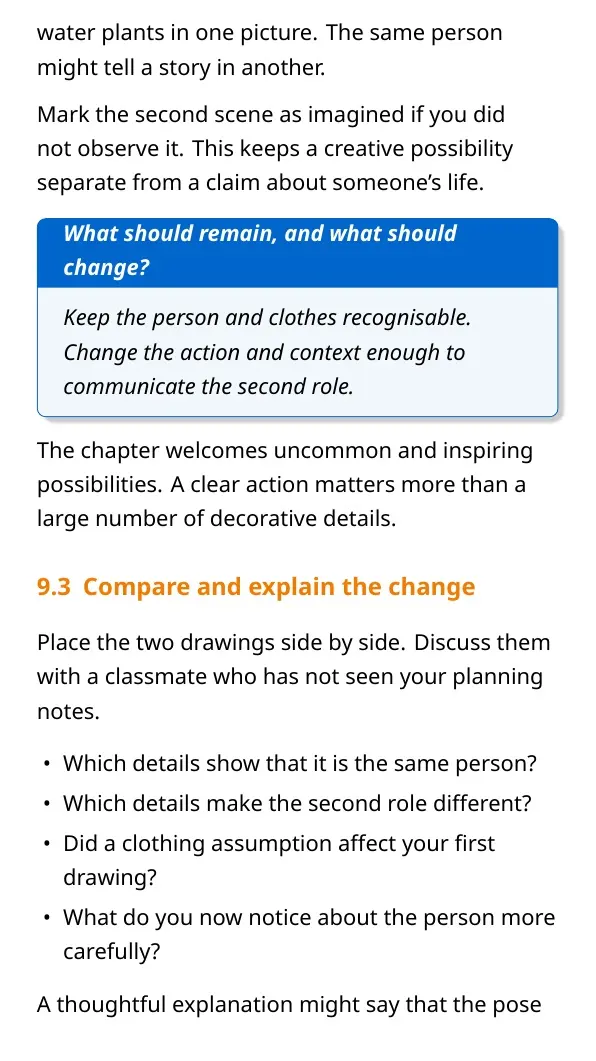
Explain what changed between your first imagined farmer and your later observations. A drawing can challenge a familiar assumption through action and setting.
Related Portraying People Resources for Class 6
| Resource | How to use it |
|---|---|
| Portraying People NCERT Solutions | Use beside your chapter activities |
| Portraying People NCERT Book | Use beside your chapter activities |
All Chapters: NCERT Notes for Class 6 Arts
| Chapter | Notes |
|---|---|
| Chapter 1 | Objects and Still Life Notes |
| Chapter 2 | Changing the Typical Picture Notes |
| Chapter 3 | Portraying People Notes |
| Chapter 4 | Paper Crafts Notes |
| Chapter 5 | Seals to Prints Notes |
Portraying People Class 6 Arts Notes FAQs
Ques. What does Portraying People cover?
Ans. It covers partner portraits, a class group portrait, historical artworks, future roles and the relationship between clothes and roles.
Ques. Are these notes based on the 2026-27 NCERT?
Ans. Yes. They follow the four activities in the 2026-27 Kriti-I Chapter 3.
Ques. Does my portrait need to look like a photograph?
Ans. No. Observe your partner carefully, but you can add your own artistic choices.
Ques. How many future roles should I draw?
Ans. Activity 3 asks you to draw three to five roles.
Ques. What is a portrait?
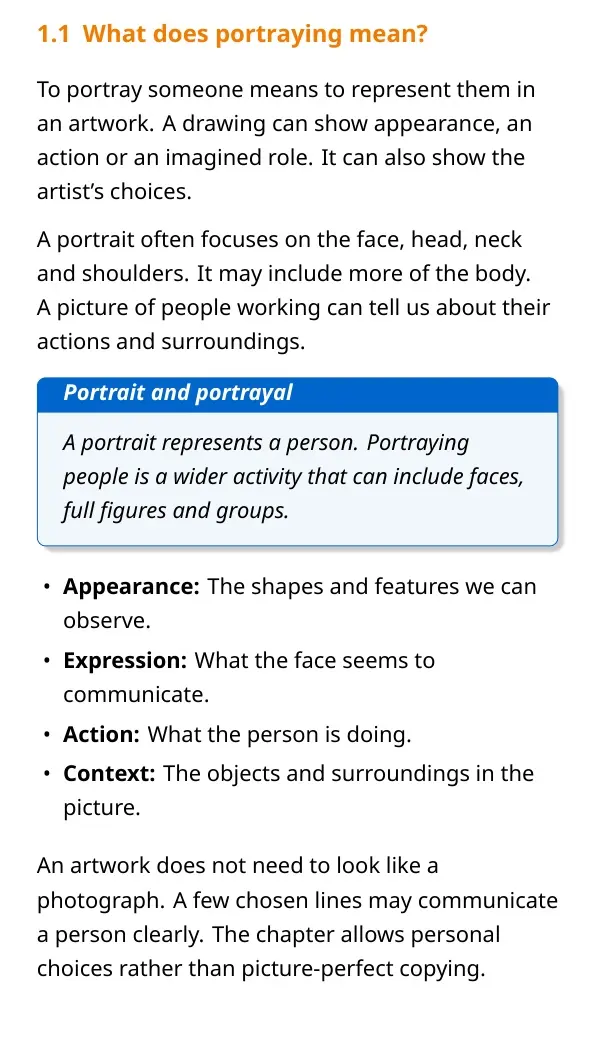
Ans. A portrait is an artwork depicting a person. It often focuses on the face, head, neck and shoulders, but may include other body parts.
Ques. What does composition mean?
Ans. Composition is the arrangement of parts in an artwork, such as the placement of individual faces in a group portrait.
Ques. What are facial features?
Ans. Facial features are parts such as the eyes, eyebrows, nose, mouth, ears and chin. Their shapes and spacing help distinguish faces.



Comments