




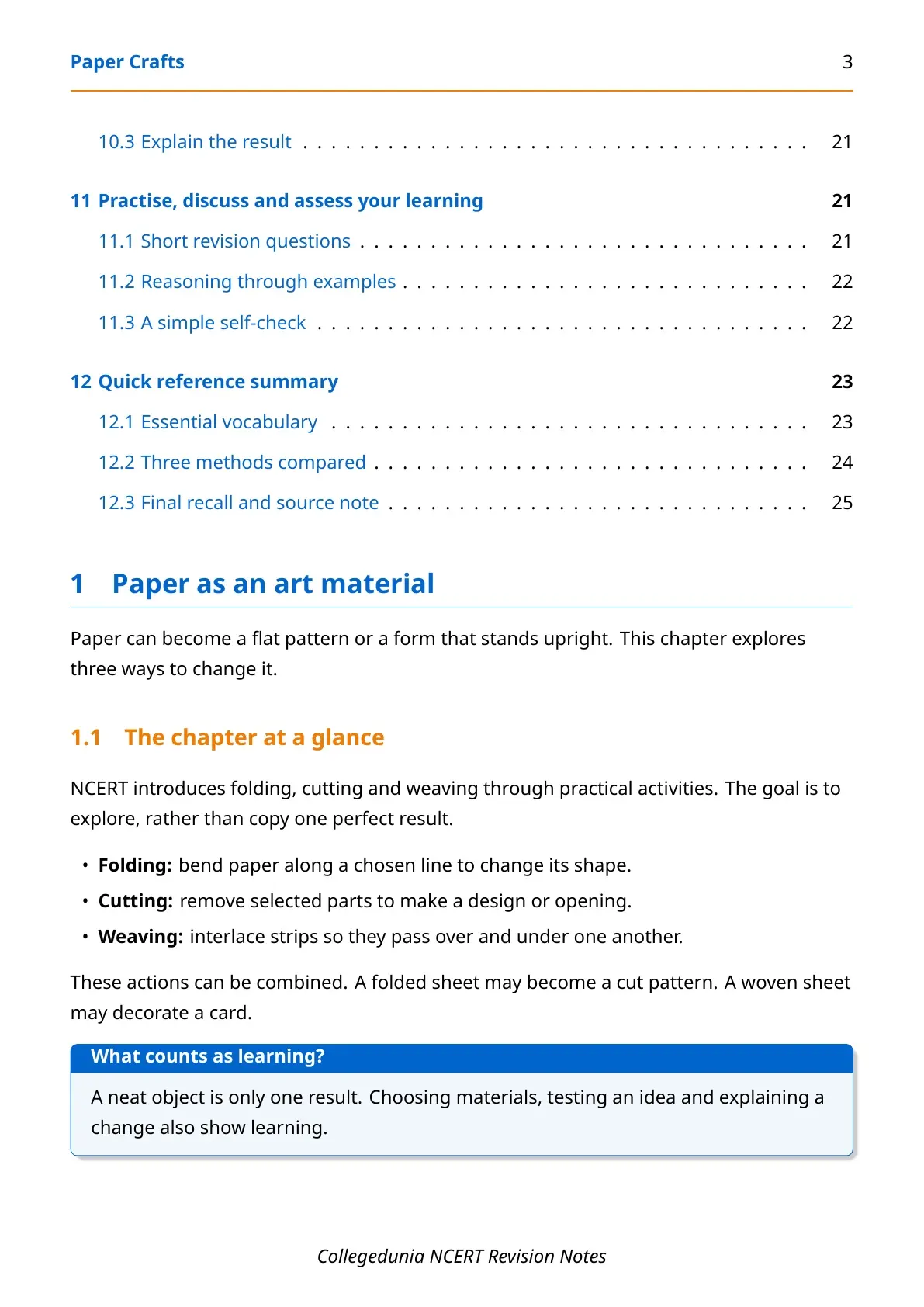
Inside these Class 6 Arts Chapter 4 Paper Crafts notes, you will find explanations of origami, Sanjhi paper cutting and paper weaving. The notes follow the three activities in the 2026-27 NCERT Kriti-I chapter. Keep paper nearby as you revise, so you can connect each new word with a fold, cut or woven pattern.
- Compare folding, cutting and weaving through the chapter's three activities.
- Learn why paper cranes represent peace and where Sanjhi is practised.
- Use the PDF for revision alongside your own classroom craft work.
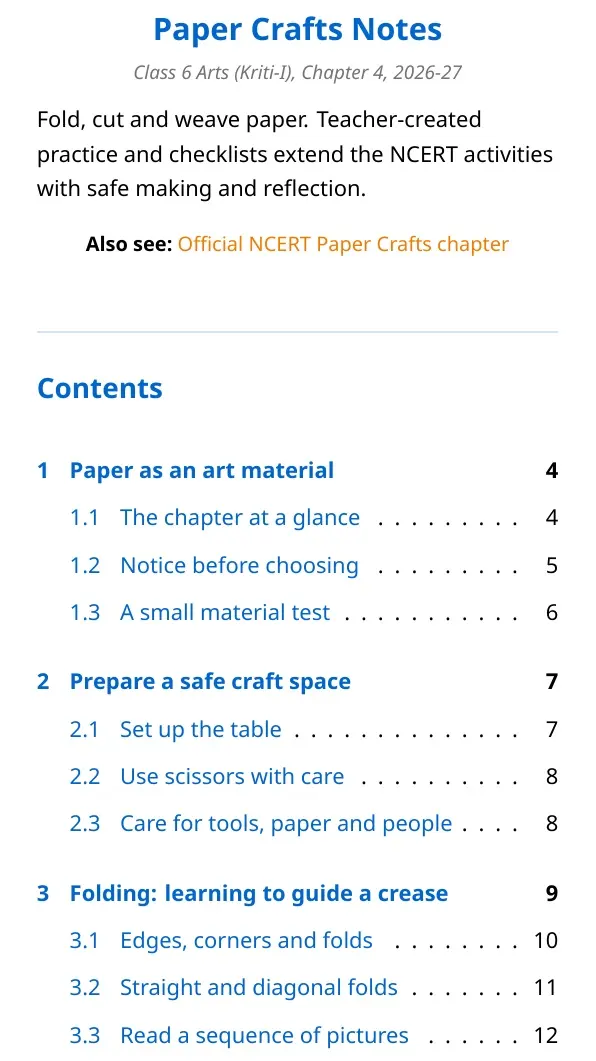
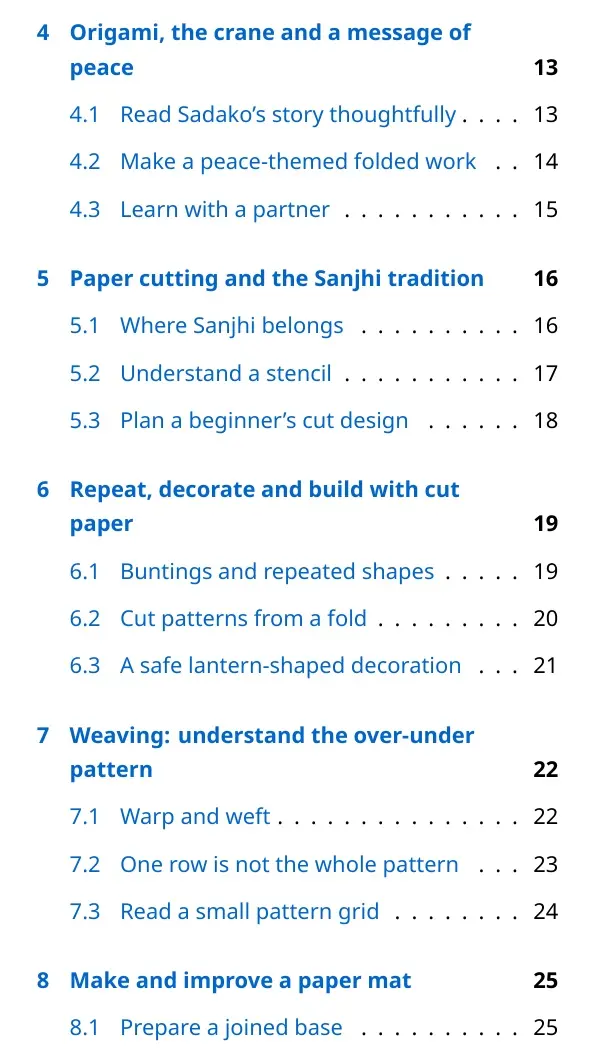
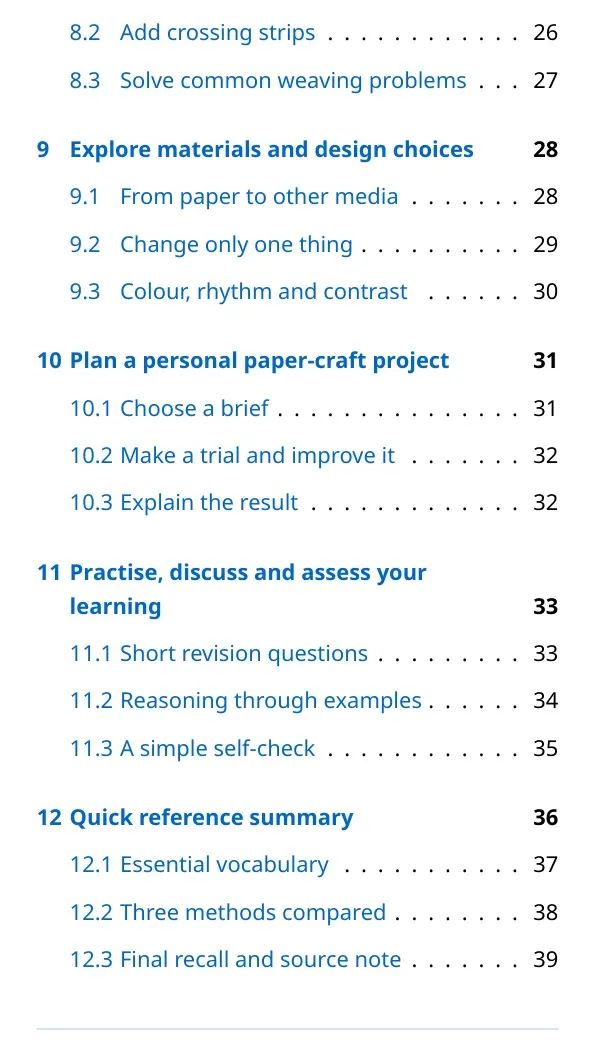
These notes follow the activities in the official NCERT Kriti-I Paper Crafts chapter.
Student Feedback: share one design choice
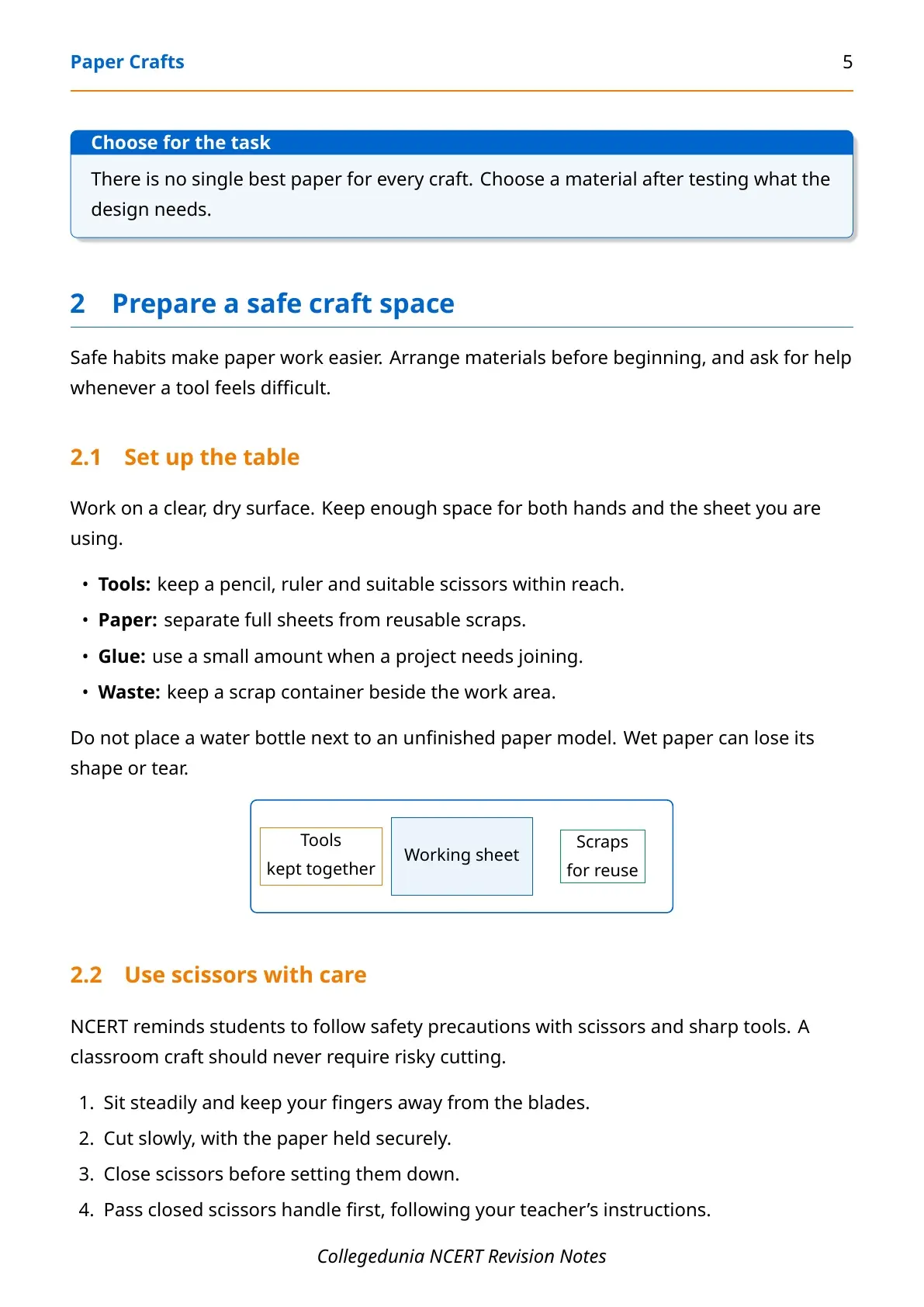
Show a classmate your paper creation. Explain one fold, cut or colour choice, then ask what they notice in the pattern.
Paper Craft Activity: Shapes and Folds
This short extension activity uses paper craft to explore shapes and folds. It is a Class 6 Maths activity, rather than a complete Kriti-I chapter lesson.
Source: Magnet Brains on YouTube
Paper Crafts Techniques: Folding, Cutting and Weaving
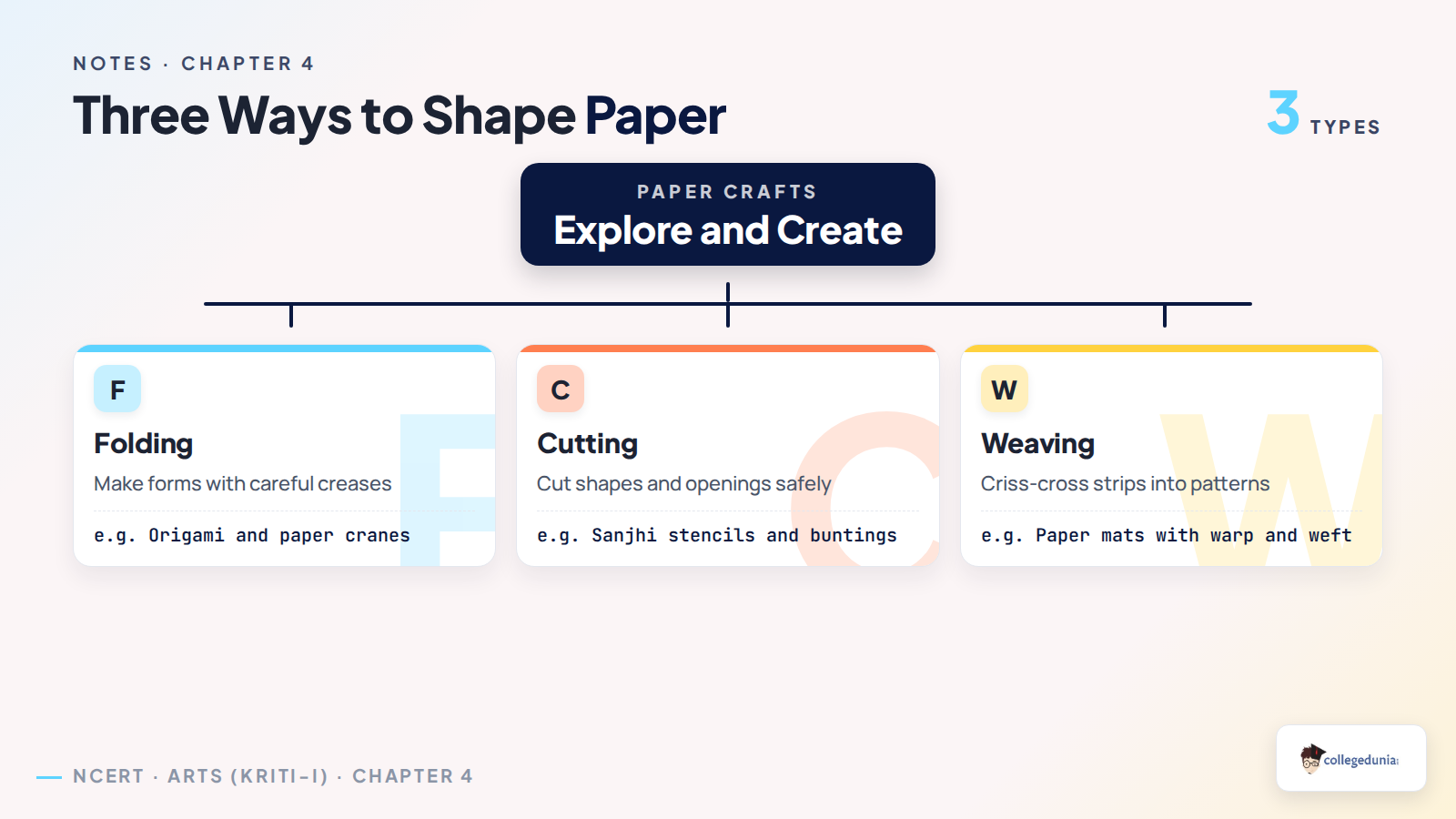
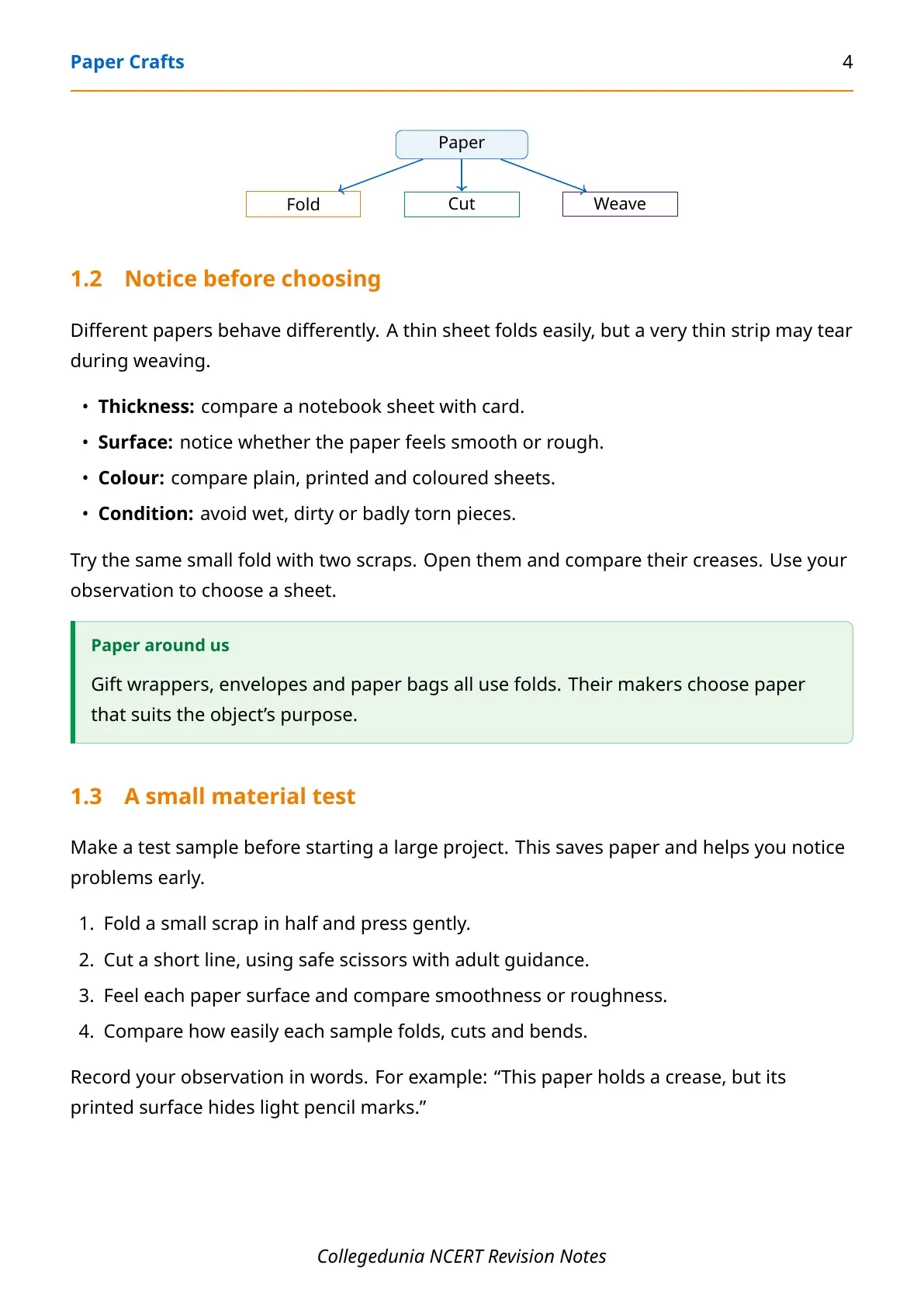
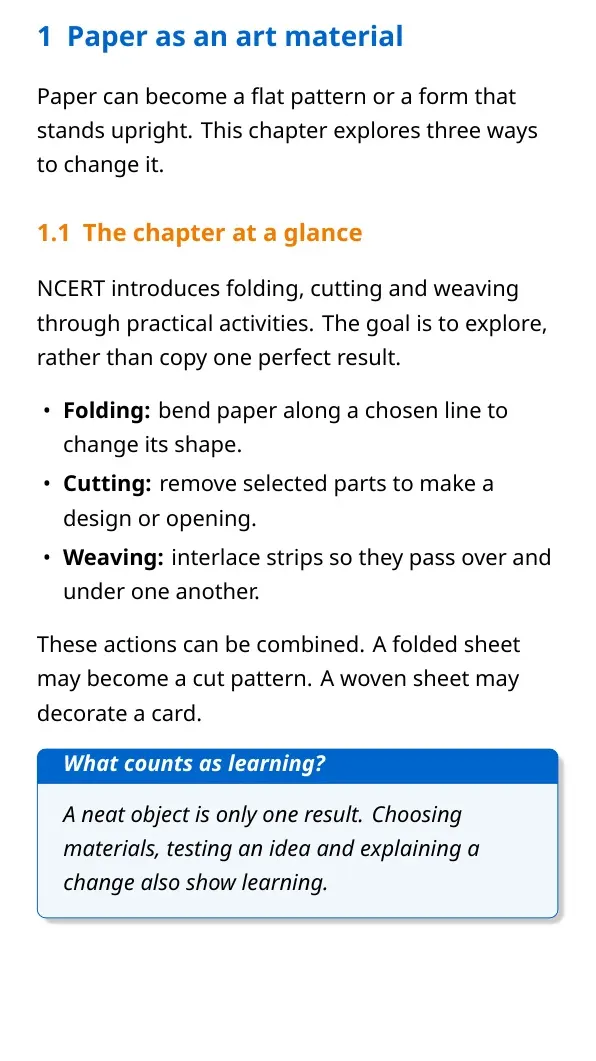
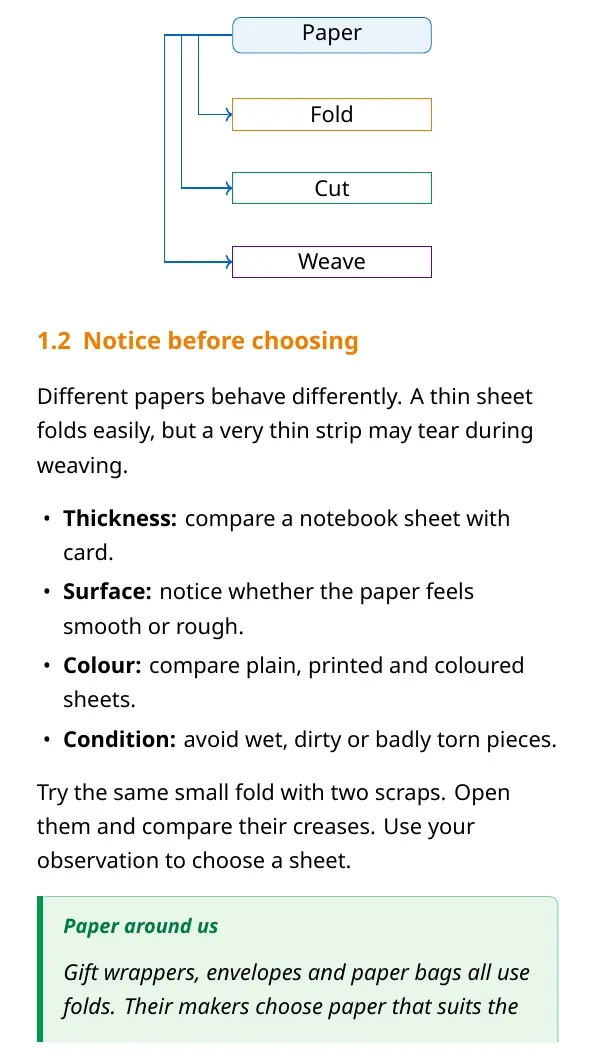
Paper can become a bird, a decorative cut-out or a woven mat. Each activity changes the material differently. Compare the actions before starting your own work.
| Technique | Main action | NCERT connection |
|---|---|---|
| Folding | Bend and crease the paper | Origami and a paper crane |
| Cutting | Remove selected parts of a sheet | Sanjhi stencils and decorations |
| Weaving | Interlace strips across one another | A paper mat and cloth threads |
A fold changes the shape without removing paper. A cut removes part of the sheet. Weaving joins crossing strips into a surface.
Paper Craft Activity: Shapes and Folds
This short extension activity uses paper craft to explore shapes and folds. It is a Class 6 Maths activity, rather than a complete Kriti-I chapter lesson.
Source: Magnet Brains on YouTube
Paper Crafts Origami and the Meaning of Paper Cranes
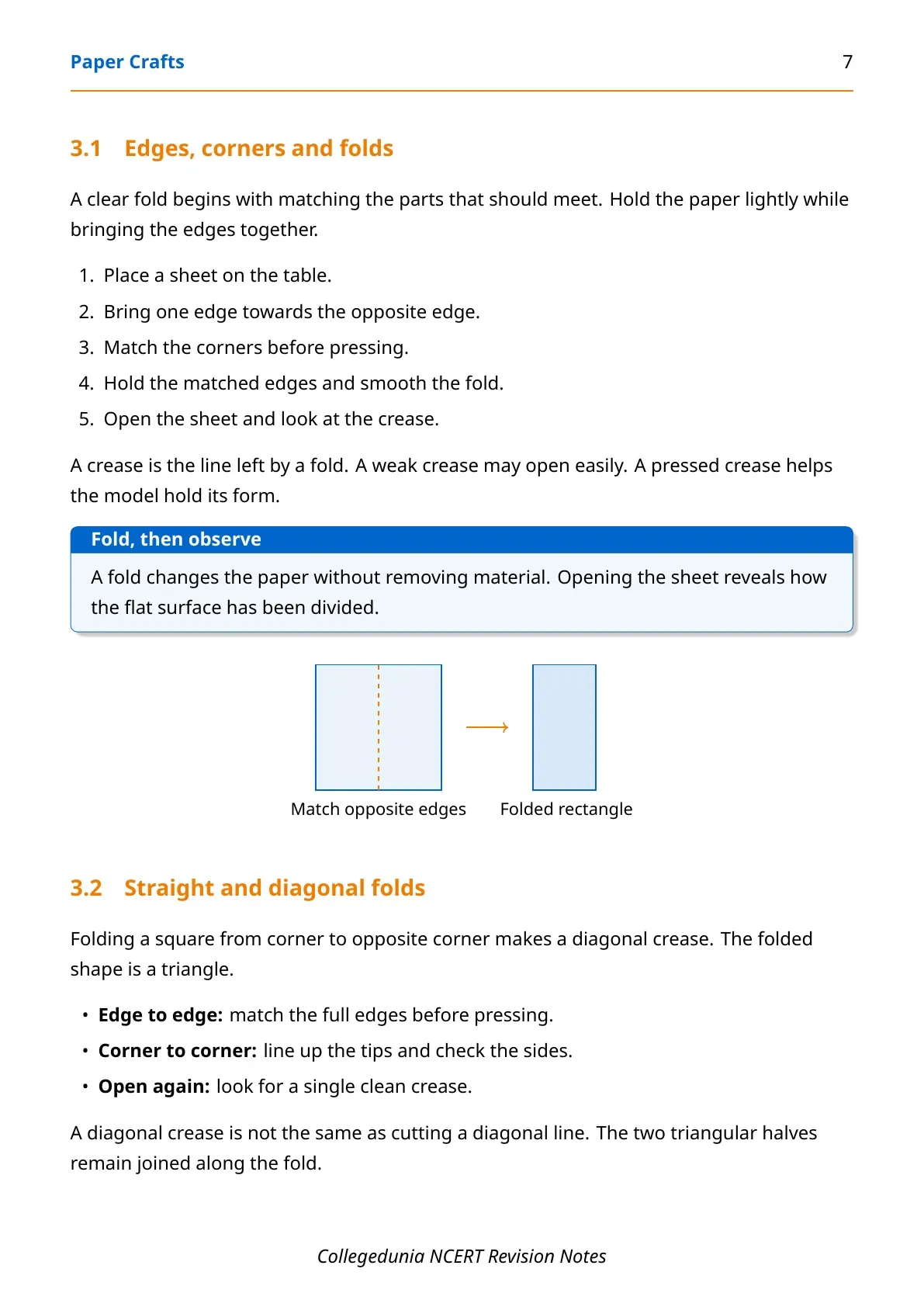
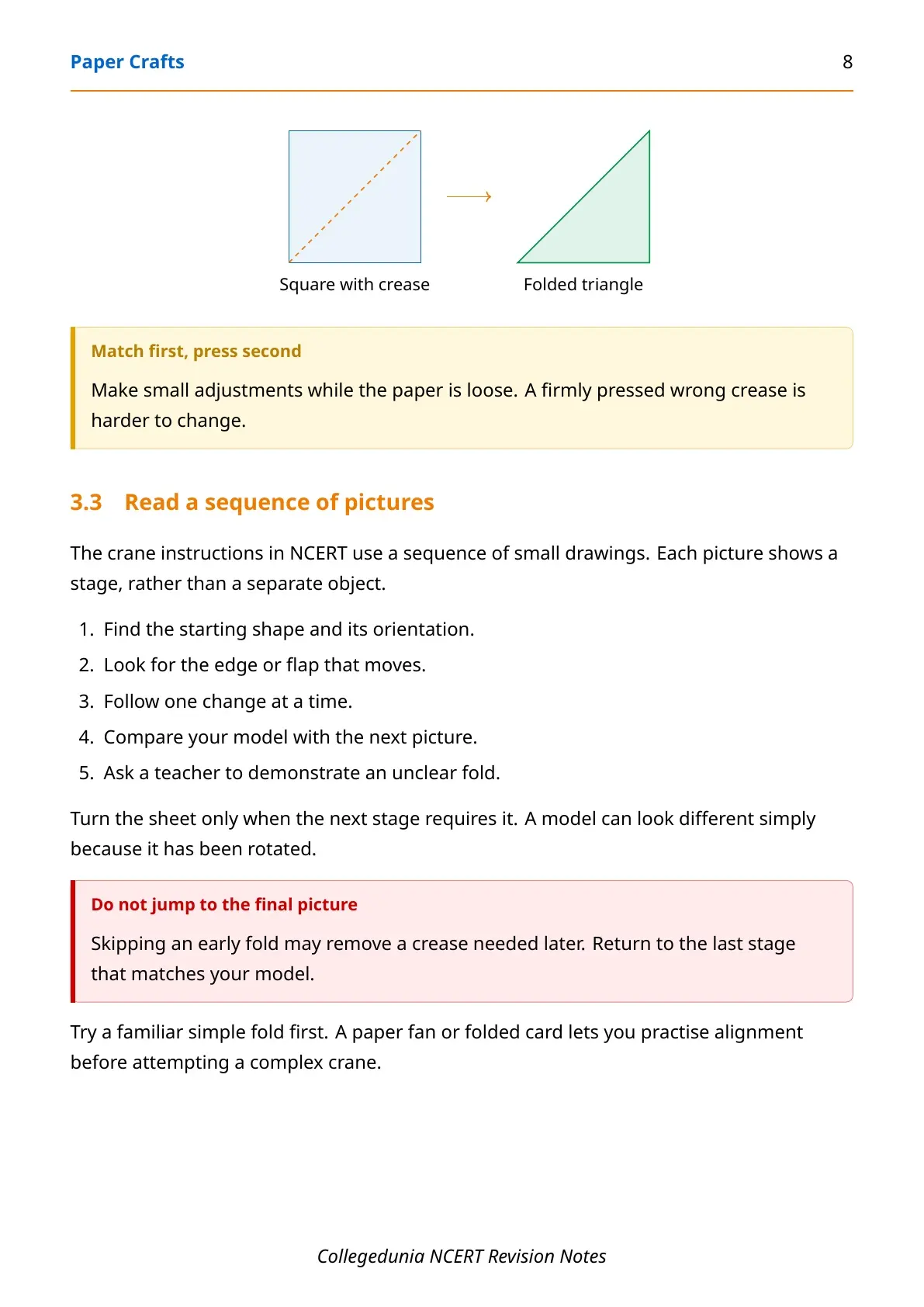
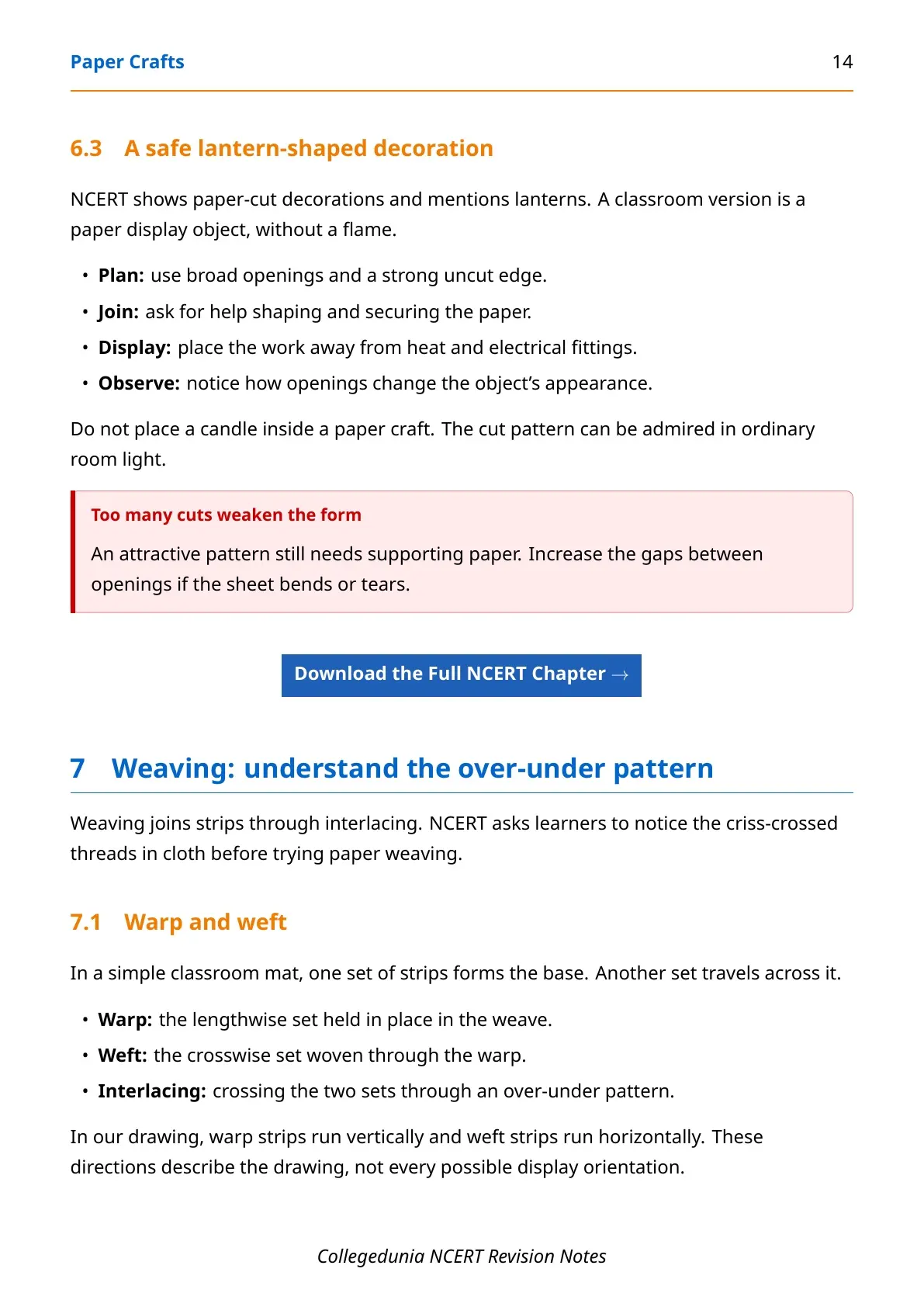
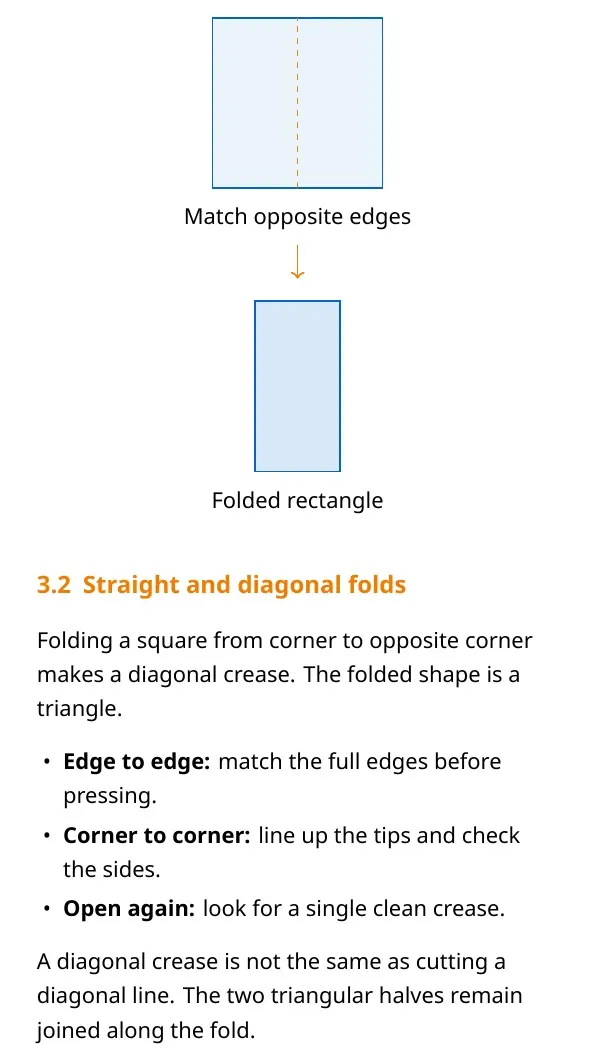
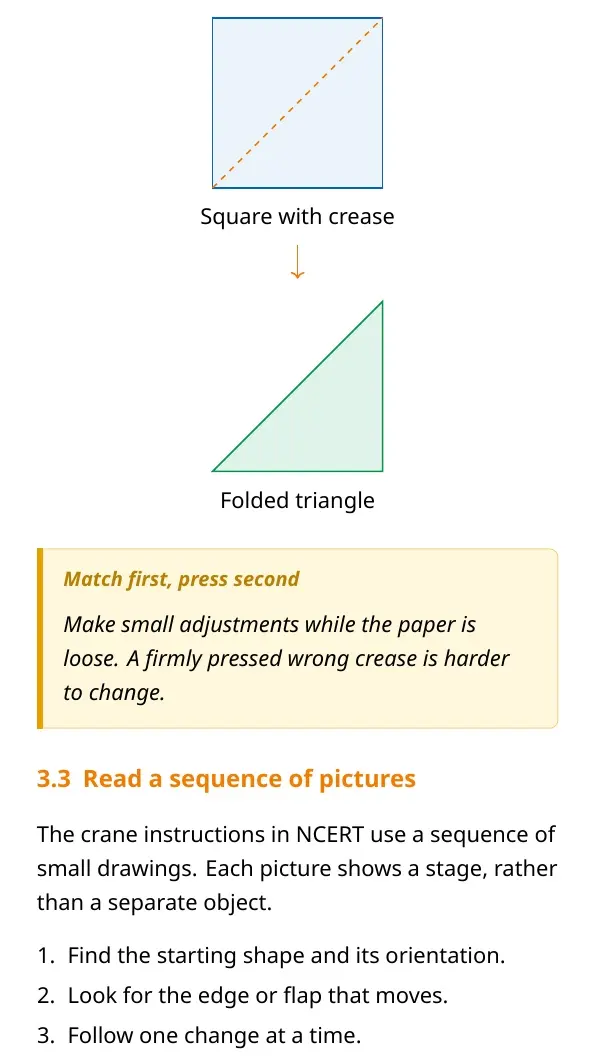
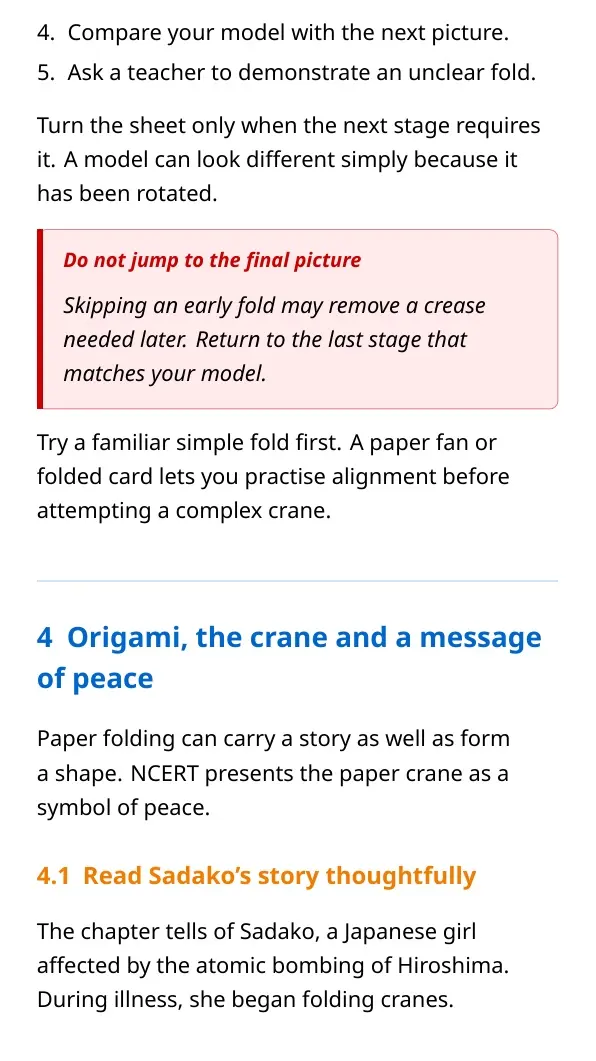
Origami is the art of folding paper. NCERT introduces it as an art form that originated in Japan and spread worldwide. Follow the textbook's illustrated crane sequence carefully. Ask your teacher, parents or friends to show you unfamiliar folds.
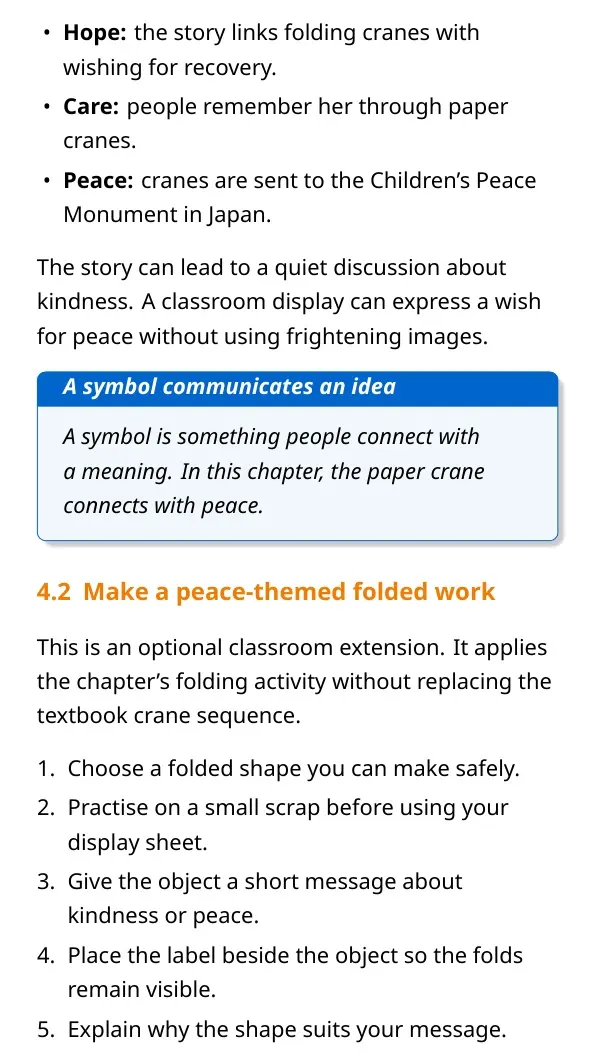
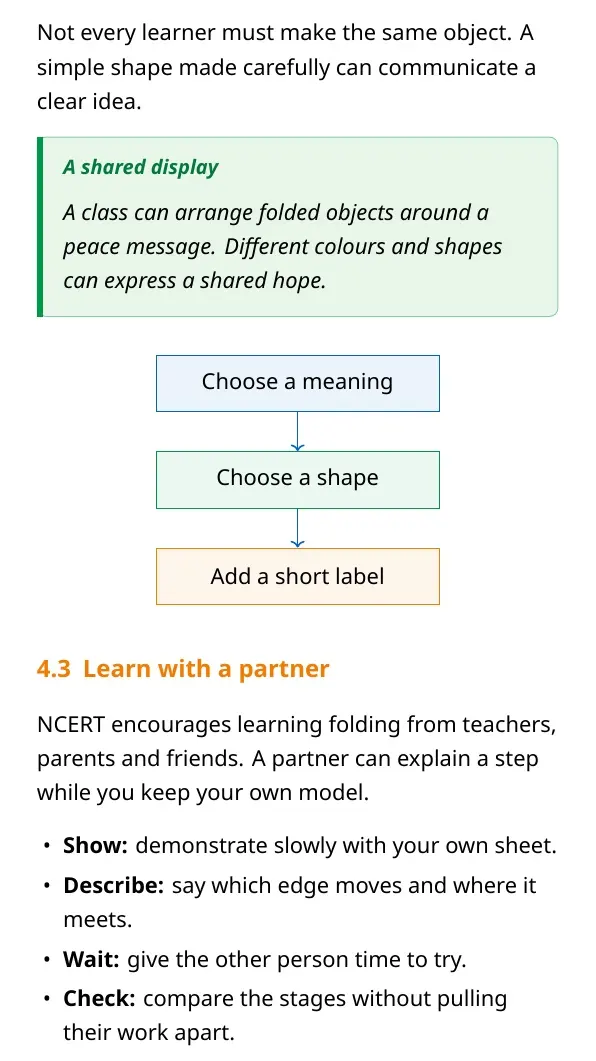
The chapter tells Sadako's story and links paper cranes with hope and peace. People send cranes to the Children's Peace Monument in Japan. The important connection is how an ordinary paper object can carry a shared message.
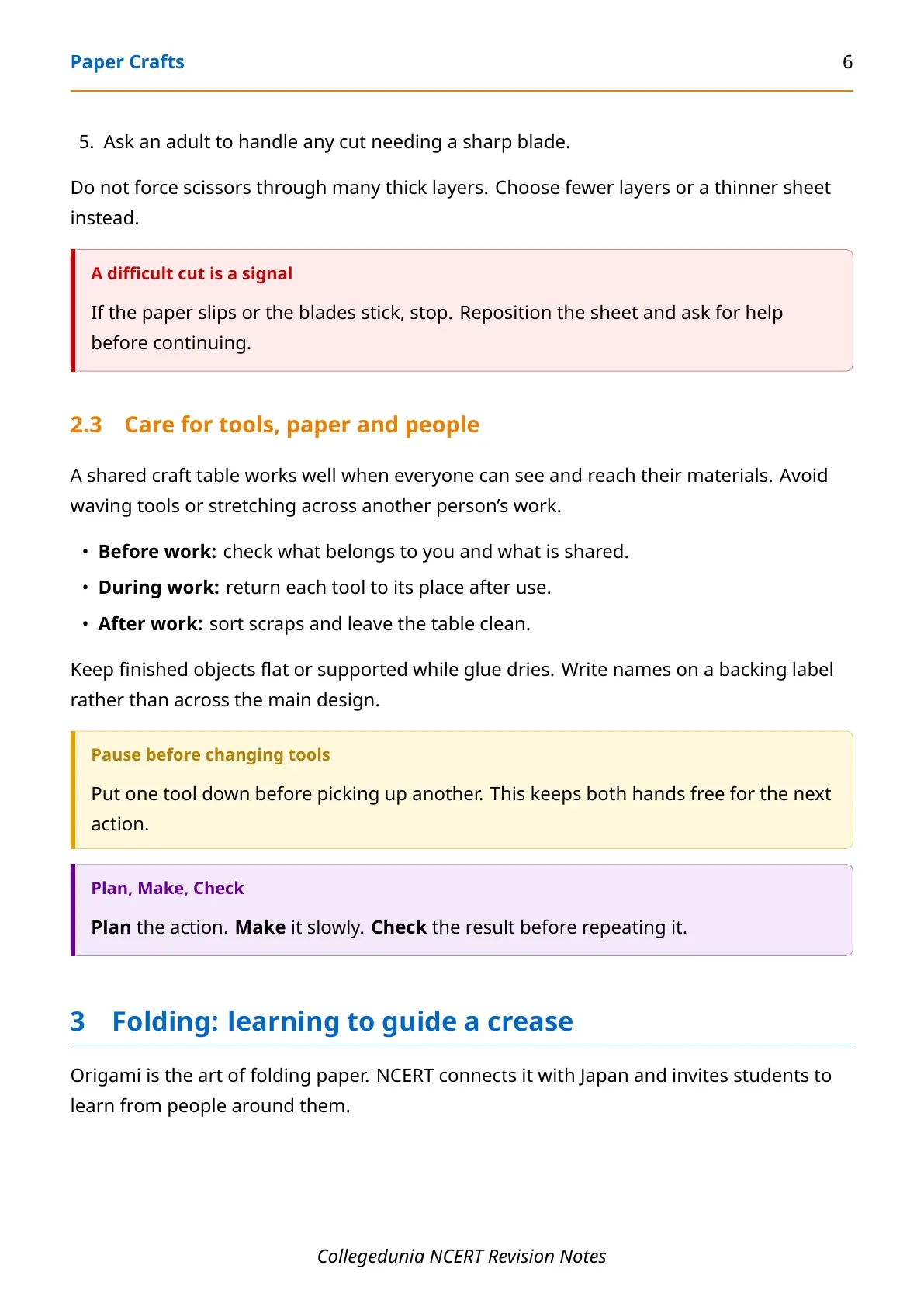
- Match edges before pressing a crease.
- Check each illustrated stage before making the next fold.
- Try another paper object after practising the crane.
Paper Crafts Sanjhi Stencils and Colourful Buntings
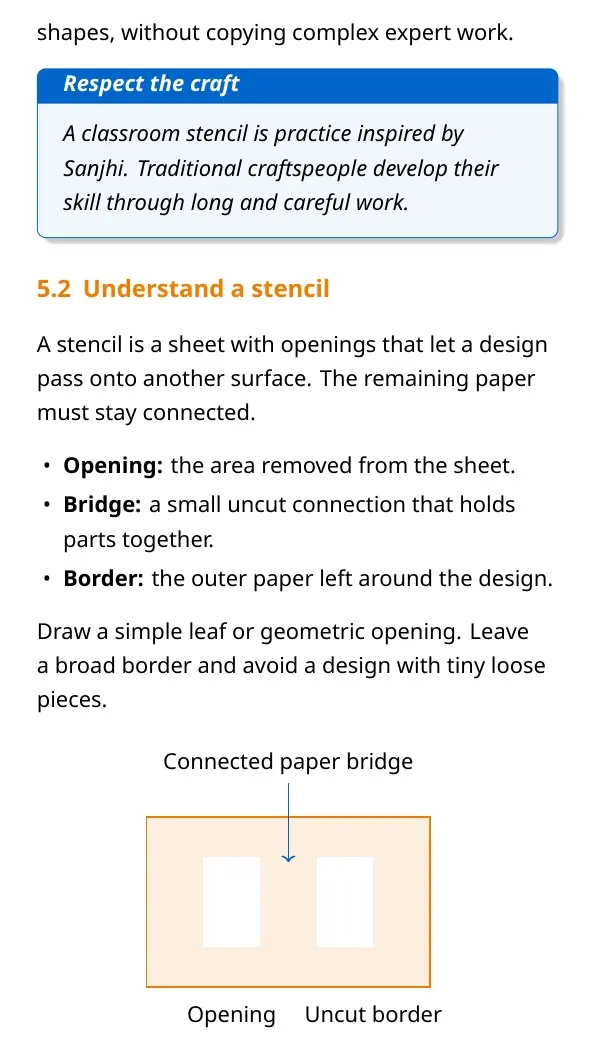
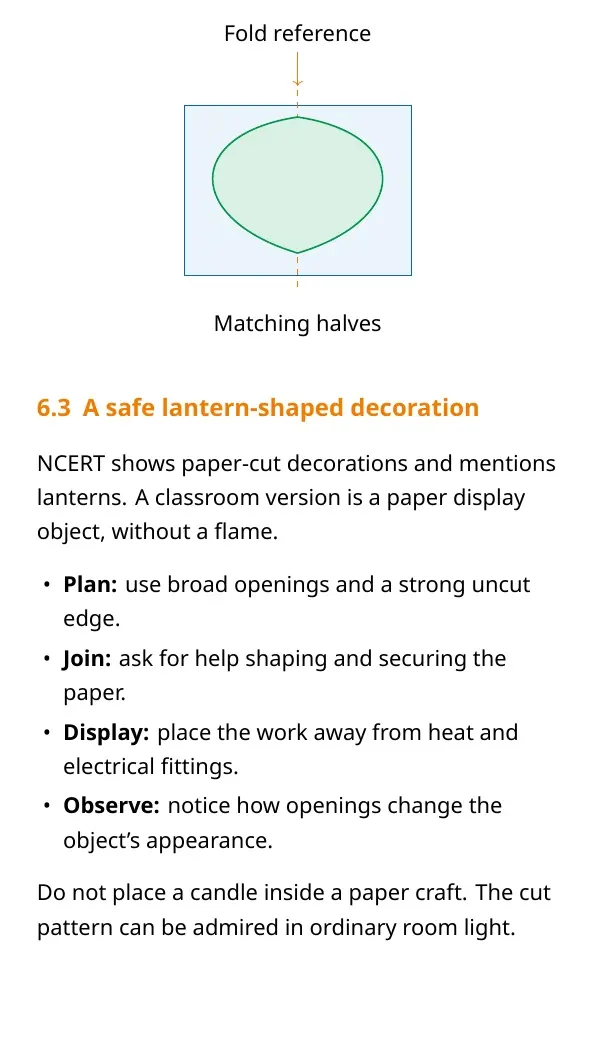
Sanjhi is a traditional art practised in Mathura and nearby regions of Uttar Pradesh. NCERT explains its use as a stencil for rangoli. Its paper versions contain carefully cut designs and images.
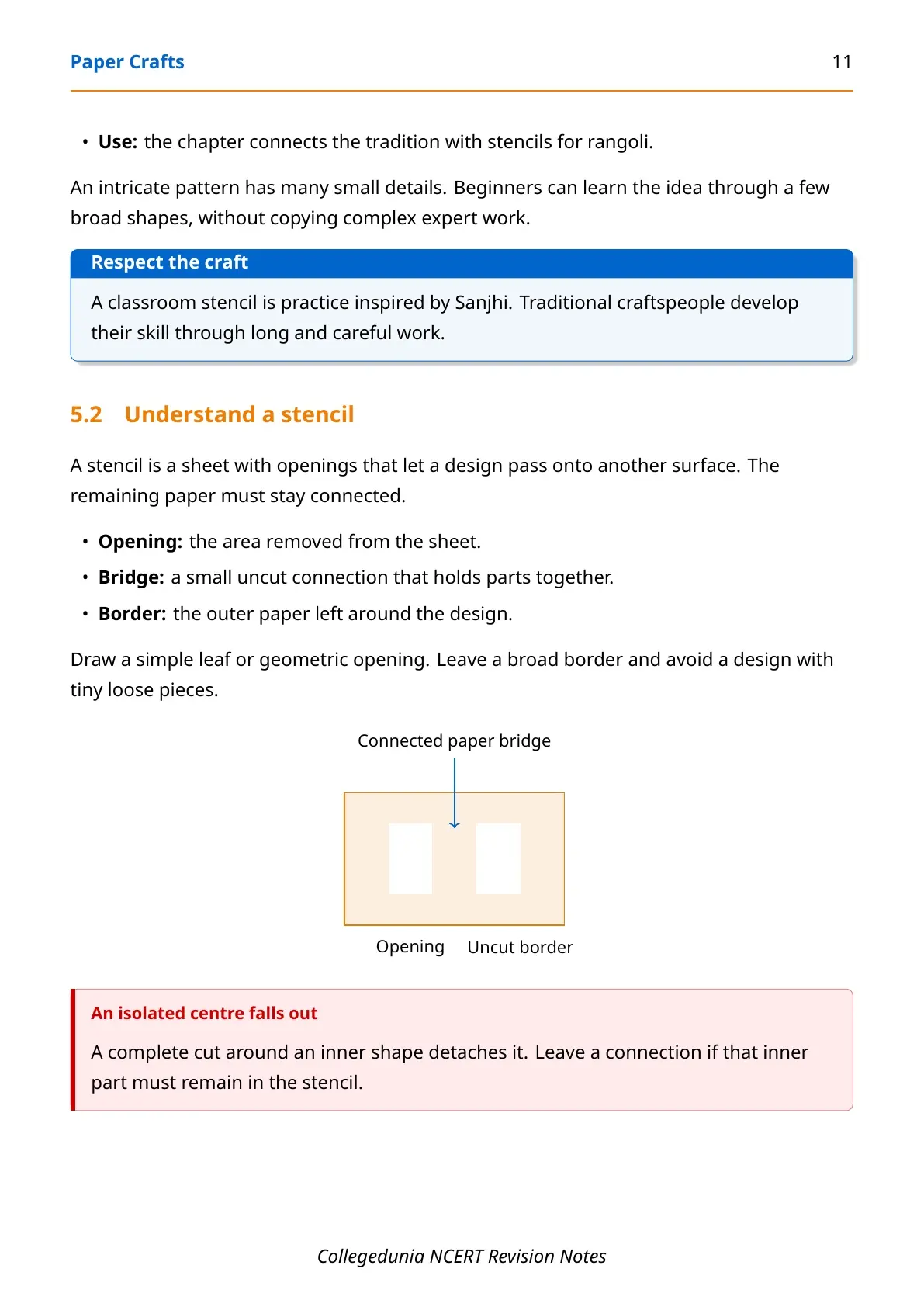
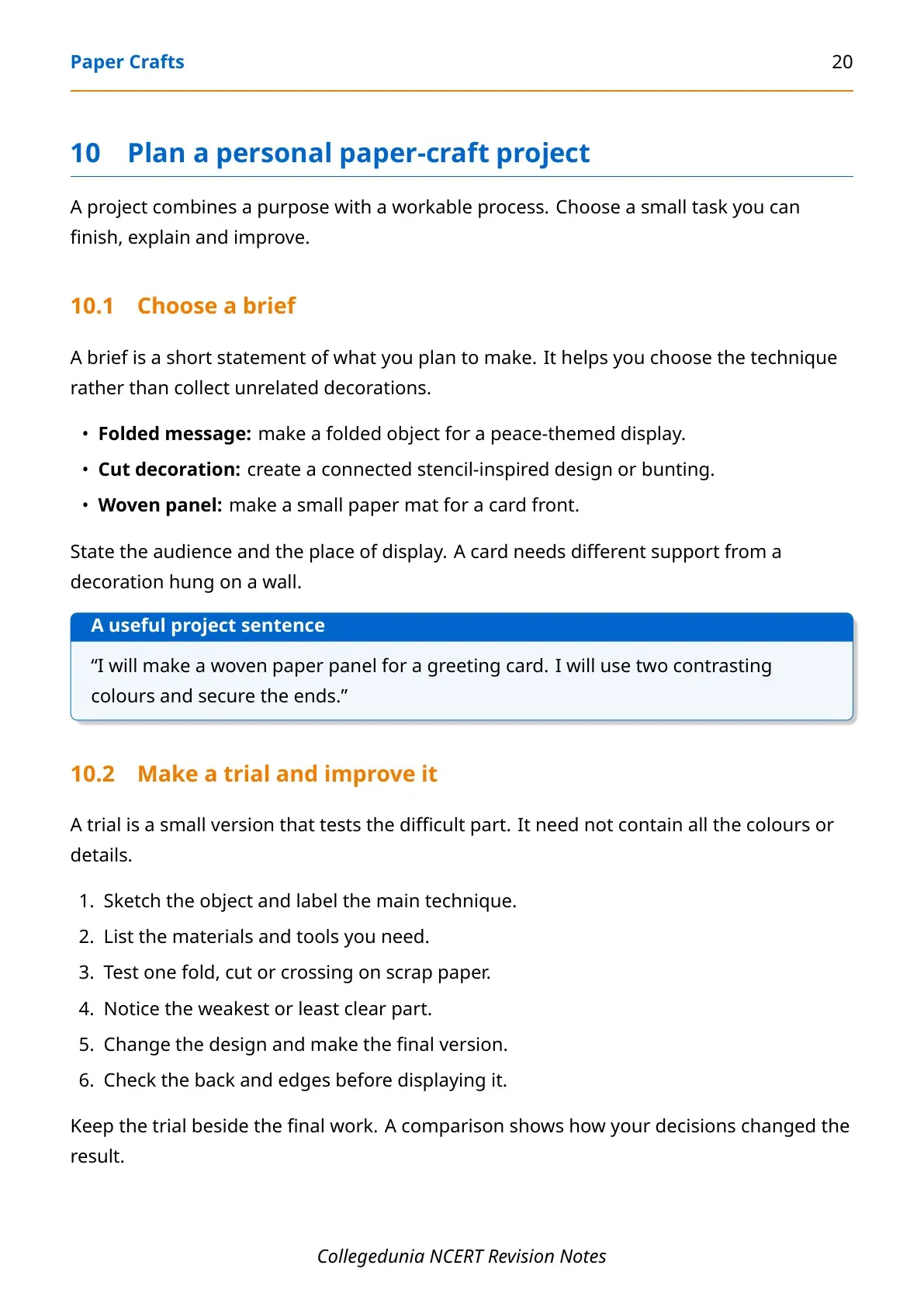
Plan a simple picture before cutting. Decide which parts to remove and which parts must remain connected. The textbook suggests using paper cuts for lanterns and other decorations.
Use scissors and sharp tools safely. Follow your teacher's instructions. Start with a simple design you can handle comfortably.
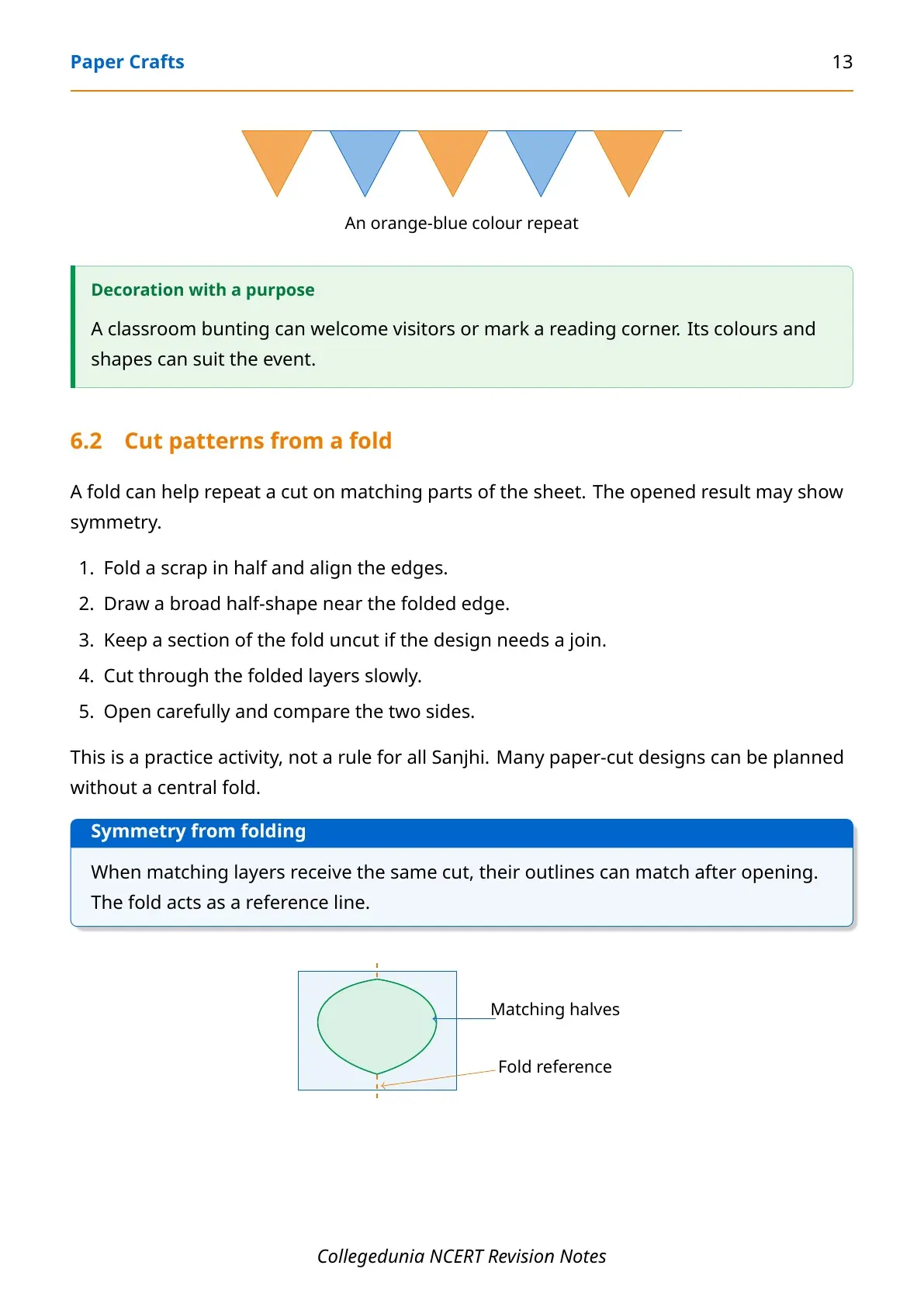
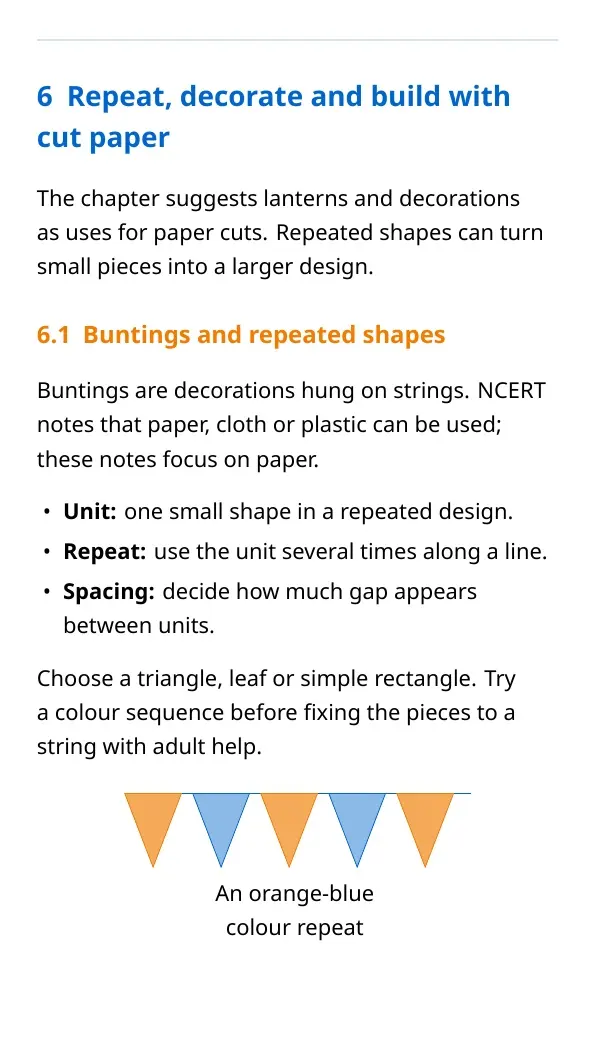
Buntings are decorations hung on strings. They may use paper, cloth or plastic. Cut shapes and patterns can make them more decorative. Try a repeating design and share your ideas with classmates.
Paper Crafts Weaving: Understand Warp and Weft
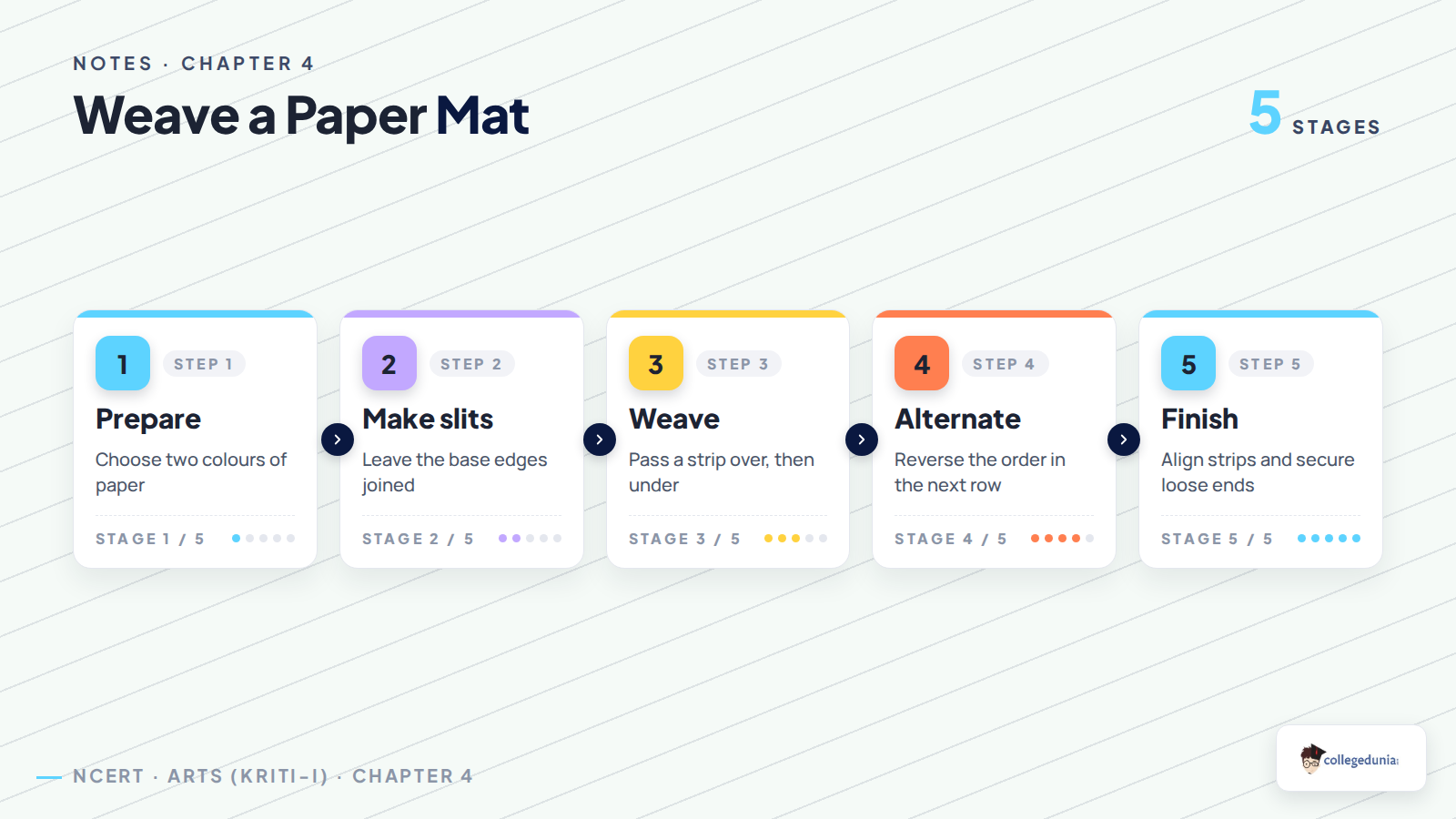
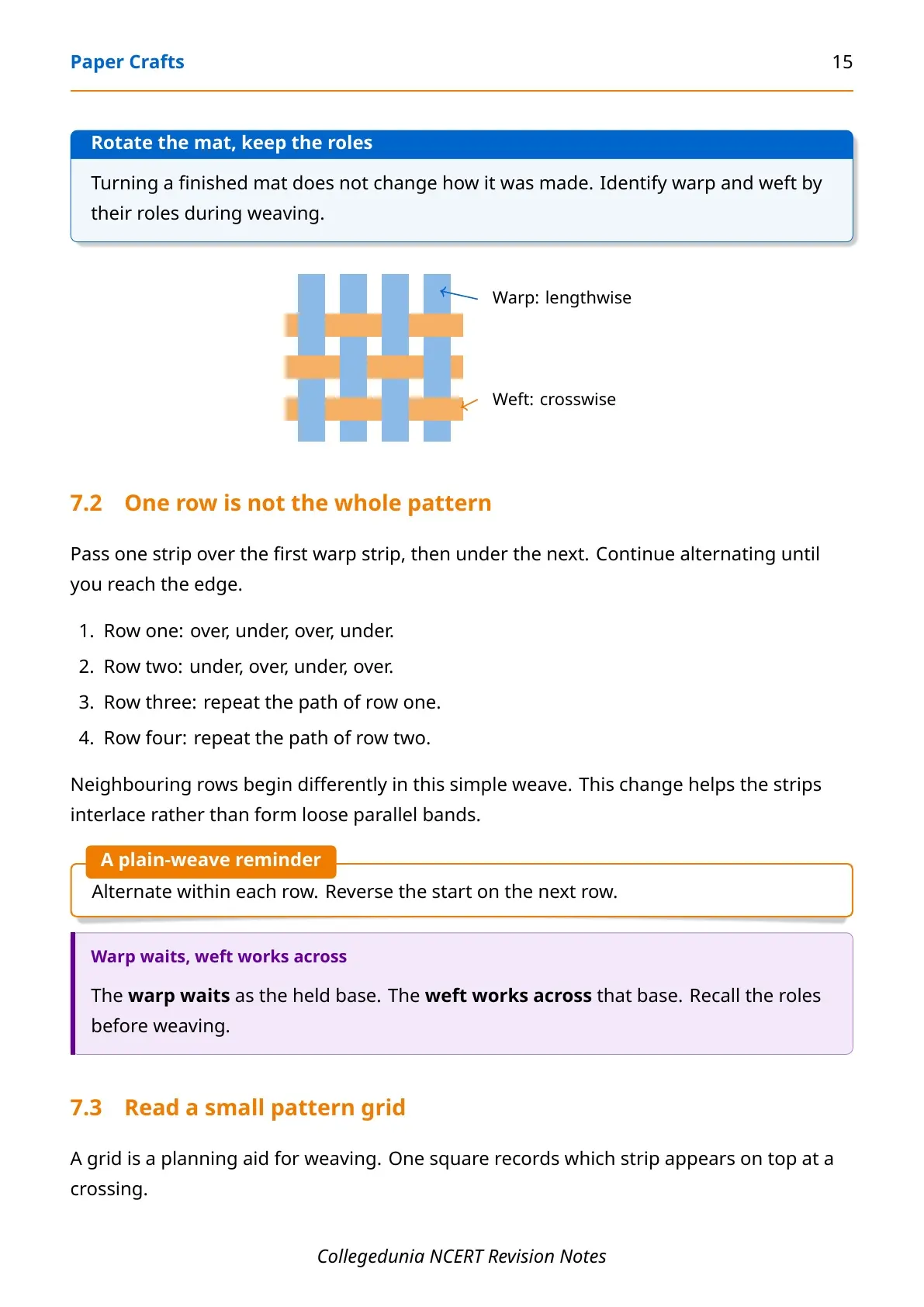
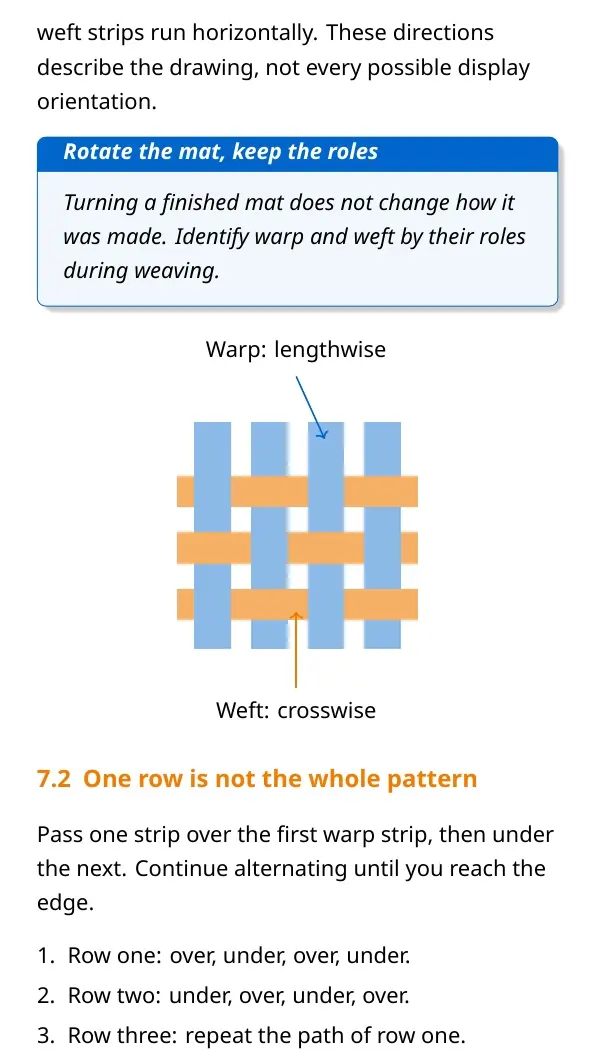
Look closely at a piece of cloth. Its threads cross one another. The chapter connects this criss-cross arrangement with warp and weft, then asks you to weave a paper mat.
- Study the mat pictures in the textbook.
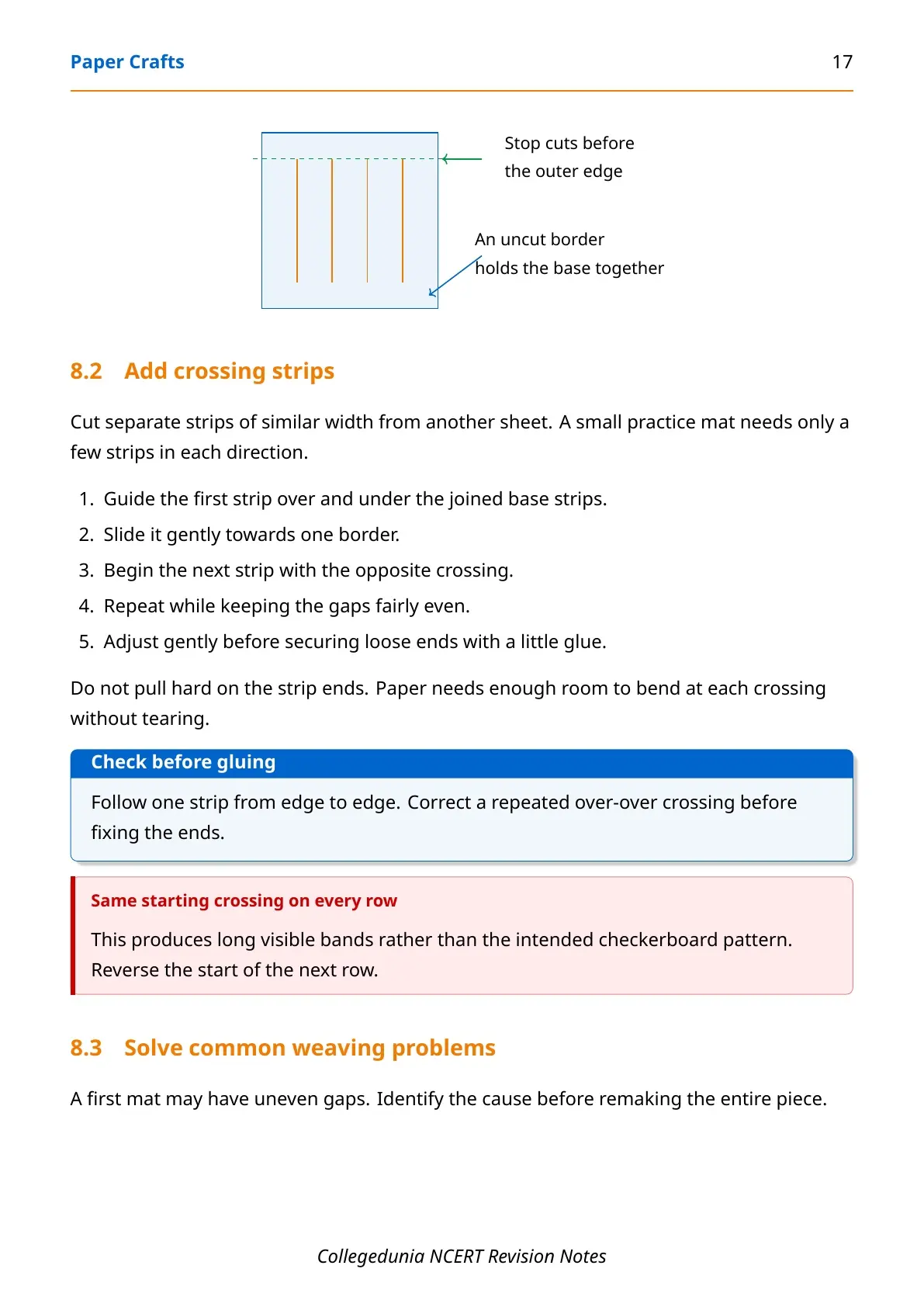
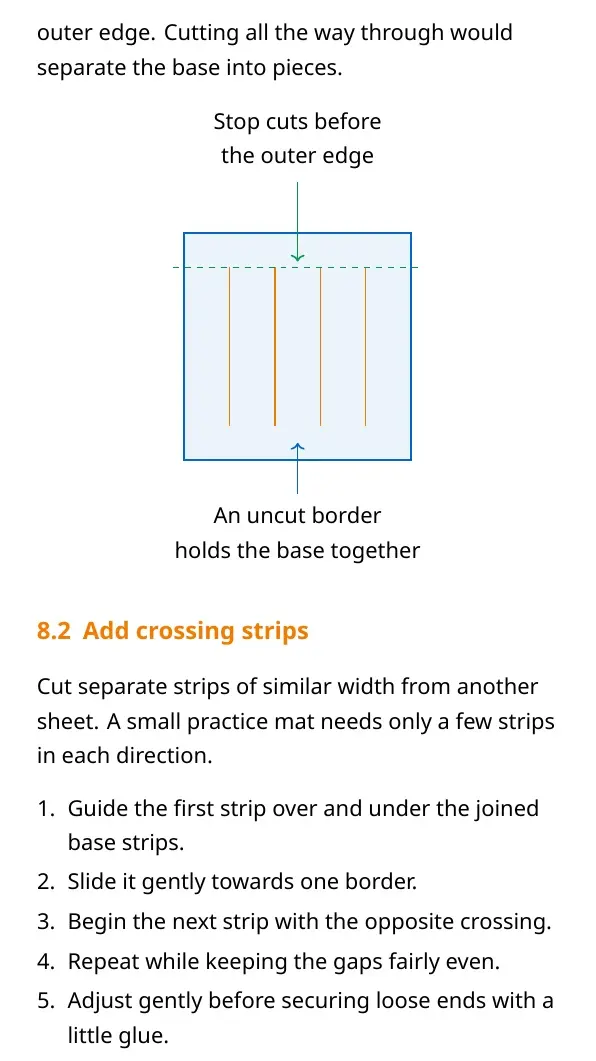
- Prepare a paper base and strips with your teacher's help.
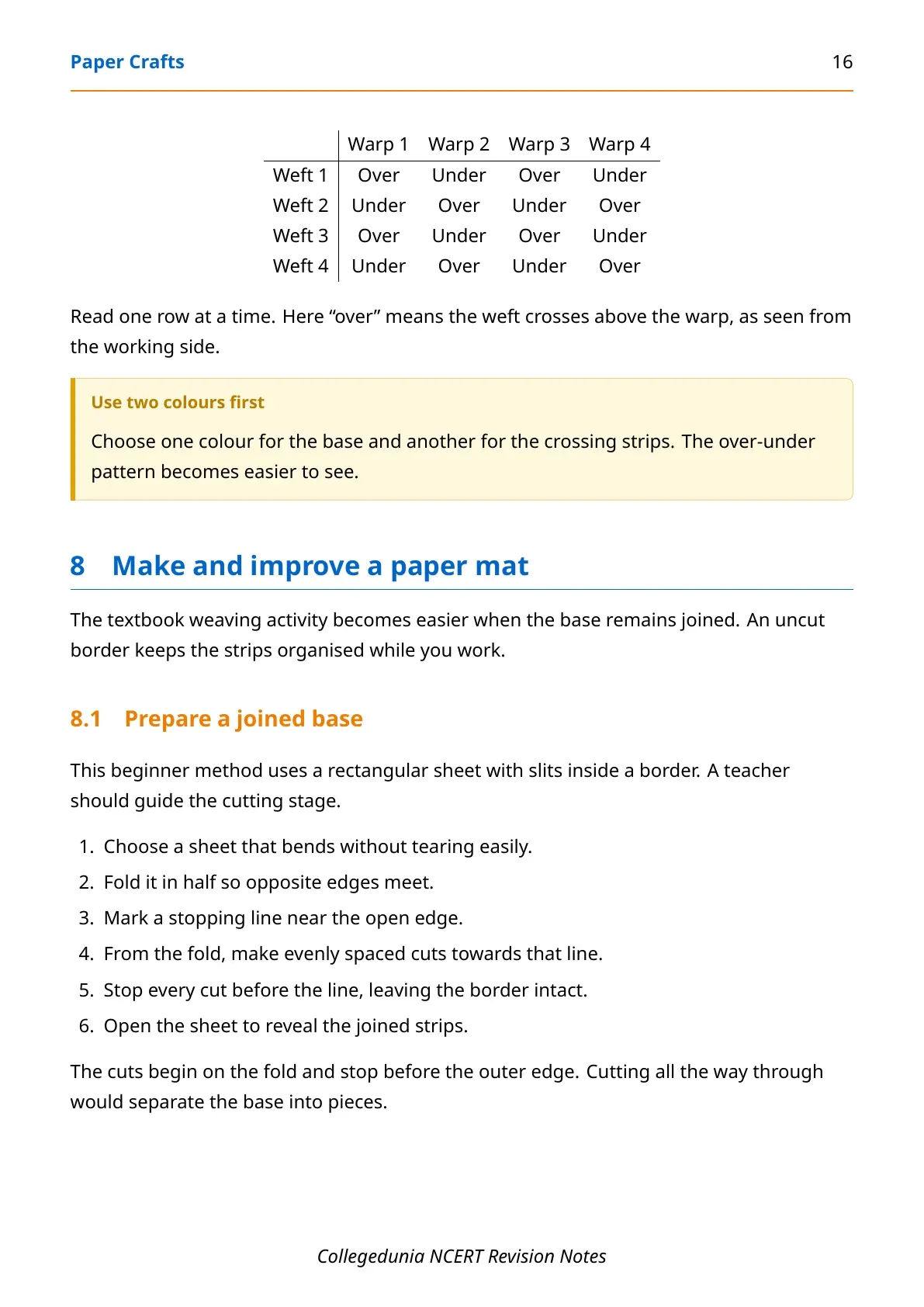
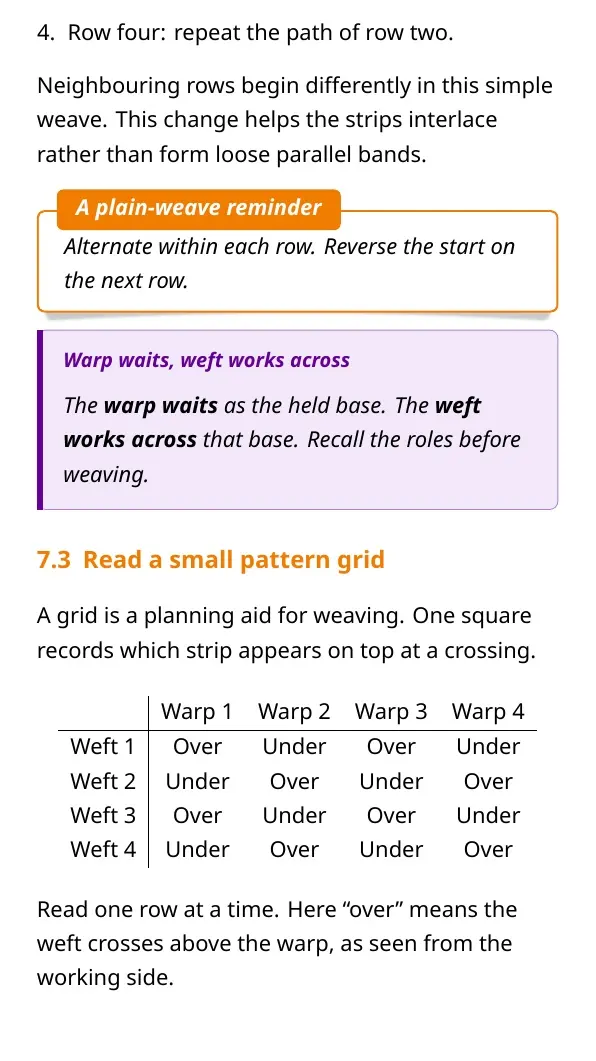
- Pass a strip over one base strip and under the next.
- Reverse the starting position in the next row.
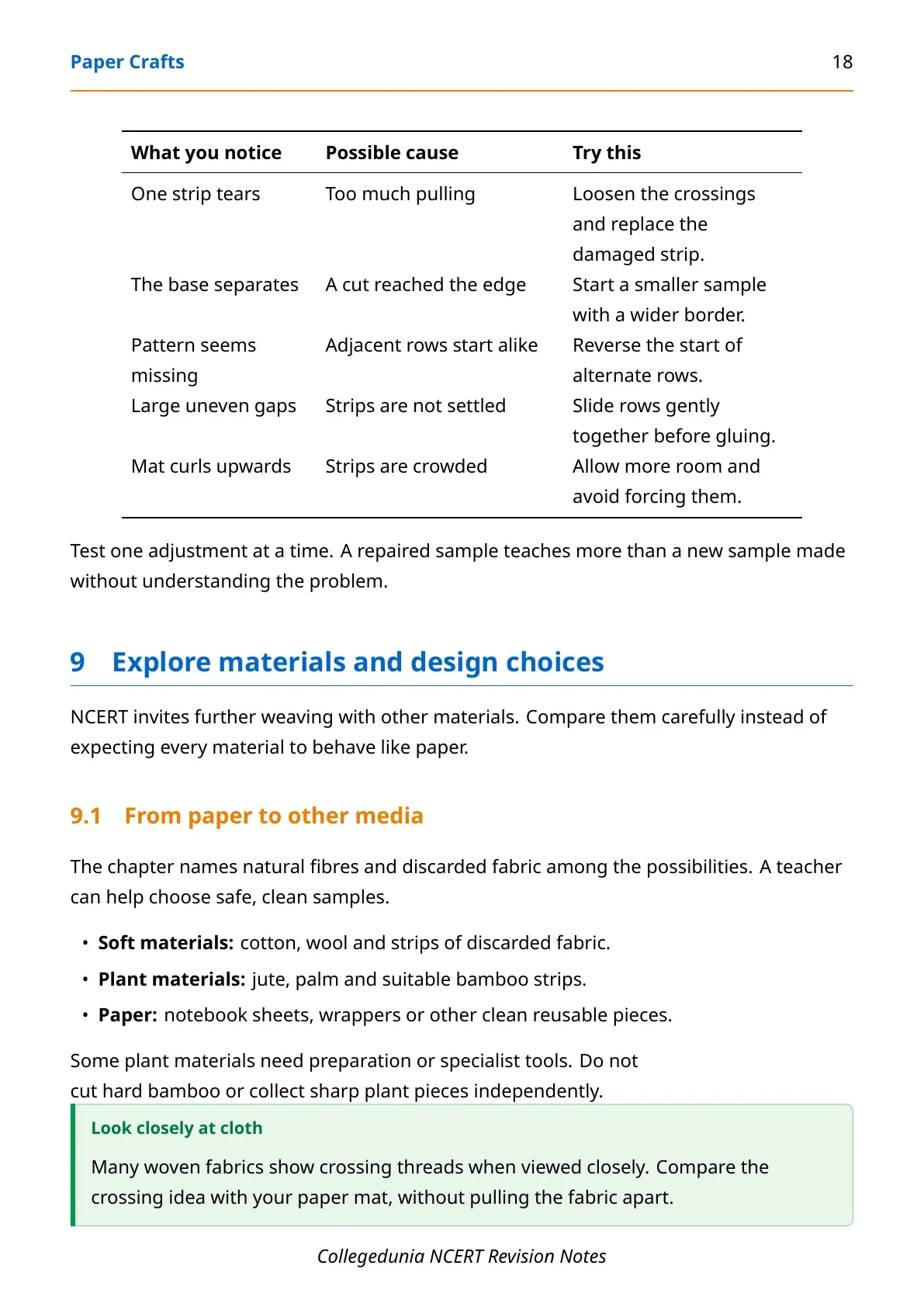
- Gently bring rows together and compare the pattern.
Alternating over and under helps the strips interlace. Use two colours to make crossings easier to see. Do not pull so hard that the paper tears.
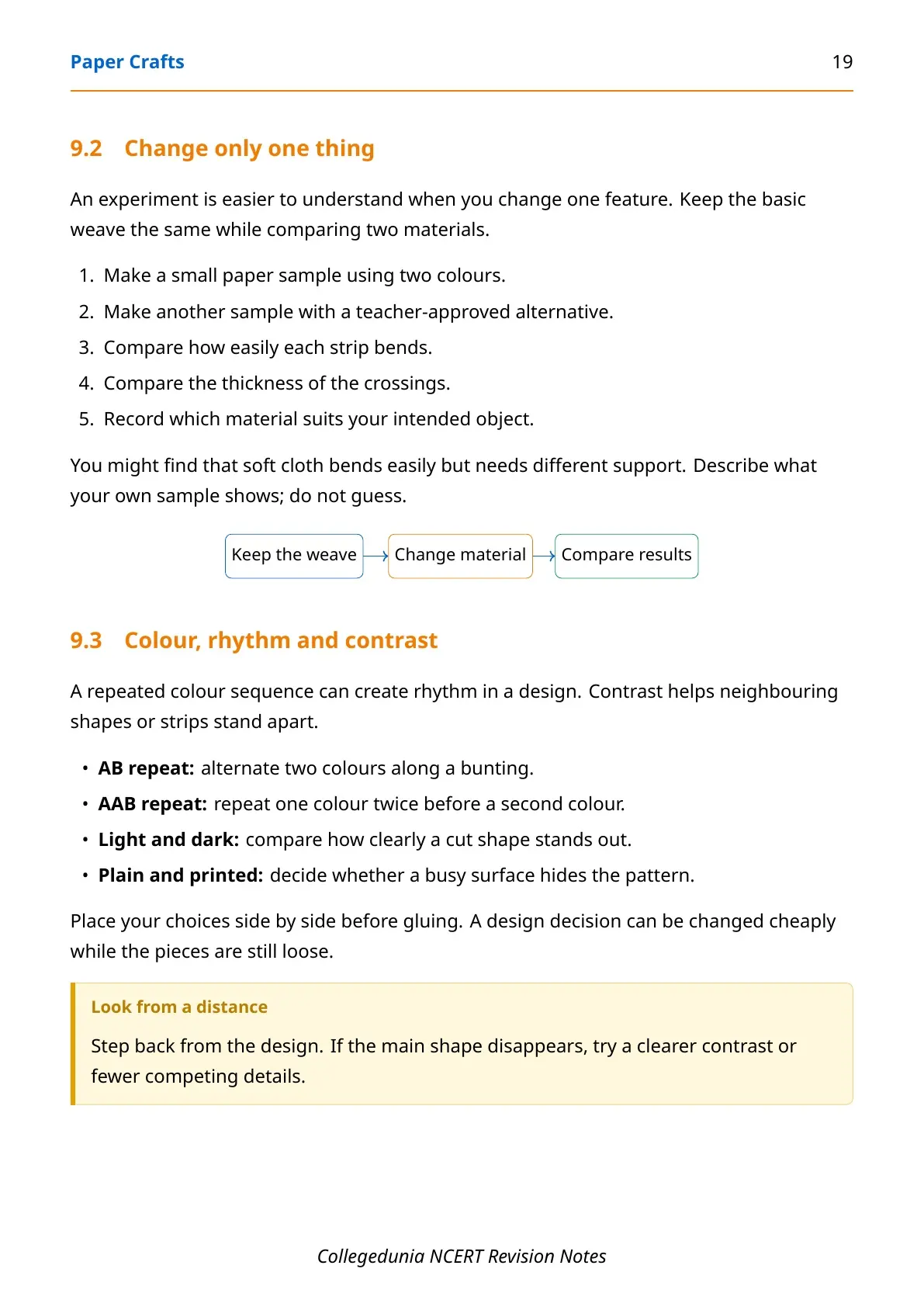
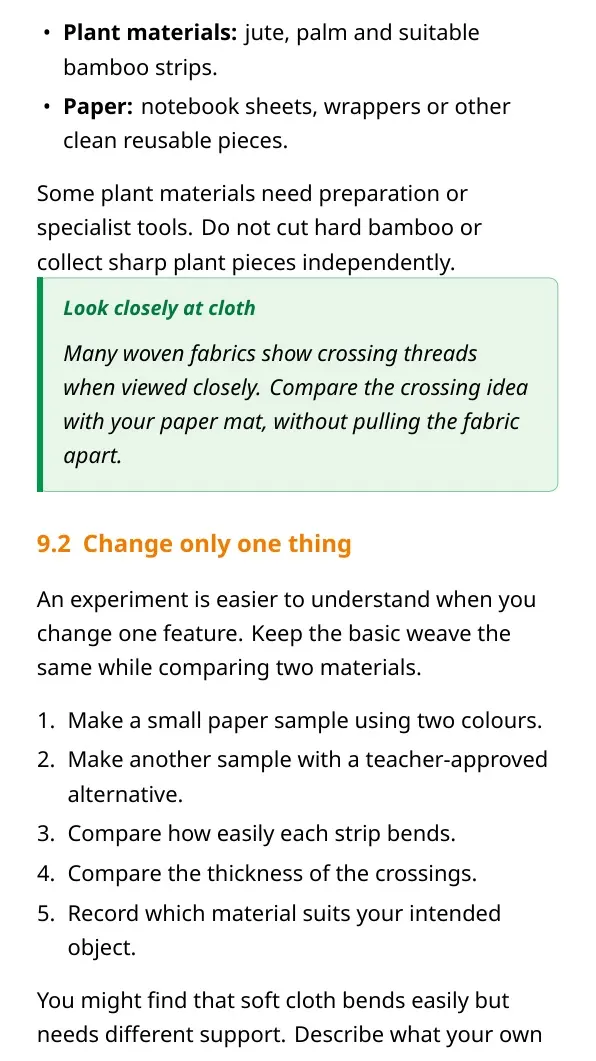
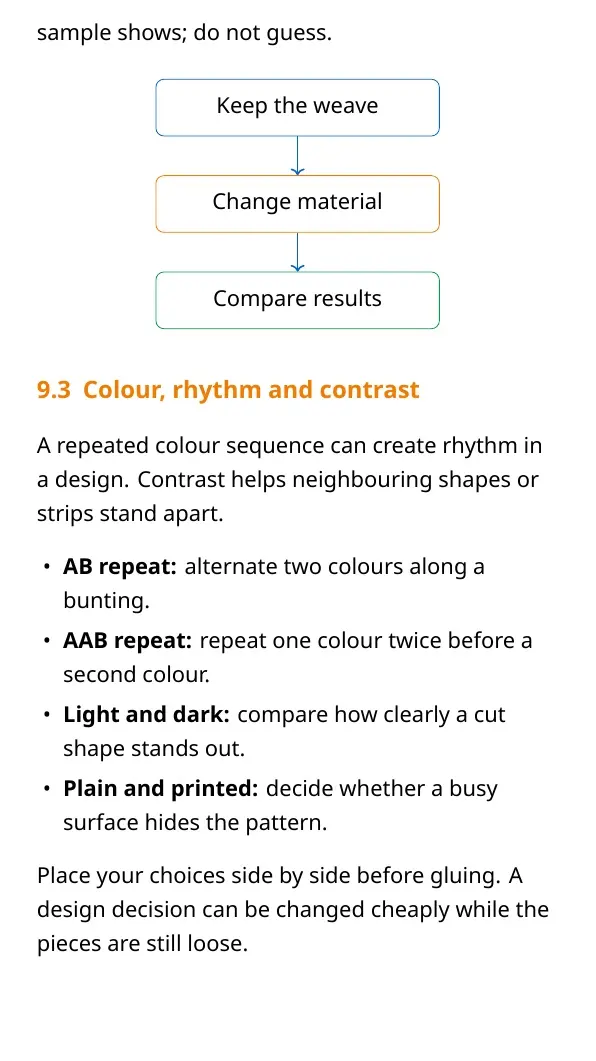
NCERT also suggests weaving with natural fibres, cotton, wool, bamboo, jute, palm and discarded fabric strips. Compare how these materials bend and feel.
Paper Crafts Revision Checks for Class 6 Arts
Use these prompts after completing the activities. They are practice checks, not claims about a fixed examination pattern.
- Explain the difference between origami and paper cutting.
- Name the region connected with Sanjhi and describe a stencil's use.
- Explain why a paper crane can carry a message of peace.
- Show an over-under crossing on your mat.
- Suggest another material for weaving and explain your choice.
More Paper Crafts Resources for Class 6
| Resource | Use it for |
|---|---|
| Paper Crafts: Official NCERT Chapter PDF | Original pictures and activity instructions |
| Kriti-I: Official NCERT Textbook | Explore the textbook's other arts chapters |
All Chapters: More NCERT Arts Notes
Continue with the Class 6 chapters below. The Class 8 chapter is optional further reading on visual design.
| Class and chapter | Notes |
|---|---|
| Class 6, Chapter 1 | Objects and Still Life Notes |
| Class 6, Chapter 3 | Portraying People Notes |
| Optional reading: Class 8, Chapter 15 | Elements and Principles of Visual Art and Design Notes |
Paper Crafts Class 6 Arts Notes FAQs
Ques. What topics do the Paper Crafts notes cover?
Ans. They cover the three NCERT activities: paper folding, paper cutting and paper weaving. They also explain Sanjhi, buntings and the peace message of paper cranes.
Ques. Do these notes follow the 2026-27 NCERT chapter?
Ans. Yes. The notes follow Paper Crafts in the 2026-27 reprint of NCERT Kriti-I for Grade 6.
Ques. Can reading the notes replace making the crafts?
Ans. No. Use the notes to recall ideas, then practise the activities. Handling paper helps you understand how folds, cuts and crossings work.
Ques. Where is Sanjhi paper cutting practised?
Ans. NCERT connects Sanjhi with Mathura and surrounding regions in Uttar Pradesh. The chapter describes its use as a rangoli stencil.
Ques. Why should I keep part of a paper stencil connected?
Ans. Connecting pieces keep the design together. If you cut every joining part, the stencil may break into separate pieces.
Ques. What is origami?
Ans. Origami is the art of folding paper. The chapter introduces its Japanese origin and shows instructions for a paper crane.
Ques. What is a stencil?
Ans. A stencil is a sheet with selected parts cut out. Its openings help reproduce a design on another surface.
Ques. What are warp and weft?
Ans. Warp and weft are the two crossing sets in weaving. In a paper mat, one set of strips crosses the other.



Comments