



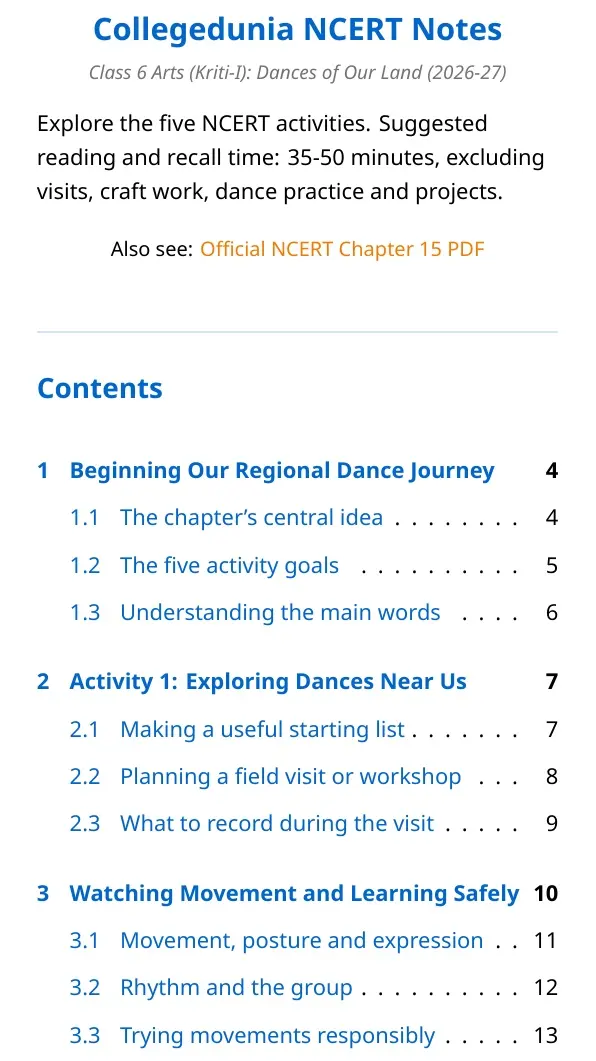
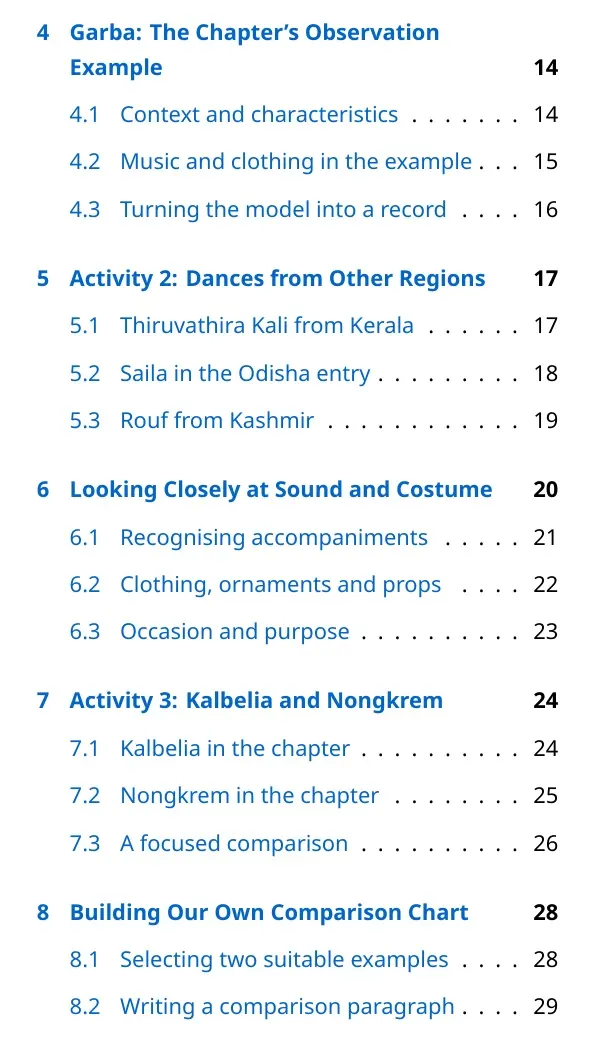
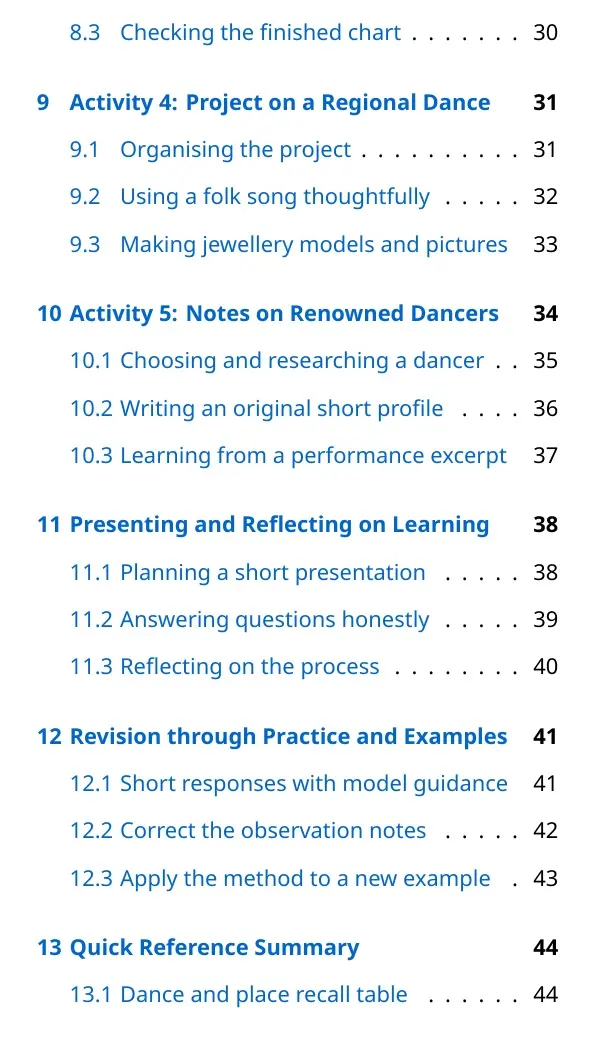
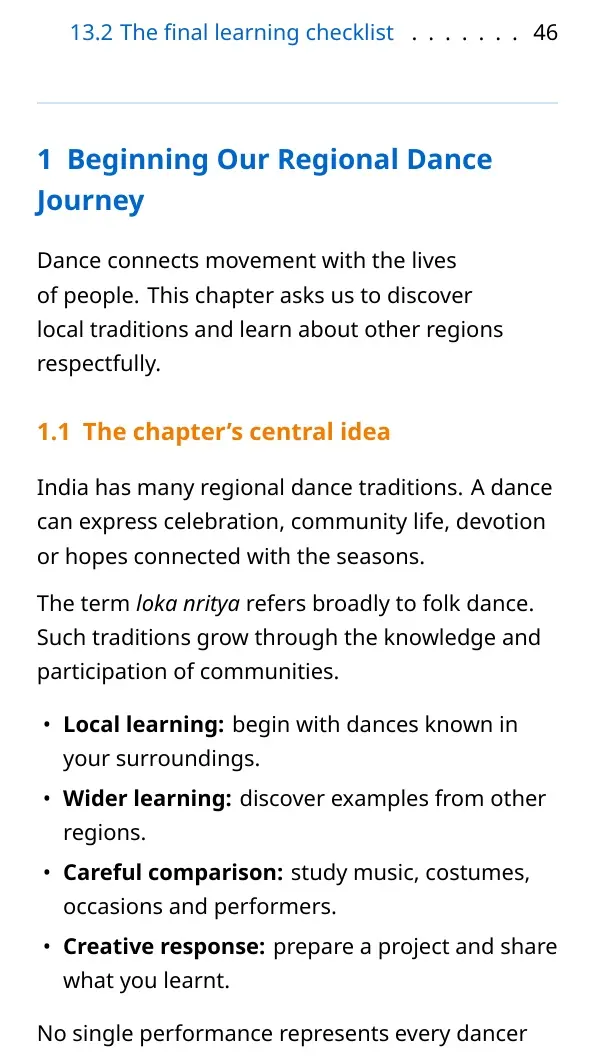
Inside these NCERT Class 6 Arts notes for Dances of Our Land, you will find regional dance examples, observation tips and comparison tables. The notes follow Chapter 15 of Kriti-I, reprinted for 2026-27. Use them to prepare a local dance project and revise the five activities through music, costumes, movements and community celebrations.
- Study Garba, Thiruvathira Kali, Saila and Rouf through NCERT examples.
- Compare Rajasthan's Kalbelia with Meghalaya's Nongkrem.
- Plan a regional dance project and a short note on a renowned dancer.
Collegedunia notes help you recall the chapter's activities. Read the official text before preparing your own observations.
Dances of Our Land: Recording a Regional Dance
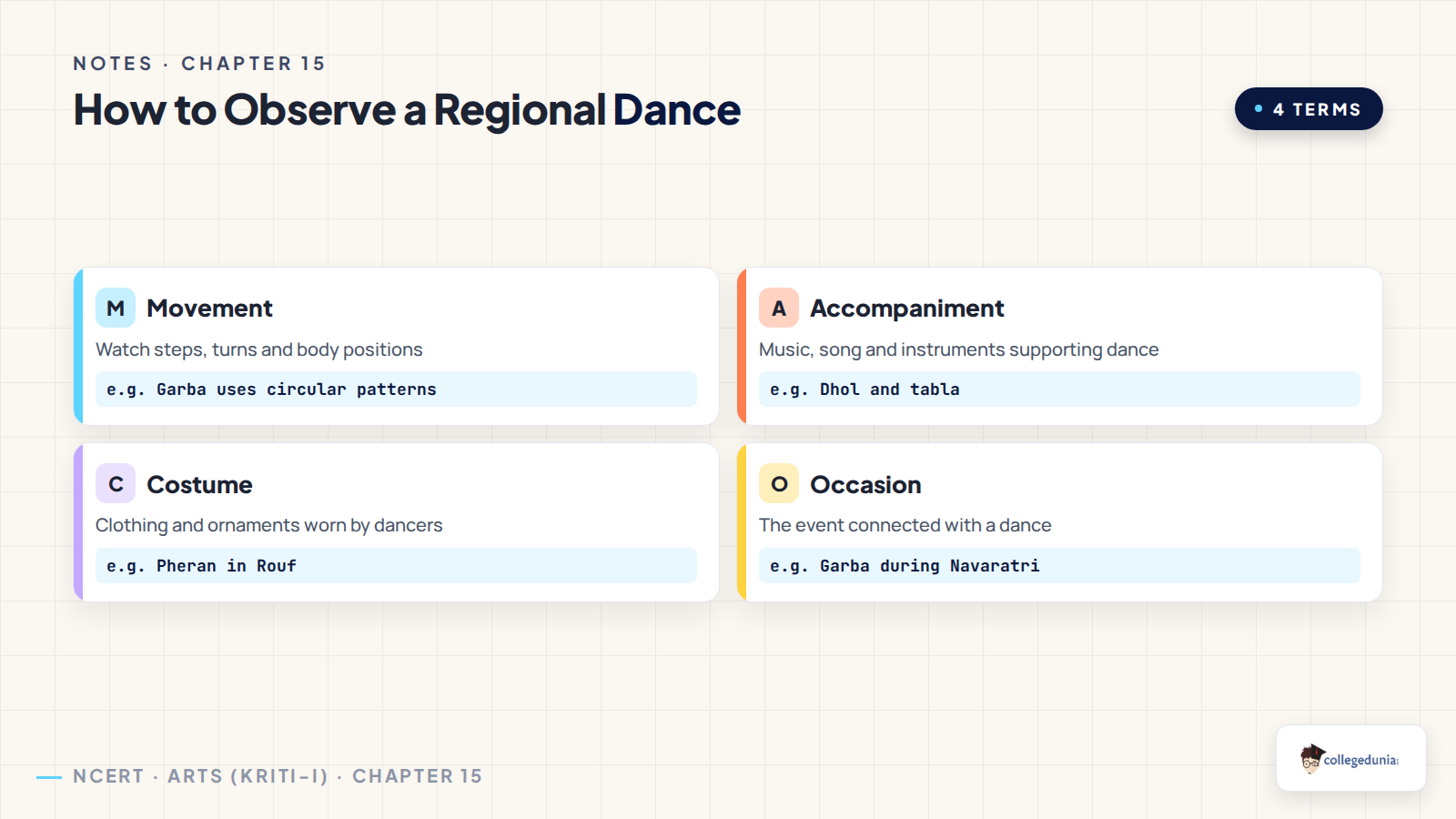
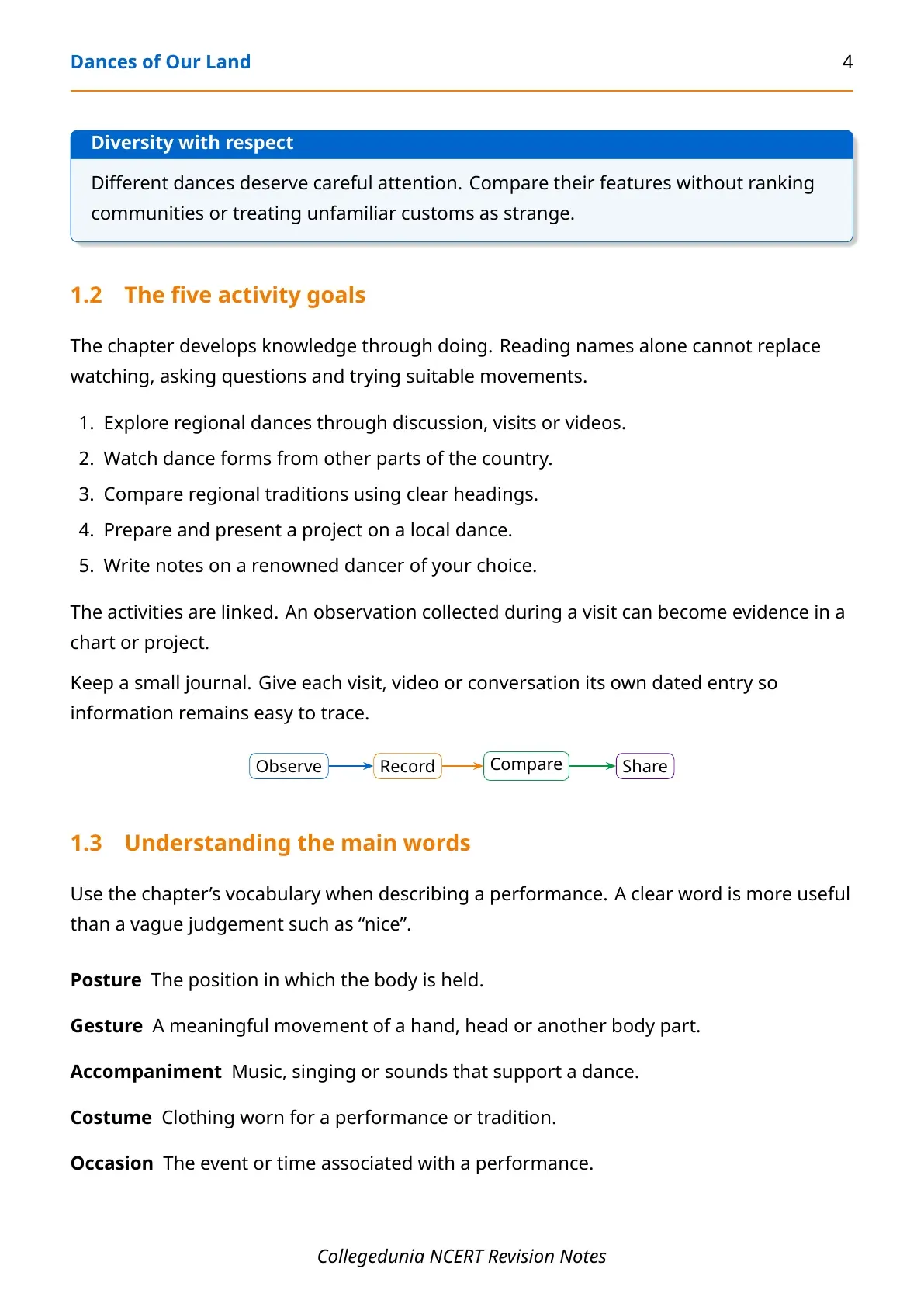
A regional dance is connected with the traditions and community life of a particular region. Its steps, songs, clothing and occasions help tell us about that place. Activity 1 starts with dances from your surroundings. Ask friends, parents and teachers which forms they know.
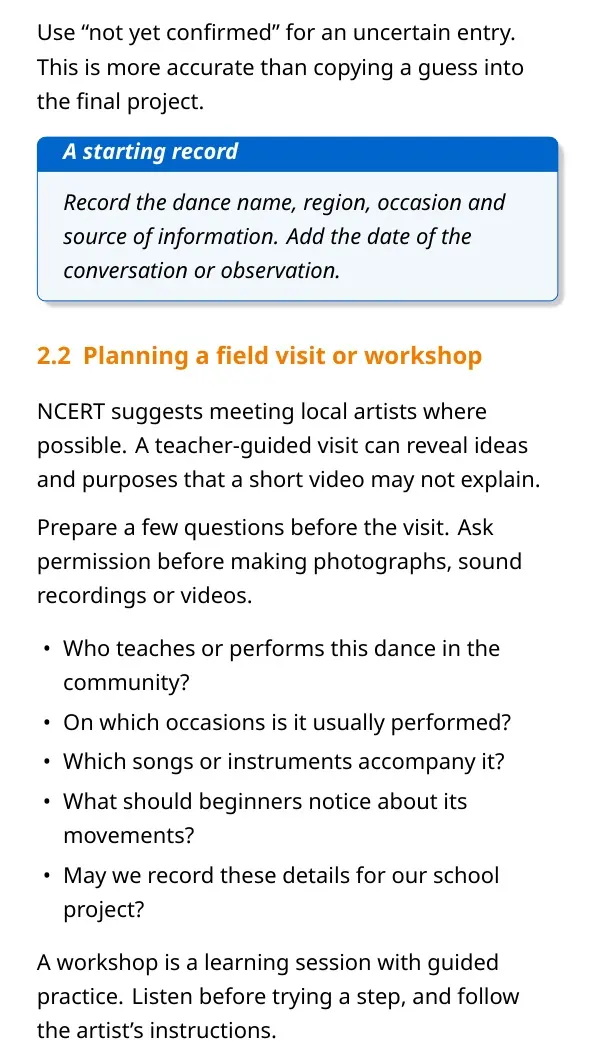
- Choose one local dance and, with your teacher, arrange a visit to local artists.
- Watch a performance or a video if a field visit is not possible.
- Ask about the ideas and purpose behind the dance.
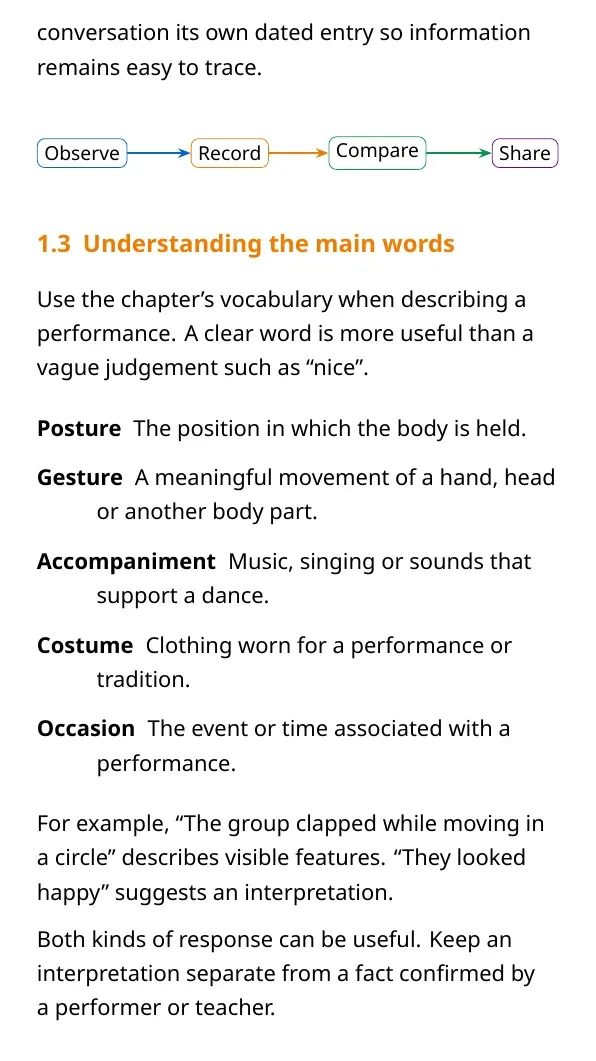
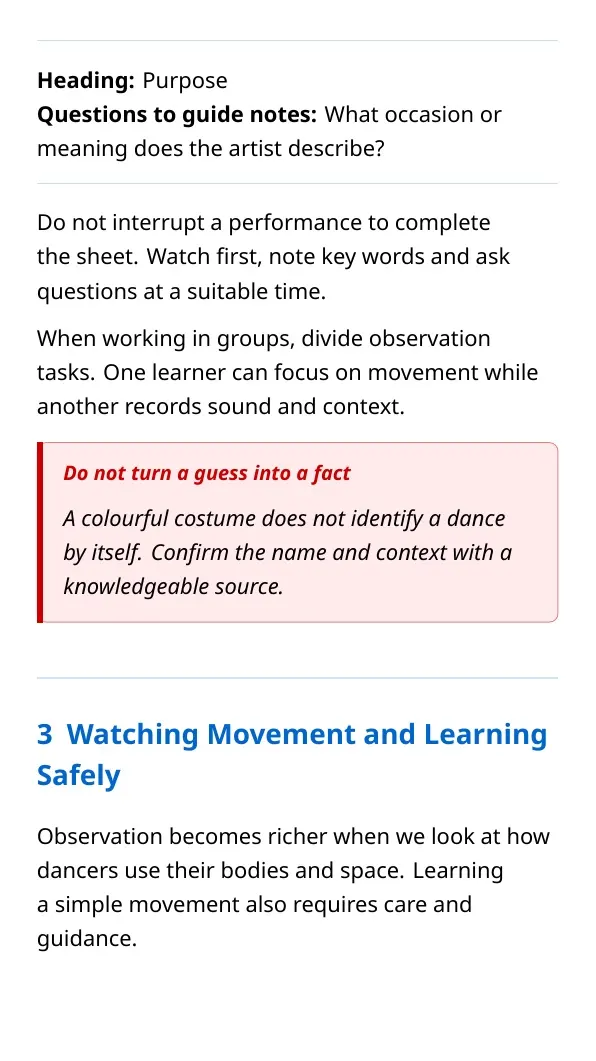
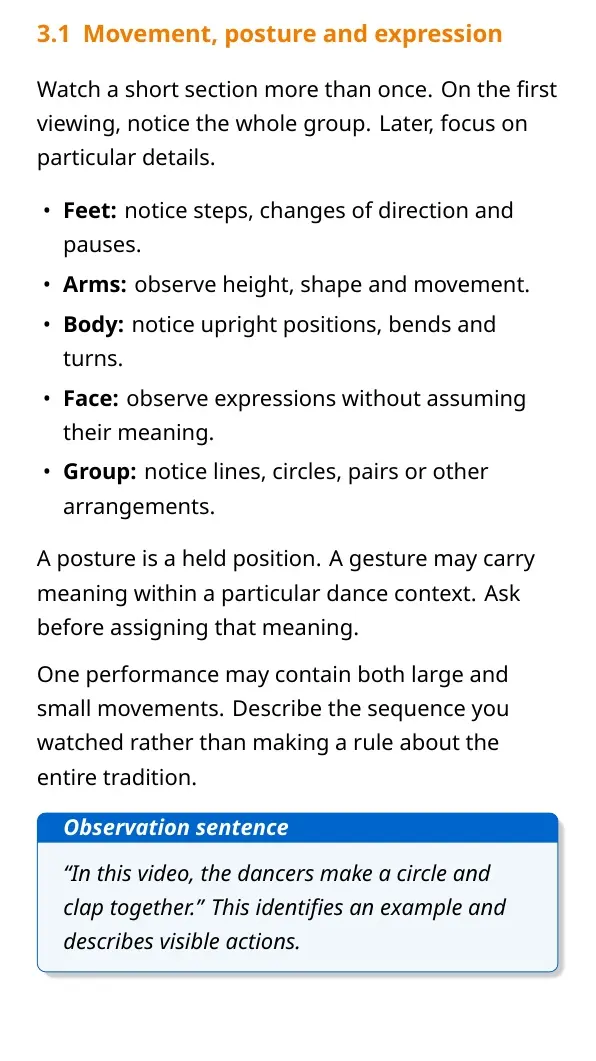
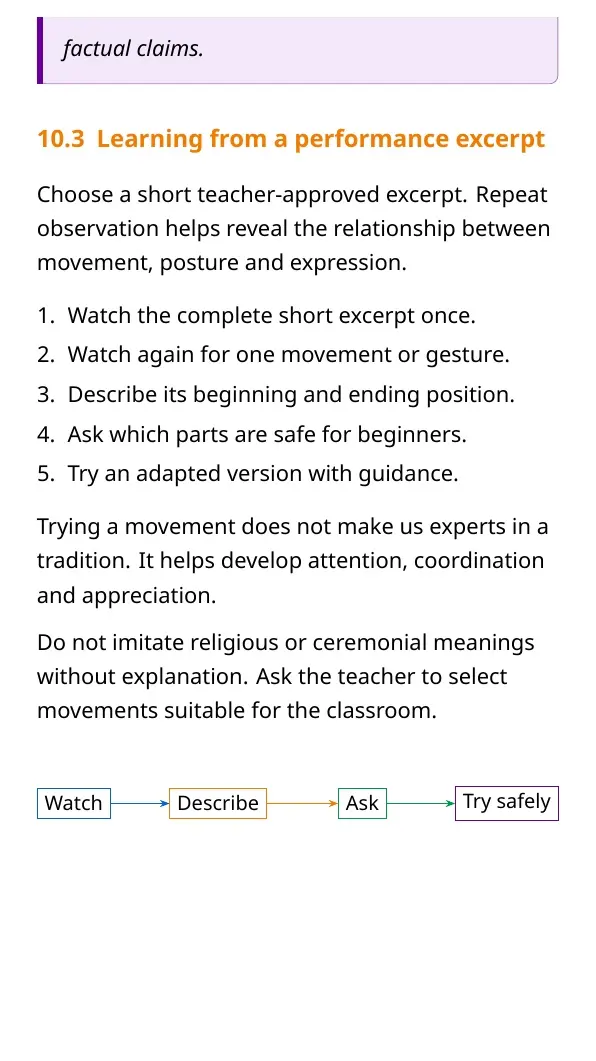
- Observe postures, hand gestures, steps, turns, music and costumes.
- Try a simple movement with guidance if a workshop is possible.
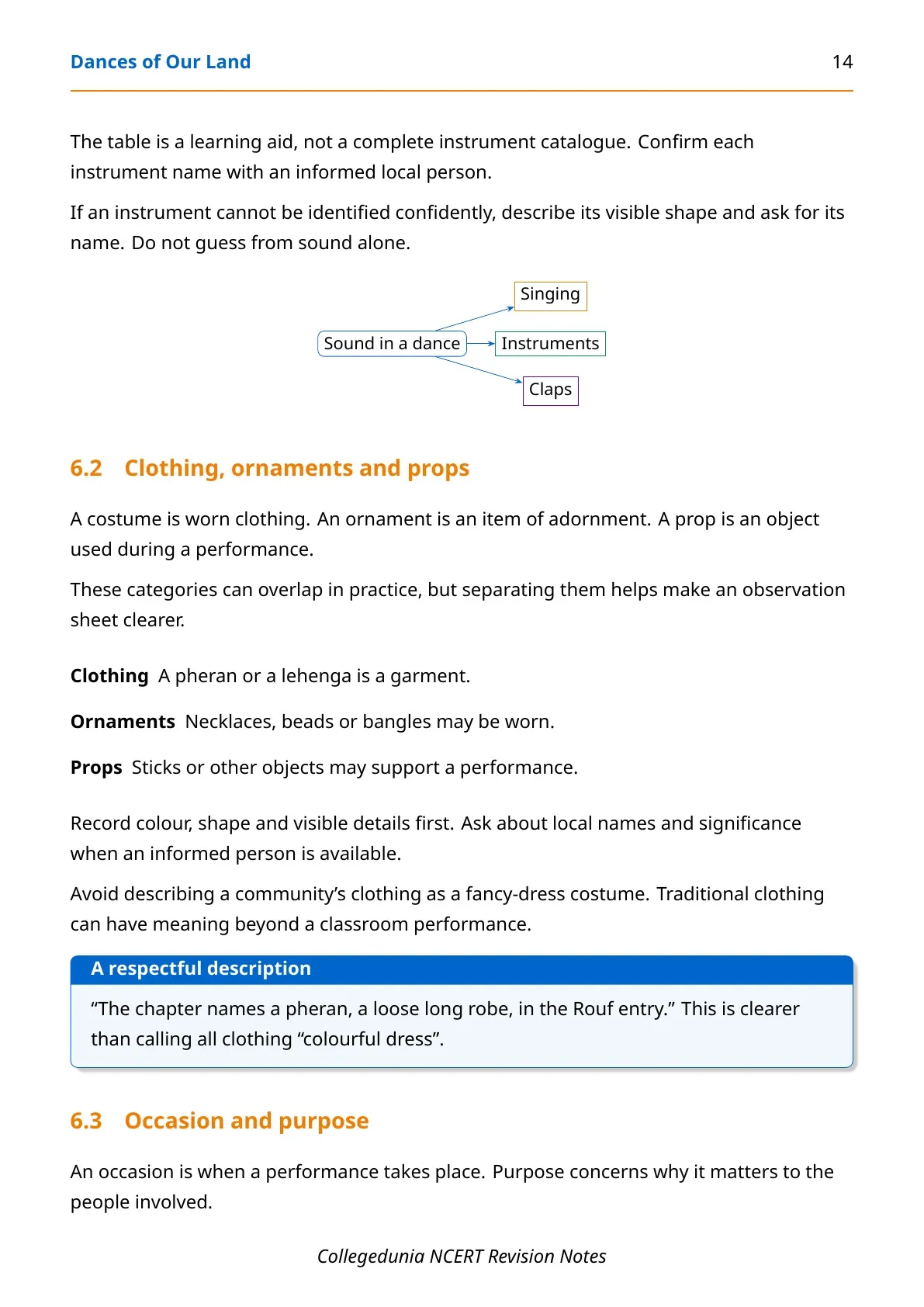
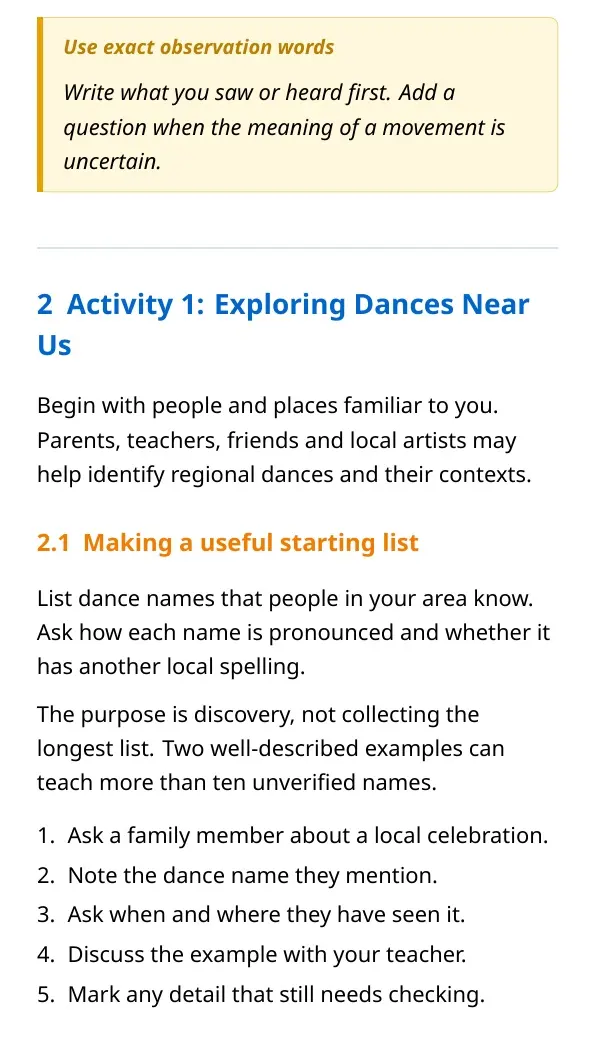
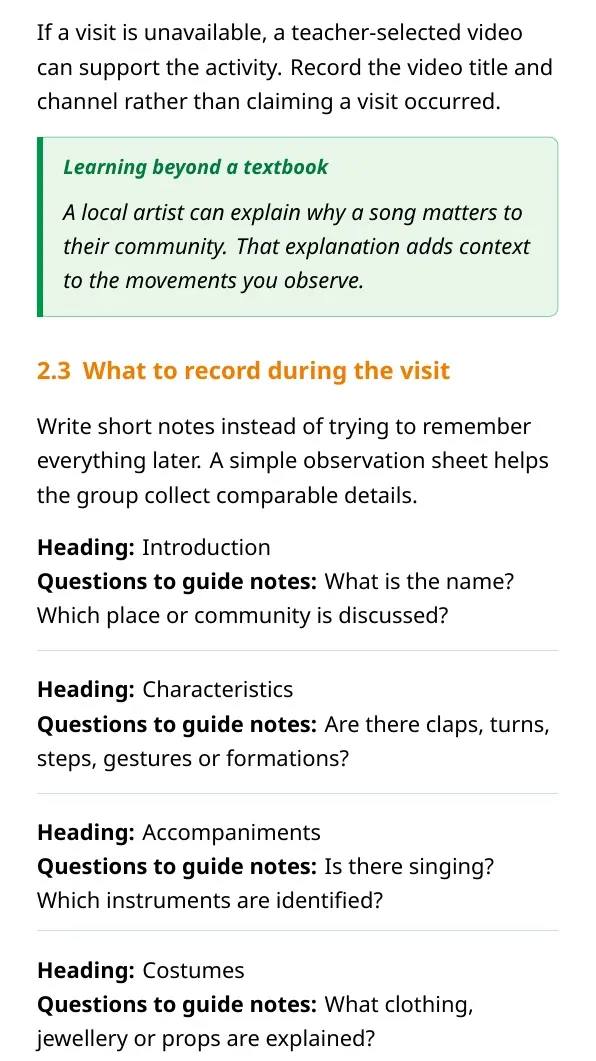
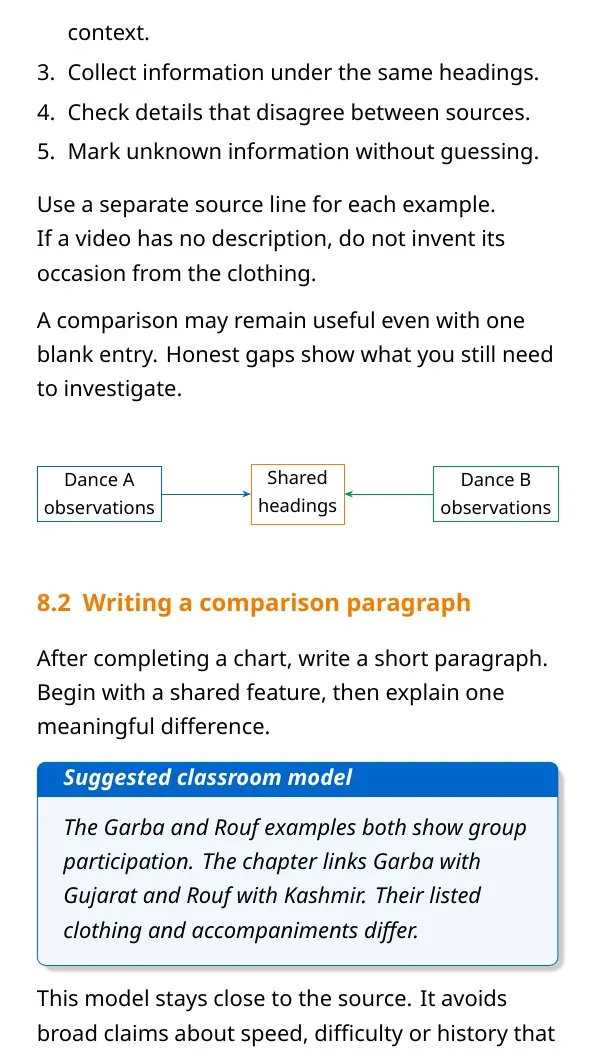
Describe what you actually observe. Record information under four headings: introduction, characteristics, accompaniments and costumes. Do not guess an instrument's name from its appearance. Ask the performer or your teacher.
Dances of Our Land NCERT Audio Lesson
Source: NCERT OFFICIAL on YouTube
Dances of Our Land: Garba and Other Regional Examples
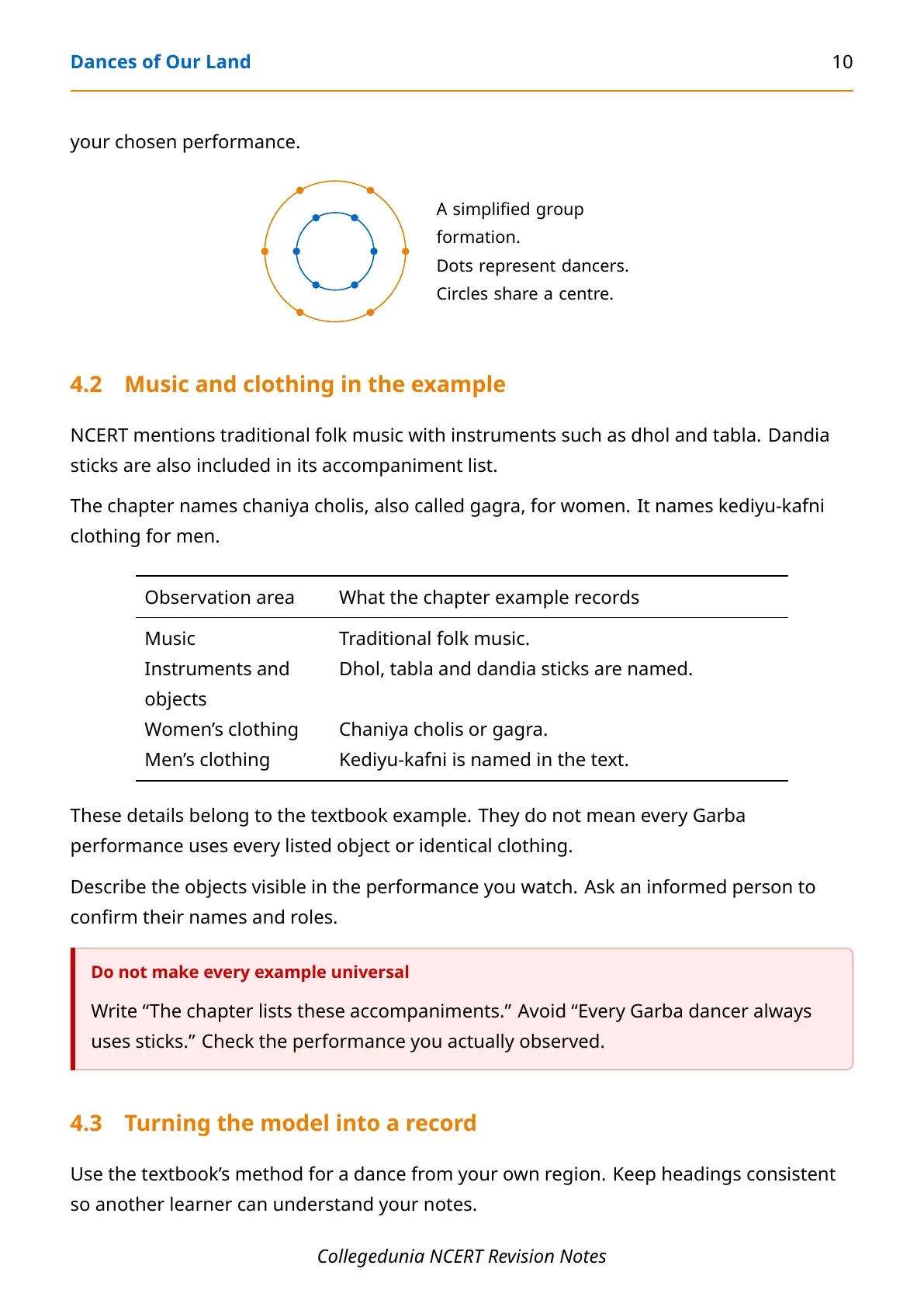
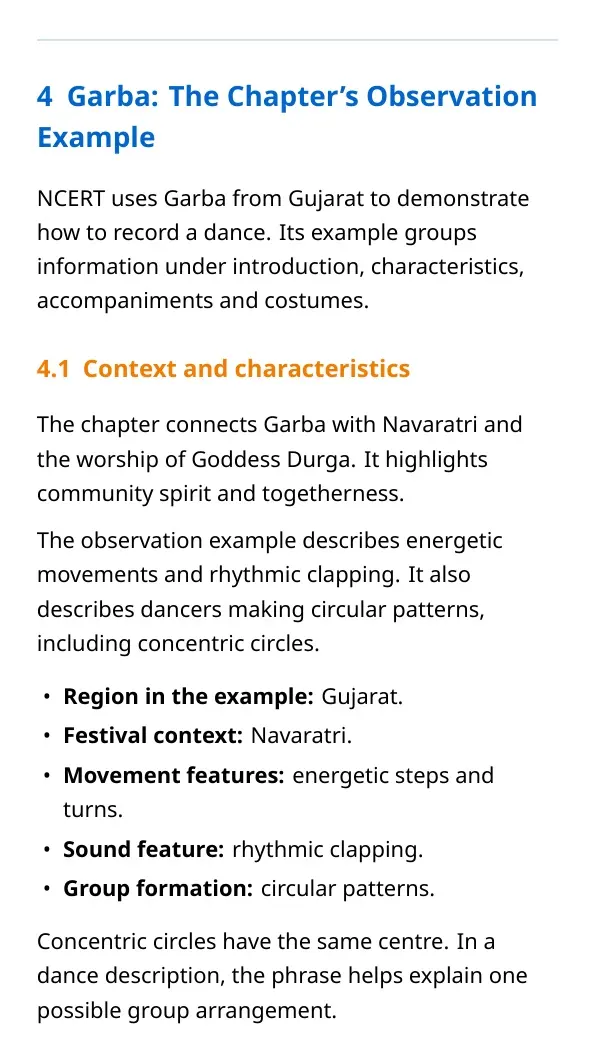
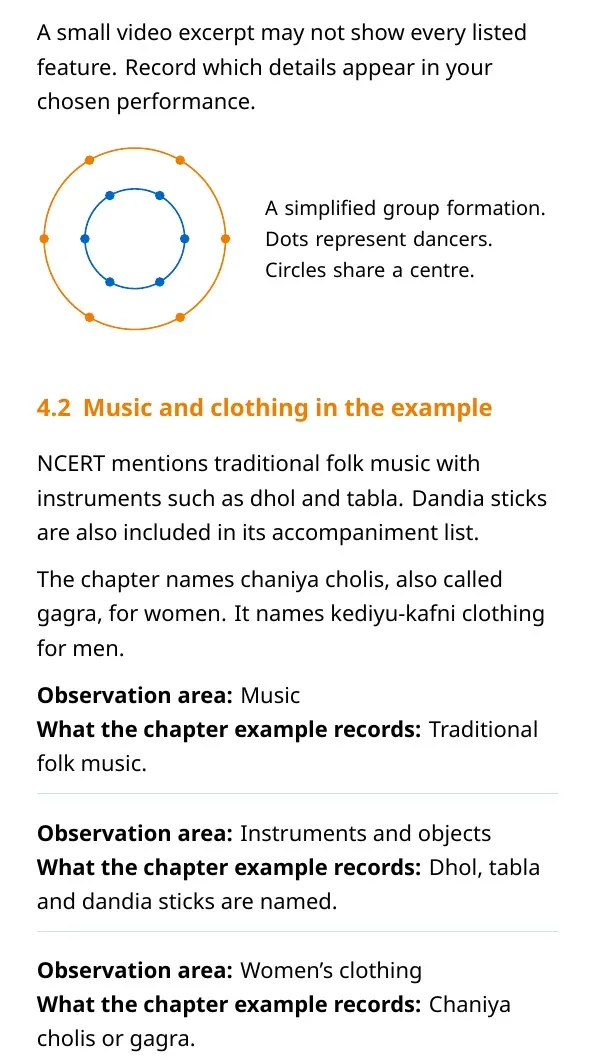
NCERT uses Garba from Gujarat to show how to record a dance. It is associated with Navaratri and the worship of Goddess Durga. Energetic movements, rhythmic clapping and concentric circular patterns bring the group together.
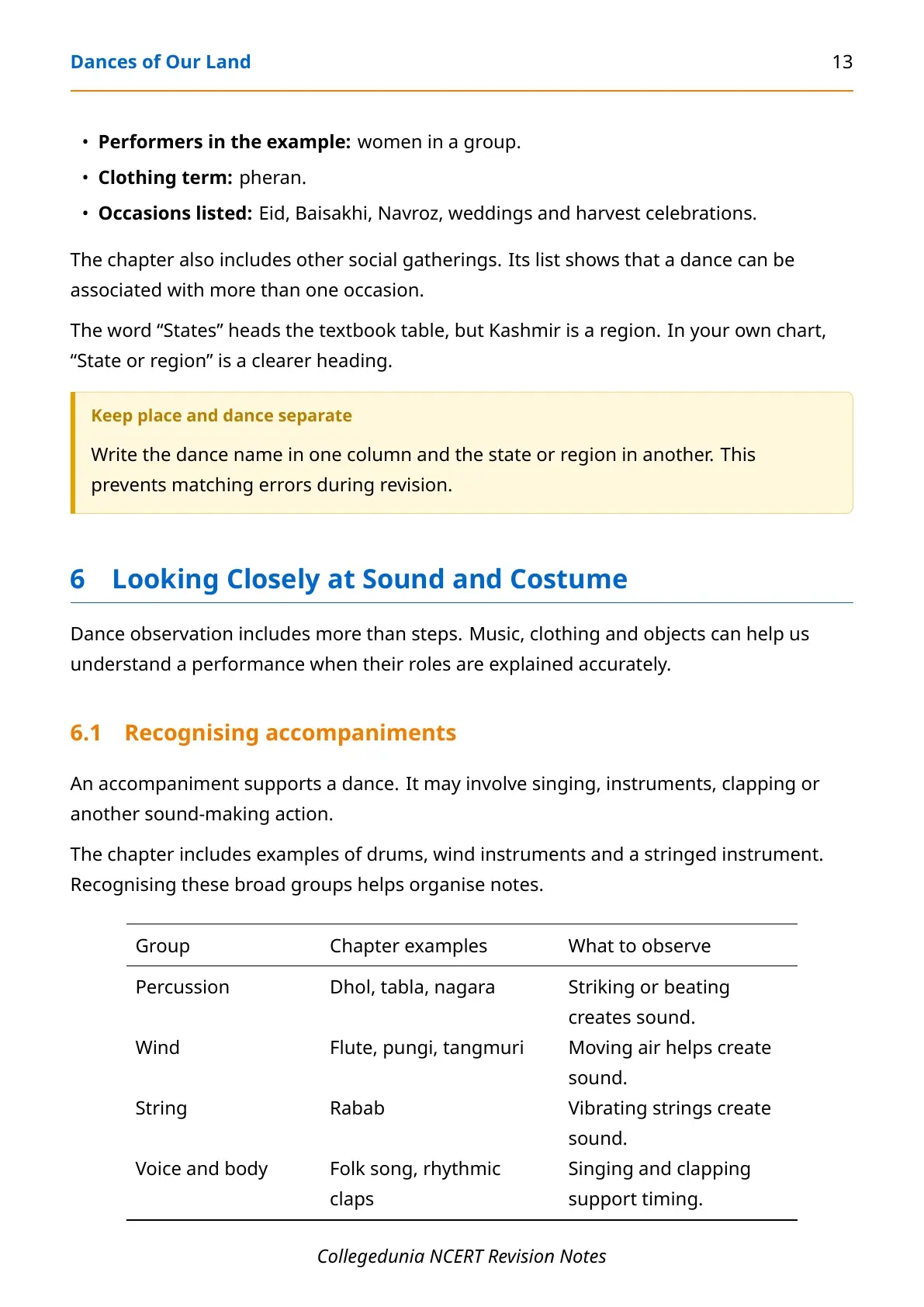
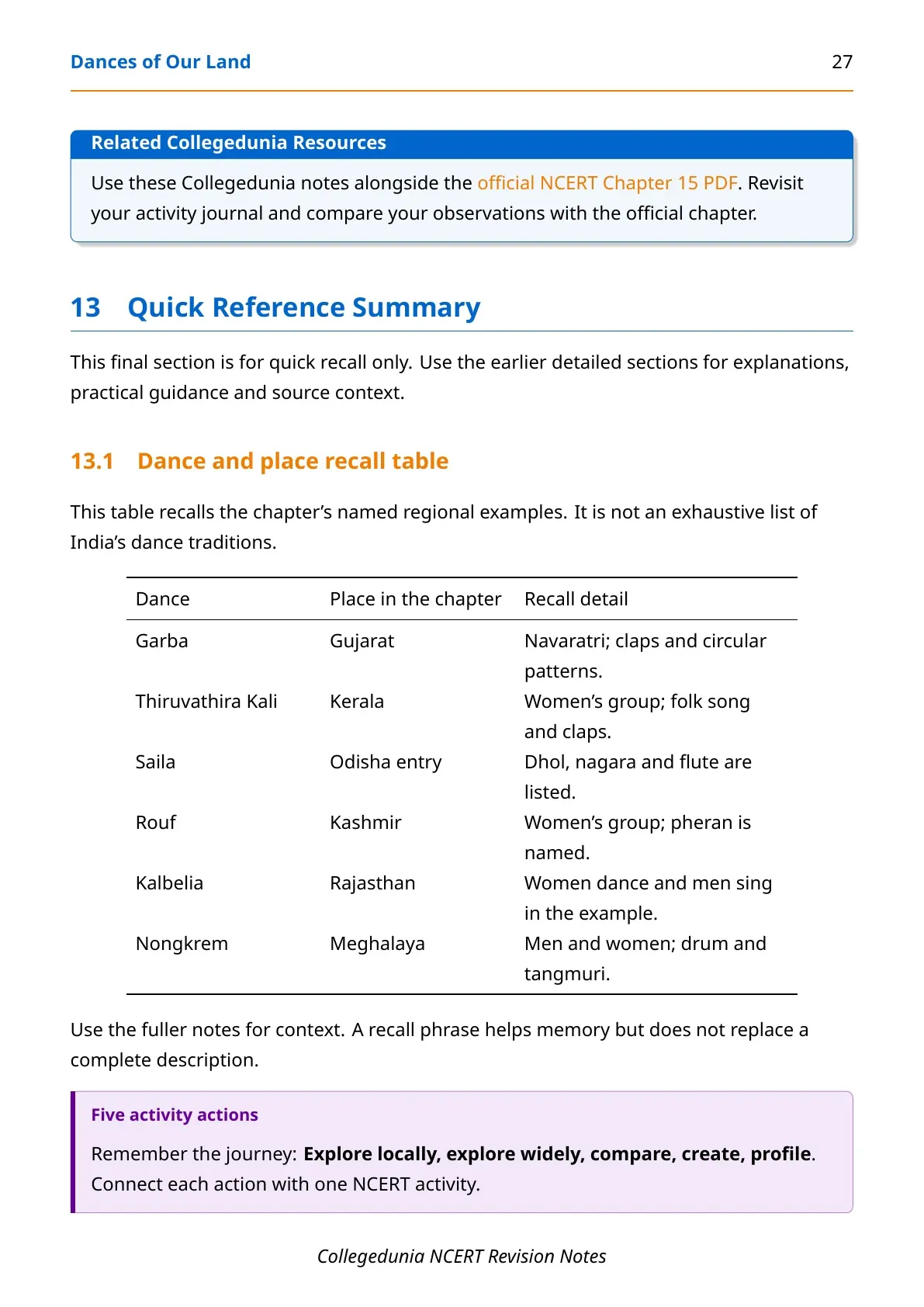
| Dance and region | Music or movement | Costume and occasion in NCERT |
|---|---|---|
| Garba, Gujarat | Clapping, circular movement; folk music, dhol and tabla | Chaniya choli and kediyu-kafni; Navaratri |
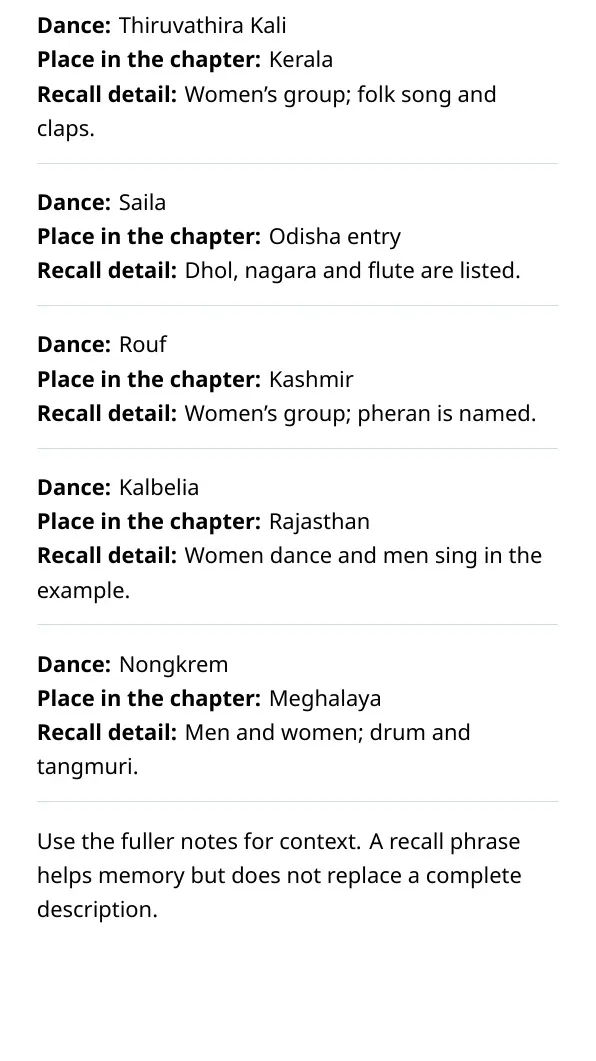
| Thiruvathira Kali, Kerala | Women perform graceful rhythmic movements and claps with a folk song | Mundu and vesthi with traditional ornaments; Thiruvathira, Shivratri and Onam |
| Saila, Odisha in the textbook example | Tribal community dance; dhol, nagara and flute | Colourful sarees, dhotis and tribal ornaments; Chaitra Parva at the start of the agricultural season |
| Rouf, Kashmir | Women perform in a group; tumbaknari, rabab and harmonium | Pheran and embroidered clothing; Eid, Baisakhi, Navroz, weddings and harvest celebrations |
The Garba example also lists dandia sticks among accompaniments. Keep the chapter's examples separate from a rule about every performance. Local practices can differ. Activity 2 asks you to watch other regional dances and discuss them together.
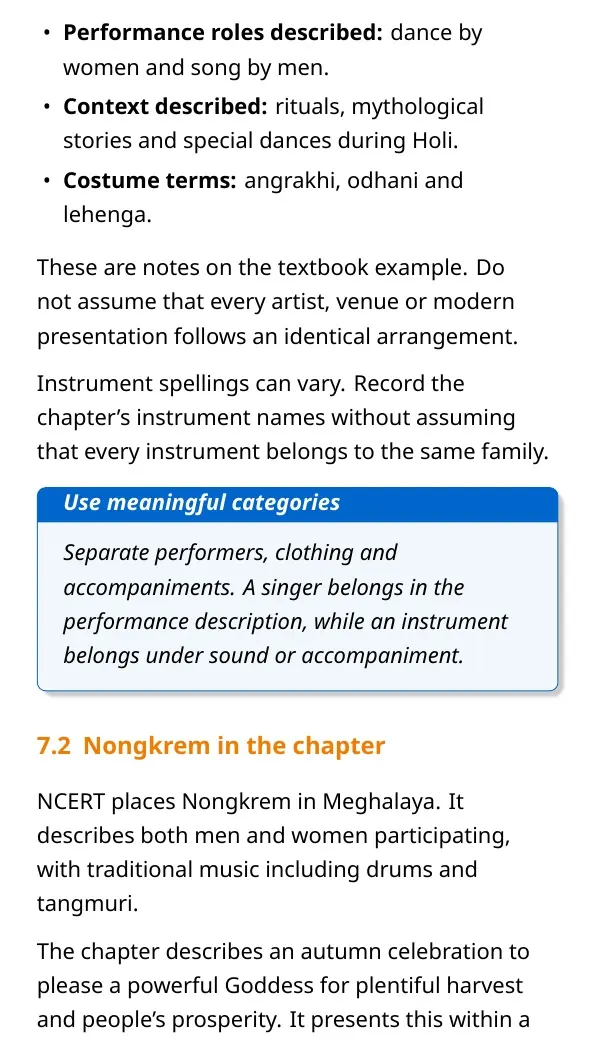
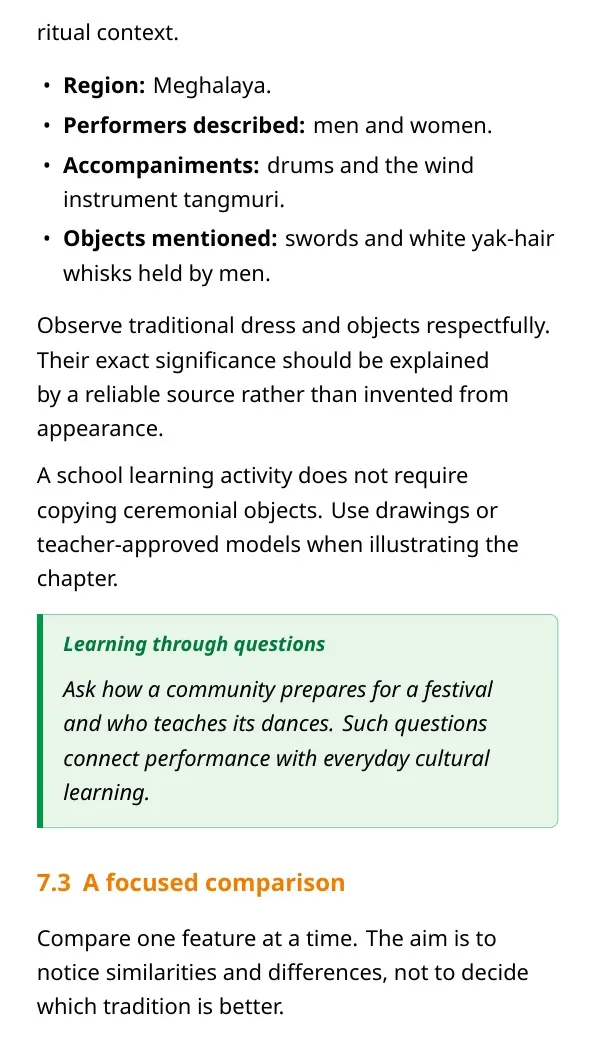
Dances of Our Land: Comparing Kalbelia and Nongkrem
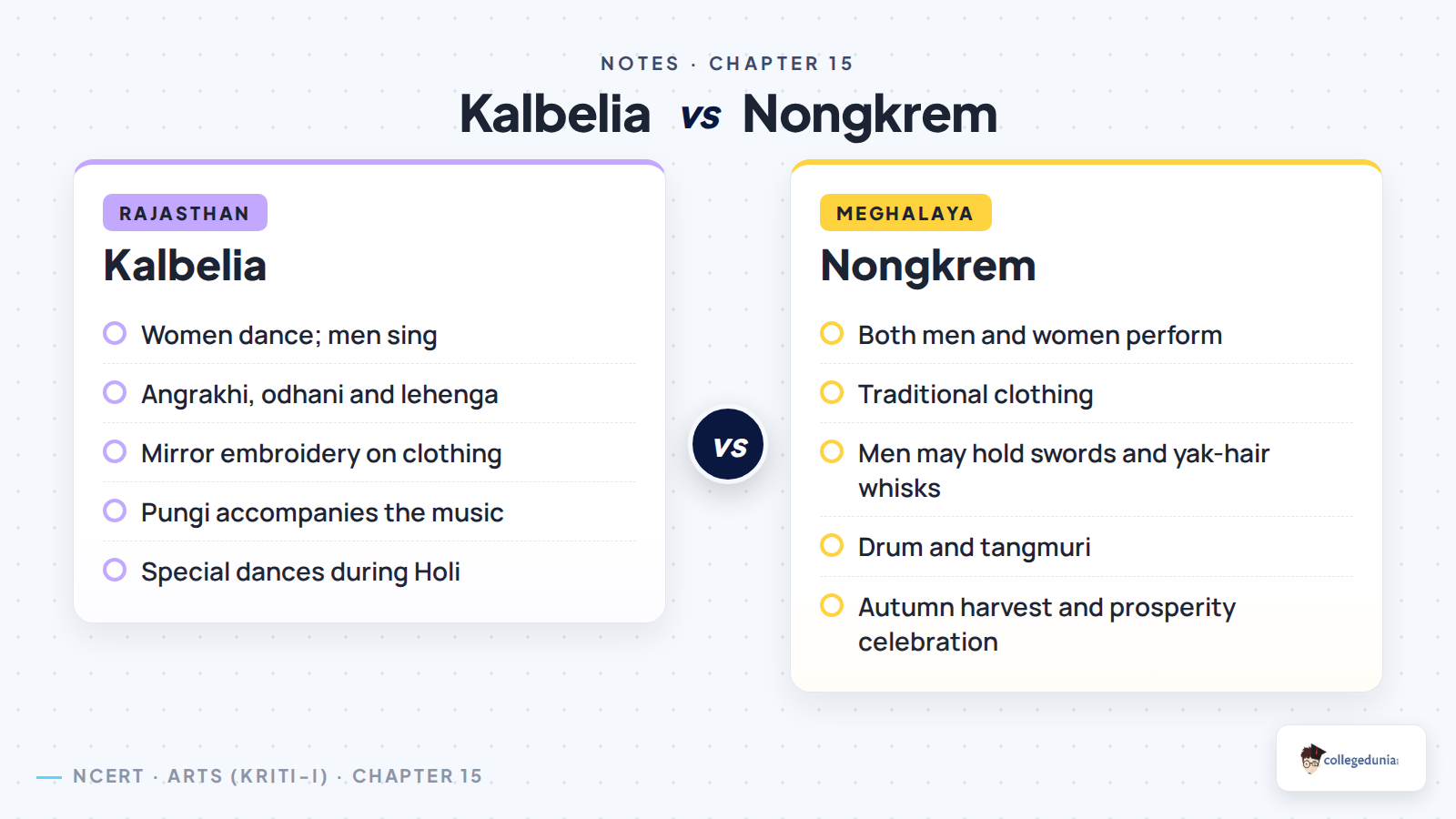
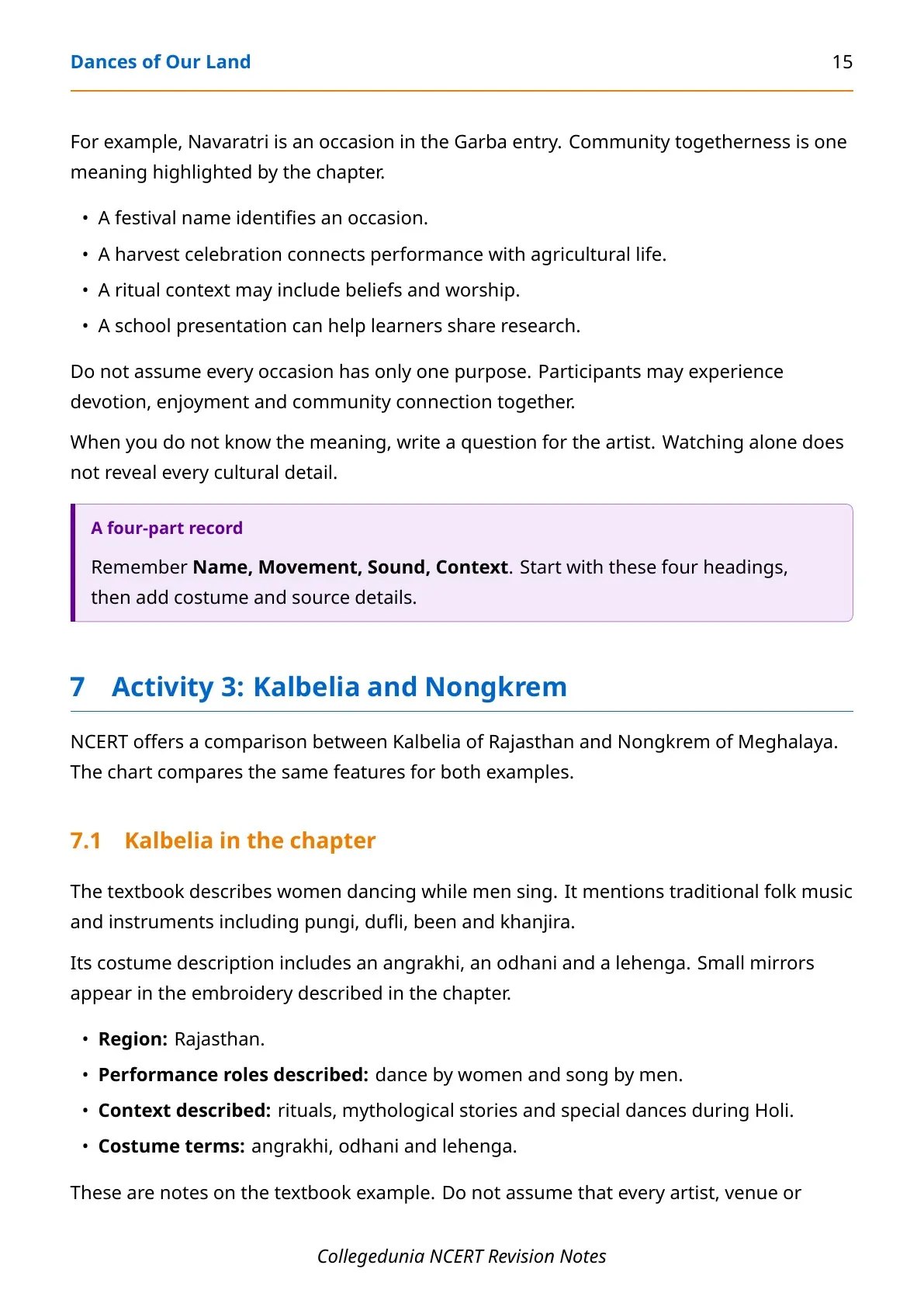
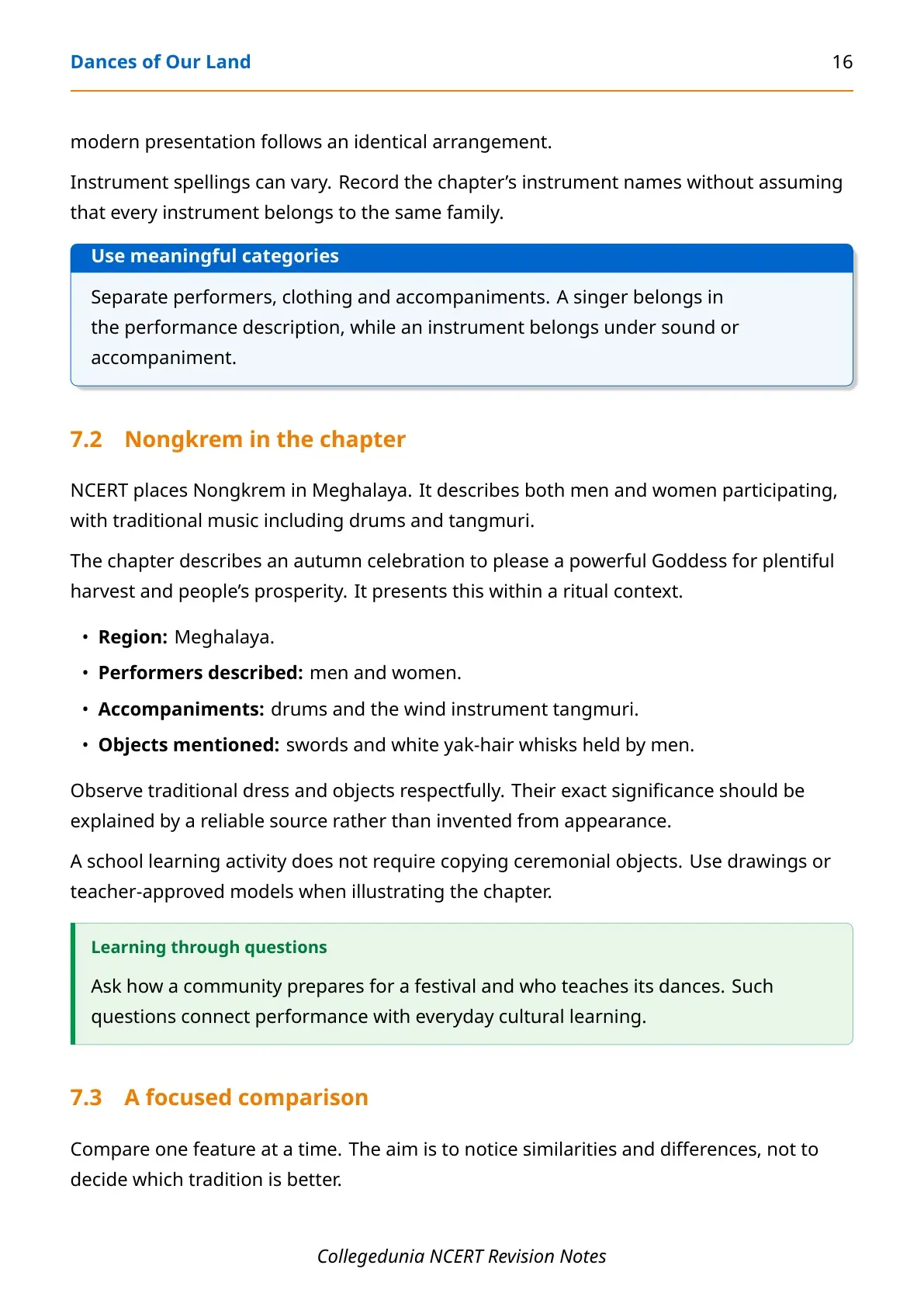
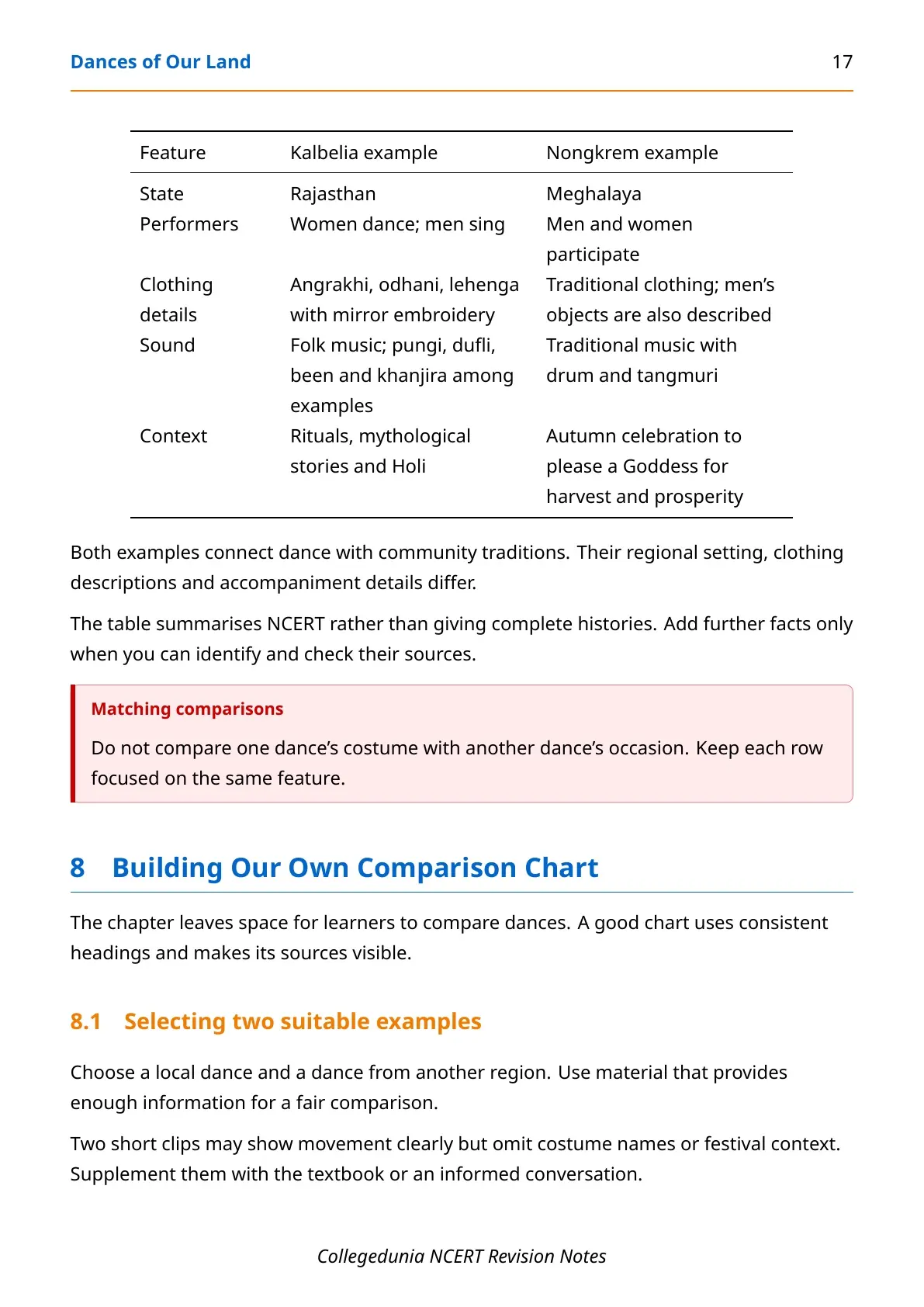
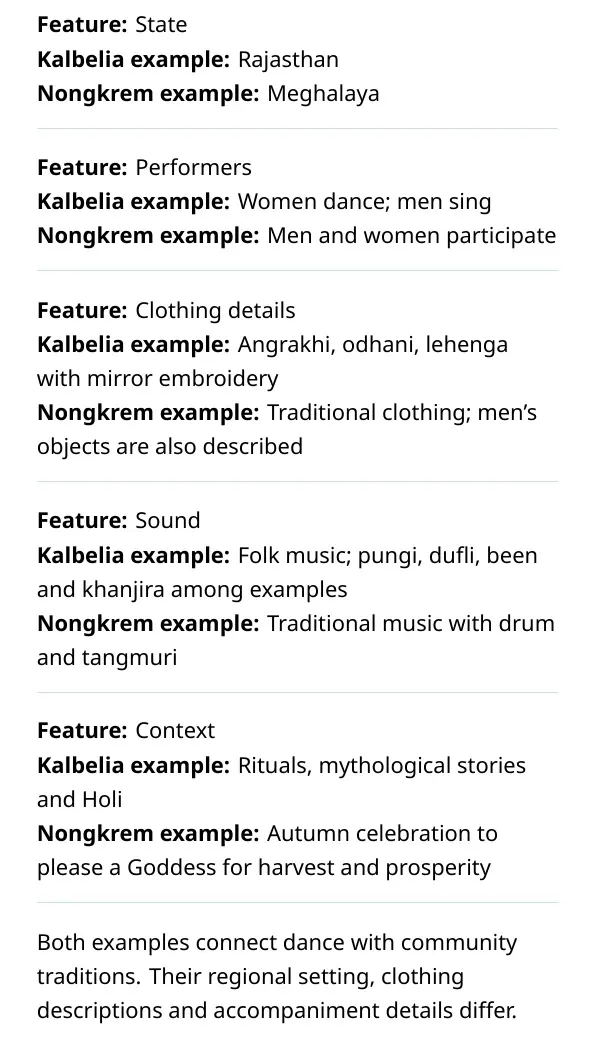
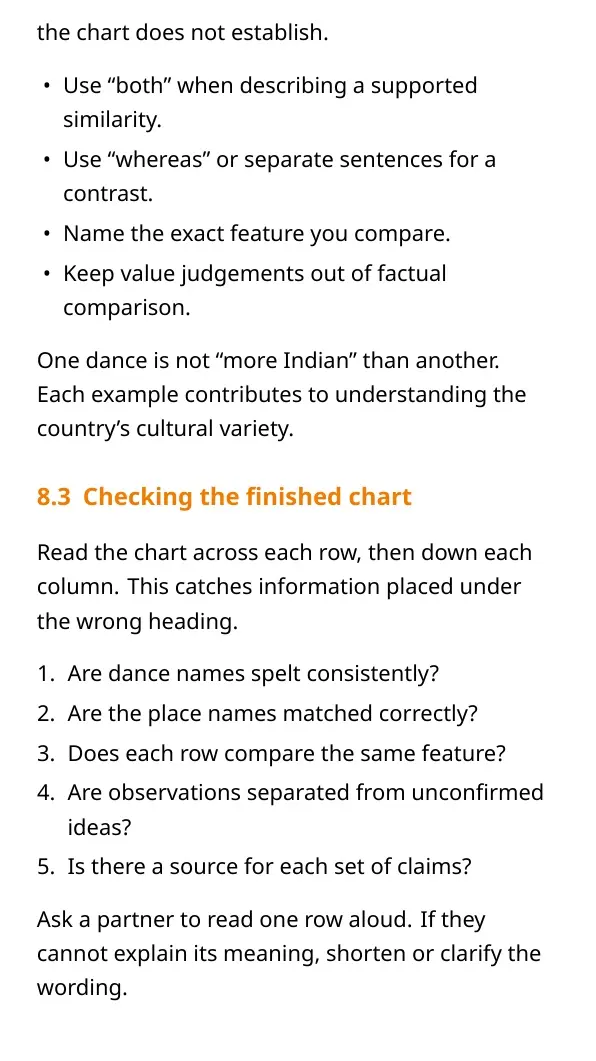
Activity 3 compares two regional dances using the same headings. A comparison chart makes similarities and differences easier to see. NCERT places Kalbelia in Rajasthan and Nongkrem in Meghalaya.
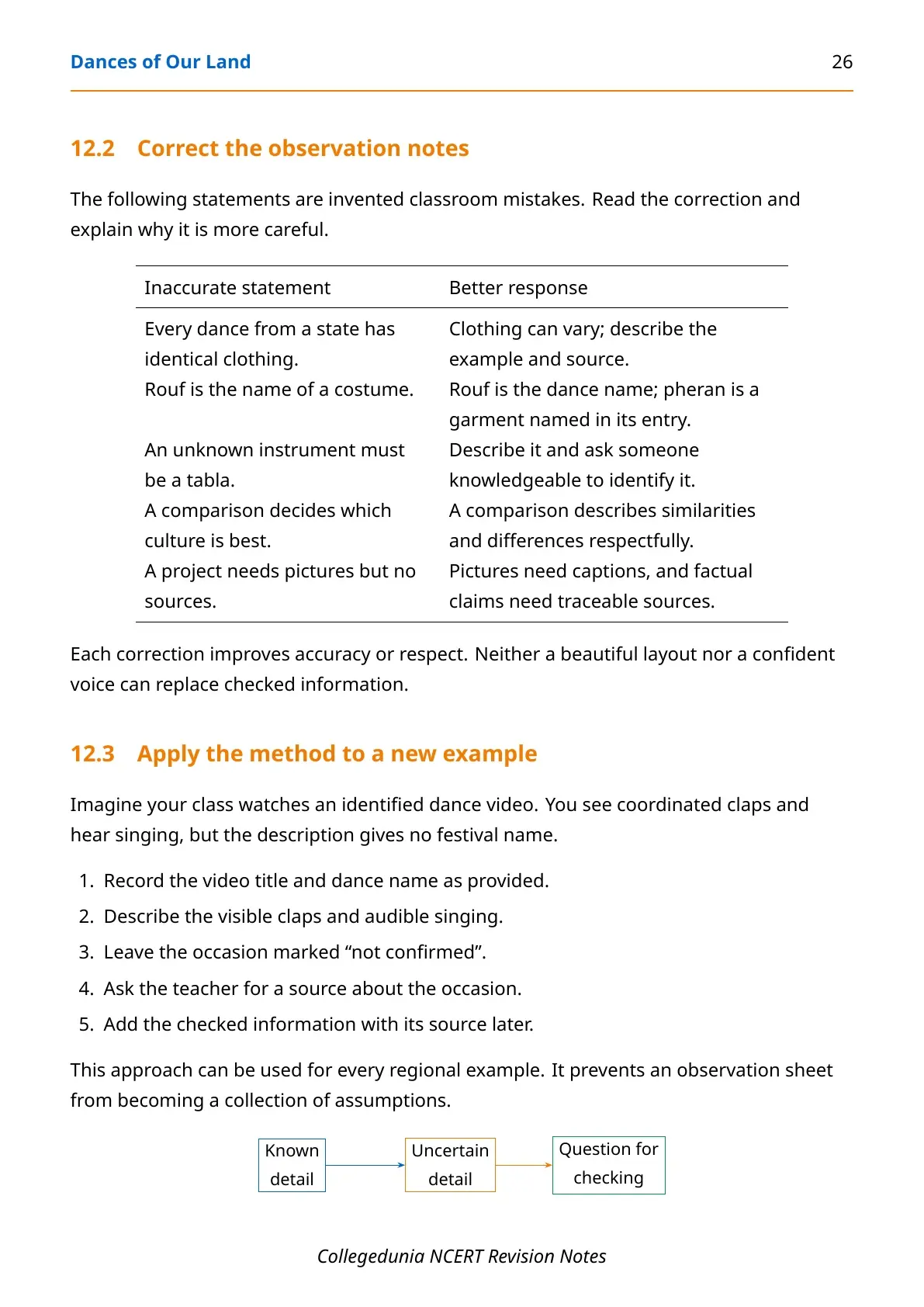
| Point | Kalbelia | Nongkrem |
|---|---|---|
| Performers | Women dance and men sing | Both men and women |
| Costume | Angrakhi, odhani and lehenga embroidered with small mirrors | Traditional clothing; men may hold swords and white yak-hair whisks |
| Music | Traditional folk music; pungi, dufli, been and khanjira are named | Traditional music including drum and tangmuri |
| Purpose and occasion | Connected with rituals and mythological stories; special dances during Holi | Autumn celebration to please the Goddess for a plentiful harvest and people's prosperity |
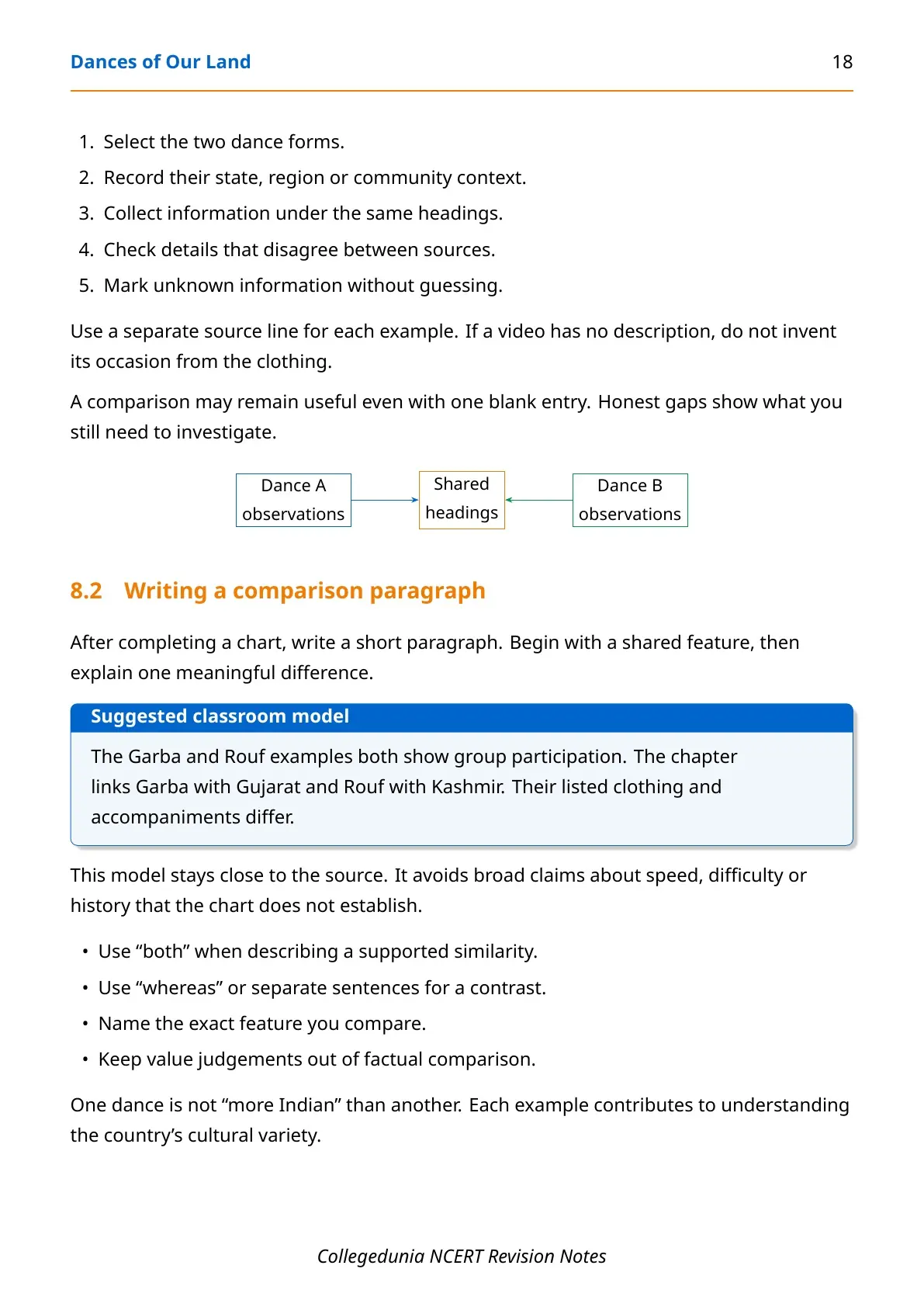
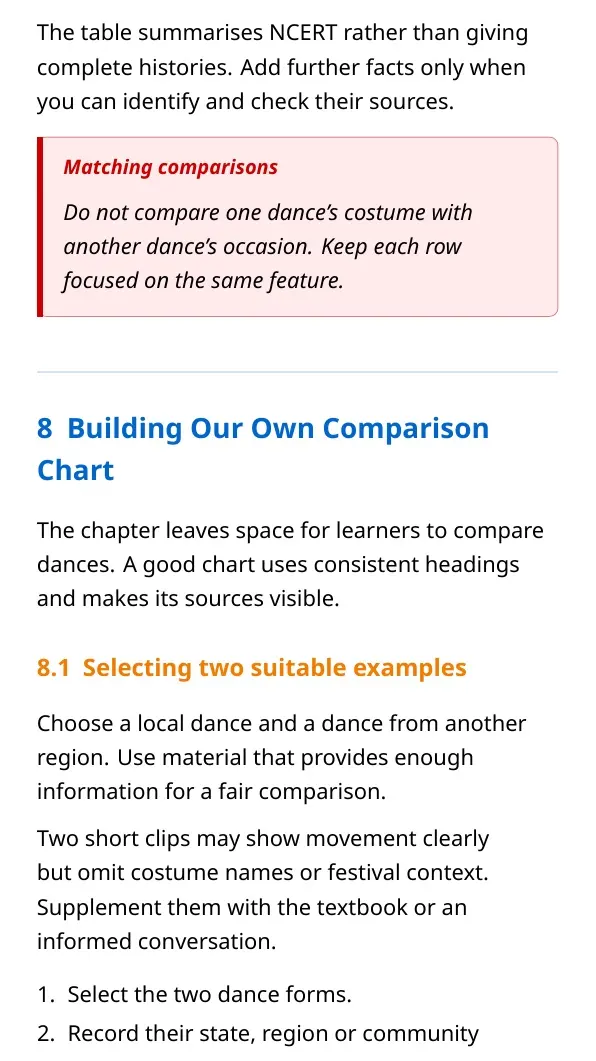
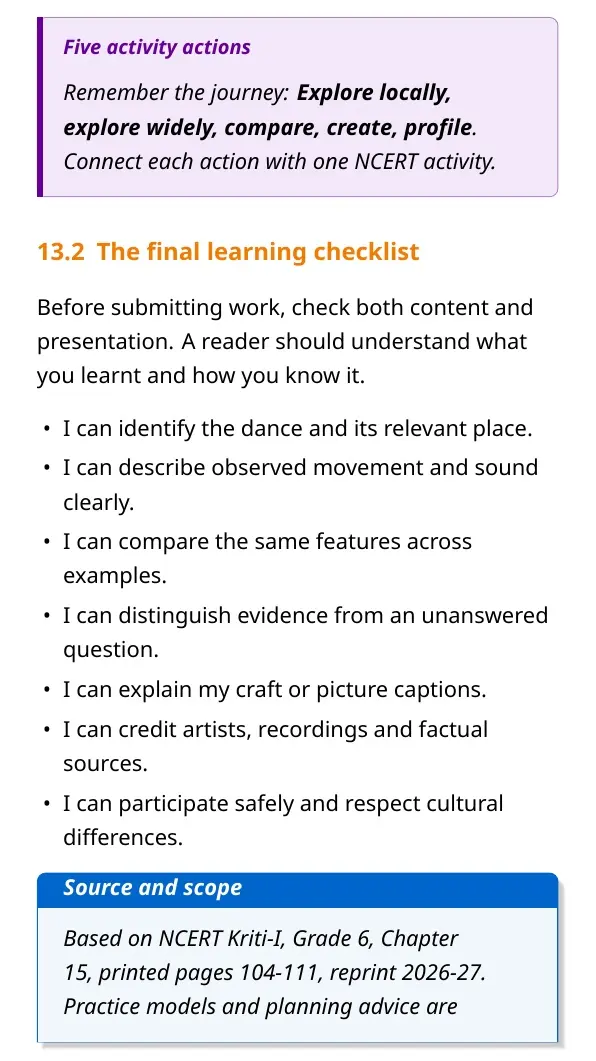
Next, choose dances for your own chart. Include state, costume, purpose, performers and accompaniments. If you compare your local dance with another region, use the same questions for both.
Dances of Our Land: Project Work and Dancer Profiles
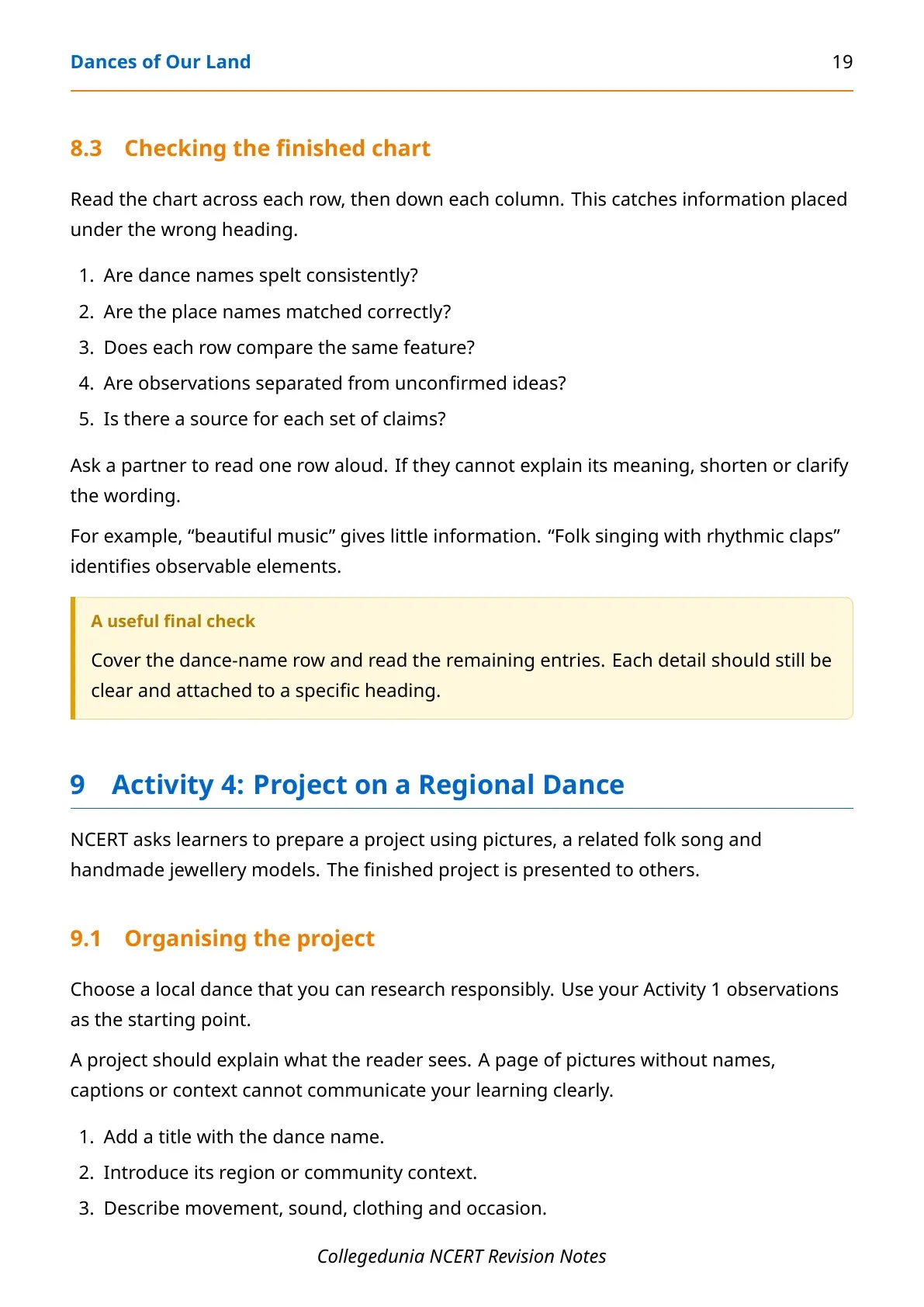
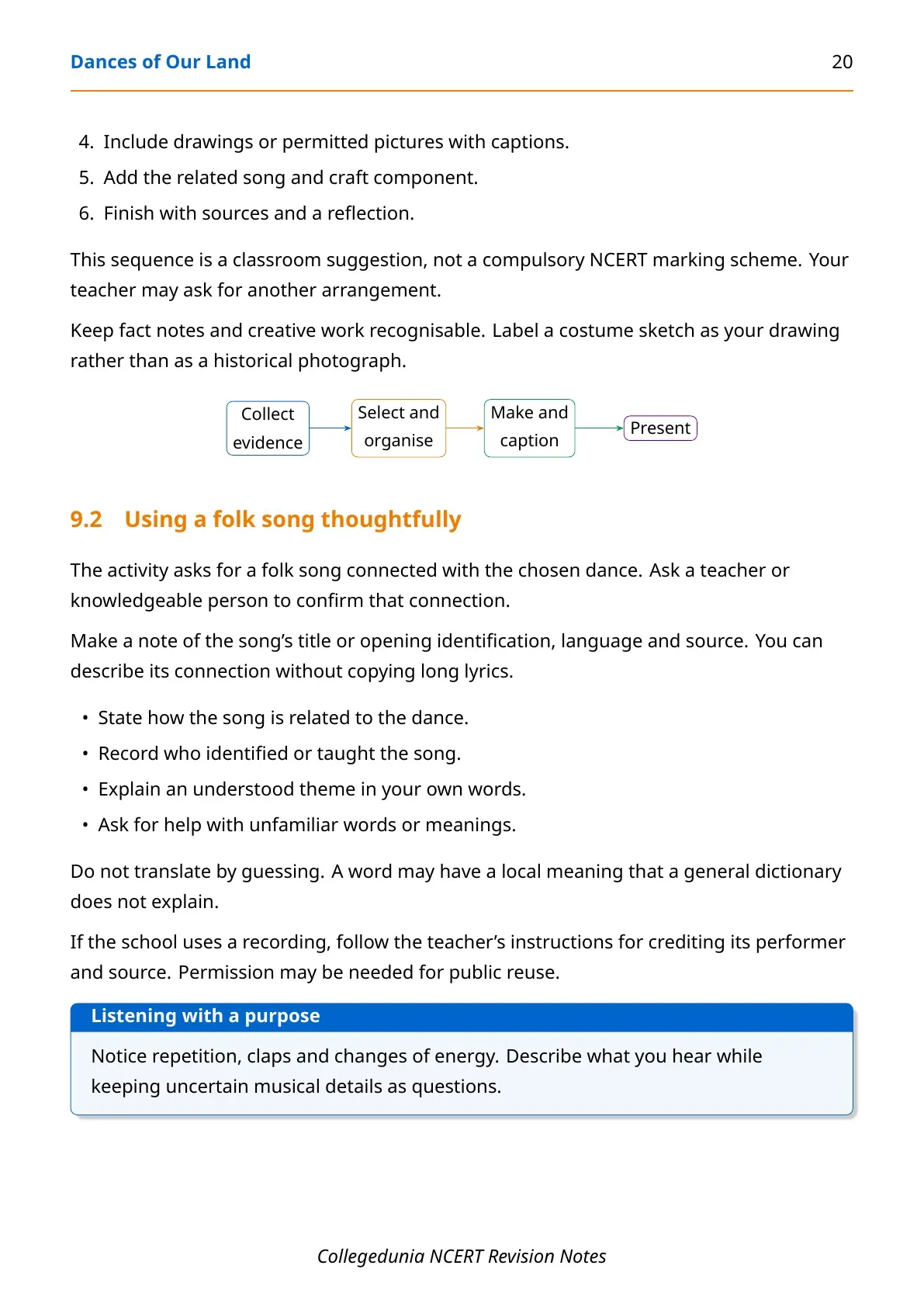
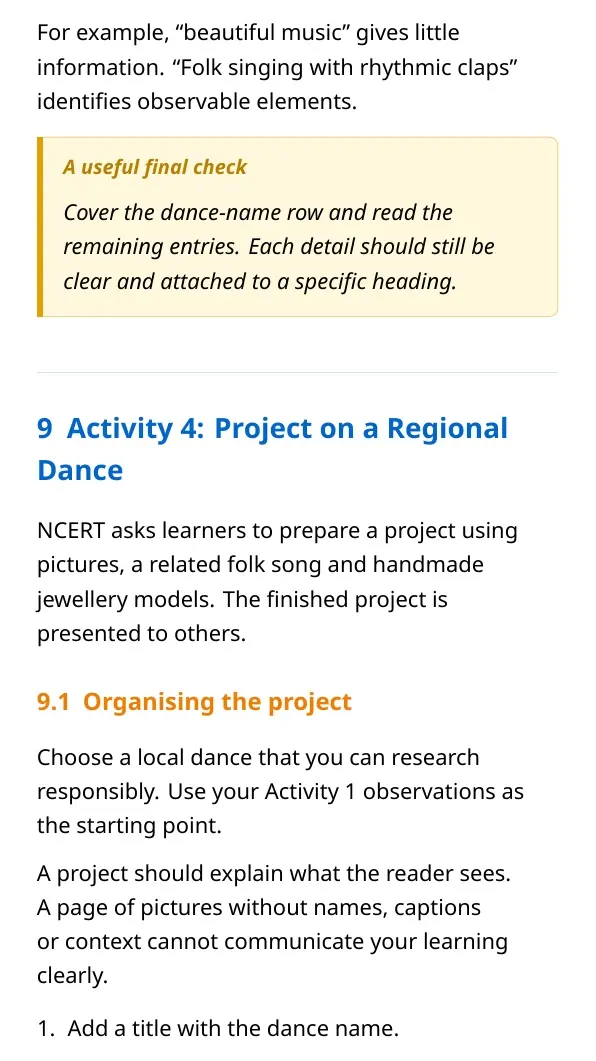
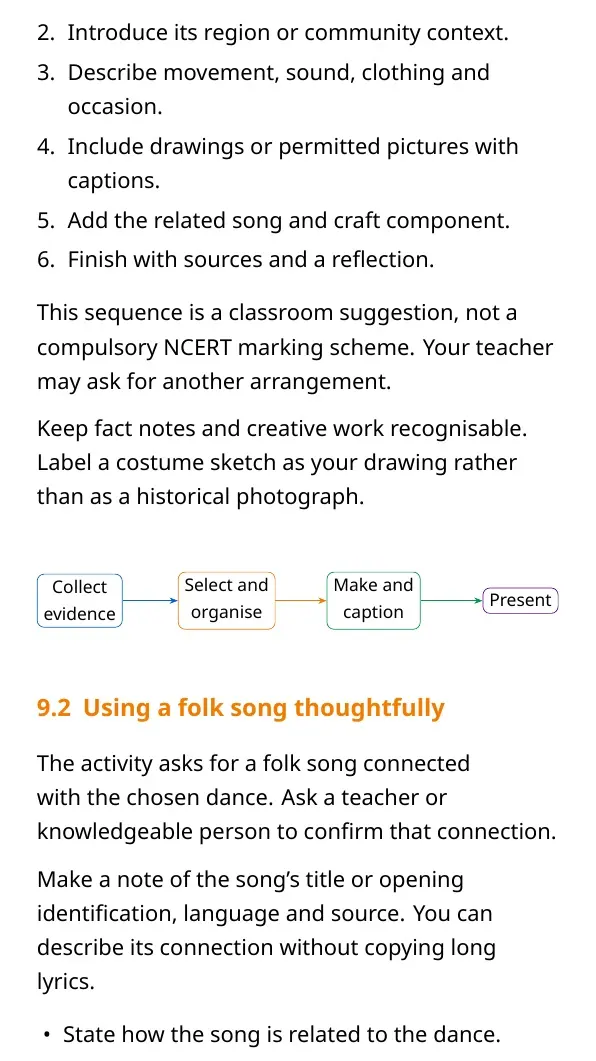
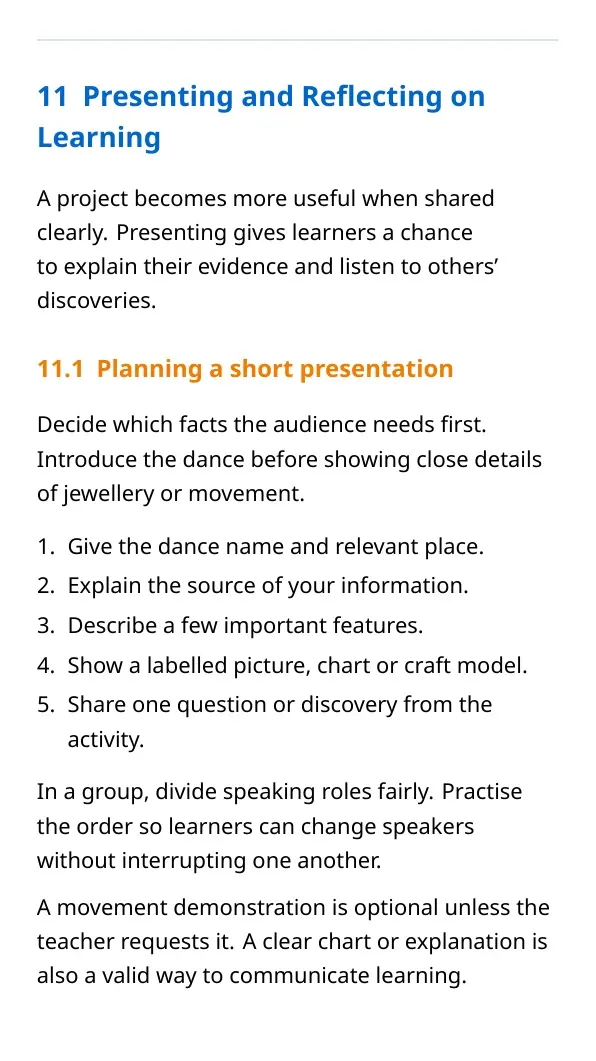
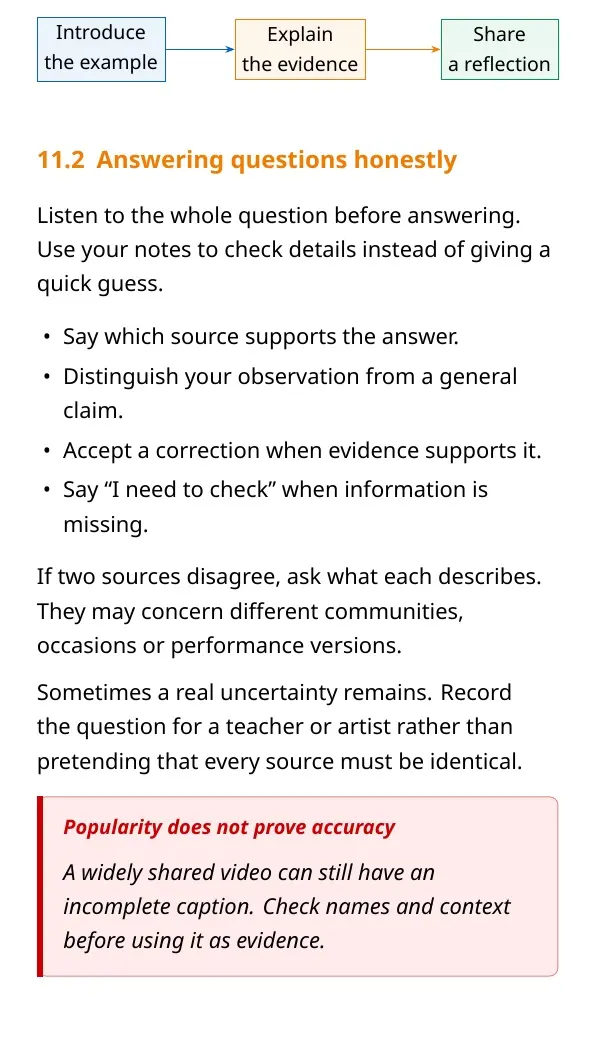
Activity 4 turns your field observations into a regional dance project. Choose a related folk song and note it down. Add drawings or suitable pictures and handmade models of jewellery. Present your work to teachers and classmates.
- Name the dance and its region.
- Explain its occasion and purpose using your observations.
- Add labelled pictures of costumes, instruments or jewellery.
- Include the folk song and acknowledge who helped you learn about it.
- Practise explaining your chart clearly before presenting.
Activity 5 asks for a creative note on renowned modern Indian dancers of your choice. Add pictures and try suitable movements, postures and gestures. Check names and biographical facts before including them. Ask for guidance before attempting unfamiliar movements.
Dances of Our Land: Quick Recall and Student Feedback
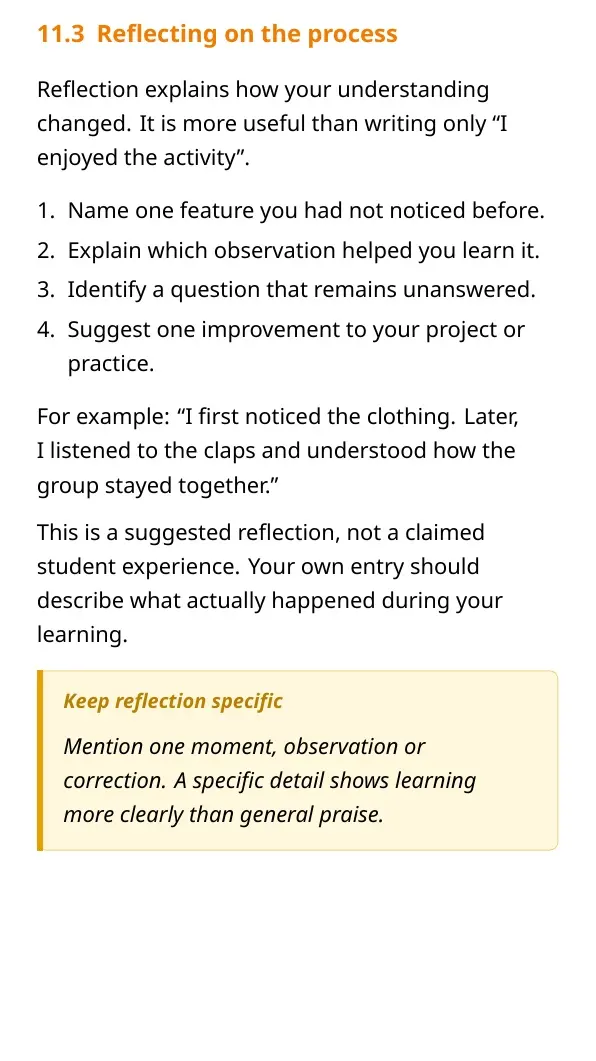
Use this Collegedunia self-check after completing your chart. Invite student feedback from a classmate, then improve one part of your project.
- Can I connect each dance with its region?
- Can I tell costume apart from accompaniment?
- Have I compared the same features for both dances?
- Can a classmate explain the dance's purpose from my project?
A costume is worn; an accompaniment supports the performance through music or rhythm. A pheran belongs in the costume column. A rabab belongs in the instrument column.
Dances of Our Land: Related Class 6 Study Resources
Use the original chapter for activity instructions and the solutions for help planning your responses.
| Resource | Use |
|---|---|
| Official NCERT Dances of Our Land Chapter PDF | Read the original examples |
| Dances of Our Land Class 6 NCERT Solutions | Plan activity responses |
All Chapters: Class 6 Arts Notes
Explore other Class 6 Arts chapters through these published notes.
| Chapter | Notes |
|---|---|
| 1 | Objects and Still Life Class 6 Notes |
| 3 | Portraying People Class 6 Notes |
| 4 | Paper Crafts Class 6 Notes |
Dances of Our Land Class 6 Arts Notes FAQs
Ques. What does Dances of Our Land teach?
Ans. It teaches observation and comparison of regional dances through movement, music, costume, occasion and community purpose.
Ques. How many activities are in the NCERT chapter?
Ans. There are five: exploring regional dances, exploring other forms, comparison, a regional dance project and notes on renowned dancers.
Ques. Which festival is associated with Garba?
Ans. The chapter associates Garba with Navaratri and the worship of Goddess Durga.
Ques. What movements does NCERT highlight in Garba?
Ans. It highlights energetic movements, rhythmic clapping and concentric circular patterns.
Ques. Which dance from Kerala appears in the chapter?
Ans. Thiruvathira Kali appears as a dance performed by women, with rhythmic clapping and a folk song.
Ques. What costume does the chapter associate with Rouf?
Ans. It mentions the pheran, a loose long robe, along with embroidered clothing and jewellery.
Ques. Which two dances are compared in Activity 3?
Ans. The example compares Kalbelia of Rajasthan and Nongkrem of Meghalaya.
Ques. What should a regional dance project include?
Ans. Include information from observations, drawings or pictures, a related folk song and handmade models of jewellery.
Ques. What is a regional dance?
Ans. A regional dance is a dance tradition associated with a particular region and its communities.
Ques. What is an accompaniment in dance?
Ans. An accompaniment supports the dance through song, music or rhythm. Instruments such as dhol and rabab are examples.
Ques. What are dance costumes?
Ans. Dance costumes are clothing and ornaments worn during a performance. They help show the dance tradition and its cultural setting.



Comments