




The NCERT Class 6 Social Science Chapter 9 notes for Family and Community explain family types, roles, dharma, cooperation, community support, shared resources and interdependence. These notes follow the 2026-27 NCERT textbook and include a free PDF for quick revision.
- Best for revision: joint family, nuclear family, dharma, halma, RWA and community interdependence.
- Use with the PDF: revise the examples first, then practise the rule and fairness questions.
- 2026-27 focus: follows Exploring Society: India and Beyond, Chapter 9.
Student Feedback: Students usually remember this chapter faster by matching each story with the value it teaches.
Family and Community Notes Overview
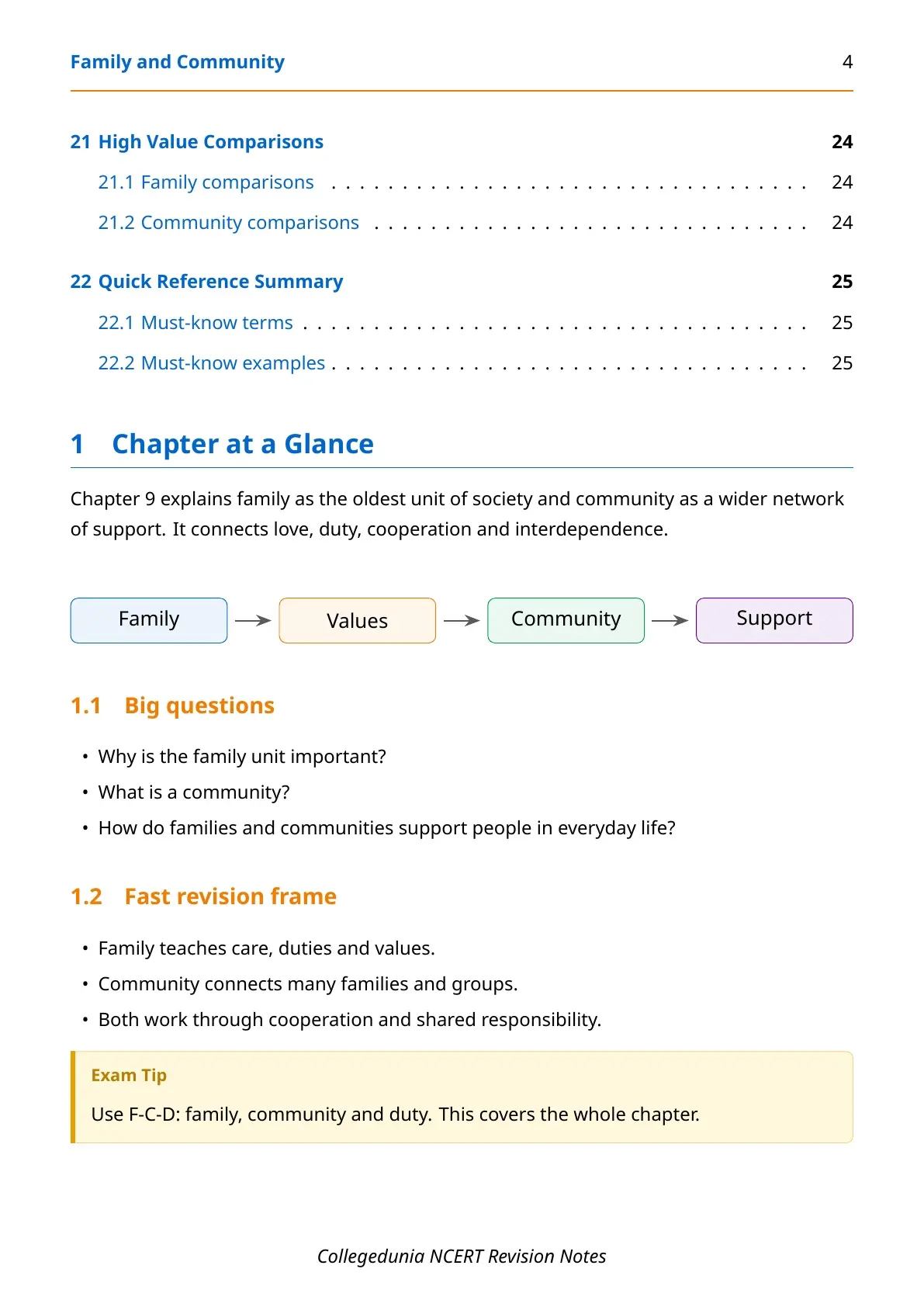
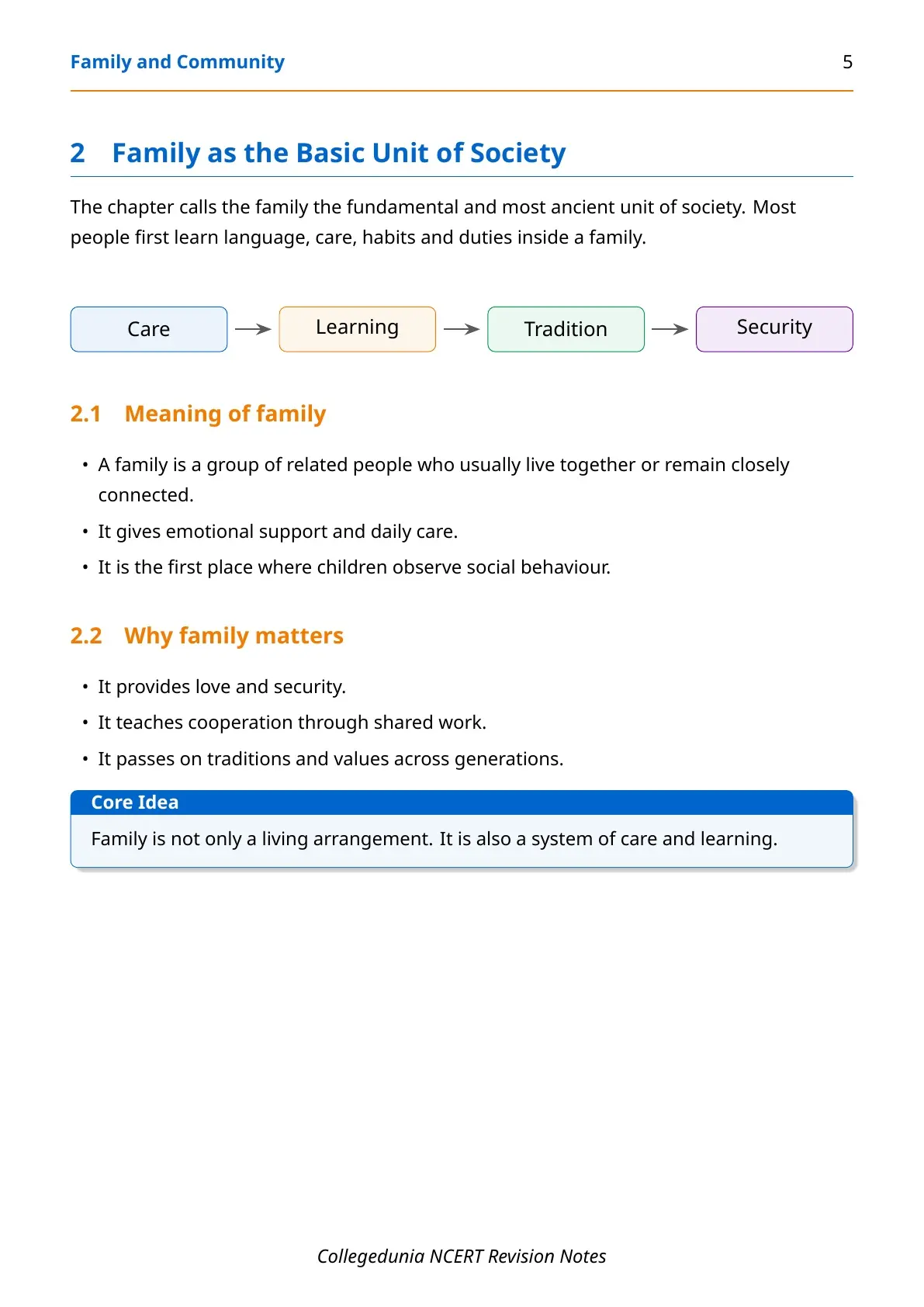
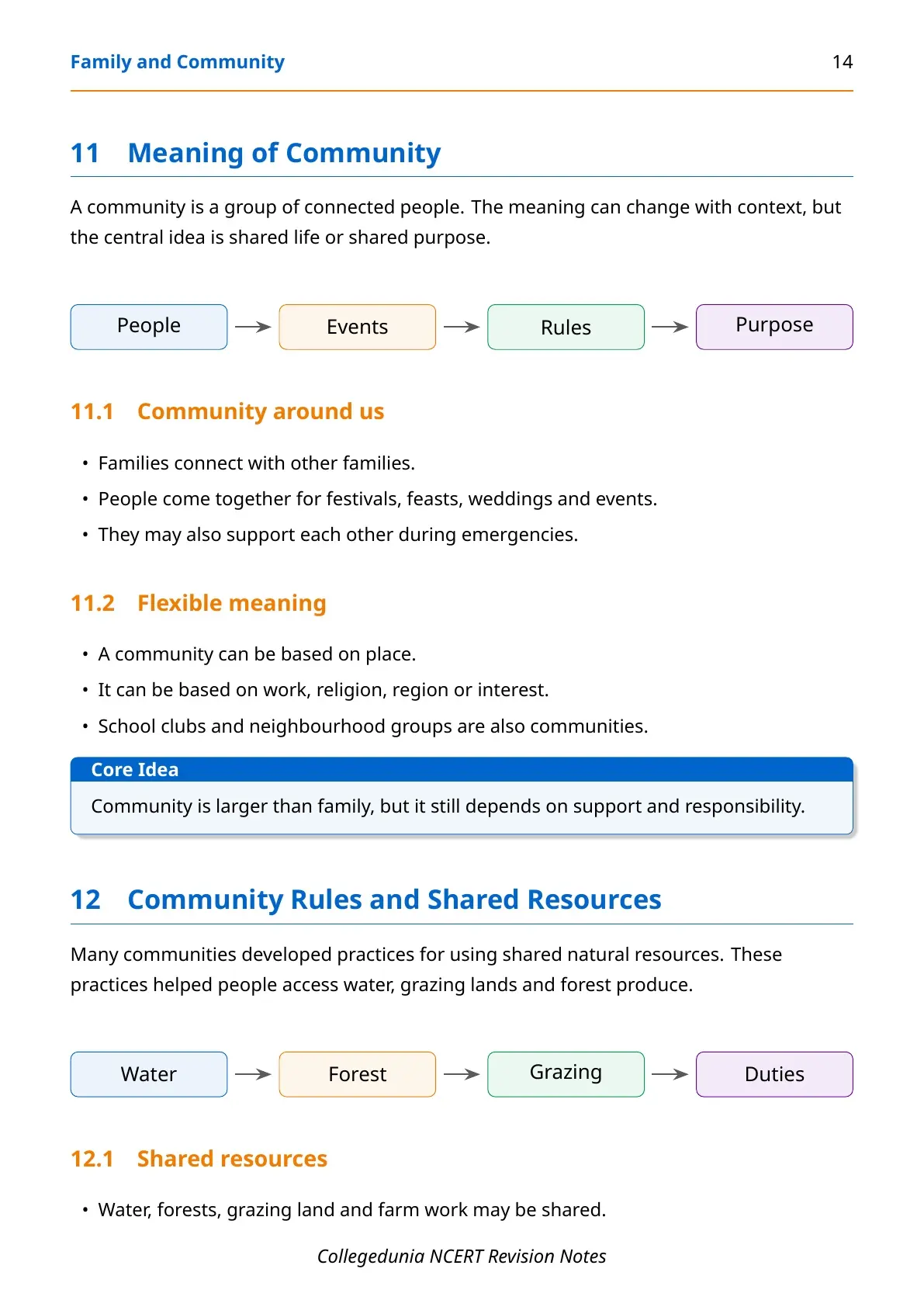
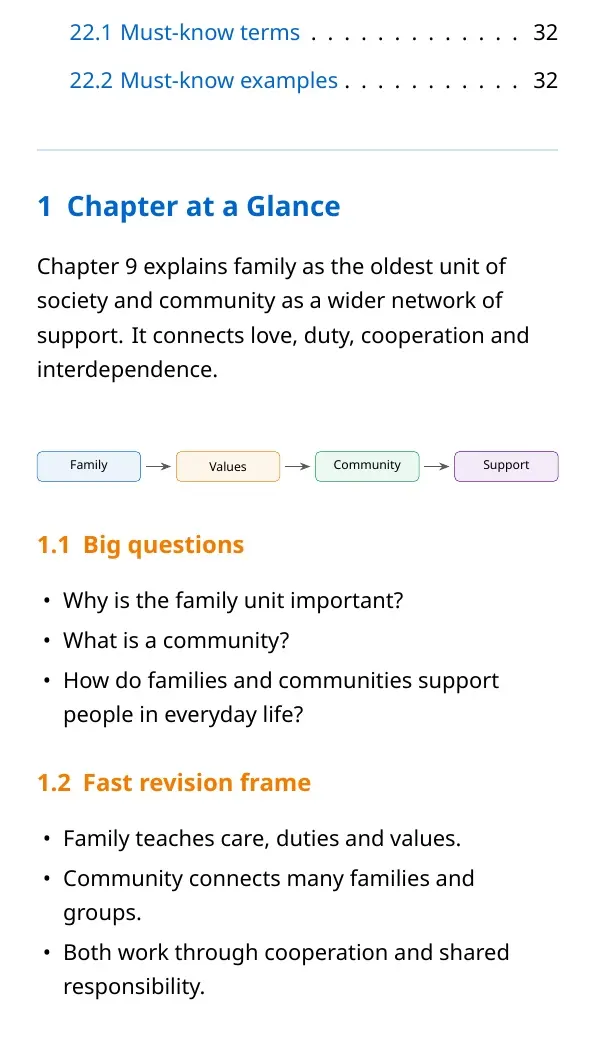
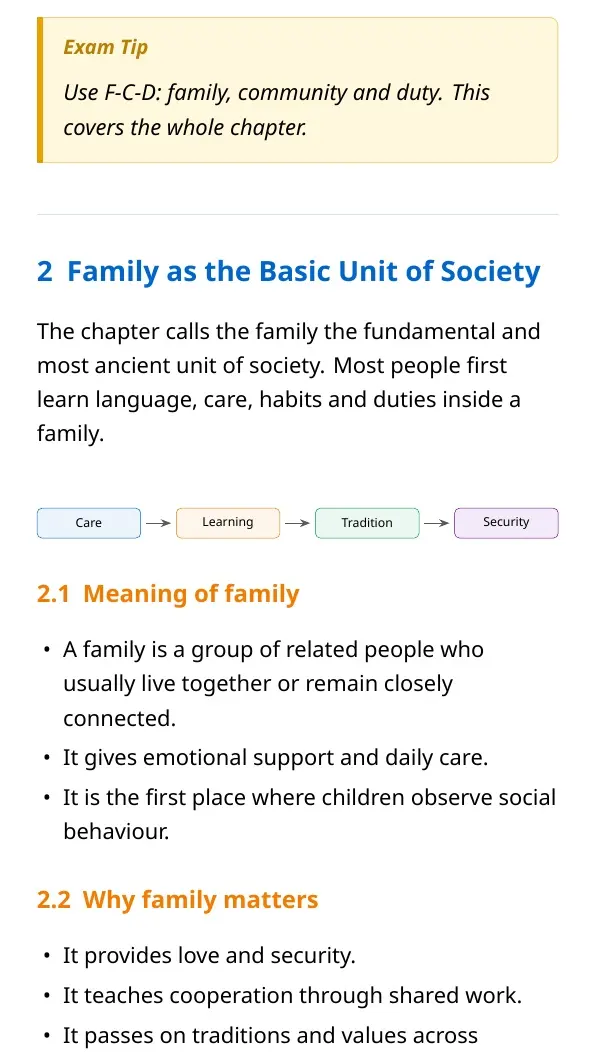
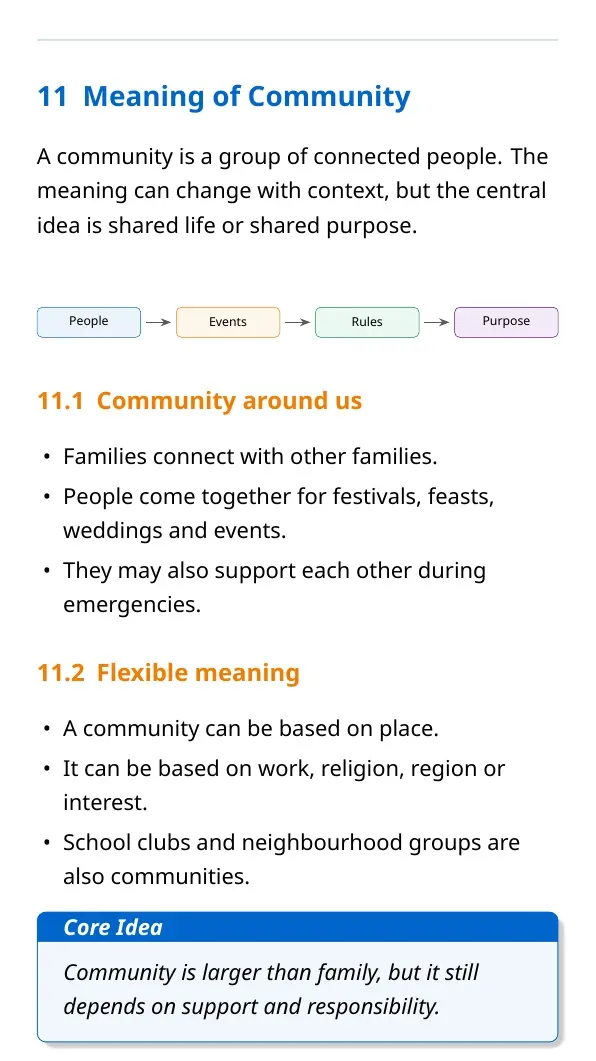
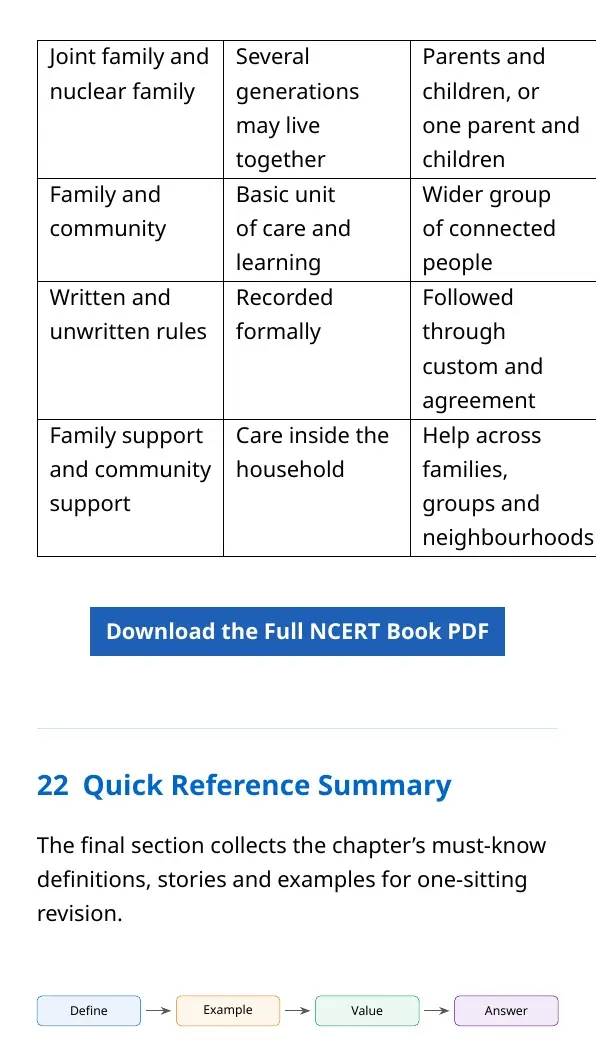
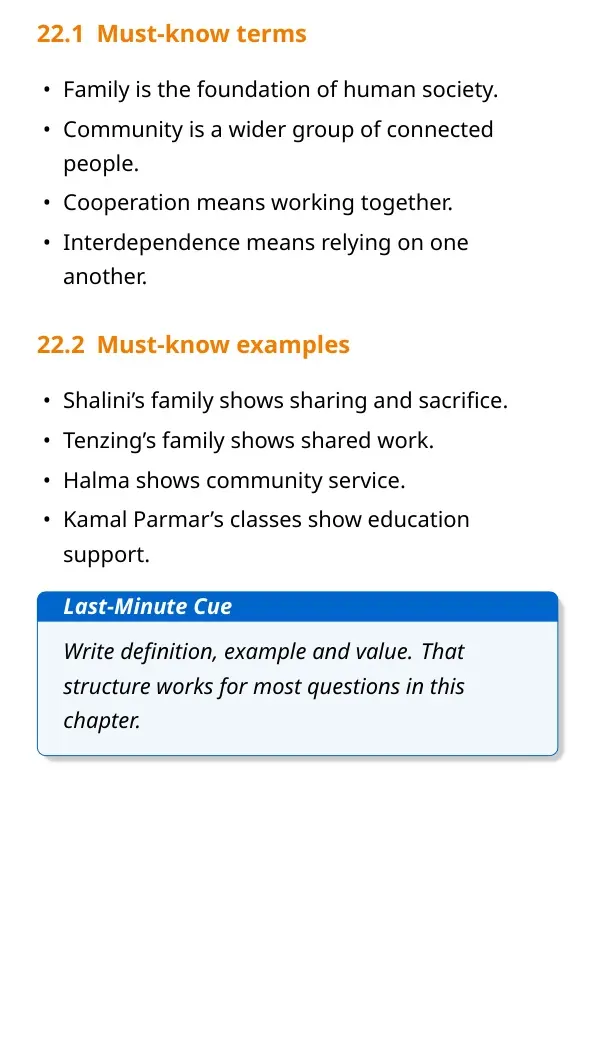
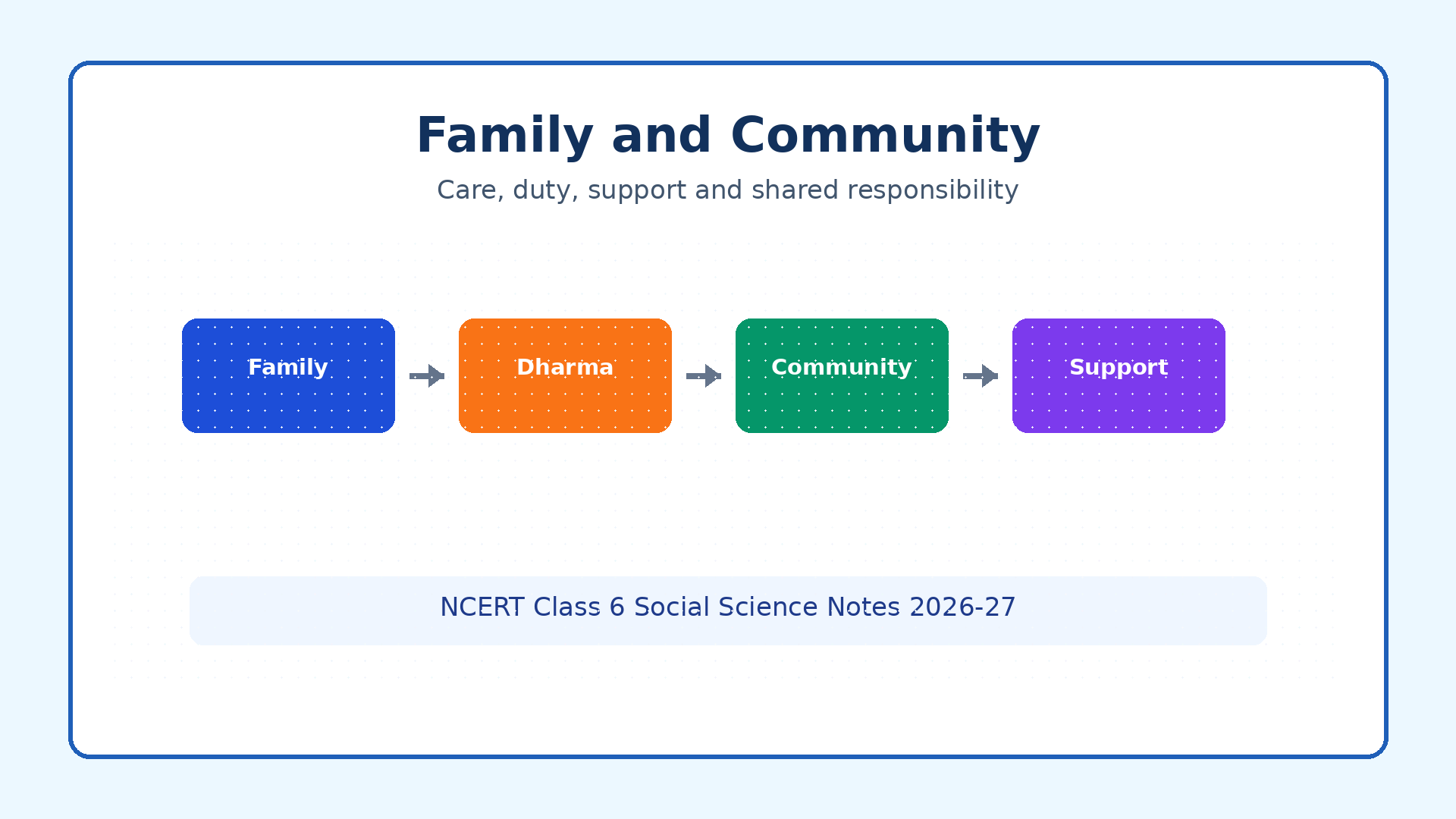
Chapter 9 explains how family and community support human life. Family is the basic unit where children learn care, duties and values. Community is a wider group of connected people who come together for events, shared resources, crisis support and common rules.
| Revision area | Key idea | Example cue |
|---|---|---|
| Family | Basic unit of society | Joint and nuclear families |
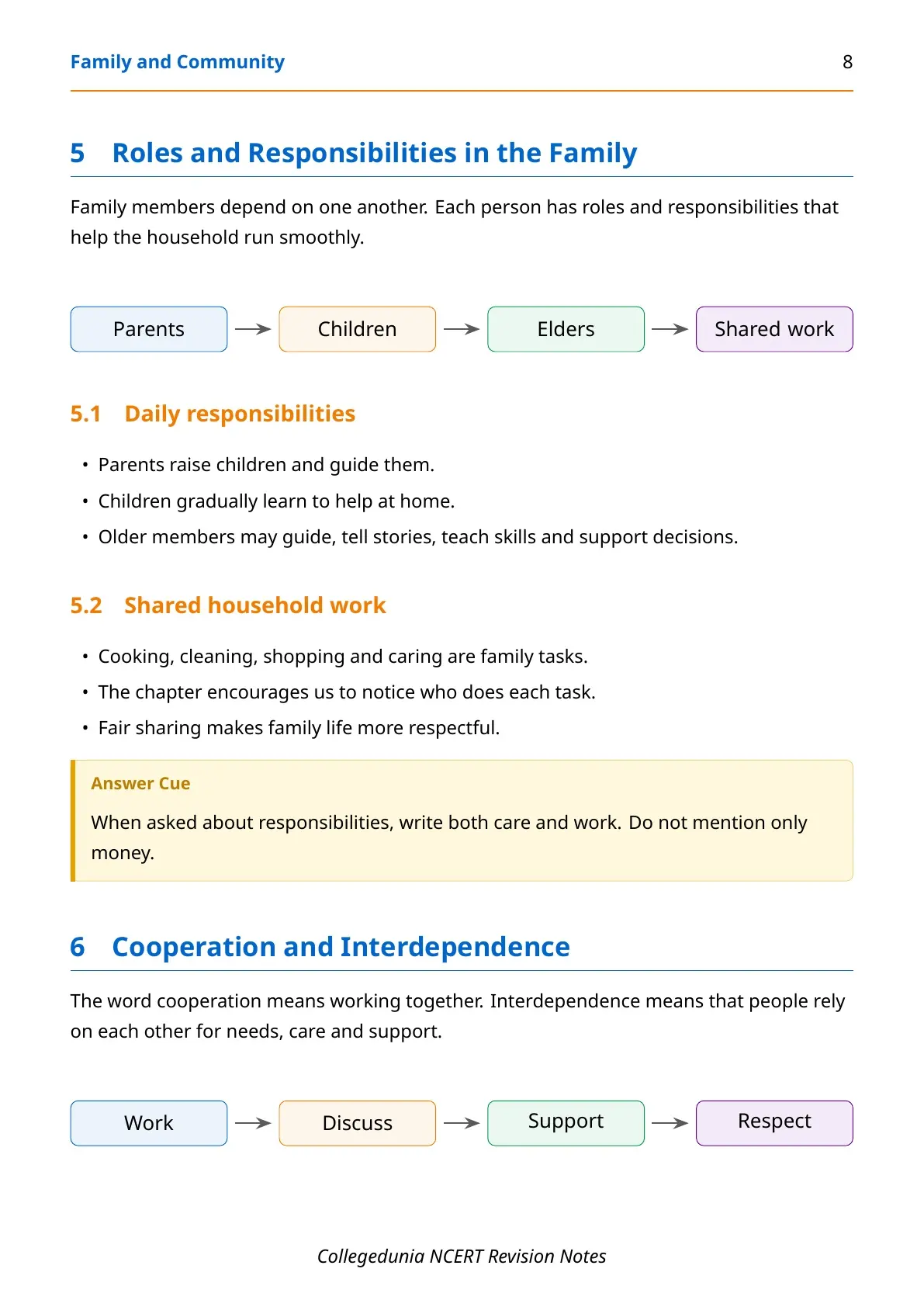
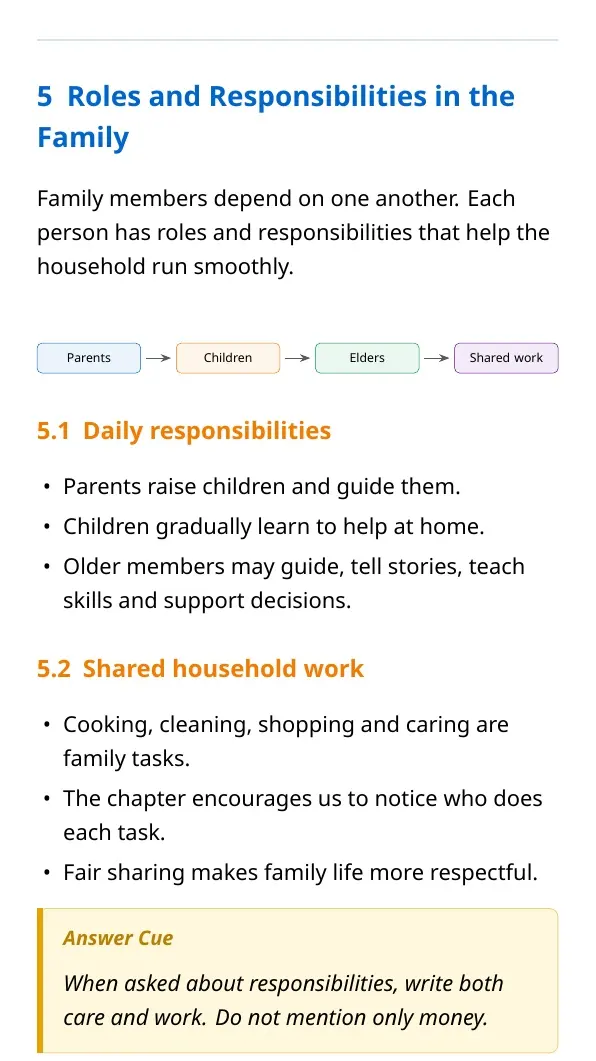
| Roles | Each member has responsibilities | Cooking, care, homework, decisions |
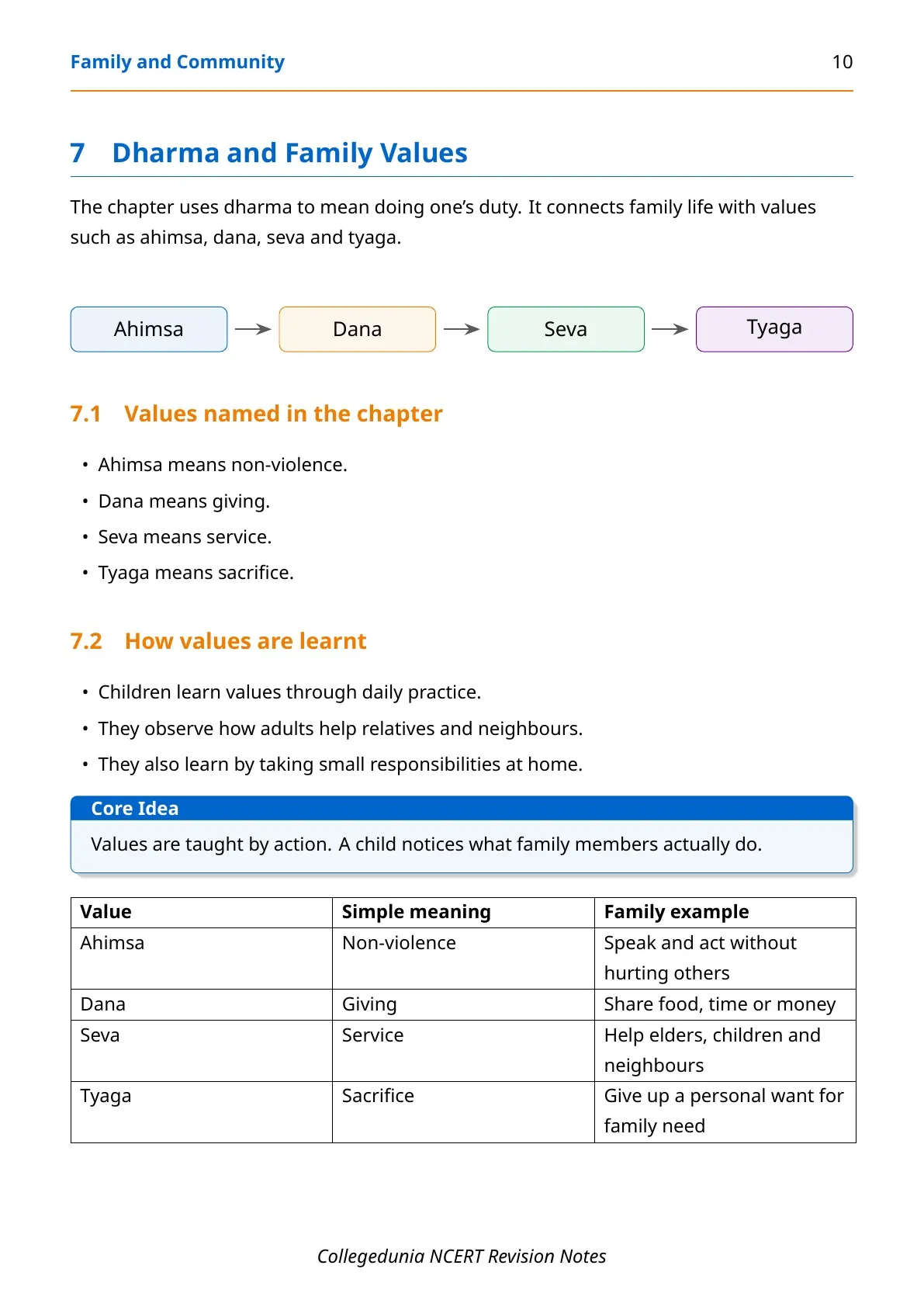
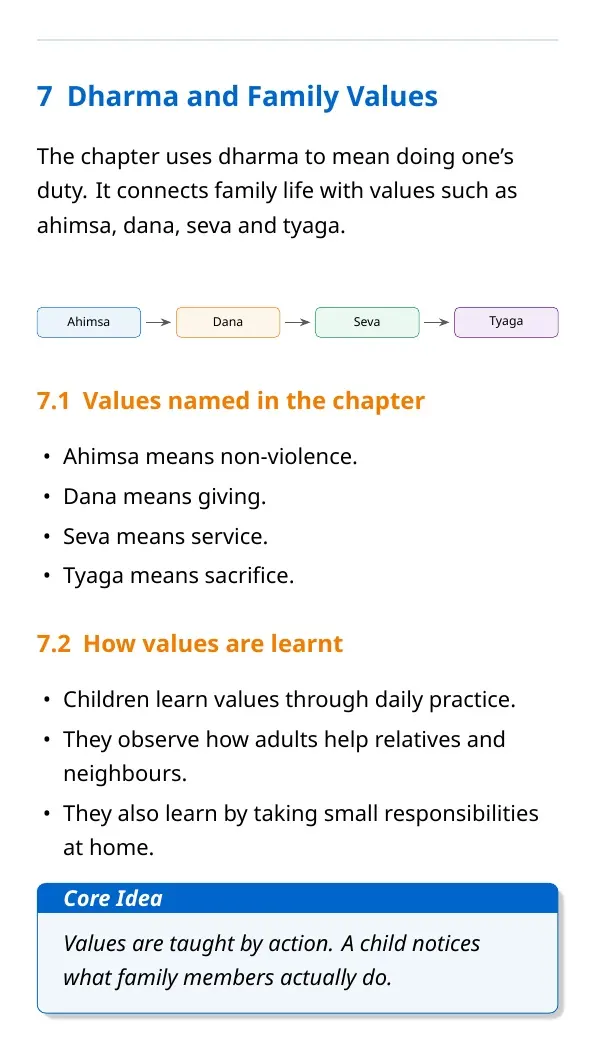
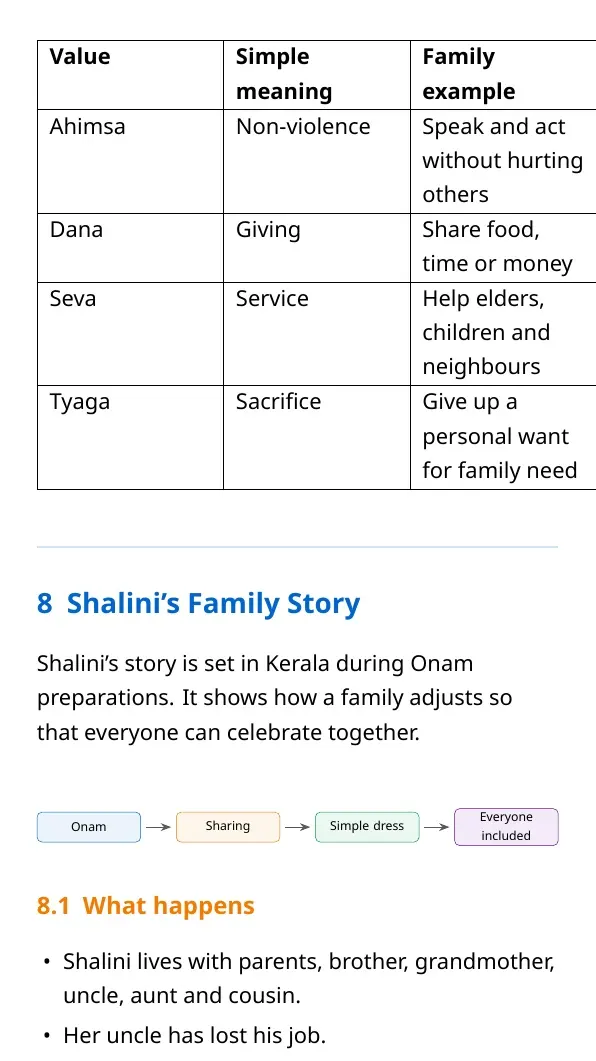
| Dharma | Doing one's duty | Seva, dana, tyaga and ahimsa |
| Community | Connected people with shared life or purpose | Village, RWA, class, club or work group |
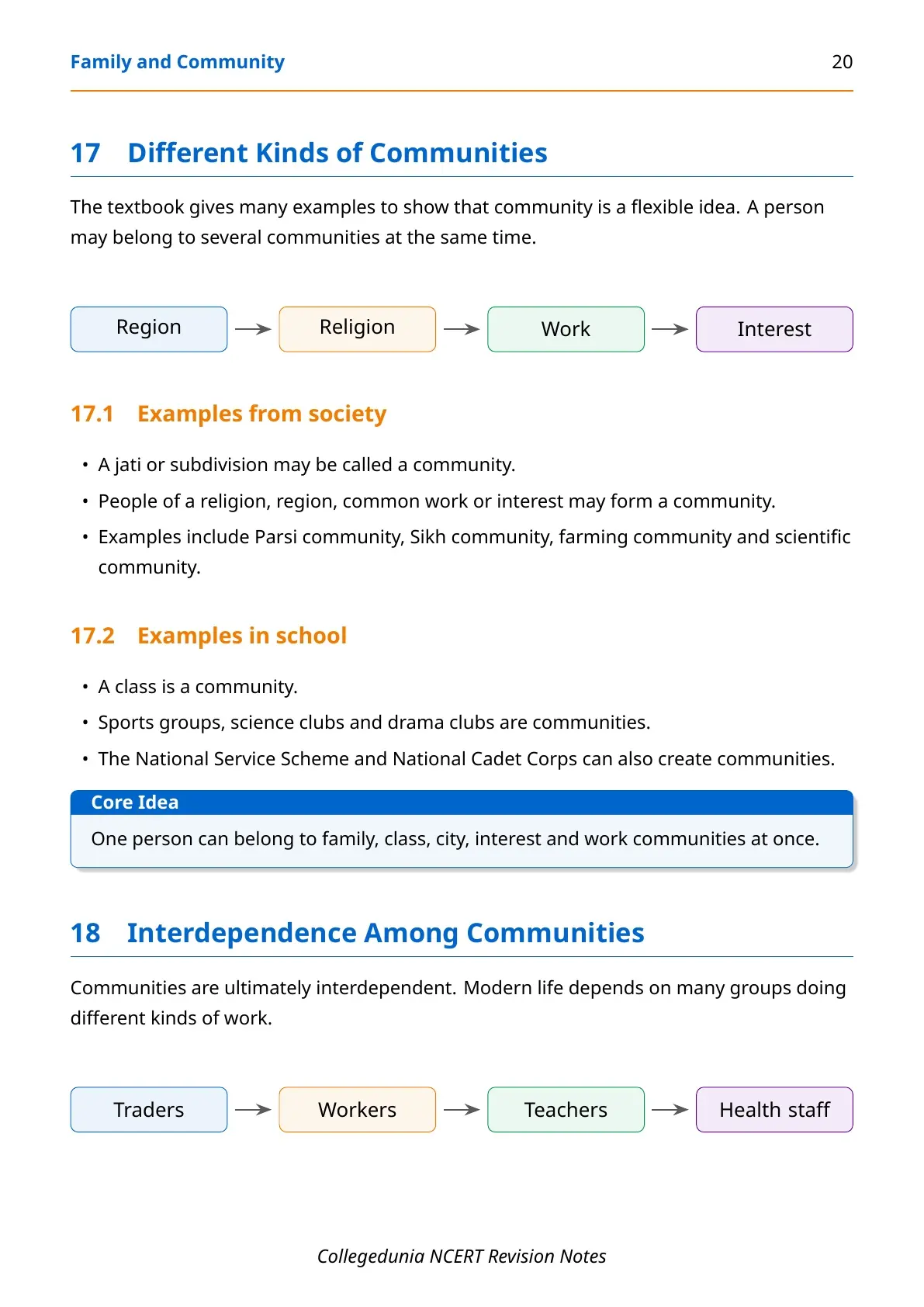
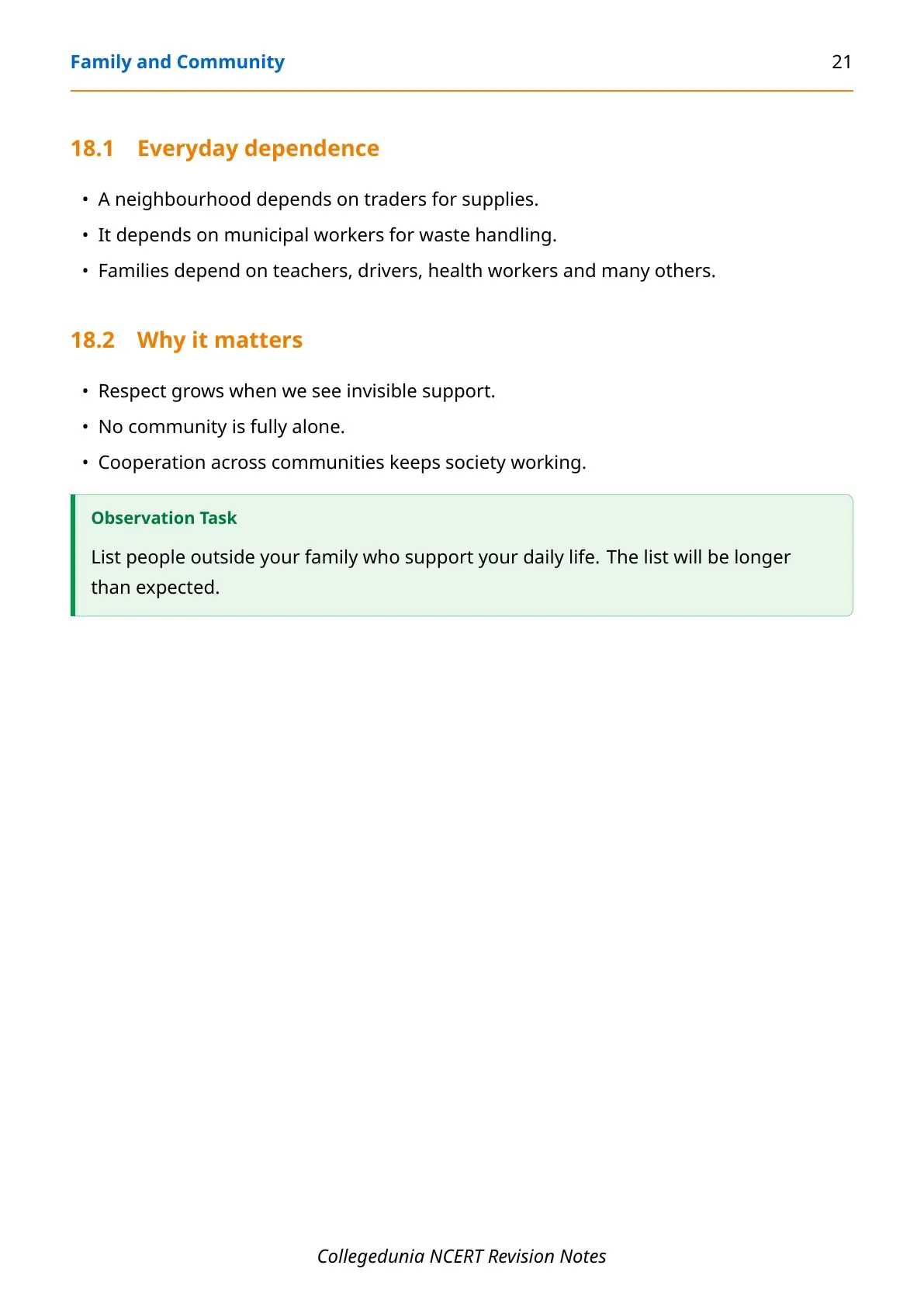
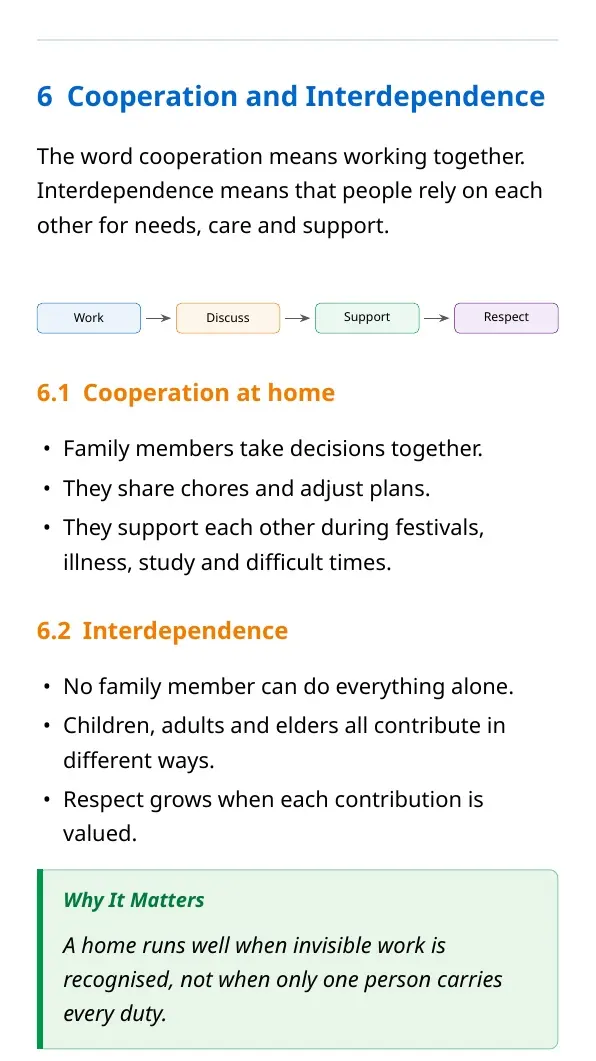
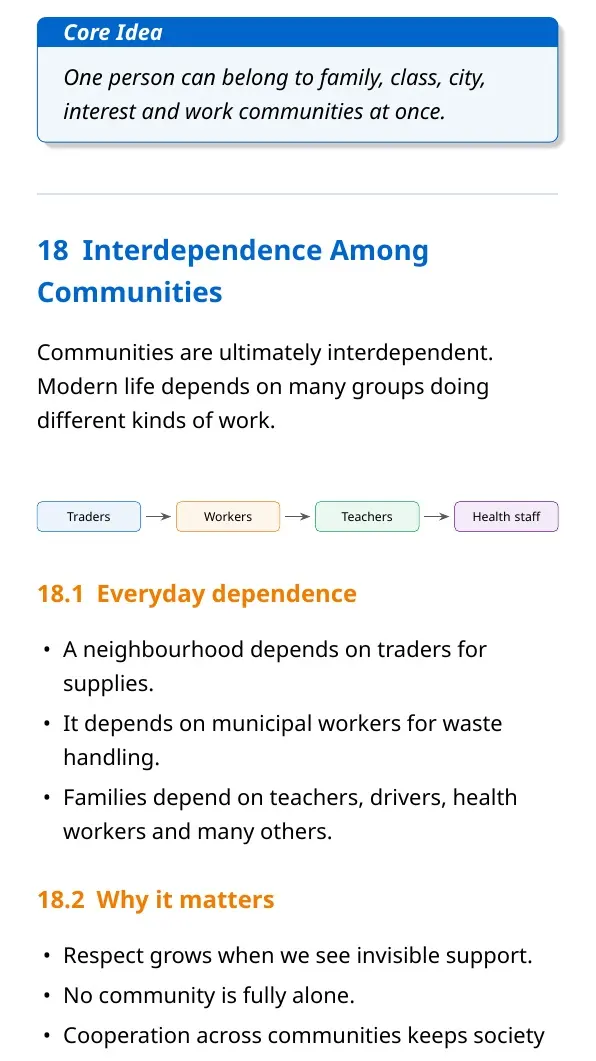
| Interdependence | People and communities rely on one another | Traders, teachers, municipal workers and health staff |
Family Types, Roles and Values
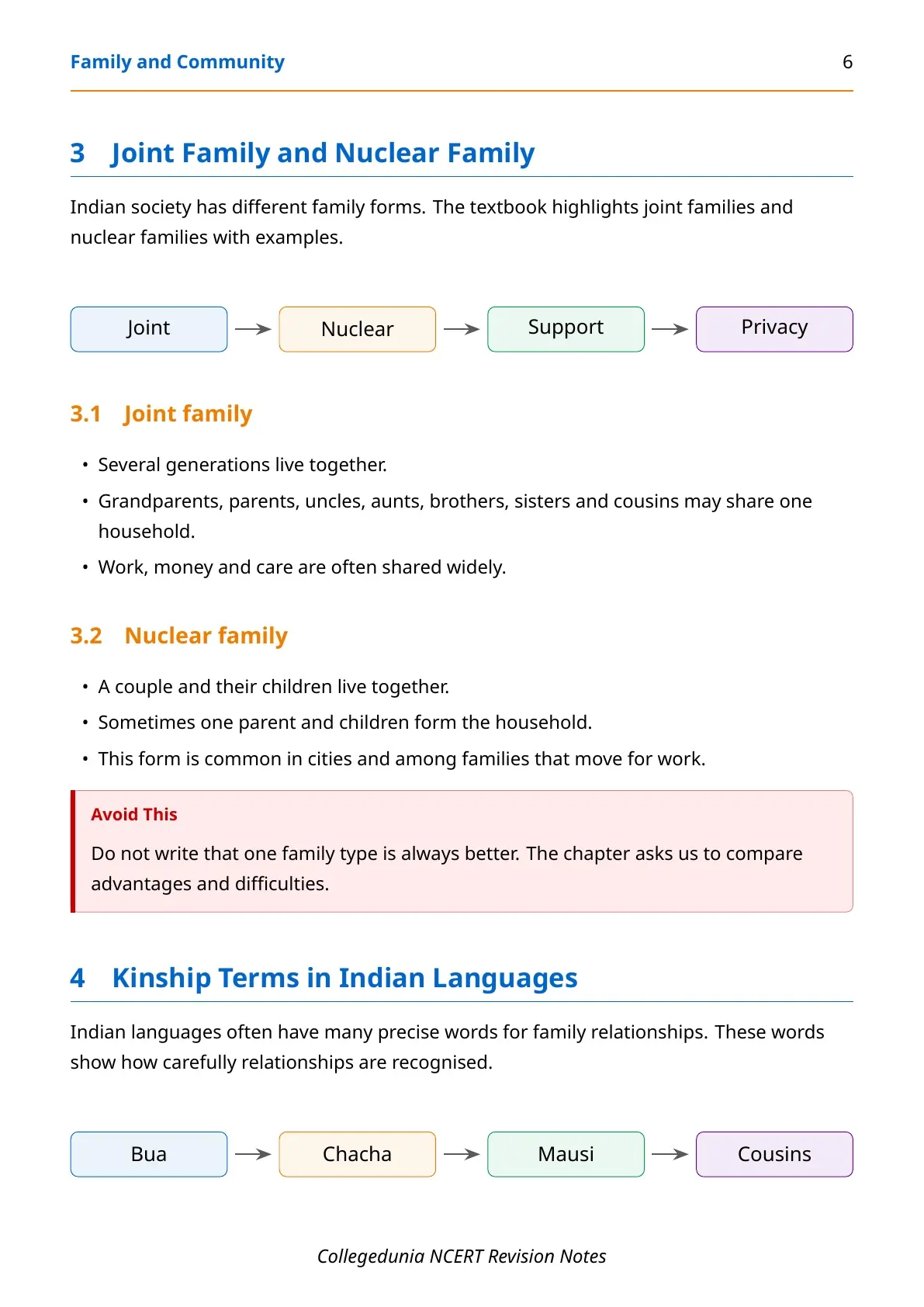
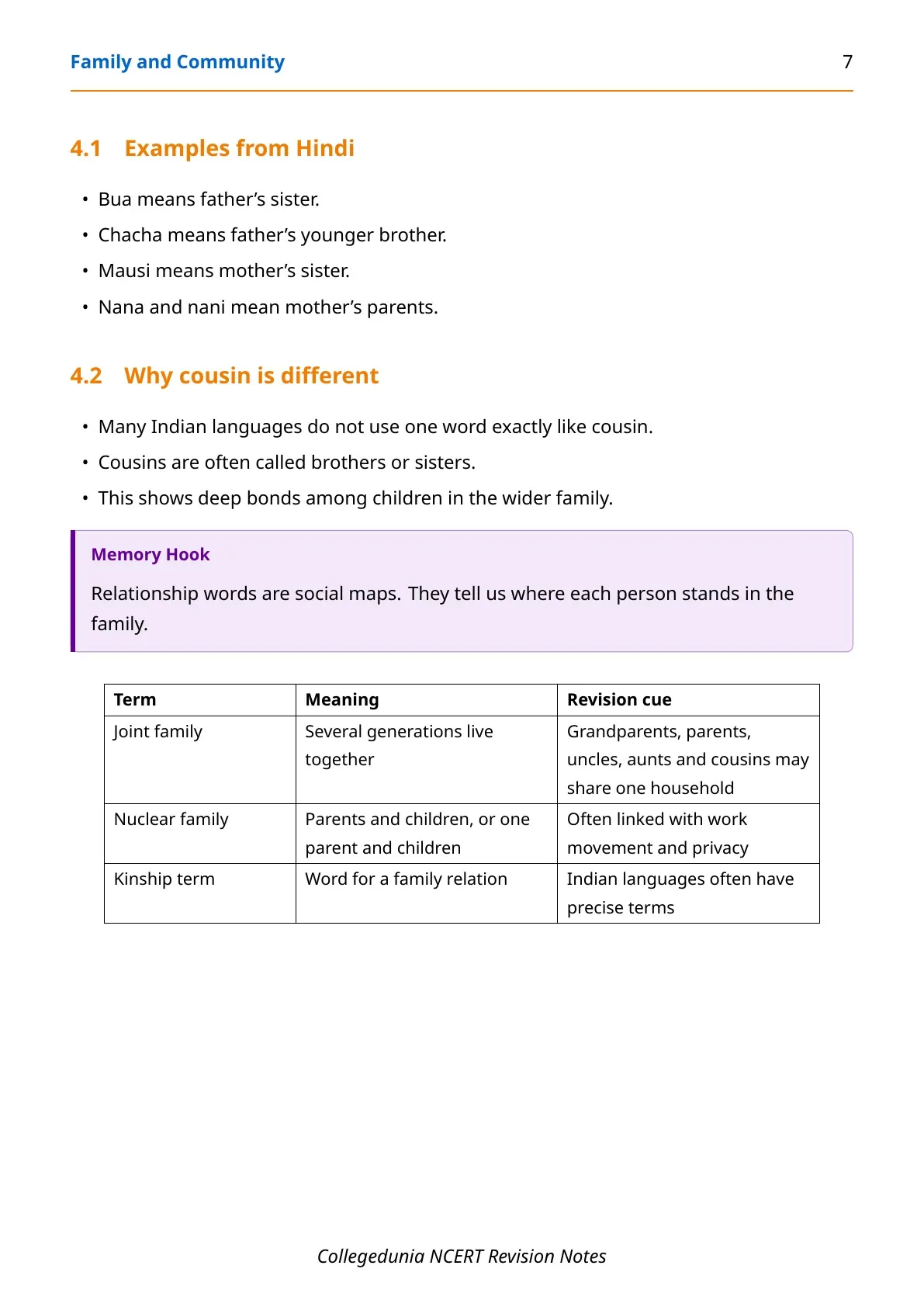
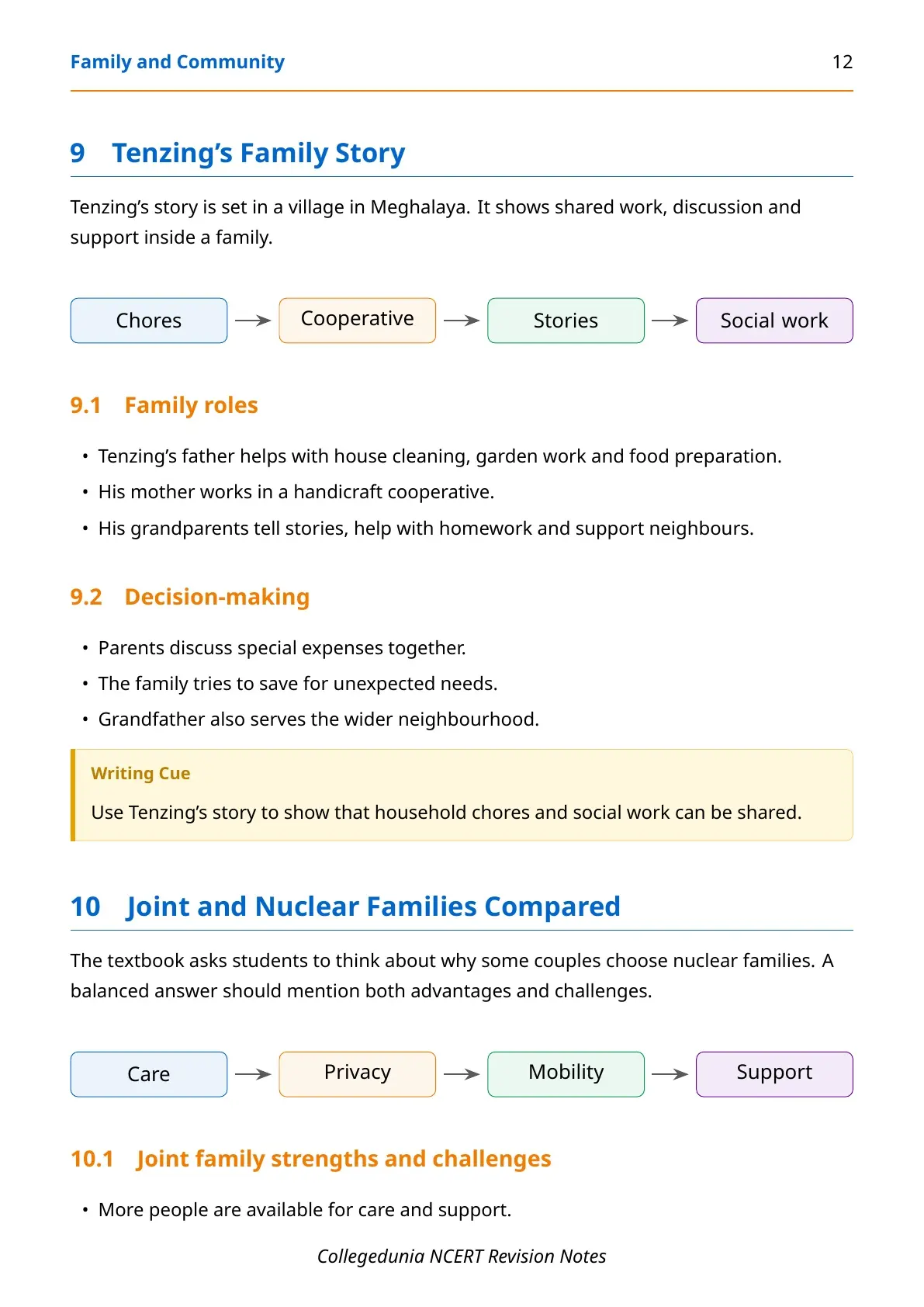
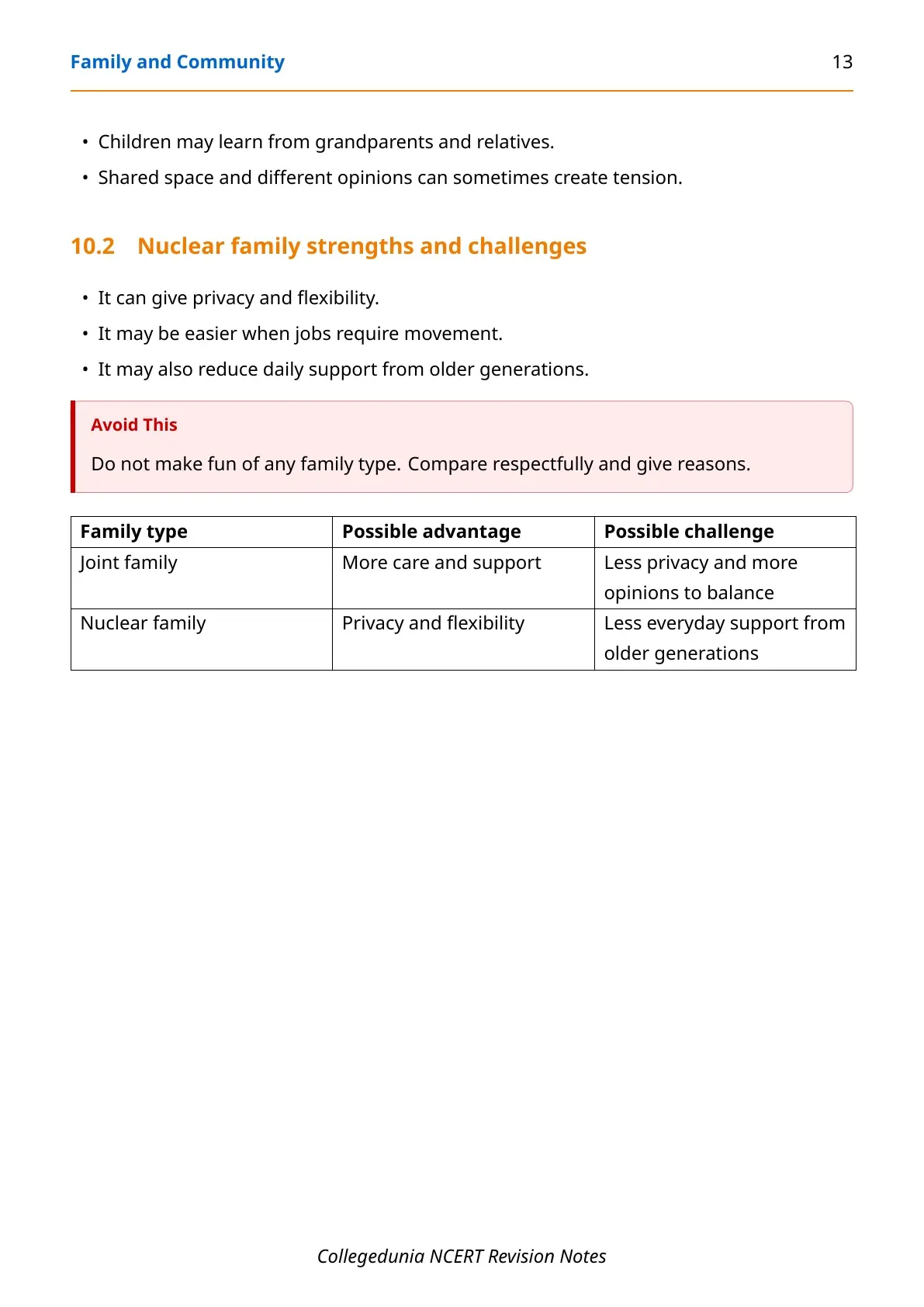
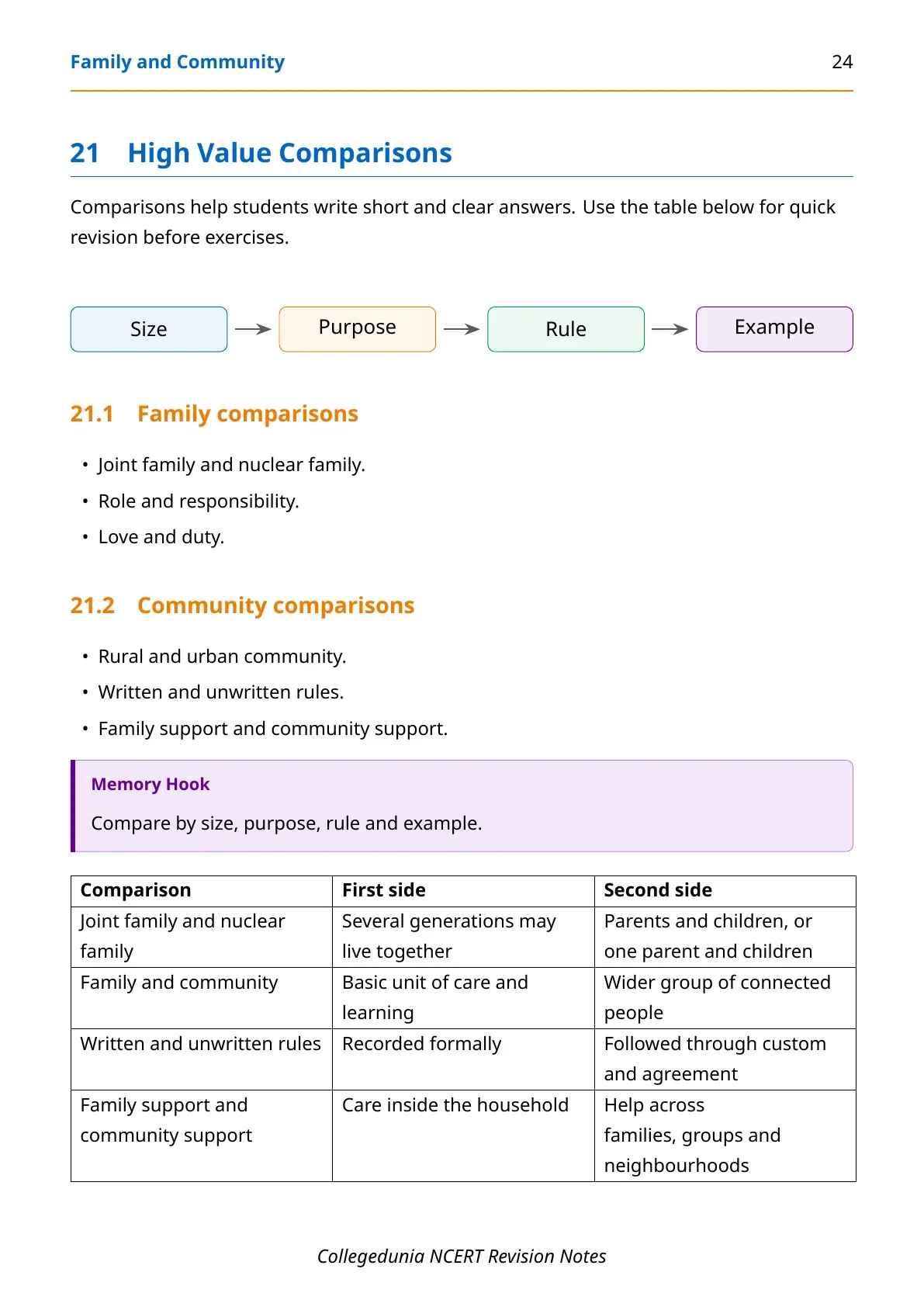
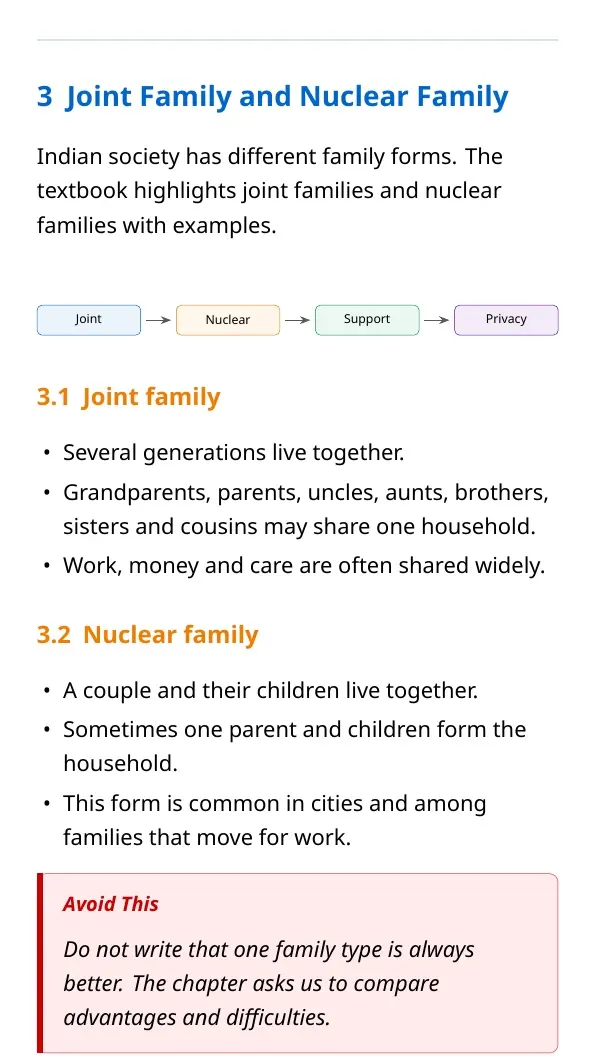
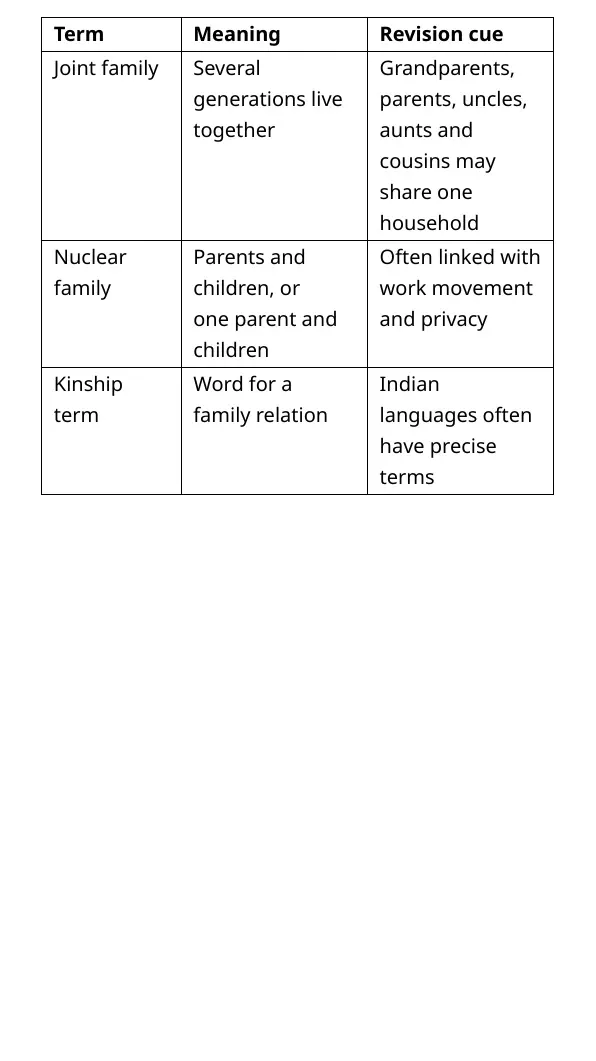
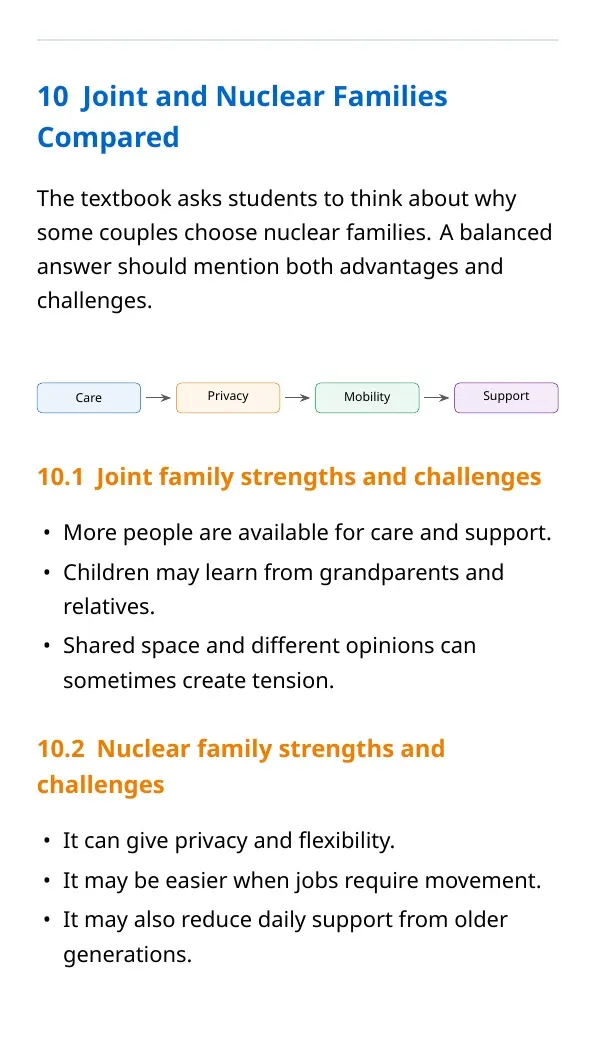
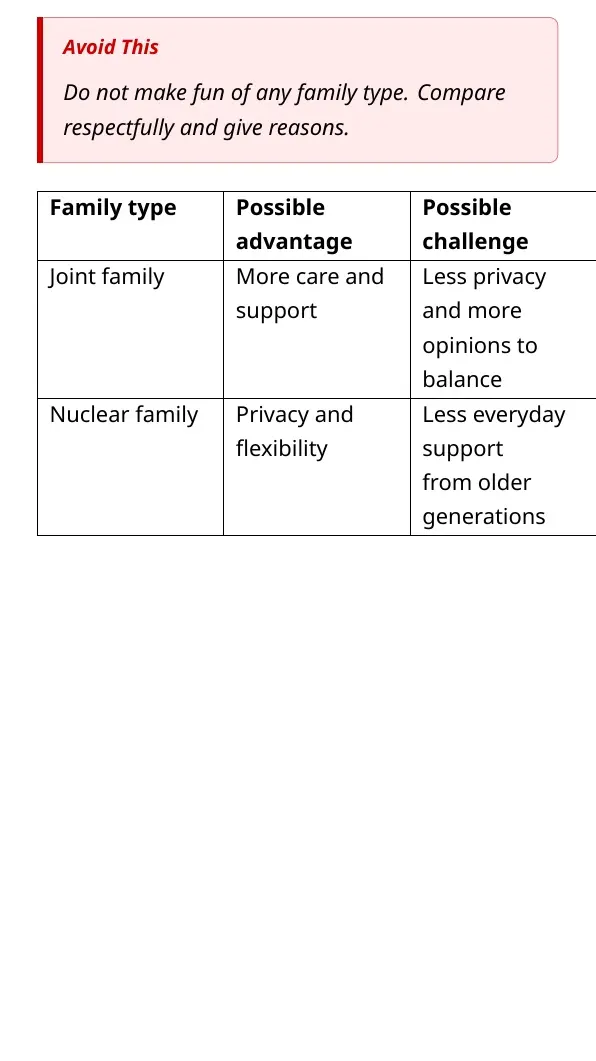
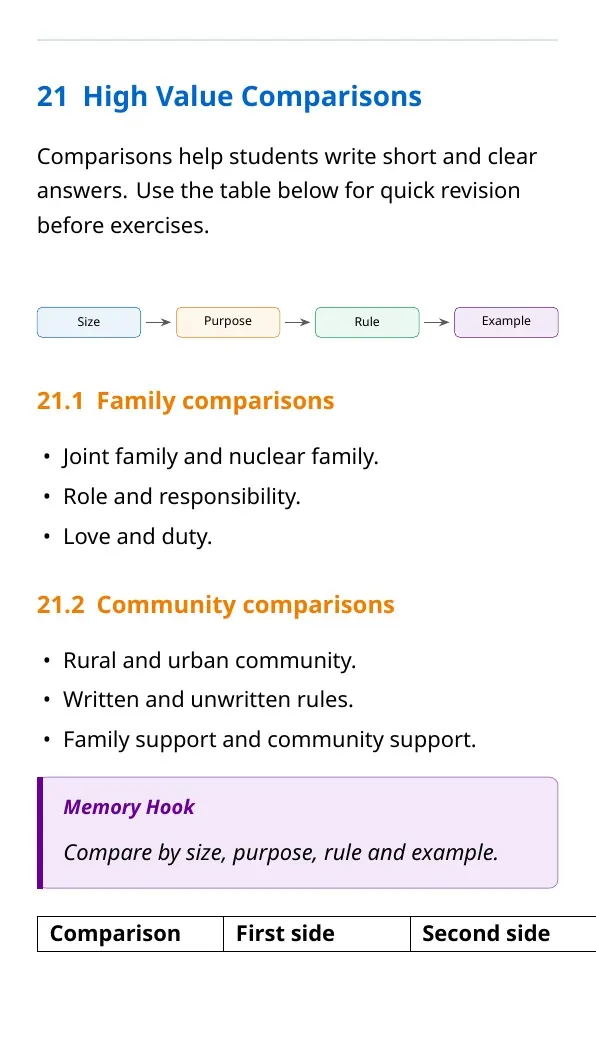
The textbook compares joint and nuclear families. A joint family may include several generations living together. A nuclear family usually includes parents and children, or one parent and children. Both forms need love, cooperation and shared responsibility.
- Joint family: wider support, shared care and contact with older generations.
- Nuclear family: privacy, flexibility and easier movement for work.
- Family values: ahimsa, dana, seva and tyaga are learnt through daily action.
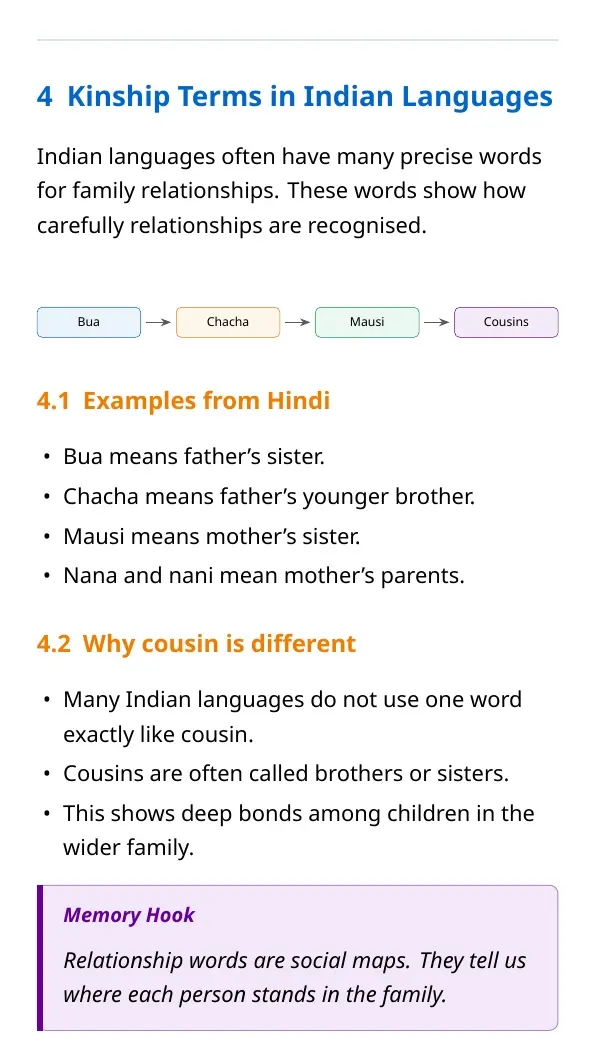
- Kinship terms: Indian languages often name relationships more precisely than English.
Family and Community Chapter 9 Revision Video
Source: Magnet Brains on YouTube
Community Support and Interdependence
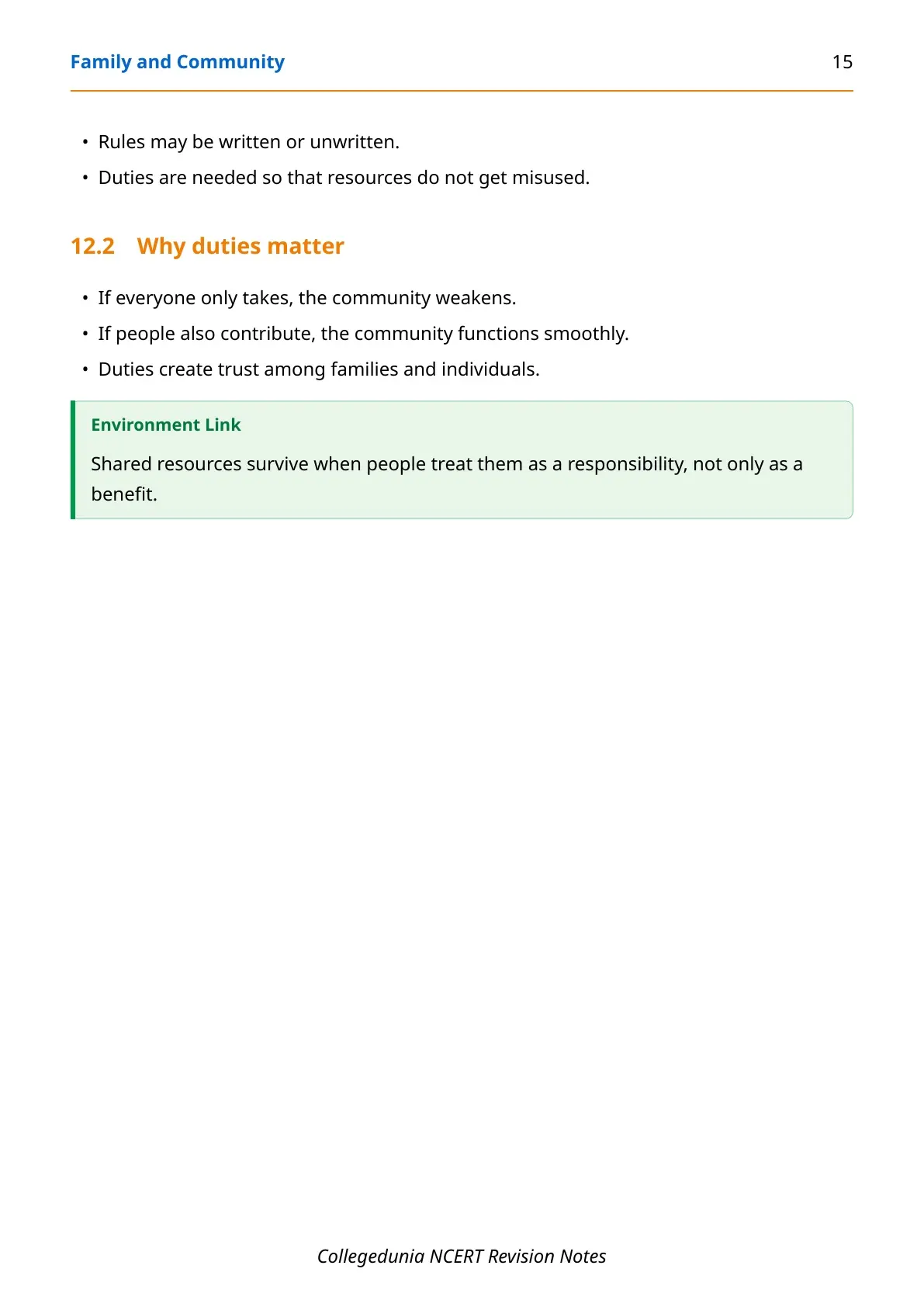
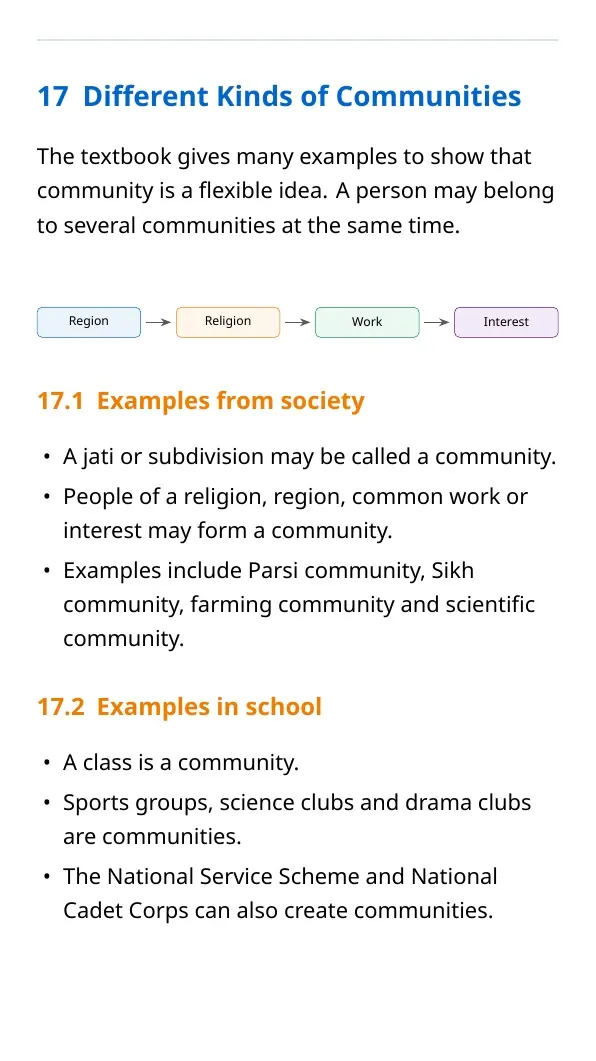
Communities support people beyond the family. They help during festivals, farming, shared resource use and crises. The chapter gives rural, urban and school-based examples to show that community is a flexible idea.
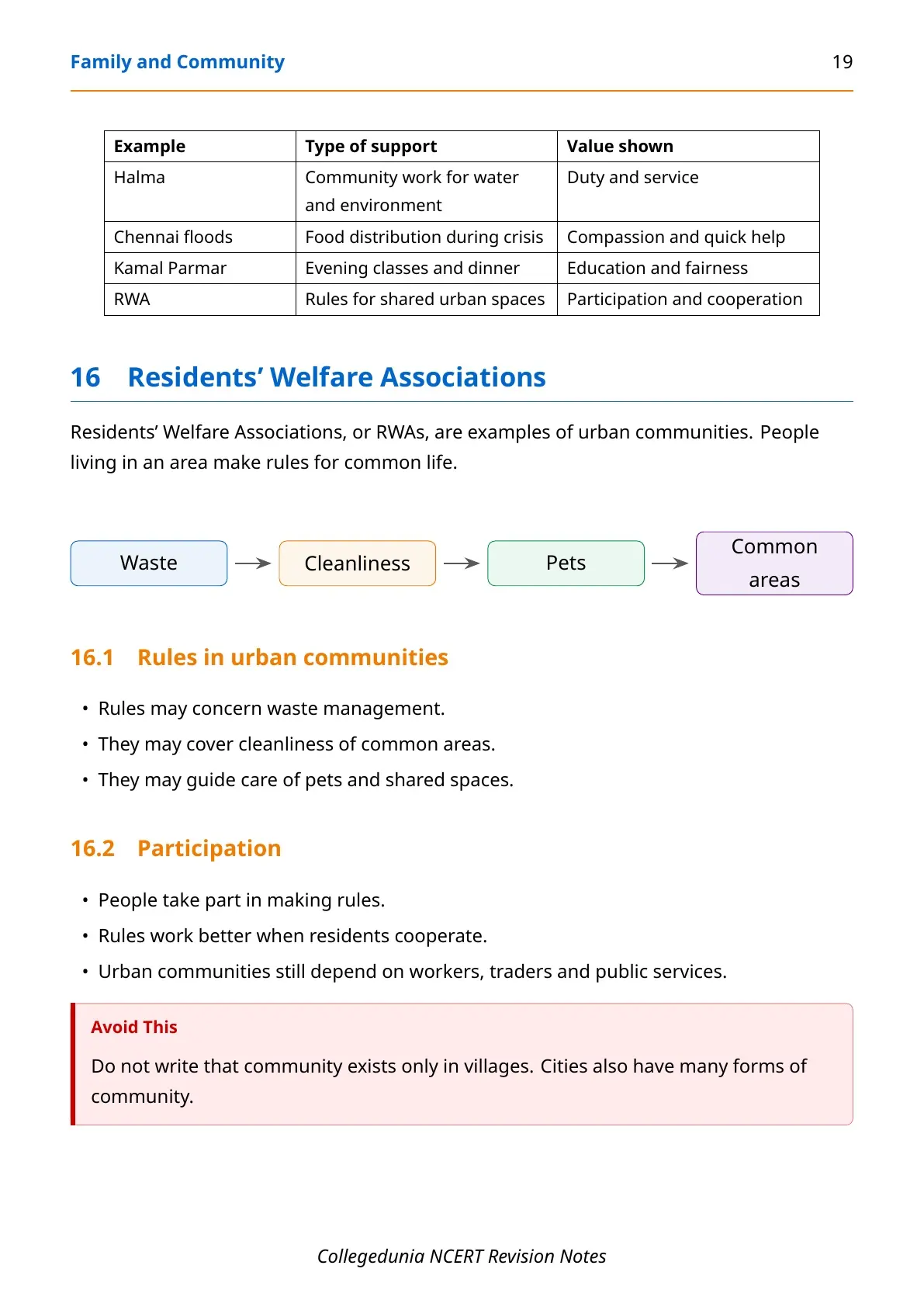
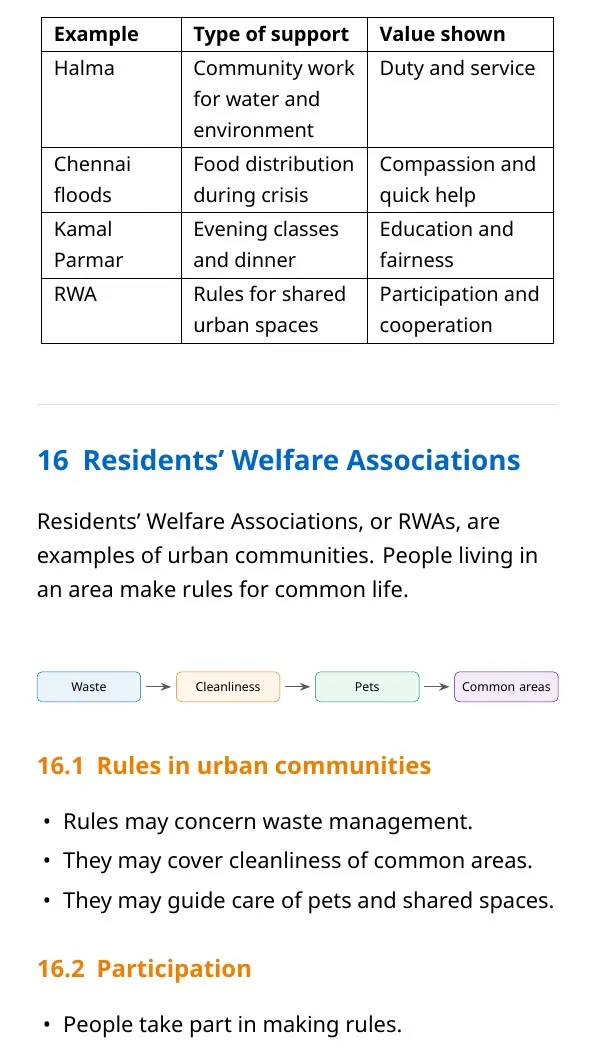
| Example | What happened | Value shown |
|---|---|---|
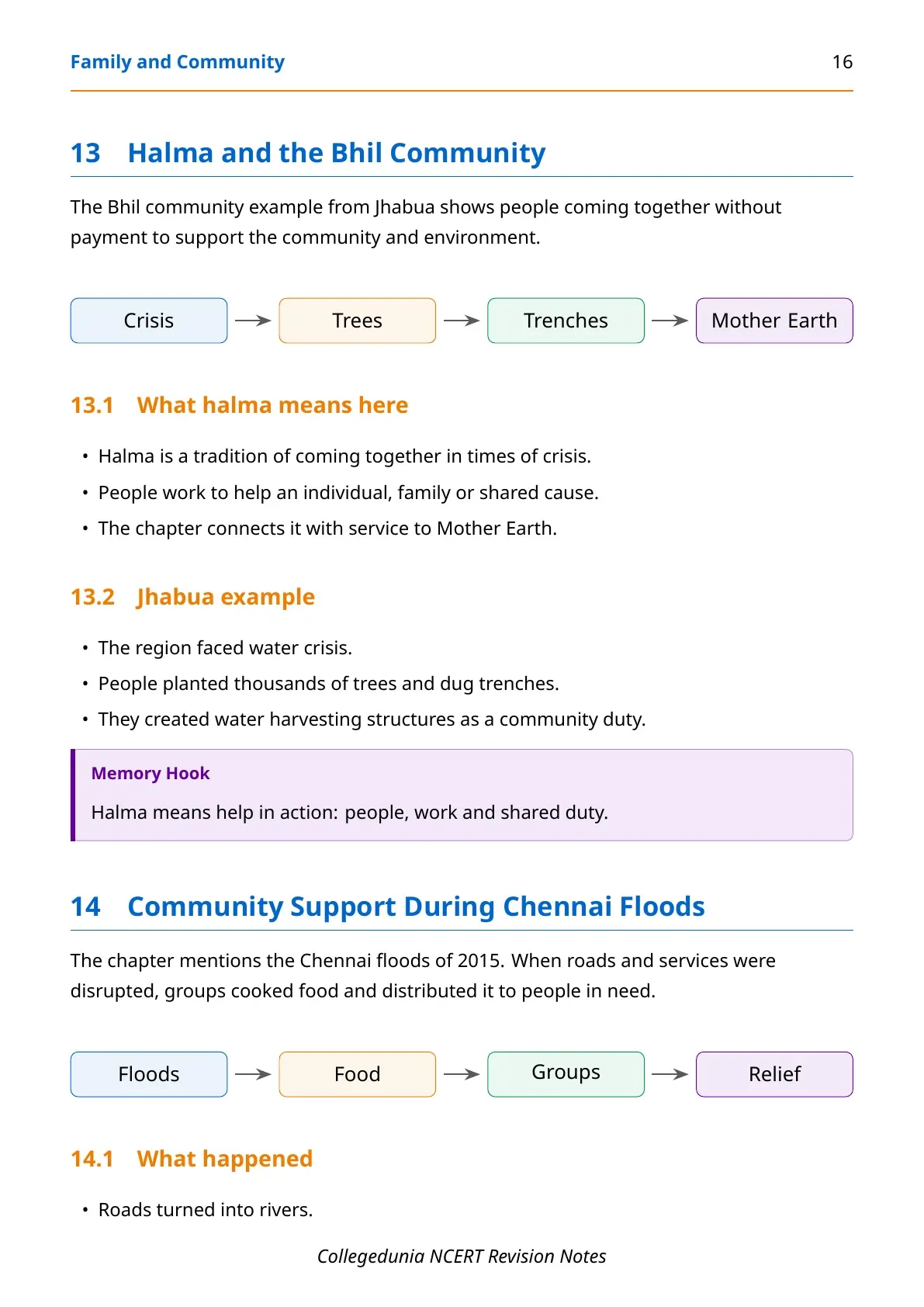
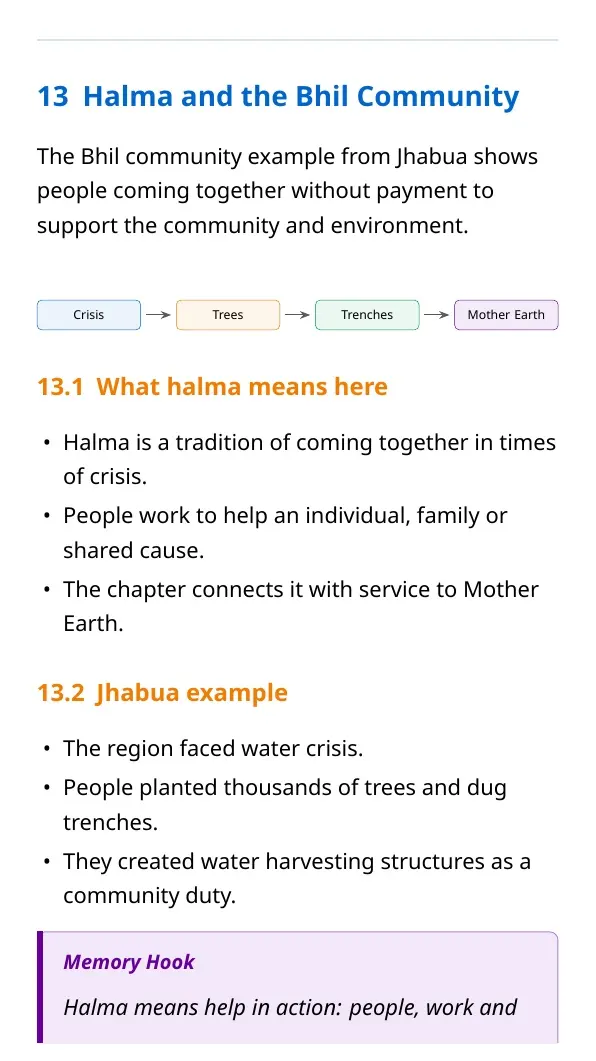
| Halma in Jhabua | Bhil community planted trees and dug trenches | Duty towards community and environment |
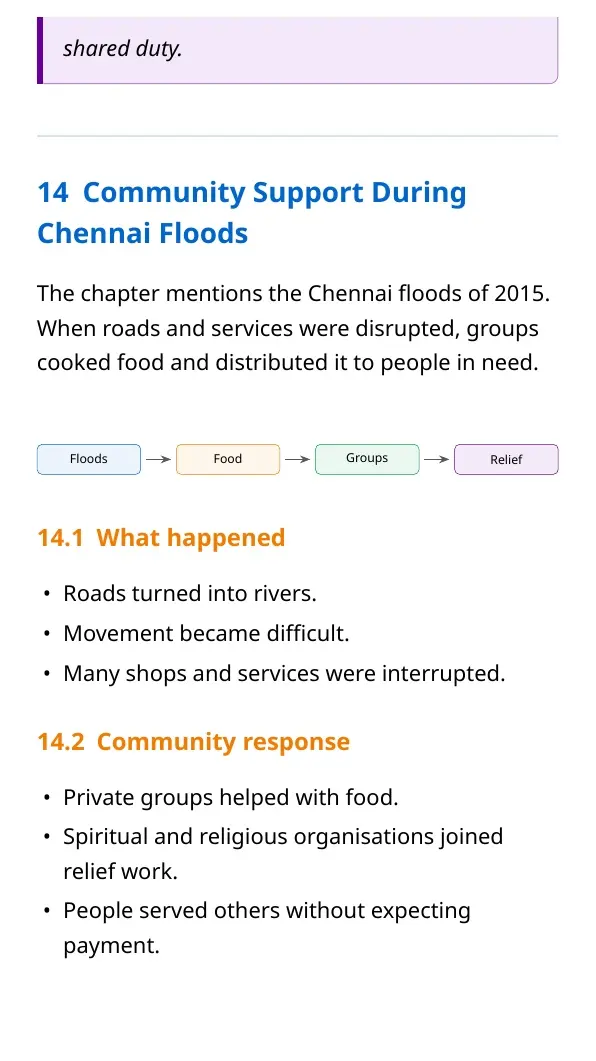
| Chennai floods | Groups cooked and distributed food | Service during crisis |
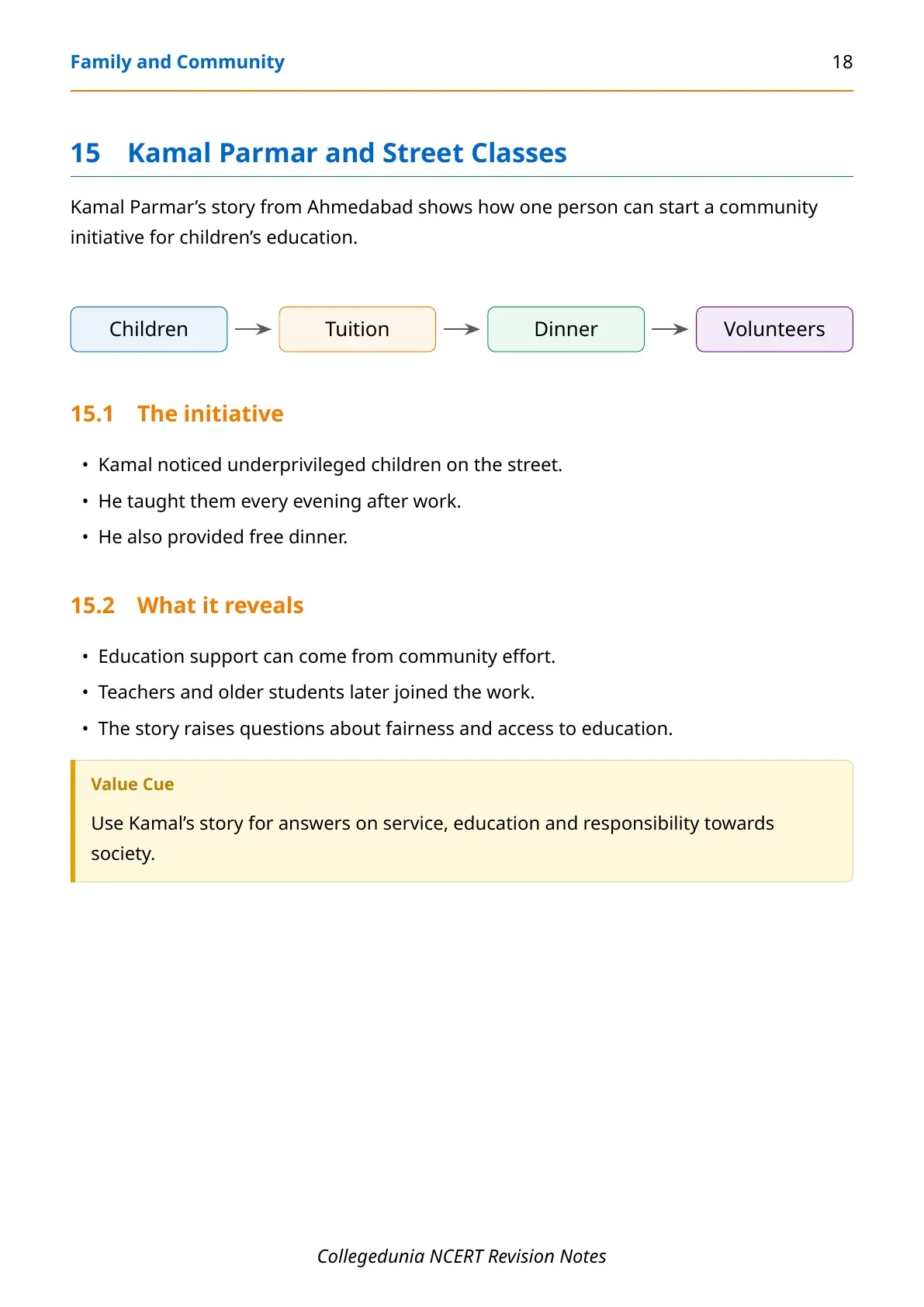
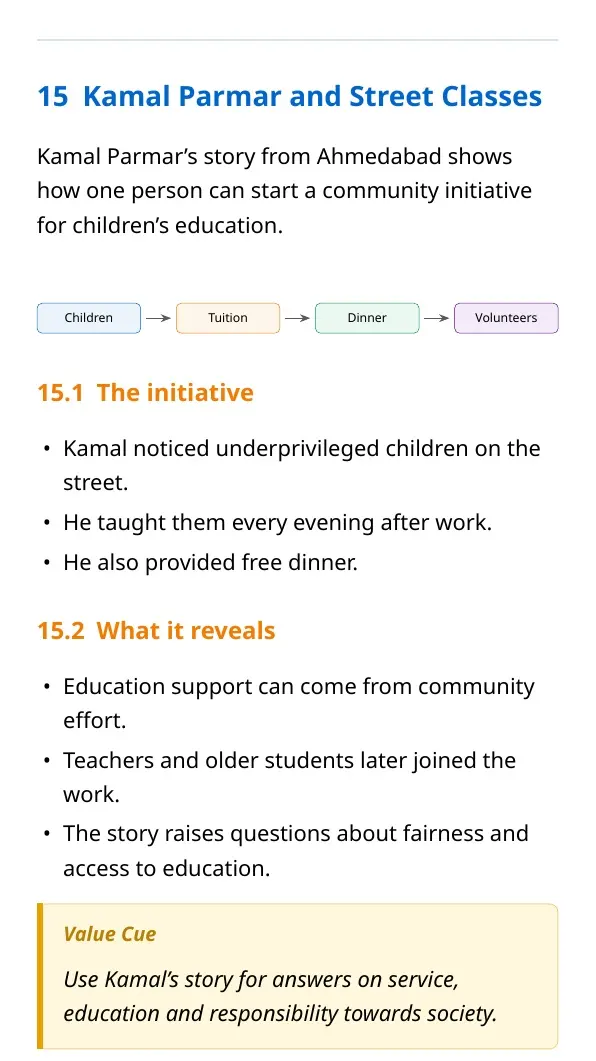
| Kamal Parmar | Evening classes and free dinner for children | Education support and fairness |
| Residents' Welfare Association | Rules for waste, cleanliness and shared spaces | Urban cooperation |
Rules, Fairness and Key Examples
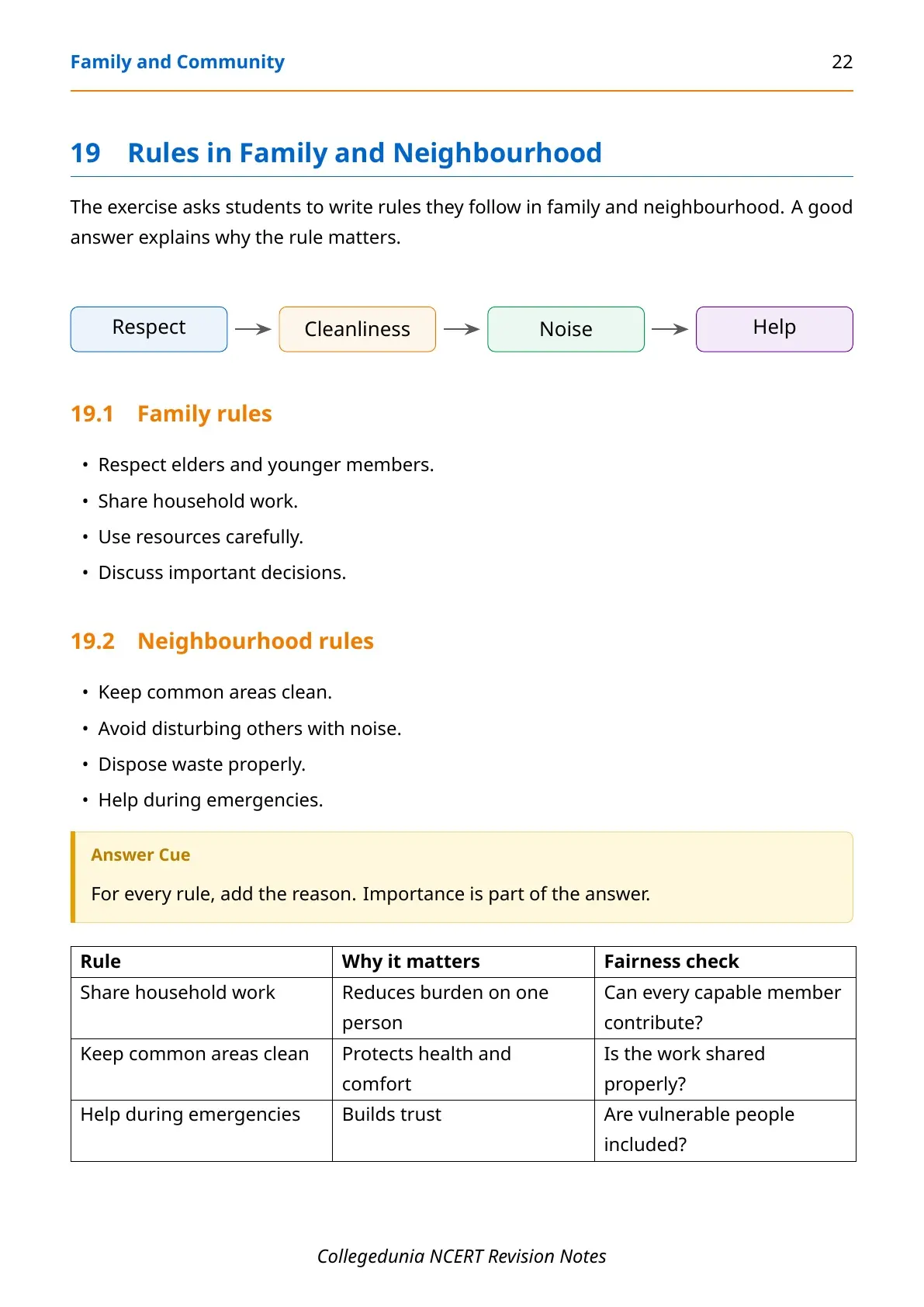
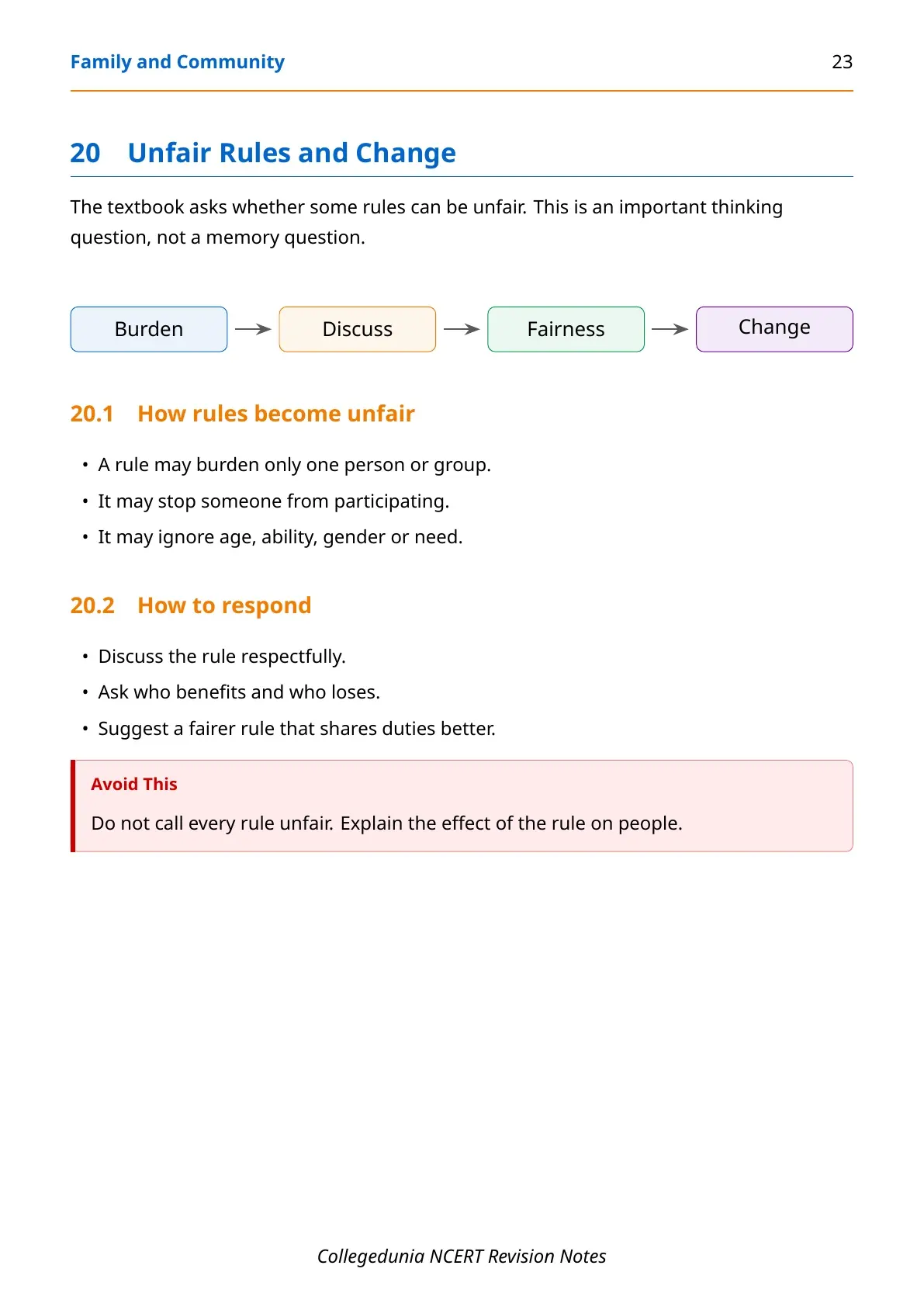
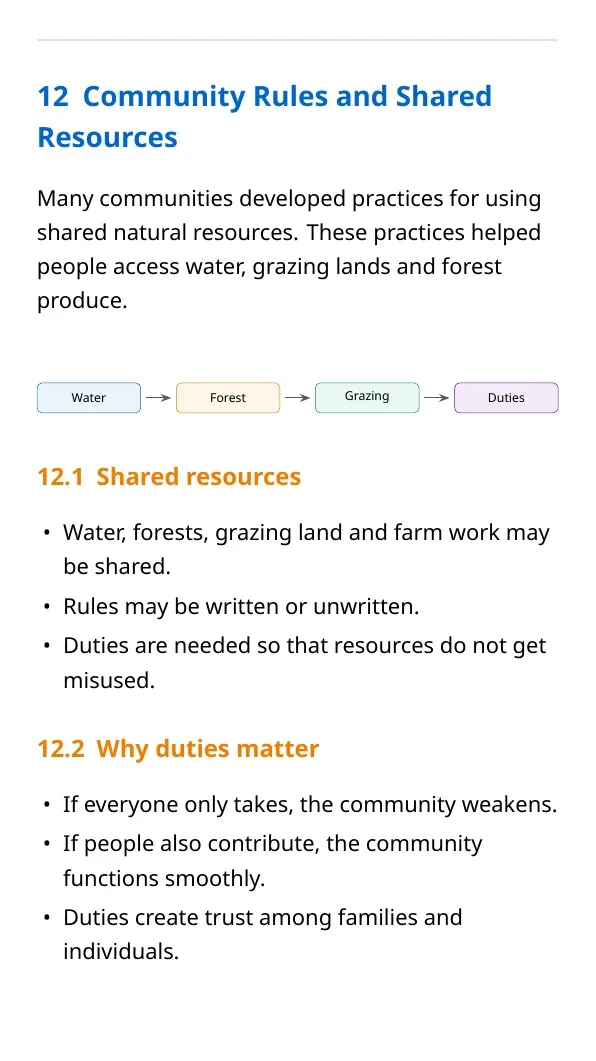
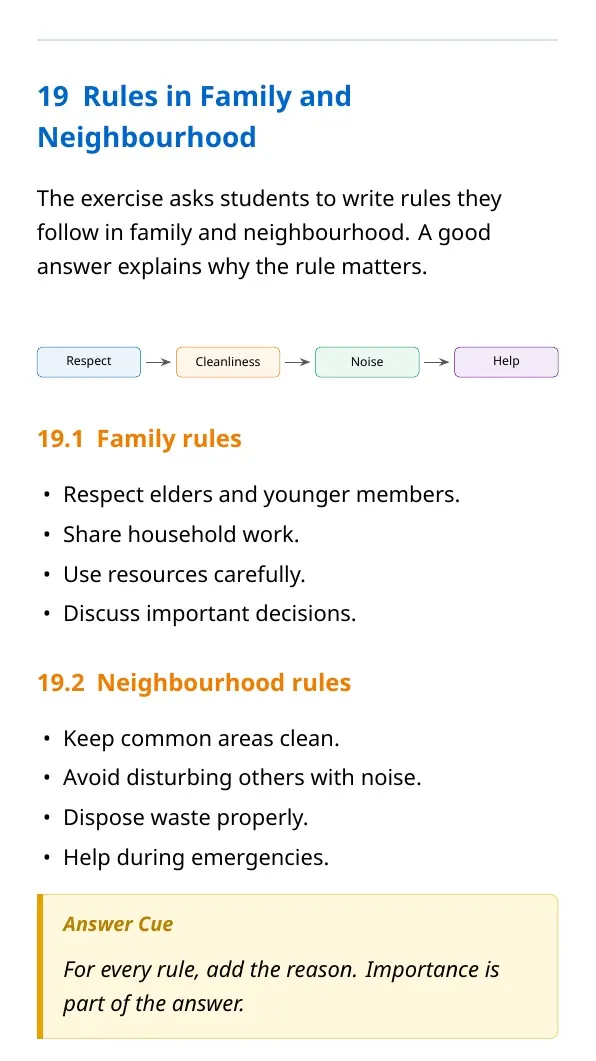
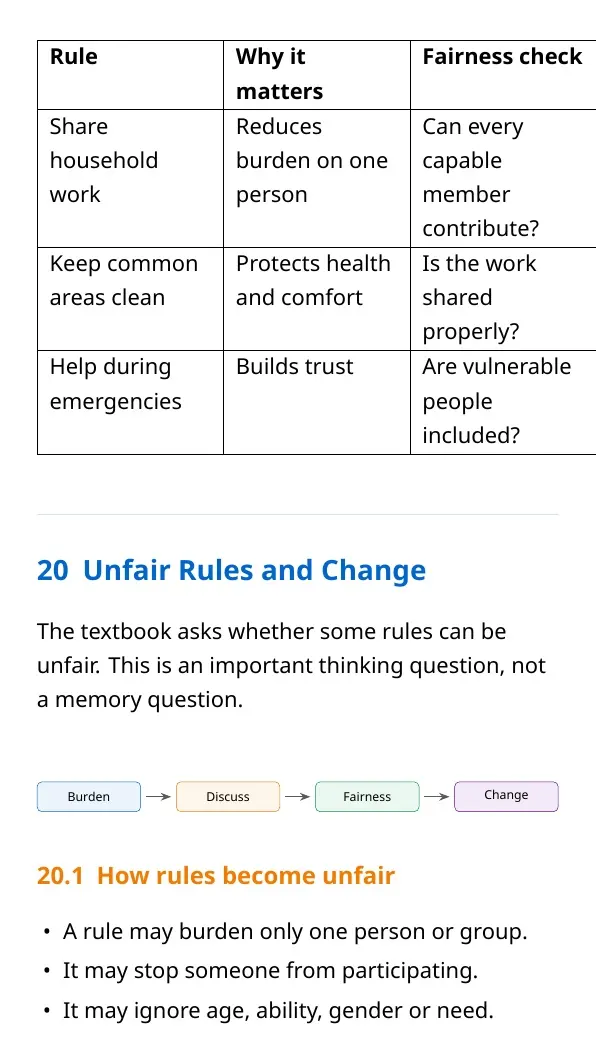
Rules are important in families and neighbourhoods because they organise common life. A rule may become unfair if it burdens only a few people or excludes someone. A good answer explains the rule, why it exists and whether it is fair to everyone affected.
- Family rules may involve respect, shared chores, saving resources and discussion.
- Neighbourhood rules may involve cleanliness, noise control, waste disposal and emergency help.
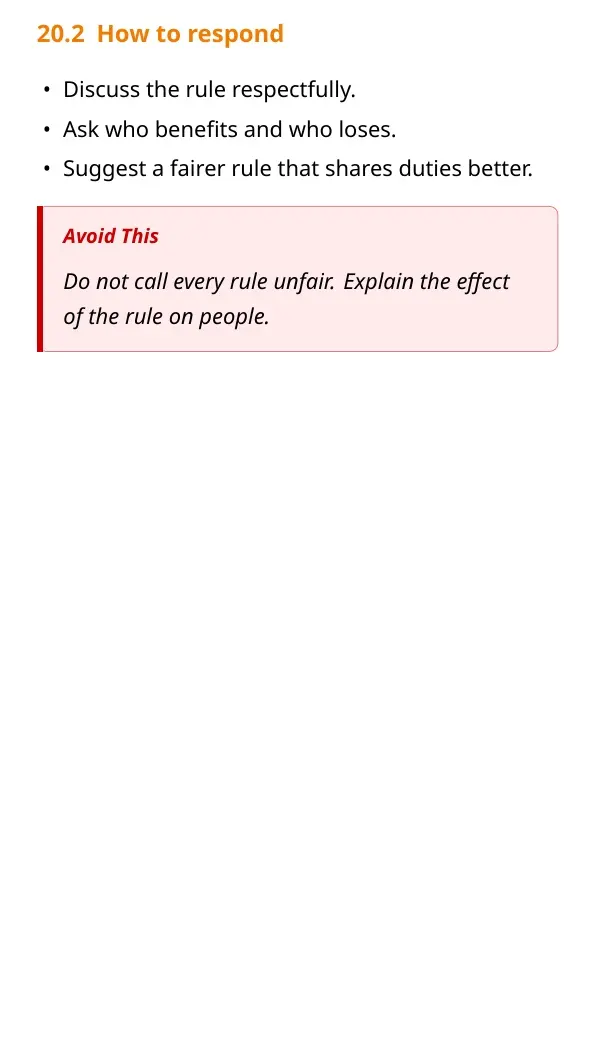
- Unfair rules should be discussed respectfully and changed with better sharing of duties.
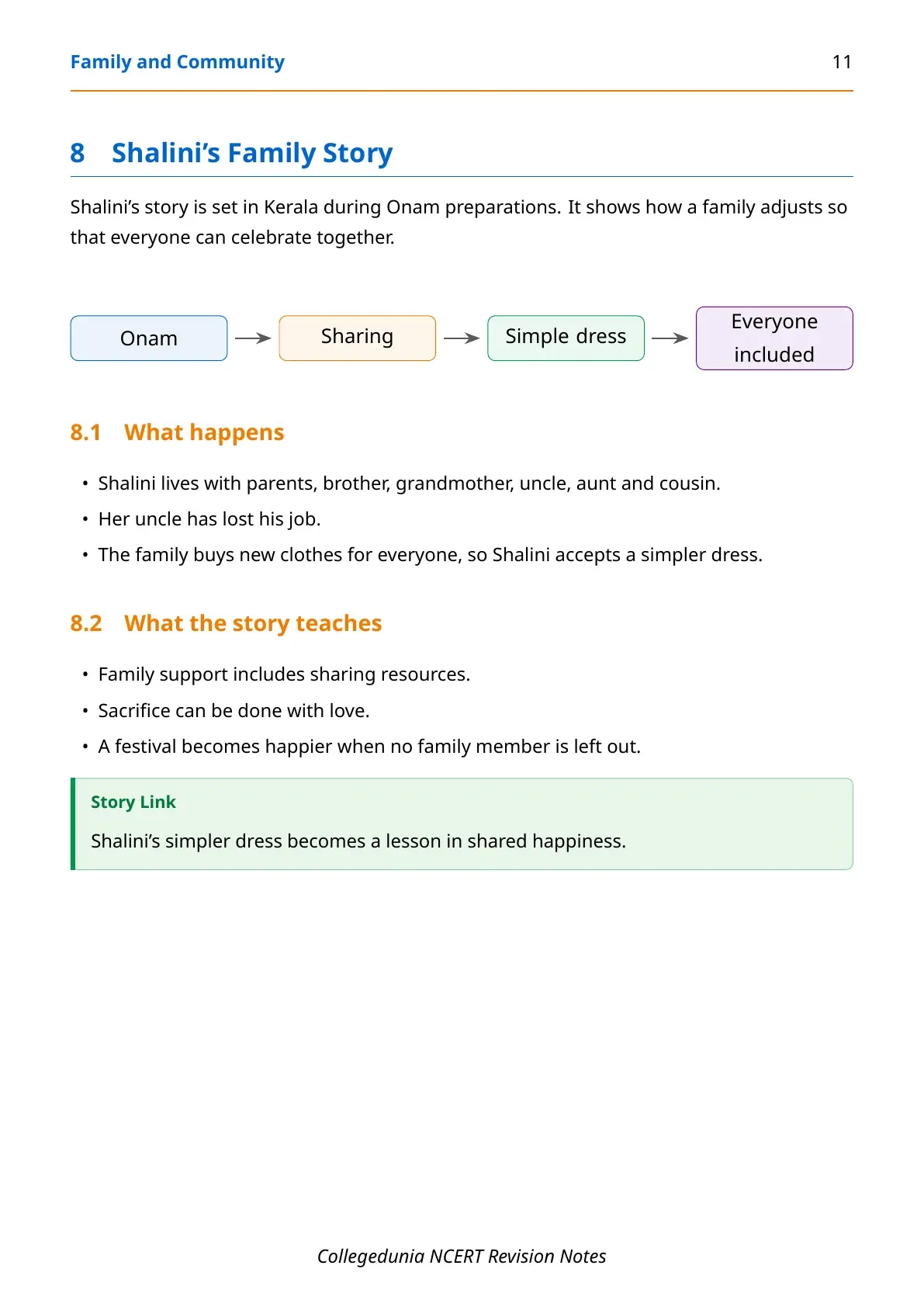
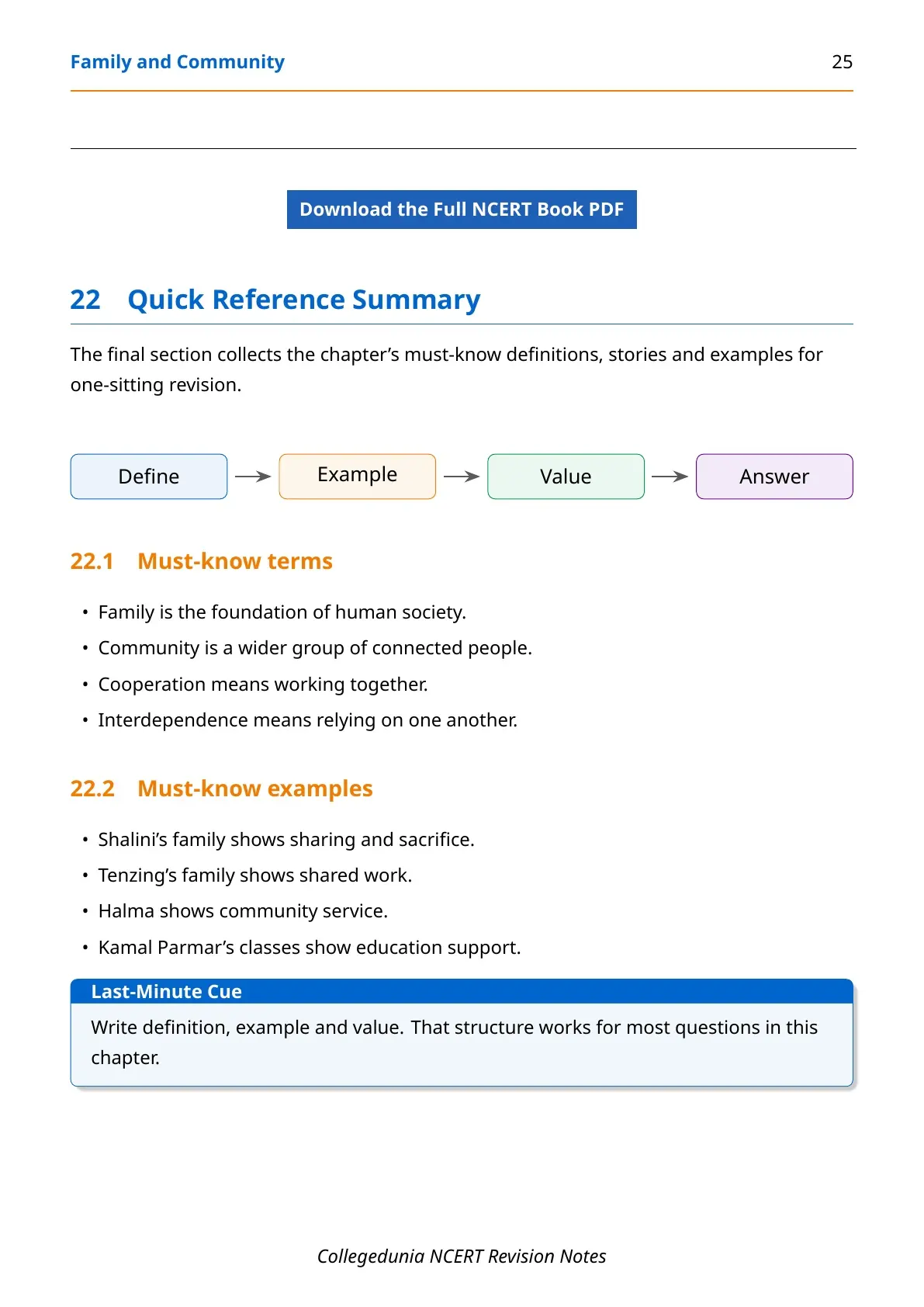
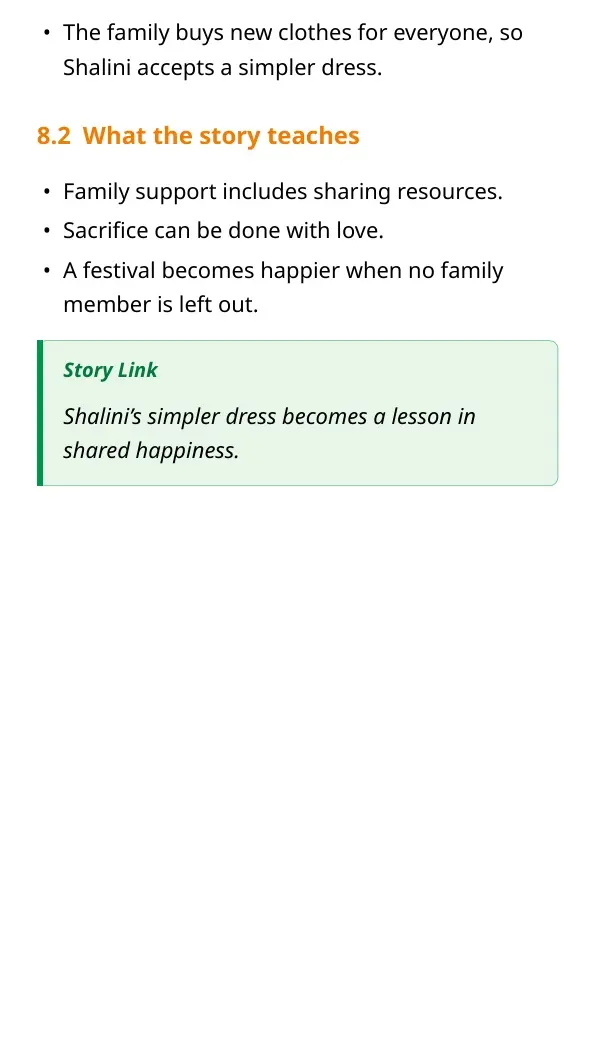
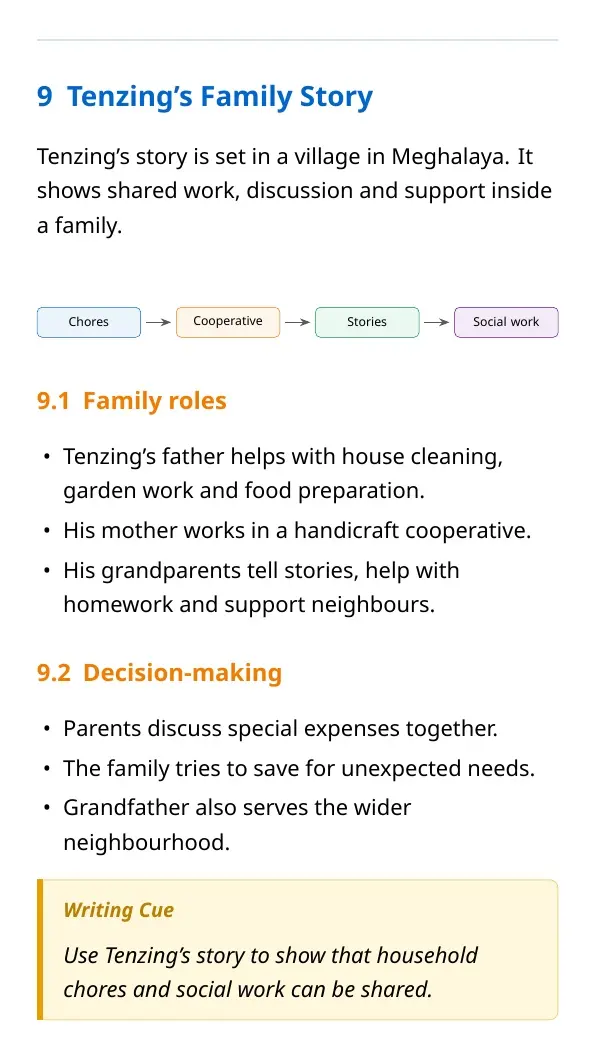
- Use Shalini, Tenzing, halma and Kamal Parmar as examples in long answers.
Family and Community Related Resources
| Resource | Best use | Link |
|---|---|---|
| NCERT Notes | Topic-wise revision with tables | Current page |
| NCERT Solutions | Practice textbook questions | Open NCERT Solutions |
| NCERT Book PDF | Read the official chapter | Open Book PDF |
| Handwritten Notes | Quick one-sitting revision | Open Handwritten Notes |
Social Science Notes for All Chapters
| Chapter | NCERT chapter title | Notes link |
|---|---|---|
| Chapter 1 | Locating Places on the Earth | Open Notes |
| Chapter 2 | Oceans and Continents | Open Notes |
| Chapter 3 | Landforms and Life | Open Notes |
| Chapter 4 | Timeline and Sources of History | Open Notes |
| Chapter 5 | India, That Is Bharat | Open Notes |
| Chapter 6 | The Beginnings of Indian Civilisation | Open Notes |
| Chapter 7 | India's Cultural Roots | Open Notes |
| Chapter 8 | Unity in Diversity, or Many in the One | Open Notes |
| Chapter 9 | Family and Community | Current notes |
| Chapter 10 | Grassroots Democracy Part 1 Governance | Open Notes |
| Chapter 11 | Grassroots Democracy Part 2 Local Government in Rural Areas | Open Notes |
| Chapter 12 | Grassroots Democracy Part 3 Local Government in Urban Areas | Open Notes |
| Chapter 13 | The Value of Work | Open Notes |
| Chapter 14 | Economic Activities Around Us | Open Notes |
Family and Community Class 6 Notes FAQs
Ques. What is Class 6 Social Science Chapter 9 about?
Ans. It explains family, community, roles, duties, values, shared resources, community support and interdependence in society.
Ques. What is the difference between a joint family and a nuclear family?
Ans. A joint family has several generations living together, while a nuclear family usually has parents and children or one parent and children.
Ques. What values are learnt in a family?
Ans. The chapter names values such as ahimsa, dana, seva and tyaga. Children learn these through daily practice and observation.
Ques. What is halma?
Ans. Halma is a Bhil tradition of coming together to support people or shared causes in times of crisis, including environmental work.
Ques. Why are communities interdependent?
Ans. Communities depend on many groups, including traders, teachers, municipal workers, health staff and neighbours, for everyday life.



Comments