




The NCERT Class 6 Social Science Chapter 7 notes for India's Cultural Roots explain the Vedas, Upanishads, Buddhism, Jainism, folk traditions and tribal belief systems. These notes follow the 2026-27 NCERT textbook and include a free PDF for quick revision.
- Best for revision: Vedic culture, Upanishadic ideas, Buddha, Mahavira and folk roots.
- Use with the PDF: revise names, terms and story examples before answering long questions.
- 2026-27 focus: follows Exploring Society: India and Beyond, Chapter 7.
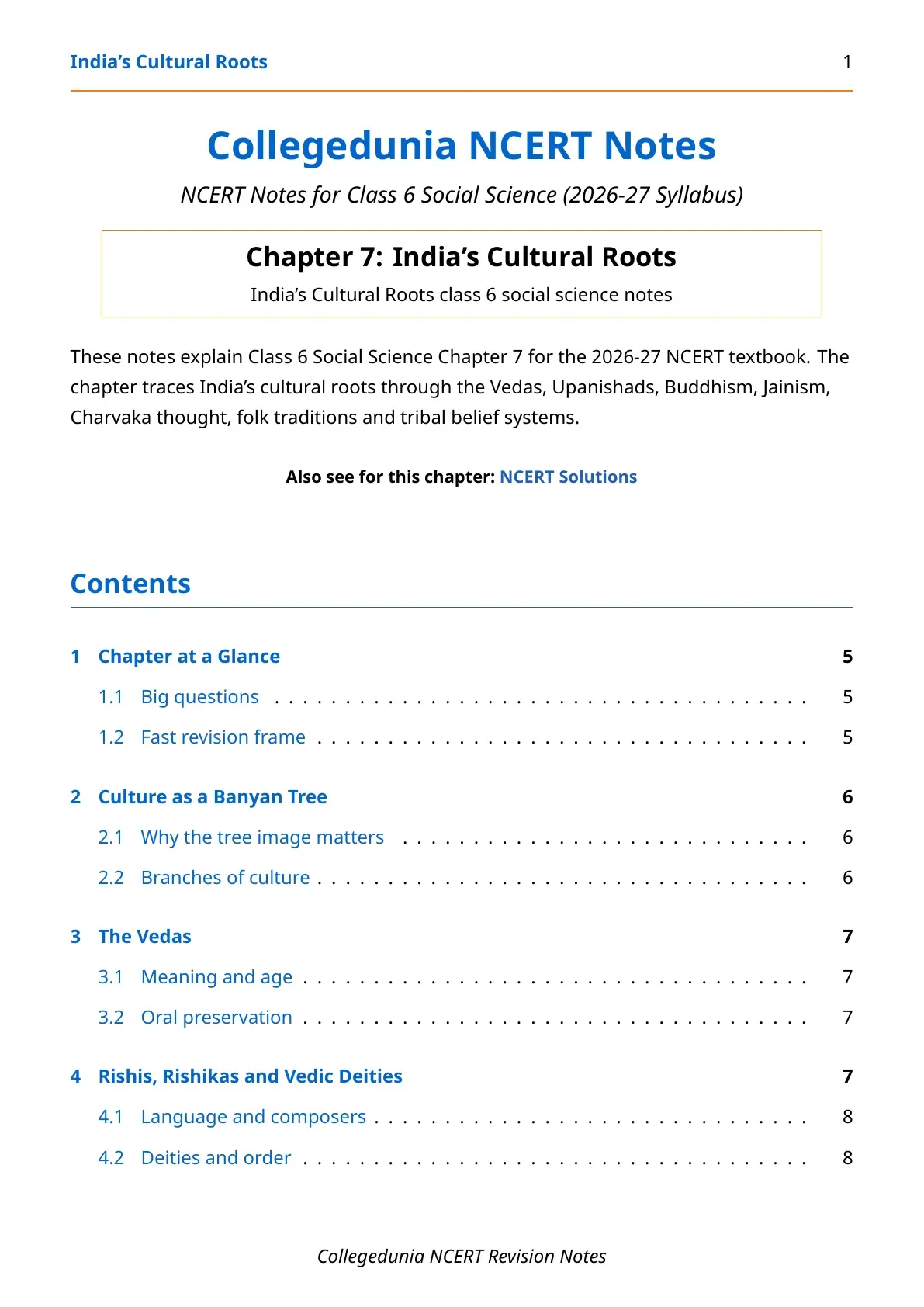
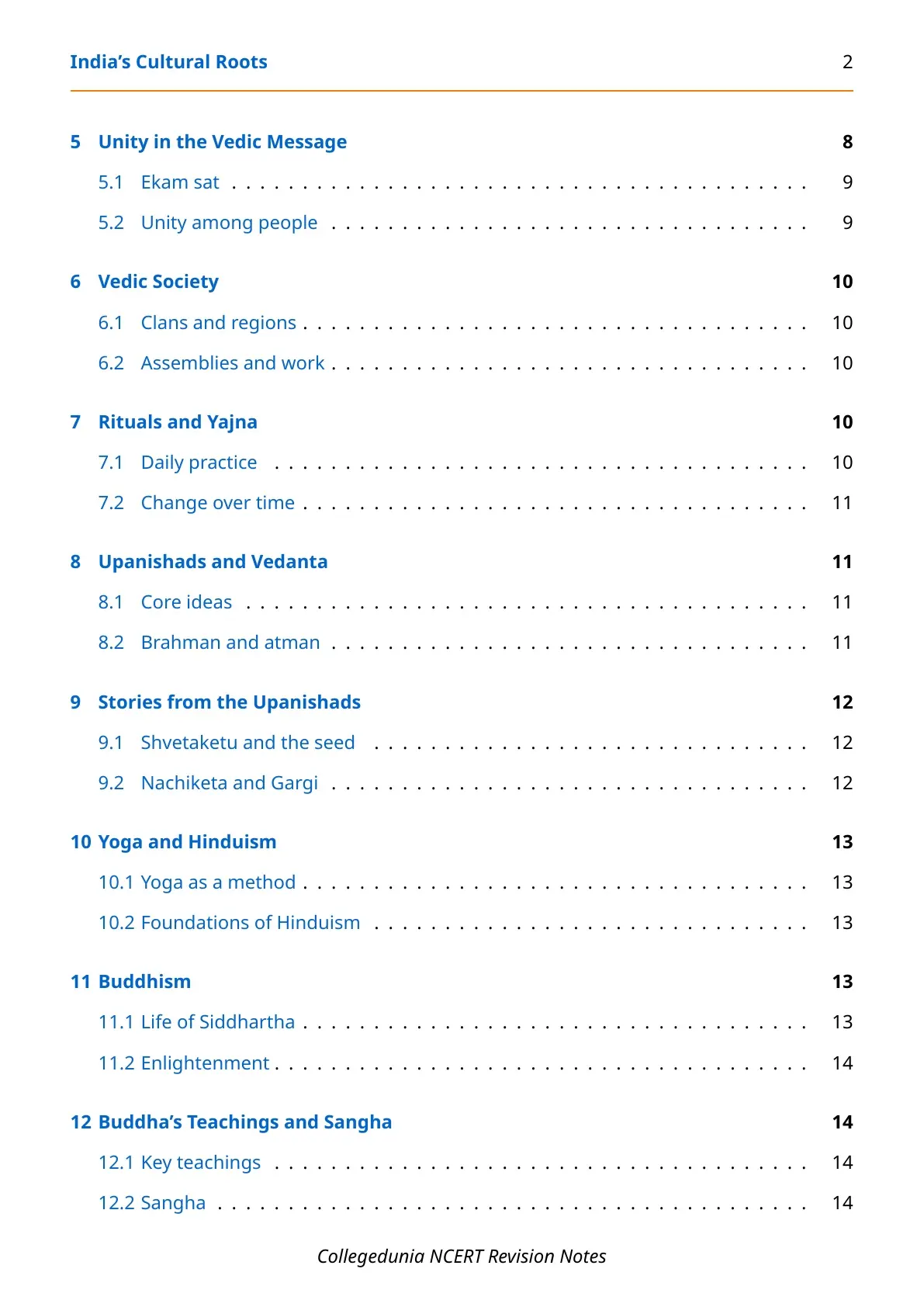
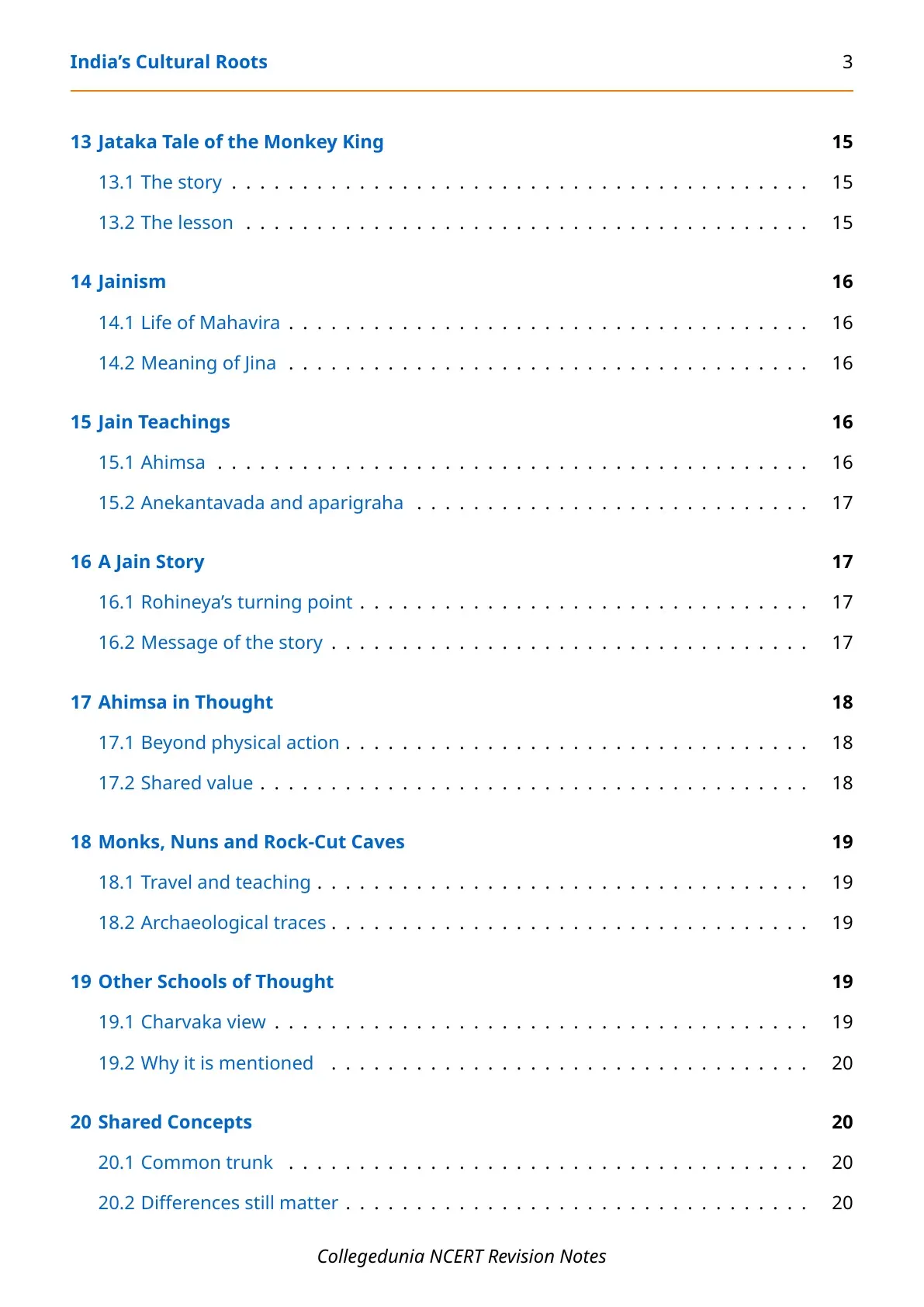
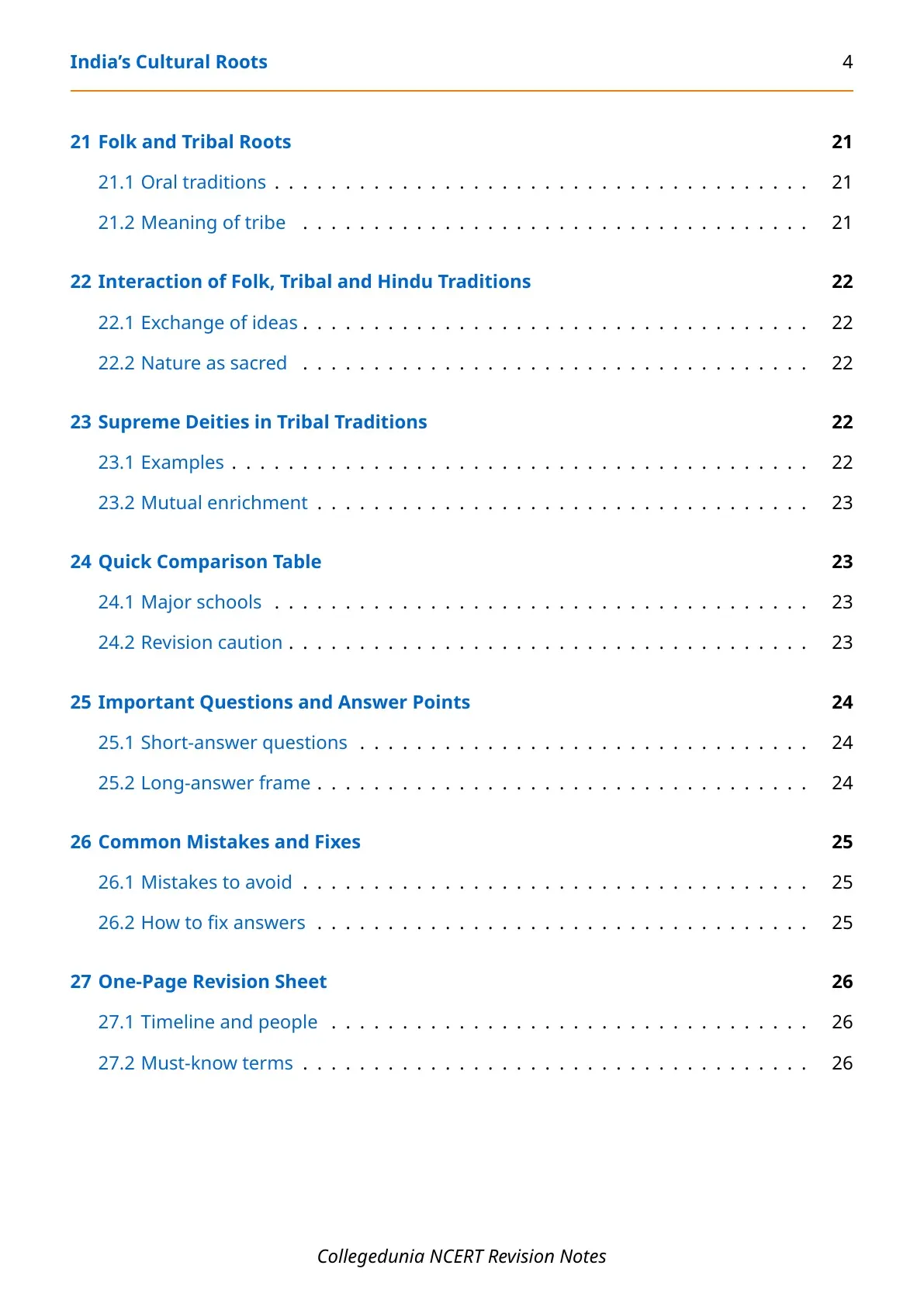
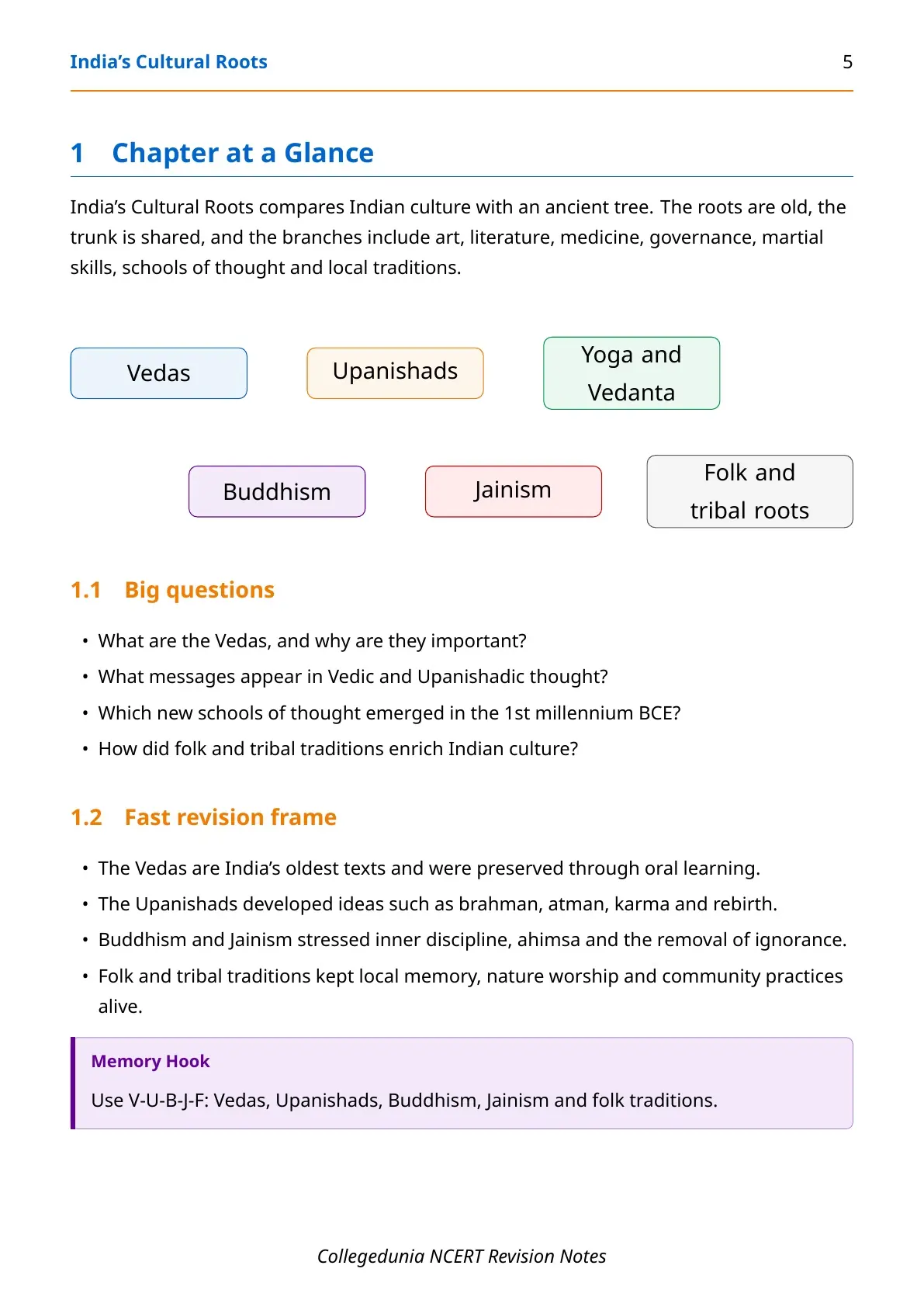
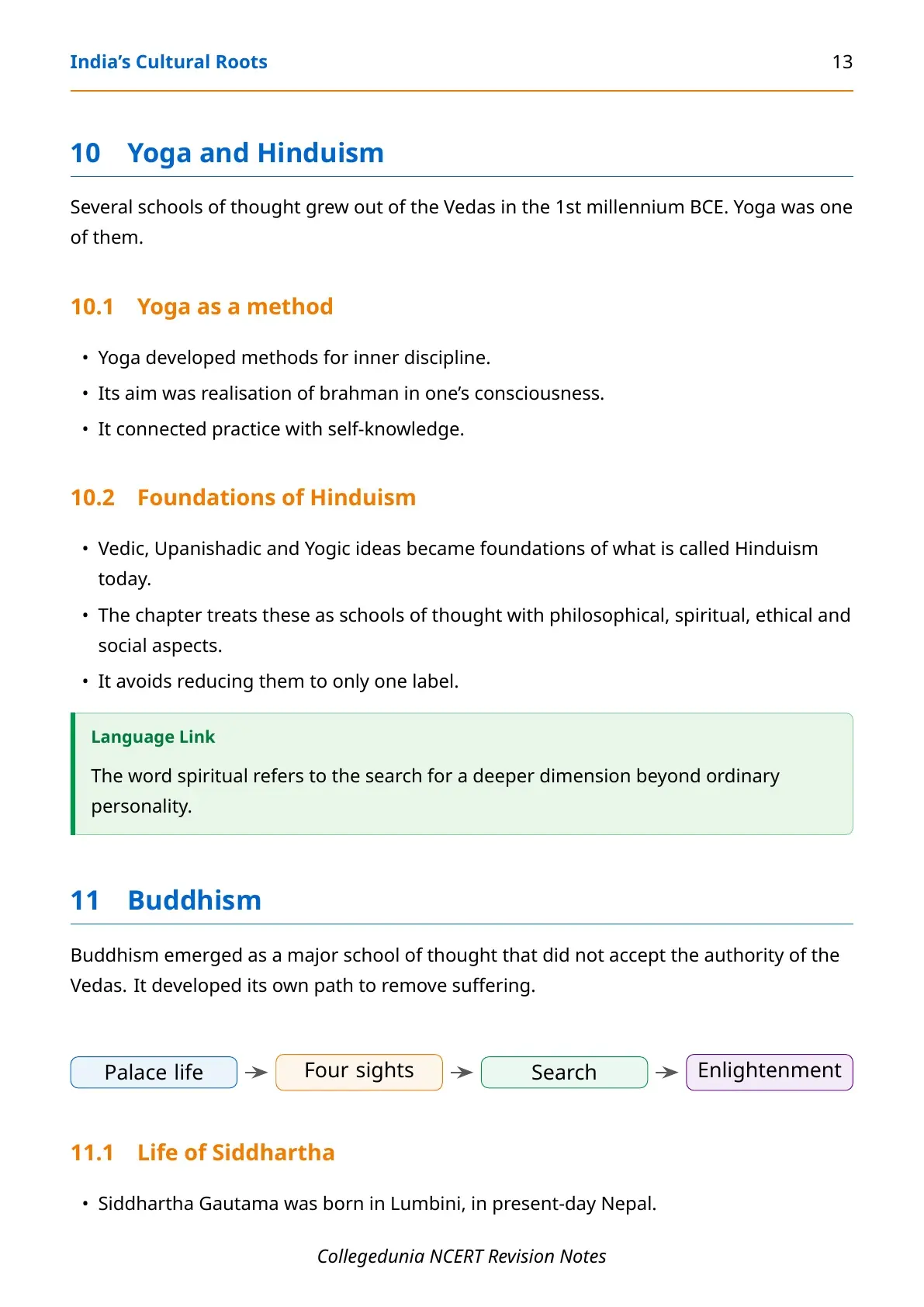
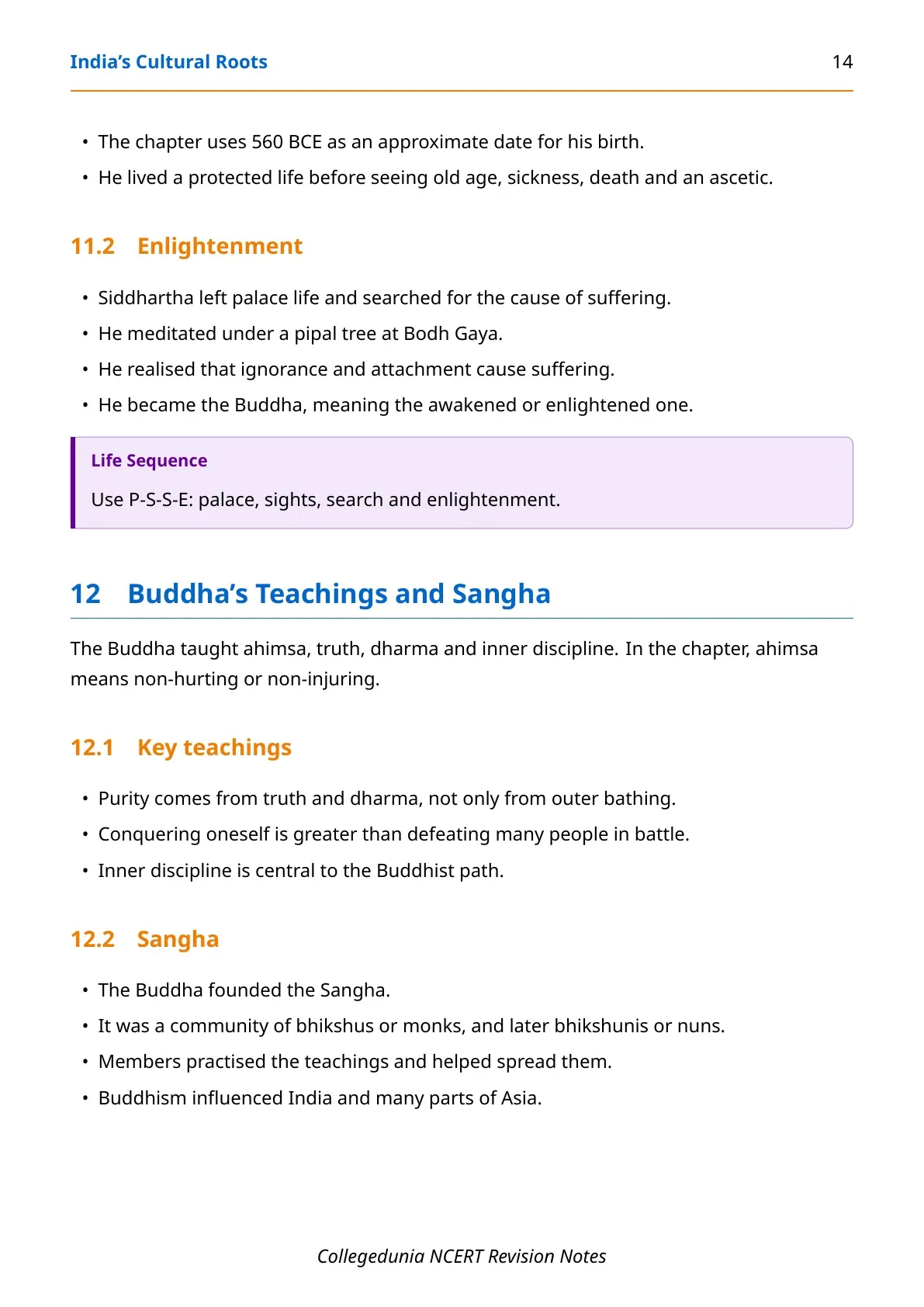
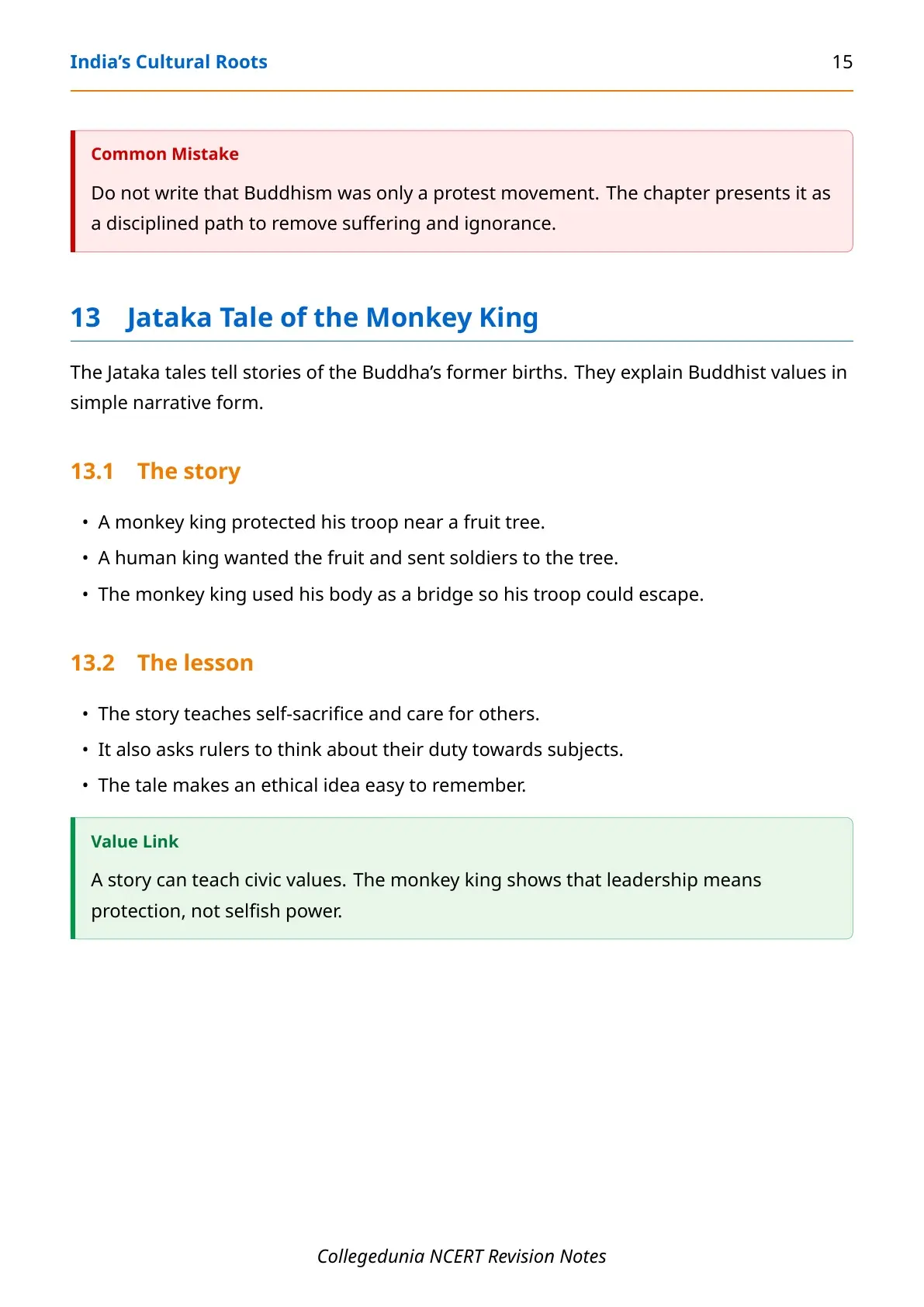
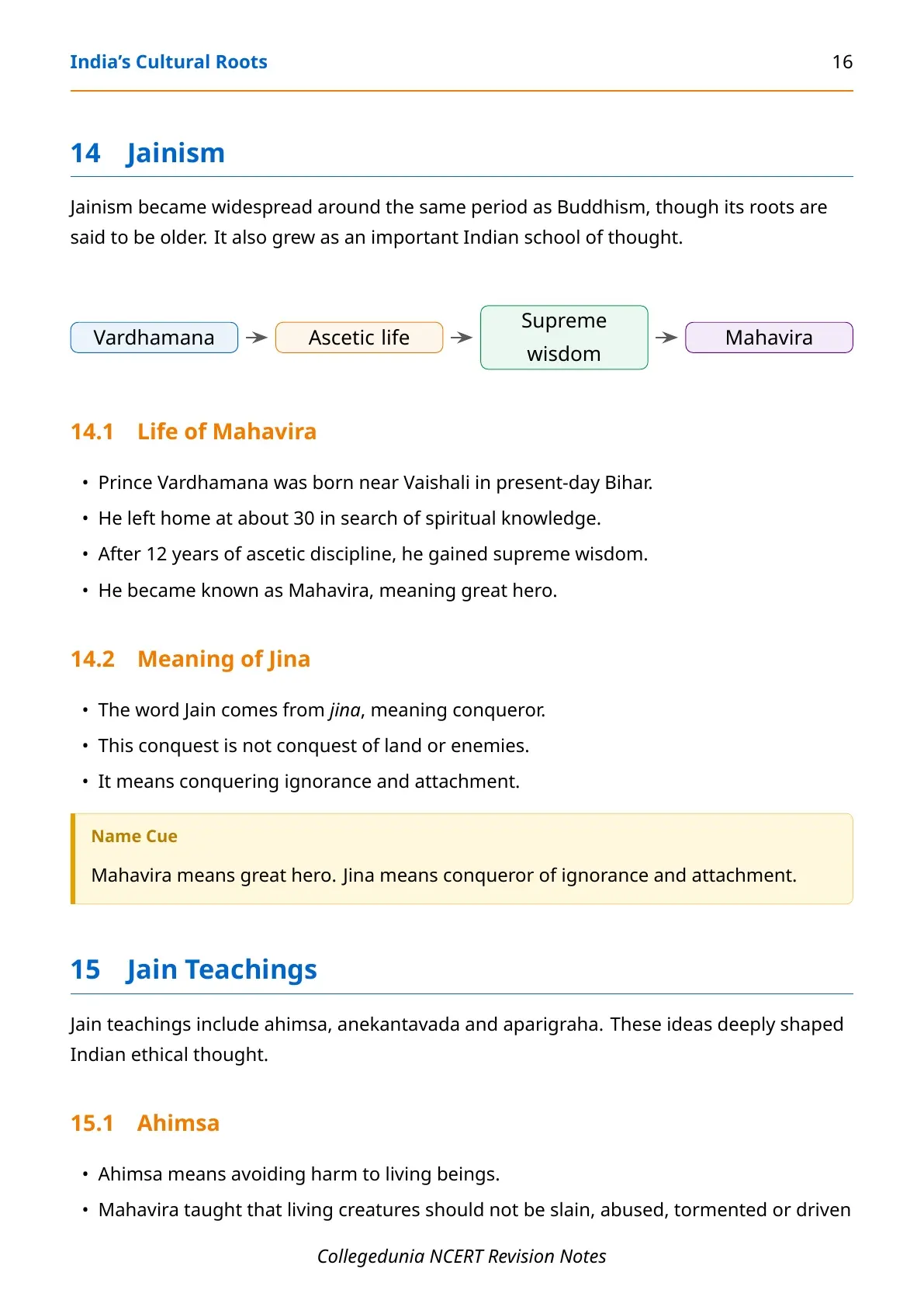
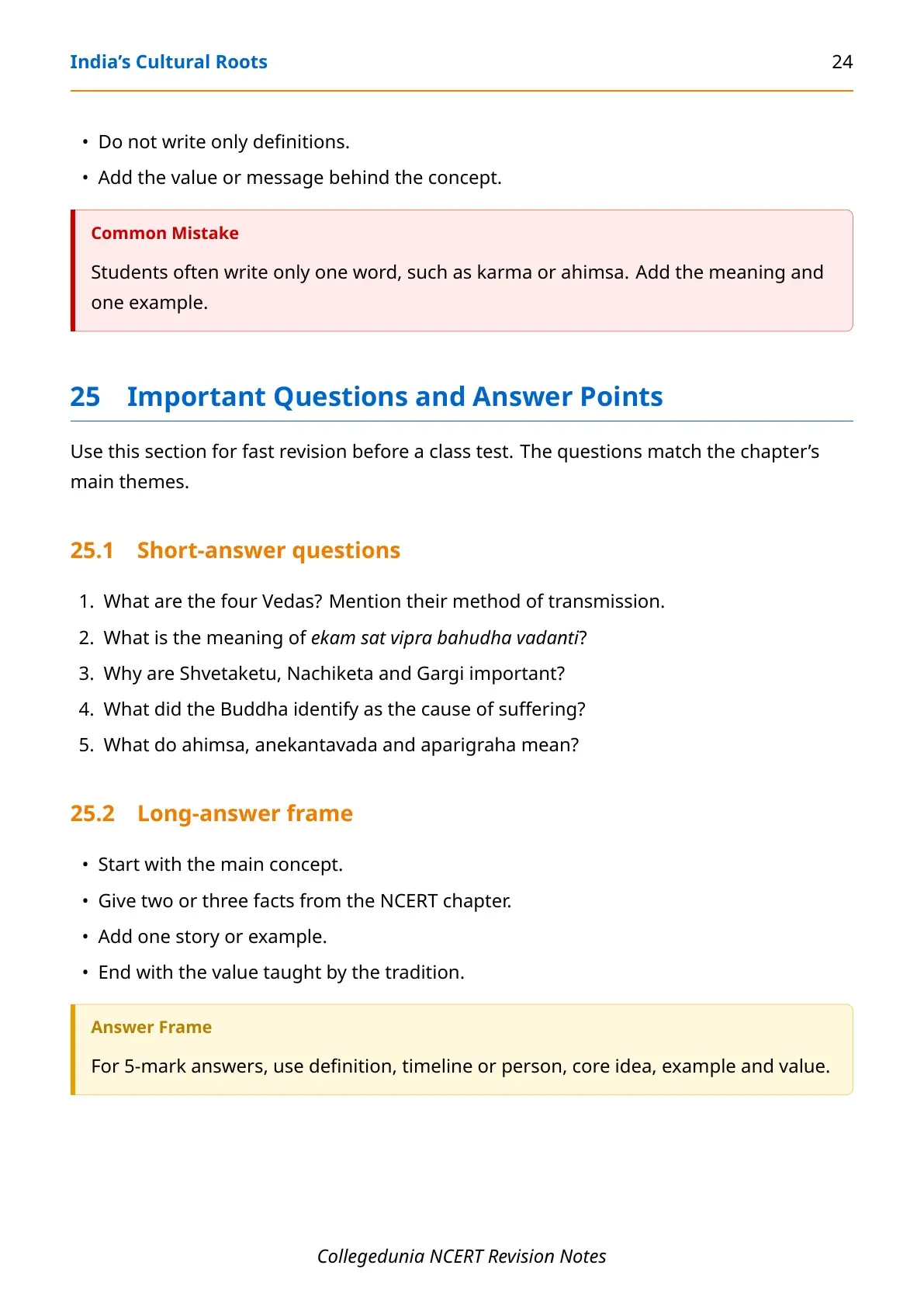
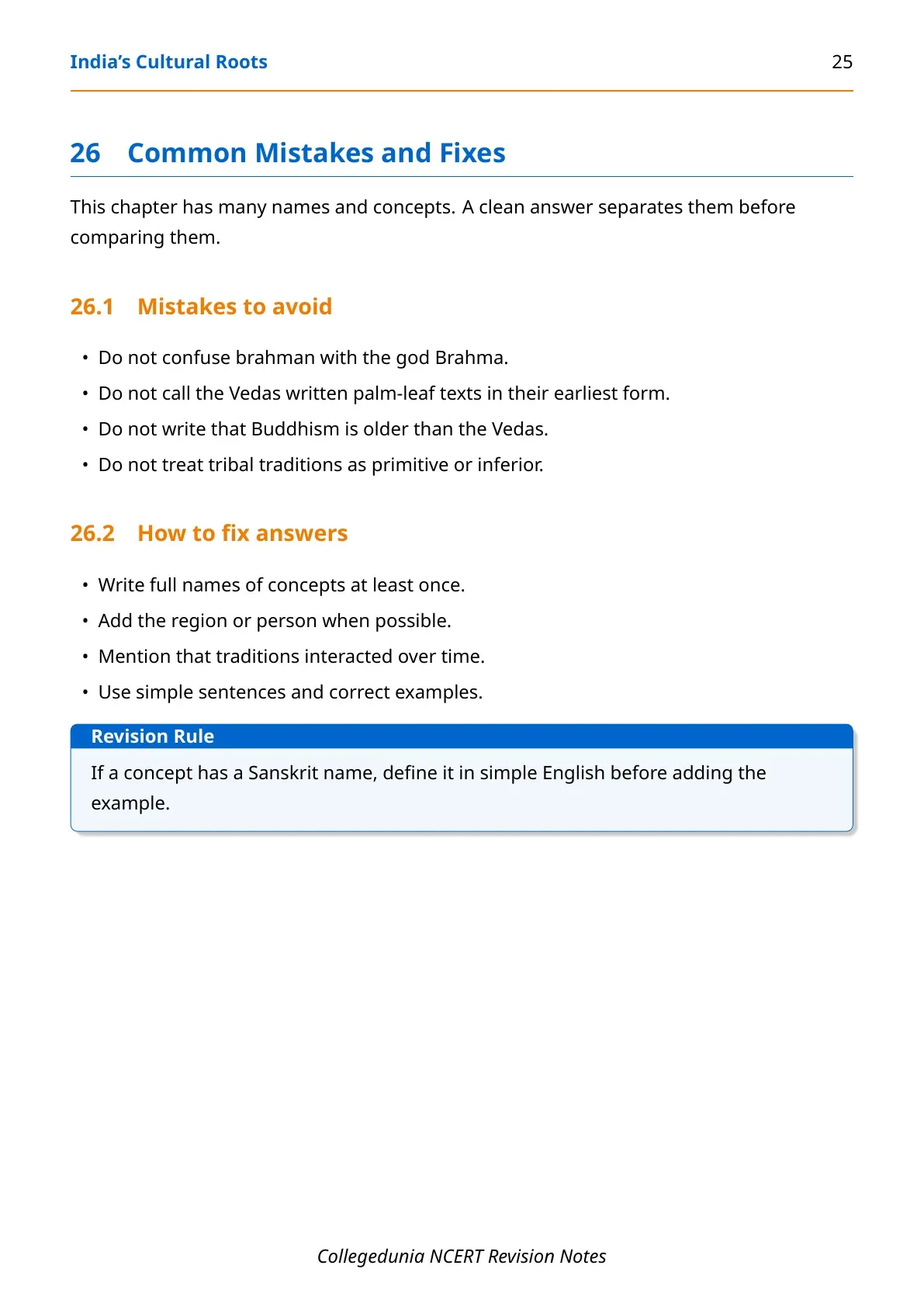
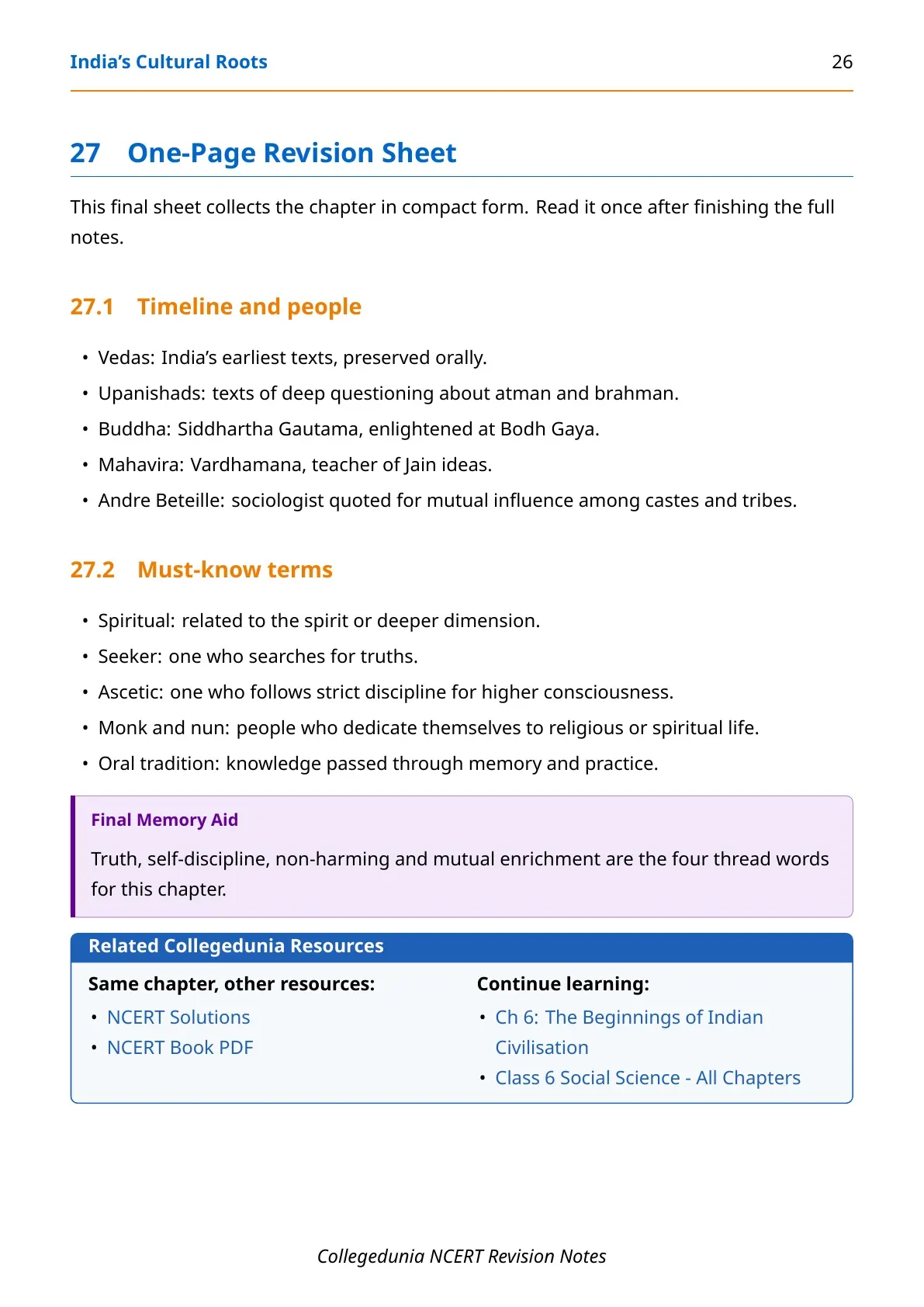
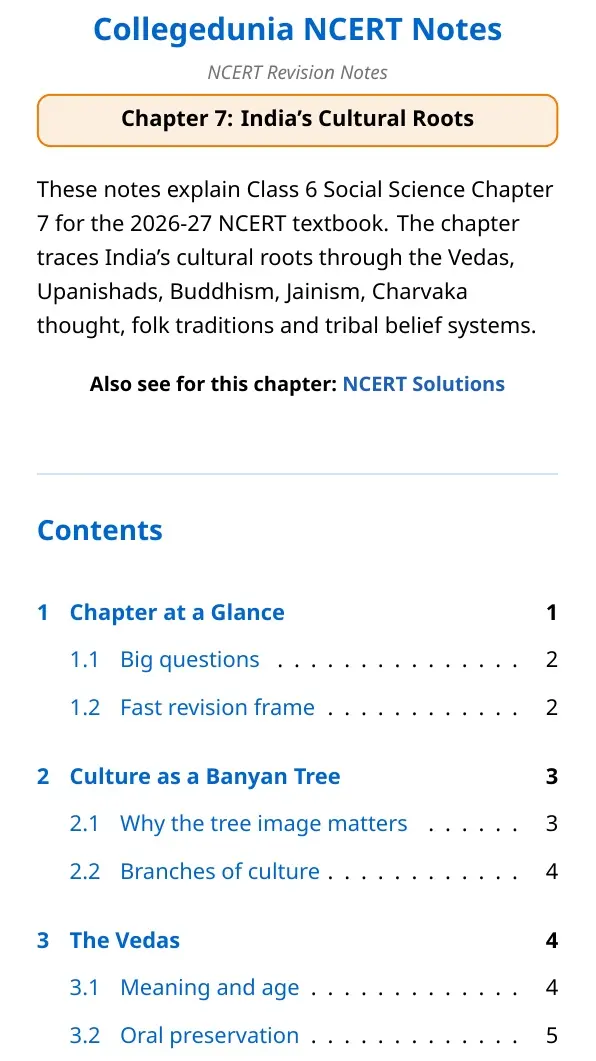
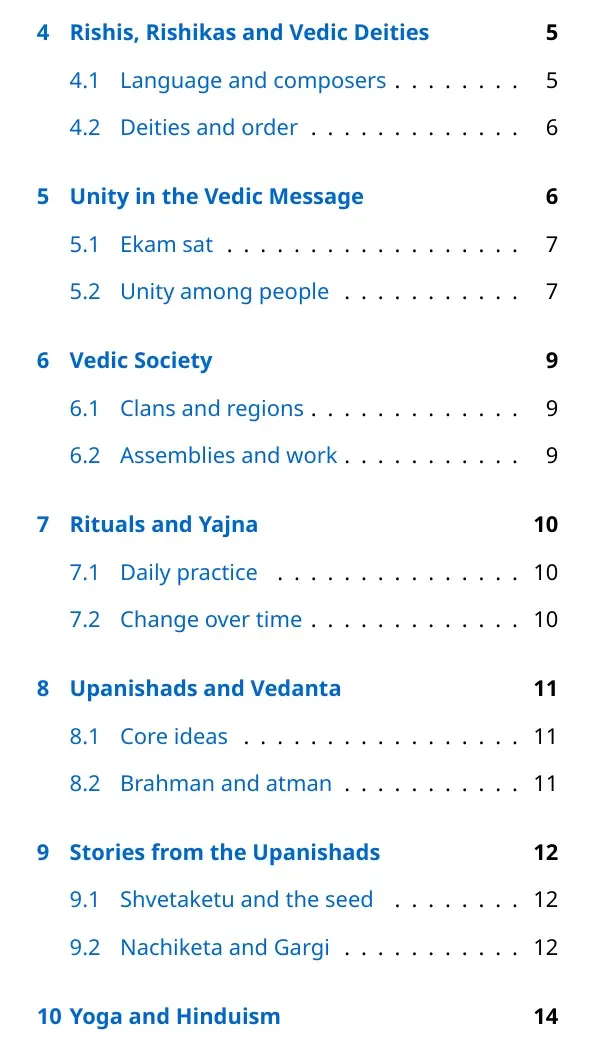
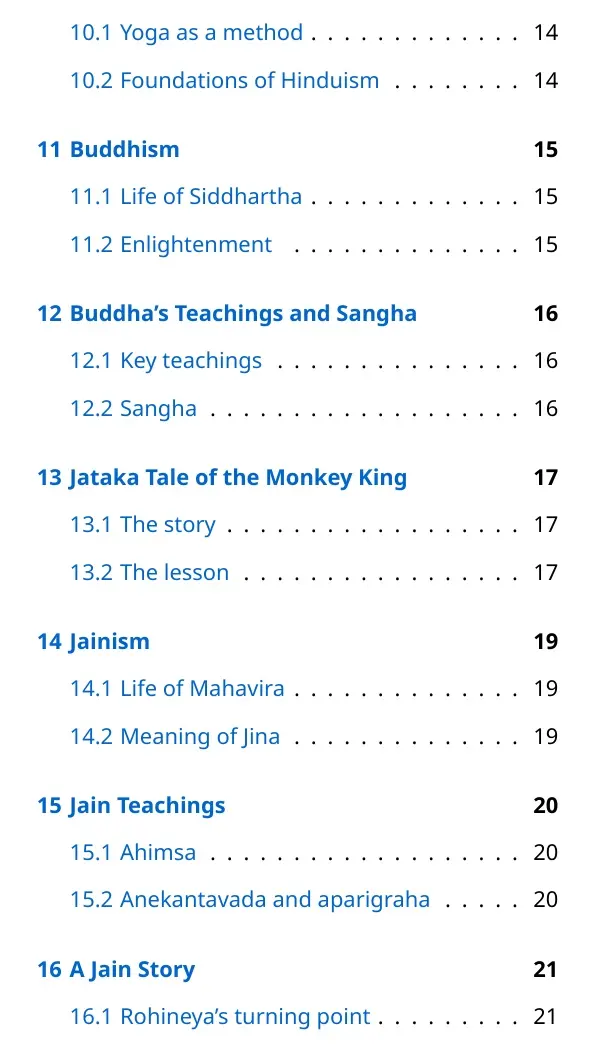
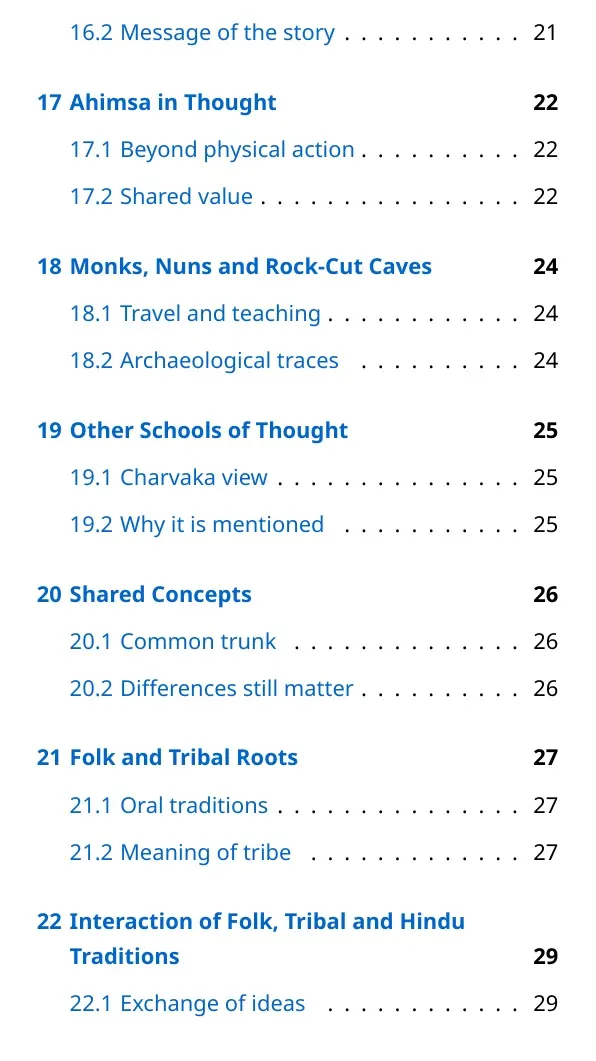
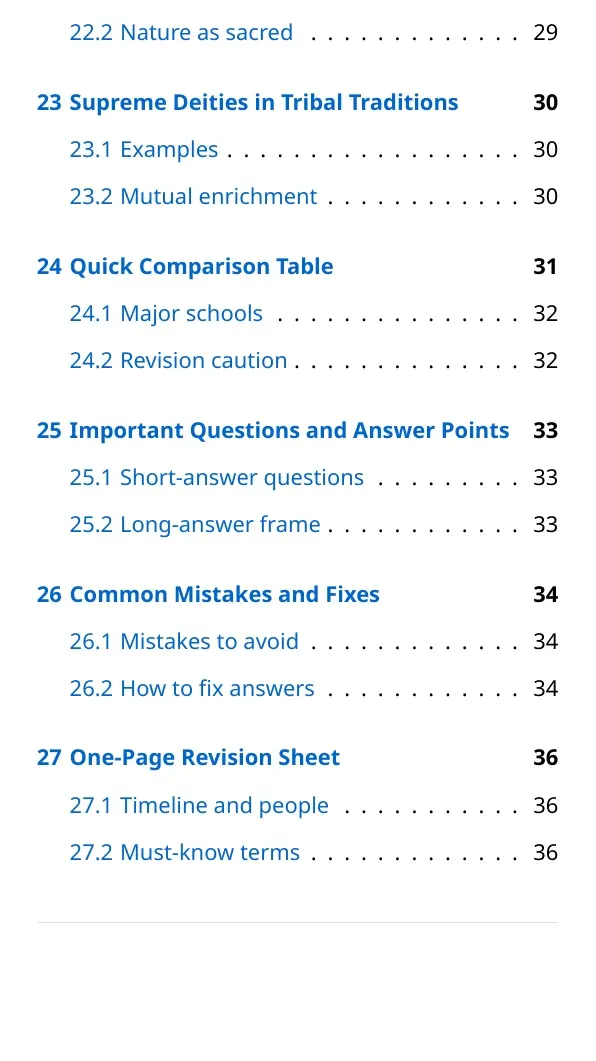
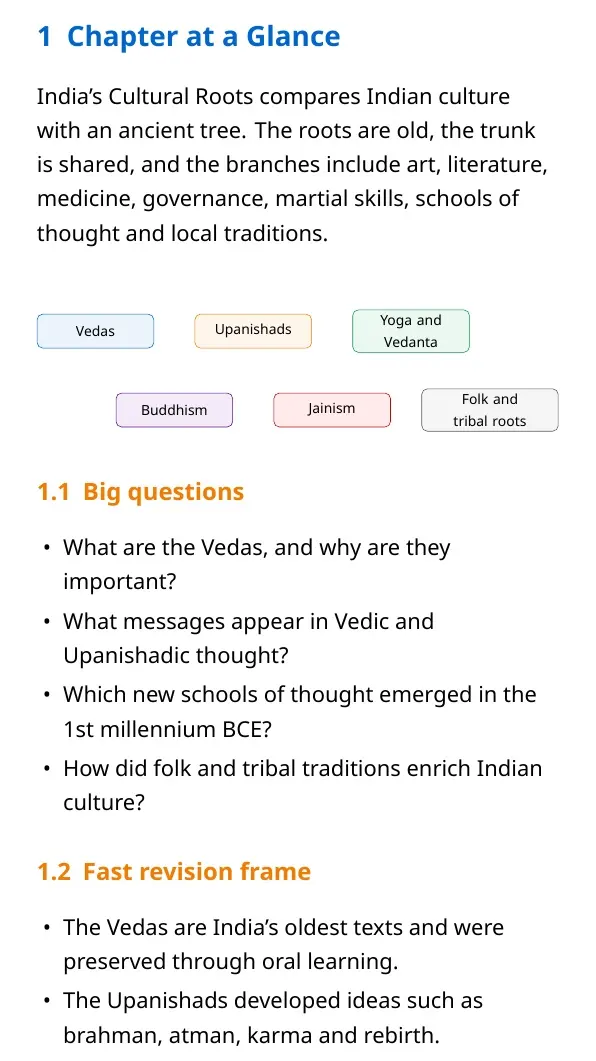
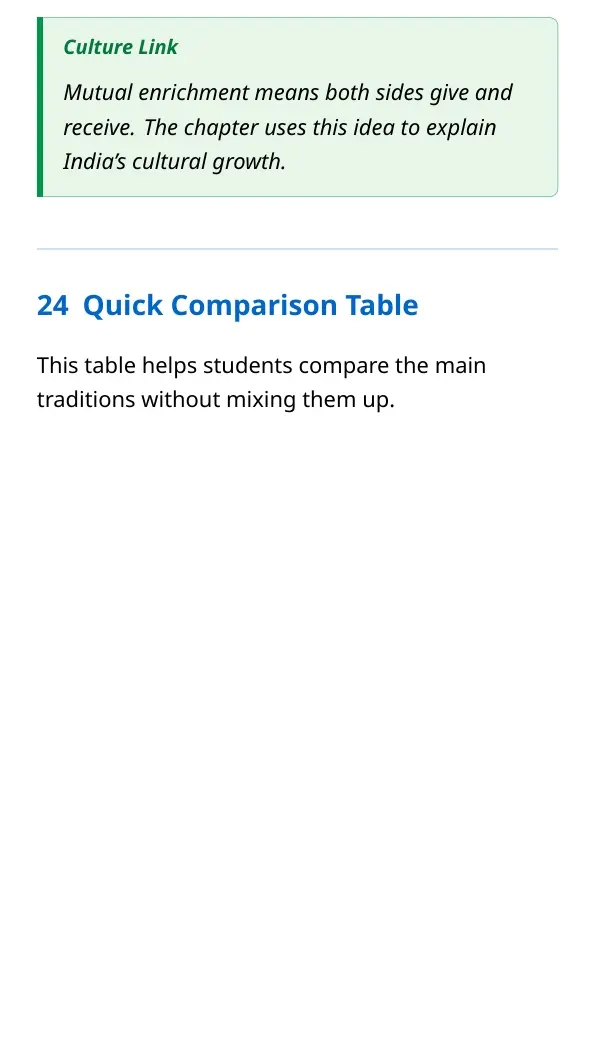
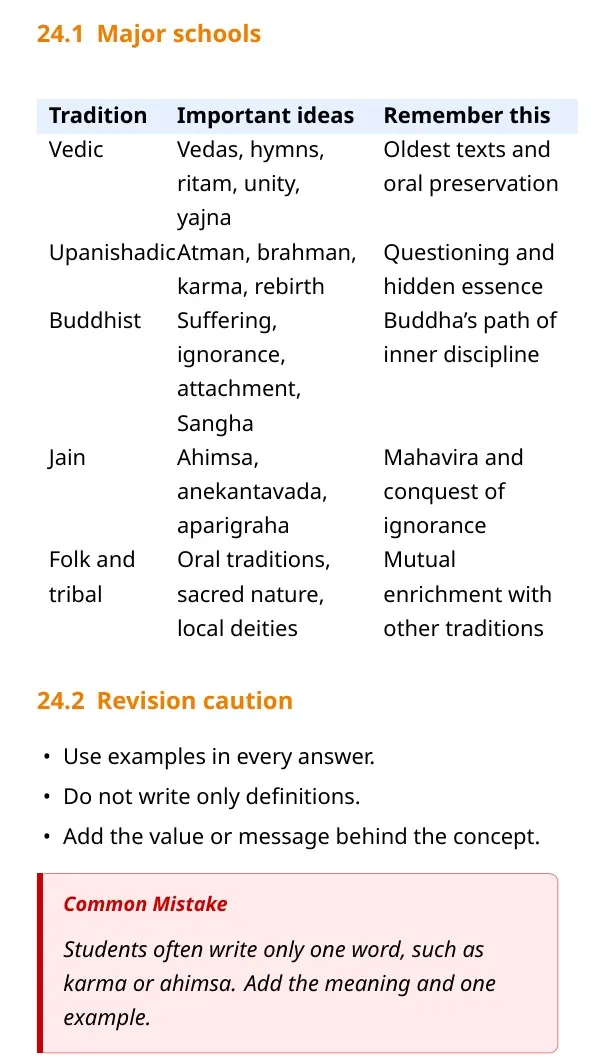
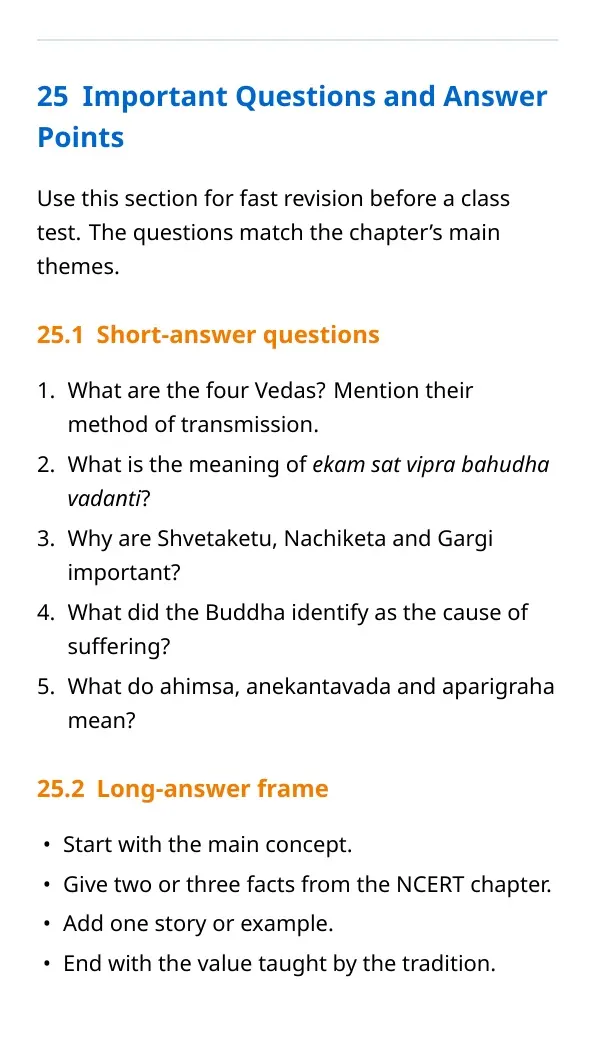
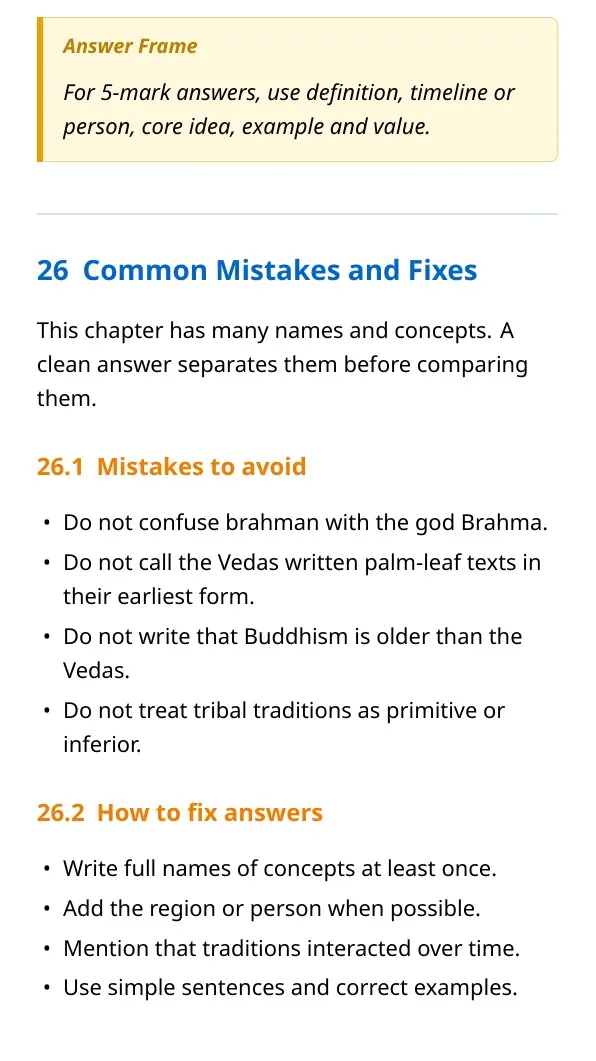

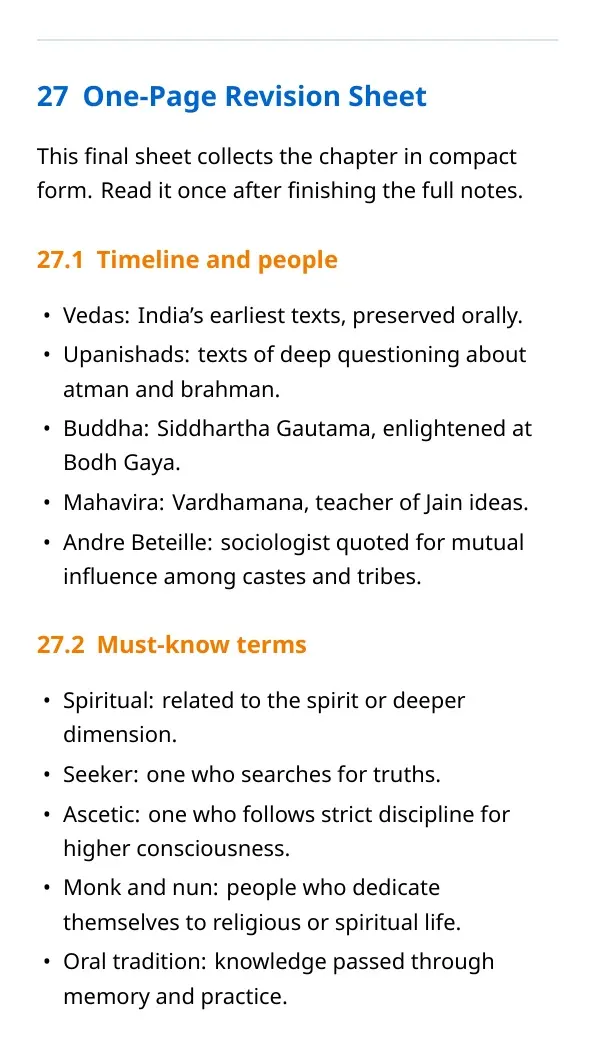
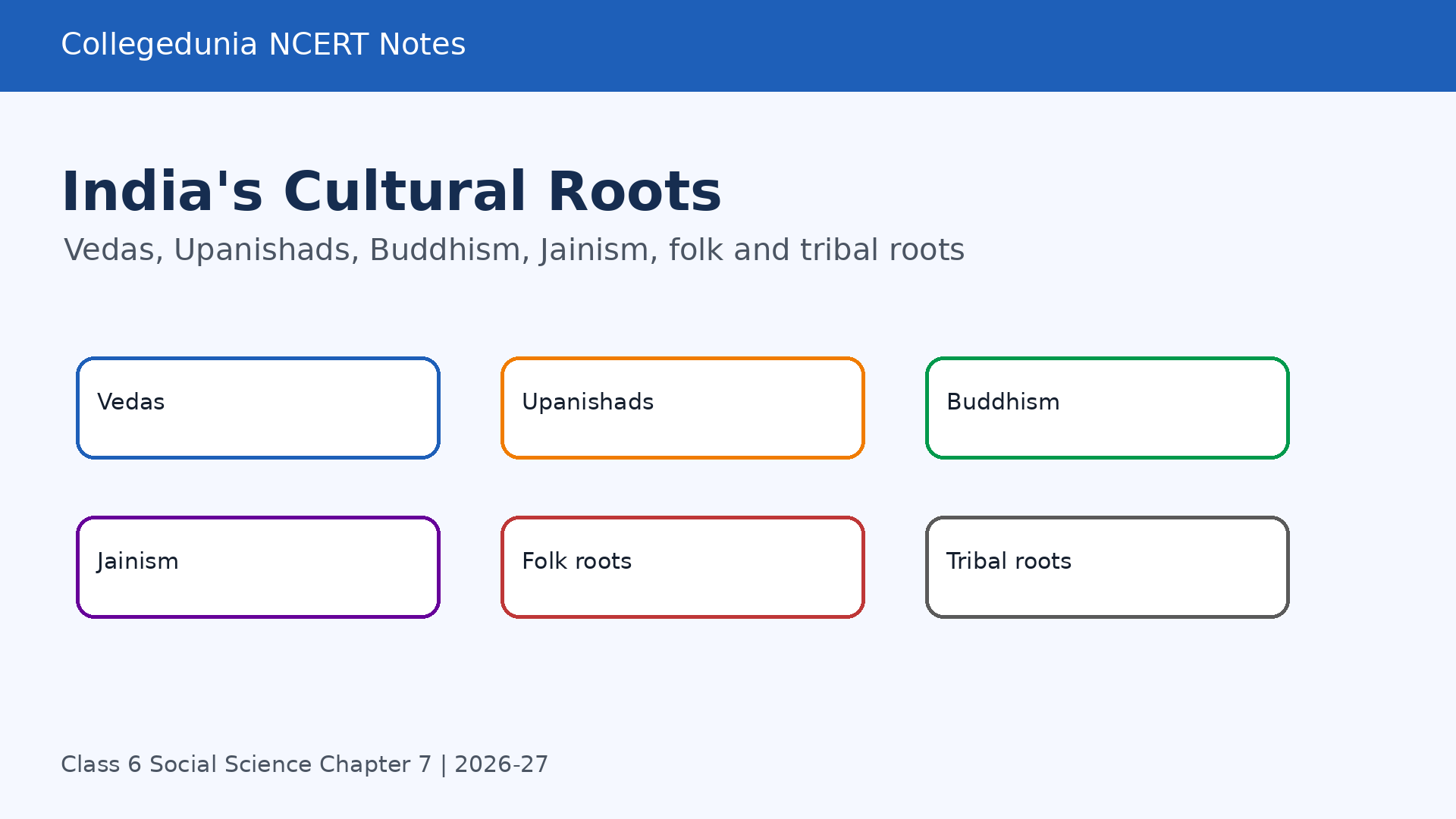
Student Feedback: Students usually revise this chapter faster by grouping the content into Vedas, Upanishads, Buddhism, Jainism and folk or tribal traditions.
India's Cultural Roots Notes Overview
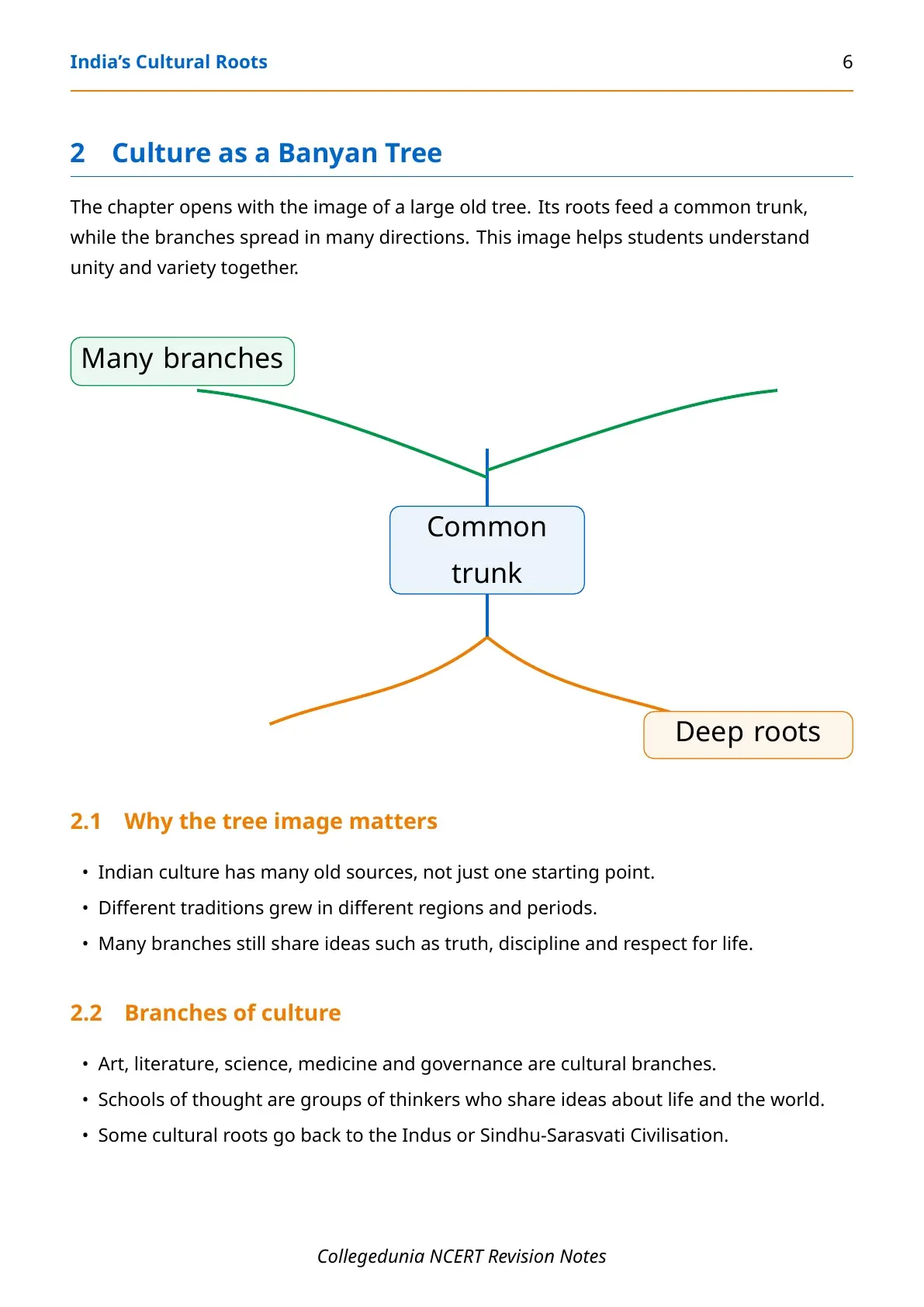
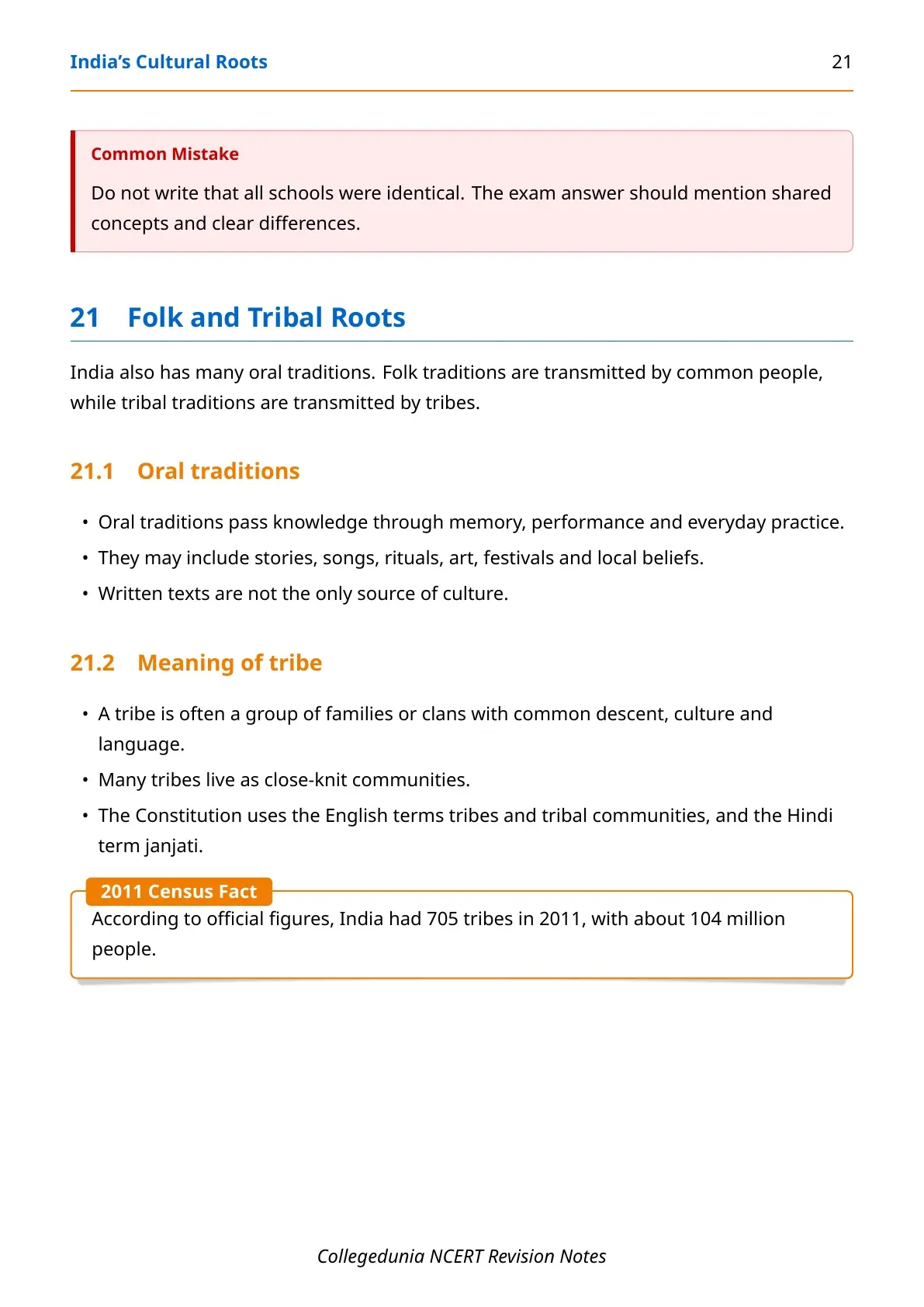
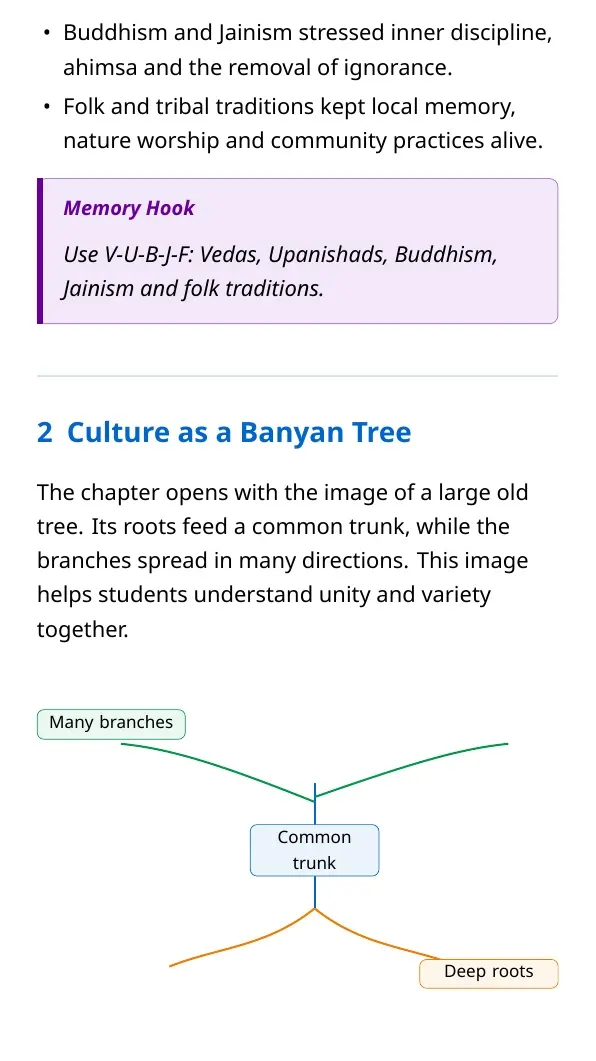
Chapter 7 compares Indian culture with a banyan tree. The roots are old, the trunk is shared, and the branches spread into different schools of thought, arts, sciences, local traditions and belief systems.
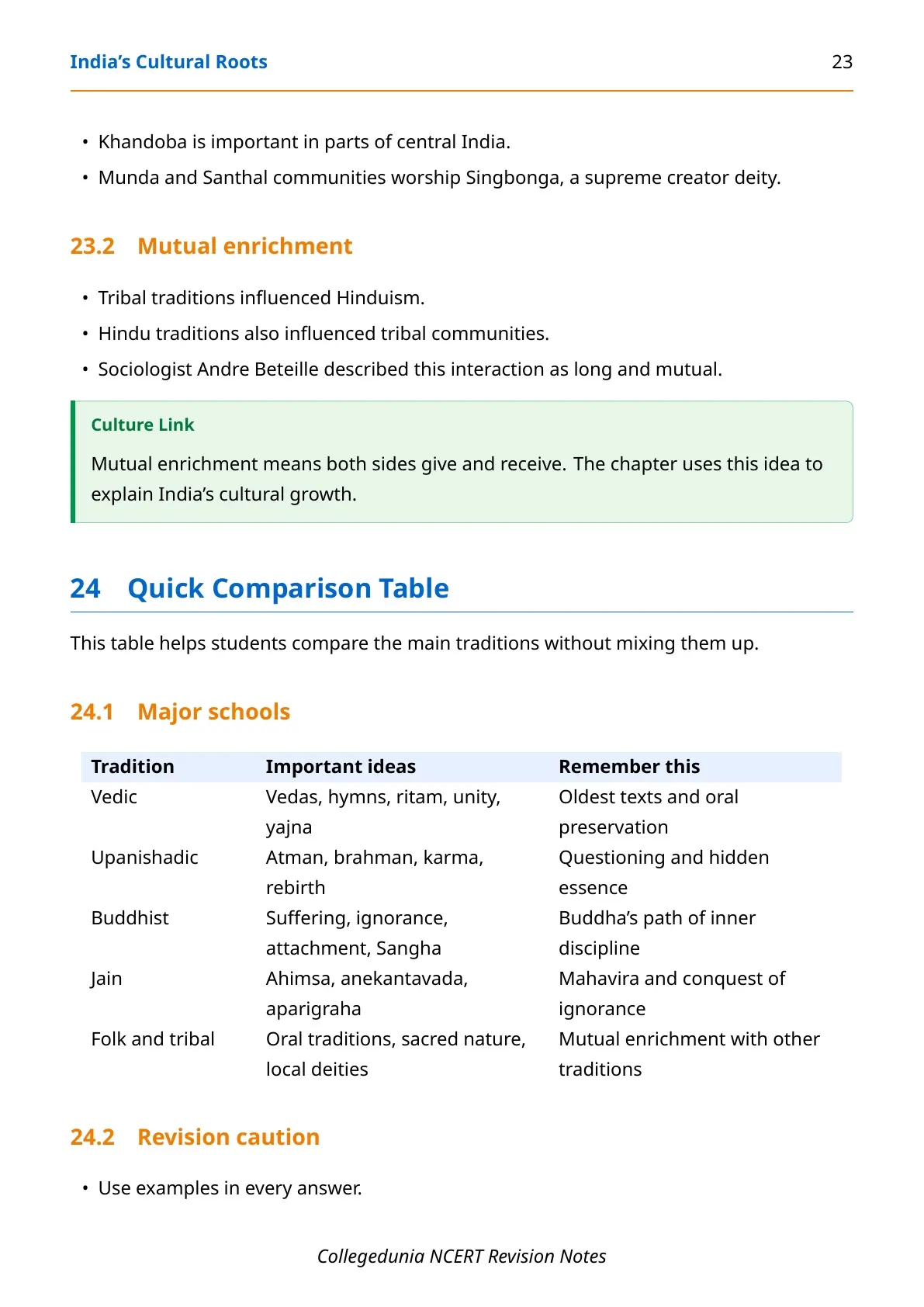
| Revision area | Key idea | Example cue |
|---|---|---|
| Vedas | Oldest Indian texts preserved orally | Rig Veda, Yajur Veda, Sama Veda, Atharva Veda |
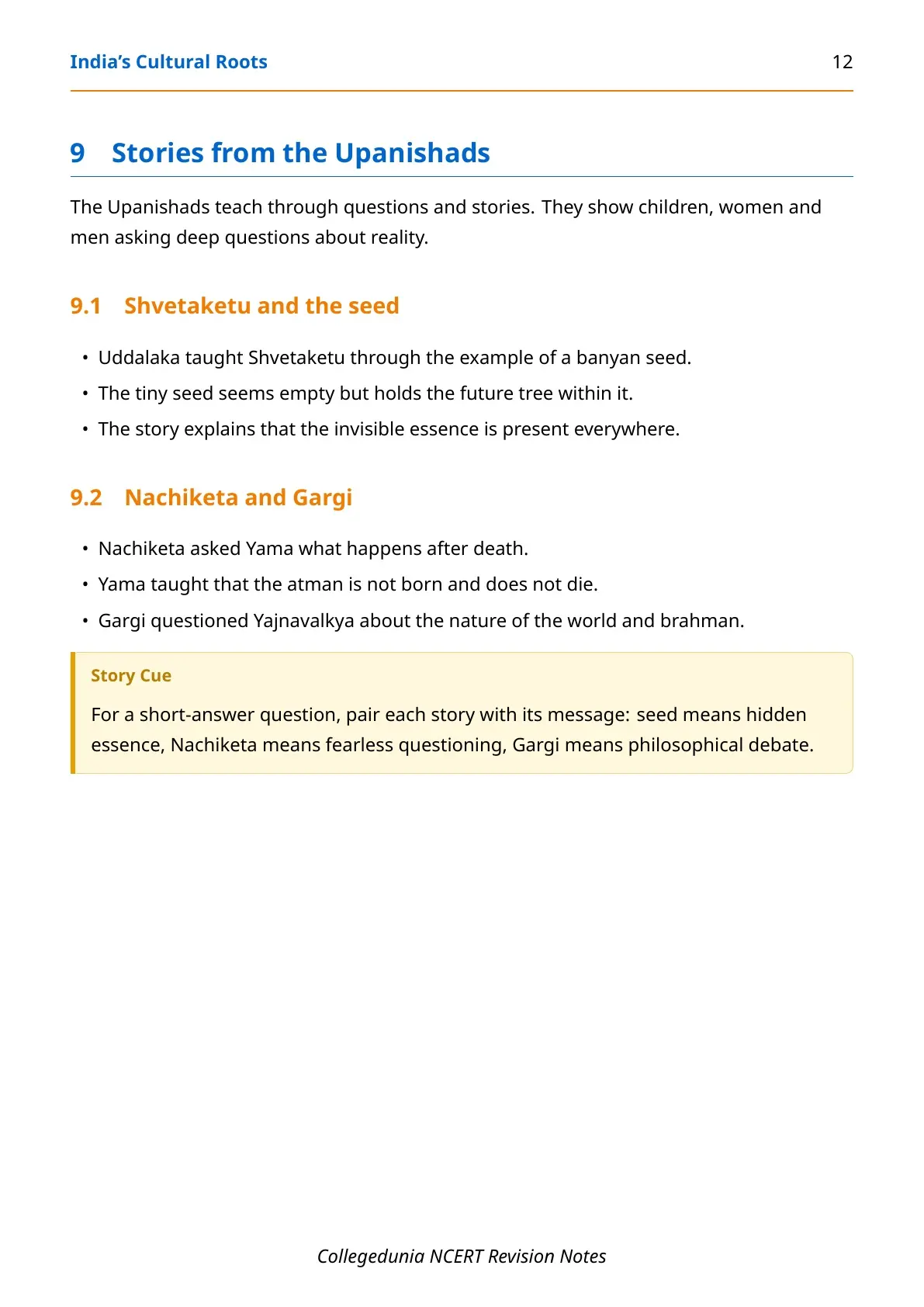
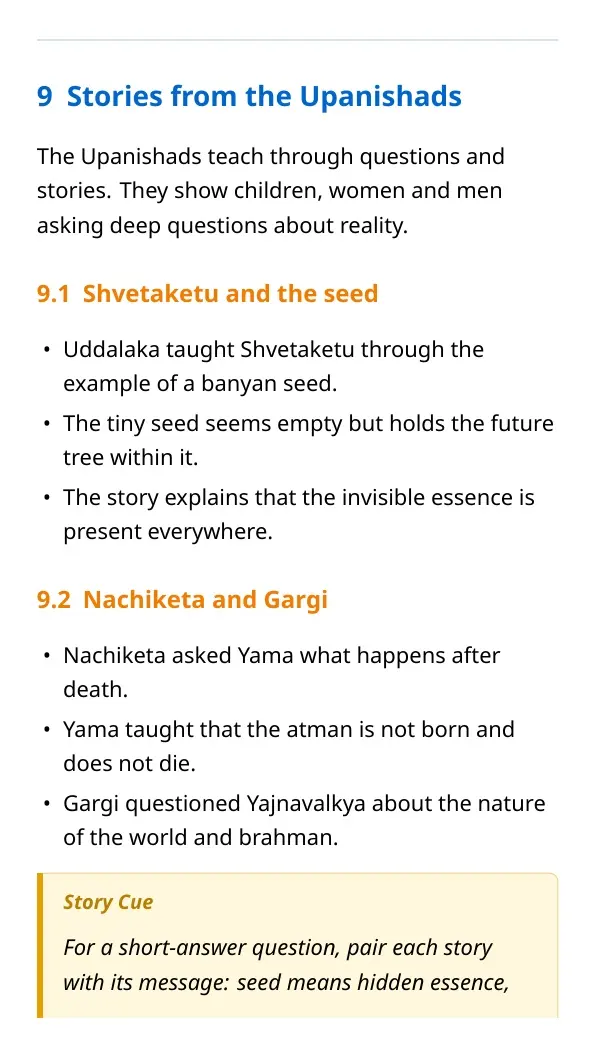
| Upanishads | Questions about atman, brahman, karma and rebirth | Shvetaketu, Nachiketa, Gargi |
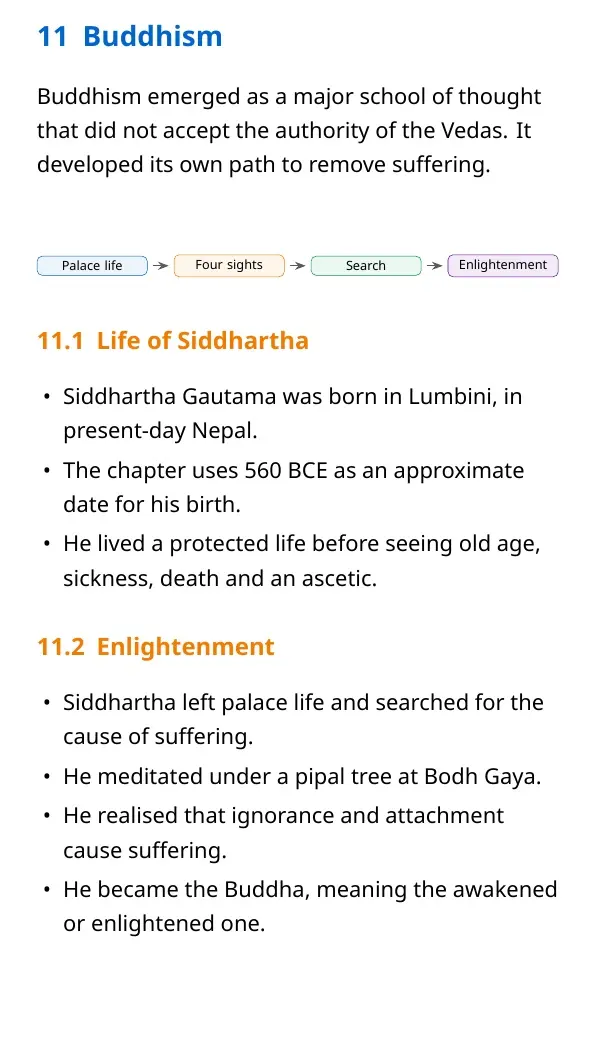
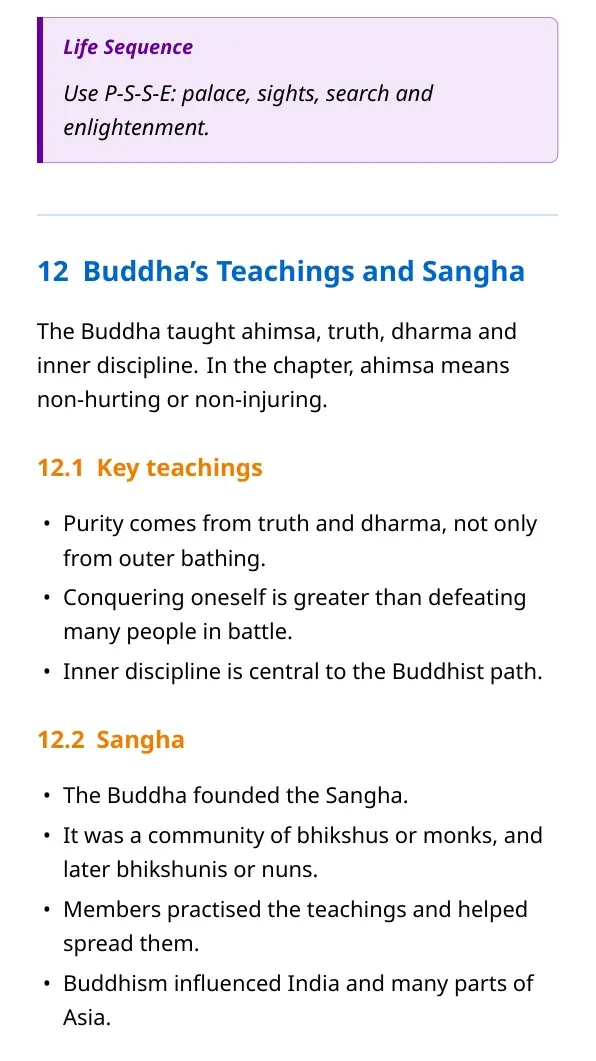
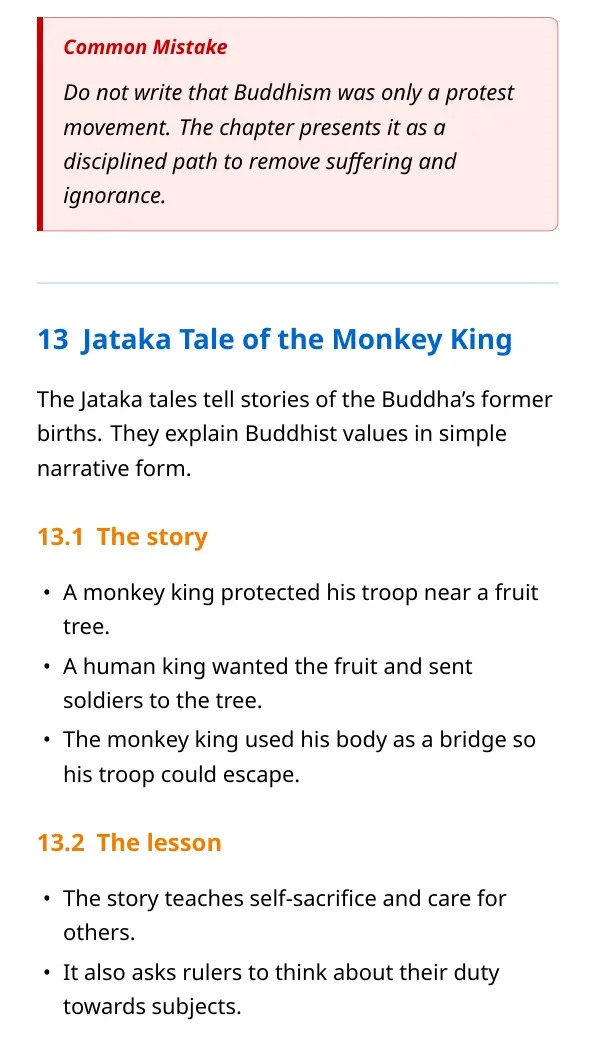
| Buddhism | Ignorance and attachment cause suffering | Buddha, Sangha, ahimsa |
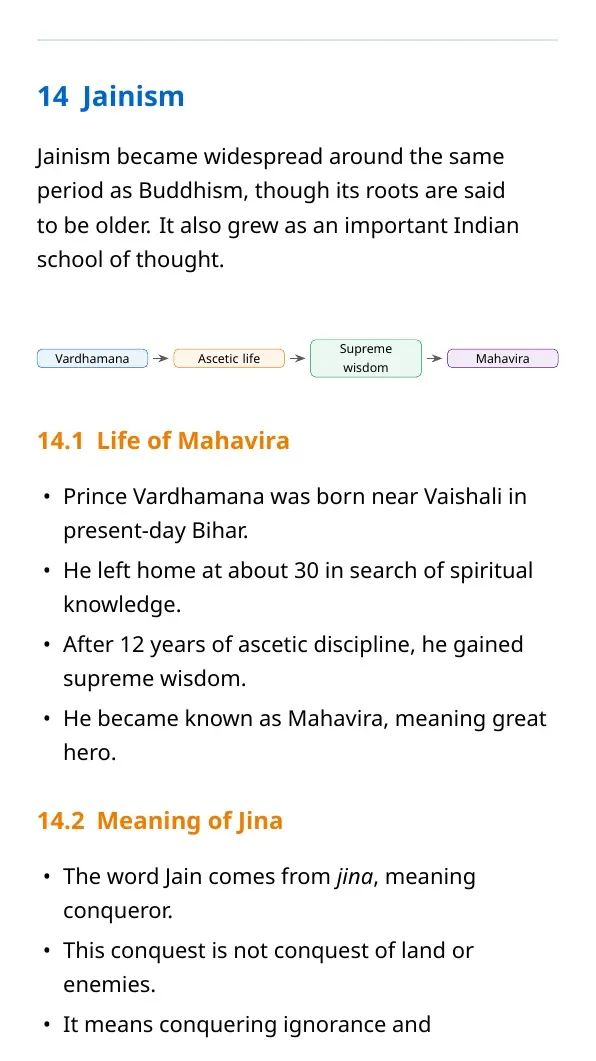
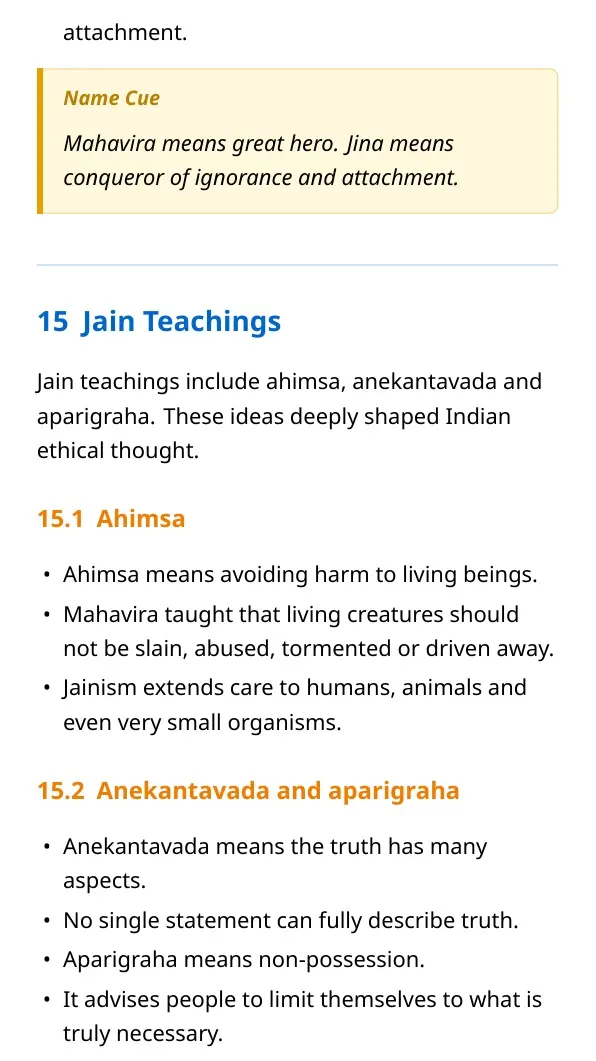
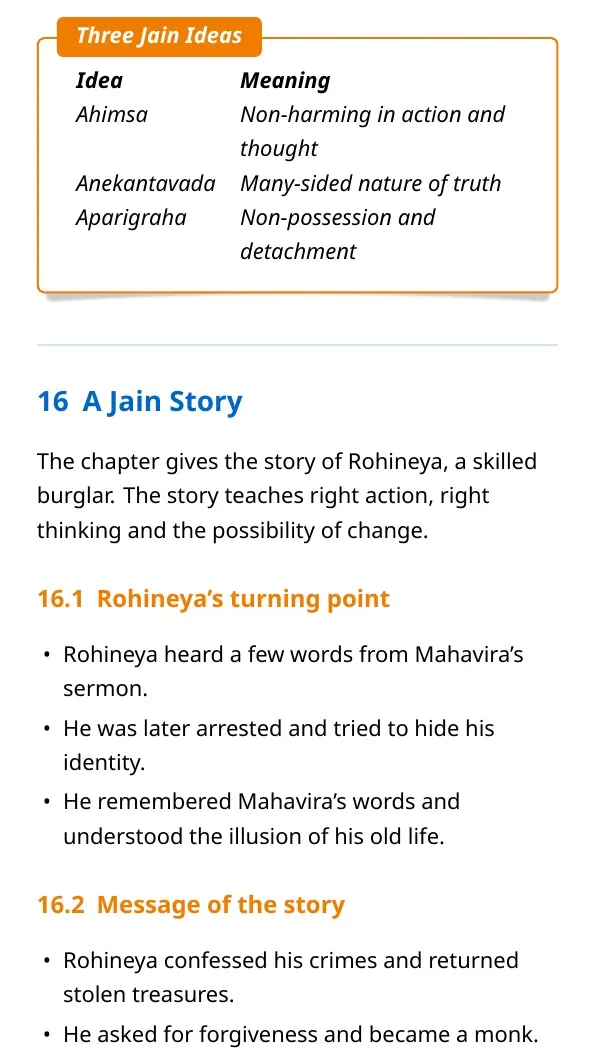
| Jainism | Ahimsa, anekantavada and aparigraha | Mahavira, jina, Rohineya |
Vedas and Upanishads Revision Map
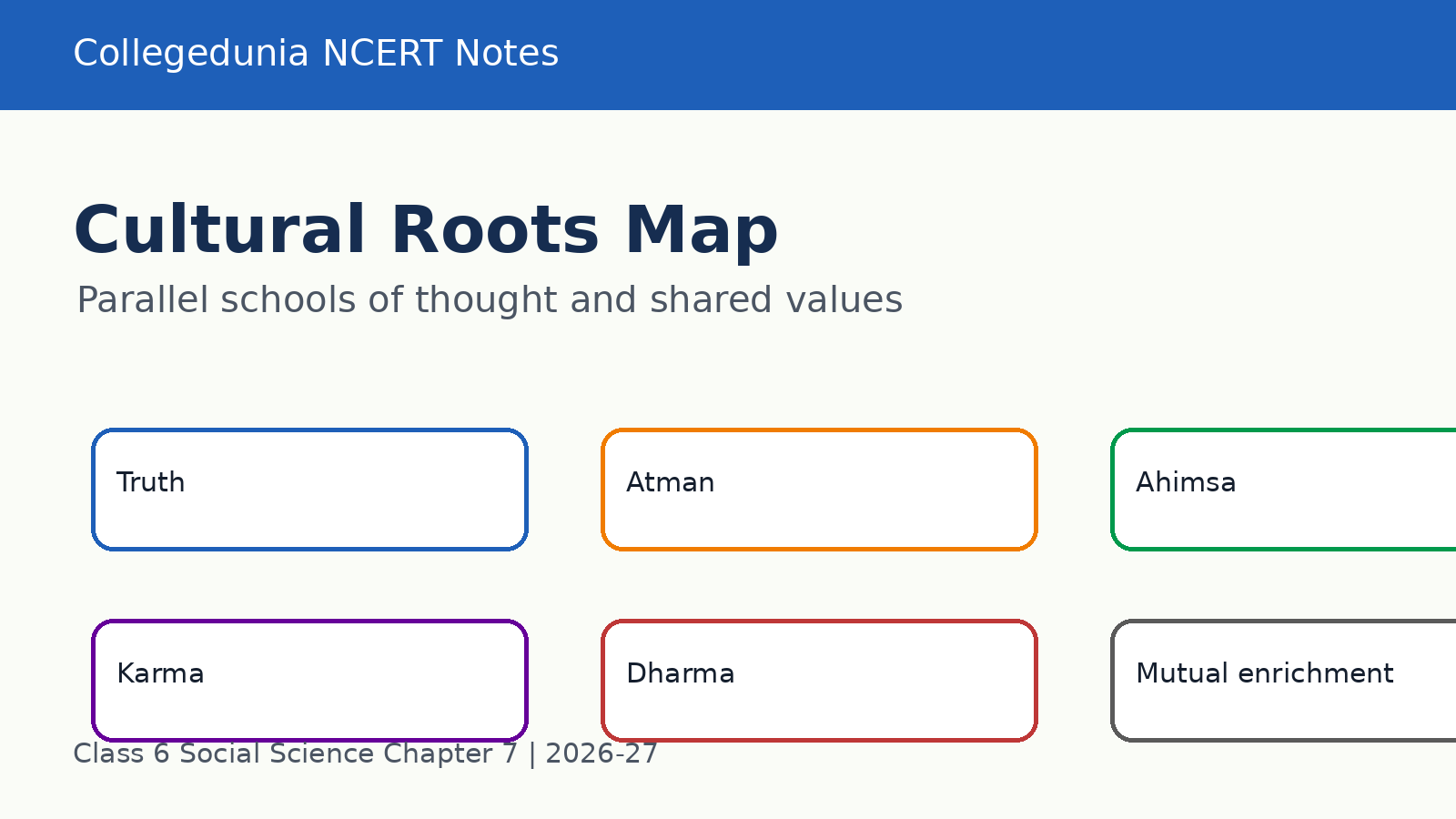
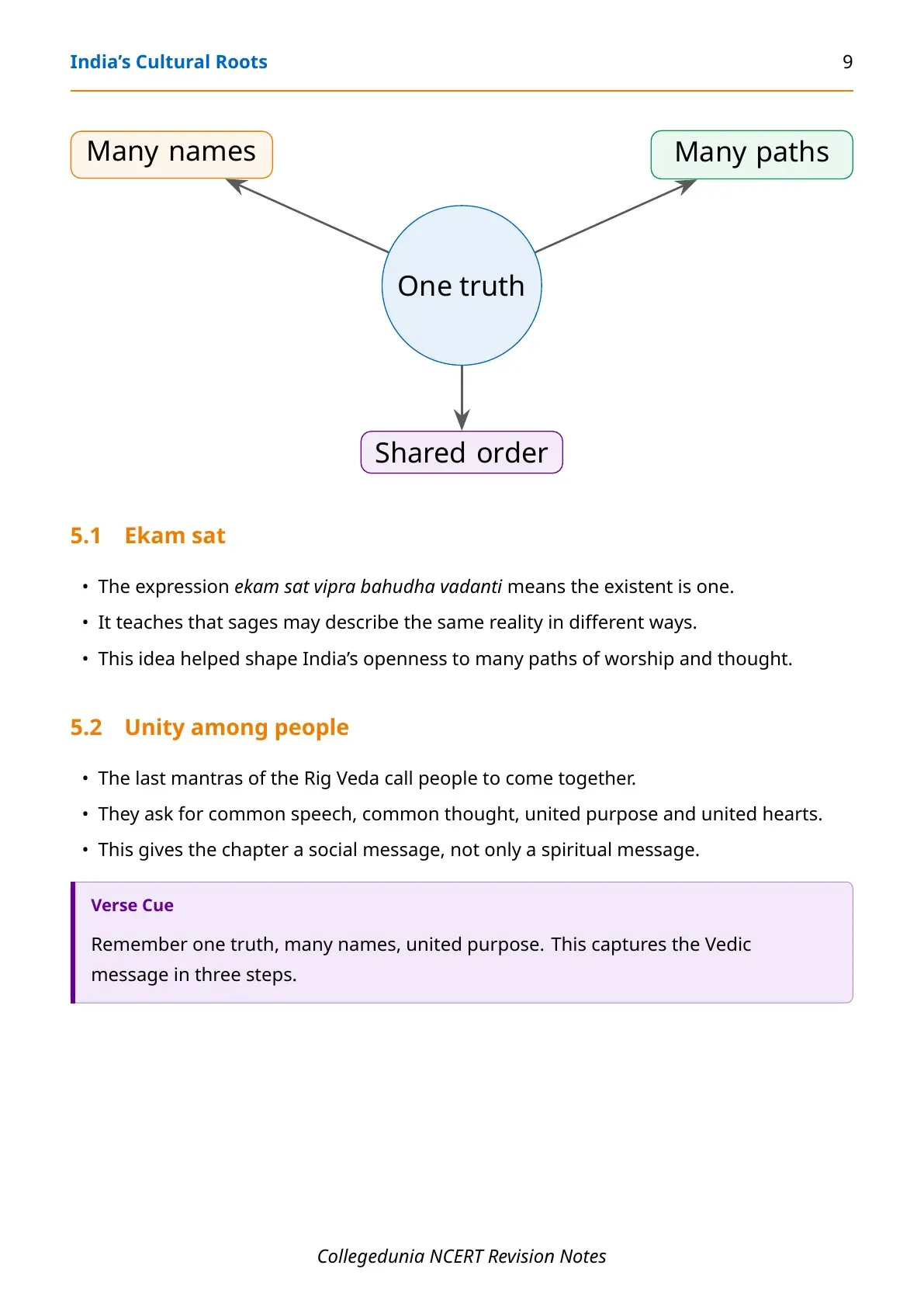
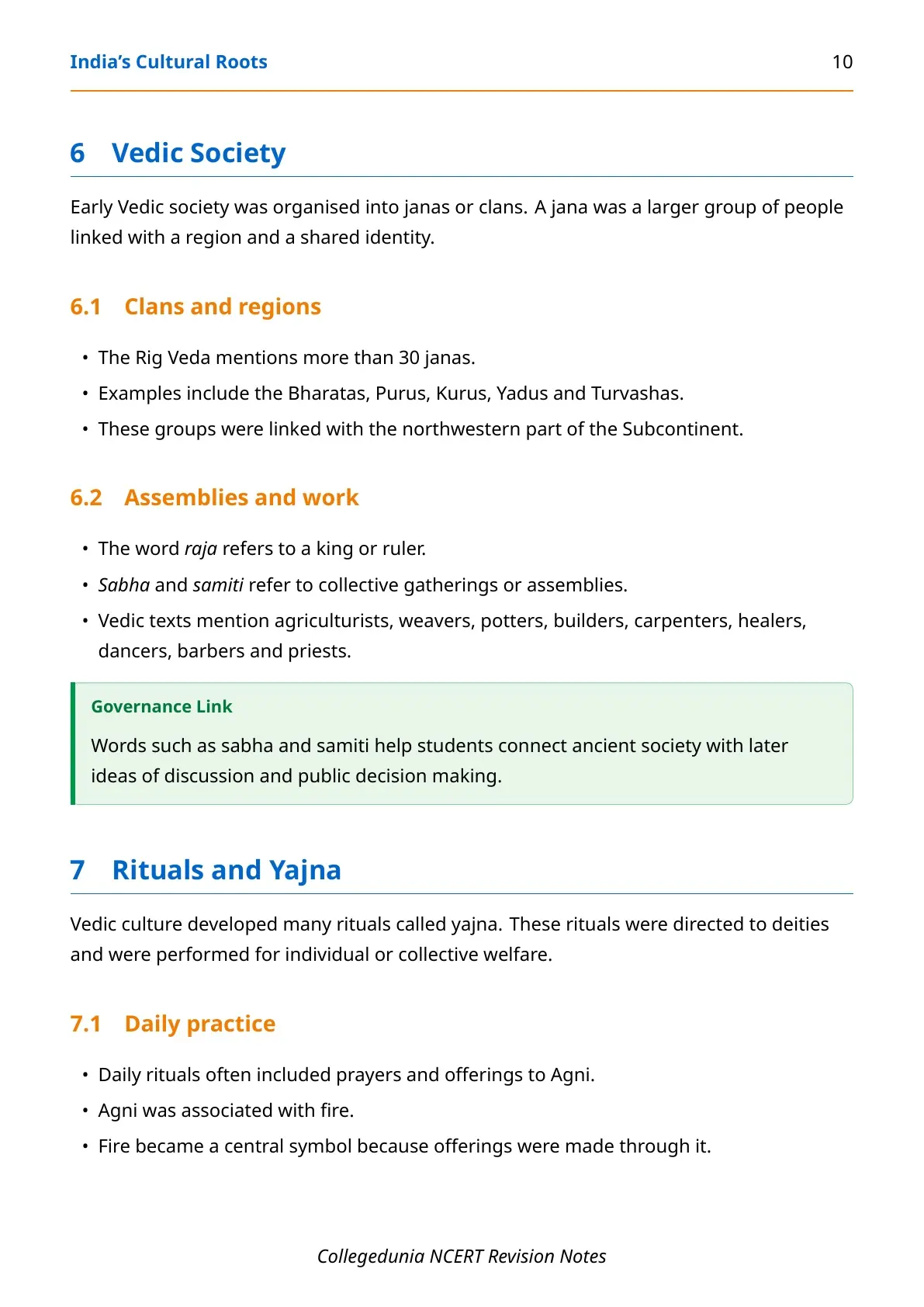
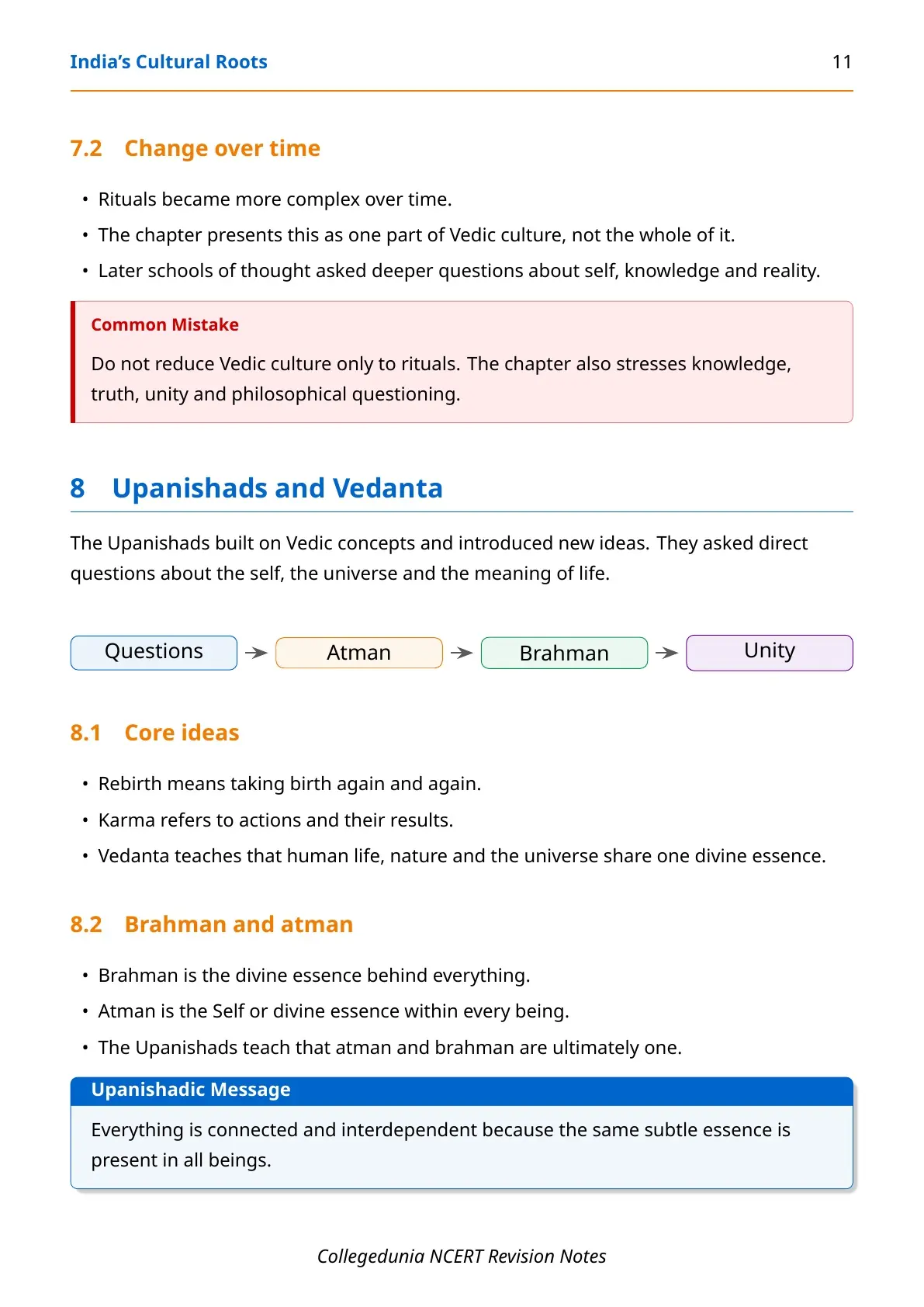
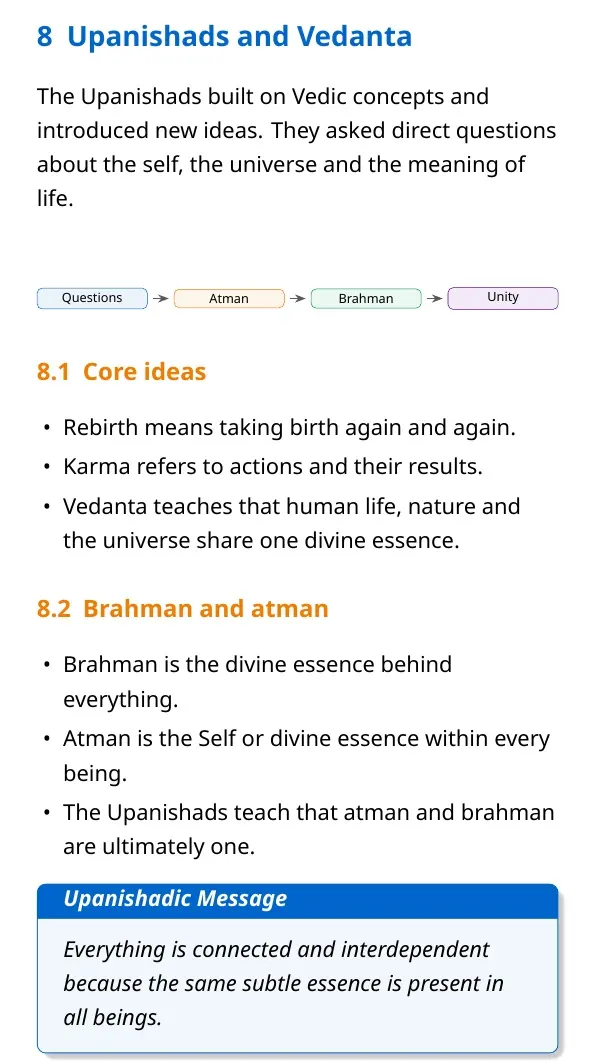
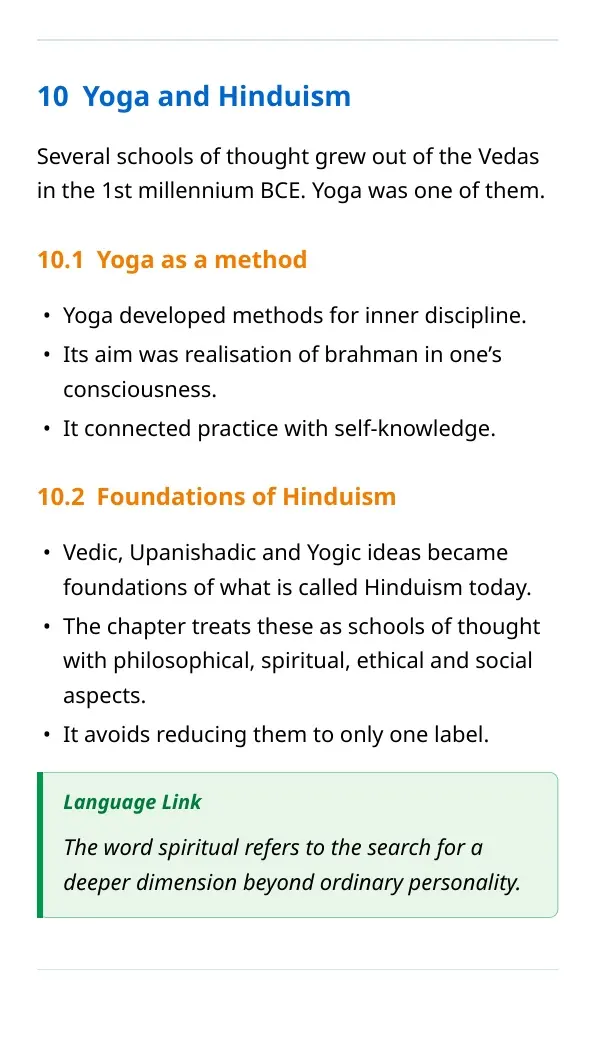
The Vedas contain hymns composed by rishis and rishikas in an early form of Sanskrit. They were preserved through oral learning for many generations. The Upanishads later asked deeper questions about the self, the universe and the connection between atman and brahman.
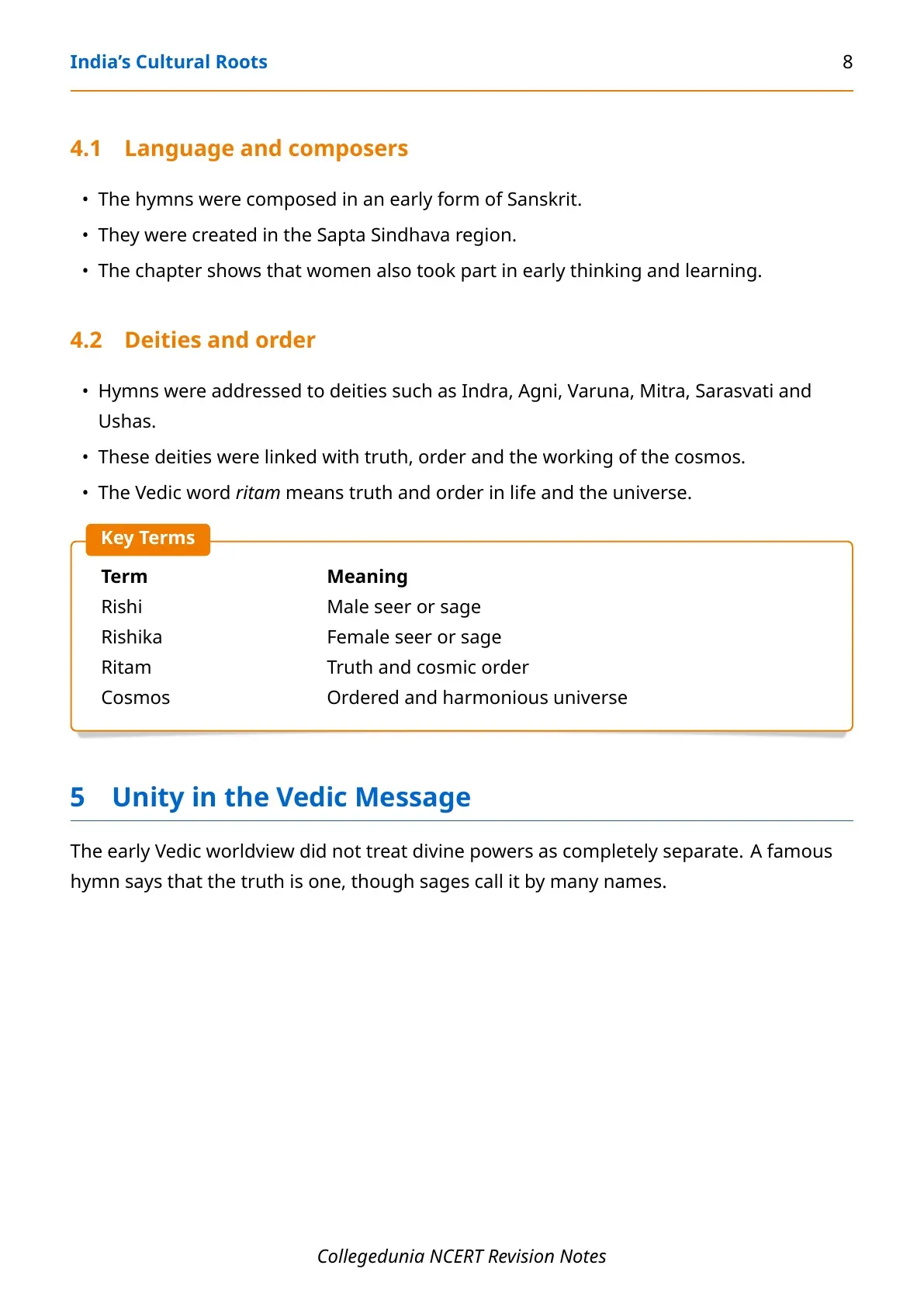
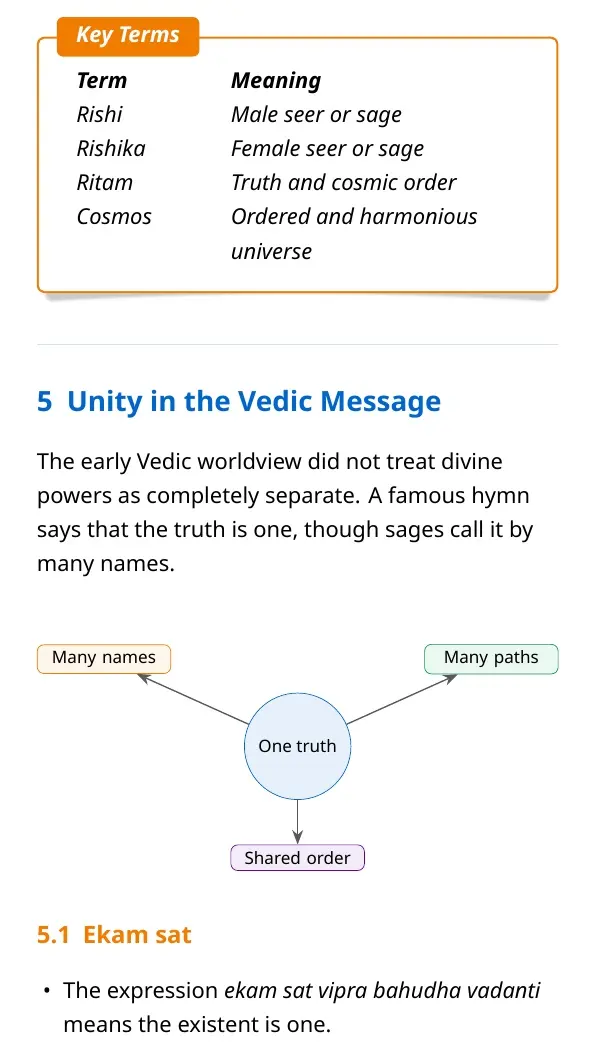
- Ekam sat: truth is one, though sages call it by many names.
- Ritam: truth and order in human life and the cosmos.
- Atman: the Self or divine essence within every being.
- Brahman: the divine essence behind everything.
India's Cultural Roots Chapter 7 Video Recap
Source: Magnet Brains on YouTube
Buddhism and Jainism Quick Comparison
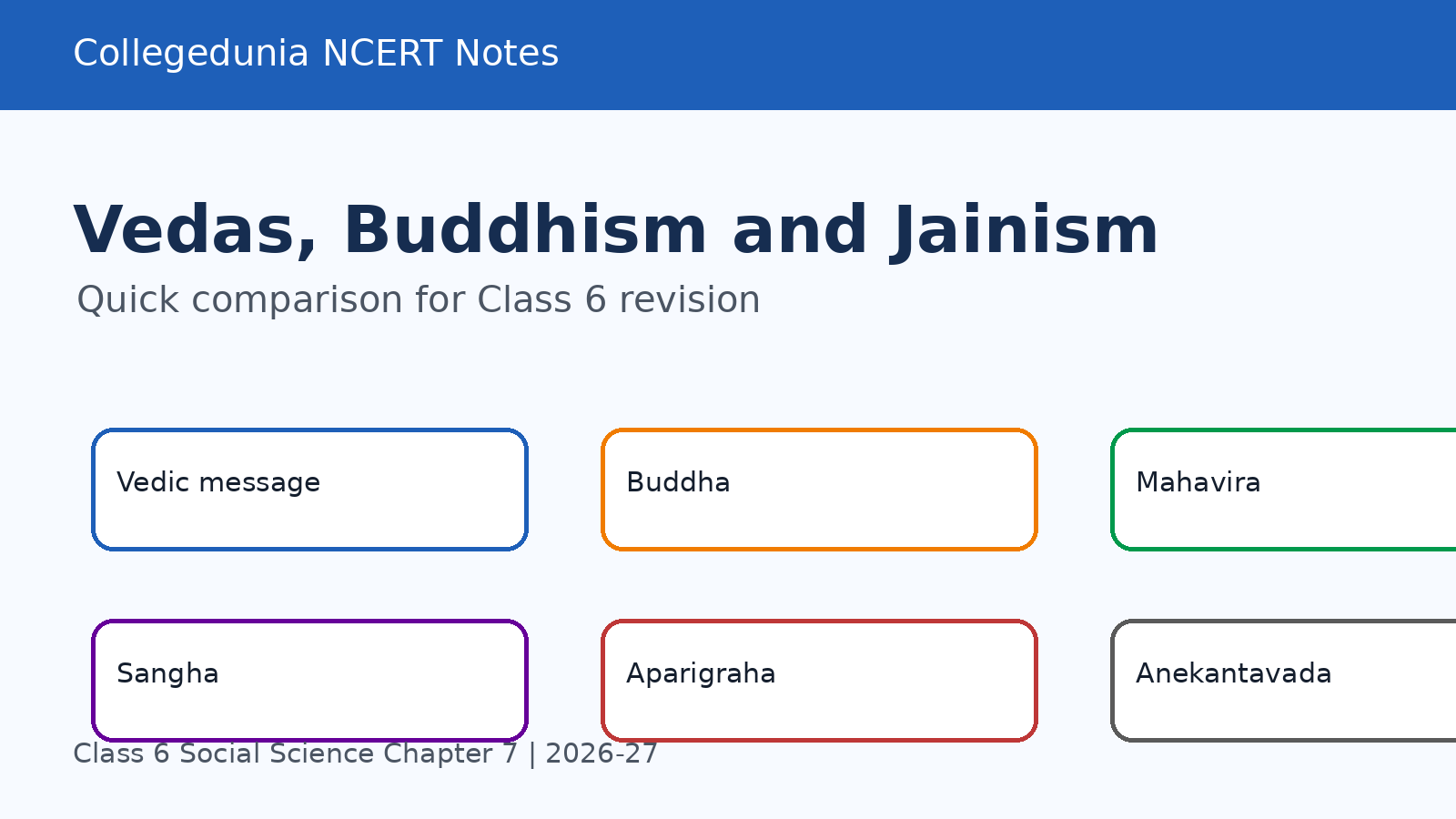
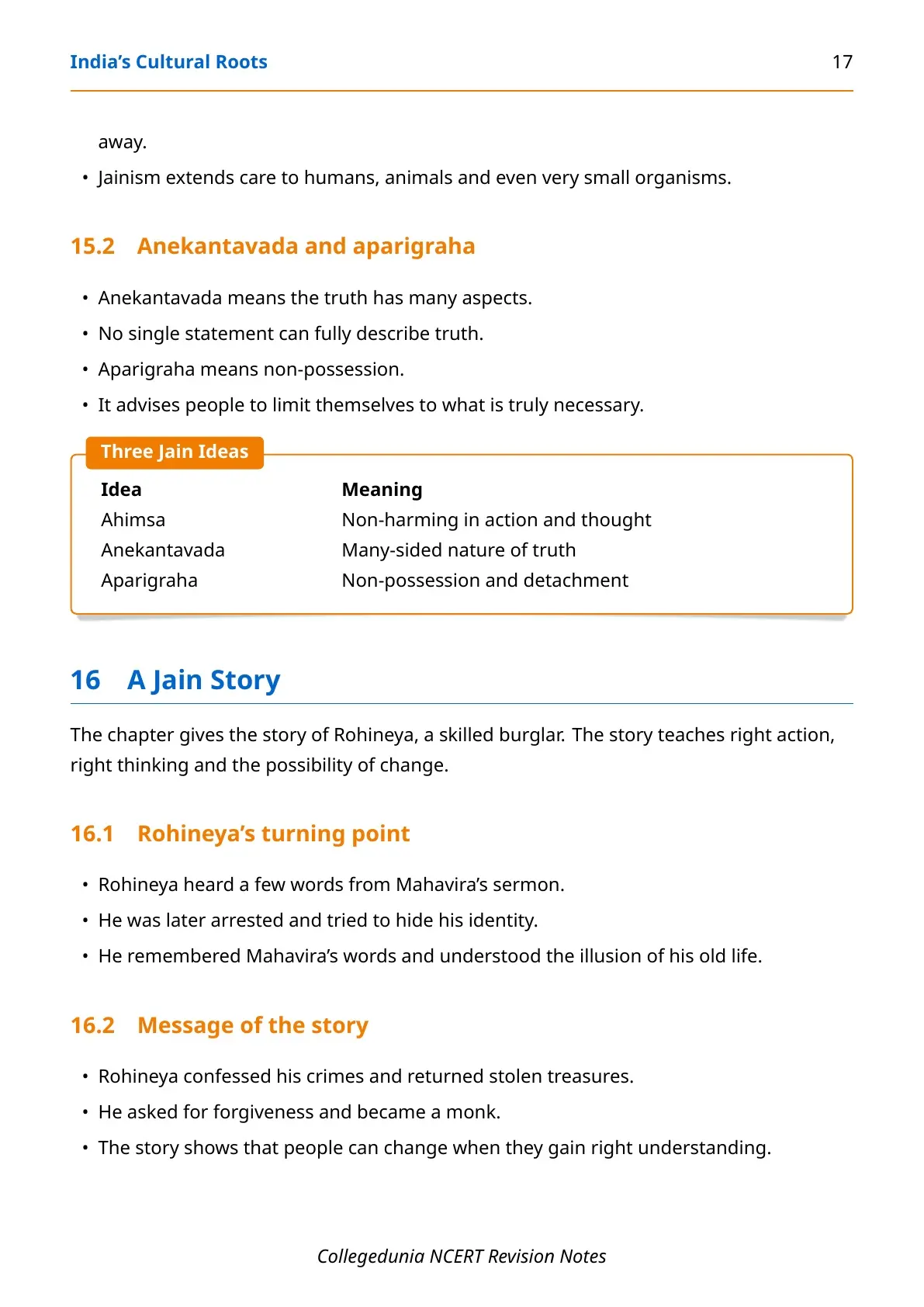
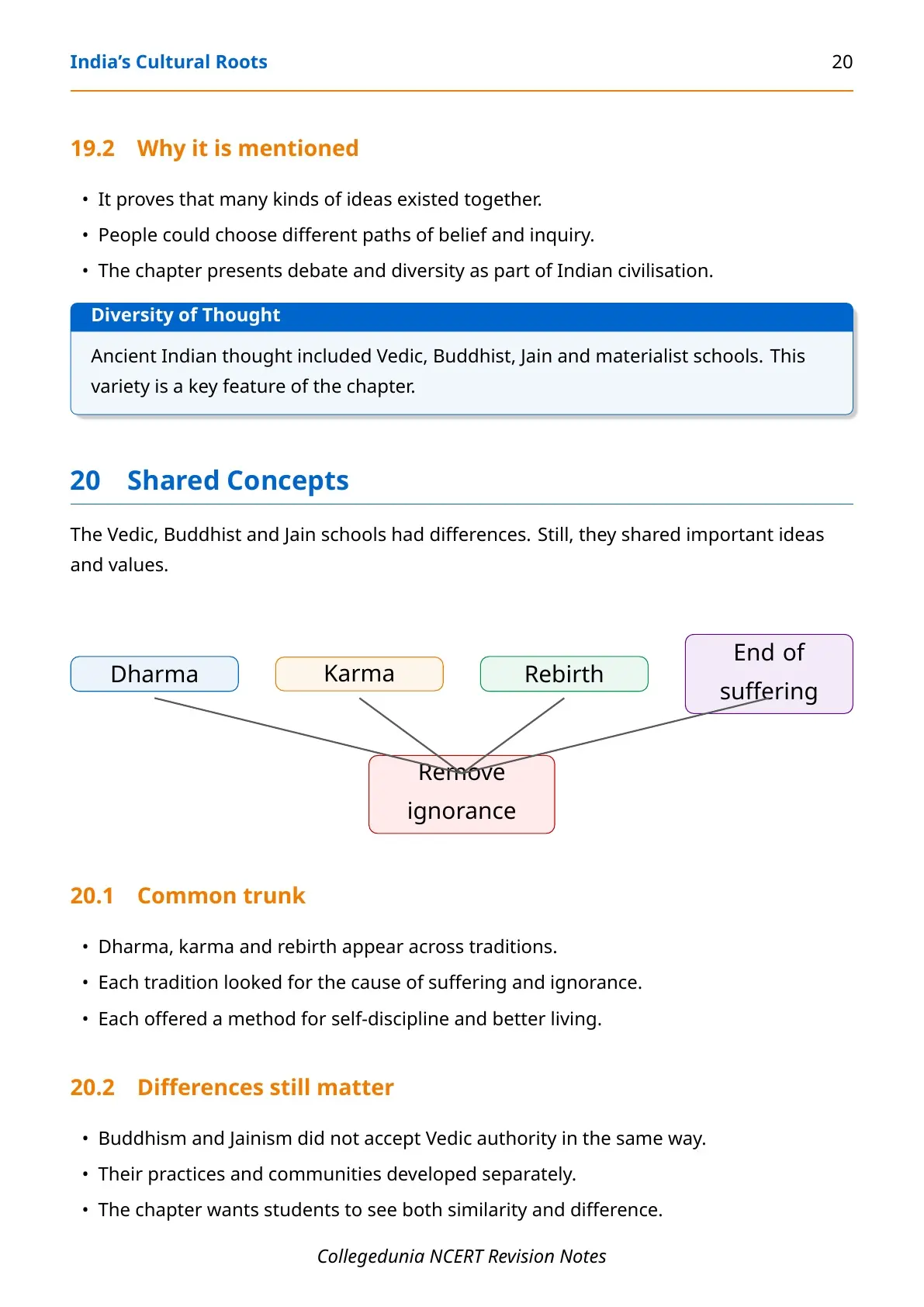
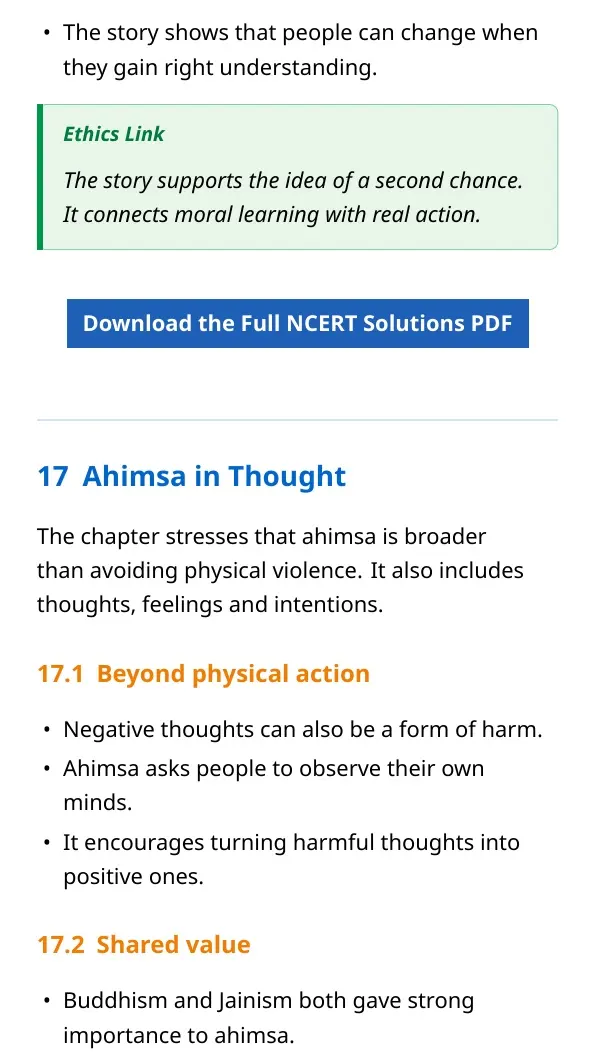
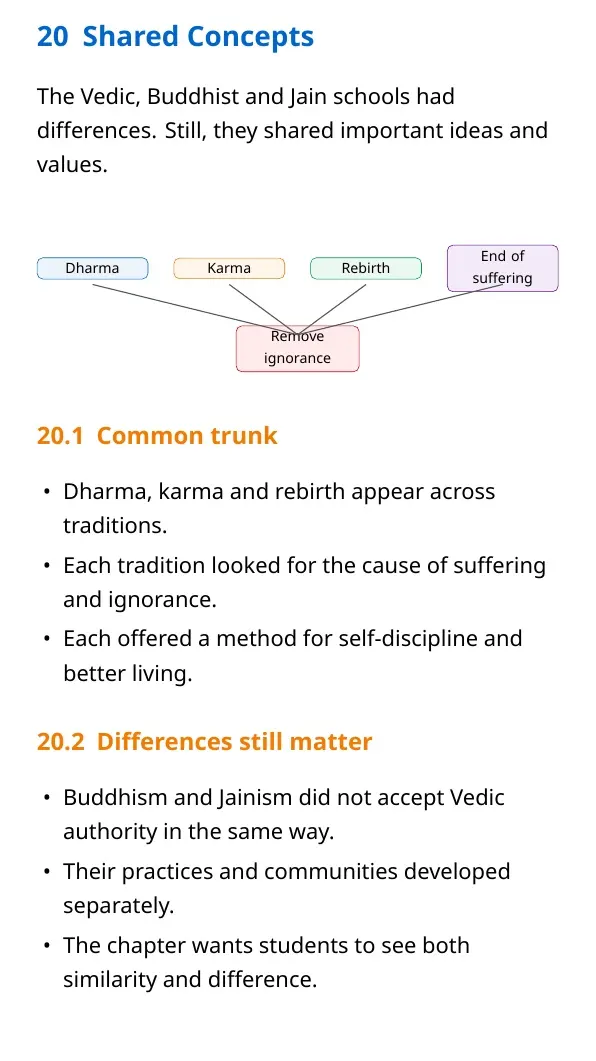
Buddhism and Jainism emerged as important schools of thought in ancient India. Both gave importance to discipline and ahimsa, but each developed its own community, stories and teaching method.
| Topic | Buddhism | Jainism |
|---|---|---|
| Main teacher | Siddhartha Gautama, the Buddha | Vardhamana Mahavira |
| Main concern | End suffering caused by ignorance and attachment | Conquer ignorance and attachment through disciplined living |
| Community | Sangha of monks and nuns | Jain monks and followers |
| Key value | Ahimsa and inner discipline | Ahimsa, anekantavada and aparigraha |
Folk and Tribal Roots in Indian Culture
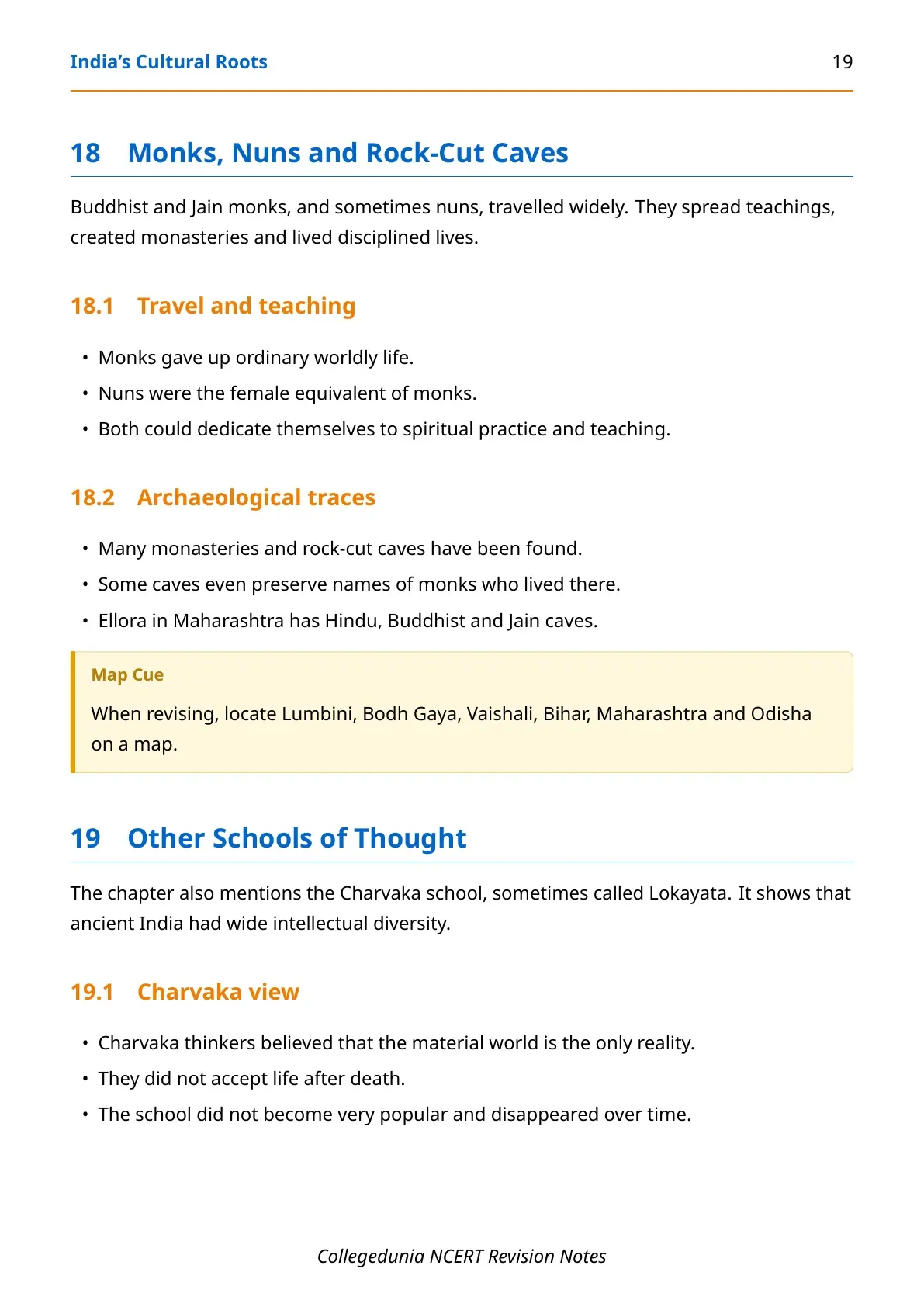
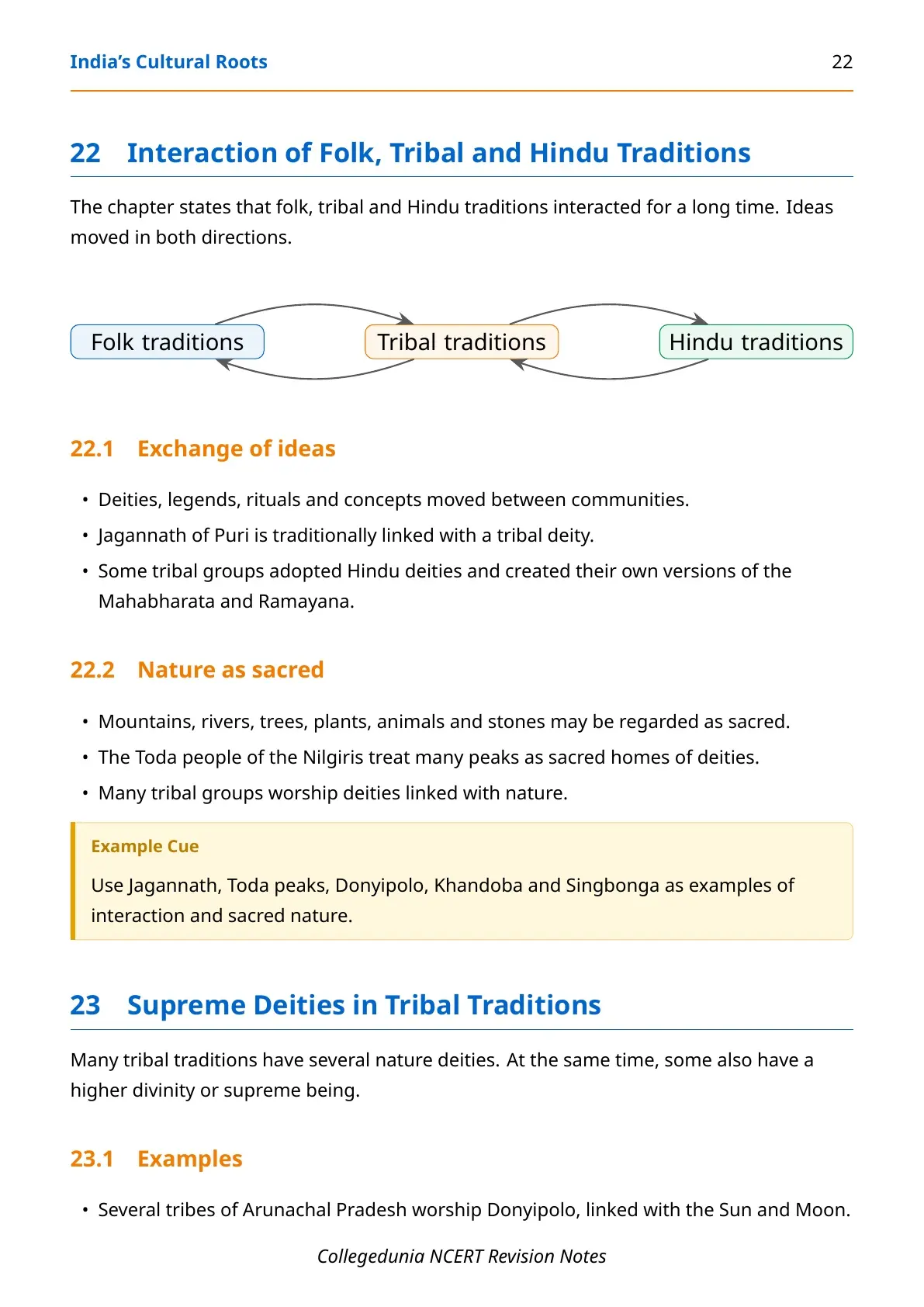
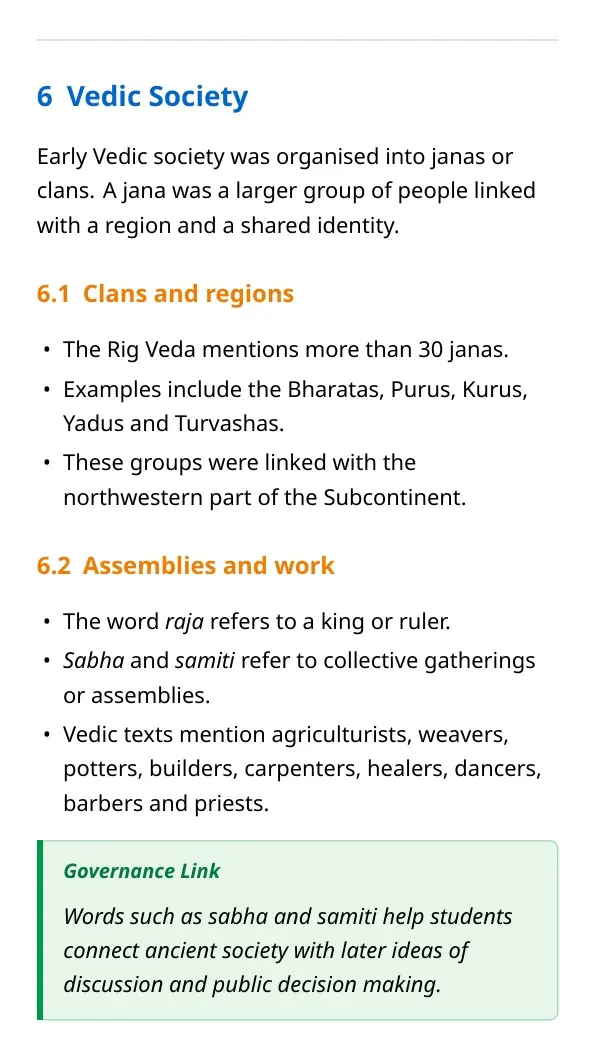
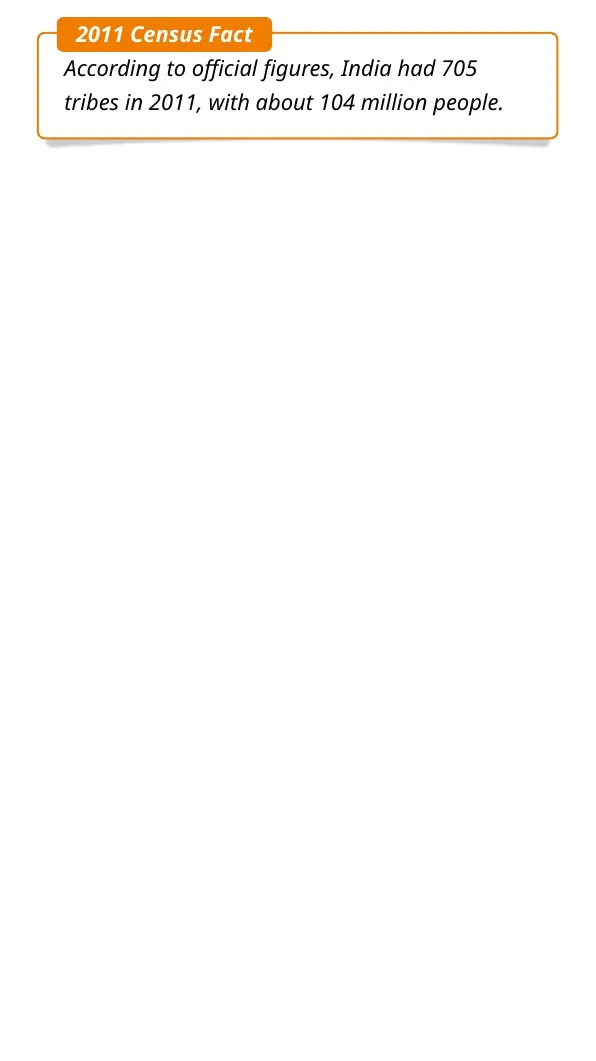
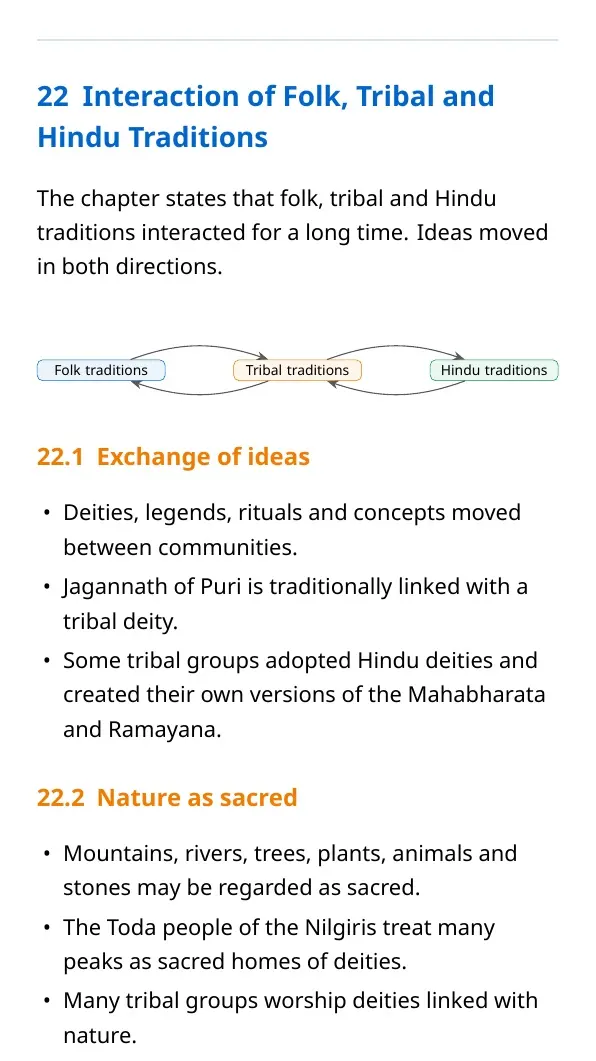
India's cultural roots also include oral traditions, folk traditions and tribal belief systems. The chapter says that folk, tribal and Hindu traditions interacted for a long time. Ideas, deities, legends and rituals moved in both directions.
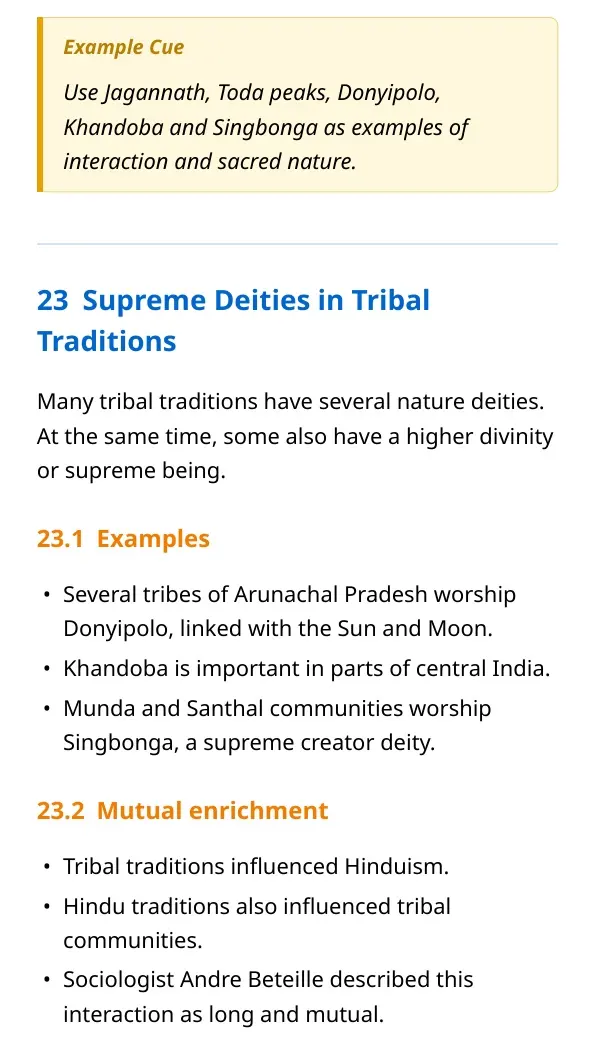
- Jagannath: traditionally linked with a tribal deity at Puri.
- Toda people: many Nilgiri peaks are treated as sacred homes of deities.
- Donyipolo: worshipped by several tribes of Arunachal Pradesh.
- Singbonga: worshipped by Munda and Santhal communities as a supreme creator deity.
India's Cultural Roots Related Resources
| Resource | Best use | Link |
|---|---|---|
| NCERT Notes | Topic-wise revision with tables and maps | Current page |
| NCERT Solutions | Practice textbook questions and model answers | Open NCERT Solutions |
| NCERT Book PDF | Read the official chapter | Open Book PDF |
Social Science Notes for All Chapters
| Chapter | NCERT chapter title | Notes link |
|---|---|---|
| Chapter 1 | Locating Places on the Earth | Open Notes |
| Chapter 2 | Oceans and Continents | Open Notes |
| Chapter 3 | Landforms and Life | Open Notes |
| Chapter 4 | Timeline and Sources of History | Open Notes |
| Chapter 5 | India, That Is Bharat | Open Notes |
| Chapter 6 | The Beginnings of Indian Civilisation | Open Notes |
| Chapter 7 | India's Cultural Roots | Current notes |
| Chapter 8 | Unity in Diversity, or Many in the One | Open Book PDF |
| Chapter 9 | Family and Community | Open Book PDF |
India's Cultural Roots Class 6 Notes FAQs
Ques. What is Class 6 Social Science Chapter 7 about?
Ans. It explains India's cultural roots through the Vedas, Upanishads, Buddhism, Jainism, folk traditions and tribal belief systems.
Ques. What are the four Vedas?
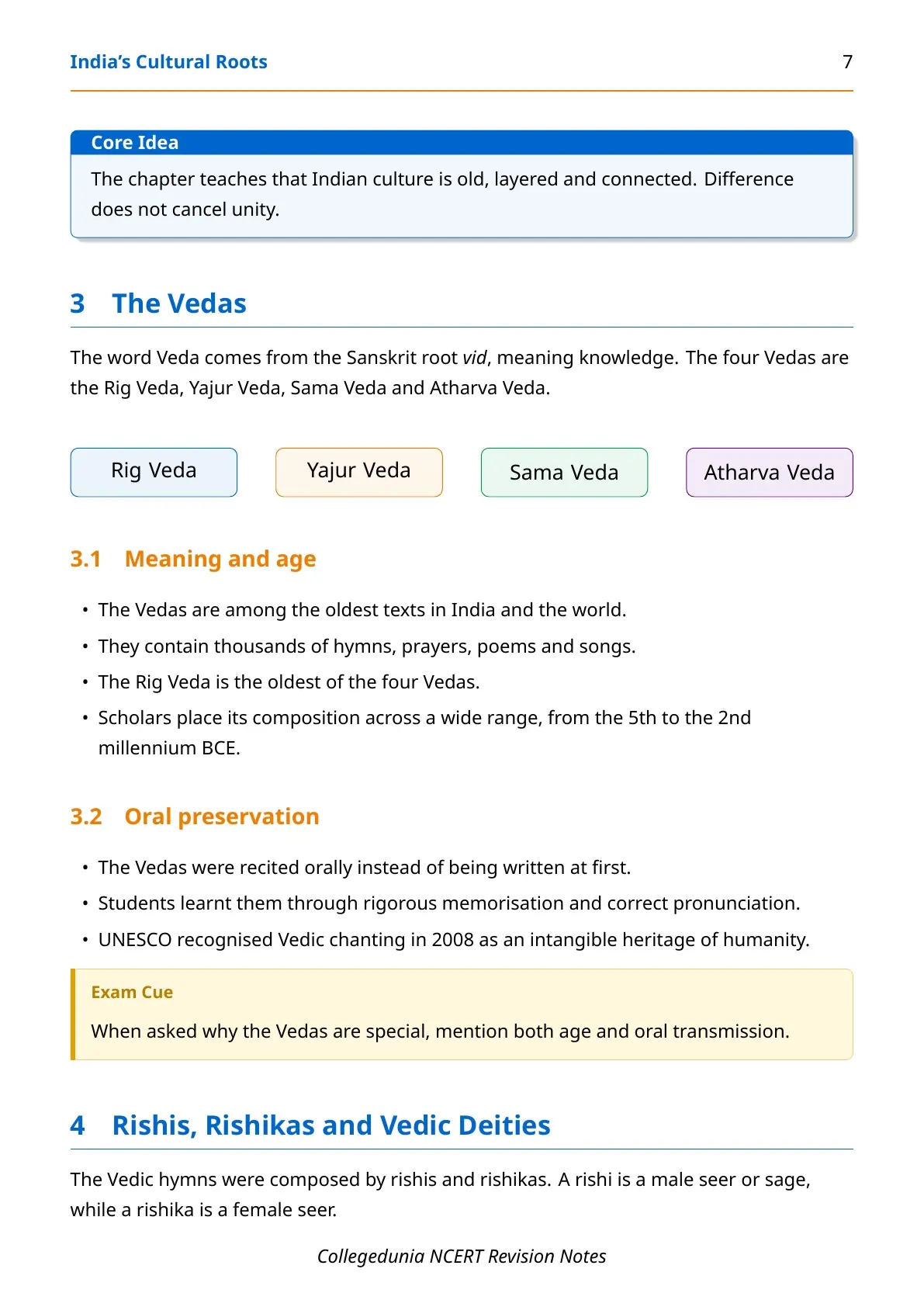
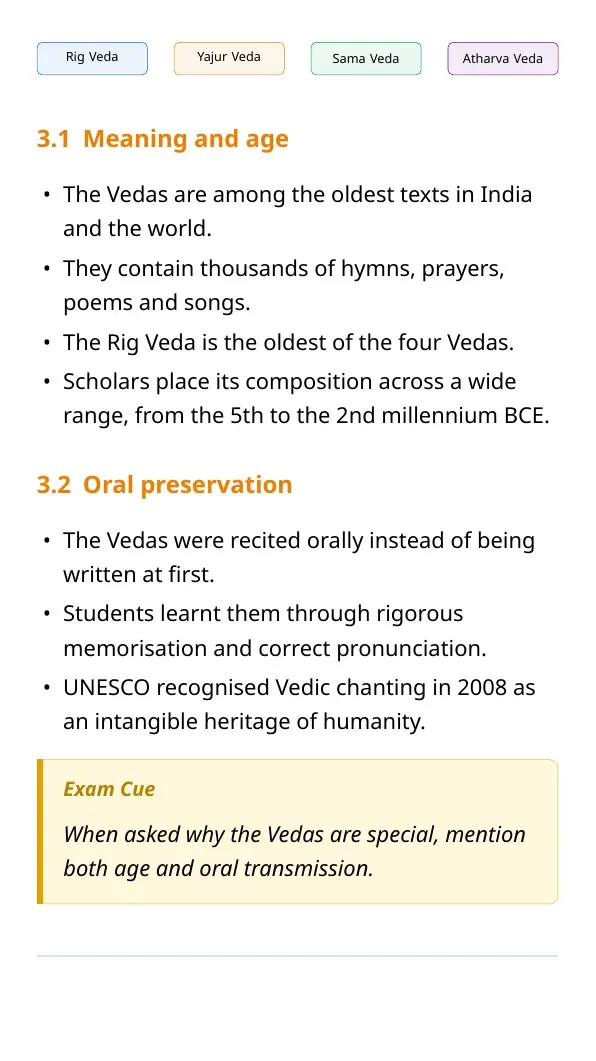
Ans. The four Vedas are the Rig Veda, Yajur Veda, Sama Veda and Atharva Veda.
Ques. What is the main message of the Upanishads?
Ans. The Upanishads teach ideas such as atman, brahman, karma, rebirth and the deep connection of all beings.
Ques. What values do Buddhism and Jainism share?
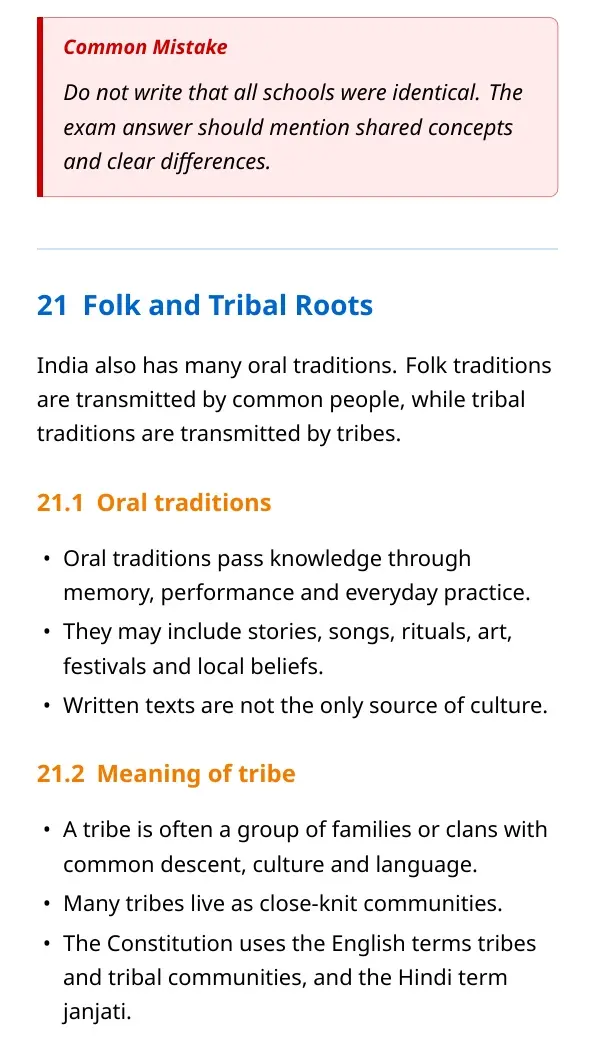
Ans. Both give importance to ahimsa, self-discipline, the removal of ignorance and careful conduct in thought and action.
Ques. Why are folk and tribal traditions important in this chapter?
Ans. They show how local beliefs, sacred nature, deities, stories and rituals enriched Indian culture over many centuries.



Comments