




The NCERT Class 8 Social Science Chapter 6 Notes explain The Parliamentary System: Legislature and Executive for the 2026-27 syllabus. These notes cover Parliament, Lok Sabha, Rajya Sabha, bill to act, executive accountability, state legislatures and checks and balances.
- Resource focus: Class 8 Social Science Chapter 6 revision with tables, flow charts and quick-answer frames.
- Best use: revise the PDF first, then practise answers on Parliament, Executive and Judiciary.
- Exam link: follows the NCERT 2026-27 chapter The Parliamentary System: Legislature and Executive.
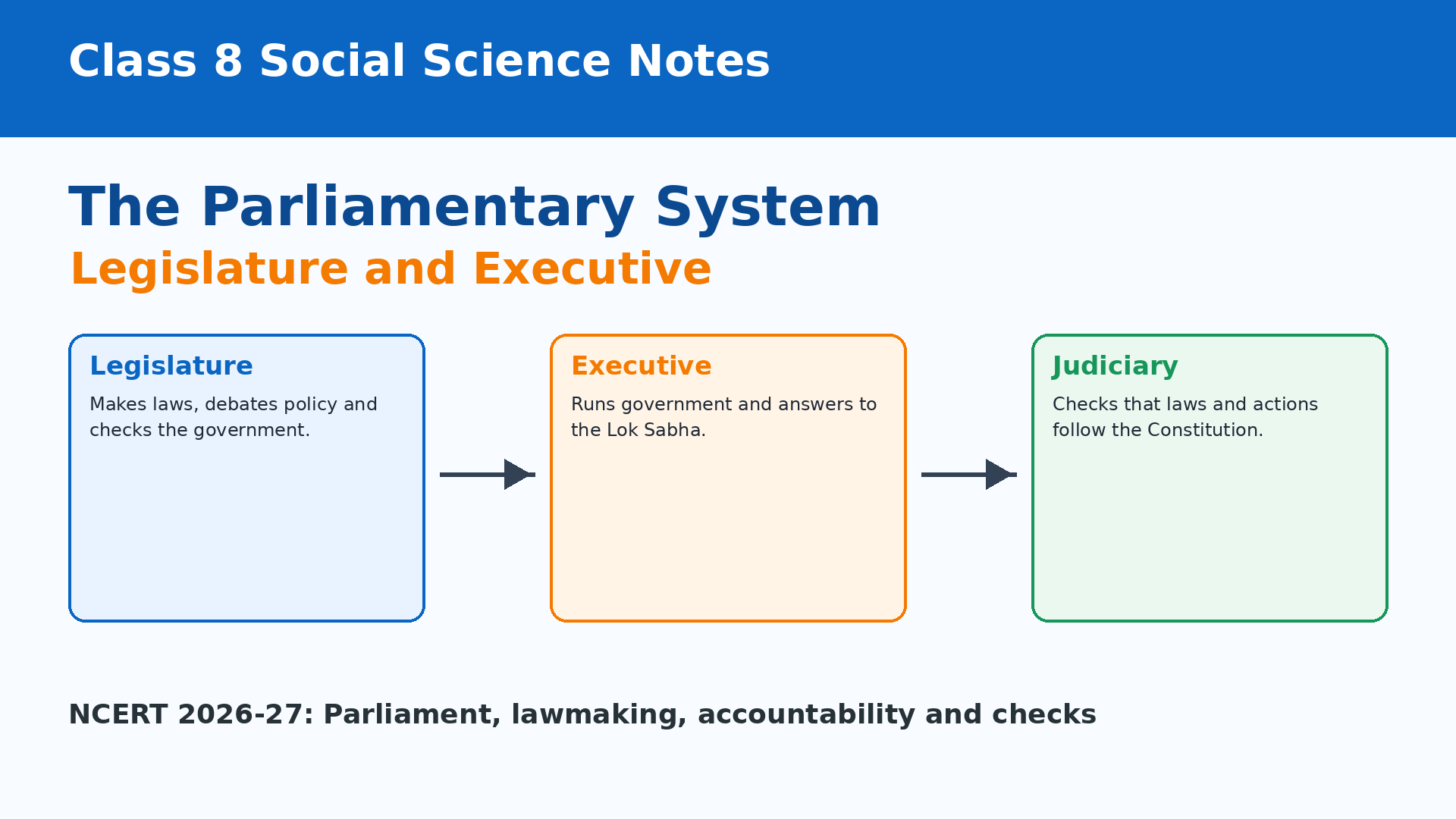
Student Feedback: In a Collegedunia revision check with 7,900 Class 8 students, 74% said a flow chart helped them remember the difference between the legislature and the executive.
Class 8 Social Science Chapter 6 Notes Overview
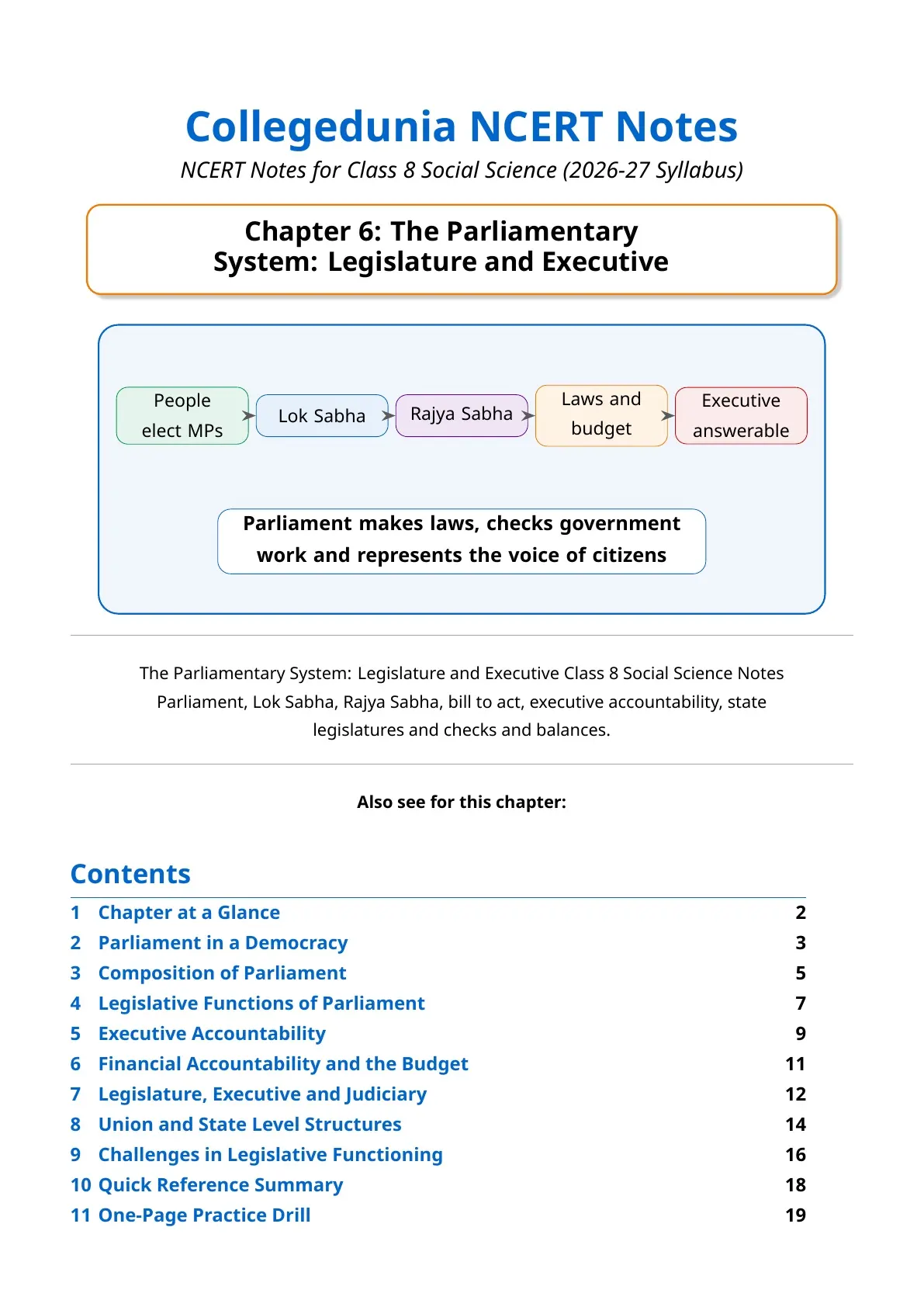
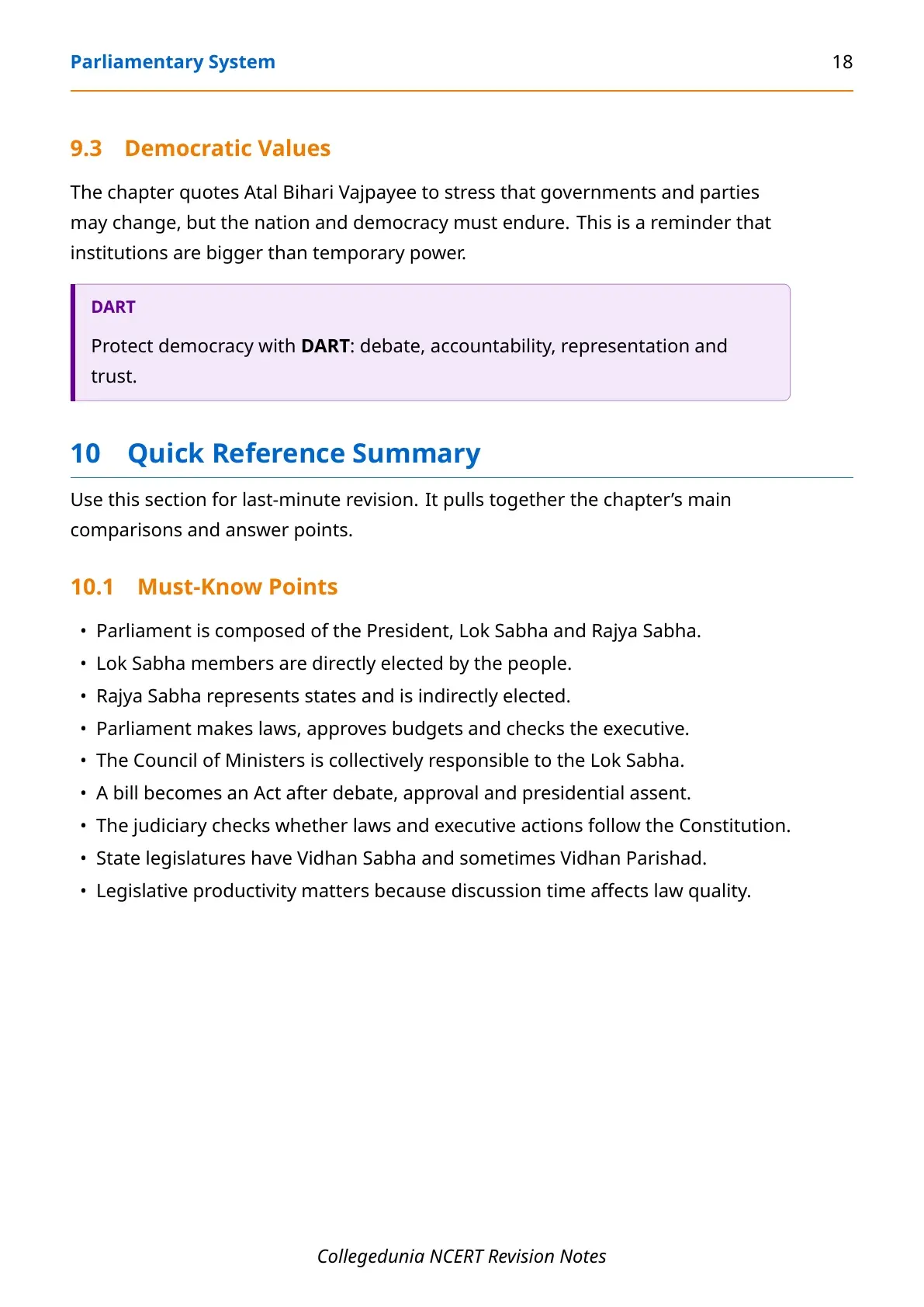
The Parliamentary System: Legislature and Executive explains how India shares power through elected representatives, ministers and courts. The chapter also shows why Parliament debates laws, controls public spending and keeps the executive answerable.
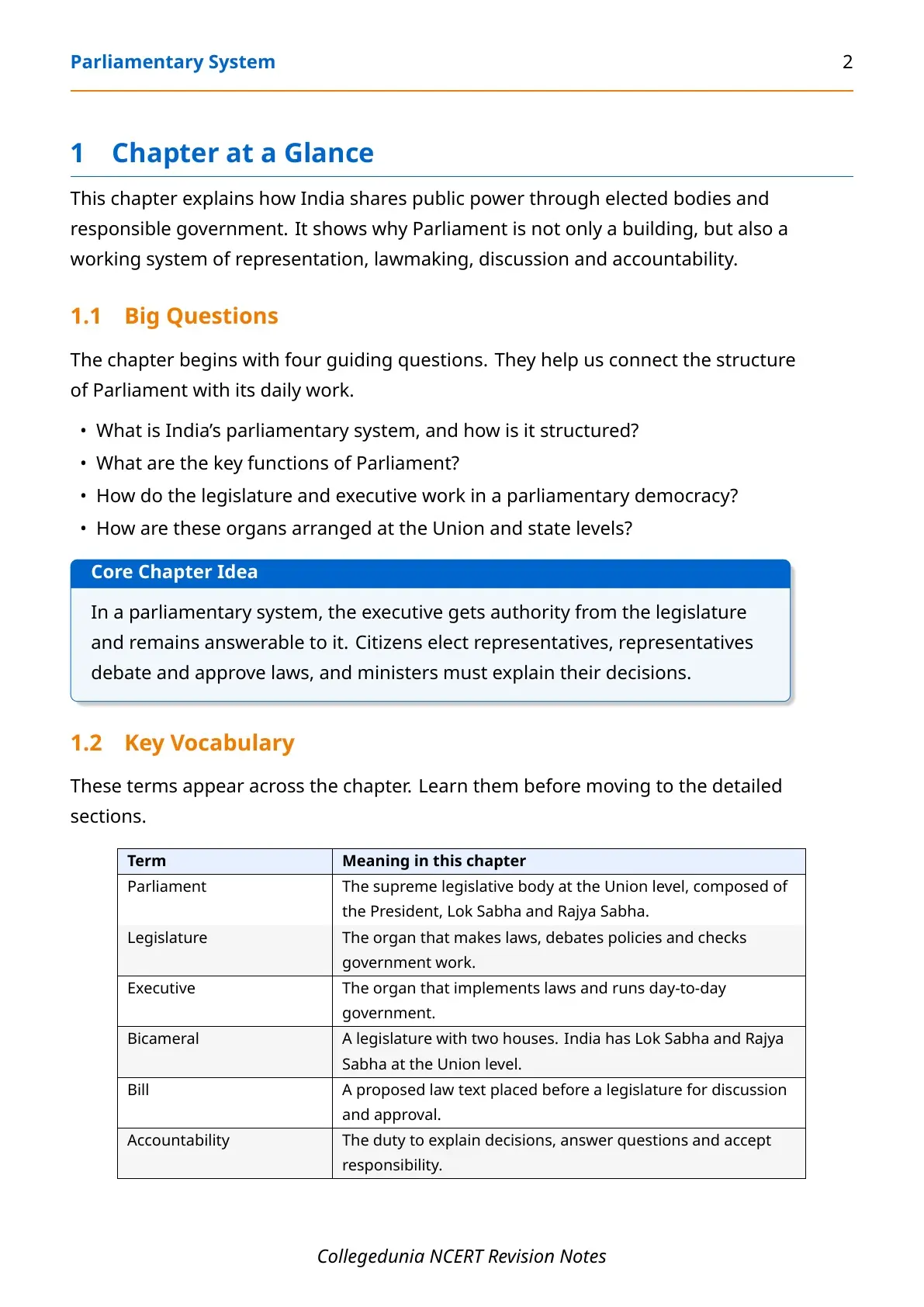
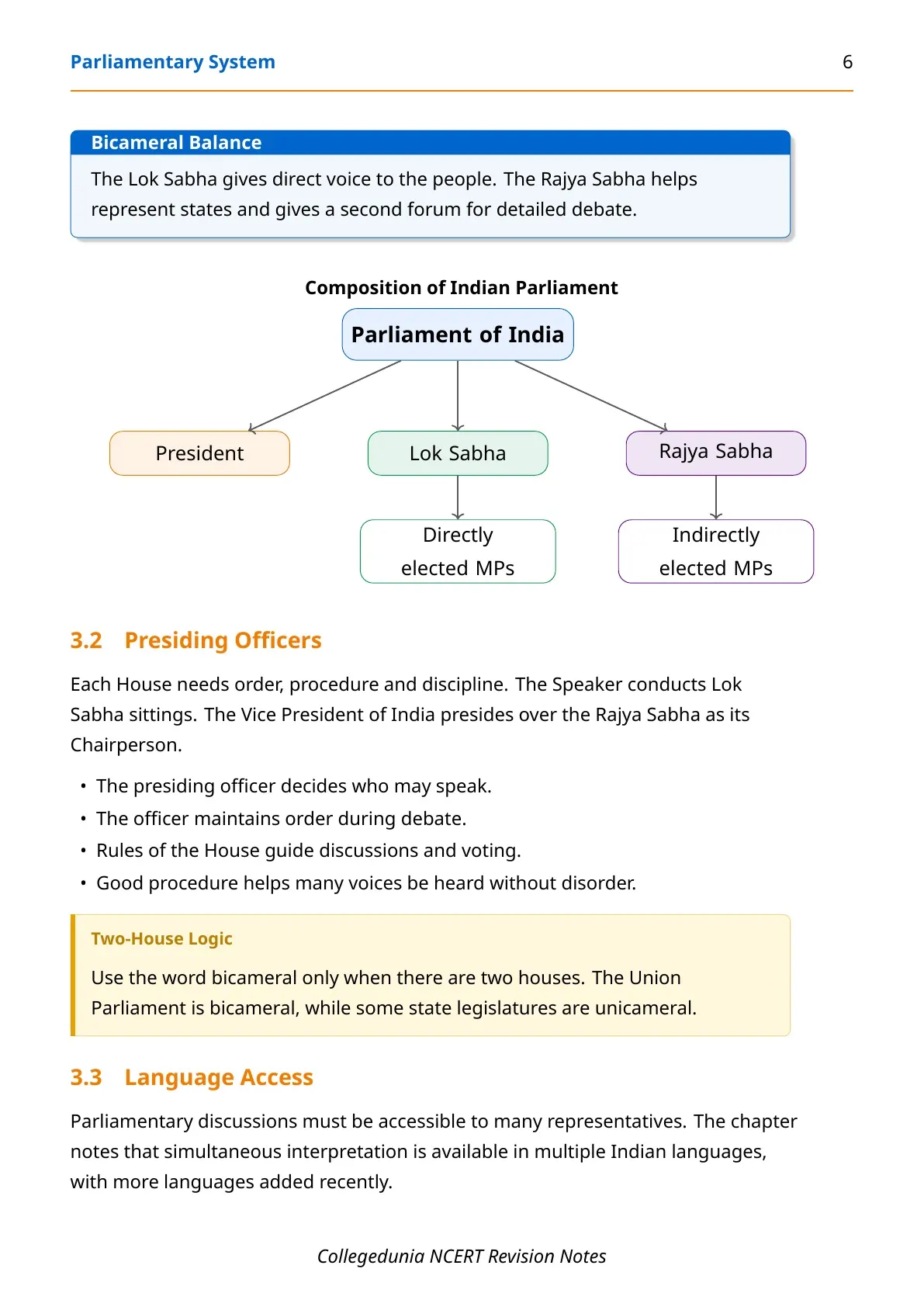
- Parliament: President, Lok Sabha and Rajya Sabha together form the Union Parliament.
- Legislature: makes laws, debates policy and checks government work.
- Executive: implements laws and remains answerable to the Lok Sabha.
- Judiciary: checks that laws and actions follow the Constitution.
Parliament, Legislature and Executive
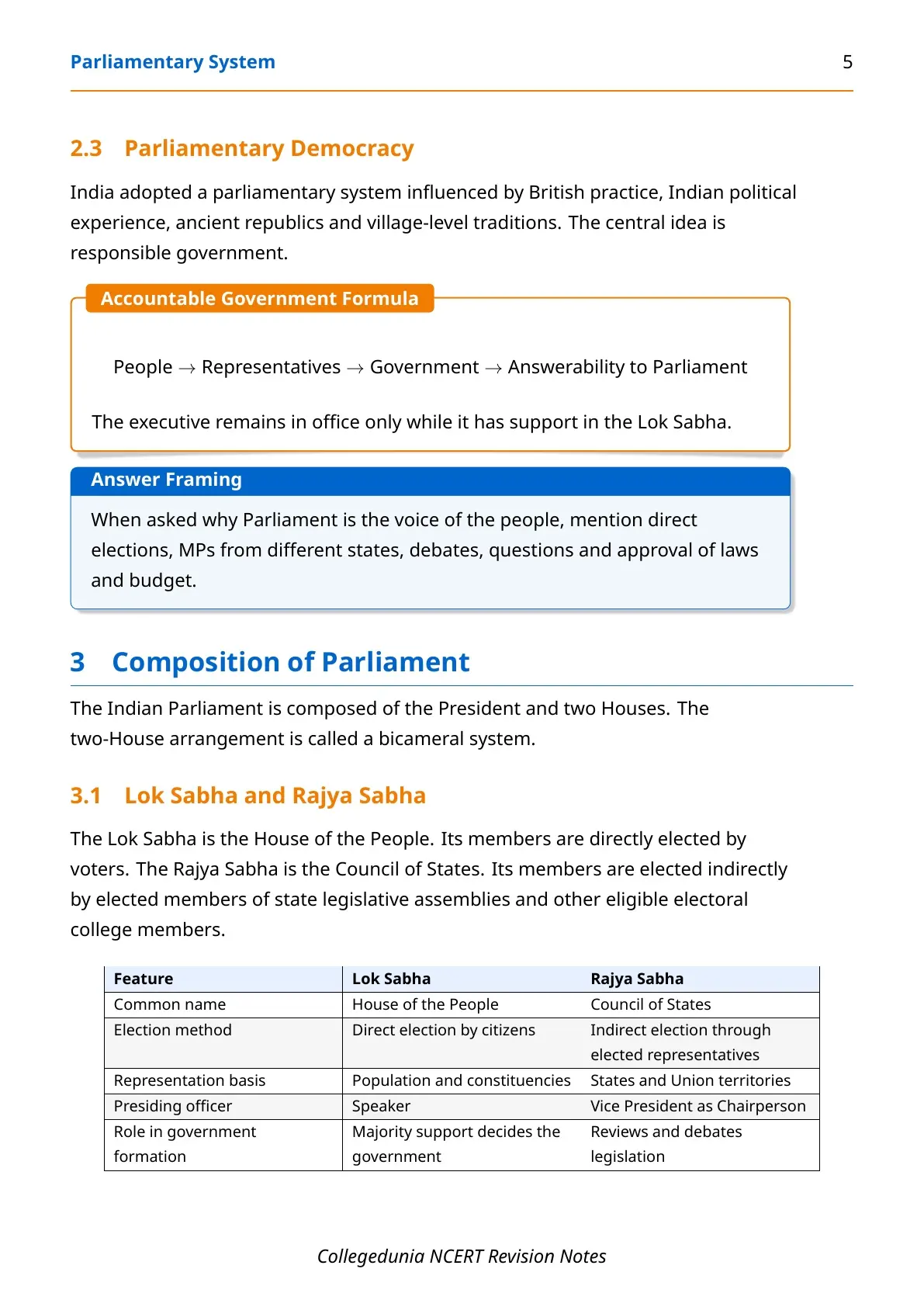
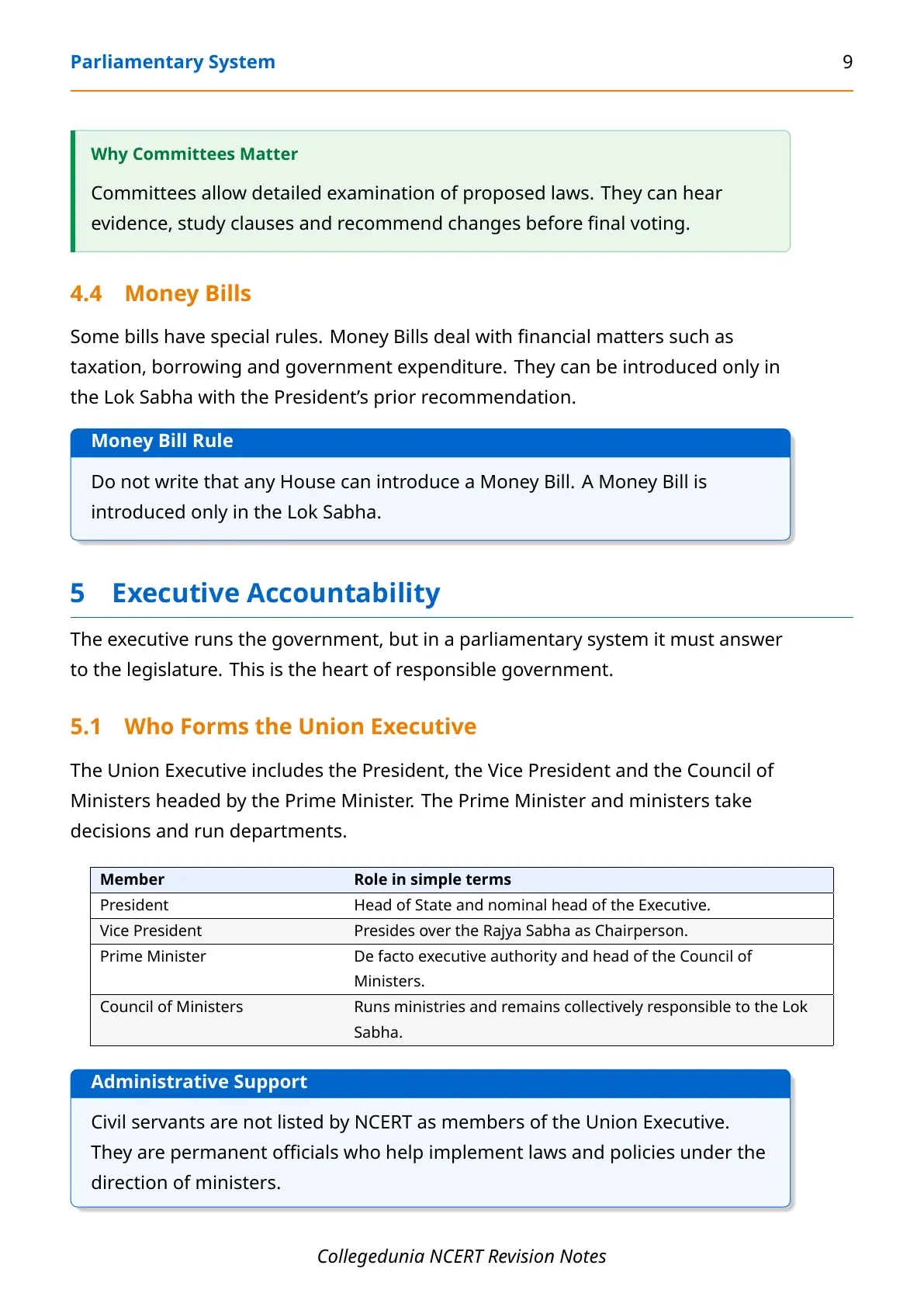
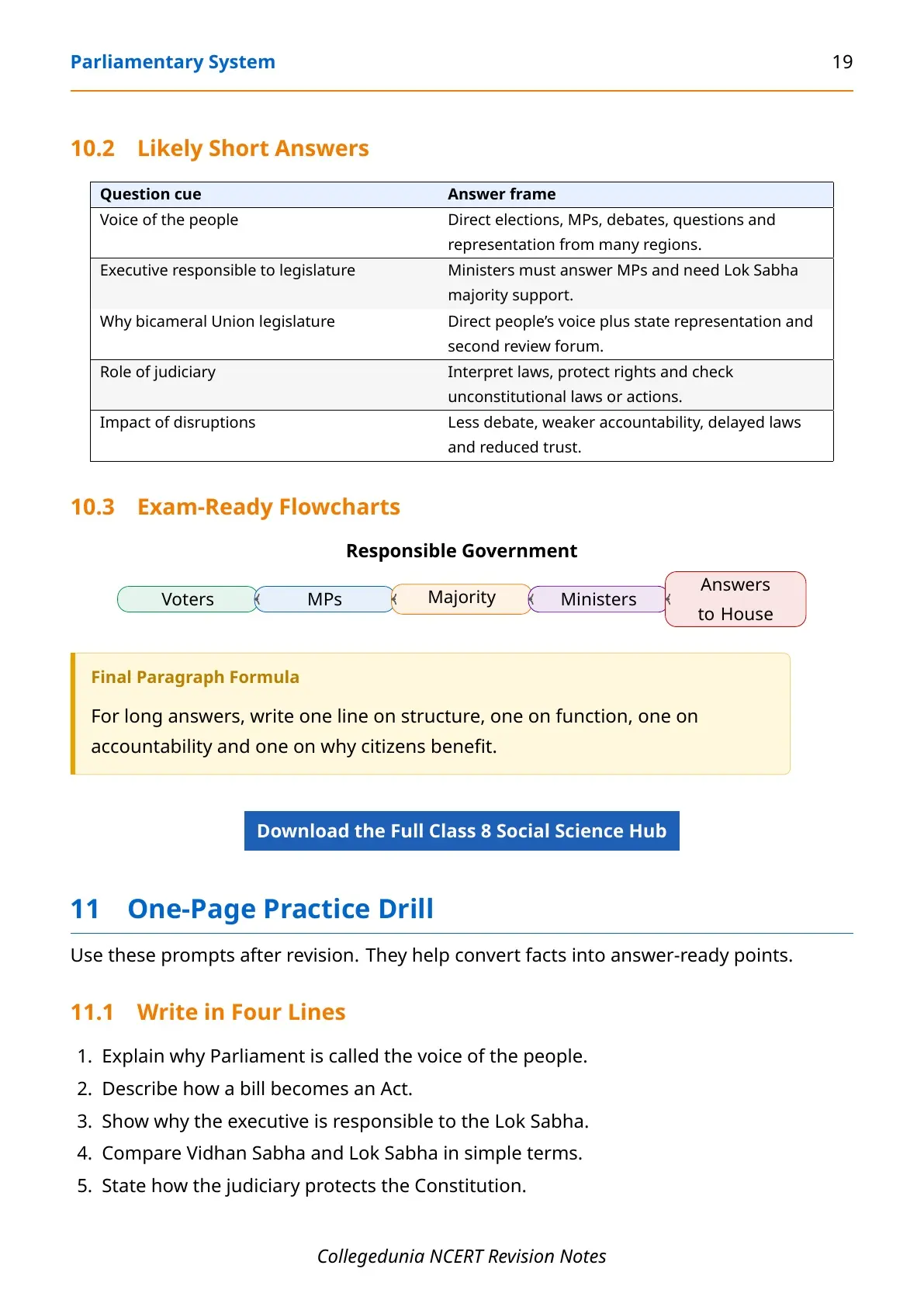
India follows a parliamentary system. Citizens elect representatives to the Lok Sabha, and a majority group forms the government. The executive gets authority through Parliament and must answer to it.
| Term | Meaning for Chapter 6 | Example |
|---|---|---|
| Lok Sabha | House directly elected by citizens | Majority support decides government formation |
| Rajya Sabha | Council of States | Reviews and debates legislation |
| Executive | President, Vice President and Council of Ministers headed by PM | Runs ministries and implements laws |
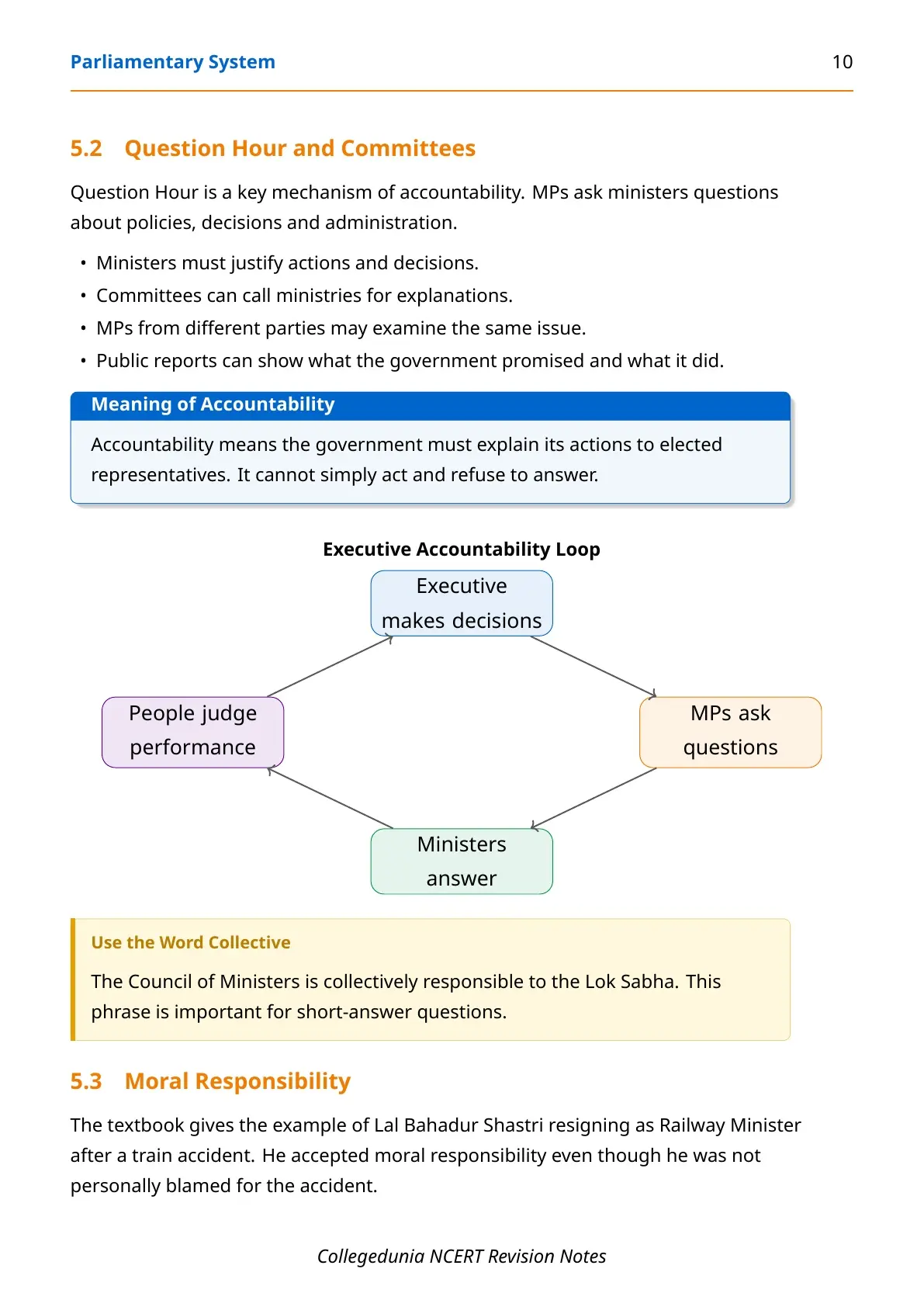
| Accountability | Duty to explain decisions | Question Hour and committees |
How a Bill Becomes a Law
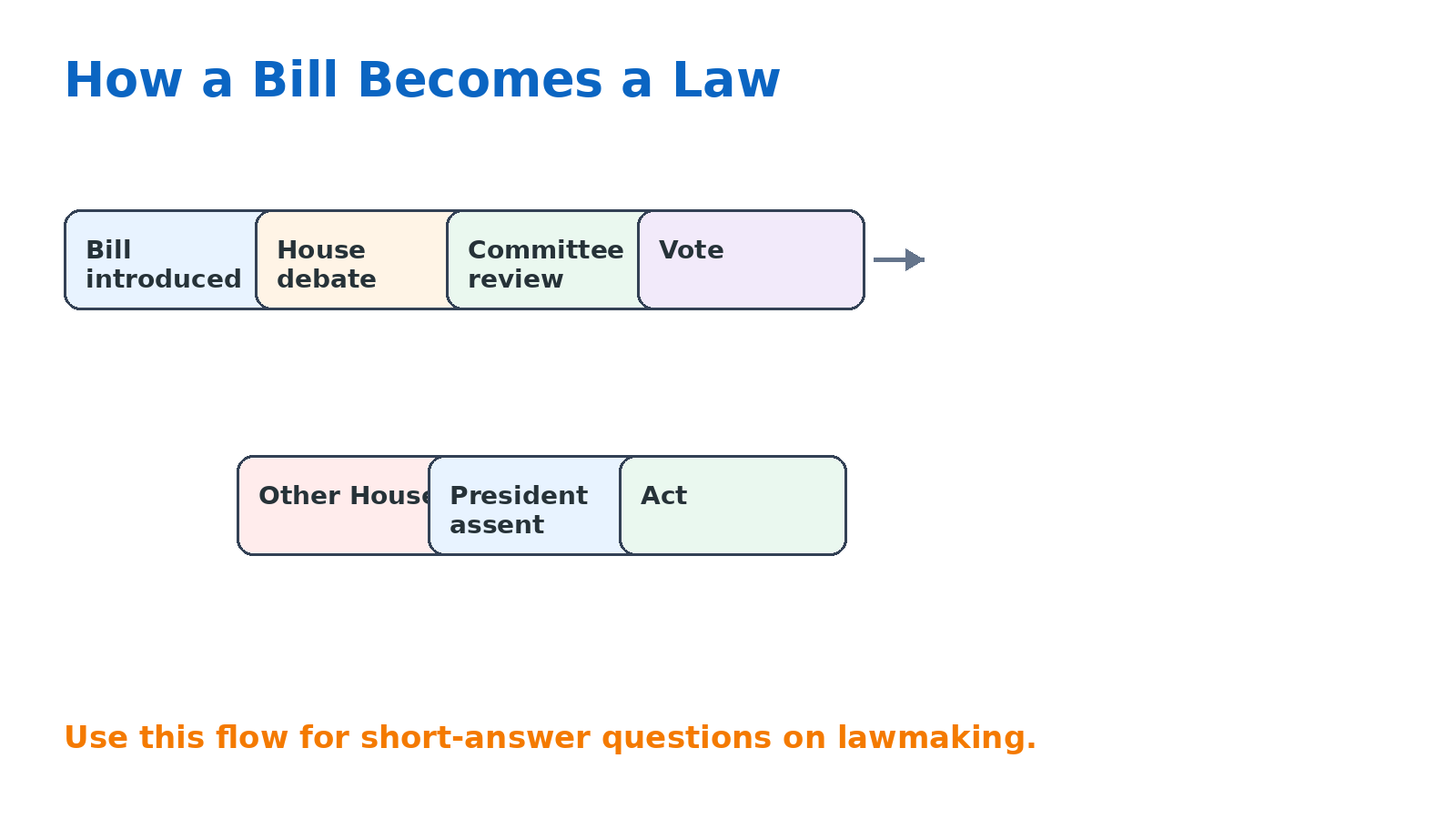
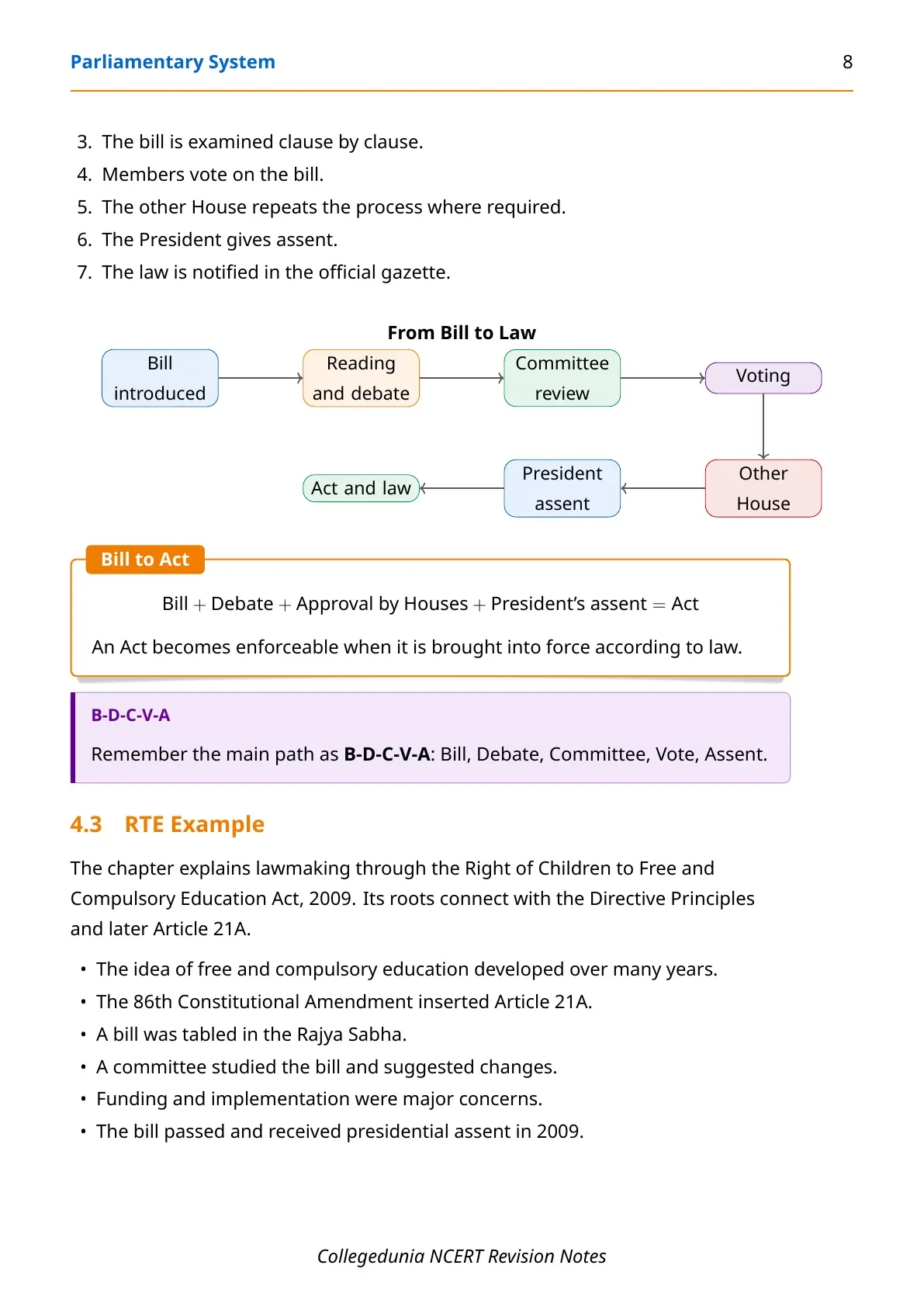
A bill is proposed law text placed before Parliament. Members debate it, committees may examine it, and both Houses vote where required. After presidential assent, it becomes an Act.
For a strong answer, write the process in order: introduction, debate, committee review, voting, other House, presidential assent and official notification.
Parliamentary System Class 8 Video Revision
Source: PW Class 8 on YouTube
Checks and Balances in Indian Democracy
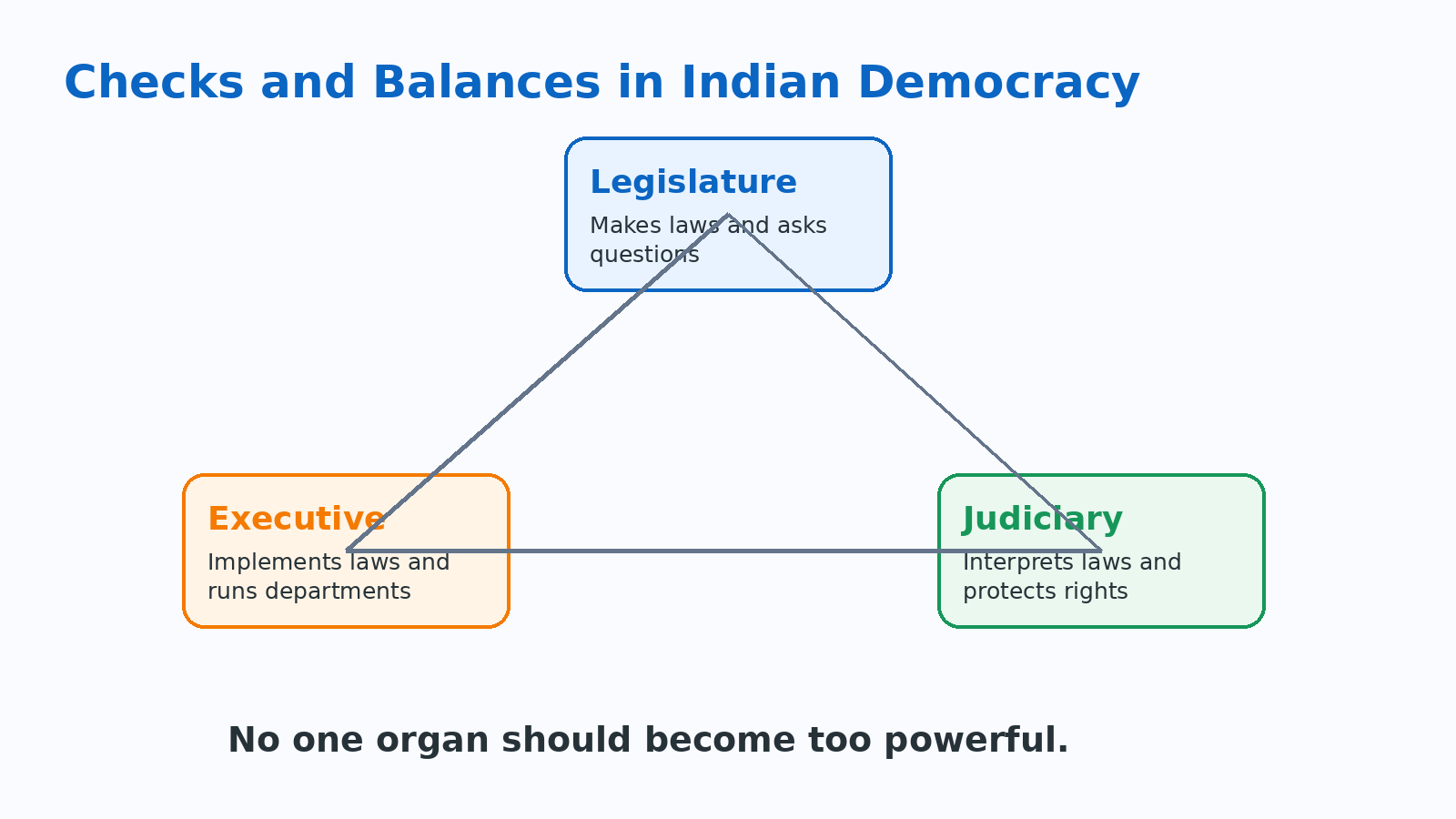
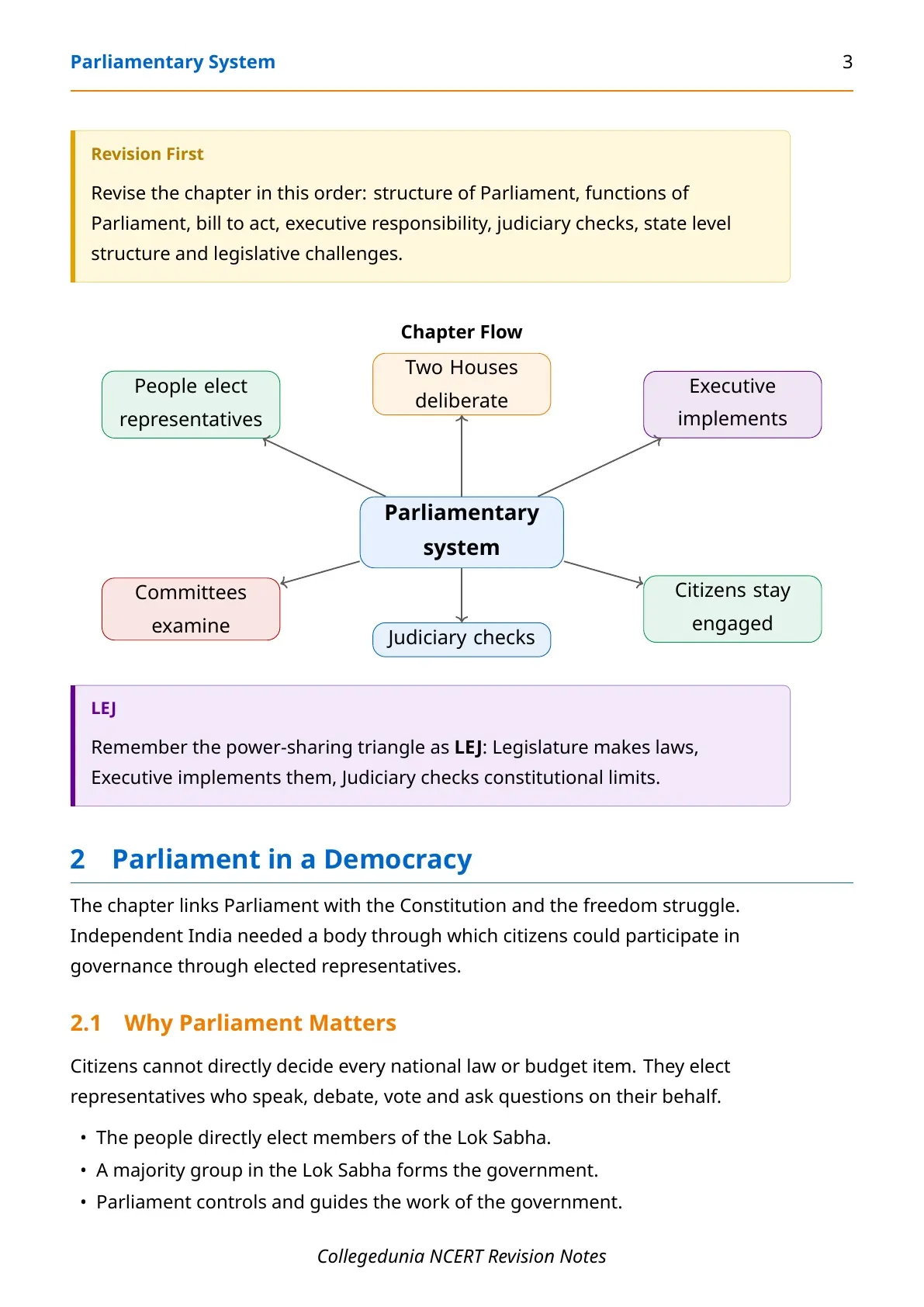
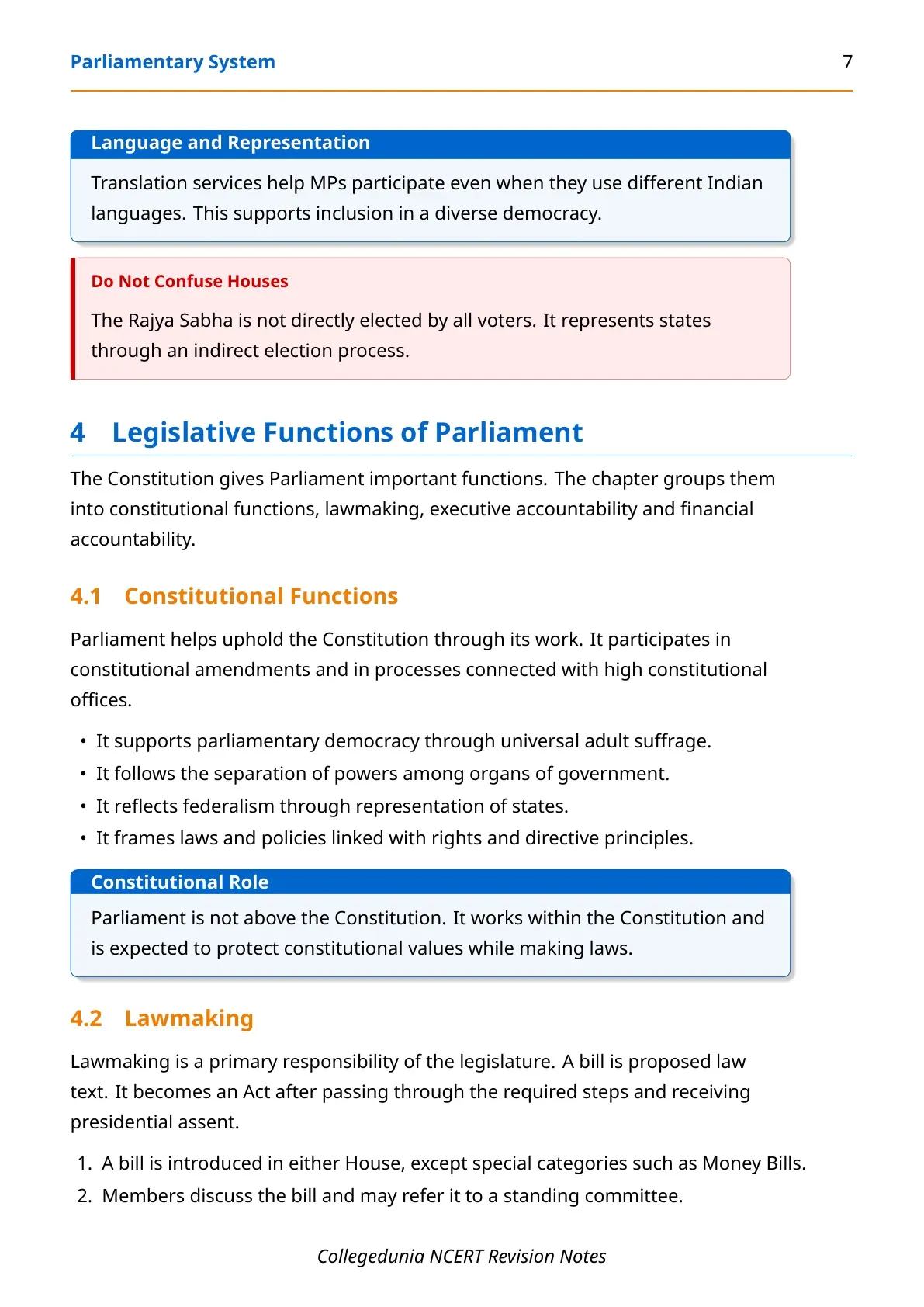
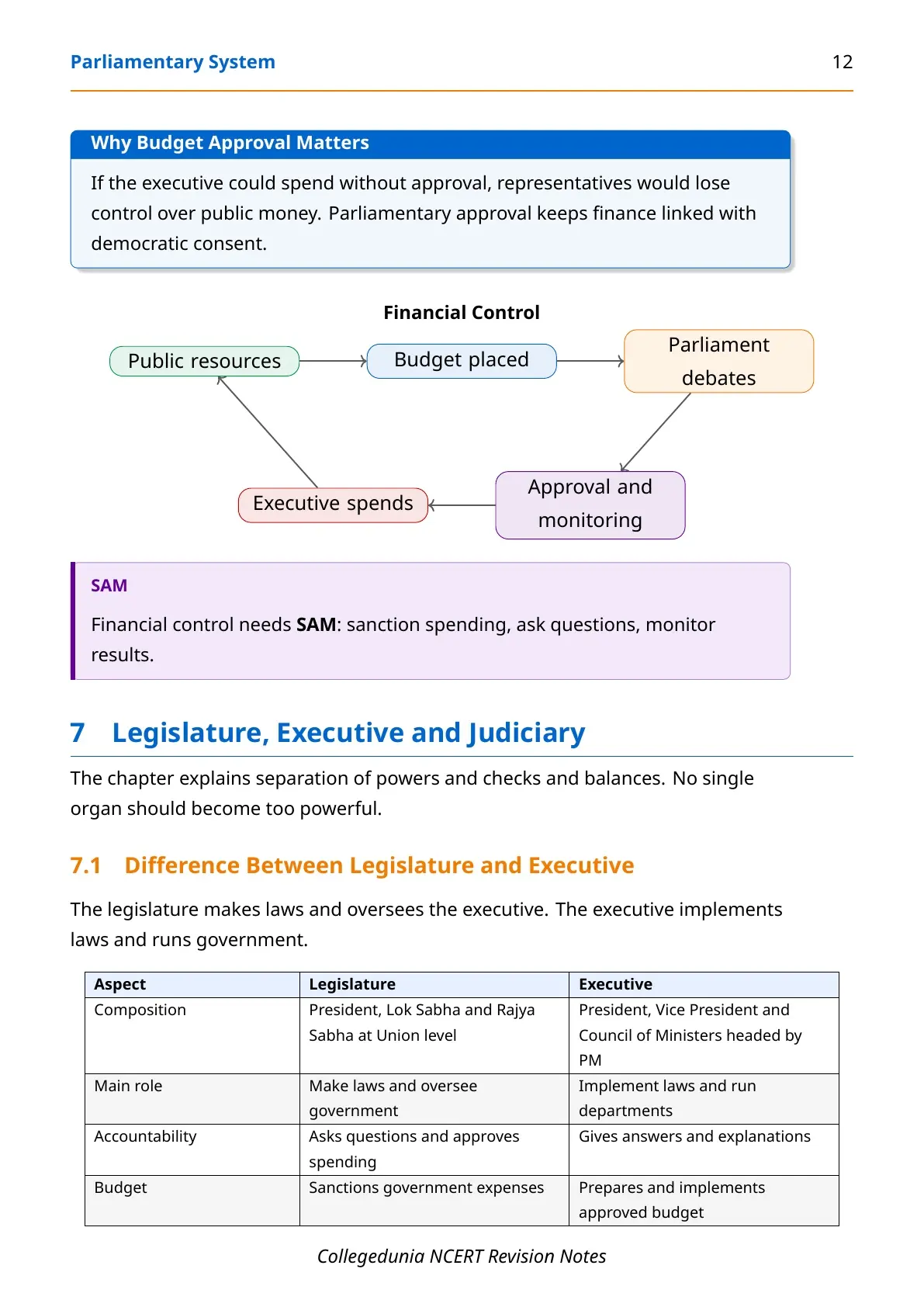
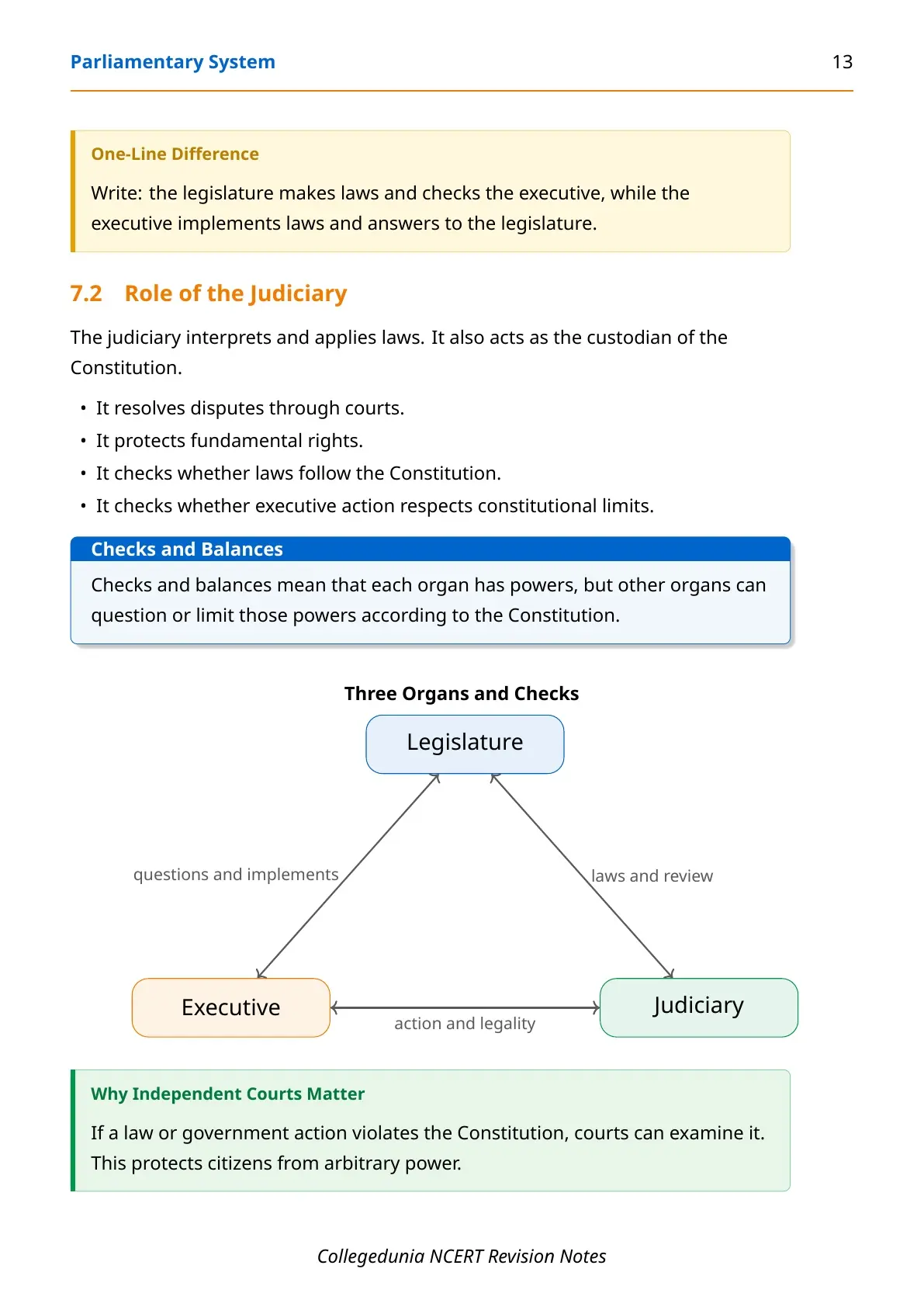
The Legislature, Executive and Judiciary have different roles. The Legislature makes laws. The Executive implements them. The Judiciary checks whether laws and government actions follow the Constitution.
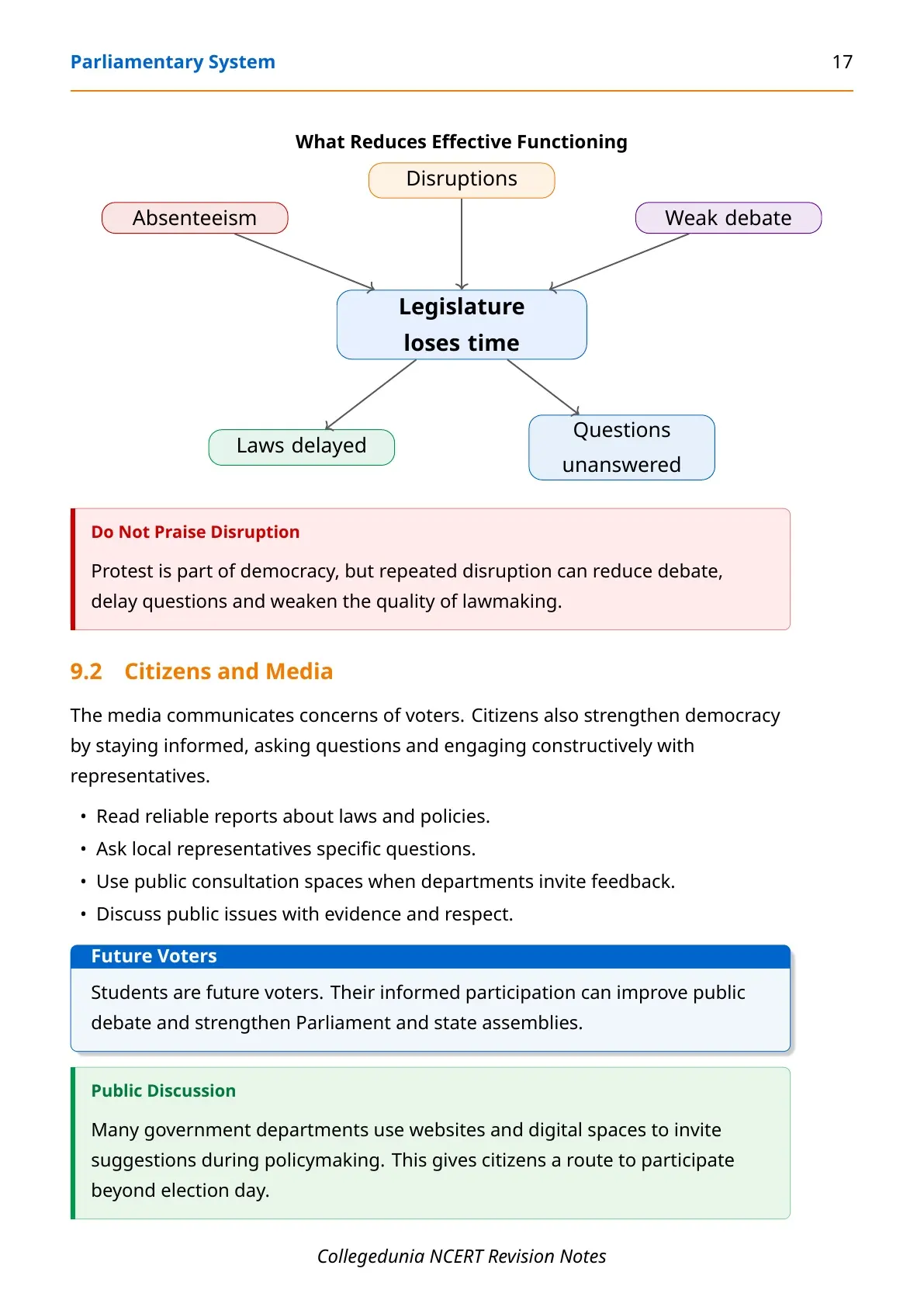
Checks and balances prevent one organ from becoming too powerful. This point is useful for long-answer questions on democratic values.
Union and State Level Structures
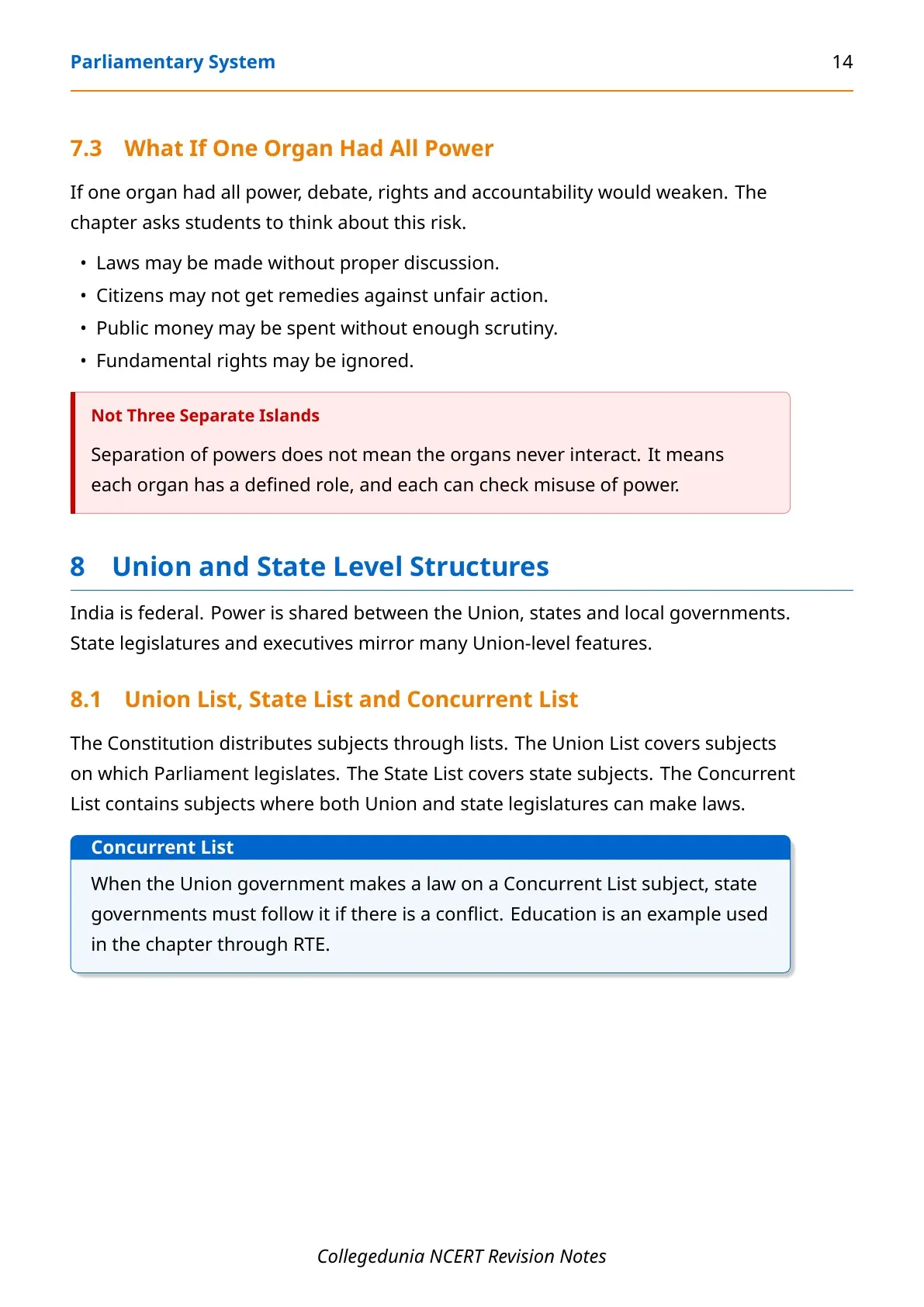
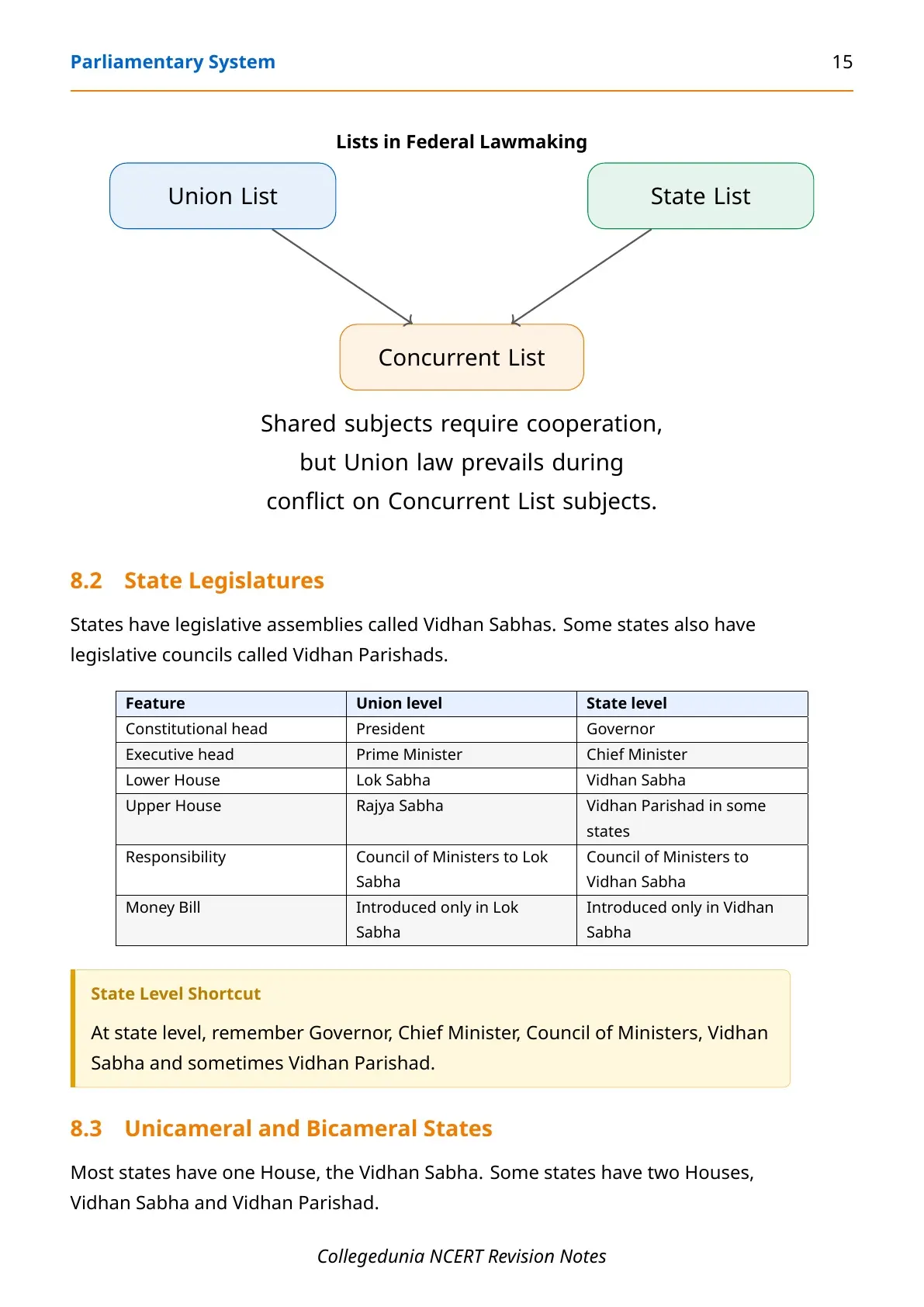
At the Union level, Parliament has the Lok Sabha and Rajya Sabha. At the state level, the Vidhan Sabha is the elected lower House. Some states also have a Vidhan Parishad.
- Union List subjects are handled by the Union government.
- State List subjects are handled by state governments.
- Concurrent List subjects can be handled by both Union and states.
- Money Bills start only in Lok Sabha at Union level and Vidhan Sabha at state level.
How to Use These Class 8 Social Science Notes
Use the notes PDF in three rounds. First, revise the meaning of Parliament, Legislature, Executive and Judiciary. Second, learn the bill-to-law flow. Third, practise one comparison answer and one checks-and-balances answer.
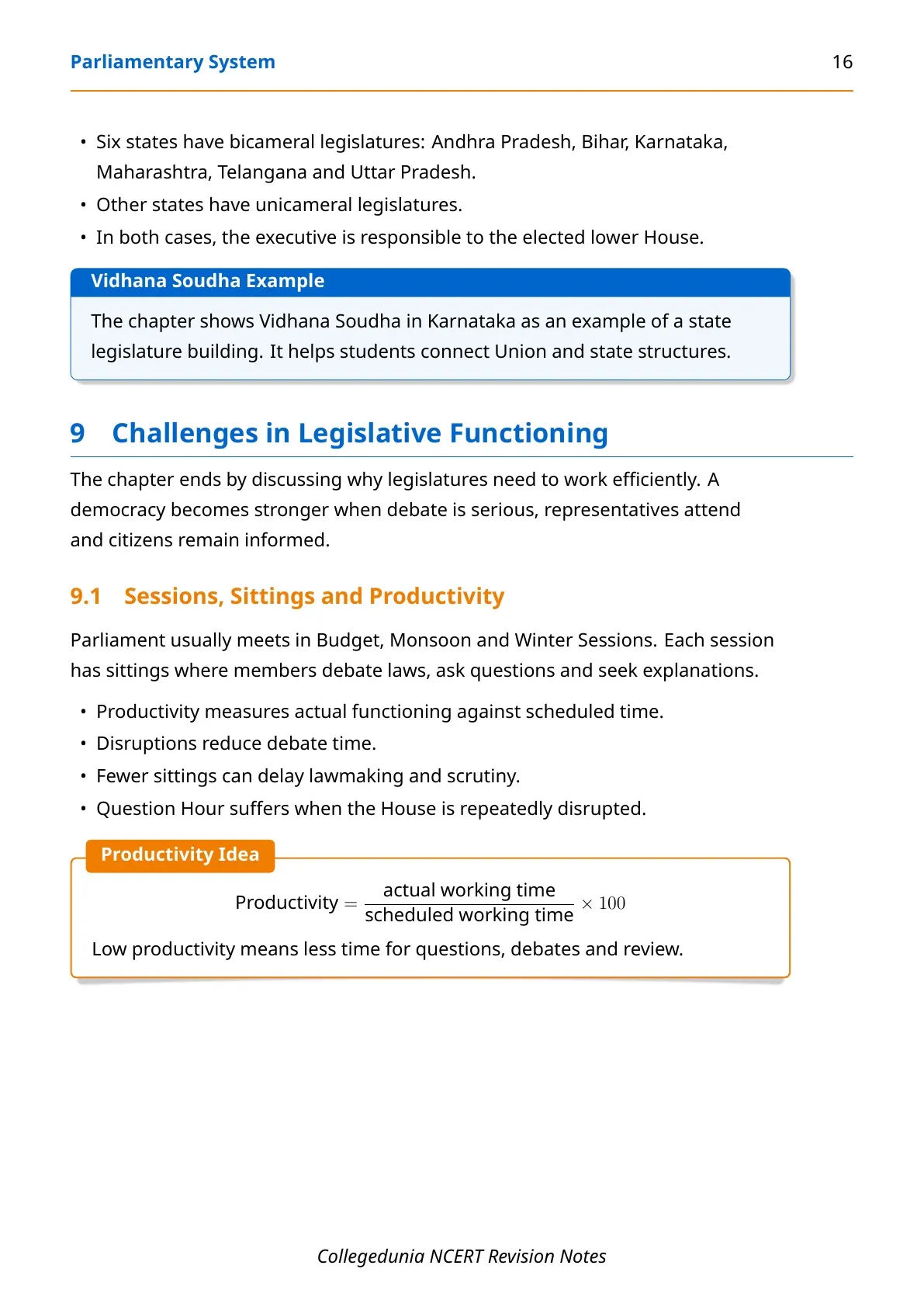
- Make flashcards for bicameral, bill, assent, accountability, Question Hour and productivity.
- Write one table comparing Legislature and Executive.
- Practise the answer: why is the executive responsible to the legislature?
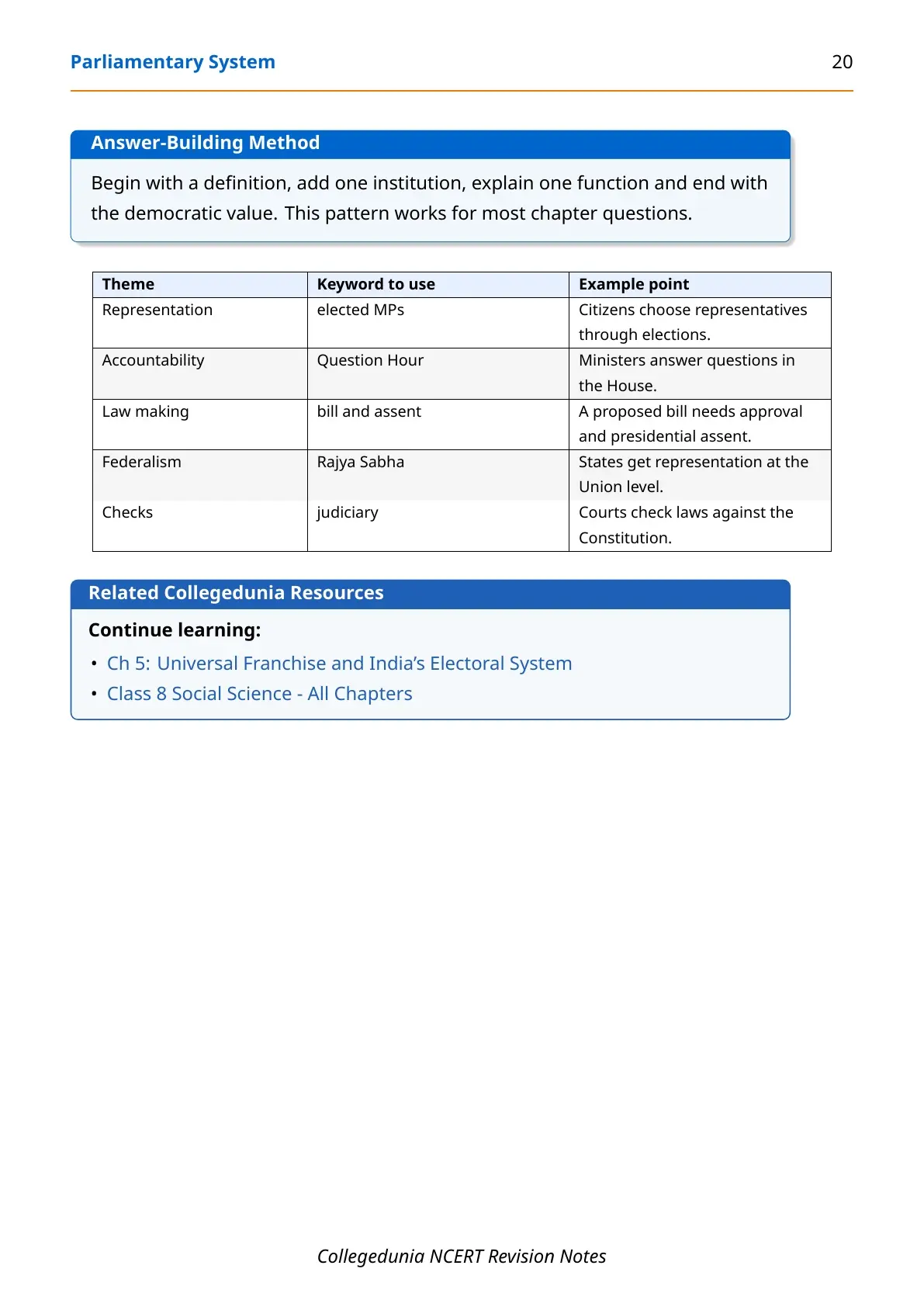
A strong Chapter 6 answer names the institution and its function together.
More Class 8 Social Science Chapter 6 Resources
Use these related resources when you want Chapter 6 in another format. The table stays above the FAQ so students can move from notes to the official book PDF quickly.
| Resource | Best use | Link |
|---|---|---|
| NCERT Notes | Revise Chapter 6 in compact form | Open notes |
| NCERT Book PDF | Read the official 2026-27 source chapter | Open book PDF |
| Previous Chapter Notes | Revise elections before Parliament | Open Chapter 5 notes |
Class 8 Social Science Notes for Other Chapters
The table below keeps Class 8 Social Science notes together so students can revise the same resource type chapter by chapter.
| Chapter | NCERT chapter title | Notes |
|---|---|---|
| Chapter 3 | The Rise of the Marathas | Open notes |
| Chapter 4 | The Colonial Era in India | Open notes |
| Chapter 5 | Universal Franchise and India's Electoral System | Open notes |
| Chapter 6 | The Parliamentary System: Legislature and Executive | Current notes |
The Parliamentary System Class 8 Social Science Notes FAQs
Ques. What is covered in NCERT Class 8 Social Science Chapter 6 Notes?
Ans. The notes cover Parliament, Lok Sabha, Rajya Sabha, lawmaking, executive accountability, state legislatures and checks and balances.
Ques. What is the difference between Legislature and Executive?
Ans. The Legislature makes laws and checks government work. The Executive implements laws and runs government departments.
Ques. What is Question Hour?
Ans. Question Hour is a part of a parliamentary sitting where MPs ask ministers questions about policies and actions.
Ques. Why are checks and balances important?
Ans. Checks and balances stop one organ of government from becoming too powerful and help protect citizens' rights.



Comments