




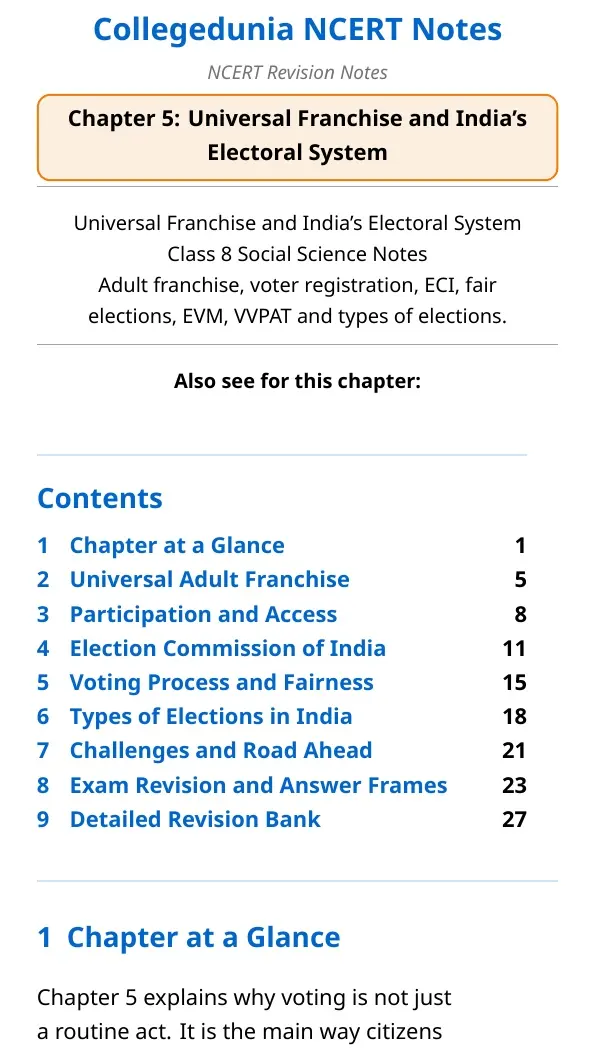
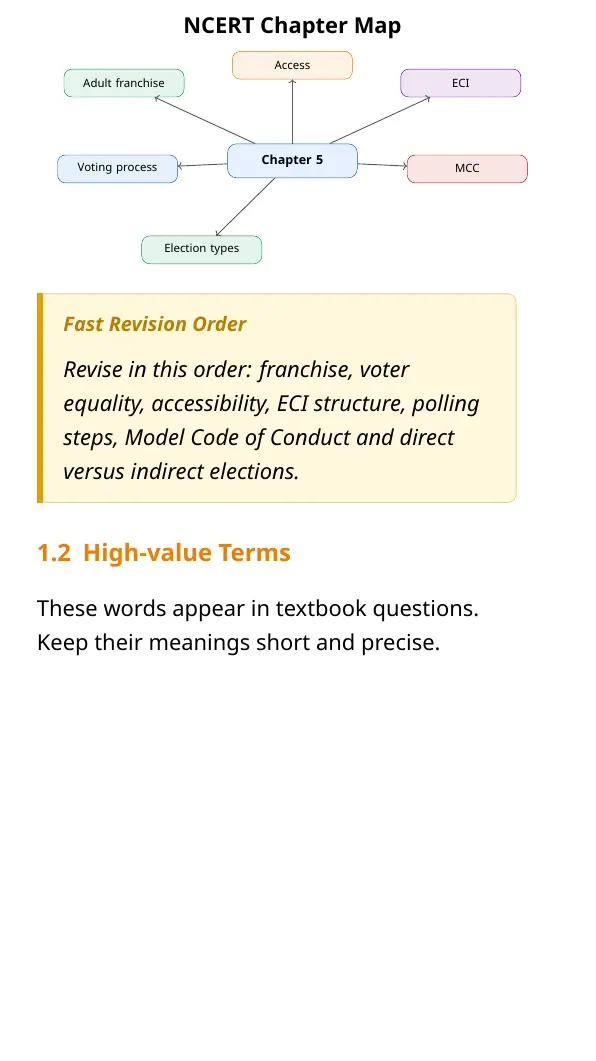
The NCERT Class 8 Social Science Chapter 5 Notes explain Universal Franchise and India's Electoral System for the 2026-27 syllabus. The notes cover adult franchise, voter equality, the Election Commission, polling steps, EVM, VVPAT, Model Code of Conduct and direct versus indirect elections.
- Resource focus: Class 8 Social Science Chapter 5 revision with election terms, tables and examples.
- Best use: revise the PDF first, then practise answers on ECI, MCC and election types.
- Exam link: follows the NCERT 2026-27 chapter Universal Franchise and India's Electoral System.
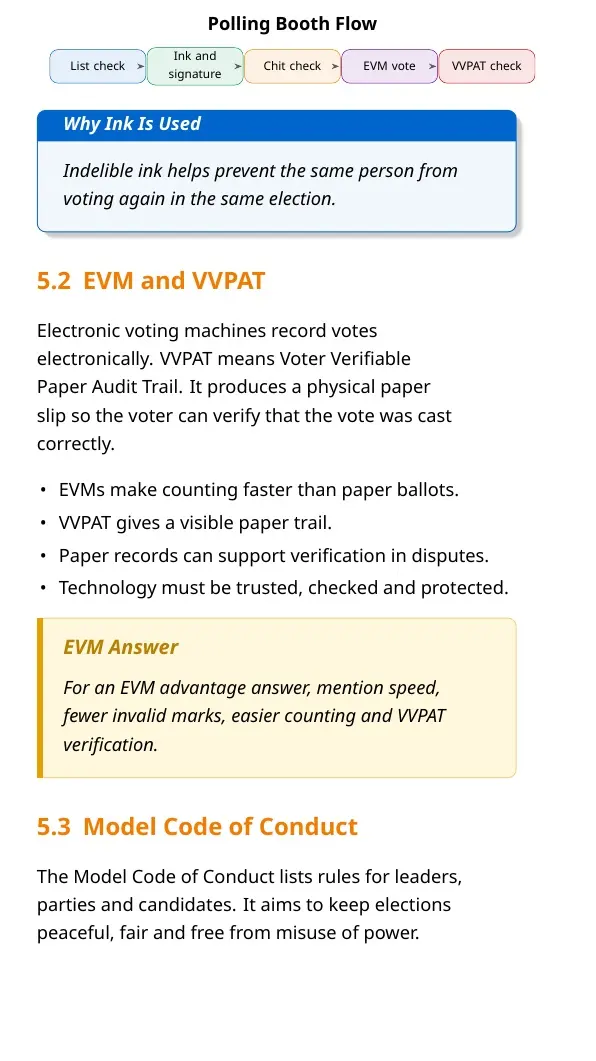
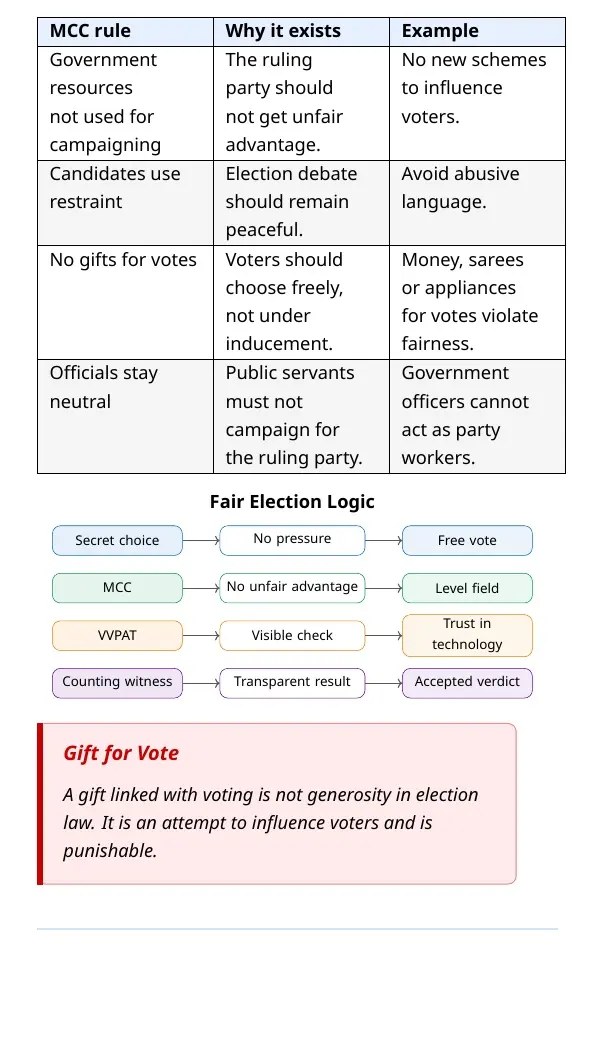
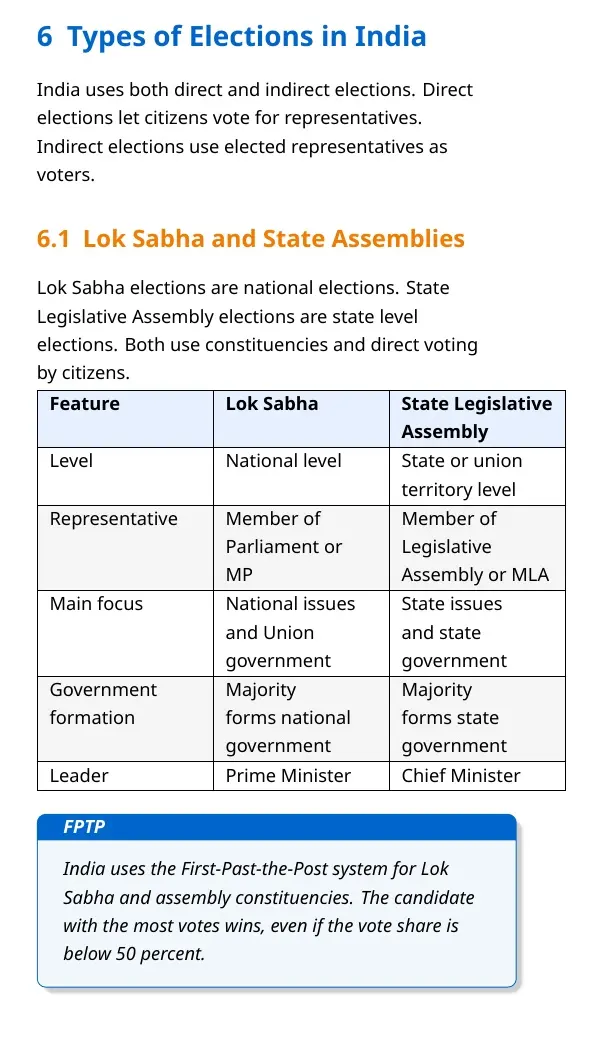
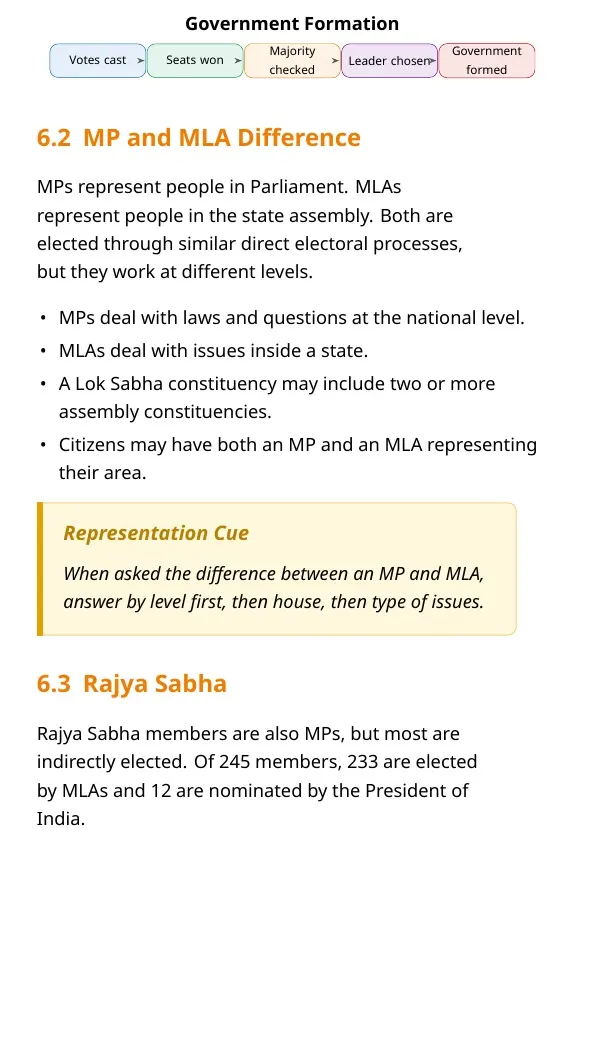
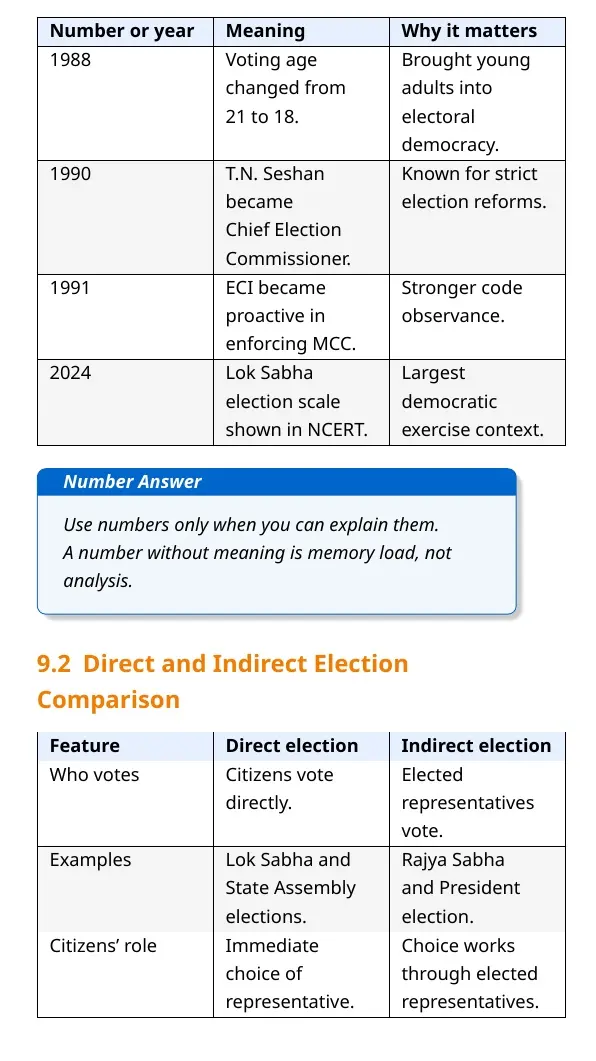
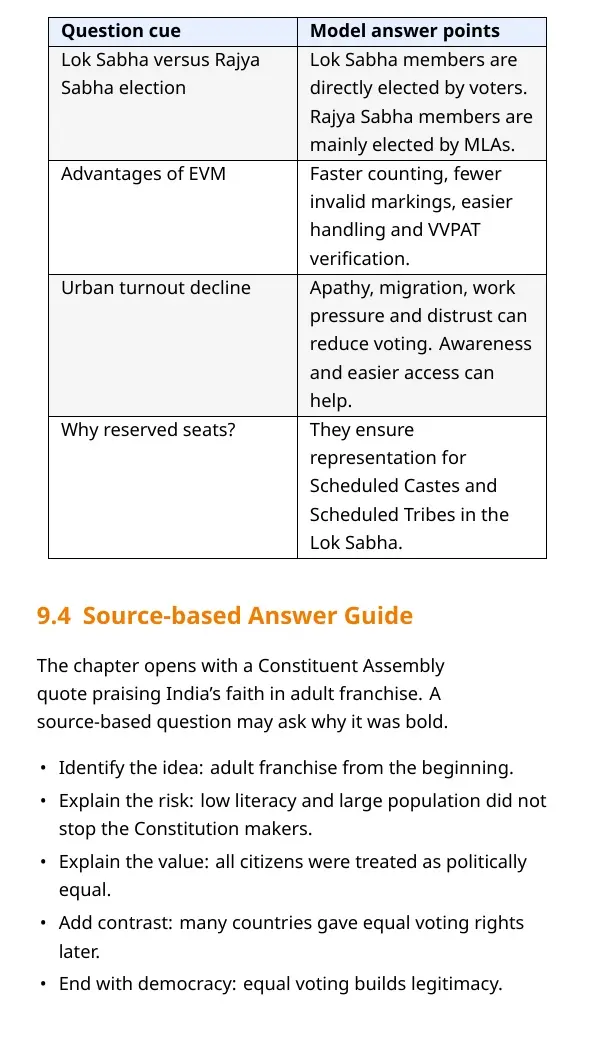
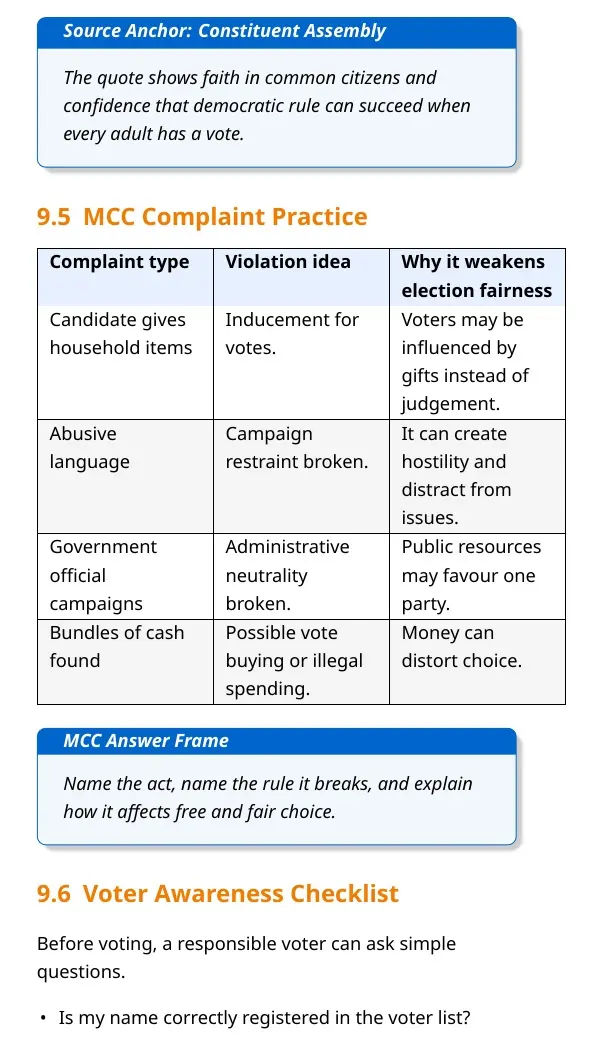
Student Feedback: In a Collegedunia revision check with 8,100 Class 8 students, 76% said a flow chart helped them remember how a voter moves from registration to election result.
Class 8 Social Science Chapter 5 Notes Overview
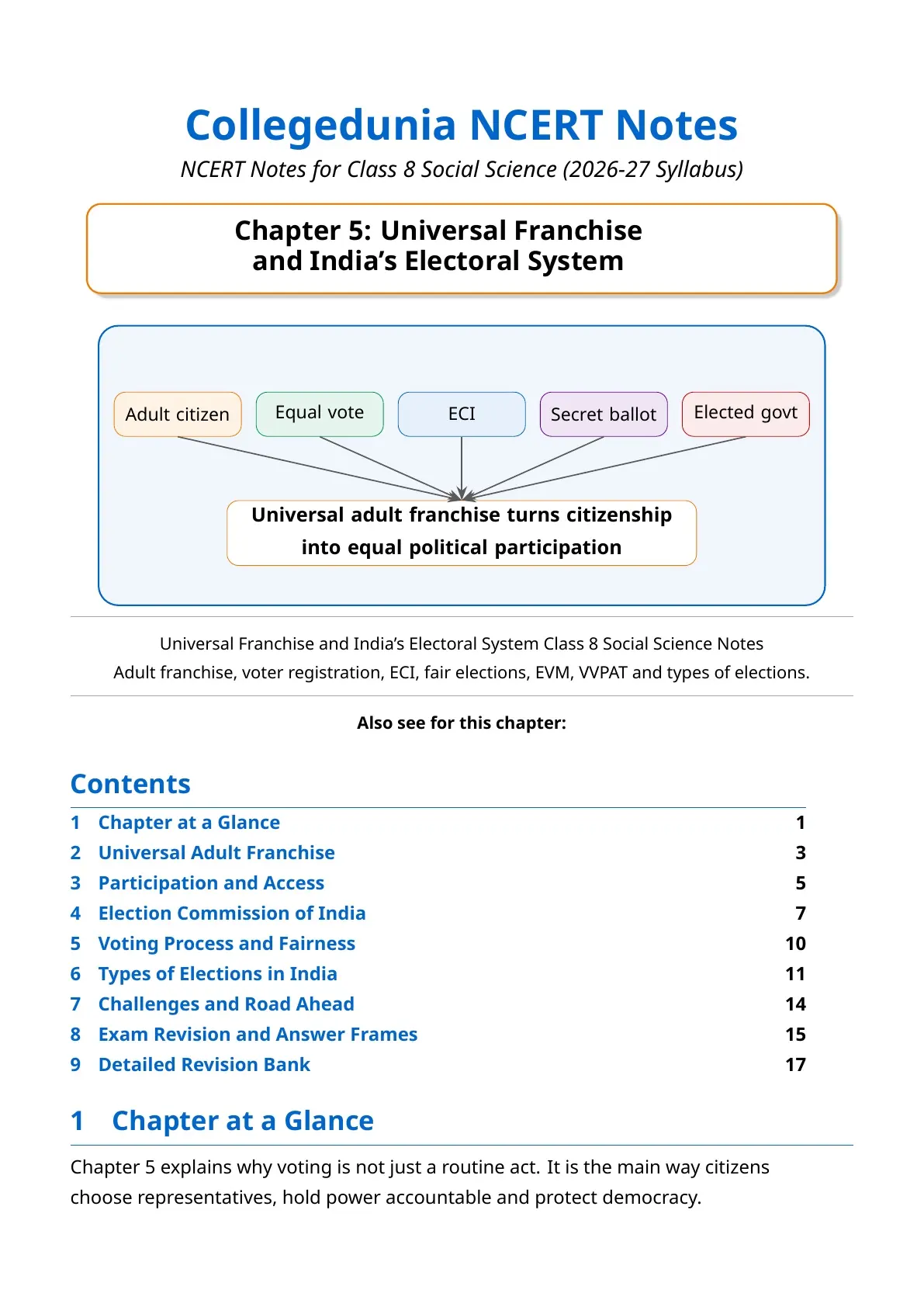
Universal Franchise and India's Electoral System explains why every adult citizen gets one equal vote. It also shows how India conducts elections at a very large scale without losing fairness, secrecy and public trust.
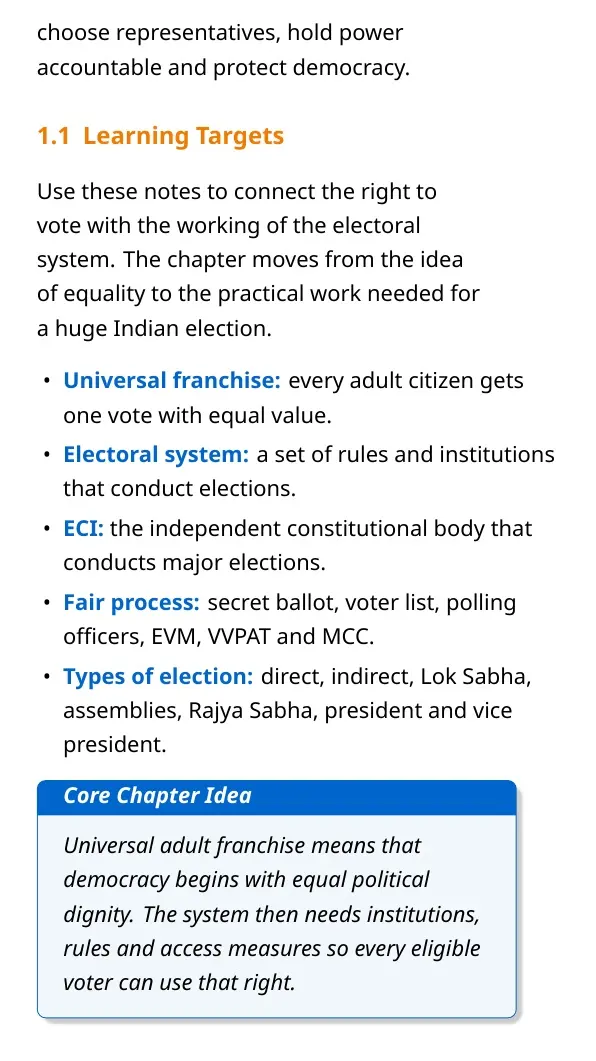
- Universal adult franchise means all eligible adult citizens get the vote.
- The Election Commission of India conducts major national and state elections.
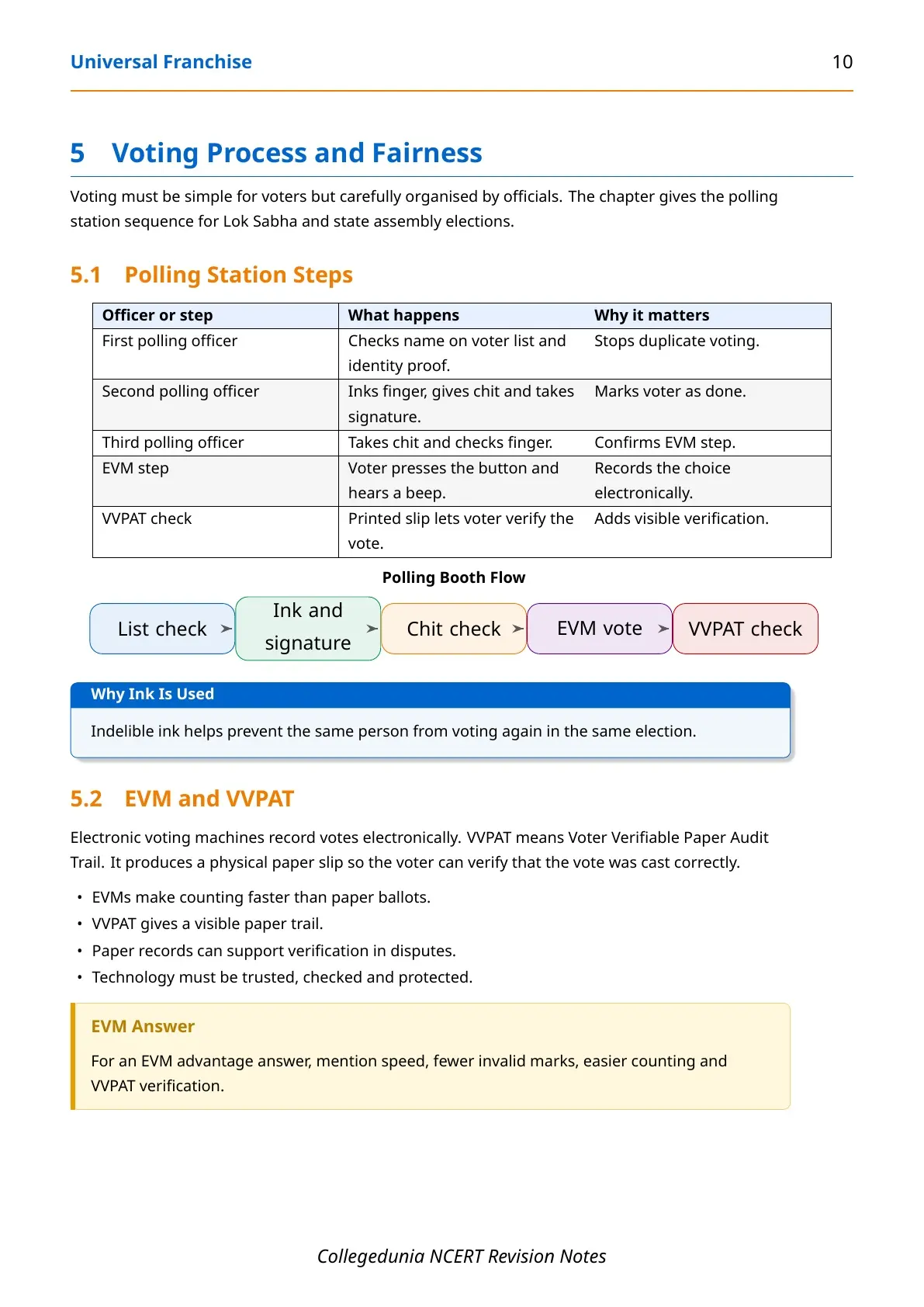
- Polling officers, EVM, VVPAT and indelible ink help keep voting fair.
- Direct and indirect elections are used for different democratic offices.
Universal Franchise to Fair Result
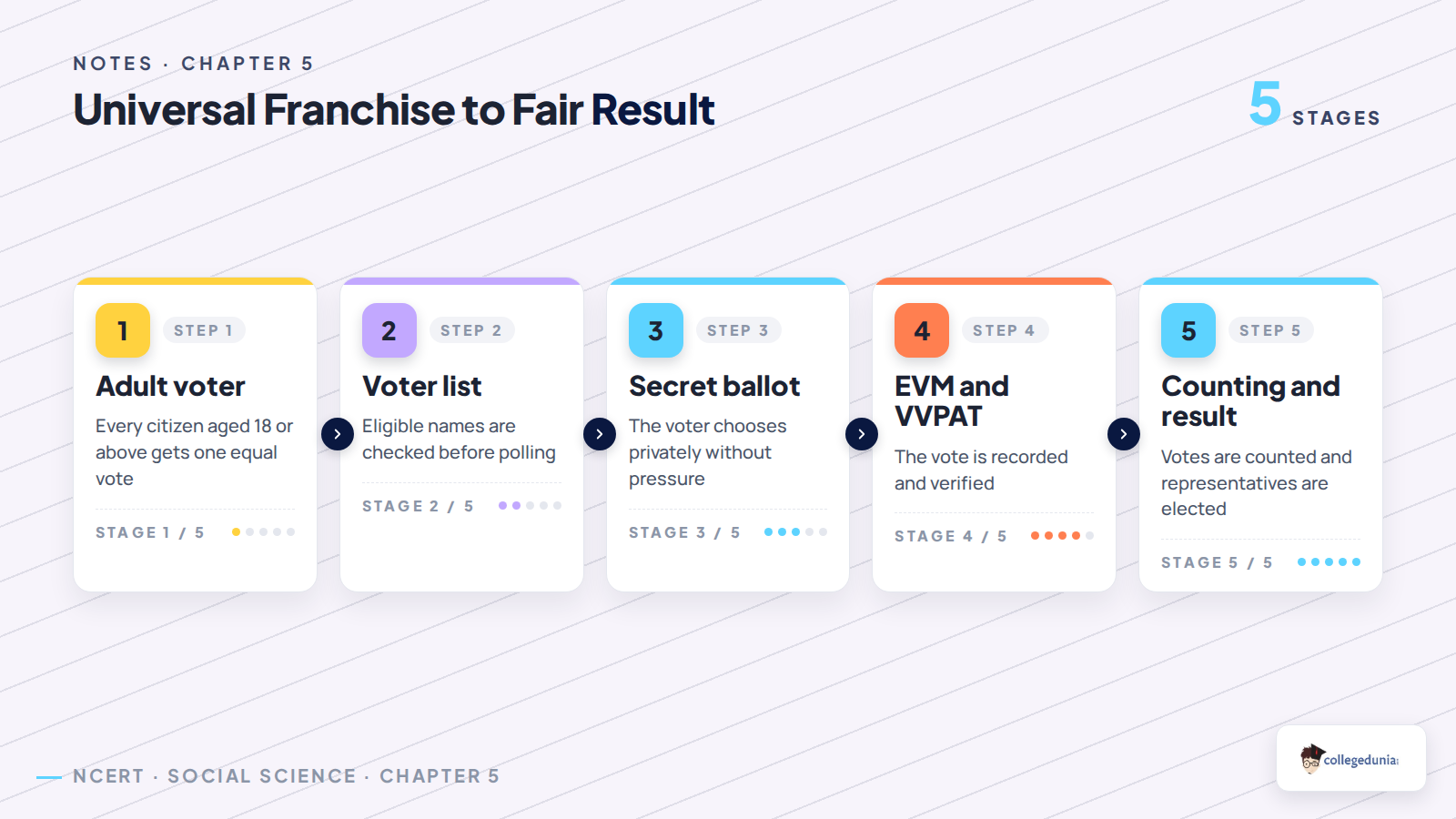
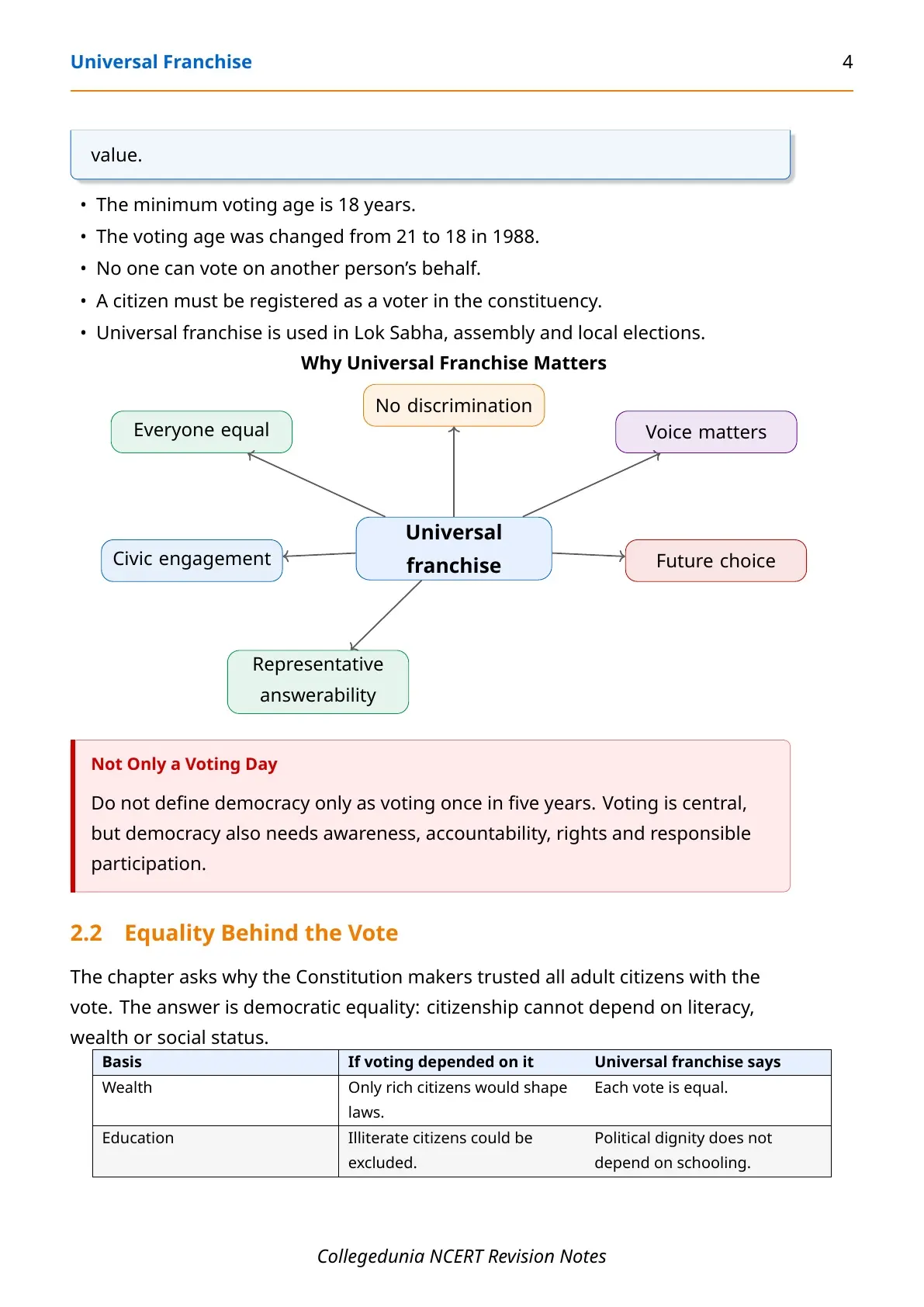
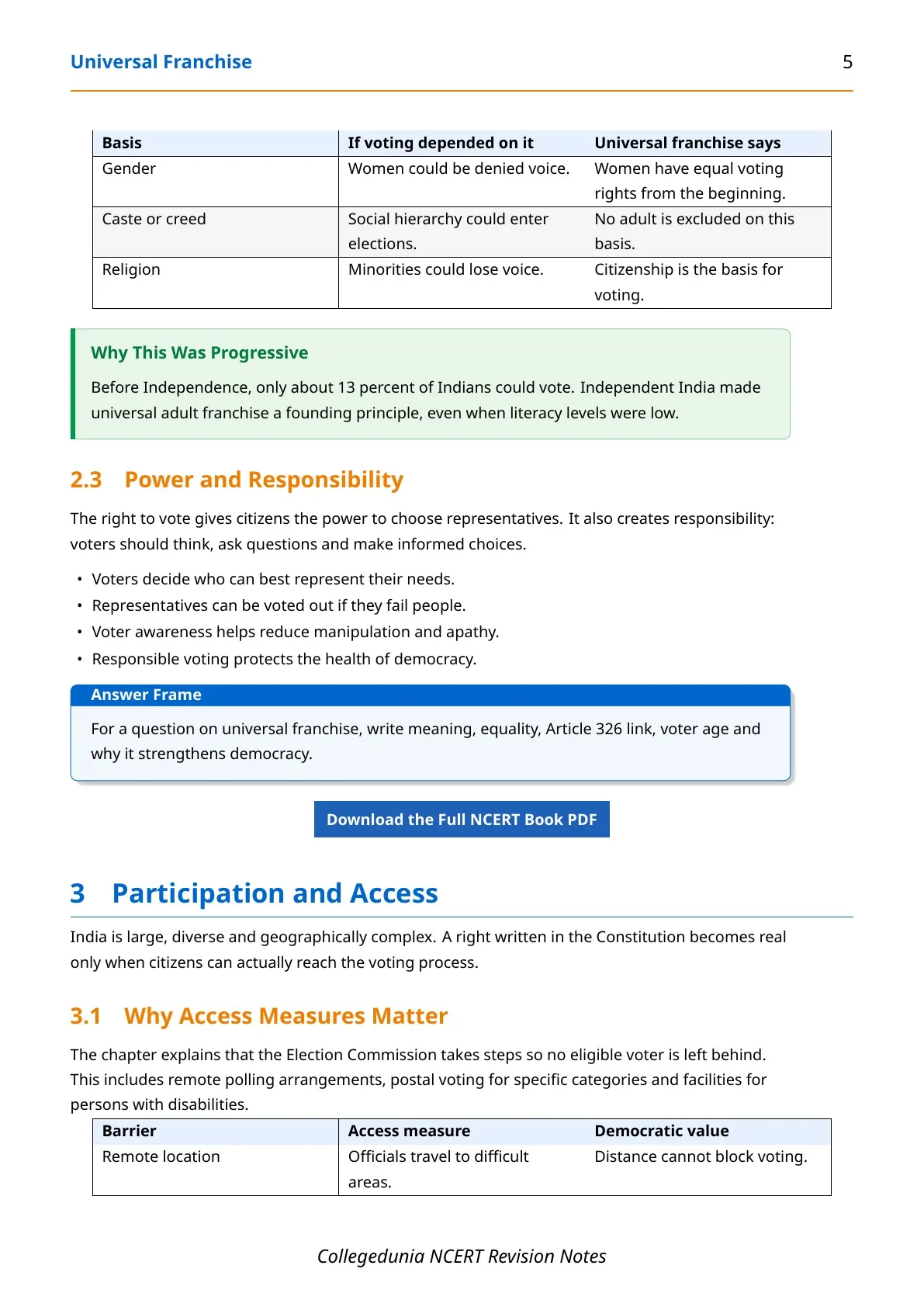
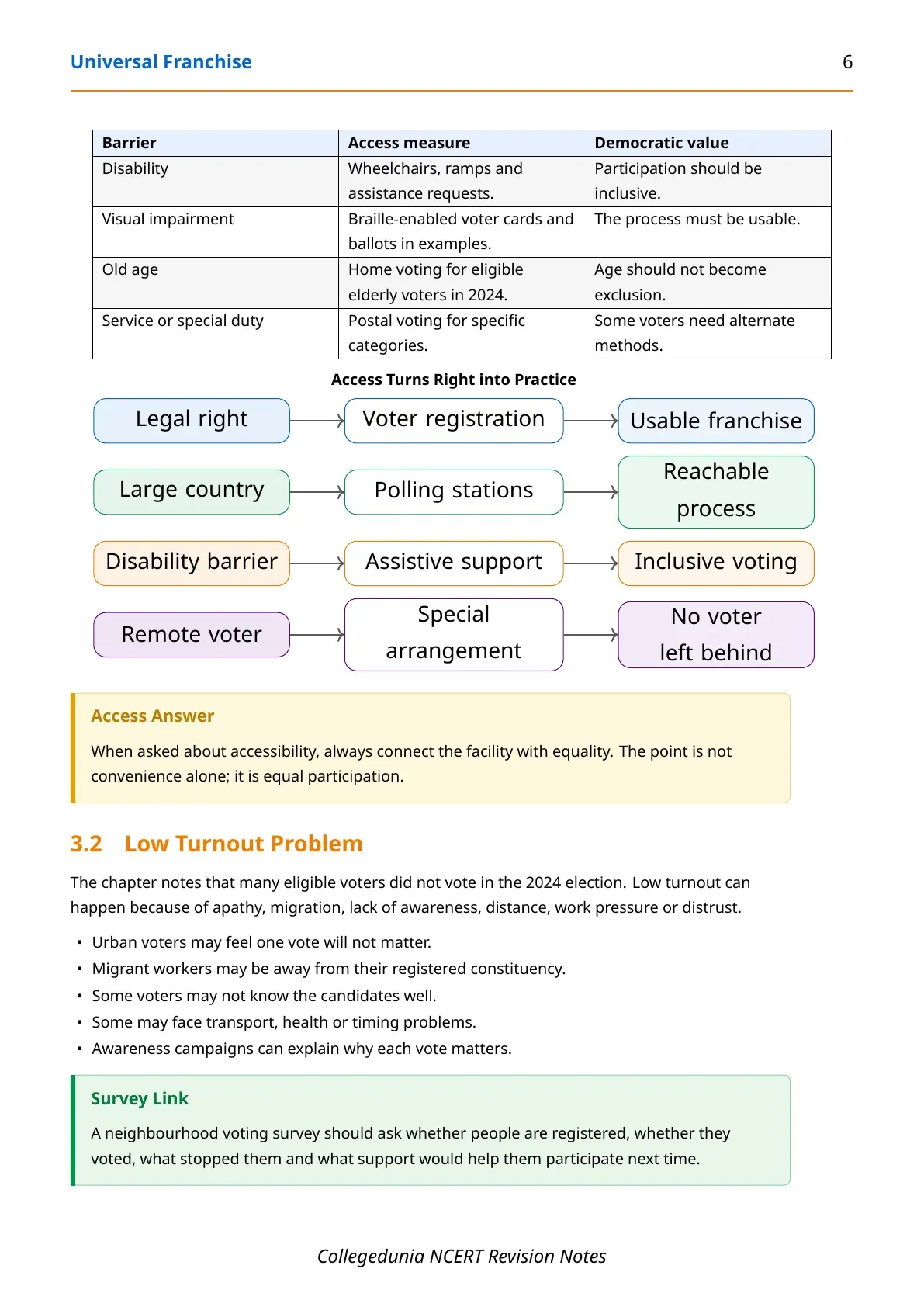
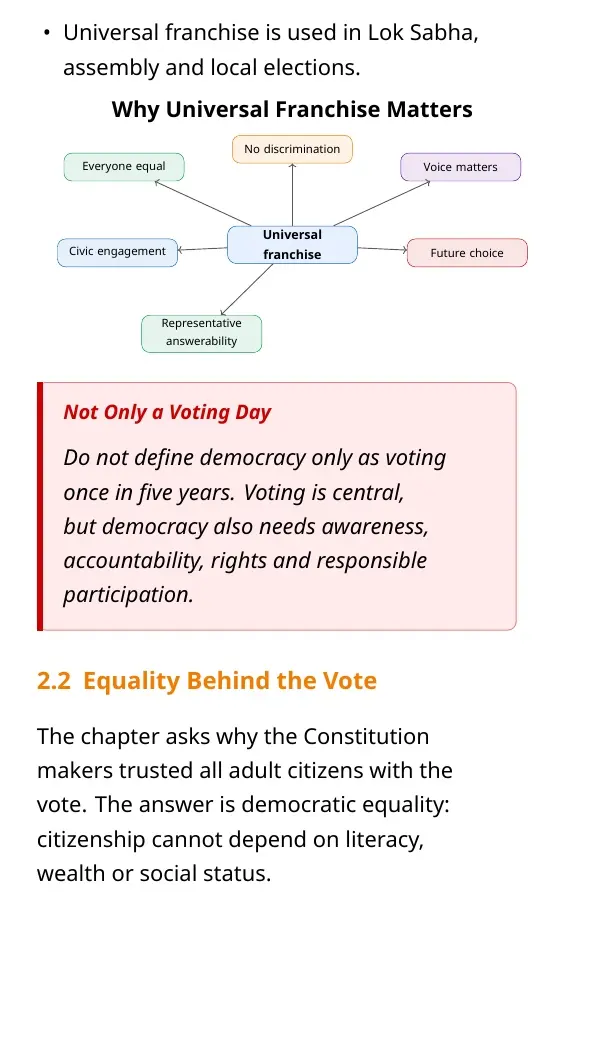
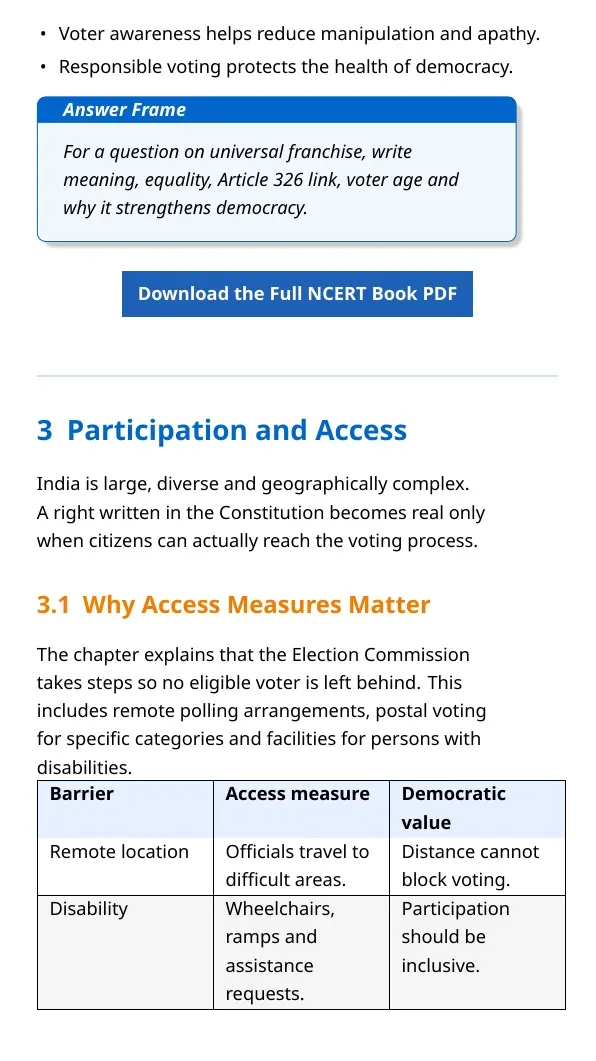
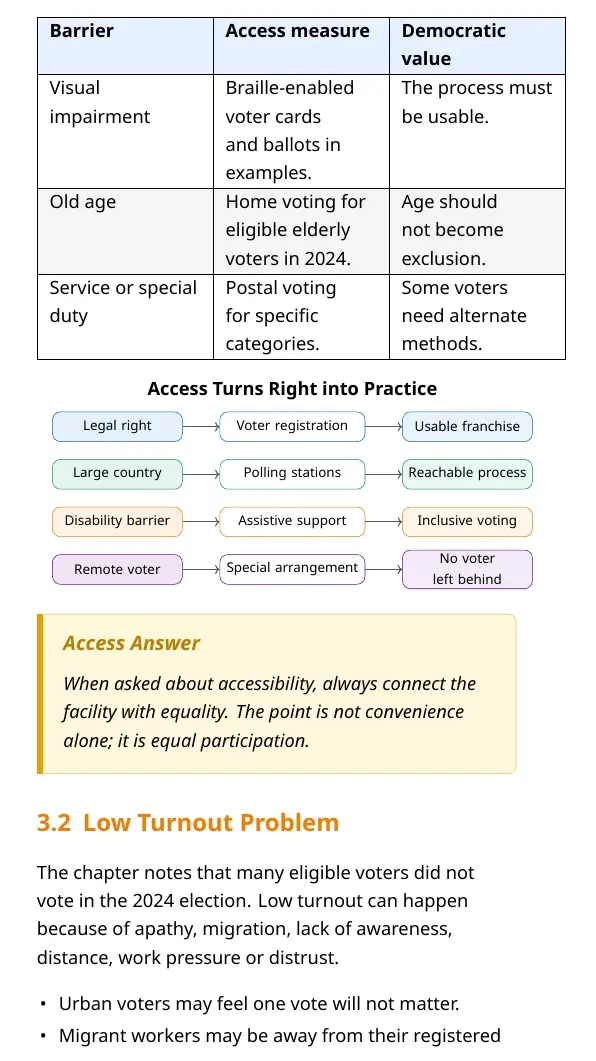
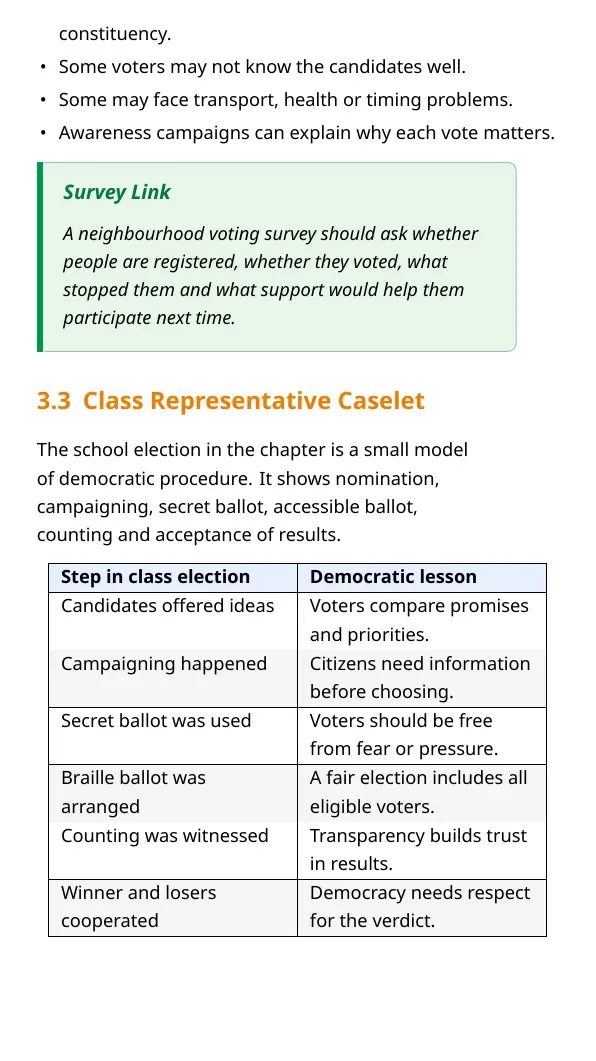
The chapter begins with the idea of one person, one vote. The right becomes real only when voters can register, reach a polling station, cast a private vote and trust the counting process.
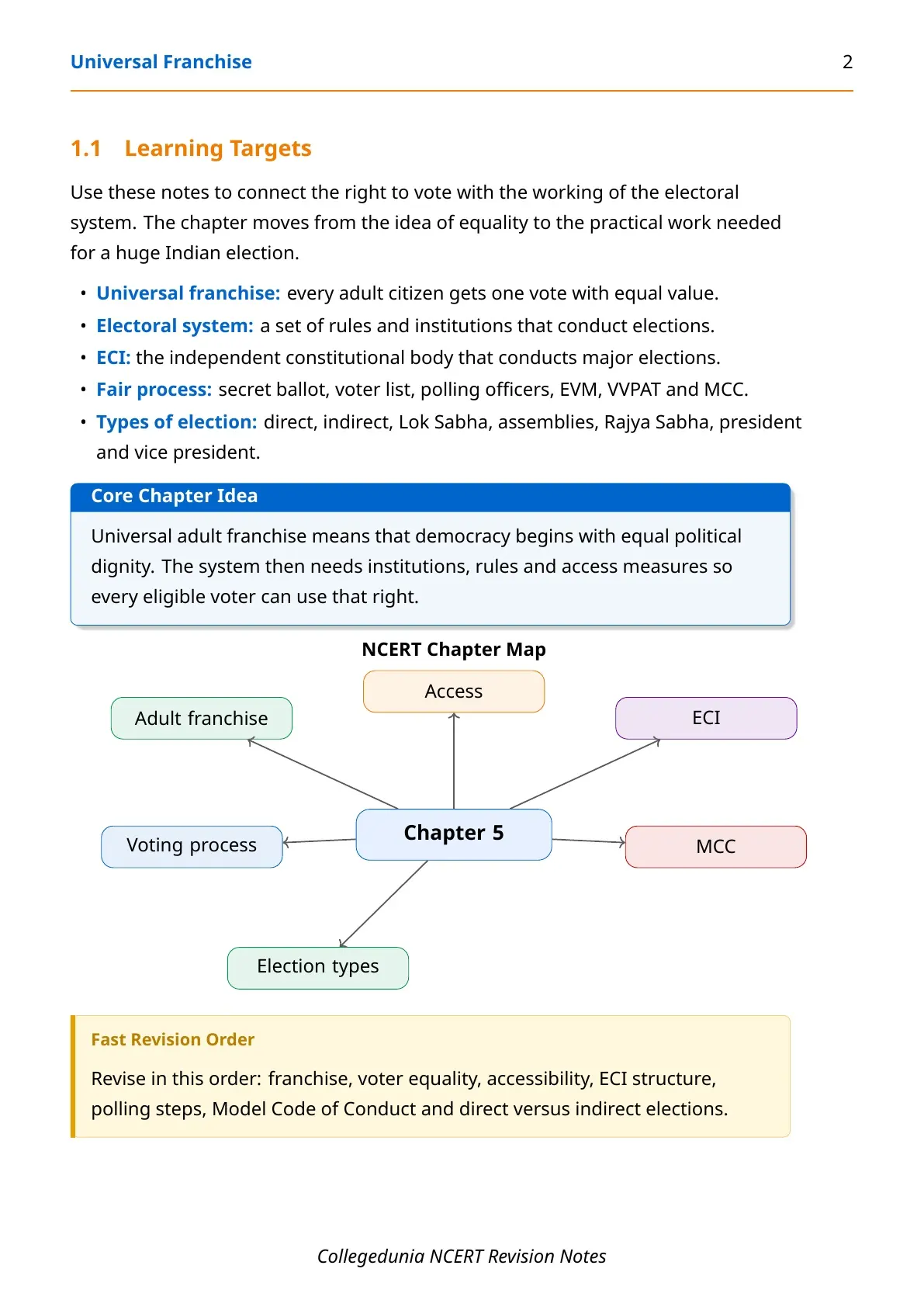
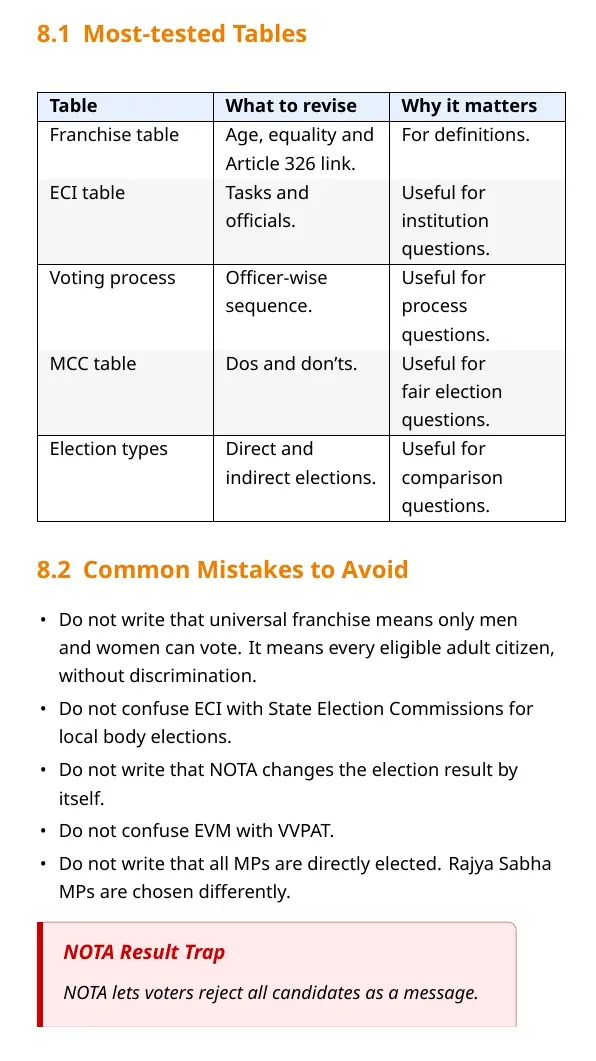
For a short answer, connect the right to vote with the system that protects it. A strong response should mention voter list, secret ballot, EVM, VVPAT and the Election Commission.
Election Commission of India and Fair Elections
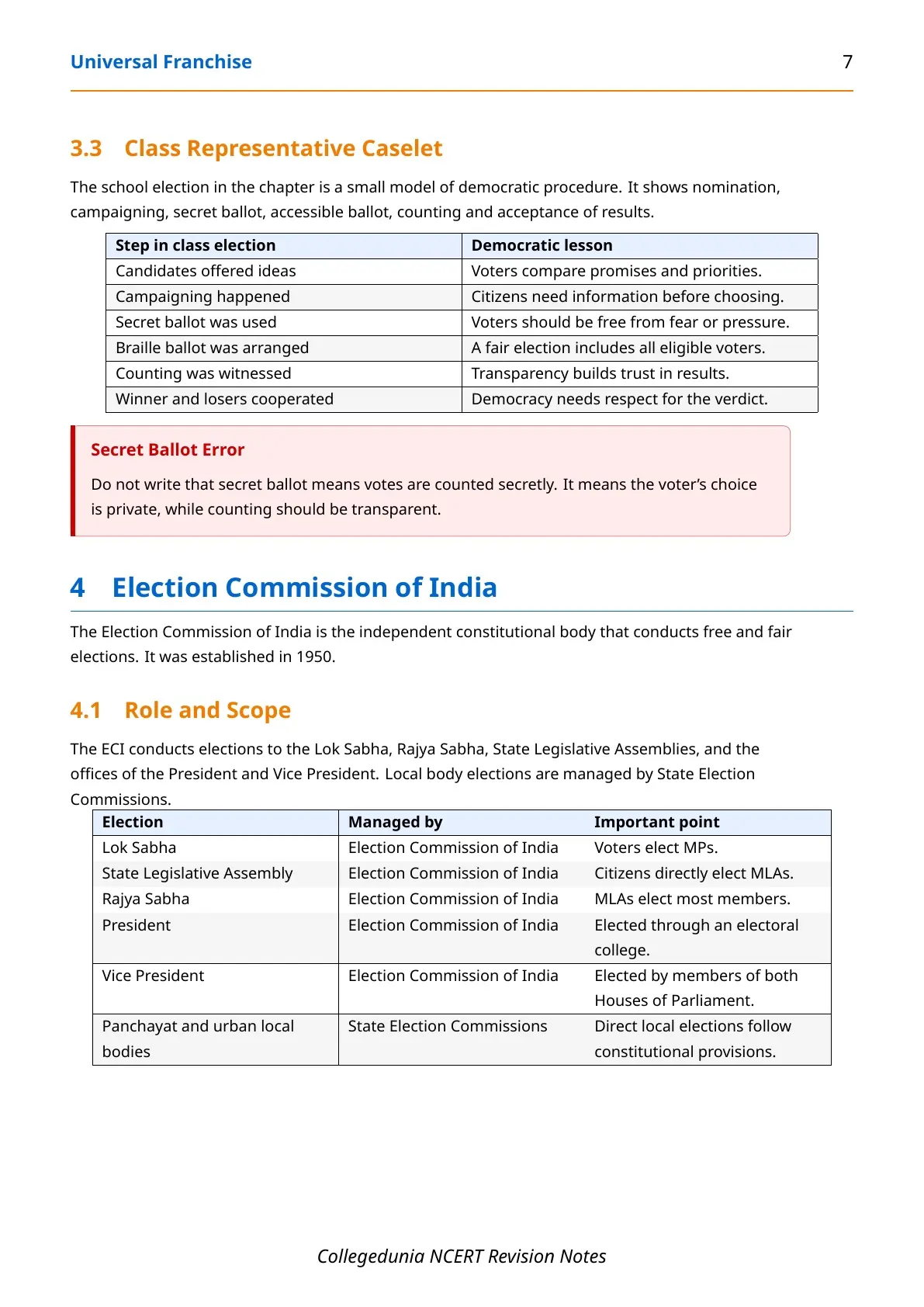
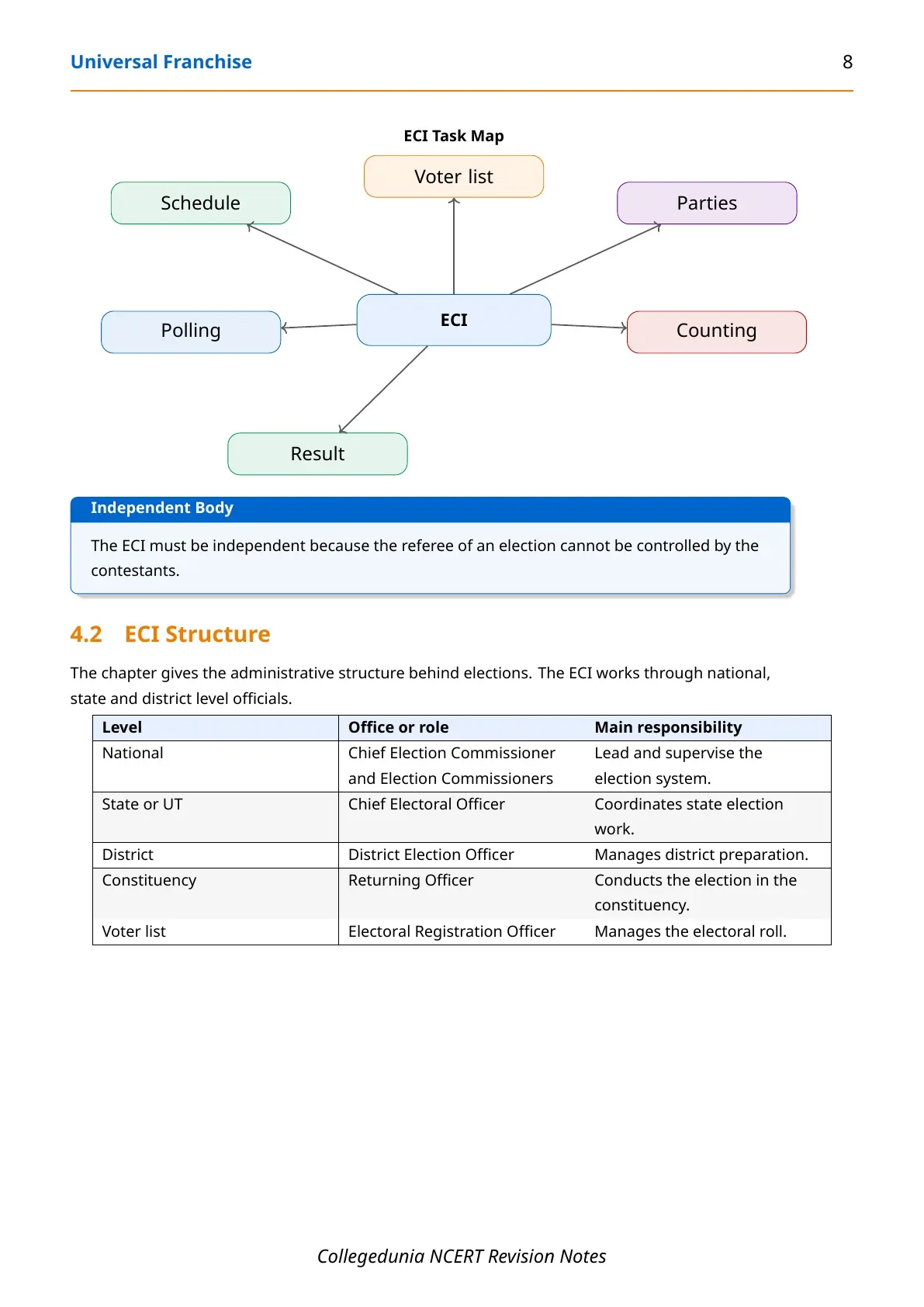
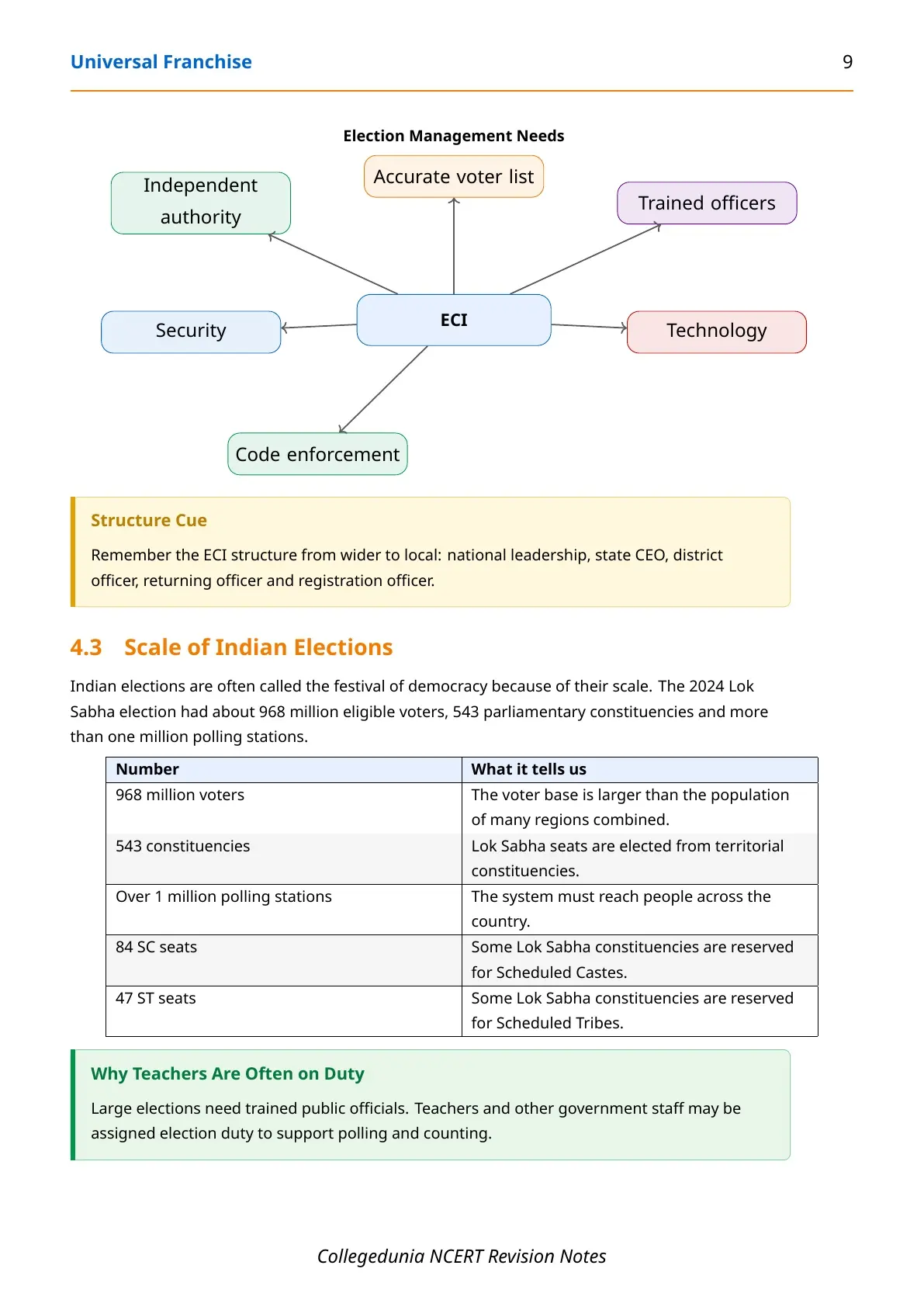
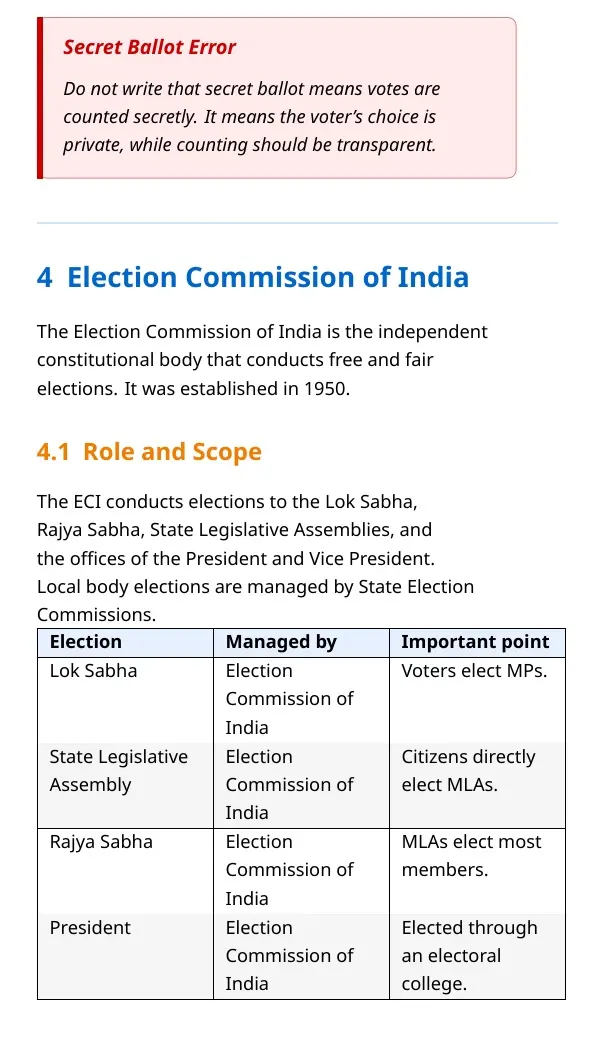
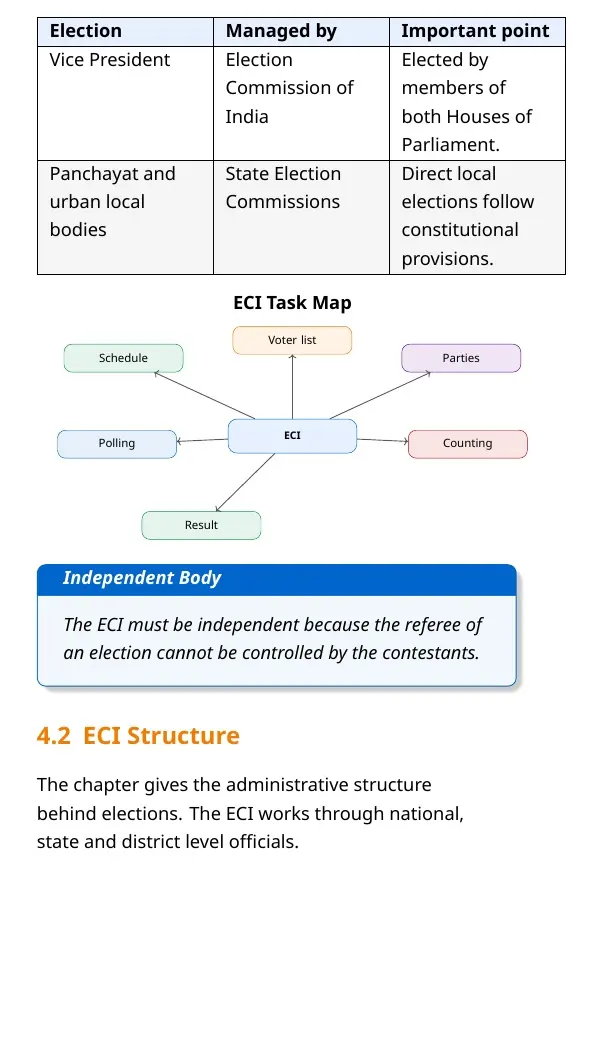
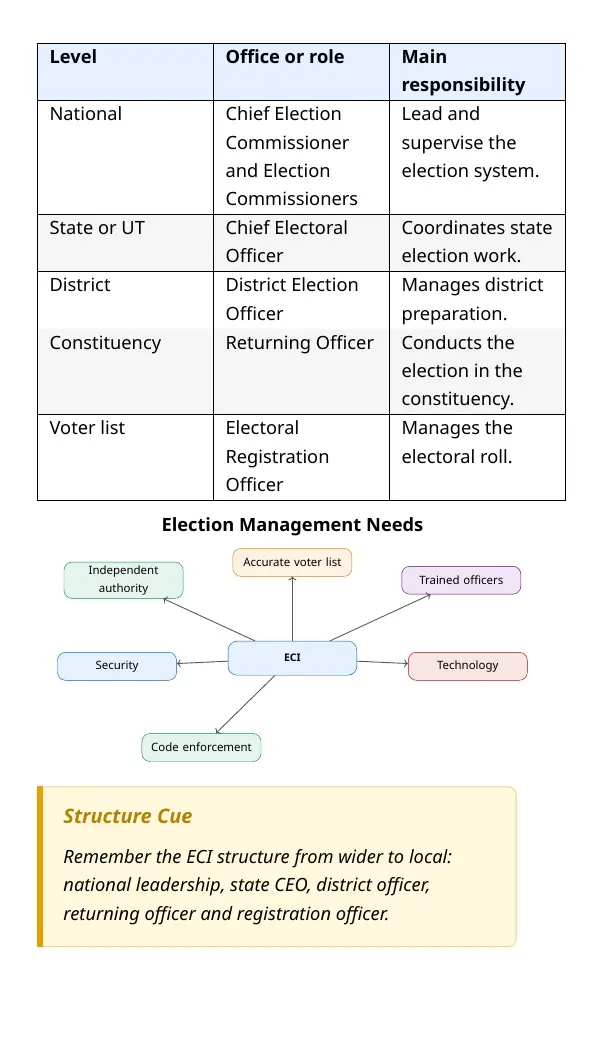
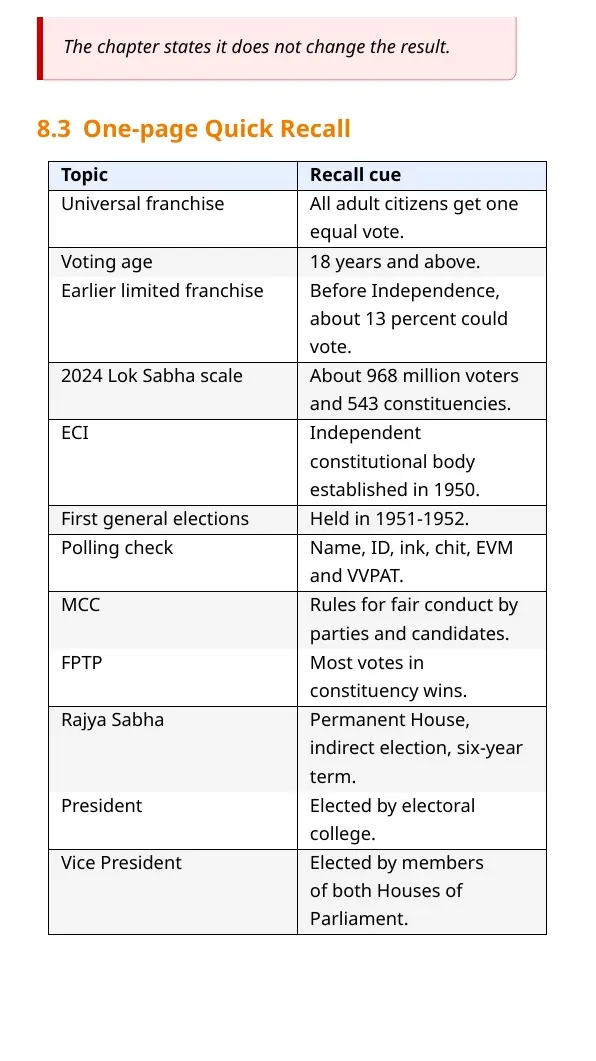
The Election Commission of India is an independent constitutional body. It conducts elections to the Lok Sabha, Rajya Sabha, State Legislative Assemblies, and the offices of the President and Vice President.
| ECI area | What students should remember | Why it matters |
|---|---|---|
| Voter list | Eligible voters are listed by constituency | Stops confusion and duplicate voting |
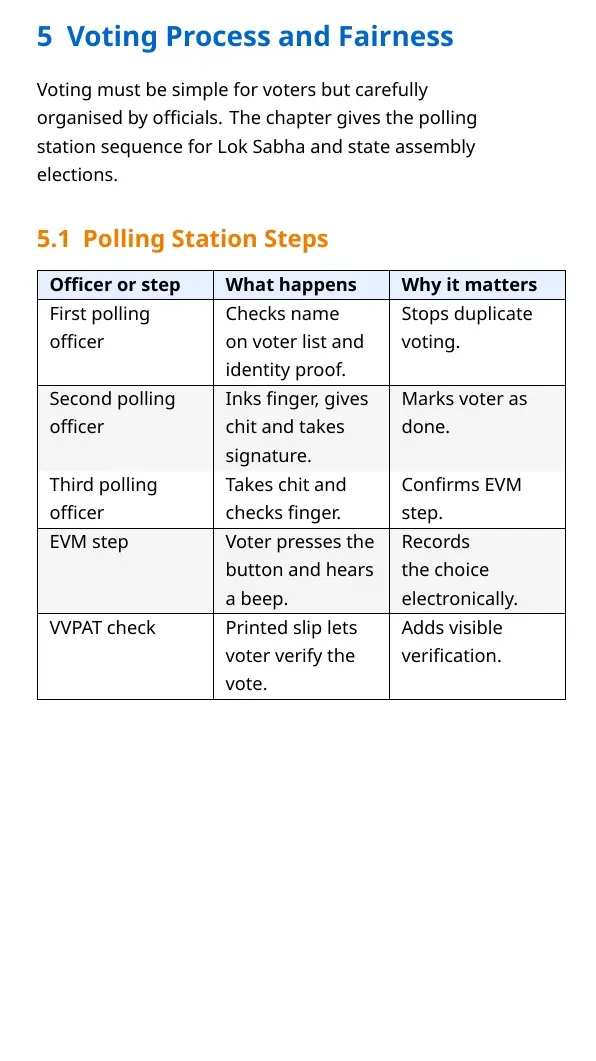
| Polling station | Officials check identity, ink and voting steps | Keeps the process orderly |
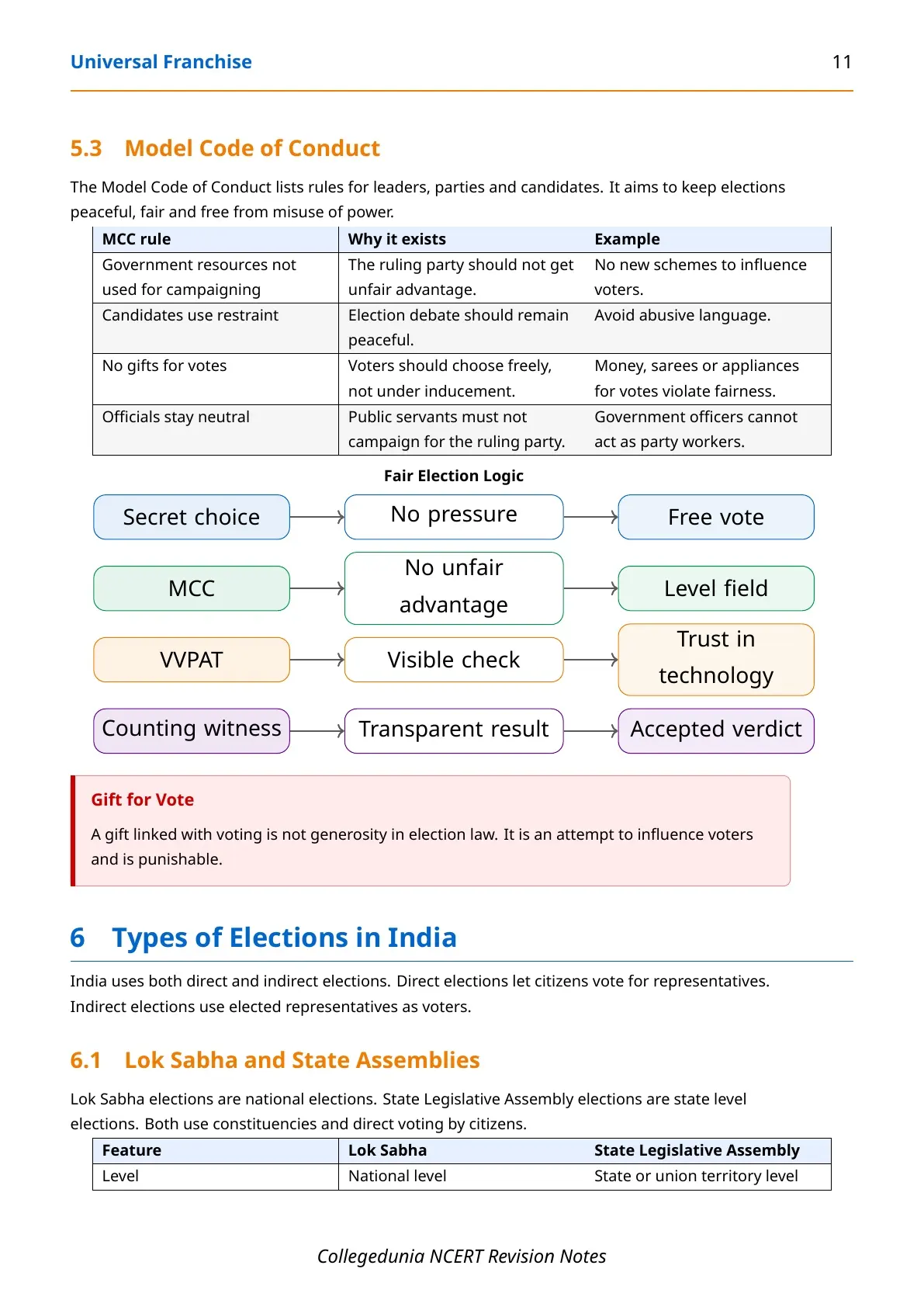
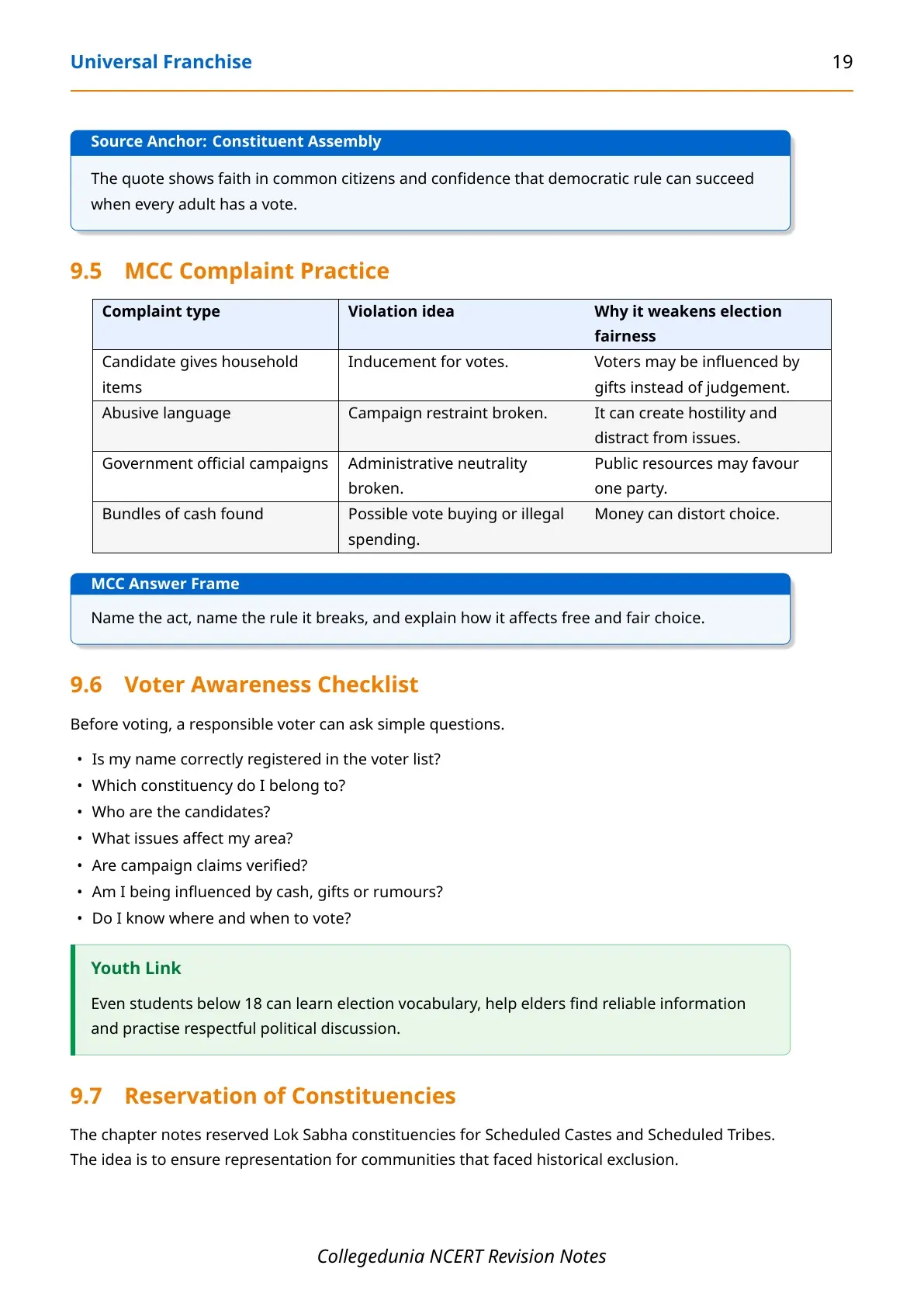
| MCC | Parties and candidates follow campaign rules | Reduces unfair advantage |
| Counting | Votes are counted and results are declared | Builds trust in the verdict |
Universal Franchise Chapter 5 Video Revision
Source: Magnet Brains on YouTube
Direct Election vs Indirect Election
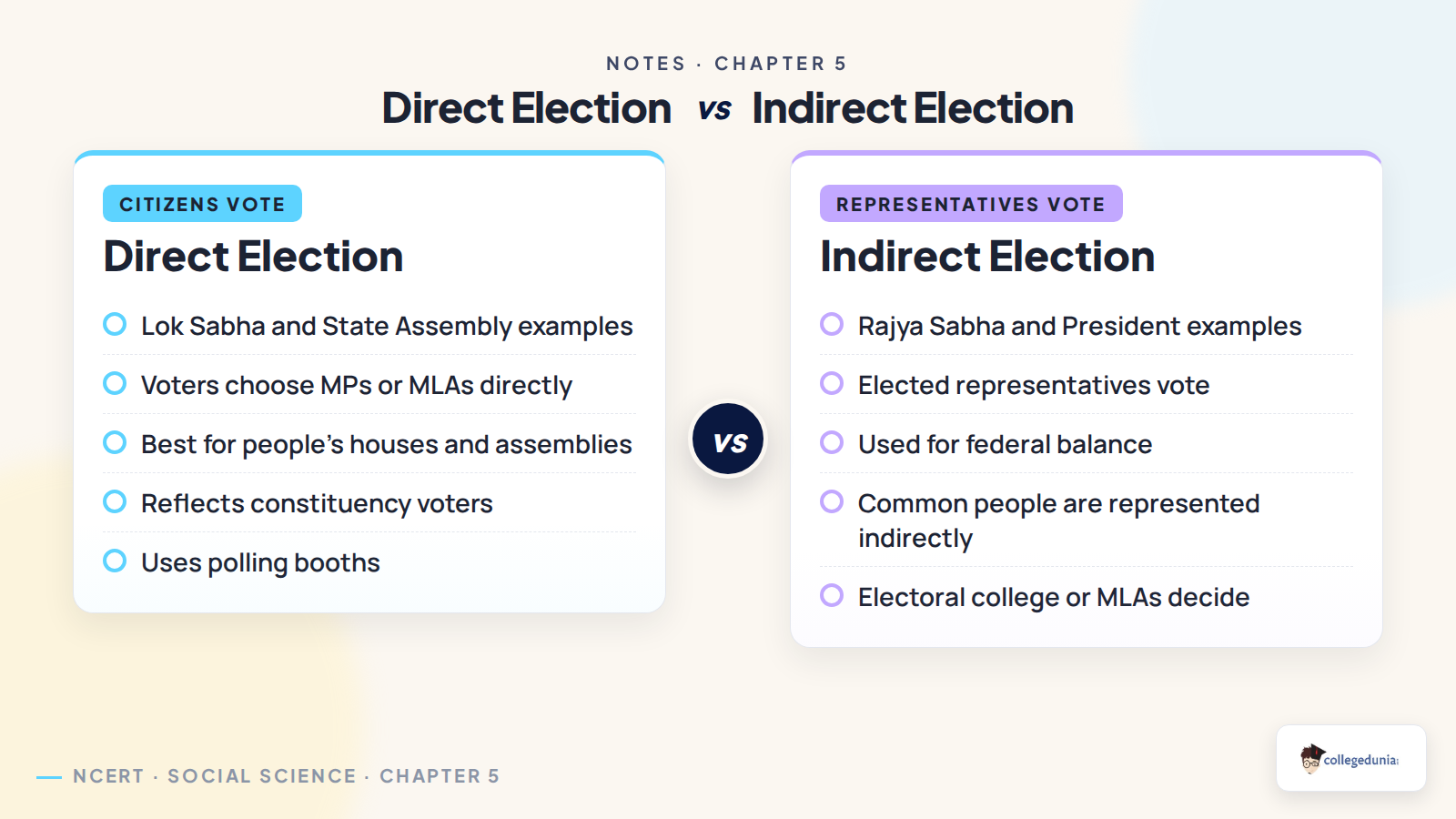
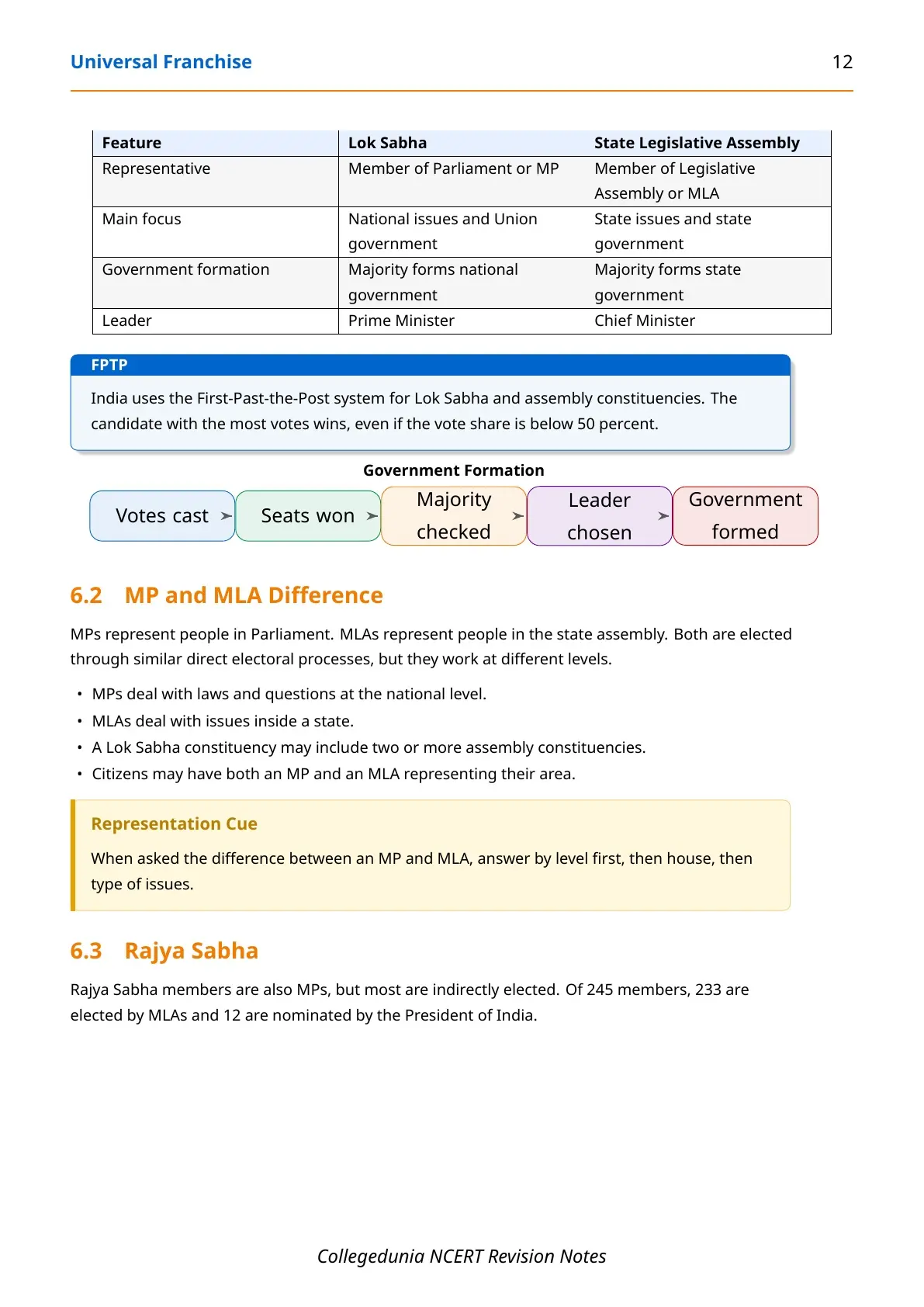
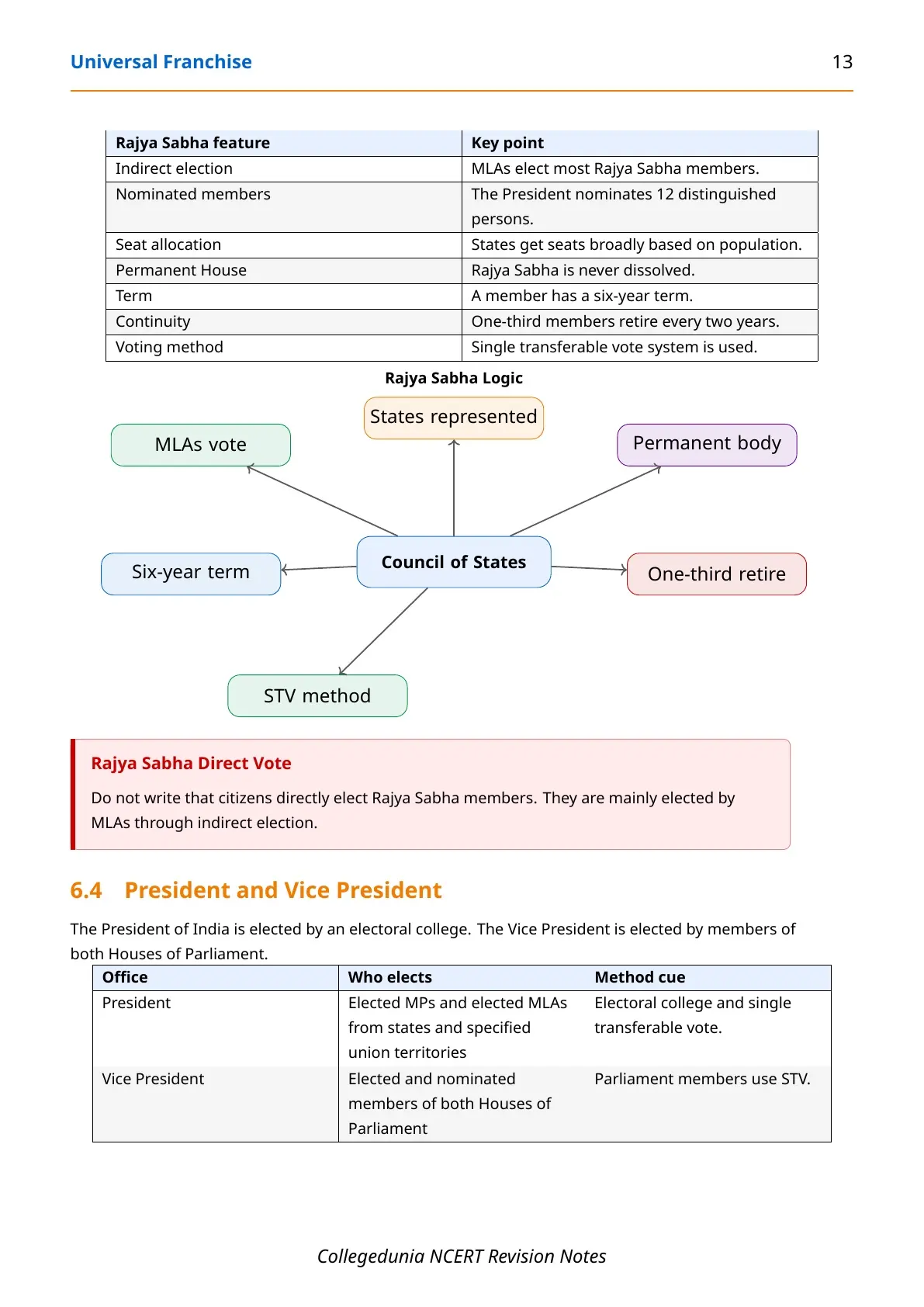
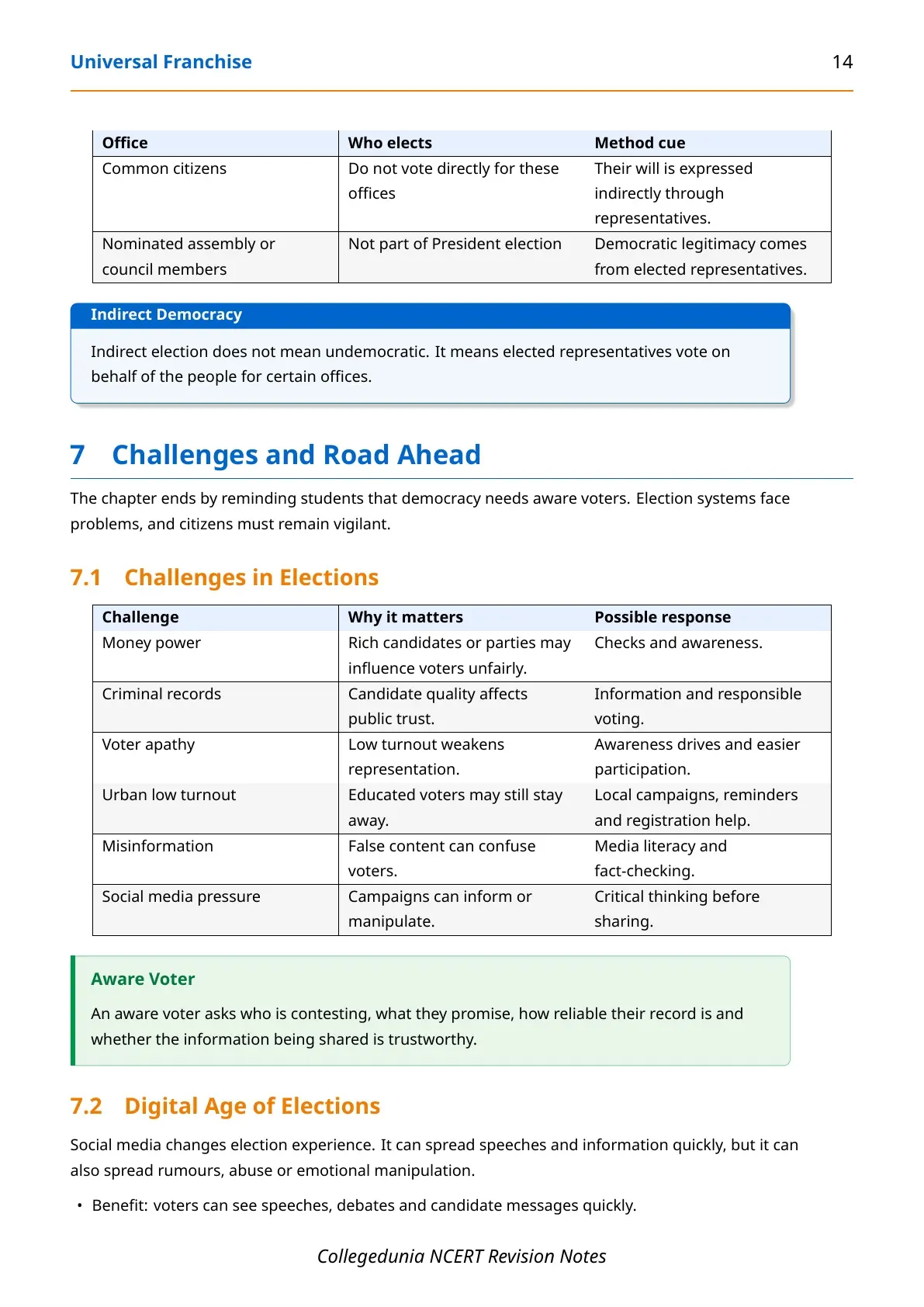
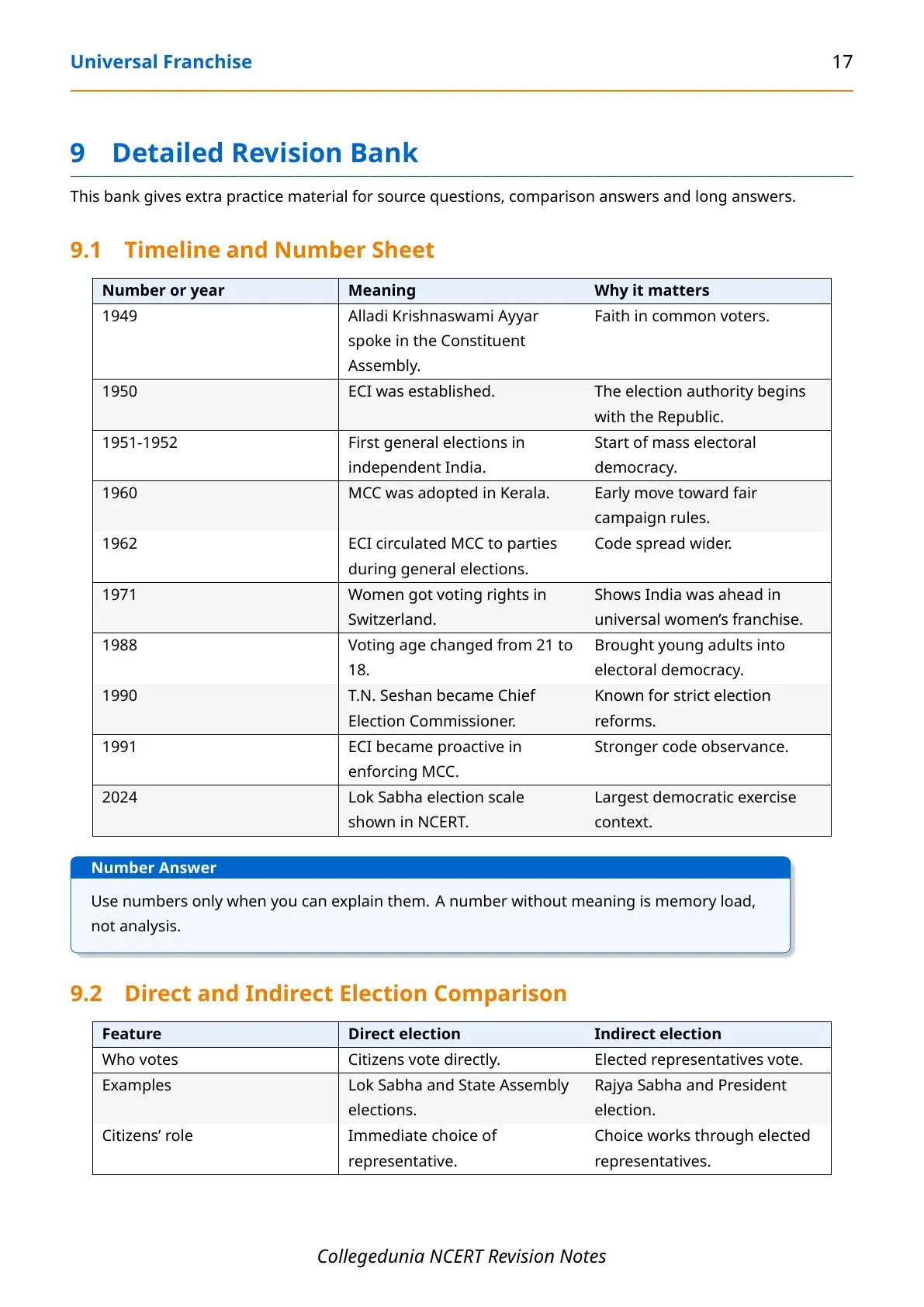
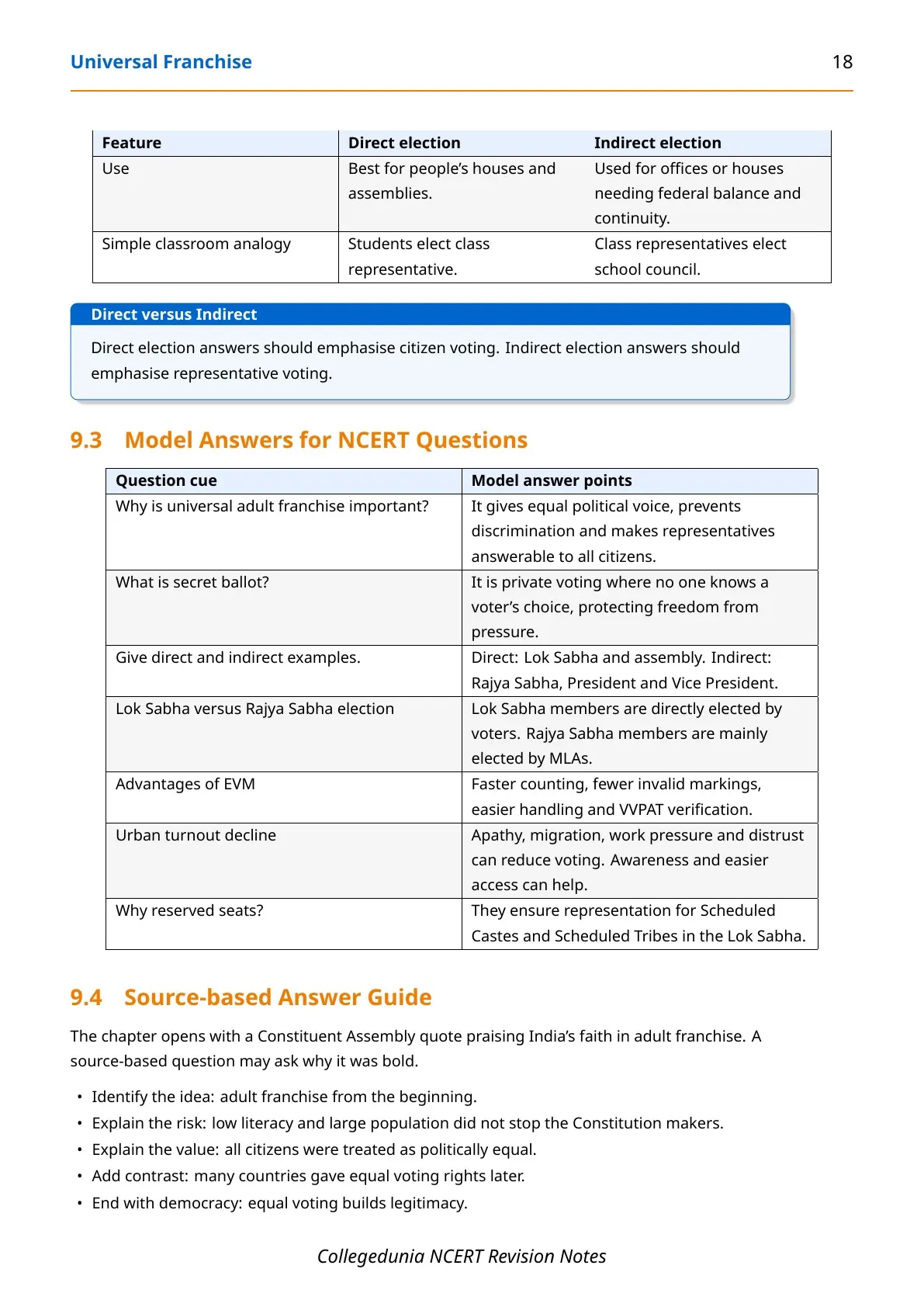
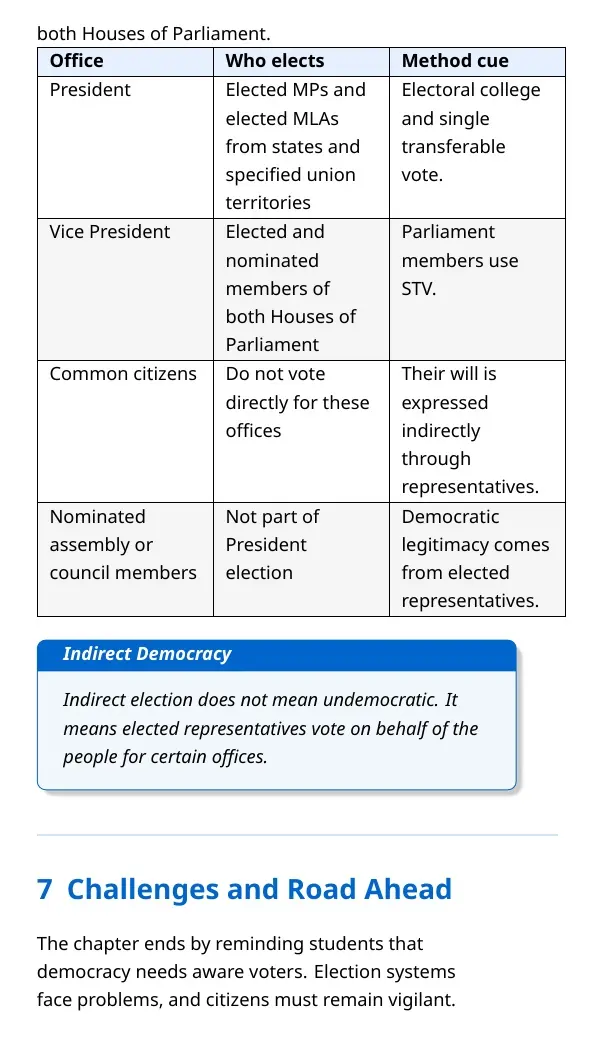
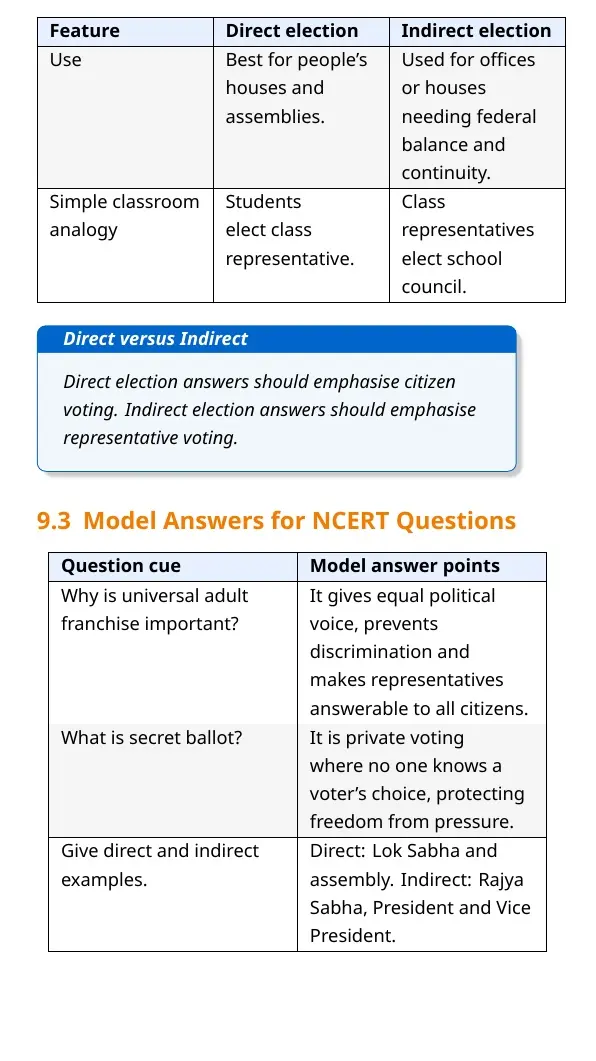
Direct elections let citizens vote for representatives. Lok Sabha and State Assembly elections are the main examples. Indirect elections use elected representatives as voters, as seen in Rajya Sabha and President elections.
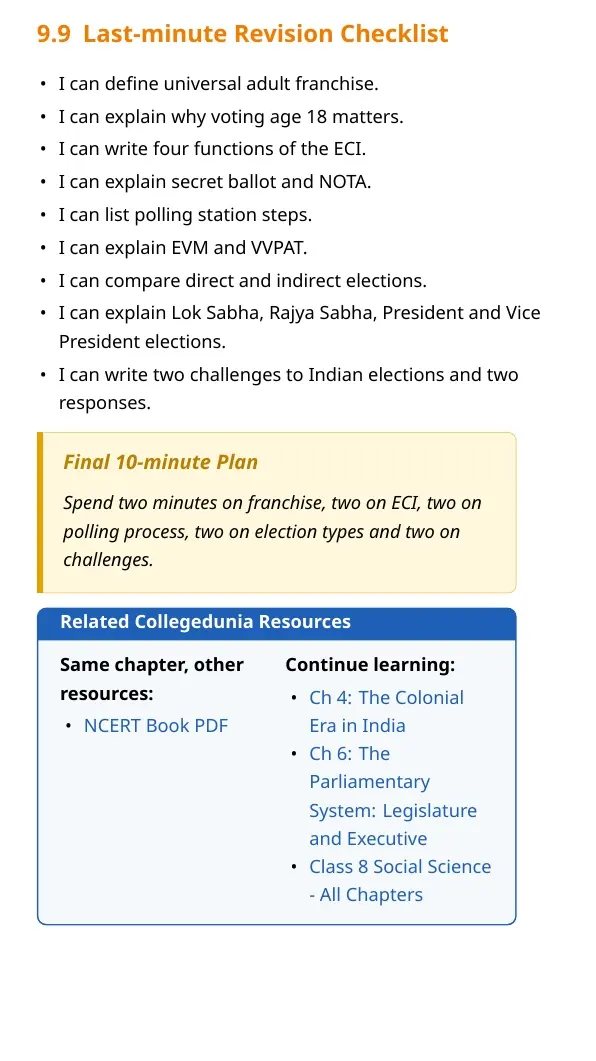
- Direct election: voters choose MPs or MLAs in their constituency.
- Indirect election: elected representatives or an electoral college vote.
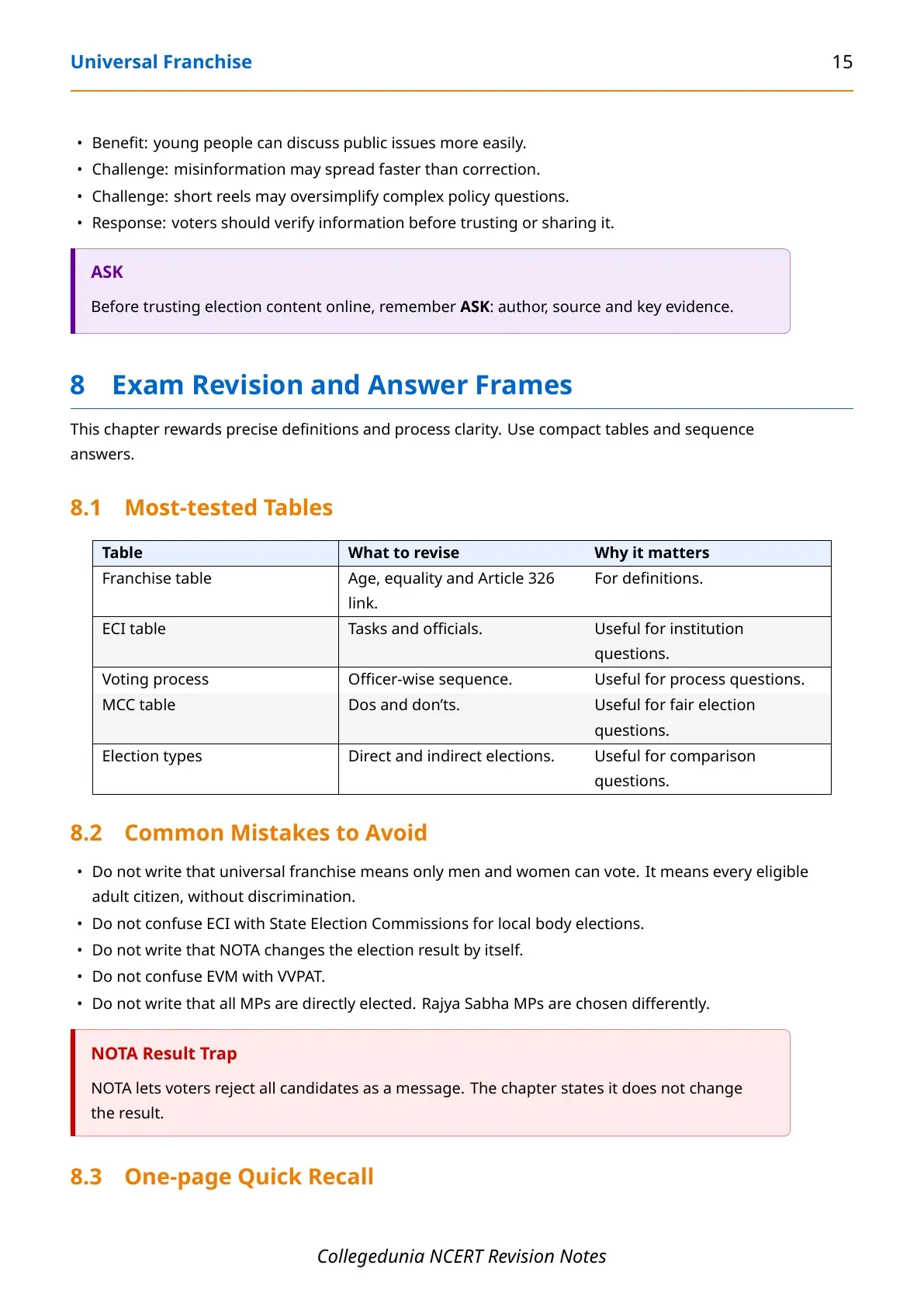
- Common mistake: do not write that all MPs are directly elected.
Important Topics in Universal Franchise and India's Electoral System
Students should revise this chapter through definitions, roles and examples. The best answers use one idea from the Constitution and one practical election example.
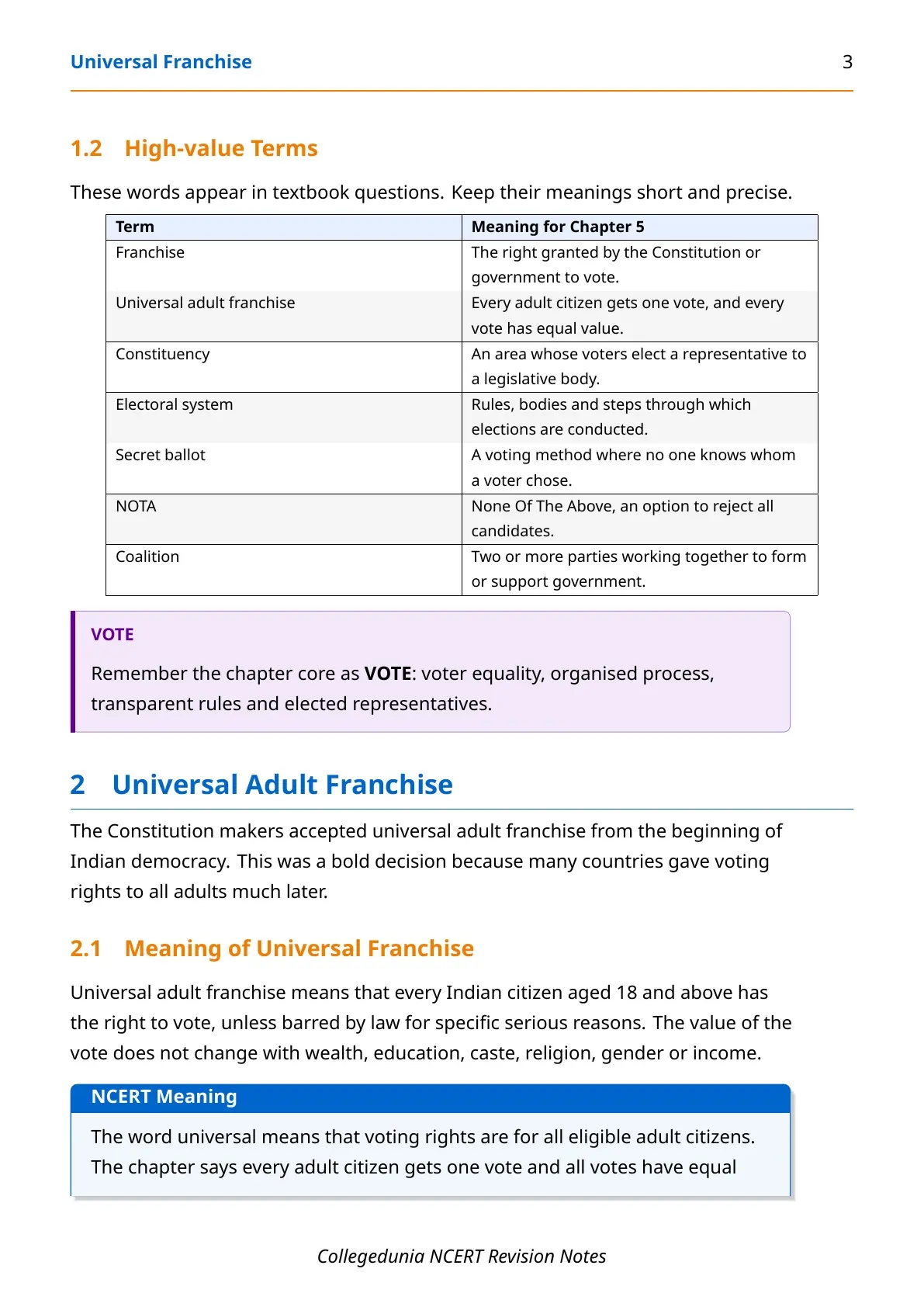
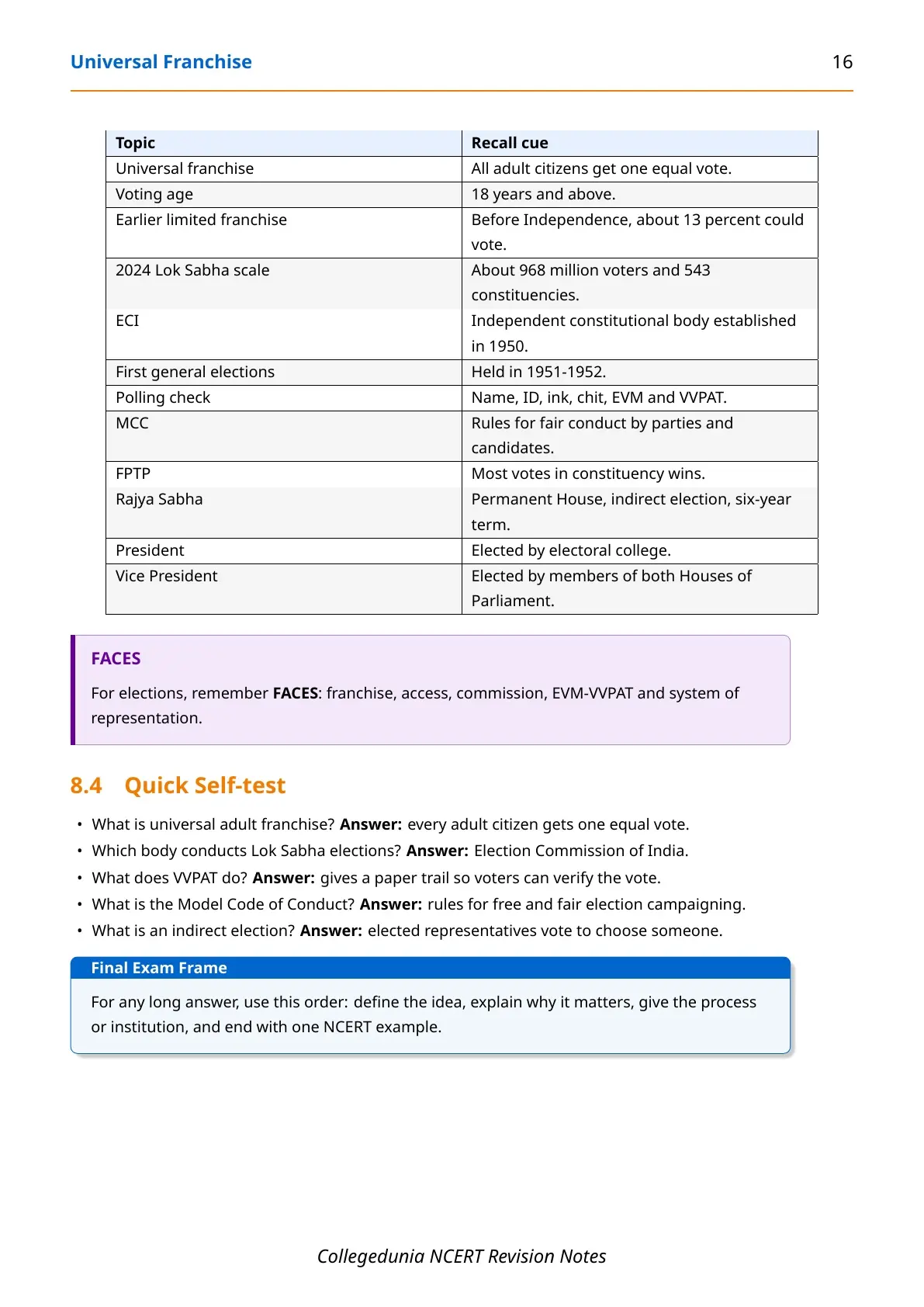
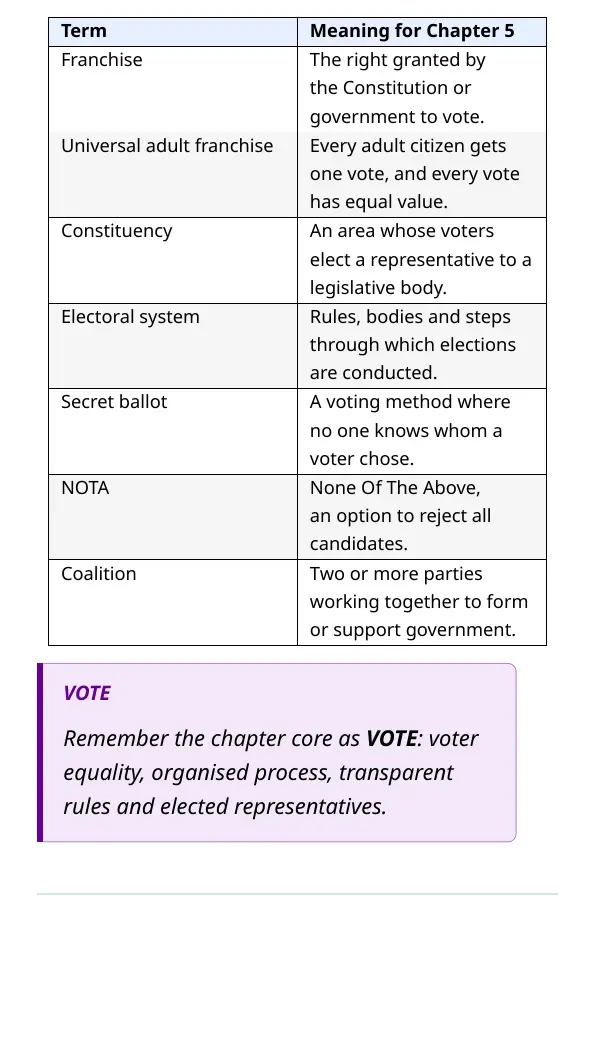
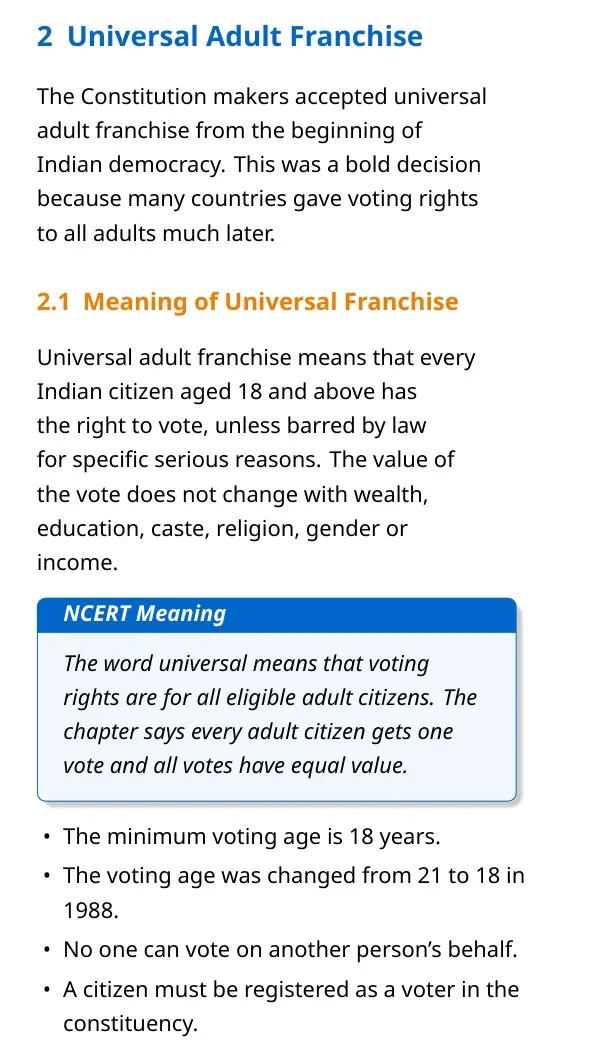
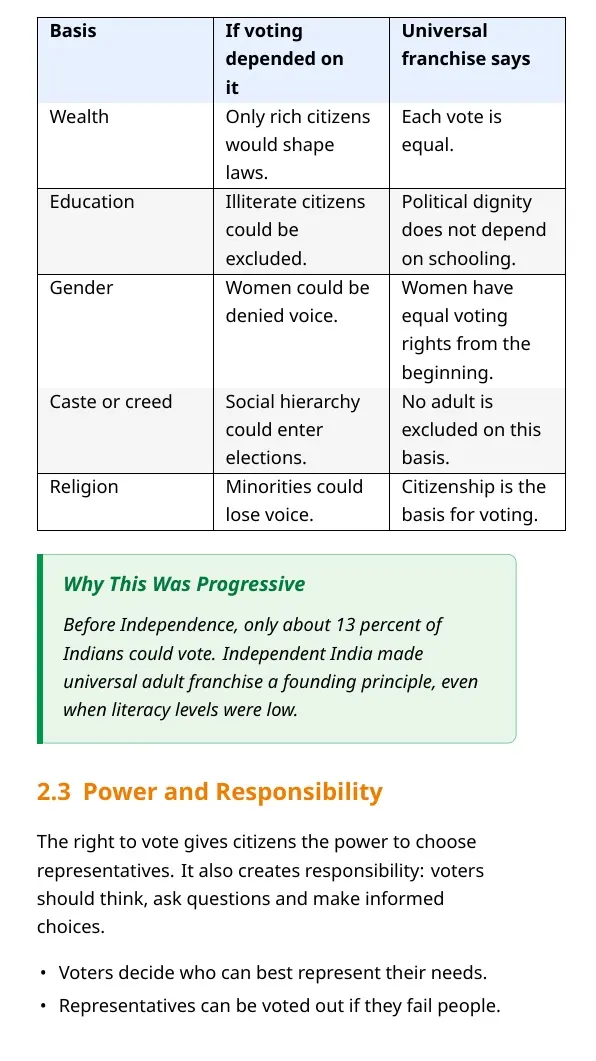
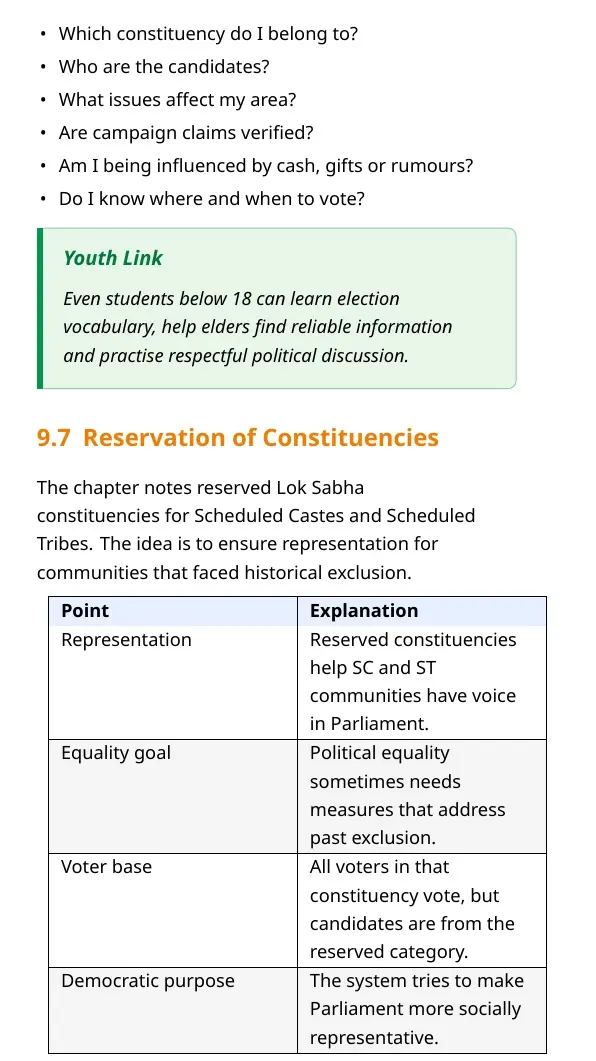
- Universal adult franchise: every adult citizen gets one vote with equal value.
- Voting age: the minimum voting age is 18 years.
- NOTA: it allows voters to reject all candidates, but it does not change the result by itself.
- MCC: the Model Code of Conduct keeps campaigning peaceful and fair.
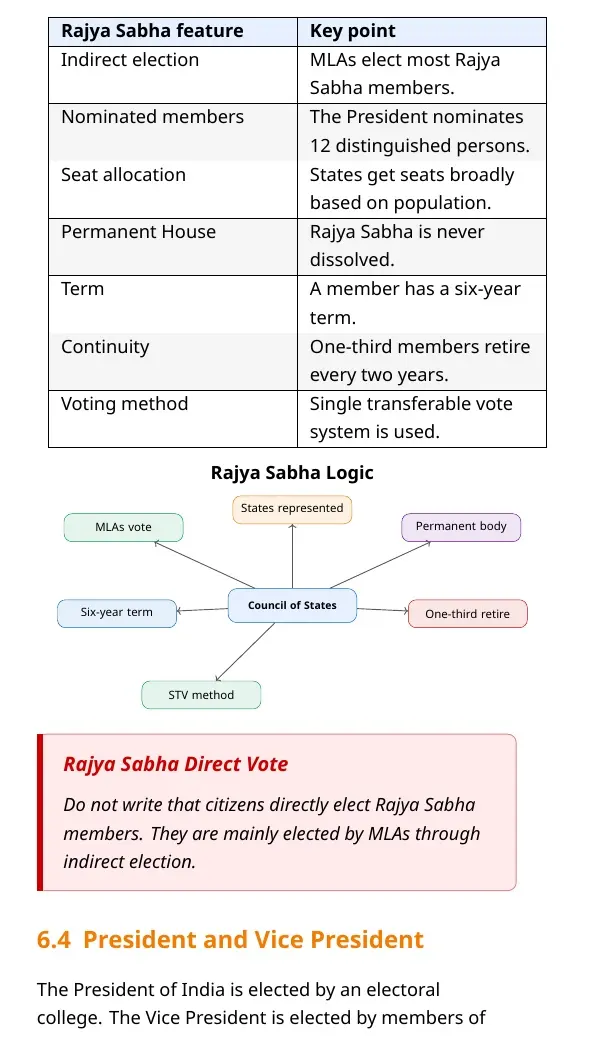
- Rajya Sabha: most members are elected by MLAs through indirect election.
How to Use These Class 8 Social Science Notes
Use the notes PDF in three rounds. First, revise definitions and key institutions. Second, learn the polling sequence. Third, practise one comparison answer and one long answer from the revision bank.
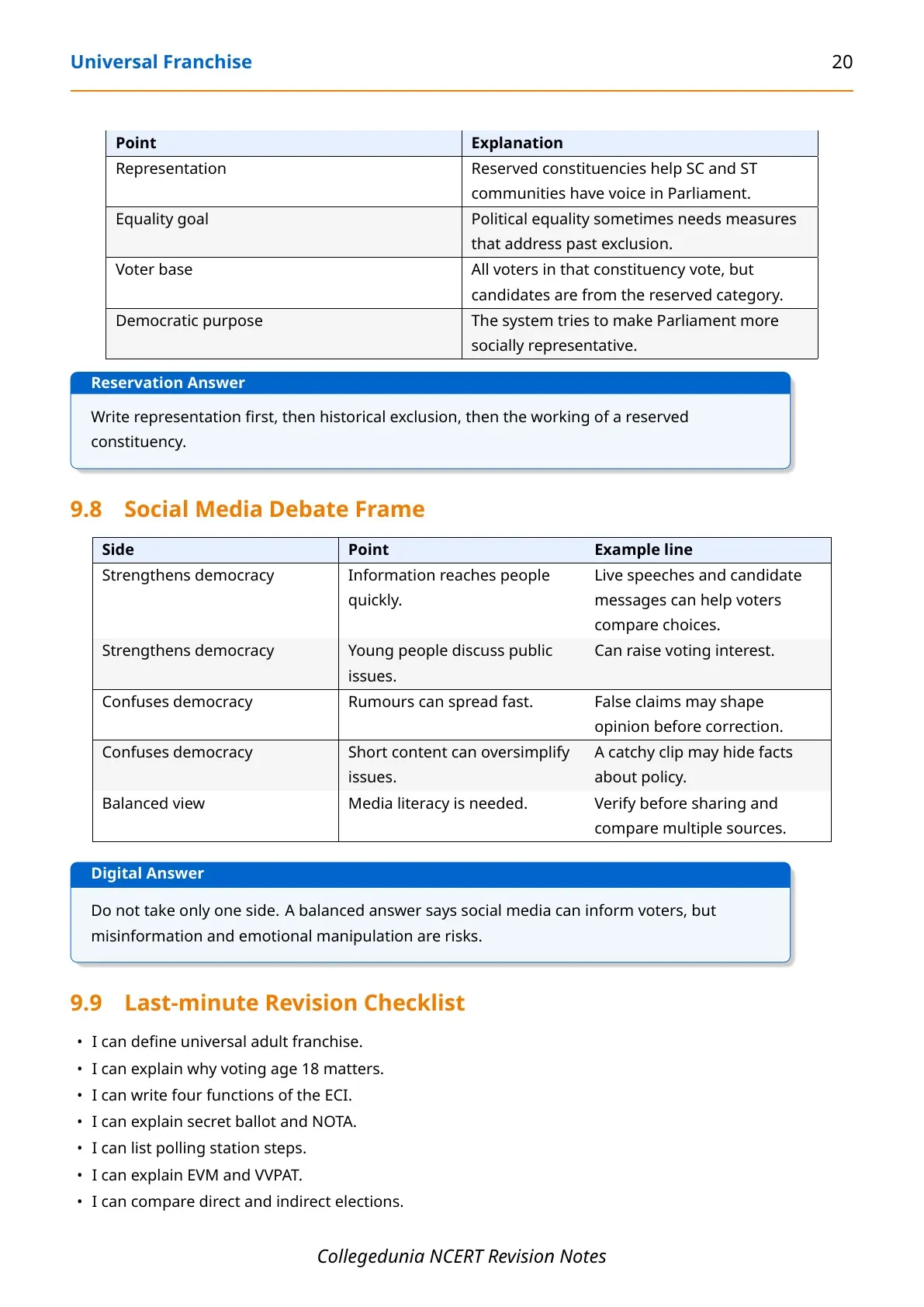
- Make flashcards for franchise, constituency, secret ballot, NOTA, MCC and VVPAT.
- Write the ECI answer in three parts: role, independence and election steps.
- Practise direct versus indirect elections with two examples each.
A strong Chapter 5 answer names the democratic value and the practical election step together.
More Class 8 Social Science Chapter 5 Resources
Use these related resources when you want Chapter 5 in another format. The table stays above the FAQ so students can move from notes to the official book PDF quickly.
| Resource | Best use | Link |
|---|---|---|
| NCERT Notes | Revise Chapter 5 in compact form | Open notes |
| NCERT Book PDF | Read the official 2026-27 source chapter | Open book PDF |
| Handwritten Notes | Use a quick visual recap if available | Open handwritten notes |
Class 8 Social Science Notes for Other Chapters
The table below keeps Class 8 Social Science notes together so students can revise the same resource type chapter by chapter.
| Chapter | NCERT chapter title | Notes |
|---|---|---|
| Chapter 1 | Natural Resources and Their Use | Open notes |
| Chapter 2 | Reshaping India's Political Map | Open notes |
| Chapter 3 | The Rise of the Marathas | Open notes |
| Chapter 4 | The Colonial Era in India | Open notes |
| Chapter 5 | Universal Franchise and India's Electoral System | Current notes |
| Chapter 6 | The Parliamentary System: Legislature and Executive | Open notes |
Universal Franchise and India's Electoral System Class 8 Notes FAQs
Ques. What is covered in NCERT Class 8 Social Science Chapter 5 Notes?
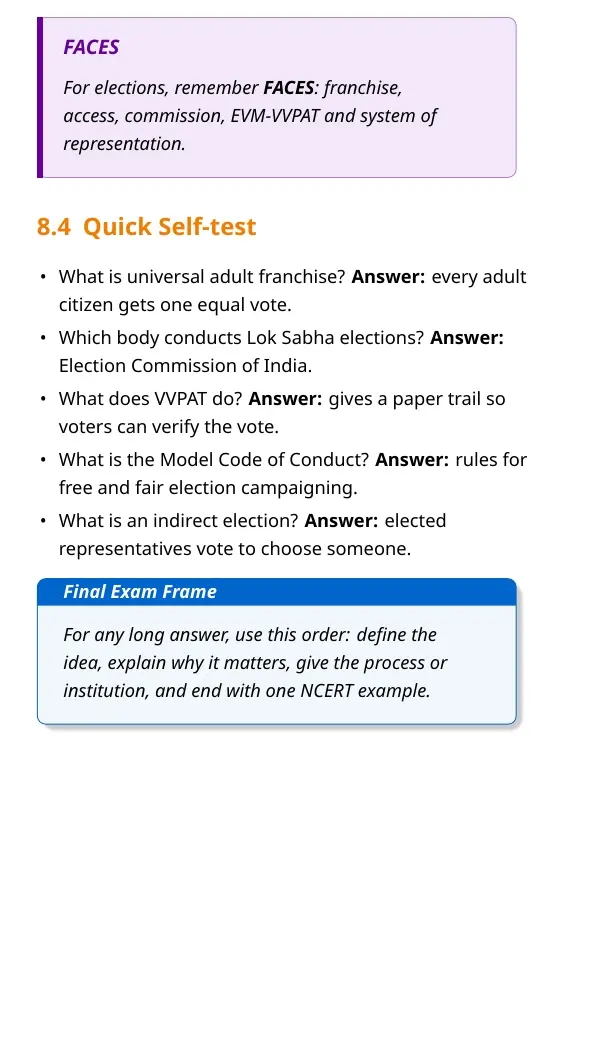
Ans. The notes cover universal adult franchise, voter equality, ECI, polling steps, EVM, VVPAT, MCC and types of elections.
Ques. What does universal adult franchise mean?
Ans. Universal adult franchise means every eligible adult citizen gets one vote, and each vote has equal value in an election.
Ques. Which body conducts Lok Sabha elections?
Ans. The Election Commission of India conducts Lok Sabha elections and supervises major national and state elections.
Ques. What is the difference between direct and indirect elections?
Ans. In direct elections, citizens vote for representatives. In indirect elections, elected representatives or an electoral college vote.



Comments