




The NCERT Class 8 Social Science Chapter 7 Notes explain Factors of Production for the 2026-27 syllabus. The notes cover land, labour, capital, entrepreneurship, technology, human capital, productivity and efficient resource use.
- Resource focus: Class 8 Social Science Chapter 7 revision with definitions, tables and examples.
- Best use: revise the PDF first, then practise production examples from local businesses.
- Exam link: follows the NCERT 2026-27 chapter Factors of Production.

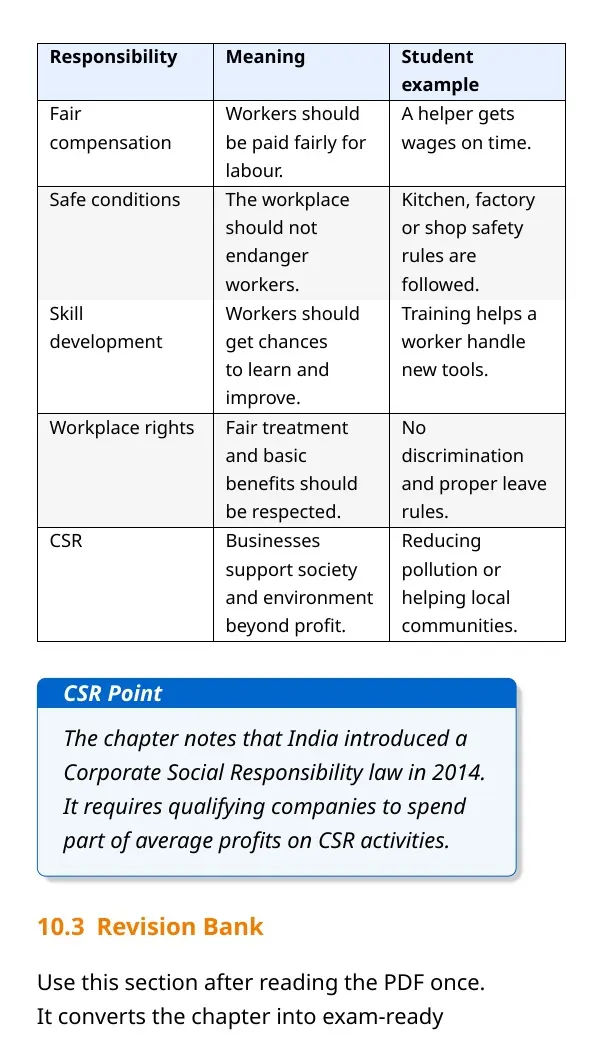
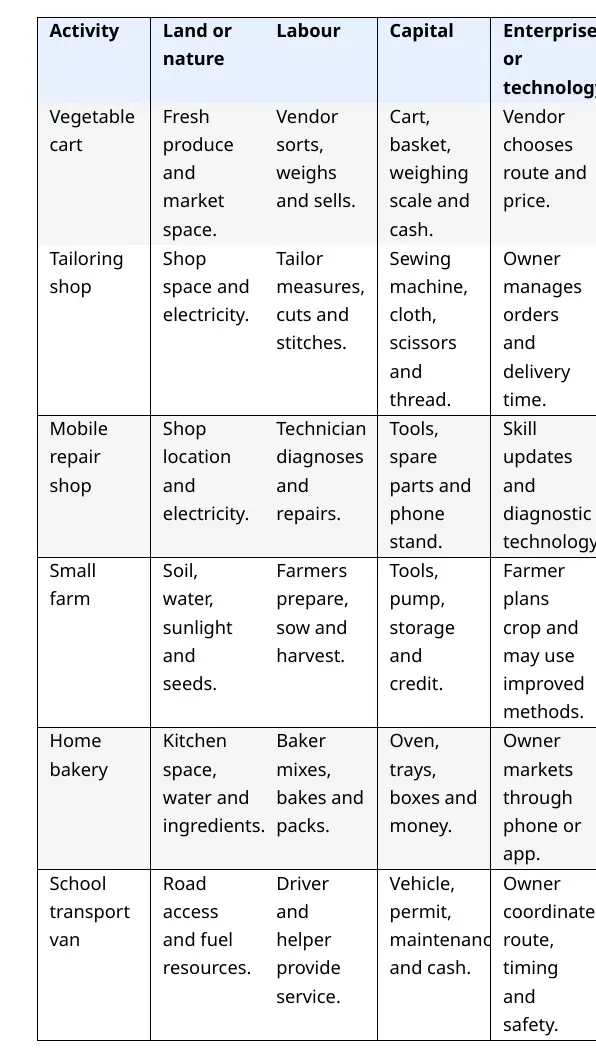
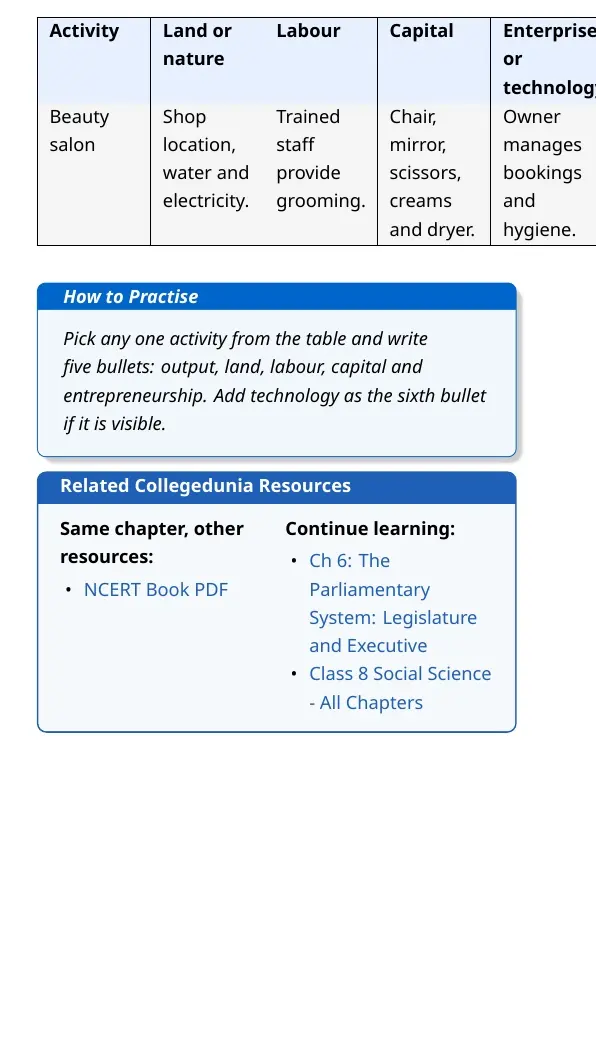
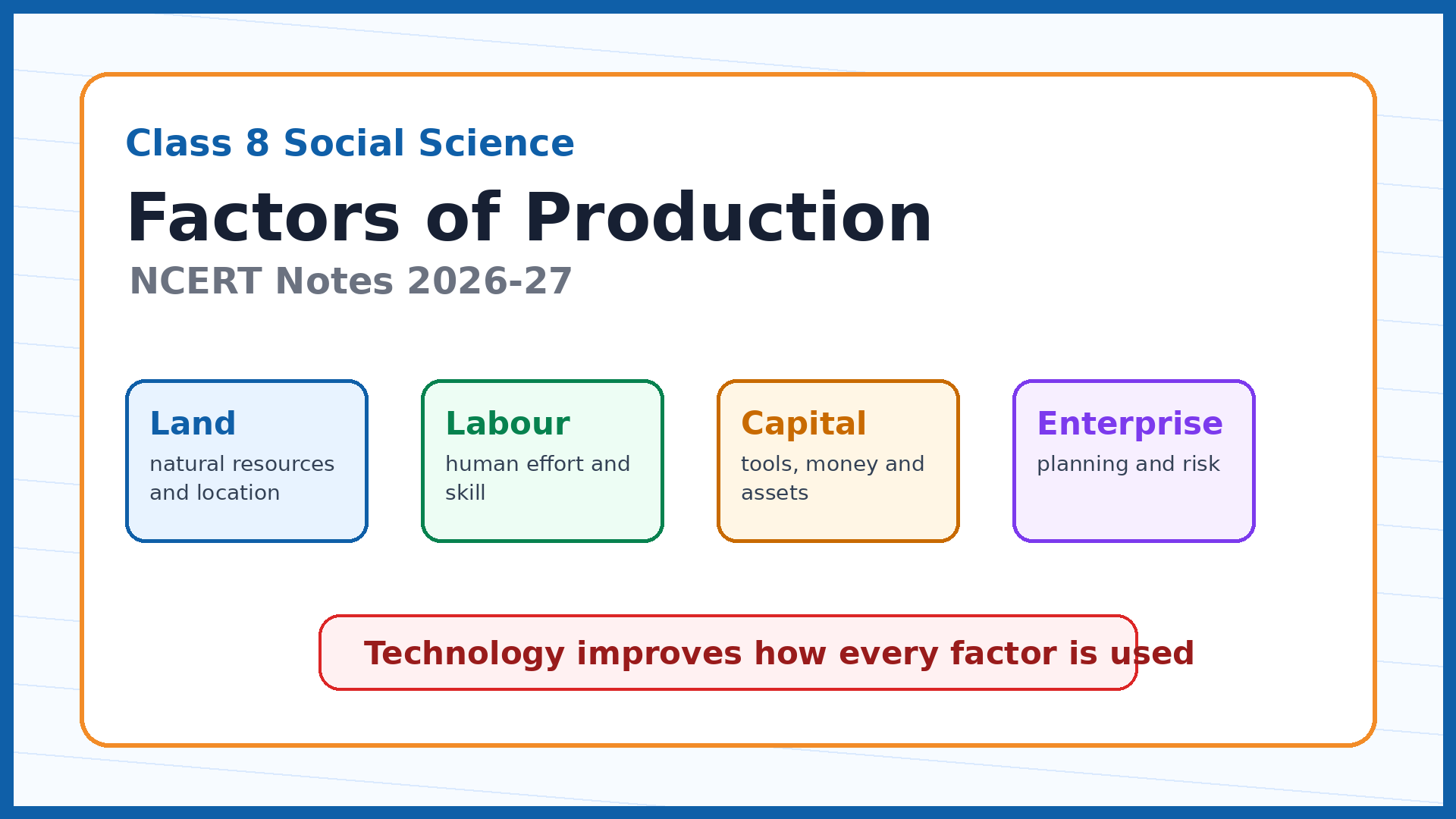
Student Feedback: In a Collegedunia revision check with 7,900 Class 8 students, 74% said a factor-wise table helped them identify land, labour, capital and entrepreneurship in business examples.
Class 8 Social Science Chapter 7 Notes Overview
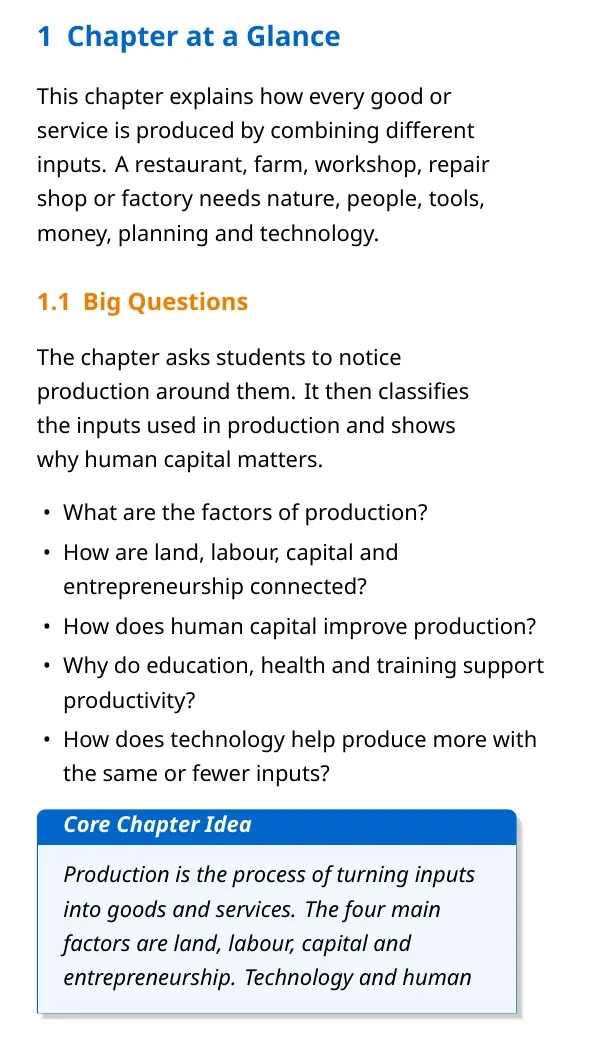
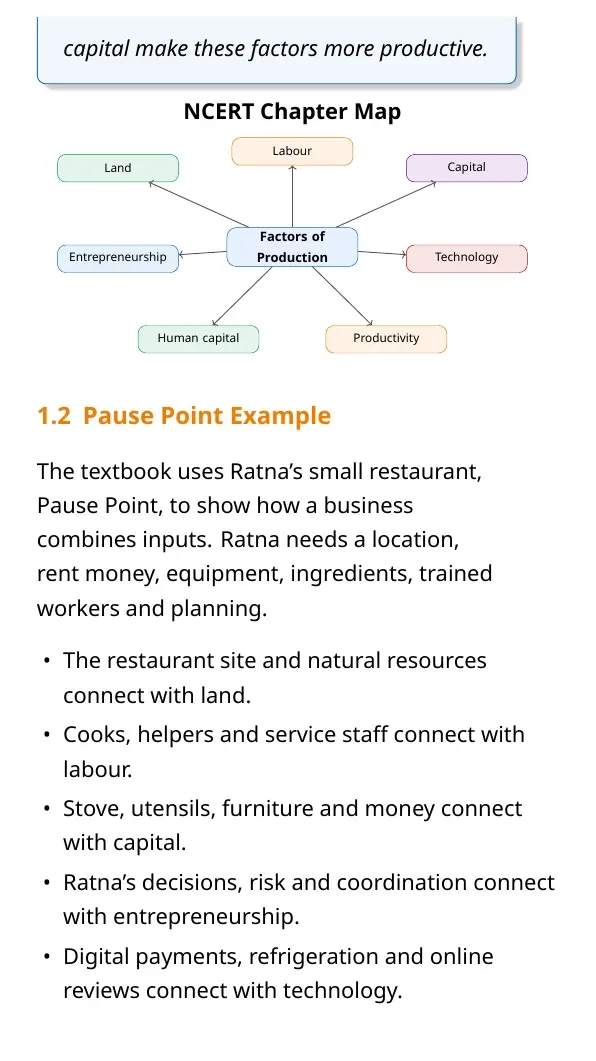
Factors of Production explains how businesses combine inputs to make goods and services. A restaurant, grocery shop, farm, repair shop or salon needs resources, workers, tools, money, planning and technology.
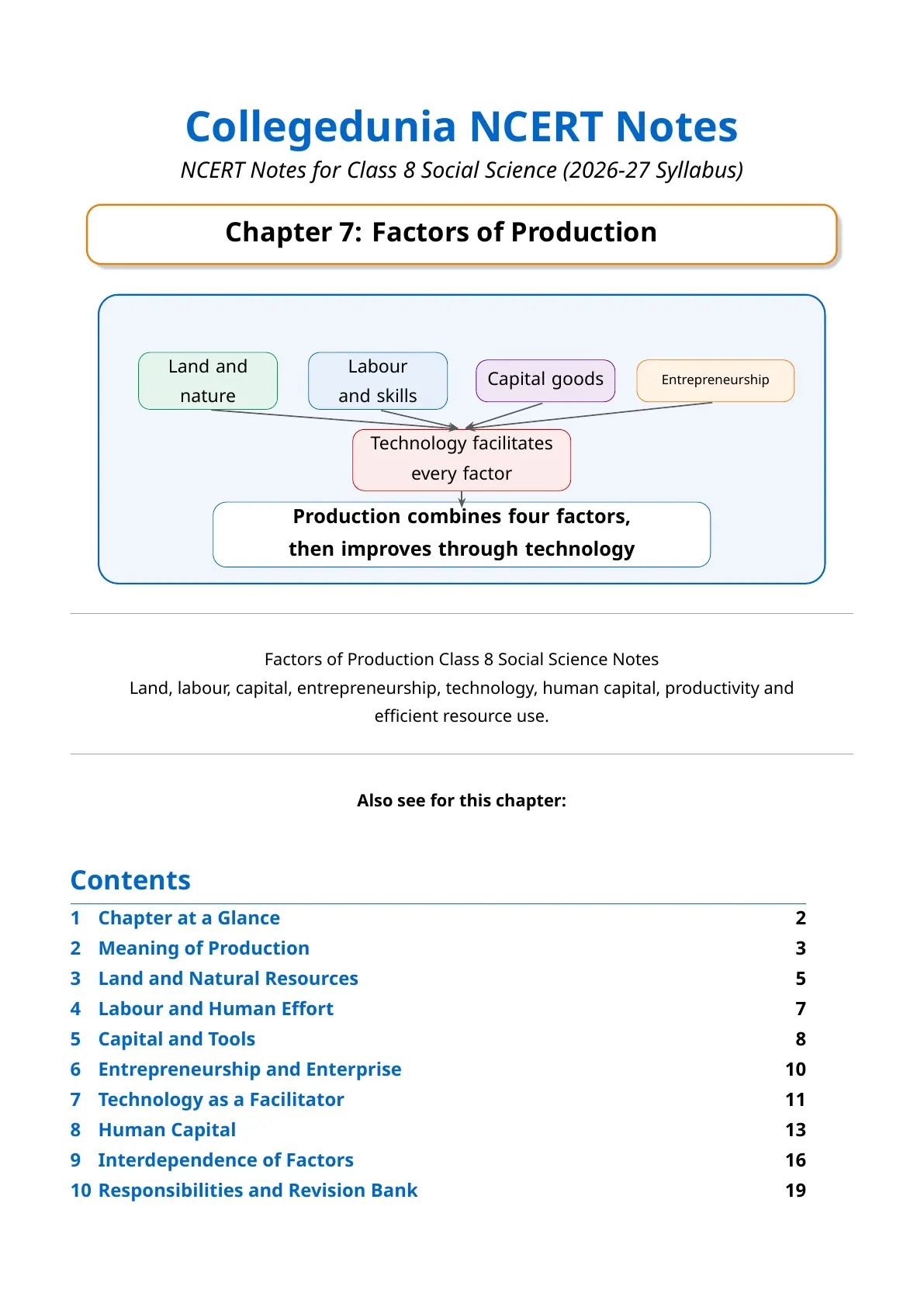
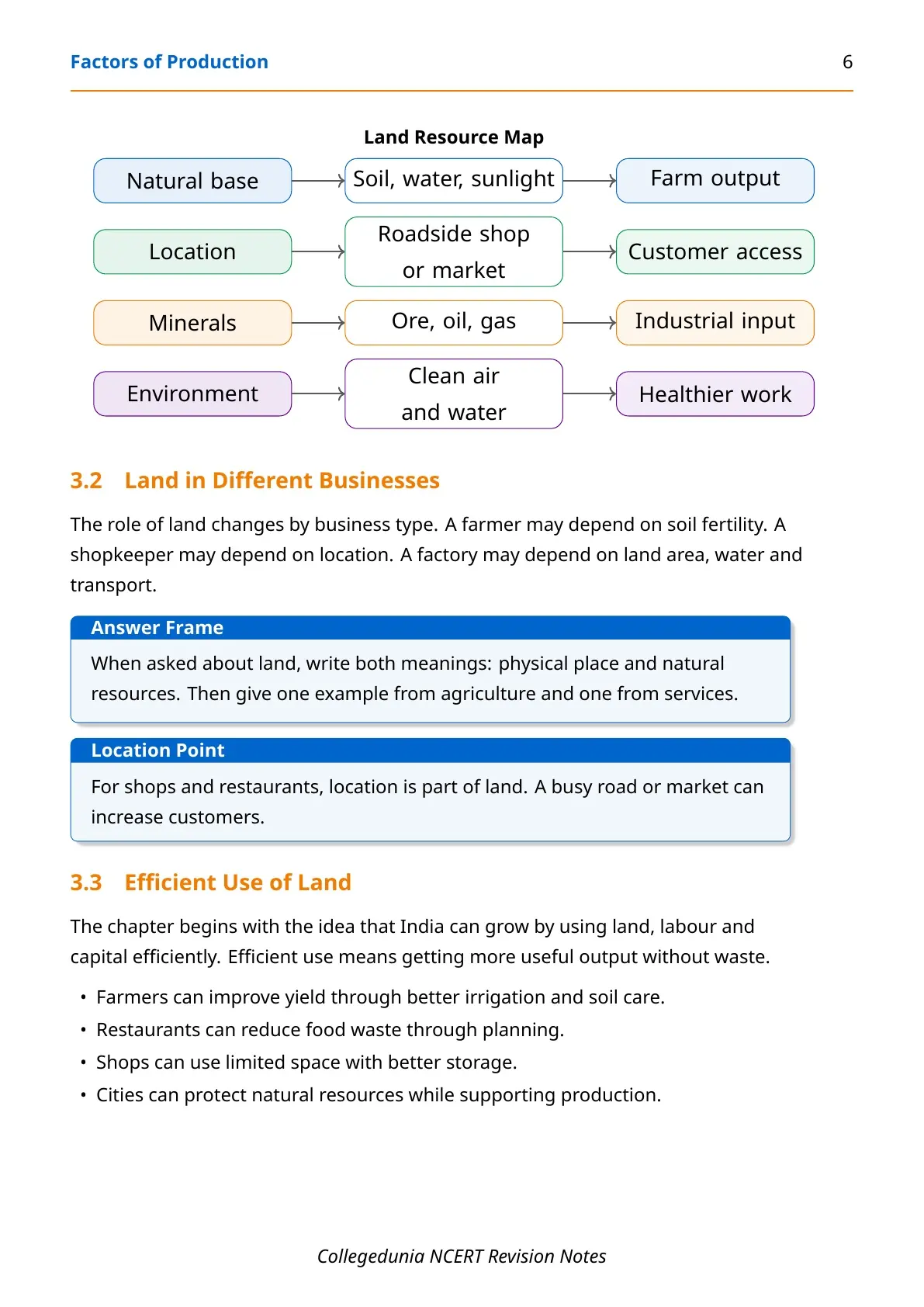
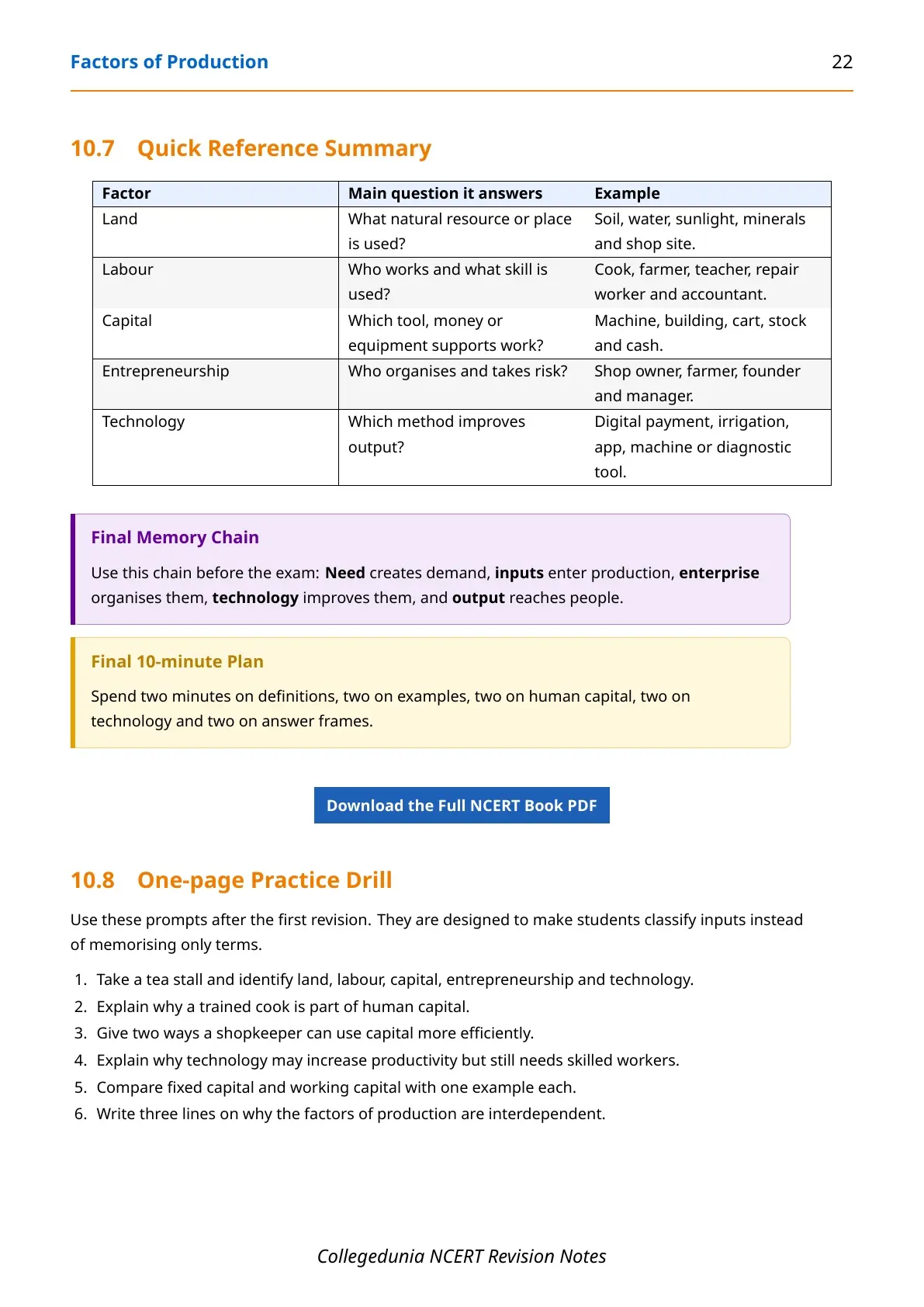
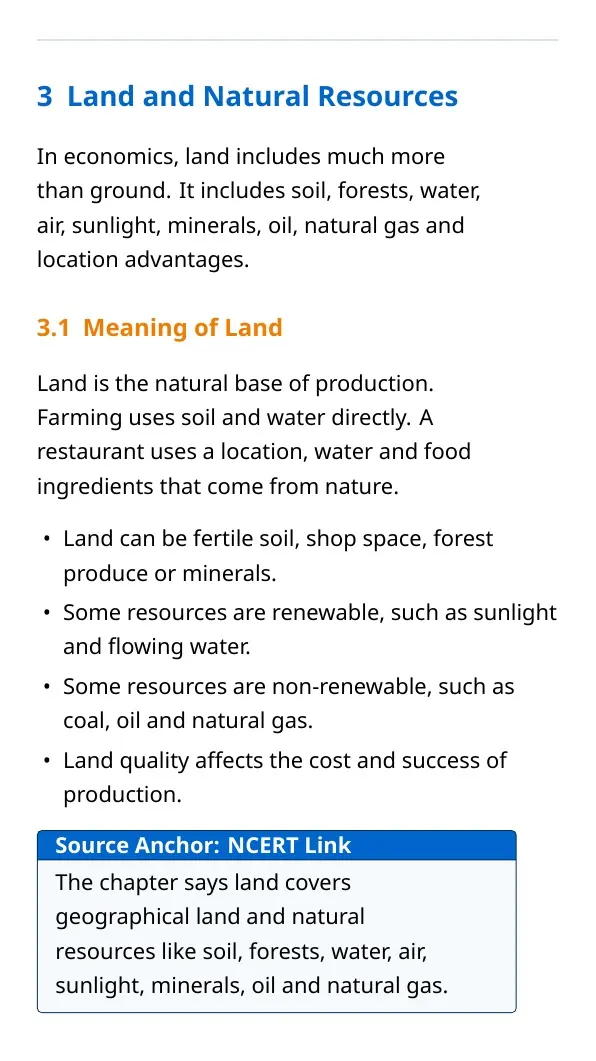
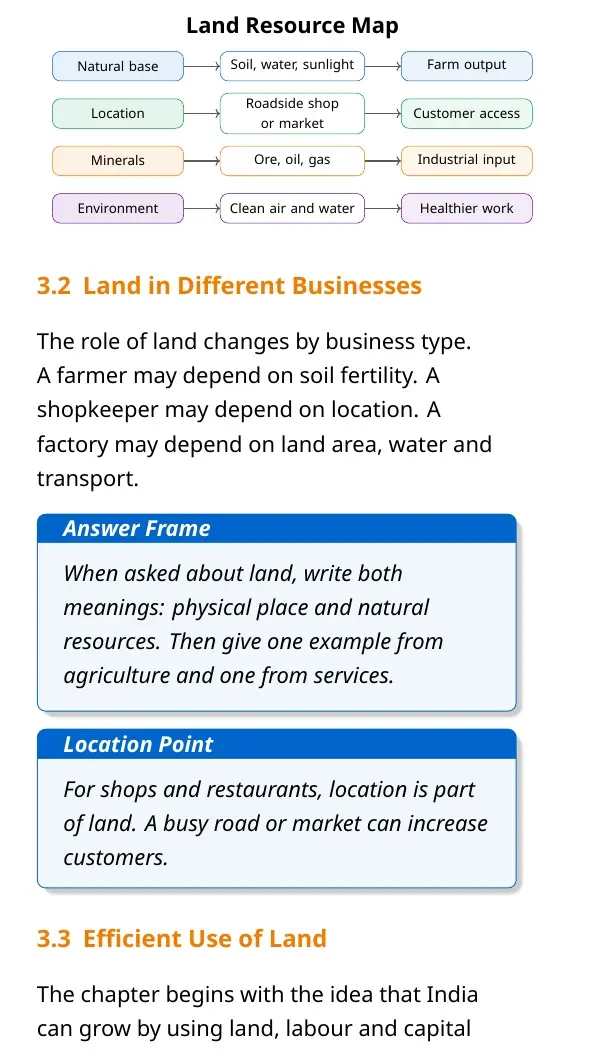
- Land includes natural resources and location.
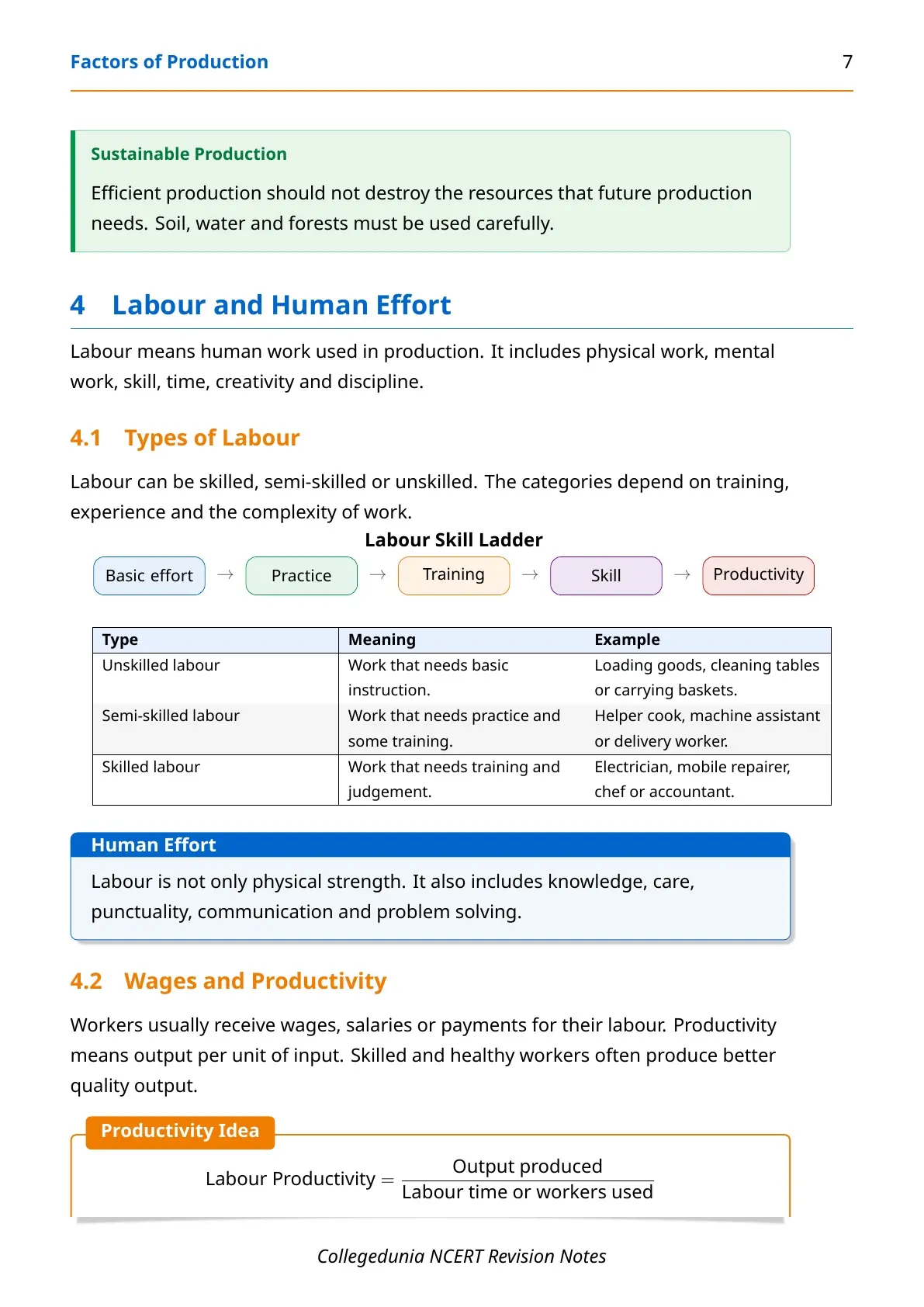
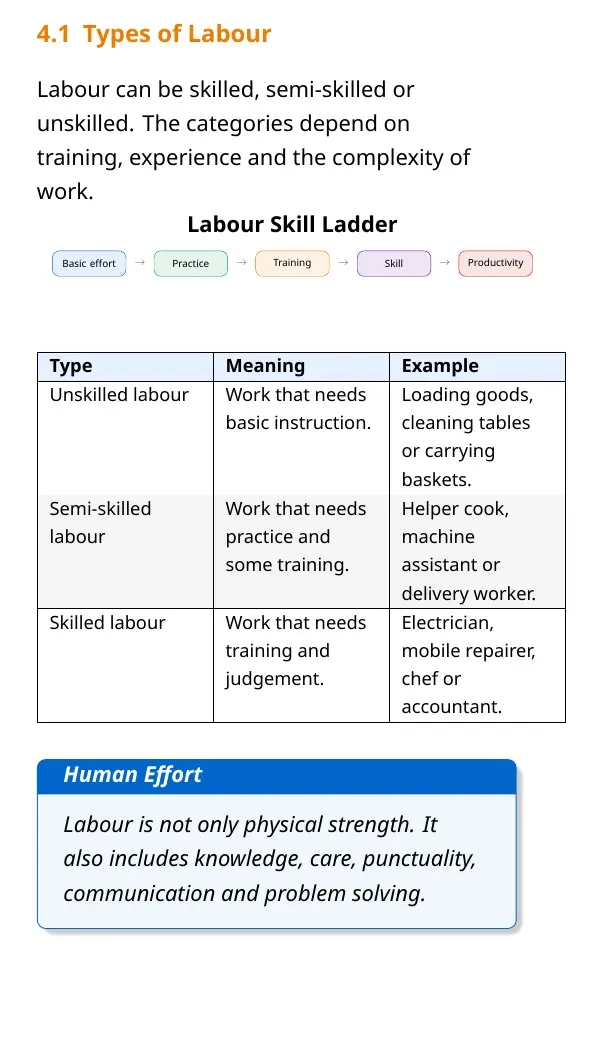
- Labour includes human effort, skill, time and judgement.
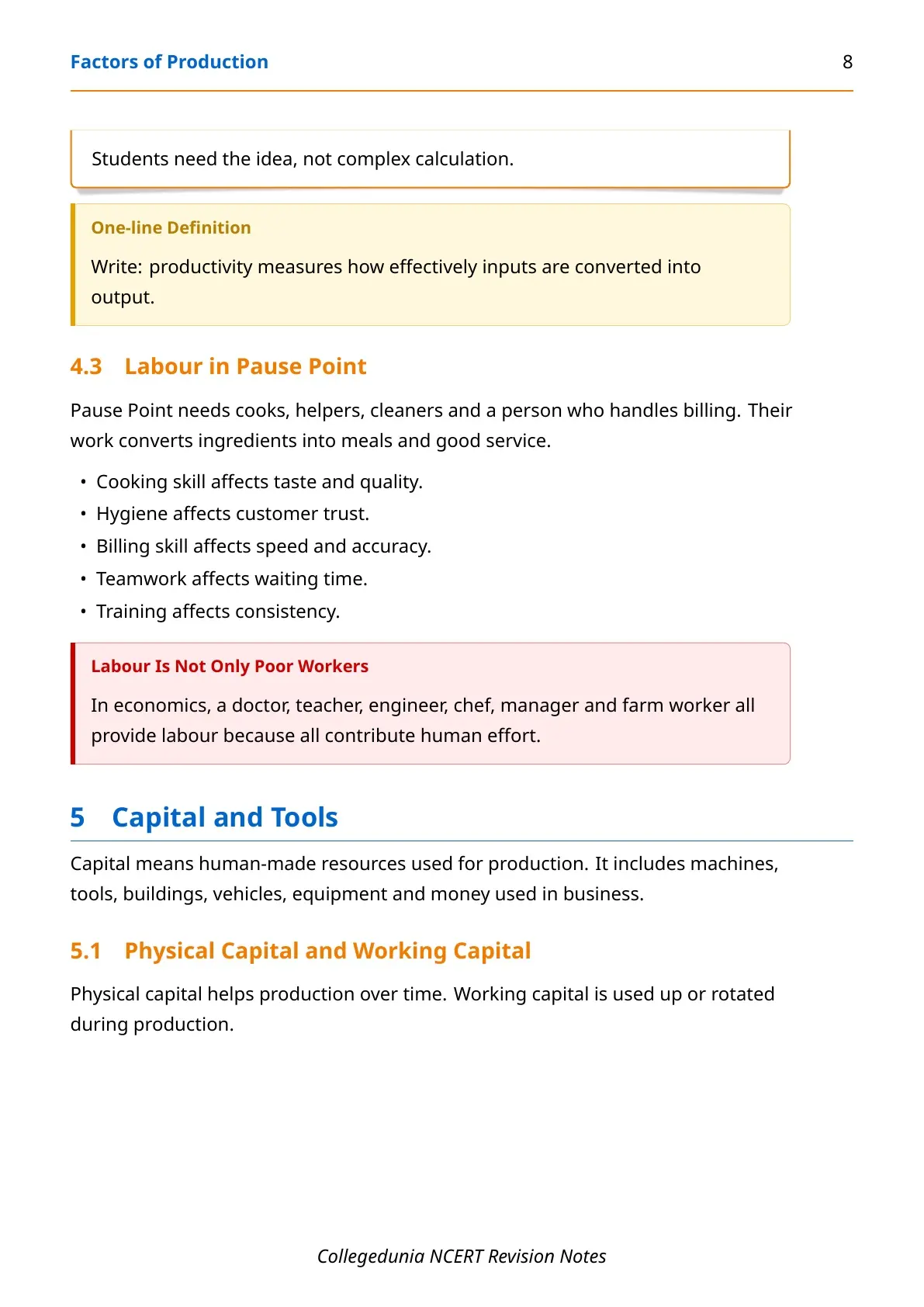
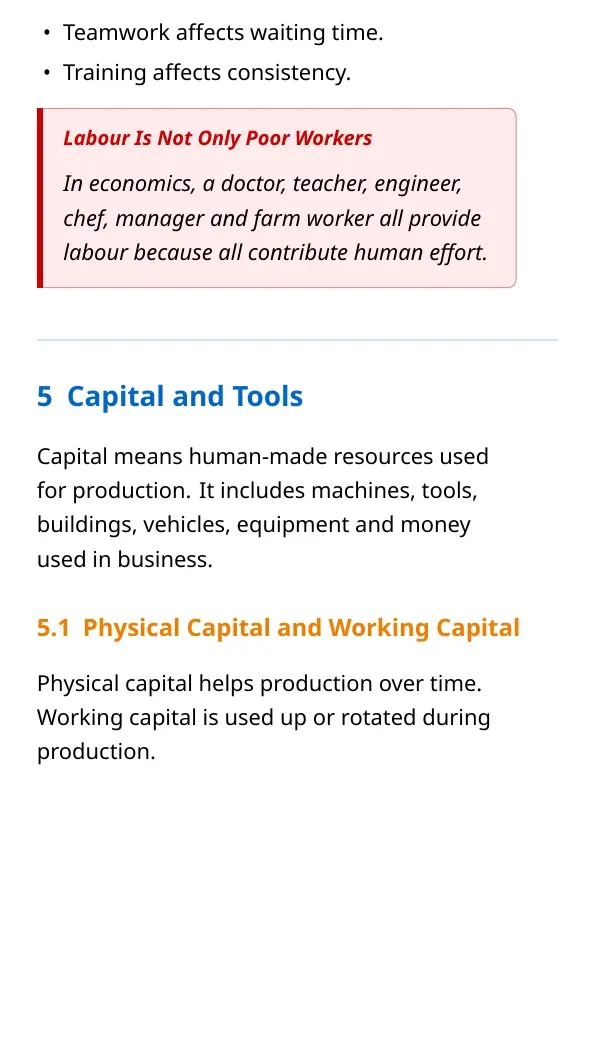
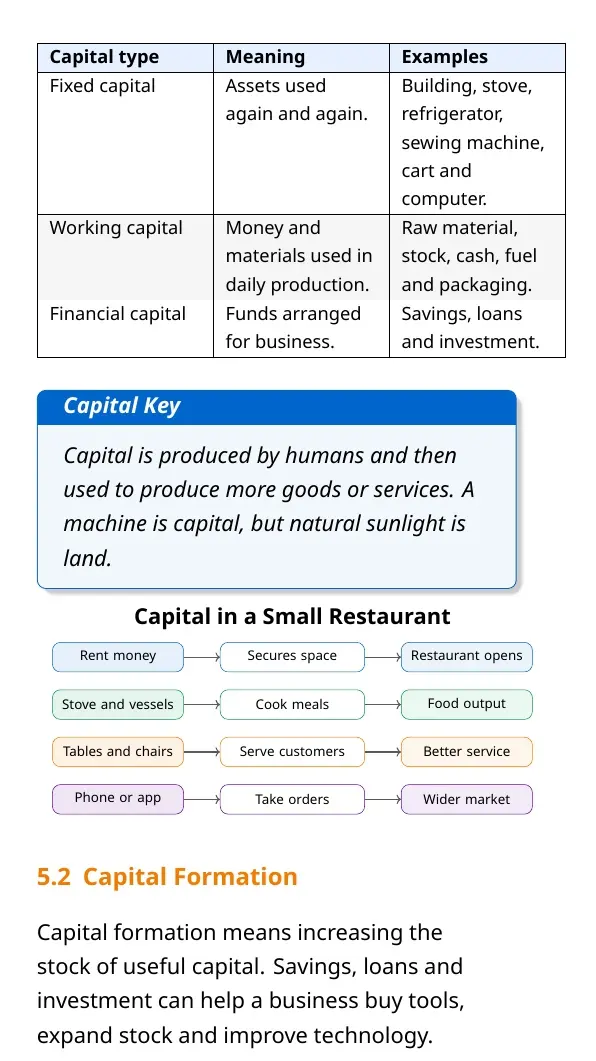
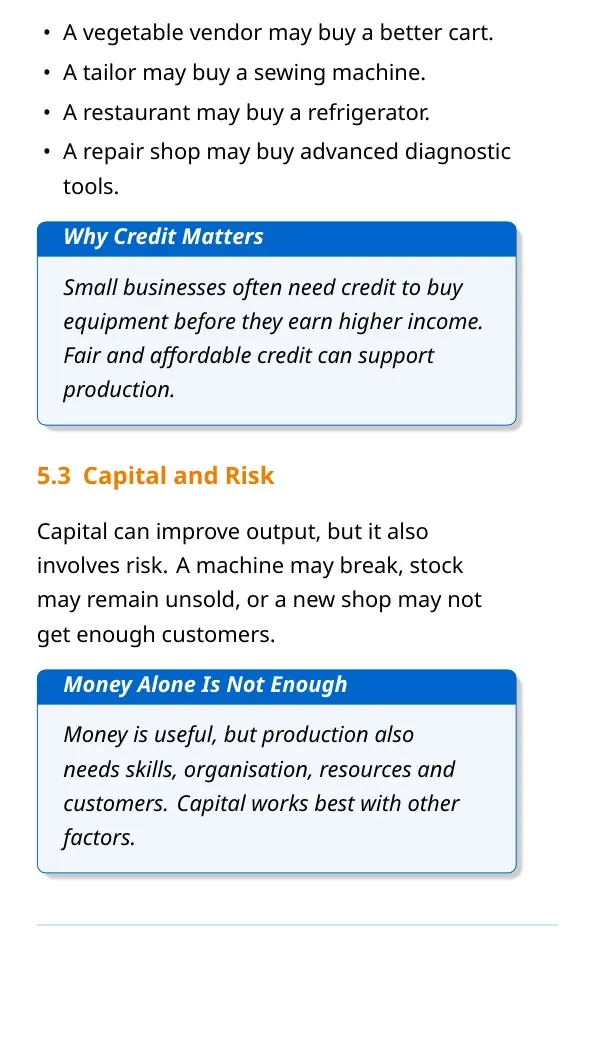
- Capital includes tools, buildings, machines, stock and business money.
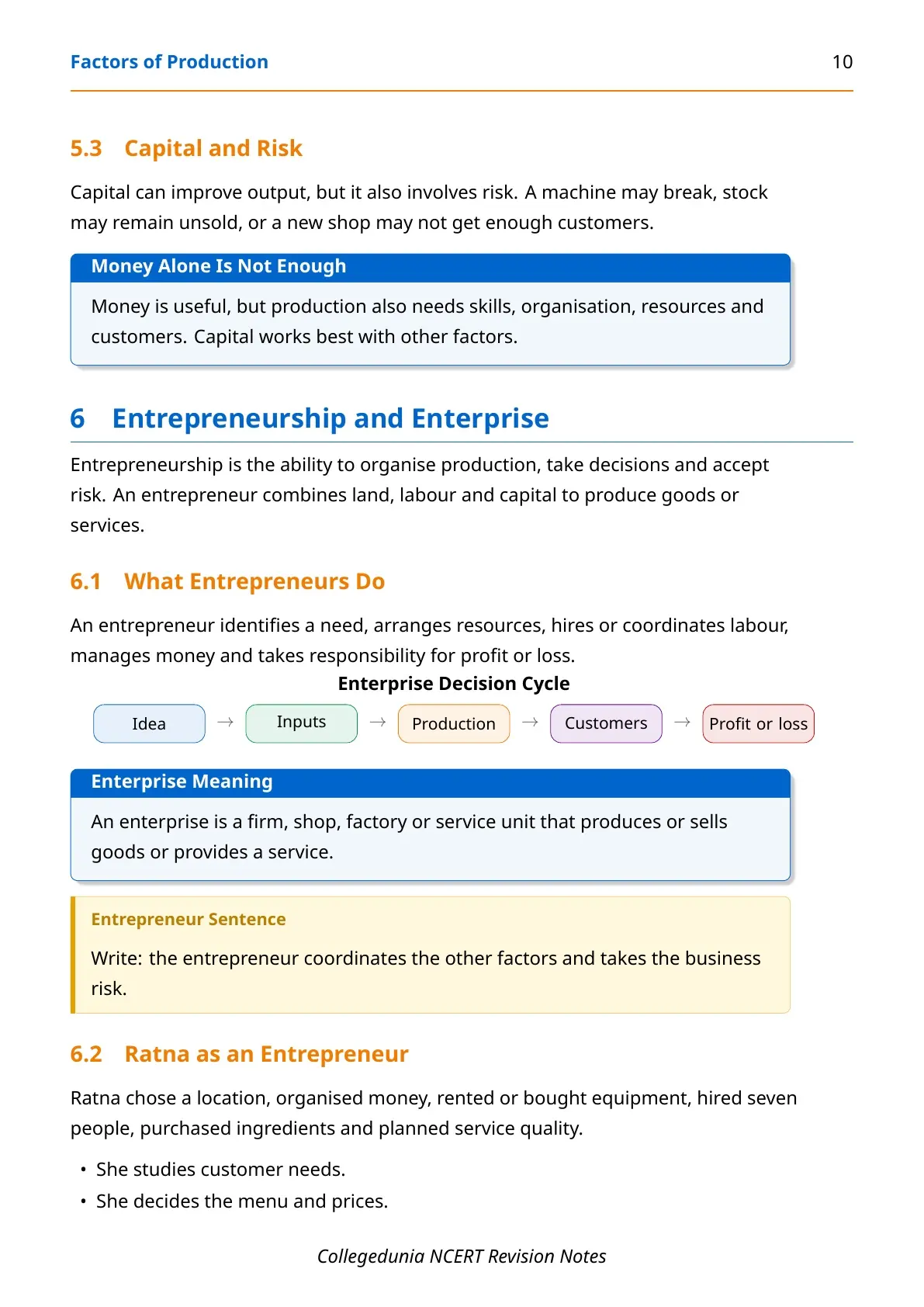
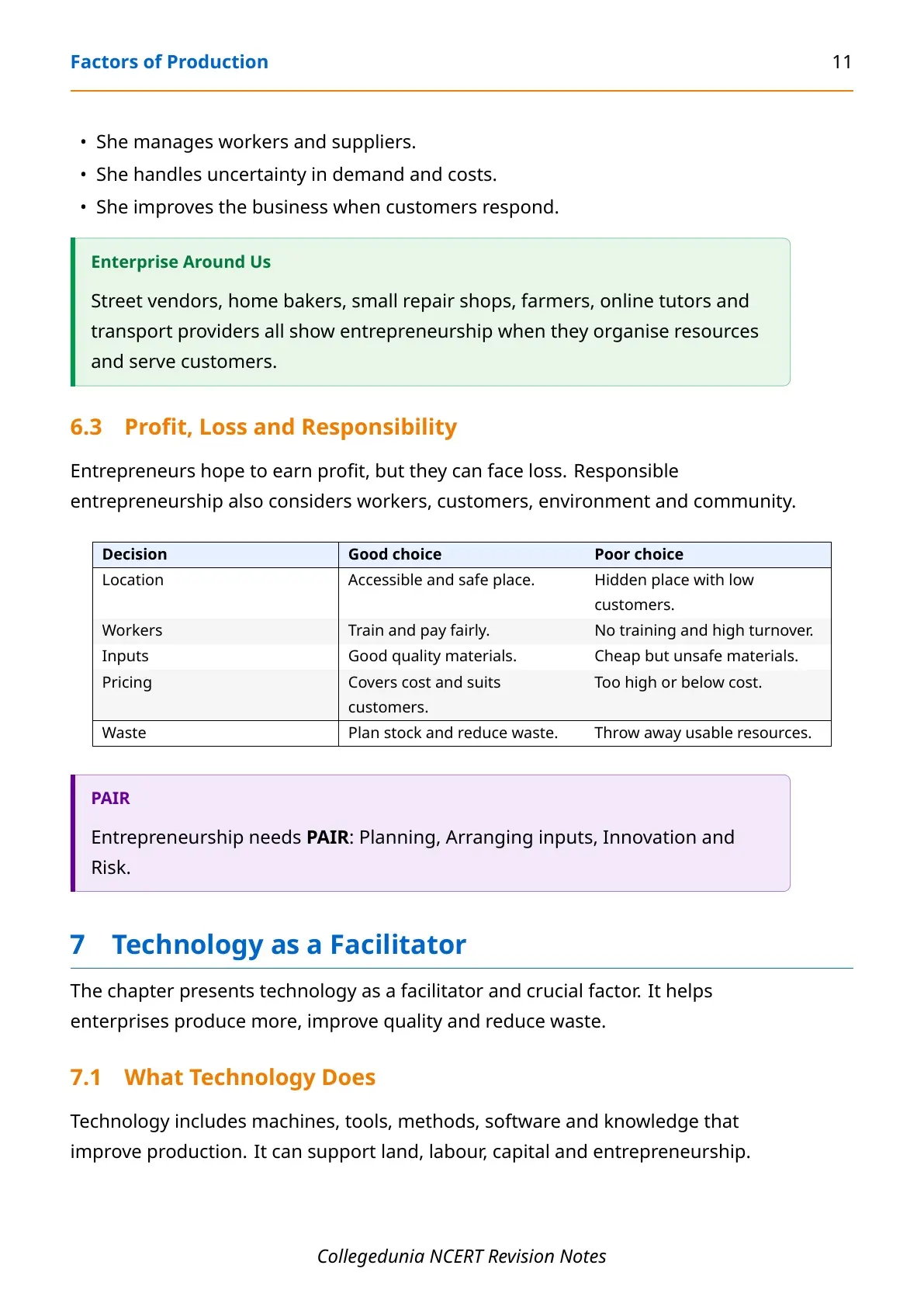
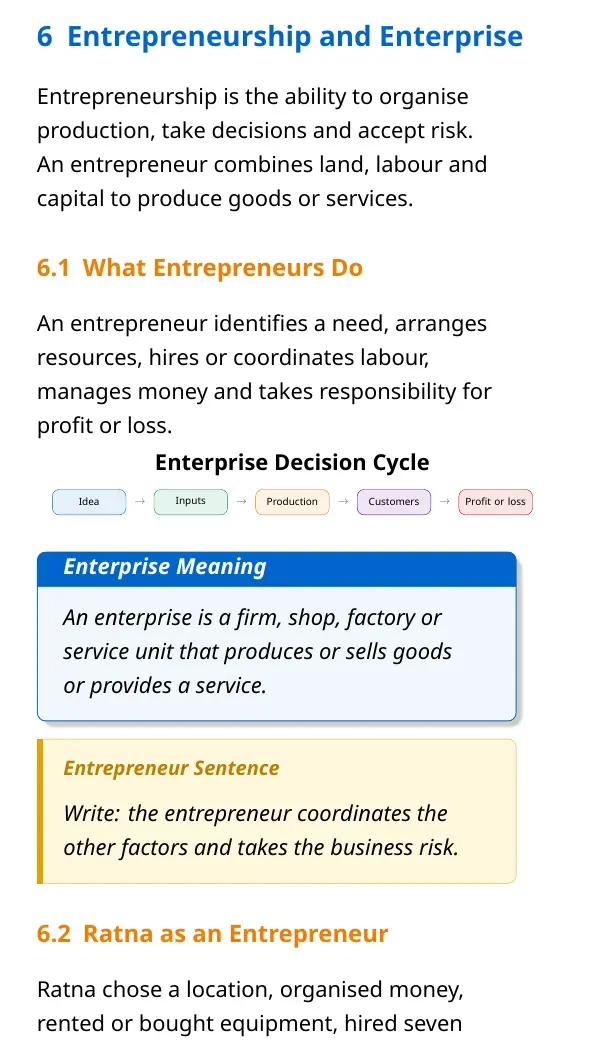
- Entrepreneurship coordinates inputs and carries business risk.
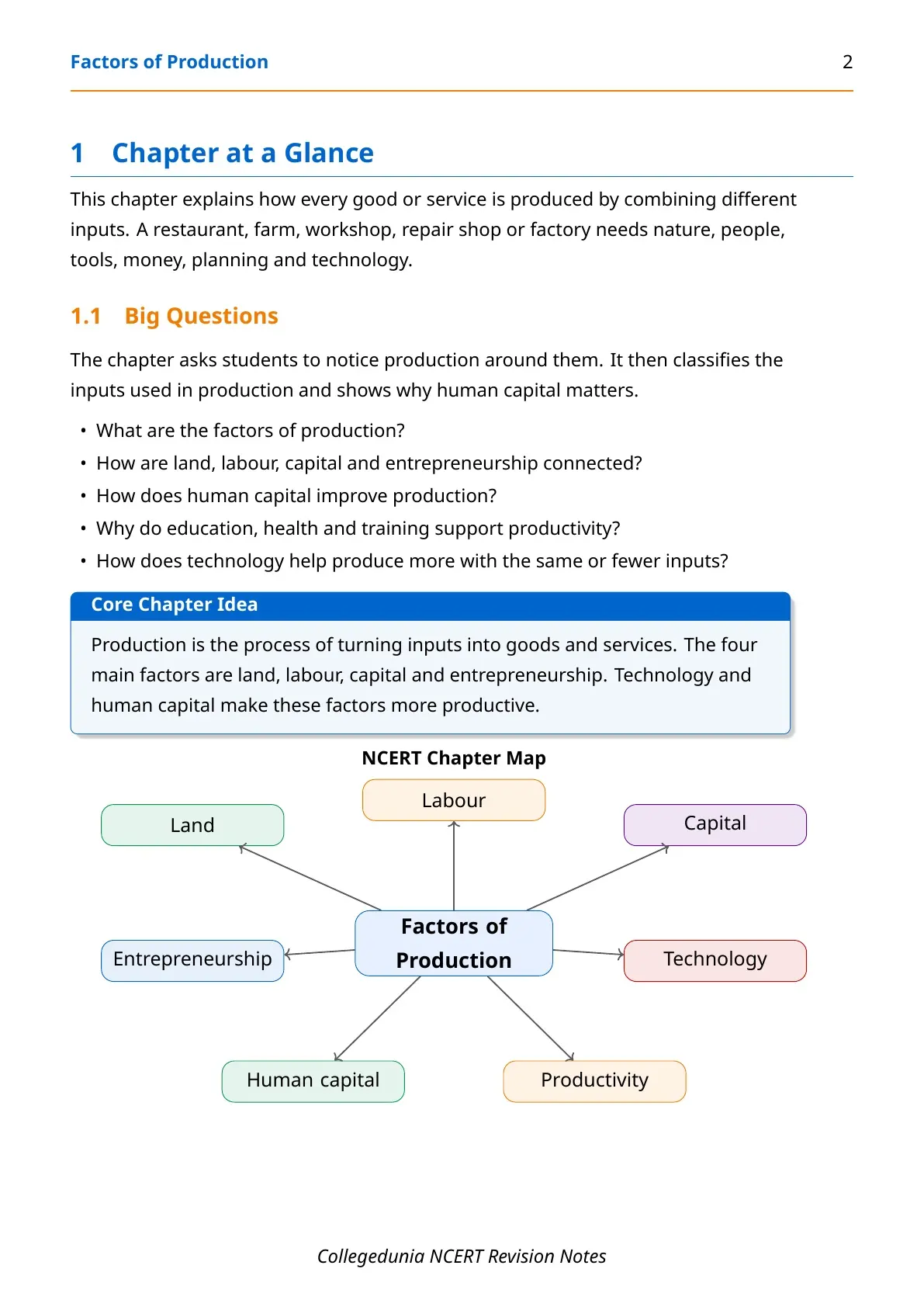
- Technology and human capital improve productivity.
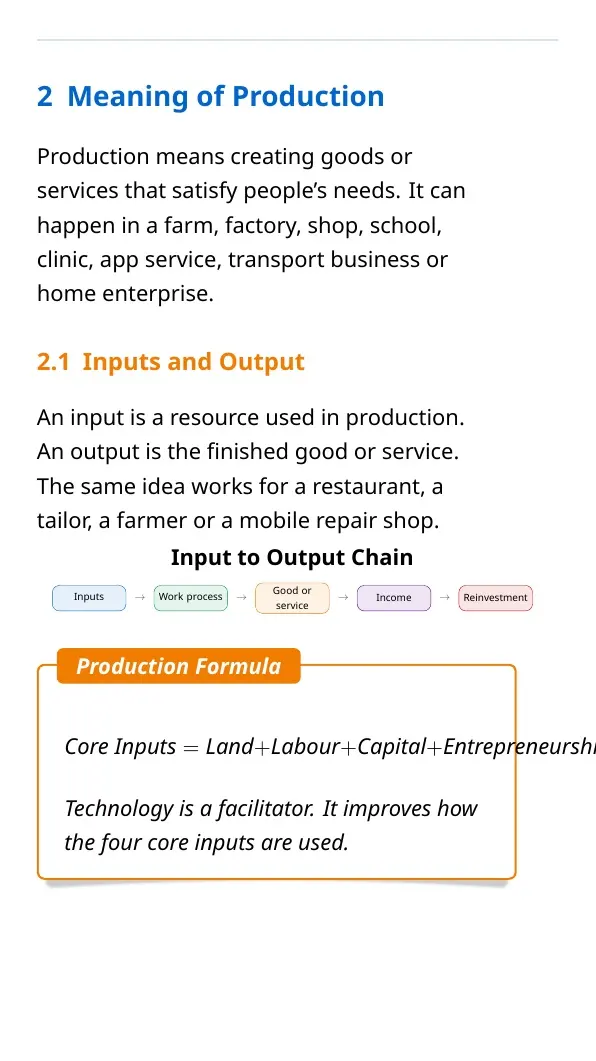
Factors of Production Flow
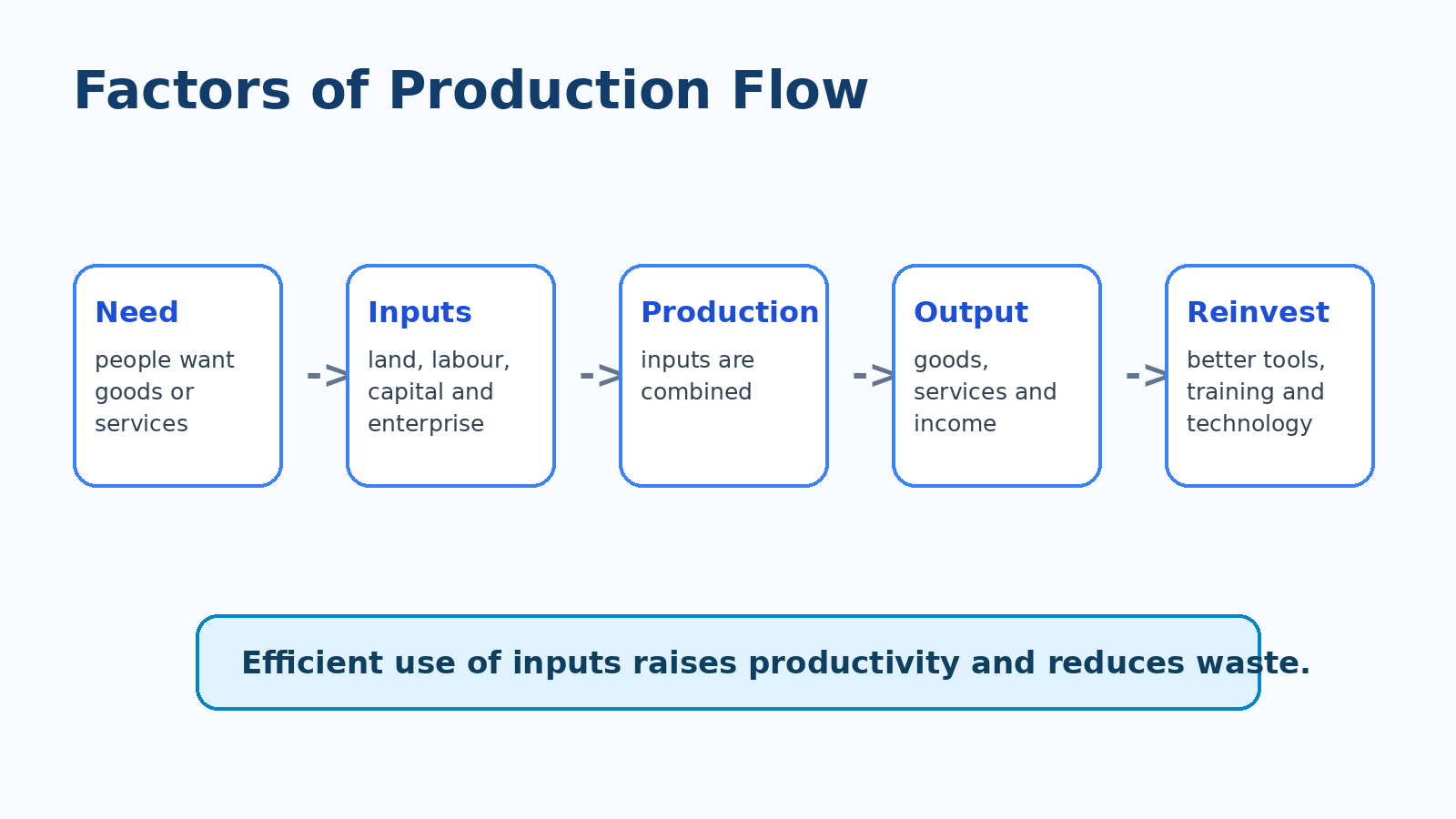
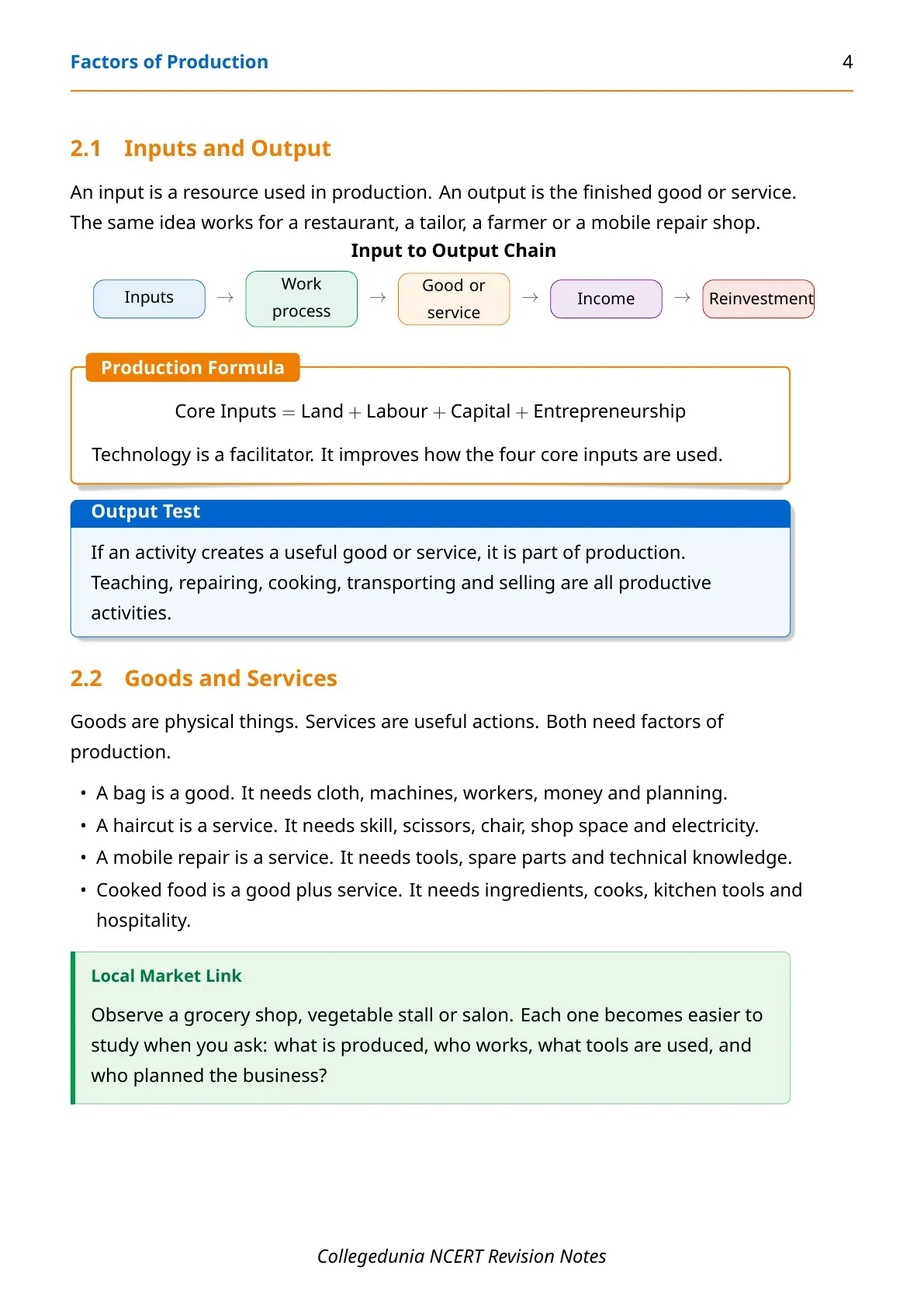
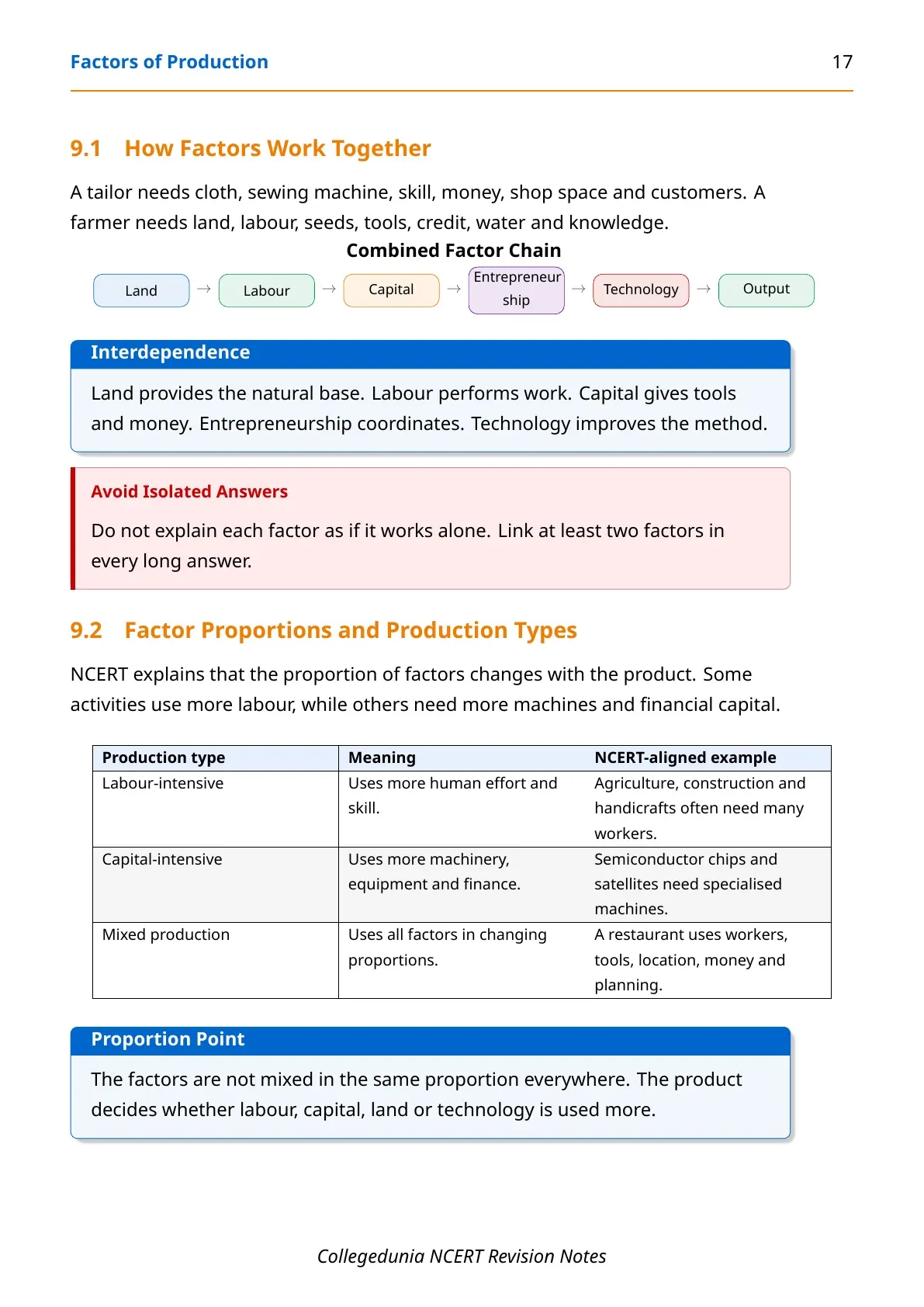
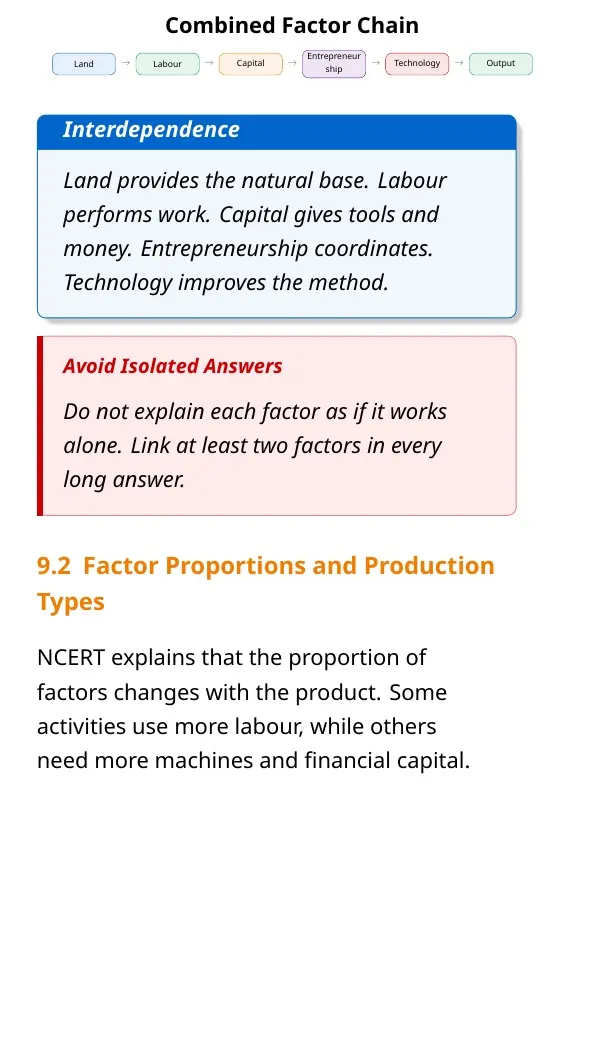
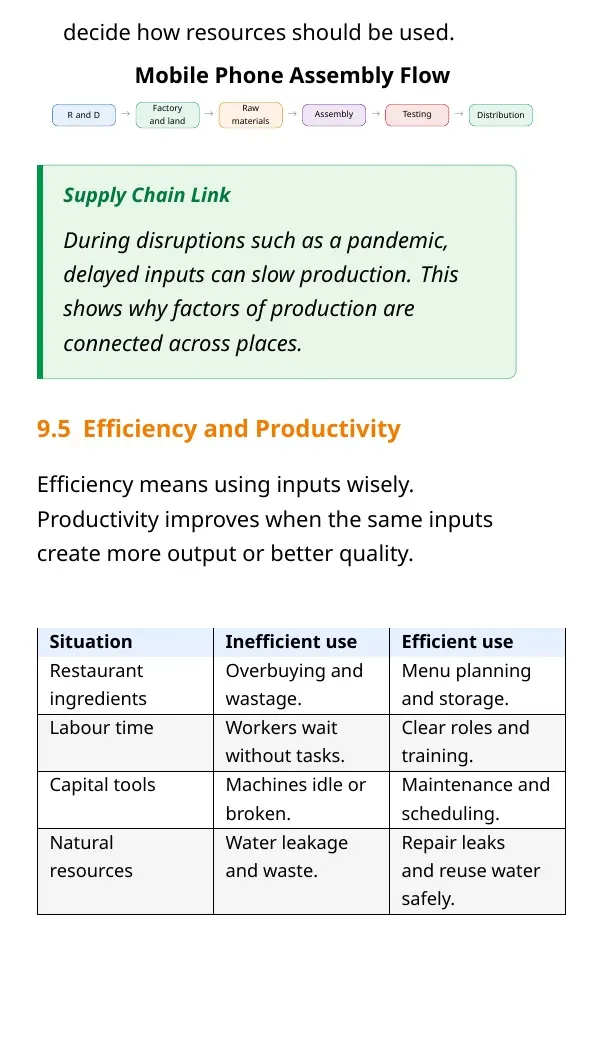
The chapter shows production as a chain. Inputs enter a work process, become useful output, create income and can be reinvested into better tools, training and technology.
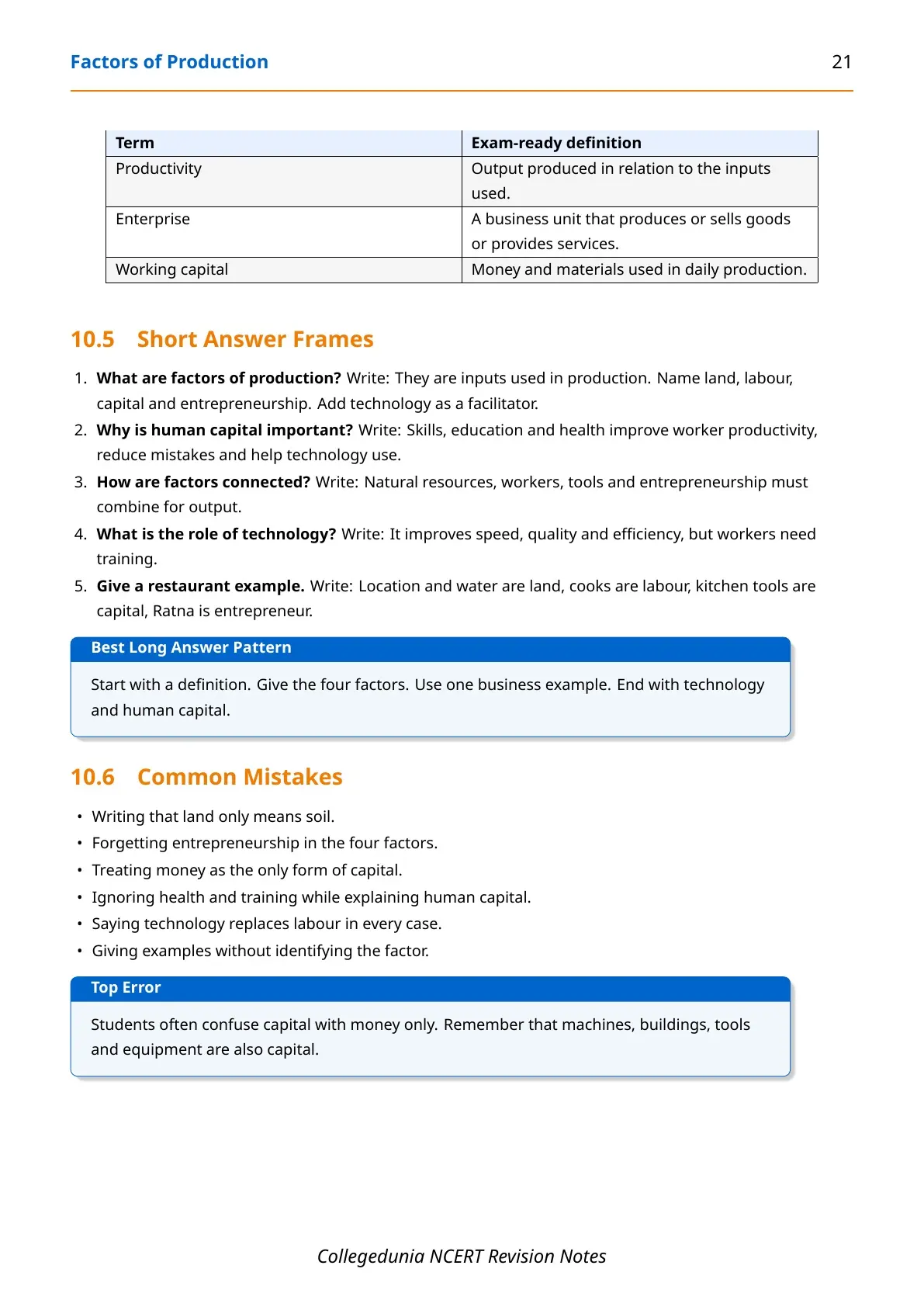
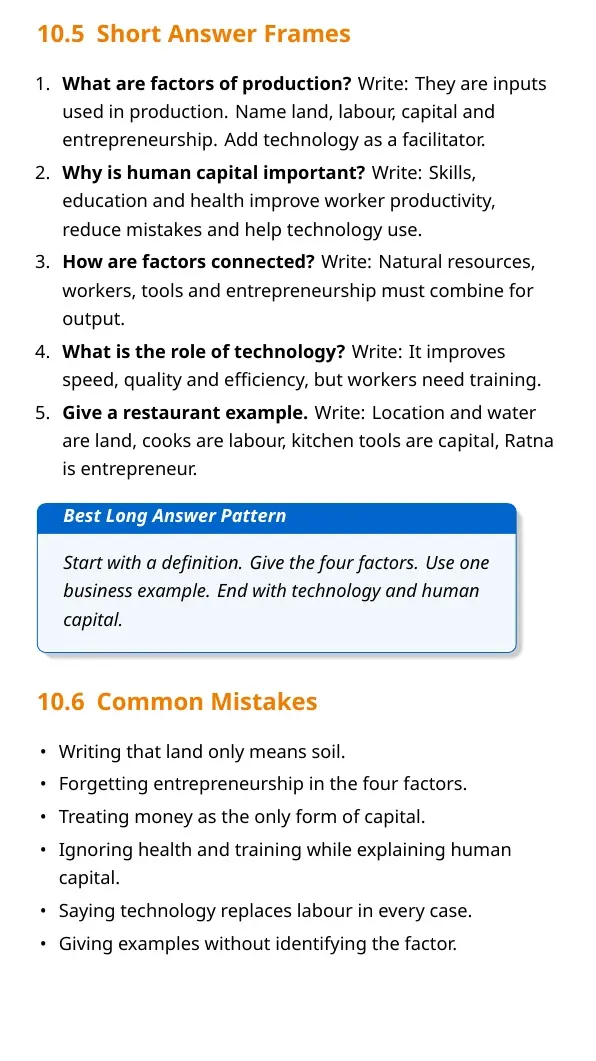
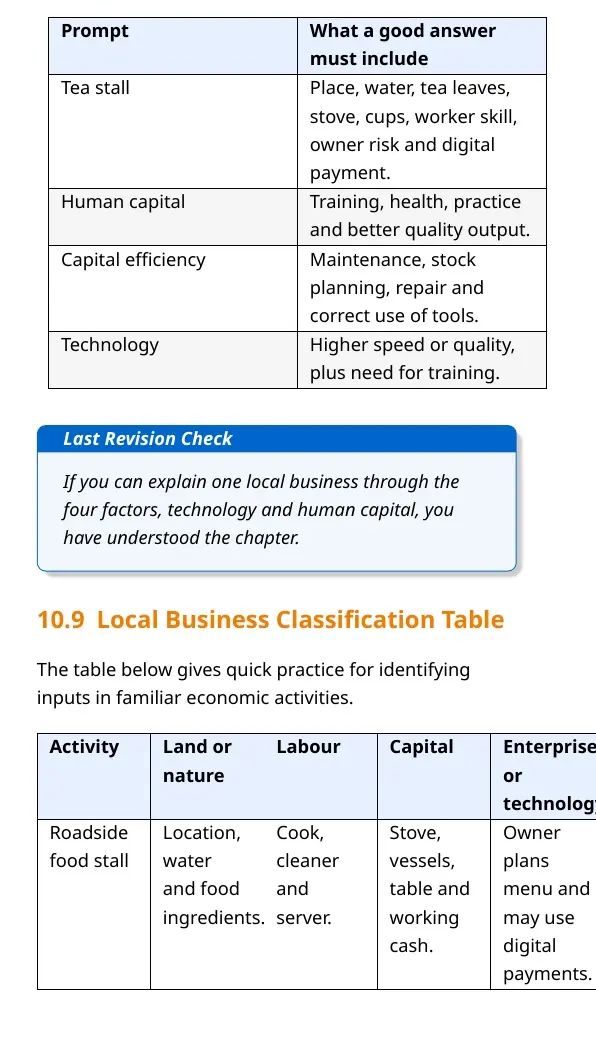
For a short answer, define production first and then name the four main factors. Add technology as a facilitator when explaining modern businesses.
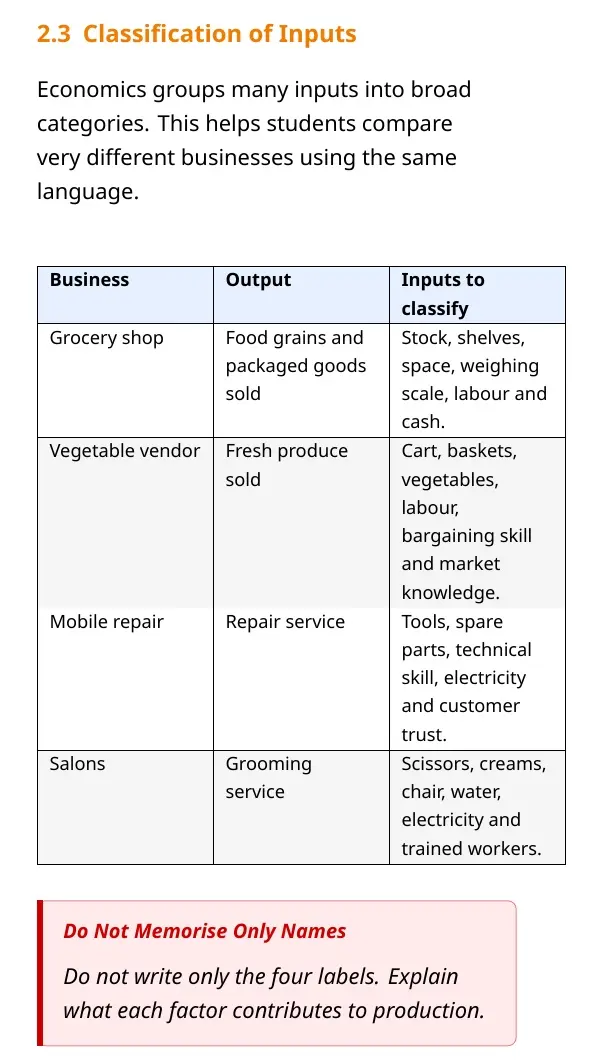
Land, Labour, Capital and Entrepreneurship
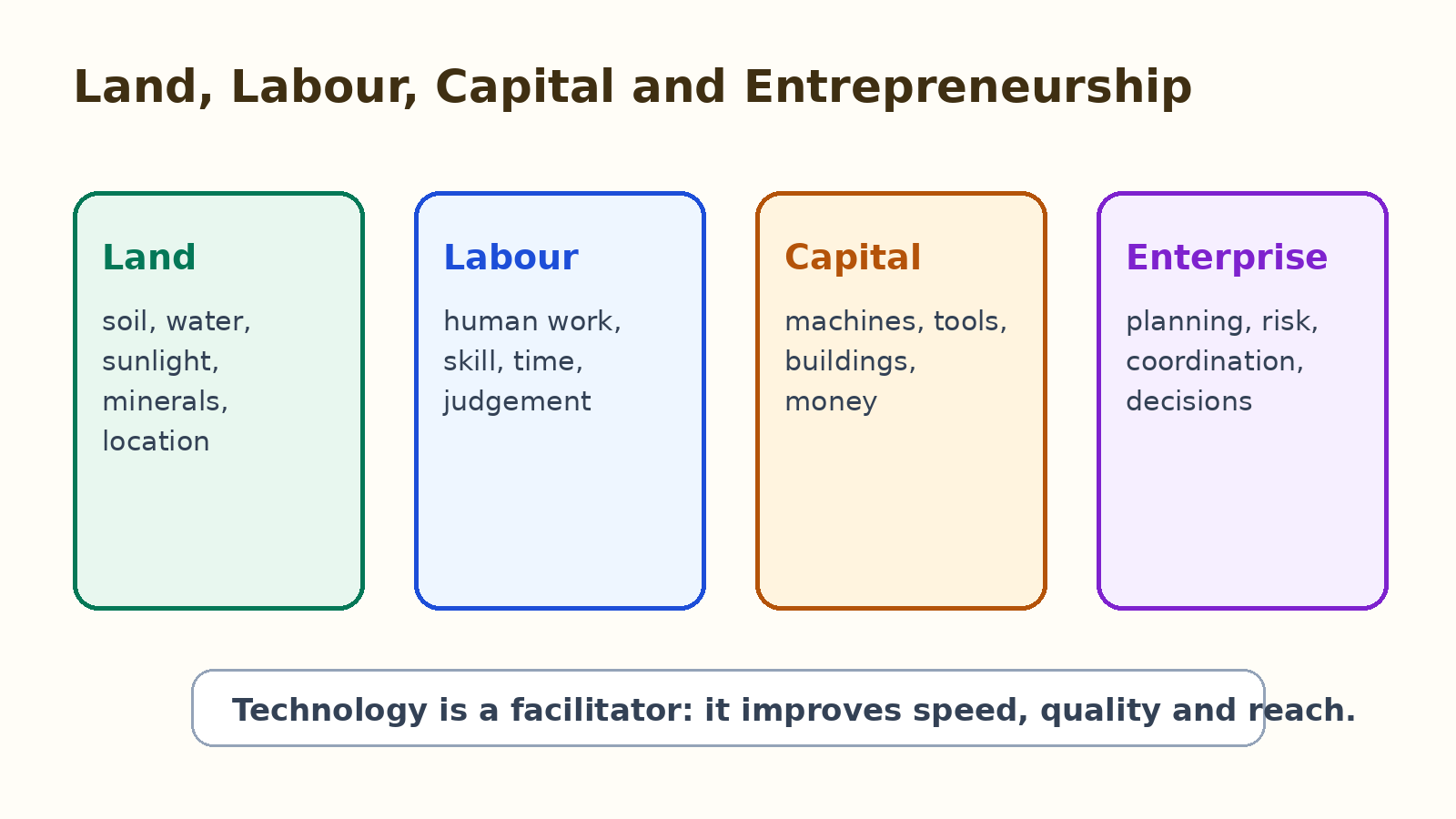
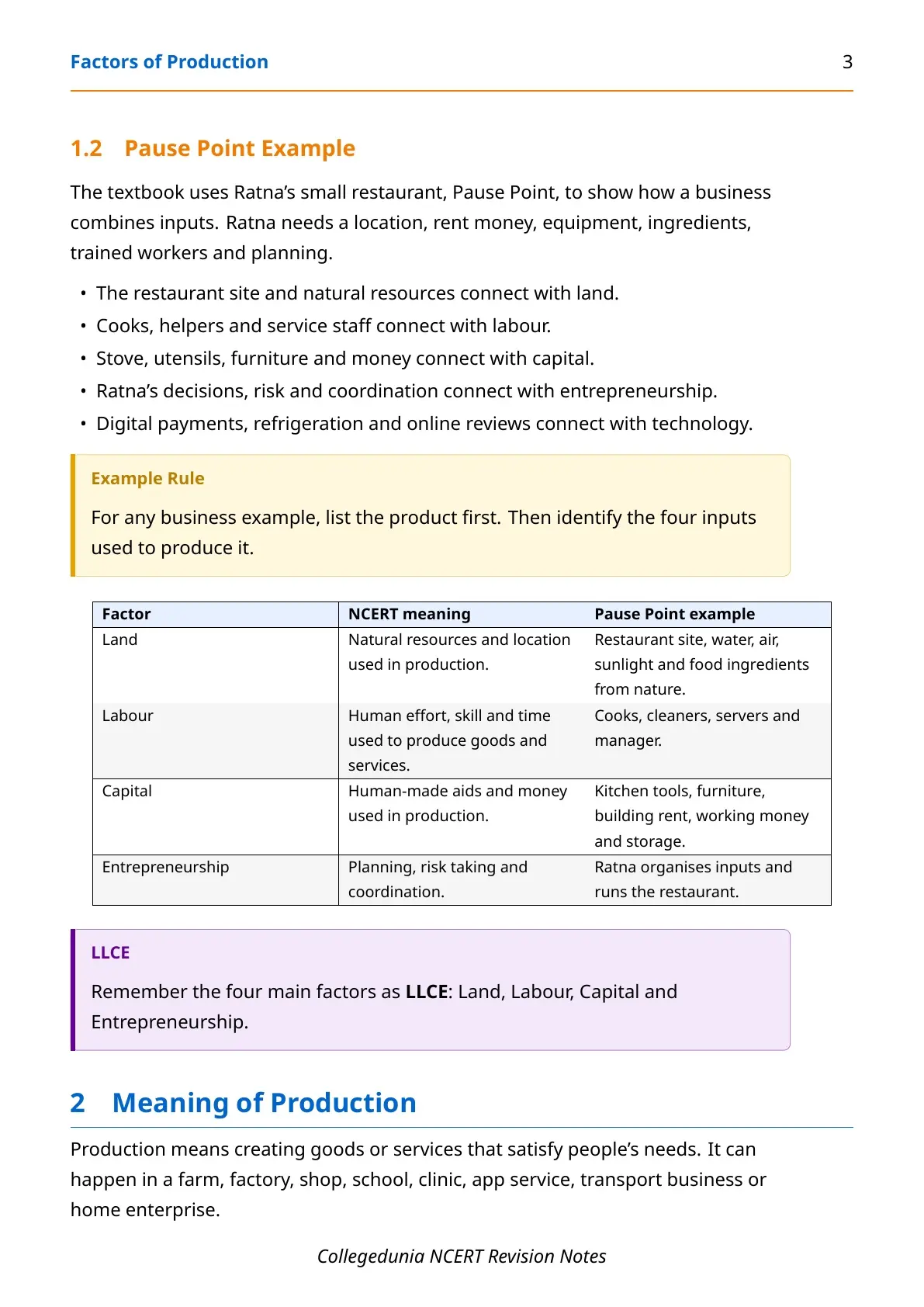
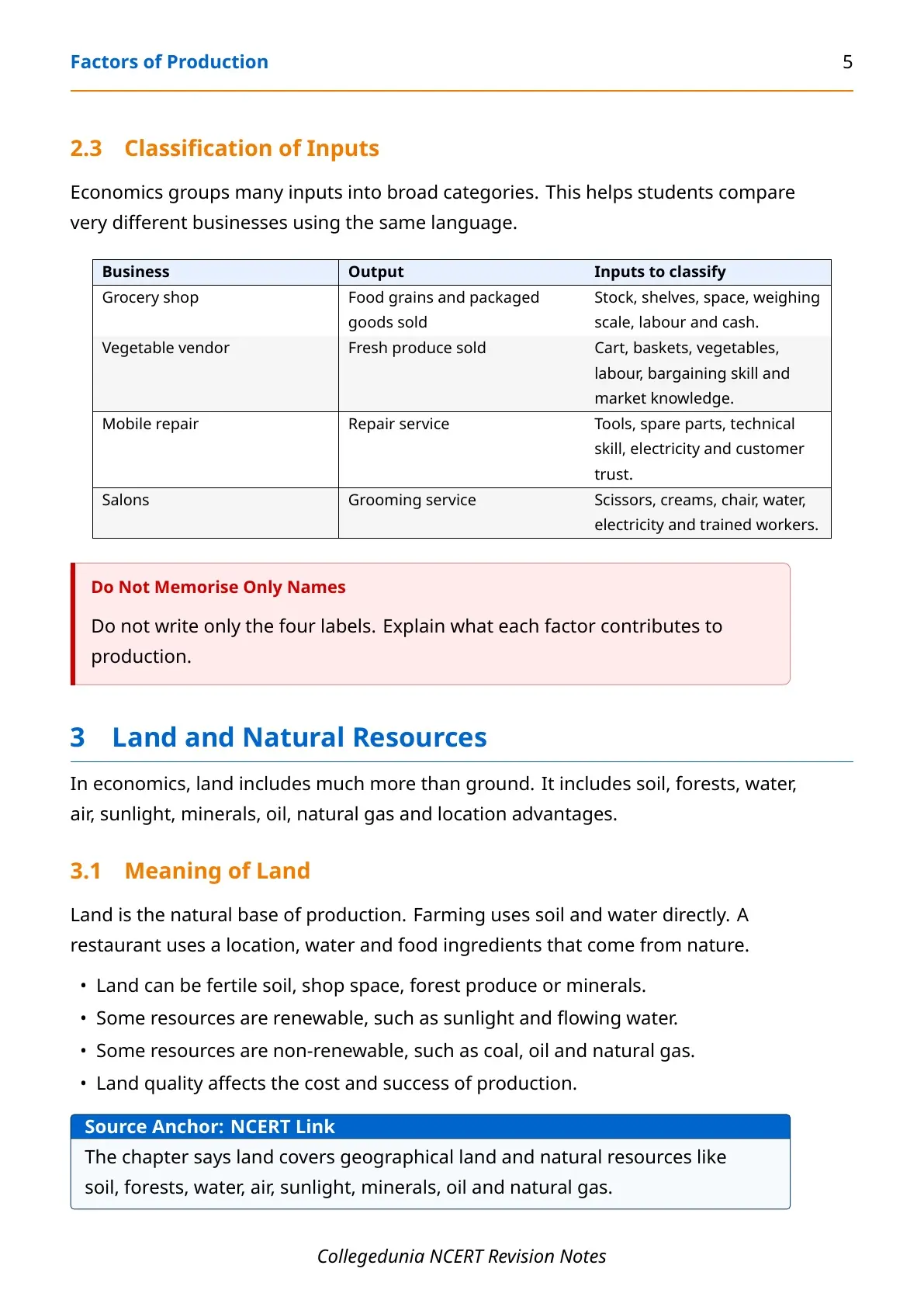
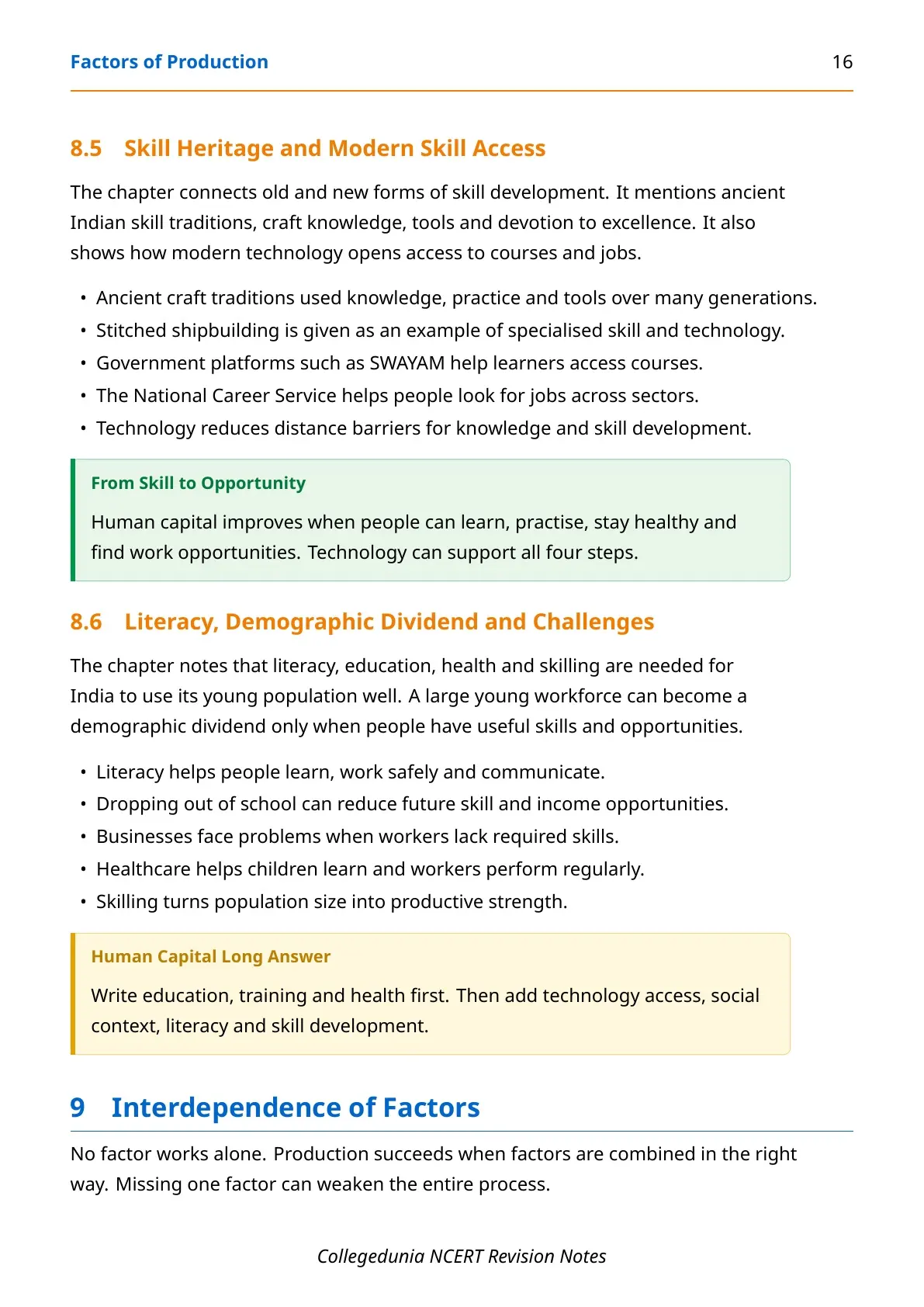
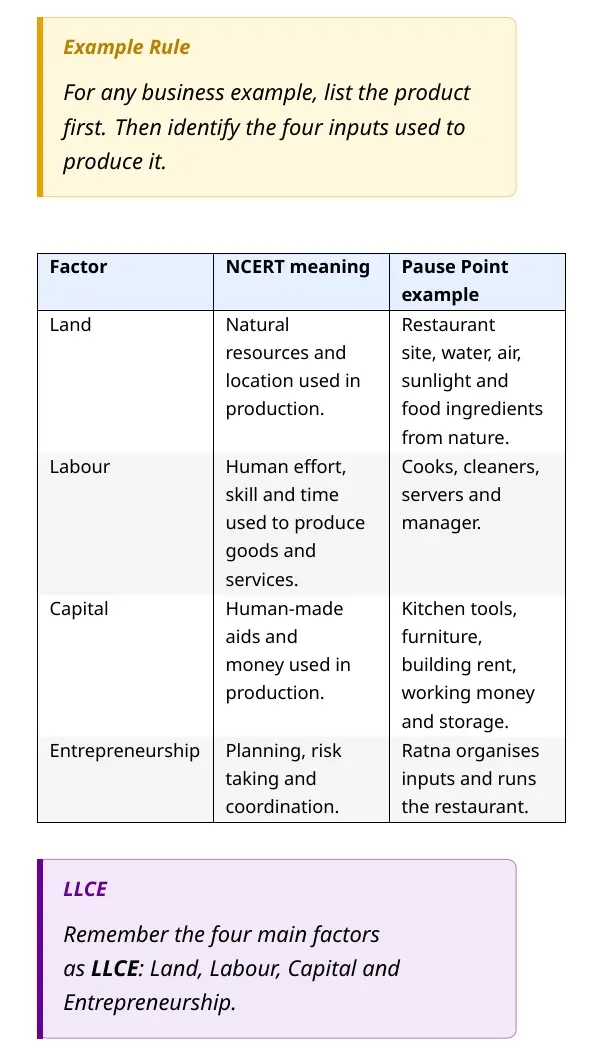
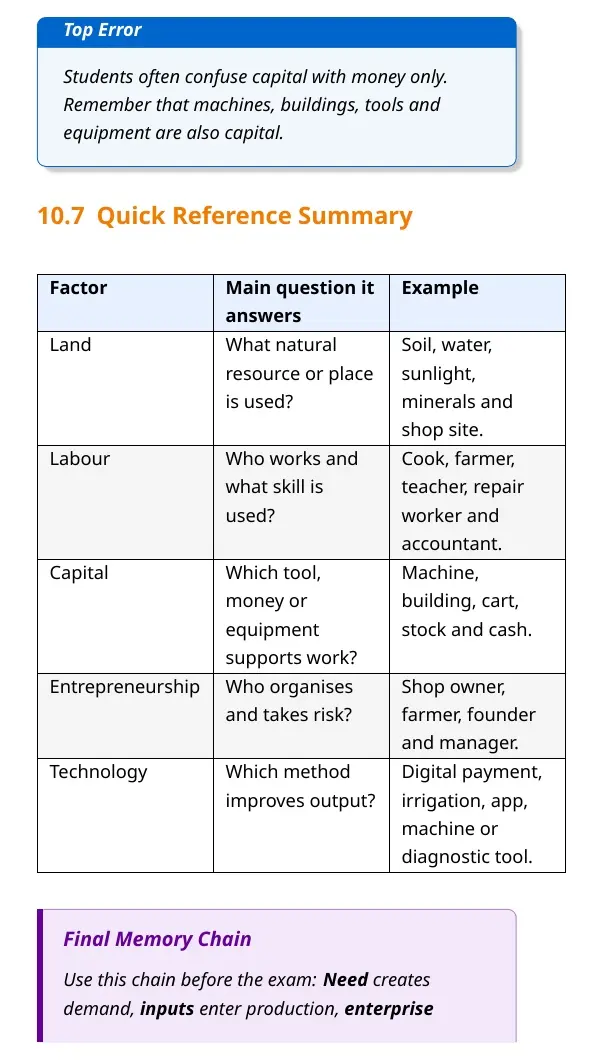
The four factors do not work separately. Land gives the natural base, labour performs work, capital provides tools and money, and entrepreneurship organises all inputs.
| Factor | Meaning | Pause Point example |
|---|---|---|
| Land | Natural resources and location | Restaurant site, water and ingredients from nature |
| Labour | Human effort and skill | Cooks, helpers and service staff |
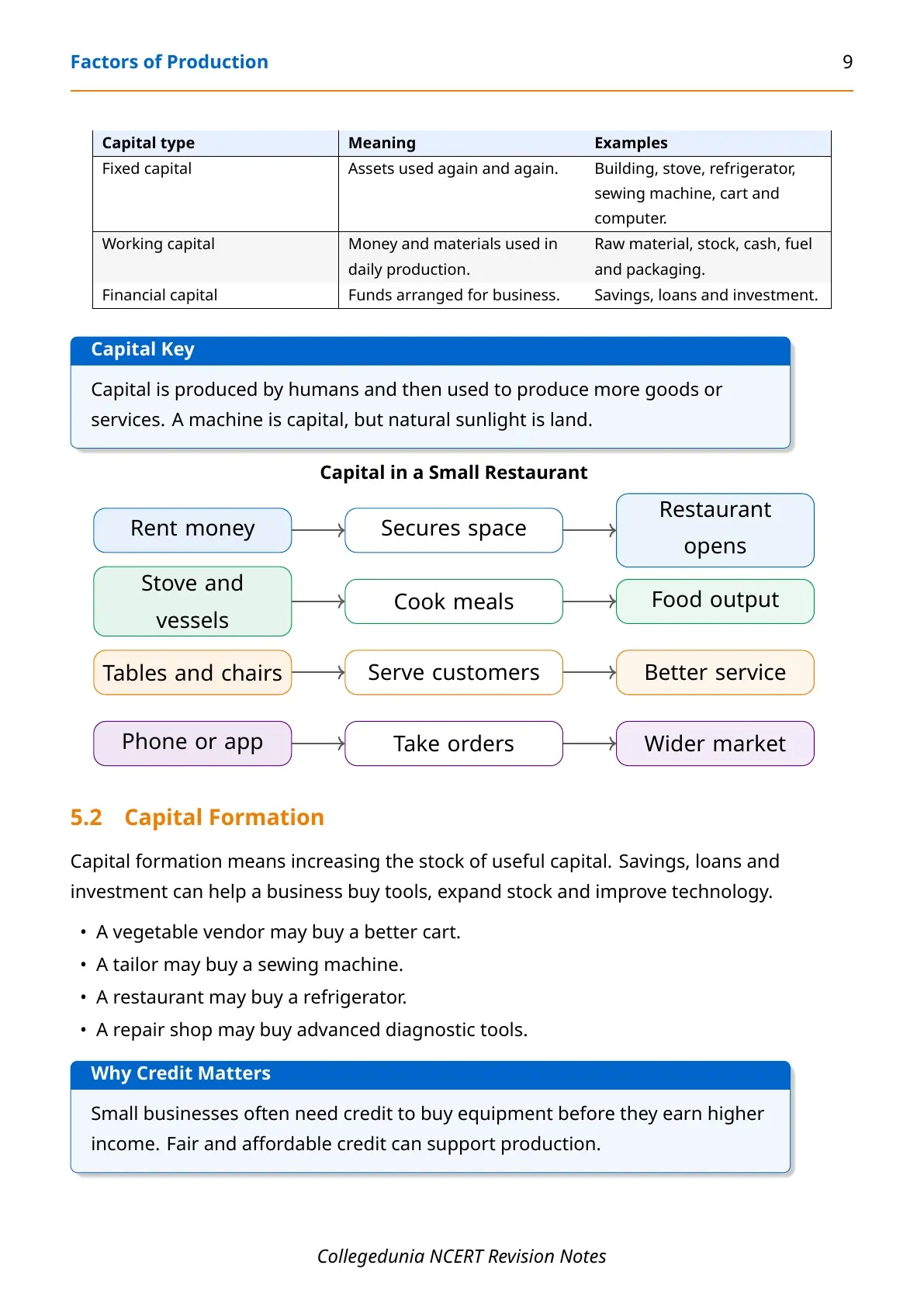
| Capital | Tools, equipment, stock and money | Stove, furniture, rent money and storage |
| Entrepreneurship | Coordination and risk taking | Ratna's planning and decisions |
Factors of Production Chapter 7 Video Revision
Source: Magnet Brains on YouTube
Technology and Human Capital in Production
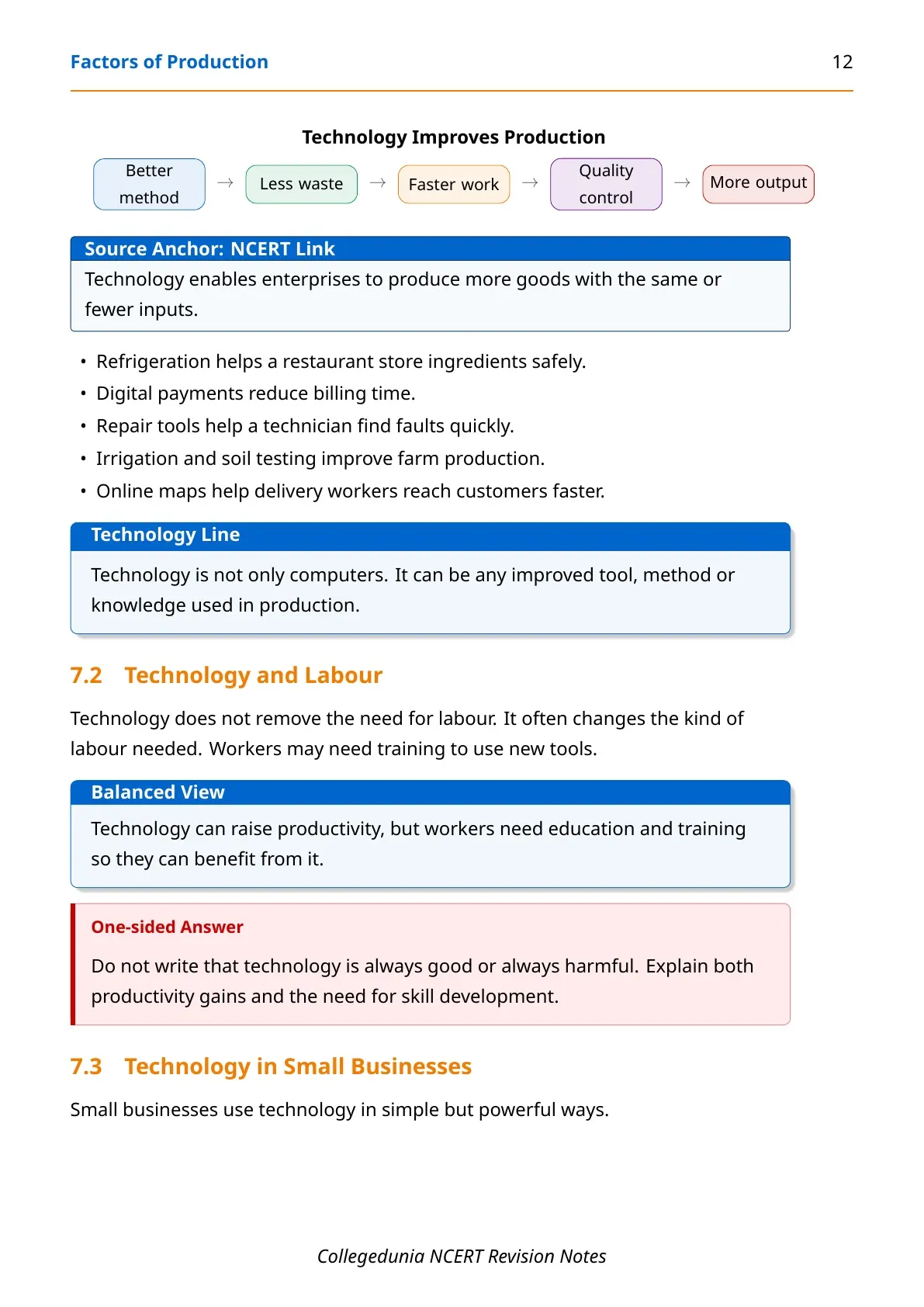
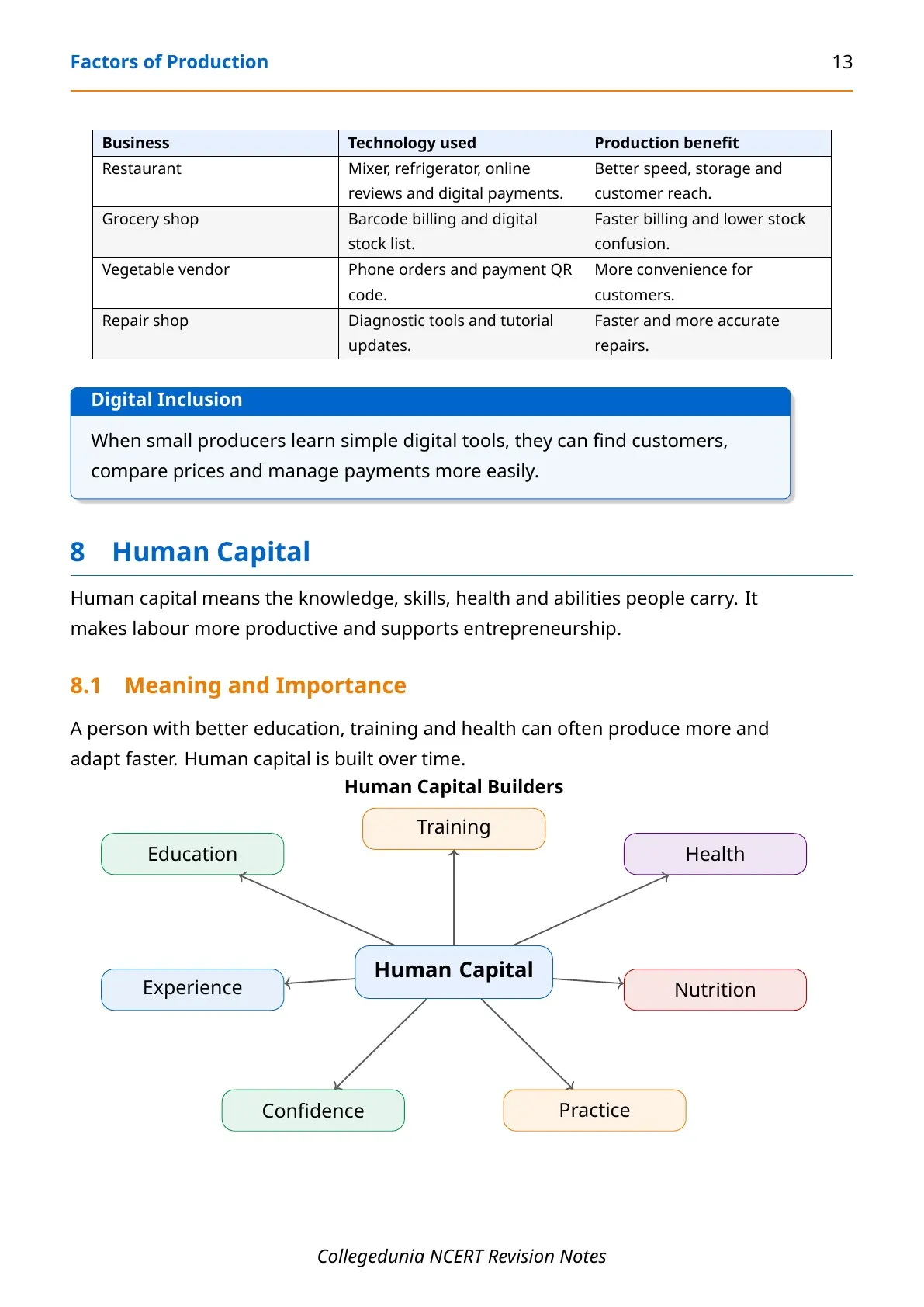
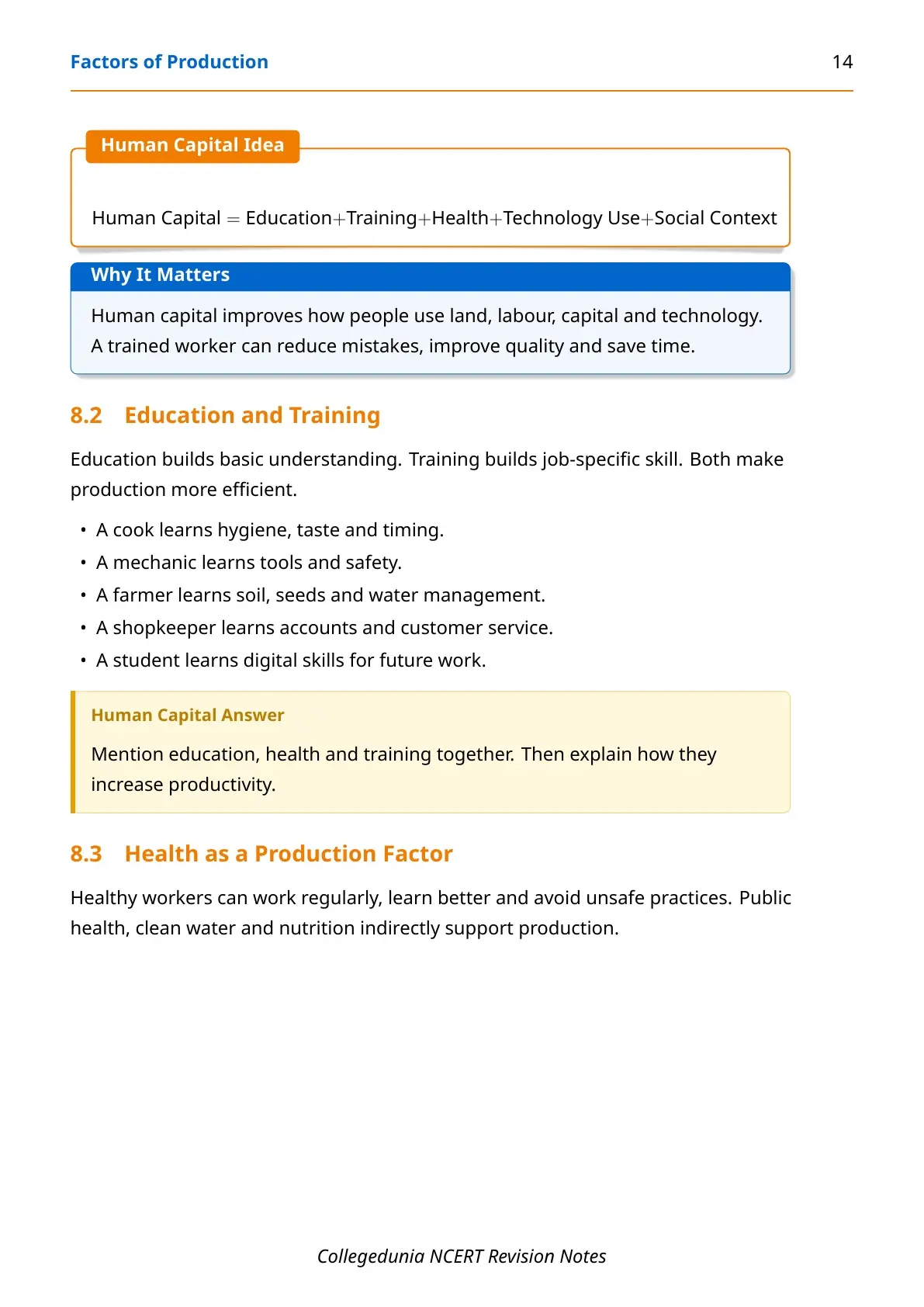
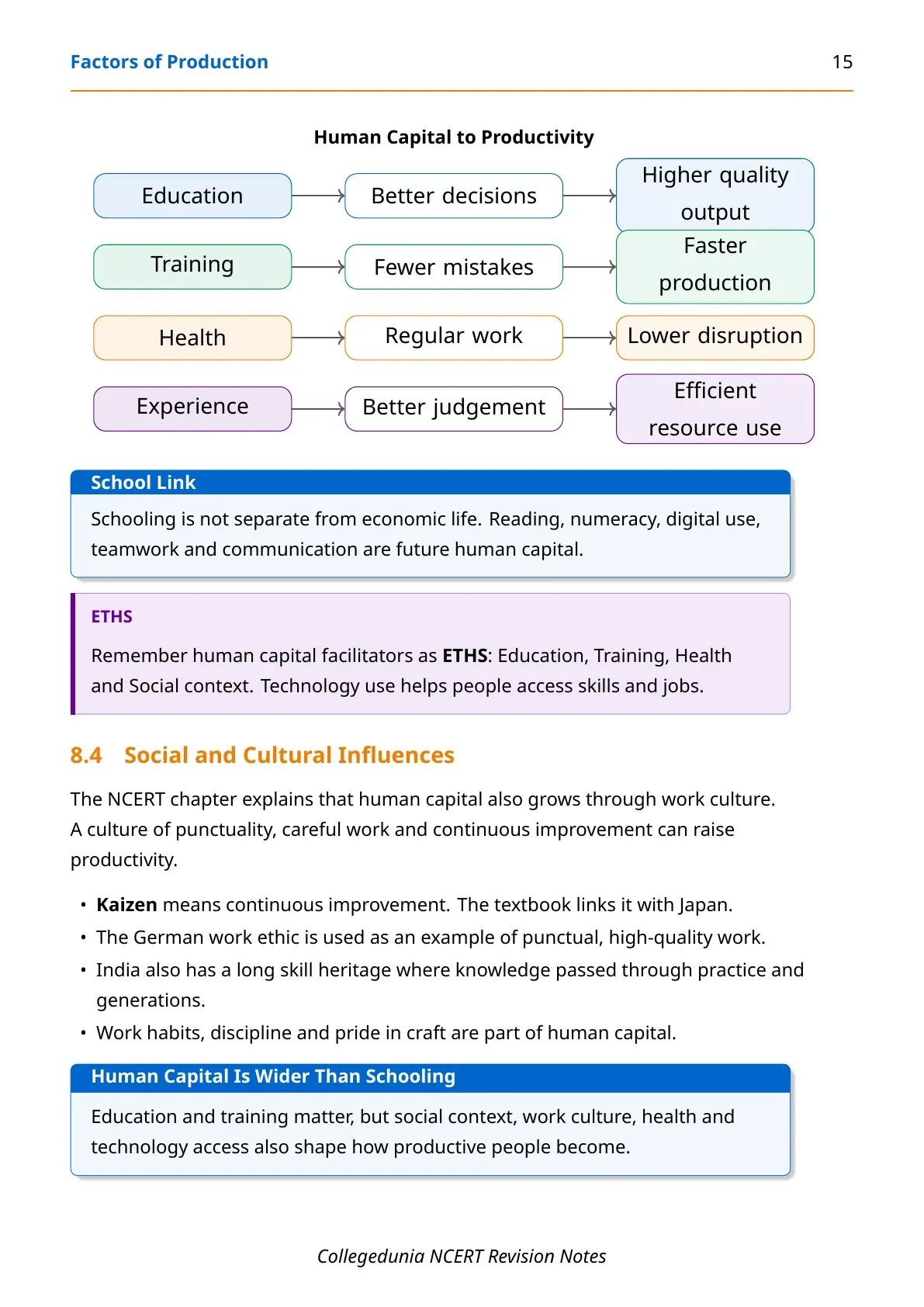
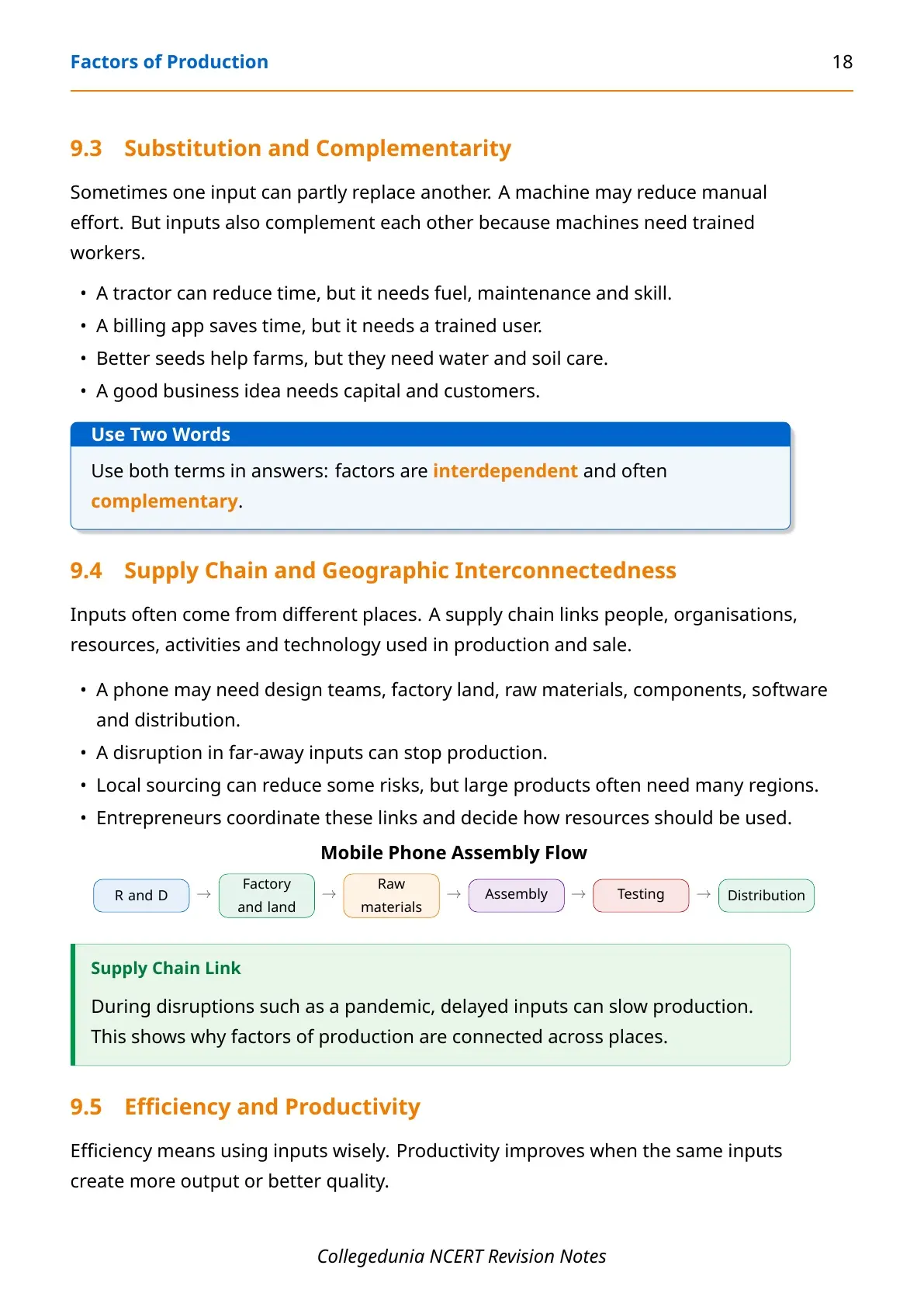
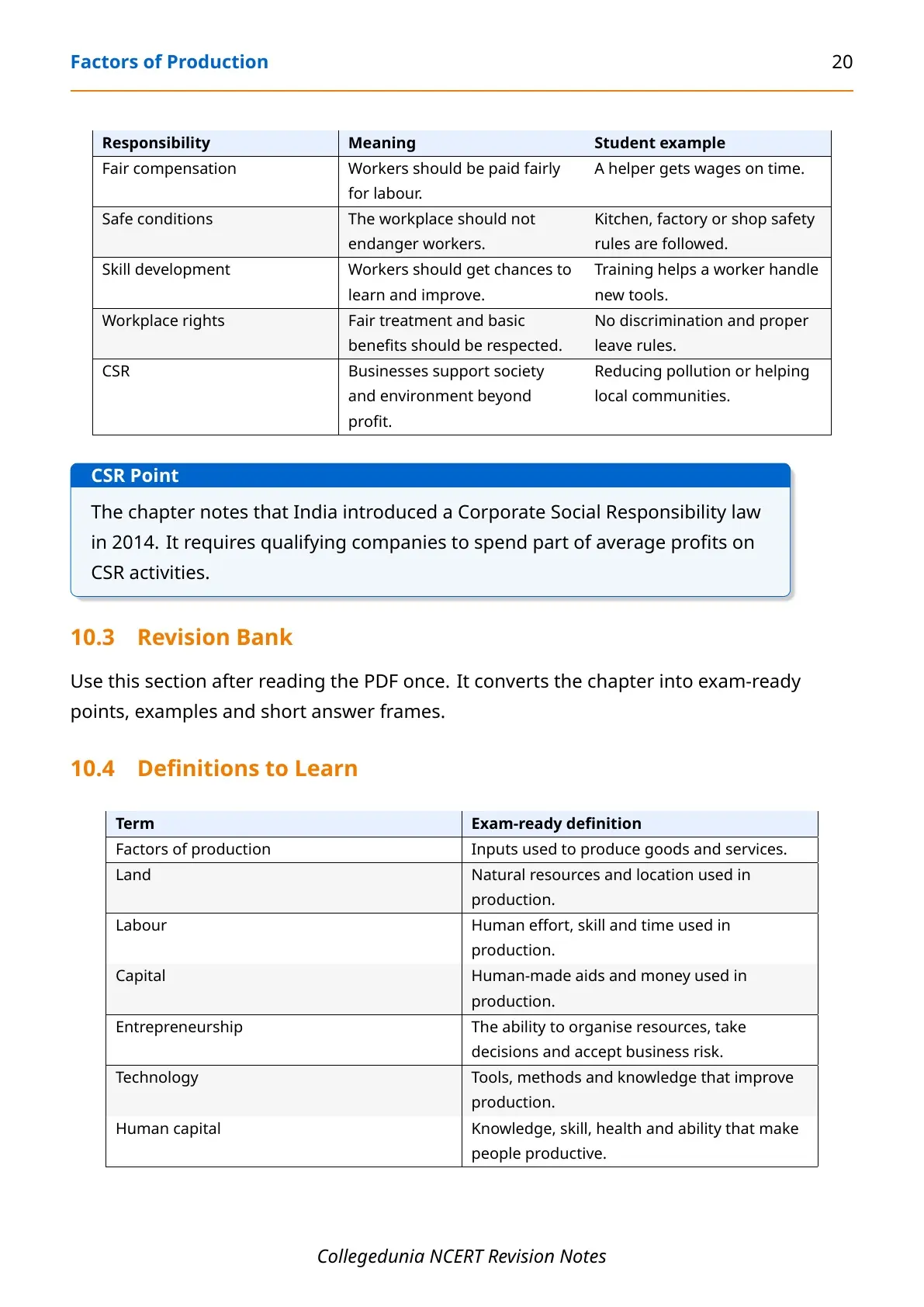
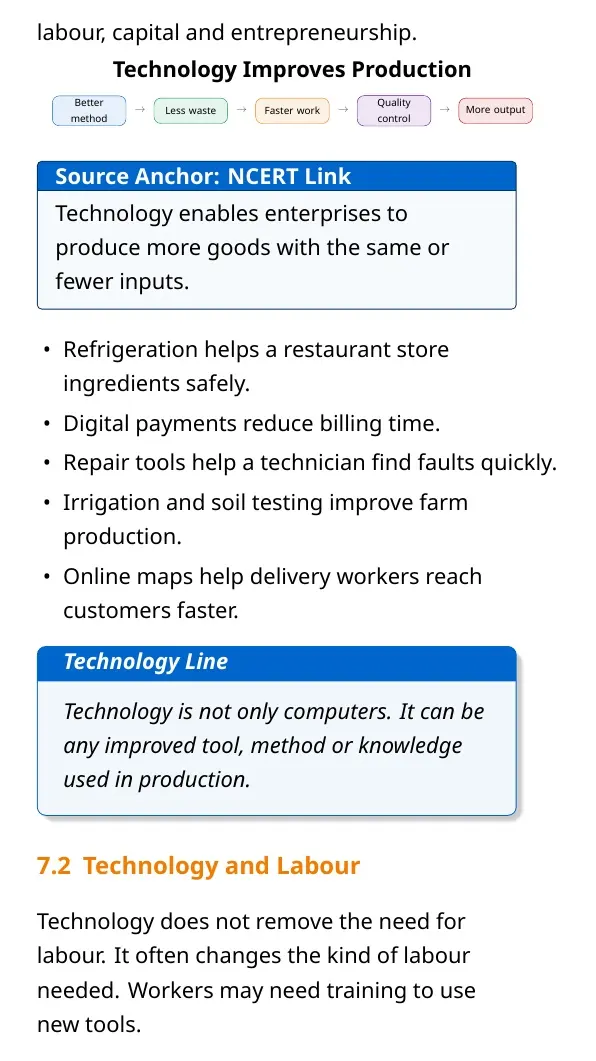
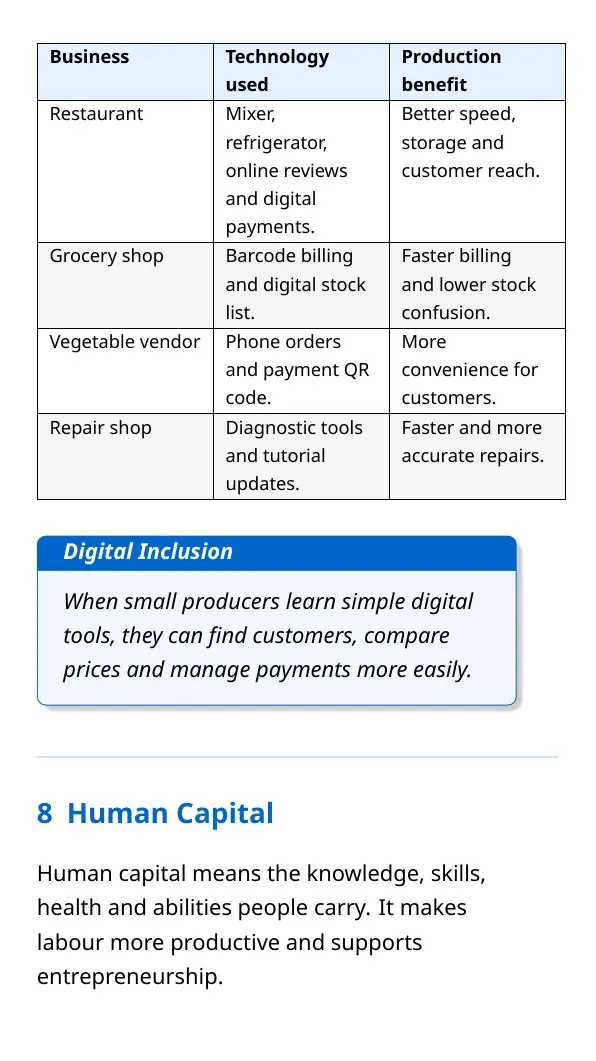
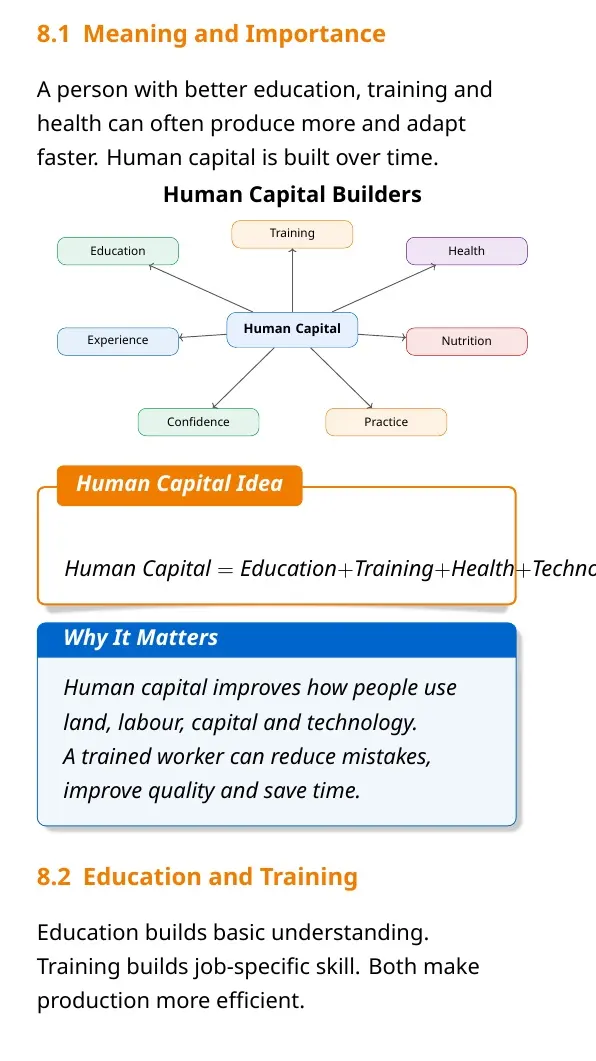
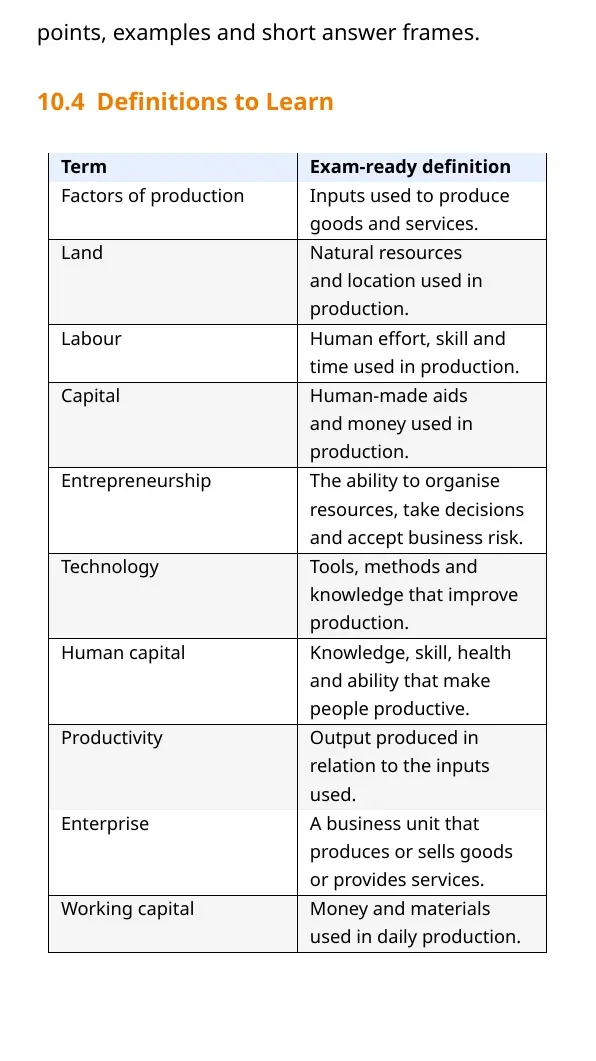
Technology helps enterprises produce more goods or services with the same or fewer inputs. Human capital means the education, health, training and experience that make people productive.
- Technology: refrigeration, digital payments, repair tools, irrigation and billing software.
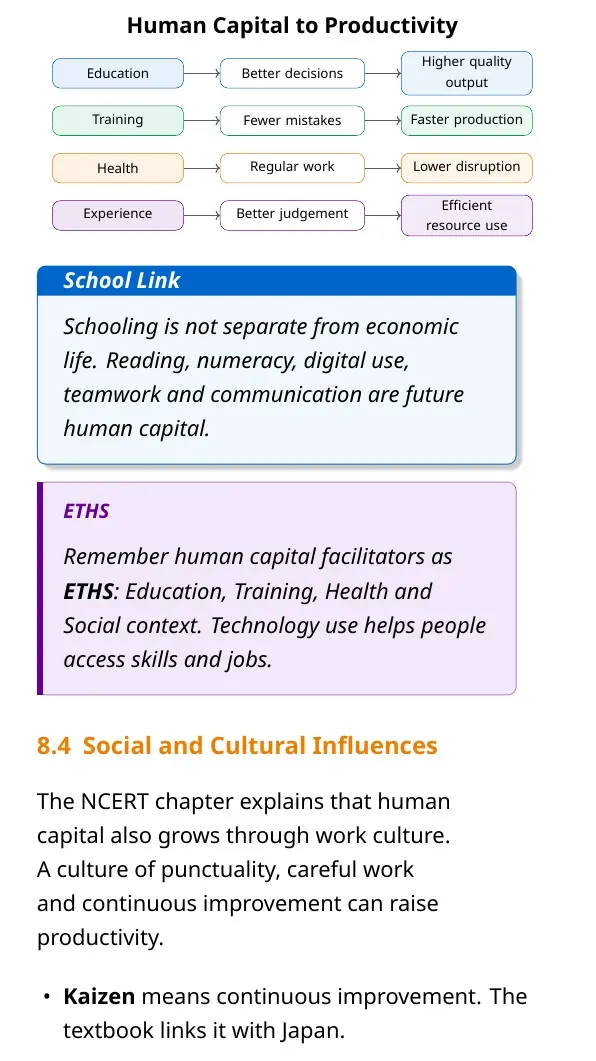
- Human capital: education, training, health, experience and work habits.
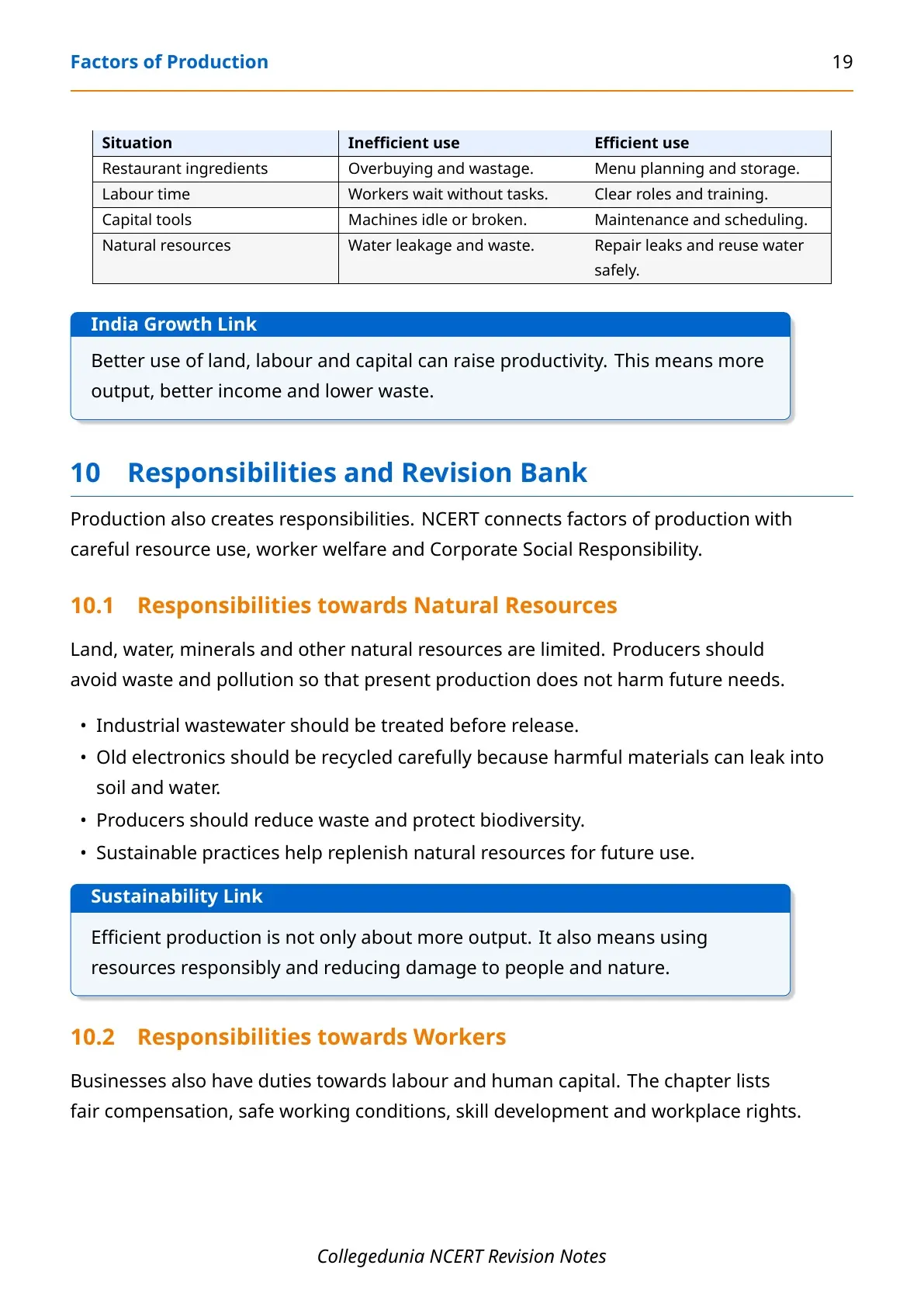
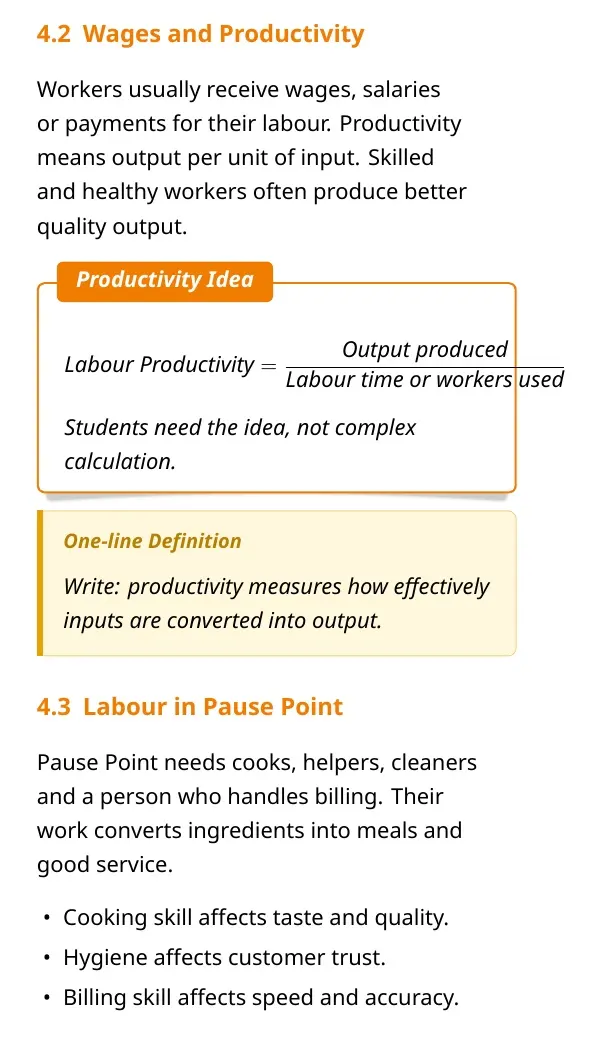
- Productivity: output created in relation to the inputs used.
Important Topics in Factors of Production
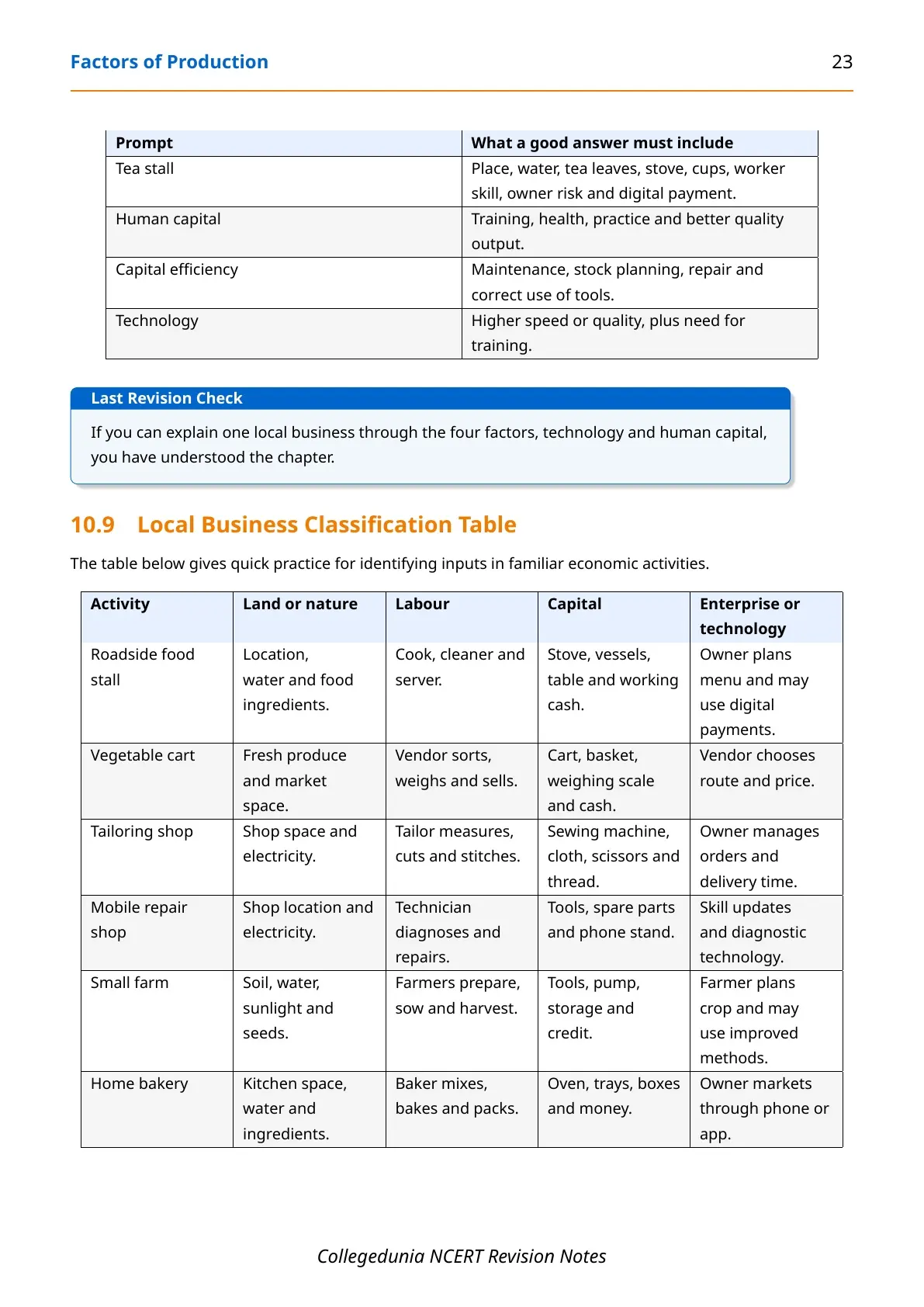
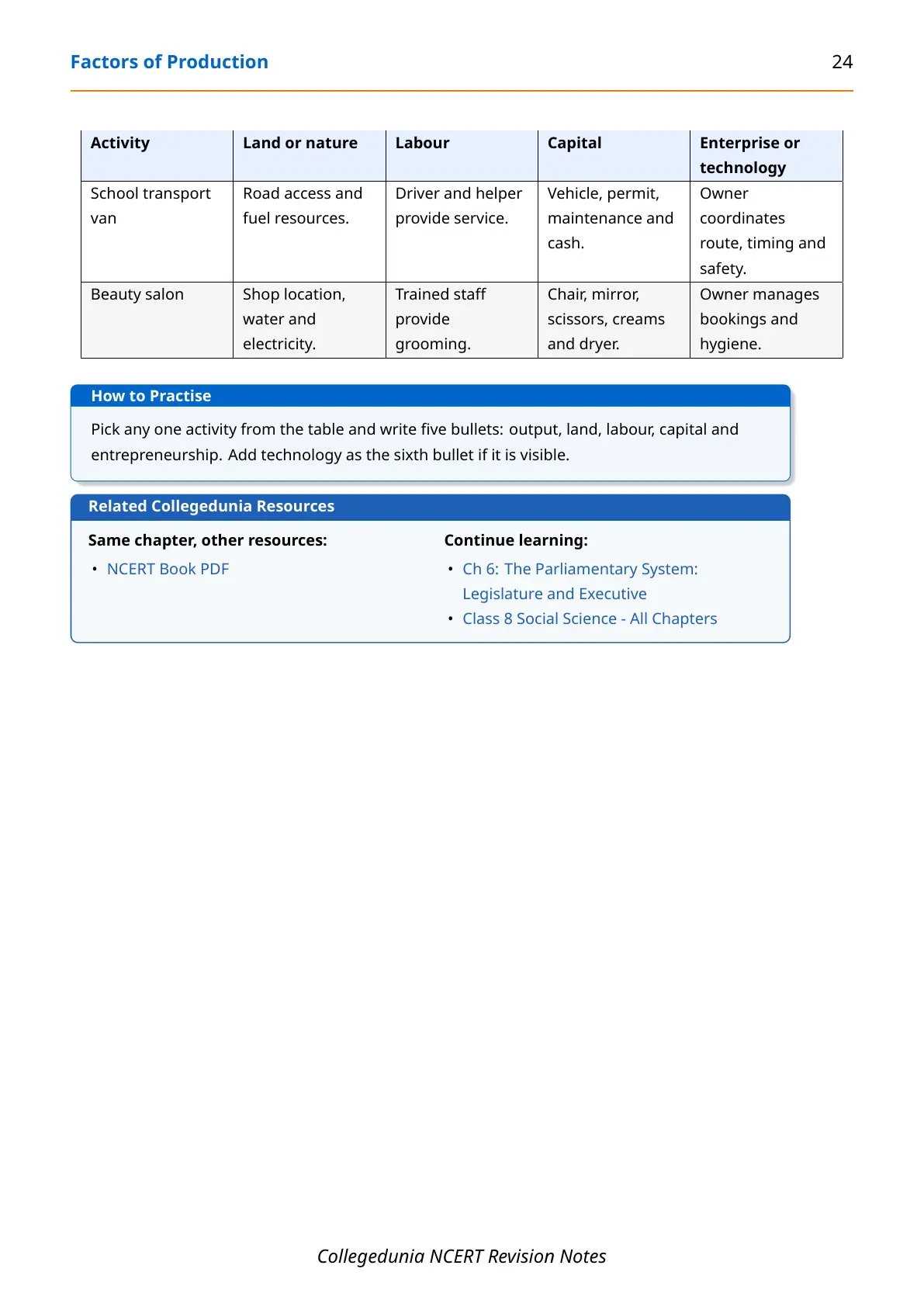
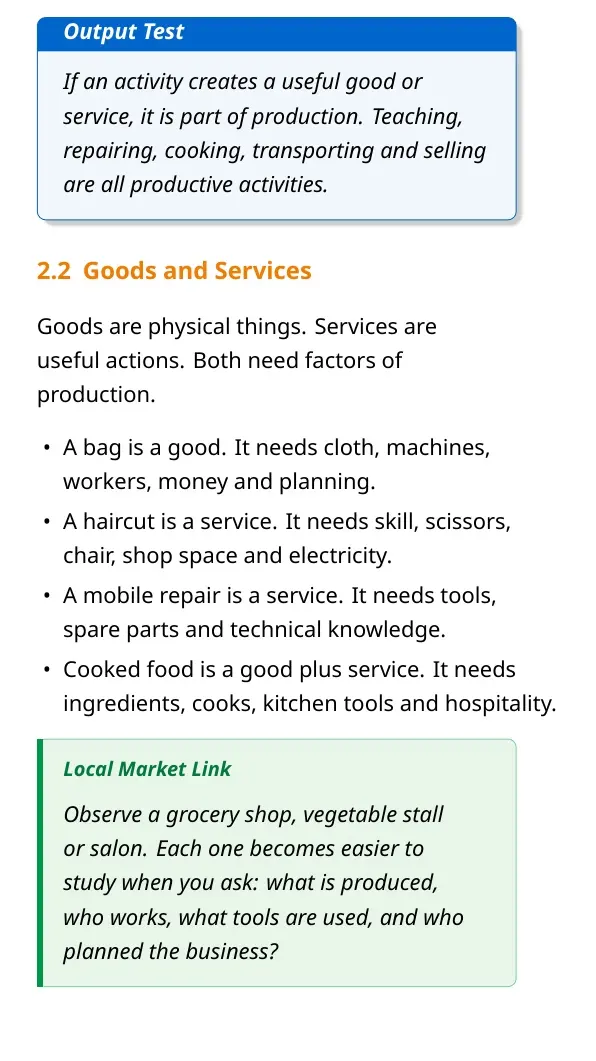
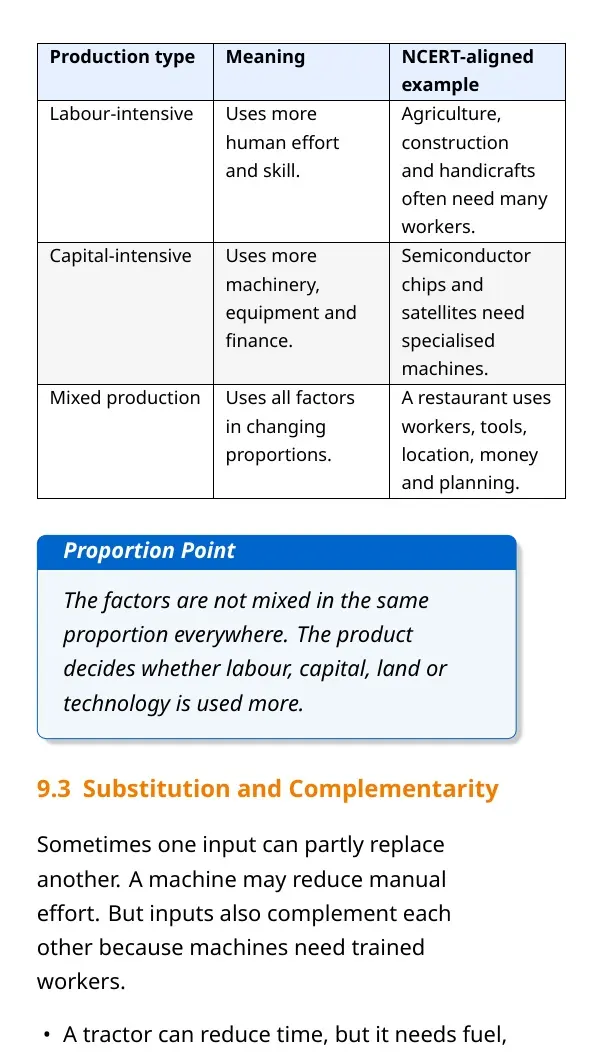
Students should revise this chapter through examples. The strongest answers classify inputs in a familiar business and then explain how the factors work together.
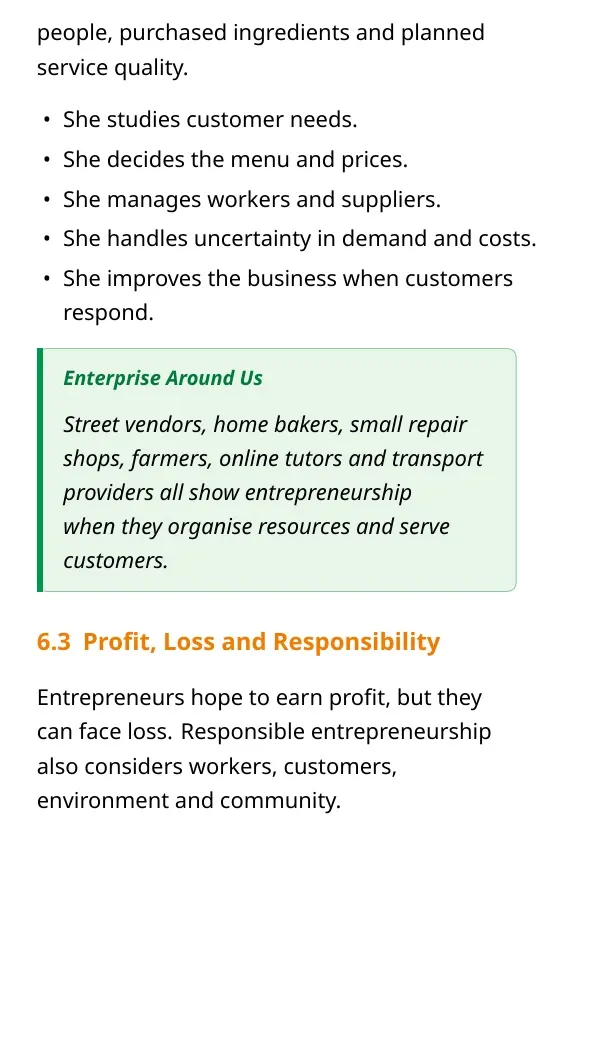
- Production: converting inputs into useful goods and services.
- Enterprise: a business unit that produces or sells goods or provides a service.
- Working capital: money and materials used in day-to-day production.
- Fixed capital: machines, buildings and tools used repeatedly.
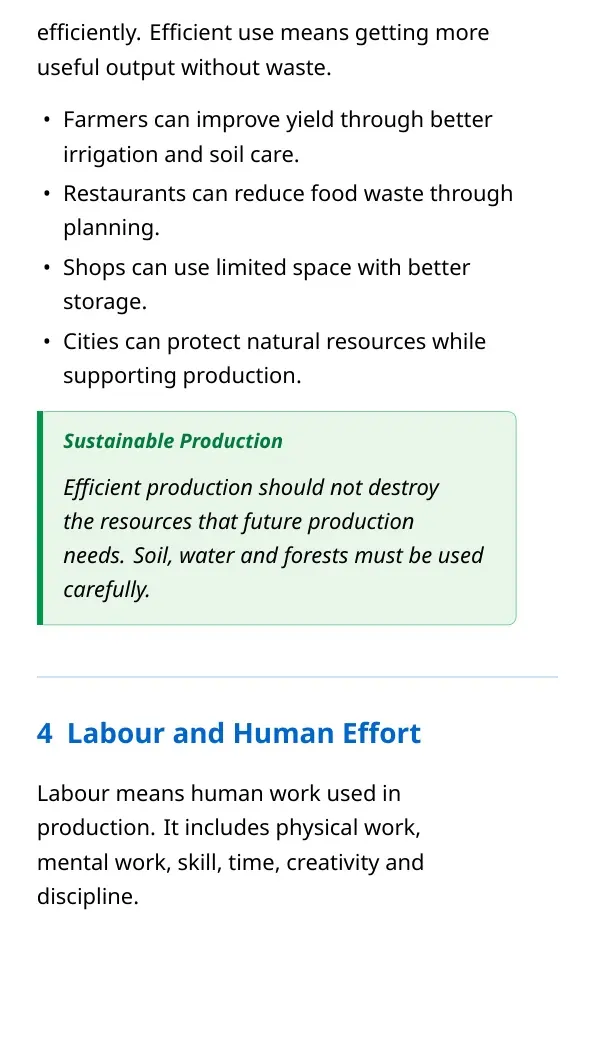
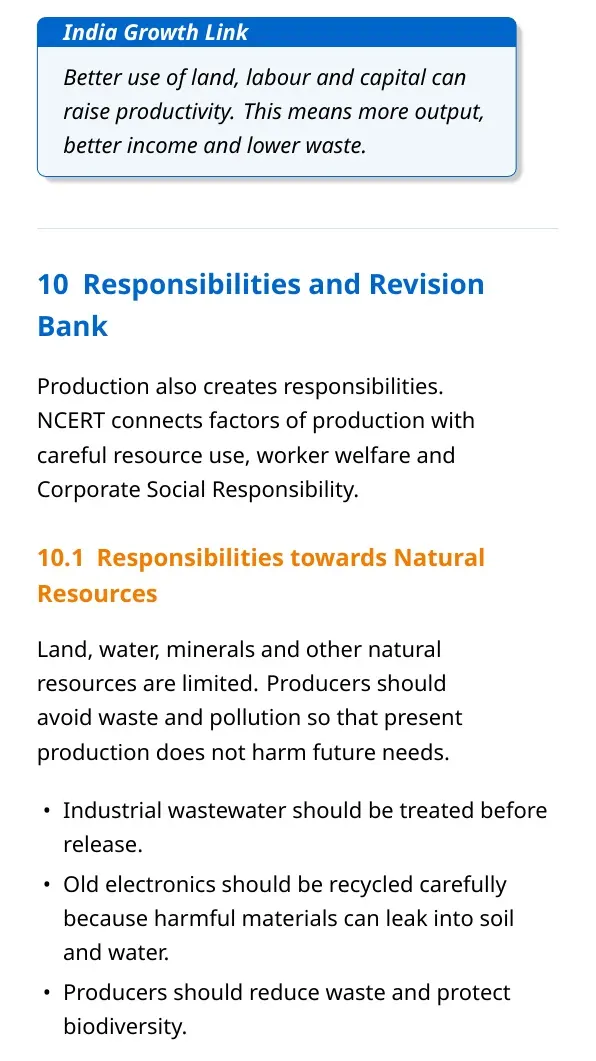
- Efficient use: using resources carefully to reduce waste and raise output.
How to Use These Class 8 Social Science Notes
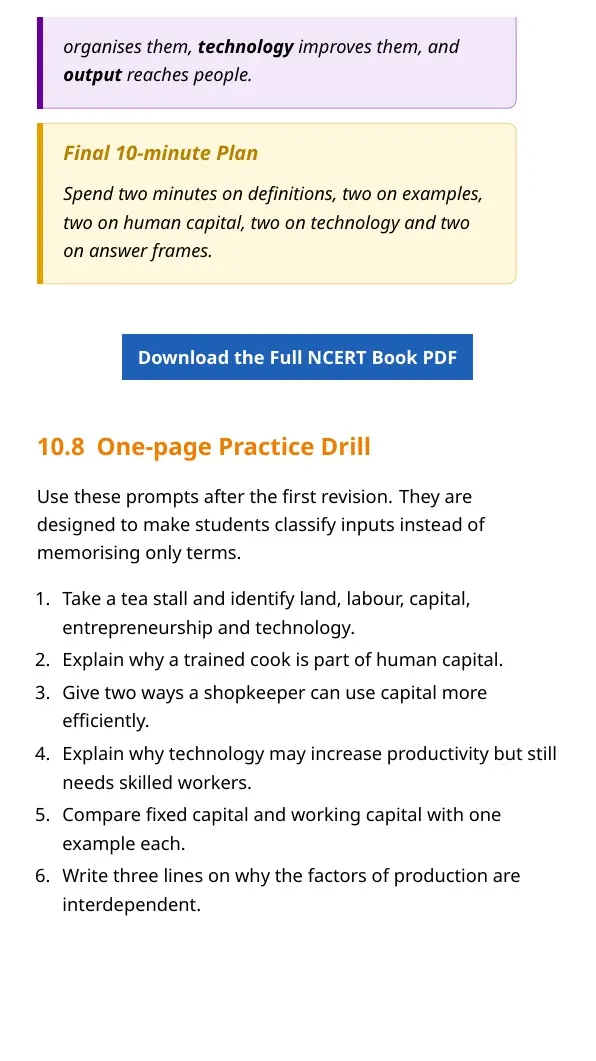
Use the notes PDF in three rounds. First, learn the four factors. Second, connect each factor to Pause Point and local business examples. Third, practise short answers on technology and human capital.
- Make flashcards for land, labour, capital, entrepreneurship, technology and human capital.
- Write one example each from a restaurant, grocery shop, repair shop and farm.
- Practise one long answer on how factors are interdependent.
A strong Chapter 7 answer names the factor and explains what it contributes to production.
More Class 8 Social Science Chapter 7 Resources
Use these related resources when you want Chapter 7 in another format. The table stays above the FAQ so students can move from notes to the official book PDF quickly.
| Resource | Best use | Link |
|---|---|---|
| NCERT Notes | Revise Chapter 7 in compact form | Open notes |
| NCERT Book PDF | Read the official 2026-27 source chapter | Open book PDF |
| Handwritten Notes | Use a quick visual recap if available | Open handwritten notes |
Class 8 Social Science Notes for Other Chapters
The table below keeps Class 8 Social Science notes together so students can revise the same resource type chapter by chapter.
| Chapter | NCERT chapter title | Notes |
|---|---|---|
| Chapter 1 | Natural Resources and Their Use | Open notes |
| Chapter 2 | Reshaping India's Political Map | Open notes |
| Chapter 3 | The Rise of the Marathas | Open notes |
| Chapter 4 | The Colonial Era in India | Open notes |
| Chapter 5 | Universal Franchise and India's Electoral System | Open notes |
| Chapter 6 | The Parliamentary System: Legislature and Executive | Open notes |
| Chapter 7 | Factors of Production | Current notes |
Factors of Production Class 8 Notes FAQs
Ques. What is covered in NCERT Class 8 Social Science Chapter 7 Notes?
Ans. The notes cover land, labour, capital, entrepreneurship, technology, human capital, productivity and efficient use of resources.
Ques. What are the four main factors of production?
Ans. The four main factors of production are land, labour, capital and entrepreneurship.
Ques. Why is human capital important in production?
Ans. Human capital improves productivity because educated, healthy and trained people use resources and technology more effectively.
Ques. Is technology a factor of production?
Ans. The chapter treats technology as a facilitator that helps enterprises produce more with the same or fewer inputs.



Comments