




The NCERT Class 10 Economics Book PDF Chapter 2 Sectors of the Indian Economy brings together every classification, definition and data point the CBSE Social Science board paper tests.
It runs to about 20 printed pages in the 2026-27 reprint, with three classifications, two graphs and the MGNREGA case study.
- Board Weightage: 4 to 6 marks in the Class 10 Social Science (Economics unit) paper, usually one short answer plus one source-based question
- What's Inside: primary, secondary and tertiary sectors; organised and unorganised sectors; public and private sectors; GDP, underemployment and MGNREGA
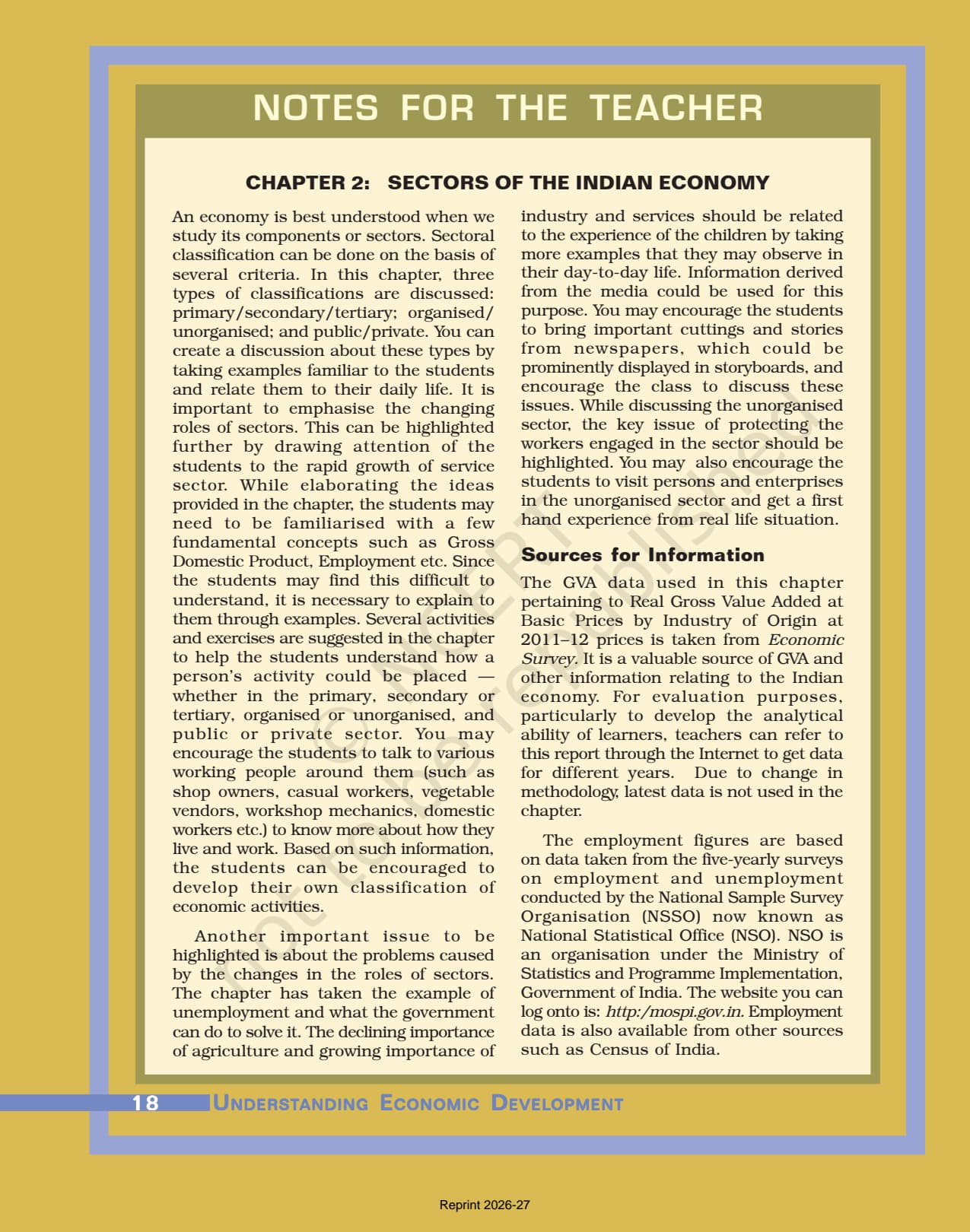
This NCERT class 10 economics book pdf chapter 2 Sectors of the Indian Economy is the original NCERT print, hosted unmodified by Collegedunia, mapped to the 2026-27 syllabus and checked against the last five years of CBSE board papers.
NCERT Class 10 Economics Book PDF Chapter 2 Sectors of the Indian Economy Download
The file above is the original Chapter 2 from Understanding Economic Development, hosted free with no edits or watermark.
Also Check: Class 10 NCERT Solutions and Notes for this chapter.
Three Ways the Indian Economy Is Divided in Chapter 2
The chapter groups every activity using three criteria, so one job can sit in three groups at once: a school teacher works in the tertiary, organised and public sectors.
| Basis of Classification | Sectors | Question It Answers |
|---|---|---|
| Nature of activity | Primary, Secondary, Tertiary | How is the good or service produced? |
| Conditions of work | Organised, Unorganised | Are the terms of employment fixed and regular? |
| Ownership of assets | Public, Private | Who owns and runs the enterprise? |
Most board questions ask you to place an activity into the correct sector under all three bases.
Sectors of the Indian Economy Explained in Simple Language
Source: Magnet Brains on YouTube
Primary, Secondary and Tertiary Sectors Explained with Examples
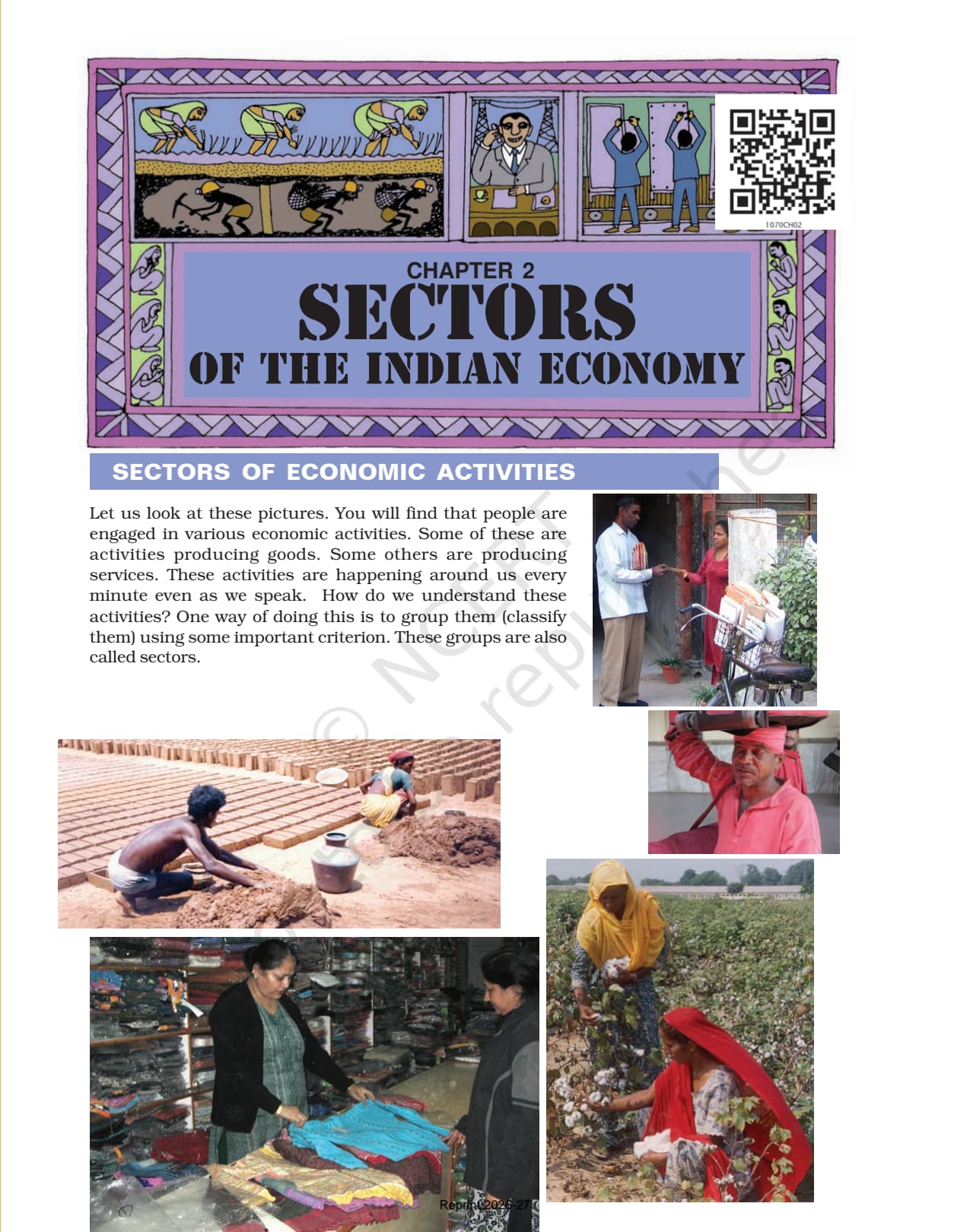
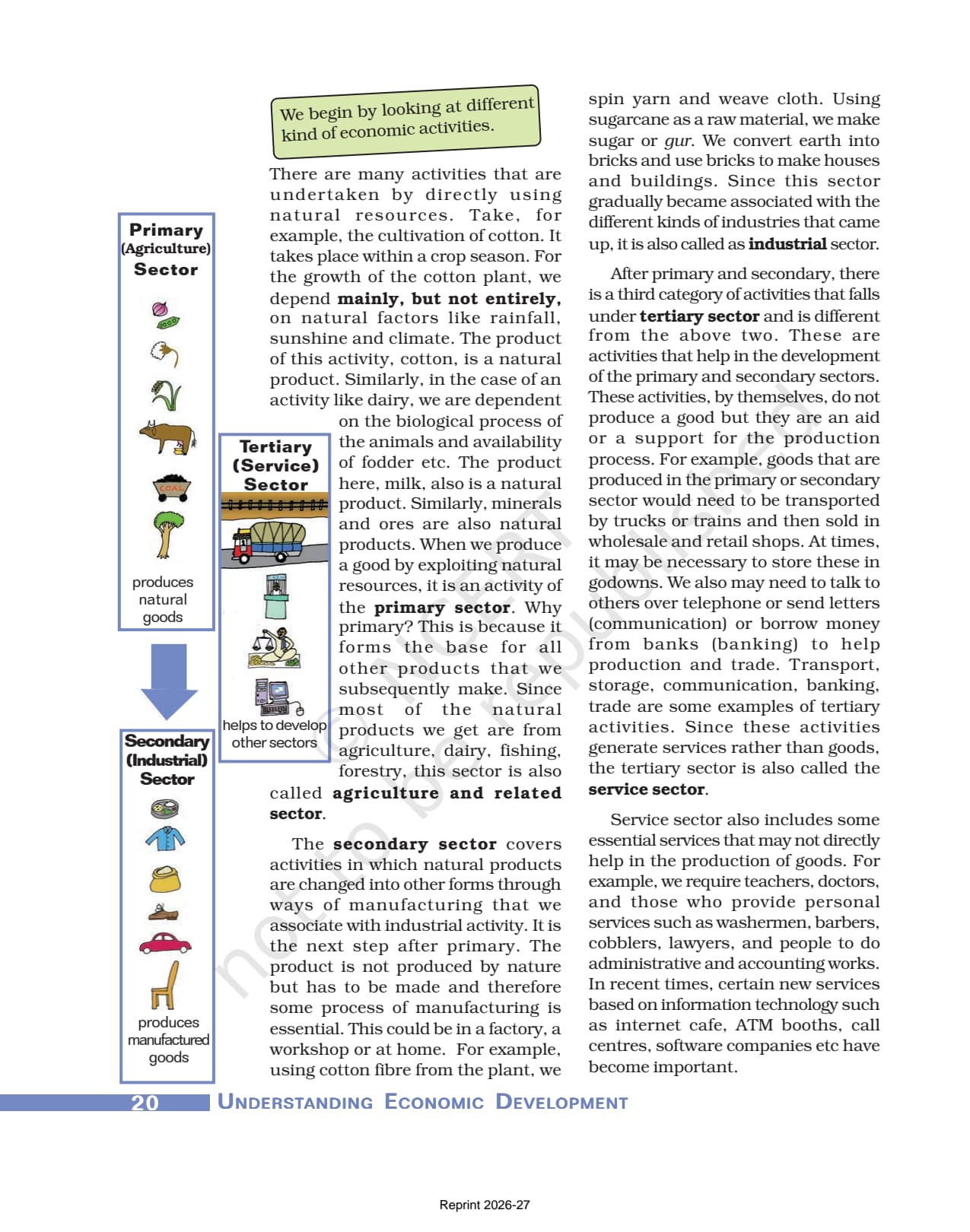
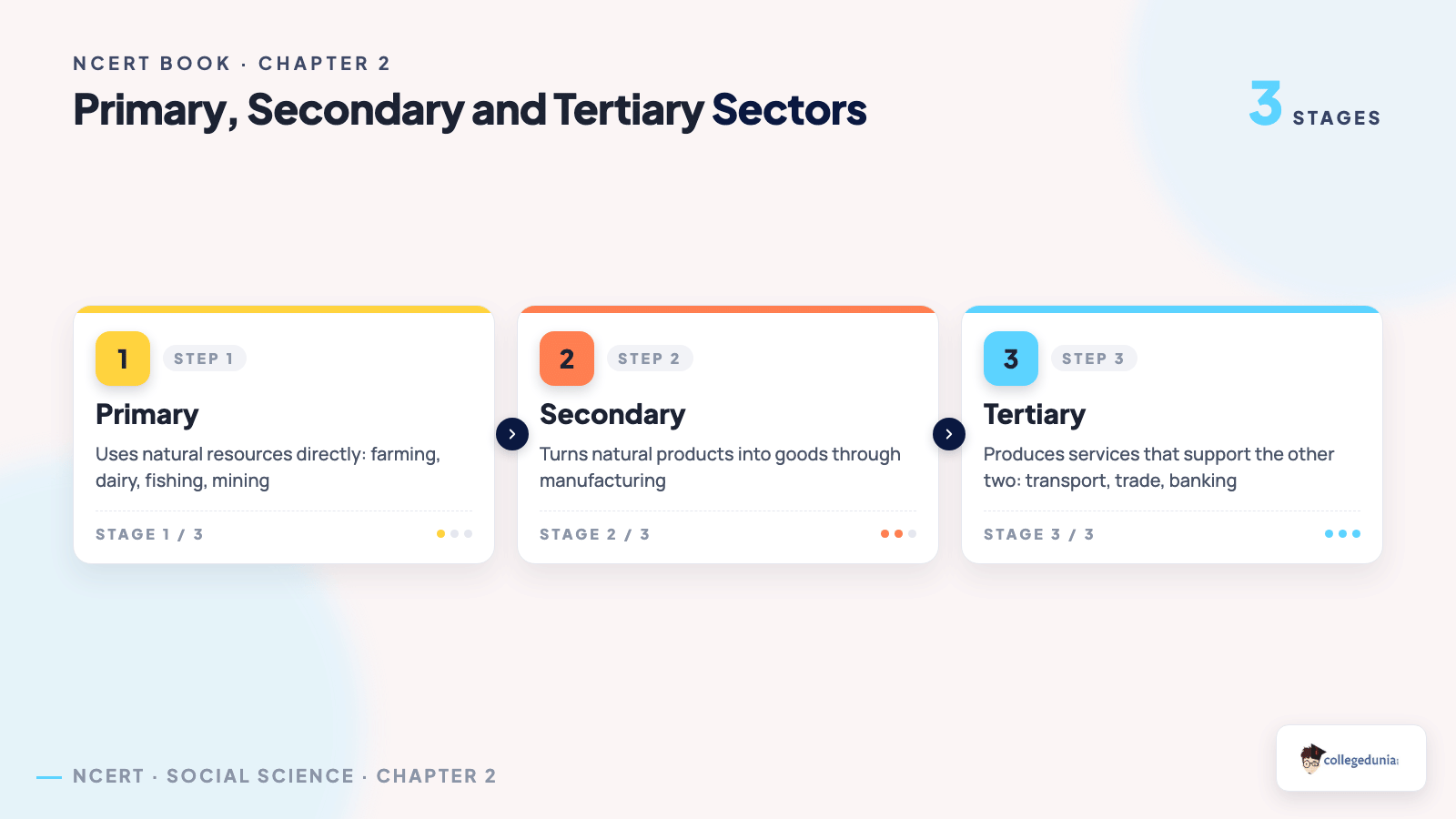
The first classification is based on how a product is made, the most asked part of the chapter. The sectors are linked, each depending on the previous.
- Primary sector: goods made using natural resources directly, like farming, dairy, fishing and mining. Also called the agriculture sector.
- Secondary sector: natural products changed into other forms by manufacturing, like sugarcane into sugar. The industrial sector.
- Tertiary sector: services that help the other two, like transport, banking and trade. The service sector.
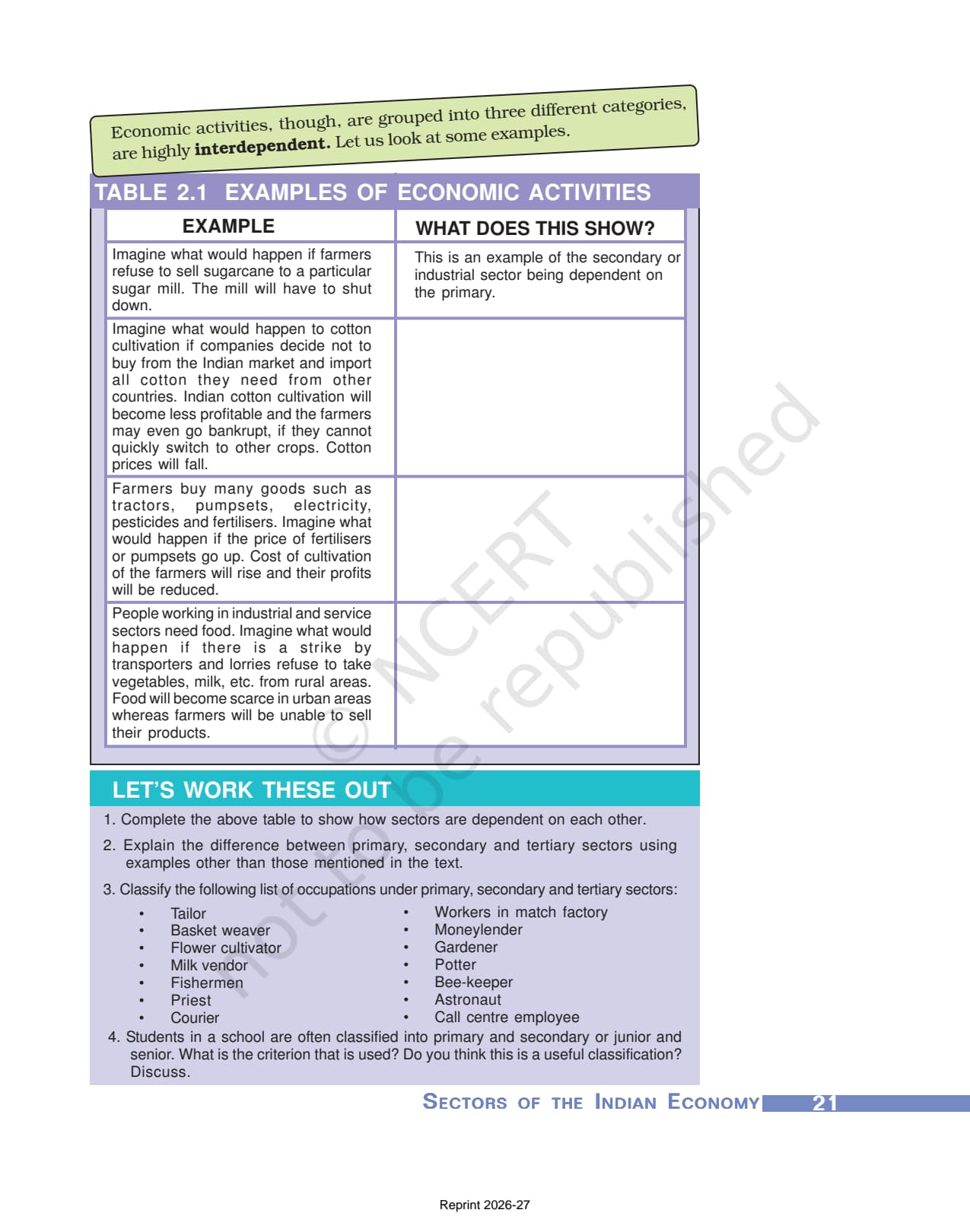
If farmers stop selling sugarcane, the sugar mill shuts down. The PDF shows this dependence on page 21.
GDP and the Rising Tertiary Sector in the Indian Economy
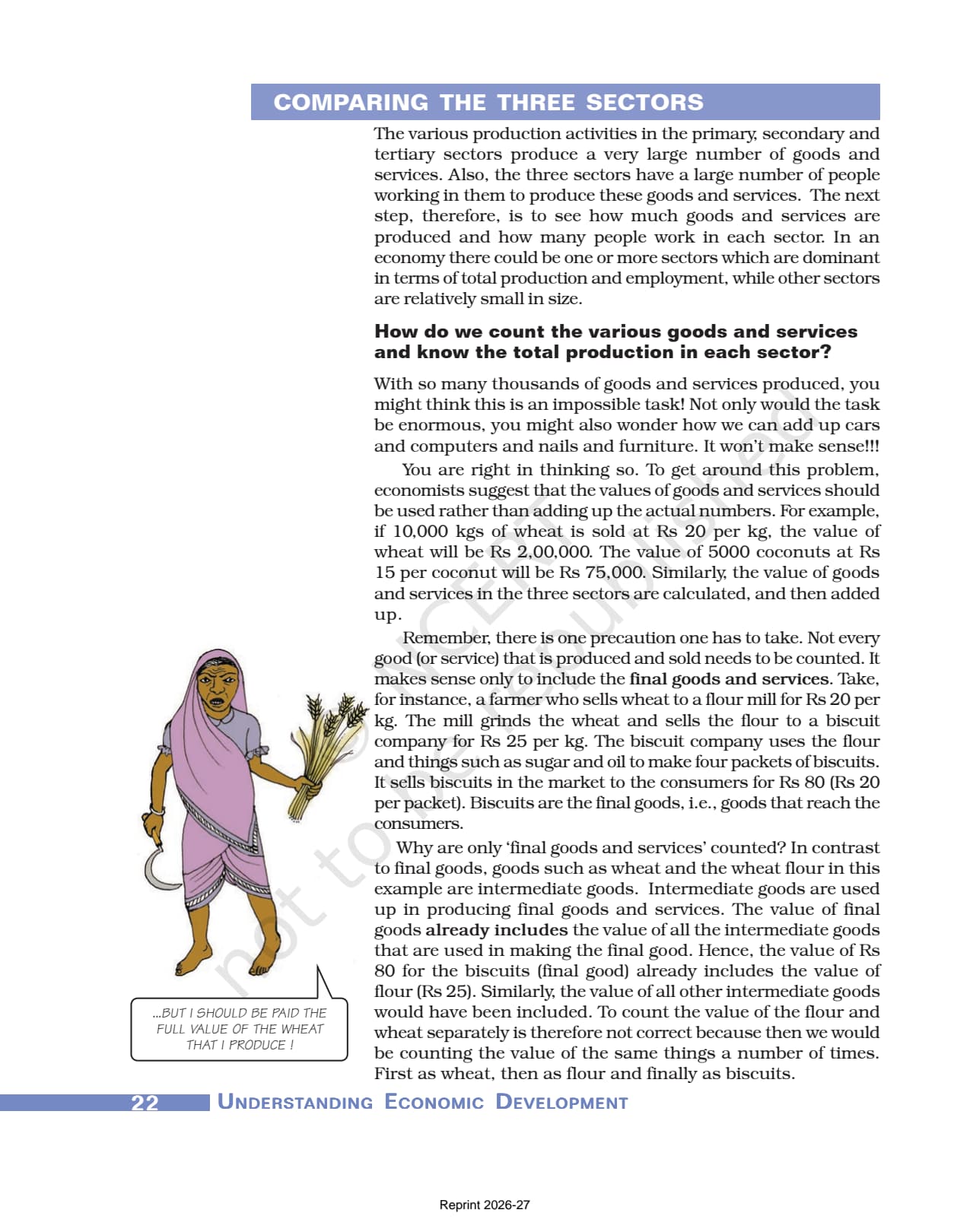
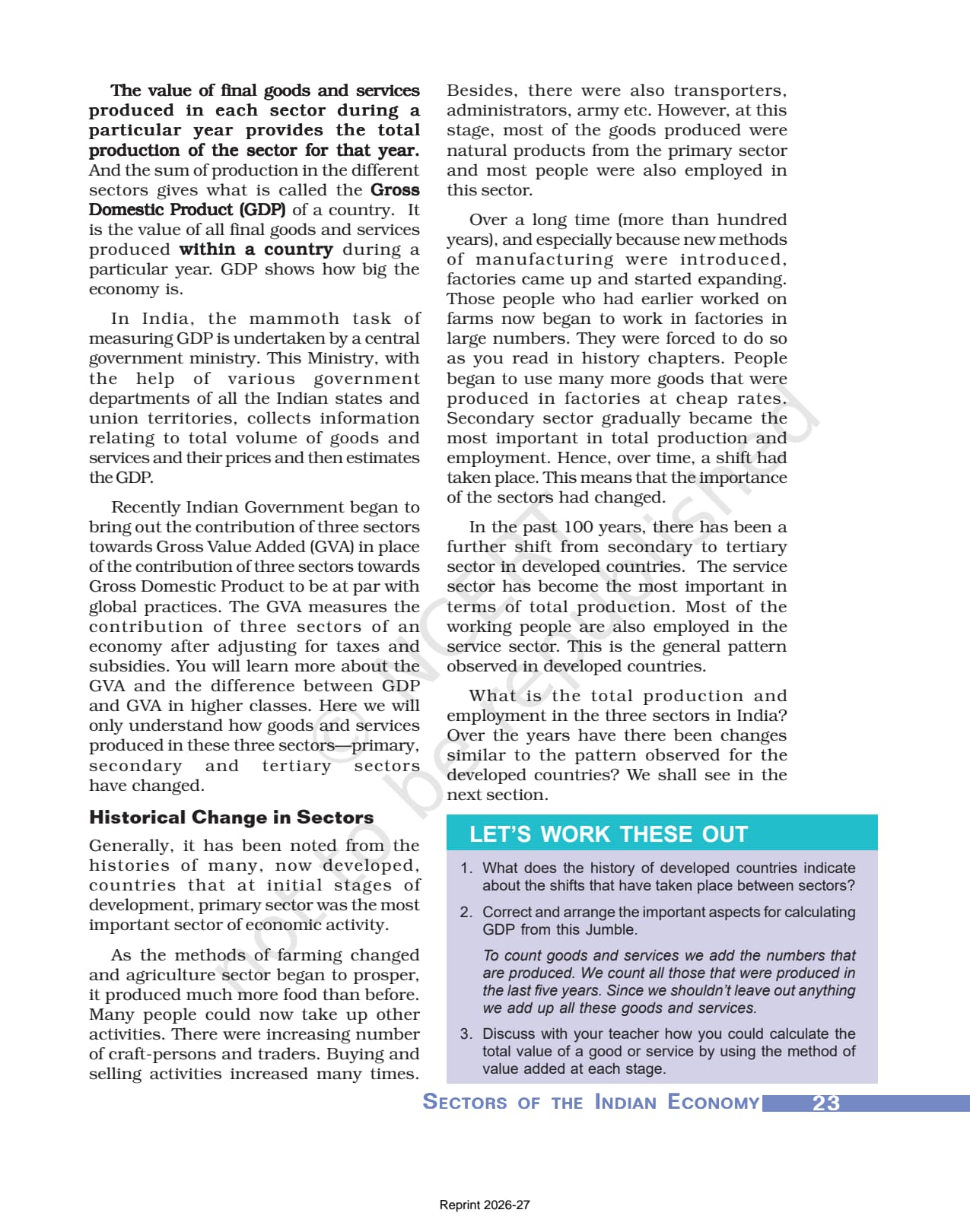
To compare the sectors, economists add up the value of all final goods and services. The yearly total is Gross Domestic Product (GDP).
- Final goods only: intermediate goods are not counted, so value is not double-counted.
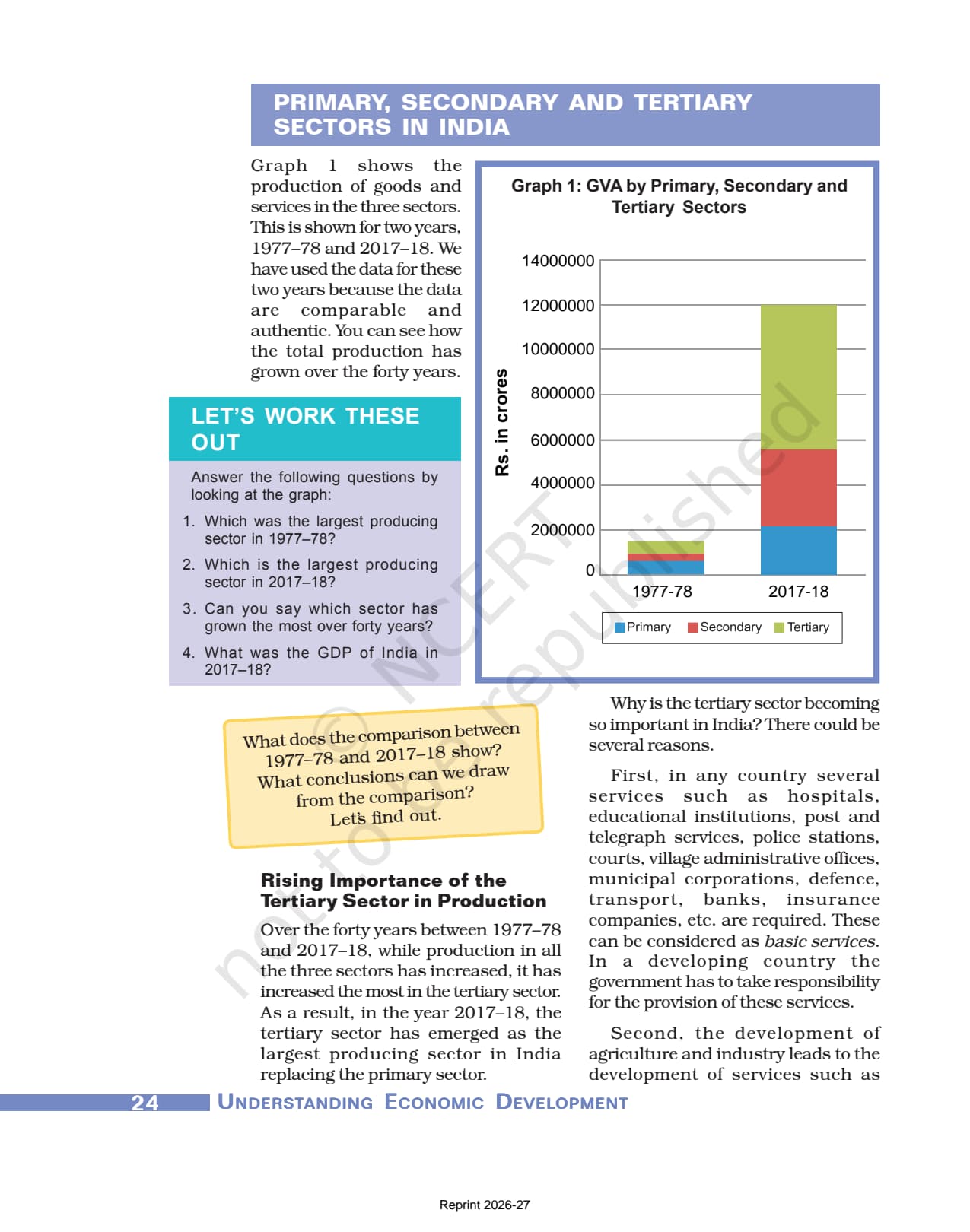
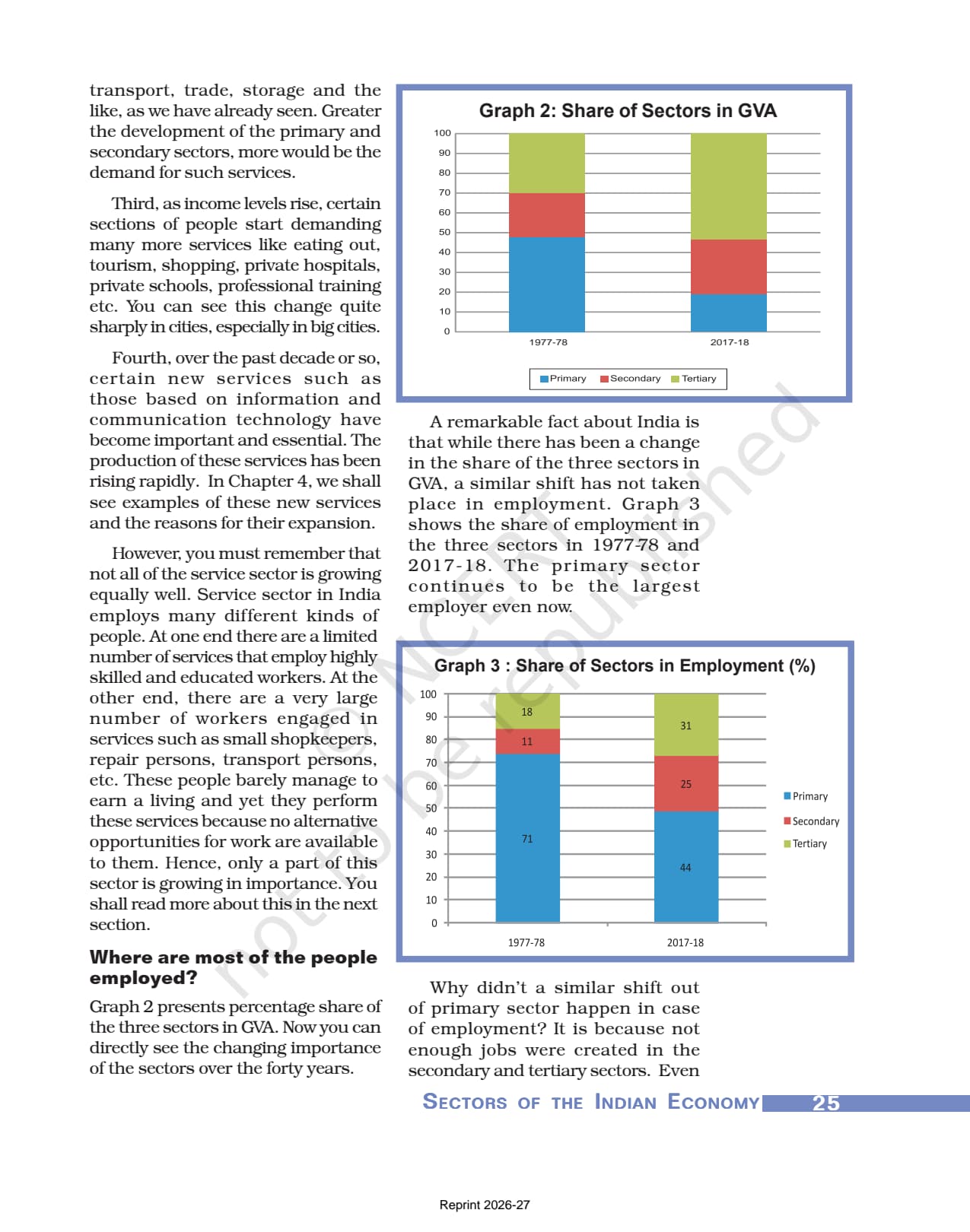
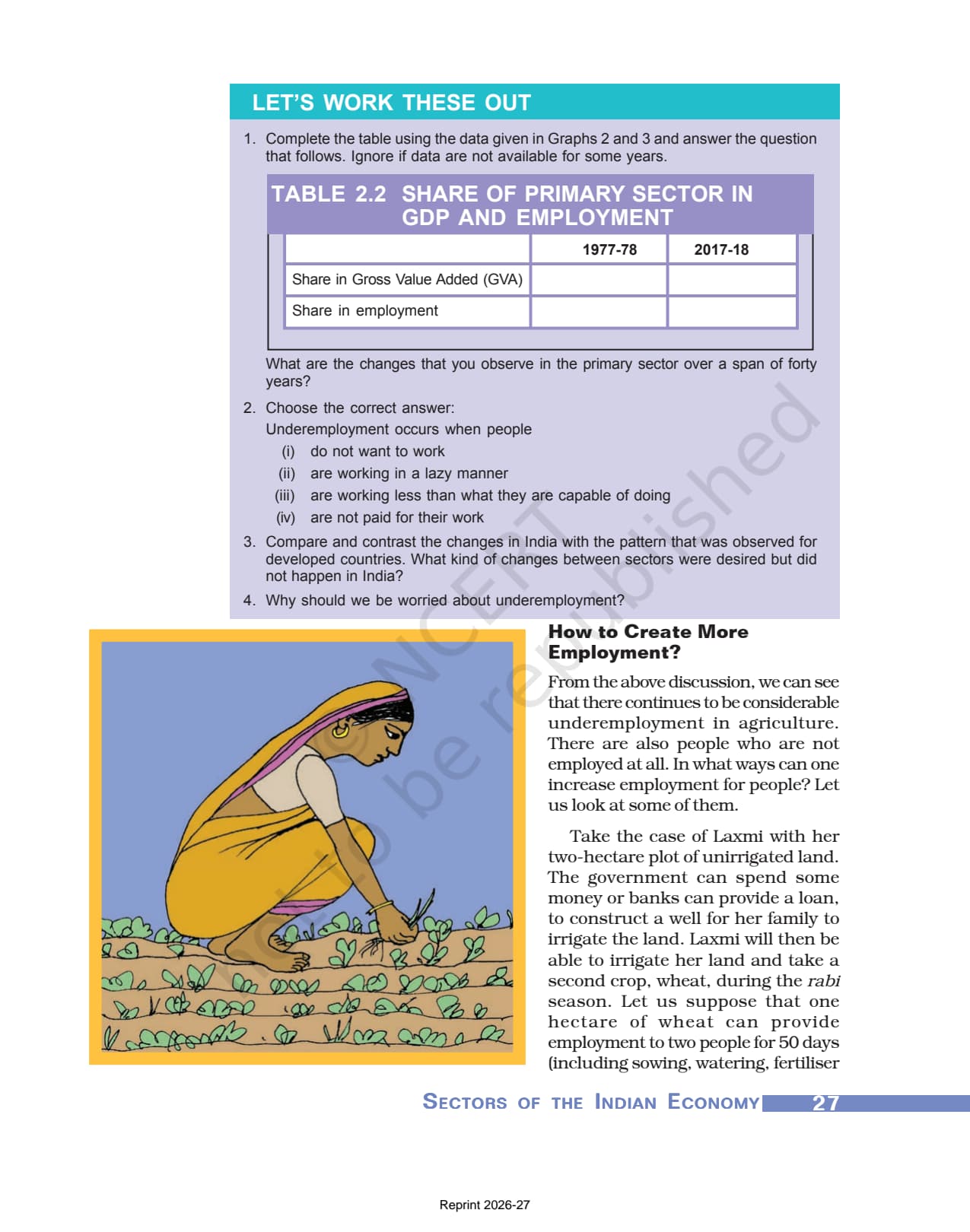
- Two graphs in the PDF: production and employment by sector, for 1977-78 and 2017-18.
- The big shift: the tertiary sector is now the largest producer in India, yet most workers remain in the primary sector.
This gap is the chapter's main puzzle: production has moved to services, but employment has not.
Underemployment and Disguised Unemployment in the Primary Sector
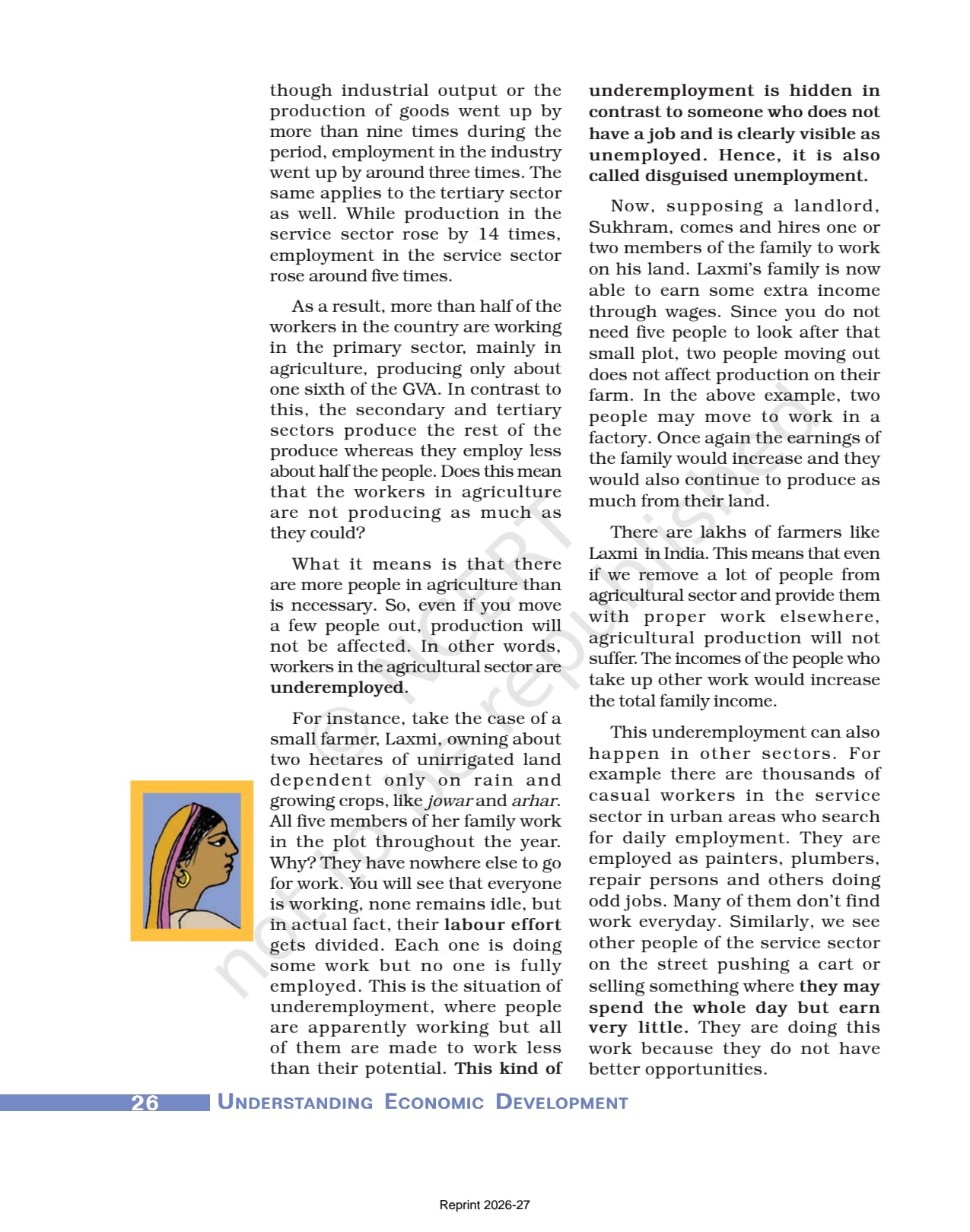
The primary sector holds far more workers than it needs. When more people work on a job than required, the extra are underemployed. This is called disguised unemployment: on a family farm where five do work that three could finish, the other two are disguised-unemployed. A favourite 3-mark board question.
- Disguised unemployment: workers appear employed but add no extra output.
- Seasonal unemployment: work is available only in some months, like between sowing and harvest.
- Open unemployment: workers have no work at all and are visibly jobless.
MGNREGA 2005 and the Right to Work in Sectors of the Indian Economy
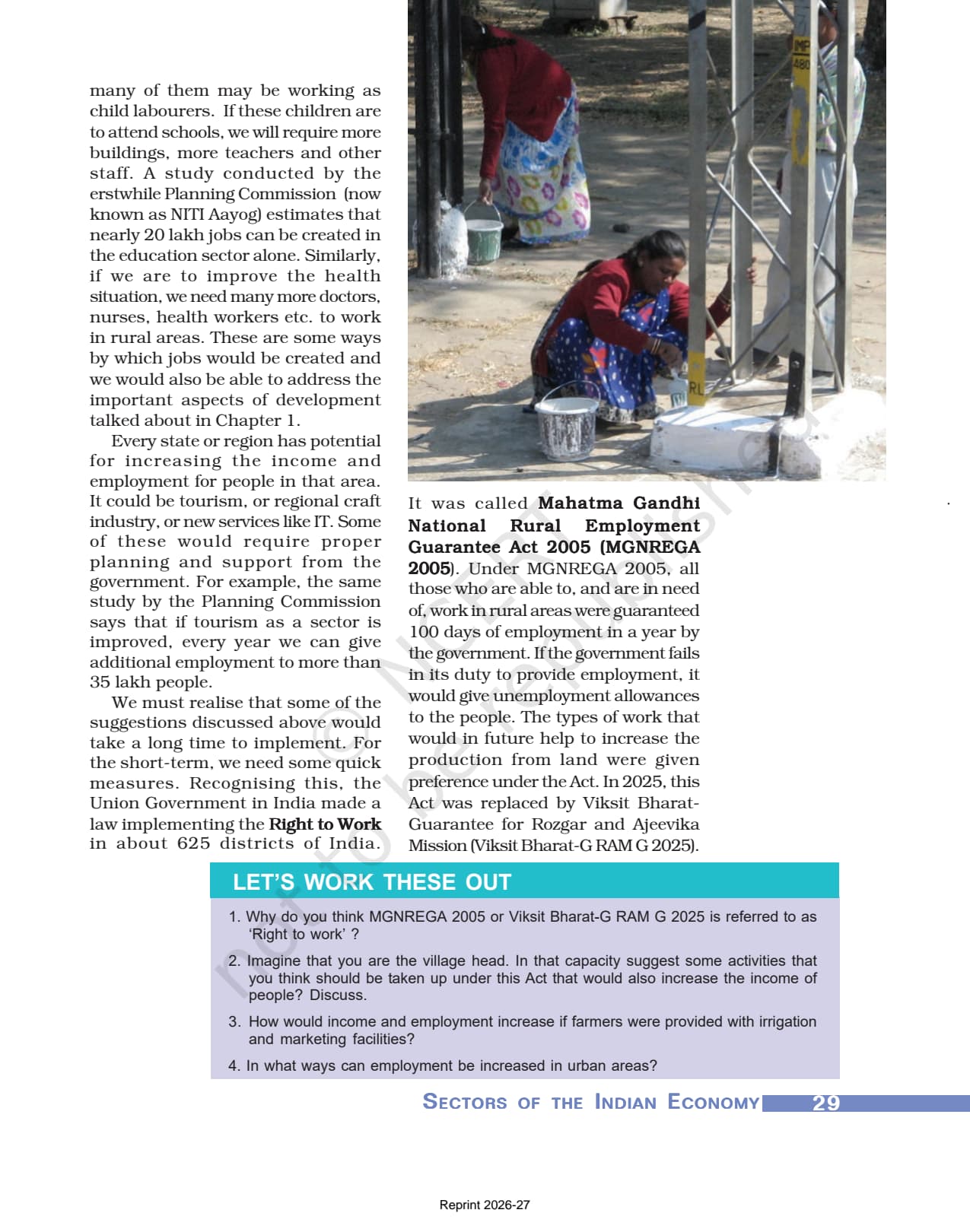
To fight underemployment, the government passed the Mahatma Gandhi National Rural Employment Guarantee Act (MGNREGA) 2005, a case study of policy creating work in the rural sector.
- It promises 100 days of guaranteed wage employment a year to every rural household whose adults want manual work.
- If work is not given within 15 days, the applicant gets an unemployment allowance.
Right to Work is the MGNREGA keyword to remember.
Organised and Unorganised Sectors: Terms of Work and Worker Protection
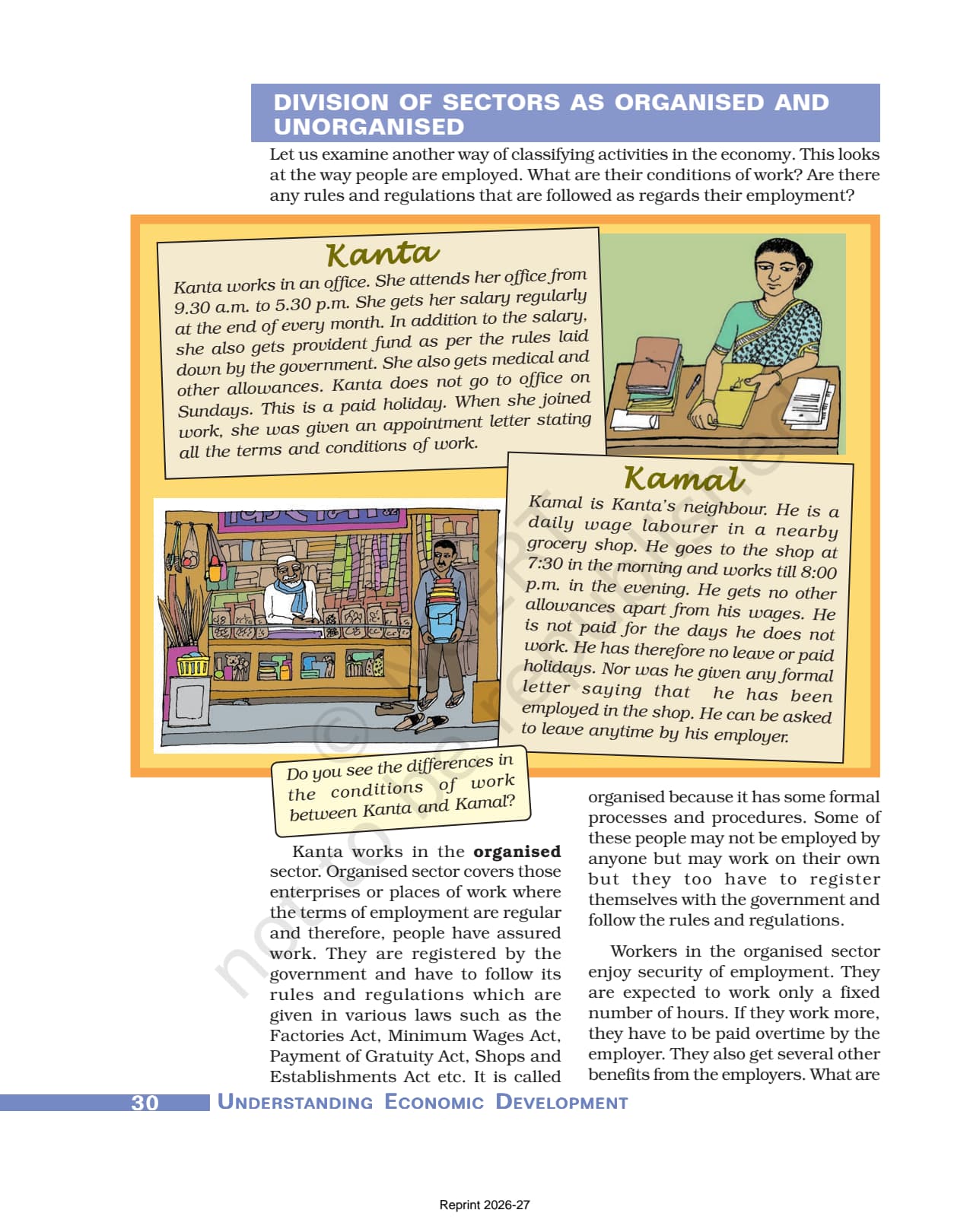
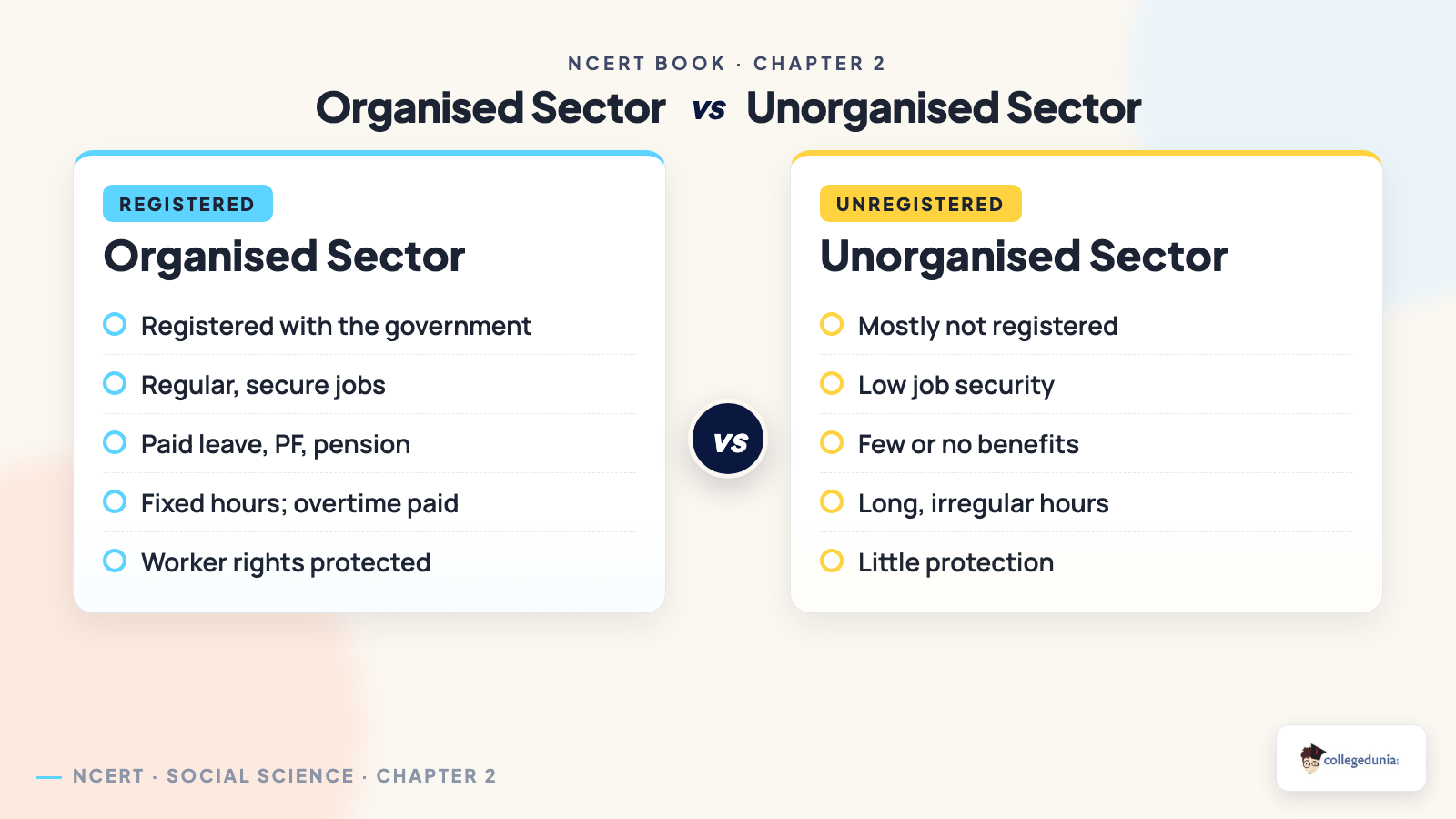
The second classification looks at conditions of work and matters for source-based questions on worker rights.
| Feature | Organised Sector | Unorganised Sector |
|---|---|---|
| Registration | Registered with the government | Mostly not registered |
| Job security | Regular, secure employment | Low security; jobs not assured |
| Benefits | Paid leave, provident fund, pension, medical care | Few or no benefits |
| Working hours | Fixed hours; overtime paid | Long, irregular hours |
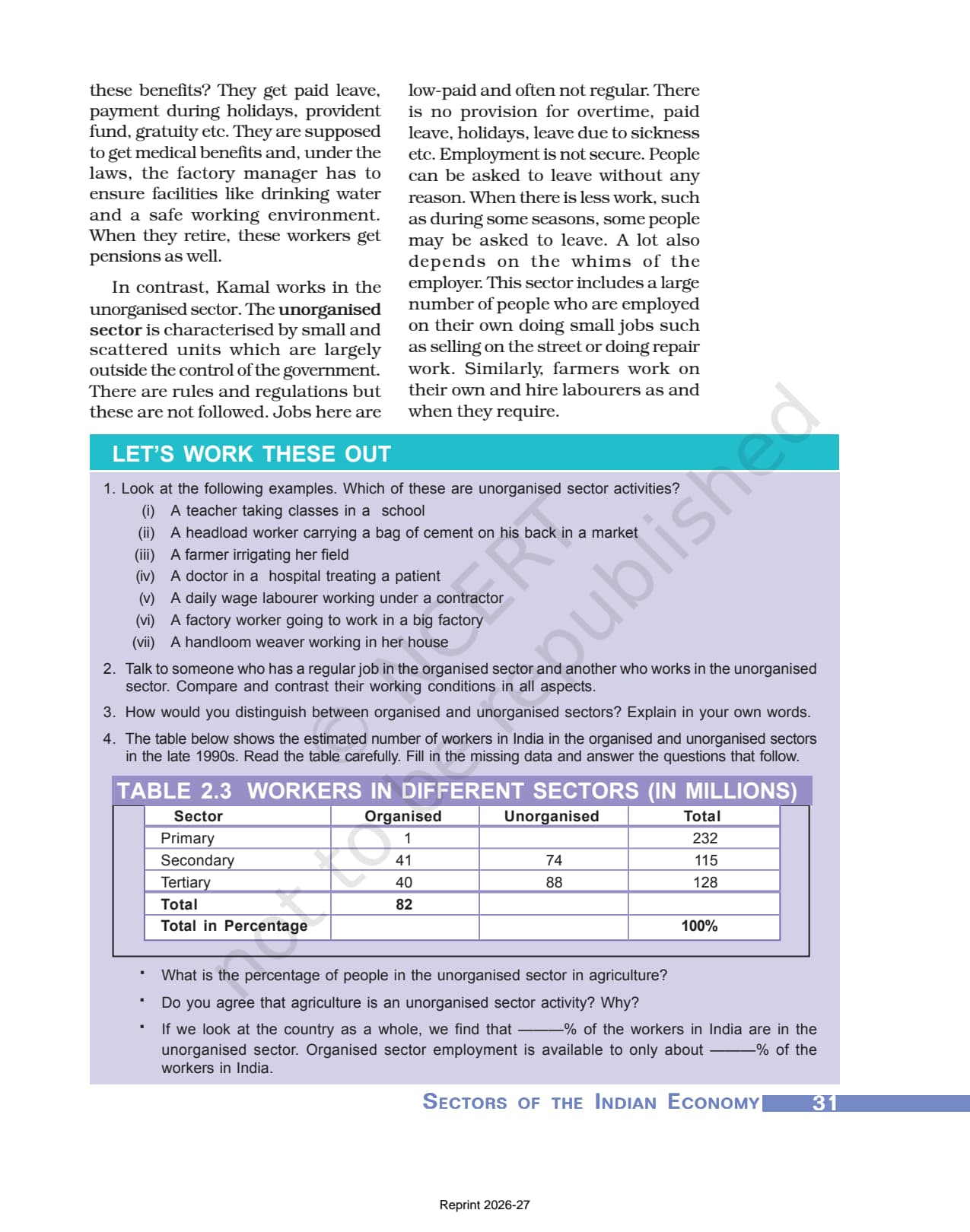
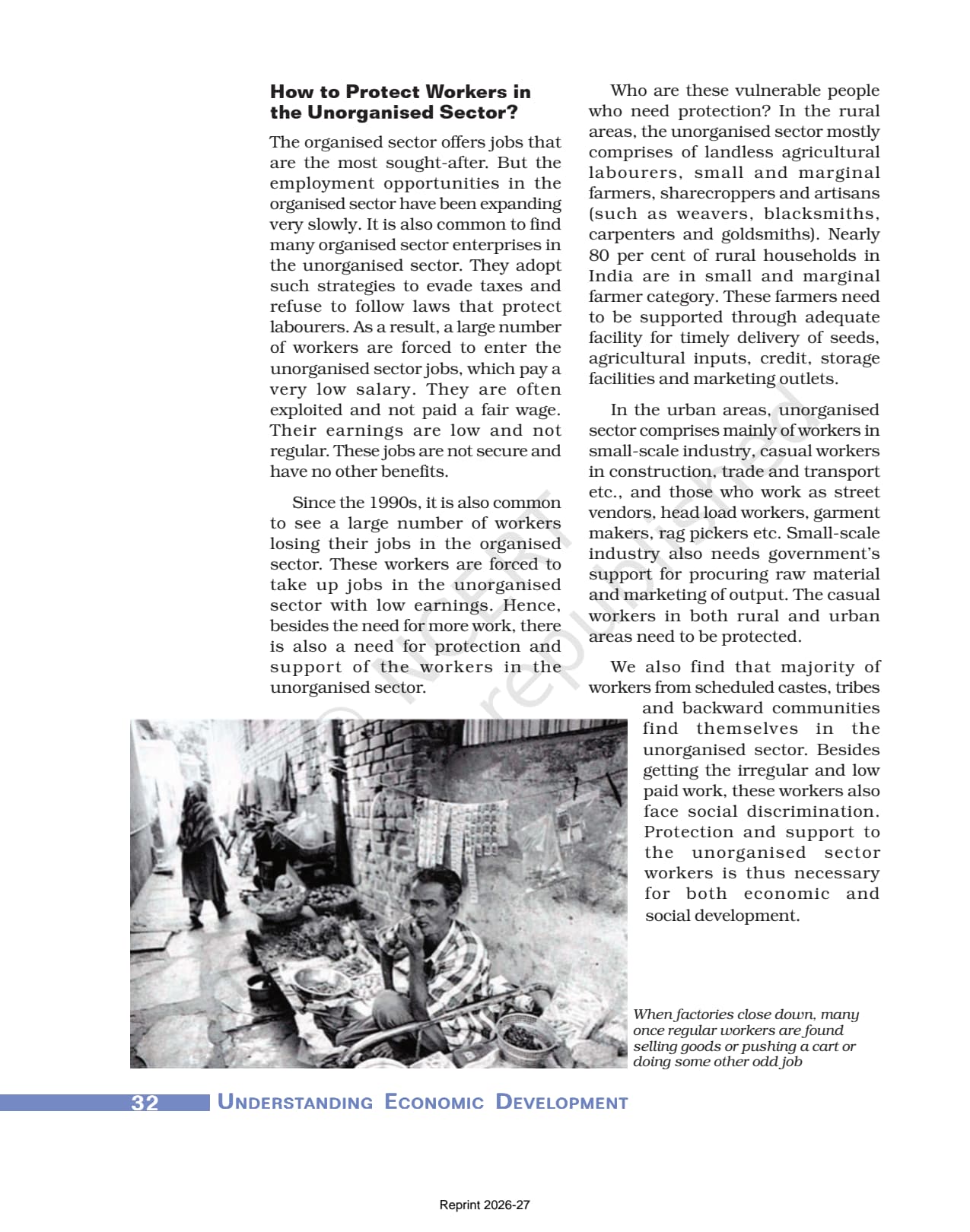
Most Indian workers are in the unorganised sector, so the chapter asks how they can be protected: registering small units, giving identity cards, and supporting landless labour.
Public and Private Sectors in Chapter 2 Sectors of the Indian Economy
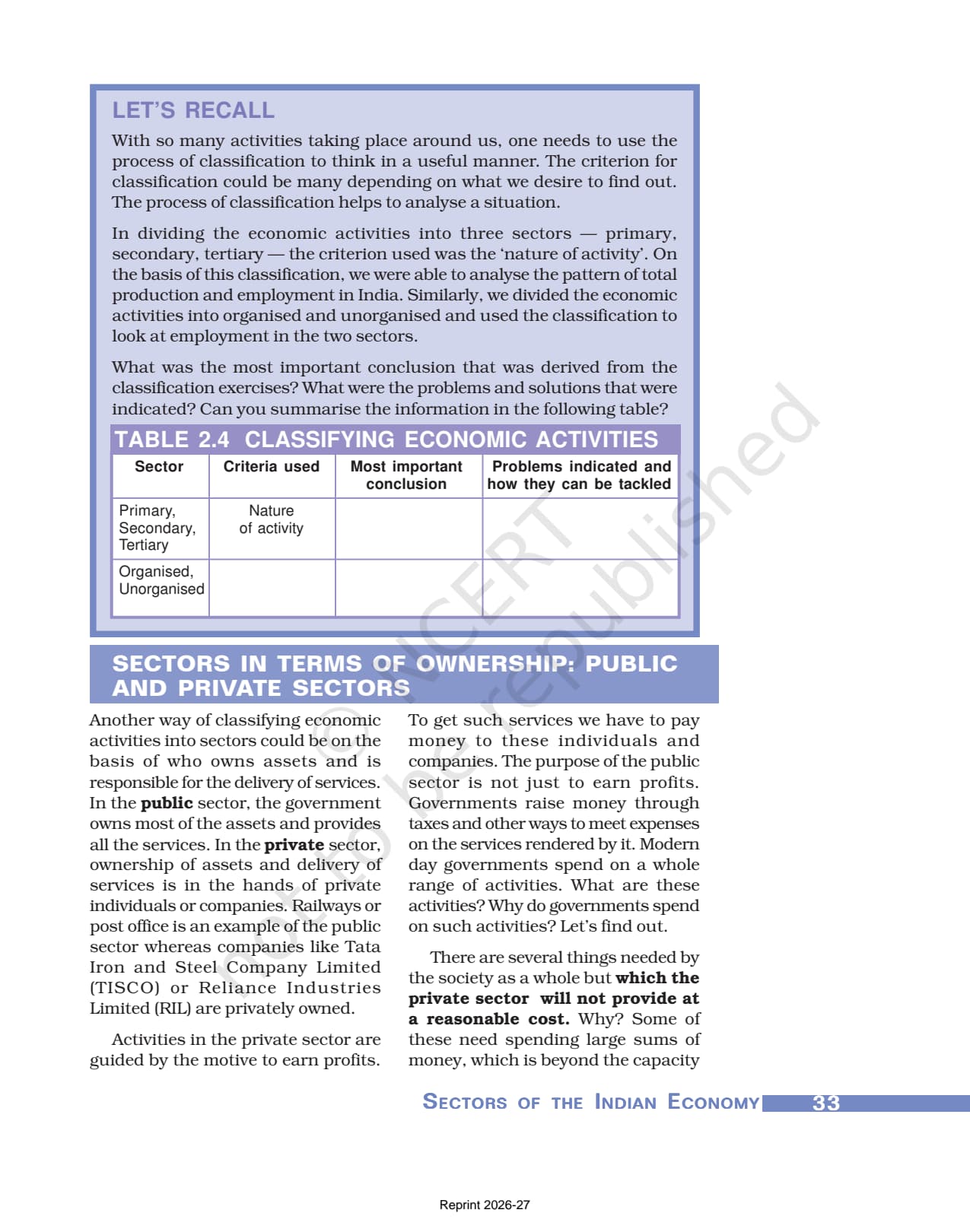
The third classification is based on who owns the assets. Both are needed but aim at different goals.
- Public sector: the government owns most assets and aims at public welfare, like the Railways and the Post Office.
- Private sector: individuals or companies own the assets and aim at profit, like Tata Iron and Steel.
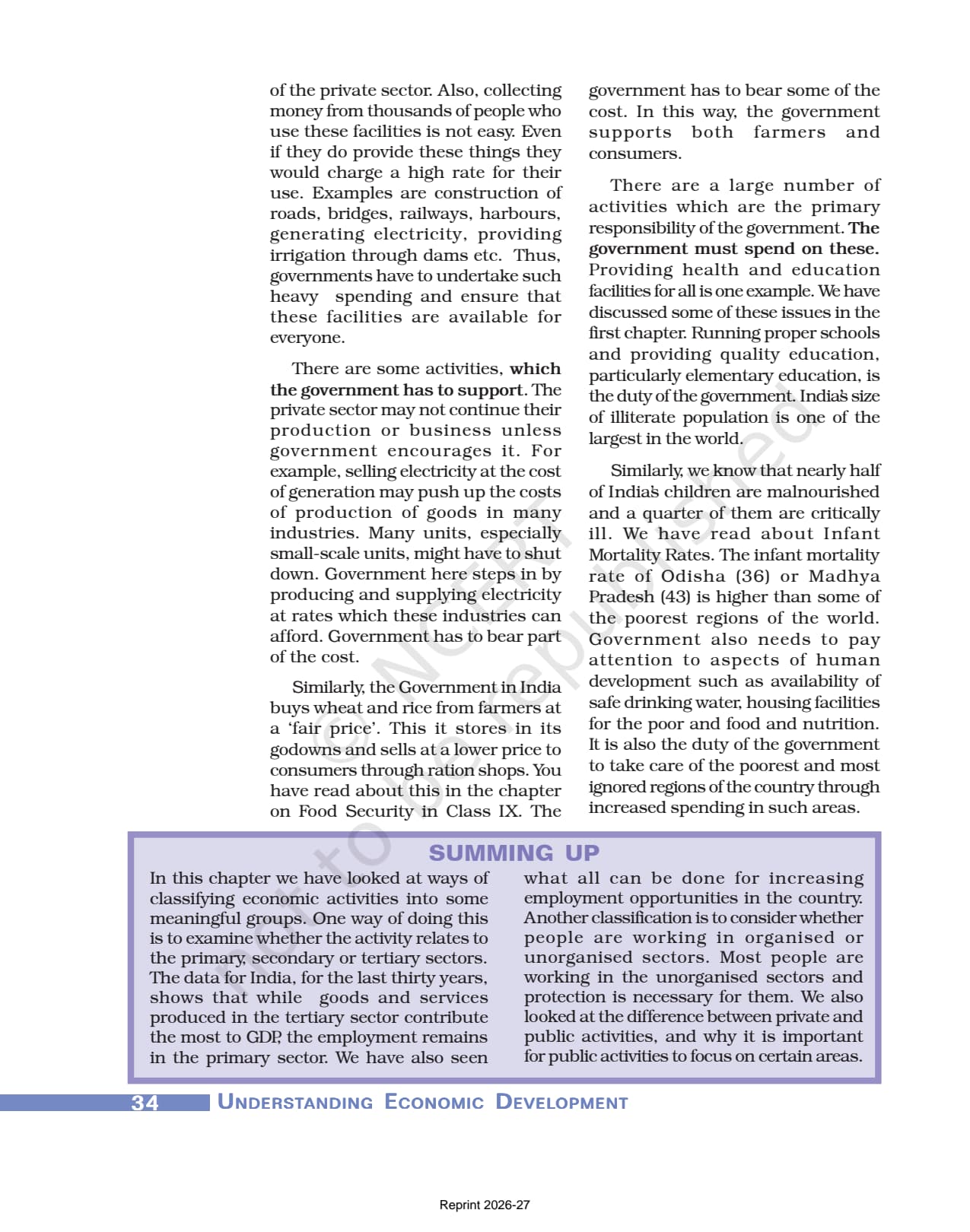
- Why the public sector matters: it builds roads, dams and electricity and runs schools and hospitals that private firms find too costly.
Both must work together for the economy to grow fairly, the balance examiners want in the 5-mark answer.
Class 10 Economics Chapter 2 Exam Weightage and Question Trends
This is one of the most scoring chapters in the Economics unit, appearing in every paper over the last five board cycles.
| Year | Question Type Asked | Approx. Marks |
|---|---|---|
| 2025 | Difference between organised and unorganised sectors | 3 |
| 2024 | Disguised unemployment with example | 3 |
| 2023 | Source-based question on MGNREGA 2005 | 4 |
| 2022 | Primary, secondary and tertiary sectors with examples | 5 |
| 2021 | Role of the public sector in development | 3 |
Revise the comparison tables first, since examiners ask them almost every year.
Student Feedback on the Sectors of the Indian Economy Chapter
In a Collegedunia poll of 15,290 Class 10 students before the 2026 boards, 68% rated disguised unemployment as the hardest idea to explain in their own words, and most said the three comparison tables were what they revised most.
Source: 2026-27 Class 10 Economics student poll. Sample of 15,290 students from CBSE schools across 14 states.
Common Mistakes Students Make in the Sectors of the Indian Economy Chapter
- Mixing up underemployment (extra workers add nothing) with unemployment (no work at all).
- Calling mining a secondary activity. It uses natural resources directly, so it is primary.
- Writing that the tertiary sector employs the most. It produces the most, but the primary sector still employs the most.
- Forgetting that one job can sit in all three classifications at once.
Key Features of the Official NCERT Class 10 Economics Book PDF
- Reprint Edition: 2026-27, aligned to the current CBSE syllabus, no content trimmed
- Publisher: NCERT, New Delhi; book is Understanding Economic Development, Class 10 Economics
- File Type: searchable text PDF, mobile-readable and print-ready at A4 size
Related Resources for Sectors of the Indian Economy Class 10
| Resource | Link |
|---|---|
| NCERT Solutions | Sectors of the Indian Economy Class 10 NCERT Solutions |
| Notes | Sectors of the Indian Economy Class 10 Notes |
| Handwritten Notes | Sectors of the Indian Economy Class 10 Handwritten Notes |
NCERT Book PDF for Class 10 Economics: All Chapters
All five chapters of Understanding Economic Development are available on Collegedunia. Use the table below to download any chapter PDF directly.
| Chapter | NCERT Book PDF |
|---|---|
| Chapter 1 | Development NCERT Book PDF |
| Chapter 3 | Money and Credit NCERT Book PDF |
| Chapter 4 | Globalisation and the Indian Economy NCERT Book PDF |
| Chapter 5 | Consumer Rights NCERT Book PDF |
Ques. Is this the official NCERT Class 10 Economics Chapter 2 textbook PDF?
Ans. Yes. The file is the original NCERT Class 10 Economics Chapter 2 Sectors of the Indian Economy from Understanding Economic Development, 2026-27 reprint, hosted unmodified for free student download.
Ques. How many pages is the Sectors of the Indian Economy Class 10 chapter?
Ans. The chapter runs to about 20 pages in the 2026-27 NCERT reprint, including the three classifications, two graphs, the MGNREGA case study and the end-of-chapter exercises.
Ques. What is the board weightage of Class 10 Economics Chapter 2?
Ans. Sectors of the Indian Economy carries roughly 4 to 6 marks in the CBSE Class 10 Social Science board paper, usually as one short answer plus one source-based question on MGNREGA or the organised and unorganised sectors.
Ques. Where can I get the ncert solutions for Class 10 Economics Chapter 2?
Ans. The Sectors of the Indian Economy Class 10 NCERT Solutions page linked above works through every textbook exercise question with step-by-step answers, mapped to the 2026-27 syllabus.
Ques. Is the NCERT Class 10 Economics book PDF free to download?
Ans. Yes. NCERT textbooks are open educational resources published by the Government of India and are free to download and use for study.
Ques. What are the three sectors of the Indian economy?
Ans. The three sectors are the primary sector (farming, mining and other natural-resource activities), the secondary sector (manufacturing), and the tertiary or service sector (transport, trade, banking and communication).
Ques. What is disguised unemployment in Chapter 2?
Ans. Disguised unemployment is a form of underemployment where more people work on a task than needed. The extra workers appear employed but add no extra output, so removing them would not lower production. A family farm with surplus labour is the standard example.
Ques. What is MGNREGA 2005?
Ans. The Mahatma Gandhi National Rural Employment Guarantee Act 2005 promises 100 days of guaranteed wage employment in a year to every rural household whose adult members are willing to do manual work. It is also called the Right to Work.



Comments