



The NCERT Class 11 Accountancy Chapter 2 Theory Base of Accounting PDF gives students the official 2026-27 chapter on accounting principles, concepts, conventions and standards.
- Core focus: rules that make accounting records reliable and comparable.
- Best use: read the PDF before journal entries and ledger practice.
- Exam value: definitions, assumptions and accounting standards are commonly asked.
This Collegedunia chapter guide follows the 2026-27 NCERT Accountancy textbook and keeps the official theory base, accounting principles and revision tables together for careful study.
Student Feedback: In a Collegedunia classroom poll of 10,000 students, concept-versus-convention tables were rated most useful for this theory chapter.
Theory Base of Accounting Concepts Covered in the NCERT PDF
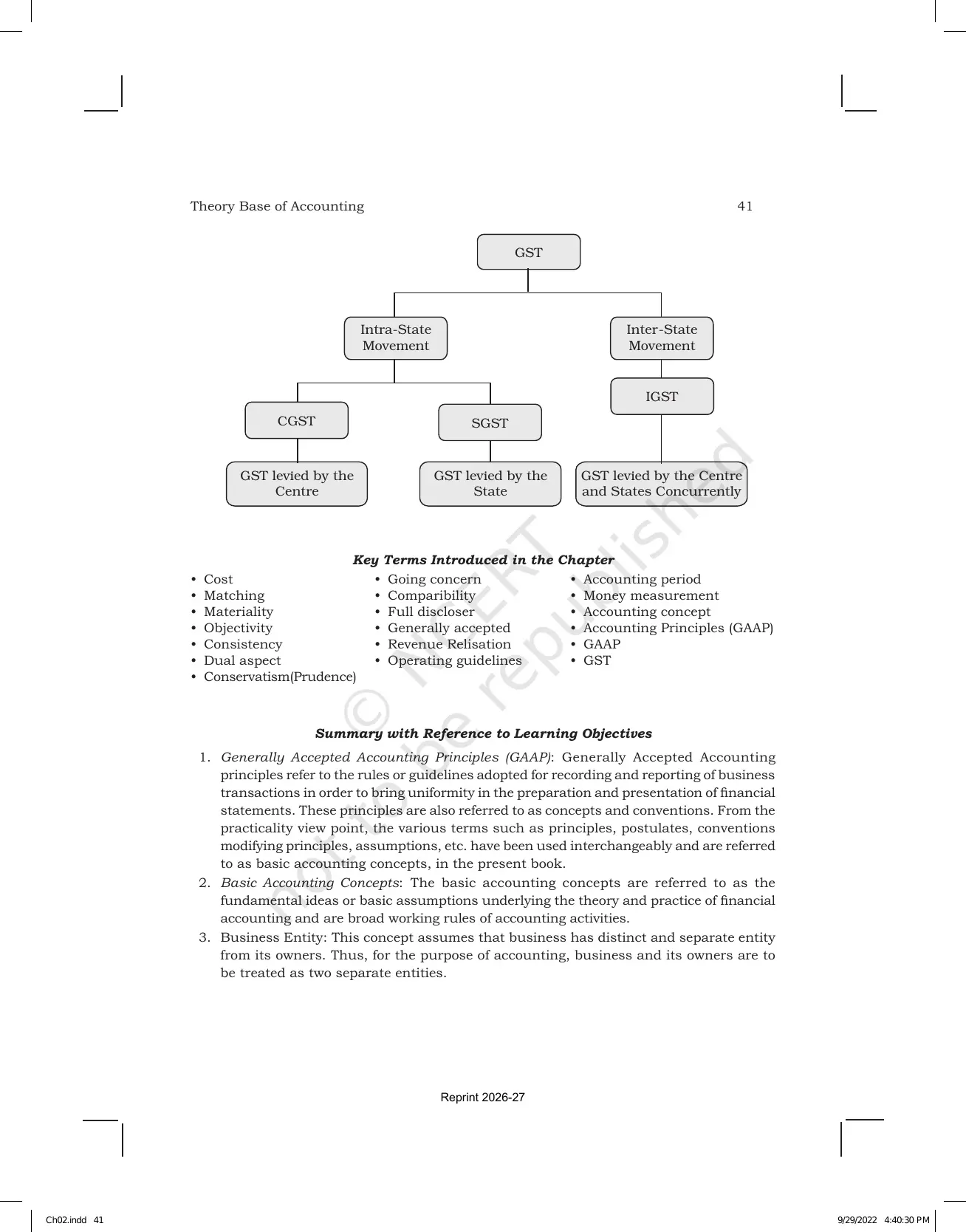
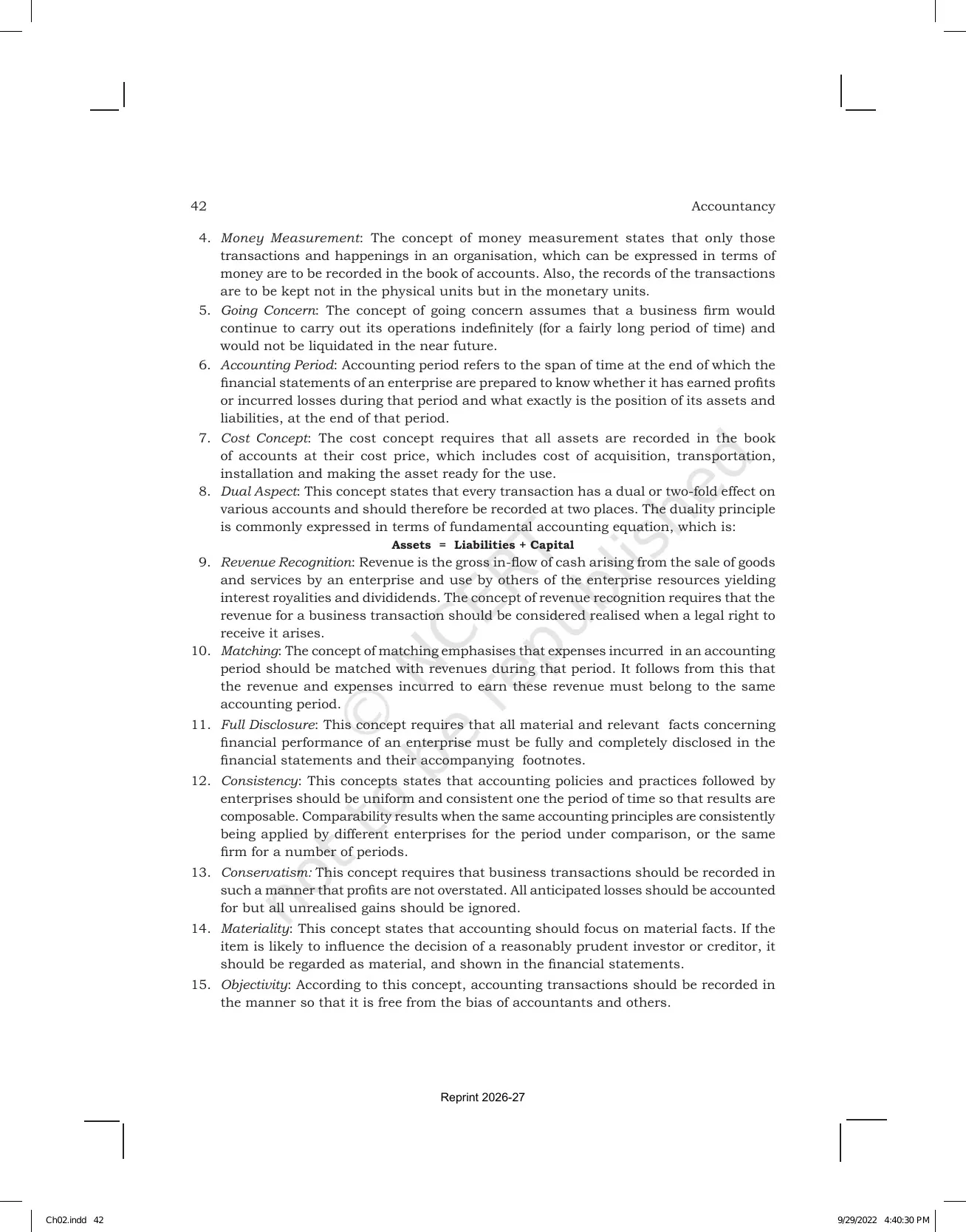
Theory Base of Accounting explains why accounts are prepared in a standard way. NCERT first introduces Generally Accepted Accounting Principles, then moves to basic assumptions, accounting concepts, conventions and the role of Accounting Standards.
| Area | What to learn | Why it matters |
|---|---|---|
| GAAP | Commonly accepted principles used by accountants | Builds consistency across businesses |
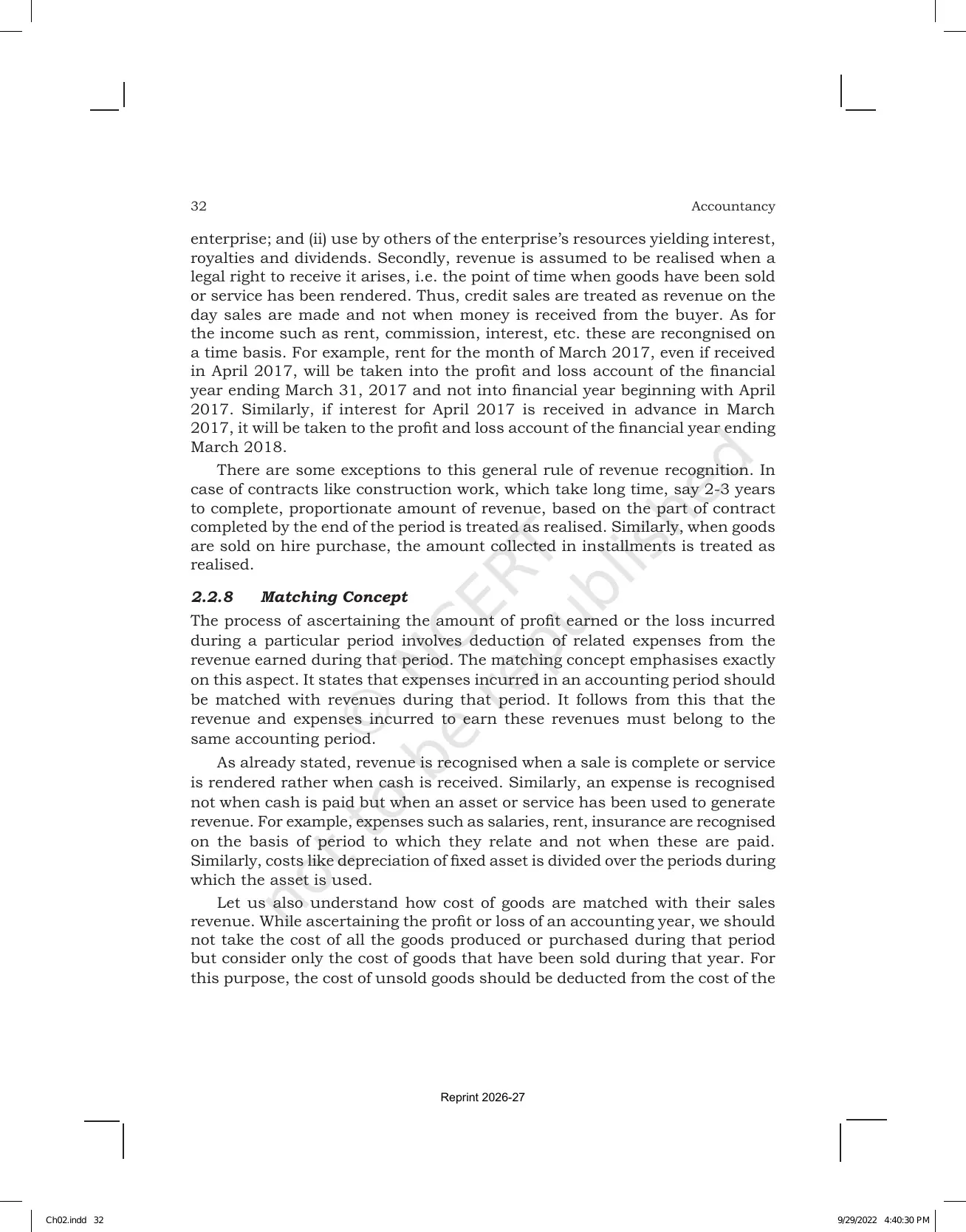
| Concepts | Business entity, money measurement, going concern and accounting period | Sets the base for every entry |
| Conventions | Consistency, full disclosure, materiality and conservatism | Improves reporting quality |
| Standards | Rules issued to reduce alternative accounting treatments | Makes statements easier to compare |
Accounting theory is not separate from practical questions. It explains why a transaction is recorded, which value is used, and how business information is reported.
Generally Accepted Accounting Principles Flow
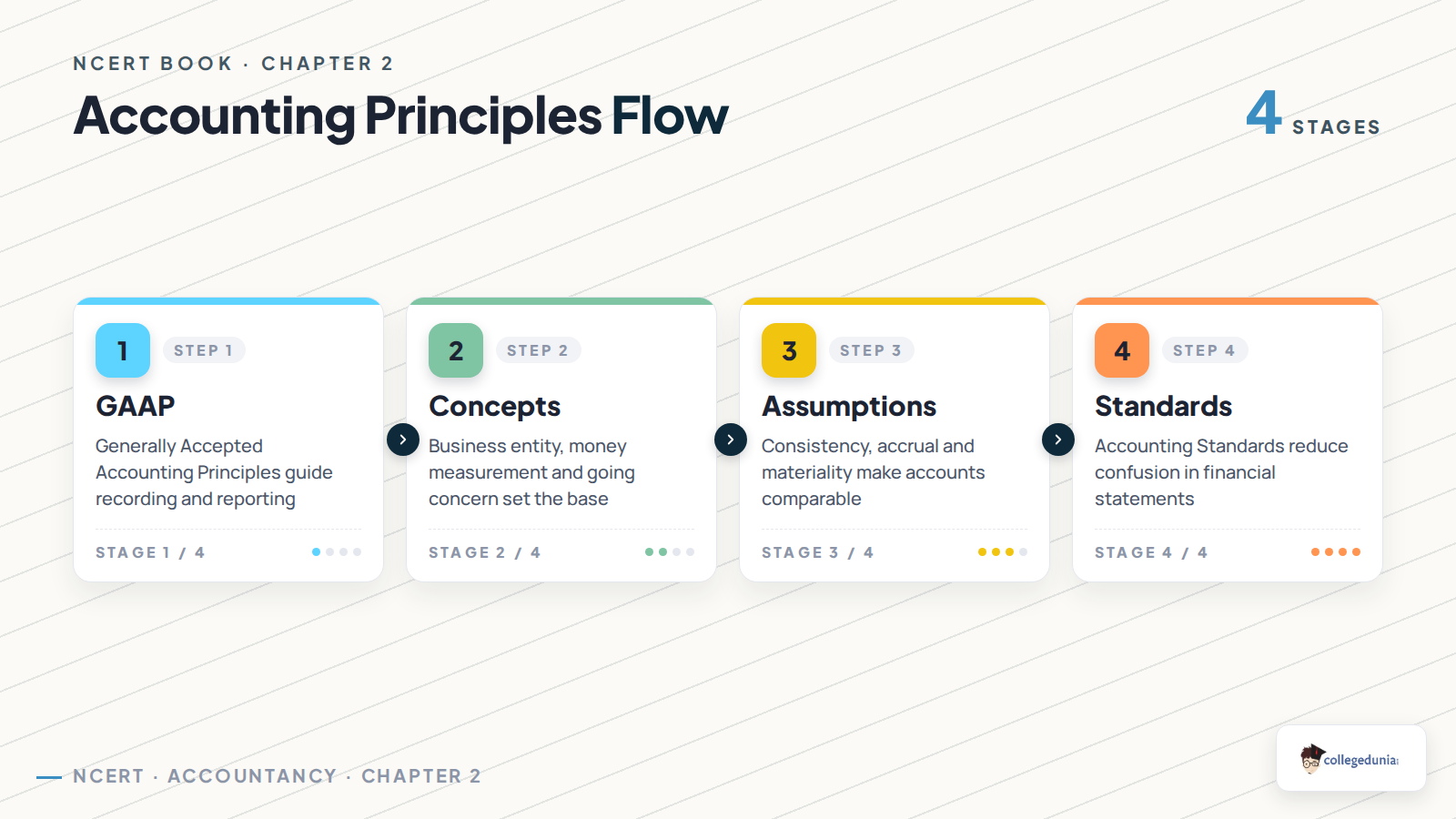
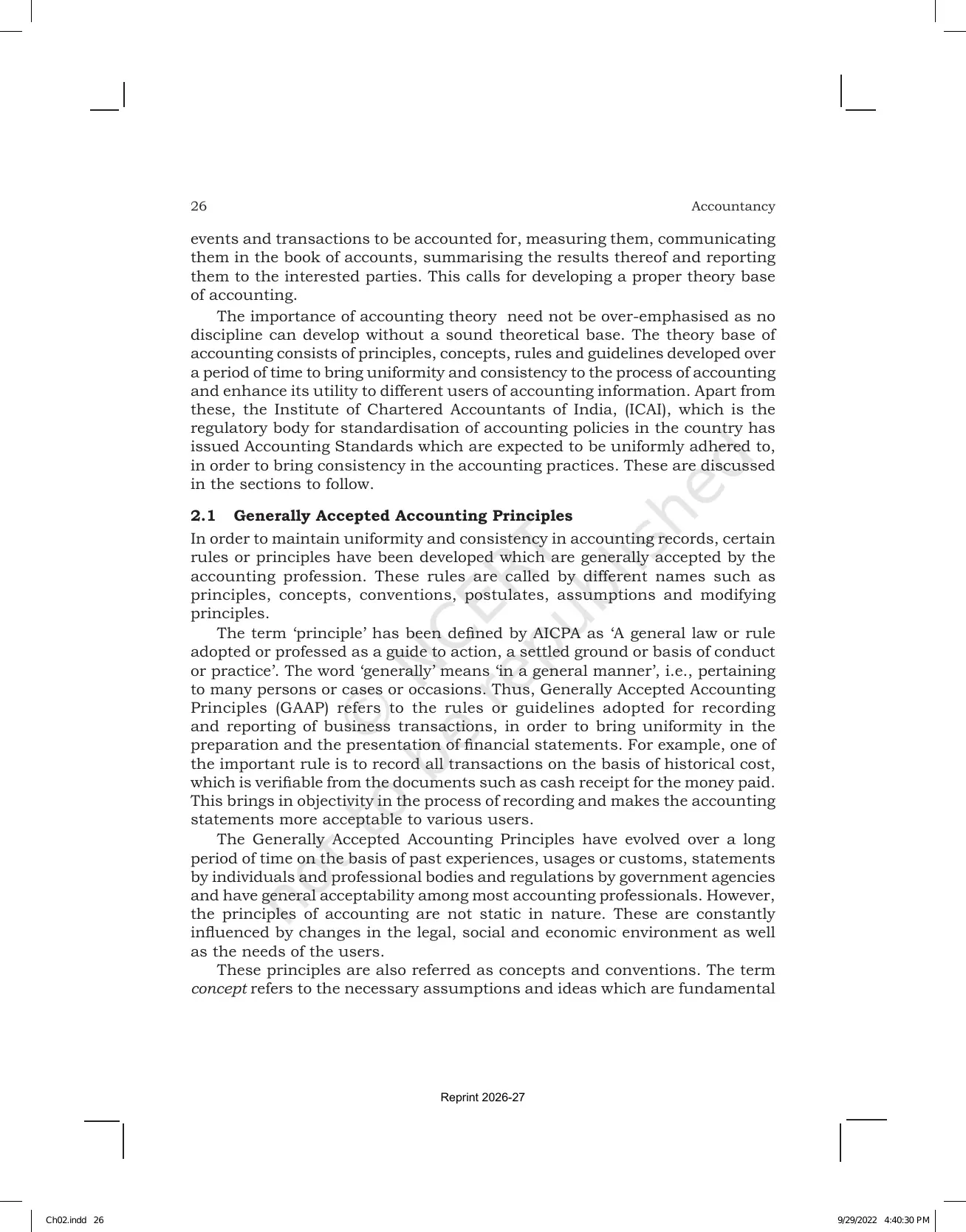
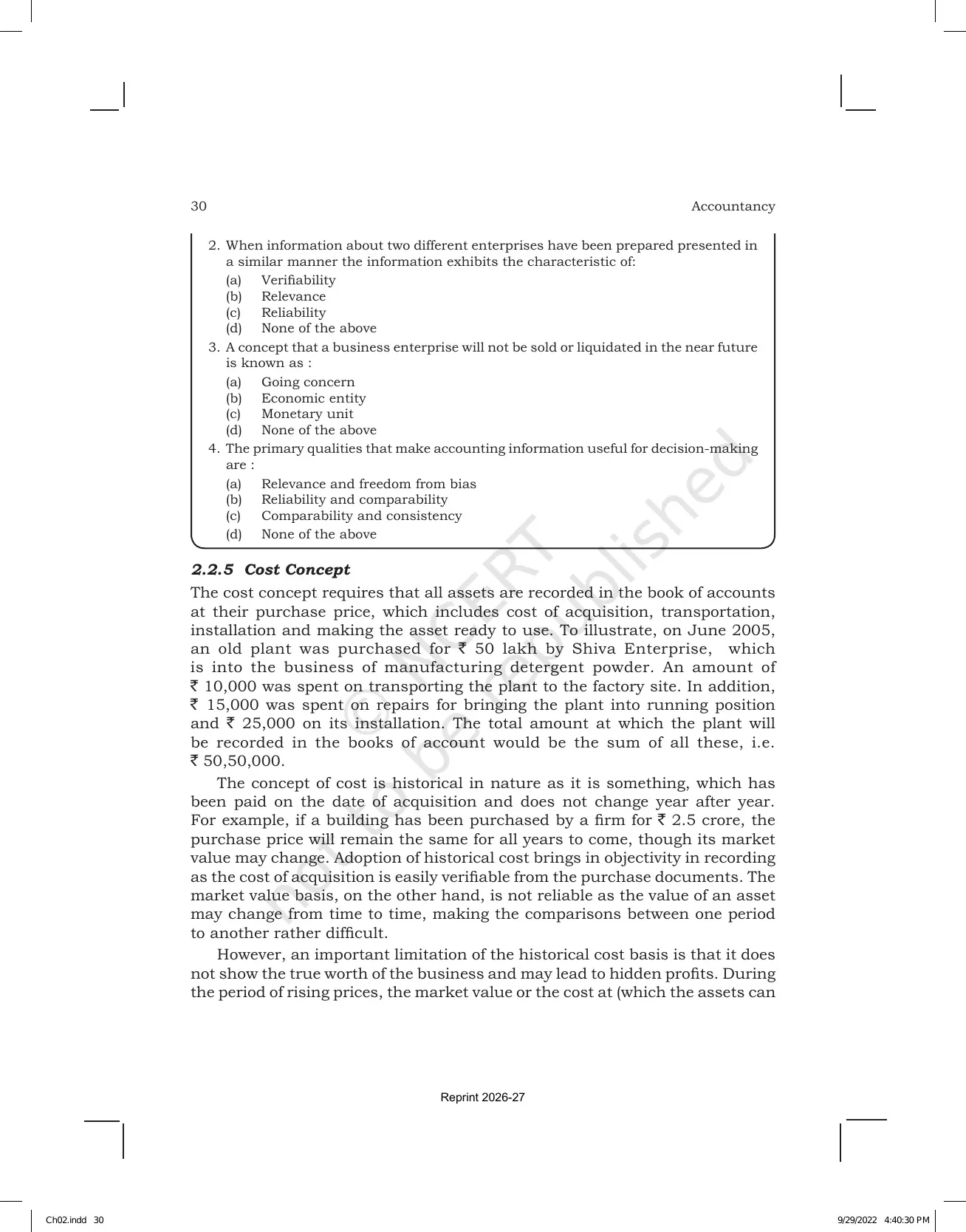
GAAP gives accountants a common language. If every business used different rules, owners, lenders and tax authorities could not compare financial statements. This chapter shows how these rules create a stable base before students begin journal entries.
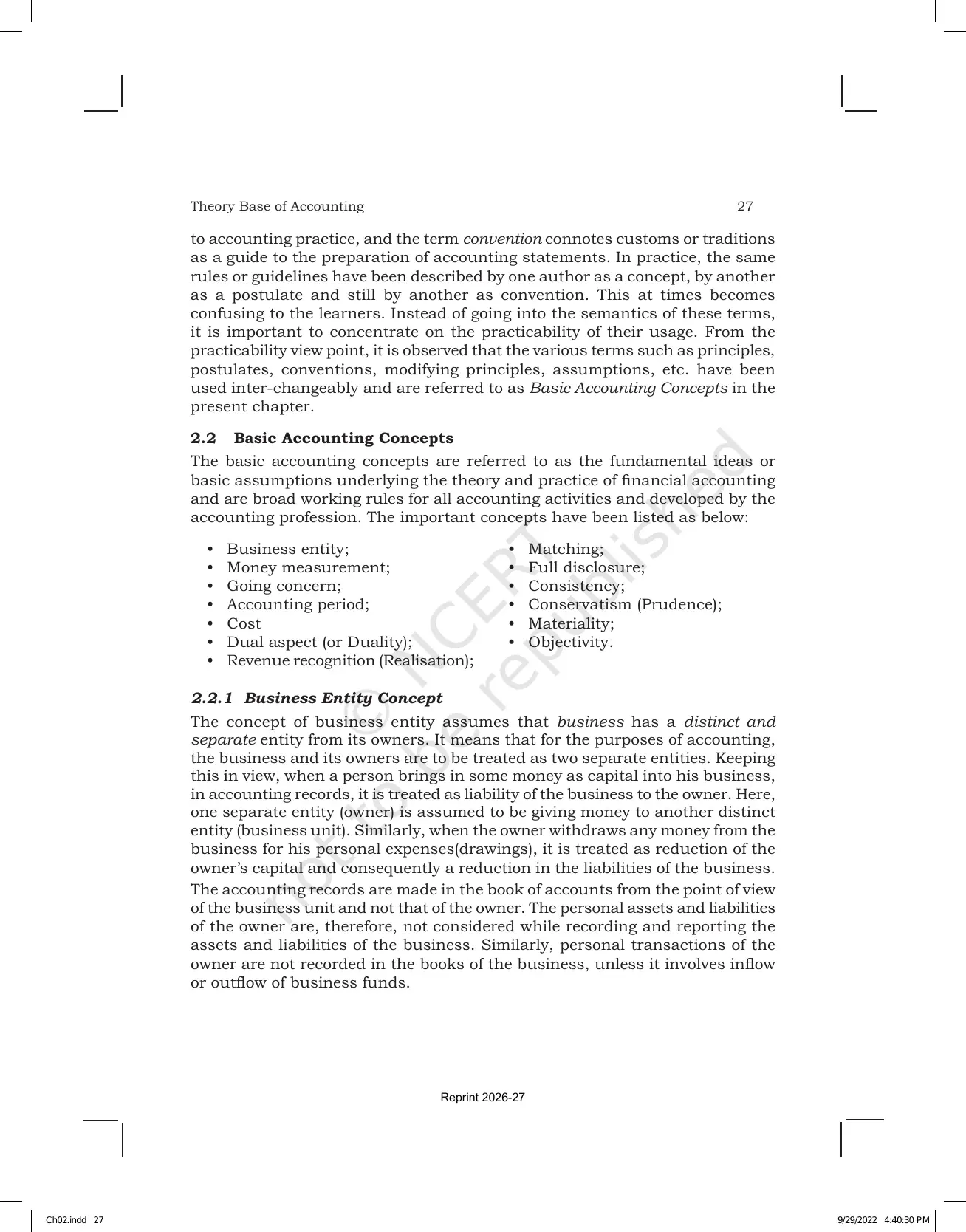
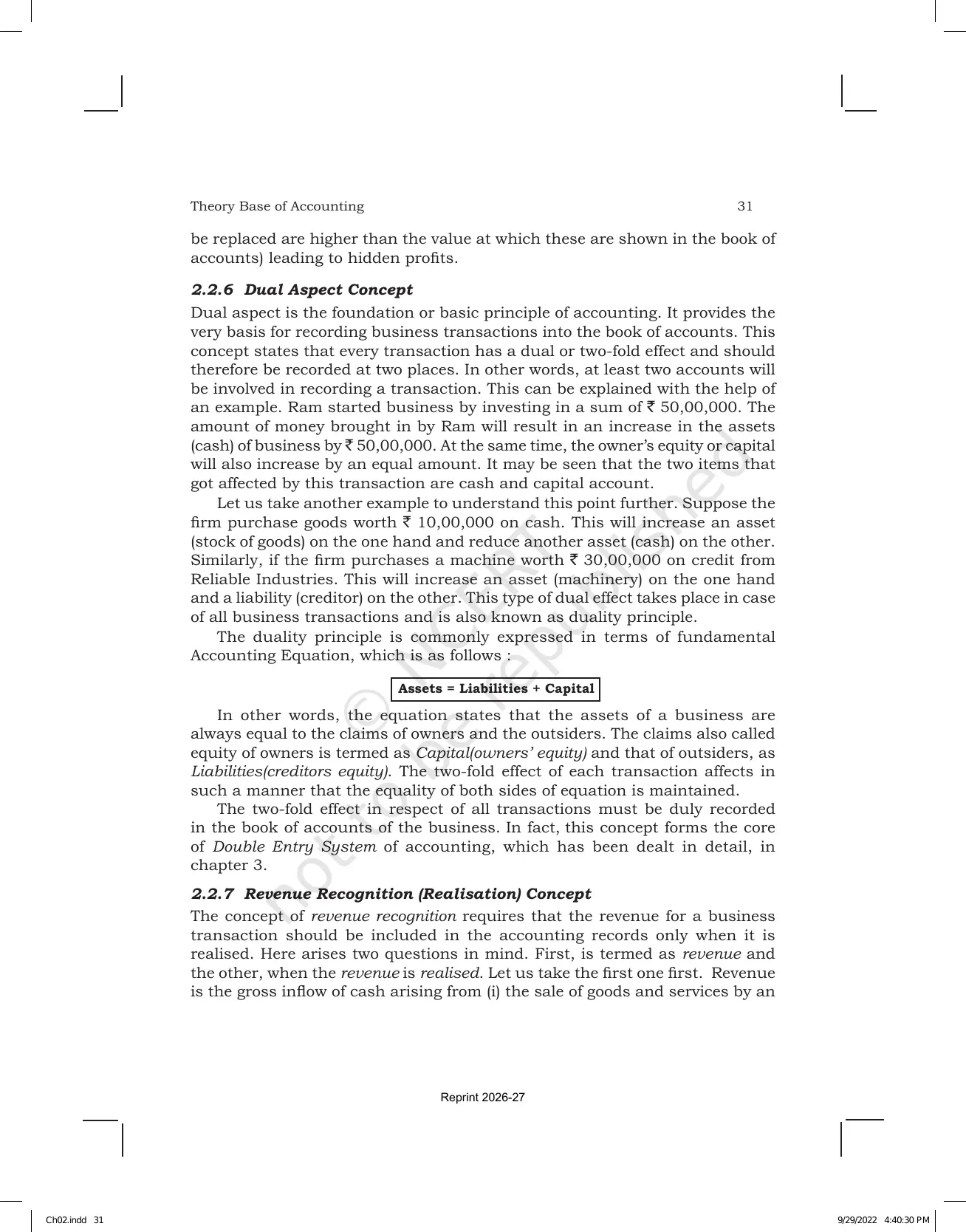
- Business entity: the business is treated as separate from the owner.
- Money measurement: only money-measurable events are recorded.
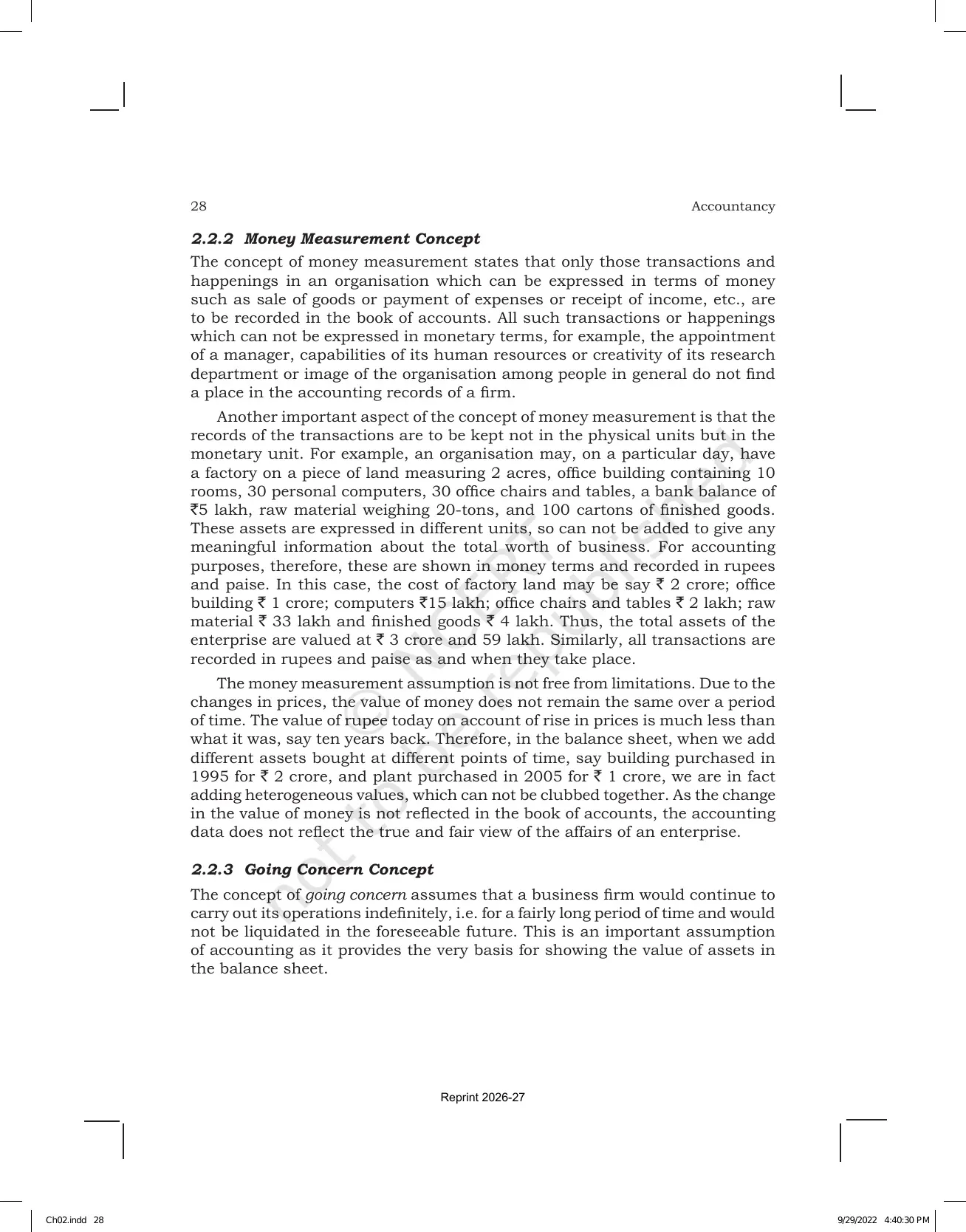
- Going concern: the business is assumed to continue in the future.
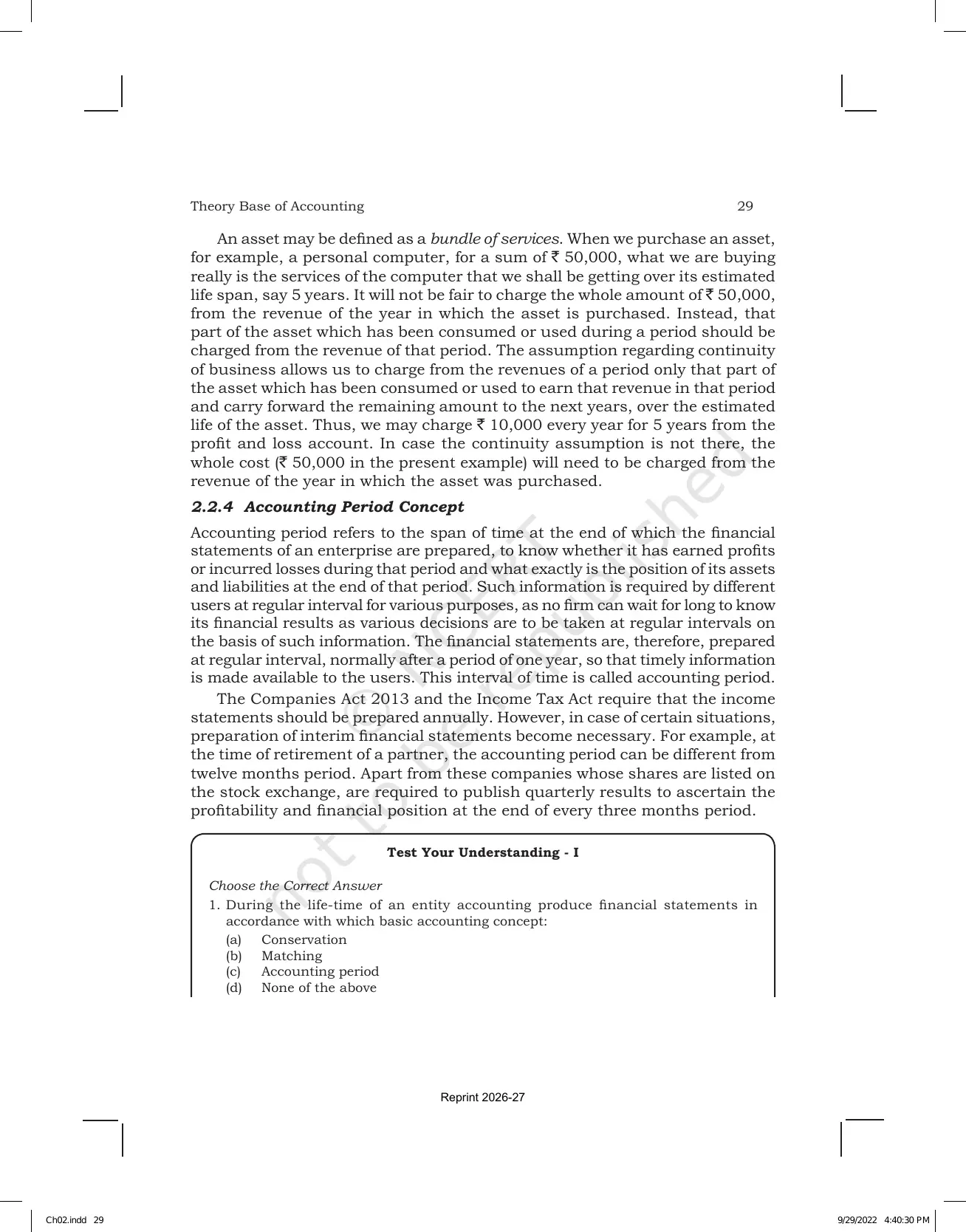
- Accounting period: performance is measured for a fixed time span.
These four ideas decide what enters the books of accounts. The later chapters on journal, ledger and trial balance use them silently.
Theory Base of Accounting Video Explanation
Source: Magnet Brains on YouTube
Accounting Concepts and Conventions Compared
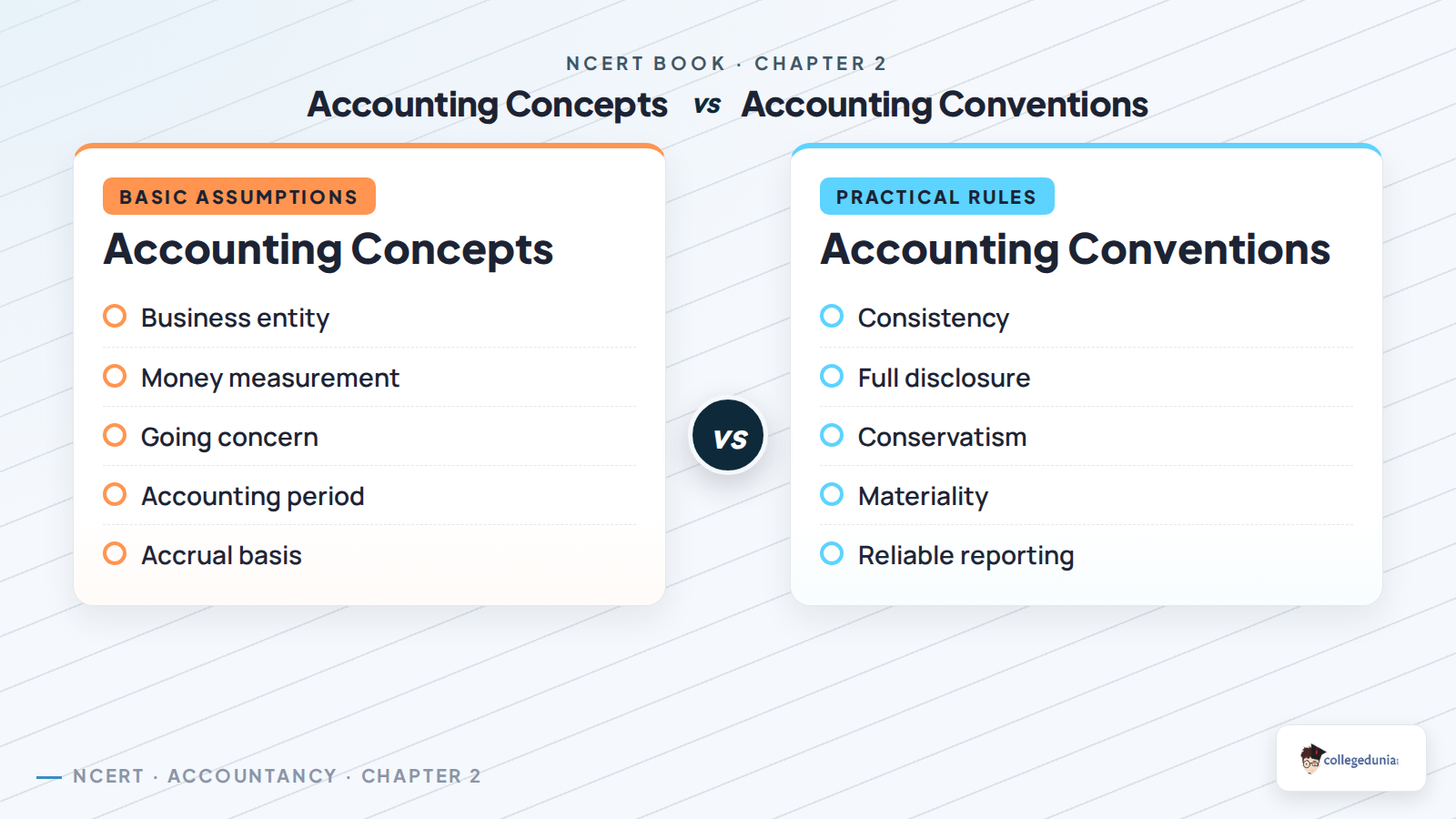
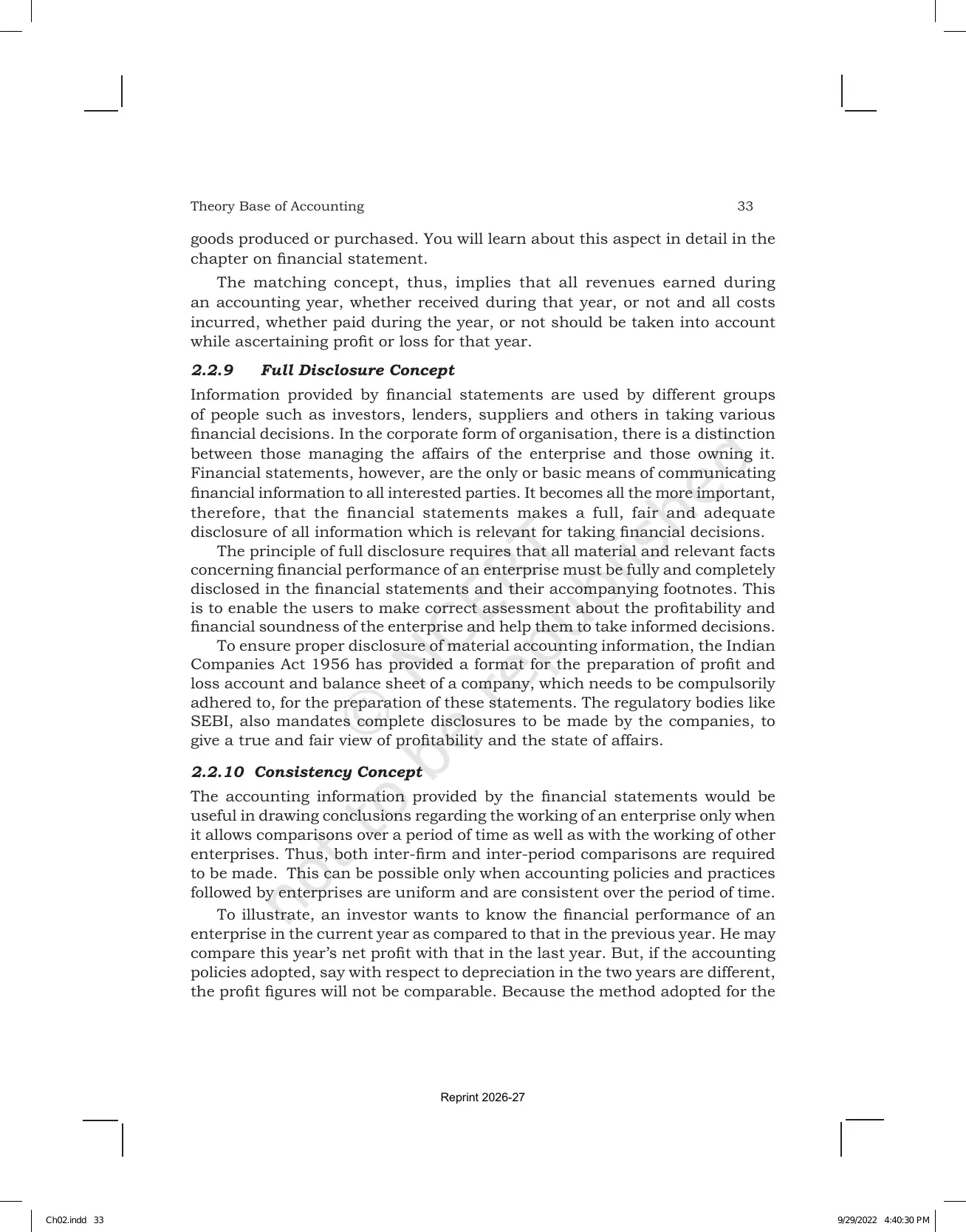
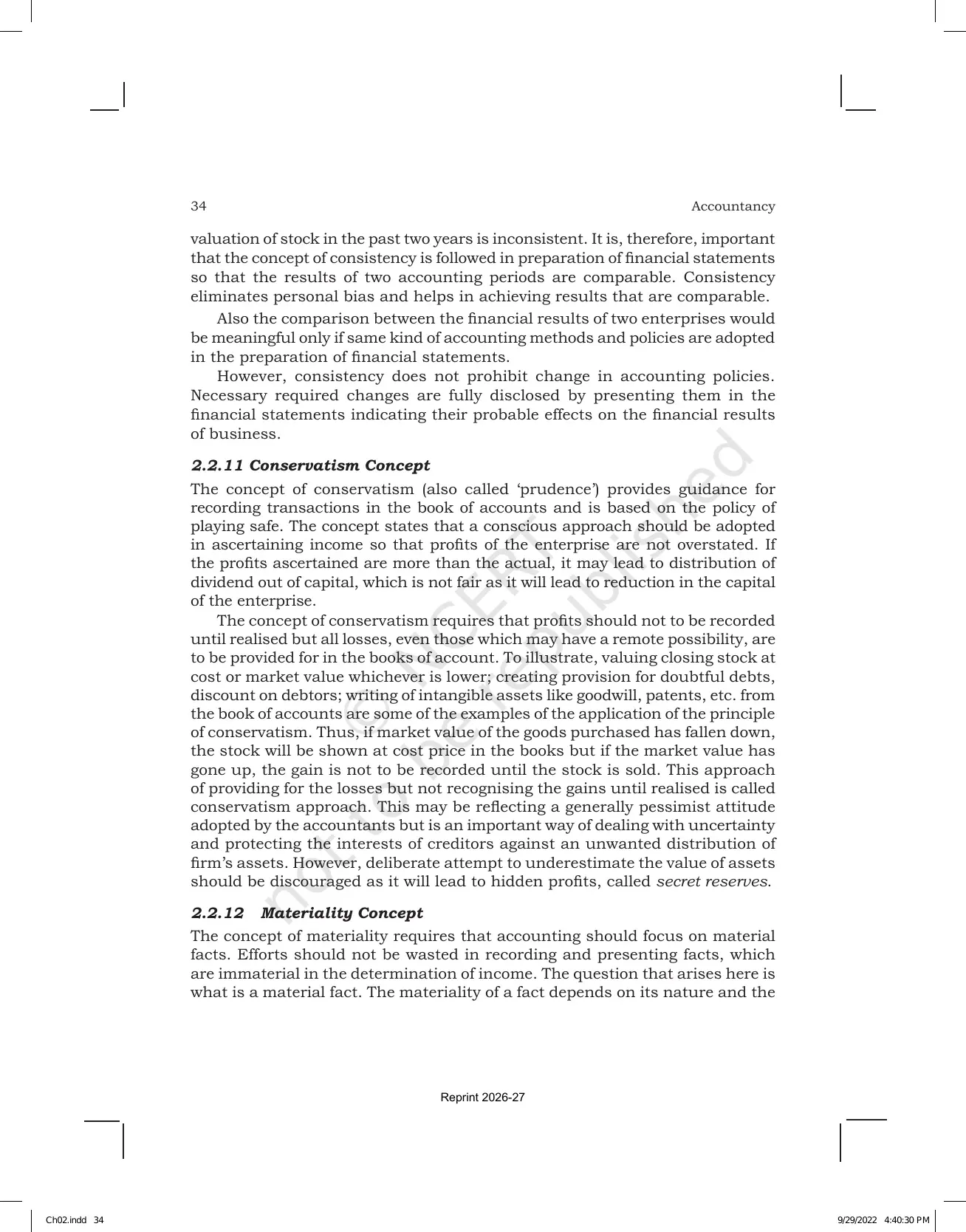
Students often confuse concepts with conventions. Concepts are the basic assumptions behind accounting. Conventions are practical guidelines that help accountants choose a sensible treatment when more than one method is possible.
| Point | Accounting concepts | Accounting conventions |
|---|---|---|
| Nature | Basic assumptions | Practical guidelines |
| Examples | Entity, accrual, going concern | Consistency, disclosure, conservatism |
| Use | Decides the base of recording | Improves presentation and reliability |
Concepts answer the question "what is the basis?" Conventions answer "how should it be reported?" Keeping this difference clear makes theory answers shorter and more accurate.
Accounting Standards in Class 11 Accountancy
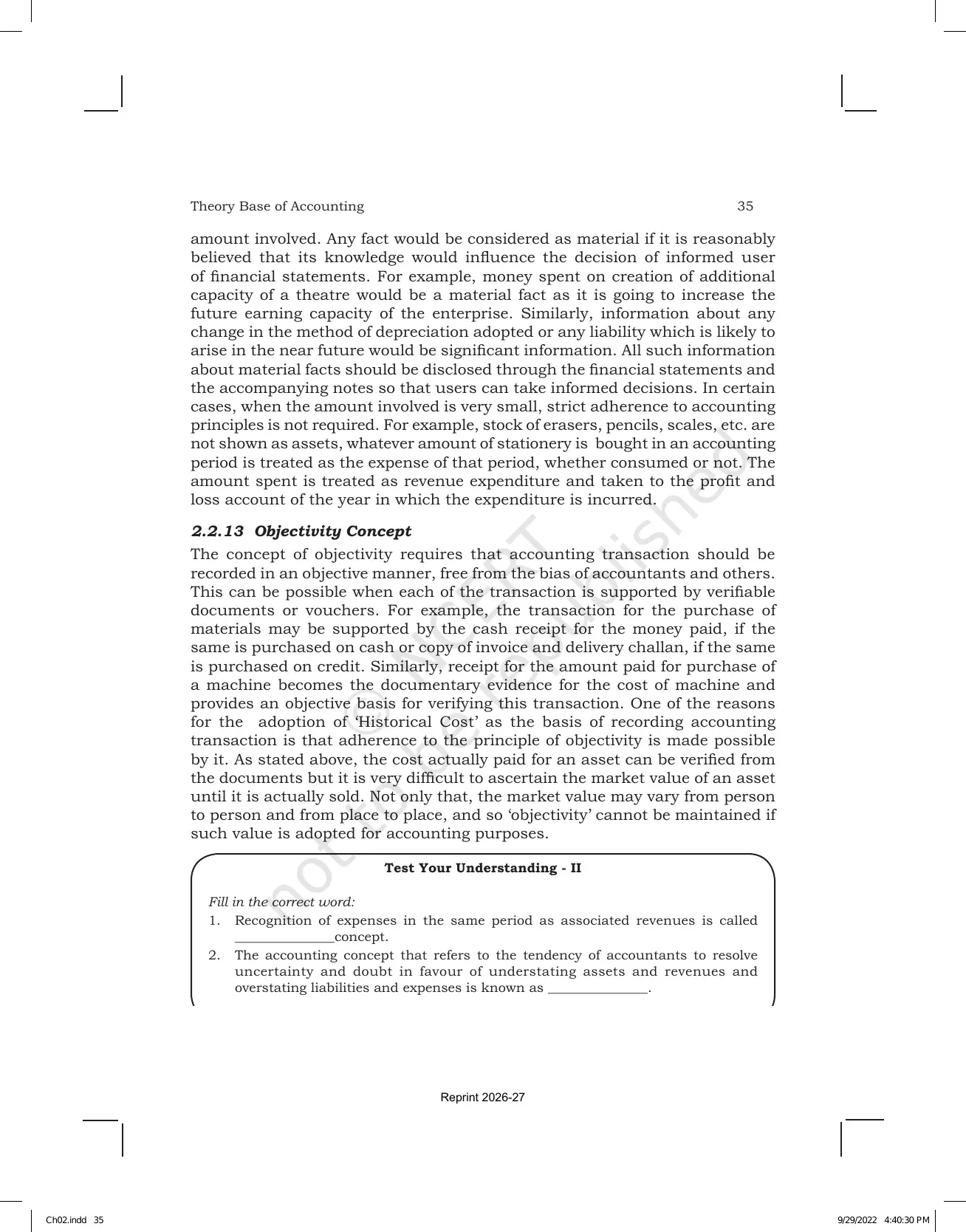
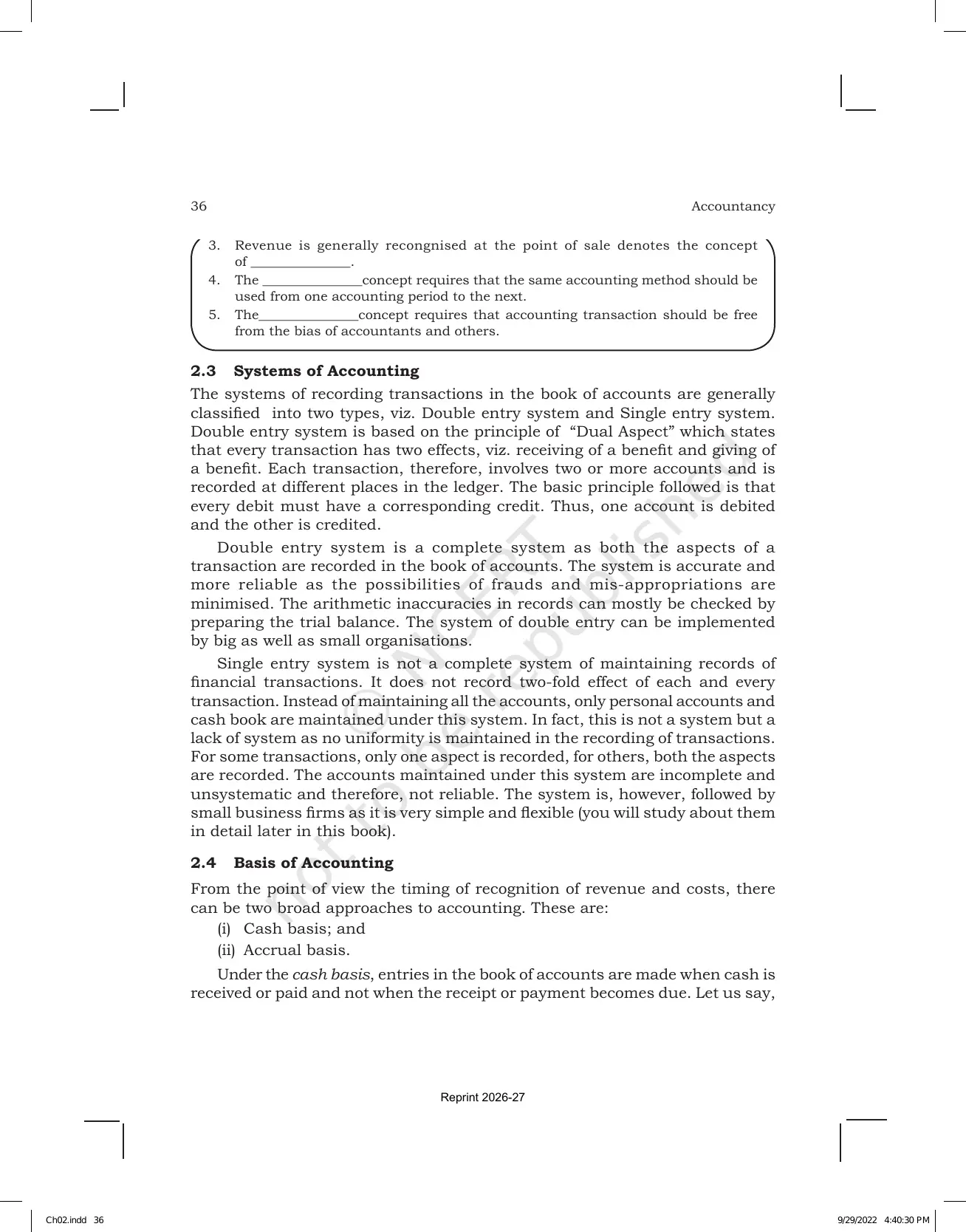
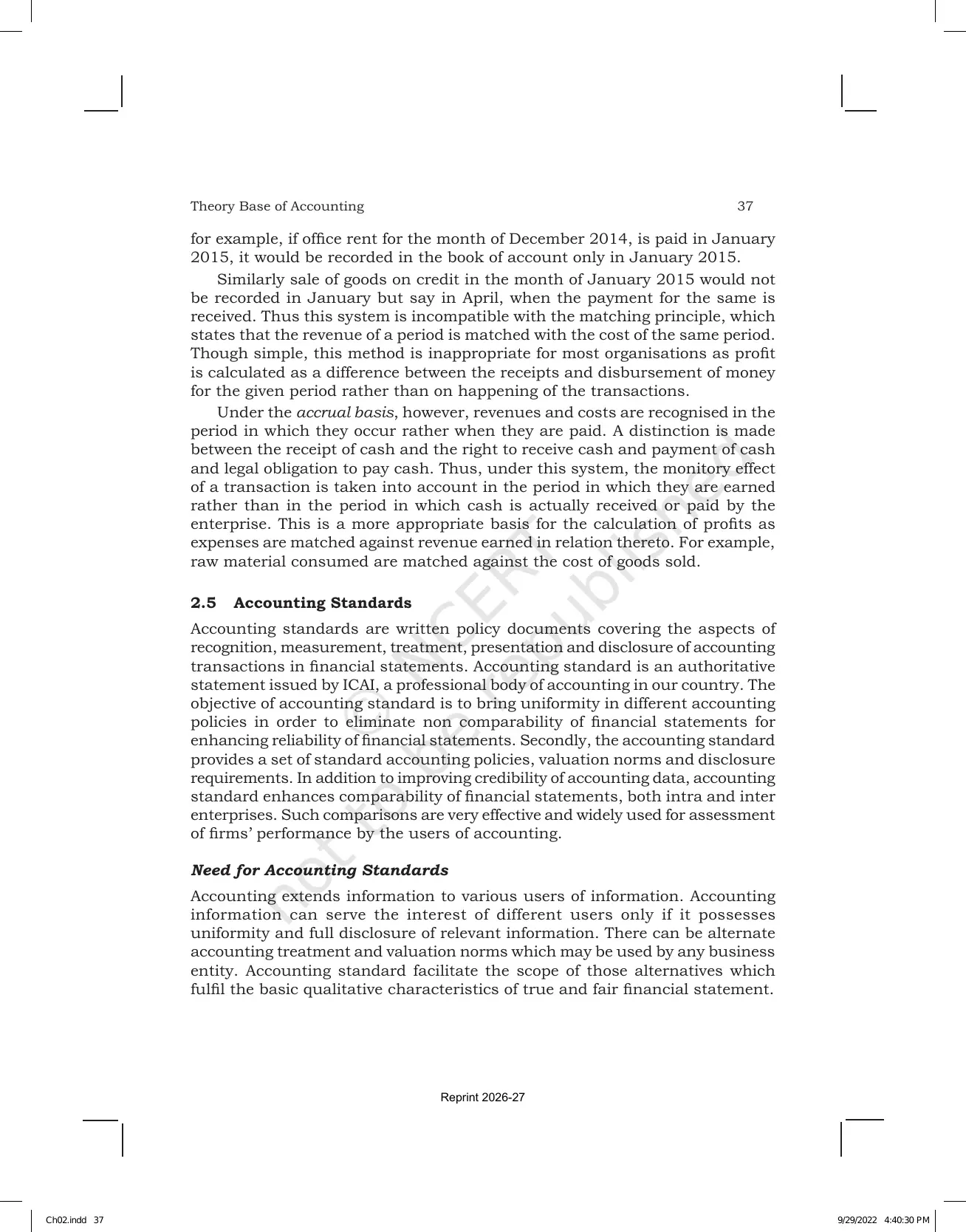
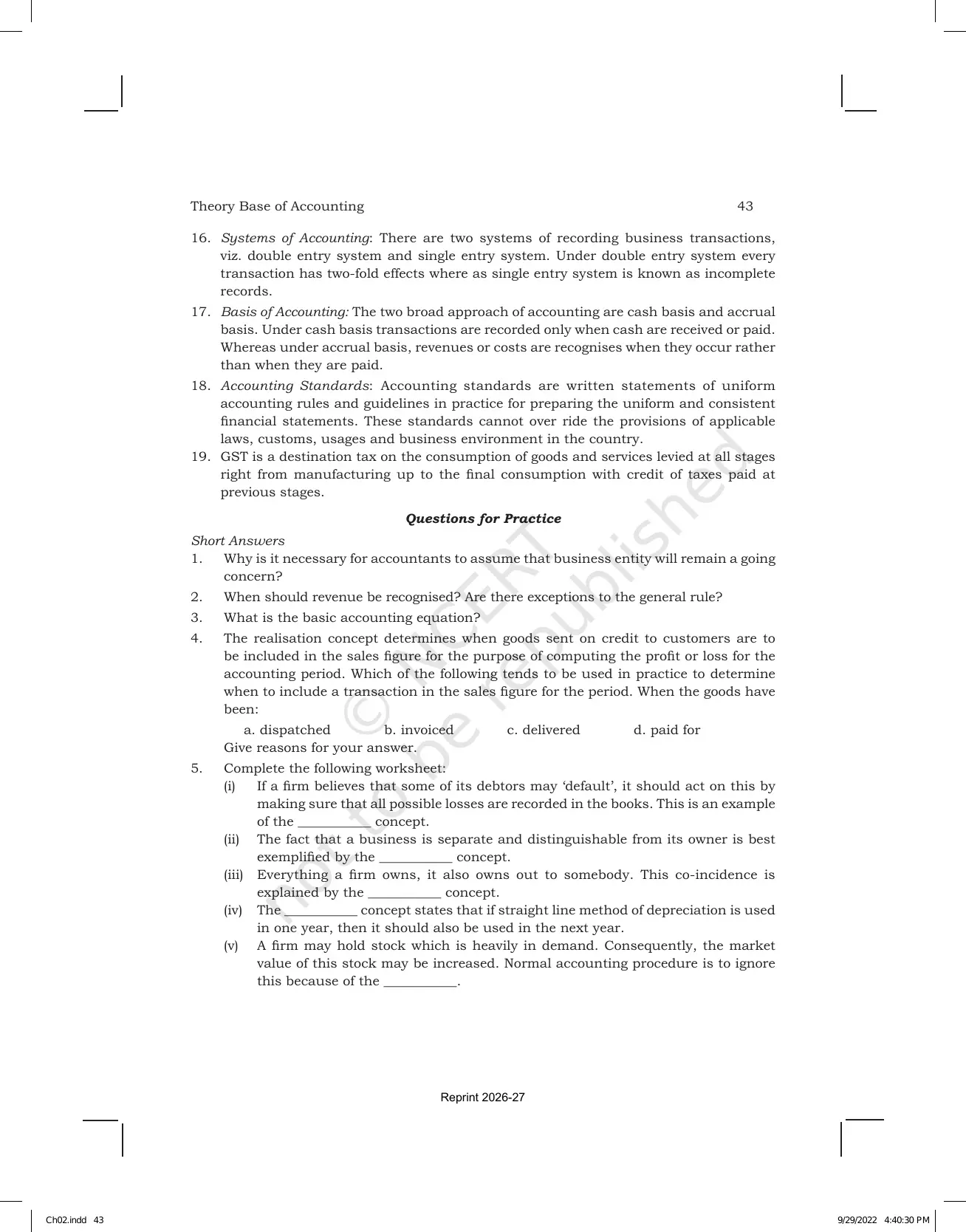
Accounting Standards are written rules that reduce confusion in financial reporting. They bring uniformity when businesses prepare financial statements and help users compare performance across firms.
- They reduce alternative treatments for the same accounting item.
- They improve comparability between financial statements.
- They support transparency through clear disclosure rules.
- They guide accountants when a transaction needs a consistent method.
The chapter treats standards as a bridge between theory and reporting practice. This is why students should revise them with examples, not as isolated definitions.
Theory Base of Accounting Class 11 Related Resources
| Resource | Best use |
|---|---|
| Theory Base of Accounting Class 11 NCERT Solutions | Check textbook answers and definition-based questions |
| Theory Base of Accounting Class 11 Notes | Revise concepts, conventions and standards quickly |
| Theory Base of Accounting Class 11 Handwritten Notes | Use handwritten revision notes before school tests |
All Class 11 Accountancy NCERT Book Chapters
| Chapter | NCERT Book PDF |
|---|---|
| 1 | Introduction to Accounting |
| 2 | Theory Base of Accounting |
| 3 | Recording of Transactions - I |
| 4 | Recording of Transactions - II |
| 5 | Bank Reconciliation Statement |
| 6 | Trial Balance and Rectification of Errors |
| 7 | Depreciation, Provisions and Reserves |
| 8 | Financial Statements - I |
| 9 | Financial Statements - II |
Theory Base of Accounting Class 11 NCERT Book FAQs
Ques. What does Theory Base of Accounting explain?
Ans. It explains the accounting principles, concepts, conventions and standards that guide how financial transactions are recorded and reported.
Ques. What is GAAP in Class 11 Accountancy?
Ans. GAAP means Generally Accepted Accounting Principles. These are the commonly followed rules used for preparing reliable accounts.
Ques. Which accounting concepts are important in this chapter?
Ans. Business entity, money measurement, going concern, accounting period, accrual and dual aspect are key accounting concepts.
Ques. How are concepts different from conventions?
Ans. Concepts are basic assumptions. Conventions are practical guidelines such as consistency, conservatism, materiality and full disclosure.
Ques. Why are Accounting Standards needed?
Ans. Accounting Standards reduce confusion, improve comparability and make financial statements more useful for decision making.



Comments