




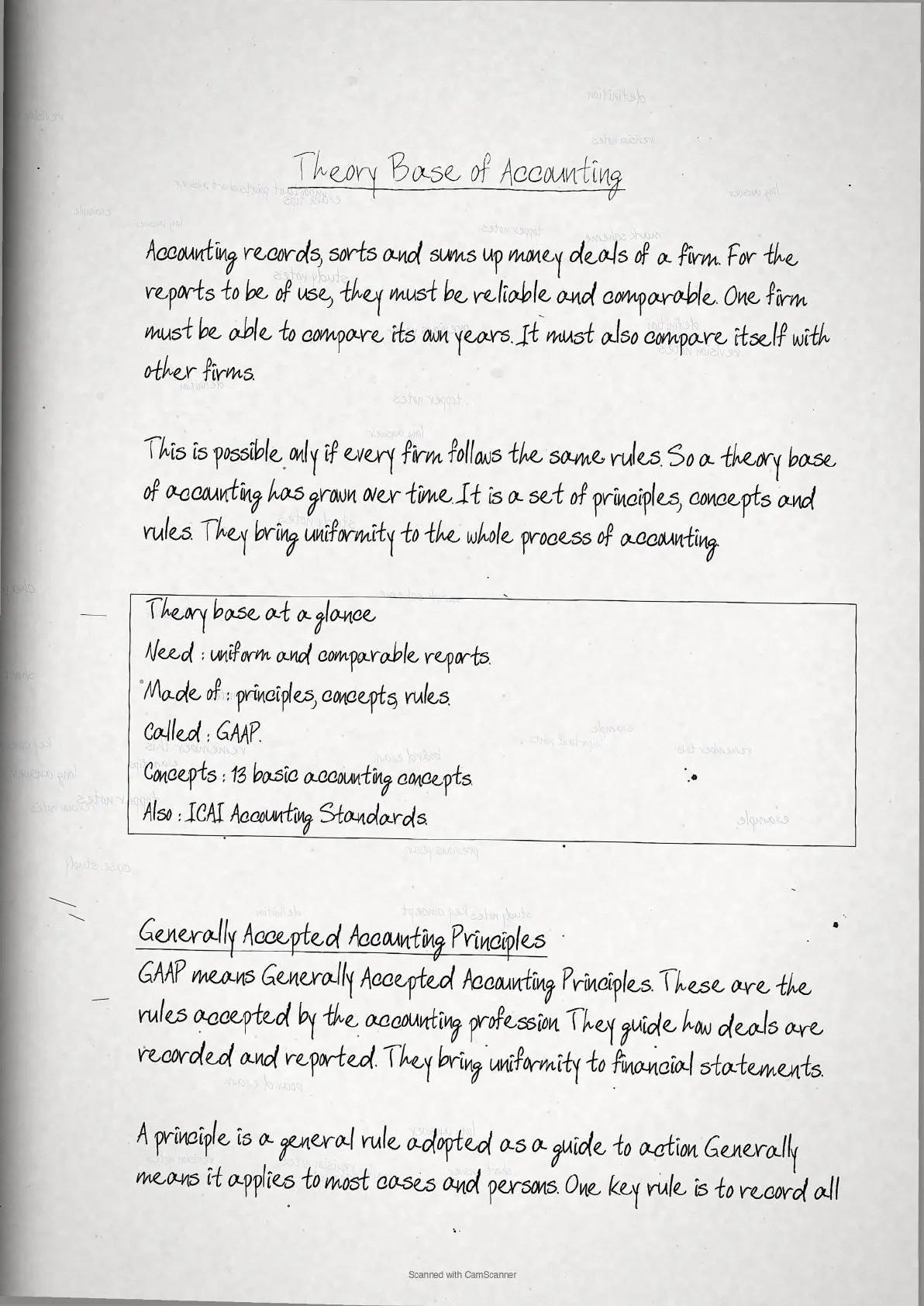
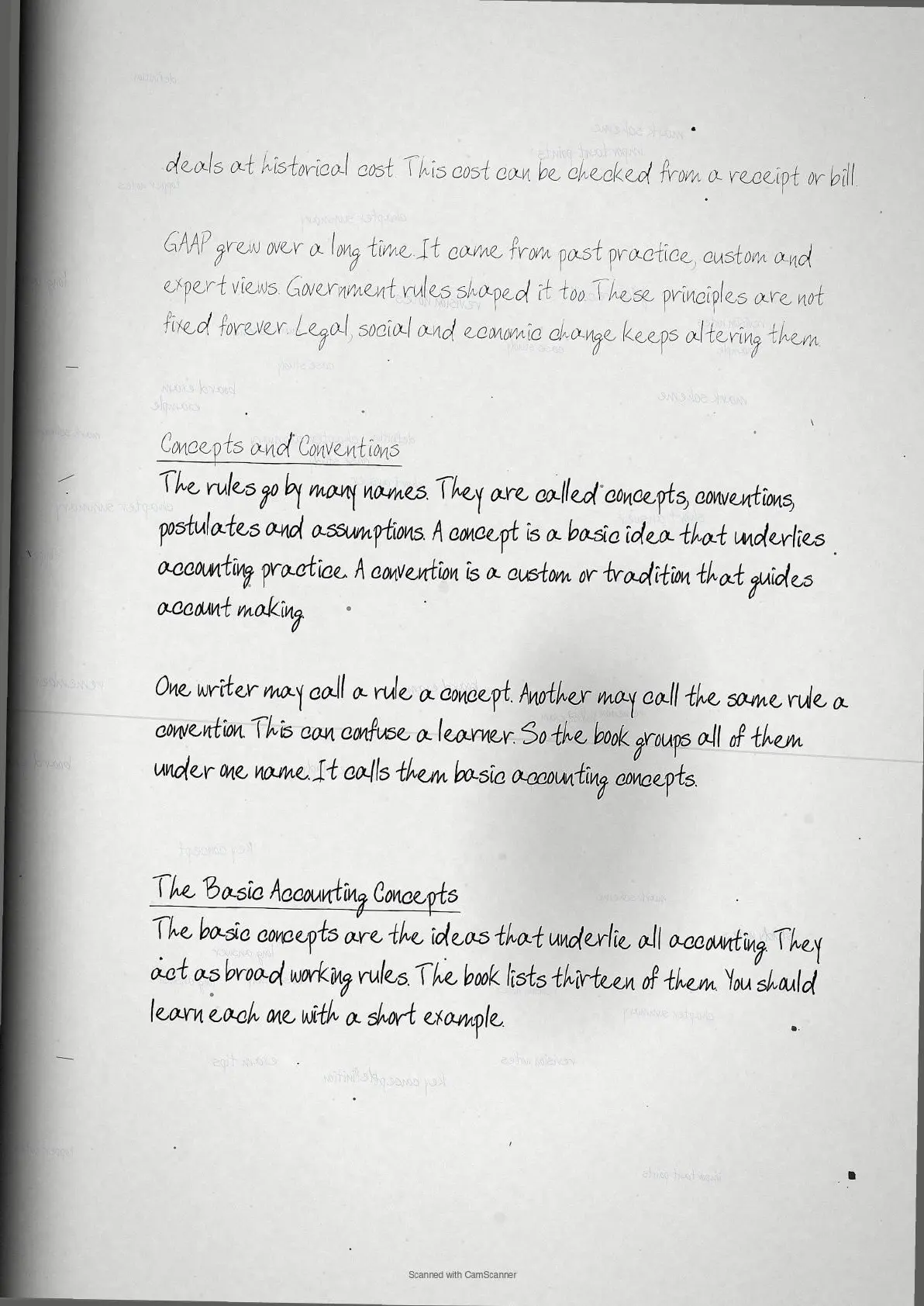
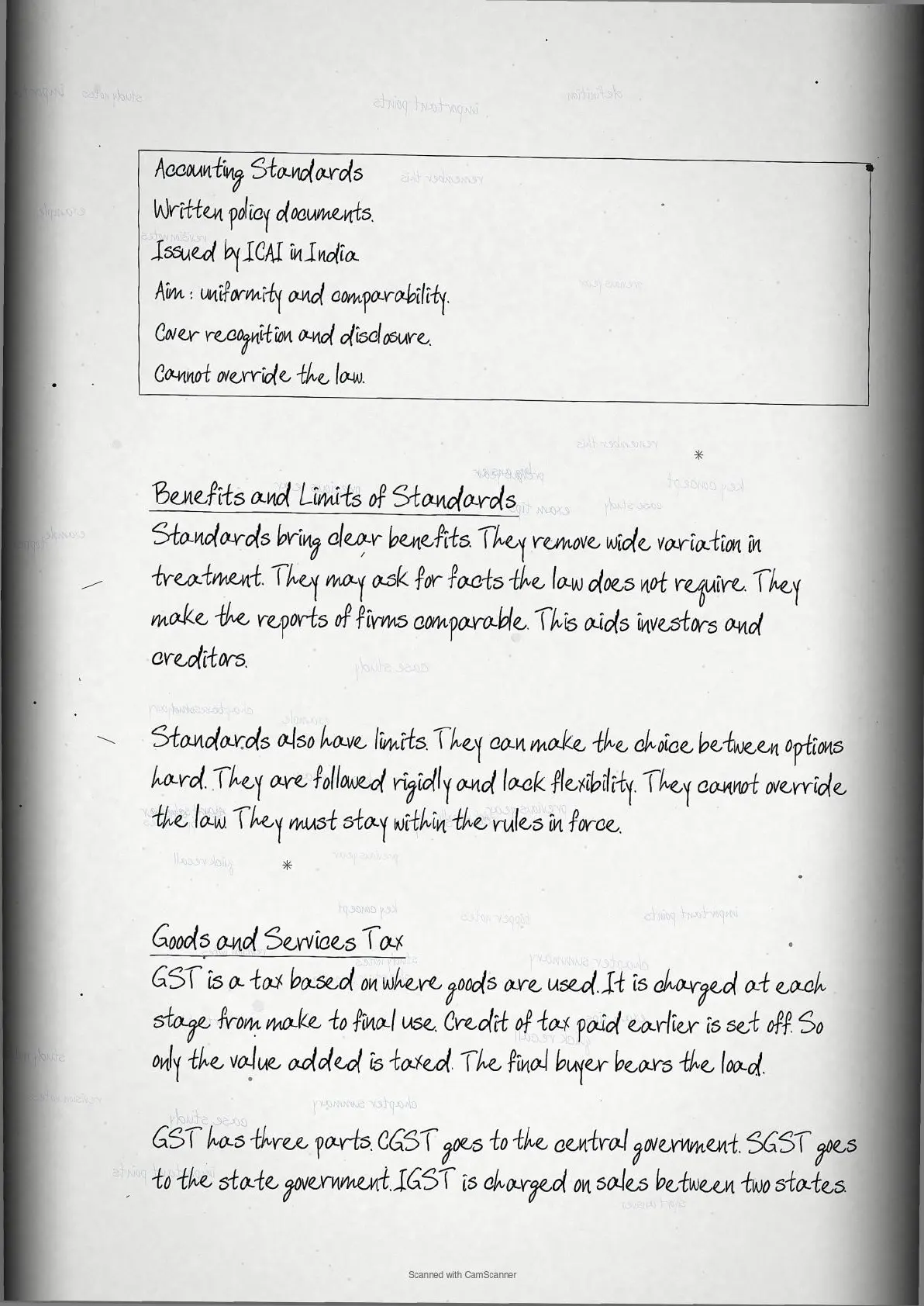
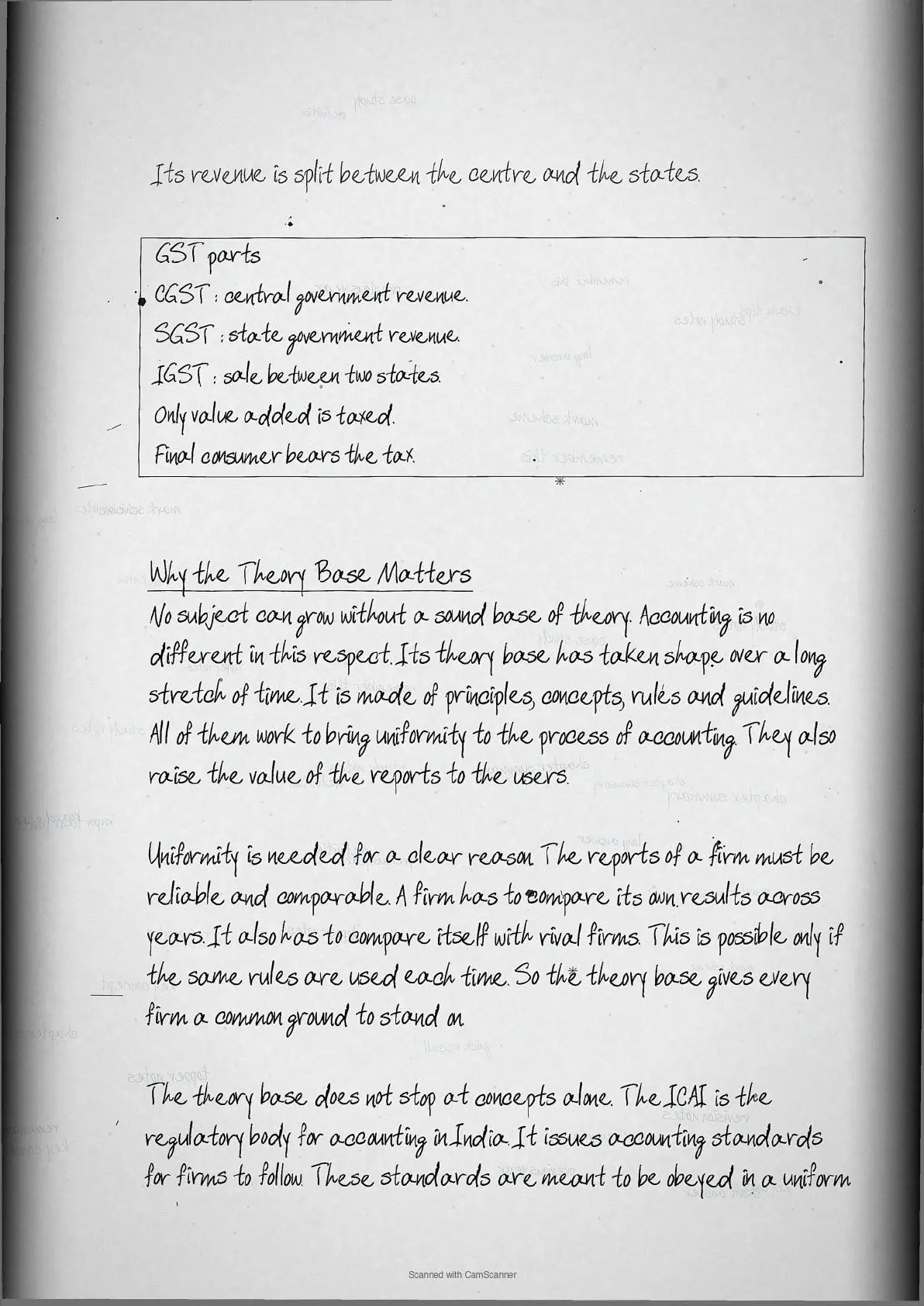
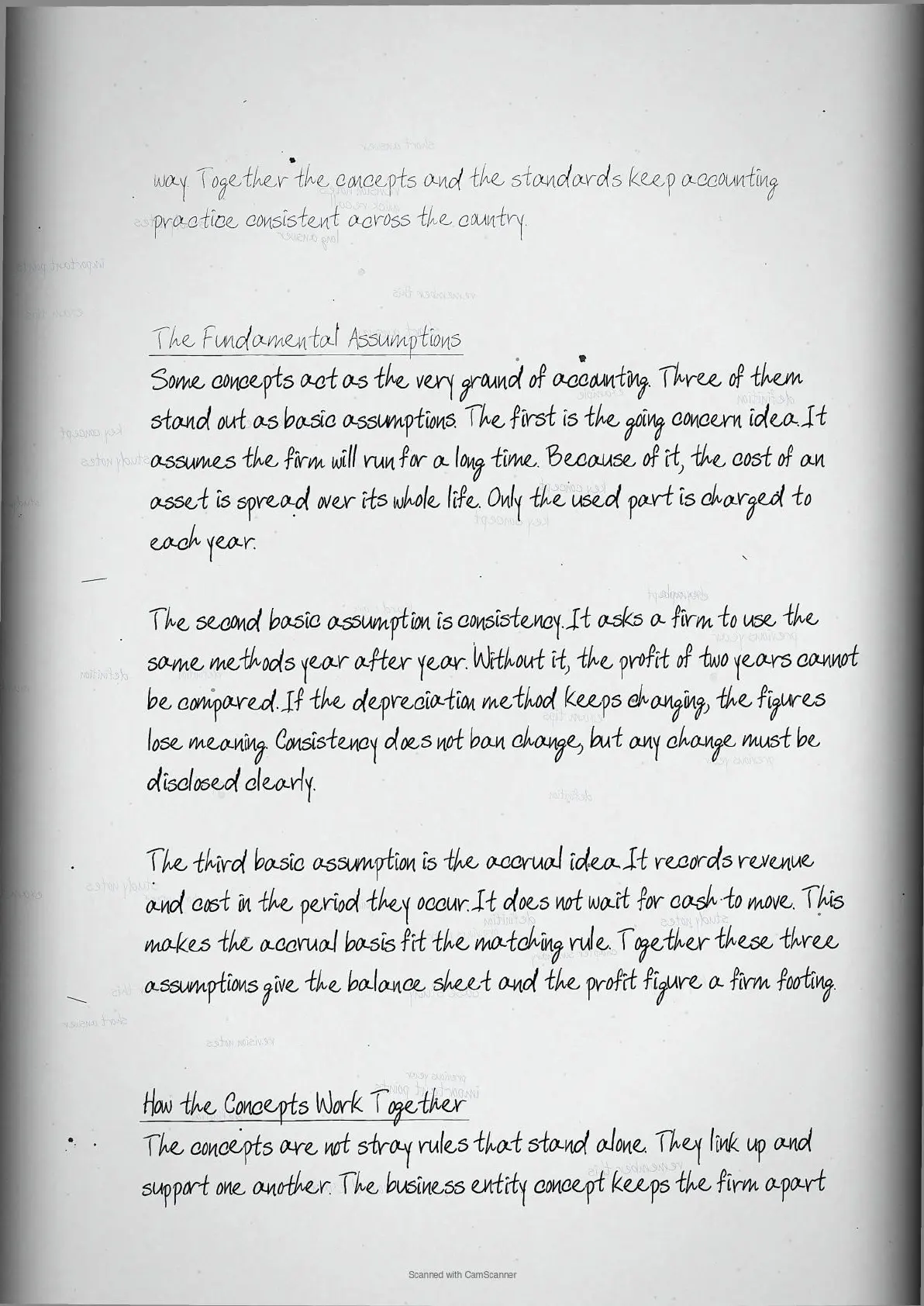
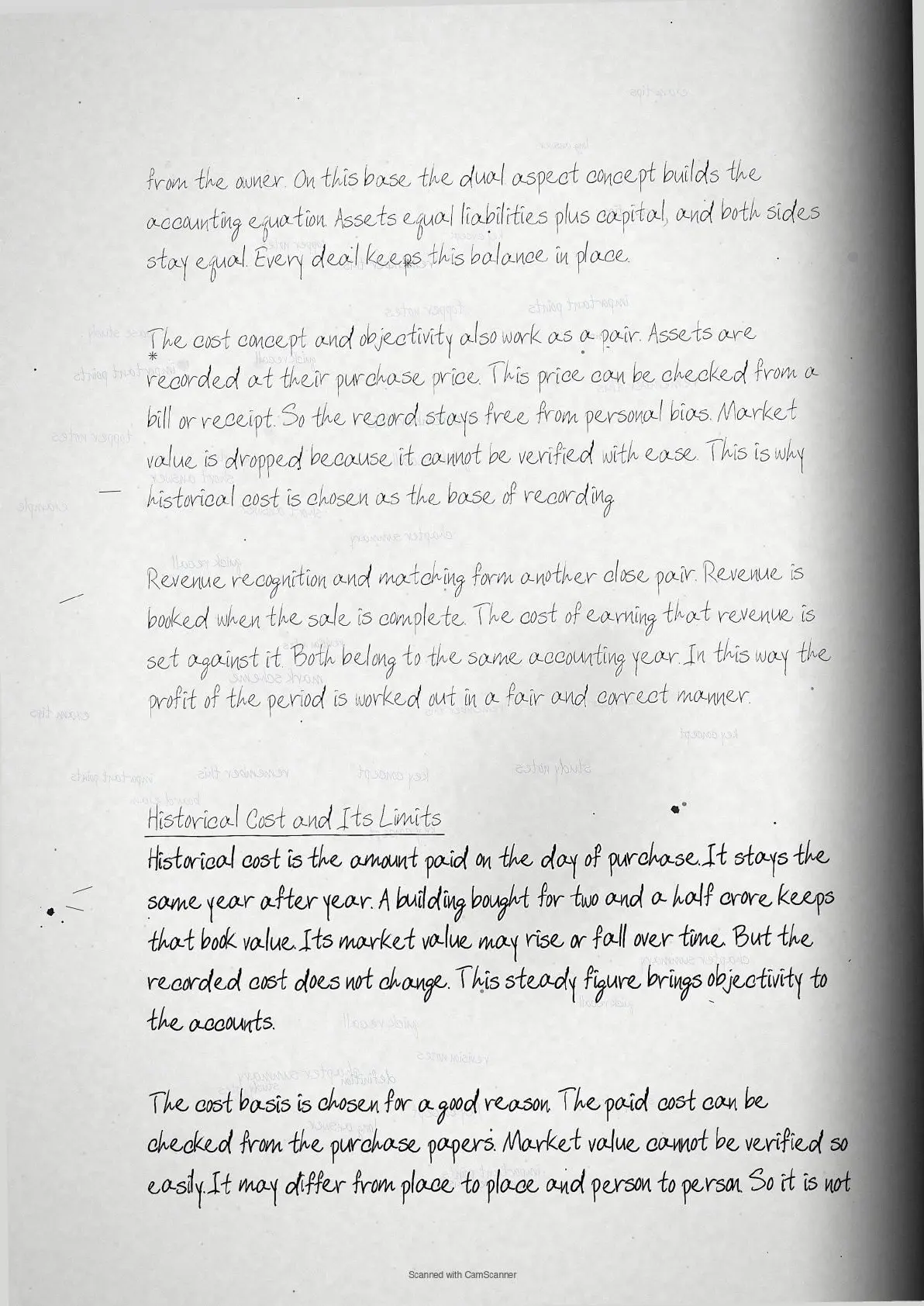
The theory base is the set of principles, concepts and standards that bring uniformity to accounting. Class 11 Accountancy Chapter 2 Theory Base of Accounting builds this idea step by step. These class 11 accountancy handwritten notes chapter 2 Theory Base of Accounting follow the 2026-27 NCERT and cover need for a theory base of accounting, gaap: generally.
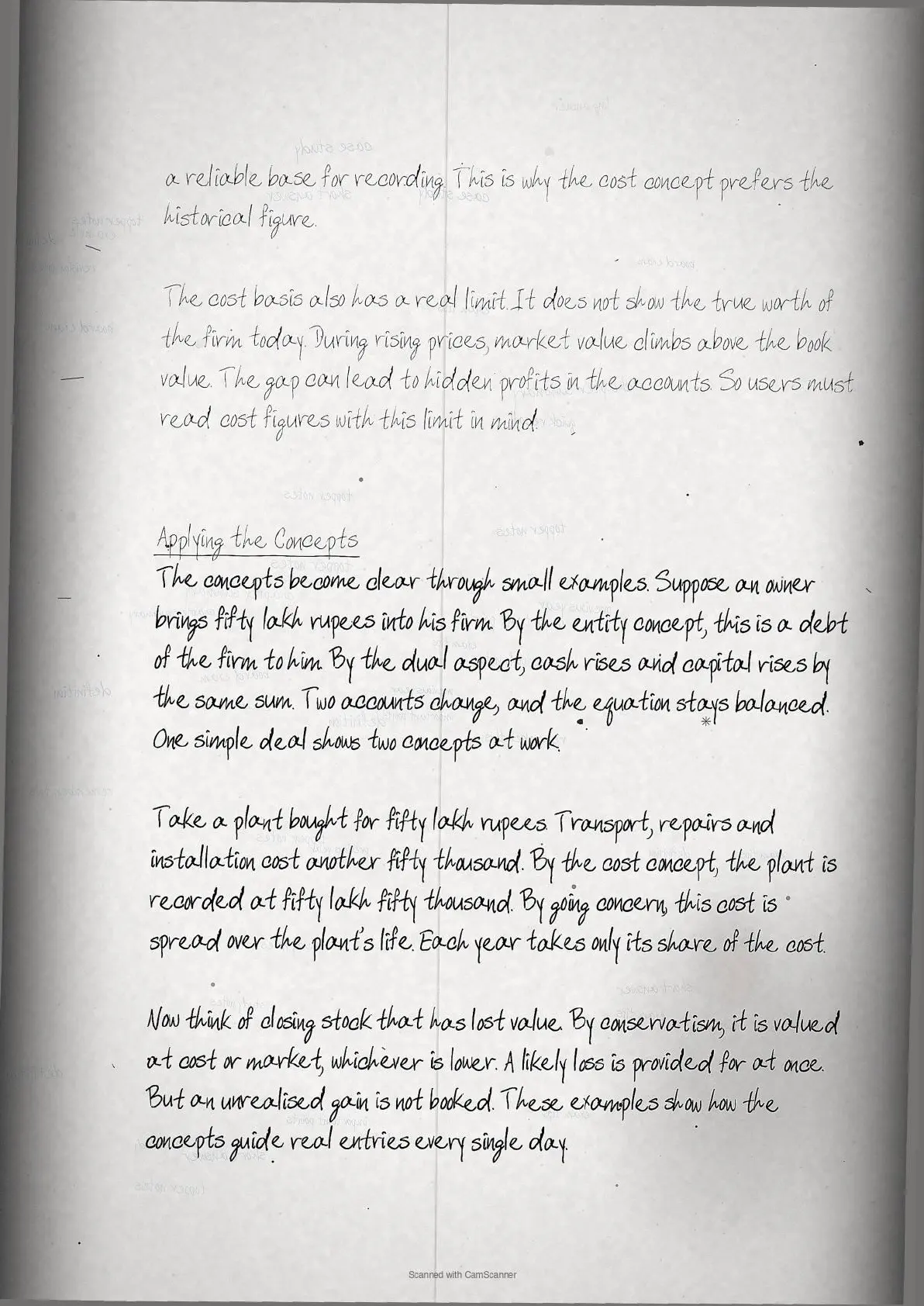
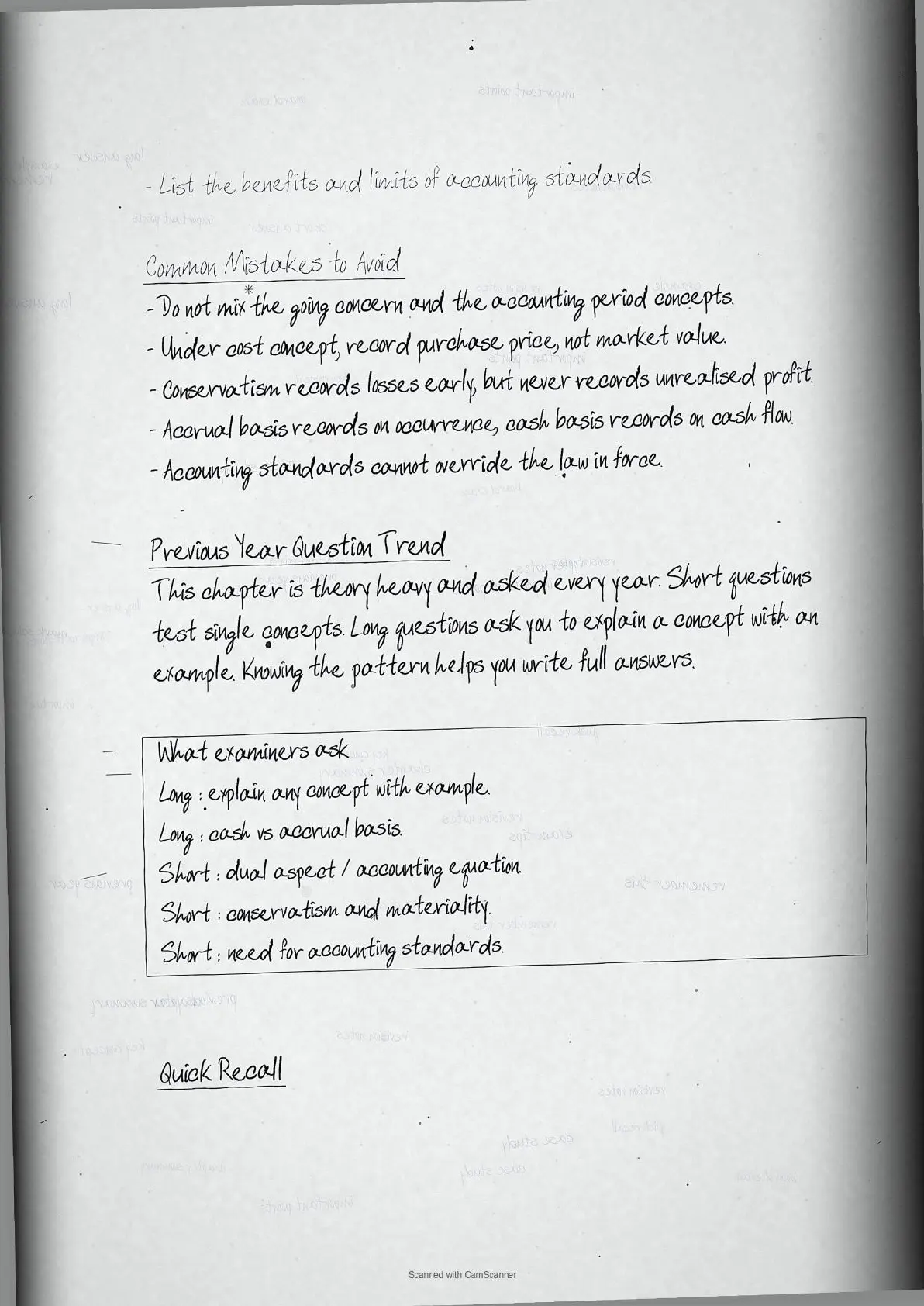
- CBSE Class 11 Weightage: a scoring chapter in the Accountancy paper, asked in short and long answers.
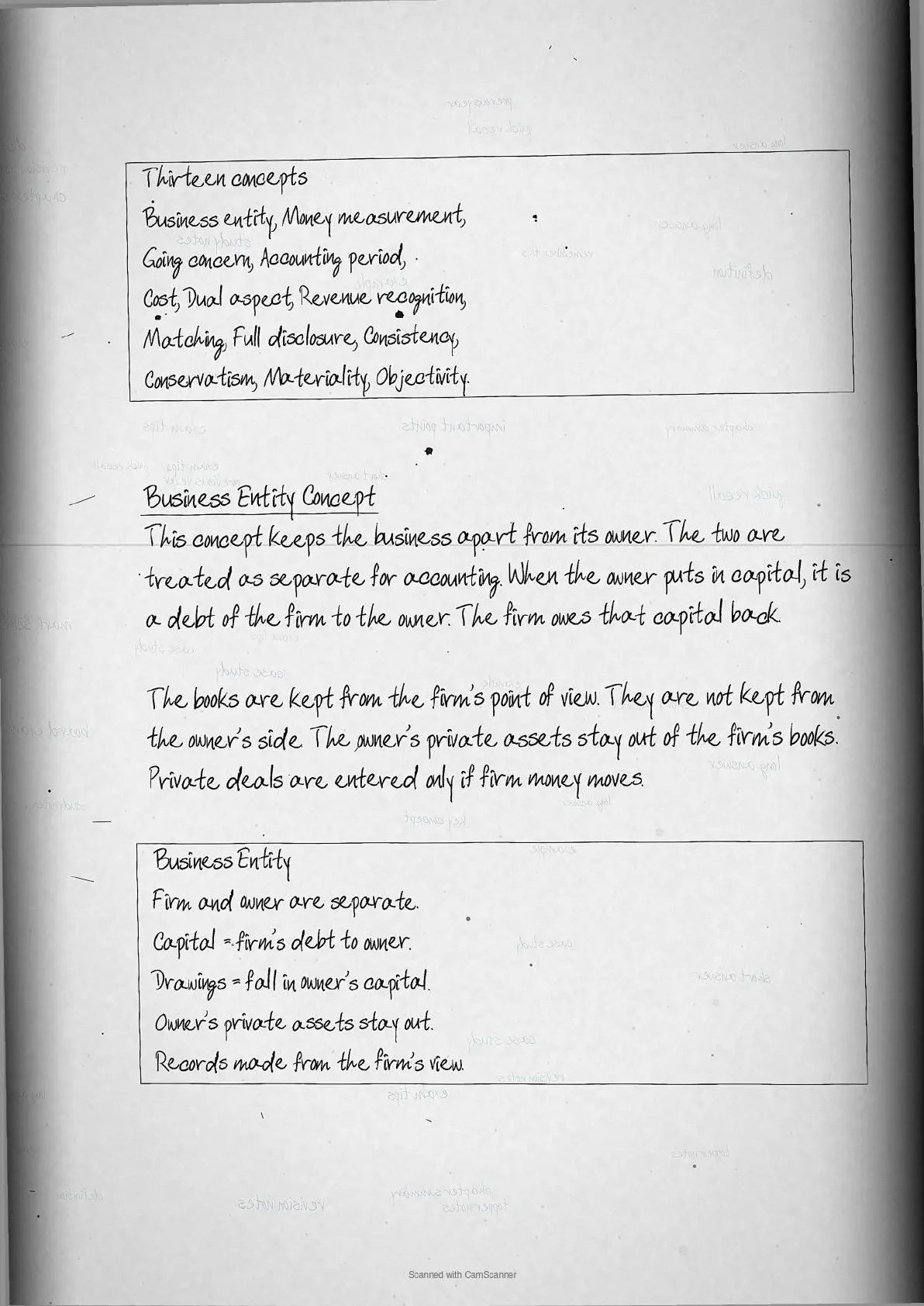
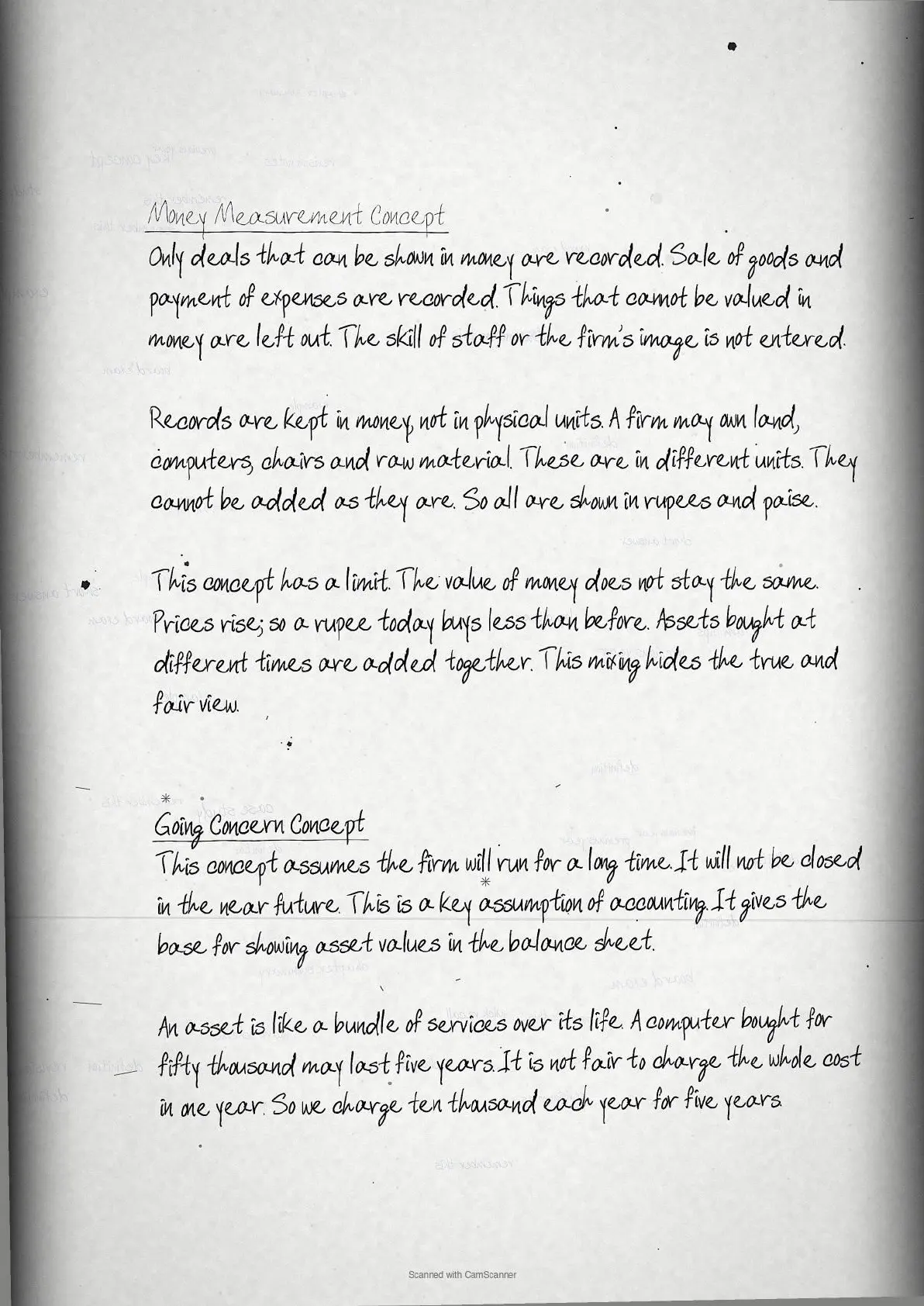
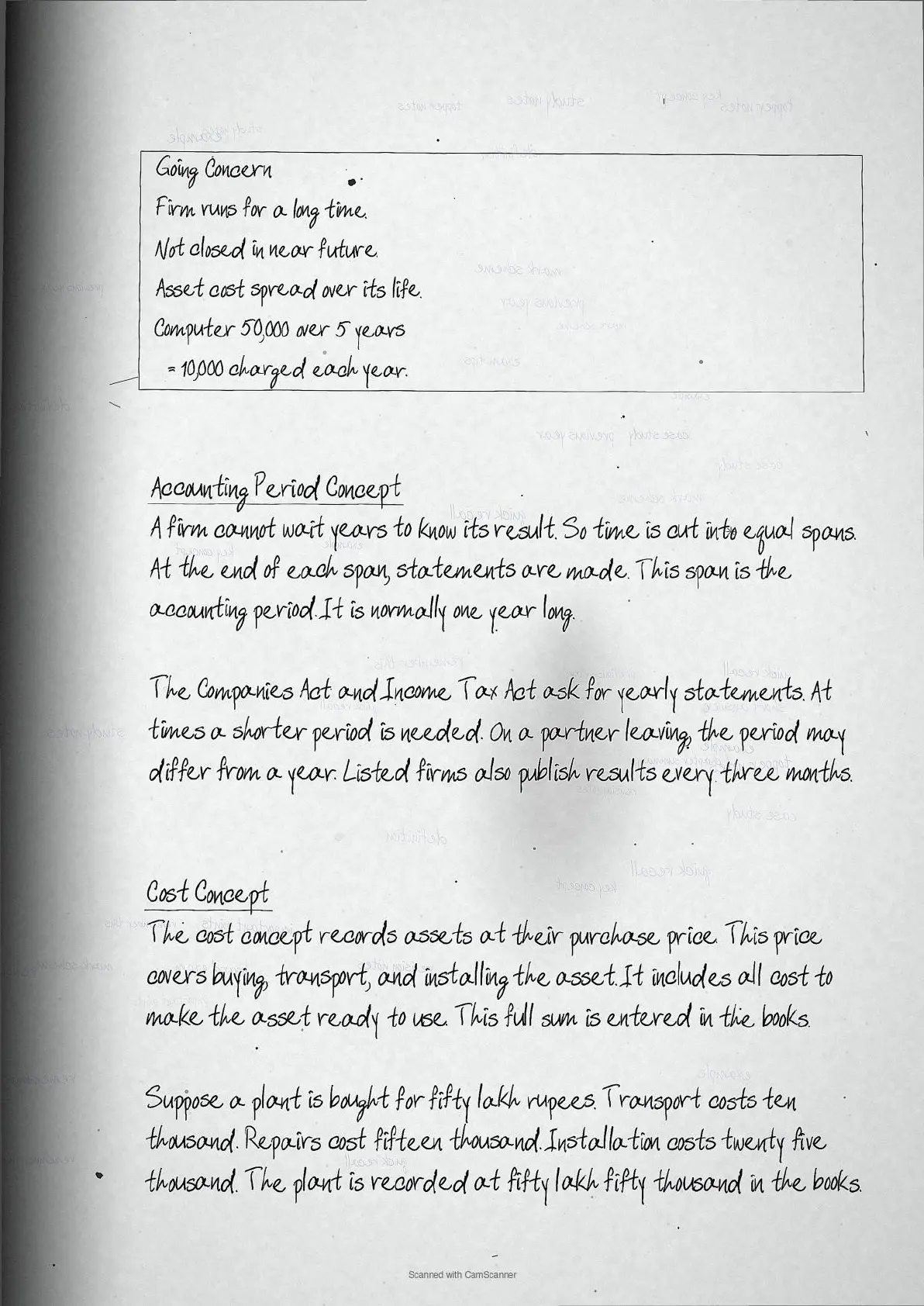
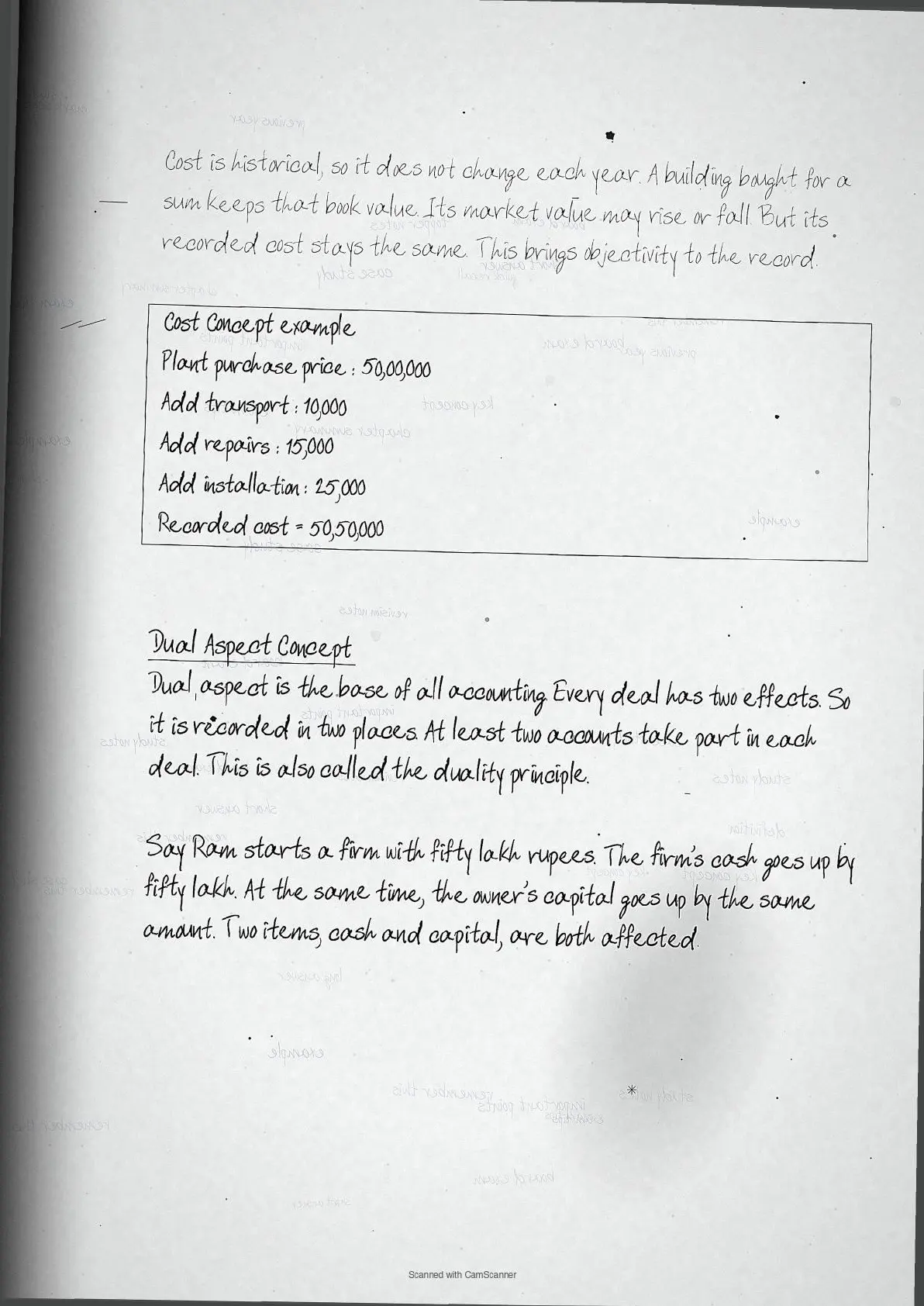
- What the notes cover: need for a theory base of accounting, gaap: generally accepted principles, business entity and money measurement, going concern, cost and dual aspect.
- Best for: quick revision before Class 11 exams and a base for CUET later.
You can read the complete class 11 accountancy handwritten notes for Theory Base of Accounting, with key terms, boxed definitions, and quick revision points, in the PDF below.
These handwritten notes are written by subject teachers, mapped to the 2026-27 NCERT, and checked against the last five years of CBSE Class 11 Accountancy papers.
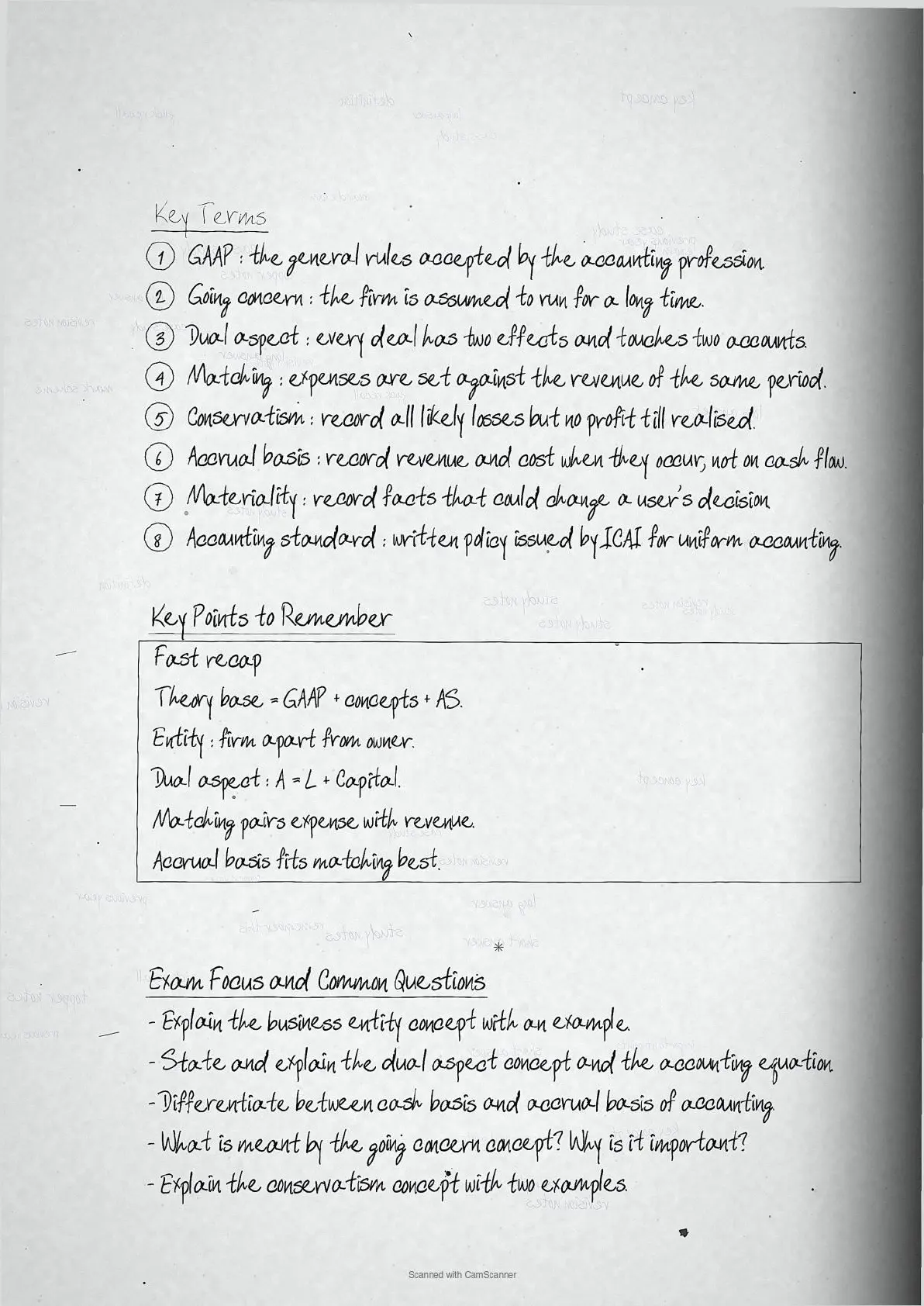
Key Terms and Ideas in Theory Base of Accounting
These are the terms and ideas the exam asks about most. Learn each one so you can define it and use it in your answers.
| Term / Idea | What it means |
|---|---|
| GAAP | general rules accepted by the accounting profession |
| Business entity | the firm is kept separate from its owner |
| Going concern | the firm is assumed to run for a long time |
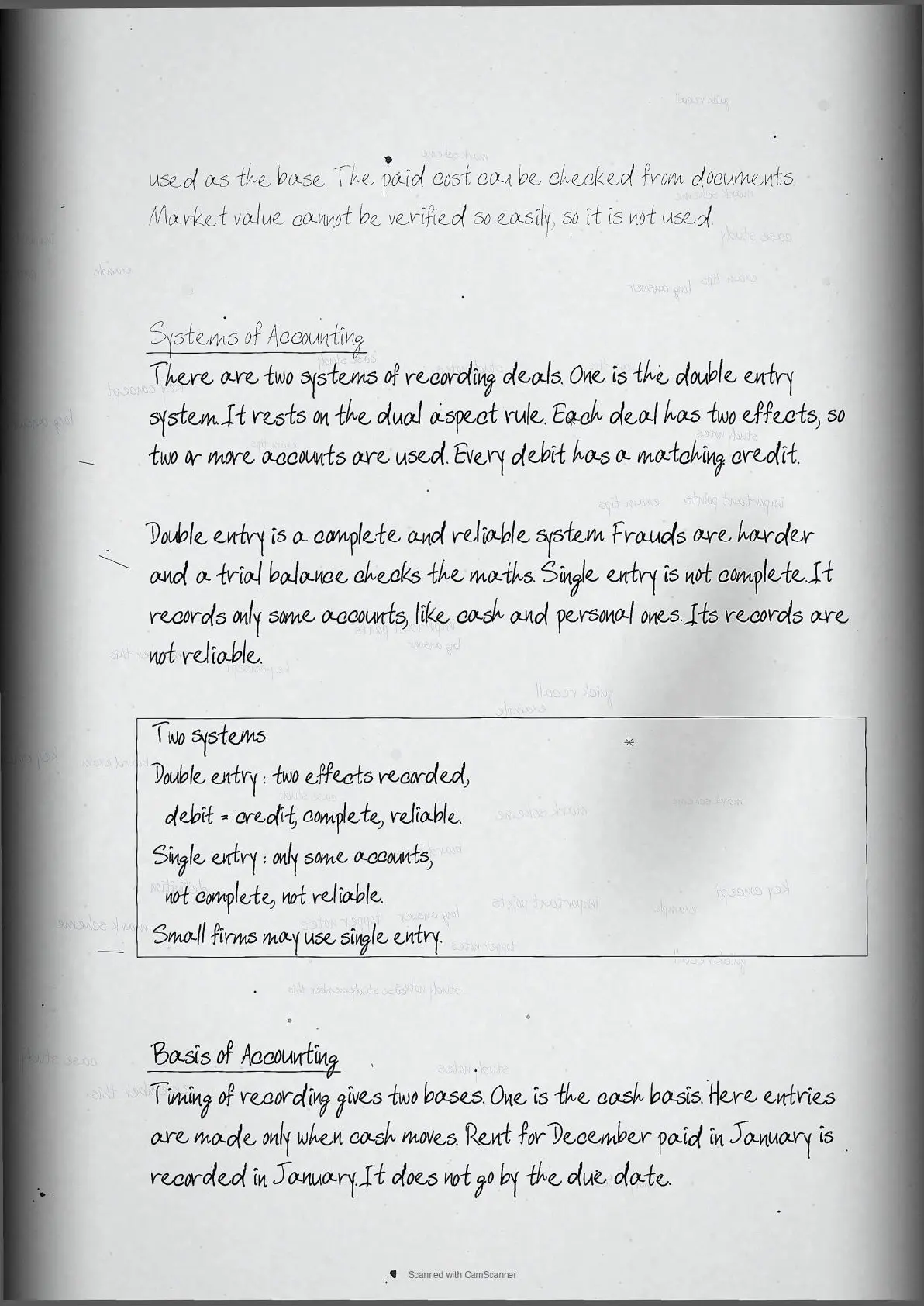
| Dual aspect | every deal has two effects and touches two accounts |
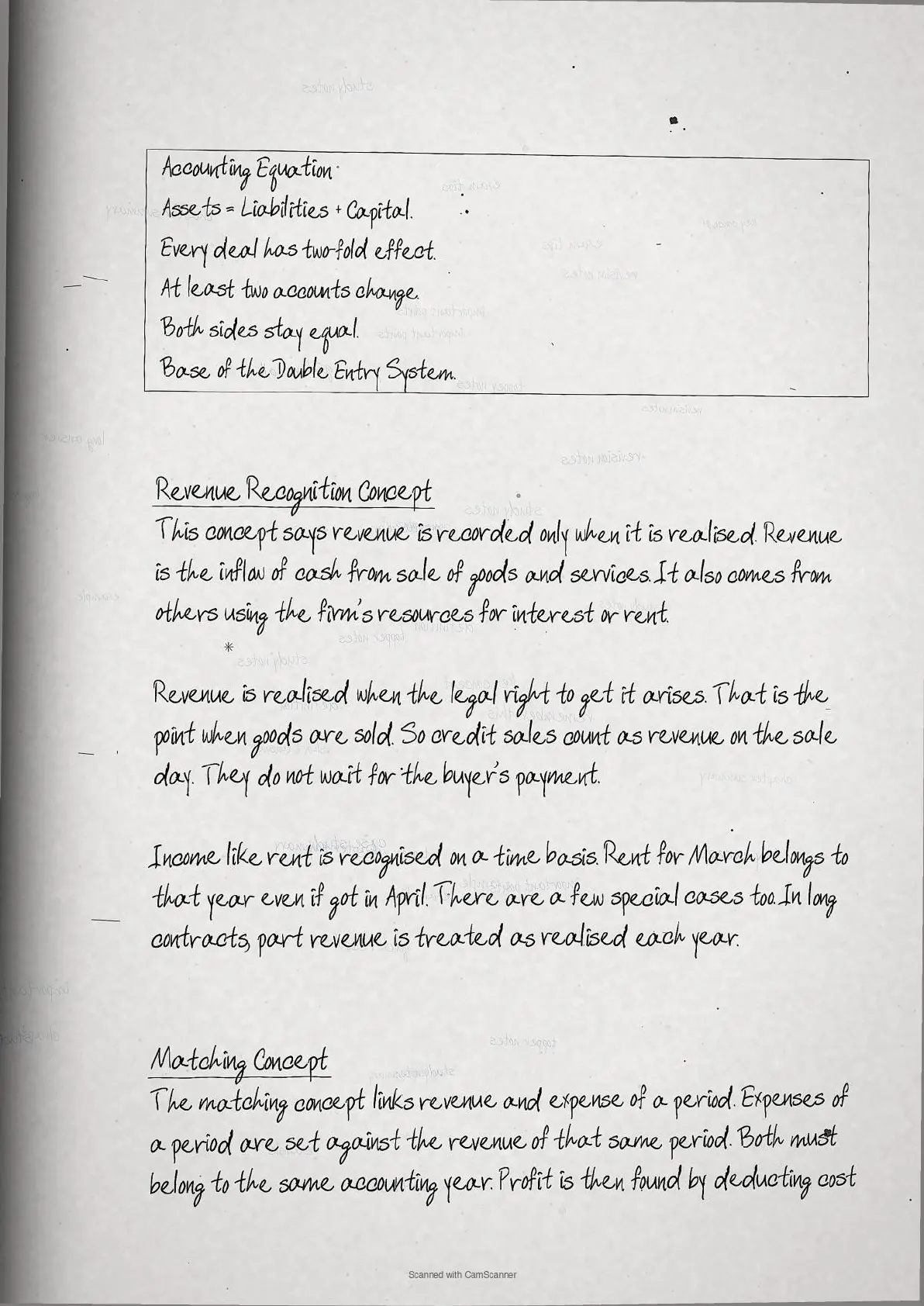
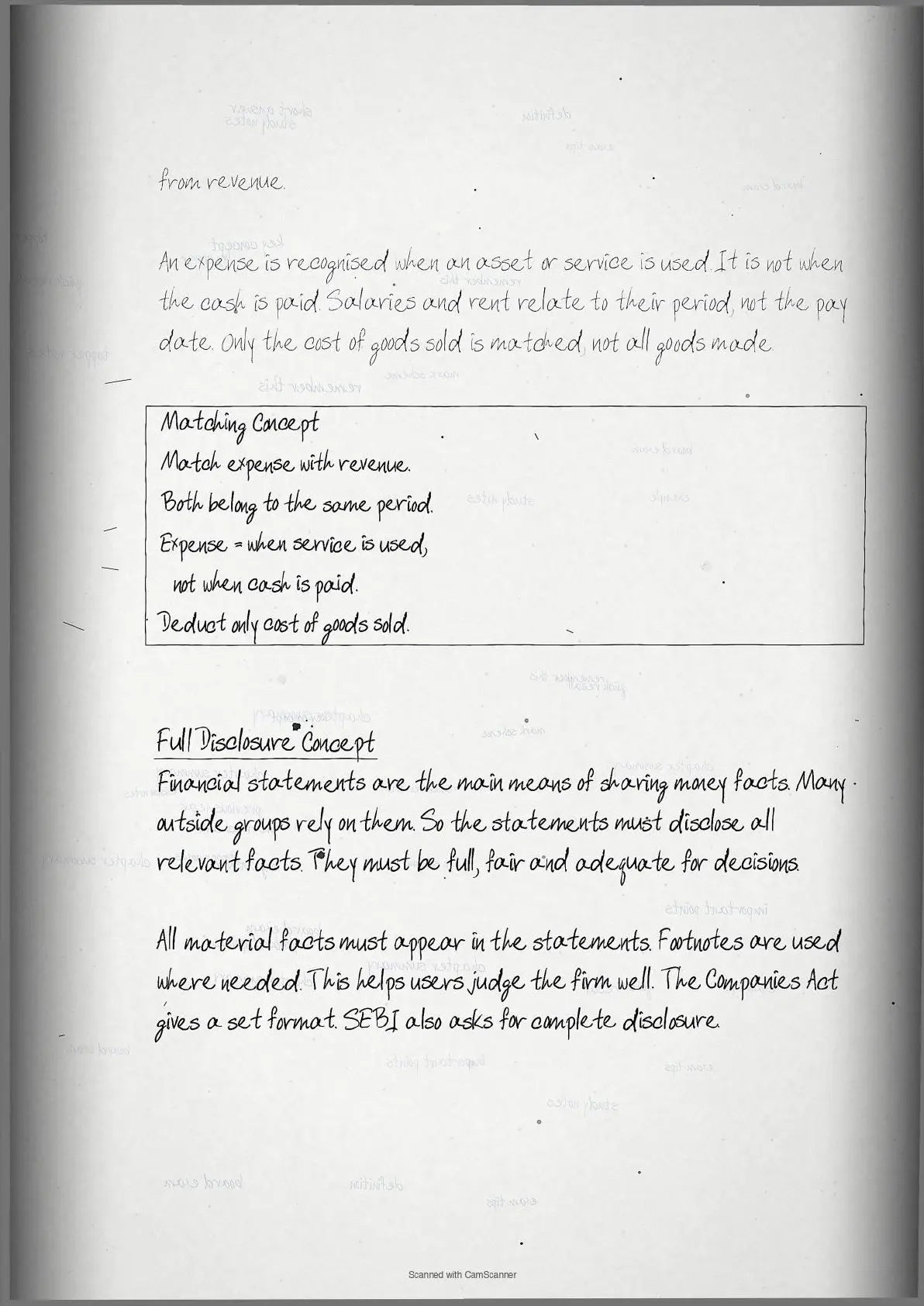
| Matching | expenses are set against the revenue of the same period |
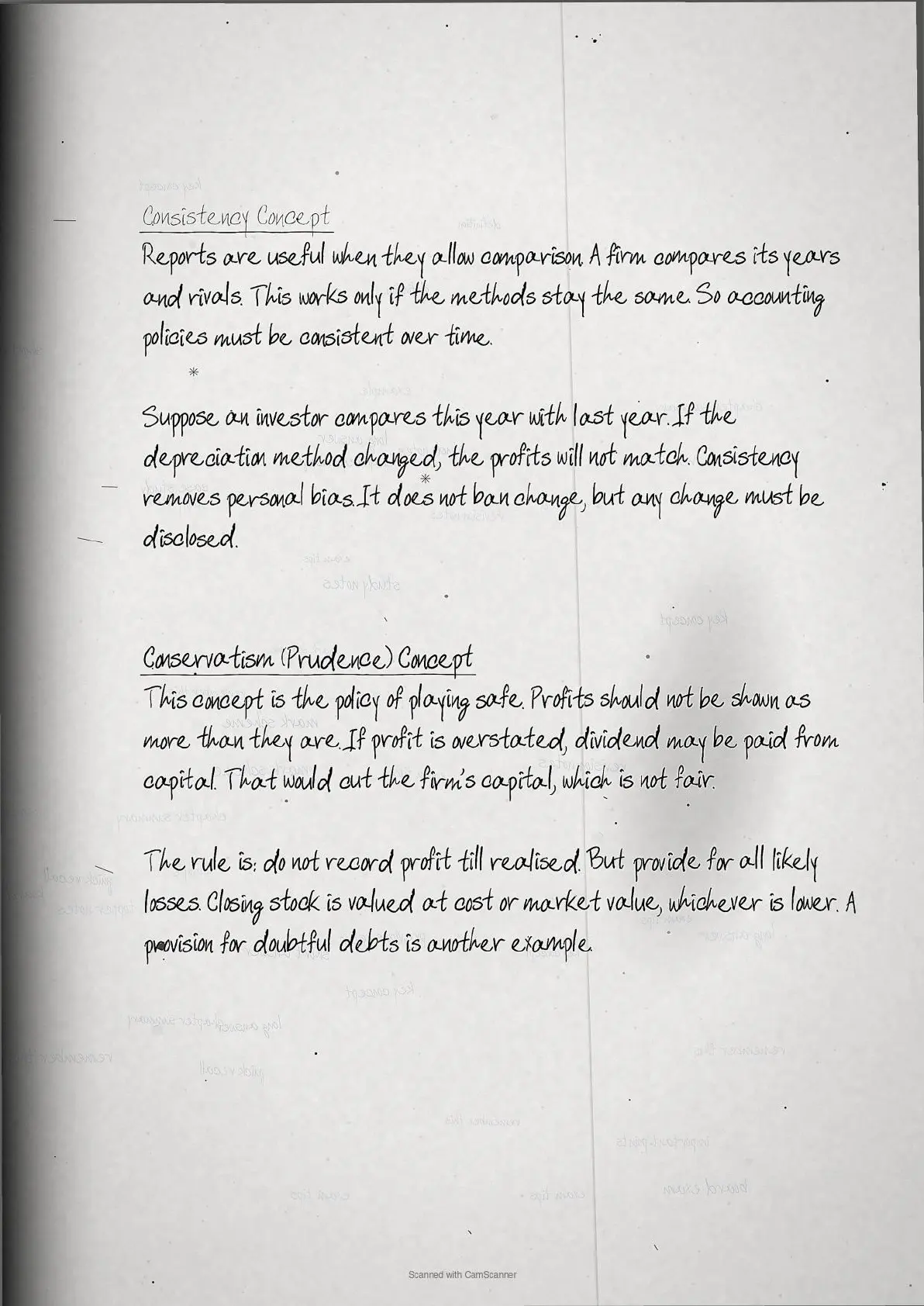
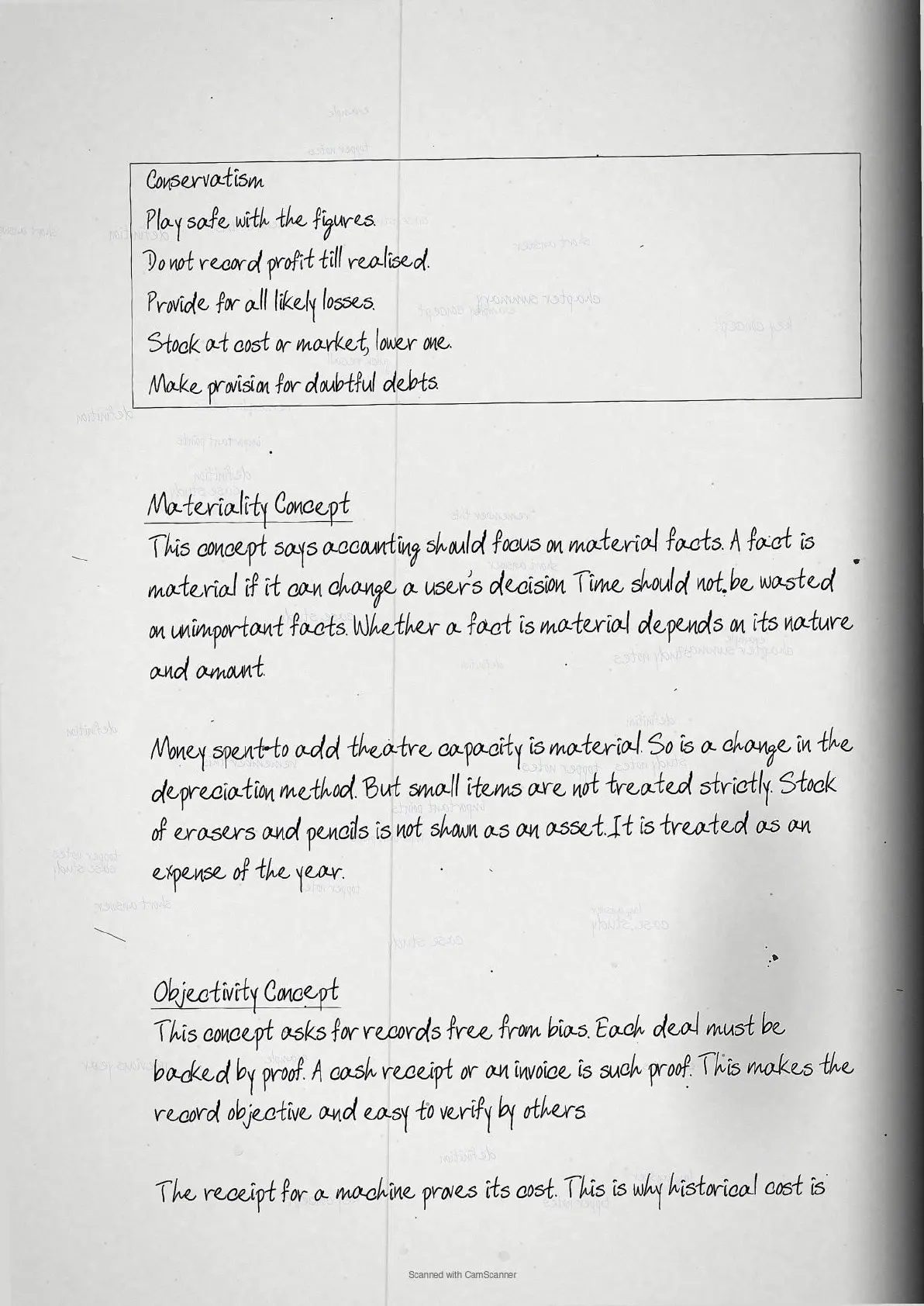
| Conservatism | record all likely losses but no profit till realised |
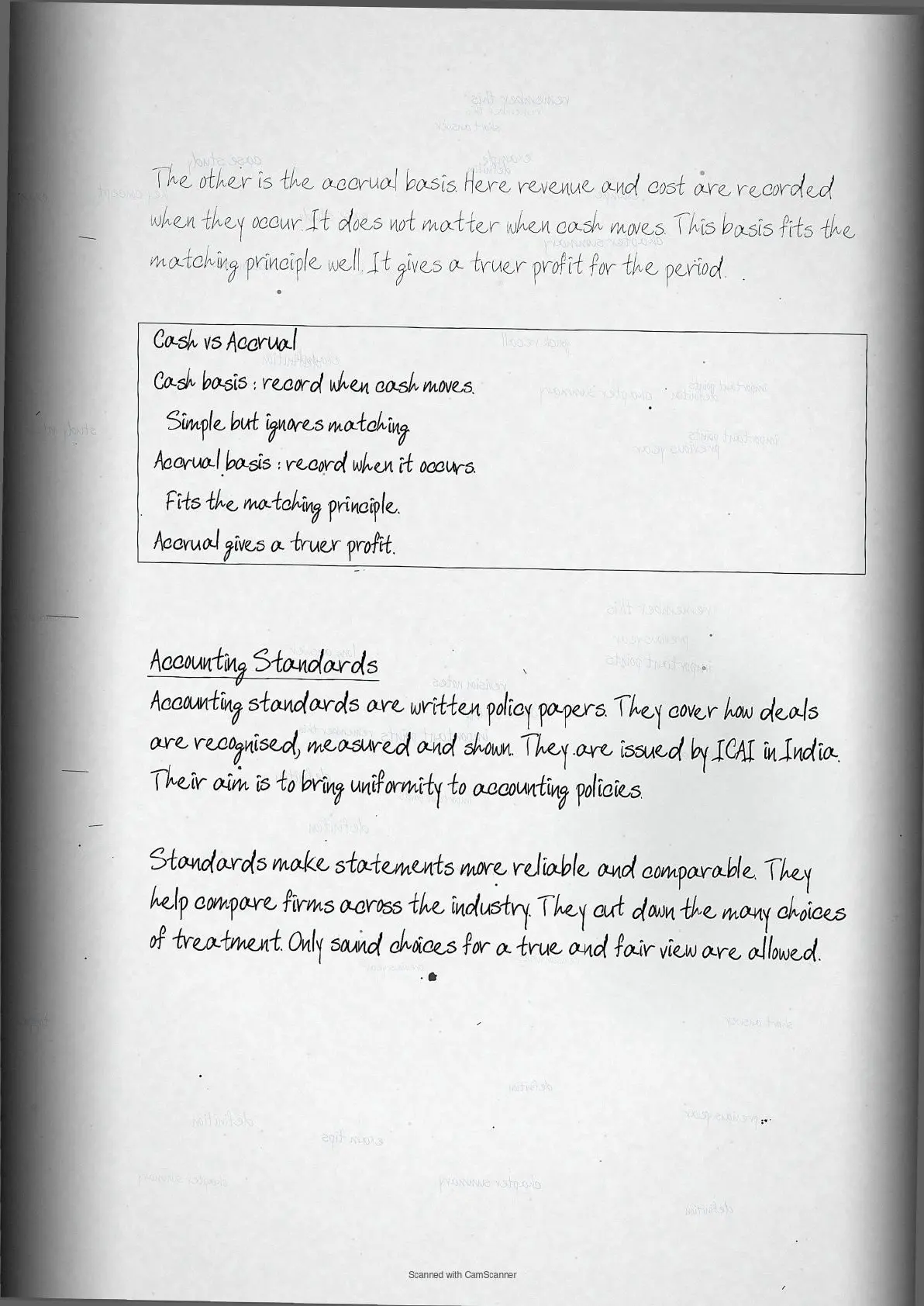
| Accrual basis | record revenue and cost when they occur, not on cash flow |
| Accounting standard | written policy by ICAI for uniform accounting |
What the Theory Base of Accounting Handwritten Notes Cover
Every firm must follow the same rules so its reports can be compared. This theory base is made of GAAP, the basic accounting concepts and the standards issued by ICAI. These notes explain each one with examples.
- Need for a theory base of accounting
- GAAP: generally accepted principles
- Business entity and money measurement
- Going concern, cost and dual aspect
- Revenue recognition and matching
- Conservatism, materiality, objectivity
- Cash vs accrual basis and standards
Theory Base of Accounting Topic-wise Weightage for CBSE Class 11 Accountancy
Some parts of this chapter are asked more often than others. The table below shows which sub-topics to revise first, based on recent CBSE Class 11 question trends.
| Sub-topic | Weightage | CBSE Frequency |
|---|---|---|
| Basic accounting concepts | High | asked every year |
| Dual aspect and accounting equation | High | frequent question |
| Cash vs accrual basis | Medium | often asked |
| Accounting standards | Medium | short question |
| Systems of accounting | Low | occasional |
How Collegedunia's Handwritten Notes Help You Revise Theory Base of Accounting
These notes are made for the night before the exam. They keep the facts short and easy to scan. Collegedunia maps every point to the 2026-27 NCERT.
- Clear handwriting: each topic is written in neat, easy-to-read handwriting.
- Boxed key terms: the main terms and definitions are boxed by hand for fast recall.
- Diagrams and tables: simple hand-drawn tables and charts make ideas clear.
- Colour-coded headings: new sub-topics stand out, so you find any section in seconds.
Theory Base of Accounting Self-Assessment Quiz
Try these quick questions after you read the notes. Tap each question to check your answer. They cover the points CBSE asks most often.
A firm is assumed to run for a long time under which concept?
(a) cost (b) going concern (c) matching (d) entity
Answer: (b) going concern - it gives the base for asset values
Assets are recorded at purchase price under which concept?
(a) cost (b) dual aspect (c) prudence (d) accrual
Answer: (a) cost - historical cost is objective and verifiable
Every transaction has two effects under which concept?
(a) matching (b) dual aspect (c) entity (d) materiality
Answer: (b) dual aspect - the base of the double entry system
Recording revenue and cost when they occur is which basis?
(a) cash (b) accrual (c) hybrid (d) single
Answer: (b) accrual - it fits the matching principle
Accounting standards in India are issued by
(a) SEBI (b) RBI (c) ICAI (d) AICPA
Answer: (c) ICAI - the regulatory body for accounting policies
How to Use These Handwritten Notes for Class 11 Accountancy Revision
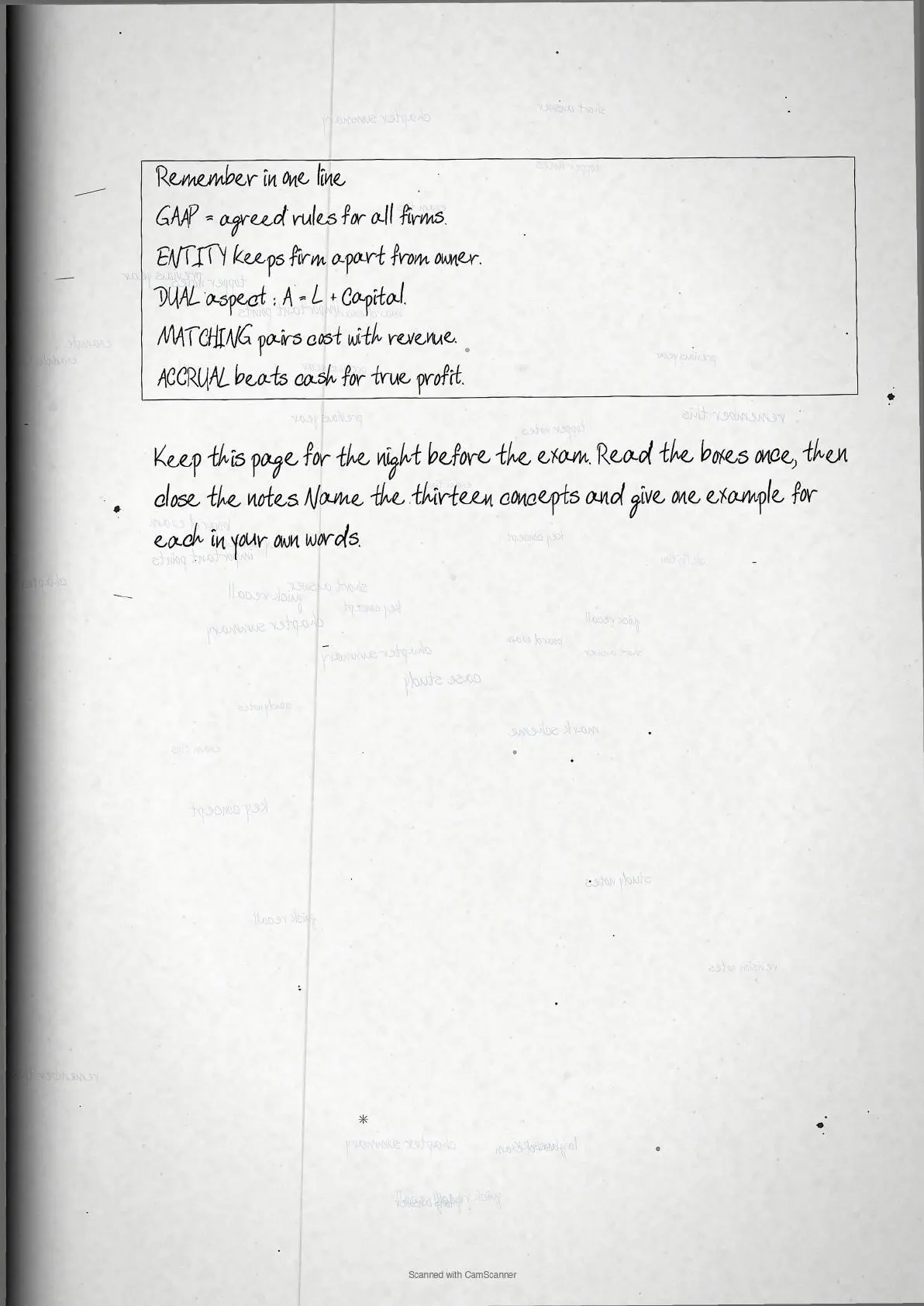
Use these class 11 accountancy handwritten notes in two passes. Read them slowly once for the full chapter. Then, near the exam, read only the boxes and key terms for a fast recall.
- Read the notes once with the NCERT chapter open beside you.
- Say each key term and idea in your own words.
- Practise one long-answer question from a past paper.
- On the last day, revise only the key terms and the boxes.
Class 11 Accountancy Handwritten Notes for All Chapters
The table below links the class 11 accountancy handwritten notes for every chapter. Use it to jump to any other chapter's notes.
| Chapter | Resource |
|---|---|
| Chapter 1 | Introduction to Accounting Handwritten Notes |
| Chapter 2 | Theory Base of Accounting Handwritten Notes |
| Chapter 3 | Recording of Transactions I Handwritten Notes |
| Chapter 4 | Recording of Transactions II Handwritten Notes |
| Chapter 5 | Bank Reconciliation Statement Handwritten Notes |
| Chapter 6 | Trial Balance and Rectification of Errors Handwritten Notes |
| Chapter 7 | Depreciation, Provisions and Reserves Handwritten Notes |
| Chapter 8 | Financial Statements I Handwritten Notes |
| Chapter 9 | Financial Statements II Handwritten Notes |
Theory Base of Accounting Class 11 Accountancy Handwritten Notes FAQs
Ques. Where can I download Theory Base of Accounting Class 11 Accountancy Handwritten Notes PDF?
Ans. You can download the Theory Base of Accounting Class 11 Accountancy Handwritten Notes PDF directly from this page. Both the Normal and HD versions are free.
Ques. Are these handwritten notes aligned with the 2026-27 NCERT?
Ans. Yes. These notes follow the current 2026-27 syllabus for Class 11 Accountancy. Difference between cash basis and accrual basis of accounting.
Ques. How many pages is the Class 11 Accountancy Theory Base of Accounting Handwritten Notes PDF?
Ans. The notes run about 20 pages. They cover the full chapter with key terms, hand-drawn boxes, and a short self-assessment quiz.
Ques. What is the main idea of the 11th standard Accountancy chapter Theory Base of Accounting?
Ans. Under cash basis, entries are made only when cash is received or paid. Under accrual basis, revenue and cost are recorded when they occur, which fits the matching principle better.
Ques. Are these Theory Base of Accounting notes enough for the CBSE Class 11 exam?
Ans. Yes, for revision. The Collegedunia handwritten notes cover every key point and exam term. Read them with the NCERT chapter and practise past questions.



Comments