




The NCERT Class 12 Home Science Chapter 15 Book PDF gives students the official 2026-27 source chapter for HE2: Food Processing and Technology. Use this PDF to revise food processing, preservation, food technology, industry scope and careers in food science.
- Download the 14-page official NCERT chapter PDF for offline study.
- Revise food processing, food science, technology, manufacturing and preservation in one place.
- Use this source text before preparing notes, short answers or project points.
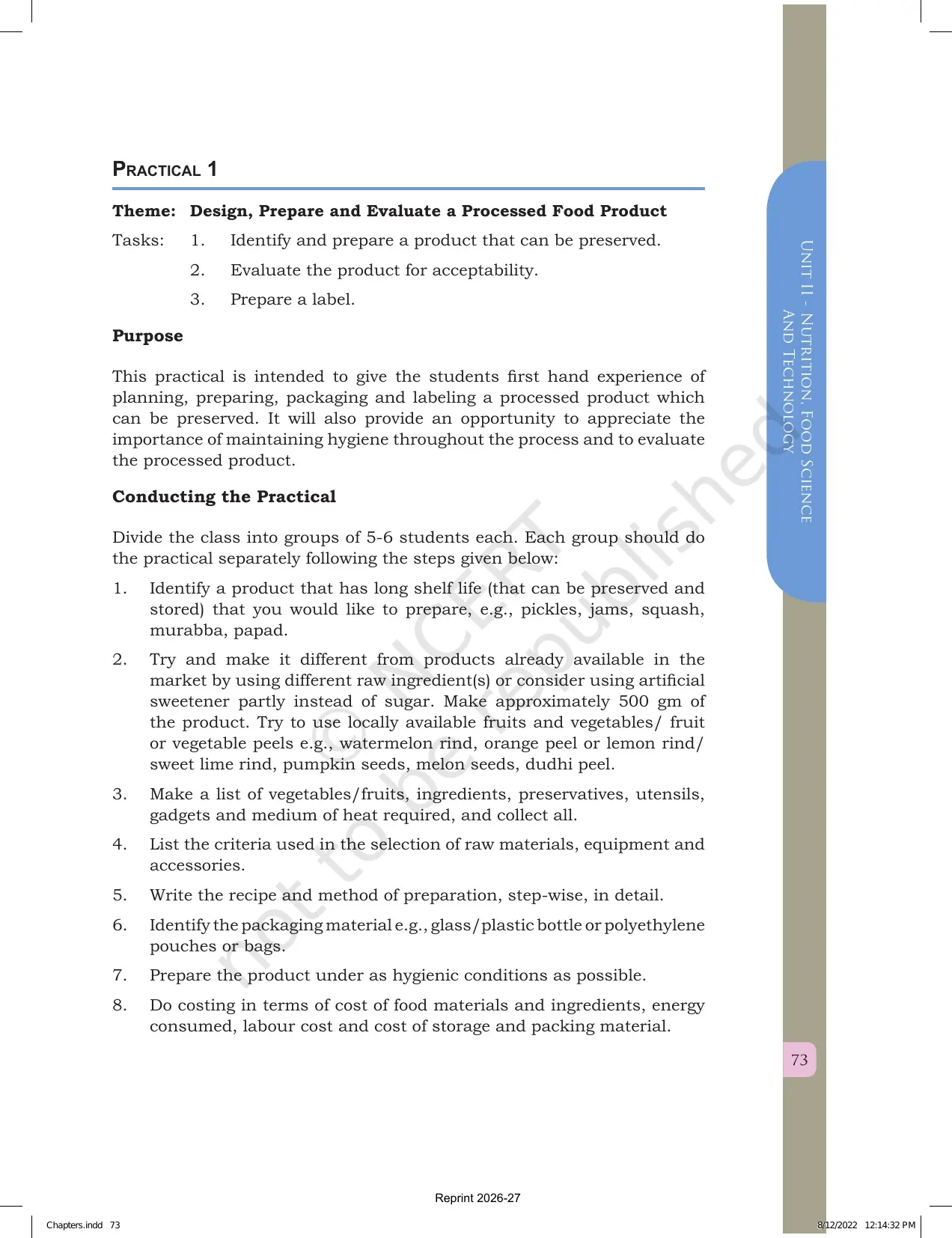
Student Feedback: In a Collegedunia study poll of 8,420 Class 12 Home Science students, 72% said this chapter became easier after they separated food processing, preservation and food technology into three short revision lists.
This NCERT Book PDF follows the 2026-27 reprint and should be used as the source text before attempting notes, solutions or quick revision material.
Food Processing and Technology Chapter 15 NCERT Book PDF Highlights
The chapter explains why food processing matters in daily life and in the food industry. It begins with traditional examples such as drying grains, pickles, papads and murabbas, then moves to modern processed foods, packaging, storage and transport. Read this chapter as the bridge between nutrition, food science and enterprise.
| PDF area | NCERT focus | Best use |
|---|---|---|
| Meaning | Food processing, food science, food technology and food manufacturing | Prepare definitions in NCERT wording |
| Need | Shelf life, safety, convenience, nutrient retention and consumer demand | Build short answers with examples |
| Development | Canning, pasteurisation, military food needs and modern products | Use as a timeline-style answer |
| Careers | Food technologist, research, industry roles and self-employment | Write scope and career-based answers |
Food Processing Chain in the NCERT PDF
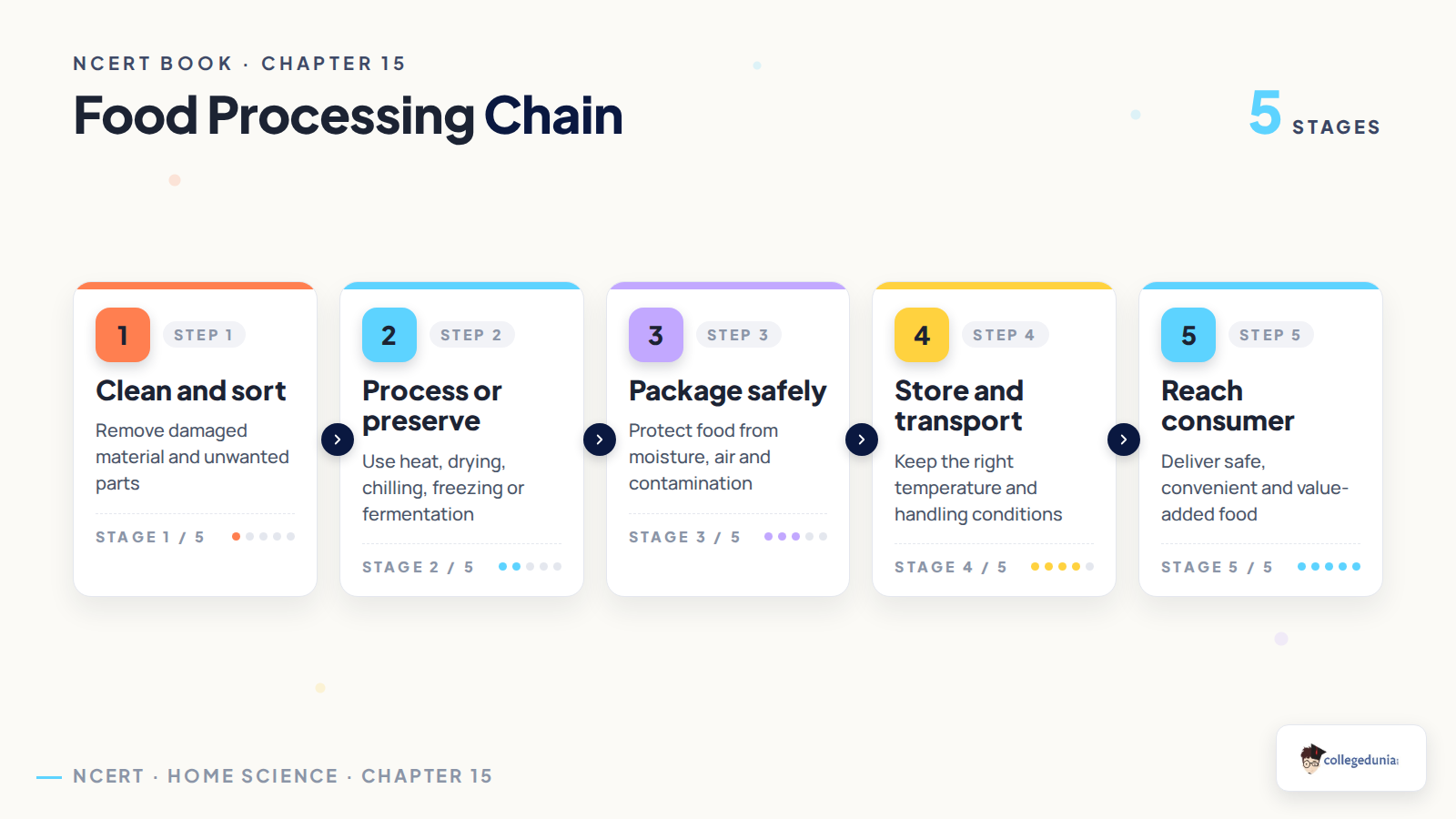
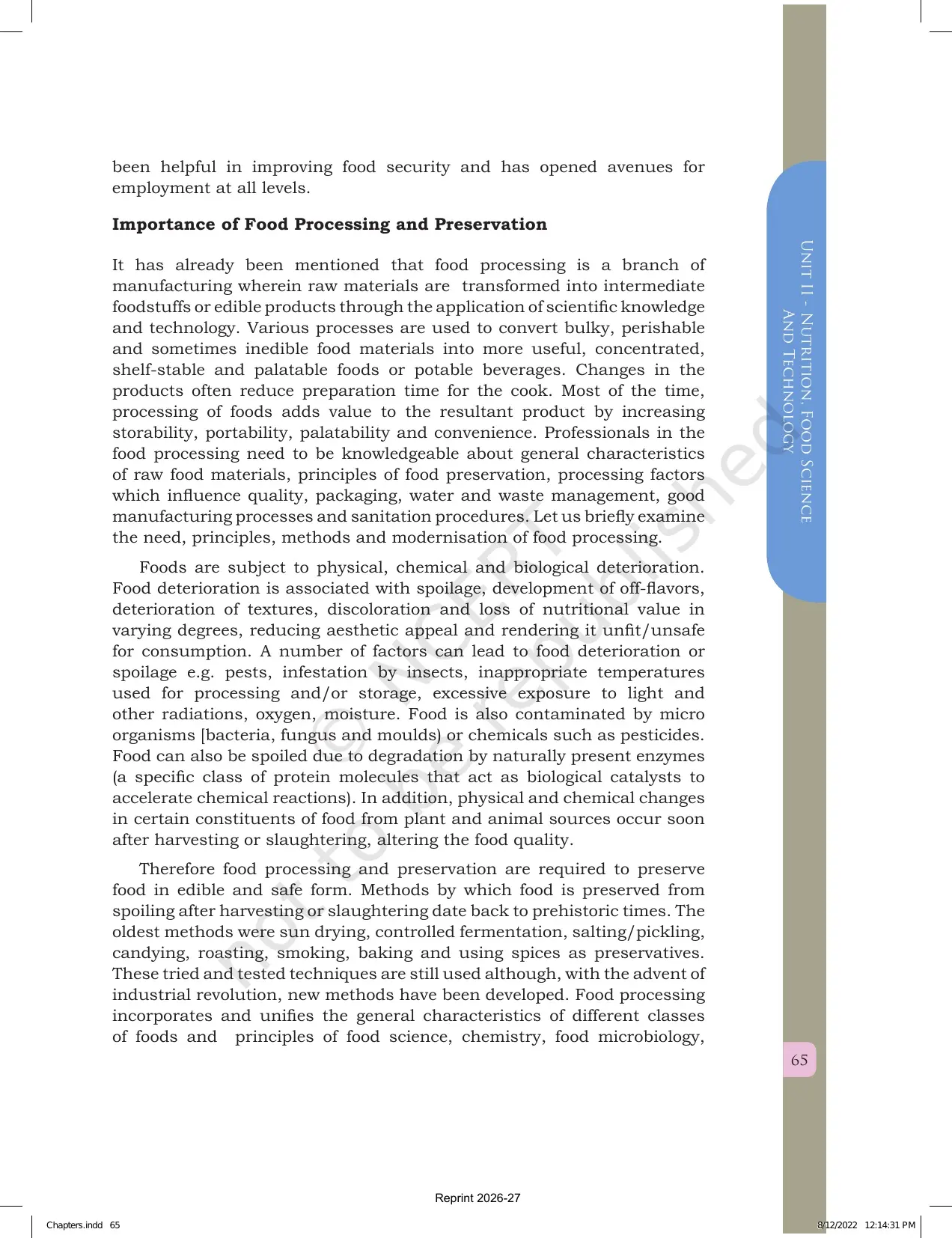
Food processing starts with raw food and ends with a product that can be used, stored, packed or sold. The chapter keeps the process practical. A food technologist must understand raw material quality, processing methods, preservation, packaging and consumer needs. Good processing should make food safe, useful and marketable.
- Raw material: choose good quality plant or animal food before processing.
- Processing method: use heat, drying, chilling, fermentation, milling, cooking or packaging as needed.
- Final product: check safety, shelf life, taste, texture and affordability.
A strong exam answer should connect the method with the reason, such as shelf life, safety, convenience or value addition.
Food Processing and Technology Video Explanation
Source: The Twin Bros - Humanities on YouTube
Food Processing vs Food Preservation
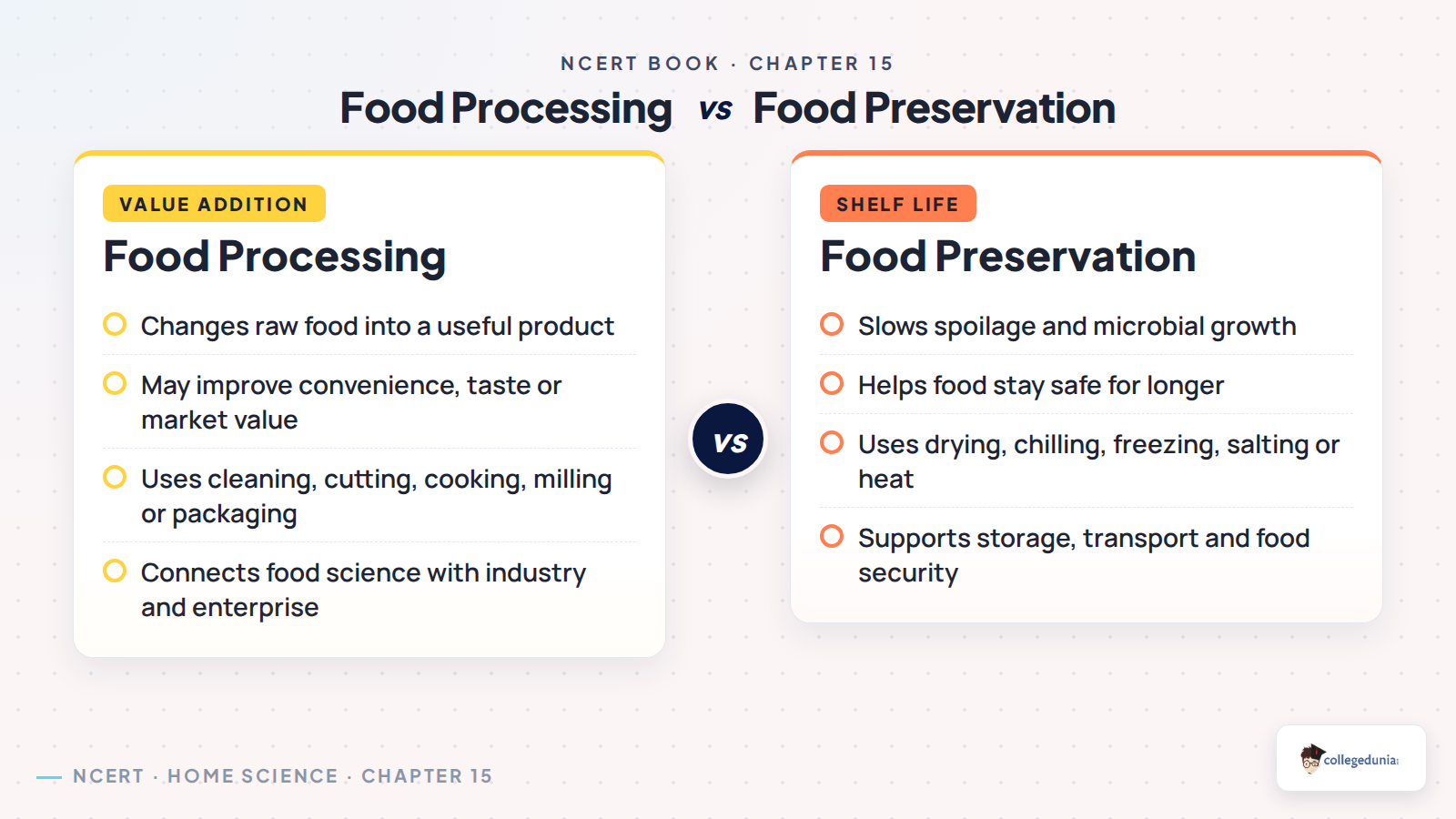
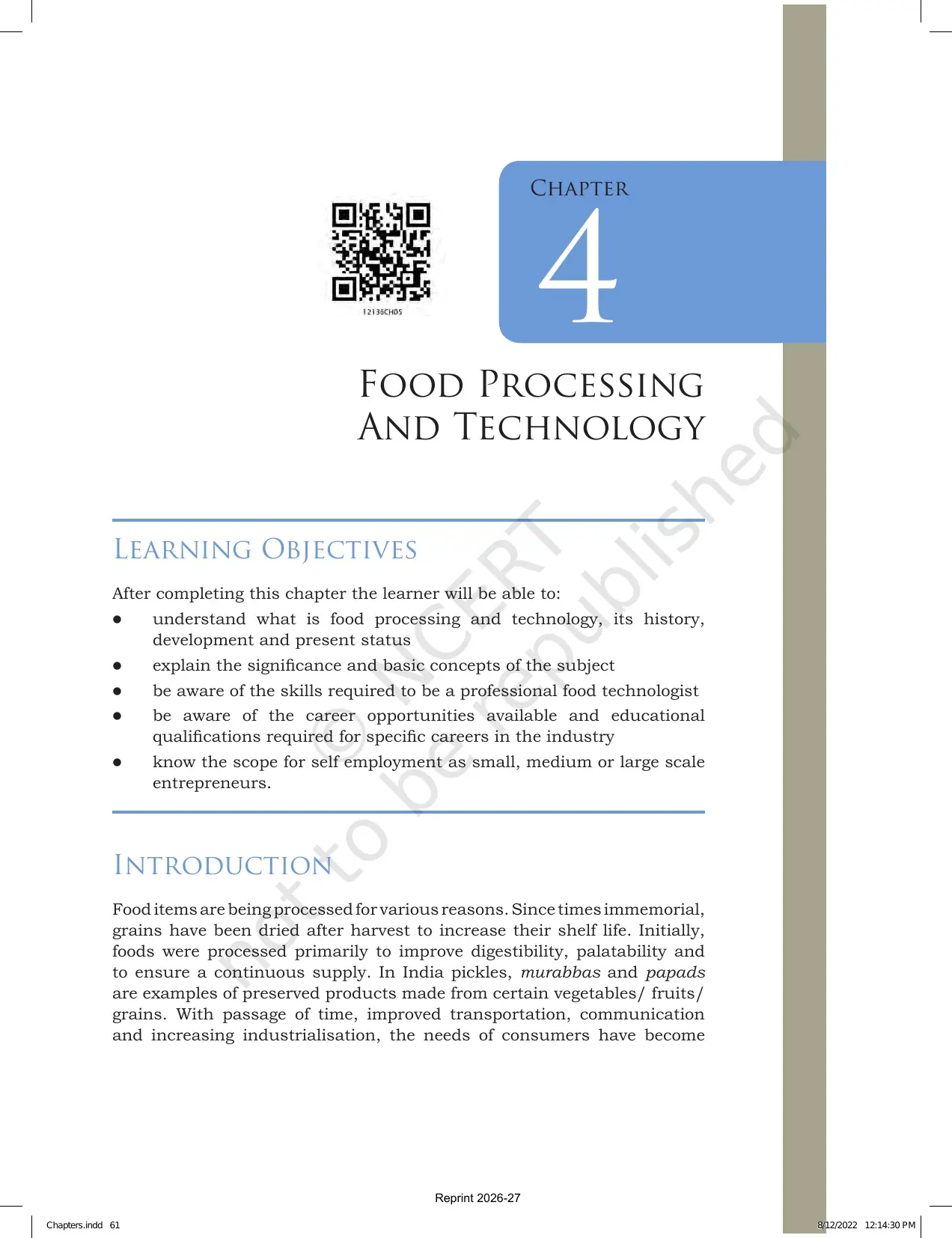
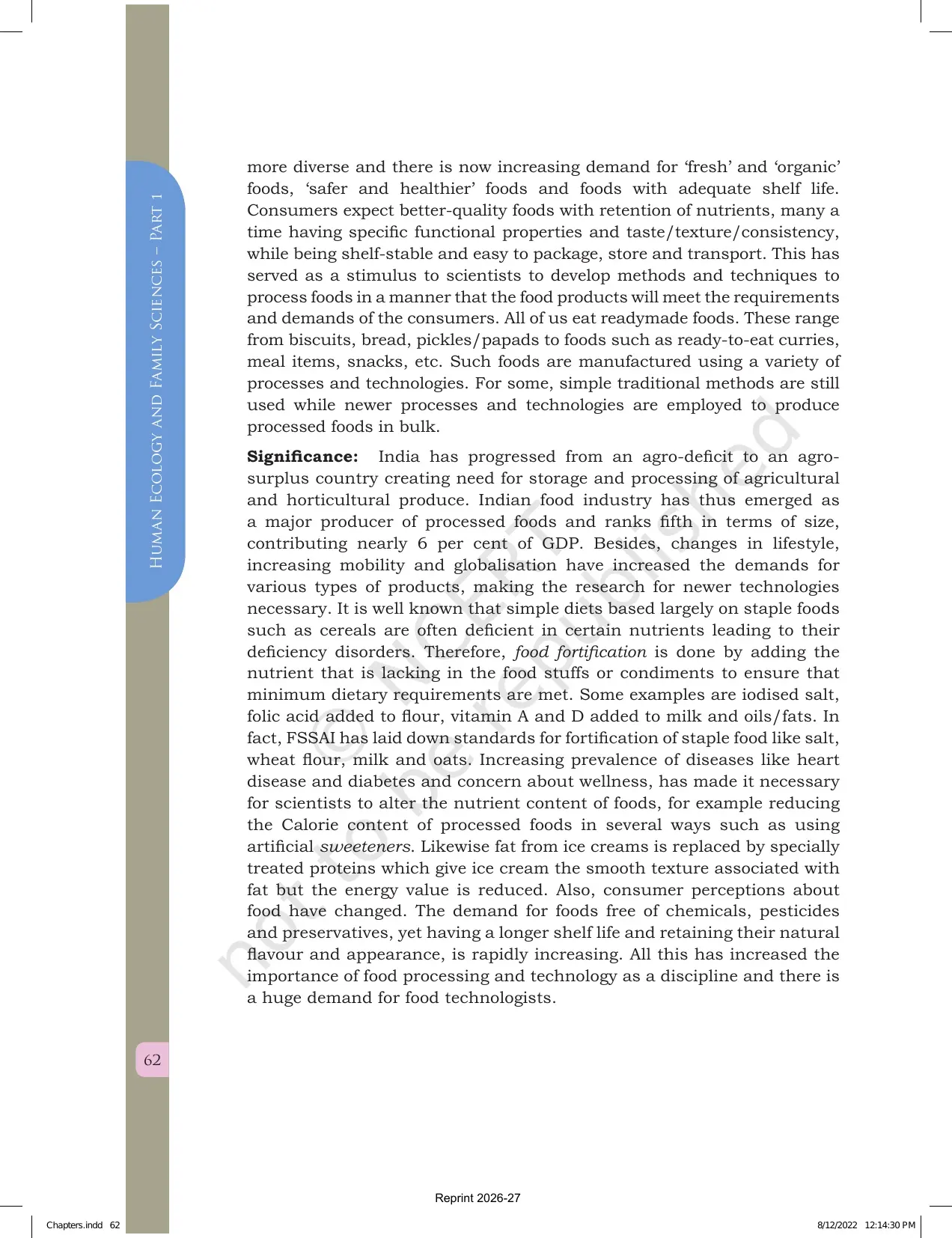
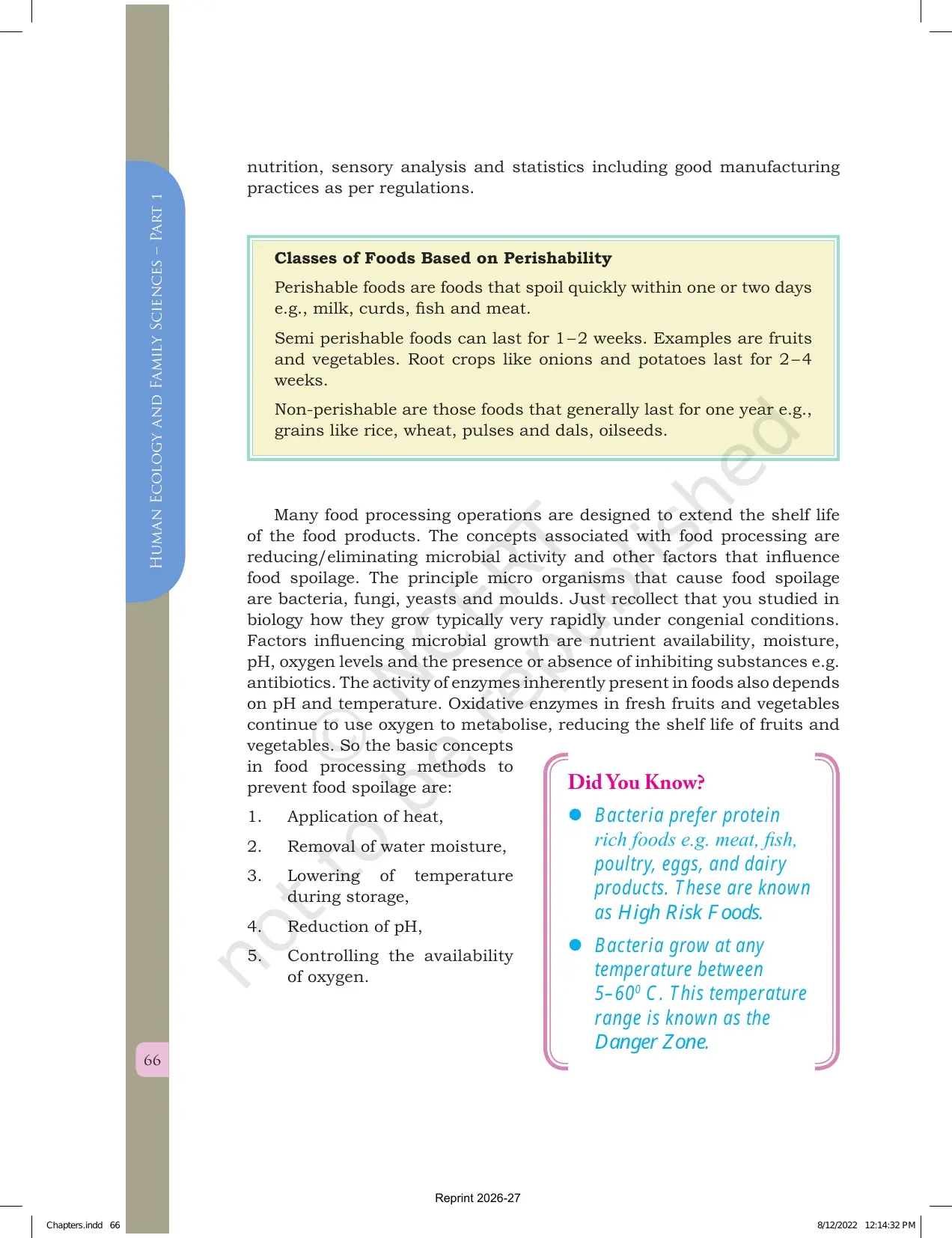
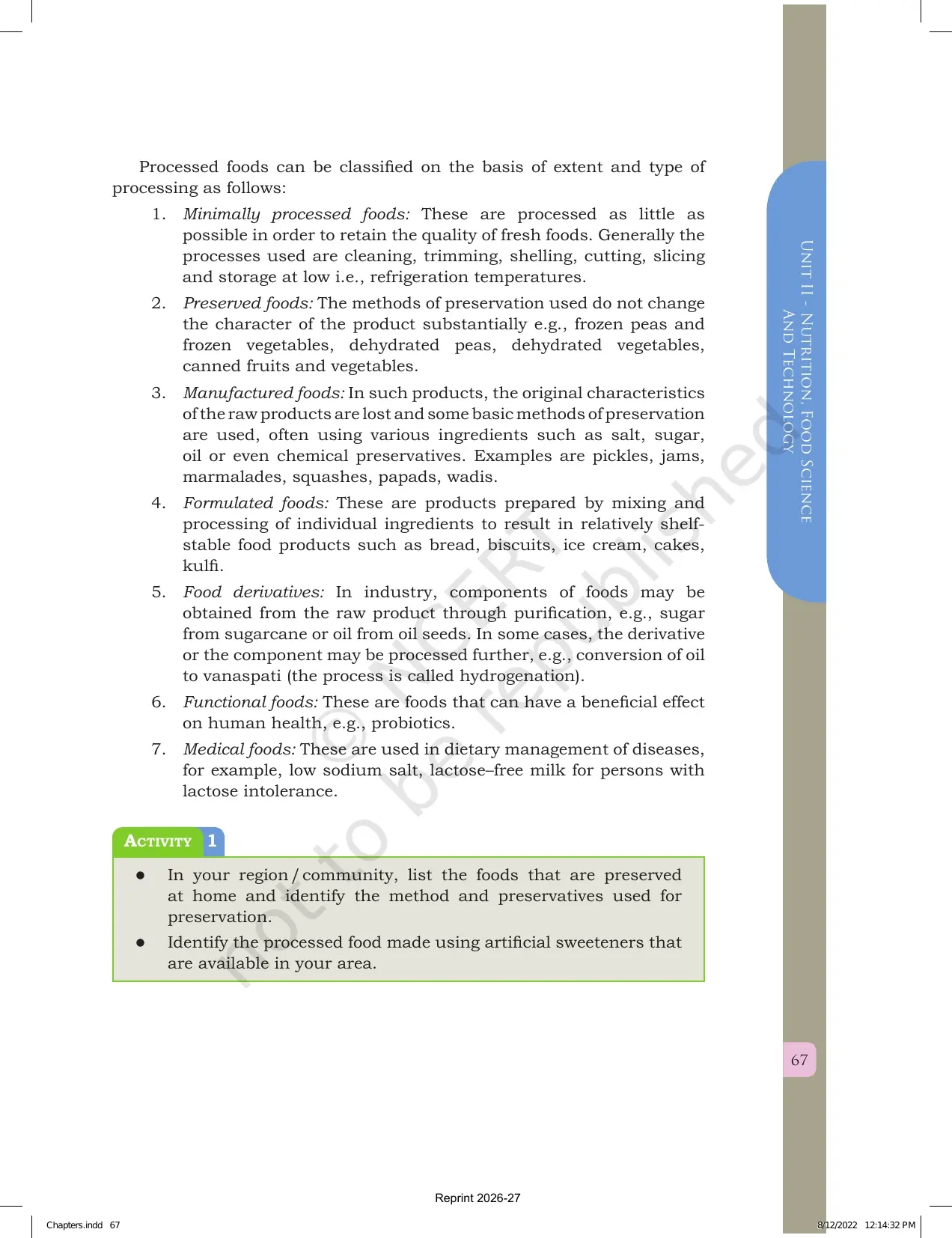
Food processing is the wider idea. It changes raw food into finished or semi-finished food products. Food preservation is one important part of processing because it helps food remain safe for a longer time. Both ideas appear together in the chapter, but they should not be written as the same definition.
| Point | Food Processing | Food Preservation |
|---|---|---|
| Main focus | Transform raw ingredients into useful products | Prevent spoilage and extend shelf life |
| Student cue | Value addition, convenience and marketability | Safety, storage and microbial control |
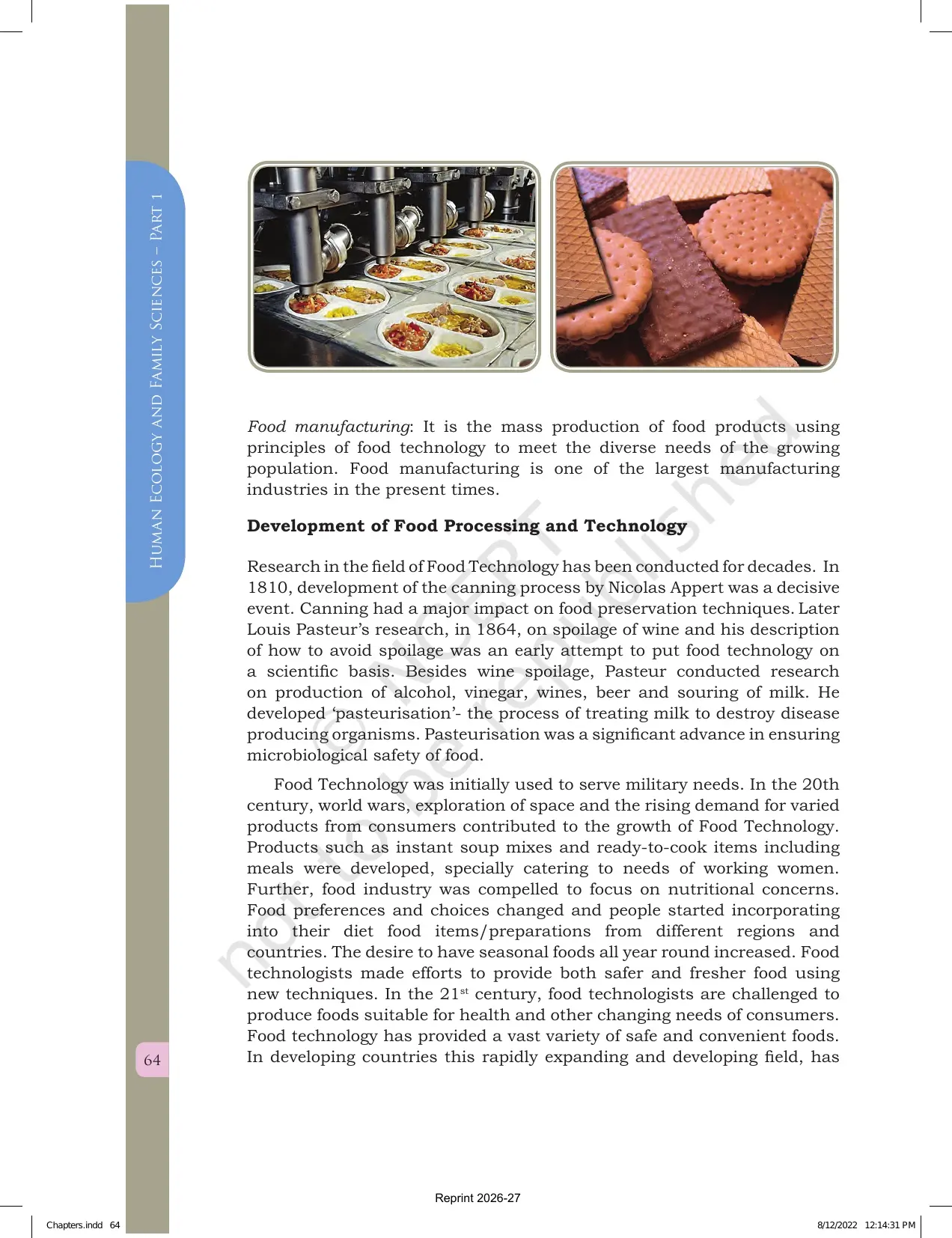
| Examples | Bread, biscuits, ready-to-eat curries and snacks | Drying, chilling, freezing, pickling and canning |
Key Concepts in Class 12 Home Science Chapter 15
The NCERT PDF gives separate meanings for food processing, food science, food technology and food manufacturing. These definitions are important because many short-answer questions ask students to explain the difference between terms. Do not memorise only one broad line for all four terms.
- Food processing: methods used to convert raw ingredients into finished or semi-finished products.
- Food science: study of food composition, spoilage, storage and changes during processing.
- Food technology: use of food science and engineering to produce safe and desirable foods.
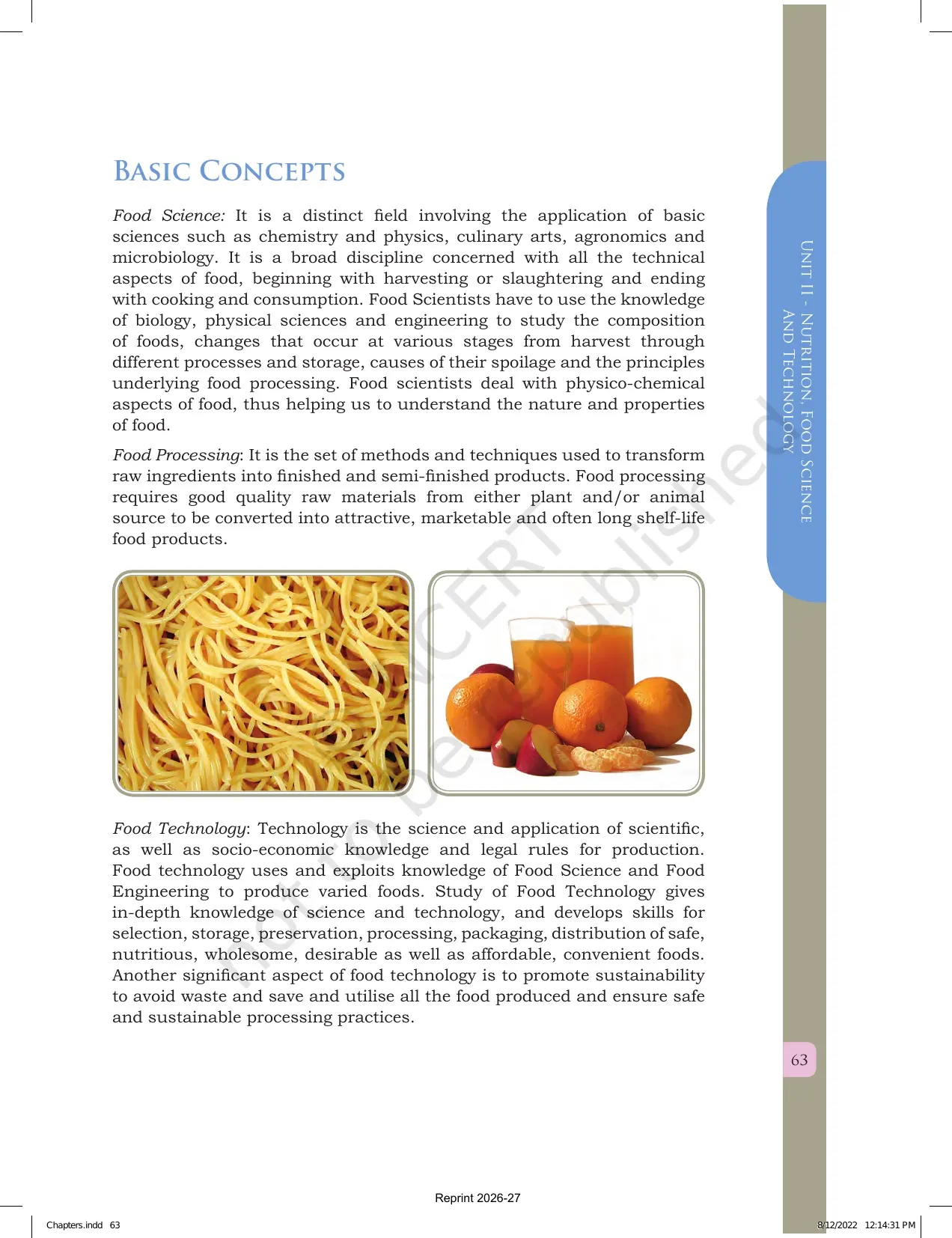
- Food manufacturing: mass production of food products for a growing population.
The chapter also explains food fortification. Examples include iodised salt, folic acid added to flour and vitamins added to milk or fats. This point helps students connect food processing with public health.
Development of Food Processing and Technology
The chapter traces the growth of food technology from traditional preservation to scientific processing. Nicolas Appert's canning process in 1810 and Louis Pasteur's work on spoilage and pasteurisation are major milestones. Later, wars, space exploration, working women and changing consumer needs increased demand for processed foods.
Exam cue: Use a simple timeline answer when asked about development. Begin with canning, add Pasteur's research, then connect the twentieth century to military food, space food, ready-to-cook meals and modern nutritional concerns.
Careers and Scope in Food Processing
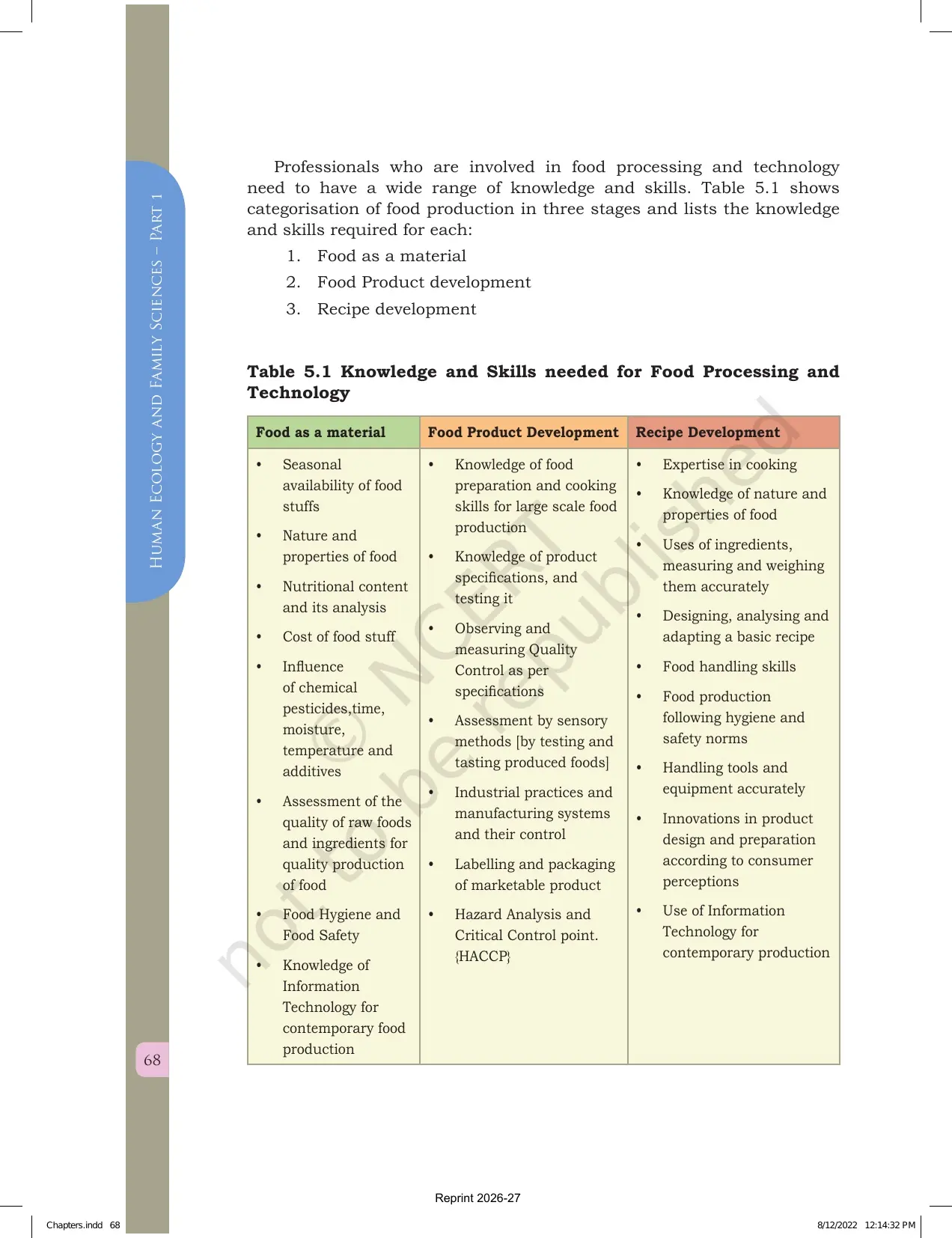
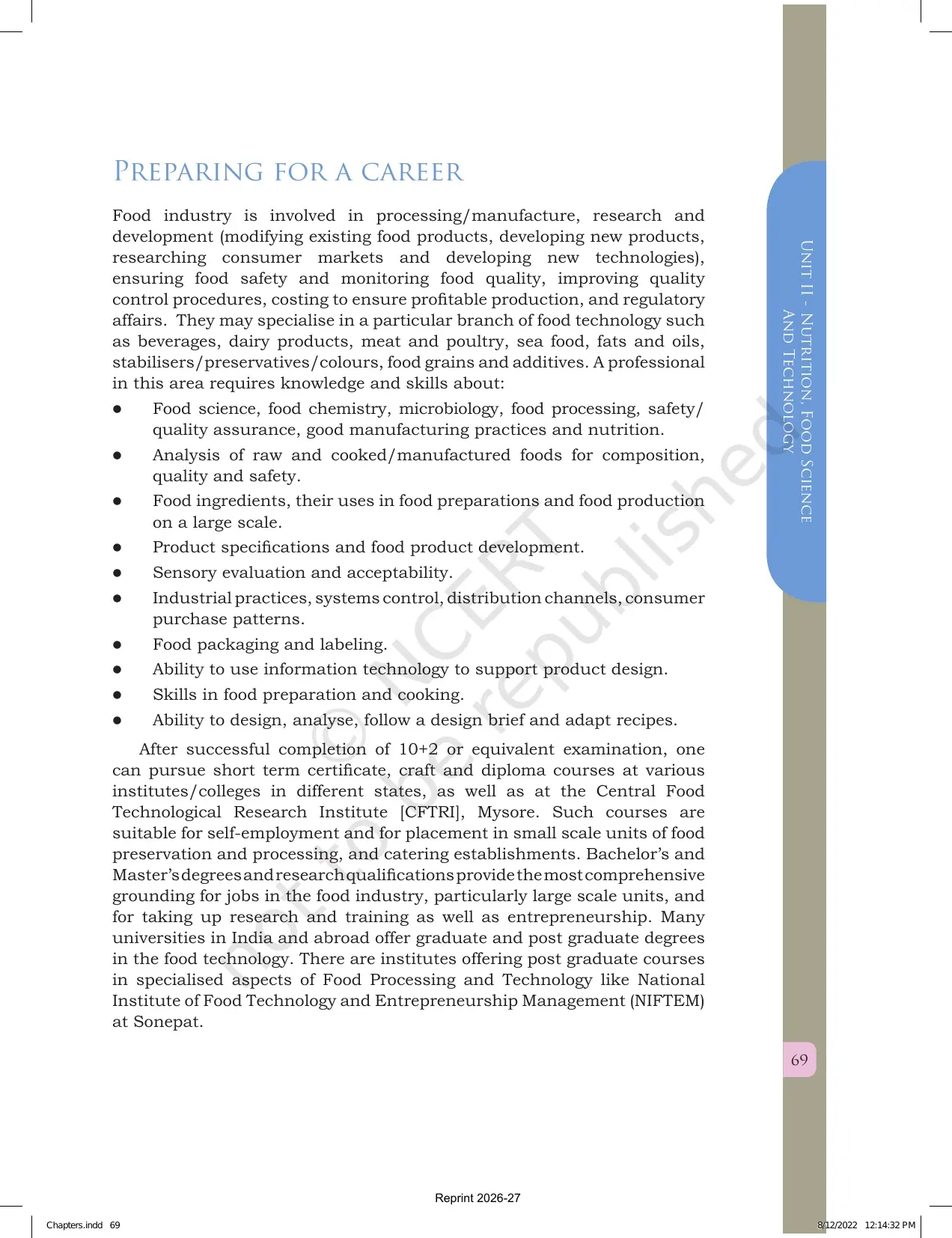
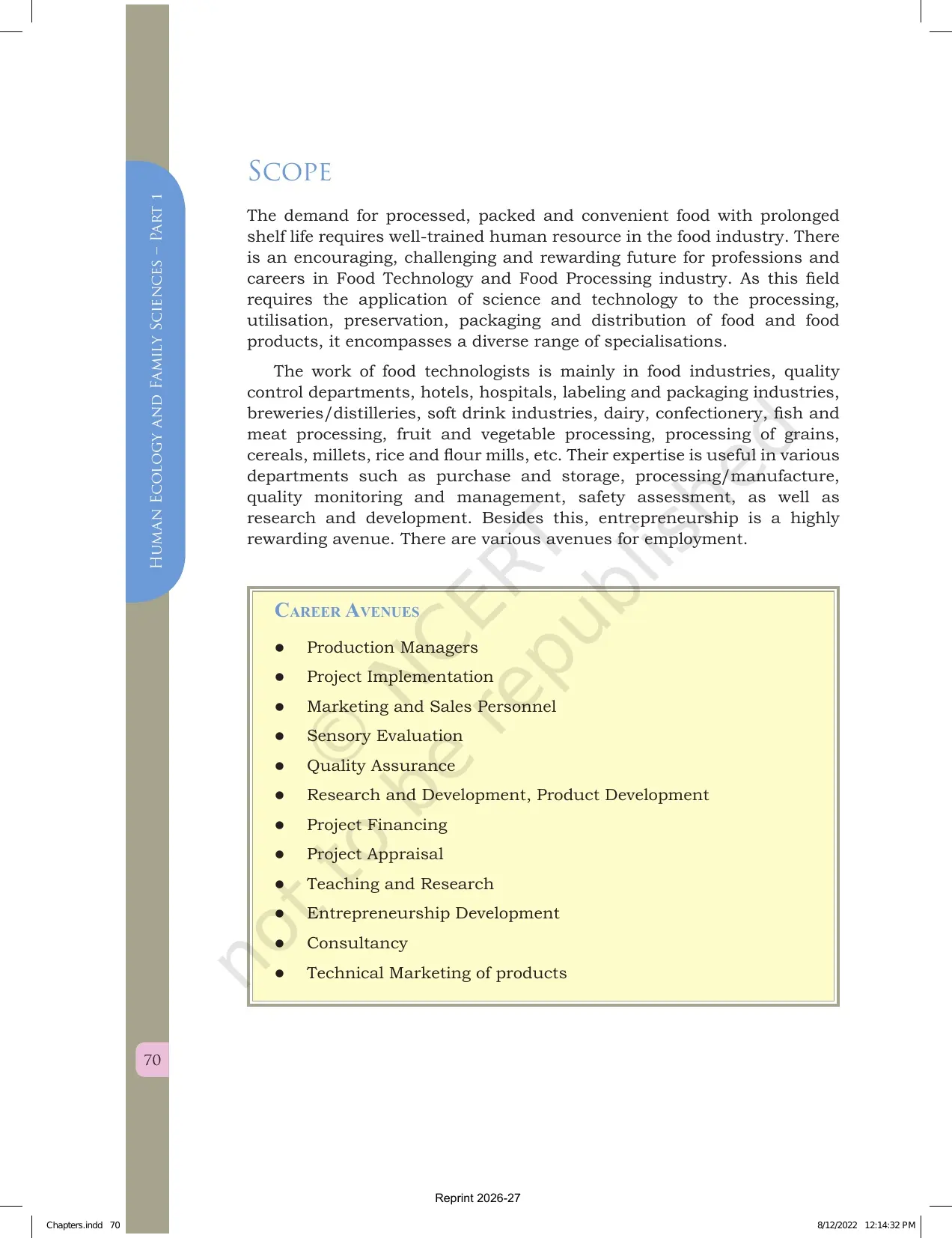
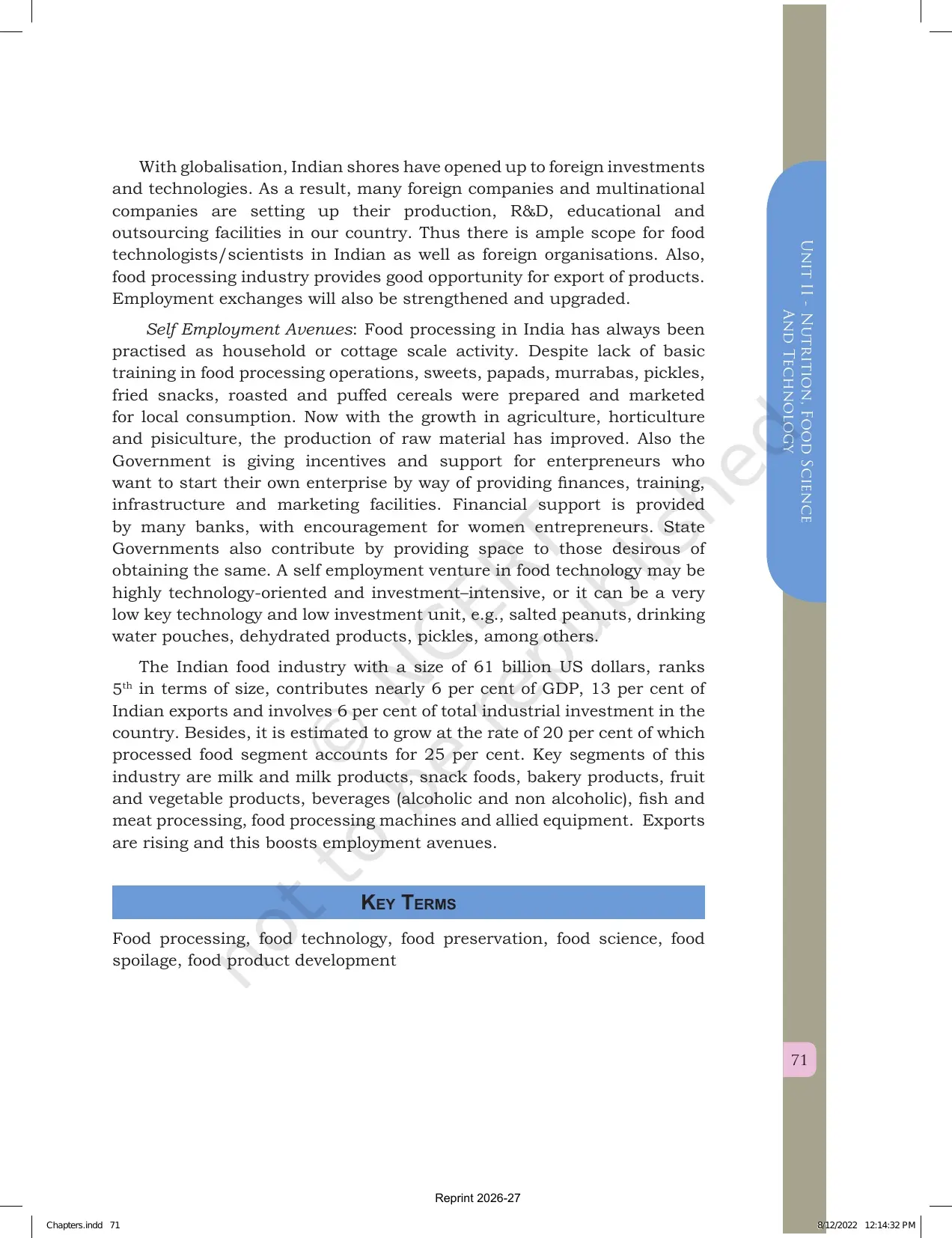
Food processing and technology is not only a theory chapter. NCERT links it with professional skills and career opportunities. Students should notice the career side because Home Science often asks scope-based and application-based questions. Food technologists may work in product development, quality control, packaging, storage, research, safety checks or entrepreneurship.
- Food industries need trained people for safe processing and quality control.
- Packaging and storage decisions affect shelf life and consumer acceptance.
- Small-scale enterprise is possible through value-added foods and preserved products.
The career answer should mention both employment and self-employment. That keeps it close to the NCERT learning objective.
How to Use This Home Science Chapter 15 Book PDF
Use the PDF in three rounds. First, mark the definitions of food processing, food science, food technology and food manufacturing. Second, prepare examples of preservation and fortification. Third, revise the development timeline and the career scope section.
- Make a one-page table of definitions and examples.
- Write short notes on canning, pasteurisation and food fortification.
- Keep career skills separate from the history and significance points.
Study habit: Keep the official PDF open while writing answers so terms such as shelf life, fortification, processing and food technology stay close to NCERT wording.
More Class 12 Home Science Chapter 15 Resources
Use these related resources when you want Chapter 15 in another format. The table stays above the FAQ so students can move from the official book PDF to revision and practice material without losing the chapter context.
| Resource | Best use | Link |
|---|---|---|
| NCERT Book PDF | Read the official 2026-27 source chapter | Open book PDF |
| Notes | Revise processing, preservation, fortification and careers | Open notes |
| NCERT Solutions | Practise textbook questions in solved form | Open solutions |
| Handwritten Notes | Use a quick visual revision sheet before tests | Open handwritten notes |
All NCERT Book PDFs for Class 12 Home Science Chapters
The table below keeps the same resource type together, so students can move chapter by chapter through the Class 12 Home Science NCERT book PDFs.
| Chapter | NCERT chapter title | Book PDF |
|---|---|---|
| Chapter 11 | HE2: Nutrition, Food Science and Technology | Open book PDF |
| Chapter 12 | HE2: Public Nutrition and Health | Open book PDF |
| Chapter 13 | HE2: Clinical Nutrition and Dietetics | Open book PDF |
| Chapter 14 | HE2: Catering and Food Service Management | Open book PDF |
| Chapter 15 | HE2: Food Processing and Technology | Current book PDF |
| Chapter 16 | HE2: Food Quality and Food Safety | Open book PDF |
Food Processing and Technology Class 12 Home Science NCERT Book FAQs
Ques. What is included in the Class 12 Home Science Chapter 15 NCERT Book PDF?
Ans. The official PDF includes Food Processing and Technology, covering processing, food science, food technology, preservation, fortification and career scope.
Ques. How many pages are there in the Chapter 15 NCERT PDF?
Ans. The official chapter PDF used for this entry has 14 pages in the 2026-27 reprint.
Ques. What is food processing according to this chapter?
Ans. Food processing is the set of methods and techniques used to transform raw ingredients into finished or semi-finished food products.
Ques. What should students revise first from this PDF?
Ans. Students should revise the definitions, preservation methods, development timeline, food fortification examples and career opportunities in food technology.



Comments