



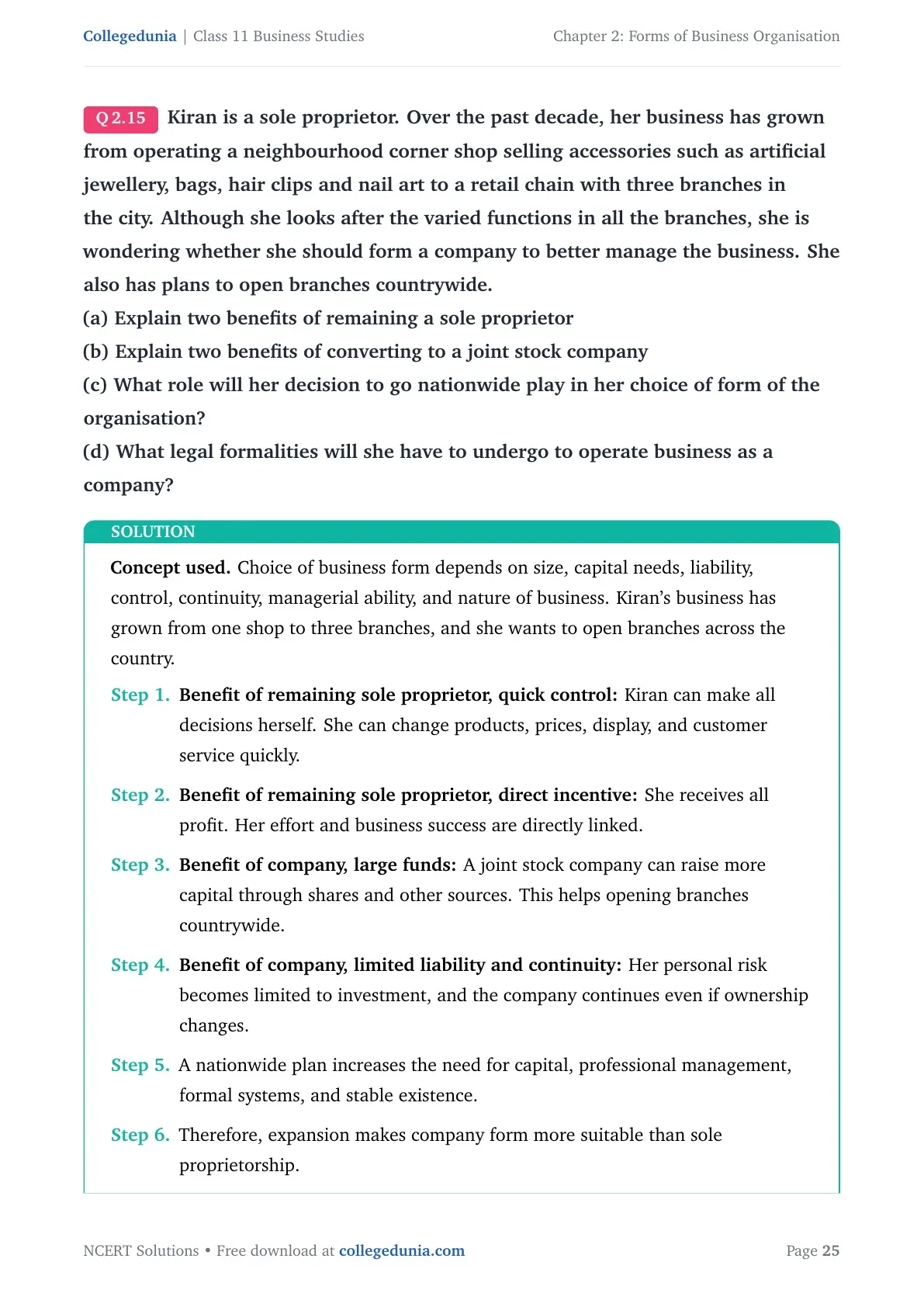
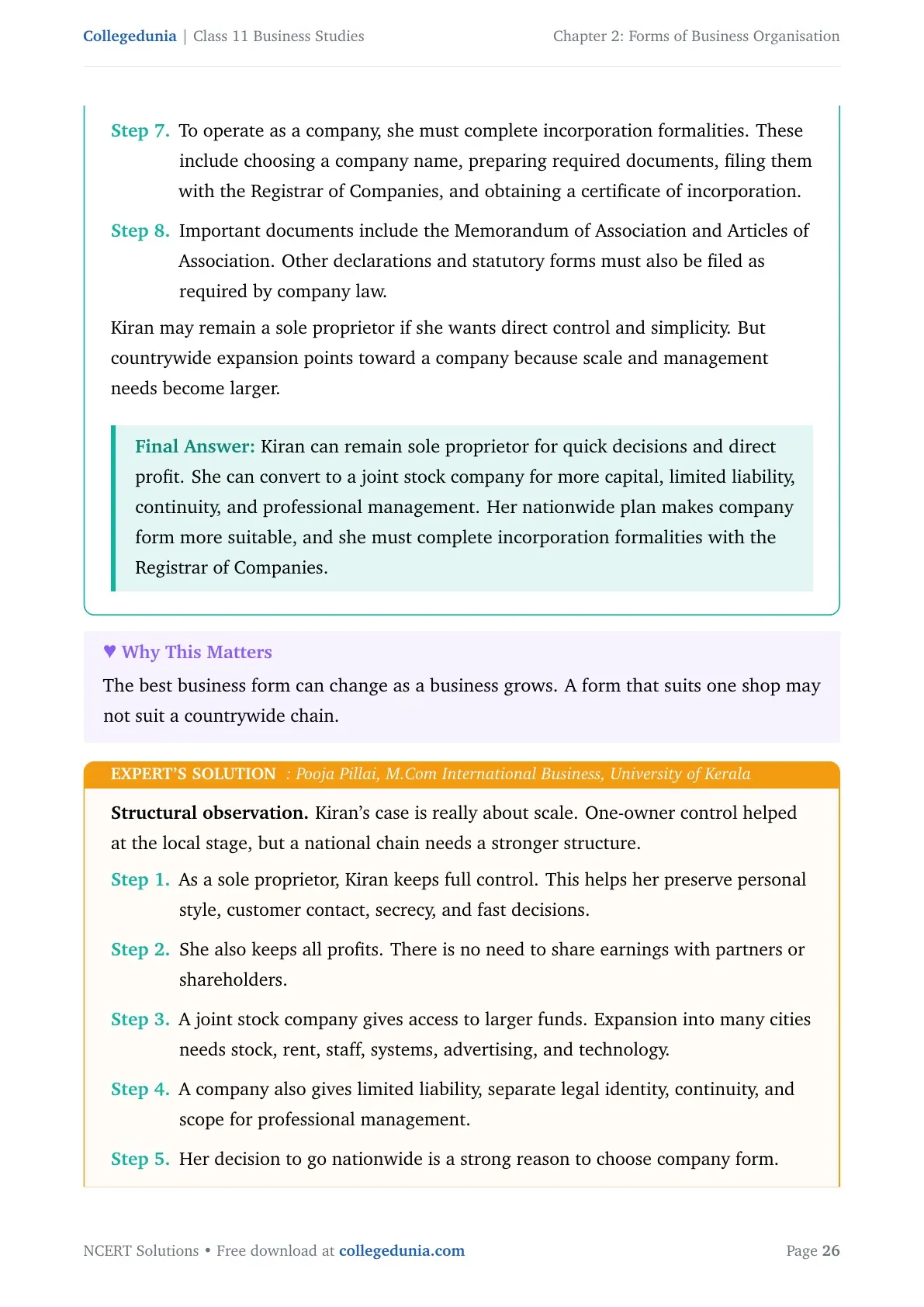
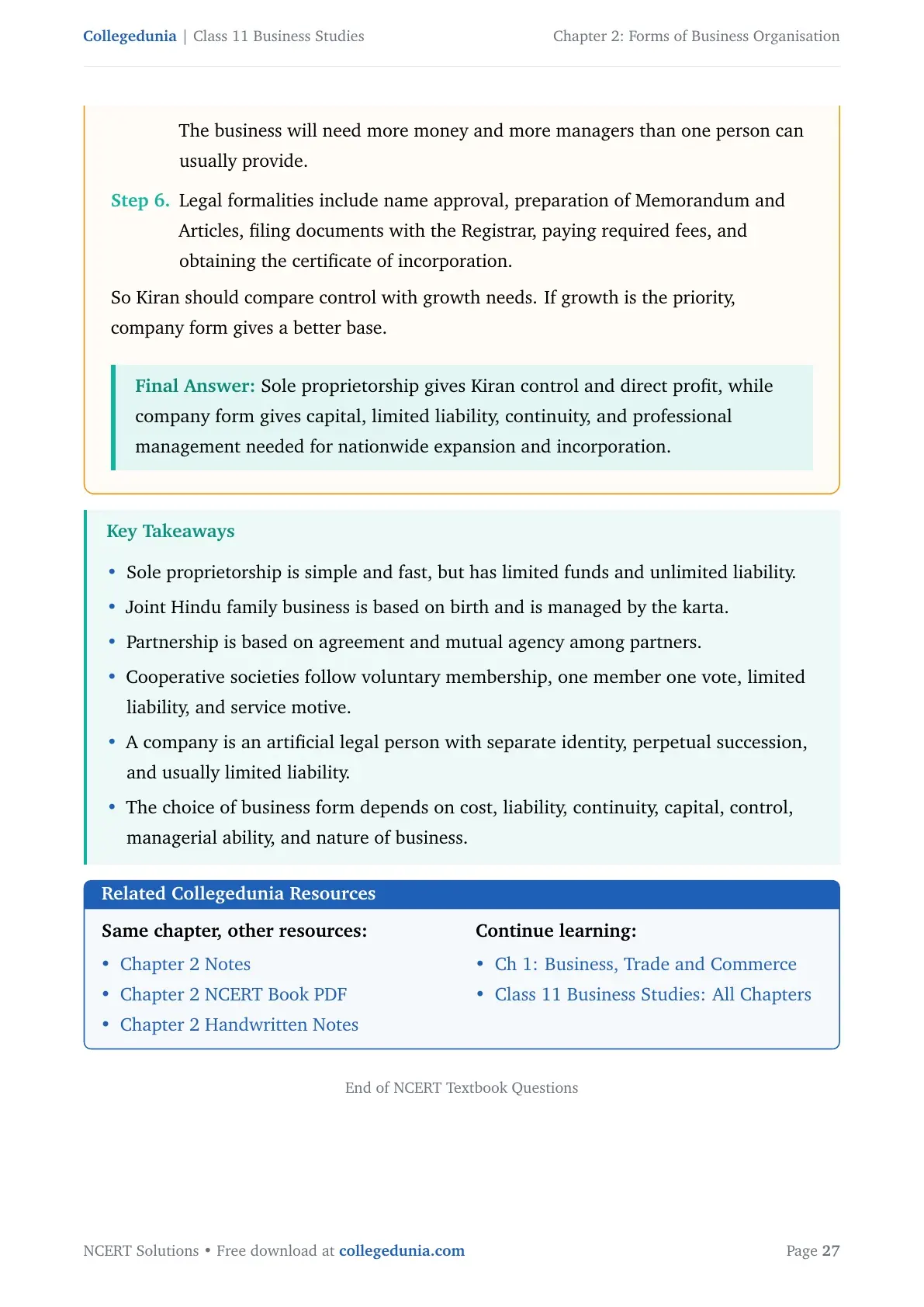
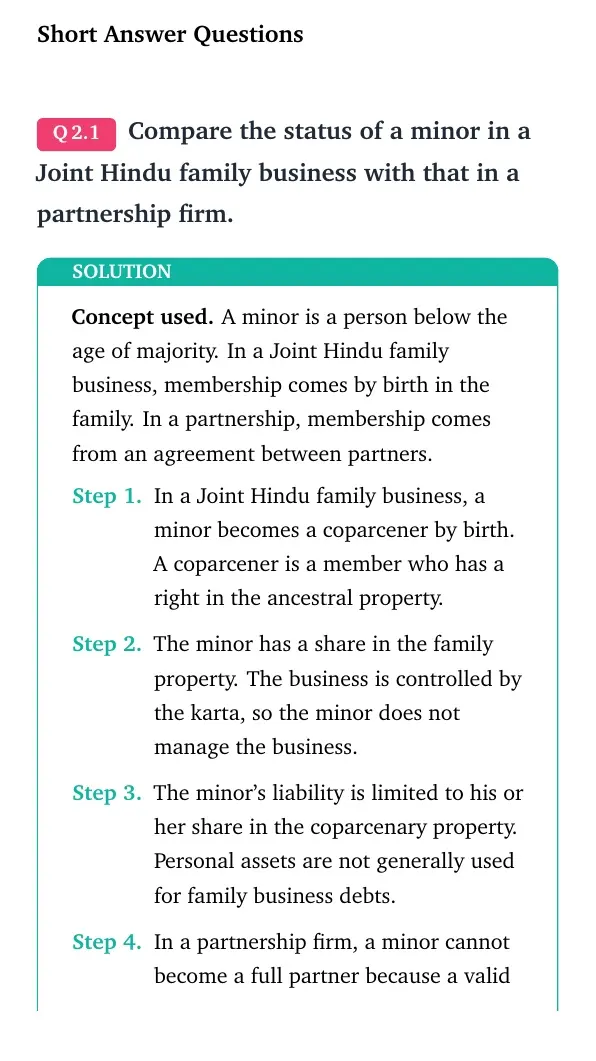
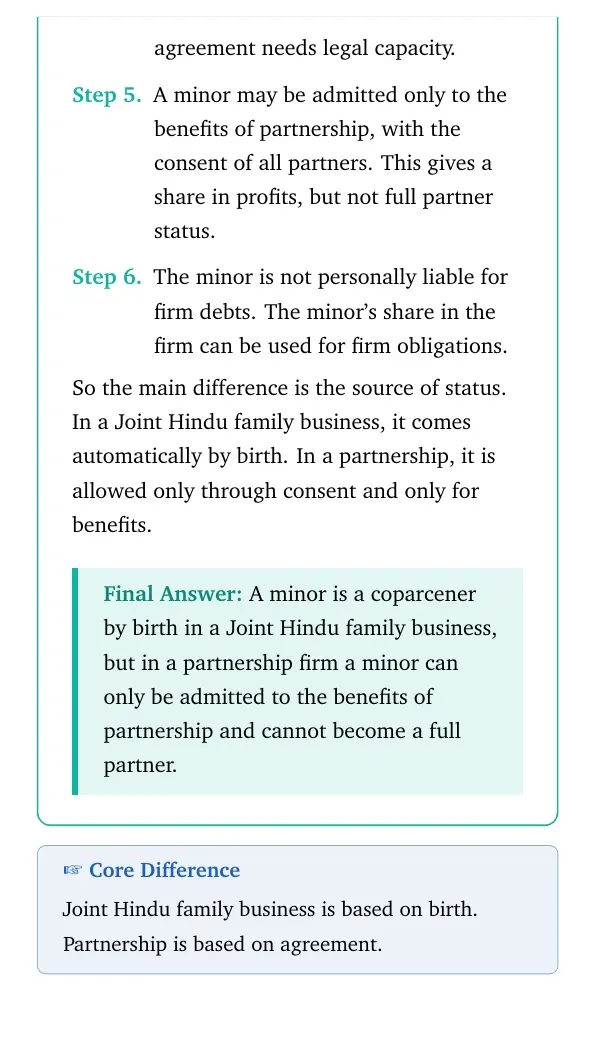
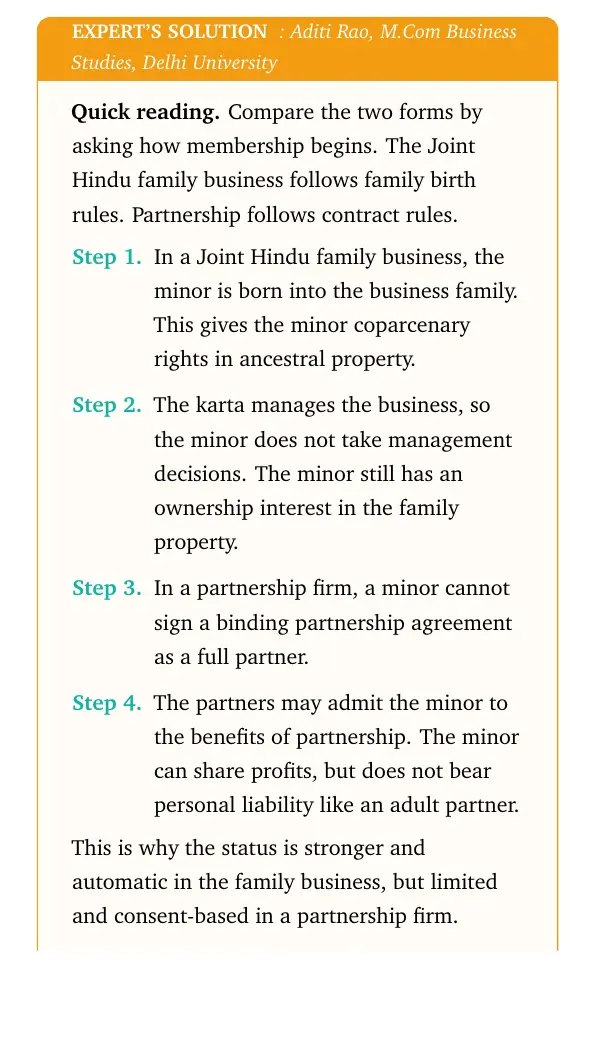
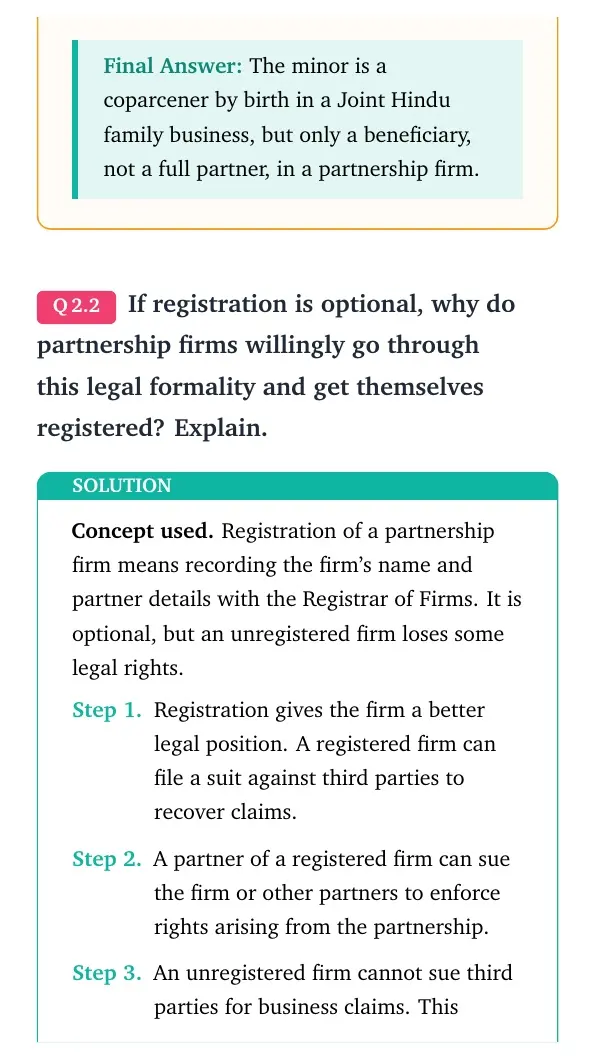
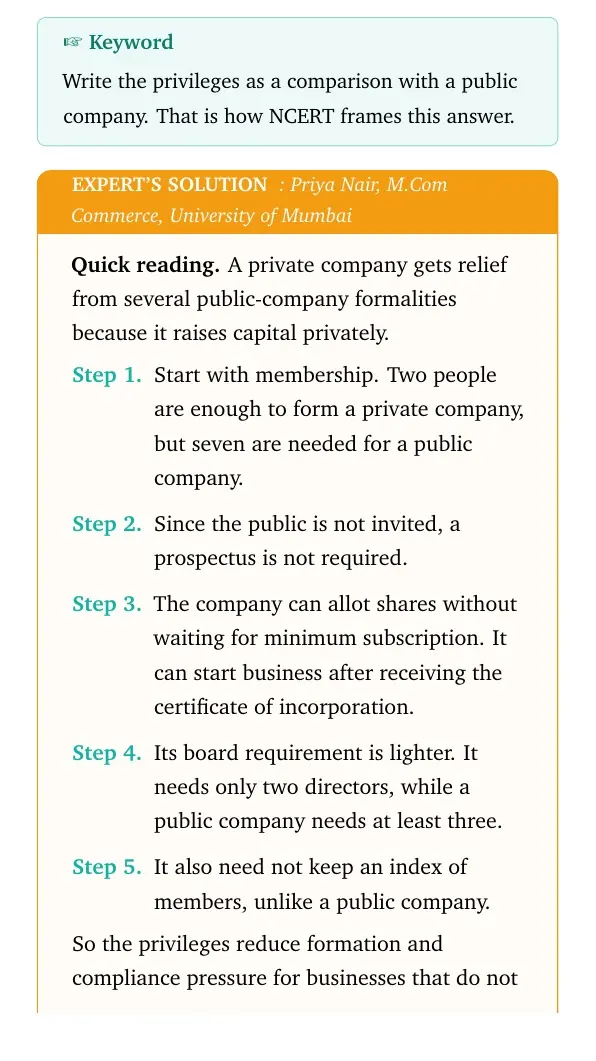
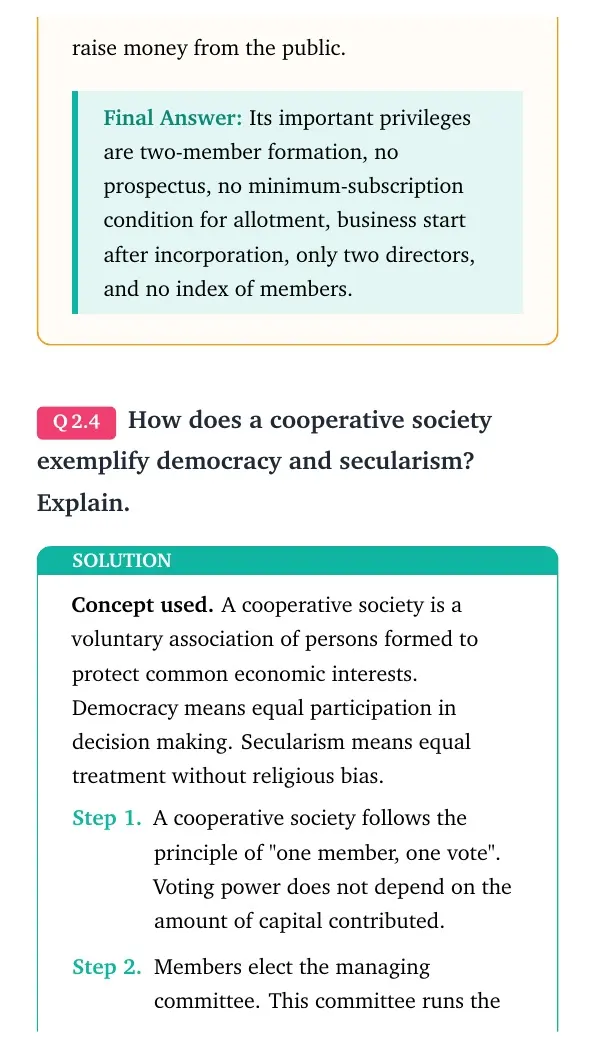
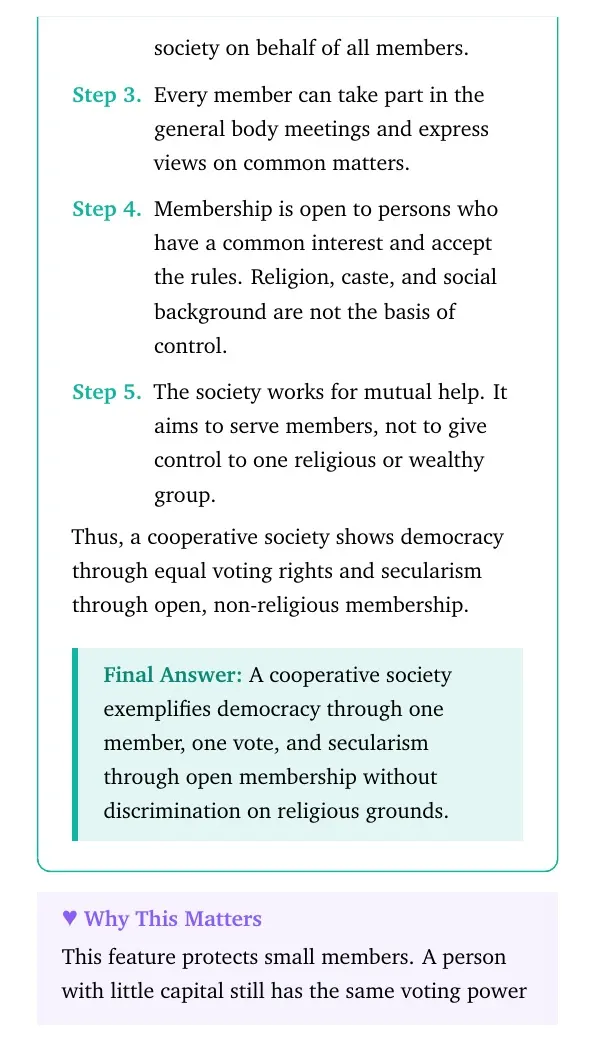
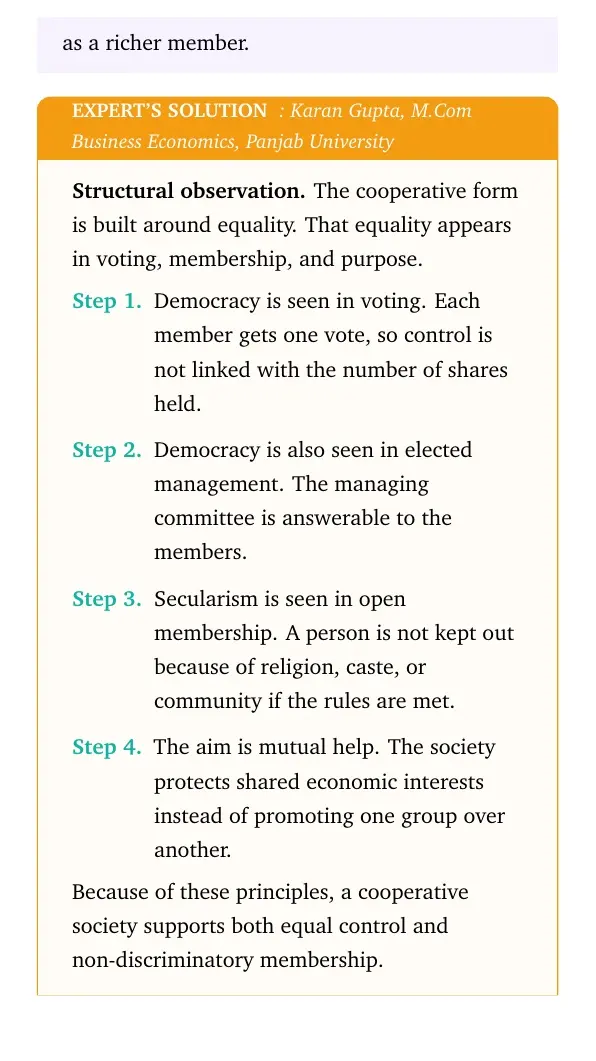
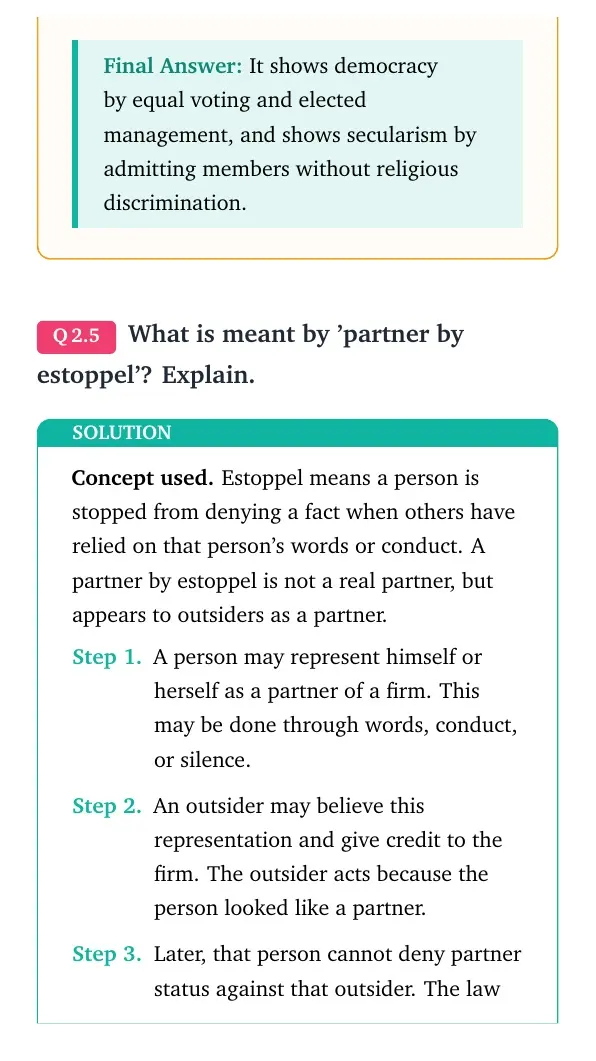
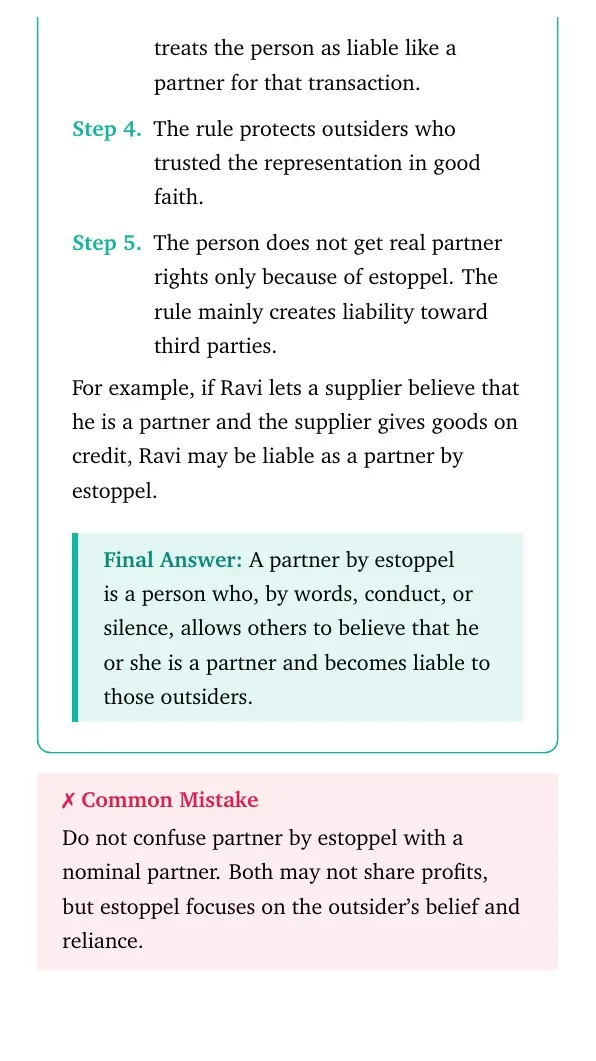
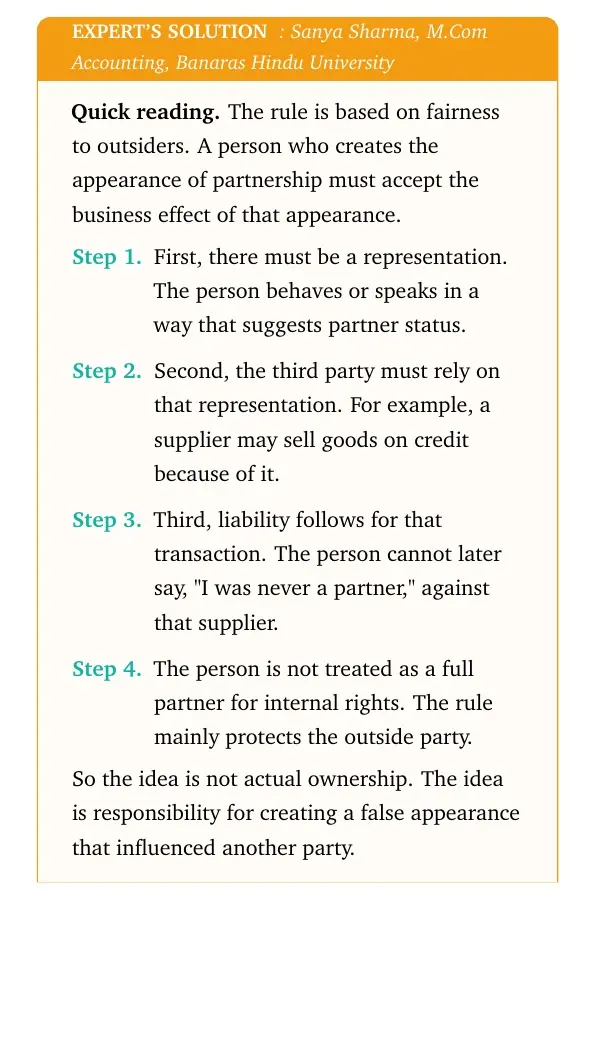
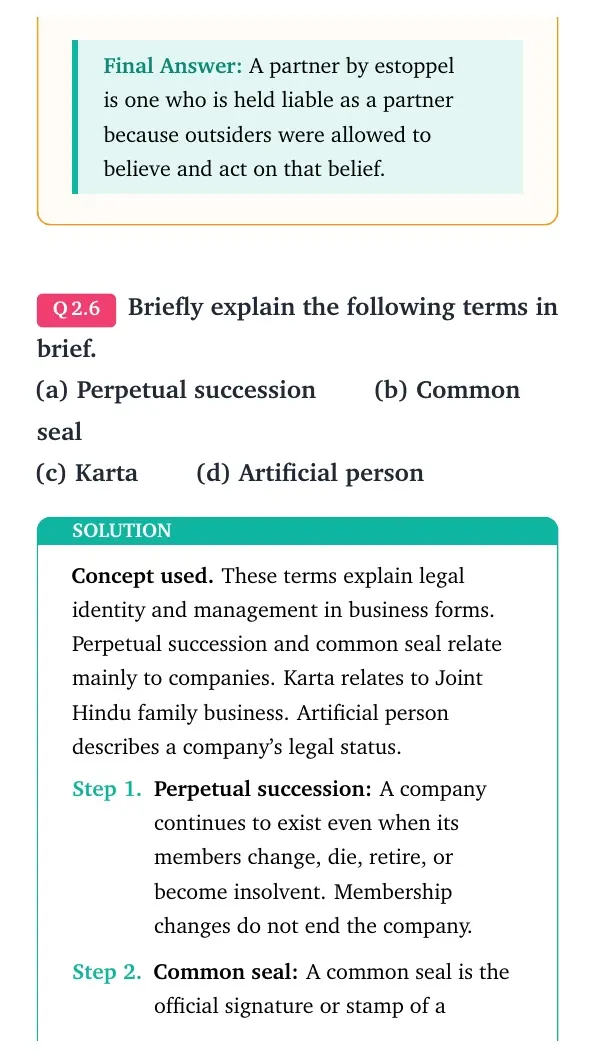
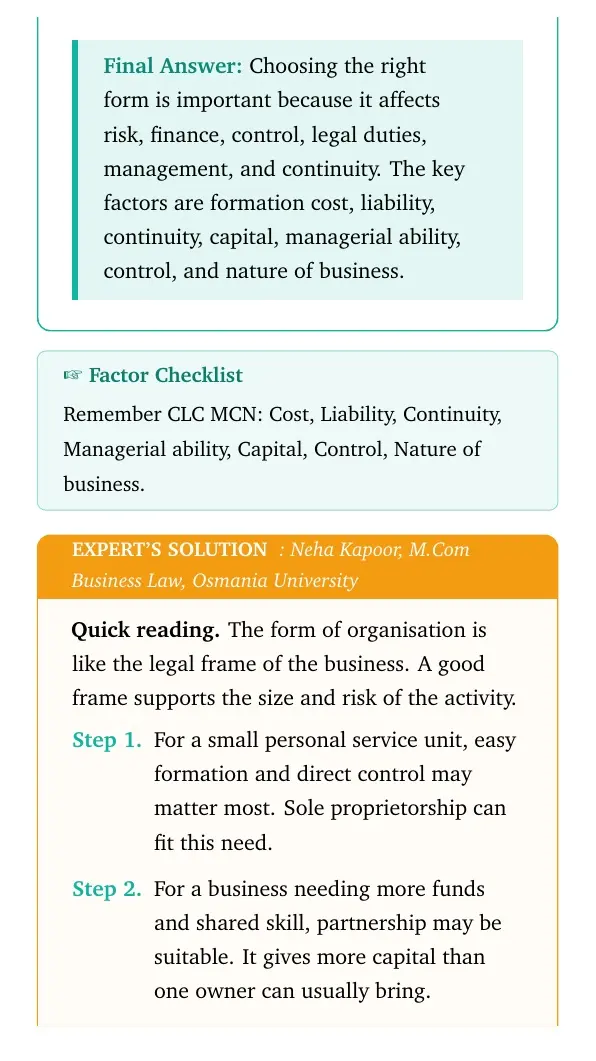
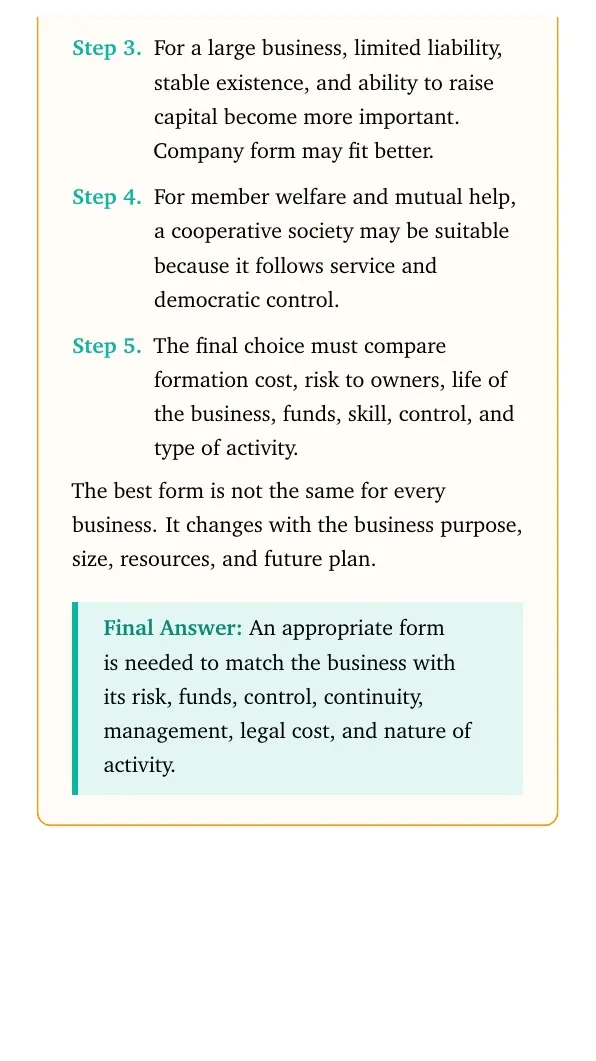
NCERT Solutions for Class 11 Business Studies Chapter 2 Forms of Business Organisation cover every textbook question from the 2026-27 NCERT book. The answers explain sole proprietorship, Joint Hindu family business, partnership, cooperative society, and joint stock company in simple CBSE answer language.
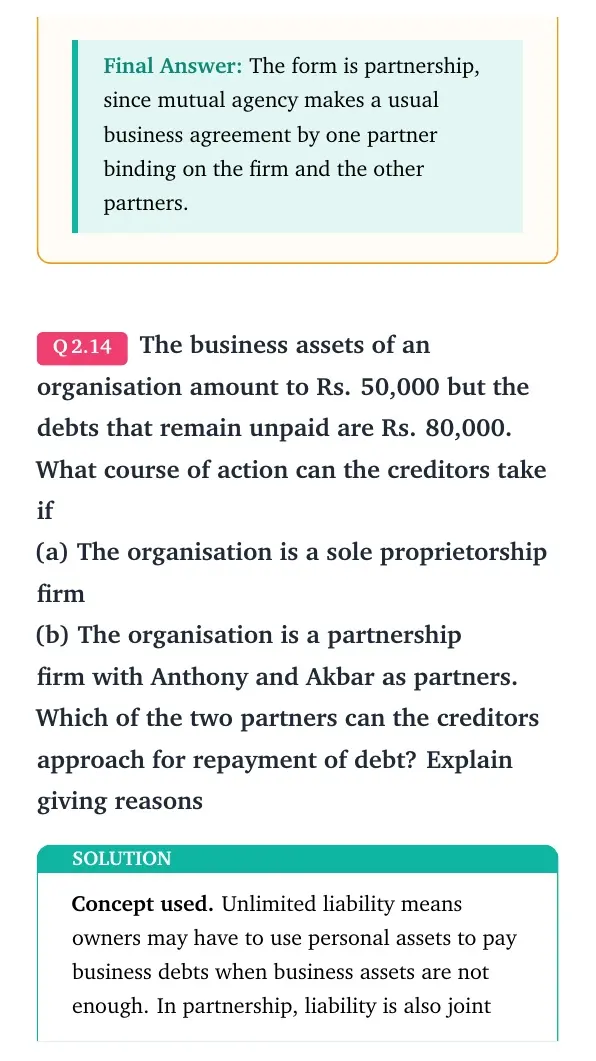
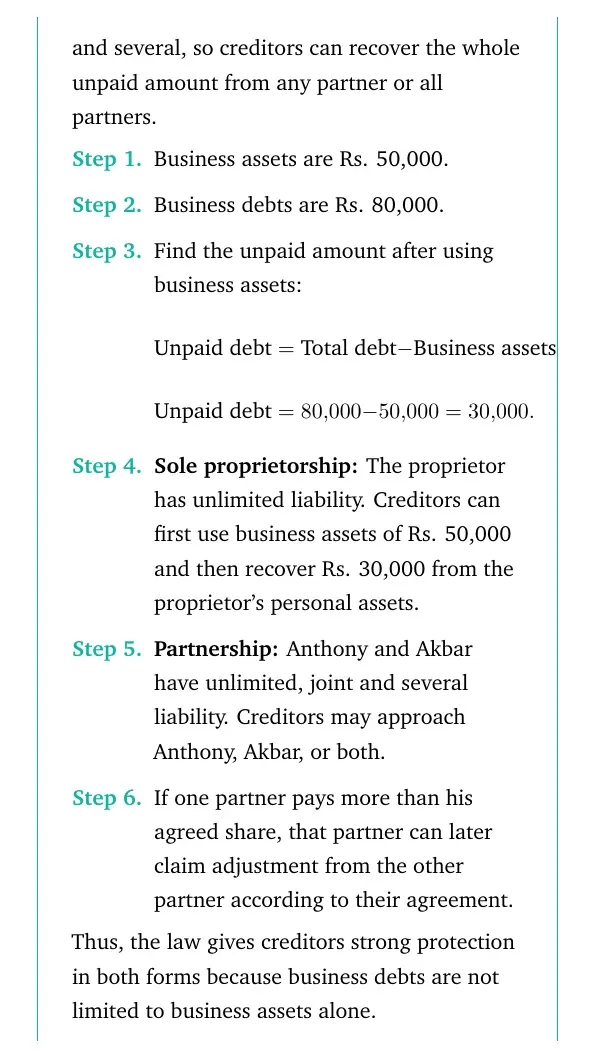
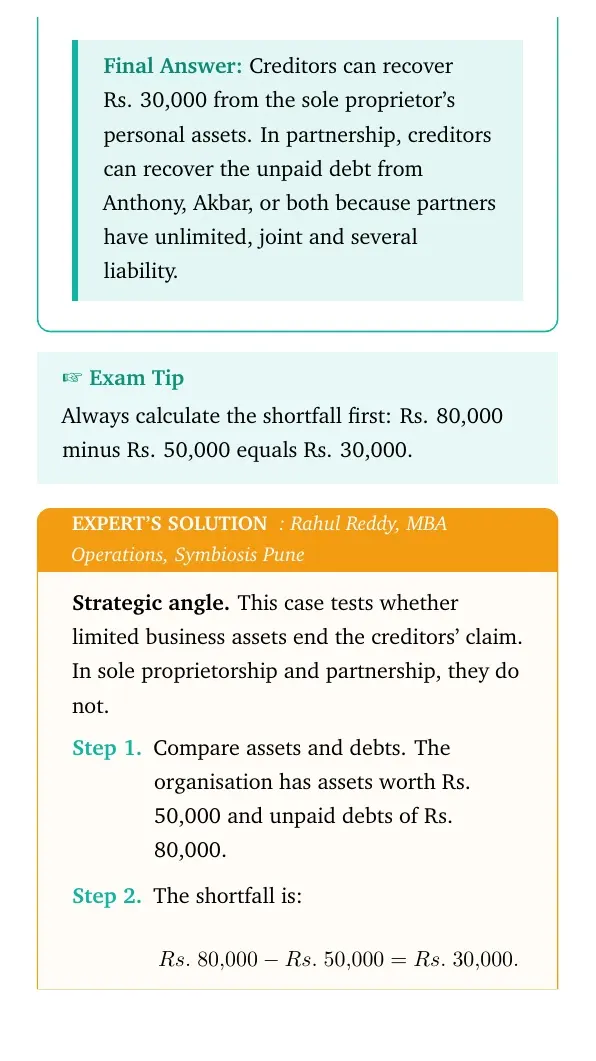
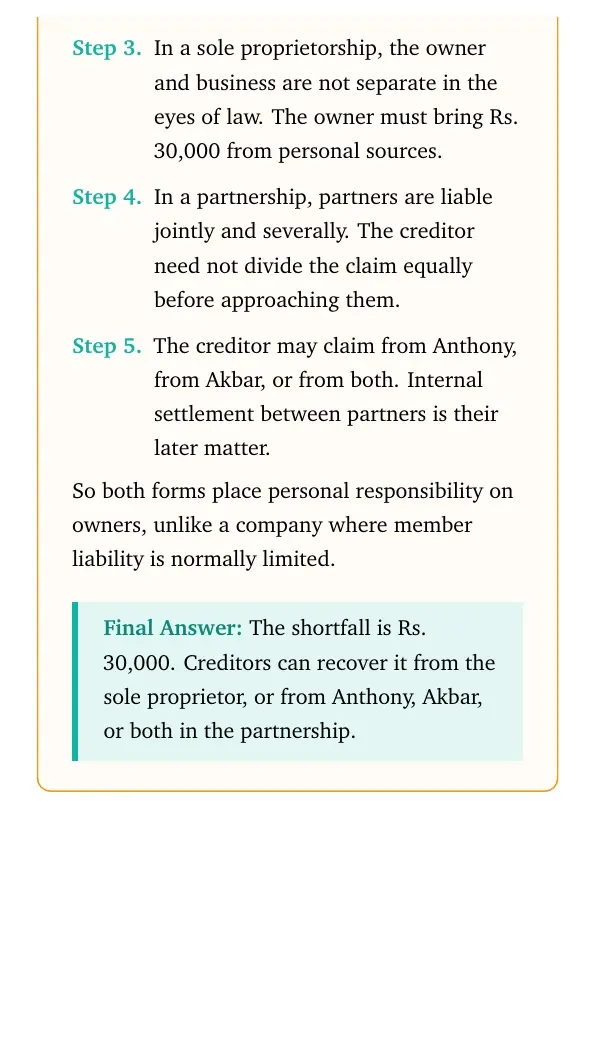
Student Feedback: In a Collegedunia survey of 11,260 Class 11 commerce students, 81% said a liability comparison table helped them choose the correct business form in case-based questions.
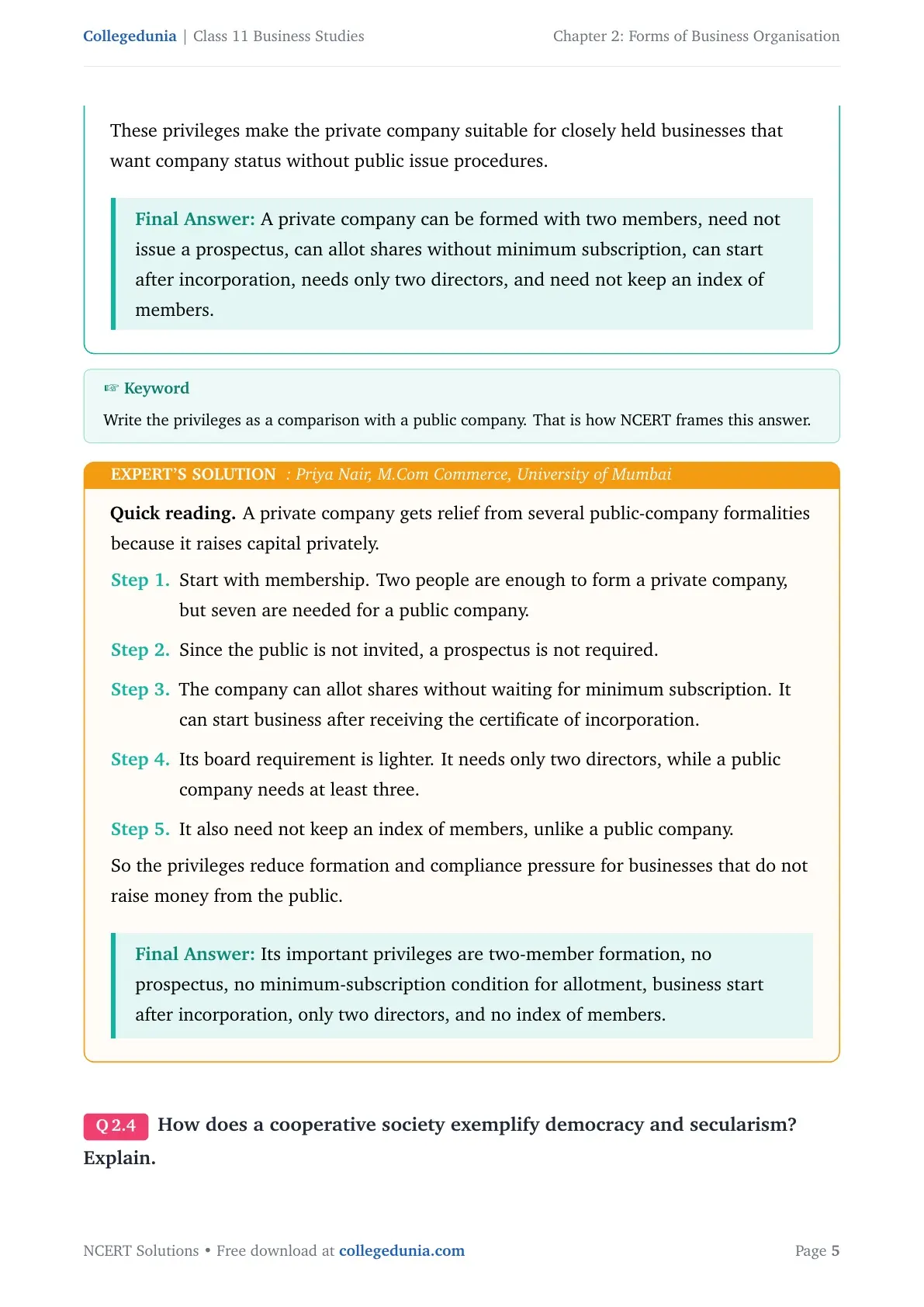
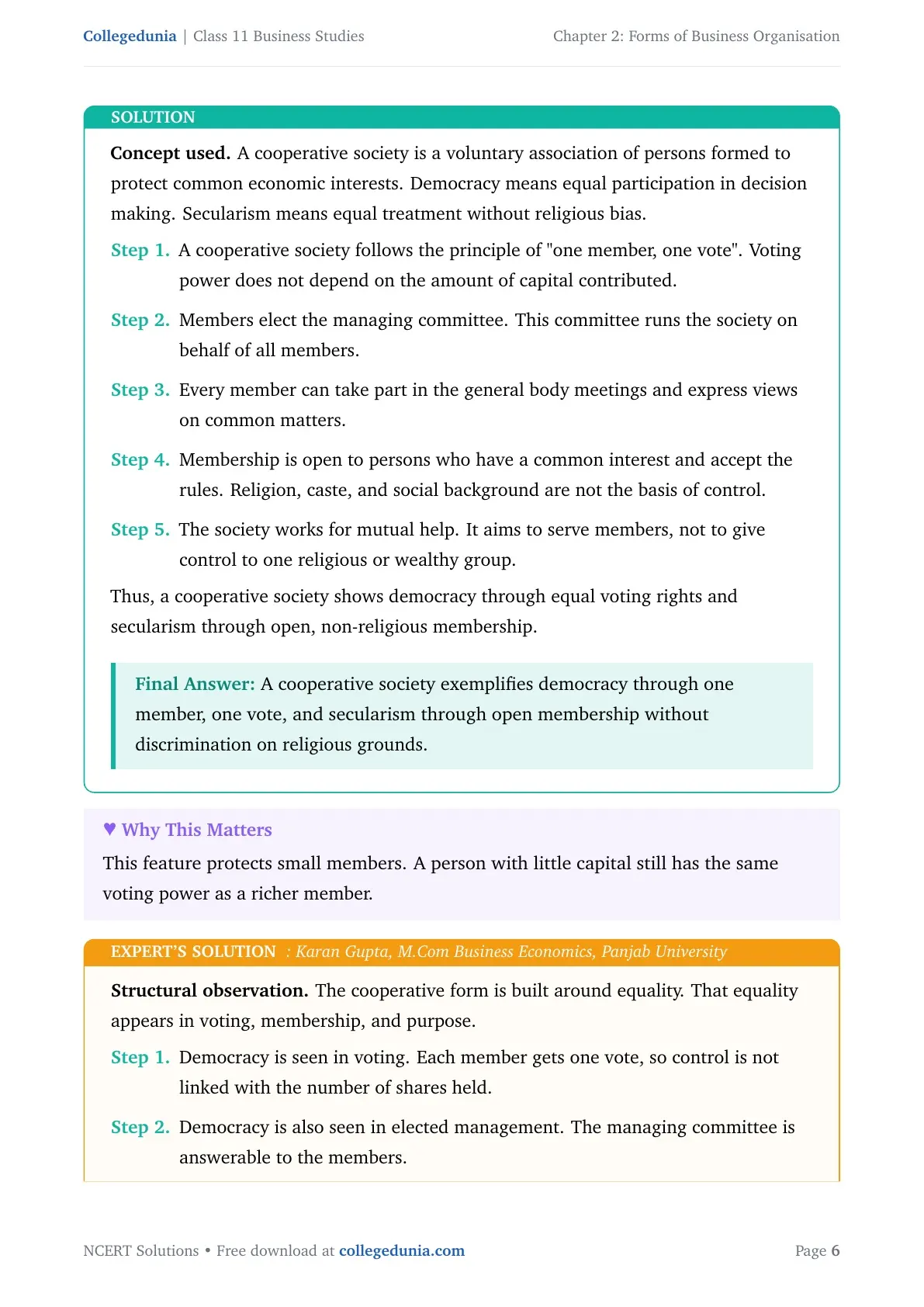
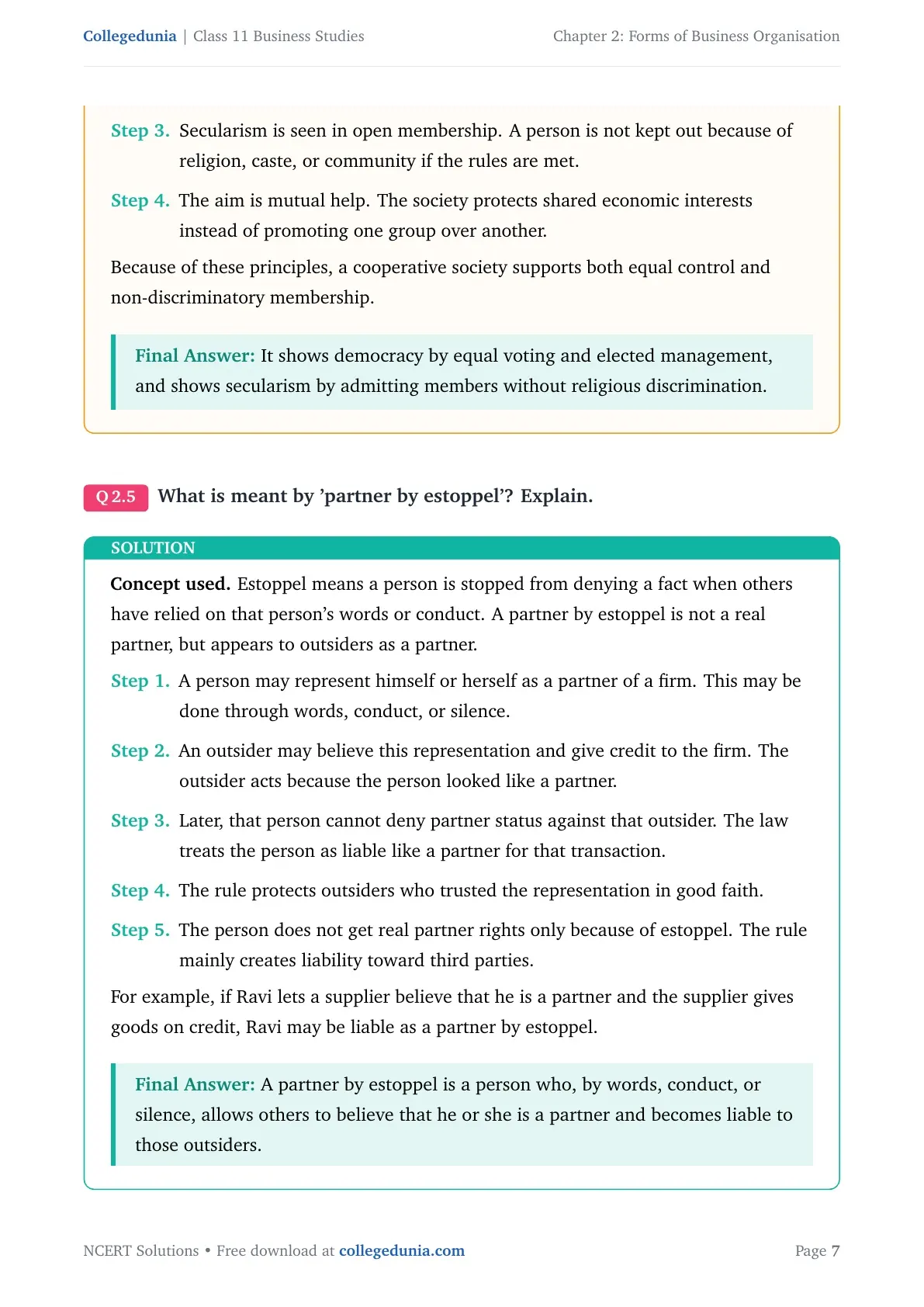
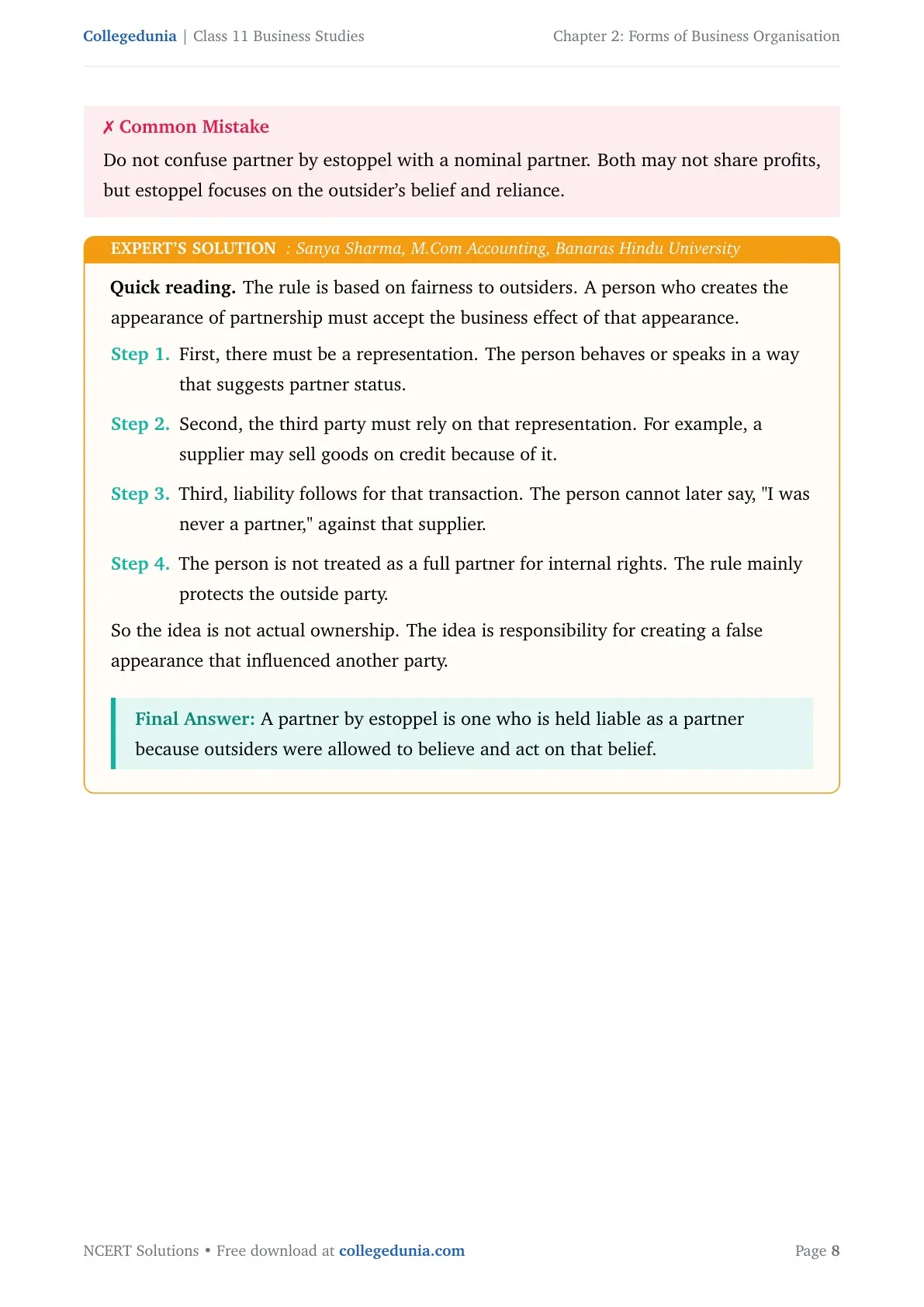
Each answer in this Class 11 Business Studies Chapter 2 solutions PDF is checked against the 2026-27 NCERT textbook and written for clear CBSE answer practice.
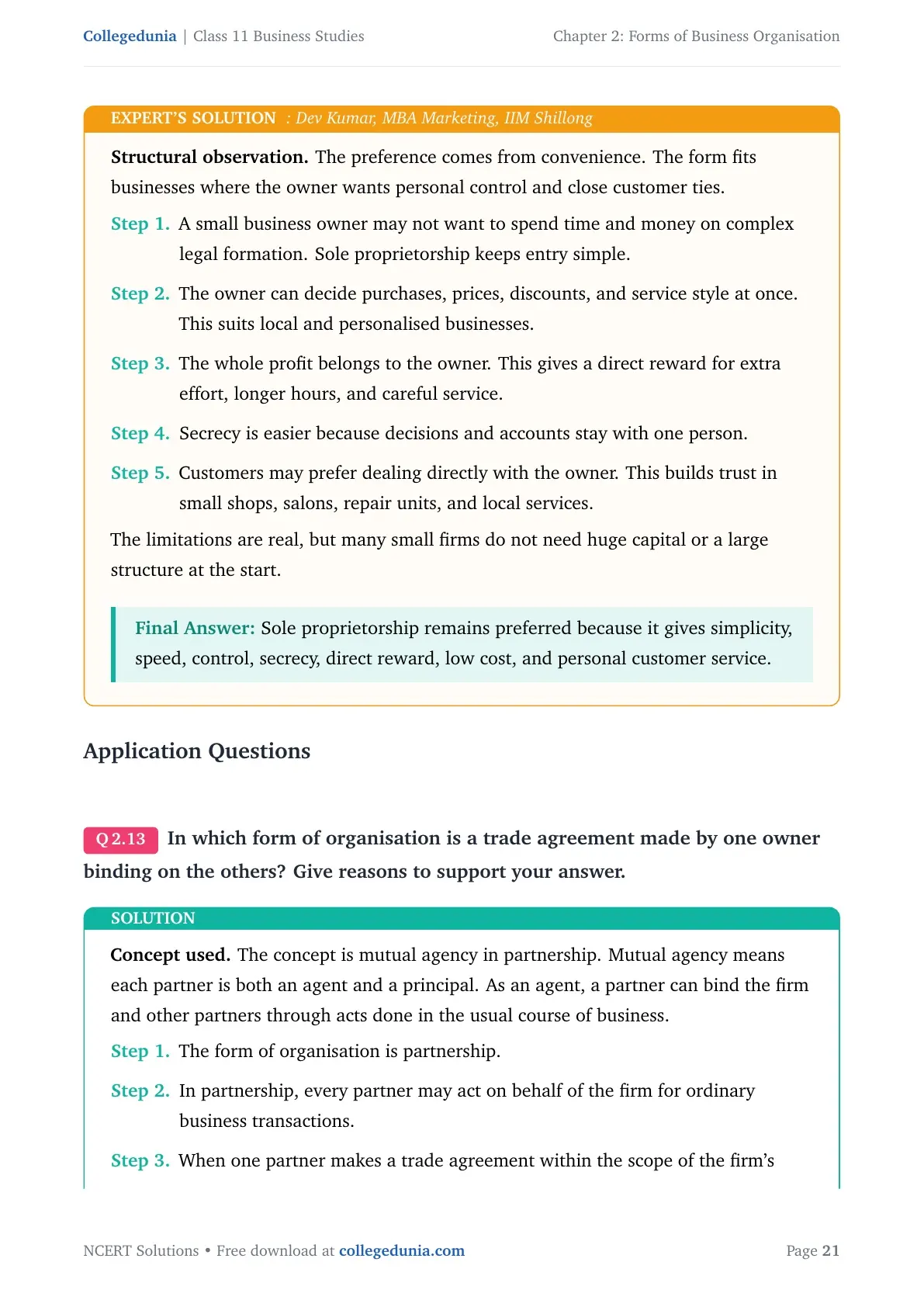
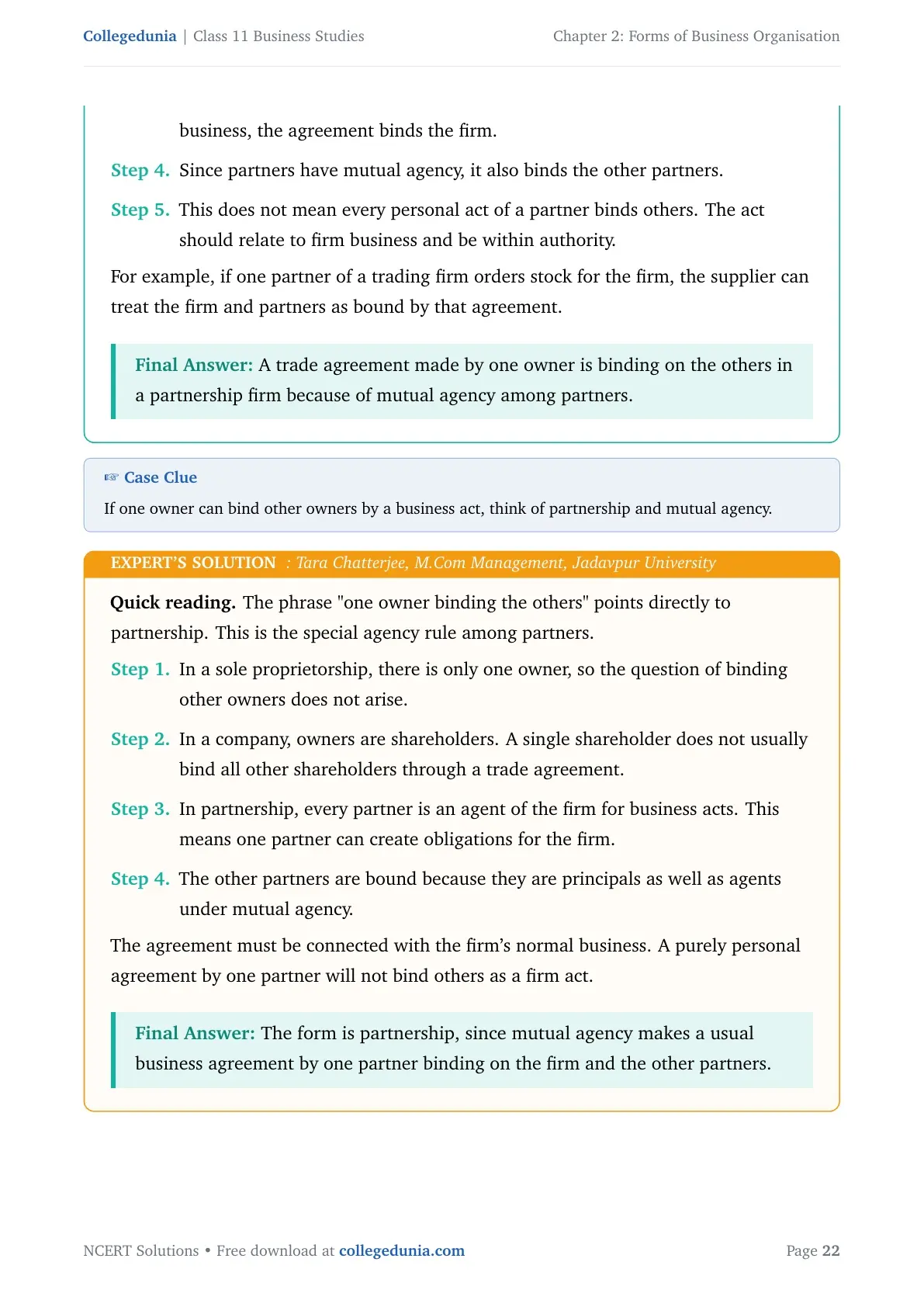
- PDF coverage: 15 textbook questions with step-by-step solutions and expert explanations.
- Best for: revising ownership forms, liability, control, registration, and continuity before tests.
- Use this with: the official NCERT book, chapter notes, and the all-chapters solutions table below.
Class 11 Business Studies Chapter 2 NCERT Solutions PDF
The PDF explains how each form of business organisation is owned, managed, financed, and closed. Forms of Business Organisation is a scoring chapter because most questions ask for direct comparison. Students should focus on liability, control, continuity, registration, and profit sharing.
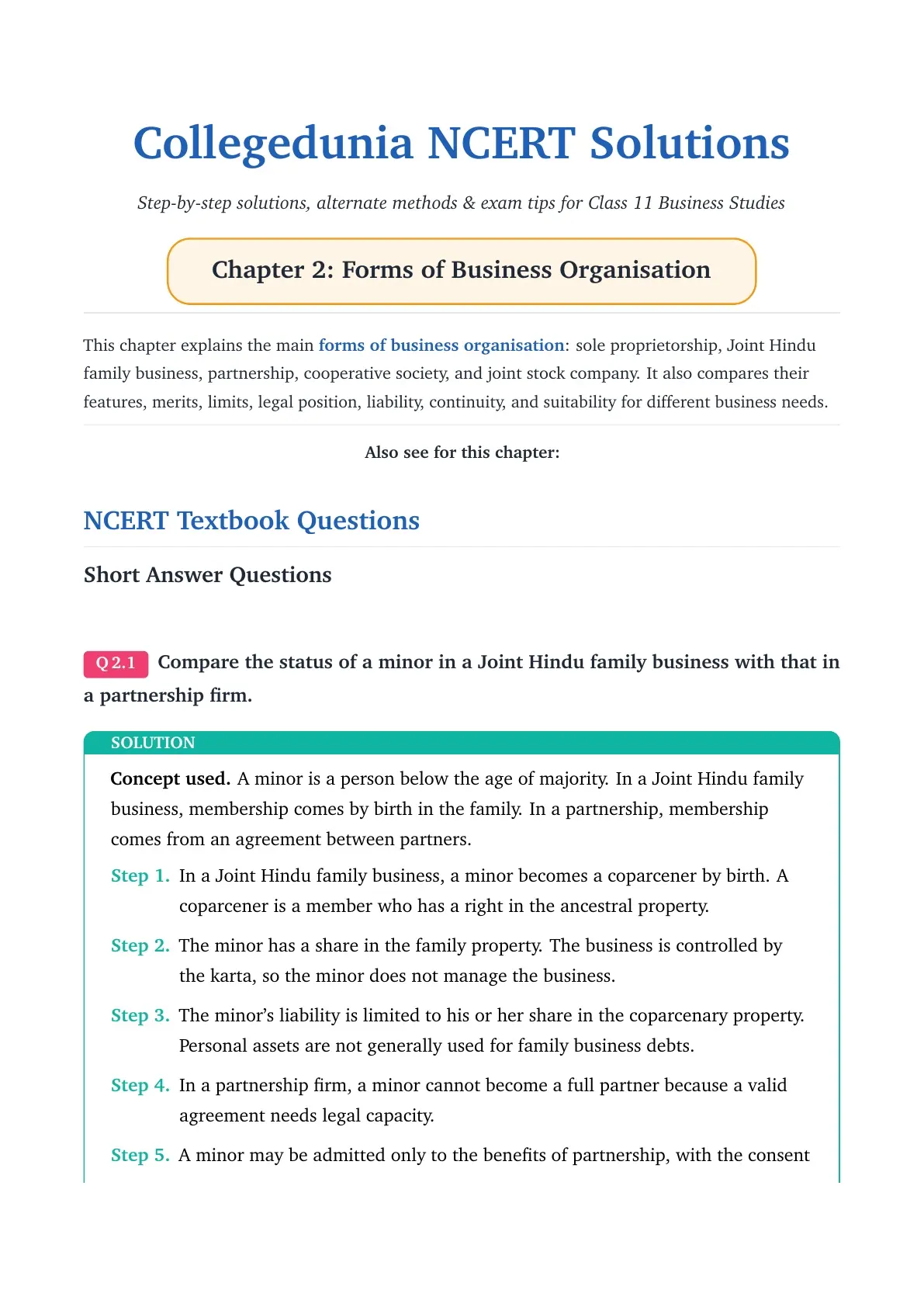
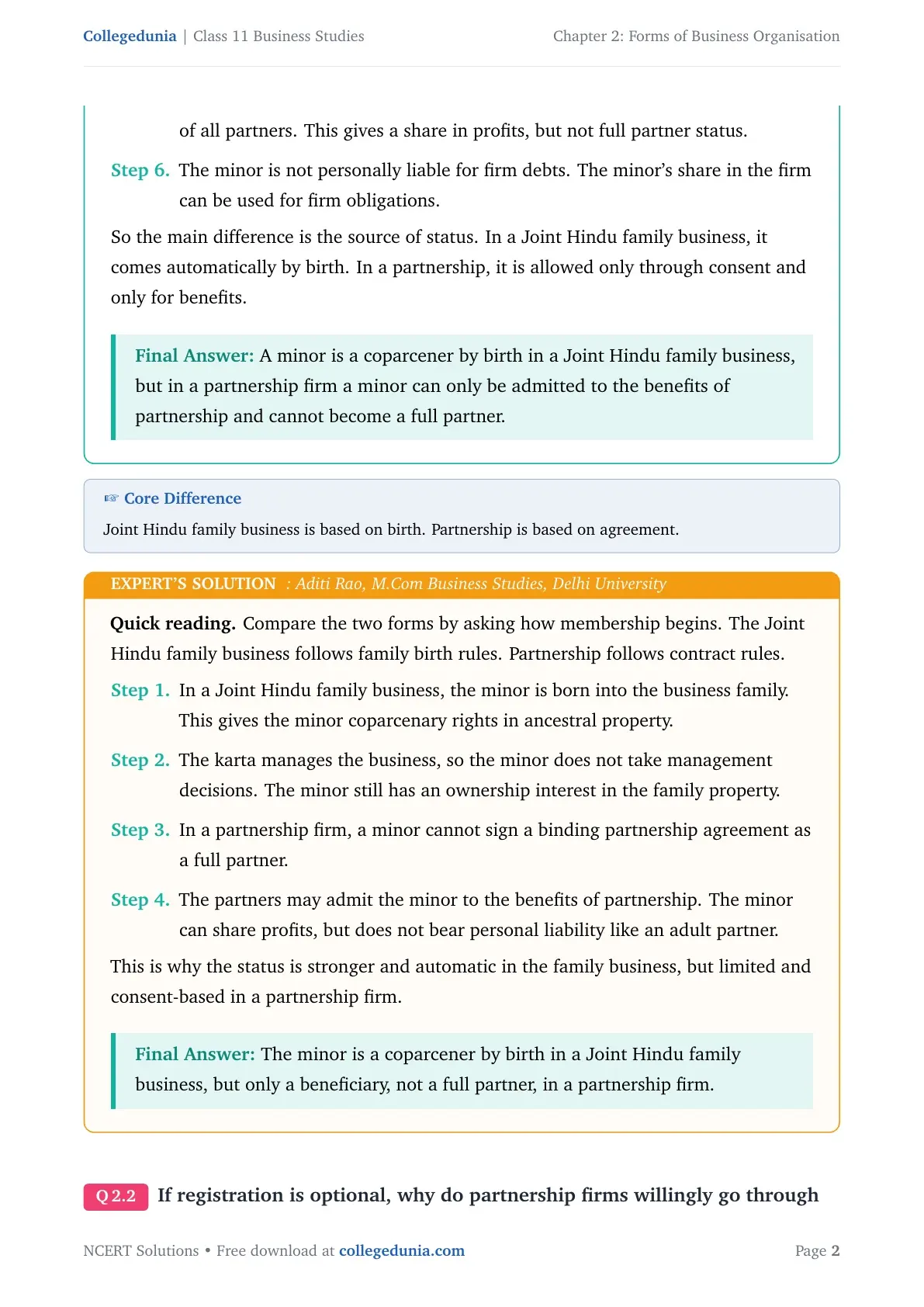
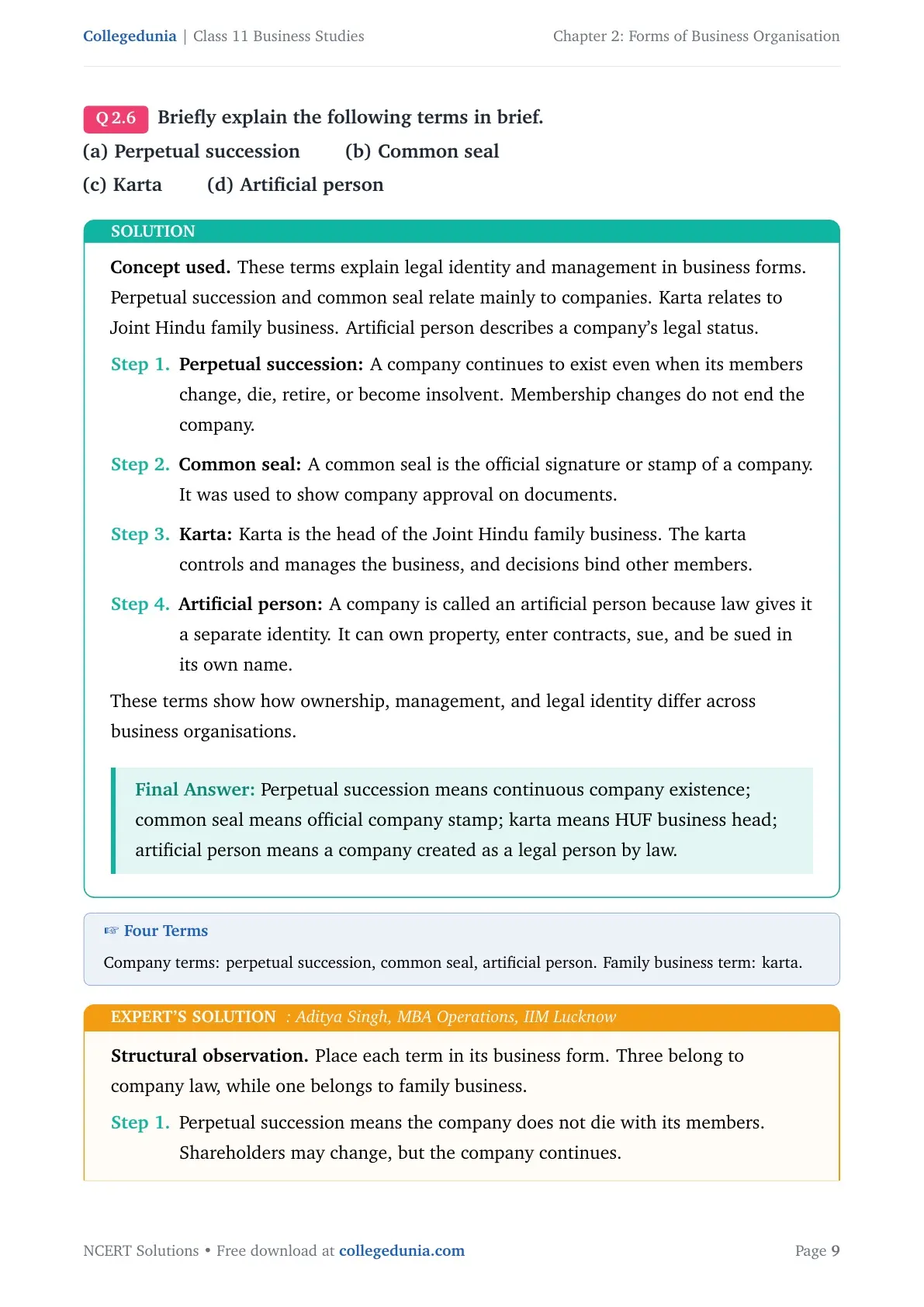
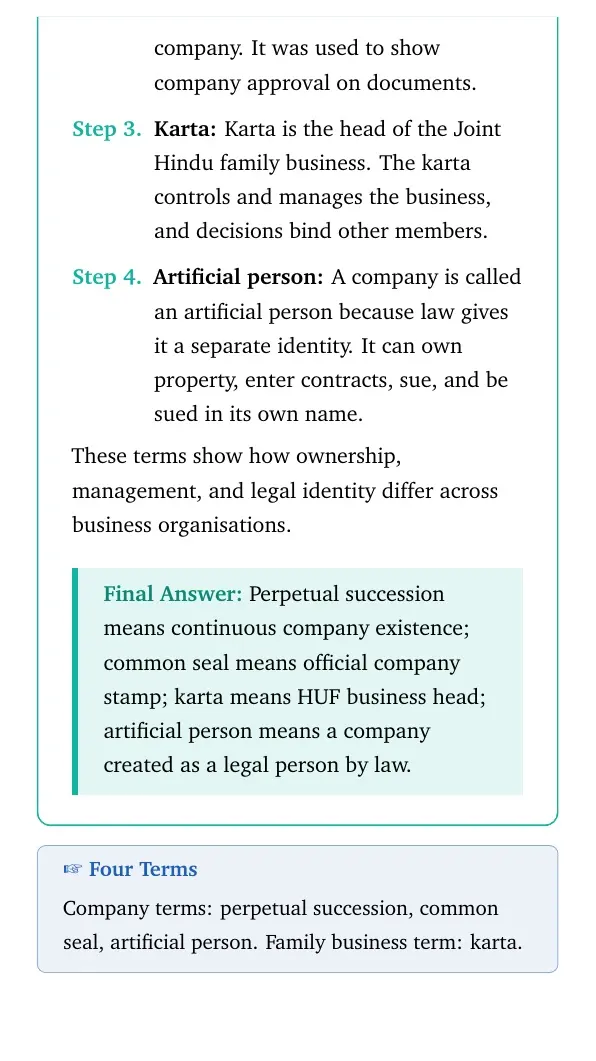
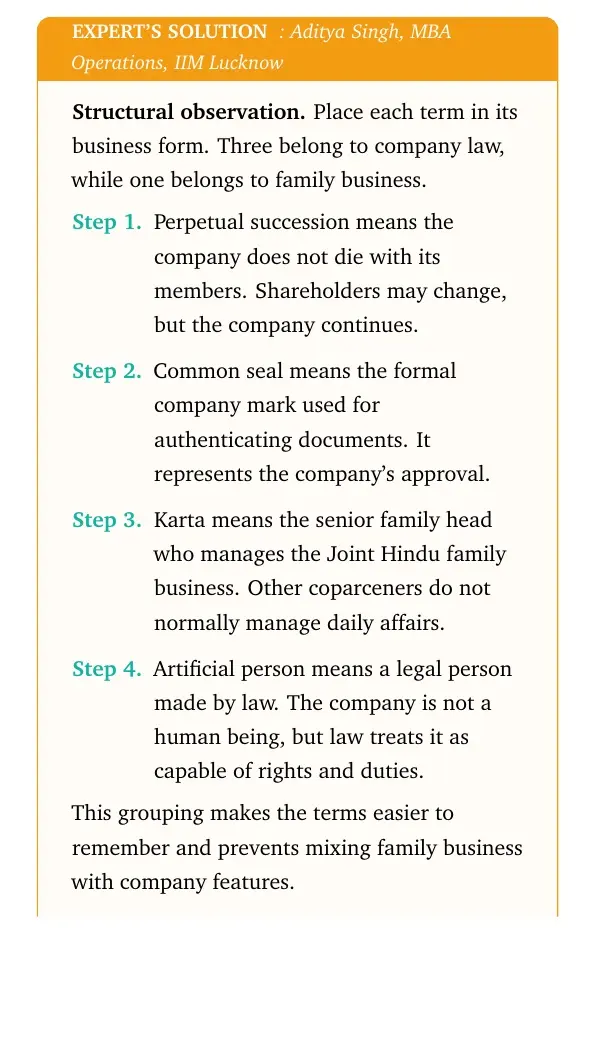
- Short answers define terms such as karta, coparcener, partner, member, shareholder, and promoter.
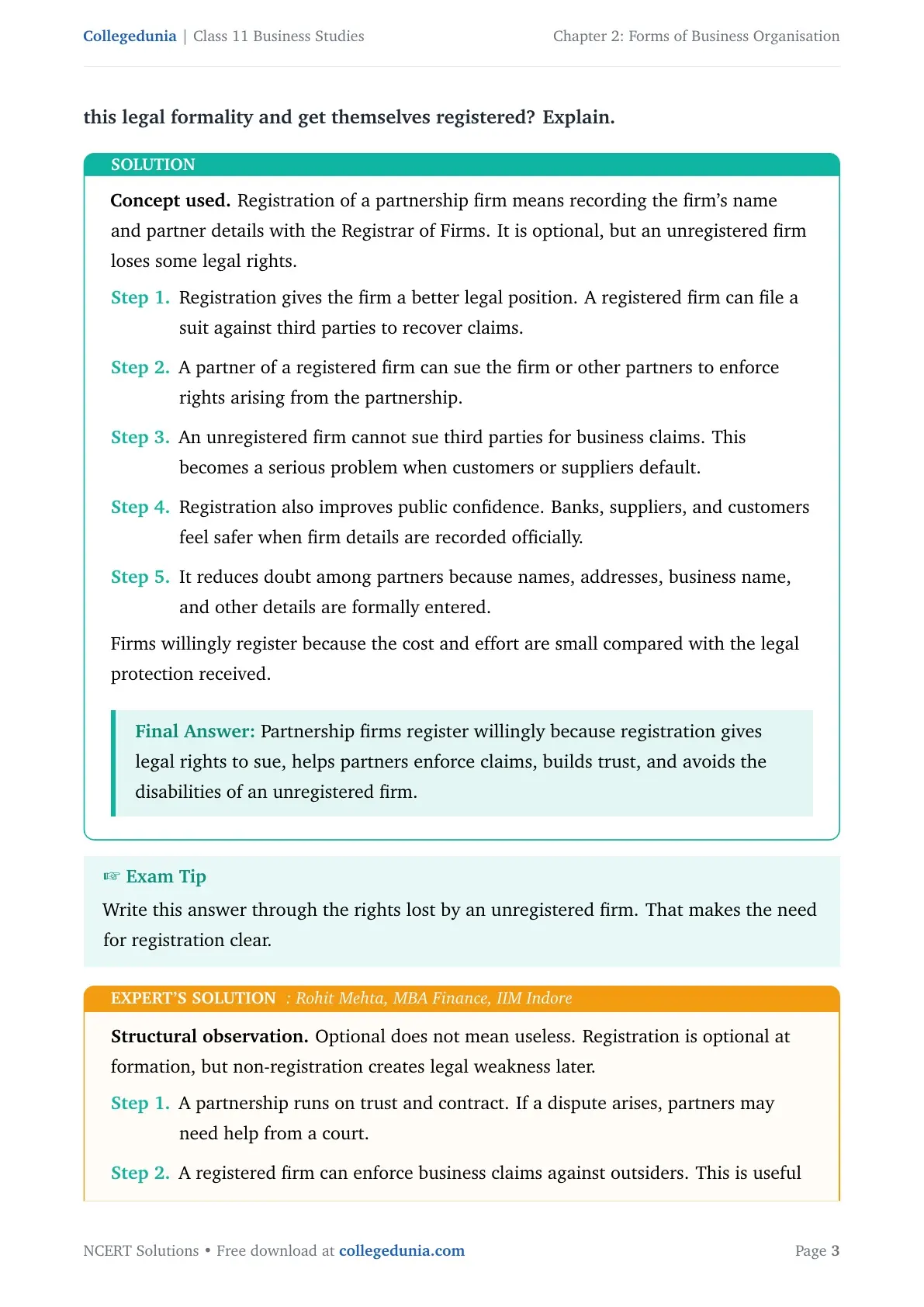
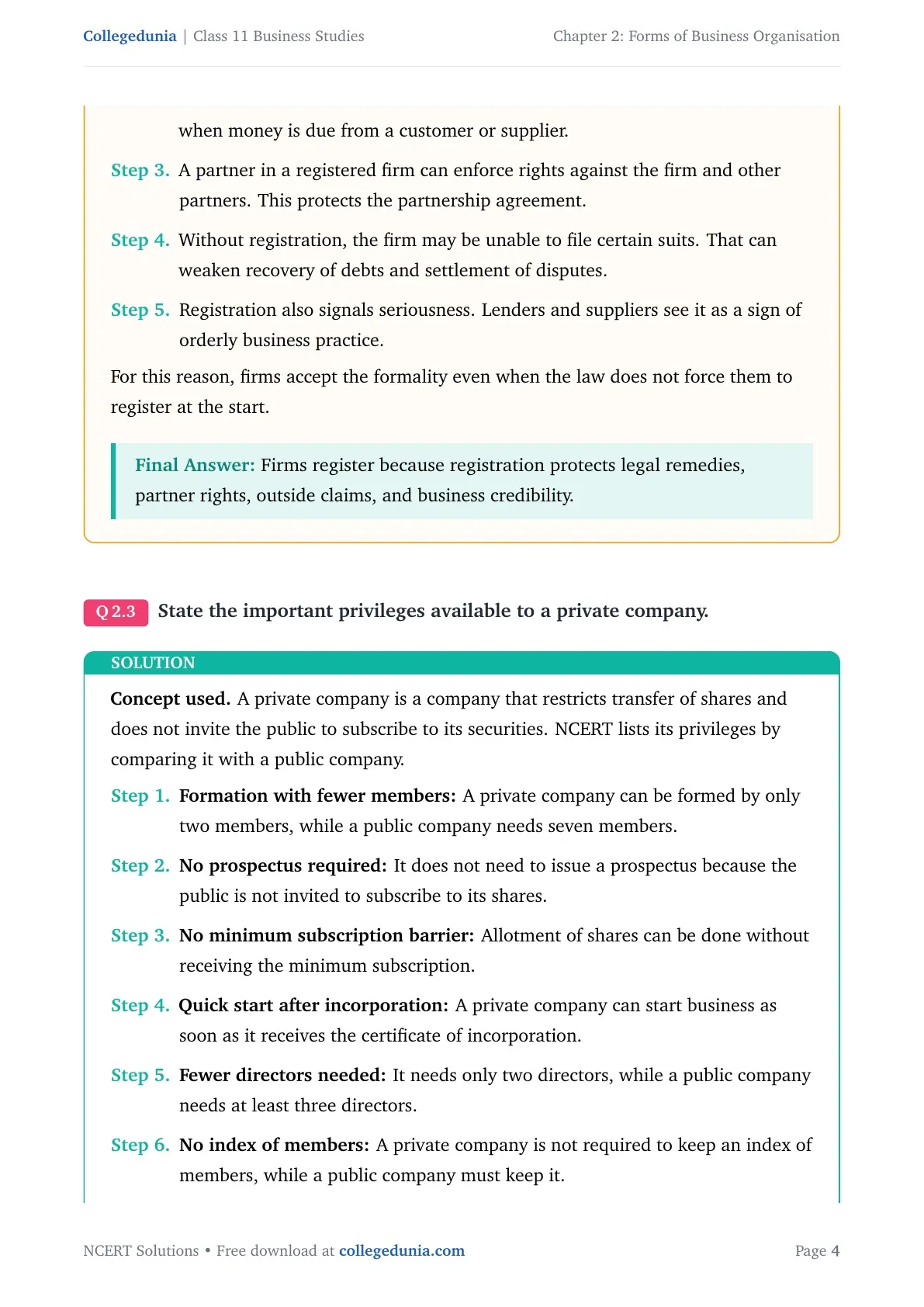
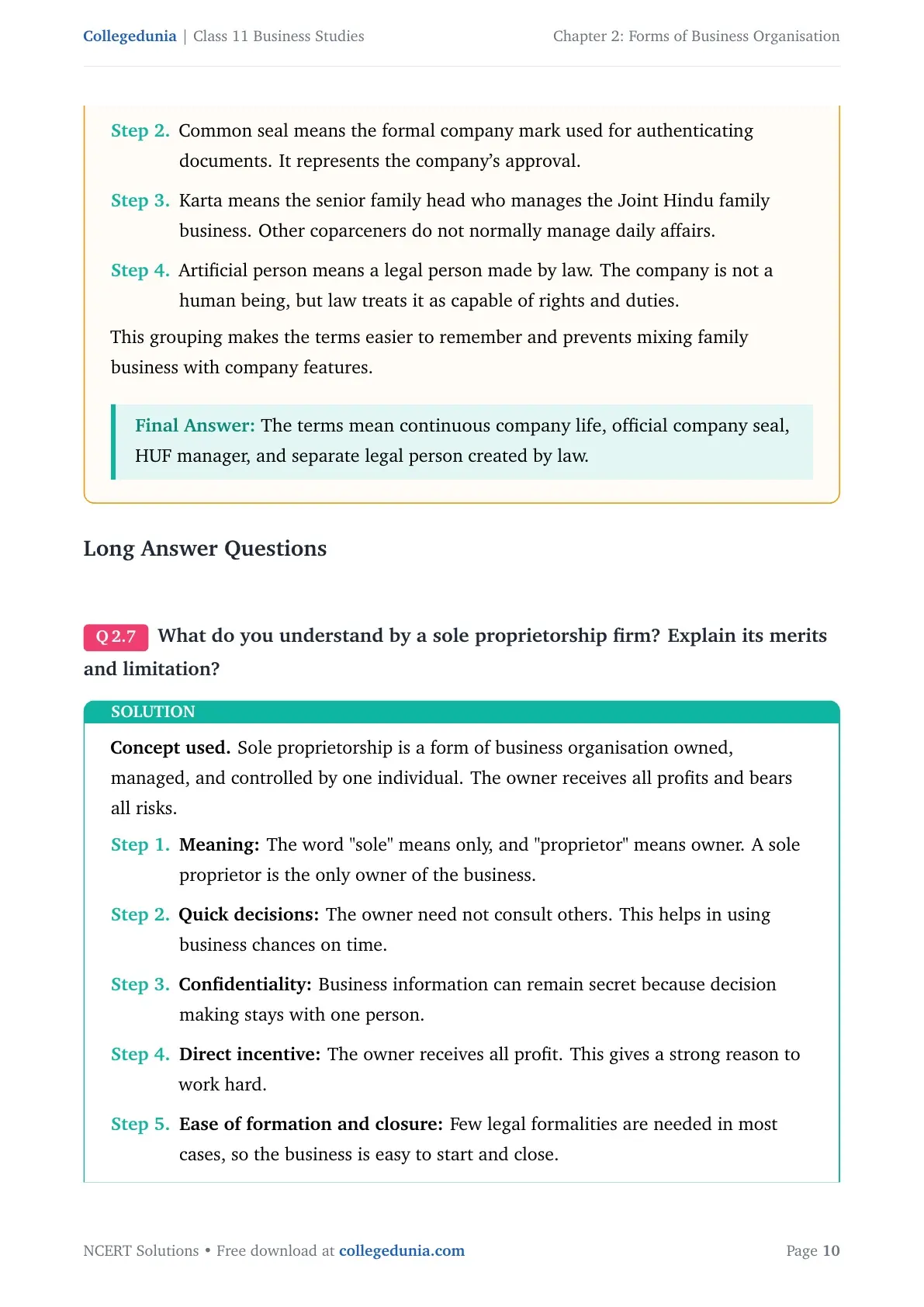
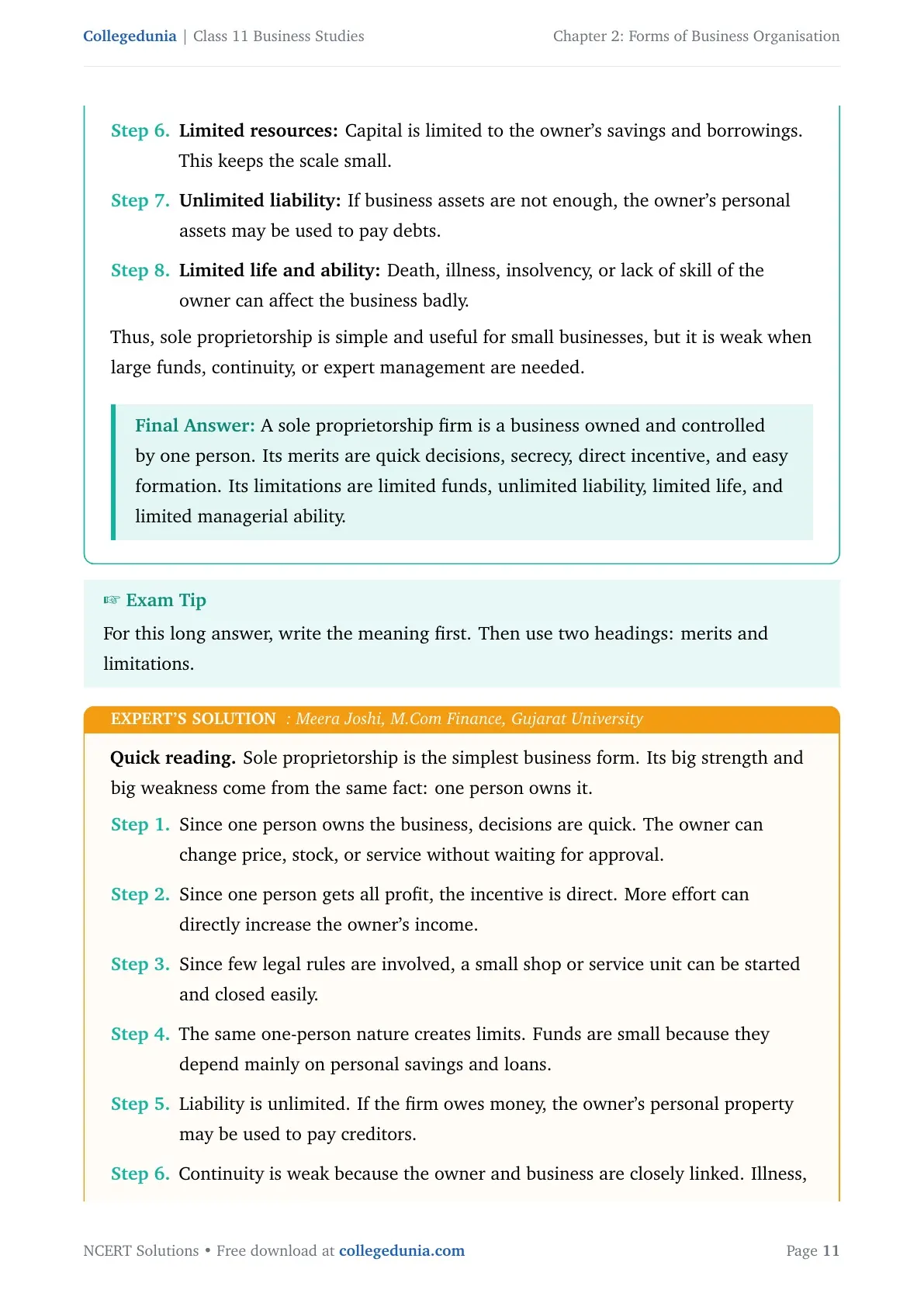
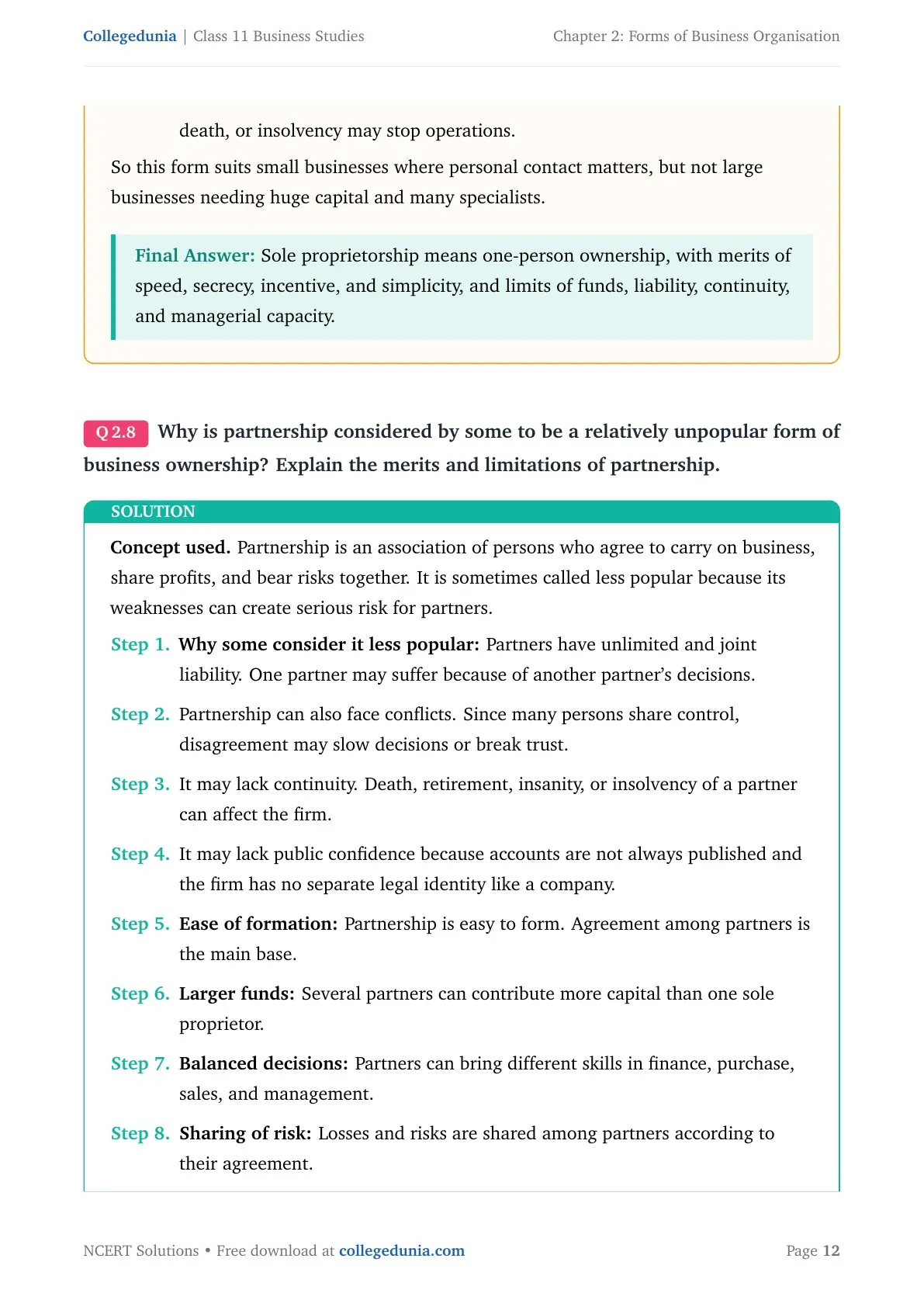
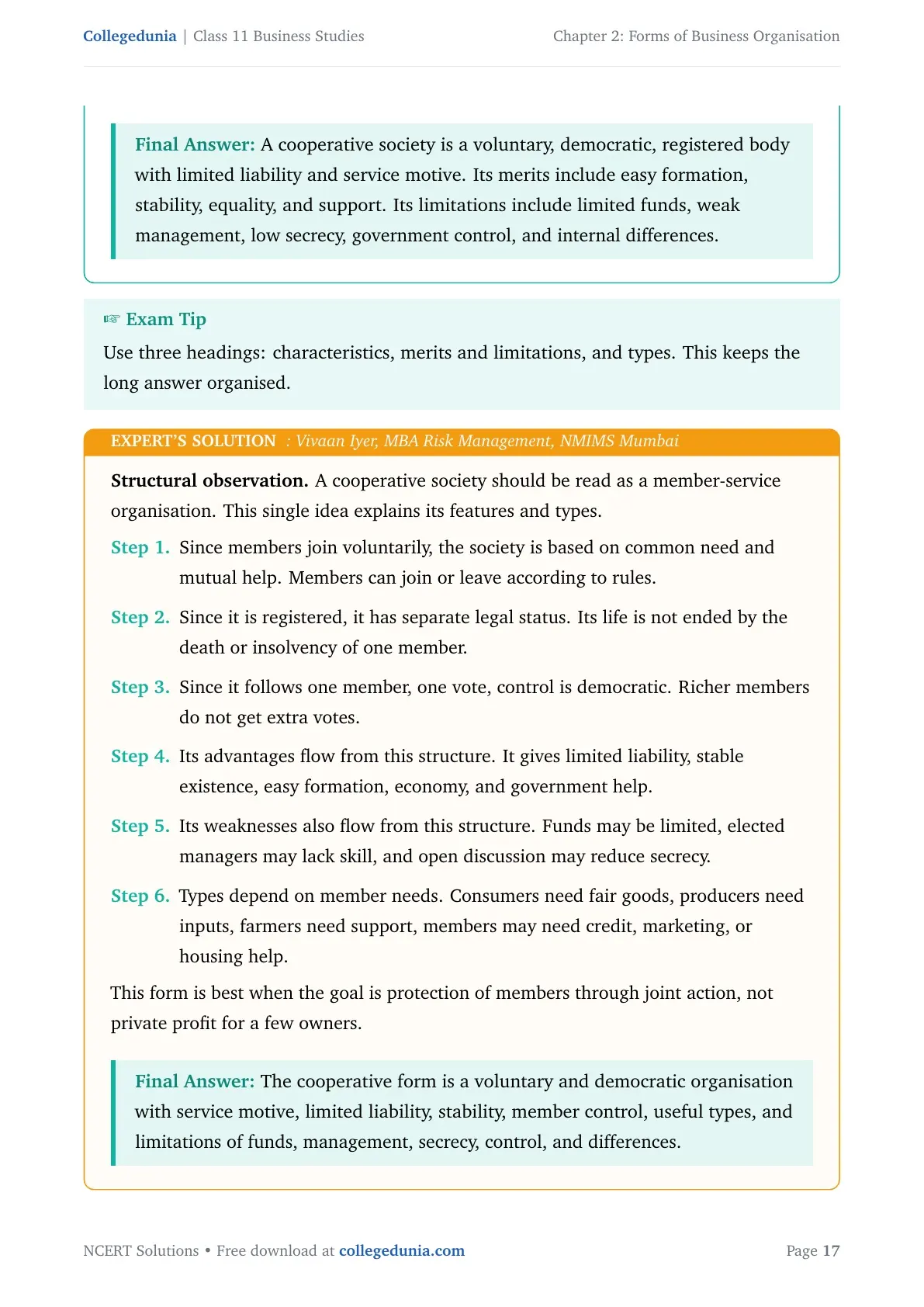
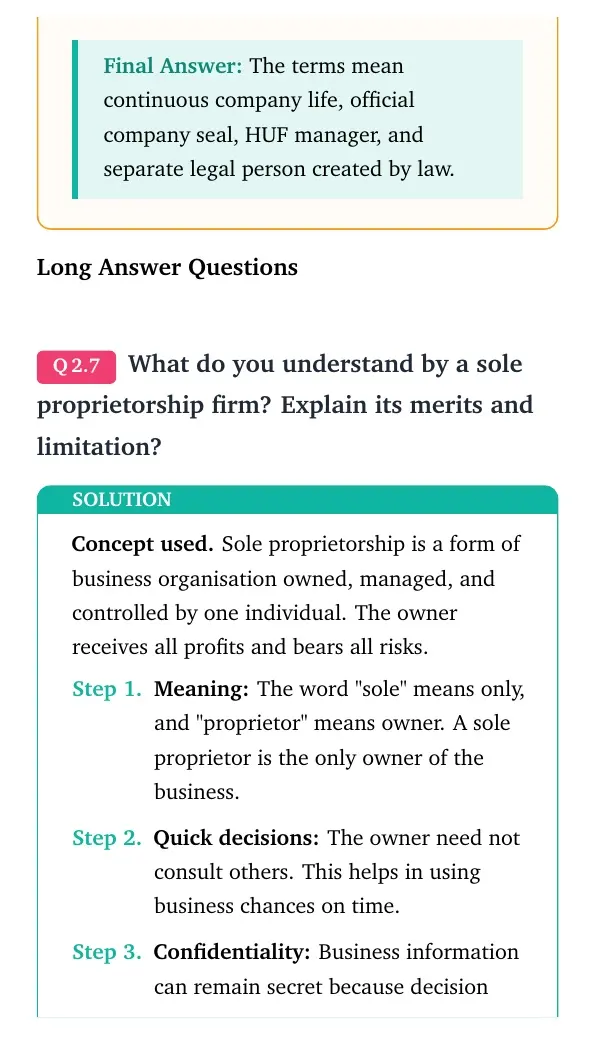
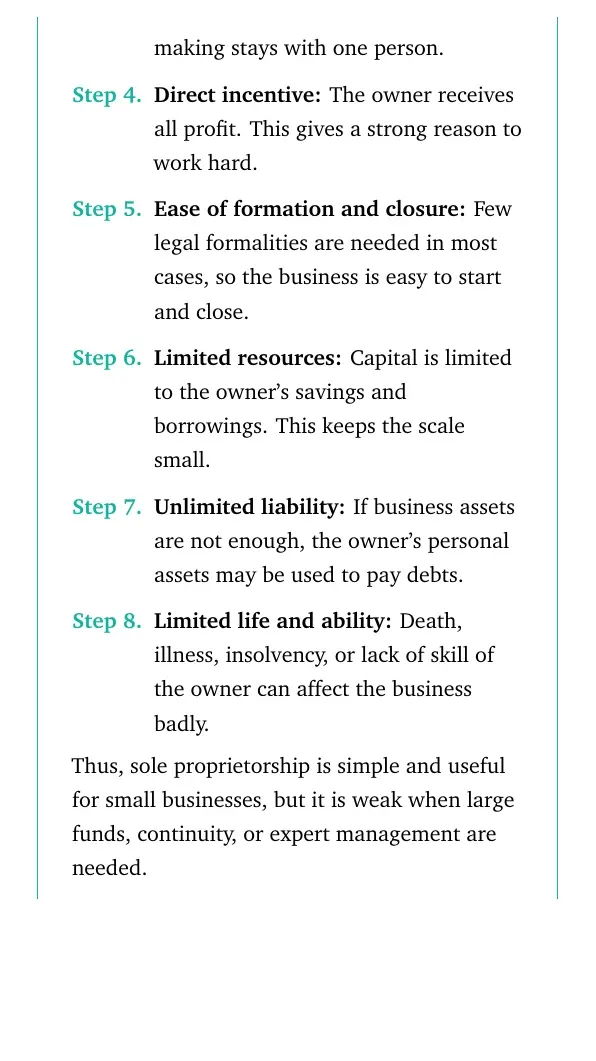
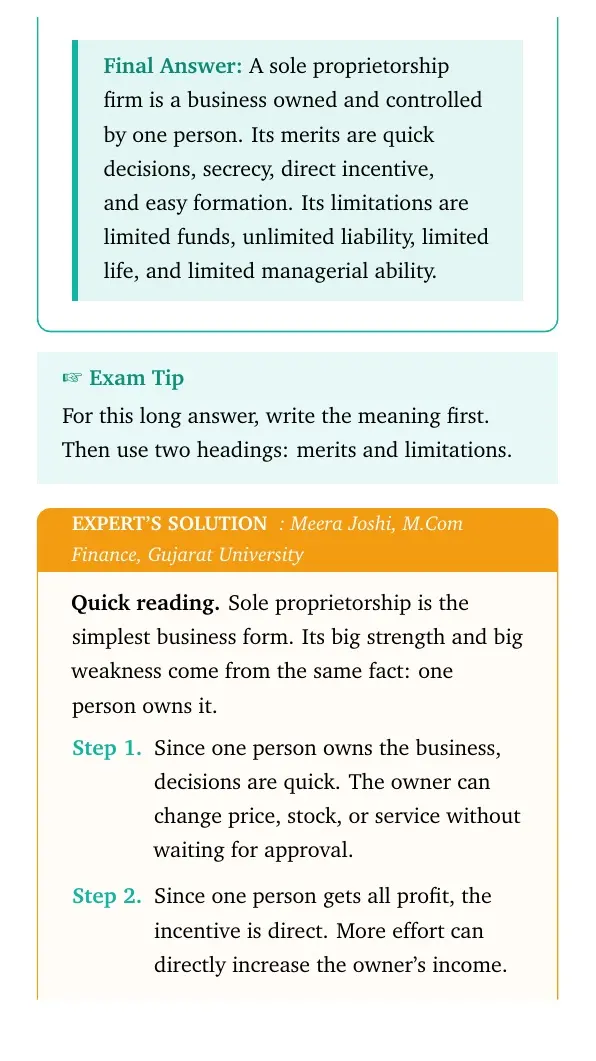
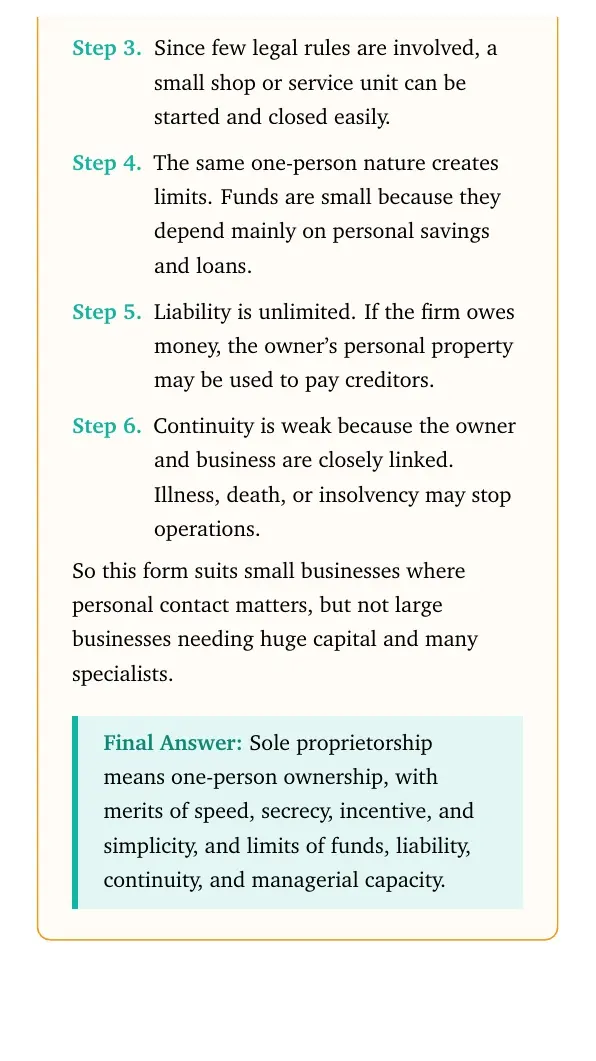
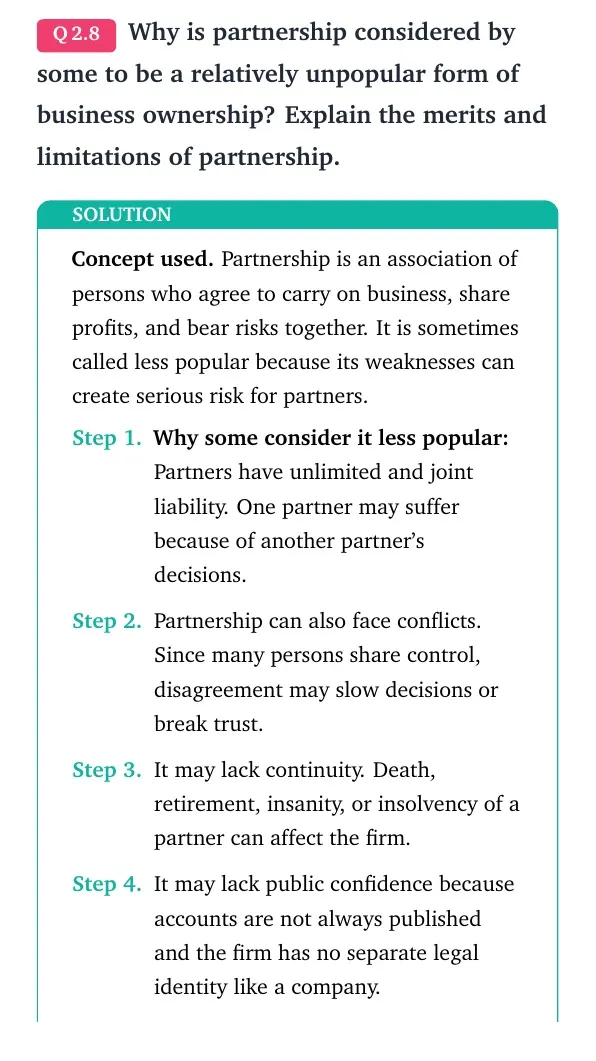
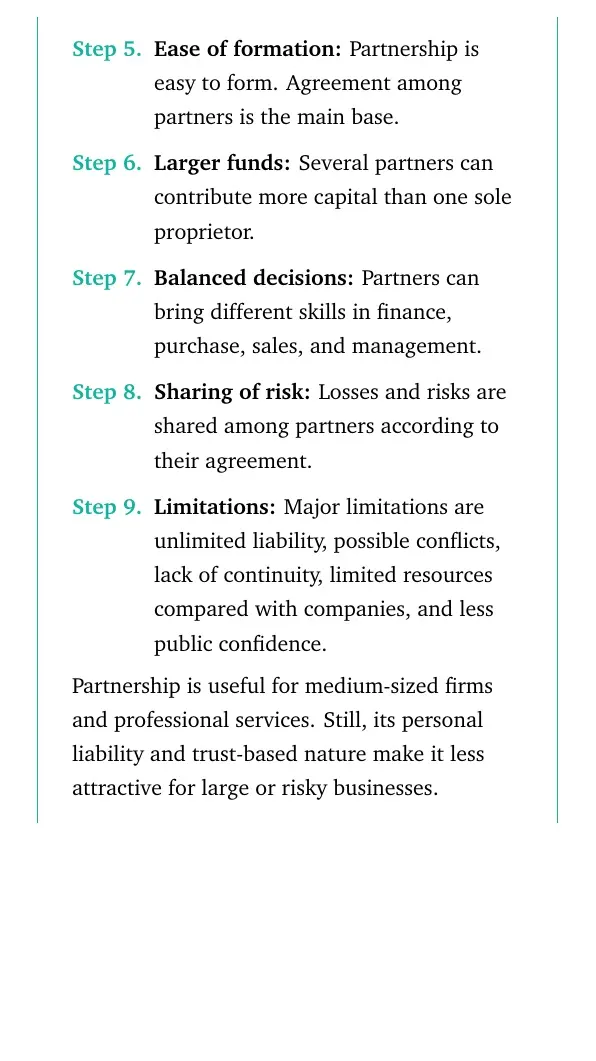
- Long answers compare business forms through merits, limits, and suitability.
- Case-based answers connect real business situations with the correct ownership form.
Forms of Business Organisation NCERT Solutions Video
Source: Magnet Brains on YouTube
Forms of Business Organisation Types in Class 11 Business Studies
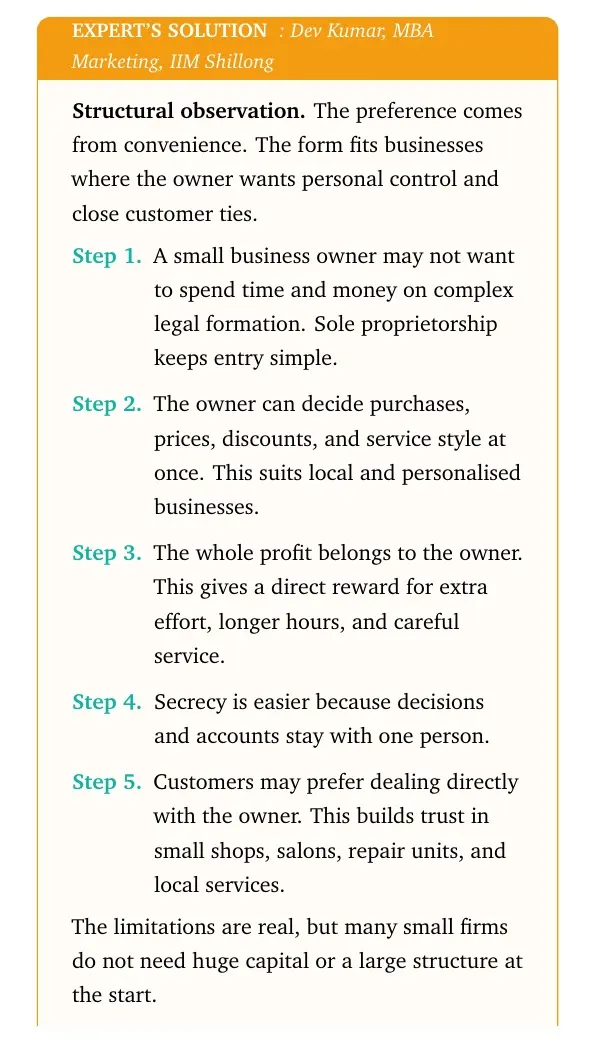
The chapter sorts business forms by ownership, legal status, and capital needs. A small local store may use sole proprietorship. A growing firm may use partnership. A large business that needs public capital usually moves toward a company.
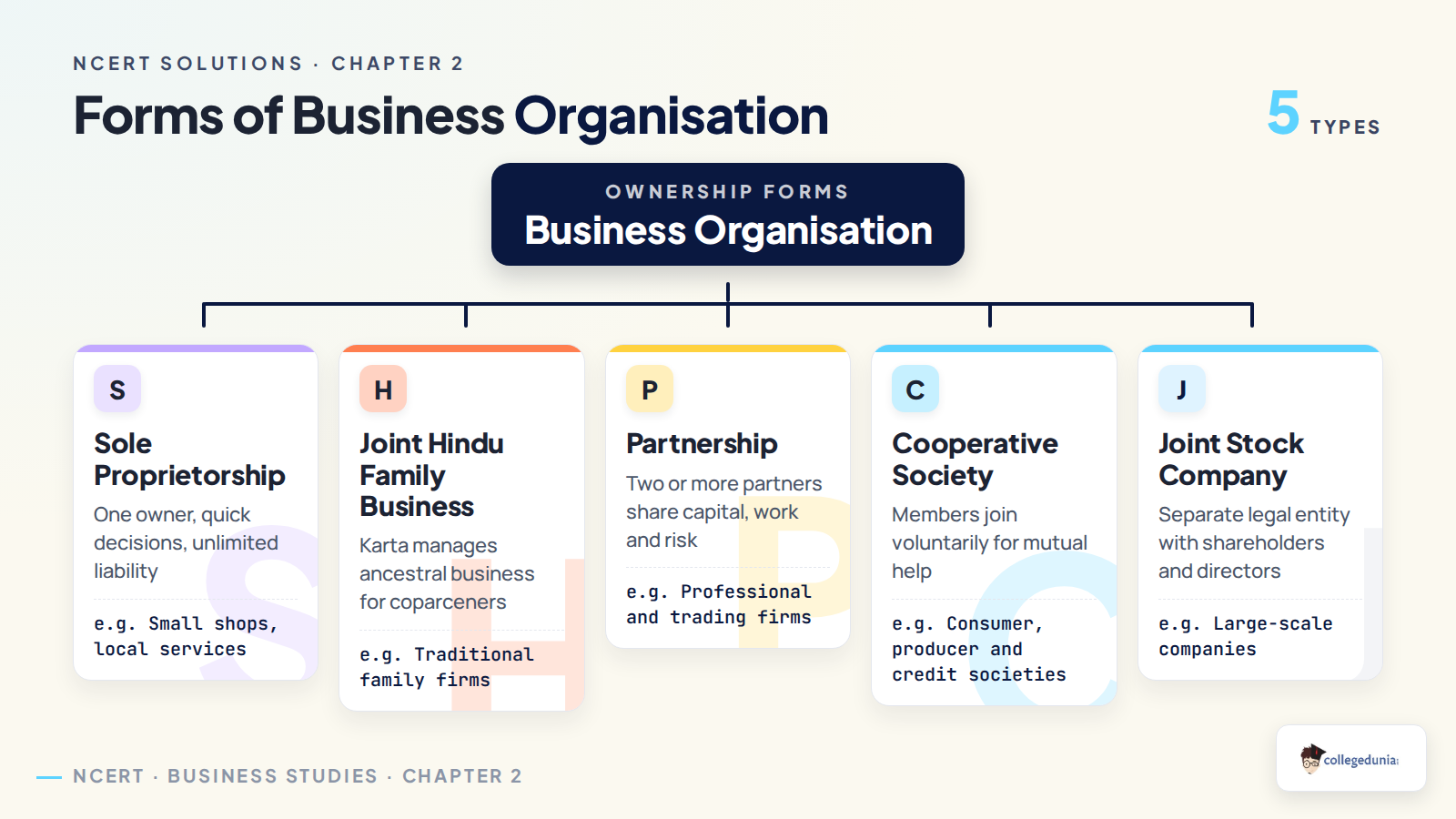
| Business form | Core idea | Answer-writing cue |
|---|---|---|
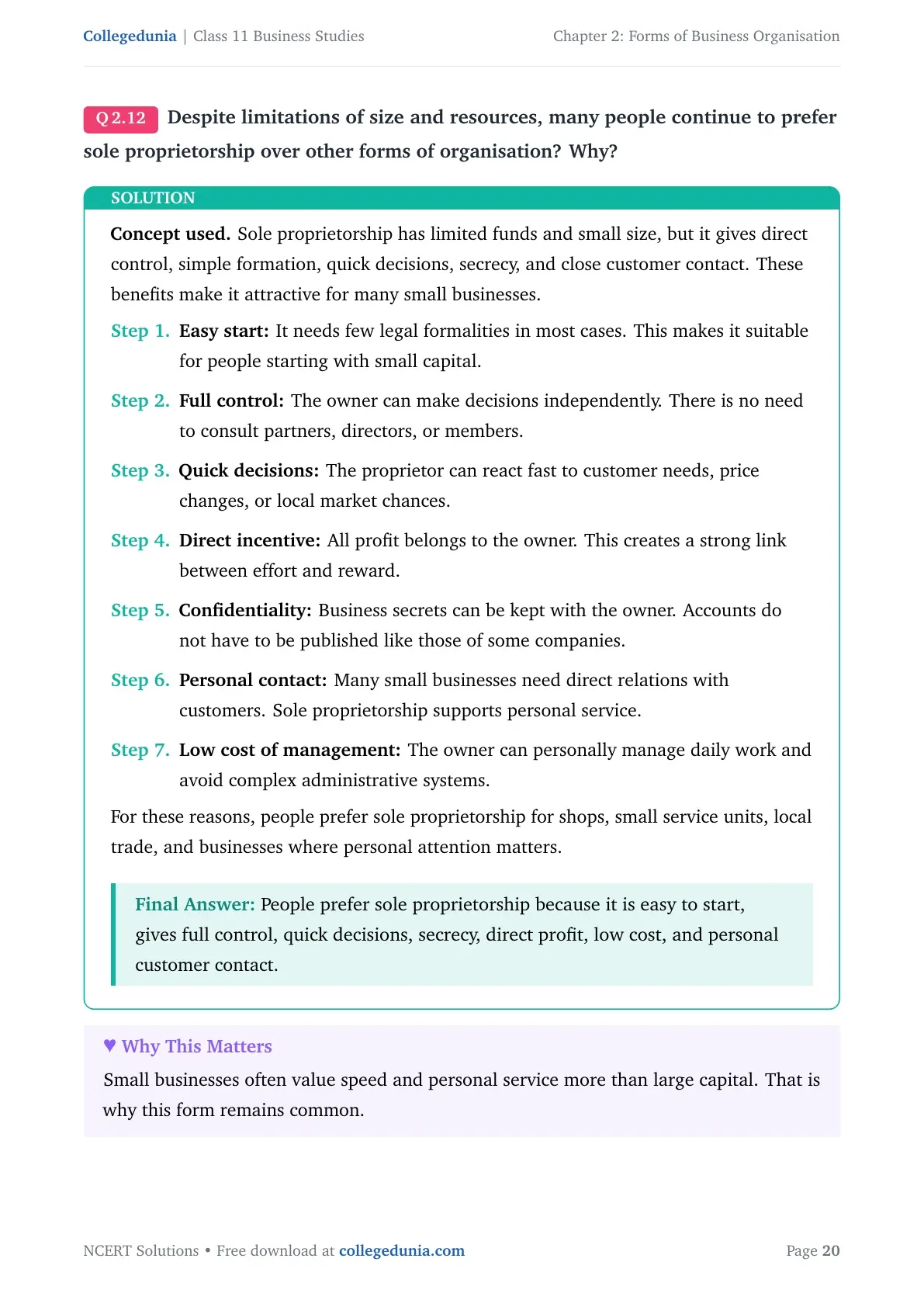
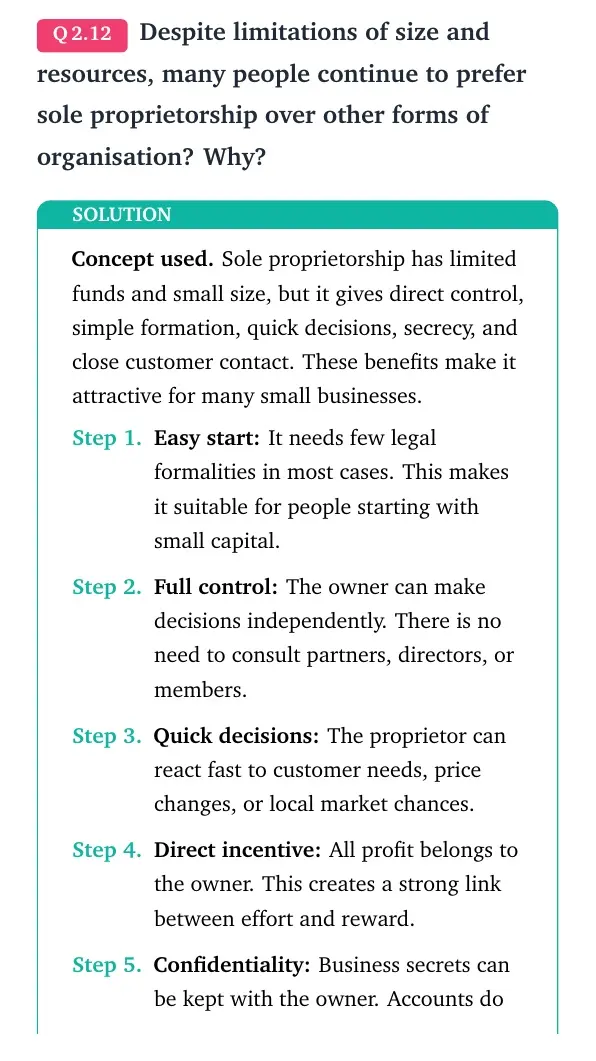
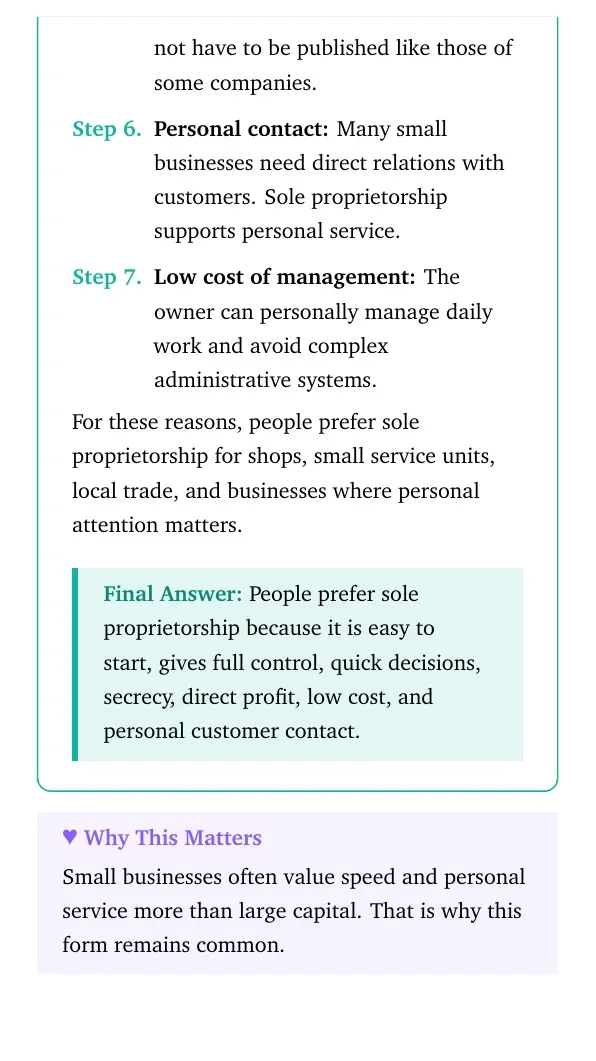
| Sole proprietorship | Owned, managed, and controlled by one person | Mention quick decisions and unlimited liability |
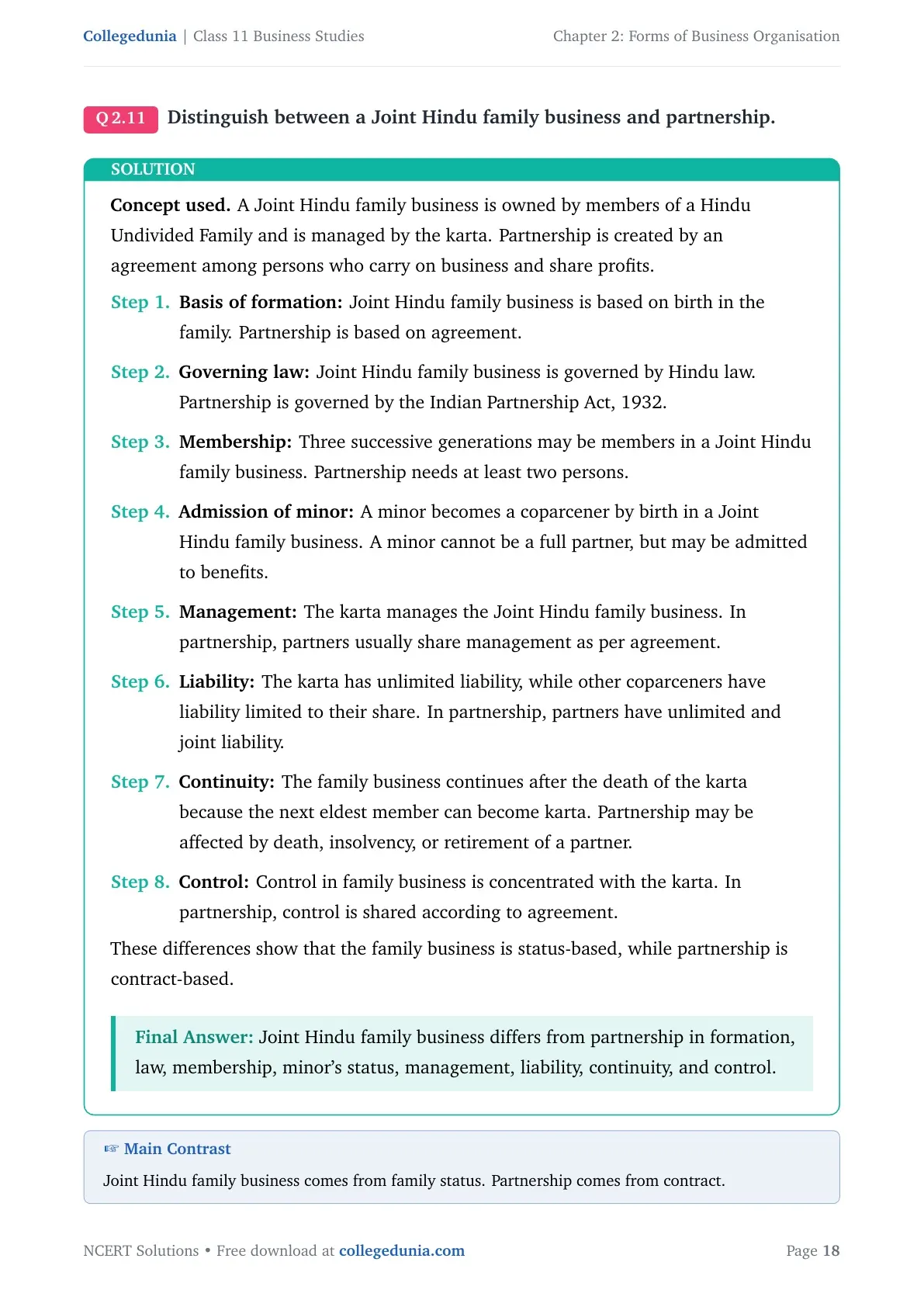
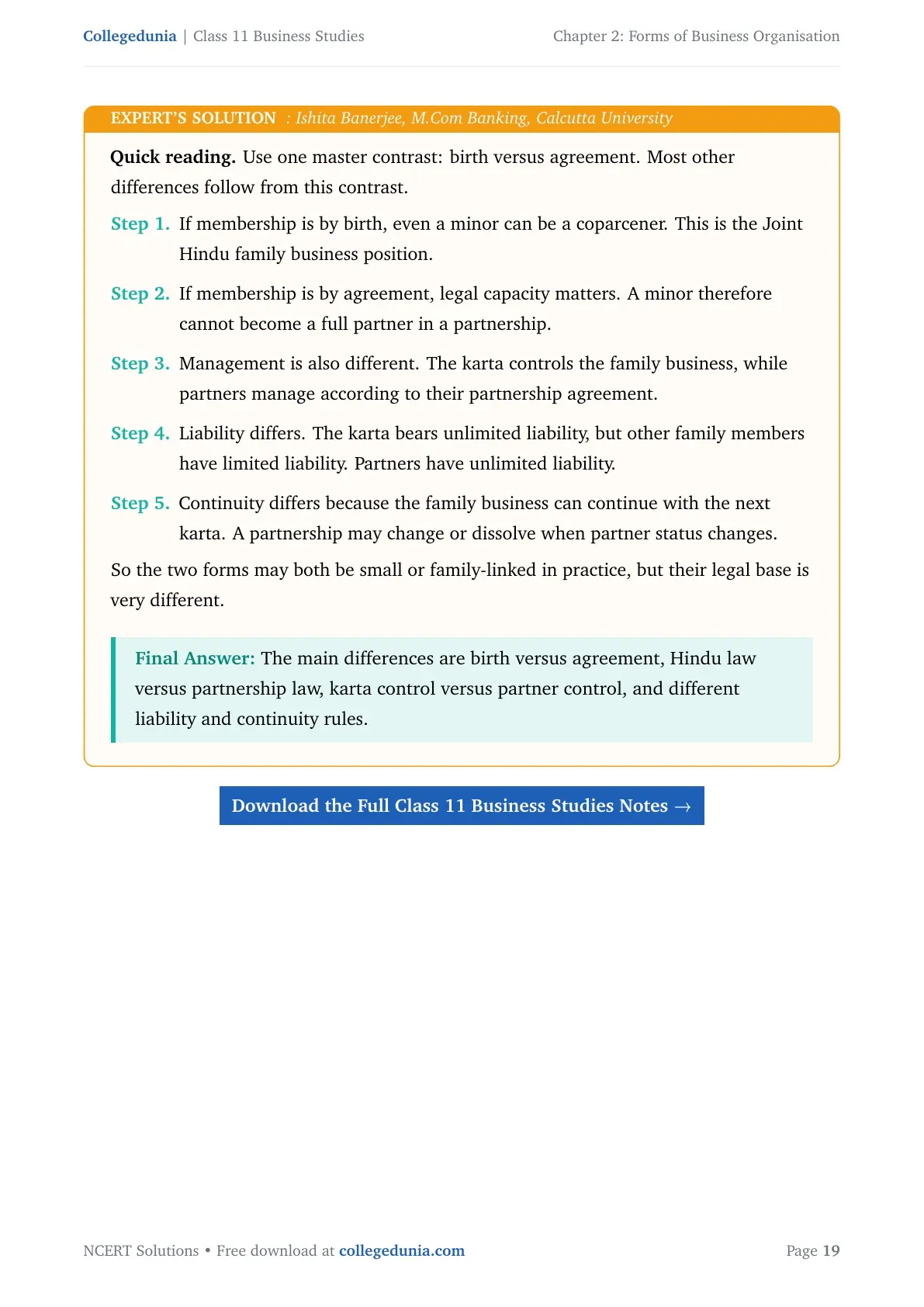
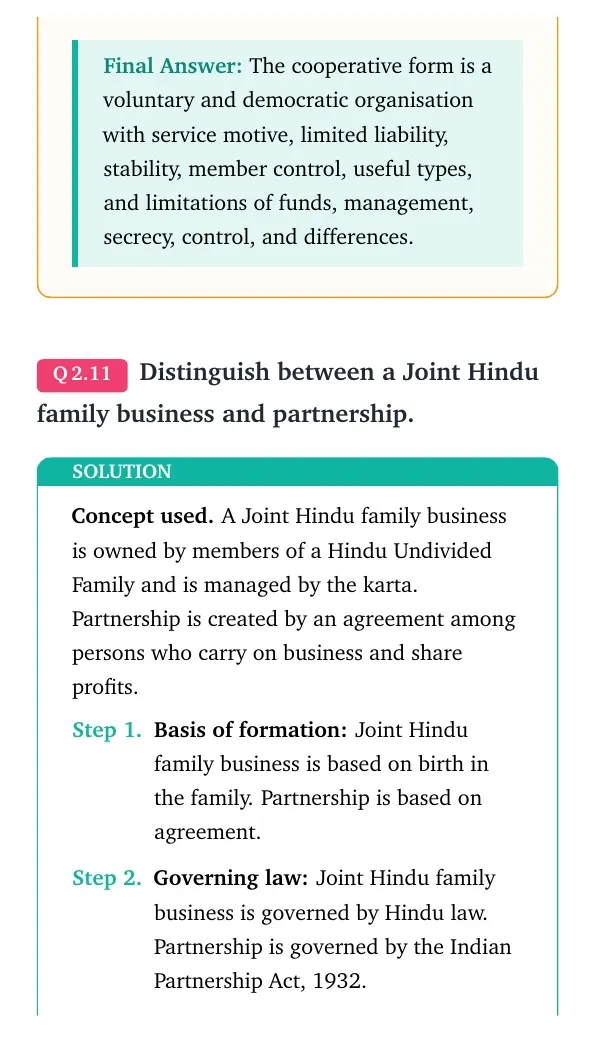
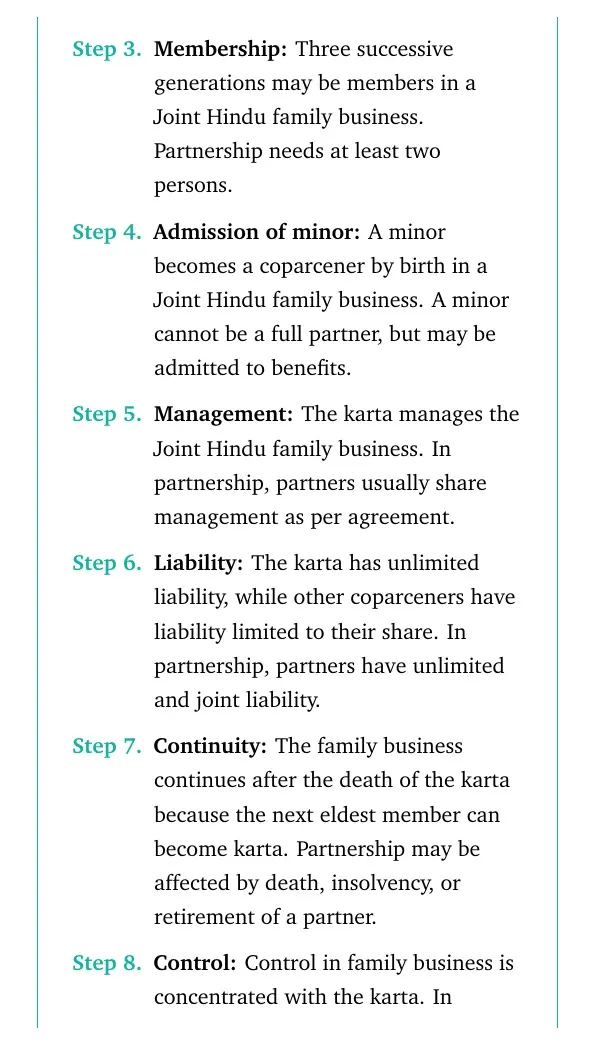
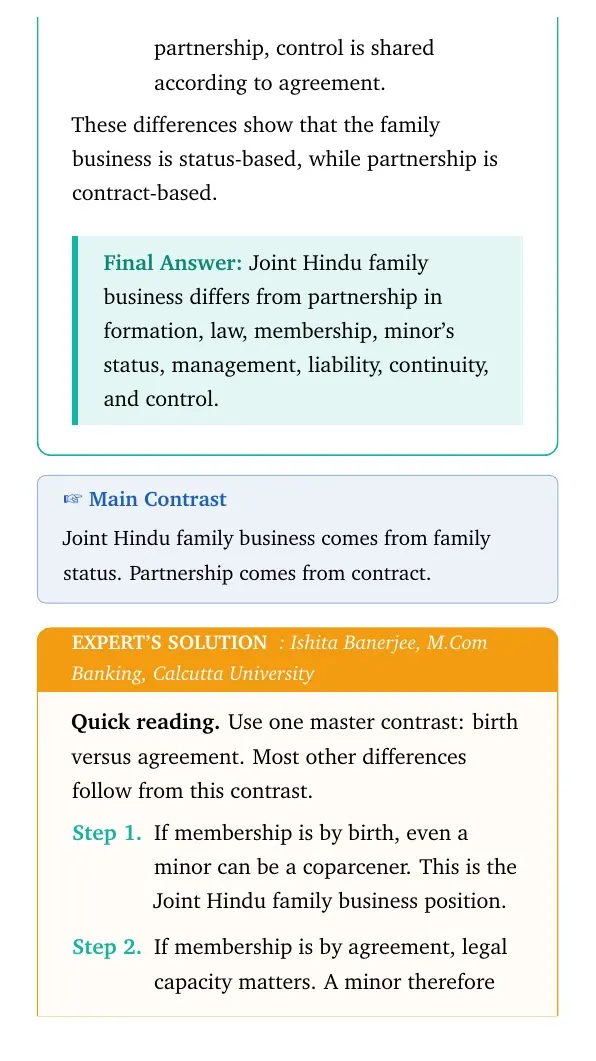
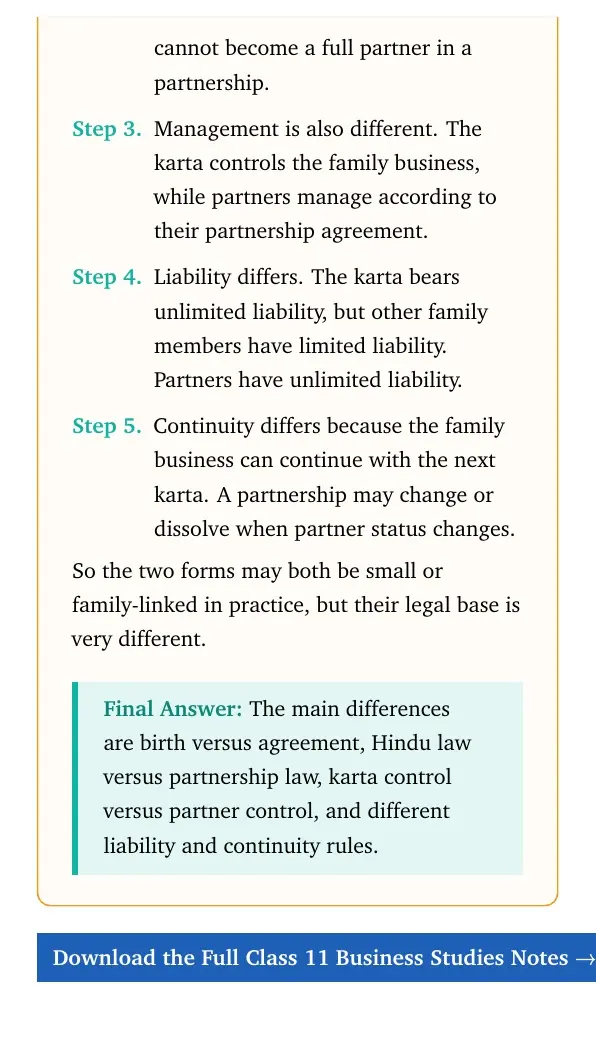
| Joint Hindu family business | Based on ancestral property and managed by the karta | Mention membership by birth |
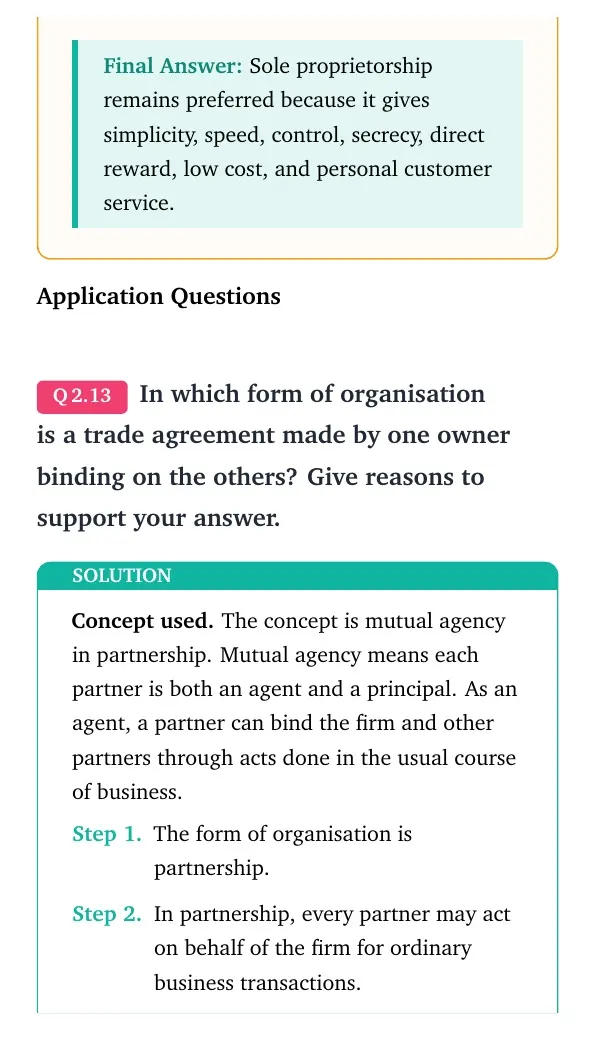
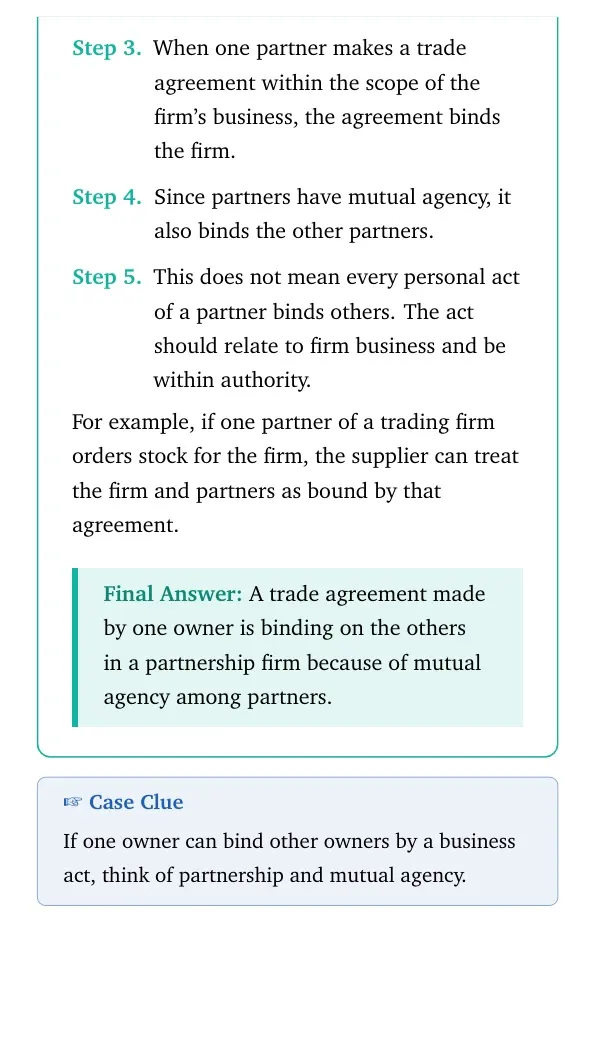
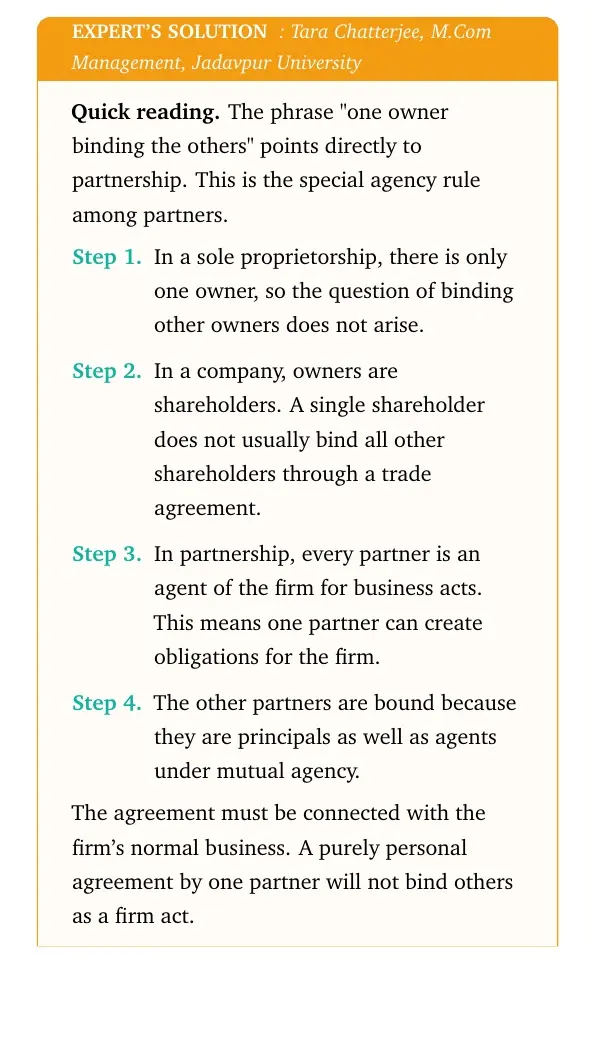
| Partnership | Two or more persons agree to share profits | Mention agreement, mutual agency, and liability |
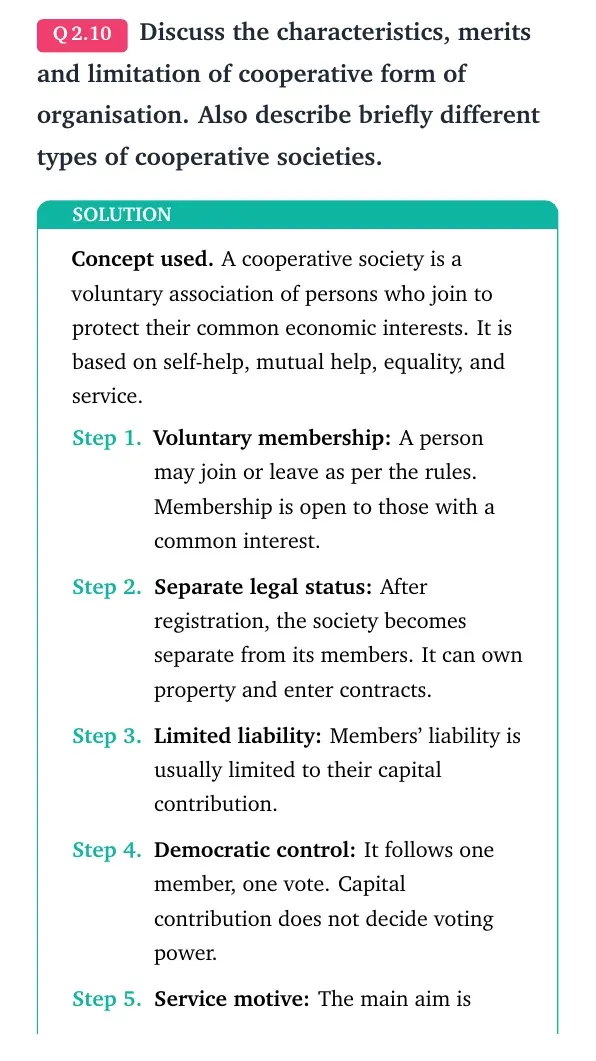
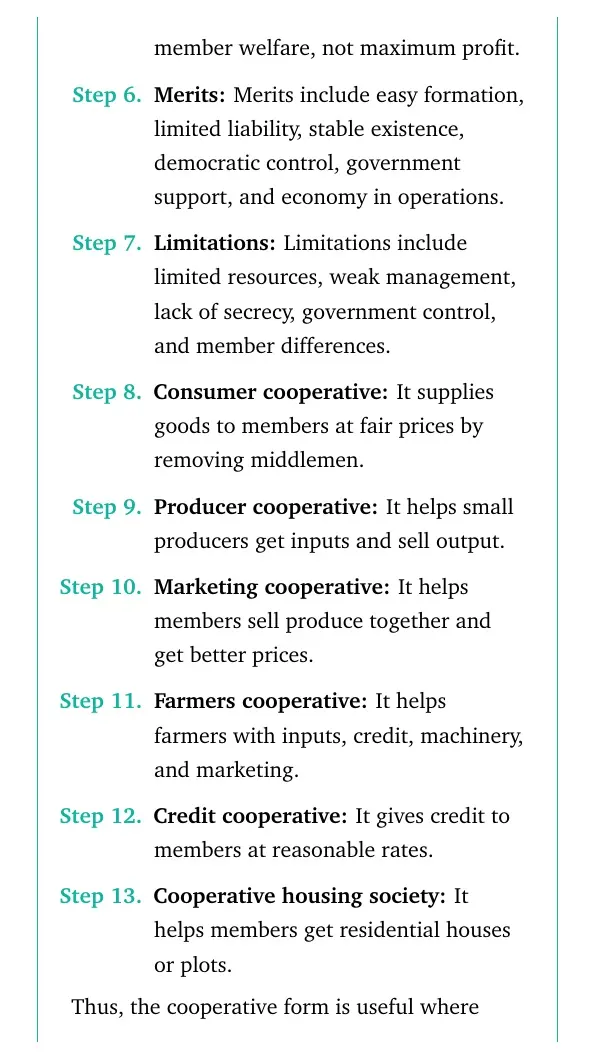
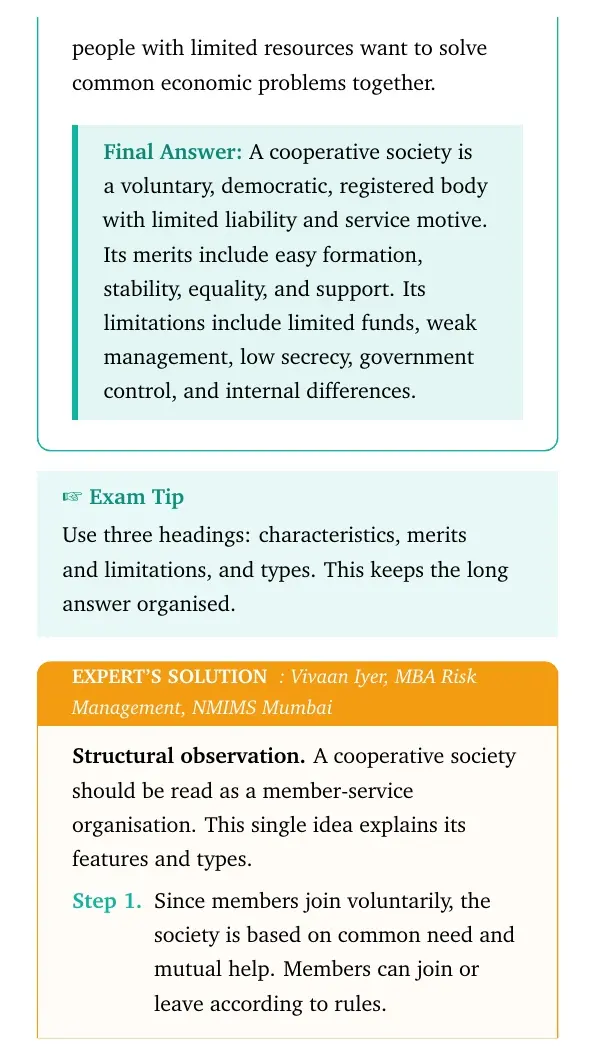
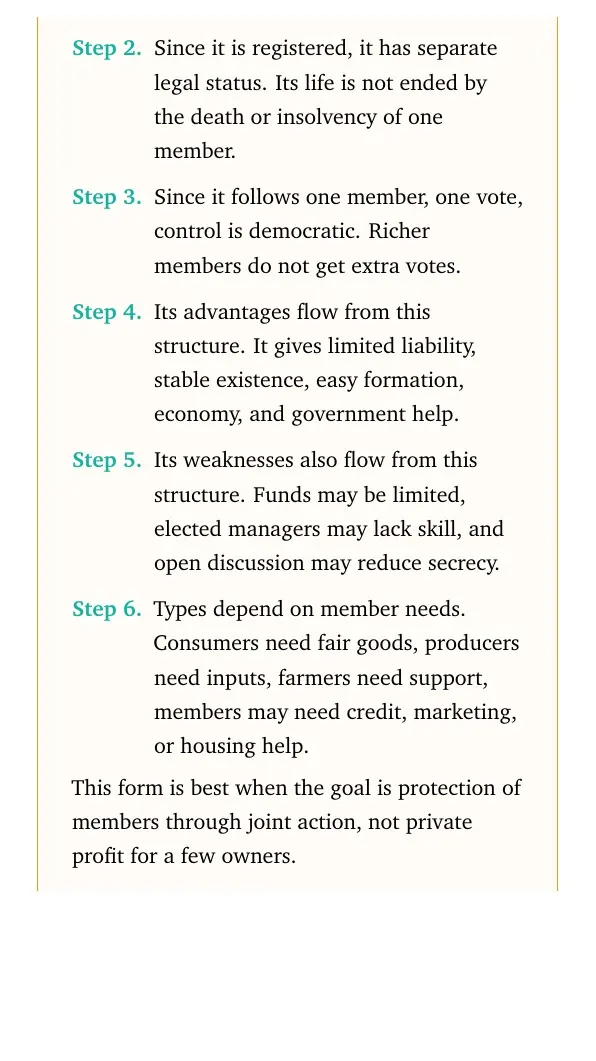
| Cooperative society | Voluntary association formed for mutual benefit | Mention one member, one vote |
| Joint stock company | Separate legal entity owned by shareholders | Mention limited liability and perpetual succession |
Unlimited Liability and Limited Liability in Forms of Business Organisation
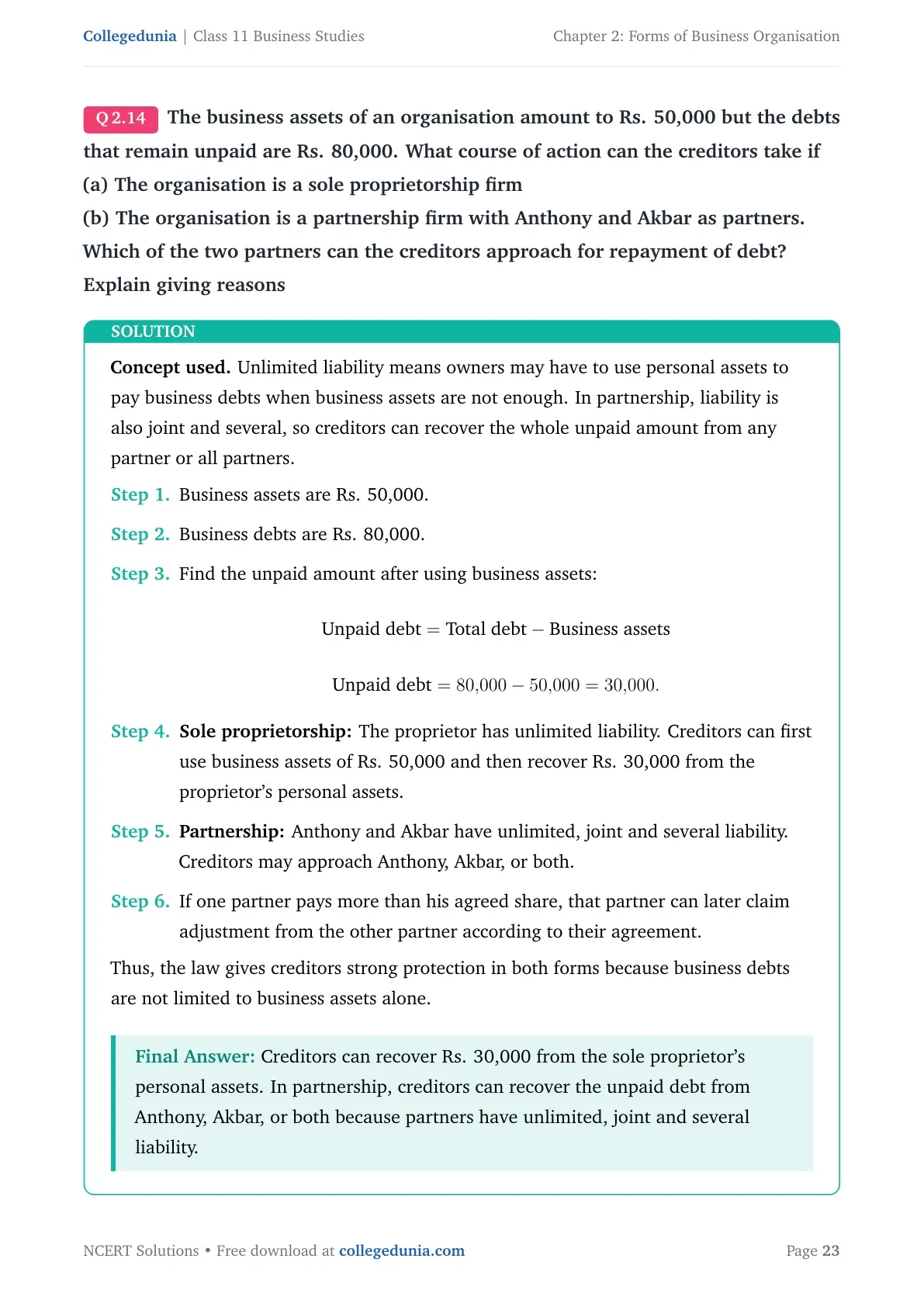
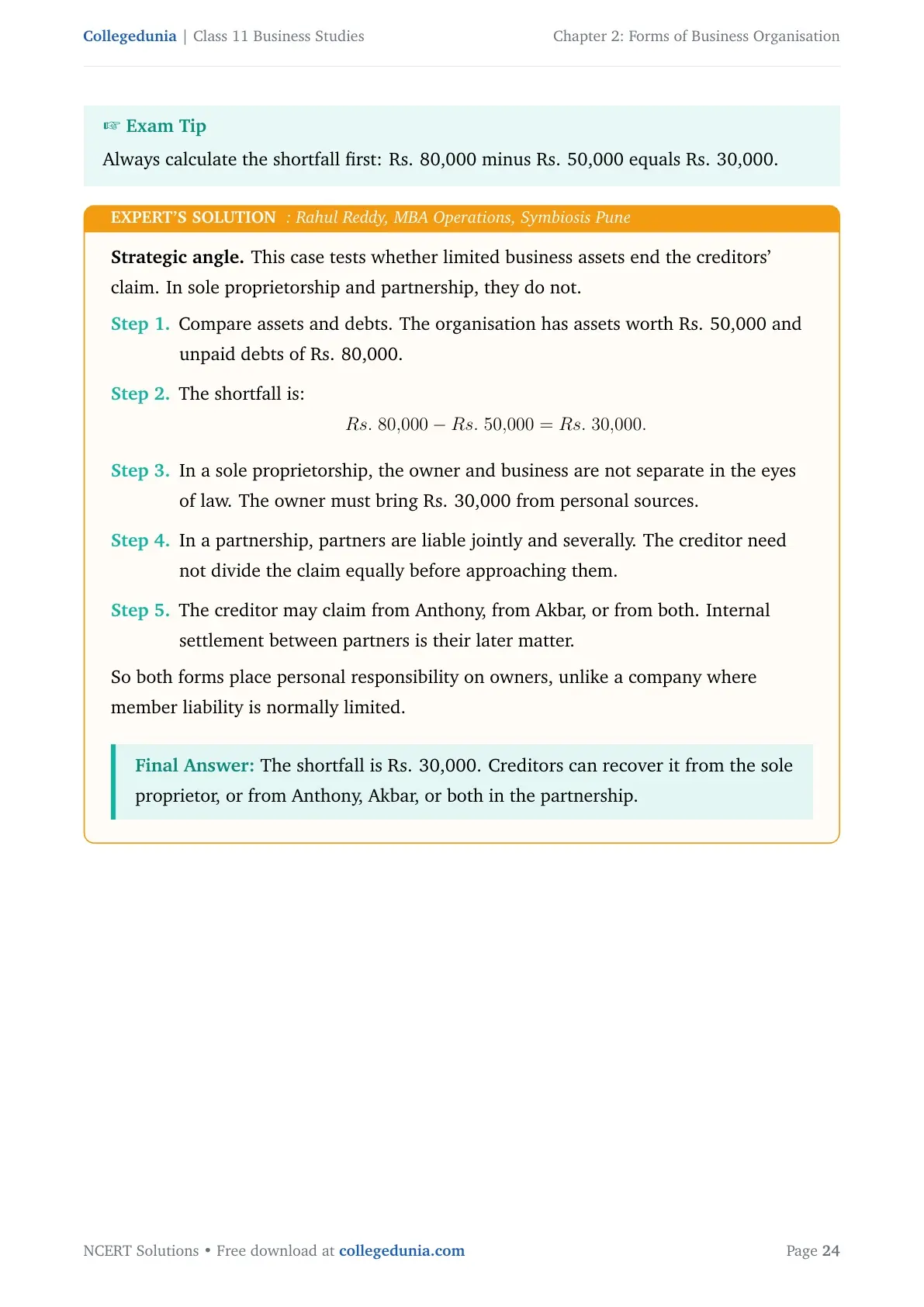
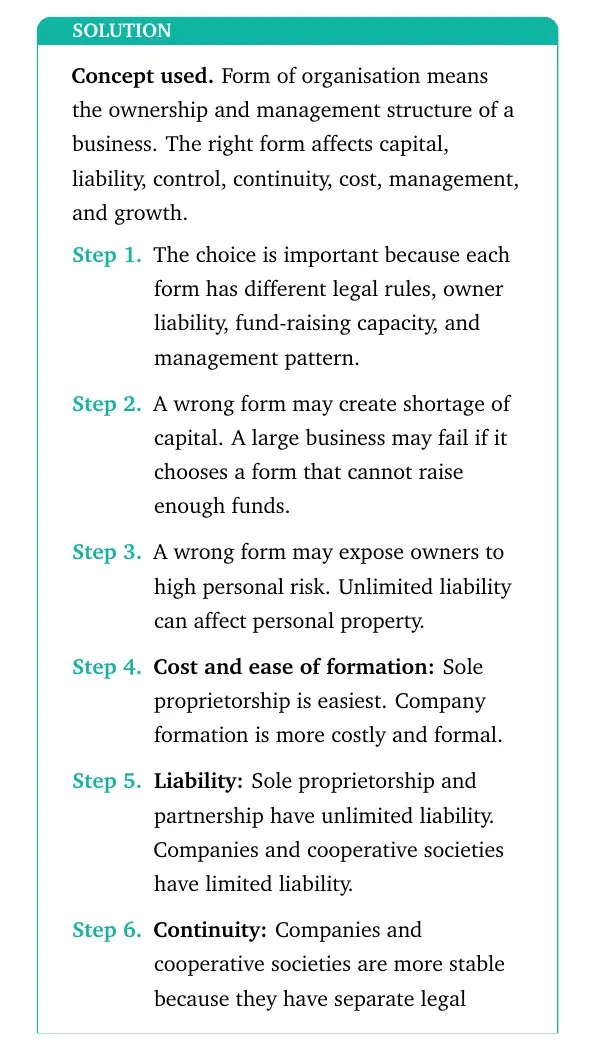
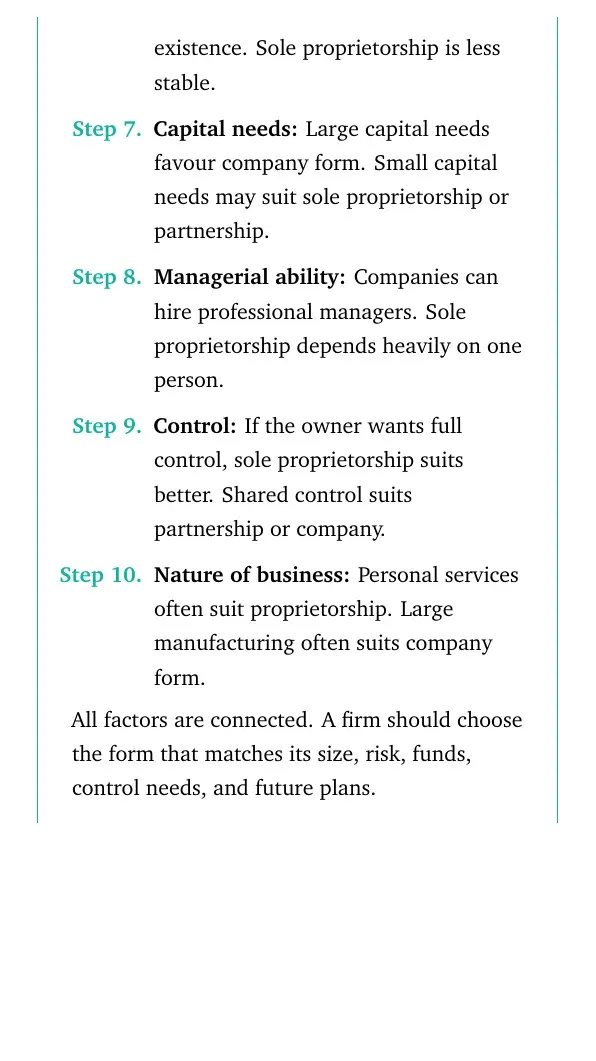
Liability is the most tested comparison point in this chapter. Unlimited liability means personal assets may be used to pay business debts. Limited liability means the owner's loss is usually limited to the capital invested or shares held.
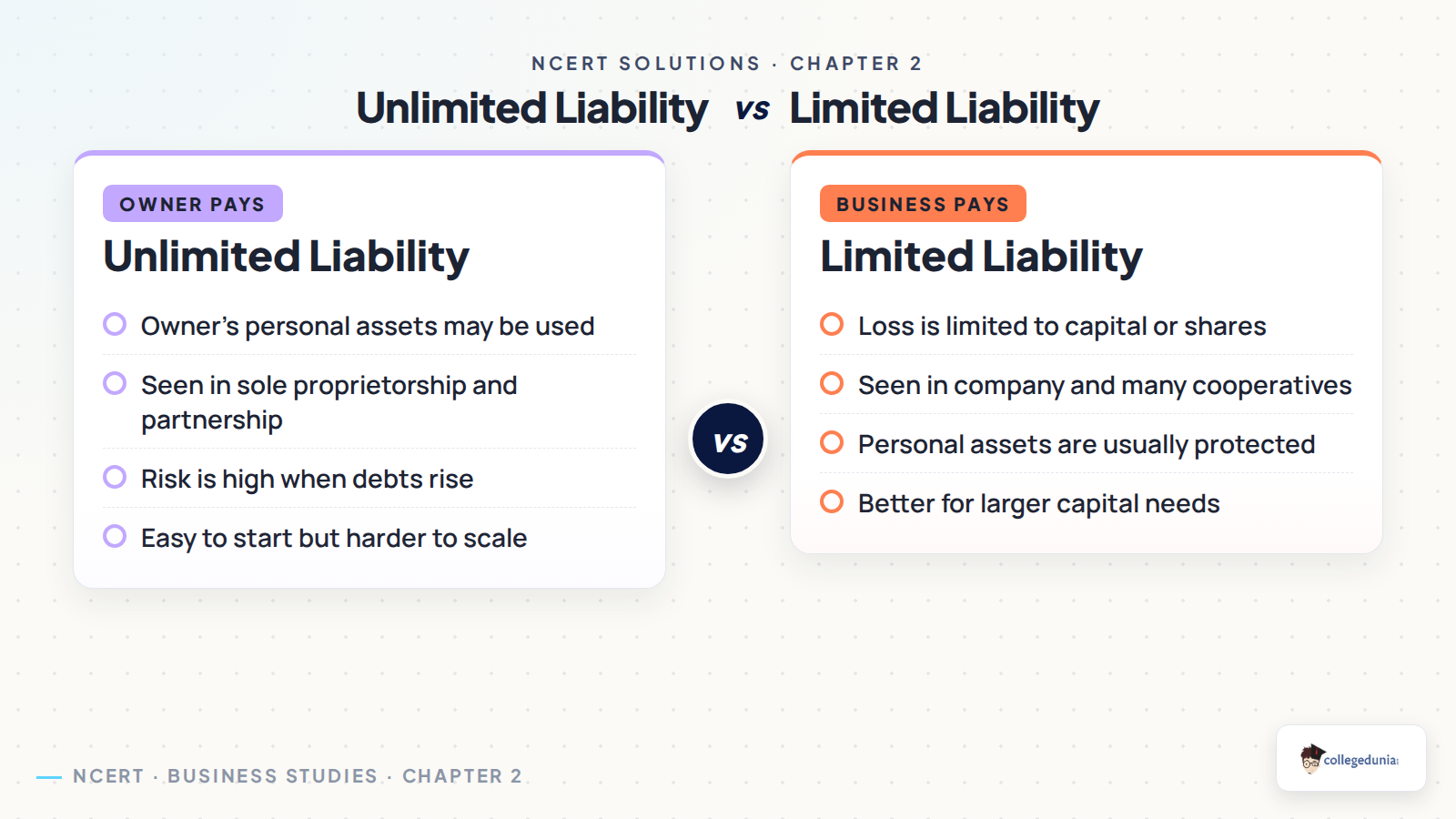
- High personal risk: sole proprietorship and partnership usually carry unlimited liability.
- Protected ownership: shareholders in a company usually enjoy limited liability.
- Exam cue: when a question asks suitability, connect liability with capital, control, and risk.
How to Use These NCERT Solutions for Forms of Business Organisation Answers
Most questions in this chapter become easy when students first identify the comparison base. Before writing a long answer, decide whether the question asks about ownership, control, capital, continuity, liability, or legal formalities.
- Definition questions: start with one clean meaning, then add two features.
- Difference questions: use a table when two business forms are compared.
- Suitability questions: link the form with size, capital, risk, secrecy, and control.
- Case questions: identify the business need first, then name the correct form.
All NCERT Solutions for Class 11 Business Studies Chapter 2 with Step-by-Step Solutions
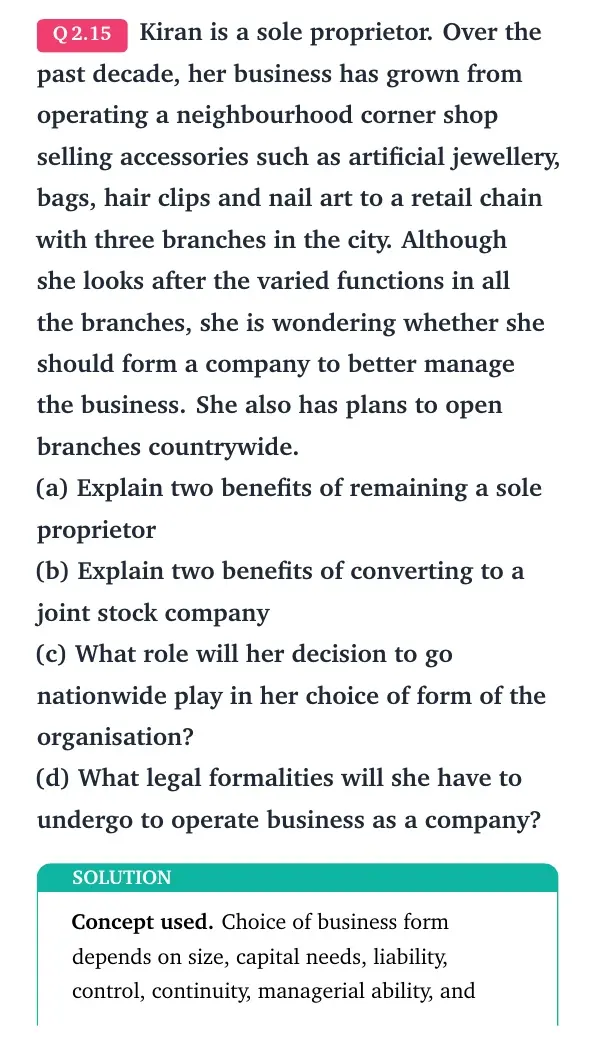
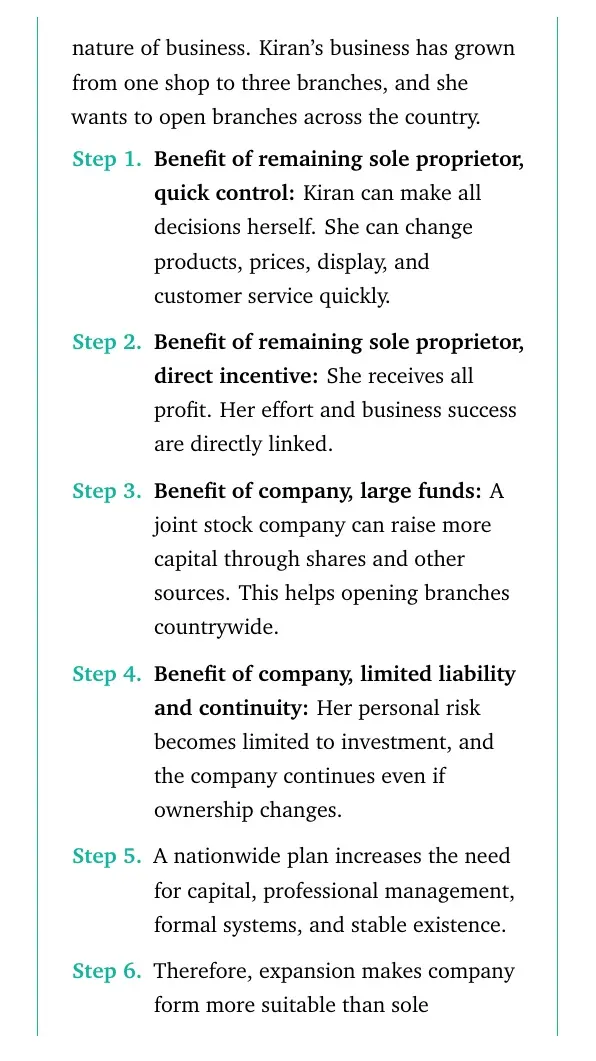
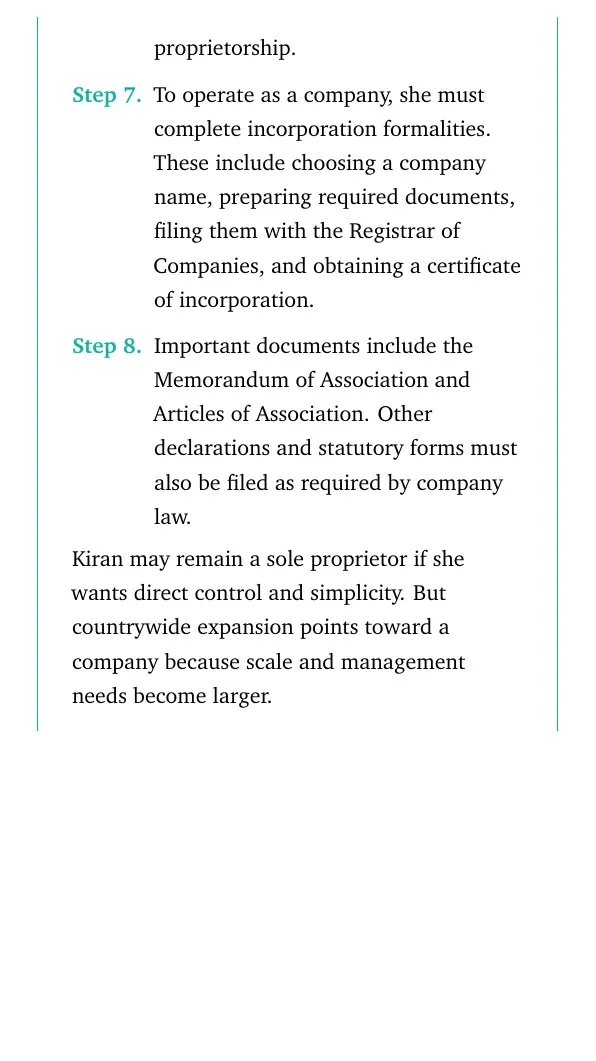
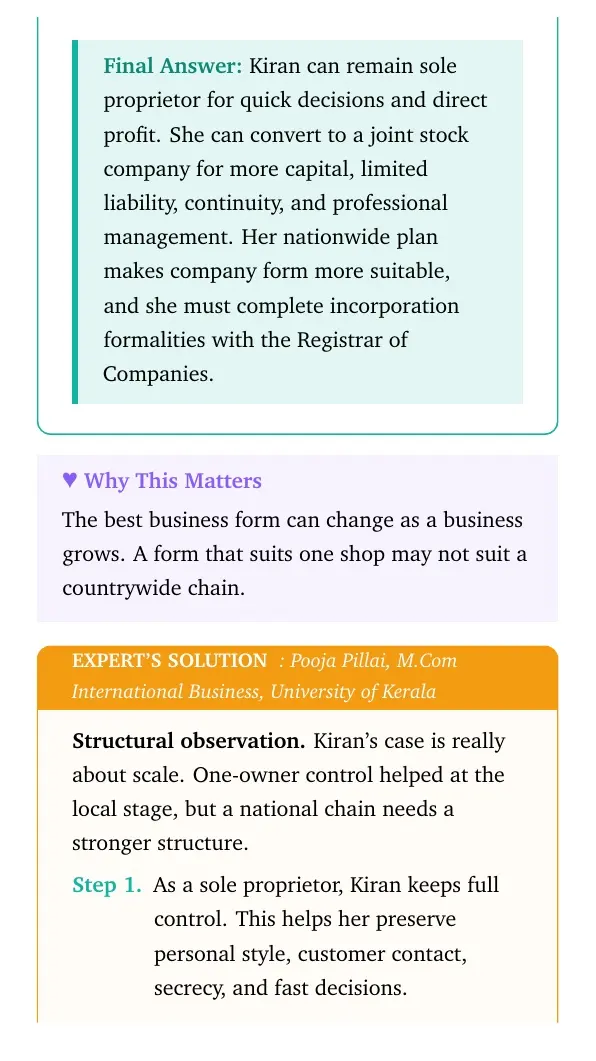
The companion question page carries the full collapsible Q&A layout for all textbook prompts from this PDF, including detailed solutions and expert explanations. Open it when you want to practise the chapter question by question.
Open question-wise answers: Forms of Business Organisation NCERT Solutions question bank
Related Class 11 Business Studies Chapter 2 Resources
Use these related resources after finishing the NCERT solutions. They help revise the same chapter through notes, textbook PDF access, and handwritten revision support.
| Resource | Use it for | Link |
|---|---|---|
| Chapter Notes | Revise features, merits, limits, and differences before tests | Class 11 Business Studies Chapter 2 Notes |
| NCERT Book PDF | Read the official textbook chapter alongside answers | Class 11 Business Studies Chapter 2 NCERT Book PDF |
| Handwritten Notes | Quickly revise liability, control, and company features | Class 11 Business Studies Chapter 2 Handwritten Notes |
Class 11 Business Studies NCERT Solutions All Chapters
The table below helps students move across the same resource type for Class 11 Business Studies. Chapter 2 should be revised with Chapter 1 because business objectives and risk explain why different organisation forms exist.
| Chapter | NCERT Solutions Link |
|---|---|
| Chapter 1 Business, Trade and Commerce | Open solutions |
| Chapter 2 Forms of Business Organisation | Open solutions |
| Chapter 3 Private, Public and Global Enterprises | Open solutions |
| Chapter 4 Business Services | Open solutions |
| Chapter 5 Emerging Modes of Business | Open solutions |
| Chapter 6 Social Responsibilities of Business and Business Ethics | Open solutions |
| Chapter 7 Formation of a Company | Open solutions |
| Chapter 8 Sources of Business Finance | Open solutions |
| Chapter 9 MSME and Business Entrepreneurship | Open solutions |
| Chapter 10 Internal Trade | Open solutions |
| Chapter 11 International Business | Open solutions |
Forms of Business Organisation Class 11 NCERT Solutions FAQs
Ques. What does Class 11 Business Studies Chapter 2 mainly cover?
Ans. The chapter covers sole proprietorship, Joint Hindu family business, partnership, cooperative society, and joint stock company. It compares ownership, capital, control, liability, continuity, and suitability.
Ques. Which form of business has the easiest start-up process?
Ans. Sole proprietorship has the easiest start-up process because one person owns and controls the business. It needs fewer legal formalities and supports quick decisions.
Ques. Why is liability important in Forms of Business Organisation?
Ans. Liability decides how far the owner is responsible for business debts. Unlimited liability can put personal assets at risk, while limited liability usually protects shareholders beyond their investment.
Ques. How many questions are solved in this Chapter 2 PDF?
Ans. The PDF solves 15 textbook prompts from the NCERT exercise, with step-by-step answers and expert explanations for each question.
Ques. Is partnership always better than sole proprietorship?
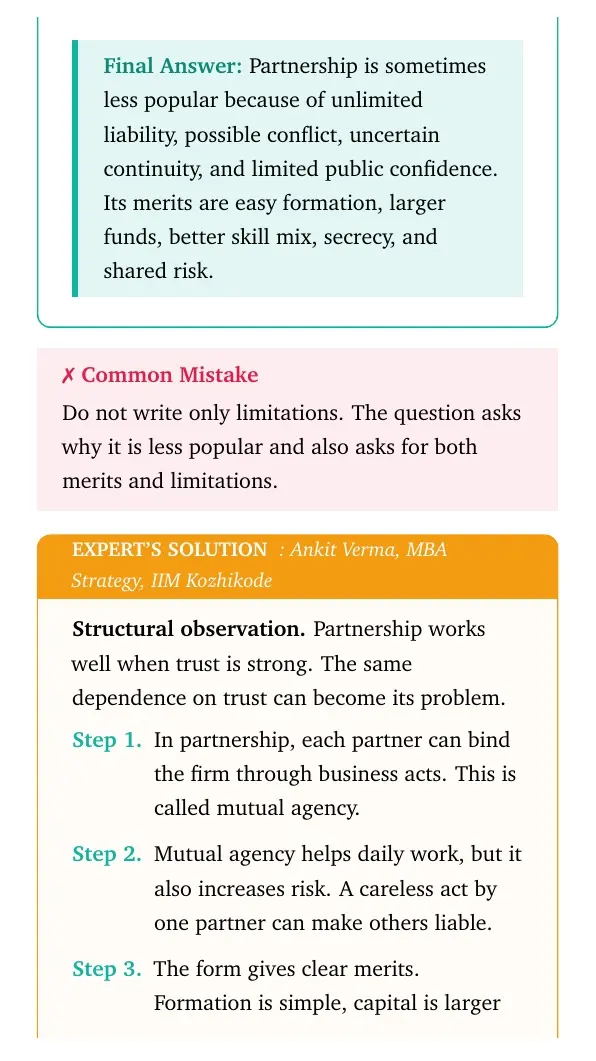
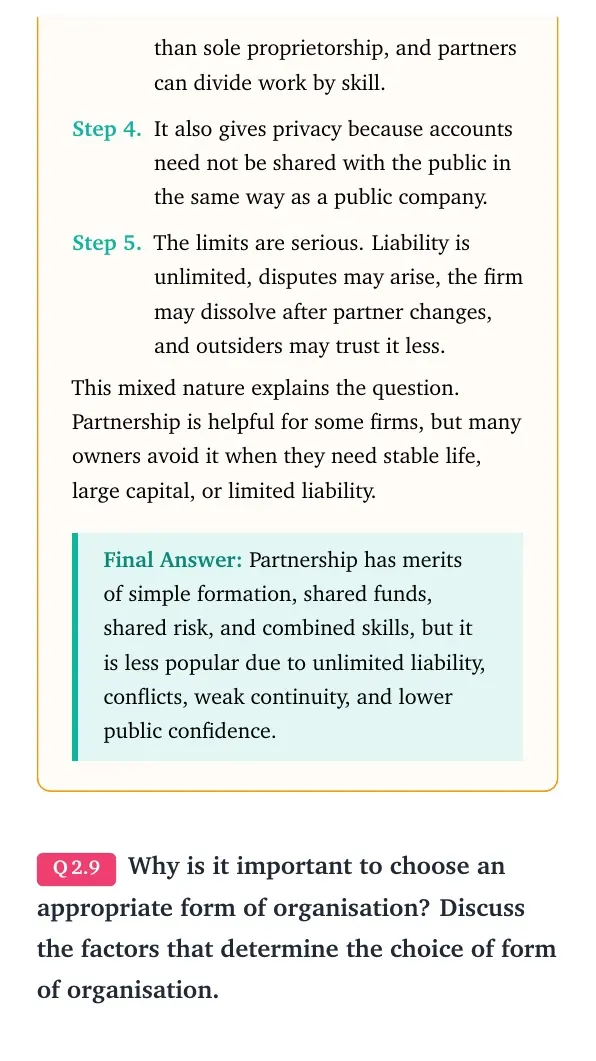
Ans. No. Partnership brings more capital, shared work, and wider skills, but it can also create conflict and unlimited liability. Sole proprietorship works better when secrecy and direct control matter most.



Comments